
 DRUG APPROVALS BY DR ANTHONY MELVIN CRASTO
.....
DRUG APPROVALS BY DR ANTHONY MELVIN CRASTO
.....


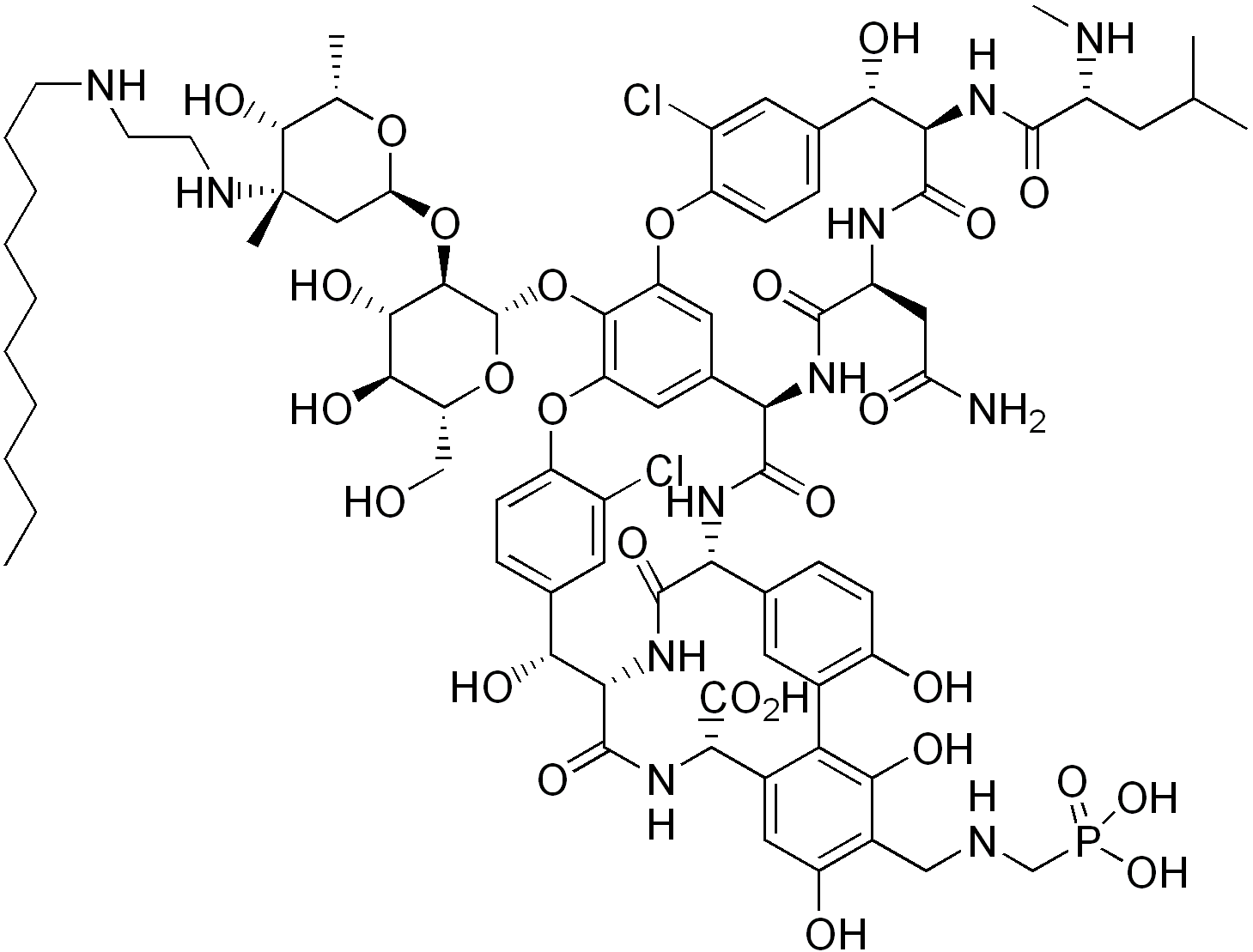
telavancin
The antibiotic Vibativ (telavancin) has been approved by the U.S. Food and Drug Administration to treat pneumonia caused by Staphylococcus aureus bacteria when other treatments aren’t suitable.
Pneumonia, a lung infection, can be caused by different bacteria and viruses. S. aureus infection often affects people in hospitals, notably those on ventilators. Such infections can be serious, since people on a ventilator often have a weakened immune system and are unable to fight an infection, the FDA said in a news release.http://www.drugs.com/news/vibativ-approved-certain-bacterial-pneumonia-45418.html

Telavancin (trade name Vibativ) is a bactericidal lipoglycopeptide for use in MRSA or other Gram-positive infections. Telavancin is a semi-synthetic derivative of vancomycin.
The FDA approved the drug in September 2009 for complicated skin and skin structure infections (cSSSI)
On 19 October 2007, the US Food and Drug Administration (FDA) issued an approvable letter for telavancin. Its developer, Theravance, submitted a complete response to the letter, and the FDA has assigned a Prescription Drug User Fee Act (PDUFA) target date of 21 July 2008.
On 19 November 2008, an FDA antiinfective drug advisory committee concluded that they would recommend telavancin be approved by the FDA.
The FDA approved the drug on 11 September 2009 for complicated skin and skin structure infections (cSSSI).
Theravance has also submitted telavancin to the FDA in a second indication, nosocomial pneumonia, sometimes referred to as hospital-acquired pneumonia, or HAP. On 30 November 2012, an FDA advisory panel endorsed approval of a once-daily formulation of telavancin for nosocomial pneumonia when other alternatives are not suitable. However, telavancin did not win the advisory committee’s recommendation as first-line therapy for this indication. The committe indicated that the trial data did not prove “substantial evidence” of telavancin’s safety and efficacy in hospital-acquired pneumonia, including ventilator-associated pneumonia caused by Gram-positive organisms Staphylococcus aureus and Streptococcus pneumoniae. On 21 June 2013 FDA gave approval for telavancin to treat patients with hospital-acquired pneumonia, but indicated it should be used only when alternative treatments are not suitable. FDA staff had indicated telavancin has a “substantially higher risk for death” for patients with kidney problems or diabetes compared to vancomycin.


 New Drug Approvals
Reblogged this on Med.Chem in Nepal.
LikeLike
Reblogged this on Srilanka-Chem.
LikeLike
Reblogged this on MEDCHEMEGYPT.
LikeLike
Reblogged this on MedChemHot.Pakistan.
LikeLike
Reblogged this on MedCheminSingapore by Sushma Wang.
LikeLike
Reblogged this on MedCheminAustralia.
LikeLike