
 DRUG APPROVALS BY DR ANTHONY MELVIN CRASTO
.....
DRUG APPROVALS BY DR ANTHONY MELVIN CRASTO
.....


Amaranth
Amaranthus, collectively known as amaranth, is a cosmopolitan genus of annual or short-lived perennial plants. Catkin-like cymes of densely packed flowers grow in summer or autumn. Approximately 60 species are recognized, with inflorescences and foliage ranging from purple and red to green or gold. Members of this genus share many characteristics and uses with members of the closely related genus Celosia.
Although several species are often considered weeds, people around the world value amaranths as leaf vegetables, cereals, and ornamental plants.
“Amaranth” derives from Greek ἀμάραντος (amarantos), “unfading,” with the Greek word for “flower,” ἄνθος (anthos), factoring into the word’s development as “amaranth.” The more accurate “amarant” is an archaic variant.
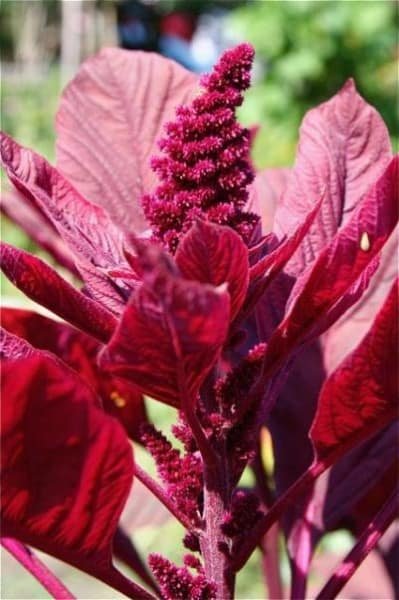 Amaranth, also called ramdhana, chua, bathua, pungikeerai or thotakura in India is a vegetable/herb that typically grows as an annual, which is defined as a plant that matures and completes its lifecycle over the course of a single year.
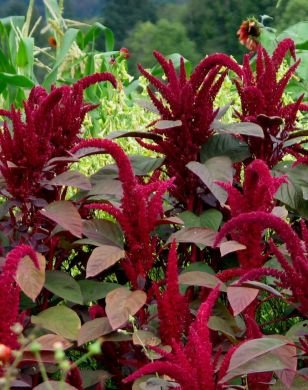
Amaranth comes in all sizes, shapes and colours. The leaves can be round or lance shaped, five to fifteen cm long or more, light green, dark green, reddish or variegated. Seeds maybe white, yellow, pink or black and the striking flowers can be huge tassles or tiny globes, red, pink, yellow or cream that produces a huge number of tiny seeds (around 60,000- 1,00,000!)
Some cultivated amaranth varieties grow to two metres or six feet tall and individual plants that land in a spot with no competition may grow even taller.
Amaranthus shows a wide variety of morphological diversity among and even within certain species. Although the family (Amaranthaceae) is distinctive, the genus has few distinguishing characters among the 70 species included. This complicates taxonomy and Amaranthus has generally been considered among systematists as a “difficult” genus.
Formerly, Sauer (1955) classified the genus into two subgenera, differentiating only between monoecious and dioecious species: Acnida (L.) Aellen ex K.R. Robertson and Amaranthus. Although this classification was widely accepted, further infrageneric classification was (and still is) needed to differentiate this widely diverse group.
Currently, Amaranthus includes three recognized subgenera and 70 species, although species numbers are questionable due to hybridization and species concepts.Infrageneric classification focuses on inflorescence, flower characters and whether a species is monoecious/dioecious, as in the Sauer (1955) suggested classification. A modified infrageneric classification of Amaranthus was published by Mosyakin & Robertson (1996) and includes three subgenera: Acnida, Amaranthus, and Albersia. The taxonomy is further differentiated by sections within each of the subgenera.
Aside from amaranth being such an attractive plant it is extremely adaptable to adverse growing conditions. It resists heat and drought, has no major disease problems, and is among the easiest of plants to grow. Simply scratching the soil, throwing down some seeds, and watering will reward you with some of these lovely plants.
 Like all fast growing leafy greens amaranth loves rich soil with steady moisture and a good supply of nutrients. Amaranth is a hardier plant and can cope with heat and dry conditions a lot better than any other leafy green. Due to a high requirement of nutrients, especially nitrogen, using a leguminous cover crop such as clover, beans and peas can provide adequate organic nitrogen.
Amaranth requires full sun light and while sowing the seeds plant 4-6 in a sq. ft around a centimetre deep.
Some varieties can get quite tall and may need the support of canes. Check the height of your crop before you sow so that you can place your canes before the plants are of a size since there is a chance that the roots can become damaged by their insertion.
Amaranths are ready for harvest in 20–45 days after planting or sowing depending on the variety and plant type. Plants may be harvested once or several times. With multiple harvests, young leaves and tender shoots are picked at 2–3 week intervals. Frequent harvesting of leaves and shoots delays the onset of flowering and thus prolongs the harvest period.
For mature plants, harvest leaves and stem from the top to encourage further side shoots. Remove any flowers as soon as their buds appear otherwise leaf production will come to an end.
 Amaranth seeds are high in protein and contain respectable amounts of lysine and methionine, two essential amino acids that are not frequently found in grains. They are high in fiber and contain calcium, iron, potassium, phosphorus, and vitamins A and C.
The fiber content of amaranth is three times that of wheat and its iron content five times more than wheat. The leaves contain three times the amount of both calcium and niacin (vitamin B3) compared to spinach leaves or twenty times more calcium and seven times more iron than lettuce.
Amaranth also contains tocotrienols (a form of vitamin E) which have cholesterol-lowering activity in humans. Cooked amaranth is 90% digestible and because of this ease of digestion, it has traditionally been given to those recovering from an illness or ending a fasting period.


 New Drug Approvals
Reblogged this on Vijaya Shastry Ph.D Physical Chemistry.
LikeLike
Reblogged this on MariaGairos–DRUGS.
LikeLike
Reblogged this on My Blog on Medicinal Chemistry.
LikeLike
http://www.shoehaha.com .I just bought a new pair of sports shoes, brand name, quality is very good, less half the price than shop store, like and share with you, there are Free shipping Cheap Nike Air Jordan air Max90 Adidas New Balance sports basketball running dunk sneakers shoes。 Their Web site http://www.shoehaha.com Email:shoehaha@gmail.com
LikeLike