New Drug Approvals
Follow New Drug Approvals on WordPress.com

FLAGS AND HITS

Flag Counter
DRUG APPROVALS BY DR ANTHONY MELVIN CRASTO

Archives

Categories

Join me on Linkedin

View Anthony Melvin Crasto Ph.D's profile on LinkedIn

Join me on Researchgate

Anthony Melvin Crasto Dr.

  Join me on Facebook FACEBOOK   ...................................................................Join me on twitter Follow amcrasto on Twitter     ..................................................................Join me on google plus Googleplus

MYSELF

DR ANTHONY MELVIN CRASTO Ph.D ( ICT, Mumbai) , INDIA 36Yrs Exp. in the feld of Organic Chemistry,Working for AFRICURE PHARMA as ADVISOR earlier with GLENMARK PHARMA at Navi Mumbai, INDIA. Serving chemists around the world. Helping them with websites on Chemistry.Million hits on google, NO ADVERTISEMENTS , ACADEMIC , NON COMMERCIAL SITE, world acclamation from industry, academia, drug authorities for websites, blogs and educational contribution, ........amcrasto@gmail.com..........+91 9323115463, Skype amcrasto64 View Anthony Melvin Crasto Ph.D's profile on LinkedIn Anthony Melvin Crasto Dr.
Enter your email address to follow this blog and receive notifications of new posts by email.

Join 37.9K other subscribers
DR ANTHONY MELVIN CRASTO Ph.D
DR ANTHONY MELVIN CRASTO Ph.D
DR ANTHONY MELVIN CRASTO, Born in Mumbai in 1964 and graduated from Mumbai University, Completed his Ph.D from ICT, 1991,Matunga, Mumbai, India, in Organic Chemistry, The thesis topic was Synthesis of Novel Pyrethroid Analogues, Currently he is working with AFRICURE PHARMA, ROW2TECH, NIPER-G, Department of Pharmaceuticals, Ministry of Chemicals and Fertilizers, Govt. of India as ADVISOR, earlier assignment was with GLENMARK LIFE SCIENCES LTD, as CONSUlTANT, Retired from GLENMARK in Jan2022 Research Centre as Principal Scientist, Process Research (bulk actives) at Mahape, Navi Mumbai, India. Total Industry exp 32 plus yrs, Prior to joining Glenmark, he has worked with major multinationals like Hoechst Marion Roussel, now Sanofi, Searle India Ltd, now RPG lifesciences, etc. He has worked with notable scientists like Dr K Nagarajan, Dr Ralph Stapel, Prof S Seshadri, etc, He did custom synthesis for major multinationals in his career like BASF, Novartis, Sanofi, etc., He has worked in Discovery, Natural products, Bulk drugs, Generics, Intermediates, Fine chemicals, Neutraceuticals, GMP, Scaleups, etc, he is now helping millions, has 9 million plus hits on Google on all Organic chemistry websites. His friends call him Open superstar worlddrugtracker. His New Drug Approvals, Green Chemistry International, All about drugs, Eurekamoments, Organic spectroscopy international, etc in organic chemistry are some most read blogs He has hands on experience in initiation and developing novel routes for drug molecules and implementation them on commercial scale over a 32 PLUS year tenure till date Feb 2023, Around 35 plus products in his career. He has good knowledge of IPM, GMP, Regulatory aspects, he has several International patents published worldwide . He has good proficiency in Technology transfer, Spectroscopy, Stereochemistry, Synthesis, Polymorphism etc., He suffered a paralytic stroke/ Acute Transverse mylitis in Dec 2007 and is 90 %Paralysed, He is bound to a wheelchair, this seems to have injected feul in him to help chemists all around the world, he is more active than before and is pushing boundaries, He has 100 million plus hits on Google, 2.5 lakh plus connections on all networking sites, 100 Lakh plus views on dozen plus blogs, 227 countries, 7 continents, He makes himself available to all, contact him on +91 9323115463, email amcrasto@gmail.com, Twitter, @amcrasto , He lives and will die for his family, 90% paralysis cannot kill his soul., Notably he has 38 lakh plus views on New Drug Approvals Blog in 227 countries......https://newdrugapprovals.wordpress.com/ , He appreciates the help he gets from one and all, Friends, Family, Glenmark, Readers, Wellwishers, Doctors, Drug authorities, His Contacts, Physiotherapist, etc He has total of 32 International and Indian awards

Verified Services

View Full Profile →

Recent Posts

P7435 from Piramal Enterprises Mumbai, India


str1

str1

P7435

Piramal Enterprises Mumbai, India

P-7435; P7435-DGAT1, P7435, P 7435

CAS 1210756-48-1,
C22 H19 F N4 O4 S
L-​Valine, N-​[[3-​[4-​[(6-​fluoro-​2-​benzothiazolyl)​amino]​phenyl]​-​5-​isoxazolyl]​carbonyl]​-
Molecular Weight, 454.47

GDAT1 inhibitor

  • Phase IDiabetes mellitus; Lipid metabolism disorders
  • ClassAntihyperglycaemics; Antihyperlipidaemics; Small molecules
  • Mechanism of ActionDiacylglycerol O acyltransferase inhibitors
Company Piramal Enterprises Ltd.
Description Diacylglycerol O-acyltransferase-1 (DGAT1) inhibitor
Molecular Target Diacylglycerol O-acyltransferase-1 (DGAT1)
Mechanism of Action Diacylglycerol O-acyltransferase-1 (DGAT1) inhibitor
Therapeutic Modality
Latest Stage of Development Phase I
Standard Indication Metabolic (unspecified)
Indication Details Treat metabolic disorders

https://clinicaltrials.gov/ct2/show/NCT01910571

https://clinicaltrials.gov/ct2/show/NCT01764425

  • 24 Nov 2014Piramal Enterprises completes a phase I trial in healthy, overweight or obese subjects in USA (NCT01910571)
  • 17 Jun 2014Adverse events and pharmacokinetics data from a phase I trial in healthy male volunteers presented at the 74th Annual Scientific Sessions of the American Diabetes Association (ADA-2014)
  • 17 Jun 2014Pharmacodynamics data from preclinical studies in Dyslipidaemia and obesity presented at the 74th Annual Scientific Sessions of the American Diabetes Association (ADA-2014)

Chairman Ajay Piramal

Swati Piramal-The Vice Chairperson of Piramal Enterprises Ltd

Nandini Piramal, Executive Director, Piramal Enterprises

Piramal Enterprises gets US FDA approval for P7435 IND

http://www.pharmabiz.com/NewsDetails.aspx?aid=76992&sid=2

Our Bureau, Mumbai
Tuesday, August 06, 2013, 12:25 Hrs  [IST]

Piramal Enterprises Ltd has received US Food and Drug Administration (FDA) approval for its Investigational New Drug (IND) P7435. This is a novel, potent and highly selective, oral diacylglycerolacyltransferase 1 (DGAT1) inhibitor.

P7435 has been developed by the NCE Research Division of PEL for the management of metabolic disorders such as lipid abnormalities and diabetes. It is well-established that increased lipid levels’ (including triglycerides) is one of the major risk factors for cardiovascular disease (CVD). It has been reported by the World Health Organisation, that CVD, is the number one cause of deaths globally, representing approximately 30 per cent of all deaths. Currently, there is a significant medical need for effective and safe drugs for the management of lipid abnormalities and metabolic disorders.

P7435 has demonstrated its lipid lowering potential in various preclinical studies by showing significant reduction in triglyceride levels, glucose and insulin levels,and decrease in food intake and body weight gain -factors which are associated with lipid abnormalities and metabolic disorders.

PEL has established the safety and tolerability of P7435 in a phase I trial recently completed in India. This extension trial in the US will further evaluate the safety and efficacy of P7435 in a larger population.

Dr Swati Piramal, vice chairperson, Piramal Enterprises, said, “The NCE Research division of PEL continues its ambitious diabetes/metabolic disorders programme to discover and develop NCEs to fight against diseases like diabetes and lipid disorders. With P7435 we are looking at addressing a serious need for effective and well-tolerated drugs that treat lipid disorders, which are commonly associated with diabetes and CVDs. Expansion of this trial will allow testing this NCE in a wider population,which is critical to the development of this drug and will provide therapeutic solutions not just to India but also to the rest of the world.”

The NCE Research division of Piramal Enterprises focuses on the discovery and development of innovative small molecule medicines to improve the lives of patients suffering from cancer, metabolic disorders and inflammatory conditions. The key elements of its strategy include capitalizing on Piramal’s strengths, in particular the India advantage, and leveraging external partnerships to achieve high levels of R&D productivity. Piramal’s state-of-the-art Research Centre in Mumbai has comprehensive capabilities spanning target identification all the way through clinical development. Its robust pipeline, including 8 compounds in clinical development, bears testimony to its innovative and rigorous drug discovery process.

PAPER

European Journal of Medicinal Chemistry (2012), 54, 324-342

http://www.sciencedirect.com/science/article/pii/S0223523412003133

PATENT

WO 2010023609

http://www.google.co.in/patents/WO2010023609A1?cl=en

/////////Piramal Enterprises,  Mumbai, India, P-7435, P7435-DGAT1, P7435, P 7435, GDAT1 inhibitor

O=C(O)[C@@H](NC(=O)c1cc(no1)c2ccc(cc2)Nc3nc4ccc(F)cc4s3)C(C)C

AUNP-12 from Aurigene Discovery Technologies Limited


AUNP-12

AUR-012; Aurigene-012; NP-12, Aurigene; PD-1 inhibitor peptide (cancer), Aurigene; PD-1 inhibitor peptide (cancer), Aurigene/ Pierre Fabre; W-014A


Company Aurigene Discovery Technologies Ltd.
Description A programmed cell death 1 (PDCD1; PD-1; CD279) peptide antagonist
Molecular Target Programmed cell death 1 (PD-1) (PDCD1) (CD279)
Mechanism of Action Programmed cell death 1 (PD-1) antagonist
Therapeutic Modality Peptide
Latest Stage of Development Preclinical
Standard Indication Cancer (unspecified)
Indication Details Treat cancer
Regulatory Designation
Partner Laboratoires Pierre Fabre S.A.

Aurigene Discovery Technologies Limited

INNOVATOR


  • Programmed Cell Death 1 or PD-1 (also referred to as PDCD1) is a 50 to 55 kD type I membrane glycoprotein (Shinohara T et al, Genomics, 1994, Vol. 23, No. 3, pp. 704-706). PD-1 is a receptor of the CD28 superfamily that negatively regulates T cell antigen receptor signalling by interacting with the specific ligands and is suggested to play a role in the maintenance of self tolerance.
  • PD-1 peptide relates to almost every aspect of immune responses including autoimmunity, tumour immunity, infectious immunity, transplantation immunity, allergy and immunological privilege.
  • The PD-1 protein’s structure comprise of—

      • an extracellular IgV domain followed by
      • a transmembrane region and
      • an intracellular tail
  • The intracellular tail contains two phosphorylation sites located in an immunoreceptor tyrosine-based inhibitory motif and an immunoreceptor tyrosine-based switch motif, which suggests that PD-1 negatively regulates TCR signals. Also, PD-1 is expressed on the surface of activated T cells, B cells, and macrophages, (Y. Agata et al., Int Immunol 8, 765, May 1996) suggesting that compared to CTLA-4 ((Cytotoxic T-Lymphocyte Antigen 4, also known as CD152 (Cluster of differentiation 152) is a protein that also plays an important regulatory role in the immune system), PD-1 more broadly negatively regulates immune responses.
  • PD-1 has two ligands, PD-L1 (Programmed Death Ligand for PDCD1L1 or B7-H1) (Freeman G J et al, Journal of Experimental Medicine, 2000, Vol. 19, No. 7, pp. 1027-1034) and PD-L2 (Programmed Death Ligand 2 or PDCD1L2 or B7-DC) (Latchman Y et al, Nature Immunology, 2001, Vol. 2, No. 3, pp. 261-267), which are members of the B7 family. PD-L1 is known to be expressed not only in immune cells, but also in certain kinds of tumour cell lines (such as monocytic leukaemia-derived cell lines, mast cell tumour-derived cell lines, hematoma-derived cell lines, neuroblastoma-derived cell lines, and various mammary tumour-derived cell lines) and in cancer cells derived from diverse human cancer tissues (Latchman Y et al, Nature Immunology, 2001, Vol. 2, No. 3, pp. 261-267) and on almost all murine tumour cell lines, including PA1 myeloma, P815 mastocytoma, and B16 melanoma upon treatment with IFN-γ (Y. Iwai et al., Proc Natl Acad Sci USA 99, 12293, Sep. 17, 2002 and C. Blank et al., Cancer Res 64, 1140, February, 2004). Similarly PD-L2 expression is more restricted and is expressed mainly by dendritic cells and a few tumour cell lines. PD-L2 expression has been verified in Hodgkin’s lymphoma cell lines and others. There is a hypothesis that some of the cancer or tumour cells take advantage from interaction between PD-1 and PD-L1 or PD-L2, for suppressing or intercepting T-cell immune responses to their own (Iwai Y et al, Proceedings of the National Academy of Science of the United States of America, 2002, Vol. 99, No. 19, pp. 12293-12297).
  • Tumour cells and virus (including HCV and HIV) infected cells are known to express the ligand for PD-1 (to create Immunosuppression) in order to escape immune surveillance by host T cells. It has been reported that the PD-1 gene is one of genes responsible for autoimmune diseases like systemic lupus erythematosis (Prokunina et al, Nature Genetics, 2002, Vol. 32, No. 4, 666-669). It has also been indicated that PD-1 serves as a regulatory factor for the onset of autoimmune diseases, particularly for peripheral self-tolerance, on the ground that PD-1-deficient mice develop lupus autoimmune diseases, such as glomerulonephritis and arthritis (Nishimura H et al, International Immunology, 1998, Vol. 10, No. 10, pp. 1563-1572; Nishimura H et al, Immunity, 1999, Vol. 11, No. 2, pp. 141-151), and dilated cardiomyopathy-like disease (Nishimura H et al, Science, 2001, Vol. 291, No. 5502, pp. 319-332).
  • Hence, in one approach, blocking the interaction of PD-1 with its ligand (PD-L1, PD-L2 or both) may provide an effective way for specific tumour and viral immunotherapy.
  • Wood et al in U.S. Pat. No. 6,808,710 discloses method for down modulating an immune response comprising contacting an immune cell expressing PD-1 with an antibody that binds to PD-1, in multivalent form, such that a negative signal is transduced via PD-1 to thereby down modulate the immune response. Such an antibody may be a cross-linked antibody to PD-1 or an immobilized antibody to PD-1.
  • Freeman et al in U.S. Pat. No. 6,936,704 and its divisional patent U.S. Pat. No. 7,038,013 discloses isolated nucleic acids molecules, designated B7-4 nucleic acid molecules, which encode novel B7-4 polypeptides, isolated B7-4 proteins, fusion proteins, antigenic peptides and anti-B7-4 antibodies, which co-stimulates T cell proliferation in vitro when the polypeptide is present on a first surface and an antigen or a polyclonal activator that transmits an activating signal via the T-cell receptor is present on a second, different surface.
  • There are some reports regarding substances inhibiting immunosuppressive activity of PD-1, or interaction between PD-1 and PD-L1 or PD-L2, as well as the uses thereof. A PD-1 inhibitory antibody or the concept of a PD-1 inhibitory peptide is reported in WO 01/14557, WO 2004/004771, and WO 2004/056875. On the other hand, a PD-L1 inhibitory antibody or a PD-L1 inhibitory peptide is reported in WO 02/079499, WO 03/042402, WO 2002/086083, and WO 2001/039722. A PD-L2 inhibitory antibody or a PD-L2 inhibitory peptide is reported in WO 03/042402 and WO 02/00730.
  • WO2007005874 describes isolated human monoclonal antibodies that specifically bind to PD-L1 with high affinity. The disclosure provides methods for treating various diseases including cancer using anti-PD-L1 antibodies.
  • US2009/0305950 describes multimers, particularly tetramers of an extracellular domain of PD-1 or PD-L1. The application describes therapeutic peptides.
  • Further, the specification mentions that peptides can be used therapeutically to treat disease, e.g., by altering co-stimulation in a patient. An isolated B7-4 or PD-1 protein, or a portion or fragment thereof (or a nucleic acid molecule encoding such a polypeptide), can be used as an immunogen to generate antibodies that bind B7-4 or PD-1 using standard techniques for polyclonal and monoclonal antibody preparation. A full-length B7-4 or PD-1 protein can be used, or alternatively, the invention provides antigenic peptide fragments of B7-4 or PD-1 for use as immunogens. The antigenic peptide of B7-4 or PD-1 comprises at least 8 amino acid residues and encompasses an epitope of B7-4 or PD-1 such that an antibody raised against the peptide forms a specific immune complex with B7-4 or PD-1. Preferably, the antigenic peptide comprises at least 10 amino acid residues, more preferably at least 15 amino acid residues, even more preferably at least amino acid residues, and most preferably at least 30 amino acid residues.
  • Freeman et al in U.S. Pat. No. 7,432,059 appears to disclose and claim methods of identifying compounds that up modulate T cell activation in the presence of a PD-1-mediated signal. Diagnostic and treatment methods utilizing compositions of the invention are also provided in the patent.
  • Further, Freeman et al in U.S. Pat. No. 7,709,214 appears to cover methods for up regulating an immune response with agents that inhibit the interactions between PD-L2 and PD-1.
  • Despite existence of many disclosures as discussed above, however, a significant unmet medical need still exists due to the lack of effective peptides or modified peptides as therapeutic agents as alternatives in the therapeutic area. It is known that synthetic peptides offer certain advantages over antibodies such as ease of production with newer technologies, better purity and lack of contamination by cellular materials, low immunogenicity, improved potency and specificity. Peptides may be more stable and offer better storage properties than antibodies. Moreover, often peptides possess better tissue penetration in comparison with antibodies, which could result in better efficacy. Peptides can also offer definite advantages over small molecule therapeutics counterparts such as lesser degree of toxicity and lower probability of drug-drug interaction.
  • The present invention therefore may provide the solution for this unmet medical need by offering novel synthetic peptide and its derivatives which are based on the PD1 ectodomain.


09338-scitech1-NovartisAcxd
Aurigene team: (from left) Brahma Reddy V, Thomas Antony, Murali Ramachandra, Venkateshwar Rao G, Wesley Roy Balasubramanian, Kishore Narayanan, Samiulla DS, Aravind AB, and Shekar Chelur


Patent

http://www.google.com/patents/US20110318373

8. SNTSESFK(SNTSESF)FRVTQLAPKAQIKE-NH2 (SEQ ID NO: 49)


Example 2 Synthesis of

Synthesis of Linear Fragment—Fmoc-FRVTQLAPKAQIKE

  • Desiccated CLEAR-Amide resin ((100-200 mesh) 0.4 mmol/g, 0.5 g) was distributed in 2 polyethylene vessels equipped with a polypropylene filter. The linear peptide synthesis on solid phase were carried out automatically, using Symphony parallel synthesizer (PTI) using the synthesis programs mentioned in the table below. Swelling, C-terminal amino acid [Fmoc-Glu(OtBu)-OH] attachment and capping of the peptidyl resin was carried out as per the protocol in Table I. Subsequent amino acid coupling was carried out as mentioned in Table II. The amino acids used in the synthesis were Fmoc Phe-OH, Fmoc-Arg(Pbf)-OH, Fmoc-Val-OH, Fmoc-Thr(OtBu)-OH, Fmoc-Gln(Trt)-OH, Fmoc-Lys(Boc)-OH, Fmoc-Leu-OH, Fmoc-Ala-OH, Fmoc-Pro-OH, Fmoc-Ile-OH. After the completion of Fmoc-Phe-OH coupling the resin was taken out form peptide synthesiser and manual coupling was carried out as follows
  • Fmoc-Phe-OH peptidyl resin from automated synthesiser was pooled in to a glass vessel with frit. The Fmoc group of the peptidyl resin was deprotected by treating it twice with 20% (v/v) piperidine/DMF solution for 5 and 15 min (10 m L). The resin was washed with DMF (6×15 m L), DCM (6×15 m L) and DMF (6×15 m L). Kaiser test on peptide resin aliquot upon completion of Fmoc-deprotection was positive. Fmoc-Lys (Fmoc)-OH (0.48 g; 4 equiv. 0.8 m mol) in dry DMF was added to the deprotected resin and coupling was initiated with DIC (0.15 m L; 5 equiv, 1 m mol) and HOBT (0.08 g; 5 equiv, 0.6 m mol) in DMF. The concentration of each reactant in the reaction mixture was approximately 0.4 M. The mixture was rotated on a rotor at room temperature for 3 h. Resin was filtered and washed with DMF (6×15 mL), DCM (6×15 mL) and DMF (6×15 mL). Kaiser test on peptide resin aliquot upon completion of coupling was negative. The Fmoc group on the peptidyl resin is deprotected by treating it twice with 20% (v/v) piperidine/DMF solution for 5 and 15 min (15 mL). The resin was washed with DMF (6×15 mL), DCM (6×15 mL) and DMF (6×15 mL). Kaiser test on peptide resin aliquot upon completion of Fmoc-deprotection was positive. After the deprotection of Fmoc group on Fmoc-Lys(Fmoc)-attached peptidyl resin the peptide chain growth was carried out from both the free amino terminus suing 8 equivalent excess of amino acid (1.6 m mol, 8 equivalent excess of HOBt (0.22 g, 1.6 m mol) and 10 equivalent excess of DIC (0.32 m L, 2 m mol) relative to resin loading. The coupling was carried out at room temperature for 3 h. The amino acids coupled to the peptidyl resin were; Fmoc-Phe-OH (0.62 g; 8 equiv, 1.6 m mol), Fmoc-Ser (OtBu)-OH (0.62 g; 8 equiv, 1.6 m mol), Fmoc-Glu (OtBu)-OH (0.68 g; 8 equiv, 1.6 m mol), Fmoc-Ser (OtBu)-OH (0.62 g; 8 equiv, 1.6 m mol), Fmoc-Thr (OtBu)-OH (0.64 g; 8 equiv, 1.6 m mol), Fmoc-Asn (Trt)-OH (0.95 g; 8 equiv, 1.6 m mol) and N-terminus amino acids as Boc-Ser (OtBu)-OH (0.41 g; 8 equiv, 1.6 m mol) The peptidyl resin was cleaved as mentioned in procedure for cleavage using cleavage cocktail A to yield (565 mg), 70% yield. The crude material was purified by preparative HPLC on Zorbax Eclipse XDB-C18 column (9.4 mm×250 mm, 5 μm) with buffer A: 0.1% TFA/Water, buffer B: Acetonitrile. The peptide was eluted by gradient elution 0-5 min=5-10% buffer B, 10-20 min=29% buffer B with a flow rate of 7 mL/min. HPLC: (method 1): RT-12 min (96%); LCMS Calculated Mass: 3261.62, Observed Mass: 1631.6 [M/2+H]+; 1088 [M/3+H]+); 816.2[M/4+H]+;

STRUCTURE , READER DISCRETION IS NEEDED


aunf12

N2,N6-Bis(L-seryl-L-asparaginyl-L-threonyl-L-seryl-L-alpha-glutamyl-L-seryl-L-phenylalanyl)-L-lysyl-L-phenylalanyl-L-arginyl-L-valyl-L-threonyl-L-glutaminyl-L-leucyl-L-alanyl-L-prolyl-L-lysyl-L-alanyl-L-glutaminyl-L-isoleucyl-L-lysyl-L-alpha-glutamine

C142 H226 N40 O48, 3261.553

 CAS 1353563-85-5,
L-​α-​Glutamine, N2,​N6– ​bis(L-​seryl-​L-​asparaginyl-​L-​threonyl-​L-​seryl-​L-​α-​glutamyl-​L- ​seryl-​L-​phenylalanyl)​-​L-​lysyl-​L-​phenylalanyl-​L-​arginyl-​L-​ valyl-​L-​threonyl-​L-​glutaminyl-​L-​leucyl-​L-​alanyl-​L-​prolyl-​L-​ lysyl-​L-​alanyl-​L-​glutaminyl-​L-​isoleucyl-​L-​lysyl-

aunf12

aunf12

SEE ALSO

CAS 1353564-61-0,
L-​α-​Glutamine, N2,​N6– ​bis(D-​seryl-​L-​asparaginyl-​L-​threonyl-​L-​seryl-​L-​α-​glutamyl-​L- ​seryl-​L-​phenylalanyl)​-​L-​lysyl-​L-​phenylalanyl-​L-​arginyl-​L-​ valyl-​L-​threonyl-​L-​glutaminyl-​L-​leucyl-​L-​alanyl-​L-​prolyl-​L-​ lysyl-​L-​alanyl-​L-​glutaminyl-​L-​isoleucyl-​L-​lysyl-
 CAS 1353563-91-3
D-​α-​Glutamine, N2,​N6– ​bis(D-​seryl-​D-​asparaginyl-​D-​threonyl-​D-​seryl-​D-​α-​glutamyl-​D- ​seryl-​D-​phenylalanyl)​-​D-​lysyl-​D-​phenylalanyl-​D-​arginyl-​D-​ valyl-​D-​threonyl-​D-​glutaminyl-​D-​leucyl-​D-​alanyl-​D-​prolyl-​D-​ lysyl-​D-​alanyl-​D-​glutaminyl-​D-​isoleucyl-​D-​lysyl-

US 2015087581

Compound 8 (SEQ ID NO: 49) SNTSESFK(SNTSESF)FRVTQLAPKAQIKE-NH2Image loading...

Example 2Synthesis of Sequence Shown in SEQ ID NO: 49

Image loading...

Synthesis of Linear Fragment—Fmoc-FRVTQLAPKAQIKE

Desiccated CLEAR-Amide resin ((100-200 mesh) 0.4 mmol/g, 0.5 g) was distributed in 2 polyethylene vessels equipped with a polypropylene filter. The linear peptide synthesis on solid phase were carried out automatically, using Symphony parallel synthesizer (PTI) using the synthesis programs mentioned in the table below. Swelling, C-terminal amino acid [Fmoc-Glu(OtBu)-OH] attachment and capping of the peptidyl resin was carried out as per the protocol in Table I. Subsequent amino acid coupling was carried out as mentioned in Table II. The amino acids used in the synthesis were Fmoc Phe-OH, Fmoc-Arg(Pbf)-OH, Fmoc-Val-OH, Fmoc-Thr(OtBu)-OH, Fmoc-Gln(Trt)-OH, Fmoc-Lys(Boc)-OH, Fmoc-Leu-OH, Fmoc-Ala-OH, Fmoc-Pro-OH, Fmoc-Ile-OH. After the completion of Fmoc-Phe-OH coupling the resin was taken out form peptide synthesiser and manual coupling was carried out as follows.

Fmoc-Phe-OH peptidyl resin from automated synthesiser was pooled in to a glass vessel with frit. The Fmoc group of the peptidyl resin was deprotected by treating it twice with 20% (v/v) piperidine/DMF solution for 5 and 15 min (10 mL). The resin was washed with DMF (6×15 mL), DCM (6×15 mL) and DMF (6×15 mL). Kaiser test on peptide resin aliquot upon completion of Fmoc-deprotection was positive.

Fmoc-Lys (Fmoc)-OH (0.48 g; 4 equiv. 0.8 mmol) in dry DMF was added to the deprotected resin and coupling was initiated with DIC (0.15 mL; 5 equiv, 1 mmol) and HOBT (0.08 g; 5 equiv, 0.6 mmol) in DMF. The concentration of each reactant in the reaction mixture was approximately 0.4 M. The mixture was rotated on a rotor at room temperature for 3 h. Resin was filtered and washed with DMF (6×15 mL), DCM (6×15 mL) and DMF (6×15 mL). Kaiser test on peptide resin aliquot upon completion of coupling was negative. The Fmoc group on the peptidyl resin is deprotected by treating it twice with 20% (v/v) piperidine/DMF solution for 5 and 15 min (15 mL). The resin was washed with DMF (6×15 mL), DCM (6×15 mL) and DMF (6×15 mL). Kaiser test on peptide resin aliquot upon completion of Fmoc-deprotection was positive.

After the deprotection of Fmoc group on Fmoc-Lys(Fmoc)-attached peptidyl resin the peptide chain growth was carried out from both the free amino terminus suing 8 equivalent excess of amino acid (1.6 mmol, 8 equivalent excess of HOBt (0.22 g, 1.6 mmol) and 10 equivalent excess of DIC (0.32 mL, 2 mmol) relative to resin loading. The coupling was carried out at room temperature for 3 h. The amino acids coupled to the peptidyl resin were; Fmoc-Phe-OH (0.62 g; 8 equiv, 1.6 mmol), Fmoc-Ser (OtBu)-OH (0.62 g; 8 equiv, 1.6 mmol), Fmoc-Glu (OtBu)-OH (0.68 g; 8 equiv, 1.6 mmol), Fmoc-Ser (OtBu)-OH (0.62 g; 8 equiv, 1.6 mmol), Fmoc-Thr (OtBu)-OH (0.64 g; 8 equiv, 1.6 mmol), Fmoc-Asn (Trt)-OH (0.95 g; 8 equiv, 1.6 m mol) and N-terminus amino acids as Boc-Ser (OtBu)-OH (0.41 g; 8 equiv, 1.6 mmol) The peptidyl resin was cleaved as mentioned in procedure for cleavage using cleavage cocktail A to yield (565 mg), 70% yield. The crude material was purified by preparative HPLC on Zorbax Eclipse XDB-C18 column (9.4 mm×250 mm, 5 μm) with buffer A: 0.1% TFA/Water, buffer B:Acetonitrile. The peptide was eluted by gradient elution 0-5 min=5-10% buffer B, 10-20 min=29% buffer B with a flow rate of 7 mL/min. HPLC: (method 1): RT—12 min (96%); LCMS Calculated Mass: 3261.62, Observed Mass: 1631.6 [M/2+H]+; 1088 [M/3+H]+;); 816.2[M/4+H]+.

SMILES

O=C(N[C@@H](CCCCNC(=O)[C@H](Cc1ccccc1)NC(=O)[C@H](CO)NC(=O)[C@H](CCC(=O)O)NC(=O)[C@H](CO)NC(=O)[C@@H](NC(=O)[C@H](CC(N)=O)NC(=O)[C@H](CO)N)[C@@H](C)O)C(=O)N[C@@H](Cc2ccccc2)C(=O)N[C@@H](CCCNC(=N)N)C(=O)N[C@@H](C(C)C)C(=O)N[C@@H]([C@@H](C)O)C(=O)N[C@@H](CCC(N)=O)C(=O)N[C@@H](CC(C)C)C(=O)N[C@@H](C)C(=O)N3CCC[C@H]3C(=O)N[C@@H](CCCCN)C(=O)N[C@@H](C)C(=O)N[C@@H](CCC(N)=O)C(=O)N[C@@H]([C@@H](C)CC)C(=O)N[C@@H](CCCCN)C(=O)N[C@@H](CCC(=O)O)C(N)=O)[C@H](Cc4ccccc4)NC(=O)[C@H](CO)NC(=O)[C@H](CCC(=O)O)NC(=O)[C@H](CO)NC(=O)[C@@H](NC(=O)[C@H](CC(N)=O)NC(=O)[C@H](CO)N)[C@@H](C)O

NEXT………..

CAS 1353564-65-4
C142 H226 N40 O48
L-​α-​Glutamine, L-​seryl-​L-​asparaginyl-​L-​threonyl-​L-​seryl-​L-​α-​glutamyl-​L-​seryl-​L-​phenylalanyl-​N6– ​(L-​seryl-​D-​asparaginyl-​L-​threonyl-​L-​seryl-​L-​α-​glutamyl-​L-​ seryl-​L-​phenylalanyl)​-​L-​lysyl-​L-​phenylalanyl-​L-​arginyl-​L-​ valyl-​L-​threonyl-​L-​glutaminyl-​L-​leucyl-​L-​alanyl-​L-​prolyl-​L-​ lysyl-​L-​alanyl-​L-​glutaminyl-​L-​isoleucyl-​L-​lysyl-
Molecular Weight, 3261.55

aunf12

NEXT……….

CAS 1353564-31-4, C142 H226 N40 O48
L-​α-​Glutamine, L-​seryl-​L-​asparaginyl-​L-​threonyl-​L-​seryl-​L-​α-​glutamyl-​L-​seryl-​L-​phenylalanyl-​N6– ​(D-​seryl-​D-​asparaginyl-​D-​threonyl-​D-​seryl-​D-​α-​glutamyl-​D-​ seryl-​D-​phenylalanyl)​-​L-​lysyl-​L-​phenylalanyl-​L-​arginyl-​L-​ valyl-​L-​threonyl-​L-​glutaminyl-​L-​leucyl-​L-​alanyl-​L-​prolyl-​L-​ lysyl-​L-​alanyl-​L-​glutaminyl-​L-​isoleucyl-​L-​lysyl-
USE ALL YOUR DISCRETION……………


Clips

Aurigene and Pierre Fabre Pharmaceuticals Announce a Licensing Agreement for a New Cancer Therapeutic in Immuno-oncology: AUNP12, an Immune Checkpoint Modulator Targeting the PD-1 Pathway

Pierre Fabre are thus reinforcing their oncology portfolio which already enjoys a combination of chemotherapies, monoclonal antibodies and immuno-conjugates assets at various development phases

Feb 13, 2014, 03:14 ET from Aurigene and Pierre Fabre Pharmaceuticals

CASTRES, France and BANGALORE, India, February 13, 2014 /PRNewswire/ —

Pierre Fabre, the third largest French pharmaceutical company, and Aurigene, a leading biotech company based in India, today announced that the two companies have entered into a collaborative license, development and commercialization agreement granting Pierre Fabre global Worldwide rights (excluding India) to a new immune checkpoint modulator, AUNP-12.

AUNP-12 offers a breakthrough mechanism of action in the PD-1 pathway compared to other molecules currently in development in the highly promising immune therapy cancer space. AUNP-12 is the only peptide therapeutic in this pathway and could offer more effective and safer combination opportunities with emerging and established treatment regimens.  AUNP-12 will be in development for numerous cancer indications.

Under the terms of this agreement, Aurigene will receive an upfront payment from Pierre Fabre. Aurigene will also receive additional milestone payments based upon the continued development, regulatory progresses and commercialization of AUNP-12.

“We are pleased that Pierre Fabre see the PD-1 program as a strategic asset in their portfolio. Overall, the deal structure, in line with the financial terms that have been seen in this space, demonstrate the importance that Pierre Fabre attach to the program,” said CSN Murthy, CEO, Aurigene.

“The plans that Pierre Fabre have detailed for the development of this differentiated asset highlight the long-term opportunities for this novel cancer therapeutic,” added Murali Ramachandra, Sr VP, Research, Aurigene.

“This agreement, in the field of oncology, is fully consistent with our vision to build Pierre Fabre’s future in prescription drugs, from a combination of cutting-edge internal R&D capabilities and license partnerships with innovative biotech companies like Aurigene,” stated Bertrand Parmentier, CEO, Pierre Fabre.

“With this deal, Pierre-Fabre Pharmaceuticals are reinforcing their portfolio of oncology assets and capitalizing on their proven capabilities in developing biological compounds such as monoclonal antibodies and immuno-conjugates. We have been impressed by the science at Aurigene and encouraged by the differentiated profile reported for AUNP-12,” added Frédéric Duchesne, President, Pierre Fabre Pharmaceuticals.

About immuno-oncology

Immuno-oncology is an emerging field in cancer therapy, where the body’s own immune system is harnessed to fight against cancer. This approach of targeting cancer through immune response has had a breakthrough when robust and sustained responses were obtained only upon blocking the immune checkpoint targets (such as PD-1 and CTLA4). Recent successes in clinical trials performed with such therapies suggest that immunotherapy should be considered alongside surgery, chemotherapy, radiotherapy and targeted therapy as the fifth cornerstone of cancer treatment.

PD-1 (Programmed cell Death 1) is a receptor that negatively regulates T-cell activation by interacting with specific ligands PD-L1 and PD-L2. Tumor cells express these ligands and thereby escape from the action of T-cells.

About AUNP-12

AUNP-12  is a branched 29-amino acid peptide sequence engineered from the PD-L1/ L2 binding domain of PD-1 It blocks the PD-1/PD-L1, PD-1/PD-L2 and PD-L1/CD80 pathways. AUNP-12 is highly effective in antagonizing PD-1 signaling, with desirable in vivo exposure upon subcutaneous dosing. It inhibits tumor growth and metastasis in preclinical models of cancer and is well tolerated with no overt toxicity at any of the tested doses.

About Aurigene

Aurigene is a biotech focused on development of innovative small molecule and peptide therapeutics for Oncology and Inflammation; key focus areas for Aurigene are Immuno-oncology, Epigenetics and the Th17 pathway. Aurigene’s PD-1 program is the first of several peptide-based immune checkpoint programs that are at different stages of Discovery.

Aurigene has partnered with several big pharma and mid-pharma companies in the US and Europe, and has delivered multiple clinical compounds through these partnerships. With over 500 scientists, Aurigene has collaborated with 6 of the top 10 pharma companies.

Aurigene’s pre-clinical pipeline includes (1) Selective and pan-BET Bromodomain inhibitors (2) RoR gamma reverse agonists (3) EZH2 inhibitors (4) NAMPT inhibitors and (5) Several immune check point peptide inhibitor programs.

For more information:  http://aurigene.com/

About Pierre Fabre:

Pierre Fabre is a privately-owned health care company created in 1961 by Mr Pierre Fabre. It is the second largest French independent pharmaceutical group with 2013 sales amounting to about €2 billion (yet to be audited) across 140 countries. The company is structured around two divisions: Pharmaceuticals (Prescription drugs, OTC, Oral care) and Dermo-cosmetics. Prescription drugs are organized around four main franchises: oncology, dermatology, women’s health and neuropsychiatry. Pierre Fabre employs some 10 000 people worldwide, including 1 300 in R&D. The company allocates about 20% of its pharmaceuticals sales to R&D and relies on more than 25 years of experience in the discovery, development and global commercialization of innovative drugs in oncology. Pierre Fabre has a long commitment to oncology and immunology with major R&D centers in France: the Pierre Fabre immunology Centre (CIPF) in Saint Julien en Genevois and the Pierre Fabre Research Institute (IRPF) located on the Toulouse-Oncopole campus  which has been officially recognized as a National Center of Excellence for cancer research since 2012.


REFERENCES

http://www.differding.com/data/AUNP_12_A_novel_peptide_therapeutic_targeting_PD_1_immune_checkpoint_pathway_for_cancer_immunotherapy.pdf

http://slideplayer.com/slide/5760496/

P. Sasikumar, R. Shrimali, S. Adurthi, R. Ramachandra, L. Satyam, A. Dhudashiya, D. Samiulla, K. B. Sunilkumar and M. Ramachandra, “A novel peptide therapeutic targeting PD1 immune checkpoint with equipotent antagonism of both ligands and a potential for better management of immune-related adverse events,” Journal for ImmunoTherapy of Cancer, vol. 1, no. Suppl 1,  O24, 2013.

P. G. N. Sasikumar, M. Ramachandra, S. K. Vadlamani, K. R. Vemula, L. K. Satyam, K. Subbarao, K. R. Shrimali and S. Kandepudu (Aurigene Discovery Technologies Ltd, Bangalore, India), “Immunosuppression modulating compounds”, US Patent application US 2011/0318373, 29 Dec 2011.

P. G. Sasikumar, L. K. Satyam, R. K. Shrimali, K. Subbarao, R. Ramachandra, S. Vadlamani, A. Reddy, A. Kumar, A. Srinivas, S. Reddy, S. Gopinath, D. S. Samiulla and M. Ramachandra, “Demonstration of anti-tumor efficacy in multiple preclinical cancer models using a novel peptide inhibitor (Aurigene-012) of the PD1 signaling pathway,” Cancer Research, vol. 72, no. 8 Suppl. 1, Abstract 2850, 2012.

P. G. N. Sasikumar, M. Ramachandra, S. K. Vadlamani, K. R. Shrimali and K. Subbarao, “Therapeutic compounds for immunomodulation” (Aurigene Discovery Technologies Ltd, Bangalore, India), PCT Patent Application WO 2012/168944, 13 Dec 2012.

P. G. N. Sasikumar and M. Ramachandra, “Immunomodulating cyclic compounds from the BC loop of human PD1” (Aurigene Discovery Technologies Ltd, Bangalore, India), PCT Patent Application WO/2013/144704, 3 Oct 2013.

P. G. N. Sasikumar, M. Ramachandra and S. S. S. Naremaddepalli, “Peptidomimetic compounds as immunomodulators” (Aurigene Discovery Technologies Ltd, Bangalore, India), US Patent Application US 2013/0237580, 12 Sep 2013.

A. H. Sharpe, M. J. Butte and S. Oyama (Harvard College), “Modulators of immunoinhibitory receptor PD-1, and methods of use thereof”, PCT Patent Application WO/2011/082400, 7 Jul 2011.

M. Cordingley, “Battle of PD-1 blockade is on”, February 7, 2014 : http://discoveryview.ca/battle-of-pd-1-blockade-is-on/ [Accessed 25 February 2014].

Mr. CSN Murthy

Chief Executive Officer, Aurigene Discovery Technologies Ltd.

Mr. CSN Murthy began his career with ICICI Ventures, India’s first Venture Capital fund. He was subsequently a management consultant to the Pharma and Chemical sectors. Later, he worked in the Business Development and General Management functions in Pharmaceutical companies, including as the Chief Operating Officer of Gland Pharma Ltd. CSN holds a Bachelors degree in Chemical Engineering from the Indian Institute of Technology (IIT), Madras and an MBA from the Indian Institute of Management (IIM), Bangalore.


Dr.Thomas Antony

Associate Research Director, Aurigene Discovery Technologies Ltd.

Dr.Thomas Antony did his Ph.D in Biophysical Chemistry from University of Delhi and had his postdoctoral training at Jawaharlal Nehru University- Delhi, The University of Medicine and Dentistry of New Jersey- USA, and Max Planck Institute for Biophysical Chemistry- Germany. He is the recipient of many research fellowships, including Max Planck Fellowship and Humboldt Research Fellowship.  He has more than 20 years of research experience. Dr.Thomas has published 24 research papers and he is the co-author of three international patents. His core area of expertise is in assay development and screening. At Aurigene, Dr.Thomas leads the Biochemistry and Structural Biology Divisions.  He was the coordinator of Aurigene-University of Malaya collaboration programs.


Dr. Kavitha Nellore

Associate Research Director, Aurigene Discovery Technologies Ltd.

Dr. Kavitha Nellore obtained her PhD in Bioengineering from Pennsylvania State University, USA.  During this time, she was a fellow of the Huck’s Institute of Life Sciences specializing in Biomolecular Transport Dynamics. She has been at Aurigene for more than a decade, and is currently leading a group of cell biologists at both Bangalore and Kuala Lumpur. At Aurigene, she leads multiple drug discovery programs in the therapeutic areas of inflammation, oncology and immuno-oncology. She plays a key role in target selection as well as validation efforts to add to Aurigene’s pipeline. Kavitha also played a key role in coordinating the Aurigene-University of Malaya collaboration.


/////////AUNP-12,  Aurigene,  Pierre Fabre Pharmaceuticals, Licensing Agreement,  New Cancer Therapeutic,  Immuno-oncology, AUNP 12, Immune Checkpoint Modulator Targeting the PD-1 Pathway, PEPTIDES


FEW MORE COMPDS FROM PATENT

C142 H225 N39 O49

L-​Glutamic acid, N2,​N6-​bis(L-​seryl-​L-​asparaginyl-​L-​threonyl-​L-​seryl-​L-​α-​glutamyl-​L-​seryl-​L-​phenylalanyl)​-​L-​lysyl-​L-​phenylalanyl-​L-​arginyl-​L-​valyl-​L-​threonyl-​L-​glutaminyl-​L-​leucyl-​L-​alanyl-​L-​prolyl-​L-​lysyl-​L-​alanyl-​L-​glutaminyl-​L-​isoleucyl-​L-​lysyl-

3262.54, Sequence Length: 29, 22, 7

multichain; modified (modifications unspecified)

SNTSESFK FRVTQ LAPKAQIKE,  1353564-66-5

SNTSESF

C142 H225 N39 O49

L-​Glutamic acid, N2,​N6-​bis(L-​seryl-​L-​asparaginyl-​L-​threonyl-​L-​seryl-​L-​α-​glutamyl-​L-​seryl-​L-​phenylalanyl)​-​L-​lysyl-​L-​phenylalanyl-​L-​arginyl-​L-​valyl-​L-​threonyl-​L-​glutaminyl-​L-​leucyl-​L-​alanyl-​L-​prolyl-​L-​lysyl-​L-​alanyl-​L-​glutaminyl-​L-​isoleucyl-​L-​lysyl-

3262.54

NEXT……………………

SNTSESFK FRVTQ LAPKAQI KE

SNTSESF

CAS  1353564-64-3

C142 H226 N40 O48

L-​α-​Glutamine, L-​seryl-​D-​asparaginyl-​L-​threonyl-​L-​seryl-​L-​α-​glutamyl-​L-​seryl-​L-​phenylalanyl-​N6-​(L-​seryl-​L-​asparaginyl-​L-​threonyl-​L-​seryl-​L-​α-​glutamyl-​L-​seryl-​L-​phenylalanyl)​-​L-​lysyl-​L-​phenylalanyl-​L-​arginyl-​L-​valyl-​L-​threonyl-​L-​glutaminyl-​L-​leucyl-​L-​alanyl-​L-​prolyl-​L-​lysyl-​L-​alanyl-​L-​glutaminyl-​L-​isoleucyl-​L-​lysyl-

MW 3261.55, Sequence Length: 29, 22, 7

multichain; modified

smiles

O=C(N[C@@H](CCCCNC(=O)[C@H](Cc1ccccc1)NC(=O)[C@H](CO)NC(=O)[C@H](CCC(=O)O)NC(=O)[C@H](CO)NC(=O)[C@@H](NC(=O)[C@H](CC(N)=O)NC(=O)[C@@H](N)CO)[C@@H](C)O)C(=O)N[C@@H](Cc2ccccc2)C(=O)N[C@@H](CCCNC(=N)N)C(=O)N[C@@H](C(C)C)C(=O)N[C@@H]([C@@H](C)O)C(=O)N[C@@H](CCC(N)=O)C(=O)N[C@@H](CC(C)C)C(=O)N[C@@H](C)C(=O)N3CCC[C@H]3C(=O)N[C@@H](CCCCN)C(=O)N[C@@H](C)C(=O)N[C@@H](CCC(N)=O)C(=O)N[C@@H]([C@@H](C)CC)C(=O)N[C@@H](CCCCN)C(=O)N[C@@H](CCC(=O)O)C(N)=O)[C@H](Cc4ccccc4)NC(=O)[C@H](CO)NC(=O)[C@H](CCC(=O)O)NC(=O)[C@H](CO)NC(=O)[C@@H](NC(=O)[C@@H](CC(N)=O)NC(=O)[C@@H](N)CO)[C@@H](C)O
NEXT……………..

CAS  1353564-60-9

C142 H226 N40 O48

L-​α-​Glutamine, D-​seryl-​L-​asparaginyl-​L-​threonyl-​L-​seryl-​L-​α-​glutamyl-​L-​seryl-​L-​phenylalanyl-​N6-​(L-​seryl-​L-​asparaginyl-​L-​threonyl-​L-​seryl-​L-​α-​glutamyl-​L-​seryl-​L-​phenylalanyl)​-​L-​lysyl-​L-​phenylalanyl-​L-​arginyl-​L-​valyl-​L-​threonyl-​L-​glutaminyl-​L-​leucyl-​L-​alanyl-​L-​prolyl-​L-​lysyl-​L-​alanyl-​L-​glutaminyl-​L-​isoleucyl-​L-​lysyl-

3261.55

Sequence Length: 29, 22, 7multichain; modified

SNTSESFKFR VTQLAPKAQI KE

NRXT…………………….

. CAS  1353564-61-0

C142 H226 N40 O48

L-​α-​Glutamine, N2,​N6-​bis(D-​seryl-​L-​asparaginyl-​L-​threonyl-​L-​seryl-​L-​α-​glutamyl-​L-​seryl-​L-​phenylalanyl)​-​L-​lysyl-​L-​phenylalanyl-​L-​arginyl-​L-​valyl-​L-​threonyl-​L-​glutaminyl-​L-​leucyl-​L-​alanyl-​L-​prolyl-​L-​lysyl-​L-​alanyl-​L-​glutaminyl-​L-​isoleucyl-​L-​lysyl-

3261.55

Sequence Length: 29, 22, 7multichain; modified

SNTSESFK FRVTQ LAPKAQI KE
SNTSESF

/////////////

Siponimod, BAF-312


str1
Siponimod , BAF-312
Chemical structure of BAF312.
FREE FORM
CAS Number: 1230487-00-9
Molecular Weight: 516.59501
Molecular Formula: C29H35F3N2O3

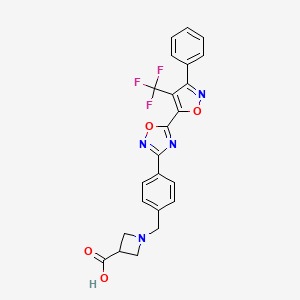
1-[[4-[(E)-N-[[4-cyclohexyl-3-(trifluoromethyl)phenyl]methoxy]-C-methylcarbonimidoyl]-2-ethylphenyl]methyl]azetidine-3-carboxylic acid

1-(4-{1-[(E)-4-cyclohexyl-3-trifluoromethylbenzyloxyimino]-ethyl}-2-ethylbenzyl)-azetidine-3-carboxylic acid

a selective modulator of S1P1 and S1P5 receptors, allowing S1P1 receptor-dependent modulation of lymphocyte traffic without producing S1P3 receptor-mediated effects.

Phase III

A sphingosine-1-phosphate receptor modulator potentially for the treatment of multiple sclerosis(MS).

Research Code BAF-312

CAS. 1230487-00-9, 1234627-85-0

Siponimod, (BAF312) is a selective sphingosine-1-phosphatereceptor modulator for oral use that is an investigational drug for multiple sclerosis (MS). It is intended for once-daily oral administration.[1]

As of January 2016 it is in a phase III clinical trial for secondary progressive MS due to complete Dec 2016.

AF312 is a potent and selective agonist of S1P with EC50 value of 0.39nM for S1P1 receptors and 0.98nM for S1P5 receptors, respectively [1]. BAF312 has shown >1000-fold selectivity for S1P1 versus S1P2, S1P3 and S1P4 receptors [1]. In vitro metabolism studies with liver microsomes have shown that the metabolic clearance of BAF312 is high in rat, low to moderate in monkey and human being, and low in dog and mouse. Moreover, BAF312 has been revealed to dose-dependently reduce peripheral lymphocyte counts in Lewis rats [2].For the detailed information about the solubility of BAF312 in water, the solubility of BAF312 in DMSO, the solubility of BAF312 in PBS buffer, the animal experiment of BAF312 ,the in vivo and in vitro test of BAF312 ,the cell experiment of BAF312 ,the IC50 and EC50 of BAF312

Clinical trials

(June 8, 2009) It is in Phase II trial. “A back-up compound for Fingolimod, BAF 312” is in Phase II studies.[2] It is being tested for the first time on people having multiple sclerosis. Worldwide 275 patients will participate in this phase II trial the outcome of which is to establish what the optimal dosage of BAF312 is for patients affected with Multiple Sclerosis for use in further trials. In order to identify “the optimal dosage”, participants in group I will be randomly selected to take either placebo, or BAF312 in doses of 0.5 mg/day, 2 mg/day, or 10 mg./day and will be regularly controlled in order to measure and determine the effectiveness, the tolerability and the safety of the dosages.

A phase III trial should run from Dec 2012 to Dec 2016.[3]

Approvals and indications

None yet

Mechanism of action

Siponimod binds selectively to some of the Sphingosine-1-phosphate receptor forms – including Sphingosine-1-phosphate receptor 1 – found on lymphocytes and other cell types.

This binding inhibits the migration of the lymphocytes to the location of the inflammation (e.g. in MS).

BAF312, may be very similar to Fingolimod but preventing lymphopenia, one of its main side effects, by preventing egress of lymphocytes from lymph nodes. BAF312 may be more selective in the particular sphingosine-1-phosphate receptors (8 in number) that it modulates.[4] It is selective for the -1 and -5 SIP receptors.[1]

SYNTHESIS


str1


MAIN

str1


str1


str1

str1

str1

str1

str1

 SYNTHESIS

str1

str1


str1

str1


str1

str1

str1

Paper

http://pubs.acs.org/doi/abs/10.1021/ml300396r

Discovery of BAF312 (Siponimod), a Potent and Selective S1P Receptor Modulator

Genomics Institute of the Novartis Research Foundation, 10675 John Jay Hopkins Drive, San Diego, California 92121, United States
Novartis Institute for Biomedical Research, Novartis Campus, CH-4056 Basel, Switzerland
ACS Med. Chem. Lett., 2013, 4 (3), pp 333–337
DOI: 10.1021/ml300396r
Publication Date (Web): January 04, 2013
Copyright © 2013 American Chemical Society
*Tel: 858-812-1621. E-mail: span@gnf.org.

Abstract

Abstract Image

A novel series of alkoxyimino derivatives as S1P1 agonists were discovered through de novo design using FTY720 as the chemical starting point. Extensive structure–activity relationship studies led to the discovery of (E)-1-(4-(1-(((4-cyclohexyl-3-(trifluoromethyl)benzyl)oxy)imino)ethyl)-2-ethylbenzyl)azetidine-3-carboxylic acid (32, BAF312, Siponimod), which has recently completed phase 2 clinical trials in patients with relapsing–remitting multiple sclerosis.

str1

str1

 PATENT

EP-2990055-A1 / 2016-03-02

MEDICINAL COMPOSITION FOR INHIBITING FORMATION AND/OR ENLARGEMENT OF CEREBRAL ANEURYSM OR SHRINKING SAME

 PATENT

US-9265754-B2 / 2016-02-23

Use of 1-{4-[1-(4-cyclohexyl-3-trifluoromethyl-benzyloxyimino)-ethyl]-2-ethyl-benzyl}-azetidine-3-carboxylic acid in treating symptoms associated with rett syndrome


PATENT

US-20160046573-A1 / 2016-02-18

IDENTIFYING PATIENT RESPONSE TO S1P RECEPTOR MODULATOR ADMINISTRATION

a fixed dose combination of BAF312 and a CYP2C9 metabolic activity promotor (e.g. rifampin or carbamezipine).

BAF312 is preferably administered at the standard therapeutic dosage. The CYP2C9 metabolic activity promotor is preferably administered at a dosage suitable to upregulate CYP2C9 to a level where a reduced dosage of BAF312 is not considered clinically necessary.

1-{4-[1-(4-cyclohexyl-3-trifluoromethyl-benzyloxyimino)-ethyl]-2-ethyl-benzyl}-azetidine-3-carboxylic acid forms

BAF312 (with the INN Siponimod) has the chemical name 1-{4-[1-(4-cyclohexyl-3-trifluoromethyl-benzyloxyimino)-ethyl]-2-ethyl-benzyl}-azetidine-3-carboxylic acid and has the structure of formula (I) below:

Image loading...

1-{4-[1-(4-cyclohexyl-3-trifluoromethyl-benzyloxyimino)-ethyl]-2-ethyl-benzyl}-azetidine-3-carboxylic acid may be administered as a free base, as a pharmaceutically acceptable salt (including polymorphic forms of the salt) or as a prodrug.

Pharmaceutically acceptable salt forms include hydrochloride, malate, oxalate, tartrate and hemifumarate.

In a preferred aspect, 1-{4-[1-(4-cyclohexyl-3-trifluoromethyl-benzyloxyimino)-ethyl]-2-ethyl-benzyl}-azetidine-3-carboxylic acid is administered as a hemifumarate salt.

PATENT

US-20150175536-A1 / 2015-06-25

HEMIFUMARATE SALT OF 1-[4-[1-(4-CYCLOHEXYL-3-TRIFLUOROMETHYL-BENZYLOXYIMINO)-ETHYL]-2-ETHYL-BENZYL]-AZETIDINE-3-CARBOXYLIC ACID

One particular compound disclosed in WO2004/103306 is 1-(4-{1-[(E)-4-cyclohexyl-3-trifluoromethyl-benzyloxyimino]-ethyl}-2-ethyl-benzyl)-azetidine-3-carboxylic acid (Compound I), the structure of which is shown below.

Image loading...

PATENT

EP-2809645-A1 / 2014-12-10

PROCESS FOR PREPARING N-(4-CYCLOHEXYL-3-TRIFLUOROMETHYL-BENZYLOXY)-ACETIMIDIC ACID ETHYL ESTER


PATENT

EP-2379498-B1 / 2015-01-21

POLYMORPHIC FORM OF 1-(4-{1-[(E)-4-CYCLOHEXYL-3-TRIFLUOROMETHYL-BENZYLOXYIMINO]-ETHYL}-2-ETHYL-BENZYL) -AZETIDINE-3-CARBOXYLIC ACID

Example 1 – Preparation of the Crystalline Form A of the free base of 1-(4-{1-[(E)-4-Cyclohexyl-3-trifluoromethyl-benzyloxyimino]-ethyl}-2-ethyl-benzyl)-azetidine-3-carboxylic acid (Compound I)Method

10 g of 1-4-{1-[(E)-4-Cyclohexyl-3-trifluoromethyl-benzyloxyimino]-ethyl}-2-ethyl-benzyldehyde, 4.7 g of 3-azetidine carboxylic acid and methanol (300 mL) are mixed. The resulting mixture is heated to 45 °C over 30 min and stirred at this temperature for 2 h. Then the reaction mixture is cooled to 20-25 °C and a solution of NaBH3CN (0.73 g) in MeOH (30 mL) is then added over a period of 20 min. The resulting mixture is stirred at room temperature for 1 h. After concentration, the residue is dissolved in EtOAc, (200 mL) and washed with minimum amount of H2O (20 mL). The organic layer is washed with water (2 x 10 mL) and concentrated to remove as much AcOH as possible. The residue is purified by column chromatography (minimum silica gel was used, 5 cm long by 3 cm diameter) first eluted with EtOAc and then MeOH to give 1-{4-[1-(4-Cyclohexyl-3-trifluoromethyl-benzyloxyimino)-ethyl]-2-ethyl-benzyl}-azetidine-3-carboxylic acid, as a thick oil. The residue is azeotroped with toluene to ca. 30 mL in volume, then heptane (60 mL) is added. The product crystallized after seeding with pure 1-{4-[1-(4-Cyclohexyl-3-trifluoromethyl-benzyloxyimino)-ethyl]-2-ethyl-benzyl}-azetidine-3-carboxylic acid. The suspension is stirred at 20-25 °C for 24 h and filtered. The filter cake is washed with toluene/heptane (1:3, 10 mL) and heptane (20 mL), and dried at 65 °C for 16 h. The product had a melting point of 110°C. 1H NMR (400 MHz, CD3OD) δ 7.67 (s, 1 H), 7.60 (m, 2 H), 7.55 (m, 2H), 7.35 (d, J = 8.4 Hz, 1 H), 5.23 (s, 2 H), 4.32 (bs, 2 H), 4.08 (bs, 4 H), 3.38 (m, 1 H), 2.93 (m, 1 H), 2.78 (q, J = 7.6 Hz, 2 H), 2.26 (s, 3 H), 1.83 (m, 5 H), 1.47 (m, 5 H), 1.24 (t, J = 8.4 Hz, 3 H).

PATENT

WO2004/103306

Example 3

1 – (4-[ 1 -(4-Cvclohexyl-3-trifluoromethyl-benzyloxyimino)-ethyl]-2-ethyl-benzyll -azetidine-

3-carboxylic acid

To a suspension of MnO2 (10 eq) in dioxane is added l-(3-ethyl-4-hydroxymethyl- phenyl)-ethanone O-(4-cyclohexyl-3-trifluoromethyl-benzyl)-oxime (1 eq). The resulting mixture is refluxed for 10 minutes. After filtration and concentration, the residue is dissolved in MeOH and treated with azetidine-3-carboxylic acid (2 eq) and Et3N (1.5 eq). The resulting mixture is heated at 50°C for 30 minutes. After cooling to room temperature, NaBH3CN (3 eq) is added in portions. Purification by preparative LCMS results in l-{4-[l- (4-cyclohexyl-3-trifluoromethyl-benzyloxyimino)-ethyl]-2-ethyl-benzyl}-azetidine-3- carboxylic acid; Η NMR (400 MHz, CD3OD) δ 1.24 (t, 3H), 1.30-1.60 (m, 5H), 1.74-1.92 (m, 5H), 2.28 (s, 3H), 2.79 (q, 2H), 2.92 (m, 1H), 3.68 (m, 1H), 4.32 (m, 4H), 4.51 (s, 2H) 5.22 (s, 2H), 7.38 (d, 1H), 7.50-7.68 (m, 5H). MS: (ES+): 517.3 (M+l)+.

References

WO 2008000419, Hiestand, Peter C; Schnell, Christian, “S1P Receptor modulators for treating multiple sclerosis”[

/////////BAF-312 , 1230487-00-9, 1234627-85-0 , Siponimod , BAF 312, Phase III , S1P receptor,  S1P1 agonist,  lymphocytes

N(CC1=CC=C(/C(=N/OCC2=CC=C(C3CCCCC3)C(C(F)(F)F)=C2)/C)C=C1CC)1CC(C(O)=O)C1

RP 6530, Tenalisib


DR ANTHONY MELVIN CRASTO Ph.D's avatarNew Drug Approvals


str1

(S)-2-(l-(9H-purin-6-ylamino)propyl)-3-(3-fluorophenyl)-4H-chromen-4-one (Compound A1 is RP 6530).

str1

RP 6530

CID 86291103.png

RP 6530, RP6530, RP-6530

Tenalisib

RP6530-1401, NCI-2015-01804, 124584, NCT02567656

(S)-2-(l-(9H-purin-6-ylamino)propyl)-3-(3-fluorophenyl)-4H-chromen-4-one

3-(3-fluorophenyl)-2-[(1S)-1-(7H-purin-6-ylamino)propyl]chromen-4-one

MW415.4, C23H18FN5O2

CAS 1639417-53-0, 1693773-94-2

A PI3K inhibitor potentially for the treatment of hematologic malignancies.

An inhibitor of phosphoinositide-3 kinase (PI3K) δ/γ isoforms and anti-cellular proliferation agent for treatment of hematol. malignancies

Rhizen Pharmaceuticals is developing RP-6530, a PI3K delta and gamma dual inhibitor, for the potential oral treatment of cancer and inflammation  In November 2013, a phase I trial in patients with hematologic malignancies was initiated in Italy ]. In September 2015, a phase I/Ib study was initiated in the US, in patients with relapsed and refractory T-cell lymphoma. At that time, the study was expected to complete in December 2016

PATENTS……..WO 11/055215 ,  WO 12/151525.

Inventors

 InventorsMeyyappan Muthuppalaniappan, Srikant Viswanadha, Govindarajulu Babu, Swaroop Kumar V.S. Vakkalanka,
Incozen Therapeutics Pvt. Ltd., Rhizen…

View original post 3,692 more words

RP 6503, Novartis to develop and commercialize Rhizen’s inhaled dual PI3K-delta gamma inhibitor


str1


RP 6503

phase 1
str1


RP 6503

Molecular Formula: C30H24F2N6O5S
Molecular Weight: 618.610566 g/mol

Mass: 619.1 (M++l). MP: 175-178° C Specific optical rotation (C=l in chloroform, at 25°C) : [a]D = + 147.16.

A1

RP 6503

(S)-N-(5-(4-amino-l-(l-(5-fluoro-3-(3-fluorophenyl)-4-oxo-4H-chromen-2-yl) ethyl)-lH-pyrazolo[3,4-d]pyrimidin-3-yl)-2-methoxyphenyl)methanesulfonamide

(S)-N-[5-[4-amino-1-[1-[5-fluoro-3-(3-fluorophenyl)-4-oxochromen-2-yl]ethyl]pyrazolo[3,4-d]pyrimidin-3-yl]-2-methoxyphenyl]methanesulfonamide


Novartis to develop and commercialize Rhizen’s inhaled dual PI3K-delta gamma inhibitor and related compounds worldwide

The immune pipeline includes ‘dual PI3K inhibitors for various indications’ licensed to Novartis

‘inhaled dual inhibitor’,

Phosphoinositide-3 kinase delta inhibitor; Phosphoinositide-3 kinase gamma inhibitor

WO2011055215A2 and WO2012151525A1 and U.S. Publication Nos. US20110118257 and US20120289496

Rhizen Pharmaceuticals Sa   INNOVATOR

 Incozen Therapeutics Pvt. Ltd., Rhizen Pharmaceuticals Sa

PATENT

http://www.google.com/patents/WO2011055215A2?cl=en

PATENT

http://www.google.com/patents/WO2012151525A1?cl=en


scheme 1A:

Ste -1

Step-2

Scheme 2


SCHEME 3

SCHEME4

List of Intermediates


STR3


Intermediate 27: 2-( l -(4-amino-3-iodo-lH-pyrazolo[3,4-d]pyrimidin- l – yl)ethyl)-5-fluoro-3-(3-fluorophenyl)-4H-chromen-4-one: To a solution of 3-iodo- l H- pyrazolo[3,4-d]pyrimidin-4-amine (0.800 g, 2.88 mmol) in DMF (5 ml), potassium carbonate (0.398 g, 2.88 mmol) was added and stirred at RT for 30 min. To this mixture intermediate 22 (0.500 g, 1.44 mmol) was added and stirred for 12h. The reaction mixture was diluted with water and extracted with ethyl acetate. The organic layer was dried over sodium sulphate and concentrated under reduced pressure. The crude product was purified by column chromatography with methanol: dichloromethane to afford the title compound as a off-white solid (0.300 g, 38%). Ή-NMR (5 ppm, DMSO-d63, 400 MHz): 8.02 (s, 1 H), 7.94 (s, 1 H), 7.84 (dt, J = 8.4,5.7 Hz, 1H), 7.47 (d, 7 = 8.6 Hz, 1H), 7.29 (m, 3H), 7.09 (dt, 7 = 8.8,2.3 Hz, 1 H), 6.87 (s, 2H), 5.88 (q, 7 = 7.0 Hz, 1H), 1.82 (d, 7 = 7.0 Hz, 3H).

SYNTHESIS

STR2


MAIN PART

str1

PATENT

http://www.google.com/patents/WO2015198289A1?cl=en

Prashant Kashinath Bhavar, Swaroop Kumar Venkata Satya VAKKALANKA


The present invention relates to a selective dual delta (δ) and gamma (γ) PI3K protein kinase modulator (S)-N-(5-(4-amino-1-(1-(5-fluoro-3-(3-fluorophenyl)-4-oxo-4H- chromen-2-yl)ethyl)-1H-pyrazolo[3,4-d]pyrimidin-3-yl)-2-methoxyphenyl) methane sulfonamide, methods of preparing them, pharmaceutical compositions containing them and methods of treatment, prevention and/or amelioration of PI3K kinase mediated diseases or disorders with them.

front page image

compound of formula (Al):

(Al).

The process comprises the steps of:

(a) subjecting (R)-5-fluoro-3-(3-fluorophenyl)-2-(l-hydroxyethyl)-4H-chromen-4-one:

to a Mitsunobu reaction with 3-(4-methoxy-3-nitrophenyl)-lH-pyrazolo[3,4-d]pyrimidin-4-amine:

(for example, in the presence of triphenylphosphine and diisopropylazodicarboxylate) to give (S)-2-(l-(4-amino-3-(4-methoxy-3-nitrophenyl)-lH-pyrazolo[3,4-d]pyrimidin-l-yl)ethyl)-5-fluoro-3-(3-fluorophenyl)-4H-chromen-4-one (Intermediate 3):

Intermediate 3;

(b) reducing Intermediate 3, for example with a reducing agent such as Raney Ni, to give (S)-2-(l-(4-amino-3-(3-amino-4-methoxyphenyl)-lH-pyrazolo[3,4-d]pyrimidin- l-yl)ethyl)-5-fluoro-3-( -fluorophenyl)-4H-chromen-4-one (Intermediate 4):

Intermediate 4;

The intermediates described herein may be prepared by the methods described in International Publication Nos. WO 11/055215 and WO 12/151525, both of which are hereby incorporated by reference.

Intermediate 1: N-(5-bromo-2-methoxyphenyl)methanesulfonamide:

To a solution of 5-bromo-2-methoxyaniline(1.00 g, 4.94 mmol) in dichloromethane (10 ml), pyridine (0.800 ml, 9.89 mmol) was added and cooled to 0°C. Methane sulphonyl chloride (0.40 ml, 5.19 mmol) was added and stirred for 30 min. The reaction mixture was quenched with water, extracted with ethyl acetate, dried over anhydrous sodium sulphate and concentrated under reduced pressure. The crude product was chromatographed with ethyl acetate : petroleum ether to afford the title compound as a reddish solid (1.20 g, 87%).

Intermediate 2: N-(2-methoxy-5-(4,4,5,5-tetramethyl-l,3,2-dioxaborolan-2-yl)phenyl)methanesulfonamide: Potassium acetate (0.841 g, 8.57 mmol) and bis(pinacolato)diboron (1.190 g, 4.71 mmol) were added to a solution of intermediate 1 (1.20 g, 4.28 mmol) in dioxane (17.5 ml) and the solution was degassed for 30 min.[l, -Bis(diphenylphosphino)ferrocene]dichloro palladium(II).CH2Ci2 (0.104 g, 0.128 mmol) was added under nitrogen atmosphere and heated to 80°C. After 2h the

reaction mixture was filtered through celite and concentrated. The crude product was purified by column chromatography with ethyl acetate : petroleum ether to afford the title compound as a yellow solid (1.00 g, 71%).JH-NMR (δ ppm, CDCb, 400 MHz): 7. 91 (d, / = 1.2Hz, 1H), 7. 62 (dd, / = 8.1, 1.2Hz, 1H), 6. 92 (d, / = 8.1Hz, 1H), 6.73 (s, 1H), 3.91 (s, 3H), 2.98 (s, 3H), 1.32 (s, 12H).

Intermediate 3: (S)-2-(l-(4-amino-3-(4-methoxy-3-nitrophenyl)-lH-pyrazolo[3,4-d]pyrimidin-l-yl)ethyl)-5-fluoro-3-(3-fluorophenyl)-4H-chromen-4-one: (S)-2-(l-(4-amino-3-(4-methoxy-3-nitrophenyl)-lH-pyrazolo[3,4-d]pyrimidin-l-yl)ethyl)-5-fluoro-3-(3-fluorophenyl)-4H-chromen-4-one: To a solution of (R)-5-fluoro-3-(3-fluorophenyl)-2-(l-hydroxyethyl)-4H-chromen-4-one (0.500 g, 1.64 mmol) in THF (5 ml), 3-(4-methoxy-3-nitrophenyl)-lH-pyrazolo[3,4-d]pyrimidin-4-amine (0.564 g, 1.97 mmol) and triphenylphosphine (0.649 g, 2.47 mmol) were added followed by the addition of diisopropylazodicarboxylate (0.50 ml, 2.47 mmol). ((R)-5-fluoro-3-(3-fluorophenyl)-2-(l-hydroxyethyl)-4H-chromen-4-one can be prepared as described for Intermediates 23, 25, and 26 in International Publication No. WO 2012/0151525.). After 4h at room temperature, the mixture was concentrated and the residue was purified by column chromatography with ethyl acetate : petroleum ether to afford the title compound as a brown solid (0.270 g, 29%). JH-NMR (δ ppm, DMSO-d6, 400 MHz): 8.04 (s, 1H), 7.83 (m, 1H), 7.63-7.50 (m, 3H), 7.29 (m, 2H), 7.06 (dt, J = 8.7,2.2Hz, 1H), 6.94 (m, 2H), 6.75 (dd, J = 8.1,2.1Hz, 1H), 5.95 (q, J = 7.0Hz, 1H), 4.98 (s, 2H), 3.81 (s, 3H), 1.86 (d, J = 7.0 Hz, 3H).

[109] Intermediate 4: (S)-2-(l-(4-amino-3-(3-amino-4-methoxyphenyl)-lH-pyrazolo[3,4-d]pyrimidin-l-yl)ethyl)-5-fluoro-3-(3-fluorophenyl)-4H-chromen-4-one:

(S)-2-(l-(4-amino-3-(3-amino-4-methoxyphenyl)-lH-pyrazolo[3,4-d]pyrimidin-l-yl)ethyl)-5-fluoro-3-(3-fluorophenyl)-4H-chromen-4-one : To a solution of Intermediate 3 (0.260 g, 0.455 mmol) in ethanol (5 ml), Raney Ni (0.130 g) was added and hydrogeneated at 20psi at 50°C for 24h. The reaction mixture was passed through celitepad and concentrated to afford the title compound as a brown solid (0.150 g, 60%). Mass : 540.8 (M+).

Example A

N-(5-(4-amino-l-(l-(5-fluoro-3-(3-fluorophenyl)-4-oxo-4H-chromen-2-yl)ethyl)-lH- pyrazolo[3,4-d]pyrimidin-3-yl)-2-methoxyphenyl)methanesulfonamide

To a solution of 2-(l-(4-amino-3-iodo-lH-pyrazolo[3,4-d]pyrimidin-l-yl)ethyl)-5-fluoro-3-(3-fluorophenyl)-4H-chromen-4-one (0.200 g, 0.366 mmol) in DME (2.1 ml) and water (0.67 ml), intermediate 2 (0.179 g, 0.550 mmol) and sodium carbonate (0.116 g, 1.10 mmol) were added and the system was degassed for 30 min. (2-(l-(4-amino-3-iodo-lH^yrazolo[3,4-d]pyrimidin-l-yl)ethyl)-5-fluoro-3-(3-fluorophenyl)-4H-chromen-4-one can be prepared as described for Intermediates 23, 25, and 26 in International Publication No. WO 2012/0151525). Bis(diphenylphosphino) ferrocene]dichloropalladium(II) (0.059 g, 0.075 mmol) was added and kept under microwave irradiation (microwave power = 100W, temperature = 100 °C) for 45 min. The reaction mixture was Celite filtered, concentrated and extracted with ethyl acetate. The organic layer was dried over sodium sulphate and concentrated under reduced pressure. The crude product was purified by column chromatography with methanol: dichloromethane to afford the title compound as a brown solid (0.080 g, 35%). MP: 216-218 °C. ¾-NMR (δ ppm, CDCb, 400 MHz): 8.20 (s, 1H), 7.73 (s, 1H), 7.53 (m, 2H), 7.31 (m, 2H), 7.07-6.73 (m, 6H), 6.07 (q, / = 6.2 Hz, 1H), 3.98 (s, 3H), 3.14 (s, 3H), 2.01 (d, / = 6.0Hz, 3H).

Example Al and A2

Method A

(S)-N-(5-(4-amino-l-(l-(5-fluoro-3-(3-fluorophenyl)-4-oxo-4H-chromen-2-yl)ethyl)- lH-pyrazolo[3,4-d]pyrimidin-3-yl)-2-methoxyphenyl)methanesulfonamide

and (R)-N-(5-(4-amino-l-(l-(5-fluoro-3-(3-fluorophenyl)-4-oxo-4H-chromen-2- yl)ethyl)-lH-p anesulfonamide

The two enantiomerically pure isomers were separated by preparative SFC (supercritical fluid) conditions from N-(5-(4-amino-l-(l-(5-fluoro-3-(3-fluorophenyl)-4-oxo-4H-chromen-2-yl)ethyl)-lH-pyrazolo[3,4-d]pyrimidin-3-yl)-2-methoxyphenyl)methanesulfonamide (0.500 g) on a CHIRALPAK AS-H column (250 x 30 mm; 5μπι) using methanol : CO2 (55:45) as the mobile phase at a flow rate of 80g / min.

Example Al (S-isomer): Brown solid (0.247 g). Enantiomeric excess: 97.4%. Retention time: 2.14 min. Mass: 619.1 (M++l). MP: 156-158° C.

Example A2 (R-isomer): Brown solid (0.182 g). Enantiomeric excess: 99.3%. Retention t: 3.43 min. Mass: 619.1 (M++l). MP: 168-171° C.

Method Al

(S)-N-(5-(4-amino-l-(l-(5-fluoro-3-(3-fluorophenyl)-4-oxo-4H-chromen-2-yl)ethyl)- lH-pyrazolo[3,4-d]pyrimidin-3-yl)-2-methoxyphenyl)methanesulfonamide

and (R)-N-(5-(4-amino-l-(l-(5-fluoro-3-(3-fluorophenyl)-4-oxo-4H-chromen-2- yl)ethyl)-lH-p anesulfonamide

The two enantiomerically pure isomers were separated by preparative SFC (supercritical fluid) conditions from N-(5-(4-amino-l-(l-(5-fluoro-3-(3-fluorophenyl)-4-oxo-4H-chromen-2-yl)ethyl)-lH-pyrazolo[3,4-d]pyrimidin-3-yl)-2-methoxyphenyl) methanesulfonamide (15.0 g) on a CHIRALPAK AS-H column (250 x 20 mm; 5μπι) using methanol : CO2 (45:55) as the mobile phase at a flow rate of 120g / min.

Example Al (S-isomer): Enantiomeric excess: 100 %. Retention time: 2.21 min. Mass: 619.1 (M++l). MP: 175-178° C Specific optical rotation (C=l in chloroform, at 25°C) : [a]D = + 147.16.

Example A2 (R-isomer): Enantiomeric excess: 99.3%. Retention t: 3.72 min. Mass: 619.1 (M++l). MP: 154-157° C. Specific optical rotation (C=l in chloroform, at 25°C) : [a]D = – 159.54.

Method B

Example Al

(S)-N-(5-(4-amino-l-(l-(5-fluoro-3-(3-fluorophenyl)-4-oxo-4H-chromen-2-yl)ethyl)- lH-pyrazolo[3,4-d]pyrimidin-3-yl)-2-methoxyphenyl)methanesulfonamide

To a solution of Intermediate 4 (0.500 g, 0.923 mmol) in dichloromethane (5 ml) cooled to 0°C, pyridine (0.200 ml, 1.84 mmol) was added and stirred for 10 min. Methanesulphonyl chloride (0.100 ml, 0.923 mmol) was added stirred for 30 min. The reaction mixture was quenched with water, extracted with dichloromethane and dried over sodium sulphate. The crude product was column chromatographed with methanol : dichloromethane to afford the title compound as an off-white solid (0.240 g, 42%). MP: 211-213°C. ¾-NMR (δ ppm, DMSO-d6, 400 MHz): 9.15 (s, 1H), 8.06 (s, 1H), 7.83 (m, 1H), 7.49 (m, 4H), 7.28 (m, 4H), 7.08 (dt, / = 8.6, 1.7 Hz, 1H), 6.92 (s, 2H), 5.98 (q, / = 6.9 Hz, 1H), 3.88 (s, 3H), 2.99 (s, 3H), 1.88 (d, / = 7.0 Hz, 3H). Enantiomeric excess: 85.4% as determined by HPLC on a chiralpak AS-3R column, enriched in the fast eluting isomer (retention time = 7.46 min.).


str1

CLIPS

La Chaux-de-Fonds, Switzerland, Sept. 6, 2013  — La Chaux-de-Fonds, Switzerland (6 September 2013): Rhizen Pharmaceuticals S.A. announces a scientific poster presentation on the pre-clinical characterization of its lead calcium release activated channel (CRAC) inhibitor, RP3128, for the treatment of respiratory disorders and an oral presentation on the pharmacological profile of its novel, dual Phosphoinositide-3 kinase (PI3K) delta/gamma inhibitor, RP6503, in the pulmonary disease systems, at the European Respiratory Society Annual Congress (ERS), to be held from 7-11 September 2013, at Barcelona, Spain.

RP6503 is a novel, potent and selective inhibitor of the delta and gamma isoforms of PI3K. It is to be delivered via the inhalation route and has a long duration of action along with excellent PI3K isoform selectivity, which is expected to result in better safety. RP3128 has been optimized with high potency for CRAC channel inhibition, selectivity over the other voltage gated channels and excellent oral bioavailability. Rhizen intends to move both these compounds to the clinic in 2014.

Details of the presentations:

1.      Abstract of the Poster Presentation: “Pre-clinical characterization of RP3128, a novel and potent CRAC channel inhibitor for the treatment of respiratory disorders”

Time and Location- 8 September 2013 between 14.45-16.45 in Room 3.6, at Poster Discussion: New drugs in respiratory medicine, at FIRA BARCELONA, Convention Centre de Gran Via, Barcelona, Spain

2.      Abstract of Oral Presentation: “In vitro and in vivo pharmacological profile of RP6503, a novel dual PI3K delta/gamma inhibitor, in pulmonary disease systems”

Time and Location- 11 September 2013 at 8.45 in Room 3.9; Session 8.30-10.30, at the Oral Presentation: Emerging new targets for the treatment of respiratory diseases, at FIRA BARCELONA, Convention Centre de Gran Via, Barcelona, Spain

CLIPS

La Chaux-de-Fonds, Switzerland , Dec. 09, 2015  — Rhizen Pharmaceuticals S.A. announced today that they have entered into an exclusive, worldwide license agreement with Novartis for the development and commercialization of Rhizen’s, inhaled dual PI3K-delta gamma inhibitor and its closely related compounds for various indications.

Under the terms of the agreement, Rhizen will receive an upfront payment and is eligible to receive development, regulatory and sales milestones payments. In addition Rhizen is also eligible to receive tiered royalties on annual nets sales.

The lead compound is a novel, potent, and selective dual PI3K-delta gamma inhibitor with demonstrated anti-inflammatory and immuno-modulatory activity in pre-clinical systems and models representative of respiratory diseases. With a favorable ADME and PK profile and high therapeutic index in animals, the inhaled dual PI3K-delta gamma inhibitor holds promise in the treatment of human airway disorders.

About Rhizen Pharmaceuticals S.A.:

Rhizen Pharmaceuticals is an innovative, clinical-stage biopharmaceutical company focused on the discovery and development of novel therapeutics for the treatment of cancer, immune and metabolic disorders. Since its establishment in 2008, Rhizen has created a diverse pipeline of proprietary drug candidates targeting several cancers and immune associated cellular pathways. Rhizen is headquartered in La-Chaux-de-Fonds, Switzerland. For additional information, please visit Rhizen’s website, http://www.rhizen.com.

SEE

https://newdrugapprovals.org/2015/12/10/alembic-pharma-advances-1-on-rhizen-novartis-license-agreement/


WO-2015181728 

WO-2015001491 

WO-2014072937 

WO-2014006572 

http://www.atsjournals.org/doi/abs/10.1164/ajrccm-conference.2013.187.1_MeetingAbstracts.A3880

WO2011055215A2 Nov 3, 2010 May 12, 2011 Incozen Therapeutics Pvt. Ltd. Novel kinase modulators
WO2012008302A1 Jun 28, 2011 Jan 19, 2012 National University Corporation Tottori University Method for preparing novel hipsc by means of mirna introduction
WO2012121953A1 Feb 29, 2012 Sep 13, 2012 The Trustees Of Columbia University In The City Of New York Methods and pharmaceutical compositions for treating lymphoid malignancy
WO2012151525A1 May 4, 2012 Nov 8, 2012 Rhizen Pharmaceuticals Sa Novel compounds as modulators of protein kinases
WO2013164801A1 May 3, 2013 Nov 7, 2013 Rhizen Pharmaceuticals Sa Process for preparation of optically pure and optionally substituted 2- (1 -hydroxy- alkyl) – chromen – 4 – one derivatives and their use in preparing pharmaceuticals
US20110118257 May 19, 2011 Rhizen Pharmaceuticals Sa Novel kinase modulators
US20120289496 May 4, 2012 Nov 15, 2012 Rhizen Pharmaceuticals Sa Novel compounds as modulators of protein kinases

///////RP 6503, Novartis, develop, commercialize,  Rhizen, inhaled dual PI3K-delta gamma inhibitor, PHASE 1, RP-6503

c21c(cccc1O/C(=C(\C2=O)c3cc(ccc3)F)C(C)n4c6ncnc(c6c(n4)c5cc(c(cc5)OC)NS(=O)(=O)C)N)F

CC(C1=C(C(=O)C2=C(O1)C=CC=C2F)C3=CC(=CC=C3)F)N4C5=C(C(=N4)C6=CC(=C(C=C6)OC)NS(=O)(=O)C)C(=NC=N5)N

str1

/////

WO 2016042441, Mankind Research Centre, Silodosin, New patent


Mankind1.png

WO 2016042441, Mankind Research Centre, Silodosin, New patent

WO-2016042441

Mankind Research Centre

MANKIND RESEARCH CENTRE [IN/IN]; 191-E, Sector 4-II, IMT-Manesar, Haryana 122050 (IN)

A novel process for the preparation of considerably pure silodosin

GANGWAR, Kuldeep Singh; (IN).
KUMAR, Anil; (IN).
BHASHKAR, Bhuwan; (IN)

The present invention relates to a novel, improved, commercially viable and industrially advantageous process for the preparation of Silodosin of Formula (I), its pharmaceutically acceptable salts or solvates thereof. The invention relates to the preparation of considerably pure Silodosin with high yield.

front page image

Silodosin, l-(3-hydroxypropyl)-5-[(2R)-2-({2-[2-(2,2,2-trifluoroethoxy)phenoxy] ethyl} amino)propyl]-2,3-dihydro-lH-indole-7-carboxamide of Formula (I) is an indoline antidysuric which has a selectively inhibitory effect against urethra smooth muscle constriction, and decreases urethra internal pressure without great influence on blood pressure. Silodosin is available under trade names RAPAFLO® or UROREC®. Silodosin was first disclosed in EP 0600675 as a therapeutic agent for the treatment of dysuria associated with benign prostatic hyperplasia, where a process for producing the compound is also disclosed.

Formula (I)

Since, Silodosin is an optically active compound having a complex chemical structure; its synthesis is relatively complex and requires a sequence of multiple steps.

US patent no. 6,310,086, discloses a process for preparing Silodosin analogue compound from reaction of (R)-3-{5-(2-aminopropyl)-7-cyano-2,3-dihydro-lH-indol-l-yl} propylbenzoate with 2-(2-ethoxyphenoxy)ethyl methanesulfonate and finally isolated as a crude compound which is purified by column chromatography. The said process has a major disadvantage of using column chromatography which is not feasible at plant scale production.

PCT application no. WO 2012147019, discloses the preparation of Silodosin as shown in scheme- 1, wherein the Ν,Ν-dialkyl impurity of Formula (Ila) formed during condensation of 3-{7-cyano-5-[(2R)-2-aminopropyl]-2,3-dihydro-lH-indol-l-yl}propyl benzoate of Formula (III) with 2-(2-(2,2,2-trifluoroethoxy)phenoxy)ethyl methanesulfonate of Formula (IV); is removed through preparation of monotartarate salt to give compound of Formula (VI). The compound of Formula (VI) is base hydrolyzed followed by cyano hydrolysis to give crude Silodosin of Formula (VIII) which is then further purified by crystallization to get desired pure Silodosin.

Scheme- 1:

Major drawback of above said reaction process is that multiple isolations and crystallizations are required to get pure Silodosin.

Similarly, US 7,834,193 discloses monooxalate salt represented by Formula Via having 0.9% of dialkyl impurity represented by Formula Ila. The oxalate salt so obtained is subjected to alkaline hydrolysis followed by transformation of the nitrile to an amide.

Formula (Ila)

Similarly, PCT application no. WO 2012147107, discloses the method wherein Silodosin is prepared by condensation of 3-{7-cyano-5-[(2R)-2-aminopropyl]-2,3-dihydro-lH-indol-l-yl} propyl benzoate with 2-[2-(2,2,2-trifluoroethoxy)phenoxy]ethyl methanesulfonate in solvent using base and phase transfer catalyst wherein, dialkyl impurity is formed up to 11%, followed by hydroxyl deprotection in protic solvent using base and phase transfer catalyst which is then subjected to purification to remove N,N-dialkyl impurity represented by Formula (lib) up to 0.6% through the preparation of acetate salt. This process suffers from a serious drawback i.e., accountable formation of dialkyl impurity and even after purification the impurity is reduced to only up to 0.6%. Secondly, the process requires multiple isolations and purifications ensuing into time engulfing workups and purifications and hence incurring solvent wastage. This makes process lengthy, uneconomical and tedious to be performed at plant scale.

Another PCT application no. WO 2012131710, discloses the preparation of Silodosin in which the chiral compound (3-(5-((R)-2-aminopropyl)-7-cyanoindolin-l-yl)propyl benzoate) is reacted with 2-[2-(2,2,2-trifluoroethoxy)phenoxy]ethyl methane sulfonate in isopropyl alcohol using sodium carbonate as base. The reaction is completed in 40-50h and about 9-11% of dimer is formed during condensation. After completion of reaction, it is subjected to hydroxyl deprotection and the crude compound so obtained is purified to remove the Ν,Ν-dialkyl impurity of Formula (lib). The pure compound is then reacted with hydrogen peroxide in dimethyl sulfoxide to give Silodosin. The major drawback of this process is that the process is a multistep process wherein the condensation reaction is long-drawn-out resulting into countable amount of dimer formation during the process.

Thus, the prior art methods of preparing Silodosin require multiple and repeated purifications to synthesize DMF (Drug Master File) grade Silodosin. None of the prior art produces compound of Formula (VI) or (VII) with Ν,Ν-dialkyl impurity of Formula (Ila) or (lib) in an amount less than 0.6% to 0.5% even after purification. Therefore to prepare highly pure Silodosin, there is a need to explore new synthetic schemes that could be more economical and scalable. The present invention provides a novel, improved, commercially viable and industrially advantageous process for the synthesis of Silodosin and its pharmaceutically acceptable salts or solvates thereof. The present invention focus on preparation of highly pure Silodosin in appreciable yields with minimal use of solvents wherein the Silodosin is isolated with purity >99.5% having Ν,Ν-dialkyl impurity less than 0.03% and other individual impurities below 0.1%.

Mankind Pharma: Formulating Strategy To Enter The Big League

Ramesh Juneja (seated), founder of Mankind Pharma, with brother Rajeev, who is senior director (marketing & sales)

Mankind Pharma Chairman and Founder RC Juneja

In accordance to one embodiment of the present invention, the process of the preparation of Silodosin represented by Formula (I)

comprises the steps of:

a) condensing chiral compound represented by Formula (III)

Formula (III)

wherein, Bz represents to Benzoyl group with compound represented by Formula (IV)

Formula (IV)

wherein, Ms represents to Methanesulfonyl group in presence of base and phase transfer catalyst in an organic solvent to give intermediate represented by Formula (V)

Formula (V)

wherein, n is an integer of 1 and 2 and Bz is as defined above, wherein the compound having n=2 is formed in an amount of less than 5%;

b) optionally isolating compound of Formula (V),

c) without purification converting it to de-protected compound represented by Formula (IX) in an organic solvent;

Formula (IX)

wherein, n is as defined above;

d) optionally isolating compound of Formula (IX), and

e) without purification converting it to compound represented by Formula (X)

Formula (X)

wherein n is as defined above;

f) subjecting compound of Formula (X) to purification by converting to acid salt for removal of Ν,Ν-dialkyl impurity represented by Formula (lie);

Formula (He)

g) hydrolysis of the said acid salt to get Silodosin of Formula (I) with purity >99.5%.

Examples

The invention is explained in detail in the following examples which are given solely for the purpose of illustration only and therefore should not be construed to limit the scope of the invention.

Example 1

Preparation of Crude Silodosin:

Method A:

To the solution of lOg (0.0275 mol) of (3-(5-((R)-2-aminopropyl)-7-cyanoindolin-l-yl)propyl benzoate) in 100ml of toluene was added 14.3g (0.0826 mol) of dipotassium hydrogen phosphate and 8.20g (0.0261 mol) of 2-[2-(2,2,2-trifluoroethoxy)phenoxy]ethyl methane sulfonate followed by addition of 2.0g (0.0055 mol) of tetrabutyl ammonium iodide and stirred the reaction mass at 85-90°C for 10-12h. Cooled the reaction mass, added de-mineralized water and separated the toluene layer followed by distillation to get crude viscous mass. Added 110ml of dimethyl sulfoxide and a solution of 1.51g (0.0415 mol) of sodium hydroxide dissolved in 8.52ml of water followed by addition of 6.42g (0.0567 mol) of 30% w/w of hydrogen peroxide. Stirred the reaction mass at 20-25°C till completion and added sodium sulfite solution. Extracted the compound in ethylacetate, washed the organic layer with brine solution and concentrated to get 10.2g of crude Silodosin.

Ν,Ν-dialkyl impurity is 3.2% as per HPLC.

Method B:

To the solution of lOg (0.0275 mol) of (3-(5-((R)-2-aminopropyl)-7-cyanoindolin-l-yl)propyl benzoate) in 100ml of toluene was added 14.3g (0.0826 mol) of dipotassium hydrogen phosphate and 8.20g (0.0261 mol) of 2-[2-(2,2,2-trifluoroethoxy)phenoxy]ethyl methane sulfonate followed by addition of 2.0g (0.0055 mol) of tetrabutyl ammonium iodide and stirred the reaction mass at 85-90°C for 10-12h. Added solution of 4.4g of sodium hydroxide dissolved in 10ml of water and stirred the reaction at ambient temperature till completion. Quenched the reaction mass with water and separated the layers. Washed the toluene layer with brine and concentrated under reduced pressure to get crude mass. Dissolved the crude mass so obtained in 110ml of dimethyl sulfoxide and added a solution of 1.95g (0.0488 mol) of sodium hydroxide dissolved in 7.95ml of water followed by addition of 7.5g (0.066 mol) of 30% w/w of hydrogen peroxide. Stirred the reaction mass at room temperature followed by addition of 210ml of aqueous solution of sodium sulfite and extracted the compound in ethyl acetate. Washed the organic layer with brine and concentrated under reduced pressure to get 10. lg of crude Silodosin.

Ν,Ν-dialkyl impurity is 3.0% as per HPLC

Method C:

To the solution of lOg (0.0275 mol) of (3-(5-((R)-2-aminopropyl)-7-cyanoindolin-l-yl)propyl benzoate) in 100ml of dimethyl sulfoxide was added 14.3g (0.0826 mol) of dipotassium hydrogen phosphate and 8.20g (0.0261 mol) of 2-[2-(2,2,2-trifluoroethoxy)phenoxy] ethyl methane sulfonate followed by addition of 2.0g (0.0055 mol) of tetrabutyl ammonium iodide and stirred the reaction mass at 85-90°C for 2-3h. Added 100ml of water and 50ml of toluene and stirred the reaction mass at room temperature for half an hour. Separated the toluene layer and concentrated under reduced pressure. To the crude mass so obtained was added 110ml of dimethyl sulfoxide and a solution of 4.4g of sodium hydroxide dissolved in 10ml of water followed by addition of 7.5g (0.066 mol) of 30% w/w of hydrogen peroxide. Stirred the reaction mass at room temperature followed by addition of 210ml of aqueous solution of sodium sulfite and extracted the compound in ethyl acetate. Washed the organic layer with brine and concentrated under reduced pressure to get 9.8 g of crude Silodosin.

Ν,Ν-dialkyl impurity is 2.1% as per HPLC

Method D:

To the solution of 20g (0.055 mol) of (3-(5-((R)-2-aminopropyl)-7-cyanoindolin-l-yl)propyl benzoate) in 200ml of toluene was added 28.6g (0.165 mol) of dipotassium hydrogen phosphate and 16.4g (0.0522 mol) of 2-[2-(2,2,2-trifluoroethoxy)phenoxy]ethyl methane sulfonate followed by addition of 4.0g (0.11 mol) of tetrabutyl ammonium iodide and stirred the reaction mass at 85-90°C for 10-12h. Added de-mineralized water and stirred at room temperature for half an hour. Separated the toluene layer to which was added a solution of 8.8g of sodium hydroxide dissolved in 20ml of water and stirred the reaction at ambient temperature till completion. Quenched the reaction mass with water and separated the layers. Washed the toluene layer with brine and concentrated under reduced pressure to get crude mass. Dissolved the crude mass so obtained in 200ml of dimethyl sulfoxide and added a solution of 3.9g (0.0976 mol) of sodium hydroxide dissolved in 16ml of water followed by addition of 15g (0.132 mol) of 30% w/w of hydrogen peroxide. Stirred the reaction mass at room temperature followed by addition of 400ml of aqueous solution of sodium sulfite and extracted the compound in ethyl acetate. Washed the organic layer with brine and concentrated under reduced pressure to get 21. Og of crude Silodosin.

Ν,Ν-dialkyl impurity is 2.8% as per HPLC

Method E:

To the solution of 2g (0.0055 mol) of (3-(5-((R)-2-aminopropyl)-7-cyanoindolin-l-yl)propyl benzoate) in 20ml of was dimethyl sulfoxide was added 2.87g (0.0165 mol) of dipotassium hydrogen phosphate and 1.64g (0.0052 mol) of 2-[2-(2,2,2-trifluoroethoxy)phenoxy] ethyl methane sulfonate followed by addition of 0.29g (0.0011 mol) of 16-crown ether and stirred the reaction mass at 85-90°C for 10-12h. Added a solution of 0.88g of sodium hydroxide dissolved in 2ml of water and stirred the reaction at ambient temperature till completion. Added de-mineralized water and toluene and stirred at room temperature for half an hour. Separated the toluene layer and concentrated under reduced pressure and to the solid mass so obtained were added 20ml of dimethyl sulfoxide and a solution of 0.38g (0.0231 mol) of sodium hydroxide dissolved in 1.6ml of water followed by addition of 1.5g (0.0132 mol) of 30% w/w of hydrogen peroxide. Stirred the reaction mass at room temperature followed by addition of aqueous solution of sodium sulfite and extracted the compound in ethyl acetate. Washed the organic layer with brine and concentrated under reduced pressure to get 2.1g of crude Silodosin.

Ν,Ν-dialkyl impurity is 2.2% as per HPLC

Method F:

To the solution of lOg (0.0275 mol) of (3-(5-((R)-2-aminopropyl)-7-cyanoindolin-l-yl)propyl benzoate) in 100ml of was acetonitrile was added 14.3g (0.0826 mol) of dipotassium hydrogen phosphate and 8.20g (0.0261 mol) of 2-[2-(2,2,2-trifluoroethoxy)phenoxy] ethyl methane sulfonate followed by addition of 2.0g (0.0055 mol) of tetra butyl ammonium iodide and stirred the reaction mass at 85-90°C for 10-12h. Added a solution of 4.4g of sodium hydroxide dissolved in 10ml of water and stirred the reaction at ambient temperature till completion. Added de-mineralized water and toluene and stirred at room temperature for half an hour. Separated the toluene layer and concentrated under reduced pressure and to the solid mass so obtained were added 110ml of dimethyl sulfoxide and a solution of 1.95g (0.0488 mol) of sodium hydroxide dissolved in 7.95ml of water followed by addition of 7.5g (0.066 mol) of 30% w/w of hydrogen peroxide. Stirred the reaction mass at room temperature followed by addition of 210ml of aqueous solution of sodium sulfite and extracted the compound in ethyl acetate. Washed the organic layer with brine and concentrated under reduced pressure to get 9.5g of crude Silodosin.

Ν,Ν-dialkyl impurity is 3.1% as per HPLC

Method G:

To the solution of lOg (0.0275 mol) of (3-(5-((R)-2-aminopropyl)-7-cyanoindolin-l-yl)propyl benzoate) in 100ml of was Dimethyl sulfoxide was added 14.3g (0.0826 mol) of dipotassium hydrogen phosphate and 8.20g (0.0261 mol) of 2-[2-(2,2,2-trifluoroethoxy)phenoxy] ethyl methane sulfonate followed by addition of 4.0g (0.0055 mol) of tetra butyl ammonium iodide and stirred the reaction mass at 85-90°C for 10-12h. Added a solution of 4.4g of sodium hydroxide dissolved in 10ml of water and stirred the reaction at ambient temperature till completion. Added de-mineralized water and toluene and stirred at room temperature for half an hour. Separated the toluene layer and concentrated under reduced pressure and to the solid mass so obtained were added 110ml of dimethyl sulfoxide and a solution of 1.95g (0.0488 mol) of sodium hydroxide dissolved in 7.95ml of water followed by addition of 7.5g (0.066 mol) of 30% w/w of hydrogen peroxide. Stirred the reaction mass at room temperature followed by addition of 210ml of aqueous solution of sodium sulfite and extracted the compound in ethyl acetate. Washed the organic layer with brine and concentrated under reduced pressure to get 10.4g of crude Silodosin.

Ν,Ν-dialkyl impurity is 1.83% as per HPLC

Example 2

Purification of Crude Silodosin:

To the lOg (0.0080 mol) of crude mass of Silodosin was added 110ml of isopropyl alcohol followed by addition of 1.75g of oxalic acid at ambient temperature. Stirred the solution 6-8h and filtered the precipitates. Added ethyl acetate and water in the ratio of 1: 1 to the above solid followed by addition of 5ml of liquor ammonia. Stirred the reaction mass at ambient temperature for 15 min and separated the layers. Concentrated the organic layer to ¼ of its volume and left undisturbed overnight. Filtered the precipitates and recrystallized with ethyl acetate followed by drying under reduced pressure to get 5.1g of pure Silodosin. The amount of impurities and the percent impurity of the Silodosin obtained was as follows:

Ν,Ν-dialkyl impurity: undetectable amount

Other impurities: 0.03 to 0.09%

Silodosin purity: 99.65% (HPLC)

////WO 2016042441, Mankind Research Centre, Silodosin, New patent

New patent, WO 2016042573, Acitretin, Emcure Pharmaceuticals Ltd


Acitretin2DACS.svg

Acitretin

PDT PATENT US4105681

WO-2016042573

Process for preparation of acitretin

Emcure Pharmaceuticals Ltd

EMCURE PHARMACEUTICALS LIMITED [IN/IN]; an Indian company at EMCURE HOUSE, T-184, MIDC., Bhosari, Pune – 411 026 Maharashtra (IN)

GURJAR MUKUND KESHAV; (IN).
JOSHI SHASHIKANT GANGARAM; (IN).
BADHE SACHIN ARVIND; (IN).
KAMBLE MANGESH GORAKHANATH; (IN).
MEHTA SAMIT SATISH; (IN)

The present invention Provides a process for preparation of {(2E, 4E, 6E, 8E) -9- (4-methoxy-2,3,6-trimethyl) phenyl-3,7-dimethyl-nona-2,4,6 , 8} tetraenoate, acitretin year intermediate of formula (VI) with trans isomer ≥97%, comprenant of Reacting 3-formyl-Crotonic acid butyl ester of formula (V) Substantially free of impurities, with 5- (4-methoxy- 2,3,6-trimethylphenyl) -3-methyl-penta-2,4-diene-l-triphenyl phosphonium bromide of formula (IV) and isolating resulting compound of formula (VI) Treating the filtrate with iodine for isomerization of the Undesired cis intermediate and finally Obtaining acitretin (I), with trans isomer Desired ≥97%.

Samit Satish Mehta holds the position of the President – Research & Development

Acitretin of formula (I), chemically known as (2E,4E,6E,8E)-9-(4-methoxy-2,3,6- trimethyl)phenyl-3,7-dimethyl-nona-2,4,6,8-tetraenoic acid, is a second generation retinoid a roved by USFDA in 1996, for the treatment of psoriasis.

Acitretin (I)

The process for preparation of acitretin (I) was first disclosed in US 4,105,681 wherein the intermediate, 5-(4-methoxy-2,3,6-trimethylphenyl)-3-methyl-penta-2,4-diene-l-triphenyl phosphonium bromide was reacted with 3-formyl-crotonic acid butyl ester in presence of sodium hydride as base and dimethylformamide as solvent. The resultant ester derivative was obtained with a trans is (E/Z) ratio of around 55:45 which was subjected to hydrolysis in presence of potassium hydroxide and ethyl alcohol to obtain acitretin.

Use of hazardous, highly pyrophoric and moisture sensitive reagent like sodium hydride, along with cumbersome work-up and successive crystallizations to obtain the desired isomer rendered the process unviable for commercial scale.

Indian patent application 729/MUM/2012 discloses use of organic bases such as triethyl amine or pyridine for the reaction of 3-formyl-crotonic acid butyl ester and 5-(4-methoxy-2,3,6-trimethylphenyl)-3-methyl-penta-2,4-diene-l -triphenyl phosphonium bromide for the synthesis of acitretin. The process utilizes a large excess of the organic base (2.85:1.0) with respect to the reactant phosphonium bromide derivative. Further, there is no mention of the ratio of cis and trans geometric isomers of the product thus obtained either at the intermediate or final stage. The trans: cis (E/Z) ratio of the intermediate significantly impacts the final yield and purity of the product as several purifications and crystallizations are required to obtain the desired trans isomer.

The present inventors have experimentally observed that use of organic base in such large quantities severely hampers the removal of the undesired side product triphenyl phosphonium oxide formed in significant amounts. Also, the intermediate is obtained with a very modest trans: cis (E/Z) ratio.

WO2012/155796 discloses another method wherein alkali metal alkoxides are used as bases in the reaction of 5-(4-methoxy-2,3,6-trimethylphenyl)-3 -methyl -penta-2,4-diene-l -triphenyl phosphonium bromide with 3-formyl-crotonic acid. The obtained reaction mass, after adjusting pH to 7-8 with acid, is directly subjected to catalytic isomerization using catalysts such as Pd(OAc)2 or Pd(NH3)2Cl2. The reaction mixture so obtained is quenched with water, neutralized and filtered to get the desired product, which is further recrystallized from ethyl acetate. Although this procedure avoids the hydrolysis step and attempts in-situ isomerization, however the use of expensive, soluble palladium catalyst which cannot be recycled from the reaction mass coupled with lengthy reaction time of 25-30 hours and large solvent volumes make the process unviable.

It may be noted that in the synthesis of acitretin, the key reaction of 5-(4-methoxy-2,3,6-trimethylphenyl)-3 -methyl-penta-2 ,4-diene- 1 -triphenylphosphoniumbromide with 3 -formyl crotonic acid or its ester in presence of either strong inorganic bases such as sodium hydride, alkali metal alkoxides or organic bases like triethylamine is common to almost all synthetic routes disclosed in the prior art. Hence, all these routes suffer from the inherent problems of formation of undesired impurities including cis-isomeric compounds and their separation from the desired all-trans product which necessitates various purification methods ranging from column chromatography, multiple crystallizations etc.

Thus, there still exists a need for a convenient, easy-to-scale up process for synthesis of acitretin (I) which avoids use of pyrophoric strong bases and provides a robust method which affords acitretin having desired isomeric purity in high yield.

5-(4-methoxy,2,3,6 trimethylphenyl)- 3-formyl crotonic acid butyl glyoxalate L(+) tartaric acid

3-methyl-penta-2,4-dien-1-triphenyl butyl ester (V) dibutyl ester

phosphonium bromide (IV)

Acitretin (I)

Satish Mehta,CEO, Above and here Inspiring the participants

EXAMPLES

Example 1: Preparation of 4-(4-methoxy-2,3,6-trimethylphenyl)-but-3-en-2-one (II)

Acetone (6000 ml) was added to 4-methoxy-2,3,6 trimethyl benzaldehyde (500.3 g) and the mixture was stirred at 20-30°C. Aqueous solution of sodium hydroxide (134.8 g in 500 ml water) was gradually added to it and the resulting mixture was heated to 45-50°C with continued stirring. After completion of the reaction, as monitored by HPLC, the reaction mass was cooled and acetic acid was added till pH 4.5 to 5.5. Distillation of acetone, followed by addition of cyclohexane to the residue, followed by washing with water, separation and concentration of the organic layer gave 4-(4-methoxy-2,3,6 trimethylphenyl)-but-3-en-2-one of formula (II).

Yield: 80-84%

Example 2: Preparation of 5-(4-methoxy-2,3,6-trimethylphenyl)-3-methyl-penta-2,4-diene- 1-triphenyl phosphonium bromide (IV)

4-(4-Methoxy-2,3,6-trimethylphenyl)-but-3-en-2-one (II; 500 g) dissolved in toluene (2000 ml) was gradually added to a mixture of vinyl magnesium bromide (3500 ml; 1 molar solution in THF) and lithium chloride (4.8 g) and stirred at 20-30 C till completion of the reaction as monitored by HPLC. The reaction mixture was quenched with water and concentrated hydrochloric acid was added till the pH was between 3 and 4. The organic layer was separated and concentrated to give residue containing 5-(4-methoxy-2,3,6 trimethylphenyl)-3 -methyl -penta l,4-dien-3-ol (III). Methyl isobutyl ketone (3500 ml) was added to the residue, followed by gradual addition of triphenyl phosphine hydrobromide (745.3 g) at room temperature. The reaction mixture was heated to 50-60°C till completion of the reaction. The reaction mixture was cooled and filtered to give 5-(4-methoxy-2,3,6-trimethylphenyl)-3-methyl-penta-2,4-diene-l-triphenyl phosphonium bromide of formula (IV).

Yield: 1000 g (76%)

Example 3: Preparation of 3-formyl crotonic acid butyl ester (V)

Dibutyl-L- tartrate (500 g) was dissolved in isopropanol (3500 ml) at room temperature, and water (750 ml) was added to it. The reaction mixture was cooled to 15-25°C and sodium metaperiodate (448.5 g) was gradually added to it with stirring. The reaction was continued at 20-30°C till completion of the reaction based on GC analysis. The reaction mixture was filtered and the filtrate was concentrated. The resulting residue was dissolved in toluene (1000 ml), stirred and filtered to obtain the filtrate containing butyl glyoxylate. Propionaldehyde (221.0 g) was added to the filtrate and heated to around 60°C, followed by gradual addition of piperidine (26.4 g, dissolved in toluene). The reaction mixture was further heated and stirred at 110-120°C till completion of the reaction, as monitored by GC. After completion, the reaction mass was cooled, washed with aqueous sulfuric acid, water and finally with aqueous sodium bicarbonate solution. The organic layer was concentrated and the residue was distilled to give 3-formyl crotonic acid butyl ester (V)

Yield: 230-280 g (35-43%)

Example 4. Preparation of butyI{(2E,4E,6E,8E)-9-(4-methoxy-2,3,6-trimethyl) phenyl-3,7-dimethyl-nona-2,4,6,8}tetraenoate (VI)

Sodium carbonate (297. lg), was added to the mixture of 5-(4-Methoxy-2,3,6-trimethylphenyl)-3-methyl-penta-2,4-diene-l-triphenyl-phosphoniumbromide (IV; 1000 g) in toluene (5000 ml) followed by gradual addition of 3-formyl crotonic acid butyl ester (330 g) at room temperature. The stirred reaction mixture was heated to 60-70°C till completion of the reaction as monitored by HPLC. The reaction mass was cooled, quenched with water. The organic layer was separated, concentrated and n-heptane was added to the residue. The mass was stirred, filtered and 40% aqueous methanol (2000 ml) was added to it with stirring. Layer separation, concentration of the organic layer, and crystallization of the resulting residue from isopropyl alcohol, optionally with seeding followed by filtration gave crop I of butyl {{(2E,4E,6E,8E)— 9-(4-methoxy-2,3,6 trimethyl)phenyl-3,7 dimethyl -nona-2,4,6,8} tetraenoate (VI),.

Yield: 45-50%;

Cis: Trans isomer ratio (2.0:98.0)

The filtrate was concentrated, the residue was dissolved in toluene (2000 ml) and treated with iodine (4.5 g) at room temperature. After completion of the reaction, as monitored by HPLC, the reaction mixture was stirred with aqueous sodium thiosulfate solution. Separation and concentration of the organic layer and crystallization of the resulting residue from isopropyl alcohol, optionally with seeding, gave crop II of butyl {{(2E,4E,6E,8E)-9-(4-methoxy-2,3,6-trimethyl)phenyl-3,7-dimethyl-nona-2,4,6,8} tetraenoate (VI).

Yield (crop II): 15 to 20%.

Cis: Trans isomer ratio (2.0:98.0)

Total yield (crop I+II): 60-70%.

Example 5: Preparation of acitretin (I)

Aqueous solution of potassium hydroxide (155.2 g in 600 ml water) was added to a solution of butyl {(2E,4E,6E,8E)-9-(4-methoxy-2,3 ,6-trimethyl) phenyl-3 ,7-dimethyl-nona- 2,4,6,8}tetraenoate, VI (300.0 g) in ethanol (1800 ml) at 25-30°C and the reaction mixture was stirred at reflux temperature till completion of the reaction. After completion, as monitored by HPLC, the reaction mixture was quenched with water, and hydrochloric acid was added till pH was between 2.5 and 3.5. The mass was heated at 70°C, stirred, cooled to 40-50°C and filtered. Recrystallization of the resulting solid from tetrahydrofuran gave acitretin (I).

Yield: 154.0 g (60%)

Desired trans isomer: > 98%

India’s hockey stars Sardara Singh and Sandeep Singh with Emcure Pharmaceuticals COO, Arun Khanna


HE Dr. Kenneth Kaunda, First President of Zambia interacting with Mr. A. K. Khanna, COO & ED, Emcure at Emcure booth at AIDS 2012 conference, Washington

Mr. Sunil Mehta is an Executive Director and Senior Director (Projects)

Arun Khanna is the Chief Operating Officer and Executive Director on the Board of Emcure Pharmaceuticals Limited.

//////New patent, WO 2016042573,  Acitretin,   Emcure Pharmaceuticals Ltd

Acitretin.png

(2E,4E,6E,8E)-9-(4-methoxy-2,3,6-trimethylphenyl)-3,7-dimethylnona-2,4,6,8-tetraenoic acid

Acitretin
CAS : 55079-83-9
CAS Name: (2E,4E,6E,8E)-9-(4-Methoxy-2,3,6-trimethylphenyl)-3,7-dimethyl-2,4,6,8-nonatetraenoic acid
Additional Names: etretin
Manufacturers’ Codes: Ro-10-1670
Trademarks: Neotigason (Roche); Soriatane (Roche)
Molecular Formula: C21H26O3
Molecular Weight: 326.43
Percent Composition: C 77.27%, H 8.03%, O 14.70%
Properties: Crystals from hexane, mp 228-230°. LD50 i.p. in mice (mg/kg): >4000 (1 day), 700 (10 days), 700 (20 days) (Bollag, 1978).
Melting point: mp 228-230°
Toxicity data: LD50 i.p. in mice (mg/kg): >4000 (1 day), 700 (10 days), 700 (20 days) (Bollag, 1978)
Therap-Cat: Antipsoriatic.

Acitretin is an oral retinoid effective in the treatment of psoriasis. It is the major metabolite of ETRETINATE with the advantage of a much shorter half-life when compared with etretinate.

Molecular Formula: C21H26O3
Molecular Weight: 326.42934 g/mol
 Acitretin; Soriatane; Etretin; Neotigason; 55079-83-9; Acitretine;


Acitretin (trade names Soriatane and Neotigason) is a second-generation retinoid. It is taken orally, and is typically used for psoriasis.

It is a metabolite of etretinate, which was used prior to the introduction of acitretin. Etretinate was discontinued because it had a narrow therapeutic index as well as a long elimination half-life (t1/2=120 days), making dosing difficult. In contrast, acitretin’s half-life is approximately 2 days. However, because acitretin can be reverse metabolised into etretinate which has an extremely long half-life, women must avoid becoming pregnant for at least 3 years[1] after discontinuing acitretin. Therefore, acitretin is generally not recommended for women of child-bearing age with a risk of becoming pregnant.

Acitretin is an oral retinoid used in the treatment of severe resistant psoriasis. Because of the potential for problems and severe side effects it is generally used in only very severe cases of psoriasis that have been unresponsive to other treatments. It binds to nuclear receptors that regulates gene transcription. They induce keratinocyte differentiation and reduce epidermal hyperplasia, leading to the slowing of cell reproduction. Acitretin is readily absorbed and widely distributed after oral administration. A therapeutic effect occurs after 2 to 4 weeks or longer.

Patients that have received the medication are advised against giving blood for at least 3 years due to the risk of birth defects.[2]


“Soriatane (Acitretin) Drug Information: Description, User Reviews, Drug Side Effects, Interactions – Prescribing Information at RxList”. RxList. Retrieved 15 August 2015.

Literature References:

Synthetic retinoid; free acid form and major metabolite of etretinate, q.v. Prepn: W. Bollag et al., DE 2414619; eidem, US 4105681 (1974, 1978 both to Hoffmann-La Roche).

Teratogenicity study: A. Kistler, H. Hummler, Arch. Toxicol. 58, 50 (1985).

HPLC determn in plasma: N. R. Al-Mallah et al., Anal. Lett. 21, 1603 (1988).

Pharmacokinetics in humans: F. G. Larsen et al., Pharmacol. Toxicol. 62, 159 (1988).

Clinical evaluation in cutaneous lupus erythematosus: T. Ruzicka et al., Arch. Dermatol. 124, 897 (1988).

Review of clinical pharmacology: A. Vahlquist, O. Rollman, Dermatologica 175, Suppl. 1, 20-27 (1987).

Review of clinical studies in psoriatic and nonpsoriatic dermatoses: J.-M. Geiger, B. M. Czarnetzki, ibid. 176, 182-190 (1988).

SORIATANE (acitretin), a retinoid, is available in 10-mg, 17.5-mg, and 25-mg gelatin capsules for oral administration. Chemically, acitretin is all-trans-9-(4-methoxy-2,3,6trimethylphenyl)-3,7-dimethyl-2,4,6,8-nonatetraenoic acid. It is a metabolite of etretinate and is related to both retinoic acid and retinol (vitamin A). It is a yellow to greenish-yellow powder with a molecular weight of 326.44. The structural formula is:

so

SORIATANE® (acitretin) Structural Formula Illustration

Each capsule contains acitretin, black monogramming ink, gelatin, maltodextrin (a mixture of polysaccharides), microcrystalline cellulose, and sodium ascorbate.

Gelatin capsule shells contain gelatin, iron oxide (yellow, black, and red), and titanium dioxide. They may also contain benzyl alcohol, carboxymethylcellulose sodium, edetate calcium disodium.

SYNTHESIS

File:Acitretin synthesis.svg

Synthetic retinoid; free acid form and major metabolite of etretinate, q.v. Prepn: W. Bollag et al., DE 2414619; eidem, US 4105681 (1974, 1978 both to Hoffmann-La Roche).

NMR, IR SEE………….https://www.iarc.fr/en/publications/pdfs-online/prev/handbook4/Handbook4_Retinoids-6.pdf


str1

https://www.iarc.fr/en/publications/pdfs-online/prev/handbook4/Handbook4_Retinoids-6.pdf

str1

http://nopr.niscair.res.in/bitstream/123456789/19745/1/IJBB%2039%281%29%2022-27.pdf


Acitretin
Acitretin2DACS.svg
Systematic (IUPAC) name
(2E,4E,6E,8E)-9-(4-methoxy-2,3,6-trimethylphenyl)-3,7-dimethylnona-2,4,6,8-tetraenoic acid
Clinical data
Trade names Soriatane, Neotigason
AHFS/Drugs.com monograph
MedlinePlus a601010
Pregnancy
category
  • AU: X (High risk)
  • US: X (Contraindicated)
Routes of
administration
Oral
Legal status
Legal status
Pharmacokinetic data
Bioavailability 60%
Protein binding >99.9%
Metabolism Hepatic
Biological half-life 49 hours
Excretion Faeces & urine
Identifiers
CAS Number 55079-83-9 Yes
ATC code D05BB02 (WHO)
PubChem CID 5284513
IUPHAR/BPS 7598
DrugBank DB00459 Yes
ChemSpider 4447573 Yes
UNII LCH760E9T7 Yes
KEGG D02754 Yes
ChEBI CHEBI:50173 Yes
ChEMBL CHEMBL1131 Yes
Chemical data
Formula C21H26O3
Molar mass 326.429 g/mol

////////////CC1=CC(=C(C(=C1C=CC(=CC=CC(=CC(=O)O)C)C)C)C)OC

New patent, Lomitapide mesylate , Zydus Cadila Healthcare Ltd, US 20160083345,


Lomitapide mesylate

Was developed and launched by Aegerion, under license from the University of Pennsylvania (which acquired rights from BMS).

US-20160083345

Sanjay Jagdish DESAI
Brij KHERA
Jagdish Maganlal PATEL
Harshita Bharatkumar SHAH
Arunkumar Shyam Narayan UPADHYAY
Sureshkumar Narbheram AGRAVAT

Polymorphic forms of lomitapide and its salts and processes for their preparation

Zydus Cadila Healthcare Ltd

The present invention relates to various polymorphic forms of lomitapide or its salts and processes for preparation thereof. The present invention provides Lomitapide mesylate in solid amorphous form and process for preparation thereof. The invention also provides an amorphous solid dispersion of lomitapide mesylate. Further, various crystalline forms of lomitapide mesylate like A, B and C and process for preparation thereof are provided. The invention also provides crystalline forms of lomitapide free base, in particular Form I and Form-II and their preparation. The invention further provides compositions comprising various forms of lomitapide and its salts.

A novel amorphous form of lomitapide mesylate (having >98% of purity and 0.5% of residual solvent and particles size D90 of >250 µm, D50 of >100 µm and D10 of >50 µm), a process for it preparation and a composition comprising it is claimed. Also claimed is an amorphous solid dispersion of lomitapide mesylate and a carrier (eg hydroxypropylmethyl cellulose acetate succinate). Further claimed are crystalline forms of lomitapide mesylate (designated ad Forms A, B, C, I, II and free base of lomitapide in amorphous form), processes for their preparation and compositions comprising them. Lomitapide is known to act as a microsomal triglyceride transfer protein inhibitor, useful for treating familial hypercholesterolemia.

Lomitapide is a synthetic lipid-lowering agent for oral administration. It is a microsomal triglyceride transfer protein inhibitor approved as Juxtapid® in US and as Lojuxta® in Europe as an adjunct to a low-fat diet and other lipid-lowering treatments, including LDL apheresis where available, to reduce low-density lipoprotein cholesterol (LDL-C), total cholesterol (TC), apolipoprotein B (apo B), and non-highdensity lipoprotein cholesterol (non-HDL-C) in patients with homozygous familial hypercholesterolemia (HoFH). The approved drug product is a mesylate salt of lomitapide, chemically known as N-(2,2,2-trifluoroethyl)-9-[4-[4-[[[4′(trifluoromethyl)[1,1′-biphenyl]-2-yl]carbonyl]amino]-1-piperidinyl]butyl]-9H-fluorene-9carboxamide methanesulfonate [“lomitapide mesylate” herein after] and has the structural formula

(MOL) (CDX)

As per the approved label for Juxtapid® (US) “Lomitapide mesylate is a white to off-white powder that is slightly soluble in aqueous solutions of pH 2 to 5. Lomitapide mesylate is freely soluble in acetone, ethanol, and methanol; soluble in 2-butanol, methylene chloride, and acetonitrile; sparingly soluble in 1-octanol and 2-propanol; slightly soluble in ethyl acetate; and insoluble in heptane”.

As per Public Assessment Report for Lojuxta® (Europe) “Polymorphism has been observed for lomitapide mesylate. Of the different solid-state forms, hydrates, and solvates identified in the polymorph studies, only 2 desolvated solid-state forms, Form I and Form II, were identified in batches after drying to final drug substance.” The report further states, under the heading Manufacture, that “The final particle size distribution is controlled during the crystallisation step” (emphasis added) suggesting that the approved drug product lomitapide mesylate is a crystalline compound

U.S. Pat. No. 5,712,279 A discloses the lomitapide compound and a process for its preparation. It also discloses a process for preparation of lomitapide monohydrochloride.

U.S. Pat. No. 5,883,109 A discloses lomitapide mesylate specifically but no solid form was disclosed.

The reference article Synthesis and Applications of Isotopically Labelled Compounds, Vol. 8, Pg. 227-230 (2004) discloses the preparation of Deuterium labelled [d4]BMS-201038, [3H]BMS-201038, [14C]BMS-201038 wherein BMS-201038 is lomitapide mesylate.

International (PCT) Publication No. WO 2015/121877 A2 discloses lomitapide crystalline Form I and Form II as well as amorphous form of Lomitapide mesylate and processes for their preparation.

There is still a need to provide a novel polymorph of lomitapide or its salts which is suitable for pharmaceutical preparations. Therefore, the present invention provides new crystalline forms of lomitapide free base and lomitapide mesylate. The present invention also provides amorphous form of lomitapide free base and lomitapide mesylate, which is stable and useful for pharmaceutical preparations.

EXAMPLES

Example-1

Preparation of Lomitapide Mesylate

In a 250 mL round bottom flask, equipped with a mechanical stirrer, thermometer and an addition funnel, 10 g lomitapide and 20 mL methanol were added and stirred to obtain a solution. 1.5 g methane sulfonic acid dissolved in 20 mL water was added slowly to the above solution under stirring. The reaction mixture was stirred till maximum salt formation was achieved. 50 mL water was added to the mixture, stirred for 15-20 min, filtered and washed with water. The product was dried further to obtain lomitapide mesylate.

EXAMPLE 2

Preparation of Amorphous Form of Lomitapide Mesylate

10 g lomitapide mesylate, 50 mL acetone and 150 mL ethyl acetate were heated in a 500 mL round bottom flask, equipped with a mechanical stirrer, thermometer and an addition funnel at 50-55° C. and stirred to obtain clear solution. The solution was subjected to spray drying in JISL Mini spray drier LSD-48 with feed pump running at 30-35 rpm, inlet temperature 50-55° C., out let temperature 45-50° C., aspiration rate 1200-1300 rpm, hot air supply 1.8-2.2 Kg/cm2 and vacuum for conveying the dry product 80 mmHg. The product was collected from cyclone and characterized to an amorphous form by x-ray powder diffraction. The product was further dried to obtain the amorphous form of lomitapide mesylate

/////////////New patent, Lomitapide mesylate , Zydus Cadila Healthcare Ltd, US 20160083345, Amorphous

Glaxo……..Will help the world’s poorest people access copycat versions of its medicines at affordable prices.


Glaxo to Stop Seeking Drug Patents in Low-Income Countries

Drugmaker says move could help poor nations access cheaper copycat versions of its medicines


GlaxoSmithKline’s CEO Andrew Witty said revenue or profit in the countries in question won’t be significantly affected.
GlaxoSmithKline’s CEO Andrew Witty below

LONDON— GlaxoSmithKline PLC said it would stop seeking patents for its drugs in low-income countries, a move the drugmaker said could help the world’s poorest people access copycat versions of its medicines at affordable prices.

The U.K.-based company said it would take this approach in low-income and least-developed countries, a group totaling around 85 nations. In so-called lower-middle-income countries, a group of 51 nations that includes Vietnam, Cameroon and Sri Lanka, it said it would file patents but aim to grant licenses to generic manufacturers to supply low-cost versions of its drugs in those markets in return for a small royalty.

Glaxo previously filed patents in most lower-middle-income countries, and in low-income nations where a patent office exists. But that “patchwork” approach meant that generic drugmakers held back from manufacturing copycat medicines for these markets owing to the risk of being sued by pharmaceutical companies, according to Glaxo Chief Executive Andrew Witty.,,,,,,,,,continue reading

http://www.wsj.com/articles/glaxo-to-stop-seeking-drug-patents-in-low-income-countries-1459443494?mod=pls_whats_news_us_business_f&utm_content=buffer1d705&utm_medium=social&utm_source=twitter.com&utm_campaign=buffer

/////////Glaxo Chief Executive,  Andrew Witty, filed patents, low income,poor nations, cheaper,  copycat versions, medicines, GlaxoSmithKline

DS-1040, Activated thrombin activatable fibrinolysis (TAFIa) inhibitor


str1

DS-1040

Daiichi Sankyo Co Ltd

Ischemic stroke

(2S)-5-amino-2-[[1-(4-methylcyclohexyl)imidazol-4-yl]methyl]pentanoic acid

1H-​Imidazole-​4-​propanoic acid, α-​(3-​aminopropyl)​-​1-​(trans-​4-​methylcyclohexyl)​-​, (αS)​-

(2S)-5-amino-2-{[1-(trans-4-methylcyclohexyl)-1H-imidazol-4-yl]methyl}pentanoic acid

free form cas 1335138-62-9

1:1 TOSYLATE 1335138-89-0

1335138-90-3  1:1:1 TOSYLATE HYDRATE

phase 2, Ischemic stroke

Molecular Formula: C16H27N3O2
Molecular Weight: 293.40448 g/mol

TAFIa inhibitors, useful for treating myocardial infarction, angina, pulmonary hypertension and deep vein thrombosis.

In March 2016, DS-1040 was reported to be in phase 2 C clinical development, and the study was expected to complete in June 2017.

https://clinicaltrials.gov/ct2/show/NCT02560688

  • 01 Feb 2016Daiichi Sankyo initiates a phase I trial in Healthy volunteers in United Kingdom (NCT02647307)
  • 09 Jan 2016Daiichi Sankyo plans a phase I trial in Healthy volunteers in United Kingdom (NCT02647307)
  • 29 Sep 2015Daiichi Sankyo plans a drug-interaction phase I trial in Healthy volunteers in United Kingdom (IV) (NCT02560688)

SCHEMBL14631441.png

SYNTHESIS

DS 1010 1

COMPLETE SYNTHESIS

DS 1010

Patent

WO201111506

PATENT

WO2013039202

PATENT

WO 2016043254

PATENT

WO2016043253

DS 1010 1

COMPLETE SYN……….

DS 1010

WO2016043253

The optical purity of the obtained compound was measured by the following HPLC analysis conditions.
(2S) -5 – [(tert- butoxycarbonyl) amino] -2 – {[1- (trans -4- methylcyclohexyl)-lH-imidazol-4-yl] methyl} valeric acid (S)-2-amino 1-propanol salt (A1 step, A2 step, A3 step), (2S) -5 – [ (tert- butoxycarbonyl) amino] -2 – {[1- (trans -4- methylcyclohexyl)-lH-imidazole 4-yl] methyl} optical purity measurement conditions valerate (A4 step):
column: CHIRAL AGP 4.6mmI. D. × 250mm (5μm),
mobile phase: methanol / 10mM phosphate buffer solution (pH7.0) = 95/5,
temperature: 40 ℃,
flow rate: 0.5mL / min,
detection method: UV at 220nm,
retention time: R body: 5.9 minutes, S body: 7.3 minutes.

(2S)-5-amino-2 – Optical purity measurement conditions {[1- (trans-4- methylcyclohexyl)-lH-imidazol-4-yl] methyl} valerate p- toluenesulfonate (A5 Step) :
column: CHIRLCEL OZ-H 4.6mmI. D. × 250mm (5μm),
mobile phase: hexane / ethanol / methanol / isopropanol / trifluoroacetic acid / triethylamine = 860/100/20/2/2
temperature: 30 ℃
flow rate: 1.0mL / min
detection method: UV at 220nm
retention time: R body: 16.1 minutes, S body: 13.0 minutes  (example  1) (1-1) 5 – [(Tert- butoxycarbonyl) amino] -2-methoxy-carbonyl) valeric acid morpholine salt

[Of 11]
 In methanol (400mL) solution of di -tert- butyl (100.0g) and 3-chloro-propylamine hydrochloride (71.5g), was added dropwise triethylamine (51.0g) at 0 ℃, at the same temperature It was stirred for 16 hours. To the reaction solution was added toluene (400 mL) and water (400 mL), then were separated, and the organic layer was washed with water. Toluene 400mL was added to the organic layer, was concentrated under reduced pressure to 300 mL, N, N-dimethylacetamide (210 mL) was added and concentrated in vacuo to 300 mL. Potassium carbonate solution (126.66g), tetrabutylammonium bromide (44.32g), was added dimethyl malonate (90.82g) and N, N-dimethylacetamide (100 mL), stirred for 20 hours at 55 ° C. did. Toluene (400 mL) and water (700 mL) was added to the reaction mixture, after separation, The organic layer was washed with water, with 1M aqueous sodium hydroxide and water, and concentrated under reduced pressure to 150 mL. This solution methanol (1870mL) and 1M sodium hydroxide solution (430.8mL) in addition to, and the mixture was stirred for 27.5 hours at 0 ℃. Concentrated hydrochloric acid to the reaction solution (2.5 mL) was added, the pH was adjusted to 7-9, and concentrated in vacuo to 375 mL. After addition of ethyl acetate (500mL) to the reaction solution, concentrated hydrochloric acid (35.1mL) was added, the pH was adjusted to 2.2-2.5, and the layers were separated. The aqueous layer was extracted with ethyl acetate (500 mL), after mixing the organic layer under reduced pressure, and prepared by dehydration condensation of ethyl acetate (250 mL) solution. The resulting solution of ethyl acetate (500 mL) and morpholine (37.5 g) was added to and stirred overnight. The precipitated crystals were filtered, washed with ethyl acetate, and dried under reduced pressure, to give the title compound (136.1g, 81.9% yield).

1 H-NMR (DMSO-d- . 6 ) [delta]: 6.79 (1H, t, J = 5.5 Hz), 3.61 (4H, t, J = 4.9 Hz), 3.58 The (3H, s) , 3.14 (1H, t, J = 7.8Hz), 2.90-2.80 (6H, m), 1.74-1.59 (2H, m), 1.37 (9H, s) , 1.34-1.25 (2H, m).

(1-2) [1- (trans-4- methylcyclohexyl) -1H- imidazole-4-yl] methanol
[Of 12]
 N, and stirred for 4 h methanol (56 mL) solution at 5 ~ 10 ℃ of N- dimethylformamide dimethyl acetal (77.4 g) and ethyl isocyanoacetate (70.0g).The reaction solution was cooled to 0 ℃, water (5.3mL) and trans-4- methylcyclohexyl amine (105.1g) was added, and the mixture was stirred for 24 hours at 60 ~ 65 ℃. The reaction was cooled to room temperature, toluene (420 mL), supplemented with 10% brine (280 mL) and concentrated hydrochloric acid (68 mL), After separation, the organic layer was washed with 10% brine (140 mL). Organic layer to 10% sodium chloride solution (280mL) and concentrated hydrochloric acid were added for liquid separation after (78.4g), was added to separate liquid further 10% saline solution into the organic layer (210mL) and concentrated hydrochloric acid (31.3g). After dissolving sodium chloride (70.0 g) in aqueous layer, adding toluene (420 mL) and 50% aqueous sodium hydroxide (85 mL), after separation, toluene (350 mL) the organic layer was added, under reduced pressure, dehydration concentrated was prepared in toluene (420 mL) solution was. The solution was cooled to 0 ℃, dropped the hydrogenated bis (2-methoxyethoxy) aluminum sodium (70% toluene solution) (207.4g), and the mixture was stirred at room temperature for 1 hour. The reaction was cooled to 0 ° C., was added dropwise 12.5% ​​aqueous sodium hydroxide solution (700 mL), stirred for 1 hour at room temperature. After the solution was separated and the organic layer was washed successively with 12.5% ​​aqueous solution of sodium hydroxide (700mL) and 20% sodium chloride solution (140mL), toluene in the organic layer (140mL), 1- butanol (14mL), water ( 280mL) and was added to aliquots of concentrated hydrochloric acid (48mL). It was further added to liquid separation with water (140 mL) and concentrated hydrochloric acid (2 mL) to the organic layer. Met The aqueous layer was stirred in for 1 hour activated carbon (10.5 g), activated charcoal was filtered off, the activated carbon was washed with water (210 mL). Matches the filtrate and washings, sodium chloride (140 g), toluene was added (980 mL) and 50% aqueous sodium hydroxide (42 mL), After separation, under reduced pressure and the organic layer was dried concentrated toluene (210 mL) It was prepared in solution. The solution was stirred 30 minutes at 50-55 ° C., cooled to room temperature, it was added dropwise heptane (560 mL), and stirred at the same temperature for 3 hours. The precipitated crystals were filtered to give after washing with toluene / heptane (1/4) mixture solution, the title compound was dried under reduced pressure (77.2 g, 64.2% yield).
 1 H-NMR (CDCl 3 ) [delta]: 7.49 (1H, s), 6.91 (1H, s), 4.58 (2H, s), 3.83 (1H, tt, J = 12.0 , 3.9Hz), 2.10-2.07 (2H, m), 1.87-1.84 (2H, m), 1.70-1.61 (2H, m), 1.48-1 .42 (1H, m), 1.15-1.06 (2H, m), 0.95 (3H, d, J = 6.5Hz).

(1-3) (2E) -5 – [(tert- butoxycarbonyl) amino] -2 – {[1-trans-4- methylcyclohexyl]-lH-imidazol-4-yl} methylidene} methyl valerate

[Of 13]
 (1-2) The compound obtained in (50.0 g) in toluene (350 mL) and acetic acid (150 mL) was dissolved in a mixed solution, 2,2,6,6-tetramethylpiperidine -N- oxyl at 30 ° C. It was added (966mg) and ortho-periodic acid (16.9g), and the mixture was stirred for 1 hour at 30-35 ℃. The reaction mixture was added 10% aqueous sodium bisulfite solution (150 mL), after stirring for 30 minutes at room temperature, toluene was added (400 mL), and concentrated in vacuo to 300 mL. The solution further by the addition of toluene (400 mL), after concentration under reduced pressure again to 300 mL, was added toluene (500 mL), water (200 mL) and 50% aqueous sodium hydroxide (118 mL). Were separated, the organic layer was washed with 20% brine (150 mL), addition of toluene (200 mL), under reduced pressure and dehydrated concentrated prepared in toluene (400 mL) solution. The compound obtained in the solution (1-1) (116.5g), N, N- dimethylformamide (175 mL) and acetic acid (4.2 mL) was added, under reduced pressure, and dried for 8 hours under reflux. The reaction was cooled to room temperature, adding toluene (400 mL), washed once with 3 times with 5% aqueous sodium bicarbonate solution (400 mL) and 10% brine (250 mL), under reduced pressure and the organic layer was dried concentrated toluene It was prepared (900 mL) solution. This solution was added activated charcoal (15 g) at 35 ~ 40 ° C., after stirring for 30 minutes at the same temperature, filtered and the activated carbon was washed with toluene. Meet the filtrate and washings, after which was concentrated under reduced pressure until 250mL, it was added dropwise heptane (500mL) at room temperature. After stirring for 1.5 hours at the same temperature, then cooled to 0 ℃, and the mixture was stirred for 1 hour. The precipitated crystals were filtered to give after washing with toluene / heptane (1/2) mixture solution, the title compound was dried under reduced pressure (85.0 g, 81.5% yield).
 1 H-NMR (CDCl 3 ) [delta]: 7.59 (1H, s), 7.47 (1H, s), 7.15 (1H, s), 7.08 (1H, brs), 3.92- 3.87 (1H, m), 3.78 (3H, s), 3.16-3.12 (2H, m), 2.96 (2H, t, J = 7.5Hz), 2.14- 2.11 (2H, m), 1.90-1.87 (2H, m), 1.77-1.65 (5H, m), 1.47 (9H, s), 1.17-1. 10 (2H, m), 0.96 (3H, d, J = 6.5Hz).
 (1-4) (2S) -5 – [(tert- butoxycarbonyl) amino] -2 – {[1- (trans-4- methylcyclohexyl)-lH-imidazol-4-yl] methyl} valerate (S ) -2-amino-1-propanol salt (A1 process, A2 process, A3 process)
[Of 14]
 The compound obtained in (1-3) (40.0g), (R) -2,2′- bis (di-3,5-xylyl) -1,1′-binaphthyl (507.4Mg) and dichloro (p- cymene) ruthenium (II) (dimer) and (211.4mg), were dissolved in degassed 2,2,2 trifluoroethanol (400 mL), hydrogen under pressure (400-450kPa) , and the mixture was stirred for 24 hours at 60 ℃. The reaction was cooled to room temperature, after nitrogen substitution, and then concentrated under reduced pressure to 60 mL.Tetrahydrofuran (200 mL) was added, was concentrated under reduced pressure to 120 mL, of tetrahydrofuran was added (200 mL).
 To the resulting solution was added water (160mL), cooled to 0 ℃, was added a 50% aqueous solution of sodium hydroxide (24.0mL). After stirring the reaction mixture at room temperature for 26 hours, and the addition of 50% sodium hydroxide solution (8.00mL), and the mixture was stirred for a further 4 hours. The reaction mixture under ice-cooling was added dropwise concentrated hydrochloric acid (28 mL), activated carbon was added (2.0 g) was stirred at room temperature for 10 minutes. The active carbon was filtered off, washed with tetrahydrofuran / water (2/1) mixed solvent (180 mL), sodium chloride (40 g) was separated by adding and re-extract the aqueous layer with tetrahydrofuran (400 mL). The organic layer was matched, and concentrated in vacuo to 200 mL. After addition of toluene (400 mL) to this solution, under reduced pressure and dehydrated concentrated prepared in toluene (200 mL) solution.
 After adding tetrahydrofuran (400 mL) to the resulting solution was added (S) -2- amino-1-propanol (8.2 g) at room temperature and stirred for 3 hours. The solution was cooled to 0 ℃, and was filtered after stirring for 1.5 hours, it was precipitated crystals. The crystals were washed with tetrahydrofuran and dried under reduced pressure to give the title compound (45.4g, 98.2% yield, optical purity: ee 97.5%) was obtained.
 1 H-NMR (CD 3 OD) [delta]: 7.57 (1H, s), 6.94 (1H, s), 3.98-3.85 (1H, yd), 3.69-3.64 ( 1H, m), 3.47-3.42 (1H , m), 3.29-3.23 (1H, m), 3.01 (2H, t, J = 6.5Hz), 2.84 ( 1H, dd, J = 14.6,8.4Hz) , 2.55 (1H, dd, J = 14.6,6.2Hz), 2.52-2.45 (1H, m), 2.03 (2H, d, J = 12.7Hz ), 1.83 (2H, d, J = 13.3Hz), 1.71 (2H, q, J = 12.5Hz), 1.60-1.44 ( 5H, m), 1.41 (9H , s), 1.23-1.20 (3H, m), 1.18-1.09 (2H, m), 0.94 (3H, d, J = 6.8Hz).
 (1-5) (2S) -5 – [(tert- butoxycarbonyl) amino] -2 – {[1- (trans-4- methylcyclohexyl)-lH-imidazol-4-yl] methyl} valerate (A4 process)
[Of 15]
 (1-4) The compound obtained in (40.0 g) in tetrahydrofuran (400 mL) and dissolved in a mixed solvent of water (160 mL), concentrated hydrochloric acid (7.3 mL) and added separation of sodium chloride (40 g) and washed 3 times with the organic layer 20% (w / w) brine (160 mL). The organic layer under reduced pressure, dehydrated concentrated prepared in toluene (320 mL) solution was dissolved after addition of tetrahydrofuran (80 mL) was warmed precipitated 83 ° C. crystal. After stirring overnight and cooled to room temperature, and stirred for a further 3 hours at 0 ℃, and filtered the precipitated crystals. After washing the crystals with toluene / tetrahydrofuran (4/1) mixed solution, and dried under reduced pressure to give the title compound (30.9g, 92.1% yield, optical purity: 97.4% ee) was obtained.
 1 H-NMR (CDCl 3 ) [delta]: 7.59 (1H, s), 6.73 (1H, s), 4.67 (1H, brs), 3.85-3.80 (1H, yd), 3.12-3.08 (2H, m), 2.88 (1H, dd, J = 15.2,8.8Hz), 2.79 (1H, dd, J = 15.2,3.6Hz) , 2.70-2.64 (1H, m), 2.13-2.06 (2H, m), 1.90-1.82 (2H, m), 1.79-1.52 (5H, m), 1.49-1.44 (2H, m ), 1.43 (9H, s), 1.15-1.05 (2H, m), 0.95 (3H, d, J = 6. 5Hz).
 (1-6) (2S) -5- amino -2 – {[1- (trans-4- methylcyclohexyl)-lH-imidazol-4-yl] methyl} valerate p- toluenesulfonate (A5 Step)
[Of 16]
 In tetrahydrofuran (100 mL), was dissolved the compound obtained in (1-5) (25.0 g) and p- toluenesulfonic acid monohydrate (13.3 g), activated charcoal (1 to this solution. 25 g) was added and stirred for 1 hour at 20 ~ 30 ℃. The charcoal was filtered and washed with tetrahydrofuran (50 mL).It matches the filtrate and washings, p- toluenesulfonic acid monohydrate (13.3 g) and water (7.5 mL) and the mixture was heated under reflux for 6 hours. The reaction was cooled to room temperature, it was added triethylamine (7.7 g), at room temperature and stirred overnight. To the reaction solution was added dropwise tetrahydrofuran (350 mL), after stirring for 3 hours at room temperature and filtered the precipitated crystal. After washing with tetrahydrofuran / water (50/1) mixed solution, and dried under reduced pressure to give the title compound (27.7g, 93.5% yield, optical purity: 98.4% ee) was obtained.
 1 H-NMR (CD 3 OD) [delta]: 8.18 (1H, s), 7.70 (2H, d-, J = 8.1 Hz), 7.22 (2H, d-, J = 7.5 Hz), 7.16 (1H, s), 4.06 (1H, tt, J = 12.0,3.9Hz), 2.94-2.86 (3H, m), 2.69 (1H, dd, J = 14.6,5.8Hz), 2.62-2.59 (1H, m), 2.36 (3H, s), 2.08-2.05 (2H, m), 1.86-1 .83 (2H, m), 1.76-1.46 (7H, m), 1.18-1.11 (2H, m), 0.94 (3H, d, J = 6.5Hz).
 (Example
2) (2-1) (2S) -5 – [(tert-butoxycarbonyl) amino] -2 – {[1- (trans -4- methylcyclohexyl)-lH-imidazol-4-yl] methyl } methyl valerate
[Of 17]
 It was asymmetrically reduced using a number of catalysts. The reaction conversion and the optical purity of the obtained title compound was determined by the following HPLC analysis conditions.
 Reaction conversion rate measurement:
Column: Waters XBridge C18 4.6mmI. D. × 150mm (3.5μm),
mobile phase: (A) 10mM aqueous ammonium acetate solution, (B)
acetonitrile, Gradient conditions: B: conc. ; 20% (0-5 minutes), 20-90% (5-20 minutes), 90% (20-24 minutes),
temperature: 40 ℃,
flow rate: 1.0mL / min,
detection method: UV at 215nm
retention time: raw material: 21.1 minutes, the product: 19.1 minutes,
(peak area of peak area + product of raw materials) peak area / of the reaction conversion rate = product.
 Optical purity measurement conditions:
column: CHIRALPAK IA 4.6mmI. D. × 250mm (5μm),
mobile phase: ethanol / hexane = 20/80
Temperature: 35 ℃,
flow rate: 1.0mL / min,
detection method: UV at 210nm,
retention time: R body: 6.8 minutes, S body: 7.8 minutes.

PATENT

Daiichi Sankyo Company,Limited, 第一三共株式会社

WO2011115064…..

http://www.google.co.in/patents/WO2011115064A1?cl=en

[Reference Example 1] 5 – [(tert- butoxycarbonyl) amino] -2- (diethoxyphosphoryl) valeric acid tert- butyl

Figure JPOXMLDOC01-appb-C000058

Diethylphosphonoacetate tert- butyl (20.0g) was dissolved in tetrahydrofuran (500mL), sodium hydride (63%, 3.32g) was added at 0 ℃, 15 min at 0 ℃, and stirred for 1 hour at room temperature . (3-bromopropyl) tetrahydrofuran carbamic acid tert- butyl (20.0g) (20mL) was slowly at room temperature, and the mixture was stirred at room temperature for 18 hours. A saturated aqueous solution of ammonium chloride was added to the reaction solution, the organic matter was extracted with ethyl acetate. The organic layer was washed with saturated brine, dried over anhydrous sodium sulfate, and filtered to give the solvent was distilled off under reduced pressure the crude product. This silica gel column chromatography and purified (eluent hexane / ethyl acetate = 1/1-ethyl acetate) to give the title compound (26.6g).
1 H-NMR (CDCl 3) δ: 1.31-1.36 (6H, m), 1.44 (9H, m), 1.48 (9H, m), 1.51-1.59 (2H, m), 1.78-2.00 (2H, m) , 2.83 (1H, ddd, J = 22.9, 10.7, 4.4 Hz), 3.06-3.18 (2H, m), 4.10-4.18 (4H, m), 4.58 (1H, br).

[Reference Example 2] 5 – [(tert- butoxycarbonyl) amino] -2- (1H- imidazol-4-ylmethyl) valeric acid tert- butyl

Figure JPOXMLDOC01-appb-C000059

In acetonitrile (100mL) solution of the compound obtained in Reference Example 1 (8.35g), at room temperature 1,8-diazabicyclo [5.4.0] undec-7-ene (4.58mL) and lithium chloride (1 .30g) and we were added. The suspension was added with 1-trityl–1H- imidazole-4-carbaldehyde (6.90g) was stirred at room temperature overnight, under vacuum, and the solvent was evaporated. After the solution separated by adding ethyl acetate and 10% citric acid aqueous solution, an organic layer, saturated brine, and then washed with a saturated aqueous sodium bicarbonate solution and brine. Dried over anhydrous sodium sulfate, (2E) -5 – [(tert- butoxycarbonyl) amino] -2 – [(1-trityl–1H- imidazol-4-yl) methylene] valeric acid tert- butyl and (2Z) -5 – obtain [(1-trityl–1H- imidazol-4-yl) methylene] valeric acid tert- butyl mixture (11.3g) – [(tert- butoxycarbonyl) amino] -2. The mixture was suspended in methanol (500mL), 10% palladium-carbon catalyst (water content, 4g) was added and stirred for 3 days at room temperature under hydrogen atmosphere. The catalyst was removed by filtration, and the filtrate was concentrated under reduced pressure. Silica gel chromatography gave (eluting solvent: methylene chloride / methanol = 9/1) the title compound (5.60g).
1 H-NMR (CDCl 3) δ: 1.41 (9H, s), 1.44 (9H, s), 1.48-1.57 (3H, m), 1.57-1.66 (1H, m), 2.58-2.68 (1H, m) , 2.73 (1H, dd, J = 14.7, 5.3 Hz), 2.89 (1H, dd, J = 14.7, 8.4 Hz), 3.02-3.19 (2H, m), 4.67 (1H, br s), 6.79 (1H, s), 7.54 (1H, s).

[Reference Example 3] 5 – [(tert- butoxycarbonyl) amino] -2- (methoxycarbonyl) valeric acid

Figure JPOXMLDOC01-appb-C000060

Sodium methoxide in dimethyl malonate (102mL) – methanol (28%, 90.4mL) was added at room temperature and stirred at 60 ℃ 30 minutes. After cooling the white suspension solution to room temperature, (3-bromopropyl) was added carbamic acid tert- butyl (106g) in one portion and stirred at room temperature for 12 hours. Water was added to the reaction solution and the organics extracted with diethyl ether. The organic layer was successively washed with 1 N sodium hydroxide aqueous solution and saturated brine, dried over anhydrous sodium sulfate, filtered and the solvent was distilled off under reduced pressure {3 – [(tert- butoxycarbonyl) amino] propyl} malonic I got acid dimethyl of crude product. The resulting ester (94g) was dissolved in methanol (100mL), water lithium hydroxide monohydrate (13.6g) (300mL) – was added to methanol (300mL) solution at 0 ℃, 15 h stirring at room temperature It was. The methanol was distilled off under reduced pressure and the organics were extracted with ethyl acetate. 2N hydrochloric acid (160mL) was added to the aqueous layer was extracted with ethyl acetate. The organic layer was washed with saturated brine, dried over anhydrous sodium sulfate, and filtered to give the solvent was distilled off under reduced pressure the crude product. This silica gel column chromatography: – is purified (eluent methylene chloride methylene chloride / methanol = 10/1) to give the title compound (69.1g).
1 H-NMR (CDCl 3) δ: 1.44 (9H, m), 1.50-1.60 (2H, m), 1.86-2.01 (2H, m), 3.07-3.20 (2H, m), 3.43 (1H, m) , 3.77 (3H, s), 4.64 (1H, br).

[Reference Example 4] 1- (trans-4- methylcyclohexyl) -1H- imidazole-4-carbaldehyde [Step 1] 1- (trans-4- methylcyclohexyl) -1H- imidazole-4-carboxylic acid ethyl

Figure JPOXMLDOC01-appb-C000061

Was dissolved in 3- (dimethylamino) -2-isocyanoethyl ethyl acrylic acid (Liebigs Annalen der Chemie, 1979 years 1444 pages) (1.52g) and the trans-4- methyl cyclohexylamine (3.07g), 70 ℃ in it was stirred for 4 hours. A saturated aqueous solution of ammonium chloride was added to the reaction solution, the organic matter was extracted with ethyl acetate. The organic layer was dried over anhydrous sodium sulfate, and filtered to give the solvent was distilled off under reduced pressure the crude product. This silica gel column chromatography and purified (eluent hexane / ethyl acetate = 2 / 1-1 / 2) to give the title compound (1.90g).
1 H-NMR (CDCl 3) δ: 0.96 (3H, d, J = 6.6 Hz), 1.13 (2H, m), 1.39 (3H, d, J = 7.0 Hz), 1.47 (1H, m), 1.68 ( 2H, m), 1.88 (2H, m), 2.12 (2H, m), 3.91 (1H, tt, J = 12.1, 3.9 Hz), 4.36 (2H, q, J = 7.0 Hz), 7.54 (1H, s ), 7.66 (1H, s).

[Step 2] [1- (trans-4- methylcyclohexyl) -1H- imidazole-4-yl] methanol

Figure JPOXMLDOC01-appb-C000062

Lithium aluminum hydride (92%, 0.31g) it was suspended in tetrahydrofuran (6mL). The compound obtained in Step 1 of this reference example (1.50g) was dissolved in tetrahydrofuran (6mL), it was slowly added dropwise to the suspension at 0 ℃.0 After stirring for 30 min at ℃, the reaction solution was diluted with diethyl ether, it was added a saturated aqueous solution of sodium sulfate. After stirring for 1 hour at room temperature, the resulting inorganic salt was removed by filtration through Celite. The filtrate to give the crude product was concentrated under reduced pressure. Mixed solvent of this from hexane and ethyl acetate: water (5 1), to give the title compound (1.09g).
1 H-NMR (CDCl 3) δ: 0.95 (3H, d, J = 6.6 Hz), 1.04-1.17 (2H, m), 1.44 (1H, m), 1.59-1.73 (2H, m), 1.81-1.89 (2H, m), 2.04-2.13 (2H, m), 2.78 (1H, br), 3.84 (1H, tt, J = 12.1, 3.9 Hz), 4.59 (2H, s), 6.91 (1H, s), 7.49 (1H, s).

[Step 3] 1- (trans-4- methylcyclohexyl) -1H- imidazole-4-carbaldehyde

Figure JPOXMLDOC01-appb-C000063

The compound obtained in Step 2 of this reference example (1.04g) was dissolved in toluene (10mL). Aqueous solution of sodium hydrogen carbonate (1.35g) (5mL), iodine (2.72g) and 2,2,6,6-tetramethyl-1-sequential piperidinyloxy (84mg) was added and stirred for 2 hours at room temperature It was. The reaction solution was added saturated aqueous sodium thiosulfate solution and the organics were extracted with ethyl acetate. The organic layer was dried over anhydrous sodium sulfate, and filtered to give the solvent was distilled off under reduced pressure the crude product. This silica gel column chromatography and purified (eluent hexane / ethyl acetate = 1 / 1-1 / 2) to give the title compound (0.900g).
1 H-NMR (CDCl 3) δ: 0.97 (3H, d, J = 6.8 Hz), 1.09-1.19 (2H, m), 1.48 (1H, m), 1.65-1.75 (2H, m), 1.87-1.93 (2H, m), 2.11-2.18 (2H, m), 3.95 (1H, tt, J = 12.2, 3.9 Hz), 7.62 (1H, s), 7.68 (1H, s), 9.87 (1H, s).

[Example 15] (2R) -5- amino -2 – {[1- (trans-4- methylcyclohexyl) -1H- imidazole-4-yl] methyl} valeric acid and (2S) -5- amino-2 – {[1- (trans-4- methylcyclohexyl) -1H- imidazol-4-yl] methyl} valeric acid [Step 1] 5 – [(tert- butoxycarbonyl) amino] -2 – {[1- (trans 4-methylcyclohexyl) -1H- imidazole-4-yl] methyl} methyl valerate

Figure JPOXMLDOC01-appb-C000124

The compound obtained in Reference Example 4 (300mg) and the compound obtained in Reference Example 3 (860mg) was suspended in cyclohexane (10mL). Piperidine (0.154mL) and cyclohexane propionic acid (0.116mL) and (10mL) solution was added, and the mixture was heated under reflux for 48 hours. After cooling, aqueous potassium carbonate solution was added to the reaction solution, and the organic matter was extracted with ethyl acetate. The organic layer was washed with saturated brine, dried over anhydrous sodium sulfate, filtered, and the solvent was evaporated under reduced pressure. The obtained crude product was dissolved in ethanol (12mL), 10% palladium-carbon catalyst (water, 250mg) was added and atmospheric pressure hydrogen atmosphere at room temperature for 4 hours and stirred at 60 ℃ 2.5 hours. After Celite filtration, to give the crude product and the filtrate was concentrated under reduced pressure. This silica gel column chromatography and purified (eluent hexane / ethyl acetate = 2 / 1-1 / 3) to give the title compound (562mg).
1 H-NMR (CDCl 3) δ: 0.94 (3H, d, J = 6.6 Hz), 1.02-1.15 (2H, m), 1.34-1.69 (7H, m), 1.43 (9H, s), 1.80-1.87 (2H, m), 1.99-2.09 (2H, m), 2.69 (1H, dd, J = 13.7, 6.3 Hz), 2.79 (1H, m), 2.88 (1H, dd, J = 13.7, 7.4 Hz), 3.03-3.13 (2H, m), 3.63 (3H, s), 3.79 (1H, tt, J = 12.1, 3.9 Hz), 4.76 (1H, br), 6.67 (1H, s), 7.47 (1H, s) .

[Step 2] (2R) -5 – [(tert- butoxycarbonyl) amino] -2 – {[1- (trans-4- methylcyclohexyl) -1H- imidazol-4-yl] methyl} methyl valerate and ( 2S) -5 – [(tert- butoxycarbonyl) amino] -2 – {[1- (trans-4- methylcyclohexyl) -1H- imidazol-4-yl] methyl} methyl valerate

Figure JPOXMLDOC01-appb-C000125

The compound obtained in Step 1 of this Example (40mg) was dissolved in hexane (1.5mL) and ethanol (0.5mL), using CHIRALPAK IA semi-preparative column (2.0cm × 25.0cm) It was optically resolved by high performance liquid chromatography. Flow rate: 15mL / min, elution solvent: hexane / ethanol = 75/25, detection wavelength: 220nm.

The solvent of the divided solution was evaporated under reduced pressure to give both enantiomers each (15mg). Both enantiomers were confirmed to be optically pure by analytical HPLC. Column: CHIRALPAK IA (0.46cm × 25.0cm), flow rate: 1mL / min, elution solvent: hexane / ethanol = 80/20 <v / v>, detection wavelength: 220nm, retention time: (2R) -5- [(tert- butoxycarbonyl) amino] -2 – {[1- (trans-4- methylcyclohexyl) -1H- imidazol-4-yl] methyl} methyl valerate (7.2 min), (2S) -5 – [(tert- butoxycarbonyl) amino] -2 – {[1- (trans-4- methylcyclohexyl) -1H- imidazol-4-yl] methyl} methyl valerate (11.2 min).

[Step 3] (2R) -5- amino -2 – {[1- (trans-4- methylcyclohexyl) -1H- imidazole-4-yl] methyl} valerate

Figure JPOXMLDOC01-appb-C000126

Obtained in Step 2 of this Example (2R) -5 – [(tert- butoxycarbonyl) amino] -2 – {[1- (trans-4- methylcyclohexyl) -1H- imidazol-4-yl] methyl } the methyl valerate (15.0mg) was added to 5 N hydrochloric acid (2mL), and the mixture was heated under reflux for 4 hours. After cooling, the solvent it was evaporated under reduced pressure. The resulting crude hydrochloride salt was dissolved in methanol, was added DOWEX50WX8-200. After the resin was washed with water and eluted with 4% aqueous ammonia. The eluate was concentrated, the crude product was washed with acetone to give the title compound (2.2mg).

[Step 4] (2S) -5- amino -2 – {[1- (trans-4- methylcyclohexyl) -1H- imidazole-4-yl] methyl} valerate

Figure JPOXMLDOC01-appb-C000127

Obtained in Step 2 of this Example (2S) -5 – [(tert- butoxycarbonyl) amino] -2 – {[1- (trans-4- methylcyclohexyl) -1H- imidazol-4-yl] methyl } the methyl valerate (15.0mg) was added to 5 N hydrochloric acid (2mL), and the mixture was heated under reflux for 4 hours. After cooling, the solvent it was evaporated under reduced pressure. The resulting crude hydrochloride salt was dissolved in methanol, was added DOWEX50WX8-200 (200mg). After the resin was washed with water, ammonia water (4%, 80mL) and eluted with. The eluate was concentrated, the crude product was washed with acetone to give the title compound (1.8mg).

[Example 16] 5-amino -2 – {[1- (trans-4- methylcyclohexyl) -1H- imidazole-4-yl] methyl} valeric acid benzyl hydrochloride [Step 1] 5 – [(tert- butoxycarbonyl) amino] -2 – {[1- (trans-4- methylcyclohexyl) -1H- imidazol-4-yl] methyl} valerate

Figure JPOXMLDOC01-appb-C000128

The compound obtained in step 1 of Example 15 (7.00g) was dissolved in a mixed solvent consisting of tetrahydrofuran (70mL) and water (14mL), lithium hydroxide monohydrate and (1.26g) at room temperature The mixture was stirred overnight.The reaction solution 2 N hydrochloric acid (8.6mL) was added to neutralize, followed by distilling off the solvent under reduced pressure. The resulting residue was dried with anhydrous sodium sulfate added methylene chloride was to give the crude product was distilled off the solvent under reduced pressure the title compound. This it was used in the next reaction.
MS (ESI) m / z 394 [M + H] +.

[Example 40] (2S) -5- Amino -2 – {[1- (trans-4- methylcyclohexyl) -1H- imidazol-4-yl] methyl} valerate · p- toluenesulfonate, anhydrous

Figure JPOXMLDOC01-appb-C000196

The compound obtained in Step 4 of Example 15 (2.04g) was suspended stirring in tetrahydrofuran (15mL), p- toluenesulfonate monohydrate (1.32g) was added, at room temperature for 1 day the mixture was stirred. The precipitated crystals were collected by vacuum filtration to obtain dried in one day like the title compound (3.01g).
1 H-NMR (CD 3 OD) δ: 0.95 (3H, d, J = 6.5 Hz), 1.11-1.21 (2H, m), 1.43-1.79 (7H, m), 1.83-1.89 (2H, m), 2.05-2.10 (2H, m), 2.37 (3H, s), 2.57-2.64 (1H, m), 2.70 (1H, dd, J = 14.5, 5.5 Hz), 2.85-2.95 (3H, m), 4.07 ( 1H, tt, J = 11.7, 3.9 Hz), 7.18 (1H, s), 7.23 (2H, d, J = 7.8 Hz), 7.70 (2H, d, J = 8.2 Hz), 8.22 (1H, s).
Elemental analysis: C 16 H 27 N 3 O 2 · C 7 H 8 O 3 S,
Theoretical value: C; 59.33, H; 7.58, N; 9.02, O; 17.18, S; 6.89,
Measured value: C; 59.09, H; 7.53, N; 8.92, O; 17.22, S; 6.78.
———————————-.

[Example 41] (2S) -5- Amino -2 – {[1- (trans-4- methylcyclohexyl) -1H- imidazol-4-yl] methyl} valerate · p- toluenesulfonate & 1 Water hydrate

Figure JPOXMLDOC01-appb-C000197

The obtained compound (101.6mg) in 6% water-containing tetrahydrofuran (600μL) was added in Example 40, was dissolved by heating at 60 ℃. Was allowed to stand at room temperature for 1 day, it was collected by filtration and the precipitated crystals were obtained by dried for one day wind the title compound (79.3mg).
Elemental analysis: C 16 H 27 N 3 O 2 · C 7 H 8 O 3 S · 1H 2 O,
Theoretical value: C; 57.12, H; 7.71, N; 8.69, O; 19.85, S; 6.63,
Measured value: C; 56.90, H; 7.69, N; 8.67, O; 19.81, S; 6.42.

References

Study to Assess the Safety, Pharmacokinetics, and Pharmacodynamics of DS-1040b in Subjects With Acute Ischemic Stroke (NCT02586233

Phase I Study to Evaluate the Safety and Tolerability of DS-1040b Intravenous Infusion With Clopidogrel in Healthy Subjects (NCT02560688)

Study of the Effects of Ethnicity on the Pharmacokinetics, Pharmacodynamics and Safety of DS-1040b (NCT02647307)

Edo, N.; Noguchi, K.; Ito, Y.; Morishima, Y.; Yamaguchi, K.
Hemorrhagic risk assessment of DS-1040 in a cerebral ischemia/reperfusion model of rats with hypertension and hyperglycemia
41st Int Stroke Conf (February 17-19, Los Angeles) 2016, Abst TP283

Noguchi, K.; Edo, N.; Ito, Y.; Morishima, Y.; Yamaguchi, K.
Improvement of cerebral blood flow with DS-1040 in a rat thromboembolic stroke model
41st Int Stroke Conf (February 17-19, Los Angeles) 2016, Abst TP271

Lapchak, P.A.; Boitano, P.D.; Noguchi, K.
DS-1040 an inhibitor of the activated thrombin activatable fibrinolysis inhibitor improves behavior in embolized rabbits
41st Int Stroke Conf (February 17-19, Los Angeles) 2016, Abst WP282 

A first-in-human, single ascending dose study of DS-1040, an inhibitor of the activated form of thrombinactivatable fibrinolysis inhibitor (TAFIa), in healthy subjects
25th Congr Int Soc Thromb Haemost (ISTH) (June 20-25, Toronto) 2015, Abst PO621-MON

Dow, J.; Puri, A.; McPhillips, P.; Orihashi, Y.; Dishy, V.; Zhou, J.
A drug-drug interaction study of DS-1040 and aspirin in healthy subjects
25th Congr Int Soc Thromb Haemost (ISTH) (June 20-25, Toronto) 2015, Abst PO603-TUE

Noguchi, K.; Edo, N.; Ito, Y.; Yamaguchi, K.
Effect of DS-1040 on endogenous fibrinolysis and impact on bleeding time in rats
25th Congr Int Soc Thromb Haemost (ISTH) (June 20-25, Toronto) 2015, Abst AS145

Noguchi, K.; Edo, N.; Ito, Y.; Maejima, T.; Yamaguchi, K.
DS-1040: A novel selective inhibitor of activated form of thrombin-activatable fibrinolysis inhibitor
25th Congr Int Soc Thromb Haemost (ISTH) (June 20-25, Toronto) 2015, Abst PO203-MON

DS1040b/Aspirin Drug/Drug Interaction Study (NCT02071004)
ClinicalTrials.gov Web Site 2014, February 26

Patent ID Date Patent Title
US2014178349 2014-06-26 Cycloalkyl-Substituted Imidazole Derivative
US8609710 2013-12-17 Cycloalkyl-substituted imidazole derivative

//////DS-1040, DS 1040, phase 2, Daiichi Sankyo Co Ltd, Ischemic stroke

O=C(O)[C@@H](CCCN)Cc1cn(cn1)[C@@H]2CC[C@@H](C)CC2

O=S(=O)(O)c1ccc(C)cc1.O=C(O)[C@@H](CCCN)Cc1cn(cn1)[C@@H]2CC[C@@H](C)CC2

Follow New Drug Approvals on WordPress.com

Enter your email address to follow this blog and receive notifications of new posts by email.

Join 37.9K other subscribers

ORGANIC SPECTROSCOPY

Read all about Organic Spectroscopy on ORGANIC SPECTROSCOPY INTERNATIONAL 

DISCLAIMER

I , Dr A.M.Crasto is writing this blog to share the knowledge/views, after reading Scientific Journals/Articles/News Articles/Wikipedia. My views/comments are based on the results /conclusions by the authors(researchers). I do mention either the link or reference of the article(s) in my blog and hope those interested can read for details. I am briefly summarising the remarks or conclusions of the authors (researchers). If one believe that their intellectual property right /copyright is infringed by any content on this blog, please contact or leave message at below email address amcrasto@gmail.com. It will be removed ASAP