New Drug Approvals

Home » Posts tagged 'PHASE 3' (Page 7)

Tag Archives: PHASE 3

DRUG APPROVALS BY DR ANTHONY MELVIN CRASTO .....FOR BLOG HOME CLICK HERE

Blog Stats

  • 4,801,750 hits

Flag and hits

Flag Counter

Enter your email address to follow this blog and receive notifications of new posts by email.

Join 37.9K other subscribers
Follow New Drug Approvals on WordPress.com

Archives

Categories

Recent Posts

Flag Counter

ORGANIC SPECTROSCOPY

Read all about Organic Spectroscopy on ORGANIC SPECTROSCOPY INTERNATIONAL 

Enter your email address to follow this blog and receive notifications of new posts by email.

Join 37.9K other subscribers
DR ANTHONY MELVIN CRASTO Ph.D

DR ANTHONY MELVIN CRASTO Ph.D

DR ANTHONY MELVIN CRASTO, Born in Mumbai in 1964 and graduated from Mumbai University, Completed his Ph.D from ICT, 1991,Matunga, Mumbai, India, in Organic Chemistry, The thesis topic was Synthesis of Novel Pyrethroid Analogues, Currently he is working with AFRICURE PHARMA, ROW2TECH, NIPER-G, Department of Pharmaceuticals, Ministry of Chemicals and Fertilizers, Govt. of India as ADVISOR, earlier assignment was with GLENMARK LIFE SCIENCES LTD, as CONSUlTANT, Retired from GLENMARK in Jan2022 Research Centre as Principal Scientist, Process Research (bulk actives) at Mahape, Navi Mumbai, India. Total Industry exp 32 plus yrs, Prior to joining Glenmark, he has worked with major multinationals like Hoechst Marion Roussel, now Sanofi, Searle India Ltd, now RPG lifesciences, etc. He has worked with notable scientists like Dr K Nagarajan, Dr Ralph Stapel, Prof S Seshadri, etc, He did custom synthesis for major multinationals in his career like BASF, Novartis, Sanofi, etc., He has worked in Discovery, Natural products, Bulk drugs, Generics, Intermediates, Fine chemicals, Neutraceuticals, GMP, Scaleups, etc, he is now helping millions, has 9 million plus hits on Google on all Organic chemistry websites. His friends call him Open superstar worlddrugtracker. His New Drug Approvals, Green Chemistry International, All about drugs, Eurekamoments, Organic spectroscopy international, etc in organic chemistry are some most read blogs He has hands on experience in initiation and developing novel routes for drug molecules and implementation them on commercial scale over a 32 PLUS year tenure till date Feb 2023, Around 35 plus products in his career. He has good knowledge of IPM, GMP, Regulatory aspects, he has several International patents published worldwide . He has good proficiency in Technology transfer, Spectroscopy, Stereochemistry, Synthesis, Polymorphism etc., He suffered a paralytic stroke/ Acute Transverse mylitis in Dec 2007 and is 90 %Paralysed, He is bound to a wheelchair, this seems to have injected feul in him to help chemists all around the world, he is more active than before and is pushing boundaries, He has 100 million plus hits on Google, 2.5 lakh plus connections on all networking sites, 100 Lakh plus views on dozen plus blogs, 227 countries, 7 continents, He makes himself available to all, contact him on +91 9323115463, email amcrasto@gmail.com, Twitter, @amcrasto , He lives and will die for his family, 90% paralysis cannot kill his soul., Notably he has 38 lakh plus views on New Drug Approvals Blog in 227 countries......https://newdrugapprovals.wordpress.com/ , He appreciates the help he gets from one and all, Friends, Family, Glenmark, Readers, Wellwishers, Doctors, Drug authorities, His Contacts, Physiotherapist, etc He has total of 32 International and Indian awards

Verified Services

View Full Profile →

Archives

Categories

Flag Counter

FEVIPIPRANT


Fevipiprant.svg

Fevipiprant.png

FEVIPIPRANT

Molecular Formula: C19H17F3N2O4S
Molecular Weight: 426.41 g/mol

UNII-2PEX5N7DQ4; 2PEX5N7DQ4; NVP-QAW039; QAW039;

CAS 872365-14-5

Product patent WO2005123731A2, NOVARTIS

Inventors Kamlesh BalaCatherine LeblancDavid Andrew SandhamKatharine Louise TurnerSimon James WatsonLyndon Nigel BrownBrian Cox
Applicant Novartis AgNovartis Pharma Gmbh

Jun 17, 2004 priority   expiry 2014

Synthesis 

Image result for novartis

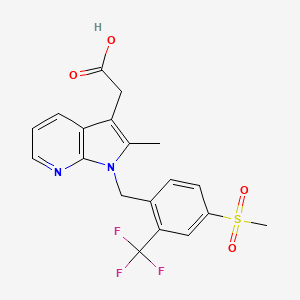
2-[2-methyl-1-[[4-methylsulfonyl-2-(trifluoromethyl)phenyl]methyl]pyrrolo[2,3-b]pyridin-3-yl]acetic acid

  • 2-Methyl-1-[[4-(methylsulfonyl)-2-(trifluoromethyl)phenyl]methyl]-1H-pyrrolo[2,3-b]pyridine-3-acetic acid
  • [1-(4-((Methane)sulfonyl)-2-trifluoromethylbenzyl)-2-methyl-1H-pyrrolo[2,3-b]pyridin-3-yl]acetic acid

Fevipiprant (INN; code name QAW039) is a drug being developed by Novartis which acts as a selective, orally available antagonistof the prostaglandin D2 receptor 2 (DP2 or CRTh2).[1][2][3]

As of 2016, it is in Phase III[4] clinical trials for the treatment of asthma.[5]

Novartis is developing fevipiprant, a prostaglandin D2 receptor (PD2/CRTh2) antagonist, as an oral capsule formulation for treating asthma and moderate to severe atopic dermatitis.

Image result for FEVIPIPRANT

Inventors Kamlesh BalaCatherine LeblancDavid Andrew SandhamKatharine Louise TurnerSimon James WatsonLyndon Nigel BrownBrian Cox
Applicant Novartis AgNovartis Pharma Gmbh

PATENT

WO2005123731

https://patentscope.wipo.int/search/en/detail.jsf?docId=WO2005123731

PATENT

CN 106188040

The invention discloses a Fevipiprant and Fevipiprant intermediate preparation method. The method is characterized in that 2-amino-3-bromopyridine and 4-mesyl-2-trifluoromethylbenzaldehyde to condensation reaction to obtain a Schiff base intermediate, then performing reduction reaction to obtain 3-bormo-N-(4-(mesyl)-2-(trifluoromethyl)phenyl)-pyridine-2-amine, subjecting the 3-bormo-N-(4-(mesyl)-2-(trifluoromethyl)phenyl)-pyridine-2-amine to ullmann ring closing reaction with methyl levulinate or ethyl levulinate, and performing saponification reaction or decarboxylic reaction to obtain Fevipiprant namely N[1-(4-((methane)sulfonyl)-2-trifluoromethylphenyl-2-methyl-1H-pyrrolo[2,3-b]pyridine-3-yl] acetic acid. The Fevipiprant and Fevipiprant intermediate preparation method which is a brand new method is short in step, technically convenient in operation, easy in product purification and large-scale production, high yield can be achieved, and Fevipiprant industrial production can be realized easily.

Example 5: Ν [1- (4 – ((methane) sulfonyl) -2-trifluoromethyl-phenyl) -2-methyl -1H- pyrrolo [2,3-b] P ratio preparation of 3-yl] acetic acid (1).

[0056] 3-Bromo -N- (4- (methylsulfonyl) -2- (trifluoromethyl) phenyl) – pyridin-2-amine (40 · 9g, 0 · lmo 1) and levulinic acid A ester (13.0g, 0. lmo 1) was added 300 mL N, N- dimethylformamide, was added copper iodide (1 · 9g, 0 · 0lmo 1) and N, N- dimethylglycine (1.0g , 0.01 mol), after nitrogen substitution, the reaction temperature was raised to 120 degrees 12h, water was added 200mL of saturated sodium chloride solution was cooled and extracted with ethyl acetate, the organic phase was washed with water, dried and concentrated to give a pale yellow powder, was added 100mL ethanol and 100mL water , was added sodium hydroxide (8g, 0.2mol) the reaction temperature was raised to 60 degrees 2h, cooled to 0 ° C, acidified with 4N hydrochloric acid was added dropwise to pH 2, was filtered and the solid washed with ethanol to give the crude product after recrystallization from ethanol in pure 34.5g, yield 81%.

[0057] · ΜΚ (300ΜΗζ, (16-0Μ50) δ: 12 · 3 (ΐ3Γ, 1Η, α) 2Η), 8.24 (s, lH, PhH), 8.11 ~ 8.12 (d, lH, PhH), 8.00 ~ 8.02 (d, lH, PyH), 7.91 ~ 7.93 (d, lH, PyH), 7.09 ~ 7.10 (d, lH, PhH), 6.46 ~ 6.48 (d, lH, PhH), 5.73 (s, 2H, NCH2) , 3.70 (s, 2H, q ^ C〇2H), 3.30 (s, 3H, CH 3).

[0058] HPLC: 99.9%.

[0059] Example 6: N [l- (4 – ((methane) sulfonyl) -2-trifluoromethyl-phenyl) -2-methyl -1H- pyrrolo [2,3-b] P ratio preparation of 3-yl] acetic acid (1).

[0060] 3-Bromo -N- (4- (methylsulfonyl) -2- (trifluoromethyl) phenyl) – (. 40.9g, 0 lmo 1) pyridin-2-amine and acetyl malonate methyl ester (18.8g, 0. lmol) was added 300 mL N, N- dimethylformamide, was added copper iodide (1.9g, O.Olmol) and N, N- dimethylglycine (1. (^ , 0.01111〇1), after nitrogen substitution, the reaction temperature was raised to 120 degrees 1211, 200mL saturated brine was added after cooling, and extracted with ethyl acetate, the organic phase was washed with water, dried and concentrated to give a pale yellow powder, was added 100mL ethanol and 100mL of water, was added sodium hydroxide (8g, 0.2mol) the reaction temperature was raised to 60 degrees 2h, cooled to 0 ° C, acidified with 4N hydrochloric acid was added dropwise to pH 2, was filtered and the solid washed with ethanol, a crude product was obtained from ethanol crystallized to give pure 34. lg, 80% yield.

[0061] HPLC: 99.8%.

[0062] Example 7: Ν [1- (4 – ((methane) sulfonyl) -2-trifluoromethyl-phenyl) -2-methyl -1H- pyrrolo [2,3-b] P ratio preparation of 3-yl] acetic acid (1).

[0063] 3-Bromo -N- (4- (methylsulfonyl) -2- (trifluoromethyl) phenyl) – pyridin-2-amine (40 · 9g, 0 · lmo 1) and levulinic acid A ester (13. (^, 0.1111〇1) was added ^ 3,001,111, 1-dimethyl formamide, was added copper iodide (3.88,0.02111〇1) and N, N- dimethylglycine (2. (^, 0.02111〇1), after nitrogen substitution, the reaction temperature was raised to 120 degrees 1211, 200mL saturated brine was added after cooling, and extracted with ethyl acetate, the organic phase was washed with water, dried and concentrated to give a pale yellow powder, was added 100mL ethanol and 100mL water , was added sodium hydroxide (8g, 0.2mol) the reaction temperature was raised to 60 degrees 2h, cooled to 0 ° C, acidified with 4N hydrochloric acid was added dropwise to pH 2, was filtered and the solid washed with ethanol to give crude product was recrystallized from ethanol to give pure 34. lg, 80% yield billion

[0064] HPLC: 99.9%.

[0065] Example 8: Ν [1- (4 – ((methane) sulfonyl) -2-trifluoromethyl-phenyl) -2-methyl -1H- pyrrolo [2,3-b] P ratio preparation of 3-yl] acetic acid (1).

[0066] 3-Bromo -N- (4- (methylsulfonyl) -2- (trifluoromethyl) phenyl) – pyridin-2-amine (40.9 8,0.1111〇1) was added 300mL N, N- two after dimethylformamide, was added copper iodide (1.9g, 0.01mol) and 2,2,6,6-tetramethyl-heptane-3,5-dione (3.6g, 0.02mo 1), purged with nitrogen , the reaction temperature was raised to 120 degrees 12h, water was added 200mL of saturated sodium chloride solution was cooled and extracted with ethyl acetate, the organic phase was washed with water, dried and concentrated to give a pale yellow powder, was added 100mL ethanol and 100mL water was added sodium hydroxide (8g , 0.2 mol) the reaction temperature was raised to 60 degrees 2h, cooled to 0 ° C, acidified with 4N hydrochloric acid was added dropwise to pH 2, was filtered and the solid washed with ethanol to give crude product was recrystallized from ethanol to give pure product 30.2 g, yield 71%.

[0067] HPLC: 99.6%.

[0068] Example 9: Ν [1- (4 – ((methane) sulfonyl) -2-trifluoromethyl-phenyl) -2-methyl -1H- pyrrolo [2,3-b] P ratio preparation of 3-yl] acetic acid (1).

[0069] 3-Bromo -N- (4- (methylsulfonyl) -2- (trifluoromethyl) phenyl) – pyridin-2-amine (40.9 8,0.1111〇1) was added 1’1 ^ 3,001,111, 1 ‘| – dimethylformamide, was added copper iodide (1.98,0.011] 1〇1) and proline (1.28,0.011] 1〇1), after nitrogen substitution, the reaction temperature was raised to 120 degrees 12h, after cooling, 200mL saturated brine, and extracted with ethyl acetate, the organic phase was washed with water, dried and concentrated to give a pale yellow powder, was added 100mL ethanol and 100mL water was added sodium hydroxide (8g, 0.2mol) was heated to 60 degrees reaction 2h, cooled to 0 ° C, acidified with 4N hydrochloric acid was added dropwise to pH 2, was filtered and the solid washed with ethanol to give crude product was recrystallized from ethanol to give pure product 33.2 g, 78% yield.

[0070] HPLC: 99.8%.

[0071] Example 10: N [1- (4 – ((methane) sulfonyl) -2-trifluoromethyl-phenyl) -2-methyl -1H- pyrrolo [2,3-b] pyridin – preparation of 3- yl] acetic acid (1).

[0072] 3-Bromo -N- (4- (methylsulfonyl) -2- (trifluoromethyl) phenyl) – pyridin-2-amine (40.9 8,0.1111〇1) was added 300mL N, N- two after dimethylformamide, was added copper iodide (1.9g, 0. Olmol) and N, N- dimethylglycine (1.0g, 0.01 mo 1), after nitrogen substitution, the reaction temperature was raised to 120 degrees 12h, cooled was added 200mL saturated brine, and extracted with ethyl acetate, the organic phase was washed with water, dried and concentrated to give a pale yellow powder, was added 100mL of acetic acid and 100mL of concentrated hydrochloric acid was heated to reflux for 6h, cooled to 0 ° C, was added 100mL water analysis crystal was filtered and the solid washed with ethanol to give crude product was recrystallized from ethanol to give pure product 33.2 g, 78% yield.

[0073] HPLC: 99.1%.

PATENT

WO 2017056001

Example 3b: Preparation of Compound A

Production of C8: Compound C6, (3-[2-({[4-Methanesulfonyl-2-(trifluoromethyl)-phenyl]methyl}amino)pyridin-3-yl]prop-2-yn-l-ol) (20 g, 52 mmol) was dissolved in a mixture of methyl isobutyl ketone (MIBK, 125 g), 25.3 g (156 mmol) of 1 , 1 , 1 -triethoxy ethane, and acetic acid (0.625 g, 10 mmol). The mixture was heated within 40 minutes to 140 °C under a N2 over-pressure of 1 – 4 bar. During the reaction ethanol was formed and removed from the vessel by a pressure-regulated valve. After 3.5 h a second portion of acetic acid (0.625g) was added and the mixture was heated for 3.5 h at 140 °C under a N2 over-pressure of 1 – 4 bar. The resultant product was a solution of Ethyl 2-(l- {[4-methanesulfonyl-2-(trifluoromethyl)phenyl]methyl}-2-methyl-lH-pyrrolo[2,3-¾]pyridin-3-yl)acetate and the conversion rate was measured at 98% and the yield 90%. The solution was filtered and 40 g MIBK was added. The solution was heated to IT=80 °C and cooled down within 3 h to

IT=20 °C. At an IT of 65 °C seed crystals were added. At IT 20 °C intermediate C8 was isolated and washed with 40 g MIBK and dried in the oven at IT=60°C/20mbar.

Conversion to Compound A: The intermediate C8 was concentrated under vacuum at

100 °C/200 mbar and water (6000ml). A sodium hydroxide solution (1734 g, 30%, 13 mol) was added to the mixture and heated for 4 h at 50 °C. The solution was distilled again at 100 °C/100 mbar. The phases were separated at 50 °C and the water phase was extracted with methyl isobutyl ketone (2000 ml). Again the phases were separated and the water phase was filtered at 50 °C. To the filtrate methyl isobutyl ketone (5000 ml) was added and the aqueous solution neutralized in 2 portions with hydrochloric acid (963 g, 37%, 9.8 mol) to pH 4 – 4.5. The phases were heated to 80 °C and the organic phases separated. Water (1000 ml) was added to wash the organic phase and after phase separation the organic phase was cooled down to 70 °C. Seed crystals of Compound A were added along with heptane (1000 ml). The resulting suspension was stirred for 30 minutes before cooling further down to 0 °C within 3 h. The suspension was stirred for 3 h at 0 °C and then filtered through a nutsche. The filter cake was washed first with pre-cooled HPTF/methyl isobutyl ketone (1000 g, 5: 1), then with acetone/water (1000 g, 1 :2) and finally with water (1000 g). Wet Compound A was dried in the oven at 60 °C for 8 h under vacuum to isolate 804 g of compound A. The conversion was calculated to be 99%; the yield was 79%.

Example 3 c: Alternative Preparation of Compound A

Molecular Weight: 426 41

Exact Mass: 384.08 Molecular Weight: 453.48

5 g of (3-[2-({[4-Methanesulfonyl-2-(trifluoromethyl)-phenyl]methyl}amino)pyridin-3-yl]prop-2-yn-l-ol), methyl isobutyl ketone (MIBK, 50 ml), and 1 , 1 -dimethoxy-N,N-dimethylethanamine were put together in a 200 ml reactor and stirred for 15 h at 100 °C. The mixture was acidified by addition of hydrochloric acid (15 ml) and kept stirring for 15 h at 100 °C. Then water (25 ml) was added, and the temperature was decreased to 50 °C. Caustic soda (about 15 ml) was added to set the pH around 12. Then, after phase split and a second extraction with water (10 ml), the combined aqueous phases were diluted with methyl isobutyl ketone (25 ml) and acidified at 80 °C to pH 4 with hydrochloric acid. The mixture was cooled to 70 °C, seeded and cooled to 0 °C within 2 h. After 2 h aging at 0 °C, the crystalline solid was collected by filtration, washed with methyl isobutyl ketone (10 ml) and water (10 ml), and dried under vacuum at 60 °C until constant weight. Yield 2.93 g.

PATENT

WO-2017210261

https://patentscope.wipo.int/search/en/detail.jsf?docId=WO2017210261&recNum=1&maxRec=&office=&prevFilter=&sortOption=&queryString=&tab=PCTDescription

Novel deuterated analogs of pyrrolo[2,3-b]pyridine compounds, particularly fevipiprant and their salts and compositions and combination comprising them are claimed. Also claims is their use for treating asthma, allergic rhinitis and atopic dermatitis. Compounds are claimed to be a prostaglandin D2 receptor 2 antagonist. Represents first PCT filing from CoNCERT Pharmaceuticals and the inventor on this API.

PAPER

ACS Medicinal Chemistry Letters (2017), 8(5), 582-586

Discovery of Fevipiprant (NVP-QAW039), a Potent and Selective DP2Receptor Antagonist for Treatment of Asthma

Novartis Institutes for Biomedical Research, Horsham Research Centre, Wimblehurst Road, Horsham, West Sussex RH12 5AB, United Kingdom
ACS Med. Chem. Lett.20178 (5), pp 582–586
DOI: 10.1021/acsmedchemlett.7b00157
*E-mail: david.sandham@novartis.com. Tel: + 1 (617)-871-8000.

Abstract

Abstract Image

Further optimization of an initial DP2 receptor antagonist clinical candidate NVP-QAV680 led to the discovery of a follow-up molecule 2-(2-methyl-1-(4-(methylsulfonyl)-2-(trifluoromethyl)benzyl)-1H-pyrrolo[2,3-b]pyridin-3-yl)acetic acid (compound 11, NVP-QAW039, fevipiprant), which exhibits improved potency on human eosinophils and Th2 cells, together with a longer receptor residence time, and is currently in clinical trials for severe asthma.

RM  sodium methanesulfinate and 4-fluoro-2-(trifluoromethyl)benzaldehyde

Step 1:

4-(methylsulfonyl)-2-(trifluoromethyl)benzaldehyde

A suspension of sodium methanesulfinate (29.6 g, 290 mmol) and 4-fluoro-2-(trifluoromethyl)benzaldehyde (50 g, 260 mmol) in DMSO (200 ml) was heated at 90˚C overnight. The thick yellow suspension was poured onto crushed ice (ca 800 g), diluted with water and the solid reside collected by filtration, washed with water and dried in vacuo to afford 4- (methylsulfonyl)-2-(trifluoromethyl)benzaldehyde as an off-white solid (50.7 g, 77%). LRMS mass ion not detected. 1H NMR (CDCl3) 3.14 (3H s), 8.30 (1H d J=7.5), 8.36 (1H d J=7.5), 8.40 (1H s), 10.49 (1H s).

Step 2:

(4-(methylsulfonyl)-2-(trifluoromethyl)phenyl)methanol

(4-(methylsulfonyl)-2-(trifluoromethyl)phenyl)methanol as an off-white solid (50.7 g, 99%). LRMS mass ion not detected. 1H NMR (CDCl3) 3.11 (3H s), 5.02 (2H s), 8.09 (1H d J=7.5), 8.19 (1H d J=7.5), 8.25 (1H s).

STEP 3

1-(bromomethyl)-4-(methylsulfonyl)-2-(trifluoromethyl)benzene

1-(bromomethyl)-4-(methylsulfonyl)-2- (trifluoromethyl)benzene (47.1 g, 74%) as a white solid. LRMS mass ion not detected. 1H NMR (CDCl3) 3.11 (3H s), 4.67 (2H s), 7.86 (1H d J=7.5), 8.14 (1H d J=7.5), 8.25 (1H s).

STEP 4

methyl 2-(2-methyl-1-(4-(methylsulfonyl)-2-(trifluoromethyl)benzyl)-1H-pyrrolo[2,3-b]pyridin-3-yl)acetate

(83:17) of methyl 2-(2-methyl-1-(4-(methylsulfonyl)-2- (trifluoromethyl)benzyl)-1H-pyrrolo[2,3-b]pyridin-3-yl)acetate (N-1 product) and methyl 2-(2-methyl-7-(4- (methylsulfonyl)-2-(trifluoromethyl)benzyl)-7H-pyrrolo[2,3-b]pyridin-3-yl)acetate (N-7 product) as a white solid (22.5 g 42%). LRMS C20H19F3N2O4S requires M+ 440.4 found [MH]+ m/z 441. 1H NMR (CDCl3) 2.27 (3H s), 3.06 (3H s N-1 product), 3.11 (3H s N-7 product), 3.72 (3H s), 3.77 (2H s), 5.03 (2H s N-7 product), 5.82 (2H s N-1 product), 6.66 (1H d J=8.2), 7.16 (1H dd J=7.8, 4.8), 7.91 (1H d, J=8.3), 7.95 (1H d J=7.7), 8.12 (1H d J=7.8 N-7), 8.19 (1H d J=8.1 N-7), 8.17 (1H s N-7), 8.27 (1H d J=3.6), 8.30 (1H s).

FINAL

2-(2-methyl-1-(4-(methylsulfonyl)-2-(trifluoromethyl)benzyl)-1H-pyrrolo[2,3-b]pyridin-3-yl)acetic acid 11 as needles, m.p. 208˚C (16.3 g, 44%). HRMS C19H18F3N2O4S requires [MH]+ 427.0939 found [MH]+ 427.093. 1H NMR (500 MHz, DMSO-d6) 2.28 (3H s), 3.28 (3H s), 3.73 (2H s), 5.76 (2H s), 6.49 (1H d J=8.3), 7.12 (1H dd J=7.7, 4.8), 7.95 (1H d J=7.8), 8.04 (1H d, J=8.3), 8.14 (1H d J=4.7), 8.26 (1H s), 12.28 (1H br s ). Elemental analysis calcd. for C19H17F3N2O4S: C, 53.52; H, 4.02; N, 6.57; S, 7.52%. Found C, 53.90 ± 0.04; H, 4.28 ± 0.06; N, 6.43 ± 0.02; S, 7.76 ± 0.09%.

PAPER

Drug Metabolism & Disposition (2017), 45(7), 817-825

Patent ID

Patent Title

Submitted Date

Granted Date

US9169251 PYRROLOPYRIDINE DERIVATIVES AND THEIR USE AS CRTH2 ANTAGONISTS
2014-06-26
2014-10-16
Patent ID

Patent Title

Submitted Date

Granted Date

US2016108123 ANTIBODY MOLECULES TO PD-L1 AND USES THEREOF
2015-10-13
2016-04-21
US8455645 Organic compounds
2010-08-19
US8470848 Organic compounds
2010-08-12
US7666878 Pyrrolopyridine Derivatives And Their Use As Crth2 Antagonists
2008-05-15
2010-02-23
US8791256 Pyrrolopyridine derivatives and their use as CRTH2 antagonists
2013-06-05
2014-07-29

References

  1. Jump up to:a b Erpenbeck VJ, Vets E, Gheyle L, Osuntokun W, Larbig M, Neelakantham S, et al. (2016). “Pharmacokinetics, Safety, and Tolerability of Fevipiprant (QAW039), a Novel CRTh2 Receptor Antagonist: Results From 2 Randomized, Phase 1, Placebo-Controlled Studies in Healthy Volunteers”Clin Pharmacol Drug Dev5 (4): 306–13. doi:10.1002/cpdd.244PMC 5071756Freely accessiblePMID 27310331.
  2. Jump up^ Sykes DA, Bradley ME, Riddy DM, Willard E, Reilly J, Miah A, Bauer C, Watson SJ, Sandham DA, Dubois G, Charlton SJ. Fevipiprant (QAW039), a Slowly Dissociating CRTh2 Antagonist with the Potential for Improved Clinical Efficacy. Mol Pharmacol. 2016 May;89(5):593-605. doi: 10.1124/mol.115.101832 PMID 26916831
  3. Jump up^ Erpenbeck VJ, Popov TA, Miller D, Weinstein SF, Spector S, Magnusson B, et al. (2016). “The oral CRTh2 antagonist QAW039 (fevipiprant): A phase II study in uncontrolled allergic asthma”. Pulm Pharmacol Ther39: 54–63. doi:10.1016/j.pupt.2016.06.005PMID 27354118.
  4. Jump up^ https://clinicaltrials.gov/ct2/show/NCT02555683
  5. Jump up^ Gonem S, Berair R, Singapuri A, Hartley R, Laurencin M, Bacher G, et al. (2016). “Fevipiprant, a prostaglandin D2 receptor 2 antagonist, in patients with persistent eosinophilic asthma: a single-centre, randomised, double-blind, parallel-group, placebo-controlled trial”. Lancet Respir Med4: 699–707. doi:10.1016/S2213-2600(16)30179-5
Fevipiprant
Fevipiprant.svg
Clinical data
Routes of
administration
Oral
ATC code
  • none
Legal status
Legal status
  • Investigational
Pharmacokinetic data
Bioavailability Unaffected by food[1]
Metabolism Hepatic glucuronidation
Biological half-life ~20 hours
Excretion Renal (≤30%)
Identifiers
CAS Number
PubChem CID
ChemSpider
UNII
KEGG
Chemical and physical data
Formula C19H17F3N2O4S
Molar mass 426.41 g/mol
3D model (JSmol)

////////////////FEVIPIPRANT, QAW039, PHASE 3, asthma, UNII-2PEX5N7DQ4,2PEX5N7DQ4, NVP-QAW039, QAW039, 872365-14-5,

CC1=C(C2=C(N1CC3=C(C=C(C=C3)S(=O)(=O)C)C(F)(F)F)N=CC=C2)CC(=O)O

LL 3858, SUDOTERB


SUDOTERB.png

Figure imgf000023_0002

LL 3858, SUDOTERB

UNII-SK2537665A;

CAS 676266-31-2;

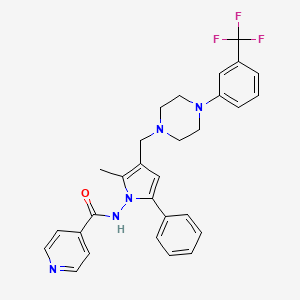
N-[2-methyl-5-phenyl-3-[[4-[3-(trifluoromethyl)phenyl]piperazin-1-yl]methyl]pyrrol-1-yl]pyridine-4-carboxamide;

N-[2-Methyl-5-phenyl-3-[[4-[3-(trifluoromethyl)phenyl]-1-piperazinyl]methyl]-1H-pyrrol-1-yl]-4-pyridinecarboxamide

Sudoterb(TM)

Molecular Formula: C29H28F3N5O
Molecular Weight: 519.572 g/mol
  • Originator Lupin
  • Class Antituberculars; Isonicotinic acids; Pyrroles
  • Mechanism of Action Undefined mechanism
  • Orphan Drug Status No
  • New Molecular Entity Yes

Highest Development Phases

  • No development reported Tuberculosis

Most Recent Events

  • 23 Jul 2015 No recent reports on development identified – Phase-II for Tuberculosis in India (unspecified route)
  • 11 Dec 2013 Lupin completes a phase II trial in Tuberculosis in India prior to December 2013 (CTRI2009-091-000741)
  • 31 Jul 2010 Lupin completes enrolment in its phase II trial for Tuberculosis in India (CTRI2009-091-000741)

img

Sudoterb HCl
CAS: 1044503-04-9 (2HCl)
Chemical Formula: C29H30Cl2F3N5O
Molecular Weight: 592.4882

Image result

Image result for sudoterb

SYNTHESIS

WO 2006109323

Tuberculosis (TB) is a contagious disease, which usually runs a protracted course, ending in death in majority of the cases, with relapse being a common feature of the disease. It is one of the most important causes of prolonged disability and chronic ill health. It is caused by the tubercle bacillus Mycobacterium tuberculosis, which is comparatively difficult to control. Drugs such as isoniazid, rifampicin, pyrazinamide, ethambutol streptomycin, para- aminosalisylic acid, ethionamide, cycloserine, capreomycin, kanamycin, thioacetazone etc. have been and are being currently used to treat TB. Amongst these, isoniazid, rifampicin, ethambutol and pyrazinamide are the first-line drugs of choice, which are administrated either as a single drug formulation or as a fixed-dose combination of two or more of the aforesaid drugs. Even though, each of the abovementioned first-line drug regimen is highly effective for treatment of TB, however, they are associated with shortcomings, such as unpleasant side- effects and relatively long course of treatment. The later one results in non-compliance of the patient to the treatment leading often to failure of the treatment and most importantly, development of drug resistance. The development of drug resistance has long constituted a principal difficulty in treating human tuberculosis. The second-line drugs, on the other hand are less effective, more expensive and more toxic.

It is estimated that in the next twenty years over one billion people would be newly infected with TB, with 35 million people succumbing to the disease (WHO Fact Sheet No. 104, Global

Alliance for TB Drug Development- Executive Summary of the Scientific Blueprint for TB

Development : http://www.who.int/inf-fs/en/factl04.hfaiil). With the emergence of HIV related

TB, the disease is assuming alarming proportions as one of the killer diseases in the world today.

A major thrust in research on antimycobacterials in the last decade has witnessed the development of new compounds for treatment of the disease, a) differing widely in structures, b) having different mode/mechanism of action, c) possessing favourable pharmacokinetic properties, d) which are safe and having low incidence of side-effects, and e) which provide a cost-effective dosage regimen.

Several new class of compounds have been synthesized and tested for activity against Mycobacterium tuberculosis, the details of chemistry and biology of which could be found in a recent review by B. N. Roy et. al. in J. Ind. Chem. Soc, April 2002, 79, 320-335 and the references cited therein.

Substituted pyrrole derivatives constitute another class of compounds, which hold promise as antimycobacterial agents. The pyrrole derivatives which have been synthesized and tested for antitubercular as well as non-tubercular activity has been disclosed by : a) D. Deidda et. al. in Antimicrob. Agents and Chemother., Nov 1998, 3035-3037. This article describes the inhibitory activity shown by one pyrrole compound, viz. BM 212 having the structure shown below, against both Mycobacterium tuberculosis including drug-resistant mycobacteria and some non-tuberculosis mycobacteria.

Figure imgf000004_0001

The MIC value (μg/ml) against the M. tuberculosis strain 103471 exhibited by BM 212 was 0.70 as against 0.25 found for isoniazid.

b) M. Biava et. al. in J. Med. Chem. Res., 1999, 19-34 have reported the synthesis of several analogues of BM 212, having the general formula (The compounds disclosed by M. Biava et. al. inJ. Med. Chem. Res., 1999, 19-34.) shown hereunder

Figure imgf000005_0001

wherein,

Figure imgf000005_0002

X is H, . CH2— (Oy-Cl ; CH2-(CH2)4-CH3

Figure imgf000005_0003
Figure imgf000005_0004

Z is H ; Y

and the in vitro antimicrobial activity of the compounds against Candida albicans, Candida sp, Cryptococcus neoforma s, Gram- positive or Gram-negative bacteria, isolates of pathogenic plant fungi, Herpes simplex virus, both HSV1 and HSN2, M. tuberculosis, M. smegmαtis, M. mαrinum and M. αvium.

However, the MIC values (μg/ml) of these compounds against the M. tuberculosis strain 103471 are found to be inferior to BM 212 and are in the range of 4-16.

M. Biava et. al. in Bioorg. & Med. Chem. Lett., 1999, 9, 2983-2988. This article describes the synthesis of pyrrole compounds of formula (: The compounds disclosed by M. Biava et. al. in Bioorg. & Med. Chem. Lett., 1999, 9, 2983-2988) shown hereunder

Figure imgf000006_0001

wherein,

X is H or Cl Y is H or Cl

R is N-methyl piperazinyl or thiomorphinyl

and their respective in vitro activity against M. tuberculosis and non-tuberculosis species of mycobacteria .

However, the MIC values (μg/ml) of these compounds against the M. tuberculosis strain 103471 are found to be inferior to BM 212 and are in the range of 2-4.

d) F. Cerreto et. al. in Eur. J. Med. Chem., 1992, 27, 701-708 have reported the synthesis of certain 3-amino-l,5-diary-2 -methyl pyrrole derivatives and their in vitro anti-fungal activity against Candida albicans and Candida sp. However, there is no report on the activity of such compounds against M. tuberculosis.

e) C. Gillet et. al. in Eur. J. Med. Chem.-Chimica Therapeutica, March- April 1976, ϋ(2), 173-181 report the synthesis of several pyrrole derivatives useful as anti-inflammatory agents and as anti-allergants.

f) R. Ragno et. al., Bioorg. & Med. Chem., 2000, 8, 1423-1432. This article reports the synthesis and biological activity of several pyrrole derivatives as well as describes a structure activity relationship between the said pyrrole compounds and antimycobacterial activity. The compounds (The compounds disclosed by R. Rango et. al., Bioorg. & Med. Chem., 2000, 8, 1423-1432)synthesized and tested by the authors is summarized hereunder

Figure imgf000007_0001

wherein,

X is COOH, COOEt, CONHNH2, CH2OH, CH(OH)C6H5, NO2

Figure imgf000007_0002

Y is H, CH3, OCH3, CH2, SO2, or a group of formula

Figure imgf000007_0003

wherein,

R is H, Cl, C2H5, or OCH3 and R1 is H, Cl, F, CH3, or NO2,

A is H or R

Z is a group of formula,

Figure imgf000007_0004

R2 is H, Cl, OH, or OCH3 and R3 is H or Cl

None of the abovementioned disclosures report or suggest the in vivo efficacy including toxicity of any of the compounds described therein against experimental tuberculosis in animal model. Moreover, the higher MIC values of the compounds reported suggest that they may not be very effective in inhibition of Mycobacterium tuberculosis.

NO PIC

Sudershan Kumar Arora

sudershan arora, Formerly: President R&D, Ranbaxy Lab Limited,

Experience

Inventors Sudershan Kumar AroraNeelima SinhaSanjay JainRam Shankar UpadhayayaGourhari JanaShankar AjayRakesh Kumar Sinha
Applicant Lupin Limited

PATENT

WO 2004026828

https://www.google.com/patents/WO2004026828A1?cl=en

PATENT

US 20050256128

PATENT

https://encrypted.google.com/patents/WO2005107809A2?cl=en

Thus the invention relates to an antimycobacterial combination comprising a therapeutically effective amount of N-(3-[[4-(3-trifluoromethylphenyl)piperazinyl]methyl]-2- methy 1-5 -phenyl- pyrrolyl)-4-pyridylcarboxamide of formula (I) or a pharmaceutically acceptable non- toxic salt thereof

Figure imgf000011_0001

and a therapeutically effective amount of one or more first line antitubercular drugs selected from the group consisting of isoniazid, rifampicin, ethambutol and pyrazinamide. Further according to the invention there is provided a process for preparation of an antimycobacterial pharmaceutical composition comprising combining a compound of formula I or a pharmaceutically acceptable salt thereof

Figure imgf000011_0002

and one or more of the first line antitubercular drugs using a dry granulation method, a wet granulation method or a direct compression method. The present invention further provides an antimycobacterial combination comprising a therapeutically effective amount of N-(3-[[4-(3-trifluoromethylphenyl)piperazinyl]methyl]-2- methyl-5-phenyl-pyrrolyl)-4-pyridylcarboxamide of formula (I) the compound of formula (I) or a pharmaceutically acceptable non-toxic salt thereof

Figure imgf000012_0001

and a therapeutically effective amount of one or more first line antitubercular drugs selected firom isoniazid, rifampicin, ethambutol and pyrazinamide for treatment of multi-drug resistant tuberculosis including latent tuberculosis. The present invention provides an antimycobacterial combination comprising a therapeutically effective amount of N-(3-[[4-(3-trifluoromethylphenyl)piperazinyl]methyl]-2- methyl-5-phenyl-pyrrolyl)-4-pyridylcarboxamide of formula (I) or a pharmaceutically acceptable non-toxic salt thereof

Figure imgf000012_0002

and a therapeutically effective amount of one or more first line antitubercular drugs selected from isoniazid, rifampicin, ethambutol and pyrazinamide for treatment and/or inhibition of one or more mycobacterial conditions/ cells including but not limited to sensitive and multi- drug resistant strains of Mycobacterium tuberculosis, Mycobacterium avium – intracellular complex, M. fortutium, M. kansasaii and other related mycobacterial species.

ynthesis of Compound of Formula (I) The compound of formula (I) and the pharmaceutically acceptable salts thereof can be synthesized by any known method including but not limited to the methods disclosed in our PCT Application No. PCT/IN02/00189 (WO 04/026828 Al), which is incorporated herein by reference. An example of the preparation of N-(3-[[4-(3-trifluoromethylphenyl) piperazinyl]methyl]-2-methyl-5-phenyl-pyrrolyl)-4-pyridylcarboxamide is as follows:

Preparation of N-(3 ~[[4-(3 -trifluoromethylphenyl)piperazinyl]methyl)] -2-methyl-5 – phenylpyrrolyl)-4-pyridylcarboxamide

Step l 1 -(4-chlorophenyl)pentane- 1 ,4-dione To a well stirred suspension of anhydrous aluminium chloride (27.0gm, 205.9mmol) in

126ml. of chlorobenzene was added oxopentanoylchloride (23.0gm, 171.6 mmol) drop-wise, over a period of 30-35 minutes at room temperature (25-30EC). The reaction mixture was stirred at the same temperature for 1 hour. After decomposition of the reaction mixture by the addition of solid ice and hydrochloric acid (10ml) the precipitated solid was filtered and the filtrate evaporated on a rotary evaporator to remove all the solvents. The residue was dissolved in ethyl acetate (400 ml), washed with water (2 x 100ml.), brine (100 ml.) and dried over anhydrous sodium sulfate and the solvent evaporated off. The crude product so obtained was chromatographed over silica gel (100-200 mesh) using chloroform as eluent to give 8.6gm (24.07%) of the title compound.

Step 2 N-(5-methyl-2-phenylpyrrolyl)-4 pyridylcarboxamide

A mixture of 1- (chlorophenyl)pentane-l,4-dione (6.0g, 28.50 mmol, as obtained in Step-1) and isonicotinic hydrazide (4.30gm, 31.35 mmol) in benzene (6.0 ml.) was refluxed by over molecular sieves. After two hours, benzene was removed under reduced pressure and the residue dissolved in ethyl acetate, washed with water (2 x 100 ml.) and brine (1 x 50 ml.). The ethyl acetate layer was dried over anhydrous sodium sulfate and the solvent evaporated off. The crude product so obtained as purified by column chromatography over silica gel (100-200 mesh) using 0.2% methanol in chloroform as eluent to give 3.50gm (39.42%) of the title compound.

Step 3 N-(3 – { [4-(3-trifuoromethylphenyl)piperazinyl]methyl} -2-methyl-5 -phenylpyrrolyl)-4- pyridylcarboxamide

To a stirred solution of N-(5-methyl-2-phenylpyrrolyl)-4-pyridylcarboxamide (0.300gm, 1.083 mmol, as obtained in Step-2) in acetonitrile (5.0 ml.) was added a mixture of l-(3-trifluoromethylphenyl)piperazine hydrochloride (0.288gm, 1.083mmol), 40% formaldehyde (0.032gm, 1.083 mmol) and acetic acid (0.09 ml), drop-wise. After the completion of addition, the reaction mixture was stirred at room temperature for 4 hours. The reaction mixture was neutralized with sodium hydroxide (20% aq. Soln.) and extracted with ethyl acetate (2 x 50 ml.). The combined ethyl acetate extract was washed with water (2 x 25 ml.), brine (1-χ 20 ml.), and dried over anhydrous sodium sulfate and the solvent evaporated off. TLC of the crude product indicated two spots, which were separated by column chromatography over silica gel (100-200mesh). The more polar compound a eluted out using 80% ethyl acetate- hexane mixture was obtained in 24.34 % (0.130 gm) and was identified as N-(3-{[4-(3- trifluoromethylphenyl)piperazinyl]methyl}-2-methyl-5-phenylpyrrolyl)-4- pyridylcarboxamide m.p.80-82°C, MS: m/z 520 (M+l)

1HNMR(CDC13, *): 2:13 (s, 3H,CH3), 2.60 (bs, 4H, 2xN-CH2), 3.18 (bs, 4H, 2xN-CH2), 3.41 (s, 2H, N-CH2), 6.24 (s, lH,H-4), 6.97-7.03 (4H, m, ArH), 7.22-7.29 (m, 5H,AιΗ), 7.53 (d, 2H, J=6Hz, pyridyl ring), 8.50 (bs, 1H,NH D2O exchangeable), 8.70 (d, 2H, J=6Hz, pyridyl ring).

PATENT

WO 2006109323

Compounds of Formula I are known from PCT International Patent Application WO 2004026828, and were screened for antimycobacterial activity, in various in vitro and in vivo models in mice and guinea pigs. Several compounds exhibited strong antimycobacterial activity against sensitive and MDR strains of Mycobacterium tuberculosis in the in vitro and in vivo experiments. Further the compounds of Formula I were also found to be bioavailable, less toxic and safe compared to available anti TB drugs in various animal models.

Thus compounds of Formula I are useful for the effective treatment of Mycobacterium tuberculosis infection caused by sensitive/MDR strains. PCT International Patent Application WO 2004026828 also discloses the synthesis of compounds of Formula I,

Figure imgf000004_0001

wherein,

Ri is phenyl or substituted phenyl

R2 is selected from a group consisting of i) phenyl which is unsubstituted or substituted with 1 or 2 substituents, each independently selected from Cl, F, or, ii) pyridine, or iii) naphthalene, or iv) NHCOR4 wherein R4 is aryl, unsubstituted or substituted heteroaryl, unsubstituted or substituted heterocyclyl. R3 is selected from a group of formula

/~-\ /-Un

— N N-R5 and — N X

wherein R5 is phenyl which is unsubstituted or substituted with 1 or 2 substituents each independently selected from the group consisting of halogen, Ci-C4 alkyl, Ci-C4 alkoxy, nitro, amino, haloalkyl, haloalkoxy etc.; unsubstituted or substituted benzyl; unsubstituted or substituted heteroaryl; unsubstituted or substituted heteroaroyl; unsubstituted or substituted diphenylmethyl,

n = 0-2 and X = -NCH3, CH2, S, SO, or SO2

Such that when R2 is phenyl, which is unsubstituted or substituted with 1 or 2 substituents, each independently selected from Cl, F; R5 is not Ci-C4 alkyl, or X is not -NCH3, CH2, S, SO, or SO2, when n = 1, or X is not -CH2 when n = 0 which comprises reacting the compound of Formula Il

»o-i >-CH, (H)

O O

with thionyl chloride, followed by reaction with RiH (wherein Ri is phenyl or substituted phenyl) in presence of aluminium chloride, and then condensation with R2NH2 (wherein R2 is as described above) in presence of p-toluenesulphonic acid to yield the corresponding unsubstituted pyrrole derivatives of Formula V,

Figure imgf000005_0001

which on further treatment with suitable secondary amines in the presence of formaldehyde and acetic acid afforded the desired pyrrole derivatives of Formula I,

Figure imgf000006_0001

which, on reacting with hydrochloric acid give a hydrochloride salt of compound of Formula Ia. wherein m = 1-2, Ri, R2 and R3 are the same as defined earlier. The above-mentioned methods in the prior art for the synthesis of compound of the Formula I suffer from the limitations,

1. In methods described in PCT International Patent Application WO 2004026828 for the synthesis of compounds of Formula I, positional isomers, the compound of Formula I’, are formed. The necessity of their removal through column chromatography decreases the yield of final pure product.

Figure imgf000006_0002

2. The synthesis of oxopentanoyl chloride (compound of Formula III) for the synthesis of compound of Formula I has been described in J. Org. Chem.

1960, 25, 390-392. It comprises reaction of levulinic acid with thionyl chloride at 50 0C for 1h, which results in poor yield.

3. In method described in PCT International Patent Application WO 2004026828 for the synthesis of 1-aryl-pentane-1,4-dione (compound of Formula IV), impurities are formed and purification involves column chromatography which decreases the yield of the product. 4. The synthesis of the intermediate of Formula V requires the use of benzene and high temperature conditions, which involves the formation of undesired by- products.

5. The above-mentioned methods in prior art for the synthesis of all the intermediates and final compounds of Formula I involves column chromatography for purification, which is cumbersome, tedious and not practicable on an industrial scale.

Example 1: Preparation of /V-(2-methyl-5-phenyl-3-f4-C3-trifluoromethyl-phenyl)- piperazin-1-ylmethyli-pyrrol-i-ylHsonicotinamide hydrochloride

Step (a): Preparation of 4-oxo-pentanoyl chloride

To a stirred mixture of levulinic acid (340.23 g, 2.93 mol) and Λ/./V- dimethylformamide (6.8 mL, catalytic amount) was added thionyl chloride (367.36 g, 3.087 mol, 1.05 equivalent) drop-wise at 20-30 0C in 1.5-2.0 h. After the complete addition of thionyl chloride, the reaction mixture was stirred at same temperature for 0.5 h (completion of reaction or formation of acid chloride was monitored by GC). After the completion of reaction, thionyl chloride was distilled off under reduced pressure at 20-30 0C. Traces of thionyl chloride were removed by adding benzene (136 mL) under reduced pressure at 30-35 0C and residue was dried at reduced pressure (1-2 mm) at 20-30 0C for 30-60 min to yield 370 g (93.8%) of 4-oxo-pentanoyl chloride as light orange oil. Step (b): Preparation of 1-phenyl-pentane-1,4-dione

Figure imgf000016_0001

(B) (A)

To a stirred suspension of benzene (3700 mL, 10 T w/v of acid chloride) and anhydrous aluminium chloride (440.02 g, 3.30 mol, 1.20 equivalent) was added A- oxo-pentanoyl chloride (370 g, 2.75 mol) drop-wise; the rate of addition was regulated so that the addition required 1.5-2 h and the temperature of the reaction mixture was kept at 25-35 0C. The reaction was completed in 2 h and monitored by GC. After completion of reaction, the reaction mixture was added slowly into cold (5-10 0C) 5% HCI (3700 mL) solution maintaining the temperature below 30 0C. The layers were separated; aqueous layer was extracted with ethyl acetate (1×1850 mL). The combined organic phase was washed with water (1 *1850 mL), 5% NaHCO3 solution (1×1850 mL), water (1×1850 mL), 5% NaCI solution (1×1850 mL), dried (Na2SO4), filtered and concentrated under reduced pressure at 35-40 0C, which was finally dried under reduced pressure (1-2 mm) at 35-400C to yield 185.6 g (38.3%) of 1-phenyl-pentane-1,4-dione as thick oil.

Step (c): Preparation of /V-(2-methyl-5-phenyl-pyrrol-1-yI)-isonicotinamide

A mixture of 1-(phenyl)-pentane-1,4-dione (185 g, 1.05 mol), isonicotinic hydrazide (158.4 g, 1.155 mol, 1.1 equivalent), p-toluenesulphonic acid (1.85 g, 1% w/w) and dichloromethane (1850 ml_) was heated under reflux at 40-50 0C under azeotropic distillation for 2-3 h (water was collected in dean stark apparatus). The completion of reaction was monitored by HPLC. After cooling to 25-30 0C the resulting mixture was washed with saturated NaHCO3 solution (1×925 mL), aqueous layer was back extracted with EtOAc (1×925 ml_). The combined organic layers were washed with water (1×925 mL), 5% brine solution (1×925 mL), dried (Na2SO4) and filtered. The filtrate was concentrated under reduced pressure to obtain the solid product, which was further dried under reduced pressure (1-2 mm) at 35-40 0C. To this, cyclohexane (925 mL) was added and stirred for 25-30 min, solid separated out was filtered washed with cyclohexane (370 mL). This process was repeated two times more with the same amount of cyclohexane and finally solid was dried under reduced pressure (1-2 mm) at 40-500C; yield 162.23 g (55.7%). White solid, mp 177-179 0C. 1H NMR (CDCI3): δ 2.10 (s, 3H), 5.98 (d, J = 3.4 Hz, 1H), 6.22 (d, J = 3.7 Hz, 1H), 7.237.28 (m, 5H), 7.50 (d, J = 5.6 Hz, 2H), 8.55 (d, J = 5.0 Hz, 2H), 9.82 (s, 1H). MS: m/z (%) 278 (100) [M+1]. Anal. Calcd for C17H15N3O (277.32): C, 73.63; H, 5.45; N, 15.15. Found: C, 73.92; H, 5.67; N, 15.29.

Step (d): Preparation of /V-{2-methyl-5-phenyl-3-[4-(3-trifluoromethyl- phenyl)-piperazin-1-ylmethyl]-pyrrol-1-yl}-isonicotinamide

To a stirred solution of Λ/-(2-methyl-5-phenyl-pyrrol-1-yl)-isonicotinamide (160 g, 0.577 mol) in acetonitrile (1600 mil), was added drop-wise through pressure equalizing funnel a mixture of 1-(3-trifluoromethyl-phenyl)-piperazine monohydrochloride (153.75 g, 0.667 mol, 1.155 equivalent), formaldehyde (17.34 g, 0.577 mol, 1.0 equivalent) and acetic acid (480 mL) at 25-30 0C over a period of 60-90 min. The resulting reaction mixture was stirred for 14-16 h at same temperature and completion of reaction was monitored by TLC. After the completion of reaction, reaction mixture was treated with 20% aqueous NaOH solution (2600 mL). Layers were separated, EtOAc (4000 mL) was added to organic layer, washed with water (2×2000 mL), brine (2×1250 mL), dried (Na2SO4), and filtered. The filtrate was concentrated under reduced pressure at 35-38 0C and then dried under reduced pressure (1-2 mm) to yield the mixture of Λ/-{5-methyl-2-phenyl-3-[4-(3-trifluoromethyl-phenyl)-piperazin-1-ylmethyl]-pyrrol- 1-yl}-isonicotinamide (A) and Λ/-{2-methyl-5-phenyl-3-[4-(3-trifluoromethyl- phenyl)-piperazin-1-ylmethyl]-pyrrol-1-yl}-isonicotinamide (B), yield 289 g (97.8%). The ratio of A and B was determined by reverse phase HPLC, which was found to be 19.4% and 76.7%, respectively.

Step (e): Purification of yV-{2-methyl-5-phenyl-3-[4-(3-trifluoromethyl-phenyl)- piperazin-1-ylmethyl]-pyrrol-1-yl}-isonicotinamide i) The mixture of A and B obtained from Step (d) (279 g) was dissolved in EtOAc (1960 ml_, 7 times) by heating at 50-60 0C. To this activated charcoal (14 g) was added and stirred for 10 min at the same temperature, filtered the activated charcoal through celite bed at 50-60 0C, washed with EtOAc (560 mL). After cooled to 25-30 0C, cyclohexane (2800 mL) was added to the filtrate and stirred the reaction mixture for 14-15 h at 20-35 0C. Solid separated out was filtered, washed with cyclohexane (3500 mL) and dried under reduced pressure (1-2 mm) for 4-5 hours. Yield 151 g (52%). Ratio of A and B was found to be 1.7% and 96.6%, respectively.

ii) The mixture of A and B obtained from Step (e)(i) (151 g) was dissolved in

EtOAc (755 mL, 5 times) by heating at 50-60 0C. After cooled to 25-30 0C, cyclohexane (1510 mL) was added and stirred the reaction mixture for 14-15 h at 20-35 0C. Solid separated out was frltered, washed with cyclohexane (3000 mL) and dried under reduced pressure (1-2 mm) for 4-5 hours. Yield 140 g (92%). Ratio ofA and B was found to be 0.2% and 98.1%, respectively.

Off white solid, mp 191-193 0C. 1H NMR (CDCI3): δ 2.13 (s, 3H), 2.60 (br s, 4H), 3.13 (br s, 4H), 3.41 (s, 2H), 6.24 (s, 1H), 6.977.29 (m, 9H), 7.53 (d, J = 5.6 Hz, 2H), 8.50 (S, 1H), 8.70 (d, J = 5.6 Hz, 2H). 13C NMR (CDCI3): δ 165.93, 151.77, 150.86, 139.74, 133.02, 131.99, 131.43, 129.92, 129.01, 127.79, 127.49, 121.74, 119.09, 116.18, 115.05, 112.48, 109.51, 54.87, 52.99, 48.93, 9.77. MS: m/z (%) 520 (100) [M+U Anal. Calcd for C29H28F3N5O (519.56): C, 67.04; H, 5.43; N, 13.48. Found: C, 67.36; H, 5.71; N, 13.69.

The free base Λ/-{2-methyl-5-phenyl-3-[4-(3-trifluoromethyl-phenyl)-piperazin-1- ylmethyl]-pyrrol-1-yl}-isonicotinamide is obtained in a crystalline form having characteristic powder X-ray diffraction pattern given in Figure 1 with 2Θ values 4.85, 5.99, 6.83, 7.34, 9.15, 9.78, 10.93, 11.98, 13.17, 13.98, 14.33, 14.75, 15.73, 16.42, 17.11. 17.72, 17.95, 18.32, 19.11, 19.75, 20.32, 21.36, 22.04, 23.19, 25.17

Step (f): Preparation of /V-{2-methyl-5-phenyl-3-[4-(3-trifluoromethyl-phenyl)- piperazin-1-ylmethyl]-pyrrol-1-yl}-isonicotinamide hydrochloride

To a stirred solution of 6% w/v HCI-EtOAc solution (821.8 mL, 1.351 mol, 7.0 equivalent) in EtOAc (2000 mL) was added a solution of Λ/-{2-methyl-5-phenyl-3- [4-(3-trifluoromethyl-phenyl)-piperazin-1-ylmethyl]-pyrrol-1-yl}-isonicotinamide (100 g, 0.193 mol) in EtOAc (2000 mL) through dropping funnel at 15-20 0C. When the addition was completed (~60 min), the reaction mixture was stirred at 10-150C for 1 h and then nitrogen gas was passed through reaction mass for 1 h until all the excess HCI fumes were removed. Solid so obtained was filtered through suction in an inert atmosphere, washed with ethyl acetate (2×500 mL), diisopropyl ether (2×500 mL) and dried in vacuum oven under reduced pressure (1-2 mm) at 35-40 0C for 15-20 h. Yield 115 g (99%).

Yellow solid, mp 177-179 0C. 1H NMR (DMSO-d6): δ 2.21 (s, 3H), 3.11-3.42 (m, 6H), 3.93-4.23 (m, 4H), 6.62 (s, 1H), 7.09-7.51 (m, 9H), 8.19-8.21 (d, 2H, J = 4.6 Hz), 8.95-8.97 (d, 2H1 J = 4.6 Hz), 11.30 (br s, 1H), 12.86 (s, 1H). MS: m/z (%) 520 (100) [M+1]. Anal. Calcd for C29H28F3N5O.2HCI.3H2O (646.53): C, 53.87; H, 5.61; N, 10.83. Found: C, 53.67; H, 5.59; N, 10.86.

The product obtained was amorphous in nature having the characteristic X-ray powder diffraction pattern given in Figure 2.

Cited Patent Filing date Publication date Applicant Title
WO2004026828A1 * Sep 20, 2002 Apr 1, 2004 Lupin Limited Pyrrole derivatives as antimycobacterial compounds
WO2005107809A2 * Aug 27, 2004 Nov 17, 2005 Lupin Limited Antimycobacterial pharmaceutical composition comprising an antitubercular drug
US3168532 * Jun 12, 1963 Feb 2, 1965 Parke Davis & Co 1, 5-diarylpyrrole-2-propionic acid compounds
Reference
1 * BIAVA M ET AL: “SYNTHESIS AND MICROBIOLOGICAL ACTIVITIES OF PYRROLE ANALOGS OF BM 212, A POTENT ANTITUBERCULAR AGENT” MEDICINAL CHEMISTRY RESEARCH, BIRKHAEUSER, BOSTON, US, vol. 9, no. 1, 1999, pages 19-34, XP008016949 ISSN: 1054-2523
2 * BIAVA, MARIANGELA ET AL: “Antimycobacterial compounds. New pyrrole derivatives of BM212” BIOORGANIC & MEDICINAL CHEMISTRY , 12(6), 1453-1458 CODEN: BMECEP; ISSN: 0968-0896, 2004, XP002390961
3 * PARLOW J.J.: “synthesis of tetrahydonaphthaenes. part II” TETRAHEDRON, vol. 50, no. 11, 1994, pages 3297-3314, XP002391102
4 * R. RIPS , CH. DERAPPE AND N. BII-HOÏ: “1,2,5-trisubstituted pyrroles of pharmacologic interest” JOURNAL OF ORGANIC CHEMISTRY, vol. 25, 1960, pages 390-392, XP002390960 cited in the application

REFERENCES

1: Didilescu C, Craiova UM. [Present and future in the use of anti-tubercular
drugs]. Pneumologia. 2011 Oct-Dec;60(4):198-201. Romanian. PubMed PMID: 22420168.

2: Nuermberger EL, Spigelman MK, Yew WW. Current development and future prospects
in chemotherapy of tuberculosis. Respirology. 2010 Jul;15(5):764-78. doi:
10.1111/j.1440-1843.2010.01775.x. Review. PubMed PMID: 20546189; PubMed Central
PMCID: PMC4461445.

3: LL-3858. Tuberculosis (Edinb). 2008 Mar;88(2):126. doi:
10.1016/S1472-9792(08)70015-5. Review. PubMed PMID: 18486049.

4: Ginsberg AM. Drugs in development for tuberculosis. Drugs. 2010 Dec
3;70(17):2201-14. doi: 10.2165/11538170-000000000-00000. Review. PubMed PMID:
21080738.

Patent ID

Patent Title

Submitted Date

Granted Date

US2016318925 IMIDAZO [1, 2-a]PYRIDINE COMPOUNDS, SYNTHESIS THEREOF, AND METHODS OF USING SAME
2016-02-29
US9309238 IMIDAZO [1, 2-a]PYRIDINE COMPOUNDS, SYNTHESIS THEREOF, AND METHODS OF USING SAME
2010-11-05
2012-08-30
US7491721 Antimycobacterial pharmaceutical composition
2005-11-17
2009-02-17
US2009118509 PREPARATION OF [2-METHYL-5-PHENYL-3-(PIPERAZIN-1-YLMETHYL)] PYRROLE DERIVATIVES
2009-05-07

///////////////LL 3858, SUDOTERB, TB, LUPIN

CC1=C(C=C(N1NC(=O)C2=CC=NC=C2)C3=CC=CC=C3)CN4CCN(CC4)C5=CC=CC(=C5)C(F)(F)F

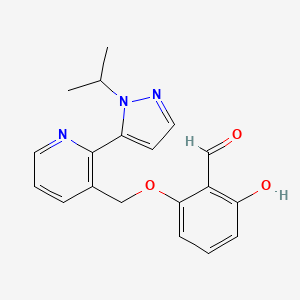
VOXELOTOR


Image result for VOXELOTORhttps://integrity.thomson-pharma.com/integrity/edcontent/structures/pro/818/818824.gifVoxelotor.png

VOXELOTOR

GBT 440; GTx-011, Treatment of Sickle Cell Disease

RN: 1446321-46-5
UNII: 3ZO554A4Q8

Molecular Formula, C19-H19-N3-O3, Molecular Weight, 337.3771

Benzaldehyde, 2-hydroxy-6-((2-(1-(1-methylethyl)-1H-pyrazol-5-yl)-3-pyridinyl)methoxy)-

2-hydroxy-6-((2-(1-(propan-2-yl)-1H-pyrazol-5-yl)pyridin-3-yl)methoxy)benzaldehyde

NMR http://file.selleckchem.com/downloads/nmr/S854001-GBT440-CDCl3-hnmr-selleck.pdf

  • Originator Global Blood Therapeutics
  • Class Antianaemics; Small molecules
  • Mechanism of Action Abnormal haemoglobin modulators; Sickle haemoglobin modulators
  • Orphan Drug Status Yes – Sickle cell anaemia
  • New Molecular Entity Yes

Highest Development Phases

  • Phase III Sickle cell anaemia
  • Phase I Hypoxia; Liver disorders
  • Discontinued Idiopathic pulmonary fibrosis

Most Recent Events

  • 01 Nov 2017 Chemical structure information added
  • 28 Oct 2017 Efficacy and adverse event data from a case study under the compassionate use programme in Sickle cell anaemia released by Global Blood Therapeutics
  • 27 Oct 2017 Discontinued – Phase-II for Idiopathic pulmonary fibrosis in USA (PO)

Voxelotor, also known as GBT-440, is a hemoglobin S allosteric modulator. GBT440 Inhibits Sickling of Sickle Cell Trait Blood Under In Vitro Conditions Mimicking Strenuous Exercise. GBT440 increases haemoglobin oxygen affinity, reduces sickling and prolongs RBC half-life in a murine model of sickle cell disease. GBT440 increases haemoglobin oxygen affinity, reduces sickling and prolongs RBC half-life in a murine model of sickle cell disease.

Treatment Of Sickle Cell Disease In Adults And Adolescents With Episodes Of Vaso-Occlusive Crisis

FDA gave breakthrough therapy designation to this product

Innovator – Global Blood Therapeutics

Image result for VOXELOTORImage result for VOXELOTOR

Image result for VOXELOTOR

PATENT

WO 2013102142

Inventors Brian MetcalfChihyuan ChuangJeffrey WarringtonKumar PAULVANNANMatthew P. JacobsonLan HUABradley Morgan
Applicant Global Blood Therapeutics, Inc.Cytokinetics, Inc.The Regents Of The University Of California

https://patentscope.wipo.int/search/en/detail.jsf?docId=WO2013102142

Hemoglobin (Hb) is a tetrameric protein in red blood cells that transports up to four oxygen molecules from the lungs to various tissues and organs throughout the body.

Hemoglobin binds and releases oxygen through conformational changes, and is in the tense (T) state when it is unbound to oxygen and in the relaxed (R) state when it is bound to oxygen. The equilibrium between the two conformational states is under allosteric regulation. Natural compounds such as 2,3-bisphosphoglycerate (2,3-BPG), protons, and carbon dioxide stabilize hemoglobin in its de-oxygenated T state, while oxygen stabilizes hemoglobin in its oxygenated R state. Other relaxed R states have also been found, however their role in allosteric regulation has not been fully elucidated.

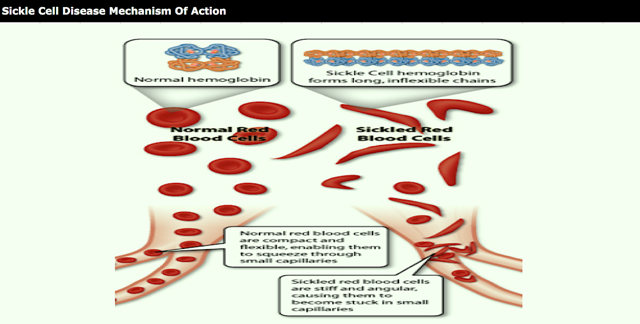
Sickle cell disease is a prevalent disease particularly among those of African and Mediterranean descent. Sickle hemoglobin (HbS) contains a point mutation where glutamic acid is replaced with valine, allowing the T state to become susceptible to polymerization to give the HbS containing red blood cells their characteristic sickle shape. The sickled cells are also more rigid than normal red blood cells, and their lack of flexibility can lead to blockage of blood vessels. Certain synthetic aldehydes have been found to shift the equilibrium from the polymer forming T state to the non-polymer forming R state (Nnamani et al. Chemistry & Biodiversity Vol. 5, 2008 pp. 1762-1769) by acting as allosteric modulators to stabilize the R state through formation of a Schiff base with an amino group on hemoglobin.

US 7, 160,910 discloses 2-furfuraldehydes and related compounds that are also allosteric modulators of hemoglobin. One particular compound 5-hydroxymethyl-2-furfuraldehyde (5HMF) was found to be a potent hemoglobin modulator both in vitro and in vivo. Transgenic mice producing human HbS that were treated with 5HMF were found to have significantly improved survival times when exposed to extreme hypoxia (5% oxygen). Under these hypoxic conditions, the 5HMF treated mice were also found to have reduced amounts of hypoxia-induced sickled red blood cells as compared to the non-treated mice.

A need exists for therapeutics that can shift the equilibrium between the deoxygenated and oxygenated states of Hb to treat disorders that are mediated by Hb or by abnormal Hb such as HbS. A need also exists for therapeutics to treat disorders that would benefit from having Hb in the R state with an increased affinity for oxygen. Such therapeutics would have applications ranging, for example, from sensitizing hypoxic tumor cells that are resistant to standard radiotherapy or chemotherapy due to the low levels of oxygen in the cell, to treating pulmonary and hypertensive disorders, and to promoting wound healing

Example 18. Preparation of 2-hydroxy-6-((2-(1-isopropyl-1H-pyrazol-5-yl)pyridin-3-yl)methoxy)benzaldehyde (Compound 43).

A mixture of 2,6-dihydroxybenzaldehyde (1.58 g, 11.47 mmol, 2 eq.) and K2CO3 (2.4 g, 17.22 mmol, 3 eq.) in DMF (150 mL) was stirred at rt for 10 min. To this mixture was added 3-(chloromethyl)-2-(1-isopropyI-1H-pyrazol-5-yl)pyridine hydrochloride (1.56 g, 5.74 mmol, leq.) at rt. The mixture was heated at 50 °C for 2 h, filtered, concentrated and purified on silica gel using a mixture of EtOAc and hexanes as eluent to give 2-hydroxy-6-((2-(1-isopropyl-1H-pyrazol-5-yl)pyridin-3-yl)methoxy)benzaldehyde (1.71 g, 88%) as a pale yellow solid.

PAPER

ACS Medicinal Chemistry Letters (2017), 8(3), 321-326.

http://pubs.acs.org/doi/full/10.1021/acsmedchemlett.6b00491

Discovery of GBT440, an Orally Bioavailable R-State Stabilizer of Sickle Cell Hemoglobin

 Global Blood Therapeutics, Inc., South San Francisco, California 94080, United States
 Cytokinetics, Inc., South San Francisco, California 94080, United States
 Albert Einstein College of Medicine, Bronx, New York 10461, United States
 Department of Pharmaceutical Chemistry, University of California, San Francisco, California 94158, United States
§ Tandem Sciences, Inc., Menlo Park, California 94025, United States
ACS Med. Chem. Lett.20178 (3), pp 321–326
DOI: 10.1021/acsmedchemlett.6b00491

ACS Editors’ Choice – This is an open access article published under an ACS AuthorChoice License, which permits copying and redistribution of the article or any adaptations for non-commercial purposes.

Abstract Image

We report the discovery of a new potent allosteric effector of sickle cell hemoglobin, GBT440 (36), that increases the affinity of hemoglobin for oxygen and consequently inhibits its polymerization when subjected to hypoxic conditions. Unlike earlier allosteric activators that bind covalently to hemoglobin in a 2:1 stoichiometry, 36 binds with a 1:1 stoichiometry. Compound 36 is orally bioavailable and partitions highly and favorably into the red blood cell with a RBC/plasma ratio of ∼150. This partitioning onto the target protein is anticipated to allow therapeutic concentrations to be achieved in the red blood cell at low plasma concentrations. GBT440 (36) is in Phase 3 clinical trials for the treatment of sickle cell disease (NCT03036813).

Figure

Scheme 1. Synthesis of 36a

aReagents and conditions: (a) MOMCl, DIEPA, DCM, 0 °C to rt 2 h, 90%; (b) nBuLi, DMF, THF, −78 to 0 °C, 94%; (c) 12 N HCl, THF, rt, 1.5 h, 81%; (d) Pd(dppf)Cl2, NaHCO3, H2O/dioxane, 100 °C, 12 h, 40%; (e) SOCl2, DCM, rt, 100%; (f) Na2CO3, DMF, 65 °C, 1.5 h, 81%; (g) 12 N HCl, THF, rt, 3 h, 96%.

GBT440 (36) (15.3 g).

HRMS calcd for C19H20N3O3 (M+H + ) 338.1499, found 338.1497; MS (ESI) m/z 338.4 [M+H]+ ;

1H NMR (400 MHz, Chloroform-d) δ 11.94 (s, 1H), 10.37 (d, J = 0.6 Hz, 1H), 8.75 (dd, J = 4.8, 1.7 Hz, 1H), 7.97 (dd, J = 7.8, 1.6 Hz, 1H), 7.63 – 7.57 (m, 1H), 7.46 – 7.33 (m, 2H), 6.57 (dt, J = 8.6, 0.7 Hz, 1H), 6.34 (d, J = 1.9 Hz, 1H), 6.27 (dt, J = 8.3, 1.0 Hz, 1H), 5.07 (s, 2H), 4.65 (hept, J = 6.6 Hz, 1H), 1.47 (d, J = 6.6 Hz, 7H);

13C NMR (101 MHz, DMSO-d6) δ 194.0, 162.9, 161.1, 149.6, 149.1, 139.1, 138.2, 138.2, 138.0, 131.6, 124.0, 111.1, 110.2, 107.4, 103.5, 67.8, 50.5, 23.1.

http://pubs.acs.org/doi/suppl/10.1021/acsmedchemlett.6b00491/suppl_file/ml6b00491_si_001.pdf

PATENT

WO 2015031285

https://www.google.co.in/patents/WO2015031285A1?cl=en

2-Hydroxy-6-((2-(l-isopropyl-lH-pyrazol-5-yl)pyridin-3-yl)methoxy)benzaldehyde is a compound having the formula:

Sickle cell disease is a disorder of the red blood cells, found particularly among those of African and Mediterranean descent. The basis for sickle cell disease is found in sickle hemoglobin (HbS), which contains a point mutation relative to the prevalent peptide sequence of hemoglobin (Hb).

[ Hemoglobin (Hb) transports oxygen molecules from the lungs to various tissues and organs throughout the body. Hemoglobin binds and releases oxygen through

conformational changes. Sickle hemoglobin (HbS) contains a point mutation where glutamic acid is replaced with valine, allowing HbS to become susceptible to polymerization to give the HbS containing red blood cells their characteristic sickle shape. The sickled cells are also more rigid than normal red blood cells, and their lack of flexibility can lead to blockage of blood vessels. A need exists for therapeutics that can treat disorders that are mediated by Hb or by abnormal Hb such as HbS, such as 2-hydroxy-6-((2-(l-isopropyl-lH-pyrazol-5-yl)pyridin-3-yl)methoxy)benzaldehyde hydrochloride.

When used for treating humans, it is important that a crystalline form of a therapeutic agent, like 2-hydroxy-6-((2-(l-isopropyl-lH-pyrazol-5-yl)pyridin-3-yl)methoxy)benzaldehyde, or a salt thereof, retains its polymorphic and chemical stability, solubility, and other physicochemical properties over time and among various manufactured batches of the agent. If the physicochemical properties vary with time and among batches, the administration of a therapeutically effective dose becomes problematic and may lead to toxic side effects or to ineffective therapy, particularly if a given polymorph decomposes prior to use, to a less active, inactive, or toxic compound. Therefore, it is important to choose a form of the crystalline agent that is stable, is manufactured reproducibly, and has physicochemical properties favorable for its use as a therapeutic agent.

Figure imgf000016_0001


Example ί : Synthesis of Compound 15

OH DIPEA OMOM

(8063J To s solution of 2 >ronao enzsae-i -diol (5 g, 26.45 m ol) m. DCM (50 ml) at 0 *C was added DIPEA (11.54 mL, 66.13 aan l) and MOMCi (4.42 mL. 58.19 ratnoi). The mixture was stirred at 0 °C for 1.5 h, and then warmed to room temperature. The so ntioa was dilated with DCM, washed with sat. NaH€<¾, brum dried and concentrated to give crude product, which was purified by coinran ihexane&/EtOAc~4;l) to give desired product 15.58 g (90%).

14C

Example 2: Synthesis of Compound 13 from 15

Figure imgf000018_0001

[0064] To a solution of 2-bromo-l ,3-bis(methoxymethoxy)benzene (15) (19.9g, 71.8 mmol) in THF (150 mL) at -78 °C was added BuLi (2.5 M, 31.6 mL, 79.0 mmol) dropwise. The solution was stirred at -78 °C for 25 min (resulting white cloudy mixture), then it was warmed to 0 °C and stirred for 25 min. The reaction mixture slowly turns homogenous. To the solution was added DMF at 0 °C. After 25 min, HPLC showed reaction completed. The mixture was quenched with sat. NH4C1 (150 mL), diluted with ether (300 mL). The organic layer was separated, aq layer was further extracted with ether (2X200 mL), and organic layer was combined, washed with brine, dried and concentrated to give crude product, which was triturated to give 14.6 g desired product. The filtrate was then concentrated and purified by column to give additional 0.7 g, total mass is 15.3 g.

Example 3: Synthesis of Compound 13 from resorcinol 11

1.1 R:TMEDA R:BuLi S:THF 2 h -10°C

Figure imgf000018_0002

Journal of Organic Chemistry, 74(1 1), 431 1-4317; 2009

[0065] A three-necked round-bottom flask equipped with mechanical stirrer was charged with 0.22 mol of NaH (50 % suspension in mineral oil) under nitrogen atmosphere. NaH was washed with 2 portions (100 mL) of n-hexane and then with 300 mL of dry diethyl ether; then 80 mL of anhydrous DMF was added. Then 0.09 mol of resorcinol 11, dissolved in 100 mL of diethyl ether was added dropwise and the mixture was left under stirring at rt for 30 min. Then 0.18 mol of MOMCI was slowly added. After 1 h under stirring at rt, 250 mL of water was added and the organic layer was extracted with diethyl ether. The extracts were

15A

washed with brine, dried (Na2S04), then concentrated to give the crude product that was purified by silica gel chromatography to give compound 12 (93 % yield).

15B

[0066] A three-necked round-bottom flask was charged with 110 mL of n-hexane, 0.79 mol of BuLi and 9.4 mL of tetramethylethylendiamine (TMEDA) under nitrogen atmosphere. The mixture was cooled at -10 °C and 0.079 mol of bis-phenyl ether 12 was slowly added. The resulting mixture was left under magnetic stirring at -10 °C for 2 h. Then the temperature was raised to 0 °C and 0.067 mol of DMF was added dropwise. After 1 h, aqueous HC1 was added until the pH was acidic; the mixture was then extracted with ethyl ether. The combined extracts were washed with brine, dried (Na2S04), and concentrated to give aldehyde 13

(84%).

[0067] 2,6-bis(methoxymethoxy)benzaldehyde (13): mp 58-59 °C (n-hexane) ; IR (KBr) n: 1685 (C=0) cm“1; 1H-NMR (400 MHz, CDC13) δ 3.51 (s, 6H, 2 OCH3), 5.28 (s, 4H, 2 OCH20), 6.84 (d, 2H, J = 8.40 Hz, H-3, H-5), 7.41 (t, 1H, J = 8.40 Hz, H-4), 10.55 (s, 1H, CHO); MS, m/e (relative intensity) 226 (M+, 3), 180 (4), 164 (14), 122 (2), 92 (2), 45 (100); Anal. Calc’d. for CnHi405: C,58.40; H, 6.24. Found: C, 57.98; H, 6.20.

Example 4: The Synthesis of Compound 16

Figure imgf000020_0001

13 16

81 %

[0068] To a solution of 2,6-bis(methoxymethoxy)benzaldehyde (13) (15.3 g, 67.6 mmol) in THF (105 mL) (solvent was purged with N2) was added cone. HC1 (12N, 7 mL) under N2, then it was further stirred under N2 for 1.5 h. To the solution was added brine (100 mL) and ether (150 ml). The organic layer was separated and the aqueous layer was further extracted with ether (2×200 mL). The organic layer was combined, washed with brine, dried and concentrated to give crude product, which was purified by column (300g,

hexanes/EtOAc=85: 15) to give desired product 16 (9.9 g) as yellow liquid.

Example 5: Synthesis of Compound 17

Figure imgf000020_0002

16

[0069] To a solution of 2-hydroxy-6-(methoxymethoxy)benzaldehyde (16) (10.88 g, 59.72 mmol) in DMF (120 mL) (DMF solution was purged with N2 for 10 min) was added K2C03 (32.05 g, 231.92 mmol) and 3-(chloromethyl)-2-(l-isopropyl-lH-pyrazol-5-yl)pyridine hydrochloride (10) (15.78 g, 57.98 mmol). The mixture was heated at 65 °C for 1.5 h, cooled to rt, poured into ice water (800 mL). The precipitated solids were isolated by filtration, dried and concentrated to give desired product (17, 18 g).

Example 6: Synthesis of Compound (I)

Figure imgf000021_0001

[0070] To a solution of 2-((2-(l-isopropyl-lH-pyrazol-5-yl)pyridin-3-yl)methoxy)-6-(methoxymethoxy)benzaldehyde (17) (18 g, 47.19 mmol) in THF (135 mL, solution was purged with N2) was added cone. HCI (12N, 20 mL). The solution was stirred at rt for 3 h when HPLC showed the reaction complete. The mixture was added to a solution of NaHC03 (15 g) in water (1.2 L), and the resulting precipitate was collected by filtration, dried to give crude solid, which was further purified by column (DCM/EtOAc=60:40) to give pure product

(15.3 g).

Example 7: Synthesis of Compound I (free base) and its HCI salt form

[0071] Compound (I) free base (40g) was obtained from the coupling of the alcohol intermediate 7 and 2,6-dihydroxybenzaldedhye 9 under Mitsunobu conditions. A procedure is also provided below:

Figure imgf000021_0002

17

Example 8: Synthesis of Compound (I) by Mitsunobu coupling

[0072] Into a 2000-mL three neck round-bottom flask, which was purged and maintained with an inert atmosphere of nitrogen, was placed a solution of [2-[l-(propan-2-yl)-lH-pyrazol-5-yl]pyridin-3-yl]methanol (7) (70 g, 322.18 mmol, 1.00 equiv) in tetrahydrofuran (1000 mL). 2,6-Dihydroxybenzaldehyde (9) (49.2 g, 356.21 mmol, 1.10 equiv) and PPh3 (101 g, 385.07 mmol, 1.20 equiv) were added to the reaction mixture. This was followed by the addition of a solution of DIAD (78.1 g, 386.23 mmol, 1.20 equiv) in tetrahydrofuran (200 ml) dropwise with stirring. The resulting solution was stirred overnight at room temperature. The resulting solution was diluted with 500 ml of H20. The resulting solution was extracted with 3×500 ml of dichloromethane and the combined organic layers were dried over sodium sulfate and concentrated under vacuum. The residue was applied onto a silica gel column with EA:PE (1 :50-l :3) as eluent to yield the crude product. The crude product was re-crystallized from i-propanol/H20 in the ratio of 1/1.5. This resulted in 40 g (37%) of 2-hydroxy-6-([2-[l-(propan-2-yl)-lH-pyrazol-5-yl]pyridin-3-yl]methoxy)benzaldehyde as a light yellow solid. The compound exhibited a melting point of 80-82 °C. MS (ES, m/z): 338.1 [M+l]. 1H NMR (300 MHz, DMSO-d6) δ 11.72(s, 1H), 10.21(s, 1H), 8.76(d, J=3.6Hz, 1H), 8.24(d, J=2.7Hz, lH),7.55(m, 3H), 6.55(m,3H) ,5.21 (s, 2H), 4.65 (m, 1H), 1.37 (d, J=5.1Hz, 6H). 1H NMR (400 MHz, CDC13) δ 11.96 (s, 1H), 10.40 (s, 1H), 8.77 (dd, J= 4.8, 1.5 Hz, 1H), 8.00 (d, J= 7.8 Hz, 1H), 7.63 (d, J= 1.8 Hz, 1H), 7.49 – 7.34 (m, 2H), 6.59 (d, J= 8.5 Hz, 1H), 6.37 (d, J= 1.8 Hz, 1H), 6.29 (d, J= 8.2 Hz, 1H), 5.10 (s, 2H), 4.67 (sep, J= 6.7 Hz, 1H), 1.50 (d, J= 6.6 Hz, 6H).

[0073] In another approach, multiple batches of Compound (I) free base are prepared in multi gram quantities (20g). The advantage of this route is the use of mono-protected 2,6-dihydroxybenzaldehyde (16), which effectively eliminates the possibility of bis-alkylation side product. The mono-MOM ether of 2,6-dihydroxybenzaldehyde (16) can be obtained from two starting points, bromoresorcinol (14) or resorcinol (11) [procedures described in the Journal of Organic Chemistry, 74(11), 4311-4317; 2009 ]. All steps and procedures are provided below. Due to the presence of phenolic aldehyde group, precautions (i.e., carry out all reactions under inert gas such as nitrogen) should be taken to avoid oxidation of the phenol and/or aldehyde group.

18

Preparation of compound I HC1 salt: A solution of compound I (55.79 g, 165.55 mmol) in acetonitrile (275 mL) was flushed with nitrogen for 10 min, then to this solution was added 3N aqueous HC1 (62 mL) at room temperature. The mixture was stirred for additional 10 min after the addition, most of the acetonitrile (about 200 mL) was then removed by evaporation on a rota

PATENT

WO2017096230

PATENT

WO-2017197083

https://patentscope.wipo.int/search/en/detail.jsf?docId=WO2017197083

Processes for the preparation of 2-hydroxy-6-((2-(1-isopropyl-1H-pyrazol-5-yl)-pyridin-3-yl)methoxy)benzaldehyde (also referred to as voxelotor or Compound (I)) and its intermediates is claimed. Compound (I) binds to hemoglobin and increases it oxygen affinity and hence can be useful for the treatment of diseases such as sickle cell disease.

Disclosed herein are processes for synthesizing 2-hydroxy-6-((2-(l-isopropyl-lH-pyrazol-5-yl)-pyridin-3-yl)methoxy)benzaldehyde (Compound (I)) and intermediates used in such processes. Compound (I) binds to hemoglobin and increases it oxygen affinity and hence can be useful for the treatment of diseases such as sickle cell disease.

BACKGROUND

Compound (I) is disclosed in Example 17 of the International Publication No.

WO2013/102142. Compound (I) binds to hemoglobin and increases it oxygen affinity and hence can be useful for the treatment of diseases such as sickle cell disease.

In general, for a compound to be suitable as a therapeutic agent or part of a therapeutic agent, the compound synthesis must be amendable to large scale manufacturing and isolation. The large scale manufacturing and isolation should not impact the physical properties and purity of the compound nor should it negatively impact cost or efficacy of a formulated active ingredient. Accordingly, scale up of manufacturing and isolation may require significant efforts to meet these goals.

ompound (I) has been synthesized by certain methods starting with 2,6-dihydroxbenzaldehyde (compound 1) where each hydroxyl moiety is protected with an unbranched, straight-chain alkyl or alkoxyalkyl such as, for example, methyl or methoxymethyl. Following installation of the aldehyde group, various methods of deprotection of the hydroxyl group were employed to synthesize compound (1) used in the synthesis and production of Compound (I). However, the deprotection processes used lead to unwanted polymerization and decomposition reactions of compound (1) – attributed, in part, to the conditions used for

deprotection of the hydroxy groups. The undesired byproducts yield complex mixtures, lower yields of Compound (I), and require significant effort to purify Compound (I) to a degree acceptable for use as a part of a therapeutic agent, thus rendering the above processes impractical for commercial scale synthesis of Compound (I).

Provided herein are processes for the synthesis of Compound (I):

Examples

Example 1

Synthesis of 2,6-dihydroxybenzaldehyde (Compound (1))

Step 1:

Tetrahydrofuran (700 mL) was added to resorcinol (170g, 1.54 mol, leq.) under inert gas protection, followed by addition of pyridinium tosylate (3.9 g, 15.4 mmol, O.Oleq.), THF 65 mL) and the reaction mixture was cooled down to 0 – 5 °C. Within 1 – 1.5 h ethylvinyl ether (444 mL, 4.63 mol, 3.0 eq.) was added while maintaining a temperature <5°C. After the addition was complete the reaction mixture was allowed to reach room temperature within 1.5 h. The reaction was stirred overnight, cooled down to 10-15 °C, and 510 mL of ½ sat. NaHC03 was added while maintaining the reaction solution below 20 °C. The phases were separated. The organic phase was washed once with 425 mL of water and once with 425 mL 12.5% NaCl solution and evaporated and azeotroped with THF to give bis-EOE-protected resorcinol (401.2 g, 1.55 mol, 102% uncorrected) as a clear colorless to yellowish oil.

Step 2:

Bis-EOE-protected resorcinol (390 g of, actual: 398.6g = 1.53 mol, 1 eq., corrected to 100%) conversion) was added under inert gas protection to a 6 L glass vessel and THF (1170 mL) was added. The reaction mixture was cooled down to -10°C to -5°C and n-BuLi (625 mL, 2.7 M in heptane, 1.687 mol, 1.1 eq.) was added. The reaction mixture was agitated at -5°C- 0°C for 30-40 min and then DMF (153.4 mL, 1.99 mmol, 1.3 eq.) was added starting at -10°C to -5°C. The reaction mixture was stirred until complete and then quenched with lNHCl/EtOAc. It was also discovered, inter alia, that protection with the EOE groups not only resulted in less byproducts but appeared to increase the speed of the formylation reaction to provide 2,6-bis(l-ethoxyethoxy)benzaldehyde (compound (2)).

The mixture was worked up, phase separated and the aqueous washed with MTBE. After aqueous wash to remove salts the organic phase was concentrated to the neat oil to obtain the compound (2) as yellow oil (almost quantitative).

A batch preparation was performed using solvent swap and was completed faster than other known methods for synthesizing Compound (I) with better purity and yield. The deprotection sequence allowed in-situ use of compound (2).

Step 3:

To the reaction solution of Step 2 was added IN HC1 (1755 mL) while maintaining the temperature < 20°C. The pH was of the solution was adjusted to pH = 0.7 – 0.8 with 6 M HC1.

The reaction mixture was stirred for 16 h. After the reaction was complete the organic phase was separated and 1560 mL of methyl tert butyl ether was added. The organic phase was washed once with 1170 mL of IN HC1, once with 780 mL of ½ sat. NaCl solution and once with 780 mL of water and then concentrated to a volume of – 280mL. To the solution was added 780 mL of methyl tert butyl ether and concentrate again to 280 mL [temperature <45°C, vacuo]. To the slurry was added 780 mL of acetonitrile and the solution was concentrated in vacuo at T < 45°C to a final volume of – 280 mL. The slurry was heated to re-dissolve the solids. The solution was cooled slowly to RT and seeded at 60-65 °C to initiate crystallization of the product. The slurry was cooled down to -20°C to -15°C and agitated at this temperature for 1-2 h. The product was isolated by filtration and washed with DCM (pre-cooled to -20°C to -15°C) and dried under a stream of nitrogen to give 2,6-dihydroxybenzaldehyde as a yellow solid. Yield: 138.9 g (1.00 mol, 65.6%).

Example 1A

Alternate Synthesis of 2,6-dihydroxybenzaldehyde compound (1)

Step 1:

In a suitable reactor under nitrogen, tetrahydrofuran (207 L) was added to resorcinol (46 kg, 0.42 kmol, leq.) followed by addition of pyridinium tosylate (1.05 kg, 4.2 mol, O.Oleq.), and the reaction mixture was cooled down to 0 – 5 °C. Within 1 – 1.5 h ethylvinyl ether (90.4 kg, 120.5 L, 125 kmol, 3.0 eq.) was added while maintaining a temperature <5°C. After the addition was complete the reaction mixture was allowed to reach room temperature within 1.5 h. The reaction was stirred overnight, cooled down to 10-15 °C, and 138 L of aqueous 4% NaHC03 was added while maintaining the reaction solution below 20 °C. The phases were separated. The organic phase was washed once with 115 L of water and once with 125.2 kg of a 12.5% NaCl solution. The organic layer was dried by azeotropic distillation with THF to a water content value < 0.05%) (by weight) to yield bis-EOE-protected resorcinol (106.2 kg, 0.42 kmol) as a solution in THF. An advantage over previously reported protection procedures is that the bis-EOE-protected resorcinol product does not need to be isolated as a neat product. The

product-containing THF solution can be used directly in the next reaction step thus increasing throughput and reducing impurity formation.

Step 2:

Bis-EOE-protected resorcinol solution (assumption is 100% conversion) was added under inert gas protection to suitable reactor. The reaction mixture was cooled down to -10°C to -5°C and n-BuLi (117.8 kg, 25% in heptane, 1.1 eq.) was added. The reaction mixture was agitated at -5°C- 0°C for 30-40 min and then DMF (39.7 kg, 0.54 kmol, 1.3 eq.) was added at -10°C to -5°C. The reaction mixture was stirred until complete and then quenched with aqueous HC1 (1M, 488.8 kg) to give 2,6-bis(l-ethoxyethoxy)benzaldehyde. An advantage over previously reported procedures of using EOE protecting group is that the HC1 quenched solution can be used directly in the deprotection step, and 2,6-bis(l-ethoxyethoxy)benzaldehyde does not need to be isolated as a neat oil.

Step 3:

The pH of the quenched solution was adjusted to < 1 with aqueous HC1 (6M, ca 95.9 kg) and the reaction mixture stirred at ambient temperature for 16 h. After the reaction was complete the organic phase was separated and 279.7 kg of methyl tert butyl ether was added. The organic phase was washed once with aqueous IN HC1 (299 kg), once with aqueous 12.5% NaCl (205.8 kg) and once with 189 kg of water and then concentrated to a volume of ca. 69 L. To the slurry was added 164 kg of acetonitrile and the solution was concentrated in vacuo at T < 45°C to a final volume of ca. 69 L. The slurry was heated to re-dissolve the solids. The solution was seeded at 60-65 °C to initiate crystallization of the product and cooled slowly to RT over 8 hrs. The slurry was cooled down to -20 °C to -15°C and agitated at this temperature for l-2h. The product was isolated by filtration and washed with DCM (50.3 kg, pre-cooled to -20 °C to -15 °C) and dried under a stream of nitrogen to yield 2,6-dihydroxybenzaldehyde as a yellow solid. Yield: 37.8 kg (0.27 kmol, 65.4% Yield). The described telescoped approach from deprotection to crystallization increases the throughput and integrity of the product.

Example 2

Synthesis of 3-(chloromethyl)-2-(l-isopropyl-lH-pyrazol-5-yl)pyridine

dihydrochloride salt

Step 1:

An appropriately sized flask was purged with nitrogen and charged with (2-chloropyridin-3-yl)methanol (1.0 equiv), sodium bicarbonate (3.0 equiv), [1, l ‘-bis(diphenyl-phosphino)-ferrocene]dichloropalladium (5 mol %), l-isopropyl-5-(4,4,5,5-tetramethyl-l,3,2-dioxaborolan-2-yl)-lH-pyrazole (1.2 equiv), and a mixture of 2-MeTHF (17.4 vol) and deionized water (5.2 vol). The resulting solution was heated to 70°C to 75°C and conversion monitored by HPLC. Once the reaction was complete, the reaction mixture was cooled to room temperature, diluted with deionized water, and the phases were separated. The organic layer was extracted with 2 N HC1 (10 vol) and the phases were separated. The aqueous phase was washed with MTBE. The pH of the aqueous phase was adjusted to 8-9 with 6 N NaOH. The product was extracted into EtOAc, treated with Darco G-60 for 30 to 60 min, dried over MgS04, filtered through Celite®, and concentrated to give (2-(l-isopropyl-lH-pyrazol-5-yl)pyridin-3-yl)methanol as a brown oil.

Step 2:

A suitably equipped reactor was charged with (2-(l-isopropyl-lH-pyrazol-5-yl)pyridin-3-yl)methanol hydrochloride salt (1 equivalent) and purified water. An aqueous sodium

bicarbonate solution (8% NaHC03) was added slowly to maintain the solution temperature between 17 °C to 25 °C. After addition was complete, the reaction mixture was stirred at 17 °C to 25 °C and dichloromethane was added and the organic layer was separated. DCM solution was then distilled under atmospheric conditions at approximately 40°C and the volume was reduced. DCM was added the reactor and the contents of the reactor are stirred at 20°C to 30°C until a clear solution is formed. The contents of the reactor were cooled to 0°C to 5°C and thionyl chloride was charged to the reactor slowly to maintain a temperature of < 5 °C. The reaction solution was stirred at 17 °C to 25 °C. When the reaction was complete, a solution of HC1 (g) in 1,4-dioxane (ca. 4 N, 0.8 equiv.) was charged to the reactor slowly to maintain the solution temperature between 17 °C and 25 °C. The product 3-(chloromethyl)-2-(l-isopropyl- lH-pyrazol-5-yl)pyridine dihydrochloride salt was filtered washed with dichloromethane and dried.

Example 3

Synthesis of 2-hydroxy-6-((2-(l-isopropyl-lH-pyrazol-5-yl)-pyridin-3-yl)methoxy)benzaldehyde

Form I

(I)

tably equipped reactor was charged with 3-(chloromethyl)-2-(l-isopropyl-lH-pyrazol-5-yl)pyridine dihydrochloride salt (1 equivalent), sodium iodide (0.05 equivalent), sodium bicarbonate (4 equivalent), l-methyl-2-pyrrolidinone (NMP), and 2,6-dihydroxy-benzaldehyde (1 to 1.05 equiv.). The reaction mixture was heated slowly to 40 °C to 50 °C and stirred until the reaction was complete. Water was then added and the reaction mixture was cooled and maintained at 17 °C to 25 °C. When the water addition was complete, the reaction mixture was stirred at 17 °C to 25 °C and slowly cooled to 0°C to 5°C and the resulting solids were collected by filtration. The solids were washed with a 0 °C to 5 °C 2: 1 water/NMP solution, followed by 0 °C to 5 °C water. The solids were filtered and dried to give 2-hydroxy-6-((2-(l-isopropyl-lH-pyrazol-5-yl)-pyridin-3-yl)methoxy)benzaldehyde as Form I or a mixture of 2-hydroxy-6-((2-(l-isopropyl-lH-pyrazol-5-yl)-pyridin-3-yl)methoxy)benzaldehyde as Form I Form I and NMP solvates.

Alternative Synthesis:

A suitably equipped reactor was charged with 3-(chloromethyl)-2-(l-isopropyl-lH-pyrazol-5-yl)pyridine bishydrochloride salt (1 equivalent), sodium iodide (0.05 equivalent), sodium bicarbonate (3 to 4 equivalent), l-methyl-2-pyrrolidinone (7 equivalent, NMP), and 2,6-dihydoxybenzaldehyde (1.05 equivalent). The reaction mixture was heated to 40 °C to 50° C and stirred until the reaction was complete. Water (5 equivalent) was then added while maintaining the contents of the reactor at 40 °C to 460 C and the resulting clear solution seeded with 2-hydroxy-6-((2-(l-isopropyl-lH-pyrazol-5-yl)-pyridin-3-yl)methoxy)benzaldehyde Form I. Additional water (5 equivalent) was added while maintaining the contents of the reactor at 40 °C to 500 C, the reactor contents cooled to 15 °C to 25 0 C, and the reactor contents stirred for at least 1 hour at 15 °C to 25 0 C. The solids were collected, washed twice with 1 :2 NMP: water and twice with water, and dried to yield 2-hydroxy-6-((2-(l-isopropyl-lH-pyrazol-5-yl)-pyridin-3-yl)methoxy)benzaldehyde Form I devoid of 2-hydroxy-6-((2-(l-isopropyl-lH-pyrazol-5-yl)-pyridin-3-yl)methoxy)benzaldehyde as NMP solvates.

Example 4

Preparation of 2-hydroxy-6-((2-(l-isopropyl-lH-pyrazol-5-yl)-pyridin-3-yl)methoxy)- benzaldehyde Form II

Step 1:

A suitably equipped reactor with an inert atmosphere was charged with crude 2-hydroxy- 6-((2-(l-isopropyl-lH-pyrazol-5-yl)-pyridin-3-yl)methoxy)benzaldehyde (from Example 3 above) and MTBE and the contents stirred at 17°C to 25°C until dissolution was achieved. The reaction solution was passed through a 0.45 micron filter and MTBE solvent volume reduced using vacuum distillation at approximately 50 °C. The concentrated solution was heated to 55°C to 60°C to dissolve any crystallized product. When a clear solution was obtained, the solution was cooled to 50 °C to 55 °C and n-heptane was added. 2-Hydroxy-6-((2-(l-isopropyl-lH-pyrazol-5-yl)-pyridin-3-yl)methoxy)benzaldehyde (e.g., Form II) seeds in a slurry of n-heptane were charged and the solution was stirred at 50°C to 55°C. The solution was cooled to 45 °C to 50 °C and n-heptane was added to the reactor slowly while maintaining a reaction solution temperature of 45°C to 50°C. The reaction solution are stirred at 45°C to 50°C and then slowly cooled to 17°C to 25°C. A sample was taken for FTIR analysis and the crystallization was considered complete when FTIR analysis confirmed 2-hydroxy-6-((2-(l-isopropyl-lH-pyrazol-5-yl)-pyridin-3-yl)methoxy)-benzaldehyde (Form II). The contents of the reactor were then cooled to 0°C to 5°C and the solids were isolated and washed with cold n-heptane and dried.

POLYMORPHS

US9447071


US2016207904


US2016346263

PATENT

https://patents.google.com/patent/US20160207904

PATENT

https://patents.google.com/patent/US20160346263A1/en

  • 2-Hydroxy-6-((2-(1-isopropyl-1H-pyrazol-5-yl)pyridin-3-yl)methoxy)benzaldehyde is a compound having the formula:
  • [0000]
    Figure US20160346263A1-20161201-C00001
  • [0003]
    Sickle cell disease is a disorder of the red blood cells, found particularly among those of African and Mediterranean descent. The basis for sickle cell disease is found in sickle hemoglobin (HbS), which contains a point mutation relative to the prevalent peptide sequence of hemoglobin (Hb).
  • [0004]
    Hemoglobin (Hb) transports oxygen molecules from the lungs to various tissues and organs throughout the body. Hemoglobin binds and releases oxygen through conformational changes. Sickle hemoglobin (HbS) contains a point mutation where glutamic acid is replaced with valine, allowing HbS to become susceptible to polymerization to give the HbS containing red blood cells their characteristic sickle shape. The sickled cells are also more rigid than normal red blood cells, and their lack of flexibility can lead to blockage of blood vessels. A need exists for therapeutics that can treat disorders that are mediated by Hb or by abnormal Hb such as HbS, such as 2-hydroxy-6-((2-(1-isopropyl-1H-pyrazol-5-yl)pyridin-3-yl)methoxy)benzaldehyde.
  • [0005]
    When used for treating humans, it is important that a crystalline form of a therapeutic agent, like 2-hydroxy-6-((2-(1-isopropyl-1H-pyrazol-5-yl)pyridin-3-yl)methoxy)benzaldehyde, or a salt thereof, retains its polymorphic and chemical stability, solubility, and other physicochemical properties over time and among various manufactured batches of the agent. If the physicochemical properties vary with time and among batches, the administration of a therapeutically effective dose becomes problematic and may lead to toxic side effects or to ineffective therapy, particularly if a given polymorph decomposes prior to use, to a less active, inactive, or toxic compound. Therefore, it is important to choose a form of the crystalline agent that is stable, is manufactured reproducibly, and has physicochemical properties favorable for its use as a therapeutic agent.
  • [0006]
    However, the art remains unable to predict which crystalline form of an agent will have a combination of the desired properties and will be suitable for human administration, and how to make the agent in such a crystalline form.

PATENT

https://patents.google.com/patent/US9447071B2/en

It has now been discovered that 2-hydroxy-6-((2-(1-isopropyl-1H-pyrazol-5-yl)pyridin-3-y1)methoxy)benzaldehyde (or Compound 1) i.e., the free base of Compound 1, can be obtained as one or more crystalline ansolvate forms, several of which are referred to here as crystalline Form I, Form II and Material N. In preferred embodiments, the free base of Compound 1 is a crystalline ansolvate, such as a crystalline anhydrous form. The free base of Compound 1, can be obtained from its corresponding salt form, such as the HCl salt of Compound 1.

Three anhydrous crystalline forms of the free base were identified, termed Free Base Forms I, II, and Material N. It has been discovered that nucleation of Free Base Form I generally occurs first from a slurry. Extending the slurry time can induce the transformation of Free Base Form I to Free Base Form II, a thermodynamically more stable phase relative to Form I. It has further been discovered that Free Base Material N can be stable relative to Forms I and II, at room temperature.

Synthetic Routes for Preparing Compound 1

The compound of formula (I) was synthesized as schematically described below and elaborated thereafter.

Figure US09447071-20160920-C00003

Example 1 Synthesis of Compound 15

Figure US09447071-20160920-C00004

To a solution of 2-bromobenzene-1,3-diol (5 g, 26.45 mmol) in DCM (50 ml) at 0° C. was added DIPEA (11.54 mL, 66.13 mmol) and MOMCl (4.42 mL, 58.19 mmol). The mixture was stirred at 0° C. for 1.5 h, and then warmed to room temperature. The solution was diluted with DCM, washed with sat. NaHCO3, brine, dried and concentrated to give crude product, which was purified by column (hexanes/EtOAc=4:1) to give desired product 15.58 g (90%).

Example 2 Synthesis of Compound 13 from 15

Figure US09447071-20160920-C00005

To a solution of 2-bromo-1,3-bis(methoxymethoxy)benzene (15) (19.9 g, 71.8 mmol) in THF (150 mL) at −78° C. was added BuLi (2.5 M, 31.6 mL, 79.0 mmol) dropwise. The solution was stirred at −78° C. for 25 min (resulting white cloudy mixture), then it was warmed to 0° C. and stirred for 25 min. The reaction mixture slowly turns homogenous. To the solution was added DMF at 0° C. After 25 min, HPLC showed reaction completed. The mixture was quenched with sat. NH4Cl (150 mL), diluted with ether (300 mL). The organic layer was separated, aq layer was further extracted with ether (2×200 mL), and organic layer was combined, washed with brine, dried and concentrated to give crude product, which was triturated to give 14.6 g desired product. The filtrate was then concentrated and purified by column to give additional 0.7 g, total mass is 15.3 g.

Example 3 Synthesis of Compound 13 from resorcinol 11

Figure US09447071-20160920-C00006

A three-necked round-bottom flask equipped with mechanical stirrer was charged with 0.22 mol of NaH (50% suspension in mineral oil) under nitrogen atmosphere. NaH was washed with 2 portions (100 mL) of n-hexane and then with 300 mL of dry diethyl ether; then 80 mL of anhydrous DMF was added. Then 0.09 mol of resorcinol 11, dissolved in 100 mL of diethyl ether was added dropwise and the mixture was left under stirring at rt for 30 min. Then 0.18 mol of MOMCl was slowly added. After 1 h under stirring at rt, 250 mL of water was added and the organic layer was extracted with diethyl ether. The extracts were washed with brine, dried (Na2SO4), then concentrated to give the crude product that was purified by silica gel chromatography to give compound 12 (93% yield).

A three-necked round-bottom flask was charged with 110 mL of n-hexane, 0.79 mol of BuLi and 9.4 mL of tetramethylethylendiamine (TMEDA) under nitrogen atmosphere. The mixture was cooled at −10° C. and 0.079 mol of bis-phenyl ether 12 was slowly added. The resulting mixture was left under magnetic stirring at −10° C. for 2 h. Then the temperature was raised to 0° C. and 0.067 mol of DMF was added dropwise. After 1 h, aqueous HCl was added until the pH was acidic; the mixture was then extracted with ethyl ether. The combined extracts were washed with brine, dried (Na2SO4), and concentrated to give aldehyde 13 (84%).

2,6-bis(methoxymethoxy)benzaldehyde (13): mp 58-59° C. (n-hexane); IR (KBr) n: 1685 (C═O) cm−11H-NMR (400 MHz, CDCl3) δ 3.51 (s, 6H, 2 OCH3), 5.28 (s, 4H, 2 OCH2O), 6.84 (d, 2H, J=8.40 Hz, H-3, H-5), 7.41 (t, 1H, J=8.40 Hz, H-4), 10.55 (s, 1H, CHO); MS, m/e (relative intensity) 226 (M+, 3), 180 (4), 164 (14), 122 (2), 92 (2), 45 (100); Anal. Calc’d. for C11H14O5: C, 58.40; H, 6.24. Found: C, 57.98; H, 6.20.

Example 4 The Synthesis of Compound 16

Figure US09447071-20160920-C00007

To a solution of 2,6-bis(methoxymethoxy)benzaldehyde (13) (15.3 g, 67.6 mmol) in THF (105 mL) (solvent was purged with N2) was added conc. HCl (12N, 7 mL) under N2, then it was further stirred under Nfor 1.5 h. To the solution was added brine (100 mL) and ether (150 ml). The organic layer was separated and the aqueous layer was further extracted with ether (2×200 mL). The organic layer was combined, washed with brine, dried and concentrated to give crude product, which was purified by column (300 g, hexanes/EtOAc=85:15) to give desired product 16 (9.9 g) as yellow liquid.

Example 5 Synthesis of Compound 17

Figure US09447071-20160920-C00008

To a solution of 2-hydroxy-6-(methoxymethoxy)benzaldehyde (16) (10.88 g, 59.72 mmol) in DMF (120 mL) (DMF solution was purged with Nfor 10 min) was added K2CO(32.05 g, 231.92 mmol) and 3-(chloromethyl)-2-(1-isopropyl-1H-pyrazol-5-yl)pyridine hydrochloride (10) (15.78 g, 57.98 mmol). The mixture was heated at 65° C. for 1.5 h, cooled to rt, poured into ice water (800 mL). The precipitated solids were isolated by filtration, dried and concentrated to give desired product (17, 18 g).

Example 6 Synthesis of Compound (I)

Figure US09447071-20160920-C00009

To a solution of 2-((2-(1-isopropyl-1H-pyrazol-5-yl)pyridin-3-yl)methoxy)-6-(methoxymethoxy)benzaldehyde (17) (18 g, 47.19 mmol) in THF (135 mL, solution was purged with N2) was added conc. HCl (12N, 20 mL). The solution was stirred at rt for 3 h when HPLC showed the reaction complete. The mixture was added to a solution of NaHCO(15 g) in water (1.2 L), and the resulting precipitate was collected by filtration, dried to give crude solid, which was further purified by column (DCM/EtOAc=60:40) to give pure product (15.3 g).

Example 7 Synthesis of Compound I (Free Base) and its HCl Salt Form

Compound (I) free base (40 g) was obtained from the coupling of the alcohol intermediate 7 and 2,6-dihydroxybenzaldedhye 9 under Mitsunobu conditions. A procedure is also provided below:

Figure US09447071-20160920-C00010

Example 8 Synthesis of Compound (I) by Mitsunobu Coupling

Into a 2000-mL three neck round-bottom flask, which was purged and maintained with an inert atmosphere of nitrogen, was placed a solution of [2-[1-(propan-2-yl)-1H-pyrazol-5-yl]pyridin-3-yl]methanol (7) (70 g, 322.18 mmol, 1.00 equiv) in tetrahydrofuran (1000 mL). 2,6-Dihydroxybenzaldehyde (9) (49.2 g, 356.21 mmol, 1.10 equiv) and PPh(101 g, 385.07 mmol, 1.20 equiv) were added to the reaction mixture. This was followed by the addition of a solution of DIAD (78.1 g, 386.23 mmol, 1.20 equiv) in tetrahydrofuran (200 ml) dropwise with stirring. The resulting solution was stirred overnight at room temperature. The resulting solution was diluted with 500 ml of H2O. The resulting solution was extracted with 3×500 ml of dichloromethane and the combined organic layers were dried over sodium sulfate and concentrated under vacuum. The residue was applied onto a silica gel column with EA:PE (1:50-1:3) as eluent to yield the crude product. The crude product was re-crystallized from i-propanol/H2O in the ratio of 1/1.5. This resulted in 40 g (37%) of 2-hydroxy-6-([2-[1-(propan-2-yl)-1H-pyrazol-5-yl]pyridin-3-yl]methoxy)benzaldehyde as a light yellow solid. The compound exhibited a melting point of 80-82° C. MS (ES, m/z): 338.1 [M+1]. 1H NMR (300 MHz, DMSO-d6) δ 11.72 (s, 1H), 10.21 (s, 1H), 8.76 (d, J=3.6 Hz, 1H), 8.24 (d, J=2.7 Hz, 1H), 7.55 (m, 3H), 6.55 (m, 3H), 5.21 (s, 2H), 4.65 (m, 1H), 1.37 (d, J=5.1 Hz, 6H). 1H NMR (400 MHz, CDCl3) δ 11.96 (s, 1H), 10.40 (s, 1H), 8.77 (dd, J=4.8, 1.5 Hz, 1H), 8.00 (d, J=7.8 Hz, 1H), 7.63 (d, J=1.8 Hz, 1H), 7.49-7.34 (m, 2H), 6.59 (d, J=8.5 Hz, 1H), 6.37 (d, J=1.8 Hz, 1H), 6.29 (d, J=8.2 Hz, 1H), 5.10 (s, 2H), 4.67 (sep, J=6.7 Hz, 1H), 1.50 (d, J=6.6 Hz, 6H).

In another approach, multiple batches of Compound (I) free base are prepared in multi gram quantities (20 g). The advantage of this route is the use of mono-protected 2,6-dihydroxybenzaldehyde (16), which effectively eliminates the possibility of bis-alkylation side product. The mono-MOM ether of 2,6-dihydroxybenzaldehyde (16) can be obtained from two starting points, bromoresorcinol (14) or resorcinol (11) [procedures described in the Journal of Organic Chemistry, 74(11), 4311-4317; 2009]. All steps and procedures are provided below. Due to the presence of phenolic aldehyde group, precautions (i.e., carry out all reactions under inert gas such as nitrogen) should be taken to avoid oxidation of the phenol and/or aldehyde group. Preparation of compound I HCl salt: A solution of compound I (55.79 g, 165.55 mmol) in acetonitrile (275 mL) was flushed with nitrogen for 10 min, then to this solution was added 3N aqueous HCl (62 mL) at room temperature. The mixture was stirred for additional 10 min after the addition, most of the acetonitrile (about 200 mL) was then removed by evaporation on a rotary evaporator at around 32° C., the remaining solution was frozen by cooling in an acetone-dry ice bath and lyophilized to afford compound I HCl salt (59.4 g).

Biological Activity

Description Voxelotor(GBT440, GTx011) is a novel small molecule hemoglobin modifier which increases hemoglobin oxygen affinity.
In vitro GBT440 is a new potent allosteric effector of sickle cell hemoglobin that increases the affinity of hemoglobin for oxygen and consequently inhibits its polymerization when subjected to hypoxic conditions. GBT440 inhibits these isozymes(CYP 1A2, 2C8, 2C9, 2C19, 2D6, and 3A4) with IC50 ranging from 7.9 to 148 μM. It is not a substrate for either P-gp or BCRP transporters[1]. It binds to the N-terminal a chain of Hb[2].
In vivo GBT440 has favorable oral bioavailability of 60, 37, and 36% in rats, dogs, and monkeys, respectively, with similar blood and plasma half-lives of approximately 20 h each. T1/2 value of GBT440 in all animal species is significantly shorter than the T1/2 of red blood cells (∼20 days), which supports that binding of GBT440 to hemoglobin is a reversible process. GBT440 is currently in Phase 3 clinical trials (NCT03036813) in SCD patients[1]. GBT440 increases haemoglobin oxygen affinity, reduces sickling and prolongs RBC half-life in a murine model of sickle cell disease. In a murine model of SCD, GBT440 extends the half-life of RBCs, reduces reticulocyte counts and prevents ex vivo RBC sickling. Importantly, oral dosing of GBT440 in animals demonstrates suitability for once daily dosing in humans and a highly selective partitioning into RBCs, which is a key therapeutic safety attribute. GBT440 shows dose proportional PK, a terminal half-life of 1.5-3 d[2].

GBT Receives FDA Breakthrough Therapy Designation for Voxelotor for Treatment of Sickle Cell Disease (SCD)

Voxelotor is First Investigational Treatment for SCD to Receive Breakthrough Therapy Designation

SOUTH SAN FRANCISCO, Calif., Jan. 09, 2018 (GLOBE NEWSWIRE) — Global Blood Therapeutics, Inc. (GBT) (NASDAQ:GBT) today announced that the U.S. Food and Drug Administration (FDA) has granted Breakthrough Therapy Designation (BTD) to voxelotor (previously called GBT440) for the treatment of sickle cell disease (SCD). Voxelotor is being developed as a disease-modifying therapy for SCD and previously received European Medicines Agency (EMA) Priority Medicines (PRIME) designation for the treatment of SCD.

“The FDA’s decision to grant voxelotor the first Breakthrough Therapy designation for the treatment of sickle cell disease reflects a recognition of the promising efficacy and safety data we have collected to date for this investigational drug, as well as an acknowledgement of the overwhelming need for major advances over available therapies in the treatment of SCD patients,” said Ted W. Love, president and chief executive officer of GBT. “This designation is another significant milestone for GBT as we work to expedite the development of voxelotor.”

The FDA selectively grants BTD to expedite the development and review of drugs that have demonstrated preliminary clinical evidence indicating the potential for substantial improvement over available therapy. The BTD decision for voxelotor was based on clinical data submitted from the following studies:

  • Preliminary efficacy and safety data from Part A of the Phase 3 HOPE Study (GBT440-031)
  • Phase 1/2 study and open-label extension in adults (GBT440-001/024)
  • Ongoing Phase 2 HOPE-KIDS 1 study in children age 6 to 17 (GBT440-007)
  • Compassionate Access experience in adults with severe SCD (not eligible for the HOPE Study)

About Sickle Cell Disease (SCD)
SCD is a lifelong inherited blood disorder caused by a genetic mutation in the beta-chain of hemoglobin, which leads to the formation of abnormal hemoglobin known as sickle hemoglobin (HbS). In its deoxygenated state, HbS has a propensity to polymerize, or bind together, forming long, rigid rods within a red blood cell (RBC). The polymer rods deform RBCs to assume a sickled shape and to become inflexible, which can cause blockage in capillaries and small blood vessels. Beginning in childhood, SCD patients suffer unpredictable and recurrent episodes or crises of severe pain due to blocked blood flow to organs, which often lead to psychosocial and physical disabilities. This blocked blood flow, combined with hemolytic anemia (the destruction of RBCs), can eventually lead to multi-organ damage and early death.

About Voxelotor in Sickle Cell Disease
Voxelotor (previously called GBT440) is being developed as an oral, once-daily therapy for patients with SCD. Voxelotor works by increasing hemoglobin’s affinity for oxygen. Since oxygenated sickle hemoglobin does not polymerize, GBT believes voxelotor blocks polymerization and the resultant sickling of red blood cells. With the potential to restore normal hemoglobin function and improve oxygen delivery, GBT believes that voxelotor may potentially modify the course of SCD. In recognition of the critical need for new SCD treatments, the U.S. Food and Drug Administration (FDA) has granted voxelotor Fast Track, Orphan Drug and Rare Pediatric Disease designations for the treatment of patients with SCD. The European Medicines Agency (EMA) has included voxelotor in its Priority Medicines (PRIME) program, and the European Commission (EC) has designated voxelotor as an orphan medicinal product for the treatment of patients with SCD.

GBT is currently evaluating voxelotor in the HOPE (Hemoglobin Oxygen Affinity Modulation to Inhibit HbS PolymErization) Study, a Phase 3 clinical study in patients age 12 and older with SCD. Additionally, voxelotor is being studied in the ongoing Phase 2a HOPE-KIDS 1 Study, an open-label, single- and multiple-dose study in pediatric patients (age 6 to 17) with SCD. HOPE-KIDS 1 is assessing the safety, tolerability, pharmacokinetics and exploratory treatment effect of voxelotor.

About GBT
GBT is a clinical-stage biopharmaceutical company determined to discover, develop and deliver innovative treatments that provide hope to underserved patient communities. GBT is developing its lead product candidate, voxelotor, as an oral, once-daily therapy for sickle cell disease. To learn more, please visit www.gbt.com and follow the company on Twitter @GBT_news.


REFERENCES

1: Oksenberg D, Dufu K, Patel MP, Chuang C, Li Z, Xu Q, Silva-Garcia A, Zhou C, Hutchaleelaha A, Patskovska L, Patskovsky Y, Almo SC, Sinha U, Metcalf BW, Archer DR. GBT440 increases haemoglobin oxygen affinity, reduces sickling and prolongs RBC half-life in a murine model of sickle cell disease. Br J Haematol. 2016 Oct;175(1):141-53. doi: 10.1111/bjh.14214. PubMed PMID: 27378309.

2: Dufu K, Lehrer-Graiwer J, Ramos E, Oksenberg D. GBT440 Inhibits Sickling of Sickle Cell Trait Blood Under In Vitro Conditions Mimicking Strenuous Exercise. Hematol Rep. 2016 Sep 28;8(3):6637. PubMed PMID: 27757216; PubMed Central PMCID: PMC5062624.

3: Ferrone FA. GBT440 increases haemoglobin oxygen affinity, reduces sickling and prolongs RBC half-life in a murine model of sickle cell disease. Br J Haematol. 2016 Aug;174(4):499-500. doi: 10.1111/bjh.14212. PubMed PMID: 27410726.

4: Oder E, Safo MK, Abdulmalik O, Kato GJ. New developments in anti-sickling agents: can drugs directly prevent the polymerization of sickle haemoglobin in vivo? Br J Haematol. 2016 Oct;175(1):24-30. doi: 10.1111/bjh.14264. Review. PubMed PMID: 27605087; PubMed Central PMCID: PMC5035193.

Patent ID

Patent Title

Submitted Date

Granted Date

US2016346263 CRYSTALLINE POLYMORPHS OF THE FREE BASE OF 2-HYDROXY-6-((2-(1-ISOPROPYL-1H-PYRAZOL-5-YL)PYRIDIN-3-YL)METHOXY)BENZALDEHYDE
2016-08-12
US2014271591 Compositions and methods for the modulation of hemoglobin (s)
2013-03-15
2014-09-18
US2016303099 METHODS OF TREATMENT
2016-03-29
US2016206614 SUBSTITUTED BENZALDEHYDE COMPOUNDS AND METHODS FOR THEIR USE IN INCREASING TISSUE OXYGENATION
2016-03-25
2016-07-21
US9248199 1:1 ADDUCTS OF SICKLE HEMOGLOBIN
2014-01-29
2015-07-30

////////////VOXELOTOR, GBT 440, GTx-011, Treatment of Sickle Cell Disease, phase 3, gbt, 1446321-46-5, orphan drug,  breakthrough therapy designation

CC(C)n1nccc1c2ncccc2COc3cccc(O)c3C=O

DISCLAIMER

“NEW DRUG APPROVALS ” CATERS TO EDUCATION GLOBALLY, No commercial exploits are done or advertisements added by me. This is a compilation for educational purposes only. P.S. : The views expressed are my personal and in no-way suggest the views of the professional body or the company that I represent

Pracinostat


Pracinostat.svg

ChemSpider 2D Image | Pracinostat | C20H30N4O2

Pracinostat.png

2D chemical structure of 929016-96-6

Pracinostat

  • Molecular Formula C20H30N4O2
  • Average mass 358.478 Da
2-Propenamide, 3-[2-butyl-1-[2-(diethylamino)ethyl]-1H-benzimidazol-5-yl]-N-hydroxy-, (2E)-
929016-96-6 [RN]
SB939
(2E)-3-{2-butyl-1-[2-(diethylamino)ethyl]-1,3-benzodiazol-5-yl}-N-hydroxyprop-2-enamide
N-hydroxy-1-[(4-methoxyphenyl)methyl]-1H-indole-6-carboxamide
PCI 34051,  UNII: GPO2JN4UON
929016-98-8 DI HCl salt, C20 H30 N4 O2 . 2 Cl H, 431.4
929016-96-6 (free base)
929016-97-7 (trifluoroacetate)
S*BIO (Originator)
Leukemia, acute myeloid, phase 3, helsinn
Image result for S*BIO
str1
CAS 929016-98-8 DI HCl salt, C20 H30 N4 O2 . 2 Cl H, 431.4
E)-3-[2-Butyl-1-(2-diethylaminoethyl)-1H-benzimidazol-5-yl]-N-hydroxyacrylamide Dihydrochloride Salt

Pracinostat (SB939) is an orally bioavailable, small-molecule histone deacetylase (HDAC) inhibitor based on hydroxamic acid with potential anti-tumor activity characterized by favorable physicochemical, pharmaceutical, and pharmacokinetic properties.

WO-2017192451  describes Novel polymorphic crystalline forms of pracinostat (designated as Form 3) and their hydrates, processes for their preparation and compositions and combination comprising them are claimed. Also claimed is their use for inhibiting histone deacetylase and treating cancer, such as myelodysplastic syndrome (MDS), acute myeloid leukemia (AML), breast cancer, colon cancer, prostate cancer, pancreas cancer, leukemia, lymphoma, ovary cancer, melanoma and neuroblastoma.

See WO2014070948 ,  Helsinn , under sub-license from MEI Pharma (under license from S*Bio), is developing pracinostat, an oral HDAC inhibitor, for treating hematological tumors, including AML, MDS and myelofibrosis.

The oncolytic agent pracinostat hydrochloride is an antagonist of histone deacetylase 1 (HDAC1) and 2 (HDAC2) that was discovered by the Singapore-based company S*BIO. Helsinn obtained the exlusive development and commercialization rights in July 2016, and is conducting phase III clinical trials in combination with azacitidine in adults with newly diagnosed acute myeloid leukemia. Phase II trials are also under way for the treatment of previously untreated intermediate-2 or high risk myelodysplastic syndrome patients and for the treatment of primary or post essential thrombocythemia/polycythemia vera) in combination with ruxolitinib.In North America, S*BIO had been conducting phase II clinical trials of pracinostat hydrochloride in patients with solid tumors and for the treatment of myeloproliferative diseases and phase I clinical trials in patients with leukemia; however, recent progress reports are not available at present. The University of Queensland had been evaluating the compound in preclinical studies for malaria.

Image result for University of Queensland

University of Queensland

Image result for MEI Pharma

MEI Pharma

The Canadian Cancer Society Research Institute (the research branch of the Canadian Cancer Society upon its integration with the National Cancer Institute of Canada to form the new Canadian Cancer Society) is conducting phase II clinical trials in Canada for the treatment of recurrent or metastatic prostate cancer.

Image result for Canadian Cancer Society Research Institute

Canadian Cancer Society Research Institute

In 2012, the product was licensed to MEI Pharma by S*BIO on a worldwide basis. In 2016, MEI Pharma and Helsinn entered into a licensing, development and commercialization agreement by which Helsinn obtained exclusive worldwide rights (including manufacturing and commercialization rights).

Image result for HELSINN

HELSINN

In 2014, the FDA assigned an orphan drug designation to MEI Pharma for the treatment of acute myeloid leukemia. In 2016, the product received breakthrough therapy designation in the U.S. in combination with azacitidine for the treatment of patients with newly diagnosed acute myeloid leukemia (AML) who are older than 75 years of age or unfit for intensive chemotherapy.

Pracinostat is an orally available, small-molecule histone deacetylase (HDAC) inhibitor with potential antineoplastic activity. Pracinostat inhibits HDACs, which may result in the accumulation of highly acetylated histones, followed by the induction of chromatin remodeling; the selective transcription of tumor suppressor genes; the tumor suppressor protein-mediated inhibition of tumor cell division; and, finally, the induction of tumor cell apoptosis. This agent may possess improved metabolic, pharmacokinetic and pharmacological properties compared to other HDAC inhibitors.

Pracinostat is a novel HDAC inhibitor with improved in vivo properties compared to other HDAC inhibitors currently in clinical trials, allowing oral dosing. Data demonstrate that Pracinostat is a potent and effective anti-tumor drug with potential as an oral therapy for a variety of human hematological and solid tumors

SYNTHESIS

Figure

Clinically tested HDAC inhibitors.

Activity

Pracinostat selectively inhibits HDAC class I,II,IV without class III and HDAC6 in class IV,[1] but has no effect on other Zn-binding enzymes, receptors, and ion channels. It accumulates in tumor cells and exerts a continuous inhibition to histone deacetylase,resulting in acetylated histones accumulation, chromatin remodeling, tumor suppressor genes transcription, and ultimately, apoptosis of tumor cells.[2]

Clinical medication

Clinical studies suggests that pracinostat has potential best pharmacokinetic properties when compared to other oral HDAC inhibitors.[3]In March 2014, pracinostat has granted Orphan Drug for acute myelocytic leukemia (AML) and for the treatment of T-cell lymphoma by the Food and Drug Administration.

Clinical Trials

CTID Title Phase Status Date
NCT03151304 A Safety and Efficacy Study of Pracinostat and Azacitidine in Patients With High Risk Myelodysplastic Syndromes 2 Recruiting
2017-10-27
NCT03151408 An Efficacy and Safety Study Of Pracinostat In Combination With Azacitidine In Adults With Acute Myeloid Leukemia 3 Recruiting
2017-10-17
NCT02267278 Ruxolitinib and Pracinostat Combination Therapy for Patients With Myelofibrosis (MF) 2 Active, not recruiting
2017-04-27
NCT01873703 Phase 2 Study of Pracinostat With Azacitidine in Patients With Previously Untreated Myelodysplastic Syndrome 2 Active, not recruiting
2017-04-21
NCT02118909 Evaluate the Effects of Itraconazole and Ciprofloxacin on Single-Dose PK of Pracinostat in Healthy Nonsmoking Subjects 1 Completed
2017-02-22
NCT02058784 Study to Evaluate the Food Effect of Single-dose Bioavailability of Pracinostat in Healthy Adult Subjects 1 Completed
2017-02-22
NCT01993641 Phase 2 Study Adding Pracinostat to a Hypomethylating Agent (HMA) in Patients With MDS Who Failed to Respond to Single Agent HMA 2 Completed
2017-02-22
NCT01112384 A Study of SB939 in Patients With Translocation-Associated Recurrent/Metastatic Sarcomas 2 Completed
2016-11-25
NCT01184274 A Phase I Study of SB939 in Pediatric Patients With Refractory Solid Tumours and Leukemia 1 Completed
2014-01-16
NCT01200498 Study of SB939 in Subjects With Myelofibrosis 2 Completed
2013-12-13

PATENT

WO2005028447

Inventors Dizhong ChenWeiping DengKanda SangthongpitagHong Yan SongEric T. SunNiefang YuYong Zou
Applicant S*Bio Pte Ltd

Scheme I

Figure imgf000041_0001

Scheme II

Figure imgf000042_0001Scheme III

Figure imgf000043_0001Scheme IV

Figure imgf000044_0001 Scheme V

Figure imgf000045_0001

PAPER

Discovery of (2E)-3-{2-Butyl-1-[2-(diethylamino)ethyl]-1H-benzimidazol-5-yl}-N-hydroxyacrylamide (SB939), an Orally Active Histone Deacetylase Inhibitor with a Superior Preclinical Profile

Chemistry Discovery, Biology Discovery, and §Pre-Clinical Development, S*BIO Pte Ltd., 1 Science Park Road, No. 05-09 The Capricorn, Singapore Science Park II, Singapore 117528, Singapore
J. Med. Chem.201154 (13), pp 4694–4720
DOI: 10.1021/jm2003552
Phone: +65-68275019. Fax: +65-68275005. E-mail: haishan_wang@sbio.com.

Abstract

Abstract Image

A series of 3-(1,2-disubstituted-1H-benzimidazol-5-yl)-N-hydroxyacrylamides (1) were designed and synthesized as HDAC inhibitors. Extensive SARs have been established for in vitro potency (HDAC1 enzyme and COLO 205 cellular IC50), liver microsomal stability (t1/2), cytochrome P450 inhibitory (3A4 IC50), and clogP, among others. These parameters were fine-tuned by carefully adjusting the substituents at positions 1 and 2 of the benzimidazole ring. After comprehensive in vitro and in vivo profiling of the selected compounds, SB939 (3) was identified as a preclinical development candidate. 3 is a potent pan-HDAC inhibitor with excellent druglike properties, is highly efficacious in in vivo tumor models (HCT-116, PC-3, A2780, MV4-11, Ramos), and has high and dose-proportional oral exposures and very good ADME, safety, and pharmaceutical properties. When orally dosed to tumor-bearing mice, 3 is enriched in tumor tissue which may contribute to its potent antitumor activity and prolonged duration of action. 3 is currently being tested in phase I and phase II clinical trials.

(E)-3-[2-Butyl-1-(2-diethylaminoethyl)-1H-benzimidazol-5-yl]-N-hydroxyacrylamide Dihydrochloride Salt (3)

The freebase of 3 was prepared according to procedure D. The hydroxamic acid moiety was identified by 1H–15N HSQC (DMSO-d6) with δN = 169.0 ppm (CONHOH). Other nitrogens in 3were identified by 1H–15N HMBC (DMSO-d6) with δN of 241.4 ppm for N3 of the benzimidazole ring, 152.3 ppm for N1, and 41.3 ppm for the diethylamino group (reference to nitromethane δN = 380.0 ppm in CDCl3). The dihydrochloride salt of 3 was prepared according to procedure D as white or off-white solid or powder in ∼60% yield from 9 in two steps. LC–MS m/z 359.2 ([M + H]+).
1H NMR (DMSO-d6) δ 11.79 (brs, 1H, NH or OH), 10.92 (very br s, 1H), 8.18 (d, J = 8.6 Hz, 1H), 7.97 (s, 1H), 7.79 (d, J = 8.6 Hz, 1H), 7.64 (d, J = 15.8 Hz, 1H), 6.65 (d, J = 15.8 Hz, 1H), 5.01 (t-like, J = 7.7 Hz, 2H), 3.48 (m, 2H), 3.30–3.19 (m, 6H), 1.87 (quintet, J = 7.8 Hz, 2H), 1.47 (sextet, J = 7.5 Hz, 2H), 1.29 (t, J = 7.2 Hz, 6H), 0.97 (t, J = 7.3 Hz, 3H);
13C NMR (DMSO-d6) δ 162.3, 156.0, 137.3 (CH), 132.8, 132.3, 132.0 (br, identified by HMBC), 124.7 (CH), 120.2 (CH), 113.1 (2 × CH), 48.2, 46.3, 39.0, 28.1, 25.0, 21.7, 13.6, 8.3.
Anal. (C20H30N4O2·2HCl·0.265H2O) C, H, N, Cl. Water content = 1.09% (Karl Fisher method). HRMS (ESI) m/z [M + H]+ calcd for C20H31N4O2, 359.2442; found, 359.2449.

PATENT

WO 2007030080

http://google.com/patents/WO2007030080A1?cl=en

 
Inventors Dizhong ChenWeiping DengKen Chi Lik LeePek Ling LyeEric T. SunHaishan WangNiefang Yu
Applicant S*Bio Pte Ltd

SEE

WO 2008108741

WO 2014070948

Patent

WO-2017192451

References

  1. Jump up^ “In vitro enzyme activity of SB939 and SAHA”. 22 Aug 2014.
  2. Jump up^ “The oral HDAC inhibitor pracinostat (SB939) is efficacious and synergistic with the JAK2 inhibitor pacritinib (SB1518) in preclinical models of AML”. Blood Cancer Journaldoi:10.1038/bcj.2012.14.
  3. Jump up^ Veronica Novotny-Diermayr; et al. (March 9, 2010). “SB939, a Novel Potent and Orally Active Histone Deacetylase Inhibitor with High Tumor Exposure and Efficacy in Mouse Models of Colorectal Cancer”Mol Cancer Therdoi:10.1158/1535-7163.MCT-09-0689.
PATENT 
Cited Patent Filing date Publication date Applicant Title
WO2005028447A1 * Sep 21, 2004 Mar 31, 2005 S*Bio Pte Ltd Benzimidazole derivates: preparation and pharmaceutical applications
US20050137234 * Dec 14, 2004 Jun 23, 2005 Syrrx, Inc. Histone deacetylase inhibitors
Reference
1 None
2 See also references of EP1937650A1
Citing Patent Filing date Publication date Applicant Title
WO2009084544A1 * Dec 24, 2008 Jul 9, 2009 Idemitsu Kosan Co., Ltd. Nitrogen-containing heterocyclic derivative and organic electroluminescent device using the same
WO2010043953A2 * Oct 14, 2009 Apr 22, 2010 Orchid Research Laboratories Ltd. Novel bridged cyclic compounds as histone deacetylase inhibitors
WO2010043953A3 * Oct 14, 2009 Mar 24, 2011 Orchid Research Laboratories Ltd. Novel bridged cyclic compounds as histone deacetylase inhibitors
WO2017030938A1 * Aug 12, 2016 Feb 23, 2017 Incyte Corporation Heterocyclic compounds and uses thereof
DE102007037579A1 Aug 9, 2007 Feb 19, 2009 Emc Microcollections Gmbh Neue Benzimidazol-2-yl-alkylamine und ihre Anwendung als mikrobizide Wirkstoffe
US8865912 Jan 27, 2014 Oct 21, 2014 Glaxosmithkline Llc Benzimidazole derivatives as PI3 kinase inhibitors
US9024029 Sep 3, 2013 May 5, 2015 Mei Pharma, Inc. Benzimidazole derivatives: preparation and pharmaceutical applications
US9062003 Sep 9, 2014 Jun 23, 2015 Glaxosmithkline Llc Benzimidazole derivatives as PI3 kinase inhibitors
US9156797 May 15, 2015 Oct 13, 2015 Glaxosmithkline Llc Benzimidazole derivatives as PI3 kinase inhibitors
US9402829 Feb 20, 2015 Aug 2, 2016 Mei Pharma, Inc. Benzimidazole derivatives: preparation and pharmaceutical applications
US9717713 Jun 10, 2016 Aug 1, 2017 Mei Pharma, Inc. Benzimidazole derivatives: preparation and pharmaceutical applications
Patent ID

Patent Title

Submitted Date

Granted Date

US2016158186 USE OF DIANHYDROGALACTITOL AND ANALOGS AND DERIVATIVES THEREOF TO TREAT RECURRENT MALIGNANT GLIOMA OR PROGRESSIVE SECONDARY BRAIN TUMOR
2015-04-09
2016-06-09
US2015051288 Methods and Compositions for Treatment of Autism
2014-10-10
2015-02-19
US2017128534 TREATING ROTATOR CUFF CONDITIONS
2015-07-09
Patent ID

Patent Title

Submitted Date

Granted Date

US2014235649 USE OF PHOSPHATASE INHIBITORS OR HISTONE DEACETYLASE INHIBITORS TO TREAT DISEASES CHARACTERIZED BY LOSS OF PROTEIN FUNCTION
2012-05-24
2014-08-21
US2013102595 TREATMENT OF CANCERS HAVING K-RAS MUTATIONS
2012-10-15
2013-04-25
US9624515 System and Method of Producing Volatile Organic Compounds from Fungi
2013-02-01
2013-05-30
US2014349938 METHODS OF DIAGNOSING AND TREATING AMYOTROPHIC LATERAL SCLEROSIS
2012-06-01
2014-11-27
US2017100354 COMPOSITIONS AND METHODS FOR TREATING KABUKI SYNDROME AND RELATED DISORDERS
2015-05-29
Patent ID

Patent Title

Submitted Date

Granted Date

US9387263 RbAp48 TRANSGENIC MICE FOR DRUG DISCOVERY IN AGE-RELATED MEMORY DECLINE
2012-08-02
2014-10-02
US2014051716 COMPOUNDS AND METHODS FOR IMPROVING IMPAIRED ENDOGENOUS FIBRINOLYSIS USING HISTONE DEACETYLASE INHIBITORS
2012-03-09
2014-02-20
US2010098691 COMBINATION OF BENZIMIDAZOLE ANTI-CANCER AGENT AND A SECOND ANTI-CANCER AGENT
2010-04-22
US2016069887 BIOMARKERS FOR PROGNOSIS
2014-04-08
2016-03-10
US8937050 Methods and compositions for treatment of autism
2012-10-31
2015-01-20
Patent ID

Patent Title

Submitted Date

Granted Date

US2017049784 METHOD OF TREATING ACUTE MYELOID LEUKEMIA AND/OR ACUTE LYMPHOBLASTIC LEUKEMIA USING THIENOTRIAZOLODIAZEPINE COMPOUNDS
2015-05-01
US2017095484 METHOD OF TREATING RESISTANT NON-HODGKIN LYMPHOMA, MEDULLOBLASTOMA, AND/OR ALK+NON-SMALL CELL LUNG CANCER USING THIENOTRIAZOLODIAZEPINE COMPOUNDS
2015-05-01
US2017157141 METHOD OF TREATING LEUKEMIA USING PHARMACEUTICAL FORMULATION CONTAINING THIENOTRIAZOLODIAZEPINE COMPOUNDS
2014-11-26
US2015258068 COMBINATION THERAPIES
2013-10-30
2015-09-17
US2015182490 METHODS FOR TREATING TYROSINE-KINASE-INHIBITOR-RESISTANT MALIGNANCIES IN PATIENTS WITH GENETIC POLYMORPHISMS OR AHI1 DYSREGULATIONS OR MUTATIONS EMPLOYING DIANHYDROGALACTITOL, DIACETYLDIANHYDROGALACTITOL, DIBROMODULCITOL, OR ANALOGS OR DERIVATIVES THEREOF
2013-06-24
2015-07-02
Patent ID

Patent Title

Submitted Date

Granted Date

US8143282 Heterocyclic Compounds
2009-02-19
2012-03-27
US2017020874 COMPOUNDS AND METHODS FOR IMPROVING IMPAIRED ENDOGENOUS FIBRINOLYSIS USING HISTONE DEACETYLASE INHIBITORS
2015-12-01
US2017231931 PRODUCTS FOR THE TREATMENT AND PREVENTION OF NEUROLOGICAL DISORDERS COURSING WITH A COGNITION DEFICIT OR IMPAIRMENT, AND OF NEURODEGENERATIVE DISEASES
2015-08-25
US2017273988 METHODS OF TREATING LYMPHOMA USING THIENOTRIAZOLODIAZEPINE COMPOUNDS
2015-08-19
US2017095436 METHODS FOR TREATING MENDELIAN DISORDERS OF THE EPIGENETIC MACHINERY
2015-05-29
Pracinostat
Pracinostat.svg
Names
IUPAC name

(E)-3-(2-Butyl-1-(2-(diethylamino)ethyl)-1H-benzo[d]imidazol-5-yl)-N-hydroxyacrylamide
Other names

Pracinostat
Identifiers
3D model (JSmol)
ChemSpider
PubChem CID
Properties
C20H30N4O2
Molar mass 358.49 g·mol−1
Density 1.1±0.1 g/cm3
Except where otherwise noted, data are given for materials in their standard state (at 25 °C [77 °F], 100 kPa).

//////////////Pracinostat, PCI 34051, SB939, orphan drug designation, Leukemia, acute myeloid, phase 3, helsinn

CCCCC1=NC2=C(N1CCN(CC)CC)C=CC(=C2)C=CC(=O)NO


“NEW DRUG APPROVALS” CATERS TO EDUCATION GLOBALLY, No commercial exploits are done or advertisements added by me. This is a compilation for educational purposes only. P.S. : The views expressed are my personal and in no-way suggest the views of the professional body or the company that I represent

RAPASTINEL, рапастинел , راباستينيل , 雷帕替奈


File:Rapastinel.svg

Rapastinel.pngImage result for RAPASTINEL

ChemSpider 2D Image | Rapastinel | C18H31N5O6

RAPASTINEL

  • Molecular Formula C18H31N5O6
  • Average mass 413.469 Da

L-threonyl-L-prolyl-L-prolyl-L-threoninamide

(2S)-1-[(2S)-1-[(2S,3R)-2-amino-3-hydroxybutanoyl]pyrrolidine-2-carbonyl]-N-[(2S,3R)-1-amino-3-hydroxy-1-oxobutan-2-yl]pyrrolidine-2-carboxamide

117928-94-6 [RN]
L-Threoninamide, L-threonyl-L-prolyl-L-prolyl-
рапастинел [Russian]
راباستينيل [Arabic]
雷帕替奈 [Chinese]
(S)-N-((2S,3R)-1-amino-3-hydroxy-1-oxobutan-2-yl)-1-((S)-1-((2S,3R)-2-amino-3-hydroxybutanoyl)pyrrolidine-2-carbonyl)pyrrolidine-2-carboxamide

UNII-6A1X56B95E; 117928-94-6; 6A1X56B95E

(S)-N-((2S,3R)-1-amino-3-hydroxy-1-oxobutan-2-yl)-1-((S)-1-((2S,3R)-2-amino-3-hydroxybutanoyl)pyrrolidine-2-carbonyl)pyrrolidine-2-carboxamide
[117928-94-6]
GLYX-13 trifluoroacetate
GLYX-13;GLYX13;GLYX 13;Thr-Pro-Pro-Thr-NH2
L-Threonyl-L-prolyl-L-prolyl-L-threoninamide trifluoroacetate
MFCD20527320
Thr-Pro-Pro-Thr-NH2 trifluoroacetate
TPPT-amide trifluoroacetate
UNII:6A1X56B95E

BV-102; GLYX13, GLYX-13, in phase 3 clinical trials

Treatment of major depressive disorder – Phase 3 Allergan

Fast Track designation
Originator 
Northwestern University

  • Developer Allergan; Naurex
  • Class Amides; Antidepressants; Neuropsychotherapeutics; Oligopeptides; Small molecules
  • Mechanism of Action NR2B N-Methyl-D-Aspartate receptor agonists

Highest Development Phases

  • Phase III Major depressive disorder
  • Discontinued Bipolar depression; Neuropathic pain

Most Recent Events

  • 01 Jan 2017 Allergan initiates enrolment in a phase III trial for Major depressive disorder (Adjunctive treatment) in USA (IV, Injection) (NCT03002077)
  • 21 Dec 2016 Allergan plans a phase III trial for Major depressive disorder (Adjunctive treatment) in USA (IV, Injection) (NCT03002077)
  • 01 Nov 2016 Phase-III clinical trials in Major depressive disorder (Adjunctive treatment, Prevention of relapse) in USA (IV) (NCT02951988)Image result for RAPASTINELImage result for RAPASTINEL

It is disclosed that GLYX-13 (Rapastinel) acts as NMDA receptor partial agonist, useful for treating neurodegenerative disorders such as stroke-related brain cell death, convulsive disorders, and learning and memory. See WO2015065891 , claiming peptidyl compound. Naurex , a subsidiary of Allergan is developing rapastinel (GLYX-13) (in phase3 clinical trials), a rapid-acting monoclonal antibody-derived tetrapeptide and NMDA receptor glycine site functional partial agonist as well as an amidated form of NT-13, for treating depression.

Rapastinel (INN) (former developmental code names GLYX-13BV-102) is a novel antidepressant that is under development by Allergan (previously Naurex) as an adjunctive therapy for the treatment of treatment-resistant major depressive disorder.[1][2] It is a centrally activeintravenously administered (non-orally activeamidated tetrapeptide (Thr-Pro-Pro-Thr-NH2) that acts as a selective, weak partial agonist (mixed antagonist/agonist) of an allosteric site of the glycine site of the NMDA receptor complex (Emax ≈ 25%).[1][2]The drug is a rapid-acting and long-lasting antidepressant as well as robust cognitive enhancer by virtue of its ability to both inhibit and enhance NMDA receptor-mediated signal transduction.[1][2]

On March 3, 2014, the U.S. FDA granted Fast Track designation to the development of rapastinel as an adjunctive therapy in treatment-resistant major depressive disorder.[3] As of 2015, the drug had completed phase II clinical development for this indication.[4] On January 29, 2016, Allergan (who acquired Naurex in July 2015) announced that rapastinel had received Breakthrough Therapydesignation from the U.S. FDA for adjunctive treatment of major depressive disorder.

Rapastinel belongs to a group of compounds, referred to as glyxins (hence the original developmental code name of rapastinel, GLYX-13),[5] that were derived via structural modification of B6B21, a monoclonal antibody that similarly binds to and modulates the NMDA receptor.[2][6][7] The glyxins were invented by Joseph Moskal, the co-founder of Naurex.[5] Glyxins and B6B21 do not bind to the glycine site of the NMDA receptor but rather to a different regulatory site on the NMDA receptor complex that serves to allosterically modulate the glycine site.[8] As such, rapastinel is technically an allosteric modulator of the glycine site of the NMDA receptor, and hence is more accurately described as a functional glycine site weak partial agonist.[8]

In addition to its antidepressant effects, rapastinel has been shown to enhance memory and learning in both young adult and learning-impaired, aging rat models.[9] It has been shown to increase Schaffer collateralCA1 long-term potentiation in vitro. In concert with a learning task, rapastinel has also been shown to elevate gene expression of hippocampal NR1, a subunit of the NMDA receptor, in three-month-old rats.[10] Neuroprotective effects have also been demonstrated in Mongolian Gerbils by delaying the death of CA1, CA3, and dentate gyrus pyramidal neurons under glucose and oxygen-deprived conditions.[11] Additionally, rapastinel has demonstrated antinociceptive activity, which is of particular interest, as both competitive and noncompetitive NMDA receptor antagonists are ataxic at analgesic doses, while rapastinel and other glycine subunit ligands are able to elicit analgesia at non-ataxic doses.[12]

Apimostinel (NRX-1074), an analogue of rapastinel with the same mechanism of action but dramatically improved potency, is being developed by the same company as a follow-on compound to rapastinel.

CN 104109189,

PAPER

Tetrahedron Letters (2017), 58(16), 1568-1571

http://www.sciencedirect.com/science/article/pii/S0040403917303015

Novel silaproline (Sip)-incorporated close structural mimics of potent antidepressant peptide drug rapastinel (GLYX-13)

Highlights

Structural mimics of rapastinel comprising silaproline is reported.

Sip introduction is expected to improve its pharmacokinetic profiles.

Standard peptide coupling strategy in the solution-phase is utilized for synthesis.

Abstract

Rapastinel (GLYX-13) is a C-amidated tetrapeptide drug under clinical development for adjunctive treatment of major depressive disorder (MDD). Rapastinel features two consecutive proline residues centered at the peptide sequence (Thr-Pro-Pro-Thr-NH2), which are detrimental to its biological activity. In this communication, we report the synthesis of very close structural analogues of rapastinel comprising silaproline (Sip) as proline surrogate. By virtue of its enhanced lipophilicity and metabolic stability, Sip introduction in the native rapastinel sequence is expected to improve its pharmacokinetic profiles.

Graphical abstract

This paper reports the synthesis of silaproline (Sip)-incorporated close structural mimics of potent antidepressant peptide drug rapastinel (GLYX-13).

Unlabelled figure

PATENT

CN 104109189

Depression is the most common neuropsychiatric diseases, seriously affecting people’s health. In China With accelerated pace of life, increasing the incidence of depression was significantly higher social pressure.

[0003] Drug therapy is the primary means of treatment of depression. The main treatment drugs, including tricyclic antidepressants such as imipramine, amitriptyline and the like; selective serotonin reuptake inhibitors such as fluoxetine, sertraline and the like; serotonin / norepinephrine dual uptake inhibitors such as venlafaxine, duloxetine. However, commonly used drugs slow onset, usually takes several weeks to months, and there is not efficient and toxicity obvious shortcomings.

[0004] GLYX-13 is a new antidepressant, Phase II clinical study is currently underway. It does this by regulating the brain NMDA (N_ methyl -D- aspartate) receptors play a role, and none of them have serious side effects such as ketamine and R-rated, such as hallucinations and schizophrenia and so on.GLYX-13 can play a strong, fast and sustained antidepressant effects, the onset time of less than 24 hours, and the sustainable average of 7 days. As a peptide drug, GLYX-13 was well tolerated and safe to use.

[0005] GLYX-13 is a tetrapeptide having the sequence structure Thr-Pro-Pro-Thr, which is a free N-terminal amino group, C terminal amide structure. GLYX-13 synthesis methods include traditional methods of two solid-phase peptide synthesis and liquid phase peptide synthesis, because of its short sequence, the amount of solid phase synthesis of amino acids, high cost, and difficult to achieve a lot of preparation. A small amount of liquid phase amino acids, high yield can be prepared in large quantities.

The present invention can be further described by the following examples.

Preparation of r-NH2; [0013] Example 1 Four peptide H-Thr-Pr〇-P; r〇-Th

[0014] 1.1 threonine carboxyl amidation (H-Thr-NH2)

[0015] 500ml three flask was added Boc-Thr (tBu) -0H20g (0.073mol), anhydrous tetrahydrofuran (THF) 150ml, stirring to dissolve the solid. Ice-salt bath cooled to -10 ° C~_15 ° C, was added N- methylmorpholine 8ml, then l〇ml isobutyl chloroformate, keeping the temperature not higher than -10 ° C, after the addition was complete retention low temperature reaction 10min, then adding ammonia 20ml, ice bath reaction 30min, then at room temperature the reaction 8h. The reaction was stopped, water 300ml, 200ml ethyl acetate was added to extract the precipitate, washed with water 3 times.Dried over anhydrous sodium sulfate 6h. Filtered, and then the solvent was distilled off under reduced pressure to give a white solid 16. 6g, 83% yield.

[0016] The above product was dissolved in 50ml of trifluoroacetic acid or 2N hydrochloric acid / ethyl acetate solution was reacted at room temperature lh, the solvent was distilled off to give a white solid, i.e. amidated carboxyl threonine trifluoroacetic acid / hydrochloric acid salt H- Thr-NH 2. HC1.

[0017] 1.2 Pro – Preparation of threonine dipeptide fragment H-Pr〇-Thr-NH2 of

[0018] 500ml flask was added Boc-Pr〇 three-0H20g (0. 093mol), in anhydrous tetrahydrofuran (TH F) 200ml, stirring to dissolve solids, cooled to ice-salt bath -l〇 ° C~-15 ° C, added N- methylmorpholine 11ml, then dropwise isobutyl 13ml, keeping the temperature not higher than -10 ° C, keep it cool after the addition was complete the reaction 10min. H-Thr-NH2. HC114. 5g dissolved in 50ml of tetrahydrofuran, was added N- methyl morpholine 11ml. The above solution was added to the reaction mixture, the low temperature reaction 30min, then at room temperature the reaction 8h. The reaction was stopped, water 300ml, 200ml ethyl acetate was added to extract the precipitate, washed with water 3 times. Dried over anhydrous sodium sulfate 6h. Filtered and then evaporated under reduced pressure to give a white solid 25.7g, 82% yield.

[0019] The above product was dissolved in 100ml of 2N trifluoroacetic acid or hydrochloric acid / ethyl acetate solution was reacted at room temperature lh, the solvent was distilled off to give a white solid, i.e., proline – threonine dipeptide hydrochloride salt of H-Pr〇 -Thr-NH 2. HC1.

[0020] The above product was dissolved in 100ml of pure water, sodium carbonate solution was added to adjust the PH value, the precipitated white solid was filtered and dried in vacuo to give the desired product proline – threonine dipeptide fragment H-Pr square-Thr- NH223g.

Protected threonine [0021] 1.3 – Preparation of dipeptide fragment Boc-Thr (tBu) -Pr〇-0H of

[0022] Boc-Thr (tBu) -0H20g (0 · 073mol) was dissolved in dry tetrahydrofuran (THF) 150ml, stirring to dissolve the solid.Ice-salt bath cooled to -10 G~-15 ° C, was added N- methylmorpholine 8ml, then dropwise isobutyl 10ml, maintained at a temperature no higher than -10 ° C, kept cold reaction After dropping 10min. Proline methyl ester hydrochloride

PAPER

Journal of Medicinal Chemistry (1989), 32(10), 2407-11.

Threonylprolylprolylthreoninamide (HRP-7). The synthesis of HRP-7 was begun with 3 g of p-methylbenzhydrylamine-resin containing 1.41 mmol of attachment sites. The protected tetrapeptidyl-resin (1.63 g) was subjected to HF cleavage. Radioactivity was found in the 1% acetic acid extract (77%) and in the 5% extract (24%). These solutions were combined and lyophilized. Crude peptide (309 mg, 97%) was gel filtered on Sephadex G-15 (1.1 X 100 cm). Peptide eluting between 34 and 46 mL was pooled and lyophilized to yield 294 mg (95%, overall yield 92%) of homogeneous HRP-7.

PATENT

WO 2010033757

PATENT

WO 2017136348

Process for synthesizing dipyrrolidine peptide compounds (eg GLYX-13) is claimed.

An N-methyl-D-aspartate (NMDA) receptor is a postsynaptic, ionotropic receptor that is responsive to, inter alia, the excitatory amino acids glutamate and glycine and the synthetic compound NMDA. The NMDA receptor (NMDAR) appears to controls the flow of both divalent and monovalent ions into the postsynaptic neural cell through a receptor associated channel and has drawn particular interest since it appears to be involved in a broad spectrum of CNS disorders. The NMDAR has been implicated, for example, in neurodegenerative disorders including stroke-related brain cell death, convulsive disorders, and learning and memory.

NMDAR also plays a central role in modulating normal synaptic transmission, synaptic plasticity, and excitotoxicity in the central nervous system. The NMDAR is further involved in Long-Term Potentiation (LTP), which is the persistent strengthening of neuronal connections that underlie learning and memory The NMDAR has been associated with other disorders ranging from hypoglycemia and cardiac arrest to epilepsy. In addition, there are preliminary reports indicating involvement of NMDA receptors in the chronic neurodegeneration of Huntington’s, Parkinson’s, and Alzheimer’s diseases. Activation of the NMDA receptor has been shown to be responsible for post-stroke convulsions, and, in certain models of epilepsy, activation of the NMDA receptor has been shown to be necessary for the generation of seizures. In addition, certain properties of NMDA receptors suggest that they may be involved in the information-processing in the brain that underlies consciousness itself. Further, NMDA receptors have also been implicated in certain types of spatial learning.

[0003] In view of the association of NMDAR with various disorders and diseases, NMDA-modulating small molecule agonist and antagonist compounds have been developed for therapeutic use. NMDA receptor compounds may exert dual (agonist/antagonist) effect on the NMDA receptor through the allosteric sites. These compounds are typically termed “partial agonists”. In the presence of the principal site ligand, a partial agonist will displace some of the ligand and thus decrease Ca flow through the receptor. In the absence of the principal site ligand or in the presence of a lowered level of the principal site ligand, the partial agonist acts to increase Ca++ flow through the receptor channel.

Example 2: Synthesis of GLYX-13

[00119] GLYX-13 was prepared as follows, using intermediates KSM-1 and KSM-2 produced in Example 1. The synthetic route for the same is provided in Figure 2.

Stage A – Preparation of (S)-N-((2S, 3R)-l-amino-3-hydroxy-l-oxobutan-2-yl)-l-((S)-pyrrolidine-2-carbonyl) pyrrolidine-2-carboxamide (Compound XI)

[00120] In this stage, KSM -1 was reacted with 10%Pd/C in presence of methanol to produce a compound represented by Formula XI. The reaction was optimized and performed up to 4.0 kg scale in the production plant and observed consistent quality (>80% by HPLC%PA) and yields (80% to 85%).

[00121] The reaction scheme involved in this method is as follows:

[00122] Raw materials used for this method are illustrated in Table 7 as follows:

Table 7.

[00123] In stage A, 10% Palladium on Carbon (w/w, 50% wet) was charged into the pressure reactor at ambient temperature under nitrogen atmosphere. KSM-1 was dissolved in methanol in another container and sucked into above reactor under vacuum. Hydrogen pressure was maintained at 45-60 psi at ambient temperature for over a period of 5-6 hrs. Progress of the reaction mixture was monitored by HPLC for KSM-1 content; limit is not more than 5%.

Hyflow bed was prepared with methanol (Lot-II). The reaction mass was filtered through nutsche filter under nitrogen atmosphere and bed was washed with Methanol Lot-Ill. Filtrate was transferred into the reactor and distilled completely under reduced pressure at below 50 °C (Bath temperature) to get the syrup and syrup material was unloaded into clean and dry container and samples were sent to QC for analysis.

[00124] From the above reaction(s), 1.31 kg of compound represented by Formula XI was obtained with a yield of 89.31% and with a purity of 93.63%).

Stage B – Preparation of Benzyl (2S, 3R)-l-((S)-2-((S)-2-((2S, 3R)-I-amino-3-hydroxy-I- oxobutan-2-ylcarbamoyl) pyrrolidine-! -carbonyl) pyrrolidin-1 -yl)-3-hydroxy-l -oxobutan-2- ylcarbamate (Compound XII)

[00125] In this stage the compound represented by Formula XI obtained above was reacted with KSM-2 to produce a compound represented by Formula XII. This reaction was optimized and scaled up to 3.0 kg scale in the production plant and obtained 25% to 28% yields with UPLC purity (>95%).

[00126] The reaction scheme is as follows:

[00127] Raw materials used for this method are illustrated in Table 8 as follows:

Table 8.

[00128] Stage B: ethanol was charged into the reactor at 20 to 35 °C. Compound represented by Formula XI was charged into the reactor under stirring at 20 to 35 °C and reaction mass was cooled to -5 to 0°C. EDC.HC1 was charged into the reaction mass at -5 to 0 °C and reaction mass, was maintained at -5 to 0 °C for 10-15 minutes. N-Methyl morpholine was added drop wise to the above reaction mass at -5 to 0 °C and reaction mass was maintained at -5 to 0 °C for 10-15 minutes.

[00129] KSM-2 was charged into the reactor under stirring at -5 to 0 °C and reaction mass was maintained at -5 to 0 °C for 3.00 to 4.00 hours. The temperature of the reaction mass was raised to 20 to 35 °C and was maintained at 20 to 35 °C for 12 – 15 hours under stirring. (Note:

Monitor the reaction mass by HPLC for Stage A content after 12.0 hours and thereafter every 2.0 hours. The content of stage A should not be more than 2.0%). Ethanol was distilled out completely under vacuum at below 50 °C (Hot water temperature) and reaction mass was cooled to 20 to 35 °C. Water Lot-1 was charged into the residue obtained followed by 10% DCM-Isopropyl alcohol (Mixture of Dichloromethane Lot-1 & Isopropyl alcohol Lot-1 prepared in a cleaned HDPE container) into the reaction mass at 20 – 35 °C.

[00130] Both the layers were separated and the aqueous layer was charged into the reactor. 10%) DCM-Isopropyl alcohol (Mixture of Dichloromethane Lot-2 & Isopropyl alcohol Lot-2 prepared in a cleaned HDPE container) was charged into the reaction mass at 20 to 35 °C. Both the layers were separated and the aqueous layer was charged back into the reactor. 10%> IDCM-isopropyl alcohol (Mixture of Dichloromethane Lot-3 & Isopropyl alcohol Lot-3 prepared in a cleaned HDPE container) was charged into the reaction mass at 20 to 35 °C. Both the layers were separated and the aqueous layer was charged back into the reactor. 10%> DCM-Isopropyl alcohol (Mixture of Dichloromethane Lot-4 & Isopropyl alcohol Lot-4 prepared in a cleaned HDPE container) was charged into the reaction mass at 20 to 35 °C and separated both the layers. The above organic layers were combined and potassium hydrogen sulfate solution (Prepare a solution in a HDPE container by dissolving Potassium hydrogen sulfate Lot-1 in water Lot-2) was charged into the reaction mass at 20 to 35 °C. Separated both the layers and charged back organic layer into the reactor. Potassium hydrogen sulfate solution (Prepared a solution in a HDPE container by dissolving Potassium hydrogen sulfate Lot-2 in water Lot-3) was charged into the reaction mass at 20 to 35 °C. Separated both the layers and the organic layer was dried over Sodium sulfate and distilled out the solvent completely under vacuum at below 45 °C (Hot water temperature).

[00131] The above crude was absorbed with silica gel (100-200mesh) Lot-1 in

dichloromethane. Prepared the column with silica gel (100-200 mesh) Lot-2, and washed the silica gel bed with from Dichloromethane Lot-5 and charged the adsorbed compound into the column. Eluted the column with 0-10% Methanol Lot-1 in Dichloromethane Lot-5 and analyzed fractions by HPLC. Solvent was distilled out completely under vacuum at below 45 °C (Hot water temperature). Methyl tert-butyl ether Lot-1 was charged and stirred for 30 min. The solid was filtered through the Nutsche filter and washed with Methyl tert-butyl ether Lot-2 and

samples were sent to QC for complete analysis. (Note: If product quality was found to be less than 95%, column purification should be repeated).

[00132] From the above reaction(s), 0.575 kg of compound represented by Formula XII was obtained with a yield of 17% and with a purity of 96.28%).

Stage C – Preparation of Benzyl (S)-N-((2S, 3R)-l-amino-3-hydroxy-l-oxobutan-2-yl)-l-((S)-l- ((2R, 3R)-2-amino-3-hydroxybutanoyl) pyrrolidine-2 carbonyl) pyrrolidine-2-carboxamide (GLYX-13)

[00133] In this reaction step the compound of Formula XII obtained above was reacted with 10%oPd in presence of methanol to produce GLYX-13. This reaction was optimized and performed up to 2.8 kg scale in the production plant and got 40% to 45% of yields with UPLC purity >98%.

[00134] The reaction scheme involved in this method is as follows:

i

[00135] Raw materials used for this method are illustrated in Table 9 as follows:

Table 9.

30 Nitrogen cylinder – – – – – 31 Hydrogen cylinder – – – – –

[00136] In an exemplary embodiment of stage C, 10% Palladium Carbon (50% wet) was charged into the pressure reactor at ambient temperature under nitrogen atmosphere. Compound of Formula XII was dissolved in methanol in a separate container and sucked into the reactor under vacuum. Hydrogen pressure was maintained 45-60 psi at ambient temperature over a period of 6-8 hrs. Progress of the reaction was monitored by HPLC for stage-B (compound represented by Formula XII) content (limit is not more than 2%). If HPLC does not comply continue the stirring until it complies. Prepared the hyflow bed with methanol (Lot-II) and the reaction mass was filtered through hyflow bed under nitrogen atmosphere, and the filtrate was collected into a clean HDPE container. The bed was washed with Methanol Lot-Ill and the filtrate was transferred into the Rota Flask and distilled out the solvent completely under reduced pressure at below 50°C (Bath temperature) to get the crude product. The material was unloaded into clean HDPE container under Nitrogen atmosphere.

[00137] Neutral Alumina Lot-1 was charged into the above HDPE container till uniform mixture was formed. The neutral Alumina bed was prepared with neutral alumina Lot-2 and dichloromethane Lot-1 in a glass column. The neutral Alumina Lot-3 was charged and

Dichloromethane Lot-2 into the above prepared neutral Alumina bed. The adsorbed compound was charged into the column from op.no.11. The column was eluted with Dichloromethane Lot-2 and collect 10 L fractions. The column was eluted with Dichloromethane Lot-3 and collected 10 L fractions. The column was eluted with Dichloromethane Lot-4 and Methanol Lot-4 (1%) and collected 10 L fractions. The column was eluted with Dichloromethane Lot-5 and Methanol Lot-5 (2%) and collected 10 L fractions. The column was eluted with Dichloromethane Lot-6 and Methanol Lot-6 (3%) and collected 10 L fractions. The column was eluted with

Dichloromethane Lot-7 and Methanol Lot-7 (5%). and collected 10 L fractions. The column was eluted with Dichloromethane Lot-8 and Methanol Lot-8 (8%). and collected 10 L fractions. The column was eluted with Dichloromethane Lot-9 and Methanol Lot-9 (10%) and collected 10 L fractions. Fractions were analyzed by HPLC (above 97% purity and single max impurity >0.5% fractions are pooled together)

[00138] Ensured the reactor is clean and dry. The pure fractions were transferred into the reactor.

[00139] The solvent was distilled off completely under vacuum at below 45 °C (Hot water temperature). The material was cooled to 20 to 35°C. Charged Dichloromethane Lot- 10 and Methanol Lot- 10 into the material and stirred till dissolution. Activated carbon was charged into the above mixture at 20 to 35°C and temperature was raised to 45 to 50 °C.

[00140] Prepared the Hyflow bed with Hyflow Lot-2 and Methanol Lot-11 Filtered the reaction mass through the Hy-flow bed under nitrogen atmosphere and collect the filtrate into a clean FIDPE container. Prepared solvent mixture with Dichloromethane Lot-11 and Methanol Lot- 12 in a clean FIDPE container and washed Nutsche filter with same solvent. Charged filtrate in to Rota evaporator and distilled out solvent under vacuum at below 50°C. Dry the compound in Rota evaporator for 5 to 6 hours at 50°C, send sample to QC for Methanol content (residual solvent) which should not be more than 3000 ppm. The material was cooled to 20 to 35 °C and the solid material was unloaded into clean and dry glass bottle. Samples were sent to QC for complete analysis.

[00141] From the above reaction(s), 0.92 kg of Glyx-13 was obtained with a yield of 43.5% and with a purity of 99.73%.

Patent ID

Patent Title

Submitted Date

Granted Date

US9593145 SECONDARY STRUCTURE STABILIZED NMDA RECEPTOR MODULATORS AND USES THEREOF 2015-05-14 2016-04-28
US2017049844 STABLE COMPOSITIONS OF NEUROACTIVE PEPTIDES 2015-04-27
US2017049845 METHODS OF TREATING ALZHEIMER’S DISEASE, HUNTINGTON’S DISEASE, AUTISM, OR OTHER DISORDERS 2016-04-14
US2017072005 COMBINATIONS OF NMDAR MODULATING COMPOUNDS 2015-05-06
US2016345855 METHODS OF TREATING BRAIN DISORDERS OR IDENTIFYING BIOMARKERS RELATED THERETO 2014-12-15
Patent ID

Patent Title

Submitted Date

Granted Date

US2015182582 Methods of Treating Depression and Other Related Diseases 2014-08-05 2015-07-02
US2015253305 METHODS OF IDENTIFYING COMPOUNDS FOR TREATING DEPRESSION AND OTHER RELATED DISEASES 2013-10-11 2015-09-10
US2015343013 METHODS OF TREATING NEUROPATHIC PAIN 2014-12-16 2015-12-03
US2016002292 METHODS OF TREATING DEPRESSION AND OTHER RELATED DISEASES 2015-02-06 2016-01-07
US2016244485 NMDA RECEPTOR MODULATORS AND PRODRUGS, SALTS, AND USES THEREOF 2014-10-27 2016-08-25
Patent ID

Patent Title

Submitted Date

Granted Date

US2013296248 Methods of Treating Depression and Other Related Diseases 2013-07-09 2013-11-07
US9101612 Secondary Structure Stabilized NMDA Receptor Modulators and Uses Thereof 2011-02-11 2013-02-28
US2012178695 METHODS OF TREATING NEUROPATHIC PAIN 2010-07-02 2012-07-12
US8951968 Methods of treating depression and other related diseases 2012-04-05 2015-02-10
US8492340 Methods of treating depression and other related diseases 2012-09-10 2013-07-23
Patent ID

Patent Title

Submitted Date

Granted Date

US8673843 NMDA receptors modulators and uses thereof 2012-06-18 2014-03-18
US2014249088 METHODS OF TREATING NEUROPATHIC PAIN 2013-09-27 2014-09-04
US9198948 Methods of Treating Depression and Other Related Diseases 2013-07-09 2013-11-21
US9149501 Methods of Treating Depression and Other Related Diseases 2013-07-09 2013-11-28
US9340576 Methods of Treating Depression and Other Related Diseases 2013-06-04 2013-10-31

See also

References

  1. Jump up to:a b c Hashimoto K, Malchow B, Falkai P, Schmitt A (August 2013). “Glutamate modulators as potential therapeutic drugs in schizophrenia and affective disorders”. Eur Arch Psychiatry Clin Neurosci263 (5): 367–77. PMID 23455590doi:10.1007/s00406-013-0399-y.
  2. Jump up to:a b c d Moskal JR, Burgdorf JS, Stanton PK, Kroes RA, Disterhoft JF, Burch RM, Amin Khan M (2016). “The Development of Rapastinel (Formerly GLYX-13); a rapid acting and long lasting antidepressant”. Curr NeuropharmacolPMID 26997507.
  3. Jump up^ FDA Grants Fast Track Designation to Naurex’s Rapid-Acting Novel Antidepressant GLYX-13 http://www.prnewswire.com/news-releases/fda-grants-fast-track-designation-to-naurexs-rapid-acting-novel-antidepressant-glyx-13-248174561.html
  4. Jump up^ http://naurex.com/wp-content/uploads/2014/12/Naurex_P2b_Data_Press_Release_FINAL_Approved.pdf
  5. Jump up to:a b Burgdorf, Jeffrey; Zhang, Xiao-lei; Weiss, Craig; Matthews, Elizabeth; Disterhoft, John F.; Stanton, Patric K.; Moskal, Joseph R. (2011). “The N-methyl-d-aspartate receptor modulator GLYX-13 enhances learning and memory, in young adult and learning impaired aging rats”Neurobiology of Aging32 (4): 698–706. ISSN 0197-4580PMC 3035742Freely accessiblePMID 19446371doi:10.1016/j.neurobiolaging.2009.04.012.
  6. Jump up^ Haring R, Stanton PK, Scheideler MA, Moskal JR (1991). “Glycine-like modulation of N-methyl-D-aspartate receptors by a monoclonal antibody that enhances long-term potentiation”. J. Neurochem57 (1): 323–32. PMID 1828831doi:10.1111/j.1471-4159.1991.tb02131.x.
  7. Jump up^ Moskal JR, Kuo AG, Weiss C, Wood PL, O’Connor Hanson A, Kelso S, Harris RB, Disterhoft JF (2005). “GLYX-13: a monoclonal antibody-derived peptide that acts as an N-methyl-D-aspartate receptor modulator”. Neuropharmacology49 (7): 1077–87. PMID 16051282doi:10.1016/j.neuropharm.2005.06.006.
  8. Jump up to:a b Burch RM, Amin Khan M, Houck D, Yu W, Burgdorf J, Moskal JR (2016). “NMDA Receptor Glycine Site Modulators as Therapeutics for Depression: Rapastinel has Antidepressant Activity without Causing Psychotomimetic Side Effects”. Curr NeuropharmacolPMID 26830963.
  9. Jump up^ Burgdorf, Jeffrey; Zhang, Xiao-lei; Weiss, Craig; Matthews, Elizabeth; Disterhoft, John F.; Stanton, Patric K.; Moskal, Joseph R. (2011). “The N-methyl-d-aspartate receptor modulator GLYX-13 enhances learning and memory, in young adult and learning impaired aging rats”Neurobiology of Aging32 (4): 698–706. PMC 3035742Freely accessiblePMID 19446371doi:10.1016/j.neurobiolaging.2009.04.012.
  10. Jump up^ Moskal, Joseph R.; Kuo, Amy G.; Weiss, Craig; Wood, Paul L.; O’Connor Hanson, Amy; Kelso, Stephen; Harris, Robert B.; Disterhoft, John F. (2005). “GLYX-13: A monoclonal antibody-derived peptide that acts as an N-methyl-d-aspartate receptor modulator”. Neuropharmacology49 (7): 1077–87. PMID 16051282doi:10.1016/j.neuropharm.2005.06.006.
  11. Jump up^ Stanton, Patric K.; Potter, Pamela E.; Aguilar, Jennifer; Decandia, Maria; Moskal, Joseph R. (2009). “Neuroprotection by a novel NMDAR functional glycine site partial agonist, GLYX-13”. NeuroReport20 (13): 1193–7. PMID 19623090doi:10.1097/WNR.0b013e32832f5130.
  12. Jump up^ Wood, Paul L.; Mahmood, Siddique A.; Moskal, Joseph R. (2008). “Antinociceptive action of GLYX-13: An N-methyl-D-aspartate receptor glycine site partial agonist”. NeuroReport19(10): 1059–61. PMID 18580579doi:10.1097/WNR.0b013e32830435c9.

External links

rapastinel
Rapastinel.svg
GLYX-133DanFrame1.svg
Clinical data
Pregnancy
category
  • US: N (Not classified yet)
ATC code
  • none
Legal status
Legal status
Identifiers
CAS Number
PubChem CID
ChemSpider
Chemical and physical data
Formula C18H31N5O6
Molar mass 413.47 g/mol
3D model (JSmol)
Patent ID

Patent Title

Submitted Date

Granted Date

US9796755 METHODS OF TREATING DEPRESSION AND OTHER RELATED DISEASES
2015-02-06
2016-01-07
Patent ID

Patent Title

Submitted Date

Granted Date

US9198948 Methods of Treating Depression and Other Related Diseases
2013-07-09
2013-11-21
US2016345855 METHODS OF TREATING BRAIN DISORDERS OR IDENTIFYING BIOMARKERS RELATED THERETO
2014-12-15
US2015182582 Methods of Treating Depression and Other Related Diseases
2014-08-05
2015-07-02
US2013296248 Methods of Treating Depression and Other Related Diseases
2013-07-09
2013-11-07
US9149501 Methods of Treating Depression and Other Related Diseases
2013-07-09
2013-11-28
Patent ID

Patent Title

Submitted Date

Granted Date

US2017072005 COMBINATIONS OF NMDAR MODULATING COMPOUNDS
2015-05-06
US2017049844 STABLE COMPOSITIONS OF NEUROACTIVE PEPTIDES
2015-04-27
US9340576 Methods of Treating Depression and Other Related Diseases
2013-06-04
2013-10-31
US8673843 NMDA receptors modulators and uses thereof
2012-06-18
2014-03-18
US2014249088 METHODS OF TREATING NEUROPATHIC PAIN
2013-09-27
2014-09-04
Patent ID

Patent Title

Submitted Date

Granted Date

US2017210779 N-METHYL-D-ASPARTATE RECEPTOR MODULATORS AND METHODS OF MAKING AND USING SAME
2015-07-24
US8492340 Methods of treating depression and other related diseases
2012-09-10
2013-07-23
US9101612 Secondary Structure Stabilized NMDA Receptor Modulators and Uses Thereof
2011-02-11
2013-02-28
US8951968 Methods of treating depression and other related diseases
2012-04-05
2015-02-10
US2017049845 METHODS OF TREATING ALZHEIMER’S DISEASE, HUNTINGTON’S DISEASE, AUTISM, OR OTHER DISORDERS
2016-04-14

/////////////RAPASTINEL, BV-102, GLYX-13, PEPTIDE, phase 3, рапастинел , راباستينيل , 雷帕替奈 , Fast Track designation , allergan, Peptide Drugs, 

CC(C(C(=O)N1CCCC1C(=O)N2CCCC2C(=O)NC(C(C)O)C(=O)N)N)O

Rosiptor acetate


imgThumbUNII-F6X6NZ9D95.png2D chemical structure of 782487-29-0

Rosiptor acetate

CAS: 782487-29-0 (acetate)  782487-28-9 (free base)
Chemical Formula: C22H39NO4
Molecular Weight: 381.557

AQX-1125; AQX 1125; AQX1125; AQX-1125 acetate; Rosiptor acetate

PHASE 3 …..a SH2-containing inositol 5-phosphatase 1 (SHIP1) modulator for treating cancer, inflammatory disorders and immune disorders.

(1S,3S,4R)-4-((3aS,4R,5S,7aS)-4-(Aminomethyl)-7a-methyl-1- methyleneoctahydro -1H – inden-5-yl)-3-(hydroxymethyl)-4-methylcyclohexanol, acetate

IUPAC/Chemical Name: (1S,3S,4R)-4-((3aS,4R,5S,7aS)-4-(aminomethyl)-7a-methyl-1-methyleneoctahydro-1H-inden-5-yl)-3-(hydroxymethyl)-4-methylcyclohexan-1-ol acetate

  • Originator Aquinox Pharmaceuticals
  • Class Anti-inflammatories; Immunotherapies; Small molecules
  • Mechanism of Action Inositol-1,4,5-trisphosphate 5-phosphatase stimulants

Image result

Highest Development Phases

  • Phase III Interstitial cystitis
  • Phase II Allergic asthma
  • Discontinued Atopic dermatitis; Chronic obstructive pulmonary disease; Haematological disorders; Hypersensitivity; Immunological disorders; Inflammation; Irritable bowel syndrome; Pulmonary fibrosis

Most Recent Events

  • 09 Mar 2017 Phase-III clinical trials in Interstitial cystitis in United Kingdom, Poland, Latvia and Canada before March 2017 (PO) (EudraCT2016-000906-12) (NCT02858453)
  • 04 Jan 2017 Aquinox Pharmaceuticals completes a phase I trial in Healthy volunteers in United Kingdom (NCT03185195)
  • 07 Sep 2016 Phase-III clinical trials in Interstitial cystitis in Czech Republic, Hungary, Denmark (PO) (EudraCT2016-000906-12)

Rosiptor, also known as AQX-1125 is a potent and selective SHIP1 activator currently in clinical development.

AQX-1125 inhibited Akt phosphorylation in SHIP1-proficient but not in SHIP1-deficient cells, reduced cytokine production in splenocytes, inhibited the activation of mast cells and inhibited human leukocyte chemotaxis.

AQX-1125 suppresses leukocyte accumulation and inflammatory mediator release in rodent models of pulmonary inflammation and allergy. As shown in the mouse model of LPS-induced lung inflammation, the efficacy of the compound is dependent on the presence of SHIP1. Pharmacological SHIP1 activation may have clinical potential for the treatment of pulmonary inflammatory diseases.

Dysregulated activation of the PI3K pathway contributes to inflammatory/immune disorders and cancer. Efforts have been made to develop modulators of PI3K as well as downstream kinases (Workman et al., Nat. Biotechnol. 24, 794-796, 2006; Simon, Cell 125, 647-649, 2006; Hennessy et al., Nat. Rev. Drug. Discov. 4, 988-1004, 2005; Knight et al., Cell 125, 733-747, 2006; Ong et al., Blood (2007), Vol. 110, No. 6, pp 1942-1949). A number of promising new PI3K isoform specific inhibitors with minimal toxicities have recently been developed and used mouse models of inflammatory disease (Camps et al., Nat. Med. 11, 936-943, 2005; Barber et al., Nat. Med. 11, 933-935, 2005) and glioma (Fan et al., Cancer Cell 9, 341-349, 2006). However, because of the dynamic interplay between phosphatases and kinases in regulating biological processes, inositol phosphatase activators represent a complementary, alternative approach to reduce PIPlevels. Of the phosphoinositol phosphatases that degrade PIP3, SHIP1 is a particularly ideal target for development of therapeutics for treating immune and hemopoietic disorders because of its hematopietic-restricted expression (Hazen et al., Blood 113, 2924-2933, 2009; Rohrschneider et al., Genes Dev. 14, 505-520, 2000).
      Small molecule SHIP1 modulators have been disclosed, including sesquiterpene compounds such as pelorol. Pelorol is a natural product isolated from the tropical marine sponge Dactylospongia elegans (Kwak et al., J. Nat. Prod. 63, 1153-1156, 2000; Goclik et al., J. Nat. Prod. 63, 1150-1152, 2000). Other reported SHIP1 modulators include the compounds set forth in PCT Published Patent Applications Nos. WO 2003/033517, WO 2004/035601, WO 2004/092100, WO 2007/147251, WO 2007/147252, WO 2011/069118, WO 2014/143561 and WO 2014/158654 and in U.S. Pat. Nos. 7,601,874 and 7,999,010.
      One such molecule is AQX-1125, which is the acetate salt of (1S,3S,4R)-4-((3aS,4R,5S,7aS)-4-(aminomethyl)-7a-methyl-1-methyleneoctahydro-1H-inden-5-yl)-3-(hydroxymethyl)-4-methylcyclohexanol (AQX-1125). AQX-1125 is a compound with anti-inflammatory activity and is described in U.S. Pat. Nos. 7,601,874 and 7,999,010, the relevant disclosures of which are incorporated in full by reference in their entirety, particularly with respect to the preparation of AQX-1125, pharmaceutical compositions comprising AQX-1125 and methods of using AQX-1125.
      AQX-1125 has the molecular formula, C20H36NO2+.C2H3O2, a molecular weight of 381.5 g/mole and has the following structural formula:

AQX-1125 is useful in treating disorders and conditions that benefit from SHIP1 modulation, such as cancers, inflammatory disorders and conditions and immune disorders and conditions. AQX-1125 is also useful in the preparation of a medicament for the treatment of such disorders and conditions.

Synthetic methods for preparing AQX-1125 are disclosed in U.S. Pat. Nos. 7,601,874 and 7,999,010. There exists, therefore, a need for improved methods of preparing AQX-1125.

Inventors Jeffery R RaymondKang HanYuanlin ZhouYuehua HeBradley NorenJames Gee Ken Yee
Applicant Inflazyme Pharm LtdJeffery R RaymondKang HanYuanlin ZhouYuehua HeBradley NorenJames Gee Ken Yee

Image result for Inflazyme Pharm Ltd

PATENT

WO-2016210146 

Dysregulated activation of the PI3K pathway contributes to

inflammatory/immune disorders and cancer. Efforts have been made to develop modulators of PI3K as well as downstream kinases (Workman et al., Nat. Biotechnol 24, 794-796, 2006; Simon, Cell 125, 647-649, 2006; Hennessy et al., Nat Rev Drug Discov 4, 988-1004, 2005; Knight et al., Cell 125, 733-747, 2006; Ong et al., Blood (2007), Vol. 110, No. 6, pp 1942-1949). A number of promising new PI3K isoform specific inhibitors with minimal toxicities have recently been developed and used in mouse models of inflammatory disease (Camps et al., Nat Med 1 1 , 936-943, 2005; Barber et ai, Nat Med 1 1 , 933-935, 2005) and glioma (Fan et al., Cancer Cell 9, 341-349, 2006). However, because of the dynamic interplay between phosphatases and kinases in regulating biological processes, inositol phosphatase activators represent a complementary, alternative approach to reduce PIP3 levels. Of the phosphoinositol phosphatases that degrade PIP3i SHIP1 is a particularly ideal target for development of therapeutics for treating immune and hemopoietic disorders because of its

hematopietic-restricted expression (Hazen et al., Blood 1 13, 2924-2933, 2009;

Rohrschneider et ai, Genes Dev. 14, 505-520, 2000).

Small molecule SHIP1 modulators have been disclosed, including

sesquiterpene compounds such as pelorol. Pelorol is a natural product isolated from the tropical marine sponge Dactylospongia elegans (Kwak et al., J Nat Prod 63, 1 153-1 156, 2000; Goclik et al., J Nat Prod 63, 1150-1152, 2000). Other reported SHIP1 modulators include the compounds set forth in PCT Published Patent Applications Nos. WO 2003/033517, WO 2004/035601 , WO 2004/092100, WO 2007/147251 , WO 2007/147252, WO 2011/069118, WO 2014/143561 and WO 2014/158654 and in U.S. Patent Nos. 7,601 ,874 and 7,999,010.

While significant strides have been made in this field, there remains a need for effective small molecule SHIP1 modulators.

One such molecule is the acetate salt of (1 S,3S,4 )-4-((3aS,4 ,5S,7aS)-4-(aminomethyl)-7a-methyl-1-methyleneoctahydro-1 /-/-inden-5-yl)-3-(hydroxymethyl)-4-methylcyclohexanol (referred to herein as Compound 1). Compound 1 is a compound with anti-inflammatory activity and is described in U.S. Patent Nos. 7,601 ,874 and 7,999,010, the relevant disclosures of which are incorporated in full by reference in their entirety, particularly with respect to the preparation of Compound 1 ,

pharmaceutical compositions comprising Compound 1 and methods of using

Compound 1.

Compound 1 has the molecular formula, C2oH36N02+ · C2H302, a molecular weight of 381.5 g/mole

front page image

The application is directed to crystalline forms of the acetate salt of (1S,3S,4R)-4-(3aS,4R,5S,7aS)-4-(aminomethyl)-7a- methyl-1-methyleneoctahydro-1H-inden-5-yl)-3-(hydroxymethyl) -4-methylcyclohexanol and processes for their preparation. The compound acts as a SHIP1 modulator and is thus useful in the treatment of cancer or inflammatory and immune disorders and conditions.

(EN)

PATENT

https://encrypted.google.com/patents/WO1998002450A2?cl=en

Inventors David L. BurgoyneYaping ShenJohn M. LanglandsChristine RogersJoseph H.-L. ChauEdward PiersHassan Salari
Applicant Inflazyme Pharmaceuticals Ltd.University Of British ColumbiaUniversity Of Alberta

SYNTHESIS

WO 199802450

WO 2004092100

PATENT

WO 2004092100

https://patentscope.wipo.int/search/en/detail.jsf?docId=WO2004092100


PATENT

US 20170204048

https://patentscope.wipo.int/search/en/detail.jsf?docId=US200947106&recNum=1&maxRec=&office=&prevFilter=&sortOption=&queryString=&tab=PCTDescription

Process for the synthesis of substituted indene derivative (particularly AQX-1125 ) as a SH2-containing inositol 5-phosphatase 1 (SHIP1) modulator for treating cancer, inflammatory disorders and immune disorders. Aquinox Pharmaceuticals is developing AQX-1125 (phase III clinical trial in July 2017), a SHIP1 agonist, for the treatment of inflammatory diseases. For a prior filing see WO2016210146 , claiming novel crystalline forms of rosiptor acetate. In July 2017, Seenisamy and Chetia were associated with Syngene

Synthetic Method 1

In one aspect of the invention, AQX-1125 was prepared by the method described below in Reaction Scheme 1 where Pgis an oxygen-protecting group, Pgis a carbonyl protecting group, Lgis a leaving group and X is bromo or chloro:


Reaction Scheme 1A:


Synthetic Example 77

Step 11: Preparation of AQX-1125 from Compound 16

A. To a stirred solution of (1S,3S,4R)-4-((3aS,4R,5S,7aS)-4-(aminomethyl)-7a-methyl-1-methyleneoctahydro-1H-inden-5-yl)-3-(hydroxymethyl)-4-methylcyclohexan-1-ol (Compound 16, 58.0 g, 0.180 mol, 1.0 eq, from Synthetic Example 76) in methanol (174 mL, 3 V) was added acetic acid (23.5 mL, 0.4 V) dropwise at 10° C. under a nitrogen atmosphere over 20 min. The reaction mixture was stirred at room temperature for 1 h. The solution was filtered to remove undissolved particles and washed with methanol (58 mL, 1 V). The filtrate was collected and evaporated at 35° C. to half the volume (˜125 mL). MTBE (348 mL, 6 V) was slowly added to the above concentrated mixture and the reaction stirred at 10° C. for 2 h. During the MTBE addition, slow precipitation of the product was observed. The solids were filtered and washed with MTBE (116 mL, 2V) to afford (1S,3S,4R)-4-((3aS,4R,5S,7aS)-4-(aminomethyl)-7a-methyl-1-methyleneoctahydro-1H-inden-5-yl)-3-(hydroxymethyl)-4-methylcyclohexan-1-ol, acetic acid salt, (AQX-1125) as a white solid (50 g, yield 72.6%). 1H NMR (400 MHz, pyridine-d5): δ 5.85 (br s, 5H), 4.70 (s, 2H), 4.08 (dd, J=10.4, 2 Hz, 1H), 3.95-3.85 (m, 1H), 3.60-3.50 (m, 1H), 3.18 (d, J=14 Hz, 1H), 2.92-2.86 (m, 1H), 2.80 (d, J=13.6 Hz, 1H), 2.50-2.40 (m, 1H), 2.25-1.97 (m, 3H), 2.15 (s, 3H), 1.90-1.65 (m, 4H), 1.56-1.40 (m, 4H), 1.39-1.20 (m, 2H), 1.25 (s, 3H), 0.78 (s, 3H). LCMS: (Method A) 322.4 (M+1), Retention time: 1.95 min, HPLC (Method H): 95.5 area %, Retention time: 16.66 min.

Synthetic Example 66

Preparation of Compound 16 and AQX-1125

      A. To a solution of 7a-methyl-5-((1S,2R,5S)-2-methyl-7-oxo-6-oxabicyclo[3.2.1]octan-2-yl)-1-methyleneoctahydro-1H-indene-4-carbaldehyde oxime (Compound 68, 100 mg, 0.30 mmol, from Synthetic Example 65) in 1,4-dioxane (5 mL) in a 25 mL RB flask fitted with reflux condenser was added a solution of lithium aluminum hydride (1 M in THF, 1.51 ml, 1.50 mmol) at RT under nitrogen and the reaction mass was stirred using a magnetic stirrer at 100° C. for 24 hours. Another lot of a solution of lithium aluminum hydride (1 M in THF, 1.51 ml, 1.50 mmol) was added and the reaction was further refluxed for 24 hours. Completion of the reaction was monitored by LCMS analysis.
      B. The reaction mass was quenched by the drop-wise addition of saturated aq. sodium sulfate solution, filtered through a CELITE™ bed on glass frit funnel and concentrated by rotary evaporation to get a crude mass which was further purified by preparative HPLC to afford (1S,3S,4R)-4-((4R,5S,7aS)-4-(aminomethyl)-7a-methyl-1-methyleneoctahydro-1H-inden-5-yl)-3-(hydroxymethyl)-4-methylcyclohexan-1-ol (Compound 16, 35 mg, 36% yield) as an off-white solid. 1H-NMR (400 MHz, CD3OD): δ 4.69 (s, 2H), 3.73 (br d, J=10.0 Hz, 1H), 3.52-3.45 (m, 1H), 3.22-3.15 (m, 1H), 3.05-2.98 (m, 1H), 2.62-2.55 (m, 1H), 2.38-2.25 (m, 1H), 2.20-2.15 (m, 1H), 1.95-1.81 (m, 6H), 1.62-1.25 (m, 10H), 1.10 (s, 3H), 0.86 (s, 3H). LCMS (Method A) m/z: 322.5 (M+1), Retention time: 2.06 min, Purity: 98.9 area % (ELSD). HPLC (Method A): Retention time: 2.70 min, Purity: 99.3 area %.
      C. AQX-1125 was prepared from Compound 16 in the same manner as described above in Synthetic Example 16.

REFERENCES

1: Nickel JC, Egerdie B, Davis E, Evans R, Mackenzie L, Shrewsbury SB. A Phase II Study of the Efficacy and Safety of the Novel Oral SHIP1 Activator AQX-1125 in Subjects with Moderate to Severe Interstitial Cystitis/Bladder Pain Syndrome. J Urol. 2016 Sep;196(3):747-54. doi: 10.1016/j.juro.2016.03.003. PubMed PMID: 26968644.

2: Chuang YC, Chermansky C, Kashyap M, Tyagi P. Investigational drugs for bladder pain syndrome (BPS) / interstitial cystitis (IC). Expert Opin Investig Drugs. 2016;25(5):521-9. doi: 10.1517/13543784.2016.1162290. PubMed PMID: 26940379.

3: Leaker BR, Barnes PJ, O’Connor BJ, Ali FY, Tam P, Neville J, Mackenzie LF, MacRury T. The effects of the novel SHIP1 activator AQX-1125 on allergen-induced responses in mild-to-moderate asthma. Clin Exp Allergy. 2014 Sep;44(9):1146-53. doi: 10.1111/cea.12370. PubMed PMID: 25040039.

4: Stenton GR, Mackenzie LF, Tam P, Cross JL, Harwig C, Raymond J, Toews J, Wu J, Ogden N, MacRury T, Szabo C. Characterization of AQX-1125, a small-molecule SHIP1 activator: Part 1. Effects on inflammatory cell activation and chemotaxis in vitro and pharmacokinetic characterization in vivo. Br J Pharmacol. 2013 Mar;168(6):1506-18. doi: 10.1111/bph.12039. PubMed PMID: 23121445; PubMed Central PMCID: PMC3596654.

5: Stenton GR, Mackenzie LF, Tam P, Cross JL, Harwig C, Raymond J, Toews J, Chernoff D, MacRury T, Szabo C. Characterization of AQX-1125, a small-molecule SHIP1 activator: Part 2. Efficacy studies in allergic and pulmonary inflammation models in vivo. Br J Pharmacol. 2013 Mar;168(6):1519-29. doi: 10.1111/bph.12038. PubMed PMID: 23121409; PubMed Central PMCID: PMC3596655.

6: Croydon L. BioPartnering North America–Spotlight on Canada. IDrugs. 2010 Mar;13(3):159-61. PubMed PMID: 20191430.

Patent ID Patent Title Submitted Date Granted Date
US2016083387 SHIP1 MODULATORS AND METHODS RELATED THERETO 2014-02-27 2016-03-24
US2016031899 SHIP1 MODULATORS AND METHODS RELATED THERETO 2014-02-27 2016-02-04

AQX-1125

In the PI3K pathway, the key messenger molecule is phosphatidylinositiol-3,4,5-trisphosphate, or PIP3, which initiates the signaling pathway. In cells derived from bone marrow tissues (e.g. predominantly immune cells), the key enzymes that control levels of PIP3 are the PI3 kinase (PI3K), and the phosphatases, PTEN and SHIP1 (SH2-containing inositol-5’-phosphatase 1). PI3K generates PIP3, thus initiating the signaling pathway. This signaling is reduced by degradation of PIP3 by PTEN and SHIP1. PTEN is generally considered to be constantly working in the pathway, whereas SHIP1 is dormant until the cell is stimulated. In preclinical models, PTEN has been shown to suppress cancer by controlling cell proliferation, whereas SHIP1, when functioning, has been demonstrated to control inflammation by reducing cell migration and activation.

The SHIP1 Pathway – Highlighting the Role of AQX-1125

AQX-1125 is our lead product candidate and has generated positive clinical data from three completed clinical trials, including two proof-of-concept trials, one in COPD and one in allergic asthma, demonstrating a favorable safety profile and anti-inflammatory activity. Overall, more than 100 subjects have received AQX-1125. Importantly, our clinical trial results were consistent with the drug-like properties and anti-inflammatory activities demonstrated in our preclinical studies. AQX-1125 is a once daily oral capsule with many desirable drug-like properties. We are currently investigating AQX-1125 in two Phase 2 clinical trials, one in COPD and one in BPS/IC.

Based on our three completed clinical trials, we have demonstrated that AQX-1125:

  • has desirable pharmacokinetic, absorption and excretion properties that make it suitable for once daily oral administration;
  • is generally well tolerated, exhibiting mild to moderate adverse events primarily related to gastrointestinal upset that resolve without treatment or long-term effects and are reduced by taking the drug candidate with food; and
  • has anti-inflammatory properties consistent with those exhibited in preclinical studies and exhibited activity in two trials using two distinct inflammatory challenges.

AQX-1125 is an activator of SHIP1, which controls the PI3K cellular signaling pathway. If the PI3K pathway is overactive, immune cells can produce an abundance of pro-inflammatory signaling molecules and migrate to and concentrate in tissues, resulting in excessive or chronic inflammation. SHIP1 is predominantly expressed in cells derived from bone marrow tissues, which are mainly immune cells. Therefore drugs that activate SHIP1 can reduce the function and migration of immune cells and have an anti-inflammatory effect. By controlling the PI3K pathway, AQX-1125 reduces immune cell function and migration by targeting a mechanism that has evolved in nature to maintain homeostasis of the immune system.

AQX-1125 has demonstrated compelling preclinical activity in a broad range of relevant inflammatory studies including preclinical models of COPD, asthma, pulmonary fibrosis, BPS/IC and inflammatory bowel disease (IBD). In these studies we have seen a meaningful reduction in the relevant immune cells that are the cells that cause inflammation, such as neutrophils, eosinophils and macrophages, and a reduction in the symptoms of inflammation, such as pain and swelling. The activity, efficacy and potency seen with AQX-1125 in most preclinical studies compare favorably to published results with corticosteroids. In addition, AQX-1125 demonstrated compelling activity in the smoke airway inflammation and Bleomycin Fibrosis models, which are known to be steroid refractory, or in other words, do not respond to corticosteroids. We believe this broad anti-inflammatory profile is not typical amongst drugs in development and supports the therapeutic potential for AQX-1125.

In addition to demonstrating strong in vitro and in vivo activity, AQX-1125 was also selected as a lead candidate based on its many desirable drug-like properties. The drug candidate is highly water soluble and does not require complex formulation for oral administration. AQX-1125 has low plasma protein binding, is not metabolized and is excreted unmetabolized in both urine and feces. After oral or intravenous dosing, AQX-1125 reaches high concentrations in respiratory, urinary and gastrointestinal tracts, all of which have mucosal surfaces of therapeutic interest. In humans, AQX-1125 has shown pharmacokinetic properties suitable for once-a-day dosing. In addition, the absorption of the drug candidate is equivalent whether taken with or without food.

///////////rosiptor, AQX-1125, AQX 1125, AQX1125; AQX-1125 acetate, Rosiptor acetate, PHASE 3,  SH2-containing inositol 5-phosphatase 1, SHIP1,  cancer, inflammatory disorders, immune disorders, 782487-29-0, 782487-28-9, Aquinox

 CC(=O)O.C[C@@]1(CC[C@@H](C[C@@H]1CO)O)[C@H]2CC[C@]3([C@H]([C@@H]2CN)CCC3=C)C

CC(=O)O.C[C@@]1(CC[C@H](O)C[C@@H]1CO)[C@H]2CC[C@@]3(C)[C@@H](CCC3=C)[C@@H]2CN

Lanabecestat (formerly known as AZD3293 or LY3314814)


str1str1

Lanabecestat.svg

str1str1

Lanabecestat

  • Molecular FormulaC26H28N4O
  • Average mass412.527 Da

ChemSpider 2D Image | Lanabecestat | C26H28N4O

Dispiro[cyclohexane-1,2′-[2H]indene-1′(3′H),2”-[2H]imidazol]-4”-amine, 4-methoxy-5”-methyl-6′-[5-(1-propyn-1-yl)-3-pyridinyl]-, (1α,1′R,4β)-

(1r,1’R,4R)-4-Methoxy-5”-methyl-6′-[5-(1-propin-1-yl)-3-pyridinyl]-3’H-dispiro[cyclohexane-1,2′-indene-1′,2”-imidazol]-4”-amin
(1r,1’R,4R)-4-Methoxy-5”-methyl-6′-[5-(1-propyn-1-yl)-3-pyridinyl]-3’H-dispiro[cyclohexane-1,2′-indene-1′,2”-imidazol]-4”-amine
(lr,l’R,4R)- 4-methoxy-5″-methyl-6′-[5-(prop-l-yn-l-yl)pyridin-3-yl]-3’H- dispiro[cyclohexane-l,2′-inden-l’2′-imidazole]-4″-amine
(lr,4r)-4-Methoxy-5″-methyl-6′-(5-prop-l-yn-l-ylpyridin-3-yl)-3’H-dispiro[cyclohexane- l,2′-indene-l’,2″-imidazol]- “-amine
CAS 1383982-64-6
AZD3293
Dispiro[cyclohexane-1,2′-[1H]indene-1′(3’H),2”-[2H]imidazol]-4”-amine, 4-methoxy-5”-methyl-6′-[5-(1-propyn-1-yl)-3-pyridinyl]-, (1’R)-
Lanabecestat
LY3314814
UNII:X8SPJ492VF, AZ-12304146
Beta amyloid antagonist; Beta secretase 1 inhibitor; Beta secretase 2 inhibitor
Fast Track
  • (1α,1’R,4β)-4-Methoxy-5”-methyl-6′-[5-(1-propyn-1-yl)-3-pyridinyl]dispiro[cyclohexane-1,2′-[2H]indene-1′(3’H),2”-[2H]imidazol]-4”-amine
  • (1,4-trans,1’R)-4-methoxy-5”-methyl-6′-[5-(prop-1-yn-1-yl)pyridin-3-yl]-3’H-dispiro[cyclohexane-1,2′-indene-1′,2”-imidazol]-4”-amine
  • (1r,1’R,4R)-4-methoxy-5”-methyl-6′-[5-(prop-1-yn-1-yl)pyridin-3-yl]-3’H-dispiro[cyclohexane-1,2′-indene-1′,2”-imidazol]-4”-amine

Lanabecestat (formerly known as AZD3293 or LY3314814) is an oral beta-secretase 1 cleaving enzyme (BACE) inhibitor. A BACE inhibitor in theory would prevent the buildup of beta-amyloid and may help slow or stop the progression of Alzheimer’s disease.

In September 2014, AstraZeneca and Eli Lilly and Company announced an agreement to co-develop lanabecestat.[1] A pivotal Phase II/III clinical trial of lanabecestat started in late 2014 and is planned to recruit 2,200 patients and end in June 2019.[2] In April 2016 the company announced it would advance to phase 3 without modification.[3]

  • Originator Astex Pharmaceuticals; AstraZeneca
  • Developer AstraZeneca; Eli Lilly
  • Class Antidementias; Imidazoles; Pyridines; Small molecules; Spiro compounds
  • Mechanism of Action Amyloid precursor protein secretase inhibitors
  • Phase III Alzheimer’s disease

Most Recent Events

  • 15 Mar 2017 Eli Lilly and AstraZeneca initiates enrolment in an extension phase III trial for Alzheimer’s Disease (In adults, In the elderly) in USA (PO) (NCT02972658)
  • 25 Jan 2017 Chemical structure information added
  • 12 Jan 2017 Eli Lilly and AstraZeneca initiate enrolment in a phase I pharmacokinetics trial in Healthy volunteers in USA (PO) (NCT03019549
  • Astex Therapeutics Ltd

Image resultImage result for azd 3293

CHEMBL2152914.png

The prime neuropathological event distinguishing Alzheimer’s disease (AD) is deposition of the 40-42 residue amyloid β-peptide (Αβ) in brain parenchyma and cerebral vessels. A large body of genetic, biochemical and in vivo data support a pivotal role for Αβ in the pathological cascade that eventually leads to AD. Patients usually present early symptoms (commonly memory loss) in their sixth or seventh decades of life. The disease progresses with increasing dementia and elevated deposition of Αβ. In parallel, a hyperphosphorylated form of the microtubule-associated protein tau accumulates within neurons, leading to a plethora of deleterious effects on neuronal function. The prevailing working hypothesis regarding the temporal relationship between Αβ and tau pathologies states that Αβ deposition precedes tau aggregation in humans and animal models of the disease. Within this context, it is worth noting that the exact molecular nature of Αβ, mediating this pathological function is presently an issue under intense study. Most likely, there is a continuum of toxic species ranging from lower order Αβ oligomers to supramolecular assemblies such as Αβ fibrils. The Αβ peptide is an integral fragment of the Type I protein APP (Αβ amyloid precursor protein), a protein ubiquitously expressed in human tissues. Since soluble Αβ can be found in both plasma and cerebrospinal fluid (CSF), and in the medium from cultured cells, APP has to undergo proteolysis. There are three main cleavages of APP that are relevant to the pathobiology of AD, the so-called α-, β-, and γ-cleavages. The a-cleavage, which occurs roughly in the middle of the Αβ domain in APP is executed by the metalloproteases AD AMI 0 or AD AMI 7 (the latter also known as TACE). The β-cleavage, occurring at the N terminus of Αβ, is generated by the transmembrane aspartyl protease Beta site APP Cleaving Enzymel (BACE1). The γ-cleavage, generating the Αβ C termini and subsequent release of the peptide, is effected by a multi-subunit aspartyl protease named γ-secretase. ADAM10/17 cleavage followed by γ-secretase cleavage results in the release of the soluble p3 peptide, an N- terminally truncated Αβ fragment that fails to form amyloid deposits in humans. This proteolytic route is commonly referred to as the non-amyloidogenic pathway. Consecutive cleavages by BACE1 and γ-secretase generates the intact Αβ peptide, hence this processing scheme has been termed the amyloidogenic pathway. With this knowledge at hand, it is possible to envision two possible avenues of lowering Αβ production: stimulating non- amyloidogenic processing, or inhibit or modulate amyloidogenic processing. This application focuses on the latter strategy, inhibition or modulation of amyloidogenic processing.

Amyloidogenic plaques and vascular amyloid angiopathy also characterize the brains of patients with Trisomy 21 (Down’s Syndrome), Hereditary Cerebral Hemorrhage with Amyloidosis of the Dutch-type (HCHWA-D), and other neurodegenerative disorders.

Neurofibrillary tangles also occur in other neurodegenerative disorders including dementia- inducing disorders (Varghese, J., et al, Journal of Medicinal Chemistry, 2003, 46, 4625-4630). β-amyloid deposits are predominately an aggregate of AB peptide, which in turn is a product of the proteolysis of amyloid precursor protein (APP). More specifically, AB peptide results from the cleavage of APP at the C-terminus by one or more γ-secretases, and at the N- terminus by B-secretase enzyme (BACE), also known as aspartyl protease or Asp2 or Beta site APP Cleaving Enzyme (BACE), as part of the B-amyloidogenic pathway.

BACE activity is correlated directly to the generation of AB peptide from APP (Sinha, et al, Nature, 1999, 402, 537-540), and studies increasingly indicate that the inhibition of BACE inhibits the production of AB peptide (Roberds, S. L., et al, Human Molecular Genetics, 2001, 10, 1317-1324). BACE is a membrane bound type 1 protein that is

synthesized as a partially active proenzyme, and is abundantly expressed in brain tissue. It is thought to represent the major β-secretase activity, and is considered to be the rate-limiting step in the production of amyloid^-peptide (Αβ).

Drugs that reduce or block BACE activity should therefore reduce Αβ levels and levels of fragments of Αβ in the brain, or elsewhere where Αβ or fragments thereof deposit, and thus slow the formation of amyloid plaques and the progression of AD or other maladies involving deposition of Αβ or fragments thereof. BACE is therefore an important candidate for the development of drugs as a treatment and/or prophylaxis of Αβ-related pathologies such as Down’s syndrome, β-amyloid angiopathy such as but not limited to cerebral amyloid angiopathy or hereditary cerebral hemorrhage, disorders associated with cognitive impairment such as but not limited to MCI (“mild cognitive impairment”), Alzheimer’s Disease, memory loss, attention deficit symptoms associated with Alzheimer’s disease, neurodegeneration associated with diseases such as Alzheimer’s disease or dementia including dementia of mixed vascular and degenerative origin, pre-senile dementia, senile dementia and dementia associated with Parkinson’s disease, progressive supranuclear palsy or cortical basal degeneration.

It would therefore be useful to inhibit the deposition of Αβ and portions thereof by inhibiting BACE through inhibitors such as the compounds provided herein.

The therapeutic potential of inhibiting the deposition of Αβ has motivated many groups to isolate and characterize secretase enzymes and to identify their potential inhibitors.

SYNTHESIS

As in WO 2013190302

PATENT

WO 2013190302

EXAMPLES

Example 1

6′-Bromospiro[cyclohexane-l,2′-indene]-l’,4(3’H)-dione

Figure imgf000016_0001

Potassium tert-butoxide (223 g, 1.99 mol) was charged to a 100 L reactor containing a stirred mixture of 6-bromo-l-indanone (8.38 kg, 39.7 mol) in THF (16.75 L) at 20-30 °C. Methyl acrylate (2.33 L, 25.8 mol) was then charged to the mixture during 15 minutes keeping the temperature between 20-30 °C. A solution of potassium tert-butoxide (89.1 g, 0.79 mol) dissolved in THF (400 mL) was added were after methyl acrylate (2.33 L, 25.8 mol) was added during 20 minutes at 20-30 °C. A third portion of potassium tert-butoxide (90 g, 0.80 mol) dissolved in THF (400 mL) was then added, followed by a third addition of methyl acrylate (2.33 L, 25.8 mol) during 20 minutes at 20-30 °C. Potassium tert-butoxide (4.86 kg, 43.3 mol) dissolved in THF (21.9 L) was charged to the reactor during 1 hour at 20-30 °C. The reaction was heated to approximately 65 °C and 23 L of solvent was distilled off. Reaction temperature was lowered to 60 °C and 50% aqueous potassium hydroxide (2.42 L, 31.7 mol) dissolved in water (51.1 L) was added to the mixture during 30 minutes at 55-60 °C were after the mixture was stirred for 6 hours at 60 °C, cooled to 20 °C during 2 hours. After stirring for 12 hours at 20 °C the solid material was filtered off, washed twice with a mixture of water (8.4 L) and THF (4.2 L) and then dried at 50 °C under vacuum to yield 6′- bromospiro[cyclohexane-l,2′-indene]-r,4(3’H)-dione (7.78 kg; 26.6 mol). 1H MR (500 MHz, DMSO-i¾) δ ppm 1.78 – 1.84 (m, 2 H), 1.95 (td, 2 H), 2.32 – 2.38 (m, 2 H), 2.51 – 2.59 (m, 2 H), 3.27 (s, 2 H), 7.60 (d, 1 H), 7.81 (m, 1 H), 7.89 (m, 1 H).

Example 2

(lr,4r)-6′-Bromo-4-methoxyspiro[cyclohexane-l,2′-inden]-l'(3’H)-one

Figure imgf000016_0002

Borane tert-butylamine complex (845 g, 9.7 mol) dissolved in DCM (3.8 L) was charged to a slurry of 6′-Bromospiro[cyclohexane-l,2′-indene]- ,4(3’H)-dione (7.7 kg, 26.3 mol) in DCM (42.4 L) at approximately 0-5 °C over approximately 25 minutes. The reaction was left with stirring at 0-5°C for 1 hour were after analysis confirmed that the conversion was >98%. A solution prepared from sodium chloride (2.77 kg), water (13.3 L) and 37% hydrochloric acid (2.61 L, 32 mol) was charged. The mixture was warmed to approximately 15 °C and the phases separated after settling into layers. The organic phase was returned to the reactor, together with methyl methanesulfonate (2.68 L, 31.6 mol) and tetrabutylammonium chloride (131 g, 0.47 mol) and the mixture was vigorously agitated at 20 °C. 50% Sodium hydroxide (12.5 L, 236 mol) was then charged to the vigorously agitated reaction mixture over approximately 1 hour and the reaction was left with vigorously agitation overnight at 20 °C. Water (19 L) was added and the aqueous phase discarded after separation. The organic layer was heated to approximately 40 °C and 33 L of solvent were distilled off. Ethanol (21 L) was charged and the distillation resumed with increasing temperature (22 L distilled off at up to 79 °C). Ethanol (13.9 L) was charged at approximately 75 °C. Water (14.6 L) was charged over 30 minutes keeping the temperature between 72-75 °C. Approximately 400 mL of the solution is withdrawn to a 500 mL polythene bottle and the sample crystallised spontaneously. The batch was cooled to 50 °C were the crystallised slurry sample was added back to the solution. The mixture was cooled to 40 °C. The mixture was cooled to 20 °C during 4 hours were after it was stirred overnight. The solid was filtered off , washed with a mixture of ethanol (6.6 L) and water (5 L) and dried at 50 °C under vacuum to yield (lr,4r)-6′-bromo-4- methoxyspiro[cyclohexane-l,2′-inden]-r(3’H)-one (5.83 kg, 18.9 mol) 1H MR (500 MHz,

DMSO-i¾) δ ppm 1.22-1.32 (m, 2 H), 1.41 – 1.48 (m, 2 H), 1.56 (td, 2 H), 1.99 – 2.07 (m, 2 H), 3.01 (s, 2 H), 3.16 – 3.23 (m, 1 H), 3.27 (s, 3 H), 7.56 (d, 1 H), 7.77 (d, 1 H), 7.86 (dd, 1

H).

Example 3

(lr,4r)-6′-Bromo-4-methoxyspiro[cyclohexane-l,2′-inden]-l'(3’H)-imine hydrochloride

Figure imgf000017_0001

(lr,4r)-6′-Bromo-4-methoxyspiro[cyclohexane-l,2′-inden]- (3’H)-one (5.82 kg; 17.7 mol) was charged to a 100 L reactor at ambient temperature followed by titanium (IV)ethoxide (7.4 L; 35.4 mol) and a solution of tert-butylsulfinamide (2.94 kg; 23.0 mol) in 2- methyltetrahydrofuran (13.7 L). The mixture was stirred and heated to 82 °C. After 30 minutes at 82 °C the temperature was increased further (up to 97 °C) and 8 L of solvent was distilled off. The reaction was cooled to 87 °C and 2- methyltetrahydrofuran (8.2 L) was added giving a reaction temperature of 82 °C. The reaction was left with stirring at 82 °C overnight. The reaction temperature was raised (to 97 °C) and 8.5 L of solvent was distilled off. The reaction was cooled down to 87 °C and 2- methyltetrahydrofuran (8.2 L) was added giving a reaction temperature of 82 °C. After 3.5 hours the reaction temperature was increased further (to 97 °C) and 8 L of solvent was distilled off. The reaction was cooled to 87 °C and 2- methyltetrahydrofuran (8.2 L) was added giving a reaction temperature of 82 °C. After 2 hours the reaction temperature was increased further (to 97 °C) and 8.2 L of solvent was distilled off. The reaction was cooled to 87 °C and 2-methyltetrahydrofuran (8.2 L) was added giving a reaction temperature of 82 °C. The reaction was stirred overnight at 82 °C. The reaction temperature was increased further (to 97 °C) and 8 L of solvent was distilled off. The reaction was cooled down to 25 °C. Dichloromethane (16.4 L) was charged. To a separate reactor water (30 L) was added and agitated vigorously and sodium sulfate (7.54 kg) was added and the resulting solution was cooled to 10 °C. Sulfuric acid (2.3 L, 42.4 mol) was added to the water solution and the temperature was adjusted to 20 °C. 6 L of the acidic water solution was withdrawn and saved for later. The organic reaction mixture was charged to the acidic water solution over 5 minutes with good agitation. The organic reaction vessel was washed with dichloromethane (16.4 L), and the dichloromethane wash solution was also added to the acidic water. The mixture was stirred for 15 minutes and then allowed to settle for 20 minutes. The lower aqueous phase was run off, and the saved 6 L of acidic wash was added followed by water (5.5 L). The mixture was stirred for 15 minutes and then allowed to settle for 20 minutes. The lower organic layer was run off to carboys and the upper water layer was discarded. The organic layer was charged back to the vessel followed by sodium sulfate (2.74 kg), and the mixture was agitated for 30 minutes. The sodium sulfate was filtered off and washed with dichloromethane (5.5 L) and the combined organic phases were charged to a clean vessel. The batch was heated for distillation (collected 31 L max temperature 57 °C). The batch was cooled to 40 °C and dichloromethane (16.4 L) was added. The batch was heated for distillation (collected 17 L max temperature 54 °C). The batch was cooled to 20 °C and dichloromethane (5.5 L) and ethanol (2.7 L) were. 2 M hydrogen chloride in diethyl ether (10.6 L; 21.2 mol) was charged to the reaction over 45 minutes keeping the temperature between 16-23 °C. The resulting slurry was stirred at 20 °C for 1 hour whereafter the solid was filtered off and washed 3 times with a 1 : 1 mixture of dichloromethane and diethyl ether (3 x 5.5 L). The solid was dried at 50 °C under vacuum to yield (lr,4r)-6′-bromo-4- methoxyspiro[cyclohexane-l,2′-inden]-l'(3’H)-imine hydrochloride (6.0 kg; 14.3 mol; assay 82% w/w by 1H MR) 1H NMR (500 MHz, DMSO-i¾) δ ppm 130 (m, 2 H), 1.70 (d, 2 H), 1.98 (m, 2 H), 2.10 (m, 2 H), 3.17 (s, 2 H), 3.23 (m, 1 H), 3.29 (s, 3 H), 7.61 (d, 1 H), 8.04 (dd, 1 H), 8.75 (d, 1 H), 12.90(br s,2H).

Example 4

(lr,4r)-6′-Bromo-4-methoxy-5″-methyl-3’H-dispiro[cyclohexane-l,2′-inden-l’2′- imidazole]-4″ (3″H)-thione

Figure imgf000019_0001

Trimethylorthoformate (4.95 L; 45.2 mol) and diisopropylethylamine (3.5 L; 20.0 mol) was charged to a reactor containing (lr,4r)-6′-bromo-4-methoxyspiro[cyclohexane-l,2′-inden]- l'(3’H)-imine hydrochloride (6.25 kg; 14.9 mol) in isopropanol (50.5 L). The reaction mixture was stirred and heated to 75 °C during 1 hour so that a clear solution was obtained. The temperature was set to 70 °C and a 2 M solution of 2-oxopropanethioamide in isopropanol (19.5 kg; 40.6 mol) was charged over 1 hour, were after the reaction was stirred overnight at 69 °C. The batch was seeded with (lr,4r)-6′-bromo-4-methoxy-5″-methyl-3’H- dispiro[cyclohexane-l,2′-inden- 2′-imidazole]-4″(3″H)-thione (3 g ; 7.6 mmol) and the temperature was lowered to 60 °C and stirred for 1 hour. The mixture was concentrated by distillation (distillation temperature approximately 60 °C; 31 L distilled off). Water (31 L) was added during 1 hour and 60 °C before the temperature was lowered to 25 °C during 90 minutes were after the mixture was stirred for 3 hours. The solid was filtered off , washed with isopropanol twice (2 x 5.2 L) and dried under vacuum at 40 °C to yield (lr,4r)-6′-bromo-4- methoxy-5″-methyl-3’H-dispiro[cyclohexane-l,2′-inden- 2′-imidazole]-4″(3″H)-thione (4.87 kg; 10.8 mol; assay of 87% w/w by 1H NMR). Example 5

(lr,l’R,4R)-6′-Bromo-4-methoxy-5″-methyl-3’H-dispiro[cyclohexane-l,2′-inden-l’2′- imidazole]-4″-amine D(+)-10-Camphorsulfonic acid salt

Figure imgf000020_0001

7 M Ammonia in methanol (32 L; 224 mol) was charged to a reactor containing (lr,4r)-6′-bromo-4-methoxy-5”-methyl-3’H-dispiro[cyclohexane-l,2′-inden- 2′-imidazole]- 4″(3″H)-thione (5.10 kg; 11.4 mol) and zinc acetate dihydrate (3.02 kg ; 13.8 mol). The reactor was sealed and the mixture was heated to 80 °C and stirred for 24 hours, were after it was cooled to 30 °C. 1-Butanol (51L) was charged and the reaction mixture was concentrated by vacuum distilling off approximately 50 L. 1-Butanol (25 L) was added and the mixture was concentrated by vacuum distilling of 27 L. The mixture was cooled to 30 °C and 1 M sodium hydroxide (30 L; 30 mol) was charged. The biphasic mixture was agitated for 15 minutes. The lower aqueous phase was separated off. Water (20 L) was charged and the mixture was agitated for 30 minutes. The lower aqueous phase was separated off. The organic phase was heated to 70 °C were after (l S)-(+)-10-camphorsulfonic acid (2.4 kg; 10.3 mol) was charged. The mixture was stirred for 1 hour at 70 °C and then ramped down to 20 °C over 3 hours. The solid was filtered off, washed with ethanol (20 L) and dried in vacuum at 50 °C to yield (lr,4r)-6′-bromo-4-methoxy-5″-methyl-3’H-dispiro[cyclohexane-l,2′-inden- 2′-imidazole]- 4″-amine (+)-10-Camphor sulfonic acid salt (3.12 kg; 5.13 mol; assay 102%w/w by 1H

MR).

Example 6

(lr,l’R,4R)- 4-methoxy-5″-methyl-6′-[5-(prop-l-yn-l-yl)pyridin-3-yl]-3’H- dispiro[cyclohexane-l,2′-inden-l’2′-imidazole]-4″-amine

Na2PdCl4 (1.4 g; 4.76 mmol) and 3-(di-tert-butylphosphonium)propane sulfonate (2.6 g; 9.69 mmol) dissolved in water (0.1 L) was charged to a vessel containing (lr,4r)-6′-bromo- 4-methoxy-5″-methyl-3’H-dispiro[cyclohexane-l,2′-inden- 2′-imidazole]-4″-amine (+)-10- camphorsulfonic acid salt (1 kg; 1.58 mol), potassium carbonate (0.763 kg; 5.52 mol) in a mixture of 1-butanol (7.7 L) and water (2.6 L). The mixture is carefully inerted with nitrogen whereafter 5-(prop-l-ynyl)pyridine-3-yl boronic acid (0.29 kg; 1.62 mol) is charged and the mixture is again carefully inerted with nitrogen. The reaction mixture is heated to 75 °C and stirred for 2 hours were after analysis showed full conversion. Temperature was adjusted to 45 °C. Stirring was stopped and the lower aqueous phase was separated off. The organic layer was washed 3 times with water (3 x 4 L). The reaction temperature was adjusted to 22 °C and Phosphonics SPM32 scavenger (0.195 kg) was charged and the mixture was agitated overnight. The scavenger was filtered off and washed with 1-butanol (1 L). The reaction is concentrated by distillation under reduced pressure to 3 L. Butyl acetate (7.7 L) is charged and the mixture is again concentrated down to 3 L by distillation under reduced pressure. Butyl acetate (4.8 L) was charged and the mixture was heated to 60 °C. The mixture was stirred for 1 hour were after it was concentrated down to approximately 4 L by distillation under reduced pressure. The temperature was set to 60 °C and heptanes (3.8 L) was added over 20 minutes. The mixture was cooled down to 20 °C over 3 hours and then left with stirring overnight. The solid was filtered off and washed twice with a 1 : 1 mixture of butyl acetate: heptane (2 x 2 L). The product was dried under vacuum at 50 °C to yield (lr, R,4R)-4-methoxy-5″-methyl-6′- [5-(prop-l-yn-l-yl)pyridin-3-yl]-3’H-dispiro[cyclohexane-l,2′-inden- 2′-imidazole]-4”- amine (0.562 kg; 1.36 mol; assay 100% w/w by 1H MR). 1H MR (500 MHz, DMSO-i¾) δ ppm 0.97 (d, 1 H), 1.12-1.30 (m, 2 H), 1.37-1.51 (m, 3 H), 1.83 (d, 2 H), 2.09 (s, 3 H), 2.17 (s, 2 H), 2.89-3.12 (m, 3 H), 3.20 (s, 3 H), 6.54 (s, 2 H), 6.83 (s, 1 H), 7.40 (d, 1 H), 7.54 (d, 1 H), 7.90(s,lH). 8.51(d,lH), 8.67(d, lH)

Example 7

Preparation of camsylate salt of (lr,l’R,4R)- 4-methoxy-5″-methyl-6′-[5-(prop-l-yn-l- yl)pyridin-3-yl]-3’H-dispiro[cyclohexane-l,2′-inden-l’2′-imidazole]-4′ ‘-amine

1.105 kg (lr, l ‘R,4R)- 4-methoxy-5″-methyl-6′-[5-(prop-l-yn-l-yl)pyridin-3-yl]-3’H- dispiro[cyclohexane-l,2′-inden- 2’-imidazole]-4″-amine was dissolved in 8.10 L 2-propanol and 475 mL water at 60 °C. Then 1.0 mole equivalent (622 gram) (l S)-(+)-10

camphorsulfonic acid was charged at 60 °C. The slurry was agitated until all (l S)-(+)-10 camphorsulfonic acid was dissolved. A second portion of 2-propanol was added (6.0 L) at 60 °C and then the contents were distilled until 4.3 L distillate was collected. Then 9.1 L Heptane was charged at 65 °C. After a delay of one hour the batch became opaque. Then an additional distillation was performed at about 75 °C and 8.2 L distillate was collected. The batch was then cooled to 20 °C over 2 hrs and held at that temperature overnight. Then the batch was filtered and washed with a mixture of 1.8 L 2-propanol and 2.7 L heptane. Finally the substance was dried at reduced pressure and 50 °C. The yield was 1.44 kg (83.6 % w/w). 1H NMR (400 MHz, DMSO-d6) δ ppm 12.12 (1H, s), 9,70 (2H, d, J 40.2), 8.81 (1H, d, J2.1), 8.55 (1H, d, J 1.7), 8.05 (1H, dd, J2.1, 1.7), 7.77 (1H, dd, J7.8, 1.2), 7.50 (2H, m), 3.22 (3H, s), 3.19 (1H, d, J 16.1), 3.10 (1H, d, J 16.1), 3.02 (1H, m), 2.90 (1H, d, J 14.7), 2.60 (1H, m), 2.41 (1H, d, J 14.7), 2.40 (3H, s), 2.22 (1H, m), 2.10 (3H, s), 1.91 (3H, m), 1.81 (1H, m), 1.77 (1H, d, J 18.1), 1.50 (2H, m), 1.25 (6H, m), 0.98 (3H, s), 0.69 (3H, s).

Inventors Martin Hans Bohlin, Craig Robert Stewart
Applicant Astrazeneca Ab, Astrazeneca Uk Limited

str1

PATENT

WO 2012087237

Inventors Gabor Csjernyik, Sofia KARLSTRÖM, Annika Kers, Karin Kolmodin, Martin Nylöf, Liselotte ÖHBERG, Laszlo Rakos, Lars Sandberg, Fernando Sehgelmeble, Peter SÖDERMAN, Britt-Marie Swahn, Berg Stefan Von, Less «
Applicant Astrazeneca Ab

Example 20a (lr,4r)-4-Methoxy-5″-methyl-6′-(5-prop-l-yn-l-ylpyridin-3-yl)-3’H-dispiro[cyclohexane- l,2′-indene-l’,2″-imidazol]- “-amine

Figure imgf000117_0001

Method A

5-(Prop-l-ynyl)pyridin-3-ylboronic acid (Intermediate 15, 0.044 g, 0.27 mmol), (lr,4r)-6′- bromo-4-methoxy-5″-methyl-3’H-dispiro[cyclohexane-l,2′-indene- ,2″-imidazol]-4″-amine (Example 19 Method A Step 4, 0.085 g, 0.23 mmol), [l, l’-bis(diphenylphosphino)- ferrocene]palladium(II) chloride (9.29 mg, 0.01 mmol), K2C03 (2M aq., 1.355 mL, 0.68 mmol) and 2-methyl-tetrahydrofuran (0.5 mL) were mixed and heated to 100 °C using MW for 2×30 min. 2-methyl-tetrahydrofuran (5 mL) and H20 (5 mL) were added and the layers were separated. The organic layer was dried with MgS04 and then concentrated. The crude was dissolved in DCM and washed with H20. The organic phase was separated through a phase separator and dried in vacuo. The crude product was purified with preparative chromatography. The solvent was evaporated and the H20-phase was extracted with DCM. The organic phase was separated through a phase separator and dried to give the title compound (0.033 g, 36% yield), 1H MR (500 MHz, CD3CN) δ ppm 1.04 – 1.13 (m, 1 H), 1.23 – 1.35 (m, 2 H), 1.44 (td, 1 H), 1.50 – 1.58 (m, 2 H), 1.84 – 1.91 (m, 2 H), 2.07 (s, 3 H), 2.20 (s, 3 H), 3.00 (ddd, 1 H), 3.08 (d, 1 H), 3.16 (d, 1 H), 3.25 (s, 3 H), 5.25 (br. s., 2 H), 6.88 (d, 1 H), 7.39 (d, 1 H), 7.49 (dd, 1 H), 7.85 (t, 1 H), 8.48 (d, 1 H), 8.64 (d, 1 H), MS (MM-ES+APCI)+w/z 413 [M+H]+.

Separation of the isomers of (lr,4r)-4-methoxy-5″-methyl-6′-(5-prop-l-yn-l-ylpyridin-3- yl)-3’H-dispiro[cyclohexane-l,2′-indene-l’,2″-imidazol]-4″-amine

(lr,4r)-4-Methoxy-5″-methyl-6′-(5-prop-l-yn-l-ylpyridin-3-yl)-3’H-dispiro[cyclohexane-l,2′- indene-l’,2″-imidazol]-4″-amine (Example 20a, 0.144 g, 0.35 mmol) was purified using preparative chromatography (SFC Berger Multigram II, Column: Chiralcel OD-H; 20*250 mm; 5μιη, mobile phase: 30% MeOH (containing 0.1% DEA); 70% C02, Flow: 50 mL/min, total number of injections: 4). Fractions which contained the product were combined and the MeOH was evaporated to give: Isomer 1: (lr, R,4R)-4-methoxy-5”-methyl-6′-(5-prop-l-yn-l-ylpyridin-3-yl)-3’H-dispiro- [cyclohexane-l,2′-indene-l’,2″-imidazol]-4″-amine (49 mg, 34% yield) with retention time 2.5 min:

Figure imgf000118_0001

1H MR (500 MHz, CD3CN) δ ppm 1.07 – 1.17 (m, 1 H), 1.23 – 1.39 (m, 2 H), 1.47 (td, 1 H), 1.57 (ddq, 2 H), 1.86 – 1.94 (m, 2 H), 2.09 (s, 3 H), 2.23 (s, 3 H), 2.98 – 3.07 (m, 1 H), 3.11 (d, 1 H), 3.20 (d, 1 H), 3.28 (s, 3 H), 5.30 (br. s., 2 H), 6.91 (d, 1 H), 7.42 (d, 1 H), 7.52 (dd, 1 H), 7.88 (t, 1 H), 8.51 (d, 1 H), 8.67 (d, 1 H), MS (MM-ES+APCI)+ m/z 413.2 [M+H]+; and

Isomer 2: (lr,l’S,4S)-4-methoxy-5″-methyl-6′-(5-prop-l-yn-l-ylpyridin-3-yl)-3’H- dispiro[cyclohexane-l,2′-indene-l’,2″-imidazol]-4″-amine (50 mg, 35% yield) with retention time 6.6 min:

Figure imgf000118_0002

1H MR (500 MHz, CD3CN) δ ppm 1.02 – 1.13 (m, 1 H), 1.20 – 1.35 (m, 2 H), 1.44 (d, 1 H), 1.54 (ddd, 2 H), 1.84 – 1.91 (m, 2 H), 2.06 (s, 3 H), 2.20 (s, 3 H), 3.00 (tt, 1 H), 3.08 (d, 1 H), 3.16 (d, 1 H), 3.25 (s, 3 H), 5.26 (br. s., 2 H), 6.88 (d, 1 H), 7.39 (d, 1 H), 7.49 (dd, 1 H), 7.84 (t, 1 H), 8.48 (d, 1 H), 8.63 (d, 1 H), MS (MM-ES+APCI)+ m/z 413.2 [M+H]+.

Method B

A vessel was charged with (lr,4r)-6′-bromo-4-methoxy-5″-methyl-3’H-dispiro[cyclohexane-l,2′- indene-l’,2″-imidazol]-4″-amine (Example 19 Method B Step 4, 7.5 g, 19.9 mmol), 5-(prop-l- ynyl)pyridin-3-ylboronic acid (Intermediate 15, 3.37 g, 20.9 mmol), 2.0 M aq. K2C03 (29.9 mL, 59.8 mmol), and 2-methyl-tetrahydrofuran (40 mL). The vessel was purged under vacuum and the atmosphere was replaced with argon. Sodium tetrachloropalladate (II) (0.147 g, 0.50 mmol) and 3-(di-tert-butyl phosphonium) propane sulfonate (0.267 g, 1.00 mmol) were added and the contents were heated to reflux for a period of 16 h. The contents were cooled to 30 °C and the phases were separated. The aqueous phase was extracted with 2-methyl-tetrahydrofuran (2 x 10 mL), then the organics were combined, washed with brine and treated with activated charcoal (2.0 g). The mixture was filtered over diatomaceous earth, and then washed with 2-methyl- tetrahydrofuran (20 mL). The filtrate was concentrated to a volume of approximately 50 mL, then water (300 μL) was added, and the contents were stirred vigorously as seed material was added to promote crystallization. The product began to crystallize and the mixture was stirred for 2 h at r.t., then 30 min. at 0-5 °C in an ice bath before being filtered. The filter cake was washed with 10 mL cold 2-methyl-tetrahydrofuran and then dried in the vacuum oven at 45 °C to give the racemic title compound (5.2 g, 12.6 mmol, 63% yield): MS (ES+) m/z 413 [M+H]+.

(lr,l’R,4R)-4-Methoxy-5″-methyl-6′-[5-(prop-l-yn-l-yl)pyridin-3-yl]-3’H-dispiro- [cyclohexane-l,2′-indene-l’ “-imidazol]-4”-amine (isomer 1)

Figure imgf000119_0001

Method C

A solution of (lr,4r)-4-methoxy-5″-methyl-6′-(5-prop-l-yn-l-ylpyridin-3-yl)-3’H-dispiro- [cyclohexane-l,2′-indene-l’,2″-imidazol]-4″-amine (Example 20a method B, 4.85 g, 11.76 mmol) and EtOH (75 mL) was stirred at 55 °C. A solution of (+)-di-p-toluoyl-D-tartaric acid (2.271 g, 5.88 mmol) in EtOH (20 mL) was added and stirring continued. After 2 min. a precipitate began to form. The mixture was stirred for 2 h before being slowly cooled to 30 °C and then stirred for a further 16 h. The heat was removed and the mixture was stirred at r.t. for 30 min. The mixture was filtered and the filter cake washed with chilled EtOH (45 mL). The solid was dried in the vacuum oven at 45 °C for 5 h, then the material was charged to a vessel and DCM (50 mL) and 2.0 M aq. NaOH solution (20 mL) were added. The mixture was stirred at 25 °C for 15 min. The phases were separated and the aqueous layer was extracted with 10 mL DCM. The organic phase was concentrated in vacuo to a residue and 20 mL EtOH was added. The resulting solution was stirred at r.t. as water (15 mL) was slowly added to the vessel. A precipitate slowly began to form, and the resulting mixture was stirred for 10 min. before additional water (20 mL) was added. The mixture was stirred at r.t. for 1 h and then filtered. The filter cake was washed with water (15 mL) and dried in a vacuum oven at 45 °C for a period of 16 h to give the title compound (1.78 g, 36% yield): MS (ES+) m/z 413 [M+H]+. This material is equivalent to Example 20a Isomer 1 above. Method D

To a 500 mL round-bottomed flask was added (lr, R,4R)-6′-bromo-4-methoxy-5″-methyl-3’H- dispiro[cyclohexane-l,2′-inden- ,2′-imidazole]-4″-amine as the D(+)-10-camphor sulfonic acid salt (Example 19 Method B Step 5, 25.4 g, 41.7 mmol), 2 M aq. KOH (100 mL) and 2-methyl- tetrahydrofuran (150 mL). The mixture was stirred for 30 min at r.t. after which the mixture was transferred to a separatory funnel and allowed to settle. The phases were separated and the organic phase was washed with 2 M aq. K2C03 (100 mL). The organic phase was transferred to a 500 mL round-bottomed flask followed by addition of 5-(prop-l-ynyl)pyridin-3-ylboronic acid (Intermediate 15, 6.72 g, 41.74 mmol), K2C03 (2.0 M, 62.6 mL, 125.21 mmol). The mixture was degassed by means of bubbling Ar through the solution for 5 min. To the mixture was then added sodium tetrachloropalladate(II) (0.307 g, 1.04 mmol) and 3-(di-tert- butylphosphonium)propane sulfonate (0.560 g, 2.09 mmol) followed by heating the mixture at reflux (80 °C) overnight. The reaction mixture was allowed to cool down to r.t. and the phases were separated. The aqueous phase was extracted with 2-Me-THF (2×100 mL). The organics were combined, washed with brine and treated with activated charcoal. The mixture was filtered over diatomaceous earth and the filter cake was washed with 2-Me-THF (2×20 mL), and the filtrate was concentrated to give 17.7 g that was combined with 2.8 g from other runs. The material was dissolved in 2-Me-THF under warming and put on silica (-500 g). Elution with 2- Me-THF/ Et3N (100:0-97.5:2.5) gave the product. The solvent was evaporated, then co- evaporated with EtOH (absolute, 250 mL) to give (9.1 g, 53% yield). The HCl-salt was prepared to purify the product further: The product was dissolved in CH2C12 (125 mL) under gentle warming, HC1 in Et20 (-15 mL) in Et20 (100 mL) was added, followed by addition of Et20 (-300 mL) to give a precipitate that was filtered off and washed with Et20 to give the HCl-salt. CH2C12 and 2 M aq. NaOH were added and the phases separated. The organic phase was concentrated and then co-evaporated with MeOH. The formed solid was dried in a vacuum cabinet at 45 °C overnight to give the title compound (7.4 g, 43% yield): 1H MR (500 MHz, DMSO-i¾) δ ppm 0.97 (d, 1 H) 1.12 – 1.30 (m, 2 H) 1.37 – 1.51 (m, 3 H) 1.83 (d, 2 H) 2.09 (s, 3 H) 2.17 (s, 3 H) 2.89 – 3.12 (m, 3 H) 3.20 (s, 3 H) 6.54 (s, 2 H) 6.83 (s, 1 H) 7.40 (d, 1 H) 7.54 (d, 1 H) 7.90 (s, 1 H) 8.51 (d, 1 H) 8.67 (d, 1 H); HRMS-TOF (ES+) m/z 413.2338 [M+H]+ (calculated 413.2341); enantiomeric purity >99.5%; NMR Strength 97.8±0.6% (not including water).

References

  1. Jump up^ “AstraZeneca and Lilly announce alliance to develop and commercialise BACE inhibitor AZD3293 for Alzheimer’s disease”. http://www.astrazeneca.com. 16 Sep 2014. Retrieved 8 Oct 2014.
  2. Jump up^ “AstraZeneca and Lilly move Alzheimer’s drug into big trial”. December 2014.
  3. Jump up^ Lilly and AstraZeneca Alzheimer’s candidate advances; AstraZeneca earns $100M milestone. April 2016
PATENT CITATIONS
Cited Patent Filing date Publication date Applicant Title
WO2011002408A1 * Jul 2, 2010 Jan 6, 2011 Astrazeneca Ab Novel compounds for treatment of neurodegeneration associated with diseases, such as alzheimer’s disease or dementia
WO2012087237A1 * Dec 21, 2011 Jun 28, 2012 Astrazeneca Ab Compounds and their use as bace inhibitors
Reference
1 BUNN, C. W.: “Chemical Crystallography“, 1948, CLARENDON PRESS
2 GIACOVAZZO, C. ET AL.: “Fundamentals of Crystallography“, 1995, OXFORD UNIVERSITY PRESS
3 JENKINS, R.; SNYDER, R. L.: “ntroduction to X-Ray Powder Diffractometry“, 1996, JOHN WILEY & SONS
4 KLUG, H. P.; ALEXANDER, L. E.: “X-ray Diffraction Procedures“, 1974, JOHN WILEY AND SONS
5 ROBERDS, S. L. ET AL., HUMAN MOLECULAR GENETICS, vol. 10, 2001, pages 1317 – 1324
6 SINHA ET AL., NATURE, vol. 402, 1999, pages 537 – 540
7 VARGHESE, J. ET AL., JOURNAL OF MEDICINAL CHEMISTRY, vol. 46, 2003, pages 4625 – 4630
1 to 4 of 4
Patent ID Patent Title Submitted Date Granted Date
US8865911 Compounds and their use as BACE inhibitors 2013-03-15 2014-10-21
US8415483 Compounds and their use as BACE inhibitors 2011-12-20 2013-04-09
US2015133471 COMPOUNDS AND THEIR USE AS BACE INHIBITORS 2014-09-15 2015-05-14
US2016184303 COMPOUNDS AND THEIR USE AS BACE INHIBITORS 2015-12-22 2016-06-30
Lanabecestat
Lanabecestat.svg
Names
Systematic IUPAC name

4-Methoxy-5′′-methyl-6′-[5-(prop-1-yn-1-yl)pyridin-3-yl]-3′H-dispiro[cyclohexane-1,2′-indene-1′,2′′-imidazole]-4′′-amine
Other names

AZD3293; LY3314814
Identifiers
3D model (JSmol)
ChemSpider
Properties
C26H28N4O
Molar mass 412.54 g·mol−1
Except where otherwise noted, data are given for materials in their standard state (at 25 °C [77 °F], 100 kPa).

CC#CC1=CC(=CN=C1)C2=CC3=C(CC4(C35N=C(C(=N5)N)C)CCC(CC4)OC)C=C2

PAPER

Figure

Structure of Eli Lilly/AstraZeneca BACE1 inhibitor AZD3292 (+)-camsylate and of the 3-propynylpyridine fragment common to several BACE1 inhibitors.

Alzheimer’s disease (AD) is a progressive neurodegenerative disease resulting in personality and behavioral disturbances, impaired memory loss, inability to perform daily tasks, and death.(1) AD affects an estimated 47 million patients and their families worldwide,(2) and this number is expected to rise to 115 million by 2050.(3) AD is caused through the accumulation of β-amyloid proteins into plaques outside neurons in the brain.(4) It is thought that soluble forms of this protein are neurotoxic and are the main cause of deterioration seen in Alzheimer patients. The soluble protein fragments are made through the cutting of larger proteins, namely, amyloid precursor protein (APP), by two enzymes: β-site amyloid cleaving enzyme (BACE) and γ-secretase. Notably, BACE1 inhibitors have shown promise as potentially disease-modifying treatments for AD.(5) The novel, potent BACE-1 inhibitor AZD3293 (LY3314814) is a brain-permeable, orally active compound with a slow off-rate from its target enzyme, BACE1, which robustly reduced plasma, CSF, and brain Aβ40, Aβ42, and sAβPPβ concentrations in multiple nonclinical species, in elderly subjects, and patients with AD. Eli Lilly and Co. and AstraZeneca are currently studying AZD3293 in phase 3 clinical trials.

Development of a Continuous-Flow Sonogashira Cross-Coupling Protocol using Propyne Gas under Process Intensified Conditions

Institute of Chemistry, University of Graz, NAWI Graz, Heinrichstrasse 28, 8010 Graz, Austria
Research Center Pharmaceutical Engineering GmbH (RCPE), Inffeldgasse 13, 8010 Graz, Austria
§ AstraZeneca, Silk Road Business Park, Macclesfield SK10 2NA, United Kingdom
Org. Process Res. Dev., Article ASAP
DOI: 10.1021/acs.oprd.7b00160

Abstract

Abstract Image

The development of a continuous-flow Sonogashira cross-coupling protocol using propyne gas for the synthesis of a key intermediate in the manufacturing of a β-amyloid precursor protein cleaving enzyme 1 (BACE1) inhibitor, currently undergoing late stage clinical trials for a disease-modifying therapy of Alzheimer’s disease, is described. Instead of the currently used batch manufacturing process for this intermediate that utilizes TMS-propyne as reagent, we herein demonstrate the safe utilization of propyne gas, as a cheaper and more atom efficient reagent, using an intensified continuous-flow protocol under homogeneous conditions. The flow process afforded the target intermediate with a desired product selectivity of ∼91% (vs the bis adduct) after a residence time of 10 min at 160 °C. The continuous-flow process compares favorably with the batch process, which uses TMS-propyne and requires overnight processing, TBAF as an additive, and a significantly higher loading of Cu co-catalyst.

Product 3:

1H NMR (300 MHz, CDCl3) δ ppm 8.48 (d, J = 1.2 Hz, 1H), 8.44 (d, J = 1.2 Hz, 1H), 7.74 (t, J = 2.0 Hz, 1H), 2.00 (s, 3H).

13C NMR (75 MHz, CDCl3) δ ppm 150.2, 149.0, 140.7, 122.5, 119.9, 91.2, 75.2, 4.4.

Product 6: 1H NMR (300 MHz, CDCl3) δ ppm 8.47 (d, J = 1.9, 2H), 7.63 (t, J = 2.0 Hz, 1H) 2.08 (s, 6H).

Product 4 was isolated for NMR analysis using the same purification procedure as described for product 3.

1 H NMR (300 MHz, CDCl3) δ ppm 8.54 (d, J = 2.2 Hz, 1H), 8.51 (d, J = 1.7 Hz, 1H), 7.81 (t, J = 2.0 Hz, 1H), 2.42 (t, J = 7.0 Hz, 2H), 1.65–1.40 (m, 4H), 0.95 (t, J = 7.2 Hz, 3H).

13C NMR (75 MHz, CDCl3) δ ppm 150.5, 149.2, 140.9, 122.8, 120.1, 95.9, 76.2, 30.6, 22.1, 19.3, 13.7.

str1 str2 str3 str4 str5 str6

///////////////LanabecestatLY3314814, 1383982-64-6, AZD3293, PHASE 3, AZ-12304146, Fast Track, Nootropic agent, Neuroprotectant

Figure

Lanabecestat, codeveloped by AstraZeneca (AZD3293) and Eli Lilly and Company (LY3314814), is a β-secretase inhibitor and was recently investigated in a Phase III clinical program for the treatment of early Alzheimer’s disease (AD). Amyloid precursor proteins (APPs) are found within neurons, and cleavage of these large membrane proteins results in elevated amyloid levels within the brain. Amyloid accumulation is thought to play a key role in the progression of AD and can result from changes in production, processing, and/or clearance of brain amyloid-β (Aβ) levels. β-Site amyloid precursor protein cleaving enzyme 1 (BACE-1) is the first step in the processing of APP to Aβ peptides, and its inhibition is an attractive target to stop the production of Aβ.

Process Development of a Suzuki Reaction Used in the Manufacture of Lanabecestat

Pharmaceutical Development and Technology and Pharmaceutical SciencesAstraZenecaSilk Road Business Park, Macclesfield, United Kingdom
Org. Process Res. Dev., Article ASAP
DOI: 10.1021/acs.oprd.8b00312
*E-mail: Phillip.Inglesby@AstraZeneca.com. Phone: +44 (0)1625 51 57 56.
Abstract Image

We developed a scalable Suzuki process for the synthesis of lanabecestat (+)-camsylate, an active pharmaceutical ingredient that was recently investigated in a Phase III clinical program for the treatment of early Alzheimer’s disease. The evolution of this process culminated with the use of a stable and crystalline diethanolamine boronic ester that rapidly hydrolyses under the reaction conditions. Herein, we report that the liberated diethanolamine plays an important role in the catalytic process, with supporting evidence for an equilibrium between an unbound and bound palladium complex. Additionally, the diethanolamine acts as an internal scavenger during the crystallization of lanabecestat by increasing the solubility of the palladium species, obviating the need for a discrete scavenging step.

lanabecestat

1H NMR (400 MHz, DMSO-d6) δ 8.65 (d, J = 2.3 Hz, 1H), 8.50 (d, J = 1.9 Hz, 1H), 7.88 (dd, J = 2.3, 1.9 Hz, 1H), 7.52 (dd, J = 7.8, 1.7 Hz, 1H), 7.39 (d, J = 7.8 Hz, 1H), 6.82 (d, J = 1.7 Hz, 1H), 6.52 (s, 2H), 3.19 (s, 3H), 3.08 (d, J = 15.5 Hz, 1H), 2.99 (d, J = 15.5 Hz, 1H), 2.99–2.90 (m, 1H), 2.17 (s, 3H), 2.08 (s, 3H), 1.87–1.77 (m, 2H), 1.51–1.36 (m, 3H), 1.30–1.11 (m, 2H), 1.02–0.92 (m, 1H). 13C NMR (101 MHz, DMSO-d6): δ 161.5, 160.5, 149.9, 146.1, 145.0, 143.1, 135.8, 135.5, 134.1, 126.4, 125.9, 120.5, 120.2, 109.0, 90.3, 78.7, 76.5, 54.8, 52.2, 39.7, 30.0, 29.0, 28.5, 28.3, 14.2, 4.0.

/////////


Pridopidine.svg

Pridopidine

  • Molecular Formula C15H23NO2S
  • Average mass 281.414 Da
346688-38-8  CAS FREE FORM
882737-42-0 (hydrochloride)
1440284-30-9 HBr
4-[3-(Methylsulfonyl)phenyl]-1-propylpiperidin
4- (3 -Methanesulfonyl-phenyl ) – 1-propyl -piperidine
ACR16
Huntexil
UNII-HD4TW8S2VK;
4-[3-(Methylsulfonyl)phenyl]-1-propylpiperidine
ACR 16
  • ASP 2314
FR 310826

Huntingtons chorea

Dopamine D2 receptor antagonist; Opioid receptor sigma agonist 1

Neurosearch INNOVATORS, In 2012, the product was acquired by Teva

In January 2017, pridopidine was reported to be in phase 3 clinical development,  pridopidine for treating or improving cognitive functions and Alzheimer’s disease.

Teva Pharmaceutical Industries, following an asset acquisition from NeuroSearch, is developing pridopidine, a fast-off dopamine D2 receptor antagonist that strengthens glutamate function, for treating HD.
The drug holds orphan drug designation in the U.S. and the E.U. for the treatment of Huntington’s disease

PRIDOPIDINE.png

About Huntington Disease

HD is a fatal neurodegenerative disease for which there is no known cure or prevention. People who suffer from HD will likely have a variety of steadily-worsening symptoms, including uncoordinated and uncontrolled movements, cognition and memory deterioration and a range of behavioral and psychological problems. HD symptoms typically start in middle age, but the disease may also manifest itself in childhood and in old age. Disease progression is characterized by a gradual decline in motor control, cognition and mental stability, and generally results in death within 15 to 25 years of clinical diagnosis. Current treatment is limited to managing the symptoms of HD, as there are no treatments that have been shown to alter the progression of HD. Studies estimate that HD affects about 13 to 15 people per 100,000 in Caucasians, and for every affected person there are approximately three to five people who may carry the mutation but are not yet ill.

Image result for Pridopidine

Pridopidine, also known as ACR16, is a dopamine stabilizer, which improves motor performance and shows neuroprotective effects in Huntington disease R6/2 mouse model. Huntington disease (HD) is a neurodegenerative disorder for which new treatments are urgently needed. Pridopidine is a new dopaminergic stabilizer, recently developed for the treatment of motor symptoms associated with HD.

Figure

Dopamine D2 ligands. Dopamine D2 receptor agonists dopamine (1) and apomorphine (2), classical antagonists haloperidol (3) and olanzapine (4), partial agonists (−)-3-(3-hydroxyphenyl)-Nn-propylpiperidine (5), bifeprunox (6), aripiprazole (7), and 3-(1-benzylpiperidin-4-yl)phenol (9a), and dopaminergic stabilizers S-(−)-OSU6162 (8) and pridopidine (12b).

Dopamine is a neurotransmitter in the brain. Since this discovery, made in the 1950s, the function of dopa-mine in the brain has been intensely explored. To date, it is well established that dopamine is essential in several aspects of brain function including motor, cognitive, sensory, emotional and autonomous (e.g. regulation of appetite, body temperature, sleep) functions. Thus, modulation of dopaminergic function may be beneficial in the treatment of a wide range of disorders affecting brain functions. In fact, both neurologic and psychiatric disorders are treated with medications based on interactions with dopamine systems and dopamine receptors in the brain.
Drugs that act, directly or indirectly, at central dopamine receptors are commonly used in the treatment of neurologic and psychiatric disorders, e.g. Parkinson’s disease and schizophrenia. Currently available dopaminer-gic pharmaceuticals have severe side effects, such as ex-trapyramidal side effects and tardive dyskinesia in dopaminergic antagonists used as antipsychotic agents, and dyskinesias and psychoses in dopaminergic agonists used as anti -Parkinson ‘ s agents. Therapeutic effects are un-satisfactory in many respects. To improve efficacy and reduce side effects of dopaminergic pharmaceuticals, novel dopamine receptor ligands with selectivity at specific dopamine receptor subtypes or regional selectivity are sought for. In this context, also partial dopamine receptor agonists, i.e. dopamine receptor ligands with some but not full intrinsic activity at dopamine receptors, are being developed to achieve an optimal degree of stimulation at dopamine receptors, avoiding excessive do-pamine receptor blockade or excessive stimulation.
Compounds belonging to the class of substituted 4- (phenyl-N-alkyl) -piperazine and substituted 4-(phenyl-N-alkyl) -piperidines have been previously reported. Among these compounds, some are inactive in the CNS, some dis-play serotonergic or mixed serotonergic/dopaminergic pharmacological profiles while some are full or partial dopamine receptor agonists or antagonists with high affinity for dopamine receptors.
A number of 4-phenylpiperazines and 4 -phenyl -piperidine derivatives are known and described, for example Costall et al . European J. Pharm. 31, 94, (1975), Mewshaw et al . Bioorg. Med. Chem. Lett., 8, 295, (1998). The reported compounds are substituted 4 -phenyl -piperazine ‘ s, most of them being 2-, 3- or 4 -OH phenyl substituted and displaying DA autoreceptor agonist properties .
Fuller R. W. et al , J. Pharmacol. Exp . Therapeut . 218, 636, (1981) disclose substituted piperazines (e.g. 1- (m-trifluoro-methylphenyl) piperazine) which reportedly act as serotonin agonists and inhibit serotonin uptake.

Fuller R. W. et al , Res. Commun. Chem. Pathol . Pharmacol. 17, 551, (1977) disclose the comparative effects on the 3 , 4-dihydroxy-phenylacetic acid and Res. Commun. Chem. Pathol. Pharmacol. 29, 201, (1980) disclose the compara-tive effects on the 5-hydroxyindole acetic acid concentration in rat brain by 1- (p-chlorophenol) -piperazine .
Boissier J. et al Chem Abstr. 61:10691c, disclose disubstituted piperazines. The compounds are reportedly adrenolytics, antihypertensives , potentiators of barbitu-rates, and depressants of the central nervous system.
A number of different substituted piperazines have been published as ligands at 5-HT1A receptors, for example Glennon R.A. et al J. Med. Chem., 31, 1968, (1988), van Steen B.J., J. Med. Chem., 36, 2751, (1993), Mokrosz, J. et al, Arch. Pharm. (Weinheim) 328, 143-148 (1995), and Dukat M.-L., J. Med. Chem., 39, 4017, (1996). Glennon R. A. discloses, in international patent applications WO93/00313 and WO 91/09594 various amines, among them substituted piperazines, as sigma receptor ligands. Clinical studies investigating the properties of sigma receptor ligands in schizophrenic patients have not generated evi-dence of antipsychotic activity, or activity in any other CNS disorder. Two of the most extensively studied selective sigma receptor antagonists, BW234U (rimcazole) and BMY14802, have both failed in clinical studies in schizophrenic patients (Borison et al , 1991, Psychopharmacol Bull 27(2): 103-106; Gewirtz et al , 1994, Neuropsycho-pharmacology 10:37-40) .
Further, WO 93/04684 and GB 2027703 also describe specific substituted piperazines useful in the treatment of CNS disorders

Pridopidine (Huntexil, formerly ACR16) is an experimental drug candidate belonging to a class of agents known as dopidines, which act as dopaminergic stabilizers in the central nervous system. These compounds may counteract the effects of excessive or insufficient dopaminergic transmission,[1][2] and are therefore under investigation for application in neurological and psychiatric disorders characterized by altered dopaminergic transmission, such as Huntington’s disease (HD).

Pridopidine is in late-stage development by Teva Pharmaceutical Industries who acquired the rights to the product from its original developer NeuroSearch in 2012. In April 2010, NeuroSearch announced results from the largest European phase 3 study in HD carried out to date (MermaiHD). The MermaiHD study examined the effects of pridopidine in patients with HD and the results showed after six months of treatment, pridopidine improved total motor symptoms, although the primary endpoint of the study was not met. Pridopidine was well tolerated and had an adverse event profile similar to placebo.[3]

The US Food and Drug Administration (FDA) and European Medicines Agency (EMA) have both indicated they will not issue approval for pridopidine to be used in human patients on the basis of the MermaiHD and HART trials, and a further, positive phase 3 trial is required for approval.[4][5]

Image result for Pridopidine

Dopidines

Dopidines, a new class of pharmaceutical compounds, act as dopaminergic stabilizers, enhancing or counteracting dopaminergic effects in the central nervous system.[1][2] They have a dual mechanism of action, displaying functional antagonism of subcortical dopamine type 2 (D2) receptors, as well as strengthening of cortical glutamate and dopamine transmission.[6] Dopidines are, therefore, able to regulate both hypoactive and hyperactive functioning in areas of the brain that receive dopaminergic input (i.e. cortical and subcortical regions). This potential ability to restore the cortical–subcortical circuitry to normal suggests dopidines may have the potential to improve symptoms associated with several neurological and psychiatric disorders, including HD.

SYNTHESIS

Figure

aReagents and conditions: (a) n-butyllithium, 1-Boc-4-piperidone, THF; (b) trifluoroacetic acid, CH2Cl2, Δ; (c) triethylamine, methyl chloroformate, CH2Cl2; (d) m-CPBA, CH2Cl2; (e) Pd/C, H2, MeOH, HCl; (f) HCl, EtOH, Δ; (g) RX, K2CO3, acetonitrile, Δ.

Pharmacology

In vitro studies demonstrate pridopidine exerts its effects by functional antagonism of D2 receptors. However, pridopidine possesses a number of characteristics[1][2][6][7] that differentiate it from traditional D2 receptor antagonists (agents that block receptor responses).

  • Lower affinity for D2 receptors than traditional D2 ligands[8]
  • Preferential binding to activated D2 (D2high) receptors (i.e. dopamine-bound D2 receptors)[8]
  • Rapid dissociation (fast ‘off-rate’) from D2 receptors
  • D2 receptor antagonism that is surmountable by dopamine
  • Rapid recovery of D2-receptor-mediated responses after washout[1][2][6][7]

Pridopidine is less likely to produce extrapyramidal symptoms, such as akinesia (inability to initiate movement) and akathisia (inability to remain motionless), than dopamine antagonists (such as antipsychotics).[9] Furthermore, pridopidine displays no detectable intrinsic activity,[9][10] differentiating it from D2 receptor agonists and partial agonists (agents that stimulate receptor responses). Pridopidine, therefore, differs from D2 receptor antagonists, agonists and partial agonists.[6]

As a dopaminergic stabilizer, pridopidine can be considered to be a dual-acting agent, displaying functional antagonism of subcortical dopaminergic transmission and strengthening of cortical glutamate transmission.

Clinical development

The MermaiHD study

In 2009, NeuroSearch completed the largest European HD trial to date, the Multinational EuRopean Multicentre ACR16 study In Huntington’s Disease (MermaiHD) study.

This six-month, phase 3, randomized, double-blind, placebo-controlled trial recruited patients from Austria, Belgium, France, Germany, Italy, Portugal, Spain and the UK, and compared two different pridopidine dose regimens with placebo. Patients were randomly allocated to receive pridopidine (45 mg once daily or 45 mg twice daily) or placebo. During weeks 1–4, patients received once-daily treatment (as a morning dose). Thereafter, patients took two doses (one morning and one afternoon dose) until the end of the treatment period. The study had a target recruitment of 420 patients; recruitment was finalized in April 2009 with 437 patients enrolled.[14]

The purpose of the study was to assess the effects of pridopidine on a specific subset of HD motor symptoms defined in the modified motor score (mMS).[14] The mMS comprises 10 items relating to voluntary motor function from the Unified Huntington’s Disease Rating Scale Total Motor Score (UHDRS—TMS).[14] Other study endpoints included the UHDRS—TMS, submotor items, cognitive function, behaviour and symptoms of depression and anxiety.

After six months of treatment, patients who received pridopidine 45 mg twice daily showed significant improvements in motor function, as measured by the UHDRS-TMS, compared with placebo. For the mMS, which was the primary endpoint of the study, a strong trend in treatment effect was seen, although statistical significance was not reached. Pridopidine was also very well tolerated, had an adverse event profile similar to placebo and gave no indication of treatment-associated worsening of symptoms.[3]

The MermaiHD study – open-label extension

Patients who completed the six-month, randomized phase of the MermaiHD study could choose to enter the MermaiHD open-label extension study and receive pridopidine 45 mg twice daily for six months. In total, 357 patients were enrolled into the MermaiHD open-label extension study and of these, 305 patients completed the entire 12-month treatment period.[15]

The objective of this study was to evaluate the long-term safety and tolerability profile of pridopidine and to collect efficacy data after a 12-month treatment period to support the safety evaluation. Safety and tolerability assessments included the incidence and severity of adverse events, routine laboratory parameters, vital signs and electrocardiogram measurements.[15]

Results from the MermaiHD open-label extension study showed treatment with pridopidine for up to 12 months (up to 45 mg twice daily for the first six months; 45 mg twice daily for the last six months) was well tolerated and demonstrated a good safety profile.[3][15]

The HART study

In October 2010, NeuroSearch reported results from their three-month, phase 2b, randomized, double-blind, placebo-controlled study carried out in Canada and the USA – Huntington’s disease ACR16 Randomized Trial (HART). This study was conducted in 28 centres and enrolled a total of 227 patients, who were randomly allocated to receive pridopidine 10 mg, 22.5 mg or 45 mg twice daily) or placebo.[14][16] During weeks 1–4, patients received once-daily treatment (as a morning dose). Thereafter, patients took two treatment doses (one morning and one afternoon dose) until the end of the treatment period. Study endpoints were the same as those for the MermaiHD study.

Results from the HART study were consistent with findings from the larger MermaiHD study. After 12 weeks of treatment with pridopidine 45 mg twice daily, total motor function significantly improved, as measured by the UHDRS–TMS. The primary endpoint, improvement in the mMS, was not met.[16]

In both studies, the effects on the UHDRS–TMS and the mMS were driven by significant improvements in motor symptoms such as gait and balance, and hand movements, deemed by the authors to be “clinically relevant”. However, the magnitude of the improvements was small. Pridopdiine demonstrated a favourable tolerability and safety profile, including no observations of treatment-related disadvantages in terms of worsening of other disease signs or symptoms.[15][16]

Compassionate use programme and open-ended, open-label study

To meet requests from patients and healthcare professionals for continued treatment with pridopidine, NeuroSearch has established a compassionate use programme in Europe to ensure continued access to pridopidine for patients who have completed treatment in the MermaiHD open-label extension study. The programme is active in all of the eight European countries where the MermaiHD study was conducted.

NeuroSearch has initiated an open-ended, open-label clinical study in the USA and Canada, called the Open HART study. In this study, all patients who have completed treatment in the HART study are offered the chance to restart treatment with pridopidine until either marketing approval has been obtained in the countries in question, or the drug’s development is discontinued. The first patients were enrolled in March 2011.[3]

Regulatory agency advice

The results of the MermaiHD and HART trials were presented to the American and European regulatory agencies: the FDA in March 2011 and EMA in May, 2011. Both agencies indicated insufficient evidence had been produced to allow approval in human patients, and a further phase 3 trial would be required for approval.[4][5]

PATENT

WO 2001046145

Example 6: 4- (3 -Methanesulfonyl-phenyl ) – 1-propyl -piperidine
m.p. 200°C (HCl) MS m/z (relative intensity, 70 eV) 281 (M+, 5), 252 (bp) , 129 (20), 115 (20), 70 (25.

PAPER

Journal of Medicinal Chemistry (2010), 53(6), 2510-2520.

Synthesis and Evaluation of a Set of 4-Phenylpiperidines and 4-Phenylpiperazines as D2 Receptor Ligands and the Discovery of the Dopaminergic Stabilizer 4-[3-(Methylsulfonyl)phenyl]-1-propylpiperidine (Huntexil, Pridopidine, ACR16)

NeuroSearch Sweden AB, Arvid Wallgrens Backe 20, S-413 46 Göteborg, Sweden
J. Med. Chem., 2010, 53 (6), pp 2510–2520
DOI: 10.1021/jm901689v
*To whom correspondence should be addressed. Phone: +(46) 31 7727710. Fax: +(46) 31 7727701. E-mail: fredrik.pettersson@neurosearch.se.

Abstract

Abstract Image

Modification of the partial dopamine type 2 receptor (D2) agonist 3-(1-benzylpiperidin-4-yl)phenol (9a) generated a series of novel functional D2 antagonists with fast-off kinetic properties. A representative of this series, pridopidine (4-[3-(methylsulfonyl)phenyl]-1-propylpiperidine; ACR16, 12b), bound competitively with low affinity to D2 in vitro, without displaying properties essential for interaction with D2 in the inactive state, thereby allowing receptors to rapidly regain responsiveness. In vivo, neurochemical effects of 12b were similar to those of D2 antagonists, and in a model of locomotor hyperactivity, 12b dose-dependently reduced activity. In contrast to classic D2 antagonists, 12b increased spontaneous locomotor activity in partly habituated animals. The “agonist-like” kinetic profile of 12b, combined with its lack of intrinsic activity, induces a functional state-dependent D2 antagonism that can vary with local, real-time dopamine concentration fluctuations around distinct receptor populations. These properties may contribute to its unique “dopaminergic stabilizer” characteristics, differentiating 12b from D2 antagonists and partial D2agonists.

4-[3-(Methylsulfonyl)phenyl]-1-propylpiperidine (12b)

Purification with flash chromatography using CH2Cl2/MeOH [1:1 (v/v)] as eluent afforded pure 12b (3.28 g, 79%).
MS m/z (relative intensity, 70 eV) 281 (M+, 5), 252 (bp), 129 (20), 115 (20), 70 (25).
1H NMR (300 MHz, CDCl3) δ ppm 0.96 (t, J = 7.3 Hz, 3 H), 1.53−1.64 (m, 2 H), 1.89 (dd, J = 9.6, 3.54 Hz, 4 H), 2.03−2.14 (m, 2 H), 2.31−2.41 (m, 2 H), 2.64 (ddd, J = 15.4, 5.7, 5.5 Hz, 1 H), 3.06−3.15 (m, 5 H), 7.51−7.58 (m, 2 H), 7.78−7.86 (m, 2 H).
13C NMR (75 MHz, CDCl3) δ ppm 11.98, 20.18, 33.29, 42.59, 44.43, 54.06, 60.93, 124.99, 125.74, 129.39, 132.04, 148.28.
The amine was converted to the HCl salt and recrystallized in EtOH/diethyl ether: mp 212−214 °C. Anal. (C15H24ClNO2S) C, H, N.

PATENT

WO-2017015609

Pridopidine (Huntexil®) is a unique compound developed for the treatment of patients with motor symptoms associated with Huntington’s disease. The chemical name of pridopidine is 4-(3-(Methylsulfonyl)phenyl)-l-propylpiperidine, and its Chemical Registry Number is CAS 346688-38-8 (CSED:7971505, 2016). The Chemical Registry number of pridopidine hydrochloride is 882737-42-0 (CSID:25948790 2016). Processes of synthesis of pridopidine and a pharmaceutically acceptable salt thereof are disclosed in U.S. Patent No. 7,923,459. U.S. Patent No. 6,903,120 claims pridopidine for the treatment of Parkinson’s disease, dyskinesias, dystonias, Tourette’s disease, iatrogenic and non-iatrogenic psychoses and hallucinoses, mood and anxiety disorders, sleep disorder, autism spectrum disorder, ADHD, Huntington’s disease, age-related cognitive impairment, and disorders related to alcohol abuse and narcotic substance abuse.

US Patent Application Publication Nos. 20140378508 and 20150202302, describe methods of treatment with high doses of pridopidine and modified release formulations of pridopidine, respectively.

EXAMPLES

Example 1: Pridopidine-HCl synthesis

An initial process for synthesizing pridopidine HC1 shown in Scheme 1 and is a modification of the process disclosed in US Patent No. 7,923,459.

The synthesis of Compound 9 started with the halogen-lithium exchange of 3-bromothioanisole (3BTA) in THF employing n-hexyllithium (HexLi) in hexane as the lithium source. Li-thioanisole (3LTA) intermediate thus formed was coupled with 1 -propyl-4-piperidone (1P4P) forming a Li-Compound 9. These two reactions require low (cryogenic) temperature. The quenching of Li-Compound 9 was done in water HCl/MTBE resulting in precipitation of Compound 9-HCl salt. A cryogenic batch mode process for this step was developed and optimized. The 3BTA and THF were cooled to less than -70°C. A solution of HexLi in n-hexane (33%) was added at a temperature below -70°C and the reaction is stirred for more than 1 hour. An in-process control sample was taken and analyzed for completion of halogen exchange, l-propyl-4-piperidone (1P4P) was then added to the reaction at about -70°C letting the reaction mixture to reach -40°C and further stirred at this temperature for about 1 hour. An in-process sample was analyzed to monitor the conversion according to the acceptance criteria (Compound 9 not less than 83% purity). The reaction mixture was added to a mixture of 5N hydrochloric acid (HC1) and methyl teri-butyl ether (MTBE). The resulting precipitate was filtered and washed with MTBE to give the hydrochloric salt of Compound 9 (Compound 9-HCl) wet.

Batch mode technique for step 1 requires an expensive and high energy-consuming cryogenic system that cools the reactor with a methanol heat exchange, in which the methanol is circulated in counter current liquid nitrogen. This process also brings about additional problems originated from the workup procedure. The work-up starts when the reaction mixture is added into a mixture of MTBE and aqueous HC1. This gives three phases: (1) an organic phase that contains the organic solvents MTBE, THF and hexane along with other organic related materials such as thioanisole (TA), hexyl-bromide,

3-hexylthioanisole and other organic side reaction impurities (2) an aqueous phase containing inorganic salts (LiOH and LiBr), and (3) a solid phase which is mostly Compound 9-HCl but also remainders of 1P4P as an HC1 salt.

The isolation of Compound 9-HCl from the three phase work-up mixture is by filtration followed by MTBE washings. A major problem with this work-up is the difficulty of the filtration which resulted in a long filtration and washing operations. The time it takes to complete a centrifugation and washing cycle is by far beyond the normal duration of such a manufacturing operation. The second problem is the inevitable low and non-reproducible assay (purity of -90% on dry basis) of Compound 9-HCl due to the residues of the other two phases. It should be noted that a high assay is important in the next step in order to control the amount of reagents. The third problem is the existence of THF in the wet Compound 9-HCl salt which is responsible for the Compound 3 impurity that is discussed below.

Example 6.2: Pridopidine crude – work-up development

After the reduction, pridopidine HC1 is precipitated by adding HC1/IPA to the solution of pridopidine free base in ΓΡΑ in the process of Example 1. Prior to that, a solvent swap from toluene to ΓΡΑ is completed by 3 consecutive vacuum distillations. The amount of toluene in the ΓΡΑ solution affects the yield and it was set to be not more than 3% (IPC by GC method). The spontaneous precipitation produces fine crystals with wide PSD. In order to narrow the PSD, Example 1 accomplishes HC1/IPA addition in two cycles with cooling/warming profile.

The updated process is advantageous for crystallizing pridopidine free base over the procedure in Example 1 for two reasons.

First, it simplifies the work-up of the crude because the swap from toluene to PA is not required. The pridopidine free base is crystallized from toluene/n-heptanes system. Only one vacuum distillation of toluene is needed (compared to three in the work-up of Example 1) to remove water and to increase yield.

Second, in order to control pridopidine-HCl physical properties. Pridopidine free base is a much better starting material for the final crystallization step compared to the pridopidine HC1 salt because it is easily dissolved in ΓΡΑ which enables a mild absolute (0.2μ) filtration required in the final step of API manufacturing.

Crystallization of pridopidine free base in toluene/n-heptane system

First, crystallization of pridopidine free base in toluene/n-heptane mixture was tested in order to find the right ratio to maximize the yield. In order to obtain pridopidine free base, pridopidine-HCl in water/toluene system was basified with NaOH(aq) to pH>12. Two more water washes of the toluene phase brought the pH of the aqueous phase to <10. Addition of n-heptane into the toluene solution

resulted in pridopidine free base precipitation. Table 21 shows data from the toluene/n-heptane crystallization experiments.

Example 7: Development of the procedure for the purification of Compound 1 in pridopidine free base.

The present example describes lowering Compound 1 levels in pridopidine free base. This procedure involves dissolving pridopidine FB in 5 Vol of toluene at 20-30°C, 5 Vol of water are added and after the mixing phases are separated and the organic phase is washed three times with 5 Vol water. The toluene mixture is then distilled up to 2.5 Vol in the reactor and 4 Vol of heptane are added for crystallization. Experiment No. 2501 was completed using this procedure. Table 24 summarizes the results.

Example 8: Step 4 in Scheme 2: Pridopidine Hydrochloride process

This example discusses the step used to formulate pridopidine-HCl from pridopidine crude. The corresponding stage in Example 1 was part of the last (third) stage in which pridopidine-HCl was obtained directly from Compound 8 without isolation of pridopidine crude. In order to better control pridopidine-HCl physical properties, it is preferable to start with well-defined pridopidine free base which enables control on the exact amount of HC1 and IPA.

Pridopidine-HCl preparation – present procedure

Pridopidine-HCl was prepared according to the following procedure: Solid pridopidine crude was charged into the first reactor followed by 8 Vol of IPA (not more than (NMT) 0.8% water by KF) and the mixture is heated to Tr =40-45°C (dissolution at Tr = 25-28°C). The mixture was then filtered through a 0.2 μιη filter and transferred into the second (crystallizing) reactor. The first hot reactor was washed with 3.8 Vol of IPA. The wash was transferred through the filter to the second reactor. The temperature was raised to 65-67°C and 1.1 eq of IPA/HCl are added to the mixture (1.1 eq of HC1, from IPA/HCl 5N solution, 0.78 v/w). The addition of EPA HCl into the free base is exothermic; therefore, it was performed slowly, and the temperature maintained at Tr = 60-67°C. After the addition, the mixture was stirred for 15 min and pH is measured (pH<4). If pH adjustment is needed,

0.2 eq of HCl (from IPA/HC1 5 N solution) is optional. At the end of the addition, the mixture was stirred for 1 hour at Tr = 66°C to start sedimentation. If sedimentation does not start, seeding with 0.07% pridopidine hydrochloride crystals is optional at this temperature. Breeding of the crystals was performed by stirring for 2.5 h at Tr =64-67°C. The addition HCl line was washed with 0.4 Vol of ΓΡΑ to give~13 Vol solution. The mixture was cooled to Tr =0°C The solid is filtered and washed with cooled 4.6 Vol ΓΡΑ at LT 5°C. Drying as performed under vacuum (P< ) at 30-60°C to constant weight: Dried pridopidine-HCl was obtained as a white solid.

Purification of Compound 4 during pridopidine-HCl process

A relationship between high temperature in the reduction reaction and high levels of Compound 4 impurity have been observed. A reduction in 50°C leads to 0.25% of Compound 4. For that reason the process of Example 1 limits the reduction reaction temperature to 30±5°C since this is the final step and Compound 4 level should be not more than 0.15%. The present process has another crystallization stage by which Compound 4 can be purified.

PATENT

https://www.google.ch/patents/US20130150406

Pridopidine, i.e. 4-(3-methanesulfonyl-phenyl)-1-propyl-piperidine, is a drug substance currently in clinical development for the treatment of Huntington’s disease. The hydrochloride salt of 4-(3-methanesulfonyl-phenyl)-1-propyl-piperidine and a method for its synthesis is described in WO 01/46145. In WO 2006/040155 an alternative method for the synthesis of 4-(3-methanesulfonyl-phenyl)-1-propyl-piperidine is described. In WO 2008/127188 N-oxide and/or di-N-oxide derivatives of certain dopamine receptor stabilizers/modulators are reported, including the 4-(3-methanesulfonyl-phenyl)-1-propyl-piperidine-1-oxide.

1H NMR PREDICTIONS

ACTUAL VALUES

1H NMR (300 MHz, CDCl3) δ ppm 0.96 (t, J = 7.3 Hz, 3 H), 1.53−1.64 (m, 2 H), 1.89 (dd, J = 9.6, 3.54 Hz, 4 H), 2.03−2.14 (m, 2 H), 2.31−2.41 (m, 2 H), 2.64 (ddd, J = 15.4, 5.7, 5.5 Hz, 1 H), 3.06−3.15 (m, 5 H), 7.51−7.58 (m, 2 H), 7.78−7.86 (m, 2 H).
 
13C NMR (75 MHz, CDCl3) δ ppm 11.98, 20.18, 33.29, 42.59, 44.43, 54.06, 60.93, 124.99, 125.74, 129.39, 132.04, 148.28.

13C NMR PREDICTIONS

References

  1.  Seeman P, Tokita K, Matsumoto M, Matsuo A, Sasamata M, Miyata K (October 2009). “The dopaminergic stabilizer ASP2314/ACR16 selectively interacts with D2(High) receptors”. Synapse. 63 (10): 930–4. doi:10.1002/syn.20663. PMID 19588469.
  2.  Rung JP, Rung E, Helgeson L, et al. (June 2008). “Effects of (-)-OSU6162 and ACR16 on motor activity in rats, indicating a unique mechanism of dopaminergic stabilization”. Journal of Neural Transmission. 115 (6): 899–908. doi:10.1007/s00702-008-0038-3. PMID 18351286.
  3. “NeuroSearch A/S announces the results of additional assessment and analysis of data from the Phase III MermaiHD study with Huntexil® in Huntington’s disease” (Press release). NeuroSearch. 28 April 2010. Retrieved 2010-04-28.
  4. “NeuroSearch press releases (dated 23.03.2011 and 24.05.2011)”. NeuroSearch “Huntexil update: EMA asks for further trial”. HDBuzz. Retrieved 11 December 2011.
  5.  Ponten, H.; Kullingsjö, J.; Lagerkvist, S.; Martin, P.; Pettersson, F.; Sonesson, C.; Waters, S.; Waters, N. (2003-11-19) [2000-12-22]. “In vivo pharmacology of the dopaminergic stabilizer pridopidine”. European Journal of Pharmacology. 644 (1-3) (1–3): 88–95. doi:10.1016/j.ejphar.2010.07.023. PMID 20667452.
  6. Dyhring T, Nielsen E, Sonesson C, et al. (February 2010). “The dopaminergic stabilizers pridopidine (ACR16) and (-)-OSU6162 display dopamine D(2) receptor antagonism and fast receptor dissociation properties”. European Journal of Pharmacology. 628 (1–3): 19–26. doi:10.1016/j.ejphar.2009.11.025. PMID 19919834.
  7.  Pettersson, F; Pontén, H; Waters N; Waters S; Sonesson C (March 2010). “Synthesis and Evaluation of a Set of 4-Phenylpiperidines and 4-Phenylpiperazines as D2 Receptor Ligands and the Discovery of the Dopaminergic Stabilizer 4-[3-(methylsulfonyl)phenyl]-1-propylpiperidine (Pridopidine; ACR16)”. Journal of Medicinal Chemistry. 53 (6): 2510–2520. doi:10.1021/jm901689v. PMID 20155917.
  8.  Natesan S, Svensson KA, Reckless GE, et al. (August 2006). “The dopamine stabilizers (S)-(-)-(3-methanesulfonyl-phenyl)-1-propyl-piperidine [(-)-OSU6162] and 4-(3-methanesulfonylphenyl)-1-propyl-piperidine (ACR16) show high in vivo D2 receptor occupancy, antipsychotic-like efficacy, and low potential for motor side effects in the rat”. The Journal of Pharmacology and Experimental Therapeutics. 318 (2): 810–8. doi:10.1124/jpet.106.102905. PMID 16648369.
  9.  Tadori Y, Forbes RA, McQuade RD, Kikuchi T (November 2008). “Characterization of aripiprazole partial agonist activity at human dopamine D3 receptors”. European Journal of Pharmacology. 597 (1–3): 27–33. doi:10.1016/j.ejphar.2008.09.008. PMID 18831971.
  10.  Rung JP, Carlsson A, Markinhuhta KR, Carlsson ML (June 2005). “The dopaminergic stabilizers (-)-OSU6162 and ACR16 reverse (+)-MK-801-induced social withdrawal in rats”. Progress in Neuro-psychopharmacology & Biological Psychiatry. 29 (5): 833–9. doi:10.1016/j.pnpbp.2005.03.003. PMID 15913873.
  11.  Nilsson M, Carlsson A, Markinhuhta KR, et al. (July 2004). “The dopaminergic stabiliser ACR16 counteracts the behavioural primitivization induced by the NMDA receptor antagonist MK-801 in mice: implications for cognition”. Progress in Neuro-psychopharmacology & Biological Psychiatry. 28 (4): 677–85. doi:10.1016/j.pnpbp.2004.05.004. PMID 15276693.
  12. Pettersson F, Waters N, Waters ES, Carlsson A, Sonesson C (November 7, 2002). The development of a new class of dopamine stabilizers. Society for Neuroscience Annual Conference. Orlando, FL.
  13.  Tedroff, J.; Krogh, P. Lindskov; Buusman, A.; Rembratt, Å. (2010). “Poster 20: Pridopidine (ACR16) in Huntington’s Disease: An Update on the MermaiHD and HART Studies”. Neurotherapeutics. 7: 144. doi:10.1016/j.nurt.2009.10.004.
  14.  “NeuroSearch announces results from an open-label safety extension to the Phase III MermaiHD study of Huntexil® in patients with Huntington’s disease” (Press release). NeuroSearch. 15 September 2010. Retrieved 2010-09-15.
  15.  “The HART study with Huntexil® shows significant effect on total motor function in patients with Huntington’s disease although it did not meet the primary endpoint after 12 weeks of treatment” (Press release). NeuroSearch. 14 October 2010. Retrieved 2010-10-14.

REFERENCES CITED:

U.S. Patent No. 6,903,120

U.S. Patent No. 7,923,459

U.S. Publication No. US-2013-0267552-A1

CSED:25948790, http://w .chemspider.com/Chernical-Stmcture.25948790.

CSID:7971505, http://ww.chemspider.com/Chermcal-Stmcture.7971505.html

Ebenezer et al, Tetrahedron Letters 55 (2014) 5323-5326.

REFERENCES

1: Squitieri F, de Yebenes JG. Profile of pridopidine and its potential in the treatment of Huntington disease: the evidence to date. Drug Des Devel Ther. 2015 Oct 28;9:5827-33. doi: 10.2147/DDDT.S65738. eCollection 2015. PubMed PMID: 26604684; PubMed Central PMCID: PMC4629959.

2: Rabinovich-Guilatt L, Siegler KE, Schultz A, Halabi A, Rembratt A, Spiegelstein O. The effect of mild and moderate renal impairment on the pharmacokinetics of pridopidine, a new drug for Huntington’s disease. Br J Clin Pharmacol. 2016 Feb;81(2):246-55. doi: 10.1111/bcp.12792. Epub 2015 Nov 25. PubMed PMID: 26407011.

3: Shannon KM, Fraint A. Therapeutic advances in Huntington’s Disease. Mov Disord. 2015 Sep 15;30(11):1539-46. doi: 10.1002/mds.26331. Epub 2015 Jul 30. Review. PubMed PMID: 26226924.

4: Sahlholm K, Sijbesma JW, Maas B, Kwizera C, Marcellino D, Ramakrishnan NK, Dierckx RA, Elsinga PH, van Waarde A. Pridopidine selectively occupies sigma-1 rather than dopamine D2 receptors at behaviorally active doses. Psychopharmacology (Berl). 2015 Sep;232(18):3443-53. doi: 10.1007/s00213-015-3997-8. Epub 2015 Jul 11. PubMed PMID: 26159455; PubMed Central PMCID: PMC4537502.

5: Squitieri F, Di Pardo A, Favellato M, Amico E, Maglione V, Frati L. Pridopidine, a dopamine stabilizer, improves motor performance and shows neuroprotective effects in Huntington disease R6/2 mouse model. J Cell Mol Med. 2015 Nov;19(11):2540-8. doi: 10.1111/jcmm.12604. Epub 2015 Jun 22. PubMed PMID: 26094900; PubMed Central PMCID: PMC4627560.

6: Waters S, Ponten H, Klamer D, Waters N. Co-administration of the Dopaminergic Stabilizer Pridopidine and Tetrabenazine in Rats. J Huntingtons Dis. 2014;3(3):285-98. doi: 10.3233/JHD-140108. PubMed PMID: 25300332.

7: Waters S, Ponten H, Edling M, Svanberg B, Klamer D, Waters N. The dopaminergic stabilizers pridopidine and ordopidine enhance cortico-striatal Arc gene expression. J Neural Transm (Vienna). 2014 Nov;121(11):1337-47. doi: 10.1007/s00702-014-1231-1. Epub 2014 May 11. PubMed PMID: 24817271.

8: Reilmann R. The pridopidine paradox in Huntington’s disease. Mov Disord. 2013 Sep;28(10):1321-4. doi: 10.1002/mds.25559. Epub 2013 Jul 11. PubMed PMID: 23847099.

9: Gronier B, Waters S, Ponten H. The dopaminergic stabilizer pridopidine increases neuronal activity of pyramidal neurons in the prefrontal cortex. J Neural Transm (Vienna). 2013 Sep;120(9):1281-94. doi: 10.1007/s00702-013-1002-4. Epub 2013 Mar 7. PubMed PMID: 23468085.

10: Huntington Study Group HART Investigators. A randomized, double-blind, placebo-controlled trial of pridopidine in Huntington’s disease. Mov Disord. 2013 Sep;28(10):1407-15. doi: 10.1002/mds.25362. Epub 2013 Feb 28. PubMed PMID: 23450660.

11: Squitieri F, Landwehrmeyer B, Reilmann R, Rosser A, de Yebenes JG, Prang A, Ivkovic J, Bright J, Rembratt A. One-year safety and tolerability profile of pridopidine in patients with Huntington disease. Neurology. 2013 Mar 19;80(12):1086-94. doi: 10.1212/WNL.0b013e3182886965. Epub 2013 Feb 27. PubMed PMID: 23446684.

12: Ponten H, Kullingsjö J, Sonesson C, Waters S, Waters N, Tedroff J. The dopaminergic stabilizer pridopidine decreases expression of L-DOPA-induced locomotor sensitisation in the rat unilateral 6-OHDA model. Eur J Pharmacol. 2013 Jan 5;698(1-3):278-85. doi: 10.1016/j.ejphar.2012.10.039. Epub 2012 Nov 2. PubMed PMID: 23127496.

13: Lindskov Krog P, Osterberg O, Gundorf Drewes P, Rembratt Å, Schultz A, Timmer W. Pharmacokinetic and tolerability profile of pridopidine in healthy-volunteer poor and extensive CYP2D6 metabolizers, following single and multiple dosing. Eur J Drug Metab Pharmacokinet. 2013 Mar;38(1):43-51. doi: 10.1007/s13318-012-0100-2. Epub 2012 Sep 5. PubMed PMID: 22948856.

14: Ruiz C, Casarejos MJ, Rubio I, Gines S, Puigdellivol M, Alberch J, Mena MA, de Yebenes JG. The dopaminergic stabilizer, (-)-OSU6162, rescues striatal neurons with normal and expanded polyglutamine chains in huntingtin protein from exposure to free radicals and mitochondrial toxins. Brain Res. 2012 Jun 12;1459:100-12. doi: 10.1016/j.brainres.2012.04.021. Epub 2012 Apr 21. PubMed PMID: 22560595.

15: Helldén A, Panagiotidis G, Johansson P, Waters N, Waters S, Tedroff J, Bertilsson L. The dopaminergic stabilizer pridopidine is to a major extent N-depropylated by CYP2D6 in humans. Eur J Clin Pharmacol. 2012 Sep;68(9):1281-6. doi: 10.1007/s00228-012-1248-z. Epub 2012 Mar 8. PubMed PMID: 22399238.

16: Sahlholm K, Århem P, Fuxe K, Marcellino D. The dopamine stabilizers ACR16 and (-)-OSU6162 display nanomolar affinities at the σ-1 receptor. Mol Psychiatry. 2013 Jan;18(1):12-4. doi: 10.1038/mp.2012.3. Epub 2012 Feb 21. PubMed PMID: 22349783.

17: Neurodegenerative disease: Pridopidine for Huntington disease falls short of primary efficacy end point in phase III trial. Nat Rev Neurol. 2011 Dec 26;8(1):4. doi: 10.1038/nrneurol.2011.208. PubMed PMID: 22198402.

18: de Yebenes JG, Landwehrmeyer B, Squitieri F, Reilmann R, Rosser A, Barker RA, Saft C, Magnet MK, Sword A, Rembratt A, Tedroff J; MermaiHD study investigators. Pridopidine for the treatment of motor function in patients with Huntington’s disease (MermaiHD): a phase 3, randomised, double-blind, placebo-controlled trial. Lancet Neurol. 2011 Dec;10(12):1049-57. doi: 10.1016/S1474-4422(11)70233-2. Epub 2011 Nov 7. PubMed PMID: 22071279.

19: Feigin A. Pridopidine in treatment of Huntington’s disease: beyond chorea? Lancet Neurol. 2011 Dec;10(12):1036-7. doi: 10.1016/S1474-4422(11)70247-2. Epub 2011 Nov 7. PubMed PMID: 22071278.

20: Esmaeilzadeh M, Kullingsjö J, Ullman H, Varrone A, Tedroff J. Regional cerebral glucose metabolism after pridopidine (ACR16) treatment in patients with Huntington disease. Clin Neuropharmacol. 2011 May-Jun;34(3):95-100. doi: 10.1097/WNF.0b013e31821c31d8. PubMed PMID: 21586914.

US6903120 Dec 22, 2000 Jun 7, 2005 A. Carlsson Research Ab Modulators of dopamine neurotransmission
US7417043 Dec 21, 2004 Aug 26, 2008 Neurosearch Sweden Ab Modulators of dopamine neurotransmission
US7923459 Apr 10, 2007 Apr 12, 2011 Nsab, Filial Af Neurosearch Sweden Ab, Sverige Process for the synthesis of 4-(3-methanesulfonylphenyl)-1-N-propyl-piperidine
US20070238879 * Apr 10, 2007 Oct 11, 2007 Gauthier Donald R Process for the synthesis of 4-(3-methanesulfonylphenyl)-1-n-propyl-piperidine
US20100105736 Apr 14, 2008 Apr 29, 2010 Nsab, Filial Af Neurosearch Sweden Ab, Sverige N-oxide and/or di-n-oxide derivatives of dopamine receptor stabilizers/modulators displaying improved cardiovascular side-effects profiles
US20130150406 Dec 7, 2012 Jun 13, 2013 IVAX International GmbH Hydrobromide salt of pridopidine
US20130197031 Aug 31, 2011 Aug 1, 2013 IVAX International GmbH Deuterated analogs of pridopidine useful as dopaminergic stabilizers
US20130267552 Apr 3, 2013 Oct 10, 2013 IVAX International GmbH Pharmaceutical compositions for combination therapy
US20140088140 Sep 27, 2013 Mar 27, 2014 Teva Pharmaceutical Industries, Ltd. Combination of laquinimod and pridopidine for treating neurodegenerative disorders, in particular huntington’s disease
US20140088145 Sep 27, 2013 Mar 27, 2014 Teva Pharmaceutical Industries, Ltd. Combination of rasagiline and pridopidine for treating neurodegenerative disorders, in particular huntington’s disease
CN101056854A Oct 13, 2005 Oct 17, 2007 神经研究瑞典公司 Process for the synthesis of 4-(3-methanesulfonylphenyl)-1-N-propyl-piperidine
WO2001046145A1 Dec 22, 2000 Jun 28, 2001 A. Carlsson Research Ab New modulators of dopamine neurotransmission
WO2006040155A1 Oct 13, 2005 Apr 20, 2006 Neurosearch Sweden Ab Process for the synthesis of 4-(3-methanesulfonylphenyl)-1-n-propyl-piperidine
US9006445 6. Sept. 2012 14. Apr. 2015 IVAX International GmbH Polymorphic form of pridopidine hydrochloride
US9139525 11. Apr. 2008 22. Sept. 2015 Teva Pharmaceuticals International Gmbh N-oxide and/or di-N-oxide derivatives of dopamine receptor stabilizers/modulators displaying improved cardiovascular side-effects profiles
US20100105736 * 14. Apr. 2008 29. Apr. 2010 Nsab, Filial Af Neurosearch Sweden Ab, Sverige N-oxide and/or di-n-oxide derivatives of dopamine receptor stabilizers/modulators displaying improved cardiovascular side-effects profiles
US20160176821 * 18. Dez. 2015 23. Juni 2016 Teva Pharmaceuticals International Gmbh L-tartrate salt of pridopidine
USRE46117 22. Dez. 2000 23. Aug. 2016 Teva Pharmaceuticals International Gmbh Modulators of dopamine neurotransmission
WO2014205229A1 * 19. Juni 2014 24. Dez. 2014 IVAX International GmbH Use of high dose pridopidine for treating huntington’s disease
WO2015112601A1 * 21. Jan. 2015 30. Juli 2015 IVAX International GmbH Modified release formulations of pridopidine
WO2016106142A1 * 18. Dez. 2015 30. Juni 2016 Teva Pharmaceuticals International Gmbh L-tartrate salt of pridopidine
Pridopidine
Pridopidine.svg
Names
IUPAC name

4-(3-(Methylsulfonyl)phenyl)-1-propylpiperidine
Identifiers
346688-38-8 Yes
3D model (Jmol) Interactive image
ChemSpider 7971505 
KEGG D09953 
PubChem 9795739
UNII HD4TW8S2VK Yes
Properties
C15H23NO2S
Molar mass 281.41 g·mol−1
Except where otherwise noted, data are given for materials in their standard state (at 25 °C [77 °F], 100 kPa).

/////////pridopidine, PHASE 3, TEVA, 346688-38-8, orphan drug designation, Neurosearch, ACR16, Huntexil, ASP 2314, FR 310826, UNII-HD4TW8S2VK

CCCN1CCC(CC1)c2cccc(c2)S(C)(=O)=O

OXIDE

Example 5 – Preparation Of Compound 5 (4-(3-(methylsulfonyl)phenyl)-l-propylpiperidine 1-oxide)

Pridopidine (50.0g, 178mmol, leq) was dissolved in methanol (250mL) and 33% hydrogen peroxide (20mL, 213mmol, 1.2eq). The reaction mixture was heated and kept at 40°C for 20h. The reaction mixture was then concentrated in a rotavapor to give 71g light-yellow oil. Water (400mL) was added and the suspension was extracted with isopropyl acetate (150mL) which after separation contains unreacted pridopidine while water phase contains 91% area of Compound 5 (HPLC). The product was then washed with dichloromethane (400mL) after adjusting the water phase pH to 9 by sodium hydroxide. After phase separation the water phase was washed again with dichloromethane (200mL) to give 100% area of Compound 5 in the water phase (HPLC). The product was then extracted from the water phase into butanol (lx400mL, 3x200ml) and the butanol phases were combined and concentrated in a rotavapor to give 80g yellow oil (HPLC: 100% area of Compound 5). The oil was washed with water (150mL) to remove salts and the water was extracted with butanol. The organic phases were combined and concentrated in a rotavapor to give 43g of white solid which was suspended in MTBE for lhr, filtered and dried to give 33g solid that was melted when standing on air. After high vacuum drying (2mbar, 60°C, 2.5h) 32.23g pure Compound 5 were obtained (HPLC: 99.5% area, 1H-NMR assay: 97.4%).

NMR Identity Analysis of Compound 5

Compound 5:

The following data in Tables 10 and 11 was determined using a sample of 63.06 mg Compound 5, a solvent of 1.2 ml DMSO-D6, 99.9 atom%D, and the instrument was a Bruker Avance ΙΠ 400 MHz.

Table 10: Assignment of ¾ NMRa,c

a The assignment is based on the coupling pattern of the signals, coupling constants and chemical shifts.

b Weak signal.

c Spectra is calibrated by the solvent residual peak (2.5 ppm).

Table 11: Assignment of 13C NMRa,b

a The assignment is based on the chemical shifts and 1H-13C couplings extracted from HSQC and HMBC experiments.

b Spectra is calibrated by a solvent peak (39.54 ppm)

https://patentscope.wipo.int/search/en/detail.jsf?docId=WO2016003919&recNum=5&docAn=US2015038349&queryString=EN_ALL:nmr%20AND%20PA:(teva%20pharmaceutical)&maxRec=677#H3

PATENT

http://www.google.bg/patents/WO2013086425A1?cl=en&hl=bg

Preparation of pridopidine HBr

In order to prepare 33 g of pridopidine HBr, 28.5 g of free base was dissolved in 150 ml 99% ethanol at room temperature. 1 .5 equivalents of hydrobromic acid 48% were added. Precipitation occurred spontaneously, and the suspension was left in refrigerator for 2.5 hours. Then the crystals were filtered, followed by washing with 99% ethanol and ether. The crystals were dried over night under vacuum at 40°C: m.p. 196°C. The results of a CHN analysis are presented in Table 2, below.

NMR 1 H NMR (DMSO-d6): 0.93 ( 3H, t), 1 .68-1 .80 ( 2H, m), 1 .99-2.10 ( 4H, m) 2.97-3.14 (5H, m), 3.24 ( 3H, s), 3.57-3.65 ( 2H, d), 7.60-7.68 (2H, m), 7.78-7.86 ( 2H, m) and 9.41 ppm (1 H, bs).

Plinabulin


Plinabulin.svg

Plinabulin

  • Molecular FormulaC19H20N4O2
  • Average mass336.388 Da
(3Z,6Z)-3-Benzylidène-6-{[4-(2-méthyl-2-propanyl)-1H-imidazol-5-yl]méthylène}-2,5-pipérazinedione
2,5-Piperazinedione, 3-[[5-(1,1-dimethylethyl)-1H-imidazol-4-yl]methylene]-6-(phenylmethylene)-, (3Z,6Z)-
CAS 714272-27-2
NPI 2358
NPI-2358; NPI 2358
UNII:986FY7F8XR
Phase 3 Clinical

Tubulin antagonist

Cancer; Febrile neutropenia; Non-small-cell lung cancer

Plinabulin (chemical structure, BPI-2358, formerly NPI-2358) is a small molecule under development by BeyondSpring Pharmaceuticals, and is in a world-wide Phase 3 clinical trial for non-small cell lung cancer. [1] Plinabulin blocks the polymerization of tubulin in a unique manner, resulting in multi-factorial effects including an enhanced immune-oncology response, [2] activation of the JNK pathway [3] and disruption of the tumor blood supply. Plinabulin is being investigated for the reduction of chemotherapy-induced neutropenia [4] and for anti-cancer effects in combination with immune checkpoint inhibitors [5] [6] and in KRAS mutated tumors. [7]

ChemSpider 2D Image | Plinabulin | C19H20N4O2

Plinabulin is a synthetic analog of diketopiperazine phenylahistin (halimide) discovered from marine and terrestrial Aspergillus sp. Plinabulin is structurally different from colchicine and its combretastatin-like analogs (eg, fosbretabulin) and binds at or near the colchicine binding site on tubulin monomers. Previous studies showed that plinabulin induced vascular endothelial cell tubulin depolymerization and monolayer permeability at low concentrations compared with colchicine and that it induced apoptosis in Jurkat leukemia cells. Studies of plinabulin as a single agent in patients with advanced malignancies (lung, prostate, and colon cancers) showed a favorable pharmacokinetic, pharmacodynamics, and safety profile.

Beyondspring, under license from Nereus (now Triphase, which licensed the program from the Scripps Institute of Oceanography of the University of California San Diego), is developing plinabulin, the lead in the NPI-2350 halimide series of marine Aspergillus-derived, vascular-targeting antimicrotubule agents, for treating cancer, primarily non-small cell lung cancer.

Image result for BeyondSpring Pharmaceuticals

It is thought that a single, universal cellular mechanism controls the regulation of the eukaryotic cell cycle process. See, e.g., Hartwpll, L.H. et al., Science (1989), 246: 629-34. It is also known that when an abnormality arises in the control mechanism of the cell cycle, cancer or an immune disorder may occur. Accordingly, as is also known, antitumor agents and immune suppressors may be among the substances that regulate the cell cycle. Thus, new methods for producing eukaryotic cell cycle inhibitors are needed as antitumor and immune-enhancing compounds, and should be useful in the treatment of human cancer as chemotherapeutic, anti-tumor agents. See, e.g., Roberge, M. et al., Cancer Res. (1994), 54, 6115-21.

Fungi, especially pathogenic fungi and related infections, represent an increasing clinical challenge. Existing antifungal agents are of limited efficacy and toxicity, and the development and/or discovery of strains of pathogenic fungi that are resistant to drags currently available or under development. By way of example, fungi that are pathogenic in humans include among others Candida spp. including C. albicans, C. tropicalis, C. keƒyr, C. krusei and C. galbrata; Aspergillus spp. including A. fumigatus and A. flavus; Cryptococcus neoƒormans; Blastomyces spp. including Blastomyces dermatitidis; Pneumocystis carinii; Coccidioides immitis; Basidiobolus ranarum; Conidiobolus spp.; Histoplasma capsulatum; Rhizopus spp. including R. oryzae and R. microsporus; Cunninghamella spp.; Rhizomucor spp.; Paracoccidioides brasiliensis; Pseudallescheria boydii; Rhinosporidium seeberi; and Sporothrix schenckii (Kwon-Chung, K.J. & Bennett, J.E. 1992 Medical Mycology, Lea and Febiger, Malvern, PA).

Recently, it has been reported that tryprostatins A and B (which are diketopiperazines consisting of proline and isoprenylated tryptophan residues), and five other structurally-related diketopiperazines, inhibited cell cycle progression in the M phase, see Cui, C. et al., 1996 J Antibiotics 49:527-33; Cui, C. et al. 1996 J Antibiotics 49:534-40, and that these compounds also affect the microtubule assembly, see Usui, T. et al. 1998 Biochem J 333:543-48; Kondon, M. et al. 1998 J Antibiotics 51:801-04. Furthermore, natural and synthetic compounds have been reported to inhibit mitosis, thus inhibit the eukaryotic cell cycle, by binding to the colchicine binding-site (CLC-site) on tubulin, which is a macromolecule that consists of two 50 kDa subunits (α- and β-tubulin) and is the major constituent of microtubules. See, e.g., Iwasaki, S., 1993 Med Res Rev 13:183-198; Hamel, E. 1996 Med Res Rev 16:207-31; Weisenberg, R.C. et al., 1969 Biochemistry 7:4466-79. Microtubules are thought to be involved in several essential cell functions, such as axonal transport, cell motility and determination of cell morphology. Therefore, inhibitors of microtubule function may have broad biological activity, and be applicable to medicinal and agrochemical purposes. It is also possible that colchicine (CLC)-site ligands such as CLC, steganacin, see Kupchan, S.M. et al., 1973 J Am Chem Soc 95:1335-36, podophyllotoxin, see Sackett, D.L., 1993 Pharmacol Ther 59:163-228, and combretastatins, see Pettit, G.R. et al., 1995 J Med Chem 38:166-67, may prove to be valuable as eukaryotic cell cycle inhibitors and, thus, may be useful as chemotherapeutic agents.

Although diketopiperazine-type metabolites have been isolated from various fungi as mycotoxins, see Horak R.M. et al., 1981 JCS Chem Comm 1265-67; Ali M. et al., 1898 Toxicology Letters 48:235-41, or as secondary metabolites, see Smedsgaard J. et al., 1996 J Microbiol Meth 25:5-17, little is known about the specific structure of the diketopiperazine-type metabolites or their derivatives and their antitumor activity, particularly in vivo. Not only have these compounds been isolated as mycotoxins, the chemical synthesis of one type of diketopiperazine-type metabolite, phenylahistin, has been described by Hayashi et al. in J. Org. Chem. (2000) 65, page 8402. In the art, one such diketopiperazine-type metabolite derivative, dehydrophenylahistin, has been prepared by enzymatic dehydrogenation of its parent phenylahistin. With the incidences of cancer on the rise, there exists a particular need for chemically producing a class of substantially purified diketopiperazine-type metabolite-derivatives having animal cell-specific proliferation-inhibiting activity and high antitumor activity and selectivity. There is therefore a particular need for an efficient method of synthetically producing substantially purified, and structurally and biologically characterized, diketopiperazine-type metabolite-derivatives.

Also, PCT Publication WO/0153290 (July 26, 2001) describes a non-synthetic method of producing dehydrophenylahistin by exposing phenylahistin or a particular phenylahistin analog to a dehydrogenase obtained from Streptomyces albulus.

Synthesis

Image result for Plinabulin

Image result for (S)-(-)-phenylahistin

PATENT

WO2001053290,

WO 2004054498

PATENT

WO 2005077940

The imidazolecarboxaldehyde may be prepared, for example, according the procedure disclosed in Hayashi et al., 2000 J Organic Chem 65: 8402 as depicted below:

EXAMPLE 2

Synthesis and Physical Characterization of tBu-dehydrophenylahistin Derivatives

[0207] Structural derivatives of dehydrophenylahistin were synthesized according to the following reaction schemes to produce tBu-dehydrophenylahistin. Synthesis by Route

A (see Figure 1) is similar in certain respects to the synthesis of the dehydrophenylahistin synthesized as in Example 1.

Route A:

[0208] N,N’-diacethyl-2,5-piperazinedione 1 was prepared as in Example 1.

1) 1-Acetyl-3-{(Z)-1-[5-tert-butyl-1H-4-imidazolyl]methylidene}]-2,5-piperazinedione (16)

. [0209] To a solution of 5-tert-butylimidazole-4-carboxaldehyde 15 (3.02 g, 19.8. mmol) in DMF (30 mL) was added compound 1 (5.89 g, 29.72 mmol) and the solution was repeatedly evacuated in a short time to remove oxygen and flushed with Ar, followed by the addition of Cs2CO3 (9.7 g, 29.72 mmol) and the evacuation-flushing process was repeated again. The resultant mixture was stirred for 5 h at room temperature. After the solvent was removed by evaporation, the residue was dissolved in the mixture of EtOAc and 10% Na2CO3, and the organic phase was washed with 10% Na2CO3 again and saturated NaCl for three times, dried over Na2SO4 and concentrated in vacuo. The residual oil was purified by column chromatography on silica using CHCl3-MeOH (100:0 to 50:1) as an eluant to give 1.90 g (33 %) of a pale yellow solid 16. 1H NMR (270 MHz, CDCl3) δ 12.14 (d, br-s, 1H), 9.22 (br-s, 1H), 7.57 (s, 1H), 7.18, (s, 1H), 4.47 (s, 2H), 2.65 (s, 3H), 1.47 (s, 9H).

2) t-Bu-dehydrophenylahistin

[0210] To a solution of 1-Acetyl-3-{(Z)-1-[5-tert-butyl-1H-4-imidazolyl]methylidene}]-2,5-piperazinedione (16) (11 mg, 0.038 mmol) in DMF (1.0 mL) was added benzaldehyde (19 μL, 0.19 mmol, 5 eq) and the solution was repeatedly evacuated in a short time to remove oxygen and flushed with Ar, followed by the addition of Cs2CO3 (43 mg, 0.132 mmol, 3.5 eq) and the evacuation-flushing process was repeated again. The resultant mixture was heated for 2.5 h at 80°C. After the solvent was removed by

evaporation, the residue was dissolved in EtOAc, washed with water for two times and saturated NaCl for three times, dried over Na2SO4 and concentrated in vacuo. The resulting residue was dissolved in 90% MeOH aq and applied to reverse-phase HPLC column (YMC-Pack, ODS-AM, 20 × 250 mm) and eluted using a linear gradient from 70 to 74% MeOH in water over 16 min at a flow rate of 12 mL/min, and the desired fraction was collected and concentrated by evaporation to give a 6.4 mg (50%) of yellow colored tert-butyl-dehydrophenylahistin. 1H NMR (270 MHz, CDCl3) δ 12.34 br-s, 1H), 9.18 (br-s, 1H), 8.09 (s, 1H), 7.59 (s, 1H), 7.31 – 7.49 (m, 5H), 7.01 s, 2H), 1.46 (s, 9H).

[0211] The dehydrophenylahistin reaction to produce tBu-dehydrophenylahistin is identical to Example 1.

[0212] The total yield of the tBu-dehydrophenylahistin recovered was 16.5%. Route B:

[0213] N,N’-diacethyl-2,5-piperazinedione 1 was prepared as in Example 1.

1) 1-Acetyl-3-[(Z)-benzylidenel]-2,5-piperazinedione (17)

[0214] To a solution of benzaldehyde 4 (0.54 g, 5.05. mmol) in DMF (5 mL) was added compound 1 (2.0 g, 10.1 mmol) and the solution was repeatedly evacuated in a short time to remove oxygen and flushed with Ar, followed by the addition of Cs2CO3 (1.65 g, 5.05 mmol) and the evacuation-flushing process was repeated again. The resultant mixture was stirred for 3.5 h at room temperature. After the solvent was removed by evaporation, the residue was dissolved in the mixture of EtOAc and 10% Na2CO3, and the organic phase was washed with 10% Na2CO3 again and saturated NaCl for three times, dried over Na2SO4 and concentrated in vacuo. The residual solid was recrystalized from MeOH-ether to obtain a off-white solid of 17; yield 1.95 g (79%).

2) t-Bu-dehydrophenylahistin

[0215] To a solution of 1-Acetyl-3-[(Z)-benzylidenel]-2,5-piperazinedione (17) (48 mg, 0.197 mmol) in DMF (1.0 mL) was added 5-tert-butylimidazole-4-carboxaldehyde 15 (30 mg, 0.197 mmol) and the solution was repeatedly evacuated in a short time to remove oxygen and flushed with Ar, followed by the addition of Cs2CO3 (96 mg, 0.296 mmol) and the evacuation-flushing process was repeated again. The resultant mixture was heated for 14 h at 80°C. After the solvent was removed by evaporation, the residue was dissolved in EtOAc, washed with water for two times and saturated NaCl for three times, dried over Na2SO4 and concentrated in vacuo. The resulting residue was dissolved in 90% MeOH aq and applied to reverse-phase HPLC column (YMC-Pack, ODS-AM, 20 x 250 mm) and eluted using a linear gradient from 70 to 74% MeOH in water over 16 min at a flow rate of 12 mL/min, and the desired fraction was collected and concentrated by evaporation to give a 0.8 mg (1.2%) of yellow colored tert-butyl-dehydrophenylahistin.

[0216] The total yield of the tBu-dehydrophenylahistin recovered was 0.9%.

[0217] The HPLC profile of the crude synthetic tBu-dehyrophenylahistin from Route A and from Route B is depicted in Figure 4.

[0218] Two other tBu-dehydrophenylahistin derivatives were synthesized according to the method of Route A. In the synthesis of the additional tBu-dehydrophenylahistin derivatives, modifications to the benzaldehyde compound 4 were made.

[0219] Figure 4 illustrates the similarities of the HPLC profiles (Column: YMC-Pack ODS-AM (20 × 250mm); Gradient: 65% to 75% in a methanol-water system for 20 min, then 10 min in a 100% methanol system; Flow rate: 12mL/min; O.D. 230 nm) from the synthesized dehydrophenylahistin of Example 1 (Fig 2) and the above exemplified tBu-dehydrophenylahistin compound produced by Route A.

[0220] The sequence of introduction of the aldehydes is a relevant to the yield and is therefore aspect of the synthesis. An analogue of dehydrophenylahistin was synthesized, as a confrol or model, wherein the dimethylallyl group was changed to the tert-butyl group with a similar steric hindrance at the 5-position of the imidazole ring.

[0221] The synthesis of this “tert-butyl (tBu)-dehydrophenylahistin” using “Route A” was as shown above: Particularly, the sequence of infroduction of the aldehyde exactly follows the dehydrophenylahistin synthesis, and exhibited a total yield of 16.5% tBu-dehydrophenylahistin. This yield was similar to that of dehydrophenylahistin (20%). Using “Route B”, where the sequence of introduction of the aldehydes is opposite that of Route “A” for the dehydrophenylahistin synthesis, only a trace amount of the desired tBu-dehydroPLH was obtained with a total yield of 0.9%, although in the introduction of first benzaldehyde 4 gave a 76% yield of the intermediate compound 17. This result indicated that it may be difficult to introduce the highly bulky imidazole-4-carboxaldehydes 15 with a substituting group having a quaternary-carbon on the adjacent 5-position at the imidazole ring into the intermediate compound 17, suggesting that the sequence for introduction of aldehydes is an important aspect for obtaining a high yield of dehydrophenylahistin or an analog of dehydrophenylahistin employing the synthesis disclosed herein:

[0222] From the HPLC analysis of the final crude products, as shown in Figure 4, a very high content of tBu-dehydrophenylahistin and small amount of by-product formations were observed in the crude sample of Route A (left). However, a relatively smaller amount of the desired tBu-dehydrophenylahistin and several other by-products were observed in the sample obtained using Route B (right).

Synthesis oƒ 3-Z-Benzylidene-6-(5″-tert-butyl-1H-imidazol-4″-Z-ylmethylene)-piperazine-2,5-dione (2)

Reagents: g) SO2Cl2; h) H2NCHO, H2O; I)LiAlH4; j) MnO2; k) 1,4-diacetyl-piperazine-2,5-dione, Cs2CO3; 1) benzaldehyde, Cs2CO3

2-Chloro-4,4-dimethyl-3-oxo-pentanoic acid ethyl ester

[0280] Sulfuryl chloride (14.0 ml, 0.17 mol) was added to a cooled (0°) solution of ethyl pivaloylacetate (27.17 g, 0.16 mol) in chloroform (100 ml). The resulting mixture was allowed to warm to room temperature and was stirred for 30 min, after which it was heated under reflux for 2.5 h. After cooling to room temperature, the reaction mixture was diluted with chloroform, then washed with sodium bicarbonate, water then brine.

[0281] The organic phase was dried and evaporated to afford, as a clear oil, 2-chloro-4,4-dimethyl-3-oxo-pentanoic acid ethyl ester (33.1 g, 102%). (Durant et al., “Aminoalkylimidazoles and Process for their Production.” Patent No. GB1341375 (Great Britain, 1973)).

[0282] HPLC (214nm) tR = 8.80 (92.9%) min.

[0283] 1H NMR (400 MHz, CDCl3) δ 1.27 (s, 9H); 1.29 (t, J= 7.2 Hz, 3H); 4.27

(q, J= 7.2 Hz, 2H); 5.22 (s, 1H).

[0284] 13C NMR (100 MHz, CDCl3) δ 13.8, 26.3, 45.1, 54.5, 62.9, 165.1, 203.6.

5-tert-Butyl-3H-imidazole-4-carboxylic acid ethyl ester

[0285] A solution of 2-chloro-4,4-dimethyl-3-oxo-pentanoic acid ethyl ester (25.0 g, 0.12 mol) in formamide (47.5 ml) and water (2.5 ml) was shaken, then dispensed into 15 x 8 ml vials. All vials were sealed and then heated at 150° for 3.5 h. The vials were allowed to cool to room temperature, then water (20 ml) was added and the mixture was exhaustively extracted with chloroform. The chloroform was removed to give a concentrated formamide solution (22.2 g) which was added to a flash silica column (6 cm diameter, 12 cm height) packed in 1% MeOH/1% Et3N in chloroform. Elution of the column with 2.5 L of this mixture followed by 1 L of 2% MeOH/1% Et3N in chloroform gave, in the early fractions, a product suspected of being 5-tert-butyl-oxazole-4-carboxylic acid ethyl ester (6.3 g, 26%).

[0286] HPLC (214nm) tR = 8.77 min.

[0287] 1H NMR (400 MHz, CDCl3) δ 1.41 (t, J= 7.2 Hz, 3H); 1.43 (s, 9H); 4.40

(q, J= 7.2 Hz, 2H); 7.81 (s, 1H).

[0288] 13C NMR (100 MHz, CDCl3) δ 14.1, 28.8, 32.5, 61.3, 136.9, 149.9, 156.4,

158.3.

[0289] ESMS m/z 198.3 [M+H]+, 239.3 [M+CH4CN]+.

[0290] LC/MS tR = 7.97 (198.1 [M+H]+) min.

[0291] Recovered from later fractions was 5-tert-butyl-3H-imidazole-4-carboxylic acid ethyl ester (6.20 g, 26%). (Durant et al., “Aminoalkylimidazoles and Process for their Production.” Patent No. GB 1341375 (Great Britain, 1973)).

[0292] HPLC (214nm) tR = 5.41 (93.7%) min.

[0293] 1H NMR (400 MHz, CDCl3) δ 1.38 (t, J = 7.0 Hz, 3H); 1.47 (s, 9H); 4.36

(q, J= 7.2 Hz, 2H); 7.54 (s, 1H).

[0294] 13C NMR (100 MHz, CDCl3) δ 13 7, 28.8, 32.0, 59.8, 124.2, 133.3, 149.2,

162.6.

[0295] ESMS m/z 197.3 [M+H]+, 238.3 [M+CH4CN]+.

[0296] Further elution of the column with 1L of 5% MeOh/1% Et3N gave a compound suspected of being 5-tert-butyl-3H-imidazole-4-carboxylic acid (0.50 g, 2%).

[0297] HPLC (245nm) tR = 4.68 (83.1%) min.

[0298] 1H NMR (400 MHz, CD3OD) δ 1.36 (s, 9H); 7.69 (s, 1H).

[0299] 1H NMR (400 MHz, CDCl3) δ 1.37 (s, 9H); 7.74 (s, 1H).

[0300] 1H NMR (400 MHz, CD3SO) δ 1.28 (s, 9H); 7.68 (s, 1H).

[0301] ESMS m/z 169.2 [M+H]+, 210.4 [M+CH4CN]+.

(5-tert-Butyl-3H-imidazol-4-yl)-methanol

[0302] A solution of 5-tert-butyl-3-imidazole-4-carboxylic acid ethyl ester (3.30 g, 16.8 mmol) in THF (60 ml) was added dropwise to a suspension of lithium aluminium hydride (95% suspension, 0.89 g, 22.2 mmol) in THF (40 ml) and the mixture was stirred at room temperature for 3 h. Water was added until the evolution of gas ceased, the mixture was stirred for 10 min, then was filtered through a sintered funnel. The precipitate was washed with THF, then with methanol, the filtrate and washings were combined and evaporated. The residue was freeze-dried overnight to afford, as a white solid (5-tert-butyl- 3H-imidazol-4-yl)-methanol (2.71 g, 105%). (Durant et al., “Aminoalkylimidazoles and Process for their Production.” Patent No. GB1341375 (Great Britain, 1973)).

[0303] HPLC (240nm) tR = 3.70 (67.4%) min.

[0304] 1H NMR (400 MHz, CD3OD) δ 1 36 (s, 9H). 4 62 (s, 2H); 7.43 (s, 1H).

[0305] 13C NMR (100 MHz, CD3OD) δ 31.1, 33.0, 57.9, 131.4, 133.9, 140.8.

[0306] LC/MS tR = 3.41 (155.2 [M+H]+) min.

[0307] This material was used without further purification.

5-tert-Butyl-3H-imidazole-4-carbaldehyde

[0308] Manganese dioxide (30 g, 0.35 mol) was added to a heterogeneous solution of (5-tert-butyl-3H-imidazol-4-yl)-methanol (4.97 g, 0.03 mol) in acetone (700 ml) and the resulting mixture was stirred at room temperature for 4 h. The mixture was filtered through a pad of Celite and the pad was washed with acetone. The filfrate and washings were combined and evaporated. The residue was triturated with ether to afford, as a colorless solid, 5-tert-butyl-3H-imidazole-4-carbaldehyde (2.50 g, 51%). (Hayashi, Personal Communication (2000)).

[0309] HPLC (240nm) tR = 3.71 (89.3%) min.

[0310] 1H NMR (400 MHz, CDCl3) δ 1.48 (s, 9H); 7.67 (s, 1H); 10.06 (s, 1H).

[0311] LC/MS tR = 3.38 (153.2 [M+H]+) min.

[0312] Evaporation of the filtrate from the trituration gave additional 5-tert-butyl-3H-imidazole-4-carbaldehyde (1.88 g, 38%).

1-Acetyl-3-(5′-tert-butyl-1H-imdazol-4′-Z-ylmethylene)-piperazine-2,5-dione

[0313] To a solution of 5-tert-butyl-3H-imidazole-4-carbaldehyde (2.50 g, 164.4 mmol) in DMF (50 ml) was added 1,4-diacetyl-piperazine-2,5-dione (6.50 g, 32.8 mmol) and the solution was evacuated, then flushed with argon. The evacuation-flushing process was repeated a further two times, then cesium carbonate (5.35 g, 16.4 mmol) was added. The evacuation-flushing process was repeated a further three times, then the resultant mixture was stirred at room temperature for 5 h. The reaction mixture was partially evaporated (heat and high vacuum) until a small volume remained and the resultant solution was added dropwise to water (100 ml). The yellow precipitate was collected, then freeze-dried to afford 1-acetyl-3-(5′-tert-butyl-1Η-imidazol-4′-Z-ylmethylene)-piperazine-2,5-dione (2.24 g, 47%). (Hayashi, Personal Communication (2000)).

[0314] HPLC (214nm) tR = 5.54 (94.4%) min.

[0315] 1H NMR (400 MHz, CDCl3) δ 1.47 (s, 9H); 2.65 (s, 3H), 4.47 (s, 2H);

7.19 (s, 1H); 7.57 (s, 1H), 9.26 (s, 1H), 12.14 (s, 1H).

[0316] 13C NMR (100 MHz, CDCI3+CD3OD) δ 27.3, 30.8, 32.1, 46.5, 110.0,

123.2, 131.4, 133.2, 141.7, 160.7, 162.8, 173.0

[0317] LC/MS tR = 5.16 (291.2 [M+H]+, 581.6 [2M+H]+) min.

3-Z-Benzylidene-6-(5″-tert-butyl-lH-imidazol-4″-Z-ylmethylene)-piperazine-2,5-dione

[0318] To a solution of 1-acetyl-3-(5′-tert-butyl-1H-imidazol-4′-Z-ylmethylene)-piperazine-2,5-dione (2.43 g, 8.37 mmol) in DMF (55 ml) was added benzaldehyde (4.26 ml, 41.9 mmol) and the solution was evacuated, then flushed with nitrogen. The evacuation-

flushing process was repeated a further two times, then cesium carbonate (4.09 g, 12.6 mmol) was added. The evacuation-flushing process was repeated a further three times, then the resultant mixture was heated under the temperature gradient as shown below. After a total time of 5 h the reaction was allowed to cool to room temperature and the mixture was added to ice-cold water (400 ml). The precipitate was collected, washed with water, then freeze-dried to afford a yellow solid (2.57 g, HPLC (214nm) tR = 6.83 (83.1%) min.). This material was dissolved in chloroform (100 ml) and evaporated to azeofrope remaining water, resulting in a brown oil. This was dissolved in chloroform (20 ml) and cooled in ice. After 90 min the yellow precipitate was collected and air-dried to afford 3-Z-benzylidene-6-(5″-tert-butyl-1H-imidazol-4″-Z-ylmethylene)-piperazine-2,5-dione (1.59 g, 56%). (Hayashi, Personal Communication (2000)).

[0319] HPLC (214nm) tR = 6.38 (2.1%), 6.80 (95.2) min.

[0320] 1H NMR (400 MHz, CDCl3) δ 1.46 (s, pH). 7 01 (s, 1H, -C-C=CH); 7.03

(s, 1H, -C-C=CH); 7.30-7.50 (m, 5H, Ar); 7.60 (s, 1H); 8.09 (bs, NH); 9.51 (bs, NH); 12.40 (bs, NH).

[0321] LC/MS tR = 5.84 (337.4 [M+H]+, E isomer), 6.25 (337.4 [M+H]+, 673.4 [2M+H]+, Z isomer) min.

[0322] ESMS m/z 337.3 [M+H]+, 378.1 [M+OLGNT.

[0323] Evaporation of the chloroform solution gave additional 3-Z-benzylidene-6-(5″-tert-butyl-1H-imidazol-4″-Z-ylmethylene)-piperazine-2,5-dione (0.82 g, 29%). ΗPLC (214nm) tR = 6.82 (70.6%) min.

PAPER

Journal of Medicinal Chemistry (2012), 55(3), 1056-1071

Abstract Image

Plinabulin (11, NPI-2358) is a potent microtubule-targeting agent derived from the natural diketopiperazine “phenylahistin” (1) with a colchicine-like tubulin depolymerization activity. Compound 11 was recently developed as VDA and is now under phase II clinical trials as an anticancer drug. To develop more potent antimicrotubule and cytotoxic derivatives based on the didehydro-DKP skeleton, we performed further modification on the tert-butyl or phenyl groups of 11, and evaluated their cytotoxic and tubulin-binding activities. In the SAR study, we developed more potent derivatives 33 with 2,5-difluorophenyl and 50 with a benzophenone in place of the phenyl group. The anti-HuVEC activity of 33 and 50 exhibited a lowest effective concentration of 2 and 1 nM for microtubule depolymerization, respectively. The values of 33 and 50 were 5 and 10 times more potent than that of CA-4, respectively. These derivatives could be a valuable second-generation derivative with both vascular disrupting and cytotoxic activities.

Synthesis and Structure–Activity Relationship Study of Antimicrotubule Agents Phenylahistin Derivatives with a Didehydropiperazine-2,5-dione Structure

Department of Medicinal Chemistry, Tokyo University of Pharmacy and Life Sciences, Hachioji, Tokyo 192-0392, Japan
Department of Medicinal Chemistry, Center for Frontier Research in Medicinal Science, Kyoto Pharmaceutical University, Kyoto 607-8412, Japan
§Nereus Pharmaceuticals, San Diego, California 92121, United States
Department of Analytical and Bioinorganic Chemistry, Kyoto Pharmaceutical University, Kyoto 607-8414, Japan
Laboratory of Comparative Agricultural Science, Division of Environmental Science and Technology, Graduate School of Agriculture, Kyoto University, Sakyo-ku, Kyoto 606-8502, Japan
# Graduate School of Life and Environmental Sciences, University of Tsukuba, Tsukuba, Ibaraki 305-8572, Japan
Marine Biotechnology Institute Co., Ltd., Kamaishi, Iwate 026-0001, Japan
J. Med. Chem., 2012, 55 (3), pp 1056–1071
DOI: 10.1021/jm2009088
*Tel/fax: +81-42-676-3275. E-mail: yhayashi@toyaku.ac.jp.
3-{(Z)-1-[5-(tert-Butyl)-1H-4-imidazolyl]methylidene}-6-[(Z)-1-phenylmethylidene]-2,5-piperazinedione
Compound 11 as a yellow solid: yield 81%;
mp 160–162 °C (dec);
IR (KBr, cm–1) 3500, 3459, 3390, 3117, 3078, 2963, 2904, 1673, 1636, 1601, 1413, 1371, 1345;
1H NMR (300 MHz, DMSO-d6) δ 12.26 (s, 2H), 10.16 (br s, 1H), 7.86 (s, 1H), 7.53 (d, J = 7.4 Hz, 2H), 7.42 (t, J = 7.5 Hz 2H), 7.32 (t, J = 7.4 Hz, 1H), 6.86 (s, 1H), 6.75 (s, 1H), 1.38 (s, 9H);
13C NMR (150 MHz, DMSO-d6) 157.2, 156.4, 145.3, 137.4, 134.5, 133.1, 129.1, 128.6, 127.9, 126.4, 113.9, 112.0, 104.5, 37.4, 27.7;
HRMS (EI) m/z 336.1591 (M+) (calcd for C19H20N4O2 336.1586).
Anal. (C19H20N4O2·0.25H2O·CF3COOH) C, H, N. HPLC (method 1) 99.4% (tR = 18.87 min).
str1 str2

PAPER

Chemistry – A European Journal (2011), 17(45), 12587-12590, S12587/1-S12587/13

Abstract

original image

Click for improved solubility: A water-soluble prodrug of plinabulin was designed and synthesized efficiently by using click chemistry in three steps (see scheme). The product was highly water-soluble, and the parent compound could be regenerated by esterase hydrolysis.

PATENT

WO2017011399,  PLINABULIN COMPOSITIONS

https://patentscope.wipo.int/search/en/detail.jsf?docId=WO2017011399&recNum=1&maxRec=&office=&prevFilter=&sortOption=&queryString=&tab=PCTDescription

References

  1.  “Assessment of Docetaxel + Plinabulin Compared to Docetaxel + Placebo in Patients With Advanced NSCLC With at Least One Measurable Lung Lesion (DUBLIN-3)”.
  2.  Lloyd, G.K.; Muller, Ph.; Kashyap, A.; Zippelius, A.; Huang, L. (January 7–9, 2016), Plinabulin: Evidence for an Immune Mediated Mechanism of Action (Philadelphia (PA) AACR 2016 Abstract nr A07), San Diego CA
  3.  Singh, A.V.; Bandi, M.; Raje, N.; Richardson, P.; Palladino, M.A.; Chauhan, D.; Anderson, K. (2011). “A Novel Vascular Disrupting Agent Plinabulin Triggers JNK-Mediated Apoptosis and Inhibits Angiogenesis in Multiple Myeloma Cells”. Blood. 117 (21): 5692–5700.
  4.  Heist, R.S.; Aren, O.R.; Mita, A.C.; Polikoff, J.; Bazhenova, L.; Lloyd, G.K.; Mikrut, W.; Reich, W.; Spear, M.A.; Huang, L. (2014), Randomized Phase 2 Trial of Plinabulin (NPI-2358) Plus Docetaxel in Patients with Advanced Non-Small Lung Cancer (NSCLC) (abstr 8054)
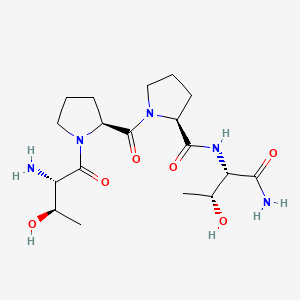
  5.  “Nivolumab and Plinabulin in Treating Patients With Stage IIIB-IV, Recurrent, or Metastatic Non-small Cell Lung Cancer”.
  6.  “Nivolumab in Combination With Plinabulin in Patients With Metastatic Non-Small Cell Lung Cancer (NSCLC)”.
  7.  Lloyd, G.K.; Du, L.; Lee, G.; Dalsing-Hernandez, J.; Kotlarczyk, K.; Gonzalez, K.; Nawrocki, S.; Carew, J.; Huang, L. (October 5–9, 2015), Activity of Plinabulin in Tumor Models with Kras Mutations (Philadelphia (PA) AACR 2015 Abstract nr. 184), Boston MA
Plinabulin
Plinabulin.svg
Names
IUPAC name

(3Z,6Z)-3-Benzylidene-6-{[5-(2-methyl-2-propanyl)-1H-imidazol-4-yl]methylene}-2,5-piperazinedione
Identifiers
714272-27-2 Yes
3D model (Jmol) Interactive image
ChemSpider 8125252
PubChem 9949641
Properties
C19H20N4O2
Molar mass 336.40 g·mol−1
Except where otherwise noted, data are given for materials in their standard state (at 25 °C [77 °F], 100 kPa).

////////////Plinabulin, Phase 3,  Clinical, 714272-27-2, NPI 2358, Nereus,  (S)-(-)-phenylahistin,  NPI-2350,  (-)-phenylahistin,  KPU-2, KPU-02, KPU-35

O=C3N\C(=C/c1ncnc1C(C)(C)C)C(=O)N/C3=C\c2ccccc2

VADADUSTAT, вададустат , فادادوستات , 伐达度司他 ,


Vadadustat structure.png

Vadadustat.png

VADADUSTAT

AKB-6548, PG-1016548
PG1016548, UNII:I60W9520VV, B-506

CAS 1000025-07-9

[5-(3-chlorophenyl)-3-hydroxypyridine-2-carboxamido]acetic acid

N-[[5-(3-Chlorophenyl)-3-hydroxy-2-pyridinyl]carbonyl]glycine

MF C14H11ClN2O4 , 306.0407

вададустат [Russian] [INN]
فادادوستات [Arabic] [INN]
伐达度司他 [Chinese] [INN]
2-(5-(3-Chlorophenyl)-3-hydroxypicolinamido)acetic acid
A1Z
N-(5-(3-Chlorophenyl)-3-hydroxypyridine-2-carbonyl)glycine
US8598210, 118
[5-(3-chlorophenyl)-3-hydroxypyridine-2-carboxamido]acetic acid
1000025-07-9 [RN]
10289
AKB-6548
Glycine, N-[[5-(3-chlorophenyl)-3-hydroxy-2-pyridinyl]carbonyl]- [ACD/Index Name]
I60W9520VV
N-[5-(3-chlorophenyl)-3-hydroxypyridine-2-carbonyl]glycine
N-{[5-(3-Chlorophenyl)-3-hydroxy-2-pyridinyl]carbonyl}glycine [ACD/IUPAC Name]
 
PG1016548
UNII:I60W9520VV
Inventors Richard Kawamoto
Original Assignee The Procter & Gamble Company

for Treatment of Anemia associated with Chronic Kidney Disease (CKD)

USFDA APPROVED 3/27/2024 Vafseo, To treat anemia due to chronic kidney disease

Treatment of anemia due to chronic kidney disease

Akebia Therapeutics, under license from Procter & Gamble Pharmaceuticals, and licensees Mitsubishi Tanabe Pharma and Otsuka,

Image result for VADADUSTAT

  • Originator Procter & Gamble
  • Developer Akebia Therapeutics
  • Class Antianaemics; Chlorophenols; Pyridines; Small molecules
  • Mechanism of Action Hypoxia-inducible factor-proline dioxygenase inhibitors
  • Phase III Anaemia
  • 01 Aug 2016 Akebia Therapeutics initiates the phase III INNO2VATE trial for Anaemia in USA (NCT02865850)
  • 23 May 2016 Interim drug interactions and adverse events data from a phase I trial (In volunteers) Chronic kidney disease released by Akebia
  • 05 May 2016 Akebia completes a clinical trial (ethnobridging study) in Healthy volunteers

Vadadustat (also known as AKB-6548) in anemia secondary to chronic kidney disease (CKD)

We are developing our lead product candidate, vadadustat, to be the potential best-in-class hypoxia inducible factor–prolyl hydroxylase inhibitor for the treatment of anemia secondary to CKD.

PATENT

CN 105837502

https://patents.google.com/patent/CN105837502A/sv

HIF inhibitor Vadadustat (Code AKB-6548) The chemical name N- [5- (3- chlorophenyl) -3-hydroxypyridine-2-carbonyl] glycine,

Vadadustat is a treatment for anemia associated with chronic kidney disease oral HIF inhibitor, is an American biopharmaceutical company Akebia Therapeutics invention in the research of new drugs, has completed Phase II pivotal clinical trial treatment studies, successfully met the researchers set given the level of hemoglobin in vivo target and good security, a significant effect, and phase III clinical trials.

 U.S. Patent Publication US20120309977 synthetic route for preparing a Vadadustat: A 3-chlorophenyl boronic acid and 3,5_-dichloro-2-cyanopyridine as starting materials, by-catalyzed coupling methoxy substituted, cyano hydrolysis and condensation and ester hydrolysis reaction Vadadustat, process route is as follows:

Since the entire synthetic route 12 steps long, complicated operation, high cost.U.S. Patent No. 1 2 ^ ¥ disclosed 20070299086 & (^ (Scheme 3 1118 seven seven to 3,5-dichloro-2-cyanopyridine starting material, first-dichloro substituted with benzyloxy, then cyano hydrolysis, condensation, hydrogenation and deprotection trifluorosulfonyl, to give N- [5- trifluoromethanesulfonyloxy-3-hydroxypyridine-2-carbonyl) glycine methyl ester, 3-chlorophenyl and then boronic acid catalyzed coupling reactions, the final ester hydrolysis reaction Vadadustat, process route is as follows:


The synthesis steps long, intermediate products and final products contain more impurities and byproducts, thus purified requires the use of large amounts of solvents, complicated operation, low yield, and because the hydrogenation reaction is a security risk on the production, not conducive to the promotion of industrial production, it is necessary to explore a short process, simple operation, low cost synthetic method whereby industrial production Vadadus tat fit.

Example 1

A) Preparation of N- (3,5_-dichloro-2-carbonyl) glycine methyl ester:

3,5-dichloro-2-pyridinecarboxylic acid (19.2g, 0.10mol) and N, N’_ carbonyldiimidazole (24.3g, 0.15mol) was dissolved in N, N- dimethylformamide (100 mL ), was added glycine methyl ester hydrochloride (15.18,0.12111〇1), 11 was added dropwise diisopropylethylamine (51.7g, 0.40mol), the reaction mixture was stirred 35 ° C for 8 hours, TLC determined the completion of reaction gussets The reaction solution was concentrated by rotary evaporation to dryness, dilute hydrochloric acid was adjusted to neutral by adding ethyl acetate, dried over magnesium sulfate, and concentrated by rotary evaporation to dryness, and recrystallized from methanol to give N- (3,5- dichloro-pyridin-2 – carbonyl) glycine methyl ester, an off-white solid (21.6g), a yield of 82.0%, this reaction step is as follows:

str1

1234567 B) Preparation of N- [5- (3- chlorophenyl) -3-chloropyridine-2-carbonyl] glycine methyl ester: 2

1 (3,5-dichloro-2-carbonyl) glycine methyl ester (20 (^, 〇1 76111111), 3-chlorophenyl boronic acid (13.18, 3 83.7mmol), [l, l’- bis (diphenylphosphino) ferrocene] dichloropalladium (2.8g, 3.8mmol), potassium carbonate (14.2g, 4 0. lmo 1) and N, N- dimethylformamide (75mL) was added The reaction flask, the reaction mixture was heated to 60 ° C for 20 hours the reaction was stirred for 5:00, point TLC plates to determine completion of the reaction, the reaction solution was cooled to room temperature, was concentrated by rotary evaporation to dryness, extracted with ethyl acetate, washed with brine, sulfuric acid 6 magnesium dried and concentrated by rotary evaporation to dryness, a mixed solvent of ethyl acetate and n-hexane was recrystallized to give N- [5- (3- chlorophenyl) -3-7-chloro-2-carbonyl] glycine methyl ester, white solid (19.7g), yield 76.4%, this reaction step is as follows:

str1

C) Preparation of N_ [5- (3- chlorophenyl) -3-methoxy-pyridine-2-carbonyl] glycine:

N- [5- (3- chlorophenyl) -3-chloropyridine-2-carbonyl] glycine methyl ester (19 (^, 56111 111〇1) and sodium methoxide (7.6g, 0.14mol) was dissolved in methanol (150 mL), the reaction mixture was heated to 65 ° C, the reaction was stirred at reflux for 24 hours, TLC determined gussets completion of the reaction the reaction solution was cooled to room temperature, water (300mL) was stirred for 3h, cooled to 0 ° C, stirred for 2h, precipitated solid was filtered, the filter cake was dried to give N- [5- (3- chlorophenyl) -3-methoxy-pyridine-2-carbonyl] glycine, off-white solid (17.4 g of), a yield of 96.5%, of the reaction steps are as follows:

str1


D) Preparation Vadadustat:

N- [5- (3- chlorophenyl) -3-methoxy-pyridine-2-carbonyl] glycine (16.68,51.7111111〇1) and 48% hydrobromic acid solution (52mL, 0.46mol) added to the reaction bottle, the reaction mixture was heated to 100 ° C, the reaction was stirred at reflux for 24 hours, TLC determined gussets completion of the reaction the reaction solution cooled square ~ 5 ° C, was slowly added 50% sodium hydroxide solution was adjusted to pH 2 at 0 -5 ° C under crystallization 3h, the filter cake washed with ethyl acetate and n-hexane mixed solvent of recrystallization, in finished Vadadustat, off-white solid (15.6g), a yield of 98.0%, this reaction step is as follow

str1

PATENT

WO-2016153996

https://patentscope.wipo.int/search/en/detail.jsf?docId=WO2016153996&recNum=1&maxRec=&office=&prevFilter=&sortOption=&queryString=&tab=PCTDescriptiohttps://patentscope.wipo.int/search/en/detail.jsf?docId=WO2016153996&recNum=1&maxRec=&office=&prevFilter=&sortOption=&queryString=&tab=PCTDescription

Lanthier et al. (U.S. Patent Application 2012/0309977) described a procedure for synthesizing a compound of Formula (II) starting from 3-chloroboronic acid and 3,5-dichloropicolinonitrile, as shown in the scheme below:

Scheme 1

Scheme 2

PATENT

WO 2015073779

FORM A, B C REPORTED

https://www.google.com/patents/WO2015073779A1?cl=en

Form A of Compound (I):

Figure imgf000004_0001

(I),

which has an X-ray powder diffraction pattern as shown in FIG. 1. In certain embodiments, Form A of Compound (I) has an X-ray powder diffraction pattern comprising one, two, three, four, or five peaks at approximately 18.1 , 20.3, 22.9, 24.0, and 26.3 °2Θ; and wherein the crystalline Compound (I) is substantially free of any other crystalline form of Compound (I).

Compound (I) as prepared according to e.g., U.S. 7,811,595 and/or U.S. Patent Application No. 13/488,554 and then subjecting the resulting Compound (I)

Figure imgf000026_0001

(I),

to a procedure comprising

a) preparing a solution of Compound (I) in 2-methyltetrahydrofuran;

b) adding n-heptane;

c) heating the suspension {e.g., to about 40-50 °C);

d) cooling the suspension {e.g., to about 0-10 °C); and

c) isolating the crystals.

SYNTHESIS

US 2015361043

 Vadadustat pk_prod_list.xml_prod_list_card_pr?p_tsearch=A&p_id=724024

Synthesis of vadadustat and its intermediates is described. The process involves Suzuki coupling of 3,5-dichloropyridine-2-carbonitrile with (3-chlorophenyl)boronic acid, selective chloride displacement, simultaneous hydrolysis of nitrile and methyl ether, activation with CDI, condensation with methyl glycinate hydrochloride and finally ester hydrolysis. The process is simple and provides high product yield with high quality. Vadadustat is expected to be useful for the treatment of renal failure anemia (1). Suzuki coupling of 3,5-dichloropyridine-2-carbonitrile (I) with (3-chlorophenyl)boronic acid (II) in the presence of PdCl2(dppf) and K2CO3 in DMF yields 3-chloro-5-(3-chlorophenyl)pyridine-2-carbonitrile (III), which upon selective chloride displacement with NaOMe in refluxing MeOH affords methyl ether (IV). Hydrolysis of nitrile and methyl ether in intermediate (IV) with HBr or HCl at 100 °C furnishes 5-(3-chlorophenyl)-3-hydroxypyridine-2-carboxylic acid (V). After activation of carboxylic acid (V) with CDI or pivaloyl chloride and DIEA in DMSO, condensation with methyl glycinate hydrochloride (VI) in the presence of DIEA provides vadadustat methyl ester (VII). Finally, hydrolysis of ester (VII) with NaOH in H2O/THF produces the target vadadustat (1).

PATENT

US 20120309977

  • FIG. 1 depicts an outline of one embodiment for preparing the disclosed prolyl hydroxylase inhibitors.
     
    FIG. 2 depicts an outline of one embodiment for preparing the disclosed prolyl hydroxylase inhibitor ester prodrugs.
     
    FIG. 3 depicts an outline of one embodiment for preparing the disclosed prolyl hydroxylase inhibitor amide prodrugs.

Example 1 describes a non-limiting example of the disclosed process for the preparation of a prolyl hydroxylase ester pro-drug

Figure US20120309977A1-20121206-C00044

Figure US20120309977A1-20121206-C00045

EXAMPLE 1Methyl {[5-(3-chlorophenyl)-3-hydroxypyridin-2-yl]amino}acetate (4)

Preparation of 5-(3-chlorophenyl)-3-chloro-2-cyanopyridine (1): To a 100 mL round bottom flask adapted for magnetic stirring and equipped with a nitrogen inlet was charged (3-chlorophenyl)boronic acid (5 g, 32 mmol), 3,5-dichloro-2-cyanopyridine (5.8 g, 34 mmol), K2CO(5.5 g, 40 mmol), [1,1′-bis(diphenyphosphino)ferrocene]dichloro-palladium(II) [PdCl2(dppf)] (0.1 g, 0.13 mmol), dimethylformamide (50 mL) and water (5 mL). The reaction solution was agitated and heated to 45° C. and held at that temperature for 18 hours after which the reaction was determined to be complete due to the disappearance of 3,5-dichloro-2-cyanopyridine as measured by TLC analysis using ethyl acetate/methanol (4:1) as the mobile phase and UV 435 nm to visualize the reaction components. The reaction solution was then cooled to room temperature and the contents partitioned between ethyl acetate (250 mL) and saturated aqueous NaCl (100 mL). The organic phase was isolated and washed a second time with saturated aqueous NaCl (100 mL). The organic phase was dried for 4 hours over MgSO4, the MgSOremoved by filtration and the solvent removed under reduced pressure. The residue that remained was then slurried in methanol (50 mL) at room temperature for 20 hours. The resulting solid was collected by filtration and washed with cold methanol (50 mL) then hexanes (60 mL) and dried to afford 5.8 g (73% yield) of an admixture containing a 96:4 ratio of the desired regioisomer. 1H NMR (DMSO-d6) δ 9.12 (d, 1H), 8.70 (d, 1H), 8.03 (t, 1H) 7.88 (m, 1H), and 7.58 (m, 2H)

Preparation of 5-(3-chlorophenyl)-3-methoxy-2-cyanopyridine (2): To a 500 mL round bottom flask adapted for magnetic stirring and fitted with a reflux condenser and nitrogen inlet was charged with 5-(3-chlorophenyl)-3-chloro-2-cyanopyridine, 1, (10 g, 40 mmol), sodium methoxide (13.8 mL, 60 mmol) and methanol (200 mL). With stirring, the reaction solution was heated to reflux for 20 hours. The reaction was determined to be complete due to the disappearance of 5-(3-chlorophenyl)-3-chloro-2-cyanopyridine as measured by TLC analysis using hexane/ethyl acetate (6:3) as the mobile phase and UV 435 nm to visualize the reaction components. The reaction mixture was cooled to room temperature and combined with water (500 mL). A solid began to form. The mixture was cooled to 0° C. to 5° C. and stirred for 3 hours. The resulting solid was collected by filtration and washed with water, then hexane. The resulting cake was dried in vacuo at 40° C. to afford 9.4 g (96% yield) of the desired product as an off-white solid. 1H NMR (DMSO-d6) δ 8.68 (d, 1H), 8.05 (d, 1H), 8.01 (s, 1H) 7.86 (m, 1H), 7.59 (s, 1H), 7.57 (s, 1H) and 4.09 (s, 3H).

Preparation of 5-(3-chlorophenyl)-3-hydroxypyridine-2-carboxylic acid (3): To a 50 mL round bottom flask adapted for magnetic stirring and fitted with a reflux condenser was charged 5-(3-chlorophenyl)-3-methoxy-2-cyanopyridine, 2, (1 g, 4 mmol) and a 48% aqueous solution of HBr (10 mL). While being stirred, the reaction solution was heated to reflux for 20 hours. The reaction was determined to be complete due to the disappearance of 5-(3-chlorophenyl)-3-methoxy-2-cyanopyridine as measured by TLC analysis using hexane/ethyl acetate (6:3) as the mobile phase and UV 435 nm to visualize the reaction components. The reaction contents was then cooled to 0° C. to 5° C. with stirring and the pH was adjusted to approximately 2 by the slow addition of 50% aqueous NaOH. Stirring was then continued at 0° C. to 5° C. for 3 hours. The resulting solid was collected by filtration and washed with water, then hexane. The resulting cake was dried in vacuo at 40° C. to afford 1.03 g (quantitative yield) of the desired product as an off-white solid. 1H NMR (DMSO-d6) δ 8.52 (d, 1H), 7.99 (d, 1H), 7.95 (s, 1H) 7.81 (t, 1H), 7.57 (s, 1H), and 7.55 (s, 1H).

Preparation of methyl {[5-(3-chlorophenyl)-3-hydroxypyridin-2-yl]amino}acetate (4): To a 50 mL round bottom flask adapted for magnetic stirring and fitted with a nitrogen inlet tube was charged 5-(3-chlorophenyl)-3-hydroxypyridine-2-carboxylic acid, 3, (1 gm, 4 mmol), N,N′-carbonyldiimidazole (CDI) (0.97 g, 6 mmol) and dimethyl sulfoxide (5 mL). The reaction mixture was stirred at 45° C. for about 1 hour then cooled to room temperature. Glycine methyl ester hydrochloride (1.15 g, 12 mmol) is added followed by the dropwise addition of diisopropylethylamine (3.2 mL, 19 mmol). The mixture was then stirred for 2.5 hours at room temperature after which water (70 mL) was added. The contents of the reaction flask was cooled to 0° C. to 5° C. and 1N HCl was added until the solution pH is approximately 2. The solution was extracted with dichloromethane (100 mL) and the organic layer was dried over MgSOfor 16 hours. Silica gel (3 g) is added and the solution slurried for 2 hours after which the solids are removed by filtration. The filtrate is concentrated to dryness under reduced pressure and the resulting residue was slurried in methanol (10 mL) for two hours. The resulting solid was collected by filtration and washed with cold methanol (20 mL) then hexane and the resulting cake is dried to afford 0.85 g of the desired product as an off-white solid. The filtrate was treated to afford 0.026 g of the desired product as a second crop. The combined crops afford 0.88 g (68% yield) of the desired product. 1H NMR (DMSO-d6) δ 12.3 (s, 1H), 9.52 (t, 1H), 8.56 (d, 1H), 7.93 (s, 1H), 7.80 (q, 2H), 7.55 (t, 2H), 4.12 (d, 2H), and 3.69 (s, 3H).

The formulator can readily scale up the above disclosed synthesis. Disclosed herein below is a synthesis wherein the disclosed process is scaled up for commercial use

EXAMPLE 2Methyl {[5-(3-chlorophenyl)-3-hydroxypyridin-2-yl]amino}acetate (4)

Preparation of 5-(3-chlorophenyl)-3-chloro-2-cyanopyridine (1): A 20 L reactor equipped with a mechanical stirrer, dip tube, thermometer and nitrogen inlet was charged with (3-chlorophenyl)boronic acid (550 g, 3.52 mol), 3,5-dichloro-2-cyanopyridine (639 g, 3.69 mol), K2CO(5.5 g, 40 mmol), [1,1′-bis(diphenyphosphino)ferrocene]dichloro-palladium(II) [PdCl2(dppf)] (11.5 g, 140 mmol), and dimethylformamide (3894 g, 4.125 L). The reaction solution was agitated and purged with nitrogen through the dip-tube for 30 minutes. Degassed water (413 g) was then charged to the reaction mixture while maintaining a temperature of less than 50° C. 25 hours. The reaction was determined to be complete due to the disappearance of 3,5-dichloro-2-cyanopyridine as measured by TLC analysis using ethyl acetate/methanol (4:1) as the mobile phase and UV 435 nm to visualize the reaction components. The reaction solution was then cooled to 5° C. and charged with heptane (940 g, 1.375 L) and agitated for 30 minutes. Water (5.5 L) was charged and the mixture was further agitated for 1 hour as the temperature was allowed to rise to 15° C. The solid product was isolated by filtration and washed with water (5.5 L) followed by heptane (18881 g, 2750 ML). The resulting cake was air dried under vacuum for 18 hours and then triturated with a mixture of 2-propanol (6908 g, 8800 mL0 and heptane (1 g, 2200 mL0 at 50° C. for 4 hours, cooled to ambient temperature and then agitated at ambient temperature for 1 hour. The product was then isolated by filtration and washed with cold 2-propanol (3450 g, 4395 mL) followed by heptane (3010 g, 4400 mL). The resulting solid was dried under high vacuum at 40° C. for 64 hours to afford 565.9 g (65% yield) of the desired product as a beige solid. Purity by HPLC was 98.3. 1H NMR (DMSO-d6) δ 9.12 (d, 1H), 8.70 (d, 1H), 8.03 (t, 1H) 7.88 (m, 1H), and 7.58 (m, 2H).

Preparation of 5-(3-chlorophenyl)-3-methoxy-2-cyanopyridine (2): A 20 L reactor equipped with a mechanical stirred, condenser, thermometer and nitrogen inlet was charged with 5-(3-chlorophenyl)-3-chloro-2-cyanopyridine, 1, (558 g, 2.24 mol) and sodium methoxide (25% solution in methanol, 726.0 g, 3.36 mol). With agitation, the reaction solution was heated to reflux for 24 hours, resulting in a beige-colored suspension. The reaction was determined to be complete due to the disappearance of 5-(3-chlorophenyl)-3-chloro-2-cyanopyridine as measured by TLC analysis using hexane/ethyl acetate (6:3) as the mobile phase and UV 435 nm to visualize the reaction components. The reaction mixture was cooled to 5° C. and then charged with water (5580 mL). The resulting slurry was agitated for 3 hours at 5° C. The solid product was isolated by filtration and washed with water (5580 mL) until the filtrate had a pH of 7. The filter cake was air dried under vacuum for 16 hours. The filter cake was then charged back to the reactor and triturated in MeOH (2210 g, 2794 mL) for 1 hour at ambient temperature. The solid was collected by filtration and washed with MeOH (882 g, 1116 mL, 5° C.) followed by heptane (205 mL, 300 mL), and dried under high vacuum at 45° C. for 72 hours to afford 448 g (82% yield) of the desired product as an off-white solid. Purity by HPLC was 97.9%. 1H NMR (DMSO-d6) δ 8.68 (d, 1H), 8.05 (d, 1H), 8.01 (s, 1H) 7.86 (m, 1H), 7.59 (s, 1H), 7.57 (s, 1H) and 4.09 (s, 3H).

Preparation of 5-(3-chlorophenyl)-3-hydroxypyridine-2-carboxylic acid (3): A 20 L reactor equipped with a mechanical stirrer, condenser, thermometer, nitrogen inlet and 25% aqueous NaOH trap was charged 5-(3-chlorophenyl)-3-methoxy-2-cyanopyridine, 2, (440.6 g, 1.8 mol) and 37% aqueous solution of HCl (5302 g). While being agitated, the reaction solution was heated to 102° C. for 24 hours. Additional 37% aqueous HCl (2653 g) was added followed by agitation for 18 hours at 104° C. The reaction contents was then cooled to 5° C., charged with water (4410 g) and then agitated at 0° C. for 16 hours. The resulting precipitated product was isolated by filtration and washed with water until the filtrate had a pH of 6 (about 8,000 L of water). The filter cake was pulled dry under reduced pressure for 2 hours. The cake was then transferred back into the reactor and triturated in THF (1958 g, 2201 mL) at ambient temperature for 2 hours. The solid product was then isolated by filtration and washed with THF (778 g, 875 mL) and dried under reduced pressure at 5° C. for 48 hours to afford 385 g (89% yield) of the desired product as an off-white solid. HPLC purity was 96.2%. 1H NMR (DMSO-d6) δ 8.52 (d, 1H), 7.99 (d, 1H), 7.95 (s, 1H) 7.81 (t, 1H), 7.57 (s, 1H), and 7.55 (s, 1H).

Preparation of methyl {[5-(3-chlorophenyl)-3-hydroxypyridin-2-yl]amino}acetate (4): A 20 L reactor equipped with a mechanical stirrer, condenser, thermometer and nitrogen inlet was charged with 5-(3-chlorophenyl)-3-hydroxypyridine-2-carboxylic acid, 3, (380 g, 1.52 mol) and diisopropylethylamine (DIPEA) (295 g, 2.28 mol). With agitation, the solution was cooled to 3° C. and charged with trimethylacetyl chloride (275.7 g, 2.29 mol) while maintaining a temperature of less than 11° C., The mixture was then agitated at ambient temperature for 2 hours. The mixture was then cooled to 10° C. and charged with a slurry of glycine methyl ester HCl (573.3 g, 4. 57 mol) and THF (1689 g, 1900 mL), then charged with DIPEA (590.2 g, 4.57 mol) and agitated at ambient temperature for 16 hours. The mixture was then charged with EtOH (1500 g, 1900 mL) and concentrated under reduced pressure to a reaction volume of about 5.8 L. The EtOH addition and concentration was repeated twice more. Water (3800 g) was then added and the mixture was agitated for 16 hours at ambient temperature. The resulting solid product was isolated by filtration and washed with a mixture of EtOH (300 g, 380 mL) and water (380 g), followed by water (3800 g), dried under reduced pressure for 18 hours at 50° C. to afforded 443 g (91% yield) of the desired product as an off-white solid. Purity by HPLC was 98.9%. 1H NMR (DMSO-d6) δ 12.3 (s, 1H), 9.52 (t, 1H), 8.56 (d, 1H), 7.93 (s, 1H), 7.80 (q, 2H), 7.55 (t, 2H), 4.12 (d, 2H), and 3.69 (s, 3H).

Scheme II herein below outlines and Example 2 describes a non-limiting example of the disclosed process for preparing a prolyl hydroxylase inhibitor from an ester prodrug.

Figure US20120309977A1-20121206-C00046

EXAMPLE 3{[5-(3-Chlorophenyl)-3-hydroxypyridin-2-yl]amino}acetic acid (5)

Preparation of {[5-(3 -chlorophenyl)-3-hydroxypyridin-2-yl]amino}acetic acid (5): To a 50 mL flask is charged methyl {[5-(3-chlorophenyl)-3-hydroxypyridin-2-yl]amino}-acetate, 4, (0.45 g, 1.4 mmol), tetrahydrofuran (4.5 mL) and 1 M NaOH (4.5 mL, 4.5 mmol). The mixture was stirred for 2 hours at room temperature after which it was determined by TLC analysis using hexane/ethyl acetate (6:3) as the mobile phase and UV 435 nm to visualize the reaction components that the reaction was complete. The reaction solution was adjusted to pH 1 with concentrated HCl and the solution was heated at 35° C. under vacuum until all of the tetrahydrofuran had been removed. A slurry forms as the solution is concentrated. With efficient stirring the pH is adjusted to ˜2 with the slow addition of 1 M NaOH. The solid which forms was collected by filtration, washed with water, followed by hexane, then dried under vacuum to afford 0.38 g (88% yield) of the desired product as a white solid. 1H NMR (DMSO-d6) δ 12.84 (s, 1H), 12.39 (s, 1H), 9.39 (t, 1H), 8.56 (d, 1H), 7.94 (s, 1H), 7.81 (m, 2H), 7.55 (q, 2H), and 4.02 (d, 2H).

The formulator can readily scale up the above disclosed synthesis. Disclosed herein below is a synthesis wherein the disclosed process is scaled up for commercial use.

EXAMPLE 4{[5-(3-Chlorophenyl)-3-hydroxypyridin-2-yl]amino}acetic acid (5)

Preparation of {[5-(3-chlorophenyl)-3-hydroxypyridin-2-yl]amino}acetic acid (5): To a 20 L reactor equipped with a mechanical stirrer, condenser, thermometer and nitrogen inlet was charged methyl {[5-(3-chlorophenyl)-3-hydroxypyridin-2-yl]amino}-acetate, 4, (440 g, 1.42 mol), tetrahydrofuran (3912 g, 4400 mL) and 1 M NaOH (4400 mL). The mixture was stirred for 2 hours at room temperature after which it was determined by TLC analysis using hexane/ethyl acetate (6:3) as the mobile phase and UV 435 nm to visualize the reaction components that the reaction was complete. The reaction solution was acidified to a pH of 2 with slow addition of 2M HCl (2359 g). The resulting mixture was concentrated under reduced pressure to a volume of about 7.5 L. Ware (2210 g) was added and the solution cooled to ambient temperature and agitated for 18 hours. The solid product was isolated by filtration and washed with water (6 L). the crude product was transferred back into the reactor and triturated with 2215 g o deionized water at 70° C. for 16 hours. The mixture was cooled to ambient temperature, The solid product was isolated by filtration and washed with water (500 mL) and dried under reduced pressure at 70° C. for 20 hours to afford 368 g (87% yield) of the desired product as an off-white solid. Purity by HPLC was 99.3%. 1H NMR (DMSO-d6) δ 12.84 (s, 1H), 12.39 (s, 1H), 9.39 (t, 1H), 8.56 (d, 1H), 7.94 (s, 1H), 7.81 (m, 2H), 7.55 (q, 2H), and 4.02 (d, 2H).

Scheme III herein below outlines and Example 3 describes a non-limiting example of the disclosed process for preparing a prolyl hydroxylase amide prodrug.

Figure US20120309977A1-20121206-C00047

EXAMPLE 55-(3-Chlorophenyl)-N-(2-amino-2-oxoethyl)-3-hydroxylpyridin-2-yl amide

Preparation of 5-(3-chlorophenyl)-N-(2-amino-2-oxoethyl)-3-hydroxylpyridin-2-yl amide (6): To a solution of 5-(3-chlorophenyl)-3-hydroxypyridine-2-carboxylic acid, 3, (749 mg, 3 mmol) in DMF (20 mL) at room temperature under Nis added 1-(3-dimethyl-aminopropyl)-3-ethylcarbodiimide (EDCI) (0.925 g, 5.97 mmol) and 1-hydroxybenzo-triazole (HOBt) (0.806 g, 5.97 mmol). The resulting solution is stirred for 15 minutes then 2-aminoacetamide hydrochloride (0.66 g, 5.97 mmol) and diisopropylethylamine (1.56 ml, 8.96 mmol) are added. The reaction is monitored by TLC and when the reaction is complete the reaction mixture is concentrated under reduced pressure and H2O added. The product can be isolated by normal work-up: The following data have been reported for compound (6). 1H NMR (250 MHz, DMSO-d6) δ ppm 12.46 (1H, s), 9.17 (1H, t, J=5.9 Hz), 8.55 (1H, d, J=2.0 Hz), 7.93 (1H, d, J=0.9 Hz), 7.75-7.84 (2H, m), 7.49-7.60 (3H, m), 7.18 (1H, s), 3.91 (2H, d, J=5.9 Hz). HPLC-MS: m/z 306 [M+H]+.

Scheme IV herein below depicts a non-limiting example the hydrolysis of an amide pro-drug to a prolyl hydroxylase inhibitor after removal of a R10 protecting group

Figure US20120309977A1-20121206-C00048

PATENT

US 20070299086

https://www.google.com/patents/US20070299086

REF

http://akebia.com/wp-content/themes/akebia/img/media-kit/abstracts-posters-presentations/Akebia_NKF%202016%20Poster_FINAL.pdf

Beuck S, Schänzer W, Thevis M. Hypoxia-inducible factor stabilizers and other
small-molecule erythropoiesis-stimulating agents in current and preventive doping
analysis. Drug Test Anal. 2012 Nov;4(11):830-45. doi: 10.1002/dta.390. Epub 2012
Feb 24. Review. PubMed PMID: 22362605.

Abstracts, posters, and presentations

The effect of altitude on erythropoiesis-stimulating agent dose, hemoglobin level, and mortality in hemodialysis patients

Vadadustat, a novel oral HIF stabilizer, provides effective anemia treatment in nondialysisdependent chronic kidney disease

2016 ERA-EDTA: Poster
A Drug-Drug Interaction Study to Evaluate the Effect of Vadadustat on the Pharmacokinetics of Celecoxib—a CYP2C9 Substrate—in Healthy Volunteers

2016 NKF: Poster
Vadadustat — a Novel, Oral Treatment for Anemia of CKD — Maintains Stable Hemoglobin Levels in Dialysis Patients Converting From Erythropoiesis-Stimulating Agent (ESA)

2015 ASN: Posters
Vadadustat Demonstrates Controlled Hemoglobin Response in a Phase 2b Study for the Treatment of Anemia in Patients with Non-Dialysis Dependent Chronic Kidney Disease

Dose Exposure Relationship of Vadadustat is Independent of the Level of Renal Function

Vadadustat, a Novel, Oral Treatment for Anemia of CKD, Maintains Stable Hemoglobin Levels in Dialysis Patients Converting from Erythropoiesis-Stimulating Agents

Hemoglobin Response in a Phase 2b Study of Vadadustat for the Treatment of Anemia in Patients with Non-Dialysis Dependent Chronic Kidney Disease

The Effect of Altitude on Erythropoiesis-Stimulating Agent Dose, Hemoglobin Level, and Mortality in Hemodialysis Patients

Erythropoiesis-Stimulating Agent Hyporesponse Is Associated with Persistently Elevated Mortality among Hemodialysis Patients

Variability in Hemoglobin Levels in Hemodialysis Patients in the Current Era

2014 ASN: Posters
Phase 2 Study of AKB-6548, a novel hypoxia-inducible factor prolyl-hydroxylase inhibitor (HIF-PHI) in patients with end stage renal disease (ESRD) undergoing hemodialysis (HD)

Hemodialysis has minimal impact on the pharmacokinetics of AKB-6548, a once-daily oral inhibitor of hypoxia-inducible factor prolyl-hydroxylases (HIF-PHs) for the treatment of anemia related to chronic kidney disease (CKD)

2014 ERA-EDTA: Oral presentation
Controlled Hemoglobin Response in a Double-Blind, Placebo-Controlled Trial of AKB-6548 in Subjects with Chronic Kidney Disease

2012 ASN: Oral presentation
AKB-6548, A New Hypoxia-Inducible Factor Prolyl Hydroxylase Inhibitor, Increases Hemoglobin in Chronic Kidney Disease Patients Without Increasing Basal Erythropoietin Levels

2011 ASN: Oral presentation
AKB-6548, A Novel Hypoxia-Inducible Factor Prolyl Hydroxylase Inhibitor Reduces Hepcidin and Ferritin while It Increases Reticulocyte Production and Total Iron Binding Capacity In Healthy Adults

2011 ASN: Poster
AKB-6548, A New Hypoxia-Inducible Factor Prolyl Hydroxylase Inhibitor Increases Hemoglobin While Decreasing Ferritin in a 28-day, Phase 2a Dose Escalation Study in Stage 3 and 4 Chronic Kidney Disease Patients With Anemia

Image result for VADADUSTAT

Image result for VADADUSTAT

WO2013013609A1 * Jul 23, 2012 Jan 31, 2013 Zhejiang Beta Pharma Incorporation Polymorphic forms of compounds as prolyl hydroxylase inhibitor, and uses thereof
US20070299086 * Jun 26, 2007 Dec 27, 2007 The Procter & Gamble Company Prolyl hydroxylase inhibitors and methods of use
US20100331303 * Aug 20, 2010 Dec 30, 2010 Richard Masaru Kawamoto Prolyl hydroxylase inhibitors and methods of use
US20130203816 * Nov 20, 2012 Aug 8, 2013 Akebia Therapeutics Inc. Prolyl hydroxylase inhibitors and methods of use
         
WO2016118858A1 * Jan 22, 2016 Jul 28, 2016 Akebia Therapeutics, Inc. Solid forms of 2-(5-(3-fluorophenyl)-3-hydroxypicolinamido)acetic acid, compositions, and uses thereof

clip

Akebia Therapeutics

Oct 6, 2015
 

Akebia Reaches Agreement with FDA and EMA on Vadadustat Global Phase 3 Program

Plans to Initiate Phase 3 PRO2TECT Clinical Program by Year-End

CAMBRIDGE, Mass.–(BUSINESS WIRE)– Akebia Therapeutics, Inc. (NASDAQ: AKBA), a biopharmaceutical company focused on delivering innovative therapies to patients with kidney disease through the biology of hypoxia inducible factor (HIF), today announced the successful completion of the End-of-Phase 2 Meeting process with the United States Food and Drug Administration (FDA) and the Scientific Advice Process with the European Medicines Agency (EMA) for its lead product, vadadustat (formerly AKB-6548), for patients with anemia related to non-dialysis dependent chronic kidney disease (NDD-CKD). The company has reached agreement with both the FDA and EMA regarding key elements of the Phase 3 program, known as the PRO2TECT™ program, and expects to launch the program later this year.

The PRO2TECT™ program includes two separate studies and will collectively enroll approximately 3,100 NDD-CKD patients across 500 sites globally. The correction study will address anemia patients not currently being treated with recombinant erythropoiesis stimulating agents (rESAs). The conversion study includes patients currently receiving rESA who will be converted to either vadadustat or the active control with the goal of maintaining their baseline hemoglobin levels. Both studies will include a 1:1 randomization and an open label, active-control, non-inferiority design. Primary endpoints include an efficacy assessment of the hemoglobin response and an assessment of cardiovascular safety measured by major adverse cardiovascular events.

“Akebia’s Phase 3 program is designed to provide the medical community and regulators with a clear understanding of vadadustat’s potential benefit and safety advantages over rESAs, the current standard of care worldwide and, with a positive outcome, to establish vadadustat as the best-in-class treatment option for patients with renal anemia,” stated John P. Butler, President and Chief Executive Officer of Akebia. “We are pleased that the regulators are in agreement regarding the importance of an active-control trial as this design is the most clinically relevant and commercially valuable, and will allow us the quickest path to full enrollment. We are now moving rapidly to launch these studies and advance our goal of bringing forward new treatment options for patients suffering from renal anemia.”

“This Phase 3 program builds on the positive data from our Phase 2 program in NDD-CKD patients which demonstrated that once-daily vadadustat can control and maintain hemoglobin levels in a clinically relevant range while minimizing fluctuations in hemoglobin levels that are associated with increased cardiovascular safety risks,” stated Brad Maroni, M.D., Chief Medical Officer at Akebia. “These two Phase 3 event-driven studies are designed to establish the safety and efficacy of vadadustat in the setting of contemporary clinical practice patterns, and support regulatory approvals globally.”

In addition, Akebia discussed with the FDA and EMA a parallel Phase 3 program, known as the INNO2VATE™ program, for vadadustat in patients with anemia related to chronic kidney disease who are undergoing dialysis (DD-CKD). Akebia expects to formalize its Phase 3 program in DD-CKD patients after presenting the results from its recently completed Phase 2 study to both regulatory agencies.

About Vadadustat (Formerly AKB-6548)

Vadadustat is an oral therapy currently in development for the treatment of anemia related to chronic kidney disease (CKD). Vadadustat is designed to stabilize HIF, a transcription factor that regulates the expression of genes involved with red blood cell (RBC) production in response to changes in oxygen levels, by inhibiting the hypoxia-inducible factor prolyl hydroxylase (HIF-PH) enzyme. Vadadustat exploits the same mechanism of action used by the body to naturally adapt to lower oxygen availability associated with a moderate increase in altitude. At higher altitudes, the body responds to lower oxygen availability with increased production of HIF, which coordinates the interdependent processes of iron mobilization and erythropoietin (EPO) production to increase RBC production and, ultimately, improve oxygen delivery.

As a HIF stabilizer with best-in-class potential, vadadustat raises hemoglobin levels predictably and sustainably, with a dosing regimen that allows for a gradual and controlled titration. Vadadustat has been shown to improve iron mobilization, potentially eliminating the need for intravenous iron administration and reducing the overall need for iron supplementation.

About Anemia Related to CKD

Approximately 30 million people in the United States have CKD, with an estimated 1.8 million of these patients suffering from anemia. Anemia results from the body’s inability to coordinate RBC production in response to lower oxygen levels due to the progressive loss of kidney function, which occurs in patients with CKD. Left untreated, anemia significantly accelerates patients’ overall deterioration of health with increased morbidity and mortality. Renal anemia is currently treated with injectable rESAs, which are associated with inconsistent hemoglobin responses and well-documented safety risks.

About Akebia Therapeutics

Akebia Therapeutics, Inc. is a biopharmaceutical company headquartered in Cambridge, Massachusetts, focused on delivering innovative therapies to patients with kidney disease through HIF biology. The company has completed Phase 2 development of its lead product candidate, vadadustat, an oral therapy for the treatment of anemia related to CKD in both non-dialysis and dialysis patients.

clip

Akebia Announces Positive Top-Line Results from its Phase 2 Study of Vadadustat in Dialysis Patients with Anemia Related to Chronic Kidney Disease

-Treatment with Vadadustat Successfully Maintained Mean Hemoglobin Levels Following Conversion from rESA Therapy-

-Vadadustat Demonstrated a Favorable Safety Profile with Once Daily and Three Times per Week Dosing-


CAMBRIDGE, Mass.–(BUSINESS WIRE)–Akebia Therapeutics, Inc. (NASDAQ:AKBA), a biopharmaceutical company focused on delivering innovative therapies to patients with kidney disease through the biology of hypoxia inducible factor (HIF), today announced positive top-line results from its Phase 2 study of vadadustat (formerly AKB-6548) in dialysis patients with anemia related to chronic kidney disease (CKD). The study achieved its primary objective, indicating that vadadustat maintained stable hemoglobin (HGB) levels throughout the 16-week treatment period following conversion from recombinant erythropoiesis-stimulating agent (rESA) therapy. Vadadustat demonstrated a favorable safety profile with no drug-related serious adverse events and no deaths. The results highlight the potential of vadadustat, dosed either once daily or three times per week, to safely and predictably manage and sustain HGB levels in CKD patients undergoing dialysis.

“This study was a clear success, demonstrating the potential of vadadustat to effectively and safely treat anemia in dialysis patients switching from injectable rESA therapy”

The open-label, multi-center, 94 patient study was designed to evaluate the ability of vadadustat to maintain hemoglobin levels in patients undergoing hemodialysis who were previously being treated with rESAs. Patients were assigned to one of three dose cohorts: once daily vadadustat at a starting dose of 300mg, once daily vadadustat at a starting dose of 450mg, or vadadustat three times per week in conjunction with the patient’s hemodialysis schedule at a starting dose of 450mg. The study achieved its primary endpoints of maintaining stable hemoglobin levels over 16 weeks of treatment in all three cohorts of patients converting from rESAs to vadadustat.

                                 
            Mean Hemoglobin Levels (g/dL)*       Baseline     Week 7/8     Week 15/16
            300mg Daily Dose       10.4     10.4     10.3
            450mg Daily Dose       10.6     10.3     10.5
            450mg Three Times per Week Dose       10.5     10.2     10.4
           

* Modified intent-to-treat (MITT) population, n=94


Vadadustat was well tolerated among patients in all three dose cohorts. Treatment-emergent adverse events (TEAEs) with vadadustat were balanced across the cohorts. Serious adverse events (SAEs) were reported in 13 subjects (13.8%), well within the expected range for this patient population. There were no drug-related SAEs and no deaths reported in the study.

“This study was a clear success, demonstrating the potential of vadadustat to effectively and safely treat anemia in dialysis patients switching from injectable rESA therapy,” said Brad Maroni, M.D., Chief Medical Officer at Akebia. “We are impressed with the consistency in hemoglobin levels across the duration of the study, which highlights the ability of vadadustat to control and maintain hemoglobin levels in this patient population. Furthermore, the results indicate that daily and three times per week dosing regimens are both viable options for patients on dialysis.”

John P. Butler, President and Chief Executive Officer of Akebia, stated, “These results further confirm vadadustat as a potential best-in-class anemia treatment for CKD patients, and reinforce our confidence in this product candidate as we advance toward our Phase 3 program. Adding these results to the 12 other clinical studies we have completed, we are confident in the potential for vadadustat to treat anemia in a broad array of patients with CKD. We are pleased to have successfully completed this stage of our drug development and look forward to initiating Phase 3 studies.”

Complete efficacy and safety data from this Phase 2 study will be presented at an upcoming medical meeting.

About the Phase 2 Study Design of Vadadustat in Dialysis Patients with Anemia Related to CKD

The Phase 2 multi-center, open-label study evaluated 94 patients over 16 weeks of treatment, at 20 dialysis centers in the United States, including an assessment of HGB response to the starting dose of vadadustat during the first 8 weeks, followed by an assessment of HGB response to algorithm-guided dose adjustments of vadadustat during the subsequent 8 weeks of treatment. The study enrolled three cohorts, each consisting of approximately 30 CKD patients with anemia undergoing dialysis who were switched from injectable rESA therapy to vadadustat. Patients in the first two cohorts received once daily doses of vadadustat, while patients in the third cohort received vadadustat three times per week in conjunction with their hemodialysis schedule.

References

  1. Jump up^ Pergola PE, Spinowitz BS, Hartman CS, Maroni BJ, Haase VH. Vadadustat, a novel oral HIF stabilizer, provides effective anemia treatment in nondialysis-dependent chronic kidney disease. Kidney Int. 2016 Nov;90(5):1115-1122. doi:10.1016/j.kint.2016.07.019PMID 27650732.Missing or empty |title= (help)
  2. Jump up^ Gupta N, Wish JB. Hypoxia-Inducible Factor Prolyl Hydroxylase Inhibitors: A Potential New Treatment for Anemia in Patients With CKD. Am J Kidney Dis. 2017 Jun;69(6):815-826. doi:10.1053/j.ajkd.2016.12.011PMID 28242135. Missing or empty |title= (help)
  3. Jump up^ Martin ER, Smith MT, Maroni BJ, Zuraw QC, deGoma EM. Clinical Trial of Vadadustat in Patients with Anemia Secondary to Stage 3 or 4 Chronic Kidney Disease. Am J Nephrol. 2017;45(5):380-388. doi:10.1159/000464476PMID 28343225. Missing or empty |title= (help)
Vadadustat
Vadadustat structure.png
Clinical data
Synonyms AKB-6548, PG-1016548
ATC code
  • None
Identifiers
CAS Number
PubChem CID
ChemSpider
UNII
Chemical and physical data
Formula C14H11ClN2O4
Molar mass 306.701 g/mol
3D model (JSmol)
 
Patent ID Patent Title Submitted Date Granted Date
US9776969 PROCESS FOR PREPARING [(3-HYDROXYPYRIDINE-2-CARBONYL)AMINO]ALKANOIC ACIDS, ESTERS AND AMIDES
2015-08-24
2015-12-17
US2014057892 PROLYL HYDROXYLASE INHIBITORS AND METHODS OF USE
2013-11-04
2014-02-27
US9145366 PROCESS FOR PREPARING [(3-HYDROXYPYRIDINE-2-CARBONYL)AMINO]ALKANOIC ACIDS, ESTERS AND AMIDES
2012-06-05
2012-12-06
US2017258773 SOLID FORMS OF ACETIC ACID, COMPOSITIONS, AND USES THEREOF
2017-05-30
 
US8940773 Prolyl hydroxylase inhibitors and methods of use
2013-10-24
2015-01-27
Patent ID Patent Title Submitted Date Granted Date
US2016339005 COMPOSITIONS AND METHODS FOR TREATING OCULAR DISEASES
2015-01-23
 
US2016143891 COMPOSITIONS AND METHODS FOR TREATING ANEMIA
2014-06-04
2016-05-26
US8323671 PROLYL HYDROXYLASE INHIBITORS AND METHODS OF USE
2010-12-30
 
US9598370 PROLYL HYDROXYLASE INHIBITORS AND METHODS OF USE
2015-09-15
2016-01-14
US2015119425 PROLYL HYDROXYLASE INHIBITORS AND METHODS OF USE
2014-12-12
2015-04-30
 
 
Patent ID Patent Title Submitted Date Granted Date
US8722895 Prolyl hydroxylase inhibitors and method of use
2013-04-09
2014-05-13
US8598210 Prolyl hydroxylase inhibitors and methods of use
2012-11-20
2013-12-03
US8343952 PROLYL HYDROXYLASE INHIBITORS AND METHODS OF USE
2010-12-30
 
US7811595 Prolyl hydroxylase inhibitors and methods of use
2007-12-27
2010-10-12
US2017189387 PROLYL HYDROXYLASE INHIBITORS AND METHODS OF USE
2017-01-31
 

SYN

https://doi.org/10.1021/acs.jmedchem.4c02079
J. Med. Chem. 2025, 68, 2147−2182

Vadadustat (Vafseo). Vadadustat (28) is a hypoxia inducible factor prolyl hydroxylase (HIF-PH) inhibitor
developed by Akebia Therapeutics. It was approved by the European Commission in April 2023, and recently also by the USFDA, for the treatment of symptomatic anemia associated with chronic kidney disease in adults receiving chronic maintenance dialysis. Vadadustat acts by inhibiting HIFPH, 214
which results in increases of endogenous erythropoietin production, red blood cell synthesis, and iron mobilization. 215 While a number of syntheses of vadadustat (28) have been published in previous patents 216−228 and a journal article, 229 Akebia Therapeutics has published two patents regarding the
large-scale preparation of vadadustat (Scheme 52). 218,226 The key intermediate nitrile 28.3 could be accessed in two steps: the neat SNAr reaction between commercially available 2,3,5trichloropyridine (28.1) and 4-DMAP to generate pyridinium salt 28.2, followed by a second SNAr reaction of 28.2 with
NaCN. The Suzuki coupling between 28.3 and 3-chlorophenyl boronic acid (28.4) gave the biaryl 28.5, and the subsequent SNAr reaction of 28.5 with NaOMe replaced the 3-chloro
substitution on the pyridine ring with a methoxy group, generating intermediate 28.6. Global acidic hydrolysis of both methyl ether and nitrile group in 28.6 gave the 3 hydroxypicolinic acid 28.7. Treatment of 28.7 with DIPEA and excess pivaloyl chloride (PivCl) resulted in the formation of mixed anhydride 28.8 with concomitant acylation of the 3 hydroxy group. Without isolation of 28.8, glycine methyl ester
hydrochloride (28.9) was then charged with additional DIPEA to generate the corresponding amide 28.10. The residual amount (∼0.5%) of 28.7 in 28.10 was hard to remove, but this impurity could be effectively rejected with an extra amount of DIPEA during workup and solvent switch. Finally, the Opivaloyl group and methyl ester were both removed via basic hydrolysis, giving vadadustat (28) in about 90% yield from 28.7.

REF 

(215) Pergola, P. E.; Spinowitz, B. S.; Hartman, C. S.; Maroni, B. J.; Haase, V. H. Vadadustat, a novel oral HIF stabilizer, provides effective anemia treatment in nondialysis-dependent chronic kidney disease.
Kidney Int. 2016, 90, 1115−1122.
(216) Lanthier, C. M.; Gorin, B.; Oudenes, J.; Dixon, C. E.; Lu, A. Q.; Copp, J. D.; Janusz, J. M. Preparation of [(3-hydroxypyridine-2carbonyl)amino]alkanoic acids, esters and amides as prolyl hydroxylase
inhibitors. US 20120309977, 2012.
(217) Li, X.; Chen, J. Process for the preparation of vadadustat. CN105837502, 2016.
(218) Gorin, B. I.; Lanthier, C. M.; Luong, A. B. C.; Copp, J. D.; Gonzalez, J. Process for preparing 2-[[5-(3-chlorophenyl)-3-hydroxypyridine-2-carbonyl]amino]acetic acid. WO 2019217550, 2019.
(219) Kou, J.; Li, Y.; Xiao, Q.; Lin, B.; Sun, J.; Wang, Z.; Luo, Z.;Huang, F. Preparation method of vadadustat. CN 110903238, 2020.
(220) Machida, K.; Yasukouchi, H.; Nishiyama, A. Method for producing vadadustat intermediate. WO 2020217733, 2020.
(221) Xiao, Q.; Lin, B.; Kou, J.; Sun, J.; Qiu, X.; Wang, Z.; Luo, Z.;Huang, F. Preparation of vadadustat intermediate. CN 111848505,2020

(222) Xiao, Q.; Lin, B.; Wang, Z.; Kou, J.; Li, Y.; Sun, J.; Jin, L.; Luo,
Z.; Huang, F. Preparation of vadadustat and intermediate thereof. CN
111205222, 2020.
(223) Xiao, Q.; Lin, B.; Wang, Z.; Kou, J.; Luo, Z.; Huang, F.; Li, Y.
Preparation of vadadustat and intermediate thereof. CN 111423367,
2020.
(224) Xiao, Q.; Qiu, X.; Lin, B.; Kou, J.; Li, Y.; Sun, J.; Wang, Z.; Luo,
Z.; Huang, F. Preparation of vadadustat. CN 111320577, 2020.
(225) Xiao, Q.; Lin, B.; Wang, Z.; Kou, J.; Qiu, X.; Cai, X.; Li, Y.; Luo,
Z.; Huang, F. Method for preparing vadadustat and intermediate
thereof. WO 2021179540, 2021.
(226) Jurkauskas, V.; Jung, Y. C.; Kwon, T.; Kannan, A.; Gondi, V. B.
Manufacturing process for 3,5-dichloropicolinonitrile for synthesis of
vadadustat. WO 2022006427, 2022.
(227) Chen, Z.; Zheng, Y.; Zhang, L.; Yu, C.; Liu, L.; He, B.
Preparation of a pyridine compound used for the preparation of
vadadustat. CN 117843565, 2024.
(228) Patel, K. R.; Thakrar, V. H.; Mehta, T. B.; Wagh, A. G.; Patel, J.
A.; Patil, R. R.; Solanki, Y. U.; Ladumor, C. B. A process for the
preparation of Vadadustat or salts thereof. WO 2024079708, 2024.
(229) Lin, B. Y.; Kou, J. P.; Wu, S. M.; Cai, X. R.; Xiao, Q. B.; Li, Y. L.;
Hu, J.; Li, J. B.; Wang, Z. Q. Development of a robust and scalable
process for the large-scale preparation of Vadadustat. Org. Process Res.
Dev. 2021, 25, 960−968.

.

str1

AS ON JUNE2025 4.45 LAKHS VIEWS ON BLOG WORLDREACH AVAILABLEFOR YOUR ADVERTISEMENT

wdt-16

join me on Linkedin

Anthony Melvin Crasto Ph.D – India | LinkedIn

join me on Researchgate

RESEARCHGATE

This image has an empty alt attribute; its file name is research.jpg

join me on Facebook

Anthony Melvin Crasto Dr. | Facebook

join me on twitter

Anthony Melvin Crasto Dr. | twitter

+919321316780 call whatsaapp

EMAIL. amcrasto@gmail.com

……

///////////VADADUSTAT, PHASE 3, AKB-6548, PG-1016548, B-506, AKB 6548, Akebia Therapeutics,  Procter & Gamble Pharmaceuticals,  Mitsubishi Tanabe Pharma, Otsuka, вададустат , فادادوستات , 伐达度司他 , PG1016548, UNII:I60W9520VV, MT-6548  , MT 6548  , APPROVALS 2024, FDA 2024

c1cc(cc(c1)Cl)c2cc(c(nc2)C(=O)NCC(=O)O)O