New Drug Approvals

Home » Posts tagged 'PHASE 3' (Page 6)

Tag Archives: PHASE 3

DRUG APPROVALS BY DR ANTHONY MELVIN CRASTO .....FOR BLOG HOME CLICK HERE

Blog Stats

  • 5,082,397 hits

Flag and hits

Flag Counter

Enter your email address to follow this blog and receive notifications of new posts by email.

Join 37.7K other subscribers
Follow New Drug Approvals on WordPress.com

Archives

Categories

Recent Posts

Flag Counter

ORGANIC SPECTROSCOPY

Read all about Organic Spectroscopy on ORGANIC SPECTROSCOPY INTERNATIONAL 

Enter your email address to follow this blog and receive notifications of new posts by email.

Join 37.7K other subscribers
DR ANTHONY MELVIN CRASTO Ph.D

DR ANTHONY MELVIN CRASTO Ph.D

DR ANTHONY MELVIN CRASTO, Born in Mumbai in 1964 and graduated from Mumbai University, Completed his Ph.D from ICT, 1991,Matunga, Mumbai, India, in Organic Chemistry, The thesis topic was Synthesis of Novel Pyrethroid Analogues, Currently he is working with AFRICURE PHARMA, ROW2TECH, NIPER-G, Department of Pharmaceuticals, Ministry of Chemicals and Fertilizers, Govt. of India as ADVISOR, earlier assignment was with GLENMARK LIFE SCIENCES LTD, as CONSUlTANT, Retired from GLENMARK in Jan2022 Research Centre as Principal Scientist, Process Research (bulk actives) at Mahape, Navi Mumbai, India. Total Industry exp 32 plus yrs, Prior to joining Glenmark, he has worked with major multinationals like Hoechst Marion Roussel, now Sanofi, Searle India Ltd, now RPG lifesciences, etc. He has worked with notable scientists like Dr K Nagarajan, Dr Ralph Stapel, Prof S Seshadri, etc, He did custom synthesis for major multinationals in his career like BASF, Novartis, Sanofi, etc., He has worked in Discovery, Natural products, Bulk drugs, Generics, Intermediates, Fine chemicals, Neutraceuticals, GMP, Scaleups, etc, he is now helping millions, has 9 million plus hits on Google on all Organic chemistry websites. His friends call him Open superstar worlddrugtracker. His New Drug Approvals, Green Chemistry International, All about drugs, Eurekamoments, Organic spectroscopy international, etc in organic chemistry are some most read blogs He has hands on experience in initiation and developing novel routes for drug molecules and implementation them on commercial scale over a 32 PLUS year tenure till date Feb 2023, Around 35 plus products in his career. He has good knowledge of IPM, GMP, Regulatory aspects, he has several International patents published worldwide . He has good proficiency in Technology transfer, Spectroscopy, Stereochemistry, Synthesis, Polymorphism etc., He suffered a paralytic stroke/ Acute Transverse mylitis in Dec 2007 and is 90 %Paralysed, He is bound to a wheelchair, this seems to have injected feul in him to help chemists all around the world, he is more active than before and is pushing boundaries, He has 100 million plus hits on Google, 2.5 lakh plus connections on all networking sites, 100 Lakh plus views on dozen plus blogs, 227 countries, 7 continents, He makes himself available to all, contact him on +91 9323115463, email amcrasto@gmail.com, Twitter, @amcrasto , He lives and will die for his family, 90% paralysis cannot kill his soul., Notably he has 38 lakh plus views on New Drug Approvals Blog in 227 countries......https://newdrugapprovals.wordpress.com/ , He appreciates the help he gets from one and all, Friends, Family, Glenmark, Readers, Wellwishers, Doctors, Drug authorities, His Contacts, Physiotherapist, etc He has total of 32 International and Indian awards

Verified Services

View Full Profile →

Archives

Categories

Flag Counter

Mavacamten


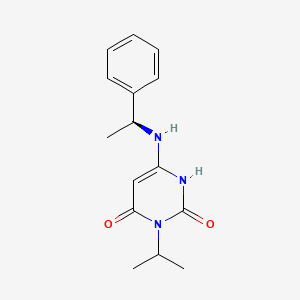
Mavacamten.png Mavacamten SAR-439152; SAR 439152; SAR439152; MYK-461; MYK 461; MYK461; Mavacamten (S)-3-isopropyl-6-((1-phenylethyl)amino)pyrimidine-2,4(1H,3H)-dione cas 1642288-47-8 Chemical Formula: C15H19N3O2 Molecular Weight: 273.336 マバカムテン;
  1. UNII-QX45B99R3J
  2. QX45B99R3J
  3. HCM 1; MYK-461; SAR-439152
UPDATE…………FDA APPROVED  2022/4/28, Camzyos Treatment of hypertrophic cardiomyopathy Mavacamten, also known as SAR-439152 and MYK-461, is a myosin inhibitor potentially for the treatment of hypertrophic cardiomyopathy. SAR-439152 reduces contractility by decreasing the adenosine triphosphatase activity of the cardiac myosin heavy chain. Innovator – MyoKardia in collaboration with Sanofi Treatment of symptomatic obstructive HCM (oHCM), Phase 3
  • Originator MyoKardia
  • Class Cardiovascular therapies; Small molecules
  • Mechanism of Action Myosin inhibitors
  • Orphan Drug Status Yes – Hypertrophic cardiomyopathy

Highest Development Phases

  • Phase III Hypertrophic cardiomyopathy

Most Recent Events

  • 30 May 2018 Phase-III clinical trials in Hypertrophic cardiomyopathy in USA (PO) (NCT03470545)
  • 08 May 2018 MyoKardia plans a long-term extension (LTE) trial of patients who complete the phase III EXPLORER-HCM or the phase II MAVERICK-HCM trial for Hypertrophic cardiomyopathy by the end of 2018
  • 26 Apr 2018 MyoKardia initiates the PIONEER-OLE trial (an extension trial of phase II PIONEER trial) for Hypertrophic cardiomyopathy in USA (PO) (NCT03496168)
SYN CONSTRUCTION
Figure US09585883-20170307-C00005
Figure US09585883-20170307-C00006
Figure US09585883-20170307-C00007
Figure US09585883-20170307-C00008
SYN
J. Med. Chem. 2024, 67, 4376−4418
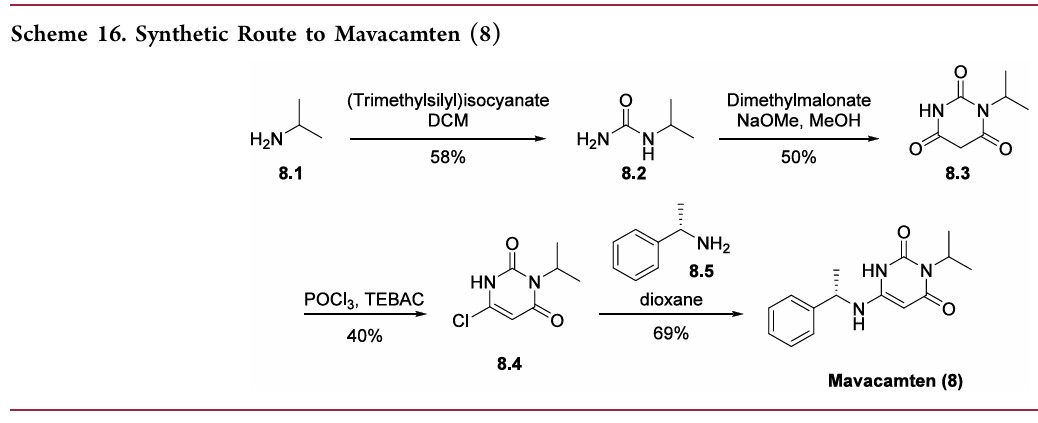
Mavacamten (Camzyos). Mavacamten (8) is a small molecule modulator of beta-cardiac myosin and reduces hypercontractility, a symptom of hypertrophic cardiomyopathy (HCM). Hypertrophic cardiomyopathy is a monogenetic cardiovascular disorder caused by mutations to sarcomere proteins, specifically myosin, 61 1 in 200 people. 62 and may be found in as many as Mavacamten is thought to impact HCM in two ways: reduction of actin-myosin cross-bridge formation and inhibition of cardiac myosin ATPase. Both result in reduced contractility by modulating myosin function. 63 Mavacamten was developed by MyoKardia, Inc., a subsidiary of Bristol Myers Squibb. It was approved by the USFDA for treatment of adults with symptomatic New York Heart Association (NYHA) classes II−III obstructive hypertrophic cardiomyopathy.64 A synthetic route to mavacamten has been65 disclosed in a patent from MyoKardia and demonstrated on the gram scale. While synthesis of the molecule is straightforward, the conditions would likely require modification prior to manufacture on the kilogram scale. Starting with isopropyl amine (8.1), treatment with trimethylsilyl isocyanate provided urea 8.2 in 58% yield (Scheme 16). Cyclization with dimethyl malonate provided barbituric acid derivative 8.3 in 50% yield. Installation of the chiral amine side chain was achieved in a two-step sequence, first by chlorination usingneat POCl3 and triethylbenzyl ammonium chloride (TEBAC) to access chloride 8.4 in 40% yield and then treatment with (S)-α-methylbenzylamine (8.5) to provide mavacamten (8) in 69% yield as a white solid.
(61) Green, E. M.; Wakimoto, H.; Anderson, R. L.; Evanchik, M. J.; Gorham, J. M.; Harrison, B. C.; Henze, M.; Kawas, R.; Oslob, J. D.; Rodriguez, H. M.; et al. A small-molecule inhibitor of sarcomere contractility suppresses hypertrophic cardiomyopathy in mice. Science 2016, 351, 617−621. (62) Tower-Rader, A.; Ramchand, J.; Nissen, S. E.; Desai, M. Y. Mavacamten: a novel small molecule modulator of β-cardiac myosin for treatment of hypertrophic cardiomyopathy. Expert Opin. Investig. Drugs 2020, 29, 1171−1178. (63) Kawas, R. F.; Anderson, R. L.; Ingle, S. R. B.; Song, Y.; Sran, A. S.; Rodriguez, H. M. A small-molecule modulator of cardiac myosin acts on multiple stages of the myosin chemomechanical cycle. J. Biol. Chem. 2017, 292, 16571−16577. (64) Keam, S. J. Mavacamten: First approval. Drugs 2022, 82, 1127− 1135. (65) Semigran, M. J.; Lee, J. H.; Lambing, J.; Green, E.; Evanchik, M. Mavacamten for use in the treatment of hypertrophic cardiomyopathy. WO 2019028360, 2019.
.
PATENT
Current Assignee MyoKardia Inc Original AssigneeMyoKardia Inc
Priority date 2013-06-21
Example 1 Preparation of (S)-3-Isopropyl-6-((1-phenylethyl)amino)pyrimidine-2,4(1H,3H)-dione
Figure US09585883-20170307-C00005

Compound 1.1. Isopropylurea. To a stirred solution of isopropylamine (15.3 g, 0.258 mol, 1.0 equiv) in CH2Cl2 (200 mL) under argon at 0° C. was added dropwise trimethylsilyl isocyanate (30 g, 0.26 mol, 1.0 equiv). The resulting mixture was allowed to reach ambient temperature and stirred overnight. After cooling to 0° C., CH3OH (100 mL) was added dropwise. The resulting solution was stirred for 2 hours (h) at room temperature and then concentrated under reduced pressure. The crude residue was recrystallized from CH3OH:Et2O (1:20) to yield 15.4 g (58%) the title compound as a white solid. LC/MS: m/z (ES+) 103 (M+H)+.

Figure US09585883-20170307-C00006

Compound 1.2. 1-Isopropyl barbituric acid. To a stirred solution of 1.1 (14.4 g, 0.14 mol, 1.00 equiv) in CH3OH (500 mL) were added dimethyl malonate (19.55 g, 0.148 mol, 1.05 equiv) and sodium methoxide (18.9 g, 0.35 mol, 2.50 equiv). The resulting mixture was stirred overnight at 65° C. After cooling to ambient temperature and then to 0° C., the pH was carefully adjusted to 3 using aqueous concentrated HCl. The resulting mixture was concentrated under reduced pressure. The residue was taken up in EtOH (200 mL) and filtered. The filtrate was concentrated under reduced pressure and the residue was purified by silica gel column chromatography using CH2Cl2/CH3OH (20:1) as eluent to yield 16.8 g (50%) of the title compound as a white solid. LC/MS: m/z (ES+) 171 (M+H)+. 1 1H-NMR (300 MHz, d6-DMSO): δ 11.19 (s, 1H), 4.83 (m, 1H), 3.58 (s, 2H), 1.32 (d, J=6.0 Hz, 6H).

Figure US09585883-20170307-C00007

Compound 1.3. 6-chloro-3-isopropylpyrimidine-2,4(1H,3H)-dione. To a 100-mL round-bottom flask containing compound 1.2 (11.4 g, 66.99 mmol, 1.00 equiv) under argon were added triethylbenzylammonium chloride (21.3 g, 93.51 mmol, 1.40 equiv) and POCl3 (30 mL). The resulting mixture was stirred overnight at 50° C. After cooling to room temperature, the mixture was concentrated under reduced pressure. The residue was dissolved in CH2Cl2 (150 mL) followed by slow addition of H2O (100 mL). The phases were separated and the organic layer was washed with H2O (100 mL), dried with anhydrous Na2SO4, and concentrated under reduced pressure. The crude residue was purified by silica gel column chromatography using EtOAc/petroleum ether (1:1) as eluent to yield 5.12 g (40%) of the title compound as a light yellow solid. 1H-NMR (300 MHz, d6-DMSO): δ 12.22 (s, 1H), 5.88 (s, 1H), 4.95 (m, 1H), 1.34 (d, J=6.0 Hz, 6H).

Figure US09585883-20170307-C00008

Compound 1. (S)-3-Isopropyl-6-((1-phenylethyl)amino)pyrimidine-2, 4(1H,3H)-dione. To a solution of 6-chloro-3-isopropylpyrimidine-2,4(1H,3H)-dione (1.3, 1.0 g, 5.31 mmol) in 1,4-dioxane (20 mL) was added (S)-α-methylbenzylamine (Sigma-Aldrich, 1.43 g, 11.7 mmol, 2.2 equiv). The reaction mixture was stirred at 80° C. for 24 h. After cooling to ambient temperature, the mixture was concentrated under reduced pressure. The residual was taken up in EtOAc (70 mL) and washed with aqueous 1N HCl (2×50 mL) and brine (40 mL). The organic layer was dried with anhydrous Na2SO4 and then concentrated under reduced pressure to half the original volume to yield a precipitate. Hexane (20 mL) was added and the mixture was stirred at room temperature. The resulting solid was collected by filtration, washed with hexane (20 mL), and dried to yield 1.0 g (69%) of the title compound as a white solid. LC/MS: m/z (ES+) 274 (M+H)+. 1H-NMR (400 MHz, d6-DMSO): δ 9.77 (s, 1H), 7.32 (m, 4H), 7.24 (m, 1H), 6.50 (d, J=6.8 Hz, 1H), 4.87 (m, 1H), 4.52 (m, 1H), 4.31 (d, J=6.8 Hz, 1H), 1.37 (m, 3H), 1.24 (m, 6H). 1H NMR (400 MHz, CD3OD) δ ppm 7.39-7.20 (m, 5H), 5.01 (m, 1H), 4.48 (m, 1H), 1.49 (d, J=6.7 Hz, 3H), 1.36 (m, 6H).

PATENT

https://patents.google.com/patent/US9181200/zh-CN Genetic (heritable) hypertrophic cardiomyopathy (HCM) comprises a group of highly penetrant, monogenic, autosomal dominant myocardial diseases. HCM is caused by one or more of over 1,000 known point mutations in any one of the structural protein genes contributing to the functional unit of myocardium, the sarcomere. About 1 in 500 individuals in the general population are found to have left ventricular hypertrophy unexplained by other known causes (e.g., hypertension or valvular disease), and many of these can be shown to have HCM, once other heritable (e.g., lysosomal storage diseases), metabolic, or infiltrative causes have been excluded. [0004] Sarcomere gene mutations that cause HCM are highly penetrant, but there is wide variability in clinical severity and clinical course. Some genotypes are associated with a more malignant course, but there is considerable variability between and even within families carrying the same mutation. Sex differences have also been noted, with male patients generally more severely affected than female patients. While many patients with HCM report minimal or no symptoms for extended periods of time, HCM is a progressive disease with a significant cumulative burden of morbidity. Symptoms of effort intolerance predominate, and can be exacerbated by exercise and other maneuvers that increase heart rate and/or decrease preload. As with many other disorders, symptoms tend to worsen with age. By far the most prevalent clinical burden for patients with HCM is exertional dyspnea, which limits their activities of daily living and can be debilitating. [0005] Patients with HCM are often symptomatic in the absence of documented hemodynamic abnormalities like left ventricular outflow tract obstruction (with or without mitral regurgitation). Patients’ symptoms of exertional dyspnea can rapidly worsen with the onset of atrial fibrillation, a common complication of HCM that can precipitate acute pulmonary edema that increases the risk of systemic arterial thromboembolic disease, including stroke. Other adverse events associated with HCM include intolerance of hypovolemia or hypervolemia, and syncope. Concomitant coronary artery disease may confer a higher risk of acute coronary syndromes than in patients without HCM. Sudden cardiac death (SCD) in patients with HCM is both uncommon and difficult to predict but is a leading cause of non-traumatic death in young adults. For survivors of SCD, ICD placement is standard practice, and in other HCM patients risk profiling, while imprecise, is used to identify those for whom ICD placement for primary prevention is deemed prudent. [0006] Medical therapy for HCM is limited to the treatment of symptoms and does not address the fundamental, underlying cause of disease – disruptions in normal sarcomere function. Currently available therapies are variably effective in alleviating symptoms but typically show decreased efficacy with increasing disease duration. Patients are thus empirically managed with beta-blockers, non-dihydropyridine calcium channel blockers, and/or disopyramide. None of these agents carry labeled indications for treating HCM, and essentially no rigorous clinical trial evidence is available to guide their use. Compounding this unfortunate situation is the fact that no new medical therapies for HCM have been identified for many years. For patients with hemodynamically significant outflow tract obstruction (resting gradient >30mmHg), in appropriately selected patients surgical myectomy or alcohol septal ablation is usually required to alleviate the hemodynamic obstruction. Provided are new therapeutic agents and methods that remedy the long-felt need for improved treatment of HCM and related cardiac disorders.
Example 1. Preparation of (61-3-Isopropyl-6-((1-phenylethyl) amino) pyrimidine-2, 4(1H,3H)-dione. [0072] Compound 1.1. Isopropylurea. To a stirred solution of isopropylamine (15.3 g, 0.258 mol, 1.0 equiv) in CH2Cl2 (200 mL) under argon at 0 °C was added dropwise trimethylsilyl isocyanate (30 g, 0.26 mol, 1.0 equiv). The resulting mixture was allowed to reach ambient temperature and stirred overnight. After cooling to 0 °C, CH3OH (100 mL) was added dropwise. The resulting solution was stirred for 2 hours (h) at room temperature and then concentrated under reduced pressure. The crude residue was recrystallized from CH3OH:Et2O (1 :20) to yield 15.4 g (58%) the title compound as a white solid. LC/MS: m/z (ES+) 103 (M+H)+. [0073] Compound 1.2. 1-Isopropyl barbituric acid. To a stirred solution of 1.1 (14.4 g, 0.14 mol, 1.00 equiv) in CH3OH (500 mL) were added dimethyl malonate (19.55 g, 0.148 mol, 1.05 equiv) and sodium methoxide (18.9 g, 0.35 mol, 2.50 equiv). The resulting mixture was stirred overnight at 65 °C. After cooling to ambient temperature and then to 0 °C, the pH was carefully adjusted to 3 using aqueous concentrated HCl . The resulting mixture was concentrated under reduced pressure. The residue was taken up in EtOH (200 mL) and filtered. The filtrate was concentrated under reduced pressure and the residue was purified by silica gel column chromatography using CH2Cl2/CH3OH (20: 1) as eluent to yield 16.8 g (50%) of the title compound as a white solid. . LC/MS: m/z (ES+) 171 (M+H)+.1 1H-NMR (300 MHz, de-DMSO): 5 11.19 (s, 1H), 4.83 (m, 1H), 3.58 (s, 2H), 1.32 (d, J = 6.0 Hz, 6H). [0074] Compound 1.3. 6-chloro-3-isopropylpyrimidine-2,4(1H,3H)-dione. To a 100-mL round-bottom flask containing compound 1.2 (11.4 g, 66.99 mmol, 1.00 equiv) under argon were added triethylbenzylammonium chloride (21.3 g, 93.51 mmol, 1.40 equiv) and POCl3 (30 mL). The resulting mixture was stirred overnight at 50 °C. After cooling to room temperature, the mixture was concentrated under reduced pressure. The residue was dissolved in CH2Cl2 (150 mL) followed by slow addition of H2O (100 mL). The phases were separated and the organic layer was washed with H2O (100 mL), dried with anhydrous Na2SO4 , and concentrated under reduced pressure. The crude residue was purified by silica gel column chromatography using EtO Ac/petroleum ether (1 : 1) as eluent to yield 5.12 g (40%) of the title compound as a light yellow solid. 1H-NMR (300 MHz, d6-DMSO): δ 12.22 (s, 1H), 5.88 (s, 1H), 4.95 (m, 1H), 1.34 (d, J = 6.0 Hz, 6H). [0075] Compound 1. (S)-3-Isopropyl-6-((1-phenylethyl) amino) pyrimidine-2, 4(1H,3H)-dione. To a solution of 6-chloro-3-isopropylpyrimidine-2,4(1H,3H)-dione (1.3, 1.0 g, 5.31 mmol) in 1,4-dioxane (20 mL) was added (S)-a-methylbenzylamine (Sigma- Aldrich, 1.43 g, 11.7 mmol, 2.2 equiv). The reaction mixture was stirred at 80 °C for 24 h. After cooling to ambient temperature, the mixture was concentrated under reduced pressure. The residual was taken up in EtOAc (70 mL) and washed with aqueous IN C1 (2 x 50 mL) and brine (40 mL). The organic layer was dried with anhydrous Na2SC”4 and then concentrated under reduced pressure to half the original volume to yield a precipitate. Hexane (20 mL) was added and the mixture was stirred at room temperature. The resulting solid was collected by filtration, washed with hexane (20 mL), and dried to yield 1.0 g (69%) of the title compound as a white solid. LC/MS: m/z (ES+) 274 (M+H)+. 1H-NMR (400 MHz, de-DMSO): δ 9.77 (s, 1H), 7.32 (m, 4H), 7.24 (m, 1H), 6.50 (d, J= 6.8 Hz, 1H), 4.87 (m, 1H), 4.52 (m, 1H), 4.31 (d, J=6.8 Hz, 1H), 1.37 (m, 3H ), 1.24 (m, 6H). 1H NMR (400 MHz, CD3OD) δ ppm 7.39-7.20 (m, 5H), 5.01 (m, 1H), 4.48 (m, 1H), 1.49 (d, J = 6.7 Hz, 3H), 1.36 (m, 6H).
Patent ID Patent Title Submitted Date Granted Date
US9585883 PYRIMIDINEDIONE COMPOUNDS
2015-10-14
2016-02-04
US9181200 PYRIMIDINEDIONE COMPOUNDS
2014-06-19
2014-12-25
Image result for Mavacamten

REFERENCES

1: Green EM, Wakimoto H, Anderson RL, Evanchik MJ, Gorham JM, Harrison BC, Henze M, Kawas R, Oslob JD, Rodriguez HM, Song Y, Wan W, Leinwand LA, Spudich JA, McDowell RS, Seidman JG, Seidman CE. A small-molecule inhibitor of sarcomere contractility suppresses hypertrophic cardiomyopathy in mice. Science. 2016 Feb 5;351(6273):617-21. doi: 10.1126/science.aad3456. PubMed PMID: 26912705; PubMed Central PMCID: PMC4784435.
/////////////////Mavacamten, SAR-439152, SAR 439152, SAR439152, MYK-461, MYK 461, MYK461, phase 3 O=C1N(C(C)C)C(C=C(N[C@H](C2=CC=CC=C2)C)N1)=O

TIPIFARNIB, типифарниб , تيبيفارنيب , 替匹法尼 ,


Tipifarnib.svgDB04960.pngChemSpider 2D Image | tipifarnib | C27H22Cl2N4O

str1

TIPIFARNIB

R-115777, NSC-702818

Categories

UNIIMAT637500A

CAS number 192185-72-1 +form
192185-68-5 (racemate)
192185-69-6 (racemic; fumarate)
192185-70-9 (racemic; diHCl)

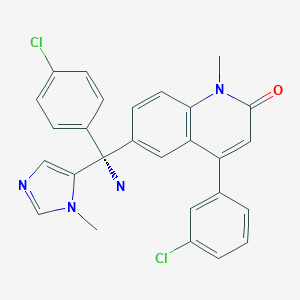
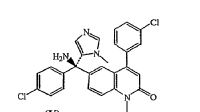
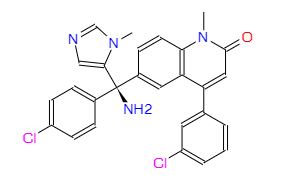
(+)-(R)-6-[1-Amino-1-(4-chlorophenyl)-1-(1-methylimidazol-5-yl)methyl]-4-(3-chlorophenyl)-1-methylquinolin-2(1H)-one

2(1H)-Quinolinone, 6-[(R)-amino(4-chlorophenyl)(1-methyl-1H-imidazol-5-yl)methyl]-4-(3-chlorophenyl)-1-methyl-

Weight Average: 489.396
Chemical Formula C27H22Cl2N4O

типифарниб [Russian] [INN]
تيبيفارنيب [Arabic] [INN]
替匹法尼 [Chinese] [INN]
(R)-(+)-R115777
(R)-6-(Amino(4-chlorophenyl)(1-methyl-1H-imidazol-5-yl)methyl)-4-(3-chlorophenyl)-1-methyl-2(1H)-quinolinone
(R)-6-(amino(4-chlorophenyl)(1-methyl-1H-imidazol-5-yl)methyl)-4-(3-chlorophenyl)-1-methylquinolin-2(1H)-one
2 (1H))-Quinolinone,6-(amino(4-chlorophenyl)(1-methyl-1H-imidazol-5-yl)methyl)-4-(3-chlorophenyl)-1-methyl-, 2(1H )-quinolinone
Title: Tipifarnib
CAS Registry Number: 192185-72-1; 192185-68-5 (unspecified stereo)
CAS Name: 6-[(R)-Amino(4-chlorophenyl)(1-methyl-1H-imidazol-5-yl)methyl]-4-(3-chlorophenyl)-1-methyl-2(1H)-quinolinone
Manufacturers’ Codes: R-115777
Trademarks: Zarnestra (Janssen)
Molecular Formula: C27H22Cl2N4O
Molecular Weight: 489.40
Percent Composition: C 66.26%, H 4.53%, Cl 14.49%, N 11.45%, O 3.27%
Literature References: Farnesyl transferase inhibitor. Prepn: M. G. Venet et al., WO 9721701; eidem, US 6037350 (1997, 2000 both to Janssen). Review of syntheses: P. R. Angibaud et al., Eur. J. Org. Chem. 2004, 479-486. Inhibition of farnesyl protein transferase and antitumor effects in vivo: D. W. End et al., Cancer Res. 61, 131 (2001). Clinical pharmacology and pharmacokinetics: J. Zujewski et al., J. Clin. Oncol. 18, 927 (2000). Accelerator mass spec determn in biological samples: R. C. Garner et al., Drug Metab. Dispos. 30, 823 (2002). Clinical evaluation in hematologic malignancies: J. Cortes et al., Blood 101, 1692 (2003). Review of clinical experience: P. Norman, Curr. Opin. Invest. Drugs 3, 313-319 (2002).
Properties: Crystals from 2-propanol, mp 234°. [a]D20 +22.86° (c = 0.98 in methanol).
Melting point: mp 234°
Optical Rotation: [a]D20 +22.86° (c = 0.98 in methanol)
Therap-Cat: Antineoplastic.
Keywords: Antineoplastic; Farnesyl Transferase Inhibitors.

PRODUCT PATENT

WO 9721701

Tipifarnib (R-115777) is a substance that is being studied in the treatment of acute myeloid leukemia (AML) and other types of cancer. It belongs to the family of drugs called farnesyltransferase inhibitors. It is also called Zarnestra. In June 2005, the FDA issued a Not Approvable Letter for Zarnestra.

Investigated for use/treatment in colorectal cancer, leukemia (myeloid), pancreatic cancer, and solid tumors.

Drug had been granted orphan drug designation by the FDA for the treatment of AML in 2004. In 2005, the Committee for Orphan Medicinal Products of the European Medicines Agency (EMEA) adopted a positive opinion on orphan medicinal product designation for the drug. In 2014, Eiger BioPharmaceuticals licensed the product for worldwide development for the treatment of viral diseases and Kura Oncology licensed development and commercialization rights for the treatment cancer indications.

Pharmacodynamics

R115777, a nonpeptidomimetic farnesyl transferase inhibitor, suppresses the growth of human pancreatic adenocarcinoma cell lines. This growth inhibition is associated with modulation in the phosphorylation levels of signal transducers and activators of transcription 3 (STAT3) and extracellular signal-regulated kinases (ERK)

Tipifarnib (INN,[1]:213 proposed trade name Zarnestra) is a farnesyltransferase inhibitor that is being investigated in patients 65 years of age and older with newly diagnosed acute myeloid leukemia (AML). It inhibits the Ras kinase in a post-translational modification step before the kinase pathway becomes hyperactive. It inhibits prenylation of the CaaX tail motif, which allows Ras to bind to the membrane where it is active. Without this step the protein cannot function.

It is also being tested in clinical trials in patients in certain stages of breast cancer.[2] It is also investigated as a treatment for multiple myeloma.[3]

For treatment of progressive plexiform neurofibromas associated with neurofibromatosis type I, it successfully passed phase I clinical trials but was suspended (NCT00029354) in phase II.[4][5] The compound was discovered by and is under investigation by Johnson & Johnson Pharmaceutical Research & Development, L.L.C, with registration number R115777.Approval process

Tipifarnib was submitted to the FDA by Johnson & Johnson for the treatment of AML in patients aged 65 and over with a new drug application (NDA) to the FDA on January 24, 2005.

In June 2005, the FDA issued a “not approvable” letter for tipifarnib.[6]Progeria

Confocal microscopy photographs of the descending aortas of two 15-month-old progeria mice, one untreated (left picture) and the other treated with the farnsyltransferase inhibitor drug tipifarnib (right picture). The microphotographs show prevention of the vascular smooth muscle cell loss that is otherwise rampant by this age. Staining was smooth muscle alpha-actin (green), lamins A/C (red) and DAPI (blue). (Original magnification, ×40)

It was shown on a mouse model of Hutchinson–Gilford progeria syndrome that dose-dependent administration of tipifarnib can significantly prevent both the onset of the cardiovascular phenotype as well as the late progression of existing cardiovascular disease.[7]

PATENT

TIPIFARNIB BY SOLIPHARMA

WO-2018103027

https://patentscope.wipo.int/search/en/detail.jsf?docId=WO2018103027&recNum=1&maxRec=&office=&prevFilter=&sortOption=&queryString=&tab=FullText

Crystalline form (I, II, III and IV) of tipifarnib . Useful for the treatment and/or prevention of abnormal cell growth diseases such as lung cancer, pancreatic cancer, colon cancer, melanoma, neuroblastoma or glioma. first filing from Solipharma claiming tipifarnib which was developing by Kura Oncology , under license from Johnson & Johnson subsidiary J&JPRD (now Janssen Research & Development).

Tipifarnib is a farnesyltransferase inhibitor that acts on H-RAS or N-RAS mutant cells and has antiproliferative effects. It can block the farnesylation modification of RAS protein, thereby disturbing its localization on the inner surface of the plasma membrane and subsequent activation of downstream signaling pathways, and has an effective anti-tumor disease activity.
Tipifarny’s chemical name is (R)-(+)-6-[amino(4-chlorophenyl)(1-methyl-1H-imidazol-5-yl)methyl]-4-(3-chloro) Phenyl) 1-methyl-2(1H)-quinolinone, English name Tipifarnib; its chemical structure is shown below:
The patent document CN1101392C reports the preparation method of typrivadina, which is a racemate and does not disclose any characterization data; the patent document CN100567292C reports the preparation method of typ fenfanide, which is a mixture of certain enantiomeric excesses. Only the melting point of the mixture is mentioned; the patent document CN1246318C reports the preparation method of typifanidin and the method for the resolution and purification of tepifefene in its enantiomers. The present inventors have found that the form of typifene prepared according to the method provided by CN1246318C is in the crystalline state (herein referred to as “Form A”), but it has a defect of low crystallinity and poor stability of the crystal, and the patent The typifanibs reported in the documents CN1101392C and CN100567292C are both mixtures and lack the characteristic data accurately reflecting their physical form and cannot be fully disclosed.
PATENT

Cyclization of 3-(3-chlorophenyl)-N-phenyl-2-propenamide by means of polyphosphoric acid (PPA) at 100 °C gives 4-(3-chlorophenyl)-1,2,3,4-tetrahydroquinolin-2-one ,

Which is condensed with 4-chlorobenzoic acid by means of PPA at 140 °C to yield 6-(4-chlorobenzoyl)-4-(3-chlorophenyl)-1,2,3,4-tetrahydroquinolin-2-one

The dehydrogenation of compound  by means of Br2 in bromobenzene at 160 °C affords 6-(4-chlorobenzoyl)-4-(3-chlorophenyl)quinolin-2-one,

Which is N-alkyalted with iodomethane in the presence of BnNMe3Cl and NaOH in THF to provide 6-(4-chlorobenzoyl)-4-(3-chlorophenyl)-1-methylquinolin-2-one.

Condensation of compound  with 1-methylimidazole  by means of BuLi in THF gives the triaryl carbinol (N-1),

Which is finally treated with NH3 in THF to afford the target Tipifarnib, R-115777 .

Scheme SHOWING COMPLICATIONS

PATENT

WO 2005105782

https://patentscope.wipo.int/search/en/detail.jsf?docId=WO2005105782

Farnesyltransf erase inhibitors block the main post-translational modification of the Ras protein, thus interfering with its localization to the inner surface of the plasma
10 membrane and subsequent activation of the downstream effectors. Although initially developed as a strategy to target Ras in cancer, farnesyltransferase inhibitors have
subsequently been acknowledged as acting by additional and more complex
mechanisms that may extend beyond Ras involving GTP-binding proteins, kinases,
centromere-binding proteins and probably other f arnesylated proteins.
15
A particular farnesyltransferase inhibitor is described in WO 97/21701, namely (R)-(+)- 6-[amino(4-chlorophenyl)(l-methyl-lH-imidazol-5-yl)methyl]-4-(3-chlorophenyl)-l- methyl-2(liϊ)-quinolinone. The absolute stereochemical configuration of the compound was not determined in the experiments described in the above-mentioned patent
20 specification, but the compound was identified by the prefix “(B)” to indicate that it was the second compound isolated from column chromatography. The compound thus obtained has been found to have the (R)-(+)-configuration. This compound will be
referred to below by its published code number Rl 15777 and has the following formula

Rl 15777 (Tipifamib) is a potent, orally active inhibitor of f arnesylprotein transferase.
It is one of the most advanced of the farnesylprotein transferase inhibitors currently
reported to be in clinical development, being one of the agents that have progressed to phase III studies.
30 Rl 15777 has been found to have very potent activity against neoplaslic diseases.
Antineoplastic activity in solid tumors, such as breast cancer, as well as in haematological malignancies, such as leukemia, have been observed. Also combination studies have been carried out demonstrating that R 115777 can be safely combined with several highly active anticancer drugs.

In WO 01/53289, the racemates (±) (4-(3-chloro-phenyl)-6-[(6-chloro-pyridin-3-yl)-(4-methoxy-benzylamino)-(3-methyl-3-f: -imidazol-4-yl)-methyl]-l-cyclopropylmethyl-liϊ-quinolin-2-one (racemate 1) and (±) 4-(3-chloro-phenyl)-6-[(6-chloro-pyridin-3-yl)-[(4-methoxy-benzylidene)-amino]-(3-methyl-3jr7-imidazol-4-yl)-methyl]-l-cyclopropylmethyl-liϊ-quinolin-2-one (racemate 2) are prepared.

racemate 1 racemate 2

After chiral molecule separation using column chromatography, either the benzylamino or the benzilidine moiety of the resulting (+) and /or (-) enantiomers are converted to an amino group under acidic conditions.

The synthesis of Rl 15777 as originally described in WO 97/21701, is presented in scheme 1.

Herein, in step 1, the intermediate 1-methyl imidazole in tetrahydrofuran, is mixed with a solution of ra-butyllithium in a hexane solvent to which is added chlorotriethylsilane (triethylsilyl chloride), followed by a further addition of ra-butyllithium in hexane, the resulting mixture being cooled to -78°C before the addition of a solution of a compound of formula (I), i.e. 6-(4-chlorobenzoyl)-4-(3-chlorophenyl)-l-methyl-2(12ϊ)-quinolinone in tetrahydrofuran. The reaction mixture is subsequently brought to room temperature, and then hydrolysed, extracted with ethyl acetate and the organic layer worked up to obtain a compound of formula (II), i.e. (±)-6-[hydroxy(4-chlorophenyl) (l-methyl-liϊ-imidazol-5-yl)methyl]-4-(3-chlorophenyl)-l-methyl-2(lia- )-quinolinone.

In step 2, the hydroxy compound of formula (II) is chlorinated with thionylchloride to form a compound of formula (III), i.e. (±)-6-[chloro(4-chlorophenyl)(l -methyl- liJ-imidazol-5-yl)methyl]-4-(3-chloroρhenyl)-l-methyl-2(li3)-quinolinone.

In step 3, the chloro compound of formula (III) is treated, with NEaL OH in
tetrahydrofuran to form the amino compound of formula (IV), i.e. (±)-6-[amino(4-chlorophenyl)(l-methyl-l -imidazol-5-yl)methyl]-4-(3-chlorophenyl)-l-methyl- 2(l/J)-quinolinone.

In step 4, the amino compound of formula (IV) is separated into its enantiomers by chiral column chromatography over Chiracel OD (25 cm; eluent: 100% ethanol; flow: 0.5 ml/rnin; wavelength: 220 nm). The pure (B)-fractions are collected and recrystallised from 2-propanol resulting in Rl 15777, the compound of formula (V).

Scheme 1

However, the procedure described in WO97/21701 has a number of disadvantages. For example, during the first step, the procedure results in the undesired formation of a corresponding compound of formula (XI), i.e. 6-[hydroxy(4-chlorophenyl) (1-methyl-lJrJ-imidazol-2-yl)methyl]-4-(3-chlorophenyl)-l-methyl-2(liϊ)-quinolinone)Jn which the imidazole ring is attached to the remainder of the molecule at the 2-position of the ring, instead of the desired 5-position. At the end of the procedure, this results in the formation of a compound of formula (XII), i.e.6-[amino(4-chlorophenyl)(l-methyl-lϊJ-imidazol-2-yl)methyl]-4-(3-chlorophenyl)-l-methyl-2(lβ -quinolinone.

(XI) CXH)

The use of n-butyllithium during the conversion of a compound of formula (I) in a compound of formula (II) is also undesirable in a commercial process in view of its pyrophoric nature and the formation of butane, a flammable gas, as the by-product. Also the carrying out of this process step, at a temperature as low as -78°C, is inconvenient and costly on a commercial scale.
Finally, the purification of compound (V) using chiral chromatography is expensive and disadvantageous in view of the large amounts of solvent needed and the specialised equipment required to perform a large scale chiral chromatography.

Another process for the synthesis of Rl 15777 as described in WO 02/072574, is presented in scheme 2.

Herein, in step 1, 1-methyl imidazole in tetrahydrofuran is mixed with a solution of n-hexyllithium in a hexane solvent to which is added tri-iso-butylsilyl chloride, followed by a further addition of n-hexyllithium in hexane. The compound of formula (I) in tetrahydrofuran is then added to the reaction mixture, keeping the temperature between -5°C and 0°C. The resulting product of formula (II) is isolated by salt formation.

In step 2, the chlorination reaction is effected by treatment of the compound of formula (II) with thionyl chloride in 1 ,3-dimethyl-2-imidazolidinone.

In step 3, the chloro compound of formula (III) is treated with a solution of ammonia in methanol. After the addition of water, the compound of formula (IV), precipitates and can be isolated.

In step 4, the compound of formula (IV) can be reacted with L-(-)-dibenzoyl tartaric acid (DBTA) to form the diastereomeric tartrate salt with formula (VI) i.e. R-(-)-6-[amino(4-chlorophenyl)(l-methyl-ljt–‘-imidazol-5-yl)methyl]-4-(3-chlorophenyl)-l-methyl-2(l Z)-quinolinone [R-(R*,RH!)]-2,3-bis(benzoyloxy)butanedioate (2:3).

Finally, in step 5, the compound of formula (VI) is treated with aqueous ammonium hydroxide, to form the crude compound of formula (V) which is then purified by recrystallisation from ethanol to the pure compound (V).

(VI) (V)
Scheme 2

However, in view of the fact that water is present during the third and the fifth step of this procedure, there is significant formation of the hydroxy compound of formula (II).

This is important because the compounds of formula (II) and (V) are difficult to separate. In order to keep the quality of the final product (V) as high as possible, it is critical to limit the formation of compound (II).

The major drawback of the above described processes is the generation of large amounts of the other enantiomer that subsequently must be recycled.

Attempts were made to develop processes that solve this problem. One of the possibilities was to enter chirality in the first step of the procedure. A first study was carried out in order to determine if the conversion of an enantiomer of the hydroxy compound of formula (II) into a compound of formula (IV) could preserve chirality. Several experimental conditions have been tested starting with an enantiomer of a compound of formula (II), but racemisation always occurred.

Another possibility was to try entering chirality by adding N-methylimidazole under the reaction conditions described herein above under steps 1 of WO97/21701 and WO 02/072574, to an N-Ct-6alkyl-(S(R))-sulfinylketimine prepared from the compound of formula (I). It turned out that the resulting N-Cι-6alkyl-(S(R))-sulfinylamide of the compound of formula (I) was in the desired R-configuration and could be used for conversion into compound (V).
These results are completely unexpected, especially in view of Shaw et al.
(Tetrahedron Letters: 42, 7173-7176). Already in 2001, Shaw et al. disclosed an asymmetric synthesis process for the production of α-aryl-α-heteroaryl alkylamines using organometallic additions to N-tert-butanesulfinyl ketimines. However, the configuration and the yield of the final enantiomer formed with this process, was depending on the configuration of the N-tert-butanesulfinyl moiety of the ketimines, the composition of the aryl and/or the heteroaryl moieties of the ketimines, as well as on the organo- and the metallic moiety of the organometallic reagent. Furthermore, the use of heteroaryllithium reagents were described in this document, as being in particular disadvantageous, in view of their instability.

Thus the present invention solves the above described problems. It provides a new process for the preparation of the compound of formula (V) without the need to recycle one of the enantiomers while minimising the formation of undesired isomers and impurities and under conditions which offer economic advantages for operation on a commercial scale.

A. Preparation of intermediates

Example AJ
a) Preparation of /V-r(4-chlorophenyl‘)((,4- -chlorophenyl’)-l-methyl-l f-quinolin-2-one’)-6-yDmethylenel-2-methyl-2-propanesulfinamide TSfR-)! (com ound 15)


Ti(OEt) (0.0122 mol) was added to a mixture of compound (I) (0.0024 mol) and (R)-(+)-2-methyl-2-propane-sulfinamide (0.0024 mol) in DCM (15ml). The mixture was stirred and refluxed for 4 days, then cooled to room temperature. Ice water was added. The mixture was filtered over celite. Celite was washed with DCM. The organic layer was extracted with saturated sodium chloride. The organic layer was separated, dried (MgS04), filtered, and the solvent was evaporated. This fraction was purified by column chromatography over silica gel (40 μm) (eluent: DCM/MeOH 98/2). The pure fractions were collected and the solvent was evaporated, yielding 0.95g of compound 15 _ (76%), melting point: 115°C.

b) Preparation of (R)-N-r(‘4-chlorophenyl1((4-(3-chlorophenyl)-l-methyl-lic/-quinoline- 2-one -6-ylVl-methyl-l/j‘-imidazole-5-yl’)methyll-2-methyl-2-propanesulfinamide rS(R)l (compound 161

(compound 16)

n-Butyllithium (1.34ml, 0.002 mol) was added dropwise at -70°C to a mixture of 1-methylimidazole (0.0021 mol) in THF (4.5ml). The mixture was stirred at -70°C for 15 minutes. Triethylsilyl chloride (0.0021 mol) was added. The mixture was stirred at -70°C for 15 minutes. n-Butyllithium (1.34ml, 0.0021 mol) was added dropwise. The mixture was stirred at -70°C for 15 minutes. A solution of compound 15 (0.0019 mol) in THF (5.5ml) was added. The mixture was stirred at -70°C for 45 minutes, poured out into ice water and extracted with EtOAc. The organic layer was separated, dried (MgS04), filtered, and the solvent was evaporated. The residue was purified by column chromatography over silica gel (15-40 m)(eluent: DCM/MeOH/ΝEUOH 95/5/0.5), yielding 0.59g (52%) of compound 16, diastereomeric excess 24%.

c) Preparation of the (B)-diastereomer (compound 18) of compound 16

(compound 18)

Compound 16 was purified by column chromatography over silica gel (15-40μm) (eluent: DCM/MeOH/NHtOH 95/5/0.5). Two fractions were collected and the solvent was evaporated, yielding 0.304g diastereomer (B) (compound 18) (27%), melting point 174°C.

Example A.2
a) Preparation of jV-r(4-chlorophenyl¥(4-(3-chlorophenyl‘)-l-methyl-l JJ-quinolin-2-one)-6-yl)methylene1-4-methylphenylsulfιnamidesulfιnamide fS(S‘)l (compound 17)

(compound 17)

Ti(OEt)4 (0.0122 mol) was added to a mixture of compound (I) (0.0123 mol) and (S)-(+)-j5-toluenesulfinamide (0.0123 mol) in DCM (80ml). The mixture was stirred and refluxed for 4 days, then cooled to room temperature. Satured sodium chloride was added. The mixture was filtered over celite. Celite was washed with DCM. The organic layer was separated, dried (MgS04), filtered, and the solvent was evaporated. A fraction was purified by column chromatography over silica gel (40 μm) (eluent: DCM MeOH 98/2). The fractions were collected and the solvent was evaporated, yielding 0.65g of pure compound 17 .

The pure compound N-[(4-chlorophenyl)((4-(3-chlorophenyl)-l-methyl-l-tf-quinolin-2-one)-6-yl)methylene]-2-methyl-2-propanesulfinamide [S(R)] can be obtained in an analogues way.

B. Preparation of final compounds

Example BJ
a Preparation of compound (V)

Hydrochloric acid in isopropanol was added to a solution of compound 16 (0.00003 mol) in methanol (0J ml). The mixture was stirred at room temperature for 30 minutes. The mixture was added to potassium carbonate (10%) on ice. The organic layer was separated, washed with a solution of saturated sodium chloride, dried (MgS04), filtered, and evaporated giving 0,017 g (100%) of compound (V), enantiomeric excess 22%, content of compound (II) < 1%.

PATENT

WO 2005105783

https://encrypted.google.com/patents/WO2005105783A1?cl=en

A. Preparation of intermediates

Example A.1

a) Preparation of N-r(4-chlorophenyl’)(l-methyl-lH-imidazol-5-yl)methylene‘)l-2- methyl-2-propanesulfinamide KSfl l (compound 25)

Figure imgf000016_0001

(compound 25) Ti(OEt)4 (0.0162 mol) was added to a mixture of (4-chlorophenyiχi-methyl-lH- imidazol-5-yl)methanone (0.0032 mol) and (R)-(+)-2-methyl-2-propane-sulfinamide (0.0032 mol) in DCE (7ml). The mixture was stirred and refluxed for 6 days, then cooled to room temperature. Ice water was added. The mixture was filtered over celite. Celite was washed with DCM. The organic layer was extracted with saturated sodium chloride. The organic layer was separated, dried (MgS04), filtered, and the solvent was evaporated. This fraction was purified by column chromatography over silica gel (40 μm) (eluent: DCM/MeOH/NH OH 97/3/0.5), yielding 0.475g of compound 25 (46%).

The compound N-[(4-chlorophenyl)(l-methyl-lH-imidazol-5-yl)methylene)]-2-methyl- 2-propanesulfinamide [(S(S)] can be obtained in an analogous way.

b) Preparation of N-r(4-chlorophenyl)((4-(3-chlorophenyl)-2-methoχy-quinoline-6- yl l-methyl-lH-imidazole-5-yl)methyn-2-methyl-2-propanesulfinamide TS(R)1 (compound 26)

Figure imgf000017_0001

(compound 26)

n-Butyllithium (0.00081 mol) in hexane, was added dropwise at -78°C to a mixture of 6-bromo-4-(3-chlorophenyl)-2-methoxy-quinoline (0.00081 mol) in THF (3 ml) under nitrogen flow. The mixture was stirred at -78°C for 30 minutes. A solution of compound 25 (0.00065 mol) in THF (0.6 ml) was added . The mixture was stirred at – 78°C for 1 hour and 30 minutes, poured out into ice water and extracted with EtOAc. The organic layer was separated, dried (MgS04), filtered, and the solvent was evaporated. This fraction was purified by column chromatography over silica gel (40μm)(eluent: DCM eOH/NB OH 97/3/0.1). The pure fractions were collected and the solvent was evaporated, yielding 0.138g (36 %) of compound 26, melting point 153°C.

The compound N-[(4-chlorophenyl)((4-(3-chlorophenyl)-2-methoxy-quinoline-6-yl)(l- methyl-lH-imidazole-5-yl)methyl]-2-methyl-2-propanesulfmamide [S(S)] can be obtained in an analogous way

c“) Preparation of (S)-l-,4-chlorophenylV l-r4-(3-chlorophenylV2-methoxy-quinoline-6- yll-l-(l-methyl-l/J-imidazole-5-yl)-methylamine (compound 27)

Figure imgf000017_0002

(compound 27) Hydrochloric acid in isopropanol was added to a solution of compound 26 (0.000018 mol) in methanol (4.2 ml). The mixture was stirred at room temperature for 30 minutes. The mixture was added to potassium carbonate (10%) on ice and extracted with ethyl acetate. The organic layer was separated, washed with a solution of saturated sodium chloride, dried (MgS0 ), filtered, and evaporated giving 0,086 g (100%) of compound 27, melting point 96°C, enantiomeric excess 88%. d) Preparation of (SV6-ramino(4-chlorophenyl¥l-methyl-l #-imidazol-5-yDmethyH-4- (3-chlorophenyD-lH)-quinorin-2-one (compound 28)

Figure imgf000018_0001

(compound 28) Compound 27 (0.00038 mol) in hydrochloric acid 3N (9.25 ml) and THF (9.25 ml), was stirred at 60°C for 24 hours and evaporated, giving 0,18 g (100%) of compound 28, melting point 210°C.

Example A.2

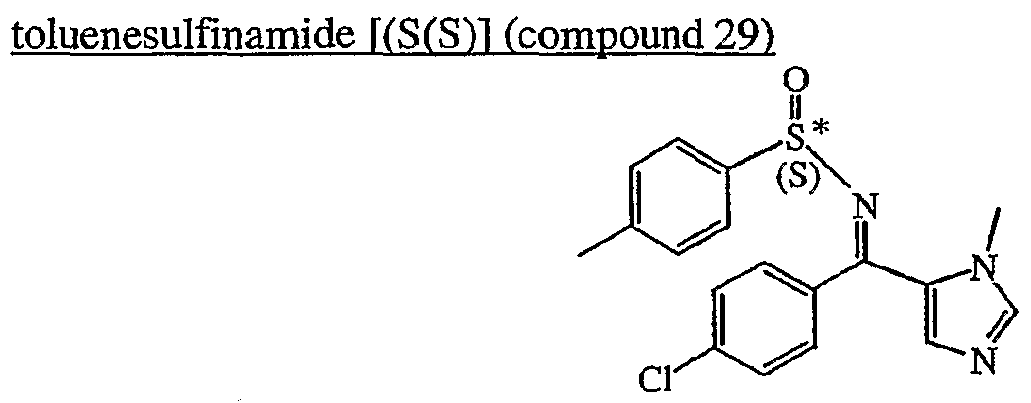
a) Preparation of N-r(4-chlorophenyl)(‘l-methyl-lH-imidazol-5-yl’)methylene‘)1-p-

Figure imgf000018_0002

(compound 29) Ti(OEt)4 (0.0419 mol) was added to a mixture of (4-chlorophenyl)(l-methyl-lH- imidazol-5-yl)methanone (0.0084 mol) and (S)-(+)-p-_toluenesulfinamide (0.0084 mol) in DCE (18ml). The mixture was stirred and refluxed for 7 days, then cooled to room temperature. Ice water was added. The mixture was filtered over celite. Celite was washed with DCM. The organic layer was extracted with saturated sodium chloride. The organic layer was separated, dried (MgS04), filtered, and the solvent was evaporated. This fraction was purified by column chromatography over silica gel (40 μm) (eluent: DCM/MeOH/ΝHiOH 97/3/0.5), yielding 1.15 g of compound 29 (38%).

The compound N-[(4-chlorophenyl)(l-methyl-lH-imidazol-5-yl)methylene)]-p- toluenesulfinamide [(S(R)] can be obtained in an analogues way. B. Preparation of final compounds

Example B.l a) Preparation of (S)-6-ramino(4-chlorophenyl)(l-methyl-lH-imidazol-5-yl)methyll-4-

Figure imgf000019_0001

Compound 28 (0.00038 mol) was added to a solution of THF (1.8 ml) and NaOH ION (1.8 ml). BTEAC (0.0019 mol) and methyliodide (0.00076 mol) were added and the mixture was stirred for 2 hours at room temperature. EtOAc was added. The organic layer was separated, dried (MgS04), filtered, and evaporated giving 0,149 g (83%) of compound 30, enantiomeric excess 86%.

PATENT

WO 02/072574

https://encrypted.google.com/patents/WO2002072574A1?cl=en

Preparation of compound (III):

110 ml of dry tetrahydrofuran was added to 7.6 ml of 1-methylimidazole (0.0946 mole) and the resulting solution cooled to -15°C.37.8 ml of n-hexyllithium 2.5 M in n-hexane (0.0946 mole) was added, while the temperature during addition was kept between – 5°C and 0°C. After addition, the reaction mixture was stirred for 15 minutes, while cooling to -12°C. 26.2 ml of tri-w o-butylsilyl chloride (0.0964 mole) was added, while the temperature during addition was kept between -5° and 0°C. After addition, the reaction mixture was stirred for 15 minutes, while cooling to -13°C. 37.2 ml of n- hexyllithium 2.5 M in n-hexane (0.0930 mole) was added, while the temperature during addition was kept between -5°C and 0°C (some precipitation occured). After addition, the reaction mixture was stirred for 15 minutes, while cooling to -14°C. 128 ml of dry tetrahydrofuran was added to 26.22 g of 6-(4-chlorobenzoyl)-4-(3-chlorophenyl)-l- methyl-2(lH)-quinolinone (compound (II)) (0.0642 mole) and stirred until dissolution. This solution was added to the reaction mixture, while the temperature during addition was kept between -5°C and 0°C. After addition, the reaction mixture was stirred for 15 minutes between -5°C and 0°C. 128 ml of water was added to the reaction mixture, followed by the addition of 10.6 ml of acetic acid. The mixture was then heated to 40°C and stirred for 2 hours. The layers were separated and the organic layer washed with 32 ml water. 64 ml water and 7.8 ml aqueous NaOΗ 50% were added to the organic layer which was stirred for 1 hour at ambient temperature. The layers were separated and the organic layer concentrated under reduced pressure, yielding 51.08 g of a brown oil (46.6 wt% 4-(3-chlorophenyl)-6-[(4-chlorophenyl)hydroxy(l-methyl-lH-imidazol-5- yl)methyl]-l-methyl-2(lH)-quinolinone (compound HI); 75.6 % yield).

The product can be isolated via the procedures mentioned above. The resulting product was analysed by hplc using the following conditions :-

Column: Ηypersil C18-BD 3μm, 100mm x 4 mm (i.d.)

Mobile phase:

Solvent A: 0.5% NΗLjOAc

Solvent B: CΗ3CN

Gradient: Time %A %B

0 100 0

15 0 100

18 0 100 19 100 0 23 100 0 Detector: UV 254nm Solvent: DMF The product was found to have a C5:C2 ratio of 99.8:0.2. In contrast using n-butyllithium in place of n-hexyllithium, triethylsilyl chloride in place of tri-i.ro- butylsilyl chloride and conducting the process at -70°C, i.e. generally in accordance with prior art procedures discussed above, the resulting product had a C5:C2 ratio of 95:5, a significant difference in commercial terms.

Preparation of compound (IV)

A 1 liter reaction vessel was charged with 105.4 g of 4-(3-chlorophenyl)-6-[(4- chlorophenyl)hydroxy ( 1 -methyl- 1 H-imidazol-5-yl)methyl] – 1 -methyl-2( 1 H)- quinolinone hydrochloric acid salt (compound (IΗ)and 400 ml of N,N- dimethylimidazolidinone added at 22°C. The mixture was stirred vigorously for 15 minutes at 22°C and became homogeneous. 32.1 ml of thionyl chloride was added over 10 minutes to the reaction mixture, the reaction temperature rising from 22°C to 40°C. After addition of the thionyl chloride, the reaction mixture was cooled from 40°C to 22°C and stirred for three hours at the latter temperature to provide a solution of 4-(3- chlorophenyl)-6-[chloro-(4-chlorophenyl)(l-methyl-lH-imidazol-5-yl)methyl]-l- methyl-2(lH)-quinolinone (compound (IN).

Preparation of unresolved compound (I)

429 ml of ammonia in methanol 7Ν was cooled to 5°C in a 3 liter reaction vessel and the solution of compound (IN), obtained in the previous stage, added, while stirring, over 10 minutes, with an exothermic reaction, the temperature rising from 5°C to 37°C. After the addition was complete, the reaction mixture was cooled to 22°C and stirred for 20 hours. 1000ml of water was then added over 20 minutes, the addition being slightly exothermic so the reaction mixture was cooled to keep the temperature below 30°C. The mixture was then stirred for 22 hours at 22°C, the resulting precipitate filtered off and the precipitate washed three times with 100ml of water to provide a yield of 70-75% of 6-[arnino(4-chlorophenyl)-l-methyl-lH-imidazol-5-ylmethyl]-4-(3- chlorophenyl)-l-methyl-2(lH)-quinolinone. Resolution of compound (I)

a) A 3 liter reaction vessel was charged with 146.8 g of 6-[amino(4-chlorophenyl)(l- methyl-lH-imidazol-5-yl)methyl]-4-(3-chlorophenyl)-l-methyl-2(lH)-quinolinone and 301.1 g of L-(-)-dibenzoyl-tartaric acid monohydrate, 1200ml of acetone was added and the reaction mixture stirred vigorously for 10 minutes at 22°C to form a solution which was seeded with lOOmg of the final tartrate salt product (obtained from previous screening experiments) and then stirred for 22 hours at 22°C. The resulting precipitate was filtered off and the precipitate was washed twice with 75 ml of acetone and the product dried at 50°C in vacuo to yield 114.7g of R-(-)-6-[amino(4-chlorophenyl)(l- methyl-lΗ-imidazol-5-yl)methyl]-4-(3-chlorophenyl)-l-methyl-2(lΗ)-quinolinone [R- (R*,R*)]-2,3-bis(benzoyloxy)butanedioate (2:3).

b) 41.08 g of the product of stage a) and 80 ml ethanol were stirred for 15 minutes at 22°C. 12.0 ml concentrated aqueous ammonium hydroxide was added over 2 minutes, and the reaction mixture stirred for 1 hour at 25°C. 160 ml water was added over 10 minutes at 25 °C and the mixture heated to reflux and stirred at reflux for 1 hour. The reaction mixture was then cooled to 20°C and stirred for 16 hours at 20°C. The product was filtered, washed twice with 8 ml water and dried at 50°C in vacuo to yield 16.87 g of (R)-(+)-6-[amino(4-chloro-phenyl)(l-methyl-lH-imidazol-5-yl)methyl]-4-(3- chlorophenyl)-l-methyl-2(lH)-quinolinone (compound (I)).

Purification of compound (I)

265 ml of ethanol was added to 19.9g of compound (I), obtained as described in the previous stage, and the mixture warmed while stirring to reflux temperature (78 °C) and then stirred at reflux temperature for 15 minutes before cooling the solution to 75 °C. 1.0 g of activated carbon (Norit A Supra) was then added to the mixture which was stirred at reflux temperature for 1 hour, filtered while warm and the filter then washed with 20 ml warm ethanol. The filtrate and wash solvent were combined (the product spontaneously crystallizes at 48°C), and the mixture warmed to reflux temperature and concentrated by removing 203 ml of ethanol. The resulting suspension was cooled to 22°C, stirred for 18 hours at 22°C, cooled to 2°C and stirred for 5 more hours at 2°C. The precipitate was filtered and washed with 4 ml ethanol and the product dried at 50°C in vacuo to yield 17.25 g of purified compound (I) which complies with the infrared spectrum of reference material.

PAPER

Practical route to 2-quinolinones via a pd-catalyzed c-h bond Activation/C-C bond Formation/Cyclization cascade reaction
Org Lett 2015, 17(2): 222

https://pubs.acs.org/doi/10.1021/ol503292p

Practical Route to 2-Quinolinones via a Pd-Catalyzed C–H Bond Activation/C–C Bond Formation/Cyclization Cascade Reaction

Division of Chemistry and Biological Chemistry, School of Physical & Mathematical Sciences, Nanyang Technological University, 21 Nanyang Link, Singapore 637371
Org. Lett., 2015, 17 (2), pp 222–225
DOI: 10.1021/ol503292p
Publication Date (Web): December 29, 2014
Copyright © 2014 American Chemical Society
Abstract Image

Quinolinone derivatives were constructed via a Pd-catalyzed C–H bond activation/C–C bond formation/cyclization cascade process with simple anilines as the substrates. This finding provides a practical procedure for the synthesis of quinolinone-containing alkaloids and drug molecules. The utility of this method was demonstrated by a formal synthesis of Tipifarnib.

SEE https://pubs.acs.org/doi/suppl/10.1021/ol503292p/suppl_file/ol503292p_si_001.pdf

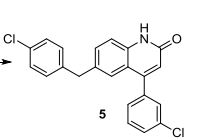
4-(3-chlorophenyl)-6-(4-chlorobenzyl)-2-quinolinone 5:

str1

0.5 mmol 4-Amino-4′-chlorodiphenylmethane 4, 1mmol acetic anhydride and 2 mL toluene were added into the Schlenk tuble. The mixture was stirred at r.t. for 5 minutes, then 0.5 mmol TsOH•H2O, 2.5 mmol (2E)-3-(3-chlorophenyl) propenoate, 1.5 mmol Na2S2O8 and 5 mmol % Pd(OAc)2 were added into the reaction system in one time. The mixture was heated at 100 oC for 36 h and cooled down to room temperature, quenched with 50 mL saturated sodium bicarbonate solution and extracted thrice with ethyl acetate (30 mL) and the combined organic phase was dried over Na2SO4. After evaporation of the solvents the residue was purified by silica gel chromatography to afford 5 as pale yellow solid (elute: hexane-EtOAc) (180 mg, 95%).

1H NMR (400 MHz, d6-DMSO) ppm: 11.87 (s, 1H), 7.59-7.52 (m, 2H), 7.50-7.47 (m, 1H), 7.42-7.37 (m, 2H), 7.35-7.28 (m, 3H), 7.19-7.14 (m, 3H), 6.41 (s, 1H), 3.92 (s, 2H).

13C NMR (100 MHz, d6-DMSO): 161.50, 150.09, 140.52, 139.13, 138.25, 134.89, 133.85, 132.04, 131.16, 130.99, 130.95, 129.17, 128.88, 128.80, 127.94, 125.84, 122.30, 118.44, 116.55, 39.92.

HRMS (ESI) Calcd. for C22H15Cl2NO: [M + H]+ , 380.0609. Found: m/z 380.0613.

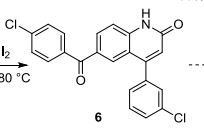
4-(3-chlorophenyl)-6-(4-chlorobenzoyl)-2-quinolinone 6:1

str2

4-(3-chlorophenyl)-6-(4-chlorobenzyl)-2-quinolinone 5 (0.2 mmol), iodine (0.002 mmol), pyridine (0.002 mmol) and aqueous tert-butylhydroperoxide (70%, 0.5 ml) were sealed in a 5 mL tube, then stirred at 80 oC overnight. After cooling to room temperature, the mixture was purified by a short silica gel chromatography column to afford 6 as pale yellow solid (elute: DCM/acetone = 2/1) (77 mg, 98%).

1H NMR (400 MHz, d6-DMSO) ppm: 12.31 (s, 1H), 8.00 (dd, J = 8.40 Hz, 1.60 Hz, 1H), 7.76 (d, J = 8.40 Hz, 2H), 7.74 (d, J = 1.60 Hz, 1H) 7.68 (s, 1H), 7.60 (d, J = 8.40 Hz, 2H), 7.55-7.50 (m, 4H), 6.57 (s, 1H).

13C NMR (100MHz, d6-DMSO): 193.48, 161.83, 150.38, 143.00, 138.46, 137.74, 136.36, 133.92, 132.04, 131.85, 131.16, 130.20, 129.93, 129.57, 129.08, 128.99, 128.11, 123.01, 117.81, 116.74. HRMS (ESI) Calcd. for C22H13Cl2NO2: [M + H]+ , 394.0402. Found: m/z 394.0405.

Reference: 1. Zhang, J.; Wang, Z.; Wang, Y.; Wan, C.; Zheng, X.; Wang, Z. Green Chem. 2009, 11, 1973. 2. (a) Angibaud, P.; Venet, M.; Filliers, W.; Broeckx, R.; Ligny, Y.; Muller, P.; Poncelet, V.; End, D. Eur. J. Org. Chem. 2004, 479. (b) Filliers, W.; Broeckx, R.; Angibaud, P. U.S. patent, US7572916, 2009.

NMR SIMULATION

PREDICTED VALUES

1H NMR: δ 3.42 (3H, s), 3.63 (3H, s), 6.57 (1H, s), 6.67 (1H, d, J = 1.7 Hz), 7.27 (1H, dd, J = 8.3, 1.5 Hz), 7.36-7.59 (8H, 7.46 (ddd, J = 8.3, 1.5, 0.5 Hz), 7.41 (ddd, J = 8.1, 8.1, 0.5 Hz), 7.39 (ddd, J = 8.1, 1.6, 1.5 Hz), 7.49 (ddd, J = 8.1, 1.7, 1.5 Hz), 7.55 (ddd, J = 8.3, 1.6, 0.5 Hz), 7.58 (d, J = 1.7 Hz)), 7.66 (1H, dd, J = 8.3, 0.5 Hz), 7.71 (1H, dd, J = 1.5, 0.5 Hz), 7.84 (1H, ddd, J = 1.7, 1.6, 0.5 Hz).

13C NMR PREDICT

str1

COSY PREDICT

HSQC PREDICT

References

  1. Jump up^ “International Nonproprietary Names for Pharmaceutical Substances (INN). Recommended International Nonproprietary Names (Rec. INN): List 46” (PDF). World Health Organization. Retrieved 16 November 2016.
  2. Jump up^ Sparano, JA; Moulder, S; Kazi, A; Coppola, D; Negassa, A; Vahdat, L; Li, T; Pellegrino, C; Fineberg, S; Munster, P; Malafa, M; Lee, D; Hoschander, S; Hopkins, U; Hershman, D; Wright, JJ; Kleer, C; Merajver, S; Sebti, SM (15 April 2009). “Phase II Trial of Tipifarnib plus Neoadjuvant Doxorubicin-Cyclophosphamide in Patients with Clinical Stage IIB-IIIC Breast Cancer” (PDF). Clinical Cancer Research. 15 (8): 2942–48. doi:10.1158/1078-0432.CCR-08-2658. PMC 2785076 Freely accessible. PMID 19351752. Retrieved 16 November 2016.
  3. Jump up^ Alsina, M; Fonseca, R; Wilson, EF; Belle, AN; Gerbino, E; Price-Troska, T; Overton, RM; Ahmann, G; Bruzek, LM; Adjei, AA; Kaufmann, SH; Wright, JJ; Sullivan, D; Djulbegovic, B; Cantor, AB; Greipp, RP; Dalton, WS; Sebti, SM (1 May 2004). “Farnesyltransferase Inhibitor Tipifarnib Is Well Tolerated, Induces Stabilization of Disease, and Inhibits Farnesylation and Oncogenic/Tumor Survival Pathways in Patients with Advanced Multiple Myeloma” (PDF). Blood. 103 (9): 3271–7. doi:10.1182/blood-2003-08-2764. PMID 14726402. Retrieved 16 November 2016.
  4. Jump up^ “R115777 in Treating Patients With Advanced Solid Tumors”
  5. Jump up^ “R115777 to Treat Children With Neurofibromatosis Type 1 and Progressive Plexiform Neurofibromas”
  6. Jump up^ “Johnson & Johnson Pharmaceutical Research & Development, L.L.C. Receives Not Approvable Letter From FDA for Tipifarnib Based on Phase II Data”. PR Newswire. Jun 30, 2005. Retrieved 16 November 2016.
  7. Jump up^ Capell, BC; Olive, M; Erdos, MR; Cao, K; Faddah, DA; Tavarez, UL; Conneely, KN; Qu, X; San, H; Ganesh, SK; Chen, X; Avallone, H; Kolodgie, FD; Virmani, R; Nabel, EG; Collins, FS (6 October 2008). “A Farnesyltransferase Inhibitor Prevents Both the Onset and Late Progression of Cardiovascular Disease in a Progeria Mouse Model” (PDF). Proceedings of the National Academy of Sciences. 105 (41): 15902–7. doi:10.1073/pnas.0807840105. PMC 2562418 Freely accessible. PMID 18838683. Retrieved 16 November 2016.
Tipifarnib
Tipifarnib.svg
Clinical data
Synonyms R115777
ATC code
  • None
Legal status
Legal status
  • Investigational
Identifiers
CAS Number
PubChem CID
IUPHAR/BPS
DrugBank
ChemSpider
UNII
KEGG
ChEMBL
Chemical and physical data
Formula C27H22Cl2N4O
Molar mass 489.40 g·mol−1
3D model (JSmol)
PATENT 
Cited Patent Filing date Publication date Applicant Title
WO1997021701A1 * Oct 16, 1996 Jun 19, 1997 Janssen Pharmaceutica N.V. Farnesyl protein transferase inhibiting (imidazol-5-yl)methyl-2-quinolinone derivatives
WO2001051127A1 * Jan 9, 2001 Jul 19, 2001 Merck & Co., Inc. Inhibitors of prenyl-protein transferase
WO2001053289A1 * Nov 29, 2000 Jul 26, 2001 Pfizer Products Inc. Anticancer compound and enantiomer separation method useful for synthesizing said compound
WO2002020015A1 * Aug 30, 2001 Mar 14, 2002 Merck & Co., Inc. Inhibitors of prenyl-protein transferase
WO2002072574A1 * Mar 5, 2002 Sep 19, 2002 Janssen Pharmaceutica N.V. Process for the preparation of imidazole compounds
WO2002079147A2 * Mar 26, 2002 Oct 10, 2002 Merck & Co., Inc. Inhibitors of prenyl-protein transferase
NON-PATENT CITATIONS
Reference
1 * SHAW A W ET AL: “Asymmetric synthesis of alpha,alpha-diaryl and alpha-aryl-alpha-heteroaryl alkylamines by organometallic additions to N-tert-butanesulfinyl ketimines” TETRAHEDRON LETTERS, ELSEVIER SCIENCE PUBLISHERS, AMSTERDAM, NL, vol. 42, no. 41, 8 October 2001 (2001-10-08), pages 7173-7176, XP004304959 ISSN: 0040-4039 cited in the application
Citing Patent Filing date Publication date Applicant Title
US9707221 Nov 8, 2016 Jul 18, 2017 Kura Oncology, Inc. Methods of treating cancer patients with farnesyltransferase inhibitors

//////////////////TIPIFARNIB , R-115777, типифарниб , تيبيفارنيب , 替匹法尼 , NSC-702818  , phase 3, orphan drug designation, NSC 702818, R 115777, Kura Oncology, Zarnestra, Janssen

CN1C=NC=C1[C@@](N)(C1=CC=C(Cl)C=C1)C1=CC2=C(C=C1)N(C)C(=O)C=C2C1=CC(Cl)=CC=C1

Remimazolam


Remimazolam.svgChemSpider 2D Image | Remimazolam | C21H19BrN4O2GHUYIIGPWBMOGY-KRWDZBQOSA-N.png

Figure imgf000062_0002

Remimazolam

  • Molecular FormulaC21H19BrN4O2
  • Average mass439.305 Da
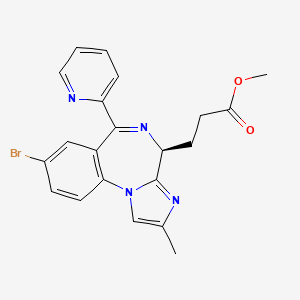
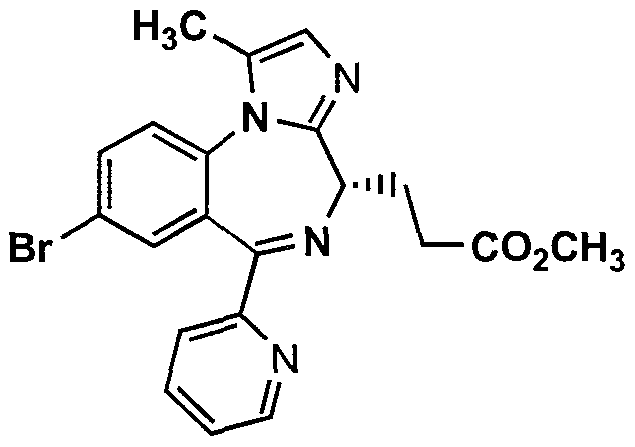
3-[(4S)-8-bromo-1-methyl-6-(2-pyridyl)-4H-imidazo[1,2-a][1,4]benzodiazepin-4-yl]propionic acid methyl ester
CNS-7056
methyl 3-[(4S)-8-bromo-1-methyl-6-(2-pyridyl)-4H-imidazo[1,2-a][1,4]benzodiazepin-4-yl]propanoate
methyl 3-[(4S)-8-bromo-1-methyl-6-pyridin-2-yl-4H-imidazo[1,2-a][1,4]benzodiazepin-4-yl]propanoate
methyl 3-[(7S)-12-bromo-3-methyl-9-(pyridin-2-yl)-2,5,8-triazatricyclo[8.4.0.02,6]tetradeca-1(14),3,5,8,10,12-hexaen-7-yl]propanoate
MFCD18633229
UNII:7V4A8U16MB

CAS 308242-62-8 [RN]

PHASE 3, PAION, Anesthesia

Approved 2021/3/26 eu Byfavo

4H-Imidazo[1,2-a][1,4]benzodiazepine-4-propanoic acid, 8-bromo-1-methyl-6-(2-pyridinyl)-, methyl ester, (4S)-

7V4A8U16MB
9232
Methyl 3-[(4S)-8-bromo-1-methyl-6-(2-pyridinyl)-4H-imidazo[1,2-a][1,4]benzodiazepin-4-yl]propanoate
Methyl 3-[(4S)-8-bromo-l-methyl-6-(2-pyridinyl)-4H-imidazo[l,2- a] [ 1 ,4]benzodiazepin-4-yl]propanoate
methyl 3-[(4S)-8-bromo-2-methyl-6-pyridin-2-yl-4H-imidazo[1,2-a][1,4]benzodiazepin-4-yl]propanoate
D0L5KU; GTPL8442; SCHEMBL13862667; Short-acting sedatives, Therasci; CNS-7056B; CNS-7056X
  1. CNS 7056
  2. methyl 3-(8-bromo-1-methyl-6-(2-pyridinyl)-4H-imidazo(1,2-a)(1,4)benzodiazepin-4-yl)propanoate
  3. ONO 2745
  4. ONO-2745
  5. ONO2745

Remimazolam[1] (CNS-7056) is a benzodiazepine derivative drug, developed by PAION, in collaboration with Japanese licensee Ono Pharmaceutical as an alternative to the short-acting imidazobenzodiazepine midazolam, for use in induction of anaesthesia and conscious sedation for minor invasive procedures. Remimazolam was found to be both faster acting and shorter lasting than midazolam, and human clinical trials showed a faster recovery time and predictable, consistent pharmacokinetics, suggesting some advantages over existing drugs for these applications.[2][3]

Remimazolam (CNS-7056) is a water-soluble, rapid and short-acting GABA (A) benzodiazepine (BZ) site receptor agonist in phase III trials at PAION as procedural sedation in patients undergoing colonoscopy or diagnostic endoscopy of the upper gastrointestinal tract, and also with patients undergoing bronchoscopy.

PAION AG and its subsidiary PAION Inc, following its acquisition of CeNeS Pharmaceuticals (following CeNeS’ acquisition of TheraSci ), and licensees Mundipharma , Yichang Humanwell Pharmaceutical , Pendopharm , Cosmo and R-Pharm are developing remimazolam, the lead from a series of short-acting GABA A receptor agonists, as an iv sedative and/or anesthetic for potential use in day case surgical and non-surgical procedures

Image result for remimazolam

(Salt/Parent)
1
Remimazolam [INN]
308242-62-8
2D chemical structure of 308242-62-8
MW: 439.3111
2
Remimazolam besilate
1001415-66-2
2D chemical structure of 1001415-66-2
MW: 597.4875
3
Remimazolam tosylate
1425904-79-5
2D chemical structure of 1425904-79-5
MW: 611.5143

Trials

Phase I[4] and Ib[5] dose-finding studies for procedural sedation with patients recovering faster from remimazolam than midazolam. Phase II trials comparing remimazolam to the standard anesthesia protocols for cardiac surgery and colonoscopy were presented at major conferences in October 2014.[6]

A phase IIa trial comparing remimazolam to midazolam for upper endoscopy was published in December 2014, finding a similar safety profile.[7] Remimazolam was originally discovered in the late 1990s at Glaxo Wellcome in their labs in Research Triangle Park, NC.

BY CHENGDU

WO-2018103119

Novel crystalline forms of hydrobromate salt of remimazolam , processes for their preparation and compositions comprising them are claimed.

Remazolam, whose structure is shown in formula (I), has the chemical name 3-[(4S)-8-bromo-1-methyl-6-(2-pyridyl)-4H-imidazole [1,2] -a] methyl [1,4]benzodiazepin- 4-yl]propanoate.
This compound is currently known as a CNS (Central Nervous System) inhibitor and has sedative, hypnotic, anxiolytic, muscle relaxing, and anticonvulsant effects. It is currently used intravenously in the following clinical treatment programs: preoperative sedation, anxiolysis and forgetfulness during surgery; awake sedation during short-term diagnosis, surgery, or endoscopic procedures; and administration of other anesthetics and analgesia Before and/or at the same time as a component for induction and maintenance of general anesthesia; ICU sedation and the like. It is reported in patent application CN101501019 that the free base stability of the compound is poor, and it is only suitable for storage at a low temperature of 5°C. Under conditions of 40°C/75% relative humidity (open), the sample is deliquescent and discolored, and the content is significantly reduced.
Due to the stability problem of the free base of the compound, researchers from various countries have studied the salts of the compound. For example, patent applications CN101501019B and WO2008/007081A1 respectively report the besylate and ethanesulfonate of the compound of formula (I). And shows that the above salts have good thermal stability, low hygroscopicity, and high water solubility, and that CN104968348A clearly states that the above benzenesulfonates and ethanesulfonates are the most preferred compounds of formula (I). Salts.
Immediately afterwards, CN 103221414B proposes a toxilate salt of a compound of formula (I) and indicates that the toxitic acid salt is less toxic than benzene sulphonate, and the thermal stability, water solubility and the like of certain crystal forms are even higher. For good.
To sort out the existing technology information, you can draw the following related content (Table 1):
Table 1
From the above table, it can be seen that regardless of whether it is a free base of remazolam or a known salt derivative of remazolam, the water solubility is not higher than 11 mg/ml, and only in the slightly soluble range, which will increase The safety risk of its use in clinical use requires resolving and dissolving for a long time during clinical reconstitution. It may also leave insoluble materials, resulting in inaccurate drug dosage and potential safety risks. In addition, it is used for general anesthesia. Indications with a large demand will increase the amount of diluent and cause extreme inconvenience for clinical use. Therefore, the solubility of the known salt derivatives of remazolam is a big disadvantage and needs to be further improved.
The raw material remazolam of the compound of the formula (I) used in the present invention can be obtained by purchasing a commercially available product or can be prepared according to a known method (for example, patent US200,700,934,75A, etc.).
Example 1 Preparation of Form III Hydrobromide Salt of Compound of Formula (I)
Accurately weigh 1.8 g of the compound of formula (I) into a 100 mL three-necked flask, add 8.2 mL of isopropanol and stir to dissolve it completely, then dissolve 0.83 g of 47% aqueous hydrobromic acid in 6.3 mL of isopropanol and drip To the solution of the compound of formula (I) in isopropanol, the crystals were stirred, filtered, and dried at 55°C under reduced pressure to give the hydrobromide salt of the compound of formula (I).
The X-ray diffraction pattern of this crystal is shown in FIG. 1, the DSC and TGA patterns are shown in FIG. 2, and the melting point is 163 DEG C. It is defined that the crystal form is the hydrobromide III crystal form of the compound of Formula (I).

PATENT

WO0069836

Family members of remimazolam’s product case WO0069836 , have production in most of the EU states until May 2020 and expire in the US in April 2020.

PRODUCT PATENT

WO 2000069836

https://encrypted.google.com/patents/WO2000069836A1?cl=en

Inventors Paul L. Feldman, David Kendall Jung, Istvan Kaldor, Gregory J. Pacofsky, Jeffrey A. Stafford, Jeffrey H. Tidwell, Less «
Applicant Glaxo Group Limited

Example Ic-8

Methyl 3-[(4S)-8-bromo-l-methyl-6-(2-pyridinyl)-4H-imidazo[l,2- a] [ 1 ,4]benzodiazepin-4-yl]propanoate

Figure imgf000062_0002

A solution of the C7-bromo-benzodiazepine Ex 1-10 (7.31 g, 18.2 mmol) in THF (21 mL) was added to a suspension of NaH (870 mg of 60% oil dispersion, 21.8 mmol) in THF (70 mL) at 0 °C. The reaction mixture was stirred at 0 °C for 30 min, warmed to room temperature and stirred for 30 min, then cooled to 0 °C. Bis- morpholinophosphorochloridate (6.48 g, 25.5 mmol) was added, the mixture was allowed to warm to room temperature over 4.5 h, and the mixture was filtered with additional THF (ca. 10 mL). A mixture of the filtrate and DL-l-amino-2-propanol (2.80 mL, 36.4 mmol) was stirred at room temperature for 18 h and concentrated under reduced pressure. The residue was diluted with EtOAc (ca. 250 mL), washed with saturated aqueous NaHCO3 (1 x 75 mL), H2O (2 x 75 mL), saturated aqueous NaCl (1 x 75 mL), dried (Na SO ), and concentrated under reduced pressure. Purification by flash chromatography, elution with 19:1 EtOAc-MeOH, gave 3.06 g

(37%) of the adduct as a foam; ESIMS 459 (M+H, base).

A mixture of DMSO (1.88 mL, 26.6 mmol) and oxalyl chloride (1.16 mL, 13.3 mmol) in CH2C12 (40 mL) was stirred at -78 °C for 30 min. A solution of the alcohol prepared above (3.05 g, 6.64 mmol) in CH2C1 (26 mL) was added. The reaction mixture was warmed to -15 °C and stirred 1 h, cooled to -78 °C, treated with

E-3N (5.55 mL, 39.9 mmol), and allowed to warm to room temperature over 3 h. The mixture was diluted with EtOAc (ca. 500 mL), washed with saturated aqueous NaHCO3 (1 x 100 mL), H2O (1 x 100 mL), saturated aqueous NaCl (1 x 100 mL), dried (Na SO ), and concentrated under reduced pressure to give a foam. A mixture of this foam and a catalytic amount ofp-toluenesulfonic acid was stirred at room temperature for 18h, neutralized by the addition of saturated aqueous NaHCO3 and diluted with EtOAc (ca. 500 mL). The layers were separated and the organic phase was washed with saturated aqueous NaHCO3 (1 x 100 mL), H2O (2 x 100 mL), saturated aqueous NaCl (1 x 100 mL), dried (Na SO ), and concentrated under reduced pressure. Purification by flash chromatography, elution with 19: 1 EtOAc-

MeOH, gave 2.56 g (88%) of Ic-8 as a foam; 1H NMR (400 MHz, CDC13) δ 8.57 (d, J = 4.6 Hz, lH), 8.17 (d J = 7.8 Hz, IH), 7.79 (dd, J = 7.7, 6.2 Hz, IH), 7.71 (dd, J = 8.6, 2.2 Hz, IH), 7.64 (d, J – 2.2 Hz, IH), 7.34 (dd, J = 7.5, 5.0 Hz, IH), 7.30 (d, J = 8.6 Hz, IH), 6.86 (s, IH), 4.05 (m, 1 H), 3.67 (s, 3H), 2.80 (comp, 4H), 2.34 (s, 3H); ESIMS 461 (M+Na, base), 439 (M+H); Anal, calcd. for C2]H19BrN4O2-0.25 H2O: C,

58.63; H, 4.43; N, 12.62. Found: C, 56.88; H, 4.43; N, 12.23.

Example lc-8 was formulated in an aqueous vehicle at a concentration of 10 mg/ml. Accordingly, 10 mg of compound (and 9 mg NaCl) was dissolved in 0.63 ml of 0.1 N HCl. Slowly and while stirring, 0.37 ml of 0.1 N NaOH was added. Adjustments are made to the dose volume depending on the dose being administered.

PATENT

CN 103232454

https://patents.google.com/patent/CN103232454A/en

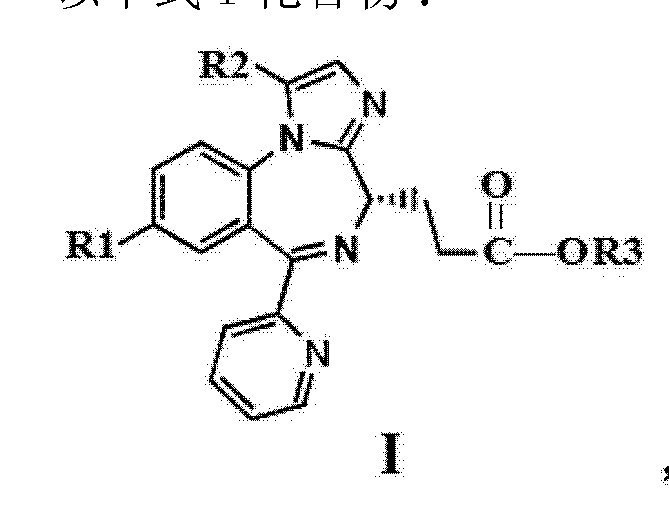
The compounds of the following formula I:

[0003]

Figure CN103232454AD00051

Wherein R1 is bromine, R2 and R3 is methyl, [0004] because it contains the specific configuration, W000 / 69836 reported in the compound (60 specification Example Ic-8) is a short-acting central nervous system (CNS) to suppress agents, including having a sedative-hypnotic, anxiolytic, muscle relaxant and anticonvulsant effect.They can be used for intravenous administration in the clinical treatment: preoperative sedation, such as during surgery, and forgetting anxiolytic purposes; in short diagnostic, operative or endoscopic conscious sedation during the procedure; administration of other anesthetics and analgesics before and / or simultaneously, as a component for the induction and maintenance of general anesthesia in; the ICU sedation, according CN101501019A (PA10N, application No. CN200780028964.5) reports, free base of the compound is not very stable, only suitable stored at low temperatures 5 ° C, at 40 ° C / 75% relative humidity (open) condition, the sample storage deliquescence, to the orange color turned yellow, with respect to the initial content and significantly reduced the content of the display. Thus the synthesis of salts of compounds of formula It (the I), hoping to increase the chemical stability thereof, for use in the preparation of medicaments.

[0005] existing CN101501019A and US20100075955A1 (TILBR00K) reported the benzenesulfonate salt of a compound of formula I, ethanesulfonate.CN102964349A (Henry, Application No. 201110456864.0) reported for compounds of formula ITosylate.

[0006] have reported the presence of a compound of formula I or a salt thereof concerns stability, which is disadvantageous for these compounds used in the clinical treatment of related diseases.

HPLC method [A]:

[0022] According to Chinese Pharmacopoeia 2010 Appendix VD High Performance Liquid Chromatography;

[0023] using Daicel Chrialcel OJ-H (5 μ m) 4.6 X 250mm using chiral chromatographic columns (guard column, if necessary Daicel Chrialcel OJ-H column analysis protected 5 μ m4.0 X IOmm, which is Japan Series Cat (Daicel ) brand), hexane: ethanol = 93: 7 (v / v) as the mobile phase, a flow rate of 1.0ml / min, column temperature 40 ° C, detection wavelength 225nm;

Bulk drug preparation of the present invention: [0204] Example 1

[0205] Preparation Example 4 taking the resulting compound of formula I lg, were added to 8ml of ethanol at 50 ° C – lactic acid – water (volume ratio of the three 45: 2: 53) mixed solution was stirred to dissolve; filtration, the filtrate was 5 ° C was allowed to stand at a temperature of 10~12 hours recrystallized, crystals were filtered off, 40 ° C and dried in vacuo; the above operation was repeated once, to give a compound of formula I may be formulated bulk drug used as a pharmaceutical formulation, was recrystallized twice yield rate of 86.1%.Chromatographic purity of product by HPLC 99.22% [B]; R & lt isomer impurity content of 0.39% relative peak area ratio (I / Ix) = 255 HPLC [Method A].

PATENT

EP 2305647

PATENT

WO 2011032692,

See also

References

  1. Jump up^ EP Patent 1183243
  2. Jump up^ Rogers WK, McDowell TS (December 2010). “Remimazolam, a short-acting GABA(A) receptor agonist for intravenous sedation and/or anesthesia in day-case surgical and non-surgical procedures”. IDrugs : the Investigational Drugs Journal. 13 (12): 929–37. PMID 21154153.
  3. Jump up^ Saari TI, Uusi-Oukari M, Ahonen J, Olkkola KT (March 2011). “Enhancement of GABAergic activity: neuropharmacological effects of benzodiazepines and therapeutic use in anesthesiology”. Pharmacological Reviews. 63 (1): 243–67. doi:10.1124/pr.110.002717. PMID 21245208.
  4. Jump up^ “A placebo- and midazolam-controlled phase I single ascending-dose study evaluating the safety, pharmacokinetics, and pharmacodynamics of remimazolam (CNS 7056): Part I. Safety, efficacy, and basic pharmacokinetics”. Anesth. Analg.accessdate =. 115: 274–83. Aug 2012. doi:10.1213/ANE.0b013e31823f0c28. PMID 22190555.
  5. Jump up^ “A phase Ib, dose-finding study of multiple doses of remimazolam (CNS 7056) in volunteers undergoing colonoscopy”. Anesth. Analg. 117: 1093–100. Nov 2013. doi:10.1213/ANE.0b013e3182a705ae. PMID 24108261.
  6. Jump up^ “Two Scientific Remimazolam Presentations Are Accepted for ASA and ACG Meeting in October 2014”. MarketWired. Oct 1, 2014. Retrieved 2014-10-24.
  7. Jump up^ “A Phase IIa, Randomized, Double-Blind Study of Remimazolam (CNS 7056) Versus Midazolam for Sedation in Upper Gastrointestinal Endoscopy”. Anesthesia. 120: 771–80. Dec 11, 2014. doi:10.1213/ANE.0000000000000548. PMID 25502841

PATENTS

WO2016011943A1 *2014-07-232016-01-28李勤耕New benzodiazepine derivative and use thereof

WO2000069836A1 *1999-05-142000-11-23Glaxo Group LimitedShort-acting benzodiazepines
WO2008007081A1 *2006-07-102008-01-17Cenes LimitedShort-acting benzodiazepine salts and their polymorphic forms
CN101501019A *2006-07-102009-08-05Paion英国有限公司Short-acting benzodiazepine salts and their polymorphic forms
WO2012062439A1 *2010-11-082012-05-18Paion Uk Ltd.Dosing regimen for sedation with cns 7056 (remimazolam)
CN102753525A *2009-09-182012-10-24Paion英国有限公司Process for preparing 3-[(4s)-8-bromo-1-methyl-6-(2-pyridinyl)-4h-imidazol[1,2-a][1,4]benzodiazepine-4-yl]propionic acid methyl ester or the benzene sulfonate salt thereof, and compounds useful in that process
CN102964349A *2011-08-312013-03-13江苏恒瑞医药股份有限公司Tosilate of benzodiazepine derivative, its crystal forms, their preparation method and application
Patent ID

Patent Title

Submitted Date

Granted Date

US9737547 DOSING REGIMEN FOR SEDATION WITH CNS 7056 (REMIMAZOLAM)
2017-01-06
US2015224114 DOSING REGIMEN OF SEDATIVE
2013-08-30
2015-08-13
US2015148338 COMPOSITIONS COMPRISING SHORT-ACTING BENZODIAZEPINES
2013-05-22
2015-05-28
US9777007 SHORT-ACTING BENZODIAZEPINE SALTS AND THEIR POLYMORPHIC FORMS
2015-11-23
2016-06-23
US8642588 SHORT-ACTING BENZODIAZEPINE SALTS AND THEIR POLYMORPHIC FORMS
2010-03-25
Patent ID

Patent Title

Submitted Date

Granted Date

US2017217965 NEW BENZODIAZEPINE DERIVATIVE AND USE THEREOF
2015-07-22
US9656987 OXIDATION REACTION EXCELLENT IN CONVERSION RATE
2014-03-03
2016-01-14
US9156842 PROCESS FOR PREPARING 3-[(4S)-8-BROMO-1-METHYL-6-(2-PYRIDINYL)-4H-IMIDAZO[1, 2-A][1, 4]BENZODIAZEPINE-4-YL]PROPIONIC ACID METHYL ESTER OR THE BENZENE SULFONATE SALT THEREOF, AND COMPOUNDS USEFUL IN THAT PROCESS
2010-09-15
2012-12-27
US7435730 Short-acting benzodiazepines
2007-06-14
2008-10-14
US7528127 Short-acting benzodiazepines
2007-06-14
2009-05-05
Patent ID

Patent Title

Submitted Date

Granted Date

US7485635 Short-acting benzodiazepines
2007-04-26
2009-02-03
US2015313913 POSITIVE ALLOSTERIC MODULATORS OF THE GABA-A RECEPTOR IN THE TREATMENT OF AUTISM
2014-02-04
2015-11-05
US9561236 DOSING REGIMEN FOR SEDATION WITH CNS 7056 (REMIMAZOLAM)
2011-11-07
2014-03-20
US2017044135 PROCESS FOR PREPARING 3-[(4S)-8-BROMO-1-METHYL-6-(2-PYRIDINYL)-4H-IMIDAZO[1, 2-A][1, 4]BENZODIAZEPINE-4-YL]PROPIONIC ACID METHYL ESTER OR THE BENZENE SULFONATE SALT THEREOF, AND COMPOUNDS USEFUL IN THAT PROCESS
2016-10-27
US9512078 PROCESS FOR PREPARING 3-[(4S)-8-BROMO-1-METHYL-6-(2-PYRIDINYL)-4H-IMIDAZO[1, 2-A][1, 4]BENZODIAZEPINE-4-YL]PROPIONIC ACID METHYL ESTER OR THE BENZENE SULFONATE SALT THEREOF, AND COMPOUNDS USEFUL IN THAT PROCESS
2015-09-01
2015-12-24
Patent ID

Patent Title

Submitted Date

Granted Date

US2017217925 PROCESS FOR PREPARING 3-[(S)-7-BROMO-2-(2-OXOPROPYLAMINO)-5-PYRIDIN-2-YL-3H-1, 4-BENZODIAZEPIN-3-YL]PROPIONIC ACID METHYL ESTER
2017-04-14
US9193730 SHORT-ACTING BENZODIAZEPINE SALTS AND THEIR POLYMORPHIC FORMS
2010-04-01
US7473689 Short-acting benzodiazepines
2007-06-14
2009-01-06
US7160880 Short-acting benzodiazepines
2007-01-09
WO0069836 SHORT-ACTING BENZODIAZEPINES
2000-11-23
Remimazolam
Remimazolam.svg
Identifiers
CAS Number
PubChem CID
ChemSpider
UNII
Chemical and physical data
Formula C21H19BrN4O2
Molar mass 439.304 g/mol
3D model (JSmol)

//////////////CNS-7056 , CNS-7056X , ONO-2745  , CNS 7056 , CNS 7056X , ONO 2745, REMIMAZOLAM, PHASE 3, PHASE 3, PAION, Anesthesia, 308242-62-8

CC1=CN2C3=C(C=C(C=C3)Br)C(=NC(C2=N1)CCC(=O)OC)C4=CC=CC=N4

Fedratinib


Fedratinib structure.svgFedratinib.png

ChemSpider 2D Image | Fedratinib | C27H36N6O3SFigure imgf000121_0001

FEDRATINIB

SAR-302503; TG-101348, 6L1XP550I6, 936091-26-8 [RN], WHO 9707

Molecular Formula: C27H36N6O3S
Molecular Weight: 524.684 g/mol

FLT3, JAK2

http://www.ama-assn.org//resources/doc/usan/fedratinib.pdf

Fedratinib had been in phase III clincial trials by Sanofi for the treatment of myelofibrosis.

However, Sanofi had discontinued this research because of the safety issues. Orphan drug designation was assigned in the U.S. and in Japan for this indication. In 2017, the clinical hold was lifted in the U.S. by Impact Biomedicines.

MYELOFIBROSIS (MF), SANOFI , phase 3

Benzenesulfonamide, N-(1,1-dimethylethyl)-3-[[5-methyl-2-[[4-[2-(1-pyrrolidinyl)ethoxy]phenyl]amino]-4-pyrimidinyl]amino]-

N-tert-butyl-3-{[5-methyl-2-({4-[2-(pyrrolidin-1-yl)ethoxy]phenyl}amino)pyrimidin-4-yl]amino}benzenesulfonamide

N-tert-butyl-3-[[5-methyl-2-[4-(2-pyrrolidin-1-ylethoxy)anilino]pyrimidin-4-yl]amino]benzenesulfonamide

USAN (AB-104) FEDRATINIB
THERAPEUTIC CLAIM Antineoplastic
CHEMICAL NAMES
1. Benzenesulfonamide, N-(1,1-dimethylethyl)-3-[[5-methyl-2-[[4-[2-(1-
pyrrolidinyl)ethoxy]phenyl]amino]-4-pyrimidinyl]amino]-
2. N-tert-butyl-3-[(5-methyl-2-{4-[2-(pyrrolidin-1-yl)ethoxy]anilino}pyrimidin-4-
yl)amino]benzenesulfonamide

MOLECULAR FORMULA C27H36N6O3S
MOLECULAR WEIGHT 524.7
SPONSOR Sanofi
CODE DESIGNATIONS SAR302503; TG101348
CAS REGISTRY NUMBER……….936091-26-8

WHO 9707

TG-101348 , a dual-acting JAK2/FLT3 small molecule kinase inhibitor, has been evaluated in phase III clinical development at Sanofi (formerly known as sanofi-aventis) for the oral treatment of intermediate-2 or high risk primary myelofibrosis, post-polycythemia vera myelofibrosis or post-essential thrombocythemia myelofibrosis with splenomegaly. However, development of the compound has been discontinued due to safety issues.

In preclinical models of myeloproliferative diseases, TG-101348, administered orally, was shown to reduce V617F-expressing cell populations in a dose-dependent manner without adversely impacting normal hematopoiesis. The reduction of V617F- expressing cell populations correlated with improved survival and reduced morbidity. Orphan drug designation was assigned in the U.S. and in Japan for the treatment of secondary and primary myelofibrosis. In July 2010, TargeGen was acquired by Sanofi. In 2013, orphan drug designation was assigned by the FDA for the treatment of polycythemia vera.

Fedratinib is an orally bioavailable, small-molecule, ATP-competitive inhibitor of Janus-associated kinase 2 (JAK2) with potential antineoplastic activity. Fedratinib competes with JAK2 as well as the mutated form AK2V617F for ATP binding, which may result in inhibition of JAK2 activation, inhibition of the JAK-STAT signaling pathway, and the induction of tumor cell apoptosis. JAK2 is the most common mutated gene in bcr-abl-negative myeloproliferative disorders (MPDs); the mutated form JAK2V617F has a valine-to-phenylalanine modification at position 617 and plays a key role in tumor cell proliferation and survival.

Fedratinib has been used in trials studying the treatment and basic science of Solid Tumor, Myelofibrosis, Renal Impairment, Neoplasm Malignant, and Hepatic Impairment, among others.

Fedratinib (TG101348; SAR302503) is an orally available inhibitor of Janus kinase 2 (JAK-2) developed for the treatment of patients with myeloproliferative diseases including myelofibrosis. Fedratinib acts as a competitive inhibitor of protein kinase JAK-2 with IC50=6 nM; related kinases FLT3 and RET are also sensitive, with IC50=25 nM and IC50=17 nM, respectively. Significantly less activity was observed against other tyrosine kinases including JAK3 (IC50=169 nM).[1] In treated cells the inhibitor blocks downstream cellular signalling (JAK-STAT) leading to suppression of proliferation and induction of apoptosis.

Myelofibrosis is a myeloid malignancy associated with anemia, splenomegaly, and constitutional symptoms. Patients with myelofibrosis frequently harbor JAK-STAT activating mutations that are sensitive to TG101348. Phase I trial results focused on safety and efficacy of Fedratinib in patients with high- or intermediate-risk primary or post–polycythemia vera/essential thrombocythemia myelofibrosis have been published in 2011.[2]

Fedratinib was originally discovered at TargeGen. In 2010, Sanofi-Aventis acquired TargeGen and continued development of fedratinib until 2013. In 2016, Impact Biomedicines acquired the rights to fedratinib from Sanofi and continued its development for the treatment of myelofibrosis and polycythemia vera. In January 2018, Celgene acquired Impact Biomedicines.[3]

Image result for Fedratinib SYNTHESIS

SYN

WO2007053452A1. +Bioorganic & Medicinal Chemistry Letters, 27(12), 2668-2673; 2017

Condensation of 3-bromo-N-tertbutylbenzylsulfonamide with 2-chloro-5-methyl-pyrimidin-4-ylamine  in the presence of Pd2(dba)3, Xantphos, Cs2CO3 in refluxing dioxane gives sulfonamide derivative , which is coupled with 4-[2-pyrrolidin-1-yl-ethoxy]phenylamine  in AcOH at 150°C to provide the title compound

PRODUCT PATENT

WO2007053452A1.

Inventors Jon Jianguo Cao, John Hood, Dan Lohse, Chi Ching Mak, Pherson Andrew Mc, Glenn Noronha, Ved Pathak, Joel Renick, Richard M. Soll, Binqi Zeng, Less «
Applicant Targegen, Inc.

https://encrypted.google.com/patents/WO2007053452A1?cl=en

EXAMPLE 90. 7V-fe^-Butyl-3-{5-methyl-2-14-(2-pyrrolidm-l-yl-ethoxy)-phenylaminol- pyrimidin-4-ylaminol-benzenesuIfonamide (Compound LVII)

Figure imgf000121_0001

LVII

[0203] A mixture of intermediate 33 (0.10 g, 0.28 mmol) and 4-(2-pyrrolidin-l-yl- ethoxy)-phenylamine (0.10 g, 0.49 mmol) in acetic acid (3 mL) was sealed in a microwave reaction tube and irradiated with microwave at 150 °C for 20 min. After cooling to room temperature, the cap was removed and the mixture concentrated. The residue was purified by HPLC and the corrected fractions combined and poured into saturated NaHCO3 solution (30 mL). The combined aqueous layers were extracted with EtOAc (2 x 30 mL) and the combined organic layers washed with brine, dried over anhydrous Na2SO4and filtered. The filtrate was concentrated and the resulting solid dissolved in minimum atnount of EtOAc and hexanes added until solid precipitated. After filtration, the title compound was obtained as a white solid (40 mg, 27%).

[0204] 1H NMR (500 MHz, DMSO-d6): δ 1.12 (s, 9H), 1.65-1.70 (m, 4H), 2.12 (s, 3H), 2.45-2.55 (m, 4H), 2.76 (t, J= 5.8 Hz, 2H), 3.99 (t, J= 6.0 Hz, 2H), 6.79 (d, J= 9.0 Hz, 2H), 7.46-7.53 (m, 4H), 7.56 (s, IH), 7.90 (s, IH), 8.10-8.15 (m, 2H), 8.53 (s, IH), 8.77 (s, IH). MS (ES+): m/z 525 (M+H)+. it •ιr

PATENTS

WO 2013059548

PAPER

Bioorganic & Medicinal Chemistry Letters, 27(12), 2668-2673; 2017

PATENT

WO 2012061833

The compound and the pharmaceutical compositions described herein can be used for treating or delaying development of myelofibrosis in a subject. N-teft-Butyl-3-[(5-methyl-2-{ [4- (2-pyrrolidin-l-ylethoxy)phenyl]amino}pyrimidin-4-yl)amino]benzenesulfonamide has the following chemical structure:

Figure imgf000018_0001

Example 4. Synthesis of TG101348

Example 4.1 N-fer^-Butyl-3-(2-chloro-5-methyl-pyrimidin-4-ylamino)-benzenesulfonamide

(Intermediate)

Example 4.1(a)

Figure imgf000053_0001

1 2 Intermediate

[0162] A mixture of 2-chloro-5-methyl-pyrimidin-4-ylamine (1) (0.4 g, 2.8 mmol), 3-bromo-N- teft-butyl-benzenesulfonamide (2) (1.0 g, 3.4 mmol), Pd2(dba¾ (0.17 g, 0.19 mmol), Xantphos (0.2 g, 3.5 mmol) and cesium carbonate (2.0 g, 6.1 mmol) was suspended in dioxane (25 mL) and heated at reflux under the argon atmosphere for 3 h. The reaction mixture was cooled to room temperature and diluted with DCM (30 mL). The mixture was filtered and the filtrate

concentrated in vacuo. The residue was dissolved in EtOAc and hexanes added until solid precipitated. After filtration, the title compound (1.2 g, 98%) was obtained as a light brown solid. It was used in the next step without purification. MS (ES+): m/z 355 (M+H)+.

Example 4.1(b)

Figure imgf000053_0002

SM2 Intermediate[0163] The Intermediate was synthesized from 2,4-dichloro-5-methylpyrimidine (SMI) and N-t- butyl-3-aminobenzenesulfonamide (SM2) in the following steps: (1) Mix MeOH (6.7UOa) and SMI (Combi Blocks) (UOa); (2) Add SM2 (1.15UOa, 082eq) and H20 (8.5UOa); (3) Heat 45°C, 20h, N2, IPC CPL SM2<2%; (4) Cool 20°C; (5) Centrifuge, N2; (6) Wash H20 (2.1UOa) + MeOH (1.7UOa); (7) Mix solid in H20 (4.3UOa) + MeOH (3.4UOa); (8) Centrifuge, N2; (9) Wash H20 (2.1UOa) + MeOH (1.7UOa); and (10) Dry 45°C, vacuum, 15h. Obtained

Intermediate, mass 49.6kg (UOb); Yield 79%; OP: 99.6%.

Example 4.2 N-½ri-Butyl-3-[(5-methyl-2-{ [4-(2-pyrrolidin-l- ylethoxy)phenyl]amino}pyrimidin-4-yl)amino]benzenesulfonamide

Figure imgf000054_0001

Intermediate TG101348

Example 4.2(a)

[0164] A mixture of N-ieri-Butyl-3-(2-chloro-5-methyl-pyrimidin-4-ylamino)- benzenesulfonamide (Intermediate) (0.10 g, 0.28 mmol) and 4-(2-pyrrolidin-l-yl-ethoxy)- phenylamine (3) (0.10 g, 0.49 mmol) in acetic acid (3 mL) was sealed in a microwave reaction tube and irradiated with microwave at 150 °C for 20 min. After cooling to room temperature, the cap was removed and the mixture concentrated. The residue was purified by HPLC and the corrected fractions combined and poured into saturated NaHCC^ solution (30 mL). The combined aqueous layers were extracted with EtOAc (2 x 30 mL) and the combined organic layers washed with brine, dried over anhydrous Na2S04 and filtered. The filtrate was concentrated and the resulting solid dissolved in minimum amount of EtOAc and hexanes added until solid precipitated. After filtration, the title compound was obtained as a white solid (40 mg, 27%). ]H NMR (500 MHz, DMSO-d6): δ 1.12 (s, 9H), 1.65-1.70 (m, 4H), 2.12 (s, 3H), 2.45-2.55 (m, 4H), 2.76 (t, /=5.8 Hz, 2H), 3.99 (t, 7=6.0 Hz, 2H), 6.79 (d, 7=9.0 Hz, 2H), 7.46-7.53 (m, 4H), 7.56 (s, 1H), 7.90 (s, 1H), 8.10-8.15 (m, 2H), 8.53 (s, 1H), 8.77 (s, 1H). MS (ES+): m/z 525 (M+H)+.

Example 4.2(b)

[0165] N-½ri-Butyl-3-[(5-methyl-2-{ [4-(2-pyrrolidin-l-ylethoxy)phenyl]amino}pyrimidin-4- yl)amino]benzenesulfonamide dihydrochloride monohydrate was prepared from 4-[2-(l- pyrrolidinyl)ethoxy] aniline dihydrochloride (SM3) and Intermediate following steps (A) and (B).

[0166] Step (A), preparation of free base of SM3 (3) from SM3, comprised steps (1) – (9): (1) Solubilize NaOH (0.42UOb) in H20 (9UOb); (2) Cool <20°C, N2; (3) Add TBME (6UOb) then SM3 (Malladi Drugs) (1.06UOb); (4) Mix >20mn then stop; (5) Drain Aq Ph then extract by TBME (3UOb); (6) Combine Or Ph; (7) Concentrate, vacuum, T<40°C, to an Oil; (8) Solubilize in IPA (2.5UOb); and (9) Calculate dry extract 23%.

[0167] Step (B) comprised the steps (1) – (6): (1) Mix IPA (10.5UOb) and Intermediate (UOb); (2) Add free base of SM3 (0.75UOb, 1.33eq/ interm); (3) add HC1 cone (0.413UOb); (4) Heat 70°C, 20h, N2, IPC CPL Interm<2%; (5) Cool <20°C; (2) Centrifuge, N2; (3) Wash IPA (3UOb); (4) Dry 50°C, vacuum, 26h; (5) De-lump in Fitzmill; and (6) polybag (x2) / poly drum. Obtained TG101348 dihydrochloride monohydrate, mass 83.8kg; Yield 98%; OP: 99.5%. Example 5 Capsule Form of TG101348 and Process of Making TG101348

PATENT

WO 2010017122

US 2007259904

WO 2007053452

Paper

JAK inhibitors: pharmacology and clinical activity in chronic myeloprolipherative neoplasms.

Treliński J, Robak T.

Curr Med Chem. 2013;20(9):1147-61.

JAK2 inhibitors for myelofibrosis: why are they effective in patients with and without JAK2V617F mutation?

Santos FP, Verstovsek S.

Anticancer Agents Med Chem. 2012 Nov;12(9):1098-109. Review.

Octa-arginine mediated delivery of wild-type Lnk protein inhibits TPO-induced M-MOK megakaryoblastic leukemic cell growth by promoting apoptosis.

Looi CY, Imanishi M, Takaki S, Sato M, Chiba N, Sasahara Y, Futaki S, Tsuchiya S, Kumaki S.

PLoS One. 2011;6(8):e23640. doi: 10.1371/journal.pone.0023640. Epub 2011 Aug 10

PATENT

us2007191405

Example 90 N-tert-Butyl-3-{5-methyl-2-[4-(2-pyrrolidin-1-yl-ethoxy)-phenylamino]-pyrimidin-4-ylamino}-benzenesulfonamide (Compound LVII)

Figure US20070191405A1-20070816-C00156

A mixture of intermediate 33 (0.10 g, 0.28 mmol) and 4-(2-pyrrolidin-1-yl-ethoxy)-phenylamine (0.10 g, 0.49 mmol) in acetic acid (3 mL) was sealed in a microwave reaction tube and irradiated with microwave at 150° C. for 20 min. After cooling to room temperature, the cap was removed and the mixture concentrated. The residue was purified by HPLC and the corrected fractions combined and poured into saturated NaHCO3 solution (30 mL). The combined aqueous layers were extracted with EtOAc (2×30 mL) and the combined organic layers washed with brine, dried over anhydrous Na2SO4 and filtered. The filtrate was concentrated and the resulting solid dissolved in minimum amount of EtOAc and hexanes added until solid precipitated. After filtration, the title compound was obtained as a white solid (40 mg, 27%).

1H NMR (500 MHz, DMSO-d6): δ 1.12 (s, 9H), 1.65-1.70 (m, 4H), 2.12 (s, 3H), 2.45-2.55 (m, 4H), 2.76 (t, J=5.8 Hz, 2H), 3.99 (t, J=6.0 Hz, 2H), 6.79 (d, J=9.0 Hz, 2H), 7.46-7.53 (m, 4H), 7.56 (s, 1H), 7.90 (s, 1H), 8.10-8.15 (m, 2H), 8.53 (s, 1H), 8.77 (s, 1H). MS (ES+): m/z 525 (M+H)+.

Example 76 N-tert-Butyl-3-(2-chloro-5-methyl-pyrimidin-4-ylamino)-benzenesulfonamide (Intermediate 33)

Figure US20070191405A1-20070816-C00142

A mixture of 2-chloro-5-methyl-pyrimidin-4-ylamine (0.4 g, 2.8 mmol), 3-bromo-N-tert-butyl-benzenesulfonamide (1.0 g, 3.4 mmol), Pd2(dba)3 (0.17 g, 0.19 mmol), Xantphos (0.2 g, 3.5 mmol) and cesium carbonate (2.0 g, 6.1 mmol) was suspended in dioxane (25 mL) and heated at reflux under the argon atmosphere for 3 h. The reaction mixture was cooled to room temperature and diluted with DCM (30 mL). The mixture was filtered and the filtrate concentrated in vacuo. The residue was dissolved in EtOAc and hexanes added until solid precipitated. After filtration, the title compound (1.2 g, 98%) was obtained as a light brown solid. It was used in the next step without purification. MS (ES+): m/z 355 (M+H)+.

PATENT

https://encrypted.google.com/patents/US20090286789

    Example 90N-tert-Butyl-3-{5-methyl-2-[4-(2-pyrrolidin-1-yl-ethoxy)-phenylamino]-pyrimidin-4-ylamino}-benenesulfonamide (Compound LVII)

  • [0308]
    Figure US20090286789A1-20091119-C00143
  • [0309]
    A mixture of intermediate 33 (0.10 g, 0.28 mmol) and 4-(2-pyrrolidin-1-yl-ethoxy)-phenylamine (0.10 g, 0.49 mmol) in aeetie acid (3 mL) was sealed in a microwave reaction tube and irradiated with microwave at 150° C. for 20 min. After cooling to room temperature, the cap was removed and the mixture concentrated. The residue was purified by HPLC and the corrected fractions combined and poured into saturated NaIICO3 solution (30 mL). The combined aqueous layers were extracted with EtOAc (2×30 mL) and the combined organic layers washed with brine, dried over anhydrous Na2SO4 and filtered. The filtrate was concentrated and the resulting solid dissolved in minimum amount of EtOAc and hexanes added until solid precipitated. After filtration, the title compound was obtained as a white solid (40 mg, 27%).
  • [0310]
    1H NMR (500 MHz, DMSO-d6): δ 1.12 (s, 9H), 1.65-1.70 (m, 4H), 2.12 (s, 3H), 2.45-2.55 (m, 4H), 2.76 (t, J=5.8 Hz, 2H), 3.99 (t, J=6.0 Hz, 2H), 6.79 (d, J=9.0 Hz, 2H), 7.46-7.53 (m, 4H), 7.56 (s, 1H), 7.90 (s, 1H), 8.10-8.15 (m, 2H), 8.53 (s, 1H), 8.77 (s, 1H). MS (ES+): m/z 525 (M+H)+.

PATENT

WO 2015117053

https://patentscope.wipo.int/search/en/detail.jsf?docId=WO2015117053&recNum=4&maxRec=26794&office=&prevFilter=&sortOption=&queryString=FP%3A%28%22cancer%22%29+AND+EN_ALL%3Anmr&tab=PCTDescription

References

  1. Jump up^ Pardanani, A.; Hood, J.; Lasho, T.; Levine, R. L.; Martin, M. B.; Noronha, G.; Finke, C.; Mak, C. C.; Mesa, R.; Zhu, H.; Soll, R.; Gilliland, D. G.; Tefferi, A. (2007). “TG101209, a small molecule JAK2-selective kinase inhibitor potently inhibits myeloproliferative disorder-associated JAK2V617F and MPLW515L/K mutations”. Leukemia. 21 (8): 1658–1668. doi:10.1038/sj.leu.2404750. PMID 17541402.
  2. Jump up^ Pardanani, A.; Gotlib, J. R.; Jamieson, C.; Cortes, J. E.; Talpaz, M.; Stone, R. M.; Silverman, M. H.; Gilliland, D. G.; Shorr, J.; Tefferi, A. (2011). “Safety and Efficacy of TG101348, a Selective JAK2 Inhibitor, in Myelofibrosis”. Journal of Clinical Oncology. 29 (7): 789–796. doi:10.1200/JCO.2010.32.8021. PMC 4979099 Freely accessible. PMID 21220608.
  3. Jump up^ “Celgene to Acquire Impact Biomedicines, Adding Fedratinib to Its Pipeline of Novel Therapies for Hematologic Malignancies (NASDAQ:CELG)”. ir.celgene.com. Retrieved 2018-01-18.

External links

Cited Patent Filing date Publication date Applicant Title
WO2009073575A2 * Nov 28, 2008 Jun 11, 2009 Oregon Health & Science University Methods for treating induced cellular proliferative disorders
US20090088410 * Dec 5, 2008 Apr 2, 2009 Celgene Corporation Methods for the treatment and management of myeloproliferative diseases using 4-(amino)-2-(2,6-dioxo(3-piperidyl)-isoindoline-1,3-dione in combination with other therapies
US20090286789 * Oct 14, 2008 Nov 19, 2009 Targegen, Inc. Bi-Aryl Meta-Pyrimidine Inhibitors of Kinases
Reference
1 * See also references of EP2635282A4
Citing Patent Filing date Publication date Applicant Title
US8604042 Aug 24, 2010 Dec 10, 2013 Targegen, Inc. Bi-aryl meta-pyrimidine inhibitors of kinases
Patent ID

Patent Title

Submitted Date

Granted Date

US8748428 USE OF A PKC INHIBITOR
2011-10-06
US8133900 Use of bi-aryl meta-pyrimidine inhibitors of kinases
2009-11-19
2012-03-13
US8138199 Use of bi-aryl meta-pyrimidine inhibitors of kinases
2009-11-05
2012-03-20
US2016332993 DIAMINOPYRIMIDINE BENZENESULFONE DERIVATIVES AND USES THEREOF
2015-02-02
US7825246 Bi-aryl meta-pyrimidine inhibitors of kinases
2007-11-08
2010-11-02
Patent ID

Patent Title

Submitted Date

Granted Date

US2013243853 COMPOSITIONS AND METHODS FOR TREATING MYELOFIBROSIS
2013-05-06
2013-09-19
US9198911 Methods for Treating Hair Loss Disorders
2013-05-02
2014-03-06
US9089574 ANTIVIRAL JAK INHIBITORS USEFUL IN TREATING OR PREVENTING RETROVIRAL AND OTHER VIRAL INFECTIONS
2012-11-30
2014-11-06
US2014170157 METHOD OF SELECTING THERAPEUTIC INDICATIONS
2012-06-15
2014-06-19
US2011269721 METHODS OF TREATING THALASSEMIA
2011-11-03
Patent ID

Patent Title

Submitted Date

Granted Date

US2016264732 BLOCK COPOLYMERS FOR STABLE MICELLES
2016-03-10
2016-09-15
US9763866 METHODS FOR TREATING HAIR LOSS DISORDERS
2016-03-10
2016-09-08
US9730877 METHODS FOR TREATING HAIR LOSS DISORDERS
2015-08-07
2016-03-03
US9662332 ANTIVIRAL JAK INHIBITORS USEFUL IN TREATING OR PREVENTING RETROVIRAL AND OTHER VIRAL INFECTIONS
2015-07-24
2016-02-25
US2014357557 CYCLODEXTRIN-BASED POLYMERS FOR THERAPEUTIC DELIVERY
2014-05-30
2014-12-04
Patent ID

Patent Title

Submitted Date

Granted Date

US8604042 BI-ARYL META-PYRIMIDINE INHIBITORS OF KINASES
2011-09-01
US8791100 ARYL BENZYLAMINE COMPOUNDS
2011-08-04
US7528143 Bi-aryl meta-pyrimidine inhibitors of kinases
2007-08-16
2009-05-05
US2016346408 IRON STABILIZED MICELLES AS MAGNETIC CONTRAST AGENTS
2016-05-26
US2016303205 Combination Therapies for Lysosomal Storage Diseases
2016-04-13
Fedratinib
Fedratinib structure.svg
Names
IUPAC name

N–tert-Butyl-3-{5-methyl-2-[4-(2-pyrrolidin-1-yl-ethoxy)-phenylamino]-pyrimidin-4-ylamino}-benzenesulfonamide
Other names

SAR302503; TG101348
Identifiers
3D model (JSmol)
Properties
C27H36N6O3S
Molar mass 524.68 g·mol−1
Density 1.247 ± 0.06 g/cm3
Except where otherwise noted, data are given for materials in their standard state (at 25 °C [77 °F], 100 kPa).
Infobox references

////////////////FEDRATINIB, SAR-302503,  TG-101348, SANOFI, PHASE 3, TG101348,  SAR302503, TG 101348, SAR 302503, Orphan drug designation 

CC1=CN=C(N=C1NC2=CC(=CC=C2)S(=O)(=O)NC(C)(C)C)NC3=CC=C(C=C3)OCCN4CCCC4

Larotrectinib, ларотректиниб , 拉罗替尼 ,


Image result for LarotrectinibImage result for Larotrectinib

Image result for LarotrectinibImage result for Larotrectinib

Larotrectinib

ARRY-470, LOXO-101, PF9462I9HX

Molecular Formula: C21H22F2N6O2
Molecular Weight: 428.444 g/mol
(3S)-N-{5-[(2R)-2-(2,5-Difluorphenyl)-1-pyrrolidinyl]pyrazolo[1,5-a]pyrimidin-3-yl}-3-hydroxy-1-pyrrolidincarboxamid
(S)-N-{5-[(R)-2-(2,5-Difluorophenyl)pyrrolidin-1-yl]pyrazolo[1,5-a]pyrimidin-3-yl}-3-hydroxypyrrolidine-1-carboxamide
10360
1223403-58-4 [RN]
UNII:PF9462I9HX
ларотректиниб [Russian] [INN]
拉罗替尼 [Chinese] [INN]
(3S)-N-[5-[(2R)-2-(2,5-difluorophenyl)pyrrolidin-1-yl]pyrazolo[1,5-a]pyrimidin-3-yl]-3-hydroxypyrrolidine-1-carboxamide
NTRK-fusion solid tumours
TRK inhibitor
orphan drug designation in the U.S
In 2013, Array Biopharma licensed the product to Loxo Oncology for development and commercialization in the U.S. In 2016, breakthrough therapy designation was received in the U.S. for the treatment of unresectable or metastatic solid tumors with NTRK-fusion proteins in adult and pediatric patients who require systemic therapy and who have either progressed following prior treatment or who have no acceptable alternative treatments. In 2017, Bayer acquired global co-development and commercialization rights from Loxo Oncology.
  • Originator Array BioPharma
  • Developer Array BioPharma; Loxo Oncology; National Cancer Institute (USA)
  • Class Antineoplastics; Pyrazoles; Pyrimidines; Pyrrolidines; Small molecules
  • Mechanism of Action Tropomyosin-related kinase antagonists
  • Orphan Drug Status Yes – Solid tumours; Soft tissue sarcoma

Highest Development Phases

  • Preregistration Solid tumours
  • Phase II Histiocytosis; Non-Hodgkin’s lymphoma
  • Phase I/II CNS cancer
  • Preclinical Precursor cell lymphoblastic leukaemia-lymphoma

Most Recent Events

  • 29 May 2018 FDA assigns PDUFA action date of 26/11/2018 for larotrectinib for Solid tumors
  • 29 May 2018 Larotrectinib receives priority review status for Solid tumors in the US
  • 29 May 2018 The US FDA accepts NDA for larotrectinib for Solid tumours for review

Image result for LarotrectinibImage result for Larotrectinib

Larotrectinib sulfate

(3S)-N-[5-[(2R)-2-(2,5-difluorophenyl)pyrrolidin-1-yl]pyrazolo[1,5-a]pyrimidin-3-yl]-3-hydroxypyrrolidine-1-carboxamide;sulfuric acid

Larotrectinib (LOXO-101) sulfate is an oral potent and selective ATP-competitive inhibitor of tropomyosin receptor kinases (TRK).

    • Crystalline Form (I-HS) OF

SULFATE SALT REPORTED IN https://patents.google.com/patent/US20170165267

nmr  http://file.selleckchem.com/downloads/nmr/s796001-loxo-101-methanol-hnmr-selleck.pdf

Figure US20170165267A1-20170615-C00006Figure US20170165267A1-20170615-C00007

Molecular Weight 526.51
Formula C21H22F2N6O2.H2O4S
CAS No. 1223405-08-0
  1. LOXO-101 sulfate
  2. Larotrectinib sulfate
  3. LOXO-101 (sulfate)
  4. 1223405-08-0
  5. UNII-RDF76R62ID
  6. RDF76R62ID
  7. ARRY-470 sulfate
  8. LOXO-101(sulfate)
  9. Larotrectinib sulfate [USAN]
  10. PXHANKVTFWSDSG-QLOBERJESA-N
  11. HY-12866A
  12. s7960
  13. AKOS030526332
  14. CS-5314

LOXO-101 is a small molecule that was designed to block the ATP binding site of the TRK family of receptors, with 2 to 20 nM cellular potency against the TRKA, TRKB, and TRKC kinases. IC50 value: 2 – 20 nM Target: TRKA/B/C in vitro: LOXO-101 is an orally administered inhibitor of the TRK kinase and is highly selective only for the TRK family of receptors. LOXO-101 is evaluated for off-target kinase enzyme inhibition against a panel of 226 non-TRK kinases at a compound concentration of 1,000 nM and ATP concentrations near the Km for each enzyme. In the panel, LOXO-101 demonstrates greater than 50% inhibition for only one non-TRK kinase (TNK2 IC50, 576 nM). Measurement of proliferation following treatment with LOXO-101 demonstrates a dose-dependent inhibition of cell proliferation in all three cell lines. The IC50 is less than 100 nM for CUTO-3.29 and less than 10 nM for KM12 and MO-91, consistent with the known potency of this drug for the TRK kinase family. [1] LOXO-101 demonstrates potent and highly-selective inhibition of TRKA, TRKB, and TRKC over other kinase- and non-kinase targets. LOXO-101 is a potent, ATP-competitive TRK inhibitor with IC50s in low nanomolar range for inhibition of all TRK family members in binding and cellular assays, with 100x selectivity over other kinases. [2] in vivo: Athymic nude mice injected with KM12 cells are treated with LOXO-101 orally daily for 2 weeks. Dose-dependent tumor inhibition is observed, demonstrating the ability of this selective compound to inhibit tumor growth in vivo. [1]

Image result for Larotrectinib

DOI

https://doi.org/10.1038/nrd.2018.4

SYNTHESIS

WO 2010048314

Synthesis of larotrectinib

N-Boc-pyrrolidine as starting material The method involves enantioselective deprotonation, transmetalation with ZnCl2, Negishi coupling with 2-bromo-1,4-difluorobenzene,

N-arylation with 5-chloropyrazolo[1,5-a]pyrimidine, nitration, nitro reduction and condensation with CDI and 3(S)-pyrrolidinol.

PRODUCT Patent

WO 2010048314

https://patents.google.com/patent/WO2010048314A1

InventorJulia HaasSteven W. AndrewsYutong JiangGan Zhang

Original AssigneeArray Biopharma Inc.

Priority date 2008-10-22

Example 14


(S)-N-(5-((R)-2-(2,5-difluorophenyl)pyrrolidin-l-yl)pyrazolo[l,5-alpyrimidin-3-yl)- 3 -hydroxypyrrolidine- 1 -carboxamide

[00423] To a DCM (0.8 mL) solution of (R)-5-(2-(2,5-difiuorophenyl)pyrrolidin-l-yl)pyrazolo[l,5-a]pyrimidin-3-amine (Preparation B; 30 mg, 0.095 mmol) was added CDI (31 mg, 0.19 mmol) at ambient temperature in one portion. After stirring two hours, (S)-pyrrolidin-3-ol (17 mg, 0.19 mmol) [purchased from Suven Life Sciences] was added in one portion. The reaction was stirred for 5 minutes before it was concentrated and directly purified by reverse-phase column chromatography, eluting with 0 to 50% acetonitrile/water to yield the final product as a yellowish foamy powder (30 mg, 74% yield). MS (apci) m/z = 429.2 (M+H).

Example 14A


(S)-N-(5-((R)-2-(2,5-difluorophenyl)pyrrolidin-l-yl)pyrazolori,5-alpyrimidin-3-yl)- 3 -hydroxypyrrolidine- 1 -carboxamide sulfate

[00424] To a solution of (S)-N-(5-((R)-2-(2,5-difluorophenyl)pyrrolidin-l-yl)pyrazolo [ 1 ,5 -a]pyrimidin-3 -yl)-3 -hydroxypyrrolidine- 1 -carboxamide (4.5 mg, 0.011 mmol) in methanol (1 mL) at ambient temperature was added sulfuric acid in MeOH (105 μL, 0.011 mmol). The resulting solution was stirred for 30 minutes then concentrated to provide (S)-N-(5-((R)-2-(2,5-difluorophenyl)pyrrolidin-l-yl)pyrazolo[l,5-a]pyrimidin-3-yl)-3 -hydroxypyrrolidine- 1 -carboxamide sulfate (5.2 mg, 0.0099 mmol, 94 % yield) as a yellow solid.

PATENT

WO 2017201241 

Examples

Preparation of 10:

1)

(R,E)-N-(2,5-difluorobenzylidene)-2-methylpropane-2-sulfinamide (17): Compound 16 and (R)-2-methylpropane-2-sulfinamide (1.05 eq.) were charged to a reactor outfitted with a mechanical stirrer, reflux condensor, J-Kem temperature probe under N2. DCM (3 mL/g of 14) was added (endothermic from 22 °C to about 5 °C) followed by addition of cesium carbonate (0.70 eq.) (exothermic to -50 °C). Once the addition was complete, the reaction mixture was stirred at room temperature for 3 h (slowly cools from about 40 °C). When the reaction was called complete (HPLC) the mixture was filtered through Celite. The Celite pad (0.3 wt eq) was equilibrated with DCM (1 mL/g of 16), and the reaction mixture was poured through the pad. The Celite cake was washed with DCM (2 x 1 mL/g), and the filtrate concentrated partially to leave about 0.5 to 1 mL/g DCM remaining. The orange solution was stored at room temperature (generally overnight) and used directly in the next reaction. (100% yield was assumed).

2)

(R)-N-((R)-l-(2,5-difluorophenyl)-3-(l,3-dioxan-2-yl)propyl)-2-methylpropane-2-sulfinamide (19): To a reactor equipped with overhead stirring, reflux condensor, under

nitrogen, was added magnesium turnings (2.0 eq), and THF (8 mL/g of 17). The mixture was heated to 40 °C. Dibal-H (25% wt in toluene, 0.004 eq) was added to the solution, and the suspension heated at 40 °C for 25 minutes. A solution of 2-(2-bromoethyl)-l,3-dioxane (18) (2 eq) in THF (4.6 mL/g of 17) was added dropwise to the Mg solution via addition funnel. The solution temperature was maintained < 55 °C. The reaction progress was monitored by GC. When the Grignard formation was judged complete, the solution was cooled to -30 °C, and 17 (1.0 eq, in DCM) was added dropwise via addition funnel. The temperature was kept between -30 °C and -20 °C and the reaction was monitored for completion (FIPLC). Once the reaction was called complete, the suspension (IT = -27.7 °C) was vacuum transferred to a prepared and cooled (10 °C) 10% aqueous citric acid solution (11 mL/g of 17). The mixture temperature rose to 20 °C during transfer. The milky solution was allowed to stir at ambient temperature overnight. MTBE (5.8 mL/g) was added to the mixture, and it was transferred to a separatory funnel. The layers were allowed to separate, and the lower aqueous layer was removed. The organic layer was washed with sat. NaHC03 (11 mL/g) and then sat. NaCl (5.4 mL/g). The organic layer was removed and concentrated to minimum volume via vacuum distillation. MTBE (2 mL/g) was added, and the mixture again concentrated to minimum volume. Finally MTBE was added to give 2 mL/g total MTBE (GC ratio of MTBE:THF was about 9: 1), and the MTBE mixture was heated to 50 °C until full dissolution occurred. The MTBE solution was allowed to cool to about 35 °C, and heptane was added portion -wise. The first portion (2 mL/g) is added, and the mixture allowed to stir and form a solid for 1-2 h, and then the remainder of the heptane is added (8 mL/g). The suspension was allowed to stir for >lh. The solids were collected via filtration through polypropylene filter cloth (PPFC) and washed with 10% MTBE in heptane (4 mL/g. The wet solid was placed in trays and dried in a vacuum oven at 55 °C until constant weight (3101 g, 80.5%, dense white solid, 100a% and 100wt%).

3)

(R)-2-(2,5-difluorophenyl)pyrrolidine (R)-2-hydroxysuccinate (10): To a flask containing 4: 1 TFA:water (2.5 mL/g, pre-mixed and cooled to <35 °C before adding 19) was added (R)-N-((R)-l-(2,5-difluorophenyl)-3-(l,3-dioxan-2-yl)propyl)-2-methylpropane-2-sulfinamide (19) (1 eq). The mixture temperature rose from 34 °C to 48 °C and was stirred at ambient temperature for 1 h. Additional TFA (7.5 mL/g) was added, followed by triethylsilane (3 eq) over 5 minutes. The biphasic mixture was stirred vigorously under nitrogen for 21 h until judged complete (by GC, <5% of imine). The mixture was then concentrated under vacuum until -10 kg target mass (observed 10.8 kg after concentration). The resulting concentrate was transferred to a separatory funnel and diluted with MTBE (7.5 mL/g), followed by water (7.5 mL/g). The layers were separated. The MTBE layer was back-extracted with 1M HC1 (3 mL/g). The layers were separated, and the aqueous layers were combined in a round-bottomed flask with DCM (8 mL/g). The mixture was cooled in an ice bath and 40% NaOH was charged to adjust the pH to >12 (about 0.5 mL/g; the temperature went from 24 °C to 27 °C, actual pH was 13), and the layers separated in the separatory funnel. The aqueous layer was back-extracted twice with DCM (2 x 4 mL/g). The organic layers were concentrated to an oil (<0.5 mL/g) under vacuum (rotovap) and EtOH (1 mL/g based on product) was added. The yellow solution was again concentrated to an oil (81% corrected yield, with 3% EtOH, 0.2% imine and Chiral HPLC showed 99.7%ee).

Salt formation: To a solution of (R)-2-(2,5-difluorophenyl)pyrrolidine 10 (1 eq) in EtOH (15 mL/g) was added Z)-(+)-Malic Acid (1 eq). The suspension was heated to 70 °C for 30 minutes (full dissolution had occurred before 70 °C was reached), and then allowed to cool to room temperature slowly (mixture was seeded when the temperature was < 40 °C). The slurry was stirred at room temperature overnight, then cooled to <5 °C the next morning. The suspension was stirred at <5 °C for 2h, filtered (PPFC), washed with cold EtOH (2 x 2 mL/g), and dried (50-55 °C) under vacuum to give the product as a white solid (96% based on 91% potency, product is an EtOH solvate or hemi- solvate).

Preparation of the compound of Formula I:

1)

(R)-5-(2-(2,5-difluorophenyl)pyrrolidin-l-yl)-3-nitropyrazolo[l,5-a]pyrimidine (11):

Compound 5 and 10 (1.05 eq) were charged to a reactor outfitted with a mechanical stirrer, J-Kem temperature probe, under N2. EtOH and THF (4: 1, 10 mL/g of 5) were added and the mixture was cooled to 15-25 °C. Triethylamine (3.5 eq) was added and the internal temp generally rose from 17.3 – 37.8 °C. The reaction was heated to 50 – 60 °C and held at that temperature for 7 h. Once the reaction is judged complete (HPLC), water (12 mL/g of 5) is added maintaining the temperature at 50 – 60 °C. The heat is removed and the suspension was slowly cooled to 21 °C over two h. After stirring at -21 °C for 2 h, the suspension was centrifuged and the cake was washed with water (3 x 3 mL/g of 5). The solid was transferred to drying trays and placed in a vacuum oven at 50 – 55 °C to give 11.

2)

(R)-5-(2-(2,5-difluorophenyl)pyrrolidin-l-yl)pyrazolo[l,5-a]pyrimidin-3-amine fumarate Pt/C hydrogenation (12 fumarate): To a Parr reactor was charged 11 (1.0 eq), 5% Pt/C ~ 50 wt% water (2 mol% Pt / Johnson Matthey B 103018-5 or Sigma Aldrich 33015-9), and MeOH (8 mL/g). The suspension was stirred under hydrogen at 25-30 psi and the temperature was maintained below 65 °C for ~8 h. When the reaction was called complete (HPLC), the reaction was cooled to 15 – 25 °C and the hydrogen atmosphere was replaced with a nitrogen atmosphere. The reaction mixture was filtered through a 2 micron bag filter and a 0.2 micron line filter in series. The filtrate from the Pt/C hydrogenation was transferred to a reactor under nitrogen with mechanical stirring and then MTBE (8 mL/g) and fumaric acid (1.01 eq) were charged. The mixture was stirred under nitrogen for 1 h and solids formed after -15 min. The mixture was cooled to -10 to -20 °C and stirred for 3 h. The suspension was filtered (PPFC), washed with MTBE (-2.5 mL/g), and the solids was dried under vacuum at 20-25 °C with a nitrogen bleed to yield an off-white solid (83% yield).

3)

Phenyl (5-((R)-2-(2,5-difluorophenyl)pyrrolidin-l-yl)-3,3a-dihydropyrazolo[l,5-a]pyrimidin-3-yl)carbamate (13): To a 5 to 15°C solution of 12-fumarate (1.0 eq) in 2-MeTHF (15 mL/g) was added a solution of potassium carbonate (2.0 eq.) in water (5 mL/g) followed by phenyl chloroformate (1.22 eq.) (over 22 min, an exotherm from 7 °C to 11 °C occurred). The mixture was stirred for 2 h and then the reaction was called complete (HPLC). The stirring ceased and the aqueous layer was removed. The organic layer was washed with brine (5 mL/g) and concentrated to ca. 5 mL/g of 2-MeTHF under vacuum and with heating to 40 °C. To the 2-MeTHF solution was added heptanes (2.5 mL/g) followed by seeds (20 mg, 0.1 wt%). This mixture was allowed to stir at room temperature for 2 h (until a solid formed), and then the remainder of the heptanes (12.5 mL/g) was added. The mixture was stirred at ambient temperature for 2 h and then the solids were collected via filtration (PPFC), washed with 4: 1 heptanes :MeTHF (2 x 2 mL/g), and dried to give 13 (96%).

4)

(S)-N-(5-((R)-2-(2,5-difluorophenyl)pyrrolidin-l-yl)pyrazolo[l,5-a]pyrimidin-3-yl)-3-hydroxypyrrolidine-l-carboxamide hydrogen sulfate: To a flask containing 13 (1.0 eq) was added a solution of (S)-pyrrolidin-3-ol (1.1 eq.) in EtOH (10 mL/g). The mixture was heated at 50 – 60 °C for 5 h, called complete (HPLC), and then cooled to 20-35 °C. Once <35°C, the reaction was polish-filtered (0.2 micron) into a clean reaction vessel and the mixture was cooled to -5 to 5 °C. Sulfuric acid (1.0 eq.) was added over 40 minutes, the temperature rose to 2 °C and the mixture was seeded. A solid formed, and the mixture was allowed to stir at -5 to 5 °C for 6.5 h. Heptanes (10 mL/g) was added, and the mixture stirred for 6.5 h. The

suspension was filtered (PPFC), washed with 1 : 1 EtOH:heptanes (2 x 2 mL/g), and dried (under vacuum at ambient temperature) to give Formula I (92.3%).

Preparation of the hydrogen sulfate salt of the compound of Formula I:

Concentrated sulfuric acid (392 mL) was added to a solution of 3031 g of (S)-N-(5- ((R)-2-(2,5-difluorophenyl)pyrrolidin-l-yl)-pyrazolo[l,5-a]pyrimidin-3-yl)-3-hydroxypyrrolidine-l-carboxamide in 18322 mL EtOH to form the hydrogen sulfate salt. The solution was seeded with 2 g of (,S)-N-(5-((R)-2-(2,5-difluorophenyl)pyrrolidin-l-yl)-pyrazolo[l,5-a]pyrimidin-3-yl)-3-hydroxypyrrolidine-l-carboxamide hydrogen sulfate and the solution was stirred at room temperature for at least 2 hours to form a slurry of the hydrogen sulfate salt. Heptane (20888 g) was added and the slurry was stirred at room temperature for at least 60 min. The slurry was filtered and the filter cake was washed with 1 : 1 heptane/EtOH. The solids were then dried under vacuum at ambient temperature (oven temperature set at 15° Celsius).

The dried hydrogen sulfate salt (6389 g from 4 combined lots) was added to a 5 :95 w/w solution of water/2-butanone (total weight 41652 g). The mixture was heated at about 68° Celsius with stirring until the weight percent of ethanol was about 0.5%, during which time a slurry formed. The slurry was filtered, and the filter cake was washed with a 5 :95 w/w solution of water/2-butanone. The solids were then dried under vacuum at ambient temperature (oven temperature set at 15° Celsius) to provide the crystalline form of (S)-N-(5-((R)-2-(2,5-difluorophenyl)-pyrrolidin-l-yl)-pyrazolo[l,5-a]pyrimidin-3-yl)-3-hydroxypyrrolidine-l-carboxamide hydrogen sulfate.

PATENT

US2017165267

https://patents.google.com/patent/US20170165267

Provided herein is a novel crystalline form of the compound of Formula I:

[0000]

Figure US20170165267A1-20170615-C00001

also known as (S)—N-(5-((R)-2-(2, 5-difluorophenyl)-pyrrolidin-1-yl)-pyrazolo[1,5-a]pyrimidin-3-yl)-3-hydroxypyrrolidine-1-carboxamide. In particular, the novel crystalline form comprises the hydrogen sulfate salt of the compound of Formula I in a stable polymorph form, hereinafter referred to as crystalline form (I-HS) and LOXO-101, which can be characterized, for example, by its X-ray diffraction pattern—the crystalline form (I-HS) having the formula:

[0000]

Figure US20170165267A1-20170615-C00002

In some embodiments of the above step (c), the base is an alkali metal base, such as an alkali metal carbonate, such as potassium carbonate.

Figure US20170165267A1-20170615-C00004

Preparation of 5-chloro-3-nitropyrazolo[1,5-a]pyrimidine Step A—Preparation of sodium pyrazolo[1,5-a]pyrimidin-5-olate

A solution of 1H-pyrazol-5-amine and 1,3-dimethylpyrimidine-2,4(1H,3H)-dione (1.05 equiv.) were charged to a round bottom flask outfitted with a mechanical stirrer, a steam pot, a reflux condenser, a J-Kem temperature probe and an N2 adaptor for positive N2 pressure control. Under mechanical stirring the solids were suspended with 4 vol. (4 mL/g) of absolute EtOH under a nitrogen atmosphere, then charged with 2.1 equivalents of NaOEt (21 wt % solution in EtOH), and followed by line-rinse with 1 vol. (1 mL/g) of absolute EtOH. The slurry was warmed to about 75° Celsius and stirred at gentle reflux until less than 1.5 area % of 1H-pyrazol-5-amine was observed by TRK1PM1 HPLC to follow the progression of the reaction using 20 μL of slurry diluted in 4 mL deionized water and 5 μL injection at 220 nm.

After 1 additional hour, the mixture was charged with 2.5 vol. (2.5 mL/g) of heptane and then refluxed at 70° Celsius for 1 hour. The slurry was then cooled to room temperature overnight. The solid was collected by filtration on a tabletop funnel and polypropylene filter cloth. The reactor was rinsed and charged atop the filter cake with 4 vol. (4 mL/g) of heptane with the cake pulled and the solids being transferred to tared drying trays and oven-dried at 45° Celsius under high vacuum until their weight was constant. Pale yellow solid sodium pyrazolo[1,5-a]-pyrimidin-5-olate was obtained in 93-96% yield (corrected) and larger than 99.5 area % observed by HPLC (1 mg/mL dilution in deionized water, TRK1PM1 at 220 nm).

Step B—Preparation of 3-nitropyrazolo[1,5-a]pyrimidin-5(4H)-one

A tared round bottom flask was charged with sodium pyrazolo[1,5-a]pyrimidin-5-olate that was dissolved at 40-45° Celsius in 3.0 vol. (3.0 mL/g) of deionized water, and then concentrated under high vacuum at 65° Celsius in a water-bath on a rotary evaporator until 2.4× weight of starting material was observed (1.4 vol/1.4 mL/g deionized water content). Gas chromatography (GC) for residual EtOH (30 μL of solution dissolved in ˜1 mL MeOH) was performed showing less than 100 ppm with traces of ethyl nitrate fumes being observed below upon later addition of HNO3. In some cases, the original solution was charged with an additional 1.5 vol. (1.5 mL/g) of DI water, then concentrated under high vacuum at 65° Celsius in a water-bath on a rotary evaporator until 2.4× weight of starting material was observed (1.4 vol/1.4 mL/g DI water content). Gas chromatograph for residual EtOH (30 μL of solution dissolved in about 1 mL MeOH) was performed showing <<100 ppm of residual EtOH without observing any ethyl nitrate fumes below upon later addition of HNO3.

A round bottom vessel outfitted with a mechanical stirrer, a steam pot, a reflux condenser, a J-Kem temperature probe and an N2 adaptor for positive N2 pressure control was charged with 3 vol. (3 mL/g, 10 equiv) of >90 wt % HNO3 and cooled to about 10° Celsius under a nitrogen atmosphere using external ice-water cooling bath under a nitrogen atmosphere. Using a pressure equalizing addition funnel, the HNO3solution was charged with the 1.75-1.95 volumes of a deionized water solution of sodium pyrazolo[1,5-a]pyrimidin-5-olate (1.16-1.4 mL DI water/g of sodium pyrazolo[1,5-a]pyrimidin-5-olate) at a rate to maintain 35-40° Celsius internal temperature under cooling. Two azeotropes were observed without any ethyl nitrate fumes. The azeotrope flask, the transfer line (if applicable) and the addition funnel were rinsed with 2×0.1 vol. (2×0.1 mL/g) deionized water added to the reaction mixture. Once the addition was complete, the temperature was gradually increased to about 45-50° Celsius for about 3 hours with HPLC showing >99.5 area % conversion of sodium pyrazolo[1,5-a]pyrimidin-5-olate to 3-nitropyrazolo[1,5-a]pyrimidin-5(4H)-one.

Step C—Preparation of 5-chloro-3-nitropyrazolo[1,5-a]pyrimidine

3-nitropyrazolo[1,5-a]pyrimidin-5(4H)-one was charged to a round bottom flask outfitted with a mechanical stirrer, a heating mantle, a reflux condenser, a J-Kem temperature probe and an N2 adaptor for positive N2pressure control. Under mechanical stirring the solids were suspended with 8 volumes (8 mL/g) of CH3CN, and then charged with 2,6-lutitine (1.05 equiv) followed by warming the slurry to about 50° Celsius. Using a pressure equalizing addition funnel, the mixture was dropwise charged with 0.33 equivalents of POCl3. This charge yielded a thick, beige slurry of a trimer that was homogenized while stirring until a semi-mobile mass was observed. An additional 1.67 equivalents of POCl3 was charged to the mixture while allowing the temperature to stabilize, followed by warming the reaction mixture to a gentle reflux (78° Celsius). Some puffing was observed upon warming the mixture that later subsided as the thick slurry got thinner.

The reaction mixture was allowed to reflux until complete dissolution to a dark solution and until HPLC (20 μL diluted in 5 mL of CH3CN, TRK1PM1 HPLC, 5 μL injection, 268 nm) confirmed that no more trimer (RRT 0.92) was present with less than 0.5 area % of 3-nitropyrazolo[1,5-a]pyrimidin-5(4H)-one (RRT 0.79) being observed by manually removing any interfering and early eluting peaks related to lutidine from the area integration. On a 1.9 kg scale, 0 area % of the trimer, 0.25 area % of 3-nitropyrazolo[1,5-a]pyrimidin-5(4H)-one, and 99.5 area % of 5-chloro-3-nitropyrazolo[1,5-a]pyrimidine was observed after 19 hours of gentle reflux using TRK1PM1 HPLC at 268 [0000]

Figure US20170165267A1-20170615-C00005

Preparation of (R)-2-(2,5-difluorophenyl)-pyrrolidine (R)-2-hydroxysuccinate Step A—Preparation of tert-butyl(4-(2,5-difluorophenyl)-4-oxobutyl)-carbamate

2-bromo-1,4-difluorobenzene (1.5 eq.) was dissolved in 4 volumes of THF (based on weight of tert-butyl 2-oxopyrrolidine-1-carboxylate) and cooled to about 5° Celsius. A solution of 2.0 M iPrMgCl in THF (1.4 eq.) was added over 2 hours to the mixture while maintaining a reaction temperature below 25° Celsius. The solution was allowed to cool to about 5° Celsius and stirred for 1 hour (GC analysis confirmed Grignard formation). A solution of tert-butyl 2-oxopyrrolidine-1-carboxylate (1.0 eq.) in 1 volume of THF was added over about 30 min while maintaining a reaction temperature below 25° Celsius. The reaction was stirred at about 5° Celsius for 90 min (tert-butyl 2-oxopyrrolidine-1-carboxylate was confirmed to be less than 0.5 area % by HPLC). The reaction was quenched with 5 volumes of 2 M aqueous HCl while maintaining a reaction temperature below 45° Celsius. The reaction was then transferred to a separatory funnel adding 10 volumes of heptane and removing the aqueous layer. The organic layer was washed with 4 volumes of saturated aqueous NaCl followed by addition of 2×1 volume of saturated aqueous NaCl. The organic layer was solvent-switched to heptane (<1% wt THF confirmed by GC) at a distillation temperature of 35-55° Celsius and distillation pressure of 100-200 mm Hg for 2×4 volumes of heptane being added with a minimum distillation volume of about 7 volumes. The mixture was then diluted to 10 volumes with heptane while heating to about 55° Celsius yielded a denser solid with the mixture being allowed to cool to room temperature overnight. The slurry was cooled to less than 5° Celsius and filtered through polypropylene filter cloth. The wet cake was washed with 2×2 volumes of heptane. The solids were dried under vacuum at 55° Celsius until the weight was constant, yielding tert-butyl(4-(2,5-difluorophenyl)-4-oxobutyl)-carbamate as a white solid at about 75% to 85% theoretical yield.

Step B—Preparation of 5-(2,5-difluorophenyl)-3,4-dihydro-2H-pyrrole

tert-butyl(4-(2,5-difluorophenyl)-4-oxobutyl)-carbamate was dissolved in 5 vol. of toluene with 2.2 eq. of 12M HCl being added observing a mild exotherm and gas evolution. The reaction was heated to 65° Celsius for 12-24 hours and monitored by HPLC. Upon completion the reaction was cooled to less than 15° Celsius with an ice/water bath. The pH was adjusted to about 14 with 3 equivalents of 2M aqueous NaOH (4.7 vol.). The reaction was stirred at room temperature for 1-2 hours. The mixture was transferred to a separatory funnel with toluene. The aqueous layer was removed and the organic layer was washed with 3 volumes of saturated aqueous NaCl. The organic layer was concentrated to an oil and redissolved in 1.5 volumes of heptane. The resulting suspension was filtered through a GF/F filter paper and concentrated to a light yellow oil of 5-(2,5-difluorophenyl)-3,4-dihydro-2H-pyrrole with a 90% to 100% theoretical yield.

Step C—Preparation of (R)-2-(2,5-difluorophenyl)-pyrrolidine

Chloro-1,5-cyclooctadiene iridium dimer (0.2 mol %) and (R)-2-(2-(diphenylphosphino)phenyl)-4-isopropyl-4,5-dihydrooxazole (0.4 mol %) were suspended in 5 volumes of MTBE (based on 5-(2,5-difluorophenyl)-3,4-dihydro-2H-pyrrole) at room temperature. The mixture was stirred for 1 hour and most of the solids dissolved with the solution turning dark red. The catalyst formation was monitored using an HPLC/PDA detector. The reaction was cooled to less than 5° Celsius and 5-(2,5-difluorophenyl)-3,4-dihydro-2H-pyrrole (1.0 eq.) was added using a 0.5 volumes of MTBE rinse. Diphenylsilane (1.5 eq.) was added over about 20 minutes while maintaining a reaction temperature below 10° Celsius. The reaction was stirred for 30 minutes below 10° Celsius and then allowed to warm to room temperature. The reaction was stirred overnight at room temperature. The completion of the reaction was confirmed by HPLC and then cooled to less than 5° Celsius. The reaction was quenched with 5 volumes of 2M aqueous HCl maintaining temperature below 20° Celsius. After 10 minutes the ice/water bath was removed and the reaction temperature was allowed to increase to room temperature while stirring for 2 hours. The mixture was transferred to a separatory funnel with 3 volumes of MTBE. The aqueous layer was washed with 3.5 volumes of MTBE followed by addition of 5 volumes of MTBE to the aqueous layer while adjusting the pH to about 14 by adding 0.75 volumes of aqueous 50% NaOH. The organic layer was washed with 5 volumes of aqueous saturated NaCl, then concentrated to an oil, and diluted with 3 volumes of MTBE. The solution was filtered through a polypropylene filter cloth and rinsed with 1 volume of MTBE. The filtrate was concentrated to an oil of (R)-2-(2,5-difluorophenyl)-pyrrolidine with a 95% to 100% theoretical yield and with 75-85% ee.

Step D—Preparation of (R)-2-(2,5-difluorophenyl)-pyrrolidine (R)-2-hydroxy-succinate

(R)-2-(2,5-difluorophenyl)-pyrrolidine (1.0 eq.) was transferred to a round bottom flask charged with 15 volumes (corrected for potency) of EtOH (200 prf). D-malic acid (1.05 eq.) was added and the mixture was heated to 65° Celsius. The solids all dissolved at about 64° Celsius. The solution was allowed to cool to RT. At about 55° Celsius the solution was seeded with (R)-2-(2,5-difluorophenyl)-pyrrolidine (R)-2-hydroxy-succinate (about 50 mg, >97% ee) and stirred at room temperature overnight. The suspension was then filtered through a polypropylene filter cloth and washed with 2×1 volumes of EtOH (200 prf). The solids were dried under vacuum at 55° Celsius, yielding (R)-2-(2,5-difluorophenyl)-pyrrolidine (R)-2-hydroxy-succinate with a 75% to 90% theoretical yield and with >96% ee.

Referring to Scheme 1, suitable bases include tertiary amine bases, such as triethylamine, and K2CO3. Suitable solvents include ethanol, heptane and tetrahydrofuran (THF). The reaction is conveniently performed at temperatures between 5° Celsius and 50° Celsius. The reaction progress was generally monitored by HPLC TRK1PM1.

Figure US20170165267A1-20170615-C00006

Figure US20170165267A1-20170615-C00007

[0247]

Compounds II (5-chloro-3-nitropyrazolo[1,5-a]pyrimidine) and III ((R)-2-(2,5-difluorophenyl)-pyrrolidine (R)-2-hydroxysuccinate, 1.05 eq.) were charged to a round bottom flask outfitted with a mechanical stirrer, a J-Kem temperature probe and an N2 adaptor for positive N2 pressure control. A solution of 4:1 EtOH:THF (10 mL/g of compound II) was added and followed by addition of triethylamine (NEt3, 3.50 eq.) via addition funnel with the temperature reaching about 40° Celsius during addition. Once the addition was complete, the reaction mixture was heated to 50° Celsius and stirred for 0.5-3 hours to yield compound IV.

To a round bottom flask equipped with a mechanical stirrer, a J-Kem temperature probe, and an N2 inlet compound IV was added and followed by addition of tetrahydrofuran (10 mL/g of compound IV). The solution was cooled to less than 5° Celsius in an ice bath, and Zn (9-10 eq.) was added. 6M HCl (9-10 eq.) was then added dropwise at such a rate to keep the temperature below 30° Celsius (for 1 kg scale the addition took about 1.5 hours). Once the exotherm subsided, the reaction was allowed to warm to room temperature and was stirred for 30-60 min until compound IV was not detected by HPLC. At this time, a solution of potassium carbonate (K2CO3, 2.0 eq.) in water (5 mL/g of compound IV) was added all at once and followed by rapid dropwise addition of phenyl chloroformate (PhOCOCl, 1.2 eq.). Gas evolution (CO2) was observed during both of the above additions, and the temperature increased to about 30° Celsius after adding phenyl chloroformate. The carbamate formation was stirred at room temperature for 30-90 min. HPLC analysis immediately followed to run to ensure less than 1 area % for the amine being present and high yield of compound VI in the solution.

To the above solution amine VII ((S)-pyrrolidin-3-ol, 1.1 eq. based on theoretical yield for compound VI) and EtOH (10 mL/g of compound VI) was added. Compound VII was added before or at the same time as EtOH to avoid ethyl carbamate impurities from forming. The above EtOH solution was concentrated to a minimum volume (4-5 mL/g) using the batch concentrator under reduced pressure (THF levels should be <5% by GC), and EtOH (10 mL/g of compound VI) was back-added to give a total of 10 mL/g. The reaction was then heated at 50° Celsius for 9-19 hours or until HPLC shows that compound VI is less than 0.5 area %. The reaction was then cooled to room temperature, and sulfuric acid (H2SO4, 1.0 eq. to compound VI) was added via addition funnel to yield compound I-HS with the temperature usually exotherming at about 30° Celsius.

Example 1 Preparation of Crystalline Form (I-HS) (Method 1)

(S)—N-(5-((R)-2-(2,5-difluorophenyl)pyrrolidin-1-yl)-pyrazolo[1,5-a]pyrimidin-3-yl)-3-hydroxypyrrolidine-1-carboxamide (0.500 g, 1.17 mmol) was dissolved in EtOH (2.5 mL) and cooled to about 5° Celsius. Concentrated sulfuric acid (0.0636 mL, 1.17 mmol) was added to the cooled solution and stirred for about 10 min, while warming to room temperature. Methyl tert-butyl ether (MTBE) (2 mL) was slowly added to the mixture, resulting in the product gumming out. EtOH (2.5 mL) was then added to the mixture and heated to about reflux until all solids were dissolved. Upon cooling to room temperature and stirring for about 1 hour, some solids formed. After cooling to about 5° Celsius, the solids were filtered and washed with MTBE. After filtration and drying at air for about 15 minutes, (S)—N-(5-((R)-2-(2,5-difluorophenyl)pyrrolidin-1-yl)-pyrazolo[1,5-a]pyrimidin-3-yl)-3-hydroxypyrrolidine-1-carboxamide hydrogen sulfate was isolated as a solid.

Example 2 Preparation of Crystalline Form (I-HS) (Method 2)

Concentrated sulfuric acid (392 mL) was added to a solution of 3031 g of (S)—N-(5-((R)-2-(2,5-difluorophenyl)pyrrolidin-1-yl)-pyrazolo[1,5-a]pyrimidin-3-yl)-3-hydroxypyrrolidine-1-carboxamide in 18322 mL EtOH to form the hydrogen sulfate salt. The solution was seeded with 2 g of (S)—N-(5-((R)-2-(2,5-difluorophenyl)pyrrolidin-1-yl)-pyrazolo[1,5-a]pyrimidin-3-yl)-3-hydroxypyrrolidine-1-carboxamide hydrogen sulfate and the solution was stirred at room temperature for at least 2 hours to form a slurry of the hydrogen sulfate salt. Heptane (20888 g) was added and the slurry was stirred at room temperature for at least 60 min. The slurry was filtered and the filter cake was washed with 1:1 heptane/EtOH. The solids were then dried under vacuum at ambient temperature (oven temperature set at 15° Celsius).

The dried hydrogen sulfate salt (6389 g from 4 combined lots) was added to a 5:95 w/w solution of water/2-butanone (total weight 41652 g). The mixture was heated at about 68° Celsius with stirring until the weight percent of ethanol was about 0.5%, during which time a slurry formed. The slurry was filtered, and the filter cake was washed with a 5:95 w/w solution of water/2-butanone. The solids were then dried under vacuum at ambient temperature (oven temperature set at 15° Celsius) to provide the crystalline form of (S)—N-(5-((R)-2-(2,5-difluorophenyl)-pyrrolidin-1-yl)-pyrazolo[1,5-a]pyrimidin-3-yl)-3-hydroxypyrrolidine-1-carboxamide hydrogen sulfate.

Example 3 Preparation of Amorphous Form AM(HS)

To a solution of (S)—N-(5-((R)-2-(2,5-difluorophenyl)pyrrolidin-1-yl)pyrazolo[1,5-a]pyrimidin-3-yl)-3-hydroxypyrrolidine-1-carboxamide (9.40 g, 21.94 mmol) in MeOH (220 mL) was slowly added sulfuric acid (0.1 M in MeOH, 219.4 mL, 21.94 mmol) at ambient temperature under rapid stirring. After 30 minutes, the reaction was first concentrated by rotary evaporator to near dryness, then on high vacuum for 48 h to provide amorphous form of (S)—N-(5-((R)-2-(2,5-difluorophenyl)pyrrolidin-1-yl)pyrazolo[1,5-a]pyrimidin-3-yl)-3-hydroxypyrrolidine-1-carboxamide sulfate (11.37 g, 21.59 mmol, 98.43% yield). LCMS (apci m/z 429.1, M+H).

PATENT

CN 107987082

PATENT

https://patents.google.com/patent/US20170281632A1/en

WO 2010/048314 discloses in Example 14A a hydrogen sulfate salt of (S)—N-(5-((R)-2-(2,5-difluorophenyl)-pyrrolidin-1-yl)-pyrazolo[1,5-a]pyrimidin-3-yl)-3-hydroxypyrrolidine-1-carboxamide. WO 2010/048314 does not disclose the particular form of the hydrogen sulfate salt described herein when prepared according to the method of Example 14A in that document. In particular, WO 2010/048314 does not disclose crystalline form (l-HS) as described below.

(S)—N-(5-((R)-2-(2,5-difluorophenyl)-pyrrolidin-1-yl)-pyrazolo[1,5-a]pyrimidin-3-yl)-3-hydroxypyrrolidine-1-carboxamide having the formula (I):

Figure US20170281632A1-20171005-C00001

Example 1 Preparation of Crystalline Form (I-HS) (Method 1)

(S)—N-(5-((R)-2-(2,5-difluorophenyl)pyrrolidin-1-yl)-pyrazolo[1,5-a]pyrimidin-3-yl)-3-hydroxypyrrolidine-1-carboxamide (0.500 g, 1.17 mmol) was dissolved in EtOH (2.5 mL) and cooled to about 5° Celsius. Concentrated sulfuric acid (0.0636 mL, 1.17 mmol) was added to the cooled solution and stirred for about 10 min, while warming to room temperature. Methyl tert-butyl ether (MTBE) (2 mL) was slowly added to the mixture, resulting in the product gumming out. EtOH (2.5 mL) was then added to the mixture and heated to about reflux until all solids were dissolved. Upon cooling to room temperature and stirring for about 1 hour, some solids formed. After cooling to about 5° Celsius, the solids were filtered and washed with MTBE. After filtration and drying at air for about 15 minutes, (S)—N-(5-((R)-2-(2,5-difluorophenyl)pyrrolidi n-1-yl)-pyrazolo[1,5-a]pyrimidin-3-yl)-3-hydroxypyrrolidine-1-carboxamide hydrogen sulfate was isolated as a solid.

Example 2 Preparation of Crystalline Form (I-HS) (Method 2)

Concentrated sulfuric acid (392 mL) was added to a solution of 3031 g of (S)—N-(5-((R)-2-(2, 5-difluorophenyl)pyrrolidin-1-yl)-pyrazolo[1, 5-a]pyrimidin-3-yl)-3-hydroxypyrrolidine-1-carboxamide in 18322 mL EtOH to form the hydrogen sulfate salt. The solution was seeded with 2 g of (S)—N-(5-((R)-2-(2,5-difluorophenyl)pyrrolidin-1-yl)-pyrazolo[1,5-a]pyrimidin-3-yl)-3-hydroxypyrrolidine-1-carboxamide hydrogen sulfate and the solution was stirred at room temperature for at least 2 hours to form a slurry of the hydrogen sulfate salt. Heptane (20888 g) was added and the slurry was stirred at room temperature for at least 60 min. The slurry was filtered and the filter cake was washed with 1:1 heptane/EtOH. The solids were then dried under vacuum at ambient temperature (oven temperature set at 15° Celsius).

The dried hydrogen sulfate salt (6389 g from 4 combined lots) was added to a 5:95 w/w solution of water/2-butanone (total weight 41652 g). The mixture was heated at about 68° Celsius with stirring until the weight percent of ethanol was about 0.5%, during which time a slurry formed. The slurry was filtered, and the filter cake was washed with a 5:95 w/w solution of water/2-butanone. The solids were then dried under vacuum at ambient temperature (oven temperature set at 15° Celsius) to provide the crystalline form of (S)—N-(5-((R)-2-(2,5-difluorophenyl)pyrrolidin-1-yl)-pyrazolo[1,5-a]pyrimidin-3-yl)-3-hydroxypyrrolidine-1-carboxamide hydrogen sulfate.

Example 3 Preparation of Amorphous Form AM(HS)

To a solution of (S)—N-(5-((R)-2-(2,5-difluorophenyl)pyrrolidin-1-yl)pyrazolo[1,5-a]pyrimidin-3-yl)-3-hydroxypyrrolidine-1-carboxamide (9.40 g, 21.94 mmol) in MeOH (220 mL) was slowly added sulfuric acid (0.1 M in MeOH, 219.4 mL, 21.94 mmol) at ambient temperature under rapid stirring. After 30 minutes, the reaction was first concentrated by rotary evaporator to near dryness, then on high vacuum for 48 h to provide amorphous form of (S)—N-(5-((R)-2-(2,5-difluorophenyl)pyrrolidin-1-yl)pyrazolo[1,5-a]pyrimidin-3-yl)-3-hydroxypyrrolidine-1-carboxamide sulfate (11.37 g, 21.59 mmol, 98.43% yield). LCMS (apci m/z 429.1, M+H).

References

External links

Larotrectinib
Larotrectinib.svg
Identifiers
CAS Number
ChemSpider
UNII
Chemical and physical data
3D model (JSmol)
Patent ID

Patent Title

Submitted Date

Granted Date

US8865698 Method of treatment using substituted pyrazolo[1, 5-a]pyrimidine compounds
2013-07-16
2014-10-21
US8513263 Substituted Pyrazolo[1, 5-a]Pyrimidine Compounds as TRK Kinase Inhibitors
2011-08-11
US2017165267 CRYSTALLINE FORM OF (S)-N-(5-((R)-2-(2, 5-DIFLUOROPHENYL)-PYRROLIDIN-1-YL)-PYRAZOLO[1, 5-A]PYRIMIDIN-3-YL)-3-HYDROXYPYRROLIDINE-1-CARBOXAMIDE HYDROGEN SULFATE
2017-01-05
US2017260589 POINT MUTATIONS IN TRK INHIBITOR-RESISTANT CANCER AND METHODS RELATING TO THE SAME
2016-10-26
US9676783 METHOD OF TREATMENT USING SUBSTITUTED PYRAZOLO[1, 5-A] PYRIMIDINE COMPOUNDS
2015-09-04
2016-08-11
Patent ID

Patent Title

Submitted Date

Granted Date

US9447104 METHOD OF TREATMENT USING SUBSTITUTED PYRAZOLO[1, 5-a]PYRIMIDINE COMPOUNDS
2014-09-18
2015-01-01
US9127013 Method of treatment using substituted pyrazolo[1, 5-a] pyrimidine compounds
2015-01-14
2015-09-08
Patent ID

Patent Title

Submitted Date

Granted Date

US9676783 METHOD OF TREATMENT USING SUBSTITUTED PYRAZOLO[1, 5-A] PYRIMIDINE COMPOUNDS
2015-09-04
2016-08-11
US2015073036 NOVEL NTRK1 FUSION MOLECULES AND USES THEREOF
2014-08-29
2015-03-12
US2017114067 METHOD OF TREATMENT USING SUBSTITUTED PYRAZOLO[1, 5-A] PYRIMIDINE COMPOUNDS
2017-01-05
US2016137654 CRYSTALLINE FORM OF (S)-N-(5-((R)-2-(2, 5-DIFLUOROPHENYL)-PYRROLIDIN-1-YL)-PYRAZOLO[1, 5-A]PYRIMIDIN-3-YL)-3-HYDROXYPYRROLIDINE-1-CARBOXAMIDE HYDROGEN SULFATE
2015-11-16
2016-05-19
US2015133429 METHOD OF TREATMENT USING SUBSTITUTED PYRAZOLO[1, 5-a] PYRIMIDINE COMPOUNDS
2015-01-14
2015-05-14
Patent ID

Patent Title

Submitted Date

Granted Date

US2015366866 METHODS OF TREATING CHOLANGIOCARCINOMA
2014-01-17
2015-12-24
US8865698 Method of treatment using substituted pyrazolo[1, 5-a]pyrimidine compounds
2013-07-16
2014-10-21
US8513263 Substituted Pyrazolo[1, 5-a]Pyrimidine Compounds as TRK Kinase Inhibitors
2011-08-11
US2017165267 CRYSTALLINE FORM OF (S)-N-(5-((R)-2-(2, 5-DIFLUOROPHENYL)-PYRROLIDIN-1-YL)-PYRAZOLO[1, 5-A]PYRIMIDIN-3-YL)-3-HYDROXYPYRROLIDINE-1-CARBOXAMIDE HYDROGEN SULFATE
2017-01-05
US2017260589 POINT MUTATIONS IN TRK INHIBITOR-RESISTANT CANCER AND METHODS RELATING TO THE SAME
2016-10-26

///////////Larotrectinib, UNII:PF9462I9HX, ларотректиниб , 拉罗替尼 , ARRY-470, LOXO-101, PF9462I9HX, phase 3,  Array BioPharma, Loxo Oncology, National Cancer Institute, BAYER, orphan drug designation, breakthrough therapy designation

C1CC(N(C1)C2=NC3=C(C=NN3C=C2)NC(=O)N4CCC(C4)O)C5=C(C=CC(=C5)F)F.OS(=O)(=O)O

RG 7604,Taselisib


Taselisib skeletal.svgChemSpider 2D Image | Taselisib | C24H28N8O2  Taselisib.png

  • Molecular FormulaC24H28N8O2
  • Average mass460.531 Da

RG7604,Taselisib

GDC-0032, GDC0032;GDC 0032, RO5537381

1282512-48-4 [RN]
1H-Pyrazole-1-acetamide, 4-[5,6-dihydro-2-[3-methyl-1-(1-methylethyl)-1H-1,2,4-triazol-5-yl]imidazo[1,2-d][1,4]benzoxazepin-9-yl]-α,α-dimethyl-
UNII:L08J2O299M
10.1021/jm4003632
2-(4-(2-(1-isopropyl-3-methyl-1H-1,2,4-triazol-5-yl)-5,6-dihydrobenzo[f]imidazo[1,2-d][1,4]oxazepin-9-yl)-1H-pyrazol-1-yl)-2-methylpropanamide
2-{3-[2-(1-Isopropyl-3-methyl-1H-1,2–4-triazol-5-yl)-5,6-dihydrobenzo[f]imidazo[1,2-d][1,4]oxazepin-9-yl]-1H-pyrazol-1-yl}-2-methylpropanamide
POLYMORPHS almost A to Z, US9266903
Taselisib (GDC-0032) is an experimental cancer drug in development by Roche. Molecule is a complex heterocycle with no chiral centres, hazardous materials are used in synthesis, preparation of impurities is a challenge. Taselisib is in phase III with Roche , clinical trials for treatment of metastatic breast cancer and non-small cell lung cancer

Taselisib (GDC-0032) is an experimental cancer drug in development by Roche. It is a small molecule inhibitor targeting phosphoinositide 3-kinase subtype PIK3CA.[1]

Taselisib is in phase III with Roche , clinical trials for treatment of metastatic breast cancer and non-small cell lung cancer.[2]

Taselisib is a phosphatidylinositol 3-kinase (PI3Kalpha) inhibitor in phase III clinical studies at Roche for the treatment of postmenopausal women with histologically or cytologically confirmed locally advanced or metastatic estrogen-receptor positive (ER+) breast cancer.

Taselisib is an orally bioavailable inhibitor of the class I phosphatidylinositol 3-kinase (PI3K) alpha isoform (PIK3CA), with potential antineoplastic activity. Taselisib selectively inhibits PIK3CA and its mutant forms in the PI3K/Akt/mTOR pathway, which may result in tumor cell apoptosis and growth inhibition in PIK3CA-expressing tumor cells. By specifically targeting class I PI3K alpha, this agent may be more efficacious and less toxic than pan PI3K inhibitors. Dysregulation of the PI3K/Akt/mTOR pathway is frequently found in solid tumors and causes increased tumor cell growth, survival, and resistance to both chemotherapy and radiotherapy. PIK3CA, which encodes the p110-alpha catalytic subunit of the class I PI3K, is mutated in a variety of cancer cell types and plays a key role in cancer cell growth and invasion.

str1

PRODUCT PATENT

WO 2011036280

Inventors Nicole Blaquiere, Steven Do, Danette Dudley, Adrian J. Folkes, Robert Heald, Timothy Heffron, Mark Jones, Aleksandr Kolesnikov, Chudi Ndubaku, Alan G. Olivero, Stephen Price, Steven Staben, Lan Wang, Less «
Applicant F. Hoffmann-La Roche Ag

https://encrypted.google.com/patents/WO2011036280A1?cl=en

Discovery of 2-(3-(2-(1-Isopropyl-3-methyl-1H-1,2-4-triazol-5-yl)-5,6-dihydrobenzo(f)imidazo(1,2-d)(1,4)oxazepin-9-yl)-1H-pyrazol-1-yl)-2-methylpropanamide (GDC-0032): A -sparing phosphoinositide 3-kinase inhibitor with high unbound exposure and robust in vivo antitumor activity
J Med Chem 2013, 56(11): 4597

Condensation of 4-bromo-2-hydroxybenzaldehyde  with glyoxal  in the presence of NH3 in MeOH gives 5-bromo-2-(1H-imidazol-2-yl)phenol

Which upon annulation with 1,2-dibromoethane  in the presence of Cs2CO3 in DMF at 90 °C yields 9-bromo-5,6-dihydroimidazo[1,2-d][1,4]benzoxazepine .

Iodination of oxazepine  with NIS in DMF provides 9-bromo-2,3-diiodo-5,6-dihydroimidazo[1,2-d][1,4]benzoxazepine,

Which upon mono-deiodination by means of EtMgBr in THF at -15 °C affords 9-bromo-2-iodo-5,6-dihydroimidazo[1,2-d][1,4]benzoxazepine .

Amidation of iodide  with CO in the presence of PdCl2(PPh3)2 and HMDS in DMF at 70 °C produces the intermediate,

Which upon reaction with N,N-dimethylacetamide dimethyl acetal  in the presence of DME at 65 °C furnishes intermediate . Intramolecular cyclization of this compound with isopropylamine hydrochloride  in AcOH generates triazole derivative,

Which upon Suzuki coupling with dioxaborolane derivative in the presence of Pd(PPh3)4 and KOAc in CH3CN/H2O at 120 °C yields the target compound Taselisib.

Genentech BioOncology® logo

Taselisib has been used in trials studying the treatment and basic science of LYMPHOMA, Breast Cancer, Ovarian Cancer, Solid Neoplasm, and HER2/Neu Negative, among others.

Solubility (25°C)

In vitro DMSO 70 mg/mL warmed (151.99 mM)
Water Insoluble
Ethanol Insoluble warmed

Biological Activity

Description Taselisib (GDC 0032) is a potent, next-generation β isoform-sparing PI3K inhibitor targeting PI3Kα/δ/γ with Ki of 0.29 nM/0.12 nM/0.97nM, >10 fold selective over PI3Kβ.
Features A beta isoform-sparing PI3K inhibitor.
Targets
PI3Kδ [1]
(Cell-free assay)
PI3Kα [1]
(Cell-free assay)
PI3Kγ [1]
(Cell-free assay)
PI3Kβ [1]
(Cell-free assay)
C2β [1]
(Cell-free assay)
View More
0.12 nM(Ki) 0.29 nM(Ki) 0.97 nM(Ki) 9.1 nM(Ki) 292 nM
In vitro GDC-0032 is an orally bioavailable, potent, and selective inhibitor of Class I PI3Kα, δ, and γ isoforms, with 30 fold less inhibition of the PI3K β isoform relative to the PI3Kα isoform. Preclinical data show that GDC-0032 has increased activity against PI3Kα isoform (PIK3CA) mutant and HER2-amplified cancer cell lines. GDC-0032 inhibits MCF7-neo/HER2 cells proliferation with IC50 of 2.5 nM. [1]
Cell Data
Cell Lines Assay Type Concentration Incubation Time Formulation Activity Description PMID
human MOLM16 cells Proliferation assay 72 h Antiproliferative activity against human MOLM16 cells after 72 hrs by Cell Titer-Blue assay 22727640
In vivo GDC-0032 pharmacokinetics is approximately dose proportional and time independent with a mean t1/2 of 40 hours. The combination of GDC-0032 enhances activity of fulvestrant resulting in tumor regressions and tumor growth delay (91% tumor growth inhibition (TGI)). In addition, the combination of GDC-0032 with tamoxifen enhances the efficacy of tamoxifen in vivo (102%TGI for GDC-0032). [1]

PATENT

WO 2014140073

The invention relates to methods of making the PI3K inhibitor I (GDC-0032), named as 2-(4-(2-(l-isopropyl-3-methyl-lH-l,2,4-triazol-5-yl)-5,6-dihydrobenzo[f]imidazo[l,2- d][l,4]oxazepin-9-yl)-lH-pyrazol-l-yl)-2-methylpropanamide, having the structure:

Figure imgf000003_0001

and stereoisomers, geometric isomers, tautomers, and pharmaceutically acceptable salts thereof.

Another aspect of the invention includes novel intermediates useful for preparing GDC- 0032 and having the structures:

Figure imgf000003_0002
Figure imgf000004_0001
Figure imgf000005_0001

The following Schemes 1-15 illustrate the chemical reactions, processes, methodology for the synthesis of GDC-0032, Formula I, and certain intermediates and reagents. Scheme 1:

Figure imgf000010_0001
Figure imgf000010_0002

Scheme 1 shows the synthesis of intermediate isopropylhydrazine hydrochloride 4 from Boc-hydrazine 1. Condensation of 1 with acetone and magnesium sulfate gave Boc-hydrazone, tert-butyl 2-(propan-2-ylidene)hydrazinecarboxylate 2 (Example 1). Palladium-catalyzed hydrogenation of 2 in acetic acid and methanol gave Boc-isopropyl-hydrazine 3 (Example 2) which was treated in situ with hydrogen chloride gas to give 4 (Example 3).

Alternatively, the double bond of 2 can be reduced with a hydride reagent such as sodium cyanoborohydride (Example 2).

Scheme 2:

Figure imgf000010_0003

Scheme 2 shows the synthesis of l-isopropyl-3-methyl-lH-l,2,4-triazole 7 from methyl acetimidate hydrochloride 5 and isopropylhydrazine hydrochloride 4. Reaction of 5 and 4 in triethylamine and methanol followed by cyclization of condensation product, N’- isopropylacetohydrazonamide 6 (Example 4) with triethyl orthoformate (triethoxymethane) gave 7 (Example 5). Alternatively, 4 and acetamidine can be reacted to give 6.

Or, 4 can be reacted with acetonitrile and an acid to form the corresponding salt of 6. Scheme 3:

Figure imgf000011_0001

0 K2C03, H20, MTBE w

Scheme 3 shows the synthesis of intermediate, 2-chloro-N-methoxy-N-methylacetamide 10. Reaction of 2-chloroacetyl chloride 8 and Ν,Ο-dimethylhydroxylamine hydrochloride 9 in aqueous potassium carbonate and methyl, tert-butyl ether (MTBE) gave 10 (Example 6).

Scheme 4:

Figure imgf000011_0002

Scheme 4 shows the synthesis of intermediate 4-bromo-2-fluorobenzimidamide hydrochloride 12 formed by reaction of 4-bromo-2-fluorobenzonitrile 11 with lithium hexamethyldisilazide (LiHMDS) in tetrahydrofuran (Example 7). Alternatively, 11 is treated with hydrogen chloride in an alcohol, such as ethanol, to form the imidate, ethyl 4-bromo-2- fluorobenzimidate hydrochloride, followed by ammonia in an alcohol, such as ethanol, to form 12 (Example 7).

Scheme 5:

Figure imgf000012_0001

Scheme 5 shows the synthesis of 5-(2-(4-bromo-2-fluorophenyl)-lH-imidazol-4-yl)-l- isopropyl-3 -methyl- lH-l,2,4-triazole V from l-isopropyl-3-methyl-lH-l,2,4-triazole 7.

Deprotonation of 7 with n-butyllithium and acylation with 2-chloro-N-methoxy-N- methylacetamide 10 gave intermediate 2-chloro-l-(l-isopropyl-3-methyl-lH-l,2,4-triazol-5- yl)ethanone 13 (Example 8). Cyclization of 13 with 4-bromo-2-fluorobenzimidamide hydrochloride 12 and potassium hydrogen carbonate in water and THF (tetrahydrofuran) formed the imidazole V (Example 9).

Scheme 6:

Figure imgf000012_0002

Scheme 6 shows the synthesis of 9-bromo-2-(l-isopropyl-3-methyl-lH-l,2,4-triazol-5- yl)-5,6-dihydrobenzo[f]imidazo[l,2-d][l,4]oxazepine III from V. Alkylation of the imidazole nitrogen of V with a 2-hydroxyethylation reagent such as, l,3-dioxolan-2-one, gave 2-(2-(4- bromo-2-fluorophenyl)-4-( 1 -isopropyl-3-methyl- 1 H- 1 ,2,4-triazol-5 -yl)- 1 H-imidazol- 1 – yl)ethanol 14 (Example 10). Cyclization of 14 with an aqueous basic reagent, such as methyltributylammonium chloride in aqueous potassium hydroxide, gave III, which can be cystallized from ethanol and water (Example 11). Scheme 7:

Figure imgf000013_0001

IV

Scheme 7 shows the synthesis of ethyl 2-(4-bromo-lH-pyrazol-l-yl)-2-methylpropanoate IV starting from 2-bromo-2-methylpropanoic acid 15. Alkylation of pyrazole with 15 gave 2- methyl-2-(lH-pyrazol-l-yl)propanoic acid 16 (Example 12). Esterification of 16 with sulfuric acid in ethanol gave ethyl 2-methyl-2-(lH-pyrazol-l-yl)propanoate 17 (Example 13).

Regiospecific bromination of 17 with N-bromosuccinimide (NBS) gave IV (Example 14). Alternatively, 16 was treated in situ with a brominating reagent such as l,3-dibromo-5,5- dimethylhydantoin (DBDMH) to give 2-(4-bromo-lH-pyrazol-l-yl)-2-methylpropanoic acid which was esterified to give IV, where R is ethyl. Other esters can also be prepared, such as methyl, iso-propyl, or any alkyl, benzyl or aryl ester.

Scheme 8:

Figure imgf000014_0001

Scheme 8 shows an alternative synthesis of ethyl 2-(4-bromo-lH-pyrazol-l-yl)-2- methylpropanoate IV starting from ethyl 2-bromo-2-methylpropanoate 18. Alkylation of pyrazole with 18 in the presence of a base such as sodium tert-butyloxide or cesium carbonate gave a mixture of ethyl 2-methyl-2-(lH-pyrazol-l-yl)propanoate 17 and ethyl 2-methyl-3-(lH- pyrazol-l-yl)propanoate 19. Bromination of the mixture with l,3-dibromo-5,5- dimethylimidazolidine-2,4-dione (DBDMH) gave a mixture containing IV, ethyl 3-(4-bromo- lH-pyrazol-l-yl)-2-methylpropanoate 20, and 4-bromo-lH-pyrazole 21 which was treated with a strong base under anhydrous conditions, such as lithium hexamethyldisilazide in tetrahydrofuran. Acidification with hydrochloric acid gave IV.

Scheme 9:

Pd(O) catalyst

Figure imgf000015_0001

KOAc, EtOH

Figure imgf000015_0002

Scheme 9 shows the synthesis of 2-(4-(2-(l-isopropyl-3-methyl-lH-l,2,4-triazol-5-yl)- 5,6-dihydrobenzo[f]imidazo[l,2-d][l,4]oxazepin-9-yl)-lH-pyrazol-l-yl)-2-methylpropanamide, GDC-0032, 1 from ethyl 2-(4-bromo- 1 H-pyrazol- 1 -yl)-2-methylpropanoate IV (CAS Registry Number: 1040377-17-0, WO 2008/088881) and 9-bromo-2-(l-isopropyl-3-methyl-lH- 1,2,4- triazol-5-yl)-5,6-dihydrobenzo[f]imidazo[l,2-d][l,4]oxazepine III (CAS Registry Number: 1282514-63-9, US 2012/0245144, US 8242104). Other esters besides ethyl can also be used which can be hydrolyzed with aqueous base, such as methyl, iso-propyl, or any alkyl, benzyl or aryl ester. In a one-pot Miyaura Borylation /Suzuki, Buchwald system, ethyl 2-(4-bromo-lH- pyrazol-l-yl)-2-methylpropanoate IV is reacted with 4,4,4′,4′,5,5,5′,5′-octamethyl-2,2′-bi(l,3,2- dioxaborolane), CAS Reg. No. 73183-34-3, also referred to as B2Pin2, and a palladium catalyst such as XPhos (2-dicyclohexylphosphino-2′,4′,6′-triisopropylbiphenyl, CAS Reg. No. 564483- 18-7), with a salt such as potassium acetate, in a solvent such as ethanol, at about 75 °C to form the intermediate ethyl 2-methyl-2-(4-(4,4,5,5-tetramethyl-l,3,2-dioxaborolan-2-yl)-lH-pyrazol- l-yl)propanoate 22 (Example 15, CAS Registry Number: 1201657-32-0, US 8242104, US 8263633, WO 2009/150240).

Figure imgf000016_0001

XPhos ligandIntermediate 22 can be isolated or reacted in situ (one pot) with III to form 23.

A variety of low valent, Pd(II) and Pd(0) palladium catalysts can be used during the Suzuki coupling step to form 23 (Example 16) from 22 and III, including PdCl2(PPh3)2, Pd(t- Bu)3, PdCl2 dppf CH2C12, Pd(PPh3)4, Pd(OAc)/PPh3, Cl2Pd[(Pet3)]2, Pd(DIPHOS)2, Cl2Pd(Bipy), [PdCl(Ph2PCH2PPh2)]2, Cl2Pd[P(o-tol)3]2, Pd2(dba)3/P(o-tol)3, Pd2(dba)/P(furyl)3,

Cl2Pd[P(furyl)3]2, Cl2Pd(PMePh2)2, Cl2Pd[P(4-F-Ph)3]2, Cl2Pd[P(C6F6)3]2, Cl2Pd[P(2-COOH- Ph)(Ph)2]2, Cl2Pd[P(4-COOH-Ph)(Ph)2]2, and encapsulated catalysts Pd EnCat™ 30, Pd EnCat™ TPP30, and Pd(II)EnCat™ BINAP30 (US 2004/0254066).

The ester group of 23 is saponified with an aqueous basic reagent such as lithium hydroxide, to give 2-(4-(2-(l-isopropyl-3-methyl-lH-l,2,4-triazol-5-yl)-5,6- dihydrobenzo[f]imidazo[ 1 ,2-d] [ 1 ,4]oxazepin-9-yl)- IH-pyrazol- 1 -yl)-2-methylpropanoic acid II (Example 17). Intermediate 23 can be isolated or further reacted in situ with the aqueous basic reagent to form II. The carboxylic acid group of II is activated with an acyl activating reagent such as di(lH-imidazol-l-yl)methanone (carbonyl diimidazole, CDI) or Ν,Ν,Ν’,Ν’-tetramethyl- 0-(7-azabenzotriazol-l-yl)uronium hexafluorophosphate (HATU), and then reacted with an alcoholic ammonia reagent, such as ammonia dissolved in methanol, ethanol, or isopropanol, aqueous ammonium hydroxide, aqueous ammonium chloride, or ammonia dissolved in THF, to give I (Example 18).

A variety of solid adsorbent palladium scavengers can be used to remove palladium after the Suzuki coupling step to form compound I. Exemplary embodiments of palladium scavengers include FLORISIL®, SILIABOND®Thiol, and SILIABOND® Thiourea. Other palladium scavengers include silica gel, controlled-pore glass (TosoHaas), and derivatized low crosslinked polystyrene QUADRAPURE™ AEA, QUADRAPURE™ IMDAZ, QUADRAPURE™ MPA, QUADRAPURE™ TU (Reaxa Ltd., Sigma-Aldrich Chemical Co.).

Figure imgf000017_0001
Figure imgf000017_0002
Figure imgf000017_0003

Scheme 10 shows the synthesis of 9-bromo-2-(l-isopropyl-3-methyl-lH-l,2,4-triazol-5- yl)-5,6-dihydrobenzo[f]imidazo[l,2-d][l,4]oxazepine III from 4-bromo-2-fluorobenzonitrile 11. Addition of hydroxylamine to the nitrile of 11 gave 4-bromo-2-fluoro-N-hydroxybenzimidamide 24. Michael addition of 24 to ethyl propiolate gave ethyl 3-(4-bromo-2- fluorobenzimidamidooxy)acrylate 25. Heating 25 in a high-boiling solvent such as toluene, xylene, ethylbenzene, or diphenyl oxide gave cyclized imidazole, ethyl 2-(4-bromo-2- fluorophenyl)-lH-imidazole-4-carboxylate 26, along with by-product pyrimidine, 2-(4-bromo-2- fluorophenyl)pyrimidin-4-ol. Alternatively, 25 can be cyclized to 26 with catalytic Lewis acids such as Cu(I) or Cu(II) salts. Alkylation of 26 with a 2-hydroxyethylation reagent, such as 1,3- dioxolan-2-one, in a base, such as N-methylimidazole or cesium carbonate, gave ethyl 2-(4- bromo-2-fluorophenyl)-l-(2-hydroxyethyl)-lH-imidazole-4-carboxylate 27. Ring-cyclization of 27 with an aqueous basic reagent, such as potassium hydroxide, lithium hydroxide, and methyl tributylammonium hydrochloride, gave 9-bromo-5,6-dihydrobenzo[f]imidazo[l,2- d][l,4]oxazepine-2-carboxylic acid 28. Addition of acetamidine to 28 with triphenylphosphine gave 9-bromo-N-(l-iminoethyl)-5,6-dihydrobenzo[f]imidazo[l,2-d][l,4]oxazepine-2- carboxamide 29. Ring-cyclization of 29 with isopropylhydrazine hydrochloride 4 in acetic acid gave 9-bromo-2-(l-isopropyl-3-methyl-lH-l,2,4-triazol-5-yl)-5,6-dihydrobenzo[f]imidazo[l,2- d][l,4]oxazepine III.

Alternatively, 28 can be reacted with N’-isopropylacetohydrazonamide 6 to give III (Scheme 12).

Scheme 11 :

Figure imgf000018_0001

Scheme 11 shows the synthesis of 5-(2-(4-bromo-2-fluorophenyl)-lH-imidazol-4-yl)-l- isopropyl-3 -methyl- lH-l ,2,4-triazole V from 4-bromo-2-fluorobenzimidamide hydrochloride 12. 3-Chloro-2-oxopropanoic acid and 12 are reacted with base to give 2-(4-bromo-2-fluorophenyl)- lH-imidazole-4-carboxylic acid 30. Alternatively, 3-bromo-2-oxopropanoic acid can be reacted with 12 to give 30. Reaction of 30 with N’-isopropylacetohydrazonamide 6 and coupling reagent HBTU (N,N,N’,N’-tetramethyl-0-(lH-benzotriazol-l-yl)uronium hexafluorophosphate, O- (Benzotriazol-l-yl)-N,N,N’,N’-tetramethyluronium hexafluorophosphate, CAS Ref. No. 94790- 37-1) in DMF gives intermediate, 2-(4-bromo-2-fluorophenyl)-N-(l-(2- isopropylhydrazinyl)ethylidene)-lH-imidazole-4-carboxamide 31 which need not be isolated and cyclizes upon heating to give V.

Alternatively, 5-(2-(4-chloro-2-fluorophenyl)-lH-imidazol-4-yl)-l-isopropyl-3-methyl- lH-l,2,4-triazole 44, the chloro version of V, can be prepared from 4-chloro-2-fluorobenzonitrile 38 (Scheme 15) Scheme 12:

Figure imgf000019_0001

Scheme 12 shows an alternative synthesis of 9-bromo-2-(l-isopropyl-3-methyl-lH-l,2,4- triazol-5-yl)-5,6-dihydrobenzo[f]imidazo[l,2-d][l,4]oxazepine III from 4-bromo-2- fluorobenzonitrile 11. Alkylation of 11 with tert-butyl 2-hydroxyethylcarbamate gives tert-butyl 2-(5-bromo-2-cyanophenoxy)ethylcarbamate 32. Cyclization of 32 under acidic conditions, such as hydrochloric acid in ethanol, gives 8-bromo-3,4-dihydrobenzo[f][l,4]oxazepin-5(2H)-imine 33. It will be noted that 33 has an alternative tautomeric form where the double bond is inside the oxazepine ring. Formation of the imidazole ring occurs by reaction of 3-bromo-2- oxopropanoic acid (X = Br, R = OH), or other 3-halo-2-oxopropanoic acid or ester (R = alkyl), and 33 to give 9-bromo-5,6-dihydrobenzo[f]imidazo[l,2-d][l,4]oxazepine-2-carboxylic acid 28. Coupling of 28 with N’-isopropylacetohydrazonamide 6 and a coupling reagent such as HBTU, HATU or CDI in DMF gives intermediate, 9-bromo-N-(l-(2-isopropylhydrazinyl)ethylidene)- 5,6-dihydrobenzo[f]imidazo[l,2-d][l,4]oxazepine-2-carboxamide 34, which need not be isolated and forms 9-bromo-2-(l-isopropyl-3-methyl-lH-l,2,4-triazol-5-yl)-5,6- dihydrobenzo[f]imidazo[l,2-d][l,4]oxazepine III upon heating.

Alternatively, N’-isopropylacetohydrazonamide 6 is used as monohydrochloride salt, which has to be set free under the reaction conditions with an appropriate base, such as K2CO3. Scheme 13:

Figure imgf000020_0001

Scheme 13 shows an alternative synthesis of 8-bromo-3,4-dihydrobenzo[f][l,4]oxazepin- 5(2H)-imine 33 from 4-bromo-2-fluorobenzonitrile 11. Reaction of 11 with sodium methoxide in methanol gives methyl 4-bromo-2-fluorobenzimidate 35. Alkylation of 35 with 2- aminoethanol gives 4-bromo-2-fluoro-N-(2-hydroxyethyl)benzimidamide 36, followed by cyclization to 33.

Scheme 14:

Figure imgf000020_0002

37

11

Scheme 14 shows another alternative synthesis of 8-bromo-3,4- dihydrobenzo[f][l,4]oxazepin-5(2H)-imine 33 from 4-bromo-2-fluorobenzonitrile 11. Reaction of 11 with 2-aminoethanol and potassium tert-butoxide displaces fluorine to give 2-(2- aminoethoxy)-4-bromobenzonitrile hydrochloride 37. Ring closure of 37 with

trimethylaluminum gave 33. Alternatively, other trialkylaluminum reagents can be used, or magnesium alkoxide reagents such as magnesium ethoxide (magnesium bisethoxide, CAS Reg. No. 2414-98-4) to cyclize 37 to 33.

Figure imgf000021_0001
Figure imgf000021_0002

Scheme 15 shows the synthesis of 5-(2-(4-chloro-2-fluorophenyl)-lH-imidazol-4-yl)-l- isopropyl-3 -methyl- lH-l,2,4-triazole 44 from 4-chloro-2-fluorobenzonitrile 38. Addition of hydroxylamine to the nitrile of 38 gave 4-chloro-2-fluoro-N-hydroxybenzimidamide 39.

Michael addition of 39 to ethyl propiolate gave ethyl 3-(4-chloro-2- fluorobenzimidamidooxy)acrylate 40. Heating 40 in diphenyl oxide gave cyclized imidazole, ethyl 2-(4-chloro-2-fluorophenyl)-lH-imidazole-4-carboxylate 41. Saponification of the ester of 41 with aqueous sodium hydroxide in tetrahydrofuran gave 2-(4-chloro-2-fluorophenyl)-lH- imidazole-4-carboxylic acid 42. Reaction of 42 with N’-isopropylacetohydrazonamide 6 and coupling reagent HBTU in DMF gives intermediate, 2-(4-chloro-2-fluorophenyl)-N-(l-(2- isopropylhydrazinyl)ethylidene)-lH-imidazole-4-carboxamide 43 which cyclizes upon heating to give 44.

EXAMPLES

Example 1 tert-butyl 2-(propan-2-ylidene)hydrazinecarboxylate 2

To a solution of tert-butyl hydrazinecarboxylate 1 (CAS Reg. No. 870-46-2) (25.1 g, 0.190 mol) in acetone (185 mL) was added the magnesium sulfate (6 g) and 12 drops acetic acid (Wu et al (2012) Jour. Med. Chem. 55(6):2724-2736; WO 2007/056170; Zawadzki et al (2003) Polish Jour. Chem. 77(3):315-319). The mixture was heated to reflux for 2.5 h and cooled to rt and filtered. The filtrate was concentrated to give tert-butyl 2-(propan-2- ylidene)hydrazinecarboxylate 2 (CAS Reg. No. 16689-34-2) as an off-white solid (32 g, 98%) (used in the next step without further purification). LC-MS [M+H]+ = 172.9, RT = 2.11 min. 1H NMR 300 MHz (CDC13) d 7.35 (br s, 1H, NH), 2.04 (s, 3H), 1.82 (s, 3H), 1.54 (s, 9H); 13C NMR 300 MHz (CDC13) d 152.9, 149.7, 80.7, 28.1, 25.3, 15.9. Example 2 tert-butyl 2-isopropylhydrazinecarboxylate 3

tert-Butyl 2-(propan-2-ylidene)hydrazinecarboxylate 2 was reduced with palladium catalyst on carbon with hydrogen gas in acetic acid and methanol to give tert-butyl 2- isopropylhydrazinecarboxylate 3 (CAS Reg. No. 16689-35-3).

Alternatively, tert-Butyl 2-(propan-2-ylidene)hydrazinecarboxylate 2 (0.51 g, 3.0 mmol) was dissolved in 20 mL of THF, treated with NaB¾CN (0.19 g, 3.0 mmol) and a few mg of bromocresol green, followed by a solution of p-toluenesulfonic acid (0.57 g, 3.0 mmol) in 1.5 mL of THF which was added dropwise over approximately 1 h to maintain the reaction pH between 3.5-5.0. After stirring at room temperature for an additional hour, the solvent was removed by rotary evaporation, and the residue was partitioned between EtOAc (30 mL) and brine. The organic phase was extracted with sat. NaHCC>3, 20 mL and brine, evaporated to a residue and dissolved in 10 mL of ethanol. The ethanolic solution was treated with 3.6 mL of 1M NaOH solution (3.6 mmol) and left to stir at rt for 30 min. The solvent was removed by rotary evaporation and the residue was taken up into ethyl acetate and extracted with water. The organic layer was evaporated under reduced pressure and the residue was purified by column chromatography using 5 % MeOH in DCM as eluent to collect tert-butyl 2- isopropylhydrazinecarboxylate 3 (0.4 g, 77 % yield): mp = 47-49 °C; Rf = 0.44 (5 % MeOH in DCM); IH NMR 300 MHz (CDC13) d 6.03 (s, N-H, IH), 3.92 (s, N-H, IH), 3.14 (m, IH), 1.46 (s, 9H), 1.02 (d, 6H, J = 6 Hz); 13C NMR 300 MHz (CDC13) d 157.2, 80.8, 51.2, 28.7, 21.0.

Example 3 isopropylhydrazine hydrochloride 4

tert-butyl 2-isopropylhydrazinecarboxylate 3 was treated with hydrochloric acid to remove the Boc protecting group and give 4 (CAS Reg. No. 16726-41-3).

Example 4 N’-isopropylacetohydrazonamide 6

Methyl acetimidate hydrochloride 5 (CAS Reg. No. 14777-27-6), isopropylhydrazine hydrochloride 4, and triethylamine were reacted in methanol to give 6 (CAS Reg. No. 73479-06- 8).

Example 5 l-isopropyl-3 -methyl- lH-l,2,4-triazole 7

N’-isopropylacetohydrazonamide 6 was treated with triethylorthoformate in ethanol, followed by triethylamine and tetrahydrofuran to give 7 (CAS Reg. No. 1401305-30-3). Example 6 2-chloro-N-methoxy-N-methylacetamide 10

To a solution of 21.2 kg potassium carbonate K2CO3 (153.7 mol, 3.0 eq) in 30 L H20 was added, Ν,Ο-dimethylhydroxylamine 9 (CAS Reg. No. 1117-97-1) (5.0 kg, 51.3 mol, 1.0 eq) at 15-20 °C. The reaction was stirred at rt for 30min and 30 L methyl tert-butyl ether (TBME) was added. After stirred for 30min, the mixture was cooled to 5°C, and 11.6 kg of 2-Chloroacetyl chloride 8 (CAS Reg. No. 79-04-9 (102.7 mol, 2.0 eq) were added slowly. The reaction was stirred at rt overnight. Organics were separated from aqueous, and aqueous was extracted with TBME (30 L). The combined organics were washed with H20 (50 L), brine (50 L) and dried over Na2S04. Filtered and concentrated under vacuum afforded 5.1 kg of 2-chloro-N-methoxy- N-methylacetamide 10 (CAS Reg. No. 67442-07-3) as a white solid.

Example 7 4-bromo-2-fluorobenzimidamide hydrochloride 12

To 35.0 L of lithium hexamethyldisilazide LiHMDS (35.0 mol, 1.4 eq, 1.0 M in THF) under N2 was added a THF solution of 4-Bromo-2-fluorobenzonitrile 11 (CAS Reg. No. 105942- 08-3) (5.0 kg in 10 L THF) at 10 °C, the mixture was stirred at rt for 3h. Cooled to -20°C and 8.3 L of HCl-EtOH (6.6 M) were added. The mixture was stirred at -10 °C for additional lh, filtered. The wet cake was washed with EA (10 L) and H20 (6 L). Drying in vacuo yielded 5.8 kg 4- bromo-2-fluorobenzimidamide hydrochloride 12 (CAS Reg. No. 1187927-25-8) as an off-white solid.

Alternatively, to a 200-L vessel was charged 4-bromo-2-fluorobenzonitrile 11 (10 kg, 50.00 mol, 1.00 equiv) and ethanol (100 L) followed by purging 40 kg Hydrogen chloride (g) at – 10 °C with stirring (Scheme 4). The resulting solution was allowed to react for an additional 36 h at 10 °C. The reaction progress was monitored by TLC until 11 was consumed completely. The resulting mixture was concentrated under vacuum while maintaining the temperature below 60 °C. The volume was concentrated to 10-15 L before 60 L MTBE was added to precipitate the product. The precipitates were collected by filtration to afford in 12 k g of ethyl 4-bromo-2- fluorobenzimidate hydrochloride 12 as a white solid. (Yield: 85%). 1H NMR δ 7.88-7.67 (m), 4.89 (br s), 4.68 (q), 3.33 (m), 1.61 (t). MS M+l: 245.9, 248.0.

To a 200L vessel, was charged ethyl 4-bromo-2-fluorobenzimidate hydrochloride (12.5 k g, 44mol, 1.00 equiv, 99%) and ethanol (125 L) followed by purging NH3 (g) at -5 °C for 12 h. The resulting solution was stirred at 30 °C for an additional 24 h. The reaction progress was monitored by TLC until SM was consumed completely. The precipitates were filtered and the filtrate was concentrated under vacuum. The product was precipitated and collected by filtration to afford 6.1 kg (54.5%) of 4-bromo-2-fluorobenzamidine hydrochloride 12 as a white solid. 1H NMR δ 9.60 (br), 7.91-7.64 (m), 3.40 (s), 2.50 (m). MS M+l: 216.9, 219.9.

Example 8 2-chloro-l-(l-isopropyl-3-methyl-lH-l,2,4-triazol-5-yl)ethanone 13

To a 10L four necked flask was charged l-Isopropyl-3-methyl-lH-l,2,4-triazole 7 (400 g) in THF (2.5 L). The resulting solution was cooled to -40 °C and 2.5 M n-butyllithium BuLi in n- hexanes (1.41 L) was added while keeping the internal temp, below -20°C. The resulting yellow suspension was stirred at -40°C for 1 hour before being transferred. To a 20L flask was charged 2-chloro-N-methoxy-N-methylacetamide 10 (485 g) in THF (4 L). The resulting solution was cooled to -40 °C at which point a white suspension was obtained, and to this was added the solution of lithiated triazole 7 keeping the internal temp, below -20°C. At this point a yellow orange solution was obtained which was stirred at – 30°C for lhour. Propionic acid (520 mL) was added keeping the internal temp, below -20°C. The resulting off-white to yellowish suspension was warmed to -5 °C over 30 minutes. Citric acid (200 g) in water (0.8 L) was added and after stirring for 5 minutes a clear biphasic mixture was obtained. At this point stirring was stopped and the bottom aqueous layer was removed. The organic phase was washed with 20w% K3PO4 solution (1 L), 20w% K2HP04 solution (2 L), and 20w% NaCl solution (1 L). The organics was reduced to ca 4L via distillation under vacuum to afford 2-chloro-l-(l-isopropyl-3- methyl-lH-l,2,4-triazol-5-yl)ethanone 13 as a dark amber liquid which was used “as is” in the next step.

Example 9 5-(2-(4-bromo-2-fluorophenyl)- lH-imidazol-4-yl)-l -isopropyl-3-methyl- lH-l,2,4-triazole V

To a 10 L four- neck flask were charged with THF (5.6 L), 4-bromo-2- fluorobenzimidamide hydrochloride 12 (567 g), KHCO3 (567 g) and water (1.15 L). The resulting white suspension was heated to 60°C over 2 hours. At this point a hazy solution was obtained to which was added a solution of 2-Chloro-l-(l-isopropyl-3-methyl-lH-l,2,4-triazol-5- yl)ethanone 13 in THF (2 L). This solution was stirred at 60-65 °C for 24 hours. Then the aqueous bottom layer was removed. The organic layer was concentrated under vacuum. The residue was slurried in a mixture of MIBK (1.25 L) and toluene (0.7 L), and the precipitated product was filtered giving 552 g of 5-(2-(4-bromo-2-fluorophenyl)-lH-imidazol-4-yl)-l- isopropyl-3 -methyl- lH-l,2,4-triazole V (98.0% purity, 254 nm) as a brown solid Example 10 2-(2-(4-bromo-2-fluorophenyl)-4-(l-isopropyl-3-methyl-lH-l,2,4-triazol- 5-yl)- 1 H-imidazol- 1 -yl)ethanol 14

5-(2-(4-Bromo-2-fluorophenyl)-lH-imidazol-4-yl)-l-isopropyl-3-methyl-lH- 1,2,4- triazole V (2.75 kg, 7.55 mol) was added to a solution of 3-dioxolan-2-one (ethylene carbonate, 3.99 kg, 45.3 mol) inN-methylimidazole (12 L) at 50 °C. The suspension was heated at 80°C for 7 h until the reaction was judged complete by HPLC. The solution of 14 was cooled to 35 °C and used directly in the subsequent cyclization.

Example 11 9-bromo-2-(l-isopropyl-3-methyl-lH-l,2,4-triazol-5-yl)-5,6- dihydrobenzo[f]imidazo[ 1 ,2-d] [ 1 ,4]oxazepine III

To a solution of 2-(2-(4-Bromo-2-fluorophenyl)-4-(l-isopropyl-3-methyl-lH-l,2,4- triazol-5-yl)-l H-imidazol- l-yl)ethanol (7.55 mmol) 14 inN-methylimidazole(12 L) at 35 °C was added methyl tributylammonium chloride (115 g, 0.453 mol), toluene (27.5 L) and 35% potassium hydroxide solution (10.6 kg, 25 mol in 22 L of water). The biphasic solution was stirred vigorously at 65 °C for 18 h when it was judged complete by HPLC. Stirring was stopped but heating was continued and the bottom aqueous layer was removed. Added isopropyl acetate (13.8 L) and the organic phase was washed twice with water (13.8 L and 27.5 L). The solvent was removed via vacuum distillation and after 30 L had been removed, isopropanol (67.6 L) was added. Vacuum distillation was resumed until an additional 30 L of solvent had been removed. Added additional isopropanol (28.8 L) and continued vacuum distillation until the volume was reduced by 42 L. Added isopropanol (4L) and the temperature was increased to >50 °C. Added water (28 L) such that the internal temperature was maintained above 50 °C, then heated to 75 °C to obtain a clear solution. The mixture was allowed to cool slowly and the product crystallized out of solution. The resulting suspension was cooled to 0 °C, held for 1 h then filtered and the cake was washed with water (5.5 L). The cake was dried at 45 °C under a nitrogen sweep to give III as a tan solid (3.30 kg, 71.6 wt %, 80.6% yield).

Example 12 2-methyl-2-(lH-pyrazol-l-yl)propanoic acid 16

2-Bromo-2-methylpropanoic acid 15 and pyrazole were reacted in triethylamine and 2- methyltetrahydrofuran to give 16.

Example 13 ethyl 2-methyl-2-(lH-pyrazol-l-yl)propanoate 17

2-Methyl-2-(lH-pyrazol-l-yl)propanoic acid 16 was treated with sulfuric acid in ethanol to give 17. Alternatively, pyrazole (10 g, 147 mmol, 1.0 eq.) was dissolved in DMF (500 ml) at room temperature (Scheme 8). 2-Bromoisobutyrate 18 (22 ml, 147 mmol, 1.0 eq.), cesium carbonate CS2CO3 (53 g, 162 mmol, 1.1 eq) and catalytic sodium iodide Nal (2.2 g, 15 mmol, 0.1, eq) were added to the mixture that was then heated to 60 °C for 24 hr. Reaction was followed by 1H NMR and pyrazole was not detected after 24 hr. The reaction mixture was quenched with a saturated solution of NaHCC>3 (200 ml) and ethyl acetate EtOAc (150 ml) was added and organics were separated from aqueous. Organics were dried over Na2S04, filtered and concentrated under vacuum to afford an oil which was purified by flash chromatography to give 17.

Example 14 Ethyl 2-(4-bromo-lH-pyrazol-l-yl)-2-methylpropanoate IV

Method A: Ethyl 2-methyl-2-(lH-pyrazol-l-yl)propanoate 17 was reacted with N- bromosuccinimide (NBS) in 2-methyltetrahydrofuran to give IV (CAS Reg. No. 1040377-17-0).

Method B: Ethyl 2-bromo-2-methylpropanoate 18 and pyrazole were reacted with sodium tert-butoxide in dimethylformamide (DMF) to give a mixture of ethyl 2-methyl-2-(lH- pyrazol-l-yl)propanoate 17 and ethyl 2-methyl-3-(lH-pyrazol-l-yl)propanoate 19 which was treated with l,3-dibromo-5,5-dimethylimidazolidine-2,4-dione to give a mixture of IV, ethyl 3- (4-bromo-lH-pyrazol-l-yl)-2-methylpropanoate 20, and 4-bromo-lH-pyrazole 21. The mixture was treated with a catalytic amount of lithium hexamethyldisilazide in tetrahydrofuran followed by acidification with hydrochloric acid to give IV.

Example 15 ethyl 2-methyl-2-(4-(4,4,5,5-tetramethyl-l,3,2-dioxaborolan-2-yl)-lH- pyrazol-l-yl)propanoate 22

To a 50 L glass reactor was charged ethyl 2-(4-bromo-lH-pyrazol-l-yl)-2- methylpropanoate IV (1.00 kg, 3.85 mol, 1.00 equiv), potassium acetate, KOAc (0.47 kg, 4.79 mol 1.25 equiv), 4,4,4′,4′,5,5,5′,5′-octamethyl-2,2′-bi(l,3,2-dioxaborolane),

bis(pinacolato)diboron, B2Pin2 (1.22 kg, 4.79 mol, 1.25 equiv) and ethanol (10 L, 10 vol) and the mixture was stirred until a clear solution was obtained. The solution was vacuum/degassed 3x with nitrogen. To this mixture was charged XPhos ligand (0.023 kg, 0.048 mol, 1.0 mol ) and the Pd precatalyst (0.018 kg, 0.022 mol, 0.5 mol ) resulting in a homogeneous orange solution. The solution was vacuum/degassed once with nitrogen. The internal temperature of the reaction was set to 75 °C and the reaction was sampled every 30 min once the set temperature was reached and was monitored by LC (IPC method: XTerra MS Boronic). After 5 h, conversion to 22 (CAS Reg. No. 1201657-32-0) was almost complete, with 1.3% IV remaining. Example 16 ethyl 2-(4-(2-(l-isopropyl-3-methyl-lH-l,2,4-triazol-5-yl)-5,6- dihydrobenzo[f]imidazo[ 1 ,2-d] [ 1 ,4]oxazepin-9-yl)- IH-pyrazol- 1 -yl)-2-methylpropanoate 23

Ethyl 2-methyl-2-(4-(4,4,5,5-tetramethyl-l,3,2-dioxaborolan-2-yl)-lH-pyrazol-l- yl)propanoate 22 and 9-bromo-2-(l-isopropyl-3-methyl-lH-l,2,4-triazol-5-yl)-5,6- dihydrobenzo[f]imidazo[l,2-d][l,4]oxazepine III were reacted under Suzuki conditions with palladium catalyst, in isopropanol and aqueous phosphate buffer to give 23.

A 1M solution of K3PO4 (1.60 kg in 7.6 L of water, 7.54 mol, 2.00 equiv) was charged to the above reaction mixture from Example 15, followed by the addition of a solution of III in THF (1.33 kg in 5.0 L, 3.43 mol, 0.90 equiv) over 2 min. The reaction mixture was warmed to 75 °C (internal temperature) over 45 min and stirred for 13 h at 75 °C, then analyzed by HPLC (III not detected) showing the formation of 23.

Example 17 2-(4-(2-( 1 -isopropyl-3-methyl- 1 H- 1 ,2,4-triazol-5-yl)-5 ,6- dihydrobenzo[f]imidazo[ 1 ,2-d] [ 1 ,4]oxazepin-9-yl)- IH-pyrazol- 1 -yl)-2-methylpropanoic acid II

Ethyl 2-(4-(2-(l -isopropyl-3 -methyl- 1 H- 1 ,2,4-triazol-5-yl)-5 ,6- dihydrobenzo[f]imidazo[l,2-d][l,4]oxazepin-9-yl)-lH-pyrazol-l-yl)-2-methylpropanoate 23 was treated with aqueous lithium hydroxide to give II.

The ester saponification reaction was initiated with the addition of 3.5 M aqueous LiOH (0.74 kg in 5.0 L, 17.64 mol, 5 equiv) to the reaction mixture from Example 16 and allowed to warm to 75 °C. The mixture was sampled every 30 min (IPC method: XTerra MS Boronic) and the saponification was complete after 4.5 h (with less than 0.3% 23 remaining). The reaction mixture was concentrated via distillation to approximately half volume (starting vol = 37 L; final vol = 19 L) to remove EtOH and THF, resulting in tan-brown slurry. Water (5 L, 5 vol) was charged to the mixture and then distilled (starting vol = 25 L; final vol = 21 L). The temperature was set at 60 °C (jacket control) and then charged with isopropyl acetate, IP Ac (4 L, 4 vol). The biphasic mixture was stirred a minimum of 5 min and then the layers allowed to separate for a minimum of 5 min. The bottom aqueous layer was removed into a clean carboy and the organics were collected into a second carboy. The extraction process was repeated a total of four times, until the organic layer was visibly clear. The aqueous mixture was transferred back to the reactor and then cooled to 15 °C. A 6 M solution of HC1 (6.4 L, 38.40 mol, 10 equiv) was charged slowly until a final pH = 1 was obtained. The heterogeneous mixture was then filtered. The resulting solids were washed twice with 5 L (2 x 5 vol) of water. The filter was then heated to 80 °C and the vacuum set to -10 Psi (with nitrogen bleed) and the solids were dried for 24 h (KF = 2.0 % H20) to give 1.54 kg (95% corrected yield) of II as a white solid; 98% wt, 97.3 % pure.

Example 18 2-(4-(2-( 1 -isopropyl-3-methyl- 1 H- 1 ,2,4-triazol-5-yl)-5 ,6- dihydrobenzo[f]imidazo[ 1 ,2-d] [ 1 ,4]oxazepin-9-yl)- lH-pyrazol- 1 -yl)-2-methylpropanamide I (GDC-0032)

2-(4-(2-(l-Isopropyl-3-methyl-lH-l,2,4-triazol-5-yl)-5,6-dihydrobenzo[f]imidazo[l,2- d][l,4]oxazepin-9-yl)-lH-pyrazol-l-yl)-2-methylpropanoic acid II was treated with di(lH- imidazol-l-yl)methanone (carbonyldiimidazole, CDI) in tetrahydrofuran followed by methanolic ammonia to give crude I.

Solid II (1.44 kg, 3.12 mol, 1.00 equiv) was transferred into a 20 L bottle and then THF

(10 L, 7 vol) was charged. The slurry was transferred under reduced pressure into a second 50 L reactor and additional THF (5 L, 3 vol) was added for the rinse. The internal temperature of the slurry was set to 22 °C and Γ1 -carbonyldiimidazole, CDI (0.76 Kg, 5.12 mol, 1.50 equiv) was charged to the mixture and a clear solution was observed after 5 min. The reaction mixture was sampled every 30 min and analyzed by HPLC (IPC: XTerra MS Boronic method) which showed almost complete conversion to the acyl-imidazole intermediate and 1.2% remaining II after 30 min. An additional portion of CDI (0.07 kg, 0.15 mol, 0.14 equiv) was added, and the reaction mixture was stirred for 1 h and then analyzed by HPLC (IPC: XTerra MS Boronic method) which showed 0.8% remaining II.

Into a second 50-L reactor, was added NH3/MeOH (1.5 L, 10.5 mol, 3.37 equiv) and THF

(5 L, 3 vol). The acyl-imidazole intermediate was transferred to a second reactor under reduced pressure (transfer time -10 min). The internal temperature was then set to 45 °C and the volume of solvent was distilled down from 35 L to 12 L. Water (6 L, 4 vol) was then added to the mixture that was further distilled from 18 L to 11 L. Finally, another portion of water (6 L, 4 vol) was added and the solvents were distilled one last time from 17 L to 14 L, until no more THF was coming out. The reaction was then cooled down to 10 °C (internal temperature). The white slurry was filtered and the filter cake was washed with water (2 x 6 L, 2 x 4 vol). The solids were then dried at 80 °C (jacket temp) in the Aurora filter for 24 h (KF = 1.5 % H20) under vacuum to give 1.25 kg crude I, GDC-0032 (84% corrected yield, 96% wt, 97.3 % pure by HPLC) as a white solid.

A slurry of crude I (1.15 kg, 2.50 moles) in MeOH (6 L, 5 vol) was prepared and then charged to a 50 L glass reactor. Additional MeOH (24 L, 21 vol) was added to the mixture, which was then heated to 65 °C. A homogenous mixture was obtained. Si-thiol (Silicycle, Inc., 0.23 kg, 20% wt) was added to the solution via the addition port and the mixture was stirred for 3 hours. It was then filtered warm via the Aurora filter (jacket temperature = 60 °C, polish filtered and transferred directly into a second 50 L reactor with reduced pressure. The solution was then heated back to 65 °C internal temperature (IT). The homogeneous solution was cooled down to 54 °C and I seeds (12 g, 1 % wt) in MeOH (50 mL) were added with reduced pressure applied to the reactor. The mixture was then cooled down to 20 °C over 16 hours. The solids were then filtered via the Aurora filter and dried at 80 °C for 72 hours to give 921 g, 80% yield of I as a methanoate solvate (form A by XRPD,) and transferred to a pre-weighed charge-point bag.

In an isolator, the solids were slurred in IP Ac (8 L, 7 vol) and transferred to a clean 10 L reactor. The mixture was stirred for 1 h at 60 °C (IT). The solids were then filtered via the Aurora system and dried at 80 °C (jacket) for 96 h. A sample of I was removed and analyzed by GC (IP Ac = 1 %). To attempt more efficient drying, the API was transferred to two glass trays in an isolator and sealed with a drying bag before being dried in a vacuum oven set at 100 °C for 16 h. GC (IPC: Q12690V2) showed 1 % solvent was still present. The process afforded 760 g (68% corrected yield, 68% wt, 99.9 % purity by LC) of a white solid (form B by XRPD).

Crude I (340.7 g) was charged to a 2-1 . 1 1 DPI · bottle and slurried with 0.81 ,

isoamylalcohol (I A A). The slurry was transferred to a 20 L reactor and diluted with 6.7 L round- bottom flask (22 vol total). The white slurry was heated until a solution was observed (internal temperature rose to 118 °C and then cooled to 109 °C). The solution was polish filtered (0.2 μ .Μ filter). A flask was equipped with overhead stirring and the filtrate was slurried in isoamyl alcohol (344 ml ., 21 vol). The mixture was warmed to 95 °C (internal) until the solids dissolved. A slurry of charcoal (10 wt%, 0.16g) and silicycle thiol (10 wt%, 0.16g) in isoamyl alcohol (1 vol, 1 6 ml . ) was charged and the mixture was stirred at 90-95 °C for 1 h and then filtered (over Celite® pad). The clear amber colored solution was cooled to 73 °C (seeding temp range = 70 ±5 °C) and a GDC-0032 I seed (10 wt%, 0.16g) was added. The temperature of the heating mantle was turned off and the mixture was allowed to cool to room temperature overnight with stirrin (200 rpni). After 17 hr, the white solids were filtered starting with slow gravity filtration and then vacuum was applied. The solids were suction dried for 20 min with mixing until a free flowing powder was obtained. ( “rude weight prior to oven drying = 16 g. The solids were oven- dried at 100 °C for 24 h and then sampled for testing. Drying continued at 100 °C for another 24 hr. I l l NMR (DMSO d6) δ 8.38 (t), 8.01 (s), 7.87 (s), 7.44, 7.46 (d), 7.36 (s), 7.18 (br s), 6.81

(br s), 5.82 (m), 3.99 (s), 2.50 (s), 2.26 (s), 1.75 (s), 1.48, 1.46 (d).

Purified 2-(4-(2-(l-isopropyl-3-methyl-lH-l,2,4-triazol-5-yl)-5,6- dihydrobenzo[f]imidazo[ 1 ,2-d] [ 1 ,4]oxazepin-9-yl)- lH-pyrazol- 1 -yl)-2-methylpropanamide I (GDC-0032) was dry granulation formulated in tablet form by the roller compaction method (He et al (2007) Jour, of Pharm. Sci., 96(5):1342-1355) with excipients including lactose, microcrystalline cellulose (AVICEL® PH 01, FMC BioPolymer, 50 μΜ particle),

croscarmellose sodium (Ac-Di-Sol®, FMC BioPolymer), and magnesium stearate.

Example 19 4-bromo-2-fluoro-N-hydroxybenzimidamide 24

To a solution of 4-Bromo-2-fluorobenzonitrile 11 (800 g, 4 mol, 1 eq), hydroxylamine hydrochloride (695 g, 10 mol, 2.5 eq) in MeOH (2 L, 2.5 vol) was added Et3N (485 g, 4.8 mol, 1.2 eq), then the mixture was stirred at 60 °C for 40 min and checked by HPLC (no nitrile remaining). Reaction was then quenched by H20 (30 L), and lots of off-white solid was separated out, and then filtered, the filter cake was washed with water (10 L x 2) and 1350 g wet 4-bromo-2-fluoro-N-hydroxybenzimidamide 24 was obtained with 96% purity.

Example 20 ethyl 3-(4-bromo-2-fluorobenzimidamidooxy)acrylate 25

To a solution of 4-Bromo-2-fluoro-N-hydroxybenzimidamide 24 (800 g, 3.43 mol, 1 eq) and Amberlyst® A21 (20 wt%, 160 g) in PhMe (12 L, 15 vol) was added ethyl propiolate (471 g, 4.8 mol, 1.4 eq) at 10 °C. The reaction was stirred at 50 °C overnight and checked by LC-MS (ca 14A% of starting material 24 was left). Reaction was then filtered and the filtrate was concentrated under vacuum, and 1015 g ethyl 3-(4-bromo-2-fluorobenzimidamidooxy)acrylate 25 was obtained as a yellow oil with 84.9% LC purity (yield: 89%).

Example 21 ethyl 2-(4-bromo-2-fluorophenyl)-lH-imidazole-4-carboxylate 26

A solution of ethyl 3-(4-bromo-2-fluorobenzimidamidooxy)acrylate 25 (300 g, 0.91 mol, 1 eq) in diphenyl oxide (900 mL, 3 vol) was stirred at 190 °C under N2 for 1 h and checked by LC-MS (no 25 remaining). Cooled the mixture to rt and TBME (600 mL, 2 vol of 25) was added, and then PE (1.8 L, 6 vol of 25) was dropwise added to separate out solids. The mixture was stirred at rt for 20 min, and filtered to give 160 g wet cake. The wet cake was washed with PE (1 L) and dried to afford 120 g ethyl 2-(4-bromo-2-fluorophenyl)-lH-imidazole-4-carboxylate 26 with 92% LC purity as brown solids. Example 22 ethyl 2-(4-bromo-2-fluorophenyl)- 1 -(2-hydroxyethyl)- 1 H-imidazole-4- carboxylate 27

Ethyl 2-(4-bromo-2-fluorophenyl)-lH-imidazole-4-carboxylate 26 and l,3-dioxolan-2- one and N-methylimidazole were reacted to give 27.

Example 23 9-bromo-5,6-dihydrobenzo[f]imidazo[l,2-d][l,4]oxazepine-2-carboxylic acid 28

Ethyl 2-(4-bromo-2-fluorophenyl)-l -(2-hydroxyethyl)- lH-imidazole-4-carboxylate 27, potassium hydroxide and methyl tributylammonium hydrochloride were reacted at 65 °C, cooled, and concentrated. The mixture was dissolved in ethanol and water to crystallize 28.

Example 24 9-bromo-N-(l-iminoethyl)-5,6-dihydrobenzo[f]imidazo[l,2- d] [ 1 ,4]oxazepine-2-carboxamide 29

9-Bromo-5,6-dihydrobenzo[f]imidazo[l,2-d][l,4]oxazepine-2-carboxylic acid 28, triphenylphosphine, and acetamidine were reacted to give 29.

Example 25 9-bromo-2-(l-isopropyl-3-methyl-lH-l,2,4-triazol-5-yl)-5,6- dihydrobenzo[f]imidazo[l,2-d][l,4]oxazepine III

9-Bromo-N-( 1 -iminoethyl)-5 ,6-dihydrobenzo[f]imidazo[ 1 ,2-d] [ 1 ,4]oxazepine-2- carboxamide 29 was reacted with isopropylhydrazine hydrochloride 4 in acetic acid to give III.

Example 26 2-(4-bromo-2-fluorophenyl)-lH-imidazole-4-carboxylic acid 30

3-Chloro-2-oxopropanoic acid and 4-bromo-2-fluorobenzimidamide hydrochloride 12 are reacted with base to give 2-(4-bromo-2-fluorophenyl)-lH-imidazole-4-carboxylic acid 30.

Alternatively, to a solution of ethyl 2-(4-bromo-2-fluorophenyl)-lH-imidazole-4- carboxylate 26 (1350 g, 4.3 mol) in THF (8.1 L, 6 vol) and H20 (4 L, 3 vol) was added NaOH (520 g, 13 mol, 3 eq), and the reaction was stirred at 65 °C for 48 h till it completed (checked by LC-MS). Adjust the mixture with 2 M HC1 to pH = 5, and product was separated out as a yellow solid, filtered to give 2.2 kg wet cake, the wet cake was washed with H20 (1.5 L), DCM (1.5 L x 3), PE (1 L), and dried to afford 970 g pure 2-(4-bromo-2-fluorophenyl)-lH-imidazole-4- carboxylic acid 30 (Scheme 10). Example 27 5-(2-(4-bromo-2-fluorophenyl)-lH-imidazol-4-yl)-l-isopropyl-3-methyl- lH-l,2,4-triazole V

Reaction of 30 with N’-isopropylacetohydrazonamide 6 and coupling reagent HBTU in DMF gives intermediate, 2-(4-bromo-2-fluorophenyl)-N-(l-(2-isopropylhydrazinyl)ethylidene)- lH-imidazole-4-carboxamide 31 which cyclizes upon heating to give V.

Example 28 tert-butyl 2-hydroxyethylcarbamate gives tert-butyl 2-(5-bromo-2- cyanophenoxy)ethylcarbamate 32

Alkylation of 4-bromo-2-fluorobenzonitrile 11 with tert-butyl 2-hydroxyethylcarbamate gives 32.

Example 29 8-bromo-3,4-dihydrobenzo[f][l,4]oxazepin-5(2H)-imine 33

Cyclization of tert-butyl 2-hydroxyethylcarbamate gives tert-butyl 2-(5-bromo-2- cyanophenoxy)ethylcarbamate 32 under acidic conditions, such as hydrochloric acid in ethanol, gives 33.

Example 30 9-bromo-5,6-dihydrobenzo[f]imidazo[l,2-d][l,4]oxazepine-2-carboxylic acid 28

Reaction of 3-bromo-2-oxopropanoic acid and 8-bromo-3,4- dihydrobenzo[f][l,4]oxazepin-5(2H)-imine 33 gives 28 (CAS Reg. No. 1282516-74-8).

Example 31 9-bromo-2-(l-isopropyl-3-methyl-lH-l,2,4-triazol-5-yl)-5,6- dihydrobenzo[f]imidazo[ 1 ,2-d] [ 1 ,4]oxazepine III

Coupling of 28 with N’-isopropylacetohydrazonamide 6 and coupling reagent HBTU in

DMF gives intermediate, 9-bromo-N-(l-(2-isopropylhydrazinyl)ethylidene)-5,6- dihydrobenzo[f]imidazo[l,2-d][l,4]oxazepine-2-carboxamide 34, which forms III upon heating.

Example 32 methyl 4-bromo-2-fluorobenzimidate 35

Reaction of 4-bromo-2-fluorobenzonitrile 11 with sodium methoxide in methanol gives 35.

Example 33 8-bromo-3,4-dihydrobenzo[f][l,4]oxazepin-5(2H)-imine 33

Alkylation of methyl 4-bromo-2-fluorobenzimidate 35 with 2-aminoethanol gives 4- bromo-2-fluoro-N-(2-hydroxyethyl)benzimidamide 36, followed by cyclization to 33 (Scheme 13). Alternatively, reaction of 11 with 2- aminoethanol and potassium tert-butoxide displaces fluorine to give 2-(2-aminoethoxy)-4-bromobenzonitrile hydrochloride 37. Ring closure of 37 with trimethylaluminum gave 33 (Scheme 14). A solution of 11 (10 g, 50 mmol) and 2- aminoethanol (3.1 mL, 50.8 mmol) in 2-methyltetrahydrofuran (80 mL) was cooled to 0 °C and a solution of 1M potassium tert-butoxide in tetrahydrofuran (55 mL, 55 mmol) was slowly added while maintaining the solution temperature below 5 °C. The reaction was stirred at 0 °C for 30 min until judged complete by HPLC at which point it was warmed to 25 °C. A solution of 0.5M HC1 in isopropanol (100 mL, 50 mmol) was added and the desired HC1 salt 3 crystallized directly from the solution. The solid was collected by filtration and dried under vacuum with a nitrogen bleed to give 2-(2-aminoethoxy)-4-bromobenzonitrile hydrochloride 37 as a white solid. (12.1 g, 87 % yield).

To a flask was charged 37 (9.00 g, 32.4 mmol) and toluene (90.0 ml). The suspension was cooled to 0 °C and was added trimethylaluminum (1.8 equiv., 58.4 mmol, 2M in toluene) drop-wise over 30 minutes. The suspension was then stirred at room temperature for 1 h and then warmed to 100 °C. After 5 h, the solution was cooled to 0 °C and quenched with aqueous NaOH (2N, 90.0 ml). The suspension was extracted with EtOAc (4 x 90 ml) and the combined extracts were dried over then filtered through Celite®. The solution was concentrated and the residue triturated with EtOAc to afford 8-bromo-3,4-dihydrobenzo[f][l,4]oxazepin-5(2H)-imine 33 (6.26 g, 26.0 mmol, 80% yield) as white crystalline solid.

Example 34 4-chloro-2-fluoro-N-hydroxybenzimidamide 39

To a solution of 4-chloro-2-fluorobenzonitrile 38 (400 g, 2.58 mol, 1.0 eq),

hydroxylamine hydrochloride (448 g, 6.45 mol, 2.5 eq) in MeOH (1 L, 2.5 vol) was added Et3N (313 g, 3.1 mol, 1.2 eq), then the mixture was stirred at 60 °C for 40 min and checked by HPLC (no nitrile remaining). Reaction was then quenched by H20 (10 L), and lots of off-white solid was separated out, and then filtered, the filter cake was washed with water (10 L x 2) and 378 g 4-chloro-2-fluoro-N-hydroxybenzimidamide 39 was obtained with 93% purity (Scheme 15).

Example 35 ethyl 3-(4-chloro-2-fluorobenzimidamidooxy)acrylate 40

To a solution of 4-chloro-2-fluoro-N-hydroxybenzimidamide 39 (378 g, 2 mol, 1.0 eq) and Amberlyst® A21 (20 wt%, 75.6 g) in toluene PhMe (5.6 L, 15 vol) was added ethyl propiolate (275 g, 2.8 mol, 1.4 eq) at 30 °C. The reaction was stirred at 30 °C overnight and checked by LC-MS. Reaction was then filtered and the filtrate was concentrated under vacuum, and 550 g ethyl 3-(4-chloro-2-fluorobenzimidamidooxy)acrylate 40 was obtained as a yellow oil with 83% LC purity (Scheme 15).

Example 36 ethyl 2-(4-chloro-2-fluorophenyl)-lH-imidazole-4-carboxylate 41

A solution of ethyl 3-(4-chloro-2-fluorobenzimidamidooxy)acrylate 40 (550 g, 1.9 mol, 1.0 eq, 83% LC purity) in diphenyl oxide (1.65 L, 3 vol) was stirred at 190 °C under N2 for 1 h and checked by LC-MS (no 40 remaining). Cooled the mixture to rt and PE (10 L) was added dropwise. The mixture was stirred at rt for 20 min, and filtered to give 400 g wet cake, after purified by chromatography on silica gel (PE / EA=1 / 5) to get 175 g pure ethyl 2-(4-chloro-2- fluorophenyl)-lH-imidazole-4-carboxylate 41 with 98% LC purity (Scheme 15).

Example 37 2-(4-chloro-2-fluorophenyl)-lH-imidazole-4-carboxylic acid 42

To a solution of ethyl 2-(4-chloro-2-fluorophenyl)-lH-imidazole-4-carboxylate 41 (175 g, 4.3 mol) in THF (1 L, 6 vol) and H20 (500 mL, 3 vol) was added NaOH (78 g, 1.95 mol, 3.0 eq), and the reaction was stirred at 65 °C for 48 h till it completed (checked by LC-MS). Adjust the mixture with 2 N HC1 to pH = 5, and product was separated out as a yellow solid, filtered to give 210 g wet cake, the wet cake was washed with H20 (300 mL), DCM (3 x 300 mL), PE (500 mL), and dried to afford 110 g pure 2-(4-chloro-2-fluorophenyl)-lH-imidazole-4-carboxylic acid 42 (CAS Reg. No. 1260649-87-3) (Scheme 15 ). I l l NMR (DMSO d6) δ: 12.8 (br s), 8.0, 7.9 (br s), 7.46, 7.4 (m).

PATENT

US 2014275523

SYNTHESIS

Taselisib_药物数据_原料药API_CCIS-CHEM化学平台科研物资一站式采购平台 …

化学试剂

参考文献:

Image result for taselisib

CLIP

http://www.ccis-chem.com/goods.php?id=194272

商品规格

Taselisib

Taselisib是罗氏集团及其下属公司Genentech和Chugai研发,目前治疗绝经后妇女雌激素受体阳性(ER +)乳腺癌和非小细胞肺癌(NSCLC)的三期临床研究均在进行中。

基本信息更新时间:2016-02-01

药品名称:
Taselisib
研发代码:
GDC-0032; RG-7604
商品名称:
作用机制:
PI3K inhibitor; Cytochrome P450 CYP3A4 Inhibitors
适应症:
乳腺癌,非小细胞肺癌
研发阶段:
临床三期 (进行中)
研发公司:
罗氏 (原研)

化学信息更新时间:2015-08-27

分子量 460.53
分子式 C24H28N8O2
CAS号 1282512-48-4 (Taselisib);
化学名称 1H-Pyrazole-1-acetamide, 4-[5,6-dihydro-2-[3-methyl-1-(1-methylethyl)-1H-1,2,4-triazol-5-yl]imidazo[1,2-d][1,4]benzoxazepin-9-yl]-a,a-dimethyl-
Fudosteine药品(游离态)参数:
MW HD HA FRB* PSA* cLogP*
460.53 2 10 5 119 2.548±1.034

化学合成路线及相关杂质更新时间:2015-12-15

参考文献:J. Med. Chem. 2013, 56, 4597−4610

参考文献:WO2014140073A1

PAPER

J Med Chem 2013, 56(11): 4597

Discovery of 2-{3-[2-(1-Isopropyl-3-methyl-1H-1,2–4-triazol-5-yl)-5,6-dihydrobenzo[f]imidazo[1,2-d][1,4]oxazepin-9-yl]-1H-pyrazol-1-yl}-2-methylpropanamide (GDC-0032): A β-Sparing Phosphoinositide 3-Kinase Inhibitor with High Unbound Exposure and Robust in Vivo Antitumor Activity

†Departments of Discovery Chemistry, ‡Drug Metabolism and Pharmacokinetics, §Translational Oncology, and ∥Biochemical Pharmacology, Genentech, Inc., 1 DNA Way, South San Francisco, California 94080, United States
⊥ Argenta Discovery, 8-9 Spire Green Centre, Flex Meadow, Harlow, Essex, CM19 5TR, United Kingdom
J. Med. Chem., 2013, 56 (11), pp 4597–4610
DOI: 10.1021/jm4003632
*Phone: 650-225-2923 (C.O.N.); +1-(650)-467-3214 (T.P.H.). E-mail: chudin@gene.com (C.O.N.); theffron@gene.com (T.P.H.).
Abstract Image

Dysfunctional signaling through the phosphoinositide 3-kinase (PI3K)/AKT/mTOR pathway leads to uncontrolled tumor proliferation. In the course of the discovery of novel benzoxepin PI3K inhibitors, we observed a strong dependency of in vivo antitumor activity on the free-drug exposure. By lowering the intrinsic clearance, we derived a set of imidazobenzoxazepin compounds that showed improved unbound drug exposure and effectively suppressed growth of tumors in a mouse xenograft model at low drug dose levels. One of these compounds, GDC-0032 (11l), was progressed to clinical trials and is currently under phase I evaluation as a potential treatment for human malignancies.

2-{3-[2-(1-Isopropyl-3-methyl-1H-1,2–4-triazol-5-yl)-5,6-dihydrobenzo[f]imidazo[1,2-d][1,4]oxazepin-9-yl]-1H-pyrazol-1-yl}-2-methylpropanamide (11l)

1H NMR (500 MHz, DMSO) δ 8.42 (s, 1H), 8.37 (d, J = 8.3 Hz, 1H), 8.02 (s, 1H), 7.89 (s, 1H), 7.46 (dd, J = 8.3, 1.8 Hz, 1H), 7.36 (d, J = 1.8 Hz, 1H), 7.22 (s, 1H), 6.87 (s, 1H), 5.90–5.73 (m, 1H), 4.62–4.42 (m, 4H), 2.50 (dt, J = 3.6, 1.7 Hz, 5H), 2.26 (s, 3H), 1.74 (s, 6H), 1.47 (d, J = 6.5 Hz, 6H). 13C NMR (126 MHz, DMSO) δ 173.78, 158.24, 155.88, 147.31, 143.94, 136.64, 134.60, 130.26, 129.88, 126.42, 123.62, 120.32, 119.31, 116.17, 115.26, 68.31, 64.48, 49.89, 49.70, 40.06, 39.97, 39.89, 39.80, 39.72, 39.63, 39.56, 39.47, 39.30, 39.13, 38.96, 25.47, 22.34, 13.82. HRMS (ESI+): m/z (M + H+) calcd: 461.2413, found: 461.2427. Melting point: 259 °C.
POLYMORPHS almost A to Z
GDC-0032, also known as taselisib, RG7604, or the IUPAC name: 2-(4-(2-(1-isopropyl-3-methyl-1H-1,2,4-triazol-5-yl)-5,6-dihydrobenzo[f]imidazo[1,2-d][1,4]oxazepin-9-yl)-1H-pyrazol-1-yl)-2-methylpropanamide, has potent PI3K activity (Ndubaku et al (2013) J. Med. Chem. 56(11):4597-4610; WO 2013/182668; WO 2011/036280; U.S. Pat. No. 8,242,104; U.S. Pat. No. 8,343,955) and is being studied in patients with locally advanced or metastatic solid tumors (Juric et al “GDC-0032, a beta isoform-sparing PI3K inhibitor: Results of a first-in-human phase Ia dose escalation study”, 2013 (Apr. 7) Abs LB-64 American Association for Cancer Research Annual Meeting).

the invention relates to polymorph forms of the PI3K inhibitor I (taselisib, GDC-0032, RG7604, CAS Reg. No. 1282512-48-4, Genentech, Inc.), named as 2-(4-(2-(1-isopropyl-3-methyl-1H-1,2,4-triazol-5-yl)-5,6-dihydrobenzo[f]imidazo[1,2-d][1,4]oxazepin-9-yl)-1H-pyrazol-1-yl)-2-methylpropanamide, having the structure:

Figure US09266903-20160223-C00001

and stereoisomers, geometric isomers, tautomers, and pharmaceutically acceptable salts thereof.

Publication numberPriority datePublication dateAssigneeTitle
WO2011036280A12009-09-282011-03-31F. Hoffmann-La Roche AgBenzoxazepin pi3k inhibitor compounds and methods of use
WO2014140073A12013-03-132014-09-18F. Hoffmann-La Roche AgProcess for making benzoxazepin compounds

References

Patent ID

Patent Title

Submitted Date

Granted Date

US9670228 BENZOXAZEPIN PI3K INHIBITOR COMPOUNDS AND METHODS OF USE
2016-12-05
US9546178 BENZOXAZEPIN PI3K INHIBITOR COMPOUNDS AND METHODS OF USE
2015-11-03
2016-02-25
US9303043 PROCESS FOR MAKING BENZOXAZEPIN COMPOUNDS
2014-03-12
2014-09-18
US8785626 Benzoxazepin PI3K inhibitor compounds and methods of use
2013-10-07
2014-07-22
US2016135446 CELL STABILIZATION
2014-06-13
2016-05-19
Patent ID

Patent Title

Submitted Date

Granted Date

US2016375033 METHODS OF TREATMENT WITH TASELISIB
2016-06-28
US2016045515 MUTANT SELECTIVITY AND COMBINATIONS OF A PHOSPHOINOSITIDE 3-KINASE INHIBITOR COMPOUND AND CHEMOTHERAPEUTIC AGENTS FOR THE TREATMENT OF CANCER
2015-07-06
2016-02-18
US2016117439 SUPERIOR BIOINFORMATICS PROCESS FOR IDENTIFYING AT RISK SUBJECT POPULATIONS
2015-10-26
2016-04-28
US2017096492 DOSAGE AND ADMINISTRATION OF ANTI-IGF-1R, ANTI-ErbB3 BISPECIFIC ANTIBODIES, USES THEREOF AND METHODS OF TREATMENT THEREWITH
2016-08-19
US9481690 Polymorphs of 2-(4-(2-(1-(isopropyl-3-methyl-1H-1, 2, 4, triazol-5-yl)-5, 6-dihydrobenzo[f] imidazo[1, 2-d][1, 4]oxazepin-9-yl)-1H-pyrazol-1-yl)-2-methylpropanamide, methods of production, and pharmaceutical uses thereof
2016-01-08
2016-11-01
Patent ID

Patent Title

Submitted Date

Granted Date

US9266903 POLYMORPHS OF 2-(4-(2-(1-ISOPROPYL-3-METHYL-1H-1, 2, 4-TRIAZOL-5-YL)-5, 6-DIHYDROBENZO[F]IMIDAZO[1, 2-D][1, 4]OXAZEPIN-9-YL)-1H-PYRAZOL-1-YL)-2-METHYLPROPANAMIDE, METHODS OF PRODUCTION, AND PHARMACEUTICAL USES THEREOF
2014-12-15
2015-06-18
US2016279142 COMBINATIONS OF A PHOSPHOINOSITIDE 3-KINASE INHIBITOR COMPOUND AND A CDK4/6 INHIBITOR COMPOUND FOR THE TREATMENT OF CANCER
2016-03-24
2016-09-29
US2016117443 BIOINFORMATICS PROCESS FOR IDENTIFYING AT RISK SUBJECT POPULATIONS
2015-10-26
2016-04-28
Patent ID

Patent Title

Submitted Date

Granted Date

US2016220537 COMPOSITIONS TO IMPROVE THE THERAPEUTIC BENEFIT OF BISANTRENE AND ANALOGS AND DERIVATIVES THEREOF
2014-07-25
2016-08-04
US2016113932 TREATMENT OF CANCERS USING PI3 KINASE ISOFORM MODULATORS
2014-05-30
2016-04-28
US2014113879 BLOCK COPOLYMERS FOR STABLE MICELLES
2013-09-16
2014-04-24
US2014114051 BLOCK COPOLYMERS FOR STABLE MICELLES
2013-09-16
2014-04-24
US2014127271 BLOCK COPOLYMERS FOR STABLE MICELLES
2013-09-16
2014-05-08
Patent ID

Patent Title

Submitted Date

Granted Date

US9555030 THERAPEUTIC USES OF SELECTED PYRAZOLOPYRIMIDINE COMPOUNDS WITH ANTI-MER TYROSINE KINASE ACTIVITY
2015-04-03
2015-10-15
US9555031 THERAPEUTIC USES OF SELECTED PYRROLOPYRIMIDINE COMPOUNDS WITH ANTI-MER TYROSINE KINASE ACTIVITY
2015-04-03
2015-10-15
US9649309 THERAPEUTIC USES OF SELECTED PYRIMIDINE COMPOUNDS WITH ANTI-MER TYROSINE KINASE ACTIVITY
2015-04-03
2015-10-15
US2015258080 THERAPEUTIC COMBINATIONS WITH ESTROGEN RECEPTOR MODULATORS
2015-03-12
2015-09-17
US2016166546 COMBINATORIAL METHODS TO IMPROVE THE THERAPEUTIC BENEFIT OF BISANTRENE AND ANALOGS AND DERIVATIVES THEREOF
2014-07-25
2016-06-16
Patent ID

Patent Title

Submitted Date

Granted Date

US2016346408 IRON STABILIZED MICELLES AS MAGNETIC CONTRAST AGENTS
2016-05-26
US2016264732 BLOCK COPOLYMERS FOR STABLE MICELLES
2016-03-10
2016-09-15
US2016220569 CDK4/6 Inhibitor Dosage Formulations For The Protection Of Hematopoietic Stem And Progenitor Cells During Chemotherapy
2016-02-03
2016-08-04
US2015320754 COMBINATION THERAPIES
2015-04-15
2015-11-12
US2015320755 COMBINATION THERAPIES
2015-04-15
2015-11-12
Patent ID

Patent Title

Submitted Date

Granted Date

US8242104 Benzoxazepin P13K inhibitor compounds and methods of use
2011-03-31
2012-08-14
US2017182043 Anti-Neoplastic Combinations and Dosing Regimens using CDK4/6 Inhibitor Compounds to Treat RB-Positive Tumors
2017-03-13
US2017246171 Treatment Of RB-Negative Tumors Using Topoisomerase Inhibitors In Combination With Cyclin Dependent Kinase 4/6 Inhibitors
2017-03-13
US2017136043 THERAPEUTIC USES OF SELECTED PYRROLOPYRIMIDINE COMPOUNDS WITH ANTI-MER TYROSINE KINASE ACTIVITY
2017-01-30
US2017135960 AGGREGATING MICROPARTICLES FOR MEDICAL THERAPY
2016-11-11
Patent ID

Patent Title

Submitted Date

Granted Date

US9603850 MERTK-SPECIFIC PYRAZOLOPYRIMIDINE COMPOUNDS
2015-04-03
2015-10-15
US9198918 BENZOXAZEPIN PI3K INHIBITOR COMPOUNDS AND METHODS OF USE
2014-06-05
2014-09-25
US2014377258 Treatment Of Cancers Using PI3 Kinase Isoform Modulators
2014-05-30
2014-12-25
US2015283142 TREATMENT OF CANCERS USING PI3 KINASE ISOFORM MODULATORS
2013-11-01
2015-10-08
US8586574 Benzoxazepin PI3K inhibitor compounds and methods of use
2012-11-20
2013-11-19
Patent ID

Patent Title

Submitted Date

Granted Date

US2017121421 ANTIBODY CONJUGATES COMPRISING TOLL-LIKE RECEPTOR AGONIST
2016-10-25
US9643980 Benzoxazepin oxazolidinone compounds and methods of use
2016-07-01
2017-05-09
US9650393 BENZOXAZEPIN OXAZOLIDINONE COMPOUNDS AND METHODS OF USE
2016-07-01
US2015291606 MERTK-SPECIFIC PYRROLOPYRIMIDINE COMPOUNDS
2015-04-03
2015-10-15
US2015291609 MERTK-SPECIFIC PYRIMIDINE COMPOUNDS
2015-04-03
2015-10-15
Taselisib
Taselisib skeletal.svg
Clinical data
ATC code
  • None
Identifiers
CAS Number
PubChem CID
ChemSpider
UNII
ChEMBL
Chemical and physical data
Formula C24H28N8O2
Molar mass 460.54 g·mol−1
3D model (JSmol)

Taselisib

(GDC-0032, RG7604)

BREAST
  • PHASE II,
  • III

This compound and its uses are investigational and have not been approved by the US Food and Drug Administration. Efficacy and safety have not been established. The information presented should not be construed as a recommendation for use. The relevance of findings in preclinical studies to humans is currently being evaluated.

Taselisib, a PI3K inhibitor

Taselisib, an investigational PI3K inhibitor, is currently in clinical development based on its potential selectivity for the PI3Kα isoform.1,2 Preclinical data have shown that taselisib induced growth inhibition in PI3Kα-mutant cell lines.1 Taselisib continues to be investigated in ongoing clinical studies.

1Taselisib is an investigational PI3K inhibitor currently being studied for its potential to selectively inhibit the PI3Kα isoform.1,2

2Taselisib is designed to bind to the ATP-binding pocket of PI3Kα to potentially prevent subsequent downstream signaling.1

3In preclinical studies, taselisib induced growth inhibition in PI3Kα-mutant xenograft mouse models.1 Taselisib continues to be investigated in ongoing clinical studies.

References

  1. Lopez S, Schwab CL, Cocco E, et al. Taselisib, a selective inhibitor of PIK3CA, is highly effective on PIK3CA-mutated and HER2/neu amplified uterine serous carcinoma in vitro and in vivo. Gynecol Oncol.2014;135:312-317. PMID: 25172762
  2. Ndubaku CO, Heffron TP, Staben ST, et al. Discovery of 2-{3-[2-(1-isopropyl-3-methyl-1H-1,2-4-triazol-5-yl)-5,6-dihydrobenzo[f]imidazo[1,2-d][1,4]oxazepin-9-yl]-1H-pyrazol-1-yl}-2-methylpropanamide (GDC-0032): a β-sparing phosphoinositide 3-kinase inhibitor with high unbound exposure and robust in vivo antitumor activity. J Med Chem. 2013;56:4597-4610. PMID: 23662903

//////////////////RG7604, Taselisib, PHASE 3,  metastatic breast cancer,  non-small cell lung cancer, RO5537381, Roche

CC1=NN(C(=N1)C2=CN3CCOC4=C(C3=N2)C=CC(=C4)C5=CN(N=C5)C(C)(C)C(=O)N)C(C)C


CLIP

Manufacture of the PI3K β-Sparing Inhibitor Taselisib. Part 2: Development of a Highly Efficient and Regioselective Late-Stage Process

† Department of Small Molecule Process Chemistry, Genentech Inc., 1 DNA Way, South San Francisco, California 94080, United States
‡ Small Molecules Technical Development PTDC-C, F. Hoffmann-La Roche Ltd., Grenzacherstrasse 124, 4070 Basel, Switzerland
Org. Process Res. Dev., Article ASAP
DOI: 10.1021/acs.oprd.9b00050
*E-mail: stjean.frederic@gene.com. (F.St.-J.), *E-mail: angelaud.remy@gene.com. (R.A.)
Abstract Image

A highly efficient and regioselective manufacturing route for the phosphoinositide 3-kinase β-sparing inhibitor taselisib was developed. Highlights of the synthesis include: (1) magnesium-mediated formation of a challenging cyclic amidine; (2) regioselective imidazole construction via alkylation/condensation with bromopyruvic acid; and (3) triazole formation with 2-isopropyl acetamidrazone to generate the key bromobenzoxazepine core intermediate. Subsequent highly efficient one-pot palladium-catalyzed Miyaura borylation/Suzuki cross-coupling/saponification, followed by a 1,1′-carbonyldiimidazole-mediated coupling with ammonia, led to the pentacyclic taselisib. This new synthetic approach provides a more efficient route to taselisib with a significant decrease in process mass intensity compared to the previous early development routes to the bromobenzoxazepine core. Finally, implementation of a controlled crystallization provided the active pharmaceutical ingredient with the desired polymorphic form.

Taselisib was obtained in 90% yield (16.2 kg) as a white to off-white solid (>99.9 wt %; >99.9 A%) as Form B crystal.

mp (DSC): 257–258 °C.

HRMS (ESI-CID) m/z Calcd for [M + H]+ C24H29N8O2: 461.2408; found: 461.2409.

 1H NMR (600 MHz, DMSO-d6) δ ppm 8.41 (s, 1H), 8.37 (d, J = 8.4, 1H), 8.02 (s, 1H), 7.88 (m, 1H), 7.45 (dd, J = 8.4, 1.7 Hz, 1H), 7.36 (d, J = 1.7 Hz, 1H), 7.20 (br s, 1H), 6.84 (br s, 1 H), 5.83 (sept, J = 6.6 Hz, 1H), 4.53–4.51 (m, 2H), 4.52 (m, 2H), 2.26 (s, 3H), 1.75 (s, 6H), 1.47 (d, J = 6.7 Hz, 6H).

 13C NMR (DMSO-d6, 151 MHz) δ = 173.8, 158.3, 155.9, 147.3, 144.0, 136.6, 134.6, 130.3, 129.9, 126.4, 123.6, 120.4, 119.3, 116.2, 115.3, 68.3, 64.5, 49.9, 49.7, 25.5, 25.5, 22.3, 22.3, 13.8.

https://pubs.acs.org/doi/10.1021/acs.oprd.9b00050

https://pubs.acs.org/doi/suppl/10.1021/acs.oprd.9b00050/suppl_file/op9b00050_si_001.pdf

Ultraviolet/Visible Spectroscopy

Apparatus: Perkin Elmer, UV-6190, Lambda 25

Solvent: Acetonitrile/Water 1:1 (v/v)

str1 str2 str3

////////////////

Selonsertib, GS-4997, GS-4977


Selonsertib.png

GS-4997, GS-4977, Selonsertib

Selonsertib; 1448428-04-3; GS-4997; UNII-NS3988A2TC; NS3988A2TC; 5-(4-cyclopropyl-1H-imidazol-1-yl)-2-fluoro-N-(6-(4-isopropyl-4H-1,2,4-triazol-3-yl)pyridin-2-yl)-4-methylbenzamide

5-(4-cyclopropylimidazol-1-yl)-2-fluoro-4-methyl-N-[6-(4-propan-2-yl-1,2,4-triazol-3-yl)pyridin-2-yl]benzamide

  • 5-(4-Cyclopropyl-1H-imidazol-1-yl)-2-fluoro-4-methyl-N-[6-[4-(1-methylethyl)-4H-1,2,4-triazol-3-yl]-2-pyridinyl]benzamide
  • 5-(4-Cyclopropyl-1H-imidazol-1-yl)-2-fluoro-4-methyl-N-{6-[4-(propan-2-yl)-4H-1,2,4-triazol-3-yl]pyridin-2-yl}benzamide
Molecular Formula: C24H24FN7O
Molecular Weight: 445.502 g/mol
      • NMR  https://file.medchemexpress.com/batch_PDF/HY-18938/Selonsertib-HNMR-25028-MedChemExpress.pdf

str1

Selonsertib is an orally bioavailable inhibitor of apoptosis signal-regulating kinase 1 (ASK1; IC50 = 3.2 nM), which is involved in a variety of conditions, including fibrosis, oxidative stress, and inflammation, among others.1 A formulation containing selonsertib showed antifibrotic activity in a Phase II clinical trial. Clinical trials are ongoing for other conditions, including severe alcoholic hepatitis and nonalcoholic steatohepatitis.

Synonyms
  • GS-4997
  • GS-4977
  • Originator Gilead Sciences
  • Class Benzamides; Cardiovascular therapies; Imidazoles; Pyridines; Triazoles
  • Mechanism of Action MAP kinase kinase kinase 5 inhibitors

Highest Development Phases

  • Phase III Non-alcoholic steatohepatitis
  • Phase II Alcoholic hepatitis; Diabetic nephropathies; Non-alcoholic fatty liver disease; Pulmonary arterial hypertension

Most Recent Events

  • 13 Apr 2018 Efficacy data from a phase II trial in Non-alcoholic fatty liver disease presented at the The International Liver Congress™ 2018 of the European Association for the Study of the Liver (EASL-2018)
  • 13 Apr 2018 Gilead completes enrolment in the STELLAR 3 phase III trial for Non-alcoholic steatohepatitis in US, Argentina, Australia, Austria, Belgium, Brazil, Canada, France, Germany, Hong Kong, India, Israel, Italy, Japan, South Korea, Malaysia, Mexico, Netherlands, New Zealand, Poland, Portugal, Puerto Rico, Singapore, Spain, Switzerland, Taiwan, Turkey, and United Kingdom (NCT03053050)
  • 13 Apr 2018 Gilead completes enrolment in the STELLAR 4 phase III trial for Non-alcoholic steatohepatitis in the US, Australia, Austria, Belgium, Canada, France, Germany, Hong Kong, India, Israel, Italy, Japan, South Korea, Mexico, New Zealand, Poland, Puerto Rico, Singapore, Spain, Switzerland, Taiwan, and United Kingdom ( NCT03053063)

Apoptosis signal -regulating kinase 1 (ASK1) is a member of the mitogen-activated protein kinase kinase kinase (“MAP3K”) family that activates the c-Jun N-terminal protein kinase (“JNK”) and p38 MAP kinase (Ichijo, H., Nishida, E., e, K., Dijke, P. T., Saitoh, M., Moriguchi, T., Matsumoto, K., Miyazono, K., and Gotoh, Y. (1997) Science, 275, 90-94).

ASK1 is activated by a variety of stimuli including oxidative stress, reactive oxygen species (ROS), LPS, TNF-a, FasL, ER stress, and increased intracellular calcium concentrations (Hattori, K., Naguro, I., Runchel, C, and Ichijo, H. (2009) Cell Comm. Signal. 7: 1-10; Takeda, K., Noguchi, T., Naguro, I., and Ichijo, H. (2007) Annu. Rev. Pharmacol. Toxicol. 48: 1-8.27; Nagai, H., Noguchi, T., Takeda, K., and Ichijo, I. (2007) J. Biochem. Mol. Biol. 40: 1-6).

Phosphorylation of ASK1 protein can lead to apoptosis or other cellular responses depending on the cell type. ASK1 activation and signaling have been reported to play an important role in a broad range of diseases including neurodegenerative, cardiovascular, inflammatory,

autoimmune, and metabolic disorders. In addition, ASK1 has been implicated in mediating organ damage following ischemia and reperfasion of the heart, brain, and kidney (Watanabe et al. (2005) BBRC 333, 562-567; Zhang et al, (2003) Life Sci 74-37-43; Terada et al. (2007) BBRC 364: 1043-49).

ROS are reported be associated with increases of inflammatory cytokine production, fibrosis, apoptosis, and necrosis in the kidney. (Singh DK, Winocour P, Farrington K. Oxidative stress in early diabetic nephropathy: fueling the fire. Nat Rev Endocrinol 201 1 Mar;7(3): 176- 184; Brownlee M. Biochemistry and molecular cell biology of diabetic complications. Nature 2001 Dec 13; 414(6865):813-820; Mimura I, Nangaku M. The suffocating kidney:

tubulointerstitial hypoxia in end-stage renal disease. Nat Rev Nephrol 2010 Nov; 6(1 1):667- 678).

Moreover, oxidative stress facilitates the formation of advanced glycation end-products (AGEs) that cause further renal injury and production of ROS. (Hung KY, et al. N- acetylcysteine-mediated antioxidation prevents hyperglycemia-induced apoptosis and collagen synthesis in rat mesangial cells. Am J Nephrol 2009;29(3): 192-202).

Tubulointerstitial fibrosis in the kidney is a strong predictor of progression to renal failure in patients with chronic kidney diseases (Schainuck LI, et al. Structural-functional correlations in renal disease. Part II: The correlations. Hum Pathol 1970; 1 : 631-641.).

Unilateral ureteral obstruction (UUO) in rats is a widely used model of tubulointerstitial fibrosis. UUO causes tubulointerstital inflammation, increased expression of transforming growth factor beta (TGF-β), and accumulation of myofibroblasts, which secrete matrix proteins such as collagen and fibronectin. The UUO model can be used to test for a drug’s potential to treat chronic kidney disease by inhibiting renal fibrosis (Chevalier et al., Ureteral obstruction as a model of renal interstitial fibrosis and obstructive nephropathy, Kidney International (2009) 75, 1 145-1152.

Thus, therapeutic agents that function as inhibitors of ASK1 signaling have the potential to remedy or improve the lives of patients in need of treatment for diseases or conditions such as neurodegenerative, cardiovascular, inflammatory, autoimmune, and metabolic disorders. In particular, ASK1 inhibitors have the potential to treat cardio-renal diseases, including kidney disease, diabetic kidney disease, chronic kidney disease, fibrotic diseases (including lung and kidney fibrosis), respiratory diseases (including chronic obstructive pulmonary disease (COPD) and acute lung injury), acute and chronic liver diseases.

U.S. Publication No. 2007/0276050 describes methods for identifying AS 1 inhibitors useful for preventing and/or treating cardiovascular disease and methods for preventing and/or treating cardiovascular disease in an animal.

WO2009027283 discloses triazolopyridine compounds, methods for preparation thereof and methods for treating autoimmune disorders, inflammatory diseases, cardiovascular diseases and neurodegenerative diseases.

U.S. Patent Publication No. 2001/00095410A1, published January 13, 201 1, discloses compounds useful as ASK-1 inhibitors. U.S. Patent Publication No. 2001/00095410A1 relates to compounds of Formula (I):

Figure imgf000004_0001
SYN
WO  2016106384

PRODUCT PATENT

WO 2013112741

https://patents.google.com/patent/WO2013112741A1/en

InventorGregory Notte Original AssigneeGilead Sciences, Inc. Priority date 2012-01-27

SCHEME 1

Figure imgf000013_0001

SCHEME 2

 Figure imgf000015_0001

COUPLING

Figure imgf000014_0001Figure imgf000015_0003

GIVES

Figure imgf000015_0002

The name of the compound of the present invention as generated using ChemBioDraw Ultra 11.

Figure imgf000012_0001
is 5-(4-cyclopropyl- 1 H-imidazol- 1 -yl)-N-(6-(4-isopropyl-4H- 1 ,2,4-triazol-3 -yl)pyridin-2-yl)-2- fluoro-4-methylbenzamide also known as 5-((4-cyclopropyl-lH-imdazol-l-yl)-2-fluoro-N-(6-(4- isopropyl-4H- 1 ,2,4-triazole-3 -yl)pyridine-2-yl)-4-methylbenzamide.

One method of preparing compounds of formula (I) is shown in Reaction Schemes 1 and 2 below.

Scheme 1

Figure imgf000013_0001

Preparation of Compound A

To a solution of methyl 6-aminopicolinate (432 g, 2.84 mol) in MeOH (5 L) was added NH2NH2.H2O (284 g, 5.68 mol, 2.0 eq.). The reaction mixture was heated under reflux for 3 hr and then cooled to room temperature. The precipitate formed in the mixture was collected by filtration, washed with EA (2 L><2) and then dried in vacuo to give compound A (405 g, 94% yield) as white solid.

Preparation of compound B

A mixture of compound A (405 g, 2.66 mol) in dimethylformamide-dimethylacetal (DMF-DMA) (3.54 L) was heated under reflux for 18 hr, cooled to room temperature and then concentrated under reduced pressure. The residue was taken up in EA (700 mL) and heated at 50°C for 20 min. After being cooled to room temperature, the solid was collected by filtration and dried in vacuo to give compound B (572 g, 82% yield) as white solid.

Preparation of C

To a solution of compound B (572 g, 2.18 mol) in a mixture of CH3CN-AcOH (3.6 L, 4:1) was added propan-2-amine (646 g, 5.0 eq.). The resulting mixture was heated under reflux for 24 hr and then cooled to room temperature, and the solvent was removed under reduced pressure. The residue was dissolved in water (2.8 L) and 1 N aqueous NaOH was added to a pH of 8.0 H. The precipitate was collected by filtration and the filtrate was extracted with EA (500 mLx3). The combined organic layers were dried over anhydrous Na2S04, and then concentrated to a volume of 150 mL. To this mixture at 0°C was slowly added PE (400 mL) and the resulting suspension was filtered. The combined solid was re-crystallized from EA-PE to give compound C (253 g, 57% yield) as off-white solid.

1H- MR (400 MHz, CDC13): δ 8.24 (s, 1 H), 7.52 (m, 2 H), 6.51 (dd, J = 1.6, 7.2 Hz, 1 H), 5.55 (m, 1 H), 4.46 (bs, 2 H), 1.45 (d, J = 6.8 Hz, 6 H). MS (ESI+) m/z: 204 (M+l)+.

Compound C is a key intermediate for the synthesis of the compound of formula (I). Thus, an object of the present invention is also the provision of the intermediate compound C,

Figure imgf000014_0001

its salts or protected forms thereof, for the preparation of the compound of formula (I). An example of a salt of the compound C is the HC1 addition salt. An example of a protected form of compound C is the carbamate compound such as obtained with Cbz-Cl. Protective groups, their preparation and uses are taught in Peter G.M. Wuts and Theodora W. Greene, Protective Groups in Organic Chemistry, 2nd edition, 1991, Wiley and Sons, Publishers. Scheme 2

Preparation of the Compound of formula (I) continued:

Figure imgf000015_0001
Figure imgf000015_0002

Formula (I)

Compound 6 is a key intermediate for the synthesis of the compound of formula (I). Thus an object of the present invention is also the provision of intermediate compound 6,

Figure imgf000015_0003

6

salts or protected forms thereof, for the preparation of the compound of formula (I). An example of a salt of the compound 6 is the HC1 addition salt. An example of a protected form of the compound 6 is an ester (e.g. methyl, ethyl or benzyl esters) or the carbamate compound such as obtained with Cbz-Cl. Protective groups, their preparations and uses are taught in Peter G.M. Wuts and Theodora W. Greene, Protective Groups in Organic Chemistry, 2nd edition, 1991, Wiley and Sons, Publishers. Step 1 – Preparation of 5-amino-2-fluoro-4-methylbenzonitrile – Compound (2)

The starting 5-bromo-4-fluoro-2-methylaniline (1) (20g, 98 mmol) was dissolved in anhydrous 1-methylpyrrolidinone (100 mL), and copper (I) cyanide (17.6g, 196 mmol) was added. The reaction was heated to 180°C for 3 hours, cooled to room temperature, and water (300 mL) and concentrated ammonium hydroxide (300 mL) added. The mixture was stirred for 30 minutes and extracted with EA (3 x 200 mL). The combined extracts were dried over magnesium sulfate, and the solvent was removed under reduced pressure. The oily residue was washed with hexanes (2 x 100 mL), and the solid dissolved in dichloromethane and loaded onto a silica gel column. Eluting with 0 to 25% EA in hexanes gradient provided 5-amino-2-fluoro- 4-methylbenzonitrile (10.06g, 67.1 mmol). LC/MS (m/z:151 M+1).

Step 2 – Preparation of 5-(2-cvclopropyl-2-oxoethylamino)-2-fluoro-4-methylbenzonitrile – Compound (3)

5-Amino-2-fluoro-4-methylbenzonitrile (12g, 80mmol) was dissolved in anhydrous N,N- dimethylformamide (160 mL) under nitrogen, and potassium carbonate (13.27g, 96 mmol) and potassium iodide (14.61g , 88mmol) were added as solids with stirring. The reaction was stirred for 5 minutes at room temperature and then bromomethyl cyclopropylketone (20.24 mL, 180 mmol) was added. The reaction mixture was heated to 60°C for 3 hours, and then the solvents removed under reduced pressure. The residue was dissolved in EA (400 mL) and washed with 400 mL of water. The organic layer was dried over magnesium sulfate, and solvent was removed under reduced pressure. The residue was re-dissolved in a minimum amount of EA, and hexanes were added to bring the solution to 3: 1 hexanes: EA by volume. The product precipitated out of solution and was collected by filtration to provide 5-(2-cyclopropyl-2- oxoethylamino)-2-fluoro-4-methylbenzonitrile (14.19g, 61.2 mmol). LC/MS (m/z : 233, M+1)

Step 3 – Preparation of 5-(4-cvclopropyl-2-mercapto-lH-imidazol-l -yl)-2-fluoro-4- methylbenzonitrile – Compound (4)

5-(2-Cyclopropyl-2-oxoethylamino)-2-fluoro-4-methylbenzonitrile (14.19g, 61.2mmol) was dissolved in glacial acetic acid (300 mL). Potassium thiocyanate (11.9g, 122.4mmol) was added as a solid with stirring. The reaction mixture was heated to 110°C for 4 hours at which time the solvent was removed under reduced pressure. The residue was taken up in dichloromethane (200 mL) and washed with 200 mL water. The aqueous extract was extracted with (2 x 200 mL) additional dichloromethane, the organic extracts combined and dried over magnesium sulfate. The solvent was removed under reduced pressure and the oily residue was re-dissolved in EA (50 mL) and 150 mL hexanes was added. A dark layer formed and a stir bar was added to the flask. Vigorous stirring caused the product to precipitate as a peach colored solid. The product was collected by filtration, to yield 5-(4-cyclopropyl-2-mercapto-lH- imidazol-l-yl)-2-fluoro-4-methylbenzonitrile, (14.26g, 52.23 mmol). Anal. LC/MS (m/z : 274, M+1)

Step 4 – Preparation of 5-(4-cyclopropyl-lH-imidazol -yl)-2-fluoro-4-methylbenzonitrile – Compound (5)

In a 500 mL three neck round bottom flask was placed acetic acid (96 mL), water (19 mL) and hydrogen peroxide (30%, 7.47 mL, 65.88 mmol). The mixture was heated to 45°C with stirring under nitrogen while monitoring the internal temperature. 5-(4-Cyclopropyl-2- mercapto-lH-imidazol-l-yl)-2-fluoro-4-methylbenzonitrile (6.00g, 21.96 mmol) was then added as a solid in small portions over 30 minutes while maintaining an internal temperature below 55°C. When addition of the thioimidazole was complete the reaction was stirred for 30 minutes at a temperature of 45 C, and then cooled to room temperature, and a solution of 20% wt/wt sodium sulfite in water (6 mL) was slowly added. The mixture was stirred for 30 minutes and solvents were removed under reduced pressure. The residue was suspended in 250 mL of water and 4N aqueous ammonium hydroxide was added to bring the pH to ~10. The mixture was extracted with “dichloromethane (3 x 200ml), the organics combined, dried over magnesium sulfate, and the solvent was removed under reduced pressure. The residue was dissolved in 20 mL EA, and 80 mL of hexanes were added with stirring. The solvents were decanted off and an oily residue was left behind. This process was repeated and the product, 5-(4-cyclopropyl-lH- imidazol-l-yl)-2-fluoro-4-methylbenzonitrile was obtained as a viscous oil (5.14 g, 21.33 mmol) Anal. LC/MS (m/z: 242, M+1)

Step 5 – Preparation of 5-(4-cvclopropyl-lH-imidazol-l-yl)-2-fluoro-4-methylbenzoic acid hydrochloride (6)

5-(4-Cyclopropyl-lH-imidazol-l-yl)-2-fluoro-4-methylbenzonitrile (1 1.21g, 46.50mmol) was placed in a round bottom flask fitted with a reflux condenser, and suspended in 38% hydrochloric acid (200 mL). The mixture was heated to 100°C for 4.5 hours, and then cooled to room temperature. Solvent was removed under reduced pressure to give a pink solid, to which was added 100ml of EA. The solid product was collected by filtration and washed with 3 xlOO mL EA. To the solid product was added 100 mL 10% methanol in dichloromethane, the mixture stirred, and the filtrate collected. This was repeated with 2 more 100ml portions of 10% methanol in dichloromethane. The filtrates were combined and solvent was removed under reduced pressure, to provide crude 5-(4-cyclopropyl-lH-imidazol-l -yl)-2-fluoro-4- methylbenzoic acid hydrochloride. No further purification was carried out (1 1.13g, 37.54mmol). Anal. LC/MS (m/z: 261 , M+1)

Step 6 – Preparation of 5-(4-cvclopropyl- 1 H-imidazol- 1 -yl)-2-fluoro-N-(6-(4-isopropyl-4H- l,2,4-triazol-3-yl)pyridin-2-yl)-4-methylbenzamide – formula (I)

5-(4-Cyclopropyl- 1 H-imidazol- 1 -yl)-2-fluoro-4-methylbenzoic acid hydrochloride (1.5g,

5.07mmol) was suspended in anhydrous 1 ,2-dichlorom ethane (25 mL) at room temperature. Oxalyl chloride (0.575ml, 6.59mmol) was added with stirring under nitrogen, followed by N,N- dimethylformamide (0.044ml, 0.507mmol). The ; mixture was stirred for 4 hr at room temperature, and then the solvent was removed under reduced pressure. The residue was dissolved in 25 mL anhydrous dichloromethane. 6-(4-isopropyl-4H-l ,2,4-triazol-3-yl)pyridin-2- amine (1.13g, 5.58mmol) (compound C) and 4-dimethylaminopyridine (0.62g, 5.07 mmol) were rapidly added with stirring under nitrogen. The reaction was stirred for 2 hours at room temperature and aqueous saturated NaHC03 (15 mL) was added. The mixture was stirred for 10 minutes, and the layers were separated, and the aqueous layer was washed 1 x 20 mL dichloromethane. The combined organics were dried (MgS04), filtered and concentrated. The residue was dissolved in a minimum amount of CH3CN and water was slowly added until solids precipitated from the mixture. The solid was collected by filtration and dried to give 5-(4- cyclopropyl-lH-imidazol-l -yl)-2-fluoro-N-(6-(4-isopropyl-4H-l ,2,4-triazol-3-yl)pyridin-2-yl)- 4-methylbenzamide in -96% purity (1.28g, 2.88 mmol). Anal. LC/MS (m/z: 446, M+1). The material was further purified by RP-HPLC (reverse phase HPLC) to obtain an analytically pure sample as the HC1 salt.

Figure imgf000018_0001

C24H24FN7O-HCI. 446.2 (M+1). 1H-NMR (DMSO): δ 1 1.12 (s, 1H), 9.41 (s, 1H), 9.32 (s, 1H), 8.20 (d, J = 8.4 Hz, 1H), 8.07 (t, J = 8.4 Hz, 1 H), 7.95 (d, J = 6.4 Hz, 1H), 7.92 (d, J = 7.6 Hz, 1H), 7.79 (s, 1H), 7.59 (d, J = 10.4 Hz, 1H), 5.72 (sept, J = 6.8 Hz, 1H), 2.29 (s, 3H), 2.00-2.05 (m, 1H), 1.44 (d, J = 6.8 Hz, 6H), 1.01-1.06 (m, 2H), 0.85-0.89 (m, 2H).

PATENT

US 9067933

US 20150342943

WO 2016187393

WO 2016025474

WO 2016112305

WO 2017205684

WO 2017210526

WO 2018013936

PAPER

Bioorganic & Medicinal Chemistry Letters (2018), 28(3), 400-404

https://www.sciencedirect.com/science/article/pii/S0960894X17311861?via%3Dihub

https://ars.els-cdn.com/content/image/1-s2.0-S0960894X17311861-mmc1.pdf

PAPER

ACS Medicinal Chemistry Letters (2017), 8(3), 316-320

https://pubs.acs.org/doi/abs/10.1021/acsmedchemlett.6b00481

https://pubs.acs.org/doi/suppl/10.1021/acsmedchemlett.6b00481/suppl_file/ml6b00481_si_001.pdf

Abstract Image

Apoptosis signal-regulating kinase 1 (ASK1/MAP3K) is a mitogen-activated protein kinase family member shown to contribute to acute ischemia/reperfusion injury. Using structure-based drug design, deconstruction, and reoptimization of a known ASK1 inhibitor, a lead compound was identified. This compound displayed robust MAP3K pathway inhibition and reduction of infarct size in an isolated perfused heart model of cardiac injury.

PATENT

FORM I TO IX POLYMORPHS

WO 2016105453

https://patents.google.com/patent/WO2016105453A1/zh-CN

Compound I is known to exhibit ASK1 inhibitory activity and is described in, for example, U.S. Patent No. 8,742,126, which is hereby incorporated by reference in its entirety. Compound I has the formula:

Compound I

Compound I can be synthesized according to the methods described in U.S. Patent No. 8,742,126 or U.S. Provisional Application No. 62/096,391, U.S. Provisional Application No. 62/269,064 and PCT Application PCT/US2015/067511 (filed on even date herewith and titled “Processes for Preparing ASK1 Inhibitors”), all of which are incorporated by reference in their entirety.

The present disclosure provides forms of Compound I and salts, co-crystals, hydrates, and solvates thereof. Also described herein are processes for making the forms of Compound I, pharmaceutical compositions comprising crystalline forms of Compound I and methods for using such forms and pharmaceutical compositions in the treatment of diseases mediated by ASK1 disregulation.

Thus, one embodiment is crystalline 5-(4-cyclopropyl-lH-imidazol-l-yl)-N-(6-(4-isopropyl-4H-l,2,4-triazol-3-yl)pyridin-2-yl)-2-fluoro-4-methylbenzamide (Compound I Form I) characterized by an X-ray powder diffractogram comprising the following peaks: 16.7, 21.3, and 22.8 °2Θ ± 0.2 °2Θ, as determined on a diffractometer using Cu-Kct radiation at a wavelength of 1.5406 A.

Another embodiment is crystalline 5-(4-cyclopropyl-lH-imidazol-l-yl)-N-(6-(4-isopropyl-4H-l,2,4-triazol-3-yl)pyridin-2-yl)-2-fluoro-4-methylbenzamide (Compound I Form II) characterized by an X-ray powder diffractogram comprising the following peaks: 11.2, 16.6, and 17.4 °2Θ ± 0.2 °2Θ, as determined on a diffractometer using Cu-Κα radiation at a wavelength of 1.5406 A.

Another embodiment is crystalline 5-(4-cyclopropyl-lH-imidazol-l-yl)-N-(6-(4-isopropyl-4H-l,2,4-triazol-3-yl)pyridin-2-yl)-2-fluoro-4-methylbenzamide (Compound I Form III) characterized by an X-ray powder diffractogram comprising the following peaks: 5.1, 10.2, and 25.3 °2Θ ± 0.2 °2Θ, as determined on a diffractometer using Cu-Κ radiation at a wavelength of 1.5406 A.

Another embodiment is crystalline 5-(4-cyclopropyl-lH-imidazol-l-yl)-N-(6-(4-isopropyl-4H-l,2,4-triazol-3-yl)pyridin-2-yl)-2-fluoro-4-methylbenzamide (Compound I FormIV) characterized by an X-ray powder diffractogram comprising the following peaks: 7.2, 12.6, and 19.3 °2Θ ± 0.2 °2Θ, as determined on a diffractometer using Cu-Κα radiation at a wavelength of 1.5406 A.

Another embodiment is crystalline 5-(4-cyclopropyl-lH-imidazol-l-yl)-N-(6-(4-isopropyl-4H-l,2,4-triazol-3-yl)pyridin-2-yl)-2-fluoro-4-methylbenzamide (Compound I FormV) characterized by an X-ray powder diffractogram comprising the following peaks: 9.7, 13.3, and 16.4 °2Θ ± 0.2 °2Θ, as determined on a diffractometer using Cu-Κα radiation at a wavelength of 1.5406 A.

Another embodiment is crystalline 5-(4-cyclopropyl-lH-imidazol-l-yl)-N-(6-(4-isopropyl-4H-l,2,4-triazol-3-yl)pyridin-2-yl)-2-fluoro-4-methylbenzamide (Compound I FormVI) characterized by an X-ray powder diffractogram comprising the following peaks: 8.8, 23.2, and 23.5 °2Θ ± 0.2 °2Θ, as determined on a diffractometer using Cu-Κα radiation at a wavelength of 1.5406 A.

Another embodiment is crystalline 5-(4-cyclopropyl-lH-imidazol-l-yl)-N-(6-(4-isopropyl-4H-l,2,4-triazol-3-yl)pyridin-2-yl)-2-fluoro-4-methylbenzamide (Compound I FormVII) characterized by an X-ray powder diffractogram comprising the following peaks: 8.2, 14.2, and 22.9 °2Θ ± 0.2 °2Θ as determined on a diffractometer using Cu-Κα radiation at a wavelength of 1.5406 A.

Another embodiment is crystalline 5-(4-cyclopropyl-lH-imidazol-l-yl)-N-(6-(4-isopropyl-4H-l,2,4-triazol-3-yl)pyridin-2-yl)-2-fluoro-4-methylbenzamide (Compound I FormVIII) characterized by an X-ray powder diffractogram comprising the following peaks: 8.4, 19.3, and 24.3 °2Θ ± 0.2 °2Θ as determined on a diffractometer using Cu-Κα radiation at a wavelength of 1.5406 A.

Another embodiment is crystalline 5-(4-cyclopropyl-lH-imidazol-l-yl)-N-(6-(4-isopropyI-4H-l,2,4-triazol-3-yl)pyridin-2-yl)-2-fluoro-4-methylbenzamide (Compound I FormIX) characterized by an X-ray powder diffractogram comprising the following peaks: 6.9, 14.3, 23.7, and 24.8 °2Θ ± 0.2 °2Θ as determined on a diffractometer using Cu-Κα radiation at a wavelength of 1.5406 A.

Another embodiment is amorphous 5-(4-cyclopropyl-lH-imidazol-l-yl)-N-(6-(4-isopropyl-4H-l,2,4-triazol-3-yl)pyridin-2-yl)-2-fluoro-4-methylbenzamide.

Some embodiments provided herein relate to crystalline forms of salts or co-crystals of Compound I.

The compound, 5-(4-cyclopropyl-lH-imidazol-l-yl)-N-(6-(4-isopropyl-4H-l,2,4-triazol-3-yl)pyridin-2-yl)-2-fluoro-4-methylbenzamide (also known as 5-((4-cyclopropyl-lH-imidazol-l-yl)-2-fluoro-N-(6-(4-isopropyl-4H-l,2,4-triazole-3-yl)pyridine-2-yl)-4-methylbenzamide)) designated herein as Compound I, has the formula:

Compound I exhibits an EC50 value of about 2 nanomolar in an ASK1 293 cell-based assay. The experimental protocol for this assay is known in the art and is described in U.S. Patent No. 8,742,126, which is hereby incorporated by reference in its entirety.

The present disclosure relates to various crystalline forms of Compound I, and processes for making the crystalline forms. Compound I also provides forms further described herein as “Compound I Form I,” “Compound I Form II,” “Compound I Form III,” “Compound I Form TV,” “Compound I Form V,” “Compound I Form VI,” “Compound I Form VII,” “Compound I Form VIII,” “Compound I Form IX,” and “amorphous Compound I.” In some embodiments, such forms of Compound I may be a solvate or a hydrate.

Additional crystalline forms of Compound I are also further described herein. In some embodiments, crystalline forms of Compound I may include salts or co-crystals of Compound I. Salts or co-crystals of Compound I may have the following formula:

• X

PATENT

WO 2016106384

https://patentscope.wipo.int/search/en/detail.jsf?docId=WO2016106384&recNum=31&docAn=US2015067511&queryString=EN_ALL:nmr%20AND%20PA:(gilead%20sciences)&maxRec=1065

As described generally above, the disclosure provides in some embodiments processes for making a compound of formula (A).

Scheme 1 represents an exemplary synthesis of a compound of formula (A) and can be carried out according to the embodiments described herein. It is contemplated that the exemplary synthesis shown in Scheme 1 may be particularly advantageous. For example, the synthesis employs less toxic starting materials (i.e., using Compound (H) in place of its corresponding analog having bromide at the tosylate position), avoids toxic reagents (i.e., CuCN), and employs less toxic solvents (i.e., using dichloromethane instead of dichloroethane), including at the final step of the synthesis. The synthesis also can utilize milder reaction conditions (i.e., avoids high temperatures needed for cyanation, etc.), can avoid the use of heavy metals, and can require less purification steps (e.g. avoid column chromatography). The particular reaction conditions and reagents employed in Scheme 1 are discussed below.

Scheme 1


Compound (B)

Scheme 2

Compound (A)

Scheme 3

Compound (E) Compound (A)

EXAMPLES

The compounds of the disclosure may be prepared using methods disclosed herein and routine modifications thereof which will be apparent given the disclosure herein and methods well known in the art. Conventional and well-known synthetic methods may be used in addition to the teachings herein. The synthesis of compounds described herein, may be accomplished as described in the following examples. If available, reagents may be purchased commercially, e.g. from Sigma Aldrich or other chemical suppliers. Unless otherwise noted, the starting materials for the following reactions may be obtained from commercial sources.

Example 1: Synthesis of Compound (A)

Compound (C)


MeCN Toluene, /‘Pr2EtN

Compound (J) Compound (H)

ompound F

(COCI)2, DMF 

Compound (D-a)

Compound (B) J Compound (A) Hydroxytosylation of Compound (J) to form Compound (H)

Compound (J) Compound (H)

Koser’s reagent, PhI(OH)OTs, (1.0 eq.) and acetonitrile (5 vols) are charged to a flask. Cyclopropylmethyl ketone (Compound (J), 1.2 eq.) is charged and the mixture is heated to about 70 °C to about 75 °C. Once the reaction is complete, the contents are cooled and concentrated. The residue is diluted in dichloromethane (about 2.5 vols) and washed with water (2 x about 1 to 2 volumes). The organic phase is concentrated to approximately 1.5 vols and the product is triturated with hexanes (about 1.5 to 2 vols) and concentrated to remove dichloromethane and the distilled volume is replaced with hexanes. The slurry is agitated for about two hours, filtered and washed with hexanes. The solids are dried under vacuum at about 40 °C to afford Compound (H). 1H MR (400 MHz, DMSO-d6): δ 7.82 (d, 2H, J= 8.0 Hz), 7.49 (d, 2H, J= 8.0 Hz), 4.98 (s, 2H), 2.42 (s, 3H), 2.02-2.08 (m, 1H), 0.95-0.91 (m, 2H), 0.89-0.82 (m, 2H). 13C MR (100 MHz, DMSO-de): 202.39, 145.60, 132.76, 130.57, 128.12, 72.98, 21.52, 17.41, 11.39.

Alternative reagents and reaction conditions to those disclosed above may also be employed. For example, in lieu of Koser’s reagent, alternative reagents may include, but are not limited to, (diacetoxyiodo)benzene organosulfonic acid, (diacetoxyiodo)benzene and p-toluenesulfonic acid, iodosylbenzene/p-toluenesulfonic acid, m-chloroperbenzoic acid/p-toluenesulfonic acid, poly(4-hydroxy tosyloxyiodo)styrenes, N-methyl-O-tosylhydroxylamine, Dess-Martin periodinane/p-toluenesulfonic acid, HlCVp-toluenesulfonic acid, and o-iodoxybenzoic acid/p-toluenesulfonic acid. Various solvents, such as toluene, benzene, tetrahydrofuran, 2-methyltetrahydrofuran, dichloromethane, and chloroform, may be employed. The reaction may take place at temperatures that range from about 20 °C to about 100 °C.

Alkylation of Compound (H) with Compound (I) to form Compound (G)

Co

To a mixture of Compound (I) (1.0 equiv) and Compound (H) (1.1 equiv) in toluene (5 vols) is charged iPr2 Et (2.1 equiv). The mixture is heated to about 90 to about 100 °C and aged for about less than 10 hours. Upon completion, the mixture is cooled and diluted with water (about 5 to about 6 vols). The biphasic mixture is separated and the organic solution is washed sequentially with aq. H4C1 (about 27 wt%, about 2 to about 3 vols), aq. NaHC03 (about 9 wt%, about 2 to about 3 vols), and aq. NaCl (about 15 wt%, about 1 vols). The organic solution is dried over Na2S04, filtered, and washed with toluene (about 2 to about 3 vols). The solution is concentrated under vacuum at about 45 °C and the residue is crystallized by the addition of hexane at about 20 °C to about 25 °C and at about 10 °C to about 15 °C. The slurry is filtered, washed with cooled isopropanol (about 1 vol) and dried under vacuum at about 37 °C to about 43 °C to afford Compound (G). 1H NMR(400 MHz, DMSO-d6): δ 7.05 (d, 1H, J= 12.0 Hz), 6.51 (d, lH, J= 8.0 Hz), 5.27 (t, 1H, J= 4.0 Hz), 4.17 (d, 2H, J= 4.0 Hz), 2.21-2.14 (m, 1H), 2.10 (s, 3H), 0.96-0.86 (m, 4H). 13C NMR (100 MHz, DMSO-d6): 208.17, 151.63, 149.32, 143.99, 143.97, 123.81, 123.74, 118.13, 117.90, 112.87, 105.09, 104.88, 53.72, 18.33, 17.43, 17.42, 10.85.

Alternative reagents and reaction conditions to those disclosed above may also be employed. For example, alternative bases, including but not limited to organic bases (e.g., DBU and DMAP), alkali metal bases (e.g., NaH), hexamethyldisilazane bases (e.g, sodium, potassium and lithium hexamethyldisilazide), carbonate bases (e.g., Cs2C03, Na2C03), and potassium tert-butoxide. Various solvents, such as THF, MTBE, 2-MeTHF, acetonitrile, dioxane, benzene, DMF, DMAc, NMP, may be employed. The reaction may take place at temperatures that range from about -78 °C to about 100 °C.

Formylation of Compound (G) to form Compound (F)

Acetic anhydride (4 equiv) is added to aqueous formic acid (about 3 to about 4 vols) at about 0 °C to about 5 °C and the mixture is agitated. Compound (G) (1.0 equiv) in DCM (about 3 vols) is charged. The reaction is aged at about 0 to about 5 °C until it is deemed complete. Upon reaction completion, water (about 4 vols) is charged and the mixture is adjusted to about pH 8-9 by the addition of 40-50% aqueous NaOH with the content temperature maintained between about 0 °C to about 15 °C. The biphasic mixture is separated and the aqueous solution is extracted with dichloromethane (about 6 vols). The organic solution is washed with saturated aqueous NaCl (about 4 vols), dried over Na2S04, and filtered. Compound (F) is carried forward to the next step as a solution in dichloromethane without further purification. 1H MR (400 MHz, DMSO-de): δ (mixture of amide rotamers) 8.17 (s, 1H), 8.14 (s, 1H), 7.61 (d, 1H, J= 8.0 Hz), 7.45 (d, 1H, J= 8.0 Hz), 7.42 (d, 1H, J= 12.0 Hz), 7.33 (d, 1H, J= 12.0 Hz), 4.87 (s, 2H), 4.68 (s, 2H), 2.25 (s, 3H), 2.16 (s, 3H), 2.12-2.03 (m, 1H), 0.98-0.85 (m, 4H). 13C MR (100 MHz, DMSO-de): 206.68 (204.85), 163.71 (163.22), 158.95 (158.69), 156.51 (156.35), 139.09 (139.02), 138.61 (138.53), 137.58 (137.55), 133.35 (133.34), 132.45, 119.02 (118.79), 118.58 (118.36), 105.35 (105.03), 104.77 (104.55), 58.68, 55.40, 17.84 (17.77).

Alternative reagents and reaction conditions to those disclosed above may also be employed. For example, in lieu of acetic anhydride and formic acid, acetic acid monoanhydride with carbonic acid or trifluoroacetic anhydride with formic acid may be used. Various solvents, such as chloroform, acetonitrile, isopropyl acetate, or THF, may be employed. The reaction may take place at temperatures that range from about -10 °C to about 40 °C.

Imidazole Cyclization to Form Compound (E)

To a solution of Compound (F) (1.0 equiv) in DCM is charged acetic acid (about 5 vols). The solution is concentrated under vacuum at about 35 °C to remove the bulk of DCM and ammonium acetate (3.9 equiv) is added. The mixture is heated to about 110 °C to about 115 °C and agitated until the reaction is deemed complete. The reaction is cooled, diluted with water (about 10 vols) and iPrOAc (about 6 vols). The mixture is adjusted to about pH 8-9 by the addition of 40-50% aqueous NaOH. The biphasic mixture is separated. Sodium chloride (about 0.3 wt equiv wrt Compound (F)) is charged to the aqueous layer and the aqueous layer is extracted with iPrOAc (about 2 vols). The organic solution is washed with water (about 5 vols) and aq. NaCl (about 10 wt%, about 4 to about 5 vols). The solution is concentrated under vacuum and solvent exchanged to about 2-3 vols Ν,Ν-di methyl acetamide (DMAc). Water (about 5 to about 6 vols) is charged to afford Compound (E) as a slurry. The slurry is filtered and washed sequentially with DMAc/water, water, and hexanes. The resulting solids are dried under vacuum at about 55 °C to afford Compound (E). 1H NMR (400 MHz, DMSO-d6): δ 7.68 (d, 1H, J= 4.0 Hz), 7.64 (d, 1H, J= 1.0 Hz), 7.46 (d, 1H, J= 12.0 Hz), 7.12 (d, 1H, J= 1.0 Hz), 2.12 (s, 3H), 1.85-1.79 (m, 1H), 0.81-0.76 (m, 2H), 0.70-0.66 (2H). 13C NMR (100 MHz, DMSO-d6): 159.11, 156.67, 156.67, 143.94, 137.36, 136.19, 136.11, 134.44, 134.41, 131.21, 131.20, 119.05, 118.82, 116.21, 105.56, 105.34, 17.72, 17.71, 9.26, 7.44.

Alternative reagents and reaction conditions to those disclosed above may also be employed. For example, in lieu of ammonium acetate, alternative sources of ammonia may be used, including but not limited to ammonium formate and ammonium hydroxide. Various solvents, such as toluene, benzene, and isopropanol, may be employed. The reaction may take place at temperatures that range from about 80 °C to about 120 °C.

Carboxylation o Compound (E) to form Compound (D)

Compound (E) then 15 10 25 c Compound (D)

A mixture of Compound (E) (1.0 equiv) in THF (about 15 vols) was cooled to about -10 to about 0 °C and a solution of iPrMgCl (2.0 M in THF, 1.2 equiv) was charged slowly to maintain the internal temperature below about 5 °C. The mixture was stirred for about 1 hour at about -5 to about 5 °C after which C02 was bubbled slowly into the mixture (exothermic). The addition is continued until the exotherm subsides and the internal temperature typically increases to about 15 to about 25 °C after the addition. Upon reaction completion, the mixture is concentrated under vacuum to approximately 3 vols and water (about 6 to about 7 vols) is added, followed by about 1 vol 6M HC1. MTBE (about 10 vols) is added and the biphasic mixture is separated. A solution of 6 M HC1 is added slowly to the aqueous layer to adjust the pH (initially at > 10) to approximately 4.8. The mixture is seeded with Compound (D) (if necessary), which was formed according to the procedure outlined above, and the resultant slurry is cooled slowly to about 0 °C to about 5 °C and aged. The slurry is filtered, washed with water (about 4 vols), isopropanol (about 4 vols), followed by n-heptane (about 6 vols). The solids are dried under vacuum at about 40 °C to afford Compound (D). 1H NMR (400 MHz, DMSO-d6): δ 7.69 (d, 1H, J= 2.0 Hz), 7.67 (d, 1H, J= 8.0 Hz), 7.40 (d, 1H, J= 8.0 Hz), 7.15 (d, 1H, J= 2.0 Hz), 2.20 (s, 3H), 1.87-1.80 (m, 1H), 0.81-0.77 (m, 2H), 0.71-0.67 (m, 2H). 13C NMR (100 MHz, DMSO-d6): 164.52, 164.48, 161.68, 159.12, 143.95, 141.63, 141.53, 137.34, 133.21, 133.18, 129.70, 119.85, 119.61, 118.08, 117.97, 116.25, 18.02, 9.21, 7.48.

Alternative reagents and reaction conditions to those disclosed above may also be employed. For example, alternative bases, including but not limited to organolithium bases (e.g., MeLi, «-BuLi, t-BuLi, and sec- uLi) and Grignard bases (e.g., MeMgCl, «-BuMgCl, and PhMgCl). Various solvents, such as 2-MeTHF, dioxane, MTBE, and Et20, may be employed. The reaction may initially take place at temperatures that range from about -20 °C to about 40 °C and then continue at temperature that range from about -10 °C to about 50 °C.

Conversion o Compound (D) to form Compound (D-a)

Compound (D) Compound (D-a)

To a mixture of Compound (D) (1.0 equiv) in methanol (about 4 vols) at about 15 °C to about 25 °C is charged concentrated HC1 (1.1 equiv relative to Compound (D)). The mixture is aged until most of the Compound (D) is dissolved, seeded with Compound (D-a) (0.005 equiv), which was formed according to the procedure outlined above, and MTBE (about 3 vols relative to the amount of seed) is charged slowly. The slurry is aged, filtered, and rinsed with MTBE (5 vols) and the solids are dried under vacuum at about 40 °C to afford Compound (D-a). 1H MR (400 MHz, DMSO-de): δ 9.34 (s, 1H), 8.00 (d, 1H, J= 8.0 Hz), 7.76 (d, 1H, J= 2.0 Hz), 7.54 (d, 1H, J= 12.0 Hz), 2.25 (s, 3H), 2.08-2.01 (m, 1H), 1.05-1.00 (m, 2H), 0.92-0.88 (m, 2H). 13C MR QOO MHz, DMSO-d6): 164.08, 164.05, 162.73, 160.14, 142.11, 142.01, 137.11, 135.91, 131.14, 131.11, 130.73, 120.19, 119.96, 118.78, 118.39, 118.27, 17.71, 8.24, 6.13.

Carboxylation o Compound (E) to form Compound (D) Hydrate

Compound (E) then 15 10 25 °c Compound (D) Hydrate

A mixture of Compound (E) (1.0 equiv) in THF (about 15 vols) was cooled to about -10 to about 0 °C and a solution of iPrMgCl (2.0 M in THF, 1.2 equiv) was charged slowly to maintain the internal temperature below about 5 °C. The mixture was stirred for about 1 hour at about -5 to about 5 °C after which C02 was bubbled slowly into the mixture (exothermic). The addition is continued until the exotherm subsides and the internal temperature typically increases to about 15 to about 25 °C after the addition. Upon reaction completion, the mixture is concentrated under vacuum to approximately 3 vols and water (about 6 to about 7 vols) is added, followed by about 1 vol 6 M HC1. MTBE (about 10 vols) is added and the biphasic mixture is separated. A solution of 6 M HC1 is added slowly to the aqueous layer to adjust the pH (initially at > 10) to approximately 4.8. The mixture is seeded with Compound (D) (if necessary), which was formed according to the procedure outlined above, and the resultant slurry is cooled slowly to about 0 °C to about 5 °C and aged. The slurry is filtered and washed with water (about 4 vols). The solids are dried under vacuum at about 40 °C to afford Compound (D) hydrate. 1H NMR (400 MHz, DMSO-d6): δ 7.69 (d, 1H, J= 2.0 Hz), 7.67 (d, 1H, J= 8.0 Hz), 7.40 (d, 1H, J = 8.0 Hz), 7.15 (d, 1H, J= 2.0 Hz), 2.20 (s, 3H), 1.87-1.80 (m, 1H), 0.81-0.77 (m, 2H), 0.71-0.67 (m, 2H). 13C NMR (100 MHz, DMSO-d6): 164.52, 164.48, 161.68, 159.12, 143.95, 141.63, 141.53, 137.34, 133.21, 133.18, 129.70, 119.85, 119.61, 118.08, 117.97, 116.25, 18.02, 9.21, 7.48.

Alternative reagents and reaction conditions to those disclosed above may also be employed. For example, alternative bases, including but not limited to organolithium bases (e.g., MeLi, «-BuLi, t-BuLi, and sec- uLi) and Grignard bases (e.g., MeMgCl, «-BuMgCl, and PhMgCl). Various solvents, such as 2-MeTHF, dioxane, MTBE, and Et20, may be employed. The reaction may initially take place at temperatures that range from about -20 °C to about 40 °C and then continue at temperature that range from about -10 °C to about 50 °C.

Acid Chloride Formation Using Compound (D-a) to Form Compound (B)

Compound (B)

To a mixture of Compound (D-a) (1.0 equiv), DCM (about 10 vols) and DMF (0.1 equiv), a solution of oxalyl chloride (about 1.7 equiv) was slowly charged to maintain the internal temperature below about 30 °C. The mixture was stirred for about 1 hour at about 20 °C after which time the mixture is distilled to about about 4 vols total volume. DCM (about 5 vols) is repeatedly charged and the mixture distilled to about 4 vols total volume. DCM is then charged to bring the total volume to about 12 vols of Compound (B). The solution is carried forward to the next step without further purification.

Alternative reagents and reaction conditions to those disclosed above may also be employed. For example, in lieu of Compound (D-a), compound (D) may be used. Additionally, in lieu of oxalyl chloride and DMF, thionyl chloride, PC15, and PCI3 may be used. Various

solvents, such as MeCN, THF, and MTBE, may be employed. In some embodiments, additives may be used, including but not limited to trimhetylsilyl chloride, water, HC1, or tetrabutyl ammonium chloride. The reaction may take place at temperatures that range from about -20 °C to about 40 °C.

Acid Chloride Formation Using Compound (D) Hydrate to Form Compound (B)

To a mixture of Compound (D) hydrate (1.0 equiv), DCM (about 10 vols) and DMF (0.1 equiv), a solution of oxalyl chloride (1.2 equiv) was slowly charged to maintain the internal temperature below about 30 °C. The mixture was stirred for about 1 hour at about 20 °C after which time the mixture is distilled to about about 4 vols total volume. DCM (about 5 vols) is repeatedly charged and the mixture distilled to about 4 vols total volume. DCM is then charged to bring the total volume to about 12 vols of Compound (B). The solution is carried forward to the next step without further purification.

Alternative reagents and reaction conditions to those disclosed above may also be employed. For example, in lieu of Compound (D) hydrate, compound (D) may be used.

Additionally, in lieu of oxalyl chloride and DMF, thionyl chloride, PC15, and PCI3 may be used. Various solvents, such as MeCN, THF, and MTBE, may be employed. In some embodiments, additives may be used, including but not limited to trimhetylsilyl chloride, water, HC1, or tetrabutyl ammonium chloride. The reaction may take place at temperatures that range from about -20 °C to about 40 °C.

mide Bond Formation to form Compound (A)

Compound (C) 15 to 25 °C Compound (A)

Compound (C) was synthesized as described in U.S. Patent No. 8,742, 126, which is hereby incorporated by reference in its entirety.

To a solution of Compound (B) (about 1 equiv in about 12 vols DCM) was charged diisopropylethyl amine (1.0 equiv) followed by Compound (C) (1.05 equiv). Upon reaction completion, 5% aqueous sodium hydroxide (about 5 vols) is added and the layers of the biphasic mixture are separated. A solution of 10% aqueous citric acid (about 2 vols) is charged to the organic layer and the layers of the biphasic mixture are separated. Water (about 5 vols) is charged to the organic layer and the layers of the biphasic mixture are separated. The organic solution is filtered, and the solution is solvent swapped to about 15% DCM in EtOH under vacumm at about 45 °C. The mixture is seeded with about 0.001 equiv of Compound (A), which was synthesized as described by U.S. Patent No. 8,742,126, and the resultant slurry is aged at about 45 °C. An additional 2-3 vols solvent is distilled in vacuo and then heptane (about 10 vols) is charged slowly and the slurry is aged, cooled to about 20 °C, filtered and washed with 1 :2 EtOH:heptane (about 3 vols). The solids are dried under vacuum at about 40 °C to afford Compound (A). Characterization data for Compound (A) matches that disclosed in U.S. Patent No. 8,742,126.

Alternative reagents and reaction conditions to those disclosed above may also be employed. For example, alternative bases may be used, including but not limited to Et3N, pyridine, and DMAP. Various solvents, such as 2-MeTHF, toluene, MTBE, and chloroform, may be employed. The reaction may take place at temperatures that range from about 0 °C to about 40 °C.

In lieu of Compound (B), Compound (D) or activated esters thereof may be employed.

Coupling reagents may also be employed; non-limiting examples of such reagents include

propane phosphonic acid anhydride (T3P®), Ι, -carbonyldiimidazole, EDC/HOBt or other imide coupling reagents, isobutylchloroformate (to generate an isobutyl ester), and pivoyl chloride (to generate a pivalate ester).

Example 2: Alternative Synthesis of Compound (D)

C 
ompound (K) Compound (L)

Compound (D)

Coupling of Compound (K) and Compound (L-a) to provide Compound (D)

Compound (K) Compound (L-a) Compound (D)

Compound 2-1 Compound 2-2

Compound (L-a) (1.0 eq), Compound (K) (1.5 eq), potassium phosphate (5.0 eq), copper

(I) oxide (0.05 eq), and 8-hydroxyquinoline, Compound 2-2 (0.2 eq) were combined with degassed DMSO (about 6 vols). The reaction mixture was heated to about 95 °C to about 105 °C and stirred for about 22 h. Upon reaction completion, the mixture was cooled to ambient temperature and diluted with water (about 6 vols) and isopropyl acetate (about 5 vols). The aqueous layer was washed with isopropyl acetate (about 5 vols), and the pH was adjusted to about 6 by the addition of 8 M HC1. The solution was seeded with about about 0.003 equiv of Compound (D) seed, which was synthesized as described in U.S. Patent No. 8,742, 126, and the pH was further adjusted to pH about 4.8. The resultant slurry was cooled to about 0 °C for about 2 h, filtered, and washed with cold dilute HC1 (pH about 4.8, about 2 vols) and cold isopropyl alcohol (about 2 vols) to provide Compound (D). 1H NMR (400 MHz, DMSO-d6): δ 7.69 (d,

1H, J= 2.0 Hz), 7.67 (d, 1H, J= 8.0 Hz), 7.40 (d, 1H, J= 8.0 Hz), 7.15 (d, 1H, J= 2.0 Hz), 2.20 (s, 3H), 1.87-1.80 (m, 1H), 0.81-0.77 (m, 2H), 0.71-0.67 (m, 2H). 13C MR (100 MHz, DMSO-d6): 164.52, 164.48, 161.68, 159.12, 143.95, 141.63, 141.53, 137.34, 133.21, 133.18, 129.70, 119.85, 119.61, 118.08, 117.97, 116.25, 18.02, 9.21, 7.48.

Alternative reagents and reaction conditions to those disclosed above may also be employed. For example, alternative bases may be used, including but not limited to carbonate bases (such as CS2CO3, K2C03, and Na2C03). In lieu of Cu20, alternative catalysts may be used, such as CuOAc, Cul, CuBr, and [(CuOTf)2-benzene complex]. Non-limiting examples of alternative ligands include phenanthroline ligands (such as 4,7-dimethoxy-l, 10-phenanthroline (Compound 2-1) and 1,10-phenanthroline), aminoarenethiols (such as 2-((dimethylamino)methyl)benzenethiol), oxime-phospine oxides, phosphoramidites, 2-aminopyrimidine diols (such as 2-aminopyrimidine-4,6-diol), and oxime-phosphine oxides (such as 2-hydroxybenzaldehyde oxime). In some embodiments, additives may be used, including but not limited to polyethyleneglycol and/or water, Et4NHC03, and cetryltrimethylammonium bromide.

In lieu of Compound (L-a), alternative starting material can be used, including but not limited to 5-bromo-2-fluoro-4-methylbenzoic acid, 2-fluoro-4-methyl-5-(((trifluoromethyl)sulfonyl)oxy)benzoic acid, and 2-fluoro-4-methyl-5-(tosyloxy)benzoic acid. Additionally, in lieu of the free base of Compound (K), various salts of Compound (K) may be used, such as the besylate salt.

Various solvents may be used, including but not limited to DMF, DMAc, DMSO, butyronitrile, xylenes, EtCN, dioxane, and toluene. The reaction may take place at temperatures that range from about 80 °C to about 150 °C.

Coupling of Compound (L-b) with Compound (K) to provide Compound (D)

Compound (L-b) Compound (K) Compound (D)

Compound (L-b) (1 equiv), Compound (K) (1.2 equiv), and Cu(OAc)2 (1 equiv) was added methanol (about 20 vols) followed by pyridine (2.2 equiv). The mixture was then stirred at about 23 °C for about 16 h, then at about 45 °C for about 4 h.The reaction mixture was diluted with methanol (about 60 vols), filtered though a pad of celite and concentrated in vacuo to afford Compound (D) . 1H MR (400 MHz, DMSO-d6): δ 7.69 (d, 1H, J= 2.0 Hz), 7.67 (d, 1H, J= 8.0 Hz), 7.40 (d, 1H, J= 8.0 Hz), 7.15 (d, 1H, J= 2.0 Hz), 2.20 (s, 3H), 1.87-1.80 (m, 1H), 0.81-0.77 (m, 2H), 0.71-0.67 (m, 2H). 13C MR (100 MHz, DMSO-d6): 164.52, 164.48, 161.68, 159.12, 143.95, 141.63, 141.53, 137.34, 133.21, 133.18, 129.70, 119.85, 119.61, 118.08, 117.97, 116.25, 18.02, 9.21, 7.48.

Alternative reagents and reaction conditions to those disclosed above may also be employed. For example, in lieu of Compound (L-b), 2-fluoro-4-methyl-5-(4,4,5,5-tetramethyl-l,3,2-dioxaborolan-2-yl)benzoic acid may be used. In lieu of Compound (K), the besylate salt of Compound (K) may be used.

Various copper reagents can be employed, such as Cu(OTf)2, Cu20, and CuBr.

Alternative bases include but are not limited to triethylamine and N,N-diisopropylethylamine. Various solvents, such as DCM and DMF, may be employed. The reaction may take place at temperatures that range from about 23 °C to about 100 °C and under an atmosphere of oxygen or nitrogen.

Example 3: Alternative Synthesis of Compound (C)

C


Compound (C)

Coupling of Compound (O) with Compound (N-a) to form Compound (M)

Compound (O) Compound (N-a)

Compound (M)

To a mixture of Compound (O) (1.0 equiv), Compound (N-a) (1.6 equiv), PdCl2(PPh3)2 (65 mol%), Cs2C03 (2.0 equiv), and Cul (4.7 mol%) was charged dioxane (10 mL). The mixture

was degassed and then heated to about 95 °C to about 105 °C. After a period of about 20 hours, the mixture was cooled to ambient temperature. The reaction mixture was diluted with EtOAc (about 10 vols), washed with water (about 10 vols) and the layers of the biphasic mixture were separated. The organic layer was dried over MgS04 and concentrated in vacuo. The crude residue was purified by silica gel chromatography to afford Compound (M). 1H NMR (400

MHz, DMSO-de): δ 8.95 (s, 1H), 8.16-8.04 (m, 2H), 7.67 (d, 1H, J= 8.4 Hz), 5.34 (sep, 1H, J = 6.6 Hz), 1.50 (d, 6H, 6.6 Hz). 13C NMR (100 MHz, DMSO-d6): 149.90, 149.58, 148.36, 144.11, 141.62, 125.27, 122.92, 48.91, 23.42.

Alternative reagents and reaction conditions to those disclosed above may also be employed. For example, alternative catalysts may be other Pd (II) complexes or Pd(0) complexes with trialkyl or triarylphosphine ligands, including but not limited to: Pd(PPh3)4, Pd2dba3/PPh3, Pd(OAc)2/dppf, Pd2dba3/dppp, Pd(OAc)2/PPh3, Pd(OAc)2/dppe, Pd2dba3/dppf. Various bases may be used, such as a carbonate base (e.g. K2C03 or Na2C03). Various solvents, such as DMF, DMAc, DMSO, butyronitrile, and NMP, may be employed. The reaction may take place at temperatures that range from about 80 °C to about 150 °C.

Conversion of Compound (M) to form Compound (C)

Compound (M) Compound (C)

To a mixture of Compound (M) (1.0 equiv), Pd(OAc)2 (2.0 mol%), rac-BINAP (3.0 mol%), and Cs2C03 (1.4 equiv), was charged dioxane (about 9 vols) followed by benzophenone imine (2.0 equiv). The mixture was degassed, sealed and then heated to about 75 °C to about 85 °C under nitrogen. After a period of about 20 hours, the mixture was cooled to ambient temperature, and HC1 (6 M, about 8 vols) was charged until the pH of the reaction mixture was about 1 to about 2. The solution was maintained at ambient temperature for about 15 minutes, then NaOH (30 wt.%, about 1 to about 2 vols) was charged until the pH of the reaction mixture was about 8-9. The reaction mixture was concentrated in vacuo, slurried in MeOH (about 22 vols), and filtered to remove gross solids, which were washed with MeOH (2 x about 3 vols). The resulting solution was concentrated in vacuo, adsorbed onto celite and purified by silica gel chromatography to provide compound (C). LRMS [M+H]+: 204.08.

Alternative reagents and reaction conditions to those disclosed above may also be employed. For example, alternative catalysts may be other Pd (II) complexes or Pd(0) complexes with trialkyl or triarylphosphine ligands, including but not limited to: Pd(PPh3)4, Pd2dba3/PPh3, Pd(OAc)2/dppf, Pd2dba3/dppp, Pd(OAc)2/PPh3, Pd(OAc)2/dppe, Pd2dba3/dppf,

Pd2dba3/CyJohnPhos, Pd2dba3/P(t-Bu)3. Various ammonia sources may be used such as

LiHMDS or ammonium hydroxide. Various carbonate bases (e.g. K2C03 or Na2C03) or phosphate bases such as K3P04 may be used. Various solvents, such as THF, DMAc, DMSO, and NMP, may be employed. The reaction may take place at temperatures that range from about 75 °C to about 150 °C and pressures ranging from about 15 to about 50 psig.

Example 4: Alternative Synthesis of Compound (C)

Co 
mpound (O)

Compound (C)

Coupling of Compound (O) with Compound (P-a) to form Compound (C)

C


)

To a mixture of Compound (O) (1.0 equiv), Compound (P-a) (1.0 equiv), PdCl2(PPh3)2 (10 mol%), Cs2C03 (2.0 equiv), and Cul (4.7 mol%) was charged dioxane (about 20 vols). The mixture was degassed and then heated to about 95 °C to about 105 °C. After a period of about 20 to about 40 hours, the mixture was cooled to ambient temperature. The reaction mixture was diluted with EtOAc (about 40 vols) and the organic layer was washed with water (about 40 vols) The layers of the biphasic mixture were separated and the aqueous phase was extracted with

EtOAc (about 40 vols). The combined organic phases were concentrated in vacuo. To the residue was charged IPA (about 20 vols), and the resulting suspension was stirred at about 40 °C to about 50 °C for about 1 h and then stirred at ambient temperature for about 16 h. The suspension was cooled to about 5 °C, filtered and washed with cold IPA (about 4 vols). The resulting solids were dried at about 40 °C to afford Compound (C). 1H NMR (400 MHz, DMSO-d6): δ 8.77 (s, 1H), 7.51 (t, 1H, J= 8.0 Hz), 7.18 (d, 1H, J= 4.0 Hz), 6.53 (d, 1H, J= 8.0 Hz), 6.17 (s, 1H), 5.53 (sep, 1H, J= 8.0 Hz), 1.42 (d, 6H, J= 8.0 Hz). 13C NMR (100 MHz, DMSO-d6): 159.59, 151.18, 146.25, 142.97, 138.41, 111.90, 108.88, 48.12, 23.55.

Alternative reagents and reaction conditions to those disclosed above may also be employed. For example, alternative catalysts may be other Pd (II) complexes or Pd(0) complexes with trialkyl or triarylphosphine ligands, including but not limited to: Pd(PPh3)4, Pd2dba3/PPh3, Pd(OAc)2/dppf, Pd2dba3/dppp; Pd(OAc)2/PPh3; Pd(OAc)2/dppe; Pd2dba3/dppf, Pd(OAc) 2/(m-tolyl)3P, Pd(OAc)2/JohnPhos; PdCl2dppf, Pd(OAc)2/(o-tolyl)3P; PdCl2(AmPhos)2; Pd(OAc) 2/(cyclohexanlyl)3P. Various bases may be used, such as a carbonate base (e.g. K2C03 or Na2C03). Various solvents, such as DMF, DMAc, DMSO, butyronitrile, and NMP, may be employed. The reaction may take place at temperatures that range from about 80 °C to about 150 °C.

Coupling of Compound (O) with Compound (P-b) to form Compound (C)

Co


)

A solution of Compound (O) (1.0 equiv) in THF (about 20 vols) was degassed with nitrogen. The solution was cooled to about -55 °C to about -70 °C and a solution of n-BuLi (1.6 M solution in hexane, 1.0 equiv) was added over about 15 to about 20 minutes. The suspension was stirred for about 15 to about 25 minutes at about -55 °C to about -60 °C, followed by the slow addition of ZnCl2 (0.5 M solution in THF, 1 equiv). The suspension was stirred for about 30 minutes and warmed to ambient temperature. To a separate flask was charged Compound (P-b) (1.0 equiv) and Pd(PPh3)4 (231 mg, 4.4 mol%) in dioxane (about 20 vols). The mixture was degassed and transferred to the flask containing the organozinc intermediate. The mixture was sealed and heated to about 115 °C to about 125 °C for about 15 hours then cooled to ambient temperatureThe reaction mixture was concentrated in vacuo at ambient temperature and triturated with MTBE (about 10 mL) to afford Compound (C). 1H NMR (400 MHz, DMSO-d6): δ 8.77 (s, 1H), 7.51 (t, 1H, J= 8.0 Hz), 7.18 (d, 1H, J= 4.0 Hz), 6.53 (d, 1H, J= 8.0 Hz), 6.17 (s, 1H), 5.53 (sep, 1H, 7= 8.0 Hz), 1.42 (d, 6H, 7= 8.0 Hz). 13C NMR (100 MHz, DMSO-d6): 159.59, 151.18, 146.25, 142.97, 138.41, 111.90, 108.88, 48.12, 23.55.

Alternative reagents and reaction conditions to those disclosed above may also be employed. For example, for the metallation, in lieu of n-BuLi, other organolithium reagents (such as t-BuLi, MeLi, and s-BuLi) or Grignard reagents (such as iPrMgCl and PhMgCl) may be used. In lieu of 1 equivalent of ZnCl2, 0.5 equivalent of ZnCl2 or ZnCl2 with LiCl, ZnBr2, or Znl2 can be used. Alternative solvents to THF can include 2-MeTHF, MTBE, or Et20, and this reaction may take place at temperatures that range from about -78 °C to about -40 °C.

Additionally, during the coupling reaction, alternative catalysts may be other Pd (II) complexes or Pd(0) complexes with trialkyl or triarylphosphine ligands, such as Pd(PPh3)4.

Various solvents, such as NMP, THF, butyronitrile, and toluene, may be employed. The reaction may take place at temperatures that range from about 80 °C to about 140 °C.

Example 5: Alternative Synthesis for Compound (D) 

Compound (E) Compound (Q) Compound (D)

Carboalkoxylation to form Compound (Q)

CO (1 atm)

Compound (E)

Compound (Q)

To a reaction flask was added 1-butanol (7 volumes). Compound (E) (1 equiv) was added followed by K2C03 (1.5 equiv) and Pd(dppf)Cl2 (0.02 equiv) and the reaction was placed under a CO atmostphere. The reaction mixture was heated at about 90 °C until reaction completion. The reaction contents were cooled to ambient temperature, the reaction mixture was filtered through a pad of Celite to remove solids, and then rinsed forward with EtOAc. The mother liquor was washed with water and brine, and dried over Na2S04, filtered, and concentrated to afford Compound (Q). Purification by flash chromatography afforded Compound (Q): 1H MR (400 MHz, CDC13) δ 7.77 (d, J = 6.7 Hz, 1H), 7.39 (s, 1H), 7.08 (d, J= 10.8 Hz, 1H), 6.74 (s, 1H), 4.31 (t, J= 6.6 Hz, 2H), 2.20 (s, 3H), 1.87 (m, 1H), 1.73 (tt, J= 6.7, 6.6 Hz, 3H), 1.43 (tq, J= 7.3, 7.4 Hz), 0.94 (t, J= 7.4 Hz, 3H), 0.88 (m, 2H), 0.79 (m, 2H); Exact mass for Ci8H22N202F [M+H], 317.2. Found [M+H], 317.

Alternative reagents and reaction conditions to those disclosed above may also be employed. For example, alternative catalysts may be used. Non-limiting examples include other Pd (II) complexes or Pd(0) complexes with trialkyl or triarylphosphine ligands, such as

PdCl2(dppf) or Pd(OAc)2 with PPh3, xantphos, tBu3P-HBF4, dppe, dppb, dpcb, tBu-dppf, and (Ad)2P(nBu). Alternative bases can be used, such as other carbonate bases (such as Cs2C03, and Na2C03), NaOAc, KOAc, or organic bases such as TMEDA, Et3N, and iPr2NEt. Various solvents may be employed, such as 1-butanol with other co-solvents (e.g. DMF). The reaction may take place at temperatures that range from about 70 °C to about 115 °C and at CO pressures of about 5 to about 50 psig.

Hydrolysis of Compound (Q) to Compound (D)

Compound (Q) Compound (D)

To a reaction flask was added Compound (Q) (1.0 equiv) and MeOH (7 volumes). A 25% NaOH solution (5 equiv) was then added dropwise. Consumption of Compound (D) was observed after about 1.5 hours at which point the pH of the solution was carefully adjusted to about 1 by the addition of 6 N HC1. Methanol was removed under vacuum to afford a solid which was isolated by filtration. The crude product was first triturated in THF and then filtered. This solid was then triturated in CH2Cl2/MeOH (9: 1) and filtered. Concentration of the mother liquor afforded Compound (D). 1H MR (400 MHz, CD3OD) δ 8.87 (s, 1H), 7.94 (d, J = 6.6 Hz, 1H), 7.43 (s, 1H), 7.31 (d, J= 1 1.5 Hz, lH), 2.21 (s, 3H), 1.96 (m, 1H), 1.04 (m, 2H), 0.81 (m, 2H); LRMS: Calculated mass for C14H14N2O2F [M+H], 261.1. Found [M+H], 261.

Alternative reagents and reaction conditions to those disclosed above may also be employed.

For example, an alternative hydroxide base, including but not limited to KOH, LiOH, and CsOH, may be used in lieu of NaOH. Various solvents may be employed, such as THF, EtOH, and 2-propanol. The reaction may take place at temperatures that range from about 0 °C to about 50 °C.

Example 6: Alternative Synthesis of Compound (A)

Com ound C

(A)

Compound (E) (1 equiv.), Compound (C) (1 equiv.), DMF (about 16 vols), Et3N (1.5 equiv.), Pd(OAc)2 (0.02 equiv.), and Ad2P(«-Bu) (0.04 equiv.) were combined and the contents were purged with N2 followed by CO and then pressurized with CO (20 psi). The reaction mixture was heated to about 95 °C to about 105 °C. After about 24 hours, the reaction was allowed to cool to about 20 °C to about 30 °C to afford Compound (A).

Alternative reagents and reaction conditions to those disclosed above may also be employed. For example, alternative catalysts may be used. Non-limiting examples include other Pd (II) complexes or Pd(0) complexes with trialkyl or triarylphosphine ligands, such as

PdCl2(PPh3)2, PdCl2(A-Phos)2 or Pd(OAc)2 with PPh3. Alternative bases can be used, including but not limited to other organic bases (such as iPr2NEt and TMEDA) and inorganic bases (such as NaOAc, KOAc, Na2C03, and Cs2C03). Various solvents, NMP, dioxane, and toluene, may be employed. The reaction may take place at temperatures that range from about 90 °C to about 120 °C and at CO pressures of about 20 psig to about 60 psig.

Example 7: Alternative Synthesis of Compound (A)

Compound (A)

Compound (D) (1.0 equiv), Compound (C) (1.05 equiv), 4-(dimethylamino)pyridine (1.0 equiv), ethyl acetate (about 4 V) and diisopropylethylamine (1.2 equiv) were combined and the resulting slurry was charged T3P® as a 50 wt% solution in ethyl acetate (2.0 equiv) over about 3 min at about 20 °C. During the addition, a small exotherm was observed. The mixture was stirred at about 20 °C for about 24 h. After reaction completion, 0.5 M aqueous hydrochloric acid (about 5 vols was added, and the mixture was stirred for about 15 min. Stirring was then stopped, and the phases were allowed to separate. Then, the aqueous phase was reintroduced to the reactor. The pH of the aqueous solution was then adjusted to about 7 with a 5 wt% solution of aqueous sodium hydroxide (about 12 vols). The resulting slurry was stirred for about 12 h at about 20 °C and then filtered, and the reactor was rinsed forward with water (about 3 vols). The filter cake was washed with isopropanol (2 vols), and the resulting solids were dried under vacuum at about 45 °C to provide Compound (A).

Alternative reagents and reaction conditions to those disclosed above may also be employed. For example, in lieu of T3P®, other coupling reagents may be used, including but not limited to Ι, Γ-carbonyldiimidazole, isobutyl chloroformate, pivoyl chloride, EDC-HCl/HOBt, thionyl chloride, and 4-(4,6-dimethoxy-l,3,5-triazin-2-yl)-4-methylmorpholinium chloride. Alternative bases may be used, including but not limited organic amines (such as trialkyl amine bases (for example, triethylamine), N-methyl morpholine, and the like) and carbonates (such as lithium carbonates, sodium carbonates, cesium carbonates, and the like). Various solvents, such as DCM, THF, DMF, ethyl acetate, MTBE, toluene, MP, DMAc, acetonitrile, dichloroethane,

2-MeTHF, and cyclopentyl methyl ether, may be employed. The reaction may take place at temperatures that range from about -10 °C to about 60 °C or from about 0 °C to about 30 °C.

Example 8: Alternative Synthesis of Compound (C)

Compound (8-b)

The mixture of Compound (8-a) and Compound (8-b) is dissolved in about 10 volumes of process water. The solution is heated to about 80 °C, and the solution is allowed to age for about 6 hours. Upon reaction completion, the solution is cooled to about 60 °C. The reaction mixture is seeded with 0.001 equiv of Compound (C), which was obtained by suitable means, and cooled to about 0 °C. Compound (C) is filtered from the cold aqueous solution to yield the product.

Alternative reagents and reaction conditions to those disclosed above may also be employed. For example, instead of the mixture of Compuond (8-a) and (8-b), the reaction may be carried out with Compound (8-a) or Compound (8-b). Additionally, other organic acids may be used, including but not limited to acetic acid and trifluoroacetic acid. Various solvents, such as toluene, dimethylacetamide, MP, and 2-MeTHF, may be employed. The reaction may take place at temperatures that range from about 80 °C to about 110 °C or about 100 °C.

rnative Synthesis of Compound (C)

Compound (9-c)

Compound (C) may be synthesized as described in U.S. Patent No. 8,742, 126, which is hereby incorporated by reference in its entirety. Additionally, when starting with Compound (9-a), it was found that Compound (C) may be formed through two additional intermediates, Compound (9-b) and Compound (9-c). LRMS for Compound (9-b): Calculated mass, C14H14N2O2F [M+H], 235.1; Found [M+H], 235.9. LRMS for Compound (9-c): Calculated mass, C14H14N2O2F [M+H], 207.1; Found [M+H], 208.

Alternative reagents and reaction conditions to those disclosed above may also be employed. For example, in lieu of acetic acid, other organic acids may be used, including but not limited to trifluoroacetic acid. Various solvents, such as toluene, dimethylacetamide, NMP, 2-MeTHF, acetic acid, and water, may be employed. The reaction may take place at

temperatures that range from about 80 °C to about 110 °C or about 100 °C.

Example 10: Alternative Synthesis of Compou

Compound (10-a) Compound (C)

Compound (10-a) (1 equiv), toluene (about 20 vols), N-isopropylformamide (3.00 equiv), isopropylamine (3.00 equiv) and trifluoroacetic acid (2.50 equiv) were sequentially

combined. The vial was sealed and heated to about 100 °C. After about 22 h, the vial was cooled to room temperature and the contents were analyzed by HPLC. Compound (C) was observed by HPLC.

Alternative reagents and reaction conditions to those disclosed above may also be employed. For example, other organic acids may be used, including but not limited to acetic acid. Various solvents, such as dimethylacetamide, MP, and acetic acid, may be employed. The reaction may take place at temperatures that range from about 80 °C to about 110 °C or about 100 °C.

Example 11: Alternative Synthesis of Compound (C)

Compound (10-a) Compound (11 -b) Compound (C)

Compound (10-a) (1.0 equiv), toluene (about 12 volumes), 79 wt% 

dimethylformimidamide (3.0 equiv), isopropylamine (3.0 equiv) and trifluoroacetic acid 2.5 equiv) were combined and heated to about 100 °C. After about 22 h, the reaction mixture was cooled to room temperature. The mixture was seeded with Compound (C), which was obtained by suitable means, and cooled to about 0 °C. After about 30 min, the heterogeneous mixture was filtered and the vial was rinsed forward with toluene (about 25 vols). The solid was collected and dried under vacuum at about 40 °C to provide Compound (C).

Alternative reagents and reaction conditions to those disclosed above may also be employed. For example, organic acids may be used, including but not limited to acetic acid. Various solvents, such as acetic acid, dimethylacetamide, and NMP, may be employed.

Alternative organic amines may also be added. The reaction may take place at temperatures that range from about 80 °C to about 110 °C or about 90 °C to about 100 °C.

Example 12: Alternative Synthesis of Compound (C)

Compound (10-a) Compound (C)

A suitable reactor fitted with a reflux condenser was charged with acyl hydrazide (1 equiv), toluene (6 volumes), isopropylamine (7.20 equiv) andN.N-dimethylformamide dipropyl acetal (2.70 equiv). To the resulting slurry was charged acetic acid (1.50 equiv) over about 2 min at about 20 °C. During the addition, an exotherm was observed. The mixture was heated to about 95 °C for about 20 h. After reaction completion, the mixture was concentrated under vacuum at about 80 °C. The mixture was diluted with water (10 volumes), and the resulting biphasic solution was concentrated under vacuum at about 80 °C. Water was added (3 volumes), and the solution is heated to about 85 °C. The resulting solution was cooled to about 60 °C and seeded with Compound (C), which was obtained by suitable means. The resulting slurry was aged for about 30 min and then cooled to about 20 °C over about 1 h and aged for about 15 h. The resulting slurry was cooled to about 5 °C and aged for about 3 h. The cold slurry is filtered and the reactor is rinsed forward with cold water (15 mL). The resulting solids were dried under vacuum at about 40 °C to give Compound (C).

Alternative reagents and reaction conditions to those disclosed above may also be employed. For example, alternative formamide reagents may be used, such as dimethyl formamide diethyl acetal, dimethyl formamide diisopropyl acetal, dimethyl formamide disec-butyl acetal, dimethyl formamide diisobutyl acetal, and the like. Other organic acids may be used, including but not limited to trifluoroacetic acid, chloroacetic acid, and methanesulfonic acid. Various solvents, such as acetic acid, dimethylacetamide, 2-MeTHF, NMP, isobutyl acetate, isobu

Phase 2 Data for Selonsertib in Nonalcoholic Steatohepatitis (NASH) Presented at The Liver Meeting® 2016

— Results Demonstrate Improvement in Fibrosis Stage among NASH Patients with Moderate to Severe Fibrosis —

BOSTON–(BUSINESS WIRE)–Nov. 14, 2016– Gilead Sciences (Nasdaq:GILD) today announced detailed results from an open-label Phase 2 trial evaluating the investigational apoptosis signal-regulating kinase 1 (ASK1) inhibitor selonsertib (formerly GS-4997) alone or in combination with the monoclonal antibody simtuzumab (SIM) in patients with nonalcoholic steatohepatitis (NASH) and moderate to severe liver fibrosis (fibrosis stages F2 or F3). The data demonstrate regression in fibrosis that was, in parallel, associated with reductions in other measures of liver injury in patients treated with selonsertib for 24 weeks. These data were presented in a late-breaking abstract session at The Liver Meeting® 2016 in Boston (#LB-3).

Patients receiving selonsertib demonstrated improvements in several measures of liver disease severity, including fibrosis stage, progression to cirrhosis, liver stiffness (measured by magnetic resonance elastography, MRE) and liver fat content (measured by magnetic resonance imaging (MRI)-proton density fat fraction, PDFF). Data for these efficacy endpoints are summarized in the table below. As no differences were observed between combination and monotherapy, results are presented for selonsertib (18 mg and 6 mg) with/without SIM and for SIM alone. Additionally, patients with fibrosis improvement demonstrated reductions in hepatic collagen content, liver biochemistry (e.g., serum ALT) and the apoptosis marker, cytokeratin-18, supporting the biological activity of selonsertib.

Endpoint (Week 24) Selonsertib

18 mg ± SIM

Selonsertib 
6 mg ± SIM

SIM
Fibrosis Improvement ≥1 Stage from Baseline* 43% (n=13/30) 30% (n=8/27) 20% (n=2/10)
Progression to Cirrhosis 3% (n=1/30) 7% (n=2/27) 20% (n=2/10)
≥15% Reduction in Liver Stiffness by MRE 20% (n=5/25) 32% (n=7/22) 0% (n=0/7)
≥30% Reduction in Liver Fat by MRI-PDFF 26% (n=8/31) 13% (n=3/24) 10% (n=1/10)

*Fibrosis staged according to the NASH Clinical Research Network (CRN) classification by a central pathologist blinded to treatment group.

Selonsertib demonstrated no dose-related increases in treatment-emergent adverse events or serious adverse events. Headache, nausea and sinusitis were the most common adverse events in patients receiving selonsertib.

“Currently, no approved treatments exists for NASH, and patients with advanced fibrosis would potentially benefit from new options to halt and/or reverse the progression of their disease,” said Rohit Loomba, MD, MHSc, lead study author and Director, NAFLD Research Center, Director of Hepatology, Professor of Medicine, Vice Chief, Division of Gastroenterology, University of California San Diego School of Medicine. “After only 24 weeks of therapy, selonsertib exhibited promising anti-fibrotic activity in this study, which was the first known multi-center NASH clinical trial to use centrally-assessed MRE, MRI-PDFF, in addition to liver biopsy as endpoints. Based on these data, selonsertib represents an important investigational drug candidate for further clinical trials in patients with NASH and significant fibrosis.”

Other Gilead NASH data being presented at The Liver Meeting include results from Phase 1 studies evaluating the investigational selective, non-steroidal Farnesoid X receptor (FXR) agonist GS-9674. Data from a Phase 1 study demonstrated the biological activity and safety profile of GS-9674 in healthy volunteers and support the evaluation of this compound in patients with NASH and cholestatic liver disorders (#1077 and #1140). Phase 2 studies with GS-9674 are ongoing in patients with NASH, primary biliary cholangitis (PBC) and primary sclerosing cholangitis (PSC).

Additionally, preclinical data for the combination of selonsertib and GS-9674 in a rodent model of advanced fibrosis suggested that the combination of selonsertib and GS-9674 resulted in greater anti-fibrotic activity than either agent alone (#1588). These preclinical data support clinical evaluation of combination approaches with selonsertib and GS-9674 in patients with NASH and advanced fibrosis.

Selonsertib, GS-9674 and simtuzumab have not been determined to be safe or efficacious.

About Selonsertib and the Study

Selonsertib is an investigational small molecule inhibitor of ASK1, a protein that promotes inflammation, apoptosis (cell death) and fibrosis in settings of oxidative stress. Oxidative stress can be increased in many pathological conditions including liver diseases such as NASH.

This Phase 2, randomized, open-label trial evaluated the safety, tolerability and efficacy of selonsertib alone or in combination with SIM in 72 patients with NASH and fibrosis stages F2 (n=25) or F3 (n=47). Eligible patients were randomized (2:2:1:1:1) to receive selonsertib 6 mg (n=20), selonsertib 18 mg (n=22), selonsertib 6 mg plus SIM 125 mg (n=10), selonsertib 18 mg plus SIM 125 mg (n=10) or SIM 125 mg alone (n=10) for 24 weeks. Selonsertib was administered orally once daily and SIM was administered via weekly subcutaneous injection.

About Gilead’s Clinical Programs in NASH

Gilead is advancing a pipeline of novel investigational therapies for the treatment of NASH with advanced fibrosis. Gilead is currently planning or conducting Phase 2 and Phase 3 clinical trials evaluating single-agent and combination therapy approaches against multiple core pathways associated with NASH – metabolic dysfunction, inflammation and fibrosis. Compounds in development include the ASK1 inhibitor, selonsertib; the FXR agonist, GS-9674; and an inhibitor of acetyl-coA carboxylase (ACC), GS-0976, currently being evaluated in a Phase 2 study in patients with NASH.

About Gilead Sciences

Gilead Sciences is a biopharmaceutical company that discovers, develops and commercializes innovative therapeutics in areas of unmet medical need. The company’s mission is to advance the care of patients suffering from life-threatening diseases. Gilead has operations in more than 30 countries worldwide, with headquarters in Foster City, California.


Patent ID

Patent Title

Submitted Date

Granted Date

US2016166556 METHODS OF TREATING PULMONARY HYPERTENSION
2015-08-11
2016-06-16
US2015342943 METHODS OF TREATING LIVER DISEASE
2015-05-29
2015-12-03
US9771328 Processes for preparing ASK1 inhibitors
2017-01-23
2017-09-26
US9586933 Processes for preparing ASK1 inhibitors
2015-12-22
2016-08-25
US8742126 Apoptosis signal-regulating kinase inhibitor
2013-01-24
2014-06-03
Patent ID

Patent Title

Submitted Date

Granted Date

US9643956 SOLID FORMS OF AN ASK1 INHIBITOR
2015-12-22
2016-09-29
US9750730 APOPTOSIS SIGNAL-REGULATING KINASE INHIBITOR
2016-04-27
2016-08-18
US2017273952 METHODS OF TREATING LIVER DISEASE
2015-09-22
US9333197 APOPTOSIS SIGNAL-REGULATING KINASE INHIBITOR
2014-04-16
2014-08-14
US8552196 Apoptosis signal-regulating kinase inhibitors
2012-09-13
2013-10-08

/////////Selonsertib,  GS-4997, PHASE 3, GILEAD, GS-4997, GS-4977

CC1=C(C=C(C(=C1)F)C(=O)NC2=CC=CC(=N2)C3=NN=CN3C(C)C)N4C=C(N=C4)C5CC5
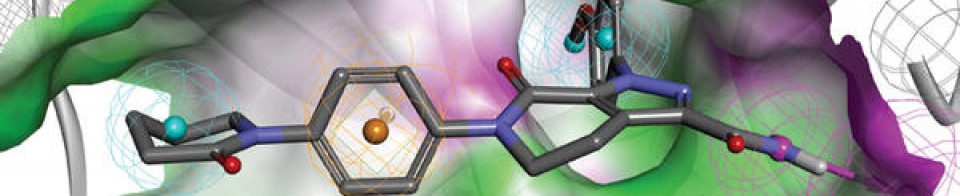
GFT 505, Elafibranor, элафибранор , إيلافيبرانور , 依非兰诺 


Image result for Elafibranor

ChemSpider 2D Image | (E)-Elafibranor | C22H24O4SElafibranor.pngChemSpider 2D Image | Elafibranor | C22H24O4S

(E)-Elafibranor

  • Molecular FormulaC22H24O4S
  • Average mass384.489 Da

Elafibranor

CAS 824932-88-9  E Z MIXTURE USAN

CAS 923978-27-2 E ISOMER INN

2-(2,6-Dimethyl-4-{3-[4-(methylsulfanyl)phenyl]-3-oxo-1-propen-1-yl}phenoxy)-2-methylpropanoic acid

Elafibranor(GFT505)
GFT505;GFT-505;GFT 505
UNII:2J3H5C81A5
(E)-Elafibranor
2-(2,6-Dimethyl-4-{(1E)-3-[4-(methylsulfanyl)phenyl]-3-oxo-1-propen-1-yl}phenoxy)-2-methylpropanoic acid
2-(2,6-Dimethyl-4-{(1E)-3-[4-(methylsulfanyl)phenyl]-3-oxo-1-propen-1-yl}phenoxy)-2-methylpropansäure
2J3H5C81A5
CAS 923978-27-2 E ISOMER INN
Acide 2-(2,6-diméthyl-4-{(1E)-3-[4-(méthylsulfanyl)phényl]-3-oxo-1-propén-1-yl}phénoxy)-2-méthylpropanoïque[French] [ACD/IUPAC Name]
GFT505
Propanoic acid, 2-[2,6-dimethyl-4-[(1E)-3-[4-(methylthio)phenyl]-3-oxo-1-propen-1-yl]phenoxy]-2-methyl-
UNII-2J3H5C81A5
(E)-2-(2,6-Dimethyl-4-(3-(4-(methylthio)phenyl)-3-oxoprop-1-en-1-yl)phenoxy)-2-methylpropanoic acid
элафибранор[Russian][INN]
إيلافيبرانور[Arabic][INN]
依非兰诺[Chinese][INN]
UNII-2J3H5C81A5
Treatment of Non-Alcoholic Steato-Hepatitis, Reducing Cardiometabolic Risk Factors in Patients with Diabetes and Pre-Diabetes
InventorJean DelhomelKarine Caumont-Bertrand Current Assignee Genfit
Priority date 2002-07-08  EXPIRY 2032 JULY
OTHERS
US7385082
US8058308
CN 106674069
WO 2016127019
WO 2018060373
WO 2018060372
INNOVATOR Genfit SA
Image result for Genfit SA
FAST TRACK FDA
Fibrosis; Primary biliary cirrhosis; Cholangitis; Obesity; Non-alcoholic steatohepatitis; Lipid metabolism disorder; Cancer; Non-insulin dependent diabetes; Crohns disease
Genfit is developing elafibranor (GFT-505; structure shown), a PPAR alpha and delta agonist with antioxidant properties and an anti-inflammatory action, for the potential oral treatment of non-alcoholic steatohepatitis (NASH) dyslipidemia, type 2 diabetes, atherogenic dyslipidemia, abdominal obesity and primary biliary cholangitis (PBC)

REGULATORY

In November 2016, the EMA approved elafibranor’s Pediatric Investigation Plan (PIP) . In February 2017, the company expected to obtain conditional marketing authorization for elafibranor in NASH during the course of the second half of 2019 or first half of 2020 .

In February 2014, the FDA granted Fast Track designation for GFT-505 for the treatment of NASH

PHASE III

In March 2015, the company was planning to begin a late stage phase III trial in patients with seriously Ill NASH (expected n = 2,000)

EUROPE

http://www.ema.europa.eu/ema/index.jsp?curl=pages/medicines/pips/EMEA-001857-PIP01-15/pip_001493.jsp&mid=WC0b01ac058001d129

Active substance Elafibranor
Decision number P/0237/2016
PIP number EMEA-001857-PIP01-15
Pharmaceutical form(s) Capsule, hard; Coated tablet
Condition(s)/indication(s) Treatment of non-alcoholic fatty liver disease (NAFLD) including non-alcoholic steatohepatitis (NASH)
Route(s) of administration Oral use
PIP applicant Genfit SA
France
Tel.+33 320164000
Fax +33 320164001
Email: contact@genfit.com
Decision type P: decision agreeing on a investigation plan, with or without partial waiver(s) and or deferral(s)
Doubts on drug substance
  • Elafibranor
  • GFT 505
  • GFT-505
  • UNII-2J3H5C81A5

scifinder refers to CAS Registry Number 923978-27-2 as E isomer

  • 2-[2,6-Dimethyl-4-[(1E)-3-[4-(methylthio)phenyl]-3-oxo-1-propen-1-yl]phenoxy]-2-methylpropanoic acid
  • GFT 505

SYNTHESIS

6 STEPS

WO 2005005369, WO 2004005233

SYN 2

CN106674069

Solubility (25°C)

In vitro DMSO 76 mg/mL (197.66 mM)
Ethanol 76 mg/mL (197.66 mM)
Water Insoluble

Biological Activity

Description Elafibranor is an agonist of the peroxisome proliferator-activated receptor-α(PPAR-alpha) and peroxisome proliferator-activated receptor-δ(PPAR-δ). It improves insulin sensitivity, glucose homeostasis, and lipid metabolism and reduces inflammation.
Targets
PPARα [1]
()
PPARδ [1]
()
In vitro GFT505 is a novel PPAR modulator that shows a preferential activity on PPAR-α and concomitant activity on PPAR-δ[2].
In vivo Elafibranor (GFT505) is a dual PPARα/δ agonist that has demonstrated efficacy in disease models of nonalcoholic fatty liver disease (NAFLD)/NASH and liver fibrosis. In the rat, GFT505 concentrated in the liver with limited extrahepatic exposure and underwent extensive enterohepatic cycling. Elafibranor confers liver protection by acting on several pathways involved in NASH pathogenesis, reducing steatosis, inflammation, and fibrosis. GFT505 improved liver dysfunction markers, decreased hepatic lipid accumulation, and inhibited proinflammatory (interleukin-1 beta, tumor necrosis factor alpha, and F4/80) and profibrotic (transforming growth factor beta, tissue inhibitor of metalloproteinase 2, collagen type I, alpha 1, and collagen type I, alpha 2) gene expression[1].

* Please note that Selleck tests the solubility of all compounds in-house, and the actual solubility may differ slightly from published values. This is normal and is due to slight batch-to-batch variations.

Elafibranor (code name GFT505) is a multimodal and pluripotent medication for treatment of atherogenic dyslipidemia for an overweight patient with or without diabetes. It is an oral treatment that acts on the 3 sub-types of PPAR (PPARa, PPARg, PPARd) with a preferential action on PPARa. As of February 2016, elafibranor has completed 8 clinical trials and a phase III is in progress.

Elafibranor (INN,[2] code name GFT505) is an experimental medication that is being studied and developed by Genfit for the treatment of cardiometabolic diseases including diabetes, insulin resistance, dyslipidemia, and non-alcoholic fatty liver disease (NAFLD).[3][4][5]

Elafibranor is a dual PPARα/δ agonist.[6][7]

Elafibranor is an agonist of the peroxisome proliferator-activated receptor-α(PPAR-alpha) and peroxisome proliferator-activated receptor-δ(PPAR-δ). It improves insulin sensitivity, glucose homeostasis, and lipid metabolism and reduces inflammation

FT505 is an oral treatment that acts on the 3 sub-types of PPAR (PPARa, PPARg, PPARd) with a preferential action on PPARa. It has a sophisticated mechanism of action. It is able to differentially recruit cofactors to the nuclear receptor, which subsequently lead to differential regulation of genes and biological effect. Therefore, the ability to identify and profile the activity of selective nuclear receptor modulator (SNuRMs) is a powerful approach to select innovative drug candidates with improved efficacy and diminished side effects. These pluripotent and multimodal molecules have significant positive effects on obesity, insulin-resistance and diabetes, atherosclerosis, inflammation, and the lipid triad (increasing of HDL cholesterol, lowering of triglycerides and LDL cholesterol).

Clinical studies

Administered to over 800 patients and healthy volunteers to date, elafibranor has demonstrated:

  • beneficial properties for non-alcoholic steatohepatitis (NASH)[8]
  • improvement of insulin sensitivity and glucose homeostasis[9]

Phase 2b (GOLDEN) results were published online in Gastroenterology in February 2016[10] and will be fully available in the paper version in May 2016.

As of February 2016, elafibranor has completed 8 clinical trials and a phase III is in progress.[11]

Pre-clinical studies

Efficacy on histological NASH parameters (steatosis, inflammation, fibrosis) in animal disease models — anti-fibrotic activities.[12]

The absence of safety concern has been confirmed in a full toxicological package up to 2-year carcinogenicity studies and cardiac studies (in mice).[13]

PATENT

20060142611 or 20050176808

Patent

US20070032543

https://patents.google.com/patent/US20070032543A1/en

    Compound 29: 1-[4-methylthiophenyl]-3-[3,5-dimethyl-4-carboxydimethylmethyloxyphenyl]prop-2-en-1-one

  • Figure US20070032543A1-20070208-C00178
  • This compound was synthesized from 1-[4-methylthiophenyl]-3-[3,5-dimethyl-4-isopropyloxycarbonyldimethylmethyloxyphenyl]prop-2-en-1-one (compound 28) according to general method 5 described earlier.
  • Purification was made by chromatography on silica gel (elution: dichloromethane/methanol 98:2).
  • 1H NMR DMSO-d6 δppm: 1.39 (s, 6H), 2.22 (s, 6H), 2.57 (s, 3H), 7.40 (d, J=8.55 Hz, 2H), 7.57 (s, 2H), 7.62 (d, J=15.5 Hz, 1H), 7.83 (d, J=15.5 Hz, 1H), 8.1 (d, J=8.55 Hz, 2H), 12.97 (s, 1H).
  • MS (ES-MS): 383.3 (M−1).

PATENT

WO 2016127019

https://patentscope.wipo.int/search/en/detail.jsf;jsessionid=FD673C8170C27624DC7C0E0C9420AD23.wapp2nB?docId=WO2016127019&recNum=1&maxRec=&office=&prevFilter=&sortOption=&queryString=&tab=PCTDescription

PATENT

CN 106674069

https://patents.google.com/patent/CN106674069A/enhttps://patents.google.com/patent/CN106674069A/en

The liver is one of the most important organs of the body, is one of the highest organ of risk. Many factors can lead to liver disease. For example, drinking too much can lead to cirrhosis, excessive medication can lead to liver damage and even obesity can lead to fatty liver. Thus, the pharmaceutical treatment of fatty liver diseases has become a hot spot of bio-pharmaceutical development.

French Genf biopharmaceutical company said recently that the US Food and Drug Administration has agreed to continue the development of peroxisome proliferator-activated receptor α / δ dual agonist GFT505, and begin Phase IIb study in the United States. GFT 505 is expected to rule early diagnosis of fatty liver, heart disease and its complications, prevention and treatment of diabetes-related lipid hyperlipidemia. French Food and Drug Administration approval to a detailed in-depth far for preclinical and clinical data were analyzed based. Experts expressed the Authority, GFT505 to ensure safe operation and research and can lead to liver cancer or liver cirrhosis related biomarkers all favorable. GFT505 structure as shown in formula III.

Figure CN106674069AD00061

GFT505 Intermediate I is a key intermediate GFT505III, the existing technology (e.g., Patent Document 1 ^ 1 ^ 20060142611 or 20050176808) are synthesized by the method of 4-methylthio-acetophenone and 3,5 dimethyl-4-hydroxybenzaldehyde GFT505 condensation of intermediate IV, with 2-bromo-iso-butyric acid tert-butyl ester obtained. Process GFT505 Intermediate I Z double bond configuration is a type, but the 4-methylthio-acetophenone and 3,5_-dimethyl-4-hydroxybenzaldehyde condensation process, the formation of a double bond, it is difficult GFT505 avoid intermediate IV of formula Z, E mixtures of formula, and then 2-bromo-iso-butyric acid tert-butyl ester to give GFT505 intermediate II, R is also of formula Z, E mixtures of formula. E-isomer and Z-type polarity very close to the crystallization purification difficult, very precise product by column chromatography is not suitable for industrial production.

Figure CN106674069AD00062

 Accordingly, a need to find an efficient synthesis, reducing the content of Z-isomer impurities to improve the purity and yield of the products, and to avoid use of column chromatography purification process difficult industrialization.

The present invention provides a method for the preparation of intermediate I GFT505, comprising the steps of: an organic solvent, a compound II with an alkali metal t-butoxide isomerization reaction to give intermediate I GFT505; the said compound II is a double bond in Z / E mixtures, according GFT505 intermediate I is a compound of formula E; the double bonds in Z / E mixtures of formula Z refers to the product from 0.1% to 99.0% of the total mass of the mixture (including 0.1%, comprising 99.0%); the compound of formula E E means that the content of the compound of formula more than 99.0% (including 99.0%);

Figure CN106674069AD00071

 In reaction I of the preparation of intermediates GFT505, the organic solvent is preferably a protic solvent, a polar aprotic organic solvent non-polar solvent, more preferably a non-polar solvent. The protic solvent is preferably & ~ (: 4 alcoholic solvent; the & ~ (: t-butanol 4 alcoholic solvent preferably the polar aprotic organic solvent is preferably C 1-C4 nitrile solvents, &. ~ C6 ketone solvents, C1-C4 one or more 4 sulfone amide solvents and C1-C solvent. C1-C4 of the nitrile solvents preferably acetonitrile. the C 1-C6 ketone solvent preferably acetone and / or methyl isobutyl ketone. C1-C4 of the amide-based solvent is preferably N, N- dimethylformamide. C 1-C4 of the sulfone solvent is preferably dimethylsulfoxide. the said nonpolar solvent is preferably aromatic hydrocarbon solvent; the aromatic hydrocarbon solvent preferably toluene.

Example 1: Preparation of intermediate IV GFT505 (refer to Patent W02011 / 144579)

Figure CN106674069AD00091

 A mixture of 4-mercapto-acetophenone (50g, 0.30 Imo 1), 3,5- dimethyl-4-hydroxybenzaldehyde (45g, 0.30 Imo 1) was added to a methanol solution of hydrogen chloride in 200ml (4moI / L) , 20 ~ 30 ° C for 3 hours, cooled to 0 ~ 10 ° C, stirred for 1 hour, filtered and dried to give 83g GFT505 intermediate (IV) as a yellow solid in 93% yield.

Example 2: Preparation of intermediate IV GFT505 (refer to Patent W02011 / 144579)

A mixture of 4-mercapto-acetophenone (I 9Kg, 114mo 1), 3,5- dimethyl-4-hydroxybenzaldehyde (I 7.1Kg, 114mo 1) was added to a methanol solution of hydrogen chloride in 76L (4mol / L ), 20 ~ 30 ° C for 3 hours, cooled to 0 ~ 10 ° C, stirred for 1 hour, centrifuged, 40 ° C and dried under vacuum for 12 hours to obtain 31.6Kg GFT505 intermediate (IV) as a yellow solid, yield 93% . LCMS: m / z = 299 (M + H) +.

Example 3: GFT505 intermediate II preparation (Ref US2006 / 142611)

Figure CN106674069AD00092

 The GFT505 Intermediate IV (78.8g, 0.263mol) was added to the reaction flask was added acetonitrile (480 ml of), potassium carbonate (54.5g, 0.395mol), tert-butyl 2-bromo-isobutyrate (39.3 g, 0.176mol), heated to 75 ~ 85 ° C for 10 hours, additional potassium carbonate (54.5g, 0.395mol), 2_ tert-butyl bromoisobutyrate (39.3g, 0.176mol) 10 hours, refed with potassium carbonate (54 · 5g, 0 · 395mol), 2- tert-butyl bromoisobutyrate (39 · 3g, 0 · 176mol) for 10 hours, until completion of the reaction compound, and concentrated under reduced pressure to dryness, was added 800g 400g of dichloromethane and water, layers were separated, washed with water, the organic phase dried over anhydrous sodium sulfate, filtered, the organic phase was concentrated to dryness, ethyl acetate and petroleum ether to give a solid compound II 81. Ig, yield 70% 〇

Example 4: GFT505 intermediate II preparation (Ref US2006 / 142611)

The GFT505 Intermediate IV (30Kg, 100mol) was added to acetonitrile (183L) was added potassium carbonate (21Kg, 152mol), 2- tert-butyl bromoisobutyrate (14 · 9Kg, 66 · 8mol), was heated to 75 ~ 85 ° C for 10 hours, additional potassium carbonate (21Kg, 152mol), 2- tert-butyl bromoisobutyrate (14.9Kg, 66.8mol) for 10 hours, refed with potassium carbonate (21Kg, 152mol), 2- tert-butyl bromoisobutyrate (14.9Kg, 66.8mol) for 10 hours, until the reaction was complete compound, 45 ~ 55 ° C was slowly concentrated under reduced pressure to distilled off, water was added and 300Kg 160Kg dichloromethane , the organic layer was separated out, IOOKg IOOKg water and washed with 10% concentration of aqueous sodium chloride solution (the mass concentration refers to the percentage by mass of the total mass of sodium chloride aqueous solution), 15 to 25 ° C was slowly distilled off under reduced pressure to concentrate. Ethyl acetate was added IOOKg was heated to 75 ~ 85 ° C a clear solution was added heptane 180Kg, cooled to stirred 15 ~ 25 ° C for 2-3 hours. Centrifugation, washed with n-heptane 40Kg, 40 ~ 50 ° C was dried in vacuo for 12 hours to obtain 31.6Kg GFT505 intermediate II, R a yield of 71.6%. LC-MS: m / z = 441 (M + H) + square

Example 5: Preparation of Intermediate I GFT505

Figure CN106674069AD00101

Compound II (81 · lg, 0.184mol) was added to 400g of toluene, cooled to 10 ~ 20 ° C, was added sodium tert-butoxide (26.8g, 0.279mol), heated to 50 ~ 60 ° C for 2 hours , 400g of water was added, layers were separated, washed with water, the organic phase concentrated to dryness under reduced pressure, methanol was added to 200ml, cooled to 0-10 ° C, stirred for 1 hour, filtered, 40 ~ 50 ° C (-0 · 08MPa ~ -0 · IMPa ) was dried in vacuo for 12 hours to give a yellow solid 78.8g GFT505 intermediate I, a yield of 97.0% APLC: 99.23% (in terms of E-form, Z configurational isomers accounted for 0.085%, largest other single impurity 0.41%).

Intermediate I the preparation of GFT505: 6 cases of  Embodiment

Figure CN106674069AD00102

Compound II (31Kg, 70.5mol) was added to 153Kg of toluene, cooled to 10 ~ 20 ° C, was added sodium tert-butoxide (10 · 3Kg, 107mol), warmed to 50 ~ 60 ° C for 2 hours, 160Kg of water, layered, and water IOOKg IOOKg mass concentration of the aqueous solution was washed with 10% sodium chloride (the concentration refers to the percentage by mass of the total mass of sodium chloride aqueous solution), 40 ~ 50 ° C Save concentrated under pressure to slowly distilled off, methanol was added to 60Kg, cooled to 0 ~ 10 ° C, stirred for 1 hour, centrifuged, washed with methanol 20Kg, 40 ~ 50 ° C (-0.08MPa ~ -0.1 MPa) was dried under vacuum for 12 hours to give 30.4 Kg GFT505 yellow solid intermediate I, 1.0 yield 98%. LC-MS: m / z = 441 (M + H) +; HPLC: 99 · 50% E configuration similar terms, Z configurational isomers accounted for 0.082%, largest other single impurity of 0.32%.

7  Example: Preparation of Intermediate I GFT505

 The compound II (8.0g, 0.018mol) was added to 64g tert-butanol, cooled to 10 ~ 20 ° C, was added potassium tert-butoxide (6.05g, 0.054mol), heated to 70 ~ 80 ° C Reaction 4 to 5 hours, was added 200g of water, 60g extracted twice with isopropyl acetate, and the organic phase concentrated to dryness under reduced pressure, methanol was added 20ml, cooled to 0-10 ° C, stirred for 1 hour, filtered, 40 ~ 50 ° C (_ 0.08MPa ~ -0.1 MPa) was dried in vacuo for 12 hours to give 7.62g yellow solid GFT505 intermediate I, a yield of 95.2% dHPLC: 99.36% (in terms of E-form, Z configurational isomers accounted for 0.079%, single largest other 0.42% impurities).

Example 8: Preparation of Intermediate I GFT505

Compound II (8.Og, 0.018mo 1) was added to 16g N, N- dimethylformamide, cooled to 10 ~ 20 ° C, was added sodium tert-butoxide (2.17g, 0.023mol), heated to the reaction 90 ~ 100 ° C for 1-2 hours, was added 100g of water, 60g extracted twice with isopropyl acetate, the organic phase concentrated to dryness under reduced pressure, methanol was added 20ml, cooled to O-HTC, stirred for 1 hour, filtered, 40 ~ 50 ° C (-0.08MPa ~ -0 IMPa.) was dried in vacuo for 12 hours to give 7.34g yellow solid GFT505 intermediate I, a yield of 91.7% APLC: 99.21% E configuration similar terms, Z configurational isomers accounted 0.097%, the largest single other impurities 0.48%).

9  Example: Preparation of Intermediate I GFT505

The compound II (8.0g, 0.018mol) was added to 160g of acetonitrile, cooled to 10 ~ 20 ° C, was added lithium t (7.21g, 0.090mol) butanol, warmed to 40 ~ 50 ° C the reaction 9-10 hours, was added 160g of water, 90g extracted twice with isopropyl acetate, and the organic phase concentrated to dryness under reduced pressure, methanol was added 20ml, cooled to 0-10 ° C, stirred for 1 hour, filtered, 40 ~ 50 ° C (_ 0.08MPa ~ -0.1 MPa) was dried in vacuo for 12 hours to give 7.29g yellow solid GFT505 intermediate I, a yield of 91.1% dHPLC: 99.16% (in terms of E-form, Z configurational isomers accounted for 0.089%, largest other single impurity 0.49 %).

10  Example: Preparation of Intermediate I GFT505

The compound II (8.0g, 0.018mol) was added to 28g of dimethyl sulfoxide, cooled to 10 ~ 20 ° C, was added potassium t-butoxide (5.04g, 0.045mol), heated to 60 ~ 70 ° C the reaction 3 to 4 hours, was added 100g of water, 60g extracted twice with isopropyl acetate, and the organic phase concentrated to dryness under reduced pressure, methanol was added 20ml, cooled to O-UTC, stirred for 1 hour, filtered, 40 ~ 50 ° C (_ 0.08 MPa ~ -0.1 MPa) was dried in vacuo for 12 hours to give 7.33g yellow solid GFT505 intermediate I, a yield of 91.6% dHPLC: 99.46% (in terms of E-form, Z configurational isomers accounted for 0.077%, largest single impurity other 0.27%).

Preparation of GFT505III: 11 cases of Embodiment

Figure CN106674069AD00111

 The GFT505 Intermediate I (77.9g, 0.177mol, may be prepared as described in Example 10) was added to the reaction flask was added 790g of dichloromethane was added trifluoroacetic acid (209.7g, 1.84mol), 20 ~ 30 ° C the reaction for 5-6 hours, concentrated to dryness, was added 600ml ethyl acetate and 600ml of water, layers were separated, washed with water, dried over anhydrous sodium sulfate, filtered, concentrated to a small volume the organic phase, 10-20 ° C for 2 hours crystallization, filtration, under -0.08MPa ~ -0.1 MPa, 40 ° C ~ 50 ° C was dried in vacuo 12 hours to give 60.1 g as a yellow solid. 25〇1 yellow solid was recrystallized from ethyl acetate to give 52.98 ^ as a yellow solid 6? 505 (111), a yield of 77.8%.

 LC-MS: m / z = 385 (M + H) +; HPLC: 99 · 86%, largest single impurity 0.5 06%.

GFT505III prepared: Example 12 Embodiment

The GFT505 Intermediate I (30Kg, 68.2mol, may be prepared as described in Example 9) was added to 307Kg dichloromethane was added trifluoroacetic acid (80.8Kg, 709mol), 20-30 ° C the reaction 5-6 h, concentrated to dryness, ethyl acetate and water 197Kg 231Kg, layered, and water IOOKg IOOKg concentration of 10 mass% aqueous sodium chloride concentration (which refers to the quality of the aqueous solution of sodium chloride percentage of total mass) washing, 40 ~ 50 ° C to about 80Kg concentrated under reduced pressure, cooled to IO ~ 20 ° C for 2 hours crystallization, centrifugation was washed with ethyl acetate 20Kg, at -0.08MPa ~ -O.IMPa, 40 ~ 50 ° C was dried in vacuo for 12 hours to give a yellow solid was 23.2Kg. As a yellow solid was obtained as a yellow solid GFT505III 20.9Kg 82Kg recrystallized from ethyl acetate, 5.8 79% yield. LCMS: m / z = 385 (M + H) +; HPLC: 99 · 95%, largest single impurity 0.5 03%.

Patent ID

Patent Title

Submitted Date

Granted Date

US9221751 USE OF 1, 3-DIPHENYLPROP-2-EN-1-ONE DERIVATIVES FOR TREATING LIVER DISORDERS
2014-10-24
2015-02-19
US8058308 SUBSTITUTED 1, 3-DIPHENYLPROP-2-EN-1-ONE DERIVATIVES, PREPARATION AND USES THEREOF
2011-08-04
2011-11-15
US8106097 COMPOSITION BASED ON SUBSTITUTED 1, 3-DIPHENYLPROP-2-EN-1-ONE DERIVATIVES, PREPARATION AND USES THEREOF
2010-05-13
2012-01-31
US7566737 Combinations of substituted 1, 3-diphenylprop-2-EN-1-one derivatives with other therapeutically active ingredients
2007-02-08
2009-07-28
US7943661 Substituted 1, 3-diphenylprop-2-en-1-one derivatives and preparation and uses thereof
2005-08-11
2011-05-17

References

  1. Jump up^ Cariou, B.; Zair, Y.; Staels, B.; Bruckert, E. (2011). “Effects of the New Dual PPAR / Agonist GFT505 on Lipid and Glucose Homeostasis in Abdominally Obese Patients with Combined Dyslipidemia or Impaired Glucose Metabolism”. Diabetes Care. 34 (9): 2008–2014. doi:10.2337/dc11-0093. PMC 3161281 Freely accessible. PMID 21816979.
  2. Jump up^ “International Nonproprietary Names for Pharmaceutical Substances (INN). Recommended International Nonproprietary Names: List 74” (PDF). World Health Organization. p. 10. Retrieved 9 November 2016.
  3. Jump up^ “Advanced Compound Status” (Press release). Genfit.
  4. Jump up^ “GFT505 Broadens Its Therapeutic Potential” (PDF) (Press release). Retrieved 31 Mar 2013.
  5. Jump up^ Cariou, Bertrand; Staels, Bart (2014-10-01). “GFT505 for the treatment of nonalcoholic steatohepatitis and type 2 diabetes”. Expert Opinion on Investigational Drugs. 23 (10): 1441–1448. doi:10.1517/13543784.2014.954034. ISSN 1744-7658. PMID 25164277.
  6. Jump up^ US Patent No. 7655641 “96 dpi image of original patent USPTO 7655641” (PDF). Retrieved 31 Mar 2013.
  7. Jump up^ “GFT-505” (PDF). Drugs of the Future. 37 (8): 555–559. 2012.[permanent dead link]
  8. Jump up^ Staels, Bart; Rubenstrunk, Anne; Noel, Benoit; Rigou, Géraldine; Delataille, Philippe; Millatt, Lesley J.; Baron, Morgane; Lucas, Anthony; Tailleux, Anne (2013-12-01). “Hepatoprotective effects of the dual peroxisome proliferator-activated receptor alpha/delta agonist, GFT505, in rodent models of nonalcoholic fatty liver disease/nonalcoholic steatohepatitis”. Hepatology. 58 (6): 1941–1952. doi:10.1002/hep.26461. ISSN 1527-3350.
  9. Jump up^ Cariou, Bertrand; Hanf, Rémy; Lambert-Porcheron, Stéphanie; Zaïr, Yassine; Sauvinet, Valérie; Noël, Benoit; Flet, Laurent; Vidal, Hubert; Staels, Bart (2013-05-28). “Dual Peroxisome Proliferator–Activated Receptor α/δ Agonist GFT505 Improves Hepatic and Peripheral Insulin Sensitivity in Abdominally Obese Subjects”. Diabetes Care. 36: DC_122012. doi:10.2337/dc12-2012. ISSN 0149-5992. PMC 3781493 Freely accessible. PMID 23715754.
  10. Jump up^ “Elafibranor, an Agonist of the Peroxisome Proliferator-activated Receptor-α and -δ, Induces Resolution of Nonalcoholic Steatohepatitis Without Fibrosis Worsening – Gastroenterology”. http://www.gastrojournal.org. Retrieved 2016-03-08.
  11. Jump up^ clinical trials involving GFT505
  12. Jump up^ Quintero, Pablo; Arrese, Marco (2013-12-01). “Nuclear control of inflammation and fibrosis in nonalcoholic steatohepatitis: therapeutic potential of dual peroxisome proliferator-activated receptor alpha/delta agonism”. Hepatology. 58 (6): 1881–1884. doi:10.1002/hep.26582. ISSN 1527-3350. PMID 23787705.
  13. Jump up^ Hanf, Rémy; Millatt, Lesley J.; Cariou, Bertrand; Noel, Benoit; Rigou, Géraldine; Delataille, Philippe; Daix, Valérie; Hum, Dean W.; Staels, Bart (2014-11-01). “The dual peroxisome proliferator-activated receptor alpha/delta agonist GFT505 exerts anti-diabetic effects in db/db mice without peroxisome proliferator-activated receptor gamma-associated adverse cardiac effects”. Diabetes & Vascular Disease Research. 11 (6): 440–447. doi:10.1177/1479164114548027. ISSN 1752-8984. PMID 25212694.

External links

Elafibranor
Elafibranor.svg
Clinical data
Synonyms GFT505, SureCN815512
ATC code
  • None
Legal status
Legal status
  • Investigational
Identifiers
CAS Number
PubChem CID
ChemSpider
Chemical and physical data
Formula C22H24O4S
Molar mass 384.489 g/mol
3D model (JSmol)

/////////////////Elafibranor, E Elafibranor,  923978-27-2,  GFT-505,  UNII-2J3H5C81A5, GFT505, GFT 505, элафибранор , إيلافيبرانور , 依非兰诺 , PHASE 3, FAST TRACK 

CC1=CC(=CC(=C1OC(C)(C)C(=O)O)C)C=CC(=O)C2=CC=C(C=C2)SC

PF 06650833


img

PF-06650833

1-{[(2S,3S,4S)-3-ethyl-4-fluoro-5-oxopyrrolidin-2-yl]methoxy}-7-methoxyisoquinoline-6-carboxamide

CAS 1817626-54-2
Chemical Formula: C18H20FN3O4
Molecular Weight: 361.3734

  • Originator Pfizer
  • Class Anti-inflammatories; Antirheumatics
  • Mechanism of Action Interleukin-1 receptor-associated kinase inhibitors
  • Phase II Rheumatoid arthritis
  • Phase I Lupus vulgaris
  • 01 Aug 2018 Pfizer completes a phase II trial in Rheumatoid arthritis (Treatment-experienced) in USA, Ukraine, Taiwan, Serbia, Russia, Romania, Poland, Mexico, South Korea, Georgia, Bosnia-Herzegovina, Australia, Croatia, Spain, Slovakia, Czech Republic, Hungary, Germany, Bulgaria (PO) (NCT02996500)
  • 28 Jul 2018 No recent reports of development identified for phase-I development in Lupus(In volunteers) in USA (PO, Controlled release)
  • 28 Jul 2018 No recent reports of development identified for phase-I development in Lupus(In volunteers) in USA (PO, Immediate release)
  • PF-06650833 is an inhibitor of Interleukin-1 receptor associated kinase 4 (IRAK4). RAK4 is located proximal to TLR/IL-1 receptors, and in preclinical studies, inhibits downstream signaling from these receptors. The development of novel small molecule inhibitors of this kinase has the potential to lead to new therapeutics to treat diseases such as rheumatoid arthritis, lupus, and lymphomas.

Interleukin-1 receptor associated kinase 4 (IRAK-4) is a serine threonine kinases that plays a key role in innate immune signaling. IRAK-4 is activated by the interleukin (IL-1) family receptors (IL-1R, IL-18R, and IL-33R), as well as the Toll-like receptors (TLRs). Inhibition of IRAK-4 blocks the production of inflammatory cytokines such as type I interferons, tumor necrosis factor (TNF), IL-1, IL-6, and IL-12 that are key drivers of autoimmune and inflammatory diseases. IRAK-4 is an attractive therapeutic target for diseases associated with dysregulated inflammation, such as systemic lupus erythematosus and rheumatoid arthritis.

Figure

Figure

First Discovery Synthesis of 1

Conditions: (a) LDA (1.2 equiv), TMSCl (1.3 equiv), THF, −60 °C, 30 min; (b) allyl methyl carbonate (1.1 equiv), Pd(OAc)2 (0.05 equiv), THF, 65 °C, 2 h, 73% (2 steps); (c) LiThCN (1.5 equiv), EtMgCl (1.5 equiv), TMSCl (2.0 equiv), THF, −78 °C, 6 h, 90%; (d) LDA (1.8 equiv), NFSI (1.25 equiv), THF, −78 °C, 1 h, 23% (8), 45% (9); (e) pTsOH (0.05 equiv), MeCN, H2O, 90 °C, 2 h, 97%; (f) 3 (0.9 equiv), KHMDS (2.0 equiv), DMF, THF, −10 °C, 30 min, 84%; (g) H2O2 (10 equiv), K2CO3 (4.0 equiv), DMSO, 20 °C, 2 h, 97%.

CLIP

Image result for PF-06650833

Target: Interleukin-1 receptor associated kinase 4 (IRAK4): This kinase is important in innate immunity, and its inhibition is predicted to be beneficial in treating inflammatory diseases.

Disease: Rheumatoid arthritis, inflammatory bowel disorder

Notes: PF06650833 came from a screening assay that used nuclear magnetic resonance spectroscopy to determine binding between molecular fragments and IRAK4. The initial hit, which bound weakly to IRAK4, was optimized with structure- and property-based medicinal chemistry to generate a series of potent inhibitors, said Katherine Lee, an associate research fellow at Pfizer.

Paper

Improvements to Enable the Large Scale Synthesis of 1-{[(2S,3S,4S)-3-Ethyl-4-fluoro-5-oxopyrrolidin-2-yl]methoxy}-7-methoxyisoquinoline-6-carboxamide (PF-06650833)

§ Medicine Design, Pfizer Worldwide Research and Development, 445 Eastern Point Road, Groton, Connecticut 06340, United States
‡ Chemical Research and Development, Pfizer Worldwide Research and Development, 445 Eastern Point Road, Groton, Connecticut 06340, United States
Org. Process Res. Dev., Article ASAP
DOI: 10.1021/acs.oprd.8b00386
Stephen Wright
Senior Principal Scientist at Pfizer Inc.
New London/Norwich, Connecticut Area
Robert Singer
Robert Singer
Process Chemist -Assoc Research Fellow at Pfizer
New London/Norwich, Connecticut Area

https://pubs.acs.org/doi/suppl/10.1021/acs.oprd.8b00386/suppl_file/op8b00386_si_001.pdf

Abstract Image

An improved process for the large scale synthesis of 1-{[(2S,3S,4S)-3-ethyl-4-fluoro-5-oxopyrrolidin-2-yl]methoxy}-7-methoxyisoquinoline-6-carboxamide (1), a candidate currently in clinical development, was developed. Key objectives were to eliminate chromatographic purifications, to maximize the reproducibility of each step, and to improve the yield and efficiency of each step relative to the previous discovery syntheses of 1. This work was focused on improvements to the synthesis of the stereochemically complex lactam 2. Steps of particular concern were the preparation of the unsaturated lactam 6, the cuprate conjugate addition reaction to produce 7, and the conversion of 7 to 8 with a high degree of diastereoselection. The solutions to these challenges have permitted the synthesis of 2 in excess of 100 kg, which in turn has permitted 1 to be prepared in sufficient amounts to support further development.

1 (31.3 kg, 91%, 82% overall) as a white, free-flowing powder.

 1H NMR (500 MHz, DMSO): δ 8.86 (s, 1H), 8.16 (s, 1H), 7.90 (d, J = 5.9 Hz, 1H), 7.84 (br. s., 1H), 7.74 (s, 1H), 7.70 (br. s., 1H), 7.42 (d, J = 5.9 Hz, 1H), 4.90 (dd, J = 5.9, 53.8 Hz, 1H), 4.54 (dd, J = 3.5, 11.1 Hz, 1H), 4.26 (dd, J = 6.4, 11.0 Hz, 1H), 4.13–4.05 (m, 1H), 3.97 (s, 3H), 2.69–2.54 (m, 1H), 1.68–1.53 (m, 2H), 1.02 (t, J = 7.3 Hz, 3H).

13C NMR{1H} (126 MHz, DMSO): δ 171.0 (d, J = 19.4 Hz), 166.4, 158.4, 155.1, 137.7, 131.8, 130.3, 128.4, 120.3, 115.2, 103.2 (d, J = 4.2 Hz), 90.0 (d, J = 179.2 Hz), 66.3, 56.0, 54.1, 42.2 (d, J = 19.4 Hz), 16.4 (d, J = 8.4 Hz), 12.1.

19F NMR (H decoupled, 376 MHz, DMSO-d6): δ −199.26.

LCMS: 362 (MH+).

capture

//////////////PF-06650833, PF 06650833, PF06650833, PF-6650833, PF 6650833, PF6650833.

O=C(C1=CC2=C(C(OC[C@H]([C@H](CC)[C@@H]3F)NC3=O)=NC=C2)C=C1OC)N

/////////////////PF-06650833, PF 06650833, Phase 3, Atopic dermatitis, PFIZER, Breakthrough Therapy Designation

LASMIDITAN


Lasmiditan skeletal.svg

LASMIDITAN, COL-144 , LY-573144

  • Molecular FormulaC19H18F3N3O2
  • Average mass377.360 Da
  • ласмидитан
    لاسميديتان

613677-28-4 HYDROCHLORIDE
439239-90-4 (free base)

SUCCINATE 439239-92-6

2,4,6-Trifluoro-N-[6-(1-methylpiperidin-4-ylcarbonyl)pyridin-2-yl]benzamide

2,4,6-trifluoro-N-{6-[(1-methylpiperidin-4-yl)carbonyl]pyridin-2-yl}benzamide

CoLucid Pharmaceuticals, PHASE 3, MIGRAINE

UNII:760I9WM792

Lasmiditan is an oral medication used in the termination of migraine headaches that was first approved for use in the United States in October 2019.

A high-affinity, highly selective serotonin 5-HT(1F) receptor agonist.

Lasmiditan, also known as COL-144 and LY573144, is a novel, centrally acting, highly selective 5-HT(1F) receptor agonist (K1=2.21 μM) without vasoconstrictor activity that seemed effective when given as an intravenous infusion in a proof-of-concept migraine study. Lasmiditan showed efficacy in its primary endpoint, with a 2-hour placebo-subtracted headache response of 28.8%, though with frequent reports of dizziness, paresthesias, and vertigo.


Product Ingredients

INGREDIENT UNII CAS INCHI KEY
Lasmiditan succinate W64YBJ346B 439239-92-6 MSOIHUHNGPOCTH-UHFFFAOYSA-N
Lasmiditan succinate; UNII-W64YBJ346B; Lasmiditan succinate [USAN]; W64YBJ346B; 439239-92-6; Lasmiditan succinate (USAN)

Lasmiditan succinate.png

Molecular Formula: C42H42F6N6O8
Molecular Weight: 872.822 g/mol


Patent and Exclusivity for: N211280

Product 001
LASMIDITAN SUCCINATE (REYVOW) TABLET EQ 50MG BASE

Patent Data


Exclusivity Data


Lasmiditan, sold under the brand name Reyvow, is a medication used for the acute (active but short-term) treatment of migraine with or without aura (a sensory phenomenon or visual disturbance) in adults.[2] It is not useful for prevention.[2] It is taken by mouth.[2]

Common side effects include sleepiness, dizziness, tiredness, and numbness.[3][4]

Lasmiditan was approved in the United States in October 2019[3] and became available in February 2020.[5] It was developed by Eli Lilly.[3] The U.S. Food and Drug Administration (FDA) considers it to be a first-in-class medication.[6]

WO-2018010345,  from Solipharma and the inventor on this API. Eli Lilly , following its acquisition of CoLucid Pharmaceuticals , is developing lasmiditan, a 5-HT 1f agonist, for treating acute migraine.

SYNTHESIS 


SYN1

Synthetic Reference

Sheng, Xiaohong; Sheng, Xiaoxia; Jiang, Xiawei. Preparation of crystalline form of lasmiditan and its pharmaceutical composition. Assignee SoliPharma LLC, Peop. Rep. China. WO 2018010345. (2018).


SYN2

Synthetic Description

Reference: Carniaux, Jean-Francois; Cummins, Jonathan. Compositions and methods of synthesis of pyridinoylpiperidine derivatives as 5-HT1F agonists for treating and preventing migraine. Assignee Colucid Pharmaceuticals, Inc., USA. WO 2011123654. (2011).

SYN3

Synthetic Description

Reference: Cohen, Michael Philip; Kohlman, Daniel Timothy; Liang, Sidney Xi; Mancuso, Vincent; Victor, Frantz; Xu, Yao-Chang; Ying, Bai-Ping; Zacherl, Deanna Piatt; Zhang, Deyi. Preparation of pyridinoylpiperidines as 5-HT1F agonists. Assignee Eli Lilly and Company, USA. WO 2003084949. (2003).

SYN

noname01


SYN 2

noname01

REF

https://www.sciencedirect.com/science/article/abs/pii/S0223523420306395

5 Lasmiditan (Reyvow). Lasmiditan, developed by Eli Lilly, is a highly selective
agonist of 5-HT1F receptors [87]. The FDA approved lasmiditan as the first
neutrally-acting medication to treat migraine headaches [88]. Lasmiditan is a selective
5-HT1F agonist, but inactive against other 5-HT receptors or monoamine receptors
[89,90]. Unlike the triptan class of anti-migraine medications that lead to blood
pressurelability and other cardiovascular side effects, lasmiditan could terminate
migraines but without vasoconstriction [91]. However, lasmiditan may cause
significant driving impairment due to the CNS depression. And it is not a preventive
medication for migraine [92].
Eli Lilly has disclosed a kilogram-scale procedure to lasmiditan, which is described in
Scheme 14 [93]. Borch reduction of piperidine-4-carboxylic acid 84 gave 85. Further
chlorination with oxalyl chloride formed acyl chloride 86 in good yield. Next,
substitution with commercial dimethylamine, followed by coupling with

2,6-dibromopyridine 88 with assistance of tert-butyllithium gave rise to coupling
product 89 in 84% yield within the two-step sequence. Copper-catalyzed amination
between 89 and NH3 in ethylene glycol gave aminate product 90, which then treated
with acyl chloride 91 to give lasmiditan (XI) in 91% yield

CLICK ON IMAGE TO EXPAND

[87] T.V. Dupre, D.P. Jenkins, R.C. Muise-Helmericks, R.G. Schnellmann, The
5-hydroxytryptamine receptor 1F stimulates mitochondrial biogenesis and
angiogenesis in endothelial cells, Biochem. Pharmacol. 169 (2019) 113644.
[88] Y.N. Lamb, Lasmiditan: first approval, Drugs 79 (2019) 1989-1996.
[89] E. Rubio-Beltran, A. Labastida-Ramirez, K.A. Haanes, A. van den Bogaerdt, A.
Bogers, E. Zanelli, L. Meeus, A.H.J. Danser, M.R. Gralinski, P.B. Senese, K.W.
Johnson, J. Kovalchin, C.M. Villalon, A. MaassenVanDenBrink,
Characterization of binding, functional activity, and contractile responses of the
selective 5-HT1F receptor agonist lasmiditan, Br. J. Pharmacol. 176 (2019)
4681-4695.
[90] G.M. Dubowchik, C.M. Conway, A.W. Xin, Blocking the CGRP pathway for
acute and preventive treatment of migraine: the evolution of success, J. Med.
Chem. 63 (2020) 6600–6623.
[91] B. Kuca, S.D. Silberstein, L. Wietecha, P.H. Berg, G. Dozier, R.B. Lipton, C.M.S.
Group, Lasmiditan is an effective acute treatment for migraine: a phase 3
randomized study, Neurology 91 (2018) 2222-2232.
[92] P.J. Goadsby, L.A. Wietecha, E.B. Dennehy, B. Kuca, M.G. Case, S.K. Aurora, C.
Gaul, Phase 3 randomized, placebo-controlled, double-blind study of lasmiditan
for acute treatment of migraine, Brain 142 (2019) 1894-1904.
[93] M.P. Cohen, D.T. Kohlman, S.X. Liang, V. Mancuso, F. Victor, Y.-C. Xu, B.-P.
Ying, D.P. Zacherl, D. Zhang, Preparation of pyridinoylpiperidines as 5-HT1F
agonists, 2003. WO2003084949.

PATENT

https://patents.google.com/patent/WO2020095171A1/en

 In one embodiment, the present invention provides a process as depicted in scheme III for the preparation of lasmiditan, a compound of formula I.

Figure imgf000010_0001
R= Cl, OH, OR1
R1 = C1 -C6 alkyl, C1-C6 Alkylaryl
Scheme III
[0044] In one embodiment, the present invention provides a process as depicted in scheme IV for the preparation of lasmiditan, a compound of formula I.
Figure imgf000010_0002
Scheme IV
formula I.
Figure imgf000014_0001
Scheme I
[0079] In one embodiment, the present invention provides a process as depicted in scheme II for the preparation of lasmiditan, a compound of formula I.
Figure imgf000014_0002
Scheme II
formula I.
Figure imgf000015_0001
Scheme V [0092] In one embodiment, the present invention provides a process as depicted in scheme VI for the preparation of lasmiditan, a compound of formula I.
Figure imgf000016_0001
Scheme VI
EXAMPLES
[0162] Example-1: Synthesis of compound of formula V
2,6-Dibromopyridine was dissolved in ammonia and mixture was heated in autoclave at about l20°C to about l50°C till reaction complies. After completion of reaction, the reaction mass was allowed to cool and diluted with water. Product was extracted in dichloromethane which on evaporation gives compound of formula-V in crude stage. The crude compound of formula V was purified in mixture of ethyl acetate and hexane to obtain a pale yellow solid.
[0163] Example-2: Synthesis of compound of formula III
l-Methylisonipecotic acid, Diisopropylethylamine, l-hydroxybenzotriazole and N,O- dimethylhydroxylamine hydrochloride were added in dimethylformamide and the reaction mixture was stirred for about 15 minutes. l-(3-dimethylaminopropyl)-3- ethylcarbodiimide hydrochloride) was then added to the reaction mixture and the reaction mass was stirred at ambient temperature to complete the reaction. The solvent was removed by vacuum distillation. Water was added to obtained residue and the pH of the reaction mixture was adjusted to 8. The obtained aqueous reaction mixture was extracted with dichloromethane and evaporated to get compound of formula III as an oil.
[0164] Example-3: Synthesis of compound of formula II
Methylene chloride was added to 2,4,6-trifluoro benzoic acid, dimethyl formamide was added to the reaction mass and the reaction mass was cooled to about 5°C to l0°C. Oxalyl chloride was added to the reaction mass, the temperature of the reaction mass was raised to 25°C to 30°C and reaction mass was stirred at about 25°C to 30°C for about 2 hours. The solvent was distilled out under vacuum to obtain 2,4,6-trifluoro benzoyl chloride as an oil. Compound of formula V was dissolved in tetrahydrofuran and trimethylamine was added to the obtained reaction mass. The reaction mass was then cooled to about l5°C to 20°C. To the reaction mass was added 2,4,6-trifluoro benzoyl chloride dissolved in tetrahydrofuran. The temperature of the reaction mass was raised to about l5°C to 20°C and the reaction mass was stirred for about 1 hour. The mixture of water and ethyl acetate was added to the reaction mass to obtain organic and aqueous layers. Organic layer was washed with water sodium chloride solution. The solvent was distilled out completely to obtain an oil. The obtained oil was crystallized using diisopropylether. The obtained solid was dried. [0165] Example-4: Synthesis of compound of formula I
The compound of formula II is added to THF and the reaction mass is stirred. N-BuLi is added to the reaction mixture at about -78°C. The mixture is stirred for about 15 to about 30 minutes. The compound of formula-III is added to the reaction mass and the reaction mass is stirred at about -78°C to about -50°C for about 2h. The reaction mass is quenched with aqueous hydrochloric acid and extracted with dichloromethane. The extract is successively washed with water and brine, dried over MgS04 and then concentrated in vacuum to get compound of formula-I.
[0166] Example-5: Synthesis of compound of formula I
l-methylisonipecotic acid hydrochloride is dissolved in methylene chloride and dimethyl formamide is added to the reaction mass. The reaction mass is then cooled to about 5°C to l0°C. Oxalyl chloride is slowly added to the reaction mass and the temperature of the reaction mass is raised to about 25°C to 30°C and the reaction mass is stirred for about 2 hours. The solvent is distilled out to obtain l-methylpiperidine-4-carboxylic acid chloride; the obtain product is then dissolved in tetrahydrofuran and compound of formula II is added to thereaction mass. The reaction mass is stirred and n-butyl lithium is added to the reaction mixture at about -78°C. The mass is stirred for about 15 to 30 minutes. The reaction mass is quenched with aqueous hydrochloric acid and extracted with dichloromethane. The extract is washed with water and brine and dried over MgS04 and then concentrated in vacuum to obtain compound of formula I.
[0167] Example-6: Synthesis of compound of formula X
2,4,6-trifluoro benzoic acid was added to dichloromethane and dimethyl formamide was added to the reaction mass. Oxalyl chloride was added to the reaction mass and the reaction mass was stirred at about 25°C to 30°C for about 30 to 40minutes. The solvent was distilled off to get an oil. The obtained oil was dissolved in dichloromethane to obtain 2,4,6-trifluoro benzoyl chloride. Compound of formula XI was dissolved in dichloromethane and triethylamine was adde to the reaction mass. The reaction mass was then cooled to about 0°C to 5°C. 2,4,6-trifluoro benzoyl chloride in dichloromethane was added to the reaction mass and reaction mass was stirred at about 0°C to 5°C for about 30 minutes. The temperature of the reaction mass was raised to about 25°C 30°C. Aqueous hydrochloric acid was added to the reaction mass and reaction mass was stirred for about l0-l5min and organic and aqueous layer were separated. Organic layer was washed with saturated aqueous sodium bicarbonate and aqueous sodium chloride solution. The organic layer was distilled off to obtain a solid. The obtained solid was crystalized using methanol.
[0168] Example-7: Synthesis of compound of formula IX
Lithium hydroxide was dissolved in water and added to the compound of formula X dissolved in tetrahydrofuran to obtain a reaction mass. The reaction mass was stirred at about 20°C to 25°C for about 20 to 30minutes. Aqueous hydrochloric acid and ethyl acetate were added to the reaction mass and reaction mass was stirred. Aqueous and organic layers were separated. Organic layer was washed with water and aqueous sodium chloride solution. The solvent was distilled off to get solid compound of formula IX.
[0169] Example-8: Synthesis of compound of formula VII
Compound of formula IX was added to dimethyl formamide and triethyl amine and N,O- dimethyl hydroxylamine hydrochloride and HATU were added to the reaction mass the reaction mass was stirred at about 25°C to 30°C for about 5 hours to 6 hours. Water and ethyl acetate were added to the reaction mass and organid and aqueous layers were separated. Aqueous layer was extracted with ethyl acetate. Organic layer washed with water and aqueous sodium chloride solution. The solvent was distilled out completely to obtain an oil; the oil was crystallized using diisopropyl ether to obtain compound of formula VII.
[0170] Example-9: Synthesis of compound of formula I
4-chloro-l -methyl piperidine is added to tetrahydrofuran to obtain a reaction mass. The reaction mass is cooled to about l0°C to 20°C, solution of isopropyl magnesium chloride lithium chloride complex in tetrahydrofuran is added to the reaction mass at about l0°C to 20°C. The reaction mass is stirred for about 30 minutes to 60 minutes. Compound of formula VII is dissolved in tetrahydrofuran and added to the reaction mass. Obtained reaction mass is stirred for about 1 hour to 2 hours. Aqueous ammonium chloride solution and ethyl acetate is added to the reaction mass. The organic and aqueous layers are separated. Organic layer is washed with water and aqueous sodium chloride solution. Organis layer is distilled out to obtain compound of formula I.
[0171] Example-10: Synthesis of compound of formula I
4-chloro-l -methyl piperidine is dissolved in tetrahydrofuran, the reaction mass is cooled to about l0°C to 20°C; isopropyl magnesium chloride lithium chloride complex dissolved in tetrahydrofuran is added to the reaction mass at about lO°C to 20°C. The reaction mass is stirred at about lO°C to 20°C for about 30 minutes to 60 minutes. Compound of formula X dissolved in tetrahydrofuran is added to reaction mass and reaction mass is stirred at about l0°C to 20°C for about 60 minutes to 120 minutes. Aqueous ammonium chloride solution and ethyl acetate is added to the reaction mass, the reaction mass is stirred and aqueous and organic layers are separated. Organic layer is washed with water and aqueous sodium chloride solution. Organic layer is distilled out to obtain compound of formula I.
[0172] Example-11: Synthesis of compound of formula XII
2,4,6-trifluoro benzoic acid was dissolved in dichloromethane and dimethylformamide was added to the reaction mass. The reaction mass was cooled to about 0°C to l0°C, oxalyl chloride was slowly added to the reaction mass and the temperature of the reaction mass was raised to about 20°C to 30°C and stirred for about 30 minutes to 40 minutes. The solvent was distilled off to obtain anoil; the oil was dissolved in tetrahydrofuran to obtained a solution of 2,4,6-trifluoro benzoyl chloride. 2-amino pyridine was dissolved in tetrahydrofuran and triethylamine was added to the reaction mass; a solution of 2,4,6- trifluoro benzoyl chloride in THF was added to the reaction mass and the reaction mass was cooled to about 0°C to 5°C. Water and ethylacetate were addd to the reaction mass and the temperature of reaction mass was raised to about 20°C to 30°C. The reaction mass was stirred and organic and aqueous layers were separated. Organic layer was washed with water and sodium chloride solution. Organic layer was distilled off completely to get an oil, the obtained oil was crystallized using diisopropyl ether and methanol to obtain compound of formula XII.
[0173] Example-12: Synthesis of compound of formula I
Compound of formula XII is dissolved in tetrahydrofuran and N-butyl lithium is added to the reaction mixture at about -78°C. The reation mass is stirred for about 15 minutes to 30 minutes. Compound of formula III is added to the reaction mass and the reaction mass is stirred at about -78°C to -50°C for 2 hours. The reaction mass is quenched with aqueous hydrochloric acid and extracted with dichloromethane. The extract is washed with water and brine, dried over MgS04 and then concentrated in vacuum to get compound of formula I.
[0174] Example-13: Synthesis of compound of formula I l-methylisonipecotic acid hydrochloride is dissolved in methylene chloride and dimethylformamide is added to the reaction mass. The reaction mass is to about 5°C to l0°C and oxalyl chloride is added to the reaction mass, the temperature of the reaction mass is raised to about 25°C to 30°C and reaction mass is stirred for about 2 hours. The solvent is distilled off to obtain l-methylpiperidine-4-carboxylic acid chloride. 1- methylpiperidine-4-carboxylic acid chloride is dissolved in tetrahydrofuran and compound of formula XII dissolved tin tetrahydrofuran is added to it; the reaction mass is stirred. N-butyl lithium is added to the reaction mixture at about -78°C. The mixture is stirred for about 15 minutes to 30 minutes. The reaction mass is quenched with aqueous hydrochloric acid and extracted with dichloromethane. The extract is washed with water and brine, dried over MgS04 and then concentrated in vacuum to get compound of formula I.
[0175] Example-14: Synthesis of compound of formula X
To a mixture of 2,4,6-trifluorobenzoic acid (23. l3g), dichloromethane (260mL) and dimethylformamide (0.2mL) was added oxalyl chloride (25.08g) at about 25°C and the reaction mixture was stirred for about lh. The reaction mixture was concentrated and methylene chloride (75mL) was added to the obtained residue. The resulting solution was added to a mixture of compound of formula XI (15g), methylene dichloride (l50mL) and triethylamine (12.9g) cooled to about 0°C and stirred for about 30min. The temperature of the reaction mixture was raised to about 25°C and 1M aqueous hydrochloric acid was added to it. The two layers were separated and the organic layer was washed with saturated aqueous sodium bicarbonate and aqueous sodium chloride solution. The organic layer was concentrated and the residue was crystallized in methanol and dried. Yield: l8g Mass spectrum: m/z= 309(M-l); ¾ NMR (CDCh) ppm 3.94(s, 3H) 6.69(m, 2H) 7.88(m, 1H) 7.95(t, 1H) 8.6l(d, 1H) 9.34(s, 1H); 13C NMR (CDCh) ppm: 165.10, 164.72, 162.57,
161.80, 161.71, 161.65, 161.56, 159.27, 159.17, 159.12, 159.02, 158.32, 151.06, 145.79,
139.81, 121.76, 118.31, 110.82, 110.77, 101.29, 101.25, 101.03, 100.99, 100.77, 100.74, 52.91
[0176] Example-15: Synthesis of compound of formula X
To a mixture of 2,4,6-trifluorobenzoic acid (20g), methylene chloride (200mL) and dimethylformamide (0.2mL) was added oxalyl chloride (l9.24g) at about 25°C for about lh. The reaction mixture was concentrated and methylene chloride (60mL) was added to the obtained residue. The resulting solution was added to a mixture of compound of formula XI (l2g), methylene chloride (l40mL) and triethylamine (lOg) cooled to about 0°C and stirred for about 30min. The temperature of the reaction mixture was raised to about 25°C and 1M aqueous hydrochloric acid was added it. The two layers were separated and the organic layer was washed with saturated aqueous sodium bicarbonate and aqueous sodium chloride solution. The organic layer was concentrated and the residue was crystalized in methanol and dried. Yield: l8g; HPLC Purity: 99.89%
[0177] Example-16: Synthesis of compound of formula X
To a mixture of 2,4,6-trifluorobenzoic acid (lOg), methylene chloride (lOOmL) and dimethylformamide (0.2mL) was added oxalyl chloride (9.6g) at about 25°C and stirred for about lh. The reaction mixture was concentrated and methylene chloride (50mL) was added to the obtained residue. The resulting solution was added to a compound of formula XI (6g), methylene chloride (50mL) and triethylamine (5g) cooled to about 0°C and stirred for about 30min. The temperature of the reaction mass was raised to about 25°C and 1M aqueous hydrochloric acid was added to it. The two layers were separated and the organic layer was washed with saturated aqueous sodium bicarbonate and aqueous sodium chloride solution. The organic layer was concentrated and the residue was crystallized in methanol and dried. Yield: 9. lg; HPLC Purity: 99.72%
[0178] Example-17: Synthesis of compound of formula X
To a mixture of 2,4,6-trifluorobenzoic acid (5g) in dimethylformamide (25mL) was added compound of formula XI (4.75g) and triethylamine (5.73g) and the reaction mixture was stirred for about l5min. HATU (l3g) was portion wise added to the reaction mixture at about 25°C and the reaction mixture was stirred at about room temperature for about 15h. Water was added to the reaction mixture and the reaction mixture was extracted with ethyl acetate. The organic layer was washed with aqueous hydrochloric acid, aqueous sodium bicarbonate and aqueous sodium chloride solution. The organic layer was concentrated and the residue was crystallized in methanol and dried. Yield: 2.0lg; HPLC Purity: 97.68%
[0179] Example-18: Synthesis of compound of formula X
A mixture of 2,4,6-trifluorobenzoic acid (lOg) and thionyl chloride (30ml) was heated to about 70 to 75°C and maintained for about lh. The reaction mixture was concentrated and methylene chloride (50mL) was added to the obtained residue. The resulting solution was added to a mixture of compound of formula XI (9.5g), triethylamine (l l .47g) and methylene chloride (50ml) cooled to about 0°C and stirred for about lh. The temperature of the reaction mass was raised to about 25°C and 1M aqueous hydrochloric acid (lOOmL) was added to the reaction mixture. The two layers were separated and the organic layer was washed with saturated aqueous sodium bicarbonate and aqueous sodium chloride solution. The organic layer was concentrated and the residue was crystallized in methanol and dried. Yield: 8.7g; HPLC Purity: 92.64%
[0180] Example-19: Synthesis of compound of formula IX
To a solution of lithium hydroxide (3.35g) in water (75mL), was added compound of formula X (15g) and tetrahydrofuran (150mL) at about 25°C and the reaction mixture was stirred for about 15h. Aqueous hydrochloric acid and ethyl acetate were added to the reaction mixture and the two layers were separated. The organic layer was washed with aqueous sodium chloride solution. The organic layer was concentrated and the residue was crystallized in diisopropyl ether. Yield: 12.7g
Mass spectrum: m/z= 297(M+l); ¾ NMR (DMSO) ppm 7.33(m, 2H), 7.86(d, 1H), 8.05(t, 1H), 8.39(d, 1H), l l .74(s, 1H), l3.33(s, 1H)
13C NMR (CDCb) ppm: 166.19, 164.50, 162.02, 161.26, 161.10, 160.99, 159.27, 158.78, 158.67, 158.62, 158.51, 151.61, 147.65, 140.37, 121.69, 117.81, 112.42, 101.79, 101.52, 101.49, 101.22
[0181] Example-20: Synthesis of compound of formula IX
To a solution of lithium hydroxide (2.35g) in water (75mL), was added compound of formula X (15g) and tetrahydrofuran (150mL) at about 25°C and the reaction mixture was stirred for about 15h. Aqueous hydrochloric acid and ethyl acetate were added to the reaction mixture and the two layers were separated. The organic layer was washed with aqueous sodium chloride solution. The organic layer was concentrated and the residue was crystallized in diisopropyl ether. Yield: 13. lg; HPLC Purity: 97.64%
[0182] Example-21: Synthesis of compound of formula IX
To a solution of sodium hydroxide (7.74g) in water (l50mL), was added compound of formula X (30g) and tetrahydrofuran (300mL) at about 25°C and the reaction mixture was stirred for about 2h. Aqueous hydrochloric acid and ethyl acetate were added to the reaction mixture and the two layers were separated. The organic layer was washed with aqueous sodium chloride solution. The organic layer was concentrated and the residue was crystallized in diisopropyl ether. Yield: 27.3g; HPLC Purity: 98.14%
[0183] Example-22: Synthesis of compound of formula VII
To a mixture of compound of formula IX (lOg) in dimethylformamide (40mL) was added and triethylamine (l0.23g), Af/7-dimethyl hydroxyl amine hydrochloride (3.22g) and HATU (l5.4g) and the reaction mixture was stirred at about 25 °C for about 15h. Water, ethyl acetate and tetrahydrofuran were added to the reaction mixture and the two layers were separated. The aqueous layer was extracted with ethyl acetate and tetrahydrofuran. The combined organic layer was washed with aqueous sodium bicarbonate, water and aqueous sodium chloride solution. The organic layer was concentrated and the residue was crystallized in ethyl acetate. Yield: 5.5g
Mass spectrum: m/z= 340(M+l); 1HNMR (CDCb) ppm 3.37(s, 3H), 3.69(s, 3H), 6.80(m, 2H), 7.44(d, 1H), 7.87(t, 1H), 8.42(d, 1H), 8.53(s, 1H)
13C NMR (CDCb) ppm: 165.41, 165.26, 165.10, 162.87, 162.72, 162.57, 162.13, 162.04, 161.98, 61.89, 159060, 159.50, 159.45, 159.35, 157.97, 151.18, 149.79, 139.31, 119.74, 115.61, 110.73, 110.54, 110.49, 110.35, 101.62, 101.58, 101.36, 101.32, 101.10, 101.06, 61.50
[0184] Example-23: Synthesis of compound of formula VII
To a mixture of compound of formula IX (20g) in dimethylformamide (l25mL), was added triethylamine (25.6g), Af/7-dimethyl hydroxyl amine hydrochloride (9.05g) and HATU (38.5g) and the reaction mixture was stirred at about 25 °C for about 15h. Water, ethyl acetate and tetrahydrofuran were added to the reaction mixture and the two layers were separated. The aqueous layer was extracted with ethyl acetate and tetrahydrofuran. The combined organic layer was washed with aqueous sodium bicarbonate and aqueous sodium chloride solution. The organic layer was concentrated and the residue was crystallized in ethyl acetate. Yield: 20.2g; HPLC Purity: 99.35%
[0185] Example-24: Synthesis of compound of formula VII
To a mixture of compound of formula IX (lOg) in dimethylformamide (50mL), was added triethylamine (l0.23g), Af,U-dimethyl hydroxylamine hydrochloride (3.6g) and HATU (l5.4g) and the reaction mass was stirred at about 25°C for about 3h. Water was added to the reaction mixture. The reaction mixture was stirred at about 25°C for about 30min and filtered. The solid was washed with water and dried under vacuum. Yield: l0.07g; HPLC Purity: 99.33%
[0186] Example-25: Synthesis of lasmiditan hemisuccinate
(a) To a mixture of 4-chloro-l-methylpiperidine hydrochloride (25g) in water (75mL) was added potassium carbonate (25g). The reaction mixture was extracted with methyl
/cvv-butyl ether. The organic layer was washed with aqueous sodium chloride solution and concentrated to give 4-chloro-l-methylpiperidine free base. Yield: l4g
(b) To a mixture of magnesium turnings (12.5g), pinch of iodine and ethylene dibromide (lmL) in tetrahydrofuran (40mL) was added a mixture of 4-chloro-l -methyl piperidine (20g) in tetrahydrofuran (lOOmL). The reaction mixture was heated to reflux for about 2h and cooled to about 25°C. The reaction mixture was added to a mixture of compound of formula VII (lOg) in tetrahydrofuran (l50mL) at about 0°C. The reaction mixture was stirred for about lh at about 0°C and aqueous ammonium chloride solution and MTBE was added to it. The temperature of the reaction mixture was raised to about 25°C and the two layers were separated. The organic layer was washed with aqueous sodium chloride solution and concentrated. The residue was dissolved in ethanol (lOOmL) and succinic acid (3.5g) was added to it at about 25°C. The reaction mixture was heated to about 75°C. The reaction mixture was cooled to about 20°C and stirred overnight. The solid obtained was filtered, washed with ethanol and dried under vacuum. Yield: 6.5g
[0187] Example-26: Synthesis of lasmiditan hemisuccinate
To a mixture of compound of formula VII (5g) in tetrahydrofuran (50mL) cooled to about 0°C, was slowly added 1M solution of l-methylpiperidine-4-yl-magnesium chloride in THF (75mL) and the reaction mixture was stirred for about lh. Water was added slowly at about 0-5°C and then ethyl acetate and the temperature was raised to about 25°C. The two layers were separated and the organic layer was washed with aqueous sodium chloride solution and concentrated. The residue was dissolved in isopropyl alcohol (50mL) and succinic acid (1 75g) was added to it at about 25°C. The reaction mixture was heated to about 75°C. The reaction mixture was cooled to about 20°C and stirred for 2h. The solid obtained was filtered, washed with isopropyl alcohol and dried. Yield: 4. l2g; HPLC purity: 99.10%
[0188] Example-27: Synthesis of lasmiditan hemisuccinate To a mixture of compound of formula VII (lOg) in tetrahydrofuran (50mL) cooled to about 0°C, was added 1M solution of l-methylpiperidine-4-yl-magnesium chloride in tetrahydrofuran (l80mL) slowly at about 0°C and the reaction mixture was stirred for about 2h. 10% aqueous ammonium chloride solution and ethyl acetate were added to the reaction mixture at about 0-5°C and the temperature was raised to about 25°C. The two layers were separated. The organic layer was washed with aqueous sodium chloride solution and concentrated. The residue was dissolved in isopropyl alcohol (lOOmL) and succinic acid (3.4g) was added to it at about 25°C. The reaction mixture was heated to about 70°C. The reaction mixture was cooled to about 20°C and stirred for 30min. The solid obtained was filtered, washed with isopropyl alcohol and dried. Yield: 9g; HPLC Purity: 99.45%
[0189] Example-28: Synthesis of lasmiditan hemisuccinate
To a mixture of compound of formula VII (8g) in tetrahydrofuran (50mL) cooled to about 0°C, was added 1M solution of l-methylpiperidine-4-yl-magnesium chloride in tetrahydrofuran (H8mL) slowly at about 0°C and the reaction mixture was stirred for about lh. 10% aqueous hydrochloric acid and ethyl acetate were added to the reaction mixtures at about 0-5°C and the temperature was raised to about 25°C. The two layers were separated and the organic layer was washed with aqueous sodium chloride solution and concentrated. The residue was dissolved in isopropyl alcohol (80ml) and succinic acid (2.73g) was added to it at about 25°C. The reaction mixture was heated to about 70°C. The reaction mixture was cooled to about 20°C and stirred for about lh. The solid obtained was filtered, washed with isopropyl alcohol and dried. Yield: 6.35g; HPLC Purity: 98.25%
[0190] Example-29: Synthesis of lasmiditan hemisuccinate
To a mixture of compound of formula VII (l8g) in tetrahydrofuran (l80mL) cooled to about 0°C to about -l0°C, was added 1M solution of l-methylpiperidine-4-yl-magnesium chloride in tetrahydrofuran (l80mL) slowly at about -5°C to about -l0°C and the reaction mixture was stirred for about lh. Water was added slowly at about 0-5°C and then ethyl acetate and the temperature was raised to about 25°C. The two layers were separated and the organic layer was washed with aqueous sodium chloride solution and concentrated. The residue was dissolved in isopropyl alcohol (l80mL) and succinic acid (6g) was added to it at about 25°C. The reaction mixture was heated to about 50°C. The reaction mixture was cooled to about 20°C. The solid was filtered, washed with isopropyl alcohol and dried. Yield: 14.6g
[0191] Example-30:
A mixture of lasmiditan hemisuccinate (3g) in isopropyl alcohol (30mL) was heated to about 65-70°C and stirred for about 30min. The reaction mixture was cooled to about 25°C and stirred for about lh. The solid obtained was filtered, washed with isopropyl alcohol and dried. Yield: 2.6g; HPLC Purity: 99.38%
XRPD peaks of lasmiditan hemisuccinate
Figure imgf000033_0001

[0192] Example-31:

To a mixture of lasmiditan hemisuccinate (8g) in water (80mL) was added 10% aqueous sodium carbonate solution (40mL) at about 25°C followed by addition of ethyl acetate (80mL). The two layers were separated and the organic layer was washed with aqueous sodium chloride solution and concentrated. The residue was dissolved in isopropyl alcohol (40mL) at about 45°C and succinic acid (2.59g) in isopropyl alcohol (40mL) was added to it. The reaction mixture was cooled to about 25°C and stirred for about lh. The solid was filtered, washed with isopropyl alcohol and dried. Yield: 5.45g; HPLC Purity: 99.69% [0193] Example-32:
A mixture of lasmiditan hemisuccinate (5g) in isopropyl alcohol (50mL) was heated to about 65-70°C and stirred for about 30min. The mixture was cooled to about 25°C and stirred for about lh. The solid was filtered, washed with isopropyl alcohol and dried. Yield: 4.7g; HPLC purity: 99.77%
The following examples follow similar process as described in Example-32.
Figure imgf000034_0001


Mechanism of action

Lasmiditan is a serotonin receptor agonist that, like the unsuccessful LY-334,370, selectively binds to the 5-HT1F receptor subtype. A number of triptans have been shown to act on this subtype as well, but only after their affinity for 5-HT1B and 5-HT1D has been made responsible for their anti-migraine activity.[7] The lack of affinity for these receptors might result in fewer side effects related to vasoconstriction compared to triptans in susceptible people, such as those with ischemic heart disease, Raynaud’s phenomenon or after a myocardial infarction,[8] although a 1998 review has found such side-effects to rarely occur in people taking triptans.[9][10]

Adverse effects

There is a risk of driving impairment while taking lasmiditan. People are advised not to drive or operate machinery for at least eight hours after taking lasmiditan, even if they feel well enough to do so. People who cannot follow this advice are advised not to take lasmiditan. The drug causes central nervous system (CNS) depression, including dizziness and sedation. It should be used with caution if taken in combination with alcohol or other CNS depressants.[2]

History

Lasmiditan was discovered by Eli Lilly and Company and was then relicensed to CoLucid Pharmaceuticals in 2006, until CoLucid was bought by Eli Lilly in 2017, to allow Eli Lilly to reacquire the drug’s intellectual property.[11] The drug is protected by patents until 2031.[12]

Phase II clinical trials for dose finding purposes were completed in 2007, for an intravenous form[13] and in early 2010, for an oral form.[14] Eli Lilly submitted a new drug application to the U.S. Food and Drug Administration (FDA) in November 2018.[15]

Three Phase III clinical trials were completed. The SPARTAN trial compared placebo with 50, 100, and 200 mg of lasmiditan.[16] SAMURAI compared placebo with 100 and 200 mg doses of lasmiditan. GLADIATOR is an open-label study that compared 100 and 200 mg doses of lasmiditan in subjects that received the drug as part of a prior trial.[17]

Topline results from the SPARTAN trial showed that the drug induced met its primary and secondary endpoints in the trial. The primary result showed a statistically significant improvement in pain relief relative to placebo 2 hours after the first dose. The secondary result showed a statistically significantly greater percentage of subjects were free of their most bothersome symptom (MBS) compared with placebo at two hours following the first dose.[18]

The FDA approved lasmiditan primarily based on data from two clinical trials, Trial 1 (# NCT02439320) and Trial 2 (#NCT02605174) of 4439 subjects with migraine headaches with or without aura.[19] Trials were conducted at 224 sites in the United States, the United Kingdom, and Germany.[19]

The FDA approved the drug in October 2019.[19] However, as of October 2019, the drug was awaiting Drug Enforcement Administration (DEA) scheduling before it was made available in the United States.[20] It was placed into Schedule V in January 2020.[21][1]

Dosage

Lasmiditan is delivered in 50 & 100 mg tablet form.[22]

Novel crystalline forms of a 5-HT1F receptor agonist, particularly lasmiditan – designated as Forms 1-3 and A-D – processes for their preparation and compositions comprising them are claimed. Also claim is their use for treating anxiety, fatigue, depression, premenstrual syndrome, trauma syndrome, memory loss, dementia (including Alzheimer’s), autism, schizophrenia, attention deficit hyperactivity disorder, obsessive-compulsive disorder, epilepsy, anorexia nervosa, alcoholism, tobacco abuse, mutism and trichotillomania.

Biological Activity

Lasmiditan (also known as COL-144 and LY573144) is a high-affinity, highly selective serotonin (5-HT) 5-HT(1F) receptor agonist.

In vitro binding studies show a K(i) value of 2.21 nM at the 5-HT(1F) receptor, compared with K(i) values of 1043 nM and 1357 nM at the 5-HT(1B) and 5-HT(1D) receptors, respectively, a selectivity ratio greater than 470-fold. Lasmiditan showed higher selectivity for the 5-HT(1F) receptor relative to other 5-HT(1) receptor subtypes than the first generation 5-HT(1F) receptor agonist LY334370.

In two rodent models of migraine, oral administration of lasmiditan potently inhibited markers associated with electrical stimulation of the trigeminal ganglion (dural plasma protein extravasation, and induction of the immediate early gene c-Fos in the trigeminal nucleus caudalis).

Conversion of different model animals based on BSA (Value based on data from FDA Draft Guidelines)
Species Mouse Rat Rabbit Guinea pig Hamster Dog
Weight (kg) 0.02 0.15 1.8 0.4 0.08 10
Body Surface Area (m2) 0.007 0.025 0.15 0.05 0.02 0.5
Km factor 3 6 12 8 5 20
Animal A (mg/kg) = Animal B (mg/kg) multiplied by Animal B Km
Animal A Km

For example, to modify the dose of resveratrol used for a mouse (22.4 mg/kg) to a dose based on the BSA for a rat, multiply 22.4 mg/kg by the Km factor for a mouse and then divide by the Km factor for a rat. This calculation results in a rat equivalent dose for resveratrol of 11.2 mg/kg.

Image result for LASMIDITAN

Image result for LASMIDITAN

PATENT

WO 03084949

https://www.google.co.in/patents/WO2003084949A1?cl=en

8. 2,4,6-Trifluoro-N-[6-(l -methyl-piperidin-4-ylcarbonyl)-pyridin-2-yl]- benzamide mono-hydrochloride salt

Figure imgf000035_0001

Combine 2-amino-6-(l-methylpiperidin-4-ylcarbonyl)pyridine (0.20 g, 0.92 mmol), 2,4,6-Trifluorobenzoyl chloride (0.357 g, 1.84 mmol), and 1 ,4-Dioxane (10 mL), and stir while heating at reflux. After 3 hr., cool the reaction mixture to ambient temperature and concentrate. Load the concentrated mixture onto an SCX column (lOg), wash with methanol, and elute with 2M ammonia in methanol. Concentrate the eluent to obtain the free base of the title compound as an oil (0.365 g (>100%)). Dissolve the oil in methanol (5 mL) and treat with ammonium chloride (0.05 g, 0.92 mmol). Concentrate the mixture and dry under vacuum to obtain the title compound. HRMS Obs. m/z 378.1435, Calc. m/z 378.1429; m.p. 255°C (dec).

Examples

21. 2,4,6-Trifluoro-N-[6-(l-methyl-piperidin-4-ylcarbonyl)-pyridin-2-yl]- benzamide

Figure imgf000049_0001

Add triethylamine (10.67 mL, 76.70 mmol, 2.4 eq) to a solution of 2-amino-(6-(l- methylpiperidin-4-ylcarbonyl)-pyridine (7g, 31.96 mmol, 1 eq) in anhydrous THF (100 mL) under a nitrogen atmosphere. Add 2,4,6-triflubenzoylchloride (7.46g, 5 mL, 38.35 mmol, 1.20 eq) dropwise at room temperature. After 2 hrs., add additional 2,4,6- triflubenzoylchloride (0.75 mL, 0.15 eq) and triethylamine (1.32 mL, 0.3 eq) to the reaction mixture and agitate the mixture for an additional 3 hrs. Quench the reaction with distilled water (10 mL) and 30%o NaOH (15 mL). Stir the resulting biphasic system for 1 hour and then separate the phases. Extract the organic fraction by adding H2O (75 mL) and acetic acid (12 mL), followed by cyclohexane (70 mL). Wash the organic fraction with H2O (50 mL) containing acetic acid (1 mL). Combine all the aqueous fractions and washes and neutralize the mixture with 30% NaOH (15 mL). Extract with methyl-tert- butyl ether (MTBE) (3×50 mL). Combine the organic fractions and dry with MgSO4, filter, concentrate under reduce pressure, and vacuum dry at room temperature, to obtain the title compound as a light-brown solid (11.031 g, 91 % yield).

Mass spectrum, (Electrospray) m/z = 378 (M+l); Η NMR (250 MHz, Chloroform-D) ppm 1.54 (m, 2 H) 2.02 (m, 2 H) 2.13 (t, J=l 1.48 Hz, 2 H) 2.29 (s, 3 H) 2.80 (m, J=l 1.96 Hz, 1 H) 3.56 (m, 1 H) 4.26 (d, J=7.87 Hz, 1 H) 6.17 (d, J=8.50 Hz, 1 H) 6.75 (m, 2 H) 7.45 (t, J=7.87 Hz, 1 H) 7.53 (m, 1 H) 7.95 (s, 1 H); 13C-NMR: (62.90 MHz, Chloroform-D) ppm 202.78; 162.6 (dm C-F-couplings); 162.0 (m C-F-couplings); 160.1 (m C-F-couplings); 158.1 ; 150.0; 139.7; 1 19.3; 1 17.9; 1 10.2 (m C-F-couplings); 100.9 (m C-F-couplings); 55.2; 46.5; 41.9; 28.1

22. 2,4,6-Trifluoro-N-[6-(l-methyl-piperidin-4-ylcarbonyl)-pyridin-2-yl]- benzamide mono-hydrochloride salt

Figure imgf000049_0002

Dissolve 2,4,6-trifluoro-N-[6-(l-methylpiperidin-4-ylcarbonyl)-pyridin-2-yl]- benzamide – free base (5g, 23.26mmol) in isopropanol (50 mL) at room temperature and add a solution of 3.3 M diethylether/HCl (8 mL). Heat the reaction mixture under reflux for 30 minutes. Cool the reaction mixture to room temperature and agitate for 2 hrs. Filter the resulting white precipitate and rinse with isopropanol (5 mL). Dry the residual solid under reduce pressure at 40°C overnight to obtain the title compound (5.12 g, 93% yield). M.p. 223-224°C (sublimation); Η NMR (400 MHz, d6-DMSO) d ppm 1.94 (m, 2 H) 2.14 (m, J=11.15 Hz, 2 H) 2.74 (s, 3 H) 2.99 (m, J=9.19 Hz, 2 H) 3.49 (m, J=1 1.15 Hz, 2 H) 3.77 (m, 1 H) 7.41 (t, J=8.71 Hz, 2 H) 7.78 (d, J=7.43 Hz, 1 H) 8.10 (t, J=7.92 Hz, 1 H) 8.37 (d, J=6.85 Hz, 1 H) 10.50 (s, 1 H) 1 1.51 (s, 1 H); 13C-NMR: (100.61 MHz, Chloroform-D) ppm 200.7; 130.6-158.0 (m, C-F-couplings); 150.4; 150.1; 140.2; 118.5; 1 18.2; 11 1.9; 101.3 (t, C-F couplings); 52.8; 42.6; 25.2

23. 2,4,6-Trifluoro-N-[6-(l-methyl-piperidine-4-carbonyl)-pyridin-2-yl]- benzamide hemi-succinate salt

Figure imgf000050_0001

Add succinic acid (0.25g, 2.148 mmol, 0.5eq) to a solution of 2,4,6-trifluoro-N-[6-

(l-methyl-piperidin-4-ylcarbonyl)-pyridin-2-yl]-benzamide – free base (1.62g, 4.297 mmol, leq) in acetone (16.2 mL), at room temperature. Warm the solution under reflux for 30 minutes. Cool the solution to room temperature and filter off the resulting white precipitate. Rinse the precipitate with acetone (0.2 mL) and dry under vacuum at 50°C for 16 hours to provide the title compound (1.5g, 80% yield). M.p. 198.5°C; mass spectrum (Electrospray) m/z = 495.45

The following examples are prepared by combinatorial chemistry techniques as follows:

Examples 24-54

Figure imgf000050_0002

Combine R-acid (300 μL of 0.5M solution in dimethylformamide (DMF)), HATU (57 mg, 0.15 mmol), collidine (19 μL, 0.15 mmol), 2-amino-(6-(l-methylpiperidin-4- ylcarbonyl)-pyridine and DMF (1.5 mL), and agitate for 48 hr. Dilute the reaction mixture with 10% acetic acid in methanol (0.5 L). Load the resulting reaction mixture onto a 2 g SCX column. Wash the column thoroughly with methanol and then elute with 1 M ammonia in methanol. Concentrate the eluent and further purify the product by high- throughput mass guided chromatography. This procedure is repeated in parallel for examples 24-54.

Examples 55-58

Figure imgf000051_0001

Heat R-acid chloride (300 μL of 0.5M solution in pyridine) to 55°C, add 2-amino- (6-(l-methylpiperidin-4-ylcarbonyl)-pyridine (200 μL of 0.5M solution in pyridine), and continue heating the reaction mixture for 24 hr. Concentrate the reaction mixture and then dilute with 10% Acetic acid in methanol (0.5 mL) and methanol (0.5 mL). Load the resulting reaction mixture directly onto a 2 g SCX column. Thoroughly wash the column with methanol and then elute the column with 1 M ammonia in methanol. Concentrate the eluent and then further purify the product by high- throughput mass guided chromatography. This procedure is repeated in parallel for examples 55-58.

Examples 59-71

Figure imgf000051_0002

Heat 2-amino-(6-(l-methylpiperidin-4-ylcarbonyl)-pyridine (200 μL of 0.5M solution in pyridine) to 55°C then add R-acid chloride (0.10 mmol), heat for 2 hr. Concentrate the reaction mixture and then dilute with 10% Acetic acid in methanol (0.5 mL) and methanol (0.5 mL). Load the resulting reaction mixture directly onto a 2 g SCX column. Thoroughly wash the column with methanol and then elute the column with 1 M ammonia in methanol. Concentrate the eluent and then further purify the product by high-throughput mass guided chromatography. This procedure is repeated in parallel for examples 59-71.

PATENT

WO 2018010345

Lasmiditan, also known as COL-144, LY573144, is a 5-HT 1F receptor agonist. Can be used to inhibit neuronal protein extravasation, to treat or prevent migraine in patients with diseases or conditions associated with other 5-HT 1F receptor dysfunction. The chemical name is 2,4,6-trifluoro-N- [6 – [(1 -methylpiperidin-4-yl) carbonyl] -pyridin- 2-yl] -benzamide, which has the chemical structure shown below I) shows:
Lasmiditan is a new and selective 5-HT 1F receptor agonist. It acts against migraine and other 5-HT 1F receptor related diseases by enhancing 5-HT 1F receptor activation while avoiding vasoconstrictive activity and inhibiting neuronal protein extravasation such as Migraine (including migraine, migraine headache, neurovascular headache), general pain, trigeminal neuralgia, anxiety, panic disorder, depression, post traumatic syndrome, dementia and the like.
Patent document CN100352817C reports on Lasmiditan, Lasmiditan hemisuccinate and Lasmiditan hydrochloride and the synthetic preparation thereof, and discloses the mass spectra of Lasmiditan, Lasmiditan hemisuccinate and Lasmiditan hydrochloride, 1 H-NMR, 13 C -NMR detection data and the melting points of Lasmiditan hemisuccinate and Lasmiditan hydrochloride. The inventor of the present invention has found that Lasmiditan, which is obtained according to the preparation method of Example 17 and Example 21 in CN100352817C, is a light brown oily amorphous substance, which has the defects of instability, moisture absorption and poor morphology.
Example 8 of patent document CN100352817C reports the preparation of Lasmiditan hydrochloride, which mentions Lasmiditan free base as an oily substance. The Lasmiditan hydrochloride obtained according to the preparation method of Example 8 in CN100352817 is a white amorphous substance which also has the disadvantages of unstable crystalline form, high hygroscopicity and poor topography.
The synthesis of Lasmiditan hemisuccinate intermediate, including Lasmiditan and Lasmiditan hydrochloride, is reported in Example 2 of U.S. Patent No. 8,697,876 B2. The inventor’s study found that Lasmiditan prepared according to US8697876B2 is also a pale brown oily amorphous substance and Lasmiditan hydrochloride is also a white amorphous substance.
In view of the deficiencies in the prior art, there is still a need in the art for the development of crystalline polymorphic Lasmiditan solid forms with more improved properties to meet the rigorous requirements of pharmaceutical formulations for physico-chemical properties such as morphology, stability and the like of active materials.
Preparation 1 Preparation of Lasmiditan (Prior Art)
Lasmiditan was prepared as described in Example 21 of CN100352817C by the following procedure: Triethylamine (10.67 mL, 76.70 mmol, 2.4 equiv) was added to a solution of 2-amino- (6- (1-methylpiperidine -4-yl) -carbonyl) -pyridine (7 g, 31.96 mmol, 1 eq) in dry THF (100 mL). 2,4,6-Trifluorobenzoyl chloride (7.46 g, 5 mL, 38.35 mmol, 1.20 equiv.) Was added dropwise at room temperature. After 2 hours, an additional 2,4,6-trifluorobenzoyl chloride (0.75 mL, 0.15 eq) and triethylamine (1.32 mL, 0.3 eq) were added to the reaction mixture and the mixture was stirred for a further 3 h. The reaction was quenched with distilled water (10 mL) and 30% NaOH (15 mL). The resulting two-phase system was stirred for 1 hour, then the two phases were separated. By addition of H 2 to extract the organic portion O (75mL) and acetic acid (12mL), followed by addition of cyclohexane (70mL). The organic portion was washed with water (50 mL) containing acetic acid (1 mL). All aqueous phases were combined, washed and neutralized with 30% NaOH (15 mL). Extract with methyl tert-butyl ether (MTBE) (3 x 50 mL). The organic phases were combined, dried MgS04 . 4 dried, filtered, and concentrated under reduced pressure and dried in vacuo at room temperature to give the title compound as a pale brown solid (11.031g, 91% yield).
The 1 H-NMR (CDCl 3 ) data of the product are as follows:
1 H NMR (400 MHz, CHLOROFORM-D) ppm 1.54 (m, 2H) 2.02 (m, 2H) 2.13 (t, J = 18.37 Hz, 2H) 2.29 (s, 3.56 (d, J = 12.59 Hz, 1H) 6.17 (d, J = 13.6 Hz, 1H) 6.75 (m, 2H) 7.45 (t, J = 12.59 Hz, 1H) 7.53 (m, 1H ) 7.95 (s, 1H).
The isothermal adsorption curve shown in Figure 5, in the 0% to 80% relative humidity range of 9.5% weight change.
The above characterization results show that Lasmiditan obtained by the preparation method of Example 21 according to CN100352817C is amorphous.
Preparation 2 Preparation of Lasmiditan hydrochloride (Prior Art)
The Lasmiditan hydrochloride was prepared as described in Example 8 of CN100352817C by the following procedure: A mixture of 2-amino-6- (1-methylpiperidin-4-yloxy) pyridine Trifluorobenzoyl chloride (3.57 g, 18.4 mmol) and 1,4-dioxane (100 mL) were combined and heated to reflux with heating. After 3 hours, cool the reaction mixture to room temperature, reduce pressure and concentrate. The concentrated mixture was loaded onto a SCX column (10 g), washed with methanol and eluted with 2M ammonia in methanol. The eluate was concentrated to give the title compound as an oily free base (3.65 g (> 100%)). The oil was dissolved in methanol (50 mL) and treated with ammonium chloride (0.5 g, 9.2 mmol). The mixture was concentrated and dried in vacuo to give a white amorphous.
IC characterization showed that Lasmiditan hydrochloride salt formed by Lasmiditan and hydrochloric acid in a molar ratio of 1: 1.
The XRPD pattern shown in Figure 19, no diffraction peaks, no amorphous.
The PLM pattern is shown in Figure 20 as an irregular, unpolarized solid.
The isotherm adsorption curve is shown in FIG. 21, with a weight change of 8.1% in a relative humidity range of 0% to 80%.
The above characterization results show that: Lasmiditan hydrochloride obtained by the preparation method of Example 8 with reference to CN100352817C is amorphous.
Example 1
Take 500mg of Lasmiditan of Preparation 1, add 1mL methanol solution containing 5% water to clarify, evaporate the crystals at room temperature and evaporate dry after 1 day to obtain 487mg Lasmiditan Form 1 in 95% yield.

References

  1. ^ Jump up to:a b “2020 – Placement of Lasmiditan in Schedule V”. DEA Diversion Control Division. 31 January 2020. Retrieved 31 January 2020.
  2. ^ Jump up to:a b c d “Reyvow- lasmiditan tablet”. DailyMed. 11 October 2019. Retrieved 15 November 2019.
  3. ^ Jump up to:a b c “FDA approves new treatment for patients with migraine”. U.S. Food and Drug Administration (FDA) (Press release). 11 October 2019. Archived from the original on 16 November 2019. Retrieved 17 October 2019.Public Domain This article incorporates text from this source, which is in the public domain.
  4. ^ “Lasmiditan (Professional Patient Advice)”. Drugs.com. 4 June 2019. Retrieved 23 February 2020.
  5. ^ “Lilly’s Reyvow (lasmiditan) C-V, the First and Only Medicine in a New Class of Acute Treatment for Migraine (ditan), Now Available for Prescription”. Eli Lilly and Company. 31 January 2020. Retrieved 23 February 2020.
  6. ^ “New Drug Therapy Approvals 2019”. U.S. Food and Drug Administration. 31 December 2019. Retrieved 15 September 2020.
  7. ^ Rissardo, JamirPitton; Fornari Caprara, AnaLetícia (2020). “The ditans, a new class for acute migraine: Minireview”. Journal of Current Research in Scientific Medicine. 6 (1): 11. doi:10.4103/jcrsm.jcrsm_45_19. ISSN 2455-3069.
  8. ^ “Molecule of the Month July 2010: Lasmiditan hydrochloride”. Prous Science. Archived from the original on 28 July 2011. Retrieved 3 August 2011.
  9. ^ Dahlöf CG, Mathew N (October 1998). “Cardiovascular safety of 5HT1B/1D agonists–is there a cause for concern?”. Cephalalgia. 18 (8): 539–45. doi:10.1046/j.1468-2982.1998.1808539.x. PMID 9827245. S2CID 30125923.
  10. ^ Mutschler E, Geisslinger G, Kroemer HK, Schäfer-Korting M (2001). Arzneimittelwirkungen (in German) (8th ed.). Stuttgart: Wissenschaftliche Verlagsgesellschaft. p. 265. ISBN 978-3-8047-1763-3. OCLC 47700647.
  11. ^ “Lilly buys migraine biotech CoLucid, and the drug it outlicensed, for $960M”.
  12. ^ “Lasmiditan – Eli Lilly and Company – AdisInsight”.
  13. ^ “A Placebo-Controlled Adaptive Treatment Assignment Study of Intravenous COL-144 in the Acute Treatment of Migraine”. ClinicalTrials.gov. 8 November 2019. Retrieved 23 February 2020.
  14. ^ “Dose-ranging Study of Oral COL-144 in Acute Migraine Treatment”. ClinicalTrials.gov. 20 December 2019. Retrieved 23 February 2020.
  15. ^ “Lilly Submits New Drug Application to the FDA for Lasmiditan for Acute Treatment of Migraine, Receives Breakthrough Therapy Designation for Emgality (galcanezumab-gnlm) for Prevention of Episodic Cluster Headache”. Eli Lilly and Company. 14 November 2018. Retrieved 12 October 2019 – via PR Newswire.
  16. ^ Clinical trial number NCT02605174 for “Three Doses of Lasmiditan (50 mg, 100 mg and 200 mg) Compared to Placebo in the Acute Treatment of Migraine (SPARTAN)” at ClinicalTrials.gov
  17. ^ Clinical trial number NCT02565186 for “An Open-label, Long-term, Safety Study of Lasmiditan for the Acute Treatment of Migraine (GLADIATOR)” at ClinicalTrials.gov
  18. ^ “Lilly Announces Positive Results for Second Phase 3 Study of Lasmiditan for the Acute Treatment of Migraine”. Archived from the original on 5 August 2017. Retrieved 5 August 2017.
  19. ^ Jump up to:a b c “Drug Trials Snapshots: Reyvow”. U.S. Food and Drug Administration (FDA). 11 October 2019. Retrieved 26 January 2020.
  20. ^ Vinluan F (11 October 2019). “FDA OKs Lilly’s Lasmiditan, First New Acute Migraine Drug in Decades”. Xconomy. Retrieved 12 October 2019.
  21. ^ “Schedules of Controlled Substances: Placement of Lasmiditan in Schedule V”. Federal Register. 31 January 2020.
  22. ^ “Reyvow (Lasmiditan Tablets): Uses, Dosage, Side Effects, Interactions, Warning”. RxList. Retrieved 20 August 2020.
  23. Lasmiditan
    Lasmiditan skeletal.svg
    Clinical data
    Trade names Reyvow
    Other names COL-144
    AHFS/Drugs.com Monograph
    MedlinePlus a620015
    License data
    Routes of
    administration
    By mouth, intravenous
    ATC code
    Legal status
    Legal status
    Identifiers
    CAS Number
    PubChem CID
    IUPHAR/BPS
    DrugBank
    ChemSpider
    UNII
    KEGG
    CompTox Dashboard (EPA)
    Chemical and physical data
    Formula C19H18F3N3O2
    Molar mass 377.367 g·mol−1
    3D model (JSmol)
     ☒check (what is this?)  (verify)

External links

  • “Lasmiditan”. Drug Information Portal. U.S. National Library of Medicine.
  • /////////////LASMIDITAN, phase III, LILY, COL-144 , LY-573144, CoLucid Pharmaceuticals, PHASE 3, MIGRAINE, ласмидитан, لاسميديتان , FDA 2019
  1. Capi M, de Andres F, Lionetto L, Gentile G, Cipolla F, Negro A, Borro M, Martelletti P, Curto M: Lasmiditan for the treatment of migraine. Expert Opin Investig Drugs. 2017 Feb;26(2):227-234. doi: 10.1080/13543784.2017.1280457. [Article]
  2. Nelson DL, Phebus LA, Johnson KW, Wainscott DB, Cohen ML, Calligaro DO, Xu YC: Preclinical pharmacological profile of the selective 5-HT1F receptor agonist lasmiditan. Cephalalgia. 2010 Oct;30(10):1159-69. doi: 10.1177/0333102410370873. Epub 2010 Jun 15. [Article]
  3. Lupi C, Benemei S, Guerzoni S, Pellesi L, Negro A: Pharmacokinetics and pharmacodynamics of new acute treatments for migraine. Expert Opin Drug Metab Toxicol. 2019 Mar;15(3):189-198. doi: 10.1080/17425255.2019.1578749. Epub 2019 Feb 12. [Article]
  4. Vila-Pueyo M: Targeted 5-HT1F Therapies for Migraine. Neurotherapeutics. 2018 Apr;15(2):291-303. doi: 10.1007/s13311-018-0615-6. [Article]
  5. Rubio-Beltran E, Labastida-Ramirez A, Haanes KA, van den Bogaerdt A, Bogers AJJC, Zanelli E, Meeus L, Danser AHJ, Gralinski MR, Senese PB, Johnson KW, Kovalchin J, Villalon CM, MaassenVanDenBrink A: Characterization of binding, functional activity and contractile responses of the selective 5-HT1F receptor agonist lasmiditan. Br J Pharmacol. 2019 Aug 16. doi: 10.1111/bph.14832. [Article]
  6. Reuter U, Israel H, Neeb L: The pharmacological profile and clinical prospects of the oral 5-HT1F receptor agonist lasmiditan in the acute treatment of migraine. Ther Adv Neurol Disord. 2015 Jan;8(1):46-54. doi: 10.1177/1756285614562419. [Article]
  7. FDA Approved Drugs: Reyvow [Link]
  8. AChemBlock: Lasmiditan hemisuccinate MSDS [Link]
  9. FDA News Release: Lasmiditan Approval [Link]

CN1CCC(CC1)C(=O)C2=NC(=CC=C2)NC(=O)C3=C(C=C(C=C3F)F)F.CN1CCC(CC1)C(=O)C2=NC(=CC=C2)NC(=O)C3=C(C=C(C=C3F)F)F.C(CC(=O)O)C(=O)O