Home » ANTIPARKINSONIAN
Category Archives: ANTIPARKINSONIAN
 DRUG APPROVALS BY DR ANTHONY MELVIN CRASTO
.....FOR BLOG HOME CLICK HERE
Flag and hits
ORGANIC SPECTROSCOPY

SUBSCRIBE

 Subscribe in a reader
Enter your email address:
Delivered by FeedBurner
Subscribe to New Drug Approvals by Email


Tavapadon
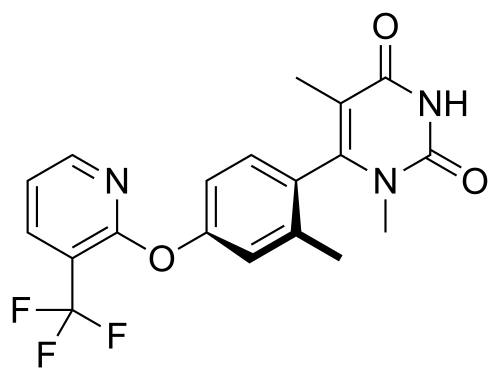
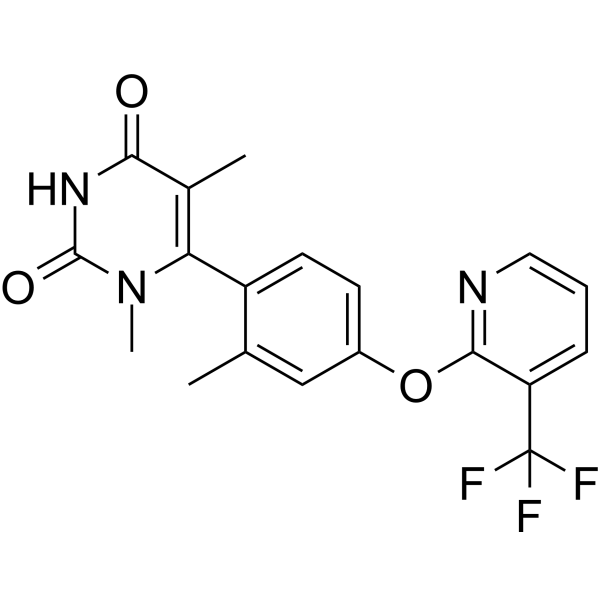
Tavapadon
- CAS No.:1643489-24-0
- Formula:C19H16F3N3O3
- Molecular Weight:391.34
9/25/2026, Juvmo, FDA 2026, APPROVALS 2026, CEREVEL, CVL 751, PF 6649751, PF-06649751,
To treat Parkinson’s disease in adults
Tavapadon (PF-06649751) is an orally active and highly selective dopamine D1/D5 receptor partial agonist. Tavapadon is effective in enabling movement and reducing disability and has the potential for Parkinson’s disease.
Tavapadon (developmental code names CVL-751, PF-06649751) is a dopamine receptor agonist which is under development for the treatment of Parkinson’s disease.[2][3][4] It is under development by Cerevel Therapeutics, which acquired tavapadon from Pfizer in 2018.[2] It is taken by mouth.[1]
Tavapadon acts as a highly selective partial agonist of the dopamine D1 receptor (Ki = 9 nM; IATooltip Intrinsic activity = 65%) and the dopamine D5 receptor (Ki = 13 nM; IA = 81%).[3][4][1] It has no significant affinity or functional activity at the D2-like receptors (D2, D3, D4) (Ki ≥ 4,870 to 6,720 nM).[1] Tavapadon also shows biased agonism for Gs-coupled signaling at the D1-like receptors.[1][3]
As of December 2024, tavapadon has completed phase 3 clinical trials for Parkinson’s disease.[2]
- OriginatorPfizer
- DeveloperCerevel Therapeutics; Pfizer
- ClassAntiparkinsonians; Small molecules
- Mechanism of ActionDopamine D1 receptor agonists; Dopamine D5 receptor agonists
- registrationParkinson’s disease
- 01 Dec 2025Cerevel Therapeutics completes a phase III TEMPO-4 trial in Parkinson Disease (In adults, In elderly in the US, Australia, Bulgaria, Canada, Czechia, France, Germany, Hungary, Israel, Italy, Poland, Serbia, Spain, and Ukraine (PO) (NCT04760769)
- 28 Nov 2025No recent reports of development identified for phase-I development in Parkinson’s-disease(In volunteers) in USA (PO, Tablet)
- 26 Sep 2025Preregistration for Parkinson’s disease (Early-stage disease, In the elderly, In adults) in USA (PO)
The industrial synthesis of tavapadon typically proceeds via a convergent sequence:
- Ether Formation: Coupling of a substituted phenol derivative (such as a 4-hydroxy-2-methylphenyl component) with a 2-halogenated-3-(trifluoromethyl)pyridine (e.g., 2-chloro-3-trifluoromethylpyridine) via nucleophilic aromatic substitution ($S_NAr$) or transition-metal-catalyzed cross-coupling to construct the biaryl ether framework.
- Pyrimidine Ring Construction / Functionalization: Assembly or modification of the 1,5-dimethylpyrimidine-2,4-dione core onto the substituted aryl backbone, often utilizing base-catalyzed cyclizations (e.g., using methylating agents and urea/amide derivatives).
- Chiral Resolution / Final Purification: Final isolation of the target enantiomer or specific crystalline form (as outlined in WO2023102087A1 and WO2023143321) to meet active pharmaceutical ingredient (API) regulatory grades.
PAT
W02014207601
Examples 7 and 8
https://patentscope.wipo.int/search/en/detail.jsf?docId=WO2014207601&_cid=P12-MUKNR1-83868-1
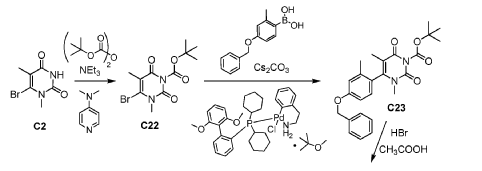
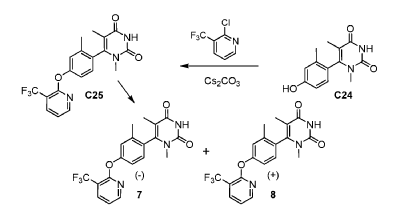
Step 1. Synthesis of tert-butyl 4-bromo-3,5-dimethyl-2,6-dioxo-3,6-dihydropyrimidine-1(2H)-carboxylate (C22).
Compound C2 (800 mg, 3.65 mmol), di-tert-butyl dicarbonate (99%, 966 mg, 4.38 mmol), triethylamine (0.62 mL, 4.4 mmol) and 4-(dimethylamino)pyridine (45 mg, 0.36 mmol) were combined in tetrahydrofuran (15 mL) and heated to 70 °C for 1 hour, then allowed to stir at room temperature for 18 hours. The reaction mixture was concentrated in vacuo, and the residue was purified via chromatography on silica gel (Gradient: 10% to 25% ethyl acetate in heptane) to provide the product as a white solid. Yield: 1.10 g, 3.45 mmol, 94%. 1H NMR (400 MHz, CDCl3) δ 3.64 (s, 3H), 2.12 (s, 3H), 1.61 (s, 9H).
Step 2. Synthesis of ten-butyl 4-[4-(benzyloxy)-2-methylphenyl]-3,5-dimethyl-2,6-dioxo-3,6-dihydropyrimidine-1(2H)-carboxylate ( C23).
A mixture of C22 (1.00 g, 3.13 mmol), [4-(benzyloxy)-2-methylphenyl]boronic acid (98%, 1.16 g, 4.68 mmol), chloro(2-dicyclohexylphosphino-2′,6′-dimethoxy-1,1′-biphenyl)[2-(2-aminoethylphenyl)]palladium(II) – tert-butyl methyl ether adduct (S-Phos precatalyst) (119 mg, 0.156 mmol), and cesium carbonate (3.06 g, 9.39 mmol) in 2-methyltetrahydrofuran (10 mL) and water (3 mL) was heated at 50 °C for 66 hours. The reaction mixture was diluted with water and ethyl acetate, and then filtered to remove suspended solids. The filtrate was extracted several times with ethyl acetate, and the combined organic layers were washed with saturated aqueous sodium chloride solution, dried over magnesium sulfate, filtered, and concentrated in vacuo. The resulting solid was suspended in a 1:3 mixture of ethyl acetate and heptane, stirred for several minutes, and filtered, providing the product as a white solid. Yield: 970 mg, 2.22 mmol, 71%. LCMS m/z 337.2 [(M-Boc)+H]+. 1H NMR (400 MHz, CDCl3) δ 7.34-7.48 (m, 5H), 6.91-7.01 (m, 3H), 5.10 (s, 2H), 3.01 (s, 3H), 2.16 (br s, 3H), 1.66 (s, 9H), 1.64 (s, 3H).
Step 3. Synthesis of 6-(4-hydroxy-2-methylphenyl)-1,5-dimethylpyrimidine-2,4(1H,3H)-dione (C24).
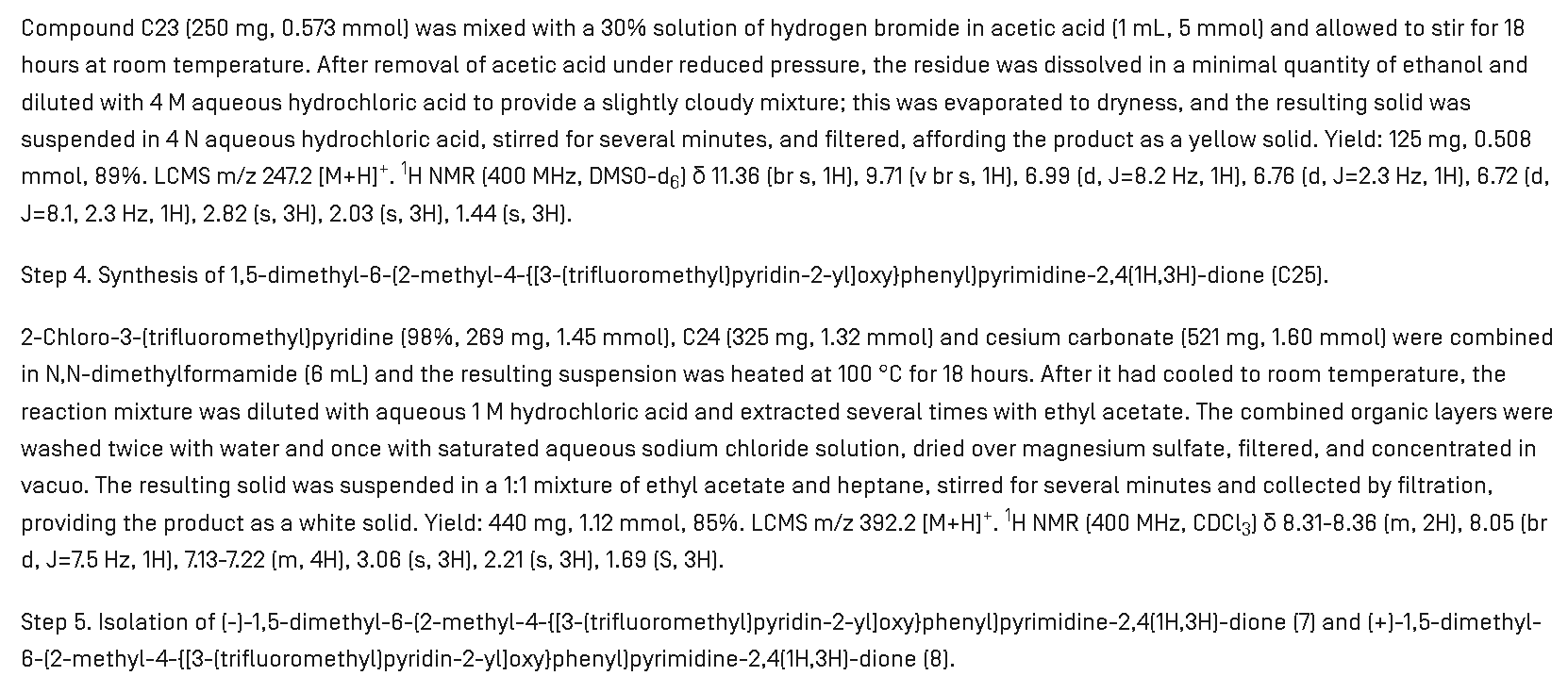
Racemate C25 (1.30 g, 3.32 mmol) was separated into its atropenantiomers via chiral chromatography (Column: Phenomenex Lux Cellulose-2; Gradient: heptane / ethanol). The first-eluting atropenantiomer, obtained as a tan solid that exhibited a negative (-) rotation, was designated as Example 7. Yield: 536 mg, 1.37 mmol, 41%. The second-eluting atropenantiomer, also obtained as a tan solid but with a positive (+) rotation, was designated as Example 8. Yield: 553 mg, 1.41 mmol, 42%. 7: LCMS m/z 392.2 [M+H]+. 1H NMR (400 MHz, CDCl3) δ 8.34 (ddq, J=4.9, 1.9, 0.6 Hz, 1H), 8.30 (br s, 1H), 8.05 (ddq, J=7.6, 1.9, 0.7 Hz, 1H), 7.13-7.21 (m, 4H), 3.06 (s, 3H), 2.21 (br s, 3H), 1.69 (s, 3H). 8: LCMS m/z 392.2 [M+H]+. 1H NMR (400 MHz, CDCl3) δ 8.34 (br d, J=4.9 Hz, 1H), 8.30 (br s, 1H), 8.05 (br d, J=7.5 Hz, 1H), 7.13-7.22 (m, 4H), 3.06 (s, 3H), 2.21 (br s, 3H), 1.69 (s, 3H).
PAT
WO2015162084 SIMILAR
https://patentscope.wipo.int/search/en/detail.jsf?docId=WO2015162084&_cid=P12-MUKNEL-70374-1
PAT
US9334247
PAT
WO2023102087A1
https://patentscope.wipo.int/search/en/detail.jsf?docId=WO2023102087&_cid=P12-MUKNKO-77090-1
Tavapadon, 1 , 5-dimethy I -6-(2-methy 1 -4- { [3 -(tri fluoromethyl)pyri din-2-yl]oxy}phenyl)pyrimidine-2,4(lH,3H)-dione has the following chemical structure:
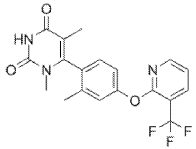
and is described in International Publication No. W02014/207601. As disclosed in International Publication No. W02014/207601, the class of compounds encompassing Tavapadon, may exist as conformational isomers due to hindered rotation about a single bond, i.e., atropisomerism. In the case of Tavapadon, the atropenantiomers or atropisomers may be designated as (-)-Tavapadon or (+)-Tavapadon, depending on the optical rotation, and can include any mixture thereof, including a racemic mixture, wherein the racemic mixture can be designated as (±)-Tavapadon. According to International Publication No.
W02014/207601, the compound Tavapadon may be obtained as a racemate (i.e., (±)-Tavapadon), which may be separated by chiral chromatography into two atropenantiomers. The atropisomer exhibiting an anticlockwise (negative) rotation on a polarimeter is denoted the (-)-atropenantiomer [i.e., (-)-Tavapadon], and the atropisomer exhibiting a clockwise (positive) rotation on a polarimeter is denoted the (+)-atropenantiomer [i.e., (+)-Tavapadon],
PAT
WO2023143321 (or corresponding US20250145588A1 / CN115974803A equivalents)
ADVERTISEMENT
ANAX LABORATORIES
WEBSITE https://www.anaxlab.com/
Discovery Solutions, Supporting the chemistry needs of clients in the Medical, Analytical and Bio Sciences
Development Solutions, Developing from Lab scale to PR&D, Kilo Scale-ups and Commercial Scales
SEE MORE………Integrated Solutions, Manufacturing Solutions, Products,
Can’t Find? Let’s Connect

Phone : +91 897704 2010 / +91 9177075735, Email : info@anaxlab.com
#MedicinalChemistry, #DrugDiscovery, #OrganicSynthesis, #ChemicalLibrary, #BuildingBlocks, #SARStudies, #ChemistryInnovation, #medchem, #Drugdevelopment, #Biotech, #Biotechnology, #AnaxLaboratories, #Pharma



AS ON FEB2026 4.574 LAKHS VIEWS ON BLOG WORLDREACH AVAILABLEFOR YOUR ADVERTISEMENT
join me on Linkedin
Anthony Melvin Crasto Ph.D – India | LinkedIn
join me on Researchgate
RESEARCHGATE

join me on Facebook
Anthony Melvin Crasto Dr. | Facebook
join me on twitter
Anthony Melvin Crasto Dr. | twitter
+919321316780 call whatsaapp
EMAIL. amcrasto@gmail.com

References
 | |
| Clinical data | |
|---|---|
| Other names | CVL-751; PF-6649751; PF-06649751 |
| Routes of administration | By mouth[1] |
| Drug class | Dopamine receptor agonist |
| Identifiers | |
| IUPAC name | |
| CAS Number | 1643489-24-0 |
| PubChem CID | 86764100 |
| ChemSpider | 48062699 |
| UNII | PT4P8MJP8L |
| KEGG | D11431 |
| ChEMBL | ChEMBL3697617 |
| CompTox Dashboard (EPA) | DTXSID301337071  |
| Chemical and physical data | |
| Formula | C19H16F3N3O3 |
| Molar mass | 391.350 g·mol−1 |
| 3D model (JSmol) | Interactive image |
| SMILES | |
| InChI | |
References
- Bezard E, Gray D, Kozak R, Leoni M, Combs C, Duvvuri S (2024). “Rationale and Development of Tavapadon, a D1/D5-Selective Partial Dopamine Agonist for the Treatment of Parkinson’s Disease”. CNS Neurol Disord Drug Targets. 23 (4): 476–487. doi:10.2174/1871527322666230331121028. PMC 10909821. PMID 36999711.
Tavapadon is a highly selective partial agonist at D1 and D5 dopamine receptors, [52] with little to no functional activity at D2, D3, or D4 receptors in vitro (unpublished data). Assays measuring the displacement of radioligand binding in cell lines expressing recombinant human dopamine receptors have shown that tavapadon has a high affinity for both D1 (Ki = 9 nM) and D5 (Ki = 13 nM) (unpublished data). Conversely, tavapadon had a low affinity at D2 (Ki ≥ 6210 nM), D3 (Ki ≥ 6720 nM), and D4 (Ki ≥ 4870 nM) (unpublished data). […] In vitro assays of functional activity have confirmed that tavapadon acts as a partial agonist by binding at D1 and D5 receptors, corresponding to 65% and 81% of dopamine’s intrinsic activity, respectively, and inducing functional receptor activation, with half-maximal effective concentration (EC50) values of 19 nM and 17 nM (unpublished data).
- “Tavapadon – Cerevel Therapeutics”. Adis Insight. Springer Nature Switzerland AG.
- Cerri S, Blandini F (December 2020). “An update on the use of non-ergot dopamine agonists for the treatment of Parkinson’s disease”. Expert Opinion on Pharmacotherapy. 21 (18): 2279–2291. doi:10.1080/14656566.2020.1805432. PMID 32804544. S2CID 221163451.
- Hall A, Provins L, Valade A (January 2019). “Novel Strategies To Activate the Dopamine D1 Receptor: Recent Advances in Orthosteric Agonism and Positive Allosteric Modulation”. Journal of Medicinal Chemistry. 62 (1): 128–140. doi:10.1021/acs.jmedchem.8b01767. PMID 30525590. S2CID 54469910.
////////tavapadon, anax labs, Juvmo, FDA 2026, APPROVALS 2026, CEREVEL, CVL 751, PF 6649751, PF-06649751,
#tavapadon, #anax labs, #Juvmo, #FDA 2026, #APPROVALS 2026, #CEREVEL, #CVL 751, #PF 6649751, #PF-06649751,
Solangepras
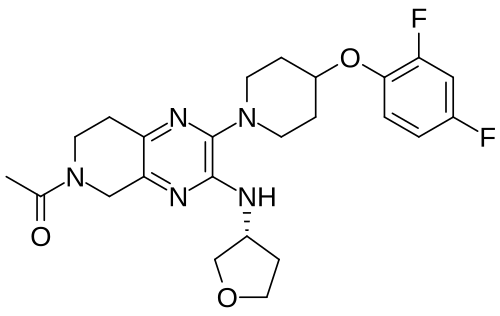
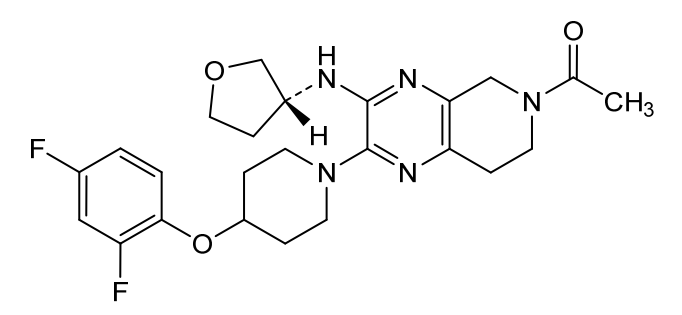
Solangepras
CAS 2254706-21-1
MF C24H29F2N5O3 MW473.525 g/mol
ETHANONE, 1-(2-(4-(2,4-DIFLUOROPHENOXY)-1-PIPERIDINYL)-7,8-DIHYDRO-3-(((3R)-TETRAHYDRO-3-FURANYL)AMINO)PYRIDO(3,4-B)PYRAZIN-6(5H)-YL)-
1-(2-[4-(2,4-difluorophenoxy)piperidin-1-yl]-3-{[(3R)-oxolan-3-yl]amino}-7,8-dihydropyrido[3,4-b]pyrazin-6(5H)-yl)ethan-1-one
G protein-coupled receptor 6 (GCPR6) inverse agonist, antiparkinsonian, CVN 424, PHASE 3, Parkinson’s disease
Solangepras (developmental code name CVN-424, also spelled solengepras) is an investigational, orally active small molecule drug currently in Phase 3 clinical trials for the treatment of Parkinson’s disease. Developed by the biotech company Cerevance, it represents a potentially first-in-class non-dopaminergic therapy designed to improve motor control without the debilitating side effects often triggered by traditional dopamine replacements.
Mechanism of Action
Unlike standard Parkinson’s treatments (such as levodopa) that directly target and stimulate dopamine pathways, solangepras utilizes an innovative, highly targeted pathway:
- GPR6 Inverse Agonist: It selectively targets the G protein-coupled receptor 6 (GPR6), an orphan receptor primarily localized in the striatopalidal medium spiny neurons of the basal ganglia.
- Modulating the “Brake” Circuit: In Parkinson’s disease, the indirect brain circuit that inhibits unwanted movement acts as an overactive “brake”. By decreasing intracellular cyclic AMP (cAMP) levels, solangepras reduces this excessive inhibitory signaling.
- Restoring Circuit Balance: It restores balance to the basal ganglia circuit, facilitating better motor function without causing dopamine-related side effects like levodopa-induced dyskinesia (involuntary movements).
Clinical Trial Status
Solangepras is being evaluated across different stages of Parkinson’s disease, shifting focus primarily toward combination therapy:
| Clinical Trial / Phase | Treatment Type | Results & Focus |
|---|---|---|
| Phase 2 (ASCEND Trial) | Monotherapy (Early, untreated patients) | Missed its primary endpoint. It did not demonstrate superior efficacy alone for early-stage patients, though it showed positive trends in non-motor symptoms. |
| Phase 2 (NCT04191577) | Adjunctive Therapy (Combination with levodopa) | Successful. Demonstrated a clinically meaningful reduction in daily “OFF time” (periods when standard medication wears off and symptoms return) and increased “ON time” without dyskinesia. |
| Phase 3 (ARISE Trial) | Adjunctive Therapy | Ongoing. Dosing began late last year to assess efficacy in 330 patients experiencing motor fluctuations, focusing on long-term daily OFF-time reduction. |
Chemical & Research Profile
In scientific and laboratory settings, the compound is detailed as follows:
- Chemical Name: 1-[2-[4-(2, 4-difluorophenoxy)piperidin-1-yl]-3-[[(3R)-oxolan-3-yl, amino]-7,8-dihydro-5H-pyrido[3, 4-b, pyrazin-6-yl]ethanone.
- Molecular Formula: C₂₄H₂₉F₂N₅O₃ with a molecular weight of 473.52 g/mol.
- Identifiers: Registered under CAS number 2254706-21-1
- OriginatorCerevance
- ClassAntiparkinsonians; Cyclic ethers; Fluorobenzenes; Furans; Ketones; Phenyl ethers; Piperidines; Pyrazines; Pyridines; Small molecules
- Mechanism of ActionGPR6 protein inhibitors
- Phase IIIParkinson’s disease
- 20 Mar 2026Chemical structure information added.
- 05 Dec 2025Efficacy data from a phase II ASCEND trial in Parkinson’s disease released by Cerevance
- 01 Apr 2025Adverse events and efficacy data from a phase II ASCEND trial in Parkinson’s disease released by Cerevance
Solangepras (INNTooltip International Nonproprietary Name; developmental code name CVN-424), or solengepras (USANTooltip United States Adopted Name), is an inverse agonist of the orphan G protein-coupled receptor 6 (GPR6) which is under development for the treatment of Parkinson’s disease.[1][2][3][4] It is a small molecule and is taken by mouth.[1][4] Solangepras produces hyperlocomotion and reverses haloperidol-induced catalepsy in rodents.[4] It is being developed by Cerevance.[1][2] As of October 2024, solangepras is in phase 3 clinical trials.[1][2]
PATENTS
WO 2015/095728 A1 (PCT Application)
https://patentscope.wipo.int/search/en/detail.jsf?docId=WO2015095728&_cid=P21-MUEWTH-04566-1
[00653] Example 149 (5)-l-(2-(4-(2,4-difluorophenoxy)piperidin-l-yl)-3-(tetrahydrofuran-3-ylamino)-7,8-dihydropyrido[3,4-/?]pyrazin-6(5H)-yl)ethanone
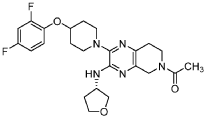
[00654] To a solution of (5)-2-(4-(2,4-difluorophenoxy)piperidin-l-yl)-N-(tetrahydrofuran-3-yl)pyrido[3,4-Z?]pyrazin-3-amine (2.0 g, 4.68 mmol) in dioxane:acetone (50 ml; 1.5: 1) was added Ac20 (4.8 mL, 50.9 mmol) and Pd/C (400 mg, 3.76 mmol); then, the reaction was stirred at 60 °C under ¾ atmosphere (345 kPa) for 72 h. The mixture was filtered through a pad of Celite™ and washed with EtOAc. The reaction solution was diluted with EtOAc (50 mL) and poured into sat. aqueous aHC03 (50 ml), then washed with brine (2 x 30 mL). The organic layer was dried over Na2S04 and concentrated to give the crude product, which was purified by flash column chromatography to yield the title compound (193.4 mg) as an off-white solid. XH NMR (400 MHz, DMSO-i/6) δ ppm 1.88-1.89 (m, 4H), 2.05-2.09 (m, 4H), 2.60-2.90 (m, 4H), 3.30-3.40 (m, 4H), 3.55-3.57 (m, 1H), 3.68-3.74 (m, 2H), 3.85-3.95 (m, 2H), 4.38-4.51 (m, 4H), 5.91 (dd, J= 6.0, 4.4 Hz, 1H), 7.01 (m, 1H), 7.25-7.31 (m, 2H); ESI-MS m/z [M+H]+ 474.3.
PAT
US 10,406,157 B2 / US 2018/0360831 A1
https://patentscope.wipo.int/search/en/detail.jsf?docId=US235206887&_cid=P21-MUEX2M-11550-1.
Example 1: (R)-1-(2-(4-(2,4-difluorophenoxy)piperidin-1-yl)-3-((tetrahydrofuran-3-yl)amino)-7,8-dihydropyrido[3,4-b]pyrazin-6(5H)-yl)ethan-1-one
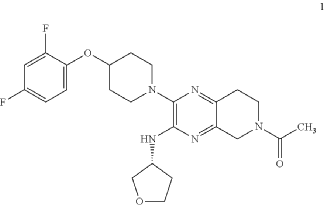
To a flask charged with (R)-2-(4-(2,4-difluorophenoxy)piperidin-1-yl)-N-(tetrahydrofuran-3-yl)pyrido[3,4-b]pyrazin-3-amine (16 g, 37.4 mmol) in HOAc (80 mL) and THF (80 mL) was added acetic anhydride (17.66 mL, 187 mmol) under nitrogen. Palladium on carbon (10%, Aldrich 205699-10G, Lot #MKBZ3284V) (3.19 g, 2.99 mmol) was added under nitrogen. The flask was connected to a hydrogen-filled balloon and was evacuated with house vacuum and refilled with hydrogen eight times. The reaction mixture was stirred under hydrogen for 40 hours and then filtered through a pad of CELITE®, taking care not to let the cake dry out. The flask and filter cake were rinsed with EtOAc (48 mL), methanol (48 mL) and EtOAc (48 mL). The filtrate was concentrated in vacuo to remove THF, EtOAc and methanol (bath temperature ≤40° C.). The solution was diluted with heptane (480 mL) and reconcentrated in vacuo to azetrope off HOAc (bath temperature ≤45° C.). The residue was taken up in iPrOAc (320 mL), washed with 10 wt % aqueous K2CO 3 (320 mL, 230 mmol) (pH 13 before wash, pH 10 after wash) and brine (240 mL, pH 7 after wash), dried over MgSO 4, concentrated in vacuo and dried under house vacuum for at least 1 hour to give a light yellow solid (16.71 g). The crude product was taken up in ethanol (84 mL) and was heated in an oil bath with stirring. After the solids were dissolved, the solution was allowed to cool slowly in the oil bath with stirring, during which a precipitate started to form, and the solution became cloudy. The mixture was allowed to cool to ambient temperature in the oil bath and was stirred overnight. Following recrystallization, the white solid was collected by vacuum filtration, rinsed with ice-cold ethanol, and dried under high vacuum to give the title compound as a white solid (13.34 g, 75%). 1H NMR (500 MHz, DMSO-d 6) δ ppm 1.81-2.00 (m, 3H), 2.02-2.12 (m, 5H), 2.14-2.24 (m, 1H), 2.60 (t, J=5.61 Hz, 1H), 2.72 (t, J=5.86 Hz, 1H), 2.84-2.96 (m, 2H), 3.26-3.32 (m, 2H), 3.56 (dt, J=8.79, 5.13 Hz, 1H), 3.65-3.78 (m, 3H), 3.81-3.94 (m, 2H), 4.33-4.47 (m, 3H), 4.52 (tt, J=8.18, 4.03 Hz, 1H), 5.91 (dd, J=13.42, 6.10 Hz, 1H), 6.97-7.05 (m, 1H), 7.24-7.36 (m, 2H); ESI-MS m/z [M+H] + 474; mp 150° C. (DSC peak); chiral purity (via chiral column chromatography)>98% ee.
PAT
WO 2018/209255 / US 10,406,157 B2
PAT
WO 2025/160132
ADVERTISEMENT
ANAX LABORATORIES
WEBSITE https://www.anaxlab.com/
Discovery Solutions, Supporting the chemistry needs of clients in the Medical, Analytical and Bio Sciences
Development Solutions, Developing from Lab scale to PR&D, Kilo Scale-ups and Commercial Scales
SEE MORE………Integrated Solutions, Manufacturing Solutions, Products,
Can’t Find? Let’s Connect
Phone : +91 897704 2010 / +91 9177075735, Email : info@anaxlab.com
#MedicinalChemistry, #DrugDiscovery, #OrganicSynthesis, #ChemicalLibrary, #BuildingBlocks, #SARStudies, #ChemistryInnovation, #medchem, #Drugdevelopment, #Biotech, #Biotechnology, #AnaxLaboratories, #Pharma
AS ON FEB2026 4.574 LAKHS VIEWS ON BLOG WORLDREACH AVAILABLEFOR YOUR ADVERTISEMENT
join me on Linkedin
Anthony Melvin Crasto Ph.D – India | LinkedIn
join me on Researchgate
RESEARCHGATE
join me on Facebook
Anthony Melvin Crasto Dr. | Facebook
join me on twitter
Anthony Melvin Crasto Dr. | twitter
+919321316780 call whatsaapp
EMAIL. amcrasto@gmail.com
References
 | |
| Clinical data | |
|---|---|
| Other names | Solengepras; CVN-424; CVN424 |
| Routes of administration | Oral[1] |
| Drug class | GPR6 inverse agonist |
| Identifiers | |
| IUPAC name | |
| CAS Number | 2254706-21-1 |
| PubChem CID | 137359492 |
| DrugBank | DB18958 |
| ChemSpider | 114869317 |
| UNII | XO01711URG |
| KEGG | D12980 |
| ChEMBL | ChEMBL4778540 |
| Chemical and physical data | |
| Formula | C24H29F2N5O3 |
| Molar mass | 473.525 g·mol−1 |
| 3D model (JSmol) | Interactive image |
| SMILES | |
| InChI | |
- “Solengepras”. AdisInsight. 21 October 2024. Retrieved 25 February 2025.
- “Delving into the Latest Updates on CVN-424 with Synapse”. Synapse. 5 February 2025. Retrieved 25 February 2025.
- Gros P, Garcia LA, Fox SH (2025). “Experimental Therapeutics in Parkinson’s Disease”. Neurologic Clinics. 43 (2): 399–426. doi:10.1016/j.ncl.2024.12.013. PMID 40185528.
- Brice NL, Schiffer HH, Monenschein H, Mulligan VJ, Page K, Powell J, et al. (June 2021). “Development of CVN424: A Selective and Novel GPR6 Inverse Agonist Effective in Models of Parkinson Disease”. The Journal of Pharmacology and Experimental Therapeutics. 377 (3): 407–416. doi:10.1124/jpet.120.000438. PMID 33795395.
External links
////////////solangepras, anax labs, G protein-coupled receptor 6 (GCPR6) inverse agonist, antiparkinsonian, CVN 424, PHASE 3, Parkinson’s disease
#solangepras, #anax labs, #G protein-coupled receptor 6 (GCPR6) inverse agonist, #antiparkinsonian, #CVN 424, #PHASE 3, #Parkinson’s disease
Pariceract
Pariceract
CAS 1919820-28-2
MFC20H30N4O2 MW358.5 g/mol
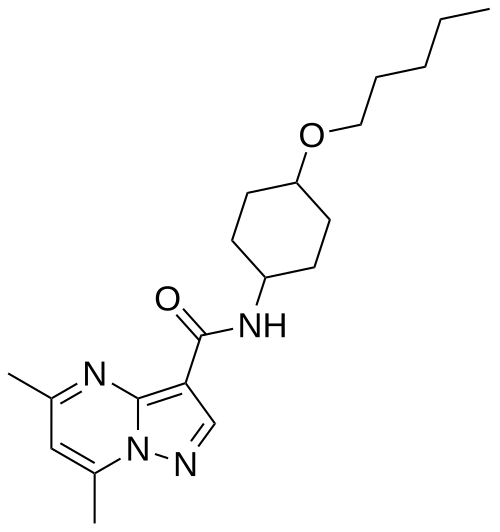
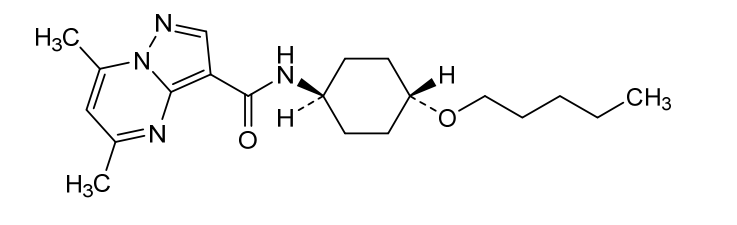
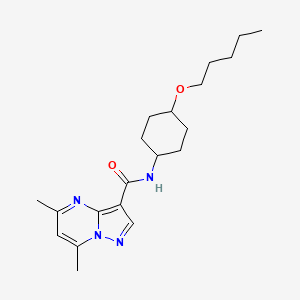
- 5,7-dimethyl-N-((1r,4r)-4-(pentyloxy)cyclohexyl)pyrazolo[1,5-a]pyrimidine-3-carboxamide
- 5,7-Dimethyl-N-(4-pentoxycyclohexyl)pyrazolo[1,5-a]pyrimidine-3-carboxamide
- Pyrazolo(1,5-a)pyrimidine-3-carboxamide, 5,7-dimethyl-N-(trans-4-(pentyloxy)cyclohexyl)-
5,7-dimethyl-N-[trans-4-(pentyloxy)cyclohexyl]pyrazolo[1,5-a]pyrimidine-3-carboxamide
beta-glucocerebrosidase activator, antiparkinsonian, BIA 28-6156, LTI-291, LIT291, LTI-00291, BIA28-6156, LTI- 91, LIT 291, LTI 00291, Gcase activator 1, V9WUN9UUU8
Pariceract (INNTooltip International Nonproprietary Name; developmental code name BIA 28-6156 or LTI-291) is a β-glucocerebrosidase (GCase) activator or positive allosteric modulator which is under development for the treatment of Parkinson’s disease.[1][2][3][4][5] It is taken orally.[1] GCase is a lysosomal enzyme encoded by the gene GBA1.[4][5] Loss-of-function mutations in this gene are thought to promote α-synuclein accumulation and are among the leading genetic risk factors for Parkinson’s disease.[4][5][6] As such, activation of GCase might provide a disease-modifying therapy for treatment of Parkinson’s disease.[4][5] Pariceract was first described in the scientific literature by 2017.[6] It was originated by Lysosomal Therapeutics and is under development by Lysosomal Therapeutics and Bial.[1][2][3] As of October 2025, it is in phase 2 clinical trials.[1][2][3]
PAT
PAT
https://patentscope.wipo.int/search/en/detail.jsf?docId=WO2025198486&_cid=P12-MS41BL-88178-1
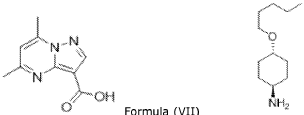
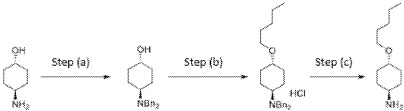
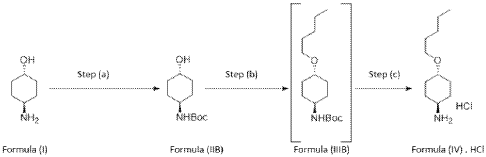
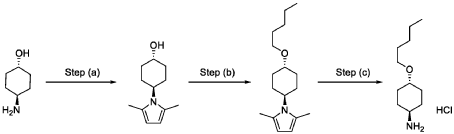
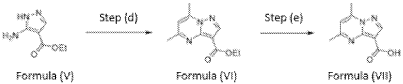
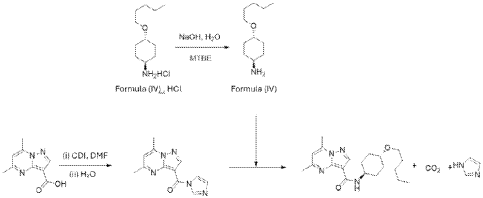
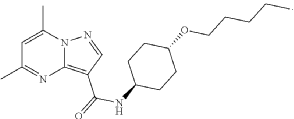
Example 3 – Preparation of 5,7-dimethyl-/V-((l/?,4/?)-4- (pentyloxy)cyclohexyl)pyrazolo[1,5-a]pyrimidine-3-carboxamide (Compound of Formula (A))
[00168] Part 1 : Under nitrogen atmosphere, purified water (41.32 L, 2.0 V) and NaOH (5.99 kg, 1.4 eq.) were charged to a reactor at 20 °C; after this, purified water (10.33 L, 0.5 V) was added to wash the walls and the solution was left stirring for 0.5-3 hours until the solid was dissolved; the solution was transferred from the reactor to a clean drum.
[00169] Part 2: Under nitrogen atmosphere, purified water (30.99 L, 1.5 V) and NaCI
(2.27 kg, 0.11 wt.%) were charged to the reactor at 20 °C; after this, purified water (10.33 L, 0.5 V) was charged to wash the walls and the solution was left stirring for 0.5-3 hours until the solid was dissolved; the solution was transferred from the reactor to a clean drum.
[00170] Part 3: Under nitrogen atmosphere, purified water (62 L, 3.0 V) and the compound of Formula (IV) in HCI salt form (27.84 kg, 1.15 eq.), from step 3 of Example 1, were charged to the reactor at 25 °C; after this, purified water (16.5 L, 0.8 V) was charged to wash the walls and then MTBE (165.28 L, 8.0 V) was charged to the reactor and the solution was left stirring for 0.5-1 hour; after this, the solution was cooled down to 5 °C and the NaOH (5.99 kg, 1.4 eq.) aqueous solution (prepared in advance in part 1) was charged in 0.5-2 hours; then, the temperature of the reaction mixture was increased to 25 °C and it was left stirring for 1-3 hours. The agitation was stopped, and the phases were separated. The organic phase was washed two times: the first with 5% NaCI aqueous (41.32 L, 2.0 V) prepared in advance in part 2 and the second with purified water (41.32 L, 2.0 V). Then, the organic phase was concentrated under vacuum until the total volume was 51.65 L – 72.31 L (2.5-3.5 V). MTBE (62 L, 3.0 V) was charged to the reactor and the solution was concentrated under vacuum until the total volume was 51.65 L – 72.31 L (2.5-3.5 V).
[00171] Part 4: Under nitrogen atmosphere, DMF (92.97 L, 4.5 V), the compound of Formula (VII) (20.66 kg, 1.0 eq.), from step 2 of Example 2, and l,l’-carbonyldiimidazole (21.07 kg, 1.2 eq.) were charged to the reactor at 25 °C; DMF (10.33 L, 0.5 V) was added to wash the walls. The temperature of the reaction mixture was increased to 28 °C, and it was left stirring for 2-5 hours. If necessary, charge additional l,l’-carbonyldiimidazole (1.76 kg, 0.1 eq.) to the reactor at 28 °C and leave it stirring for 2-5 hours. After this, purified water (1.178 kg, 0.6 eq.) was charged to the reactor and it was left stirring for 1-4 hours. Under nitrogen atmosphere, the compound of Formula (IV) Free Base in MTBE solution (27.84 kg ,1.15 eq.), from Part 3, was charged to the reactor in 1-2 hours; MTBE (4.132 L, 0.2 V) was charged to rinse the drum and then it was transferred to the reactor. The solution was left stirring for 16-24 hours and then DMF (20.66 L, 1.0 V) was charged to the reactor. The solution was concentrated under vacuum until the total volume was 123.96 L – 165.28 L (6.0-8.0 V).
[00172] Part 5: The reaction mixture temperature was increased to 40 °C and purified water (41.32 L, 2.0 V) was added dropwise to the reactor in 1-2 hours; the reaction mixture was left stirring for 2-5 hours before cooling down to 20 °C; the slurry was left stirring for 10-15 hours and then purified water (82.64 L, 4.0 V) was added dropwise in 1-3 hours to the reactor; the slurry was left stirring for 3-6 hours. After this, the solid was centrifuged and the cake was washed with DMF:H2O (1: 1, 20.66 L, 1.0 V x 2) two times and then washed with purified water (41.32 L, 2.0 V) one time*. The cake was dried under vacuum at 55 °C for 15-24 hours and 32.35 kg were obtained (83.3% yield and 100% purity by HPLC).
* In one campaign, at this stage the wet cake was dissolved in acetonitrile (25.5 V), the temperature adjusted to 27°C and stirred for 2-6 hours. The solution was filtered via a polish filter (0.22 pirn). The solution was concentrated under vacuum to 5.0 – 7.0 V at a temperature below 35°C. The temperature was adjusted to 20°C and purified water was added (14.0 V) in 2-4 hours. The slurry was stirred for 4-8 hours at 20°C, and afterwards filtered and washed with purified water (4.0 V).
Example 4 – Recrystallisation of 5,7-dimethyl-/V-((l/?,4R)-4- (pentyloxy)cyclohexyl)pyrazolo[1,5-a]pyrimidine-3-carboxamide (Compound of Formula (A))
[00173] Under nitrogen atmosphere, MEK (192 L, 6.0 V) and the compound of Formula (A) from Example 3 in crude (32 kg, 1.0 eq.) were charged to a reactor at 25 °C; MEK (160 L, 5.0 V) was added to wash the walls. The solution was left stirring for 1-3 hours until the solid was dissolved. After this, the solution from the reactor was transferred to a clean drum.
[00174] Under nitrogen atmosphere, the crude compound of Formula (A) in MEK solution was transferred to another reactor via a polish filter. The temperature was set at 17 °C and n-heptane (115.2 kg, 3.6 V) was charged in 2-4 hours. The solution was concentrated under vacuum until the total volume was 320 L – 352 L (10-11 V). In the event that there is no solid precipitation, proceed to the 2nd concentration directly; if there is solid precipitation, take a solid sample for XRPD test, and ensure that the crystal form is polymorph form B; if it is not form B, proceed to the 2nd concentration (and repeat if required). The reactor temperature was kept at 17 °C before cooling down to 0 °C and it was left stirring for 6-12 hours. A solid sample was taken for XRPD test to make sure that the crystal form is form B; if not form B, keep at 0 °C and stir for 6-12 hours; sample solid every 6-10 hours for XRPD until the crystal form is form B. The solid was centrifuged and washed with MEK:n-heptane (1 : 10, 57.6 L, 1.8 V ) and then with n-heptane (57.6 L, 1.8
V). The cake was dried under vacuum at 30 °C for 16-24 hours and 30.67 kg were obtained (95% yield and purity of 100% by HPLC).
PAT
- Substituted pyrazolo[1,5-a]pyrimidines and their use in the treatment of medical disordersPublication Number:US-2017334916-A1Priority Date:2014-11-06
- Substituted pyrazolo[1,5-a]pyrimidines and their use in the treatment of medical disordersPublication Number:US-2025066364-A1Priority Date:2014-11-06
- SUBSTITUTED PYRAZOLO[1,5-a]PYRIMIDINES AND THEIR USE IN THE TREATMENT OF MEDICAL DISORDERSPublication Number:US-2017183354-A1Priority Date:2014-11-06
- Substituted pyrazolo[1,5-a]pyrimidines and their use in the treatment of medical disordersPublication Number:US-9732089-B2Priority Date:2014-11-06Grant Date:2017-08-15
- Substituted pyrazolo[1,5-a]pyrimidines and their use in the treatment of medical disordersPublication Number:US-11091492-B2Priority Date:2014-11-06Grant Date:2021-08-17
- Substituted pyrazolo[1,5-a]pyrimidines and their use in treating medical disorders – Patents.comPublication Number:JP-7519221-B2Priority Date:2014-11-06Grant Date:2024-07-19
- Substituted pyrazolo[1,5-a]pyrimidines and their use in the treatment of medical disordersPublication Number:US-2022169652-A1Priority Date:2014-11-06
- Substituted pyrazolo[1,5-a]pyrimidines and their use in the treatment of medical disordersPublication Number:US-11932645-B2Priority Date:2014-11-06Grant Date:2024-03-19
- Substituted pyrazolo(1,5-a)pyrimidines and their use in the treatment of medical disordersPublication Number:WO-2016073895-A1Priority Date:2014-11-06
- Substituted pyrazolo[1,5-A]pyrimidines and their use in the treatment of medical disordersPublication Number:US-10570135-B2Priority Date:2014-11-06Grant Date:2020-02-25
- Substituted pyrazolo(1,5-a)pyrimidines and their use in the treatment of medical disordersPublication Number:EP-4406616-A2Priority Date:2014-11-06
- Substituted pyrazolo[1,5-a]pyrimidines and their use in the treatment of medical disordersPublication Number:US-2020385390-A1Priority Date:2014-11-06
ADVERTISEMENT
ANAX LABORATORIES
WEBSITE https://www.anaxlab.com/
Discovery Solutions, Supporting the chemistry needs of clients in the Medical, Analytical and Bio Sciences
Development Solutions, Developing from Lab scale to PR&D, Kilo Scale-ups and Commercial Scales
SEE MORE………Integrated Solutions, Manufacturing Solutions, Products,
Can’t Find? Let’s Connect
Phone : +91 897704 2010 / +91 9177075735, Email : info@anaxlab.com
#MedicinalChemistry, #DrugDiscovery, #OrganicSynthesis, #ChemicalLibrary, #BuildingBlocks, #SARStudies, #ChemistryInnovation, #medchem, #Drugdevelopment, #Biotech, #Biotechnology, #AnaxLaboratories, #Pharma
AS ON FEB2026 4.574 LAKHS VIEWS ON BLOG WORLDREACH AVAILABLEFOR YOUR ADVERTISEMENT
join me on Linkedin
Anthony Melvin Crasto Ph.D – India | LinkedIn
join me on Researchgate
RESEARCHGATE
join me on Facebook
Anthony Melvin Crasto Dr. | Facebook
join me on twitter
Anthony Melvin Crasto Dr. | twitter
+919321316780 call whatsaapp
EMAIL. amcrasto@gmail.com
References
References
- “LTI 291”. AdisInsight. Springer Nature Switzerland AG. 15 October 2025. Retrieved 19 February 2026.
- “Delving into the Latest Updates on Pariceract with Synapse”. Synapse. 8 May 2025. Retrieved 19 February 2026.
- “Pariceract Drug Profile”. Ozmosi. 1 January 1900. Retrieved 19 February 2026.
- den Heijer JM, Kruithof AC, Moerland M, Walker M, Dudgeon L, Justman C, et al. (July 2023). “A Phase 1B Trial in GBA1-Associated Parkinson’s Disease of BIA-28-6156, a Glucocerebrosidase Activator”. Movement Disorders. 38 (7): 1197–1208. doi:10.1002/mds.29346. hdl:1887/3722043. PMID 37195859.
- den Heijer JM, Kruithof AC, van Amerongen G, de Kam ML, Thijssen E, Grievink HW, et al. (September 2021). “A randomized single and multiple ascending dose study in healthy volunteers of LTI-291, a centrally penetrant glucocerebrosidase activator”. British Journal of Clinical Pharmacology. 87 (9): 3561–3573. doi:10.1111/bcp.14772. PMC 8451761. PMID 33576113.
- Ellis JM, Fell MJ (September 2017). “Current approaches to the treatment of Parkinson’s Disease”. Bioorganic & Medicinal Chemistry Letters. 27 (18): 4247–4255. doi:10.1016/j.bmcl.2017.07.075. PMID 28869077.
Increased degradation of a-synuclein is another potential mechanism explored in the clinic. Currently, the leading candidates for this approach center on modulating the activity of the Glucocerebrosidase (GBA) pathway. Mutations in GBA are the leading genetic risk factor for sporadic PD and reductions in GBA activity are thought to lead to an accumulation of a-synuclein. Lysosomal Therapeutics is currently developing a brain penetrant, small molecule enhancer of GBA activity called LTI-291 (structure not reported) which is expected to enter Phase 1 testing in 2017.
External links
 | |
| Clinical data | |
|---|---|
| Other names | BIA 28-6156; LTI-291; LIT291; LTI-00291 |
| Routes of administration | Oral[1] |
| Drug class | β-Glucocerebrosidase (GCase) activator or positive allosteric modulator |
| Identifiers | |
| IUPAC name | |
| CAS Number | 1919820-28-2 |
| PubChem CID | 121327414 |
| ChemSpider | 68028144 |
| UNII | V9WUN9UUU8 |
| Chemical and physical data | |
| Formula | C20H30N4O2 |
| Molar mass | 358.486 g·mol−1 |
| 3D model (JSmol) | Interactive image |
| SMILES | |
| InChI | |
////////pariceract, ANAX LABS, beta-glucocerebrosidase activator, antiparkinsonian, BIA 28-6156, LTI-291, LIT291, LTI-00291, BIA28-6156, LTI- 91, LIT 291, LTI 00291, Gcase activator 1, V9WUN9UUU8
#pariceract, #ANAX LABS, #beta-glucocerebrosidase activator, #antiparkinsonian, #BIA 28-6156, #LTI-291, #LIT291, #LTI-00291, #BIA28-6156, #LTI- 91, #LIT 291, #LTI 00291, #Gcase activator 1, #V9WUN9UUU8


