New Drug Approvals
Follow New Drug Approvals on WordPress.com

FLAGS AND HITS

Flag Counter
DRUG APPROVALS BY DR ANTHONY MELVIN CRASTO

Archives

Categories

Join me on Linkedin

View Anthony Melvin Crasto Ph.D's profile on LinkedIn

Join me on Researchgate

Anthony Melvin Crasto Dr.

  Join me on Facebook FACEBOOK   ...................................................................Join me on twitter Follow amcrasto on Twitter     ..................................................................Join me on google plus Googleplus

MYSELF

DR ANTHONY MELVIN CRASTO Ph.D ( ICT, Mumbai) , INDIA 36Yrs Exp. in the feld of Organic Chemistry,Working for AFRICURE PHARMA as ADVISOR earlier with GLENMARK PHARMA at Navi Mumbai, INDIA. Serving chemists around the world. Helping them with websites on Chemistry.Million hits on google, NO ADVERTISEMENTS , ACADEMIC , NON COMMERCIAL SITE, world acclamation from industry, academia, drug authorities for websites, blogs and educational contribution, ........amcrasto@gmail.com..........+91 9323115463, Skype amcrasto64 View Anthony Melvin Crasto Ph.D's profile on LinkedIn Anthony Melvin Crasto Dr.

Enter your email address to follow this blog and receive notifications of new posts by email.

Join 37.8K other subscribers
DR ANTHONY MELVIN CRASTO Ph.D

DR ANTHONY MELVIN CRASTO Ph.D

DR ANTHONY MELVIN CRASTO, Born in Mumbai in 1964 and graduated from Mumbai University, Completed his Ph.D from ICT, 1991,Matunga, Mumbai, India, in Organic Chemistry, The thesis topic was Synthesis of Novel Pyrethroid Analogues, Currently he is working with AFRICURE PHARMA, ROW2TECH, NIPER-G, Department of Pharmaceuticals, Ministry of Chemicals and Fertilizers, Govt. of India as ADVISOR, earlier assignment was with GLENMARK LIFE SCIENCES LTD, as CONSUlTANT, Retired from GLENMARK in Jan2022 Research Centre as Principal Scientist, Process Research (bulk actives) at Mahape, Navi Mumbai, India. Total Industry exp 32 plus yrs, Prior to joining Glenmark, he has worked with major multinationals like Hoechst Marion Roussel, now Sanofi, Searle India Ltd, now RPG lifesciences, etc. He has worked with notable scientists like Dr K Nagarajan, Dr Ralph Stapel, Prof S Seshadri, etc, He did custom synthesis for major multinationals in his career like BASF, Novartis, Sanofi, etc., He has worked in Discovery, Natural products, Bulk drugs, Generics, Intermediates, Fine chemicals, Neutraceuticals, GMP, Scaleups, etc, he is now helping millions, has 9 million plus hits on Google on all Organic chemistry websites. His friends call him Open superstar worlddrugtracker. His New Drug Approvals, Green Chemistry International, All about drugs, Eurekamoments, Organic spectroscopy international, etc in organic chemistry are some most read blogs He has hands on experience in initiation and developing novel routes for drug molecules and implementation them on commercial scale over a 32 PLUS year tenure till date Feb 2023, Around 35 plus products in his career. He has good knowledge of IPM, GMP, Regulatory aspects, he has several International patents published worldwide . He has good proficiency in Technology transfer, Spectroscopy, Stereochemistry, Synthesis, Polymorphism etc., He suffered a paralytic stroke/ Acute Transverse mylitis in Dec 2007 and is 90 %Paralysed, He is bound to a wheelchair, this seems to have injected feul in him to help chemists all around the world, he is more active than before and is pushing boundaries, He has 100 million plus hits on Google, 2.5 lakh plus connections on all networking sites, 100 Lakh plus views on dozen plus blogs, 227 countries, 7 continents, He makes himself available to all, contact him on +91 9323115463, email amcrasto@gmail.com, Twitter, @amcrasto , He lives and will die for his family, 90% paralysis cannot kill his soul., Notably he has 38 lakh plus views on New Drug Approvals Blog in 227 countries......https://newdrugapprovals.wordpress.com/ , He appreciates the help he gets from one and all, Friends, Family, Glenmark, Readers, Wellwishers, Doctors, Drug authorities, His Contacts, Physiotherapist, etc He has total of 32 International and Indian awards

Verified Services

View Full Profile →

Recent Posts

FDA approves new treatment for adults with mantle cell lymphoma


FDA approves new treatment for adults with mantle cell lymphoma

The U.S. Food and Drug Administration today granted accelerated approval to Calquence (acalabrutinib) for the treatment of adults with mantle cell lymphoma who have received at least one prior therapy.

“Mantle cell lymphoma is a particularly aggressive cancer,” said Richard Pazdur, M.D., director of the FDA’s Oncology Center of Excellence and acting director of the Office of Hematology and Oncology Products in the FDA’s Center for Drug Evaluation and Research. “For patients who have not responded to treatment or have relapsed, Calquence provides a new treatment option that has shown high rates of response for some patients in initial studies.” Continue reading.

Enclomiphene citrate, New patent, WO 2017182097, F.I.S. – FABBRICA ITALIANA SINTETICI S.P.A


Image result for F.I.S. - FABBRICA ITALIANA SINTETICI S.P.A

Enclomiphene citrate, New patent, WO 2017182097, F.I.S. – FABBRICA ITALIANA SINTETICI S.P.A

WO-2017182097

F.I.S. – FABBRICA ITALIANA SINTETICI S.P.A

CARUANA, Lorenzo; (IT).
PADOVAN, Pierluigi; (IT).
DAL SANTO, Claudio; (IT)

https://patentscope.wipo.int/search/en/detail.jsf?docId=WO2017182097&recNum=1&maxRec=&office=&prevFilter=&sortOption=&queryString=&tab=PCTDescription

Image result for F.I.S. - FABBRICA ITALIANA SINTETICI S.P.A

Enclomiphene citrate is an active pharmaceutical ingredient currently under evaluation in clinical phase III for the treatment of secondary hypergonadism. Moreover, it also could be potentially used for an adjuvant therapy in hypogonadal men with Type 2 diabetes.

Enclomiphene citrate of formula (I):

has chemical name of Ethanamine, 2-[4-[(1 )-2-chloro-1 ,2-diphenyl ethenyl]phenoxy]-/V,/V-diethyl-, 2-hydroxy-1 ,2,3-propanetricarboxylate (1 : 1 ); has CAS RN. 7599-79-3, and it is also named trans-Clomiphene monocitrate, E-Clomiphene citrate or Enclomiphene monocitrate.

Enclomiphene is component of Clomiphene, an active pharmaceutical ingredient, having chemical name Ethanamine, 2-[4-(2-chloro-1 ,2- diphenylethenyl)phenoxy]-N,N-diethyl, since Clomiphene is a mixture of the geometric isomers trans-Clomiphene (i.e. Enclomiphene) and cis- Clomiphene.

The US patent 3,848,030, in examples 31 and 32, discloses a process for the resolution of the geometric isomers of Clomiphene through the preparation of salts with racemic binaphthyl-phosphoric acid.

In the later publication Acta Cryst. (1976), B32, pag. 291 -293, the actual geometric isomery has been definitely established by single crystal X-Ray diffraction.

Finally, in the publication “Analytical profiles of drug substances and excipients”, vol. 25, (1998), pag. 85-121 , in particular at pag. 99, it is stated that prior to 1976 the cis stereochemistry was wrongly assigned to the trans-isomer of Clomiphene (E-Chlomiphene or Enclomiphene), and only after the above publication on Acta Cryst. the correct geometric isomery has been definitively assigned.

These observations in the prior art have been confirmed by our experimentation. In particular, repeating the experiment 31 of US patent 3,848,030, the trans-Clomiphene salt with racemic binaphthyl-phosphoric acid was isolated and not the salt with cis-Clomiphene as stated in said patent, as confirmed by 2D H-NMR analysis (NOESY experiment). Thus, Example 31 of US3,848,030, provides, at the end, Enclomiphene citrate, crystallized from a mixture of ethyl ether and ethanol, having a m.p. of 133-135°C. Example 32, instead provided Cis-Clomiphene citrate, crystallized from a mixture of ethyl ether and ethanol, having a m.p. of 120-126°C.

Thus, with the aim of preparing Enclomiphene citrate, whole experiment 31 of US3,848,030 has been reworked also carrying out the crystallization of the product form a mixture of ethyl ether and ethanol, hence providing a not crystalline solid with two DSC peaks respectively at 1 14°C and 188°C, although the starting material used for the reworking example was quite a pure substance (HPLC Analysis (A A%) is 98.95% of Enclomiphene), and having a substantially the same chemical purity of that used in the prior art experiment (m.p. of our Enclomiphene BPA salt was 218°C versus 220- 222°C of the prior art Enclomiphene BPA salt of Example 31 ).

The patent US2,914,563, in example 3, discloses a process for the preparation of trans-Clomiphene citrate, containing from 30% to 50% of cis-Clomiphene, as citrate, by reaction of 1 -ρ-(β- diethylaminoethoxy)phenyl]-1 ,2-diphenylethylene hydrochloride with N- chlorosuccinimmide in dry chloroform under reflux.

Khimiko-Farmatsevticheskii Zhurnal (1984), 18(1 1 ), 1318-24 English translation in the review Pharmaceutical Chemistry Journal November 1984, Volume 18, Issue 1 1 , pag. 758-764 (Title: Synthesis and biological study of the cis- and trans-isomers of Clomiphene citrate and some intermediates of its synthesis) discloses the trans-isomer of Clomiphene citrate, i.e. Enclomiphene citrate, characterized by:

1 H-NMR (MeOD) d 7.4-6.7 (m, 14H); 4.27 (t, 2H, -OCH2); 3.51 (t, 2H, CH2- N); 3.28 (q, 4H, 2xN-CH2)); 2.73 (2H); 2.78 (2H); 1.31 (t, 6H, 2xN-C-CHs)) Melting point: 138-139°C (98% purity by GLC);

IR spectrum, v cm-1 (suspension in mineral oil): 3640, 3430, 1720, 1710

(citrate), 1600-1555 (broad band, stilbene system); 750.

UV spectrum: λ max = 243 nm, ε 21 ,800 and λ max 300 nm, ε 1 1 ,400.

These prior art methods for the preparation of Enclomiphene citrate do not allow the preparation of Enclomiphene citrate having needle shaped crystal habit, indeed the crystallization by means of a mixture of ethyl ether and ethanol does not provide a crystalline solid having needle crystals.

Moreover, Enclomiphene citrate was described in literature with different melting points, in particular, 133-135°C and 138-139°C. Said solid forms of Enclomiphene citrate fail to comply with stabilities studies and furthermore show relatively poor solubility in water either in neutral or acid pH.

Furthermore, the prior art methods have the drawbacks related to the poor reproducibility of the process and of the solid form thus obtained.

Image result for F.I.S. - FABBRICA ITALIANA SINTETICI S.P.A

Image result for F.I.S. - FABBRICA ITALIANA SINTETICI S.P.A

EXPERIMENTAL SECTION

The starting material Clomiphene citrate can be prepared according to well-known prior art methods, or for example, as described in the example 1 of PCT/EP2015/074746 or can be purchased on the market.

[00190] Example 1 : Preparation of salt of Enclomiphene with racemic binaphthyl- phosphoric acid, starting from Clomiphene citrate.

Clomiphene citrate

[00191] A round bottom flask was charged 100 gr of Clomiphene Citrate (HPLC analysis (A/A%): 65.21 % Enclomiphene, 34.06% Z-Clomiphene) and 1000 mL of methanol. The suspension was stirred at 30°C up the complete

dissolution. Then a solution of racemic binaphthyl-phosphoric acid (abbreviated BPA) 30 gr (0.515 eq) in 30 ml_ of DMF was added. At the end of addition the mixture was stirred for 1 h at 30°C. The obtained suspension was filtered and the solid was washed with 100 ml_ of methanol.

[00192] 50.4 gr of Enclomiphene BPA salt (III) were obtained.

[00193] HPLC Analysis (A/A%): 97.04% Enchlomiphene, 2.5% Z-Clomiphene.

[00194] Example 1 b: Preparation of salt of Enclomiphene with racemic binaphthyl- phosphoric acid, starting from Clomiphene citrate.

[00195] A round bottom flask was charged 50 gr of Clomiphene Citrate and 500 ml_ of methanol. The suspension was heated at 40-45°C and stirred up to the complete dissolution. Then a solution of BPA 15 gr (0.515 eq) in 300 ml_ of methanol was added. At the end of addition the mixture was stirred for 1 h at 20°C. The obtained suspension was filtered and the solid was washed with 100 ml_ of methanol.

24.1 gr of Enclomiphene BPA salt were obtained.

HPLC Analysis (A/A%): 98.96% Enchlomiphene, 0.69% Z-Clomiphene.

[00196] Example 1 c: Preparation of salt of Enclomiphene with racemic binaphthyl- phosphoric acid, starting from Clomiphene citrate.

[00197] In a round bottom flask was charged 100 gr of Clomiphene Citrate and 1000 ml_ of methanol. The suspension was heated at 40-45°C and stirred up the complete dissolution. Then a solution of BPA 30 gr (0.515 eq) in 1000 ml_ of methanol was added. At the end of addition the mixture was stirred for 1 h at 20°C. the obtained suspension was filtered and the solid was wash with 100 ml_ of methanol.

47.9 gr of Enclomiphene BPA salt were obtained.

HPLC Analysis (A/A%): 98.81 % Enclomiphene, 0.79% Z-Clomiphene.

[00198] Example 1d: Preparation of salt of Enclomiphene with racemic binaphthyl- phosphoric, starting from Clomiphene citrate.

[00199] In a round bottom flask was charged 150 gr of Clomiphene citrate and 1500 mL of methanol. The suspension was heater at 40-45°C and stirred up the complete dissolution. Then a solution of BPA 45 gr (0.515 eq) in 900 mL of methanol was added. At the end of addition the mixture was

stirred for 1 h at 20°C. the obtained suspension was filtered and the solid was wash with 100 ml_ of methanol.

76.4 gr of E-Clomiphene BPA salt were obtained.

HPLC Analysis (A/A%): 98.82% Enchlomiphene, 0.80% Z-Clomiphene.

[00200] Example 2: Recrystallization of Enclomiphene BPA salt of formula (III) (the step A).

(Ill)

[00201] Into a proper 0.5 L reactor, equipped with propeller, temperature probes, condenser; Enclomiphene BPA salt (III) (50 g) and having Z-isomer of 1.64 % was suspended in DMF (2.1 L/Kg of Enclomiphene BPA (III)) and methanol (1.4 L/Kg of Enclomiphene BPA salt (III)). The suspension was heated to reflux (~ 76-79°C). Further DMF (0.1 L/Kg of Enclomiphene BPA (III)) might be required to improve the solubility of the starting material. Once the starting material was completely dissolved, methanol was added as anti-solvent (3.5 L/Kg of Enclomiphene BPA (III)). The temperature was decreased to 60°C and the mixture was stirred for 2 – 3 h. Then, the temperature was further decreased to 20 °C and filtered. The wet cake was washed twice with methanol (1.5 L/Kg of Enclomiphene BPA salt (III)). The product was dried under vacuum at 60 – 70 °C for 12 – 24 h. Time of drying could be prolonged until residual DMF is < 2500 ppm.

[00202] Analysis of quality of the final product of the above mentioned example and of the same product, obtained from repetition following the same process, it is shown in the following table:

Enclomiphene BPA (III) salt Enclomiphene BPA (III) salt rixx (Starting product) (finale product)

Z-isomer = 1.64 A/A% Z-isomer = 0.07 A/A%

Z-isomer = 0.79 A/A% Z- isomer = 0.03 A/A%

[00203] Example 3: Preparation of Enclomiphene citrate of formula (I), having needle shaped crystal habit, starting from Enclomiphene BPA salt formula (III).

(II)

[00204] Into a proper 4 L reactor, equipped with propeller, temperature probes, condenser; Enclomiphene BPA salt of formula (III) (400 g, assay 99.8 wt% 0.528 mol, 1 equiv.) was suspended in methyl-tert-butyl ether (MTBE, 2 L), isopropanol (IPA, 0.5 L) and water (2 L). The mixture was stirred for 15 minutes, then 0.48 L of ammonia solution 30 wt% was added and the mixture was further stirred for one hour. The aqueous phase was separated and the organic layer was washed with a solution of ammonia solution 30 wt% (0.12 L) and water (0.6 L). The aqueous phase was separated and the organic layer was finally washed with water (0.6 L). The organic solution was evaporated to residue under vacuum at 60-65°C. The residue was dissolved in 1.36 L of absolute ethanol. The assay of the solution was determined at this stage through a potentiometric titration and results in 15.125 wt% as Enclomiphene of formula (II) (0.466 mol). Then 0.24 L of water were added and the solution was heated to 65°C. Meanwhile, citric acid monohydrate (100.8 g, 0.475 mol, 1.02 equiv.) was dissolved in absolute ethanol (1.7 L) and water (0.3 L), the solution was heated to 65°C. The solution of citric acid was dropped into the solution of Enclomiphene (II), while maintaining 65°C. The dosage takes place in 30- 40 minutes. The inner temperature was decreased very slowly to 60°C over 80 minutes, then it was further decrease to 55°C over 40 minutes. When the inner temperature was in the range 60-55°C (typically at 58°C), the crystallization mixture was seeded with Enclomiphene citrate needle- shaped and a white product began to precipitate. Once reached 55°C the temperature was further decreased to 30°C over 30 minutes, then to 0°C over 30 minutes. The slurry was stirred at 0°C for at least two hours, then it was filtered and the wet cake was washed with 0.4 L of absolute ethanol. The product was dried under vacuum at 65°C. At the end of drying, 269 g of Enclomiphene citrate of formula (I) as needle crystal were isolated, corresponding to 91.8% molar yield.

[00205] HPLC Analysis (A/A%): 99.79% Enchlomiphene, 0.04% Z-Clomiphene (i.e. Z-isomer).

[00206] Example 4: Preparation of Enclomiphene citrate of formula (I), having a needle shaped crystal habit, with a mixture of ethanol and water, wherein the amount of water is 15%.

(I)

[00207] Into a proper 1 L reactor, equipped with propeller, temperature probes, condenser; Enclomiphene of fomula (II) (15,0 g, assay 99.9 wt% 0.0369 mol, 1 equiv.) was dissolved in absolute ethanol (102 ml_, 6.8 mL/g of free base), then 18 ml_ (1.2 mL/g of free base) of water were added and the solution was heated to 65°C. Meanwhile, citric acid monohydrate (7.92 g, 0.0377 mol, 1.02 equiv.) was dissolved in absolute ethanol (127 ml_) and water (23 ml_), the solution was heated to 65°C. The solution of citric acid was dropped into the solution of Enclomiphene (II), while maintaining 65°C. The dosage takes place in 30-40 minutes. The inner temperature was decreased very slowly to 60°C over 80 minutes, then it was further decrease to 55°C over 40 minutes. When the inner temperature was in the range 60-55°C (typically at 58°C), the crystallization mixture was seeded with Enclomiphene citrate needle-shaped and a white product began to precipitate. Once reached 55°C the temperature was further decreased to 30°C over 30 minutes, then to 0°C over 30 minutes. The slurry was stirred at 0°C for at least two hours, then it was filtered and the wet cake was washed with 30 ml_ of absolute ethanol. The product was dried under

vacuum at 65°C. At the end of drying, 20.2 g of Enclomiphene citrate of formula (I) as needle crystal were isolated, corresponding to 91.4% molar yield.

[00208] HPLC Analysis (A/A%): 99.86% Enchlomiphene, 0.03% Z-Clomiphene.

[00209] Example 4a: Preparation of Enclomiphene citrate of formula (I), having a needle shaped crystal habit, with a mixture of isopropanol and water, wherein the amount of water is 15%.

[00210] Into a proper 1 L reactor, equipped with propeller, temperature probes, condenser; Enclomiphene of fomula (II) (40,0 g, assay 99.9 wt% 0.0985 mol, 1 equiv.) was dissolved in isopropanol (272 ml_, 6.8 mL/g of free base), then 48 ml_ (1.2 mL/g of free base) of water were added and the solution was heated to 65°C. Meanwhile, citric acid monohydrate (21.10 g, 0.100 mol, 1.02 equiv.) was dissolved in isopropanol (340 ml_, 8.5 mL/g of free base) and water (60 mL, 1.5 mL/g of free base), the solution was heated to 65°C. The solution of citric acid was dropped into the solution of Enclomiphene (II), while maintaining 65°C. The dosage takes place in 30- 40 minutes. The inner temperature was decreased very slowly to 60°C over 80 minutes, then it was further decrease to 55°C over 40 minutes. When the inner temperature was in the range 60-55°C (typically at 58°C), the crystallization mixture was seeded with Enclomiphene citrate needle- shaped and a white product began to precipitate. Once reached 55°C the temperature was further decreased to 30°C over 30 minutes, then to 0°C over 30 minutes. The slurry was stirred at 0°C for at least two hours, then it was filtered and the wet cake was washed with 30 mL of isopropanol. The product was dried under vacuum at 65°C. At the end of drying, 56.5 g of Enclomiphene citrate of formula (I) as needle crystal were isolated, corresponding to 95.9% molar yield.

[0021 1] Example 4b: Preparation of Enclomiphene citrate of formula (I), having a needle shaped crystal habit, with a mixture of n-propanol and water, wherein the amount of water is 15%.

[00212] Into a proper 0.5 L reactor, equipped with propeller, temperature probes, condenser; Enclomiphene of fomula (II) (9,0 g, assay 99.9 wt% 0.0985 mol, 1 equiv.) was dissolved in 7-propanol (61 mL, 6.8 mL/g of free base), then 1 1 ml_ (1.2 mL/g of free base) of water were added and the solution was heated to 65°C. Meanwhile, citric acid monohydrate (4.70 g, 0.0224 mol, 1.02 equiv.) was dissolved in 7-propanol (77 ml_, 8.5 mL/g of free base) and water (14 ml_, 1.5 mL/g of free base), the solution was heated to 65°C. The solution of citric acid was dropped into the solution of Enclomiphene (II), while maintaining 65°C. The dosage takes place in 30- 40 minutes. The inner temperature was decreased very slowly to 60°C over 80 minutes, then it was further decrease to 55°C over 40 minutes. When the inner temperature was in the range 60-55°C (typically at 58°C), the crystallization mixture was seeded with Enclomiphene citrate needle- shaped and a white product began to precipitate. Once reached 55°C the temperature was further decreased to 30°C over 30 minutes, then to 0°C over 30 minutes. The slurry was stirred at 0°C for at least two hours, then it was filtered and the wet cake was washed with 30 mL of 7-propanol I. The product was dried under vacuum at 65°C. At the end of drying, 1 1.7 g of Enclomiphene citrate of formula (I) as needle crystal were isolated, corresponding to 88.1 % molar yield

[00213] Example 4c: Preparation of Enclomiphene citrate of formula (I), having a needle shaped crystal habit, with a mixture of n-butanol and water, wherein the amount of water is 15%.

[00214] Into a proper 0.5 L reactor, equipped with propeller, temperature probes, condenser; Enclomiphene of fomula (II) (9,0 g, assay 99.9 wt% 0.0985 mol, 1 equiv.) was dissolved in 7-butanol (61 mL, 6.8 mL/g of free base), then 1 1 mL (1.2 mL/g of free base) of water were added and the solution was heated to 65°C. Meanwhile, citric acid monohydrate (4.70 g, 0.0224 mol, 1.02 equiv.) was dissolved in 7-butanol (77 mL, 8.5 mL/g of free base) and water (14 mL, 1.5 mL/g of free base), the solution was heated to 65°C. The solution of citric acid was dropped into the solution of Enclomiphene (II), while maintaining 65°C. The dosage takes place in 30- 40 minutes. The inner temperature was decreased very slowly to 60°C over 80 minutes, then it was further decrease to 55°C over 40 minutes. When the inner temperature was in the range 60-55°C (typically at 58°C), the crystallization mixture was seeded with Enclomiphene citrate needle- shaped and a white product began to precipitate. Once reached 55°C the temperature was further decreased to 30°C over 30 minutes, then to 0°C over 30 minutes. The slurry was stirred at 0°C for at least two hours, then it was filtered and the wet cake was washed with 30 ml_ of 7-butanol. The product was dried under vacuum at 65°C. At the end of drying, 1 1.6 g of Enclomiphene citrate of formula (I) as needle crystal were isolated, corresponding to 87.4% molar yield.

[00215] Example 4d: Preparation of Enclomiphene citrate of formula (I), having a needle shaped crystal habit, with a mixture of tert-butanol and water, wherein the amount of water is 15%.

[00216] Into a proper 0.5 L reactor, equipped with propeller, temperature probes, condenser; Enclomiphene of fomula (II) (9,0 g, assay 99.9 wt% 0.0985 mol, 1 equiv.) was dissolved in te T-butanol (61 ml_, 6.8 mL/g of free base), then 1 1 ml_ (1.2 mL/g of free base) of water were added and the solution was heated to 65°C. Meanwhile, citric acid monohydrate (4.70 g, 0.0224 mol, 1.02 equiv.) was dissolved in te T-butanol (77 ml_, 8.5 mL/g of free base) and water (14 mL, 1.5 mL/g of free base), the solution was heated to 65°C. The solution of citric acid was dropped into the solution of Enclomiphene (II), while maintaining 65°C. The dosage takes place in 30- 40 minutes. The inner temperature was decreased very slowly to 60°C over 80 minutes, then it was further decrease to 55°C over 40 minutes. When the inner temperature was in the range 60-55°C (typically at 58°C), the crystallization mixture was seeded with Enclomiphene citrate needle- shaped and a white product began to precipitate. Once reached 55°C the temperature was further decreased to 30°C over 30 minutes, then to 0°C over 30 minutes. The slurry was stirred at 0°C for at least two hours, then it was filtered and the wet cake was washed with 30 mL of te T-butanol. The product was dried under vacuum at 65°C. At the end of drying, 1 1.2 g of Enclomiphene citrate of formula (I) as needle crystal were isolated, corresponding to 84.4% molar yield.

[00217] Example 5: Preparation of Enclomiphene citrate of formula (I), having a needle shaped crystal habit. Preparation of the seed crystal.

[00218] Into a proper 1 L reactor, equipped with propeller, temperature probes, condenser; Enclomiphene of fomula (II) (15,0 g, assay 99.9 wt% 0.0369 mol, 1 equiv.) was dissolved in absolute ethanol (102 ml_, 6.8 mL/g of free base), then 18 ml_ (1.2 mL/g of free base) of water were added and the solution was heated to 65°C. Meanwhile, citric acid monohydrate (7.92 g,

0.0377 mol, 1.02 equiv.) was dissolved in absolute ethanol (127 ml_, 8.5 mL/g of free base) and water (23 mL 1.5 mL/g of free base), the solution was heated to 50°C. The solution of citric acid was dropped into the solution of Enclomiphene (II), while maintaining 50°C. The dosage takes place in 30-40 minutes. At the end of the dosage, the stirring was turned off and the mixture was allowed to cool down to room temperature without stirring. The product began to crystallize at 40-30°C. Once reached 20- 25°C the stirring was turned on and the temperature was further decreased to 0°C over 30 minutes. The slurry was stirred at 0°C for at least two hours, then it was filtered and the wet cake was washed with 30 mL of absolute ethanol. The product was dried under vacuum at 65°C. At the end of drying, 13.9 g of Enclomiphene citrate of formula (I) were isolated, corresponding to 62.3% molar yield

[00219] Example 6: Preparation of Enclomiphene citrate of formula (I), having a non-needle shaped crystals, with a mixture of acetone and water, wherein the amount of water is 15%.

Comparative example (see Fig. 8) and evidence example of the invention. Following the same process described in the example 4, substituting ethanol solvent with acetone solvent. Starting from 15,0 g of Enclomiphene of formula (II), following the above mentioned process, 22.3 g of Enclomiphene citrate of formula (I) were isolated, corresponding to 94.2% molar yield product. For the morphology of the crystal see fig. 8.

[00220] Indeed, the microscopy analysis provides a better further evidence of the crystal habit of Enclomiphene citrate (I) of the example 6 (see Fig.8) which has a form more different than/to Enclomiphene citrate (I) having a needle shaped crystal habit, obtained according to above described examples,

1. e. 4, 4a, 4b, 4c, 4d (see Fig. 5, 6 and 7).

[00221] HPLC Analysis (A/A%): 99.63% Enchlomiphene, 0.20% Z-Clomiphene.

[00222] Example 7: Analytical method to identify and quantify Z-Clomiphene of formula (IV) into Enclomiphene of formula (II) or Enclomiphene citrate of formula (I) or Enclomiphene BPA salt of formula (III) and for determining the chemical purity.

[00223] Chromatographic conditions:

Dim. Column: 250 mm x 4.6 mm , 5 pm

Stationaly phase: Butyl sylane (USP phase L26, Vydac 4C is suggested) Temp. Column: room temperature

Mobile Phase: Methanol / water / triethylamine 55 : 45 : 0.3 v/v

Adjust at pH 2.5 with phosphoric acid

Flow: 1.0 mL/min

Detector UV a 233 nm,

Injection Volume: 10 μΙ_

Sample diluent: mobile phase.

Applying the conditions described above the expected retention times are as indicated below:

/////////////////Enclomiphene citrate, New patent, WO 2017182097, F.I.S. – FABBRICA ITALIANA SINTETICI S.P.A

File:Enclomiphene.png

Enclomiphene

Synonyms: Chloramiphene Citrate; Citrato de cloramifeno; Clomifencitrat; Clomifène, citrate de; Clomifeni Citras; Clomifeno, citrato de; Clomiphene Citrate; Klomifeenisitraatti; Klomifen Sitrat; Klomifen-citrát; Klomifén-citrát; Klomifencitrat; Klomifeno citratas; MER-41; MRL-41; NSC-35770; クロミフェンクエン酸塩
BAN: Clomifene Citrate [BANM]
USAN: Clomiphene Citrate
INN: Clomifene Citrate [rINNM (en)]
INN: Citrato de clomifeno [rINNM (es)]
INN: Clomifène, Citrate de [rINNM (fr)]
INN: Clomifeni Citras [rINNM (la)]
INN: Кломифена Цитрат [rINNM (ru)]
Chemical name: A mixture of the E and isomers of 2-[4-(2-chloro-1,2-diphenylethenyl)phenoxy]-N,N-diethylethanamine dihydrogen citrate
Molecular formula: C26H28ClNO,C6H8O7 =598.1
CAS: 911-45-5 (clomifene);15690-57-0((E)-clomifene ); 15690-55-8 ((Z)-clomifene); 50-41-9 (clomifene citrate); 7599-79-3 ((E)-clomifene
citrate); 7619-53-6 ((Z)-clomifene citrate)
ATC code: G03GB02
ATC code (veterinary): QG03GB02
UNII code: 1B8447E7YI (clomifene citrate); UY5X264QZV ((Z)-clomifene citrate)

Chemical Structure of ClomifeneChemical Structure of Clomifene

NOTE:

Clomifene may be separated into its Z-and E-isomers, zuclomifene and enclomifene
.

BMS-986020


imgImage result for BMS-986020

BMS-986020

AM-152; BMS-986020; BMS-986202

cas 1257213-50-5
Chemical Formula: C29H26N2O5
Molecular Weight: 482.536

(R)-1-(4′-(3-methyl-4-(((1-phenylethoxy)carbonyl)amino)isoxazol-5-yl)-[1,1′-biphenyl]-4-yl)cyclopropane-1-carboxylic acid

Cyclopropanecarboxylic acid, 1-(4′-(3-methyl-4-((((1R)-1-phenylethoxy)carbonyl)amino)-5-isoxazolyl)(1,1′-biphenyl)-4-yl)-

1-(4′-(3-Methyl-4-(((((R)-1-phenylethyl)oxy)carbonyl)amino)isoxazol-5-yl)biphenyl-4-yl)cyclopropanecarboxylic acid

UNII: 38CTP01B4L

For treatment for pulmonary fibrosis, phase 2, The lysophosphatidic acid receptor, LPA1, has been implicated as a therapeutic target for fibrotic disorders

Lysophospholipids (LPs), including lysophosphatidic acid (LPA), sphingosine 1-phospate (S1P), lysophosphatidylinositol (LPI), and lysophosphatidylserine (LysoPS), are bioactive lipids that transduce signals through their specific cell-surface G protein-coupled receptors, LPA1-6, S1P1-5, LPI1, and LysoPS1-3, respectively. These LPs and their receptors have been implicated in both physiological and pathophysiological processes such as autoimmune diseases, neurodegenerative diseases, fibrosis, pain, cancer, inflammation, metabolic syndrome, bone formation, fertility, organismal development, and other effects on most organ systems.

Image result for Amira Pharmaceuticals

  • Originator Amira Pharmaceuticals
  • DeveloperB ristol-Myers Squibb; Duke University
  • Class Antifibrotics; Azabicyclo compounds; Carboxylic acids; Small molecules; Tetrazoles
  • Mechanism of Action Lysophosphatidic acid receptor antagonists
  • Orphan Drug Status Yes – Fibrosis
  • Phase II Idiopathic pulmonary fibrosis
  • Phase IPsoriasis

Most Recent Events

  • 05 May 2016 Bristol-Myers Squibb plans a phase I trial for Psoriasis in Australia (PO, Capsule, Liquid) (NCT02763969)
  • 01 May 2016 Preclinical trials in Psoriasis in USA (PO) before May 2016
  • 14 Mar 2016 Bristol-Myers Squibb withdraws a phase II trial for Systemic scleroderma in USA, Canada, Poland and United Kingdom (PO) (NCT02588625)

BMS-986020, also known as AM152 and AP-3152 free acid, is a potent and selective LPA1 antagonist. BMS-986020 is in Phase 2 clinical development for treating idiopathic pulmonary fibrosis. BMS-986020 selectively inhibits the LPA receptor, which is involved in binding of the signaling molecule lysophosphatidic acid, which in turn is involved in a host of diverse biological functions like cell proliferation, platelet aggregation, smooth muscle contraction, chemotaxis, and tumor cell invasion, among others

Image result for BMS-986020

PRODUCT PATENT

GB 2470833, US 20100311799, WO 2010141761

Hutchinson, John Howard; Seiders, Thomas Jon; Wang, Bowei; Arruda, Jeannie M.; Roppe, Jeffrey Roger; Parr, Timothy

Assignee: Amira Pharmaceuticals Inc, USA

Image result for Hutchinson, John Howard AMIRA

John Hutchinson

PATENTS

WO 2011159632

WO 2011159635

PATENT

https://patentscope.wipo.int/search/en/detail.jsf?docId=WO2013025733&recNum=1&maxRec=&office=&prevFilter=&sortOption=&queryString=&tab=PCTDescription

WO 2013025733

Synthesis of Compound 74

Synthetic Route (Scheme XLV)

Compound 74 Compound 74a

[0562] Compound XLV-1 was prepared by the same method as described in the synthesis of compound 1-4 (Scheme 1-A).

[0563] To a solution of compound XLV-1 (8 g, 28.08 mmol) in dry toluene (150 mL) was added compound XLV-2 (1.58 g, 10.1 mmol), triethylamine (8.0 mL) and DPPA (9.2 g, 33.6 mmol). The reaction mixture was heated to 80 °C for 3 hours. The mixture was diluted with EtOAc (50 mL), washed with brine, dried over Na2S04, filtered and concentrated. The residue was purified by column chromatography (PE/EA = 10 IX) to give compound XLV-3 (9.4 g, yield: 83 %). MS (ESI) m/z (M+H)+402.0.

[0564] Compound 74 was prepared analogously to the procedure described in the synthesis of Compound 28 and was carried through without further characterization.

[0565] Compound 74a was prepared analogously to the procedure described in the synthesis of Compound 44a. Compound 74a: 1HNMR (DMSO-d6 400MHz) δ 7.81 (d, J = 8.4 Hz, 2H), 7.41 (d, J = 8.4 Hz, 2H), 7.52 (d, J = 8.4 Hz, 2H), 7.29-7.32 (m, 7 H), 5.78 (q, 1 H), 2.15 (s, 3 H), 1.52 (d, J = 6.0 Hz, 3H), 1.28 (br, 2 H), 0.74 (br, 2 H). MS (ESI) m/z (M+H)+ 483.1.

Paper

Development of a Concise Multikilogram Synthesis of LPA-1 Antagonist BMS-986020 via a Tandem Borylation–Suzuki Procedure

Chemical and Synthetic Development, Bristol-Myers Squibb Company, One Squibb Drive, New Brunswick, New Jersey 08903, United States
Org. Process Res. Dev., Article ASAP
DOI: 10.1021/acs.oprd.7b00301

http://pubs.acs.org/doi/10.1021/acs.oprd.7b00301

Abstract Image

The process development for the synthesis of BMS-986020 (1) via a palladium catalyzed tandem borylation/Suzuki reaction is described. Evaluation of conditions culminated in an efficient borylation procedure using tetrahydroxydiboron followed by a tandem Suzuki reaction employing the same commercially available palladium catalyst for both steps. This methodology addressed shortcomings of early synthetic routes and was ultimately used for the multikilogram scale synthesis of the active pharmaceutical ingredient 1. Further evaluation of the borylation reaction showed useful reactivity with a range of substituted aryl bromides and iodides as coupling partners. These findings represent a practical, efficient, mild, and scalable method for borylation.

1H NMR (500 MHz, DMSO-d6) δ 1.19 (dd, J = 6.8, 3.8 Hz, 2H), 1.50 (dd, J = 6.8, 3.8 Hz, 2H), 1.56 (br s, 3H), 2.14 (br s, 3H), 5.78 (br s, 1H), 6.9–7.45 (br, 5H), 7.45 (br d, J = 8.3 Hz, 2H), 7.65 (d, J = 8.3 Hz, 2H), 7.79 (br d, 2H), 7.82 (br d, 2H), 8.87 (br s, 0.8H), 9.29 (s, 0.2H), 12.39 (br s, 1H). 13C NMR (126 MHz, DMSO-d6) δ 9.2, 15.8, 22.4, 28.3, 72.8, 113.8, 125.4, 125.6, 126.2, 126.3, 127.1, 127.7, 128.4, 130.9, 137.4, 140.0, 141.5, 142.2, 154.4, 159.6, 160.8, 175.2. HRMS (ESI+) Calculated M + H 483.19145, found 483.19095.

REFERENCES

1: Kihara Y, Mizuno H, Chun J. Lysophospholipid receptors in drug discovery. Exp
Cell Res. 2015 May 1;333(2):171-7. doi: 10.1016/j.yexcr.2014.11.020. Epub 2014
Dec 8. Review. PubMed PMID: 25499971; PubMed Central PMCID: PMC4408218.

//////////////BMS-986020,  AM 152, BMS 986020, BMS 986202, Orphan Drug, BMS, Amira Pharmaceuticals, Bristol-Myers Squibb, Duke University, Antifibrotics, PHASE 2, pulmonary fibrosis

O=C(C1(C2=CC=C(C3=CC=C(C4=C(NC(O[C@H](C)C5=CC=CC=C5)=O)C(C)=NO4)C=C3)C=C2)CC1)O

Novel lead compounds in pre-clinical development against African sleeping sickness


Med. Chem. Commun., 2017, 8,1872-1890
DOI: 10.1039/C7MD00280G, Review Article
Michael Berninger, Ines Schmidt, Alicia Ponte-Sucre, Ulrike Holzgrabe
This article reviews the recent progress in drug development against the African sleeping sickness.

Novel lead compounds in pre-clinical development against African sleeping sickness

 Author affiliations

Abstract

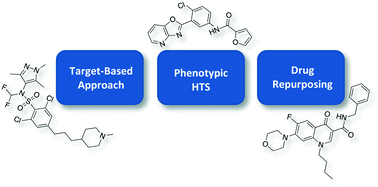
Human African trypanosomiasis (HAT), also known as African sleeping sickness, is caused by parasitic protozoa of the genus Trypanosoma. As the disease progresses, the parasites cross the blood brain barrier and are lethal for the patients if the disease is left untreated. Current therapies suffer from several drawbacks due to e.g. toxicity of the respective compounds or resistance to approved antitrypanosomal drugs. In this review, the different strategies of drug development against HAT are considered, namely the target-based approach, the phenotypic high throughput screening and the drug repurposing strategy. The most promising compounds emerging from these approaches entering an in vivo evaluation are mentioned herein. Of note, it may turn out to be difficult to confirm in vitro activity in an animal model of infection; however, possible reasons for the missing efficacy in unsuccessful in vivo studies are discussed.

Conclusion  There are various starting points to generate hit compounds for the treatment of  African sleeping sickness. Especially stage II of HAT which is very hard to treat poses a  tough challenge for drug discovery programs as molecules inevitably need to cross the BBB. However, promising compounds (2, 15, and 17) are in the pipeline accomplishing these criteria for CNS mouse models, and in some cases even are  orally bioavailable (15 and 17). Especially the large phenotypic screening campaigns performed by the GNF, GlaxoSmithKline, DDU, and Sykes et al. resulted in promising hits discussed herein. Nevertheless, it is not always easy to translate results from in vitro studies into in vivo efficacy like shown in several of the mentioned studies. The reasons for in vivo failures are multilayered and might originate from (I) extensive  metabolism, (II) high plasma protein binding, (III) poor water solubility, (IV) efflux  transporters, (V) different sensitivity for particular strains, (VI) reduced permeability,  and (VII) growth inhibition rather than trypanocidal effects.

Image result for University of Würzburg Ulrike Holzgrabe

  • 1974 – 1981
    Studied chemistry and pharmacy at Marburg University and Kiel University
  • 1990 – 1999
    C3 professor at the University of Bonn, Germany
  • 1994 – 1995
    Visiting professor at the University of Erlangen-Nuremberg, Germany, and the University of Illinois at Chicago, USA
  • 1997 – 1999
    Vice-rector for teaching, studies and study reform at the University of Bonn
  • Since 1999
    C4/W3 professor of pharmaceutical chemistry at the University of Würzburg, Germany
  • Since 2009
    Dean of the Faculty of Chemistry and Pharmacy at the University of Würzburg

 Selected publications

  • Mohr, K. et al.: Rational design of dualsteric GPCR ligands: quests and promise. In: Br. J. Pharmacol. 159, 2010. pp. 997-1008.
  • Antony, J. et al.: Dualsteric GPCR targeting: a novel route to binding and signalling pathway selectivity. In: FASEB J. 23, 2009. pp. 442-450 (Listed as a “Must Read” by the “Faculty of 1000 Biology – the expert guide to the most important advances in biology”).
  • Niedermeier, S. et al.: A small-molecule inhibitor of Nipah virus envelope protein-mediated membrane fusion. In: J. Med. Chem. 52, 2009. pp. 4257-4265.
  • Göbel, T. et al.: In search of novel agents for therapy of tropical diseases and human immunodeficiency virus. In: J. Med. Chem. 51, 2008. pp. 238-250.
  • Hörr, V. et al.: Laser-induced fluorescence-capillary electrophoresis and fluorescence microplate reader measurement: two methods to quantify the effect of antibiotics. In: Anal. Chem. 79, 2007. pp. 7510-7518 (reviewed by D.L. Shenkenberg in Biophotonics International, Dec. 2007, pp. 57-58).
  • Disingrini, T. et al.: Design, synthesis, and action of oxotremorine-related hybrid-type allosteric modulators of muscarinic acetylcholine receptors. In: J. Med. Chem. 49, 2006. pp. 366-372.

 Selected projects

  • Characterisation of the oncogenic signalling network in multiple myeloma: development of targeted therapies, clinical research group KFO 216, inhibitors of the HSF/HSP system for treating multiple myeloma, since 2009
  • Identification, preparation and functional analysis of active ingredients for combating infectious diseases, SFB 630, small molecules for treating tropical infectious diseases, since 2003
  • Allosteric modulators and subtype-selective ligands of the muscarinic receptors, since 1991

 Membership in scientific bodies/juries

  • German Research Foundation (DFG) review-board member at the University of Würzburg, Germany, since 2009
  • Member of the Board of Pharmaceutical Science, International Federation of Pharmacy (FIP), since 2008
  • Member of the executive committee, European Federation for Pharmaceutical Sciences (Eufeps), since 2007
  • President of the German Pharmaceutical Society, 2004 – 2007
  • Member of the board of trustees of the University of Bonn, Germany, 2003 – 2007
  • Member of the scientific advisory board, German Federal Institute for Drugs and Medical Devices (BfArM), since 2002
  • Member of the German and European pharmacopoeia commissions, as well as president of several German and European pharmacopoeia boards, since 2001
 Image result for University of Würzburg Michael Berninger
Image result for University of Würzburg Michael Berninger
Image result for University of Würzburg Institute of Pharmacy and Food Chemistry
WURZBERG
Image result for University of Würzburg Institute of Pharmacy and Food Chemistry
///////////University of Würzburg,  Ulrike Holzgrabe

AD 35


str1

AD 35

IND-120499

MF C24 H27 N3 O3
Molecular Weight, 405.49
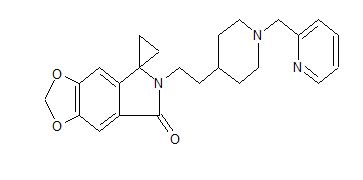
Spiro[cyclopropane-1,5′-[5H-1,3]dioxolo[4,5-f]isoindol]-7′(6′H)-one, 6′-[2-[1-(2-pyridinylmethyl)-4-piperidinyl]ethyl]-

6′-[2-[1-(2-Pyridinylmethyl)-4-piperidinyl]ethyl]spiro[cyclopropane-1,5′-[5H-1,3]dioxolo[4,5-f]isoindol]-7′(6’H)-one

1531586-58-9 CAS FREE FORM

1531586-64-7  PHOSPHATE

1531586-62-5  HYDROCHLORIDE

Zhejiang Hisun Pharmaceutical Co Ltd

Image result for Zhejiang Hisun Pharmaceutical Co Ltd

AD-35 is known to be a neuroprotectant, useful for treating Alzheimer’s diseases.

Zhejiang Hisun Pharmaceutical is developing an oral tablet formulation of AD-35, for treating Alzheimers disease . By August 2017, the phase I multiple doses trial had been completed in the US and would be completed in China soon

CAS 1531586-64-7  PHOSPHATE

6′-[2-[1-(Pyridin-2-ylmethyl)piperidin-4-yl]ethyl]spiro[cyclopropane-1,5′-[1,3]dioxolo[4,5-f]isoindol]-7′(6’H)-one phosphate

 Molecular Formula C24 H27 N3 O3 . H3 O4 P
 Molecular Weight 503.4847

With the rapid growth of the elderly population, the number of people suffering from Alzheimer’s disease (Alzheimer’s disease) also will be increased dramatically.Alzheimer’s disease is also known as Alzheimer-type dementia (Alzheimer type dementia), or the Alzheimer type senile dementia (senile dementia of the Alzheimer type). At present, although the prevalence of this disease on a global scale is still unknown, but according to the latest report from the US Alzheimer’s Association (the Alzheimer’s Association), and in 2011 the United States there are about 540 million people suffer from Alcatel the number of Alzheimer’s disease, and in 2050, in the United States suffering from the disease will increase to about 13.5 million. Therefore, the development of better efficacy and fewer side effects of new drugs to treat the disease it is a priority.

Alzheimer’s disease is the most common form of senile dementia, it has become the sixth leading cause of death of Americans, and 65 years and the fifth leading cause of death in Americans over 65 years. Although scientists have this disease carried out extensive and in-depth research, but so far, the exact cause of the disease remains unclear. Alzheimer’s disease is a progressive disease that continues to kill nerve cells, destroying nerve connections in the brain, resulting in brain tissue is damaged, leading to patients gradually lose memory, consciousness and judgment, and cause mood disorders and behavioral disorders in patients.

Alzheimer’s is an irreversible disease, and now there is no any drug can prevent the disease, and no drugs can cure the disease or slow the disease process. Drugs currently used to treat the disease can only alleviate or ameliorate symptoms of the disease. These drugs are FDA approved for use in the United States a total of five, four of which are acetylcholinesterase (acetylcholinesterase) inhibitors. Acetylcholine (acetylcholine) is a neurotransmitter, a chemical released by nerves, if produced in the brain acetylcholine system, i.e. damaged cholinergic system, it can result in associated with Alzheimer’s disease memory disorders; and acetylcholinesterase function is to catalyze the hydrolysis of acetylcholine, acetylcholine is decomposed. Because Alzheimer’s disease is accompanied

Attenuation of acetylcholine activity, thus inhibiting acetylcholinesterase is one way to treat this disease. As described above, in the present 5 treatment of Alzheimer’s disease drugs in clinical use, there are four acetylcholinesterase inhibitors, including acetylcholinesterase inhibitors such as donepezil (donepezil), tacrine (tacrine ), rivastigmine (rivastigmine), and galantamine (galantamine), wherein donepezil (Sugimoto et al US4895841 and 5100901;.. Pathi et al WO 2007077443;. Parthasaradhi et al WO 2005003092;. Dubey et al WO 2005076749; Gutman . et al WO 200009483;… Sugimoto et al J. Med Chem 1995, 38, 481) is a first-line treatment of Alzheimer’s disease drugs. However, donepezil and the other four drugs can only improve the patient’s symptoms, and this is the only improvement of symptoms is short, only lasting about 6-12 months, and the patient response rates to these drugs only about 50% (Alzheimer’s Association, 201 1 Alzheimer ‘Disease Facts and Figures, Alzheimer’s & Dementia, 201 1, 7 (2), 208). The present invention provides a new class of inhibitors of acetylcholinesterase, which is dioxole between a new class of derivatives of benzo, is more effective than donepezil and fewer side effects in the treatment of Alzheimer’s disease drug.

PATENT

WO 2014005421

https://patentscope.wipo.int/search/en/detail.jsf?docId=WO2014005421&recNum=1&maxRec=&office=&prevFilter=&sortOption=&queryString=&tab=PCTDescription

Example 42: 6- [2- [l- (2-Pyridylmethyl) -4-piperidinyl] ethyl] spiro [[1,3] dioxolo [4,5-f ] Isoindole-7, Γ-cyclopropane-5-one (Compound No. 1-29)

To the reaction flask was added 24.3 g (0.069 mol) of compound 11-5, 36.5 g (0.26 mol) of potassium carbonate, 243 ml of ethanol, 6.1 ml (0.044 mole) of triethylamine, heated to about 50 ° C, 0.049 mol) of 2-chloromethylpyridine hydrochloride was maintained at about 50 ° C for 5 hours. The reaction was complete and 750 ml of water was added. The solid was precipitated, filtered and the cake was washed with water and dried to give 17.8 g of compound 1-29. Rate: 63.4%. ‘HNMR (CDC13 . 3 ): [delta] 1.26 (dd, 2H, J = 6.1, 7.6 Hz), 1.35 (brs,. 3 H), 1.49-1.57 (m, 4H), 1.72 (D, 2H, J = 8.6Hz) (T, 2H, J = 7.9 Hz), 3.64 (s, 2H), 6.03 (s, 2H), 2.09 (t, 2H, J = 10.4 Hz), 2.89 (d, 2H, J = 10.7 Hz) , 7.42 (s, 1 H), 7.15 (dd, 1 H, J = 5.2, 6.7 Hz), 7.24 (s, 1 H), 7.41 (d, 1 H, J = 7.7 Hz), 7.64 (td, H, J = 7.6, 1.8 Hz), 8.55 (D,. 1 H, J = 4.2 Hz); the MS (ESI): m / Z 406 [m + H] + .

Example 46: 6- [2- [l- (2-Pyridylmethyl) -4-piperidinyl] ethyl] spiro [[1,3] dioxolo [4,5-f ] Isoindole-7, Γ-cyclopropane] -5-one hydrochloride (Compound No. 1-33)

To the reaction flask was added 5 g (0.012 mol) of compound 1-29 and 25 ml of ethanol, heated at 50 ° C

(0.012 mol) of concentrated hydrochloric acid was added, and 1 g of activated charcoal was added to decolorize for 20 minutes. The filtrate was cooled to room temperature and 50 ml of isopropyl ether was added dropwise. The solid was precipitated, stirred for 1 hour, The ether cake was washed with ether and dried to give 5 g of compound 1-33 in a yield of 91.7%. Ethanol / isopropyl ether can be re-refined, the yield of about 90%. 1H-NMR is (D 2 0): 51.14 (T, 2 H, J-7.0 Hz), 1.38-1.70 (m,. 7 H), 1.96 (D, 2H, J = 13.3 Hz), 2.99-3.14 (m, H. 4 ), 3.50 (d, 2 H, J = 11.0 Hz), 4.37 (s, 2H), 5.93 (s, 2H), 6.28 (s, 1 H), 6.75 (s, 1 H), 7.47 (dd, J = 7.8, 1.7 Hz), 8.58 (d, 1 H, J = 4.4 Hz), 7.55 (d, 1 H, J = 7.8 Hz), 7.91 (td, ; MS (ESI): m / z 406 [M-Cl] & lt; + & gt ; .

Example 48: 6- [2- [l- (2-Pyridylmethyl) -4-piperidinyl] ethyl] spiro [[1,3] dioxolo [4,5-f ] Isoindole-7, Γ-cyclopropan-5-one phosphate (Compound I-3S)

To the reaction flask was added 2 g (0.0049 mole) of compound 1-29 and 40 ml of ethanol, stirred at 60 ° C until all dissolved, 0.57 g (0.0049 mole) of 85% phosphoric acid was added, stirred and solidified,

Liter of ethyl acetate, cooled to room temperature, stirred for 1 hour, filtered, and a small amount of ethyl acetate was used to wash the filter cake and dried to give 2.1 g of compound 1-35 in a yield of 84.7%. 1H-NMR (D 2 0): δ 1.10 (t, 2 H, J = 7.2 Hz), 1.33-1.64 (m, 7 H), 1.92 (d, 2 H, J = 13.4 Hz), 2.95-3.09 (m, (S, 1 H), 6.69 (s, 1 H), 7.45 (s, 2 H), 4.34 (s, (d, 1 H, J-7.8 Hz), 7.88 (td, 1 H, J = 7.7, 1.2 Hz), 8.54 (d, 1 H, J = 4.6 Hz).

PATENT

CN 103524515

https://encrypted.google.com/patents/CN103524515B?cl=en

PATENT

CN 105859732

https://www.google.com/patents/CN105859732A?cl=en

Example 14: 6- [2- [l_ (2- pyridylmethyl) -4-piperidinyl] ethyl] spiro [[1,3] dioxolo [4,5 -f] isoindole-7, prepared Γ- cyclopropane] phosphate 5-one (compound I) is

Figure CN105859732AD00182

[0146] Compound was added 2g (4.9 mmol) of formula XI to the reaction flask 50mL, 40mL of ethanol, 60 ~ 70 ° C dissolved by heating, added with stirring square. 57g 85% (4.9mmol) phosphoric acid, and the precipitated solid was added dropwise 40mL of acetic acid ethyl cooled to room temperature, stirred for 1 hour, filtered, the filter cake washed with a small amount of ethyl acetate, dried to give 2.3g white solid (compound I, HPLC purity: 99.8%). Yield: 92.7%, H bandit R (D2O): δ1 · l〇 (t, 2H, J = 7.2Hz), 1.33-1.64 (m, 7H), 1.92 (d, 2H, J = 13.4Hz), 2.95 -3.09 (m, 4H), 3.46 (d, 2H, J = 10.7Hz), 4.34 (s, 2H), 5.89 (s, 2H), 6.20 (s, 1H), 6.69 (s, 1H), 7.45 ( , 7.53 (d, lH, J 7.8Hz dd, lH, J = 5.2,7.4Hz) =), 7.88 (td, lH, J =

PATENT

WO 2017177816

https://patentscope.wipo.int/search/en/detail.jsf?docId=WO2017177816&recNum=1&maxRec=&office=&prevFilter=&sortOption=&queryString=&tab=FullText

Process for preparing AD-35 and its intermediates – comprising the reaction of a cyano ester with a Grignard reagent, followed by condensation and further manipulative steps.

A novel intermediate of AD-35 is claimed. Also claimed is a processes for preparing 6,7-dihydro-[1,3]dioxolo[4,5-f]isoindol-5-one comprising the reaction of a cyano ester compound in an isopropyl ester (Ti(i-Pr)4)) with a Grignard reagent in the presence of an ethyl magnesium halide. Further claimed are processes for preparing synthon of intermediates. A process for preparing a benzodioxole derivative, particularly AD-35 from intermediates is also claimed.

WO2014005421 reports a class of benzodioxole compounds, which have the activity to inhibit acetylcholinesterase and can be used to treat Alzheimer’s disease. Of these compounds, it is particularly noteworthy that 6- [2- [1- (2-pyridylmethyl) -4-piperidinyl] ethyl] spiro [[1,3] dioxole And [4,5-f] isoindole-7,1′-cyclopropane] -5-one phosphate, codon AD-35, whose chemical structure is as follows:
AD-35 is a weaker acetylcholinesterase inhibitor that inhibits acetylcholinesterase activity in vitro is about one tenth of the activity of donepezil, but the compound exhibits comparable efficacy with donepezil in the Morris water maze test , That is, the effect of improving memory and learning ability is comparable to donepezil. This suggests that the AD-35 is likely to also have the effect of improving memory and learning through other mechanisms in the body. A further study of the rat model of Alzheimer’s disease induced by Aβ 25-35 found that AD-35 significantly inhibited the production and release of proinflammatory cytokines TNF-α and IL-1β, Small Aβ 25-35 on the nerve cell toxicity, effectively protect the nerve cells.
In addition, AD-35 also exhibits a certain ability to chelate transition metal ions such as Cu 2+ in vitro , while Cu 2+ accelerates the formation of Aβ fibers and enhances the toxicity of Aβ to neuronal cells, thereby promoting neuronal cell death , So excessive Cu 2+ in the brain is also considered to be one of the risk factors for Alzheimer’s disease (Sarell et al. J. Biol. Chem. 2010, 285 (53), 41533). From the chemical structure point of view, AD-35 molecules in the piperidine ring and pyridine ring on the two nitrogen atoms constitute a structural unit similar to ethylenediamine, which should be able to explain why this compound to a certain extent Chelating transition metal ions. In terms of the safety of the compounds, the acute toxicity of mice showed that the toxicity of AD-35 was much less than that of donepezil. A newly completed clinical single-dose incremental tolerance test (SAD) showed that the subjects taking 90 mg of AD-35 did not have any adverse effects at once, indicating that the compound was safe.
In summary, the AD-35 is promising to be a small side-effect drug for the treatment of Alzheimer’s disease, and its multiple mechanisms of action are likely to make this compound not only alleviate the symptoms of Alzheimer’s patients , And can delay the process of the disease.
Since the synthesis route of AD-35 and its analogs reported in WO2014005421 is too long, the operation is complicated and the yield is low, and some steps are not suitable for industrial production. Therefore, it is necessary to develop a new process route to overcome the above- Preparation method.
The preferred reaction conditions of the present invention are listed in the following schemes:
Step (1) :
Step (2) :
Step (3) :
Step (4) :
Step (5) :
Step (6) :
Step (7) :
Step (8) :

Specific implementation plan

The following examples are provided for the purpose of further illustrating the invention, but this is not intended to be limiting of the invention.
Reference Example 1: Preparation of the starting material of tert-butyl 4- [2- (p-toluenesulfonyloxy) ethyl] piperidine-1-carboxylate (Formula VIa)

[0103]

[0104]
To a 10 L reaction flask was added 800 g (3.49 mol) of tert-butyl 4- (2-hydroxyethyl) piperidine-1-carboxylate, 5 L of dichloromethane, 974 ml of (6.75 mol) of triethylamine and 16 g of 4-dimethyl (3L × 3), the organic phase was collected, dried over anhydrous sodium sulfate, and the reaction mixture was washed with anhydrous sodium sulfate , Filtered and the filtrate was concentrated under reduced pressure to give 1360.3 g of compound VIa (HPLC purity: 85%). 1 H NMR (DMSO-d 6 ): δ 0.85-0.93 (m, 2H), 1.38 (s, 9H), 1.42-1.52 (m, 5H), 2.43 (s, 3H), 2.59 (br s, 2H (D, 2H, J = 11.3 Hz), 4.05 (t, 2H, J = 6.1 Hz), 7.50 (d, 2H, J = 8.1 Hz), 7.79 (d, 2H, J = 8.3 Hz) MS (ESI): m / z 383 [M + Na] & lt; + & gt ; .
Reference Example 2: Preparation of the starting material 4- (2-iodoethyl) piperidine-1-carboxylate (Formula VIb)
To a 50 mL reaction flask was added 5 g (13.0 mmol) of tert-butyl 4- [2- (p-toluenesulfonyloxy) ethyl] piperidine-1-carboxylate (Formula VIa), 35 mL of acetone and 2.9 g (19.3 mmol The organic phase was washed with 50 mL of water. The organic phase was collected and the aqueous phase was extracted again with 50 mL of ethyl acetate. The organic phase was washed with 50 mL of water and extracted with 50 mL of water and 50 mL of water. The organic phases were combined, dried over anhydrous sodium sulfate, filtered and the filtrate was concentrated to dryness to give 3.5 g of compound VIb in a yield of 79.5%. 1 H NMR (DMSO-d 6 ): δ 0.97-1.07 (m, 2H), 1.41 (s, 9H), 1.51-1.58 (m, 1H), 1.63-1.66 (m, 2H), 1.73-1.78 (m, 2H), 2.69 (br s, 2H), 3.31 (t, 2H, J = 7.3Hz), 3.96 (d, 2H, J = 10.3Hz); MS (ESI): m / + H] + .
Example 1: Preparation of 6-bromo-1,3-benzodioxole-5-carboxylic acid (Compound II)
To the 2L reaction flask, 100 g (0.60 mol) of piperine, 29 g (0.725 mol) of sodium hydroxide and 1 L of water were successively added, and 150 g (0.84 mol) of N-bromosuccinimide was added thereto, After the reaction was carried out for 45 min, the reaction was monitored by TLC. The reaction solution was concentrated dropwise with concentrated hydrochloric acid to adjust the pH of the reaction solution to 2 to 3, and the solid was precipitated. The ice was cooled, filtered and washed with water to obtain 117.4 g of compound II (HPLC purity: 82%), Yield 79.5%. 1 H NMR (DMSO-d 6 ): δ 6.15 (s, 2H), 7.30 (s, 1H), 7.32 (s, 1H), 13.17 (s, 1H).
Example 2: Preparation of 6-bromo-1,3-benzodioxole-5-carboxylic acid (Compound II)
To the 2L reaction flask, 100 g (0.60 mol) of piperine, 29 g (0.725 mol) of sodium hydroxide and 1 L of water were successively added, and 150 g (0.84 mol) of N-bromosuccinimide was added thereto, After the reaction was complete for 45 min, the reaction was monitored by TLC. After 1 L of ethyl acetate and 40 mL of concentrated hydrochloric acid were added, the mixture was stirred for 20 min. The organic phase was collected, concentrated to dryness, 200 mL of water and 600 mL of petroleum ether, stirred for 1 h, , And 116 g of compound II (HPLC purity: 92.0%) was dried to a yield of 78.9%. & Lt; 1 & gt ; H NMR data with Example 1.
Example 3: Preparation of ethyl 6-bromo-1,3-benzodioxole-5-carboxylate (Compound IIIa)
To a 2 L reaction flask was added 117.3 g (0.39 mol) of 6-bromo-1,3-benzodioxole-5-carboxylic acid (II), 585 mL of absolute ethanol, opened with a stirrer, (1.4mol) concentrated sulfuric acid, heating reflux reaction 6h, TLC monitoring reaction is completed. Water was added dropwise, and 1.2 L of water was added dropwise to remove the solid, filtered and washed with water, and dried at 35 to 45C to obtain 124.0 g of compound IIIa (HPLC purity: 85%) in a yield of 93.9%. . 1 H NMR (CDCl3 . 3 ): [delta] 1.39 (T, 3H, J = 7.1Hz), 4.34 (Q, 2H, J = 7.1Hz), 6.04 (S, 2H), 7.07 (S, IH), 7.31 ( s, 1H).
Example 4: Preparation of methyl 6-bromo-1,3-benzodioxole-5-carboxylate (Compound IIIb)
To a 1 L reaction flask was added 50 g (0.30 mol) of 6-bromo-1,3-benzodioxole-5-carboxylic acid (II), 500 mL of anhydrous methanol, opened with a stirrer, 33.3 mL (0.60 mol) of concentrated sulfuric acid was added dropwise and heated under reflux for 6 h. TLC test reaction is completed, ice water cooling, precipitation of solids, dropping 500mL of water, filtration, water washing filter cake, 45 ~ 55 ℃ drying 44.4 g compound IIIb, yield: 84.0%. 1 H NMR (DMSO-d 6 ): δ 3.83 (s, 3H), 6.19 (s, 2H), 7.35 (s, 1H), 7.36 (s, 1H).
Example 5: Preparation of 6-cyano-1,3-benzodioxole-5-carboxylate (Compound IVa)
To a 2 L reaction flask was charged 124 g (0.38 mol) of ethyl 6-bromo-1,3-benzodioxole-5-carboxylate (IIIa), 990 mL of N, N-dimethylformamide, After opening the stirrer, 33.1 g (0.09 mol) of potassium ferrocyanide and 103.3 g (0.54 mol) of cuprous iodide were added, heated to 120-140C for 5 h, and the TLC reaction was completed. Cooling, dropping water to precipitate a solid, filtering, and washing the filter cake. The filter cake was stirred in 1.9 L of dichloromethane for 30 min, filtered, the filtrate was added with 9 g of activated charcoal, decolorized for 30 min, filtered and the filtrate was concentrated to a small amount. The solid was precipitated, n-hexane was added dropwise, cooled with ice water, filtered and dried to give 82.8 g of compound IVa (HPLC purity: 99.5%), yield: 83.2%. . 1 H NMR (DMSO-D . 6 ): [delta] 1.34 (T, 3H, J = 7.1Hz), 4.33 (Q, 2H, J = 7.1Hz), 6.29 (S, 2H), 7.51 (S, IH), 7.57 (s, 1H).
Example 6: Preparation of 6-cyano-1,3-benzodioxole-5-carboxylate (Compound IVa)
To a 50 mL reaction flask was added 3.5 g (12.8 mmol) of ethyl 6-bromo-1,3-benzodioxole-5-carboxylate (IIIa), 35 mL of N, N-dimethylformamide , 2.3g (25.7mmol) cuprous cyanide, open stirring, 120 ~ 140 ℃ reaction 30 ~ 60min, TLC detection reaction is completed, cooling, dropping 30mL saturated ammonium chloride aqueous solution, precipitate solid, filter, water washing cake. The filter cake was dissolved in 200 mL of ethyl acetate and washed with saturated aqueous ammonium chloride (30 ml x 2 times). The organic phase was collected and the aqueous phase was extracted again with 100 ml of ethyl acetate. The combined organic phases were dried over anhydrous sodium sulfate and filtered , And concentrated to give 2.0 g of compound IVa in a yield of 62.5%. & Lt; 1 & gt ; H NMR data with Example 5.
Example 7: Preparation of 6-cyano-1,3-benzodioxole-5-carboxylate (Compound IVb)
To a 1 L reaction flask was added 40 g (0.15 mol) of methyl 6-bromo-1,3-benzodioxole-5-carboxylate (IIIb), 11.4 g (31.0 mmol) of potassium ferrocyanide , 35.2 g (0.18 mol) of cuprous iodide, 240 mL of N, N-dimethylacetamide, 120 to 140 ° C in an oil bath for 2 to 3 hours, and the TLC reaction was completed. After cooling, 480 mL of water was added dropwise, Ice water cooling, filtration, water washing filter cake. Filter cake was dissolved in 500mL ethyl acetate and 200mL tetrahydrofuran mixture, heated to 80 ℃, adding 2g activated carbon, filtered, the filtrate was concentrated to a small amount, precipitation of solid, dropping 200mL petroleum ether, ice water cooling, filtration, petroleum ether washing filter The cake was dried to give 27.7 g of compound IVb in a yield of 87.6%. 1 H NMR (DMSO-d 6 ): δ 3.87 (s, 3H), 6.28 (s, 2H), 7.49 (s, 1H), 7.55 (s, 1H).
Example 8: Preparation of Spiro [6H- [1,3] dioxolo [4,5-f] isoindole-7,1′-cyclopropane] -5-one (Compound V)
To a 2 L reaction flask was added 16 g (0.072 mol) of compound of formula IVa, 160 mL of dichloromethane, stirred and dissolved under nitrogen. 24 mL (0.080 mol) of isopropyl tetrafis (4) isopropyl ether was added and cooled to 0 to 20 ° C A solution of 73 mL (0.22 mol) of ethylmagnesium bromide in diethyl ether (3M) was added and the reaction was complete after TLC. Slowly drop the water / tetrahydrofuran solution (64 mL water / 240 mL tetrahydrofuran), heat to 50 ° C, decalcinate with 2 g of activated charcoal and stir for 20 min. Filtration, ethyl acetate washing filter residue, the filtrate 40 ~ 50 ° C concentrated under reduced pressure, add 96mL ethyl acetate and 96mL water, stirring solid precipitation, dropping 290mL n-hexane, ice water cooling, filtration, n-hexane washing cake, Dried to give 11.9 g of compound V (HPLC purity: 70%) in a yield of 80.2%. 1 H NMR (DMSO-d 6 ): δ 1.33-1.41 (m, 4H), 6.11 (s, 2H), 6.86 (s, 1H), 7.09 (s, 1H), 8.53 (s, 1H).
Example 9: Preparation of Spiro [6H- [1,3] dioxolo [4,5-f] isoindole-7,1′-cyclopropane] -5-one (Compound V)
To a 500 mL reaction flask was added 10 g (48.8 mmol) of 6-cyano-1,3-benzodioxole-5-carboxylate (IVb), 200 mL of methyl tert-butyl ether, (50.7 mmol) of (IV) isopropyl ester was cooled to 0 to 20 ° C, and 49 mL (0.15 mol) of ethyl magnesium bromide in diethyl ether (3M) was slowly added dropwise. After completion of the drop, the TLC reaction was completed. (10 mL x 2 times), the organic phase was collected and the aqueous phase was extracted again with 100 mL of ethyl acetate. The organic phases were combined, dried over anhydrous sodium sulfate, and the activated charcoal was dried over 100 mL of ethyl acetate and extracted with 250 mL of ethyl acetate. Decolorization, filtration, the filtrate was concentrated to a small amount, dropping petroleum ether, ice water cooling, filtration, petroleum ether washing cake, drying 2.3g compound V, yield: 23.2%. & Lt; 1 & gt ; H NMR data with Example 8.
Example 10: 4- [2- (5-oxospiro [[1,3] dioxolo [4,5-f] isoindole-7,1′-cyclopropane] -6 Yl) ethyl] piperidine-1-carboxylate (Compound VIIa)
To a 250 mL reaction flask was added 11.9 g (0.041 mol) of compound of formula V, 84 mL of dimethylsulfoxide, 4 g (0.071 mol) of potassium hydroxide, 27.3 g (0.06 mol) of 4- [2- (p-toluenesulfonyloxy ) Ethyl] piperidine-1-carboxylate (Formula VIa), heated to 55-65 ° C for 3 to 4 hours, and the TLC reaction was completed. (150 mL x 2 times), the aqueous phase was extracted again with 200 mL of ethyl acetate, the organic phase was combined, and 3 g of activated charcoal was added to decolorize, stirred for 30 min, filtered, and the mixture was washed with 300 mL of ethyl acetate. The filtrate was concentrated to dryness under reduced pressure to give compound VIIa. 1 H NMR (CDCl 3 ): δ 1.08-1.19 (m, 2H), 1.28 (dd, 2H, J = 6.2, 7.4 Hz), 1.45 (s, 9H), 1.48-1.57 (m, 5H) (d, 2H, J = 12.7 Hz), 2.69 (t, 2H, J = 11.6 Hz), 3.20 (t, 2H, J = 7.6 Hz), 4.07 (d, 2H, J = 13.1 Hz) , 2H), 6.43 (S, IH), 7.23 (S, IH); the MS (ESI): m / Z 437 [m + of Na] + .
Example 11: 4- [2- (5-oxospiro [[1,3] dioxolo [4,5-f] isoindole-7,1′-cyclopropane] -6 Yl) ethyl] piperidine-1-carboxylate (Compound VIIa)
To a 250 mL reaction flask, 6.7 g (33.0 mmol) of compound of formula V, 100 mL of N, N-dimethylformamide, 2.6 g (65.0 mmol) of sodium hydroxide, 14 g (41.3 mmol) of 4- (2-iodoethyl ) Piperidine-1-carboxylic acid tert-butyl ester (VIb), 25-30 ° C for 1.5 h, TLC detection reaction was completed, 100 mL of water and 100 mL of ethyl acetate were added and the organic phase was washed with water (50 mL x 2 times) The organic phase was collected and the aqueous phase was extracted again with 100 mL of ethyl acetate. The organic phases were combined, dried over anhydrous sodium sulfate, filtered and the filtrate was concentrated to dryness to give compound VIIa. & Lt; 1 & gt ; H NMR data with Example 10.
Example 12: 6- [2- (4-Piperidine) ethyl] spiro [[l, 3] dioxolo [4,5-f] isoindole- Propane] -5-one hydrochloride (Compound VIIIa)
To a 100 mL reaction flask was added the compound of formula VIIa obtained in Example 10, 30 mL of ethanol, 45 mL of ethyl acetate, 10.5 mL of concentrated hydrochloric acid. Open the stirrer, 50 ~ 60 ℃ reaction 3h, TLC detection reaction is completed, stop heating, ice water cooling, filtration, ethyl acetate detergent cake, drying, 8.5g off-white solid (compound VIIIa, HPLC purity: 97%) The Yield: 41.4% (calculated based on the amount of compound V in Example 10). 1 H NMR (D 2 O): δ 1.06 (t, 2H, J = 6.7Hz), 1.32-1.46 (m, 6H), 1.60 (m, 1H), 1.91 (d, 2H, J = 13.5Hz) (M, 4H), 3.39 (d, 2H, J = 12.8 Hz), 5.90 (s, 2H), 6.18 (s, 1H), 6.68 (s, 1H); MS (ESI): m / z 315 [M-Cl] + .
Example 13: 6- [2- [1- (2-Pyridylmethyl) -4-piperidinyl] ethyl] spiro [[1,3] dioxolo [4,5-f ] Isoindole-7,1′-cyclopropane] -5-one (Compound XI)
A solution of 128.6 g (0.35 mol) of the compound of formula VIIIa, 90 g (0.54 mol) of 2-chloromethylpyridine hydrochloride (formula IXa), 965 mL of water, 26 g of activated carbon and 60 to 65C for 30 minutes were charged into a 2 L reaction flask, , And the residue was washed with 643 ml of water and 215 mL of ethanol. The solution was slowly added with 161 g (1.16 mol) of potassium carbonate. The reaction was carried out at 55 to 65 ° C for 4 to 5 hours. After completion of the TLC reaction, the reaction was cooled, filtered and dried to obtain 137 g of crude The crude product was dissolved in 1.37L ethanol and dissolved at 60-65 ° C. After decontamination with activated charcoal (27.4 g / times x 2 times), 4.11 L of water was added dropwise with stirring, the solid was precipitated, the ice was cooled, filtered, And dried to give 118.9 g of compound XI in 80% yield. 1 H NMR (CDCl 3 ): δ 1.26 (dd, 2H, J = 6.1, 7.6 Hz), 1.35 (br s, 3H), 1.49-1.57 (m, 4H), 1.72 (d, 2H, J = 8.6 (T, 2H, J = 7.9 Hz), 3.64 (s, 2H), 6.03 (s, & lt; RTI ID = 0.0 & gt; 2H), 6.42 (s, 1H), 7.15 (dd, 1H, J = 5.2, 6.7 Hz), 7.24 (s, 1H), 7.41 (d, 1H, J = 7.7 Hz), 7.64 (td, 7.6, 1.8 Hz =), 8.55 (D, IH, J = 4.2Hz); the MS (ESI): m / Z 406 [m + H] + .
Example 14: 6- [2- [1- (2-Pyridylmethyl) -4-piperidinyl] ethyl] spiro [[1,3] dioxolo [4,5-f ] Isoindole-7,1′-cyclopropane] -5-one phosphate (Compound I)
To a 50 mL reaction flask was added 2 g (4.9 mmol) of the compound of formula XI, 40 mL of ethanol, dissolved at 60-70 ° C and 0.57 g of 85% (4.9 mmol) of phosphoric acid was added with stirring. The solid was precipitated, 40 mL of ethyl acetate was added dropwise, To room temperature, stirred for 1 hour, filtered, a small amount of ethyl acetate to wash the filter cake, and dried to obtain 2.3 g of a white solid (Compound I, HPLC purity: 99.8%). Yield: 92.7%. 1 H NMR (D 2 O): δ 1.10 (t, 2H, J = 7.2Hz), 1.33-1.64 (m, 7H), 1.92 (d, 2H, J = 13.4Hz), 2.95-3.09 (m, 4H), 3.46 (d, 2H, J = 10.7 Hz), 4.34 (s, 2H), 5.89 (s, 2H), 6.20 (s, 1H), 6.69 (s, 1H), 7.45 (dd, 1H, J = 7.5, 7.4 Hz), 7.53 (d, 1H, J = 7.8 Hz), 7.88 (td, 1H, J = 7.7, 1.2 Hz), 8.54 (d, 1H, J = 4.6 Hz)
Multifunctional compound AD-35 improves cognitive impairment and attenuates the production of TNF-alpha and IL-1beta in an alphabeta25-35-induced rat model of alzheimer’s disease
J Alzheimer’s Dis 2017, 56(4): 1403
CN101626688A * Dec 11, 2007 Jan 13, 2010 雷维瓦药品公司 Compositions, synthesis, and methods of using indanone based cholinesterase inhibitors
WO2014005421A1 * Jul 3, 2013 Jan 9, 2014 Zhejiang Hisun Pharmaceutical Co., Ltd. Benzodioxole derivative and preparation method and use thereof
////////////Alzheimers disease, Zhejiang Hisun Pharmaceutical, AD 35, PHASE1, IND-120499
O=C5N(CCC2CCN(Cc1ccccn1)CC2)C3(CC3)c4cc6OCOc6cc45

NNC 45-0781


Image result for NNC 45-0781

NNC 45-0781

Molecular Formula C27H29NO3
Molecular Weight 415.5241

CAS 207277-66-5

  • 2H-1-Benzopyran-7-ol, 3,4-dihydro-3-phenyl-4-[4-[2-(1-pyrrolidinyl)ethoxy]phenyl]-, cis-(-)-
  • (3S,4R)-3,4-Dihydro-3-phenyl-4-[4-[2-(1-pyrrolidinyl)ethoxy]phenyl]-2H-1-benzopyran-7-ol

2H-1-Benzopyran-7-ol, 3,4-dihydro-3-phenyl-4-(4-(2-(1-pyrrolidinyl)ethoxy)phenyl)-, (3S,4R)-

  • OriginatorNovo Nordisk
  • ClassOsteoporosis therapies; Pyrrolidines; Small molecules
  • Mechanism of ActionSelective estrogen receptor modulators

PATENT

WO 9818776

WO 9818771

WO 2003063859

A quantitative structure activity relationship study on cis-3,4-diaryl hydroxy chromones as high affinity partial agonists for the estrogen receptor
Chemistry: An Indian Journal (2003), 1, (3), 207-214

SYN 1

EP 0937057; WO 9818771, EP 0937060; WO 9818776

http://www.drugfuture.com/synth/syndata.aspx?ID=268276

Coumarin (III) was prepared by condensation of benzophenone (I) with phenylacetic acid (II) in the presence of Ac2O and Et3N. Reduction of the lactone function of (III) with LiAlH4, followed by acidic treatment furnished diaryl chromene (IV). Subsequent hydrogenation of (IV) over Pd/C gave rise to the racemic cis chromane (V), which was O-alkylated with 1-(2-chloroethyl) pyrrolidine (VI) producing the corresponding (pyrrolidinyl)ethoxy derivative. Resolution by means of active ditoluoyl tartaric acid yielded the desired (-)-enantiomer (VII). Finally, cleavage of the methoxy group using pyridine hydrochloride at 150 C provided the title compound.

PAPER

Bioorg Med Chem 2002,10(1),125

Abstract

The syntheses and in vitro pharmacological evaluation of a number of cis-3,4-diaryl-hydroxy-chromanes are reported, along with the results of a thorough in vivo profiling of the tissue-selective estrogen partial-agonist NNC 45-0781 [3, (−)-(3S,4R)-7-hydroxy-3-phenyl-4-(4-(2-pyrrolidinoethoxy)phenyl)chromane]. These studies showed that NNC 45-0781 is a very promising candidate for the prevention of post-menopausal osteoporosis, and the treatment of other health issues related to the loss of endogenous estrogen production.

The synthesis and pharmacological evaluation of a series of new tissue-selective estrogens, the cis-3,4-diaryl-hydroxy-chromanes, is described.

Unlabelled figure


(-)-(3S,4R)-7-Hydroxy-3-phenyl-4-(4-(2-pyrrolidinoethoxy)phenyl)chromane (3,=9a).

colorless powder 3, which contained 0.25 mol equiv of ethanol of crystallization; 0.90 g (27% yield),

mp 221–223 C.

1 H NMR (DMSOd6, 400 MHz) d: 1.60–1.73 (m, 4H), 2.40–2.50 (m, 4H), 2.69 (t, 2H), 3.47–3.57 (m, 1H), 3.92 (t, 2H), 4.14–4.25 (m, 2H), 4.32 (dd, 1H), 6.27 (dd, 1H), 6.30 (d, 1H), 6.44 (d, 2H), 6.60 (d, 2H), 6.65 (d, 1H), 6.70–6.80 (m, 2H), 7.09–7.20 (m, 3H), 9.25 (s, 1H).

MS (EI): 415 (M+), 84. HR-MS; calcd for C27H30NO3 (M+H+) 416.2225, found 416.2198. HR-MS; calcd for C28H32NO3 (M+H+) 430.2382, found 430.2376.

Chiral HPLC: Chiradex A, 5m, 2504 mm (Merck) column; eluent, 6:4 methanol/0.2% aqueous triethylammonium acetate buffer, pH=5.2; flow, 0.5 mL/min; UV 220 nm; Rt=19.2 min, >98%ee. Elemental analysis; calcd for C27H29NO3 0.25C2H5OH; C, 77.35; H, 7.20; N, 3.28%; found C, 77.39; H, 7.29; N, 3.12%. [a] 20 D=283 (c=1.004% in ethanol/3M HCl, 80:20). P.


PAPER

Abstract Image

A highly enantioselective method for quick access to dihydrocoumarins is reported. The reaction involves a cooperative catalytic process with carbene and in situ generated Brønsted acid as the catalysts. α-Chloro aldehyde and readily available and stable o-hydroxybenzhydryl amine substrates were used to generate reactive azolium ester enolate and ortho-quinone methide (o-QM) intermediates, respectively, to form dihydrocoumarins with exceptionally high diastereo- and enantioselectivities. The catalytic reaction products can be easily transformed to valuable pharmaceuticals and bioactive molecules.

Carbene and Acid Cooperative Catalytic Reactions of Aldehydes and o-Hydroxybenzhydryl Amines for Highly Enantioselective Access to Dihydrocoumarins

 Division of Chemistry and Biological Chemistry, School of Physical and Mathematical Sciences, Nanyang Technological University, 21 Nanyang Link, Singapore 637371
 Laboratory Breeding Base of Green Pesticide and Agricultural Bioengineering, Key Laboratory of Green Pesticide and Agricultural Bioengineering, Ministry of Education, Guizhou University, Huaxi District, Guiyang 550025, People’s Republic of China
Org. Lett., Article ASAP
DOI: 10.1021/acs.orglett.7b02883
Publication Date (Web): October 25, 2017
Copyright © 2017 American Chemical Society

/////////////NNC 45-0781

c1ccc(cc1)[C@H]2COc3cc(ccc3[C@H]2c4ccc(cc4)OCCN5CCCC5)O

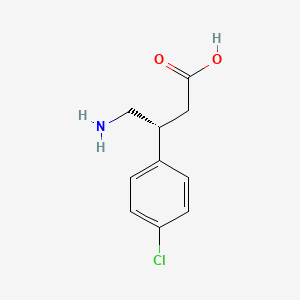
(R)-(–)-Baclofen, Arbaclofen, STX 209, AGI 006


(R)-Baclofen.pngChemSpider 2D Image | Arbaclofen | C10H12ClNO2

(R)-(–)-Baclofen, Arbaclofen, STX 209, AGI 006

Chemical Names: (R)-Baclofen; Arbaclofen; 69308-37-8; (R)-4-Amino-3-(4-chlorophenyl)butanoic acid; (-)-Baclofen; D-Baclofen
Molecular Formula: C10H12ClNO2
Molecular Weight: 213.661 g/mol

 A GAMMA-AMINOBUTYRIC ACID derivative that is a specific agonist of GABA-B RECEPTORS. It is used in the treatment of MUSCLE SPASTICITY, especially that due to SPINAL CORD INJURIES. Its therapeutic effects result from actions at spinal and supraspinal sites, generally the reduction of excitatory transmission.

(R)-4-Amino-3-(4-chlorophenyl)butanoic acid

Benzeneporopanoic acid, (beta-(aminomethyl)-4-chloro-, (betaR)-

Spasticity,  PREREGISTERD, OSMOTICA PHARMA

  • Benzenepropanoic acid, β-(aminomethyl)-4-chloro-, (R)-
  • (βR)-β-(Aminomethyl)-4-chlorobenzenepropanoic acid
  • (-)-Baclofen
  • (R)-(-)-Baclofen
  • (R)-4-Amino-3-(4-chlorophenyl)butanoic acid
  • (R)-4-Amino-3-(4-chlorophenyl)butyric acid
  • (R)-Baclofen
  • AGI 006
  • Arbaclofen
  • D-Baclofen
  • R-(-)-Baclofen
  • STX 209
  • l-Baclofen

Optical Rotatory Power, -1.76 °, Conc: 0.5 g/100mL; Solv: water (7732-18-5); Wavlen: 589.3 nm; Temp: 25 °C, REF …..Paraskar, Abhimanyu S.; Tetrahedron 2006, VOL62(20), PG4907-4916

Melting Point 196-197 °C Solv: isopropanol (67-63-0)

REF…..Paraskar, Abhimanyu S.; Tetrahedron 2006, VOL62(20), PG4907-4916


Image result for (R)-(–)-Baclofen

Arbaclofen, or STX209, is the R-enantiomer of baclofen. It is believed to be a selective gamma-amino butyric acid type B receptor agonist, and has been investigated as a treatment for autism spectrum disorder and fragile X syndrome in randomized, double blind, placebo controlled trials. It has also been investigated as a treatment for spasticity due to multiple sclerosis and spinal cord injury. Arbaclofen was investigated as a treatment for gastroesophageal reflux disease (GERD); however, with disappointing results.

AGI-006, a GABA(B) agonist, is currently in phase III clinical trials at Seaside Therapeutics for the treatment of social withdrawal in adolescents and adults with Fragile X Syndrome and for the treatment of autism spectrum disorders. AGI Therapeutics had been conducting clinical trials for the treatment of dyspepsia and for the treatment of delayed gastric emptying in diabetic patients; however, no recent development has been reported for this research. In 2015, Osmotica Pharmaceutical filed a NDA seeking approval of an extended-release formulation for the alleviation of spasticity due to multiple sclerosis.

AGI-006 is an oral formulation of arbaclofen, the R-isomer of baclofen. In 2012, a license option agreement was signed between Seaside and Roche by which the latter may commercialize the product upon completion of certain clinical development phases in fragile X syndrome and in autism spectrum disorders.

2D chemical structure of 1134-47-02D chemical structure of 1134-47-0Baclofen [USAN:USP:INN:BAN:JAN]
1134-47-0

2D chemical structure of 28311-31-1Baclofen hydrochloride
28311-31-1

2D chemical structure of 63701-55-3Arbaclofen hydrochloride
63701-55-3

2D chemical structure of 63701-56-4(S)-Baclofen hydrochloride
63701-56-4

2D chemical structure of 66514-99-6(S)-Baclofen
66514-99-6

2D chemical structure of 1395997-58-6Acamprosate mixture with baclofen
1395997-58-6

CLIP1

Strategy for asymmetric synthesis of (R)-(-)-Baclofen is as represented in the Scheme 14. Herein, we made use of asymmetric Michael addition of nitromethane to 4- Chlorochalcone in the presence of Cu(acac)2 and (-)-Sparteine as a catalyst in DCM for 8 h to provide γ-nitro ketone as colorless solid, mp 105-109°C, in 87% yield with 82% ee. The Michael adduct 3d on Baeyer-Villiger reaction using m-CPBA to produce corresponding nitro ester 6a. The reduction of 6a containing nitro group can be reduced with sodium borohydride in presence of NiCl2. It resulted to generate 7 cyclic pyrrolidine moiety in 65% yield. Which upon hydrolysis with HCl will lead to (R)-(-)- Baclofen 8 as a neurotransmitter inhibitor drug molecule

(R)-4-amino-3-(4-chlorophenyl)butanoic acid hydrochloride (8) The solution of 7 (100 mg, 0.51 mmol) in 6N HCl (2.7 mL) was refluxed at 100 °C. After 24 h, the reaction mixture was concentrated in vacuo to afford (R)-(–)- Baclofen 8 as colorless solid 93 mg, in 73% yield. Yield : 73% State : Solid. M.P. : 188-189 °C [a]D 25 : –3.4o (c = 0.65, H2O), lit.7 –3.79o (c = 0.65, H2O, 99 % ee) 1 H-NMR (300MHz, D2O) : δ. 7.36-7.49 (m, 4H) 3.50-3.37 (m, 2H), 2.30-3.22 (m, 1H), 2.71-2.92 (dd, 2H,) J = 9.5, 16.5 Hz).ppm 13C-NMR (75MHz, D2O) : δ. 175.46, 138.28, 136.95, 133.32, 129.32, 128.25, 127.81, 43.75, 39.91, 38.18.

7. Corey, E. J; Zhang, F. Y. Org. Lett. 2000, 2, 4257-4259

16. a) Thakur, V. V.; Nikalje, M. D.; Sudalai, A. Tetrahedron Asymmetry 2003, 14, 581. b) Chenevert R.; Desjardins, M.; Tetrahedron Lett. 1991, 32, 4249. c) Herdeis, C.; Hubmann, H. P. Tetrahedron Asymmetry 1992, 3, 1213. d) Meyers, A. I.; Snyder, L. J. Org. Chem. 1993, 58, 36.

clip 2

Yoshiji Takemoto (2005)6 Yoshiji Takemoto et al. have developed chiral thiourea catalyst 15 which was found to be highly efficient for the asymmetric Michael addition of 1,3-dicarbonyl compound to nitroolefins. Furthermore, a new synthetic route for (R)-(-)-Baclofen 14 and the generation of a chiral quaternary carbon center with high enantioselectivity by Michael reaction were developed (Scheme 6)

6. Okino, T.; Hoashi, Y.; Xuenong Xu,; Takemoto, Y.. J. Am. Chem. Soc. 2005, 127, 119.

CLIP3

Enantio- and Diastereoselective Michael Reaction of 1,3-Dicarbonyl Compounds to Nitroolefins Catalyzed by a Bifunctional Thiourea

Contribution from the Graduate School of Pharmaceutical Sciences, Kyoto University, Yoshida, Sakyo-ku, Kyoto 606-8501, Japan
J. Am. Chem. Soc.2005127 (1), pp 119–125
DOI: 10.1021/ja044370p
Publication Date (Web): December 3, 2004
Copyright © 2005 American Chemical Society

Abstract

Abstract Image

We synthesized a new class of bifunctional catalysts bearing a thiourea moiety and an amino group on a chiral scaffold. Among them, thiourea 1e bearing 3,5-bis(trifluoromethyl)benzene and dimethylamino groups was revealed to be highly efficient for the asymmetric Michael reaction of 1,3-dicarbonyl compounds to nitroolefins. Furthermore, we have developed a new synthetic route for (R)-(−)-baclofen and a chiral quaternary carbon center with high enantioselectivity by Michael reaction. In these reactions, we assumed that a thiourea moiety and an amino group of the catalyst activates a nitroolefin and a 1,3-dicarbonyl compound, respectively, to afford the Michael adduct with high enantio- and diastereoselectivity.

http://pubs.acs.org/doi/full/10.1021/ja044370p

http://pubs.acs.org/doi/suppl/10.1021/ja044370p/suppl_file/ja044370psi20040916_090526.pdf

Synthesis of (R)()-Baclofen. γ-Amino butylic acid (GABA) plays an important role as an inhibitory neurotransmitter in the central nervous system (CNS) of mammalians,20,21 and the deficiency of GABA is associated with diseases that exhibit neuromuscular dysfunctions such as epilespy, Huntington’s and Parkinson’s diseases, etc.22 Baclofen is a lipophilic analogue of GABA, and it is widely used as an antispastic agent. Although baclofen is commercialized in its racemic form, it has been reported that its biological activity resides exlusively in the (R)-enantiomer.23 We next applied our enantioselective Michael reaction for the synthesis of (R)-(−)-baclofen (Scheme 1). The reaction of 4-chlorobenzaldehyde with nitromethane and subsequent dehydration of the resultant alcohol provided nitroolefin 9, which was reacted with diethyl malonate 3a in the presence of 10 mol % of 1e to afford the adduct 10 in 80% yield with 94% ee. Furthermore, enantiomerically pure 10 (>99% ee) was obtained after single recrystallization from Hexane/EtOAc. Reduction of the nitro group with nickel borite and in situ lactonization gave lactone 11 in 94%. The ester group of 11 was hydrolyzed and decarboxylated to afford 12. The specific rotation of 12 was compared with that of literature data24 ([α]30D −39.7° (c 1.00, EtOH), lit. [α]25D −39.0° (c 1, EtOH)), and, as expected, the absolute configuration of 12 was determined to be R. Lactam 12 was finally hydrolyzed with 6N HCl, affording enantiomerically pure (R)-(−)-baclofen as its hydrochloric salt with 38% overall yield in six steps from 4-chlorobenzaldehyde. Consequently, we succeeded in the synthesis of (R)-(−)-baclofen by the simple procedure with high enantioselctivity.

Figure

Scheme 1.  Total Synthesis of (R)-(−)-Baclofena

a Conditions:  (a) MeNO2, NaOMe, MeOH, room temperature, 15 h; (b) MsCl, TEA, THF, room temperature, 1 h; (c) diethyl malonate, 1e, toluene, room temperature, 24 h; (d) NiCl2·6H2O, NaBH4, MeOH, room temperature, 7.5 h; (e) NaOH, EtOH, room temperature, 45 h; (f) toluene, reflux, 6.5 h; (g) 6N HCl, reflux, 24 h.

Total synthesis of (R)-(–)-baclofen. 9: The mixture of 4-chlorobenzaldehyde (1.41 g, 10 mmol), nitromethane (10 equiv, 5.4 ml) and NaOMe (0.10 equiv, 54.0 mg) in MeOH (10 ml) was stirred overnight. Saturated ammonium chloride was added to the mixture and aqueous phase was extracted with AcOEt. The extract was washed with brine, dried over MgSO4, filtrated and concentrated in vacuo. The residue was purified by by column chromatography on silica gel (Hexane/AcOEt = 3/1 as eluent) to afford desired nitroalcohol 8 (1.82 g, 90%). To the stirred solution of the obtained nitroalcohol 8 and MsCl (1.2 equiv, 0.84 ml) in THF (9.0 ml) was added TEA (2.1 equiv, 2.7 ml) dropwise at 0 °C. After 1 h, saturated ammonium chloride was added to the reaction mixture and aqueous phase was extracted with AcOEt. The extract was washed with 1N HCl (two times), saturated NaHCO3 and brine, dried over MgSO4, filtrated and concentrated in vacuo. The residual solid was purified by recrystallization from AcOEt/Hexane to afford the desired nitroolefin 9 (1.20 g, 72%). yellow needle; m.p. 112 °C (AcOEt/Hexane); 1 H NMR (500 MHz, CDCl3) δ 7.97 (d, J = 13.7 Hz, 1H), 7.57 (d, J = 13.7 Hz, 1H), 7.50 (d, J = 8.6 Hz, 2H), 7.44 (d, J = 8.6 Hz, 2H) ppm; 13 C NMR (126 MHz, CDCl3) δ 138.4, 137.7, 137.5, 130.3, 129.8, 128.6 ppm; IR (CHCl3) ν 3113, 3029, 1637, 1594, 1525, 1494 cm-1 ; MS (EI + ) 183 (M+ , 51), 101 (100); Anal. Calcd. for C8H6ClNO2: C 52.34; H, 3.29; N, 7.63; Cl, 19.31. Found: C, 52.35; H, 3.40; N, 7.67; Cl, 19.24. 10: Under argon atmosphere, to the stirred solution of p-chloro-β-nitrostylene 9 (36.7 mg, 0.20 mmol) and thiourea (0.10 equiv, 8.3 mg) in toluene (0.40 ml) was added diethylmalonate (2 equiv, 0.060 ml) at rt. After 24 h, the reaction mixture was concentrated in vacuo. The residue was purified by column chromatography on silica gel (AcOEt/hexane = 1/5 as eluent) to afford desired product 10 (55.3 mg, 80%) as colorless solid. Enantiomerically pure 10 (>99% ee) was obtained after single recrystallization from Hexane/AcOEt. m.p. 56-57 °C (Hexane/AcOEt); [α]D 25 –8.56 (c 1.02, CHCl3, >99% ee); 1 H NMR (500 MHz, CDCl3) δ 7.30 (d, J = 8.2 Hz, 2H), 7.19 (d, J = 8.6 Hz, 2H), 4.91 (dd, J = 4.6, 13.1 Hz, 1H), 4.83 (dd, J = 9.5, 13.1 Hz, 1H), 4.23 (m, 3H), 4.04 (q, J = 7.22 Hz, 2H), 3.78 (d, J = 9.5 Hz, 1H), 1.27 (t, J = 7.2 Hz, 3H), 1.09 (t, J = 7.0 Hz, 3H); 13 C NMR (126 MHz, CDCl3) δ 167.4, 166.8, 134.9, 134.5, 129.6, 129.3, 77.5, 62.3, 62.1, 54.8, 42.4, 14.0, 13.8 ppm; IR (CHCl3) ν 3031, 2994, 1733, 1558, 1494, 1374 cm-1 ; MS (FAB+ ) 344 (MH+ , 100); Anal. Calcd for C15H18ClNO6: C, 52.42, H, 5.28, N, 4.07, Cl, 10.31; Found: C, 52.52, H, 5.21, N, 4.07, Cl, 10.25; HPLC [Chiralcel OD-H, hexane/2-propannol = 90/10, 0.5 mL/min, λ = 210 nm, retention times: (major) 28.3 min, (minor) 25.1 min]. 11: Under argon atmosphere, to the suspension of 10 (550 mg, 1.60 mmol, >99% ee) and NiCl2· 6H2O (1.0 equiv, 380 mg) in MeOH (8.0 ml) was added NaBH4 (12 equiv, 726 mg) at 0 °C. After the reaction mixture was stirred 7.5 h at rt, the reaction mixture was quenched with NH4Cl and diluted with CHCl3. The organic layer was separated and dried over MgSO4, filtrated and concentrated in vacuo. The residue was purified by column chromatography on silica gel (MeOH/CHCl3 = 1/20 as eluent) to afford desired product (402 mg, 94%) as colorless powder. m.p. 126-128 °C (Hexane/AcOEt); [α]D 26 –123.4 (c 0.96, CHCl3); 1 H NMR (500 MHz, CDCl3) δ 7.31 (m, 2H), 7.20 (d, J = 8.2 Hz, 2H), 7.12 (s, 1H), 4.24 (q, J = 7.0 Hz, 1H), 4.09 (m, 1H), 3.81 (m, 2H), 3.54 (m, 1H), 3.41 (m, 1H), 1.28 (t, J = 6.9 Hz, 3H); 13 C NMR (126 MHz, CDCl3) δ 172.5, 169.0, 138.3, 133.5, 129.2, 128.4, 61.9, 55.2, 47.5, 43.7, 14.1 ppm; IR (CHCl3) ν 3435, 3229, 3017, 2360, 1710, 1493 cm-1 ; MS (FAB+ ) 268 (MH+ , 100); Anal. Calcd for C13H14ClNO3: C, 58.32, H, 5.27, N, 5.23, Cl, 13.24; Found: C, 58.10, H, 5.15, N, 5.43, Cl, 13.13. 12 : To the solution of 11 (240mg, 0.90 mmol) in EtOH (3.6 ml) was added 1N NaOH (1.1 ml) at rt. After 30 min, the reaction mixture was concerned in vacuo. To the residue was added H2O and 5N HCl, and the aqueous phase was extracted with CHCl3. The extract was dried over MgSO4, filtrated andconcentrated in vacuo to afford corresponding carboxylic acid (194 mg, 90%). The solution of carboxylic acid (194 mg, 0.81 mmol) in toluene (11 ml) was refluxed at 140 °C. After 6 h, the mixture was concentrated in vacuo. The residue was purified by column chromatography on silica gel (MeOH/ CHCl3 = 1/7) to afford desired product 12 (148 mg, 93%) as colorless needle. m.p. 109-111 °C (Hexane/AcOEt); [α]D 30 –39.7 (c 1.00, CHCl3); 1 H NMR (500 MHz, CDCl3) δ 7.32 (d, J = 7.9 Hz, 2H), 7.19 (t, J = 8.2 Hz, 2H), 6.15 (s, 1H), 3.79 (t, J = 8.9 Hz, 1H), 3.68 (m, 1H), 3.38 (t, J = 8.4 Hz, 1H), 2.74 (dd, J = 9.0, 16.9 Hz, 1H), 2.45 (dd, J = 8.6, 16.8 Hz, 1H); 13 C NMR (126 MHz, CDCl3) δ 177.5, 140.7, 132.9, 129.0, 128.1, 49.3, 39.6, 37.8 ppm; IR (CHCl3) ν 3439, 3006, 2361, 1699, 1494 cm-1 ; MS (FAB+ ) 196 (MH+ , 100); Anal. Calcd for C10H10ClNO: C, 61.39, H, 5.15, N, 7.16, Cl, 18.12; Found: C, 61.50, H, 5.21, N, 7.25, Cl, 17.98. (R)-(–)-baclofen : The solution of 12 (107 mg, 0.55 mmol) in 6N HCl (2.7 ml) was refluxed at 100 °C. After 24 h, the reaction mixture was concentrated in vacuo to afford (R)-(–)-baclofen (129 mg, 94%) as colorless solid. m.p. 188-189 °C (exane/i-PrOH); [α]D 25 –3.79 (c 0.65, H2O); 1 H NMR (500 MHz, DMSO-d6) δ 12.26 (s, 1H), 8.13 (s, 3H), 7.35 (m, 4H), 3.09 (m, 1H), 2.94 (m, 1H), 2.85 (dd, J = 5.5, 16.2 Hz, 1H), 2.56 (dd, J = 9.5, 16.5 Hz, 1H); 13 C NMR (126 MHz, DMSO-d6) δ 172.5, 139.5, 131.9, 130.0, 128.7, 128.6, 128.0, 43.1, 39.1, 37.8 ppm; MS (FAB+ ) 214 (MH+ , 100); HRMS (FAB+ ) Calcd for [C10H13ClNO2] + : 214.0635; Found: 214.0637.

Image result for baclofen synthesis

http://www.sciencedirect.com/science/article/pii/S0957416604003672

Image result for baclofen synthesis

http://www.sciencedirect.com/science/article/pii/S0957416699002359

Image result for baclofen synthesisThe thiourea catalyst L7 bearing 3,5-bis(trifluoromethyl) benzene and dimethylamino groups has been revealed to be efficient for the asymmetric Michael reaction of 1,3-dicarbonyl compounds to nitroolefins (Scheme 8). This methodology has been applied for the total synthesis of (R)-(−)-baclofen. Reaction of 4-chloronitrostyrene and 1,3-dicarbonyl compound generates quaternary carbon center with 94% ee. Reduction of the nitro gruop to amine and subsequent cyclization, esterification and ring opening provides ( R )-(−)-baclofen in 38% yield.

Image result for baclofen synthesis

http://pubs.rsc.org/en/content/articlelanding/2010/np/b924964h/unauth#!divAbstract

Image result for baclofen synthesis

http://pubs.rsc.org/en/content/articlelanding/2010/np/b924964h/unauth#!divAbstract

Image result for baclofen synthesis

http://pubs.rsc.org/en/Content/ArticleHtml/2016/SC/c5sc02913a

Image result for baclofen synthesis

REF

Highly enantioselective biotransformations of 2-aryl-4-pentenenitriles, a novel chemoenzymatic approach to (R)-(-)-baclofen
Tetrahedron Lett 2002, 43(37): 6617

Enantioselective Michael addition of nitromethane to alpha,beta-enones catalyzed by chiral quaternary ammoniun salts. A simple synthesis of (R)-baclofen
Org Lett 2000, 2(26): 4257

Stereospecific synthesis of (R)- and (S)-baclofen and (R)- and (S)-PCPGABA [4-amino-2-(4chlorophenyl)butyric Acid] via (R)- and (S)-3-(4-Chlorophenyl)pyrrolidines
Chem Pharm Bull 1995, 43(8): 1302

Enantioselective syntheses of (-)-(R)-rolipram, (-)-(R)-baclofen and other GABA analogues via rhodium-catalyzed conjugate addition of arylboronic acids
Synthesis (Stuttgart) 2003, (18): 2805

Palladium-catalyzed, asymmetric Baeyer-Villiger oxidation of prochiral cyclobutanones with PHOX ligands
Tetrahedron 2011, 67(24): 4352

An efficient synthesis of (R)- and (S)-baclofen via desymmetrization
Tetrahedron Lett 2009, 50(45): 6166

Recoverable resin-supported pyridylamide ligand for microwave-accelerated molybdenum-catalyzed asymmetric allylic alkylations: Enantioselective synthesis of baclofen
Org Lett 2003, 5(13): 2275

Asymmetric synthesis of ß-substituted ?-lactams via rhodium/diene-catalyzed 1,4-additions: Application to the synthesis of (R)-baclofen and (R)-rolipram
Org Lett 2011, 13(4): 788

Multisite organic-inorganic hybrid catalysts for the direct sustainable synthesis of GABAergic drugs
Angew Chem Int Ed 2014, 53(33): 8687

///////////////

http://www.jocpr.com/articles/a-facile-synthesis-of-baclofean-via-feacac3-catalyzed-michael-addition-and-pinner-reaction.pdf

http://shodhganga.inflibnet.ac.in/bitstream/10603/93509/10/10_chapter1.pdf

Image result for baclofen synthesis

Image result for baclofen synthesis

Image result for baclofen synthesis

Image result for baclofen synthesis

Image result for baclofen synthesis

(±)-Baclofen, hydrochloride (2)

A mixture of 4-(4-Chlorophenyl) pyrrolidin-2-one 15 (0.070 g, 0.35 mmol) in HCl aqueous solution (6 mol L-1, 1.5 cm3) was heated at 100 °C for 6 h. The solvent was removed under reduced pressure and the residue was triturated in isopropanol yielding a crystalline (±)-baclofen hydrochloride 2 (0.071 g, 82%).; IR nmax/cm -1: 3415, 3006, 1713, 1562, 1492, 1407, 1251, 1186, 815 cm-1 (KBr, neat); 1H NMR (300 MHz, CDCl3d 2.55 (dd, J 16.5 and 8.7 Hz, 1 H); 2.82 (dd, J 16.5 and 5.7 Hz, 1 H); 2.93-3.50 (m, 3 H); 7.34 (d, J 8.7 Hz, 2 H), 7.40 (d, J 8.7 Hz, 2 H), 7.94 (bs, 3H, NH3+), 12.23 (bs, 1 H, COOH), 13C NMR (CDCl3, 75 MHz) d 37.94, 39.70, 43.28, 128.89, 130.27, 132.20, 139.56, 172.71.

http://www.scielo.br/scielo.php?script=sci_arttext&pid=S0103-50532001000500011

Title: Baclofen
CAS Registry Number: 1134-47-0
CAS Name: b-(Aminomethyl)-4-chlorobenzenepropanoic acid
Additional Names: b-(aminomethyl)-p-chlorohydrocinnamic acid; g-amino-b-(p-chlorophenyl)butyric acid; b-(4-chlorophenyl)GABA
Manufacturers’ Codes: Ba-34647
Trademarks: Baclon (Leiras); Clofen (Alphapharm); Lioresal (Novartis)
Molecular Formula: C10H12ClNO2
Molecular Weight: 213.66
Percent Composition: C 56.21%, H 5.66%, Cl 16.59%, N 6.56%, O 14.98%
Literature References: Specific GABA-B receptor agonist. Prepn: NL 6407755; H. Keberle et al., US 3471548 (1965, 1969 both to Ciba). Toxicity study: T. Tadokoro et al., Osaka Daigaku Igaku Zasshi 28, 265 (1976), C.A. 88, 183016u (1978). Comprehensive description: S. Ahuja, Anal. Profiles Drug Subs. 14, 527-548 (1985). Review of pharmacology and therapeutic efficacy in spasticity: R. N. Brogden et al., Drugs 8, 1-14 (1974); of intrathecal use in spinal cord injury: K. S. Lewis, W. M. Mueller, Ann. Pharmacother.27, 767-774 (1993). Clinical evaluation in reflex sympathetic dystrophy: B. J. van Hilten et al., N. Engl. J. Med. 343, 625 (2000).
Properties: Crystals from water, mp 206-208° (Keberle); 189-191°, (Uchimaru). LD50 in male mice, rats (mg/kg): 45, 78 i.v.; 103, 115 s.c.; 200, 145 orally (Tadokoro).
Melting point: mp 206-208° (Keberle); 189-191°, (Uchimaru)
Toxicity data: LD50 in male mice, rats (mg/kg): 45, 78 i.v.; 103, 115 s.c.; 200, 145 orally (Tadokoro)
Derivative Type: Hydrochloride
Molecular Formula: C10H13Cl2NO2
Molecular Weight: 250.12
Percent Composition: C 48.02%, H 5.24%, Cl 28.35%, N 5.60%, O 12.79%
Properties: mp 179-181°.
Melting point: mp 179-181°
Therap-Cat: Muscle relaxant (skeletal).
Keywords: Muscle Relaxant (Skeletal).

/////////////////(R)-(–)-Baclofen, Arbaclofen, STX 209, AGI 006, Spasticity,  PREREGISTERD, OSMOTICA PHARMA

c1cc(ccc1[C@@H](CC(=O)O)CN)Cl

FDA approves CAR-T cell therapy Yescarta (axicabtagene ciloleucel) to treat adults with certain types of large B-cell lymphoma


FDA approves CAR-T cell therapy to treat adults with certain types of large B-cell lymphoma

Yescarta is the second gene therapy product approval in the U.S.

The U.S. Food and Drug Administration today approved Yescarta (axicabtagene ciloleucel), a cell-based gene therapy, to treat adult patients with certain types of large B-cell lymphoma who have not responded to or who have relapsed after at least two other kinds of treatment. Yescarta, a chimeric antigen receptor (CAR) T cell therapy, is the second gene therapy approved by the FDA and the first for certain types of non-Hodgkin lymphoma (NHL). Continue reading.

Image result for axicabtagene ciloleucel

Axicabtagene ciloleucel is a chimeric antigen receptor (CAR) T cell therapy for the treatment of Diffuse large B-cell lymphoma (DLBCL), which is a type of a non-Hodgkin lymphoma (NHL). It is the second cell-based gene therapy that is FDA-approved but the first in the treatment of large B-cell lymphoma in adult patients. Uniquely, axicabtagene ciloleucel utilizes each patient’s own immune system where each dose of the drug consists of the patient’s genetically modified T-cells that were previously collected. The modified version of the T-cell expresses a new gene that targets and kills the lymphoma cells and is infused back into the patient.

Diffuse large B-cell lymphoma (DLBCL) is the most common type of NHL in adults that mostly originates from the lymph nodes but can initiate outside of the lymphatic system. Lymphoma cells appear to be much larger in size than normal lymphocytes. In a multicenter clinical trial, the patients who were treated with axicabtagene ciloleucel achieved the complete remission rate of 51%.

Developed by Kite Pharma, Inc., it was approved on October 18th, 2017 by the FDA as an intravenously infused anticancer therapy and is marketed under the brand name Yescarta

Axicabtagene ciloleucel (KTE-C19Axi-cel), marketed as Yescarta, is an adoptive cell transfer therapy for used for certain cases of large B-cell lymphoma. In this treatment T cells from a person with cancer are removed, genetically engineered to make a specific T-cell receptor (a chimeric T cell receptor, or “CAR-T“) that reacts to the cancer, and are given back to the person.[1] Axicabtagene carries a risk for cytokine release syndrome (CRS) and neurological toxicities.[1]

The person’s T-cells are engineered to target CD19.[1] The CD19 are found on the surface of certain cancerous cells.[1] The cost for treatment is 373,000 USD in the United States.[2]

Side effects

Because treatment with axicabtagene carries a risk of cytokine release syndrome and neurological toxicities, the FDA has mandated that hospitals be certified for its use.[1]

History

It was developed by California-based Kite Pharma.

Axi-cel was awarded US FDA breakthrough therapy designation on October 18, 2017 for diffuse large B-cell lymphomatransformed follicular lymphoma, and primary mediastinal B-cell lymphoma.[3] It also received priority review and Orphan drug designation.[1]

Based on the ZUMA-1 trial, Kite submitted a biologics license application for axicabtagene in March 2017 for the treatment of Non-Hodgkin lymphoma.[4]

The FDA granted approval on October 18 for the second-line treatment of diffuse large B-cell lymphoma.[5][1]

References

Axicabtagene ciloleucel
Clinical data
Trade names Yescarta
AHFS/Drugs.com yescarta
Routes of
administration
Intravenous injection
ATC code
  • None
Legal status
Legal status
Identifiers
DrugBank


/////////FDA, CAR-T cell therapy,  large B-cell lymphoma, fda 2017, Yescarta, axicabtagene ciloleucel,

Hyderabad. India to Host Industrial Organic Chemistry Workshops in February 2018


Dr Will Watson, an expert in Chemical Development and related fields, from Scientific Update will be visiting India in February to deliver two important workshops for Industrial Process Chemists:

Chemical Development and Scale Up in the Fine Chemical and Pharmaceutical Industries, February 5th – 7th 2018, Hyderabad, India

Practical Crystallisation & Polymorphism, February 8th & 9th 2018, Hyderabad, India

Discounts are available for groups – please contact sciup@scientificupdate.com for more information.

(+)-(S,S)-Reboxetine succinate, Esreboxetine succinate


Image result for (S,S)-Reboxetine succinateimg

Esreboxetine succinate

str1

(2S)-2-[(S)-(2-ethoxyphenoxy)(phenyl)methyl]morpholine butanedioate (1:1)
(2S)-2-[(S)-(2-Ethoxyphenoxy)(phenyl)methyl]morpholine succinate (1:1)
(S,S)-reboxetine succinate
635724-55-9 [RN]
Esreboxetine succinate [USAN]
Morpholine, 2-[(S)-(2-ethoxyphenoxy)phenylmethyl]-, (2S)-, butanedioate (1:1)
Succinic acid – (2S)-2-[(S)-(2-ethoxyphenoxy)(phenyl)methyl]morpholine (1:1)
UNII:XQO13W6OCH

Esreboxetine is a selective norepinephrine reuptake inhibitor which was under development by Pfizer for the treatment of neuropathic pain and fibromyalgia but failed to show significant benefit over currently available medications and was discontinued.[1][2][3][4] It is the (S,S)-(+)-enantiomer of reboxetine and is even more selective in comparison.[1][5]

However, recently it has been shown that esreboxetine could be effective in fibromyalgia patients.[6]

Figure

Reboxetine mesylate (1) and succinate (2).

Image result for (S,S)-Reboxetine succinate

Image result for (S,S)-Reboxetine succinate

CLIP

http://pubs.rsc.org/en/Content/ArticleHtml/2012/GC/c1gc15921f

The synthesis of (±)-reboxetine mesylate,4 the Active Pharmaceutical Ingredient (API) for Edronax™.

Scheme 1 The synthesis of (±)-reboxetine mesylate,4 the Active Pharmaceutical Ingredient (API) for Edronax™.


The conversion of (±)-reboxetine mesylate to (S,S)-reboxetine succinate.
Scheme 2 The conversion of (±)-reboxetine mesylate to (S,S)-reboxetine succinate.


The Pfizer early resolution route to (S,S)-reboxetine succinate.
Scheme 3 The Pfizer early resolution route to (S,S)-reboxetine succinate.

The Pfizer asymmetric synthesis for (S,S)-reboxetine intended for commercialisation.

Scheme 4 The Pfizer asymmetric synthesis for (S,S)-reboxetine intended for commercialisation.

CLIP

(S,S)-Reboxetine succinate (3) (Figure 1) has been under late-stage development at Pfizer for the medication of neuropathic and fibromyalgia pain.(16)

16.(a) HughesB.McKenzieI.StokerM. J. WO2006/000903, May 1, 2006.

(b) AllenA. J.Hemrick-LueckeS.SumnerC. R.WallaceO. B. WO2005/060949, July 7, 2005.

(c) KelseyD. K. WO2005/021095, Oct 3, 2005.

(d) AllenA. J.KelseyD. K. WO 2005/020976, Oct 3, 2005.

(e) SumnerC. R. WO2005/020975, Oct 3, 2005.

(f) HassanF. WO2004/016272, Feb 26, 2004.

(g) WongE. H. F. WO2004/002463, Jan 8, 2004.

PAPER

Process Development for (S,S)-Reboxetine Succinate via a Sharpless Asymmetric Epoxidation

http://pubs.acs.org/doi/abs/10.1021/op700007g?crel=US_AC_eAdv_Blog

Pfizer Global Research and Development, 2800 Plymouth Road, Ann Arbor, Michigan 48105, U.S.A.
Org. Process Res. Dev.200711 (3), pp 354–358
DOI: 10.1021/op700007g
Publication Date (Web): March 23, 2007
Copyright © 2007 American Chemical Society

Abstract

Abstract Image

Reboxetine mesylate is a selective norepinephrine uptake inhibitor (NRI) currently marketed as the racemate. The (S,S)-enantiomer of reboxetine is being evaluated for the treatment of neuropathic pain and a variety of other indications. (S,S)-Reboxetine has usually been prepared by resolution of the racemate as the (−)-mandelate salt, an inherently inefficient process. A chiral synthesis starting with a Sharpless asymmetric epoxidation of cinnamyl alcohol to yield (R,R)-phenylglycidol was developed. (R,R)-Phenylglycidol was reacted without isolation with 2-ethoxyphenol to give 4, which was isolated by direct crystallization. Key process variables for the asymmetric epoxidation were investigated. Conversion of (R,S)-4 to reboxetine parallels the racemic synthesis with streamlined and optimized processing conditions. (S,S)-Reboxetine free base was converted directly to the succinate salt without isolation as the mesylate salt.

(2S,3S)-Reboxetine Succinate (9).

mp 145.2−147.1 °C (lit. mp 148 °C).8 1H NMR (400.13 MHz, CDCl3) δ 1.41 (t, J = 7.0 Hz, 3H), 2.4 (s, 4H), 2.9−3.06 (m, 2H), 3.15−3.22 (m, 2H), 3.81−3.86 (m, 1H), 4.02−4.09 (m, 3H), 4.17−4.24 (m, 1H), 5.13 (d, J = 4.3 Hz), 6.66−6.90 (m, 4H), 7.26−7.39 (m, 5H). 13C NMR (100.62 MHz, CDCl3) δ 15.08, 31.89, 43.24, 44.84, 64.72, 76.91, 82.91, 113.94, 118.27, 121.1, 127.38, 128.66, 136.94, 149.8, 178.73. LRMS-APCI m/z calcd for C19H23NO3 (M + H)+:  314. Found:  m/z = 314 [M + 1]+. Anal. Calcd for C19H23NO3−C4H6O4:  C, 64.02; H, 6.77; N, 3.25. Found:  C, 63.99; H, 6.77; N, 3.16. [α]32.4D +17.24° (c 0.5, EtOH).

8)Zampieri, M.; Airoldi, A.; Martini, A. WO2003/106441, 12/24/03.

PAPER

Commercial Synthesis of (S,S)-Reboxetine Succinate: A Journey To Find the Cheapest Commercial Chemistry for Manufacture

http://pubs.acs.org/doi/abs/10.1021/op200181f

Chemical Research and Development, Pfizer Inc., Sandwich Laboratories, Sandwich, Kent, CT13 9NJ, United Kingdom
Org. Process Res. Dev.201115 (6), pp 1305–1314
DOI: 10.1021/op200181f
Publication Date (Web): August 18, 2011
Copyright © 2011 American Chemical Society

Abstract

Abstract Image

The development of a synthetic process for (S,S)-reboxetine succinate, a candidate for the treatment of fibromylagia, is disclosed from initial scale-up to deliver material for registrational stability testing through to commercial route evaluation and subsequent nomination. This entailed evaluation of several alternative routes to result in what would have been a commercially attractive process for launch of the compound.

(2S,3S)-2-[α-(2-Ethoxyphenoxy)benzyl]morpholine Succinate Salt (S,S)-Reboxetine Succinate

 (S,S)-reboxetine succinate (897 g, 82%) as a white solid. 1H NMR (400 MHz, d6-DMSO) δ 7.22–7.54 (m, 5H), 6.66–6.96 (m, 4H), 5.27 (d, J = 6.0 Hz, 1H), 4.01 (q, J = 7.1 Hz, 2H), 3.83 (m, 2H), 3.50 (m, 2H), 2.61–2.82 (m, 3H), 2.34 (br s, 4H), 1.33 (t, J = 7.1 Hz, 3H). 13C NMR (100 MHz, d6-DMSO) δ 174.4, 149.0, 147.3, 137.8, 128.2, 127.3, 120.7, 116.7, 114.4, 80.8, 77.5, 65.9, 64.1, 45.8, 44.1, 39.7, 39.

References[edit]

  1. Jump up to:a b Matilda Bingham; Napier, Susan Jolliffe (2009). Transporters as Targets for Drugs (Topics in Medicinal Chemistry). Berlin: Springer. ISBN 3-540-87911-0.
  2. Jump up^ Rao SG (October 2009). “Current progress in the pharmacological therapy of fibromyalgia”Expert Opinion on Investigational Drugs18 (10): 1479–93. PMID 19732029doi:10.1517/13543780903203771.
  3. Jump up^ “Search of: esreboxetine – List Results – ClinicalTrials.gov”.
  4. Jump up^ “Musculoskeletal Report: Pfizer Stops Work on Esreboxetine for FM”.
  5. Jump up^ Fish, P. V.; MacKenny, M.; Bish, G.; Buxton, T.; Cave, R.; Drouard, D.; Hoople, D.; Jessiman, A.; Miller, D.; Pasquinet, C.; Patel, B.; Reeves, K.; Ryckmans, T.; Skerten, M.; Wakenhut, F. (2009). “Enantioselective synthesis of (R)- and (S)-N-Boc-morpholine-2-carboxylic acids by enzyme-catalyzed kinetic resolution: application to the synthesis of reboxetine analogs”. Tetrahedron Letters50 (4): 389. doi:10.1016/j.tetlet.2008.11.025.
  6. Jump up^ Arnold, L. M., Hirsch, I., Sanders, P., Ellis, A. and Hughes, B. (2012), Safety and efficacy of esreboxetine in patients with fibromyalgia: A fourteen-week, randomized, 

REFERENCES

1: Fujimori I, Yukawa T, Kamei T, Nakada Y, Sakauchi N, Yamada M, Ohba Y, Takiguchi M, Kuno M, Kamo I, Nakagawa H, Hamada T, Igari T, Okuda T, Yamamoto S, Tsukamoto T, Ishichi Y, Ueno H. Design, synthesis and biological evaluation of a novel series of peripheral-selective noradrenaline reuptake inhibitor. Bioorg Med Chem. 2015 Aug 1;23(15):5000-14. doi: 10.1016/j.bmc.2015.05.017. Epub 2015 May 15. PubMed PMID: 26051602.

2: Shen F, Tsuruda PR, Smith JA, Obedencio GP, Martin WJ. Relative contributions of norepinephrine and serotonin transporters to antinociceptive synergy between monoamine reuptake inhibitors and morphine in the rat formalin model. PLoS One. 2013 Sep 30;8(9):e74891. doi: 10.1371/journal.pone.0074891. eCollection 2013. PubMed PMID: 24098676; PubMed Central PMCID: PMC3787017.

3: Arnold LM, Hirsch I, Sanders P, Ellis A, Hughes B. Safety and efficacy of esreboxetine in patients with fibromyalgia: a fourteen-week, randomized, double-blind, placebo-controlled, multicenter clinical trial. Arthritis Rheum. 2012 Jul;64(7):2387-97. doi: 10.1002/art.34390. PubMed PMID: 22275142.

4: Arnold LM, Chatamra K, Hirsch I, Stoker M. Safety and efficacy of esreboxetine in patients with fibromyalgia: An 8-week, multicenter, randomized, double-blind, placebo-controlled study. Clin Ther. 2010 Aug;32(9):1618-32. doi: 10.1016/j.clinthera.2010.08.003. PubMed PMID: 20974319.

5: Klarskov N, Scholfield D, Soma K, Darekar A, Mills I, Lose G. Measurement of urethral closure function in women with stress urinary incontinence. J Urol. 2009 Jun;181(6):2628-33; discussion 2633. doi: 10.1016/j.juro.2009.01.114. Epub 2009 Apr 16. PubMed PMID: 19375093.

Esreboxetine
Esreboxetine.svg
Clinical data
Routes of
administration
Oral
ATC code
  • None
Legal status
Legal status
  • In general: uncontrolled
Identifiers
CAS Number
PubChem CID
IUPHAR/BPS
ChemSpider
UNII
KEGG
Chemical and physical data
Formula C19H23NO3
Molar mass 313.391 g/mol
3D model (JSmol)

////////////(+)-(S,S)-Reboxetine, (S,S)-Reboxetine, Reboxetine, Esreboxetine succinate

CCOc1ccccc1O[C@H]([C@@H]2CNCCO2)c3ccccc3.OC(=O)CCC(=O)O

Follow New Drug Approvals on WordPress.com

Enter your email address to follow this blog and receive notifications of new posts by email.

Join 37.8K other subscribers

ORGANIC SPECTROSCOPY

Read all about Organic Spectroscopy on ORGANIC SPECTROSCOPY INTERNATIONAL 

DISCLAIMER

I , Dr A.M.Crasto is writing this blog to share the knowledge/views, after reading Scientific Journals/Articles/News Articles/Wikipedia. My views/comments are based on the results /conclusions by the authors(researchers). I do mention either the link or reference of the article(s) in my blog and hope those interested can read for details. I am briefly summarising the remarks or conclusions of the authors (researchers). If one believe that their intellectual property right /copyright is infringed by any content on this blog, please contact or leave message at below email address amcrasto@gmail.com. It will be removed ASAP