New Drug Approvals

Home » 2017 » October (Page 2)

Monthly Archives: October 2017

DRUG APPROVALS BY DR ANTHONY MELVIN CRASTO .....FOR BLOG HOME CLICK HERE

Blog Stats

  • 4,809,070 hits

Flag and hits

Flag Counter

Enter your email address to follow this blog and receive notifications of new posts by email.

Join 37.9K other subscribers
Follow New Drug Approvals on WordPress.com

Archives

Categories

Recent Posts

Flag Counter

ORGANIC SPECTROSCOPY

Read all about Organic Spectroscopy on ORGANIC SPECTROSCOPY INTERNATIONAL 

Enter your email address to follow this blog and receive notifications of new posts by email.

Join 37.9K other subscribers
DR ANTHONY MELVIN CRASTO Ph.D

DR ANTHONY MELVIN CRASTO Ph.D

DR ANTHONY MELVIN CRASTO, Born in Mumbai in 1964 and graduated from Mumbai University, Completed his Ph.D from ICT, 1991,Matunga, Mumbai, India, in Organic Chemistry, The thesis topic was Synthesis of Novel Pyrethroid Analogues, Currently he is working with AFRICURE PHARMA, ROW2TECH, NIPER-G, Department of Pharmaceuticals, Ministry of Chemicals and Fertilizers, Govt. of India as ADVISOR, earlier assignment was with GLENMARK LIFE SCIENCES LTD, as CONSUlTANT, Retired from GLENMARK in Jan2022 Research Centre as Principal Scientist, Process Research (bulk actives) at Mahape, Navi Mumbai, India. Total Industry exp 32 plus yrs, Prior to joining Glenmark, he has worked with major multinationals like Hoechst Marion Roussel, now Sanofi, Searle India Ltd, now RPG lifesciences, etc. He has worked with notable scientists like Dr K Nagarajan, Dr Ralph Stapel, Prof S Seshadri, etc, He did custom synthesis for major multinationals in his career like BASF, Novartis, Sanofi, etc., He has worked in Discovery, Natural products, Bulk drugs, Generics, Intermediates, Fine chemicals, Neutraceuticals, GMP, Scaleups, etc, he is now helping millions, has 9 million plus hits on Google on all Organic chemistry websites. His friends call him Open superstar worlddrugtracker. His New Drug Approvals, Green Chemistry International, All about drugs, Eurekamoments, Organic spectroscopy international, etc in organic chemistry are some most read blogs He has hands on experience in initiation and developing novel routes for drug molecules and implementation them on commercial scale over a 32 PLUS year tenure till date Feb 2023, Around 35 plus products in his career. He has good knowledge of IPM, GMP, Regulatory aspects, he has several International patents published worldwide . He has good proficiency in Technology transfer, Spectroscopy, Stereochemistry, Synthesis, Polymorphism etc., He suffered a paralytic stroke/ Acute Transverse mylitis in Dec 2007 and is 90 %Paralysed, He is bound to a wheelchair, this seems to have injected feul in him to help chemists all around the world, he is more active than before and is pushing boundaries, He has 100 million plus hits on Google, 2.5 lakh plus connections on all networking sites, 100 Lakh plus views on dozen plus blogs, 227 countries, 7 continents, He makes himself available to all, contact him on +91 9323115463, email amcrasto@gmail.com, Twitter, @amcrasto , He lives and will die for his family, 90% paralysis cannot kill his soul., Notably he has 38 lakh plus views on New Drug Approvals Blog in 227 countries......https://newdrugapprovals.wordpress.com/ , He appreciates the help he gets from one and all, Friends, Family, Glenmark, Readers, Wellwishers, Doctors, Drug authorities, His Contacts, Physiotherapist, etc He has total of 32 International and Indian awards

Verified Services

View Full Profile →

Archives

Categories

Flag Counter

Amantadine Hydrochloride, アダマンタン-1-アミン , تادين ,Амантадин , 金刚烷胺 , アマンタジン


Amantadine.svg

ChemSpider 2D Image | Amantadine | C10H17N

Amantadine

  • Molecular Formula C10H17N
  • Average mass 151.249 Da
[768-94-5]
1-ADAMANTAMINE
1-adamantanamine; 1-adamantylamine; 1-aminoadamantane; Amantidine; Aminoadamantane
1-Adamantylamine
1-Aminotricyclo(3.3.1.1(sup 3,7))decane
2204333 [Beilstein]
31377-23-8 [RN]
40933-03-7 [RN]
4-pyridinecarboxylic acid, compd. with tricyclo[3.3.1.13,7]decan-1-amine (1:1)
Journal of the American Chemical Society, 91, p. 6457, 1969 DOI: 10.1021/ja01051a047
Synthesis, p. 457, 1976
Amantadine Hydrochloride - API

AMANTADINE HYDROCHLORIDE

  • Molecular FormulaC10H18ClN
  • Average mass187.710 Da
CAS 665-66-7
SPECTROSCOPY BASE
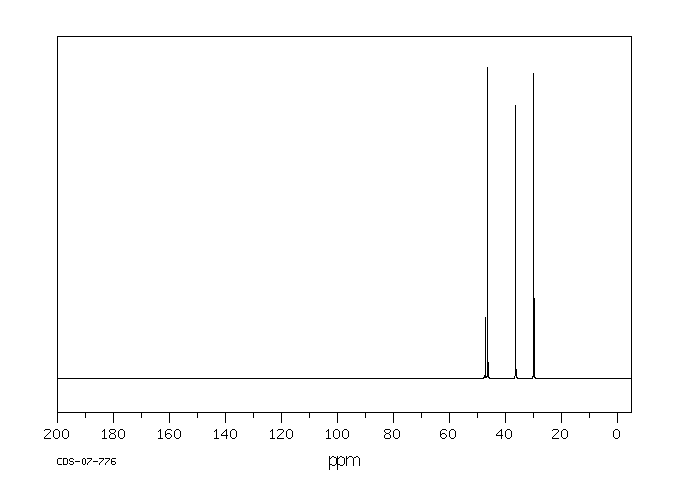
13 C NMR
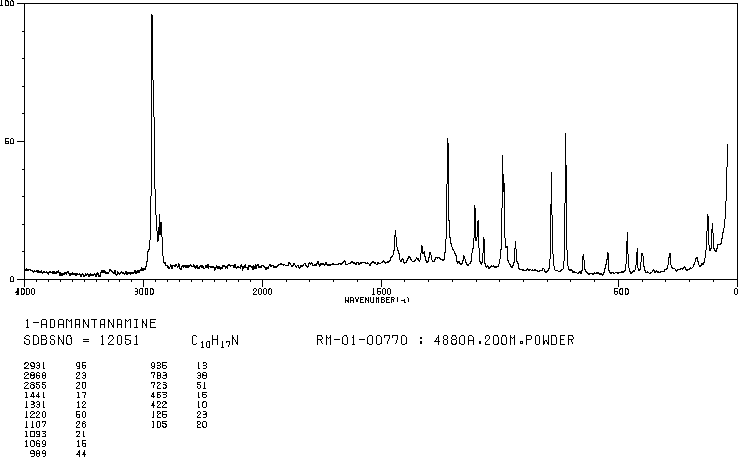
RAMAN
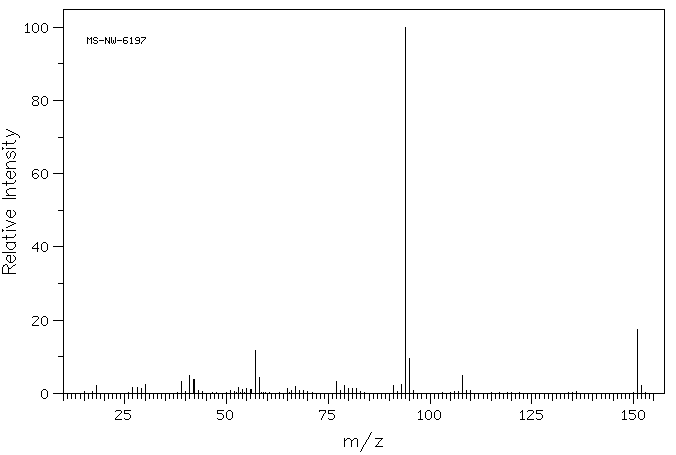
MASS
Image result for Amantadine NMR
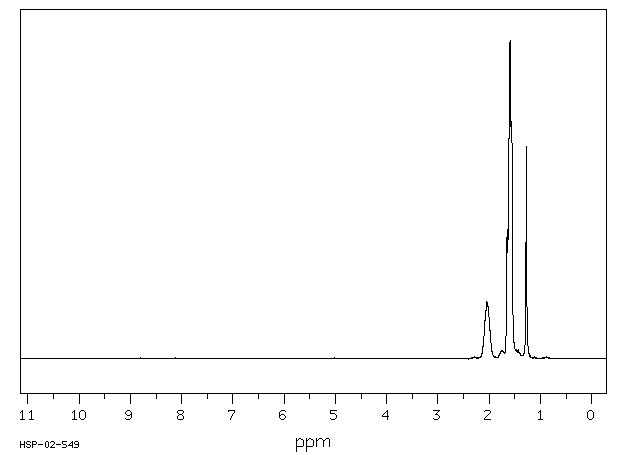
1H NMR
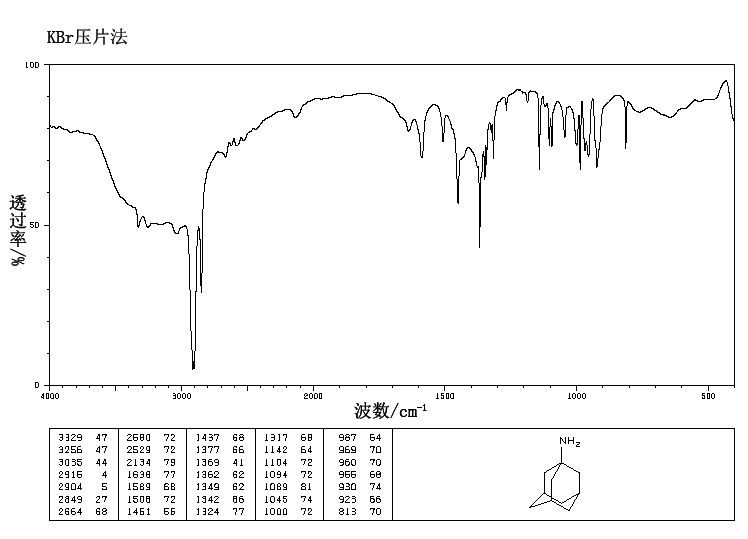
IR

Amantadine (trade name Symmetrel, by Endo Pharmaceuticals) is a drug that has U.S. Food and Drug Administration approval for use both as an antiviral and an antiparkinsonian drug. It is the organic compound 1-adamantylamine or 1-aminoadamantane, meaning it consists of an adamantane backbone that has an amino group substituted at one of the four methyne positions. Rimantadineis a closely related derivative of adamantane with similar biological properties.

Apart from medical uses, this compound is useful as a building block in organic synthesis, allowing the insertion of an adamantyl group.

According to the U.S. Centers for Disease Control and Prevention (CDC) 100% of seasonal H3N2 and 2009 pandemic flu samples tested showed resistance to adamantanes, and amantadine is no longer recommended for treatment of influenza in the United States. Additionally, its effectiveness as an antiparkinsonian drug is undetermined, with a 2003 Cochrane Review concluding that there was insufficient evidence in support of or against its efficacy and safety.[2]

Medical uses

Parkinson’s disease

Amantadine is used to treat Parkinsons disease, as well as parkinsonism syndromes.[3] A 2003 Cochrane review concluded evidence was inadequate to support the use of amantadine for Parkinson’s disease.[2]

An extended release formulation is used to treat dyskinesia, a side effect of levodopa which is taken by people who have Parkinsons.[4]

Influenza

Amantadine is no longer recommended for treatment of influenza A infection. For the 2008/2009 flu season, the CDC found that 100% of seasonal H3N2 and 2009 pandemic flu samples tested have shown resistance to adamantanes.[5] The CDC issued an alert to doctors to prescribe the neuraminidase inhibitors oseltamivir and zanamivir instead of amantadine and rimantadine for treatment of flu.[6][7] A 2014 Cochrane review did not find benefit for the prevention or treatment of influenza A.[8]

Fatigue in multiple sclerosis

Amantadine also seems to have moderate effects on multiple sclerosis (MS) related fatigue.[9]

Adverse effects

Amantadine has been associated with several central nervous system (CNS) side effects, likely due to amantadine’s dopaminergic and adrenergic activity, and to a lesser extent, its activity as an anticholinergic. CNS side effects include nervousness, anxiety, agitation, insomnia, difficulty in concentrating, and exacerbations of pre-existing seizure disorders and psychiatric symptoms in patients with schizophrenia or Parkinson’s disease. The usefulness of amantadine as an anti-parkinsonian drug is somewhat limited by the need to screen patients for a history of seizures and psychiatric symptoms.

Rare cases of severe skin rashes, such as Stevens-Johnson syndrome,[10] and of suicidal ideation have also been reported in patients treated with amantadine.[11][12]

Livedo reticularis is a possible side effect of amantadine use for Parkinson’s disease.[13]

Influenza

The mechanisms for amantadine’s antiviral and antiparkinsonian effects are unrelated. The mechanism of amantadine’s antiviral activity involves interference with the viral protein, M2, a proton channel.[14][15] After entry of the virus into cells via endocytosis, it is localized in acidic vacuoles; the M2 channel functions in transporting protons with the gradient from the vacuolar space into the interior of the virion. Acidification of the interior results in disassociation of ribonucleoproteins, and the initiation of viral replication. Amantadine and rimantadine function in a mechanistically identical fashion in entering the barrel of the tetrameric M2 channel, and blocking pore function (i.e., proton translocation). Resistance to the drug class is a consequence of mutations to the pore-lining residues of the channel, leading to the inability of the sterically bulky adamantane ring that both amantadine and rimantadine share, in entering in their usual way, into the channel.[citation needed]

Influenza B strains possess a structurally distinct M2 channels with channel-facing side chains that fully obstruct the channel vis-a-vis binding of adamantine-class channel inhibitors, while still allowing proton flow and channel function to occur; this constriction in the channels is responsible for the ineffectiveness of this drug and rimantadine towards all circulating Influenza B strains.

Parkinson’s disease

Amantadine is a weak antagonist of the NMDA-type glutamate receptorincreases dopamine release, and blocks dopamine reuptake.[16] Amantadine probably does not inhibit MAO enzyme.[17] Moreover, the mechanism of its antiparkinsonian effect is poorly understood.[citation needed] The drug has many effects in the brain, including release of dopamine and norepinephrine from nerve endings. It appears to be a weak NMDA receptor antagonist[18][19] as well as an anticholinergic, specifically a nicotinic alpha-7 antagonist like the similar pharmaceutical memantine.

In 2004, it was discovered that amantadine and memantine bind to and act as agonists of the σ1 receptor (Ki = 7.44 µM and 2.60 µM, respectively), and that activation of the σ1receptor is involved in the dopaminergic effects of amantadine at therapeutically relevant concentrations.[20] These findings may also extend to the other adamantanes such as adapromine, rimantadine, and bromantane, and could explain the psychostimulant-like effects of this family of compounds.[20]

History

Amantadine was approved by the U.S. Food and Drug Administration in October 1966 as a prophylactic agent against Asian influenza, and eventually received approval for the treatment of influenzavirus A[21][22][23][24] in adults. In 1969, the drug was also discovered by accident upon trying to help reduce symptoms of Parkinson’s disease, drug-induced extrapyramidal syndromes, and akathisia.

In 2017, the U.S. Food and Drug Administration approved the use of amantadine in an extended release formulation developed by Adamas Pharma for the treatment of dyskinesia, an adverse effect of levodopa, that people with Parkinson’s experience.[25]

Veterinary misuse

In 2005, Chinese poultry farmers were reported to have used amantadine to protect birds against avian influenza.[26] In Western countries and according to international livestock regulations, amantadine is approved only for use in humans. Chickens in China have received an estimated 2.6 billion doses of amantadine.[26] Avian flu (H5N1) strains in China and southeast Asia are now resistant to amantadine, although strains circulating elsewhere still seem to be sensitive. If amantadine-resistant strains of the virus spread, the drugs of choice in an avian flu outbreak will probably be restricted to the scarcer and costlier oseltamivir and zanamivir, which work by a different mechanism and are less likely to trigger resistance.

On September 23, 2015, the US Food and Drug Administration announced the recall of Dingo Chip Twists “Chicken in the Middle” dog treats because the product has the potential to be contaminated with amantadine.[27]

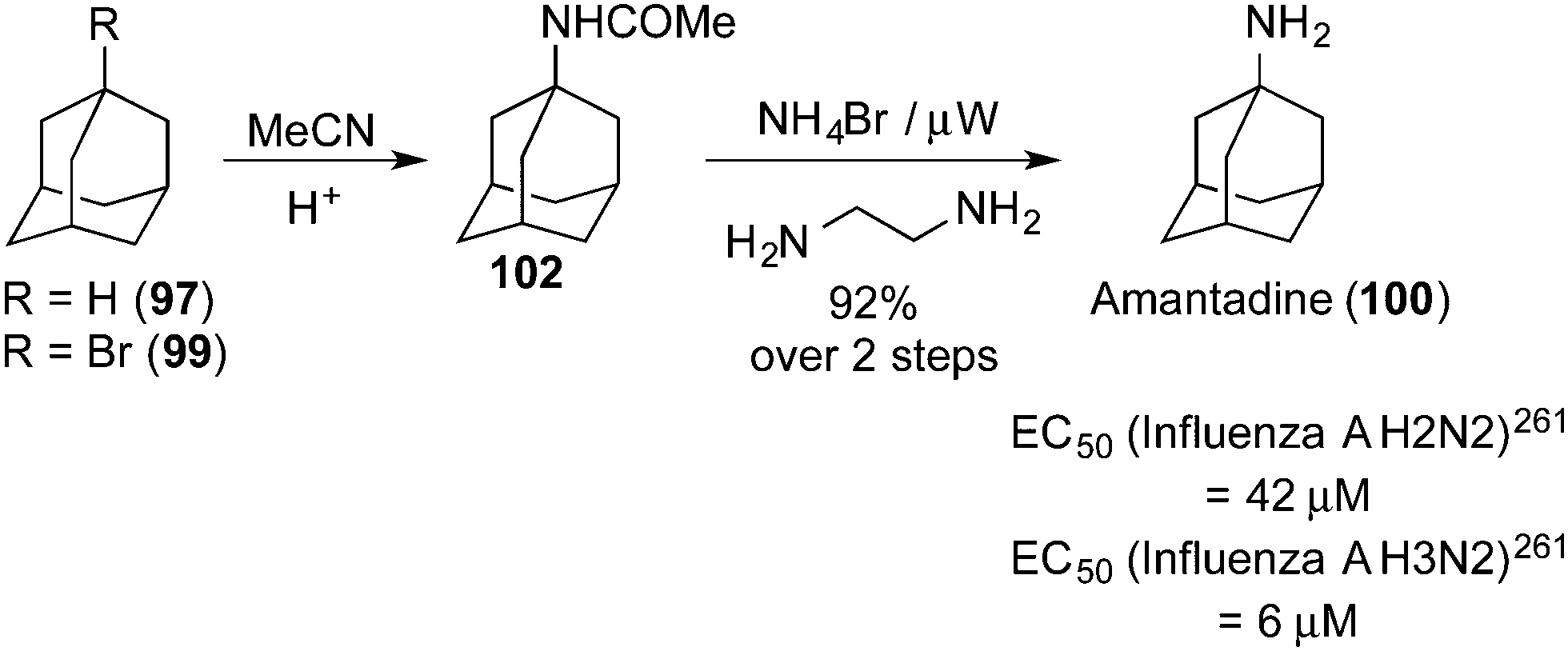
Image result for Amantadine SYNTHESIS

Image result for Amantadine SYNTHESIS

Image result for Amantadine SYNTHESIS

PAPER

An Improved Synthesis of Amantadine Hydrochloride

http://pubs.acs.org/doi/10.1021/acs.oprd.7b00242

 Vietnam Military Medical University, No. 160, Phung Hung str., Phuc La ward, Ha Dong district, Hanoi, Vietnam
 School of Chemical Engineering, Hanoi University of Science and Technology, No.1, Dai Co Viet str., Bach Khoa ward, Hai Ba Trung district, Hanoi, Vietnam
Org. Process Res. Dev., Article ASAP
DOI: 10.1021/acs.oprd.7b00242
Abstract Image

Amantadine hydrochloride 1 is an antiviral drug used in the prevention and treatment of influenza A infections. It has also been used for alleviating early symptoms of Parkinson’s disease. Several methods for the preparation of 1 have been reported. These procedures started with adamantane 2 using as many as four reaction steps to produce amantadine hydrochloride with overall yields ranging from 45% to 58%. In this article, we describe a two-step procedure for the synthesis of 1from 2 via N-(1-adamantyl)acetamide 4 with an improved overall yield of 67%. The procedure was also optimized to reduce the use of toxic solvents and reagents, rendering it more environment-friendly. The procedure can be considered as suitable for large-scale production of amantadine hydrochloride. The structure of amantadine hydrochloride was confirmed by 1H NMR, 13C NMR, IR, and MS.

Amantadine Hydrochloride (1)

 1. Yield: 232 g (82%). Rf = 0.5 (CHCl3/MeOH/25% aqueous NH3 = 6:1:1).
Purity (GC): 99.22%, tR 10.10 min; mp 360 °C.
1H NMR (CDCl3, 500 MHz): δ 8.28 (br, s, 3H), 2.15 (s, 3H), 2.04 (s, 6H); 1.69 (s, 6H).
13C NMR (CDCl3, 125 MHz): δ 52.95, 40.56, 35.38, 28.97.
IR (KBr): cm–1 3331.73–3185.17 (N–H); 3054.60–2917.82 (C–H); 1363.50 (C–N).
MS: m/z = 151.9 [M + 1]+, 135.0 [M–NH2 – 1]+.
IR spectrum of amantadine hydrochloride (1)
MS spectrum of amantadine hydrochloride
1H-NMR spectrum of amantadine hydrochloride (1) in CDCl3
13C-NMR spectrum of amantadine hydrochloride (1) in CDCl3
Amantadine
Title: Amantadine
CAS Registry Number: 768-94-5
CAS Name: Tricyclo[3.3.1.13,7]decan-1-amine
Additional Names: 1-adamantanamine; 1-aminoadamantane; 1-aminodiamantane (obsolete); 1-aminotricyclo[3.3.1.13,7]decane
Molecular Formula: C10H17N
Molecular Weight: 151.25
Percent Composition: C 79.41%, H 11.33%, N 9.26%
Literature References: NMDA-receptor antagonist; also active vs influenza A virus. Prepn: H. Stetter et al., Ber. 93, 226 (1960); W. Haaf, ibid. 97, 3234 (1964); P. Kovacic, P. D. Roskos, Tetrahedron Lett. 1968, 5833. Antiviral activity: W. L. Davies et al.,Science 144, 862 (1964). GC determn in biological samples and pharmacodynamics: W. E. Bleidner et al., J. Pharmacol. Exp. Ther. 150, 484 (1965). Pharmacology and toxicology: V. G. Vernier et al., Toxicol. Appl. Pharmacol. 15, 642 (1969). Comprehensive description: J. Kirschbaum, Anal. Profiles Drug Subs. 12, 1-36 (1983). Review of use vs influenza A: R. L. Tominack, F. G. Hayden, Infect. Dis. Clin. North Am. 1, 459-478 (1987); of pharmacokinetics: F. Y. Aoki, D. S. Sitar, Clin. Pharmacokinet. 14, 35-51 (1988). Review of NMDA receptor binding and neuroprotective properties: J. Kornhuber et al., J. Neural Transm. 43, Suppl., 91-104 (1994). Series of articles on clinical experience in Parkinson’s disease: ibid. 46, Suppl., 399-421 (1995).
Properties: Crystals by sublimation, mp 160-190° (closed tube) (Stetter). Also reported as mp 180-192° (Haaf). pKa: 10.1. Sparingly sol in water.
Melting point: mp 160-190° (closed tube) (Stetter); mp 180-192° (Haaf)
pKa: pKa: 10.1

Derivative Type: Hydrochloride

CAS Registry Number: 665-66-7
Manufacturers’ Codes: EXP-105-1; NSC-83653
Trademarks: Adekin (Desitin); Lysovir (Alliance); Mantadan (Boehringer, Ing.); Mantadine (Endo); Mantadix (BMS); Symmetrel (Endo); Virofral (Novo)
Molecular Formula: C10H17N.HCl
Molecular Weight: 187.71
Percent Composition: C 63.99%, H 9.67%, N 7.46%, Cl 18.89%
Properties: Crystals from abs ethanol + anhydr ether, mp >360° (dec). Freely sol in water (at least 1:20); sol in alcohol, chloroform. Practically insol in ether. LD50 orally in mice, rats: 700, 1275 mg/kg (Vernier).
Melting point: mp >360° (dec)
Toxicity data: LD50 orally in mice, rats: 700, 1275 mg/kg (Vernier)
Derivative Type: Sulfate
CAS Registry Number: 31377-23-8
Trademarks: PK-Merz (Merz)
Molecular Formula: C10H17N.½H2SO4
Molecular Weight: 200.29
Percent Composition: C 59.97%, H 9.06%, N 6.99%, S 8.00%, O 15.98%
Therap-Cat: Antiviral; antiparkinsonian.
Keywords: Antidyskinetic; Antiparkinsonian; Antiviral.
Amantadine
Amantadine.svg
Amantadine ball-and-stick model.png
Clinical data
Trade names Symmetrel
Synonyms 1-Adamantylamine
AHFS/Drugs.com Monograph
MedlinePlus a682064
Pregnancy
category
  • AU: B3
  • US: C (Risk not ruled out)
Routes of
administration
Oral
ATC code
Legal status
Legal status
Pharmacokinetic data
Bioavailability 86–90%[1]
Protein binding 67%[1]
Metabolism Minimal (mostly to acetyl metabolites)[1]
Biological half-life 10–31 hours[1]
Excretion Urine[1]
Identifiers
CAS Number
PubChem CID
IUPHAR/BPS
DrugBank
ChemSpider
UNII
KEGG
ChEBI
ChEMBL
ECHA InfoCard 100.011.092
Chemical and physical data
Formula C10H17N
Molar mass 151.249 g/mol
3D model (JSmol)

References

  1. Jump up to:a b c d e “SYMMETREL® (amantadine hydrochloride)” (PDF). TGA eBusiness Services. NOVARTIS Pharmaceuticals Australia Pty Limited. 29 June 2011. Retrieved 24 February2014.
  2. Jump up to:a b Crosby, Niall J; Deane, Katherine; Clarke, Carl E (2003). Clarke, Carl E, ed. “Amantadine in Parkinson’s disease”. Cochrane Database of Systematic Reviewsdoi:10.1002/14651858.CD003468.
  3. Jump up^ “Amantadine – FDA prescribing information,”Drugs.com. Retrieved 2017-08-28.
  4. Jump up^ “Amantadine extended release capsules” (PDF). FDA. August 2017. For label updates, see FDA index page for NDA 208944
  5. Jump up^ CDC weekly influenza report – week 35, cdc.gov
  6. Jump up^ “CDC Recommends against the Use of Amantadine and Rimantadine for the Treatment or Prophylaxis of Influenza in the United States during the 2005–06 Influenza Season”CDC Health AlertCenters for Disease Control and Prevention. 2006-01-14. Archived from the original on 3 May 2008. Retrieved 2008-05-20.
  7. Jump up^ Deyde, Varough M.; Xu, Xiyan; Bright, Rick A.; Shaw, Michael; Smith, Catherine B.; Zhang, Ye; Shu, Yuelong; Gubareva, Larisa V.; Cox, Nancy J.; Klimov, Alexander I. (2007). “Surveillance of Resistance to Adamantanes among Influenza A(H3N2) and A(H1N1) Viruses Isolated Worldwide”. Journal of Infectious Diseases196 (2): 249–257. PMID 17570112doi:10.1086/518936.
  8. Jump up^ Alves Galvão, MG; Rocha Crispino Santos, MA; Alves da Cunha, AJ (21 November 2014). “Amantadine and rimantadine for influenza A in children and the elderly.”. The Cochrane database of systematic reviews11: CD002745. PMID 25415374doi:10.1002/14651858.CD002745.pub4.
  9. Jump up^ Braley, TJ; Chervin, RD (Aug 2010). “Fatigue in multiple sclerosis: mechanisms, evaluation, and treatment.”Sleep33 (8): 1061–7. PMC 2910465Freely accessiblePMID 20815187.
  10. Jump up^ Singhal, KC; Rahman, SZ (2002). “Stevens Johnson Syndrome Induced by Amantadine”. Rational Drug Bulletin12 (1): 6.
  11. Jump up^ “Symmetrel (Amantadine) Prescribing Information” (PDF). Endo Pharmaceuticals. May 2003. Retrieved 2007-08-02.
  12. Jump up^ Cook, PE; Dermer, SW; McGurk, T (1986). “Fatal overdose with amantadine”. Canadian Journal of Psychiatry31 (8): 757–8. PMID 3791133.
  13. Jump up^ Vollum, DI; Parkes, JD; Doyle, D (June 1971). “Livedo reticularis during amantadine treatment”Br Med J2 (5762): 627–8. PMC 1796527Freely accessiblePMID 5580722doi:10.1136/bmj.2.5762.627.
  14. Jump up^ Wang C, Takeuchi K, Pinto LH, Lamb RA (1993). “Ion channel activity of influenza A virus M2 protein: characterization of the amantadine block”Journal of Virology67 (9): 5585–94. PMC 237962Freely accessiblePMID 7688826.
  15. Jump up^ Jing X, Ma C, Ohigashi Y, et al. (2008). “Functional studies indicate amantadine binds to the pore of the influenza A virus M2 proton-selective ion channel”Proc. Natl. Acad. Sci. U.S.A105 (31): 10967–72. PMC 2492755Freely accessiblePMID 18669647doi:10.1073/pnas.0804958105.
  16. Jump up^ Jasek, W, ed. (2007). Austria-Codex (in German) (62nd ed.). Vienna: Österreichischer Apothekerverlag. p. 3962. ISBN 978-3-85200-181-4.
  17. Jump up^ Strömberg, U.; Svensson, T. H. (November 1971). “Further Studies on the Mode of Action of Amantadine”wiley.comActa Pharmacologica et Toxicologica, Nordic Pharmacological Society. 30 (3–4): 161–171. doi:10.1111/j.1600-0773.1971.tb00646.x.
  18. Jump up^ Kornhuber, J; Bormann, J; Hübers, M; Rusche, K; Riederer, P (1991). “Effects of the 1-amino-adamantanes at the MK-801-binding site of the NMDA-receptor-gated ion channel: a human postmortem brain study”. Eur. J. Pharmacol. Mol. Pharmacol. Sect206: 297–300. doi:10.1016/0922-4106(91)90113-v.
  19. Jump up^ Blanpied, TA; Clarke, RJ; Johnson, JW (2005). “Amantadine inhibits NMDA receptors by accelerating channel closure during channel block”. Journal of Neuroscience25 (13): 3312–22. PMID 15800186doi:10.1523/JNEUROSCI.4262-04.2005.
  20. Jump up to:a b Peeters, Magali; Romieu, Pascal; Maurice, Tangui; Su, Tsung-Ping; Maloteaux, Jean-Marie; Hermans, Emmanuel (2004). “Involvement of the sigma1 receptor in the modulation of dopaminergic transmission by amantadine”. European Journal of Neuroscience19 (8): 2212–2220. ISSN 0953-816XPMID 15090047doi:10.1111/j.0953-816X.2004.03297.x.
  21. Jump up^ Hounshell, David A.; Kenly Smith, John (1988). Science and Corporate Strategy: Du Pont R&D, 1902–1980. Cambridge University Press. p. 469.
  22. Jump up^ “Sales of flu drug by du Pont unit a ‘disappointment'”The New York Times. Wilmington, Delaware. October 5, 1982. Retrieved May 19, 2008.
  23. Jump up^ Maugh, T. (1979). “Panel urges wide use of antiviral drug”. Science206 (4422): 1058–60. PMID 386515doi:10.1126/science.386515.
  24. Jump up^ Maugh, T. H. (1976). “Amantadine: an Alternative for Prevention of Influenza”. Science192 (4235): 130–1. PMID 17792438doi:10.1126/science.192.4235.130.
  25. Jump up^ Bastings, Eric. “NDA 208944 Approval Letter” (PDF).
  26. Jump up to:a b Sipress, Alan (2005-06-18). “Bird Flu Drug Rendered Useless”Washington Post. pp. A01. Retrieved 2007-08-02.
  27. Jump up^ “Enforcement Report – Week of September 23, 2015”FDA.gov. US Food and Drug Administration, US Department of Health & Human Services.

/////////////

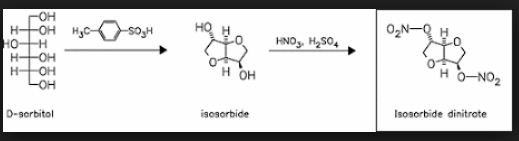
Synthesis of isosorbide: an overview of challenging reactions


Green Chem., 2017, Advance Article
DOI: 10.1039/C7GC01912B, Tutorial Review
C. Dussenne, T. Delaunay, V. Wiatz, H. Wyart, I. Suisse, M. Sauthier
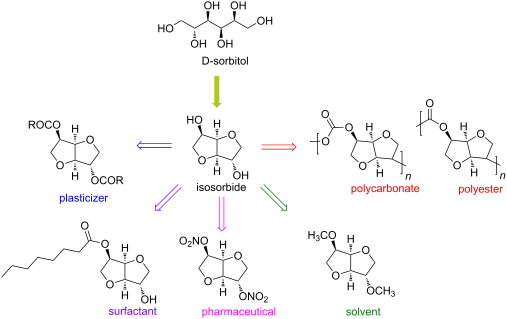
This review gives an overview of the catalysts and technologies developed for the synthesis of isosorbide, a platform molecule derived from biomass (sorbitol and cellulose).

Synthesis of isosorbide: an overview of challenging reactions

 Author affiliations

Abstract

Isosorbide is a diol derived from sorbitol and obtained through dehydration reactions that has raised much interest in the literature over the past few decades. Thus, this platform chemical is a biobased alternative to a number of petrosourced molecules that can find applications in a large number of technical specialty fields, such as plasticizers, monomers, solvents or pharmaceuticals. The synthesis of isosorbide is still a technical challenge, as several competitive reactions must be simultaneously handled to promote a high molar yield and avoid side reactions, like degradation and polymerization. In this purpose, many studies have proposed innovative and varied methods with promising results. This review gives an overview of the synthesis strategies and catalysts developed to access this very attractive molecule, pointing out both the results obtained and the remaining issues connected to isosorbide synthesis.

STR1 STR2

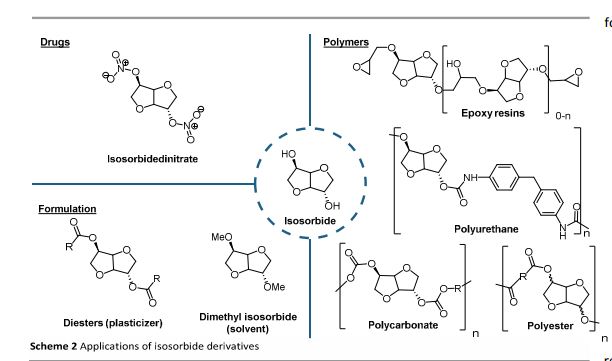
Up to now, isosorbide has been used to access a large panel of molecules with relevant applicative properties and industrial reality (Scheme 2).12 Isosorbide dinitrate is used since several decades as vasodilator.13, 14 The dimethyl isosorbide is for example used as solvent in cosmetics15-17 and isosorbide diesters18-22 are actually industrially produced and commercialized as surfactants23-27 and PVC plasticizer28, 29 . The rigid scaffold associated to the bifunctionality of the molecule has attracted a strong interest in the field of polymers chemistry. Isosorbide and derivatives have thus been shown as suitable monomers for the industrial production of polycarbonates30, 31, polyesters32-41 or polyamides42-44, with attractive applicative properties. For example, isosorbide allows the increase of Tg, improves the scratch resistance and gives excellent optical properties to polymers. Polyesters and polycarbonates containing isosorbide have now commercial developments in food packaging, spray container, automotive, material for electronic devices … .

Conclusions

Isosorbide is a versatile platform molecule that shows key features to make it a credible alternative to petro-based products. The molecule is already available on large industrial scale (tens of thousands tons per years), which allows its development in commercial products such as active pharma ingredient, additive for cosmetic, speciality chemicals and polymers (ex: polycarbonates – polyesters). The development of more selective and higher yields syntheses of isosorbide are greatly needed to consolidate isosorbide production in view of a large expansion of its uses. Sorbitol conversion to isosorbide, relying on a starch route, is already a tough challenge. In a farther future, development of a credible path to isosorbide relying on cellulose source could even be thought of, provided that very versatile innovative catalysts will be developed in the next years. In all cases, a key issue is to develop catalysts that will avoid the massive production of “oligomeric/polymeric” by-products in order to access more sustainable processes by limiting the amounts of wastes produced during the synthesis. For this purpose, more selective homogeneous catalysts than the conventional Brønsted acids or alternative reaction conditions would be of strong interest. Selective and recyclable heterogeneous catalysts would be even more profitable as they would allow the continuous production of catalyst free isosorbide. This latter approach faces strong limitations due to the need of high reaction temperatures that often result in high amounts of side-products and the need of frequent and often tedious catalyst regeneration. Innovation concerning isosorbide synthesis is still an open field on which the design of efficient and robust catalysts, either homogeneous or heterogeneous, is a key issue. Such developments would pave the way to high scale effective processes considering altogether synthesis and purification of isosorbide.

////////////////

Image result for ISOSORBIDE SYNTHESIS

Image result for ISOSORBIDE SYNTHESIS

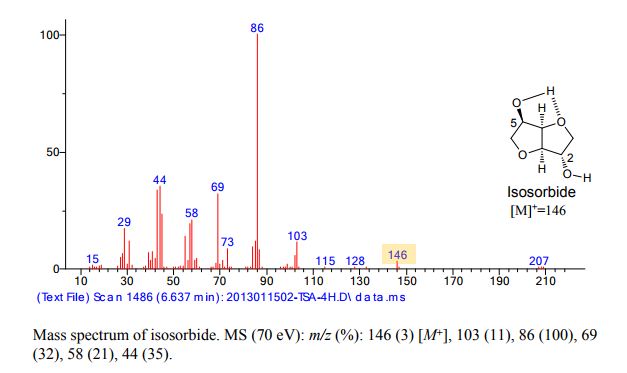
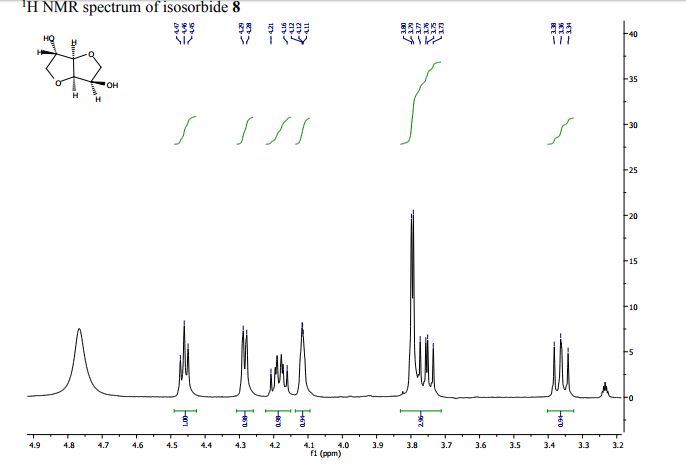
Isosorbide is a heterocyclic compound that is derived from glucose. Isosorbide and its two isomers, namely isoidide and isomannide, are 1,4:3,6-dianhydrohexitols. It is a white solid that is prepared from the double dehydration of sorbitol. Isosorbide is a non-toxic diolproduced from biobased feedstocks, that is biodegradable and thermally stable. It is used in medicine and has been touted as a potential biofeedstock.

Production

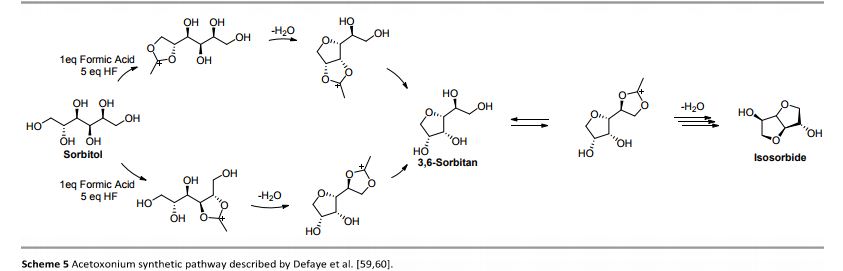
Hydrogenation of glucose gives sorbitol. Isosorbide is obtained by double dehydration of sorbitol:

(CHOH)4(CH2OH)2 → C6H10O2(OH)2 + 2 H2O

An intermediate in the dehydration is the monocycle sorbitan.[1]

Application

Isosorbide is used as a diuretic, mainly to treat hydrocephalus, and is also used to treat glaucoma.[2] Other medications are derived from isosorbide, including isosorbide dinitrate and isosorbide mononitrate, are used to treat angina pectoris. Other isosorbide-based medicines are used as osmotic diuretics and for treatment of esophageal varices. Like other nitric oxide donors (see biological functions of nitric oxide), these drugs lower portal pressure by vasodilation and decreasing cardiac output. Isosorbide dinitrate and hydralazineare the two components of the anti-hypertensive drug isosorbide dinitrate/hydralazine (Bidil).

Isosorbide is also used as a building block for bio based polymers such as polyesters.[3]

References

  1. Jump up^ M. Rose, R. Palkovits (2012). “Isosorbide as a Renewable Platform chemical for Versatile Applications—Quo Vadis?”. ChemSusChem5 (1): 167–176. PMID 22213713doi:10.1002/cssc.201100580.
  2. Jump up^ CID 12597 from PubChem
  3. Jump up^ Bersot J.C. (2011). “Efficiency Increase of Poly (ethylene terephthalate‐co‐isosorbide terephthalate) Synthesis using Bimetallic Catalytic Systems”. Macromol. Chem. Phys212 (19): 2114–2120. doi:10.1002/macp.201100146.
Isosorbide
Isosorbide.svg
Names
Other names

D-Isosorbide; 1,4:3,6-Dianhydro-D-sorbitol; 1,4-Dianhydrosorbitol
Identifiers
3D model (JSmol)
ChemSpider
ECHA InfoCard 100.010.449
KEGG
PubChem CID
UNII
Properties
C6H10O4
Molar mass 146.14 g·mol−1
Appearance Highly hygroscopic white flakes
Density 1.30 at 25 °C
Melting point 62.5 to 63 °C (144.5 to 145.4 °F; 335.6 to 336.1 K)
Boiling point 160 °C (320 °F; 433 K) at 10 mmHg
in water (>850 g/L), alcoholsand ketones
Except where otherwise noted, data are given for materials in their standard state (at 25 °C [77 °F], 100 kPa).

From the net

STR1

Image result for ISOSORBIDE SYNTHESIS


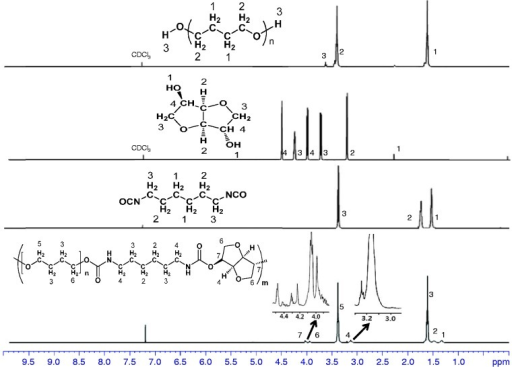
1H Nuclear magnetic resonance (NMR) spectra of PTMG, isosorbide, HDI, and polyurethane.HDI: hexamethylene diisocyanate; PTMG: poly(tetramethylene glycol).

1H Nuclear magnetic resonance (NMR) spectra of PTMG, isosorbide, HDI, and polyurethane.HDI: hexamethylene diisocyanate; PTMG: poly(tetramethylene glycol).


Image result for ISOSORBIDE SYNTHESIS

REF

http://www.rsc.org/suppdata/gc/c4/c4gc01822b/c4gc01822b1.pdf

Synthesis of five- and six-membered heterocycles by dimethyl carbonate with catalytic amount of nitrogen bicyclic bases

http://pubs.rsc.org/en/content/articlelanding/2015/gc/c4gc01822b#!divAbstract

F. Aricò, a,*S. Evaristoa and P. Tundoa,*

Catalytic amount of a nitrogen bicyclic base, i.e., DABCO, DBU and TBD is effective for the one-pot synthesis of heterocycles from 1,4-, 1,5-diols and 1,4-bifunctional compounds via dimethyl carbonate chemistry under neat conditions. Nitrogen bicyclic bases, that previously showed to enhance the reactivity of DMC in methoxycarbonylation reaction by BAc2 mechanism, are herein used for the first time as efficient catalysts for cyclization reaction encompassing both BAc2 and BAl2 pathways. This synthetic procedure was also applied to a large scale synthesis of cyclic sugars isosorbide and isomannide starting from D-sorbitol and D-mannitol, respectively. The resulting anhydro sugar alcohols were obtained as pure crystalline compounds that did not require any further purification or crystallization.

Image result for ISOSORBIDE SYNTHESIS

Larger scale synthesis of isosorbide: In a round bottom flask equipped with a reflux condenser, D-sorbitol (0.05 mol, 1.00 mol. eq.), DMC (0.44 mol, 8.00 mol. eq.), DBU (2.70 mmol, 0.05 mol. eq.) and MeOH (20.00 mL) were heated at reflux while stirring. The progress of the reaction was monitored by NMR. After 48 hours the reaction was stopped, cooled at room temperature and the mixture was filtered over Gooch n°4. Finally, DMC was evaporated under vacuum and the product was obtained as pure in 98% yield (7.90 g, 0.05 mol). Characterization data were consistent with those obtained for the commercially available compound.

STR1


Image result for ISOSORBIDE SYNTHESIS

File:Isosorbide dinitrate synthesis.png


STR1


Image result for ISOSORBIDE SYNTHESIS

FDA clears first 7T magnetic resonance imaging device


FDA clears first 7T magnetic resonance imaging device

Today, the U.S. Food and Drug Administration cleared the first seven tesla (7T) magnetic resonance imaging (MRI) device, more than doubling the static magnetic field strength available for use in the United States. The Magentom Terra is the first 7T MRI system cleared for clinical use in the United States. Continue reading.

 JTV 519, K 201, 


JTV-519.svg

JTV-519

  • Molecular FormulaC25H32N2O2S
  • Average mass424.599 Da
  • 145903-06-6 CAS

ChemSpider 2D Image | JTV-519 hydrochloride salt | C25H33ClN2O2S

JTV-519 hydrochloride salt

  • Molecular FormulaC25H33ClN2O2S
  • Average mass461.060 Da
3-(4-Benzyl-1-piperidinyl)-1-(7-methoxy-2,3-dihydro-1,4-benzothiazepin-4(5H)-yl)-1-propanonhydrochlorid (1:1)
4-[3-(4-benzylpiperidin-1-yl)propanoyl]-7-methoxy-2,3,4,5-tetrahydro-1,4-benzothiazepine hydrochloride
JTV-519 hydrochloride salt
1038410-88-6 [RN]
  1. UNII-0I621Y6R4Q
  2. K201
  3. 1038410-88-6
  4. K 201
  5. SCHEMBL194018
  6. CHEMBL2440857
  7. DTXSID90146108
  8. 0I621Y6R4Q
  9. LS-193564

Image result for Andrew Marks, JAPAN TOBACCO

JAPAN TOBACCO

Acute Myocardial Infarction, Treatment of Cardiovascular Diseases (Not Specified)
Antiarrhythmic Drugs

JTV-519 (K201) is a 1,4-benzothiazepine derivative that interacts with many cellular targets.[1] It has many structural similarities to diltiazem, a Ca2+ channel blocker used for treatment of hypertensionangina pectoris and some types of arrhythmias.[2] JTV-519 acts in the sarcoplasmic reticulum (SR) of cardiac myocytes by binding to and stabilizing the ryanodine receptor (RyR2) in its closed state.[3][4]It can be used in the treatment of cardiac arrhythmias, heart failurecatecholaminergic polymorphic ventricular tachycardia (CPVT) and store overload-induced Ca2+ release (SOICR).[2][3][4] Currently, this drug has only been tested on animals and its side effects are still unknown.[5] As research continues, some studies have also found a dose-dependent response; where there is no improvement seen in failing hearts at 0.3 μM and a decline in response at 1 μM.[4]

K-201 (JTV-519; 1,4-benzothiazepine derivative) is an antiarrhythmic drug, had been in phase II clinical development at Japan Tobacco and Sequel Pharmaceuticals for the intravenous treatment of atrial fibrillation; however no recent developments have been reported and Sequel Pharmaceuticals has ceased operations.

In 2006, NovaCardia acquired rights from Aetas to develop the product in Europe and US for cardiovascular disorders. Sequel acquired the compound, which has a unique multi-ion channel profile, from NovaCardia following its acquisition by Merck & Co.

Treatment with JTV-519 involves stabilization of RyR2 in its closed state, decreasing its open probability during diastole and inhibiting a Ca2+ leak into the cell’s cytosol.[3][4] By decreasing the intracellular Ca2+ leak, it is able to prevent Ca2+ sparks or increases in the resting membrane potential, which can lead to spontaneous depolarization (cardiac arrhythmias), and eventually heart failure, due to the unsynchronized contraction of the atrial and ventricular compartments of the heart.[2][3][4] When Ca2+ sparks occur from the SR, the increase in intracellular Ca2+ contributes to the rising membrane potential which leads to the irregular heart beat associated to cardiac arrhythmias.[3] It can also prevent SOICR in the same manner; preventing opening of the channel due to the increase of Ca2+ inside the SR levels beyond its threshold.[2]

Molecular problem

In the closed state, N-terminal and central domains come into close contact interacting to cause a “zipping” of domains. This leads to conformational constraints that stabilize the channel and maintain the closed state.[1] Most RyR2 mutations are clustered into three regions of the channel, all affecting the same domains that interact to stabilize the channel.[1] Any of these mutations can lead to “unzipping” of the domains and a decrease in the energy barrier required for opening the channel (increasing its open probability).[1]This channel “unzipping” allows for an increase in protein kinase A phosphorylation and calstabin2 dissociation. Phosphorylation of RyR2 increases the channel’s response to Ca2+, which usually binds the RyR2 to open it.[1] If the channel become phosphorylated, this can lead to an increase in Ca2+ sparks due to an increase in Ca2+ sensitivity.

Some researchers believe that the depletion of calstabin2 from the RyR2 causes the calcium leak.[3] The depletion of calstabin2 can occur in both heart failure and CPVT.[3]Calstabin2 is a protein that stabilizes RyR2 in its closed state, preventing Ca2+ leakage during diastole. When calstabin2 is lost, the interdomain interactions of RyR2 become loose, allowing the Ca2+ leak.[3] However, the role of calstabin2 has been controversial, as some studies have found it necessary for the effect of JTV-519,[3] whereas others have found the drug functions without the stabilizing protein.[2]

Molecular mechanism

JTV-519 seems to restore the stable conformation of RyR2 during the closed state.[1][4] It is still controversial whether or not calstabin2 is necessary for this process, however, many studies believe that JTV-519 can act directly on the channel and by binding, prevents conformational changes.[2] This stabilization of the channel decreases its open probability resulting in fewer leaks of Ca2+ into the cytosol and fewer Ca2+ sparks to occur.[3][4] Researchers who believe that calstabin2 is necessary for JTV-519 effect, found that this drug may function by inducing the binding of calstabin2 back to the channel or increasing calstabin2’s affinity for the RyR2 and thus increasing its stability.[2][3]

SYNTHESIS

PATENT

US 20050186640

https://www.google.com/patents/US20050186640

Inventors Andrew MarksDonald LandryShi DengZhen Cheng
Original Assignee Marks Andrew R.Landry Donald W.Deng Shi X.Cheng Zhen Z.

PATENT

WO 9212148

https://www.google.co.in/patents/WO1992012148A1?cl=en

Inventors Noboru KanekoTatsushi OosawaTeruyuki SakaiHideo Oota
Applicant Noboru Kaneko

PATENT

US 2014121368

2,3,4,5-tetrahydrobenzo[f][1,4]thiazepines are important compounds because of their biological activities, as disclosed, for example, in U.S. Pat. Nos. 5,416,066 and 5,580,866 and published US Patent Applications Nos. 2005/0215540, 2007/0049572 and 2007/0173482.

Synthetic procedures exist for the preparation of 2-oxo-, 3-oxo-, 5-oxo- and 3,5-dioxo-1,4-benzothiazepines and for 2,3-dihydro-1,4-benzothiazepines. However, relatively few publications describe the preparation of 2,3,4,5-tetrahydrobenzo-1,4-thiazepines that contain no carbonyl groups, and most of these involve reduction of a carbonyl group or an imine. Many of the routes described in the literature proceed from an ortho-substituted arene and use the ortho substituents as “anchors” for the attachment of the seven-membered ring. Essentially all the preparatively useful syntheses in the literature that do not begin with an ortho-substituted arene employ a modification of the Bischler-Napieralski reaction in which the carbon of the acyl group on the γ-amide becomes the carbon adjacent the bridgehead and the acyl substituent becomes the 5-substituent. Like earlier mentioned syntheses, the Bischler-Napieralski synthesis requires reduction of an iminium intermediate.

It would be useful to have an intramolecular reaction for the direct construction of 2,3,4,5-tetrahydrobenzo[1,4]thiazepines that would allow more flexibility in the 4- and 5-substituents and that would avoid a separate reduction step. The Pictet Spengler reaction, in which a β-arylethylamine such as tryptamine undergoes 6-membered ring closure after condensation (cyclization) with an aldehyde, has been widely used in the synthesis of 6-membered ring systems over the past century and might be contemplated for this purpose. The Pictet Spengler reaction, however, has not been generally useful for 7-membered ring systems such as 1,4-benzothiazepines. A plausible explanation is that the failure of the reaction for typical arenes was due to the unfavorable conformation of the 7-membered ring. There are two isolated examples of an intramolecular Pictet-Spengler-type reaction producing a good yield of a benzothiazepine from the addition of formaldehyde. In one case, the starting material was a highly unusual activated arene (a catechol derivative) [Manini et al. J. Org. Chem. (2000), 65, 4269-4273]. In the other case, the starting material is a bis(benzotriazolylmethyl)amine that cyclizes to a mono(benzotriazolyl)benzothiazole [Katritzky et al. J. Chem. Soc. Pl (2002), 592-598].

PATENT

US 20050186640

WO 2015031914

US 20040229781

US 20090292119

US 7704990

PAPER

Journal of Medicinal Chemistry (2013), 56(21), 8626-8655

http://pubs.acs.org/doi/full/10.1021/jm401090a

PAPER

Synthesis of 2,3,4,5-Tetrahydrobenzo[1,4]thiazepines via N-Acyliminium Cyclization

 ARMGO Pharma, Inc., 777 Old Saw Mill River Road, Tarrytown, New York 10591, United States
 Department of Medicine, Columbia University College of Physicians and Surgeons, New York, New York 10032, United States
Org. Process Res. Dev., Article ASAP
DOI: 10.1021/acs.oprd.7b00260
Publication Date (Web): September 28, 2017
Copyright © 2017 American Chemical Society
*Phone: (914)-425-0000. E-mail: sbelvedere@armgo.com.

Abstract

Abstract Image

We report an efficient and scalable synthesis of 7-methoxy-2,3,4,5-tetrahydrobenzo[1,4]thiazepine, the core structure of biologically active molecules like JTV-519 and S107. This synthetic route, starting with 4-methoxythiophenol and proceeding via acyliminum cyclization, gives the target product in four steps and 68% overall yield and is a substantial improvement over previously published processes. Nine additional examples of tetrahydrobenzo[1,4]thiazepine synthesis via acyliminium ring closure are also presented.

References

  1. Jump up to:a b c d e f Oda, T; Yano, M; Yamamoto, T; Tokuhisa, T; Okuda, S; Doi, M; Ohkusa, T; Ikeda, Y; et al. (2005). “Defective regulation of interdomain interactions within the ryanodine receptor plays a key role in the pathogenesis of heart failure”. Circulation111 (25): 3400–10. PMID 15967847doi:10.1161/CIRCULATIONAHA.104.507921.
  2. Jump up to:a b c d e f g Hunt, DJ; Jones, PP; Wang, R; Chen, W; Bolstad, J; Chen, K; Shimoni, Y; Chen, SR (2007). “K201 (JTV519) suppresses spontaneous Ca2+ release and 3Hryanodine binding to RyR2 irrespective of FKBP12.6 association”The Biochemical Journal404 (3): 431–8. PMC 1896290Freely accessiblePMID 17313373doi:10.1042/BJ20070135.
  3. Jump up to:a b c d e f g h i j k Wehrens, XH; Lehnart, SE; Reiken, SR; Deng, SX; Vest, JA; Cervantes, D; Coromilas, J; Landry, DW; Marks, AR (2004). “Protection from cardiac arrhythmia through ryanodine receptor-stabilizing protein calstabin2”. Science304 (5668): 292–6. PMID 15073377doi:10.1126/science.1094301.
  4. Jump up to:a b c d e f g Toischer, K; Lehnart, SE; Tenderich, G; Milting, H; Körfer, R; Schmitto, JD; Schöndube, FA; Kaneko, N; et al. (2010). “K201 improves aspects of the contractile performance of human failing myocardium via reduction in Ca2+ leak from the sarcoplasmic reticulum”Basic research in cardiology105 (2): 279–87. PMC 2807967Freely accessiblePMID 19718543doi:10.1007/s00395-009-0057-8.
  5. Jump up^ Viswanathan, MN; Page, RL (2009). “Pharmacological therapy for atrial fibrillation: Current options and new agents”. Expert Opinion on Investigational Drugs18 (4): 417–31. PMID 19278302doi:10.1517/13543780902773410.
JTV-519
JTV-519.svg
Names
IUPAC name

3-(4-Benzyl-1-piperidinyl)-1-(7-methoxy-2,3-dihydro-1,4-benzothiazepin-4(5H)-yl)-1-propanone
Other names

K201
Identifiers
3D model (JSmol)
ChemSpider
PubChem CID
UNII
Properties
C25H32N2O2S
Molar mass 424.60 g·mol−1
Except where otherwise noted, data are given for materials in their standard state (at 25 °C [77 °F], 100 kPa).

//////////////JTV-519K201, JTV 519, K 201, 

Phytomenadione, Phytonadione, фитоменадион ,فيتوميناديون ,


Vitamin K1.png

ChemSpider 2D Image | Phylloquinone | C31H46O2

Phytomenadione,

PHYTONADIONE, Phylloquinone

Molecular Formula: C31H46O2
Molecular Weight: 450.707 g/mol
[R-[R*,R*-(E)]]-2-Methyl-3-(3,7,11,15-tetramethyl-2-hexadecenyl)-1,4-naphthalenedione
1,4-Naphthalenedione, 2-methyl-3-((2E,7R,11R)-3,7,11,15-tetramethyl-2-hexadecenyl)-
2′,3′-trans-Vitamin K1
фитоменадион [Russian] [INN]
فيتوميناديون [Arabic] [INN]
2-methyl-3-[(2E,7R,11R)-3,7,11,15-tetramethylhexadec-2-en-1-yl]naphthalene-1,4-dione
 CAS 84-80-0[RN]
Antihemorrhagic vitamin
Aqua mephyton
AQUAMEPHYTON
Combinal K1
Kativ N
Kephton
Kinadion
K-Ject
KONAKION
Mono-kay
Phyllochinonum
Phylloquinone (8CI)
Optical Rotatory Power -0.28 ° Solv: 1,4-dioxane (123-91-1); Wavlen: 589.3 nm; Temp: 25 °CKarrer, P.; Helvetica Chimica Acta 1944, VOL 27, PG317-19


MASS


1H NMR

400 MHZ CDCL3


13C NMR

  1. Murahashi, Shun-ichi; European Journal of Organic Chemistry 2011, VOL2011(27), P5355-5365 
  2. Huang, Zhihong; Advanced Synthesis & Catalysis 2007, VOL349(4+5), PG539-545 

IR LIQ FILM


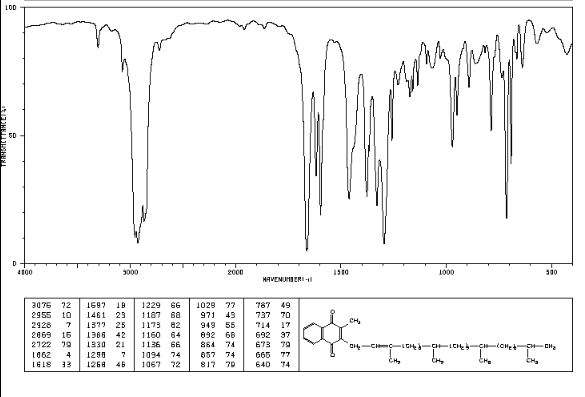
Phylloquinone is a family of phylloquinones that contains a ring of 2-methyl-1,4-naphthoquinone and an isoprenoid side chain. Members of this group of vitamin K 1 have only one double bond on the proximal isoprene unit. Rich sources of vitamin K 1 include green plants, algae, and photosynthetic bacteria. Vitamin K1 has antihemorrhagic and prothrombogenic activity.

Phytomenadione, also known as vitamin K1 or phylloquinone, is a vitamin found in food and used as a dietary supplement.[1][2] As a supplement it is used to treat certain bleeding disorders.[2] This includes in warfarin overdosevitamin K deficiency, and obstructive jaundice.[2] It is also recommended to prevent and treat hemorrhagic disease of the newborn.[2] Use is typically recommended by mouth or injection under the skin.[2] Use by injection into a vein or muscle is recommended only when other routes are not possible.[2] When given by injection benefits are seen within two hours.[2]

Common side effects when given by injection include pain at the site of injection and altered taste.[2] Severe allergic reactions may occur with injected into a vein or muscle.[2] It is unclear if use during pregnancy is safe; however, use is likely okay during breastfeeding.[3] It works by supplying a required component for making a number of blood clotting factors.[2] Found sources include green vegetables, vegetable oil, and some fruit.[4]

Phytomenadione was first isolated in 1939.[5] It is on the World Health Organization’s List of Essential Medicines, the most effective and safe medicines needed in a health system.[6] The wholesale cost in the developing world is about 0.11 to 1.27 USD for a 10 mg vial.[7]In the United States a course of treatment costs less than 25 USD.[8] In 1943 Edward Doisy and Henrik Dam were given a Nobel Prizefor its discovery.[5]

Terminology

Phytomenadione is often called phylloquinone or vitamin K,[9] phytomenadione or phytonadione. Sometimes a distinction is made between phylloquinone, which is considered to be a natural substance, and phytonadione, which is considered to be a synthetic substance.[10]

stereoisomer of phylloquinone is called vitamin k1 (note the difference in capitalization).

Chemistry

Vitamin K is a fat-soluble vitamin that is stable in air and moisture but decomposes in sunlight. It is a polycyclic aromatic ketone, based on 2-methyl1,4-naphthoquinone, with a 3-phytyl substituent. It is found naturally in a wide variety of green plants, particularly in leaves, since it functions as an electron acceptor during photosynthesis, forming part of the electron transport chain of photosystem I.

Phylloquinone is an electron acceptor during photosynthesis, forming part of the electron transport chain of Photosystem I.

The best-known function of vitamin K in animals is as a cofactor in the formation of coagulation factors II (prothrombin), VII, IX, and X by the liver. It is also required for the formation of anticoagulant factors protein C and S. It is commonly used to treat warfarin toxicity, and as an antidote for coumatetralyl.

Vitamin K is required for bone protein formation.

SYN

e-EROS Encyclopedia of Reagents for Organic Synthesis, 1-2; 2001

WO2016060670


PAPERS

Helvetica Chimica Acta (1944), 27, 317-19.

PATENT

US 2683176

CN 105399615

WO 2016060670

References

  1. Jump up^ Watson, Ronald Ross (2014). Diet and Exercise in Cystic Fibrosis. Academic Press. p. 187. ISBN 9780128005880.
  2. Jump up to:a b c d e f g h i j “Phytonadione”. The American Society of Health-System Pharmacists. Retrieved 8 December 2016.
  3. Jump up^ “Phytonadione Use During Pregnancy”Drugs.com. Retrieved 29 December 2016.
  4. Jump up^ “Office of Dietary Supplements – Vitamin K”ods.od.nih.gov. 11 February 2016. Retrieved 30 December 2016.
  5. Jump up to:a b Sneader, Walter (2005). Drug Discovery: A History. John Wiley & Sons. p. 243. ISBN 9780471899792.
  6. Jump up^ “WHO Model List of Essential Medicines (19th List)” (PDF). World Health Organization. April 2015. Retrieved 8 December 2016.
  7. Jump up^ “Vitamin K1”International Drug Price Indicator Guide. Retrieved 8 December 2016.
  8. Jump up^ Hamilton, Richart (2015). Tarascon Pocket Pharmacopoeia 2015 Deluxe Lab-Coat Edition. Jones & Bartlett Learning. p. 229. ISBN 9781284057560.
  9. Jump up^ Haroon, Y.; Shearer, M. J.; Rahim, S.; Gunn, W. G.; McEnery, G.; Barkhan, P. (June 1982). “The content of phylloquinone (vitamin K1) in human milk, cows’ milk, and infant formula foods determined by high-performance liquid chromatography”J. Nutr112 (6): 1105–1117. PMID 7086539.
  10. Jump up^ “Vitamin K”. Retrieved 2009-03-18.
Phytomenadione
Vitamin K1.png
Clinical data
Trade names Mephyton, others
Synonyms Vitamin K1, phytonadione, phylloquinone
AHFS/Drugs.com Monograph
Pregnancy
category
  • US: C (Risk not ruled out)
Routes of
administration
by mouth, subQ, IM, IV
ATC code
Identifiers
CAS Number
PubChem CID
DrugBank
ChemSpider
UNII
ChEBI
ChEMBL
ECHA InfoCard 100.001.422
Chemical and physical data
Formula C31H46O2
Molar mass 450.70 g/mol
3D model (JSmol)

/////////////PHYTONADIONE, фитоменадион ,فيتوميناديون PHYTONADIONE, Phylloquinone

PHYSICAL AND CHEMICAL PROPERTIES
MELTING POINT : Yellow viscous oil (Ref. 0001)


REFRACTIVE INDEX : n20D=1.5263(Ref. 0010)

OPTICAL ROTATION : [a]25D=-28deg(Ref. 0001)Optical rotation
[Table ] (Ref. 0010)

SOLUBILITY : Insol in water. Sparingly sol in methanol; sol in ethanol, acetone, benzene, petr ether, hexane, dioxane, chloroform, ether, other fat solvents and in vegetable oils(Ref. 0001)
SPECTRAL DATA
UV SPECTRA : Uv max (petr ether) 242, 248, 260, 269, 325 nm (E1%1cm396, 419, 383, 387, 68) (Ref. 0001). Uv max (ethanol) 243, 248, 262, 270, 330 nm (Ref. 0002).
(UV Ref. 0010)Em at 248 nm (EtOH) =18,900 (Ref. 0002/0006).

IR SPECTRA : (liquid) : 6.05m (CO), 6.21, 6.28m (aromatic nucleus) (Ref. 0008)
(IR Ref. 0010)
[Table 0002] (Ref. 0010)

NMR SPECTRA : at 60 MHz in CDCl3, i nternal standard Si(CH3)4: multiplet at 453-486 Hz (4 aromatic H), triplet at 302 Hz (J=7 Hz) (olefinic H at C2. , doublet at 201 Hz ) (J=7 Hz) (CH2.-1), singlet at 130 Hz (CH3-2), signal at 107 Hz (trans-methyl group at C3. .(Ref. 0008)
( NMR Ref. 0010) Proton magnetic resonance data

MASS SPECTRA : [Spectrum  (Ref. 0005)
REFERENCES

[0001]

AUTHOR : Anonym. (1989) Vitamin K1 in The Merck Index , 11th edition (Budavari, S., O’Neil, M. J., Smith, A., and Heckelman, P.E., eds), pp1580, Merck & Co., Inc., Rahway, N. J.
TITLE :
JOURNAL :
VOL : PAGE : – ()

[0002]

AUTHOR : Dunphy,P.J., and Brodie,A.F.
TITLE : The structure and function of quinones in respiratory metabolism.
JOURNAL : Methods in Enzymology
VOL : 18 PAGE : 407 -461 (1971)

[0005]

AUTHOR : Di Mari, S. J., Supple, J. H., and Rapoport, H.
TITLE : Mass spectra of naphthoquinones. Vitamin K1(20) PubMed ID:5910960
JOURNAL : J Am Chem Soc.
VOL : 88 PAGE : 1226-1232 (1966)

[0006]

AUTHOR : Suttie,W.J. (1991) Vitamin K, in Handbook of Vitamins (2nd ed., Machlin,L.J., ed) , pp145-194, Marcel Dekker, Inc., New York
TITLE :
JOURNAL :
VOL : PAGE : – ()

[0007]

AUTHOR : Kodaka,K., Ujiie,T.,Ueno,T., and Saito,M.
TITLE : Contents of Vitamin K1 and Chlorophyll in Green Vegetables.
JOURNAL : J Jpn Soc Nutr Food Sci
VOL : 39 PAGE : 124 -126 (1986)

[0008]

AUTHOR : Mayer,H., and Isler,O .
TITLE : Synthesis of Vitamin K.
JOURNAL : Methods in Enzymology
VOL : 18 PAGE : 491 -547 (1971)

[0009]

AUTHOR : Naruta,Y., and Maruyama,K.
TITLE : Regio- and sterocontrolled polyprenylation of quinones. A new synthetic method of vitamin K series.
JOURNAL : Chemistry Lett
VOL : PAGE : 881 -884 (1979)

[0010]

AUTHOR : Sommer,P., and Kofler,M.
TITLE : Physicochemical Properties and Methods of Analysis of Phylloquinones, Menaquinones, Ubiquinones, and Related Compounds. PubMed ID:5340867
JOURNAL : Vitamins and Hormones
VOL : 24 PAGE : 349 -399 (1966)

[0011]

AUTHOR : Bristol, J. A., Ratcliffe, J. V., Roth, D. A., Jacobs, M. A., Furie, B. C., and Furie, B.
TITLE : Biosynthesis of prothrombin: intracellular localization of the vitamin K-dependent carboxylase and the sites of gamma-carboxylation PubMed ID:8839851
JOURNAL : Blood.
VOL : 88 PAGE : 2585-2593 (1996)

[0022]

AUTHOR : Usui, Y., Nishimura, N., Kobayashi, N., Okanoue, T., Kimoto, M., and Ozawa, K.
TITLE : Measurement of vitamin K in human liver by gradient elution high-performance liquid chromatography using platinum-black catalyst reduction and fluorimetric detection PubMed ID:2753953
JOURNAL : J Chromatogr.
VOL : 489 PAGE : 291-301 (1989)


//////////////

ELAMIPRETIDE


Elamipretide.pngimg

Elamipretide

Elamipretide biologic depiction

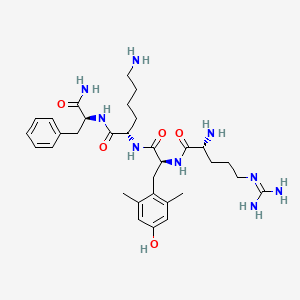
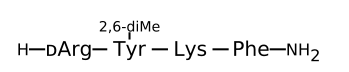
H-D-Arg-Tyr(2,6-diMe)-Lys-Phe-NH2

D-arginyl-2,6-dimethyl-L-tyrosyl-L-lysyl-L-phenylalaninamide

(2S)-6-amino-2-[[(2S)-2-[[(2R)-2-amino-5-(diaminomethylideneamino)pentanoyl]amino]-3-(4-hydroxy-2,6-dimethylphenyl)propanoyl]amino]-N-[(2S)-1-amino-1-oxo-3-phenylpropan-2-yl]hexanamide

CAS 736992-21-5

Chemical Formula: C32H49N9O5

Molecular Weight: 639.8

  • A free radical scavenger and antioxidant that localizes in the inner mitochondrial membrane.
  • Mitochondrial Protective Agent to Improve Cell Viability
  1. Elamipretide
  2. bendavia
  3. UNII-87GWG91S09
  4. 736992-21-5
  5. MTP 131
  6. RX 31
  7. SS 31
  8. 87GWG91S09
  9. L-Phenylalaninamide, D-arginyl-2,6-dimethyl-L-tyrosyl-L-lysyl-
  10. SS-31 peptide
  11. Arg-Dmt-Lys-Phe-NH2
  12. D-Arg-Dmt-Lys-Phe-NH2
  13. SS31 peptide
  14. Elamipretide [USAN:INN]
  15. MTP-131
  16. Elamipretide (USAN/INN)
  17. arginyl-2,’6′-dimethyltyrosyl-lysyl-phenylalaninamide
  18. CHEMBL3833370
  19. SCHEMBL15028020
  20. CTK2H1007

Elamipretide is a cardiolipin peroxidase inhibitor and mitochondria-targeting peptide, Improves Left Ventricular and Mitochondrial Function. In vitro: Elamipretide significantly increases enzymatic activities of both complexes to near normal levels.

Background Information

Elamipretide is a cardiolipin peroxidase inhibitor and mitochondria-targeting peptide, Improves Left Ventricular and Mitochondrial Function. In vitro: Elamipretide significantly increases enzymatic activities of both complexes to near normal levels. long-term therapy with elamipretide reduces ROS formation, attenuated mPTP openings, and significantly decreases the levels of cytosolic cytochrome c and active caspase-3, thus suppressing a major signaling pathway for apoptosis. Elamipretide represents a new class of compounds that can improve the availability of energy to failing heart and reduce the burden of tissue injury caused by excessive ROS production. [1] In vivo: Fourteen dogs with microembolization-induced HF are randomized to 3 months monotherapy with subcutaneous injections of elamipretide (0.5 mg/kg once daily. Elamipretide has been shown to enhance ATP synthesis in multiple organs, including heart, kidney, neurons, and skeletal muscle. [1] ……by MedChemexpress Co., Ltd.

Elamipretide (also known as SS-31 and Bendavia)[1][2] is a small mitochondrially-targeted tetrapeptide (D-Arg-dimethylTyr-Lys-Phe-NH2) that appears to reduce the production of toxic reactive oxygen species and stabilize cardiolipin.[3]

Stealth Peptides, a privately held company, was founded in 2006 to develop intellectual property licensed from several universities including elamipretide; it subsequently changed its name to Stealth BioTherapeutics.[4][5]

Acute coronary syndrome; Age related macular degeneration; Cardiac failure; Corneal dystrophy; Diabetic macular edema; Lebers hereditary optic atrophy

  • Originator Stealth Peptides
  • Developer Stealth BioTherapeutics
  • Class Eye disorder therapies; Ischaemic heart disorder therapies; Oligopeptides; Peptides; Small molecules
  • Mechanism of Action Free radical scavengers; Mitochondrial permeability transition pore inhibitors
  • Phase II/III Barth syndrome
    • Phase II Acute kidney injury; Corneal disorders; Heart failure; Leber’s hereditary optic atrophy; Mitochondrial disorders; Reperfusion injury
    • Phase I/II Diabetic macular oedema; Dry age-related macular degeneration; Mitochondrial myopathies
    • Phase I Age-related macular degeneration
    • No development reported Chronic heart failure; Diabetes mellitus; Eye disorders; Neurodegenerative disorders

    Most Recent Events

    • 29 Jun 2017 Initial efficacy and adverse events data from phase II MMPOWER-2 trial in Mitochondrial-myopathies released by Stealth
    • 02 Jun 2017 Stealth BioTherapeutics completes a phase II trial in Heart failure in Germany and Serbia (SC) (NCT02814097)
    • 01 May 2017 Phase-II/III clinical trials in Barth syndrome (In children, In adolescents, In adults, In the elderly) in USA (SC) (NCT03098797)

Novel crystalline salt (eg hydrochloride, mesylate and tosylate salts) forms of D-Arg-Dmt-Lys-Phe-NH2 (referred to as MTP-131 or elamipretide ) and composition comprising them are claimed. See WO2016190852 , claiming therapeutic compositions including chromanyl compounds, variants and analogues and uses thereof. Stealth BioTherapeutics (formerly known as Stealth Peptides) is developing elamipretide, which targets mitochondria, for the potential iv/sc treatment of cardiac reperfusion injury, acute coronary syndrome, acute kidney injury, mitochondrial myopathy, skeletal muscle disorders and congestive heart failure.

Also, the company is developing an oral formulation of elamipretide , which targets mitochondria and reduces the production of excess reactive oxygen species, for treating chronic heart failure. In January 2015, a phase II trial was ongoing . In July 2016, a phase II trial was initiated in Latvia, Spain and Hungary .

Further, the company is developing an ophthalmic formulation of elamipretide , a mitochondria targeting peptide, for treating ocular diseases including diabetic macular edema, age-related macular degeneration and fuchs’ corneal endothelial dystrophy and Leber’s hereditary optic neuropathy.

In April 2016, a phase II trial was initiated for LHON . Family members of the product case of elamipretide ( WO2007035640 ) hold protection in the EU until 2026 and expires in the US in 2027 with US154 extension.

Acute coronary syndrome; Age related macular degeneration; Cardiac failure; Corneal dystrophy; Diabetic macular edema; Lebers hereditary optic atrophy

SYNTHESIS

NEXT………………………

PATENT 2

ELAMIPRETIDE BY STEALTH

WO-2017156403

https://patentscope.wipo.int/search/en/detail.jsf?docId=WO2017156403&recNum=1&maxRec=&office=&prevFilter=&sortOption=&queryString=&tab=PCTDescription


; MTP-131; D-Arg-Dmt-Lys-Phe-Nth). Compound

1 has been shown to affect the mitochondrial disease process by helping to protect organs from oxidative damage caused by excess ROS production and to restore normal ATP production.

PATENT

US 20110082084

WO 2011091357

WO 2012129427

WO 2013059071

WO 2013126775

US 20140378396

US 20140093897

WO 2015134096

WO 2015100376

WO 2015060462

US 20150010588

PATENNT

WO 2015197723

https://patentscope.wipo.int/search/en/detail.jsf?docId=WO2015197723

PROCESS FOR PREPARING

D-ARGINYL-2,6-DIMETHYL-L-TYROSYL-L-LYSYL-L-PHENYLALANINAMIDE

TECHNICAL FIELD

The invention relates to a process for solution-phase synthesis of D- Arginyl-2,6-dimethyl-L-tyrosyl-L-lysyl-L-phenylalaninamide (abbreviated H-D-Arg-(2,6-Dimethyl)Tyr-L-Lys-L-Phe-NH2, development code SS-31 , MTP-131 , X-31) of Formula (I), an active ingredient developed by Stealth BioTherapeutics under the investigational drug brand names Bendavia® and Ocuvia®, for both common and rare diseases including a mitochondrial targeted therapy for ischemia reperfusion injury.

Formula (I)

BACKGROUND

The product belongs to the class of so-called “Szeto-Schiller peptides”. Szeto-Sciller peptides or “SS peptides” are small, aromatic-cationic, water soluble, highly polar peptides, such as disclosed in US 6703483 and US 7576061 , which can readily penetrate cell membranes. The aromatic-cationic peptides include a minimum of two amino acids, and preferably include a minimum of four amino acids, covalently joined by peptide bonds. The maximum number of amino acids is about twenty amino acids covalently joined by peptide bonds. As described by EP 2012/2436390, optimally, the number of amino acids present in the SS peptides is four.

Bendavia® is being tested for the treatment of ischemia reperfusion injury in patients with acute myocardial infarction (AMI), for the treatment of acute kidney injury (AKI) and renal microvascular dysfunction in hypertension, for the treatment of skeletal muscle dysfunction, for the treatment of mitochondrial myopathy and for the treatment of chronic heart failure. Trials are ongoing to assess the Ocuvia’s potential to treat Leber’s Hereditary Optic Neuropathy (LHON) a devastating inherited disease that causes sudden blindness, often in young adults.

Mitochondria are the cell’s powerhouse, responsible for more than 90% of the energy our bodies need to sustain life and support growth. The energetics from mitochondria maintains healthy physiology and prevents disease. In many common and rare diseases, dysfunctional mitochondria are a key component of disease progression.

D-Arginyl-2,6-dimethyl-L-tyrosyl-L-lysyl-L-phenylalaninamide is a cell-permeable and mitochondria-targeted peptide that showed antioxidant activity and was concentrated in the inner mitochondrial membrane. Compound (< 1 nM) significantly reduced intracellular reactive oxygen species, increased mitochondrial potential and prevented tBHP-induced apoptosis in both N2A and SH-SY5Y neuronal cell lines. In rats, intraperitoneal treatment (1 and 3 mg/kg) 1 day prior to unilateral ureteral obstruction and every day thereafter for 14 days significantly decreased tubular damage, macrophage infiltration and interstitial fibrosis. Compound (3 mg/kg i.p. qd for 2 weeks) also prevented apoptosis and insulin reduction in mouse pancreatic islets caused by streptozotocin.

Further studies performed in a G93A mouse model of amyotrophic lateral sclerosis (ALS) demonstrated that the compound (5 mg/kg/day i.p. starting at 30 days of age) led to a significant delay in disease onset.

Potentially useful for the treatment of ALS and may be beneficial in the treatment of aging and diseases associated with oxidative stress.

In the last few years the peptide H-D-Arg-(2,6-Dimethyl)Tyr-L-Lys-L-Phe-NH2, shown in Fig 1 , and its therapeutic activity have been disclosed and

claimed by in several patent applications.

EP 2436390, US 201 10245182 and US 201 10245183 claim topical anesthetic compositions for application to the skin for pain management or anti-skin aging agents, respectively, comprising Szeto-Schiller peptides; SS-31 is specifically claimed as active ingredient. Sequence of solid-phase synthesis is indicated as the preferred preparation process.

US 7718620 claims a process of treating or preventing ischemia-reperfusion injury of the kidney in a mammal by administrating an effective amount of an aromatic-cationic peptide. SS-31 is specifically claimed as active ingredient.

WO2005/001023 discloses a generical process and carrier complexes for delivering molecules to cells comprising a molecule and an aromatic cationic peptide of type D-Arg-Dmt-Lys-Phe-NH2. The tetrapeptide SS-31 is

specifically claimed as product useful for the process at claim 18.

WO2012/1741 17 and WO2014/210056 claim therapeutic compositions based on SS peptides and the aromatic-cationic peptide D-Arg-Dmt-Lys-Phe-NH2 as active agent.

WO 2013/086020, WO 2004/070054 and WO 2005/072295 provide processes for preventing mithochondrial permeability transition and reducing oxidative damage in a mammal, a removed organ, or a cell in need thereof and specifically claims the process wherein the peptide does not have mu-opioid receptor agonist activity, i.e., D-Arg-Dmt-Lys-Phe-NH2.

WO 2009/108695 discloses a process for protecting a kidney from renal injury which may be associated with decreased or blocked blood flow in the subject’s kidney or exposure to a nephrotoxic agent, such as a radiocontrast dye. The processes include administering to the subject an effective amount of an aromatic-cationic peptide to a subject in need thereof and one of the selected peptide is D-Arg-Dmt-Lys-Phe-NH2.

US 6703483 discloses a detailed procedure for the preparation of novel analogs of DALDA [H-Tyr-D-Arg-Phe-Lys-NH2], namely H-Dmt-D-Arg-Phe-Lys-NH2 using the solid-phase techniques and /?-methylbenzhydrylamine

resin and protocols that have been extensively used by inventor’s laboratory.

Most prior art processes for preparing the compound typically comprise conventionally performed peptide solid-phase synthesis with further purification by chromatography in order to obtain the requested purity for therapeutic use.

It is well known that solid-phase synthesis followed by chromatographic purification is time consuming, very expensive and very difficult to be scaled up on industrial scale, so the need of developing a process for large scale production is obvious. The compound is isolated as organic acid salt, as acetate or trifluoro acetate.

eddy et al., Adv. Exp. Med. Biol, 2009, 61 1 , 473 generally describes the liquid-phase synthesis of antioxidant peptides of Figure 1 and similar others (SS-02, SS-20), involving routinely used side chain protecting groups for amino acid building blocks. The guanidine group was protected with NO2 and the ε-ΝΗ2 of Lys was protected by Cbz or 2-Cl-Cbz. These peptides were

synthesized using Boc/Cbz chemistry and BOP reagent coupling. Starting with the C-terminal Lys residue protected as H-Lys(2-Cl-Cbz)-NH2, (prepared

from the commercially available Boc-Lys(2-Cl-Cbz)-OH in two steps by amidation with NH4HCO3 in the presence of DCC/HOBt following a literature procedure [Ueyama et all, Biopolymers, 1992, 32, 1535, PubMed: 1457730], followed by exposure to TFA). Selective removal of the 2-Cl-Cbz in the

presence of the NO2 group was accomplished using catalytic transfer hydrogenolysis (CTH) [Gowda et al., Lett. Pept. Sci., 2002, 9, 153].

A stepwise procedure by standard solution peptide synthesis for preparation of potent μ agonist [DmtJDALDA and its conversion into a potent δ antagonist H-Dmt-Tic-Phe-Lys(Z)-OH by substitution of D-Arg with Tic to enhance the δ opioid agonist activity is described by Balboni et al., J. Med.

Chem., 2005, 48, 5608. A general synthetic procedure for a similar tetrapeptide ([Dmt-D-Arg-Phe-Lys-NH2 is described by Ballet et al., J. Med.

Chem. 2011, 54, 2467.

Similar DALDA analog tetrapeptides were prepared by the manual solid-phase technique using Boc protection for the a-amino group and DIC/HOBt or HBTU/DIEA as coupling agent [Berezowska et al., J. Med. Chem., 2009, 52, 6941 ; Olma et al., Acta Biochim. Polonica, 2001, 48, 4, 1 121 ; Schiller at al., Eur. J. Med. Chem., 2000, 35, 895].

Despite the high overall yield in the solid-phase approach, it has several drawbacks for the scale-up process such as:

a. the application of the highly toxic and corrosive hydrogen fluoride for cleavage of the peptide from the resin,

b. low loading (0.3-0.35 mmol/g of resin) proved necessary for successful end-step, and

c. use of excess amounts of reagents (3-fold of DIC, 2.4-fold of HOBt, etc.) on each step [ yakhovsky et al., Beilstein J. Org. Chem., 2008, 4(39), 1 , doi: 10.376/bjoc.4.39]

SUMMARY

The invention relates to a more efficient process avoiding either solid-phase synthesis or chromatographic purification, more suitable for large scale production. The process of the invention is described in Scheme A.

The following abbreviations are used:

Dmt = 2,6-dimethyl tyrosine; Z= benzyloxycarbonyl; MeSO3H = methane sulphonic acid; Boc = Tert-butyloxycarbonyl; NMM = N-methyl morpholine; TBTU= N,N,N’,N’-Tetramethyl-O-(benzotriazol- l-yl)uronium tetrafluoroborate; DMF = dimethyl formamide; TFA = trifluoroacetic acid

Scheme A shows the process for the solution phase synthesis of peptide

1 for assembly of the tetrapeptide backbone using O-Benzyl (Bzl) group and benzyloxycarbonyl (Z) group respectively, as the temporary protection for amino acids’ N-termini (Scheme Figure 2), followed by a final catalytic hydrogenolysis. The final product is isolated as organic acid salt, for example, acetic acid salt.

H-Phe-NH 2 + Boc-Lys(Z)-OH

Boc-Lys(Z)-Phe-NH 2

(IV)

(V) I MeS03H/CH2CI2

Boc-DMTyr(Bzl)-OH + MeS03H.H-Lys(Z)-Phe-NH 2

(

Boc-DMTyr(Bzl)-Lys(Z)-Phe-NH 2

(VIII)

I MeS03H/CH2CI2

Z-D-Arg-ONa + H-DMTyr(Bzl)-Lys(Z)-Phe-NH 2.MeS03H

(X) (IX)

TBTU/NMM/DMF

Z-D-Arg-DMTyr(Bzl)-Lys(Z)-Phe-NH

(XI)

I H2, Pd/C

X ACOH

H-D-Arg-DMTyr-Lys-Phe-NH

(I)

Scheme A

This process is a notable improvement with respect to the prior art and its advantages can be summarized as follows:

• The synthesis is performed in liquid phase allowing the scale up on industrial scale without need of special equipment; · The selection of the protecting group in the building blocks allows a straightforward synthesis with very simple deprotection at each step and minimize the formation of undesired by-product;

• Each intermediate can be crystallized allowing removal of impurities which are not transferred to the following step;

· The purity of each intermediate is very high and usually close to

99%.

EXAMPLES

Example 1: Preparation of Boc-Lys(Z)-Phe-NH2

Charge 200 mL of DMF, 44 g of Boc-Lys(Z)-OH and 15.6 g of H-Phe-NH2 in a flask. Stir the mixture at room temperature for 10 min. Add 19.2 g of

N-methylmorpholine and 32.1 g of TBTU successively at room temperature. Stir the mixture at room temperature for 1 h. Add 500 mL of water into the reaction mixture to precipitate the product at room temperature. Filter the mixture to isolate the solid product and wash the filter cake with water.

Transfer the filter cake into a flask containing 360 mL of ethyl acetate and heat the mixture at 50°C till all the solid is dissolved. Separate the organic phase of product and discard the small aqueous phase. Concentrate the organic phase at 40~45°C and under vacuum to remove the solvent till lots of solid is formed. Filter the residue to isolate the solid product. Transfer the filter cake into a flask containing 2000 mL of MTBE and heat the mixture at refluxing for 20 min. Then, cool down the mixture to room temperature. Filter the mixture to isolate the solid product. Dry the filter cake at 30 °C and under vacuum to give 35 g of solid product.

Example 2: Preparation of H-Lys(Z)-Phe-NH2.MeSC>3H

Charge 26.3 g of Boc-Lys(Z)-Phe-NH2, 200 mL of methylene chloride

and 9.6 g of methanesulfonic acid. Stir the mixture at 15-20 °C for 18 h. Add 100 mL of MTBE into the mixture and stir at 15-20 °C for 1 h. Filter the mixture to isolate the solid product. Dry the wet cake in air at room temperature to give 26.4 g of white solid product.

Example 3: Preparation of Boc-DMeTyr(Bzl)-Lys(Z)-Phe-NH2

Charge 8.4 g of Boc-DMeTyr(Bzl)-OH, 1 1 g of H-Lys(Z)-Phe-NH2.MeSO3H, 7.4 g of TBTU and 80 mL of THF in a flask. Stir the mixture

at room temperature for 15 min, and then cool down to 10°C. Add 6.36 g of N-methylmorpholine and stir the mixture at 20-25°C for 3 h. Add the reaction mixture into a flask containing 240 mL of water. Add 32 mL of methylene chloride into the mixture obtained in the previous operation of. Stir the resultant mixture at room temperature for 20 min. Filter the mixture to isolate the solid product and wash the filter cake with acetone (300 mL X 2). Dry the filter cake in air at room temperature to give 14.3 g of white solid product.

Example 4: Preparation of H-DMeTyr(Bzl)-Lys(Z)-Phe-NH2.MeS03H

Charge 14 g of Boc-BMeTyr(Bzl)-Lys(Z)-Phe-NH2, 280 mL of methylene chloride and 3.3 g of methanesulfonic acid in a flask. Stir the mixture at 18 ~ 22 °C for 10 h. Add 560 mL of heptanes into the mixture and stir the mixture at room temperature for 30 min. Filter the mixture to isolate the solid product. Dry the wet cake in air at room temperature to give 14 g of white solid product.

Example 5: Preparation of Z-D-Arg-DMeTyr(Bzl)-Lys(Z)-Phe-NH2

Charge 6.34 g of Z-D-Arg-ONa, 100 mL of DMF and 2.0 g of methanesulfonic acid in a flask. Stir the mixture at room temperature till a clear solution was formed. Add 14 g of H-DMeTyr(Bzl)-Lys(Z)-Phe-NH2.MeSO3H and cool down the mixture to 10°C. Add 6.15 g of TBTU and

9.67 g of N-methylmorpholine successively. Stir the mixture at room temperature for 4 h. Add aqueous solution of LiOH prepared by dissolving 2.9 g of LiOH.L O in 8 mL of water. Stir the mixture for 30 min. Add the resultant mixture slowly into a flask containing 420 mL of water under stirring. Add 56 mL of methylene chloride into the mixture. Filter the mixture to isolate the solid product. Transfer the filter cake into a flask containing 150 mL of acetic acid, and heat the mixture at 35-40 °C till most of the solid was dissolved. Add 450 mL of MTBE into the mixture and cool down the mixture under stirring to room temperature. Filter the mixture to isolate the solid product. Dry the filter cake in air at room temperature to give 17.3 g of the white solid product.

Example 6 Preparation of H-D-Arg-DMeTyr-Lys-Phe-NH2.3AcOH

Charge 2.0 g of Z-D-Arg-DMeTyr(Bzl)-Lys(Z)-Phe-NH2, 20 mL of acetic acid and 5% Pd/C catalyst (which is obtained by washing 5.0 g of 5% Pd/C containing 60% of water with 30 mL of acetic acid) in a flask. Change the atmosphere of the flask with hydrogen. Stir the mixture at room temperature and pressure of 1 atm of hydrogen for 2 h. Filter the mixture to remove the Pd/C catalyst and wash the filter cake with 10 mL of acetic acid. Combine the filtrate and washing solution and concentrate the solution at 20°C and under vacuum to remove most the solvent. Add 100 mL of acetonitrile into the residue and stir the mixture at room temperature for 20 min. Filter the mixture to isolate the solid product. Dry the filter cake at room temperature and under vacuum to give 0.7 g of the white product.

PATENT

WO 2016001042

https://patentscope.wipo.int/search/en/detail.jsf?docId=WO2016001042&recNum=1&maxRec=&office=&prevFilter=&sortOption=&queryString=&tab=PCTDescription

References

  1. Jump up^ “Recommended INN List 75” (PDF). WHO Drug Information30 (1): 111. 2016.
  2. Jump up^ “Elamipretide”. AdisInsight. Retrieved 24 April 2017.
  3. Jump up^ Kloner, RA; Shi, J; Dai, W (February 2015). “New therapies for reducing post-myocardial left ventricular remodeling.”Annals of translational medicine3 (2): 20. PMC 4322169Freely accessiblePMID 25738140.
  4. Jump up^ Valigra, Lori (April 9, 2012). “Stealth Peptides sees positive results from Bendavia”Boston Business Journal.
  5. Jump up^ Dolgin, Elie (11 February 2016). “New drugs offer hope for mitochondrial disease”STAT.
Patent ID

Patent Title

Submitted Date

Granted Date

US2017152289 PROCESS FOR THE PRODUCTION OF D-ARGINYL-2, 6-DIMETHYL-L-TYROSYL-L-LYSYL-L-PHENYLALANINAMIDE 2015-06-24
Patent ID

Patent Title

Submitted Date

Granted Date

US2014294796 AROMATIC-CATIONIC PEPTIDES AND USES OF SAME 2012-12-05 2014-10-02
US2016264623 TETRAPEPTIDE COMPOUND AND METHOD FOR PRODUCING SAME 2014-10-23 2016-09-15
US2017081363 PHARMACEUTICALLY RELEVANT AROMATIC-CATIONIC PEPTIDES 2014-12-23
US2016340389 PHARMACEUTICALLY RELEVANT AROMATIC-CATIONIC PEPTIDES 2014-12-23
US2017129920 Process for Preparing D-Arginyl-2, 6-Dimethyl-L-Tyrosyl-L-Lysyl-L-Phenylalaninamide 2015-06-24

REFERENCES

1: Alam NM, Mills WC 4th, Wong AA, Douglas RM, Szeto HH, Prusky GT. A mitochondrial therapeutic reverses visual decline in mouse models of diabetes. Dis Model Mech. 2015 Jul 1;8(7):701-10. doi: 10.1242/dmm.020248. Epub 2015 Apr 23. PubMed PMID: 26035391; PubMed Central PMCID: PMC4486862.

2: Szeto HH, Birk AV. Serendipity and the discovery of novel compounds that restore mitochondrial plasticity. Clin Pharmacol Ther. 2014 Dec;96(6):672-83. doi: 10.1038/clpt.2014.174. Epub 2014 Sep 4. Review. PubMed PMID: 25188726; PubMed Central PMCID: PMC4267688.

3: Dai W, Shi J, Gupta RC, Sabbah HN, Hale SL, Kloner RA. Bendavia, a mitochondria-targeting peptide, improves postinfarction cardiac function, prevents adverse left ventricular remodeling, and restores mitochondria-related gene expression in rats. J Cardiovasc Pharmacol. 2014 Dec;64(6):543-53. PubMed PMID: 25165999.

4: Eirin A, Ebrahimi B, Zhang X, Zhu XY, Woollard JR, He Q, Textor SC, Lerman A, Lerman LO. Mitochondrial protection restores renal function in swine atherosclerotic renovascular disease. Cardiovasc Res. 2014 Sep 1;103(4):461-72. doi: 10.1093/cvr/cvu157. Epub 2014 Jun 19. PubMed PMID: 24947415; PubMed Central PMCID: PMC4155472.

5: Liu S, Soong Y, Seshan SV, Szeto HH. Novel cardiolipin therapeutic protects endothelial mitochondria during renal ischemia and mitigates microvascular rarefaction, inflammation, and fibrosis. Am J Physiol Renal Physiol. 2014 May 1;306(9):F970-80. doi: 10.1152/ajprenal.00697.2013. Epub 2014 Feb 19. PubMed PMID: 24553434.

6: Brown DA, Hale SL, Baines CP, del Rio CL, Hamlin RL, Yueyama Y, Kijtawornrat A, Yeh ST, Frasier CR, Stewart LM, Moukdar F, Shaikh SR, Fisher-Wellman KH, Neufer PD, Kloner RA. Reduction of early reperfusion injury with the mitochondria-targeting peptide bendavia. J Cardiovasc Pharmacol Ther. 2014 Jan;19(1):121-32. doi: 10.1177/1074248413508003. Epub 2013 Nov 28. PubMed PMID: 24288396; PubMed Central PMCID: PMC4103197.

7: Birk AV, Chao WM, Bracken C, Warren JD, Szeto HH. Targeting mitochondrial cardiolipin and the cytochrome c/cardiolipin complex to promote electron transport and optimize mitochondrial ATP synthesis. Br J Pharmacol. 2014 Apr;171(8):2017-28. doi: 10.1111/bph.12468. PubMed PMID: 24134698; PubMed Central PMCID: PMC3976619.

8: Szeto HH. First-in-class cardiolipin-protective compound as a therapeutic agent to restore mitochondrial bioenergetics. Br J Pharmacol. 2014 Apr;171(8):2029-50. doi: 10.1111/bph.12461. Review. PubMed PMID: 24117165; PubMed Central PMCID: PMC3976620.

9: Zhao WY, Han S, Zhang L, Zhu YH, Wang LM, Zeng L. Mitochondria-targeted antioxidant peptide SS31 prevents hypoxia/reoxygenation-induced apoptosis by down-regulating p66Shc in renal tubular epithelial cells. Cell Physiol Biochem. 2013;32(3):591-600. doi: 10.1159/000354463. Epub 2013 Sep 6. PubMed PMID: 24021885.

10: Dai DF, Hsieh EJ, Chen T, Menendez LG, Basisty NB, Tsai L, Beyer RP, Crispin DA, Shulman NJ, Szeto HH, Tian R, MacCoss MJ, Rabinovitch PS. Global proteomics and pathway analysis of pressure-overload-induced heart failure and its attenuation by mitochondrial-targeted peptides. Circ Heart Fail. 2013 Sep 1;6(5):1067-76. doi: 10.1161/CIRCHEARTFAILURE.113.000406. Epub 2013 Aug 9. PubMed PMID: 23935006; PubMed Central PMCID: PMC3856238.

/////////////////////Elamipretide,  SS-31,  Bendavia, PEPTIDE

CC1=CC(=CC(=C1CC(C(=O)NC(CCCCN)C(=O)NC(CC2=CC=CC=C2)C(=O)N)NC(=O)C(CCCN=C(N)N)N)C)O

FDA approves implantable device to treat moderate to severe central sleep apnea


FDA approves implantable device to treat moderate to severe central sleep apnea

The U.S. Food and Drug Administration today approved a new treatment option for patients who have been diagnosed with moderate to severe central sleep apnea. The Remedē System is an implantable device that stimulates a nerve located in the chest that is responsible for sending signals to the diaphragm to stimulate breathing. Continue reading.

A highly efficient Suzuki-Miyaura methylation of pyridines leading to the drug pirfenidone and its CD3 version (SD-560)


A highly efficient Suzuki-Miyaura methylation of pyridines leading to the drug pirfenidone and its CD3 version (SD-560)

Green Chem., 2017, Advance Article
DOI: 10.1039/C7GC01740E, Communication
Eliezer Falb, Konstantin Ulanenko, Andrey Tor, Ronen Gottesfeld, Michal Weitman, Michal Afri, Hugo Gottlieb, Alfred Hassner
The first methylation/deuteromethylation in green and nearly quantitative Suzuki-Miyaura routes to pirfenidone and its d3 analog SD-560, at 99% isotopic purity.

A highly efficient Suzuki–Miyaura methylation of pyridines leading to the drug pirfenidone and its CD3version (SD-560)

 Author affiliations

Abstract

Efficient introduction of methyl or methyl-d3 into aromatic and heteroaromatic systems still presents a synthetic challenge. In particular, we were in search of a non-cryogenic synthesis of the 5-CD3 version of pirfenidone (4d, also known as Pirespa®, Esbriet® or Pirfenex®), one of the two drugs approved to date for retarding idiopathic pulmonary fibrosis (IPF), a serious, rare and fatal lung disease, with a life expectancy of 3–5 years. The methyl-deuterated version of pirfenidone (4e, also known as SD-560) was designed with the objective of attenuating the rate of drug metabolism, and our goal was to find a green methylation route to avoid the environmental and economic impact of employing alkyllithium at cryogenic temperatures. The examination of several cross-coupling strategies for the introduction of methyl or methyl-d3 into methoxypyridine and pyridone systems culminated in two green and nearly quantitative Suzuki–Miyaura cross-coupling routes in the presence of RuPhos ligand: the first, using commercially available methyl boronic acid or its CD3 analog and the second, employing potassium methyl trifluoroborate or CD3BF3K, the latter obtained by a new route in 88% yield. This led, on a scale of tens of grams, to the synthesis of pirfenidone (4d) and its d3 analog, SD-560 (4e), at 99% isotopic purity.

//////////pirfenidone, CD3 version, SD-560,

WO 2017163257, NEW PATENT, IBRUTINIB, IND-SWIFT LABORATORIES LIMITED


WO 2017163257, NEW PATENT, IBRUTINIB, IND-SWIFT LABORATORIES LIMITED

WO2017163257) PROCESS FOR PREPARING PURE LH-PYRAZOLO[3,4-D] PYRIMIDINE DERIVATIVE

https://patentscope.wipo.int/search/en/detail.jsf?docId=WO2017163257&recNum=1&maxRec=145&office=&prevFilter=&sortOption=Pub+Date+Desc&queryString=FP%3A%28IND+SWIFT%29&tab=PCTDescription

IND-SWIFT LABORATORIES LIMITED

ARUL, Ramakrishnan; (IN).
SARIN, Gurdeep Singh; (IN).
WAS, Sandeep; (IN).
KUMAR, Vishal; (IN)

The present invention relates to an efficient and industrially advantageous process for the preparation of pure lH-pyrazolo[3,4-d] pyrimidine derivative. In particular the present invention provides a process for the preparation of pure 4-amino-3-(4- phenoxyphenyl)-lH-pyrazolo[3,4-d] pyrimidine, a key intermediate of ibrutinib. Particularly, the present invention provides a process for the preparation of 3-amino-4-cyano-5-(4-phenoxy phenyl)pyrazole, wherein none of the intermediates have been isolated, an important precursor for the preparation of 4-amino-3-(4-phenoxyphenyl)- lH-pyrazolo[3,4-d] pyrimidine.

The present invention relates to an efficient and industrially advantageous process for the preparation of pure lH-pyrazolo[3,4-d] pyrimidine derivative. In particular the present invention provides a process for the preparation of pure 4-amino-3-(4-phenoxyphenyl)-lH-pyrazolo[3,4-d] pyrimidine, a key intermediate of ibrutinib, wherein none of the intermediates have been isolated to prepare 3-amino-4-cyano-5-(4-phenoxy phenyl)pyrazole, an important precursor.

Ibrutinib (IMBRUVICA), chemically known as l-[(3R)-3-[4-amino-3-(4-phenoxyphenyl)-lH-pyrazolo[3,4-d]pyrimidin- 1 -yl]piperidin- 1 -yl] prop-2-en- 1 -one is an orally administered drug that targets Bruton’s tyrosine kinase (BTK). Ibrutinib may be used for treating both B cell-related hematological cancers/ B cell chronic lymphocytic leukemia, and autoimmune diseases such as rheumatoid arthritis, Sjogrens syndrome, lupus and asthma and is represented by following chemical formula:

Ibrutinib and its pharmaceutically acceptable salts were first disclosed in US patent US7,514,444. This patent discloses a process for the preparation of Ibrutinib by involving use of 4-amino-3-(4-phenoxyphenyl)- lH-pyrazolo[3,4-d]pyrimidine, as intermediate as shown below:

4-Amino-3-(4-phenoxyphenyl)- l H-pyrazolo[3,4-d]pyrimidine, a key intermediate of ibrutinib, and its preparation from 3-amino-4-cyano-5-(4-phenoxyphenyl) pyrazole was first disclosed in a PCT patent publication WO2001/019829 A2 as shown in below scheme.

Various other publications like US patents US7,514,444; US7.718,662; US8,883,803 and PCT publications WO2012/158843 A2; WO2013/010136A2 follow the same process for the preparation of 4-amino-3-(4-phenoxyphenyl)-lH-pyrazolo[3,4-d]pyrimidine as described above.

The process comprises the conversion of 4-phenoxybenzoic acid to the corresponding acid chloride, which is then taken up in mixture of toluene and tetrahydrofuran and further reacted with malononitrile in the presence of diisopropylethylethylamine in toluene. The reaction mixture is stirred overnight and after completion of reaction, followed by work up 1 , 1 -dicyano-2-hydroxy-2-(4-phenoxyphenyl)ethene is isolated as a residue and which is further purified.

The resulting l, l-dicyano-2-hydroxy-2-(4-phenoxyphenyl)ethene is reacted with trimethylsilyldiazomethane in a mixture of acetonitrile and methanol in the presence of diisopropylethylamine as a base. The resulting reaction mixture is stirred for 2 days to give l, l-dicyano-2-methoxy-2-(4-phenoxyphenyl)ethene (O-methylated product) as an oil, which is purified by flash chromatography.

The O-methylated product is treated with hydrazine hydrate to give 3-amino-4-cyano- 5-(4-phenoxyphenyl)pyrazole, which is further reacted with formamide at a temperature of 180°C to give 4-amino-3-(4-phenoxyphenyl)- lH-pyrazolo[3,4- d]pyrimidine as pale brown-grey solid.

Since, the above process involves the isolation of intermediates and takes long time during reaction completion. Therefore, it is lengthy, not efficient. Further publication is silent about the purity of 4-amino-3-(4-phenoxyphenyl)- lH-pyrazolo[3,4-d]pyrimidine. Acetonitrile solvent has been used in methylation reaction, which is carcinogenic.

The cyclization reaction has been carried out at 180°C and it is observed that the cyclization reaction at high temperature of 180°C, results in grey brown solid colour of 4-amino-3-(4-phenoxyphenyl)- lH-pyrazolo[3,4-d]pyrimidine, may be due to presence of inorganic impurities.

The said process also requires the use of expensive (trimethylsilyl)diazomethane to obtain O-methylated product, which is sensitive to air and water, and hence, the methylation reaction has to be carried out in the absence of water, under anaerobic conditions; silica and flash chromatography are also used for purifying O-methylated product. Since the above process involves complicated operation processes, which leads to high production cost and therefore is not an attractive option at industrially scale.

PCT publication WO2014/173289A1 discloses a process for preparation of 3-amino-4-cyano-5-(4-phenoxyphenyl)pyrazole as shown below and its conversion into 4- amino-3-(4-phenoxy phenyl)- lH-pyrazolo[3,4-d]pyrimidine has not been disclosed.

The process involves conversion of 4-phenoxybenzoic acid to the corresponding acid chloride, followed by reaction with malononitrile in the presence of diisopropylethylethylamine in tetrahydrofuran. The reaction mixture has been stirred for 16 hours and thereafter l, l -dicyano-2-hydroxy-2-(4-phenoxyphenyl) ethene is isolated from reaction mixture. A solution of l, l-dicyano-2-hydroxy-2-(4- phenoxyphenyl)ethene in trimethoxymethane has been heated for 16 hours to give l, l-dicyano-2-methoxy-2-(4-phenoxyphenyl)ethene (O-methylated product), which is then reacted with hydrazine hydrate to give 3-amino-4-cyano-5-(4-phenoxy phenyl)pyrazole.

The above process is inefficient, since it involves isolation of intermediates and takes long time to complete the reactions and purity of 3-amino-4-cyano-5-(4- phenoxypheny pyrazole has not been disclosed.

A similar approach has been described in a PCT publication WO2014/082598 A 1 for preparation of 3-amino-4-cyano-5-(4-phenoxyphenyl)pyrazole and is presented as below:

The process involves conversion of 4-phenoxybenzoic acid to the corresponding acyl chloride by using sulfurous dichloride, followed by reaction with malononitrile in the presence of sodium hydride to obtain l, l-dicyano-2-hydroxy-2-(4-phenoxy phenyl)ethene, which is recrystallized from 1,4-dioxane. The hydroxy moiety is then methylated using dimethyl sulphate to give l, l-dicyano-2-methoxy-2-(4-phenoxy phenyl)ethene (O-methylated product) which is recrystallized from a mixture of hexane and ethylactetate. The solution of resulting O-methylated product in ethanol was treated with hydrazine hydrate at reflux temperature to give 3-amino-4-cyano-5- (4-phenoxy phenyl)pyrazole, followed by its recrystallization in hexane and further, its conversion into 4-amino-3-(4-phenoxyphenyl)- lH-pyrazolo[3,4-d]pyrimidine was not disclosed.

The above process also involves isolation of intermediates; their purification which leads to longer time in reaction completion, and it does not disclose the purity of 3- amino-4-cyano-5-(4-phenoxyphenyl)pyrazole. Further the above process involves use of sodium hydride, which is a hazardous reagent and can ignite in air during scale up. Several alternative methods have been reported in literature, wherein process for the preparation of 4-amino-3-(4-phenoxyphenyl)-lH-pyrazolo[3,4-d]pyrimidine has been disclosed and are discussed herein.

A Chinese patent application CN103121999A discloses a process of preparation of 4- amino-3 -(4-phenoxy phenyl)- 1 H-pyrazolo[3 ,4-d] pyrimidine, as below :

The process involves reaction of 3-bromo-lH-pyrazolo[3,4-d]pyrimidin-4-amine with (4-phenoxyphenyl)boronic acid in the presence of alkali agents and aprotic solvents to give 4-amino-3-(4-phenoxyphenyl)-lH-pyrazolo[3,4-d]pyrimidine.

The said Chinese application is also silent about the purity of target compound and even starts with the advance intermediates, which are expensive and make the process unattractive from industrial point of view.

A similar approach has been described in US patent US8,940,893; PCT publication WO2013/1 13097A1 and WO2015/018333 A 1 for preparing 4-amino-3-(4-phenoxyphenyl)-lH-pyrazolo[3,4-d]pyrimidine .

In US patent US8,940,893 and PCT publication WO2013/1 13097A1, 4-amino-3-(4-phenoxyphenyl)- lH-pyrazolo[3,4-d]pyrimidine is purified by using Combi-flash chromatography on silica gel. In PCT publication WO2015/018333A1, 4-amino-3-(4-phenoxyphenyl)- lH-pyrazolo[3,4-d]pyrimidine is purified by recrystallization in ethyl acetate.

The purity of 4-amino-3-(4-phenoxyphenyl)-lH-pyrazolo[3,4-d]pyrimidine has not been reported in above publications too. Further two of the above processes involve tedious step of chromatographic purification, which is not industrial viable.

Another Chinese patent application CN 103965201 A discloses a process for the preparation of 4-amino-3-(4-phenoxyphenyl)- lH-pyrazolo[3,4-d]pyrimidine, wherein 3-bromo-lH-pyrazolo[3,4-d]pyrimidin-4-amine was reacted with trimethyl tin (4- phenoxy phenyl) to give 4-amino-3-(4-phenoxyphenyl)-lH-pyrazolo[3,4- d]pyrimidine and followed by its recrystallization in isopropanol, as shown below:

The said Chinese application is also silent about the purity of 4-amino-3-(4- phenoxyphenyl)- lH-pyrazolo[3,4-d]pyrimidine and is not cost-effective because it starts with advance intermediates, which are expensive. Therefore, said route of synthesis is not industrially applicable.

Purity of an API as well as intermediates is of great importance in the field of pharmaceutical chemistry. It is well documented in the art that direct product of a chemical reaction is rarely a single compound with sufficient purity to comply with pharmaceutical standards. The impurities that can be present in pharmaceutical compounds are starting materials, by-products of the reaction, products of side reactions, or degradation products.

According to ICH guidelines, process impurities should be maintained below set limits by specifying the quality of raw materials, their stoichiometric ratios, controlling process parameters, such as temperature, pressure, time and including purification steps, such as crystallization, distillation and liquid-liquid extraction etc., in the manufacturing process. Typically, these limits should less than about 0.15 % by weight of each identified impurity. Limits for unidentified and/or uncharacterized impurities are obviously lower, typically less than 0.10 % by weight. The limits for genotoxic impurities could be much lower depending upon the daily dose of the drug and duration of the treatment. Therefore, in the manufacture of a drug substance, the purity of the starting materials is also important, as impurities may carry forward to the active pharmaceutical ingredient such as ibrutinib.

In view of the above, most of the prior art processes involve isolation of intermediates, additional purification steps and silent about the purity or the assay of 4-amino-3-(4-phenoxy phenyl)- lH-pyrazolo[3,4-d]pyrimidine.

Thus, there is an urgent need for the development of a synthetic process which produces pure 4-amino-3-(4-phenoxyphenyl)-lH-pyrazolo[3,4-d]pyrimidine or its acid addition salts.

The present invention fulfills the need in the art and provides an improved, industrially advantageous process for the synthesis of pure 4-amino-3-(4-phenoxyphenyl)-lH-pyrazolo[3,4-d] pyrimidine, a key intermediate in the preparation of ibrutinib, through preparation of 3-amino-4-cyano-5-(4-phenoxyphenyl)pyrazole from 4-phenoxy benzoic acid using same organic solvent and none of the intermediates have been isolated.

Examples:

Example 1: Preparation of 3-amino-4-cyano-5-(4-phenoxyphenyl)pyrazole

4-Phenoxybenzoic acid (200g) was slowly added to thionyl chloride (400ml) at a temperature of 25-30°C and resulting reaction mixture was heated under stirring to a temperature of 60-65°C for 5 hours. Thionyl chloride was distilled off under vacuum at temperature below 60°C. Toluene (2x400ml) was added to the resulting oily residue and thereafter distilled out completely under vacuum below 60°C to remove traces of thionyl chloride to obtain 4-phenoxybenzoyl chloride as a viscous oil. The resulting viscous oil of 4-phenoxybenzoyl chloride was dissolved in toluene (2000ml). Malononitile (80g) and diisopropylethylamine (320ml) were sucessively added to the reuslting solution at a temperature of 25-30°C slowly, maintaining reaction temperature 50-55°C. The reaction mass was further stirred for 30 minutes. After completion of the reaction, the reaction mass was cooled to 25-30°C and a solution of sulfuric acid ( 1.25 M) was added. The reaction mixture was then stirred at a temperature of 25-30°C for 30 minutes, and the layers were separated. The organic layer was washed with a solution of sodium chloride ( 10%) and the resulting organic layer was used directly in next reaction.

Dimethyl sulfate (200ml) and sodium bicarbonate (200g) were added to the resulting organic layer at a temperature of 25-30°C. Thereafter, temperature of reaction mass was raised to 80-90°C and reaction mass was stirred for 1-2 hours. After completion of reaction, the reaction mass was cooled to a temperature of 25-30°C, demineralized water (2000ml) was added and stirred for 10-15 minutes. The layers were separated and the aqueous layer was extracted with toluene (1000ml). All the organic layers were combined and washed with sodium chloride solution ( 10%). Activated carbon (20g) was added and reaction mixture was stirred for 30 minutes. The solution was filtered through hyflo bed and to the resulting organic layer hydrazine hydrate ( 120ml) was added at a temperature of 25-30°C. During the addition exothermicity was observed, and temperature of the reaction mass was rose up to 40-50°C. Thereafter, the reaction mass was stirred at a temperature of 25-30°C for 1 -2 hours. The resulting precipitated solid was filtered, slurry washed with dichloromethane (400ml) and finally, dried to obtain title compound of formula V ( 140g) purity 93.28% measured by HPLC.

Example 2: Preparation of 3-amino-4-cyano-5-(4-phenoxyphenyl)pyrazole

4-Phenoxybenzoic acid (lOOg) was slowly added to thionyl chloride (200ml) at a temperature of 25-30°C and resulting reaction mixture was heated under stirring to a temperature of 50-55°C for 5 hours. Thionyl chloride was distilled off under vacuum at temperature below 50°C. Toluene (250ml) was added to the resulting oily residue and thereafter distilled out completely under vacuum below 50°C to remove traces of thionyl chloride to obtain 4-phenoxybenzoyl chloride as a viscous oil. The resulting viscous oil of 4-phenoxybenzoyl chloride was dissolved in toluene (500ml). Malononitile (35.58ml) and diisopropylethylamine (160ml) were sucessively added to the reuslting solution at a temperature of 25-30°C slowly, maintaining reaction temperature around 50-55°C. The reaction mass was further stirred for 10 minutes. After completion of the reaction, the reaction mass was cooled to 25-30°C and a solution of sulfuric acid (70 ml in 1000 ml water) was added. The reaction mixture was then stirred at a temperature of 25-30°C for 30 minutes, and the layers were separated. The organic layer was washed with a solution of sodium chloride (10%) and the resulting organic layer was used directly in next reaction.

Dimethyl sulfate (95.1 1ml) and sodium bicarbonate (96.16g) were added to the resulting organic layer at a temperature of 25-30°C. Thereafter, temperature of reaction mass was raised to 80-90°C and reaction mass was stirred for 1-2 hours. After completion of reaction, the reaction mass was cooled to a temperature of 55- 60°C, demineralized water ( 1000ml) was added. The reaction mass was cooled to a temperature of 25-30°C and stirred for 10- 15 minutes. The layers were separated and the aqueous layer was extracted with toluene (500ml). All the organic layers were combined and washed with sodium chloride solution ( 10%). To the resulting organic layer hydrazine hydrate (50ml) was added at a temperature of 25-30°C. During the addition exothermicity was observed, and temperature of the reaction mass was rose up to 40-45°C. Thereafter, the reaction mass was stirred at a temperature of 25-30°C for 1-2 hours. The resulting precipitated solid was filtered, suck dried to obtain 3- amino-4-cyano-5-(4-phenoxyphenyl)pyrazole compound of formula V ( 123g) purity 86.96% measured by HPLC.

Example 3: Purification of 3-amino-4-cyano-5-(4-phenoxyphenyl)pyrazole

3-Amino-4-cyano-5-(4-phenoxyphenyl)pyrazole (36g) was suspended in isopropanol (350ml) and temperature of the reaction mixture was raised and allowed to reflux to dissolve the solid completely to provide a clear solution. Then, solvent was distilled off under vacuum to obtain a residue and isopropanol (50ml) was added and after stirring for hours the solid was filtered and dried to afford 3-amino-4-cyano-5-(4-phenoxyphenyl)pyrazole compound of formula V (26g) and having purity of 97.54 % by HPLC .

Example 4: Purification of 3-amino-4-cyano-5-(4-phenoxyphenyl)pyrazole

3-Amino-4-cyano-5-(4-phenoxyphenyl)pyrazole (36g) was suspended in isopropanol (350ml) and temperature of the reaction mixture was raised upto reflux to dissolve the solid completely upto clear solution. Water (1050ml) was added to the solution and the reaction mixture was gradually cooled to crystallize the product. The resulting solid was filtered, washed with two volumes of isopropanol, dried in vacuum oven at a temperature of 40-45 °C to afford 3-amino-4-cyano-5-(4-phenoxyphenyl)pyrazole compound of formula V (20g) and having a HPLC purity of 97.23% .

Example 5: Preparation of pure 4-amino-3-(4-phenoxyphenyl)-lH-pyrazolo[3,4- d] pyrimidine compound of formula I

3-Amino-4-cyano-5-(4-phenoxyphenyl)pyrazole (20g) was suspended in formamide (100 ml) and heated at a temperature of 130°C, after completion of reaction, the reaction mixture was cooled to a temperature of 30-35°C and demineralized water (500ml) was added and the reaction mixture was stirred at a temperature of 25-30°C for 45 minutes. The resulting solid was filtered and acetone (200ml) was added stirred the reaction mixture for 30-45 minutes. The resulting solid was filtered, washed, dried to afford pure 4-amino-3-(4-phenoxyphenyl)-lH-pyrazolo[3,4-d]pyrimidine compound of formula 1 (12g) having purity 99.6% measured by HPLC.

Example 6: Preparation of pure 4-amino-3-(4-phenoxyphenyl)-lH-pyrazolo[3,4- d] pyrimidine compound of formula I

3-Amino-4-cyano-5-(4-phenoxyphenyl)pyrazole (lOOg) was suspended in formamide (500ml) and heated at a temperature of 135-140°C, after completion of reaction, the reaction mixture was cooled to a temperature of 30-35°C and demineralized water (1000ml) was added and the reaction mixture was stirred at a temperature of 20-25°C for 1 hour. The resulting solid was filtered, washed with water (500ml) then successively slurry washed with toluene (2 x 500ml) and dried to afford pure 4- amino-3-(4-phenoxyphenyl)-lH-pyrazolo[3,4-d] pyrimidine compound of formula I

(70g) having purity 99.8% measured by HPLC; assay > 98%; residue on ignition 0.05%; heavy metals < 20ppm.

Example 7: Preparation of (lS)-l-[(3R)-3-piperidyl]-3-(p-phenoxyphenyl)-l,2,5,7-tetraza-lH-inden-4-ylamine

Diisopropyl diazodicarboxylate (DAID, 1.2 ml,) was added to a solution of 1-tert-butyloxycarbonyl-3-(S)-hydroxypiperidine ( l .Og,) and triphenylphosphine (2.59g) in tetrahydrofuran (50.0ml). To the resulting yellow solution, 3-(p-phenoxyphenyl)-l ,2,5,7-tetraza- lH-inden-4-ylamine (l .Og). was added and warmed till dissolution, and stirred overnight at room temperature. The reaction mixture was filtered and the solvent was distilled under vacuum to get an oily residue, which was further purified by flash chromatography (30-50 % ethyl acetate/ hexane) on silicagel to give 0.3 g (0.3 w/w) of tert-butyloxycarbonyl-( l S)- l-[(3R)-3-piperidyl]-3-(p-phenoxyphenyl)- l,2,5,7-tetraza- lH-inden-4-ylamine as a light brown solid. The resulting solid was dissolved in dichloromethane (5 ml) and trifluoroacetic acid (0.6 ml) was added to it. After completion of reaction, water was added to reaction mass, followed by addition of methyl tert-butyl ether (20.0 ml). The layers were separated and the aqueous layer was basified with potassium carbonate and extracted with dichloromethane (15.0 ml x 2). The organic layer dried over sodium sulfate, filtered and evaporated to yield 0.2 g (0.6 w/w) of title compound as light yellow oil.

Example 8: Preparation of l-(3-(4-amino-3-(4-phenoxyphenyl)-lH-pyrazolo [3,4- d]pyrimidin-l-yl)piperidin-l-yI)prop-2-en-l-one (Ibrutinib)

To a solution of acryloyl chloride (0.06g) in tetrahydrofuran (15.0 ml), a mixture of triethylamine (O. lg) and (lS)-l-[(3R)-3-piperidyl]-3-(p-phenoxyphenyl)-l,2,5,7- tetraza- lH-inden-4-ylamine (0.2g) in tetrahydrofuran (7.8 ml) was added. The reaction mixture was stirred at 25-30°C for 18 hous and filtered. The solvent was removed under vacuum to obtain crude ibrutinib, which was further purified by column chromatography on silica gel to obtain pure ibrutinib as crystalline solid.

Formula VI

Formula VII

Formula I

Formula II


Formula III


Formula IV


Formula V

///////WO 2017163257, NEW PATENT, IBRUTINIB, IND-SWIFT LABORATORIES LIMITED