New Drug Approvals

Home » 2017 » April (Page 2)

Monthly Archives: April 2017

DRUG APPROVALS BY DR ANTHONY MELVIN CRASTO .....FOR BLOG HOME CLICK HERE

Blog Stats

  • 4,804,028 hits

Flag and hits

Flag Counter

Enter your email address to follow this blog and receive notifications of new posts by email.

Join 37.9K other subscribers
Follow New Drug Approvals on WordPress.com

Archives

Categories

Recent Posts

Flag Counter

ORGANIC SPECTROSCOPY

Read all about Organic Spectroscopy on ORGANIC SPECTROSCOPY INTERNATIONAL 

Enter your email address to follow this blog and receive notifications of new posts by email.

Join 37.9K other subscribers
DR ANTHONY MELVIN CRASTO Ph.D

DR ANTHONY MELVIN CRASTO Ph.D

DR ANTHONY MELVIN CRASTO, Born in Mumbai in 1964 and graduated from Mumbai University, Completed his Ph.D from ICT, 1991,Matunga, Mumbai, India, in Organic Chemistry, The thesis topic was Synthesis of Novel Pyrethroid Analogues, Currently he is working with AFRICURE PHARMA, ROW2TECH, NIPER-G, Department of Pharmaceuticals, Ministry of Chemicals and Fertilizers, Govt. of India as ADVISOR, earlier assignment was with GLENMARK LIFE SCIENCES LTD, as CONSUlTANT, Retired from GLENMARK in Jan2022 Research Centre as Principal Scientist, Process Research (bulk actives) at Mahape, Navi Mumbai, India. Total Industry exp 32 plus yrs, Prior to joining Glenmark, he has worked with major multinationals like Hoechst Marion Roussel, now Sanofi, Searle India Ltd, now RPG lifesciences, etc. He has worked with notable scientists like Dr K Nagarajan, Dr Ralph Stapel, Prof S Seshadri, etc, He did custom synthesis for major multinationals in his career like BASF, Novartis, Sanofi, etc., He has worked in Discovery, Natural products, Bulk drugs, Generics, Intermediates, Fine chemicals, Neutraceuticals, GMP, Scaleups, etc, he is now helping millions, has 9 million plus hits on Google on all Organic chemistry websites. His friends call him Open superstar worlddrugtracker. His New Drug Approvals, Green Chemistry International, All about drugs, Eurekamoments, Organic spectroscopy international, etc in organic chemistry are some most read blogs He has hands on experience in initiation and developing novel routes for drug molecules and implementation them on commercial scale over a 32 PLUS year tenure till date Feb 2023, Around 35 plus products in his career. He has good knowledge of IPM, GMP, Regulatory aspects, he has several International patents published worldwide . He has good proficiency in Technology transfer, Spectroscopy, Stereochemistry, Synthesis, Polymorphism etc., He suffered a paralytic stroke/ Acute Transverse mylitis in Dec 2007 and is 90 %Paralysed, He is bound to a wheelchair, this seems to have injected feul in him to help chemists all around the world, he is more active than before and is pushing boundaries, He has 100 million plus hits on Google, 2.5 lakh plus connections on all networking sites, 100 Lakh plus views on dozen plus blogs, 227 countries, 7 continents, He makes himself available to all, contact him on +91 9323115463, email amcrasto@gmail.com, Twitter, @amcrasto , He lives and will die for his family, 90% paralysis cannot kill his soul., Notably he has 38 lakh plus views on New Drug Approvals Blog in 227 countries......https://newdrugapprovals.wordpress.com/ , He appreciates the help he gets from one and all, Friends, Family, Glenmark, Readers, Wellwishers, Doctors, Drug authorities, His Contacts, Physiotherapist, etc He has total of 32 International and Indian awards

Verified Services

View Full Profile →

Archives

Categories

Flag Counter

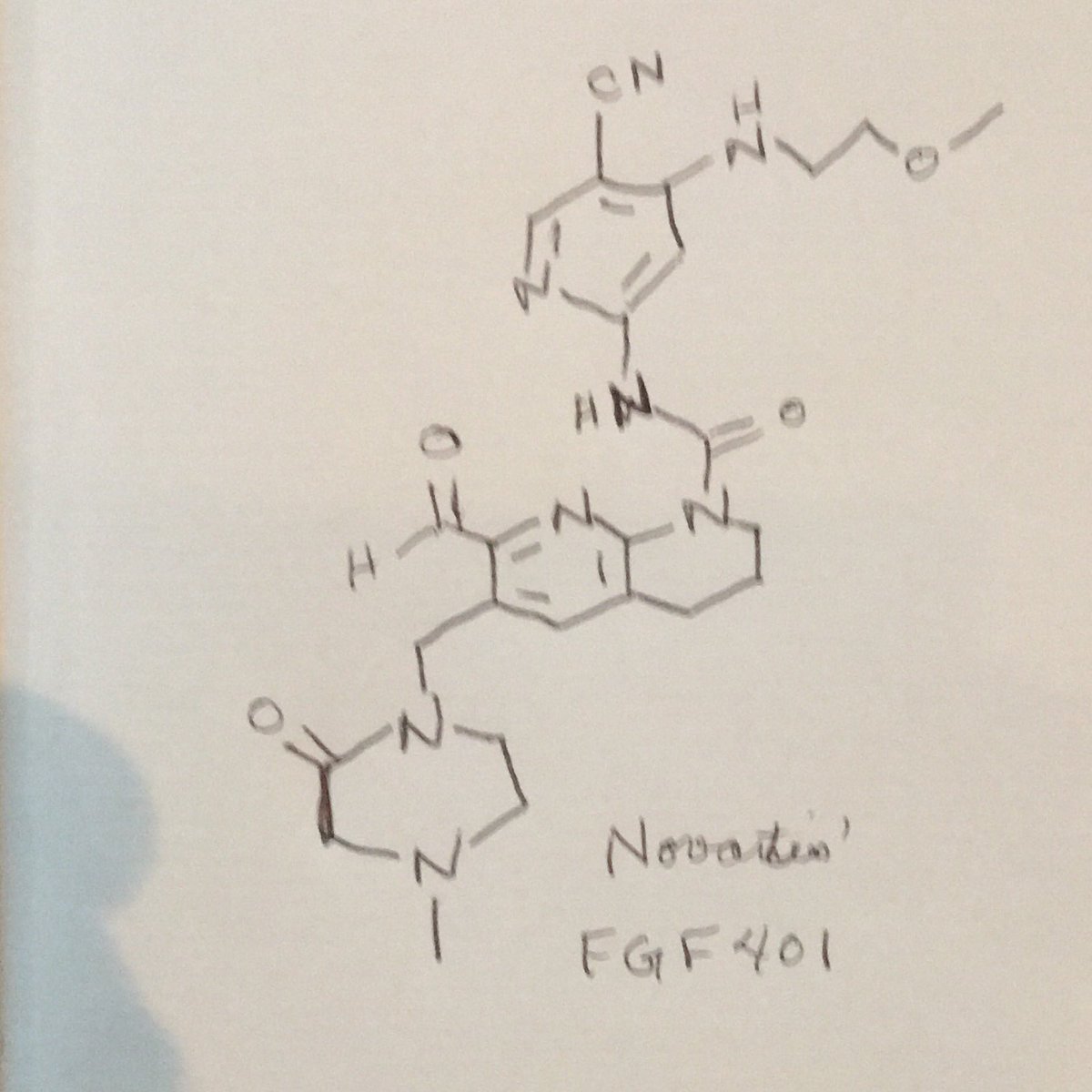
FGF 401


FGF 401

NVP-FGF-401

CAS 1708971-55-4

MF C25 H30 N8 O4, MW 506.56
1,8-Naphthyridine-1(2H)-carboxamide, N-[5-cyano-4-[(2-methoxyethyl)amino]-2-pyridinyl]-7-formyl-3,4-dihydro-6-[(4-methyl-2-oxo-1-piperazinyl)methyl]-

N-[5-Cyano-4-[(2-methoxyethyl)amino]-2-pyridinyl]-7-formyl-3,4-dihydro-6-[(4-methyl-2-oxo-1-piperazinyl)methyl]-1,8-naphthyridine-1(2H)-carboxamide

/V-(5-cyano-4-((2-methoxyethyl)amino)pyridin-2-yl)-7-formyl-6-((4-methyl-2-oxopiperazin-1 -yl)methyl)-3,4-dihydro-1 ,8-naphthyridine-1 (2H)-carboxamide

Phase I/II Hepatocellular carcinoma; Solid tumours 

  • Originator Novartis
  • Developer Novartis Oncology
  • Class Antineoplastics
  • Mechanism of Action Type 4 fibroblast growth factor receptor antagonists
  • 26 Jan 2016 Phase-I/II clinical trials in Solid tumours and Hepatocellular carcinoma in USA, Hong Kong, Japan, Taiwan, France, Germany and Spain (PO)
  • 26 Dec 2014 Phase-I/II clinical trials in Hepatocellular carcinoma in Singapore (PO)
  • 26 Dec 2014 Phase-I/II clinical trials in Solid tumours in Singapore (PO)

Activation of FGFRs (fibroblast growth factor receptors) has an essential role in regulating cell survival, proliferation, migration and differentiation.1 Dysregulation of the FGFR signaling pathway has been associated with human cancer.1 FGFRs represent an important target for cancer therapeutics because a growing body of evidence indicates that they can act in an oncogenic fashion to promote multiple steps of cancer progression, including induction of mitogenic and survival signals

FGF-401 is a FGFR4 inhibitor in phase I/II clinical studies at Novartis for the treatment of positive FGFR4 and KLB expresion solid tumors and hepatocellular carcinoma

Normal growth, as well as tissue repair and remodeling, require specific and delicate control of activating growth factors and their receptors. Fibroblast Growth Factors (FGFs) constitute a family of over twenty structurally related polypeptides that are developmental^ regulated and expressed in a wide variety of tissues. FGFs stimulate proliferation, cell migration and differentiation and play a major role in skeletal and limb development, wound healing, tissue repair, hematopoiesis, angiogenesis, and tumorigenesis (reviewed in Ornitz, Novartis Found Symp 232: 63-76; discussion 76-80, 272-82 (2001)).

The biological action of FGFs is mediated by specific cell surface receptors belonging to the Receptor Protein Tyrosine Kinase (RPTK) family of protein kinases. These proteins consist of an extracellular ligand binding domain, a single transmembrane domain and an intracellular tyrosine kinase domain which undergoes phosphorylation upon binding of FGF. Four FGFRs have been identified to date: FGFR1 (also called Fig, fms-like gene, fit- 2, bFGFR, N-bFGFR or Cek1 ), FGFR2 (also called Bek-Bacterial Expressed Kinase-, KGFR, Ksam, Ksaml and Cek3), FGFR3 (also called Cek2) and FGFR4. All mature FGFRs share a common structure consisting of an amino terminal signal peptide, three extracellular immunoglobulin-like domains (Ig domain I, Ig domain II, Ig domain III), with an acidic region between Ig domains (the “acidic box” domain), a transmembrane domain, and intracellular kinase domains (Ullrich and Schlessinger, Cell 61 : 203,1990 ; Johnson and Williams (1992) Adv. Cancer Res. 60: 1 -41). The distinct FGFR isoforms have different binding affinities for the different FGF ligands.

Alterations in FGFRs have been associated with a number of human cancers including myeloma, breast, stomach, colon, bladder, pancreatic and hepatocellular carcinomas. Recently, it was reported that FGFR4 may play an important role in liver cancer in particular (PLoS One, 2012, volume 7, 36713). Other studies have also implicated FGFR4 or its ligand FGF19 in other cancer types including breast, glioblastoma, prostate, rhabdomyosarcoma, gastric, ovarian, lung, colon (Int. J. Cancer 1993; 54:378-382; Oncogene 2010; 29:1543-1552; Cancer Res 2010; 70:802-812; Cancer Res 201 1 ; 71 :4550-4561 ; Clin Cancer Res 2004; 10:6169-6178; Cancer Res 2013;

73:2551 -2562; Clin Cancer Res 2012; 18:3780-3790; J. Clin. Invest. 2009; 1 19:3395-3407; Ann Surg Oncol 2010; 17:3354-61 ; Cancer 201 1 ; 1 17:5304-13; Clin Cancer Res 2013; 19:809-820; PNAS 2013; 1 10:12426-12431 ; Oncogene 2008; 27:85-97).

Therapies involving FGFR4 blocking antibodies have been described for instance in

WO2009/009173, WO2007/136893, WO2012/138975, WO2010/026291 , WO2008/052798 and WO2010/004204. WO2014/144737 and WO2014/01 1900 also describe low molecular weight FGFR4 inhibitors.

in spite of numerous treatment options for patients with cancer, there remains a need for effective and safe therapeutic agents and a need for new combination therapies that can be administered for the effective long-term treatment of cancer.

Liver cancer or hepatic cancer is classified as primary liver cancer (i.e. cancer that forms in the tissues of the liver) and secondary liver cancer (i.e. cancer that spreads to the liver from another part of the body). According to the National Cancer Institute at the National Institutes of Health, the number of estimated new cases and deaths from liver and intrahepatic bile duct cancer in the United States in 2014 was 33,190 and 23,000, respectively. Importantly, the percent surviving five years or more after being diagnosed with liver and intrahepatic bile duct cancer is only about 16%.

It has now been found that a combination of /V-(5-cyano-4-((2-methoxyethyl)amino)pyridin-2-yl)-7-formyl-6-((4-methyl-2-oxopiperazin-1 -yl)methyl)-3,4-dihydro-1 ,8-naphthyridine-1 (2H)-carboxamide in free form or in pharmaceutically acceptable salt form and at least one further active ingredient, as defined herein, shows synergistic combination activity in an in vitro cell proliferation assay as shown in the experimental section and may therefore be effective for the delay of progression or treatment of a proliferative disease, such as cancer, in particular liver cancer.

Inventors Nicole Buschmann, Robin Alec Fairhurst, Pascal Furet, Thomas Knöpfel, Catherine Leblanc, Robert Mah, Pierre NIMSGERN, Sebastien RIPOCHE, Lv LIAO, Jing XIONG, Xianglin ZHAO, Bo Han, Can Wang
Applicant Novartis Ag

Nicole Buschmann

Nicole Buschmann

Novartis
Global Discovery Chemistry
Basel, Switzerland

Drawn by worlddrugtracker, helping millions………………..

PATENT

WO 2015059668

https://www.google.com/patents/WO2015059668A1?cl=en

PATENT

WO 2016151500

A/-(5-cyano-4-((2-methoxyethyl)amino)pyridin-2-yl)-7-formyl-6-((4-methyl-2-oxopiperazin-1-yl)methyl)-3,4-dihydro-1 ,8-naphthyridine-1 (2H)-carboxamide in citric acid salt form has the following structure:

Example 1 – A/-(5-cvano-4 (2-methoxyethyl)amino)pyridin-2-yl)-7-formyl-6-((4-methyl-2-oxopiperazin-1-yl)methyl)-3,4-dihvdro-1 ,8-naphthyridine-1 (2H)-carboxamide in citric acid salt form (1 :1).

Step 1 : 2-(dimethoxymethyl)-1 ,8-naphthyridine.

The procedure described in J. Org. Chem., 2004, 69 (6), pp 1959-1966 was used. Into a 20 L 4-necked round-bottom flask was placed 2-aminopyridine-3-carbaldehyde (1000 g, 8.19 mol), 1 , 1-dimethoxypropan-2-one (1257 g, 10.64 mol), ethanol (10 L), and water (2 L). This was followed by the addition of a solution of sodium hydroxide (409.8 g, 10.24 mol) in water (1000 mL) drop wise with stirring at 0-15 °C. The solution was stirred for 3 h at 0-20 °C and then concentrated under vacuum. The resulting solution was extracted with 3×1200 mL of ethyl acetate and the organic layers were combined. The mixture was dried over sodium sulfate and concentrated under vacuum. The residue was washed with 3×300 mL of hexane and the solid was collected by filtration. This resulted in the title compound as a yellow solid. 1 H-NMR (400 MHz, DMSO-cf6) δ 9.1 1 (dd, 1 H), 8.53 (d, 1 H), 8.50 (dd, 1 H), 7.73 (d, 1 H), 7.67 (dd, 1 H), 5.44 (s, 1 H), 3.41 (s, 6H).

Step 2: 7-(dimethoxymethyl)-1 ,2,3,4-tetrahydro-1 ,8-naphthyridine.

The procedure described in J. Org. Chem. , 2004, 69 (6), pp 1959-1966 was used. Into a 5-L pressure tank reactor (5 atm) was placed 2-(dimethoxymethyl)-1 ,8-naphthyridine (200 g, 979 mmol), ethanol (3 L), Pt02 (12 g). The reactor was evacuated and flushed three times with nitrogen, followed by flushing with hydrogen. The mixture was stirred overnight at 23 °C under an

atmosphere of hydrogen. This reaction was repeated four times. The solids were filtered out and the resulting mixture was concentrated under vacuum to give the title compound as a yellow solid. 1 H-NMR (400 MHz, DMSO-d6) δ 7.14 (d, 1 H), 6.51 (d, 1 H), 6.47 – 6.41 (m, 1 H), 4.98 (s, 1 H), 3.28 -3.19 (m, 2H), 3.23 (s, 6H), 2.64 (t, 2H), 1 .73 – 1.79 (m, 2H).

Step 3: 6-bromo-7-(dimethoxymethyl)-1 ,2,3,4-tetrahydro-1 ,8-naphthyridine.

Into a 3 L 4-necked round-bottom flask was placed 7-(dimethoxymethyl)-1 ,2,3, 4-tetrahydro-1 ,8-naphthyridine (1 14.6 g, 550.3mmol) in acetonitrile (2 L). This was followed by the addition of NBS (103 g, 578 mol) in portions with stirring at 25 °C. The resulting solution was stirred for 30 min at 25 °C. The resulting mixture was concentrated under vacuum and the residue was diluted with 1000 mL of diethylether. The mixture was washed with 3×100 mL of ice/water. The aqueous phase was extracted with 2×100 mL of diethylether and the organic layers were combined. The resulting mixture was washed with 1×100 mL of brine, dried over sodium sulfate and concentrated under vacuum to give the title compound as a light yellow solid. LC-MS: (ES, m/z): 286.03 [M+H]+. 1 H-NMR: (300MHz, CDCI3) δ 1 .86 – 1 .94 (2H, m), 2.70 – 2.74 (2H, m), 3.9 – 3.43 (2H, m), 3.47 (6H, s), 5.23 (1 H, s), 5.58 (1 H, s), 7.29 (1 H, s).

Step 4: 2-(dimethoxymethyl)-5,6,7,8-tetrahydro-1 ,8-naphthyridine-3-carbaldehyde.

To a solution of 6-bromo-7-(dimethoxymethyl)-1 ,2,3, 4-tetrahydro-1 ,8-naphthyridine (15.0 g, 52.2 mmol) in THF (400 mL) at -78 °C under argon, was added MeLi (1 .6 M in Et20, 32.6 mL, 52.2 mmol), the solution was stirred for 5 min, then n-BuLi (1 .6 M in hexane, 35.9 mL, 57.5 mmol) was added slowly and the solution was stirred for 20 min. THF (100 mL) was added to the reaction at -78 °C. Subsequently, n-BuLi (1 .6 M in hexane, 49.0 mL, 78 mmol) was added and the reaction mixture was stirred for 20 min, then again n-BuLi (1 .6 M in hexane, 6.53 mL, 10.45 mmol) was added and the mixture was stirred for 10 min at – 78 °C. DMF (2.10 mL, 27.2 mmol) was added and the reaction mixture was stirred at -78 °C for 45 min, then it was allowed to warm to room temperature, poured into sat. aq. NH4CI and extracted twice with DCM. The combined organic phases were dried over Na2S04, filtered and evaporated to give the title compound as an orange oil. (UPLC-MS 3) tR 0.63 min; ESI-MS 237.2 [M+H]+.

Step 5: ethyl 2-((2-((tert-butoxycarbonyl)amino)ethyl)(methyl)amino)acetate.

Ethyl bromoacetate (1.27 mL, 1 1 .48 mmol) was added to a mixture of tert-butyl (2-(methylamino)ethyl)carbamate (2.0 g, 1 1 .48 mmol), triethylamine (4.81 mL) and THF (24 mL) at 0 °C. After stirring 24 h at room temperature the reaction mixture was partitioned between saturated aqueous NaHC03 and DCM, extracted 2x with DCM, the organic layers dried over Na2S04 and

evaporated to give the title compound as a clear pale-yellow oil. 1H NMR (400 MHz, CDCI3) δ 5.20 (s, br, 1 H), 4.18 (q, 2H), 3.24 (s, 2H), 3.22 – 3.16 (m, 2H), 2.65 – 2.61 (m, 2H), 2.38 (s, 3H), 1 .42 (s, 9H), 1 .24 (t, 3H).

Step 6: ethyl 2-((2-aminoethyl)(methyl)amino)acetate dihydrochloride.

Concentrated hydrochloric acid (10 mL) was added to a solution of ethyl 2-((2-((tert-butoxycarbonyl)amino)ethyl)(methyl)amino)acetate (3.05 g, 1 1 .13 mmol) in THF (20 mL) and EtOH (100 mL) at room temperature. After stirring 1 h at room temperature the reaction mixture was evaporated, ethanol (20 mL) added, evaporated, further ethanol (50 mL) added and then stirred at 60 °C for 70 min. The cooled reaction mixture was then evaporated to give the title compound as a pale-yellow glass. 1 H NMR (400 MHz, DMSO-d6) δ 8.58 (s, br, 3H), 4.19 (q, 2H), 4.26 – 4.15 (m, 2H), 3.44 (s, br, 2H), 3.21 (s, br, 2H), 2.88 (s, 3H), 1 .21 (t, 3H).

Step 7: 1 -((2-(dimethoxymethyl)-5,6,7,8-tetrahydro-1 ,8-naphthyridin-3-yl)methyl)-4-methylpiperazin-2-one.

Sodium triacetoxyborohydride (3.10 g, 14.61 mmol) was added to a mixture of 2-(dimethoxymethyl)-5,6,7,8-tetrahydro-1 ,8-naphthyridine-3-carbaldehyde (obtained in step 4, 2.30 g, 9.74 mmol), ethyl 2-((2-aminoethyl)(methyl)amino)acetate dihydrochloride (obtained in step 6, 2.6 g, 14.61 mmol) and triethylamine (6.75 mL, 48.7 mmol) in 1 ,2-dichloroethane (20 mL) at room temperature. The reaction mixture was stirred for 21 h at room temperature and additional sodium triacetoxyborohydride (2.6 g, 9.74 mmol) was added. After a further 4 h stirring at room temperature, again additional sodium triacetoxyborohydride (1 .3 g, 4.87 mmol) was added and the reaction maintained at 4 °C for 2.5 days. The reaction mixture was then warmed to room temperature, saturated aqueous NaHC03 solution added, the mixture extracted with DCM (3x), the combined organic layers dried over Na2S04 and evaporated. The residue was applied to a 120 g RediSep® silica column as a DCM solution and purified by normal phase chromatography, eluting with a gradient from DCM to 10% MeOH in DCM. Product containing fractions were combined and evaporated to give the title compound as an orange foam. 1 H NMR (400 MHz, CDCI3) δ 7.08 (s, 1 H), 5.30 (s, br, 1 H), 5.20 (s, 1 H), 4.69 (s, 2H), 3.44 – 3.34 (m, 2H), 3.40 (s, 6H), 3.22 – 3.15 (m, 2H), 3.24 (s, 2H), 2.71 – 2.64 (m, 2H), 2.58 – 2.50 (m, 2H), 2.31 (s, 3H), 1 .98 – 1.82 (m, 2H). (UPLC-MS 6) tR 0.33; ESI-MS 335.3 [M+H]+.

Step 8: 4-fluoro-5-iodopyridin-2-amine.

A suspension of 4-fluoropyridin-2-amine (336 g, 2.5 mol) and NIS (745 g, 2.75 mol) in MeCN (9 L) was treated with TFA (1 14 g, 1 mol). The reaction mixture was then stirred at room temperature for 8 h. The reaction mixture was diluted with EtOAc (10 L), washed with sat. aq. Na2S203 (2 x 5 L), brine (4 x 5 L). The combined organic layers were dried over Na2S04, filtered and concentrated to get the crude product. The crude product was purified by recrystallization from EtOAc/pentane (1/10) to afford the title compound as a white solid. 1H NMR (400 MHz, DMSO-cf6) δ 8.14 (d, 1 H), 6.45 (s, 2H), 6.33 (d, 1 H).

Step 9: 6-amino-4-fluoronicotinonitrile.

4-fluoro-5-iodopyridin-2-amine (obtained in step 8, 240 g, 1 mol), zinc cyanide (125 g, 1.05 mol), zinc (13 g, 0.2 mol), Pd2(dba)3 (25 g, 25 mmol) and dppf (55 g, 0.1 mol) in DMA (800 mL) were degassed and charged into the round bottom flask under nitrogen. The mixture was stirred at 100 °C for 3 h. The reaction mixture was diluted with 5% NaHC03 (2 L), extracted with EtOAc (4 x 600 mL). The combined organic layers were washed with 5% NaOH (1 L), dried over Na2S04, concentrated to 700 mL. The resulting organic phase was eluted through silica gel column with EtOAc (1.7 L). The combined organic filtrate was washed with 2 M HCI (3 x 800 mL). The pH of the aqueous phase was adjusted to 10 with saturated NaHC03. The aqueous phase was extracted whit DCM (3 x 500 mL). The combined DCM was dried over Na2S04 and concentrated. The residue was further purified by column chromatography (eluted with pentane: EtOAc 10: 1 to 3:2) followed by recrystallization from pentane/EtOAc 3/1 to give the title compound as white solid. 1 H NMR (400 MHz, DMSO-d6) δ 8.40 (d, 1 H), 7.40 (s, 2H), 6.34 (d, 1 H).

Step 10: tert-butyl (4-chloro-5-cyanopyridin-2-yl)carbamate.

A mixture of 2,4-dichloro-5-cyanopyridine (1 Og, 57.8 mmol), fe/f-butyl carbamate (8.2 g, 70.5 mmol), Pd(OAc)2 (0.26 g, 1 .1 mmol), Xantphos (1 .34 g, 2.3mmol) and K2C03 (12 g, 87 mmol) in THF (150 mL) was degassed 3x with nitrogen. The mixture was then heated at 70 °C for 4-5 h and monitored by chromatography until complete conversion. Following completion of the reaction, additional THF (100 mL) was added and heated the mixture at 70 °C for additional 1 h and then cooled to room temperature. The suspension was then filtered through a pad of celite to remove the solid. The filtrate was then concentrated and azotropically distilled with ethyl acetete before filtering to give the title compound. 1 H NMR (DMSO-d6, 400 MHz): δ 10.82 (s, 1 H), 8.79 (s, 1 H), 8.09 (s, 1 H), 1 .49 (s, 9H).

Step 1 1 : fe/f-butyl N-(5-cyano-4-((2-methoxyethyl)amino)pyridin-2-yl)carbamate.

A mixture of tert-butyl (4-chloro-5-cyanopyridin-2-yl)carbamate (obtained in step 10, 9.8 g, 38.6 mmol), 2-methoxyethylamine (5.8 g, 77.3 mmol) and DIPEA (6 g, 46.4 mmol) in DMSO (80 mL) was heated at 65-70 °C for 24 h and monitored by chromatography until complete conversion. The

solution was then cooled to room temperature and a white solid precipitated gradually. Water (20 mL) was then added slowly within 1 h. The suspension was stirred for a further 1 h, filtered and dried to give the title compound as a white solid. 1 H NMR (DMSO-d6, 400 MHz): δ 9.87 (s, 1 H), 8.18 (s, 1 H), 7.20 (s, 1 H), 6.86 (s, 9H), 3.51 (t, 2H), 3.36 (t, 2H), 3.28 (s, 3H), 1.47 (s, 9H).

Step 12: 6-amino-4-((2-methoxyethyl)amino)nicotinonitrile.

A solution of 6-amino-4-fluoronicotinonitrile (obtained in step 9, 1 .10 g, 8.02 mmol) in DMA (20 mL) was treated with 2-methoxyethylamine (2.07 mL, 24.1 mmol) and DIPEA (4.20 mL, 24.1 mmol), heated to 50 °C and stirred for 15 h. The reaction mixture was cooled to room temperature and concentrated. The crude material was purified by normal phase chromatography (24 g silica gel cartridge, heptanes/EtOAc 100:0 to 0:100). The product containing fractions were concentrated and dried under vacuum to give the title compound as an off-white solid.

An alternative synthesis of 6-amino-4-((2-methoxyethyl)amino)nicotinonitrile is outlined below:

To tert-butyl N-{5-cyano-4-[(2-methoxyethyl)amino]pyridin-2-yl}carbamate (obtained in step 1 1 , 7g) was added 30-36% aqueous HCI (40 mL), the mixture stirred at room temperature for 30 minutes and monitored by chromatography until complete conversion. The solution was then basified with 20-30% NaOH solution to pH=9-10 and filtered to give a white solid. The solid was added to ethyl acetate (15 mL) and heated to 50-55 °C to form a clear solution. The solution was then cooled to 3-6 °C, stirred for 2-3 h and filtered. The wet cake was then dried to give the title compound as a white solid. 1H NMR (400 MHz, DMSO-d6) δ 7.92 (s, 1 H), 6.39 (s, 2H), 6.15 (t, 1 H), 5.61 (s, 1 H), 3.46 (t, 2H), 3.27 (s, 3H), 3.24 (q, 2H). (UPLC-MS 3) tR 0.62; ESI-MS 193.1 [M+H]+.

Step 13: N-(5-cyano-4-((2-methoxyethyl)amino)pyridin-2-yl)-7-(dimethoxymethyl)-6-((4-methyl-2-oxopiperazin-1 -yl)methyl)-3,4-dihydro-1 ,8-naphthyridine-1 (2H)-carboxamide.

A solution of 6-amino-4-((2-methoxyethyl)amino)nicotinonitrile (obtained in step 12, 481 mg, 2.50 mmol) in anhydrous DMF (1.5 mL) was added drop wise over 10 minutes to a mixture of di(1 H-1 ,2,4-triazol-1 -yl)methanone (410 mg, 2.50 mmol) and DMF (1 .5 mL) cooled at 0 °C. After stirring for 45 minutes at 0 °C the reaction mixture was allowed to warm to room temperature and after a further 90 minutes at room temperature a solution of 1 -((2-(dimethoxymethyl)-5,6,7,8-tetrahydro-1 ,8-naphthyridin-3-yl)methyl)-4-methylpiperazin-2-one (obtained in step 7, 418 mg, 1.00 mmol) in DMF (2 mL) was added. The reaction mixture was stirred for 17.5 h at room temperature, quenched by the addition of MeOH and evaporated. The residue was applied to a 80 g RediSep® silica column as a DCM solution and purified by normal phase chromatography, eluting with a gradient from DCM to 2% MeOH in DCM. Product containing fractions were combined and evaporated to give the title compound as an orange foam. 1H NMR (400 MHz, DMSO-d6) δ 13.50 (s, 1 H), 8.27 (s,

1 H), 7.52 (s, 1 H), 7.39 (s, 1 H), 6.93 (t, 1 H), 5.45 (s, 1 H), 4.65 (s, 2H), 3.94 – 3.89 (m, 2H), 3.54 -3.50 (m, 2H), 3.40 – 3.35 (m, 2H), 3.38 (s, 6H), 3.29 (s, 3H), 3.20 – 3.16 (m, 2H), 3.05 (s, 2H), 2.86 – 2.80 (m, 2H), 2.61 – 2.55 (m, 2H), 2.22 (s, 3H), 1 .94 – 1 .88 (m, 2H). (UPLC-MS 6) tR 0.72; ESI-MS 553.3 [M+H]+.

Step 14: /V-(5-cyano-4-((2-methoxyethyl)amino)pyridin-2-yl)-7-form

yl)methyl)-3,4-dihydro-1 ,8-naphthyridine-1 (2H)-carboxamide

Concentrated hydrochloric acid (0.40 mL) was added to a solution of A/-(5-cyano-4-((2-methoxyethyl)amino)pyridin-2-yl)-7-(dimethoxymethyl)-6-((4-methyl-2-oxopiperazin-1 -yl)methyl)-3,4-dihydro-1 ,8-naphthyridine-1 (2H)-carboxamide (obtained in step 13, 470 mg, 0.808 mmol) in THF (3 mL) and water (1 mL) at room temperature. After stirring for 3 h at room temperature saturated aqueous NaHC03 was added, the mixture extracted with DCM (3x), the organic layers dried over Na2S04 and evaporated. The residue was sonicated with EtOAc (6 mL) and pentane (6 mL) and then filtered. The white solid obtained was then dissolved in DCM (6 mL), EtOAc added (3 mL), the solution warmed, sealed and allowed to stand at room temperature for 2 h. Filtration and drying gave A/-(5-cyano-4-((2-methoxyethyl)amino)pyridin-2-yl)-7-formyl-6-((4-methyl-2-oxopiperazin-1 -yl)methyl)-3,4-dihydro-1 ,8-naphthyridine-1 (2H)-carboxamide as a white solid.

1 H NMR (400 MHz, DMSO-d6) δ 13.43 (s, 1 H), 10.06 (s, 1 H), 8.24 (s, 1 H), 7.49 (s, 1 H), 7.47 (s, 1 H), 6.96 (t, br, 1 H), 4.86 (s, 2H), 3.96 – 3.90 (m, 2H), 3.52 – 3.46 (m, 2H), 3.39 – 3.33 (m, 2H), 3.30 – 3.21 (m, 2H), 3.37 (s, 3H), 3.02 (s, 2H), 2.93 – 2.86 (m, 2H), 2.61 – 2.56 (m, 2H), 2.21 (s, 3H), 1 .95 – 1.85 (m, 2H). (UPLC-MS 6) tR0.70, ESI-MS 507.2, [M+H]+.

Step 15: A/-(5-cyano-4-((2-methoxyethyl)amino)pyridin-2-yl)-7-formyl-6-((4-methyl-2-oxopiperazin-1 -yl)methyl)-3,4-dihydro-1 ,8-naphthyridine-1 (2H)-carboxamide in citric acid form (1 :1 ).

A/-(5-cyano-4-((2-methoxyethyl)amino)pyridin-2-yl)-7-formyl-6-((4-methyl-2-oxopiperazin-1 -yl)methyl)-3,4-dihydro-1 ,8-naphthyridine-1 (2H)-carboxamide (obtained in step 14, 4g, 7.896 mmol) was stirred in propionic acid (29.3 g, 29.60mL) at 70 °C until dissolution was complete (20 minutes). The solution was cooled to 55 °C and a solution of citric acid in acetone (23% w/w) was added to it. Separately, a seed suspension was prepared by adding acetone (0.2 g, 0.252mL) to A/-(5-cyano-4-((2-methoxyethyl)amino)pyridin-2-yl)-7-formyl-6-((4-methyl-2-oxopiperazin-1 -yl)methyl)-3,4-dihydro-1 ,8-naphthyridine-1 (2H)-carboxamide in citric acid form (0.0185 g, 0.026 mmol). The seed suspension was added to the solution at 50 °C and the resulting suspension was left to stir at 50 °C for 40 minutes. A further solution of citric acid in acetone (26.6g, 2.51 % w/w, 33.63 mL) was added to the reaction over 380 minutes. The resulting suspension was stirred for a further 120 minutes and cooled to 20 °C with stirring over 4 hours. The suspension was stirred for another 12 hours

before filtering the suspension under vacuum and washing the resulting solid with a propionic acid: acetone solution (1 : 1 , 7g, 7.96ml_) at room temperature. The solid was further washed with acetone (7g, 8.85ml_) at room temperature. The resulting solid was dried in an oven at 40 °C and 5mbar to give the title compound as a light orange solid (5.2g, 7.443 mmol). (mw 698.70), mp (DSC) 168.8 °C (onset).

XRPD analysis showed the same pattern as with particles obtained by a process described in PCT/I B2014/065585 (reference example 1 ) – see Figure 5.

Example 1a

Steps 1 to 14 were carried out as described in example 1 .

Step 15a: A/-(5-cyano-4-((2-methoxyethyl)amino)pyridin-2-yl)-7-formyl-6-((4-methyl-2-oxopiperazin-1 -yl)methyl)-3,4-dihydro-1 ,8-naphthyridine-1 (2H)-carboxamide in citric acid form (1 : 1 )

A/-(5-cyano-4-((2-methoxyethyl)amino)pyridin-2-yl)-7-formyl-6-((4-methyl-2-oxopiperazin-1 -yl)methyl)-3,4-dihydro-1 ,8-naphthyridine-1 (2H)-carboxamide (obtained in step 14, 5g, 9.930 mmol) was stirred in propionic acid (33.5 g, 33.84ml_) at 60 °C. Once A/-(5-cyano-4-((2-methoxyethyl)amino)pyridin-2-yl)-7-formyl-6-((4-methyl-2-oxopiperazin-1 -yl)methyl)-3,4-dihydro-1 ,8-naphthyridine-1 (2H)-carboxamide had dissolved, anhydrous citric acid powder (0.19g, 0.9889 mmol) was added. The resulting suspension was heated to 70 °C and sonicated for 5 minutes to ensure full dissolution. The resulting solution was cooled to 50 °C and a solution of citric acid in ethyl acetate (3.7 g, 1 .3% citric acid in ethyl acetate) was added over 20 minutes. Seeds of N-(5-cyano-4-((2-methoxyethyl)amino)pyridin-2-yl)-7-formyl-6-((4-methyl-2-oxopiperazin-1 -yl)methyl)-3,4-dihydro-1 ,8-naphthyridine-1 (2H)-carboxamide in citric acid form (0.02 g) were added to the solution and the suspension was aged for 15 minutes. Another aliquot of citric acid in ethyl acetate (128g, 1 .3% citric acid in ethyl acetate) was added to the suspension over 1 1 .85hours. The suspension was left to stir for over 4 hours. The suspension was then filtered under vacuum (500mbar) and the resulting solid was washed firstly with a propionic acid: ethyl acetate solution (1 : 1 , 7g, 7.44ml_) at room temperature and then with ethyl acetate (12g, 13.38ml_) at room temperature. The resulting solid was dried in an oven at 40 °C and 5mbar to give the title compound as a light orange solid (6.3 g, 9.074 mmol).

XRPD analysis showed the same pattern as with particles obtained by a process described in PCT/I B2014/065585 (reference example 1 ) – see Figure 5.

Reference example 1 (described in PCT/IB2014/065585) – V-(5-cyano-4-((2-methoxyethyl)amino)pyridin-2-yl)-7-formyl-6-((4-methyl-2-oxopiperazin-1 -yl)methyl)-3,4-dihvdro-1 ,8-naphthyridine-1 (2H)-carboxamide in citric acid form (1 :1 )

Steps 1 to 14 were carried out as described in example 1.

Reference Step 15 – /V-(5-cvano-4-((2-methoxyethyl)amino)pyridin-2-yl)-7-formyl-6-((4-methyl-2-oxopiperazin-1 -yl)methyl)-3,4-dihvdro-1 ,8-naphthyridine-1 (2H)-carboxamide in citric acid form (1 :1 )

A solution of citric acid (96.9 mg) in acetone (5 mL) was prepared at room temperature (0.1 M). A portion of the 0.1 M citric acid in acetone solution (2 mL) was then added to a suspension of Λ/-(5-cyano-4-((2-methoxyethyl)amino)pyridin-2-yl)-7-formyl-6-((4-methyl-2-oxopiperazin-1 -yl)methyl)-3,4-dihydro-1 ,8-naphthyridine-1 (2H)-carboxamide (100 mg) in acetone (4 mL) and the mixture sonicated for 1 minute then heated at 55 °C with stirring for 2 h before slowly cooling to room temperature. The white solid was then collected by filtration, washing 2x with acetone (2 mL), and dried for 18 h at 40 °C under vacuum to give the title salt.

Alternatively, N-(5-cyano-4-((2-methoxyethyl)amino)pyridin-2-yl)-7-formyl-6-((4-methyl-2-oxopiperazin-1 -yl)methyl)-3,4-dihydro-1 ,8-naphthyridine-1 (2H)-carboxamide (6.5 g, 12.83 mmol) was placed in a 500ml 4-flask reactor. 49 mL of glacial acetic acid was added and the resulting suspension was stirred at 23 °C until a clear mixture was obtained. In a separate flask, anhydrous 2-hydroxypropane-1 ,2,3-tricarboxylic acid (2.59 g, 13.47 mmol, 1 .05 equiv.) was dissolved in 49 mL of glacial acetic acid at 50 °C until a clear solution was obtained. This solution was then added at 23°C to the N-(5-cyano-4-((2-methoxyethyl)amino)pyridin-2-yl)-7-formyl-6-((4-methyl-2-oxopiperazin-1 -yl)methyl)-3,4-dihydro-1 ,8-naphthyridine-1 (2H)-carboxamide solution previously prepared. This mixture was stirred for 30 min at 23 °C and then added dropwise over 1 h to 192 mL of ethyl acetate warmed to 75 °C. The temperature remained constant over the addition. At the end of the addition, the temperature of the mixture was cooled slowly to 23 °C and let 16h at this temperature under gentle stirring. The suspension was cooled to 5-10 °C and filtered. The cake was washed with 15 mL of ethyl acetate and 15 mL of acetone. The wet cake (ca 8.5g) was transferred in a 500 mL flask containing 192 mL of dry acetone. The resulting suspension was refluxed for 24h. The suspension was filtered and the cake was washed with 2 times 15 mL of dry acetone then dried at 50 °C under vacuum for several hours to give the title salt.

PATENT

WO 2016151501

The synthesis of /V-(5-cyano-4-((2-methoxyethyl)amino)pyridin-2-yl)-7-formyl-6-((4-methyl-2-oxopiperazin-1 -yl)methyl)-3,4-dihydro-1 ,8-naphthyridine-1 (2H)-carboxamide (abbreviated herein as CPi and also named as Example 83) and salts thereof is disclosed in PCT/IB2014/065585, the content of which are incorporated by reference, as described herein below:

Example 83: /V-(5-cyano-4-((2-methoxyethyl)amino)pyridin-2-yl)-7-formyl-6-((4-methyl-2-oxopiperazin-1 -yl)methyl)-3,4-dihydro-1 ,8-naphthyridine-1 (2H)-carboxamide.

Concentrated hydrochloric acid (0.40 ml) was added to a solution of /V-(5-cyano-4-((2-methoxyethyl)amino)pyridin-2-yl)-7-(dimethoxymethyl)-6-((4-methyl-2-oxopiperazin-1 -yl)methyl)-3,4-dihydro-1 ,8-naphthyridine-1 (2H)-carboxamide (intermediate 80, 470 mg, 0.808 mmol) in THF (3 ml) and water (1 ml) at room temperature. After stirring for 3 h at room temperature saturated aqueous NaHC03 was added, the mixture extracted with DCM (3x), the organic layers dried over Na2S04 and evaporated. The residue was sonicated with EtOAc (6 ml) and pentane (6 ml) and then filtered. The white solid obtained was then dissolved in DCM (6 ml), EtOAc added (3 ml), the solution warmed, sealed and allowed to stand at room temperature for 2 h. Filtration and drying gave the title compound as a white solid.

1H NMR (400 MHz, DMSO-c/6) δ 13.43 (s, 1 H), 10.06 (s, 1 H), 8.24 (s, 1 H), 7.49 (s, 1 H), 7.47 (s, 1 H), 6.96 (t, br, 1 H), 4.86 (s, 2H), 3.96 – 3.90 (m, 2H), 3.52 – 3.46 (m, 2H), 3.39 – 3.33 (m, 2H), 3.30 – 3.21 (m, 2H), 3.37 (s, 3H), 3.02 (s, 2H), 2.93 – 2.86 (m, 2H), 2.61

– 2.56 (m, 2H), 2.21 (s, 3H), 1 .95 – 1 .85 (m, 2H).

(UPLC-MS 6) tR 0.70, ESI-MS 507.2, [M+H]+.

The following salts were prepared from the above free form form of /V-(5-cyano-4-((2-methoxyethyl)amino)pyridin-2-yl)-7-formyl-6-((4-methyl-2-oxopiperazin-1 -yl)methyl)-3,4-dihydro-1 ,8-naphthyridine-1 (2H)-carboxamide by precipitation with the appropriate counterions.

Malate with 1 :1 stoichiometry (mw 640.66), mp (DSC) 181 .1 °C (onset): Acetone (2 ml) was added to a mixture of malic acid (26.4 mg, 0.197 mmol) and /V-(5-cyano-4-((2-methoxyethyl)amino)pyridin-2-yl)-7-formyl-6-((4-methyl-2-oxopiperazin-1 -yl)methyl)-3,4-dihydro-1 ,8-naphthyridine-1 (2H)-carboxamide (100 mg, 0.197 mmol) and the mixture heated on a mini-block with heating-cooling cycles from 55 to 5 °C for 7 repeat cycles (heating rate: 1 .5 °C/min, cooling rate: 0.25 °C/min). The white solid was collected by centrifugation and dried for 18 h at 40 °C to give the title salt.

Tartrate with 1 :0.5 stoichiometry (mw 581 .72), mp (DSC) 176.7 °C (onset). A solution of tartaric acid (75.7 mg) in methanol (5 ml) was prepared at room temperature (0.1 M). A portion of the 0.1 M tartaric acid in acetone solution (2 ml) was then added to a suspension of /V-(5-cyano-4-((2-methoxyethyl)amino)pyridin-2-yl)-7-formyl-6-((4-methyl-2-oxopiperazin-1 -yl)methyl)-3,4-dihydro-1 ,8-naphthyridine-1 (2H)-carboxamide (100 mg) in methanol (4 ml) and the mixture sonicated for 1 minute then heated at 55 °C with stirring for 2 h. The white solid was then collected by filtration, washing 2x with methanol (2 ml), and dried for 18 h at 40 °C under vacuum to give the title salt.

Tartrate with 1 :1 stoichiometry (mw 656.66), mp (DSC) 169.9 °C (onset): A solution of tartaric acid (75.7 mg) in acetone (5 ml) was prepared at room temperature (0.1 M). A portion of the 0.1 M tartaric acid in acetone solution (2 ml) was then added to a suspension of /V-(5-cyano-4-((2-methoxyethyl)amino)pyridin-2-yl)-7-formyl-6-((4-methyl-2-oxopiperazin-1 -yl)methyl)-3,4-dihydro-1 ,8-naphthyridine-1 (2H)-carboxamide (100 mg) in methanol (4 ml) and the mixture sonicated for 1 minute then heated at 55 °C with stirring for 2 h. The white solid was then collected by filtration, washing 2x with acetone (2 ml), and dried for 18 h at 40 °C under vacuum to give the title salt.

Citrate with 1 :0.5 stoichiometry (mw 602.73), mp (DSC) 168.4 °C (onset): A solution of citric acid (96.9 mg) in methanol (5 ml) was prepared at room temperature (0.1 M). A portion of the 0.1 M citric acid in methanol solution (2 ml) was then added to a suspension of /V-(5-cyano-4-((2-methoxyethyl)amino)pyridin-2-yl)-7-formyl-6-((4-methyl-2-oxopiperazin-1 -yl)methyl)-3,4-dihydro-1 ,8-naphthyridine-1 (2H)-carboxamide (100 mg) in methanol (4 ml) and the mixture sonicated for 1 minute then heated at 55 °C with

stirring for 2 h. The white solid was then collected by filtration, washing 2x with acetone (2 ml), and dried for 18 h at 40 °C under vacuum to give the title salt.

Citrate with 1 :1 stoichiometry (mw 698.70), mp (DSC) 168.8 °C (onset): A solution of citric acid (96.9 mg) in acetone (5 ml) was prepared at room temperature (0.1 M). A portion of the 0.1 M citric acid in acetone solution (2 ml) was then added to a suspension of /V-(5-cyano-4-((2-methoxyethyl)amino)pyridin-2-yl)-7-formyl-6-((4-methyl-2-oxopiperazin-1 -yl)methyl)-3,4-dihydro-1 ,8-naphthyridine-1 (2H)-carboxamide (100 mg) in acetone (4 ml) and the mixture sonicated for 1 minute then heated at 55 °C with stirring for 2 h before slowly cooling to room temperature. The white solid was then collected by filtration, washing 2x with acetone (2 ml), and dried for 18 h at 40 °C under vacuum to give the title salt.

Alternatively, N-(5-cyano-4-((2-methoxyethyl)amino)pyridin-2-yl)-7-formyl-6-((4-methyl-2-oxopiperazin-1 -yl)methyl)-3,4-dihydro-1 ,8-naphthyridine-1 (2H)-carboxamide (6.5 g, 12.83 mmol) was placed in a 500ml 4-flask reactor. 49 ml of glacial acetic acid was added and the resulting suspension was stirred at 23 °C until a clear mixture was obtained. In a separate flask, anhydrous 2-hydroxypropane-1 ,2,3-tricarboxylic acid (2.59 g, 13.47 mmol, 1 .05 equiv.) was dissolved in 49 ml of glacial acetic acid at 50 °C until a clear solution was obtained. This solution was then added at 23°C to the N-(5-cyano-4-((2-methoxyethyl)amino)pyridin-2-yl)-7-formyl-6-((4-methyl-2-oxopiperazin-1 -yl)methyl)-3,4-dihydro-1 ,8-naphthyridine-1 (2H)-carboxamide solution previously prepared. This mixture was stirred for 30 min at 23 °C and then added dropwise over 1 h to 192 ml of ethyl acetate warmed to 75 °C. The temperature remained constant over the addition. At the end of the addition, the temperature of the mixture was cooled slowly to 23 °C and let 16h at this temperature under gentle stirring. The suspension was cooled to 5-10 °C and filtered. The cake was washed with 15 ml of ethyl acetate and 15 ml of acetone. The wet cake (ca 8.5g) was transferred in a 500 ml flask containing 192 ml of dry acetone. The resulting suspension was refluxed for 24h. The suspension was filtered and the cake was washed with 2 times 15 ml of dry acetone then dried at 50 °C under vacuum for several hours to give the title salt.

Intermediate 80: N-(5-cyano-4-((2-methoxyethyl)amino)pyridin-2-yl)-7- (dimethoxymethyl)-6-((4-methyl-2-oxopiperazin-1 -yl)methyl)-3,4-dihydro-1 ,8-naphthyridine-1 (2H)-carboxamide.

A solution of 6-amino-4-((2-methoxyethyl)amino)nicotinonitrile (intermediate 75, 481 mg, 2.50 mmol) in anhydrous DMF (1 .5 ml) was added drop wise over 10 minutes to a mixture of di(1 H-1 ,2,4-triazol-1 -yl)methanone (410 mg, 2.50 mmol) and DMF (1 .5 ml) cooled at 0 °C. After stirring for 45 minutes at 0 °C the reaction mixture was allowed to warm to room temperature and after a further 90 minutes at room temperature a solution of 1 -((2-(dimethoxymethyl)-5,6,7,8-tetrahydro-1 ,8-naphthyridin-3-yl)methyl)-4-methylpiperazin-2-one (intermediate 81 , 418 mg, 1 .00 mmol) in DMF (2 ml) was added. The reaction mixture was stirred for 17.5 h at room temperature, quenched by the addition of MeOH and evaporated. The residue was applied to a 80 g RediSep® silica column as a DCM solution and purified by normal phase chromatography, eluting with a gradient from DCM to 2% MeOH in DCM. Product containing fractions were combined and evaporated to give the title compound as an orange foam. 1H NMR (400 MHz, DMSO-c/6) δ 13.50 (s, 1 H), 8.27 (s, 1 H), 7.52 (s, 1 H), 7.39 (s, 1 H), 6.93 (t, 1 H), 5.45 (s, 1 H), 4.65 (s, 2H), 3.94 – 3.89 (m, 2H), 3.54 – 3.50 (m, 2H), 3.40 – 3.35 (m, 2H), 3.38 (s, 6H), 3.29 (s, 3H), 3.20 – 3.16 (m, 2H), 3.05 (s, 2H), 2.86 – 2.80 (m, 2H), 2.61 – 2.55 (m, 2H), 2.22 (s, 3H), 1 .94 – 1 .88 (m, 2H). (UPLC-MS 6) tR 0.72; ESI-MS 553.3 [M+H]+.

Intermediate 81 : 1 -((2-(dimethoxymethyl)-5,6,7,8-tetrahydro-1 ,8-naphthyridin-3-yl)methyl)-4-methylpiperazin-2-one.

Sodium triacetoxyborohydride (3.10 g, 14.61 mmol) was added to a mixture of 2-(dimethoxymethyl)-5,6,7,8-tetrahydro-1 ,8-naphthyridine-3-carbaldehyde (intermediate 41 , 2.30 g, 9.74 mmol), ethyl 2-((2-aminoethyl)(methyl)amino)acetate dihydrochloride (intermediate 82, 2.6 g, 14.61 mmol) and triethylamine (6.75 ml, 48.7 mmol) in 1 ,2-dichloroethane (20 ml) at room temperature. The reaction mixture was stirred for 21 h at room temperature and additional sodium triacetoxyborohydride (2.6 g, 9.74 mmol) was added. After a further 4 h stirring at room temperature, again additional sodium triacetoxyborohydride (1 .3 g, 4.87 mmol) was added and the reaction maintained at 4 °C for 2.5 days. The reaction mixture was then warmed to room temperature, saturated aqueous NaHC03 solution added, the mixture extracted with DCM (3x), the combined organic layers dried over Na2S04 and evaporated. The residue was applied to a 120 g RediSep® silica column as a DCM solution and purified by normal phase chromatography, eluting with a gradient from DCM to 10% MeOH in DCM. Product containing fractions were combined and evaporated to give the title compound as an orange foam. 1H NMR (400 MHz, CDCI3) δ 7.08 (s, 1 H), 5.30 (s, br, 1 H), 5.20 (s, 1 H), 4.69 (s, 2H), 3.44 – 3.34 (m, 2H), 3.40 (s, 6H), 3.22 – 3.15 (m, 2H), 3.24 (s, 2H), 2.71 -2.64 (m, 2H), 2.58 – 2.50 (m, 2H), 2.31 (s, 3H), 1 .98 – 1 .82 (m, 2H). (UPLC-MS 6) tR 0.33; ESI-MS 335.3 [M+H]+.

Intermediate 82: ethyl 2-((2-aminoethyl)(methyl)amino)acetate dihydrochloride.

Concentrated hydrochloric acid (10 ml) was added to a solution of ethyl 2-((2-((tert-butoxycarbonyl)amino)ethyl)(methyl)amino)acetate (intermediate 83, 3.05 g, 1 1 .13 mmol) in THF (20 ml) and EtOH (100 ml) at room temperature. After stirring 1 h at room temperature the reaction mixture was evaporated, ethanol (20 ml) added, evaporated, further ethanol (50 ml) added and then stirred at 60 °C for 70 min. The cooled reaction

mixture was then evaporated to give the title compound as a pale-yellow glass. 1H NMR (400 MHz, DMSO-c/6) δ 8.58 (s, br, 3H), 4.19 (q, 2H), 4.26 – 4.15 (m, 2H), 3.44 (s, br, 2H), 3.21 (s, br, 2H), 2.88 (s, 3H), 1 .21 (t, 3H).

Intermediate 83: ethyl 2-((2-((tert-butoxycarbonyl)amino)ethyl)(methyl)amino)acetate.

Ethyl bromoacetate (1 .27 ml, 1 1 .48 mmol) was added to a mixture of tert-butyl (2-(methylamino)ethyl)carbamate (2.0 g, 1 1 .48 mmol), triethylamine (4.81 ml) and THF (24 ml) at 0 °C. After stirring 24 h at room temperature the reaction mixture was partitioned between saturated aqueous NaHC03 and DCM, extracted 2x with DCM, the organic layers dried over Na2S04 and evaporated to give the title compound as a clear pale-yellow oil. 1 H NMR (400 MHz, CDCI3) δ 5.20 (s, br, 1 H), 4.18 (q, 2H), 3.24 (s, 2H), 3.22 -3.16 (m, 2H), 2.65 – 2.61 (m, 2H), 2.38 (s, 3H), 1 .42 (s, 9H), 1 .24 (t, 3H).

Intermediate 41 : 2-(dimethoxymethyl)-5,6,7,8-tetrahydro-1 ,8-naphthyridine-3-carbaldehyde.

To a solution of 6-bromo-7-(dimethoxymethyl)-1 ,2,3,4-tetrahydro-1 ,8-naphthyridine

(intermediate 12, 15.0 g, 52.2 mmol) in THF (400 ml) at -78 °C under argon, was added MeLi (1 .6 M in Et20, 32.6 ml, 52.2 mmol), the solution was stirred for 5 min, then n-BuLi (1 .6 M in hexane, 35.9 ml, 57.5 mmol) was added slowly and the solution was stirred for 20 min. THF (100 ml) was added to the reaction at – 78 °C. Subsequently, n-BuLi (1 .6 M in hexane, 49.0 ml, 78 mmol) was added and the reaction mixture was stirred for 20 min, then again n-BuLi (1 .6 M in hexane, 6.53 ml, 10.45 mmol) was added and the mixture was stirred for 10 min at – 78 °C. DMF (2.10 ml, 27.2 mmol) was added and the reaction mixture was stirred at -78 °C for 45 min, then it was allowed to warm to room

temperature, poured into sat. aq. NH4CI and extracted twice with DCM. The combined organic phases were dried over Na2S04, filtered and evaporated to give the title compound as an orange oil. (UPLC-MS 3) tR 0.63 min; ESI-MS 237.2 [M+H]+.

Intermediate 12: 6-bromo-7-(dimethoxymethyl)-1 ,2,3,4-tetrahydro-1 ,8-naphthyridine.

Into a 3 I 4-necked round-bottom flask was placed 7-(dimethoxymethyl)-1 ,2,3,4-tetrahydro-1 ,8-naphthyridine (intermediate 4, 1 14.6 g, 550.3mmol) in acetonitrile (2 I). This was followed by the addition of NBS (103 g, 578 mol) in portions with stirring at 25 °C. The resulting solution was stirred for 30 min at 25 °C. The resulting mixture was concentrated under vacuum and the residue was diluted with 1000 ml of diethylether. The mixture was washed with 3×100 ml of ice/water. The aqueous phase was extracted with 2×100 ml of diethylether and the organic layers were combined. The resulting mixture was washed with 1 x100 ml of brine, dried over sodium sulfate and concentrated under vacuum to give the title compound as a light yellow solid. LC-MS: (ES, m/z):

286.03 [M+H]+. 1H-NMR: (300MHz, CDCI3) δ 1 .86 – 1 .94 (2H, m), 2.70 – 2.74 (2H, m), 3.9 – 3.43 (2H, m), 3.47 (6H, s), 5.23 (1 H, s), 5.58 (1 H, s), 7.29 (1 H, s).

Intermediate 4: 7-(dimethoxymethyl)-1 ,2,3,4-tetrahydro-1 ,8-naphthyridine.

The procedure described in J. Org. Chem. , 2004, 69 (6), pp 1959-1966 was used. Into a 5-I pressure tank reactor (5 atm) was placed 2-(dimethoxymethyl)-1 ,8-naphthyridine (intermediate 5, 200 g, 979 mmol), ethanol (3 I), Pt02 (12 g). The reactor was evacuated and flushed three times with nitrogen, followed by flushing with hydrogen. The mixture was stirred overnight at 23 °C under an atmosphere of hydrogen. This reaction was repeated four times. The solids were filtered out and the resulting mixture was concentrated under vacuum to give the title compound as a yellow solid.

Intermediate 5: 2-(dimethoxymethyl)-1 ,8-naphthyridine.

The procedure described in J. Org. Chem. , 2004, 69 (6), pp 1959-1966 was used. Into a 20 I 4-necked round-bottom flask was placed 2-aminopyridine-3-carbaldehyde (1000 g, 8.19 mol), 1 ,1 -dimethoxypropan-2-one (1257 g, 10.64 mol), ethanol (10 I), and water (2 I). This was followed by the addition of a solution of sodium hydroxide (409.8 g, 10.24 mol) in water (1000 ml) drop wise with stirring at 0-15 °C. The solution was stirred for 3 h at 0-20 °C and then concentrated under vacuum. The resulting solution was extracted with 3×1200 ml of ethyl acetate and the organic layers were combined. The mixture was dried over sodium sulfate and concentrated under vacuum. The residue was washed with 3×300 ml of hexane and the solid was collected by filtration. This resulted in the title compound as a yellow solid. 1H-NMR (400 MHz, DMSO-c/6) δ 9.1 1 (dd, 1 H), 8.53 (d, 1 H), 8.50 (dd, 1 H), 7.73 (d, 1 H), 7.67 (dd, 1 H), 5.44 (s, 1 H), 3.41 (s, 6H).

Intermediate 75: 6-amino-4-((2-methoxyethyl)amino)nicotinonitrile.

A solution of 6-amino-4-fluoronicotinonitrile (intermediate 21 , 1 .10 g, 8.02 mmol) in DMA (20 ml) was treated with 2-methoxyethylamine (2.07 ml, 24.1 mmol) and DIPEA (4.20 ml_, 24.1 mmol), heated to 50 °C and stirred for 15 h. The reaction mixture was cooled to room temperature and concentrated. The crude material was purified by normal phase chromatography (24 g silica gel cartridge, heptanes/EtOAc 100:0 to 0:100). The product containing fractions were concentrated and dried under vacuum to give the title compound as an off-white solid.

An alternative synthesis of 6-amino-4-((2-methoxyethyl)amino)nicotinonitrile is outlined below:

To fe/ -butyl N-{5-cyano-4-[(2-methoxyethyl)amino]pyridin-2-yl}carbamate (intermediate 287, 7g) was added 30-36% aqueous HCI (40 ml), the mixture stirred at room temperature for 30 minutes and monitored by chromatography until complete conversion. The solution was then basified with 20-30% NaOH solution to pH=9-10 and filtered to give a white solid. The solid was added to ethyl acetate (15 ml) and heated to 50-55 °C to form a clear solution. The solution was then cooled to 3-6 °C, stirred for 2-3 h and filtered. The wet cake was then dried to give the title compound as a white solid. 1H NMR (400 MHz, DMSO-c/6) δ 7.92 (s, 1 H), 6.39 (s, 2H), 6.15 (t, 1 H), 5.61 (s, 1 H), 3.46 (t, 2H), 3.27 (s, 3H), 3.24 (q, 2H). (UPLC-MS 3) tR 0.62; ESI-MS 193.1 [M+H]+.

1H-NMR (400 MHz, DMSO-c/6) δ 7.14 (d, 1 H), 6.51 (d, 1 H), 6.47 – 6.41 (m, 1 H), 4.98 (s, 1 H), 3.28 – 3.19 (m, 2H), 3.23 (s, 6H), 2.64 (t, 2H), 1 .73 – 1 .79 (m, 2H).

Intermediate 21 : 6-amino-4-fluoronicotinonitrile.

4-fluoro-5-iodopyridin-2-amine (intermediate 22, 240 g, 1 mol), zinc cyanide (125 g, 1 .05 mol), zinc (13 g, 0.2 mol), Pd2(dba)3 (25 g, 25 mmol) and dppf (55 g, 0.1 mol) in DMA (800 ml) were degassed and charged into the round bottom flask under nitrogen. The mixture was stirred at 100 °C for 3 h. The reaction mixture was diluted with 5% NaHC03 (2 I), extracted with EtOAc (4 x 600 ml). The combined organic layers were washed with 5% NaOH (1 I), dried over Na2S04, concentrated to 700 ml. The resulting organic phase was eluted through silica gel column with EtOAc (1 .7 I). The combined organic filtrate was washed with 2 M HCI (3 x 800 ml). The pH of the aqueous phase was adjusted to 10 with saturated NaHC03. The aqueous phase was extracted whit DCM (3 x 500 ml). The combined DCM was dried over Na2S04 and concentrated. The residue was further purified by column chromatography (eluted with pentane: EtOAc 10:1 to 3:2) followed by recrystallization from pentane/EtOAc 3/1 to give the title compound as white solid. 1H NMR (400 MHz, DMSO-c/6) δ 8.40 (d, 1 H), 7.40 (s, 2H), 6.34 (d, 1 H).

Intermediate 22: 4-fluoro-5-iodopyridin-2-amine.

A suspension of 4-fluoropyridin-2-amine (336 g, 2.5 mol) and NIS (745 g, 2.75 mol) in MeCN (9 I) was treated with TFA (1 14 g, 1 mol). The reaction mixture was then stirred at room temperature for 8 h. The reaction mixture was diluted with EtOAc (10 I), washed with sat. aq. Na2S203 (2 x 5 I), brine (4 x 5 I). The combined organic layers were dried over Na2S04, filtered and concentrated to get the crude product. The crude product was purified by recrystallization from EtOAc/pentane (1/10) to afford the title compound as a white solid. 1H NMR (400 MHz, DMSO-c/6) δ 8.14 (d, 1 H), 6.45 (s, 2H), 6.33 (d, 1 H).

Intermediate 287: fe/ -butyl (5-cyano-4-((2-methoxyethyl)amino)pyridin-2-yl)carbamate.

A mixture of tert-butyl (4-chloro-5-cyanopyridin-2-yl)carbamate (intermediate 288, 9.8 g, 38.6 mmol), 2-methoxyethylamine (5.8 g, 77.3 mmol) and DIPEA (6 g, 46.4 mmol) in DMSO (80 ml) was heated at 65-70 °C for 24 h and monitored by chromatography until complete conversion. The solution was then cooled to room temperature and a white solid precipitated gradually. Water (20 ml) was then added slowly within 1 h. The suspension was stirred for a further 1 h, filtered and dried to give the title compound as a white solid. 1H NMR (DMSO-d6, 400 MHz): δ 9.87 (s, 1 H), 8.18 (s, 1 H), 7.20 (s, 1 H), 6.86 (s, 9H), 3.51 (t, 2H), 3.36 (t, 2H), 3.28 (s, 3H), 1 .47 (s, 9H).

Intermediate 288: tert-butyl (4-chloro-5-cyanopyridin-2-yl)carbamate.

A mixture of 2,4-dichloro-5-cyanopyridine (10g, 57.8 mmol), fe/ -butyl carbamate (8.2 g, 70.5 mmol), Pd(OAc)2 (0.26 g, 1 .1 mmol), Xantphos (1 .34 g, 2.3mmol) and K2C03 (12 g, 87 mmol) in THF (150 ml) was degassed 3x with nitrogen. The mixture was then heated at 70 °C for 4-5 h and monitored by chromatography until complete conversion. Following completion of the reaction, additional THF (100 ml) was added and heated the mixture at 70 °C for additional 1 h and then cooled to room temperature. The suspension was then filtered through a pad of celite to remove the solid. The filtrate was then concentrated and azotropically distilled with ethyl acetete before filtering to give the title compound. 1H NMR (DMSO-d6, 400 MHz): δ 10.82 (s, 1 H), 8.79 (s, 1 H), 8.09 (s, 1 H), 1 .49 (s, 9H).

/////////////FGF 401, 1708971-55-4, PHASE 1, Hepatocellular carcinoma, Solid tumours, Novartis, Novartis Oncology,  Antineoplastics, Type 4 fibroblast growth factor receptor antagonists, NVP-FGF-401, Nicole Buschmann, Robin Alec Fairhurst, Pascal Furet, Thomas Knöpfel, Catherine Leblanc, Robert Mah, Pierre NIMSGERN, Sebastien RIPOCHE, Lv LIAO, Jing XIONG, Xianglin ZHAO, Bo Han, Can Wang,

str0

Now in 1st time disclosures Robin Fairhurst of @Novartis will also talk about an FGFR inhibitor. They are popular!

CN4CC(=O)N(Cc1cc(C=O)nc2N(CCCc12)C(=O)Nc3cc(NCCOC)c(C#N)cn3)CC4

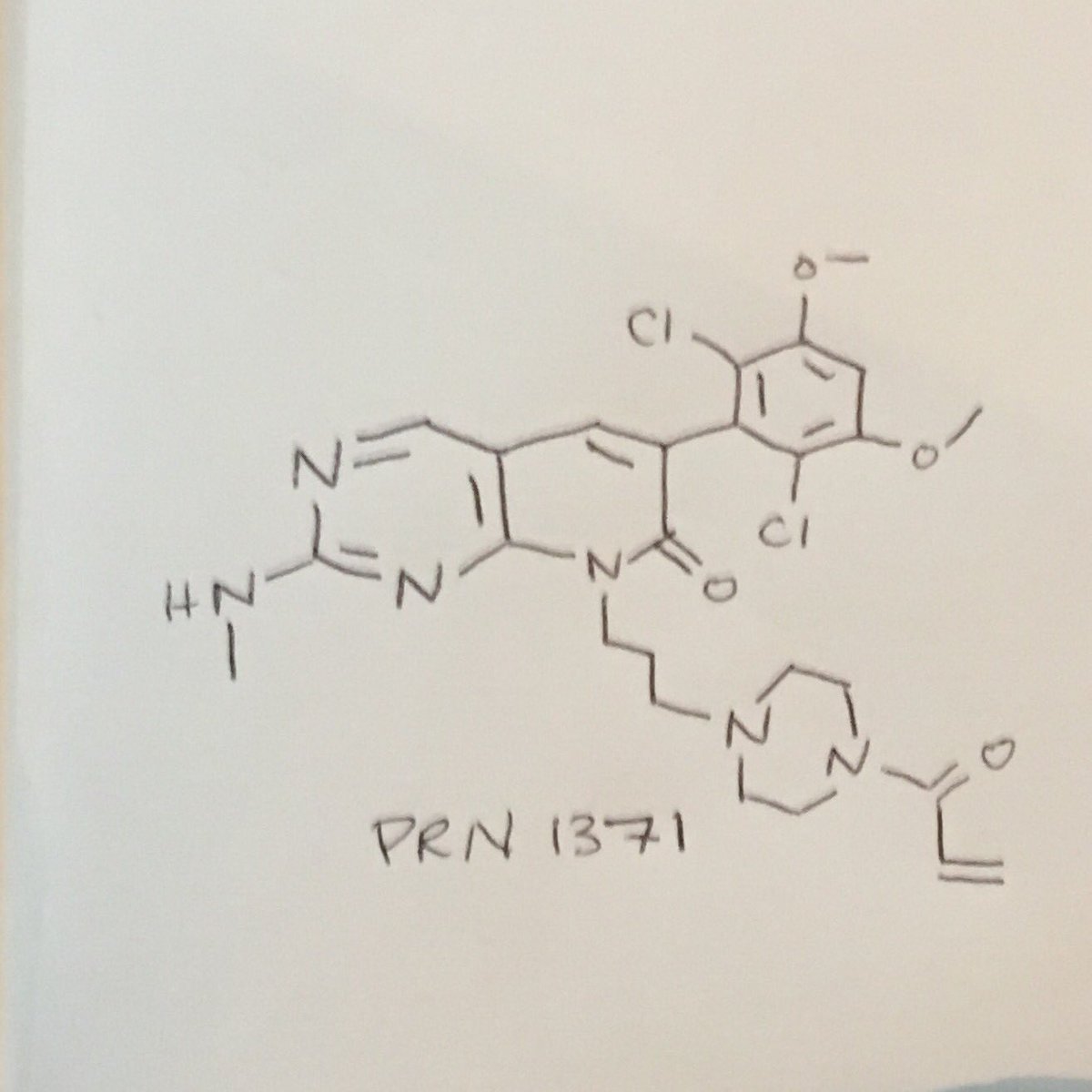
PRN 1371


ChemSpider 2D Image | PRN 1371 | C26H30Cl2N6O4

str1SCHEMBL16993012.png

PRN 1371

  • Molecular Formula C26H30Cl2N6O4
  • Average mass 561.460

cas 1802929-43-6

8-[3-(4-Acryloyl-1-piperazinyl)propyl]-6-(2,6-dichloro-3,5-dimethoxyphenyl)-2-(methylamino)pyrido[2,3-d]pyrimidin-7(8H)-one

6-(2,6-Dichloro-3,5-dimethoxyphenyl)-2-(methylamino)-8-[3-[4-(1-oxo-2-propen-1-yl)-1-piperazinyl]propyl]pyrido[2,3-d]pyrimidin-7(8H)-one

Phase I Solid tumours

  • Originator Principia Biopharma
  • Class Small molecules
  • Mechanism of Action Fibroblast growth factor receptor antagonists
  • 06 Jun 2016 Adverse events data from a phase I trial in Solid tumours presented at the 52nd Annual Meeting of the American Society of Clinical Oncology (ASCO- 2016)
  • 01 Nov 2015 Phase-I clinical trials in Solid tumours in USA (PO) (NCT02608125)
  • 12 Jan 2015 Preclinical trials in Cancer in USA (PO)
Inventors Erik Verner, Kenneth Albert Brameld
Applicant Principia Biopharma, Inc.

Image result for principia biopharma

Erik Verner

Erik Verner

Ken Brameld

Kenneth Albert Brameld

CONTD………………..

Fibroblast growth factors (FGFs) and their receptors (FGFRs) play important roles in physiological processes relating to tissue repair, hematopoiesis, bone growth, angiogenesis and other aspects of embryonic development. Alterations in the FGF signaling pathway have also emerged as important drivers in human disease. FGF signaling can be deregulated through multiple mechanisms, including gene amplification, activating mutations and translocations, overexpression, altered FGFR gene splicing, and autocrine or paracrine overproduction of the ligands of FGFR. Deregulated FGF signaling has been documented in human tumors, including breast (see Ray, M. E., et. al., 2004. Genomic and expression analysis of the 8pl 1-12 amplicon in human breast cancer cell lines. Cancer Res 64:40-47), multiple myeloma (see Keats, J.J., et. al., 2006. Ten years and counting: so what do we know about t(4;14)(pl6;q32) multiple myeloma. Leuk Lymphoma 47:2289-2300), non-invasive bladder (see Billerey, C, et al. 2001. Frequent

FGFR3 mutations in papillary non-invasive bladder (pTa) tumors. Am J Pathol 158: 1955-1959), endometrial (see Pollock, P.M., et al. 2007. Frequent activating FGFR2 mutations in endometrial carcinomas parallel germline mutations associated with craniosynostosis and skeletal dysplasia syndromes. Oncogene 26:7158-7162), gastric (see Jang, J.H., et. al, 2001. Mutations in fibroblast growth factor receptor 2 and fibroblast growth factor receptor 3 genes associated with human gastric and colorectal cancers. Cancer Res 61 :3541-3543), prostate cancers (see Sahadevan, K., D et. al., 2007. Selective over-expression of fibroblast growth factor receptors 1 and 4 in clinical prostate cancer. J Pathol 213:82-90), lung (see Hammerman P, et al. Genomic characterization and targeted therapeutics in squamous cell lung cancer [abstract]; Proceedings of the 14th World Conference on Lung Cancer; 2011 3-7 July; Aurora (CO); and International Association for the Study of Lung Cancer; 2011), esophageal (see Hanada K, et al, Identification of fibroblast growth factor-5 as an overexpressed anti-gen in multiple human adenocarcinomas. Cancer Res 2001; 61 : 5511-6), cholangiocarcinoma (see Arai, Y., et al. 2014. Fibroblast growth factor receptor 2 tyrosine kinase fusions define a unique molecular subtype of cholangiocarcinoma. Hepatology 59, 1427-1434 and Borad, M. J., et al. 2014). Integrated genomic characterization reveals novel, therapeutically relevant drug targets in FGFR and EGFR pathways in sporadic intrahepatic cholangiocarcinoma. PLoS genetics 10, el004135), glioblastoma (see Rand V., et. al. Sequence survey of receptor tyrosine kinases reveals mutations in glioblastomas. Proc Natl Acad Sci U S A 2005; 102: 14344 – 9 and Parker, et. al. 2014. Emergence of FGFR family gene fusions as therapeutic targets in a wide spectrum of solid tumours. The Journal of pathology 232, 4-15). FGFR1 translocations and FGFR1 fusions are frequently observed in 8pl 1 myeloproliferative syndromes (Jackson, C. C, Medeiros, L. J., and Miranda, R. N. (2010). 8pl 1 myeloproliferative syndrome: a review. Human pathology 41, 461-476). Activating mutations in FGFR3 have been shown to cause a number of dwarf syndromes (see Harada, D., et. al, 2009. FGFR3-related dwarfism and cell signaling. J Bone Miner Metab 27:9-15) including achondroplasia (see Bellus, G.A., et. al., 1995. Achondroplasia is defined by recurrent G380R mutations of FGFR3. Am J Hum Genet 56:368-373; Bellus, G.A., et. al., 1995. A recurrent mutation in the tyrosine kinase domain of fibroblast growth factor receptor 3 causes hypochondroplasia. Nat Genet 10:357-359; and Rousseau, F., et. al, 1994. Mutations in the gene encoding fibroblast growth factor receptor-3 in achondroplasia. Nature 371 :252-254), Crouzon dermoskeletal syndromes (see Robin, N.H., et. al, 1993. FGFR-Related Craniosynostosis Syndromes), hyopochondroplasia (see Prinos, P., et. al., 1995. A common FGFR3 gene mutation in hypochondroplasia. Hum Mol Genet 4:2097-2101), Muenke syndrome (see Muenke, M., et al. 1997. A unique point mutation in the fibroblast growth factor receptor 3 gene (FGFR3) defines a new craniosynostosis syndrome. Am J Hum Genet 60:555-564), SADDAN (severe achondroplasia with developmental delay and acanthosis nigricans) (see Bellus, G.A., et al. 1999. Severe achondroplasia with developmental delay and acanthosis nigricans (SADDAN): phenotypic analysis of a new skeletal dysplasia caused by a Lys650Met mutation in fibroblast growth factor receptor 3. Am J Med Genet 85:53-65;

Tavormina, P.L., et al. 1999. A novel skeletal dysplasia with developmental delay and acanthosis nigricans is caused by a Lys650Met mutation in the fibroblast growth factor receptor 3 gene. Am J Hum Genet 64:722-731), thanatophoric dysplasia ( see dAvis, P.Y., et. al, 1998. Constitutive activation of fibroblast growth factor receptor 3 by mutations responsible for the lethal skeletal dysplasia thanatophoric dysplasia type I. Cell Growth Differ 9:71-78; Kitoh, H., et. al, 1998. Lys650Met substitution in the tyrosine kinase domain of the fibroblast growth factor receptor gene causes thanatophoric dysplasia Type I. Mutations in brief no. 199. Online. Hum Mutat 12:362- 363; and Tavormina, P.L., et. al, 1995. Thanatophoric dysplasia (types I and II) caused by distinct mutations in fibroblast growth factor receptor 3. Nat Genet 9:321-328), platyspondylic lethal skeletal dysplasia (see Brodie, S.G., et. al, 1999. Platyspondylic lethal skeletal dysplasia, San Diego type, is caused by FGFR3 mutations. Am J Med Genet 84:476-480), and cervical cancer (see Cappellen, D., et. al., 1999. Frequent activating mutations of FGFR3 in human bladder and cervix carcinomas. Nat Genet 23: 18-20). Activating mutations in FGFR4 have been identified in rhabdomyosarcoma (see Shukla, N., et. al, Oncogene mutation profiling of pediatric solid tumors reveals significant subsets of embryonal rhabdomyosarcoma and neuroblastoma with mutated genes in growth signaling pathways. Clin Cancer Res 18:748-757 and Marshall, A.D., et. al, PAX3-FOX01 and FGFR4 in alveolar rhabdomyosarcoma. Mol Carcinog 51 :807-815). For these reasons, FGFRs are attractive therapeutic target for the treatment of diseases.

Patent

WO 2015120049

Example 6

Synthesis of 8-(3-(4-acryloylpiperazin-l-yl)propyl)-6-(2,6-dichloro-3,5-dimethoxyphenyl)-2- (methylamino)pyrido[2,3-d]pyrimidin-7(8H)-one

Step 1

To a solution of 3-(piperazin-l-yl)propan-l-ol (1 g, 6.93 mmol, 1.00 equiv) in THF (50 mL) and TEA (2 g) was added di-tert-butyl dicarbonate (2.26 g, 10.36 mmol, 1.49 equiv). The resulting solution was stirred for 2 h at room temperature and then concentrated. The residue was purified by chromatography (DCM/MeOH (15: 1)) to provide 1.48 g (87%) of tert-butyl 4-(3-hydroxypropyl)piperazine-l-carboxylate as a light yellow liquid.

Step 2

To a solution of tert-butyl 4-(3-hydroxypropyl)piperazine-l-carboxylate (1.48 g, 6.06 mmol, 1.00 equiv) in DCM (60 mL), imidazole (620 mg) and TPP (2.38 g, 9.07 mmol, 1.50 equiv) was added I2 (2.31 g, 9.10 mmol, 1.50 equiv). The resulting solution was stirred for 2 h at room temperature and then concentrated. The residue was purified by chromatography

(DCM/MeOH (50: 1)) to provide 1.65 g (77%) of tert-butyl 4-(3-iodopropyl)piperazine-l-carboxylate as yellow oil.

Step 3

To a solution of 6-(2,6-dichloro-3,5-dimethoxyphenyl)-2-(methylsulfanyl)-7H,8H-pyrido[2,3-d]pyrimidin-7-one (600 mg, 1.51 mmol, 1.00 equiv) in acetone (50 mL) and K2C03 (630 mg) was added tert-butyl 4-(3-iodopropyl)piperazine-l-carboxylate (640 mg, 1.81 mmol, 1.20 equiv). The resulting solution was heated to reflux for 3 h and then the solids were filtered out. The residue was purified by chromatography (DCM/EtOAc (2:1)) to provide 720 mg (77%) of tert-butyl 4-[3-[6-(2,6-dichloro-3,5-dimethoxyphenyl)-2-(methylsulfanyl)-7-oxo-7H,8H-pyrido[2,3-d]pyrimidin-8-yl]propyl]piperazine-l-carboxylate as a yellow solid.

Step 4

To a solution of tert-butyl 4-[3-[6-(2,6-dichloro-3,5-dimethoxyphenyl)-2-(methyl-sulfanyl)-7-oxo-7H,8H-pyrido[2,3-d]pyrimidin-8-yl]propyl]piperazine-l-carboxylate (720 mg, 1.15 mmol, 1.00 equiv) in CHC13 (50 mL) was added mCPBA (600 mg). The resulting solution was stirred overnight at room temperature and then quenched with sat. Na2C03. The resulting solution was extracted DCM/MeOH(10: l) and the organic layer was concentrated. This provided 750 mg (97%)) of 4-[(tert-butoxy)carbonyl]-l-[3-[6-(2,6-dichloro-3,5-dimethoxyphenyl)-2-

methanesulfonyl-7-oxo-7H,8H-pyrido[2,3-d]pyrimidin-8-yl]propyl]piperazin- 1 -ium- 1 -olate as a yellow solid.

Step 5

To a solution of 4-[(tert-butoxy)carbonyl]-l-[3-[6-(2,6-dichloro-3,5-dimethoxyphenyl)-2-methanesulfonyl-7-oxo-7H,8H-pyrido[2,3-d]pyrimidin-8-yl]propyl]piperazin- 1 -ium- 1 -olate (750 mg, 1.12 mmol, 1.00 equiv) in tert-BuOH (50 mL), was added MeNH2/THF(2N) (1 mL). The resulting solution was stirred for 2 h at 60° C and then concentrated. This provided 680 mg (98%) of 4-[(tert-butoxy)carbonyl]-l-[3-[6-(2,6-dichloro-3,5-dimethoxyphenyl)-2-(methylamino)-7-oxo-7H,8H-pyrido[2,3-d]pyrimidin-8-yl]propyl]piperazin-l-ium-l-olate as a yellow solid.

Step 6

To a solution of 4-[(tert-butoxy)carbonyl]-l-[3-[6-(2,6-dichloro-3,5-dimethoxyphenyl)-2-(methylamino)-7-oxo-7H,8H-pyrido[2,3-d]pyrimidin-8-yl]propyl]piperazin-l-ium-l-olate (680 mg, 1.09 mmol, 1.00 equiv) in MeOH (100 mL) was added Zn (1 g) and sat. NH4C1 (4 mL). The resulting reaction mixture was stirred overnight at room temperature and then solids were filtered out. The residue was purified by chromatography (DCM/MeOH (35: 1)) to provide 650 mg (98%) of tert-butyl 4-[3-[6-(2,6-dichloro-3,5-dimethoxyphenyl)-2-(methylamino)-7-oxo-7H,8H-pyrido[2,3-d]pyrimidin-8-yl]propyl]piperazine-l-carboxylate as a yellow solid.

Step 7

To a solution of tert-butyl 4-[3-[6-(2,6-dichloro-3,5-dimethoxyphenyl)-2-(methylamino)-7-oxo-7H,8H-pyrido[2,3-d]pyrimidin-8-yl]propyl]piperazine-l-carboxylate (650 mg, 1.07 mmol, 1.00 equiv) in dioxane (12 mL), was added cone. HC1 (3 mL). The resulting solution was stirred for 3 h at room temperature and then concentrated. This provided 550 mg (95%) of 6-(2,6-dichloro-3,5-dimethoxyphenyl)-2-(methylamino)-8-(3-(piperazin-l-yl)propyl)pyrido[2,3-d]pyrimidin-7(8H)-one hydrochloride as an off-white solid.

Step 8

To a solution of 6-(2,6-dichloro-3,5-dimethoxyphenyl)-2-(methylamino)-8-[3-(piperazin-l-yl)propyl]-7H,8H-pyrido[2,3-d]pyrimidin-7-one hydrochloride (250 mg, 0.49 mmol, 1.00 equiv) in DCM (20 mL) was added TEA (120 mg, 1.19 mmol, 2.41 equiv) and prop-2-enoyl chloride (54 mg, 0.60 mmol, 1.21 equiv). The resulting solution was stirred for 2 h at room temperature and then quenched with H20 (30 mL). The resulting solution was extracted with DCM/MeOH(10:l) and the organic layers combined and concentrated. The crude product was purified by Prep-HPLC (Column, SunFire Prep CI 8 OBD Column, 150mm 5um lOnm; mobile phase, Water with lOmmol NH4HC03and MeCN (30.0% MeCN up to 80.0% in 10 min);

Detector, nm). This provided 112.1 mg (41%>) of 6-(2,6-dichloro-3,5-dimethoxyphenyl)-2-

(methylamino)-8-[3-[4-(prop-2-enoyl)piperazm^

one as a white solid. MS (ESI, pos. ion) m/z: 561.1 (M+l).

PATENT

Example 1

Synthesis of Compound (I)

Step 1

2-(3,5-Dimethoxyphenyl)acetic acid (1000 g) was charged into appropriately sized three-neck RBF equipped with a condenser and dissolved with methanol (10 L). Concentrated sulfuric acid (20 g) was added and a solution was brought to gentle boiling. Reaction progress was monitored by HPLC. The reaction mixture was transferred to appropriately sized RBF and

concentrated to ca. 3 L. and then co-evaporated with DMSO (3 L) to about 4 L and the residue containing methyl 2-(3,5-dimethoxyphenyl)acetate (1071 g) was telescoped to Step 2.

Step 2

To an appropriate reactor equipped with mechanical stirrer methyl 2-(3,5-dimethoxyphenyl)acetate (1071 g) in DMSO (3.2 L), 4-amino-2-(methylthio)-pyrimidine-5-carbaldehyde (819 g, 0.95 eq.), potassium carbonate (1057 g, 1.5 eq.) and cesium carbonate (249 g, 0.15 eq.) was charged and the mixture was stirred at 50 °C. After 15 h, the mixture containing 6-(3,5-dimethoxyphenyl)-2-(methylthio)pyrido[2,3-d]pyrimidin-7(8H)-one was cooled to RT. Potassium carbonate (854g, 1.2 eq.) and tert-butyl 4-(3 -((methyl sulfonyl)oxy )propyl)piperazine-1-carboxylate HC1 (2112 g, 1.1 eq.) was charged. Upon completion of ther eaction, ethyl acetate and water were added.

Organic layer was separated and aqueous layer was extracted with ethyl acetate.

Combined organic layers were washed with 25% aqueous solution of sodium chloride. Organic phase was dried over anhydrous magnesium sulfate. Drying agent was filtered off and washed with ethyl acetate. The filtrate was concentrated to ca. 9.6 L. and cooled to 0-5°C. A solution of ^-toluenesulfonic acid (970 g, 1.0 eq.) in ethyl acetate (4.28 L) was added dropwise. The resulted suspension was slowly warmed to RT and stirred for 5 h. Solids were filtered off, washed with ethyl acetate and dried give tert-butyl-4-(3-(6-(3,5-dimethoxyphenyl)-2-(methylthio)-7-oxopyrido[2,3-d]pyrimidin-8(7H)-yl)propyl)piperazine- 1-carboxylate 4-methylbenzenesulfonate. Step 3

To an appropriate reactor equipped with mechanical stirrer was charged acetic acid (12 L), 6-(3,5-dimethoxyphenyl)-2-(methylthio)pyrido[2,3-d]pyrimidin-7(8H)-one (2000 g) and triethylamine (639 g, 2.3 eq.). Internal temperature was adjusted to approximately 20°C and N-chlorosuccinimide (1651 g, 4.5 eq.) was added at 20-30°C. Reaction was stirred for 2 hours. Ethyl acetate (30 L) was added. 5% aqueous NaCl solution (20 L) was added. The organic layer was separated and the aqueous layer was extracted with EtOAc. The combined organic layers were washed with 30 % aqueous potassium carbonate solution (14 L). The organic layer was concentrated to ~ 12 L and used for next step directly.

Step 4

To tert-butyl-4-(3-(6-(2,6-dichloro-3,5-dimethoxyphenyl)-2-(methylsulfonyl)-7-oxopyrido[2,3-d]pyrimidin-8(7H)-yl)propyl)piperazine- 1-carboxylate (1804 g) in ethyl acetate extract (12 L)from Step 3, was added 2M methylamine solution in THF (3435 mL) was slowly added maintaining temperature below 30°C. After reaction was complete, the suspension concentrated to 3.3 L and ethyl acetate (6 L) was added. The mixture was heated at 50°C for 2h, and then cooled to RT. Solids were filtered off and washed with ethyl acetate, water and dried to give tert-butyl-4-(3-(6-(2,6-dichloro-3,5-dimethoxyphenyl)-2-(methylamino)-7-oxopyrido[2,3-d]pyrimidin-8(7H)-yl)propyl)piperazine-l-carboxylate (1845 g).

Step 5

tert-Butyl-4-(3-(6-(2,6-dichloro-3,5-dimethoxyphenyl)-2-(methylamino)-7-oxo-pyrido[2,3-d]pyrimidin-8(7H)-yl)propyl)piperazine-l-carboxylate (125 g) was charged into appropriately sized three-neck RBF equipped with a condenser and suspended in acetone (1000 mL). Concentrated (36%) aqueous hydrochloric acid (100 mL) was slowly added and the mixture was heated to 45°C for 1 h. the reaction mixture was gradually cooled to RT over 4 h and filtered, washed with acetone and dried to give tert-butyl-4-(3-(6-(2,6-dichloro-3,5-dimethoxyphenyl)-2-(methylamino)-7-oxopyrido[2,3-d]pyrimidin-8(7H)-yl)propyl)piperazine-l-carboxylate»3HCl (125 g) in 98% yield.

Step 6

To an appropriate reactor tert-butyl-4-(3-(6-(2,6-dichloro-3,5-dimethoxyphenyl)-2-(methylamino)-7-oxopyrido[2,3-d]pyrimidin-8(7H)-yl)propyl)piperazine-l-carboxylate (50 g) and DMF (500 mL) was charged while stirring at RT. The suspension was cooled to 0-5°C and saturated aqueous sodium bicarbonate solution (375 mL) was slowly added maintaining temperature below 15°C with emission of C02. The mixture was cooled again to 0-5°C and acryloyl chloride (8.6 mL, 1.3 eq.) was slowly added at temperature below 10°C. Once acryloyl chloride addition was finished the reaction mixture was gradually warmed to RT over 1 h.

Saturated aqueous sodium bicarbonate solution (75 mL) was slowly added and the resulted mixture was heated at 45-55°C for 0.5-1.5 h. It was then gradually cooled to RT and stirred for another 0.5-1.5 h. Solids were filtered off, washed with water and dried.

Crude product was dissolved in dichloromethane (750 mL) at reflux and the solution was cooled to ambient temperature. Silica gel (7.5 g) was added while stirring. After 30 min. the mixture was filtered through Celite and the filtering bed was washed with dichloromethane.

Ethyl acetate (250 mL) was added and the solution was concentrated under reduced to about 250 mL at 40 – 50 °C. Ethyl acetate (450 mL) was slowly added at 50°C. After 30 min. the suspension was slowly cooled to 40°C and solids were filtered off, washed with ethyl acetate and dried to give 36 g of 8-(3-(4-acryloylpiperazin-l-yl)propyl)-6-(2,6-dichloro-3,5-dimethoxyphenyl)-2-(methylamino)pyrido[2,3-d]pyrimidin-7(8H)-one in 82%. XRPD analysis of the product showed an XRPD pattern for a highly crystalline compound, which was assigned as Form 1 (discussed in further detail below).

Patent ID Patent Title Submitted Date Granted Date
US2016229849 QUINOLONE DERIVATIVES AS FIBROBLAST GROWTH FACTOR RECEPTOR INHIBITORS 2015-02-04 2016-08-11
US2016200725 QUINOLONE DERIVATIVES AS FIBROBLAST GROWTH FACTOR RECEPTOR INHIBITORS 2016-03-22 2016-07-14

///////////PRN 1371, Phase I,  Solid tumours,  Principia Biopharma

Clc1c(OC)cc(OC)c(Cl)c1C4=Cc2cnc(NC)nc2N(CCCN3CCN(CC3)C(=O)C=C)C4=O

str0

Now in 1st time disclosures Principia Biopharma’s Kenneth Brameld on another FGFR inhibitor for solid tumors

FDA approves first drug Ingrezza (valbenazine) to treat tardive dyskinesia


Valbenazine.svg

Valbenazine

  • Molecular FormulaC24H38N2O4
  • Average mass418.569 Da
(2R,3R,11bR)-3-Isobutyl-9,10-dimethoxy-1,3,4,6,7,11b-hexahydro-2H-pyrido[2,1-a]isoquinolin-2-yl L-valinate
(2R,3R,11bR)-9,10-dimethoxy-3-(2-methylpropyl)-1,3,4,6,7,11b-hexahydro-2H-benzo[a]quinolizin-2-yl L-valinate
1025504-45-3 cas
L-Valine, (2R,3R,11bR)-1,3,4,6,7,11b-hexahydro-9,10-dimethoxy-3-(2-methylpropyl)-2H-benzo[a]quinolizin-2-yl ester
NBI-98854
Image result for valbenazine
Valbenazine ditosylate. RN: 1639208-54-0. UNII: 5SML1T733B, Molecular Formula, C24-H38-N2-O4.2C7-H8-O3-S, Molecular Weight, 762.9806

(2R,3R,11bR)-9,10-Dimethoxy-3-(2-methylpropyl)-1,3,4,6,7,11b-hexahydro-2H-benzo(a)quinolizin-2-yl L-valinate bis(4-methylbenzenesulfonate)

and

Valbenazine dihydrochloride
1639208-51-7

04/11/2017
The U.S. Food and Drug Administration today approved Ingrezza (valbenazine) capsules to treat adults with tardive dyskinesia. This is the first drug approved by the FDA for this condition.

April 11, 2017

Release

The U.S. Food and Drug Administration today approved Ingrezza (valbenazine) capsules to treat adults with tardive dyskinesia. This is the first drug approved by the FDA for this condition.

Tardive dyskinesia is a neurological disorder characterized by repetitive involuntary movements, usually of the jaw, lips and tongue, such as grimacing, sticking out the tongue and smacking the lips. Some affected people also experience involuntary movement of the extremities or difficulty breathing.

“Tardive dyskinesia can be disabling and can further stigmatize patients with mental illness,” said Mitchell Mathis, M.D., director of the Division of Psychiatry Products in the FDA’s Center for Drug Evaluation and Research. “Approving the first drug for the treatment of tardive dyskinesia is an important advance for patients suffering with this condition.”

Tardive dyskinesia is a serious side effect sometimes seen in patients who have been treated with antipsychotic medications, especially the older medications, for long periods to treat chronic conditions, such as schizophrenia and bipolar disorder. Tardive dyskinesia can also occur in patients taking antipsychotic medications for depression and certain medications for gastrointestinal disorders and other conditions. It is unclear why some people who take these medications develop tardive dyskinesia yet others do not.

The efficacy of Ingrezza was shown in a clinical trial of 234 participants that compared Ingrezza to placebo. After six weeks, participants who received Ingrezza had improvement in the severity of abnormal involuntary movements compared to those who received placebo.

Ingrezza may cause serious side effects including sleepiness and heart rhythm problems (QT prolongation). Its use should be avoided in patients with congenital long QT syndrome or with abnormal heartbeats associated with a prolonged QT interval. Those taking Ingrezza should not drive or operate heavy machinery or do other dangerous activities until it is known how the drug affects them.

The FDA granted this application Fast Track, Priority Review and Breakthrough Therapy designations.

The FDA granted approval of Ingrezza to Neurocrine Biosciences, Inc.

Valbenazine (INN,[1]:114 proposed trade name Ingrezza) is the first drug approved by the FDA[2] for use in the treatment of tardive dyskinesia.[3][4] Clinical trials are underway to evaluate its efficacy in the treatment of Tourette’s syndrome.[5][6] It acts as a vesicular monoamine transporter 2 (VMAT2) inhibitor.[7]

Pharmacology

Mechanism of action

Valbenazine is known to cause reversible reduction of dopamine release by selectively inhibiting pre-synaptic human vesicular monoamine transporter type 2 (VMAT2). In vitro, valbenazine shows great selectivity for VMAT2 and little to no affinity for VMAT1 or other monoamine receptors.[8] Although the exact cause of tardive dyskinsia is unknown, it is hypothesized that it may result from neuroleptic-induced dopamine hypersensitivity.[9] By selectively reducing the ability of VMAT2 to load dopamine into synaptic vesicles,[10] the drug reduces overall levels of available dopamine in the synaptic cleft, ideally alleviating the symptoms associated with dopamine hypersensitivity. The importance of valbenazine selectivity inhibiting VMAT2 over other monoamine transporters is that VMAT2 is mainly involved with the transport of dopamine, and to a much lesser extent other monoamines such as norepinephrine, serotonin, and histamine. This selectivity is likely to reduce the likelihood of “off-target” adverse effects which may result from the upstream inhibition of these other monoamines.[11]

Society and culture

Commercial aspects

Valbenazine is produced by Neurocrine Biosciences, a company based in San Diego. In addition to the late-stage clinical trials studying valbenazine, Neurocrine Biosciences (partnered with AbbVie Inc.) also has another product, elagolix (a hormone antagonist), undergoing clinical trials.[12] Following the initiation of these trials, on 5 May 2016 Neurocrine reported revenues of $15 million for the first quarter of 2016.[13] The company now focuses on filing the valbenazine new drug application as they prepare for the commercial launch of the drug for the treatment of tardive dyskinesia.Neurocrine’s expenses have risen steadily since May 2015, primarily due to the pre-commercialization activities for valbenazine. [14]

Intellectual property

While Neurocrine Biosciences does not currently hold a final patent for valbenazine or elagolix, they do hold a patent for the VMAT2 inhibitor [9,10-dimethoxy-3-(2-methylpropyl)-1H,2H,3H,4H,6H,7H,11bH-pyrido-[2,1-a]isoquinolin-2-yl]methanol and related compounds, which includes valbenazine.[15]

ChemSpider 2D Image | Valbenazine | C24H38N2O4

References

  1.  “International Nonproprietary Names for Pharmaceutical Substances (INN). Recommended International Nonproprietary Names: List 71” (PDF). World Health Organization. Retrieved 18 November 2016.
  2.  Newswire, MultiVu – PR. “Neurocrine Announces FDA Approval of INGREZZA TM (valbenazine) Capsules as the First and Only Approved Treatment for Adults with Tardive Dyskinesia (TD)”. Multivu. Retrieved 2017-04-11.
  3.  Ben Adams (Aug 30, 2016). “Neurocrine submits valbenazine NDA early, set for 2017 approval”. fiercebiotech.com.
  4.  “Safety and Tolerability Study of NBI-98854 for the Treatment of Tardive Dyskinesia – Full Text View – ClinicalTrials.gov”. clinicaltrials.gov. Retrieved 2016-11-13.
  5. Jump up^ “Tourette Syndrome Clinical Trials | Neurocrine Biosciences”. http://www.neurocrine.com. Retrieved 2016-11-13.
  6. Jump up^ “Safety and Efficacy Study of NBI-98854 in Adults With Tourette Syndrome – Full Text View – ClinicalTrials.gov”. clinicaltrials.gov. Retrieved 2016-11-13.
  7. Jump up^ O’Brien, C. F.; Jimenez, R; Hauser, R. A.; Factor, S. A.; Burke, J; Mandri, D; Castro-Gayol, J. C. (2015). “NBI-98854, a selective monoamine transport inhibitor for the treatment of tardive dyskinesia: A randomized, double-blind, placebo-controlled study”. Movement Disorders. 30 (12): 1681–7. doi:10.1002/mds.26330. PMC 5049616Freely accessible. PMID 26346941.
  8. Jump up^ “NBI-98854 – VMAT2 Inhibitor | Tics in Children Treatment | Neurocrine Biosciences”. http://www.neurocrine.com. Retrieved 2016-11-13.
  9. Jump up^ “tardive-dyskinesia”. http://www.priory.com. Retrieved 2016-11-13.
  10. Jump up^ Purves, Dale, et al. Neuroscience. Sinauer Associates. 087893646
  11.  “NBIX: NDA for Valbenazine in Tardive Dyskinesia to be Filed in 2016…”. Retrieved 2016-11-13.
  12.  “Endocrine & Movement Disorder R&D | About | Neurocrine Biosciences”. http://www.neurocrine.com. Retrieved 2016-11-14.
  13.  “NBIX: NDA for Valbenazine in Tardive Dyskinesia to be Filed in 2016…”. Retrieved 2016-11-20.
  14.  “Press Release | Neurocrine Biosciences, Inc.”. phoenix.corporate-ir.net. Retrieved 2016-11-20.
  15.  “[9,10-dimethoxy-3-(2-methylpropyl)-1h,2h,3h,4h,6h,7h,11bh-pyrido-[2,1-a]isoquinolin-2-yl]methanol And Compounds, Compositions And Methods Relating Thereto”. Retrieved 2016-11-20.
1 to 3 of 3
Patent ID Patent Title Submitted Date Granted Date
US8039627 SUBSTITUTED 3-ISOBUTYL-9, 10-DIMETHOXY-1, 3, 4, 6, 7, 11B-HEXAHYDRO-2H-PYRIDO[2, 1-A]ISOQUINOLIN-2-OL COMPOUNDS AND METHODS RELATING THERETO 2008-07-10 2011-10-18
US8357697 Substituted 3-isobutyl-9, 10-dimethoxy-1, 3, 4, 6, 7, 11b-hexahydro-2H-pyrido[2, 1-A]isoquinolin-2-ol compounds and methods relating thereto 2011-09-20 2013-01-22
US2016068526 BENZOQUINOLONE INHIBITORS OF VMAT2 2014-01-28 2016-03-10
Valbenazine
Valbenazine.svgImage result for valbenazine
Clinical data
ATC code
  • none
Legal status
Legal status
  • Investigational
Identifiers
Synonyms NBI-98854
CAS Number
PubChem CID
ChemSpider
UNII
KEGG
ChEMBL
Chemical and physical data
Formula C24H38N2O4
Molar mass 418.58 g·mol−1
3D model (Jmol)
////////fda 2017, Ingrezza, valbenazine, tardive dyskinesia, Fast Track, Priority Review ,  Breakthrough Therapy designations, 1025504-45-3, NBI-98854, 

PF 06821497
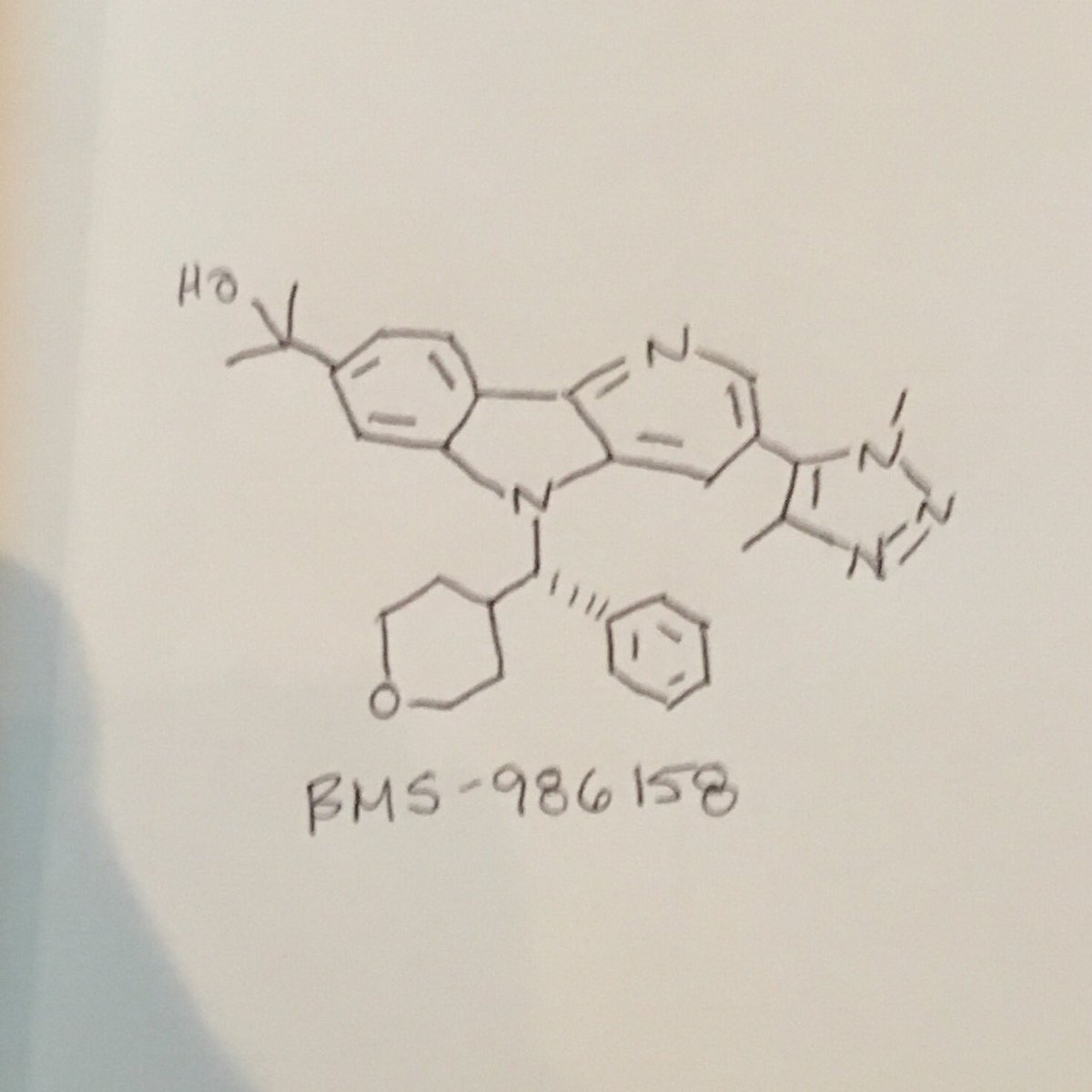

str1

PF 06821497

Cas 1844849-11-1

Designed to treat lymphoma

1(2H)-Isoquinolinone, 5,8-dichloro-2-[(1,2-dihydro-4-methoxy-6-methyl-2-oxo-3-pyridinyl)methyl]-3,4-dihydro-7-[(S)-methoxy-3-oxetanylmethyl]-

MF C22 H24 Cl2 N2 O5, 

MW 467.34

ChemSpider 2D Image | 5,8-Dichloro-2-[(4-methoxy-6-methyl-2-oxo-1,2-dihydro-3-pyridinyl)methyl]-7-[methoxy(3-oxetanyl)methyl]-3,4-dihydro-1(2H)-isoquinolinone | C22H24Cl2N2O5PF 06821497

5,8-Dichloro-2-[(4-methoxy-6-methyl-2-oxo-1,2-dihydro-3-pyridinyl)methyl]-7-[methoxy(3-oxetanyl)methyl]-3,4-dihydro-1(2H)-isoquinolinone

1(2H)-Isoquinolinone, 5,8-dichloro-2-[(1,2-dihydro-4-methoxy-6-methyl-2-oxo-3-pyridinyl)methyl]-3,4-dihydro-7-(methoxy-3-oxetanylmethyl)-

  • Molecular Formula C22H24Cl2N2O5
  • Average mass 467.342 Da

SCHEMBL17330377.pngPF 06821497

5,8-dichloro-2-[(4-methoxy-6-methyl-2-oxo-1H-pyridin-3-yl)methyl]-7-[(S)-methoxy(oxetan-3-yl)methyl]-3,4-dihydroisoquinolin-1-one

US2015361067

Inventors Michael Raymond Collins, Robert Steven Kania, Robert Arnold Kumpf, Pei-Pei Kung, Daniel Tyler Richter, Scott Channing Sutton, Martin James Wythes
Original Assignee Pfizer Inc.Image result
  • Epigenetic alterations play an important role in the regulation of cellular processes, including cell proliferation, cell differentiation and cell survival. The epigenetic silencing of tumor suppressor genes and activation of oncogenes may occur through alteration of CpG island methylation patterns, histone modification, and dysregulation of DNA binding protein. Polycomb genes are a set of epigenetic effectors. EZH2 (enhancer of zeste homolog 2) is the catalytic component of the Polycomb Repressor Complex 2 (PRC2), a conserved multi-subunit complex that represses gene transcription by methylating lysine 27 on Histone H3 (H3K27). EZH2 plans a key role in regulating gene expression patterns that regulate cell fate decisions, such as differentiation and self-renewal. EZH2 is overexpressed in certain cancer cells, where it has been linked to cell proliferation, cell invasion, chemoresistance and metastasis.
  • High EZH2 expression has been correlated with poor prognosis, high grade, and high stage in several cancer types, including breast, colorectal, endometrial, gastric, liver, kidney, lung, melanoma, ovarian, pancreatic, prostate, and bladder cancers. See Crea et al., Crit. Rev. Oncol. Hematol. 2012, 83:184-193, and references cited therein; see also Kleer et al., Proc. Natl. Acad. Sci. USA 2003, 100:11606-11; Mimori et al., Eur. J. Surg. Oncol. 2005, 31:376-80; Bachmann et al., J. Clin. Oncol. 2006, 24:268-273; Matsukawa et al., Cancer Sci. 2006, 97:484-491; Sasaki et al. Lab. Invest. 2008, 88:873-882; Sudo et al., Br. J. Cancer 2005, 92(9):1754-1758; Breuer et al., Neoplasia 2004, 6:736-43; Lu et al., Cancer Res. 2007, 67:1757-1768; Ougolkov et al., Clin. Cancer Res. 2008, 14:6790-6796; Varambally et al., Nature 2002, 419:624-629; Wagener et al., Int. J. Cancer 2008, 123:1545-1550; and Weikert et al., Int. J. Mol. Med. 2005, 16:349-353.
    Recurring somatic mutations in EZH2 have been identified in diffuse large B-cell lymphoma (DLBCL) and follicular lymphomas (FL). Mutations altering EZH2 tyrosine 641 (e.g., Y641C, Y641F, Y641N, Y641S, and Y641H) were reportedly observed in up to 22% of germinal center B-cell DLBCL and 7% of FL. Morin et al. Nat. Genetics 2010 February; 42(2):181-185. Mutations of alanine 677 (A677) and alanine 687 (A687) have also been reported. McCabe et al., Proc. Natl. Acad. Sci. USA 2012, 109:2989-2994; Majer et al. FEBS Letters 2012, 586:3448-3451. EZH2 activating mutations have been suggested to alter substrate specificity resulting in elevated levels of trimethylated H3K27 (H3K27me3).
    Accordingly, compounds that inhibit the activity of wild type and/or mutant forms of EZH2 may be of interest for the treatment of cancer.

SYNTHESIS

Steps

1 COUPLING, Ag2CO3

2 Alkylation, K2CO3

3 LiAlH4 REDUCTION

4 THIONYL CHLORIDE

5 N-Alkylation of Amides, t-BuOK

6 A GRIGNARD REACTION

7 AN ALKYLATION , METHYL IODIDE, t-BuOK

8 HYDROGENATION, DE BENZYLATION,  PLATINUM OXIDE

9 LAST STEP separation by chiral preparative, SFC on (R,R) Whelk O1 column, TO GET PF 06821497

PATENT

US 20150361067

///////////////PF 06821497, 1844849-11-1, PFIZER, lymphoma, Pei-Pei Kung,  @pfizer, #ACSSanFran, Michael Raymond Collins, Robert Steven Kania, Robert Arnold Kumpf, Pei-Pei Kung, Daniel Tyler Richter, Scott Channing Sutton, Martin James Wythes

Next up in #MEDI 1st time disclosures Pei-Pei Kung from @pfizer presenting a molecule designed to treat lymphoma #ACSSanFran

str0

CO[C@H](c2cc(Cl)c3CCN(CC1=C(OC)C=C(C)NC1=O)C(=O)c3c2Cl)C4COC4

CC1=CC(=C(C(=O)N1)CN2CCC3=C(C=C(C(=C3C2=O)Cl)C(C4COC4)OC)Cl)OC

BLU 554


str0

BLU 554

FGFR4 Inhibitor

N-[(3S,4S)-3-[[6-(2,6-Dichloro-3,5-dimethoxyphenyl)-2-quinazolinyl]amino]tetrahydro-2H-pyran-4-yl]-2-propenamide

N-[(3S,4S)-3-[[6-(2,6-Dichloro-3,5-dimethoxyphenyl)quinazolin-2-yl]amino]tetrahydro-2H-pyran-4-yl]acrylamide

CAS No. 1707289-21-1
Formula C24H24Cl2N4O4
MolWeight 503.378

PHASE 1

Image result for BLU 554

BLU-554 is a potent fibroblast growth factor receptor 4 (FGFR4) inhibitor.
IC50 & Target: FGFR4[1]
InVitro: Fibroblast growth factor receptor 4 (FGFR-4) is a protein that in humans is encoded by the FGFR-4 gene. This protein is a member of the fibroblast growth factor receptor family, where amino acid sequence was highly conserved between members throughout evolution. FGFR family members 1-4 differ from one another in their ligand affinities and tissue distribution. A full-length representative protein consists of an extracellular region composed of three immunoglobulin-like domains, a single hydrophobic membrane-spanning segment and a cytoplasmic tyrosine kinase domain. The extracellular portion of the protein interacts with fibroblast growth factors, setting in motion a cascade of downstream signals, ultimately influencing mitogenesis and differentiation. The genomic organization of the FGFR-4 gene encompasses 18 exons. Although alternative splicing has been observed, there is no evidence that the C-terminal half of the Iglll domain of this protein varies between three alternate forms, as indicated for FGFR 1-3[1].

Inventors Neil Bifulco, Lucian V. Dipietro, Brian L. Hodous, Chandrasekhar V. MIDUTURU
Applicant Blueprint Medicines Corporation

Neil Bifulco

Neil Bifulco

Senior Scientist at Blueprint Medicines

Chandra Miduturu

Chandra Miduturu

Senior Scientist at Blueprint Medicines

Fibroblast growth factor receptor 4 (FGFR-4) is a protein that in humans is encoded by the FGFR-4 gene. This protein is a member of the fibroblast growth factor receptor family, where amino acid sequence was highly conserved between members throughout evolution. FGFR family members 1-4 differ from one another in their ligand affinities and tissue distribution. A full-length representative protein consists of an extracellular region composed of three immunoglobulin-like domains, a single hydrophobic membrane-spanning segment and a cytoplasmic tyrosine kinase domain. The extracellular portion of the protein interacts with fibroblast growth factors, setting in motion a cascade of downstream signals, ultimately influencing mitogenesis and differentiation. The genomic organization of the FGFR-4 gene encompasses 18 exons. Although alternative splicing has been observed, there is no evidence that the C-terminal half of the Iglll domain of this protein varies between three alternate forms, as indicated for FGFR 1-3.

Ectopic mineralization, characterized by inappropriate calcium-phosphorus deposition in soft tissue, has been observed in rats treated with an FGFR-1 inhibitor (Brown, AP et al. (2005), Toxicol. Pathol., p. 449-455). This suggests that selective inhibition of FGFR-4 without inhibition of other isoforms of FGFR, including FGFR-1, may be desirable in order to avoid certain toxicities. FGFR-4 preferentially binds fibroblast growth factor 19 (FGF19) and has recently been associated with the progression of certain sarcomas, renal cell cancer, breast cancer, and liver cancer.

PATENT

WO 2016105582

PATENT

WO 2015061572

Synthetic Protocol 3

2-chloro-6-(2,6-dichloro-3,5-dimethoxyphenyl)quinazoline (described in WO 2014011900) can be substituted with an 1,2-mono-protected cycloalkyldiamine under various nucleophilic aromatic substitution reaction conditions using a base (such as diisopropylethylamine (DIPEA), DBU or NaHC03) in a polar solvent (such as dioxane, CH CN or NMP) or via a palladium-mediated Buchwald coupling reaction to provide the diamine- substituted quinazoline. The protecting group on the amine is removed to reveal the amine on the cycloalkane. The amine can be reacted with propiolic acid using amide coupling reaction conditions or reacted with acryloyl chloride to prepare the acrylamide. As shown below, Compounds 27, 32, 34, 36, and 40 were prepared using Synthetic Protocol 3.

Compound 40

Synthesis of N-((3S,4S)-3-((6-(2,6-dichloro-3,5-dimethoxyphenyl)quinazolin-2-yl)amino)tetrahydro-2H-pyran-4-yl)acrylamide

Step 1: Synthesis of N-((3S,4S)-4-azidotetrahydro-2H-pyran-3-yl)-6-(2,6-dichloro-3,5-dimethoxyphenyl)quinazolin-2-amine

(3S,4S)-4-azidotetrahydro-2H-pyran-3-amine, HC1 (0.200 g, 1.120 mmol) and 2-chloro-6-(2,6-dichloro-3,5-dimethoxyphenyl)quinazoline (0.318 g, 0.861 mmol) were taken up in NMP (2 ml) and sodium carbonate (0.217 g, 2.58 mmol) was added. The reaction was heated to 100 °C overnight. After cooling to ambient temperature the reaction was poured into 5ml of water and stirred for 30 min. The solid layer was filtered off and washed with water and further dried under high vacuum to give N-((3S,4S)-4-azidotetrahydro-2H-pyran-3-yl)-6-(2,6-dichloro-3,5-dimethoxyphenyl)quinazolin-2-amine (0.300 g, 0.631 mmol, 73.3 % yield). MS (ES+) C21H20CI2N6O3requires: 474, found: 475 [M + H]+.

Step 2: Synthesis of (3S,4S)-N3-(6-(2,6-dichloro-3,5-dimethoxyphenyl)quinazolin-2-yl)tetrahydro-2H-pyran-3,4-diamine

N-((3S,4S)-4-azidotetrahydro-2H-pyran-3-yl)-6-(2,6-dichloro-3,5-dimethoxyphenyl)quinazolin-2-amine (0.063 g, 0.133 mmol) was taken up in Methanol (7 ml) and EtOAc (7.00 ml), Pd-C (0.014 g, 0.133 mmol) was added and stirred under a ¾ balloon for 1 hour. After the reaction was completed, it was filtered through celite and the solvent removed. (3S,4S)-N3-(6-(2,6-dichloro-3,5-dimethoxyphenyl)quinazolin-2-yl)tetrahydro-2H-pyran-3,4-diamine (0.060 g, 0.134 mmol, 101 % yield) was recovered as a yellow solid, which was carried on without further purification. MS (ES+) C21H22CI2N4O3 requires: 448, found: 449 [M + H]+.

Step 3: Synthesis of N-((3S,4S)-3-((6-(2,6-dichloro-3,5-dimethoxyphenyl)quinazolin-2-yl)amino)tetrahydro-2H-pyran-4-yl)acrylamide

(3S,4S)-N3-(6-(2,6-dichloro-3,5-dimethoxyphenyl)quinazolin-2-yl)tetrahydro-2H-pyran-3,4-diamine (0.060 g, 0.134 mmol) was taken up in CH2CI2 (2 ml) and cooled to 0 °C, followed by addition of DIEA (0.023 ml, 0.134 mmol) and then acryloyl chloride (0.012 ml, 0.147 mmol) slowly. The reaction was stirred at 0 °C for 30 minutes, then the mixture was loaded directly onto silica and purified by flash chromotography using 0-10% CH2Cl2/MeOH. N-((3S,4S)-3-((6-(2,6-dichloro-3,5-dimethoxyphenyl)quinazolin-2-yl)amino)tetrahydro-2H-pyran-4-yl)acrylamide (0.041 g, 0.081 mmol, 61% yield) was recovered as an off white solid. MS (ES+) C24H24CI2N4O4 requires: 502, found: 503 [M + H]+.

References on BLU-554

Jeff Albers

Jeff Albers

Chief Executive Officer at Blueprint Medicines

Marion Dorsch

Marion Dorsch

Chief Scientific Officer at Blueprint Medicines

Chris De Savi

Chris De Savi

Director of Medicinal Chemistry at Blueprint Medicines

Blueprint Medicines Logo

Blueprint Medicines is developing a new generation of highly selective and potent kinase therapies to dramatically improve the lives of patients with genomically defined diseases. Our approach is rooted in a deep understanding of the genetic blueprint of cancer and other diseases driven by the abnormal activation of kinases. Our ability to identify novel drivers of disease, coupled with our proprietary library of novel and diverse chemical compounds, uniquely enables us to craft kinase therapies against new and difficult-to-drug targets. We are boldly advancing a deep pipeline of highly targeted therapies against previously unaddressed drivers of disease. By focusing on genomically defined subsets of patients, we believe we can identify the people most likely to respond to our therapies, resulting in a more efficient clinical development path with a greater likelihood of success and better outcomes for patients. We see a substantial opportunity in kinase drug discovery and development to deliver breakthrough medicines that allow patients to live longer with better quality of life and prevent recurrences of disease. Kinases are involved in many hallmarks of tumor biology and are proven cancer drug targets. Currently approved drugs focus on less than 5 percent of known kinases, and the function of most kinases is unknown. Led by a team of industry innovators with a track record of bringing life-changing drugs to market, we believe Blueprint Medicines has the experience and expertise to deliver on the tremendous untapped potential of kinase therapies to improve patients’ lives. We don’t think in small steps. We think in giant leaps. We are driven by the pursuit of new ideas, new innovations, and new ways of thinking.

Specialties

Oncology drug discovery, Oncology, Genomically defined diseases, Rare diseases, Transformative drugs, Robust drug pipeline, Systemic mastocytosis, Hepatocellular carcinoma, Orphan drugs, Small molecules, Kinase inhibitor, Personalized medicine, and Novel cancer therapies

Headquarters
Cambridge, MA
Website
http://www.blueprintmedicines.com

//////////BLU 554, FGFR4 Inhibitor,  Chandra Miduturu, @BlueprintMeds,  advanced heptocellular carcinoma, , PHASE 1, Neil Bifulco, Lucian V. Dipietro, Brian L. Hodous, Chandrasekhar V. MIDUTURU, BLUEPRINT, 

Now Chandra Miduturu of @BlueprintMeds is speaking in 1st time disclosures about of advanced heptocellular carcinoma

str0

ABBV 2222


str1

ABBV 2222

Benzoic acid, 4-[(2R,4R)-4-[[[1-(2,2-difluoro-1,3-benzodioxol-5-yl)cyclopropyl]carbonyl]amino]-7-(difluoromethoxy)-3,4-dihydro-2H-1-benzopyran-2-yl]-

4-[(2R,4R)-4-({[1-(2,2-difluoro-1,3-benzodioxol-5-yl)cyclopropyl]carbonyl}- amino)-7-(difluoromethoxy)-3,4-dihydro-2H-chromen-2-yl]benzoic acid

CAS  1918143-53-9

MF C28 H21 F4 N O7
MW 559.46
1H NMR (400 MHz, CDCl.sub.3) .delta. 8.17-8.03 (m, 2H), 7.49 (d, J=8.2 Hz, 2H), 7.16-6.99 (m, 4H), 6.73-6.67 (m, 2H), 6.38 (d, J=73.6 Hz, 1H), 5.48 (td, J=10.4, 6.1 Hz, 1H), 5.36 (d, J=8.8 Hz, 1H), 5.31-5.21 (m, 1H), 2.52 (ddd, J=13.3, 6.0, 2.2 Hz, 1H), 1.86-1.71 (m, 2H), 1.68-1.60 (m, 1H), 1.10 (q, J=3.7, 2.4 Hz, 2H);
 
MS (ESI-) m/z=558 (M-H).sup.-.

Image result

DESCRIPTION

Cystic fibrosis (CF), one of the most common autosomal recessive genetic diseases in the Caucasian population, is caused by loss of function mutations in the Cystic Fibrosis Transmembrane Conductance Regulator (CFTR) gene, which is located on chromosome 7 (http://www.cff.org/AboutCF/; Rowe S. M et al. (2005); N Eng J Med. (352), 1992-2001). Approximately 1:3500 and 1:3000 infants born in the United States and in Europe, respectively, are affected by CF, resulting in ˜75,000 cases worldwide, ˜30,000 of which are in the United State. Approximately 1,000 new cases of CF are diagnosed each year, with more than 75% of patients being diagnosed by 2 years of age. Nearly half the CF population is currently 18 years of age and older. The CFTR protein (Gregory, R. J. et al. (1990) Nature 347:382-386; Rich, D. P. et al. (1990) Nature 347:358-362; Riordan, J. R. et al. (1989) Science 245:1066-1073) is a cAMP/ATP-mediated ion channel expressed in a variety of cell types, including secretory and absorptive epithelial cells. CFTR regulates chloride and bicarbonate anion flux across the cell membrane, maintaining electro neutrality and osmolarity across the epithelial membrane (Quinton, P. M. (1990), FASEB J. 4: 2709-2727). CFTR is also responsible for regulating the activity of other ion channels and proteins (Guggino, W. B. et al. (2006), Nat Revs Molecular Cell Biology 7, 426-436).

Aberrations in CFTR function result in imbalance of the airway surface liquid, leading to mucus dehydration, inflammation, recurrent bacterial infection and irreversible lung damage, which lead to premature death in affected patients. Besides respiratory disease, CF patients suffer from gastrointestinal problems and pancreatic insufficiency. The majority of males (95%) with cystic fibrosis are infertile as a result of azoospermia caused by altered vas deferens; which may be absent, atrophic, or fibrotic. Fertility is also decreased among females with cystic fibrosis due to abnormal cervical mucus.

The F508del mutation, the most common of the approximately 1900 identified polymorphisms in CFTR, results in defective processing of CFTR in the endoplasmic reticulum (ER) (http://www.cftr2.org/index.php). Approximately 90% of the CF patients carry at least one copy of the F508del mutation (deletion of a phenylalanine on position 508), and 50%-60% of the patients are homozygous for this mutation. The defective processing of CFTR results in early CFTR degradation, which leads to reduced trafficking or absence of the protein on the membrane. As there have been over 100 CF disease-causing mutations identified, they have been classified according to their phenotypic consequences and belong to synthesis, maturation, regulation, conductance, reduced number due to quantity and reduced number due to stability classifications.

Current CF drug discovery efforts focus upon developing two classes of compounds to modulate CFTR. One class, called Correctors, helps to overcome the folding defects of the mutated CFTR protein to promote its maturation resulting in higher cell surface expression. The other classes of compounds, called Potentiators, help overcome the defective regulation and/or conductance of the protein by increasing the probability of channel opening on the membrane surface.

In addition, as the modulation of CFTR protein mutations to promote proper protein folding is beneficial for CF, there are other diseases mediated by CFTR. For example, Sjögren’s Syndrome (SS), an autoimmune disorder that results in symptoms of xerostomia (dry mouth) and keratoconjunctivitis sicca (KCS, dry eyes) may result from dysregulation of moisture producing glands throughout the body. Chronic obstructive lung disease (COLD), or chronic obstructive airway disease (COAD), which is a progressive and irreversible airflow limitation in the airways is result of several physiologic abnormalities, including mucus hyper secretion and impaired mucociliary secretion. Increasing the anion secretion by CFTR potentiators have been suggested to overcome these phenotypic complexities with Sjögren’s Syndrome by increasing the corneal hydration and by overcoming the impaired mucociliary secretion in COAD (Bhowmik A, et al. (2009) Vol. 103(4), 496-502; Sloane P, et al. PLOS One (2012) Vol 7(6), 239809 (1-13)).

STEP 1

(R)-methyl 4-(7-hydroxy-4-oxochroman-2-yl)benzoate

RXN……….By reacting  7-hydroxy-4H-chromen-4-one AND  (4-(methoxycarbonyl)phenyl)boronic acid

STEP 2

(R)-methyl 4-(7-hydroxy-4-(methoxyimino)chroman-2-yl)benzoate

Reacting ABOVE compd  and O-methylhydroxylamine,

STEP 3

Methyl 4-((2R,4R)-4-amino-7-hydroxychroman-2-yl)benzoate

reacting ABOVE  compd with 5% platinum (0.05 equivalent) on carbon in acetic acid. The reaction was stirred at room temperature under hydrogen

THEN STEP 4

Methyl 4-((2R,4R)-4-amino-7-hydroxychroman-2-yl)benzoate isolated AS  trifluroroacetic acid salt

STEP 5
methyl 4-((2R,4R)-4-(1-(2,2-difluorobenzo[d][1,3]dioxol-5-yl)cyclopropanec- arboxamido)-7-hydroxychroman-2-yl)benzoate

by reacting  1-(2,2-difluorobenzo[d][1,3]dioxol-5-yl)cyclopropanecarboxylic acid  and HATU (1-[bis(dimethylamino)methylene]-1H-1,2,3-triazolo[4,5-b]pyridinium 3-oxid hexafluorophosphate, the ABOVE compound AND  N-ethyl-N-isopropylpropan-2-amine

STEP 6

Methyl 4-((2R,4R)-4-(1-(2,2-difluorobenzo[d][1,3]dioxol-5-yl)cyclopropanec- arboxamido)-7-(difluoromethoxy)chroman-2-yl)benzoate

by reacting ABOVE compound  and diethyl(bromodifluoromethyl)phosphonate

AND FINAL STEP7  is ESTER HYDROLYSIS USING lithium hydroxide to get ABBV 2222

PATENT
US 20160120841

str1

Example 122

4-[(2R,4R)-4-({[1-(2,2-difluoro-1,3-benzodioxol-5-yl)cyclopropyl]carbonyl}- amino)-7-(difluoromethoxy)-3,4-dihydro-2H-chromen-2-yl]benzoic acid

[1880] To Example 123E (130 mg, 0.227 mmol) in methanol (2 mL) and water (0.5 mL) was added lithium hydroxide (32.6 mg, 1.360 mmol). The mixture was stirred at 35.degree. C. for 4 hours, LC/MS showed the conversion was complete. Solvent was removed under reduced pressure and water (2 mL) was added. The pH of the mixture was adjusted to pH 1-2 with the addition of 2 M HCl. The precipitated white solid was collected by filtration, and dried to provide the title compound (110 mg, 0.197 mmol, 87% yield). .sup.1H NMR (400 MHz, CDCl.sub.3) .delta. 8.17-8.03 (m, 2H), 7.49 (d, J=8.2 Hz, 2H), 7.16-6.99 (m, 4H), 6.73-6.67 (m, 2H), 6.38 (d, J=73.6 Hz, 1H), 5.48 (td, J=10.4, 6.1 Hz, 1H), 5.36 (d, J=8.8 Hz, 1H), 5.31-5.21 (m, 1H), 2.52 (ddd, J=13.3, 6.0, 2.2 Hz, 1H), 1.86-1.71 (m, 2H), 1.68-1.60 (m, 1H), 1.10 (q, J=3.7, 2.4 Hz, 2H); MS (ESI-) m/z=558 (M-H).sup.-.

Example 123

methyl 4-[(2R,4R)-4-({[1-(2,2-difluoro-1,3-benzodioxol-5-yl)cyclopropyl]ca- rbonyl}amino)-7-(difluoromethoxy)-3,4-dihydro-2H-chromen-2-yl]benzoate

Example 123A

(R)-methyl 4-(7-hydroxy-4-oxochroman-2-yl)benzoate

[1881] A mixture of bis(2,2,2-trifluoroacetoxy)palladium (271 mg, 0.816 mmol), (S)-4-(tert-butyl)-2-(pyridin-2-yl)-4,5-dihydrooxazole (200 mg, 0.979 mmol), ammonium hexafluorophosphate(V) (798 mg, 4.90 mmol), (4-(methoxycarbonyl)phenyl)boronic acid (2203 mg, 12.24 mmol) and dichloroethane (8 mL) in a 20 mL vial was stirred for 5 minutes at room temperature, followed by the addition of 7-hydroxy-4H-chromen-4-one (CAS 59887-89-7, MFCD00209371, 1323 mg, 8.16 mmol) and water (256 mg, 14.19 mmol). The vial was capped and the mixture was stirred at 60.degree. C. overnight. The reaction gradually turned black, with Pd plated out on the sides of the vial. The mixture was filtered through a plug of celite and eluted with ethyl acetate to give a red solution which was washed with brine. The solvent was removed in vacuo and the crude material was chromatographed using a 100 g silica gel cartridge and eluted with a gradient of 5-40% ethyl acetate in heptane to provide the title compound (1.62 g, 66.6% yield). .sup.1H NMR (400 MHz, CDCl.sub.3) .delta. 8.15-8.04 (m, 2H), 7.87 (d, J=8.7 Hz, 1H), 7.60-7.49 (m, 2H), 6.62-6.45 (m, 2H), 5.87 (s, 1H), 5.53 (dd, J=12.8, 3.2 Hz, 1H), 3.94 (s, 3H), 3.07-2.80 (m, 2H); MS (ESI+) m/z=299 (M+H).sup.+.

Example 123B

(R)-methyl 4-(7-hydroxy-4-(methoxyimino)chroman-2-yl)benzoate

[1882] The mixture of Example 123A (960 mg, 3.22 mmol), sodium acetate (528 mg, 6.44 mmol) and O-methylhydroxylamine, hydrochloric acid (538 mg, 6.44 mmol) in methanol (10 mL) was stirred at 60.degree. C. overnight. Solvent was removed under reduced pressure. The residue was dissolved in ethyl acetate and washed with water. The organic layers was dried over MgSO.sub.4, filtered, and concentrated. The residue was washed with ether to provide the title compound (810 mg, 2.475 mmol, 77% yield). .sup.1H NMR (400 MHz, CDCl.sub.3) .delta. 8.15-8.03 (m, 2H), 7.81 (d, J=8.7 Hz, 1H), 7.58-7.43 (m, 2H), 6.50 (dd, J=8.6, 2.5 Hz, 1H), 6.45 (d, J=2.5 Hz, 1H), 5.21 (d, J=3.0 Hz, 1H), 5.12 (dd, J=12.2, 3.2 Hz, 1H), 3.95 (s, 3H), 3.93 (s, 3H), 3.45 (dd, J=17.2, 3.2 Hz, 1H), 2.63 (dd, J=17.2, 12.2 Hz, 1H); MS (ESI+) m/z 328 (M+H).sup.+.

Example 123C

Methyl 4-((2R,4R)-4-amino-7-hydroxychroman-2-yl)benzoate

[1883] A mixture of Example 123B (570 mg, 1.741 mmol) was treated with 5% platinum (0.05 equivalent) on carbon in acetic acid (5 mL). The reaction was stirred at room temperature under hydrogen (1 atmosphere) for 24 hours, LC/MS showed conversion over 95%. The mixture was filtered through a celite pad and solvent removed under reduced pressure. The residue was purified by preparative LC method TFA2 to provide the trifluroroacetic acid salt of the title compound (300 mg, 44% yield). LC/MS m/z 283 (M-NH.sub.2).sup.+.

Example 123D

methyl 4-((2R,4R)-4-(1-(2,2-difluorobenzo[d][1,3]dioxol-5-yl)cyclopropanec- arboxamido)-7-hydroxychroman-2-yl)benzoate

[1884] A mixture of 1-(2,2-difluorobenzo[d][1,3]dioxol-5-yl)cyclopropanecarboxylic acid (162 mg, 0.668 mmol) and HATU (1-[bis(dimethylamino)methylene]-1H-1,2,3-triazolo[4,5-b]pyridinium 3-oxid hexafluorophosphate, 380 mg, 1.0 mmol) in DMF (2 mL) was stirred for 5 minutes at room temperature, followed by the addition of Example 123C (200 mg, 0.334 mmol) and N-ethyl-N-isopropylpropan-2-amine (0.466 ml, 2.67 mmol). The mixture was stirred at room temperature for 2 hours, LC/MS showed reaction complete. The mixture was loaded on to a 25 g silica gel cartridge eluting with 5-50% ethyl acetate in heptane provide the title compound (204 mg, 58.3% yield). .sup.1H NMR (400 MHz, CDCl.sub.3) .delta. 8.11-7.90 (m, 2H), 7.42 (d, J=8.0 Hz, 2H), 7.16-7.02 (m, 2H), 6.94 (dd, J=37.7, 8.3 Hz, 2H), 6.49-6.32 (m, 2H), 5.67 (s, 1H), 5.36 (dt, J=15.3, 8.7 Hz, 2H), 5.18 (d, J=10.7 Hz, 1H), 3.93 (s, 3H), 2.56-2.36 (m, 1H), 1.80-1.70 (m, 2H), 1.26 (d, J=2.2 Hz, 1H), 1.10-1.04 (m, 2H); MS (ESI-) m/z=521.9 (M-H).sup.-.

Example 123E

Methyl 4-((2R,4R)-4-(1-(2,2-difluorobenzo[d][1,3]dioxol-5-yl)cyclopropanec- arboxamido)-7-(difluoromethoxy)chroman-2-yl)benzoate

[1885] To Example 123D (190 mg, 0.363 mmol) and diethyl(bromodifluoromethyl)phosphonate (0.129 ml, 0.726 mmol) in a mixture of acetonitrile (2 mL) and water (1 mL) was added 50% aqueous potassium hydroxide (244 mg, 2.178 mmol) drop wise via syringe while stirring vigorously. After the addition was completed, LC/MS showed conversion was complete with a small by-product peak. Additional water was added to the mixture and the mixture was extracted with ethyl acetate (3.times.20 mL). The combined organic extracts were washed with 1 M HCl (5 mL) and water, dried over MgSO.sub.4, filtered, and concentrated. The residue was purified by preparative LC method TFA2 to provide the title compound (150 mg, 72% yield). .sup.1H NMR (400 MHz, CDCl.sub.3) .delta. 8.09-8.00 (m, 2H), 7.49-7.41 (m, 2H), 7.15-6.99 (m, 4H), 6.75-6.66 (m, 2H), 5.50-5.40 (m, 1H), 5.33 (d, J=8.9 Hz, 1H), 5.25 (dd, J=11.3, 2.0 Hz, 1H), 3.93 (s, 3H), 2.50 (ddd, J=13.4, 6.1, 2.1 Hz, 1H), 1.84-1.71 (m, 2H), 1.65 (d, J=2.8 Hz, 1H), 1.11-1.06 (m, 2H); MS (ESI-) m/z=572 (M-H).sup.-.

REFERENCE

Next up is Xueqing Wang of @abbvie speaking about a collaboration with @GalapagosNV on a different cystic fibrosis treatment

str0

///////////ABBV 2222

O=C(O)c1ccc(cc1)[C@@H]3Oc2cc(OC(F)F)ccc2C(C3)NC(=O)C4(CC4)c5ccc6OC(F)(F)Oc6c5

BMS 986158


SCHEMBL16861831.png

str1

BMS 986158

MF C30H33N5O2, MW495.627 g/mol

CAS 1800340-40-2

5H-Pyrido[3,2-b]indole-7-methanol, 3-(1,4-dimethyl-1H-1,2,3-triazol-5-yl)-α,α-dimethyl-5-[(S)-phenyl(tetrahydro-2H-pyran-4-yl)methyl]-

MOA:Bromodomain and extraterminal domain protein inhibitor

Indication:Solid tumoursStatus:

Phase II :Bristol-Myers Squibb (Originator)

Phase I/IISolid tumours

  • Originator Bristol-Myers Squibb
  • Class Antineoplastics; Small molecules
  • Mechanism of Action Bromodomain and extraterminal domain protein inhibitors
  • 01 Jun 2015 Phase-I/II clinical trials for Solid tumours (Late-stage disease, Metastatic disease) in Canada (NCT02419417)
  • 02 Apr 2015 Bristol-Myers Squibb plans a phase I/IIa trial for Solid tumours (Late-stage disease) in USA, Australia and Canada (NCT02419417)

The genomes of eukaryotic organisms are highly organized within the nucleus of the cell. The long strands of duplex DNA are wrapped around an octomer of histone proteins to form a nucleosome. This basic unit is then further compressed by the aggregation and folding of nucleosomes to form a highly condensed chromatin structure. A range of different states of condensation are possible, and the tightness of this structure varies during the cell cycle, being most compact during the process of cell division. There has been appreciation recently that chromatin templates form a fundamentally important set of gene control mechanisms referred to as epigenetic regulation. By conferring a wide range of specific chemical modifications to histones and DNA (such as acetylation, methylation, phosphorylation, ubiquitinylation and SUMOylation) epigenetic regulators modulate the structure, function and accessibility of our genome, thereby exerting a huge impact in gene expression.

Histone acetylation is most usually associated with the activation of gene transcription, as the modification loosens the interaction of the DNA and the histone octomer by changing the electrostatics. In addition to this physical change, specific proteins bind to acetylated lysine residues within histones to read the epigenetic code. Bromodomains are small (-110 amino acid) distinct domains within proteins that bind to acetylated lysine residues commonly but not exclusively in the context of histones. There is a family of around 50 proteins known to contain bromodomains, and they have a range of functions within the cell. The BET family of bromodomain containing proteins

comprises 4 proteins (BRD2, BRD3, BRD4 and BRD-T) which contain tandem bromodomains capable of binding to two acetylated lysine residues in close proximity, increasing the specificity of the interaction.

BRD2 and BRD3 are reported to associate with histones along actively

transcribed genes and may be involved in facilitating transcriptional elongation (Leroy et al, Mol. Cell. 2008 30(1):51-60), while BRD4 appears to be involved in the recruitment of the pTEF-I3 complex to inducible genes, resulting in phosphorylation of RNA polymerase and increased transcriptional output (Hargreaves et al, Cell, 2009 138(1): 1294145). All family members have been reported to have some function in controlling or executing aspects of the cell cycle, and have been shown to remain in complex with chromosomes during cell division – suggesting a role in the maintenance of epigenetic memory. In addition some viruses make use of these proteins to tether their genomes to the host cell chromatin, as part of the process of viral replication (You et al., Cell, 2004 117(3):349-60).

Recent articles relating to this target include Prinjha et al., Trends in

Pharmacological Sciences, March 2012, Vol. 33, No. 3, pp. 146-153; Conway, ACS Med. Chem. Lett., 2012, 3, 691-694 and Hewings et al, J. Med. Chem., 2012, 55, 9393-9413.

Small molecule BET inhibitors that are reported to be in development include GSK-525762A, OTX-015, TEN-010 as well as others from the University of Oxford and Constellation Pharmaceuticals Inc.

Hundreds of epigenetic effectors have been identified, many of which are chromatin-binding proteins or chromatin-modifying enzymes. These proteins have been associated with a variety of disorders such as neurodegenerative disorders, metabolic diseases, inflammation and cancer. Thus, these compounds which inhibit the binding of a bromodomain with its cognate acetylated proteins, promise new approaches in the treatment of a range of autoimmune and inflammatory diseases or conditions and in the treatment of various types of cancer.

 
Inventors Derek J. Norris, George V. Delucca, Ashvinikumar V. Gavai, Claude A. Quesnelle, Patrice Gill, Daniel O’MALLEY, Wayne Vaccaro, Francis Y. Lee, Mikkel V. DEBENEDETTO, Andrew P. Degnan, Haiquan Fang, Matthew D. Hill, Hong Huang, William D. Schmitz, JR John E. STARRETT, Wen-Ching Han, John S. Tokarski, Sunil Kumar MANDAL
Applicant Bristol-Myers Squibb Company

PATENT

WO 2015100282

Examples 54 & 55

2-[3-(Dimethyl-lH-l,2,3-triazol-5-yl)-5-[oxan-4-yl(phenyl)methyl]-5H-pyrido[3,2- b] indol-7-yl] pr opan-2-ol

Enantiomer A, Example 54 Enantiomer B, Example 55

Step 1 : 2-C hloro-5-(l ,4-dimethyl- 1H- 1 ,2,3-triazol-5-yl)pyridin-3-amine

To a 100 mL round bottom flask containing 5-bromo-2-chloropyridin-3-amine (2.90 g, 14.0 mmol), l,4-dimethyl-5-(tributylstannyl)-lH-l,2,3-triazole (2.70 g, 6.99 mmol) [Seefeld, M.A. et al. PCT Int. AppL, 2008, WO2008098104] and Pd(PPh3)4 (0.61 g, 0.52 mmol) in DMF (20 mL) was added cuprous iodide (0.20 g, 1.05 mmol) and Et3N (1.9 mL, 14.0 mmol). The reaction mixture was purged with N2 for 3 min and then heated at 100 °C for 1 h. After cooling to room temperature, the mixture was diluted withl0% LiCl solution and extracted with EtOAc (2x). The combined organics were washed with sat. NaCl, dried over MgS04, filtered and concentrated. CH2C12 was added, and the resulting precipitate was collected by filtration. The mother liquor was concentrated and purified using ISCO silica gel chromatography (40 g column, gradient from 0% to 100% EtOAc/CH2Cl2). The resulting solid was combined with the precipitate and triturated with cold EtOAc to give the title compound (740 mg, 47%) as a light tan solid. LCMS (M+H) = 224.1; HPLC RT = 1.03 min (Column: Chromolith ODS S5 4.6 x 50 mm; Mobile Phase A: 10:90 MeOH: water with 0.1% TFA; Mobile Phase B: 90: 10 MeOH:water with 0.1% TFA; Temperature: 40 °C; Gradient: 0-100% B over 4 min; Flow: 4 mL/min).

Step 2: Methyl 3-((2-chloro-5-(l,4-dimethyl-lH-l,2,3-triazol-5-yl)pyridin-3-yl)amino)benzoate

Following a procedure analogous to that described in Step 2 of Example 1, 2-chloro-5-(l ,4-dimethyl-lH-l,2,3-triazol-5-yl)pyridin-3-amine (740 mg, 3.31 mmol) was converted to the title compound (644 mg, 54%). 1H NMR (400 MHz, CDC13) δ 7.94 (t, J=1.9 Hz, 1H), 7.88 (d, J=2.1 Hz, 1H), 7.83 (dt, J=7.8, 1.3 Hz, 1H), 7.49 (t, J=7.9 Hz, 1H), 7.40 (d, J=2.1 Hz, 1H), 7.36 (ddd, J=8.0, 2.3, 0.9 Hz, 1H), 6.38 (s, 1H), 3.99 (s, 3H), 3.93 (s, 3H), 2.34 (s, 3H); LCMS (M+H) = 358.2; HPLC RT = 2.34 min (Column:

Chromolith ODS S5 4.6 x 50 mm; Mobile Phase A: 10:90 MeOH:water with 0.1% TFA; Mobile Phase B: 90: 10 MeOH:water with 0.1% TFA; Temperature: 40 °C; Gradient: 0-100% B over 4 min; Flow: 4 mL/min).

Step 3: Methyl 3-(l,4-dimethyl-lH-l,2,3-triazol-5-yl)-5H-pyrido[3,2-6]indole-7-carboxylate

Following a procedure analogous to that described in Step 3 of Example 1 , methyl 3-((2-chloro-5-(l,4-dimethyl-lH-l,2,3-triazol-5-yl)pyridin-3-yl)amino)benzoate (2.82 g, 7.88 mmol) was converted to the title compound (1.58 g, 62%). 1H NMR (500 MHz, DMSO-de) δ 11.93 (s, 1H), 8.62 (d, J=1.8 Hz, 1H), 8.36 (dd, J=8.2, 0.6 Hz, 1H), 8.29 -8.22 (m, 1H), 8.16 (d, J=1.8 Hz, 1H), 7.91 (dd, J=8.2, 1.4 Hz, 1H), 4.02 (s, 3H), 3.94 (s, 3H), 2.31 (s, 3H); LCMS (M+H) = 322.3; HPLC RT = 1.98 min (Column: Chromolith ODS S5 4.6 x 50 mm; Mobile Phase A: 10:90 MeOH:water with 0.1% TFA; Mobile Phase B: 90: 10 MeOH:water with 0.1% TFA; Temperature: 40 °C; Gradient: 0-100% B over 4 min; Flow: 4 mL/min).

Alternate synthesis of Methyl 3-(l,4-dimethyl-lH-l,2,3-triazol-5-yl)-5H-pyrido[3,2-b] indole-7-carboxylate

A mixture of methyl 3-bromo-5H-pyrido[3,2-b]indole-7-carboxylate (Step 2 of Example 40, 3.000 g, 9.83 mmol), l,4-dimethyl-5-(tributylstannyl)-lH-l,2,3-triazole (4.18 g, 10.82 mmol), copper (I) iodide (0.281 g, 1.475 mmol), Pd(Ph3P)4 (0.738 g, 0.639 mmol) and triethylamine (2.74 mL, 19.66 mmol) in DMF (25 mL) was purged under a nitrogen stream and then heated in a heating block at 95 °C for 2 hours. After cooling to room temperature the reaction mixture was diluted with water and extracted into ethyl acetate. Washed with water, NH4OH, brine and concentrated. The residue was triturated with 100 mL CHC13, filtered off the solid and rinsed with CHC13 to give. 1.6 g of product. The filtrate was loaded unto the ISCO column (330 g column, A: DCM; B:

10%MeOH/DCM, 0 to 100% gradient) and chromatographed to give an additional 0.7 g. of methyl 3 -( 1 ,4-dimethyl- 1 H- 1 ,2,3 -triazol-5 -yl)-5H-pyrido [3 ,2-b]indole-7-carboxylate (2.30 g total, 7.16 mmol, 72.8 % yield).

Step 4: Methyl 3-(l,4-dimethyl-lH-l,2,3-triazol-5-yl)-5-(phenyl(tetrahydro-2H-pyran-4-yl)methyl)-5H-pyrido[3,2-b]indole-7-carboxylate

Following a procedure analogous to that described in Step 4 of Example 1 , methyl 3-(l,4-dimethyl-lH-l,2,3-triazol-5-yl)-5H-pyrido[3,2-¾]indole-7-carboxylate (80 mg, 0.25 mmol) was converted to the title compound (65 mg, 53%) after purification by prep HPLC (Column: Phen Luna C 18, 30 x 100 mm, 5 μιη particles; Mobile Phase A: 5:95 acetonitrile: water with 0.1% TFA; Mobile Phase B : 95 : 5 acetonitrile: water with 0.1% TFA; Gradient: 10-100% B over 14 min, then a 2-min hold at 100% B; Flow: 40 mL/min). 1H NMR (400 MHz, CDC13) δ 8.51 (d, J=1.8 Hz, 1H), 8.50 (s, 1H), 8.47 (d, J=8.1 Hz, 1H), 8.10 (dd, J=8.1, 1.1 Hz, 1H), 7.63 (d, J=1.8 Hz, 1H), 7.46 (d, J=7.3 Hz, 2H), 7.40 – 7.30 (m, 3H), 5.62 (d, J=10.6 Hz, 1H), 4.11 – 4.03 (m, 4H), 3.92 – 3.83 (m, 4H), 3.56 (td, J=l 1.9, 1.8 Hz, 1H), 3.35 (td, J=l 1.9, 1.9 Hz, 1H), 3.18 – 3.05 (m, 1H), 2.30 (s, 3H), 2.04 (d, J=13.0 Hz, 1H), 1.71 – 1.58 (m, 1H), 1.50 – 1.37 (m, 1H), 1.09 (d, J=12.8 Hz, 1H); LCMS (M+H) = 496.3; HPLC RT = 2.93 min (Column: Chromolith ODS S5 4.6 x 50 mm; Mobile Phase A: 10:90 MeOH:water with 0.1% TFA; Mobile Phase B: 90: 10 MeOH:water with 0.1% TFA; Temperature: 40 °C; Gradient: 0-100% B over 4 min; Flow: 4 mL/min).

Step 5 : 2- [3-(Dimethyl- lH-1 ,2,3-triazol-5-yl)-5- [oxan-4-yl(phenyl)methyl] -5H-pyrido [3,2-6] indol-7-yl] pr opan-2-ol,

Following a procedure analogous to that described in Step 5 of Example 1 , methyl 3-(l ,4-dimethyl- IH- 1 ,2,3-triazol-5-yl)-5-(phenyl(tetrahydro-2H-pyran-4-yl)methyl)-5H-pyrido[3,2-b]indole-7-carboxylate (65 mg, 0.13 mmol) was converted to racemic 2-[3-(dimethyl-lH-l,2,3-triazol-5-yl)-5-[oxan-4-yl(phenyl)methyl]-5H-pyrido[3,2-¾]indol-7-yl]propan-2-ol, which was separated by chiral prep SFC (Column: Chiralpak IB 25 x 2 cm, 5 μιη; Mobile Phase: 70/30 C02/MeOH; Flow: 50 mL/min);to give Enantiomer A (24 mg, 36%) and Enantiomer B (26 mg, 38%). Enantiomer A: 1H NMR (500 MHz, CDC13) 5 8.44 (d, J=1.8 Hz, IH), 8.36 (d, J=8.2 Hz, IH), 7.98 (s, IH), 7.56 (d, J=1.7 Hz, IH), 7.47 – 7.41 (m, 3H), 7.37 – 7.32 (m, 2H), 7.31 – 7.28 (m, IH), 5.59 (d, J=10.5 Hz, IH), 4.06 (dd, J=11.8, 2.8 Hz, IH), 3.90 – 3.84 (m, 4H), 3.55 (td, J=11.9, 2.0 Hz, IH), 3.35 (td, J=11.9, 2.0 Hz, IH), 3.15 – 3.04 (m, IH), 2.30 (s, 3H), 2.04 (d, J=13.6 Hz, IH), 1.92 (s, IH), 1.75 (s, 6H), 1.69 – 1.58 (m, IH), 1.47 – 1.38 (m, IH), 1.12 (d, J=13.4 Hz, IH); LCMS (M+H) = 496.4; HPLC RT = 2.46 min (Column: Chromolith ODS S5 4.6 x 50 mm; Mobile Phase A: 10:90 MeOH:water with 0.1% TFA; Mobile Phase B: 90: 10 MeOH:water with 0.1% TFA; Temperature: 40 °C; Gradient: 0- 100% B over 4 min; Flow: 4 mL/min). SFC RT = 5.50 min (Column: Chiralpak IB 250 x 4.6 mm, 5 μιη; Mobile Phase: 70/30 C02/MeOH; Flow: 2 mL/min); SFC RT = 1.06 min (Column:

Chiralcel OD-H 250 x 4.6 mm, 5 μιη; Mobile Phase: 50/50 C02/(1 : 1 MeOH/CH3CN); Flow: 2 mL/min); [a]D2° = -117.23 (c = 0.08, CHC13). Enantiomer B: 1H NMR (500 MHz, CDC13) δ 8.44 (d, J=l .8 Hz, IH), 8.36 (d, J=8.2 Hz, IH), 7.98 (s, IH), 7.56 (d, J=1.7 Hz, IH), 7.47 – 7.41 (m, 3H), 7.37 – 7.32 (m, 2H), 7.31 – 7.28 (m, IH), 5.59 (d, J=10.5 Hz, IH), 4.06 (dd, J=11.8, 2.8 Hz, IH), 3.90 – 3.84 (m, 4H), 3.55 (td, J=11.9, 2.0 Hz, IH), 3.35 (td, J=l 1.9, 2.0 Hz, IH), 3.15 – 3.04 (m, IH), 2.30 (s, 3H), 2.04 (d, J=13.6 Hz, IH), 1.92 (s, IH), 1.75 (s, 6H), 1.69 – 1.58 (m, IH), 1.47 – 1.38 (m, IH), 1.12 (d, J=13.4 Hz, IH); LCMS (M+H) = 496.4; HPLC RT = 2.46 min (Column: Chromolith ODS S5 4.6 x 50 mm; Mobile Phase A: 10:90 MeOH:water with 0.1% TFA; Mobile Phase B: 90: 10 MeOH:water with 0.1% TFA; Temperature: 40 °C; Gradient: 0-100% B over 4 min; Flow: 4 mL/min). SFC RT = 8.30 min (Column: Chiralpak IB 250 x 4.6 mm, 5 μιη; Mobile Phase: 70/30 C02/MeOH; Flow: 2 mL/min); SFC RT = 2.83 min (Column: Chiralcel OD-H 250 x 4.6 mm, 5 μιη; Mobile Phase: 50/50 C02/(1 : 1 MeOH/CH3CN); Flow: 2 mL/min); [a]D2° = +88.78 (c = 0.10, CHC13).

Alternate Synthesis of Examples 54

2-[3-(Dimethyl-lH-l,2,3-triazol-5-yl)-5-[oxan-4-yl(phenyl)methyl]-5H-pyrido[3,2- b] indol-7-yl] propan-2-ol.

Enantiomer A, Example 54

Step 1: (S)-methyl 3-(l,4-dimethyl-lH-l,2,3-triazol-5-yl)-5-(phenyl(tetrahydro-2H-pyran-4-yl)methyl)-5H-pyrido[3,2-b]indole-7-carboxylate

The enantiomers of phenyl(tetrahydro-2H-pyran-4-yl)methanol ( 2.0 g, 10.4 mmol) [Orjales, A. et al. J. Med. Chem. 2003, 46, 5512-5532], were separated on preperative SFC. (Column: Chiralpak AD 5 x 25 cm, 5 μιη; Mobile Phase: 74/26

C02/MeOH; Flow: 270 mL/min; Temperature 30°C). The separated peaks were concentrated and dried under vacuum to give white solids. Enantiomer A: (S)-phenyl(tetrahydro-2H-pyran-4-yl)methanol: (0.91 g, 45.5%) SFC RT = 2.32 min

(Column: Chiralpac AD 250 x 4.6 mm, 5 μιη; Mobile Phase: 70/30 C02/MeOH; Flow: 3 mL/min); Temperature 40°C. Enantiomer B: (R)-phenyl(tetrahydro-2H-pyran-4-yl)methanol. (0.92 g, 46%) SFC RT = 3.09 min (Column: Chiralpac AD 250 x 4.6 mm, 5 μιη; Mobile Phase: 70/30 C02/MeOH; Flow: 3 mL/min); Temperature 40°C.

Following a procedure analogous to that described in Step 4 of Example 1 except using toluene (120mL) as the solvent, methyl 3-(l ,4-dimethyl-lH-l,2,3-triazol-5-yl)-5H-pyrido[3,2-b]indole-7-carboxylate (4 g, 12.45 mmol) and (R)-phenyl(tetrahydro-2H-pyran-4-yl)methanol (Enantiomer B above, 5.86 g, 30.5 mmol) was converted to the title compound (5.0 g, 81%). HPLC RT = 2.91 min (Column: Chromolith ODS S5 4.6 x 50 mm; Mobile Phase A: 10:90 MeOFLwater with 0.1% TFA; Mobile Phase B: 90: 10 MeOFLwater with 0.1% TFA; Temperature: 40 °C; Gradient: 0- 100% B over 4 min; Flow: 4 mL/min).

Step 2. (S)-2-[3-(Dimethyl-lH-l,2,3-triazol-5-yl)-5-[oxan-4-yl(phenyl)methyl]-5H-pyrido [3,2-b] indol-7-yl] propan-2-ol

A 500 mL round bottom flask containing (S)-methyl 3-(l,4-dimethyl-lH-l,2,3-triazol-5-yl)-5-(phenyl(tetrahydro-2H-pyran-4-yl)methyl)-5H-pyrido[3,2-b]indole-7-carboxylate (5.0 g, 10.09 mmol) in THF (150 mL) was cooled in an ice/MeOH bath. MeMgBr, (3M in Et20, 17.0 mL, 51.0 mmol) was added slowly over 4 min. The resulting solution was stirred for 2 h and then quenched carefully with sat. NH4C1. The reaction mixture was diluted with 10% LiCl solution extracted with EtOAc. The organic layer was dried over MgS04, filtered and concentrated. The crude material was purified using ISCO silica gel chromatography (120 g column, gradient from 0%> to 6%>

MeOH/CH2Cl2). The product was collected and concentrated then dissolved in hot MeOH(35mL). To the mixture was added 15mL water and the mixture was cooled to room temperature. The resulting white precipitate was collected by filtration with 2: 1 MeOH/water rinse then dried under vacuum to give the title compound (3.2 g, 62%>). 1H

NMR (500 MHz, CDC13) δ 8.40 (d, J=1.8 Hz, 1H), 8.33 (d, J=8.2 Hz, 1H), 7.93 (s, 1H), 7.53 (d, J=l .8 Hz, 1H), 7.46 (d, J=7.3 Hz, 2H), 7.42 (dd, J=8.2, 1.4 Hz, 1H), 7.37 – 7.31 (m, 2H), 7.30 – 7.28 (m, 1H), 5.56 (d, J=10.5 Hz, 1H), 4.06 (d, J=8.9 Hz, 1H), 3.89 – 3.83 (m, 1H), 3.55 (td, J=11.9, 2.1 Hz, 1H), 3.35 (td, J=11.9, 2.1 Hz, 1H), 3.10 (q, J=10.8 Hz, 1H), 2.39 (s, 3H), 2.23 (s, 3H), 2.03 (d, J=14.2 Hz, 1H), 1.89 (s, 1H), 1.74 (s, 6H), 1.68 -1.59 (m, 1H), 1.46 – 1.36 (m, 1H), 1.12 (d, J=12.2 Hz, 1H); LCMS (M+H) = 496.3; HPLC RT = 2.44 min (Column: Chromolith ODS S5 4.6 x 50 mm; Mobile Phase A: 10:90 MeOH: water with 0.1% TFA; Mobile Phase B: 90: 10 MeOH: water with 0.1%

TFA; Temperature: 40 °C; Gradient: 0-100% B over 4 min; Flow: 4 mL/min); SFC RT = 2.01 min (Column: Chiralcel OD-H 250 x 4.6 mm, 5 μιη; Mobile Phase: 60/40 C02/(1 : 1 MeOH/CH3CN); Flow: 2 mL/min). SFC RT = 1.06 min (Column: Chiralcel OD-H 250 x 4.6 mm, 5 μιη; Mobile Phase: 50/50 C02/(1 : 1 MeOH/CH3CN); Flow: 2 mL/min).

1 to 1 of 1
Patent ID Patent Title Submitted Date Granted Date
US9458156 Tricyclic compounds as anticancer agents 2014-12-23 2016-10-04

3rd speaker at 1st time disclosures is Ashvin Gavai of @bmsnews talking about an oral BET inhibitor to treat cancer

str0

//////////

CC(C)(O)c2cc3n(c1cc(cnc1c3cc2)c4c(C)nnn4C)[C@@H](C5CCOCC5)c6ccccc6

GLGP 1837


str1

GLGP 1837

CAS 1654725-02-6

MF C16 H20 N4 O3 S, MW 348.42

For cystic fibrosis treatment

N-(3-carbamoyl-5,5,7,7-tetramethyl-4H-thieno[2,3-c]pyran-2-yl)-1H-pyrazole-5-carboxamide

1H-Pyrazole-3-carboxamide, N-[3-(aminocarbonyl)-4,7-dihydro-5,5,7,7-tetramethyl-5H-thieno[2,3-c]pyran-2-yl]-

Inventors Der Plas Steven Emiel Van, Sébastien Laurent Xavier MARTINA, Sébastien Jean-Jacques Cédric DROPSIT-MONTOVERT, Martin James Inglis Andrews, Hans KELGTERMANS
Applicant Galapagos Nv

Image result for Galapagos Nv

SYNTHESIS

str1

GLGP 1837

ABC transporters are a family of homologous membrane transporter proteins regulating the transport of a wide variety of pharmacological agents (for example drugs, xenobiotics, anions, etc…) that bind and use cellular adenosine triphosphate (ATP) for their specific activities. Some of these transporters were found to defend malignant cancer cells against chemotherapeutic agents, acting as multidrug resistance proteins (like the MDRl-P glycoprotein, or the multidrug resistance protein, MRP 1). So far, 48 ABC transporters, grouped into 7 families based on their sequence identity and function, have been identified.

ABC transporters provide protection against harmful environmental compounds by regulating a variety of important physiological roles within the body, and therefore represent important potential drug targets for the treatment of diseases associated with transporter defects, outwards cell drug transport, and other diseases in which modulation of ABC transporter activity may be beneficial.

The cAMP/ATP -mediated anion channel, CFTR, is one member of the ABC transporter family commonly associated with diseases, which is expressed in a variety of cells types, including absorptive and secretory epithelia cells, where it regulates anion flux across the membrane, as well as the activity of other ion channels and proteins. The activity of CFTR in epithelial cells is essential for the maintenance of electrolyte transport throughout the body, including respiratory and digestive tissue. (Quinton, 1990)

The gene encoding CFTR has been identified and sequenced (Kerem et al., 1989). CFTR comprises about 1480 amino acids that encode a protein made up of a tandem repeat of transmembrane domains, each containing six transmembrane helices and a nucleotide binding domain. The pair of

transmembrane domains is linked by a large, polar, regulatory (R)-domain with multiple phosphorylation sites that regulate channel activity and cellular trafficking.

Cystic fibrosis is caused by a defect in this gene which induces mutations in CFTR. Cystic fibrosis is the most common fatal genetic disease in humans, and affects -0.04% of white individuals(Bobadilla et al., 2002), for example, in the United States, about one in every 2,500 infants is affected, and up to 10 million people carry a single copy of the defective gene without apparent ill effects; moreover subjects bearing a single copy of the gene exhibit increased resistance to cholera and to dehydration resulting from diarrhea. This effect might explain the relatively high frequency of the CF gene within the population.

In contrast, individuals with two copies of the CF associated gene suffer from the debilitating and fatal effects of CF, including chronic lung infections.

In cystic fibrosis patients, mutations in endogenous respiratory epithelial CFTR fails to confer chloride and bicarbonate permeability to epithelial cells in lung and other tissues, thus leading to reduced apical anion secretion and disruptions of the ion and fluid transport. This decrease in anion transport causes an enhanced mucus and pathogenic agent accumulation in the lung triggering microbial infections that ultimately cause death in CF patients.

Beyond respiratory disease, CF patients also suffer from gastrointestinal problems and pancreatic insufficiency that result in death if left untreated. Furthermore, female subjects with cystic fibrosis suffer from decreased fertility, whilst males with are infertile.

A variety of disease causing mutations has been identified through sequence analysis of the CFTR gene of CF chromosomes (Kerem et al., 1989). AF508-CFTR, the most common CF mutation (present in at least 1 allele in~90 % of CF patients) and occurring in approximately 70% of the cases of cystic fibrosis, contains a single amino acid deletion of phenylalanine 508. This deletion prevents the nascent protein from folding correctly, which protein in turn cannot exit the endoplasmic reticulum (ER) and traffic to the plasma membrane, and then is rapidly degraded. As a result, the number of channels present in the membrane is far less than in cells expressing wild-type CFTR. In addition to impaired trafficking, the mutation results in defective channel gating. Indeed, even if AF508-CFTR is allowed to reach the cell plasma membrane by low-temperature (27°C) rescue where it can function as a cAMP-activated chloride channel, its activity is decreased significantly compared with WT-CFTR (Pasyk and Foskett, 1995).

Other mutations with lower incidence have also been identified that alter the channel regulation or the channel conductance. In case of the channel regulation mutants, the mutated protein is properly trafficked and localized to the plasma membrane but either cannot be activated or cannot function as a chloride channel (e.g. missense mutations located within the nucleotide binding domains), examples of these mutations are G551D, G178R, G1349D. Mutations affecting chloride conductance have a CFTR protein that is correctly trafficked to the cell membrane but that generates reduced chloride- flow (e.g. missense mutations located within the membrane-spanning domain), examples of these mutations are Rl 17H, R334W.

In addition to cystic fibrosis, CFTR activity modulation may be beneficial for other diseases not directly caused by mutations in CFTR, such as, for example, chronic obstructive pulmonary disease (COPD), dry eye disease, and Sjogren’s Syndrome.

[0014] COPD is characterized by a progressive and non-reversible airflow limitation, which is due to mucus hypersecretion, bronchiolitis, and emphysema. A potential treatment of mucus hypersecretion and impaired mucociliary clearance that is common in COPD could consist in using activators of mutant or wild-type CFTR. In particular, the anion secretion increase across CFTR may facilitate fluid transport into the airway surface liquid to hydrate the mucus and optimize periciliary fluid viscosity. The resulting enhanced mucociliary clearance would help in reducing the symptoms associated with COPD.

[0015] Dry eye disease is characterized by a decrease in tear production and abnormal tear film lipid, protein and mucin profiles. Many factors may cause dry eye disease, some of which include age, arthritis, Lasik eye surgery, chemical/thermal burns, medications, allergies, and diseases, such as cystic fibrosis and Sjogrens’s syndrome. Increasing anion secretion via CFTR could enhance fluid transport from the corneal endothelial cells and secretory glands surrounding the eye, and eventually improve corneal hydration, thus helping to alleviate dry eye disease associated symptoms. Sjogrens’s syndrome is an autoimmune disease where the immune system harms moisture-producing glands throughout the body, including the eye, mouth, skin, respiratory tissue, liver, vagina, and gut. The ensuing symptoms, include, dry eye, mouth, and vagina, as well as lung disease. Sjogrens’s syndrome is also associated with rheumatoid arthritis, systemic lupus, systemic sclerosis, and polymypositis/dermatomyositis. The cause of the disease is believed to lie in defective protein trafficking, for which treatment options are limited. As a consequence, modulation of CFTR activity may help hydrating the various organs and help to elevate the associated symptoms.

In addition to CF, the defective protein trafficking induced by the AF508-CFTR has been shown to be the underlying basis for a wide range of other diseases, in particular diseases where the defective functioning of the endoplasmic reticulum (ER) may either prevent the CFTR protein to exit the cell, and/or the misfolded protein is degraded (Morello et al., 2000; Shastry, 2003; Zhang et al., 2012).

[0017] A number of genetic diseases are associated with a defective ER processing equivalent to the defect observed with CFTR in CF such as glycanosis CDG type 1, hereditary emphysema (α-1-antitrypsin (PiZ variant)), congenital hyperthyroidism, osteogenesis imperfecta (Type I, II, or IV procollagen), hereditary hypofibrinogenemia (fibrinogen), ACT deficiency (α-1-antichymotrypsin), diabetes insipidus (DI), neurophyseal DI (vasopvessin hormoneN2 -receptor), neprogenic DI (aquaporin II), Charcot-Marie Tooth syndrome (peripheral myelin protein 22), Perlizaeus-Merzbacher disease, neurodegenerative diseases such as Alzheimer’s disease (APP and presenilins), Parkinson’s disease, amyotrophic lateral sclerosis, progressive supranuclear plasy, Pick’s disease, several polyglutamine neurological disorders such as Huntington’s disease, spinocerebullar ataxia type I, spinal and bulbar muscular atrophy,

dentatorubal pallidoluysian, and myotonic dystrophy, as well as spongiform encephalopathies, such as hereditary Creutzfeldt-Jakob disease (prion protein processing defect), Fabry disease (lysosomal a-galactosidase A), Straussler-Scheinker syndrome, chronic obstructive pulmonary disease (COPD), dry eye disease, and Sjogren’s Syndrome.

In addition to up-regulation of the activity of CFTR, anion secretion reduction by CFTR modulators may be beneficial for the treatment of secretory diarrheas, in which epithelial water transport is dramatically increased as a result of secretagogue activated chloride transport. The mechanism involves elevation of cAMP and stimulation of CFTR.

[0019] Regardless of the cause, excessive chloride transport is seen in all diarrheas, and results in dehydration, acidosis, impaired growth and death. Acute and chronic diarrheas remain a major medical problem worldwide, and are a significant factor in malnutrition, leading to death in children of less than five years old (5,000,000 deaths/year). Furthermore, in patients with chronic inflammatory bowel disease (IBD) and/or acquired immunodeficiency syndrome (AIDS), diarrhea is a dangerous condition

str1

GLGP 1837

PATENT

WO 2015018823

Scheme 1: synthesis of the core and subsequent amide coupling

O

1 M HCI

amide coupling

HO Λ R-i

Example 2. Synthesis of intermediates

Intermediate 2: 2,2, 6,6-tetramethyltetrahydro-4H-pyran-4-one

Phorone or 2,6-dimethyl-2,5-heptadien-4-one (1 eq) is mixed with an aqueous 1 M HCI solution and the obtained emulsion is stirred at 40°C for 6 days. The water phase is extracted with DCM, and the organic phase is concentrated and purified by distillation to afford the desired product.

Alternative synthesis of Intermediate 2

[00208] A 20 L reactor is charged with aqueous 6M HCI and is warmed up to 30 °C. Molten Phorone is added while stirring vigorously at 40°C for up to 3 h until completion. The resulting solution is then cooled to 30°C and extracted with 4 x 1 L DCM. The combined organic phases are washed with saturated NaHC03 solution (400 niL) and are dried over Na2S04. The resulting crude misture is then concentrated under vacuo, and finally purified by distillation.

Intermediate 3: 2-Amino-5,5, 7, 7-tetramethyl-4, 7-dihydro-5H-thieno[2, 3-c]pyran-3-carboxylic acid amide

Route 1 :

To a flask containing 2,2,6,6-tetramethyltetrahydro-4H-pyran-4-one (Int 2, 1 eq), cyanoacetamide (1 eq), sulfur (0.9 eq) and diethylamine (1.1 eq) are added. EtOH is then added and the resulting mixture is stirred at 40°C overnight. The reaction is diluted with water and partially concentrated by evaporation causing the precipitation of a solid that is separated by filtration. The cake is then washed with water and hexane to afford the desired product.

Alternative synthesis 1 of intermediate 3

Starting from 2,2,6,6-tetramethyltetrahydro-4H-pyran-4-one (Int 2, 1 eq), cyanoacetamide (1.1 eq) and morpholine (1.5 eq) are heated in EtOH at 80°C under inert atmosphere. After 6 h of heating, the mixture is cooled down, and sulfur (1.1 eq) is added. Next, the mixture is heated at 80°C overnight, then concentrated in vacuo and extracted with saturated NH4C1 and NaHCOs. The organic phase is subsequently dried over MgSO i, filtered and concentrated in vacuo. The residue obtained can finally be purified by column chromatography.

Alternative synthesis 2 of intermediate 3

A 20L glass reactor with a mechanical stirrer (400 rpm) and a reflux condenser is charged with 2,2,6,6-tetramethyltetrahydro-4H-pyran-4-one (Int 2) (1.466 kg, 9.01 mol, l eq) and 2-cyanoacetamide (1.363 kg, 1.8 eq.) followed by absolute EtOH (4.5 L) and morpholine (0.706 kg, 0.9 eq.). The resulting suspension is heated for 23 h at 75°C (internal temperature). After 23 h, sulfur (0.26 kg, 0.9 eq.) is added in one portion at 75°C and the resulting suspension is stirred further for 90 min after which the resulting solution is cooled to 20°C. Then, the entire solution is concentrated in vacuo (50 mbar / 45°C) to yield a solid residue. Water (13.5 L) is added in one portion at 75°C and the mixture is cooled to 22°C. Stirring (700 rpm at 22°C) is continued for 2.5h. The solids are separated by filtration, dried under vacuum suction, and subsequently in the vacuum oven at 40°C over 3d to obtain yield the desired product.

Intermediate 11: Dipyrazolo l,5-a;l ‘,5’-dJpyrazine-4,9-dione

[00213] 10 g (89 mmol) of pyrrazole carboxylic acid is suspended in toluene 100 mL at room temperature. Then, 2 equivalents of thionyl chloride are added, followed by a catalytic amount of DMF (0.5 ml). The mixture was stirred for lh at 75°C. After lh at 70 °C, the reaction was cooled to room temperature, the solid material was collected by filtration, washed with toluene and resuspended in DCM. Triethylamine (2 equivalents) was added and the suspension was stirred for 2h at room temperature. The product was collected by filtration, washed with DCM and dried at 40°C under vacuum to afford the desired product.

Example 4. Illustrative examples for the Preparation of the Compounds of Invention

Compound 2: N-(3-carbamoyl-5, 5, 7, 7 -tetramet yl-5 , 7-dihydro-4H-thieno[2, 3-c]pyran-2-yl)-lH-pyr zole-5-carboxamide

[00274] Intermediate 3 (15 g, 59 mmol) and 2H-pyrazole-3-carboxylic acid (9.9 g, 88 mmol) are suspended in DCM (250 mL). Mukaiyama reagent (2-chloro-l-methylpyridinium iodide) (18.1 g, 71 mmol), TEA (24.7 mL, 177 mmol) and DMAP (3.6 g, 29 mmol) are added. The reaction mixture is stirred at 40°C overnight and then cooled. The mixture is evaporated and the obtained crude is suspended in a 1 M HC1 solution. After stirring for 10 min, the suspension is filtered and obtained precipitate is isolated. This precipitate is re-suspended in a 0.1 M citric acid solution. Again, filtration gives a precipitate. A third trituration is done using ether as a solvent to give a precipitate after filtration. Finally, the precipitate (13.6 g) is suspended in EtOH (816 mL) and heated at reflux. To this suspension, 65 mL of DMF is added and a clear solution is obtained. The solution is concentrated to 275 mL and cooled at 0°C. A suspension is obtained, the solid is separated by filtration, and the cake is dried affording the desired product.

Alternative route

[00275] To a stirred (400 rpm) solution of 600 g (2.36 mol) of Intermediate 3 in DMAc (6 L), is added at ambient temperature 1.3 equivalents of Intermediate 11. To this resulting suspension, at room temperature, DIPEA (618 mL, 1.5 eq.) is added in small portions over a period of 5 min. The resulting suspension is heated to 80 °C and stirred for 18h at this temperature. The resulting mixture is cooled to 15°C and an aqueous saturated NH4C1 solution (7.5 L) is added over 30 minutes thus maintening the internal temperature between 15-24 °C. The resulting solid product is collected by filtration, and triturated with water (7.5 L) under mechanical stirring (600 rpm) for 30 min. The resulting suspension is filtered and the resulting solid is triturated in MTBE (8 L) under mechanical stirring for 45 minutes. The resulting solid is separated by filtration, and dried in a vacuum stove.

[00276] Finally, the solid is purified by hot trituration in ethanol. Therefore, the crude solid is suspended in absolute EtOH (16 L) for 1.5 h at 78 °C. The suspension is cooled to 20 °C and subsequently stirred for another hour. The solid product was collected by filtration, washed with 500 mL and again with 200 ml absolute EtOH, then dried to yield the desired product.

1H NMR PREDICT
SCHEMBL16444982.png

13 C NMR PREDICT

REFERENCES

Patent ID Patent Title Submitted Date Granted Date
US2015045327 NOVEL COMPOUNDS AND PHARMACEUTICAL COMPOSITIONS THEREOF FOR THE TREATMENT OF CYSTIC FIBROSIS 2014-08-05 2015-02-12
US2016022633 NOVEL COMPOUNDS AND PHARMACEUTICAL COMPOSITIONS THEREOF FOR THE TREATMENT OF CYSTIC FIBROSIS 2015-07-24 2016-01-28
US2016122331 SUBSTITUTED TETRAHYDROPYRANS AND METHOD OF USE 2015-10-29 2016-05-05
US2016120841 SUBSTITUTED CHROMANES AND METHOD OF USE 2015-10-28 2016-05-05

First speaker at 1st disclosures is Steven Van der Plas of @GalapagosNV talking about a cystic fibrosis treatment

http://acsmeetings.cenmag.org/first-time-disclosures-of-clinical-candidates-at-acssanfran/?utm_source=Facebook&utm_medium=Social&utm_campaign=MeetingSF17

//////////////GLGP 1837

NC(=O)c2c3CC(C)(C)OC(C)(C)c3sc2NC(=O)c1ccnn1

EVP 4593


QNZ

Image result for EVP 4593

EVP4593; EVP 4593; EVP-4593

M.Wt 356.42 545380-34-5; QNZ (EVP4593); QNZ; 6-Amino-4-(4-phenoxyphenylethylamino)quinazoline; N4-(4-phenoxyphenethyl)quinazoline-4,6-diamine;
Formula C₂₂H₂₀N₄O
CAS No 545380-34-5

QNZ(EVP4593) is a derivative of 6-aminoquinazoline class that has been previously isolated as an inhibitor of PMA/PHA-induced NF-κB pathway activation in Jurkat cells (IC50= 9 nM).

QNZ(EVP4593) is a derivative of 6-aminoquinazoline class that has been previously isolated as an inhibitor of PMA/PHA-induced NF-κB pathway activation in Jurkat cells (IC50= 9 nM).
IC50 Value: 9 nM [1]
Target: NF-kB signaling
in vitro: The efficacy of EVP4593 was dose-dependent in the range between 100 uM and 400 uM in the fly food. The EVP4593 had no significant effect on climbing performance of HD flies at 50 ?M. The EVP4593 had no toxic effects on Drosophila in the range of concentrations tested in our assays (50 – 400 ?M) [1]. Addition of 300 nM of EVP4593 resulted in strong attenuation of SOC Ca2+ influx in YAC128 MSN neurons. On average the amplitude of SOC Ca2+ entry in YAC128 MSN was reduced from 0.30 ± 0.02 (n = 29) in the presence of DMSO control to 0.11 ± 0.02 (n = 54) in the presence of 300 nM of EVP4593 (p < 0.001).
in vivo:

Paper

Identification of 4-N-[2-(4-phenoxyphenyl)ethyl]quinazoline-4,6-diamine as a novel, highly potent and specific inhibitor of mitochondrial complex I

Author affiliations

Abstract

By probing the quinone substrate binding site of mitochondrial complex I with a focused set of quinazoline-based compounds, we identified substitution patterns as being critical for the observed inhibition. The structure activity relationship study also resulted in the discovery of the quinazoline 4-N-[2-(4-phenoxyphenyl)ethyl]quinazoline-4,6-diamine (EVP4593) as a highly potent inhibitor of the multisubunit membrane protein. EVP4593 specifically and effectively reduces the mitochondrial complex I-dependent respiration with no effect on the respiratory chain complexes II–IV. Similar to established Q-site inhibitors, EVP4593 elicits the release of reactive oxygen species at the flavin site of mitochondrial complex I. Recently, EVP4593 was nominated as a lead compound for the treatment of Huntingtons disease. Our results challenge the postulated primary mode-of-action of EVP4593 as an inhibitor of NF-κB pathway activation and/or store-operated calcium influx.

Graphical abstract: Identification of 4-N-[2-(4-phenoxyphenyl)ethyl]quinazoline-4,6-diamine as a novel, highly potent and specific inhibitor of mitochondrial complex I
PAPER
Bioorganic & Medicinal Chemistry (2003), 11(3), 383-391.

Abstract

We disclose here a new structural class of low-molecular-weight inhibitors of NF-κB activation that were designed and synthesized by starting from quinazoline derivative 6a. Structure–activity relationship (SAR) studies based on 6a elucidated the structural requirements essential for the inhibitory activity toward NF-κB transcriptional activation, and led to the identification of the 6-amino-4-phenethylaminoquinazoline skeleton as the basic framework. In this series of compounds, 11q, containing the 4-phenoxyphenethyl moiety at the C(4)-position, showed strong inhibitory effects on both NF-κB transcriptional activation and TNF-α production. Furthermore, 11q exhibited an anti-inflammatory effect on carrageenin-induced paw edema in rats.


Compound 11q exhibited a highly inhibitory activity toward NF-κB activation and also showed an anti-inflammatory effect.

Image for unlabelled figure
11q (72 mg, 77% yield):
mp 168–170 C;
1 H NMR (DMSO-d6) d 8.33 (br s, 2H), 7.45 (d, J=8.9 Hz, 1H), 7.40–7.34 (m, 2H), 7.28 (d, J=8.6 Hz, 2H), 7.20–7.07 (m, 3H), 6.98–6.92 (m, 4H), 5.59 (br s, 2H), 3.79–3.72 (m, 2H), 2.95 (t, J=7.3 Hz, 2H);
MS (TOF) m/z 357 (M + H)+; anal. calcd for C22H20N4O 1.0H2O: C, 70.57; H, 5.65; N, 14.96. Found: C, 70.48; H, 5.60; N, 14.87.
REF
Bioorganic & Medicinal Chemistry (2003), 11(18), 3869-3878.
JP 2004059454
 CN 1709259
Bioorganic & Medicinal Chemistry Letters (2009), 19(19), 5665-5669
Journal of Medicinal Chemistry (2014), 57(6), 2247-2257
Patent ID Patent Title Submitted Date Granted Date
US2006188938 Compounds for inhibiting beta-amyloid production and methods of identifying the compounds 2006-08-24
US2007037855 Compounds for inhibiting beta-amyloid production and methods of identifying the compounds 2007-02-15
US2007185130 Compounds for inhibiting beta-amyloid production and methods of identifying the compounds 2007-08-09
US2007191409 Compounds for inhibiting beta-amyloid production and methods of identifying the compounds 2007-08-16
US2008058330 Compounds and Combinations Thereof for Inhibiting Beta-Amyloid Production and Methods of Use Thereof 2008-03-06
US2009082371 Treatment of Viral Disease and Cancer With Nf-kappaB Inhibitors 2009-03-26
US2010016218 CONTROLLED-RELEASE APOPTOSIS MODULATING COMPOSITIONS AND METHODS FOR THE TREATMENT OF OTIC DISORDERS 2010-01-21
US2010022661 CONTROLLED RELEASE COMPOSITIONS FOR MODULATING FREE-RADICAL INDUCED DAMAGE AND METHODS OF USE THEREOF 2010-01-28
US2010215735 Compounds for Inhibiting Beta-Amyloid Production and Methods of Identifying the Compounds 2010-08-26
US2010216784 Compounds for Inhibiting Beta-Amyloid Production and Methods of Identifying the Compounds 2010-08-26
Patent ID Patent Title Submitted Date Granted Date
US2010087374 Methods for Treatment and Diagnosis of Pulmonary Diseases Based on the Expression of SERCA2 Protein 2009-10-05 2010-04-08
US2009177228 Coated suture thread and production thereof 2006-02-21 2009-07-09
US2008139457 Therapeutic compositions comprising chorionic gonadotropins and HMG CoA reductase inhibitors 2006-09-14 2008-06-12
US2014243425 CONTROLLED RELEASE COMPOSITIONS FOR MODULATING FREE-RADICAL INDUCED DAMAGE AND METHODS OF USE THEREOF 2014-05-01 2014-08-28
US2013202537 COMPOSITIONS FOR LABELING NERVES AND METHODS OF USE 2011-09-02 2013-08-08
US2013078224 INDUCTION/MONITORING OF ARTERIOGENESIS USING SDF1 AND PDGFB OR INHIBITION OF PHD2 2011-03-30 2013-03-28
US2012277199 Modulation of Gel Temperature of Poloxamer-Containing Formulations 2010-10-19 2012-11-01
US2012134922 PEPTIDES WHOSE UPTAKE IN CELLS IS CONTROLLABLE 2010-07-15 2012-05-31
US2012134931 PEPTIDES WHOSE UPTAKE IN CELLS IS CONTROLLABLE 2010-07-15 2012-05-31
US8685372 Peptides and aptamers for targeting of neuron or nerves 2010-04-15 2014-04-01
Patent ID Patent Title Submitted Date Granted Date
US2015297598 METHODS FOR TREATING RENAL DISEASE 2013-11-20 2015-10-22
US2015353604 COMPOSITIONS FOR LABELING NERVES AND METHODS OF USE 2015-06-10 2015-12-10
US2015359902 PRETARGETED ACTIVATABLE CELL PENETRATING PEPTIDE WITH INTRACELLULARLY RELEASABLE PRODRUG 2014-01-29 2015-12-17
US2016160263 PERSONALIZED PROTEASE ASSAY TO MEASURE PROTEASE ACTIVITY IN NEOPLASMS 2015-10-02 2016-06-09
US2016199446 CONTROLLED-RELEASE APOPTOSIS MODULATING COMPOSITIONS AND METHODS FOR THE TREATMENT OF OTIC DISORDERS 2016-01-19 2016-07-14

//////////

C1=CC=C(C=C1)OC2=CC=C(C=C2)CCNC3=NC=NC4=C3C=C(C=C4)N

Process Development and Good Manufacturing Practice Production of a Tyrosinase Inhibitor via Titanium-Mediated Coupling between Unprotected Resorcinols and Ketones


(S)-4-(2,4-Dihydroxyphenyl)-N-(1-phenylethyl)piperidine-1-carboxamide (1)

In a………………….. to yield crude 1 (3.51 kg, 77%, 97.7 A% purity). Recrystallization: In a 100 L double jacketed reactor were charged crude 1 (3.51 kg, 10.31 mol, 1.0 equiv), iPrOH (27.0 L, 7.5 vol), AcOH (74.1 g), and water (27.0 L, 7.5 vol). The suspension was warmed to reflux and turned to a solution after 30 min of reflux. Heating was stopped, and the reaction medium was allowed to cool to 23 °C over 20 h. The suspension was filtered through a 25 μm filter medium; the cake was washed with a mixture of water (3.6 L) and AcOH (7.3 g) and the solid collected and dried under vacuum at 45 °C for 48 h to yield 1 (2.86 kg, 81%, 98.5 A% purity).
1H NMR (400 MHz, DMSO-d6): δ 9.11 (s, 1H), 8.96 (s, 1H), 7.30–7.31 (m, 4), 7.19–7.20 (m, 1H), 6.79 (d, J = 8.3 Hz, 2H), 6.7 (d, J = 7.9 Hz, 2H), 6.28 (d, J = 2.4 Hz, 1H), 6.16 (dd, J = 8.3, 2.4 Hz, 1H), 4.85–4.87 (m, 1 H), 4.13 (d, J = 12.9 Hz, 2H), 2.85 (t, J = 11.9 Hz, 1H), 2.70 (t, J = 12.7 Hz, 2H), 1.64 (d, J = 12.1 Hz, 2H), 1.40–1.41 (m, 5H).
13C NMR (101 MHz, DMSO-d6) δ 156.6, 156.0, 155.2, 146.3, 127.9, 126.7, 126.1, 125.9, 122.5, 106.0, 102.4, 49.3, 44.4, 34.7, 31.8, 31.7, 22.9;
mp: 200–201 °C;
HRMS (m/z, ES+) for C20H25N2O3 (M + H)+ calcd. 341.1865, measd. 341.1859.

Process Development and Good Manufacturing Practice Production of a Tyrosinase Inhibitor via Titanium-Mediated Coupling between Unprotected Resorcinols and Ketones

Nestlé Skin Health R&D, 2400 Route des colles BP 87, 06902 Sophia-Antipolis Cedex, France
Org. Process Res. Dev., Article ASAP
DOI: 10.1021/acs.oprd.7b00036

ACS Editors’ Choice – This is an open access article published under an ACS AuthorChoice License, which permits copying and redistribution of the article or any adaptations for non-commercial purposes.

Thibaud Gerfaud

Thibaud Gerfaud

Team Leader Process Chemistry

Nestlé Skin Health Logo

Boiteau Jean-Guy

Boiteau Jean-Guy

Head of Process Research & Development

Nestlé Skin Health

Nestlé Skin Health Logo

Abstract

Abstract Image

A concise and economically attractive process for the synthesis of a novel tyrosinase inhibitor has been developed and implemented on a multikilogram scale under GMP. A major achievement to the success of the process is the development of a direct coupling between free resorcinol and ketone. First developed under basic conditions, this coupling has been turned to a novel titanium(IV) mediated process allowing good selectivity, easy isolation, and high atom efficiency. Other key steps feature an alkene reduction by palladium catalyzed transfer hydrogenation and a urea formation using N,N′-disuccinimidyl carbonate as the carbonyl source. This route allowed us to produce kilogram batches of the candidate to support preclinical and clinical studies.

Figure

Boiteau, J.-G.; Bouquet, K.; Talano, S.; Millois-Barbuis, C. Patent WO 2010/063774 A1, 2010.

More………………

str1

Cas 1228342-28-6
MF C20 H24 N2 O3,
MW  340.42
1-Piperidinecarboxamide, 4-(2,4-dihydroxyphenyl)-N-[(1S)-1-phenylethyl]-
  • 4-(2,4-Dihydroxyphenyl)-N-[(1S)-1-phenylethyl]-1-piperidinecarboxamide
  • 4-(2,4-Dihydroxyphenyl)piperidine-1-carboxylic acid N-((S)-1-phenylethyl)amide
Inventors Jean-Guy Boiteau , Karine Bouquet , Sandrine Talano , Barbuis Corinne Millois
Applicant Galderma Research & Development

Hyperpigmentation disorders such as melasma are characterized by an increase in melanin synthesis which accumulates in the epidermis and is responsible for a darkening of the skin. Melanogenesis occurs in the basal layer of the epidermis into specific organelles of the melanocytes called melanosomes.

A detailed analysis of the biosynthetic pathway reveals that tyrosinase is a key enzyme in melanogenesis and is responsible for the oxidation of tyrosine into DOPA (3,4-dihydroxyphenylalanine) and DOPA quinone.

It is a melanogenesis inhibitor working through the inhibition of tyrosinase (IC50 = 0.1 μM on normal human epidermal melanocytes) currently under development at Nestlé Skin Health R&D for the topical treatment of hyperpigmentation disorders. REF 1-5

WO 2010063774

Novel 4- (azacycloalkyl)benzene-l ,3-diol compounds as tyrosinase inhibitors, process for the preparation thereof and use thereof in human medicine and in cosmetics

The invention relates to novel 4- (azacycloalkyl) benzene-1, 3-diol compounds as industrial and useful products. It also relates to the process for the preparation thereof and to the use thereof, as tyrosinase inhibitors, in pharmaceutical or cosmetic compositions for use in the treatment or prevention of pigmentary disorders.

Skin pigmentation, in particular human skin pigmentation, is the result of melanin synthesis by dendritic cells, melanocytes. Melanocytes contain organelles called melanosomes which transfer melanin into the upper layers of keratinocytes which are then transported to the surface of the skin through differentiation of the epidermis (Gilchrest BA, Park HY, Eller MS, Yaar M, Mechanisms of ultraviolet light-induced pigmentation. Photochem Photobiol 1996; 63: 1-10; Hearing VJ, Tsukamoto K, Enzymatic control of pigmentation in mammals. FASEB J 1991; 5: 2902-2909) .

Among the enzymes of melanogenesis, tyrosinase is a key enzyme which catalyses the first two steps of melanin synthesis. Homozygous mutations of tyrosinase cause oculocutaneous albinism type I characterized by a complete lack of melanin synthesis (Toyofuku K, Wada I, Spritz RA, Hearing VJ, The molecular basis of oculocutaneous albinism type 1 (OCAl) : sorting failure and degradation of mutant tyrosinases results in a lack of pigmentation. Biochem J 2001; 355: 259-269) .

In order to treat pigmentation disorders resulting from an increase in melanin production, for which there is no treatment that meets all the expectations of patients and dermatologists, it is important to develop new therapeutic approaches.

Most of the skin-lightening compounds that are already known are phenols or hydroquinone derivatives.

These compounds inhibit tyrosinase, but the majority of them are cytotoxic to melanocytes owing to the formation of quinones. There is a risk of this toxic effect causing a permanent depigmentation of the skin. The obtaining of compounds that can inhibit melanogenesis while at the same time being very weakly cytotoxic or devoid of toxicity to melanocytes is most particularly sought.

Among the compounds already described in the literature, patent application WO 99/15148 discloses the use of 4-cycloalkyl resorcinols as depigmenting agents .

Patent FR2704428 discloses the use of 4-halo-resorcinols as depigmenting agents.

Patent applications WO 2006/097224 and WO 2006/097223 disclose the use of 4-cycloalkylmethyl resorcinols as depigmenting agents.

Patent application WO 2005/085169 discloses the use of alkyl 3- (2, 4-dihydroxyphenyl) propionate as a depigmenting agent.

Patent application WO 2004/017936 discloses the use of 3- (2, 4-dihydroxyphenyl) acrylamide as a depigmenting agent.

Patent application WO 2004/052330 discloses the use of 4- [ 1, 3] dithian-2-ylresorcinols as depigmenting agents .

More particularly, patent EP0341664 discloses the use of 4-alkyl resorcinols as depigmenting agents, among which 4-n-butyl resorcinol, also known as rucinol, is part of the composition of a depigmenting cream sold under the name Iklen®.

The applicant has now discovered, unexpectedly and surprisingly, that novel compounds of 4- (azacycloalkyl) benzene-1, 3-diol structure have a very good tyrosinase enzyme-inhibiting activity and a very low cytotoxicity. Furthermore, these compounds have a tyrosinase enzyme-inhibiting activity that is greater than that of rucinol while at the same time being less cytotoxic with respect to melanocytes than rucinol.

These compounds find uses in human medicine, in particular in dermatology, and in the cosmetics field.

FR 2939135

References

  1. Briganti, S.; Camera, E.; Picardo, M. Pigm. Cell Res. 2003, 16, 101, DOI: 10.1034/j.1600-0749.2003.00029.x

  2. 2.

    Brenner, M.; Hearing, V. J. Photochem. Photobiol. 2008, 84, 539, DOI: 10.1111/j.1751-1097.2007.00226.x

  3. 3.

    (a) Schallreuter, K. U.; Kothari, S.; Chavan, B.; Spencer, J. D. Exp. Dermatol. 2008, 17, 395, DOI: 10.1111/j.1600-0625.2007.00675.x

    (b) Cooksey, C. J.; Garratt, P. J.;Land, E. J.; Pavel, S.; Ramsden, C. A.; Riley, P. A.; Smit, N. P.J. Biol. Chem. 1997, 272, 26226, DOI: 10.1074/jbc.272.42.26226

    (c) Stratford, M. R. L.; Ramsden, C. A.; Riley, P. A.Bioorg. Med. Chem. 2013, 21, 1166, DOI: 10.1016/j.bmc.2012.12.031

  4. 4.

    Chang, T. S. Int. J. Mol. Sci. 2009, 10, 2440, DOI: 10.3390/ijms10062440

  5. 5.

    Hypopigmentation effect have already been demonstrated for resorcinols; see:

    (a) Kim, D. S.; Kim, S. Y.;Park, S. H.; Choi, Y. G.; Kwon, S. B.; Kim, M. K.; Na, J. I.; Youn, S. W.; Park, K. C. Biol. Pharm. Bull. 2005,28, 2216, DOI: 10.1248/bpb.28.2216

    (b) Khemis, A.; Kaiafa, A.;Queille-Roussel, C.; Duteil, L.; Ortonne, J. P. Br. J. Dermatol.2007, 156, 997, DOI: 10.1111/j.1365-2133.2007.07814.x

////////////

O=C(N[C@@H](C)c1ccccc1)N2CCC(CC2)c3ccc(O)cc3O