Bioorganic & Medicinal Chemistry
Keywords: Synthesis. New drug molecules. New chemical entities. Medicine …Degarelix acetate (Firmagon®) . ….. Scheme 5. Synthesis of degarelix acetate (V).
WORLD RECORD VIEWS holder on THIS BLOG, ………live, by DR ANTHONY MELVIN CRASTO, Worldpeaceambassador, Worlddrugtracker, Helping millions, 100 million hits on google, pushing boundaries,2.5 lakh plus connections worldwide, 45 lakh plus VIEWS on this blog in 227 countries, 7 CONTINENTS ……A 90 % paralysed man in action for you, I am suffering from transverse mylitis and bound to a wheel chair, [THIS BLOG HOLDS WORLD RECORD VIEWS ]
Home » Posts tagged 'CANCER' (Page 8)


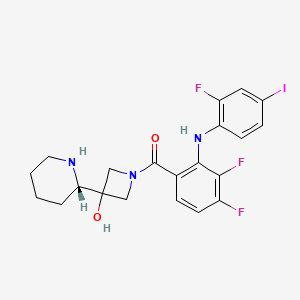
Binimetinib
Array BioPharma Inc;PHASE 3 Cancer, ovary (serous)
Novartis PHASE 3 Melanoma
AGARRY-162
ARRY-438162
MEK-162
MEK-1 protein kinase inhibitor; MEK-2 protein kinase inhibitor
Liver injury; Melanoma; Noonan syndrome; Ovary tumor; Solid tumor
Growth factor-mediated proliferative signals are transmitted from the extracellular environment to the nucleus through several pathways, including the RAS/RAF/ MEK pathway. The RAS/RAF/MEK kinase signal transduction pathway is activated through initial extracellular binding and stimulation of tyrosine receptor kinases (RTKs) by their respective cognate ligands. Upon autophosphorylation of specific tyrosine residues in the cytosolic domain of RTKs, the Grb2-Sos complex translocates to the plasma membrane, and converts the inactive RAS’GDP to active RAS’GTP. The interaction between the Grb2 docking protein and the activated kinases or the phosphorylated receptor associated proteins is mediated by the Src Homology (SH2) domain of the signaling protein that recognizes specific phosphotyrosine sequences. RAS undergoes a conformational change upon guanosine 5 ‘-triphosphate (GTP) binding and causes the recruitment of RAF- 1 to the cytoplasmic membrane where it is phosphorylated by several kinases and simultaneous disphosphorylated at key residues by protein phosphatase-2B. Activated RAF phosphorylates the mitogen- activated protein kinase kinase (MEK) on two serine residues in the activation loop, which results in the activation of this protein kinase. MEK then phosphorylates and activates extracellular signal-regulated kinase (ERK), allowing its translocation to the nucleus where it phosphorylates transcriptional factors permitting the expression of a variety of genes.
The RAS/RAF/MEK signal transduction pathway is deregulated, often through mutations that result in ectopic protein activation, in roughly 1/3 of human cancers. This deregulation in turn results in a wide array of cellular changes that are integral to the etiology and maintenance of a cancerous phenotype including, but not limited to, the promotion of proliferation and evasion of apoptosis (Dhillon et al., Oncogene, 2007, 26: 3279-3290).
Accordingly, the development of small molecule inhibitors of key members of the RAS/ RAF/ MEK signal transduction pathway has been the subject of intense effort within the pharmaceutical industry and oncology community.
MEK is a major protein in the RAS/ RAF/ MEK pathway, which signals toward cell proliferation and survival, and frequently activated in tumors that have mutations in the RAS or RAF oncogenes or in growth receptor tyrosine kinases. MEK is a key player in the RAS/RAF/MEK pathway as it is downstream of RAS and RAF. Despite being only rarely mutated in cancer (Murugan et al., Cell Cycle, 2009, 8: 2122-2124; Sasaki et al., J. Thorac. Oncol., 2010, 5: 597-600), inhibitors of the MEK1 and MEK2 proteins have also been targeted for small molecule inhibition owing to their central position within the RAS/ RAF/ MEK signal transduction pathway signaling cascade (Fremin and Meloche, J. Hematol.
Oncol., 2010, 3:8). Recently a potent MEK inhibitor failed to demonstrate efficacy in clinical trials in patients with advanced non-small cell lung cancer (Haura et al., Clin. Cancer Res., 2010, 16: 2450-2457). The reason for failure in this trial is not clear.
6-(4-Bromo-2-fluorophenylamino)-7-fluoro-3-methyl-3H-benzoimidazole-5-carboxylic acid (2-hydroxyethyoxy)-amide (hereinafter, “Compound A”) is a benzimidazole compound that is a known potent and selective inhibitor of the MEK1 and MEK2 proteins, and useful in the treatment of hyperproliferative diseases, particularly cancer, in mammals. For example, in a recently published Phase I study of 28 patients suffering from unresectable, locally advanced or metastatic biliary cancer and who had received < 1 prior systemic therapy, oral Compound A treatment (60 mg twice daily) resulted in 1 complete regression, 1 partial regression and 11 stable disease diagnoses after at least 6 weeks of treatment (Finn et al., J. Clin. Oncol. 30, 2012 (Supplement 4, 2012 Gastrointestinal Cancers Symposium, Abstract No. 220). Compound A has also been demonstrated to be effective in the treatment of patients with either BRAFV600 or NRAS-mutant melanoma (Ascierto et al., J. Clin. Oncol. 30, 2012 (Supplement, 2012 ASCO Annual Meeting, Abstract No. 8511).
The compound, as well as a process for its preparation, is disclosed in PCT Pub. No. WO 03/077914
MEK-162, a potent, orally active MEK1/2 inhibitor, is in phase III clinical trials at Array BioPharma and licensee Novartis for the treatment of metastatic or unresectable cutaneous melanoma with NRAS mutations and in combination with LGX-818 in adult patients with BRAF V600. Phase III studies are also under way at Array BioPharma for the treatment of low grade serous carcinomas of the ovary, fallopian tube or primary peritoneum following at least one prior platinum-based chemotherapy regimen and no more than three lines of prior chemotherapy regimens. Novartis and Array BioPharma are also conducting phase II clinical studies for the treatment of locally advanced and unresectable or metastatic malignant cutaneous melanoma, harboring BRAFV600E mutations; in BRAF mutated melanoma in combination with AMG-479 and for the treatment of Noonan’s syndrome, and in non-small cell lung cancer harboring KRAS or EGFR mutation and in combination with erlotinib. MEK-162 is being evaluated in phase I/II as first line treatment of advanced biliary tract carcinoma and for the treatment of adult patients with mutant or wild-type RAS metastatic colorectal cancer. The product is in early clinical trials at Array Biopharma for the treatment of biliary cancer.
According to Array, MEK-162 may also provide broad therapeutic benefits in the treatment of chronic degenerative diseases. However, a phase II trial for the treatment of stable rheumatoid arthritis (RA) did not meet its primary endpoint. Based on these data, the company focused development of MEK-162 solely in oncology.
In 2010, MEK-162 was licensed to Novartis by Array BioPharma for worldwide development. In 2013, orphan drug designation was assigned in Japan for the treatment of malignant melanoma with NRAS or BRAF V600 mutation.
WO-2014063024 DEALS WITH Preparation, crystalline forms, and formulations comprising binimetinib. Binimetinib is a MEK-1/2 inhibitor originally claimed in WO03077914, which Array and Novartis are developing for the treatment of cancer, including melanoma, low-grade serous ovarian cancer, and other solid tumors, as well as Noonan syndrome hypertrophic cardiomyopathy and hepatic impairment. See also WO2014018725 for the most recent filing on the agent
//////////////////////////
WO 03/077914
http://www.google.com/patents/WO2003077914A1?cl=en
Schemes 1-4.
Scheme 1
Scheme la
Scheme 2
Scheme 3
17 18
Scheme 4
25
Scheme 5
General synthetic methods which may be referred to for preparing some of the compounds of the present invention are provided in PCT published application number WO 00/42022 (published July 20, 2000). The foregoing patent application is incorporated herein by reference in its entirety.
similar ie chloro instead of fluoro
Example 52
6-(4-Bromo-2-chloro-phenylamino)-7-chloro-3-methyl-3H-benzoimidazole-5- carboxylic acid (2-hydroxy-ethoxy)-amide (lOcc) Step A: 3-Chloro-2,4-difluoro-5-nitro-benzoic acid 2a
3-Chloro-2,4-difluoro-benzoic acid la (3.00 g, 15.6 mmol) is added to a stirred solution of concentrated H2SO4 (16 mL) and fuming nitric acid (0.85 mL, 20.3 mmol). After 3 hours a precipitate forms. The yellow slurry is poured onto ice water (100 mL). The aqueous mixture is extracted with diethyl ether (3x). The organic extracts are dried (Na2SO4) and concentrated under reduced pressure to give 3.50 g (95%) of clean desired product as a pale yellow solid.
Step B: 4-Amino-3-chloro-2-fluoro-5-nitro-benzoic acid 3a
Ammonium hydroxide solution (6.88 g, -30% in water, 58.9 mmol) is added to a solution of 3-chloro-2,4-difluoro-5-nitro-benzoic acid 2a (3.5 g, 14.7 mmol) in water (16 mL) at 0 °C with stirring. Upon completion of the ammonium hydroxide addition the reaction mixture is warmed to room temperature. After 5 hours the reaction mixture is cooled to 0 °C and concentrated HCl is carefully added until the pH of the reaction mixture is near zero. The solid is collected by filtration and washed with water and diethyl ether. The solids are transferred to a round bottom flask as a solution in MeOH and EtOAc and concentrated under reduced pressure to give 2.96 g of a yellow solid. The filtrate is partitioned between diethyl ether and water and the organic layer is washed with brine. The combined organic extracts are dried (Na2SO ) and concentrated under reduced pressure to give 0.65 g of product. Recovered a total of 3.61 g (104%) of pure desired product, that is carried forward without further purification.
Step C: 4~Amino-3-chloro-2-fluoro-5-nitro-benzoic acid methyl ester 4a
To a stirred solution of 4-amino-3-chloro-2-fluoro-5-nitro-benzoic acid 3a (3.61 g, 15.4 mmol) in THF (30 mL) and MeOH (10 mL), TMS diazomethane (9.23 mL, 2.0 M solution in hexanes, 18.5 mmol) is added. After completion of reaction, the reaction mixture is concentrated via rotary evaporation with acetic acid in the trap. The recovered oily solid is triturated with diethyl ether to provide 1.51 g of a yellow solid. The filtrate is concentrated and triturated with diethyl ether to give an additional 0.69 g of yellow solid. A total of 2.20 g (57%) of pure desired product is recovered.
Step D: 4-Amino-3-chloro-5-nitro-2-phenylamino-benzoic acid methyl ester 5c
4-Amino-3-chloro-2-fluoro-5-nitro-benzoic acid methyl ester 4a (2.20 g, 8.84 mmol) is suspended in MeOH (9.4 mL) and aniline (3.22 mL, 35.4 mmol) is added. The reaction mixture is heated to reflux with stirring under a nitrogen atmosphere. After 19 hours, the reaction is complete. Distilled water (3.22 mL) is added to the reaction mixture and refluxing is continued for one hour. The reaction mixture is cooled to 0 °C in an ice bath for 20 minutes. The reaction mixture is filtered and washed with 3:10 distilled water/MeOH (65 mL total) and then with MeOH. The solid is dissolved with CH2C12 and concentrated under reduced pressure to give 2.40 g (84%) of pure desired product. MS APCI (-) m/z 320.3 (M-l) detected.
Step E: 4, 5-Diamino-3-chloro-2-phenylamino-benzoic acid methyl ester 6b
4-Amino-3-chloro-5-nitro-2-phenylamino-benzoic acid methyl ester 5c (0.50 g, 1.55 mmol) is dissolved into 2:1 EtOH/MeOH (15.5 mL). Saturated aqueous NH4C1 (15 mL), Zn powder (1.02 g, 15.6 mmol), and THF (10 mL) are added. After stirring for 20 hours, the reaction mixture is diluted with CH C12/THF and water. The organic layer is washed with water (3x). The combined organic extracts are dried (Na2SO4) and concentrated under reduced pressure. The solids are triturated with ether to give 0.32 g (70%) clean desired product. Step F: 7-Chloro-6-phenylamino-3H-benzoimidazole-5-carboxylic acid methyl ester 7c
4,5-Diamino-3-chloro-2-phenylamino-benzoic acid methyl ester 6b (0.32 g, 1.09 mmol) and formamidine acetate (72 mg, 1.64 mmol) in EtOH (36 mL) are heated, with stirring, to 80 °C. After 44 hours, the reaction mixture is cooled to room temperature and diluted with EtOAc and washed with water (3x), saturated NaHCO3, and brine. The combined organic extracts are dried (Na2SO4) and concentrated under reduced pressure to give 0.33 g (99%) clean desired product as a solid. MS APCI (+) m/z 302.3 (M+l) detected.
Step G: 6-(4-Bromo-phenylamino)-7-chloro-3H-benzoimidazole-5-carboxylic acid methyl ester 8g
7-Chloro-6-phenylamino-3H-benzoimidazole-5-carboxylic acid methyl ester 7c (0.327 g, 1.08 mmol) is dissolved into DMF (16 mL) and NBS (0.193 g, 1.08 mmol) is added. After one hour, the reaction mixture is quenched by the addition of saturated aqueous NaHSO3. The reaction mixture is then partitioned between EtOAc/THF and water. The organic layer is washed with water and brine. The combined organic extracts are dried (Na2SO ) and concentrated under reduced pressure. The recovered solid is triturated with ether to give 0.225 g (54%) pure desired product. MS ESI (+) m/z 382, 384 (M+, Br pattern) detected.
Step H: 6-(4-Bromo-2-chloro-phenylamino)- 7 -chloro-3H-benzoimidazole-5 -carboxylic acid methyl ester lOdd 6-(4-Bromo-phenylamino)-7-chloro-3H-benzoimidazole-5-carboxylic acid methyl ester 8g (0.225 g, 0.591 mmol) is dissolved in DMF (2 mL) and NCS (79 mg, 0.591 mmol) is added. After the NCS is in solution concentrated HCl (0.005 mL, 0.059 mmol) is added. After 2 hours, sodium bicarbonate, water and NaHSO3 are added to the reaction mixture. Solids are filtered and washed with water and ether to give 0.141 g (57%) of clean desired product as a tan solid. MS APCI (-) m/z 414, 416 (M-, Br pattern) detected.
Step I: 6-(4-Bromo-2-chloro-phenylamino)-7-chloro-3-methyl-3H-benzoimidazole-5- carboxylic acid methyl ester lOee
6-(4-Bromo-2-chloro-phenylamino)-7-chloro-3H-benzoimidazole-5-carboxylic acid methyl ester lOdd (0.141 g, 0.34 mmol), potassium carbonate (0.141 g, 1.02 mmol), and iodomethane (0.063 mL, 1.02 mmol) are dissolved in dimethylformamide (3 mL). After 20 hours, the reaction mixture is diluted with EtOAc and washed with water (3x), potassium carbonate, and brine. The organic layer is dried (Na2SO4) and concentrated to a brown oil. The N3 and Nl alkylated regioisomers are separated by flash chromatography (EtOAc). The recovery of the N3 alkylated regioisomer is 20.4 mg (28%). MS ESI (+) m/z 428, 430 (M+, Br pattern) detected.
Step J: 6-(4-Bromo-2-chloro-phenylamino)-7-chloro-3-methyl-3H-benzoimidazole-5- carboxylic acid 10 ff
6-(4-Bromo-2-chloro-phenylamino)-7-chloro-3-methyl-3H-benzoimidazole-5- carboxylic acid methyl ester lOee (21 mg, 0.048 mmol) is dissolved into 2:1 THF/water (1.2 mL) and NaOH (0.190 mL, 1.0 M aqueous solution, 0.190 mmol) is added. After stirring for 4 hours the reaction is diluted with water and acidified to pH 2 by addition of 1.0 M HCl. The mixture is then extracted with 3:1 EtOAc/THF (3x), dried (Na2SO ) and concentrated to give quantitative yield of desired prodcut as a white solid. MS APCI (+) m/z 414, 416 (M+, Br pattern) detected.
Step K: 6-(4-Bromo-2’chloro-phenylamino)- 7-chloro-3-methyl-3H-benzoimidazole-5- carboxylic acid (2-vinyloxy-ethoxy) -amide lOgg
6-(4-Bromo-2-chloro-phenylamino)-7-chloro-3-methyl-3H-benzoimidazole-5- carboxylic acid lOff (32 mg, 0.077 mmol), O-(2-vinyloxy-ethyl)-hydroxylamine (0.010 mL, 0.092 mmol), HOBt (13 mg, 0.093 mmol), triethylamine (0.011 mL, 0.077 mmol), and EDCI (19 mg, 0.10 mmol) are dissolved into dimethylformamide (1.0 mL) and allowed to stir under a nitrogen atmosphere at room temperature for 24 hours. The reaction mixture is diluted with EtOAc, washed with water (3x), 10% potassium carbonate (2x), saturated ammonium chloride, brine, dried (Na2SO4), and concentrated under reduced pressure to give 39 mg of 85% pure material. MS APCI (-) m/z 497, 501 (M-, Br pattern) detected.
Step L: 6-(4-Bromo-2-chloro-phenylamino)-7-chloro-3-methyl-3H-benzoimidazole-5- carboxylic acid (2-hydroxy-ethoxy)-amide lOcc
Hydrochloric acid (0.78 mL, 1.0 M aqueous solution, 0.78 mmol) is added to a suspension of 6-(4-bromo-2-chloro-phenylamino)-7-chloro-3-methyl-3H- benzoimidazole-5-carboxylic acid lOgg (2-vinyloxy-ethoxy)-amide (39 mg, 0.078 mmol) in MeOH (1 mL). After one hour, the reaction mixture is neutralized to pH 7 and concentrated under reduced pressure. The solids are dissolved in EtOAc, washed with brine, dried (Na SO4), and concentrated under reduced pressure. Flash chromatography (20:1 CH2Cl2/MeOH) provides 9 mg (23%) of pure product: MS APCI (+) m/z 473, 475 (M+, Br pattern) detected; 1H NMR (400 MHz, CDC13) δ 8.30 (s, IH), 8.08 (s, IH), 7.57
(d, IH), 7.15 (dd, IH), 6.21 (d, IH), 3.97 (s, 3H) 3.86 (m, 2H), 3.57 (m, 2H).
actual is below
Example 18
The following compounds are prepared by methods similar to those described in
Example 10 by using methyl ester 8d and the appropriate alkylating agent (Step A) and
the appropriate hydroxylamine (Step C):
/////////////////////
COMPD A
Example 1. Preparation of 6-(4-Bromo-2-fluorophenylamino)-7-fluoro-3-methyl-3H-

Compound 1 Compound 3
In an inertized (N2) reaction vessel at internal temperature 20°C and under exclusion of humidity and air, Compound 1 (1.0 eq.) and Compound 2 (1.2 eq.) are reacted in the presence of cesium carbonate (2.4 eq.), tris(dibenzylidenaceton) dipalladium(O) (0.035 eq.) and Xantphos (0.07 eq.) in a mixture of toluene and 1 ,4-dioxane at internal temperature of 99°C. After 8 hours, the mixture is cooled to internal temperature of 60°C.
Subsequently, dimethylformamide (DMF), filter aid (CEFOK) and activated charcoal (EKNS) are added, and the mixture is stirred and cooled to internal temperature of 35 °C. The solids are filtered off and washed with a mixture of dimethylformamide and toluene. To the filtrate, which contains the product Compound 3, is introduced at internal temperature of
25 °C hydrogen chloride gas (CLC) whereupon the HQ salt of Compound 3 crystallizes. The palladium residue mainly remains in solution. After warming to 60 °C and cooling to 0°C, the solids are filtered using a centrifuge and are washed with a mixture of toluene and dimethylformamide.
The damp Compound 3 HC1 salt is charged to a reactor (equipped with pH probe) together with dimethylformamide and is heated to 60°C. By adding a 4 wt% of aqueous tripotassium phosphate solution, the pH is adjusted to a pH range of 6.8-7.6 (with a target of pH 7.2) while Compound 3 crystallizes as free base. After cooling to 22°C and stirring, the solids are filtered using a centrifuge and are washed with drinking water. The moist solids are dried at 50 °C under vacuum to give dry, crude Compound 3.
In order to remove residual palladium, dry, crude Compound 3 is dissolved in dimethylformamide at internal temperature of 60°C and stirred together with Smopex-234 (commercially available from Johnson Matthey) and activated charcoal for 90 minutes. The solids are filtered off at internal temperature of 60°C and are washed with
dimethylformamide. To the filtrate are added drinking water and Compound 3 seed crystals. More drinking water is added while Compound 3 crystallizes. After cooling to internal temperature of 20 °C, the solids are filtered using a centrifuge and are washed with a mixture of deionized water and dimethylformamide and with deionized water. The moist solids are dried at 50°C under vacuum, providing 6-(4-Bromo-2-fluorophenylamino)-7-fluoro-3-methyl-3H-benzoimidazole-5-carboxylic acid methyl ester (Compound 3).
Example 2. Preparation of 6-(4-Bromo-2-fluorophenylamino)-7-fluoro-3-methyl-3H-benzoimidazole-5-carboxylic acid-(2-tert-butoxyethoxy)-amide
A. “One-pot” Synthesis

Compound 3 Intermediate 1
t-Bu-O. /\ ^ H2
(Compound 4)

Compound 5
In an inertized reaction vessel at internal temperature 20-25 °C under nitrogen, 6-(4-Bromo-2-fluorophenylamino)-7-fluoro-3-methyl-3H-benzoimidazole-5-carboxylic acid methyl ester (Compound 3, 1.0 eq.) is added to a mixture of DMF and THF. To this slurry, a solution of potassium trimethylsilanolate (1.05 eq.) in THF is added to the mixture at internal temperature of 25 °C over a period of about 40 minutes, and the resulting mixture is stirred for about 1 hour, providing a potassium salt solution of Intermediate 1. A THF/methanol mixture is then sequentially distilled off from the mixture at 85-120°C during about 2 hours.
The potassium salt solution is then added to a suspension of CDI (1.25 eq.) and imidazole hydrochloride (1.40 eq.) in THF at internal temperature of 25 °C over a period of about 1 hour. The resulting mixture is then stirred for approximately 1 hour at 50°C, and the following imidazolide intermediate

The imidazolide intermediate is not further isolated.
Subsequently, 1.2 eq. of 0-(2-tert-butoxyethyl)hydroxylamine (Compound 4, CAS No. 1023742-13-3, available from suppliers such as Huhu Technology, Inc.®) is added over a period of about 30 minutes at 50°C and stirred for 1.5 hours. Demineralized water is then added at 50°C, producing a precipitate. After cooling to 20°C and stirring for about 3-16 hours, the slurry is filtered off, washed with THF/ demineralized water (1 :2) in 2 portions and with demineralized water in three portions, and dried at 50°C / <70 mbar for about 17 hours, providing 6-(4-bromo-2-fluorophenylamino)-7-fluoro-3-methyl-3H-benzoimidazole-5-carboxylic acid-(2-tert-butoxyethoxy)-amide (Compound 5) as monohydrate.
B. A synthesis method with isolation of the intermediate of step a) from the reaction mixture of step a) prior to the reaction of step b)
Alternatively, 6-(4-bromo-2-fluorophenylamino)-7-fluoro-3-methyl-3H-benzoimidazole-5 -carboxylic acid-(2-tert-butoxyethoxy)-amide (Compound 5) can be made by the synthesis method as shown below. Compound 3, which is a methyl ester, is first converted to a carboxylic acid, which is then isolated by a crystallization to form Compound
6. Compound 6 is then coupled with Compound 4 to form Compound 5 as monohydrate.
The crystallization step in this method removes starting materials such as Compound 1, process impurities, and the dba ligand from the prior catalyst before the coupling reaction with Compound 4, and at the same time maintains the overall yield of the synthesis.


6-(4-Bromo-2-fluorophenylamino)-7-fluoro-3-memy acid In an inertized (N2) reaction vessel at internal temperature of 60°C, Compound 3 (1.0 eq.) is dissolved in DMF and stirred with a fiber, which is sold under the trademark
SMOPEX 234, and activated charcoal for the removal of palladium to not more than 100 ppm. The fiber and activated charcoal are removed by filtration at 60°C and washed with DMF.
The filtrate (containing Compound 3) is transferred to a second inertized (N2) reaction vessel and cooled to an internal temperature of 30°C. A thin suspension can form at this point of time. 30% sodium hydroxide (1.1 eq.) and water (for rinsing) are added, and the resulting reaction mixture is vigorously stirred for 3 hours at an internal temperature of 30 °C. The methyl ester is saponified. Conversion is checked by an IPC (HPLC). As soon as the IPC criterion is met, a filter aid, which is sold under the trademark HYFLO, is added. The mixture is stirred for 15 minutes and then filtered at 30°C via a plate filter and polish filter to a third reaction inertized (N2) vessel.
An aqueous HC1 solution 7.5 % is added to the clear filtrate in the third vessel at an internal temperature of 30 °C until a pH value of 8 is reached. Then the solution is seeded at an internal temperature of 30°C with Compound 6, and an aqueous HC1 solution 7.5 % is added under vigorous stirring until a pH value of pH 2.8 is reached. The product gradually crystalizes. The suspension is cooled over 60 min to an internal temperature of 25 °C and
water is added. The suspension is stirred for at least 4 hours at an internal temperature of 25°C.
The resulting solid is collected by centrifugation or filtration. The filter cake is first washed with DMF/water 1 :1 (w/w) and then with water, discharged and dried in a vacuum at 50°C. The water content is controlled by IPC. The crystalline product Compound 6 is discharged as soon as the IPC criterion is met.
6-(4-Bromo-2-fluorophenylamino)-7-fluoro-3-methyl-3H-benzoimidazole-5-carboxylic acid- (2-tert-butoxyethoxy) – amide
An inertized (N2) reaction vessel is charged with Compound 6 (1.0 eq.), DMF, and
THF at room temperature. The suspension is heated to 25 °C under stirring with flow of nitrogen. After CDI (1.13 eq.) is added, the suspension can get thinner and slight evolution of gases can be observed. After the suspension finally becomes a solution, it is then monitored by IPC (HPLC).
As soon as the IPC (HPLC) criterion is met, the reaction mixture is heated to 50°C over 20 minutes and imidazole hydrochloride (0.3 eq.) is added, forming a solution of
Intermediate 2.
To the solution of Intermediate 2, Compound 4 (1.3 eq.) is added over 60 minutes at internal temperature of 50°C under stirring at a speed of 300 rpm with flow of nitrogen. As soon as the IPC (HPLC) criterion is met, the mixture is cooled to 20-25 °C over 30 minutes. The mixture is then stored at ambient temperature overnight under nitrogen without stirring. DMF is added to the mixture followed by heating it to 50 °C over 30 minutes. Complete conversion of Intermediate 2 to Compound 5 is confirmed by IPC (HPLC).
Water is added to the mixture at internal temperature of 50 °C over 20 minutes. Then the solution is seeded with Compound 5. After stirring at 50 °C for 60 minutes, more water is added to the suspension at 50 °C over 90 minutes. After vigorous stirring, the suspension is cooled to 20 °C over 2 hours and filtered. The filter cake is washed twice with THF/water (v/v: 1 :2) at 20 °C, and twice with water at 20 °C. Finally, the filter cake is dried at 50 °C under vacuum to provide 6-(4-bromo-2-fluorophenylamino)-7-fluoro-3-methyl-3H-benzoimidazole-5-carboxylic acid-(2-tert-butoxyethoxy)-amide (Compound 5) as monohydrate.
Example 3. Preparation of 6-(4-Bromo-2-fluorophenylamino)-7-fluoro-3-methyl-3H-benzoimidazole-5-carboxylic acid (2-hydroxyethyoxy)-amide (Compound A)

Compound 5 Compound A
6-(4-Bromo-2-fluorophenylamino)-7-fluoro-3-methyl-3H-benzoimidazole-5-carboxylic acid-(2-tert-butoxyethoxy)-amide (Compound 5) monohydrate is added in 3 portions to a premixed solution of Acetonitrile and excess Phosphoric acid (85 % aqueous solution) at internal temperature 20-25 °C. After stirring for about 15 minutes, the suspension is heated to internal temperature 50-53 °C. The suspension is maintained at this temperature for 6 hours, cooled to internal temperature 20-25 °C. The mixture is then heated to internal temperature 35-37°C and diluted with Ethanol- Water (3 :1 v/v). EKNS and CEFOK are added, the reaction mixture is stirred approximately 15 minutes and filtered over a funnel coated with CEFOK. The filtrate is cooled to approximately 30°C. 3 N aqueous potassium hydroxide (ΚΟΗ) is added to the cooled filtrate over a period of 90 minutes until a pH- value of about 8.1 is reached. The suspension is heated to internal temperature 60-63 °C, stirred at this temperature for a period of about 2 hours, cooled to 20-23 °C over a period of about 45 minutes, filtered over a funnel, and dried at 50°C pressure <100 mbar over a period of about 17 hours, providing 6-(4-bromo-2-fluorophenylamino)-7-fluoro-3-methyl-3H-benzoimidazole-5-carboxylic acid (2-hydroxyethyoxy)-amide (Compound A) as a white powder.
Example 4. Preparation of Crystallized 6-(4-bromo-2-fluorophenylamino)-7-fluoro-3-methyl-3H-benzoimidazole-5-carboxylic acid (2-hydroxyethyoxy)-amide (Compound A) In a dry vessel at room temperature, Compound A is added to a premixed solvent solution of methanol/THF/water (35/35/30 w/w). The suspension is heated to internal temperature 53-55°C, and the resulting solution is hot filtered by deep and membrane filtration (via a paper filter and PTFE membrane) at internal temperature 53-56°C. The clear solution is stirred and cooled to 47-48°C, and the seed crystals suspension (i.e., seed crystals of crystallized Compound A in water, 10% m/m) is added (0.2 to 0.5% of crystallized Compound A expected yield mass). After about 20 minutes, water is slowly added within 25 hours (33.3% within 15 hours and 66.6% within 10 hours with at least 10 minute stirring after addition of water) to obtain a final ratio of methanol THF/water (20/20/60 w/w). After the water is added, the suspension is cooled down to internal temperature 3-5 °C within 10 hours and stirred for 0.5 hours. The white suspension is filtered over a sinter glass nutsche (75 ml, diameter = 6 cm, pore 3) suction filter and washed once with ice cold methanol/THF/water (15/15/70 w/w at 2-4 °C), and two times with ice cold water (2-4 °C). Drying takes place in a vacuum oven dryer at 20°C for 10 hours, and then at 40°C for 10 hours, and then at 60°C for at least 12 hours with pressure < lOmbar, providing crystallized Compound A.
Example 5. Pharmaceutical Composition
Crystallized Compound A is formulated as indicated in Table 1 :
Table 1

* The weight of the drug substance is taken with reference to the dried substance (100%) on the basis of assayed value. The difference in weight is adjusted by the amount of lactose monohydrate.
** The Opadry II is combined with the sterile water to make a 12% w/w Opadry II (85F) film coat suspension, which is then sprayed onto the core tablet.
*** Removed during processing
Upon mixing of the tablet core components, the pharmaceutical composition is converted into a tablet form by direct compression. The formed tablet may be further coated with the tablet coating provided above.

Radiation therapy used to treat uterine cancer may increase a patient’s risk of developing bladder cancer. That is the conclusion of a recent study published in BJU International. The findings indicate the importance of monitoring patients for potential signs of bladder cancer to ensure early diagnosis and treatment.
In the United States, uterine cancer is the fourth most common cancer in women, with an estimated 49,560 women diagnosed in 2013. In addition to surgery, 38 percent ofpatients undergo pelvic radiation therapy to decrease uterine cancer recurrence. Studies have found that women treated with radiation therapy for uterine cancer, like men who received radiation therapy for prostate cancer, have an increased risk of developing bladder cancer later in life.
To investigate the issue, Guan Wu, MD, PhD, of the University of Rochester Medical Center, and his colleagues analyzed the records of 56,681 patients diagnosed with uterine cancer as their…
View original post 176 more words
A team from The University of Manchester – part of the Manchester Cancer Research Centre – have found a new method to more efficiently manufacture a chemical used to monitor cancer cells.
The technique could lead to clearer and better quality images on PET scans.
The number of cells within tissue is controlled through apoptosis – a process where cells shrink and their components break up, also known as programmed cell death. Cancer is often characterised by a disruption to the normal process of this cell death.
Being able to study this process accurately would allow doctors to more effectively diagnose and monitor cancer and to test and develop new treatments designed to kill cancer cells.
Ideally, cell death would be measured non-invasively to avoid surgery and current methods are focused on using radioactive tracers – molecules that are taken up in regions of tissue where cells are…
View original post 281 more words
April 21, 2014 — The U.S. Food and Drug Administration today approved Cyramza (ramucirumab) to treat patients with advanced stomach cancer or gastroesophageal junction adenocarcinoma, a form of cancer located in the region where the esophagus joins the stomach.
Stomach cancer forms in the tissues lining the stomach and mostly affects older adults. According to the National Cancer Institute, an estimated 22,220 Americans will be diagnosed with stomach cancer and 10,990 will die from the disease, this year.
Cyramza is an angiogenesis inhibitor that blocks the blood supply to tumors. It is intended for patients whose cancer cannot be surgically removed (unresectable) or has spread (metastatic) after being treated with a fluoropyrimidine- or platinum-containing therapy.
“Although the rates of stomach cancer in the United States have decreased over the past 40 years, patients require new treatment options, particularly when they no longer respond to other therapies,” said Richard Pazdur, M.D., director of the Office of Hematology and Oncology Products in the FDA’s Center for Drug Evaluation and Research. “Cyramza is new treatment option that has demonstrated an ability to extend patients’ lives and slow tumor growth.”
Cyramza’s safety and effectiveness were evaluated in a clinical trial of 355 participants with unresectable or metastatic stomach or gastroesophageal junction cancer. Two-thirds of trial participants received Cyramza while the remaining participants received a placebo. The trial was designed to measure the length of time participants lived before death (overall survival).
Results showed participants treated with Cyramza experienced a median overall survival of 5.2 months compared to 3.8 months in participants receiving placebo. Additionally, participants who took Cyramza experienced a delay in tumor growth (progression-free survival) compared to participants who were given placebo. Results from a second clinical trial that evaluated the efficacy of Cyramza plus paclitaxel (another cancer drug) versus paclitaxel alone also showed an improvement in overall survival.
Common side effects experienced by Cyramza-treated participants during clinical testing include diarrhea and high blood pressure.
The FDA reviewed Cyramza under its priority review program, which provides an expedited review for drugs that have the potential, at the time the application was submitted, to be a significant improvement in safety or effectiveness in the treatment of a serious condition. Cyramza was also granted orphan product designation because it is intended to treat a rare disease or condition.
Cyramza is marketed by Indianapolis-based Eli Lilly.
Source: FDA
old article
Eli Lilly’s third-quarter earnings fell 9 percent compared with last year, when the maker of Cymbalta and Cialis booked a sizeable revenue-sharing payment from a former drug developer partner.
The Indianapolis company beat Wall Street expectations for the quarter and narrowed its earnings forecast for the year.
Lilly also said Wednesday that the U.S. Food and Drug Administration will give its stomach cancer treatment ramucirumab a priority review, which means the drugmaker will learn about its fate inside of eight months rather than a year, which is the norm.
read at
http://www.dddmag.com/news/2013/10/eli-lillys-profit-slides-gets-priority-review
cut paste old article
Eli Lilly and Co. announced that results from the Phase 3 REGARD trial of ramucirumab (IMC-1121B) as a single agent in patients with advanced gastric cancer who have had disease progression after initial chemotherapy were published today in The Lancet. REGARD is the first Phase 3 study with either a single-agent biologic or an anti-angiogenic therapy to show improved overall survival and progression-free survival in advanced gastric cancer patients.
READ ALL AT
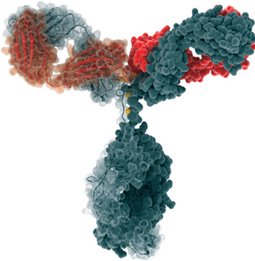
Ramucirumab (IMC-1121B)[1] is a fully human monoclonal antibody (IgG1) being developed for the treatment of solid tumors. It is directed against the vascular endothelial growth factor receptor 2 (VEGFR2). By binding to VEGFR2 it works as a receptor antagonist blocking the binding of vascular endothelial growth factor (VEGF) to VEGFR2. VEGFR2 is known to mediate the majority of the downstream effects of VEGF inangiogenesis.
Ramucirumab is being tested in several phase III clinical trials for the treatment of metastatic gastric adenocarcinoma,[2] non-small cell lung cancer,[3] among other types of cancer. On September 26, 2013 Eli Lilly announced that its Phase III study for ramucirumab failed to hit its primary endpoint on progression-free survival among women with metastatic breast cancer.[4][5]
This drug was developed by ImClone Systems Inc. It was isolated from a native phage display library from Dyax.

In experiments with mice, Johns Hopkins Kimmel Cancer Center scientists have identified an enzyme involved in the regulation of immune system T cells that could be a useful target in treating asthma and boosting the effects of certain cancer therapies.
In research described online April 6 in Nature Immunology, the investigators show that mice without the enzyme SKG1 were resistant to dust mite-induced asthma. And mice with melanoma and missing the enzyme, developed far fewer lung tumors—less than half as many—than mice with SKG1.
“If we can develop a drug that blocks the enzyme in a way that mimics what happens when the enzyme is missing, we would not only have a treatment to inhibit asthma, but also a drug that could be used in conjunction with other experimental therapies aimed at helping the immune system fight cancer,” said Jonathan D. Powell, M.D., professor of oncology at the…
View original post 286 more words
![]()
Degarelix
214766-78-6 CAS
Degarelix is used for the treatment of advanced prostate cancer. Degarelix is a synthetic peptide derivative drug which binds to gonadotropin-releasing hormone (GnRH) receptors in the pituitary gland and blocks interaction with GnRH. This antagonism reduces luteinising hormone (LH) and follicle-stimulating hormone (FSH) which ultimately causes testosterone suppression. Reduction in testosterone is important in treating men with advanced prostate cancer. Chemically, it is a synthetic linear decapeptide amide with seven unnatural amino acids, five of which are D-amino acids. FDA approved on December 24, 2008.
A subgroup of patients with advanced prostate cancer could now get access to a new treatment option in England and Wales after cost regulators for the NHS issued a green light for Ferring’s Firmagon (degarelix).
In final draft guidance published this morning by the National Institute for Health and Care Excellence, the drug has been recommended as an option for treating advanced hormone-dependent prostate cancer but specifically in patients with spinal metastases who present with signs or symptoms of spinal cord compression.
Read more at: http://www.pharmatimes.com/Article/14-04-15/NICE_nod_for_Firmagon_s_prostate_cancer_drug.aspx#ixzz2z6tthLDT
Carin WINDERSTROM, “KIT AND METHOD FOR PREPARATION OF A DEGARELIX SOLUTION.” U.S. Patent US20100286603, issued November 11, 2010.
FIRMAGON is a sterile lyophilized powder for injection containing degarelix (as the acetate) and mannitol. Degarelix is a synthetic linear decapeptide amide containing seven unnatural amino acids, five of which are D-amino acids. The acetate salt of degarelix is a white to off-white amorphous powder of low density as obtained after lyophilization.
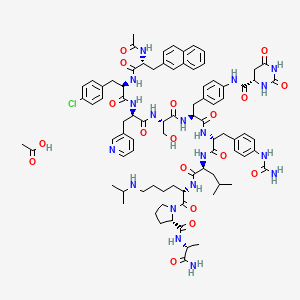
The chemical name of degarelix is D-Alaninamide, N-acetyl-3-(2-naphthalenyl)-D-alanyl-4-chloro-Dphenylalanyl-3-(3-pyridinyl)-D-alanyl-L-seryl-4-[[[(4S)-hexahydro-2,6-dioxo-4pyrimidinyl]carbonyl]amino]-L phenylalanyl-4-[(aminocarbonyl)amino]-D-phenylalanyl-L leucyl-N6–(1-methylethyl)-L-lysyl-L-prolyl. It has an empirical formula of C82H103N18O16Cl and a molecular weight of 1632.3 Da.
Degarelix has the following structural formula:
FIRMAGON delivers degarelix acetate, equivalent to 120 mg of degarelix for the starting dose, and 80 mg of degarelix for the maintenance dose. The 80 mg vial contains 200 mg mannitol and the 120 mg vial contains 150 mg mannitol.
Degarelix (INN) or degarelix acetate (USAN) (tradename Firmagon) is a hormonal therapy used in the treatment of prostate cancer. During development it was known as FE200486.
Testosterone is a male hormone that promotes growth of many prostate tumours and therefore reducing circulating testosterone to very low (castration) levels is often the treatment goal in the management of men with advanced prostate cancer. Degarelix has an immediate onset of action, binding to gonadotropin-releasing hormone (GnRH) receptors in the pituitary gland and blocking their interaction with GnRH. This induces a fast and profound reduction in luteinising hormone (LH), follicle-stimulating hormone (FSH) and in turn, testosterone suppression.[1]
On 24 December 2008, the Food and Drug Administration (FDA) approved degarelix for the treatment of patients with advanced prostate cancer in the USA.[2] It was subsequently approved by the European Commission at the recommendation of the European Medicines Agency (EMEA) on February 17, 2009 for use in adult male patients with advanced, hormone-dependent prostate cancer.Ferring Pharmaceuticals markets the drug under the name Firmagon.
GnRH antagonists (receptor blockers) such as degarelix are a new type of hormonal therapy for prostate cancer. These agents are synthetic peptide derivatives of the natural GnRH decapeptide – a hormone that is made by neurons in the hypothalamus. GnRH antagonists compete with natural GnRH for binding to GnRH receptors in the pituitary gland. This reversible binding blocks the release of LH and FSH from the pituitary. The reduction in LH subsequently leads to a rapid and sustained suppression of testosterone release from the testes and subsequently reduces the size and growth of the prostate cancer. This in turn results in a reduction in prostate-specific antigen (PSA) levels in the patient’s blood. Measuring PSA levels is a way to monitor how patients with prostate cancer are responding to treatment.
Unlike the GnRH agonists, which cause an initial stimulation of the hypothalamic-pituitary-gonadal axis (HPGA), leading to a surge in testosterone levels, and under certain circumstances, a flare-up of the tumour, GnRH antagonists do not cause a surge in testosterone or clinical flare.[3] Clinical flare is a phenomenon that occurs in patients with advanced disease, which can precipitate a range of clinical symptoms such as bone pain, urethral obstruction, and spinal cord compression. Drug agencies have issued boxed warnings regarding this phenomenon in the prescribing information for GnRH agonists. As testosterone surge does not occur with GnRH antagonists, there is no need for patients to receive an antiandrogen as flare protection during prostate cancer treatment. GnRH agonists also induce an increase in testosterone levels after each reinjection of the drug – a phenomenon that does not occur with GnRH antagonists such as degarelix.
GnRH antagonists have an immediate onset of action leading to a fast and profound suppression of testosterone and are therefore especially valuable in the treatment of patients with prostate cancer where fast control of disease is needed.
A Phase III, randomised, 12 month clinical trial (CS21) in prostate cancer[4] compared androgen deprivation with one of two doses of degarelix or the GnRH agonist, leuprolide. Both degarelix doses were at least as effective as leuprolide at suppressing testosterone to castration levels (≤0.5 ng/mL) from Day 28 to study end (Day 364). Testosterone levels were suppressed significantly faster with degarelix than with leuprolide, with degarelix uniformly achieving castration levels by Day 3 of treatment which was not seen in the leuprolide group. There were no testosterone surges with degarelix compared with surges in 81% of those who received leuprolide. Degarelix resulted in a faster reduction in PSA levels compared with leuprolide indicating faster control of the prostate cancer. Recent results also suggest that degarelix therapy may result in longer control of prostate cancer compared with leuprolide.[5]
As with all hormonal therapies, degarelix is commonly associated with hormonal side effects such as hot flashes and weight gain.[4][6][7] Due to its mode of administration (subcutaneous injection), degarelix is also associated with injection-site reactions such as injection-site pain, erythema or swelling. Injection-site reactions are usually mild or moderate in intensity and occur predominantly after the first dose, decreasing in frequency thereafter.[4]
FSH receptors are selectively expressed on the luminal surface of the blood vessels of a wide range of tumors.[8] There may be a potential role for suppression of FSH or FSH receptors. This work is in early stages. It is thought that FSH receptors are important in tumor angiogenesis by signalling via two pathways, one involving VEGF, and a Gq/11mechanism that activates VEGFR-2 independently of VEGF.[8]

Keywords: Synthesis. New drug molecules. New chemical entities. Medicine …Degarelix acetate (Firmagon®) . ….. Scheme 5. Synthesis of degarelix acetate (V).
………………………………
http://www.google.com/patents/US20120041172
Example 1
Hydantoin formation in the synthesis of degarelix. The rearrangement of the hydroorotic group to a hydantoinacetyl group in the production of degarelix has been seen at two stages and two sets of basic conditions.
The first rearrangement appeared during basic extractions of the segment Z-Ser(tBu)-4Aph(Hor)-D-4Aph(tBu-Cbm)-Leu-ILys(Boc)-Pro-D-Ala-NH2. The pH was adjusted to 9.1 in the organic/aqueous two-phase system using conc. NaOH solution, resulting in the formation of 4.5% by weight of the hydantoin analogue. The mechanism appeared to comprise two steps: (a) hydrolysis of the 6-membered hydroorotic moiety under basic conditions followed by ring closure to the 5-membered hydantoin analogue under acidic conditions.
The second rearrangement was observed during evaporation of the segment Z-Ser(tBu)-4Aph(Hor)-D-4Aph(tBu-Cbm)-Leu-OH.DCHA. After the preceding extractions, Z-Ser(tBu)-4Aph(Hor)-D-4Aph(tBu-Cbm)-Leu-OH was dissolved in a mixture of ethyl acetate and 2-butanol. DCHA (2.5 eq.) was added because the segment is isolated as the DCHA salt after evaporation of the solvent followed by a precipitation step. In the particular batch both the hydantoin analogue and the hydrolysed form (mentioned above) were identified. Quantification of the hydantoin was not possible because poor separation by HPLC from other products; the hydrolyzed form was formed in an amount of 1.34% by weight of the combined products. Experimental evidence showed that the amount of rearrangement/hydrolysis was related to the amount of DCHA used in the method.
The following experiment provided further proof of the instability of the hydrooroic moiety under basic conditions. Z-Ser(tBu)-4Aph(Hor)-D-4Aph(tBu-Cbm)-Leu-OH.DCHA (67 mM) was dissolved in wet 2-BuOH with 167 mM (2.5 eq) DCHA at 31° C. After 25 h, 1.3% of the hydantoin analogue and 0.3% of the hydrolysed intermediate had been formed.
Example 2
Stability of degarelix in DBU/DMF and piperidine/DMF. The stability of degarelix was tested under conditions corresponding to those used for removal of the Fmoc-group during SPPS. The hydroorotic group in the side chain of 4Aph(Hor), amino acid residue no. 5 in the sequence of degarelix, is known to be sensitive to base and rearrange to a hydantoinacetyl group. All SPPS procedures known to the inventors had been based on Boc-chemistry.
Samples of degarelix were dissolved in 20% piperidine/DMF; 2% DBU in DMF, and 2% DBU+5% water in DMF; respectively. The samples were analysed by HPLC after 20 h and the amount of the hydantoin analogue determined.
2% DBU/DMF resulted in the formation of 1.8% hydantoin. If 5% water was present, too (simulating wet DMF), the amount was increased to 7%. Surprisingly, the use of 20% piperidine in DMF did not result in any formation of the hydantoin analogue, indicating that this mixture might be useful for Fmoc-based SPPS of Degarelix.
Example 3 Synthesis and Purification of Degarelix Using Fmo-/Rink Amide AM Resin
Step 1. Fmoc-Rink amide AM resin (64 g; substitution 0.67 mmol/g) was placed in a reactor and washed with 1.9 L DMF. To the swollen resin 250 ml of 20% piperidine in DMF is added and stirred for 20 min. The reactor is emptied through the filter in the bottom by applying vacuum to the reactor and a second treatment with 250 ml 20% piperidine in DMF is performed for 20 min. The reactor is once again emptied by applying vacuum to it followed by a wash of the peptide resin using 2 L of DMF. The reactor is then emptied by applying vacuum. The peptide resin is now ready for step 2.
Step 2. A solution of 27.0 g Fmoc-D-Ala-OH (2 eq.), 14.3 g HOBt and 13.2 ml DIC is dissolved in 250 ml of DMF and allowed to activate for 15 min, after which it is poured into the reactor containing the peptide resin. After 1 h of reaction time, 2.2 ml of NMM is added to the solution and the reaction is allowed to proceed for another hour. Then 30 ml acetic acid anhydride and 2 ml NMM is added to the mixture, which is allowed to stand under stirring for 15 min. Then the reactor is emptied by using vacuum. The peptide resin is washed with 2 L DMF. After applying vacuum to the reactor, removing the DMF, the peptide resin is treated with 250 ml of 20% piperidine in DMF for 20 min. The reactor is emptied by applying vacuum and a second treatment of 250 ml 20% piperidine in DMF for 20 min is performed. The reactor is once again emptied by applying vacuum and the peptide resin is washed with 2 L of DMF. It is now ready for step 3.
Step 3. A solution of 29 g Fmoc-L-Pro-OH (2 eq), 14.3 g HOBt and 13.2 ml DIC is dissolved in 250 ml DMF and allowed to activate for 25 min, after which it is poured into the reactor containing the peptide resin. After 75 min of reaction, 2.2 ml NMM is added to the solution, and the reaction is allowed to proceed for another hour. Then 30 ml acetic acid anhydride and 2 ml NMM is added to the mixture, which is allowed to stand under stirring for 15 min, The reactor is then emptied by using vacuum. DMF (2.6 L) is used for washing the peptide resin. After applying vacuum to the reactor, removing the DMF, the peptide resin is treated with 250 ml of 20% piperidine in DMF for 20 min. The reactor is emptied by applying vacuum, and a second treatment with 250 ml 20% piperidine in DMF for 20 min is performed. The reactor is once again emptied by applying vacuum and the peptide resin is washed with 2 L of DMF. It is now ready for step 4.
Step 4. A solution of 33 g Fmoc-L-ILys(Boc)-OH (1.5 eq), 10.7 g HOBt and 10.1 ml DIC is dissolved in 250 ml of DMF and allowed to activate for 0.5 h, after which it is poured into the reactor containing the peptide resin. After 2 h of reaction, 2.2 ml NMM is added to the solution and the reaction is allowed to proceed for another hour. Then 30 ml acetic acid anhydride and 2.2 ml NMM is added to the mixture, which is allowed to stand under stirring for 15 min, whereupon the reactor is emptied by using vacuum. The peptide resin is washed with DMF (3 L). After applying vacuum to the reactor, removing the DMF, the peptide resin is treated with 250 ml of 20% piperidine in DMF for 20 min. The reactor is emptied by applying vacuum and a second treatment of 250 ml 20% piperidine in DMF for 20 min is performed. The reactor is once again emptied by applying vacuum and the peptide resin is washed with 3.5 L DMF. It is now ready for step 5.
Step 5. A solution of 38 g Fmoc-L-Leu-OH (2.5 eq), 18 g of HOBt and 16.8 ml of DIC is dissolved in 250 ml of DMF and allowed to activate for 0.5 h, after which it is poured into the reactor containing the peptide resin. After 2 h of reaction, 2.2 ml NMM is added to the solution, and the reaction is allowed to proceed for another 50 min. Then 30 ml acetic acid anhydride and 2 ml NMM is added to the mixture, which is allowed to stand under stirring for 15 min. Then the reactor is emptied by using vacuum. DMF (2.6 L) is used for washing the peptide resin. After applying vacuum to the reactor, removing the DMF, the peptide resin is treated with 250 ml of 20% piperidine in DMF for 20 min. The reactor is emptied by applying vacuum and a second treatment with 250 ml 20% piperidine in DMF for 20 min is performed. The reactor is once again emptied by applying vacuum and the peptide resin is washed with 2.5 L of DMF. It is now ready for step 6.
Step 6. A solution of 32 g of Fmoc-D-4Aph(tBu-Cbm)-OH (1.5 eq), 10.7 g HOBt and 10.1 ml DIC is dissolved in 250 ml of DMF and allowed to activate for 1 hour, after which it is poured into the reactor containing the peptide resin. After 20 min of reaction, 22 ml NMM is added to the solution and the reaction is allowed to proceed for another 20 h. Then 30 ml acetic acid anhydride and 2 ml NMM is added to the mixture, which is allowed to stand under stirring for 15 min. Then the reactor is emptied by using vacuum. The peptide resin is washed with 4 L DMF. After applying vacuum to the reactor, removing the DMF, the peptide resin is treated with 250 ml of 20% piperidine in DMF for 20 min. The reactor is emptied by applying vacuum and a second 20 min treatment with 250 ml 20% piperidine in DMF is performed. The reactor is once again emptied by applying vacuum and the peptide resin is washed with 3.4 L DMF. It is now ready for step 7.
Step 7. A solution of 35 g Fmoc-L-4Aph(L-Hor)-OH (1.5 eq), 11 g HOBt and 10.1 ml DIC is dissolved in 350 ml DMF and allowed to activate for 1 h, after which it is poured into the reactor containing the peptide resin. After 50 min of reaction, 2.2 ml NMM is added to the solution and the reaction is allowed to proceed for another 21.5 h. The reactor is emptied by using vacuum. The peptide resin is washed with 4.4 L DMF. After applying vacuum to the reactor, removing the DMF, the peptide resin is treated with 350 ml of 20% piperidine in DMF for 20 min. The reactor is emptied by applying vacuum and a second 20 min treatment with 350 ml 20% piperidine in DMF is performed. The reactor is once again emptied by applying vacuum and the peptide resin is washed with 4.4 L DMF. It is now ready for step 8.
Step 8. Fmoc-L-Ser(tBu)-OH (2.5 eq) (41 g), 17.9 g HOBt, 16.8 ml DIC and 4.9 ml of NMM is dissolved in 500 ml of DMF and poured into the reactor containing the peptide resin. The reaction is allowed to proceed for 3.5 h. The reactor is then emptied by using vacuum. The peptide resin is washed with 4.2 L DMF. After applying vacuum to the reactor, removing the DMF, the peptide resin is treated with 375 ml of 20% piperidine in DMF for 20 min. The reactor is emptied by applying vacuum and a second 20 min treatment of 375 ml 20% piperidine in DMF is performed. The reactor is once again emptied by applying vacuum and the peptide resin washed with 4.2 L of DMF. It is now ready for step 9.
Step 9. A solution of 25 g Fmoc-D-3 Pal-OH (1.5 eq), 10.7 g HOBt, 10.1 ml DIC and 4.9 ml NMM is dissolved in 400 ml of DMF and poured into the reactor containing the peptide resin. The reaction is allowed to proceed for 4.5 h. Then the reactor is emptied by using vacuum. The peptide resin is washed with 4.2 L DMF. After applying vacuum to the reactor, removing the DMF, the peptide resin is treated with 375 ml of 20% piperidine in DMF for 20 min. The reactor is emptied by applying vacuum and a second 20 min treatment with 375 ml 20% piperidine in DMF is performed. The reactor is once again emptied by applying vacuum and the peptide resin washed with 4.2 L of DMF. It is now ready for step 10.
Step 10. A solution of 27 g Fmoc-D-Phe(4Cl)—OH (1.5 eq), 10.7 g HOBt, 10.1 ml DIC and 4.9 ml NMM is dissolved in 400 ml of DMF and is poured into the reactor containing the peptide resin. The reaction is allowed to proceed for 10 h. The reactor is emptied by using vacuum. The resin is washed with 5.5 L DMF. After applying vacuum to the reactor and removing the DMF, the peptide resin is treated with 375 ml of 20% piperidine in DMF for 20 min. The reactor is emptied by applying vacuum and a second 20 min treatment with 375 ml 20% piperidine in DMF is performed. The reactor is once again emptied by applying vacuum and the peptide resin washed with 5 L DMF. It is now ready for step 11.
Step 11. A solution of 28 g Fmoc-D-2Nal-OH (1.5 eq), 10.7 g HOBt, 10.1 ml DIC and 4.9 ml NMM is dissolved in 400 ml DMF and poured into the reactor containing the peptide resin. The reaction is allowed to proceed for 2.5 h. The reactor is emptied by using vacuum. The peptide resin is washed with 5.2 L DMF. After applying vacuum to the reactor and removing the DMF, the peptide resin is treated with 375 ml of 20% piperidine in DMF for 20 min. The reactor is emptied by applying vacuum and a second 20 min treatment of 375 ml 20% piperidine in DMF is performed. The reactor is once again emptied by applying vacuum and the peptide resin washed with 5 L DMF. It is now ready for and is ready for step 12.
Step 12. Acetylimidazole (3 eq) (14.5 g) and 4.9 ml NMM is dissolved in 400 ml DMF and poured into the reactor. After 1.5 h, the reactor is emptied by applying vacuum to the reactor. The peptide resin is washed with 5 L DMF and the reactor emptied using vacuum.
Step 13. The peptide resin is washed with WA and dried under vacuum. Peptide resin (129.8 g; yield 96%) was isolated.
Step 14. Dry peptide resin (60 g) is suspended in 600 ml TFA for 25 h at room temperature. It was then poured into a mixture of 2.4 L water, 620 g ammonium acetate, 600 ml ethanol and 600 ml acetic acid. The mixture is adjusted to a pH between 3 and 4 using TFA and filtered.
Step 15. The product is purified using a two step purification protocol. In the first step a column (2.5 cm×34 cm) packed with reversed phase C-18 material is used with a buffer system consisting of buffer A (0.12% aqueous TFA) and buffer B (99.9% ethanol) A volume from the filtered solution from step 14 corresponding to 1.6 g of the product is applied to the column. Purification is executed using a step gradient starting with 10% B for 2-3 column volumes, 29% B for 5-7 column volumes and a gradient from 29% B to 50% B over 3 column volumes at a flow rate of 70 ml/min. This procedure is followed until all the filtered solution from step 14 has been processed. All fractions collected are analyzed by analytical HPLC. Fractions containing product with a purity higher than 94% are pooled. The second purification step is performed using a column (2.5 cm×34 cm) packed with reverse phase C-18 material and a buffer system consisting of a buffer A (1% aqueous acetic acid), buffer B (99.9% ethanol), and buffer C (0.5 M aqueous ammonium acetate). From the pooled fractions containing the product an amount equivalent to 1.3 g of the product is applied to the column and purification performed by applying a step gradient starting with 10% B+90% C for 2-3 column volumes followed by 90% A+10% B for 2-3 column volumes. The product is eluted by 24% B+76% A. The fractions containing product with the acceptable purity are pooled and desalted using the same column. Desalting is performed using buffer A (1% aqueous acetic acid) and buffer B (99.9% ethanol). A volume from the pooled purified fraction corresponding to 1.6 g of product is applied to the column, 2-3 column volumes buffer A being used to wash out any ammonium acetate in the product. Then the product is eluted using 50% buffer A+50% buffer B. The solution of the purified product containing 50% ethanol is concentrated on a rotary evaporator. When all the ethanol has been removed the remaining solution containing the product is lyophilized. A total of 11.8 g (overall yield 37%) of degarelix is obtained as a fluffy solid. 4-([2-(5-Hydantoyl)]acetylamino)-phenylalanine could not be detected in the product (HPLC).
Example 4 Synthesis and Purification of Degarelix Using Fmoc-Rink Amide MBHA
Performed substantially as the synthesis and purification of Example 1. Deviations from the method of Example 1:
4-([2-(5-Hydantoyl)]acetylamino)-phenylalanine could not be detected in the product by HPLC.
………………………….
http://www.google.com/patents/EP2447276A1?cl=en
where Ac is acetyl, 2Nal is 2-naphthylalanine, 4Cpa is 4-chlorophenylalanine, 3Pal is 3-pyridylalanine, Ser is serine, 4Aph is 4-aminophenylalanine, Hor is hydroorotyl, Cbm is carbamoyl, Leu is leucine, Lys(iPr) is N6-isopropyllysine, Pro is proline and Ala is alanine.
Starting materials:
| N-t-Butyloxycarbonyl-D-4-chlorophenylalanine | Boc-D-4Cpa-OH C14H18NO4 |
| N-t-Butyloxycarbonyl-D-2-naphtylalanine | Boc-D-2Nal-OH C18H21N04 |
| D-3-Pyridylalanine hydrochloride | H-D-3Pal-OH x 2HCl C8H12Cl2N2O2 |
| N-α-t-Butyloxycarbonyl-N-4-(t-Butylcarbamoyl)-D-4-Aminophenylalanine | Boc-D-4Aph(tBuCbm)-OH C19H29N3O5 |
| N-α-t-Butyloxycarbonyl-N-4-(L-Hydroorotyl)-4-Aminophenylalanine | Boc-4Aph(L-Hor)-OH C19H24N4O7 |
| Leucine benzyl ester p-tosylate | H-Leu-OBzl x TOS C20H27NO5 |
| N-Benzyloxycarbonyl-O-t-butyl-serine | Z-Ser(tBu)-OH C8H15NO5 |
| N-t-Butyloxycarbonyl-proline | Boc-Pro-OH C10H17NO4 |
| D-Alaninamide hydrochloride | H-D-Ala-NH2 x HCl C3H8ClNO2 |
| N-α-Benzyloxycarbonyl-N-ε-t-butyloxycarbonyl-N-ε-isopropyl-lysine, dicyclohexylamine salt | Z-Lys(iPr,Boc)-OH x DCHA C34H57N3O6 |
Example 1: Synthesis of Intermediate Ac(1-3)ONa: Ac-D-2Nal-D-4Cpa-D-3Pal-ONa[7]Activation of Boc-D-4Cpa-OH and isolationStep 1 (Reaction step)
Activation of Boc-D-2Nal-OH and isolationStep 2 (reaction step)
Synthesis of Boc(2-3)OH: Boc-D-4Cpa-D-3Pal-OHStep 3 (Reaction step)
Synthesis of Intermediate Ac(1-3)ONa: Ac-D-2Nal-D-4Cpa-D-3Pal-ONa[7] (Compound of formula IIIa)Step 4 (Reaction step)
Example 2: Synthesis of Intermediate Z(4-7)OH x DCHA: Z-Ser(tBu)-4Aph(L-Hor)-D-4Aph(tBuCbm)-Leu-OHxDCHA[15]Synthesis of intermediate Boc(6-7)OBzl: Boc-D-4Aph(tBucbm)-Leu-OBzl Step 5 (Reaction step)
Synthesis of Boc-(5-7)-OBzl: Boc-4Aph(L-Hor)-D-4Aph(tBucbm)-Leu-OBzlStep 6 (Reaction step)
Synthesis of intermediate Z(4-7)OH x DCHA: Z-Ser(tBu)-4Aph(L-Hor)-D-4Aph(tBuCbm)-Leu-OH x DCHA (Compound of formula Va)Step 7 (Reaction step)
Example 3: Synthesis of Intermediate H(8-10)NH 2 :H-Lys(iPr,Boc)-Pro-D-Ala-NH 2 [21]Synthesis of Boc(9-10)NH2: Boc-Pro-D-Ala-NH2Step 8 (Reaction step)
Synthesis of intermediate H(8-10)NH2: H-Lys(iPr,Boc)-Pro-D-Ala-NH2 (Compound of formulae Vla)Step 9 (Reaction step)
Example 4: Segment Condensations to Final Intermediate (compound of Formula II)intermediate Z(4-10)NH2 : Z-Ser(tBu)-4Aph(L-Hor)-D-4Aph(tBuCbm)-leu-lys(iPr,Boc)-Pro-D-Ala-NH2[22]
Step 10 (reaction step)
Final Intermediate Ac(1-10)NH2: Ac-D-2Nal-D-4Cpa-D-3Pal-Ser(tBu)-4Aph(L-Hor)-D-4Aph(tBuCbm)-leu-Lys(iPr, Boc)-Pro-D-Ala-NH2[24]Step 11 (Reaction step)
Example 5: Deprotection of Final Intermediate Ac(1-10)NH 2 to Crude Degarelix[251]Step 12 (Reaction step)
Step 13 (purification and lyophilisation)


…………….
After conversion to the corresponding urea by treatment with tert-butyl isocyanate, the Boc group was cleaved with TFA to produce resin (XIII). Further coupling with N-alpha- Boc-L-4-(Fmoc-amino)phenylalanine (XIV), followed by Fmoc deprotection with piperidine, furnished (XV). The aniline derivative (XV) was acylated with L-hydroorotic acid (XVI) to yield, after Boc group cleavage, resin (XVII). Coupling of (XVII) with N- Boc-L-serine(O-benzyl) (XVIII) and subsequent deprotection gave (XIX), as shown in Scheme 2, below:
Peptide (XIX) was sequentially coupled with N-alpha-Boc-D-(3-pyridyl)alanine (XX) and N-Boc-D-(4-chlorophenyl)alanine (XXII) to furnish, after the corresponding deprotection cycles with TFA, the resins (XXI) and (XXIII), respectively, as shown in Scheme 3, below:
The coupling of resin (XXIII) with N-Boc-D-(2-naphthyl)alanine (XXIV) as before gave, after the corresponding deprotection cycle with TFA, resin (XXV). The peptide resin (XXV) was acetylated with Ac20 and finally deprotected and cleaved from the resin by treatment with HF to provide the target peptide, as shown in Scheme 4 below:
Alternatively, after coupling of the peptide resin (XIII) with alpha-Boc-L-4-(Fmoc- amino)-phenylalanine (XIV), the Fmoc protecting group was not removed, yielding resin (XXVI). Subsequent coupling cycles with amino acids (XVIII), (XX), (XXII) and (XXIV) as above finally produced resin (XXVII). The Fmoc group was then deprotected by treatment with piperidine, and the resulting aniline was acylated with L-hydroorotic acid (XVI) to provide resin (XXVIII), as shown in Scheme 5 below:
Resin (XXVIII) was finally cleaved and deprotected by treatment with HF, as shown in Scheme 6 below:
– See more at: http://worlddrugtracker.blogspot.in/2013/12/degarelix-nice-backs-ferrings-firmagon.html#sthash.x5FeHm6m.dpuf
read at

Nigella Sativa Kills 89% of Lung Cancer Cells in Vitro: Researchers have just shown that nigella sativa (also known as black seed or black cumin) seed oil killsup to 89% of human lung cancer cells (A-549) after just 24 hours, while a non-oil extract from the seeds killed up to 77% of the cancer cells.
The extracts were prepared from seeds obtained at a local market. Nigella sativa is a powerful medicinal herb which has been used for thousands of years in traditional Chinese, Ayurvedic, Unani and Arabic medicine. It is best known for its potent anti-inflammatory and antioxidant properties, and has been used to suppress coughs, treat kidney stones, diarrhea and stomach pain. But modern science has now also uncovered nigella’s powerful anti-diabetes and anti-cancer effects.
This super herb has already shown potent activity against cancer of the breast, prostate, kidney, pancreas, liver, colon and cervix in previous lab studies, and this new study has shown new activity against lung cancer. Good health and cancer prevention should always start with a well-balanced diet focused on organic vegetables, fruit and whole foods (consuming at least half in the raw state). But nigella sativa may offer sizeable benefits for those wanting an extra measure of protection.
read at
http://www.ncbi.nlm.nih.gov/pubmed/24568529
![]()
Nigella sativa is an annual flowering plant, native to south and southwest Asia. It grows to 20–30 cm (7.9–11.8 in) tall, with finely divided, linear (but not thread-like) leaves. The flowers are delicate, and usually coloured pale blue and white, with five to ten petals. The fruit is a large and inflated capsule composed of three to seven united follicles, each containing numerous seeds. The seed is used as a spice.
The scientific name is a derivative of Latin niger (black).[2]
In English, Nigella sativa seed is variously called fennel flower,[3] nutmeg flower,[3] black caraway,[3] Roman coriander,[3] and also called black cumin.[3] Other names used, sometimes misleadingly, are onion seed and black sesame, both of which are similar-looking, but unrelated.Blackseed and black caraway may also refer to Bunium persicum.[4]
The seeds are frequently referred to as black cumin (as in Assamese: kaljeera or kolajeera or Bengali kalo jeeray), But black cumin (kala Jeera)[clarification needed] is different than Nigella sativa (Kali Jeeri).[citation needed] In south Indian language Kannada it is called [ಕೃಷ್ಣ ಜೀರಿಗೆ] “Krishna Jeerige”, but this is also used for a different spice, Bunium persicum.
In English-speaking countries with large immigrant populations, it is also variously known as kaljeera (Assamese কালজীৰা kalzira or ক’লাজীৰাkolazira), kalo jira (Bengali: কালোজিরা kalojira, black cumin), karum cheerakam, habbat al-barakah (Arabic حبة البركة) Kurdish “reşke” (rashkeh) (Tamil கருஞ்சீரகம்), kalonji (Hindi कलौंजी kalauṃjī or कलोंजी kaloṃjī, Urdu كلونجى kaloṃjī) or mangrail (Hindi मंगरैल maṃgarail), “Kala Jira in Marathi” ketzakh (Hebrew קצח), chernushka (Russian), çörek otu (Turkish), garacocco (Cypriot Turkish), ḥebbit al-barakah, seed of blessing (Arabic), siyah daneh (Persian سیاهدانه siyâh dâne), jintan hitam (Indonesian), karim jeerakam (കരിംജീരകം) in Malayalamor කළු දුරු in Sinhala, Karto Jeera in Beary.
It is used as part of the spice mixture paanch phoran or panch phoron (meaning a mixture of five spices) and by itself in a great many recipes in Bengali cookery and most recognizably in naan bread.[5]
The Turkish name çörek otu literally means “bun’s herb” from its use in flavouring the çörek buns. Such braided-dough buns are widespread in the cuisines of Turkey and its neighbours (see Tsoureki τσουρέκι). In Bosnian, the Turkish name for Nigella sativa is respelled as čurekot. The seed is used in Bosnia, and particularly its capital Sarajevo, to flavour pastries (Bosnian: somun) often baked on Muslim religious holidays.
The Arabic approbation about Bunium bulbocastanum (Kaala Jeera) Hebbit il barakah, meaning the “seed of blessing” is also applied toNigella sativa (Kali Jeeri).
Nigella sativa has a pungent bitter taste and smell. It is used primarily in confectionery and liquors. Peshawari naan is, as a rule, topped with kalonji seeds. Nigella is also used in Armenian string cheese, a braided string cheese called Majdouleh or Majdouli in the Middle East.
According to Zohary and Hopf, archaeological evidence about the earliest cultivation of N. sativa “is still scanty”, but they report supposed N. sativa seeds have been found in several sites from ancient Egypt, including Tutankhamun‘s tomb.[6] Although its exact role in Egyptian culture is unknown, it is known that items entombed with a pharaoh were carefully selected to assist him in the afterlife.
The earliest written reference to N. sativa is thought to be in the book of Isaiah in the Old Testament, where the reaping of nigella and wheat is contrasted (Isaiah 28: 25, 27). Easton’s Bible dictionary states the Hebrew word ketsah refers to N. sativa without doubt (although not all translations are in agreement). According to Zohary and Hopf, N. sativawas another traditional condiment of the Old World during classical times; and its black seeds were extensively used to flavour food.[6]
Found in Hittite flask in Turkey from 2nd millennium BCE.[7]

The black cumin (Bunium bulbocastanum) seeds have been traditionally used in the Middle East and Southeast Asian countries for a variety of ailments. Nigella seeds are sold as black cumin in small bundles to be rubbed until warm, when they emit an aroma similar to black cumin which opens clogged sinuses in the way that do eucalyptus or Vicks.
Nestlé has purportedly filed a patent application covering use of Nigella sativa as a food allergy treatment.[10] Yet the firm denies the claim of patenting the plant, stating that the patent would only cover “the specific way that thymoquinone – a compound that can be extracted from the seed of the fennel flower – interacts with opioid receptors in the body and helps to reduce allergic reactions to food”.[11]
Thymoquinone, found in the seed oil extract of N. sativa, has been shown to have anti-neoplastic effects in rats and mice and in cultured human cells from several types of cancer, including pancreatic ductal adenocarcinoma.[12] It has protective antioxidant and anti-inflammatory effects, and promotes apoptosis (cell death) of the cancer cells.[12]
Original black cumin (Bunium bulbocastanum) is rarely available, so N. sativa is widely used instead; in India, Carum carvi is the substitute. Cumins are from the Apiaceae (Umbelliferae) family, but N. sativa is from Ranunculaceae family. Black cumin (not N. sativa) seeds come as paired or separate carpels, and are 3–4 mm long. They have a striped pattern of nine ridges and oil canals, and are fragrant (Ayurveda says, “Kaala jaaji sugandhaa cha” (black cumin seed is fragrant itself)), blackish in colour, boat-shaped, and tapering at each extremity, with tiny stalks attached; it has been used for medicinal purposes for centuries, both as a herb and pressed into oil, in Asia, the Middle East, and Africa.
Nigella sativa oil contains an abundance of conjugated linoleic (18:2) acid, thymoquinone, nigellone (dithymoquinone),[13] melanthin, nigilline,damascenine, and tannins. Melanthin is toxic in large doses and nigelline is paralytic, so this spice must be used in moderation.