
Home » Articles posted by DR ANTHONY MELVIN CRASTO Ph.D (Page 268)
Author Archives: DR ANTHONY MELVIN CRASTO Ph.D
 DRUG APPROVALS BY DR ANTHONY MELVIN CRASTO
.....FOR BLOG HOME CLICK HERE
DRUG APPROVALS BY DR ANTHONY MELVIN CRASTO
.....FOR BLOG HOME CLICK HEREFlag and hits
ORGANIC SPECTROSCOPY

SUBSCRIBE

 Subscribe in a reader
Enter your email address:
Delivered by FeedBurner
Subscribe to New Drug Approvals by Email


Recent Comments
 | shivkr2 on SPSR Excellence Award 2025 – S… |
 | Bonkasaurus on Infigratinib phosphate |
 | PALOVAROTENE | ORGAN… on Palovarotene |
| Pfizer just purchase… on Temanogrel | |
| Pfizer To Cash In On… on Temanogrel |
A new twist on neuro disease: Discovery could aid people with dystonia, Parkinson’s and more

Twist and hold your neck to the left. Now down, and over to the right, until it hurts. Now imagine your neck – or arms or legs – randomly doing that on their own, without you controlling it.
That’s a taste of what children and adults with a neurological condition called dystonia live with every day – uncontrollable twisting and stiffening of neck and limb muscles.
The mystery of why this happens, and what can prevent or treat it, has long puzzled doctors, who have struggled to help their suffering dystonia patients. Now, new re-search from a University of Michigan Medical School team may finally open the door to answering those questions and developing new options for patients.
In a new paper in the Journal of Clinical Investigation, the researchers describe new strains of mice they’ve developed that almost perfectly mimic a human form of the disease. They also…
View original post 688 more words
Lung-MAP Launches: First Precision Medicine Trial From National Clinical Trials Network
Today, NCI and many collaborators launched a unique clinical trial for people with a form of lung cancer. The study, LungMAP, will match participants to one of several different investigational treatments based on the genomic profiles of their tumors: http://1.usa.gov/1qkzdgB

A unique public-private collaboration among the National Cancer Institute (NCI), part of the National Institutes of Health, SWOG Cancer Research, Friends of Cancer Research, the Foundation for the National Institutes of Health (FNIH), five pharmaceutical companies (Amgen, Genentech, Pfizer, AstraZeneca, and AstraZeneca’s global biologics R&D arm, MedImmune), and Foundation Medicine today announced the initiation of the Lung Cancer Master Protocol (Lung-MAP) trial.
Parasitic worms of pigs could provide new treatments of human diseases
New treatments for inflammatory bowel disease, rheumatoid arthritis, multiple sclerosis, diabetes and autism could be on the horizon, after a global University of Melbourne – lead study successfully mapped the genes of a parasitic worm in pigs.
Lead researcher, Dr Aaron Jex, Faculty of Veterinary Science, said, “We know that humans infected with the harmless, ‘pig whipworm’ can have significantly reduced symptoms linked to autoimmune diseases. And now we have the genetic sequence of the worm, it opens the door to future human drug designs and treatment.”
Although the ‘pig whipworm’ causes disease and losses in livestock, it does not cause disease in humans.
In contrast, the ‘human whipworm’ infects around 1 billion people, mainly children in developing nations, and causes dysentery, malnourishment and impairment of physical and mental development.
Coauthor, Prof Robin Gasser, Faculty of Veterinary Science, said, “The genes tells us about the proteins that this worm uses…
View original post 56 more words
Polymorphs and co-crystals of haloprogin: an antifungal agent
 Haloprogin
Haloprogin is a topical antifungal agent. Its structure does not contain any of the functional groups typically exploited in hydrogen bond based co-crystal design. On the other hand, its 1-iodoalkyne moiety is nicely tailored to a crystal engineering strategy based on halogen bonding. Here we describe the formation of three polymorphs of haloprogin and of three co-crystals that this active pharmaceutical ingredient forms with both neutral and ionic co-crystal formers. The halogen bond plays a major role in all of the six structures and the interaction is thus confirmed to be a valuable tool which may complement the hydrogen bond when polymorphs and co-crystals of active pharmaceutical ingredients are pursued.
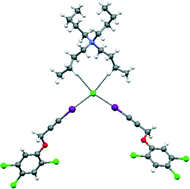
Graphical abstract: Polymorphs and co-crystals of haloprogin: an antifungal agent
http://pubs.rsc.org/en/Content/ArticleLanding/2014/CE/C4CE00367E?utm_medium=email&utm_campaign=pub-CE-vol-16-issue-26&utm_source=toc-alert#!divAbstract
Polymorphs and co-crystals of haloprogin: an antifungal agent
Michele Baldrighi,a Davide Bartesaghi,a Gabriella Cavallo,a Michele R. Chierotti,b Roberto Gobetto,b Pierangelo Metrangolo,*a Tullio Pilati,a Giuseppe Resnati*a and Giancarlo Terraneo*a
*Corresponding authors
aNFMLab-Laboratory of Nanostructured Fluorinated Materials (NFMLab), Department of Chemistry, Materials, and Chemical Engineering “Giulio Natta”, Politecnico di Milano, Via L. Mancinelli 7, 20131 Milan, Italy
E-mail: pierangelo.metrangolo@polimi.it, giuseppe.resnati@polimi.it, giancarlo.terraneo@polimi.it
bDepartment of Chemistry, Università di Torino, Via P. Giuria 7, 10125 Torino, Italy
CrystEngComm, 2014,16, 5897-5904
DOI: 10.1039/C4CE00367E
EXTRA INFO
| Systematic (IUPAC) name | |
|---|---|
| 1,2,4-trichloro-5-[(3-iodoprop-2-yn-1-yl)oxy]benzene | |
| Clinical data | |
| Legal status | Not available in U.S. |
| Routes | Topical |
| Identifiers | |
| CAS number | 777-11-7  |
| ATC code | D01AE11 |
| PubChem | CID 3561 |
| DrugBank | DB00793 |
| ChemSpider | 3440 |
| UNII | AIU7053OWL |
| KEGG | D00339 |
| ChEMBL | CHEMBL1289 |
| Chemical data | |
| Formula | C9H4Cl3IO |
| Mol. mass | 361.39 g/mol |
| Physical data | |
| Melt. point | 113.5 °C (236 °F) |
| Solubility in water | insoluble mg/mL (20 °C) |
Haloprogin is an antifungal drug used to treat athlete’s foot and other fungal infections. It is marketed in creams under the trade names Halotex, Mycanden, Mycilan, and Polik.
Action
Haloprogin was previously used in 1% topical creams as an antifungal agent. It was marketed over the counter primarily to treat tinea infections of the skin. The mechanism of action is unknown.[1]
Haloprogin had a high incidence of side effects including: irritation, burning, vesiculation (blisters), scaling, and itching. It has since been discontinued due to the emergence of more modern antifungals with fewer side effects.[2]
Haloprogin is used as a topical ointment or cream in the treatment of Tinea infections. Tinea infections are superficial fungal infections caused by three species of fungi collectively known as dermatophytes (Trichophyton, Microsporum and Epidermophyton). Commonly these infections are named for the body part affected, including tinea corporis (general skin), tinea cruris (groin), and tinea pedis (feet). Haloprogin is a halogenated phenolic ether administered topically for dermotaphytic infections. The mechanism of action is unknown, but it is thought to be via inhibition of oxygen uptake and disruption of yeast membrane structure and function. Haloprogin is no longer available in the United States and has been discontinued.
U.S. Patent 3,322,813.

References
- “Haloprogin”. Drugs@FDA. Food and Drug Administration. Retrieved 2007-02-17.
- “Haloprogin”. DrugBank. University of Alberta. Nov 6, 2006. Retrieved 2007-02-17.
Alternative solid-state forms of a potent antimalarial aminopyridine: X-ray crystallographic, thermal and solubility aspects
Graphical abstract: Alternative solid-state forms of a potent antimalarial aminopyridine: X-ray crystallographic, thermal and solubility aspects
Alternative solid-state forms of a potent antimalarial aminopyridine: X-ray crystallographic, thermal and solubility aspects
Dyanne L. Cruickshank, Yassir Younis, Nicholas M. Njuguna, Dennis S. B. Ongarora, Kelly Chibale and Mino R. Caira
CrystEngComm, 2014, 16, 5781 DOI:10.1039/C3CE41798K
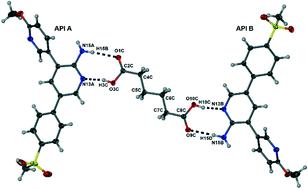
3-(6-Methoxypyridin-3-yl)-5-(4-methylsulfonyl phenyl)-pyridin-2-amine (MMP) is a member of a novel class of orally active antimalarial drugs. This aminopyridine molecule has shown potent in vitro antiplasmodial activity and in vivo antimalarial activity in Plasmodium berghei-infected mice. The aqueous solubility of this molecule is, however, limited.
Thus investigations aimed at improving the physicochemical properties, including solubility, of MMP were accordingly conducted. Five salts of MMP were formed with co-former molecules saccharin, salicylic acid, fumaric acid, oxalic acid and suberic acid, but a cocrystal was obtained when the co-former adipic acid was employed.
All these new multi-component systems have been fully characterised using X-ray diffraction and thermal methods. Semi-quantitative, turbidimetric solubility tests in a phosphate-buffered saline solution at a pH of 7.4 were performed on the salts and the cocrystal of MMP. The saccharinate salt, fumarate salt and the cocrystal of MMP proved to have greater solubility than MMP itself. This work illustrates the importance of screening and modifying candidate drug compounds in their preliminary stages of development.
Alternative solid-state forms of a potent antimalarial aminopyridine: X-ray crystallographic, thermal and solubility aspects
Dyanne L. Cruickshank,a Yassir Younis,a Nicholas M. Njuguna,a Dennis S. B. Ongarora,a Kelly Chibalea and Mino R. Caira*a
*corresponding authors
aDepartment of Chemistry, University of Cape Town, Rondebosch 7701, South Africa
E-mail: mino.caira@uct.ac.za;
Fax: +27 21 650 5195 ;
Tel: +27 21 650 3071
CrystEngComm, 2014,16, 5781-5792
DOI: 10.1039/C3CE41798K
The US Food and Drug Administration (FDA) has approved Bayer HealthCare’s Gadavist (gadobutrol) injection as the first magnetic resonance contrast agent for evaluation of breast cancer in the US
 GADOBUTROL
gadolinium(III) 2,2′,2”-(10-((2R,3S)-1,3,4-trihydroxybutan-2-yl)-1,4,7,10-tetraazacyclododecane-1,4,7-triyl)triacetate
Gadobutrol, SH-L-562, Gadovist,138071-82-6
The US Food and Drug Administration (FDA) has approved Bayer HealthCare’s Gadavist (gadobutrol) injection as the first magnetic resonance contrast agent for evaluation of breast cancer in the US.
The agency has approved the new indication for Gadavist injection for intravenous use with magnetic resonance imaging of the breast to assess the presence and extent of malignant breast disease.
Approval is based on priority review of two Phase III studies with identical design (GEMMA-1 and GEMMA-2).
Bayer HealthCare’s Gadavist (gadobutrol)
Bayer’s Gadavist injection cleared for breast cancer evaluation
UPDATE……. Gadoteridol 279.3 mg/ml for injection , CDSCO INDIA 29.07.2021
For intravenous use in magnetic
reasonance imaging (MRI) in adults and
pediatric patients over 2 years of age for
whole body MRI including the head, neck,
liver, breast, musculoskeletal system and
soft tissue pathologies
The US Food and Drug Administration (FDA) has approved Bayer HealthCare’s Gadavist (gadobutrol) injection as the first magnetic resonance contrast agent for evaluation of breast cancer in the US.
GADOBUTROL
| Clinical data | |
|---|---|
| AHFS/Drugs.com | International Drug Names |
| Licence data | US FDA:link |
| Pregnancy cat. | C (US) |
| Legal status | POM (UK) ℞-only (US) |
| Routes | IV |
| Identifiers | |
| CAS number | 138071-82-6 |
| ATC code | V08CA09 |
| PubChem | CID 72057 |
| DrugBank | DB06703 |
| UNII | 1BJ477IO2L |
| KEGG | D07420 |
| Chemical data | |
| Formula | C18H31GdN4O9 |
| Mol. mass | 604.710 g/mol |
………………………..
Gadobutrol (INN) (Gd-DO3A-butrol) is a gadolinium-based MRI contrast agent (GBCA).
It received marketing approval in Canada[1] and in the United States.[2][3][4]
As of 2007, it was the only GBCA approved at 1.0 molar concentrations.[5]
Gadobutrol is marketed by Bayer Schering Pharma as Gadovist, and by Bayer HealthCare Pharmaceuticals as Gadavist.[6]


 WORLDCUP FOOTBALL WEEK 2014 BRAZIL
……………………………………………….
http://www.google.com/patents/EP0988294B1?cl=en
-
This type of complexes with metal ions, in particular with paramagnetic metal ions; is used for the preparation of non-ionic contrast agents for the diagnostic technique known as magnetic resonance (MRI, Magnetic Resonance Imaging), among which are ProHance(R) (Gadoteridol, gadolinium complex of 10-(2-hydroxypropyl)-1,4,7,10-tetraazacyclododecane-1,4,7-triacetic acid), and Gadobutrol (gadolinium complex of [10-[2,3-dihydroxy-1-(hydroxymethyl)propyl]-1,4,7,10-tetraazacyclododecane-1,4,7-triacetic acid).

-
[0003]Two different synthetic approaches are described in literature for the preparation of this kind of complexes, said approaches differing in the strategy taken to discriminate one of the four nitrogen atoms: the first one (Dischino et al., Inorg. Chem., 1991, 30, 1265 or EP 448191, EP 292689, EP 255471) is based on the selective protection of one of the nitrogen atoms by formation of the compound of formula (III), 5H,9bH-2a,4a,7-tetraazacycloocta[cd]pentalene, and on the subsequent hydrolysis to compound of formula (IV), 1-formyl-1,4,7,10-tetraazacyclododecane, followed by the carboxymethylation of the still free nitrogen atoms and by the deprotection and alkylation of the fourth nitrogen atom, according to scheme 1.

-
[0004]The step from 1,4,7,10-tetraazacyclododecane disulfate (a commercially available product) to compound (III) is effected according to the conventional method disclosed in US 4,085,106, followed by formation of the compound of formula (IV) in water-alcohol medium.
-
[0005]This intermediate is subsequently tricarboxymethylated with tert-butyl bromoacetate (TBBA) in dimethylformamide at 2.5°C and then treated with a toluene-sodium hydroxide diphasic mixture to give the compound of formula (V), 10-formyl-1,4,7,10-tetraazacyclododecane-1,4,7-triacetic, tris(1,1-dimethylethyl) ester, which is subsequently hydrolysed to compound of formula (II) in acidic solution.
-
[0006]In the process described in WO 93/24469 for the synthesis of Gadobutrol, at first one of the nitrogen atoms is alkylated in conditions such as to minimize the formation of polyalkylated derivatives, then the monoalkylderivative is purified and carboxymethylated, according to scheme 2.

-
[0007]The alkylation of 1,4,7,1,0-tetraazacyclododecane with the epoxide of formula (VI), 4,4-dimethyl-3,5,8-trioxabicyclo[5.1.0]octane, is carried out in anhydrous n-BuOH under reflux and the reaction mixture is extracted with water, evaporated to dryness and the residue is subsequently diluted with water and extracted with methylene chloride.
-
[0008]The aqueous phase containing the mono-alkylated product (65% yield in Example 7 which reports the procedure for the preparation of 5 kg of Gadobutrol) is directly carboxymethylated at 70°C with chloroacetic acid, keeping pH 9.5 by addition of NaOH. The reaction mixture is adjusted to pH 1, concentrated to dryness and dissolved in methanol to remove the undissolved salts. The filtrate is then concentrated under vacuum, dissolved in water, and loaded onto a cation exchanger in the H+ form to fix the product. The subsequent elution with ammonia displaces the desired product, which is concentrated to small volume and subsequently complexed with gadolinium oxide according to conventional methods, and the resulting complex is purified by means of ion exchange resins. The overall yield is 42%.
-
[0009]Although the first of these two processes could theoretically provide a higher yield, in that all the single steps (protection, carboxymethylation and deprotection) are highly selective, the complexity of the operations required to remove salts and solvents and to purify the reaction intermediates makes such theoretical advantage ineffective: the overall yield is in fact, in the case of Gadoteridol, slightly higher than 37%.
-
[0010]The preparation of Gadobutrol according to the alternative process (WO 93/24469) provides a markedly better yield (72%) only on laboratory scale (example 2): example 7 (represented in the above Scheme 2) actually evidences that, when scaling-up, the yield of this process also remarkably decreases (42%).
-
[0011]In addition to the drawback of an about 40% yield, both processes of the prior art are characterized by troublesome operations, which often involve the handling of solids, the use of remarkable amounts of a number of different solvents, some of them having undesirable toxicological or anyway hazardous characteristics.
-
[0012]Moreover, the synthesis described by Dischino makes use of reagents which are extremely toxic, such as tert-butyl bromoacetate, or harmful and dangerous from the reactivity point of view, such as dimethylformamide dimethylacetal.
-
[0013]An alternative to the use of dimethyl formamide dimethylacetal is suggested by J. Am. Chem. Soc. 102(20), 6365-6369 (1980), which discloses the preparation of orthoamides by means of triethyl orthoformate.
-
[0014]EP 0596 586 discloses a process for the preparation of substituted tetraazacyclododecanes, among them compounds of formula (XII), comprising:
- formation of the tricyclo[5.5.1.0] ring;
- alkylation with an epoxide;
- hydrolysis of the 10-formyl substituent;
- reaction with an acetoxy derivative bearing a leaving group at the alpha-position.
-
[0015]Nevertheless, this method requires quite a laborious procedure in order to isolate the product of step b).
-
[0016]It is the object of the present invention a process for the preparation of the complexes of general formula (XII)

wherein
- R1 and R2
- are independently a hydrogen atom, a (C1-C20) alkyl containing 1 to 10 oxygen atoms, or a phenyl, phenyloxy group, which can be unsubstituted or substituted with a (C1-C5) alkyl or hydroxy, (C1-C5) alkoxy, carbamoyl or carboxylic groups,
- Me3+
- is the trivalent ion of a paramagnetic metal;
comprising the steps represented in the following Scheme 3:


-
The process of the present invention keeps the high selectivity typical of the protection/deprotection strategy described by Dischino in the above mentioned paper, while removing all its drawbacks, thus providing for the first time a reproducible industrial process for the preparation of the concerned compounds in high yields and without use of hazardous substances.
-
[0019]The preparation of the gadolinium complex of 10-(2-hydroxypropyl)-1,4,7,10-tetraazacyclododecane-1,4,7-tri-acetic) acid (Gadoteridol), according to scheme 4, is particularly preferred:

in which the synthetic steps a), b), c), d), e), and f) have the meanings defined above and the epoxide of formula (XI) in step d) is propylene oxide.
-
[0020]The preparation of the gadolinium complex of [10-[2,3-dihydroxy-1-(hydroxymethyl)propyl]-1,4,7,10-tetraazacyclododecane-1,4,7-triacetic) acid (Gadobutrol), according to the scheme 5, is also preferred.

in which the synthetic steps a), b), c), d), e), and f) have the meanings defined above and the epoxide of formula (XI) in step d) corresponds to the one of formula (VI), defined above.
-
[0021]On the other hand, step a) of the process of the present invention involves the use of triethyl orthoformate in the presence of an acid catalyst, instead of dialkylformamide-dialkylacetal.
-
[0022]Triethyl orthoformate can be added in amounts ranging from 105% to 200% on the stoichiometric value.
-
[0023]The reaction temperature can range from 110 to 150°C and the reaction time from 5 to 24 h.
-
[0024]The catalyst is a carboxylic acid having at least 3 carbon atoms, C3-C18, preferably selected from the group consisting of propionic, butyric and pivalic acids.
-
[0025]Triethyl orthoformate is a less toxic and less expensive product than N,N-dimethylformamide-dimethylacetal and does not involve the formation of harmful, not-condensable gaseous by-products. Moreover, triethyl orthoformate is less reactive than N,N-dimethylformamide-dimethylacetal, which makes it possible to carry out the loading procedures of the reactives as well as the reaction itself in utterly safe conditions even on a large scale, allows to better monitor the progress of the reaction on the basis of such operative parameters as time and temperature, without checking the progress by gas chromatography, and makes dosing the reactive less critical, in that it can be added from the very beginning without causing the formation of undesired by-products: all that rendering the process suitable for the production of compound (III) on the industrial scale in easily reproducible conditions.
-
[0026]The subsequent step b) involves the carboxymethylation of compound (III) in aqueous solution, using a haloacetic acid, to give compound (IX), i.e. the 10-formyl-1,4,7,10-tetraazacyclododecane-1,4,7-triacetic acid salt with an alkali or alkaline-earth metal, the salts of compound (IX) with sodium, potassium or calcium being most preferred.


Example 2
-
[0065]

-
[0066]The procedure of Example 1 is followed until step C included, to obtain a solution of DO3A trisodium salt.
-
[0067]pH is adjusted to 12.3 with conc. HCl and 57.7 kg (0.4 kmol) of 4,4-dimethyl-3,5,8-trioxabicyclo[5.1.0]-octane are added. After reaction for 4 h at 40°C and for 8 h at 80°C, the solution is cooled to 50°C, 120 kg of an aqueous solution containing 0.135 kmol of gadolinium trichloride are added. After 1 h the mixture is cooled at 17°C and acidified to pH 1.7 with conc. HCl, keeping this pH for 2 h. The solution is subsequently warmed to 50°C, pH is adjusted to 7 with sodium hydroxide, keeping these conditions for 1 h.
-
[0068]After that, the resulting crude Gadobutrol is purified repeating exactly the same process as in steps E and F of Example 1.

Recovery of the product (Gadobutrol)
-
[0069]The product-rich fraction is then thermally concentrated to a viscous residue and the residue is added with 350 kg of ethanol at 79°C.
-
[0070]The resulting suspension is refluxed for 1 h, then cooled, centrifuged and dried under reduced pressure to obtain 66.0 kg of Gadobutrol (0.109 kmol), HPLC assay 99.5% (A%).
Overall yield: 79.1% -
[0071]The IR and MS spectra are consistent with the indicated structure.

References
- Cheng, KT (2007). “Gadobutrol”. Molecular Imaging and Contrast Agent Database (MICAD) (Bethesda, MD: National Center for Biotechnology Information (NCBI)). PMID 20641787. NBK23589.
- http://bayerimaging.com/products/gadavist/index.php
- “FDA approves imaging agent for central nervous system scans” (Press release). U.S. Food and Drug Administration (FDA). March 15, 2011. Retrieved March 31, 2011.
- “U.S. FDA Approves Bayer’s Gadavist (Gadobutrol) Injection for MRI of the Central Nervous System” (Press release). Bayer HealthCare Pharmaceuticals. March 14, 2011. Retrieved March 31, 2011.
- “Gadobutrol 1.0-molar in Cardiac Magnetic Resonance Imaging (MRI) – Further Enhancing the Capabilities of Contrast-enhanced MRI in Ischaemic and Non-ischaemic Heart Disease?”
- “Gadavist full prescribing information”. Retrieved 2011-03-14.

Scientists take totally tubular journey through brain cells

NIH scientists watched the inside of brain cell tubes, called microtubules, get tagged by a protein called TAT. Tagging is a critical process in the health and development of nerve cells. Credit: Roll-Mecak lab, NINDS, Bethesda, MD
In a new study, scientists at the National Institutes of Health took a molecular-level journey into microtubules, the hollow cylinders inside brain cells that act as skeletons and internal highways. They watched how a protein called tubulin acetyltransferase (TAT) labels the inside of microtubules. The results, published in Cell, answer long-standing questions about how TAT tagging works and offer clues as to why it is important for brain health.
Microtubules are constantly tagged by proteins in the cell to designate them for specialized functions, in the same way that roads are labeled for fast or slow traffic or for maintenance. TAT coats specific locations inside the microtubules with a chemical called an…
View original post 560 more words
Researchers investigate stress as a potential cause of periodontal disease

A section of a mast cell. The cytoplasm, in yellow, releases granules, in green, in response to inflammation. Credit: CNRI/Science Source
We all know what contributes to gum disease—poor brushing, forgetting to floss, avoiding checkups, smoking. But what about a tough day at the office or dire financial straits? Surprisingly, the stress brought on by emotional struggles might have just as much to do with the disease, according to a review of the literature by three Tufts researchers.
“It’s been shown there is a significant association between emotional stress and periodontal disease,” says Evangelos Papathanasiou, DG11, an assistant professor of periodontology at Tufts School of Dental Medicine. “It definitely needs to be explored further.”
Before he came to Tufts, Papathanasiou was a dentist in the Greek air force and saw a number of soldiers under high stress who developed mouth ulcers and bleeding gums. Closer to home, he recently…
View original post 759 more words
Parasitic worms of pigs could provide new treatments of human diseases
New treatments for inflammatory bowel disease, rheumatoid arthritis, multiple sclerosis, diabetes and autism could be on the horizon, after a global University of Melbourne – lead study successfully mapped the genes of a parasitic worm in pigs.
Lead researcher, Dr Aaron Jex, Faculty of Veterinary Science, said, “We know that humans infected with the harmless, ‘pig whipworm’ can have significantly reduced symptoms linked to autoimmune diseases. And now we have the genetic sequence of the worm, it opens the door to future human drug designs and treatment.”
Although the ‘pig whipworm’ causes disease and losses in livestock, it does not cause disease in humans.
In contrast, the ‘human whipworm’ infects around 1 billion people, mainly children in developing nations, and causes dysentery, malnourishment and impairment of physical and mental development.
Coauthor, Prof Robin Gasser, Faculty of Veterinary Science, said, “The genes tells us about the proteins that this worm uses…
View original post 56 more words


 New Drug Approvals