PROUD Indian WORLD RECORD VIEWS holder on THIS BLOG, ………live, by DR ANTHONY MELVIN CRASTO, Worldpeaceambassador, Worlddrugtracker, Helping millions, 100 million hits on google, pushing boundaries,2.5 lakh plus connections worldwide, 45 lakh plus VIEWS on this blog in 227 countries, 7 CONTINENTS ……A 90 % paralysed man in action for you, I am suffering from transverse mylitis and bound to a wheel chair, [THIS BLOG HOLDS WORLD RECORD VIEWS ] A PROUD INDIAN
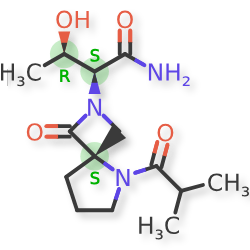
Risevistinel (NYX-783) is a positive allosteric modulator of N-methyl-D-aspartate (NMDA) receptor. Nevadistinel can be used to inhibit cognitive impairment associated with neurodegenerative diseases, such as mild cognitive impairment, mild Alzheimer’s disease, Parkinson’s disease, Lewy body disease.
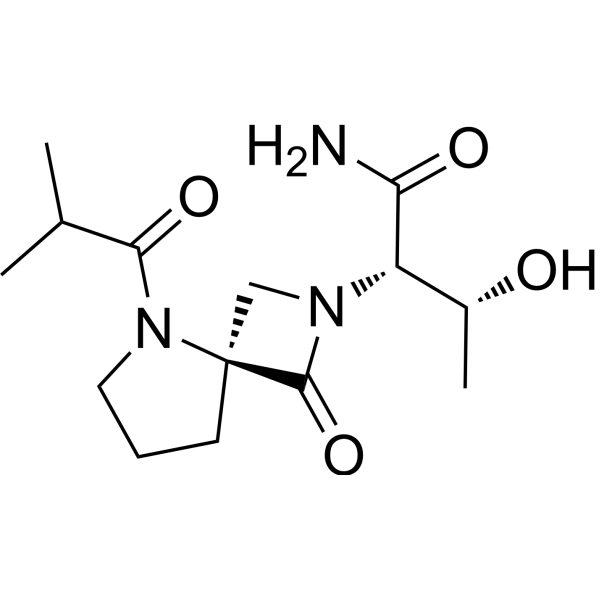
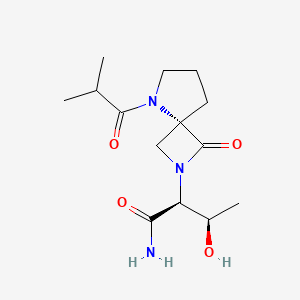
NYX-2925 is an N-methyl-D-aspartate receptor (NMDAR) modulator, and at low concentrations of endogenous agonist (glycine or D-serine) and in the presence of glutamate, NYX-2925 partially activates the NMDAR. NYX-2925 appears to act at a binding site that is distinct from NMDAR agonists or antagonists studied to date, such as D-cycloserine, ketamine, MK-801, or kynurenic acid. The mode of action of NYX-2925 seems to be distinct from that of all existing and emerging drugs that are indicated for the treatment of neuropathic pain. While current medications target individual elements of pain signal transmission or modulation, NYX-2925 can modulate multiple synaptic relays within pain circuits.
NYX-2925 is under investigation in clinical trial NCT04146896 (Efficacy and Safety of NYX-2925 in Subjects With Neuropathic Pain Associated With Diabetic Peripheral Neuropathy (DPN)).
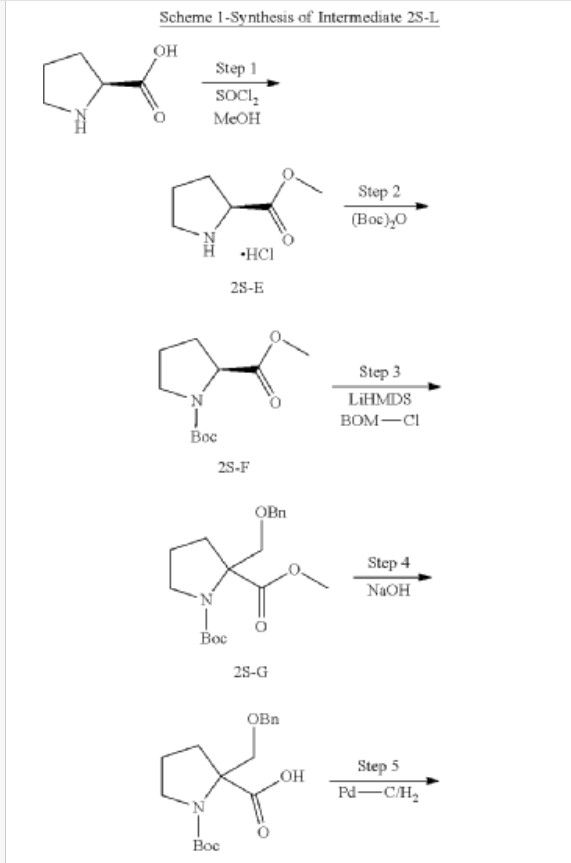
Synthesis of methyl pyrrolidine-2-carboxylate (2S-E)
To a stirring solution of L-proline (50 g, 434 mmol) in methanol was added thionyl chloride (37.5 ml, 521 mmol) at 0° C. and heated to 70° C. for 16 h. The reaction mixture was brought to RT and concentrated under vacuum to afford compound 2S-E as (70 g, 99%) as thick syrup (hydrochloride salt).
Synthesis of 1-tert-butyl 2-methyl pyrrolidine-1,2-dicarboxylate (2S-F)
To a stirring solution of compound 2S-E (70 g, 422 mmol) in CH 2Cl 2 (700 mL) were added Et 3N (183 mL, 1.26 mol) at 0° C. and stirred for 10 min. After added Boc-anhydride (184 mL, 845 mmol) at 0° C. and the reaction mixture was stirred at RT for 16 h. After consumption of the starting material (by TLC), the reaction was diluted with water (200 mL) and extracted with CH 2Cl 2 (2×200 mL). The combined organic layer was washed with citric acid (1×150 mL), brine (1×200 mL). The organic layer was dried over Na 2SO 4 and concentrated under reduced pressure to afford crude compound which was purified by column chromatography by eluting 50% EtOAC/n-hexane to obtain compound 2S-F (80 g, 83%) as thick syrup.
Synthesis of 1-tert-butyl 2-methyl 2-((benzyloxy) methyl) pyrrolidine-1,2-dicarboxylate (2S-G)
To a stirring solution of compound 2S-F (25 g, 109 mmol) in THF (250 mL) was added LiHMDS (240 mL, 240 mmol) at −20° C. and stirred for 2 h. To this BOM-chloride (23 mL, 163 mmol) was added drop wise at −30° C. and stirred for 2 h. After consumption of the starting material (by TLC), the reaction was quenched with aqueous NH 4Cl solution (100 mL) and extracted with EtOAc (2×200 mL). The combined organic layer was washed with water (2×150 mL) followed by brine solution (2×100 mL). The organic layer was dried over Na 2SO 4 and concentrated to obtain crude compound which was purified by column chromatography by eluting 10% EtOAc/n-hexane to afford compound 2S-G (30 g, 79%) as thick syrup.
Synthesis of 2-((benzyloxy) methyl)-1-(tert-butoxycarbonyl) pyrrolidine-2-carboxylic acid (2S-H)
To a stirring solution of compound 2S-G (30 g, 86 mmol) in methanol (70 mL) was added NaOH solution (6.88 g in 70 mL H 2O) at RT. The reaction mixture was heated to 70° C. for 16 h. After consumption of the starting material (by TLC), the solvent from the reaction was evaporated under reduced pressure and diluted with EtOAc (2×200 mL). The separated aqueous layer was acidified using citric acid solution (pH-3) and extracted with EtOAc (2×250 mL). The combined organic layer was dried over Na 2SO 4 and concentrated to afford crude was triturated with n-hexane to obtain compound 2S-H (25 g, 86.8%) as an off-white solid.
Synthesis of 1-(tert-butoxycarbonyl)-2-(hydroxymethyl) pyrrolidine-2-carboxylic acid (2S-I)
To a stirring solution of compound 2S-H (25 g, 74 mmol) in methanol (150 mL) was added 50% wet 10% Pd/C (7 g) at RT and stirred for 10 h under H 2 atmosphere. After consumption of the starting material (by TLC), the reaction mixture was filtered through a pad of celite and the pad was washed with methanol (100 mL). Obtained filtrate was concentrated under reduced pressure to afford compound 2S-I (15 g, 82.8%) as white solid.
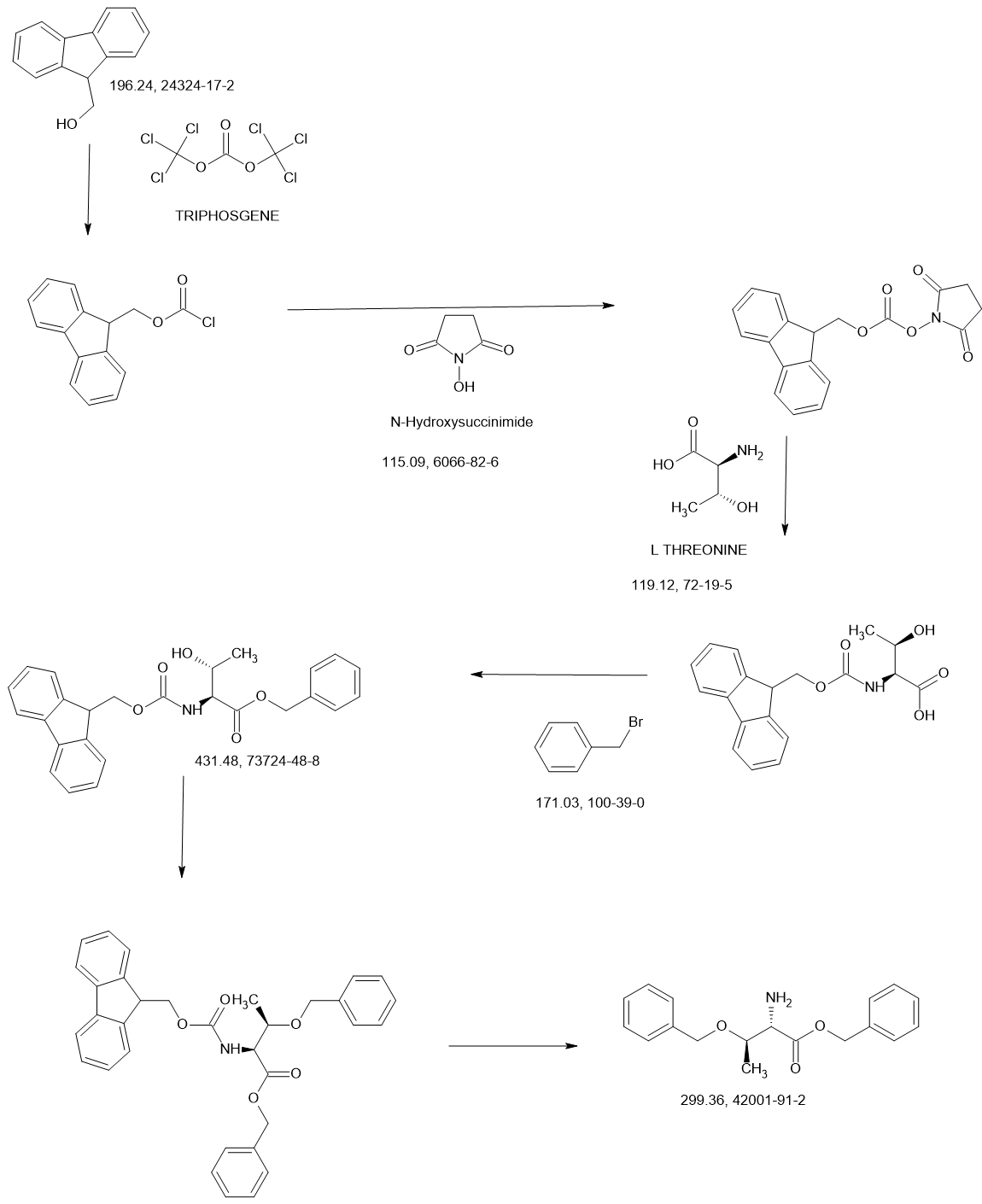
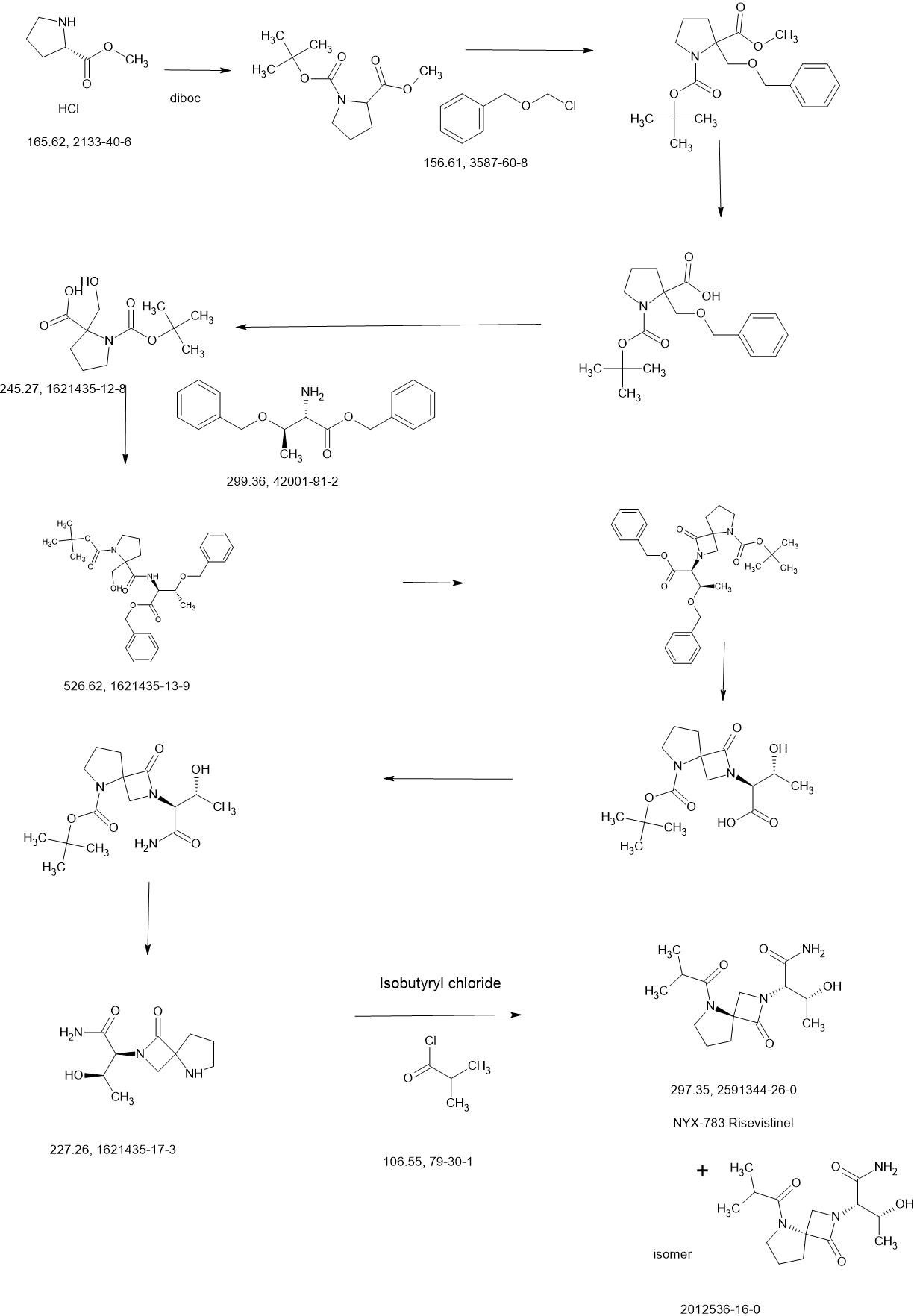
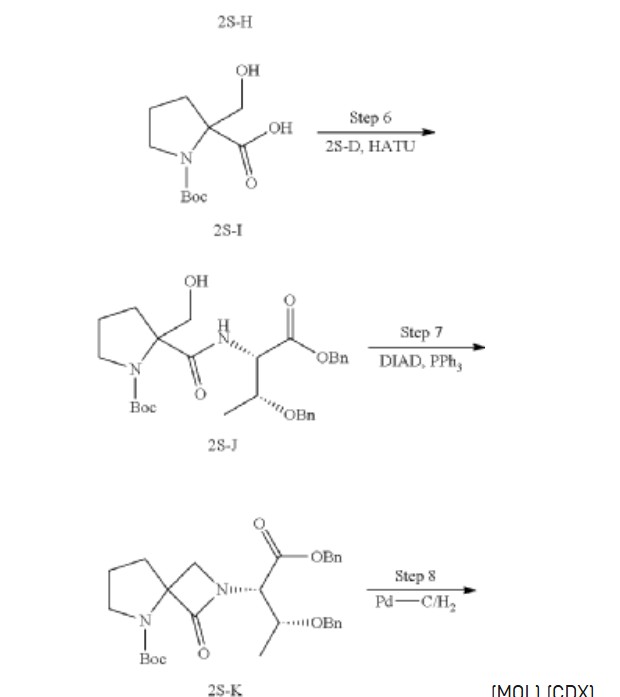
Synthesis of tert-butyl 2-(((2S,3R)-1,3-bis (benzyloxy)-1-oxobutan-2-yl) carbamoyl)-2-(hydroxymethyl) pyrrolidine-1-carboxylate (2S-J)
To a stirring solution of compound 2S-I (18 g, 73.4 mmol) in CH 2Cl 2 (180 mL) were added DIPEA (40 mL, 220 mmol), 2S-D (21.9 g, 73.4 mmol), HATU (41.8 g, 110 mmol) at RT and stirred for 16 h. After consumption of the starting material (by TLC), the reaction mixture was diluted with water (50 mL) and extracted with CH 2Cl 2 (2×100 mL). The combined organic layer was washed with brine, dried over anhydrous Na 2SO 4, filtered and concentrated under reduced pressure. Obtained crude material was purified by silica gel column chromatography eluting with 30% EtOAc/n-hexane to afford compound 2S-J (20 g, 52%) as pale yellow thick syrup.
Synthesis of tert-butyl 2-((2S,3R)-1,3-bis (benzyloxy)-1-oxobutan-2-yl)-1-oxo-2,5-diazaspiro [3.4] octane-5-carboxylate (2S-K)
To a stirring solution of triphenylphosphine (24.7 g, 94 mmol) in THF (100 mL) was added DIAD (15.3 g, 75 mmol) at RT and stirred for 30 min. To this added compound 2S-J (20 g, 37.9 mmol) in (10 mL) THF slowly and reaction mixture was stirred at RT for 2 h. After consumption of the starting material (by TLC), the reaction was concentrated under reduced pressure. The crude material was purified by silica gel column chromatography eluting 25% EtOAc/n-hexane to afford compound 2S-K (17 g, 88%) as pale yellow thick syrup.
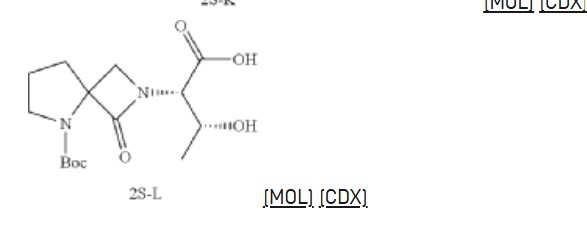
Synthesis of (2S,3R)-2-(5-(tert-butoxycarbonyl)-1-oxo-2,5-diazaspiro [3.4] octan-2-yl)-3-hydroxybutanoic acid (2S-L)
To a stirring solution of compound 2S-K (7 g, 13.7 mmol) in methanol (100 mL) was added 10% Pd/C (4 g) at RT and stirred for 6 h under H 2 atmosphere. After consumption of the starting material (by TLC), the reaction mixture was filtered through a pad of celite and the pad was washed with methanol (50 mL). Obtained filtrate was concentrated under reduced pressure to obtained crude, which was triturated with n-pentane (50 mL) to afford compound 2S-L (4 g, 88%) as white solid.
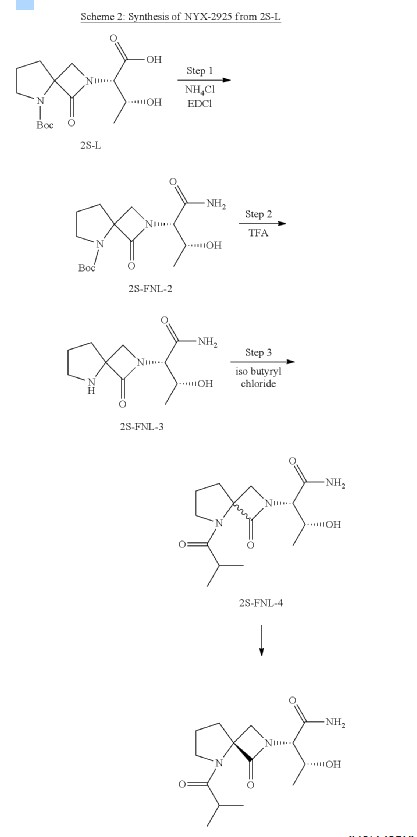
Synthesis of tert-butyl 2-((2S,3R)-1-amino-3-hydroxy-1-oxobutan-2-yl)-1-oxo-2,5-diazaspiro [3.4] octane-5-carboxylate (2S-FNL-2)
To a stirring solution of compound 2S-L (500 mg, 1.52 mmol) in CH 2Cl 2 (5 mL) were added DIPEA (0.8 mL, 4.57 mmol), EDCI·HCl (350 mg, 1.82 mmol) followed by HOBt (280 mg, 1.82 mmol), NH 4Cl (161 mg, 3.04 mmol) at 0° C. and stirred for 16 h at RT. After consumption of the starting material (by TLC), the reaction mixture was diluted with water (10 mL) and extracted with CH 2Cl 2 (2×30 mL). The combined organic layer was washed with citric acid solution (2×30 mL). The organic layer was dried over anhydrous Na 2SO 4, filtered and concentrated under reduced pressure. Obtained crude material was purified by silica gel column chromatography eluting 2% MeOH/DCM to afford compound (2S-FNL-2) (200 mg, 40%) as colorless liquid.
Synthesis of (2S,3R)-3-hydroxy-2-(1-oxo-2,5-diazaspiro [3.4] octan-2-yl) butanamide (2S-FNL-3)
To a stirring solution of compound (2S-FNL-2) (200 mg, 0.61 mmol) in CH 2Cl 2 (5 mL) was added TFA (0.5 mL, 6.1 mmol) at 0° C. and stirred at RT for 3 h. After completion of reaction (by TLC), the reaction mixture was concentrated under reduced pressure to obtained crude compound which was triturated with n-pentane/diethylether (5 mL/5 mL) to afford compound (2S-FNL-3) (100 mg) as white solid (TFA salt).
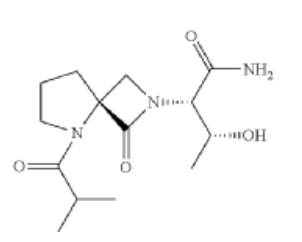
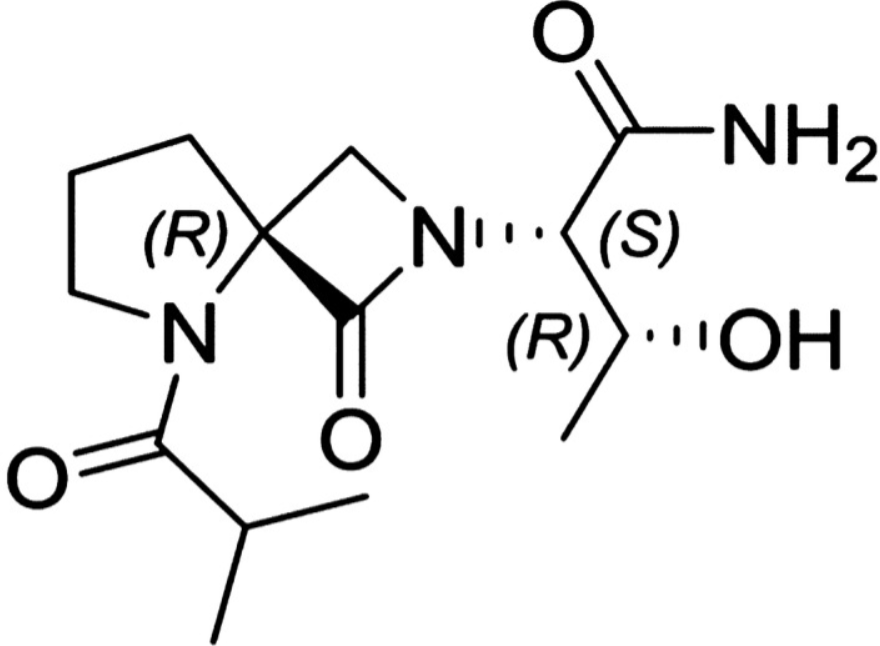
Synthesis of (2S,3R)-3-hydroxy-2-(5-isobutyryl-1-oxo-2,5-diazaspiro [3.4] octan-2-yl) butanamide (NYX-2925)
To a stirring solution of (2S-FNL-3) (500 mg (crude), 2.20 mmol) in CH 2Cl 2 (10 mL) was added TEA (1 mL, 7.70 mmol) followed by isobutyryl chloride (256 mg, 2.42 mmol) at 0° C. and stirred for 16 h at RT. After consumption of the starting material (by TLC), the reaction mixture was diluted with water (10 mL) and extracted with CH 2Cl 2 (2×30 mL). The combined organic layer was washed with citric acid solution (2×30 mL). The organic layer was dried over anhydrous Na 2SO 4, filtered and concentrated under reduced pressure. Obtained crude material was purified by silica gel column chromatography eluting 2% MeOH/DCM to afford the two diastereomers of (2S-FNL-4) (100 mg, 15.2%) as white solid. The two 2S-FNL-4 diastereomers were separated by repetitive silica gel column chromatography to provide NYX-2925.
DR ANTHONY MELVIN CRASTO, Born in Mumbai in 1964 and graduated from Mumbai University, Completed his Ph.D from ICT, 1991,Matunga, Mumbai, India, in Organic Chemistry, The thesis topic was Synthesis of Novel Pyrethroid Analogues, Currently he is working with AFRICURE PHARMA, ROW2TECH, NIPER-G, Department of Pharmaceuticals, Ministry of Chemicals and Fertilizers, Govt. of India as ADVISOR, earlier assignment was
with GLENMARK LIFE SCIENCES LTD, as CONSUlTANT, Retired from GLENMARK in Jan2022 Research Centre as Principal Scientist, Process Research (bulk actives) at Mahape, Navi Mumbai, India. Total Industry exp 32 plus yrs, Prior to joining Glenmark, he has worked with major multinationals like Hoechst Marion Roussel, now Sanofi, Searle India Ltd, now RPG lifesciences, etc. He has worked with notable scientists like Dr K Nagarajan, Dr Ralph Stapel, Prof S Seshadri, etc, He did custom synthesis for major multinationals in his career like BASF, Novartis, Sanofi, etc., He has worked in Discovery, Natural products, Bulk drugs, Generics, Intermediates, Fine chemicals, Neutraceuticals, GMP, Scaleups, etc, he is now helping millions, has 9 million plus hits on Google on all Organic chemistry websites. His friends call him Open superstar worlddrugtracker. His New Drug Approvals, Green Chemistry International, All about drugs, Eurekamoments, Organic spectroscopy international,
etc in organic chemistry are some most read blogs He has hands on experience in initiation and developing novel routes for drug molecules
and implementation them on commercial scale over a 32 PLUS year tenure till date Feb 2023, Around 35 plus products in his career. He has good knowledge of IPM, GMP, Regulatory aspects, he has several International patents published worldwide . He has good proficiency in Technology transfer, Spectroscopy, Stereochemistry, Synthesis, Polymorphism etc., He suffered a paralytic stroke/ Acute Transverse mylitis in Dec 2007 and is 90 %Paralysed, He is bound to a wheelchair, this seems to have injected feul in him to help chemists all around the world, he is more active than before and is pushing boundaries, He has 100 million plus hits on Google, 2.5 lakh plus connections on all networking sites, 100 Lakh plus views on dozen plus blogs, 227 countries, 7 continents, He makes himself available to all, contact him on +91 9323115463, email amcrasto@gmail.com, Twitter, @amcrasto , He lives and will die for his family, 90% paralysis cannot kill his soul., Notably he has 38 lakh plus views on New Drug Approvals Blog in 227 countries......https://newdrugapprovals.wordpress.com/ , He appreciates the help he gets from one and all, Friends, Family, Glenmark, Readers, Wellwishers, Doctors, Drug authorities, His Contacts, Physiotherapist, etc
He has total of 32 International and Indian awards
Follow my blog with Bloglovin
The title of your home page
You could put your verification ID in a
comment
Or, in its own meta tag
Or, as one of your keywords
Your content is here. The verification ID will NOT be detected if you put it here.

 DRUG APPROVALS BY DR ANTHONY MELVIN CRASTO
.....
DRUG APPROVALS BY DR ANTHONY MELVIN CRASTO
.....




 New Drug Approvals