
Home » Posts tagged 'phase 2' (Page 2)
Tag Archives: phase 2
 DRUG APPROVALS BY DR ANTHONY MELVIN CRASTO
.....FOR BLOG HOME CLICK HERE
DRUG APPROVALS BY DR ANTHONY MELVIN CRASTO
.....FOR BLOG HOME CLICK HEREFlag and hits
ORGANIC SPECTROSCOPY

SUBSCRIBE

 Subscribe in a reader
Enter your email address:
Delivered by FeedBurner
Subscribe to New Drug Approvals by Email


Recent Comments
 | shivkr2 on SPSR Excellence Award 2025 – S… |
 | Bonkasaurus on Infigratinib phosphate |
 | PALOVAROTENE | ORGAN… on Palovarotene |
| Pfizer just purchase… on Temanogrel | |
| Pfizer To Cash In On… on Temanogrel |
Eclitasertib
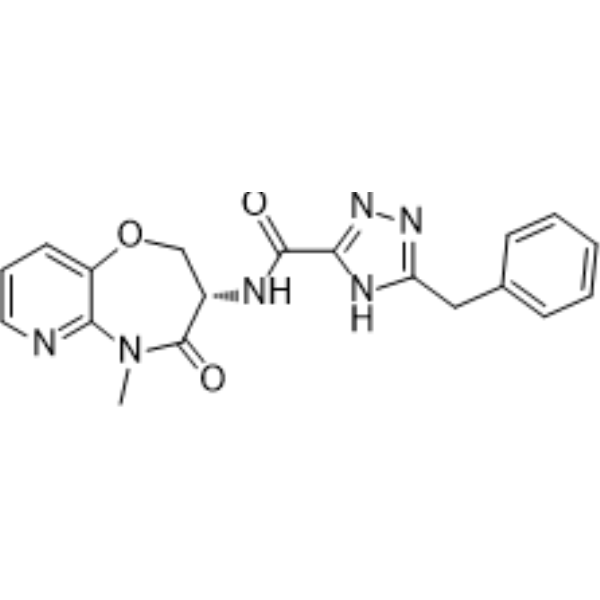
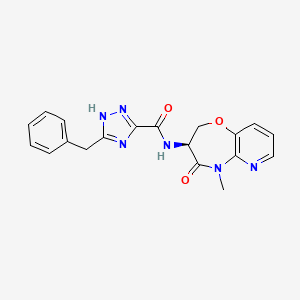
Eclitasertib
CAS 2125450-76-0
5-benzyl-N-[(3S)-5-methyl-4-oxo-2,3-dihydropyrido[3,2-b][1,4]oxazepin-3-yl]-1H-1,2,4-triazole-3-carboxamide
- DNL-758
- SAR-443122
- Eclitasertib (DNL-758) is a potent receptor-interacting protein kinase 1 (RIPK1) inhibitor with an IC50 of 0.0375 µΜ.
- UNII-975AT1P9J6
| Molecular Weight | 378.38 |
|---|---|
| Formula | C19H18N6O3 |
- OriginatorHarvard University
- DeveloperDenali Therapeutics Inc; Sanofi
- Class2 ring heterocyclic compounds; Amides; Anti-inflammatories; Antipsoriatics; Antirheumatics; Oxazepines; Pyridines; Skin disorder therapies; Small molecules; Triazoles
- Mechanism of ActionRIPK1 protein inhibitors
- Phase IIUlcerative colitis
- DiscontinuedCutaneous lupus erythematosus; Psoriasis; Rheumatoid arthritis; SARS-CoV-2 acute respiratory disease
- 12 Mar 2024Discontinued – Phase-I for Psoriasis (In volunteers) in USA (unspecified route) (Denali pipeline, February 2024)
- 12 Mar 2024Discontinued – Phase-I for Rheumatoid arthritis (In volunteers) in USA (unspecified route) (Denali pipeline, February 2024)
- 27 Feb 2024Efficacy and adverse events data from phase II trial in Cutaneous lupus erythematosus released by Sanofi
SAR443122, was investigated in several clinical trials to evaluate its safety and efficacy. NCT04469621 was studied in severe COVID-19 patients, while NCT05588843 is currently recruiting participants with ulcerative colitis. Additionally, NCT04781816, which was completed with results, focused on patients with cutaneous lupus erythematosus.
Eclitasertib is an orally bioavailable, small-molecule inhibitor of receptor-interacting serine/threonine-protein kinase 1 (RIPK1; receptor-interacting protein 1; RIP1), with potential anti-inflammatory and immunomodulatory activities. Upon oral administration, eclitasertib disrupts RIPK1-mediated signaling, and may attenuate inflammation and the resulting tissue damage. RIPK1, a signaling protein in the tumor necrosis factor (TNF) receptor pathway, plays a key role in inflammation and cell death in response to tissue damage and pathogen recognition.
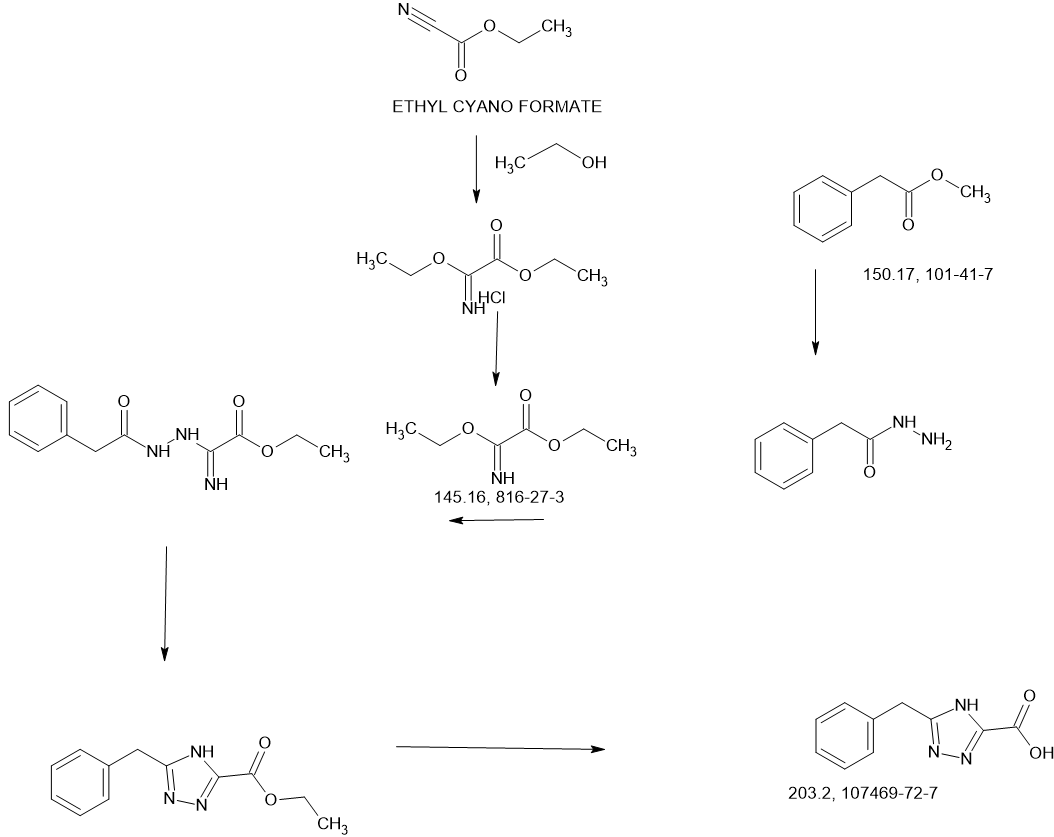
SCHEME
SIDE CHAIN
MAIN
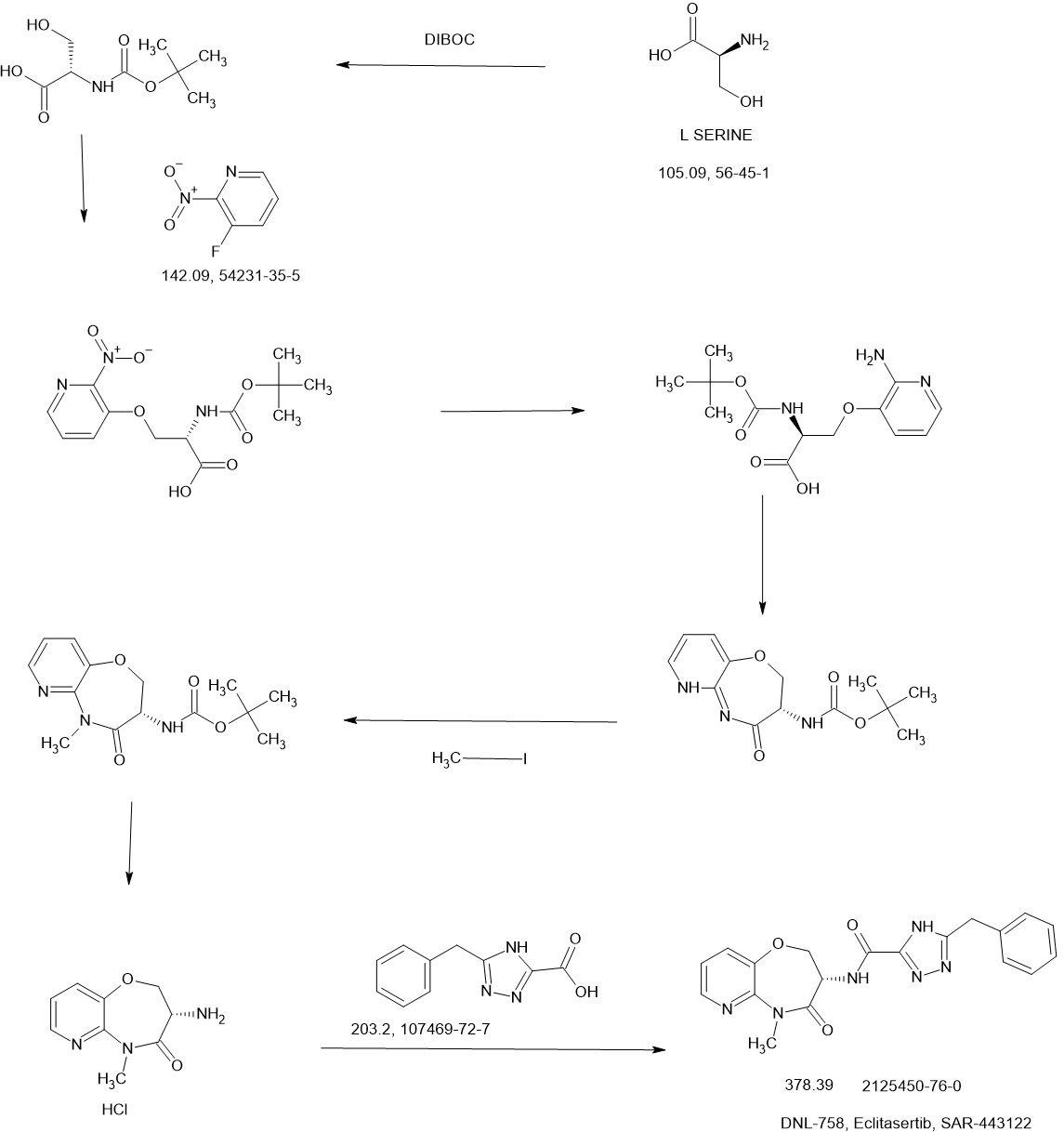
REF
WO2017136727
https://patentscope.wipo.int/search/en/detail.jsf?docId=WO2017136727&_cid=P22-MAYSGO-11421-1
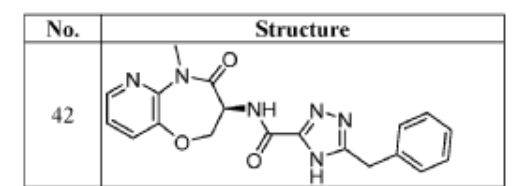
Example 42: (S)-5-benzyl-N-(5-methyl-4-oxo-2,3,4,5-tetrahydropyrido[3,2-b][1,4]oxazepin-3-yl)- 4H-1,2,4-triazole-3-carboxamide
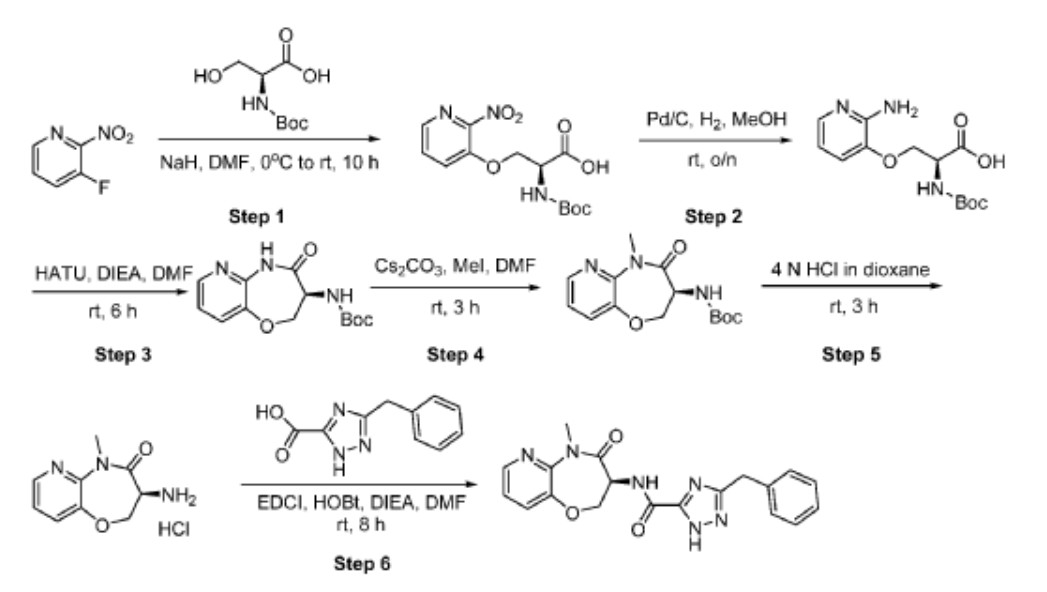
Step 1: Preparation oƒ (2S)-2-(((tert-butoxy)carbonyl)amino)-3-((2-nitropyridin-3-yl)oxy)propanoic acid
[0535] Sodium hydride (60%, 2 g, 50 mmol) was added into a stirring solution of (2S)-2-(tert-butoxycarbonylamino)-3-hydroxypropanoic acid (5 g, 25.0 mmol) in N,N-dimethylformamide (100 mL). The resulting mixture was stirred at 0 °C for 2 hours. 3-Fluoro-2-nitropyridine (3.6 g, 25.3 mmol) was added and the reaction mixture was stirred at room temperature for an additional 8 hours before quenching with hydrochloric acid (3 N, 5 mL). After adjusting the pH to 3-4 with hydrochloric acid (3 N, 20 mL), the resulting mixture was extracted with ethyl acetate (3 x 100 mL). The combined organic layers were washed with brine, dried over anhydrous sodium sulfate and concentrated under reduced pressure. The residue was purified by reversed phase chromatography with a RP-C18 column (acetonitrile/water, 1/2) to afford the title compound (3.2 g, 39%) as a light yellow oil. LC-MS (Method C): m/z = 272.1 [M+H-(t-BuO)]+, 1.269 min.
Step 2: Preparation oƒ (2S)-3-((2-aminopyridin-3-yl)oxy)-2-(((tert-butoxy)carbonyl)amino)propanoic acid
[0536] (2S)-2-(((tert-butoxy)carbonyl)amino)-3-((2-nitropyridin-3-yl)oxy)propanoic acid (0.45 g, 1.4 mmol) in methanol (20 mL) was aged overnight at room temperature in the presence of palladium on carbon (10%, 0.5 g) under hydrogen atmosphere (2-3 atm). The reaction mixture was filtered through Celite and the filtrate was concentrated under reduced pressure to afford the title compound (0.32 g, 78%) as a yellow oil. LC-MS (Method C): m/z = 298.1 [M+H]+, 0.982 min.
Step 3: Preparation oƒ tert-butyl N-((3S)-4-oxo-2H,3H,4H,5H-pyrido[3,2-b][1,4]oxazepin-3-yl)carbamate
[0537] N,N,N’,N’-tetramethyl-O-(7-azabenzotriazol-1-yl)uronium hexafluorophospate (0.73 g, 1.92 mmol) and N,N-diisopropylethylamine (0.25 g, 1.93 mmol) were added to a stirring solution of (2S)-3-((2-aminopyridin-3-yl)oxy)-2-(((tert-butoxy)carbonyl)amino)propanoic acid (0.45 g, 1.51 mmol) in N,N-dimethylformamide (5 mL). After stirring for 6 hours at room temperature, the reaction mixture was quenched by the addition of water (20 mL), and extracted with ethyl acetate (3 x 100 mL). The combined organic layers were washed with brine, dried over anhydrous sodium sulfate and concentrated under reduced pressure. The resulting residue was purified by column chromatography (methanol/dichloromethane, 1/10) to afford the title compound (0.11 g, 26%) as a white solid. LC-MS (Method C): m/z = 280.1 [M+H]+, 1.248 min.
tep 4: Preparation oƒ tert-butylN-((3S)-5-methyl-4-oxo-2H,3H,4H,5H-pyrido[3,2-b][1,4]oxazepin-3-yl)carbamate
[0538] Iodomethane (50 mg, 0.35 mmol) was added dropwise to a stirring solution of tert-butyl N-((3S)-4-oxo-2H,3H,4H,5H-pyrido[3,2-b][1,4]oxazepin-3-yl)carbamate (100 mg, 0.36 mmol) and cesium carbonate (120 mg, 0.36 mmol) in N,N-dimethylformamide (5 mL). After stirring for 3 hours at room temperature, the reaction mixture was diluted with water (20 mL), and extracted with ethyl acetate (3 x 100 mL). The combined organic layers were washed with brine, dried over anhydrous sodium sulfate, filtered and concentrated under reduced pressure. The residue was purified by column chromatography (methanol/dichloromethane, 1/10) to afford the title compound (90 mg, 86%) as a white solid. LC-MS (Method C): m/z = 294.1 [M+H]+, 1.333 min.
Step 5: Preparation oƒ (3S)-3-amino-5-methyl-2H,3H,4H,5H-pyrido-[3,2-b][1,4]oxazepin-4-one hydrochloride
[0539] tert-butyl N-((3S)-5-methyl-4-oxo-2H,3H,4H,5H-pyrido[3,2-b][1,4]oxazepin-3-yl)carbamate (90 mg, 0.31 mmol) was added to a solution of hydrogen chloride in dioxane (4 M, 10 mL). The reaction mixture was stirred for 3 hours at room temperature and concentrated under reduced pressure to afford the title compound (65 mg, 93%) as a white solid, which was used directly in the next step without further purification. LC-MS (Method C): m/z = 194.1 [M+H]+, 0.847 min.
Step 6: Preparation oƒ (S)-5-benzyl-N-(5-methyl-4-oxo-2,3,4,5-tetrahydropyrido[3,2-b][1,4]oxazepin-3-yl)-4H-1,2,4-triazole-3-carboxamide
[0540] A solution of (3S)-3-amino-5-methyl-2H,3H,4H,5H-pyrido-[3,2-b][1,4]oxazepin-4-one hydrochloride (55 mg, 0.24 mmol) in N,N-dimethylformamide (1 mL) was added to a stirring solution of 5-benzyl-2H-1,2,4-triazole-3-carboxylic acid (80 mg, 0.40 mmol), 1-hydroxy-benzotrizole (70 mg, 0.53 mmol), N-(3-dimethylaminopropyl)-N’-ethylcarbodiimide hydrochloride (100 mg, 0.52 mmol) and N,N-
diisopropylethylamine (160 mg, 1.21 mmol) in N,N-dimethylformamide (2 mL). After stirring for 8 hours at room temperature, the reaction mixture was quenched by the addition of water (20 mL), and extracted with ethyl acetate (3 x 50 mL). The combined organic layers were washed with brine, dried over anhydrous sodium sulfate, filtered and concentrated under reduced pressure. The resulting residue was purified by Prep-HPLC with the following conditions: Column, XBridge Shield RP18 OBD Column, 5 μm, 19 x 150 mm; mobile phase, water (0.1% formic acid) and ACN (30.0% ACN to 60.0% over 7 min); Detector, UV 254 & 220 nm to afford the title compound. 1H NMR (300 MHz, DMSO-d6) δ 14.45 (s, 1H), 8.67 (d, J= 7.2 Hz, 1H), 8.37 (dd, J= 4.8, 1.8 Hz, 1H), 7.71 (dd, J= 7.8, 1.5 Hz, 1H), 7.37-7.21 (m, 6H), 4.92-4.82 (m, 1H), 4.73 (dd, J= 11.4, 9.6 Hz, 1H), 4.53 (dd, J= 9.6, 7.5 Hz, 1H), 4.14 (s, 2H), 3.37 (s, 3H). LC-MS (Method D): m/z = 379.1 [M+H]+, 1.611 min.
PATENT
WO2023182512
WO2023137035
WO2022208262
WO2021211919
WO2021209740
WO2021205298
WO2021205296
, WO2017136727
PAPER
European Journal of Medicinal Chemistry (2021), 220, 113484
Structure-based bioisosterism design of thio-benzoxazepinones as novel necroptosis inhibitors
Publication Name: European Journal of Medicinal Chemistry
Publication Date: 2021-08-05
PMID: 33930803
DOI: 10.1016/j.ejmech.2021.113484
PATENT
WO2021203011
- [1]. Anthony A. ESTRADA, et al. Compounds, compositions and methods. WO2017136727A2.[2]. Darwish I, et al., Rip1k inhibitors. WO2021203011
//////////Eclitasertib, DNL-758, SAR-443122, DNL 758, SAR 443122, UNII-975AT1P9J6, Phase 2, Ulcerative colitis
Crisugabalin


Crisugabalin
Cas 2209104-84-5
2-[(1S,2S,3R,6S,8S)-2-(aminomethyl)-2-tricyclo[4.2.1.03,8]nonanyl]acetic acid
WeightAverage: 209.289
Monoisotopic: 209.141578856
Chemical FormulaC12H19NO2
- HSK 16149
- HSK-16149
- HSK16149
- Q3MK7E8686
- PHASE 2
Tricyclo[4.2.1.03,8]nonane-2-acetic acid, 2-(aminomethyl)-, (1S,2S,3R,6S,8S)-
(1S,2S,3R,6S,8S)-2-(Aminomethyl)tricyclo[4.2.1.03,8]nonane-2-acetic acid
- (1S,2S,3R,6S,8S)-2-(Aminomethyl)tricyclo[4.2.1.03,8]nonane-2-acetic acid
- 2-[(1S,2S,3R,6S,8S)-2-(aminomethyl)-2-tricyclo[4.2.1.03,8]nonanyl]acetic acid
- Tricyclo[4.2.1.03,8]nonane-2-acetic acid, 2-(aminomethyl)-, (1S,2S,3R,6S,8S)-
Crisugabalin (HSK16149) is a selective GABA analog in development for the treatment of chronic pain. It has a wider therapeutic index than pregabalin, which has a similar mechanism of action. In China, it was approved in May 2024 for the treatment of diabetic peripheral neuropathic pain[1] and approved in July 2024 for the treatment of postherpetic neuralgia.[2] In the United States, it is in Phase III trials as of 2023.[3][4] The drug can be administered with or without food.[5]
Crisugabalin is under investigation in clinical trial NCT06490484 (Efficacy and Safety of HSK16149 Capsule in Chinese Patients With Diabetic Peripheral Neuropathic Pain Who Had an Inadequate Response to Pregabalin).
SCHEME

PATENTS
WO2020029762
https://patentscope.wipo.int/search/en/detail.jsf?docId=WO2020029762&_cid=P10-MAI1TM-34428-1


[0414]2-((1S,2S,3R,6S,8S)-2-(aminomethyl)tricyclo[4.2.1.0
3,8 ]nonanyl-2-yl)acetate benzenesulfonate (1:1) (Compound 1)
[0415]
2-((1S,2S,3R,6S,8S)-2-(aminomethyl)tricyclo[4.2.1.0 3,8]nonan-2-yl)acetic acid compound with benzenesulfonic acid(1:1)
[0416]
[0417]
[0418]Step 1: 3-(Cyclohexyl-3-en-1-yl)propanoic acid (1B)
[0419]
3-(cyclohex-3-en-1-yl)propanoic acid
[0420]
[0421]Anhydrous formic acid (18.82kg, 409.09mol) was pumped into a 100-liter reactor. The temperature was lowered to 10°C. Triethylamine (16.53kg, 163.64mol) was added dropwise to the reaction solution. After addition, it was stirred for 20 minutes. When the internal temperature was 10°C, cycloisopropyl malonate (7.86kg, 54.55mol) was added to the reactor. Then 3-cyclohexene-1-carboxaldehyde (6.00kg, 54.55mol) was added dropwise to the reaction solution at an internal temperature of 40°C. After addition, the temperature was raised to 140-150°C and the reaction was continued until no gas was released. The pH of the reaction solution was adjusted to 1-2 with 6N hydrochloric acid (24.0L). The aqueous phase was extracted with dichloromethane (12L×2), and the organic phases were combined and washed with saturated brine (10L×2). The organic phase was dried over anhydrous sodium sulfate (2.0 kg) for 1 hour, filtered, and the filtrate was concentrated and evaporated to dryness to obtain a yellow oil 1B (8.80 kg).
[0422]
1H NMR(400MHz,CDCl 3)δ10.23(s,1H),5.73–5.55(m,2H),2.46–2.30(m,2H),2.09–1.96(m,2H),1.81–1.53(m,6H),1.35–1.17(m,1H)。
[0423]
[0424]Step 2: 3-(Cyclohexyl-3-en-1-yl)-1-(pyrrolidin-1-yl)propyl-1-one (1C)
[0425]
3-(cyclohex-3-en-1-yl)-1-(pyrrolidin-1-yl)propan-1-one
[0426]
[0427]Dissolve 1B (11.20kg, 72.727mol) in dichloromethane (60.0L) and pump into a 100L reactor. Add DMF (3.0mL) and drop oxalyl chloride (9.046kg, 71.272mol) into the reaction solution. After addition, stir at room temperature for 2.0 hours. Add tetrahydropyrrole (5.689kg, 79.999mol) and triethylamine (8.814kg, 87.272mol) dropwise into the reactor. Control the internal temperature below 10℃, after addition, stir at room temperature overnight. Cool the reaction solution to 10℃. Add 3N hydrochloric acid (20.0L) dropwise to adjust the pH of the reaction solution to between 1-2. Let stand, separate the liquids, and extract the aqueous phase with dichloromethane (10.0L×1). The organic phases were combined and washed with 5% sodium hydroxide solution (10.0 L x 1) and saturated ammonium chloride solution (20.0 L x 1) in sequence. The organic phase was dried over anhydrous sodium sulfate (2.0 kg) for 30 minutes, filtered, and the filtrate was concentrated to obtain brown liquid 1C (15.00 kg, yield 99.6%).
[0428]
1H NMR(400MHz,CDCl 3)δ5.73–5.56(m,2H),3.43(dd,4H),2.37–2.22(m,2H),2.16–2.01(m,4H),1.90(dt,4H),1.81–1.51(m,6H),1.30–1.15(m,2H)。
[0429]
[0430]Step 3: Tricyclo[4.2.1.0
3,8 ]nonanyl-2-one (1R,3S,6R,8R and 1S,3R,6S,8S racemate) (1D)
[0431]
tricyclo[4.2.1.0 3,8]nonan-2-one(1R,3S,6R,8R and 1S,3R,6S,8S racemate)
[0432]
[0433]Dissolve 1C (5.64kg, 27.22mol) in dichloromethane (40.0L) and pump it into a 100L reactor. Cool to -10°C and add 2,4,6-trimethylpyridine (4.94kg, 40.83mol). Add a dichloromethane solution (16.0L) of trifluoromethanesulfonic anhydride (11.50kg, 40.83mol) dropwise to the reaction solution until complete. Heat and reflux for 12 hours. After the reaction is complete as detected by the central control, add an aqueous solution (23.0L) of sodium hydroxide (3.10kg, 77.5mol) dropwise to the reaction solution and adjust the pH of the reaction solution to between 10-11. Continue to reflux for 5-6 hours. Stand and separate the liquids, extract the aqueous phase with dichloromethane (5.0L×1), and combine the organic phases. Pump the organic phase into the reactor and cool to 10°C. 2.0N hydrochloric acid solution (20.0L) was added dropwise to adjust the pH of the reaction solution to between 1 and 2. The solution was separated by standing, and the organic phase was washed with saturated brine (20L×1), concentrated, and the residue was dissolved with acetone (20.0L), then pumped into a 100L reactor and stirred, and a solution of concentrated sulfuric acid (4.0L) and water (20.0L) was added dropwise, and refluxed for 2 hours after addition. The temperature was lowered to 15°C, saturated brine (20.0L) was added to the reaction solution, and extracted with n-hexane (15.0L×2). The organic phases were combined, washed with saturated brine (20.0L×1), and the organic phase was dried over anhydrous sodium sulfate overnight. After filtration, the filtrate was concentrated under reduced pressure to obtain a yellow solid crude product 1D (3.00kg, yield 81%) with a purity of 50%.
[0434]1D Further purification steps:
[0435]Method 1: Anhydrous sodium bisulfite (5.735 kg, 55.147 mol) was dissolved in 66 L of purified water and added to a 100 L reactor. A solution of crude 1D (3.00 kg, 22.059 mol) in ethanol (3.0 L) was added under stirring at room temperature. The mixture was stirred overnight at room temperature and extracted with ethyl acetate (20 L × 2). The aqueous phase was added to the reactor, stirred and cooled to 10°C. A solution of sodium hydroxide (2.250 kg, 56.250 mol) in water (10 L) was added dropwise. The pH was adjusted to 10-12. The mixture was stirred at room temperature for 2 hours. The mixture was extracted with n-hexane (20 L × 2). The organic phases were combined and washed with purified water (20 L × 1). The organic phases were dried with anhydrous sodium sulfate (2 kg) for 1 hour, filtered, and the filtrate was evaporated to dryness to obtain 1D as a colorless crystalline solid (2.7 kg, yield 90%) with a purity of 98.3%.
[0436]Method 2: Sodium bisulfite (1529g, 14.706mol) was dissolved in 22L water, and a solution of 1D crude product (1000g, 7.353mol) in anhydrous ethanol (1000mL) was added dropwise under stirring, and stirred overnight at room temperature (24 hours). The reaction solution was extracted with dichloromethane (5L×2) to remove impurities, and sulfuric acid solution (prepared with 6.4L concentrated sulfuric acid and 6kg crushed ice) was added dropwise to the aqueous phase, and stirred at room temperature for 5 hours. The reaction solution was extracted with n-hexane (extracted 3-4 times, 4L each time), the organic phases were combined and washed with saturated sodium chloride aqueous solution (5L×2), the organic phases were dried with 1kg anhydrous sodium sulfate for 2 hours, filtered, and the filtrate was evaporated to dryness to obtain 1D, a white solid (900g, yield: 90%), and the purity was determined to be 98.1%.
[0437]
1H NMR(400MHz,CDCl 3)δ3.39(m,1H),3.19(m,1H),2.77(m,1H),2.38(m,1H),2.05(m,1H),1.93(d,1H),1.77(m,1H),1.45(m,4H),1.20(m,1H)。
[0438]
[0439]Step 4: tert-Butyl 2-(tricyclo[4.2.1.0
3,8 ]nonanyl-2-ylidene) acetate (1R,3S,6R,8R and 1S,3R,6S,8S racemate) (1E)
[0440]
tert-butyl 2-tricyclo[4.2.1.0 3,8]nonan-2-ylidene)acetate(1R,3S,6R,8R and 1S,3R,6S,8S racemate)
[0441]
[0442]Potassium tert-butoxide (742.0g, 6.62mol) and tetrahydrofuran (6.20L) were added to a 20L reactor. The temperature was lowered to 5°C, and tert-butyl dimethoxyphosphonoacetate (1480g, 6.62mol, 1.1eq) was added dropwise to the reaction solution. The reaction temperature was controlled at 10°C-15°C, and stirring was continued for 1 hour. Then, a solution of 1D (820.0g, 6.02mol, 1.0eq) in tetrahydrofuran (2.0L) was added dropwise to the reaction solution. The addition was completed within 1 hour, and the temperature was naturally raised to room temperature for reaction for 2 hours. Saturated ammonium chloride solution (2.0L) and purified water (2.0L) were added to the reactor in sequence. After stirring for 20 minutes, the mixture was allowed to stand for stratification, and the aqueous phase was extracted with methyl tert-butyl ether (1.5L×2). The organic phases were combined, washed with saturated brine (2L×2), and dried over anhydrous sodium sulfate. Filtration and concentration afforded 1E as a yellow liquid (1.50 kg).
[0443]
[0444]Step 5: tert-Butyl 2-(2-(nitromethyl)tricyclo[4.2.1.0
3,8 ]nonanyl-2-yl)acetate (1R,2R,3S,6R,8R and 1S,2S,3R,6S,8S racemate) (1F)
[0445]
tert-butyl 2-(2-(nitromethyl)tricyclo[4.2.1.03,8]nonan-2-yl)acetate(1R,2R,3S,6R,8R and 1S,2S,3R,6S,8S racemate)
[0446]
[0447]1E (1.40 kg, 5.97 mol, 1.0 eq), nitromethane (1.82 kg, 29.85 mol, 5.0 eq) and dimethyl sulfoxide (9.8 L) were added to a 20 L reactor in sequence. Stir and add cesium carbonate (2.34 kg, 7.16 mol, 1.2 eq) to the reaction solution. After the addition, heat to 80°C-85°C, continue to keep the reaction for 5 hours, then cool to room temperature, add purified water (20.0 L) to the reactor, and extract the aqueous phase with methyl tert-butyl ether (8.0 L × 3). Combine the organic phases, wash with saturated brine (8.0 L × 2), and dry over anhydrous sodium sulfate. Filter and concentrate to obtain a brown liquid 1F (1.62 kg, yield: 92%).
[0448]
[0449]Step 6: tert-Butyl 2-((1S,2S,3R,6S,8S)-2-(aminomethyl)tricyclo[4.2.1.0
3,8 ]nonanyl-2-yl)acetate (S)-2-acetoxy-2-phenylacetic acid (1H)
[0450]
tert-butyl2-((1S,2S,3R,6S,8S)-2-(aminomethyl)tricyclo[4.2.1.03,8]nonan-2-yl)acetate(S)-2-acetoxy-2-phenylacetate
[0451]
[0452]Add 1F (730.0 g, 2.47 mol) and methanol (7.3 L) to a 50 L reactor. Stir, add nickel chloride hexahydrate (118 g, 0.49 mol, 0.2 eq) to the reaction, cool the reaction solution to 5 ° C, add sodium borohydride (374 g, 9.88 mol, 4.0 eq) in batches, keep the reaction system temperature at 20 ° C-30 ° C, and add it in about 3 hours. After the addition, continue to stir and react for 2 hours. Add ice water (16.4 L) to the reactor, and filter the aqueous phase with diatomaceous earth. Extract the filtrate with dichloromethane (3.0 L × 2) and combine the organic phases, wash with saturated brine (4 L × 1), and dry over anhydrous sodium sulfate. Filter, add (S)-(+)-O-acetyl-L-mandelic acid (384 g, 1.97 mol, 0.8 eq) to the filtrate, and stir for 20 minutes after the addition. The organic phase was concentrated by distillation until no solvent was evaporated, and then stirred with isopropanol (5.9 L) for 2 hours, cooled to 5°C and stirred for 1 hour. Filtered, the filter cake was washed with isopropanol (0.4 L × 1), and dried to obtain a white solid product 1H crude product (422 g, yield: 34.96%). The solid was taken and the ee value was determined to be 48.35% after derivatization.
[0453]First crystallization: Add crude product 1H (420.0 g, 0.92 mol), isopropanol (4.20 L) and water (0.21 L) to the reactor in sequence. Raise the temperature to 82 °C to completely dissolve the solid and keep warm for 0.5 hours. Cool down to 20 °C for crystallization for about 6 hours. When the internal temperature reaches 20 °C, filter and wash the filter cake with isopropanol (0.40 L × 1). Combine the solids and dry them at 60-65 °C for 4 hours to constant weight. Obtain the first crystal of 1H (260 g, yield: 62%). After taking the solid for derivatization, the ee value is 81.25%.
[0454]Second crystallization: Add the first crystal of 1H (177g, 0.39mol), isopropanol (2.53L) and water (0.126L) to the reactor in sequence. Raise the temperature to 82℃ to completely dissolve the solid and keep warm for 0.5 hours. Cool down to 20℃ for crystallization for about 4.5 hours. When the internal temperature reaches 30℃, filter and wash the filter cake with isopropanol (0.10L×1). Combine the solids and dry them at 60-65℃ for 4 hours to constant weight. Obtain pure white solid 1H (128g, yield: 72%). After taking the solid derivative, the ee value is determined to be 99.73%.
[0455]
[0456]Step 7: 2-((1S,2S,3R,6S,8S)-2-(aminomethyl)tricyclo[4.2.1.0
3,8 ]nonanyl-2-yl)acetic acid benzenesulfonic acid compound (1:1) (Compound 1)
[0457]
2-((1S,2S,3R,6S,8S)-2-(aminomethyl)tricyclo[4.2.1.0 3,8]nonan-2-yl)acetic acid compound with benzenesulfonic acid(1:1)
[0458]
[0459]Add 1H pure product (100.0g, 0.218mol) and purified water (0.8L) to the reactor in sequence and cool to 0-10℃. When the internal temperature reaches 0-10℃, add 1mol/L NaOH (218mL) aqueous solution to the reactor and adjust the pH of the reaction solution to 9-10. Let stand for stratification and extract the aqueous phase with dichloromethane (0.30L×2). Combine the organic phases and wash with 1mol/L NaOH (0.10L×1) solution and saturated brine (0.15L×1) in sequence. Add activated carbon (5.0g) to the organic phase for decolorization and dry with anhydrous sodium sulfate. Filter, concentrate the filtrate, and dissolve the residue in the concentration kettle with acetonitrile (280mL). Prepare a solution of benzenesulfonic acid monohydrate (77.0g, 0.437mol) with purified water (280mL) and add it dropwise to the above acetonitrile solution until complete. The temperature was raised to 80-85°C and kept for 4-6 hours. The reaction solution was cooled to 10-20°C for crystallization for about 4-6 hours. When the internal temperature reached 10-20°C, the solution was filtered and the filter cake was washed with water (30 mL × 1) and acetonitrile (50 mL × 1) in turn. After drying, compound 1 was obtained as a white solid (72 g, yield: 90%).
[0460]
1H NMR(400MHz,MeOD)δ7.83(m,2H),7.42(m,3H),3.31(dt,4H),2.86(m,1H),2.55(d,2H),2.48(ddd,1H),2.32(dd,1H),2.15(m,1H),2.04(m,1H),1.77(m,1H),1.62(m,4H),1.45(m,1H),1.28(dt,1H)。
[0461]
LCMS m/z=210.1[M+1]。
References
^ “Monthly Report: New Drug Approval in China, May 2024”.
- ^ “海思科苯磺酸克利加巴林胶囊获批新适应症”. PhIRDA. 19 July 2024. Retrieved 26 April 2025.
- ^ Gou, Xiaoli; Yu, Xiaojuan; Bai, Dongdong; Tan, Bowei; Cao, Pingfeng; Qian, Meilin; Zheng, Xiaoxiao; Chen, Lei; Shi, Zongjun; Li, Yao; Ye, Fei; Liang, Yong; Ni, Jia (March 2021). “Pharmacology and Mechanism of Action of HSK16149, a Selective Ligand of α2δ Subunit of Voltage-Gated Calcium Channel with Analgesic Activity in Animal Models of Chronic Pain”. The Journal of Pharmacology and Experimental Therapeutics. 376 (3): 330–337. doi:10.1124/jpet.120.000315. ISSN 1521-0103. PMID 33293377.
- ^ Guo, Xiaohui; Zhang, Tingting; Yuan, Geheng; Yukun, LI; Hua Ma, Jian; Hong-Mei, LI (2023). “224-OR: The Efficacy and Safety of HSK 16149 in Chinese with Diabetic Peripheral Neuropathic Pain—A Randomized, Double-Blinded, Placebo and Pregabalin-Controlled Phase II/III Study”. Diabetes. 72. doi:10.2337/db23-224-OR.
- ^ Wu, Qingqing; Zhu, Huijuan; Song, Rong; Zhang, Mengqi; Li, Fangqiong; Zeng, Weifang; Wang, Wei; Jia, Jingying; Yu, Chen; Liu, Yanmei (June 2023). “Effect of a high-fat and high-calorie food on the pharmacokinetics of a novel, potent GABA analog HSK16149 in healthy subjects”. Pharmacology Research & Perspectives. 11 (3): e01102. doi:10.1002/prp2.1102. PMC 10199234. PMID 37208866.
| Legal status | |
|---|---|
| Legal status | Investigational |
| Identifiers | |
| CAS Number | 2209104-84-5 |
| UNII | Q3MK7E8686 |
| Chemical and physical data | |
| Formula | C12H19NO2 |
| Molar mass | 209.289 g·mol−1 |
//////////Crisugabalin, HSK 16149, HSK-16149, HSK16149, Q3MK7E8686, PHASE 2
Clesacostat


Clesacostat
PF 05221304, 752DF9PPPI
CAS 1370448-25-1
WeightAverage: 502.571
Monoisotopic: 502.221620082
Chemical FormulaC28H30N4O5
4-[6-methoxy-4-(7-oxo-1-propan-2-ylspiro[4,6-dihydroindazole-5,4′-piperidine]-1′-carbonyl)pyridin-2-yl]benzoic acid
- Originator Pfizer
- ClassBenzoic acids; Carboxylic acids; Ethers; Hepatoprotectants; Indazoles; Piperidines; Pyridines; Small molecules; Spiro compounds
- Mechanism of ActionAcetyl-CoA carboxylase inhibitors
- Phase IINon-alcoholic fatty liver disease; Non-alcoholic steatohepatitis
- 21 Feb 2024Pfizer completes a phase II trial in Non-alcoholic steatohepatitis (Combination therapy) in Slovakia, Japan, Bulgaria, Canada, China, Hong Kong, India, Poland, Puerto Rico, South Korea, Taiwan (PO) (NCT04321031) (EudraCT2019-004775-39)
- 26 May 2022Clesacostat – Pfizer receives Fast Track designation for Non-alcoholic steatohepatitis [PO] (Combination therapy) in USA
- 28 Apr 2022Pfizer completes a phase II trial for Non-alcoholic fatty liver disease (Combination therapy) in USA and Canada (PO) (NCT04399538)
Clesacostat is under investigation in clinical trial NCT04321031 (Metabolic Interventions to Resolve Non-alcoholic Steatohepatitis (NASH) With Fibrosis (MIRNA)).
CLESACOSTAT is a small molecule drug with a maximum clinical trial phase of II (across all indications) and has 4 investigational indications.
SCHEME
SIDECHAIN

MAIN

PATENT
WO2021171164 89%
https://patentscope.wipo.int/search/en/detail.jsf?docId=WO2021171164&_cid=P20-MAF4R3-69728-1
4-(4-(1-lsopropyl-7-oxo-1 ,4,6,7-tetrahydrospiro[indazole-5,4′-piperidine]-1′-carbonyl)-6-methoxypyridin-2-yl)benzoic acid,
A preparation of (S)- 2-(5-((3-ethoxypyridin-2-yl)oxy)pyridin-3-yl)-N-(tetrahydrofuran-3-yl)pyrimidine-5-carboxamide is presented in Example 1 of US 2018-0051012A1 , hereby incorporated herein by reference in its entireties for all purposes. A preparation of 4-(4-(1-lsopropyl-7-oxo-1 ,4,6,7-tetrahydrospiro[indazole-5,4′-piperidine]-1 ‘-carbonyl)-6-methoxypyridin-2-yl)benzoic acid is in Example 9 of US 8,859,577, hereby incorporated herein by reference in its entireties for all purposes. Preparation of [(1 R,5S,6R)-3-{2-[(2S)-2-methylazetidin-1-yl]-6-(trifluoromethyl)pyrimidin-4-yl}-3-azabicyclo[3.1 0]hex-6-yl]acetic acid (including a crystalline free acid form thereof) is described in Example 4 of U.S. Patent No. 9,809,579. Preparation of GLP-1 R agonists are described in U.S. Patent No.10,208,019.
Step 6: (S)-2-(5-((3-ethoxypyridin-2-yl)oxy)pyridin-3-yl)-N-(tetrahydrofuran-3-yl)pyrimidine-5-carboxamide (Example 1 (DGAT2i Compound))
Oxalyl chloride (13.8 ml_, 160 mmol, 1.2 equiv) and dimethylformamide (0.510 ml_, 6.65 mmol, 0.05 equiv) were added to a suspension of 2-(5-((3-ethoxypyridin-2-yl)oxy)pyridin-3-yl)pyrimidine-5-carboxylic acid (45.0 g, 133 mmol, 1.0 equiv) in dichloromethane (500 ml_). The suspension was stirred for 2 hours when a solution was achieved. The reaction mixture was concentrated to yield crude acid chloride as a red solid. A solution of (S)-tetrahydrofuran-3-amine (12.2 g, 140 mmol, 1.05 equiv) and diisopropylethylamine (51.0 ml_, 293 mmol, 2.2 equiv) in tetrahydrofuran (100 ml_) was added dropwise to a solution of the crude acid chloride in dichloromethane (200 ml_) at 0 °C. The reaction was allowed to warm to room temperature and stirred for 16 hours. Water (1 .0 L) and ethyl acetate (600 ml_) were added and the organic layer was separated, washed with saturated sodium bicarbonate, dried over magnesium sulfate, and filtered. The filtrate was treated with activated charcoal (20 g) was stirred at 65 °C for 20 minutes. The suspension was filtered warm and filtrate was concentrated to a pale, yellow solid which was recrystallized from methanol in ethyl acetate (1 :4, 1 L) to yield (S)-2-(5-((3-ethoxypyridin-2-yl)oxy)pyridin-3-yl)-A/-(tetrahydrofuran-3-yl)pyrimidine-5-carboxamide (43.5 g, 81%) as a colorless solid. The title compound was combined with previous batches (108.7 g, 266.8 mmol) prepared in the same manner and slurried with ethyl acetate (1.0 L) at 80 °C for 4 hours. The suspension was allowed to cool to room temperature and stirred for 4 days. The solid was filtered, washed with ethyl acetate (3×200 ml_) and dried under high vacuum at 50 °C for 24 hours to yield (S)-2-(5-((3-ethoxypyridin-2-yl)oxy)pyridin-3-yl)-A/-(tetrahydrofuran-3-yl)pyrimidine-5-carboxamide (100.5 g, 92%) as a colorless solid. 1H NMR (300 MHz, DMSO-d6) 6 1.38 (t, 3H), 1.89-1.98 (m, 1H), 2.15-2.26 (m, 1H), 3.65 (dd, 1H), 3.70-3.78 (m, 1H), 3.85-3.92 (m, 2H), 4.18 (q, 2H), 4.46-4.55 (m, 1H), 7.18 (dd, 1H), 7.58 (dd, 1H), 7.69 (dd, 1H), 8.37 (dd,
1 H), 8.64 (d, 1 H), 8.95 (d, 1 H), 9.28 (s, 2H), 9.39 (d, 1 H). MS (ES+) 408.4 (M+H). Melting point 177.5 °C. Elemental analysis for C21H21N5O4: calculated C, 61.91 ; H, 5.20; N, 17.19; found C, 61.86; H, 5.18; N, 17.30.
PATENT
WO2021171163 65%
WO2020234726 65%
Journal of Medicinal Chemistry (2020), 63(19), 10879-10896
WO2020044266 89%
WO2019102311 89%
//////////Clesacostat, PF 05221304, PHASE 2, 752DF9PPPI
Bezisterim, HE 3286; NE-3107


Bezisterim, HE 3286; NE-3107
CAS 1001100-69-1
(1R,3aS,3bR,4R,7S,9aR,9bS,11aS)-1-ethynyl-9a,11a-dimethyl-1H,2H,3H,3aH,3bH,4H,6H,7H,8H,9H,9aH,9bH,10H,11H,11aH-cyclopenta[a]phenanthrene-1,4,7-triol
- (3β,7β,17α)-Pregn-5-en-20-yne-3,7,17-triol
- 17α-Ethynyl-5-androstene-3β,7β,17β-triol
- 17α-Ethynyl-Δ5-androstene-3β,7β,17β-triol
- 17α-Ethynylandrost-5-ene-3β,7β,17β-triol
- 3β,7β,17β-Trihydroxy-17α-ethynylandrost-5-ene
- Bezisterim
- HE 3286
- NE 3107
- Triolex
(3S,7R,8R,9S,10R,13S,14S,17R)-17-ethynyl-10,13-dimethyl-1,2,3,4,7,8,9,11,12,14,15,16-dodecahydrocyclopenta[a]phenanthrene-3,7,17-triol
| Formula | C21H30O3 |
|---|---|
| Molar mass | 330.468 g·mol−1 |
Q27286562
(3beta,7beta,17alpha)-Pregn-5-en-20-yne-3,7,17-triol
17.ALPHA.-ETHYNYL-5-ANDROSTENE-3.BETA.,7.BETA.,17.BETA.-TRIOL
PREGN-5-EN-20-YNE-3,7,17-TRIOL, (3.BETA.,7.BETA.,17.ALPHA.)-
- (1R,3aS,3bR,4R,7S,9aR,9bS,11aS)-1-ethynyl-9a,11a-dimethyl-1H,2H,3H,3aH,3bH,4H,6H,7H,8H,9H,9aH,9bH,10H,11H,11aH-cyclopenta(a)phenanthrene-1,4,7-triol
- (1R,3aS,3bR,4R,7S,9aR,9bS,11aS)-1-ethynyl-9a,11a-dimethyl-1H,2H,3H,3aH,3bH,4H,6H,7H,8H,9H,9aH,9bH,10H,11H,11aH-cyclopenta[a]phenanthrene-1,4,7-triol
- 17-ethynyl-5-androstene-3, 7, 17-triol

Bezisterim (developmental code names NE3107, HE3286) is a synthetic analogue of androstenetriol that is believed to have anti-inflammatory and insulin-sensitizing effects in the brain.[1] The compound crosses the blood–brain barrier and does not activate any neurotransmitter receptors.[2] It has been tested as a treatment for Alzheimer’s disease,[3][4][5][6] Parkinson’s disease,[1] and traumatic brain injury.[7] The drug is under development for a variety of conditions and its highest developmental phase is phase 3 for Alzheimer’s disease.[1]
- Originator Hollis-Eden Pharmaceuticals
- Developer BioVie; Harbor Therapeutics; National Institutes of Health (USA); NeurMedix
- Class Anti-inflammatories; Antidementias; Antiepileptic drugs; Antifibrotics; Antiglaucomas; Antihyperglycaemics; Antimigraines; Antineoplastics; Antiparkinsonians; Antirheumatics; Hormones; Insulin sensitisers; Nootropics; Obesity therapies; Small molecules
- Mechanism of Action Adiponectin stimulants; Interleukin 23 inhibitors; Interleukin 6 inhibitors; Mitogen-activated protein kinase 1 inhibitors; Mitogen-activated protein kinase 3 inhibitors; NF-kappa B inhibitors; Tumour necrosis factor inhibitors
- Cystic fibrosis
- Phase III Alzheimer’s disease
- Phase II Parkinson’s disease; Traumatic brain injuries
- Preclinical Multiple myeloma; Prostate cancer
- No development reported Drug-induced dyskinesia
- Discontinued Amyotrophic lateral sclerosis; Cognition disorders; Cystic fibrosis; Epilepsy; Glaucoma; Huntington’s disease; Migraine; Myositis; Optic neuritis; Rheumatoid arthritis; Type 1 diabetes mellitus; Type 2 diabetes mellitus; Ulcerative colitis; Uveitis
28 Feb 2025BioVie plans the phase II ADdRESs-LC trial for Post-acute COVID-19 syndrome in USA (PO, Capsule), in February 2025 (NCT06847191)
- 18 Feb 2025Phase-II clinical trials in Parkinson’s disease (Early-stage disease, In the elderly) in USA (PO) (NCT06757010)
- 03 Jan 2025BioVie plans a phase II SUNRISE-PD trial for Parkinsons disease (Early stage disease) in February 2025 (PO) (NCT06757010)
SCHEME

US20100227841
https://patentscope.wipo.int/search/en/detail.jsf?docId=US43352763&_cid=P11-M9JSD6-84971-1
17α-Ethynylandrost-5-ene-3β,7β,17β-triol was prepared as follows
US20100222315 https://patentscope.wipo.int/search/en/detail.jsf?docId=US43344622&_cid=P11-M9JSIE-88638-1
WO2009149392
PATENT’
WO2009149392
https://patentscope.wipo.int/search/en/detail.jsf?docId=WO2009149392&_cid=P11-M9JSL7-90448-1

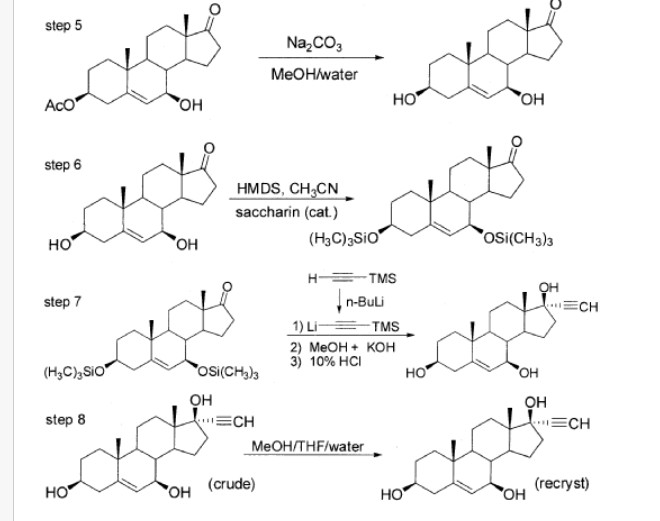
49] Example 7. Synthesis of 3β-acetoxy-androst-5-ene-17,17-ethylenedioxy: A 300L reactor was charged with 36 kg of triethylorthoformate, 20 kg of 3β-acetoxy-5-androsten-17-one, 12.6 kg of ethylene glycol and 400 g of p-toluenesulfonic acid. The mixture was heated to reflux under nitrogen until the reaction was complete (about 2-3 hours). The mixture was then cooled to 60 0C and 16 kg of anhydrous ethanol and 400 ml of pyridine were added. The resulting solution was transferred to a container and refrigerated overnight. The solids that formed were filtered and washed with 80 kg of 50% ethanol and dried at 40-50 0C to afford 18.5-21.0 kg (81.5-92.5%) of the title compound. [50] Example 8. Synthesis of 3β-acetoxy-androst-5-en-7-one-17,17-ethylenedioxy: A 500 L reactor was charged with 200 kg ethyl acetate and 25 kg of 3β-acetoxy-androst-5-en-17,17-ethylenedioxy. The mixture was stirred for 30 minutes whereupon 55 kg of 70% t-butyl peroxide and 9 kg of sodium bicarbonate were added. The reaction mixture was then cooled to 0 0C and 116 kg of 13% sodium perchlorate (aq.) was added over 10 hours so that a reaction temperature below 5 0C and pH between 7.5 and 8.5 were maintained. After the reaction was complete, the organic layer was separated and the aqueous phase was extracted with ethyl acetate (35 kg x 2). The combined organic phase was combined with a solution 33 kg of sodium sulfite in 167 kg of water, and the resulting mixture was stirred at 40 0C for 3 hours. The organic phase was washed with 50 kg of brine and concentrated to 55-60 kg whereupon 50 kg of methanol was added. After refrigeration overnight, a white solid was formed that was filtered and washed with 10 kg of methanol, and dried at 40-50 0C to yield 7.1-7.8 kg (27.4-30.1%) of the title compound.
[51] Example 9. Synthesis of 3β-acetoxy-androst-5-ene-17,17-ethylenedioxy-7β-ol. A 500 L reactor was charged with 48 kg of THF, 10 kg of 3β-acetoxy-androst-5-en-7-one-17,17-ethylenedioxy and a solution of 9.6 kg CeCI3-7H2O in 95 kg methanol. This mixture was cooled to 0 0C whereupon 2.0 kg of NaBH4 was added in batches over 3 hours in order to maintain the temperature below 5 0C. After stirring for 30 more minutes, 28 kg of acetone was added slowly in order to maintain the temperature below 5 0C, with stirring continued for another 30 minutes. To the mixture was added 240 kg water with stirring continued for 1 hour. The organic solvents were removed under vacuum and the residue was extracted with ethyl acetate (100 kg + 50 kg). The combined organic phase was washed with brine. Solvent was then removed to provide 8.6-8.9 kg (85.1-88.1 %) of the title compound. [52] Example 10. Synthesis of 3β-acetoxy-androst-5-en-17-one-7β-ol: A 500 L reactor was charged with 315 kg of acetone and 18 kg of 3β-acetoxy-androst-5-en-17,17-ethylenedioxy-7β-ol. The mixture was cooled to 5 0C and 2.34 kg of p-toluenesulfonic acid was added slowly to maintain the temperature below 10 0C. After stirring the mixture at 8-15 0C for 36-48 hours, 3.0 kg of sodium bicarbonate was added with stirring continued for 1 hour. Acetone was removed under vacuum, and to the residue was added 100 kg of water. The mixture was placed in a refrigerator overnight to give a white precipitate which was filtered to provide 33 kg (wet) of the title compound.
[53] Example 11. Synthesis of androst-5-en-17-one-3β,7β-diol: A 500 L reactor was charged 230 kg methanol, 33 kg (wet) 3β-acetoxy-7β-hydroxy-5-androsten-17-one, 108 kg water and 15 kg NaaCOβ. The mixture was heated to reflux for 3 hours. Methanol was removed under vacuum whereupon 250 kg of water was added to the residue. The mixture was put in refrigerator overnight to give a precipitate. The solids were collected by filtration, then washed with water and dried at 40-50 0C to yield 9.5-10.5 kg (67.9-75.0%) of the title compound as a white solid.
[54] Example 12. Purification of androst-5-en-17-one-3β,7β-diol: A 500 L reactor was charged with 20 kg crude 3β, 7β-dihydroxyandrost-5-en-17-one and 200 kg methanol and heated until all the solid dissolved. The solution was filtered while hot and after the filtrate cooled a white crystalline solid formed. The solids were collected by filtration, washed with small amount of methanol and dried at 40-50 0C. The solid was then refluxed in 50 kg of ethyl acetate for 20 minutes. After cooling the solid was filtered and dried at 40-50 0C under vacuum to provide 15.2 kg (76%) of purified title compound.
[55] Example 13. Synthesis of 3β,7β-bis-(trimethylsiloxy)-5-androsten-17-one: A mixture of 14.87 Kg of androst-5-en-17-one-3β,7β-diol, 23.8 Kg HMDS and 0.7 Kg saccharin catalyst in 100 L acetonitrile was heated to reflux for 8 hours with stirring under a nitrogen atmosphere. Liberated ammonia was purged under slight vacuum. The reaction volume was then reduced by distillation to collect 3OL of distillate (requires about 2 h). The reaction volume was further reduced to half of the original reaction volume by distillation under reduced pressure (700 mmHg), which requires about 2h of heating at 50 0C. The resulting uniform thick slurry is cooled to 5 0C (requires about 3 h), with additional acetonitrile added to maintain a minimum mixing volume, and held at that temperature for 1. The precipitated product was collected by filtration and dried at 45-50 0C under vacuum (29 mmHg) to a loss on drying (LOD) of not more than 1 % (requires 20 h) to provide 16 Kg (81 % yield) of the title compound (95% purity). [56] Example 14. Synthesis of 17α-ethynyl-5-androstene-3β,7β,17β-triol: To 11.02 Kg TMS-acetylene in 56.5 L tetrahydrofuran (THF) at -27 0C under a nitrogen atmosphere was added 8.51 L 10M n-BuLi. The n-butyl lithium was added very slowly to maintain a temperature at -7 to -27 0C (requires about 2 h) and the resulting reaction was stirred 10 min. at approximately 0°C to produce TMS-lithium-acetylide. To the TMS-lithium-acetylide solution was added a solution of 25.41 Kg of 3β,7β-bis-(trimethylsiloxy)-5-androsten-17-one in 95.3 L THF filtered through a 25 μm filter while allowing the reaction temperature to rise to 20-25 0C. After addition was completed, the reaction temperature was increased to 40-45 0C. To quench the reactor contents, 31.8 L of methanol was added over a period of about 1 h followed by 3.81 Kg KOH in 18.4 L of water giving a final reactor temperature of 50 0C. Liberated acetylene is purged under slight vacuum. The reactor contents were then concentrated by distillation at 80 0C for 1 h then under vacuum (175 mmHg) at about 70 0C (with an initial temperature of 25 0C to avoid bumping) to half of the original pot volume. The residue was cooled to about 10 0C and 35.0 Kg of deionized water was added, followed by 16.4 Kg 12N HCI while maintaining a pot temperature of about 10 0C and giving a final pH of 1. Additional 26.0 kg deionized water was added and the resulting mixture was stirred at about 5 0C for 1 h. The resulting slurry was filtered and washed with 75/25 mixture of methanol/water (16.9 L methanol, 5.6 L water). The collected solids were dried under vacuum (28 in Hg) at 45 0C for 12h for a loss on drying of no more than 0.5% to provide 9.6 Kg of the title compound (83% yield).
[57] Example 15. Recrystallization of 17α-ethynyl-5-androstene-3β,7β,17β-triol: Crude 9.6 Kg 17α-ethynyl-5-androstene-3β,7β,17β-triol prepared in
Example 14 was dissolved in refluxing 50/50 methanol/water (4.2 Kg methanol and 5.4 Kg water). To the solution was added 33.4 Kg methanol followed by 37.6 Kg of THF. The mixture was heated to reflux and stirring was continued until all solids have dissolved, whereupon 99.8 Kg of deionized water was added while maintaining a reactor temperature of 60-75 0C. The mixture was cooled to 0-5 0C over a period of 2 h and maintain at that temperature for 1 h while stirring was continued. The solids were recovered by filtration, washed with 9.6 Kg cold 50/50 methanol water and dried under vacuum (28 in Hg) at 50 0C for 8 h to provide 8.2 Kg of 17α-ethynyl-5-androstene-3β,7β,17β-triol. This first recrystallization is used to remove trace colored impurities from the initial product. A second recrystallization was conducted by heating the solid from the first recrystallization in ~10:1 methanohwater (145.8 Kg methanol and 18.2 Kg of water) to 80°C until all the solids have dissolved. The solution at 55-60 0C was filtered through a 25 μm filter to remove particulate impurities, whereupon 2.5 Kg of methanol at 55-60 0C (used to rinse the reactor) was added. Vacuum distillation at 125 mmHg at 70 0C was conducted until 0.9 to 1.2 times the volume of methanol that was added to the reactor was collected as distillate with water added as necessary to permit stirring (about 120-160 Kg water added). Final reaction volume was 200-225 L. The reactor mixture was cooled to 0-5 0C and maintained at that temperature for 1 h. The resulting slurry was filtered and the filter cake rinsed with 10 Kg deionized water and dried under vacuum (28 in Hg) at 50 0C for 12 h to a residual water content of less than 0.5%. This isolation procedure was used to reduce the THF content in the final product. The yield was 8.0 Kg of recrystallized title compound (83% yield).

[59] Example 16. Synthesis of 3β-acetoxy-androst-5-en-7-on-17-oxime: 3β-Acetoxy-androst-5-en-7,17-dione (45 g, 130 mmol) was dissolved in 800 ml_ methanol, 200 ml_ dichloromethane and 14.5g Et3N (144 mmol). To the solution at RT was added a solution of 10 g of hydroxylamine hydrochloride dissolved in 200 ml_ methanol. After stirring overnight, 200 ml_ of water was added followed by removal of volatile organics by evaporation under reduced pressure. To the resulting residue was added an additional 1 L of water to give a while solid that was filtered and washed well with water. Obtained was 45 g of crude title oxime in 95% purity by 1H-NMR, which was used in the next step without further purification.
[60] Example 17. Synthesis of 3β-acetoxy-androst-5-en-17-oxime-7β-ol: To a solution of 44 g of 3β-acetoxy-androst-5-en-7-on-17-oxime (100 mol%) in 800 ml_ methanol and 200 ml_ tetrahydrofuran was added 50 g of cerium chloride heptahydrate (110 mol%) in 20 ml_ of methanol. The resulting mixture was stirred until the solids were completely dissolved. To the solution cooled to about -5 0C was added 7 g sodium borohydride over 30 min. After stirring an additional 1.5 h at -5 0C, the reaction mixture was quenched with acetone (100 mL) and then allowed to warm to room temperature over a 30 min. period. The quenched reaction mixture was concentrated under vacuum to remove volatile organics. To the residue was added 800 mL of water followed by extraction with ethyl acetate (3 x 500 mL). The combined organic extracts were washed with brine, dried over Na2SO4, then concentrated to provide 42 g of the title compound as a white foam, which was used in the next step without further purification.. [61] Example 18. 3β-acetoxy-androst-5-en-17-one-7β-ol: To a solution of 42 g of 3β-acetoxy-androst-5-en-17-oxime-7β-ol (100 mol%) in 200 mL of ethanol was added 100 mL of water followed by 80 g (400 mol%) of sodium dithionite. The reaction was heated at 55 0C and stirred 16 h. After cooling, the reaction was concentrated under reduced pressure. The residue was diluted with 100 mL of water, and the resulting solid was collected by filtration and redissolved in 1 L dichloromethane. To the DCM solution was added 1 g activated carbon. After stirring overnight the mixture was filtered, and the resulting filtrate was washed with water, dried and concentrated to provide 25 g of crude product. Recrystallization from ethyl acetate gave 22g of the title compound. [62] Example 19. Estrogen receptor binding assay: A suitable example system is an estrogen receptor- kit manufactured by PanVera for ERβ, which contains recombinant estrogen receptor β ligand, FLUORMONE™ ES2 (ES2), a fluorescently labeled estrogen ligand, and appropriate buffer. The system was used in a fluorescence polarization competition assay in which a test article, such as a preparation of Compound 1 or a positive control displaces ES2 from its binding site. When bound to ERβ, ES2 tumbles slowly and has a high fluorescence polarization value. Unbound ES2 tumbles quickly and displays a low fluorescence polarization value. The change in polarization value in the presence of test compound then determines relative binding affinity of that test compound for ERβ as expressed by its IC50, which is the concentration of test compound that results in half-maximum shift in polarization. From IC50, K/ was calculated using the Cheng-Prusoff equation [Biochem. Pharmacol. 22: 3099-3108, (1973)]: K, = IC50Z(I + D/Kd) where D is the concentration of ES2 and Kd is the dissociation constant for binding of ES2 to ERβ (Kd = 4 ± 2 nM).
[63] The competition assay was conducted according to the manufacturer’s protocol (Lit. No. L0712, Rev. 10/03). Assay reagents used were bacculovirus expressed, full length human ERβ 4.5 pmol/μL in 50 mM Bis-Tris Propane (pH = 9), 400 mM KCI, 2 mM DTT, 1 mM EDTA, 10% glycerol, ES2 400 nM in methanol and E2 screening buffer consisting of 100 mM potassium phosphate (pH = 7.4), 100 μg/mL BGG, 0.02% NaN3. The ES2-ERβ complex was formed with 20 μL 20 nM ERβ (0.020 pmol/μL) and 20 μl_ 2 nM ES2 (0.002 pmol/μL). Positive control (estrogen) solution was prepared using 20 μL of a 1.0 mM stock solution in DMSO and 80 μL DMSO. In a first dilution, 50 μL of this solution is added to 50 μL of DMSO, which is followed by dilutions in 2-fold increments, to provide for a 14 point dilution curve. In a second dilution, to 4 μL of each DMSO solution from the first dilution is added 400 μL of ES2 screening buffer. To 20 μL of test compound, serially diluted in the manner described immediately above, in a 384 well black flat bottom microtiter plate, was added 20 μL of the ES2-ERβ complex (0.5% final DMSO concentration) followed by incubation in the dark at 20-30 0C for 1-4 h. Test compound was treated similarly except the starting concentration was 10 mM. Fluorescence polarization values are obtained using 485 nm excitation and 530 nm emission interference filters. Binding assay for ERa was conducted as for ERβ except bacculovirus expressed, full length human 2.8 pmol/μL ERa was used as reagent with the ERα-ES2 complex formed from 20 μL 30 nM (0.030 pmol/μL) and 20 μL 2 nM ES2 (0.002 pmol/μL). [64] Example 20. AR, GR and PR receptor binding assays. The AR competition assay was conducted according to the manufacturer’s protocol (Lit. No. L0844, Rev. 05/02) in the manner described for ERβ with the following exceptions. Reagents used were recombinant rat androgen receptor ligand binding domain tagged with His and GST [AR-LBD (His-GST)] 0.38 pmol/μL in buffer containing protein stabilizing agents and glycerol (pH = 7.5), 200 nM FLUORMONE™ AL Green, which is a fluorescently labeled androgen ligand, in 20 mM Tris, 90% methanol and AR screening buffer containing stabilizing agents and glycerol (pH = 7.5) with 2 μL of 1 mM DTT added per mL screening buffer (AR screening buffer 2 mM in added DTT) was used as the reagents. The AL Green-AR complex was formed with 20 μL 50 nM AR (0.050 pmol/μL) and 20 μL 2 nM AL Green (0.002 pmol/μL). K, was calculated using, for the dissociation constant for binding of the fluorophore to receptor, Kd = 20 ± 10 nM. [65] The PR competition assay was conducted according to the manufacturer’s protocol (Lit. No. L0503, Rev. 06/03) in the manner described for ERβ with the following exceptions. Reagents used were recombinant human progesterone receptor ligand binding domain tagged with GST [PR-LBD (GST)] 3.6 pmol/μL in 50 mM Tris (pH = 8.0), 500 mM KCI, 1 M urea, 5 mM DTT, 1 mM EDTA and 50% glycerol, 400 nM FLUORMONE™ PL Green, which is a fluorescently labeled progesterone ligand, in 20 mM Tris 90% methanol (pH = 6.8) and PR screening buffer containing protein stabilizing agents and glycerol (pH = 7.4) with 4 μL of 1 mM DTT added per mL screening buffer (PR screening buffer 4 mM in added DTT). The PL Green-PR complex was formed with 20 μL 80 nM PR (0.080 pmol/μL) and 20 μL 4 nM PL Green (0.004 pmol/μL). K, was calculated using, for the dissociation constant for binding of the fluorophore to receptor, Kd = 40 nM.
[66] The GR competition assay was conducted according to the manufacturer’s protocol (Lit. No. L0304, Rev. 12/01) in the manner described for ERβ with the following exceptions. Reagents used were recombinant full length human glucocorticoid receptor 0.240 pmol/μL in 10 mM phosphate buffer (pH = 7.4), 200 mM Na2MoO4, 0.1 mM EDTA, 5 mM DTT and 10% glycerol, 200 nM FLUORMONE™ GS1 , which is a fluorescently labeled glucocorticoid ligand, in 75% methanol, and GR screening buffer containing 100 mM potassium phosphate (pH = 7.4), 200 mM Na2MoO4, 1 mM EDTA, 20% DMSO with 5 μL of 1 mM DTT per mL screening buffer added (GR screening buffer 5 mM in added DTT), 1 mM GR stabilizing peptide, which is a co-activator related peptide [see Chang, CY. MoI. Cell Biol. 19: 8226-36 (1999)] in 10 mM phosphate buffer (pH = 7.4) and 1 M DTT in water were used as the reagents. To 2.5 mL of the GR screening buffer is added 2.5 mL GR stabilizing peptide solution and 125 μL of 1 M DTT to form the GR stabilizing peptide-glucocorticoid receptor complex. Order of addition to the microtiter plate was 20 μL test compound in 1 % DMSO, 10 μL of 16 nM GR (0.016 pmol/μL) and finally 10 μL of 4 nM GS1 , followed by incubation in the dark at 20-30 0C for 4 h (total experiment time should not exceed 7 h). K, was calculated using, for the dissociation constant for binding of the fluorophore to receptor, Kd = 0.3 ± 0.1 nM.
[67] Example 21. Impurity profiling of 17α-ethynyl-5-androstene-3β,7β,17β- triol (Compound 1) preparations.
[68] Process A: HPLC conditions for Impurity profiling of Compound 1 preparations form Process B are give in Table 1.
[69]
Table 1. HPLC Conditions for Impurity Profiling of Compound 1 Preparations form Process A
PATENT
Hollis-Eden Pharmaceuticals, Inc. WO2008039566
Zhejiang Xianju Junye Pharmaceutical Co., Ltd.; Jiangxi Junye Biopharmaceutical Co., Ltd.CN114478672
Harbor BioSciences, Inc.US20100227841
Harbor BioSciences, Inc. US20100222315 A1
Hollis-Eden Pharmaceuticals, Inc. US20100075937
Neurmedix Inc. US20080153792 A1
Hollis-Eden Pharmaceuticals, Inc.; Harbor Therapeutics, Inc. US20080146532 A1
Harbor Therapeutics, Inc.; Neurmedix, Inc. US20160045516 A1
Harbor Therapeutics, Inc. US8354396 B2
Hollis-Eden Pharmaceuticals, Inc. WO2009149392
| Clinical data | |
|---|---|
| Other names | NE3107; NE-3107; HE3286; HE-3286; 17α-Ethynyl-5-androstene-3β,7β,17β-triol; |
| Legal status | |
| Legal status | Investigational |
| Identifiers | |
| showIUPAC name | |
| CAS Number | 1001100-69-1 |
| PubChem CID | 16739648 |
| DrugBank | DB05212 |
| ChemSpider | 20571043 |
| UNII | PH8858757I |
| KEGG | D12932 |
| ChEMBL | ChEMBL4297284 |
| CompTox Dashboard (EPA) | DTXSID501267252 |
| Chemical and physical data | |
| Formula | C21H30O3 |
| Molar mass | 330.468 g·mol−1 |
| 3D model (JSmol) | Interactive image |
| showSMILES | |
| showInChI | |
References
- ^ Jump up to:a b c “Bezisterim”. AdisInsight. 5 September 2024. Retrieved 26 September 2024.
- ^ Reading, Chris L; Ahlem, Clarence N; Parameswaran, Narayanan (December 2021). “Rationale for an anti-inflammatory insulin sensitizer in a phase 3 Alzheimer’s disease trial”. Alzheimer’s & Dementia. 17 (S9). doi:10.1002/alz.057438.
- ^ Stoiljkovic, Milan; Horvath, Tamas L.; Hajós, Mihály (July 2021). “Therapy for Alzheimer’s disease: Missing targets and functional markers?”. Ageing Research Reviews. 68: 101318. doi:10.1016/j.arr.2021.101318. PMC 8131215. PMID 33711510.
- ^ Balzano, Tiziano; Esteban-García, Noelia; Blesa, Javier (2 January 2023). “Neuroinflammation, immune response and α-synuclein pathology: how animal models are helping us to connect dots”. Expert Opinion on Drug Discovery. 18 (1): 13–23. doi:10.1080/17460441.2023.2160440. PMID 36538833. S2CID 254959175.
- ^ Liu, Ping; Wang, Yunyun; Sun, Yan; Peng, Guoping (April 2022). “Neuroinflammation as a Potential Therapeutic Target in Alzheimer’s Disease”. Clinical Interventions in Aging. 17: 665–674. doi:10.2147/CIA.S357558. PMC 9064449. PMID 35520949.
- ^ Xi, Yilong; Chen, Yun; Jin, Yi; Han, Guochen; Song, Mingjie; Song, Tingting; Shi, Yang; Tao, Ling; Huang, Zewei; Zhou, Jianping; Ding, Yang; Zhang, Huaqing (May 2022). “Versatile nanomaterials for Alzheimer’s disease: Pathogenesis inspired disease-modifying therapy”. Journal of Controlled Release. 345: 38–61. doi:10.1016/j.jconrel.2022.02.034. PMID 35257810. S2CID 247285338.
- ^ “U.S. Clinical Trial: Neurological Associates of West Los Angeles Listed a New Clinical Trial to Study Insulin-sensitizing NE3107 in Improving Sleep and Fatigue in Subjects With Traumatic Brain Injury.” Contify Life Science News, 1 Aug. 2023, p. NA. Gale OneFile: Health and Medicine, link.gale.com/apps/doc/A759542006/HRCA?u=anon~bb46c85&sid=sitemap&xid=0c315c7e. Accessed 14 Dec. 2023.
/////Bezisterim, HE 3286, NE 3107, Triolex, NE3107, NE-3107, HE3286, HE-3286, PHASE 2
Bexicaserin


Bexicaserin
CAS 2035818-24-5
| Formula | C15H19F2N3O |
|---|---|
| Molar mass | 295.334 g·mol−1 |
(3R)-N-(2,2-difluoroethyl)-3-methyl-1,10-diazatricyclo[6.4.1.04,13]trideca-4,6,8(13)-triene-5-carboxamide
- (3R)-N-(2,2-difluoroethyl)-3-methyl-1,10-diazatricyclo[6.4.1.04,13]trideca-4,6,8(13)-triene-5-carboxamide
- (7R)-N-(2,2-difluoroethyl)-7-methyl-1,2,3,4,6,7-hexahydro[1,4]diazepino[6,7,1-hi]indole-8-carboxamide
- Pyrrolo[3,2,1-jk][1,4]benzodiazepine-8-carboxamide, N-(2,2-difluoroethyl)-1,2,3,4,6,7-hexahydro-7-methyl-, (7R)-
Bexicaserin is under investigation in clinical trial NCT05626634 (Open-label, Long-term Safety Study of LP352 in Subjects With Developmental and Epileptic Encephalopathy).
PATENT
Arena Pharmaceuticals, Inc.WO2023172685
Arena Pharmaceuticals, Inc., WO2016176177
https://patents.google.com/patent/WO2016176177A1/en
Example 1: Syntheses of Compounds of Table A Example 1.1: Preparation of N-(2,2-difluoroethyl)-7-methyl-l,2,3,4,6,7-hexahydro- [l,4]diazepino[6,7,l-hi]indole-8-carboxamide (Compound 1)
Step A: Preparation of methyl 3-formyl-lH-indole-4-carboxylate
2M solution of oxalyl dichloride in dichloromethane (DCM) (1.712 ml, 3.425 mmol) was added to DCM (15 mL) cooled down in an ice-water bath. N,N-dimethylformamide (0.250 g, 3.425 mmol) was added dropwise under nitrogen. The reaction mixture was stirred at 0 °C for 30 min. Then methyl lH-indole-4-carboxylate (0.5 g, 2.854 mmol) in DCM (10 mL) was added. The reaction mixture was warmed to room temperature and stirred for 1 h. The solvent was removed. THF (15 mL) and 20% aqueous ammonium acetate were added. The reaction mixture was stirred under reflux (-70 °C) for 30 min. The reaction mixture was then extracted with ethyl acetate. The combined organics (organic phases) were concentrated; the residue was purified by silica gel column chromatography with 90% ethyl acetate/hexanes to give the title compound (551 mg, 95.0 %) as white solid. LCMS m/z = 204.2 [M+H]+; Ή NMR (400 MHz, CDC13) δ ppm 4.00 (s, 3H), 7.34 (t, / = 7.8 Hz, 1H), 7.63 (dd, / = 8.0 and 1.0 Hz, 1H), 7.87 (dd, / = 7.5 and 1.0 Hz, 1H), 8.10 (d, / = 3.2 Hz, 1H), 9.08 (br s, 1H), 10.53 (s, 1H).
Step B: Preparation of methyl 3-methyl-lH-indole-4-carboxylate
To a stirred solution of methyl 3-formyl-lH-indole-4-carboxylate (551 mg, 2.712 mmol) in DMF (8 mL) was added 4-methylbenzenesulfonohydrazide (0.657 g, 3.525 mmol) followed by p- toluenesulfonic acid monohydrate (77.37 mg, 0.407 mmol) and tetramethylene sulfone (sulfolane, 8 mL). The reaction mixture was stirred at 100 °C for 1 h, cooled to room temperature. Sodium cyanoborohydride (0.682 g, 10.85 mmol) was added portionwise. Then the mixture was stirred at 100 °C for 2 h. The reaction mixture was cooled down, diluted with water, and extracted with 50% ethyl acetate in hexanes. The organics were concentrated; the residue was purified by silica gel column chromatography with 20% ethyl acetate hexanes to give the title compound (355 mg, 69.2 %) as off- white solid. LCMS m/z = 190.4 [M+H]+; Ή NMR (400 MHz, CDC13) δ ppm 2.41 (d, / = 1.0 Hz, 3H), 3.96 (s, 3H), 7.07-7.10 (m, 1H), 7.18 (t, / = 7.8 Hz, 1H), 7.50 (dd, / = 8.0 and 1.0 Hz, 1H), 7.64 (dd, J = 7.5 and 1.0 Hz, 1H), 8.12 (bs, 1H).
Step C: Preparation of methyl 3-methylindoline-4-carboxylate
To a solution of methyl 3-methyl-lH-indole-4-carboxylate (1.253 g, 6.622 mmol) in TFA (trifluoroacetic acid) (4.06 mL) in an ice-water bath was added triethylsilane (4.231 ml, 26.49 mmol) drop wise under N2. The reaction mixture was warmed to room temperature and stirred overnight. The mixture was concentrated and added water. After adjusting pH to 8 with saturated aqueous NaHC03 solution, the mixture was extracted with ethyl acetate. The combined organics were concentrated. The residue was purified by silica gel column chromatography with 25% ethyl acetate/hexanes (column prewashed with 0.1% Et3N/hexanes) to give the title compound (1.013 g, 80.0 %) as orange-red oil. LCMS m/z = 192.2 [M+H]+; Ή NMR (400 MHz, CDC13) δ ppm 1.25 (d, J = 6.9 Hz, 3H), 3.25 (dd, J = 8.6 and 1.7 Hz, 1H), 3.68 (t, / = 8.5 Hz, 1H), 3.83-3.92 (m, 1H), 3.90 (s, 3H), 6.78 (dd, / = 7.8 and 1.0 Hz, 1H), 7.07 (t, / = 7.8 Hz, 1H), 7.34 (dd, / = 7.8 and 1.0 Hz, 1H).
Step D: Preparation of 2-tert-butyl 8-methyl 7-methyl-3,4,6,7-tetrahydro- [l,4]diazepino[6,7,l-hi]indole-2,8(lH)-dicarboxylate
A mixture of methyl 3-methylindoline-4-carboxylate (1.013 g, 5.297 mmol) and 2- bromoethanamine hydrobromide (1.302 g, 6.357 mmol) was heated at 115 °C overnight. The residue was dissolved in methanol and purified by preparative HPLC (5-60% CH3CN/H20 with 0.1% TFA over 30 min). The combined fractions were then concentrated to give methyl l-(2-aminoethyl)-3- methylindoline-4-carboxylate. LCMS m/z = 235.4 [M+H]+; Ή NMR (400 MHz, CDC13) δ ppm 1.24 (d, / = 7.0 Hz, 3H), 2.92-3.00 (m, 3H), 3.25 (dd, / = 8.5 and 1.7 Hz, 1H), 3.30-3.40 (m, 2H), 3.80-3.90 (m, 1H), 3.88 (s, 3H), 6.64 (d, / = 7.7 Hz, 1H), 7.11 (t, / = 7.8 Hz, 1H), 7.27 (dd, / = 7.9 and 0.8 Hz, 1H).
Methyl l-(2-aminoethyl)-3-methylindoline-4-carboxylate obtained above was dissolved in methanol (10 mL), 37% formaldehyde in water (1.183 ml, 15.89 mmol) was added, followed by TFA (1.217 ml, 15.89 mmol). The reaction mixture was heated at 80 °C for lh and concentrated. The residue was dissolved in THF (8 mL), and added saturated aqueous NaHC03 (8 mL) solution and di-tert-butyl dicarbonate (0.776 ml, 5.297 mmol). The reaction mixture was stirred at room temperature overnight, diluted with water, and extracted with ethyl acetate. The combined organics were concentrated. The residue was purified by silica gel column chromatography with 25% ethyl acetate/hexanes to give the title compound (1.212 g, 66.0 %) as colorless oil. LCMS m/z = 347.2 [M+H]+; Ή NMR (400 MHz, CDC13) δ ppm rotamers 1.20 (d, / = 6.9 Hz, 3H), 1.35-1.45 (br, 9H), 2.80-2.95 (m, 1H), 3.08-3.18 (m,lH), 3.24-3.35 (m, 2H), 3.35-3.45 (m, 1H), 3.85-3.95 (m, 1H), 3.86 (s, 3H), 3.97-4.08 (m, 2H), 4.62-4.88 (m, 1H), 6.91-7.06 (m, 1H), 7.36 (d, J = 8.0 Hz, 1H).
Step E: Preparation of 2-(tert-butoxycarbonyl)-7-methyl-l,2,3,4,6,7-hexahydro- [l,4]diazepino[6,7,l-hi]indole-8-carboxylic acid
To a solution of 2-tert-butyl 8-methyl 7-methyl-3,4,6,7-tetrahydro-[l,4]diazepino[6,7,l- hi]indole-2,8(lH)-dicarboxylate (1.212 g, 3.499 mmol) in dioxane (10 mL) was added a 1M solution of lithium hydroxide in water (13.99 ml, 13.99 mmol). The reaction mixture was stirred at 80 °C for 2 h. Organic solvent was evaporated. The residue was diluted with water, adjusted pH to 3-4 with aqueous 5% citric acid. The off-white precipitate was collected and dried to give the title compound (1.116 g, 96.0 %) as off-white solid. LCMS m/z = 333.4 [M+H]+.
Step F: Preparation of N-(2,2-difluoroethyl)-7-methyl-l,2,3,4,6,7-hexahydro- [l,4]diazepino[6,7,l-hi]indole-8-carboxamide
To the solution of 2-(tert-butoxycarbonyl)-7-methyl- 1,2, 3,4,6, 7-hexahydro- [l,4]diazepino[6,7,l-hi]indole-8-carboxylic acid (25 mg, 75.21 μιηοΐ), HATU (42.87 mg, 0.113 mmol) and triethylamine (20.97 μί, 0.150 mmol) in DMF (2 mL) was added 2,2-difluoroethanamine (9.146 mg, 0.113 mmol). The reaction was stirred at room temperature overnight. The mixture was purified by semi preparative HPLC (15-85% CH3CN/H20 with 0.1% TFA over 30 min). The combined fractions were lyophilized to give tert-butyl 8-((2,2-difluoroethyl)carbamoyl)-7-methyl-3,4,6,7-tetrahydro- [l,4]diazepino[6,7,l-hi]indole-2(lH)-carboxylate, which was dissolved in dioxane (0.5 mL). A solution of 4M HC1 in dioxane (0.5 mL) was added. The reaction mixture was stirred at room temperature for 4 h and concentrated. The residue was purified by semi preparative HPLC (5-60% CH3CN/H20 with 0.1% TFA over 30 min). The combined fractions were lyophilized to give the title compound as TFA salt (17 mg, 55.2 %). LCMS m z = 296.2 [M+H]+; Ή NMR (400 MHz, CD3OD) δ ppm 1.18 (d, / = 6.9 Hz, 3H), 3.10-3.20 (m, 1H), 3.26-3.40 (m, 2H), 3.40-3.64 (m, 3H), 3.65-3.85 (m, 3H), 4.21 (d, / = 14.9 Hz, 1H), 4.40 (d, J = 14.9 Hz, 1H), 6.00 (tt, J = 56.0 and 3.9 Hz, 1H), 6.99 (d, J = 7.8 Hz, 1H), 7.12 (d, / = 7.9 Hz, 1H).
Example 1.2: Preparation of (S)- N-(2,2-difluoroethyl)-7-methyl-l,2,3,4,6,7-hexahydro- [l,4]diazepino[6,7,l-hi]indole-8-carboxamide (Compound 2) and (R)- N-(2,2-difluoroethyl)-7- methyl-l,2,3,4,6,7-hexahydro-[l,4]diazepino[6,7,l-hi]indole-8-carboxamide (Compound 3)
Enantiomers of N-(2,2-difluoroethyl)-7-methyl- 1,2,3, 4,6, 7-hexahydro-[l, 4]diazepino[6,7,l-hi]indole-8- carboxamide were obtained by chiral HPLC separation using following conditions. Column: Chiralpak IC column 250 x 20 mm (L x I.D.)
Flow: 12 mL/min
Eluent: 12 % ethanol/8 % mTBE/80 % hexanes with 0.1 % Et3N
Detector: UV 254 nm
Retention time: 1st eluting enantiomer 22.0 min, 2nd eluting enantiomer 23.5 min
After separation, both enantiomers were further purified by semi preparative HPLC (5-60%
CH3CN/H20 with 0.1% TFA (trifluoroacetic acid) over 30 min). The combined fractions were lyophilized to give the title compounds as the TFA salt.
SCHEME

Bexicaserin (INNTooltip International Nonproprietary Name; developmental code names LP352 and AN352) is a selective serotonin 5-HT2C receptor agonist which is under development for the treatment of seizures in developmental disabilities such as Dravet syndrome and Lennox-Gastaut syndrome.[1][3][2] It is taken by mouth.[2][1]
The drug is highly selective for the serotonin 5-HT2C receptor, with negligible affinity for the serotonin 5-HT2A and 5-HT2B receptors.[2] Because it does not activate the serotonin 5-HT2B receptor, bexicaserin is not expected to pose a risk of cardiac valvulopathy, unlike the existing agent fenfluramine.[2]
As of October 2024, bexicaserin is in phase 3 clinical trials for treatment of developmental disabilities.[1][3] It is being developed by Longboard Pharmaceuticals.[1][3]
The activation of 5HT2c receptors has been shown to reduce epileptic seizure activity by inhibiting CaV3 calcium channels which mediate the T-type calcium current.[4] CaV3 calcium channels facilitate high frequency burst firing in princible neurons of the subiculum. This firing pattern is upregulated following status epilepticus, with these hyperactive neurons often serving as the initiation point for seizures.[5][6][7]
References
- ^ Jump up to:a b c d e f “Bexicaserin – Longboard Pharmaceuticals”. AdisInsight. 16 October 2024. Retrieved 29 October 2024.
- ^ Jump up to:a b c d e f Dell’isola GB, Verrotti A, Sciaccaluga M, Roberti R, Parnetti L, Russo E, et al. (June 2024). “Evaluating bexicaserin for the treatment of developmental epileptic encephalopathies”. Expert Opinion on Pharmacotherapy. 25 (9): 1121–1130. doi:10.1080/14656566.2024.2373350. PMID 38916481.
- ^ Jump up to:a b c “Delving into the Latest Updates on Bexicaserin with Synapse”. Synapse. 28 October 2024. Retrieved 29 October 2024.
- ^ Petersen AV, Jensen CS, Crépel V, Falkerslev M, Perrier JF (2017). “Serotonin Regulates the Firing of Principal Cells of the Subiculum by Inhibiting a T-type Ca2+ Current”. Frontiers in Cellular Neuroscience. 11: 60. doi:10.3389/fncel.2017.00060. PMC 5339341. PMID 28326015.
- ^ Menendez de la Prida L, Gal B (June 2004). “Synaptic contributions to focal and widespread spatiotemporal dynamics in the isolated rat subiculum in vitro”. The Journal of Neuroscience. 24 (24): 5525–36. doi:10.1523/JNEUROSCI.0309-04.2004. PMC 6729319. PMID 15201325.
- ^ Su H, Sochivko D, Becker A, Chen J, Jiang Y, Yaari Y, et al. (May 2002). “Upregulation of a T-type Ca2+ channel causes a long-lasting modification of neuronal firing mode after status epilepticus”. The Journal of Neuroscience. 22 (9): 3645–55. doi:10.1523/JNEUROSCI.22-09-03645.2002. PMC 6758371. PMID 11978840.
- ^ Cohen I, Navarro V, Clemenceau S, Baulac M, Miles R. On the origin of interictal activity in human temporal lobe epilepsy in vitro. Science. 2002 Nov 15;298(5597):1418-21. doi: 10.1126/science.1076510. PMID 12434059.
| Clinical data | |
|---|---|
| Other names | LP352; LP-352; AN352; AN-352 |
| Routes of administration | Oral[1] |
| Drug class | Serotonin 5-HT2C receptor agonist[1][2] |
| Pharmacokinetic data | |
| Elimination half-life | 5–7 hours[2] |
| Identifiers | |
| showIUPAC name | |
| CAS Number | 2035818-24-5 |
| PubChem CID | 122662787 |
| DrugBank | DB18885 |
| ChemSpider | 129309383 |
| UNII | R8XR1D6SCB |
| KEGG | D13035 |
| ChEMBL | ChEMBL5314507 |
| Chemical and physical data | |
| Formula | C15H19F2N3O |
| Molar mass | 295.334 g·mol−1 |
| 3D model (JSmol) | Interactive image |
| showSMILES | |
| showInChI | |
////Bexicaserin, PHASE 2, LP 352, LP-352, AN 352, AN-352
Zelatriazin


Zelatriazin,
C18H15F3N4O3, 392.3 g/mol
1929519-13-0
NBI-1065846 or TAK-041
Phase 2
(S)-2-(4-oxobenzo[d][1,2,3]triazin-3(4H)-yl)-N-(1-(4-(trifluoromethoxy)phenyl)ethyl)acetamide
Zelatriazin (NBI-1065846 or TAK-041) is a small-molecule agonist of GPR139. It was developed for schizophrenia and anhedonia in depression but trials were unsuccessful and its development was discontinued in 2023.[1][2][3][4][5][6][7]
SCHEME

SYN
WO2016081736
https://patentscope.wipo.int/search/en/detail.jsf?docId=WO2016081736&_cid=P21-M0X9BK-38013-1
Example 2: (S)-2-(4-oxobenzo[d][l,2,3]triazin-3(4H)-yl)-N-(l-(4-(trifluoromethoxy)phenyl)ethyl)acetamide
[0166] To a vial containing 2-(4-oxobenzo[d][l,2,3]triazin-3(4H)-yl)acetic acid (15 mg, 0.073 mmol), HOBT (15 mg, 0.095 mmol) and EDC (21 mg, 0.110 mmol) was added DMF (244 μΕ). After stirring at RT for 5 min, (S)- 1 -(4-(trifluoromethoxy)phenyl)ethanamine (18 mg, 0.088 mmol) and DIPEA (64, 0.366 mmol) were added. The reaction mixture was
allowed to stir at RT for 1 h then water was added (5 mL). The solid was filtered off and washed with water to yield the title compound as a white solid (20 mg, 71 % yield). XH NMR
(500 MHz, DMSO-i¾) δ ppm 1.40 (d, J=6.8 Hz, 3 H), 4.98 (quin, J=7.1 Hz, 1 H), 5.09 (s, 2
H), 7.33 (d, J=7.8 Hz, 2 H), 7.44 – 7.49 (m, 2 H), 7.93 – 7.98 (m, 1 H), 8.09 – 8.15 (m, 1 H),
8.21 – 8.29 (m, 2 H), 8.85 (d, J=7.8 Hz, 1 H); ESI-MS m/z [M+H]+ 393.9.
REF
Takeda Pharmaceutical Company Limited, WO2016081736
WO2022058791
Journal of Medicinal Chemistry (2021), 64(15), 11527-11542
Publication Name: Journal of Medicinal Chemistry, Publication Date: 2023-10-13, PMID: 37830160
DOI: 10.1021/acs.jmedchem.3c01034
PATENT
https://patents.google.com/patent/US9556130B2/en
Example 2(S)-2-(4-oxobenzo[d][1,2,3]triazin-3(4H)-yl)-N-(1-(4-(trifluoromethoxy)phenyl)ethyl)acetamide

To a vial containing 2-(4-oxobenzo[d][1,2,3]triazin-3(4H)-yl)acetic acid (15 mg, 0.073 mmol), HOBT (15 mg, 0.095 mmol) and EDC (21 mg, 0.110 mmol) was added DMF (244 μL). After stirring at RT for 5 min, (S)-1-(4-(trifluoromethoxy)phenyl)ethanamine (18 mg, 0.088 mmol) and DIPEA (64, 0.366 mmol) were added. The reaction mixture was allowed to stir at RT for 1 h then water was added (5 mL). The solid was filtered off and washed with water to yield the title compound as a white solid (20 mg, 71% yield). 1H NMR (500 MHz, DMSO-d6) δ ppm 1.40 (d, J=6.8 Hz, 3H), 4.98 (quin, J=7.1 Hz, 1H), 5.09 (s, 2H), 7.33 (d, J=7.8 Hz, 2H), 7.44-7.49 (m, 2H), 7.93-7.98 (m, 1H), 8.09-8.15 (m, 1H), 8.21-8.29 (m, 2H), 8.85 (d, J=7.8 Hz, 1H); ESI-MS m/z [M+H]+ 393.9.
PATENT
| Clinical data | |
|---|---|
| Other names | NBI-1065846; TAK-041 |
| Legal status | |
| Legal status | Investigational |
| Identifiers | |
| showIUPAC name | |
| CAS Number | 1929519-13-0 |
| PubChem CID | 121349608 |
| Chemical and physical data | |
| Formula | C18H15F3N4O3 |
| Molar mass | 392.338 g·mol−1 |
References
- ^ Kamel, Amin; Bowlin, Steve; Hosea, Natalie; Arkilo, Dimitrios; Laurenza, Antonio (February 2021). “In Vitro Metabolism of Slowly Cleared G Protein–Coupled Receptor 139 Agonist TAK-041 Using Rat, Dog, Monkey, and Human Hepatocyte Models (HepatoPac): Correlation with In Vivo Metabolism”. Drug Metabolism and Disposition. 49 (2): 121–132. doi:10.1124/dmd.120.000246. PMID 33273044. S2CID 227282766.
- ^ Schiffer, Hans; Atienza, Josephine; Reichard, Holly; Mulligan, Victoria; Cilia, Jackie; Monenschein, Holger; Collia, Deanna; Ray, Jim; Kilpatrick, Gavin; Brice, Nicola; Carlton, Mark; Hitchcock, Steve; Corbett, Ged; Hodgson, Robert (18 May 2020). “S180. The Selective Gpr139 Agonist Tak-041 Reverses Anhedonia and Social Interaction Deficits in Rodent Models Related to Negative Symptoms in Schizophrenia”. Schizophrenia Bulletin. 46 (Supplement_1): S106–S107. doi:10.1093/schbul/sbaa031.246. PMC 7234360.
- ^ Yin, Wei; Han, David; Khudyakov, Polyna; Behrje, Rhett; Posener, Joel; Laurenza, Antonio; Arkilo, Dimitrios (August 2022). “A phase 1 study to evaluate the safety, tolerability and pharmacokinetics of TAK-041 in healthy participants and patients with stable schizophrenia”. British Journal of Clinical Pharmacology. 88 (8): 3872–3882. doi:10.1111/bcp.15305. PMC 9544063. PMID 35277995. S2CID 247407736.
- ^ Rabiner, Eugenii A.; Uz, Tolga; Mansur, Ayla; Brown, Terry; Chen, Grace; Wu, Jingtao; Atienza, Joy; Schwarz, Adam J.; Yin, Wei; Lewis, Yvonne; Searle, Graham E.; Dennison, Jeremy M. T. J.; Passchier, Jan; Gunn, Roger N.; Tauscher, Johannes (June 2022). “Endogenous dopamine release in the human brain as a pharmacodynamic biomarker: evaluation of the new GPR139 agonist TAK-041 with [11C]PHNO PET”. Neuropsychopharmacology. 47 (7): 1405–1412. doi:10.1038/s41386-021-01204-1. PMC 9117280. PMID 34675381.
- ^ Reichard, Holly A.; Schiffer, Hans H.; Monenschein, Holger; Atienza, Josephine M.; Corbett, Gerard; Skaggs, Alton W.; Collia, Deanna R.; Ray, William J.; Serrats, Jordi; Bliesath, Joshua; Kaushal, Nidhi; Lam, Betty P.; Amador-Arjona, Alejandro; Rahbaek, Lisa; McConn, Donavon J.; Mulligan, Victoria J.; Brice, Nicola; Gaskin, Philip L. R.; Cilia, Jackie; Hitchcock, Stephen (12 August 2021). “Discovery of TAK-041: a Potent and Selective GPR139 Agonist Explored for the Treatment of Negative Symptoms Associated with Schizophrenia”. Journal of Medicinal Chemistry. 64 (15): 11527–11542. doi:10.1021/acs.jmedchem.1c00820. PMID 34260228. S2CID 235908256.
- ^ Münster, Alexandra; Sommer, Susanne; Kúkeľová, Diana; Sigrist, Hannes; Koros, Eliza; Deiana, Serena; Klinder, Klaus; Baader-Pagler, Tamara; Mayer-Wrangowski, Svenja; Ferger, Boris; Bretschneider, Tom; Pryce, Christopher R.; Hauber, Wolfgang; von Heimendahl, Moritz (August 2022). “Effects of GPR139 agonism on effort expenditure for food reward in rodent models: Evidence for pro-motivational actions”. Neuropharmacology. 213: 109078. doi:10.1016/j.neuropharm.2022.109078. PMID 35561791. S2CID 248574904.
- ^ Taylor, Nick Paul (10 November 2023). “Neurocrine hit with one-two punch as Takeda and Xenon pacts deliver midphase flops”. Fierce Biotech. Retrieved 4 December 2023.
//////Zelatriazin, 1929519-13-0, NBI-1065846, TAK-041, Phase 2
EIDD-2173, ATI-2173, Fosclevudine alafenamide
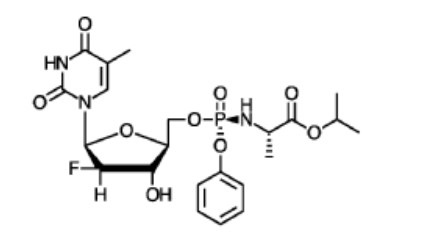

EIDD-2173; also known as ATI-2173
Fosclevudine alafenamide
Phase 2
| Molecular Weight | 529.45 |
|---|---|
| Formula | C22H29FN3O9P |
| CAS No. | 1951476-79-1 |
Hepatitis B virus (HBV) is an infectious disease that targets the liver resulting in either an acute infection, with symptoms arising in 45 to 160 days, or a chronic infection, which 350 million people worldwide are affected by. Estimates indicate that 600,000 deaths occur each year as a result of consequences related to HBV infection. HBV possesses a 3.2- kb relaxed circular DNA (rcDNA) genome that is used to form covalently closed circular DNA (cccDNA) in a host cell. The cccDNA is then transcribed by RNA polymerase II, a host DNA-dependent RNA polymerase, to produce pregenomic RNA (pgRNA). The pgRNA is then used by the virally encoded reverse transcriptase to form rcDNA. The goals of current treatments for chronic HBV infections are to reduce HBV replication and reduce liver damage.
Current treatments for chronic HBV infections include pegylated alpha interferon and nucleoside/nucleotide reverse transcriptase inhibitors (NRTIs). NRTIs are converted to their corresponding 5 ‘-triphosphate, or diphosphate in the case of phosphonate containing NRTIs, and reduce viral replication by inhibiting the HBV encoded polymerase. Clevudine is an NRTI that is no longer being developed for the treatment of chronic HBV because of drug-related skeletal myopathy that was a result of mitochondrial dysfunction in patients.
Interestingly, clevudine triphosphate has been shown to be a competitive nonsubstrate inhibitor of the HBV encoded polymerase, and due to its long intracellular half-life, is able to suppress HBV replication for an extended period of time after drug withdrawal.
The discovery and synthesis of the (S,S) and (S,R) diastereomers of clevudine phosphoramidate has been previously reported. These studies were undertaken to address the myopathy concerns associated with clevudine. The phosphoramidate moiety was utilized to deliver clevudine, as its 5 ‘-monophosphate, to the liver reducing 1) systemic exposure to clevudine and 2) the possibility of skeletal myopathy. Both phosphoramidates showed anti-HBV activity similar to clevudine with the (S,S) diastereomer being slightly more potent.
SYN
See U.S. Patent No. 10,683,319.
PATENT
WO20 17223421
PATENT
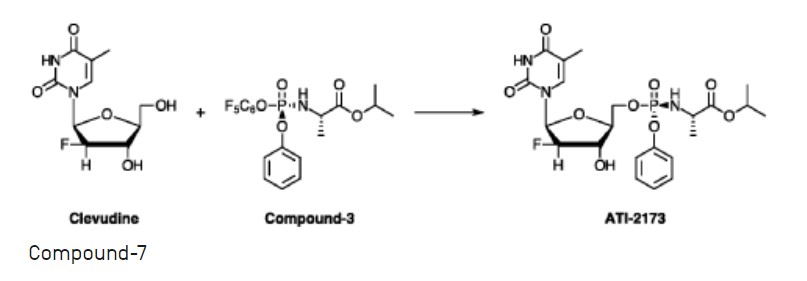

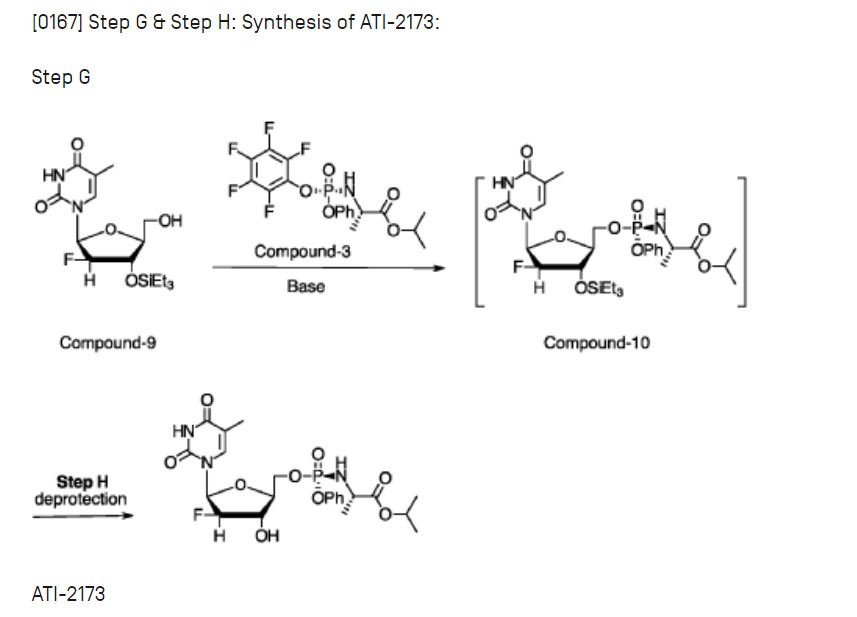

EXAMPLE 11 :
[0374] Preparation of intermediate ATI-2173 from Compound-10.
[0375] Experimental Procedure
[0376] (H-l) Crude Compound-10 in THF (see Example 10) was divided into three aliquots and stirred with 2% HC1 aq. solution at pH 5-6, 4-5, and 3-4; for 16 h at 20-25 °C; the aliquots were combined and stirred at 15-20 °C for 72 h, with no degradation of ATI-2173 observed over the second time period;
[0377] (H-2) the pH of the mixture was adjusted to 7 with 7% NaHCCh;
[0378] (H-3) phase separation was carried out using 2-MeTHF, the organic phase was washed with NA2SO4 aqueous soltion, then concentrated to 1-3 V, and MTBE (5 V) was added; this operation was repeated twice;
[0379] (H-5) ATI-2173 was precipitated gradually upon addition of seed crystal and addition of n-heptane (5 V);
[0380] (H-6) the product was filtered; and
[0381] (H-7) the wetcake was dried, resulting in ATI-2173 in 99.73a% purity and
84.4% yield.
[0382] EXAMPLE 12:
[0383] Crystallization of ATI-2173
[0384] Initial studies examined the use of single or mixed solvent systems to crystalize the amorphous product, ATI-2173. Several solvent conditions were screened, including single solvent and mixed solvent systems, in order to determine the potential for obtaining a crystalline material from the amorphous material. None of the solvents tested worked and all conditions produced an oil product. The results are shown below in Tables 8 and 9.
[0385] Table 8: Single Solvent Systems


AS ON DEC2021 3,491,869 VIEWS ON BLOG WORLDREACH AVAILABLEFOR YOUR ADVERTISEMENT
join me on Linkedin
Anthony Melvin Crasto Ph.D – India | LinkedIn
join me on Researchgate
RESEARCHGATE

join me on Facebook
Anthony Melvin Crasto Dr. | Facebook
join me on twitter
Anthony Melvin Crasto Dr. | twitter
+919321316780 call whatsaapp
EMAIL. amcrasto@amcrasto
///////////
////////// EIDD-2173, ATI-2173, EIDD 2173, ATI 2173, Hepatitis B virus, ANTI HBV, Fosclevudine alafenamide, PHASE 2

NEW DRUG APPROVALS
ONE TIME
$10.00
MAVORIXAFOR
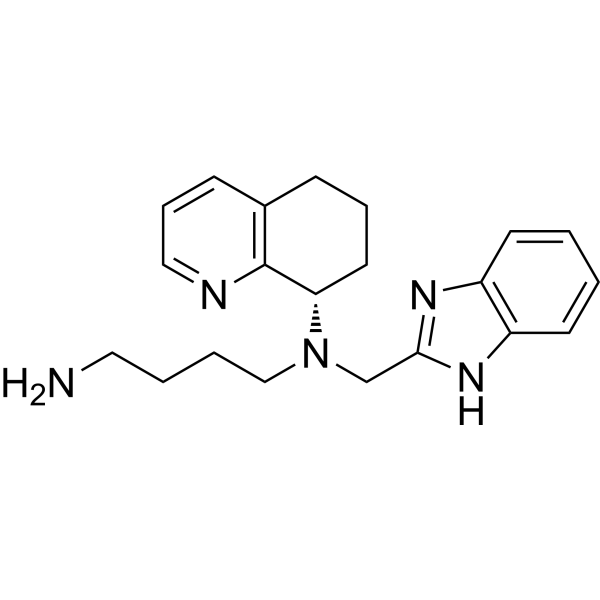
MAVORIXAFOR
AMD 070
N1-(1H-BENZIMIDAZOL-2-YLMETHYL)-N1-((S)-5,6,7,8-TETRAHYDROQUINOLIN-8-YL)-BUTANE-1,4-DIAMINE
fda approved 4/26/2024, To treat WHIM syndrome (warts, hypogammaglobulinemia, infections and myelokathexis), Xolremdi
Mavorixafor (AMD-070) is a potent, selective and orally available CXCR4 antagonist, with an IC50 value of 13 nM against CXCR4 125I-SDF binding, and also inhibits the replication of T-tropic HIV-1 (NL4.3 strain) in MT-4 cells and PBMCs with an IC50 of 1 and 9 nM, respectively.
| Molecular Weight | 349.47 |
|---|---|
| Appearance | Solid |
| Formula | C21H27N5 |
| CAS No. | 558447-26-0 |
| SMILES | NCCCCN(CC1=NC2=C(N1)C=CC=C2)[C@@H]3C4=C(CCC3)C=CC=N4 |
PHASE 2
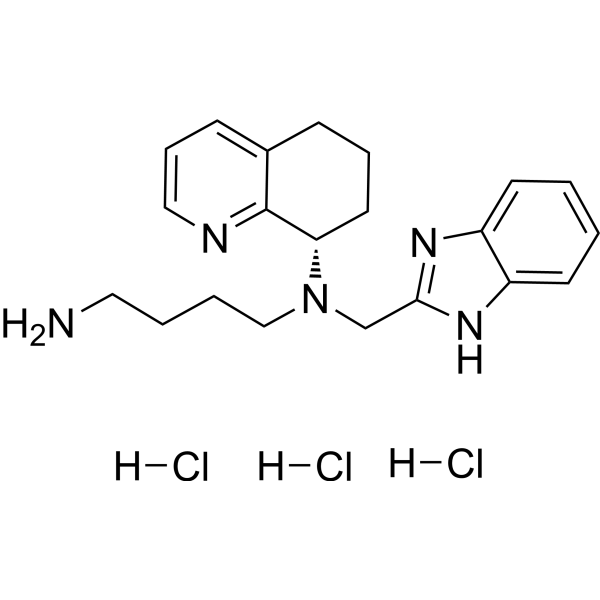
Mavorixafor trihydrochloride
| Molecular Weight | 458.86 |
|---|---|
| Appearance | Solid |
| Formula | C21H30Cl3N5 |
| CAS No. | 2309699-17-8 |
| SMILES | [H]Cl.[H]Cl.[H]Cl.NCCCCN(CC1=NC2=CC=CC=C2N1)[C@@H]3C4=NC=CC=C4CCC3 |

AMD-070 is a small molecule drug candidate that belongs to a new investigational class of anti-HIV drugs known as entry (fusion) inhibitors. Approximately 76% of HIV-patients with measurable viral load are infected with a strain of virus that is resistant to one or more classes of antiretroviral agents, thus reducing treatment options. Unlike many existing HIV drugs that target the virus after it has infected a healthy cell, AMD-070 blocks the virus from entering a healthy cell, thus preventing the replication process. AMD-070 targets the CXCR4 receptor on HIV and prevents the virus from entering and infecting healthy cells. AMD-070 is specific for the CXCR4 receptor and does not interact with any other chemokine receptors in vitro. AMD-070 strongly inhibits viral infection by all CXCR4 using virus (including virus using CXCR4 alone and/or virus using CXCR4 and CCR5) in vitro. AMD-070 is orally bioavailable in animals, it has suitable PK and toxicity profile for oral dosing. AMD-070 shows additive or synergistic effects in vitro in combination with other known anti-HIV agents. AMD-070 is active against CXCR4 using HIV strains that are resistant to existing antiretroviral therapies in vitro, reveals potent anti-HIV activity against CXCR4-using laboratory strains and clinical isolates. MD-070 had been in phase II clinical trials by Genzyme for the treatment of HIV infection. However, this research has been discontinued. AMD-070 has been studied in Phase I/II clinical trials for the treatment of Renal cell carcinoma and Phase I clinical trials for the treatment of malignant melanoma and solid tumours.
PAPER
https://pubs.acs.org/doi/10.1021/acs.oprd.2c00076
Org. Process Res. Dev. 2022, 26, 6, 1831–1836
A novel and practical synthesis of mavorixafor (1) is reported. The novelty of this synthetic route is the use of 8-chloro-5,6,7,8-tetrahydroquinoline (9) and 1,4-diaminobutane as the materials, instead of 8-amino-5,6,7,8-tetrahydroquinoline (4) and N,N-diprotected aminobutyraldehyde (6a or 6b). The preparation of (S)-8-(4-aminobutylamino)-5,6,7,8-tetrahydroquinoline (13) by resolution with N-acetyl-l-leucine was first achieved. Then the one-pot synthesis of 1 from 13 involving protection, condensation, and subsequent hydrolysis was successfully developed. In addition, the final product with a satisfactory purity (>99.5%, detected by both achiral and chiral HPLC) was obtained by a simple operation (salification) without column chromatographic purification.


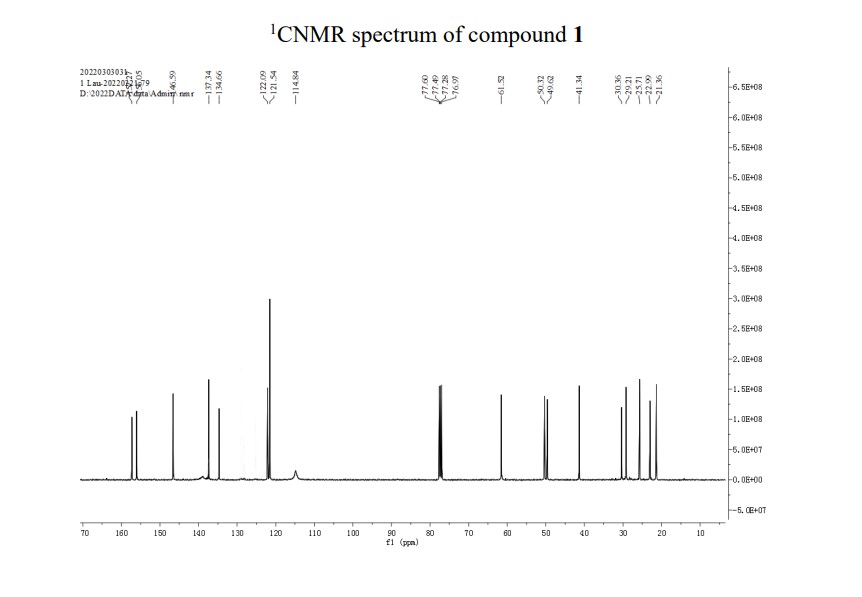


NEW PAT
Scheme I
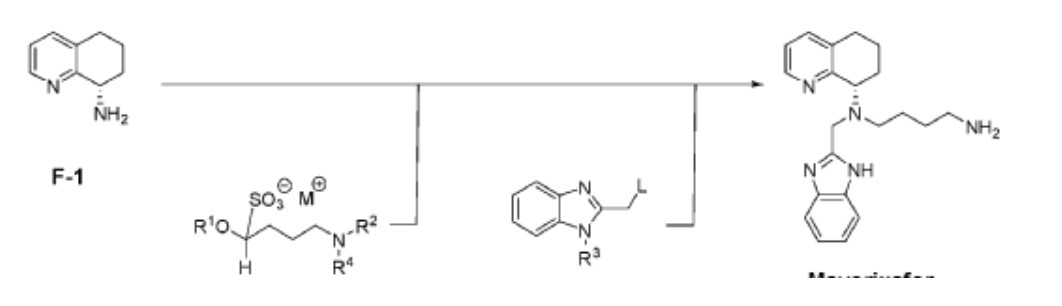

Mavorixafor
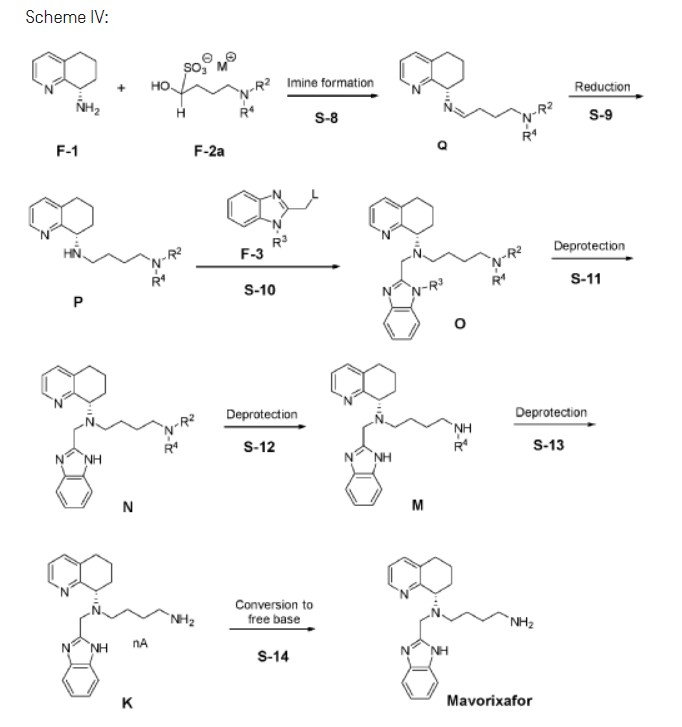

EXEMPLIFICATION
Example 1: Synthesis of Sulfonate adduct F-2d:
Scheme V:
1) AcOH, NaCI, water 1) Na 2 S 2 O 5 , THF, water
2) n-Heptane, THF 2) THF/n-heptane, acetonitrile
Step 1C Step 1 D
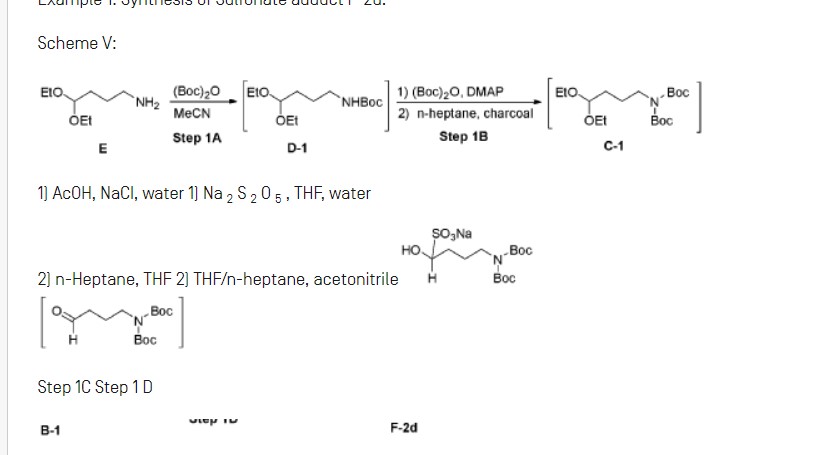

Step 1A: Preparation of Dl
Charge diethyl-4-aminobutyl acetal (E) (1.00 wt, 1.00 eq) to vessel A. Charge acetonitrile (10.0 vol, 7.8 wt) and adjust temperature to 20°C. Heat the mixture to 40°C. Concentrate the reaction mixture to 6.0 vol under reduced pressure at 35 to 45°C.
[0098] Acetonitrile filler (5.0 vol, 3.9wt) at 35 to 45°C. Concentrate the reaction mixture to 6.0 vol under reduced pressure 35 to 45°C. This step is repeated once as described below.
[0099] Acetonitrile filler (5.0 vol, 3.9wt) at 35 to 45°C. Concentrate the reaction mixture to 6.0 vol under reduced pressure at 35 to 45°C. Cool to 20°C.
[00100] Charge di-tert-butyl dicarbonate (1.1 eq, 1.5 wt) to a drum, followed by acetonitrile (0.4 vol, 0.3 wt) and agitate until fully dissolved. Concentrate the reaction mixture to 6.0 vol under reduced pressure at 35 to 45°C.
[00101] Charge this di-tert-butyl dicarbonate solution in acetonitrile to vessel A maintaining 20°C. Charge acetonitrile (1.5 vol, 1.1 wt) to the solution as a line rinse and stir at 20°C for 30 to 60 min..
[00102] Charge 4-dimethylaminopyridine (0.076 wt, 0.10 eq) to the vessel A at 20°C. Heat the solution to 40°C. Concentrate the reaction mixture to 5.0 vol under reduced pressure. Charge acetonitrile (5.0 vol, 3.9 wt) to the solution. Concentrate the reaction mixture to 5.0 vol under reduced pressure.
[00103] Take the resulting solution of Dl into next reaction without isolation.
Step IB: Preparation of Cl
[00104] Charge acetonitrile (2.0 vol, 1.6 wt) at 35 to 45°C to vessel A containing solution of D-1 from Step 1A.
[00105] Charge di-tert-butyl dicarbonate (1.4 eq, 1.9 wt) to a drum, followed by acetonitrile (10.0 vol, 7.8 wt) and agitate until fully dissolved. Charge this di-tert-butyl dicarbonate solution to vessel A, 2 to 6 h while distilling under vacuum at 35 to 45°C maintaining the volume of the reaction at 7.0 vol. Load acetonitrile (3.0 vol, 2.4 wt) over 20 to 40 min. as a line rinse while distilling under vacuum at 35 to 45°C, maintaining the volume of the reaction at 7.0 vol.
[00106] Charge di-tert-butyl dicarbonate, (0.14 eq, 0.19 wt) to a drum, followed by acetonitrile (1.0 vol, 0.74 wt) and agitate until fully dissolved. Charge this di-tert-butyl dicarbonate solution to vessel A over 20 to 40 min.. Charge acetonitrile (0.3 vol, 0.24 wt) over 10 to 20 min as a line rinse while distilling under vacuum at 35 to 45°C, maintaining the volume of the reaction at 7.0 vol.
[00107] Concentrate the reaction mixture to 5.0 vol distilling under vacuum at 35 to 45°C.
[00108] Charge n-heptane, (7.5 vol, 5.1 wt) to the reaction mixture, and concentrate the reaction mixture to 5.0 vol under reduced pressure at 40°C. This step is repeated once as described below.
[00109] Charge n-heptane, (7.5 vol, 5.1 wt) to the reaction mixture, and concentrate the reaction mixture to 5.0 vol under reduced pressure at 40°C.
[00110] Charge decolorizing, activated charcoal (0.2 wt) to the solution and stir for 1 to 2 h at 40°C. Filter the reaction mixture at 40°C. Charge n-heptane, (2.0 vol, 1.4 wt) to the reactor vessel and stir for 5 to 15 min. at 20°C before charging to the filter as a line rinse. Combine the filtrate and wash, and as required adjust to 20°C.
[00111] Take the resulting solution of Cl into next reaction without isolation.
Step 1C: Preparation of Bl
[00112] Charge 15% v/v acetic acid (2.0 vol) caution gas evolution, to vessel A containing solution of Cl from Step IB, maintaining the temperature at 20°C and stir for 10 min. at 20°C. Allow the phases to separate for 15 min. at 20°C. Discharge the aqueous phase to waste, retaining the organic phase in vessel A. This step is repeated once as described below.
[00113] Charge 15% v/v acetic acid (2.0 vol) maintaining 20°C and stir for 10 min. at 20°C. Allow the phases to separate for 15 min. at 20°C. Discharge the aqueous phase to waste, retaining the organic phase in vessel A.
[00114] Adjust the reaction to 30°C. Charge 4% w/w sodium chloride solution (2.1 vol) to the vessel maintaining the temperature at 30°C. Charge glacial acetic acid (4.1 vol, 4.3 wt) to the vessel maintaining 30°C. Stir the reaction mixture for 2 h maintaining the temperature at 30°C.
[00115] Charge purified water, (6.0 vol) at 30°C. Stir the contents for 5 to 10 min. at 30°C, and separate the phases, retaining the upper organic phase in vessel A. Charge the lower aqueous phase to vessel B.
[00116] Charge purified water (4.0 vol) at 30°C and stir for 5 to 10 min. maintaining the temperature at 30°C. Separate the phases at 30°C, retaining the upper organic phase in vessel A. Charge the lower aqueous phase to vessel B.
[00117] Adjust the temperature to 30°C of vessel B containing combined aqueous phases. Charge n-heptane, (2.0 vol, 1.4 wt) to vessel B and stir for 5 to 10 min. maintaining the temperature at 30°C. Separate the phases at 30°C, over 15 min.. Charge the upper organic phase to vessel A and recharge the lower aqueous phase to vessel B. This step is repeated two additional times as described below.
[00118] Charge n-heptane, (2.0 vol, 1.4 wt) to vessel B and stir for 5 to 10 min. maintaining the temperature at 30°C. Separate the phases at 30°C, over 15 min.. Charge the upper organic phase to vessel A and recharge the lower aqueous phase to vessel B.
[00119] Charge n-heptane, (2.0 vol, 1.4 wt) to vessel B and stir for 5 to 10 min. maintaining the temperature at 30°C. Separate the phases at 30°C, over 15 min., discharge the lower aqueous phase to waste and charge the upper organic layer to vessel A.
[00120] Concentrate the combined organic phases in vessel A to 3.0 vol at 10 to 20°C under reduced pressure. Offload the solution to new HDPE drum(s) and line rinse with n-heptane (0.5
vol, 0.4 wt) at 20°C. Homogenize the drum and store as “Bl solution in n-heptane,” and take into next reaction without isolation.
Step ID: Preparation of F-2d
[00121] Calculate a new 1.00 wt based on the above assay.
[00122] Charge “Bl solution in n-heptane” from Step 1C (1.00 wt, 1.00 eq, corrected for w/w assay, ca. 3.0 vol), into an appropriate vessel. THF load (3.0 vol, 2.7 wt). Heat the reaction mixture to 40°C.
[00123] Charge purified water, (0.02 vol, 0.02 wt) followed by sodium metabisulphite, (0.125 eq, 0.08 wt) as a solid via the charge hole at 40°C. Stir the resulting mixture for 30 to 35 min. at 40°C. This step was repeated four additional times to add the reagent in five portions total, as detailed below.
[00124] Charge purified water, (0.02 vol, 0.02 wt) followed by sodium metabisulphite, (0.125 eq, 0.08 wt) as a solid via the charge hole at 40°C. Stir the resulting mixture for 30 to 35 min. at 40°C.
[00125] Charge purified water, (0.02 vol, 0.02 wt) followed by sodium metabisulphite, (0.125 eq, 0.08 wt) as a solid via the charge hole at 40°C. Stir the resulting mixture for 30 to 35 min. at 40°C.
[00126] Charge purified water, (0.02 vol, 0.02 wt) followed by sodium metabisulphite, (0.125 eq, 0.08 wt) as a solid via the charge hole at 40°C. Stir the resulting mixture for 30 to 35 min. at 40°C.
[00127] Charge purified water, (0.02 vol, 0.02 wt) followed by sodium metabisulphite, (0.125 eq, 0.08 wt) as a solid via the charge hole at 40°C. Stir the resulting mixture for 36 hours at 40°C.
[00128] Cool the reaction mixture to 20°C over 3 to 4 h at a target constant rate. Filter the reaction mixture at 20°C on a 1-2 pm cloth.
[00129] Wash the solid with a pre-mixed mixture of THF (0.5 vol, 0.5 wt) and n-heptane (0.5 vol, 0.3 wt) maintaining the temperature at 20°C. This step was repeated an additional three times, as detailed below.
[00130] Wash the solid with n-heptane, (2.0 vol, 1.4 wt) as a line rinse and apply to the filtercake at 20°C.
[00131] Wash the solid with n-heptane, (2.0 vol, 1.4 wt) as a line rinse and apply to the filtercake at 20°C.
[00132] Wash the solid with acetonitrile, (2.0 vol, 1.6 wt) as a line rinse and apply to the filtercake at 20°C.
[00133] Dry the solid at 38°C under a flow of nitrogen for 12 h.
[00134] Determine residual solvent content. Pass criteria acetonitrile <2.0% w/w, n-heptane <2.0% w/w and tetrahydrofuran <2.0% w/w.
[00135] Yield of compound F-2d: 52-69%.
[00136] ‘H NMR (400 MHz, d 6 -DMSO): 8 5.22 (s, 1H), 3.77 (s, 1H), 3.45 (t, 2H), 1.70 (m, 2H), 1.44 (m, 20H) ). 13 C NMR (400 MHz, d 6 -DMSO): 8 152.6, 83.2, 82.0, 46.5, 29.6, 28.1, 26.0. FTIR (wavenumber, cm’ 1 ) 3294, 1721, 1738, 1367, 1233, 1180, 1135, 1109, 1045.
Example 2: Synthesis of F-3a:
Scheme VI:
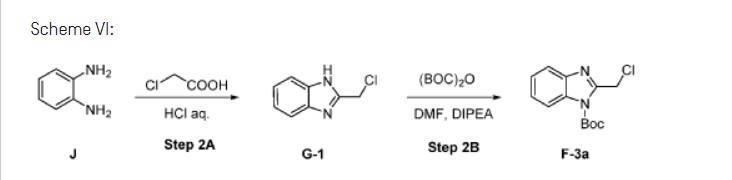

Step 2A: Preparation of Gl
[00137] Charge J, (1.00 wt, 1.00 eq) to vessel A. Charge purified water, (1.0 vol, 1.0 wt) to vessel A and as necessary adjust the temperature to 20°C. Charge concentrated hydrochloric acid, (4.0 eq, 3.0 vol, 3.6 wt) to vessel A maintaining the temperature at 20°C. Line rinse with purified water, (0.5 vol, 0.5 wt) maintaining the contents of vessel A at 15 to 25°C.
[00138] Charge chloroacetic acid, (1.3 wt, 1.5 eq) and purified water, (1.0 vol, 1.0 wt) to vessel B and as necessary, adjust the temperature to 20°C. Stir until fully dissolved, expected 10 to 20 min.
[00139] Charge the chloroacetic acid solution to vessel A maintaining the temperature of vessel A at 20°C. Line rinse vessel A with purified water, (0.5 vol, 0.5 wt) at 15 to 25°C and charge to vessel B at 20°C. Heat the reaction mixture to 80°C. Stir the reaction mixture at 80°C for 20 h.
[00140] Cool the reaction mixture to 10°C over 1.5 h. Load 47% w/w potassium phosphate solution (6.0 vol) over 60 min. targeting a constant rate maintaining 10°C. Adjust the pH of the reaction mixture by charging 47% w/w potassium phosphate solution to pH 7.0 maintaining the reaction temperature at 10°C. Expected charge is 2.0 to 3.5 vol 47% w/w potassium phosphate solution.
[00141] Stir the slurry for >30 min. maintaining 10°C and rechecking the pH, pass criterion pH 7.0. Filter the reaction mixture through 20 pm cloth at 10°C. Wash the filter-cake with purified water, (1.0 vol, 1.0 wt) at 10°C. This step is repeated additional three times as described below.
[00142] Slurry wash the filter-cake in the reactor vessel with purified water, (10.0 vol, 10.0 wt) for 45 min. to 90 min. at 10°C. Filter the mixture through 20 pm cloth at 10°C.
[00143] Slurry wash the filter-cake in the reactor vessel with purified water, (10.0 vol, 10.0 wt) for 45 min. to 90 min. at 10°C. Filter the mixture through 20 pm cloth at 10°C.
[00144] Slurry wash the filter-cake in the reactor vessel with purified water, (10.0 vol, 10.0 wt) for 45 min. to 90 min. at 10°C. Filter the mixture through 20 pm cloth at 10°C.
[00145] Wash the filter-cake with purified water, (1.0 vol, 1.0 wt) at 10°C. The filter-cake was washed with purified water additional five times as described below.
[00146] Wash the filter-cake with purified water, (1.0 vol, 1.0 wt) at 10°C.
[00147] Wash the filter-cake with acetonitrile, (2×1.3 vol, 2×1.0 wt) at 10°C.
[00148] Dry the filter-cake on the filter under vacuum and strong nitrogen flow through the filter cake at 20°C until the water content is <15.0% w/w by Karl-Fisher analysis.
[00149] Dry the filter-cake on the filter under vacuum and strong nitrogen flow through the filter cake at 30°C until the water content is <5.0% w/w by Karl-Fisher analysis.
[00150] Dry the filter-cake on the filter under vacuum and strong nitrogen flow through the filter cake at 50°C until the water content is <1.0% w/w by Karl-Fisher analysis.
[00151] Yield of compound Gl: about 75%.
Step 2B: Preparation of F-3a
Charge di-/c/7-butyl dicarbonate, (1.85 wt, 1.4 eq) to vessel A followed by N,N-dimethylformamide, (2.6 wt, 2.7 vol) and stir at 20°C for 20 min. until dissolution achieved. Add A,A-diisopropylethylamine, (0.08 wt, 0.11 vol, 0.1 eq) to contents of vessel A at 20°C. Heat the contents of vessel A to 40°C.
[00153] Charge Gl, (1.00 wt) to vessel B followed by YW-di methyl form am ide, (5.2 wt, 5.5 vol) and adjust to 14°C.
[00154] Charge the Gl/DMF solution from vessel B to vessel A over 5 h at 40°C, at an approximately constant rate. Line rinse with Y,Y-di methyl form am ide, (0.4 wt, 0.4 vol), maintaining vessel A at 40°C. Stir the resulting reaction mixture at 40°C for 16 h.
[00155] Charge decolorizing charcoal activated, (0.20 wt). Adjust the mixture to 40°C and stir at 40°C for 60 to 90 min..
[00156] Clarify (filter) the reaction mixture into vessel B at 40°C. Charge N,N-dimethylformamide, (0.9 wt, 1.0 vol) via vessel A and filter at 40°C. Charge purified water, (3.5 vol) to the combined filtrates, over 60 min., maintaining the temperature at 40°C. As required, cool the mixture to 35°C over 30 to 60 min..
[00157] Filler F-3a, (0.02 wt) as seed material at 35°C. Stir at 34°C for 1.5 h then check for crystallization. Cool slurry to 30°C over 40 min.
[00158] Filler F-3a, (0.02 wt) as seed material at 30°C. Stir at 30°C for 1.5 h then check for crystallization.
[00159] Cool slurry at 20°C over 3.5 h at a targeted constant rate. Stir at 20°C for 3 hours. Charge purified water, (1.0 vol), maintaining the temperature at 20°C over 60 min..
Stir at 20°C for 3 hours.
[00160] Cool slurry to 2°C over 2.5 h. Stir at 2°C for 2.5 hours. Filter through 20 pm cloth and pull dry until no further filtrate passes. Wash the solid with pre-mixed Y,Y-di methyl form am ide / purified water, (2.0 vol, 1:2 v:v) at 2°C. Wash the solid with purified water, (2 x 3.0 vol) at 2°C. Dry under vacuum at 28°C until KF <0.2% w/w, and Y,Y-di methyl form am ide <0.4% w/w.
[00161] Yield of compound F-3a: 62-70%.
Example 3: Synthesis of Mavorixafor:
Scheme VI:
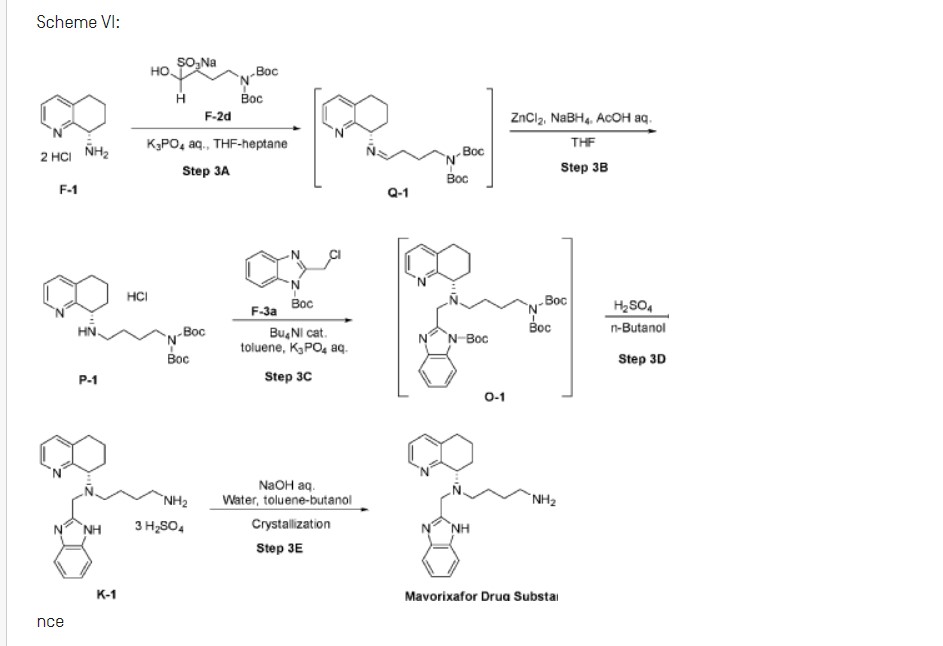

nce
Step 3A: Preparation of imine Q-1
[00162] To vessel A charge purified water, (8.7 vol, 8.7 wt) followed by potassium phosphate, (5.52 eq, 5.3 wt) portion-wise and cool to 15°C. Charge tetrahydrofuran, (4.3 vol, 3.8 wt) and n-heptane, (2.2 vol, 1.5 wt) to vessel A and cool the biphasic mixture to 0°C. Charge Fl, (1.00 eq, 1.00 wt) to the vessel in 2 portions maintaining 0°C.
[00163] Charge F-2d, (1.10 eq, 1.95 wt) to the vessel in 4 portions maintaining 0°C, ensuring portions are spaced by 10 min.. Stir the resulting biphasic mixture for 1.5 h at 0°C. Allow the layers to separate for 45 min. at 0°C before separating the layers. Retain the upper organic phase within vessel A.
[00164] Take the resulting solution of Ql into next reaction without isolation.
Step 3B: Preparation of amine P-1
[00165] To vessel B, charge tetrahydrofuran, (6.0 vol, 5.3 wt) and adjust to 15°C. Charge zinc chloride, (1.5 eq, 0.92 wt) to vessel B in 4 portions, maintaining 10 to 30°C. Adjust the reaction mixture in vessel B to 15°C. Stir the mixture at 15°C for 1 hour. Charge sodium borohydride,(1.0 eq, 0.17 wt) to vessel B in 2 portions maintaining 15°C. Cool the reaction mixture in vessel B to 15°C. Stir the mixture for 1 hour maintaining 15°C. Cool the reaction mixture in vessel B to -5°C.
[00166] Cool the retained organic solution of Ql in vessel A, from Step 3A, to -5°C.
[00167] Charge the organic solution in vessel A into vessel B over 1 to 2 h maintaining -5°C. Charge tetrahydrofuran, (1.0 vol, 0.9 wt) to vessel A as a line rinse and adjust to -5°C. Transfer the contents of vessel A to vessel B maintaining -5°C.
[00168] Stir the resulting reaction mixture in vessel B for 1.5 h maintaining -5°C.
[00169] Charge purified water, (4.5 vol, 4.5 wt) and glacial acetic acid, (1.0 eq, 0.27 wt, 0.26 vol) to the cleaned vessel A and cool to 0°C. Charge the contents of vessel B to vessel A over 1 to 2 h maintaining 0°C. Charge tetrahydrofuran, (1.0 vol, 0.9 wt) to vessel B as a vessel rinse, cool to 0°C and transfer to vessel A maintaining 0°C.
[00170] Warm the resulting mixture in vessel A to 30°C. Stir the resulting mixture in vessel A at 30°C for 1 h. Allow the layers to settle for 15 min. at 30°C before separating the layers. Retain the upper organic phase.
[00171] Cool the retained organic phase to 15°C. Charge to the vessel 25% w/w ammonia solution (3.0 vol) at 10 to 30°C. Cool the reaction mixture to 20°C. Charge to the vessel 25% w/w ammonium chloride solution (3.0 vol) at 20°C and stir for 1 h. Separate the layers for 15 min. at 20°C, retain the upper organic phase. Wash the retained organic phase with 10% w/w sodium chloride solution (3.0 vol) at 20°C for 10 min.. Allow the layers to settle for 10 min. at 20°C before separating and retaining the upper organic phase within the vessel.
[00172] Charge tert-butyl methyl ether, (0.5 vol, 0.4 wt) to the organic phase. Cool the mixture to 5°C. Adjust the pH of the reaction mixture to pH 5 with hydrochloric acid aqueous solution (expected ca. 9.0 vol) over 1 h at a targeted constant rate at 5°C. Stir the mixture at 5°C for 45 min.. Measure the pH of the aqueous phase to confirm the value is pH 5.
[00173] Charge sodium chloride, (2.1 wt) to the reaction mixture at 5°C and stir the mixture until everything is dissolved. Adjust the temperature of the reaction mixture to 20°C. Separate the layers at 20°C and retain the organic phase within the vessel. Tetrahydrofuran charge, (1.5 vol, 1.3 wt) maintaining 20°C.
[00174] Charge to the vessel 24% w/w sodium chloride solution (7.5 vol) at 20°C and stir for 10 min.. Separate the layers at 20°C and retain the organic phase in the vessel. This step is repeated additional one more time as described below.
[00175] Charge to the vessel 24% w/w sodium chloride solution (7.5 vol) at 20°C and stir for 10 min.. Separate the layers at 20°C and retain the organic phase in the vessel.
[00176] Heat the retained organic phase to 35°C and concentrate the mixture to 6.0 vol under reduced pressure maintaining 35°C.
[00177] Tetrahydrofuran charge, (15.0 vol, 13.2 wt) maintaining 35°C. Concentrate the mixture to 6.0 vol under reduced pressure maintaining 35°C.
[00178] Tetrahydrofuran charge, (15.0 vol, 13.2 wt) maintaining 35°C. Concentrate the mixture to 11.0 vol under reduced pressure maintaining 35°C.
[00179] Cool the mixture to -5°C. Load tert-butyl methyl ether, (10.0 vol, 7.4 wt) over 1 h maintaining -5°C. Stir the mixture at -5°C for 1.5 hours. Filter the solid on 1 to 2 pm filter cloth at -5°C. Wash the solid with pre-mixed tetrahydrofuran, (1.9 vol, 1.7 wt) and tert-butyl methyl ether, (3.1 vol, 1.9 wt) at -5°C as a displacement wash.
[00180] Wash the solid with tert-butyl methyl ether, (5.0 vol, 3.7 wt) at -5°C.
[00181] Dry the solid on the filter under a flow of nitrogen at 23°C.
[00182] Yield of compound P-1: 76-87%.
Step 3C: Preparation of compound 0-1
[00183] Charge purified water, (2.0 vol, 2.0 wt) followed by potassium phosphate, (3.3 eq, 1.54 wt), carefully portion-wise, maintaining <15°C, to vessel A. Charge toluene, (4.5 vol, 3.9 wt) to the vessel maintaining <15°C. As necessary, adjust the temperature to 10°C.
[00184] Charge P-1, (1.00 eq, 1.00 wt) to the vessel in two portions maintaining 10°C. Stir the reaction mixture at 10°C for 15 min..
[00185] Load F-3a, (1.1 eq, 0.64 wt) in 4 equal portions ensuring portions are spaced by 10 min. at 10°C.
[00186] Tetrabutylammonium iodide (TBAI) filler (0.20 eq, 0.16 wt). Heat the reaction mixture to 40°C. Stir the reaction mixture at 40°C for 30 h.
[00187] Charge pre-mixed 2-mercaptoacetic acid, (0.40 eq, 0.08 wt, 0.06 vol), and toluene, (0.5 vol, 0.4 wt) over 20 min. to Vessel A at 40°C. Line rinse with toluene, (0.5 vol, 0.4 wt) at 40°C. Adjust the temperature of the reaction mixture to 50°C. Stir the mixture at 50°C for 2.5 hours.
[00188] Adjust the temperature of Vessel A to 20°C. Charge purified water, (3.0 vol, 3.0 wt) maintaining 20°C. Stir the reaction mixture at 20°C for 15 min. and transfer to a new, clean HDPE container. Line/vessel rinse with toluene, (0.5 vol, 0.4 wt) at 20°C. Clarify (filter) the reaction mixture via a 1 pm filter at 20°C into clean Vessel A. Wash the vessel and the filter with toluene, (0.5 vol, 0.4 wt) at 20°C. Allow the layers to separate for 15 min. at 20°C, retaining the upper organic layer (organic layer 1).
[00189] Wash the aqueous layer with toluene, (2.5 vol, 2.2 wt) at 20°C for 15 min.. Allow the layers to separate for 15 min. at 20°C. Retain the upper organic layer (organic layer 2).
[00190] Combine the organic layer 1 and organic layer 2 and adjust the temperature to 20°C. Wash the combined organic layers with 10% w/w sodium chloride solution (5.0 vol) at 20°C for 15 min.. Allow the layers to settle for 15 min. at 20°C. Retain the upper organic layer.
[00191] Take the resulting solution of Ol into next reaction without isolation.
Step 3D: Preparation of compound Kl
[00192] Charge n-butanol, (2.4 wt, 3.0 vol) to vessel B and adjust to 5°C. Charge concentrated sulfuric acid, (1.1 wt, 5.0 eq, 0.6 vol) slowly to Vessel B maintaining <15°C. Line rinse with toluene, (0.4 wt, 0.5 vol) maintaining <15°C. Adjust the temperature of Vessel B to 25°C.
[00193] Heat the n-butanol/ sulfuric acid solution in Vessel B to 55°C. Charge the organic layer from Vessel A (from Step 3C) to the butanol/ sulfuric acid solution in Vessel B over 60 to 90 min. maintaining 55°C. Charge toluene, (1.3 wt, 1.5 vol) to Vessel A as a line rinse and transfer to Vessel B maintaining 55°C. Stir the contents of Vessel B at 55°C for 1.5 h.
[00194] Stir the mixture in Vessel B for 4.5 h at 55°C. Cool the contents of Vessel B to 20°C over 10 h. Filter the slurry over 1-2 pm filter cloth under nitrogen at 20°C. Wash the filter cake with pre-mixed toluene, (3.5 wt, 4.0 vol) and n-butanol, (1.0 vol, 0.8 wt) at 20°C. Wash the filter cake with toluene, (4.3 wt, 5.0 vol) at 20°C. Dry the solid at 30°C under vacuum.
[00195] Correct the output weight for assay. Expected 50-55% w/w.
[00196] Yield of compound K1: 89-92%.
Step 3E: Preparation of Mavorixafor Drug Substance
[00197] Charge Kl, (1.00 eq, 1.00 wt, corrected for HPLC assay) in vessel A followed by nitrogen-purged purified water, (2.0 wt, 2.0 vol) and if necessary, adjust the temperature to 20°C. Charge nitrogen-purged toluene, (12.0 wt, 14.0 vol) to the solution maintaining 20°C. Charge nitrogen-purged n-butanol, (0.8 wt, 1.0 vol) to the solution maintaining 20°C. Heat the biphasic mixture to 30°C. Charge nitrogen-purged 3.0 M aqueous sodium hydroxide solution (6.2 eq, 5.9 vol) maintaining 30°C. Check the pH (expected 12 to 13). Adjust the pH of the aqueous layer to pH 10.0 with nitrogen-purged 0.3 M sulfuric acid solution (expected up to 2.5 vol) maintaining 30°C. Stir the mixture at 30°C for 45 min..
[00198] Measure the pH to confirm the value is pH 10.0.
[00199] Allow the layers to settle at 30°C for 30 min. and separate the layers retaining the organic phase in the vessel, and discharge the aqueous layer into a separate container (container C).
[00200] Charge pre-mixed toluene, (4.1 wt, 4.7 vol) and n-butanol, (0.24 wt, 0.3 vol) to a separate vessel; heat the contents to 30°C and charge the aqueous layer from container C. As required adjust the temperature to 30°C and stir for 5 to 10 min. at 30°C. Allow the phases to separate for 10 to 15 min. at 30°C. Discharge the aqueous phase to waste and combine the organic phase to the organic phase in vessel A.
[00201] Charge nitrogen-purged purified water, (2.0 wt, 2.0 vol) to the organic layer maintaining the temperature at 30°C and stir for 5 to 10 min. at 30°C. Allow the phases to separate for 10 to 15 min. at 30°C. Discharge the aqueous phase to waste retaining the organic phase in the vessel. Heat the retained organic solution to 40°C. Concentrate the resulting organic phase to 7.0 vol by vacuum distillation at 40°C.
[00202] Charge nitrogen -purged toluene, (13.0 wt, 15.0 vol) to the mixture and concentrate the solution 7.0 vol by vacuum distillation at 40°C. This step is repeated additional one time as described below.
[00203] Charge nitrogen -purged toluene, (13.0 wt, 15.0 vol) to the mixture and concentrate the solution 7.0 vol by vacuum distillation at 40°C.
[00204] Charge nitrogen-purged toluene, (7.0 wt, 8.0 vol) to the mixture at 40°C, heat to 55°C and clarify the hot reaction mixture under nitrogen via a 1 pm filter.
[00205] Charge clarified nitrogen-purged toluene, (1.7 wt, 2.0 vol) to the mixture as a line and vessel rinse at 40°C. Concentrate the solution to 7.0 vol by vacuum distillation at 40°C. At the end of the distillation the product is expected to have precipitated. Heat the mixture to 63°C.
[00206] Adjust the temperature to 60.5°C. This batch will be referred to as the main batch.
[00207] Load seed material, (0.02 wt) to a new clean container. Charge clarified nitrogen-purged toluene, (0.09 wt, 0.10 vol) to this seed material and gently shake.
[00208] Seed the main batch with the slurry maintaining the temperature at 60.5 ± 2°C. Stir the reaction at the 60.5± 2°C for 1 hour.
[00209] Cool to 40°C for 2.5 h. Stir the reaction at 40°C for 1 hour.
[00210] Cool to 30°C over 2 h.. Stir the reaction at 30°C for 1 h.
[00211] Cool to 25°C 50 min. Stir the reaction at 25°C over 2 hours.
[00212] Cool to 2°C over 4 h. Stir the mixture for 12 hours at 2°C.
[00213] Filter the mixture at 2°C over 1 to 2 pm cloth. Wash the filter cake with clarified nitrogen-purged toluene, (2.0 vol, 1.7 wt) at 2°C. Dry the filter cake under vacuum and a flow of nitrogen for 1.5 h.
[00214] Dry the solid at 40°C under vacuum and a flow of nitrogen until drying specification is achieved.
[00215] Yield of the final compound mavorixafor: 72%.
[00216] When toluene is used as the recrystallization solvent, optionally with a dissolution aid such butanol or methanol, for maxorixa for recrystallization, advantages were found compared to using dichloromethane and isopropyl acetate. We have found that these solvents do not react with the API, and accordingly we believe that this change has caused the significant reduction of impurities A (imine), B (N-formyl) and C (acetamide) that we have observed.
[00217] In some embodiments, the mavorixafor composition included 7000, 6000, 5000, 4500, 4450, 4000, 3500, 3000, 2500, 2000, 1750, 1700, 1650, 1600, 1550, 1500, 1450, 1400, 1400, 1400, 1400 gold 50 ppm of toluene or less. In some embodiments, the mavorixafor composition comprises a detectable amount of toluene. In some embodiments, the mavorixafor composition comprises from a detectable amount of toluene to 1350 ppm of toluene.
////////
AS ON DEC2021 3,491,869 VIEWS ON BLOG WORLDREACH AVAILABLEFOR YOUR ADVERTISEMENT
join me on Linkedin
Anthony Melvin Crasto Ph.D – India | LinkedIn
join me on Researchgate
RESEARCHGATE

join me on Facebook
Anthony Melvin Crasto Dr. | Facebook
join me on twitter
Anthony Melvin Crasto Dr. | twitter
+919321316780 call whatsaapp
EMAIL. amcrasto@amcrasto
| Description | Mavorixafor (AMD-070) is a potent, selective and orally available CXCR4 antagonist, with an IC50 value of 13 nM against CXCR4 125I-SDF binding, and also inhibits the replication of T-tropic HIV-1 (NL4.3 strain) in MT-4 cells and PBMCs with an IC50 of 1 and 9 nM, respectively. |
|---|---|
| IC50 & Target[1] | 125I-SDF-CXCR413 nM (IC50)HIV-1 (NL4.3 strain)1 nM (IC50, in MT-4 cells)HIV-1 (NL4.3 strain)9 nM (IC50, in PBMCs)HIV-1 (NL4.3 strain)3 nM (IC90, in MT-4 cells)HIV-1 (NL4.3 strain)26 nM (IC90, in PBMCs) |
| In Vitro | Mavorixafor (AMD-070) is a potent and orally available CXCR4 antagonist, with an IC50 value of 13 nM against CXCR4 125I-SDF binding, and also inhibits the replication of T-tropic HIV-1 (NL4.3 strain) in MT-4 cells and PBMCs with an IC50 of 1 and 9 nM, respectively. Mavorixafor (AMD-070) shows no effect on other chemokine receptors (CCR1, CCR2b, CCR4, CCR5, CXCR1, and CXCR2)[1]. Mavorixafor (AMD-070) (6.6 µM) significantly suppresses the anchorage-dependent growth, the migration and matrigel invasion of the B88-SDF-1 cells[2].MCE has not independently confirmed the accuracy of these methods. They are for reference only. |
| In Vivo | Mavorixafor (AMD-070) (2 mg/kg, p.o.) significantly reduces the number of metastatic lung nodules in mice, and lowers the expression of human Alu DNA in mice, without body weight loss[2].MCE has not independently confirmed the accuracy of these methods. They are for reference only. |
| Clinical Trial | NCT NumberSponsorConditionStart DatePhaseNCT00089466National Institute of Allergy and Infectious Diseases (NIAID)|AIDS Clinical Trials GroupHIV InfectionsNovember 2004Phase 1|Phase 2NCT02667886X4 PharmaceuticalsClear Cell Renal Cell CarcinomaJanuary 2016Phase 1|Phase 2NCT02823405X4 PharmaceuticalsMelanomaSeptember 15, 2016Phase 1NCT00361101Genzyme, a Sanofi Company|SanofiHIV Infections|X4 Tropic VirusOctober 2005Phase 1NCT03005327X4 PharmaceuticalsWHIM SyndromeDecember 2016Phase 2NCT04274738X4 PharmaceuticalsWaldenstrom´s MacroglobulinemiaApril 30, 2020Phase 1NCT04154488X4 PharmaceuticalsNeutropeniaOctober 16, 2020Phase 1NCT03995108X4 PharmaceuticalsWHIM SyndromeOctober 17, 2019Phase 3NCT05103917Abbisko Therapeutics Co, LtdTriple Negative Breast CancerJuly 21, 2021Phase 1|Phase 2NCT00063804National Institute of Allergy and Infectious Diseases (NIAID)|AIDS Clinical Trials GroupHIV Infections Phase 1NCT02923531X4 PharmaceuticalsClear Cell Renal Cell CarcinomaDecember 7, 2016Phase 1|Phase 2NCT02680782X4 Pharmaceuticals|CovanceHealthyJanuary 12, 2016Phase 1 |
REF
- [1]. Skerlj RT, et al. Discovery of novel small molecule orally bioavailable C-X-C chemokine receptor 4 antagonists that are potent inhibitors of T-tropic (X4) HIV-1 replication. J Med Chem. 2010 Apr 22;53(8):3376-88. [Content Brief][2]. Chow LN, et al. Impact of a CXCL12/CXCR4 Antagonist in Bleomycin (BLM) Induced Pulmonary Fibrosis and Carbon Tetrachloride (CCl4) Induced Hepatic Fibrosis in Mice. PLoS One. 2016 Mar 21;11(3):e0151765. [Content Brief][3]. Uchida D, et al. Effect of a novel orally bioavailable CXCR4 inhibitor, AMD070, on the metastasis of oral cancer cells. Oncol Rep. 2018 Jul;40(1):303-308. [Content Brief]
/////////////////////////////////////////////////////////////////////////////MAVORIXAFOR, AMD 070, PHASE 2

NEW DRUG APPROVALS
0NE TIME
$10.00
SC-52458, FORASARTAN

SC-52458, FORASARTAN
- Molecular FormulaC23H28N8
- Average mass416.522 Da
PHASE 2, PFIZER, HYPERTENSION
145216-43-9[RN]
5-[(3,5-Dibutyl-1H-1,2,4-triazol-1-yl)methyl]-2-[2-(1H-tetrazol-5-yl)phenyl]pyridine
5-[(3,5-dibutyl-1H-1,2,4-triazol-1-yl)methyl]-2-[2-(2H-1,2,3,4-tetrazol-5-yl)phenyl]pyridine
форасартан[Russian][INN], فوراسارتان[Arabic][INN], 福拉沙坦[Chinese][INN]
065F7WPT0B[DBID]
7415[DBID]
UNII-065F7WPT0B[DBID]
SC 52458[DBID]
Type-1 angiotensin II receptor
Forasartan, otherwise known as the compound SC-52458, is a nonpeptide angiotensin II receptor antagonist (ARB, AT1 receptor blocker).[2][3][4][5]
Forasartan, a specific angiotensin II antagonist, is used alone or with other antihypertensive agents to treat hypertension. Forasartan competes with angiotensin II for binding at the AT1 receptor subtype. As angiotensin II is a vasoconstrictor which also stimulates the synthesis and release of aldosterone, blockage of its effects results in a decreases in systemic vascular resistance.
Indications
Forasartan is indicated for the treatment of hypertension[6] and, similar to other ARBs, it protects the kidneys from kidney blood vessel damage caused by increased kidney blood pressure by blocking renin–angiotensin system activation.[7]
Administration
Forasartan is administered in the active oral form [6] which means that it must go through first pass metabolism in the liver. The dose administered ranges between 150 mg-200 mg daily.[6] Increasing to more than 200 mg daily does not offer significantly greater AT1 receptor inhibition.[6] Forasartan is absorbed quickly in the GI, and within an hour it becomes significantly biologically active.[6] Peak plasma concentrations of the drug are reached within one hour.[6]
Contraindications
Negative side effects of Forasartan are similar to other ARBs, and include hypotension and hyperkalemia.[8] There are no drug interactions identified with forasartan.[6]
Bioorganic & Medicinal Chemistry Letters (1994), 4(1), 99-104
PATENT
EP508445
https://worldwide.espacenet.com/patent/search/family/024755845/publication/EP0508445A1?q=EP508445A1
PATENT
WO1992018092
Example 2
2-[5-[(3,5-dibutyl-1H-1,2,4-triazol-1-yI)methyl]- 2-pyridinyl]benzoic acid
Step 1 : Preparation of 2-bromo-5-picoline .
A solution of 1500 mL (14 mol) of 48%
hydrobromic acid was cooled to 10 °C and 300 g (2.8 mol) of 2-amino-5-picoline (Aldrich) was added slowly. The
solution was maintained at or below 0 °C while 450 mL (8.8 mol) of bromime was added dropwise. After the bromine addition was complete, a solution of 500 g (7.3 mol) of sodium nitrite in 1000 mL of water was added slowly over 6 h. The reaction pH was adjusted by the careful addition of 1500 mL (56 mol) of 50% sodium hydroxide at such a rate that the temperature was maintained below 30 °C. The product precipitated from the nearly colorless reaction mixture; filtration gave 450 g (94%) of 2-bromo-5-picoline as a yellow powder: mp 38-40 °C; NMR 7.27 (s, 1H), 7.28 (s, 1H), 7.12 (br s, 1H).
Step 2 : Preparation of N-methyl-N-tertbutylbenzamide.
Under nitrogen, 96.7 g (1.1 mol) of N-methyl-N-tertbutylamine and 111 g (1.1 mol) of triethylamine was dissolved in 1050 mL of anhydrous tetrahydrofuran (THF).
The solution was cooled to 0 °C and treated with 140.6 σ (1.0 mol) of benzoyl chloride. The reaction was allowed to slowly warm to ambient temperature and stir overnight.
Filtration and subsequent concentration in vacuo of the filtrate gave the crude product which was purified by sublimation (65 °, 0.2 torr) to give 184 g (96%) of
colorless N-methyl-N-tertbutybenzamide: mp 80.5-82.0 °C; NMR (CDCI3) δ1.52 (s, 9H), 2.87 (s, 3H), 7.34-7.40 (m, 3H), 7.40-7.46 (m, 2H).
Step 3 : Preparation of 2-(N-methyl-N-tertbutylcarboxamido)phenyIboronic acid.
Under nitrogen, a solution of 50.0 g (262 mmol) of N-methyl-N-tertbutylbenzamide from step 2 and 44 ml (2S2 mmol) of tetramethylethylenediamine (TMEDA) in 3350 mL of anhydrous THF was cooled to -78 °C and slowly treated with 262 mmol of sec-butyllithium in cyclohexane. After 1 h at -78 °C, the reaction was treated with 45 mL (393 mmol) of trimethyl borate and allowed to slowly warm to ambient temperature overnight with stirring. The reaction was concentrated in vacuo; the residue was dissolved in IK sodium hydroxide and extracted with methylene chloride. The pH of the aqueous phase was adjusted to six with dilute hydrochloric acid and extracted with methylene chloride; the organic layer was dried (MgSO4) and concentrated in vacuo to give 55.7 g (90%) of a 80:20 mixture of syn/anti isomers of 2-(N-methyl-N-tertbutylcarboxamido)phenyIboronic acid as a pale yellow glass: NMR (CDCI3) δ 1.30 (s, syn C(CH3)3, 7.3H), 1.54 (s, anti 0(0.3)3, 1.7H), 2.81 (s, anti CH3, 0.6H), 2.94 (s, syn CH3, 2.4H), 7.29-7.46 (m, 3H), 7.95-8.01 (m, 1H).
step 4 : Preparation of N-methyl-N-tertbwtyl-2-(5-methyl-2-pyridinyl)benzamide.
Under nitrogen, 4.44 g (25.8 mmcl) cf 2-bromo-5-picoline from step 1 in 60 mL of toluene was treated with 6.75 g (29 mmol) of 2- (N-methyl-N- tertbutylcarboxamido)phenyIboronic acid from step 3, 1.0 g of tetrakis (triphenylphosphine)palladium zero, 26 mL of ethanol, and 29 mL of 2M sodium carbonate; this mixture was heated to reflux and vigorously stirred for 24 h. The reaction was partitioned between water and ether; the organic layer was separated, dried (MgSθ4), and
concentrated in vacuo. Purification by silica gel
chromatography (Waters Prep-500A) using ethyl
acetate/hexane (1:2) gave 6.51 g (90%) of N-methyl-N- tertbutyl-2-(5-methyl-2-pyridinyl)benzamide as an oil : NMR (CDCI3) δ 1.40 (s, 9H), 2.33 (s, 3H), 2.61 (s, 3H), 7.27- 7.33 (m, 1H), 7.35-7.41 (m, 2H), 7.47-7.51 (m, 2H), 7.60- 7.66 (m, 1H), 8.43 (br s, 1H).
Step 5 : Preparation of sodium 2-(5-methyl-2- pyridinyl)benzoate.
Under nitrogen, 6.5 g (23 mmol) of N-methyl-N- tertbutyl-2-(6-methyl-3-pyridinyl)benzamide from step 4 was treated with 65 mL of anhydrous trifluoroacetic acid (TFA) at reflux for 6 h. The reaction was concentrated in vacuo and the residue dissolved in water. The pH was adjusted to 10 with aqueous sodium hydroxide and lyophilized to give the sodium salt of 2- (5-methyl-2-pyridinyl)benzoic acid as a colorless solid: NMR [CDCI3/CF3CO2H (97:3)] δ 2.62 (s, 3H), 7.42-7.48 (m, 1H), 7.67-7.80 (m, 3H), 8.18-8.24 (m, 1H), 8.28 (dd, J=8 and 2 HZ, 1H), 7.67-7.80 (m, 3H), 8.18-8.24 (m, 1H), 8.28 (dd, J=8 and 2 Hz, 1H), 8.61 (s, 1H) ; MS (FAB) m/e (rel intensity) 214 (20), 196 (100); HRMS.
Calc’d for M+H: 214.0868. Found: 214.0846.
step 6 : Preparation of ethyl 2-(5-methyl-2-pyridinyl)benzoate.
Under nitrogen, the crude sodium salt from step 5 was suspended in 50 mL of chloroform and treated with 9 mL (103 mmol) of oxalyl chloride. The reaction was stirred for 72 h, filtered under nitrogen, and concentrated in vacuo; the residue was dissolved in absolute ethanol.
Concentration in vacuo gave 2.0 g (8 mmol) of ethyl 2-(5-methyl-2-pyridinyl)benzoate as a brown oil: NMR (CDCI3) δ 1.09 (t, J=7 Hz, 3H), 2.36 (s, 3H), 4.15 (q, J=7 Hz, 2H), 7.34 (d, J=8 Hz, 1H), 7.38-7.48 (m, 1H), 7.48-7.58 (m, 3H), 7.80 (d, J=8 Hz, 1H), 8.46 (s, 1H).
Step 7 : Preparation of ethyl 2-(5-bromomethyl-2-pyridinyl)benzoate.
Under nitrogen, the crude ethyl 2-(5-methyl-2-pyridinyl)benzoate from step 6 was treated with 1.7 g (9.5 mmol) of NBS and 160 mg (0.66 mmol) of benzoyl peroxide in 145 mL of anhydrous carbon tetrachloride at reflux for 2.5 h. The reaction was filtered under nitrogen and
concentrated in vacuo to give crude ethyl 2-(5-bromomethyl-2-pyridinyl)benzoate; no purification was attempted.
step 8 : Preparation of ethyl 2-[5-[(3,5-dibutyl-1H- 1 , 2 , 4-triazol-1 -yl )methy] 1 -2-pyridinyl ] benzoate .
Under nitrogen, 630 mg (3.5 mmol) of 3,5-dibutyl-1H-1,2,4-triazole from step 3 of Example 1 was added in small portions to 5.4 mmol of sodium hydride in 8 mL of DMF; stirring was continued until hydrogen evolution had ceased. The anion solution was cooled to 0 °C and treated with a solution of the crude ethyl 2-(5-bromomethyl-2-pyridinyl)benzoate from step 7 in 10 mL of DMF. The reaction was stirred at ambient temperature overnight, quench with 1 mL of absolute ethanol, and concentrated in vacuo; the resulting residue was redisolved in methylene chloride, filtered, and reconcentrated in vacuo to give crude ethyl 2-[5-[(3,5-dibutyl-1H-1,2,4-triazol-1-yl)methyl]-2-pyridinyl]benzoate.
step 9 : Preparation of 2- [5- [ (3, 5-dibutyl-1H-1 , 2, 4 -triazol-1-yl)methyl]-2-pyridinyllbenzoic acid.
A 1.0 g sample of the crude ethyl 2-[5-[(3,5-dibutyl-1H-1,2,4-triazol-1-yl)methyl]-2-pyridinyl]benzoate from step 8 in 10 mL of water was treated with 3 mL of 101 aqueous sodium hydroxide and stirred at ambient temperature overnight. The reaction mixture was washed with 30 mL of ether and the pH adjusted to six with dilute hydrochloric acid. Purification by reverse phase chromatography (Waters Deltaprep-3000) using isocratic acetonitrile/water (28:72) (0.05% TFA) gave 5 mg of 2-[5-[(3,5-dibutyl-1H-1,2,4-triazol-1-yl)methyl]-2-pyridinyl]benzoic acid: NMR (D2O + NaO3S(CH2)3 Si(CH3)3] δ 0.80 (t, J=7 Hz, 3H), 0.86 (t, J=7 Hz, 3H), 1.19-1.33 (m, 4H), 1.54-1.68 (m, 4H), 2.65 (t, J=7 Hz, 2H), 2.82 (t, _ϊ=7 Hz, 2H), 5.43 (s, 2H), 7.45-7.59 (m, 5H), 7.64 (dd, J=8 and 2 Hz, 1H), 8.37-8.45 (m, 1H); MS (FAB) m/e (rel intensity) 393 (80), 375 (30), 212 (40), 182 (100); HRMS. Calc’d for M+Li: 399.2373. Found:
399.2374.
Example 3
5-[2-[5-[(3,5-dibutyl-1H-1,2,4-triazol-1-yl)methyl]- 2-pyridinyl]phenyl]-1H-tetrazole
Step 1 : Preparation of 2-bromo-5-bromomethylpyridine.
A solution of 296.3 g (1.72 mol) of 2-bromo-5-picoline from step 1 of Example 2 in 6000 mL of carbon tetrachloride was treated with 306.5 g (1.72 mol) of N-bromosuccinimide (NBS) and 28.3 g (173 mmol) of
azobisisobutyronitrile (AIBN). The reaction was stirred at reflux under nitrogen for 3 h, filtered, and concentrated in vacuo providing 476 g of crude 2-bromo-5-bromomethylpyridine as a brownish yellow solid (NMR indicates that this material is only 60% monobromomethyl product): NMR (CDCI3 δ 4.42 (s, 2H), 7.48 (d, .J=9 Hz, 1H), 7.60 (dd, J=9 and 3 Hz, 1H), 8.37 (d, J=3 Hz, 1H).
Step 2: Preparation of 2-bromo-5-[(3.5-dibutyl-1H-1,2,4-triazol-1-yl)methyl]pyridine.
Under nitrogen, 3.15 g (17 mmol) of solid 3,5-dibutyl-1H-1,2,4-triazole from step 3 of Example 1 was added in small portions to 33 mmol of sodium hydride in 31 ml of dimethylformamide (DMF); stirring was continued until hydrogen evolution had ceased. The anion solution was cooled to 0 °C and treated with a solution of 7.9 g (19 mmol) of crude 2-bromo-5-bromomethylpyridine from step 1 in 10 ml of dry DMF. The reaction was allowed to warm to ambient temperature and stir overnight. Methanol (10 ml) was added to destroy any unreacted sodium hydride and the
DMF was removed in vacuo. The residue was dissolved in ethyl acetate, washed with water, and dried (MgSO4).
Silica gel chromatography (Waters Prep-500A) using ethyl acetate/hexane (60:40) gave 4.8 g (47%) of 2-bromo-5-[(3,5- dibutyl-1H-1,2,4-triazol-1-yl)methyl]pyridine as an oil: NMR (CDCI3) δ 0.88 (t, J=7 Hz, 1H), 0.92 (t, J=7 Hz, 1H), 1.27-1.44 (m, 4H), 1.59-1.76 (m, 4H), 2.60-2.71 (m, 4H), 5.18 (s, 2H), 7.35 (dd, J=8 and 3 Hz), 7.46 (d, J=8 Hz, 1H), 8.23 (d, .1=3 Hz, 1H).
Step 3: Preparation of 5-[2-[5-[(3,5-dibutyl-1H-1,2,4- triazol-1-yl)methyl]-2-pyridinyl]phenyl]-1H-tetrazole.
Under nitrogen, 1.03 g (2.9 mmol) of 2-bromo-5- [(3,5-dibutyl-1H-1,2,4-triazol-1-yl)methyl]pyridine from step 2 and 2.46 g (5.7 mmol) of 2-(N-triphenyImethyltetrazol-5-yl)phenyIboronic acid from step 5 of Example 1 were treated with 1.0 g (0.86 mmol) of tetrakis (triphenyl-phosphine)palladium zero, 15 mL of toluene, 10 mL of ethanol, and 6.3 mL of 2M aqueous sodium carbonate. The reaction mixture was heated to reflux and vigorously stirred overnight. The product was purified by reverse phase chromatography (Waters Deltaprep-3000) using acetonitrile/water (20-40:80-60) (0.05% TFA). The pure fractions (by analytical HPLC) were combined, the
acetonitrile removed in vacuo, the pH adjusted to four with dilute sodium hydroxide, and the resulting suspension extracted 4 times with ether. The extracts were combined, dried (MgSθ4), and concentrated in vacuo to give 340 mg (28%) of 5-[2-[5-[(3,5-dibutyl-1H-1,2,4-triazol-1-yl)methyl]-2-pyridinyl]phenyl-1H-tetrazole as a colorless solid: mp 139-141 °C; NMR (CD3OD) δ 0.90 (t, J=7 Hz, 3H), 0.93 (t, J=7 Hz, 3H), 1.29-1.44 (m, 4H), 1.58-1.75 (m, 4H), 2.65 (t, J=7 Hz, 2H), 2.81 (t, J=7 Hz, 2H), 5.40 (s, 2H), 7.47 (d, J=8 Hz, 1H), 7.61-7.77 (m, 5H), 8.33 (d, J=2 Hz, 1H); MS (FAB) m/e (rel intensity) 417 (100), 208 (30); HRMS. Calc’d for M+H: 417.2515. Found: 417.2527.
PATENT
WO2001076573
////////
AS ON DEC2021 3,491,869 VIEWS ON BLOG WORLDREACH AVAILABLEFOR YOUR ADVERTISEMENT
join me on Linkedin
Anthony Melvin Crasto Ph.D – India | LinkedIn
join me on Researchgate
RESEARCHGATE

join me on Facebook
Anthony Melvin Crasto Dr. | Facebook
join me on twitter
Anthony Melvin Crasto Dr. | twitter
+919321316780 call whatsaapp
EMAIL. amcrasto@amcrasto
/////////////////////////////////////////////////////////////////////////////
Pharmacology
The angiotensin II receptor, type 1
Angiotensin II binds to AT1 receptors, increases contraction of vascular smooth muscle, and stimulates aldosterone resulting in sodium reabsorption and increase in blood volume.[9] Smooth muscle contraction occurs due to increased calcium influx through the L-type calcium channels in smooth muscle cells during the plateau component, increasing the intracellular calcium and membrane potential which sustain depolarization and contraction.[10]
Effects
Forasartan is a competitive and reversible ARB that competes with the angiotensin II binding site on AT1[11] and relaxes vascular smooth muscle,[10] resulting in decreased blood pressure. Forasartan has a high affinity for the AT1 receptor (IC50=2.9 +/- 0.1nM).[12] In dogs, it was found to block the pressor response of Angiotensin II with maximal inhibition, 91%.[10] Forasartan administration selectively inhibits L-type calcium channels in the plateau component of the smooth muscle cells, favoring relaxation of the smooth muscle.[10] Forasartan also decreases heart rate by inhibiting the positive chronotropic effect of high frequency preganglionic stimuli.[13]
Scarce use
Even though experiments have been conducted on rabbits,[6] guinea pigs,[10] dogs [14] and humans,[6][13] forasartan is not a popular drug of choice for hypertension due to its short duration of action; forasartan is less effective than losartan.[6] Research demonstrates that forasartan is also significantly less potent than losartan.[6]
See also
References
- ^ Bräse, Stefan; Banert, Klaus (2010). Organic Azides: Syntheses and Applications. New York: Wiley. p. 38. ISBN 978-0-470-51998-1.
- ^ Knox C, Law V, Jewison T, Liu P, Ly S, Frolkis A, et al. (January 2011). “DrugBank 3.0: a comprehensive resource for ‘omics’ research on drugs”. Nucleic Acids Research. DrugBank. 39 (Database issue): D1035-41. doi:10.1093/nar/gkq1126. PMC 3013709. PMID 21059682.
- ^ Wishart DS, Knox C, Guo AC, Cheng D, Shrivastava S, Tzur D, et al. (January 2008). “DrugBank: a knowledgebase for drugs, drug actions and drug targets”. Nucleic Acids Research. 36 (Database issue): D901-6. doi:10.1093/nar/gkm958. PMC 2238889. PMID 18048412.
- ^ Wishart DS, Knox C, Guo AC, Shrivastava S, Hassanali M, Stothard P, et al. (January 2006). “DrugBank: a comprehensive resource for in silico drug discovery and exploration”. Nucleic Acids Research. 34 (Database issue): D668-72. doi:10.1093/nar/gkj067. PMC 1347430. PMID 16381955.
- ^ Olins GM, Corpus VM, Chen ST, McMahon EG, Palomo MA, McGraw DE, et al. (October 1993). “Pharmacology of SC-52458, an orally active, nonpeptide angiotensin AT1 receptor antagonist”. Journal of Cardiovascular Pharmacology. 22 (4): 617–25. doi:10.1097/00005344-199310000-00016. PMID 7505365. S2CID 93468.
- ^ Jump up to:a b c d e f g h i j k Hagmann M, Nussberger J, Naudin RB, Burns TS, Karim A, Waeber B, Brunner HR (April 1997). “SC-52458, an orally active angiotensin II-receptor antagonist: inhibition of blood pressure response to angiotensin II challenges and pharmacokinetics in normal volunteers”. Journal of Cardiovascular Pharmacology. 29 (4): 444–50. doi:10.1097/00005344-199704000-00003. PMID 9156352.
- ^ Naik P, Murumkar P, Giridhar R, Yadav MR (December 2010). “Angiotensin II receptor type 1 (AT1) selective nonpeptidic antagonists–a perspective”. Bioorganic & Medicinal Chemistry. 18 (24): 8418–56. doi:10.1016/j.bmc.2010.10.043. PMID 21071232.
- ^ Ram CV (August 2008). “Angiotensin receptor blockers: current status and future prospects”. The American Journal of Medicine. 121 (8): 656–63. doi:10.1016/j.amjmed.2008.02.038. PMID 18691475.
- ^ Higuchi S, Ohtsu H, Suzuki H, Shirai H, Frank GD, Eguchi S (April 2007). “Angiotensin II signal transduction through the AT1 receptor: novel insights into mechanisms and pathophysiology”. Clinical Science. 112 (8): 417–28. doi:10.1042/cs20060342. PMID 17346243.
- ^ Jump up to:a b c d e Usune S, Furukawa T (October 1996). “Effects of SC-52458, a new nonpeptide angiotensin II receptor antagonist, on increase in cytoplasmic Ca2+ concentrations and contraction induced by angiotensin II and K(+)-depolarization in guinea-pig taenia coli”. General Pharmacology. 27 (7): 1179–85. doi:10.1016/s0306-3623(96)00058-4. PMID 8981065.
- ^ Olins GM, Chen ST, McMahon EG, Palomo MA, Reitz DB (January 1995). “Elucidation of the insurmountable nature of an angiotensin receptor antagonist, SC-54629”. Molecular Pharmacology. 47 (1): 115–20. PMID 7838120.
- ^ Csajka C, Buclin T, Fattinger K, Brunner HR, Biollaz J (2002). “Population pharmacokinetic-pharmacodynamic modelling of angiotensin receptor blockade in healthy volunteers”. Clinical Pharmacokinetics. 41 (2): 137–52. doi:10.2165/00003088-200241020-00005. PMID 11888333. S2CID 13185772.
- ^ Jump up to:a b Kushiku K, Yamada H, Shibata K, Tokunaga R, Katsuragi T, Furukawa T (January 2001). “Upregulation of immunoreactive angiotensin II release and angiotensinogen mRNA expression by high-frequency preganglionic stimulation at the canine cardiac sympathetic ganglia”. Circulation Research. 88 (1): 110–6. doi:10.1161/01.res.88.1.110. PMID 11139482.
- ^ McMahon EG, Yang PC, Babler MA, Suleymanov OD, Palomo MA, Olins GM, Cook CS (June 1997). “Effects of SC-52458, an angiotensin AT1 receptor antagonist, in the dog”. American Journal of Hypertension. 10 (6): 671–7. doi:10.1016/s0895-7061(96)00500-6. PMID 9194514.
| Clinical data | |
|---|---|
| Other names | SC-52458 |
| Pregnancy category | Not assigned |
| Routes of administration | Oral |
| ATC code | C09CA (WHO) |
| Legal status | |
| Legal status | Development halted, never marketed[1] |
| Pharmacokinetic data | |
| Elimination half-life | 1–2 hours |
| Identifiers | |
| showIUPAC name | |
| CAS Number | 145216-43-9 |
| PubChem CID | 132706 |
| DrugBank | DB01342 |
| ChemSpider | 117146 |
| UNII | 065F7WPT0B |
| KEGG | D04243 |
| ChEBI | CHEBI:141552 |
| ChEMBL | ChEMBL315021 |
| CompTox Dashboard (EPA) | DTXSID70162942 |
| Chemical and physical data | |
| Formula | C23H28N8 |
| Molar mass | 416.533 g·mol−1 |
| 3D model (JSmol) | Interactive image |
| showSMILES | |
| showInChI | |
////////SC-52458, FORASARTAN, форасартан , فوراسارتان , 福拉沙坦 , PHASE 2, PFIZER, HYPERTENSION
CCCCC1=NN(CC2=CN=C(C=C2)C2=CC=CC=C2C2=NNN=N2)C(CCCC)=N1

NEW DRUG APPROVALS
one time
$10.00
ZYIL 1, Usnoflast, ZYDUS CADILA

- Usnoflast
- ZYIL1
- ZYIL-1
- 2455519-86-3
- usnoflast [INN]
403.5 g/mol, C21H29N3O3S
1-[(E)-2-[(2R)-1,2-dimethylpyrrolidin-2-yl]ethenyl]sulfonyl-3-(1,2,3,5,6,7-hexahydro-s-indacen-4-yl)urea
Cryopyrin-associated periodic syndromes
ZYIL-1 is an oral, small-molecule inhibitor of the NLRP3 inflammasome in phase II clinical development at Zydus (formerly known as Cadila Healthcare and Zydus Cadila) for the treatment of cryopyrin-associated periodic syndromes (familial cold autoinflammatory syndrome (FCAS), Muckle-Wells syndrome (MWS) and neonatal onset multi-systemic inflammatory disease (NOMID; also known as chronic infantile neurologic cutaneous articular syndrome (CINCA)).
https://clinicaltrials.gov/ct2/show/NCT05186051
| Condition or disease | Intervention/treatment | Phase 2 |
|---|---|---|
| Cryopyrin Associated Periodic Syndrome |
ZYIL1 is expected to show benefit in patients with CAPS. The present study aims to determine the safety, tolerability, pharmacokinetics, and pharmacodynamics of ZYIL1 when administered to subjects with CAPS.This is a phase 2a, prospective, open-label study. Primary objective of the study is to determine safety and tolerability profile of twice daily oral administration of ZYIL1 administered for 7 days. The study will be conducted in 3 subjects having CAPS as per eligibility criteria. The study will be divided in three periods: Screening Period; Run-in Period and Study Period.
Zydus announces positive Phase 2 Proof-of-Concept of NLRP3 inhibitor, ZYIL1 in patients with Cryopyrin Associated Periodic Syndrome (CAPS)
First Phase 2 Proof-of-Concept (POC) study demonstrating rapid clinical improvement and remission within days when Cryopyrin Associated Periodic Syndrome (CAPS) patients with flare ups were treated with ZYIL1, a novel oral small molecule NLRP3 inhibitor
Phase 1 study in Healthy Human volunteers published in “Clinical Pharmacology in Drug Development” Journal of American College of Clinical Pharmacology
AHMEDABAD, India I September 07, 2022 I Zydus Lifesciences Ltd. (formerly known as Cadila Healthcare Ltd.), a discovery-driven, global lifesciences company today announced that it has achieved a positive Proof-of-Concept in its Phase 2 clinical study of ZYIL1, in patients with CAPS.
CAPS is a rare, life-long, auto-inflammatory condition, caused by NLRP3 activating mutations and is classified as an orphan disease. The chronic inflammation due to IL-1beta release in CAPS patients leads to urticaria-like rash, fever, arthralgia, and increased risk of amyloidosis. CAPS patients also experience multiple neurological complications like sensorineural hearing loss, migraine, headache, aseptic meningitis and myalgia. Bone deformities and neurological impairments have been reported in Neonatal Onset Multisystem Inflammatory Disease (NOMID), the most severe form of CAPS.
The Phase 2 trial conducted in Australia, evaluated the Safety, Tolerability, Pharmacokinetics and Pharmacodynamics of ZYIL1 in Subjects with Cryopyrin Associated Periodic Syndromes (CAPS) [ClinicalTrials.gov Identifier: NCT05186051]. ZYIL1 showed rapid oral absorption. ZYIL1 is extremely potent (IC50 in nanomolar range) in human whole blood and supressed inflammation caused by the NLRP3 inflammasome. Robust effect on disease biomarkers including CRP, Serum Amyloid A (SAA), IL-6, WBC, was also observed.
ZYIL1 was safe and well-tolerated and there were no Serious Adverse Events (SAE’s) observed in this Phase 2 trial. Liver and kidney function tests also did not show any abnormalities in this Phase 2 trial. CAPS patients with confirmed NLRP3 mutation suffering from CAPS-related flare up, when treated with ZYIL1 in Phase 2 Proof-of-Concept trial showed rapid clinical improvement as early as day 3 which sustained till the end of treatment.
Lauding the positive proof-of-concept results achieved in CAPS patients as a significant milestone, Mr. Pankaj R. Patel, Chairman, Zydus Lifesciences Ltd. said, “As an innovation driven organization, we have been focussed on making a meaningful difference in the lives of patients. This top-line result from the Phase 2 clinical trial has demonstrated for the first time that ZYIL1, an oral small molecule NLRP3 inhibitor is beneficial in treating chronic inflammation in CAPS patients. Zydus is now planning to conduct further pivotal clinical trials and is committed to develop ZYIL1 for patients living with CAPS and other chronic inflammatory diseases.”
Reference:
1. ClinicalTrials.gov Identifier: NCT04972188 A Phase I, Prospective, Open Label, Multiple Dose Study of ZYIL1 Administered Via Oral Route to Investigate The Safety, Tolerability, Pharmacokinetics And Pharmacodynamics In Healthy Adult Subjects
2. ClinicalTrials.gov Identifier: NCT04731324 A Phase 1, Prospective Open Label, Single
Dose, Single Arm Study of ZYIL1 Administered Via Oral Route to Investigate the Safety, Tolerability, Pharmacokinetics and Pharmacodynamics in Healthy Adult Human Subjects
3. ClinicalTrials.gov Identifier: NCT05186051 A Phase 2a, Prospective, Open-Label Study to Evaluate the Safety, Tolerability, Pharmacokinetics and Pharmacodynamics of ZYIL1 in Subjects With Cryopyrin Associated Periodic Syndromes (CAPS)
4. Safety, Tolerability, Pharmacokinetics and Pharmacodynamics of the Oral NLRP3 Inflammasome Inhibitor ZYIL1: First-in-human Phase 1 studies (Single Ascending Dose and Multiple Ascending Dose), Clinical Pharmacology in Drug Development, 2022. DOI: 10.1002/cpdd.1162
About Zydus
The Zydus Group with an overarching purpose of empowering people with freedom to live healthier and more fulfilled lives, is an innovative, global lifesciences company that discovers, develops, manufactures, and markets a broad range of healthcare therapies. The group employs over 23000 people worldwide and is driven by its mission to unlock new possibilities in life- sciences through quality healthcare solutions that impact lives. The group aspires to transform lives through path-breaking discoveries. For more details visit www.zyduslife.com
PATENT
Example-6
PATENTs
WO2021171230
WO2021111351
WO2021048809, IN202227014064
WO2020148619, EP3911631
WO2019043610, IN202027008328
US2020140382, IN201927046556, WO2018225018

ZYIL 1, Usnoflast
All new post MARCH 2025
2455519-86-3 [ZYDUS CADILA]
- ZYIL1
- ZYIL-1
- ZY-IL1
C21H29N3O3S
Ethenesulfonamide, 2-[(2R)-1,2-dimethyl-2-pyrrolidinyl]-N-[[(1,2,3,5,6,7-hexahydro-s-indacen-4-yl)amino]carbonyl]-, (1E)-
MW 403.54
- (1E)-2-[(2R)-1,2-Dimethyl-2-pyrrolidinyl]-N-[[(1,2,3,5,6,7-hexahydro-s-indacen-4-yl)amino]carbonyl]ethenesulfonamide
PATENTS
European Journal of Pharmacology (2023), 957, 175931
WO2020148619 CADILA
WO2023026222 ZYDUS
WO2023281455 ZYDUS
US-2022169605
EP-3911631-A1
JP-2022517113-A
SCHEME
https://patents.google.com/patent/WO2020148619A1/enhttps://patents.google.com/patent/WO2020148619A1/en


CLICK ON IMAGE TO ENLARGE
WO2020148619
Intermediate-9: Preparation of l-(diphenylphosphoryl)-N-((l,2,3,5,6,7- hexahydro-s-indacen-4-yl)carbamoyl)methanesulfonamide

(diphenylphosphoryl)methanesulfonamide [Intermediate 8] (6.0 g, 20.32 mmol) was taken in DMF (60 niL) under N2 atm. it was cooled to 0 °C temp and NaH (1.170 g, 24.38 mmol) was added and RM was stirred for 30 min. at RT. then a solution of 4-i socy anato- 1 ,2, 3 , 5 , 6,7-hexahydro-s-indacene (4.86 g, 24.38 mmol) in DMF ( 15 mL) was added and the RM was stirred further for 17 h at RT. TLC was checked no starting material observed. The reaction mixture was poured into ice cold water (180 mL ) and acidified with sat. Citric acid, stirred and filtered to give crude product. It was purified by triturating in ethyl acetate gives, 1-
(diphenyiphosphoryi)-N-((l,2,3,5,6,7-hexahydro-s-indacen- 4yl)carbamoyl)methanesulfonamide (9.1 g, 18.40 mmol, 91% yield).
H NMR (400 MHz, DMSO-rf6): S = 10.4 (bs, 1H), 8.14 (s, 1H), 7.88 – 7.83 (m, 4H), 7.63 – 7.53 (m, 6H), 6.96 (s, 1H), 4.99 (d, ./= 8.8 Hz, 2H), 2.81 (t, ./= 7.2 Hz, 4H), 2.71 (t, J = 7.2 Hz, 4IT), 2.00 – 1.91 (m, 4H); MS (ESI): m/z (%) = 495.14
(100%) (M+H)+. ntermediate-7b (Example 111): Preparation of tert-butyl (S,E)-2-(2-(N-
((1,2, 3,5,6, 7-hexahydro-s-mdacen-4-yl)carhamoyl)sulfamoyl)vmyI)~2- methylpyrrolidine-l -carboxylate

Boc
l-(diphenylphosphoryl)-N-((l,2,3,5,6,7-hexahydro-s-indacen-4- yl)carbamoyl)methanesulfonamide [Intermediate 9] (0.5 g, 1.011 mmol) was dissolved in DMF (5 mL) under N2 atm. It was cooled to 0 °C and added NaH (0.089 g, 2.224 mmol) under N2 atm at 0 °C. After that ice bath was removed and
RM was stirred at RT for 30 min. Then a solution of tert-butyl (S)-2-formyl-2- methylpyrrolidine- 1 -carboxylate (0.259 g, 1.213 mmol) in DMF (2.5 mL) was added dropwise to above suspension at -20 °C. Then RM was warmed to RT & stirred further for 18 h. TLC was checked small amount of starting material observed. RM was diluted with water (15 mL), aqueous layer it was acidified with citric acid solution solid ppt, it was filtered off and washed with water (15 mL), dried under on P205. Crude product was purified by column chromatography using 40 % EtOAc : Hexane to give tert-butyl (S,E)-2-(2-(N-((l, 2, 3, 5,6,7- hexahydro-s-indacen-4-yl)carbamoyl)sulfamoyl)vinyl)-2-methylpyrrolidine-l- carboxylate (0.125 g, 0.255 mmol, 25.3 % yield).
/////////
AS ON DEC2021 3,491,869 VIEWS ON BLOG WORLDREACH AVAILABLEFOR YOUR ADVERTISEMENT
join me on Linkedin
Anthony Melvin Crasto Ph.D – India | LinkedIn
join me on Researchgate
RESEARCHGATE

join me on Facebook
Anthony Melvin Crasto Dr. | Facebook
join me on twitter
Anthony Melvin Crasto Dr. | twitter
+919321316780 call whatsaapp
EMAIL. amcrasto@amcrasto
/////////////////////////////////////////////////////////////////////////////
old………..
Zydus Cadila gets approval from DCGI for trial of novel molecule ZYIL1
Drug firm Zydus Cadila on Monday said it has received permission from Drugs Controller General of India (DCGI) to initiate phase-1 clinical trial of its novel molecule ZYIL1, indicated for use as an inhibitor for inflammation condition ‘NLRP3’.
In a regulatory filing, Zydus Cadila said “it has received permission to initiate the phase 1 clinical trial of ZYIL1, a novel oral small molecule NLRP3 inhibitor candidate. NLRP3 inflammasomes are involved in the inflammation process”.
This harmful inflammation within the body leads to the onset and development of various kinds of diseases, including Acute Respiratory Distress Syndrome (ARDS), auto-immune diseases, inflammatory diseases, cardiovascular diseases, metabolic disorders, Gastro-intestinal diseases (inflammatory bowel disease), renal diseases and CNS diseases, the company added.
Pankaj R Patel, Chairman, Cadila Healthcare said: “We will study the safety, tolerability, pharmacokinetics and pharmacodynamics of ZYIL1 in this phase I clinical trial in healthy human volunteers. We are committed to developing these pioneering novel treatments to the clinic for the patients in need.”
////////////ZYIL 1, PHASE 2, ZYDUS, ZYIL-1, CADILA

NEW DRUG APPROVALS
one time
$10.00


 New Drug Approvals


