New Drug Approvals

Home » Posts tagged 'fda' (Page 3)

Tag Archives: fda

DRUG APPROVALS BY DR ANTHONY MELVIN CRASTO .....FOR BLOG HOME CLICK HERE

Blog Stats

  • 4,822,113 hits

Flag and hits

Flag Counter

Enter your email address to follow this blog and receive notifications of new posts by email.

Join 37.9K other subscribers
Follow New Drug Approvals on WordPress.com

Archives

Categories

Recent Posts

Flag Counter

ORGANIC SPECTROSCOPY

Read all about Organic Spectroscopy on ORGANIC SPECTROSCOPY INTERNATIONAL 

Enter your email address to follow this blog and receive notifications of new posts by email.

Join 37.9K other subscribers
DR ANTHONY MELVIN CRASTO Ph.D

DR ANTHONY MELVIN CRASTO Ph.D

DR ANTHONY MELVIN CRASTO, Born in Mumbai in 1964 and graduated from Mumbai University, Completed his Ph.D from ICT, 1991,Matunga, Mumbai, India, in Organic Chemistry, The thesis topic was Synthesis of Novel Pyrethroid Analogues, Currently he is working with AFRICURE PHARMA, ROW2TECH, NIPER-G, Department of Pharmaceuticals, Ministry of Chemicals and Fertilizers, Govt. of India as ADVISOR, earlier assignment was with GLENMARK LIFE SCIENCES LTD, as CONSUlTANT, Retired from GLENMARK in Jan2022 Research Centre as Principal Scientist, Process Research (bulk actives) at Mahape, Navi Mumbai, India. Total Industry exp 32 plus yrs, Prior to joining Glenmark, he has worked with major multinationals like Hoechst Marion Roussel, now Sanofi, Searle India Ltd, now RPG lifesciences, etc. He has worked with notable scientists like Dr K Nagarajan, Dr Ralph Stapel, Prof S Seshadri, etc, He did custom synthesis for major multinationals in his career like BASF, Novartis, Sanofi, etc., He has worked in Discovery, Natural products, Bulk drugs, Generics, Intermediates, Fine chemicals, Neutraceuticals, GMP, Scaleups, etc, he is now helping millions, has 9 million plus hits on Google on all Organic chemistry websites. His friends call him Open superstar worlddrugtracker. His New Drug Approvals, Green Chemistry International, All about drugs, Eurekamoments, Organic spectroscopy international, etc in organic chemistry are some most read blogs He has hands on experience in initiation and developing novel routes for drug molecules and implementation them on commercial scale over a 32 PLUS year tenure till date Feb 2023, Around 35 plus products in his career. He has good knowledge of IPM, GMP, Regulatory aspects, he has several International patents published worldwide . He has good proficiency in Technology transfer, Spectroscopy, Stereochemistry, Synthesis, Polymorphism etc., He suffered a paralytic stroke/ Acute Transverse mylitis in Dec 2007 and is 90 %Paralysed, He is bound to a wheelchair, this seems to have injected feul in him to help chemists all around the world, he is more active than before and is pushing boundaries, He has 100 million plus hits on Google, 2.5 lakh plus connections on all networking sites, 100 Lakh plus views on dozen plus blogs, 227 countries, 7 continents, He makes himself available to all, contact him on +91 9323115463, email amcrasto@gmail.com, Twitter, @amcrasto , He lives and will die for his family, 90% paralysis cannot kill his soul., Notably he has 38 lakh plus views on New Drug Approvals Blog in 227 countries......https://newdrugapprovals.wordpress.com/ , He appreciates the help he gets from one and all, Friends, Family, Glenmark, Readers, Wellwishers, Doctors, Drug authorities, His Contacts, Physiotherapist, etc He has total of 32 International and Indian awards

Verified Services

View Full Profile →

Archives

Categories

Flag Counter

Indian pharma’s struggle to tighten standards paves way for M&A deals


Indian pharma's struggle to tighten standards paves way for M&A deals
People walk past a chemist shop at a market in Mumbai. Photo: Reuters

MUMBAI – India’s smaller generic drugmakers, struggling to cope with a bruised reputation and tougher regulation in the United States, are under pressure to consider branching out to new, less-profitable markets or sell out to larger rivals.

Two years after its most high-profile regulatory setback to date in the United States – Ranbaxy’s $500 million U.S. fine for drug safety violations – India’s $15 billion a year generic drug industry is still rebuilding its image in its biggest market.

Many of its top firms are facing sanctions at some of their factories, as the U.S. Food and Drug Administration (FDA) tightens checks and its approvals process.

Combined with government-mandated price controls on drugs at home, that is piling pressure on smaller players.

“If they want to have a presence globally, they have to make investments. If they can’t, then they’ll have to focus on other markets or scale back their ambition outside of India, and that’s probably what will happen,” said Subhanu Saxena, CEO of Cipla , India’s fourth-largest drugmaker by revenue.

Ashok Anand, president of Hikal Ltd , a Mumbai-based drugmaker with a market value of $167 million, said some peers were putting themselves on the block.

“If they cannot deal with the stricter regulations, they might just prefer to sell out,” he said.

Pressure on U.S. sales has been felt across the Indian industry, with all drugmakers hit by delays in FDA approvals as the U.S. safety body overhauls its review process. Growth in U.S. revenue for drugmakers slowed to 14 percent in the year to March 2015, less than half what it was in the year to March 2012, according to brokerage Edelweiss.

Flexible exit, limited cost mooted for financial products to curb mis-selling - Economic Times

But for larger players who want to plug gaps or, for the likes of Glenmark and Aurobindo who aim to grow in the United States, this pressure has lowered prices and could pave the way for attractive deals, bankers said.

“Now that some of the smaller companies are reeling under intensive regulatory scrutiny and want to cash out on their investments, valuations would be much more realistic,” said the head of India M&A at a large European bank in Mumbai.

SPENDING SPREE

Indian manufacturers say they have spent millions in high-end testing equipment, improved training and have hired larger teams in quality control since Ranbaxy was fined for manipulating clinical data.

Some consultants estimate spending on compliance has more than doubled to reach about 6 to 7 percent of sales for the larger companies.

But while the number of U.S. export bans issued to Indian companies fell to eight in 2014 from 21 in 2013, according to FDA data, the agency continues to find manufacturing violations at the plants of some of the biggest drugmakers in the country, an indication of the pervasiveness of the problem.

Sun Pharmaceutical Industries , Wockhardt , Dr Reddy’s Laboratories and Cadila Healthcarehave all faced FDA rebukes over the past year.

Smaller firms Ipca and Aarti Drugs faced FDA bans on their plants this year.

These failures – which executives blame on India’s “quick fix” culture and consultants blame on a failure to prioritize compliance – have clouded short-term growth prospects and added to pressure on smaller players, pushing some to look elsewhere.

“They can choose to be in lesser-regulated markets, such as Latin America, where there is a lot of demand. But they will have to live with much thinner margins,” said the finance director of a small Indian drugmaker, who did not want to be named. “It’s survival of the fittest.” REUTERS


http://m.todayonline.com/business/indian-pharmas-struggle-tighten-standards-paves-way-ma-deals


///////

FDA approves Praluent for the treatment of high LDL cholesterol


26 August 2015

Sanofi and Regeneron have announced that the US Food and Drug Administration (FDA) has approved Praluent® (alirocumab) Injection.

praluent

Praluent is indicated as an adjunct to diet and maximally tolerated statin therapy for the treatment of adults with heterozygous familial hypercholesterolemia or clinical atherosclerotic cardiovascular disease (ASCVD), who require additional lowering of low-density lipoprotein (LDL) cholesterol. The effect of Praluent on cardiovascular morbidity and mortality has not been determined.

http://www.europeanpharmaceuticalreview.com/34385/news/industry-news/fda-approves-praluent-for-the-treatment-of-high-ldl-cholesterol/

////////Sanofi, Regeneron,  US Food and Drug Administration, FDA, approved,  Praluent®  , alirocumab

FDA approves flibanserin first treatment for sexual desire disorder


FDA approves first treatment for sexual desire disorder
Addyi approved to treat premenopausal women

SEE FULL SYNTHESIS …CLICK HERE

The U.S. Food and Drug Administration today approved  to treat acquired, generalized hypoactive sexual desire disorder (HSDD) in premenopausal women. Prior to Addyi’s approval, there were no FDA-approved treatments for sexual desire disorders in men or women.

http://www.fda.gov/NewsEvents/Newsroom/PressAnnouncements/ucm458734.htm?source=govdelivery&utm_medium=email&utm_source=govdelivery


August 18, 2015

Release

The U.S. Food and Drug Administration today approved Addyi (flibanserin) to treat acquired, generalized hypoactive sexual desire disorder (HSDD) in premenopausal women. Prior to Addyi’s approval, there were no FDA-approved treatments for sexual desire disorders in men or women.

“Today’s approval provides women distressed by their low sexual desire with an approved treatment option,” said Janet Woodcock, M.D., director of the FDA’s Center for Drug Evaluation and Research (CDER). “The FDA strives to protect and advance the health of women, and we are committed to supporting the development of safe and effective treatments for female sexual dysfunction.”

HSDD is characterized by low sexual desire that causes marked distress or interpersonal difficulty and is not due to a co-existing medical or psychiatric condition, problems within the relationship, or the effects of a medication or other drug substance. HSDD is acquired when it develops in a patient who previously had no problems with sexual desire. HSDD is generalized when it occurs regardless of the type of sexual activity, the situation or the sexual partner.

“Because of a potentially serious interaction with alcohol, treatment with Addyi will only be available through certified health care professionals and certified pharmacies,” continued Dr. Woodcock. “Patients and prescribers should fully understand the risks associated with the use of Addyi before considering treatment.”

Addyi can cause severely low blood pressure (hypotension) and loss of consciousness (syncope). These risks are increased and more severe when patients drink alcohol or take Addyi with certain medicines (known as moderate or strong CYP3A4 inhibitors) that interfere with the breakdown of Addyi in the body. Because of the alcohol interaction, the use of alcohol is contraindicated while taking Addyi. Health care professionals must assess the likelihood of the patient reliably abstaining from alcohol before prescribing Addyi.

Addyi is being approved with a risk evaluation and mitigation strategy (REMS), which includes elements to assure safe use (ETASU). The FDA is requiring this REMS because of the increased risk of severe hypotension and syncope due to the interaction between Addyi and alcohol. The REMS requires that prescribers be certified with the REMS program by enrolling and completing training. Certified prescribers must counsel patients using a Patient-Provider Agreement Form about the increased risk of severe hypotension and syncope and about the importance of not drinking alcohol during treatment with Addyi. Additionally, pharmacies must be certified with the REMS program by enrolling and completing training. Certified pharmacies must only dispense Addyi to patients with a prescription from a certified prescriber. Additionally, pharmacists must counsel patients prior to dispensing not to drink alcohol during treatment with Addyi.

Addyi is also being approved with a Boxed Warning to highlight the risks of severe hypotension and syncope in patients who drink alcohol during treatment with Addyi, in those who also use moderate or strong CYP3A4 inhibitors, and in those who have liver impairment. Addyi is contraindicated in these patients. In addition, the FDA is requiring the company that owns Addyi to conduct three well-designed studies in women to better understand the known serious risks of the interaction between Addyi and alcohol.

Addyi is a serotonin 1A receptor agonist and a serotonin 2A receptor antagonist, but the mechanism by which the drug improves sexual desire and related distress is not known. Addyi is taken once daily. It is dosed at bedtime to help decrease the risk of adverse events occurring due to possible hypotension, syncope and central nervous system depression (such as sleepiness and sedation). Patients should discontinue treatment after eight weeks if they do not report an improvement in sexual desire and associated distress.

The effectiveness of the 100 mg bedtime dose of Addyi was evaluated in three 24-week randomized, double-blind, placebo-controlled trials in about 2,400 premenopausal women with acquired, generalized HSDD. The average age of the trial participants was 36 years, with an average duration of HSDD of approximately five years. In these trials, women counted the number of satisfying sexual events, reported sexual desire over the preceding four weeks (scored on a range of 1.2 to 6.0) and reported distress related to low sexual desire (on a range of 0 to 4). On average, treatment with Addyi increased the number of satisfying sexual events by 0.5 to one additional event per month over placebo increased the sexual desire score by 0.3 to 0.4 over placebo, and decreased the distress score related to sexual desire by 0.3 to 0.4 over placebo. Additional analyses explored whether the improvements with Addyi were meaningful to patients, taking into account the effects of treatment seen among those patients who reported feeling much improved or very much improved overall. Across the three trials, about 10 percent more Addyi-treated patients than placebo-treated patients reported meaningful improvements in satisfying sexual events, sexual desire or distress. Addyi has not been shown to enhance sexual performance.

The 100 mg bedtime dose of Addyi has been administered to about 3,000 generally healthy premenopausal women with acquired, generalized HSDD in clinical trials, of whom about 1,700 received treatment for at least six months and 850 received treatment for at least one year.

The most common adverse reactions associated with the use of Addyi are dizziness, somnolence (sleepiness), nausea, fatigue, insomnia and dry mouth.

The FDA has recognized for some time the challenges involved in developing treatments for female sexual dysfunction. The FDA held a public Patient-Focused Drug Development meeting and scientific workshop on female sexual dysfunction on October 27 and October 28, 2014, to solicit perspectives directly from patients about their condition and its impact on daily life, and to discuss the scientific challenges related to developing drugs to treat these disorders. The FDA continues to encourage drug development in this area.

Consumers and health care professionals are encouraged to report adverse reactions from the use of Addyi to the FDA’s MedWatch Adverse Event Reporting program at www.fda.gov/MedWatch or by calling 1-800-FDA-1088.

Addyi is marketed by Sprout Pharmaceuticals, based in Raleigh, North Carolina.

////////

Addyi, flibanserin, fda 2015, sexual desire disorder

 सुकून उतना ही देना प्रभू, जितने से जिंदगी चल जाये। औकात बस इतनी देना, कि औरों का भला हो जाये।

DRUG APPROVALS BY DR ANTHONY MELVIN CRASTO …..FOR BLOG HOME CLICK HERE

Join me on Linkedin

View Anthony Melvin Crasto Ph.D's profile on LinkedIn

Join me on Facebook FACEBOOK

Join me on twitterFollow amcrasto on Twitter

Join me on google plus Googleplus

Join me on Researchgate

Anthony Melvin Crasto Dr.

 amcrasto@gmail.com

09b37-misc2b027LIONEL MY SON

He was only in first standard in school when I was hit by a deadly one in a million spine stroke called acute transverse mylitis, it made me 90% paralysed and bound to a wheel chair, Now I keep him as my source of inspiration and helping millions, thanks to millions of my readers who keep me going and help me to keep my son happy

सुकून उतना ही देना प्रभू, जितने से

जिंदगी चल जाये।

औकात बस इतनी देना,

कि औरों का भला हो जाये।

Read all about Organic Spectroscopy on ORGANIC SPECTROSCOPY INTERNATIONAL  

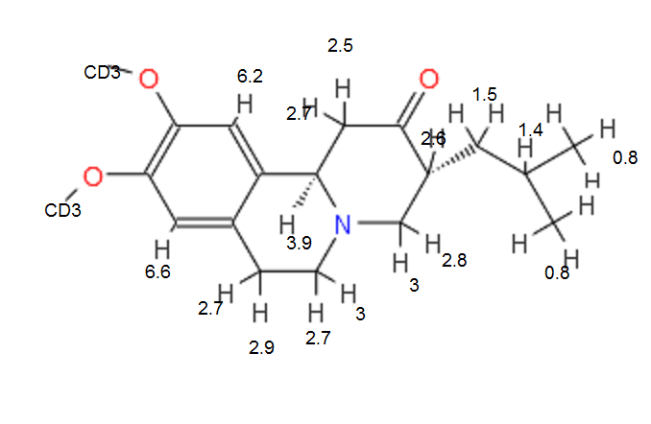
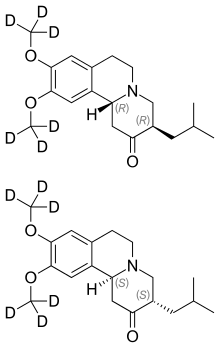
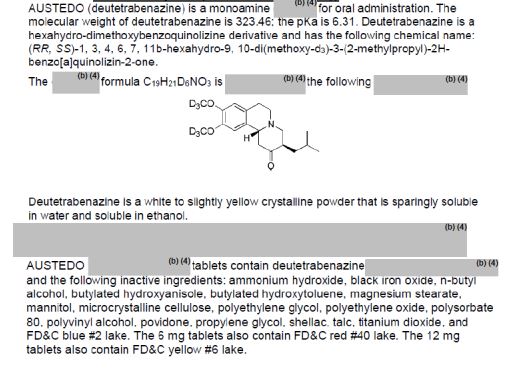
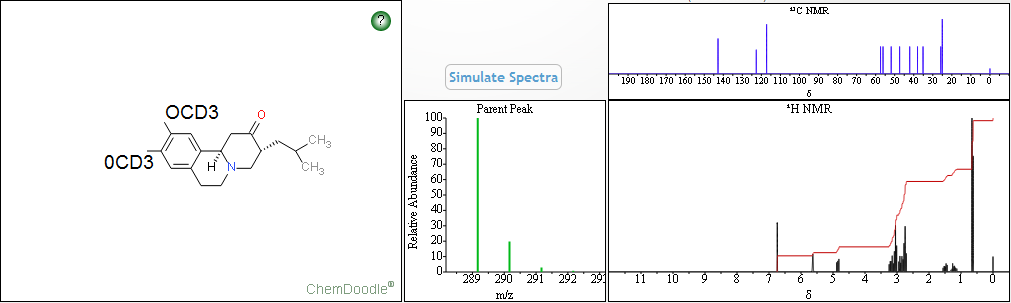
SD-809, Deutetrabenazine


SD-809,  Deutetrabenazine

  • Tetrabenazine-d6

(3RS,11Brs)-9,10-di((2H3)methoxy)-3-(2-methylpropyl)-1,3,4,6,7,11b-hexahydro-2H-benzo(a)quinolizin-2-one

2H-​Benzo[a]​quinolizin-​2-​one, 1,​3,​4,​6,​7,​11b-​hexahydro-​9,​10-​di(methoxy-​d3)​-​3-​(2-​methylpropyl)​-​, (3R,​11bR)​-​rel

2H-Benzo(a)quinolizin-2-one, 1,3,4,6,7,11b-hexahydro-9,10-di(methoxy-d3)-3-(2-methylpropyl)-, (3R,11bR)-rel-

2H-Benzo(a)quinolizin-2-one, 1,3,4,6,7,11b-hexahydro-9,10-di(methoxy-d3)-3-(2-methylpropyl)-, (3R,11bR)-rel-

(RR,SS)-1,3,4,6,7,11b-Hexahydro-9,10-di(methoxy-d3)-3-(2-methylpropyl)-2H-benzo[a]quinolizin-2-one

(3RS,11Brs)-9,10-di((2H3)methoxy)-3-(2-methylpropyl)-1,3,4,6,7,11b-hexahydro-2H-benzo(a)quinolizin-2-one
Treatment of Chorea Associated with Huntington Disease

MF C19-H21-D6-N-O3

  • C19-H27-N-O3
Molecular Weight, 323.4629
CAS 1392826-25-3
UNII P341G6W9NB
Chemistry Review(s) (PDF) fda approved 2017

Deutetrabenazine

TEVA

Deutetrabenazine.svg

Image result for deutetrabenazineImage result for deutetrabenazineImage result for deutetrabenazine

LINK……………https://newdrugapprovals.org/2015/08/15/sd-809-deutetrabenazine-nda-submitted-by-teva/

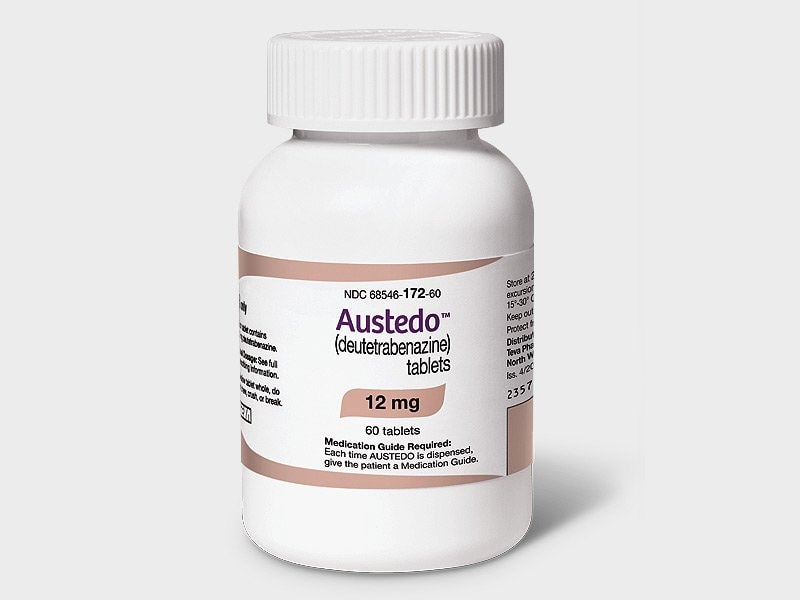
Austedo FDA 4/3/2017 For the treatment of chorea associated with Huntington’s disease
Drug Trials Snapshot   Chemistry Review(s) (PDF)

STR1STR2str3


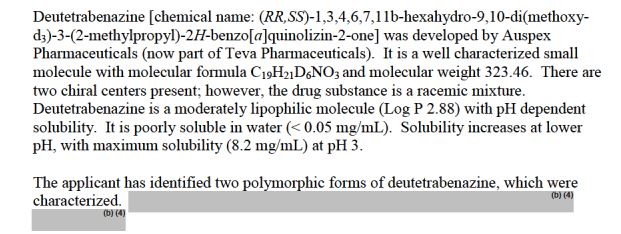
SD-809 was granted Orphan Drug Designation for the treatment of HD by the FDA in November 2014 and became part of Teva’s CNS portfolio with the acquisition of Auspex Pharmaceuticals in May 2015.

Teva announced that the New Drug Application (NDA) for SD-809 (deutetrabenazine) has been accepted by the U.S. Food and Drug Administration (FDA) for the treatment of chorea associated with Huntington disease (HD), a rare and fatal neurodegenerative disorder caused by the progressive breakdown of nerve cells in the brain that affects about five to seven people per 100,000 in western countries, according to the World Health Organization.
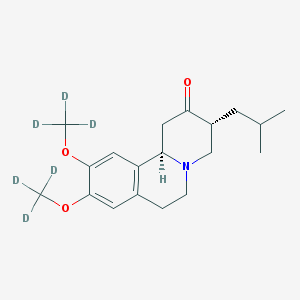
(3RS,11Brs)-9,10-di((2H3)methoxy)-3-(2-methylpropyl)-1,3,4,6,7,11b-hexahydro-2H-benzo(a)quinolizin-2-one.png

…………………….

Patent for preparing tetrabenazine

http://www.google.com/patents/WO2012081031A1?cl=en

Chemically tetrabenazine is cis rac -1, 3, 4, 6, 7, 1 lb-hexahydro-9, 10-dimethoxy-3-(2- methylpropyl)-2Hbenzo[a]quinolizin-2-one and it is represented by compound of structural formula I.

Formula 1

The proprietary name of tetrabenazine is Xenazine and is marketed by Biovail Americas. Xenazine is indicated for the treatment of chorea associated with Huntington’s disease. U.S. patent no. 2,830,993 discloses a process for the preparation of tetrabenazine compound of structural formula I wherein 1 -carbethoxymethyl-6, 7-dimethoxy-l , 2, 3, 4- tetrahydroisoquinoline compound of structural formula IV is being reacted with mono- isobutylmalonic acid dimethyl ester compound of structural formula V and paraformaldehyde in methanol solvent to get l-carbethoxymethyl-2 (2, 2-dicarbomethoxy-4-methyl-n-pentyl)-6, 7- dimethoxy-1, 2, 3, 4-tetrahydroisoquinoline compound of structural formula VI. The 1- carbethoxymethyl-2(2,2-dicarbomethoxy-4-methyl-n-pentyl)-6,7-dimethoxy-l ,2,3,4- tetrahydroisoquinoline compound of structural formula VI is subjected to Dieckmann cyclization , hydrolysis and decarboxylation to get tetrabenazine compound of structural formula I, which is recrystallized from di-isopropyl ether solvent.

Formula I

Scheme I

U. S. patent no. 4,678,792 discloses a process for the preparation of 6, 7-dimethoxy-3, 4- dihydroisoquinoline compound of structural formula VII wherein 2-(3, 4-dimethoxyphenyl)- ethylamine compound of structural formula II is being reacted with chloral hydrate at 120°C to get N-formyl-2-(3, 4-dimethoxyphenyl)-ethylamine compound of structural formula III. The N- formyl-2-(3, 4-dimethoxyphenyl)-ethylamine compound of structural formula III is further reacted with polyphosphoric acid to get 6, 7-dimethoxy-3, 4-dihydroisoquinoline compound of structural formula VII. The 6, 7-dimethoxy-3, 4-dihydroisoquinoline compound of structural formula VII is being used as an intermediate for the preparation of tetrabenazine compound of structural formula I.

Formula III

Formula II

Polyphosphoric acid

Formula VII

Scheme II

Bull. Korean Chem. Soc. 2002 Volume (23). No. l , page no. 149 discloses N-formylation of various amines and alcohols with formic acid in toluene.

U.S. patent publication no. 2010/0130480 discloses a process for the preparation of 6, 7- dimethoxy-3, 4-dihydroisoquinoline compound of structural formula VII by reacting 2-(3, 4- dimethoxyphenyl)-ethylamine compound of structural formula II with hexamethylenetetramine in presence of acetic acid or trifluoroacetic acid.

Hexamethylenetetramine

Formula II Formula VII

U.S. patent publication no. 2008/0167337 discloses a process for the preparation of tetrabenazine compound of structural formula I wherein 6, 7-dimethoxy-3, 4-dihydroisoquinoline compound of structural formula VII is reacted with 3-dimethylaminomethyl-5-methyl-hexan-2-one methiodide compound of structural formula VIII to get crude tetrabenazine compound. The crude tetrabenazine compound was purified by employing flash column chromatography technique and

Formula VIII Formula I

The prior-art processes for preparing N-formyl-2-(3, 4-dimethoxyphenyl)-ethylamine compound of structural formula III produces below mentioned compound of structural formula XVII, XVIII, XIX, XX, XXI and XXII as a by-product of the reaction due to the demethylation and formylation of resulting hydroxy compounds.

Formula XX Formula XXI Formula XXII

The compounds of structural formula XVII, XVIII, XIX, XX, XXI and XXII are being carry- forwarded into the further steps of reactions of preparing tetrabenazine compound of structural formula I and therefore there is a need in the art to develop an improved process of preparing 6, 7-dimethoxy-3, 4-dihydroisoquinoline compound of structural formula VII, which obviates the prior-art problems. Accordingly there is provided a process of preparing tetrabenazine compound of structural formula I wherein 6, 7-dimethoxy-3, 4-dihydroisoquinoline compound of structural formula VII is being formed without the formation of above mentioned compounds of structural formula XVII, XVIII, XIX, XX, XXI and XXII.

EXAMPLE: PROCESS FOR THE PREPARATION OF SUBSTANTIAL PURE CRYSTALLINE FORM A OF TETRABENAZINE

Stage A: Process for the preparation of 6, 7-dimethoxy-3, 4-dihydroisoquinoIine

Step 1 : Process for the preparation of N-formyl-2-(3, 4-dimethoxyphenyl)-ethylamine

A solution of 2-(3, 4-dimethoxyphenyl)-ethylamine (500gm) in toluene (2000ml) was added formic acid (150gm) at 25°C, the resulting reaction mixture was diluted with toluene (500ml) and heated up to 45°C. The reaction mixture was maintained at 40-45°C for 5 hours and then the resulting reaction mixture was concentrated under reduced pressure at 50°C to get the title compound

Yield: 570gm

Purity: 99.98% (By HPLC)

Step 2: Process for the preparation of 6, 7-dimethoxy-3, 4-dihydroisoquinoline

A solution of N-formyl-2-(3, 4-dimethoxyphenyl)-ethylamine (250gm) obtained from step 1 in toluene (500ml) and polyphosphoric acid (50gm) was heated at 110°C for 5 hours. The resulting reaction mixture was cooled to 50°C, quenched with water (500ml) and pH of the resulting solution was adjusted to about 8.3 with aqueous solution of sodium hydroxide [sodium hydroxide (690gm) + water (690ml)]. The resulting reaction mass was extracted by ethyl acetate (2 1250ml), dried over anhydrous sodium sulfate (50gm) and concentrated under reduced pressure to get 6, 7-dimethoxy-3, 4-dihydroisoquinoline (190gm).

Yield: 215gm

Purity: 99.67% (By HPLC)

Stage B: Process for the preparation of 3-((dimethylamino) methyi)-5-methylhexan-2-one methiodide

Step 1 : Process for the preparation of 3-((dimethylamino) methyl)-5-methylhexan-2-one Dimethylamine hydrochloride (180gm) and paraformaldehyde (lOOgm) were added to a solution of 5-methylhexan-2-one (900ml) in methanol (1600ml). The resulting reaction mass was heated at reflux for 12 hours, and then the pH was adjusted to about 8.75 with aqueous solution of sodium hydroxide [sodium hydroxide(90gm) + water (900ml)] at 25 °C. The resulting reaction solution was extracted by toluene (2x1234ml). The organic layer was dried over anhydrous sodium sulfate (50gm) and concentrated under reduced pressure to get title compound.

Yield: 900gm

Purity: 99.80% (By HPLC)

Step 2: Process for the preparation of 3-((dimethylamino) methyl)-5-methylhexan-2-one methiodide

Methyl iodide (323gm) was added dropwise to a solution of 3-((dimethylamino) methyl)-5- methylhexan-2-one (195gm) obtained from step 1 , in ethyl acetate (1650ml) at 25-30°C in 30 minutes. The resulting reaction mixture was stirred at 25 °C for 12 hours and then the resulting solids were filtered, washed with water (200ml) and suck-dried to get wet compound (400gm). The wet compound was slurried with water (1000ml) at 25°C for 1 hour and then it was again filtered, washed with water (200ml) and dried at 45-50°C to get title compound

Yield: 300gm

Purity: 99.86% (By HPLC)

Stage C: Preparation of substantial pure crystalline form A of Tetrabenazine

3-((Dimethylamino) methyl)-5-methylhexan-2-one methiodide (80gm) was added to the solution of 6, 7-dimethoxy-3, 4-dihydroisoquinoline (40gm) in isopropanol (288ml) at 25°C and the resulting reaction mass was heated at 40-45°C for 15 hours. The resulting insoluble material was filtered, washed with isopropanol (80ml) and filtrate was concentrated under reduced pressure up to the 150ml reaction volume. The reaction solution was diluted with methylene dichloride (1200ml) and water (1000ml) and pH was adjusted to 8.5 with sodium hydroxide solution [10%, 100ml]. The organic layer was separated, washed with water (3 x 1000ml) and concentrated under reduced pressure to obtain residue. The residue was dissolved in methanol (300ml) at 50°C, and resulting solution was treated with an activated carbon (20gm) at 50-60°C for 30minutes and then it was filtered and filtrate was further stirred at 20-25°C for 2 hours. The resulting solids were filtered, washed with methanol (150ml), dried at 50-55°C for 8 hours. The resulting solids were milled, sifted through 40 mesh sieve and micronized.

Yield: 65gm

Purity: 99.96% (By HPLC)

………………………

PAPER

Org. Lett., 2011, 13 (24), pp 6500–6503
DOI: 10.1021/ol202792q
Abstract Image

A concise synthesis of tetrabenazine and dihydrotetrabenazine is described. The key feature of this synthesis is the intramolecular aza-Prins-type cyclization of an amino allylsilane via oxidative C–H activation.

T1 T2 T3 T4

http://www.hgxb.com.cn/EN/abstract/abstract12047.shtml

……………
PAPER


http://www.ncbi.nlm.nih.gov/pmc/articles/PMC3126153/

An external file that holds a picture, illustration, etc. Object name is nihms279693f2.jpg

The TBZ (4) for these reactions was prepared by reacting 3,4-dihydro-6,7-dimethoxyisoquinoline (3) and the Mannich base (2) as shown in Scheme 1.14 The α,β-unsaturated TBZ (5), which was the original substrate, was obtained by further treatment with chloranil in refluxing benzene.

Tetrabenazine (4a)

To a solution of 3,4-dihydro-6,7-dimethoxyisoquinoline hydrochloride (3, 3.5 g, 15.4 mmol) in cold H2O (20 mL) in an ice water bath, was added 3-(dimethylaminomethyl)-5-methyl-2-hexanone (2, 3.15 g, 18.3 mmol) as the free base with stirring. Precipitate formed within 3 h, and stirring was continued until the solid-gummy precipitate prevented stirring. The mixture was allowed to stand at RT (room temperature) for 3 days. The solid–gum mixture was filtered, and the yellow solid–gum mixture was dissolved in hot MeOH. The solution was chilled at −10°C for 18 h. The pale yellow solid was filtered to give 2.1 g (43%) of TBZ (4a).
TLC: Rf = 0.62; silica gel; 4% MeOH/96% CH2Cl2.
MS: (DCl-NH3) m/z 318 (M+H).
UV: (EtOH) λmax 282.0 nm (ε4431).
1H NMR: (300 MHz, CDCl3) δ 6.61 (s, 1H), 6.55 (s, 1H), 3.85 (s, 3H), 3.82 (s, 3H), 3.51 (br dd, 1H), 3.29 (dd, 1H), 3.13 (m, 2H), 2.90 (dd, 1H), 2.75 (m, 2H), 2.57 (m, 2H), 2.35 (t, 1H), 1.81 (ddd, 1H), 1.65 (m, 1H), 1.04 (ddd, 1H), 0.92 (d, 3H), 0.89 (d, 3H) ppm.
13C NMR: (75 MHz, CDCl3) δ 210.00, 147.86, 147.54, 128.60, 126.11, 111.53, 107.94, 62.48, 61.52, 56.01, 55.92, 50.58, 47.62, 47.57, 36.09, 29.38, 25.44, 23.21, 22.11 ppm.
EA: Anal. Calc for C19H17NO3: C, 71.89; H, 8.57; N, 4.41. Found C, 72.15; H, 8.69; N, 4.47.
HPLC: Brownlee 25 cm × 4.6 mm silica gel column; 30% isopropanol/70% hexane; 1 mL/min; ret. time 5.94 min; purity >99.5%.

…………….

http://www.google.ga/patents/WO2008154243A1?cl=en

Example 10 Removal The Boc Protecting Group From First Intermediate 12 And Amino Cyclization Provide (+)-Tetrabenazine XVII

[0063] First intermediate 12 (1.0 eq) was dissolved in 10% Me2S- dichloromethane to provide an 82 mM solution. The solution was cooled to 0 0C and triisopropylsilane (1.1 eq.) followed by TFA (precooled to 0 0C) was added to the reaction mixture to provide a final concentration of 41 mM. The reaction mixture was permitted to stir at 0 0C for 1 h. Following the allotted time the reaction mixture was quenched at 0 0C by the addition of saturated aqueous potassium carbonate solution and concentrated under reduced pressure to remove the majority of the dimethylsulfide. The mixture was extracted with five portions of dichloromethane, and the combined organic extracts were washed with brine, dried (MgSO4), filtered and concentrated under reduced pressure to provide the crude product as a yellow solid. The crude product was recrystallized from 3.5% dimethoxyethane in hexanes. The resulting colorless crystals were washed with hexanes to provide pure (+)- tetrabenazine (XVII) 46%: mp 126.0 0C (3.5% DME-hexanes) (a crystal polymorph was observed at 116 0C); [α]26 D +37.2 (c 0.41, CH2Cl2); 1H NMR (CD2Cl2) δ 0.89 (apparent t, J = 7.2 Hz, 6H), 0.98 (ddd, J = 12, 6.0, 4.0 Hz, IH), 1.59-1.68 (m, IH), 1.74 (ddd, J = 12, 5.9, 5.7 Hz, IH), 2.32 (apparent t, J = 11.7 Hz, IH), 2.46 (apparent t, J = 12.3 Hz, IH), 2.55 (ddd, J = 12, 10.0, 3.8 Hz, IH), 2.65-2.73 (m, 2H), 2.83 (dd, J = 5.5, 2.8Hz, IH), 2.97-3.07 (m, IH), 3.07-3.14 (m, IH), 3.25 (dd, J =9.7, 6.3 Hz, IH), 3.47 (apparent d, J = 12Hz, IH), 3.75 (s, 3H), 3.77 (s, 3H), 6.55 (s, IH), 6.60 (s, IH) 13C NMR (CD2Cl2) δ 21.98, 23.02, 25.51, 29.46, 35.16, 47.47, 47.63, 50.47, 55.87, 56.01, 61.47, 62.46, 108.46, 111.72, 126.37, 128.96, 147.65, 147.98, 209.72; HRMS-(ESI+) calcd for (C19H27NO3 + H) ([M+H]+ 318.2069, found 318.2082.

…………….

US 20150152099
d1 d2 d3

………….

WO 2015077520

NBI-98854 (CAS # 1025504-59-9), (S)-(2R,3R,l lbR)-3-isobutyl-9,10-dimethoxy-2,3,4,6,7,1 lb-hexahydro-lH-pyrido[2,l-a]isoquinolin-2-yl 2-amino-3-methylbutanoate, is a VMAT2 inhibitor. NBI-98854 is currently under investigation for the treatment of movement disorders including tardive dyskinesia. WO 2008058261; WO 2011153157; and US 8,039,627. NBI-98854, a valine ester of (+)-a-dihydrotetrabenazine, in humans is slowly hydrolyzed to (+)-a-dihydrotetrabenazine which is an active metabolite of tetrabenazine.

NBI-98854


EXAMPLE 1

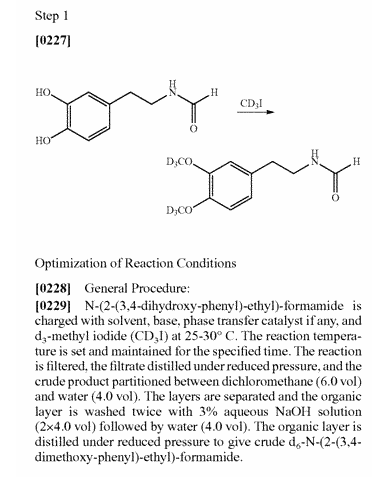
D6-(±)-3-Isobutyl-9,10-dimethoxy-3,4,6,7-tetrahydro-lH-pyrido[2,l-a]isoquinolin-2(l lbH)-one ((±)-Tetrabenazine-<d6)

Step 1

[0193] Jgrt-butyl 3,4-dihydroxyphenethylcarbamate : A solution of dopamine

hydrochloride (209 g, 1.11 mol, 1.00 equiv), sodium carbonate (231 g, 2.75 mol, 2.50 equiv) and di-tert-butyl dicarbonate (263 g, 1.21 mol, 1.10) in 2.4 L tetrahydrofuran / water (5: 1) was stirred at 20°C for 2.5 h. After the starting material was consumed completedly, the reaction was diluted with ethyl acetate (2 L) and washed with water (2×600 mL). The organic phase was dried over sodium sulfate, filtered and concentrated under reduced pressure until two volumes of solvent was left. The precipitated solid was isolated by filtration and dried under vacuum to give 254 g (91%) of ieri-butyl 3,4-dihydroxyphenethylcarbamate as white solid. Ή-ΝΜΪ (300 MHz, CDC13) 8.72 (s, 1H), 8.62 (s, 1H), 6.79 (m, 1H), 6.62 (m, 1H), 6.51 (m, 1H), 6.40 (m, 1H), 3.03 (m, 2H), 2.50 (m, 2H), 1.37 (s, 1H). LC-MS: m /z = 254 (MH) +.

Step 2

[0194] D6-fert-butyl 3,4-dimethoxyphenethylcarbamate: A solution of ieri-butyl 3,4-dihydroxyphenethylcarbamate (127 g, 397 mmol, 1.00 equiv), potassium carbonate (359.3 g, 2.604 mmol, 3.00 equiv) and 18-crown-6 (1,4,7,10,13,16-hexaoxacyclooctadecane ) (68.64 g, 0.26 mmol, 0.03 equiv) in acetone (800 mL) was stirred at 38°C. After 30 min., CD3I (362 g, 2.604 mmol, 3.00 equiv) was added to the reaction, and the mixture was stirred at 38°C for 12 h. Then an additional CD3I (120 g, 0.868 mmol, 1.00 equiv) was added to the solution and the solution was stirred for 5 h. Then the mixture was cooled to room temperature and the solid was filtered. The filtrate was concentrated under vacuum. The resultant solid was dissolved in H2O (300 mL) and extracted with EA (3×300 mL), the organic layers was combined and concentrated under vacuum to give 114 g (79%) of de-tert-butyl 3,4-dimethoxyphenethylcarbamate as white

solid. ^-NMR (300 MHz, CDC13) <Π.39 (m, 5H), 6.82 (m, 1H), 6.73 (m, 2H), 5.12 (s, 1H), 3.45 (m, 2H), 2.77 (m, 2H). LC-MS: m /z = 288 (MH) +.

Step 3

[0195] D6-2-(3,4-dimethoxyphenyl)ethanamine: A solution of de-tert-butyl 3,4-dimethoxyphenethylcarbamate (128 g, 455.26 mmol, 1.00 equiv) in ethyl acetate (1.5 L) was stirred at room temperature. Then HC1 gas was introduced into the reaction mixture for 2h. The precipitated solid was isolated by filtration. The solid was dissolved in 300 mL of water. The pH value of the solution was adjusted to 12 with sodium hydroxide (solid). The resulting solution was stirred for 1 h at 5-10°C. The resulting solution was extracted with 6×800 mL of ethyl acetate and the organic layers combined, dried over sodium sulfate, and concentrated under vacuum to give 64 g (78%) of d6-2-(3,4-dimethoxyphenyl)ethanamine as yellow oil.

^-NMR (300 MHz, CDC ) 6.77 (m, 3H), 3.89 (s, 3H), 3.87 (s, 3H), 2.96 (m, 2H), 2.71 (m, 2H), 1.29 (s, 2H). LC-MS: m /z = 182 (MH) +.

Step 4

[0196] D6-N-r2-(3,4-dimethoxy-phenyl)ethyllformamide: A solution of d6-2-(3,4-dimethoxyphenyl)ethanamine (69 g, 368 mmol, 1.00 equiv) in ethyl formate(250 mL) was heated under reflux overnight. The solution was concentrated under vacuum to give 71 g (91%) of d6-N-[2-(3,4-dimethoxy-phenyl)ethyl]formamide as yellow solid. The crude solid was used in next step without purification. ^-NMR (300 MHz, CDCb) £8.17 (s, 1H), 6.81 (m, 3H), 5.53 (br, 1H).3.59 (m, 2H), 2.81 (t, 2H, / = 6.9 Hz). LC-MS: m /z = 216 (MH) +.

Step 5

[0197] D6-6,7-dimethoxy-3,4-dihvdroisoguinoline: A solution of d6-N-[2-(3,4-dimethoxy-phenyl)ethyl]formamide (71 g, 329 mmol, 1.00 equiv) in phosphorus oxychloride (100 mL) was stirred at 105°C for 1 h. Then the solution was concentrated under vacuum to remove

phosphorus oxychloride. The residual oil was dissolved in ice / water. The solution was made basic with potassium carbonate with cooling. The basic aqueous solution was extracted with dichloromethane. The collected organic phase was dried using sodium sulfate and then filtered. The dichloromethane was removed by concentration under vacuum to give an orange oil.

Purification by silica gel (ethyl acetate:petroleum ether = 1: 1 ~ ethyl acetate) to give 43 g (66%) of d6-6,7-dimethoxy-3,4-dihydroisoquinoline as orange solid (yield 66%). Ή-ΝΜΡ (300 MHz, CDC13) 8.24 (s, 1H), 6.82 (s, 1H), 6.68 (s, 1H), 3.74 (m, 2H), 2.69 (t, 2H, J = 12 Hz). LC-MS: m /z = 198 (MH) +.

Step 6

[0198] Trimethyl(5-methylhex-2-en-2-yloxy)silane: To a cold (-78°C), stirred solution of j-PrMgBr (500 mL of 2 M solution in tetrahydrofuran, 1 mol, 1.00 equiv) in anhydrous tetrahydrofuran (1 L) was added Cul (19.02 g, 0.1 mol, 0.10 equiv) and the resultant mixture was stirred for 15 min at -78°C. Anhydrous hexamethylphosphorous triamide (358.4 g, 2 mmol, 2 equiv) was added and after 20 min, a solution of methyl vinyl ketone (70 g, 0.1 mol, 1.00 equiv), trimethylsilyl chloride (217 g, 0.2 mol, 2.00 equiv), in tetrahydrofuran (200 mL) was added dropwise over 30 min. After the reaction mixture was stirred at -78 °C for lh, triethylamine (20.2g, 200 mmol, 2.00 equiv) was added and the resulting mixture stirred for 10 min at 0 °C. To this was added ie/ -butyl methyl ether (2 L), and the solution was washed with 5% ammonia solution (6×300 mL). Then the organic phase was dried over sodium sulfate and concentrated under vacuum at 25°C to give 155 g crude product as yellow liquid. The liquid was purified by distilling (64-68°C/40 mmHg) to provide 118 g (63.3%) of trimethyl(5-methylhex-2-en-2-

yloxy)silane (E:Z = 56 : 44) as a colorless oil. XH-NMR (300 MHz, J6-DMSO) 4.58 (m, 0.56H), 4.43 (m, 0.44H), 1.73 (s, 1.69H), 1.66 (s, 1.32H), 1.53 (m, 1H), 0.84 (m, 6 H), 0.15(m, 9H).

Step 7

[0199] 3-r(Dimethylamino)methyl1-5-methylhexan-2-one: To a stirred solution of trimethyl(5-methylhex-2-en-2-yloxy)silane (118 g, 633 mmol, 1.00 equiv) in anhydrous acetonitrile (800 mL) was added N-methyl-N-methylenemethanaminium iodide (128.8 g, 696.3 mmol, 1.10 equiv) in several batches and the resultant mixture was stirred at 20°C overnight. Then the solution was concentrated under vacuum to remove the solvent. The residue was dissolved in 400 mL 1 N HC1 (aq.) and extracted with ieri-butyl methyl ether. Then the water phase was basiced with 2 N aq. NaOH and extracted with ie/ -butyl methyl ether. The organic phase was dried and concentrated under vacuum. The liquid was purified by distilling (80°C/0.5 mmHg) to provide 50 g (46%) of 3-[(dimethylamino)methyl]-5-methylhexan-2-one as a colorless oil. XH-NMR (300 MHz, J6-DMSO) £0.92 (d, 3H), 0.98 (d, 3H), 1.11-1.23 (m, 1H), 1.23-1.38 (m, 1H), 1.54-1.70 (m, 1H), 2.30 (s, 3H), 3.01 (s, 9H), 3.10-3.32 (m, 2H), 3.81-3.88 (m, 1H).

Step 8

[0200] 2-Acetyl-N,N V,4-tetramethylpentan-l-aminium iodide: A solution of 3-[(dimethylamino)methyl]-5-methylhexan-2-one (50 g, 15.00 mmol, 1.00 equiv) and methyl iodide (4.26 g, 30.00 mmol, 2.00 equiv) in 50 mL diethyl ether was stirred overnight at room temperature. The precipitated solid was isolated by filtration and dried under vacuum to give 79 g (86%) of 2-acetyl-N,N,N,4-tetramethylpentan-l-aminium iodide as white solid. XH-NMR (300 MHz, Je-DMSO) 0.89-0.98 (m, 6H), 1.11-1.20 (m, 1H), 1.40 (m, 1H), 1.66 (m, 1H), 2.30 (s, 3H), 3.01(s, 9H), 3.21 (m, 2H), 3.85 (m, 1H).

Step 9

[0201] Ρό- (±) -tetrabenazine : A solution of d6-6,7-dimethoxy-3,4-dihydroisoquinoline (33.4 g, 169 mmol, 1.10 equiv) and 2-acetyl-N,N,N,4-tetramethylpentan-l-aminium iodide (48 g, 153 mmol, 1.00 equiv) in 300ml of methanol was heated under reflux for 48 h. Then 150 mL water was added. The solution was cooled to room temperature. The precipitated solid was isolated by filtration and dried under vacuum to give 38 g of crude d6-tetrabenazine as yellow solid. The crude tetrabenazine was dissolved in ieri-butyl methyl ether (15 volumes), the mixture was heated until the solid was almost dissolved. The yellow solid which was unsolvable was filtered. The filtrate was concentrated under vacuum until 2 volumes ieri-butyl methyl ether was left. The solid was filtered and collected. The above solid was dissolved in ethanol (4 volumes), then the mixture was heated until the solid was dissolved. The solution was stirred and cooled to room temperature at the rate of 20°C/h. Then the mixture was stirred at 0°C for lh. The precipitated solid was isolated by filtration and dried under vacuum to give 25 g (50.4%) of tetrabenazine-<d6 as white solid.

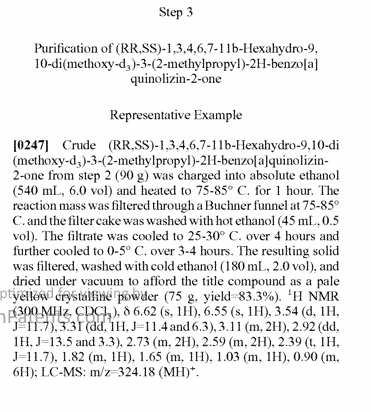
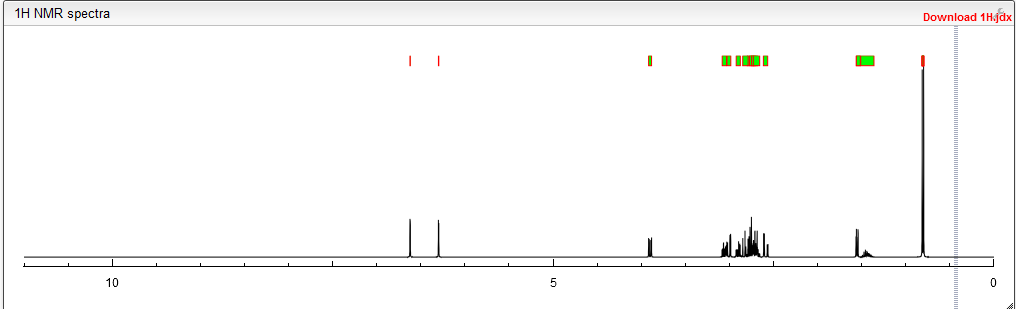
^-NMR (300 MHz, CD2C12) £6.61 (s, 1H), 6.55 (s, 1H), 3.84 (s, 3H), 3.82 (s, 3H), 3.50 (d, 1H, / = 12 Hz), 3.27 (dd, 1H, / = 11.4Hz, / = 6.3 Hz), 3.11 (m, 2H), 2.84 (dd, 1H, / = 10.5 Hz, / = 3 Hz), 2.74 (m, 2H), 2.56 (m, 2H), 2.31 (t, 1H, J = 12 Hz), 1.76 (m, 1H), 1.63 (m, 1H), 0.98 (m, 1H), 0.89 (m, 6H).

LC-MS: m /z = 324 (MH) +.

………………

NMR PREDICT

C1

D2

D3

Watch out will be updated……………….

Rob Koremans, MD, President and CEO of Global Specialty Medicines at Teva.

Michael Hayden, M.D., Ph.D., President of Global R&D and Chief Scientific Officer at Teva


WO2009070552A1 * 25 nov. 2008 4 juin 2009 Gen Electric Alpha-fluoroalkyl tetrabenazine and dihydrotetrabenazine imaging agents and probes
WO2012000308A1 * 27 juin 2011 5 janv. 2012 China Pharmaceutical University A method for resolution of tetrabenazine
WO2012081031A1 * 11 avr. 2011 21 juin 2012 Enaltec Labs Pvt. Ltd. Process for preparing tetrabenazine
WO2013041621A1 * 20 sept. 2012 28 mars 2013 Basf Se Low molecular weight modulators of the cold-menthol receptor trpm8 and use thereof
WO2015048370A1 * 26 sept. 2014 2 avr. 2015 Auspex Pharmaceuticals, Inc. Benzoquinolone inhibitors of vmat2
US7897769 25 oct. 2007 1 mars 2011 General Electric Company Intermediates for fluorinated dihydrotetrabenazine ether imaging agents and probes
US7897770 25 oct. 2007 1 mars 2011 General Electric Company Fluorinated dihydrotetrabenazine ether imaging agents and probes
US7902364 29 nov. 2007 8 mars 2011 General Electric Company Alpha-fluoroalkyl tetrabenazine and dihydrotetrabenazine imaging agents and probes
US7910738 29 nov. 2007 22 mars 2011 General Electric Company Intermediates for alpha-fluoroalkyl tetrabenazine and dihydrotetrabenazine imaging agents and probes
US7919622 7 déc. 2007 5 avr. 2011 Kande Kankanamalage Dayarathna Amarasinghe Intermediates for fluorinated tetrabenazine carbinol compounds imaging agents and probes
US8013161 7 déc. 2007 6 sept. 2011 General Electric Company Fluoroalkyl tetrabenazine carbinol compounds as imaging agents and probes
US8053578 16 juil. 2008 8 nov. 2011 General Electric Company Alpha-fluoroalkyl dihydrotetrabenazine imaging agents and probe


WO2007017654A1 4 août 2006 15 févr. 2007 Cambridge Lab Ireland Ltd 3, hb cis dihydrotetrabanezine for the treatment of schizophrenia and other psychoses
US3132147 * 15 juin 1962 5 mai 1964 Titre non disponible
US4193998 * 14 juin 1978 18 mars 1980 Chinoin Gyogyszer Es Vegyeszeti Termekek Gyara Rt 1,2,3,4,6,7-Hexahydro-11BαH-benzo[a]quinolizine-derivatives
US4686226 * 3 sept. 1985 11 août 1987 Merck & Co., Inc. Substituted benzo[b]furo- and benzo[b]thieno quinolizines
US5118690 * 21 oct. 1991 2 juin 1992 John Wyeth & Brother Limited Pharmaceutical tetrahydroisoquinolines
US5272270 * 12 août 1991 21 déc. 1993 Consortium Fur Elektrochemische Industrie Gmbh Process for the preparation of 1-alkylisoquinoline derivatives
US5278308 * 28 févr. 1992 11 janv. 1994 The Trustees Of The University Of Pennsylvania Iodine derivatives of tetrabenazine
US20020055637 * 21 déc. 2001 9 mai 2002 Song Liu Methods for synthesis of amino-tetrahydroisoquinoline-carboxylic acids
US20040082647 * 21 avr. 2003 29 avr. 2004 G.D. Searle, Llc Method for the preparation of tetrahydrobenzothiepines
Cited Patent Filing date Publication date Applicant Title
WO1994000460A1 * Jun 23, 1993 Jan 6, 1994 Univ California SYNTHESIS OF N-FORMYL-3,4-DI-t-BUTOXYCARBONYLOXY-6-(TRIMETHYLSTANNYL)-L-PHENYLALANINE ETHYL ESTER AND ITS REGIOSELECTIVE RADIOFLUORODESTANNYLATION TO 6-[18F]FLUORO-L-DOPA
WO2008058261A1 * Nov 8, 2007 May 15, 2008 Neurocrine Biosciences Inc Substituted 3-isobutyl-9, 10-dimethoxy-1,3,4,6,7,11b-hexahydro-2h-pyrido[2,1-a] isoquinolin-2-ol compounds and methods relating thereto
WO2008154243A1 * Jun 4, 2008 Dec 18, 2008 Gen Electric Method for making tetrabenazine compounds
WO2010044981A2 * Sep 18, 2009 Apr 22, 2010 Auspex Pharmaceutical ,Inc. Benzoquinoline inhibitors of vesicular monoamine transporter 2
EP0154842A2 * Feb 16, 1985 Sep 18, 1985 Dr. Karl Thomae GmbH Medicament containing quaternary 3,4-dihydroisoquinoline salts
US2830993 May 18, 1956 Apr 15, 1958 Quinolizine derivatives
US4678792 Feb 28, 1985 Jul 7, 1987 Dr. Karl Thomae Gmbh Quaternary 3,4-dihydro-isoquinolinium salts
US20080167337 Nov 8, 2007 Jul 10, 2008 Gano Kyle W Substituted 3-isobutyl-9,10-dimethoxy-1,3,4,6,7,11b-hexahydro-2h-pyrido[2,1-a]isoquinolin-2-ol compounds and methods relating thereto
US20100130480 Sep 18, 2009 May 27, 2010 Auspex Pharmaceuticals, Inc. Benzoquinoline inhibitors of vesicular monoamine transporter 2
1 * BROSSI, A. ET AL: “Synthesis in the emetine series. I. 2-Oxohydrobenzo[a]quinolizines“, HELVETICA CHIMICA ACTA, vol. 41, 1958, pages 119-139, XP002659731,
2 BULL. KOREAN CHEM. SOC. vol. 23, no. 1, 2002, page 149
3 * DATABASE CA [Online] CHEMICAL ABSTRACTS SERVICE, COLUMBUS, OHIO, US; AL-HIARI, YUSUF M. ET AL: “Synthesis of 1-benzyl-1,2,3,4-tetrahydroisoquinoline, Part I: Grignard synthesis of 1-(substituted benzyl)-1,2,3,4-tetrahydroisoquinoline models with potential antibacterial activity“, XP002659739, retrieved from STN Database accession no. 2009:467462
4 * DATABASE CA [Online] CHEMICAL ABSTRACTS SERVICE, COLUMBUS, OHIO, US; DE LUCA, LIDIA ET AL: “A new, simple procedure for the synthesis of formyl amides“, XP002659734, retrieved from STN Database accession no. 2004:1062632
5 * DATABASE CA [Online] CHEMICAL ABSTRACTS SERVICE, COLUMBUS, OHIO, US; DOMINGUEZ, ESTHER ET AL: “Solvent effect on the Bischler-Napieralski reaction. Synthesis of 3-aryl-3,4-dihydroisoquinolines“, XP002659736, retrieved from STN Database accession no. 99:158206
6 * DATABASE CA [Online] CHEMICAL ABSTRACTS SERVICE, COLUMBUS, OHIO, US; FALCK, J. R. ET AL: “Oxazoline chemistry. Preparation of isoquinolines and 2,2′-bisoxazolines“, XP002659744, retrieved from STN Database accession no. 1981:497646
7 * DATABASE CA [Online] CHEMICAL ABSTRACTS SERVICE, COLUMBUS, OHIO, US; FUKUDA, TSUTOMU ET AL: “Synthesis of both enantiomers of protoberberines via laterally lithiated (S)-4-isopropyl-2-(o-tolyl)oxazolines“, XP002659742, retrieved from STN Database accession no. 2008:192807
8 * DATABASE CA [Online] CHEMICAL ABSTRACTS SERVICE, COLUMBUS, OHIO, US; JAHANGIR ET AL: “Aza analogs of protoberberine and phthalideisoquinoline alkaloids“, XP002659741, retrieved from STN Database accession no. 1986:572799
9 * DATABASE CA [Online] CHEMICAL ABSTRACTS SERVICE, COLUMBUS, OHIO, US; MENENDEZ, J. C. ET AL: “Synthesis and antibacterial activity of some 1-thia-4,8-diazaspiro[4.5]decan-3-ones, thiazolo[2,3-a]isoquinolin-3-ones and 1,3-thiazino[2,3-a]isoquinolin-4-ones“, XP002659740, retrieved from STN Database accession no. 1989:114772
10 * DATABASE CA [Online] CHEMICAL ABSTRACTS SERVICE, COLUMBUS, OHIO, US; NARASIMHAN, N. S. ET AL: “Unusual products in Bischler-Napieralski reaction“, XP002659743, retrieved from STN Database accession no. 1981:46871
11 * DATABASE CA [Online] CHEMICAL ABSTRACTS SERVICE, COLUMBUS, OHIO, US; REIMANN, EBERHARD ET AL: “Protoberberines from Reissert-Compounds. Part IX [1]. An Alternative Approach to Dibenzoquinolizine- and Isoquinonaphthyridin-13a-carboxylic Acids, a Novel Synthesis of Alangimarine“, XP002659738, retrieved from STN Database accession no. 143:267131
12 * DATABASE CA [Online] CHEMICAL ABSTRACTS SERVICE, COLUMBUS, OHIO, US; SHAFIK, RAGAB M. ET AL: “.alpha.-Phenyl-.beta.-(3,4-dimethoxy)phen ethylamines: novel inhibitors of choline acetyltransferase from Torpedo electric organ“, XP002659735, retrieved from STN Database accession no. 1985:61873
13 * DATABASE CA [Online] CHEMICAL ABSTRACTS SERVICE, COLUMBUS, OHIO, US; WANG, CHENG-XUE ET AL: “Synthesis of rutaecarpine and quinazolone compounds“, XP002659737, retrieved from STN Database accession no. 2009:92700
14 * RISHEL, MICHAEL J. ET AL: “Asymmetric Synthesis of Tetrabenazine and Dihydrotetrabenazine“, JOURNAL OF ORGANIC CHEMISTRY, vol. 74, no. 10, 2009, pages 4001-4004, XP002659732,
15 * SCHWARTZ, D. E. ET AL: “Metabolic studies of tetrabenazine, a psychotropic drug in animals and man“, BIOCHEMICAL PHARMACOLOGY, vol. 15, no. 5, 1966, pages 645-655, XP002659733,


update on 2018

Novel Process for Preparation of Tetrabenazine and Deutetrabenazine

Lupin Research ParkLupin Limited46 & 47A, Village Nande, Taluka Mulshi, Pune-412115, Maharashtra, India
Org. Process Res. Dev., Article ASAP
DOI: 10.1021/acs.oprd.8b00011

Abstract

Abstract Image

A novel process for the synthesis of tetrabenazine (1) and deutetrabenazine (2), two well-known drugs used for the treatment of chorea associated with Huntington’s disease, has been developed. All of the reaction parameters were optimized through a series of reactions and by using Design of Experiment techniques. The newly developed methods are industrially scalable and employ cheap, commercially available raw materials and hence are highly efficient. The added advantage is that the developed processes evade the use of genotoxic alkylating agents and therefore could be considered as safe and viable alternatives to the existing methods.

Tetrabenazine (1) was invented by Hoffmann-La-Roche (Nutley, NJ, USA). It was also known as Ro 1-9569, Nitoman, and Xenazine. It is a benzoquinolizine derivative with the chemical name 1,3,4,6,7,11b-hexahydro-9,10-dimethoxy-3-(2-methylpropyl)-2H-benzo[α]quinolizin-2-one . Initially it was developed as an antipsychotic agent.Despite 50 years of medicinal background, the U.S. Food and Drug Administration (FDA) approved 1 on August 15, 2008, for the treatment of chorea associated with Huntington’s disease.

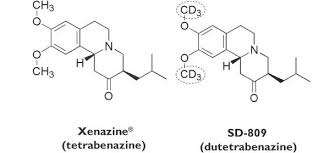
Figure

 Chemical structures of 1 and 2.

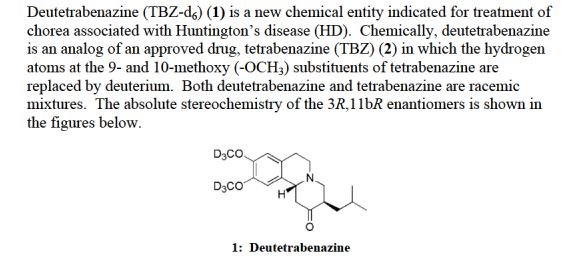
Deutetrabenazine (2) (trade name Austedo) is a stable, nonradioactive deuterium analogue of the approved drug tetrabenazine in which the six hydrogen atoms of the 9- and 10-methoxy (−OCH3) substituents have been replaced by deuterium atoms . Deutetrabenazine was found to be more effective for the treatment of chorea associated with Huntington’s disease because of improved pharmacokinetic properties compared with the nondeuterated drug tetrabenazine. Deutetrabenazine was originally developed by Auspex Pharmaceuticals (La Jolla, CA, USA). In 2015, Teva acquired Auspex Pharmaceuticals and submitted a new drug application (NDA) in the United States for the treatment of Huntington’s disease. On April 3, 2017, Teva Pharmaceutical received approval from the FDA to market deutetrabenazine as the first deuterated drug for the treatment of chorea associated with Huntington’s disease.(4) Both 1 and 2 are racemic mixtures .
  1. (a) Brossi, A.Lindlar, H.Walter, M.Schnider, O. Helv. Chim. Acta 195841119– 139DOI: 10.1002/hlca.660410117

    .

    (b) Brossi, A.Schnider, O.Walter, M. Quinolizine derivatives.U.S. Patent 2,830,9931958.

  2. Pletscher, A.Brossi, A.Gey, K. F. Int. Rev. Neurobiol. 19624275– 306DOI: 10.1016/S0074-7742(08)60024-0
  3. Mestre, T.Ferreira, J.Coelho, M. M.Rosa, M.Sampaio, C. Cochrane Database Syst. Rev. 20093,CD006456DOI: 10.1002/14651858.CD006456.pub2

  4. U.S. Food and Drug Administration. Novel Drug Approvals for 2017.https://www.fda.gov/Drugs/DevelopmentApprovalProcess/DrugInnovation/ucm537040 (accessed Jan 15, 2018).
  5. Brossi, A. Preparation of substituted 2-oxobenzoquinolizinesU.S. Patent 3,045,0211962.

  6. Gant, T. G.Shahbaz, M. M. Benzoquinoline inhibitors of vesicular monoamine transporter-2U.S. Patent 8,524,7332013.

Large-Scale Preparation of Tetrabenazine (1)

1 (262.3 g, 96%). FTIR (in KBr): 2942, 2919, 1701, 1516, 1465, 1370, 1263, 1159, 1010, 860, 749 cm–11H NMR (500 MHz, CDCl3): δ 6.63 (s, 1H), 6.57 (s, 1H), 3.87 (s, 3H), 3.84 (s, 3H), 3.52 (d, 1H, J = 11.2 Hz), 3.32 (dd, 1H, J = 11.6, 6.4 Hz), 3.13–3.10 (m, 2H), 2.93–2.90 (m, 1H), 2.77–2.73 (m, 2H), 2.64–2.53 (m, 2H), 2.37 (t, 1H, J = 11.6 Hz), 1.83–1.80 (m, 1H), 1.69–1.66 (m, 1H), 1.08–1.04 (m, 1H), 0.94–0.91 (m, 6H). ESI-MS: m/z 318.3 [M + H]+.

Purification of 1

1 (9.6 g, 96%). HPLC purity: 99.75%.

FTIR (in KBr): 2942, 2919, 1701, 1516, 1465, 1370, 1263, 1159, 1010, 860, 749 cm–1

1H NMR (500 MHz, DMSO-d6): δ 6.70 (s, 1H), 6.69 (s, 1H), 3.72 (s, 6H), 3.46 (d, 1H, J = 10.0 Hz), 3.24 (dd, 1H, J = 11.5, 6.0 Hz), 3.15–3.11 (m, 1H), 2.95–2.89 (m, 1H), 2.85 (dd, 1H, J = 13.0, 3.0 Hz), 2.69–2.65 (m, 2H), 2.52–2.46 (m, 2H), 2.28 (t, 1H, J= 12.0 Hz), 1.66–1.63 (m, 2H), 0.94–0.85 (m, 7H).

ESI-MS: m/z 318.3 [M + H]+.

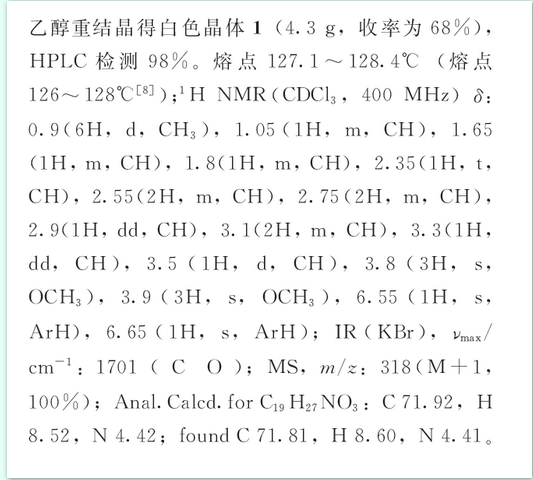
Large-Scale Preparation of Deutetrabenazine (2)FTIR (in KBr): 2942, 2920, 2246, 2067, 1700, 1513, 1269, 1113, 990, 747 cm–11H NMR (500 MHz, CDCl3): δ 6.63 (s, 1H), 6.56 (s, 1H), 3.53 (d, 1H, J = 10.5 Hz), 3.32–3.30 (m, 1H), 3.17–3.13 (m, 2H), 2.92 (dd, 1H, J = 13.5,3.0 Hz), 2.77–2.73 (m, 2H), 2.64–2.53 (m, 2H), 2.37 (t, 1H, J = 11.5 Hz), 1.84–1.79 (m, 1H), 1.69–1.67 (m, 1H), 1.08–1.04 (m, 1H), 0.94–0.91 (m, 6H). ESI-MS: m/z 324.4 [M + H]+

Large-Scale Purification of 2

Mp: 128.75–129.42 °C.

FTIR (in KBr): 2942, 2920, 2246, 2067, 1700, 1513, 1269, 1113, 990, 747 cm–1

1H NMR (500 MHz, DMSO-d6): δ 6.69 (s, 2H), 3.46 (d, 1H, J = 10.0 Hz), 3.25 (dd, 1H, J = 11.5, 6.0 Hz), 3.15–3.11 (m, 1H), 2.95–2.89 (m, 1H), 2.85 (dd, 1H, J = 13.5, 3.0 Hz), 2.70–2.64 (m, 2H), 2.52–2.44 (m, 2H), 2.28 (t, 1H, J = 11.5 Hz), 1.66–1.63 (m, 2H), 0.93–0.85 (m, 7H).

ESI-MS: m/z 324.4 [M + H]+.

[α]D −0.3 [c 0.3, DCM at 25 °C].

सुकून उतना ही देना प्रभू, जितने से जिंदगी चल जाये। औकात बस इतनी देना, कि औरों का भला हो जाये।
DRUG APPROVALS BY DR ANTHONY MELVIN CRASTO …..FOR BLOG HOME CLICK HERE

Join me on Linkedin

View Anthony Melvin Crasto Ph.D's profile on LinkedIn

Join me on Facebook FACEBOOK

Join me on twitterFollow amcrasto on Twitter
Join me on google plus Googleplus
Join me on Researchgate

Anthony Melvin Crasto Dr.

 amcrasto@gmail.com

09b37-misc2b027LIONEL MY SON
He was only in first standard in school when I was hit by a deadly one in a million spine stroke called acute transverse mylitis, it made me 90% paralysed and bound to a wheel chair, Now I keep him as my source of inspiration and helping millions, thanks to millions of my readers who keep me going and help me to keep my son happy
सुकून उतना ही देना प्रभू, जितने से
जिंदगी चल जाये।
औकात बस इतनी देना,
कि औरों का भला हो जाये।

///////

FDA approves Raplixa to help control bleeding during surgery


The U.S. Food and Drug Administration today approved Raplixa (fibrin sealant [human]), the first spray-dried fibrin sealant approved by the agency. It is used to help control bleeding during surgery.

April 30, 2015

Release

The U.S. Food and Drug Administration today approved Raplixa (fibrin sealant [human]), the first spray-dried fibrin sealant approved by the agency. It is used to help control bleeding during surgery.

Raplixa is a biological product approved for use in adults to help control bleeding from small blood vessels when standard surgical techniques, such as suture, ligature or cautery, are ineffective or impractical. When applied to a bleeding site, Raplixa is dissolved in the blood and a reaction starts between the fibrinogen and thrombin proteins. This results in the formation of blood clots to help stop the bleeding.

Raplixa contains fibrinogen and thrombin, two proteins found in human plasma, the liquid portion of blood. The two protein components are individually purified using a manufacturing process that includes virus inactivation and removal steps to help reduce the risk for the transmission of blood-borne viruses. The fibrin sealant components are then spray-dried, blended and packaged in a vial. Raplixa can be applied directly from the original product vial or by spraying with a delivery device onto a bleeding site. It is approved for use in conjunction with an absorbable gelatin sponge.

“This approval provides surgeons an additional option to help control bleeding during surgery when needed,” said Karen Midthun, M.D., director of the FDA’s Center for Biologics Evaluation and Research. “The spray-drying process used to manufacture Raplixa produces dried powders that can be combined into a single vial. This eliminates the need to combine the fibrinogen and thrombin before use and allows the product to be stored at room temperature.”

In support of approval, the FDA reviewed data from a clinical study involving 719 participants, over 11 months, undergoing different types of surgical procedures. The study demonstrated Raplixa’s effectiveness by comparing the reduction in the time needed for bleeding to stop when using this fibrin sealant and the time needed for bleeding to stop when using an absorbable sponge alone.

The most commonly reported adverse reactions were surgical pain, nausea, constipation, fever and decreased blood pressure.

Raplixa is manufactured by ProFibrix BV, a wholly owned subsidiary of The Medicines Company, based in Parsippany, New Jersey.

Susan Mayne, Ph.D. Director of FDA’s Center for Food Safety and Applied Nutrition


Susan Mayne

Susan Mayne, Ph.D.

Susan Mayne, Ph.D. Director of FDA’s Center for Food Safety and Applied Nutrition

Susan Mayne (@STMYale) | Twitter

www.linkedin.com/pub/susan-mayne/a/881/452/en

http://www.researchgate.net/profile/Susan_Mayne

She is  passionate about food safety and nutrition and their role in public health. I especially enjoy the intersection of science and policy, leading me to recently relocate to the FDA.

Education

ELAM (Executive Leadership for Academic Medicine)


Experience

Director, Center for Food Safety and Applied Nutrition

FDA

January 2015 – Present College Park, Maryland

C.-E.A. Winslow Professor of Epidemiology

Yale University School of Medicine

1988 – January 2015 (27 years)Yale School of Public Health

Susan T. Mayne joined the U.S. Food and Drug Administration (FDA) as the new director of the Center for Food Safety and Applied Nutrition (CFSAN), replacing her predecessor Michael Landa, who led the center for more than four years.

Susan T. Mayne is C.-E.A. Winslow Professor of Epidemiology with tenure and Chair, Department of Chronic Disease Epidemiology at the Yale School of Public Health.

Dr. Mayne is also Associate Director of the Yale Comprehensive Cancer Center, being responsible for Population Sciences.

She also directs a pre-doctoral training program at Yale in Partnership with the U.S. National Cancer Institute, to train students in modern methodologies for evaluating lifestyle determinants of human cancer risk, with an emphasis on nutritional, environmental, and occupational determinants, including their interactions with genetic factors.

Dr. Mayne earned a Ph.D. in nutritional biochemistry from Cornell University, with minors in biochemistry and toxicology, and a B.A. in chemistry from the University of Colorado.

Dr. Mayne is a fellow of the American College of Epidemiology, and of the Executive Leadership in Academic Medicine (ELAM) Program for Women. She has authored or co-authored over 180 articles/book chapters.

She also has served on several editorial boards including the Journal of Nutrition, Cancer Epidemiology, Biomarkers and Prevention, and Nature Reviews Clinical Oncology.

Dr. Mayne has served on several National Academy of Sciences committees, including most recently the Committee that established Dietary Reference Intakes for Vitamin D and Calcium.

She is currently on the Food and Nutrition Board of the National Academy of Sciences, and recently completed a 5-year term on the Board of Scientific Counselors for the U.S. National Cancer Institute. Her research emphasizes lifestyle determinants of human cancer risk.

Mayne certainly boosts the academic credentials of an Ivy League scholar. CFSAN’s new director has researched the role of food, nutrition and obesity as risks for chronic disease, and she is the author or co-author of more than 200 scientific publications, according to FDA. She received a B.A. in chemistry from the University of Colorado, and went on to earn a Ph.D. in nutritional sciences, with minors in biochemistry and toxicology, from Cornell University.

“While I make no claims as an expert on food safety, I studied toxicology while earning my Ph.D., and have conducted research into relationships between chemical contaminants and cancer risk, as well as studying microbes and their role in human cancer,” Mayne said in the Q&A. “Thus, I think about things from the perspective of both benefits and risks, and am equally interested in both areas.”

Mayne grew up in rural Colorado. She understands agriculture and comes from a health-conscious family. She said her grandmother lived to be one year shy of age 100 and produced most of her food on a farm in rural Pennsylvania. Mayne’s dad had a small ranch in Colorado where he raised cattle. She characterized her 80-something-year-old mom as “the image of successful aging.”

“She chooses healthy foods, is physically active daily, and frequently sends me pictures of her hikes in the Colorado mountains,” Mayne wrote.

Susan Mayne, PhD

C.-E.A. Winslow Professor of Epidemiology (Chronic Diseases)

Susan T. Mayne, Ph.D., an expert in the lifestyle determinants of cancer risk, has been named the C.-E.A. Winslow Professor of Epidemiology at the Yale School of Public Health (YSPH).

Mayne’s research has emphasized the role of dietary factors in the etiology of several major cancers. She also studies other lifestyle factors, such as tobacco and alcohol use, and their interaction with genetics in cancer risk.

Recently, Mayne co-authored a study that found that indoor tanning significantly raises the risk of an increasingly common form of skin cancer in young people. Mayne and colleagues at the School of Public Health reported online in the Journal of the American Academy of Dermatology in December that people under the age of 40 who had tanned indoors had a 69 percent increased risk of early-onset basal cell carcinoma. The team found that the association was strongest among women, and that the risk increased with years of tanning use.

Mayne is head of the Division of Chronic Disease Epidemiology, which includes 28 faculty members. She is also associate director of Yale Cancer Center, where she is responsible for Population Sciences. Mayne, who earned her doctorate from Cornell University, has led Yale’s Cancer Prevention and Control Research Program for 17 years to record-high levels of National Institutes of Health (NIH) funding and productivity. She developed the Yale-National Cancer Institute partnership, which gives faculty and students access to important national cohort studies for research, as well as an NIH-funded training program in cancer epidemiology and genetics, now entering its ninth year. She has received the Distinguished Teaching Award at YSPH.

A member of several editorial boards, Mayne is a fellow of the American College of Epidemiology and of the Executive Leadership in Academic Medicine Program for Women. She has authored or co-authored over 170 articles and book chapters.

The C.-E.A. Winslow Memorial Fund was established in 1958 by an anonymous donor to support the work of a professor in the Department of Public Health (a precursor to YSPH). It recognizes Charles-Edward Amory Winslow, M.S., Dr.Ph., who served as chair of the department from its founding in 1915 until his retirement in 1945. A scholar with an international reputation and a firm belief in the philosophy of disease prevention, Winslow profoundly influenced both Yale’s department and the burgeoning field of public health.

From the New CFSAN Director: Reflections on My First Two Months

By: Susan Mayne, Ph.D.

I have been the director of FDA’s Center for Food Safety and Applied Nutrition (CFSAN) for two months now. What I have enjoyed the most about this new job has been getting to know the people in CFSAN, who come from incredibly varied and interesting backgrounds. I am truly impressed by their commitment to excellence and dedication to our mission to protect and promote public health.


I have also been struck by the depth and breadth of expertise involved in every initiative CFSAN undertakes. So many scientific disciplines are involved: We rely on the insights of our medical officers, toxicologists, epidemiologists, biologists, chemists, behavioral scientists, and nutritionists. Working with our scientists are our policy and communications experts, economists and lawyers. We all have the same goal: to give the safety of food and cosmetics and nutrition issues the thorough and careful consideration they deserve.

We stand on two legs: strong science and our ability to create policy and regulatory solutions to address public health concerns. The scientific fields in which we work, from genomics to toxicology, are advancing rapidly. The use of new technologies can make our science better and help us to get the information we need more quickly. Yet the constant evolution and adoption of new scientific methods can also pose unique challenges — for example, in interpreting trends in food safety and foodborne illness.

When considering the science of food and cosmetic safety, we assess the scientific certainty, severity, and likelihood of any given risk, and identify those people who would be most vulnerable. We consider what additional research can be undertaken to better clarify the science for decision-making, and use what we currently understand to determine whether the risk can be avoided.

For each issue, we need to examine the full range of options, ranging from consumer education to regulation to enforcement. For regulatory options we work with our legal teams to consider what is possible within our authorities. What are we empowered to do and how does our work intersect with that of other federal agencies? If we take an action, what is the international context, and are there foreign trade implications? What are the views of groups that will be most affected by our decisions, on both the consumer and industry sides? What are the costs and benefits? Have we thoughtfully considered how to ensure high levels of compliance?

I have observed with a great sense of satisfaction how we work together with other federal partners. For example, leaders from the Centers for Disease Control and Prevention (CDC) visited our center recently to share information and discuss how we can best support each other in our joint commitment to food safety. In the brief time I have been here, I have also observed interactions with the U.S. Department of Agriculture, the National Institutes of Health, and the Environmental Protection Agency.

CFSAN’s work is funded by taxpayers and affects people’s lives every day. Our work has real consequences for consumers, businesses, and industry. I have learned the importance of engaging in meaningful conversations with those outside of government, who are affected by our decisions. As we talk to our industry stakeholders, we benefit from their expertise and better understand the real-world constraints they face, and that ultimately helps us to put forth more effective policy. Similarly, we value hearing the perspectives of consumers, medical groups, and the scientific community, which often highlight areas where additional FDA focus is needed to protect public health. In our communications, we strive to accurately convey the risks and/or benefits of any food or product, and to rapidly communicate any emerging health concerns.

I have observed an amazing array of public health issues coming across my desk at CFSAN over the past two months. I am energized by the diverse breadth and depth of activity, and look forward to the challenges and opportunities ahead, and to sharing my thoughts and experiences with you on Twitter and in future blog posts.

Susan Mayne is the Director of FDA’s Center for Food Safety and Applied Nutrition

– See more at: http://blogs.fda.gov/fdavoice/#sthash.gt9fjQow.dpuf

http://blogs.fda.gov/fdavoice/


From left to right: Avery LaChance, Leah Ferrucci, Lisa Davis, Susan Mayne


College Park (Maryland)


University of Maryland, College Park


    1. Map of college park maryland

New information about CEPs and inspections published by EDQM….see about Telangana, India


DR ANTHONY MELVIN CRASTO Ph.D's avatarDRUG REGULATORY AFFAIRS INTERNATIONAL

The European Directorate for the Quality of Medicines & Healthcare (EDQM) has published new information about the CEP procedure and its related inspections. Please read more about he latest updates from EDQM.

http://www.gmp-compliance.org/enews_4746_New-information-about-CEPs-and-inspections-published-by-EDQM_9196,S-WKS_n.html

The European Directorate for the Quality of Medicines & Healthcare (EDQM) has published new information about the CEP procedure and its related inspections.

1) Costs of inspections

The EDQM has published a new document which describes the inspection costs. The EDQM document PA/PH/CEP (12) 28 1R refers to a table of fees and inspection costs. The costs for the inspection as well as for the travel will be invoiced prior to the inspection. For a three day inspection, for example, the fee is 5000,- Euro. If the facility is located in Asia a flat rate of 6000,- Euro will be charged to cover the travel costs, food and accommodation for the inspector. The travel costs are less…

View original post 118 more words

FDA Approves Farydak (panobinostat) for Multiple Myeloma


Panobinostat

syn……….https://newdrugapprovals.org/2014/01/23/panobinostat/

HDAC inhibitors, orphan drug

cas 404950-80-7 

2E)-N-hydroxy-3-[4-({[2-(2-methyl-1H-indol-3-yl)ethyl]amino}methyl)phenyl]acrylamide

N-hydroxy-3-[4-[[[2-(2-methyl-1H-indol-3-yl)ethyl]amino]methyl]phenyl]-2E-2-propenamide (alternatively, N-hydroxy-3-(4-{[2-(2-methyl-1H-indol-3-yl)-ethylamino]-methyl}-phenyl)-acrylamide)

Molecular Formula: C21H23N3O2   Molecular Weight: 349.42622

  • Faridak
  • LBH 589
  • LBH589
  • Panobinostat
  • UNII-9647FM7Y3Z

A hydroxamic acid analog histone deacetylase inhibitor from Novartis.

NOVARTIS, innovator

Histone deacetylase inhibitors

syn……….https://newdrugapprovals.org/2014/01/23/panobinostat/

FDA Approves Farydak (panobinostat) for Multiple Myeloma

February 23, 2015 — The U.S. Food and Drug Administration today approved Farydak (panobinostat) for the treatment of patients with multiple myeloma.

Multiple myeloma is a form of blood cancer that arises from plasma cells, a type of white blood cell, found in bone marrow. According to the National Cancer Institute, approximately 21,700 Americans are diagnosed with multiple myeloma and 10,710 die from the disease annually

read at

http://www.drugs.com/newdrugs/fda-approves-farydak-panobinostat-multiple-myeloma-4170.html?utm_source=ddc&utm_medium=email&utm_campaign=Today%27s+news+summary+-+February+23%2C+2015&utm_content=FDA+Approves+Farydak+%28panobinostat%29+for+Multiple+Myeloma

AND

FDA approves Farydak for treatment of multiple myeloma [press release].http://www.fda.gov/NewsEvents/Newsroom/PressAnnouncements/ucm435296.htmPublished February 23, 2015. Accessed february 23, 2015

syn……….https://newdrugapprovals.org/2014/01/23/panobinostat/

syn……….https://newdrugapprovals.org/2014/01/23/panobinostat/

syn……….https://newdrugapprovals.org/2014/01/23/panobinostat/

syn……….https://newdrugapprovals.org/2014/01/23/panobinostat/


FDA approves Farydak for treatment of multiple myeloma [press release].http://www.fda.gov/NewsEvents/Newsroom/PressAnnouncements/ucm435296.htmPublished February 23, 2015. Accessed february 23, 2015

FDA approves Pfizer’s Ibrance (palbociclib) for postmenopausal women with advanced breast cancer


PALBOCICLIB

Mechanism of action: selective inhibitor of the cyclin-dependent kinases CDK4 and CDK6
Indication: Estrogen receptor-positive (ER+), HER2-negative (HER2 -) breast cancer

FDA approves Ibrance for postmenopausal women with advanced breast cancer

February 3, 2015

syn……….https://newdrugapprovals.org/2014/01/05/palbociclib/

The U.S. Food and Drug Administration today granted accelerated approval to Ibrance (palbociclib) to treat advanced (metastatic) breast cancer.

Breast cancer in women is the second most common type of cancer in the United States. It forms in the breast tissue and in advanced cases, spreads to surrounding normal tissue. The National Cancer Institute estimates that 232,670 American women were diagnosed with breast cancer and 40,000 died from the disease in 2014.

Ibrance works by inhibiting molecules, known as cyclin-dependent kinases (CDKs) 4 and 6, involved in promoting the growth of cancer cells. Ibrance is intended for postmenopausal women with estrogen receptor (ER)-positive, human epidermal growth factor receptor 2 (HER2)-negative metastatic breast cancer who have not yet received an endocrine-based therapy. It is to be used in combination with letrozole, another FDA-approved product used to treat certain kinds of breast cancer in postmenopausal women.

“The addition of palbociclib to letrozole provides a novel treatment option to women diagnosed with metastatic breast cancer,” said Richard Pazdur, M.D., director of the Office of Hematology and Oncology Products in the FDA’s Center for Drug Evaluation and Research. “The FDA is committed to expediting marketing approval of cancer drugs through our accelerated approval regulations.”

syn……….https://newdrugapprovals.org/2014/01/05/palbociclib/

The FDA granted Ibrance breakthrough therapy designation because the sponsor demonstrated through preliminary clinical evidence that the drug may offer a substantial improvement over available therapies. It also received a priority review, which provides for an expedited review of drugs intended to provide a significant improvement in safety or effectiveness in the treatment of a serious condition or meet an unmet medical need. Ibrance is being approved more than two months ahead of the prescription drug user fee goal date of April 13, 2015, the date when the agency was scheduled to complete its review of the application.

Ibrance is being approved under the FDA’s accelerated approval program, which allows approval of a drug to treat a serious or life-threatening disease based on clinical data showing the drug has an effect on a surrogate endpoint reasonably likely to predict clinical benefit to patients. This program provides earlier patient access to promising new drugs while the company conducts confirmatory clinical trials.

The drug’s efficacy was demonstrated in 165 postmenopausal women with ER-positive, HER2-negative advanced breast cancer who had not received previous treatment for advanced disease. Clinical study participants were randomly assigned to receive Ibrance in combination with letrozole or letrozole alone. Participants treated with Ibrance plus letrozole lived about 20.2 months without their disease progressing (progression-free survival), compared to about 10.2 months seen in participants receiving only letrozole. Information on overall survival is not available at this time.

The most common side effects of the drug were a decrease in infection-fighting white blood cells called neutrophils (neutropenia), low levels of white blood cells (leukopenia), fatigue, low red blood cell counts (anemia), upper respiratory infection, nausea, inflammation of the lining of the mouth (stomatitis), hair loss (alopecia), diarrhea, low blood platelet counts (thrombocytopenia), decreased appetite, vomiting, lack of energy and strength (asthenia), damage to the peripheral nerves (peripheral neuropathy) and nosebleed (epistaxis). Healthcare professionals should inform patients of these risks.

It is recommended that treatment begin with a 125 milligram dose for 21 days, followed by seven days without treatment. Healthcare professionals are advised to monitor complete blood count prior to start of therapy and at the beginning of each cycle, as well as on Day 14 of the first two cycles, and as clinically indicated.

Ibrance is marketed by New York City-based Pfizer, Inc.

see synthesis……….https://newdrugapprovals.org/2014/01/05/palbociclib/


New York City-based Pfizer, Inc.


Pfizer World Headquarters building in New York City. Zoetis, based in Madison, N.J., traces its roots back to 1952 as a Pfizer unit and has made at least 10 …

Pfizer’s NYC headquarters


FDA approves Gardasil 9 for prevention of certain cancers caused by five additional types of HPV


12/10/2014 01:39 PM EST
The U.S. Food and Drug Administration today approved Gardasil 9 (Human Papillomavirus 9-valent Vaccine, Recombinant) for the prevention of certain diseases caused by nine types of Human Papillomavirus (HPV). Covering nine HPV types, five more HPV types than Gardasil (previously approved by the FDA), Gardasil 9 has the potential to prevent approximately 90 percent of cervical, vulvar, vaginal and anal cancers.
 GARDASIL is the only human papillomavirus (HPV) vaccine that helps protect against 4 types of HPV. In girls and young women ages 9 to 26, GARDASIL helps protect against 2 types of HPV that cause about 75% of cervical cancer cases, and 2 more types that cause about 90% of genital warts cases. In boys and young men ages 9 to 26, GARDASIL helps protect against approximately 90% of genital warts cases.

GARDASIL also helps protect girls and young women ages 9 to 26 against approximately 70% of vaginal cancer cases and up to 50% of vulvar cancer cases.

GARDASIL may not fully protect everyone, nor will it protect against diseases caused by other HPV types or against diseases not caused by HPV. GARDASIL does not prevent all types of cervical cancer, so it’s important for women to continue routine cervical cancer screenings. GARDASIL does not treat cancer or genital warts. GARDASIL is given as 3 injections over 6 months.