New Drug Approvals

Home » Posts tagged 'CANCER' (Page 7)

Tag Archives: CANCER

DRUG APPROVALS BY DR ANTHONY MELVIN CRASTO .....FOR BLOG HOME CLICK HERE

Blog Stats

  • 4,811,378 hits

Flag and hits

Flag Counter

Enter your email address to follow this blog and receive notifications of new posts by email.

Join 37.9K other subscribers
Follow New Drug Approvals on WordPress.com

Archives

Categories

Recent Posts

Flag Counter

ORGANIC SPECTROSCOPY

Read all about Organic Spectroscopy on ORGANIC SPECTROSCOPY INTERNATIONAL 

Enter your email address to follow this blog and receive notifications of new posts by email.

Join 37.9K other subscribers
DR ANTHONY MELVIN CRASTO Ph.D

DR ANTHONY MELVIN CRASTO Ph.D

DR ANTHONY MELVIN CRASTO, Born in Mumbai in 1964 and graduated from Mumbai University, Completed his Ph.D from ICT, 1991,Matunga, Mumbai, India, in Organic Chemistry, The thesis topic was Synthesis of Novel Pyrethroid Analogues, Currently he is working with AFRICURE PHARMA, ROW2TECH, NIPER-G, Department of Pharmaceuticals, Ministry of Chemicals and Fertilizers, Govt. of India as ADVISOR, earlier assignment was with GLENMARK LIFE SCIENCES LTD, as CONSUlTANT, Retired from GLENMARK in Jan2022 Research Centre as Principal Scientist, Process Research (bulk actives) at Mahape, Navi Mumbai, India. Total Industry exp 32 plus yrs, Prior to joining Glenmark, he has worked with major multinationals like Hoechst Marion Roussel, now Sanofi, Searle India Ltd, now RPG lifesciences, etc. He has worked with notable scientists like Dr K Nagarajan, Dr Ralph Stapel, Prof S Seshadri, etc, He did custom synthesis for major multinationals in his career like BASF, Novartis, Sanofi, etc., He has worked in Discovery, Natural products, Bulk drugs, Generics, Intermediates, Fine chemicals, Neutraceuticals, GMP, Scaleups, etc, he is now helping millions, has 9 million plus hits on Google on all Organic chemistry websites. His friends call him Open superstar worlddrugtracker. His New Drug Approvals, Green Chemistry International, All about drugs, Eurekamoments, Organic spectroscopy international, etc in organic chemistry are some most read blogs He has hands on experience in initiation and developing novel routes for drug molecules and implementation them on commercial scale over a 32 PLUS year tenure till date Feb 2023, Around 35 plus products in his career. He has good knowledge of IPM, GMP, Regulatory aspects, he has several International patents published worldwide . He has good proficiency in Technology transfer, Spectroscopy, Stereochemistry, Synthesis, Polymorphism etc., He suffered a paralytic stroke/ Acute Transverse mylitis in Dec 2007 and is 90 %Paralysed, He is bound to a wheelchair, this seems to have injected feul in him to help chemists all around the world, he is more active than before and is pushing boundaries, He has 100 million plus hits on Google, 2.5 lakh plus connections on all networking sites, 100 Lakh plus views on dozen plus blogs, 227 countries, 7 continents, He makes himself available to all, contact him on +91 9323115463, email amcrasto@gmail.com, Twitter, @amcrasto , He lives and will die for his family, 90% paralysis cannot kill his soul., Notably he has 38 lakh plus views on New Drug Approvals Blog in 227 countries......https://newdrugapprovals.wordpress.com/ , He appreciates the help he gets from one and all, Friends, Family, Glenmark, Readers, Wellwishers, Doctors, Drug authorities, His Contacts, Physiotherapist, etc He has total of 32 International and Indian awards

Verified Services

View Full Profile →

Archives

Categories

Flag Counter

Progesterone could become tool versus brain cancer


Lyranara.me's avatarLyra Nara Blog

The hormone progesterone could become part of therapy against the most aggressive form of brain cancer. High concentrations of progesterone kill glioblastoma cells and inhibit tumor growth when the tumors are implanted in mice, researchers have found.  The results were recently published in the Journal of Steroid Biochemistry and Molecular Biology.

Glioblastoma is the most common and the most aggressive form of brain cancer in adults, with average survival after diagnosis of around 15 months. Surgery, radiation and chemotherapy do prolong survival by several months, but targeted therapies, which have been effective with other forms of cancer, have not lengthened survival in patients fighting glioblastoma.

The lead author of the current paper is Fahim Atif, PhD, Assistant Professor of Emergency Medicine at Emory University. The findings with glioblastoma came out of Emory researchers’ work on progesterone as therapy for traumatic brain injury and more recently, stroke. Atif, Donald…

View original post 232 more words

Researchers discover new form of cancer


Lyranara.me's avatarLyra Nara Blog

This is the story of two perfectly harmless genes. By themselves, PAX3 and MAML3 don’t cause any problems. However, when they combine during an abnormal but recurring chromosomal mismatch, they can be dangerous. The result is a chimera—a gene that is half of each—and that causes biphenotypic sinonasal sarcoma. The tumor usually begins in the nose and may infiltrate the rest of the face, requiring disfiguring surgery to save the individual. Because Mayo Clinic pathology researchers have now described the molecular makeup of the rare tumor, several existing cancer drugs may be targeted against it. The findings appear in the current issue of Nature Genetics.

In 2004, Mayo Clinic pathologists Andre Oliveira, M.D., Ph.D., and Jean Lewis, M.D., first noticed something unusual about a tumor sample they were analyzing under the microscope. By 2009, they had seen the same pathology several times and had begun collecting data. In 2012…

View original post 427 more words

Tie up with Emcure…..Roche to launch cheaper cancer drugs in India


Reuters | Updated On: June 06, 2012 12:36 (IST)

Mumbai:

Swiss drugmaker Roche Holding AG plans to offer cut-price versions of two blockbuster cancer drugs for the Indian market soon, a company spokesman said on Friday, days after New Delhi moved to slash the price of a rival cancer treatment.


India stripped German’s Bayer AG of its exclusive rights to Nexavar earlier this month and licensed a local drugs company to produce a cheap, generic version, on the grounds that poor Indians could not otherwise afford the life-saving drug.


Roche, the world’s biggest maker of cancer drugs, said it would offer “significantly” cheaper, locally branded versions of its two cancer drugs, Herceptin and MabThera, by early next year, under an alliance with India’s Emcure Pharmaceuticals Ltd.


http://profit.ndtv.com/news/corporates/article-roche-to-launch-cheaper-cancer-drugs-in-india-300344

Taiho’s Colon Cancer Drug Ups OS in Phase 3


TAS-102 (nonproprietary names: trifluridine and tipiracil hydrochloride)

Taiho’s Colon Cancer Drug Ups OS in Phase 3

Taiho Pharmaceutical Co. Ltd. announced results from its global Phase 3 RECOURSE trial on its oral combination anticancer drug TAS-102 in refractory metastatic colorectal cancer (mCRC). Read more…

FULL STORY

http://www.dddmag.com/news/2014/05/taihos-colon-cancer-drug-ups-os-phase-3?et_cid=3937577&et_rid=523035093&type=cta

TAS-102 is an anti-cancer drug under development for colorectal cancer.[1]

Clinical trials

A phase II trial reported in 2011[2] and a phase III trial is due to end in 2014.[1][3]

Mechanism

TAS-102 consists of the cytotoxin trifluridine and the thymidine phosphorylase inhibitor (TPI) tipiracil.[4] Trifluridine is incorporated into DNA during DNA synthesis and inhibits tumor cell growth. Tipiracil protects trifluridine from being broken down when taken orally.[1]

References

Trifluridine.svg

Trifluridine

Trifluridine (also called trifluorothymidine or TFT) is an anti-herpesvirus antiviral drug, used primarily on the eye. It was sold under the trade name, Viroptic, by Glaxo Wellcome, now merged into GlaxoSmithKline. The brand is now owned by Monarch Pharmaceuticals, which is wholly owned by King Pharmaceuticals.

It is a nucleoside analogue, a modified form of deoxyuridine, similar enough to be incorporated into viral DNA replication, but the -CF3 group added to the uracil component blocks base pairing.

It is a component of the experimental anti-cancer drug TAS-102.

A Cochrane Systematic Review showed that trifluridine was a more effective treatment than idoxuridine or vidarabine, significantly increasing the relative number of successfully healed eyes in 14 days.[1]

References

  1. Wilhelmus KR (2010). “Antiviral treatment and other therapeutic interventions for herpes simplex virus epithelial keratitis”. Cochrane Database Syst Rev 12: CD002898. doi:10.1002/14651858.CD002898.pub4. PMID 21154352.

External links

  • Costin D, Dogaru M, Popa A, Cijevschi I (2004). “Trifluridine therapy in herpetic in keratitis”. Rev Med Chir Soc Med Nat Iasi 108 (2): 409–12. PMID 15688823.
  • Kuster P, Taravella M, Gelinas M, Stepp P (1998). “Delivery of trifluridine to human cornea and aqueous using collagen shields.”. CLAO J 24 (2): 122–4. PMID 9571274.
  • O’Brien W, Taylor J (1991). “Therapeutic response of herpes simplex virus-induced corneal edema to trifluridine in combination with immunosuppressive agents.”. Invest Ophthalmol Vis Sci 32 (9): 2455–61. PMID 1907950.
  • “Trifluridine Ophthalmic Solution, 1%” (PDF). Retrieved 2007-03-24.
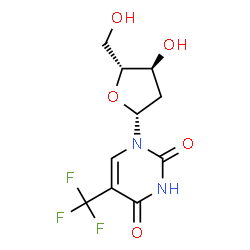
Fig 4. Open Babel bond-line chemical structure with annotated hydrogens. Click to toggle size.

Spectrum Plot

Fig 5. 1H NMR spectrum of C10H11F3N2O5 in CDCL3 at 400 MHz

Trifluridine
CAS Registry Number: 70-00-8
CAS Name: a,a,a-Trifluorothymidine
Additional Names: 2¢-deoxy-5-(trifluoromethyl)uridine; 5-(trifluoromethyl)-2¢-deoxyuridine; F3TDR
Manufacturers’ Codes: NSC-75520
Trademarks: TFT Thilo (Alcon-Thilo); Virophta (Dulcis); Viroptic (Burroughs Wellcome)
Molecular Formula: C10H11F3N2O5
Molecular Weight: 296.20
Percent Composition: C 40.55%, H 3.74%, F 19.24%, N 9.46%, O 27.01%
Literature References: Prepn: C. Heidelberger et al., J. Am. Chem. Soc. 84, 3597 (1962); eidem, J. Med. Chem. 7, 1 (1964); C. Heidelberger, US 3201387 (1965 to U.S. Dept. HEW). Crystal structure: A. H. Tench, Diss. Abstr. Int. B 33, 3587 (1973). NMR study: R. J. Cushley et al., J. Am. Chem. Soc. 90, 709 (1968). Metabolism: D. L. Dexter et al., Cancer Res. 32, 247 (1972); W. J. O’Brien, H. F. Edelhauser, Invest. Ophthalmol. Visual Sci. 16, 1093 (1977). Pharmacodynamics: B. L. Wigdahl, J. R. Parkhurst,Antimicrob. Agents Chemother. 14, 470 (1978); G. J. Smith et al., Biochem. Biophys. Res. Commun. 83, 1538 (1978). Teratogenicity study: M. Itoi et al., Arch. Ophthalmol. 93, 46 (1975). Cytotoxicity and mutagenicity study: E. Huberman, C. Heidelberger, Mutat. Res. 14, 130 (1972). Clinical studies: H. E. Kaufman, Invest. Ophthalmol. Visual Sci. 17, 941 (1978); R. A. Hyndiuk et al., Arch. Ophthalmol. 96, 1839 (1978). Review of mechanism of antiviral activity: C. Heidelberger, Ann. N.Y. Acad. Sci. 255, 317 (1975). Review of pharmacology and therapeutic use: A. A. Carmine et al., Drugs 23, 329-353 (1982).
Properties: Cryst from ethyl acetate, mp 186-189°. uv max (0.1N HCl): 260 nm (e 9960); (0.1N NaOH): 260 nm (e 6590).
Melting point: mp 186-189°
Absorption maximum: uv max (0.1N HCl): 260 nm (e 9960); (0.1N NaOH): 260 nm (e 6590)
Therap-Cat: Antiviral (ophthalmic).
Keywords: Antiviral; Purines/Pyrimidinones.
………………………………………………………….

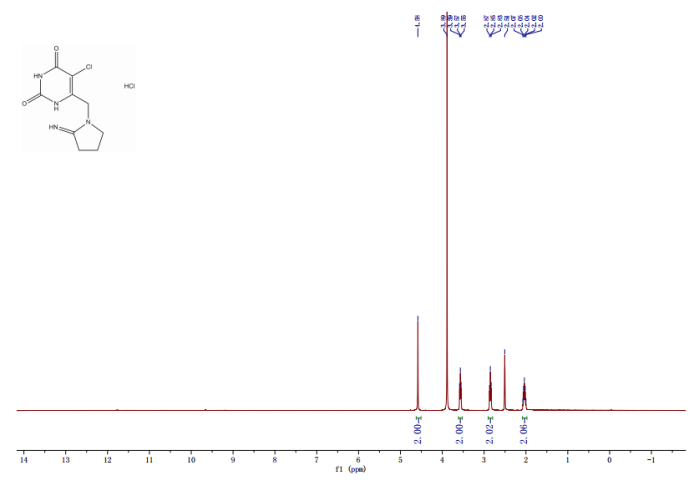
Tipiralacil, also known as TPI,  is a thymidine phosphorylase inhibitor (TPI). Tipiracil is one of the active components in TAS-102, which is an anticancer drug candidate currently in clinical trials. TAS-102 consists of the cytotoxin Trifluridine and the thymidine phosphorylase inhibitor (TPI) tipiracil.  Trifluridine is incorporated into DNA during DNA synthesis and inhibits tumor cell growth. Tipiracil protects trifluridine from being broken down when taken orally.

183204-72-0 (Tipiracil -HCl); 183204-74-2(Tipiracil ).
T1

References

1: Peters GJ, Bijnsdorp IV. TAS-102: more than an antimetabolite. Lancet Oncol. 2012 Dec;13(12):e518-9. doi: 10.1016/S1470-2045(12)70426-6. PubMed PMID: 23182191.

2: Yoshino T, Mizunuma N, Yamazaki K, Nishina T, Komatsu Y, Baba H, Tsuji A, Yamaguchi K, Muro K, Sugimoto N, Tsuji Y, Moriwaki T, Esaki T, Hamada C, Tanase T, Ohtsu A. TAS-102 monotherapy for pretreated metastatic colorectal cancer: a double-blind, randomised, placebo-controlled phase 2 trial. Lancet Oncol. 2012 Oct;13(10):993-1001. doi: 10.1016/S1470-2045(12)70345-5. Epub 2012 Aug 28. PubMed PMID: 22951287.

3: Sobrero A. TAS-102 in refractory colorectal cancer: caution is needed. Lancet Oncol. 2012 Oct;13(10):959-61. doi: 10.1016/S1470-2045(12)70376-5. Epub 2012 Aug 28. PubMed PMID: 22951286.

4: Doi T, Ohtsu A, Yoshino T, Boku N, Onozawa Y, Fukutomi A, Hironaka S, Koizumi W, Sasaki T. Phase I study of TAS-102 treatment in Japanese patients with advanced solid tumours. Br J Cancer. 2012 Jul 24;107(3):429-34. doi: 10.1038/bjc.2012.274. Epub 2012 Jun 26. PubMed PMID: 22735906; PubMed Central PMCID: PMC3405214.

5: Suzuki N, Nakagawa F, Nukatsuka M, Fukushima M. Trifluorothymidine exhibits potent antitumor activity via the induction of DNA double-strand breaks. Exp Ther Med. 2011 May;2(3):393-397. Epub 2011 Mar 21. PubMed PMID: 22977515; PubMed Central PMCID: PMC3440718.

6: Shintani M, Urano M, Takakuwa Y, Kuroda M, Kamoshida S. Immunohistochemical characterization of pyrimidine synthetic enzymes, thymidine kinase-1 and thymidylate synthase, in various types of cancer. Oncol Rep. 2010 May;23(5):1345-50. PubMed PMID: 20372850.

7: Temmink OH, Bijnsdorp IV, Prins HJ, Losekoot N, Adema AD, Smid K, Honeywell RJ, Ylstra B, Eijk PP, Fukushima M, Peters GJ. Trifluorothymidine resistance is associated with decreased thymidine kinase and equilibrative nucleoside transporter expression or increased secretory phospholipase A2. Mol Cancer Ther. 2010 Apr;9(4):1047-57. doi: 10.1158/1535-7163.MCT-09-0932. Epub 2010 Apr 6. PubMed PMID: 20371715.

8: Bijnsdorp IV, Kruyt FA, Fukushima M, Smid K, Gokoel S, Peters GJ. Molecular mechanism underlying the synergistic interaction between trifluorothymidine and the epidermal growth factor receptor inhibitor erlotinib in human colorectal cancer cell lines. Cancer Sci. 2010 Feb;101(2):440-7. doi: 10.1111/j.1349-7006.2009.01375.x. Epub 2009 Sep 29. PubMed PMID: 19886911.

9: Bijnsdorp IV, Peters GJ, Temmink OH, Fukushima M, Kruyt FA. Differential activation of cell death and autophagy results in an increased cytotoxic potential for trifluorothymidine compared to 5-fluorouracil in colon cancer cells. Int J Cancer. 2010 May 15;126(10):2457-68. doi: 10.1002/ijc.24943. PubMed PMID: 19816940.

10: Bijnsdorp IV, Kruyt FA, Gokoel S, Fukushima M, Peters GJ. Synergistic interaction between trifluorothymidine and docetaxel is sequence dependent. Cancer Sci. 2008 Nov;99(11):2302-8. doi: 10.1111/j.1349-7006.2008.00963.x. Epub 2008 Oct 18. PubMed PMID: 18957056.

11: Overman MJ, Kopetz S, Varadhachary G, Fukushima M, Kuwata K, Mita A, Wolff RA, Hoff P, Xiong H, Abbruzzese JL. Phase I clinical study of three times a day oral administration of TAS-102 in patients with solid tumors. Cancer Invest. 2008 Oct;26(8):794-9. doi: 10.1080/07357900802087242. PubMed PMID: 18798063.

12: Overman MJ, Varadhachary G, Kopetz S, Thomas MB, Fukushima M, Kuwata K, Mita A, Wolff RA, Hoff PM, Xiong H, Abbruzzese JL. Phase 1 study of TAS-102 administered once daily on a 5-day-per-week schedule in patients with solid tumors. Invest New Drugs. 2008 Oct;26(5):445-54. doi: 10.1007/s10637-008-9142-3. Epub 2008 Jun 5. PubMed PMID: 18528634.

13: Temmink OH, Emura T, de Bruin M, Fukushima M, Peters GJ. Therapeutic potential of the dual-targeted TAS-102 formulation in the treatment of gastrointestinal malignancies. Cancer Sci. 2007 Jun;98(6):779-89. Epub 2007 Apr 18. Review. PubMed PMID: 17441963.

14: Temmink OH, Hoebe EK, van der Born K, Ackland SP, Fukushima M, Peters GJ. Mechanism of trifluorothymidine potentiation of oxaliplatin-induced cytotoxicity to colorectal cancer cells. Br J Cancer. 2007 Jan 29;96(2):231-40. PubMed PMID: 17242697; PubMed Central PMCID: PMC2360012.

Qingqi Chen’s Book……”Anticancer Drug Research Guide.” New drugs in development for cancers


Chen Qingqi,

http://chen.medkoo.com/Anticancer-NewDrug.htm

Qingqi Chen’s Book

“Anticancer Drug Research Guide.”
New drugs in development for cancers


Very First Human Trials Using Cannbis To Treat Brain Cancer Are Under Way


hemp


The picture to your left is showing immunofluorescence of the human glioma cell line. (View more pictures here)

A European based pharmaceutical company called GW Pharmaceuticals is set to commence its first phase of clinical trials for the treatment of Glioblastoma Multiforme (GBM). It’s a bio-pharmaceutical company focused on discovering, developing and commercializing novel therapeutics from its proprietary cannabinoid product platform.

According to the New England Journal of Medicine, GBM accounts for approximately 50% of the 22,500 new cases of brain cancer diagnosed in the United States alone each year.(1) Treatment with regards to brain cancer are very limited which makes the study of cannabis and its effect on brain tumors crucial.

http://www.hempforfuture.com/2014/03/26/very-first-human-trials-using-cannbis-to-treat-brain-cancer-are-under-way/?utm_content=buffer8c9a9&utm_medium=social&utm_source=facebook.com&utm_campaign=buffer


The picture to your left is showing immunofluorescence of the human glioma cell line. (View more pictures here) A European…
WWW.HEMPFORFUTURE.COM

Rucaparib, PF-01367338 for the treatment of patients with advanced ovarian cancer and in patients with locally advanced or metastatic breast cancer.


Figure
Rucaparib, PF-01367338
283173-50-2  cas 
6H-​Pyrrolo[4,​3,​2-​ef]​[2]​benzazepin-​6-​one, 8-​fluoro-​1,​3,​4,​5-​tetrahydro-​2-​[4-​[(methylamino)​methyl]​phenyl]​-
6H- ​Azepino[5,​4,​3-​cd]​indol-​6-​one, 8-​fluoro-​1,​3,​4,​5-​tetrahydro-​2-​[4-​[(methylamino)​methyl]​phenyl] ​-
8-​Fluoro-​2-​[4-​[(methylamino)​methyl]​phenyl]​-​1,​3,​4,​5-​ tetrahydro-​6H-​azepino[5,​4,​3-​cd]​indol-​6-​one;
8-Fluoro-2-(4-methylaminomethyl-phenyl)-1,3,4,5-tetrahydro-azepino[5,4,3-cd]indol-6-one
8-Fluoro-2-(4-methylaminomethyl-phenyI)-l,3,4,5-tetrahydro-azepino[5,4,3- cd]indol-6-one
MW..C19 H18 F N3 O
cas of csa salt—–1327258-57-0
773059-19-1 (hydrochloride)
773059-22-6 (L-tartrate)
773059-23-7 (acetate)
459868-92-9  PHOSPHATE
AG-014699
AG-14699
CO-338
PF-01367338
AG-014447 (free base)
AG-14447 (free base) 
Agouron (Originator)
Pfizer (Originator)
WO 2014052550, WO 2014037313, WO 2000042040WO 2004087713WO 2005012305
Inhibition of poly(ADP ribose) polymerase, or PARP, is an exciting new mechanism for the treatment of cancer.(1) The PARP enzyme is responsible for repair of damaged DNA in both normal and tumor cells, and inhibition of this repair mechanism is expected to make the cell more likely to undergo apoptosis. Preclinical work has shown that PARP inhibitors coadministered with a standard chemotherapuetic agent are more effective than the standard treatment alone
Rucaparib is a NAD+ ADP-ribosyltransferase inhibitor in phase II clinical development at Cancer Research UK for the treatment of patients with advanced ovarian cancer and in patients with locally advanced or metastatic breast cancer. Clovis Oncology is conducting early clinical evaluation of rucaparib for the treatment of triple negative breast cancer or ER/PR +, HER2 negative with known BRCA1/2 mutations p2 and for the treatment of gBRCA mutation breast cancer.. Pfizer discontinued development of rucaparibin 2011.In 2011, the compound was licensed to Clovis Oncology by Pfizer for the treatment of cancer. In 2012, orphan drug designation was assigned in the U.S. and the E.U. for the treatment of ovarian cancer.The compound 8-fluoro-2-{4-[(methylamino)methyl]phenyl}-1 ,3,4,5-tetrahydro-6H-azepino[5,4,3- cd]indol-6-one represented by formula


is a small molecule inhibitor of poly(ADP-ribose) polymerase (PARP). 8-Fluoro-2-{4- [(methylamino)methyl]phenyl}-1,3,4,5-tetrahydro-6H-azepino[5,4,3-cd]indol-6-one and salts thereof, is disclosed in U.S. Patent No. 6,495,541 and PCT Application No. PCT/IB2004/000915, International Publication No. WO 2004/087713, the disclosures of which are incorporated herein by reference in their entireties. U.S. Provisional Patent Applications No. 60/612,459 and 60/679,296, entitled “Polymorphic Forms of the Phosphate Salt of 8-Fluoro-2-{4-[(methylamino)methyl]phenyl}-1 ,3,4,5-tetrahydro-6H- azepino[5,4,3-cd]indol-6-one,” the disclosures of which are incorporated herein by reference in their entireties, describe novel polymorphic forms of the phosphate salt of 8-fluoro-2-{4- [(methylamino)methyl]phenyl}-1 ,3,4,5-tetrahydro-6H-azepino[5,4,3-cd]indol-6-one, and methods for their preparation. U.S. Provisional Patent Applications No. 60/612,458; and 60/683,006, entitled “Therapeutic Combinations Comprising Poly(ADP-Ribose) Polymerases Inhibitor,” the disclosures of which are incorporated herein by reference in its entirety, describe pharmaceutical combinations of 8-fluoro-2-{4- [(methylamino)methyl]phenyl}-1 ,3,4,5-tetrahydro-6H-azepino[5,4,3-cd]indol-6-one.


………………………………………
http://www.google.com/patents/WO2000042040A1?cl=en
Example IIII:8-Fluoro-2-(4-methylaminomethyl-phenyI)-l,3,4,5-tetrahydro-azepino[5,4,3- cd]indol-6-one

4-(8-fluoro-6-oxo-3,4,5,6-tetrahydro-lH-azepino[5,4,3-cd]indol-2-yl)- benzaldehyde (100 mg, 0.32 mmol; prepared in a manner similar to that described for compound 12 for 2-bromo-8-fluoro-l,3,4,5-tetrahydro-azepino[5,4,3-cd]indol-6-one and 4-formylphenylboronic acid) was reacted with methylamine (1.62 mmol) as described for Compound PPP to yield 8-fluoro-2-(4-methylaminomethyl-phenyl)- l,3,4,5-tetrahydro-azepino[5,4,3-cd]indol-6-one, 32 mg (31%) as a yellow solid: m.p. 1543-155 °C; Η NMR (300 MHz, d6-DMSO) 2.28 (s, 3H), 3.04 (m, 2H), 3.40 (m, 2H), 3.69 (s, 2H), 7.32 (dd, 7= 9.0, 2.4 Hz, IH), 7.44 (m, 3H), 7.57 (d, 7= 8.1 Hz, 2H), 8.25 (br t, IH), 11.67 (br s, IH). HRMS (MALDI MH+) Calcd for C19H18N3OF: 324,1512. Found: 325.1524. Anal. (C19H18N3OF03 H2O) C, H, N.

……………………………..
Org. Process Res. Dev., 2012, 16 (12), pp 1897–1904
DOI: 10.1021/op200238p
http://pubs.acs.org/doi/full/10.1021/op200238p
Abstract Image
Novel PARP inhibitor 1 is a promising new candidate for treatment of breast and ovarian cancer. A modified synthetic route to 1 has been developed and demonstrated on 7 kg scale. In order to scale up the synthesis to multikilogram scale, several synthetic challenges needed to be overcome. The key issues included significant thermal hazards present in a Leimgruber–Batcho indole synthesis, a low-yielding side-chain installation, a nonrobust Suzuki coupling and hydrogen cyanide generation during a reductive amination. In addition to these issues, changing from intravenous to oral delivery required a new salt form and therefore a new crystallization procedure. This contribution describes development work to solve these issues and scaling up of the new process in the pilot plant.
8-Fluoro-2-(4-methylaminomethyl-phenyl)-1,3,4,5-tetrahydro-azepino[5,4,3-cd]indol-6-one (1)
To a solution of aqueous sodium hydroxide (40% w/w, 3.6 kg, 2.0 equiv) in water (88 L, 14 L/kg) and methanol (35 L, 5.5 L/kg) was added 12 ……………………………………………………deleted……………………..and dried at 45 °C under vacuum to give 1 as a 1:1 THF solvate (5.57 kg, 14.08 mol, 84% yield);
mp (THF) dec at 220 °C;
δH: (400 MHz, DMSO-d6) 2.25 (s, 3H), 2.99–3.01 (m 2H), 3.65 (s, 2H), 7.27 (dd, 1H, J = 2.4, 9.3 Hz), 7.39 (dd, 1H, J = 2.4, 9.3 Hz), 7.42 (d, 2H, J = 8.5 Hz), 7.53 (d, 2H, J = 8.3 Hz), 8.18 (t, br, 1H, J = 5.7 Hz), 11.60 (s, 1H);
δC: (100 MHz, DMSO-d6) 28.74, 35.58, 41.84, 54.74, 100.47 (d, J = 25.8 Hz), 109.44 (d, J = 25.8 Hz), 111.47, 123.19, 125.72 (d, J = 8.8 Hz), 127.55, 128.20, 129.86, 135.38 (d, J = 3.7 Hz), 136.67 (d, J = 12.4 Hz), 140.52, 158.31 (d, J = 233), 168.39.
8-Fluoro-2-(4-methylaminomethyl-phenyl)-1,3,4,5-tetrahydro-azepino[5,4,3-cd]indol-6-one (S)-camphorsulfonate Salt (21)
To a slurry of 1 (5.32 kg, 13.48 mol) in isopropanol (30 L, 5.5 L/kg) and water (39 L, 7.3 L/kg) was added a solution of (S)-camphorsulfonic acid (3.75 kg, 16.18 mol, 1.2 equiv) in water (10.6 L, 2 L/kg). The resultant slurry was then heated to 70 °C and held for 1 h to ensure dissolution. …………………………..deleted…………………..C to give 21 as a white crystalline solid (7.09 kg, 12.76 mol, 95% yield); mp (IPA/water) 303 °C;
δH: (400 MHz, DMSO-d6) 0.74 (s, 3H), 1.05 (s, 3H), 1.28 (m, 1H), 1.80 (d, 1H, J = 18.0 Hz), 1.81–1.88 (m, 1H), 1.93 (app t, 1H, J = 4.5 Hz), 2.24 (m, 1H), 2.41 (d, 1H, J = 14.6 Hz), 2.62 (s, 3H), 2.66–2.72 (m, 1H), 2.91 (d, 1H, J = 14.7 Hz), 3.04–3.07 (m, br, 2H), 3.36–3.45 (m, br, 2H), 4.20 (s, 2H), 7.37 (dd, 1H, J = 2.4, 9.3 Hz), 7.44 (dd, 1H, J = 2.4, 11.0 Hz), 7.63 (d, 2H, J = 8.3 Hz), 7.71 (d, 2H, J = 8.3 Hz), 8.26 (t, br, 1H, J = 5.5 Hz), 11.76 (s, 1H);
δC: (100 MHz, DMSO-d6) 19.51, 20.02, 24.14, 26.37, 28.74, 32.28, 41.77, 42.13, 42.22, 46.71, 47.00, 51.06, 58.21, 100.65 (d, J = 25.8 Hz), 109.72 (d, J = 25.8 Hz), 112.41, 123.03, 126.04 (d, J = 8.7 Hz), 127.98, 130.19, 131.22, 132.22, 134.50, 136.83 (d, J = 12.0 Hz), 158.52 (d, J = 235 Hz), 168.27, 216.24.
………………….
WO 2006033003

The compound 8-fluoro-2-{4-[(methylamino)methyl]phenyl}-1 ,3,4,5-tetrahydro-6H-azepino[5,4,3- cd]indol-6-one represented by formula


is a small molecule inhibitor of poly(ADP-ribose) polymerase (PARP). 8-Fluoro-2-{4- [(methylamino)methyl]phenyl}-1,3,4,5-tetrahydro-6H-azepino[5,4,3-cd]indol-6-one and salts thereof, is disclosed in U.S. Patent No. 6,495,541 and PCT Application No. PCT/IB2004/000915, International Publication No. WO 2004/087713, the disclosures of which are incorporated herein by reference in their entireties.


U.S. Provisional Patent Applications No. 60/612,459 and 60/679,296, entitled “Polymorphic Forms of the Phosphate Salt of 8-Fluoro-2-{4-[(methylamino)methyl]phenyl}-1 ,3,4,5-tetrahydro-6H- azepino[5,4,3-cd]indol-6-one,” the disclosures of which are incorporated herein by reference in their entireties, describe novel polymorphic forms of the phosphate salt of 8-fluoro-2-{4- [(methylamino)methyl]phenyl}-1 ,3,4,5-tetrahydro-6H-azepino[5,4,3-cd]indol-6-one, and methods for their preparation. U.S. Provisional Patent Applications No. 60/612,458; and 60/683,006, entitled “Therapeutic Combinations Comprising Poly(ADP-Ribose) Polymerases Inhibitor,” the disclosures of which are incorporated herein by reference in its entirety, describe pharmaceutical combinations of 8-fluoro-2-{4- [(methylamino)methyl]phenyl}-1 ,3,4,5-tetrahydro-6H-azepino[5,4,3-cd]indol-6-one.

Figure imgf000011_0003

Figure imgf000011_0004


Example 13. Synthesis of 8-Fluoro-2-(4-methylaminomethyl-phenyl)-1,3.4.5-tetrahvdro-azepinor5.4.3- ccflindol-6-one (15) i


Lactam 14 (14.42 g, 0.038 mol) was dissolved in hydrobromic acid in acetic acid (30%-32%, 140 ml). The reaction solution was stirred for 46 hours at room temperature in a 500ml flask that was connected to an ethanolamine scrubber system. HPLC analysis indicated the completion of the reaction. Ice (30 g) was added to the reaction solution followed by addition of aqueous NaOH (327 ml, 10 M, 3.27 mol) while the temperature was maintained between 25 0C and 35 0C. When addition of NaOH was complete, the pH was 10. The resulting solid was collected by filtration, washed with water (2 x 50 ml). The filter cake was then suspended in water (125 ml) and stirred for 2 hours. The solid was collected by filtration, washed with water (2 x 25 ml) and dried to afford 10.76 g of product (88% yield). 1H NMR (300 MHz, DMSO-d6) δ 2.577(s, 3H), 3.053(m, 2H), 3.406(m, 2H), 4.159(s, 2H), 7.36(dd, 1 H, J= 2.4 Hz and J= 9.3 Hz), 7.44(dd, 1 H, J= 2.4 Hz and J= 11.1 Hz), 7.63(d, 2H, J=8.1 Hz), 7.70(d, 2H, J= 8.1 Hz), 8.265(t, 1H, J= 5.7 Hz), 11.77(s, 1 H). Exact mass calculated for C19H19FN3O: 324.1512. Found: 324.1497.


Tomensides A–D, new antiproliferative phenylpropanoid sucrose esters from Prunus tomentosa leaves…..might be valuable source for new potent anticancer drug candidates.


Full-size image (35 K)

http://www.sciencedirect.com/science/article/pii/S0960894X14003540

Volume 24, Issue 11, 1 June 2014, Pages 2459–2462

Department of Natural Products Chemistry, Shenyang Pharmaceutical University, Shenyang 110016, PR China

To search for novel cytotoxic constituents against cancer cells as lead structures for drug development, four new 3-phenylpropanoid-triacetyl sucrose esters, named tomensides A–D (14), and three known analogs (57) were isolated from the leaves of Prunus tomentosa. Their structures were elucidated by spectroscopic analyses (1D, 2D NMR, CD and HRESIMS). The cytotoxic activities of all isolates against four human cancer cell lines (MCF-7, A549, HeLa and HT-29) were assayed, and the results showed that these isolates displayed stronger inhibitory activities compared with positive control 5-fluorouracil. Tomenside A (1) was the most active compound with IC50 values of 0.11–0.62 μM against the four tested cell lines. The structure–activity relationship (SAR) of the isolates was also discussed. The primary screening results indicated that these 3-phenylpropanoid-triacetyl sucrose esters might be valuable source for new potent anticancer drug candidates.

Resveratrol remains effective against cancer after the body converts it


Lyranara.me's avatarLyra Nara Blog

A chemical found in red wine remains effective at fighting cancer even after the body’s metabolism has converted it into other compounds. This is an important finding in a new paper published in the journal Science Translational Medicine by Cancer Research UK-funded researchers at the University of Leicester’s Department of Cancer Studies and Molecular Medicine.

The paper reveals that resveratrol – a compound extracted from the skins of red grapes – is not rendered ineffective once it is metabolised by the body.

This is an important development, as resveratrol is metabolised very quickly – and it had previously been thought that levels of the extracted chemical drop too quickly to make it usable in clinical trials.

The new research shows that the chemical can still be taken into cells after it has been metabolised into resveratrol sulfates.

Enzymes within cells are then able to break it down into resveratrol…

View original post 504 more words

Medical Mushrooms – The Future of Cancer Treatment?


Lyranara.me's avatarLyra Nara Blog

Cancer rates are on the rise worldwide, which means that in coming generations more and more people will have their lives turned inside out with a diagnosis, and with having to turn their attention to battling this new plague. The psychological effects of having your world turned on its so quickly can be devastating, and often put people in a depressed, anxious and negative emotional state.

With so many types of cancers affecting people these days, there is no such thing as a single cure for cancer, because each type is different and will respond to different remedies. Finding the miracle cure often requires an intense search, deviation from standard doctor’s recommendations, a huge investment of time and money, and tremendous amount of hope, belief and faith. Not everything works for every cancer, but, some things consistently aid in the struggle with all cancers, like the right diet…

View original post 1,125 more words