
Home » Posts tagged '@BlueprintMeds'
Tag Archives: @BlueprintMeds
 DRUG APPROVALS BY DR ANTHONY MELVIN CRASTO
.....FOR BLOG HOME CLICK HERE
DRUG APPROVALS BY DR ANTHONY MELVIN CRASTO
.....FOR BLOG HOME CLICK HEREFlag and hits
ORGANIC SPECTROSCOPY

SUBSCRIBE

 Subscribe in a reader
Enter your email address:
Delivered by FeedBurner
Subscribe to New Drug Approvals by Email


Recent Comments
 | shivkr2 on SPSR Excellence Award 2025 – S… |
 | Bonkasaurus on Infigratinib phosphate |
 | PALOVAROTENE | ORGAN… on Palovarotene |
| Pfizer just purchase… on Temanogrel | |
| Pfizer To Cash In On… on Temanogrel |
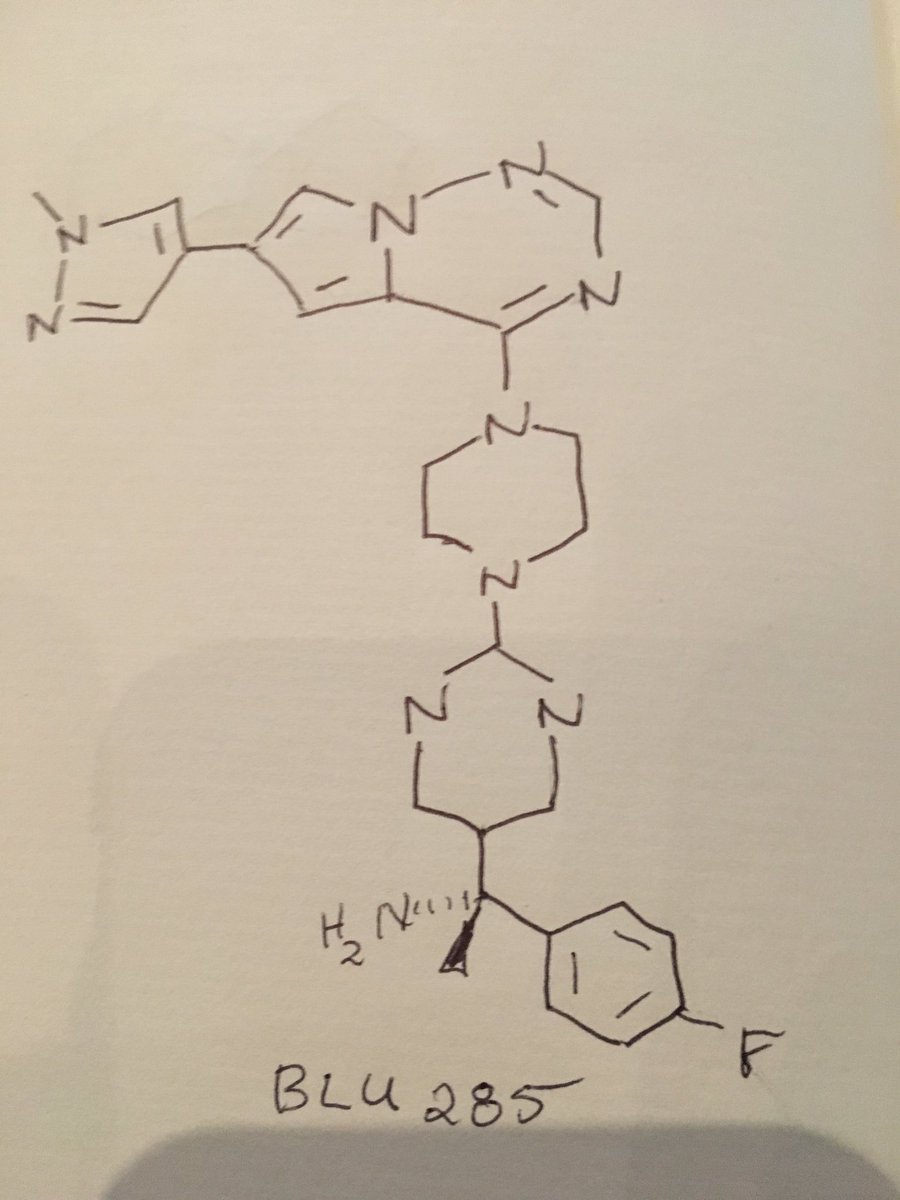
BLU 285


BLU-285
CAS 1703793-34-3
- Molecular FormulaC26H27FN10
- Average mass498.558 Da
- 5-Pyrimidinemethanamine, α-(4-fluorophenyl)-α-methyl-2-[4-[6-(1-methyl-1H-pyrazol-4-yl)pyrrolo[2,1-f][1,2,4]triazin-4-yl]-1-piperazinyl]-, (αS)-
- Originator Blueprint Medicines
- Class Antineoplastics; Skin disorder therapies; Small molecules
- Mechanism of Action Platelet-derived growth factor alpha receptor modulators; Proto oncogene protein c-kit inhibitors
- Orphan Drug Status Yes – Systemic mastocytosis; Gastrointestinal stromal tumours
- Phase I Gastrointestinal stromal tumours; Solid tumours; Systemic mastocytosis
- 04 Dec 2016 Proof-of-concept data from phase I trial in Systemic mastocytosis presented at the 58thAnnual Meeting and Exposition of the American Society of Hematology (ASH Hem-2016)
- 03 Dec 2016 Pharmacodynamics data from preclinical studies in Systemic mastocytosis presented at the 58th Annual Meeting and Exposition of the American Society of Hematology (ASH-Hem-2016)
- 03 Dec 2016 Preliminary pharmacokinetic data from a phase I trial in Systemic mastocytosis presented at the 58th Annual Meeting and Exposition of the American Society of Hematology (ASH Hem-2016)
BLU 285
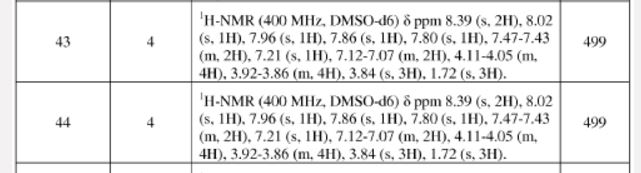
(S)- 1 – (4- fluorophenyl)- l-(2-(4-(6-(l-methyl-lH-pyrazol-4-yl)pyrrolo[2, l-/] [l,2,4]triazin-4-yl)piperazin-l-yl)pyrimidin-5-yl)ethanamine (Compounds 44) WO2015057873
| Inventors | Yulian Zhang, Brian L. Hodous, Joseph L. Kim, Kevin J. Wilson, Douglas Wilson |
| Applicant | Blueprint Medicines Corporation |


Yulian Zhang,
Blueprint Medicines Corporation
ΚΓΓ and PDGFR.
The enzyme KIT (also called CD117) is a receptor tyrosine kinase expressed on a wide variety of cell types. The KIT molecule contains a long extracellular domain, a transmembrane segment, and an intracellular portion. The ligand for KIT is stem cell factor (SCF), whose binding to the extracellular domain of KIT induces receptor dimerization and activation of downstream signaling pathways. KIT mutations generally occur in the DNA encoding the juxtumembrane domain (exon 11). They also occur, with less frequency, in exons 7, 8, 9, 13, 14, 17, and 18. Mutations make KIT function independent of activation by SCF, leading to a high cell division rate and possibly genomic instability. Mutant KIT has been implicated in the pathogenesis of several disorders and conditions including systemic mastocytosis, GIST (gastrointestinal stromal tumors), AML (acute myeloid leukemia), melanoma, and seminoma. As such, there is a need for therapeutic agents that inhibit ΚΓΓ, and especially agents that inhibit mutant ΚΓΓ.Platelet-derived growth factor receptors (PDGF-R) are cell surface tyrosine kinase receptors for members of the platelet-derived growth factor (PDGF) family. PDGF subunits -A and -B are important factors regulating cell proliferation, cellular differentiation, cell growth, development and many diseases including cancer. A PDGFRA D842V mutation has been found in a distinct subset of GIST, typically from the stomach. The D842V mutation is known to be associated with tyrosine kinase inhibitor resistance. As such, there is a need for agents that target this mutation.

CONTD………..

PATENT
Example 7: Synthesis of (R)-l-(4-fluorophenyl)- l-(2-(4-(6-(l-methyl-lH-pyrazol-4-yl)pyrrolo[2, 1 -f\ [ 1 ,2,4] triazin-4-yl)piperazin- 1 -yl)pyrimidin-5-yl)ethanamine and (S)- 1 – (4- fluorophenyl)- l-(2-(4-(6-(l-methyl-lH-pyrazol-4-yl)pyrrolo[2, l-/] [l,2,4]triazin-4-yl)piperazin-l-yl)pyrimidin-5-yl)ethanamine (Compounds 43 and 44)


Step 1 : Synthesis of (4-fluorophenyl)(2-(4-(6-(l-methyl- lH-pyrazol-4-yl)pyrrolo[2,l-f] [ 1 ,2,4] triazin-4-yl)piperazin- 1 -yl)pyrimidin-5-yl)methanone:

4-Chloro-6-(l-methyl- lH-pyrazol-4-yl)pyrrolo[2,l-/] [l,2,4]triazine (180 mg, 0.770 mmol), (4-fluorophenyl)(2-(piperazin-l-yl)pyrimidin-5-yl)methanone, HC1 (265 mg, 0.821 mmol) and DIPEA (0.40 mL, 2.290 mmol) were stirred in 1,4-dioxane (4 mL) at room temperature for 18 hours. Saturated ammonium chloride was added and the products extracted into DCM (x2). The combined organic extracts were dried over Na2S04, filtered through Celite eluting with DCM, and the filtrate concentrated in vacuo. Purification of the residue by MPLC (25- 100% EtOAc-DCM) gave (4-fluorophenyl)(2-(4-(6-(l-methyl-lH-pyrazol-4-yl)pyrrolo[2,l- ] [l,2,4]triazin-4-yl)piperazin- l-yl)pyrimidin-5-yl)methanone (160 mg, 0.331 mmol, 43 % yield) as an off-white solid. MS (ES+) C25H22FN90 requires: 483, found: 484 [M + H]+.
Step 2: Synthesis of (5,Z)-N-((4-fluorophenyl)(2-(4-(6-(l-methyl- lH-p razol-4-yl)p rrolo[2, l- ] [l,2,4]triazin-4- l)piperazin- l-yl)pyrimidin-5-yl)methylene)-2-methylpropane-2-sulfinamide:

(S)-2-Methylpropane-2-sulfinamide (110 mg, 0.908 mmol), (4-fluorophenyl)(2-(4-(6-(l-methyl- lH-pyrazol-4-yl)pyrrolo[2,l-/][l,2,4]triazin-4-yl)piperazin- l-yl)pyrimidin-5-yl)methanone (158 mg, 0.327 mmol) and ethyl orthotitanate (0.15 mL, 0.715 mmol) were stirred in THF (3.2 mL) at 70 °C for 18 hours. Room temperature was attained, water was added, and the products extracted into EtOAc (x2). The combined organic extracts were washed with brine, dried over Na2S04, filtered, and concentrated in vacuo while loading onto Celite. Purification of the residue by MPLC (0- 10% MeOH-EtOAc) gave (5,Z)-N-((4-fluorophenyl)(2-(4-(6-(l-methyl- lH-pyrazol-4-yl)pyrrolo[2, l-/] [l,2,4]triazin-4-yl)piperazin-l-yl)pyrimidin-5-yl)methylene)-2- methylpropane-2-sulfinamide (192 mg, 0.327 mmol, 100 % yield) as an orange solid. MS (ES+) C29H3iFN10OS requires: 586, found: 587 [M + H]+.
Step 3: Synthesis of (lS’)-N-(l-(4-fluorophenyl)- l-(2-(4-(6-(l-methyl- lH-pyrazol-4- l)pyrrolo[2, l-/] [l,2,4]triazin-4-yl)piperazin-l-yl)pyrimidin-5-yl)ethyl)-2-methylpropane-2-

(lS’,Z)-N-((4-Fluorophenyl)(2-(4-(6-(l-methyl-lH-pyrazol-4-yl)pyrrolo[2,l- ] [l,2,4]triazin-4-yl)piperazin- l-yl)pyrimidin-5-yl)methylene)-2-methylpropane-2-sulfinamide (190 mg, 0.324 mmol) was taken up in THF (3 mL) and cooled to 0 °C. Methylmagnesium bromide (3 M solution in diethyl ether, 0.50 mL, 1.500 mmol) was added and the resulting mixture stirred at 0 °C for 45 minutes. Additional methylmagnesium bromide (3 M solution in diethyl ether, 0.10 mL, 0.300 mmol) was added and stirring at 0 °C continued for 20 minutes. Saturated ammonium chloride was added and the products extracted into EtOAc (x2). The combined organic extracts were washed with brine, dried over Na2S04, filtered, and concentrated in vacuo while loading onto Celite. Purification of the residue by MPLC (0-10% MeOH-EtOAc) gave (lS’)-N-(l-(4-fluorophenyl)-l-(2-(4-(6-(l-methyl- lH-pyrazol-4-yl)pyrrolo[2, l- ] [l,2,4]triazin-4-yl)piperazin- l-yl)pyrimidin-5-yl)ethyl)-2-methylpropane-2-sulfinamide (120 mg, 0.199 mmol, 61.5 % yield) as a yellow solid (mixture of diastereoisomers). MS (ES+) C3oH35FN10OS requires: 602, found: 603 [M + H]+.
Step 4: Synthesis of l-(4-fluorophenyl)- l-(2-(4-(6-(l-methyl- lH-pyrazol-4-yl)pyrrolo[2,l-f\ [ 1 ,2,4] triazin-4- l)piperazin- 1 -yl)pyrimidin-5-yl)ethanamine:

(S)-N- ( 1 – (4-Fluorophenyl)- 1 -(2- (4- (6-( 1 -methyl- 1 H-pyrazol-4-yl)pyrrolo [2,1-/] [l,2,4]triazin-4-yl)piperazin- l-yl)pyrimidin-5-yl)ethyl)-2-methylpropane-2-sulfinamide (120 mg, 0.199 mmol) was stirred in 4 M HCl in 1,4-dioxane (1.5 mL)/MeOH (1.5 mL) at room temperature for 1 hour. The solvent was removed in vacuo and the residue triturated in EtOAc to give l-(4-fluorophenyl)- l-(2-(4-(6-(l -methyl- lH-pyrazol-4-yl)pyrrolo[2, l-/][l,2,4]triazin-4-yl)piperazin- l-yl)pyrimidin-5-yl)ethanamine, HCl (110 mg, 0.206 mmol, 103 % yield) as a pale yellow solid. MS (ES+) C26H27FN10 requires: 498, found: 482 [M- 17 + H]+, 499 [M + H]+.
Step 5: Chiral separation of (R)-l-(4-fluorophenyl)- l-(2-(4-(6-(l-methyl- lH-pyrazol-4-yl)pyrrolo[2, l-/] [l,2,4]triazin-4-yl)piperazin-l-yl)pyrimidin-5-yl)ethanamine and (5)-1-(4-fluorophenyl)- l-(2-(4-(6-(l-methyl-lH-pyrazol-4-yl)pyrrolo[2, l-/] [l,2,4]triazin-4-yl)piperazin-1 -yl)pyrimidin- -yl)ethanamine:

The enantiomers of racemic l-(4-fluorophenyl)- l-(2-(4-(6-(l-methyl- lH-pyrazol-4-yl)pyrrolo[2, l-/] [l,2,4]triazin-4-yl)piperazin-l-yl)pyrimidin-5-yl)ethanamine (94 mg, 0.189 mmol) were separated by chiral SFC to give (R)-l-(4-fluorophenyl)- l-(2-(4-(6-(l-methyl-lH-
pyrazol-4-yl)pyrrolo[2, l-/][l,2,4]triazin-4-yl)piperazin- l-yl)pyrimidin-5-yl)ethanamine (34.4 mg, 0.069 mmol, 73.2 % yield) and (lS,)-l-(4-fluorophenyl)- l-(2-(4-(6-(l-methyl-lH-pyrazol-4-yl)pyrrolo[2, l-/] [l,2,4]triazin-4-yl)piperazin-l-yl)pyrimidin-5-yl)ethanamine (32.1 mg, 0.064 mmol, 68.3 % yield). The absolute stereochemistry was assigned randomly. MS (ES+)
C26H27FN10 requires: 498, found: 499 [M + H]+.
/////////BLU-285, 1703793-34-3, PHASE 1, Brian Hodous, BlueprintMeds, KIT & PDGFRalpha inhibitors, Orphan Drug Status
Fc1ccc(cc1)[C@](C)(N)c2cnc(nc2)N3CCN(CC3)c4ncnn5cc(cc45)c6cn(C)nc6
Next in 1st time disclosures Brian Hodous of @BlueprintMeds will talk about KIT & PDGFRalpha inhibitors #ACSSanFran
BLU 554
BLU 554
FGFR4 Inhibitor
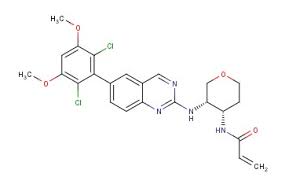
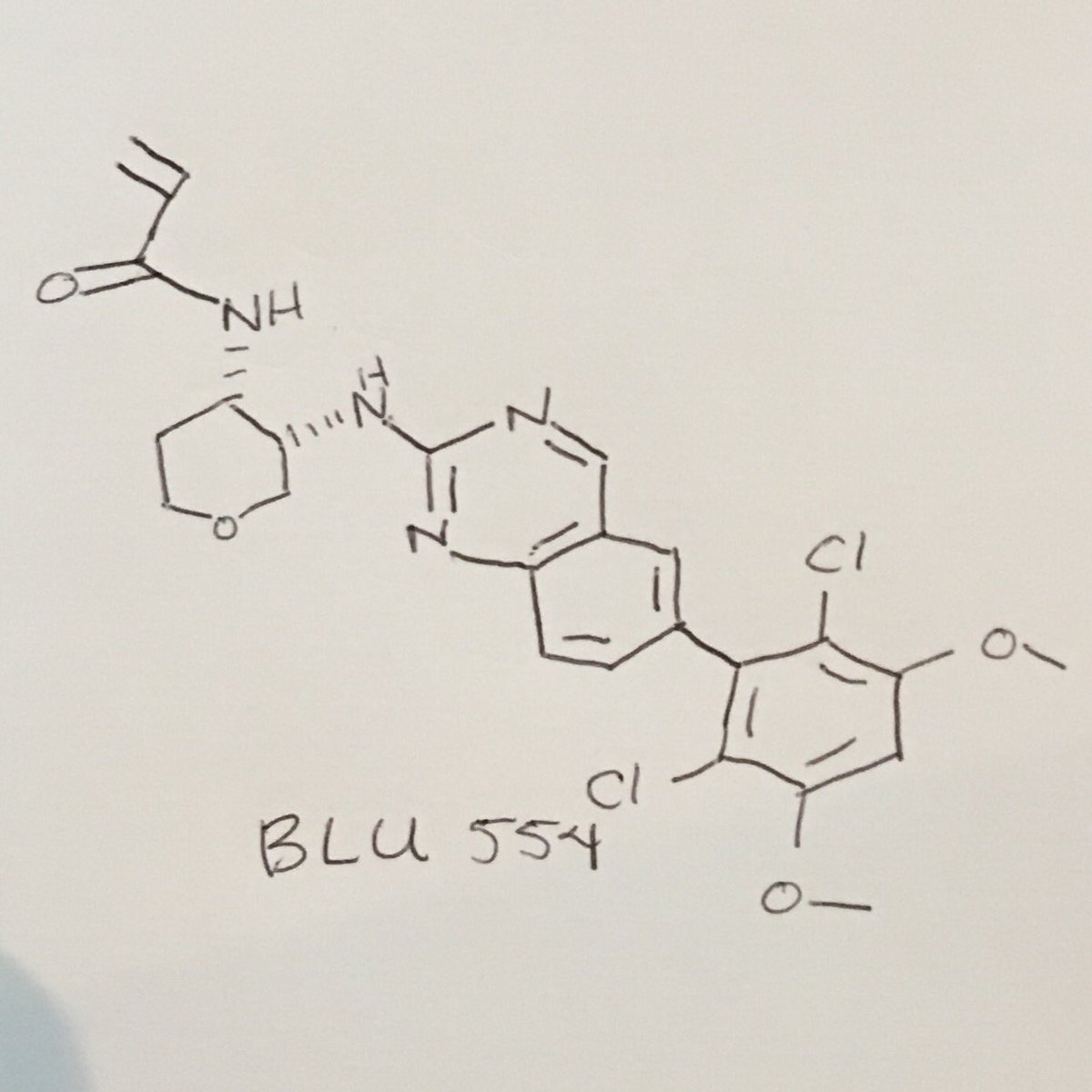
N-[(3S,4S)-3-[[6-(2,6-Dichloro-3,5-dimethoxyphenyl)-2-quinazolinyl]amino]tetrahydro-2H-pyran-4-yl]-2-propenamide
N-[(3S,4S)-3-[[6-(2,6-Dichloro-3,5-dimethoxyphenyl)quinazolin-2-yl]amino]tetrahydro-2H-pyran-4-yl]acrylamide
- CAS No. 1707289-21-1
- Formula C24H24Cl2N4O4
- MolWeight 503.378
PHASE 1
BLU-554 is a potent fibroblast growth factor receptor 4 (FGFR4) inhibitor.
IC50 & Target: FGFR4[1]
InVitro: Fibroblast growth factor receptor 4 (FGFR-4) is a protein that in humans is encoded by the FGFR-4 gene. This protein is a member of the fibroblast growth factor receptor family, where amino acid sequence was highly conserved between members throughout evolution. FGFR family members 1-4 differ from one another in their ligand affinities and tissue distribution. A full-length representative protein consists of an extracellular region composed of three immunoglobulin-like domains, a single hydrophobic membrane-spanning segment and a cytoplasmic tyrosine kinase domain. The extracellular portion of the protein interacts with fibroblast growth factors, setting in motion a cascade of downstream signals, ultimately influencing mitogenesis and differentiation. The genomic organization of the FGFR-4 gene encompasses 18 exons. Although alternative splicing has been observed, there is no evidence that the C-terminal half of the Iglll domain of this protein varies between three alternate forms, as indicated for FGFR 1-3[1].
| Inventors | Neil Bifulco, Lucian V. Dipietro, Brian L. Hodous, Chandrasekhar V. MIDUTURU |
| Applicant | Blueprint Medicines Corporation |

Neil Bifulco
Senior Scientist at Blueprint Medicines

Chandra Miduturu
Senior Scientist at Blueprint Medicines
Fibroblast growth factor receptor 4 (FGFR-4) is a protein that in humans is encoded by the FGFR-4 gene. This protein is a member of the fibroblast growth factor receptor family, where amino acid sequence was highly conserved between members throughout evolution. FGFR family members 1-4 differ from one another in their ligand affinities and tissue distribution. A full-length representative protein consists of an extracellular region composed of three immunoglobulin-like domains, a single hydrophobic membrane-spanning segment and a cytoplasmic tyrosine kinase domain. The extracellular portion of the protein interacts with fibroblast growth factors, setting in motion a cascade of downstream signals, ultimately influencing mitogenesis and differentiation. The genomic organization of the FGFR-4 gene encompasses 18 exons. Although alternative splicing has been observed, there is no evidence that the C-terminal half of the Iglll domain of this protein varies between three alternate forms, as indicated for FGFR 1-3.
Ectopic mineralization, characterized by inappropriate calcium-phosphorus deposition in soft tissue, has been observed in rats treated with an FGFR-1 inhibitor (Brown, AP et al. (2005), Toxicol. Pathol., p. 449-455). This suggests that selective inhibition of FGFR-4 without inhibition of other isoforms of FGFR, including FGFR-1, may be desirable in order to avoid certain toxicities. FGFR-4 preferentially binds fibroblast growth factor 19 (FGF19) and has recently been associated with the progression of certain sarcomas, renal cell cancer, breast cancer, and liver cancer.
PATENT
PATENT
Synthetic Protocol 3

2-chloro-6-(2,6-dichloro-3,5-dimethoxyphenyl)quinazoline (described in WO 2014011900) can be substituted with an 1,2-mono-protected cycloalkyldiamine under various nucleophilic aromatic substitution reaction conditions using a base (such as diisopropylethylamine (DIPEA), DBU or NaHC03) in a polar solvent (such as dioxane, CH CN or NMP) or via a palladium-mediated Buchwald coupling reaction to provide the diamine- substituted quinazoline. The protecting group on the amine is removed to reveal the amine on the cycloalkane. The amine can be reacted with propiolic acid using amide coupling reaction conditions or reacted with acryloyl chloride to prepare the acrylamide. As shown below, Compounds 27, 32, 34, 36, and 40 were prepared using Synthetic Protocol 3.
Compound 40
Synthesis of N-((3S,4S)-3-((6-(2,6-dichloro-3,5-dimethoxyphenyl)quinazolin-2-yl)amino)tetrahydro-2H-pyran-4-yl)acrylamide

Step 1: Synthesis of N-((3S,4S)-4-azidotetrahydro-2H-pyran-3-yl)-6-(2,6-dichloro-3,5-dimethoxyphenyl)quinazolin-2-amine

(3S,4S)-4-azidotetrahydro-2H-pyran-3-amine, HC1 (0.200 g, 1.120 mmol) and 2-chloro-6-(2,6-dichloro-3,5-dimethoxyphenyl)quinazoline (0.318 g, 0.861 mmol) were taken up in NMP (2 ml) and sodium carbonate (0.217 g, 2.58 mmol) was added. The reaction was heated to 100 °C overnight. After cooling to ambient temperature the reaction was poured into 5ml of water and stirred for 30 min. The solid layer was filtered off and washed with water and further dried under high vacuum to give N-((3S,4S)-4-azidotetrahydro-2H-pyran-3-yl)-6-(2,6-dichloro-3,5-dimethoxyphenyl)quinazolin-2-amine (0.300 g, 0.631 mmol, 73.3 % yield). MS (ES+) C21H20CI2N6O3requires: 474, found: 475 [M + H]+.
Step 2: Synthesis of (3S,4S)-N3-(6-(2,6-dichloro-3,5-dimethoxyphenyl)quinazolin-2-yl)tetrahydro-2H-pyran-3,4-diamine

N-((3S,4S)-4-azidotetrahydro-2H-pyran-3-yl)-6-(2,6-dichloro-3,5-dimethoxyphenyl)quinazolin-2-amine (0.063 g, 0.133 mmol) was taken up in Methanol (7 ml) and EtOAc (7.00 ml), Pd-C (0.014 g, 0.133 mmol) was added and stirred under a ¾ balloon for 1 hour. After the reaction was completed, it was filtered through celite and the solvent removed. (3S,4S)-N3-(6-(2,6-dichloro-3,5-dimethoxyphenyl)quinazolin-2-yl)tetrahydro-2H-pyran-3,4-diamine (0.060 g, 0.134 mmol, 101 % yield) was recovered as a yellow solid, which was carried on without further purification. MS (ES+) C21H22CI2N4O3 requires: 448, found: 449 [M + H]+.
Step 3: Synthesis of N-((3S,4S)-3-((6-(2,6-dichloro-3,5-dimethoxyphenyl)quinazolin-2-yl)amino)tetrahydro-2H-pyran-4-yl)acrylamide

(3S,4S)-N3-(6-(2,6-dichloro-3,5-dimethoxyphenyl)quinazolin-2-yl)tetrahydro-2H-pyran-3,4-diamine (0.060 g, 0.134 mmol) was taken up in CH2CI2 (2 ml) and cooled to 0 °C, followed by addition of DIEA (0.023 ml, 0.134 mmol) and then acryloyl chloride (0.012 ml, 0.147 mmol) slowly. The reaction was stirred at 0 °C for 30 minutes, then the mixture was loaded directly onto silica and purified by flash chromotography using 0-10% CH2Cl2/MeOH. N-((3S,4S)-3-((6-(2,6-dichloro-3,5-dimethoxyphenyl)quinazolin-2-yl)amino)tetrahydro-2H-pyran-4-yl)acrylamide (0.041 g, 0.081 mmol, 61% yield) was recovered as an off white solid. MS (ES+) C24H24CI2N4O4 requires: 502, found: 503 [M + H]+.
References on BLU-554

Jeff Albers
Chief Executive Officer at Blueprint Medicines

Marion Dorsch
Chief Scientific Officer at Blueprint Medicines

Chris De Savi
Director of Medicinal Chemistry at Blueprint Medicines

Blueprint Medicines is developing a new generation of highly selective and potent kinase therapies to dramatically improve the lives of patients with genomically defined diseases. Our approach is rooted in a deep understanding of the genetic blueprint of cancer and other diseases driven by the abnormal activation of kinases. Our ability to identify novel drivers of disease, coupled with our proprietary library of novel and diverse chemical compounds, uniquely enables us to craft kinase therapies against new and difficult-to-drug targets. We are boldly advancing a deep pipeline of highly targeted therapies against previously unaddressed drivers of disease. By focusing on genomically defined subsets of patients, we believe we can identify the people most likely to respond to our therapies, resulting in a more efficient clinical development path with a greater likelihood of success and better outcomes for patients. We see a substantial opportunity in kinase drug discovery and development to deliver breakthrough medicines that allow patients to live longer with better quality of life and prevent recurrences of disease. Kinases are involved in many hallmarks of tumor biology and are proven cancer drug targets. Currently approved drugs focus on less than 5 percent of known kinases, and the function of most kinases is unknown. Led by a team of industry innovators with a track record of bringing life-changing drugs to market, we believe Blueprint Medicines has the experience and expertise to deliver on the tremendous untapped potential of kinase therapies to improve patients’ lives. We don’t think in small steps. We think in giant leaps. We are driven by the pursuit of new ideas, new innovations, and new ways of thinking.
Specialties
Oncology drug discovery, Oncology, Genomically defined diseases, Rare diseases, Transformative drugs, Robust drug pipeline, Systemic mastocytosis, Hepatocellular carcinoma, Orphan drugs, Small molecules, Kinase inhibitor, Personalized medicine, and Novel cancer therapies
//////////BLU 554, FGFR4 Inhibitor, Chandra Miduturu, @BlueprintMeds, advanced heptocellular carcinoma, #ACSSanFran, PHASE 1, Neil Bifulco, Lucian V. Dipietro, Brian L. Hodous, Chandrasekhar V. MIDUTURU, BLUEPRINT,
Now Chandra Miduturu of @BlueprintMeds is speaking in #MEDI 1st time disclosures about of advanced heptocellular carcinoma #ACSSanFran


 New Drug Approvals