New Drug Approvals
Follow New Drug Approvals on WordPress.com

FLAGS AND HITS

Flag Counter
DRUG APPROVALS BY DR ANTHONY MELVIN CRASTO

Archives

Categories

Join me on Linkedin

View Anthony Melvin Crasto Ph.D's profile on LinkedIn

Join me on Researchgate

Anthony Melvin Crasto Dr.

  Join me on Facebook FACEBOOK   ...................................................................Join me on twitter Follow amcrasto on Twitter     ..................................................................Join me on google plus Googleplus

MYSELF

DR ANTHONY MELVIN CRASTO Ph.D ( ICT, Mumbai) , INDIA 36Yrs Exp. in the feld of Organic Chemistry,Working for AFRICURE PHARMA as ADVISOR earlier with GLENMARK PHARMA at Navi Mumbai, INDIA. Serving chemists around the world. Helping them with websites on Chemistry.Million hits on google, NO ADVERTISEMENTS , ACADEMIC , NON COMMERCIAL SITE, world acclamation from industry, academia, drug authorities for websites, blogs and educational contribution, ........amcrasto@gmail.com..........+91 9323115463, Skype amcrasto64 View Anthony Melvin Crasto Ph.D's profile on LinkedIn Anthony Melvin Crasto Dr.

Enter your email address to follow this blog and receive notifications of new posts by email.

Join 37.8K other subscribers
DR ANTHONY MELVIN CRASTO Ph.D

DR ANTHONY MELVIN CRASTO Ph.D

DR ANTHONY MELVIN CRASTO, Born in Mumbai in 1964 and graduated from Mumbai University, Completed his Ph.D from ICT, 1991,Matunga, Mumbai, India, in Organic Chemistry, The thesis topic was Synthesis of Novel Pyrethroid Analogues, Currently he is working with AFRICURE PHARMA, ROW2TECH, NIPER-G, Department of Pharmaceuticals, Ministry of Chemicals and Fertilizers, Govt. of India as ADVISOR, earlier assignment was with GLENMARK LIFE SCIENCES LTD, as CONSUlTANT, Retired from GLENMARK in Jan2022 Research Centre as Principal Scientist, Process Research (bulk actives) at Mahape, Navi Mumbai, India. Total Industry exp 32 plus yrs, Prior to joining Glenmark, he has worked with major multinationals like Hoechst Marion Roussel, now Sanofi, Searle India Ltd, now RPG lifesciences, etc. He has worked with notable scientists like Dr K Nagarajan, Dr Ralph Stapel, Prof S Seshadri, etc, He did custom synthesis for major multinationals in his career like BASF, Novartis, Sanofi, etc., He has worked in Discovery, Natural products, Bulk drugs, Generics, Intermediates, Fine chemicals, Neutraceuticals, GMP, Scaleups, etc, he is now helping millions, has 9 million plus hits on Google on all Organic chemistry websites. His friends call him Open superstar worlddrugtracker. His New Drug Approvals, Green Chemistry International, All about drugs, Eurekamoments, Organic spectroscopy international, etc in organic chemistry are some most read blogs He has hands on experience in initiation and developing novel routes for drug molecules and implementation them on commercial scale over a 32 PLUS year tenure till date Feb 2023, Around 35 plus products in his career. He has good knowledge of IPM, GMP, Regulatory aspects, he has several International patents published worldwide . He has good proficiency in Technology transfer, Spectroscopy, Stereochemistry, Synthesis, Polymorphism etc., He suffered a paralytic stroke/ Acute Transverse mylitis in Dec 2007 and is 90 %Paralysed, He is bound to a wheelchair, this seems to have injected feul in him to help chemists all around the world, he is more active than before and is pushing boundaries, He has 100 million plus hits on Google, 2.5 lakh plus connections on all networking sites, 100 Lakh plus views on dozen plus blogs, 227 countries, 7 continents, He makes himself available to all, contact him on +91 9323115463, email amcrasto@gmail.com, Twitter, @amcrasto , He lives and will die for his family, 90% paralysis cannot kill his soul., Notably he has 38 lakh plus views on New Drug Approvals Blog in 227 countries......https://newdrugapprovals.wordpress.com/ , He appreciates the help he gets from one and all, Friends, Family, Glenmark, Readers, Wellwishers, Doctors, Drug authorities, His Contacts, Physiotherapist, etc He has total of 32 International and Indian awards

Verified Services

View Full Profile →

Recent Posts

Зопиклон , Zopiclone, زوبيكلون , 佐匹克隆


Zopiclone structure.svg

ZOPICLONE

зопиклон
زوبيكلون
佐匹克隆
(±)-Zopiclone
1-Piperazinecarboxylic acid, 4-methyl-, 6-(5-chloro-2-pyridinyl)-6,7-dihydro-7-oxo-5H-pyrrolo[3,4-b]pyrazin-5-yl ester
256-138-9 [EINECS]
43200-80-2 [RN]

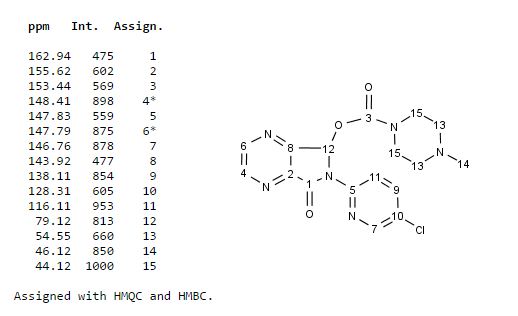
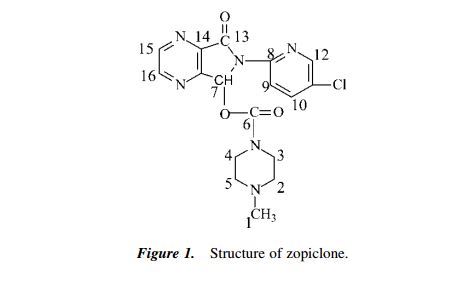
Structural formula

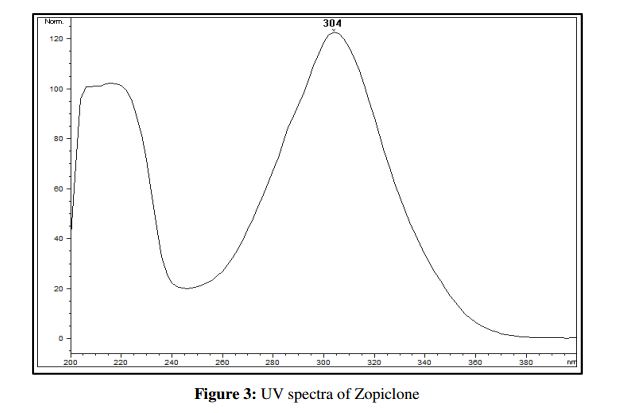
UV- Spectrum

Conditions : Concentration – 1 mg / 100 ml
The solvent designation schedule methanol 

water 

0.1М HCl

0.1M NaOH

maximum absorption There 

decay

303 nm 304 nm 277 nm 

237 nm

362 364 199

390

e 10500 10500 5800

11300

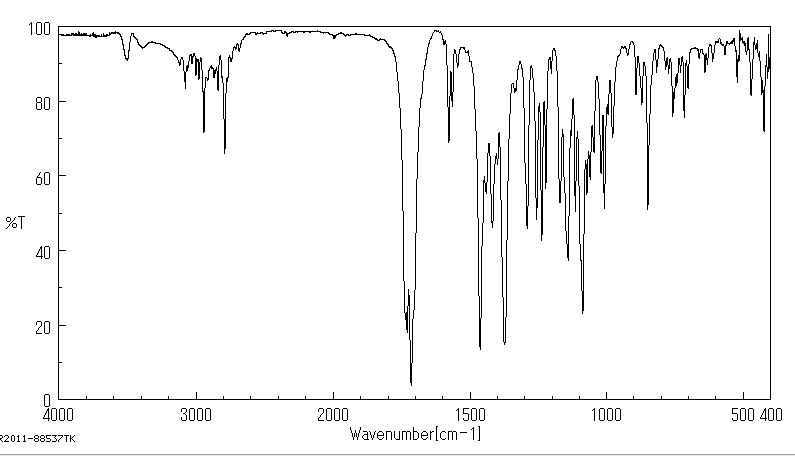
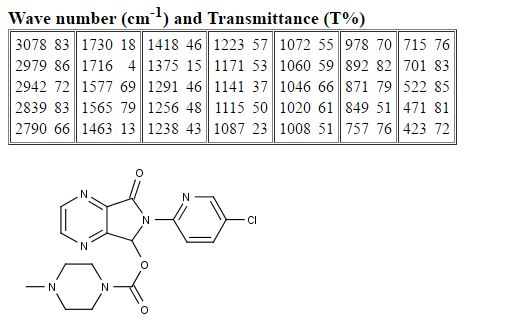
IR – spectrum

Wavelength (μm)
Wave number (cm -1 )

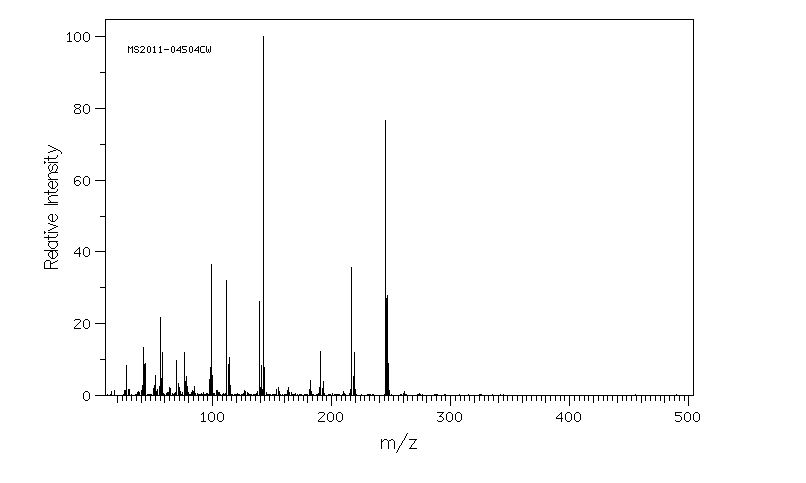
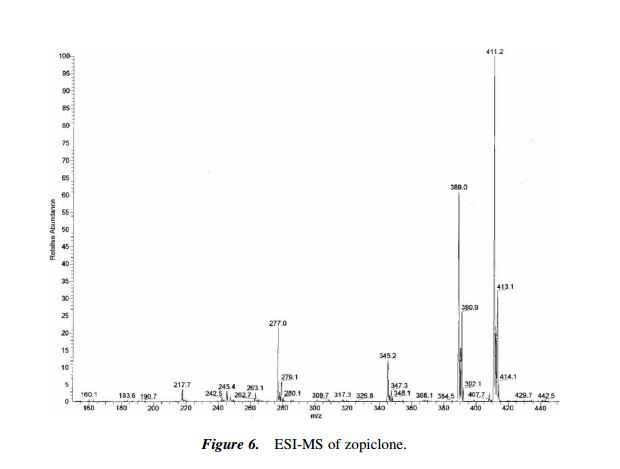
MASS spectrum

Range
10 largest peaks:
Peak 42 56 99 112 139 143 217 245 246 247
Value 155 231 280 283 209 999 279 719 156 250

References

  • UV and IR Spectra. H.-W. Dibbern, R.M. Muller, E. Wirbitzki, 2002 ECV

  • NIST/EPA/NIH Mass Spectral Library 2008

  • Handbook of Organic Compounds. NIR, IR, Raman, and UV-Vis Spectra Featuring Polymers and Surfactants, Jr., Jerry Workman. Academic Press, 2000.

  • Handbook of ultraviolet and visible absorption spectra of organic compounds, K. Hirayama. Plenum Press Data Division, 1967.

Brief background information

Salt ATC formula MM CASE
N05CF01 17 H 17 ClN 6 O 3 388.82 g / mol 43200-80-2

Application

  • sedative

  • hypnotic

Classes substance

  • chlorine compounds

    • oxo

      • Esters of 1-piperazinecarboxylate

        • pyridines

          • Pirrolo [3,4-b] piraziny

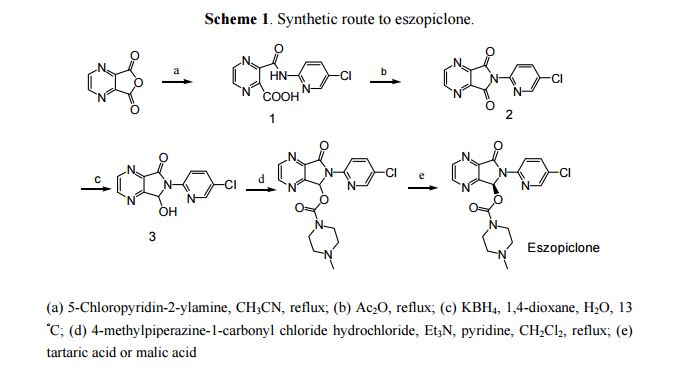
Synthesis Way

Синтез a)

Trade names

country Tradename Manufacturer
Germany Optydorm DOLORGIET
Somnosan Hormos
Ksimovan Sanofi-Aventis
Zop HEXAL
Zopi-cigar Actavis
various generic drugs
France imovane SanofiAventis
Noktireks Sanofi-Synthélabo
United Kingdom Snowman SanofiAventis
Italy imovane SanofiAventis
tion THERE
Japan Amoʙan Sanofi-Aventis; Chugai; Mitsubishi
Ukraine imovane Sanofi Winthrop Indastria, France
various generic drugs

Formulations

  • coated tablets 7.5 mg;

  • Tablets 7.5 mg, 10 mg

References

  • DOS 2 300 491 (Rhône-Poulenc; appl. 5.1.1973; F-prior. 7.1.1972, 9.9.1972).

  • US 3 862 149 (Rhône-Poulenc; 21.1.1975; F-prior. 7.1.1972, 9.9.1972).

Two major zopiclone metabolites.

Two major zopiclone metabolites.

CAS Registry No.: 43200-80-2
Molecular Formula: C17H17ClN6O3 Molecular Weight: 388.8
ChemicalStructure
Compound Name:
zopiclone

1-piperazinecarboxylic acid, 4-methyl-, 6-(5-chloro-2-pyridinyl)-6,7-dihydro-7-oxo-5H-pyrrolo(3,4-b)pyrazin-5-yl ester

4-methyl-1-piperazinecarboxylic acid 6-(5-chloro-2-pyridinyl)-6,7-dihydro-7-oxo-5H-pyrrolo(3,4-b)-pyrazin-5-yl ester

4-methyl-1-piperazinecarboxylic acid-6-(5-chloro-2-pyridinyl)-6,7-dihydro-7-oxo-5H-pyrrolo(3,4-b)-pyrazin-5-yl ester

6-(5-chloro-2-pyridyl)-6,7-dihydro-7-oxo-5H-pyrrolo(3,4-b)pyrazin-5-yl 4-methyl-1-piperazinecarboxylate

6-(5-chloro-pyridin-2-yl)-5((4-methyl-1-piperazinyl)carbonyloxy)-7-oxo-6,7-dihydro-5H-pyrrolo(3,4-b)pyrazine

6-(5-chloropyridin-2-yl)-7-oxo-6,7-dihydro-5H-pyrrolo(3,4-b)pyrazin-5-yl 4-methylpiperazine-1-carboxylate

amoban (R)

imovane

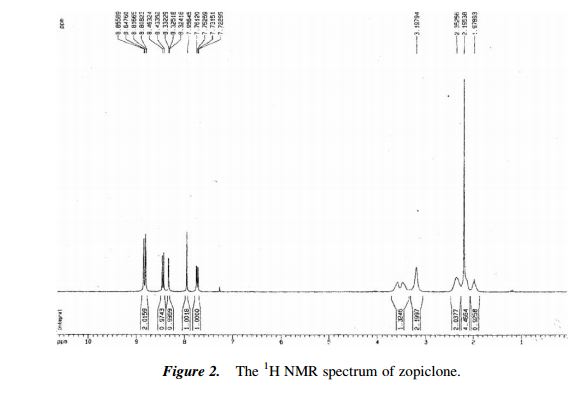
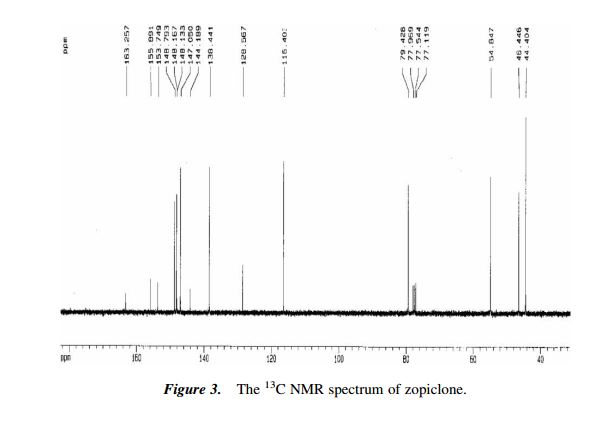
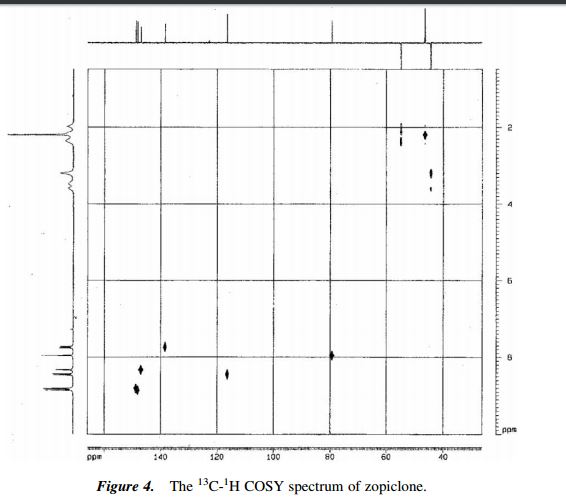
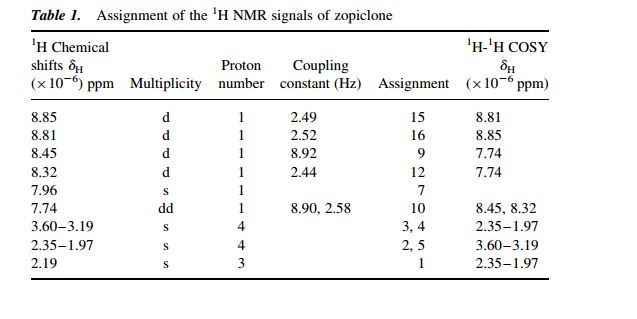
Zopiclone (Imovance), 4-methyl-1-piperzinecarboxylic acid 6-(5-chloro-2- pyridinyl)-6,7-dihydro-7-oxo-5H-pyrrolo[3,4-b]pyrazin-5-yl ester (Figure 1) is one of the non benzodiazepine sedative-hypnotics of the cyclopyrrolone class, sold by Rhone-Poulene Company in France since 1987. Although structurally unrelated to benzodiazepines, its pharmacological profile is similar, exhibiting sedative-hypnotic, anxiolytic, myorelaxant, and anticonvulsant activity.[1] Other than the first generation barbiturates and the second-generation benzodiazepines, zopiclone, which is widely used in Europe as well as other regions worldwide,[2,3] as a representative of the third generation sedative-hypnotic drugs, has been shown to be free from residual effects on performance and psychological function the day after intake and from the risks of accumulation because of its short elimination half-life (3.5 to 6.5 hours).[3,4] It is indicated for the short term treatment of insomnia, transient, situational or chronic insomnia, and insomnia secondary to psychiatric disturbances.[3]

REFERENCES 1. Mann, K.; Bauer, H.; Hiemke, C.; Ro¨schke, J.; Wetzel, H.; Benkert, O. Acute, subchronic and discontinuation effects of zopiclone on sleep EEG and nocturnal melatonin secretion. Eur. Neuropsychopharm. 1996, 6 (3), 163– 168. Structure Elucidation of Sedative-Hypnotic Zopiclone 359 Downloaded by [Dalhousie University] at 22:10 19 December 2012

2. Le´ger, D.; Janus, C.; Pellois, A.; Quera-Salva, M.A.; Dreyfus, J.P. Sleep, morning alertness and quality of life in subjects treated with zopiclone and in good sleepers. study comparing 167 patients and 381 good sleepers. Eur. Psychiat. 1995, 10 (973) Suppl. 3, 99s – 102s.

3. Piperaki, S.; Parissi-Poulou, M. Enantiomeric separation of zopiclone, its metabolites and products of degradation on a b-cyclodextrin bonded phase. J. Chromatogr. A 1996, 729 (1 – 2), 19 – 28

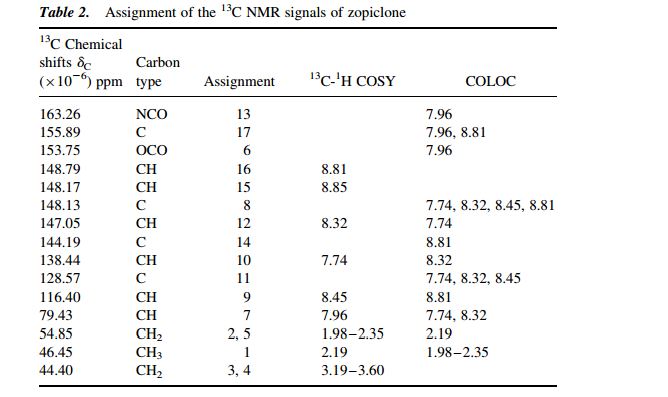
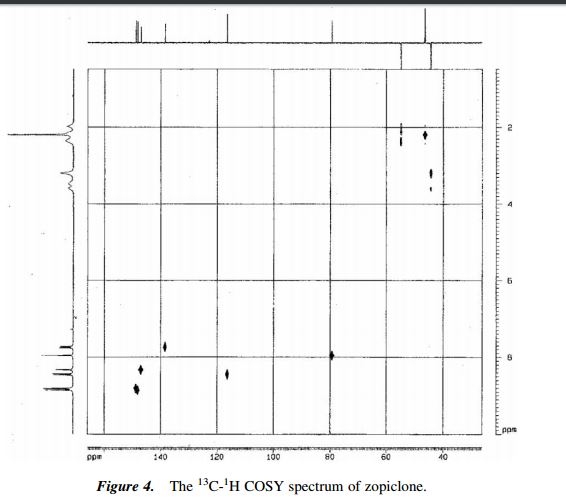
Spectral Data Analyses and Structure Elucidation of Sedative‐Hypnotic Zopiclone

Pages 349-360 | Received 10 Sep 2006, Accepted 18 Oct 2006, Published online: 13 Oct 2010

Zopiclone
Zopiclone structure.svg
Zopiclone ball-and-stick.png
Systematic (IUPAC) name

(RS)-6-(5-chloropyridin-2-yl)-7-oxo-6,7-dihydro-5H-pyrrolo[3,4-b]pyrazin-5-yl 4-methylpiperazine-1-carboxylate

Clinical data
Trade names Imovane, Zimovane
AHFS/Drugs.com International Drug Names
Pregnancy
category
  • AU: C
  • US: C (Risk not ruled out)
Routes of
administration
Oral tablets, 3.75 mg (UK), 5 or 7.5 mg
Legal status
Legal status
  • AU: S4 (Prescription only)
  • UK: Class C (POM)
  • US: Schedule IV
Pharmacokinetic data
Bioavailability 75-80%[1]
Protein binding 52–59%
Metabolism Hepatic through CYP3A4and CYP2E1
Biological half-life ~5 hours (3.5–6.5 hours)

~7–9 hours for over 65

Excretion Urine (80%)
Identifiers
CAS Number 43200-80-2 Yes
ATC code N05CF01 (WHO)
PubChem CID 5735
IUPHAR/BPS 7430
DrugBank DB01198 Yes
ChemSpider 5533 Yes
UNII 03A5ORL08Q Yes
KEGG D01372 Yes
ChEBI CHEBI:32315 Yes
ChEMBL CHEMBL135400 Yes
PDB ligand ID ZPC (PDBeRCSB PDB)
Chemical data
Formula C17H17ClN6O3
Molar mass 388.808 g/mol
3D model (Jmol) Interactive image

////////////

ENHANCED ANALYTICAL METHOD CONTROL STRATEGY CONCEPT


DR ANTHONY MELVIN CRASTO Ph.D's avatarDRUG REGULATORY AFFAIRS INTERNATIONAL

Image result for ANALYTICAL METHOD CONTROL STRATEGY

ENHANCED ANALYTICAL METHOD CONTROL STRATEGY CONCEPT

The benefits of quality by design (QbD) concepts related to both product (ICH Q8)1 and drug substance (ICH Q11)2 are well-established, particularly in regards to the potential to use knowledge to affect process changes without major regulatory hurdles, i.e., revalidation/regulatory filing, etc. Less wellestablished, but potentially of significant value, is the application of the same concepts to analytical methods.

Analytical methods play an obvious key role in establishing the quality of final product as they establish conformance with product acceptance criteria (i.e., specifications) and indicate the integrity of the product through indication of product stability. Analytical methods are validated, like manufacturing processes, but what if the operational ranges could be established during method validation when demonstrating fitness for purpose?

Would it be possible to drive method improvement, especially post validation in the same way that the concept of continuous improvement is a key driver for…

View original post 414 more words

Discovery of Pyrazolopyrimidine Derivatives as Novel Dual Inhibitors of BTK and PI3Kδ


str2

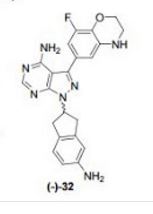
(-)-32 as an off-white solid.
Analytical data
LCMS 418 [M+H]+1
H NMR (400 MHz, DMSO-d6) δ 8.23 (s, 1H), 6.88 (d, J = 8.0 Hz, 1H), 6.68 (s, 1H), 6.61 (dd,J = 11.2, 2.0 Hz, 1H), 6.49-6.38 (m, 2H), 6.33 (s, 1H), 5.61 (m, 1H), 4.88 (s, 2H), 4.20(t, J = 4.3 Hz, 2H), 3.35-3.18 (m, 6H).
Optical rotation [α]D20 -38.5° (c = 0.107, DMSO)


PAPER

Discovery of Pyrazolopyrimidine Derivatives as Novel Dual Inhibitors of BTK and PI3Kδ

Medivation, Inc., 525 Market Street, 36th Floor, San Francisco, California 94105, United States
Integral BioSciences, Pvt. Ltd., C-64, Hosiery Complex Phase II Extension, Noida, Uttar Pradesh 201306, India
§ Curadev, Pvt. Ltd., B-87, Sector 83, Noida, Uttar Pradesh 201305, India
Fundación Ciencia y Vida, Avenida Zañartu 1482, Ñuñoa, Santiago 7780272, Chile
Departamento de Ciencias Biológicas, Facultad de Ciencias Biológicas, Universidad Andrés Bello, Santiago 8370146, Chile
ACS Med. Chem. Lett., Article ASAP
DOI: 10.1021/acsmedchemlett.6b00356

Image result for Medivation, Inc

Son Pham

Son Pham

Associate Director, Medicinal Chemistry at Medivation

Roopa Rai

Roopa Rai

Sr. Director, Medicinal Chemistry at Medivation

 str0

Brahmam Pujala

Brahmam Pujala

Senior Research Scientist at Integral Biosciences

Ashu Gupta

Ashu Gupta

Research Scientist at Integral Biosciences

rambabu guguloth

Rambabu guguloth

Abstract

Abstract Image

The aberrant activation of B-cells has been implicated in several types of cancers and hematological disorders. BTK and PI3Kδ are kinases responsible for B-cell signal transduction, and inhibitors of these enzymes have demonstrated clinical benefit in certain types of lymphoma. Simultaneous inhibition of these pathways could result in more robust responses or overcome resistance as observed in single agent use. We report a series of novel compounds that have low nanomolar potency against both BTK and PI3Kδ as well as acceptable PK properties that could be useful in the development of treatments against B-cell related diseases.

Image result for Curadev

Monali Banerjee

Director, R&D

Ms. Banerjee has more than 10 years of research experience, during which she has held positions of increasing responsibility. Her past organizations include TCG Lifesciences (Chembiotek) and Sphaera Pharma. Ms. Banerjee is a versatile scientist with a deep understanding of the fundamental issues that underlie various aspects of drug discovery. At Curadev, she has been responsible for target selection, patent analysis, pharmacophore design, assay development, ADME/PK and in vivo and in vitro pharmacology. Ms. Banerjee holds a Masters in Biochemistry and a Bachelors in Chemistry both from Kolkata University.

Nidhi Adlaka & Neha Munjal are developing a bioprocess for butanediol. Over the next few decades, chemical routes of manufacture will gradually be replaced by more environment friendly biological methods.Nidhi Adlaka & Neha Munjal are developing a bioprocess for butanediol. Over the next few decades, chemical routes of manufacture will gradually be replaced by more environment friendly biological methods.

Image result for Arjun Surya CURADEV

Dr. Arjun Surya, CSO, Curadev enthralling participants with anecdotes of his entrepreneurial jrney in drugdiscovery

Manish Tandon

Manish Tandon

Co-founder Curadev Pharma Pvt Ltd

//////////////B-cell BCR BTK inhibitor p110δ PI3K pyrazolopyrimidineNovel Dual Inhibitors, BTK , PI3Kδ, Medivation, Integral BioSciences,  Curadev, Fundación Ciencia y Vida, Departamento de Ciencias Biológicas,

Nc1ccc2CC(Cc2c1)n6nc(c3cc(F)c4OCCNc4c3)c5c(N)ncnc56

PF 06273340


str2img

PF-06273340

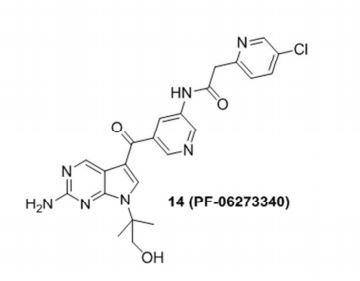
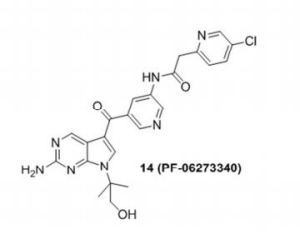
N-(5-(2-amino-7-(1-hydroxy-2-methylpropan-2-yl)-7H-pyrrolo[2,3-d]pyrimidine-5-carbonyl)pyridin-3-yl)-2-(5-chloropyridin-2-yl)acetamide

CAS 1402438-74-7
Chemical Formula: C23H22ClN7O3
Molecular Weight: 479.925

  • Originator Pfizer
  • ClassAnalgesics; Small molecules
  • Mechanism of ActionUndefined mechanism
  • 06 Oct 2014 Pfizer plans a phase I trial in Pain (In volunteers) in the Netherlands (NCT02260947)
  • 07 Aug 2014 Discontinued – Phase-I for Pain (In volunteers) in Belgium (PO)
  • 07 Aug 2014 Discontinued – Phase-I for Pain (In volunteers) in Singapore (PO)

PF-06273340 is a Potent, Selective, and Peripherally Restricted Pan-Trk Inhibitor with an excellent LipE profile (IC50 value: Trk-A = 6 nM; Trk-B = 4 nM; Trk-C = 3 nM). PF-06273340 has low metabolic turnover in HLM and hHep is a good substrate for efflux transporters P-gp (ER = 35.7) and BCRP (ER = 4.0) and has moderate passive permeability (RRCK Papp = 5.4 × 10⁻⁶ cm s−1). PF-06273340 is well-tolerated was selected as a candidate for clinical development.

ChemSpider 2D Image | N-(5-{[2-Amino-7-(1-hydroxy-2-methyl-2-propanyl)-7H-pyrrolo[2,3-d]pyrimidin-5-yl]carbonyl}-3-pyridinyl)-2-(5-chloro-2-pyridinyl)acetamide | C23H22ClN7O3

Tropomyosin-related kinases (Trks) are a family of receptor tyrosine kinases activated by neurotrophins. Trks play important roles in pain sensation as well as tumour cell growth and survival signaling. Thus, inhibitors of Trk receptor kinases might provide targeted treatments for conditions such as pain and cancer. Recent developments in this field have been reviewed by Wang et al in Expert Opin. Ther.

Patents (2009) 19(3): 305-319 and an extract is reproduced below.

“1.1 Trk receptors

As one of the largest family of proteins encoded by the human genome, protein kinases are the central regulators of signal transduction as well as control of various complex cell processes. Receptor tyrosine kinases (RTKs) are a subfamily of protein kinases (up to 100 members) bound to the cell membrane that specifically act on the tyrosine residues of proteins. One small group within this subfamily is the Trk kinases, with three highly homologous isoforms: TrkA, TrkB, and TrkC. All three isofonns are activated by high affinity growth factors named neurotrophins (NT): i) nerve growth factor (NGF), which activates TrkA; ii) brain-derived neurotrophic factor (BDNF) and NT-4/5, which activate TrkB; and iii) NT-3, which activates TrkC. The binding of neurotrophins to the extracellular domain of Trks causes the Trk kinase to autophosphorylate at several intracellular tyrosine sites and triggers downstream signal transduction pathways. Trks and neurotrophins are well known for their effects on neuronal growth and survival.

1.2 Trks and cancer

Originally isolated from neuronal tissues, Trks were thought to mainly affect the maintenance and survival of neuronal cells. However, in the past 20 years, increasing evidence has suggested that Trks play key roles in malignant transformation, chemotaxis, metastasis, and survival signaling in human tumors. The association between Trks and cancer focused on prostate cancer in earlier years and the topic has been reviewed. For example, it was reported that malignant prostate epithelial cells secrete a series of neurotrophins and at least one Trks. In pancreatic cancer, it was proposed that paracrine and/or autocrine neurotrophin-Trk interactions may influence the invasive behavior of the cancer. TrkB was also reported to be overexpressed in metastatic human pancreatic cancer cells. Recently, there have been a number of new findings in other cancer settings. For example, a translocation leads to expression of a fusion protein derived from the W-terminus of the ETV9 transcription factor and the C-terminal kinase domain of TrkC. The resulting ETV6-TrkC fusions are oncogenic in vitro and appear causative in secretory breast carcinoma and some acute myelogenous leukemias (AML). Constitutively active TrkA fusions occurred in a subset of papillary thyroid cancers and colon carcinomas. In neuroblastoma, TrkB expression was reported to be a strong predictor of aggressive tumor growth and poor prognosis, and TrkB overexpression was also associated with increased resistance to chemotherapy in neuroblastoma tumor cells in vitro. One report showed that a novel splice variant of TrkA called TrkAIII signaled in the absence of neurotrophins through the inositol phosphate-AKT pathway in a subset of neuroblastoma. Also, mutational analysis of the tyrosine kinome revealed that Trk mutations occurred in colorectal and lung cancers. In summary, Trks have been linked to a variety of human cancers, and discovering a Trk inhibitor and testing it clinically might provide further insight to the biological and medical hypothesis of treating cancer with targeted therapies.

1.3 Trks and pain

Besides the newly developed association with cancer, Trks are also being recognized as an important mediator of pain sensation. Congenital insensitivity to pain with anhidrosis (CIPA) is a disorder of the peripheral nerves (and normally innervated sweat glands) that prevents the patient from either being able to adequately perceive painful stimuli or to sweat. TrkA defects have been shown to cause CIPA in various ethnic groups.

Currently, non-steroidal anti-inflammatory drugs (NSAIDs) and opiates have low efficacy and/or side effects (e.g., gastrointestinal/renal and psychotropic side effects, respectively) against neuropathic pain and therefore development of novel pain treatments is highly desired. It has been recognized that NGF levels are elevated in response to chronic pain, injury and inflammation and the administration of exogenous NGF increases pain hypersensitivity. In addition, inhibition of NGF function with either anti- NGF antibodies or non-selective small molecule Trk inhibitors has been shown to have effects on pain in animal models. It appears that a selective Trk inhibitor (inhibiting at least NGF’s target, the TrkA receptor) might provide clinical benefit for the treatment of pain. Excellent earlier reviews have covered targeting NGF/BDNF for the treatment of pain so this review will only focus on small molecule Trk kinase inhibitors claimed against cancer and pain. However, it is notable that the NGF antibody tanezumab was very recently reported to show good efficacy in a Phase II trial against osteoarthritic knee pain.”

International Patent Application publication number WO2009/012283 refers to various fluorophenyl compounds as Trk inhibitors; International Patent Application publication numbers WO2009/152087, WO2008/080015 and WO2008/08001 and WO2009/152083 refer to various fused pyrroles as kinase modulators; International Patent Application publication numbers WO2009/143024 and WO2009/143018 refer to various pyrrolo[2,3-d]pyrimidines substituted as Trk inhibitors; International Patent Application publication numbers WO2004/056830 and WO2005/1 16035 describe various 4-amino-pyrrolo[2,3- d]pyrimidines as Trk inhibitors. International Patent Application publication number WO201 1/133637 describes various pyrrolo[2,3-d]pyrimidines and pyrrolo[2,3-b]pyridines as inhibitors of various kinases.

US provisional application US61/471758 was filed 5th April 2012 and the whole contents of that application in it’s entirety are herewith included by reference thereto.

Thus Trk inhibitors have a wide variety of potential medical uses. There is a need to provide new Trk inhibitors that are good drug candidates. In particular, compounds should preferably bind potently to the Trk receptors in a selective manner compared to other receptors, whilst showing little affinity for other receptors, including other kinase and / or GPC receptors, and show functional activity as Trk receptor antagonists. They should be non-toxic and demonstrate few side-effects. Furthermore, the ideal drug candidate will exist in a physical form that is stable, non-hygroscopic and easily formulated. They should preferably be e.g. well absorbed from the gastrointestinal tract, and / or be injectable directly into the bloodstream, muscle, or subcutaneously, and / or be metabolically stable and possess favourable pharmacokinetic properties.

Among the aims of this invention are to provide orally-active, efficacious, compounds and salts which can be used as active drug substances, particularly Trk antagonists, i.e. that block the intracellular kinase activity of the Trk, e.g. TrkA (NGF) receptor. Other desirable features include good HLM/hepatocyte stability, oral bioavailability, metabolic stability, absorption, selectivity over other types of kinase, dofetilide selectivity. Preferable compounds and salts will show a lack of CYP inhibition/induction, and be CNS- sparing.
str1


Figure
N-(5-{[2-Amino-7-(2-hydroxy-1,1-dimethylethyl)-7H-pyrrolo[2,3-d]pyrimidin-5-yl]carbonyl}pyridin-3-yl)-2-(5-chloropyridin-2-yl)acetamide
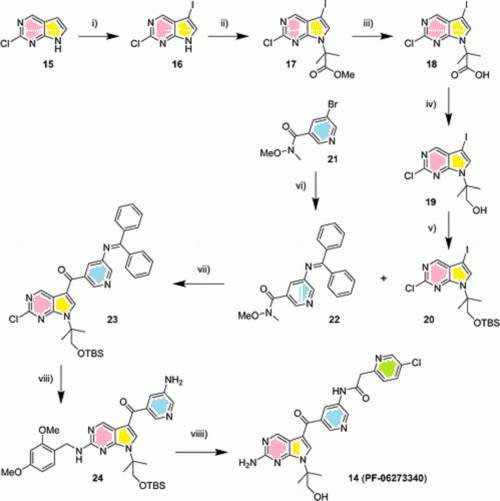
Scheme 1. Synthesis of 14a

aReagents and conditions:

(i) NIS, MeCN, 12 °C to rt, 1 h, 82%;

(ii) BrMe2CO2Me, KI, Cs2CO3, DMF, 60°C, 19 h, 92%;

(iii) LiOH, THF/H2O, 60 °C, 3 h, 90%;

(iv) DIBAL-H, THF, 0 °C, 1.5 h, 56%;

(v) TBMS-Cl, imidazole, DMF, 0 °C to rt, 16 h, 96%;

(vi) benzophenone imine, Pd2(dba)3, K3PO4, DME, 50 °C, 17 h, 51%;

(vii) 20, i-PrMgCl, THF, 0 °C, then 22, THF, 0 °C to rt, 16 h, 66%;

(viii) 2,4-dimethoxybenzylamine, DMAP, 1,4-dioxane, reflux, 2 d, then citric acid, THF, rt, 5 h, 78%;

(viiii) 2-(5-chloropyridin-2-yl)acetic acid, T3P, Et3N, THF, rt, 2 h, then TFA, 50°C, 3 h, then K2CO3, MeOH, rt, 16 h, 48%.

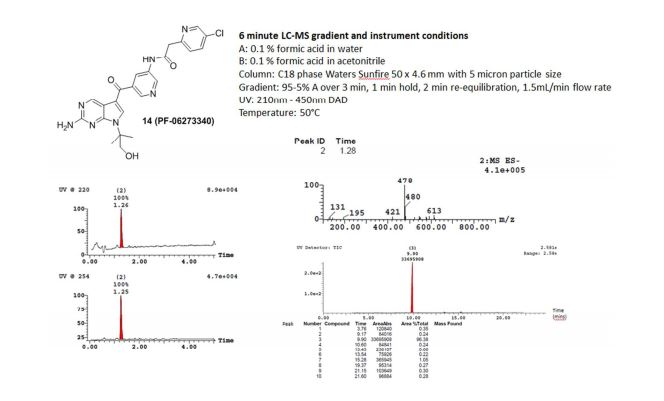
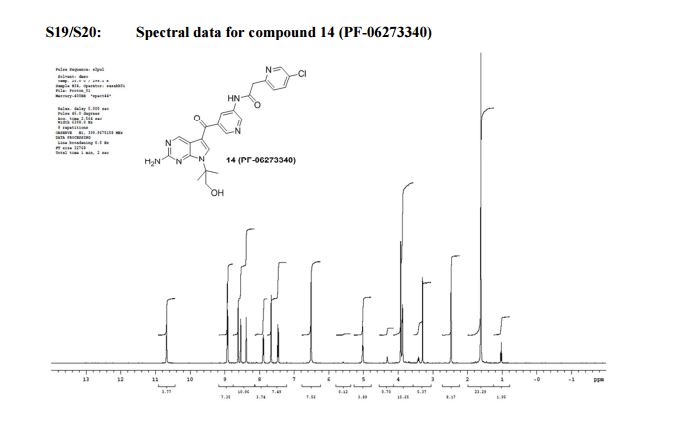
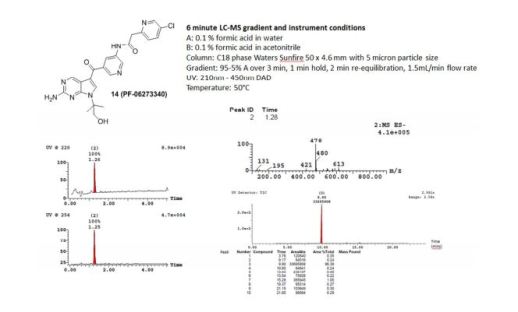
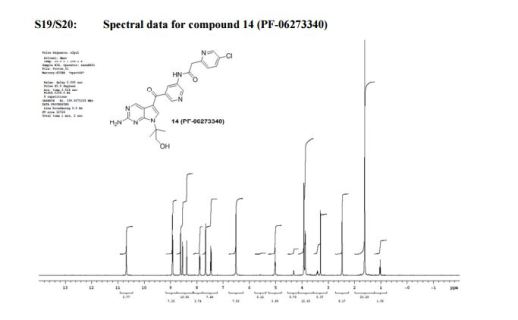
1H NMR (400 MHz, DMSO-d6) δ: 1.64 (s, 6H), 3.90 (d, J = 5.5, 2H), 3.95 (s, 2H), 5.05 (dd, J = 5.7, 5.5, 1H), 6.54 (br s, 2H), 7.49 (d, J = 8.4, 1H), 7.69 (s, 1H), 7.92 (dd, J = 8.3, 2.4, 1H), 8.40 (m, 1H), 8.56 (d, J = 2.5, 1H), 8.64 (d, J = 1.8, 1H), 8.94 (d, J = 2.2, 1H), 8.96 (s, 1H), 10.71 (s, 1H). HPLC (6 min, acid) Rt 1.26 min; UV 220 nM 100% purity; LC-MS (ES) m/z 478 (M – H+); HRMS (ES+) m/z 480.15468 (M + H+).

SYNTHESIS

WO-2012137089-A1

https://www.google.com/patents/WO2012137089A1?cl=enhttps://www.google.com/patents/WO2012137089A1?cl=en

Mark David Andrews, Sharanjeet Kaur Bagal,Karl Richard Gibson, Kiyoyuki OMOTO,Thomas Ryckmans, Sarah Elizabeth Skerratt, Paul Anthony Stupple
Applicant Pfizer Limited

Mark Andrews

MARK ANDREWS


Image result for PF-06273340

Sharanjeet Kaur Bagal,

Karl Gibson

Karl Gibson

Image result for Kiyoyuki OMOTO

Kiyoyuki OMOTO


Thomas Ryckmans

Thomas Ryckmans,

Example 46: N-(5-{[2-Amino-7-(2-hydroxy-1 ,1-dimethylethyl)-7H-pyrrolo[2,3-d]pyrimidin-5- yl]carbonyl}pyridin-3-yl)-2-(5-chloropyridin-2-yl)acetamide

Figure imgf000055_0001

(5-Chloropyridin-2-yl)acetic acid (26.1 g, 152 mmol) (see Preparation 90) was added to (5-aminopyridin- 3-yl){7-(2-{[ferf-butyl(dimethyl)silyl]oxy}-1 , 1-dimethylethyl)-2-[(2,4-dimethoxybenzyl)ami

d]pyrimidin-5-yl}methanone (75.0 g, 130 mmol ) (see Preparation 51 ), 1-propylphosphonic acid cyclic anhydride (187 mL, 317 mmol, 50% solution in EtOAc) and triethylamine (61.9 mL, 444 mmol ) in THF (423 mL). The mixture was stirred at 25°C for 2 hours then saturated aqueous sodium bicarbonate (400 mL) was added and the organic layer was separated. The aqueous phase was extracted with EtOAc (400 mL) and all organic phases were combined and dried over sodium sulfate then evaporated in vacuo. The residue brown solid was dissolved in trifluoroacetic acid (300 mL) and the solution was stirred at 50°C for 3 hours then evaporated in vacuo. Methanol (1800 mL) was added to the residue and the mixture was filtered. The filtrate was evaporated in vacuo and azeotroped with ethanol (3 x 200 mL).

Potassium carbonate (87.7 g, mmol) was added to the crude trifluoroacetamide in methanol (300 mL) and the mixture was stirred at room temperature for 16 hours. The mixture was poured into water (2000 mL) and filtered. The solid was washed with water (200 mL) then triturated with ethanol (2 x 200 mL at room temperature then 380 mL at 50°C) to afford the title compound as a yellow solid in 48% yield, 29.9 g. H NMR (400 MHz, DMSO-c/6) δ: 1.64 (s, 6H), 3.90 (d, 2H), 3.95 (s, 2H), 5.05 (t, 1 H), 6.54 (br s, 2H), 7.49 (d, 1 H), 7.69 (s, 1 H), 7.92 (dd, 1 H), 8.40 (m, 1 H), 8.56 (m, 1 H), 8.64 (d, 1 H), 8.94 (d, 1 H), 8.96 (s, 1 H), 10.71 (s, 1 H); LCMS (System 3): Rt = 9.92 min; m/z 480 [M+H]+.
str1str0

PAPER

The Discovery of a Potent, Selective, and Peripherally Restricted Pan-Trk Inhibitor (PF-06273340) for the Treatment of Pain

Pfizer Global Research & Development, The Portway Building, Granta Park, Great Abington, Cambridge, CB21 6GS, U.K.
Pfizer Global Research & Development, Ramsgate Road, Sandwich CT13 9NJ, U.K.
J. Med. Chem., Article ASAP
DOI: 10.1021/acs.jmedchem.6b00850
*Phone: +44 7584159616. E-mail: sarahskerratt1@gmail.com.

ACS Editors’ Choice – This is an open access article published under an ACS AuthorChoice License, which permits copying and redistribution of the article or any adaptations for non-commercial purposes.

Image result

Sarah Skerratt, FRSC

Sarah E. Skerratt


Mark Andrews

MARK ANDREWS


Abstract

Abstract Image

The neurotrophin family of growth factors, comprised of nerve growth factor (NGF), brain derived neurotrophic factor (BDNF), neurotrophin 3 (NT3), and neurotrophin 4 (NT4), is implicated in the physiology of chronic pain. Given the clinical efficacy of anti-NGF monoclonal antibody (mAb) therapies, there is significant interest in the development of small molecule modulators of neurotrophin activity. Neurotrophins signal through the tropomyosin related kinase (Trk) family of tyrosine kinase receptors, hence Trk kinase inhibition represents a potentially “druggable” point of intervention. To deliver the safety profile required for chronic, nonlife threatening pain indications, highly kinase-selective Trk inhibitors with minimal brain availability are sought. Herein we describe how the use of SBDD, 2D QSAR models, and matched molecular pair data in compound design enabled the delivery of the highly potent, kinase-selective, and peripherally restricted clinical candidate PF-06273340.

ADDITIONAL INFORMATION

The aqueous solubility of PF-06273340 is 131 μM, much improved over previous analogues, it is highly kinase-selective (Gini score of 0.92) and has no measurable activity at the hERG channel. PF-06273340 was profiled in a series of in vitro safety assays, showing little cytotoxicity in THLE or HepG2 cell lines (IC50 > 42 μM and >300 μM, respectively) and was evaluated for broader pharmacological activity in a panel of receptors, ion channels, and enzymes. In this broad panel, all IC50/Ki values were >10 μM except for COX-1 (IC50 = 2.7 μM) and dopamine transporter assays (Ki = 5.2 μM) and PDEs 4D, 5A, 7B, 8B, and 11 (54−89% inhibition at 10 μM). PF-06273340 was screened in the Invitrogen wide kinase panel of 309 kinases, and all were inhibited by <40% when tested at 1 μM except the following: MUSK (IC50 53 nM), FLT-3 (IC50 395 nM), IRAK1 (IC50 2.5 μM), MKK (90% @ 1 μM), and DDR1 (60% @ 1 μM).

REFERENCES

1: Skerratt SE, Andrews MD, Bagal SK, Bilsland J, Brown D, Bungay PJ, Cole S,
Gibson KR, Jones R, Morao I, Nedderman A, Omoto K, Robinson C, Ryckmans T,
Skinner K, Stupple PA, Waldron G. The Discovery of a Potent, Selective and
Peripherally Restricted Pan-Trk Inhibitor (PF-06273340) for the Treatment of
Pain. J Med Chem. 2016 Oct 21. [Epub ahead of print] PubMed PMID: 27766865.


Gareth Waldron

Gareth Waldron

Paul Stupple

Paul Stupple

/////////

CC(C)(CO)n1cc(C(=O)c2cncc(NC(=O)Cc3ccc(Cl)cn3)c2)c4cnc(N)nc14

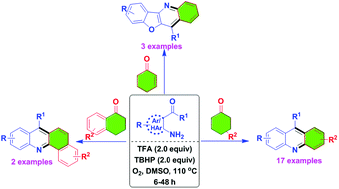
Metal-free annulation/aerobic oxidative dehydrogenation of cyclohexanones with o-acylanilines: efficient syntheses of acridines


DR ANTHONY MELVIN CRASTO Ph.D's avatarGreen Chemistry International

Green Chem., 2016, Advance Article
DOI: 10.1039/C6GC02396G, Communication
Gopal Chandru Senadi, Ganesh Kumar Dhandabani, Wan-Ping Hu, Jeh-Jeng Wang
We have identified metal-free reaction conditions for the annulation/aerobic oxidative dehydrogenation of cyclohexanones with o-acylanilines to the corresponding acridine derivatives.
Metal-free annulation/aerobic oxidative dehydrogenation of cyclohexanones with o-acylanilines: efficient syntheses of acridines

Metal-free annulation/aerobic oxidative dehydrogenation of cyclohexanones with o-acylanilines: efficient syntheses of acridines

*Corresponding authors
aDepartment of Medicinal and Applied Chemistry, Kaohsiung Medical University, No. 100, Shiquan 1st Rd, Sanmin District, Kaohsiung City, Taiwan
E-mail: jjwang@kmu.edu.tw
bDepartment of Biotechnology, Kaohsiung Medical University, No. 100, Shiquan 1st Rd, Sanmin District, Kaohsiung City, Taiwan
Green Chem., 2016, Advance Article

DOI: 10.1039/C6GC02396G, http://pubs.rsc.org/en/Content/ArticleLanding/2016/GC/C6GC02396G?utm_source=feedburner&utm_medium=feed&utm_campaign=Feed%3A+rss%2FGC+%28RSC+-+Green+Chem.+latest+articles%29#!divAbstract

gopal chandru Senadi

View original post 281 more words

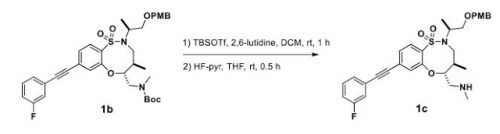
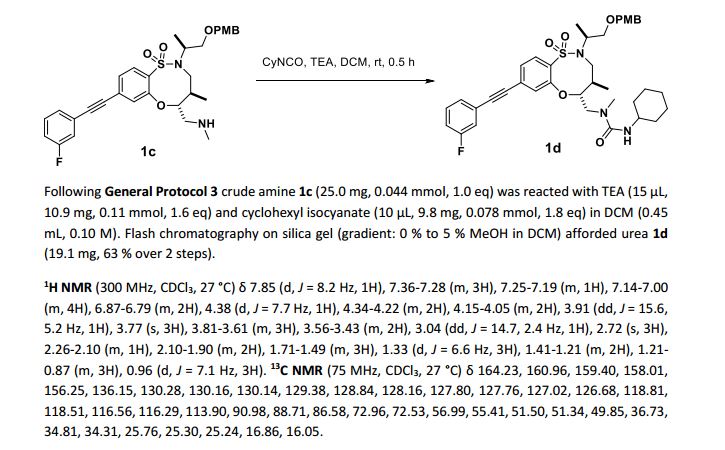
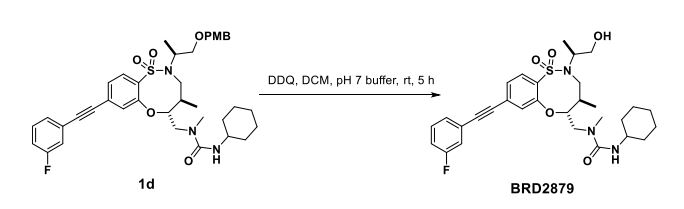
BRD 2879


imgBRD2879.png

BRD2879

BRD-K56962879-001-01-5
CAS 1304750-47-7
Chemical Formula: C30H38FN3O5S
Molecular Weight: 571.7084

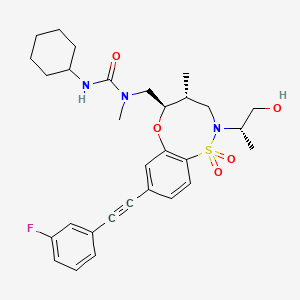
3-cyclohexyl-1-(((4R,5R)-8-((3-fluorophenyl)ethynyl)-2-((S)-1-hydroxypropan-2-yl)-4-methyl-1,1-dioxido-2,3,4,5-tetrahydrobenzo[b][1,4,5]oxathiazocin-5-yl)methyl)-1-methylurea

3-cyclohexyl-1-[[(4R,5R)-8-[2-(3-fluorophenyl)ethynyl]-2-[(2S)-1-hydroxypropan-2-yl]-4-methyl-1,1-dioxo-4,5-dihydro-3H-6,1$l^{6},2-benzoxathiazocin-5-yl]methyl]-1-methylurea

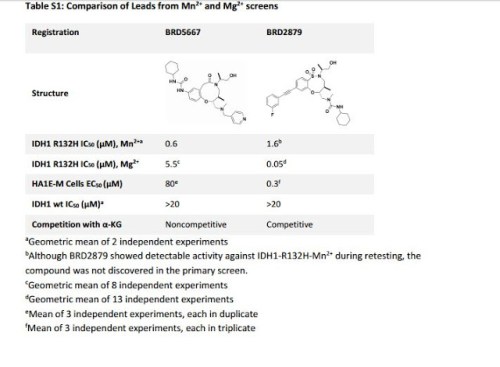
BRD2879 is a potent and cell-active inhibitor of IDH1-R132H with a markedly different structure from previously reported probes with (IC50 = 50 nM for inhibiting IDH1-R132H enzyme). BRD2879 represents a new structural class of mutant IDH1 inhibitors that, with optimization, may prove useful in the study of this enzyme and its role in cancer

Image result for Broad Institute, Cambridge

The Eli and Edythe L. Broad Institute of MIT and Harvard (/ˈbrd/), often referred to as the Broad Institute, is a biomedical and genomic research center located in Cambridge, Massachusetts, United States. The institute is independently governed and supported as a 501(c)(3) nonprofit research organization under the name Broad Institute Inc.,[1][2] and is partners with Massachusetts Institute of Technology, Harvard University, and the five Harvard teaching hospitals.

Image result for Broad Institute, Cambridge

Mahmud Hussain

Mahmud M. Hussain

Harvard University
Cambridge, MA, United States

PAPER

Abstract Image

Evidence suggests that specific mutations of isocitrate dehydrogenases 1 and 2 (IDH1/2) are critical for the initiation and maintenance of certain tumor types and that inhibiting these mutant enzymes with small molecules may be therapeutically beneficial. In order to discover mutant allele-selective IDH1 inhibitors with chemical features distinct from existing probes, we screened a collection of small molecules derived from diversity-oriented synthesis. The assay identified compounds that inhibit the IDH1-R132H mutant allele commonly found in glioma. Here, we report the discovery of a potent (IC50 = 50 nM) series of IDH1-R132H inhibitors having 8-membered ring sulfonamides as exemplified by the compound BRD2879. The inhibitors suppress (R)-2-hydroxyglutarate production in cells without apparent toxicity. Although the solubility and pharmacokinetic properties of the specific inhibitor BRD2879 prevent its use in vivo, the scaffold presents a validated starting point for the synthesis of future IDH1-R132H inhibitors having improved pharmacological properties.

Discovery of 8-Membered Ring Sulfonamides as Inhibitors of Oncogenic Mutant Isocitrate Dehydrogenase 1

Center for the Science of Therapeutics, Broad Institute, Cambridge, Massachusetts 02142, United States
Department of Chemistry and Chemical Biology, Harvard University, Cambridge, Massachusetts 02138, United States
§ Howard Hughes Medical Institute, Cambridge, Massachusetts 02138, United States
Department of Neurological Surgery, Washington Univeristy School of Medicine, St. Louis, Missouri 63110, United States
ACS Med. Chem. Lett., 2016, 7 (10), pp 944–949
DOI: 10.1021/acsmedchemlett.6b00264
Publication Date (Web): August 18, 2016
Copyright © 2016 American Chemical Society

People

CLICK ON IMAGES

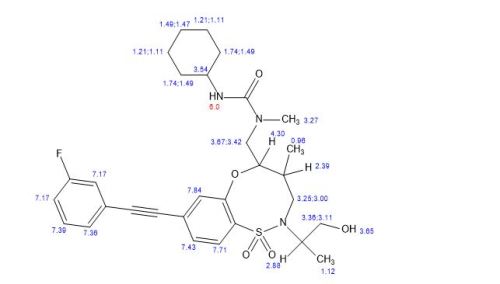
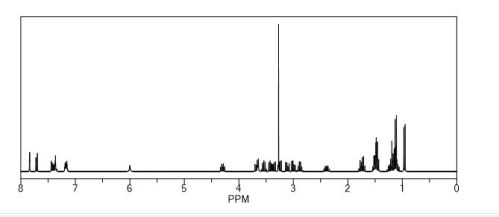
1H NMR (300 MHz, CDCl3, 27 °C) δ 7.88 (d, J = 8.3 Hz, 1H), 7.39-7.27 (m, 3H), 7.22-7.14 (m, 2H), 7.12-7.03 (m, 1H), 4.57 (td, J = 9.5, 2.5 Hz, 1H), 4.35-4.23 (m, 2H), 3.97-3.78 (m, 2H), 3.74-3.60 (m, 2H), 3.51 (ddd, J = 12.3, 9.9, 4.0 Hz, 1H), 3.40 (dd, J = 15.8, 5.1 Hz, 1H), 3.18 (dd, J = 9.9, 2.9 Hz, 1H), 3.12 (dd, J = 14.4, 2.6 Hz, 1H), 2.66 (s, 3H), 2.30-2.16 (m, 1H), 2.06 (d, J = 12.2 Hz, 1H), 1.96 (d, J = 12.1 Hz, 1H), 1.69-1.58 (m,1H), 1.58-1.45 (m, 2H), 1.23 (d, J = 6.8 Hz, 3H), 1.40-0.97 (m, 5H), 0.94 (d, J = 7.0 Hz, 3H).

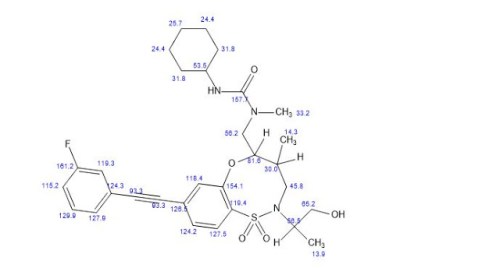
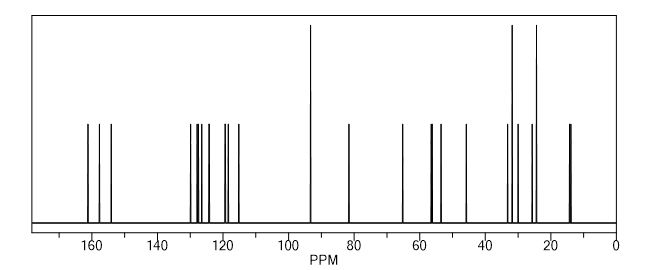
13C NMR (75 MHz, CDCl3, 27 °C) δ 164.20, 160.92, 157.74, 154.80, 134.60, 130.26, 130.15, 129.56, 128.62, 127.82, 127.77, 127.68, 126.90, 124.27, 118.81, 118.50, 116.63, 116.35, 91.32, 88.40, 85.60, 64.86, 58.03, 51.64, 49.88, 48.51, 36.73, 34.51, 34.35, 34.31, 25.72, 25.28, 25.23, 15.76, 15.05.

HRMS (ESI) calc’d for C30H38FN3O5S [M+H]+ : 572.2589. Found: 572.2588.

1H NMR PREDICT

13C NMR PREDICT

REFERENCES

Discovery of 8-Membered Ring Sulfonamides as Inhibitors of Oncogenic Mutant Isocitrate Dehydrogenase 1
Jason M. Law, Sebastian C. Stark, Ke Liu, Norah E. Liang, Mahmud M. Hussain, Matthias Leiendecker, Daisuke Ito, Oscar Verho, Andrew M. Stern, Stephen E. Johnston, Yan-Ling Zhang, Gavin P. Dunn, Alykhan F. Shamji, and Stuart L. Schreiber
Publication Date (Web): August 18, 2016 (Letter)
DOI: 10.1021/acsmedchemlett.6b00264


FC1=CC(C#CC2=CC(O[C@@H](CN(C(NC3CCCCC3)=O)C)[C@H](C)CN([C@@H](C)CO)S4(=O)=O)=C4C=C2)=CC=C1

Algae-mediated biosynthesis of inorganic nanomaterials as a promising route in nanobiotechnology – a review


DR ANTHONY MELVIN CRASTO Ph.D's avatarGreen Chemistry International

Green Chem., 2016, Advance Article
DOI: 10.1039/C6GC02346K, Critical Review
Si Amar Dahoumane, Mourad Mechouet, Kushlani Wijesekera, Carlos D. M. Filipe, Clemence Sicard, Dennis A. Bazylinski, Clayton Jeffryes
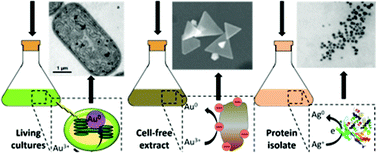
This review presents an exhaustive and in-depth description of inorganic nanoparticle biosynthesis from photosynthetic organisms, known mechanisms and bio-applications.

Algae-mediated biosynthesis of inorganic nanomaterials as a promising route in nanobiotechnology – a review

Algae-mediated biosynthesis of inorganic nanomaterials as a promising route in nanobiotechnology – a review

*Corresponding authors
aSchool of Biological Sciences & Engineering, Yachay Tech University, Hacienda San José, San Miguel de Urcuquí, Ecuador
E-mail: sdahoumane@yachaytech.edu.ec
bLaboratoire de Physique et Chimie des Matériaux, Université Mouloud Mammeri, Route de Hasnaoua…

View original post 292 more words

Asymmetric synthesis of (S)-phenylacetylcarbinol – closing a gap in C–C bond formation


DR ANTHONY MELVIN CRASTO Ph.D's avatarGreen Chemistry International

Green Chem., 2017, Advance Article
DOI: 10.1039/C6GC01803C, Communication
Torsten Sehl, Saskia Bock, Lisa Marx, Zaira Maugeri, Lydia Walter, Robert Westphal, Constantin Vogel, Ulf Menyes, Martin Erhardt, Michael Muller, Martina Pohl, Dorte Rother
By the combination of biocatalyst design and reaction engineering, the so far not stereoselectively accessible (S)-phenylacetylcarbinol could be enzymatically synthesized with product concentrations >48 g L-1 and an enantiomeric excess up to 97%.
Asymmetric synthesis of (S)-phenylacetylcarbinol – closing a gap in C-C bond formation

Asymmetric synthesis of (S)-phenylacetylcarbinol – closing a gap in C–C bond formation

View original post 230 more words

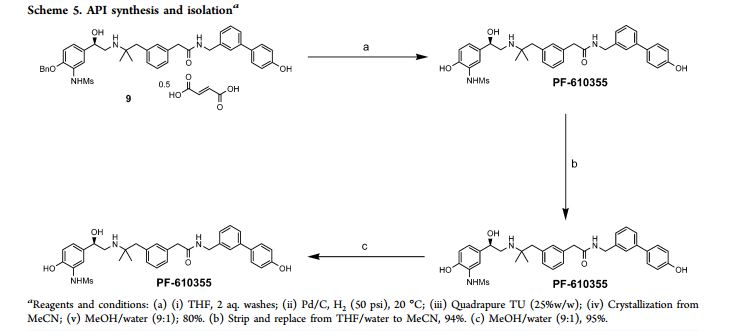
PF 610355 Revisited


Image result for PF 610355


PF-610355

  • Molecular Formula C34H39N3O6S
  • Average mass 617.755 Da

PF 610655, PF-00610355; PF-610,355

2-[3-[2-[[(2R)-2-hydroxy-2-[4-hydroxy-3-(methylsulfonylamino)phenyl]ethyl]amino]-2-methyl-propyl]phenyl]-N-[[3-(4-hydroxyphenyl)phenyl]methyl]ethanamide
862541-45-5  cas
ChemSpider 2D Image | PF-610355 | C34H39N3O6S
  • Originator Pfizer
  • Class Antiasthmatics; Benzeneacetamides; Sulfonamides
  • Mechanism of Action Beta 2 adrenergic receptor agonists
  • Orphan Drug StatusNo
  • On Fast trackNo

Highest Development Phases

  • Discontinued Asthma; Chronic obstructive pulmonary disease

Most Recent Events

  • 11 Aug 2011 Discontinued – Phase-I for Asthma in Belgium (Inhalation)
  • 11 Aug 2011 Discontinued – Phase-II for Asthma in Sweden (Inhalation)
  • 11 Aug 2011 Discontinued – Phase-II for Asthma in Germany (Inhalation)

PF-610355 (also known as PF-00610355 or PF-610,355) is an inhalable[1] ultra-long-acting β2 adrenoreceptor agonist[2] (ultra-LABA) that was investigated as a treatment of asthma and COPD by Pfizer.[3] It utilizes a sulfonamide agonist headgroup, that confers high levels of intrinsic crystallinity that could relate to the acidic sulfonamide motif supporting a zwitterionic form in the solid state. Optimization of pharmacokinetic properties minimized systemic exposure following inhalation and reduced systemically-mediated adverse events.[4] Its in vivo duration on action confirmed its potential for once-daily use in humans.[5]

The investigation and development of PF-610355 were discontinued in 2011,[6] likely for strategic and regulatory reasons.[7]


PF-610355). Mp 197−199 °C.

1 H NMR (600 MHz, d6-DMSO) δ 0.89 (s, 3H), 0.91 (s, 3H), 2.54 (s, 2H), 2.59−2.68 (m, 2H), 2.89 (s, 3H), 3.44 (s, 2H), 4.31 (d, 2H), 4.42 (dd, 1H), 6.80−8.83 (m, 3H), 6.97−7.02 (m, 2H), 7.08−7.12 (m, 3H), 7.16 (t, 1H), 7.19 (d, 1H), 7.30 (t, 1H), 7.37−7.41 (m, 4H), and 8.50 (t, 1H).

13C NMR (151 MHz, d6-DMSO) δ 26.39, 26.64, 39.85, 42.22, 42.48, 46.36, 50.15, 52.71, 72.00, 115.14, 115.70, 123.76, 124.02, 124.29, 124.38, 124.76, 125.23, 126.49, 127.57, 127.63, 128.40, 128.71, 130.82, 131.13, 135.38, 135.73, 138.43, 139.94, 140.20, 149.76, 157.11, and 170.28.

HRMS (ESI): calcd (M + H)+ 618.2632, found 618.2641. Found: C, 65.70%; H, 6.33%; N, 6.71%; S, 5.24%. C34H39N3O6S·0.17H2O requires C, 65.78%; H, 6.39%; N, 6.77%; S, 5.16%

PAPER

Optimization of the Manufacturing Route to PF-610355 (2): Synthesis of the API

Chemical Research and Development, Pfizer Global Research and Development, Ramsgate Road, Sandwich, Kent, U.K., CT13 9NJ
Org. Process Res. Dev., 2013, 17 (2), pp 202–212
DOI: 10.1021/op300342y
Publication Date (Web): February 5, 2013
Copyright © 2013 American Chemical Society

Abstract

Abstract Image

PF-610355 is a novel inhaled β-2 adrenoreceptor agonist. Process development of the final intermediate and the API are discussed with emphasis on the control of physical properties and subsequent isolations. This includes development of a constant volume distillation and evaluation of Nutsche filtration, agitated filter drying, and centrifugation to prevent particle attrition. The optimized process employed to manufacture 100 kg of the API is described.


PAPER

Optimization of the Manufacturing Route to PF-610355 (1): Synthesis of Intermediate 5

Chemical Research and Development, Pfizer Global Research and Development, Ramsgate Road, Sandwich, Kent, U.K., CT13 9NJ
Org. Process Res. Dev., 2013, 17 (2), pp 193–201
DOI: 10.1021/op300341n
Publication Date (Web): February 5, 2013
Copyright © 2013 American Chemical Society

Abstract

Abstract Image

Tertiary carbinamine 5 is an isolated intermediate in the synthesis of a novel, inhaled β-2 adrenoreceptor agonist PF-610355. Process development for the key amide-formation and Ritter reactions, together with reaction understanding studies are discussed in context of the synthesis of 5. The optimized process employed to manufacture 140 kg of 5 is described, and was shown to have superior metrics to the preliminary commercial route.

References

  1. Jump up^ Diderichsen, Paul Matthias; Cox, Eugène; Martin, Steven W.; Cleton, Adriaan; Ribbing, Jakob (November 2013). “Predicted Heart Rate Effect of Inhaled PF-00610355, a Long Acting β-Adrenoceptor Agonist, in Volunteers and Patients With Chronic Obstructive Pulmonary Disease”. British Journal of Clinical Pharmacology. 76 (5): 752–62. doi:10.1111/bcp.12080. PMC 3853534free to read. PMID 23323609.
  2. Jump up^ Cazzola, Mario; Luigino Calzetta; Maria Gabriella Matera3 (May 2011). “β2-adrenoceptor agonists: current and future direction”. Br J Pharmacol. 163 (1): 4–17. doi:10.1111/j.1476-5381.2011.01216.x. PMC 3085864free to read. PMID 21232045.
  3. Jump up^ “Pfizer Pipeline as of January 27, 2010” (PDF). Pfizer Inc. p. 6. Retrieved 9 April 2016.
  4. Jump up^ Glossop, PA; Lane, CA; Price, DA; Bunnage, ME; Lewthwaite, RA; James, K; Brown, AD; Yeadon, M; Perros-Huguet, C; Trevethick, MA; Clarke, NP; Webster, R; Jones, RM; Burrows, JL; Feeder, N; Taylor, SC; Spence, FJ (23 September 2010). “Inhalation by Design: Novel Ultra-Long-Acting β2-Adrenoreceptor Agonists for Inhaled Once-Daily Treatment of Asthma and Chronic Obstructive Pulmonary Disease That Utilize a Sulfonamide Agonist Headgroup”. Journal of Medicinal Chemistry. 53 (18): 6640–52. doi:10.1021/jm1005989. PMID 20804199.
  5. Jump up^ Acton, Q. Ashton (ed.). Issues in Medical Chemistry. 2011 Edition. ScholarlyEditions. ISBN 978-1-464-96440-4.
  6. Jump up^ “AdisInsight: PF 610355”. Springer International Publishing AG. Retrieved 25 March 2016.
  7. Jump up^ Cazzola, M; Page, CP; Rogliani, P; Matera, MG (1 April 2013). “β2-Agonist Therapy in Lung Disease”. American Journal of Respiratory and Critical Care Medicine. 187 (7): 693. doi:10.1164/rccm.201209-1739PP. PMID 23348973.
PF-610355
PF-610355.svg
Systematic (IUPAC) name
N-[(4′-Hydroxy-3-biphenylyl)methyl]-2-[3-(2-{[(2R)-2-hydroxy-2-{4-hydroxy-3-[(methylsulfonyl)amino]phenyl}ethyl]amino}-2-methylpropyl)phenyl]acetamide
Clinical data
Routes of
administration
Inhalation
Legal status
Legal status
  • Development terminated
Identifiers
CAS Number 862541-45-5
ATC code None
PubChem CID 11505444
ChemSpider 9680243 Yes
UNII ZH5SMU97AJ Yes
ChEMBL CHEMBL1240967 Yes
Chemical data
Formula C34H39N3O6S
Molar mass 617.76 g·mol−1

///////////PF 610355

Rush , few seats, ACS INDUSTRY SYMPOSIUM RECENT ADVANCES IN DRUG DEVELOPMENT IN PARTNERSHIP WITH DR. REDDY’S LABORATORIES HYDERABAD, INDIA 11-12 NOVEMBER 2016


str1

ACS INDUSTRY SYMPOSIUM

RECENT ADVANCES IN DRUG DEVELOPMENT IN PARTNERSHIP WITH DR. REDDY’S LABORATORIES HYDERABAD, INDIA

11-12 NOVEMBER 2016

click        http://acssymposium.org.in/

for registrations

Inaugural ACS Industry Symposium, 11-12 November 2016 in Hyderabad, India
Recent Advances in Drug Development

Follow New Drug Approvals on WordPress.com

Enter your email address to follow this blog and receive notifications of new posts by email.

Join 37.8K other subscribers

ORGANIC SPECTROSCOPY

Read all about Organic Spectroscopy on ORGANIC SPECTROSCOPY INTERNATIONAL 

DISCLAIMER

I , Dr A.M.Crasto is writing this blog to share the knowledge/views, after reading Scientific Journals/Articles/News Articles/Wikipedia. My views/comments are based on the results /conclusions by the authors(researchers). I do mention either the link or reference of the article(s) in my blog and hope those interested can read for details. I am briefly summarising the remarks or conclusions of the authors (researchers). If one believe that their intellectual property right /copyright is infringed by any content on this blog, please contact or leave message at below email address amcrasto@gmail.com. It will be removed ASAP