New Drug Approvals

Home » GENERICS (Page 2)

Category Archives: GENERICS

DRUG APPROVALS BY DR ANTHONY MELVIN CRASTO .....FOR BLOG HOME CLICK HERE

Blog Stats

  • 4,802,617 hits

Flag and hits

Flag Counter

Enter your email address to follow this blog and receive notifications of new posts by email.

Join 37.9K other subscribers
Follow New Drug Approvals on WordPress.com

Archives

Categories

Recent Posts

Flag Counter

ORGANIC SPECTROSCOPY

Read all about Organic Spectroscopy on ORGANIC SPECTROSCOPY INTERNATIONAL 

Enter your email address to follow this blog and receive notifications of new posts by email.

Join 37.9K other subscribers
DR ANTHONY MELVIN CRASTO Ph.D

DR ANTHONY MELVIN CRASTO Ph.D

DR ANTHONY MELVIN CRASTO, Born in Mumbai in 1964 and graduated from Mumbai University, Completed his Ph.D from ICT, 1991,Matunga, Mumbai, India, in Organic Chemistry, The thesis topic was Synthesis of Novel Pyrethroid Analogues, Currently he is working with AFRICURE PHARMA, ROW2TECH, NIPER-G, Department of Pharmaceuticals, Ministry of Chemicals and Fertilizers, Govt. of India as ADVISOR, earlier assignment was with GLENMARK LIFE SCIENCES LTD, as CONSUlTANT, Retired from GLENMARK in Jan2022 Research Centre as Principal Scientist, Process Research (bulk actives) at Mahape, Navi Mumbai, India. Total Industry exp 32 plus yrs, Prior to joining Glenmark, he has worked with major multinationals like Hoechst Marion Roussel, now Sanofi, Searle India Ltd, now RPG lifesciences, etc. He has worked with notable scientists like Dr K Nagarajan, Dr Ralph Stapel, Prof S Seshadri, etc, He did custom synthesis for major multinationals in his career like BASF, Novartis, Sanofi, etc., He has worked in Discovery, Natural products, Bulk drugs, Generics, Intermediates, Fine chemicals, Neutraceuticals, GMP, Scaleups, etc, he is now helping millions, has 9 million plus hits on Google on all Organic chemistry websites. His friends call him Open superstar worlddrugtracker. His New Drug Approvals, Green Chemistry International, All about drugs, Eurekamoments, Organic spectroscopy international, etc in organic chemistry are some most read blogs He has hands on experience in initiation and developing novel routes for drug molecules and implementation them on commercial scale over a 32 PLUS year tenure till date Feb 2023, Around 35 plus products in his career. He has good knowledge of IPM, GMP, Regulatory aspects, he has several International patents published worldwide . He has good proficiency in Technology transfer, Spectroscopy, Stereochemistry, Synthesis, Polymorphism etc., He suffered a paralytic stroke/ Acute Transverse mylitis in Dec 2007 and is 90 %Paralysed, He is bound to a wheelchair, this seems to have injected feul in him to help chemists all around the world, he is more active than before and is pushing boundaries, He has 100 million plus hits on Google, 2.5 lakh plus connections on all networking sites, 100 Lakh plus views on dozen plus blogs, 227 countries, 7 continents, He makes himself available to all, contact him on +91 9323115463, email amcrasto@gmail.com, Twitter, @amcrasto , He lives and will die for his family, 90% paralysis cannot kill his soul., Notably he has 38 lakh plus views on New Drug Approvals Blog in 227 countries......https://newdrugapprovals.wordpress.com/ , He appreciates the help he gets from one and all, Friends, Family, Glenmark, Readers, Wellwishers, Doctors, Drug authorities, His Contacts, Physiotherapist, etc He has total of 32 International and Indian awards

Verified Services

View Full Profile →

Archives

Categories

Flag Counter

Glenmark Launches First and Only Generic Version of Zetia® (Ezetimibe) in the United States


Glenmark launches generic version of Zetia in US

Illustration Image Courtesy…..link

“We have launched ezetimibe, the first and only generic version of Zetia (Merck) in the United States for the treatment of high cholesterol,”……….http://health.economictimes.indiatimes.com/news/pharma/glenmark-launches-generic-version-of-zetia-in-us-market/55951453

see……..http://us-glenmarkpharma.com/wp-content/uploads/Glenmark-launches-first-and-only-generic-version-of-Zetia%C2%AE-in-the-United-States.pdf

SEE…..http://www.zeebiz.com/companies/news-glenmark-launches-generic-version-of-cholesterol-drug-zetia-in-us-market-9092


http://www.glenmarkpharma.com/

Glenmark Launches First and Only Generic Version of Zetia® in the United States 

Mumbai, India; December 12, 2016: Glenmark Pharmaceuticals Inc., USA today announced the availability of ezetimibe, the first and only generic version of ZETIA® (Merck) in the United States for the treatment of high cholesterol. The availability of ezetimibe is the result of a licensing partnership with Par Pharmaceutical, an Endo International plc operating company, with whom Glenmark will share profits. Glenmark and its partner, Endo will be entitled to 180 days of generic drug exclusivity for ezetimibe as provided for under section 505(j)(5)(B)(iv) of the FD&C Act.

Ezetimibe is indicated as adjunctive therapy to diet for the reduction of elevated total cholesterol (total-
C), low-density lipoprotein cholesterol (LDL-C), and apolipoprotein B (Apo B) in patients with primary
(heterozygous familial and non-familial) hyperlipidemia.
According to IMS Health data for the 12-month period ending October 2016, annual U.S. sales of Zetia®
10 mg were approximately $2.3 billion.
“Glenmark has a deep heritage of bringing safe, effective and affordable medicines to patients around
the world,” said Robert Matsuk, President of North America and Global API at Glenmark
Pharmaceuticals Ltd. “Our partnership with Par to bring the first generic version of ZETIA® to market
only underscores our joint commitment to bridging the gap between patients and the medicines they
need most.”
“We, along with our partners at Glenmark, are proud to be able to offer patients managing their
cholesterol levels the first generic version of ZETIA®,” said Tony Pera, President of Par Pharmaceutical.
“Par remains committed to providing patients access to high quality and affordable medicines.”
Glenmark’s current portfolio consists of 111 products authorized for distribution in the U.S. marketplace
and 64 ANDA’s pending approval with the U.S. Food and Drug Administration. In addition to these
internal filings, Glenmark continues to identify and explore external development partnerships to
supplement and accelerate the growth of its existing pipeline and portfolio.

About Glenmark Pharmaceuticals Ltd.:
Glenmark Pharmaceuticals Ltd. (GPL) is a research-driven, global, integrated pharmaceutical organization headquartered at Mumbai, India. It is ranked among the top 80 Pharma & Biotech companies of the world in terms of revenue (SCRIP 100 Rankings published in the year 2016). Glenmark is a leading player in the discovery of new molecules both NCEs (new chemical entity) and NBEs (new biological entity). Glenmark has several molecules in various stages of clinical development and is primarily focused in the areas of Inflammation [asthma/COPD, rheumatoid arthritis etc.] and Pain [neuropathic pain and inflammatory pain]. The company has a significant presence in the branded generics markets across emerging economies including India. GPL along with its subsidiaries operate 17 manufacturing facilities across four countries and has five R&D centers. The Generics business of Glenmark services the requirements of the US and Western European markets. The API business sells its products in over 80 countries including the US, EU, South America and India………http://www.glenmarkpharma.com/

str0
About Endo International plc:
Endo International plc (NASDAQ / TSX: ENDP) is a global specialty pharmaceutical company focused on improving patients’ lives while creating shareholder value. Endo develops, manufactures, markets and distributes quality branded and generic pharmaceutical products as well as over-the-counter medications though its operating companies. Endo has global headquarters in Dublin, Ireland, and U.S. headquarters in Malvern, PA. Learn more at http://www.endo.com

OLD CLIP

Dec 08, 2016, 08.16 PM | Source: CNBC-TV18 Glenmark to launch cholesterol drug Zetia in US on Dec 12 Glenmark was the first to file for the generic version of Zetia and it means that after the launch on December 12, only Glenmark and Merck will sell generic Zetia in the US market for the next 6 months. Glenmark   is launching cholesterol drug Zetia with 6 months exclusivity in the US on December 12. The company has partnered with Par Pharma on the drug and has a 50:50 profit sharing agreement with Par on Zetia. Glenmark was the first to file for the generic version of Zetia and it means that after the launch on December 12, only Glenmark and Merck will sell generic Zetia in the US market for the next 6 months. Total revenue estimated to be generated is around USD 400-500 million and post profit sharing with Par, Glenmark should make around USD 200-250 million.

Read more at: http://www.moneycontrol.com/news/business/glenmark-to-launch-cholesterol-drug-zetiausdec-12_8087701.html?utm_source=ref_article

////////////Glenmark,  Launches,  First,  Only,  Generic Version,  Zetia®,  United States, ezetimibe, par pharmaceutical, cholesterol, Endo International plc

Зопиклон , Zopiclone, زوبيكلون , 佐匹克隆


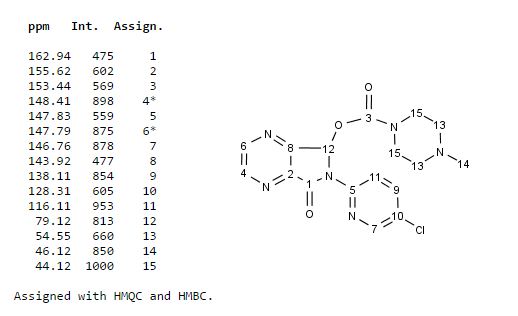
Zopiclone structure.svg

ZOPICLONE

зопиклон
زوبيكلون
佐匹克隆
(±)-Zopiclone
1-Piperazinecarboxylic acid, 4-methyl-, 6-(5-chloro-2-pyridinyl)-6,7-dihydro-7-oxo-5H-pyrrolo[3,4-b]pyrazin-5-yl ester
256-138-9 [EINECS]
43200-80-2 [RN]

Structural formula

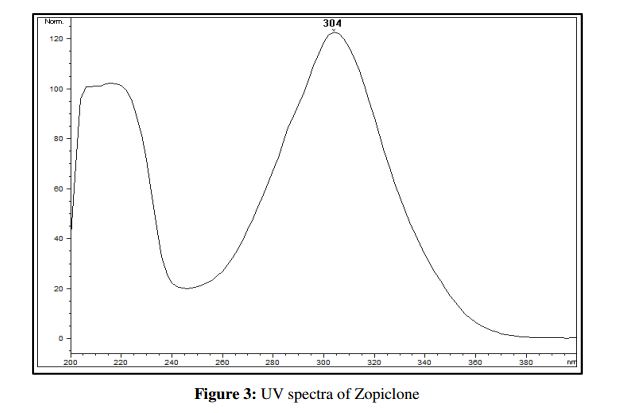
UV- Spectrum

Conditions : Concentration – 1 mg / 100 ml
The solvent designation schedule methanol 

water 

0.1М HCl

0.1M NaOH

maximum absorption There 

decay

303 nm 304 nm 277 nm 

237 nm

362 364 199

390

e 10500 10500 5800

11300

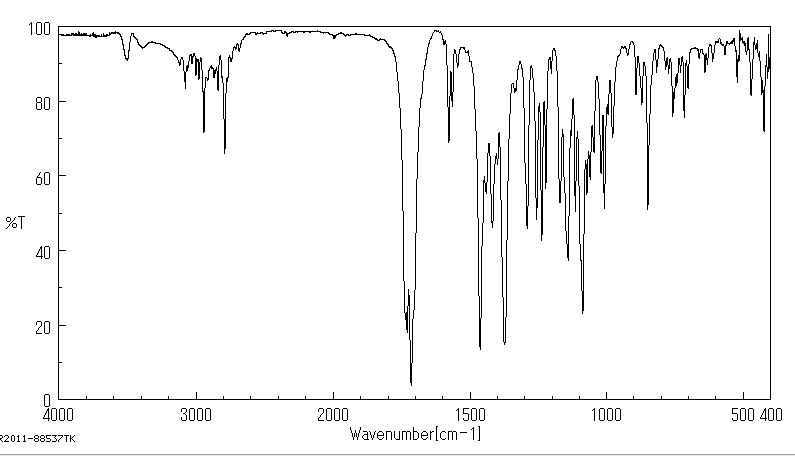
IR – spectrum

Wavelength (μm)
Wave number (cm -1 )

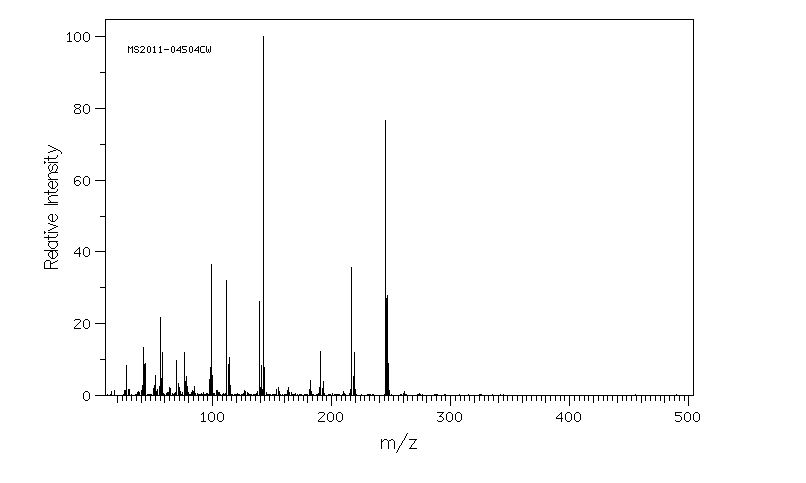
MASS spectrum

Range
10 largest peaks:
Peak 42 56 99 112 139 143 217 245 246 247
Value 155 231 280 283 209 999 279 719 156 250

References

  • UV and IR Spectra. H.-W. Dibbern, R.M. Muller, E. Wirbitzki, 2002 ECV

  • NIST/EPA/NIH Mass Spectral Library 2008

  • Handbook of Organic Compounds. NIR, IR, Raman, and UV-Vis Spectra Featuring Polymers and Surfactants, Jr., Jerry Workman. Academic Press, 2000.

  • Handbook of ultraviolet and visible absorption spectra of organic compounds, K. Hirayama. Plenum Press Data Division, 1967.

Brief background information

Salt ATC formula MM CASE
N05CF01 17 H 17 ClN 6 O 3 388.82 g / mol 43200-80-2

Application

  • sedative

  • hypnotic

Classes substance

  • chlorine compounds

    • oxo

      • Esters of 1-piperazinecarboxylate

        • pyridines

          • Pirrolo [3,4-b] piraziny

Synthesis Way

Синтез a)

Trade names

country Tradename Manufacturer
Germany Optydorm DOLORGIET
Somnosan Hormos
Ksimovan Sanofi-Aventis
Zop HEXAL
Zopi-cigar Actavis
various generic drugs
France imovane SanofiAventis
Noktireks Sanofi-Synthélabo
United Kingdom Snowman SanofiAventis
Italy imovane SanofiAventis
tion THERE
Japan Amoʙan Sanofi-Aventis; Chugai; Mitsubishi
Ukraine imovane Sanofi Winthrop Indastria, France
various generic drugs

Formulations

  • coated tablets 7.5 mg;

  • Tablets 7.5 mg, 10 mg

References

  • DOS 2 300 491 (Rhône-Poulenc; appl. 5.1.1973; F-prior. 7.1.1972, 9.9.1972).

  • US 3 862 149 (Rhône-Poulenc; 21.1.1975; F-prior. 7.1.1972, 9.9.1972).

Two major zopiclone metabolites.

Two major zopiclone metabolites.

CAS Registry No.: 43200-80-2
Molecular Formula: C17H17ClN6O3 Molecular Weight: 388.8
ChemicalStructure
Compound Name:
zopiclone

1-piperazinecarboxylic acid, 4-methyl-, 6-(5-chloro-2-pyridinyl)-6,7-dihydro-7-oxo-5H-pyrrolo(3,4-b)pyrazin-5-yl ester

4-methyl-1-piperazinecarboxylic acid 6-(5-chloro-2-pyridinyl)-6,7-dihydro-7-oxo-5H-pyrrolo(3,4-b)-pyrazin-5-yl ester

4-methyl-1-piperazinecarboxylic acid-6-(5-chloro-2-pyridinyl)-6,7-dihydro-7-oxo-5H-pyrrolo(3,4-b)-pyrazin-5-yl ester

6-(5-chloro-2-pyridyl)-6,7-dihydro-7-oxo-5H-pyrrolo(3,4-b)pyrazin-5-yl 4-methyl-1-piperazinecarboxylate

6-(5-chloro-pyridin-2-yl)-5((4-methyl-1-piperazinyl)carbonyloxy)-7-oxo-6,7-dihydro-5H-pyrrolo(3,4-b)pyrazine

6-(5-chloropyridin-2-yl)-7-oxo-6,7-dihydro-5H-pyrrolo(3,4-b)pyrazin-5-yl 4-methylpiperazine-1-carboxylate

amoban (R)

imovane

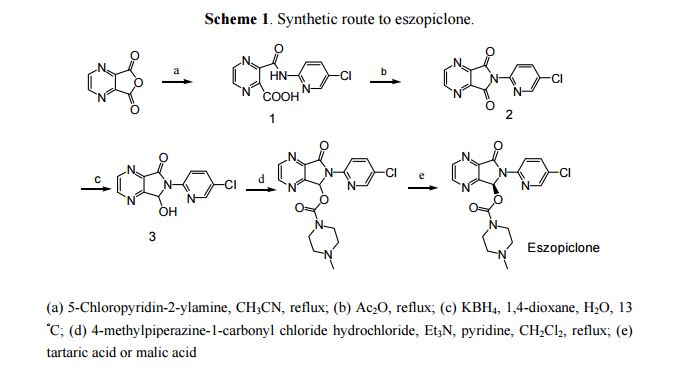
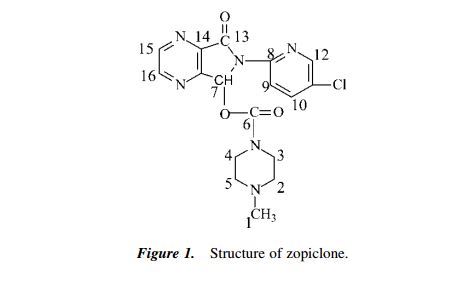
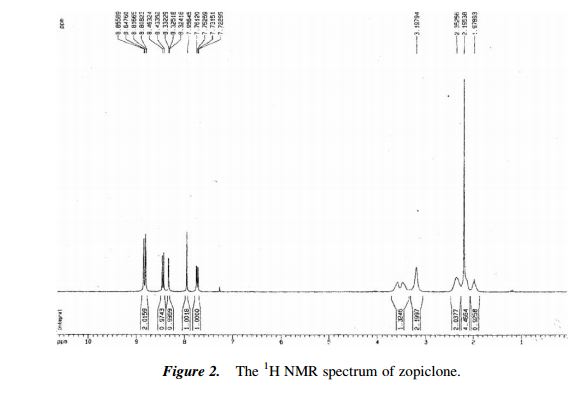
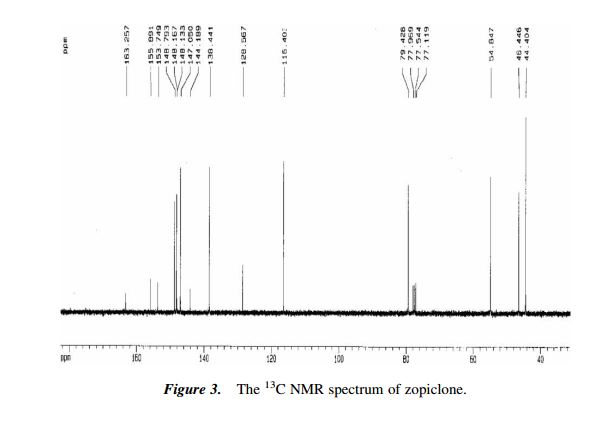
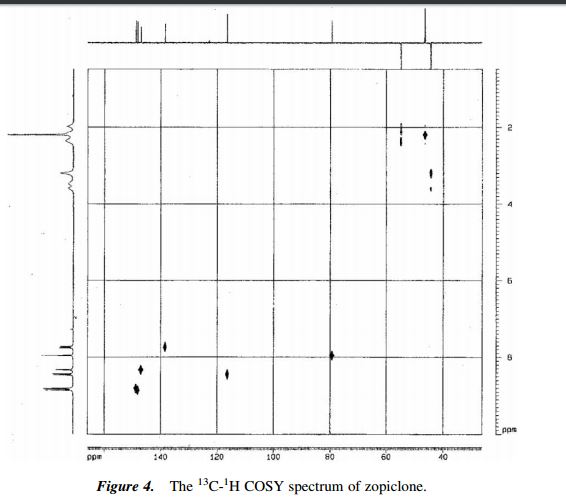
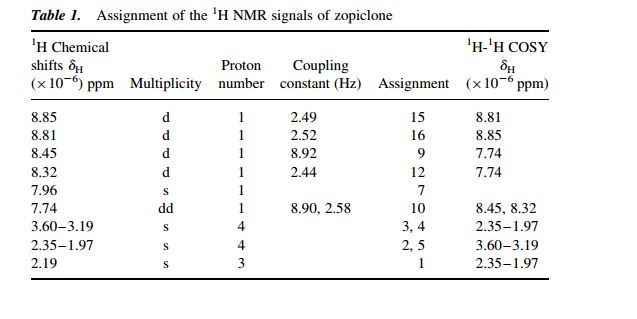
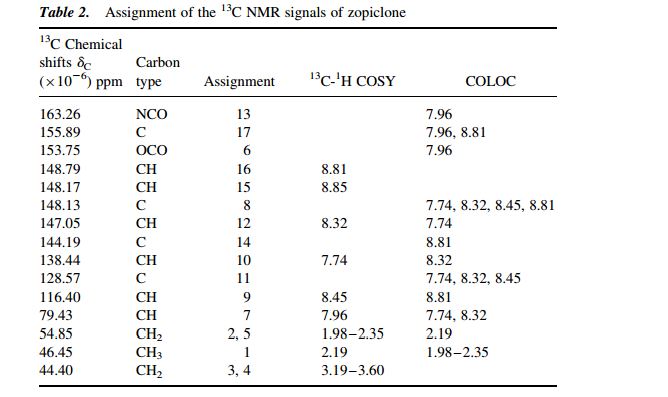
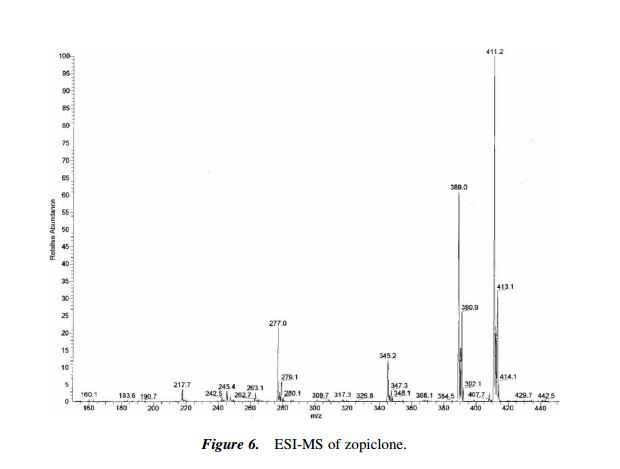
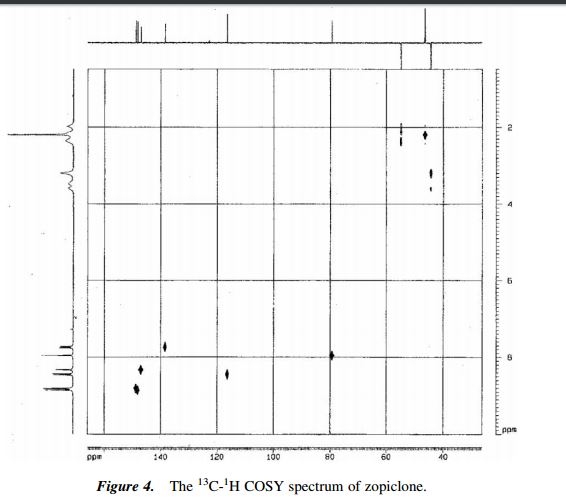
Zopiclone (Imovance), 4-methyl-1-piperzinecarboxylic acid 6-(5-chloro-2- pyridinyl)-6,7-dihydro-7-oxo-5H-pyrrolo[3,4-b]pyrazin-5-yl ester (Figure 1) is one of the non benzodiazepine sedative-hypnotics of the cyclopyrrolone class, sold by Rhone-Poulene Company in France since 1987. Although structurally unrelated to benzodiazepines, its pharmacological profile is similar, exhibiting sedative-hypnotic, anxiolytic, myorelaxant, and anticonvulsant activity.[1] Other than the first generation barbiturates and the second-generation benzodiazepines, zopiclone, which is widely used in Europe as well as other regions worldwide,[2,3] as a representative of the third generation sedative-hypnotic drugs, has been shown to be free from residual effects on performance and psychological function the day after intake and from the risks of accumulation because of its short elimination half-life (3.5 to 6.5 hours).[3,4] It is indicated for the short term treatment of insomnia, transient, situational or chronic insomnia, and insomnia secondary to psychiatric disturbances.[3]

REFERENCES 1. Mann, K.; Bauer, H.; Hiemke, C.; Ro¨schke, J.; Wetzel, H.; Benkert, O. Acute, subchronic and discontinuation effects of zopiclone on sleep EEG and nocturnal melatonin secretion. Eur. Neuropsychopharm. 1996, 6 (3), 163– 168. Structure Elucidation of Sedative-Hypnotic Zopiclone 359 Downloaded by [Dalhousie University] at 22:10 19 December 2012

2. Le´ger, D.; Janus, C.; Pellois, A.; Quera-Salva, M.A.; Dreyfus, J.P. Sleep, morning alertness and quality of life in subjects treated with zopiclone and in good sleepers. study comparing 167 patients and 381 good sleepers. Eur. Psychiat. 1995, 10 (973) Suppl. 3, 99s – 102s.

3. Piperaki, S.; Parissi-Poulou, M. Enantiomeric separation of zopiclone, its metabolites and products of degradation on a b-cyclodextrin bonded phase. J. Chromatogr. A 1996, 729 (1 – 2), 19 – 28

Spectral Data Analyses and Structure Elucidation of Sedative‐Hypnotic Zopiclone

Pages 349-360 | Received 10 Sep 2006, Accepted 18 Oct 2006, Published online: 13 Oct 2010

Zopiclone
Zopiclone structure.svg
Zopiclone ball-and-stick.png
Systematic (IUPAC) name

(RS)-6-(5-chloropyridin-2-yl)-7-oxo-6,7-dihydro-5H-pyrrolo[3,4-b]pyrazin-5-yl 4-methylpiperazine-1-carboxylate

Clinical data
Trade names Imovane, Zimovane
AHFS/Drugs.com International Drug Names
Pregnancy
category
  • AU: C
  • US: C (Risk not ruled out)
Routes of
administration
Oral tablets, 3.75 mg (UK), 5 or 7.5 mg
Legal status
Legal status
  • AU: S4 (Prescription only)
  • UK: Class C (POM)
  • US: Schedule IV
Pharmacokinetic data
Bioavailability 75-80%[1]
Protein binding 52–59%
Metabolism Hepatic through CYP3A4and CYP2E1
Biological half-life ~5 hours (3.5–6.5 hours)

~7–9 hours for over 65

Excretion Urine (80%)
Identifiers
CAS Number 43200-80-2 Yes
ATC code N05CF01 (WHO)
PubChem CID 5735
IUPHAR/BPS 7430
DrugBank DB01198 Yes
ChemSpider 5533 Yes
UNII 03A5ORL08Q Yes
KEGG D01372 Yes
ChEBI CHEBI:32315 Yes
ChEMBL CHEMBL135400 Yes
PDB ligand ID ZPC (PDBeRCSB PDB)
Chemical data
Formula C17H17ClN6O3
Molar mass 388.808 g/mol
3D model (Jmol) Interactive image

////////////

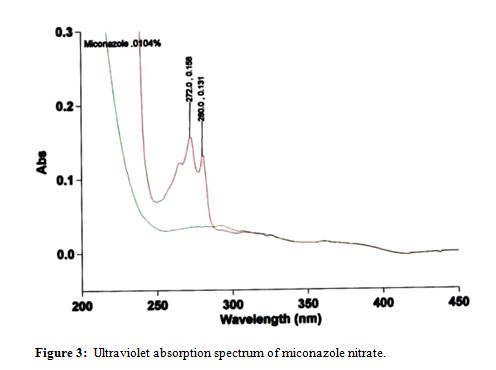
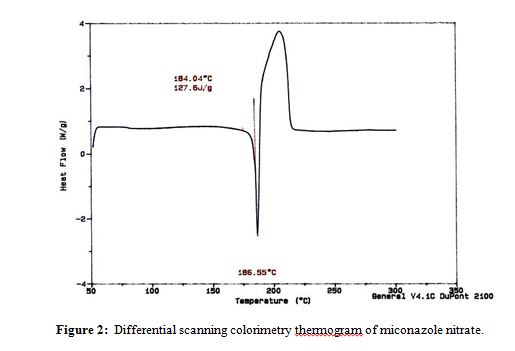
MICONAZOLE NITRATE , Миконазол , ミコナゾール硝酸塩


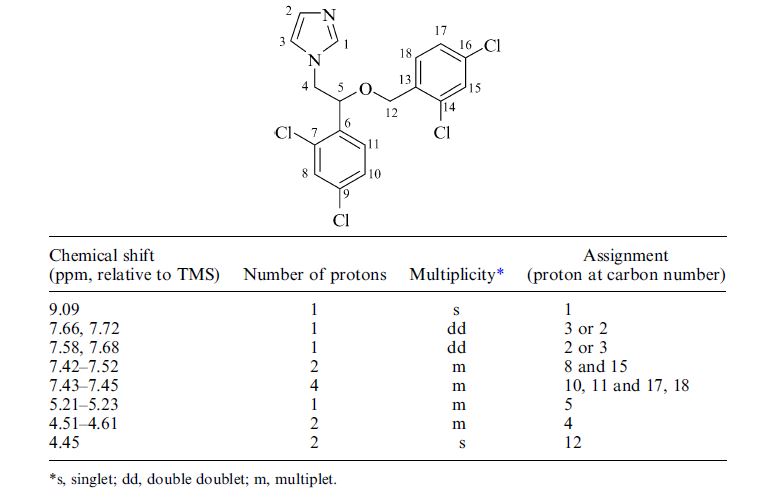
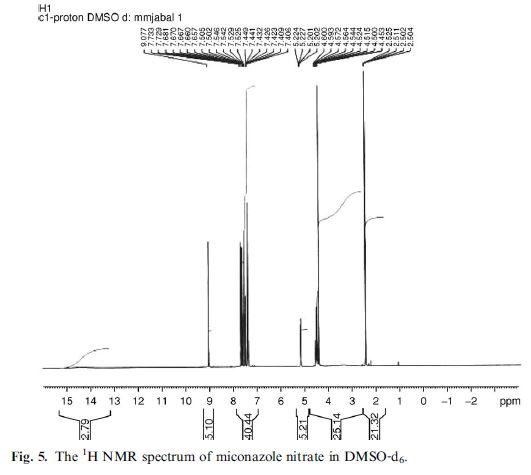
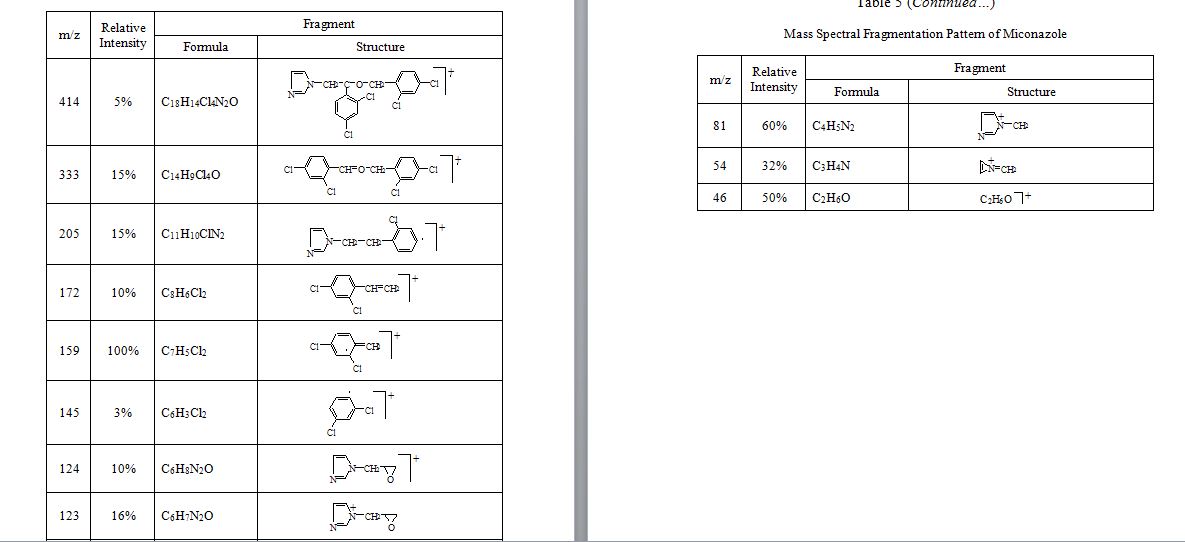
Miconazole            C18H14Cl4N2O    416.13             [22916478]

Miconazole Nitrate            C18H14Cl4N2O.HNO3              479.14             [22832877]

ミコナゾール硝酸塩 JP16
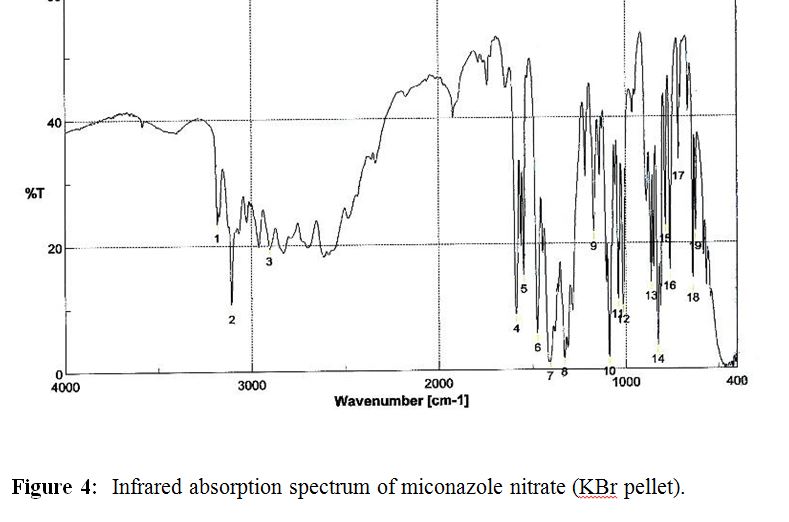
Miconazole Nitrate

C18H14Cl4N2O▪HNO3 : 479.14
[22832-87-7]


click on above image for clear view


MORE GRAPHS

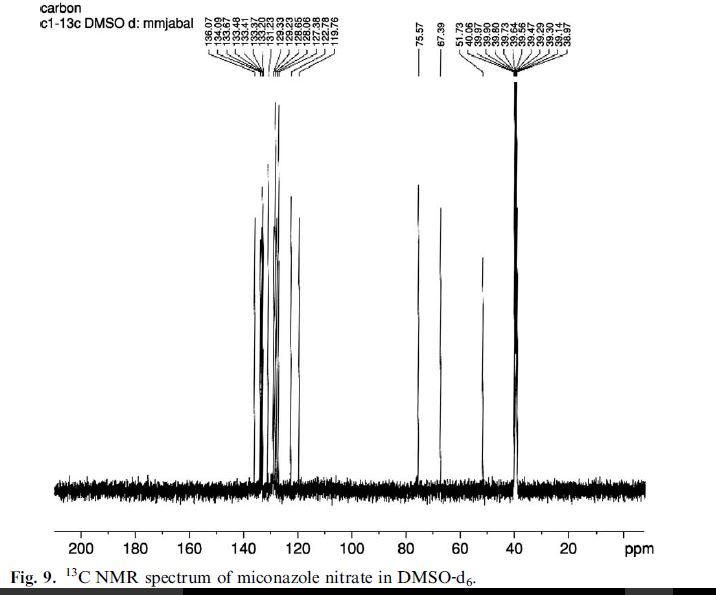
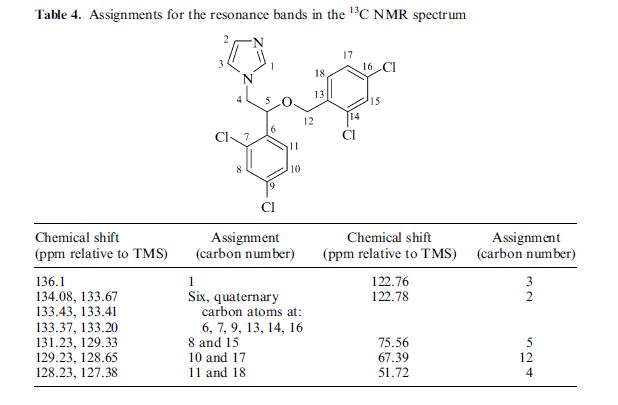
13C


1D 1H, n/a spectrum for Miconazole

2D [1H,1H]-TOCSY  BELOW

2D [1H,1H]-TOCSY, n/a spectrum for Miconazole

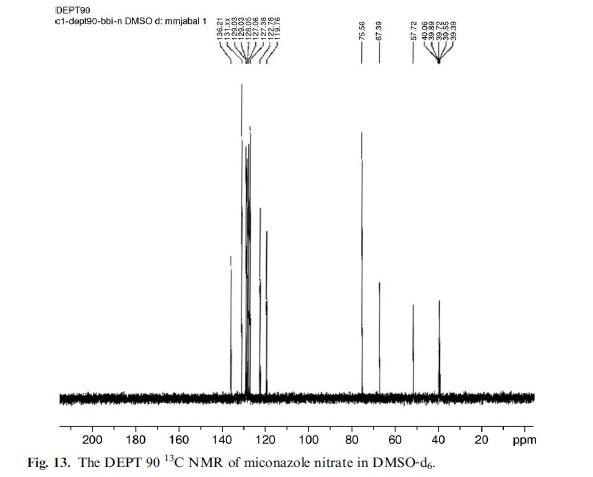
1D DEPT90

1D DEPT90, n/a spectrum for Miconazole

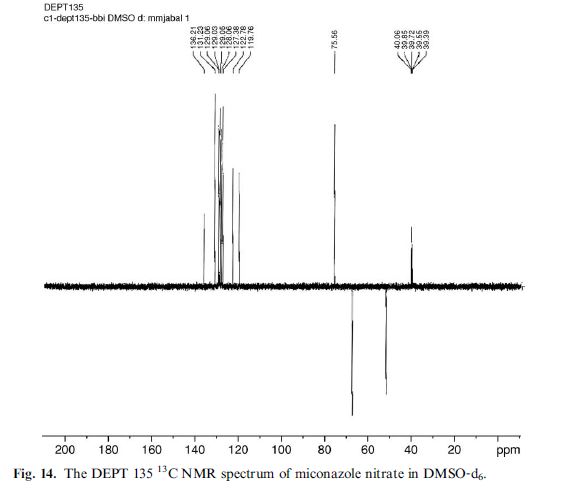
1D DEPT135

1D DEPT135, n/a spectrum for Miconazole


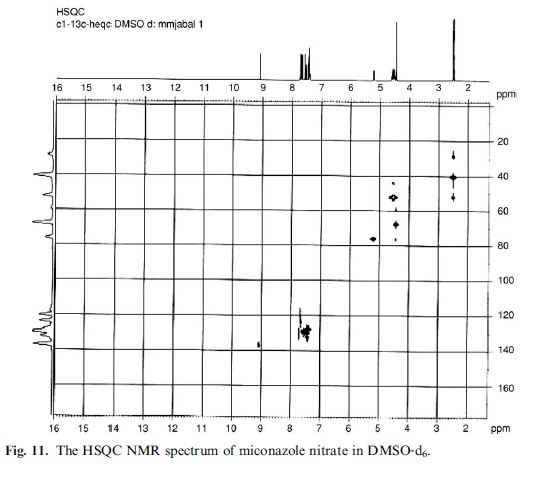
2D [1H,13C]-HSQC

2D [1H,13C]-HSQC, n/a spectrum for Miconazole

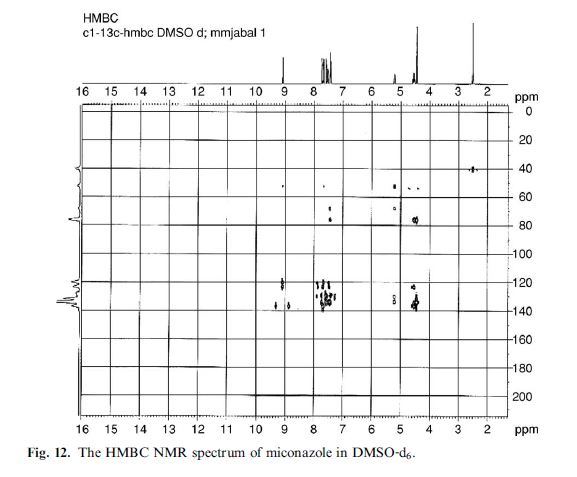
2D [1H,13C]-HMBC

2D [1H,13C]-HMBC, n/a spectrum for Miconazole

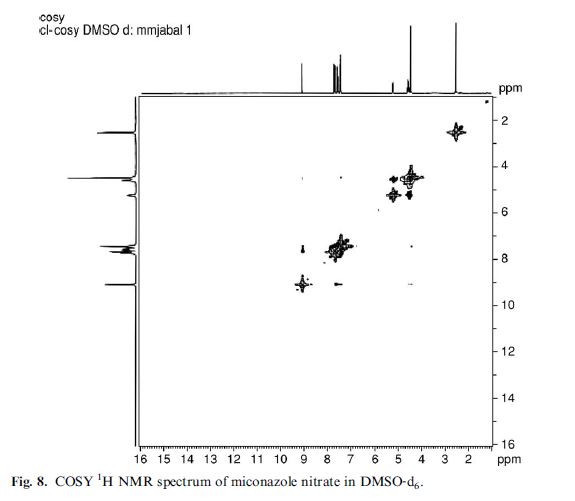
2D [1H,1H]-COSY

2D [1H,1H]-COSY, n/a spectrum for Miconazole

2D [1H,13C]-HMQC

2D [1H,13C]-HMQC, n/a spectrum for Miconazole
Miconazole is an imidazole antifungal agent, developed by Janssen Pharmaceutica, commonly applied topically to the skin or tomucous membranes to cure fungal infections. It works by inhibiting the synthesis of ergosterol, a critical component of fungal cell membranes. It can also be used against certain species of Leishmania protozoa which are a type of unicellular parasites that also contain ergosterol in their cell membranes. In addition to its antifungal and antiparasitic actions, it also has some antibacterialproperties. It is marketed in various formulations under various brand names.

Miconazole is also used in Ektachrome film developing in the final rinse of the Kodak E-6 process and similar Fuji CR-56 process, replacing formaldehydeFuji Hunt also includes miconazole as a final rinse additive in their formulation of the C-41RA rapid access color negative developing process.
It is on the World Health Organization’s List of Essential Medicines, the most important medications needed in a basic health system.[1]

ALTERNATIVE ROUTES beginning with the racemic raw material will likely be more costly or more time-consuming to develop, Cox says. Crystallization might be tricky because the stereogenic center does not have a group that can readily undergo acid-base chemistry. Catalytic asymmetric chemistry will necessitate converting the raw material to an appropriate substrate and identifying effective, as well as usable, chemical catalysts or biocatalysts.
What happens to the unwanted enantiomer also depends on the economics. Reracemizing and feeding the racemate back into the process is ideal but not always practical. In the miconazole case, the raw material costs $32 per kg. It is unlikely that reracemizing would be less costly in this example, Cox explains.
People should not forget that the goal of chiral technologies–enantiopure product–also may be achieved with chemistry that already exists, notes David R. Dodds, founder of Dodds & Associates LLC, Manlius, N.Y., a consulting service for biotechnology and chemical companies. Process chemists seek the most robust, most productive, and least expensive synthetic route and aim to find it as fast as possible. Any reaction that can help reach this goal is useful. It is the overall process cost that will dictate which reactions will be used. And that cost covers not only reagents but also waste streams, utilities, equipment use, unit operations, and downstream requirements. Thus, it may be more commercially attractive to replace an elegant but expensive single reaction with several more mundane ones that have a lower total cost, he says. Such a situation is likely to arise when an asymmetric step requires an expensive chiral catalyst or chiral auxiliary.

Brief background information


Salt ATC Formula MM CAS
A01AB09 
A07AC01 
D01AC02 
G01AF04 
J02AB01 
S02AA13
18 H 14 Cl 4 N 2 O 416.14 g / mol 22916-47-8
mononitrate A01AB09 
A07AC01 
D01AC02 
G01AF04 
J02AB01 
S02AA13
18 H 14 Cl 4 N 2 O ⋅ HNO 3 479.15 g / mol 22832-87-7

Using


  • antifungal agent for topical use
  • antimycotic agent

Classes substance


  • Imidazoles, 1- (hlorfenetil) imidazoles

synthesis Way


Synthesis of a)

trade names


A country Tradename Manufacturer
Germany Castellani Hollborn
Daktar McNeil
Derma-Mikotral Rosen Pharma
Fungur HEXAL
Gyno-Daktar Janssen-Cilag, 1974
Gyno-Mikotral Rosen Pharma
Infektozoor Mundgel Infectopharm
Mikobeta betapharm
Mikotar Dermapharm
Mikoderm Engelhard
Mikotin Ardeypharm
Vobamik Almirall Hermal
France Daktapin Janssen-Cilag
Gyno-Daktapin Janssen-Cilag
Loramik Bioalliance
United Kingdom Gyno-Daktapin Janssen-Cilag
Italy Daktapin Janssen-Cilag
Mikonal Ecobi
Mikotef LPB
Miderm Mendelejeff
Nizakol PS Pharma
Pivanazolo Medestea
Prilagin Sofar
Japan Florid Mochida
USA Fungoid Pedinol
Ukraine GІNEZOL 7 Sagmel, Іnk., USA
MІKONAZOL-Darnitsa CJSC “Farmatsevtichna FIRMA” Darnitsa “, m. Kyiv, Ukraine
MІKOGEL BAT “Kiїvmedpreparat”, m. Kyiv, Ukraine
various generic drugs

Formulations


  • ampoule 200 mg / 20 ml;
  • cream 1%, 2 g / 100 g 20 mg / g;
  • losyon 1%;
  • ointment 1%;
  • 2% oral gel;
  • Powder 2 g / 100 g 20 mg / g (in the form mononitrate);
  • solution of 20 mg / ml;
  • 100 mg suppositories;
  • Tablets of 250 mg (free base form);
  • vaginal cream 20 mg / g;
  • bottles of 400 mg / 40 ml

references


  1. Synthesis of a)
    • DAS 1,940,388 (Janssen; appl 8.8.1969;. USA-prior 19.8.1968, 23.7.1969.).
    • US 3,717,655 (Janssen; 20.2.1973; appl 19.8.1968.).
    • US 3,839,574 (Janssen; 1.10.1974; prior 23.7.1969.).

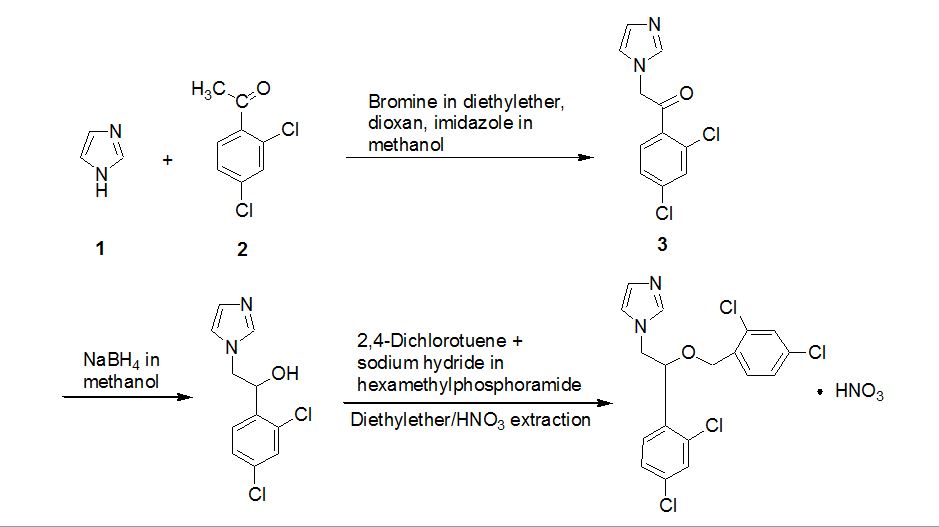
Miconazole nitrate was prepared by Godefori et
al
[5­
7]. Imidazole 1 was coupled with
brominated 2,4‑dichloroacetophenone 2 and the resulting ketonic product 3
was reduced with sodium borohydride to its corresponding alcohol 4. The
latter compound 4 was then coupled with 2,4-dichlorotoluene by sodium borohydride
in hexamethylphosphoramide (an aprotic solvent) which was then extracted with
nitric acid to give miconazole nitrate.


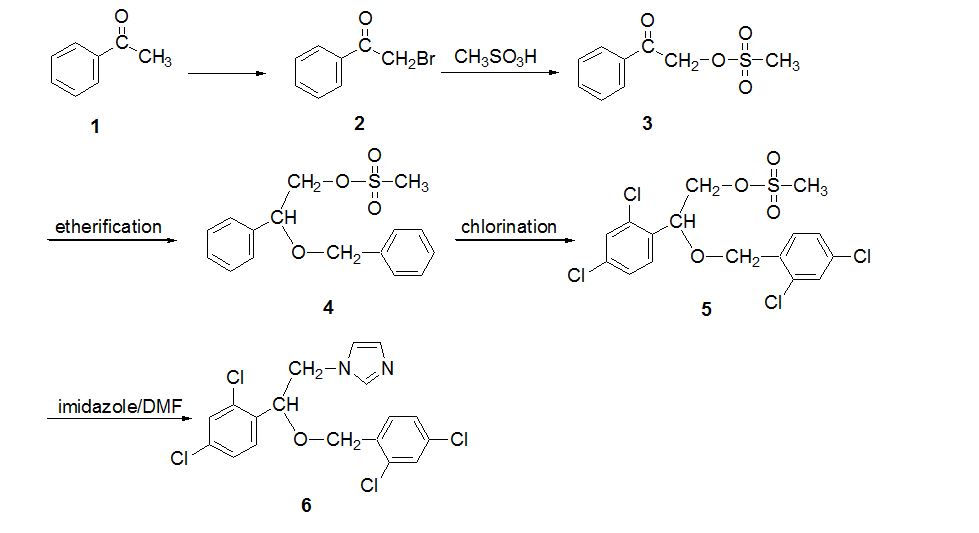
2-     Miconazole was also
prepared by Molina Caprile [8] as follows:
Phenyl methyl ketone 1 was brominated to give
1-phenyl-2-bromoethanone 2. Compound 2 was treated with
methylsulfonic acid to yield the corresponding methylsulfonate 3.
Etherification of 3 gave the a‑benzyloxy derivative 4 and compound 4 was
then chlorinated to give the 2,4‑dichlorinated derivative in both aromatic ring
systems 5. Compound 5 reacted with imidazole in dimethylformamide
to give miconazole 6 [7] which is converted to miconazole nitrate.


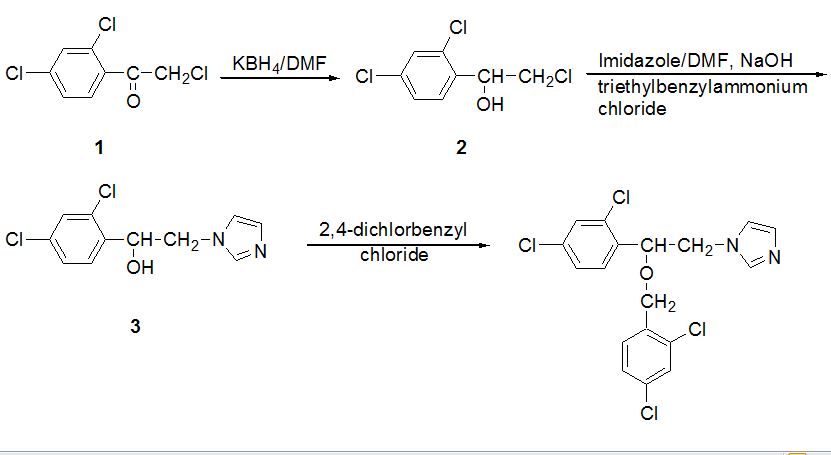
3-     Ye
et al reported that the reduction of 2,4-dichlorophenyl-2-chloroethanone
1 with potassium borohydride in dimethylformamide to give 90% a‑chloromethyl-2,4-dichlorobenzyl
alcohol 2. Alkylation of imidazole with compound 2 in dimethyl­formamide
in the presence of sodium hydroxide and triethylbenzyl ammonium chloride, gave
1-(2,4‑dichlorophenyl-2-imidazolyl)ethanol 3 and etherification of 3
with 2,4-dichlorobenzyl chloride under the same condition, 62% yield of
miconazole [9].
4-     Liao
and Li enantioselectively synthesized and studied the antifungal activity of
optically active miconazole and econazole. The key step was the
enantioselective reduction of 2‑chloro-1-(2,4-dichlorophenyl)ethanone catalyzed
by chiral oxazaborolidine [10].
5-     Yanez
et al reported the synthesiz of miconazole and analogs through a
carbenoid intermediate. The process involves the intermolecular insertion of
carbenoid species to imidazole from a‑diazoketones with copper acetylacetonate as the key
reaction of the synthetic route [11].
5-11 as 1-7
1.             E.F. Godefori and J. Heeres, Ger. Pat. 1,940,388
(1970).
2.
E.F. Godefori and J. Heeres, U.S. Pat. 3,717,655
(1973).
3.
E.F. Godefori, J. Heeres, J. van Cutsem and P.A.J.
Janssen, J. Med. Chem., 12, 784 (1969).
4.
F. Molina Caprile, Spanish Patent ES 510870 A1
(1983).
5.
B. Ye, K. Yu and Q. Huang, Zhongguo Yiyao Gongye
Zazhi
, 21, 56 (1990).
6.
Y.W. Liao and H.X. Li, Yaoxue Xuebao, 28,
22 (1993).
7.
E.C. Yanez, A.C. Sanchez, J.M.S. Becerra, J.M.
Muchowski and C.R. Almanza, Revista de la Sociedad Quimica de Mexico, 48,
49 (2004).

MiconazoleTitle: Miconazole

CAS Registry Number: 22916-47-8
CAS Name: 1-[2-(2,4-Dichlorophenyl)-2-[(2,4-dichlorophenyl)methoxy]ethyl]-1H-imidazole
Additional Names: 1-[2,4-dichloro-b-[(2,4-dichlorobenzyl)oxy]phenethyl]imidazole
Molecular Formula: C18H14Cl4N2O
Molecular Weight: 416.13
Percent Composition: C 51.95%, H 3.39%, Cl 34.08%, N 6.73%, O 3.84%
Literature References: Prepn: E. F. Godefroi et al., J. Med. Chem. 12, 784 (1969); E. F. Godefroi, J. Heeres, DE 1940388;eidem, US 3717655 (1970, 1973 to Janssen). Clinical evaluation: Brugmans et al., Arch. Dermatol. 102, 428 (1970); Godts et al.,Arzneim.-Forsch. 21, 256 (1971). Review: P. Janssen, W. Van Bever, in Pharmacological and Biochemical Properties of Drug Substances vol. 2, M. E. Goldberg, Ed. (Am. Pharm. Assoc., Washington, DC, 1979) pp 333-354; R. C. Heel et al., Drugs 19, 7-30 (1980).
Derivative Type: Nitrate
CAS Registry Number: 22832-87-7
Manufacturers’ Codes: R-14889
Trademarks: Aflorix (Gramon); Albistat (Ortho); Andergin (ISOM); Brentan (Janssen); Conoderm (C-Vet); Conofite (Mallinckrodt); Daktar (Janssen); Daktarin (Janssen); Deralbine (Andromaco); Dermonistat (Ortho); Epi-Monistat (Cilag); Florid (Mochida); Fungiderm (Janssen); Fungisdin (Isdin); Gyno-Daktarin (Janssen); Gyno-Monistat (Cilag-Chemie); Micatin (J & J); Miconal Ecobi (Ecobi); Micotef (LPB); Monistat (Cilag-Chemie); Prilagin (Gambar); Vodol (Andromaco)
Molecular Formula: C18H14Cl4N2O.HNO3
Molecular Weight: 479.14
Percent Composition: C 45.12%, H 3.16%, Cl 29.60%, N 8.77%, O 13.36%
Properties: Crystals, mp 170.5° (Godefroi, Heeres, 1970); 184-185° (Godefroi).
Melting point: mp 170.5° (Godefroi, Heeres, 1970); 184-185° (Godefroi)
Derivative Type: (+)-Form nitrate
Properties: mp 135.3°. [a]D20 +59° (methanol).
Melting point: mp 135.3°
Optical Rotation: [a]D20 +59° (methanol)
Derivative Type: (-)-Form nitrate
Properties: mp 135°. [a]D20 -58° (methanol).
Melting point: mp 135°
Optical Rotation: [a]D20 -58° (methanol)
Therap-Cat: Antifungal (topical).
Therap-Cat-Vet: Antifungal (topical).
Keywords: Antifungal (Synthetic); Imidazoles.

References

  1. Jump up^ “WHO Model List of EssentialMedicines” (PDF)World Health Organization. October 2013. Retrieved 22 April 2014.
  2. Jump up^ British National Formulary ’45’ March 2003
  3. Jump up^ “Strange Beauty: Monistat Effectively Increases Hair Growth?”. Black Girl With Long Hair. Retrieved 12 April 2012.
  4. Jump up^ Ju, Jiang; Tsuboi, Ryoji; Kojima, Yuko; Ogawa, Hideoki (2005). “Topical application of ketoconazole stimulates hair growth in C3H/HeN mice”Journal of dermatology32: 243–247.
  5. Jump up^ S., Venturoli; O. Marescalchi; F. M. Colombo; S. Macrelli; B. Ravaioli; A. Bagnoli; R. Paradisi; C. Flamigni (April 1999). “A Prospective Randomized Trial Comparing Low Dose Flutamide, Finasteride, Ketoconazole, and Cyproterone Acetate-Estrogen Regimens in the Treatment of Hirsutism”The Journal of Clinical Endocrinology and Metabolism84 (4): 1304–1310. doi:10.1210/jc.84.4.1304. Retrieved 12 April 2012.
  6. Jump up^ Duret C, Daujat-Chavanieu M, Pascussi JM, Pichard-Garcia L, Balaguer P, Fabre JM, Vilarem MJ, Maurel P, Gerbal-Chaloin S (2006). “Ketoconazole and miconazole are antagonists of the human glucocorticoid receptor: consequences on the expression and function of the constitutive androstane receptor and the pregnane X receptor”. Mol. Pharmacol70 (1): 329–39. doi:10.1124/mol.105.022046PMID 16608920.
  7. Jump up^ Najm, Fadi J.; Madhavan, Mayur; Zaremba, Anita; Shick, Elizabeth; Karl, Robert T.; Factor, Daniel C.; Miller, Tyler E.; Nevin, Zachary S.; Kantor, Christopher (2015-01-01).“Drug-based modulation of endogenous stem cells promotes functional remyelination in vivo”Nature522 (7555). doi:10.1038/nature14335.
  8. Jump up^ United States Patent 5461068

External links

Medical

Photographic


Miconazole
Miconazole2DCSD.svg
Miconazole ball-and-stick.png
Systematic (IUPAC) name
(RS)-1-(2-(2,4-Dichlorobenzyloxy)-2-(2,4-dichlorophenyl)ethyl)-1H-imidazole
Clinical data
Trade names Desenex, Monistat, Zeasorb-AF
AHFS/Drugs.com Monograph
MedlinePlus a601203
Pregnancy
category
  • AU: A
  • US: C (Risk not ruled out)
  • In Australia, it is category A when used topically. In the US, the pregnancy category is C for oral and topical treatment.
Routes of
administration
topicalvaginalsublabial,oral
Legal status
Legal status
  • AU: S2 (Pharmacy only)
  • UK: POM (Prescription only)
  • US: OTC
  • Schedule 2 in Australia for topical formulations, schedule 3 (Aus) for vaginal use and for oral candidiasis, otherwise schedule 4 in Australia
Pharmacokinetic data
Bioavailability n/a
Metabolism n/a
Biological half-life n/a
Excretion n/a
Identifiers
CAS Number 22916-47-8 Yes
ATC code A01AB09 (WHO)A07AC01 (WHO)D01AC02 (WHO)G01AF04 (WHO)J02AB01 (WHO)S02AA13 (WHO)
PubChem CID 4189
IUPHAR/BPS 2449
DrugBank DB01110 Yes
ChemSpider 4044 Yes
UNII 7NNO0D7S5M Yes
KEGG D00416 Yes
ChEBI CHEBI:6923 Yes
ChEMBL CHEMBL91 Yes
Chemical data
Formula C18H14Cl4N2O
Molar mass 416.127 g/mol
Chirality Racemic mixture

Day 2 of the 2016 Doodle Fruit Games! Find out more at g.co/fruit

DRUG APPROVALS BY DR ANTHONY MELVIN CRASTO …..FOR BLOG HOME CLICK HERE


Join me on Linkedin

View Anthony Melvin Crasto Ph.D's profile on LinkedIn

Join me on Facebook FACEBOOK

Join me on twitterFollow amcrasto on Twitter
Join me on google plus Googleplus

 amcrasto@gmail.com

Day 3 of the 2016 Doodle Fruit Games! Find out more at g.co/fruit
///////////

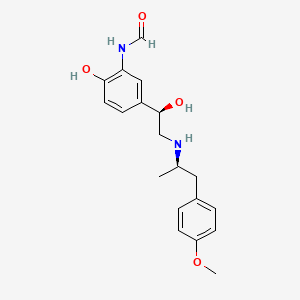
Arformoterol, (R,R)-Formoterol For Chronic obstructive pulmonary disease (COPD)


Arformoterol.svg

Arformoterol

  • MF C19H24N2O4
  • MW 344.405
(R,R)-Formoterol
Cas 67346-49-0
Chronic obstructive pulmonary disease (COPD)
  • Sunovion/Sepracor (Originator)
  • Asthma Therapy, Bronchodilators, Chronic Obstructive Pulmonary Diseases (COPD), Treatment of, RESPIRATORY DRUGS, beta2-Adrenoceptor Agonists
  • LAUNCHED 2007 , Phase III ASTHMA
Formamide, N-[2-hydroxy-5-[(1R)-1-hydroxy-2-[[(1R)-2-(4-methoxyphenyl)-1-methylethyl]amino]ethyl]phenyl]-

Arformoterol is a long-acting β2 adrenoreceptor agonist (LABA) indicated for the treatment of chronic obstructive pulmonary disease(COPD). It is sold by Sunovion, under the trade name Brovana, as a solution of arformoterol tartrate to be administered twice daily (morning and evening) by nebulization.[1]

Arformoterol inhalation solution, a long-acting beta2-adrenoceptor agonist, was launched in the U.S. in 2007 for the long-term twice-daily (morning and evening) treatment of bronchospasm in patients with chronic obstructive pulmonary disease (COPD), including chronic bronchitis and emphysema. The product, known as Brovana(TM), for use by nebulization only, is the first long-acting beta2-agonist to be approved as an inhalation solution for use with a nebulizer. The product was developed and is being commercialized by Sunovion Pharmaceuticals (formerly Sepracor)

Arformoterol.png

It is the active (R,R)-(−)-enantiomer of formoterol and was approved by the United States Food and Drug Administration (FDA) on October 6, 2006 for the treatment of COPD.

Arformoterol is a bronchodilator. It works by relaxing muscles in the airways to improve breathing. Arformoterol inhalation is used to prevent bronchoconstriction in people with chronic obstructive pulmonary disease, including chronic bronchitis and emphysema. The use of arformoterol is pending revision due to safety concerns in regards to an increased risk of severe exacerbation of asthma symptoms, leading to hospitalization as well as death in some patients using long acting beta agonists for the treatment of asthma.

Arformoterol is an ADRENERGIC BETA-2 RECEPTOR AGONIST with a prolonged duration of action. It is used to manage ASTHMA and in the treatment of CHRONIC OBSTRUCTIVE PULMONARY DISEASE.

 
Arformoterol is a beta2-Adrenergic Agonist. The mechanism of action of arformoterol is as an Adrenergic beta2-Agonist.
Arformoterol is a long-acting beta-2 adrenergic agonist and isomer of formoterol with bronchodilator activity. Arformoterol selectively binds to and activates beta-2 adrenergic receptors in bronchiolar smooth muscle, thereby causing stimulation of adenyl cyclase, the enzyme that catalyzes the conversion of adenosine triphosphate (ATP) to cyclic-3′,5′-adenosine monophosphate (cAMP). Increased intracellular cAMP levels cause relaxation of bronchial smooth muscle and lead to a reduced release of inflammatory mediators from mast cells. This may eventually lead to an improvement of airway function.

Arformoterol tartrate

  • Molecular FormulaC23H30N2O10
  • Average mass494.492
  •  cas 200815-49-2
  • 183-185°C
Butanedioic acid, 2,3-dihydroxy-, (2R,3R)-, compd. with formamide, N-[2-hydroxy-5-[(1R)-1-hydroxy-2-[[(1R)-2-(4-methoxyphenyl)-1-methylethyl]amino]ethyl]phenyl]- (1:1) [ACD/Index Name]
N-{2-hydroxy-5-[(1R)-1-hydroxy-2-{[(1R)-2-(4-methoxyphenyl)-1-methylethyl]amino}ethyl]phenyl}formamide 2,3-dihydroxybutanedioate (salt)
N-[2-Hydroxy-5-[(1R)-1-hydroxy-2-[[(1R)-2-(4-methoxyphenyl)-1-methylethyl]amino]ethyl]phenyl]formamide (+)-(2R,3R)-Tartaric Acid; (-)-Formoterol 1,2-Dihydroxyethane-1,2-dicarboxylic Acid; (R,R)-Formoterol Threaric Acid; Arformoterol d-Tartaric Acid; Arformoterol d-α,β-Dihydroxysuccinic Acid
(R,R)-Formoterol-L-(+)-tartrate
200815-49-2 CAS
Arformoterol tartrate (USAN)
Brovana
UNII:5P8VJ2I235
Arformoterol Tartrate, can be used in the synthesis of Omeprazole (O635000), which is a proton pump inhibitor, that inhibits gasteric secretion, also used in the treatment of dyspepsia, peptic ulcer disease, etc. Itis also the impurity of Esomeprazole Magnesium (E668300), which is the S-form of Omeprazole, and is a gastric proton-pump inhibitor. Also, It can be used for the preparation of olodaterol, a novel inhaled β2-adrenoceptor agonist with a 24h bronchodilatory efficacy.
 

SYNTHESIS

PATENT

us-9309186

Example 1

Synthesis of (R,R)-Formoterol-L-tartrate Form D

A solution containing 3.9 g (26 mmol) of L-tartaric acid and 36 mL of methanol was added to a solution of 9 g (26 mmol) of arformoterol base and 144 mL methanol at 23.degree. C. Afterwards, the resulting mixture was seeded with form D and stirred at 23.degree. C. for 1 hour. It was then further cooled to 0-5.degree. C. for 1 hour and the product collected by filtration and dried under inlet air (atmospheric pressure) for 16 hours to provide 11.1 g (86% yield) (99.7% chemical purity, containing 0.14% of the degradation impurity (R)-1-(3-amino-4-hydroxyphenyl)-2-[[(1R)-2-(4-methoxyphenyl)-1-methylethy- l]amino]ethanol) of (R,R)-formoterol L-tartrate form D, as an off white powder. .sup.1H-NMR (200 MHz, d.sub.6-DMSO) .delta.: 1.03 (d, 3H); 2.50-2.67 (m, 5H); 3.72 (s, 3H); 3.99 (s, 2H); 4.65-4.85 (m, 1H); 6.82-7.15 (m, 5H); 8.02 (s, 1H); 8.28 (s, 1H); 9.60 (s, NH). No residual solvent was detected (.sup.1H-NMR).

PSD: d.sub.50=2.3 .mu.m.

 PAPER
Tetrahedron Letters, Vol. 38, No. 7, pp. 1125-1128, 1997
Enantio- and Diastereoselective Synthesis of all Four Stereoisomers of Formoterol
 STR1
STR1
PAPER

Taking Advantage of Polymorphism To Effect an Impurity Removal:  Development of a Thermodynamic Crystal Form of (R,R)-FormoterolTartrate

Chemical Research and Development, Sepracor Inc., 111 Locke Drive, Marlborough, Massachusetts 01752, U.S.A.
Org. Proc. Res. Dev., 2002, 6 (6), pp 855–862
DOI: 10.1021/op025531h

Abstract

Abstract Image

The development and large-scale implementation of a novel technology utilizing polymorphic interconversion and crystalline intermediate formation of (R,R)-formoterol l-tartrate ((R,R)-FmTA, 1) as a tool for the removal of impurities from the final product and generation of the most thermodynamically stable crystal form is reported. The crude product was generated by precipitation of the free base as the l-tartrate salt in a unique polymorphic form, form B. Warming the resultant slurry effected the formation of a partially hydrated stable crystalline intermediate, form C, with a concomitant decrease in the impurity levels in the solid. Isolation and recrystallization of form C provided 1 in the thermodynamically most stable polymorph, form A.

SYN1
SYN 2
SYN 3
 SYN 4
SYN 5

PATENT

Formoterol, (+/-)N-[2-hydroxy-5-[1-hydroxy-2-[[2-(p-methoxyphenyl)-2-propylamino]ethyl]phenyl]-formamide, is a highly potent and β2-selective adrenoceptor agonist having a long lasting bronchodilating effect when inhaled. Its chemical structure is depicted below:
Figure imgb0001
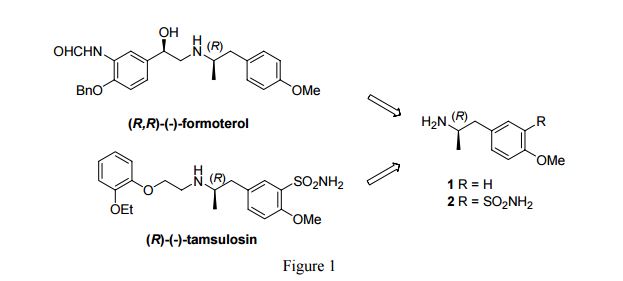
Formoterol has two chiral centres, each of which can exist into two different configurations. This results into four different combinations, (R,R), (S,S), (S,R) and (R,S). Formoterol is commercially available as a racemic mixture of 2 diasteromers (R,R) and (S,S) in a 1:1 ratio. The generic name Formoterol always refers to its racemic mixture. Trofast et al. (Chirality, 1, 443, 1991) reported on the potency of these isomers, showing a decrease in the order of (R,R)>(R,S)≥(S,R)>(S,S). The (R,R) isomer, also known as Arformoterol, being 1000 fold more potent than the (S,S) isomer. Arformoterol is commercialised by Sepracor as Brovana
Formoterol was first disclosed in Japanese patent application (Application N° 13121 ) whereby Formoterol is synthesised by N-alkylation using a phenacyl bromide as described in the scheme below:
Figure imgb0002
Afterwards, a small number of methods have been reported so far, regarding the synthesis of the (R,R) isomer, also referred as (R,R)-Formoterol and Arformoterol.
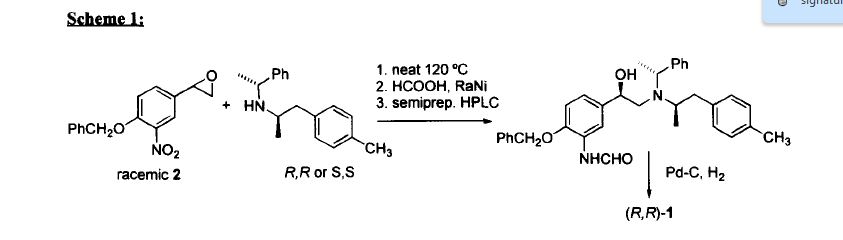
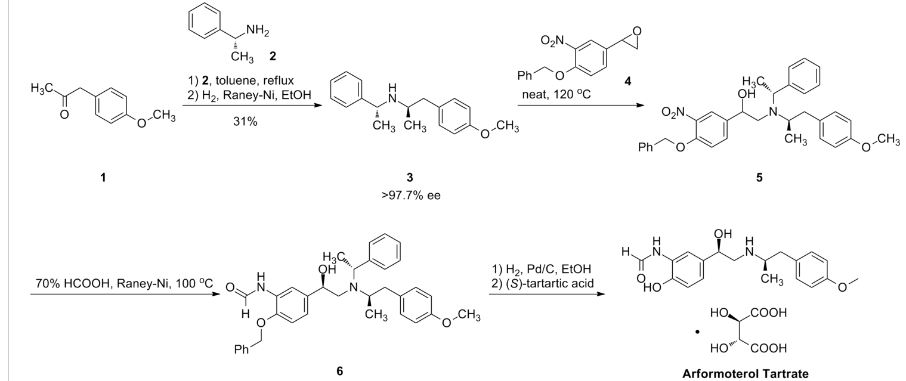
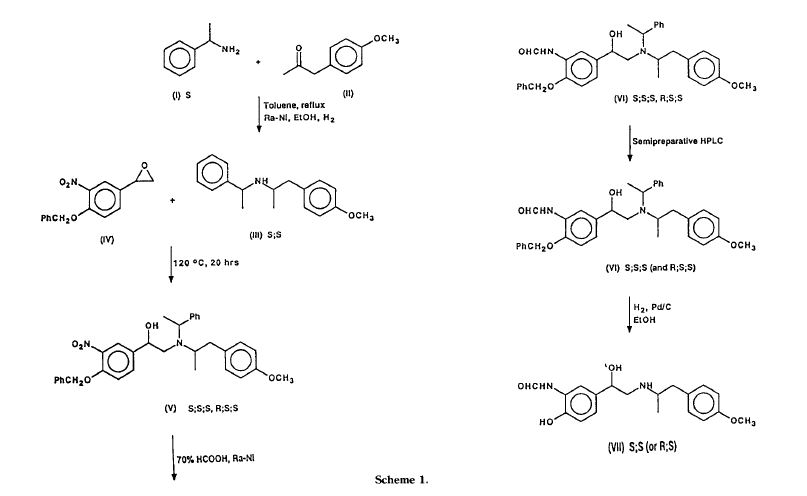
Murase et al. [Chem. Pharm. Bull. 26(4) 1123-1129(1978)] reported the preparation of (R,R)-Formoterol from a racemic mixture of the (R,R) and (S,S) isomers by optical resolution using optically active tartaric acid. Trofast et al. described a method in which 4-benzyloxy-3-nitrostyrene oxide was coupled with a optically pure (R,R)- or (S,S)-N-phenylethyl-N-(1-p-methoxyphenyl)-2-(propyl)amine to give a diastereomeric mixture of Formoterol precursors. These precursors were further separated by HPLC in order to obtain pure Formoterol isomers. Both synthetic processes undergo long synthetic procedures and low yields.
Patent publication EP0938467 describes a method in which Arformoterol is prepared via the reaction of the optically pure (R) N-benzyl-2-(4-methoxyphenyl)-1-(methylethylamine) with an optically pure (R)-4-benzyloxy-3-nitrostyrene oxide or (R)-4-benzyloxy-3-formamidostyrene oxide followed by formylation of the amino group. This method requires relatively severe reaction conditions, 24 h at a temperature of from 110 up to 130 °C as well as a further purification step using tartaric acid in order to eliminate diastereomer impurities formed during the process.
WO2009/147383 discloses a process for the preparation of intermediates of Formoterol and Arformoterol which comprises a reduction of a ketone intermediate of formula:
Figure imgb0003
Using chiral reductive agent with an enantiomeric excess of about 98% which requires further purification steps to obtain a product of desired optical purity.
 R,R)-Formoterol (Arformoterol) or a salt thereof from optically pure and stable intermediate (R)-2-(4-Benzyloxy-3-nitro-phenyl)-oxirane (compound II), suitable for industrial use, in combination with optically pure amine in higher yields, as depicted in the scheme below:
Figure imgb0011

Compound (R, R)-1-(4-Benzyloxy-3-nitro-phenyl)-2-[[2-(4-methoxy-phenyl)-1-methylethyl]-(1-phenyl-ethyl)-amino]-ethanol (compound VI), having the configuration represented by the following formula:

Figure imgb0018

Examples(R)-2-(4-Benzyloxy-3-nitro-phenyl)-oxirane (II)

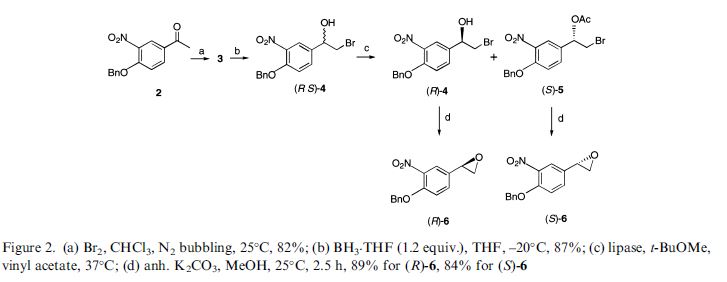
A solution of 90 g (0.25 mol) of (R)-1-(4-Benzyloxy-3-nitro-phenyl)-2-bromo-ethanol (compound I) in 320 mL of toluene and 50 mL of MeOH was added to a stirred suspension of 46 g (0.33 mol) of K2CO3 in 130 mL of toluene and 130 mL of MeOH. The mixture was stirred at 40°C for 20 h and washed with water (400 mL). The organic phase was concentrated under reduced pressure to a volume of 100 mL and stirred at 25 °C for 30 min. It was then further cooled to 0-5°C for 30 min. and the product collected by filtration and dried at 40 °C to provide 67.1 g (97% yield) (98% chemical purity, 100% e.e.) of compound II as an off-white solid. 1 H-NMR (200 MHz, CDCl3) δ: 2.80-2.90 (m, 2H); 3.11-3.20 (m, 2H), 3.80-3.90 (m, 1H); 5.23 (s, 2H); 7.11 (d, 2H); 7.41 (m, 5H), 7.76 (d, 2H).

Preparation of (R,R)-[2-(4-Methoxy-phenyl)-1-methyl-ethyl]-(1-phenyl-ethyl)-amine (III)

A solution of 13 g (78.6 mmol) of 1-(4-Methoxy-phenyl)-propan-2-one and 8.3 g (78.6 mmol) of (R)-1-Phenylethylamine in 60 mL MeOH was hydrogenated in the presence of 1.7 g of Pt/C 5% at 10 atm. and 30 °C for 20 h. The mixture was filtered though a pad of diatomaceous earth and concentrated under reduced pressure to give compound III as an oil. The obtained oil was dissolved in 175 mL of acetone, followed by addition of 6.7 mL (80.9 mmol) of a 12M HCl solution. The mixture was stirred at 23 °C for 30 min and at 0-5 °C for 30 min. The product collected by filtration and dried at 40 °C to provide 13.8 g of the hydrochloride derivate as a white solid. The obtained solid was stirred in 100 mL of acetone at 23 °C for 1h and at 0-5 °C for 30 min, collected by filtration and dried at 40 °C to provide 13.2 g of the hydrochloride derivate as a white solid. This compound was dissolved in 100 mL of water and 100 mL of toluene followed by addition of 54 mL (54 mmol) of 1N NaOH solution. The organic phase was concentrated to give 11.7 g (55% yield) (99% chemical purity and 100% e.e) of compound III as an oil.1H-NMR (200 MHz, CDCl3) δ: 0.88 (d, 3H); 1.31 (d, 3H), 2.40-2.50 (m, 1H); 2.60-2.80 (m, 2H); 3.74 (s, 3H); 3.90-4.10 (m, 1H); 6.77- 6.98 (m, 4H), 7.31 (s, 5H).

Synthesis of (R,R)-1-(4-Benzyloxy-3-nitro-phenyl)-2-[[2-(4-methoxy-phenyl)-1-methyl-ethyl]-(1-phenyl-ethyl)-amino]-ethanol (IV)

A 1-liter flask was charged with 50g (0.18 mol) of II and 50g (0.18 mol) of III and stirred under nitrogen atmosphere at 140 °C for 20 h. To the hot mixture was added 200 mL of toluene to obtain a solution, which was washed with 200 mL of 1N HCl and 200 mL of water. The organic phase was concentrated under reduced pressure to give 99 g (99% yield) (88% chemical purity) of compound IV as an oil. Enantiomeric purity 100%. 1H-NMR (200 MHz, CDCl3) δ: 0.98 (d, 3H); 1.41 (d, 3H), 2.60-2.90 (m, 4H); 3.20-3.30 (m, 1H); 3.74 (s, 3H); 4.10-4.20 (m, 1H); 4.30-4.40 (m, 1H), 5.19 (s, 2H); 6.69-7.42 (m, 16H); 7.77 (s, 1H).

Synthesis of (R, R)-1-(3-Amino-4-benzyloxy-phenyl)-2-[[2-(4-methoxy-phenyl)-1-methyl-ethyl]-(1-phenyl-ethyl)-amino]-ethanol (V)

A solution of 99 g (0.18 mol) of IV in 270 mL IPA and 270 mL toluene was hydrogenated in the presence of 10 g of Ni-Raney at 18 atm and 40 °C for 20 h. The mixture was filtered though a pad of diatomaceous earth and the filtrate was concentrated under reduced pressure to give 87 g (92% yield) (83% chemical purity, 100 % e.e.) of compound V as an oil. 1H-NMR (200 MHz, CDCl3) δ: 0.97 (d, 3H); 1.44 (d, 3H), 2.60-2.90 (m, 4H); 3.20-3.30 (m, 1H); 3.74 (s, 3H); 4.10-4.20 (m, 1H); 4.30-4.40 (m, 1H), 5.07 (s, 2H); 6.67-6.84 (m, 7H); 7.25-7.42 (m, 10H).

Synthesis of (R,R)-N-(2-Benzyloxy-5-{1-hydroxy-2-[[2-(4-methoxy-phenyl)-1-methyl-ethyl]-(1-phenyl-ethyl)-amino]-ethyl)-phenyl)-formamide (VI)

24 mL (0.63 mol) of formic acid was added to 27 mL (0.28 mol) of acetic anhydride and stirred at 50 °C for 2 h under nitrogen atmosphere. The resulting mixture was diluted with 100 mL of CH2Cl2 and cooled to 0 °C. A solution of 78 g (0.15 mol) of V in 300 mL de CH2Cl2 was slowly added and stirred for 1h at 0 °C. Then, 150 mL of 10% K2CO3 aqueous solution were added and stirred at 0 °C for 15 min. The organic phase was washed twice with 400 mL of 10% K2CO3 aqueous solution and concentrated under reduced pressure to give 80 g (97% yield, 100% e.e.) (75% chemical purity) of compound VI as an oil. 1H-NMR (200 MHz, CDCl3) δ: 0.98 (d, 3H); 1.42 (d, 3H), 2.60-2.90 (m, 4H); 3.20-3.30 (m, 1H); 3.75 (s, 3H); 4.10-4.20 (m, 1H); 4.30-4.40 (m, 1H), 5.09 (s, 2H); 6.67-7.41 (m, 17H); 8.4 (d, 1H).

Synthesis (R,R)-N-(2-Hydroxy-5-{1-hydroxy-2-[2-(4-methoxy-phenyl)-1-methyl-ethylamino]-ethyl}-phenyl)-formamide (VII)

A solution of 8.5 g (16 mmol) of VI, previous purified by column chromatography on silica gel (AcOEt/heptane, 2:3), in 60 mL ethanol was hydrogenated in the presence of 0.14 g of Pd/C 5% at 10 atm. and 40 °C for 20 h. The mixture was filtered though a pad of diatomaceous earth and concentrated under reduced pressure to give 5 g (93% yield) (91% chemical purity, 100% e.e.) of compound VII as foam. m. p.= 58-60 °C. 1H-NMR (200 MHz, d6-DMSO) δ: 0.98 (d, 3H); 2.42-2.65 (m, 5H); 3.20-3.40 (m, 1H); 3.71 (s, 3H); 4.43-4.45 (m, 1H); 6.77-7.05 (m, 5H); 8.02 (s, 1H), 8.26 (s, 1H).

Synthesis (R,R)-N-(2-Hydroxy-5-{1-hydroxy-2-[2-(4-methoxy-phenyl)-1-methyl-ethylamino]-ethyl}-phenyl)-formamide (VII)

A solution of 46 g (0.08 mol) of VI, crude product, was dissolved in 460 mL ethanol and hydrogenated in the presence of 0.74 g of Pd/C 5% at 10 atm. and 40 ° C for 28 h. The mixture was filtered though a pad of diatomaceous earth and the filtrate was concentrated under reduced pressure to give 24 g (83% yield) (77% chemical purity, 100% e.e.) of compound VII as a foam. m. p. = 58-60 °C. 1H-NMR (200 MHz, d6-DMSO) δ: 0.98 (d, 3H); 2.42-2.65 (m, 5H); 3.20-3.40 (m, 1H); 3.71 (s, 3H); 4.43-4.45 (m, 1H); 6.77-7.05 (m, 5H); 8.02 (s, 1H), 8.26 (s, 1H).

The HPLC conditions used for the determination of the Chemical purity % are described in the table below:

  • HPLC Column Kromasil 100 C-18
    Dimensions 0.15 m x 4.6 mm x 5 µm
    Buffer 2.8 ml TEA (triethylamine) pH=3.00 H3PO4 (85%) in 1 L of H2O
    Phase B Acetonitrile
    Flow rate 1.5 ml miN-1
    Temperature 40 °C
    Wavelength 230 nm

    The HPLC conditions used for the determination of the enantiomeric purity % are described in the table below:

    HPLC Column Chiralpak AD-H
    Dimensions 0.25 m x 4.6 mm
    Buffer n-hexane : IPA : DEA (diethyl amine) : H2O 85:15:0.1:0.1
    Flow rate 0.8 ml min-1
    Temperature 25 °C
    Wavelength 228 nm

PATENT

Example 1

(R) -2- (4- benzyloxy-3-nitrophenyl) oxirane (I) (9. 86g, 36mmol) and (R) -I- (4- methoxy- phenyl) -N – [(R) -I- phenyl-ethyl] -2-amino-propane (II) (10. 8g, 40mmol) cast in the reaction flask, the reaction 20 hours at 140 ° C, the chiral Intermediate (III) (17. 3g, yield 88%). HPLC: de values of> 90%; MS (ESI) m / z: 541 3 (M ++ 1); 1H-NMR (CDCl3):.. Δ 0. 96 (d, 3H), 1 49 (d, 3H ), 2 · 15 (q, 1Η), 2 · 67 (dq, 2H), 2. 99 (dq, 2H), 3. 74 (s, 3H), 4. 09 (d, 1H), 4. 56 (q, 1H), 5. 24 (s, 2H), 6. 77 (dd, 4H), 7. 10 (d, 1H), 7. 25-7. 5 (m, 11H), 7. 84 ( s, 1H).

 Example 2

 (R) -2- (4- benzyloxy-3-nitrophenyl) oxirane (I) (9. 86g, 36mmol) and (R) -I- (4- methoxybenzene yl) -N – [(R) -I- phenyl-ethyl] -2-amino-propane (II) (10. 8g, 40mmol) and toluene 100ml, 110 ° C0-flow reactor 36 hours, the solvent was distilled off succeeded intermediates (III) (16. 8g, yield 85%).

Example 3

(R) -2- (4- benzyloxy-3-nitrophenyl) oxirane (I) (9. 86g, 36mmol) and (R) -I- (4- methoxybenzene After [(R) -I- phenyl-ethyl] -2-amino-propane (II) (10. 8g, 40mmol) and dichloromethane 100ml, 30 ° C for 48 hours, and the solvent was distilled off – yl) -N succeeded intermediates (III) (15. Sg, yield 80%).

Example 4

 (R) -2- (4- benzyloxy-3-nitrophenyl) oxirane (I) (9. 86g, 36mmol) and (R) -I- (4- methoxybenzene yl) -N – [(R) -I- phenyl-ethyl] -2-amino-propane (II) (8. 75g, 32mmol) cast in the reaction flask, the reaction 20 hours at 140 ° C, the chiral intermediate form (III) (16. 3g, 83% yield).

Example 5

 (R) -2- (4- benzyloxy-3-nitrophenyl) oxirane (I) (9. 86g, 36mmol) and (R) -I- (4- methoxybenzene yl) -N – [(R) -I- phenyl-ethyl] -2-amino-propane (II) (14. 6g, 54mmol) cast in the reaction flask, the reaction 20 hours at 140 ° C, the chiral intermediate form (III) (17. 5g, 89% yield).

STR1

Scheme

chirality 1991, 3, 443-50
Fumaric acid (0.138 mmol, 16 mg) was added to the residue dissolved in methanol. Evaporation of the solvent gave the
product (SS) W semifumarate (109 mg) characterized by ‘HNMR (4-D MSO) 6 (ppm) 1.00 (d, 3H, CHCH,), 4.624.70 (m, lH,
CHOH), 3.73 (s, 3H, OCH,), 6.M.9 (m, 3H, aromatic), 7.00 (dd,4H, aromatic), 6.49 (s, 1@ CH = CH fumarate). MS of disilylated
(SS) W: 473 (M +<H3,7%); 367 (M ‘<8H90, 45%); 310 61%). The (RSS) fraction was treated in the same manner
giving the product (R;S) W semifumarate, which was characterized by ‘H-NMR (4-DMSO) 6 (ppm) 1.01 (d, 3H, CHCH,),
3.76 (s, 3H, OC&), 6.49 (s, lH, CH=CH, fumarate) 6.M.9 (m, 3H, aromatic), 7.0 (dd, 4H, aromatic). MS of disilylated (R;S)
(M’X~~HIGNO1,7 %); 178 ( C I ~H~ ~N95O%,) ; 121 (CsH90, W. 473 (M’4H3, 5%); 367 (M’4gH90, 48%); 310
(M +–CI~HIGNO18, %); 178 (CIIHIGNO, 95%); 121 (CsH90, 52%). The structural data for the (RR) and (S;R) enantiomers
were in accordance with the proposed structures. The enantiomeric purity obtained for the enantiomers in each batch is
shown in Table 1.
STR1
Scheme
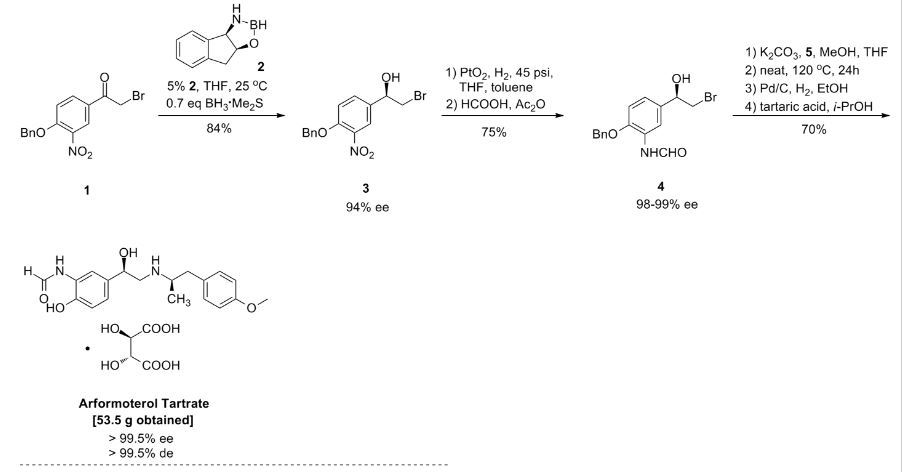
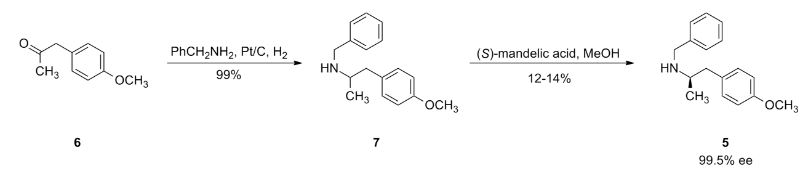
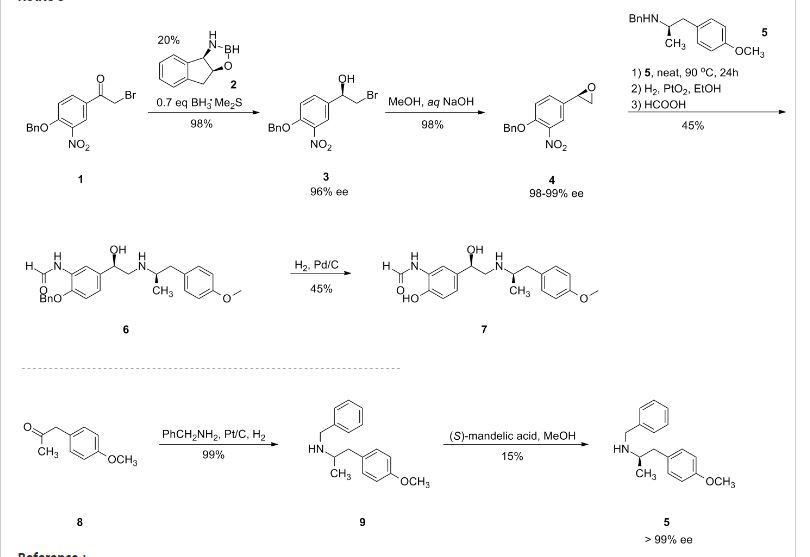
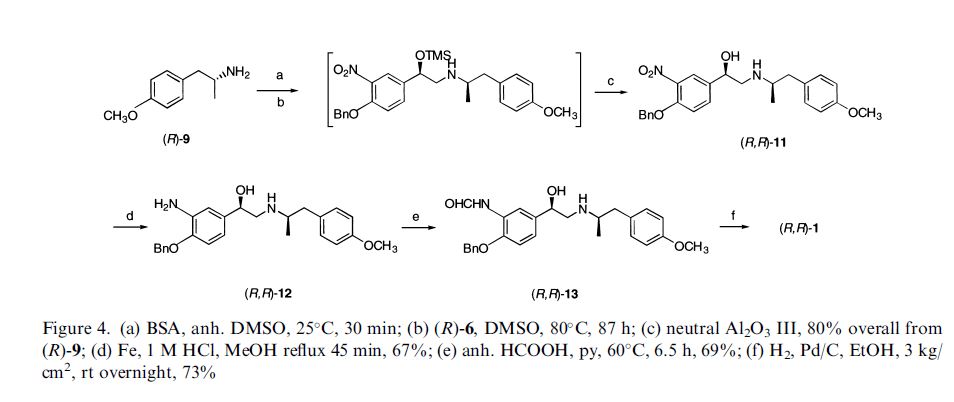
The enantioselective reduction of phenacyl bromide (I) with BH3.S(CH3)2 in THF catalyzed by the chiral borolidine (II) (obtained by reaction of (1R,2S)-1-amino-2-indanol (III) with BH3.S(CH3)2 in THF) gives the (R)-2-bromo-1-(4-benzyloxy-3-nitrophenyl)ethanol (IV), which is reduced with H2 over PtO2 in THF/toluene yielding the corresponding amino derivative (V). The reaction of (V) with formic acid and Ac2O affords the formamide (VI), which is condensed with the chiral (R)-N-benzyl-N-[2-(4-methoxyphenyl)-1-methylethyl]amine (VII) in THF/methanol providing the protected target compound (VIII). Finally, this compound is debenzylated by hydrogenation with H2 over Pd/C in ethanol. The intermediate the chiral (R)-N-benzyl-N-[2-(4-methoxyphenyl)-1-methylethyl]amine (VII) has been obtained by reductocondensation of 1-(4-methoxyphenyl)-2-propanone (IX) and benzylamine by hydrogenation with H2 over Pd/C in methanol yielding racemic N-benzyl-N-[2-(4-methoxyphenyl)-1-methylethyl]amine (X), which is submitted to optical resolution with (S)-mandelic acid to obtain the desired (R)-enantiomer (VII).
Org Process Res Dev1998,2,(2):96

Large-Scale Synthesis of Enantio- and Diastereomerically Pure (R,R)-Formoterol

Process Research and Development, Sepracor Inc., 111 Locke Drive, Marlborough, Massachusetts 01752
Org. Proc. Res. Dev., 1998, 2 (2), pp 96–99
DOI: 10.1021/op970116o

Abstract

(R,R)-Formoterol (1) is a long-acting, very potent β2-agonist, which is used as a bronchodilator in the therapy of asthma and chronic bronchitis. Highly convergent synthesis of enantio- and diastereomerically pure (R,R)-formoterol fumarate is achieved by a chromatography-free process with an overall yield of 44%. Asymmetric catalytic reduction of bromoketone 4 using as catalyst oxazaborolidine derived from (1R, 2S)-1-amino-2-indanol and resolution of chiral amine 3 are the origins of chirality in this process. Further enrichment of enantio- and diastereomeric purity is accomplished by crystallizations of the isolated intermediates throughout the process to give (R,R)-formoterol (1) as the pure stereoisomer (ee, de >99.5%).

STR1
STR1

Scheme

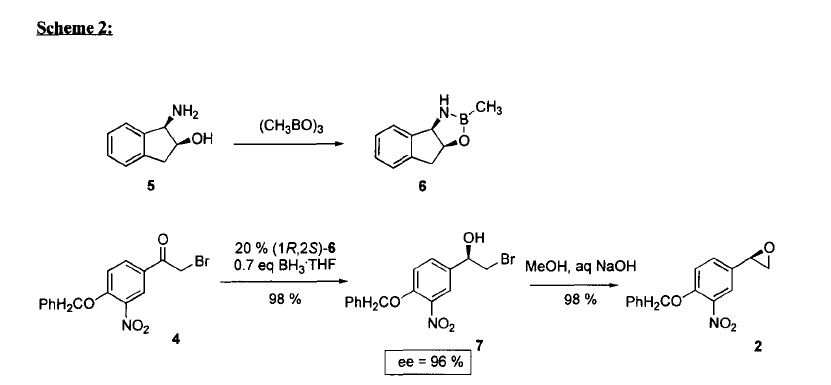
The intermediate N-benzyl-N-[1(R)-methyl-2-(4-methoxyphenyl)ethyl]amine (IV) has been obtained as follows: The reductocondensation of 1-(4-methoxyphenyl)-2-propanone (I) with benzylamine (II) by H2 over Pd/C gives the N-benzyl-N-[1-methyl-2-(4-methoxyphenyl)ethyl]amine (III) as a racemic mixture, which is submitted to optical resolution with L-mandelic acid in methanol to obtain the desired (R)-enantiomer (IV). The reaction of cis-(1R,2S)-1-aminoindan-2-ol (V) with trimethylboroxine in toluene gives the (1R,2S)-oxazaborolidine (VI), which is used as chiral catalyst in the enantioselective reduction of 4-benzyloxy-3-nitrophenacyl bromide (VII) by means of BH3/THF, yielding the chiral bromoethanol derivative (VIII). The reaction of (VIII) with NaOH in aqueous methanol affords the epoxide (IX), which is condensed with the intermediate amine (IV) by heating the mixture at 90 C to provide the adduct (X). The reduction of the nitro group of (X) with H2 over PtO2 gives the corresponding amino derivative (XI), which is acylated with formic acid to afford the formamide compound (XII). Finally, this compound is debenzylated by hydrogenation with H2 over Pd/C in ethanol, providing the target compound.
The synthesis of the chiral borolidine catalyst (II) starting from indoline (I), as well as the enantioselective reduction of 4′-(benzyloxy)-3′-nitrophenacyl bromide (III), catalyzed by borolidine (II), and using various borane complexes (borane/dimethylsulfide, borane/THF and borane/diethylaniline), has been studied in order to solve the problems presented in large-scale synthesis. The conclusions of the study are that the complex borane/diethylaniline (DEANB) is the most suitable reagent for large-scale reduction of phenacyl bromide (III) since the chemical hazards and inconsistent reagent quality of the borane/THF and borane/dimethylsulfide complexes disqualified their use in large-scale processes. The best reaction conditions of the reduction with this complex are presented.
PATENT

Formoterol is a long-acting β2-adrenoceptor agonist and has a long duration of action of up to 12 hours. Chemically it is termed as Λ/-[2-hydroxy-5-[1-hydroxy-2-[[2-(4- methoxyphenyl)propan-2-yl]amino]ethyl]phenyl]-formamide. The structure of formoterol is as shown below.

Figure imgf000003_0001

The asterisks indicate that formoterol has two chiral centers in the molecule, each of which can exist in two possible configurations. This gives rise to four diastereomers which have the following configurations: (R,R), (S1S), (S1R) and (R1S).

(R1R) and (S1S) are mirror images of each other and are therefore enantiomers. Similarly (S1R) and (R1S) form other enatiomeric pair.

The commercially-available formoterol is a 50:50 mixture of the (R1R)- and (S1S)- enantiomers. (R,R)-formoterol is an extremely potent full agonist at the β2-adrenoceptor and is responsible for bronchodilation and has anti-inflammatory properties. On the other hand (S,S)-enantiomer, has no bronchodilatory activity and is proinflammatory.

Murase et al. [Chem.Pharm.Bull., .26(4)1123-1129(1978)] synthesized all four isomers of formoterol and examined for β-stimulant activity. In the process, racemic formoterol was subjected to optical resolution with tartaric acid.

In another attempt by Trofast et al. [Chirality, 3:443-450(1991 )], racemic 4-benzyloxy-3- nitrostryrene oxide was coupled with optically pure N-[(R)-1-phenylethyl]-2-(4- methoxyphenyl)-(R)1-methylethylamine to give diastereomeric mixtures of intermediates, which were separated by column chromatography and converted to the optically pure formoterol.

In yet another attempt, racemic formoterol was subjected to separation by using a chiral compound [International publication WO 1995/018094].

WO 98/21175 discloses a process for preparing optically pure formoterol using optically pure intermediates (R)-N-benzyl-2-(4-methoxyphenyl)-1-methylethyl amine and (R)-4- benzyloxy-3-formamidostyrene oxide.

Preparation of optically pure formoterol is also disclosed in IE 000138 and GB2380996.

Example 7

Preparation of Arformoterol

4-benzyloxy-3-formylamino-α-[N-benzyl-N-(1-methyl-2-p- methoxyphenylethyl)aminomethyl]benzyl alcohol (120gms, 0.23M), 10% Pd/C (12 gms) and denatured spirit (0.6 lit) were introduced in an autoclave. The reaction mass was hydrogenated by applying 4 kg hydrogen pressure at 25-300C for 3 hrs. The catalyst was removed by filtration and the, clear filtrate concentrated under reduced pressure below 400C to yield the title compound. (63 gms, 80%).

Example 8

Preparation of Arformoterol Tartrate

Arformoterol base (60 gms, 0.17M), 480 ml IPA , 120 ml toluene and a solution of l_(+)- tartaric acid (25.6 gms, 0.17M) in 60 ml distilled water were stirred at 25-300C for 2 hrs and further at 40°- 45°C for 3 hrs. The reaction mass was cooled to 25-300C and further chilled to 200C for 30 mins. The solid obtained was isolated by filtration to yield the title compound. (60 gms, 70%),

The tartrate salt was dissolved in hot 50% IPA-water (0.3 lit), cooled as before and filtered to provide arformoterol tartrate. (30 gms, 50 % w/w). having enantiomeric purity greater than 99%.

 PAPER
Organic Process Research & Development 2000, 4, 567-570
 Modulation of Catalyst Reactivity for the Chemoselective Hydrogenation of a Functionalized Nitroarene: Preparation of a Key Intermediate in the Synthesis of (R,R)-Formoterol Tartrate………..http://pubs.acs.org/doi/abs/10.1021/op000287k

Modulation of Catalyst Reactivity for the Chemoselective Hydrogenation of a Functionalized Nitroarene:  Preparation of a Key Intermediate in the Synthesis of (R,R)-Formoterol Tartrate

Chemical Research and Development, Sepracor Inc., 111 Locke Drive, Marlborough, Massachusetts 01752, U.S.A.
Org. Proc. Res. Dev., 2000, 4 (6), pp 567–570
DOI: 10.1021/op000287k
In the synthesis of the β2-adrenoceptor agonist (R,R)-formterol, a key step in the synthesis was the development of a highly chemoselective reduction of (1R)-2-bromo-1-[3-nitro-4-(phenylmethoxy)phenyl]ethan-1-ol to give (1R)-1-[3-amino-4-(phenylmethoxy)phenyl]-2-bromoethan-1-ol. The aniline product was isolated as the corresponding formamide. The reaction required reduction of the nitro moiety in the presence of a phenyl benzyl ether, a secondary benzylic hydroxyl group, and a primary bromide, and with no racemization at the stereogenic carbinol carbon atom. The development of a synthetic methodology using heterogeneous catalytic hydrogenation to perform the required reduction was successful when a sulfur-based poison was added. The chemistry of sulfur-based poisons to temper the reacitivty of catalyst was studied in depth. The data show that the type of hydrogenation catalyst, the oxidation state of the poison, and the substituents on the sulfur atom had a dramatic effect on the chemoselectivity of the reaction. Dimethyl sulfide was the poison of choice, possessing all of the required characteristics for providing a highly chemoselective and high yielding reaction. The practicality and robustness of the process was demonstrated by preparing the final formamide product with high chemoselectivity, chemical yield, and product purity on a multi-kilogram scale.
 STR1

 PAPER

Tetrahedron: Asymmetry 11 (2000) 2705±2717
An ecient enantioselective synthesis of (R,R)-formoterol, a potent bronchodilator, using lipases
Francisco Campos, M. Pilar Bosch and Angel Guerrero*
STR1
STR1
STR1
STR1
STR1
 formoterol (R,R)-1 as amorphous solid. Rf: 0.27 (SiO2, AcOEt:MeOH, 1:1).‰Š20D=-41.5 (CHCl3, c 0.53).
IR, : 3383, 2967, 2923, 1674, 1668, 1610, 1514, 1442, 1247, 1033,815 cm^1.
1H NMR (300 MHz, CDCl3), : 8.11 (b, 1H), 7.46 (b, 1H), 6.99 (d, J=8.4 Hz, 2H), 6.9±6.7 (c, 4H), 4.46 (m, 1H), 4.34 (b, 3H interchangeable), 3.74 (s, 3H), 2.90±2.45 (c, 5H), 1.02 (d,J=5.7 Hz, 3H) ppm.
13C NMR (75 MHz, CDCl3), : 160.2, 158.3, 147.7, 133.4, 130.6, 130.2 (2C),125.7, 123.7, 119.5, 117.8, 114.0 (2C), 71.3, 55.3, 54.7, 53.6, 42.0, 19.4 ppm.
CI (positive, LC-MS)(m/z, %) 435 (M+1, 100).
The tartrate salt was prepared by dissolving 13.8 mg (0.04 mmol) of(R,R)-1 and 6.0 mg (0.04 mmol) of (l)-(+)-tartaric acid in 150 mL of 85% aqueous isopropanol.
The solution was left standing overnight and the resulting crystalline solid (7.6 mg) puri®ed on areverse-phase column (1 g, Isolute SPE C18) using mixtures of MeOH±H2O as eluent. The solventwas removed under vacuum and the aqueous solution lyophilized (^35C, 0.6 bar) overnight. The(l)-(+)-tartrate salt of (R,R)-1 showed an ‰Š20D=-29.4 (H2O, c 0.61) (>99% ee based on the
reported value 34). 34=Hett, R.; Senanayake, C. H.; Wald, S. A. Tetrahedron Lett. 1998, 39, 1705.
PAPER

Diethylanilineborane:  A Practical, Safe, and Consistent-Quality Borane Source for the Large-Scale Enantioselective Reduction of a Ketone Intermediate in the Synthesis of (R,R)-Formoterol

Chemical Research and Development, Sepracor Incorporated, 111 Locke Drive, Marlborough, Massachusetts 01752, U.S.A.
Org. Proc. Res. Dev., 2002, 6 (2), pp 146–148
DOI: 10.1021/op015504b

Abstract

Abstract Image

The development of a process for the use of N,N-diethylaniline−borane (DEANB) as a borane source for the enantioselective preparation of a key intermediate in the synthesis of (R,R)-formoterol l-tartrate, bromohydrin 2, from ketone 3 on kilogram scale is described. DEANB was found to be a more practical, safer, and higher-quality reagent when compared to other more conventional borane sources:  borane−THF and borane−DMS.

PAPER

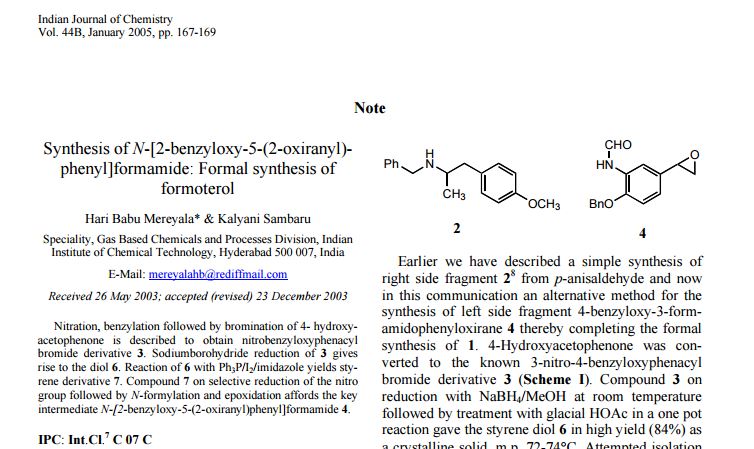
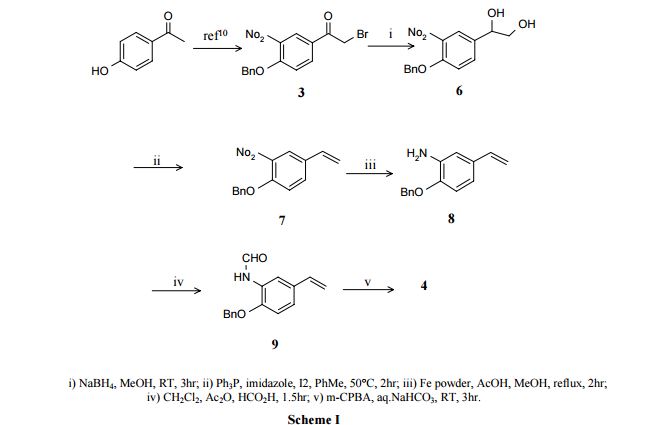
http://nopr.niscair.res.in/bitstream/123456789/8917/1/IJCB%2044B(1)%20167-169.pdf

str1

str1

PAPER

http://www.bioorg.org/down/Hetetorcycles_07_2243.pdf?ckattempt=1

str1

str1

str1

PAPER

Drugs R D. 2004;5(1):25-7.

Arformoterol: (R,R)-eformoterol, (R,R)-formoterol, arformoterol tartrate, eformoterol-sepracor, formoterol-sepracor, R,R-eformoterol, R,R-formoterol.

Abstract

Sepracor in the US is developing arformoterol [R,R-formoterol], a single isomer form of the beta(2)-adrenoceptor agonist formoterol [eformoterol]. This isomer contains two chiral centres and is being developed as an inhaled preparation for the treatment of respiratory disorders. Sepracor believes that arformoterol has the potential to be a once-daily therapy with a rapid onset of action and a duration of effect exceeding 12 hours. In 1995, Sepracor acquired New England Pharmaceuticals, a manufacturer of metered-dose and dry powder inhalers, for the purpose of preparing formulations of levosalbutamol and arformoterol. Phase II dose-ranging clinical studies of arformoterol as a longer-acting, complementary bronchodilator were completed successfully in the fourth quarter of 2000. Phase III trials of arformoterol began in September 2001. The indications for the drug appeared to be asthma and chronic obstructive pulmonary disease (COPD). However, an update of the pharmaceutical product information on the Sepracor website in September 2003 listed COPD maintenance therapy as the only indication for arformoterol. In October 2002, Sepracor stated that two pivotal phase III studies were ongoing in 1600 patients. Sepracor estimates that its NDA submission for arformoterol, which is projected for the first half of 2004, will include approximately 3000 adult subjects. Sepracor stated in July 2003 that it had completed more than 100 preclinical studies and initiated or completed 15 clinical studies for arformoterol inhalation solution for the treatment of bronchospasm in patients with COPD. In addition, Sepracor stated that the two pivotal phase III studies in 1600 patients were still progressing. In 1995, European patents were granted to Sepracor for the use of arformoterol in the treatment of asthma, and the US patent application was pending.

CLIP

str1

str1

str1

PAPER

doi:10.1016/j.cclet.2008.01.012

http://www.sciencedirect.com/science/article/pii/S1001841708000132

Volume 19, Issue 3, March 2008, Pages 279–280

New method in synthesizing an optical active intermediate for (R,R)-formoterol

  • Key Laboratory of Drug Targeting Education Ministry, West China School of Pharmacy, Sichuan University, Chengdu 610041, China\

Abstract

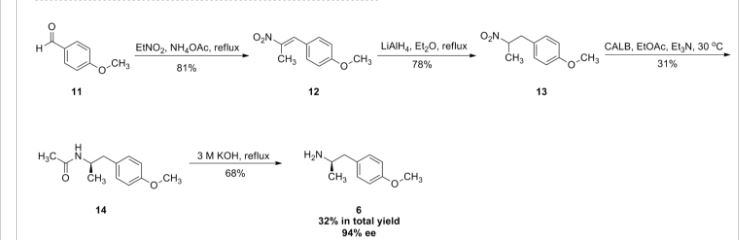
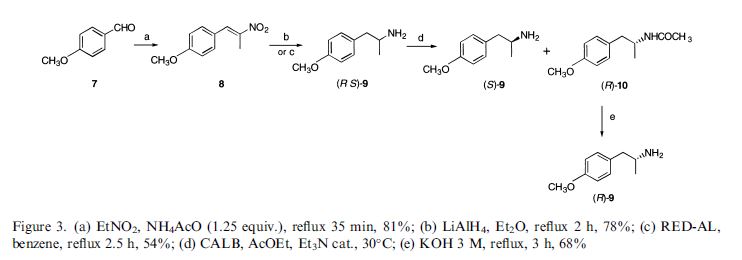
(R)-1-(4-Methoxyphenyl)propan-2-amine 2a, an optical active intermediate for (R,R)-formoterol, was synthesized from d-alanine in 65% overall yield by using a simple route, which contained protecting amino group, cyclization, coupling with Grignard reagent, reduction and deprotection.

References

Muller, P., et al.: Arzneimittel-Forsch., 33, 1685 (1983); Wallmark, B., et al.: Biochim. Biophys. Acta., 778, 549 (1984); Morii, M., et al.: J. Biol. chem., 268, 21553 (1993); Ritter, M., et al.: Br. J. Pharmacol., 124, 627 (1998); Stenhoff, H., et al.: J. Chromatogr., 734, 191 (1999), Johnson, D.A., et al.: Expert Opin. Pharmacother., 4, 253 (2003); Bouyssou, T., et al.: Bio. Med. Chem. Lett. 20, 1410, (2010);

External links

EP0390762A1 * 23 Mar 1990 3 Oct 1990 Aktiebolaget Draco New bronchospasmolytic compounds and process for their preparation
EP0938467A1 7 Nov 1997 1 Sep 1999 Sepracor, Inc. Process for the preparation of optically pure isomers of formoterol
EP1082293A2 20 May 1999 14 Mar 2001 Sepracor Inc. Formoterol polymorphs
WO2009147383A1 2 Jun 2009 10 Dec 2009 Cipla Limited Process for the synthesis of arformoterol
Reference
1 * HETT R ET AL: “Enantio- and Diastereoselective Synthesis of all Four Stereoisomers of Formoterol” TETRAHEDRON LETTERS, ELSEVIER, AMSTERDAM, NL LNKD- DOI:10.1016/S0040-4039(97)00088-9, vol. 38, no. 7, 17 February 1997 (1997-02-17), pages 1125-1128, XP004034214 ISSN: 0040-4039
2 * LING HUANG ET AL.: “The Asymmetric Synthesis of (R,R)-Formoterol via Transfer Hydrogenation with Polyethylene Glycol Bound Rh Catalyst in PEG2000 and Water” CHIRALITY, vol. 22, 30 April 2009 (2009-04-30), pages 206-211, XP002592699
3 MURASE ET AL. CHEM. PHARM. BULL. vol. 26, no. 4, 1978, pages 1123 – 1129
4 TROFAST ET AL. CHIRALITY vol. 1, 1991, page 443
5 * TROFAST J ET AL: “STERIC ASPECTS OF AGONISM AND ANTAGONISM AT BETA-ADRENICEPTORS: SYNTHESIS OF AND PHARMACOLOGICAL EXPERIMENTS WITH THE ENANTIOMERS OF FORMOTEROL AND THEIR DIASTEREOMERS” CHIRALITY, WILEY-LISS, NEW YORK, US LNKD- DOI:10.1002/CHIR.530030606, vol. 3, no. 6, 1 January 1991 (1991-01-01) , pages 443-450, XP002057060 ISSN: 0899-0042
6 WILKINSON, H.S ET AL. ORGANIC PROCESS RESEARCH AND DEVELOPMENT vol. 6, 2002, pages 146 – 148

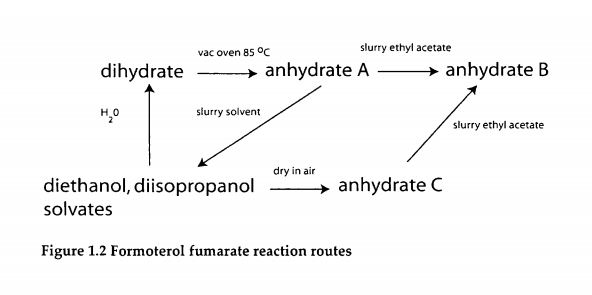
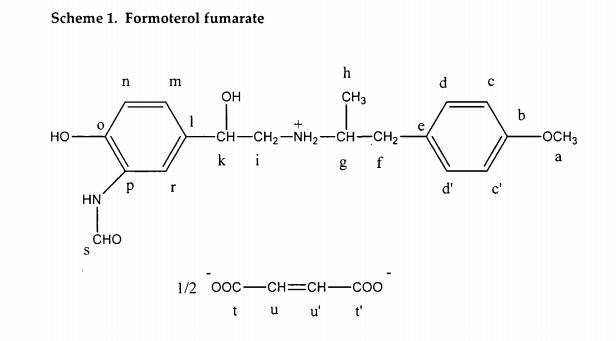
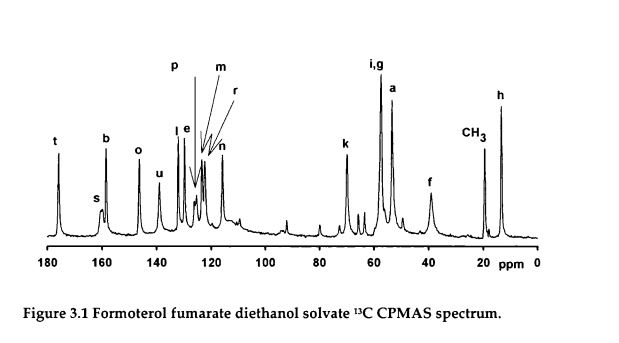
Durham E-Theses A Solid-state NMR Study of Formoterol Fumarate

Arformoterol
Arformoterol.svg
Arformoterol ball-and-stick model.png
Systematic (IUPAC) name
N-[2-hydroxy-5-[(1R)-1-hydroxy-2-[[(2R)-1-(4-methoxyphenyl) propan-2-yl]amino]ethyl] phenyl]formamide
Clinical data
Trade names Brovana
AHFS/Drugs.com Monograph
MedlinePlus a602023
License data
Pregnancy
category
  • US: C (Risk not ruled out)
Routes of
administration
Inhalation solution fornebuliser
Legal status
Legal status
Pharmacokinetic data
Protein binding 52–65%
Biological half-life 26 hours
Identifiers
CAS Number 67346-49-0 Yes
ATC code none
PubChem CID 3083544
IUPHAR/BPS 7479
DrugBank DB01274 Yes
ChemSpider 2340731 Yes
UNII F91H02EBWT Yes
ChEBI CHEBI:408174 Yes
ChEMBL CHEMBL1201137 
Chemical data
Formula C19H24N2O4
Molar mass 344.405 g/mol


Formoterol

Formoterol

CAS Registry Number: 73573-87-2
CAS Name: relN-[2-Hydroxy-5-[(1R)-1-hydroxy-2-[[(1R)-2-(4-methoxyphenyl)-1-methylethyl]amino]ethyl]phenyl]formamide
Additional Names: 3-formylamino-4-hydroxy-a-[N-[1-methyl-2-(p-methoxyphenyl)ethyl]aminomethyl]benzyl alcohol; (±)-2¢-hydroxy-5¢-[(RS)-1-hydroxy-2-[[(RS)-p-methoxy-a-methylphenethyl]amino]ethyl]formanilide
Molecular Formula: C19H24N2O4
Molecular Weight: 344.40
Percent Composition: C 66.26%, H 7.02%, N 8.13%, O 18.58%
Literature References: Selective b2-adrenergic receptor agonist. Mixture of R,R (-) and S,S (+) enantiomers. Prepn: M. Murakamiet al., DE 2305092; eidem, US 3994974 (1973, 1976 both to Yamanouchi); K. Murase et al., Chem. Pharm. Bull. 25, 1368 (1977). Absolute configuration and activity of isomers: eidem, ibid. 26, 1123 (1978). Toxicity studies: T. Yoshida et al., Pharmacometrics26, 811 (1983). HPLC determn in plasma: J. Campestrini et al., J. Chromatogr. B 704, 221 (1997). Review of pharmacology: G. P. Anderson, Life Sci. 52, 2145-2160 (1993); and clinical efficacy: R. A. Bartow, R. N. Brogden, Drugs 55, 303-322 (1998).
Derivative Type: Fumarate dihydrate
CAS Registry Number: 43229-80-7
Manufacturers’ Codes: BD-40A
Trademarks: Atock (Yamanouchi); Foradil (Novartis); Oxeze (AstraZeneca)
Molecular Formula: (C19H24N2O4)2.C4H4O4.2H2O
Molecular Weight: 840.91
Percent Composition: C 59.99%, H 6.71%, N 6.66%, O 26.64%
Properties: Crystals from 95% isopropyl alcohol, mp 138-140°. pKa1 7.9; pKa2 9.2. Log P (octanol/water): 0.4 (pH 7.4). Freely sol in glacial acetic acid; sol in methanol; sparingly sol in ethanol, isopropanol; slightly sol in water. Practically insol in acetone, ethyl acetate, diethyl ether. LD50 in male, female, rats, mice (mg/kg): 3130, 5580, 6700, 8310 orally; 98, 100, 72, 71 i.v.; 1000, 1100, 640, 670 s.c.; 170, 210, 240, 210 i.p. (Yoshida).
Melting point: mp 138-140°
pKa: pKa1 7.9; pKa2 9.2
Log P: Log P (octanol/water): 0.4 (pH 7.4)
Toxicity data: LD50 in male, female, rats, mice (mg/kg): 3130, 5580, 6700, 8310 orally; 98, 100, 72, 71 i.v.; 1000, 1100, 640, 670 s.c.; 170, 210, 240, 210 i.p. (Yoshida)
Derivative Type: R,R-Form
CAS Registry Number: 67346-49-0
Additional Names: Arformoterol
Derivative Type: R,R-Form L-tartrate
CAS Registry Number: 200815-49-2
Additional Names: Arformoterol tartrate
Molecular Formula: C19H24N2O4.C4H6O6
Molecular Weight: 494.49
Percent Composition: C 55.86%, H 6.12%, N 5.67%, O 32.36%
Literature References: Prepn: Y. Gao et al., WO 9821175; eidem, US 6040344 (1998, 2000 both to Sepracor). Pharmacology: D. A. Handley et al., Pulm. Pharmacol. Ther. 15, 135 (2002).
Properties: Off-white powder, mp 184°.
Melting point: mp 184°
Therap-Cat: Antiasthmatic.
Keywords: ?Adrenergic Agonist; Bronchodilator; Ephedrine Derivatives.

//////Arformoterol, (R,R)-Formoterol, (R,R)-Formoterol-L-(+)-tartrate, 200815-49-2, Arformoterol tartrate , Brovana, UNII:5P8VJ2I235, Sepracor, Asthma Therapy, Bronchodilators, Chronic Obstructive Pulmonary Diseases, COPD ,  RESPIRATORY DRUGS, beta2-Adrenoceptor Agonists, Phase III, 2007, Sunovion

COC1=CC=C(C[C@@H](C)NC[C@H](O)C2=CC(NC=O)=C(O)C=C2)C=C1

Scaling up from mg to Kgs – Making your First GMP Batch


STR1

Scaling up from mg to Kgs – Making your First GMP Batch 

6th – 7th October 2016, Clearwater, USA

the course was very informative and it allowed me to see the big picture from discovery stage to pilot plant” 
Genentech

Course Outline:

  • Introduction
  • Making the first 100g non-GMP Batch
  • Non-GMP vs GMP preparation
  • Physical version and form
  • Process safety and raw materials supply
  • Scaling into fixed vessels
  • Technology transfer
  • Genotoxic impurities
  • Case studies and Review

Who should attend:

  • Project managers
  • Project leaders
  • Bench chemists
  • New starters
  • MedChem Support teams

This course aims to provide attendees with a good understanding of the issues involved taking development candidates to the first in human trials.

Click here to Download the Course Brochure

Presented by Dr John Knight, JKonsult Ltd

John Knight

Managing Director at JKONSULT Ltd

STR1
Click here to Download the Course Brochure

“Brilliant Course, learn lots of tips and tricks”
Vertex

First incursion into Chemical Development has been very, very educational. John’s way of explaining the material has been wonderful.”
Almirall

Very clear and interesting sessions with a lot of relevant examples and not only theory.” 
Oribase Pharma
LINK
LITERATURE FROM INTERNET ON HIS TOPIC
//////////Scaling up,  mg to Kgs, Making,  First GMP Batch, SCIENTIFIC UPDATE,  JOHN KNIGHT, Clearwater, USA

SPIRONOLACTONE, спиронолактон , سبيرونولاكتون , 螺内酯 ,


Skeletal formula of spironolactone

Spironolactone

Spironolactone, Supra-puren, Suracton, спиронолактон, سبيرونولاكتون ,

螺内酯 , Abbolactone, Aldactide, SNL, Spiroctanie, Sprioderm, Verospirone,  Opianin

7α-Acetylthio-17α-hydroxy-3-oxopregn-4-ene-21-carboxylic acid γ-lactone

(1’S,2R,2’R,9’R,10’R,11’S,15’S)-9′-(acetylsulfanyl)-2′,15′-dimethylspiro[oxolane-2,14′-tetracyclo[8.7.0.02,7.011,15]heptadecan]-6′-ene-5,5′-dione

(7a,17a)-7-(Acetylthio)-17-hydroxy-3-oxopregn-4-ene-21-carboxylic acid g-lactone
17-Hydroxy-7a-mercapto-3-oxo-17a-pregn-4-ene-21-carboxylic Acid g-Lactone Acetate
3-(3-Oxo-7a-acetylthio-17b-hydroxy-4-androsten-17a-yl)propionic Acid g-Lactone
 CAS 52-01-7

MF C24H32O4S, MW 416.573 Da

ChemSpider 2D Image | spironolactone | C24H32O4SSpironolactone, marketed under the brand name Aldactone among others, is a medication primarily used to treatfluid build-up due to heart failure, liver scarring, or kidney disease.[1] Other uses include high blood pressure, low blood potassium that does not improve with supplementation, early puberty, excessive hair growth in women,[1] and as a component of hormone replacement therapy for transgender women.[6] It is taken by mouth.[1]

Common side effects include electrolyte abnormalities particularly high blood potassium, nausea, vomiting, headache, a rash, and a decreased desire for sex. In those with liver or kidney problems extra care should be taken.[1]Spironolactone has not been well studied in pregnancy and should not be used to treat high blood pressure of pregnancy.[7] It is a steroid that blocks mineralocorticoid receptors. It also blocks androgen, and blocks progesterone. It belongs to a class of medications known as potassium-sparing diuretics.[1]

Spironolactone was introduced in 1959.[8][9] It is on the World Health Organization’s List of Essential Medicines, the most important medications needed in a basic health system.[10] It is available as a generic medication.[1] The wholesale cost in the developing world as of 2014 is between 0.02 and 0.12 USD per day.[11] In the United States it costs about 0.50 USD per day.[1]

Title: Spironolactone
CAS Registry Number: 52-01-7
CAS Name: (7a,17a)-7-(Acetylthio)-17-hydroxy-3-oxopregn-4-ene-21-carboxylic acid g-lactone
Additional Names: 17-hydroxy-7a-mercapto-3-oxo-17a-pregn-4-ene-21-carboxylic acid g-lactone, acetate; 3-(3-oxo-7a-acetylthio-17b-hydroxy-4-androsten-17a-yl)propionic acid g-lactone
Manufacturers’ Codes: SC-9420
Trademarks: Aldactone (Pharmacia & Upjohn); Aquareduct (Azupharma); Practon (Pfizer); Osyrol (Aventis); Sincomen (Schering AG); Spirobeta (Betapharm); Spiroctan (Ferlux); Spirolone (APS); Spironone (Dexo); Verospiron (Richter Gedeon); Xenalon (Mepha)
Molecular Formula: C24H32O4S
Molecular Weight: 416.57
Percent Composition: C 69.20%, H 7.74%, O 15.36%, S 7.70%
Literature References: Aldosterone antagonist. Prepn: Cella, Tweit, J. Org. Chem. 24, 1109 (1959); US 3013012 (1961 to Searle); Tweit et al., J. Org. Chem. 27, 3325 (1962). Activity and metabolic studies: Gerhards, Engelhardt, Arzneim.-Forsch. 13, 972 (1963). Crystal and molecular structure: Dideberg, Dupont, Acta Crystallogr. B28, 3014 (1972). Comprehensive description: J. L. Sutter, E. P. K. Lau, Anal. Profiles Drug Subs. 4, 431-451 (1975). Review of carcinogenetic risk: IARC Monographs 24, 259-273 (1980). Review of antiandrogen effects and clinical use in hirsutism: R. R. Tremblay, Clin. Endocrinol. Metab. 15, 363-371 (1986); of clinical efficacy in hypertension: A. N. Brest, Clin. Ther. 8, 568-585 (1986). Review of pharmacology: H. A. Skluth, J. G. Gums,DICP Ann. Pharmacother. 24, 52-59 (1990). Clinical trial in congestive heart failure: B. Pitt et al., N. Engl. J. Med. 341, 709 (1999).
Properties: Crystals from methanol, mp 134-135° (resolidifies and dec 201-202°). [a]D20 -33.5° (chloroform). uv max: 238 nm (e20200). Practically insol in water. Sol in alcohol; freely sol in benzene, chloroform. LD50 in rats, mice, rabbits (mg/kg): 790, 360, 870 i.p. (IARC, 1980).
Melting point: mp 134-135° (resolidifies and dec 201-202°)
Optical Rotation: [a]D20 -33.5° (chloroform)
Absorption maximum: uv max: 238 nm (e 20200)
Toxicity data: LD50 in rats, mice, rabbits (mg/kg): 790, 360, 870 i.p. (IARC, 1980)
Therap-Cat: Diuretic.
Therap-Cat-Vet: Diuretic.
Keywords: Aldosterone Antagonist; Diuretic; Steroids

Medical uses

Spironolactone is used primarily to treat heart failure, edematous conditions such as nephrotic syndrome or ascites in people with liver disease, essential hypertension, hypokalemia, secondary hyperaldosteronism (such as occurs with hepatic cirrhosis), and Conn’s syndrome (primary hyperaldosteronism). On its own, spironolactone is only a weak diuretic because it primarily targets the distal nephron (collecting tubule), where only small amounts of sodium are reabsorbed, but it can be combined with other diuretics to increase efficacy.

Spironolactone is an antagonist of the androgen receptor (AR) as well as an inhibitor of androgen production. Due to the antiandrogenic effects that result from these actions, it is frequently used off-label to treat a variety of dermatological conditions in which androgens, such as testosterone and dihydrotestosterone (DHT), play a role. Some of these uses include androgenic alopecia in men (either at low doses or as a topical formulation) and women, and hirsutism, acne, and seborrhea in women.[12] Spironolactone is the most commonly used drug in the treatment of hirsutism in the United States.[13] Higher doses of spironolactone are not recommended in males due to the high risk of feminization and other side effects. Similarly, it is also commonly used to treat symptoms of hyperandrogenism in polycystic ovary syndrome.[14]

Spironolactone (SL) is known to be a potent aldosterone antagonist at mineralocorticoid steroid hormone receptors, and it is widely used in humans for the treatment of essential hypertension, congestive heat failure and refractory edema or hyperaldosteronism. However, the prolonged use of SL is associated with undesirable endocrine side effects such as gynecomastia and lose of libido in men and menstrual irregularities in women due to interaction of SL with gonadal steroid hormone biosynthesis and target cell gonadal steroid receptors.

The nature and prevalence of the undesirable side effects limit the usefulness of spironolactone as a therapeutic agent. Gynecomastia or tender breast enlargement has been found to occur in 10% of hypertensive patients using spironolactone for therapy as compared to 1% of men in the placebo group. Recent studies by Pitt, et al. with spironolactone have shown that in patients with congestive heart failure (CHF) taking digoxin and a loop diuretic—spironolactone therapy in conjunction with digitalis and ACE inhibitor—reduces mortality by 30%. See Pitt, B., et al., The Effect of Spironolactone on Morbidity and Mortality in Patients with Severe Heart Failure, Randomized Aldactone Evaluation Study Investigors; N. Engl. J. Med., 1999, 341:709-717. These authors stated that the 30% reduction in the risk of death among patients in the group receiving spironolactone could be attributed to a lower risk of both death from progressive heart failure and sudden death from cardiac arrhythmic causes. In addition, they found that the frequency of hospitalization for worsening heart failure is 35% lower in the spironolacotone treated group than in the placebo group. These authors concluded that patients who received spironolactone had a significant improvement in the symptoms of severe heart failure caused by systolic left ventricular dysfunction. Overall, 8% of the patients in the spironolactone group discontinued treatment because of adverse events. The purpose of the present invention is to make available the individual chiral isomers of spironolactone that would be effective in treating CHF and in reducing hypertension, and at the same time would be devoid of undesirable side effects such as gynecomastia, lose of libido in men, and menstrual irregularities in women.

Spironolactone is the name commonly used for a specific spirolactone that has the full chemical name 17-hydroxy-7-alpha-mercapto-3-oxo-17-alpha-pregn-4-ene-21-carboxylic acid gamma-lactone acetate. The term “spirolactone” denotes that a lactone 10 ring (i.e., a cyclic ester) is attached to another ring structure in a spiro configuration (i.e., the lactone ring shares a single carbon atom with the other ring). Spirolactones that are coupled to steroids are the most important class of spirolactones from a pharmaceutical perspective, so they are widely referred to in the pharmaceutical arts simply as spirolactones. As used herein, “spironolactone” refers to a molecule comprising a lactone structure coupled via a spiro configuration to a steroid structure or steroid derivative.

Spironolactone, its activities, and modes of synthesis and purification are described in a number of U.S. patents, notably U.S. Pat. Nos. 3,013,012, 4,529,811 and 4,603,128.

Intracellular receptors (IRs) form a class of structurally-related genetic regulators that act as ligand-dependent transcription factors. See Evans, R. M., “The Steroid and Thyroid Hormone Receptor Superfamily”, Science, May 13, 1988; 240(4854):889-95. Steroid receptors are a recognized subset of the IRs, including the progesterone receptor (PR), androgen receptor (AR), estrogen receptor (ER), which can be referred to collectively as the gonadal steroid receptors, glucocorticoid receptor (GR), and mineralocorticoid receptor (MR). Regulation of a gene by such factors requires both the IR itself and a corresponding ligand that has the ability to selectively bind to the IR in a way that affects gene transcription.

Ligands for the IRs can include low molecular weight native molecules, such as the hormones aldosterone, progesterone, estrogen and testosterone, as well as synthetic derivative compounds such as medroxyprogesterone acetate, diethylstilbesterol and 19-nortestosterone. These ligands, when present the fluid surrounding a cell, pass through the outer cell membrane by passive diffusion and bind to specific IR proteins to create a ligand/receptor complex. This complex then translocates to the cell’s nucleus, where it binds to a specific gene or genes present in the cell’s DNA. Once bound to DNA, the complex modulates the production of the protein encoded by that gene. In this regard, a compound that binds to an IR and mimics the effect of the native ligand is referred to as an “agonist”, while a compound that binds to an IR and inhibits the effect of the native ligand is called an “antagonist”.

The therapeutic mechanism of action of spironolactone involves binding to intracellular mineralocorticoid receptors (MRs) in kidney epithelial cells, thereby inhibiting the binding of aldosterone. Spironolactone has been found to counteract the sodium reabsorption and potassium excretion effects of aldosterone and other mineralocorticoids. Spironolactone has also been shown to interfere with testosterone biosynthesis, has anti-androgen action and inhibits adrenal aldosterone biosynthesis. Large doses of spironolactone in children appear to decrease the testosterone production rate.

Spironolactone is found to exhibit intra-individual variability of pharmacokinetic parameters and it presumably belongs to the group of drugs with high inter-subject variability. Spironolactone has poor water solubility and dissolution rate.

In order to prolong the half-life and decrease the side effects associated with spironolactone, syntheses of spironolactone derivatives have been developed (e.g. synthesis of mexrenone, prorenone, spirorenone). Slight modifications of the spironolactone steroid skeleton, e.g. such as formation of 11β-allenic and epoxy compounds, have been shown to effect important variations in the affinity and specificity for the mineralocorticoid receptor. These results suggest that it is possible to develop spironolactone analogues that do not interact with the androgen receptor or cytochrome P-450 and are therefore free of spironolactone undesirable side-effects.

METABOLISM

Figure US20090325918A1-20091231-C00003

SYNTHESIS

METHOD 1 REF 150

STR1

REF 130, 150

STR1

STR1

METHOD 2 REF 140

STR1

STR1

STR1

METHOD 3 REF 150

STR1

Synthesis

Cella, John A.; Tweit, Robert C. (1959). Journal of Organic Chemistry 24: 1109. doi:10.1021/jo01090a019.

(See also part 1 and part 3)

SPECTROSCOPY UV

STR1

SPECTROSCOPY IR

KBR

The principal absorption peaks of the spectrum shown in Figure 5 were noted at 1765,
1693, 1673, 1240, 1178, 1135, 1123 and 1193 cm -1.

STR1

SPECTROSCOPY 1H NMR

STR1

STR1

SPECTROSCOPY 13C NMR

STR1

STR1

SPECTROSCOPY MASS SPECTRUM

STR1

STR1STR1

130 J.A. Cola, E.A. Brown, and R.R. Burtner, 3. Org. Chem., 24, 1109(1959).

 140 Remington’s: The Science and Practice of Pharmacy, 19 t~ edn.Volume II, K.G. Alfonso, ed.; Mack Publishing Co., Pennsylvania (1995) p.1048.
150. G. Anner and H. Wehrli (Ciba-Geigy, A.-G.), German Often 2,625,723 (cl.C07J21/00), Dec,1976; Swiss Appl. 75/7, 696, 13Jun. 1975; pp. 37.

ANALYTICAL

    • High-Performance Liquid Chromatographic Conditions
      Column LiChrosorb RP-8, 5 μm. 150 × 4.6 mm I.D.
      Eluent Acetonitrile-0.05 M phosphate buffer, pH 4 (45:55)
      Flow-rate 1 ml/min
      Temperature 25° C.
      Detector UV detector, wavelength 286 nm or 271 nm
      Recorder Chart speed 0.5 cm/min
      Sample loop 10 μl
    • The concentration of canrenone is determined in plasma and urine samples by high-performance liquid chromatography (HPLC) with UV-detection. An aliquot of 300 ng of spironolactone derivative is added to the samples as internal standard, which are then extracted twice with 1 ml n-hexane-toluene (1:1, v/v). The organic phase is taken to dryness and re-dissolved in 250 μl HPLC eluent (methanol-water, 60:40, v/v). (25×4.6 mm; 5 μm). Detection is performed with the UV detector set at λ=285 nm.

Flurometric Method

    Five ml of water is a reagent blank and 5 ml of working standards containing 0.05 μg and 0.20 μg of SC-9376 are carried through the entire procedure. Lower sales are read vs. the 0.05 μg standard at full scale, and higher samples vs. the 0.20 μg standard. Fluorescence readings are proportional to the concentrations of the standards in this range.
      Pipette 0.2 ml of heparinized plasma into a 50-ml polyethylene-stoppered centrifuge tube, dilute to 5 ml with water and add 15 ml of methylene chloride (Du Pont refrigeration grade, redistilled). Shake for 30 seconds, centrifuge and discard the aqueous supernatant. Add 1 ml 0.1 N NaOH, shake 15 seconds, centrifuge and discard the supernatant. Transfer a 10-ml aliquot of the methylene chloride phase to another tube containing 2 ml of 65% aqueous sulfuric acid, shake 30 seconds, centrifuge and remove organic phase by aspiration. The material is allowed to stand at room temperature for about 1 hour and then about 1 ml of the sulfuric acid phase in transferred to a quartz cuvette. Fluorescence intensity is determined in an Aminco-Bowman spectrophotofluorometer (activation maximum, 465 nm).
    Gas Liquid Chromatography
    The GLC estimation is carried out on a Fractovap Model 251 series 2150 (Carlo Erba) instrument equipped with a Nickel-63 electron capture detector. A 6-foot, 0.4 mm internal diameter, U-shaped glass column, packed with OV-17 2% or XE-60 1% on gas chrom A, 100-120 mesh (Applied Science Lab) is conditioned for 3 days before use. Argon with 10% methane which passed through a molecular sieve before entering the column is used as the carrier gas. The conditions of analysis are: column 255° C., detector 275° C., carrier gas flow 30 ml/min. Samples are injected on the column with a 10 μl Hamilton syringe. The injector in not heated.

PATENT

https://www.google.com/patents/US20090325918

EXAMPLE 1Chiral Separation

The separation of 7 beta isomer of SL is schematically described below.

    • Figure US20090325918A1-20091231-C00004
      Chromatographic Method for Isolation of SL Isomers
      The basic method is described in Chan, Ky, et al., J. Chromatog, Nov. 15, 1991:571 (1-2) 291-297. The separation is performed using spectra-physics HPLC instrument and UV variable wavelength detector set at 254 nm. For chiral separation, the chromatographic column is either a pre-packed 25 mm×4.6 mm ID Cyclobond 1 (5 μm particle size), or a pre-packed 150 mm×4 mm ID Resolvosil BSA-7 column (5 μm) operated using the conditions described herein.
      Analysis of the isomers present in the peaks in the chromatograms and their chiral extract purity analysis can be determined in each case by high resolution NMR spectroscopy using a chiral shift reagent. Based on this information and the determination of molecular weight by mass spectrometry and/or optical activity, structural configuration is assigned to each isomer. Eluted samples of isomers may be re-chromatographed in order to obtain adequate quantities of isomers having desired optical purity for study. For future use, reference standards that are optically pure will be compared for confirmation of purity and identity to the isolated isomers that are obtained after their chromatographic separation.

EXAMPLE 2Chemical Synthesis of Optical Isomers

    As an example, the desire spironolactone 7-beta-isomer is synthesized following the scheme that is described below:
    • Figure US20090325918A1-20091231-C00005
      Diene (i) is prepared from commercially available starting materials using methods well known in the art of chemical synthesis.
      Diene (i) is treated with acetic acid and the mixture is heated to reflux to yield 7-alpha-acetate ester (ii). The 7-alpha-ester (ii) is further subjected to nucleophilic substitution, followed by hydrolysis to obtain the 7-beta-isomer (iii). The 7-beta-isomer (iii) is then esterified with an acyl halide in the presence of a base to generate the desired spironolactone 7-beta-isomer (iv).

EXAMPLE 3Preparation of Radiolabeled Probe Compounds of the Invention

      Using known methods, the compounds of the invention may be prepared as radiolabeled probes by carrying out their synthesis using precursors comprising at least one atom that is a radioisotope. The radioisotope is preferably selected from at least one of carbon (preferably

14

      C), hydrogen (preferably

3

      H), sulfur (preferably

35

    S), or iodine (preferably I). Such radiolabeled probes are conveniently synthesized by a radioisotope supplier specializing in customer synthesis of radiolabeled probe compounds. Such suppliers include Amersham Corporation, Arlington Heights, Ill.; Cambridge Isotope Laboratories, Inc., Andover, Mass.; SRI International, Menlo Park, Calif.; Wizard Laboratories, West Sacramento, Calif.; ChemSyn Laboratories, Lexena, Kans.; American Radiolabeled Chemicals, Inc., St. Louis, Mo.; and Moravek Biochemicals Inc., Brea, Calif.
      Tritium labeled probe compounds are also conveniently prepared catalytically via platinum-catalyzed exchange in tritiated acetic acid, acid-catalyzed exchange in tritiated trifluoroacetic acid, or heterogeneous-catalyzed exchange with tritium gas. Tritium labeled probe compounds can also be prepared, when appropriate, by sodium borotritide reduction. Such preparations are also conveniently carried out as a custom radiolabeling by any of the suppliers listed in the preceding paragraph using the compound of the invention as substrate.
    EXAMPLE 4Isolation and Purification Procedure
    The optical isomers of spironolactones may be isolated from fluid sample such as urine or blood as follows:
    Extraction from Urine
    The urine sample is extracted with dichloromethane and the extract washed with NaOH (0.1 N) and then with water to neutrality. The residue obtained after evaporation of the dichloromethane extract is purified on TLC in three different systems: benzene-acetone-water, (150:100:0.4); chloroform-ethanol, (90:10); ethyl acetate-cyclohexane-ethanol, (45:25:10), using aldosterone as reference standard.
      The extract is then purified by high performance liquid chromatography (HPLC) on a Waters 6000 A, 480 U.V. detector instrument with radial pressure. The extract is first run through a C

18

    10μ column using methanol-water (70:30) as the eluent, followed by a silica 5μ column using dichloromethane-methanol (95:5). In both cases, the rate of the eluent is 1.5 ml/min. A small part of the extract is subjected to heptafluorobutyrylation for GLC investigation.

References

  1.  “Spironolactone”. The American Society of Health-System Pharmacists. Retrieved Oct 24, 2015.
  2.  “Spironolactone: MedlinePlus Drug Information”. Retrieved 2016-01-20.
  3.  “Spironolactone”. Merriam-Webster Dictionary.
  4.  “Spironolactone”. Dictionary.com Unabridged. Random House.
  5.  Harry G. Brittain (26 November 2002). Analytical Profiles of Drug Substances and Excipients. Academic Press. p. 309. ISBN 978-0-12-260829-2. Retrieved 27 May 2012.
  6.  Maizes, Victoria (2015). Integrative Women’s Health (2 ed.). p. 746.ISBN 9780190214807.
  7.  “Spironolactone Pregnancy and Breastfeeding Warnings”. Retrieved 29 November2015.
  8.  Camille Georges Wermuth (24 July 2008). The Practice of Medicinal Chemistry. Academic Press. p. 34. ISBN 978-0-12-374194-3. Retrieved 27 May 2012.
  9.  Marshall Sittig (1988). Pharmaceutical Manufacturing Encyclopedia. William Andrew. p. 1385. ISBN 978-0-8155-1144-1. Retrieved 27 May 2012.
  10.  “WHO Model List of EssentialMedicines” (PDF). World Health Organization. October 2013. Retrieved 22 April 2014.
  11.  “Spironolactone”. International Drug Price Indicator Guide. Retrieved 29 November2015.
  12.  Hughes BR, Cunliffe WJ (May 1988). “Tolerance of spironolactone”. The British Journal of Dermatology 118 (5): 687–91. doi:10.1111/j.1365-2133.1988.tb02571.x.PMID 2969259.
  13. Victor R. Preedy (1 January 2012). Handbook of Hair in Health and Disease. Springer Science & Business Media. pp. 132–. ISBN 978-90-8686-728-8.
  14.  Loy R, Seibel MM (December 1988). “Evaluation and therapy of polycystic ovarian syndrome”. Endocrinology and Metabolism Clinics of North America 17 (4): 785–813.PMID 3143568.
Spironolactone
Skeletal formula of spironolactone
Ball-and-stick model of the spironolactone molecule
Systematic (IUPAC) name
7α-Acetylthio-17α-hydroxy-3-oxopregn-4-ene-21-carboxylic acid γ-lactone
Clinical data
Pronunciation /spɪˌrnəˈlæktn, sp, spə, ˈrɒ, n/or /ˌsprənˈlæktn/[2][3][4]
Trade names Aldactone
AHFS/Drugs.com Monograph
MedlinePlus a682627
Pregnancy
category
  • AU: B3
  • US: C (Risk not ruled out)
Routes of
administration
Oral[1]
Legal status
Legal status
Pharmacokinetic data
Protein binding 90%+[5]
Metabolism Hepatic CYP450
Biological half-life 1.3-2 hours
Excretion Urine, bile
Identifiers
CAS Number 52-01-7 Yes
ATC code C03DA01 (WHO)
PubChem CID 5833
IUPHAR/BPS 2875
DrugBank DB00421 Yes
ChemSpider 5628 Yes
UNII 27O7W4T232 Yes
KEGG D00443 Yes
ChEBI CHEBI:9241 Yes
ChEMBL CHEMBL1393 Yes
Chemical data
Formula C24H32O4S
Molar mass 416.574 g/mol

///////Spironolactone, Supra-puren, Suracton, спиронолактон, سبيرونولاكتون ,

螺内酯 , Abbolactone, Aldactide, SNL, Spiroctanie, Sprioderm, Verospirone,  Opianin

O=C5O[C@@]4([C@@]3([C@H]([C@@H]2[C@H](SC(=O)C)C/C1=C/C(=O)CC[C@]1(C)[C@H]2CC3)CC4)C)CC5

Besifloxacin hydrochloride (Besivance)


Besifloxacin.png

Besifloxacin

SS 734, BOL 303224A, ISV-403

MW 430.301, MF C19H21ClFN3O3

141388-76-3 CAS

7-[(3R)-3-aminoazepan-1-yl]-8-chloro-1-cyclopropyl-6-fluoro-4-oxo-1,4-dihydroquinoline-3-carboxylic acid

(R)-(+)-7-(3-amino-2,3,4,5,6,7-hexahydro-1H-azepin-1-yl)-1,4-dihydro-4-oxoquinoline-3-carboxylic acid

(R) -7- (3- amino-hexahydro-azepin -1H- mushroom-1-yl) -8-chloro-1-cyclopropylmethyl -6-fluoro-1,4-dihydro-4-oxo-3-quinolinecarboxylic acid

Synthesis of the molecule (R)-(+)-7-(3-amino-2,3,4,5,6,7-hexahydro-1H-azepin-1-yl)-1,4-dihydro-4-oxoquinoline-3-carboxylic acid is disclosed in U.S. Pat. No. 5,447,926,

Besifloxacin is a fourth generation fluoroquinolone-type opthalmic antibiotic for the treatment of bacterial conjunctivitis. FDA approved on May 28, 2009. by Bausch & Lomb, for the treatment of non-viral bacterial conjunctivitis

Besifloxacin, (+)-7-[(3R)-3-aminohexahydro-1H-azepin-1-yl]-8-chloro-1-cyclopropyl-6-fluoro-4-oxo-1,4-dihydroquinoline-3-carboxylic acid hydrochloride, developed by SS Pharmaceutical (SSP) Co.Ltd. was a fourth-generation fluoroquinolone antibiotic . Besifloxacin hydrochloride eye drop was used to treat bacterial conjunctivitis caused by aerobic and facultative Gram-positive microorganisms and aerobic and facultative Gram-negative microorganisms

Besifloxacin.png

Besifloxacin (INN/USAN) is a fourth-generation fluoroquinolone antibiotic. The marketed compound is besifloxacin hydrochloride. It was developed by SSP Co. Ltd., Japan, and designated SS734. SSP licensed U.S. and European rights to SS734 for ophthalmic useto InSite Vision Incorporated (OTCBB: INSV) in 2000. InSite Vision developed an eye drop formulation (ISV-403) and conducted preliminary clinical trials before selling the product and all rights to Bausch & Lomb in 2003.[1]

The eye drop was approved by the United States Food and Drug Administration (FDA) on May 29, 2009 and marketed under the trade name Besivance.[2]

Name Dosage Strength Route Labeller Marketing Start Marketing End
Besivance suspension 6 mg/mL ophthalmic Bausch & Lomb Incorporated 2009-05-28 Not applicable Us
Besivance suspension 0.6 % ophthalmic Bausch & Lomb Inc 2010-01-27 Not applicable Canada
Besivance suspension 6 mg/mL ophthalmic Physicians Total Care, Inc. 2011-07-13 Not applicable Us

405165-61-9 CAS

Besifloxacin Hydrochloride

Besifloxacin hydrochloride is a fourth-generation fluoroquinolone antibiotic.
IC50 Value:
Target: Antibacterial
Besifloxacin has been found to inhibit production of pro-inflammatory cytokines in vitro. Besifloxacin is a novel 8-chloro-fluoroquinolone agent with potent, bactericidal activity against prevalent and drug-resistant pathogens.besifloxacin is the most potent agent tested against gram-positive pathogens and anaerobes and is generally equivalent to comparator fluoroquinolones in activity against most gram-negative pathogens. Besifloxacin demonstrates potent, broad-spectrum activity, which is particularly notable against gram-positive and gram-negative isolates that are resistant to other fluoroquinolones and classes of antibacterial agents.

Clinical Information of Besifloxacin Hydrochloride

Product Name Sponsor Only Condition Start Date End Date Phase Last Change Date
Besifloxacin Hydrochloride Bucci Laser Vision Institute Bacterial infection 31-MAY-11 31-DEC-11 Phase 4 05-JUN-13
Bucci Laser Vision Institute 31-MAY-11 31-DEC-11 Phase 4 03-JUN-13
Innovative Medical Services 30-SEP-10 31-OCT-12 Phase 4 11-SEP-13
Ophthalmology Consultants, Ltd Cataract 30-SEP-10 28-FEB-11 Phase 4 11-SEP-13
University of Louisville Blepharitis 31-AUG-11 31-OCT-11 Phase 4 01-DEC-11

Pharmacodynamics

Besifloxacin is a fluoroquinolone that has a broad spectrum in vitro activity against a wide range of Gram-positive and Gram-negativeocular pathogens: e.g., Corynebacterium pseudodiphtheriticum, Moraxella lacunata, Staphylococcus aureus, Staphylococcus epidermidis, Staphylococcus hominis, Streptococcus mitis, Streptococcus oralis, Streptococcus pneumoniae and Streptococcus salivarius. Besifloxacin has been found to inhibit production of pro-inflammatory cytokines in vitro.[3] The mechanism of action of besifloxacin involves inhibition of two enzymes which are essential for the synthesis and replication of bacterial DNA: the bacterialDNA gyrase and topoisomerase IV.

Medical Use

Besifloxacin is indicated in the treatment of bacterial conjunctivitis caused by sensitive germs,[4] as well as in the prevention of infectious complications in patients undergoing laser therapy for the treatment of cataracts.[5][6]

Adverse Effects

During the treatment, the most frequently reported ocular adverse reaction was the appearance of conjunctival redness (approximately 2% of patients). Other possible adverse reactions, reported in subjects treated with besifloxacin were: eye pain, itching of the eye, blurred vision, swelling of the eye or eyelid.

MORE SYNTHESIS COMING, WATCH THIS SPACE…………………..


STR1


STR1

STR1


STR1


PATENT

WO 2010111116

https://www.google.com/patents/WO2010111116A1?cl=en


PATENT

CN 104592196

https://www.google.com/patents/CN104592196A?cl=en

STR1

The method comprises performing condensation reaction of 1-​cyclopropyl-​6,​7-​dichloro-​1,​4-​dihydro-​4-​oxy-​3-​quinoline carboxylic acid with (R)​-​3-​aminohexahydroazepine in the presence of org. base in org. solvent I at 45°C-​solvent b.p. temp. under refluxing, washing with acid, vacuum concg. to obtain (R)​-​7-​(3-​amino-​hexahydro-​1H-​azepine-​1-​yl)​-​1-​cyclopropyl-​6-​fluoro-​1,​4-​dihydro-​4-​oxy-​3-​quinoline carboxylic acid, dissolving in 5-​10 fold org. solvent II, reacting with thionyl chloride at 0-​40°C, and vacuum concg. to obtain (R) -7- (3- amino-hexahydro-azepin -1H- mushroom-1-yl) -8-chloro-1-cyclopropylmethyl -6-fluoro-1,4-dihydro-4-oxo-3-quinolinecarboxylic acid hydrochloride

Preparation method of the present invention provides hydrochloride Besifloxacin, comprising the steps of:

(1), in three _6 flask of 1-cyclopropyl, 6,7-difluoro-1,4-dihydro-4-oxo-3-quinolinecarboxylic acid 10g of acetonitrile added 100mL, was added (R ) -3-amino-hexahydro-aza mushroom 4.73g and 7.2mL of triethylamine was heated at reflux for 5h TLC plate detection point, the reaction was complete spin dry plus 100mL dissolved in chloroform and then 200mL 1M hydrochloric acid and washed twice with saturated brine The organic phase to pH 4-6, the organic phase was poured into the jar and dried to obtain the single (R) -7- (3- amino-hexahydro-azepin -1H- leather-yl) cyclopropyl-6 -1_ fluoro-1,4-dihydro-4-oxo-3-quinoline-carboxylic acid in chloroform solution; spin-dried to give (R) -7- (3- amino-hexahydro-azepin -1H- leather-yl) cyclopropyl-6-fluoro-1,4-dihydro-4-oxo-quinoline-3-carboxylic acid.

(2), obtained in the previous step (R) -7- (3_ atmosphere atmosphere -1H- gas hybrid group six leather-1-yl) cyclopropyl-6-fluoro-1,4 _1_ dihydro-4-oxo-3-quinolinecarboxylic acid in chloroform solution was cooled to 0 ° C, was slowly added dropwise under constant stirring 18mL S0C12, temperature does not exceed 5 ° C added, the mixture was stirred at 0 ° C after 2h l to room temperature, TLC detection, after completion of the reaction was evaporated to dryness to column chromatography to give (R) -7- (3- amino-hexahydro-azepin -1H- mushroom-1-yl) -8-chloro-1-cyclopropylmethyl -6-fluoro-1,4-dihydro-4-oxo-3-quinolinecarboxylic acid hydrochloride 5. 12g.


PATENT

US 20110144329

https://www.google.com/patents/US20110144329

EXAMPLE 1Preparation of Besifloxacin Free Base Solid

Besifloxacin free base was prepared from besifloxacin hydrochloride addition salt.

An amount of about 5 g of besifloxacin HCl (HCl addition salt of besifloxacin made, for example, by the method of U.S. Pat. No. 5,447,926; which is incorporated herein by reference in its entirety) was added to about 750 ml of water. The besifloxacin HCl was allowed to dissolve in said water. Twenty milliliters of 1N NaOH solution were added slowly to the besifloxacin aqueous solution while stirring (final pH 10.2). Besifloxacin free base started to precipitate. Eight milliliters of 1N HCl solution were added slowly while stirring (final pH of 9.7). The resulting mixture was allowed to mix for 2 hours while besifloxacin free base continued to precipitate. At the end of 2 hours, the precipitated besifloxacin free base was filtered through a Millipore type RA 1.2 μm filter. The besifloxacin free base thus collected was dried in a vacuum oven at room temperature. 4.35 g of besifloxacin free base was recovered.

FIG. 1 shows a UV absorption spectrum of besifloxacin free base starting material of Example 1.

FIG. 3 shows an IR spectrum of free base starting material of Example 1.

PATENT

https://www.google.com/patents/CN103044397A?cl=en

Figure CN103044397AD00041

Example 6 (R) -7_ (3- amino-hexahydro–1H- diazepan-1-yl) -8_ chloro-1-cyclopropyl-6-fluoro-1,4- Hydrogen oxo – quinoline-3-carboxylic acid (Besifloxacin). [0021] The reaction vessel was added chloroform (50ml) as a reaction solvent, in the case of a solid material was added with stirring (III) (3. 59g, O. Olmol), until the intermediate (III) is completely dissolved, was added dropwise under ice- chlorosulfonic acid, stirred for I hour under ice-cooling, gradually warmed to room temperature, stirred for 6 hours, and then reacted at reflux temperature for 6 hours. After completion of the reaction by TLC, the reaction solution was cooled to 0 ° C, white solid was precipitated, filtered, washed with a small amount of dichloromethane to give a crude product besifloxacin (3. 65g, 93. 01%). [0022] Example 7 (R) -7_ (3- amino-hexahydro–1H- diazepan-1-yl) -8_ chloro-1-cyclopropyl-6-fluoro-1,4- Hydrogen oxo – quinoline-3-carboxylic acid (Besifloxacin). [0023] The reaction vessel was added chloroform (50ml) as a reaction solvent, in the case of a solid material was added with stirring (III) (3. 59g, 0. Olmol), until the intermediate (III) is completely dissolved, was added dropwise under ice- chlorosulfonic acid was stirred for I hour under ice-cooling, gradually warmed to room temperature, stirred for 6 hours, and then reacted at reflux temperature for 12 hours. After completion of the reaction by TLC, the reaction solution was cooled to 0 ° C, the precipitated white solid was filtered , washed with a little dichloromethane to give Besifloxacin crude (3. 05g, 77. 22%).

PAPER

Molbank 2013, 2013(2), M801; doi:10.3390/M801
Short Note
(R)-7-(Azepan-3-ylamino)-8-chloro-1-cyclopropyl-6-fluoro-4-oxo-1,4-dihydroquinoline-3-carboxylic Acid Hydrochloride
Supplementary File 3:Support Information (PDF, 340 KB)
Download PDF [188 KB, 27 May 2013; original version 22 May 2013]
R&D Center, Jiangsu Yabang Pharmaceutical Group, Changzhou 213200, China
In this paper (R)-7-(azepan-3-ylamino)-8-chloro-1-cyclopropyl-6-fluoro-4-oxo-1,4-dihydroquinoline-3-carboxylic acid hydrochloride 1was isolated and identified as the N-substituted regioisomer of besifloxacin, which has been synthesized from the reaction of 8-chloro-1-cyclopropyl-6,7-difluoro-4-oxo-1,4-dihydroquinoline-3-carboxylic acid 3 with (R)-tert-butyl 3-aminoazepane-1-carboxylate 2in acetonitrile as solvent in 37% yield. The chemical structure of compound 1 was established on the basis of 1H-NMR, 13C-NMR, mass spectrometry data and elemental analysis

REGIOMER OF BESIFLOXACIN


Besifloxacin.pngBESIFLOXACIN


STR1

STR1

References

  1.  “InSite Vision Reaches Agreement to Sell ISV-403 to Bausch & Lomb” (Press release). InSite Vision. 2003-12-19. Retrieved 2009-08-15.
  2.  “Bausch & Lomb Receives FDA Approval of Besivance, New Topical Ophthalmic Antibacterial for the Treatment of Bacterial Conjunctivitis (“Pink Eye”)” (Press release). Bausch & Lomb. 2009-05-29. Retrieved 2009-05-29.
  3.  Zhang JZ, Ward KW (January 2008). “Besifloxacin, a novel fluoroquinolone antimicrobial agent, exhibits potent inhibition of pro-inflammatory cytokines in human THP-1 monocytes”. J. Antimicrob. Chemother. 61 (1): 111–6. doi:10.1093/jac/dkm398. PMID 17965029.
  4.  Malhotra R, Ackerman S, Gearinger LS, Morris TW, Allaire C (December 2013). “The safety of besifloxacin ophthalmic suspension 0.6 % used three times daily for 7 days in the treatment of bacterial conjunctivitis”. Drugs in R&D 13 (4): 243–52. doi:10.1007/s40268-013-0029-1. PMC 3851703. PMID 24142473. Retrieved 2015-01-06.
  5.  Majmudar PA, Clinch TE (May 2014). “Safety of besifloxacin ophthalmic suspension 0.6% in cataract and LASIK surgery patients”. Cornea33 (5): 457–62. doi:10.1097/ICO.0000000000000098. PMC 4195578. PMID 24637269. Retrieved 2015-01-06.
  6.  Nielsen SA, McDonald MB, Majmudar PA (2013). “Safety of besifloxacin ophthalmic suspension 0.6% in refractive surgery: a retrospective chart review of post-LASIK patients”. Clinical Ophthalmology (Auckland, N.Z.) 7: 149–56. doi:10.2147/OPTH.S38279. PMC 3552478. PMID 23355771. Retrieved 2015-01-06.


CLIPS

Besifloxacin hydrochloride (Besivance) Besifloxacin is a fourth-generation fluoroquinolone antibiotic which is marketed as besifloxacin hydrochloride. It was originally developed by the Japanese firm SSP Co. Ltd and designated SS734. SSP then licensed U.S. and European rights of SS734 for ophthalmic use to InSite Vision, Inc., in 2000, who then developed an eye drop formulation (ISV-403) and conducted preliminary clinical trials before selling the product and all rights to Bausch & Lomb in 2003.

The eye drop was approved by the United States Food and Drug Administration (FDA) on May 29, 2009 and marketed under the trade name Besivance.24a

Besifloxacin has been found to inhibit production of pro-inflammatory cytokines in vitro. The synthesis of besifloxacin commences with commercially available ethyl 3-(3-chloro-2,4,5-trifluorophenyl)-3-oxopropanoate (13, Scheme3).24b

Condensation of this ketoester with triethyl orthoformate resulted in a mixture of vinylogous esters 14. Substitution with cyclopropanamine converts 14 to the vinylogous amide 15 as an unreported distribution of cis- and trans-isomers. This mixture was treated with base at elevated temperature to give 16.

Presumably, the trans-isomer isomerizes to the cis-isomer, which subsequently undergoes an intramolecular nucleophilic aromatic substitution with concomitant saponification to construct quinolone acid 16.

Quinolone 16 is then subjected to another nucleophilic substitution involving readily available iminoazepine 17 and the displacement reaction proceeds regioselectively to furnish the atomic framework of besifloxacin (18).

Acidic methanolysis of 18 at elevated temperature gave besiflozacin (III).

str1

24. (a) Bertino, J. S.; Zhang, J.-Z. Expert Opin. Pharmacother. 2009, 10, 2545; (b) Harms, A. E.; Arul, R.; Soni, A. K. U.S. 2009561283 A1, 2009.

US5447926 * Sep 16, 1994 Sep 5, 1995 Ss Pharmaceutical Co., Ltd. Quinolone carboxylic acid derivatives
Citing Patent Filing date Publication date Applicant Title
CN104458945A * Nov 27, 2014 Mar 25, 2015 广东东阳光药业有限公司 Separation and measurement method of besifloxacin hydrochloride and isomer of besifloxacin hydrochloride
CN102659761A * Apr 27, 2012 Sep 12, 2012 常州亚邦制药有限公司 Method for preparing besifloxacin hydrochloride
US5385900 * Nov 8, 1993 Jan 31, 1995 Ss Pharmaceutical Co., Ltd. Quinoline carboxylic acid derivatives
Reference
1 * 黄山等: “克林沙星的 2, 4, 5-三氟苯甲酸路线合成“, 《中国医药工业杂志》, vol. 31, no. 8, 31 December 2000 (2000-12-31)
Citing Patent Filing date Publication date Applicant Title
CN103709100A * Dec 31, 2013 Apr 9, 2014 南京工业大学 Preparation method of 8-chloroquinolone derivatives
Besifloxacin
Besifloxacin.png
Besifloxacin-3D-balls.png
Systematic (IUPAC) name
7-[(3R)-3-Aminoazepam-1-yl]-8-chloro-1-cyclopropyl-6-fluoro-4-oxo-1,4-dihydroquinoline-3-carboxylic acid
Clinical data
Trade names Besivance
AHFS/Drugs.com Monograph
MedlinePlus a610011
License data
Routes of
administration
Ophthalmic
Legal status
Legal status
Identifiers
CAS Number 141388-76-3
ATC code S01AE08 (WHO)
PubChem CID 10178705
ChemSpider 8354210
UNII BFE2NBZ7NX Yes
ChEMBL CHEMBL1201760
Chemical data
Formula C19H21ClFN3O3
Molar mass 393.84 g·mol−1
Patent Number Pediatric Extension Approved Expires (estimated)
US5,447,926 No 1995-09-05 2012-09-05 Us
US5447926 No 1996-04-13 2016-04-13 Us
US6,685,958 No 2004-02-03 2021-06-20 Us
US6,699,492 No 2004-03-02 2019-03-31 Us
US6685958 No 2001-06-29 2021-06-29 Us
US6699492 No 1999-03-31 2019-03-31 Us
US8415342 No 2010-11-07 2030-11-07 Us
US8481526 No 2011-01-09 2031-01-09 Us
US8604020 No 2010-03-12 2030-03-12 Us
US8937062 No 2009-11-13 2029-11-13 Us


  1. O’Brien TP: Besifloxacin ophthalmic suspension, 0.6%: a novel topical fluoroquinolone for bacterial conjunctivitis. Adv Ther. 2012 Jun;29(6):473-90. doi: 10.1007/s12325-012-0027-7. Epub 2012 Jun 20. [PubMed:22729919 ]
  2. Proksch JW, Granvil CP, Siou-Mermet R, Comstock TL, Paterno MR, Ward KW: Ocular pharmacokinetics of besifloxacin following topical administration to rabbits, monkeys, and humans. J Ocul Pharmacol Ther. 2009 Aug;25(4):335-44. doi: 10.1089/jop.2008.0116. [PubMed:19492955 ]
  3. Besifloxacin Hydrochloride

    [1]. Wang Z, Wang S, Zhu F, Chen Z, Yu L, Zeng S. Determination of enantiomeric impurity in besifloxacin hydrochloride by chiral high-performance liquid chromatography with precolumn derivatization. Chirality. 2012 Jul;24(7):526-31. doi: 10.1002/chir.22042.
    Abstract
    Besifloxacin hydrochloride is a novel chiral broad-spectrum fluoroquinolone developed for the treatment of bacterial conjunctivitis. R-besifloxacin hydrochloride is used in clinics as a consequence of its higher antibacterial activity. To establish an enantiomeric impurity determination method, some chiral stationary phases (CSPs) were screened. Besifloxacin enantiomers can be separated to a certain extent on Chiral CD-Ph (Shiseido Co., Ltd., Japan), Chiral AGP, and Crownpak CR (+) (Daicel Chemical IND., Ltd., Japan). However, the selectivity and sensitivity were both unsatisfactory on these three CSPs. Therefore, Chiral AGP, Chiral CD-Ph, and Crownpak CR (+) were not used in the enantiomeric impurity determination of besifloxacin hydrochloride. The separation of enantiomers of besifloxacin was further performed using a precolumn derivatization chiral high-performance liquid chromatography method. 2,3,4,6-Tetra-O-acetyl-beta-D-glucopyranosyl isothiocyanate was used as the derivatization reagent. Besifloxacin enantiomer derivates were well separated on a C(18) column (250 × 4.6 mm, 5 μm) with a mobile phase that consisted of methanol-KH(2)PO(4) buffer solution (20 mM; pH 3.0) (50:50, v/v). Selectivity, sensitivity, linearity, accuracy, precision, stability, and robustness of this method were all satisfied with the method validation requirement. The method was suitable for the quality control of enantiomeric impurity in besifloxacin hydrochloride.

    [2]. Hussar DA. New drugs: golimumab, besifloxacin hydrochloride, and artemether/lumefantrine. J Am Pharm Assoc (2003). 2009 Jul-Aug;49(4):570-4.

    [3]. Nafziger AN, Bertino JS Jr. Besifloxacin ophthalmic suspension for bacterial conjunctivitis. Drugs Today (Barc). 2009 Aug;45(8):577-88.
    Abstract
    Besifloxacin hydrochloride ophthalmic suspension 0.6% (Besivance) is a recently approved fluoroquinolone for the topical treatment of bacterial conjunctivitis. The drug is rapidly bactericidal against common bacterial pathogens causing conjunctivitis, i.e., coagulase-negative Staphylococcus, Streptococcus pneumoniae, Staphylococcus aureus and Haemophilus influenzae as well as against other less common organisms. In addition to being a potent agent against Gram-positive and Gram-negative pathogens including those resistant to other fluoroquinolones, besifloxacin has balanced DNA gyrase and topoisomerase IV activity, which should slow the development of resistance. Topical administration achieves high sustained concentrations in human tears and good ocular tissue penetration in animals while demonstrating an excellent safety profile. Besifloxacin’s pharmacokinetic and pharmacodynamic characteristics meet the criteria for successful eradication of many Gram-positive and Gram-negative bacteria while demonstrating minimal systemic exposure. The biochemical properties, achievement of target pharmacokinetic/pharmacodynamic goals and the restriction of besifloxacin to topical ophthalmic use should result in slower development of bacterial resistance, making besifloxacin a new, appealing option for empiric therapy in acute bacterial conjunctivitis.

    [4]. Proksch JW, Ward KW. Ocular pharmacokinetics/pharmacodynamics of besifloxacin, moxifloxacin, and gatifloxacin following topical administration to pigmented rabbits. J Ocul Pharmacol Ther. 2010 Oct;26(5):449-58.
    Abstract
    PURPOSE: The purpose of this investigation was to evaluate the ocular pharmacokinetic/pharmacodynamic (PK/PD) relationship for besifloxacin, moxifloxacin, and gatifloxacin using rabbit ocular PK data, along with in vitro minimum inhibitory concentration (MIC90) values against methicillin- and ciprofloxacin-resistant Staphylococcus aureus (MRSA-CR) and Staphylococcus epidermidis (MRSE-CR).METHODS: Rabbits received a topical instillation of Besivance? (besifloxacin ophthalmic suspension, 0.6%), Vigamox (moxifloxacin hydrochloride ophthalmic solution, 0.5% as base), or Zymar (gatifloxacin ophthalmic solution, 0.3%), and ocular tissues and plasma were collected from 4 animals/treatment/collection time at 8 predetermined time intervals during the 24h after dosing. Ocular levels of each agent were measured by LC/MS/MS, and PK parameters (Cmax, Tmax, and AUC????) were determined. AUC????/MIC?? ratios were calculated for tears, conjunctiva, cornea, and aqueous humor using previously reported MIC??values for MRSA-CR and MRSE-CR.RESULTS: All of the fluoroquinolones tested demonstrated rapid penetration into ocular tissues after a single instillation. Besifloxacin demonstrated the highest exposure in tear fluid, while exposure in conjunctiva was comparable for all 3 compounds. Peak concentrations of all fluoroquinolones in aqueous humor were at or below ~1g/mL. In comparison with their MIC??values against MRSE-CR and MRSA-CR, besifloxacin achieved an AUC????/MIC?? ratio of ~800 in tears, compared with values of ≤10 for moxifloxacin and gatifloxacin. In cornea, conjunctiva, and aqueous humor, the AUC????/MIC?? ratios were <10 for all compounds. However, in these tissues AUC????/MIC?? ratios for besifloxacin were 1.5- to 38-fold higher than moxifloxacin and gatifloxacin….

    [5]. Comstock TL, Paterno MR, Usner DW, Pichichero ME. Efficacy and safety of besifloxacin ophthalmic suspension 0.6% in children and adolescents with bacterial conjunctivitis: a post hoc, subgroup analysis of three randomized, double-masked, parallel-group, multicenter clinical trials. Paediatr Drugs. 2010 Apr 1;12(2):105-12. doi: 10.2165/11534380-000000000-00000.
    Abstract
    BACKGROUND: Acute conjunctivitis is the most frequent eye disorder seen by primary care physicians and one that often affects children. Besifloxacin is a new topical fluoroquinolone, the first chlorofluoroquinolone, for the treatment of bacterial conjunctivitis.OBJECTIVE: To examine the efficacy and safety of besifloxacin ophthalmic suspension 0.6% in patients aged 1-17 years with bacterial conjunctivitis.METHODS: This was a post hoc analysis of a subgroup of pediatric patients aged 1-17 years who had participated in three previously reported, randomized, double-masked, parallel-group, multicenter, clinical trials evaluating the safety and efficacy of besifloxacin in the treatment of bacterial conjunctivitis. The studies were conducted in a community setting (clinical centers). All three clinical trials included children (aged > or = 1 year) with a clinical diagnosis of bacterial conjunctivitis in at least one eye, based on the presence at baseline of grade 1 or greater purulent conjunctival discharge and conjunctival injection, and pin-hole visual acuity of at least 20/200 in both eyes for verbal patients. Two trials were vehicle controlled; the third trial was comparator controlled (moxifloxacin hydrochloride ophthalmic solution 0.5% as base). In all studies, besifloxacin ophthalmic suspension 0.6% was administered as one drop in the affected eye(s) three times daily, at approximately 6-hourly intervals, for 5 days. The main outcome measures were clinical resolution and microbial eradication at visit 2 (day 4 +/- 1 in one study; day 5 +/- 1 in the other two studies) and visit 3 (day 8 or 9). Data from the two vehicle-controlled studies were combined for the assessments to provide greater statistical power.RESULTS: This analysis included 815 pediatric patients aged 1-17 years (447 with culture-confirmed bacterial conjunctivitis). Clinical resolution was significantly greater (p < 0.05) in the besifloxacin group than in the vehicle group at both visit 2 (53.7% vs 41.3%) and visit 3 (88.1% vs 73.0%). Similarly, microbial eradication was significantly higher with besifloxacin than with vehicle at visit 2 (85.8% vs 56.3%) and visit 3 (82.8% vs 68.3%). No significant differences in clinical resolution and microbial eradication were noted between besifloxacin and moxifloxacin. Besifloxacin was well tolerated, with similar incidences of adverse events in the besifloxacin, vehicle, and moxifloxacin groups.CONCLUSION: Besifloxacin ophthalmic suspension 0.6% was shown to be safe and effective for the treatment of bacterial conjunctivitis in children and adolescents aged 1-17 years.

///////Besifloxacin hydrochloride, Besivance, Besifloxacin, SS734, 141388-76-3, 405165-61-9, BOL 303224A, ISV-403, Bausch & Lomb, treatment of non-viral bacterial conjunctivitis

Fc1c(c(Cl)c2c(c1)C(=O)C(\C(=O)O)=C/N2C3CC3)N4CCCC[C@@H](N)C4

Rifaximin


Rifaximin.png

Rifaximin;

Rifaxidin; Rifacol; Xifaxan; Normix; Rifamycin L 105;L 105 (ansamacrolide antibiotic), L 105SV

(2S,16Z,18E,20S,21S,22R,23R,24R,25S,26S,27S,28E)-5,6,21,23,25-pentahydroxy-27-methoxy-2,4,11,16,20,22,24,26-octamethyl-2,7-(epoxypentadeca-[1,11,13]trienimino)benzofuro[4,5-e]pyrido[1,2-á]-benzimidazole-1,15(2H)-dione,25-acetate

 CAS 80621-81-4,  4-Deoxy-4-methylpyrido[1,2-1,2]imidazo[5,4-c]rifamycin SV,

4-Deoxy-4′-methylpyrido[1′,2′-1,2]imidazo[5,4-c]rifamycin SV, Rifacol

C43H51N3O11
Molecular Weight: 785.87854 g/mol

XIFAXAN tablets for oral administration are film-coated and contain 200 mg or 550 mg of rifaximin.

Rifaximin is an orally administered, semi-synthetic, nonsystemic antibiotic derived from rifamycin SV with antibacterial activity. Rifaximin binds to the beta-subunit of bacterial DNA-dependent RNA polymerase, inhibiting bacterial RNA synthesis and bacterial cell growth. As rifaximin is not well absorbed, its antibacterial activity is largely localized to the gastrointestinal tract.

Rifaximin (trade names:RCIFAX, Rifagut, Xifaxan, Zaxine) is a semisynthetic antibiotic based on rifamycin. It has poor oral bioavailability, meaning that very little of the drug will be absorbed into the blood stream when it is taken orally. Rifaximin is used in the treatment of traveler’s diarrhea, irritable bowel syndrome, and hepatic encephalopathy, for which it receivedorphan drug status from the U.S. Food and Drug Administration in 1998.

 Rifaximin is a rifamycin that was launched in 1988 by Alfa Wasserman for the treatment of bacterial infection, and was commercialized in 2004 by Salix for the treatment of Clostridium difficile-associated diarrhea. In 2008, the product was launched in Germany for the treatment of travelers’ diarrhea caused by non-invasive enteropathogenic bacteria in adults. In 2015, Xifaxan was approved in the U.S. for the treatment of abdominal pain and diarrhea in adult men and women with irritable bowel syndrome with diarrhea. At the same year, Aska filed an application for approval of the product in Japan for the treatment of hepatic encephalopathy.

Rifaximin is licensed by the U.S. Food and Drug Administration to treat traveler’s diarrhea caused by E. coli.[1] Clinical trials have shown that rifaximin is highly effective at preventing and treating traveler’s diarrhea among travelers to Mexico, with fewside effects and low risk of developing antibiotic resistance.[2][3][4] It is not effective against Campylobacter jejuni, and there is no evidence of efficacy against Shigella or Salmonella species.

Launched – 1988 Alfa Wassermann Infection, bacterial
Launched – 2004 Salix Traveler’s diarrhea
Launched – 2010 Salix Encephalopathy, hepatic
Launched – 2015 Salix Irritable bowel syndrome (Diarrhea predominant)
Launched Alfa Wassermann
Merck & Co.
Hyperammonemia

The drug is also at Salix in phase II trials for the treatment of Crohn’s disease. Alfa Wasserman is also conducting phase II trials for Crohn’s disease. The product was approved and launched in the U.S. for the maintenance of remission of hepatic encephalopathy in 2010. Mayo Clinic is conducting phase II clinical trials in the U.S. for the treatment of primary sclerosing cholangitis and the University of Hong Kong is also conducting Phase II trials for the treatment of functional dyspepsia.

It may be efficacious in relieving chronic functional symptoms of bloating and flatulence that are common in irritable bowel syndrome (IBS),[5][6] especially IBS-D.

In February 1998, Salix was granted orphan drug designation by the FDA for the use of rifaximin to treat hepatic encephalopathy. In 2009, a codevelopment agreement was established between Lupin and Salix in the U.S. for the development of a new formulation using Lupin’s bioadhesive drug delivery technology.

There was recentlya pilot-study done on the efficacy of rifaximin as a means of treatment for rosacea, according to the study, induced by the co-presence of small intestinal bacterial overgrowth.[7]

In the United States, rifaximin has orphan drug status for the treatment of hepatic encephalopathy.[8] Although high-quality evidence is still lacking, rifaximin appears to be as effective as or more effective than other available treatments for hepatic encephalopathy (such as lactulose), is better tolerated, and may work faster.[9] Hepatic encephalopathy is a debilitating condition for those with liver disease. Rifaximin is an oral medication taken twice daily that helps patients to avoid reoccurring hepatic encephalopathy. It has minimal side effects, prevents reoccurring encephalopathy and high patient satisfaction. Patients are more compliant and satisfied to take this medication than any other due to minimal side effects, prolong remission, and overall cost.[10] Rifaximin helps patients avoid multiple readmissions from hospitals along with less time missed from work as well. Rifaximin should be considered a standard prescribed medication for those whom have episodes of hepatic encephalopathy.

The drawbacks to rifaximin are increased cost and lack of robust clinical trials for HE without combination lactulose therapy.

Also treats hyperammonemia by eradicating ammoniagenic bacteria.

Mechanism of action

Rifaximin interferes with transcription by binding to the β-subunit of bacterial RNA polymerase.[11] This results in the blockage of the translocation step that normally follows the formation of the first phosphodiester bond, which occurs in the transcription process.[12]

Efficacy

A 2011 study in patients with IBS (sans constipation) indicated 11% showed benefits over a placebo.[13] The study was supported by Salix Pharmaceuticals, the patent holder.[13] A 2010 study in patients treated for Hepatic Cirrhosis with hospitalization involving Hepatic encephalopathy resulted in 22% of the rifaxmin treated group experiencing a breakthrough episode of Hepatic encephalopathy as compared to 46% of the placebo group. The majority patients were also receivingLactulose therapy for prevention of hepatic encephalopathy in addition to Rifaximin.[14] Rifaximin shows promising results, causing remission in up to 59% of people with Crohn’s disease and up to 76% of people with Ulcerative Colitis.[15]

Availability

In the United States, Salix Pharmaceuticals holds a US Patent for rifaximin and markets the drug under the name Xifaxan, available in tablets of 200 mg and 550 mg.[16][17] In addition to receiving FDA approval for traveler’s diarrhea and (marketing approved for)[17] hepatic encephalopathy, Xifaxan received FDA approval for IBS in May 2015.[18] No generic formulation is available in the US and none has appeared due to the fact that the FDA approval process was ongoing. If Xifaxan receives full FDA approval for hepatic encephalopathy it is likely that Salix will maintain marketing exclusivity and be protected from generic formulations until March 24, 2017.[17] Price quotes received on February 21, 2013 for Xifaxan 550 mg in the Denver Metro area were between $23.57 and $26.72 per tablet. A price quote received on June 24, 2016 for Xifaxan 550 mg was $31.37 per tablet.

Rifaximin is approved in 33 countries for GI disorders.[19][20] On August 13, 2013, Health Canada issued a Notice of Compliance to Salix Pharmaceuticals Inc. for the drug product Zaxine.[21] In India it is available under the brand names Ciboz and Xifapill.[

SPECTRA

LINK IS CLICK

STR1

APT 13C NMR RIFAXIMIN

STR1

1H NMR PARTIAL

STR1

IR

STR1

Direct infusion mass analysis ESI (+)

STR1

STR1

IH NMR

STR1

  • [-]ESI    FRAG PATHWAY

Synthesis

Rifaximin is a broad-spectrum antibiotic belonging to the family of Rifamycins and shows its antibacterial activity, in the gastrointestinal tract against localized bacteria that cause infectious diarrhoea, irritable bowel syndrome, small intestinal bacterial overgrowth, Crohn’s disease, and/or pancreatic insufficiency.

Rifaximin is sold under the brand name Xifaxan® in US for the treatment of Travellers’ diarrhoea and Hepatic Encephalopathy. The chemical name of Rifaximin is (2S , 16Z, 18E,20S ,21 S ,22R,23R,24R,25S ,26S ,27S ,28E)-5,6,21 ,23 ,25-pentahydroxy-27-methoxy-2,4,1 l,16,20,22,24,26-octamethyl-2,7(epoxypentadeca-[l,l l,13]trienimino) benzofuro[4,5-e]pyrido[l,2-a]-benzimidazole-l,15(2H)-dione,25-acetate and the molecular formula is G^HsiNsOn with a molecular weight of 785.9. The structural formula of Rifaximin is:

Formula I

Rifaximin was first described and claimed in Italian patent IT 1154655 and U.S. Pat. No.4,341,785. These patents disclose a process for the preparation of Rifaximin and a method for the crystallisation thereof. The process for the preparation of Rifaximin is as depicted in scheme I given below:

Scheme -I

U.S. Pat. No. 4,179,438 discloses a process for the preparation of 3-bromorifamycin S which comprises reaction of rifamycin S with at least two equivalents of bromine, per one mole of rifamycin S in the presence of at least one mole of pyridine per each equivalent of bromine and in the presence of ethanol, methanol or mixtures thereof with water at a

temperature not above the room temperature. The process is shown in the scheme given below:

Rifamycin S 3-Bromo-Rifamycin-S

U.S. Patent No.4,557, 866 discloses a process for one step synthesis of Rifaximin from Rifamycin O, which is shown in scheme II given below:

Rifamycin O                                                                                                               Rifaximin

Scheme -II

US ‘866 patent also discloses purification of Rifaximin by performing crystallization of crude Rifaximin from a 7:3 mixture of ethyl alcohol/water followed by drying both under atmospheric pressure and under vacuum. The crystalline form which is obtained has not been characterized.

U.S. Patent No. 7,045,620 describes three polymorphic forms α, β and γ of Rifaximin. Form a and β show pure crystalline characteristics while the γ form is poorly crystalline. These polymorphic forms are differentiated on the basis of water content and PXRD. This patent also discloses processes for preparation of these polymorphs which involve use of specific reaction conditions during crystallization like dissolving Rifaximin in ethyl alcohol at 45-65°C, precipitation by adding water to form a suspension, filtering suspension and washing the resulted solid with demineralized water, followed by drying at room temperature under vacuum for a period of time between 2 and 72 hours. Crystalline forms a and β are obtained by immediate filtration of suspension when temperature of reaction mixture is brought to 0°C and poorly crystalline form γ is obtained when the reaction mixture is stirred for 5-6 hours at 0°C and then filtered the suspension. In addition to above these forms are also characterized by specific water content. For a form water content should be lower than 4.5%, for β form it should be higher than 4.5% and to obtain γ form, water content should be below 2%.

U.S. Patent No. 7,709,634 describes an amorphous form of Rifaximin which is prepared by dissolving Rifaximin in solvents such as alkyl esters, alkanols and ketones and precipitating by addition of anti-solvents selected from hydrocarbons, ethers or mixtures thereof.

U.S. Patent No. 8,193,196 describes two polymorphic forms of Rifaximin, designated δ and ε respectively. Form δ has water content within the range from 2.5 to 6% by weight (preferably from 3 to 4.5%).

U.S. Patent No 8,067,429 describes a-dry, β-1, β-2, ε-dry and amorphous forms of Rifaximin.

U.S. Patent No. 8,227,482 describes polymorphs Form μ, Form π, Form Omicron, Form Zeta, Form Eta, Form Iota and Form Xi of Rifaximin.

International application publications WO 2008/035109, WO 2008/155728, WO 2012/035544, WO 2012/060675, and WO 2012/156533 describes various amorphous or poorly crystalline forms of Rifaximin.

These polymorphic forms are obtained under different experimental conditions and are characterized by XRPD pattern.

The polymorphic forms of Rifaximin obtained from the prior art methods have specific water content. Transition between different polymorphic forms of Rifaximin occurs by drying or wetting of the synthesized Rifaximin. Hence, it is evident from above that Rifaximin can exist in number of polymorphic forms, formation of these polymorphic forms depends upon specific reaction conditions applied during crystallization and drying.

Rifaximin is a semi-synthetic, rifamycin-based non-systematic antibiotic. It is chemically termed as (2S,16Z,18E,20S,21S,22R,23R,24R,25S,26 S,27S, 28E)-5,6,21,23,255-pentahydroxy-27-methoxy-2,4,11,16,20,22,24,26-octamethyl-2,7-(epoxypentadeca-[1,11,13]trienimino)benzofuro[4,5-e]pyrido[1,2-a]-benzimida-zole-1,15(2H)-dione,25-acetate (I).

Figure imgb0001

Rifaximin is used for treatment of travelers’ diarrhea caused by noninvasive strains of Escherichia coli.

Rifaximin was first disclosed in US4341785 which also discloses a process for its preparation and a method for crystallization of rifaximin using suitable solvents or mixture of solvents. However, this patent does not mention the polymorphism of rifaximin.

Canadian patent CA1215976 discloses a process for the synthesis of imidazo rifamycins which comprises reacting rifamycin S with 2-amino-4-methyl pyridine.

US4557866 discloses a process for preparation of rifaximin, but does not mention the polymorphs of rifaximin.

US7045620 discloses crystalline polymorphic forms of rifaximin which are termed as rifaximin α, rifaximin β and rifaximin γ. These polymorphic forms are characterized using X-ray powder diffraction. Further this patent mentions that γ form is poorly crystalline with a high content of amorphous component. This patent also discloses processes for preparation of these polymorphs which involve use of processes of crystallization and drying as disclosed in US4557866along with control of temperature at which the product is crystallized, drying process, water content thereof. Further, according to this patent, crystal formation depends upon the presence of water within the crystallization solvent.

The above patent discloses rifaximin α which is characterized by water content lower than 4.5% & powder X-ray diffractogram having significant peaks are at values of diffraction angles 2θ of 6.6°; 7.4°; 7.9°, 8.8°, 10.5°, 11.1 °, 11.8°, 12.9°, 17.6°, 18.5°, 19.7°, 21.0°, 21.4°, 22.1°; rifaximin β which is characterized by water content higher than 4.5% & powder X-ray diffractogram having significant peaks are at values of diffraction angles 2θ of 5.4°; 6.4°; 7.0°, 7.8°, 9.0°, 10.4°, 13.1°, 14.4°, 17.1°, 17.9°, 18.3°, 20.9° and rifaximin γ which is characterized by poorer powder X-ray diffractogram because of poor crystallinity. The significant peaks are at values of diffraction angles 2θ of 5.0°; 7.1°; 8.4°.

US2005/0272754 also discloses polymorphs of rifaximin namely rifaximin α form, rifaximin β form & rifaximin γ form characterized by powder X-ray diffractogram, intrinsic dissolution rates and processes of preparation of polymorphic forms of rifaximin. However, none of the above patents disclose a wholly amorphous form of rifaximin.

It is a well known fact that different polymorphic forms of the same drug may have substantial differences in certain pharmaceutically important properties. The amorphous form of a drug may exhibit different dissolution characteristics and in some case different bioavailability patterns compared to crystalline forms.

Further, amorphous and crystalline forms of a drug may have different handling properties, dissolution rates, solubility, and stability.

Furthermore, different physical forms may have different particle size, hardness and glass transition temperatures. Amorphous materials do not exhibit the three-dimensional long-range orders found in crystalline materials, but are structurally more similar to liquids where the arrangement of molecules is random.

Amorphous solids do not give a definitive x-ray diffraction pattern (XRD). In addition, amorphous solids do not give rise to a specific melting point and tend to liquefy at some point beyond the glass transition temperature. Because amorphous solids do not have lattice energy, they usually dissolve in a solvent more rapidly and consequently may provide enhanced bioavailability characteristics such as a higher rate and extent of absorption of the compound from the gastrointestinal tract. Also, amorphous forms of a drug may offer significant advantages over crystalline forms of the same drug in the manufacturing process of solid dosage form such as compressibility.

PATENT

https://www.google.com/patents/EP2069363B1?cl=e

The schematic representation for preparation of amorphous rifaximin is as follows :

Figure imgb0002

Amorphous rifaximin according to the present invention can be characterized by various parameters like solubility, intrinsic dissolution, bulk density, tapped density.

Rifaximin is known to exist in 3 polymorphic Forms namely α Form, β Form & γ Form of which the α Form is thermodynamically the most stable. Hence, the amorphous form of rifaximin was studied in comparison with α Form.

Further, when intrinsic dissolution of amorphous rifaximin is carried out against the α Form, it is observed that the amorphous rifaximin has better dissolution profile than α Form which is shown in table below (this data is also shown graphically in Figure 3):

Dissolution medium : 1000 ml of 0.1M Sodium dihydrogen phosphate monohydrate + 4.5g of sodium lauryl sulphate

Temperature : 37±0.5°C

Rotation speed : 100 rpm

Particle size : Amorphous rifaximin – 11 microns

α Form of rifaximin – 13 microns

  • Time in minutes % Release of Amorphous Rifaximin % Release of α Form of Rifaximin
    15 1.1 0.8
    30 1.9 1.8
    45 2.9 3.0
    60 3.7 4.4
    120 8.1 11.0
    180 12.6 18.0
    240 16.6 24.6
    360 24.7 38.7
    480 32.0 47.5
    600 39.5 52.7
    720 46.4 56.4
    960 60.4 62.9
    1200 72.9 67.8
    1400 83.0 72.7
    Amorphous rifaximin exhibits bulk density in the range of 0.3 – 0.4 g/ml and tapped density is in the range of 0.4 – 0.5 g/ml while the α Form rifaximin exhibits bulk density in the range of 0.2 – 0.3 g/ml & tapped density is in the range of 0.3 – 0.4 g/ml. These higher densities of amorphous rifaximin are advantageous in formulation specifically in tablet formulation, for example, it gives better compressibility.

CLIP

Rifaximin (CAS NO.: 80621-81-4), with other name of 4-Deoxy-4-methylpyrido[1,2-1,2]imidazo[5,4-c]rifamycin SV, could be produced through many synthetic methods.

Following is one of the reaction routes:

The reaction of rifamycin S (I) with pyridine perbromide (II) in 2-propanol/chloroform (70/30) mixture at 0 C gives 3-bromorifamicin S (III), which is then condensed with 2-amino-4-methyl-pyridine (IV) at 10 C. The o-quinoniminic compound (V) is then obtained. This compound is finally reduced with ascorbic acid.

POLYMORPHISM

Rifaximin (INN; see The Merck Index, XIII Ed., 8304) is an antibiotic belonging to the rifamycin class, exactly it is a pyrido-imidazo rifamycin described and claimed in Italian Patent IT 1154655, while European Patent EP 0161534 describes and claims a process for its production starting from rifamycin O (The Merck Index, XIII Ed., 8301).

Both these patents describe the purification of rifaximin in a generic way stating that crystallization can be carried out in suitable solvents or solvent systems and summarily showing in some examples that the reaction product can be crystallized from the 7:3 mixture of ethyl alcohol/water and can be dried both under atmospheric pressure and under vacuum without specifying in any way either the experimental conditions of crystallization and drying, or any distinctive crystallographic characteristic of the obtained product.

The presence of different polymorphs had just not been noticed and therefore the experimental conditions described in both patents had been developed with the goal to get a homogeneous product having a suitable purity from the chemical point of view, independent from the crystallographic aspects of the product itself.

It has now been found, unexpectedly, that there are several polymorphous forms whose formation, besides the solvent, depends on time and temperature conditions under which both crystallization and drying are carried out.

In the present application, these orderly polymorphous forms will be, later on, conventionally identified as rifaximin α (FIG. 1) and rifaximin β (FIG. 2) on the basis of their respective specific diffractograms, while the poorly crystalline form with a high content of amorphous component will be identified as rifaximin γ (FIG. 3).

Rifaximin polymorphous forms have been characterized through the technique of the powder X-ray diffraction.

The identification and characterization of these polymorphous forms and, simultaneously, the definition of the experimental conditions for obtaining them is very important for a compound endowed with pharmacological activity which, like rifaximin, is marketed as medicinal preparation, both for human and veterinary use. In fact it is known that the polymorphism of a compound that can be used as active ingredient contained in a medicinal preparation can influence the pharmaco-toxicologic properties of the drug. Different polymorphous forms of an active ingredient administered as drug under oral or topical form can modify many properties thereof like bioavailability, solubility, stability, colour, compressibility, flowability and workability with consequent modification of the profiles of toxicological safety, clinical effectiveness and productive efficiency.

What mentioned above is confirmed by the fact that the authorities that regulate the grant of marketing authorization of the drugs market require that the manufacturing methods of the active ingredients are standardized and controlled in such a way that they give homogeneous and sound results in terms of polymorphism of production batches (CPMP/QWP/96, 2003—Note for Guidance on Chemistry of new Active Substance; CPMP/ICH/367/96—Note for guidance specifications: test procedures and acceptance criteria for new drug substances and new drug products: chemical substances; Date for coming into operation: May 2000).

The need for the above-mentioned standardization has further been strengthened in the field of the rifamycin antibiotics by Henwood S. Q., de Villiers M. M., Liebenberg W. and Lotter A. P., Drug Development and Industrial Pharmacy, 26 (4), 403-408, (2000), who have ascertained that different production batches of the rifampicin (INN) made from different manufacturers differ from each other in that they show different polymorphous characteristics, and as a consequence they show different dissolution profiles, along with a consequent alteration of the respective pharmacological properties.

By applying the crystallization and drying processes generically disclosed in the previous patents IT 1154655 and EP 0161534 it has been found that under some experimental conditions a poorly crystalline form of rifaximin is obtained, while under other experimental conditions other polymorphic crystalline forms of Rifaximin are obtained. Moreover it has been found that some parameters, absolutely not disclosed in the above-mentioned patents, like for instance preservation conditions and the relative ambient humidity, have the surprising effect to determine the polymorph form.

The polymorphous forms of rifaximin object of the present patent application were never seen or hypothesized, while thinking that, whichever method was used within the range of the described condition, a sole homogeneous product would always have been obtained, irrespective of crystallizing, drying and preserving conditions. It has now been found that the formation of α, β and γ forms depends both on the presence of water within the crystallization solvent, on the temperature at which the product is crystallized and on the amount of water present in the product at the end of the drying phase. Form α, form β and form γ of rifaximin have then been synthesized and they are the object of the invention.

Moreover it has been found that the presence of water in rifaximin in the solid state is reversible, so that water absorption and/or release can take place in time in presence of suitable ambient conditions; consequently rifaximin is susceptible of transition from one form to another, also remaining in the solid state, without need to be again dissolved and crystallized. For instance polymorph α, getting water by hydration up to a content higher than 4.5%, turns into polymorph β, which in its turn, losing water by drying up to a content lower than 4.5%, turns into polymorph α.

These results have a remarkable importance as they determine the conditions of industrial manufacturing of some steps of working which could not be considered critical for the determination of the polymorphism of a product, like for instance the washing of a crystallized product, or the preservation conditions of the end product, or the characteristics of the container in which the product is preserved.

The above-mentioned α, β and γ forms can be advantageously used as pure and homogeneous products in the manufacture of medicinal preparations containing rifaximin.

As already said, the process for manufacturing rifaximin from rifamycin O disclosed and claimed in EP 0161534 is deficient from the point of view of the purification and identification of the product obtained; it shows some limits also from the synthetic point of view as regards, for instance, the very long reaction times, from 16 to 72 hours, not very suitable to an industrial use and moreover because it does not provide for the in situ reduction of rifaximin oxidized that may be formed within the reaction mixture.

Therefore, a further object of the present invention is an improved process for the industrial manufacturing of the α, β and γ forms of rifaximin, herein claimed as products and usable as defined and homogeneous active ingredients in the manufacture of the medicinal preparations containing such active ingredient.

PATENT

https://www.google.com/patents/US20090234114

FIG. 1 is a powder X-ray diffractogram of rifaximin polymorphic form α.

FIG. 2 is a powder X-ray diffractogram of rifaximin polymorphic form β.

FIG. 3 is a powder X-ray diffractogram of rifaximin polymorphic form γ.

 PATENT

Patent US20130004576

Rifaximin (INN; see The Merck Index, XIII Ed., 8304, CAS no. 80621-81-4), IUPAC nomenclature (2S,16Z,18E,20S,21S,22R,23R,24R,25S,26S,27S,28E)-5,6,21,23,25 pentahydroxy-27-methoxy-2,4,11,16,20,22,24,26-octamethyl-2,7-(epoxypentadeca-(1,11,13)trienimino)benzofuro(4,5-e)pyrido(1,2,-a)benzimidazole-1,15(2H)-dione,25-acetate) is a semi-synthetic antibiotic belonging to the rifamycin class of antibiotics. More precisely rifaximin is a pyrido-imidazo rifamycin described in the Italian patent IT 1154655, whereas the European patent EP 0161534 discloses a process for rifaximin production using rifamycin O as starting material (The Merck Index, XIII Ed., 8301).

U.S. Pat. No. 7,045,620, US 2008/0262220, US 7,612,199, US 2009/0130201 and Cryst. Eng. Comm., 2008, 10 1074-1081 (2008) disclose new forms of rifaximin.

WO 2008/035109 A1 discloses a process to prepare amorphous rifaximin, which comprises reaction of rifamycin S with 2-amino-4 picoline in presence of organic solvent like dichloromethane, ethylacetate, dichloroethylene, chloroform, in an inert atmosphere. When water is added to the reaction mixture, a solid precipitate corresponding to amorphous rifaximin is obtained.

The process described in this document can be assimilated to a crash precipitation, wherein the use of an anti-solvent causes the precipitation of rifaximin without giving any information about the chemical physical and biological characteristics of the rifaximin obtained.

WO 2009/108730 A2 describes different polymorphous forms of rifaximin and also amorphous forms of rifaximin. Amorphous forms are prepared by milling and crash precipitation and with these two different methods the amorphous rifaximin obtained from these two different processes has the same properties.

FIG. 4: 13C-NMR spectrum of rifaximin obtained by spray drying process.

FIG. 5: FT-IR spectrum of rifaximin obtained by spray drying process.

Patent

WO 2015014984

Rifaximin, lUPAC name:

(2S,16Z,18E,20S,21 S,22H,23H,24H,25S,26S,27S,28£)-5,6,21 ,23,25-pentahydroxy- 27-methoxy-2,4,1 1 ,16,20,22,24,26-octamethyl-2,7-(epoxypentadeca-[1 ,1 1 ,13]-trienimmino)-benzofuro-[4,5-e]-pirido-[1 ,2-oc]-benzimidazol-1 , 15(2 -/)-dione,25-acetate, is the compound of formula (I):

Rifaximin is a broad-spectrum antibiotic belonging to the family of rifamycins, devoid of systemic activity. In view of its physicochemical properties, it is not adsorbed in the gastrointestinal tract and therefore exerts its antimicrobial action inside the gastrointestinal tract. Rifaximin therefore has applications in the treatment of diarrhoea and of microbial infections of the gastrointestinal tract typically caused by E. coli, a microorganism which, being incapable of passing through the mucosa of the gastrointestinal tract, remains in contact with the gastrointestinal fluids. Rifaximin also has applications for the treatment of irritable bowel syndrome, Crohn’s disease, diverticulitis and for antibiotic prophylaxis preceding surgical operations on the intestines.

Rifaximin was obtained and described for the first time in the EP161534 starting from rifamycin O and 2-amino-4-picoline in the presence of ethanol/water and

ascorbic acid/HCI to obtain raw rifaximin which is then treated with Ethanol/water to obtain crystallized rifaximin.

Polymorphic forms of rifaximin, and processes for their synthesis and purification, are described in various documents of the known art.

Rifaximin K was firstly described in WO2012/156951 . Such a crystalline form resulted to be more stable in the presence of humidity than the other known crystalline forms of rifaximin, thus enabling the storage, even for prolonged periods. Such a polymorph was obtained by a process starting from rifaximin comprising the following steps: -suspending or dissolving rifaximin in a 1 ,2-dimethoxyethane based solvent, recovering the product and drying to remove said 1 ,2-dimethoxyethane based solvent. In one of the embodiments of the invention 1 ,2-dimethoxyethane is used as the unique solvent of rifaximin, in other 1 ,2-dimethoxyethane is described as used in combination of n-heptane, methanol, acetonitrile, R-COO-R1 esters wherein R and R1 are independently C3-C6 alkyl radicals, and C3-C7 alkyl ketones, ethanol, isopropanol and water.

Paper

The synthesis of 4-deoxypyrido(1′,2′-1,2)imidazo(5,4-c)rifamycin SV derivatives
J Antibiot 1984, 37(12): 1611

STR1.jpg

LAST STEP DEPICTED AGAIN

STR1.jpg

Treatment of rifamycin S (I) with Pyr·Br2 in 2-PrOH/CHCl3 gives 3-bromorifamycin S (II) (1), which upon cyclocondensation with 2-amino-4-methyl-pyridine (III) (1,2,3) in CHCl3 (2) or EtOH (3) yields imine derivative (IV). Finally, reduction of (IV) with L-(+)- ascorbic acid (1,2,3) in MeOH (2) or EtOH (3) provides the target rifaximin (1,2,3).

STR1.jpg

PATENT

WO 2005044823, WO 2012035544, WO 2015014984

STR1.jpg

Rifaximin is prepared by the cyclocondensation of rifamycin-O  with 2-amino-4-picoline  in a solvent mixture such as acetone, acetonitrile, EtOH, MIBK, propylene glycol, i-PrOH or t-BuOH and H2O at 50 °C or EtOH/aceone/H2O or optionally in the presence of I2 in CH2Cl2

PATENT

WO 2015159275

The process is shown in the scheme given below:

Rifamycin-S

3-halo-Rifamycin-S

Examples

Example 1;

5g of Rifamycin S, 3.1 gms of 2-amino-4-methyl pyridine, 0.45 g of iodine, 1.65 ml of acetic acid and 20ml of acetonitrile were charged in a clean and dry round bottom flask followed by stirring the resultant reaction mixture at about 30°C for about 30 hours. The reaction progress was monitored by TLC, after completion of reaction, the reaction mass was quenched by adding a mixture of 4.0g of ascorbic acid dissolved in 20 ml of water. The resultant reaction suspension was stirred at about 25°C for about 15mins. 25 ml of dichloromethane was charged and stirred for about 15mins. followed by separation of organic and aqueous phases. The aqueous phase was extracted with 25 ml of dichloromethane followed by separation of organic and aqueous phases. The organic phases were combined and distilled at below about 50°C to yield Rifaximin as residue. 11.25ml of purified water and 11.25ml of ethanol were charged to the residue and stirred at about 30°C for about 15 mins. The resultant reaction

suspension was heated to about 75°C and stirred for about 30mins. The resultant reaction solution further cooled to about 25 °C and stirred for about 2 hours followed by further cooling to about 5°C for about 3 hours. The solid precipitated was filtered and the solid was washed with a mixture of 2.5ml of ethanol and 2.5 ml of purified water. The solid obtained was dried at about 50°C for about 10 hours to afford 3 g. of Rifaximin as crystalline form. Purity by HPLC: 99.85 area %.

PAPER

European journal of medicinal chemistry (2015), 103, 551-62

Patent

https://www.google.com/patents/WO2013027227A1?cl=en

Examples

Example 1 : Purification of Rifamycin S

Rifamycin S (500g) and Ethanol (1.5L) were stirred and refluxed for 1 hour. The reaction mixture was then cooled slowly to ambience, stirred at this temperature for 2 hour and filtered. The product dried in vacuum oven at 40 °C to obtain 475g of pure Rifamycin S showing the des acetyl impurity below to 0.6%.

Example 2: Preparation of rifaximin

Rifamycin S (300 g) was stirred in dichloromethane (900 ml) at room temperature for 15 minutes to get a clear solution and then 2-Amino-4-methyl pyridine (139.2g) was added at room temperature under nitrogen atmosphere. Iodine (57. Og) dissolved in dichloromethane (2100ml), was added drop wise in 30-45 minutes at room temperature. The reaction mass was stirred for 22-24 hours at 25-30 °C. After completion of the reaction, a 20% solution of L(-) ascorbic acid in water (300 ml) was added. The reaction mixture was stirred for 45-60 minutes at room temperature and then cooled to 10-15 °C. The pH of the resulting solution was adjusted to 1.5-2.0 with slow addition of dilute hydrochloric acid under stirring. The reaction mass was stirred for 15-20 minutes and layers were separated. The organic layer was washed with demineralized water (1500 ml), 10% sodium thiosulfate solution (1500 ml) and with demineralized water till pH was neutral. The solvent was distilled off under vacuum at 40-45 °C to get a residue which was taken in cyclohexane (1500 ml) and stirred for 1 hour. The resulting solid was filtered, washed with cyclohexane (300 ml) crystallized from a mixture of ethyl alcohol and water (600ml; 420ml ethyl alcohol and 180 ml water) to get 240g of crude rifaximin having purity 99.3% by HPLC.

Example 3: Preparation of rifaximin

Step-1: Preparation of crude rifaximin

Rifamycin S (300 g) was stirred in dichloromethane (900 ml) at room temperature for 15 minutes to get a clear solution and then 2-amino-4-methyl pyridine (139.2g) was added at room temperature under nitrogen atmosphere. Iodine (57. Og) dissolved in dichloromethane (2100ml), was added drop wise in 30-45 minutes at room temperature and was stirred for 22-24 hours. After completion of the reaction, a 20% solution of L (-) ascorbic acid in water (300 ml) was added and stirred for 45-60 minutes. The reaction mass was cooled to 10-15 °C and pH of the resulting solution was adjusted to 1.5-2.0 with slow addition of dilute hydrochloric acid under stirring. The reaction mass was stirred for 15-20 minutes and layers were separated and the organic layer was washed with demineralized water (1500 ml), with 10% sodium thiosulfate solution (1500 ml) and demineralized water till pH was neutral. The solvent was distilled off under vacuum at 40-45 °C to obtain a residue which was crystallized from a mixture of ethyl alcohol and water (378ml ethyl alcohol and 162 ml water) and dried at 35-40 °C to obtain 240g crude rifaximin having purity 98.8% by HPLC. Step-2: Purification of crude rifaximin

Crude rifaximin (240g) was stirred in dichloromethane (2400ml) at room temperature, a neutral alumina (240g) was added, stirred for 1 hour and filtered. The solvent was then distilled off and residue was treated with ethyl acetate (2400ml) and stirred to dissolution. The resulting residue was crystallized from a mixture of ethyl alcohol and water (302ml ethyl alcohol and 130ml water) and dried at 35-40 “C to obtain 192g of rifaximin having purity 99.8% by HPLC.

PATENT

https://www.google.com/patents/US9018225

PAPER

https://www.researchgate.net/profile/Miriam_Barbanti/publication/245268795_Viscomi_G_C_et_al_Crystal_forms_of_rifaximin_and_their_effect_on_pharmaceutical_properties_Cryst_Eng_Comm_10_1074-1081/links/556ec70d08aefcb861dba679.pdf

STR1

STR1

PATENTS

US4341785 May 11, 1981 Jul 27, 1982 Alfa Farmaceutici S.P.A. Imidazo-rifamycin derivatives with antibacterial utility
US4557866 Apr 26, 1985 Dec 10, 1985 Alfa Farmaceutici S.P.A. Process for the synthesis of pyrido-imidazo rifamycins
US7045620 Dec 5, 2003 May 16, 2006 Alfa Wassermann, S.P.A. Polymorphous forms of rifaximin, processes for their production and use thereof in medicinal preparations
US7612199 Jun 4, 2009 Nov 3, 2009 Alfa Wassermann, S.P.A. Polymorphic forms α, β, and γ of rifaximin
US7902206 Mar 8, 2011 Alfa Wassermann, S.P.A. Polymorphic forms α, β and γ of rifaximin
US7906542 May 13, 2008 Mar 15, 2011 Alfa Wassermann, S.P.A. Pharmaceutical compositions comprising polymorphic forms α, β, and γ of rifaximin
US7915275 Mar 29, 2011 Alfa Wassermann, S.P.A. Use of polymorphic forms of rifaximin for medical preparations
US7923553 Apr 12, 2011 Alfa Wassermann, S.P.A. Processes for the production of polymorphic forms of rifaximin
US7928115 Apr 19, 2011 Salix Pharmaceuticals, Ltd. Methods of treating travelers diarrhea and hepatic encephalopathy
US8158644 Apr 17, 2012 Alfa Wassermann, S.P.A. Pharmaceutical compositions comprising polymorphic forms α, β, and γ of rifaximin
US8158781 Mar 4, 2011 Apr 17, 2012 Alfa Wassermann, S.P.A. Polymorphic forms α, β and γ of rifaximin
US8193196 Feb 27, 2006 Jun 5, 2012 Alfa Wassermann, S.P.A. Polymorphous forms of rifaximin, processes for their production and use thereof in the medicinal preparations
US20050272754 * May 24, 2005 Dec 8, 2005 Alfa Wassermann S.P.A. Polymorphic forms of rifaximin, processes for their production and uses thereof
Reference
1 Viscomi, G. C., et al., “Crystal forms of rifaximin and their effect on pharmaceutical properties“, Cryst Eng Comm, 2008, 10, 1074-1081, (May 28, 2008), 1074-1081.
Citing Patent Filing date Publication date Applicant Title
US9186355 Mar 30, 2015 Nov 17, 2015 Novel Laboratories Rifaximin crystalline forms and methods of preparation thereof
WO2008035109A1 * Sep 24, 2007 Mar 27, 2008 Cipla Limited Rifaximin
WO2009108730A2 * Feb 25, 2009 Sep 3, 2009 Salix Pharmaceuticals, Ltd. Forms of rifaximin and uses thereof
WO2011080691A1 * Dec 27, 2010 Jul 7, 2011 Silvio Massimo Lavagna Method for the production of amorphous rifaximin
EP1698630A1 * Mar 3, 2005 Sep 6, 2006 ALFA WASSERMANN S.p.A. New polymorphous forms of rifaximin, processes for their production and use thereof in the medicinal preparations
US20080262220 * May 13, 2008 Oct 23, 2008 Giuseppe Claudio Viscomi Polymorphic forms alpha, beta and gamma of rifaximin
US20090082558 * Sep 20, 2007 Mar 26, 2009 Apotex Pharmachem Inc. Amorphous form of rifaximin and processes for its preparation
REFERENCED BY
Citing Patent Filing date Publication date Applicant Title
WO2015014984A1 * Aug 1, 2014 Feb 5, 2015 Clarochem Ireland Ltd. A process for preparing rifaximin k
CN103360357A * Aug 7, 2013 Oct 23, 2013 中国药科大学 A simvastatin-gliclazide co-amorphous compound
US9359374 Jun 13, 2013 Jun 7, 2016 Apotex Pharmachem Inc. Polymorphic forms of rifaximin
US4341785 * May 11, 1981 Jul 27, 1982 Alfa Farmaceutici S.P.A. Imidazo-rifamycin derivatives with antibacterial utility
US4557866 * Apr 26, 1985 Dec 10, 1985 Alfa Farmaceutici S.P.A. Process for the synthesis of pyrido-imidazo rifamycins
US7045620 * Dec 5, 2003 May 16, 2006 Alfa Wassermann, S.P.A. Polymorphous forms of rifaximin, processes for their production and use thereof in medicinal preparations
Citing Patent Filing date Publication date Applicant Title
US8518949 Jun 4, 2012 Aug 27, 2013 Alfa Wassermann S.P.A. Polymorphous forms of rifaximin, processes for their production and use thereof in the medicinal preparations
US20140079783 * Jul 3, 2013 Mar 20, 2014 Alfa Wassermann Spa Pharmaceutical Compositions Comprising Rifaximin and Amino acids, Preparation Methods and Use Thereof
CN101836959A * May 20, 2010 Sep 22, 2010 山东达因海洋生物制药股份有限公司 Method for preparing almost bitterless rifaximin dry suspension
CN103269587A * Jun 3, 2011 Aug 28, 2013 萨利克斯药品有限公司 New forms of rifaximin and uses thereof
WO2011153444A1 * Jun 3, 2011 Dec 8, 2011 Salix Pharmaceuticals, Ltd New forms of rifaximin and uses thereof

References

  1.  Xifaxan label information PDF Retrieved November 15, 2008.
  2.  DuPont, H (2007). “Therapy for and Prevention of Traveler’s Diarrhea”. Clinical Infectious Diseases 45 (45 (Suppl 1)): S78–S84. doi:10.1086/518155. PMID 17582576.
  3.  Ruiz J, Mensa L, Pons MJ, Vila J, Gascon J (May 2008). “Development of Escherichia coli rifaximin-resistant mutants: frequency of selection and stability”. Journal of antimicrobial chemotherapy 61 (5): 1016–9. doi:10.1093/jac/dkn078. PMID 18325895.
  4. Martinez-Sandoval F, Ericsson CD, Jiang ZD, Okhuysen PC, Romero JH, Hernandez N, Forbes WP, Shaw A, Bortey E, DuPont HL (Mar–Apr 2010). “Prevention of travelers’ diarrhea with rifaximin in US travelers to Mexico.”. J Travel Med. 17 (2): 111–7.doi:10.1111/j.1708-8305.2009.00385.x. PMID 20412178.
  5.  Sharara A, Aoun E, Abdul-Baki H, Mounzer R, Sidani S, ElHajj I (2006). “A randomized double-blind placebo-controlled trial of rifaximin in patients with abdominal bloating and flatulence”. Am J Gastroenterol 101 (2): 326–33. doi:10.1111/j.1572-0241.2006.00458.x.PMID 16454838.
  6. Antibiotic May Help Ease Irritable Bowel, Businessweek, January 05, 2011
  7.  Small intestinal bacterial overgrowth in rosacea: clinical effectiveness of its eradication. Parodi A, Paolino S, Greco A, Drago F, Mansi C, Rebora A, Parodi A, Savarino V.
  8.  Wolf, David C. (2007-01-09). “Hepatic Encephalopathy”. eMedicine. WebMD. Retrieved 2007-02-15.
  9.  Lawrence KR, Klee JA (2008). “Rifaximin for the treatment of hepatic encephalopathy”.Pharmacotherapy 28 (8): 1019–32. doi:10.1592/phco.28.8.1019. PMID 18657018.Free full text with registration at Medscape.
  10. Kimer, Nina; Krag, Aleksander; Gluud, Lise L. (March 2014). “Safety, efficacy, and patient acceptability of Rifaximin for hepatic encephalopathy”. Patient Preference and Adherence 8: 331–338. doi:10.2147/PPA.S41565. PMC 3964161. PMID 24672227. Retrieved 14 April 2016.
  11.  http://formularyjournal.modernmedicine.com/formulary-journal/news/clinical/clinical-pharmacology/rifaximin-nonabsorbable-broad-spectrum-antibio?page=full
  12. http://www.drugbank.ca/drugs/DB01220
  13.  Pimentel, Mark; Lembo, Anthony; Chey, William D.; Zakko, Salam; Ringel, Yehuda; Yu, Jing; Mareya, Shadreck M.; Shaw, Audrey L.; Bortey, Enoch (January 2011). “Rifaximin Therapy for Patients with Irritable Bowel Syndrome without Constipation”. N Engl J Med364 (1): 22–32. doi:10.1056/NEJMoa1004409. PMID 21208106.
  14.  Bass NM, Mullen KD, Sanyal A et al. (March 2010). “Rifaximin treatment in hepatic encephalopathy”. N Engl J Med 362 (12): 1071–1081. doi:10.1056/NEJMoa0907893.PMID 20335583.
  15.  Clark, Brian. “Rifaximin (Xifaxan) is a Promising Drug for the Treatment of Inflammatory Bowel Disease”. Human Data Projct. Human Data Project. Retrieved 28 March 2016.
  16.  http://www.salix.com/products/xifaxan550.aspx
  17.  http://www.accessdata.fda.gov/scripts/cder/ob/docs/obdetail.cfm?Appl_No=022554&TABLE1=OB_Rx
  18.  http://www.fda.gov/NewsEvents/Newsroom/PressAnnouncements/ucm448328.htm
  19. http://www.fda.gov/downloads/AdvisoryCommittees/CommitteesMeetingMaterials/Drugs/GastrointestinalDrugsAdvisoryCommittee/UCM203248.pdf
  20. http://www.salix.com/news-media/news/previous-years-news/fda-approves-xifaxan%C2%AE-550-mg-tablets-for-reduction-in-risk-of-overt-hepatic-encephalopathy-he-recurrence.aspx
  21. http://www.hc-sc.gc.ca/dhp-mps/prodpharma/sbd-smd/drug-med/sbd_smd_2013_zaxine_161256-eng.php

External links

Patents
Patent Number Pediatric Extension Approved Expires (estimated)
US6861053 No 1999-08-11 2019-08-11 Us
US7045620 No 2004-06-19 2024-06-19 Us
US7452857 No 1999-08-11 2019-08-11 Us
US7605240 No 1999-08-11 2019-08-11 Us
US7612199 No 2004-06-19 2024-06-19 Us
US7718608 No 1999-08-11 2019-08-11 Us
US7902206 No 2004-06-19 2024-06-19 Us
US7906542 No 2005-06-01 2025-06-01 Us
US7915275 No 2005-02-23 2025-02-23 Us
US7928115 No 2009-07-24 2029-07-24 Us
US7935799 No 1999-08-11 2019-08-11 Us
US8158644 No 2004-06-19 2024-06-19 Us
US8158781 No 2004-06-19 2024-06-19 Us
US8193196 No 2007-09-02 2027-09-02 Us
US8309569 No 2009-07-18 2029-07-18 Us
US8518949 No 2006-02-27 2026-02-27 Us
US8642573 No 2009-10-02 2029-10-02 Us
US8741904 No 2006-02-27 2026-02-27 Us
US8829017 No 2009-07-24 2029-07-24 Us
US8835452 No 2004-06-19 2024-06-19 Us
US8853231 No 2004-06-19 2024-06-19 Us
US8946252 No 2009-07-24 2029-07-24 Us
US8969398 No 2009-10-02 2029-10-02 Us
Properties
Rifaximin
Rifaximin.svg
Rifaximin ball-and-stick.png
Systematic (IUPAC) name
(2S,16Z,18E,20S,21S,22R,23R,24R,25S,26S,27S,28E)-5,6,21,23,25-pentahydroxy-27-methoxy-2,4,11,16,20,22,24,26-octamethyl-2,7-(epoxypentadeca-[1,11,13]trienimino)benzofuro
[4,5-e]pyrido[1,2-a]-benzimida-zole-1,15(2H)-dione,25-acetate
Clinical data
Trade names Xifaxan, Xifaxanta, Normix, Rifagut
AHFS/Drugs.com Monograph
MedlinePlus a604027
Pregnancy
category
  • US: C (Risk not ruled out)
Routes of
administration
Oral
Legal status
Legal status
  • ℞ (Prescription only)
Pharmacokinetic data
Bioavailability < 0.4%
Metabolism Hepatic
Biological half-life 6 hours
Excretion Fecal (97%)
Identifiers
CAS Number 80621-81-4 Yes
ATC code A07AA11 (WHO) D06AX11(WHO) QG51AA06 (WHO)QJ51XX01 (WHO)
PubChem CID 6436173
DrugBank DB01220 Yes
ChemSpider 10482302 Yes
UNII L36O5T016N Yes
KEGG D02554 Yes
ChEBI CHEBI:75246 
ChEMBL CHEMBL1617 Yes
Chemical data
Formula C43H51N3O11
Molar mass 785.879 g/mol

Giuseppe Viscomi, Manuela Campana, Dario Braga, Donatella Confortini, Vincenzo Cannata, Paolo Righi, Goffredo Rosini, “Polymorphic forms of rifaximin, processes for their production and uses thereof.” U.S. Patent US20050272754, issued December 08, 2005.

US20050272754

///////Rifaximin,  Rifaxidin,  Rifacol,  Xifaxan,  Normix,  Rifamycin L 105, 80621-81-4

CC1C=CC=C(C(=O)NC2=C(C3=C(C4=C(C(=C3O)C)OC(C4=O)(OC=CC(C(C(C(C(C(C1O)C)O)C)OC(=O)C)C)OC)C)C5=C2N6C=CC(=CC6=N5)C)O)C

Chlorzoxazone


Chlorzoxazone.svg

Chlorzoxazone

Chlorzoxazone; Paraflex; Chlorzoxazon; Myoflexin; Solaxin; 95-25-0;

5-chloro-3H-1,3-benzoxazol-2-one

A centrally acting central muscle relaxant with sedative properties. It is claimed to inhibit muscle spasm by exerting an effect primarily at the level of the spinal cord and subcortical areas of the brain. (From Martindale, The Extra Pharmacopoea, 30th ed, p1202)

Property Value Source
melting point 191-191.5 Marsh, D.F.; US. Patent 2,895,877; July 21, 1959; assigned to McNeil Laboratories, Inc.

Marsh, D.F.; US. Patent 2,895,877; July 21, 1959; assigned to McNeil Laboratories, Inc.

Chlorzoxazone (Paraflex) is a centrally acting muscle relaxant used to treat muscle spasm and the resulting pain or discomfort. It acts on the spinal cord by depressing reflexes. It is sold as Muscol or Parafon Forte, a combination of chlorzoxazone and acetaminophen (Paracetamol). Possible side effects include dizziness, lightheadedness, malaise, nausea, vomiting, and liver dysfunction. Used with acetaminophen it has added risk of hepatoxicity, which is why the combination is not recommended. It can also be administered for acute pain in general and for tension headache (muscle contraction headache).

Synthesis

Chlorzoxazone synthesis: Mcneilab Inc, David F Marsh. U.S. Patent 2,895,877

Chlorzoxazone, 5-chloro-2-benzoxazolione, is synthesized by a hetercyclization reaction of 2-amino-4-chlorophenol with phosgene.

2

The Chlorzoxazone with CAS registry number of 95-25-0 is also known as 2-Benzoxazolol, 5-chloro-. The IUPAC name is 5-Chloro-3H-1,3-benzoxazol-2-one. It belongs to product categories of Oxazole&Isoxazole; Intermediates & Fine Chemicals; Pharmaceuticals. Its EINECS registry number is 202-403-9. In addition, the formula is C7H4ClNO2 and the molecular weight is 169.57. This chemical should be stored in sealed containers in cool, dry place and away from oxidizing agents.

Physical properties about Chlorzoxazone are: (1)ACD/LogP: 2.19; (2)# of Rule of 5 Violations: 0; (3)ACD/LogD (pH 5.5): 2.19; (4)ACD/LogD (pH 7.4): 2.15; (5)ACD/BCF (pH 5.5): 27.16; (6)AACD/KOC (pH 7.4): 340.79; (7)#H bond acceptors: 3; (8)#H bond donors: 1; (9)#Freely Rotating Bonds: 0; (10)Index of Refraction: 1.603; (11)Molar Refractivity: 39.18 cm3; (12)Molar Volume: 114 cm3; (13)Surface Tension: 50 dyne/cm; (14)Density: 1.486 g/cm3; (15)Flash Point: 157.5 °C; (16)Enthalpy of Vaporization: 60.3 kJ/mol; (17)Boiling Point: 336.9 °C at 760 mmHg; (18)Vapour Pressure: 5.58E-05 mmHg at 25 °C.

Preparation of Chlorzoxazone: it is prepared by reaction of 5-chloro-2-hydroxy-benzamide. The reaction needs reagents iodobenzene diacetate, KOH and solvent methanol at the temperature of 0 °C. The yield is about 68%.

References

Chlorzoxazone
Chlorzoxazone.svg
Systematic (IUPAC) name
5-chloro-3H-benzooxazol-2-one
Clinical data
Trade names Parafonforte
AHFS/Drugs.com monograph
MedlinePlus a682577
Routes of
administration
oral
Pharmacokinetic data
Bioavailability well absorbed
Protein binding 13–18%
Metabolism hepatic
Biological half-life 1.1 hr
Excretion urine (<1%)
Identifiers
CAS Registry Number 95-25-0 Yes
ATC code M03BB03
PubChem CID: 2733
IUPHAR/BPS 2322
DrugBank DB00356 Yes
ChemSpider 2632 Yes
UNII H0DE420U8G Yes
KEGG D00771 Yes
ChEBI CHEBI:3655 Yes
ChEMBL CHEMBL1371 Yes
Chemical data
Formula C7H4ClNO2
Molecular mass 169.565 g/mol

/////

BOCEPREVIR, Боцепревир ,بوسيبريفير , 波普瑞韦


Boceprevir.svg
BOCEPREVIR
110-120 °C
Handelsname: Victrelis®,
Patentnummer: WO2002008244
CAS394730-60-0
N-[3-amino-1-(cyclobutylmethyl)-2,3-dioxopropyl]-3-{N-[(tert-butylamino)carbonyl]-3-methyl-L-valyl}-6,6-dimethyl-3-azabicyclo[3.1.0]hexane-2-carboxamide
Hepatitis C virus (HCV) chronically infects more than 200 million people worldwide, and current treatment options have been very limited. Boceprevir, a protease inhibitor, which is a drug molecule approved in 2011, is useful for the treatment of human hepatitis C virus infections. It is an amorphous mixture of two diastereomers in the ratio 1.15:1, which differ in their stereochemical configuration at the third carbon atom from the ketoamide end of the molecule. Boceprevir is used in combination with interferon α-2b and ribavirin in the treatment of chronic HCV genotype 1 infection.

Boceprevir (INN, trade name Victrelis) is a protease inhibitor used as a treatment hepatitis caused by hepatitis C virus (HCV) genotype 1.[2][3] It binds to HCV nonstructural 3 NS3 (HCV) active site.[4]

It was being developed by Schering-Plough,[5] but is now being developed by Merck since Schering was acquired in 2009. It was approved by the FDA on May 13, 2011.[6]

PAPER
Org. Process Res. Dev., Article ASAP
DOI: 10.1021/op500065t
Abstract Image

Efforts toward the synthesis and process optimization of boceprevir 1 are described. Boceprevir synthesis was optimized by telescoping the first three steps and last two steps of the five-step process. Optimization of oxidation, which is one of the critical steps in the total synthesis, is discussed. A control strategy for the three impurities is described. A novel process for the synthesis of fragment A (2) has been developed, which is the key starting material for the synthesis of boceprevir.

…………………

WO 2015004685

( 1 R,5S)-N-[3-Amino- 1 -(cyclobutylmethyl)-2,3-dioxopropyl]-3-[2(S)-[[[( 1 , 1 -dimethylethyl) amino]carbonyl]amino]-3,3-dimethyl-l-oxobutyl]-6,6-dimethyl-3-azabicyclo [3.1.0]hexan-2(S)-carboxamide (Boceprevir); having formula I. It is a hepatitis C virus (“HCV”) protease inhibitor, developed by Merck & Co and marketed under the brand name of VICTRELIS.

Formula I

U.S. patent number 6,992,220, U.S. patent application numbers 201 1034705, U.S. 20050249702 and U.S. 201001 13821 are disclosed process for the preparation of Boceprevir.

U.S. patent number 7,326,795 claims Boceprevir bisulfate adduct as a product. Advanced Organic Chemistry, 4th ed., Jerry March Ed., John Wiley and Sons, 1972 disclosed purification methods from bisulfate adduct to provide the compound in a pure form.

U.S. patent number 8,222,427 claims a process for the purification of Boceprevir through a corresponding bisulfite adduct, wherein the compound of Formula I is dissolved in organic solvent, which is treated with an aqueous phase comprising bisulfite, thereby forming an aqueous solution of the bisulfite adduct of the compound of Formula I, which is subsequently regenerated from the aqueous phase without isolating the bisulfite adduct.

Examples:

Example 1:

183.7 gm of l-Dimethylaminopropyl-3-ethylcarbodiimide hydrochloride and 500 ml of dimethylsulfoxide were taken at 23-25 °C and to this 500 ml of ethyl acetate was added then cooled to 2-8 °C. 3-[2-(3-Tert-butylureido)-3,3-dimethyl-butyryl]-6,6-dimethyl-3-azabicyclo[3.1.0] hexane-2 carboxylic acid(2-carbamoyl-l-cyclobutyl-(methyl-2-hydroxy-ethyl)amide (Hydroxy Boceprevir) 100 gm was added to the reaction mixture under stirring at same temperature followed by 86.5 gm of dichloroacetic acid and continued stirring for 1-2 hrs. After completion of the reaction, 2500 mL of water was added to the reaction mixture at 2-10 °C and the reaction mixture temperature was raised to 15-20 °C. Ethyl acetate 600 ml was added to the reaction mass and the organic layer was separated. The product was extracted from aqueous layer with ethyl acetate. The organic layer was washed with 5% w/w hydrochloric acid followed by water. To the organic layer, aqueous solution of sodium bisulfite (300 gm in 600 ml) was added and stirred for 2 hrs. The layers were separated and organic layer was extracted with water. Thereafter, extracted aqueous layer was washed with ethyl acetate. To the aqueous layer sodium bisulfite (5.1 gm in 17 ml of water) was added and stirred for 30 min. The obtained solution was degassed and the pH was adjusted to 1.0 to 2.5 with dilute hydrochloric acid (15 ml of 35% w/w hydrochloric acid and 15 ml of water) and cooled to 10-15 °C. The obtained solid was filtered and washed with water to yield pure Boceprevir.

Exam le 2:

202 gm of l-Dimethylaminopropyl-3-ethylcarbodiimide hydrochloride and 500 ml of dimethylsulfoxide were taken at 23-25 °C and stirred, to this reaction mixture 500 ml of ethyl acetate was added; stirred and cooled to 2-8 °C. Hydroxy Boceprevir 100 gm was added under stirring at same temperature followed by 92.7 gm of dichloroacetic acid and continued stirring for 2-4 hrs. After completion of the reaction, 2500 mL of water was added to the reaction mixture at 2-10 °C and temperature was raised to 20-25 °C. Ethyl acetate 600 ml was added to the reaction mass and the organic layer was separated. The product was extracted from aqueous layer with ethyl acetate. The both organic layers were combined and stirred with dilute hydrochloric acid solution (prepared by mixing 50 ml of ~35% w/w of hydrochloric acid and 950 mL of water). The organic layer containing the product was separated and washed with water. The organic layer was cooled to 1-5 °C. To the organic layer, aqueous solution of sodium bisulfite (300 gm in 600 ml) was added and stirred for 2 hrs at 5- 9 °C. The organic layer was cooled without agitation and added precooled water at 5-10 °C. The aqueous layer containing the product was collected. The aqueous layer filtered through hyflo and washed with precooled water. Further the aqueous layer was diluted with precooled water, and adjusted the pH to 2 – 2.8 with dilute hydrochloric acid. Vacuum was applied to the aqueous layer and the temperature was slowly raised to less than 23 °C under reduced pressure. The separated solid was filtered at 22-30 °C and washed with water. Further, the filtered solid was washed with water having pH 1.8-2.4 (The pH of the water was adjusted with HC1). The product was dried at 24-28 °C under reduced pressure to yield pure Boceprevir.

Example 7:

100 gm of Crude Boceprevir was added to 300 mL of ethanol-isopropyl alcohol (1 : 1) at 22-30 °C and contents were stirred for about 40 minutes. The resulting solution was added to water slowly at 5-10 °C and stirred for 2-4 hrs at the same temperature. The product was filtered, washed with water and dried at 25-30°C under reduced pressure.

…………………

SCHERING CORPORATION Patent: WO2008/76316 A2, 2008 ; Location in patent: Page/Page column 27 ;

or eq https://www.google.co.in/patents/EP2121604A2?cl=en

Hepatitis C virus (HCV) is a (+)-sense single-stranded RNA virus that has been implicated as the major causative agent in non-A, non-B hepatitis; an HCV protease necessary for polypeptide processing and viral replication has been identified. U.S. Patent No. 7,012,066 discloses a genus of HCV protease inhibitor compounds that includes the compound of Formula I, (1 R,5S)-N-[3-amino-1-(cyclobutylmethyl)-2,3- dioxopropyl]-3-[2(S)-[[[(1 , 1 -dimethylethyl)amino]-carbonyl]amino]-3,3-dimethyl-1 – oxobutyl]-6,6-dimethyl-3-azabicyclo[3.1.0]hexan-2(S)-carboxamide.

Figure imgf000002_0001

Formula I

US2005/0059800, published March 17, 2005, discloses a process for preparing the compound of Formula I and discloses a bisulfite adduct of Formula I which can be used to provide the compound in a pure form in accordance with the methods taught in Advanced Organic Chemistry, 4th ed., Jerry March Ed., John Wiley and Sons, 1972.

US2005/0020689, filed January 27, 2005, discloses processes for preparing an intermediate useful in preparing the compound of Formula I. Methods for preparing diastereomers of the compound of Formula I are disclosed in US2005/0249702, filed November 10, 2005. Published US Patent Application No. 2007/0149459, filed November 13, 2006, discloses oxidation processes for preparing the compound of Formula I.

Purification of the compound of Formula I is difficult for several reasons. The compound Formula I is an alpha-keto amide that is unstable and forms dimers, especially under basic conditions. Also, the compound of Formula I is amorphous, thus it does not crystallize and precipitation does not improve the purity of the solid —

Previously published procedures for preparing the compound of Formula I resulted in about 63 to about 98.5% purity.

Historically, aldehydes and ketones have been purified by preparing their bisulfite adduct. Bisulfite purification of these types of compounds was performed through isolation of a solid bisulfite adduct intermediate from aqueous alcoholic solution by filtration. Regeneration of an aldehyde or ketone from an isolated bisulfite adduct is accomplished using a base or a strong acid. Examples appearing in the literature of regeneration using bases includes: Na23 in Org. Synthesis Coll. Vol. 4, 903 (1963); NaOH in WO 2006/074270 A2; and K2CO3 in Tetrahedron Lett., 45, 3219 (2004). Examples of regeneration using acids include: H2SO4 in J. Am. Chem. Soc, 70, 1748 (1948); and HCI in WO 99/57123.

For the preparation of a purified product, isolation of an intermediate solid bisulfite adduct is not preferred since filtration of the adduct is required. In addition, base regeneration of the adduct to yield the substrate is not appropriate in those cases wherein the regenerated product is unstable in basic conditions, for example, where the regenerated product is the compound of Formula I. When acid conditions are used to regenerate the substrate compound from a bisulfite adduct, generally strongly acidic conditions and heating are necessary (see references above).

Published international application no. WO 99/57123 reports using non- alcoholic solvent in a process for forming a bisulfite adduct, however the process required isolation of a solid bisulfite adduct and regeneration the substrate from the adduct using NaOH.

A non-aqueous method for regeneration of a substrate from the corresponding bisulfite adduct was reported in J. Org. Chem., 64, 5722 (1999) as a means to overcome side-reactions such as degradation and hydrolysis during regeneration of aldehyde/ketone with a base or an acid. In this method, trimethylsilyl chloride (TMSCI) or its equivalent was employed in acetonitrile. During the process TMS2O, NaCI1 SO2 and HCI were generated as co-products when TMSCI was used.

Removal of the co-products required the process steps of filtration (for NaCI), aqueous work-up (for NaCI and excess TMSCI) and distillation (for TMS2O), which requires use of a high boiling solvent. Regeneration of aldehydes from the corresponding bisulfite adducts with ammonium acetate in solvent-free conditions was reported in J. of Chem. Research, 237 (2004), however this process requires microwave irradiation.

Published international application no. WO 2006/076415 describes regeneration of an aldehyde from a corresponding bisulfite adduct isolated from an alcoholic solvent system using a carbonate base with a lower alkyl carbonyl compound, for example, acetone and glyoxylic acid.

SCHEME Il

solv

Figure imgf000010_0001
Figure imgf000010_0002

Bisulfite Adduct

Figure imgf000010_0003

Formula I in water Formula I

SCHEME III

Figure imgf000016_0001

Formula I

Figure imgf000016_0002

Published U.S. patent application no. 2007/0149459, published June 28, 2007, discloses several alternate procedures for oxidizing the intermediate compound of the Formula II:

Figure imgf000019_0001

Formula II, to obtain the compound of Formula I.

HPLC Determination of Purity

The purity of the compound of Formula I is determined by HPLC according to the methods described below:

Figure imgf000028_0001

alternatively, the following equipment and conditions are used:

Figure imgf000029_0001

Example 1

(Purification Process of Scheme III, Regeneration Option “a”)

Preparation of Compound: To a reactor was charged (16.5 kg) of the compound of Formula II,

Figure imgf000021_0001

Formula Il24.3 Kg of EDCI1 and 190 L of EtOAc. The batch temperature was adjusted between 15 and 250C. At the same temperature, Et3N (9.60 kg, 3 eq) followed by EtOAc rinse (8 L) was charged. To the resultant mixture was charged DMSO (83 L) while maintaining the temperature of the batch between 150C and 250C. CH3SO3H (10.89 kg) was charged while maintaining the reaction mixture between 150C and 30° C. After agitating at the reaction mixture for 1.5 hours while maintaining the reaction mixture between 200C and 300C, the reaction mixture was cooled to a temperature between -50C and 50C.

Purification of the Compound of Formula I

In a separate reactor was charged 165 L of water and 33 L of EtOAc, and the mixture was cooled below 50C. The reaction mixture containing the compound was transferred into the mixture of cold water/EtOAc at 0 to 100C. The organic layer was separated and washed with water (99 L) three times. Step 1 : To the resulting organic solution was added NaHSθ3 aqueous solution

(prepared from 49.5 kg of NaHSO3 and 109 L of water). The whole was agitated for 3 h at 20-300C. The aqueous NaHSO3 layer was separated and saved. The organic layer was concentrated to about 116 L of volume and diluted with MTBE (220 L). The separated aqueous NaHSO3 layer was added to the organic layer. The resultant mixture was agitated for 3 h at 20-30 0C. The organic layer was separated and cooled to 0-10 0C.

Step 2: To the cooled organic layer of Step 1 was added cold water (165 L, 0-100C) without agitation, and the whole was agitated for 5 min. The aqueous layer was separated, and a solution of water (2 L) containing NaHSO3 (0.71 kg) was added to the water layer. The water layer was distilled to the final volume of about 171 L under vacuum below 25 0C to remove volatiles.

Step 3: (Regeneration method a): The resultant water layer of Step 2 was added into a slurry of NaCI (49.5 kg) in acetone (83 L) at 20-300C. The separated acetone layer followed by acetone rinse (8 L) was added through a 0.2 micron filter to water (347 L) over 20 min at 15-25 0C. After agitation for about 1 h, the precipitate was filtered and washed with water (83 L). The wet cake was dried under vacuum at 30-400C to produce 13.0 kg (79%) of the purified compound as a white solid.

………………..

US2007/149459

http://www.google.co.in/patents/US20070149459

EXAMPLESPreparation of (1R,2S,5S)-N-[3-amino-1-(cyclobutylmethyl)-2,3-dioxopropyl]-3-{N-[(tert-butylamino)carbonyl]-3-methyl-L-valyl}-6,6-dimethyl-3-azabicyclo-[3.1.0]hexane-2-carboxamide (the Compound of Structure 2 in Scheme A, Below)

Figure US20070149459A1-20070628-C00014

Example 1Preparation of Compound 2 Using Aqueous Acetic Acid in the Reaction Mixture

Into a 1 L, three necked flask is placed KBr (10 g, 84 mmol), NaOAc (10 g, 122 mmol), Compound 1 (50 g, 96 mmol), and TEMPO (15 g, 96 mmol), followed by 500 mL of MTBE. The reaction mixture is stirred at 350-400 rpm and the temperature is maintained at a temperature of from 10° C. to 20° C. Acetic acid (50 mL, 874 mmol), and water (5 mL) are added to the reaction mixture and the two phase mixture is agitated for 15 minutes. Continuously, over a two hour period, to the reaction mixture is added 158 mL of a 0.82 M solution of NaOCl (130 mmol). When all of the NaOCl solution is added, the reaction mixture is stirred for an additional 3 hours while maintaining the temperature. Water (50 mL) is added.

The layers are separated and the organic layer is washed twice with water (2×250 mL). A solution of ascorbic acid, which is prepared from 50 g of sodium ascorbate, 200 mL of water, and 50 mL of 4N HCl, is added to the organic layer and the mixture is stirred for about 1 hour. After the layers are separated, the organic layer is washed twice with water (2×250 mL). The organic layer is concentrated by distilling off solvent at low temperature (0-5° C.) until the total volume is about 350 mL. The concentrated organic layer is added dropwise over 30 minutes into a 3 L flask containing 2 L of n-heptane at about 0° C. providing a white precipitate. The white precipitate is collected by filtration, washed with n-heptane (400 mL) and dried in a vacuum oven (2 hr at 25° C., 8 hr at 350, and 8° C. at 45° C.). The product is obtained as a white powder (typically 94-96% yield).

1H NMR, δ 0.84 (d, J=2.3 Hz, 3H), 0.90-1.02 (m, 9H), 0.99 (d, J=4.0 Hz, 3H), 1.24 (s, 9H), 1.40-1.86 (m, 7H), 1.90-2.10 (m, 3H), 2.25-2.40 (m, 1H), 3.75 (dd, J=5.3 and 10.4 Hz, 1H), 4.10 (dd, J=6.8 and 10.4 Hz, 1H), 4.4 (dd, J=3.0 and 5.3 Hz, 2H), 5.17 (dddd, J=4.6, 8.1, 8.1, and 10.4 Hz, 1H), 5.3 (br s, 2H), 6.71 (d, J=14.7 Hz, 1H), 6.90 (dd, J=2.3 and 19.0 Hz, 1H), and 7.34 (dd, J=7.1 and 20.2 Hz, 1H).

Example 2Preparation of Compound 2 Using Glacial Acetic Acid in the Reaction Mixture

Into a 2 L, three necked flask was charged KBr (20 g, 168 mmol), NaOAc (20 g, 243 mmol), Compound 1 (100 g, 192 mmol), and TEMPO (30 g, 192 mmol), followed by 800 mL of MTBE. The reaction mixture was stirred at 350400 rpm while the temperature of the reaction mixture was maintained at a temperature of from 10° C. to 20° C. Acetic acid (70 mL, 1223 mmol, used as received), was added and the mixture was agitated for 15 minutes additional. Continuously, over a two hour period, 315 ml of a 0.73M solution of NaOCl (230 mmol) was added to the reaction mixture. When all of the NaOCl solution had been added, agitation was continued for an additional 3 hours. Water (100 mL) was added to the reaction mixture at the end of 3 hours. The layers were separated and the organic layer was washed once with water (500 mL).

A solution of ascorbic acid, which was prepared from 100 g of sodium ascorbate, 456 mL of water, and 44 mL of 36% HCl, was added to the organic layer and the mixture was stirred for about 2 hours. The layers were separated and then a solution of 3.5N HCL was added and stirred about 30 minutes. After the layers were separated, the organic layer was washed three times with water (3×500 mL). This organic layer was then added drop-wise over 30 minutes into a 5 L flask containing 3 L of n-heptane at about −10 to about 0° C. The white precipitate was filtered, washed with n-heptane (600 mL) and dried in a vacuum oven (2 hr at 25° C., 8 hr at 350, and 8° C. at 45° C.). The product was obtained as a white powder (93% yield).

1H NMR, δ 0.84 (d, J=2.3 Hz, 3H), 0.90-1.02 (m, 9H), 0.99 (d, J=4.0 Hz, 3H), 1.24 (s, 9H), 1.40-1.86 (m, 7H), 1.90-2.10 (m, 3H), 2.25-2.40 (m, 1H), 3.75 (dd, J=5.3 and 10.4 Hz, 1H), 4.10 (dd, J=6.8 and 10.4 Hz, 1H), 4.4 (dd, J=3.0 and 5.3 Hz, 2H), 5.17 (dddd, J=4.6, 8.1, 8.1, and 10.4 Hz, 1H), 5.3 (br s, 2H), 6.71 (d, J=14.7 Hz, 1H), 6.90 (dd, J=2.3 and 19.0 Hz, 1H), and 7.34 (dd, J=7.1 and 20.2 Hz, 1H).

Boceprevir

…………………

Chinese journal of medicinal chemistry 2011, 21, 5 , pg 409-10
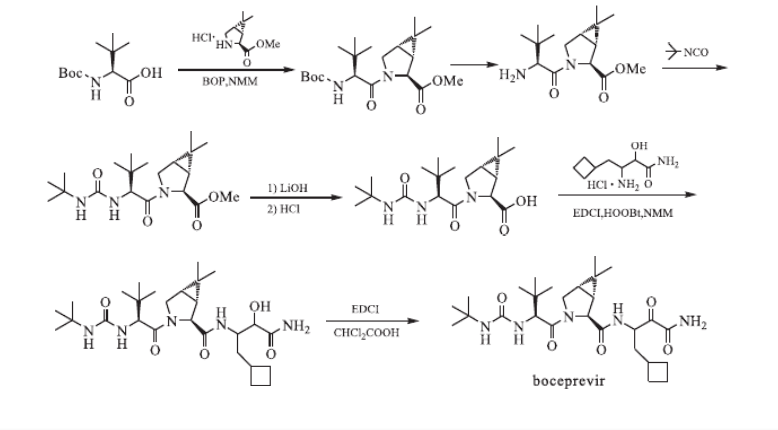
screenshot-wenku baidu com 2015-04-23 09-24-00

……………………

J Med Chem,2006,49(20):6074-6086.

……………………………………….

WO2004/113294 A1

…………..

MSN LABORATORIES LIMITED; THIRUMALAI RAJAN, Srinivasan; ESWARAIAH, Sajja; VENKAT REDDY, Ghojala; SAHADEVA REDDY, Maramreddy Patent: WO2014/61034 A1, 2014 ;

………………………..

WO2013066734A1

MERCK SHARP and DOHME CORP.; WU, George, G.; ITOH, Tetsuji; MCLAUGHLIN, Mark; LIU, Zhijian; QIAN, Gang Patent:WO2013/66734 A1, 2013 ;

Example 1: Cyclobutylacetonitrile

Figure imgf000029_0001

Step 1 : Cyclobutylmethyl methanesulfonate

Figure imgf000029_0002

A 50-L jacket vessel was charged with DCM (20 L) (KF 34 ppm), and cyclobutylmethyl alcohol (5.0 kg, 58.0 mol) followed by TEA (8850 mL, 63.5 mol). The reaction mixture was cooled to approximately -10°C, and MsCl (4735 mL, 60.8 mol) was added via an addition funnel dropwise over approximately 3 hours, while the temperature was maintained below -5°C. The reaction resulted in a yellow slurry after 70 minutes of aging. H20 (8 L) was added to give a clear solution, which was agitated for 15 minutes. Then, the organic layer was separated. H20 (8 L) was charged to the organic layer. The mixture was agitated for 20 minutes, and then the organic layer was separated. Brine (10% solution, 4 L) was charged to the organic layer. The mixture was agitated for 20 minutes, and then the organic layer was separated. The organic phase was concentrated by vacuum distillation at approximately 30°C to 40°C and 28 inches Hg, resulting in a light brown residue (10.0 kg crude, approximately 9.5 kg product assumed, 58.0 mol, approximately 100% yield). A portion of the material was purified by distillation for characterization.

1H NMR (CDC13, 400 MHz): δ 4.18 (d, J = 6.8 Hz, 2H), 3.00 (s, 3H), 2.71 (m, 1H), 2.11 (m, 2H), 2.00-1.80 (m, 4H).

Step 2: Cyclobutylacetonitrile

Figure imgf000030_0001

A 100-L RB flask was set up with a mechanical stirrer, a thermocouple, an addition funnel, a N2 inlet, and a condenser that is connected to a scrubber (11 L bleach and 5 L 2N NaOH). DMSO (30.3 L) (KF approximately 680 ppm) and NaCN (3030 g, 61.8 mol) were charged to the flask. The mixture was heated to approximately 75 °C by steam to dissolve most chunks of NaCN, resulting in a turbid solution. The product of Step 1 (9476 g, 57.7 mol) in DMSO (4 L) was added dropwise in 1 hour, 40 minutes while the temperature was maintained below approximately 87°C. The reaction was aged at approximately 85°C for 3 hours and cooled down to RT. H20 (24 L) and MTBE (24 L) were charged. The mixture was agitated, and the organic layer was separated. The aqueous layer was extracted with MTBE (18 L), and the combined organic layer was agitated with H20 (12 L) and separated. The organic layer was washed with 10% brine (4 L and 2 L), and concentrated by vacuum distillation at approximately 45°C and approximately 20 inches Hg, giving a light brown liquid (7.235 kg crude, 73.3% by GC assay, 5.30 kg product assay, 55.7 mol, 96.5% for two steps).

Ή NMR (CDCI3, 400 MHz): δ 2.65 (m, 1H), 2.41 (d, J – 5.2 Hz , 2H), 2.18 (t, J = 6.8 Hz, 2H), 2.00-1.80 (m, 4H).

Example 2: Ethyl 4-cyclobutyl-3-oxobutanoate

Figure imgf000030_0002

THF (20 L) and zinc dust (2.75 kg, 42.0 mol) were charged under N2 to a 50-L jacketed vessel with a thermocouple, an addition funnel and a condenser. The mixture was stirred, and chlorotrimethylsilane (0.571 kg, 5.26 mol) was added at RT. The mixture was heated at 67°C for 30 minutes. Cyclobutylacetonitrile (2.5 kg, 26.3 mol, product of Example 1) was added at 67°C. Ethyl bromoacetate (6.108 kg, 36.6 mol) was added to the mixture at approximately 67°C to 70°C for over 3 hours. After the addition, the mixture was heated at approximately 70°C for 1 hour and then cooled to approximately 0°C to 5°C. 10% H2S04 (aq.) (35 L, 33.9 mol, approximately 1.3 eq.) was added slowly. The mixture was aged at RT for 1 hour. The organic layer was separated and subsequently washed with 10% aqueous citric acid (15 L, 7.88 mol, 0.3 eq.), 10% aqueous Na2S205 (25 L), 10% Na2S205 (aq.) (10 L), and 10% brine (10 L). The organic layer was concentrated in vacuo to afford the crude product (4.08 kg assay, 22.15 mol) in 84% yield. A part of the material was purified by distillation for characterization (with NMR in CDC13, approximately 10-15% enol-form of the compound was observed, major keto-form as shown.)

1H NMR (CDC13, 400 MHz): δ 4.19 (q, J = 7.1 Hz, 2 H), 3.38 (s, 2 H), 2.75-2.65 (m, 1H), 2.65-2.63 (m, 2 H), 2.19-2.08 (m, 2 H), 1.95-1.79 (m, 2 H), 1.73-1.60 (m, 2 H), 1.27 (t, J = 7.1 Hz, 3 H).

13C NMR (CDC13, 400 MHz): δ 202.2, 167.2, 61.3, 50.0, 49.3, 31.1, 28.4, 18.7,

14.1.

Example 3: Ethyl 2-chloro-4-c clobut l-3-oxobutanoate

Figure imgf000031_0001

Methyl t-butyl ether (30.2 L), and the crude product of Example 2 (3.78 kg assay,

20.52 mol) were charged to a 100-L RB flask with an overhead stirrer, an addition funnel, a thermometer, and an acid scrubber (with 2N NaOH at RT under N2). Sulfuryl chloride (2.98 kg,

22.06 mol) was added at approximately 20°C to 23 °C over 1.5 hours. After addition, the mixture was cooled to approximately 5°C and then quenched with 1M K3P04 (aq.) (23.6 L). The organic layer was separated and concentrated under vacuum to afford the crude chloride (4.487 kg, assume 100% yield, 20.52 mol), which was used in the next reaction without purification. A part of the material was purified by distillation for characterization (with NMR in CDC13,

approximately 10% enol-form of the compound was observed, major keto-form was shown below).

1H NMR (CDCI3, 400 MHz): δ 4.73 (s, 1 H), 4.29 (q, J = 7.1 Hz, 2 H), 2.89-2.79 (m, 2 H), 2.79-2.69 (m, 1 H), 2.20-2.07 (m, 2 H), 1.98-1.78 (m, 2 H), 17.3-1.61 (m, 2 H), 1.32 (t, J = 7.1 Hz, 3 H).

13C NMR (CDC13, 400 MHz): δ 198.1, 165.0, 63.1, 60.9, 45.7, 31.0, 28.3, 18.7, 13.9. Example 4: -C clobut l-l-ethox -l,3-dioxobutan-2-yl 4-methoxybenzoate

Figure imgf000032_0001

The crude chloride product of Example 3 (4.487 kg assumed, 20.52 mol) and Ν,Ν-dimethylformamide (11.2 L) were charged to a 50-L jacketed vessel with a thermocouple and a condenser at RT under N2. -Methoxybenzoic acid (3.75 kg, 24.62 mol) and TEA (2.285 kg, 22.57 mol) were added to the mixture. The mixture was heated at 55°C for 14 hours. The mixture was cooled to approximately 10°C, diluted with methyl tert-butyl ether (24 L), quenched with ¾0 (24 L). The organic layer was separated and subsequently washed with IN NaHC03 (20 L), then H20 (18 L) with NaCl (0.90 kg) and NaHC03 (0.45 kg). The organic layer was separated and concentrated in vacuo to afford the product (6.07 kg, 18.15 mol) in 88% assay yield. A part of the material was purified by distillation for characterization.

1H NMR (CDCI3, 400 MHz): δ 8.09 (dt, J = 2.1, 9.0 Hz, 2 H), 6.96 (dt, J = 2.1, 9.0 Hz, 2 H), 5.66 (s, 1 H), 4.31 (q, J = 7.1 Hz, 2 H), 3.88 (s, 3 H), 2.86 (dd, J = 5.7, 7.6 Hz, 2 H, 2.83-2.74 (m, 1 H), 2.23-2.12 (m, 2H), 1.98-1.80 (m, 2 H), 1.74-1.65 (m, 2 H), 1.32 (t, J = 7.1 Hz, 3 H).

Example 5: (2 -3-Amino-4-cyclobutyl-l-ethoxy-l-oxobut-2-en-2-yl 4-methoxybenzoate

Figure imgf000032_0002

The crude product of Example 4 (5.97 kg, 17.85 mol), 1-propanol (12 L), and EtOH (12 L) were charged to a 100-L RB flask with an overhead stirrer and a thermometer at RT under N2. NH4OAc (4.82 kg, 62.5 mol) was added to the mixture. The mixture was heated at 50°C for 1 hour. The mixture was concentrated in vacuo to remove H20 azeotropically with continuous addition of 1-propanol (total approximately 24 L). The mixture was solvent-switched to iPrOAc (24 L) under vacuum. The mixture was quenched with 2M K3P04 (aq.) (17.85 L). The organic layer was separated and washed with 15% brine (18 L) twice. The organic layer was concentrated in vacuo to afford crude enamine product (5.95 kg, assume 100% yield, 17.85 mol).

1H NMR (CDC13, 400 MHz): δ 8.12 (d, J= 8.0 Hz, 2H), 6.98 (d, J= 8.0 Hz, 2H),

6.02 (s, 2H), 4.15 (q, J= 8 Hz, 2H), 3.89 (s, 3H), 2.60-2.53 (m, 1H), 2.33 (s, 2H), 2.13-2.06 (m,

2H), 1.91-169 (m, 4H), 1.20 (t, J = 8 Hz, 3H).

13C NMR (CDC13, 400 MHz): δ 165.7, 167.6, 163.6, 153.9, 132.1, 122.2, 113.9,

113.7, 112.5, 59.6, 44.5, 37.8, 33.9, 28.5, 28.4, 18.5, 14.4.

Example 6A: 3-[(tert-Butoxycarbonyl)amino]-4-cyclobutyl-l-ethoxy-l-oxobut-2-yl 4- methoxybenzoate

Figure imgf000033_0001

The crude product of Example 5 (5.92 kg, 17.75 mol) and MeOH (23.7 L) were charged to a 100-L RB flask with an overhead stirrer, a thermocouple, and an addition funnel at RT under N2. Di-tert-butyl dicarbonate (5.81 kg, 26.6 mol) and sodium cyanoborohydride

(1.171 kg, 18.64 mol) were charged to the mixture. A solution of glycolic acid (1.485 kg, 19.53 mol) in MeOH (3.55 L) was added to the mixture drop wise at a rate to maintain the temperature at approximately 15°C to 22°C. The mixture was aged at approximately 20°C for approximately 8-10 hours. EtOAc (3.49 L, 35.5 mol) and a solution of glycine (0.866 kg, 11.4 mol) in H20 (11 L) were added to the mixture at RT. Then, 2M K3P04 (aq ) solution (17.75 L) was added. The mixture was aged for 20 minutes. The mixture was extracted with methyl tert-butyl ether (28 L). The organic layer was separated and washed subsequently with 2M K3P04 (aq.) solution (17.75 L), 10% brine (17.75 L, twice). The organic layer was concentrated under vacuum to afford the desired two diastereoisomers in almost 1 : 1 ratio (7.30 kg, 16.76 mol) in 94% assay yield.

1H NMR (CDCI3, 400 MHz): δ 8.02 (d, J= 8.0 Hz, 2H), 6.94 (d, J= 8.0 Hz, 1H),

6.93 (d, J= 8.0 Hz, 1H), 5.30 (d, J= 4.0 Hz, 0.5H), 5.17 (d, J= 4.0 Hz, 0.5H), 4.80 (d, J= 8.0 Hz, 0.5H), 4.63 (d, J = 8.0 Hz, 0.5H), 4.27-4.18 (m, 3H), 3.86 (s, 3H), 2.50-2.30 (m, 1H), 2.15- 2.00 (m, 2H), 1.89-1.60 (m, 6H), 1.43 -1.42 (m, 9H), 1.27 (t, J= 8.0 Hz, 3H).

Example 6B: 3-[(tert-Butoxycarbonyl)amino]-4-cyclobutyl-l-ethoxy-l-oxobut-2-yl 4- methoxybenzoate (First alternate procedure)

Figure imgf000034_0001

The crude product of Example 5 (19.2 g, 58.0 mmol) and MeOH (100 mL) were charged to an autoclave with a thermocouple at RT. Di-tert-butyl dicarbonate (19.0 g, 87.0 mmol) and 5% Ir/CaC03 (10.0 g) were charged to the mixture. The mixture was heated to 40°C under sealed conditions, where H2 was transferred until the internal pressure became

approximately 200 psig. The mixture was heated at 40°C at approximately 200 psig for 20 hours. The reaction mixture was cooled to RT and filtered to remove the solid to afford a clear solution. EtOAc (5.7 mL, 58 mmol) and a solution of glycine (2.8 g, 38 mmol) in H20 (37 mL) were added to the mixture at RT. Then, 2M K3P04 (aq ) solution (58 mL) was added. The mixture was aged for 20 minutes. The mixture was extracted with methyl tert-butyl ether (130 mL). The organic layer was separated and washed subsequently with 2M 3P04 (aq.) solution (58 mL), 10% brine (58 mL, twice). The organic layer was concentrated under vacuum to afford the desired two diastereoisomers in almost 1 :1 ratio (23 g, 52 mmol) in a 90% assay yield.

1H NMR (CDC13, 400 MHz): δ 8.02 (d, J= 8.0 Hz, 2H), 6.94 (d, J= 8.0 Hz, 1H), 6.93 (d, J= 8.0 Hz, 1H), 5.30 (d, J= 4.0 Hz, 0.5H), 5.17 (d, J- 4.0 Hz, 0.5H), 4.80 (d, J= 8.0 Hz, 0.5H), 4.63 (d, J= 8.0 Hz, 0.5H), 4.27-4.18 (m, 3H), 3.86 (s, 3H), 2.50-2.30 (m, 1H), 2.15- 2.00 (m, 2H), 1.89-1.60 (m, 6H), 1.43 -1.42 (m, 9H), 1.27 (t, J= 8.0 Hz, 3H). Example 6C: 3-[(tert-Butoxycarbonyl)amino]-4-cyclobutyl-l-ethoxy-l-oxobut-2-yl 4- methoxybenzoate (Second alternate procedure)

Figure imgf000035_0001

NaBH4 (0.23 g, 6 mmol) and THF (5 mL) were charged to a 100-ml RB flask. The mixture was cooled to -10°C. Methanesulfonic acid (0.78 mL, 12 mmol) was charged slowly into the mixture at less than -8°C and the mixture was agitated for 15 minutes. A 0.3M solution of the crude product of Example 5 (1 g, 3 mmol) in THF was charged slowly into the mixture at below -8°C. The mixture was agitated for 16 hours. H20 (1 ml) was charged slowly into the mixture at 0°C, and the mixture was warmed to RT. Di-tert-butyl dicarbonate (1.31 g, 6 mmol) and 2M aqueous NaOH (3.75 ml) were charged into the mixture. The mixture was agitated for 2 hours at RT. An assay of the reaction mixture gave the product (1.23 g, 94%). Example 7A: Ethyl 3-f(tert-buyoxycarbonyl)aminoJ-4-cyclobutyl-2-hydroxybutanoate

Figure imgf000035_0002

The crude product of Example 6A (6.0 kg, 13.78 mol) and MeOH (24 L) were charged into a 10-gallon autoclave at RT. The mixture was heated to 70°C under sealed conditions, where NH4 was transferred until the internal pressure became approximately 80 psig. The mixture was heated at 70°C at approximately 80 psig for 22 hours. The mixture was cooled to RT. NH4 was vented at RT. DMSO (5.4 L) was added to the mixture, and the mixture was aged at RT for 1 hour. The mixture was transferred into a 100-L RB flask with an overhead stirrer and a thermometer. The autoclave was rinsed with MeOH, and the mixture and rinse liquid were combined. This combined mixture was concentrated to remove MeOH under vacuum. Then, the flask was rinsed with DMSO (2.6 L) to wash the walls. Total DMSO volume was 8.0 L. The mixture was heated to 70°C to dissolve the solid to afford a clear solution, which was cooled to RT slowly to afford a slurry. ¾0 (32.0 L) was charged for approximately 1.5 hours at 20°C to 27°C. After addition of H20, the mixture was aged at RT overnight and then cooled to 0°C to 5°C for 4 more hours. The mixture was filtered to collect the solid, which was washed with cold H20 (12 L). The solid was dried at 40°C in a vacuum oven with N2 sweep (approximately 150 torr) to afford the crude product 5.63 kg (3.75 kg).

1H NMR (DMSO-d6, 400 MHz): δ 7.20-7.15 (m, 2H), 7.25 (d, J= 12.0 Hz, 0.5H), 5.92 (d, J= 12.0 Hz, 0.44H), 5.52-5.44 (m, 1H), 3.83-3.81 (m, 0.5H), 3.74-3.62 (m, 1.5H), 2.29- 2.22 (m, 1H), 2.03-1.92 (m, 2H), 1.83-1.70 (m, 2H), 1.62-1.24 (m, 13H).

13C NMR (DMSO-d6, 400 MHz) δ 175.2, 174.6, 155.5, 155.4, 78.0, 77.9, 74.4, 72.7, 51.9, 51.8, 38.8, 35.8, 33.3, 33.2, 33.0, 28.8, 28.7, 28.6, 28.5, 28.4, 28.2, 18.6, 18.5.

Example 7B: Ethyl 3-[(tert-buyoxycarbonyl)amino]-4-cyclobutyl-2-hydroxybutanoate

Figure imgf000036_0001

The crude product of Example 6A (6.0 g, 84 wt%, 11.57 mmol) and CaCl2 (1.413 g, 12.73 mmol) and 7N NH3 in MeOH (60 mL, 420 mmol) were charged into a 40 mL vial. The mixture was aged at approximately 33°C for 3 hours. The mixture was concentrated under reduced pressure to afford the product (7.8 g crude, assume 100% yield) as a tan solid. Example 8: Ethyl 3-amino-4-cyclobutyl-2-hydroxybutanoate hydrochloride

Figure imgf000037_0001

IP A (13.8 L) was charged into a 100-L RB flask with a mechanical stirrer, dry and clean with a thermometer and an addition funnel, followed by addition of the product of Example 7 (3.46 kg assay, 12.70 mol). HCI in IPA (5-6 M 13.8 L, 69 mol) was slowly added into the reaction mixture. The reaction mixture was heated at 50°C for 4 hours. The mixture was cooled to RT. Then, MTBE (28 L) was added to the mixture over 30 minutes. The reaction mixture was cooled to 0°C to 5°C by MeOH/ice bath for 1.5 hour. The mixture was filtered to collect the solid, which was washed with MTBE (7 L) twice. The wet cake was dried under vacuum with N2 and sweep overnight to afford the product as an off-white solid (2.15 kg, 10.30 mol) in 76.6% overall yield for Examples 5-8.

1H NMR (DMSO-d6, 400 MHz): δ 8.20-7.95 (m, 3H), 7.54-7.44 (m, 2H), 6.46 (d, J= 4.0 Hz, 0.5H), 6.26 (d, J= 8.0 Hz, 0.5H), 4.22 (s, 0.5H), 3.98 (s, 0.5H), 3.26 (s, 0.5H), 3.10 (d, J= 4.0 Hz, 0.5H), 2.45-2.36 (m, 1H), 2.00-1.96 (m, 2H), 1.81-1.39 (m, 6H).

13C NMR (DMSO-d6, 400 MHz) δ 174.1, 173.6, 71.2, 69.8, 51.7, 51.5, 36.0, 34.6,

31.7, 31.5, 28.0, 27.8, 27.7, 18.3, 18.1.

Exam le 9: Ethyl 3-amino-4-cyclobutyl-2-hydroxybutanoate hydrochloride (Recrystallization)

Figure imgf000037_0002

H20 (3.0 L), CH3CN (6 L) and the product of Example 8 (2.00 kg, 9.58 mol) were charged to a 100-L RB flask with an overhead stirrer, a thermocouple and a condenser at RT under N2. The mixture was heated to 65°C to get a clear solution. The mixture was cooled to 50°C to get a thin slurry. CH3CN (6.0 L) was added at 50°C for over 1 hour. The mixture was cooled to 40°C. CH3CN (9.0 L) was added at 40°C for over 1 hour. The mixture was cooled to 30°C. CH3CN (18 L) was added at 30°C. The mixture was cooled to approximately 0°C to 5°C and stirred for 1 hour before filtration. The mixture was filtered, washed with CH3CN (4 L) twice, and dried with N2 stream to afford the recrystallized product as a white solid (1.887 kg, 9.04 mol, 94% isolated yield).

Ή NMR (DMSO-d6, 400 MHz): δ 8.20-7.95 (m, 3H), 7.54-7.44 (m, 2H), 6.46 (d, J= 4.0 Hz, 0.5H), 6.26 (d, J= 8.0 Hz, 0.5H), 4.22 (s, 0.5H), 3.98 (s, 0.5H), 3.26 (s, 0.5H), 3.10 (d, J= 4.0 Hz, 0.5H), 2.45-2.36 (m, 1H), 2.00-1.96 (m, 2H), 1.81-1.39 (m, 6H).

13C NMR (DMSO-d6, 400 MHz): δ 174.1, 173.6, 71.2, 69.8, 51.7, 51.5, 36.0, 34.6, 31.7, 31.5, 28.0, 27.8, 27.7, 18.3, 18.1.

Example 10: (lR,2S,5S)-N-(4-amino-l-cyclobutyl-3-hydroxy-4-oxobutan-2-yl)-3-[N-(t rt- butylcarbamoyl)-3-methyl-I^valyl]-6,6-dimethyl-3-azabicyclo[3A ]h

Figure imgf000038_0001

Hydroxybenzotiazole (HOBT, 4.83 g, 31.5 mmol), water (4.5 mL), (1R,2S,5S)-N- (4-amino- 1 -cyclobutyl-3 -hydroxy-4-oxobutan-2-yl)-3- [N-(tertbutylcarbamoyl)-3 -methylvalyl] – 6,6-dimethyl-3-azabicyclo[3.1.0]hexane-2-carboxamide (30 g, 60.6 mmol), HCl salt product of Example 9 (13.79 g, 66.1 mmol), ethyl acetate (120 mL) and N-methyl-2-pyrrolidone (NMP, 30 mL) were added at 19°C to a three-necked 500mL RB flask equipped with an overhead stirrer and a thermocouple. N-methylmorpholine (13.3 mL, 121 mmol) was added to the mixture at 19°C. l-Ethyl-3-(3-dimethylaminopropyl) carbodiimide (EDCI, 15.0 g, 78.0 mmol) was added to the mixture at 21°C. Ethyl acetate (30 mL) was then added to the mixture at 18°C.

The mixture was agitated at approximately 20°C to 24°C for about 16 hours. After the reaction was complete, ethyl acetate (120 mL) was added at 23°C. The mixture was washed with 10% aqueous potassium carbonate solution (180 mL) twice at approximately 20°C to 24°C. Then, the organic layer was washed with 3.3% aqueous HCl (180 mL) twice at approximately 12°C to 18°C. The organic layer then was washed with 10% aqueous potassium carbonate solution (180 mL) and water (180 mL). The organic layer was concentrated to approximately 100 mL volume and was added to heptane (900 mL) dropwise at approximately -10°C to -5°C to precipitate the product. The mixture was filtered and washed with heptane. The solid was dried in vacuo at approximately 50°C to 60°C overnight. 31.3 g of the product compound was obtained as a white solid in 99% yield. The above procedure is in accordance with the processes disclosed in U.S. Patent Application Publication No. US2010/519485 Al, the disclosures of which are herein

incorporated by reference. It will be appreciated that the processes disclosed therein can be modified without undue experimentation to prepare specifically desired materials. The results of H NMR and C NMR for the above procedure were consistent with those reported in U.S. Patent Application Publication No. US2010/519485 Al .

Example 11: (lR,5S)-N-[3-Amino-l-(cyclobutylmethyl)-2,3-dioxopropyl]-3-[2(S)-[[[(l,l- dimethylethyl)amino]carbonyl]amino]-3,3-dimethyl-l-oxobutyl]-6,6-dimazabicyclo[3.1.0]hexan-2(S)-carboxamide

Figure imgf000039_0001

Acetic acid (27.0 mL, 472 mmol) and MTBE (240 mL) at RT were added to a three-necked 1L RB flask equipped with an overhead stirrer, a thermocouple and a chiller. The mixture was cooled to approximately 14°C, then the product from Example 10 (30.0 g, 57.5 mmol) was charged at approximately 14°C. The mixture was cooled to approximately 11°C. 2,2,6,6-Tetramethylpiperidin-l-yl)oxyl (TEMPO, 9.97 g, 63.8 mmol) was added to the mixture. A pre-mixed solution containing 40% aqueous sodium permanganate (17.02 g, 48.0 mmol) and water (99 mL) at approximately 12°C to 14°C was added to the reaction mixture over about 2 hours. The mixture was agitated at approximately 12°C until completion.

After the reaction was complete, the mixture was cooled to approximately 1°C. Water (30 mL) was added, then aqueous layer was separated. The organic layer was then washed with water (150 mL) at approximately 0°C to 10°C, and then washed with a pre-mixed solution of sodium ascorbate (30.0 g, 151 mmol) in water (150 mL) and concentrated HCl (12.42 mL, 151 mmol) at approximately 5°C to 15°C. The mixture was agitated at approximately 5°C to 10°C for 2 hours; then aqueous layer was separated. The organic layer was further washed with 2.5 N HCl (120 mL) at approximately 0°C to 10°C and with water (150 mL) at

approximately 0°C to 10°C four times. The organic layer (approximately 170 mL) was then added dropwise to heptane (720 mL) at approximately -20°C to -15°C to precipitate the product. The mixture was then warmed to -5°C and filtered to collect the solid. The solid was washed with heptane, dried in a vacuum oven with nitrogen sweep at room temperature to afford 27.1 g of desired product of Formula II as a white solid in 91% yield.

The above procedure is in accordance with the processes disclosed in U.S.

Provisional Patent Application No.61/482,592 (unpublished), the disclosures of which are herein incorporated by reference. It will be appreciated that the processes disclosed therein can be modified without undue experimentation to prepare specifically desired materials. The results of 1H NMR and 13C NMR for the above procedure were consistent with those reported in U.S. Provisional Patent Application No.61/482,592 (unpublished).

……………………………………………………………….

EXTRAS some images are not visible…….see………..http://www.allfordrugs.com/2015/08/02/boceprevir-%D0%B1%D0%BE%D1%86%D0%B5%D0%BF%D1%80%D0%B5%D0%B2%D0%B8%D1%80-%D8%A8%D9%88%D8%B3%D9%8A%D8%A8%D8%B1%D9%8A%D9%81%D9%8A%D8%B1-%E6%B3%A2%E6%99%AE%E7%91%9E%E9%9F%A6/

HPLC

MASS SPECTROSCOPY

MASS GRAPH

IR GRAPH

1H NMR GRAPH

NMR GRAPH

13 C NMR GRAPH

WILL BE UPDATED[14C]-Boceprevir NMR spectra analysis, Chemical CAS NO. 394730-60-0 NMR spectral analysis, [14C]-Boceprevir H-NMR spectrum
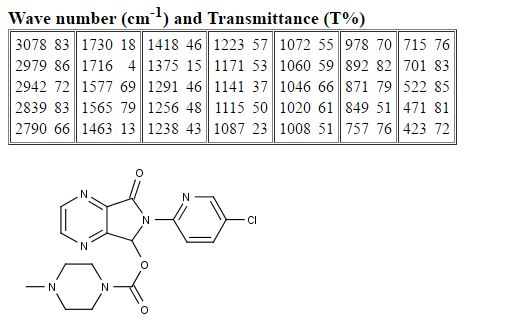
13C NMR PREDICT

[14C]-Boceprevir NMR spectra analysis, Chemical CAS NO. 394730-60-0 NMR spectral analysis, [14C]-Boceprevir C-NMR spectrum

WO2010138889A1* 28 May 2010 2 Dec 2010 Concert Pharmaceuticals, Inc. Peptides for the treatment of hcv infections
WO2011125006A2* 31 Mar 2011 13 Oct 2011 Pfizer Inc. Novel sultam compounds
US20110034705 * 17 Dec 2008 10 Feb 2011 Schering-Plough Corporation Process For the Synthesis of 3- Amino-3-Cyclobuthylmethyl-2-Hydroxypropionamide or Salts Thereof
US8188137 14 Aug 2009 29 May 2012 Avila Therapeutics, Inc. HCV protease inhibitors and uses thereof
US8524760 10 Apr 2012 3 Sep 2013 Celgene Avilomics Research, Inc. HCV protease inhibitors and uses thereof
EP2704570A1 * 2 May 2012 12 Mar 2014 Merck Sharp & Dohme Corp. Drug substances, pharmeceutical compositions and methods for preparing the same
WO2014061034A1* 17 Oct 2013 24 Apr 2014 Msn Laboratories Limited Process for preparation of boceprevir and intermediates thereof

References

Bacon, B et al. (March 2011). “Boceprevir for Previously Treated Chronic HCV Genotype 1 Infection”N Engl J Med. 364 (13): 1207–17.doi:10.1056/NEJMoa1009482PMC 3153125PMID 21449784.
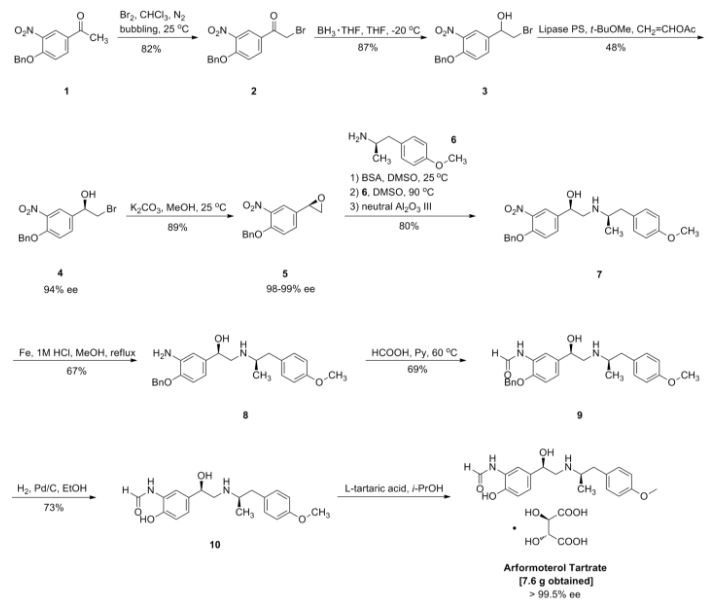
SYSTEMATIC (IUPAC) NAME
(1R,5S)-N-[3-Amino-1-(cyclobutylmethyl)-2,3-dioxopropyl]-3-[2(S)-[[[(1,1-dimethylethyl)amino]carbonyl]amino]-3,3-dimethyl-1-oxobutyl]-6,6-dimethyl-3-azabicyclo[3.1.0]hexane-2(S)-carboxamide
CLINICAL DATA
TRADE NAMES Victrelis
AHFS/DRUGS.COM Consumer Drug Information
MEDLINEPLUS a611039
LICENCE DATA US FDA:link
  • US: X (Contraindicated)
Oral
PHARMACOKINETIC DATA
PROTEIN BINDING 75% [1]
HALF-LIFE 3.4 hours [1]
IDENTIFIERS
394730-60-0 Yes
J05AE12
PUBCHEM CID 10324367
CHEMSPIDER 8499830 Yes
UNII 89BT58KELH Yes
CHEMBL CHEMBL218394 Yes
NIAID CHEMDB 398493
CHEMICAL DATA
FORMULA C27H45N5O5
 b1 b2 b3 b4

nmr1 nmr2 nmr3 nmr4 nmr5

////