New Drug Approvals

Home » FDA 2017 (Page 6)

Category Archives: FDA 2017

DRUG APPROVALS BY DR ANTHONY MELVIN CRASTO .....FOR BLOG HOME CLICK HERE

Blog Stats

  • 4,799,066 hits

Flag and hits

Flag Counter

Enter your email address to follow this blog and receive notifications of new posts by email.

Join 37.9K other subscribers
Follow New Drug Approvals on WordPress.com

Archives

Categories

Recent Posts

Flag Counter

ORGANIC SPECTROSCOPY

Read all about Organic Spectroscopy on ORGANIC SPECTROSCOPY INTERNATIONAL 

Enter your email address to follow this blog and receive notifications of new posts by email.

Join 37.9K other subscribers
DR ANTHONY MELVIN CRASTO Ph.D

DR ANTHONY MELVIN CRASTO Ph.D

DR ANTHONY MELVIN CRASTO, Born in Mumbai in 1964 and graduated from Mumbai University, Completed his Ph.D from ICT, 1991,Matunga, Mumbai, India, in Organic Chemistry, The thesis topic was Synthesis of Novel Pyrethroid Analogues, Currently he is working with AFRICURE PHARMA, ROW2TECH, NIPER-G, Department of Pharmaceuticals, Ministry of Chemicals and Fertilizers, Govt. of India as ADVISOR, earlier assignment was with GLENMARK LIFE SCIENCES LTD, as CONSUlTANT, Retired from GLENMARK in Jan2022 Research Centre as Principal Scientist, Process Research (bulk actives) at Mahape, Navi Mumbai, India. Total Industry exp 32 plus yrs, Prior to joining Glenmark, he has worked with major multinationals like Hoechst Marion Roussel, now Sanofi, Searle India Ltd, now RPG lifesciences, etc. He has worked with notable scientists like Dr K Nagarajan, Dr Ralph Stapel, Prof S Seshadri, etc, He did custom synthesis for major multinationals in his career like BASF, Novartis, Sanofi, etc., He has worked in Discovery, Natural products, Bulk drugs, Generics, Intermediates, Fine chemicals, Neutraceuticals, GMP, Scaleups, etc, he is now helping millions, has 9 million plus hits on Google on all Organic chemistry websites. His friends call him Open superstar worlddrugtracker. His New Drug Approvals, Green Chemistry International, All about drugs, Eurekamoments, Organic spectroscopy international, etc in organic chemistry are some most read blogs He has hands on experience in initiation and developing novel routes for drug molecules and implementation them on commercial scale over a 32 PLUS year tenure till date Feb 2023, Around 35 plus products in his career. He has good knowledge of IPM, GMP, Regulatory aspects, he has several International patents published worldwide . He has good proficiency in Technology transfer, Spectroscopy, Stereochemistry, Synthesis, Polymorphism etc., He suffered a paralytic stroke/ Acute Transverse mylitis in Dec 2007 and is 90 %Paralysed, He is bound to a wheelchair, this seems to have injected feul in him to help chemists all around the world, he is more active than before and is pushing boundaries, He has 100 million plus hits on Google, 2.5 lakh plus connections on all networking sites, 100 Lakh plus views on dozen plus blogs, 227 countries, 7 continents, He makes himself available to all, contact him on +91 9323115463, email amcrasto@gmail.com, Twitter, @amcrasto , He lives and will die for his family, 90% paralysis cannot kill his soul., Notably he has 38 lakh plus views on New Drug Approvals Blog in 227 countries......https://newdrugapprovals.wordpress.com/ , He appreciates the help he gets from one and all, Friends, Family, Glenmark, Readers, Wellwishers, Doctors, Drug authorities, His Contacts, Physiotherapist, etc He has total of 32 International and Indian awards

Verified Services

View Full Profile →

Archives

Categories

Flag Counter

FDA approved Trulance for adults with chronic idiopathic constipation (CIC).


Image result for TrulanceImage result for plecanatide

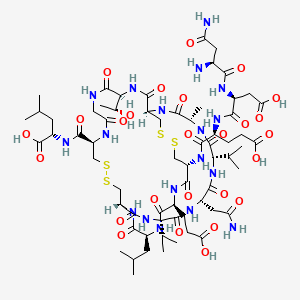
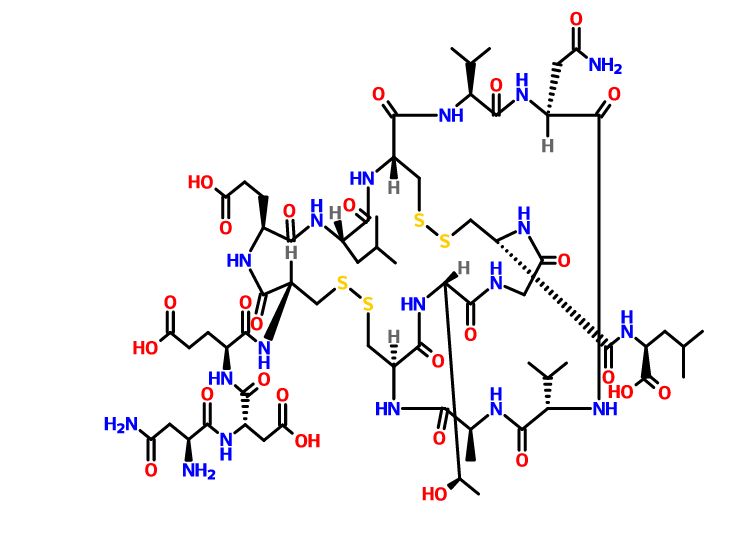
Plecanatide

FDA approved Trulance on January 19th 2017, a once-daily prescription medication for adults with chronic idiopathic constipation (CIC).

Image result for Trulance


Plecanatide (brand name Trulance), is a drug approved on January 2017 by the FDA for the treatment of chronic idiopathic constipation (CIC).[1] Plecanatide is a guanylate cyclase-C agonist. Plecanatide increases intestinal transit and fluid through a buildup of cGMP,.[2][3]

Plecanatide 普卡那肽 ليكاناتيد плеканатид

References

  1. Jump up^ “FDA approves Trulance for Chronic Idiopathic Constipation”. FDA.gov. U.S. Food and Drug Administration. Retrieved 20 January 2017.
  2. Jump up^ “TRULANCE package insert” (PDF). Trulance website. Synergy Pharmaceuticals Inc. 420 Lexington Avenue, Suite 2012 New York, New York 10170. Retrieved 20 January 2017.
  3. Jump up^ Thomas, RH; Luthin, DR (June 2015). “Current and emerging treatments for irritable bowel syndrome with constipation and chronic idiopathic constipation: focus on prosecretory agents.”. Pharmacotherapy. 35 (6): 613–30. doi:10.1002/phar.1594. PMID 26016701. Retrieved 20 January 2017.
Plecanatide
Clinical data
Trade names Trulance
License data
Routes of
administration
Oral
Legal status
Legal status
Identifiers
Synonyms SP-304
CAS Number 467426-54-6 Yes
PubChem (CID) 70693500
IUPHAR/BPS 9069
ChemSpider 28530494 
UNII 7IK8Z952OK Yes
KEGG D09948 Yes
ChEMBL CHEMBL2103867 
Chemical and physical data
Formula C65H104N18O26S4
Molar mass 1681.887 g/mol
3D model (Jmol) Interactive image


/////////Trulance, plecanatide

FDA approves drug to treat Duchenne muscular dystrophy


FDA approves drug to treat Duchenne muscular dystrophy

Feb. 9, 2017

The U.S. Food and Drug Administration today approved Emflaza (deflazacort) tablets and oral suspension to treat patients age 5 years and older with Duchenne muscular dystrophy (DMD), a rare genetic disorder that causes progressive muscle deterioration and weakness. Emflaza is a corticosteroid that works by decreasing inflammation and reducing the activity of the immune system.

Read more.

New FDA Logo Blue

Brigatinib, Бригатиниб, بريغاتينيب , 布格替尼 ,


ChemSpider 2D Image | Brigatinib | C29H39ClN7O2PImage result for BrigatinibFigure imgf000127_0001

Brigatinib, AP26113
Molecular Formula: C29H39ClN7O2P
Molecular Weight: 584.102 g/mol
CAS 1197953-54-0
2,4-Pyrimidinediamine, 5-chloro-N4-[2-(dimethylphosphinyl)phenyl]-N2-[2-methoxy-4-[4-(4-methyl-1-piperazinyl)-1-piperidinyl]phenyl]-
Бригатиниб[Russian][INN]
بريغاتينيب[Arabic][INN]
布格替尼[Chinese][INN]
5-chloro-N4-[2-(dimethylphosphinyl)phenyl]-N2-[2-methoxy-4-[4-(4-methyl-1-piperazinyl)-1-piperidinyl]phenyl]-2,4-pyrimidinediamine
AP-26113
MFCD29472221
UNII:HYW8DB273J
In 2016, orphan drug designation was assigned to the compound in the U.S. for the treatment of ALK, ROS1 or EGFR-positive non-small cell lung cancer (NSCLC).
fda 2017 approved

BRIGATINIB

Figure imgf000127_0001

TAKEDA

Image result for BRIGATINIBImage result for BRIGATINIB

Alunbrig FDA

4/28/2017

To treat patients with anaplastic lymphoma kinase (ALK)-positive metastatic non-small cell lung cancer (NSCLC) who have progressed on or are intolerant to crizotinib
Drug Trials Snapshot

L

Inventors Yihan Wang, Wei-Sheng Huang, Shuangying Liu, William C. Shakespeare, R. Mathew Thomas, Jiwei Qi, Feng Li, Xiaotian Zhu, Anna Kohlmann, David C. Dalgarno, Jan Antoinette C. Romero, Dong Zou
Applicant Ariad Pharmaceuticals, Inc.

Image result for Yihan Wang ARIAD

Yihan Wang

Dr. Wang founded Shenzhen TargetRx, Inc., in Aug 2014 and is now the  President/CEO. He  was the Associate Director of Chemistry at ARIAD  Pharmaceuticals, Inc., until April 2013.  Yihan Wang received his B.Sc. in  chemistry from University of Science and Technology of  China, and Ph.D.  in chemistry from New York University. Yihan’s research has focused    primarily on medicinal chemistry in the area of signal transduction drug  discovery,  integrating structure-based drug design, combinatorial  chemistry, and both biological and  pharmacological assays to identify  small-molecule clinical candidates. His career at ARIAD  includes innovative research in therapeutic areas involving bone diseases and cancer, and has  been a key contributor to the discovery of several clinical drugs, including Ponatinib (iClusigTM) (approved by the FDA for resistant CML in Dec 2012), Brigatinib (AP26113, Phase II for NSCLC), Ridoforolimus (Phase III for Sarcoma and multiple Phase II), and several pre-clinical compounds. Yihan is the primary author of approximately 90 peer-reviewed publications, patents, and invited meeting talks. Yihan is the editor of “Chemical Biology and Drug Design” and a reviewer for many professional journals.

Yihan is one of the co-founders of Chinese-American BioMedical Association (CABA) and currently on the Board of Directors.

EXAMPLE 19:

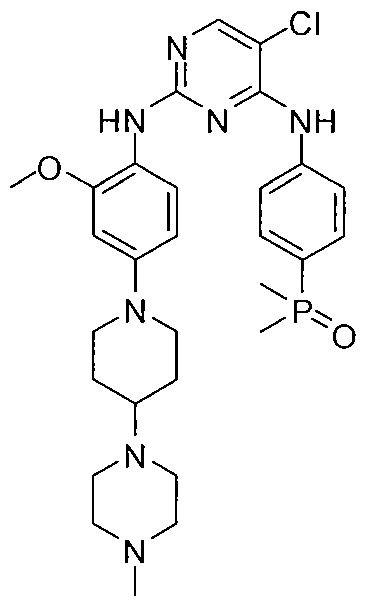
5-chloro-Λ’4-[4-(dimethylphosphoryl)phenyl]-Λr2-{2-methoxy-4-[4-(4-methylpiperazin-l- yl)piperidin-l-yI]phenyl}pyrimidine-2,4-diamine:

Figure imgf000127_0001

2,5-dichloro-N-[4-(dimethylphosphoryl)plienyl]pyrimiclin-4-amine: To a solution of 2,4,5- trichloropyrimindine (0.15ml, 1.31 mmol) in 1 mL of DMF was added 4- (dimethylphosphoryl)aniline (0.22 Ig, 1.31 mmol) and potassium carbonate (0.217g, 1.57mmol). The mixture was heated at 110 0C for 4h. It was basified with saturated sodium bicarbonate solution. The suspension was filtered and washed with ethyl acetate to give the final product (0.15g, 36% yield). MS/ES+: m/z=316.

l-[l-(3-methoxy-4-nitrophenyl)piperidin-4-yl]-4-methylpiperazine: To a solution of 5- fluoro-2-nitroanisooIe (0.5g, 2.92 mmol) in 3 mL of DMF was added l-methyl-4- (piperidin)piperazine (0.536g, 2.92 mmol) and potassium carbonate (0.808, 5.84 mmol). The mixture was heated at 120 0C for 18h. The mixture was basified with saturated sodium bicarbonate solution and extracted with ethyl acetate. The organic layer was purified by chromatography to give final product as yellow solid (0.95g, 95% yield). MS/ES+: m/z=334.

2-methoxy-4-[4-(4-methylpiperazin-l-yl)piperidin-l-yl]aniline: The a solution of 1 -[I -(3- methoxy-4-nitrophenyl)piperidin-4-yl]-4-methylpiperazine (0.3g, 0.90 mmol) in 10 mL of ethanol purged with argon was added 10% Palladium on carbon (0.06Og). The hydrogenation was finished under 30psi after 4h. The mixture was passed through Celite to a flask containing HCl in ethanol. Concentration of the filtrate gave the final product (0.15g, 88% yield). MS/ES+: m/z=334.

S-chloro-JSP-ft-ζdimethylphosphorytyphenyll-rf-ft-methoxy^-ft-ø-methylpiperazin-l- yl)piperidin-l-yl]phenyl}pyrimidine-2,4-diamine: To the compound 2,5-dichloro-N-[4-

(dimethylphosphoryl)phenyl]pyrimidin-4-amine (0.005g, O.lόmmol) in ImL of 2-methoxyethanol was added 2-methoxy-4-[4-(4-methylpiperazin-l-yl)piperidin-l-yl]aniline (0.7 Ig, 0.16 mmol). The mixture was stirred at 1100C for 18h. The mixture was basified with saturated sodium bicarbonate solution and extracted with limited amount of ethyl acetate. The aqueous layer was purified by chromatography to give the final product (0.015g, 20% yield). MS/ES+: m/z=583.

Image result for Brigatinib
SYNTHESIS
WILL BE ADDED WATCH OUT………….
CONTD………..

SOME COLOUR

 
Dual ALK EGFR Inhibitor AP26113 is an orally available inhibitor of receptor tyrosine kinases anaplastic lymphoma kinase (ALK) and the epidermal growth factor receptor (EGFR) with potential antineoplastic activity. Brigatinib binds to and inhibits ALK kinase and ALK fusion proteins as well as EGFR and mutant forms. This leads to the inhibition of ALK kinase and EGFR kinase, disrupts their signaling pathways and eventually inhibits tumor cell growth in susceptible tumor cells. In addition, AP26113 appears to overcome mutation-based resistance. ALK belongs to the insulin receptor superfamily and plays an important role in nervous system development; ALK dysregulation and gene rearrangements are associated with a series of tumors. EGFR is overexpressed in a variety of cancer cell types.
Figure
Structures of select ALK inhibitors.

Brigatinib (previously known as AP26113) is an investigational small-molecule targeted cancer therapy being developed by ARIAD Pharmaceuticals, Inc.[1] Brigatinib has exhibited activity as a potent dual inhibitor of anaplastic lymphoma kinase (ALK) and epidermal growth factor receptor (EGFR).

ARIAD has begun a Phase 1/2 clinical trial of brigatinib based on cancer patients’ molecular diagnoses in September 2011.

ALK was first identified as a chromosomal rearrangement in anaplastic large cell lymphoma (ALCL). Genetic studies indicate that abnormal expression of ALK is a key driver of certain types of non-small cell lung cancer (NSCLC) and neuroblastomas, as well as ALCL. Since ALK is generally not expressed in normal adult tissues, it represents a highly promising molecular target for cancer therapy.

Epidermal growth factor receptor (EGFR) is another validated target in NSCLC. Additionally, the T790M “gatekeeper” mutation is linked in approximately 50 percent of patients who grow resistant to first-generation EGFR inhibitors.[2] While second-generation EGFR inhibitors are in development, clinical efficacy has been limited due to toxicity thought to be associated with inhibiting the native (endogenous or unmutated) EGFR. A therapy designed to target EGFR, the T790M mutation but avoiding inhibition of native EGFR is another promising molecular target for cancer therapy.

Pre-clinical results

In 2010, ARIAD announced results of preclinical studies on brigatinib showing potent inhibition of the target protein and of mutant forms that are resistant to the first-generation ALK inhibitor, which currently is in clinical trials in patients with cancer. ARIAD scientists presented these data at the annual meeting of the American Association for Cancer Research (AACR) in Washington, D.C. in April.[3]

In 2011, ARIAD announced preclinical studies showing that brigatinib potently inhibited activated EGFR or its T790M mutant, both in cell culture and in mouse tumor models following once daily oral dosing. Importantly, the effective oral doses in these preclinical models were similar to those previously shown to be effective in resistant ALK models. When tested against the native form of EGFR, brigatinib lacked activity, indicating a favorable selectivity for activated EGFR. These data were presented at the International Association for the Study of Lung Cancer (IASLC) 14th World Conference on Lung Cancer.[4]

Brigatinib

Phase 3 ALTA 1L trial of brigatinib

In April 2015, ARIAD announced the initiation of a randomized, first-line Phase 3 clinical trial of brigatinib in adult patients with ALK-positive locally advanced or metastatic non-small cell lung cancer (NSCLC) who have not previously been treated with an ALK inhibitor. The ALTA 1L (ALK in Lung Cancer Trial of BrigAtinib in 1st Line) trial is designed to assess the efficacy of brigatinib in comparison to crizotinib based on evaluation of the primary endpoint of progression free survival (PFS).  Read Full Press Release

Phase 2 ALTA trial of brigatinib (AP26113)

In March 2014, ARIAD announced the initiation of its global Phase 2 ALTA (ALK in Lung Cancer Trial of brigatinib (AP26113) in patients with locally advanced or metastatic NSCLC who test positive for the ALK oncogene and were previously treated with crizotinib. This trial has reached full enrollment of approximately 220 patients and explores two different dose levels. Read Full Press Release

Phase 1/2 study of oral ALK inhibitor brigatinib (AP26113)

The international Phase 1/2 clinical trial of brigatinib (AP26113) is being conducted in patients with advanced malignancies, including anaplastic lymphoma kinase positive (ALK+) non-small cell lung cancer (NSCLC). Patient enrollment in the trial is complete, with the last patient enrolled in July 2014. The primary endpoint in the Phase 2 portion of the trial is overall response rate. In April 2016, ARIAD announced updated clinical data from the trial. Read Full Press Release

Expanded Access Study of brigatinib

The purpose of this Expanded Access Program (EAP) is to provide brigatinib for those patients with locally advanced and/or metastatic patients with ALK+ NSCLC on an expanded access basis due to their inability to meet eligibility criteria for on-going recruiting trials, inability to participate in other clinical trials (e.g., poor performance status, lack of geographic proximity), or because other medical interventions are not considered appropriate or acceptable.

About Brigatinib

Brigatinib (AP26113) is an investigational, targeted cancer medicine discovered internally at ARIAD Pharmaceuticals, Inc. It is in development for the treatment of patients with anaplastic lymphoma kinase positive (ALK+) non-small cell cancer (NSCLC) whose disease is resistant to crizotinib. Brigatinib is currently being evaluated in the global Phase 2 ALTA (ALK in Lung Cancer Trial of AP26113) trial that is anticipated to form the basis for its initial regulatory review. ARIAD has also initiated the Phase 3 ALTA 1L trial to assess the efficacy of brigatinib in comparison to crizotinib. In June 2016, an Expanded Access Study of brigatinib will begin. More information on brigatinib clinical trials, including the expanded access program (EAP) for ALK+ NSCLC can be found here.

Brigatinib was granted orphan drug designation by the U.S. Food and Drug Administration (FDA) in May 2016 for the treatment of certain subtypes of non-small cell lung cancer (NSCLC). The designation is for anaplastic lymphoma kinase-positive (ALK+), c-ros 1 oncogene positive (ROS1+), or epidermal growth factor receptor positive (EGFR+) non-small cell lung cancer (NSCLC). Brigatinib received breakthrough therapy designation from the FDA in October 2014 for the treatment of patients with ALK+ NSCLC whose disease is resistant to crizotinib. Both designations were based on results from an ongoing Phase 1/2 trial that showed anti-tumor activity of brigatinib in patients with ALK+ NSCLC, including patients with active brain metastases.

We are on track to file for approval of brigatinib in the U.S. in the third quarter of 2016.

Brigatinib.png

PATENT

WO 2016065028

https://google.com/patents/WO2016065028A1?cl=ru

Brigatinib has the chemical formula C29H39QN7G2P which, corresponds to a formula weight of 584.09 g/moL Its chemical structure is shown below:

Brigatinib is a multi-targeted tyrosine-kinase inhibitor useful for the treatment of non-small cell lung cancer (NSCLC) and other diseases, it is a potent inhibitor of ALK (anaplastic lymphoma kinase} and is in clinical development for the treatment of adult patients with ALK-driven NSCLC. Crizotinib (XALKOR!®) is an FDA approved drug for first-line treatment of ALK-positive NSCLC. “Despite initial responses to crizotinib, the majority of patients have a relapse within 12 months, owing to the development of resistance.” Shaw et al., New Eng. J. Med. 370:1 189-97 2014. Thus, a growing population of cancer patients are in need of new and effective therapies for ALK-positive cancers.

Brigatinib is also potentially useful for treating other diseases or conditions in which ALK or other protein kinases inhibited by brigatinib are implicated. Such kinases and their associated disorders or conditions are disclosed in WO 2009/143389, both of which are hereby incorporated herein by reference for all purposes.

FIG. 1 is a synthetic scheme for brigatinib,

FIG. 6 is an 1H-Niv1R spectrum obtained for a sample of brigatinib dissolved in CD3OD. Normalised intensity is shown on the vertical axis and chemical shift (ppm) is shown on the horizontal axis.

FIG. 7 is a 13C-NMR spectrum obtained for a sample of brigatinib dissolved in CDCi3. Normalized intensity is shown on the vertical axis and chemical shift (ppm) is shown on the horizontal axis.

FIG. 8 is a mass spectral fragmentation pattern of a sample of brigatinib Form A. Relative abundance is shown on the vertical axis and atomic weight (m/z) is shown on the horizontal axis.

Table 2 summarizes the relevant chemical shift data of Form A obtained from

the Ή, and 13C-N R experiments. The number of signals and their relative intensity (integrals) confinri the number of protons and carbons in the structure of Form A of brigatinib. The 31P-NMR chemical shift for the single phosphorous atom in brigatinib was 43.6 ppm. These 1H and 13C-NMR chemical shift data are reported according to the atom numbering scheme shown immediately below:

1H-N R Assignments – 13C~N R Assignments

Table 2: 1H and 3C Chemical Shift Data (in ppm) of Form A of Brigatinib

[00118] With reference to Figure 8, mass spectral experiments of Form A were carried out using an Agilsent eiectrospray time of fisght mass spectrometer (Model 6210} operating in positive son mode using flow injection sampie introduction. Samples of Form A were dissolved in methanol/water and were analyzed and the mass observed was m/ 584.263 ( +f-T) with the calculated exact mass being 584.2684 ( +H+). The observed moiecuiar mass is consistent with the elemental composition calculated from the molecular formula of brigatinib.

PAPER

Discovery of Brigatinib (AP26113), a Phosphine Oxide-Containing, Potent, Orally Active Inhibitor of Anaplastic Lymphoma Kinase

Abstract

Abstract Image

In the treatment of echinoderm microtubule-associated protein-like 4 (EML4)-anaplastic lymphoma kinase positive (ALK+) non-small-cell lung cancer (NSCLC), secondary mutations within the ALK kinase domain have emerged as a major resistance mechanism to both first- and second-generation ALK inhibitors. This report describes the design and synthesis of a series of 2,4-diarylaminopyrimidine-based potent and selective ALK inhibitors culminating in identification of the investigational clinical candidate brigatinib. A unique structural feature of brigatinib is a phosphine oxide, an overlooked but novel hydrogen-bond acceptor that drives potency and selectivity in addition to favorable ADME properties. Brigatinib displayed low nanomolar IC50s against native ALK and all tested clinically relevant ALK mutants in both enzyme-based biochemical and cell-based viability assays and demonstrated efficacy in multiple ALK+ xenografts in mice, including Karpas-299 (anaplastic large-cell lymphomas [ALCL]) and H3122 (NSCLC). Brigatinib represents the most clinically advanced phosphine oxide-containing drug candidate to date and is currently being evaluated in a global phase 2 registration trial.

(2-((5-Chloro-2-((2-methoxy-4-(4-(4-methylpiperazin-1-yl)piperidin-1-yl)phenyl)amino)-pyrimidin-4-yl)amino)phenyl)dimethylphosphine Oxide (11q)

Mp 215 °C.
1H NMR (400 MHz, CD3OD) δ 8.33 (dd, J = 4.52, 8.03 Hz, 1H), 8.02 (s, 1H), 7.66 (d, J = 8.78 Hz, 1H), 7.59 (ddd, J = 1.51, 7.78, 14.05 Hz, 1H), 7.47–7.54 (m, 1H), 7.25 (ddt, J = 1.00, 2.26, 7.53 Hz, 1H), 6.65 (d, J = 2.51 Hz, 1H), 6.45 (dd, J = 2.51, 8.78 Hz, 1H), 3.84 (s, 3H), 3.69 (d, J = 12.30 Hz, 2H), 2.62–2.86 (m, 6H), 2.43–2.62 (m, 4H), 2.33–2.42 (m, 1H), 2.29 (s, 3H), 1.97–2.08 (m, 2H), 1.83 (d, J = 13.30 Hz, 6H), 1.66 (dq, J = 3.89, 12.09 Hz, 2H).
13C NMR (151 MHz, CDCl3) δ 18.57 (d, J = 71.53 Hz), 28.28 (s), 46.02 (s), 49.01 (s), 50.52 (s), 55.46 (s), 55.65 (s), 61.79 (s), 101.07 (s), 106.01 (s), 108.41 (s), 120.25 (d, J = 95.73 Hz), 120.68 (s), 122.09 (s), 122.41 (d, J = 12.10 Hz), 123.13 (br d, J = 6.60 Hz), 129.48 (d, J = 11.00 Hz), 132.36 (s), 143.91 (d, J = 2.20 Hz), 147.59 (s), 149.38 (s), 154.97 (s), 155.91 (s), 157.82 (s).
31P NMR (162 MHz, CDCl3) δ 43.55.
MS/ES+: m/z = 584.3 [M + H]+.
Anal. Calcd for C29H39ClN7O2P: C, 59.63; H, 6.73; Cl, 6.07; N, 16.79; O, 5.48; P, 5.30. Found: C, 59.26; H, 6.52; Cl, 6.58; N, 16.80.
PATENT
WO 2016089208

str1

New Patent, Suzhou MiracPharma Technology Co Ltd, Brigatinib, WO 2017016410

WO-2017016410

Preparation method for antitumor drug AP26113

Suzhou MiracPharma Technology Co Ltd

SUZHOU MIRACPHARMA TECHNOLOGY CO., LTD [CN/CN]; Room 1305, Building 1,Lianfeng Commercial Plaza, Industrial District Suzhou, Jiangsu 215000 (CN)
XU, Xuenong; (CN)

Improved process for preparing brigatinib, useful for treating cancer eg non-small cell lung cancer (NSCLC). The present filing represents the first PCT patenting to be seen from Suzhou MiracPharma that focuses on brigatinib;  In February 2017, brigatinib was reported to be in pre-registration phase.

Disclosed is a preparation method for an antitumor drug AP26113 (I). The method comprises the following preparation steps: cyclizing N-[2-methoxyl-4-[4-(dimethyl amino)piperid-1-yl]aniline]guanidine and N,N-dimethylamino acrylate, condensing N-[2-methoxyl-4-[4-(dimethyl amino)piperid-1-yl]aniline]guanidine and 4-(dimethyl phosphitylate)aniline, and chlorinating N-[2-methoxyl-4-[4-(dimethyl amino)piperid-1-yl]aniline]guanidine by means of a chlorinating agent, sequentially, so as to prepare AP26113 (I). The preparation method adopts easily-obtained raw materials, causes few side reactions, and is economical, environmentally-friendly, and suitable for industrial production.

front page image

AP26113 is an experimental drug developed by Ariad Pharmaceuticals to target small molecule tyrosine kinase inhibitors for the treatment of anaplastic lymphoma kinase-positive (ALK) metastases resistant to crizotinib Non-small cell lung cancer (NSCLC) patients. The drug was approved by the US Food and Drug Administration in August 2014 for breakthrough drug treatment. The current clinical data show that AP26113 on ALK-positive non-small cell lung cancer patients, including patients with brain metastases, have a sustained anti-tumor activity. And the inhibitory activity against ALK is about 10 times that of zolotriptan, which can inhibit all 9 kinds of identified mutations of kotatinib resistant ALK.
The chemical name of AP26113 is 5-chloro-N- [4- [4- (dimethylamino) -1-piperidinyl] -2-methoxyphenyl] -N4- [2- Phosphono) phenyl] -2,4-pyrimidinediamine (I) having the structural formula:
Methods for the preparation of AP26113 have been reported. AP26113 and its starting materials A and B are prepared by PCT Patent WO2009143389 of Ariad and U.S. Patent No. 20130225527, US20130225528 and US20140066406 of Ariad. The target compound AP26113 is prepared by substituting 2,4,5-trichloropyrimidine with the pyrimidine ring of starting materials A and B in turn.
Although the synthetic procedure is simple, the nucleophilic activity of the three chlorine atoms on 2,4,5-trichloropyrimidine is limited. When the same or similar aniline group is faced, its position Selectivity will inevitably produce interference, resulting in unnecessary side effects, thus affecting the quality of the product. At the same time, the reaction process for the use of precious metal palladium reagent also increased the cost of production is not conducive to the realization of its industrialization.
Therefore, how to use modern synthesis technology, the use of readily available raw materials, design and development of simple and quick, economical and environmentally friendly and easy to industrialization of the new synthesis route, especially customer service location on the pyrimidine ring side effects of selectivity, for the drug Economic and technological development is of great significance
The synthesis step comprises the following steps: N- [2-methoxy-4- [4- (dimethylamino) piperidin-1-yl] aniline] guanidine (II) and N, N-dimethylaminoacrylates Amino-4 (1H) -pyrimidinone (III) in the presence of a base such as N, N-dimethylformamide, N, N-dimethylformamide, (III) was reacted with 4- (dimethyl (dimethylamino) -1-piperidinyl) -2-methoxyphenyl] (A) is condensed under the action of a condensing agent and a base accelerator to obtain N2- [4- [4- (dimethylamino) -1-piperidinyl] -2-methoxybenzene (IV); the N2- [4- [4- (dimethylamino) -l- (4-fluorophenyl) (IV) with a chlorinating agent in the presence of a base such as sodium hydride, sodium hydride, sodium hydride, potassium hydride, AP26113 (I).
Example 1:
A solution of 2-methoxy-4- [4- (dimethylamino) piperidin-1-yl] aniline (24.9 g, 0.1 mol) and 250 mL of methanol was added to the reaction flask and the temperature was lowered to 0C (15 mL, 0.15 mol) and a 50% solution of cyanamide (10 mL, 0.15 mol) were added successively. The reaction was stirred for 12 to 14 hours and the reaction was complete by TLC. After cooling to 0-5 ° C, 250 mL of methyl tert-butyl ether was added to the reaction mixture. A solid precipitated and was filtered, washed successively with water and cold acetonitrile, and dried to give N- [2-methoxy- 16.3 g, yield 56.0%, FAB-MS m / z: 292 [M + H] + . [4- (Dimethylamino) piperidin-1-yl] aniline] guanidine (II)
Example 2:
A solution of N- [2-methoxy-4- [4- (dimethylamino) piperidin-1-yl] aniline] guanidine (II) (2.9 g, 10 mmol), N, Methyl methacrylate (1.8 g, 13.7 mmol) and toluene (50 mL). The mixture was heated to reflux and stirred for 24-26 hours. The reaction was complete by TLC. After cooling to room temperature, a solid precipitated. The filter cake was washed with cold methanol and dried in vacuo to give an off-white solid of N2- [4- [4- (dimethylamino) -1-piperidinyl] -2-methoxyphenyl] 1H) -pyrimidinone (III), yield 77.3%, FAB-MS m / z: 344 [M + H] + .
Example 3:
A solution of N- [2-methoxy-4- [4- (dimethylamino) piperidin-1-yl] aniline] guanidine (II) (2.9 g, 10 mmol), N, (2.0 g, 14.0 mmol) and N, N-dimethylformamide (30 mL) was added and the temperature was raised to 115-125 ° C. The reaction was stirred for 22-24 hours and the reaction was complete by TLC. The mixture was concentrated under reduced pressure, and 50 mL of ethanol was added to the resulting residue. The mixture was cooled to room temperature while stirring to precipitate a solid. The filter cake was washed with cold ethanol and dried in vacuo to give an off-white solid of N2- [4- [4- (dimethylamino) -1-piperidinyl] -2-methoxyphenyl] 1H) -pyrimidinone (III) in 79.6% yield, FAB-MS m / z: 344 [M + H] + .
Example 4:
A mixture of N2- [4- [4- (dimethylamino) -1-piperidinyl] -2-methoxyphenyl] amino-4 (1H) -pyrimidinone III) (3.43 g, 10 mmol), benzotriazol-1-yloxytris (dimethylamino) phosphonium hexafluorophosphate (6.63 g, 15 mmol) and acetonitrile 100 mL. Diazabicyclo [5.4.0] -undec-7-ene (DBU) (2.28 g, 15 mmol) was added dropwise at room temperature for 12 hours. The temperature was raised to 60 ° C and the reaction was continued for 12 hours. The solvent was evaporated under reduced pressure, 100 mL of ethyl acetate was dissolved, and the mixture was washed with 20 mL of 2M sodium hydroxide and 20 mL of water. The organic layer was dried over anhydrous sodium sulfate, and 50 mL of tetrahydrofuran-dissolved 4- (dimethylphosphoranylidene) A) (2.2 g, 13 mmol) and sodium hydride (0.31 g, 13 mmol) was added and the temperature was raised to 50-55 ° C. The reaction was stirred for 6-8 hours and monitored by TLC. The reaction was quenched with saturated brine, the organic phase was separated, dried and the solvent was distilled off under reduced pressure. The crude product was recrystallized from ethanol to give an off-white solid of N2- [4- [4- (dimethylamino) -1-piperidine Yl] -2-methoxyphenyl] -N4- [2- (dimethylphosphono) phenyl] -2,4-pyrimidinediamine (IV) in a yield of 83.2%. FAB-MS m / z: 495 [M + H] + .
Example 5:
A mixture of N2- [4- [4- (dimethylamino) -1-piperidinyl] -2-methoxyphenyl] amino-4 (1H) -pyrimidinone (Dimethylamino) phosphonium hexafluorophosphate (BOP) (6.63 g, 15 mmol), 4- (dimethylsulfamoyl) phosphonium hexafluorophosphate Phosphoryl) aniline (A) (2.2 g, 13 mmol) and N, N-dimethylformamide. Diazabicyclo [5.4.0] undec-7-ene (DBU) (2.28 g, 15 mmol) was added dropwise and reacted at room temperature for 12 hours. The temperature was raised to 60 ° C and the reaction was continued for 12 hours. The solvent was distilled off under reduced pressure, 100 mL of ethyl acetate was added to dissolve, and the mixture was washed with 2 M sodium hydroxide 20 mL. The organic phase was separated, dried and concentrated under reduced pressure. The residue was recrystallized from ethanol to give an off-white solid of N2- [4- [4- (dimethylamino) -1-piperidinyl] -2-methoxyphenyl] -N4- [2- Phenylidene] -2,4-pyrimidinediamine (IV) was obtained in a yield of 48.6%. FAB-MS m / z: 495 [M + H] + .
Example 6:
A solution of N2- [4- [4- (dimethylamino) -1-piperidinyl] -2-methoxyphenyl] -N4- [2- (dimethylphosphono) Phenyl] -2,4-pyrimidinediamine (IV) (4.9 g, 10 mmol) and 100 mL of acetonitrile were added and stirred at room temperature. N-Chlorosuccinimide (1.6 g, 12 mmol) was added in three portions, The reaction was allowed to proceed at room temperature for 4-6 hours, and the reaction was terminated by TLC. The reaction solution was poured into 50 mL of water to quench the reaction. Dichloromethane, and the combined organic layers were washed successively with saturated sodium bicarbonate solution, saturated brine and water. Dried over anhydrous sodium sulfate and concentrated. The resulting crude oil was recrystallized from ethyl acetate / n-hexane to give 3.5 g of a white solid AP26113 (I) in 66.3% yield, FAB-MS m / z: 529 [M + the H] + , 1 the H NMR (CDCl 3 ) 1.67 (m, 2H), 1.81 (S, 3H), 1.85 (S, 3H), 1.93 (m, 2H), 1.96 (m, 2H), 2.10 (m, 2H), 3.86 (s, 3H), 6.50 (m, 1H), 6.57 (m, 1H), 7.12 (m, 1H) ), 7.31 (m, 1H), 7.50 (m, 1H), 8.13 (m, 2H), 8.64 (m, 1H).

////////////New Patent, Suzhou MiracPharma Technology Co Ltd, Brigatinib, WO 2017016410

References

1 to 6 of 6
Patent ID Patent Title Submitted Date Granted Date
US2015225436 PHOSPHOROUS DERIVATIVES AS KINASE INHIBITORS 2015-04-20 2015-08-13
US2014066406 Phosphorus Derivatives as Kinase Inhibitors 2013-03-15 2014-03-06
US2014024620 Methods for Inhibiting Cell Proliferation in EGFR-Driven Cancers 2011-10-14 2014-01-23
US2013225527 Phosphorus Derivatives as Kinase Inhibitors 2013-03-15 2013-08-29
US2013225528 Phosphorus Derivatives as Kinase Inhibitors 2013-03-15 2013-08-29
US2012202776 PHOSPHORUS DERIVATIVES AS KINASE INHIBITORS 2009-05-21 2012-08-09
Brigatinib
Brigatinib.svg
Names
IUPAC name

(2-((5-Chloro-2-((2-methoxy-4-(4-(4-methylpiperazin-1-yl)piperidin-1-yl)phenyl)amino)pyrimidin-4-yl)amino)phenyl)dimethylphosphine oxide
Other names

AP26113
Identifiers
1197953-54-0
3D model (Jmol) Interactive image
ChemSpider 34982928
PubChem 68165256
Properties
C29H39ClN7O2P
Molar mass 584.10 g·mol−1
Except where otherwise noted, data are given for materials in their standard state (at 25 °C [77 °F], 100 kPa).
//////////Бригатиниб, بريغاتينيب  , 布格替尼 , Brigatinib,  AP26113, PHASE 2, ORPHAN DRUG, 1197953-54-0
CN1CCN(CC1)C2CCN(CC2)C3=CC(=C(C=C3)NC4=NC=C(C(=N4)NC5=CC=CC=C5P(=O)(C)C)Cl)OC

FDA grants breakthrough status for Pfizer’s leukaemia drug inotuzumab ozogamicin


Inotuzumab ozogamicin
RN: 635715-01-4
UNII: P93RUU11P7

Pfizer Inc., Oncology Institute Of Southern Switzerland  INNOVATOR

2D chemical structure of 635715-01-4

http://chem.sis.nlm.nih.gov/chemidplus/rn/635715-01-4

  • MF 1680.6764
  • Oncological Treatment

FDA grants breakthrough status for Pfizer’s leukaemia drug inotuzumab ozogamicin
The US Food and Drug Administration (FDA) has granted breakthrough therapy designation for Pfizer’s investigational antibody-drug conjugate (ADC) inotuzumab ozogamicin to treat acute lymphoblastic leukaemia (ALL).

The US Food and Drug Administration (FDA) has granted breakthrough therapy designation for Pfizer’s investigational antibody-drug conjugate (ADC) inotuzumab ozogamicin to treat acute lymphoblastic leukaemia (ALL).

The breakthrough status was based on data from the Phase III INO-VATE ALL trial, which enrolled 326 adult patients with relapsed or refractory CD22-positive ALL and compared inotuzumab ozogamicin to standard of care chemotherapy………….http://www.pharmaceutical-technology.com/news/newsfda-grants-breakthrough-status-pfizer-leukaemia-drug-inotuzumab-ozogamicin-4697877?WT.mc_id=DN_News

EVER SINCE POST WAS WRITTEN…..FGD APPROVAL Inotuzumab ozogamicin

PFIZER

Image result for inotuzumab ozogamicin

Image result for inotuzumab ozogamicinImage result for inotuzumab ozogamicin

Besponsa FDA

8/17/2017

To treat adults with relapsed or refractory acute lymphoblastic leukemia
Press Release
Drug Trials Snapshot

LINK….https://newdrugapprovals.org/2015/10/23/fda-grants-breakthrough-status-for-pfizers-leukaemia-drug-inotuzumab-ozogamicin/


Inotuzumab ozogamicin (CMC-544) is an antibody-drug conjugate for the treatment of cancers.[1] It consists of the humanized monoclonal antibody inotuzumab (for CD22), linked to a cytotoxic agent from the class of calicheamicins (which is reflected by ‘ozogamicin‘ in the drug’s name).[2]

This drug is being developed by Pfizer and UCB.

It is undergoing numerous clinical trials,[3] including two phase II trials for Non-Hodgkin lymphoma (NHL).

A phase III trial in patients with follicular b-cell NHL has been terminated due to poor enrollment.[4] A Phase III trial in patients with relapsed or refractory CD22+ aggressive non-Hodgkin lymphoma (NHL) who were not candidates for intensive high-dose chemotherapy was terminated for futility.[5]

Monoclonal antibodies (mAbs) and derivatives are currently the fastest growing class of therapeutic molecules. More than 30 G-type immunoglobulins (IgG) and related agents have been approved over the past 25 years mainly for cancers and inflammatory diseases. In oncology, mAbs are often combined with cytotoxic drugs to enhance their therapeutic efficacy. Alternatively, small anti-neoplastic molecules can be chemically conjugated to mAbs, used both as carriers (increased half-life) and as targeting agents (selectivity). Potential benefits of antibody-drug conjugates (ADCs), strategies, and development challenges are discussed in this review. Several examples of ADCs are presented with emphasis on three major molecules currently in late clinical development as well as next generation thio-mAbs conjugates with improved therapeutic index.

PATENT

http://www.google.com/patents/WO2013088304A1?cl=en

Inotuzumab ozogamicin:

Figure imgf000012_0001

is described in U.S. Patent Application No. 10/428894


U.S. Patent Application No. 10/428894


References

  1.  Statement On A Nonproprietary Name Adopted By The Usan Council – Inotuzumab ozogamicin, American Medical Association.
  2.  Takeshita, A; Shinjo, K; Yamakage, N; Ono, T; Hirano, I; Matsui, H; Shigeno, K; Nakamura, S; Tobita, T; Maekawa, M (2009). “CMC-544 (inotuzumab ozogamicin) shows less effect on multidrug resistant cells: analyses in cell lines and cells from patients with B-cell chronic lymphocytic leukaemia and lymphoma.”. British journal of haematology 146 (1): 34–43.doi:10.1111/j.1365-2141.2009.07701.x. PMID 19388933.
  3.  http://clinicaltrials.gov/ct2/results?term=Inotuzumab+ozogamicin
  4.  http://clinicaltrials.gov/ct2/show/NCT00562965
  5.  http://pfizer.newshq.businesswire.com/press-release/pfizer-discontinues-phase-3-study-inotuzumab-ozogamicin-relapsed-or-refractory-aggress
  6. http://pubs.rsc.org/en/content/articlelanding/2008/np/b514294f#!divAbstract

Structure of inotuzumab ozogamicin. ABOVE

Inotuzumab ozogamicin?
Monoclonal antibody
Type Whole antibody
Source Humanized (from mouse)
Target CD22
Identifiers
CAS Registry Number 635715-01-4 
ATC code None
UNII P93RUU11P7 
KEGG D08933 Yes
Chemical data
Formula C6518H10002N1738O2036S42
Molecular mass 150,000 Daltons

//////////

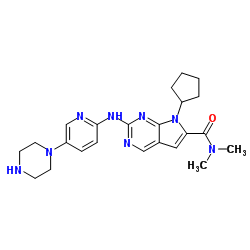
Ribociclib, рибоциклиб , ريبوسيكليب , 瑞波西利


str0


Ribociclib

рибоциклиб ريبوسيكليب 瑞波西利

Ribociclib (LEE 011)
CAS: 1211441-98-3

Chemical Formula: C23H30N8O
Exact Mass: 434.25426

7-Cyclopentyl-2-(5-piperazin-1-yl-pyridin-2-ylamino)-7H-pyrrolo[2,3-d]pyrimidine-6-carboxylic acid dimethylamide

FDA UNII

  • TK8ERE8P56

Current developer:    Novartis /Astex Pharmaceuticals.

Novartis Ag, Astex Therapeutics Ltd.

NMR.http://file.selleckchem.com/downloads/nmr/S744002-LEE011-2-HNMR-Selleck%20.pdf

http://file.selleckchem.com/downloads/hplc/S744002-LEE011-2-HPLC-Selleck.pdf

Ribociclib (LEE011) is an orally available, and highly specific CDK4/6 inhibitor. Phase 3.

CDK4 AND 6
(Cell-free assay)Product Ingredients

NOW FDA APPROVED 2017 since the blog post was written

Kisqali FDA 3/13/2017 To treat postmenopausal women with a type of advanced breast cancer
Drug Trials Snapshot

Image result for RIBOCICLIB

INGREDIENT UNII CAS INCHI KEY
Ribociclib hydrochloride 63YF7YKW7E 1211443-80-9 JZRSIQPIKASMEV-UHFFFAOYSA-N
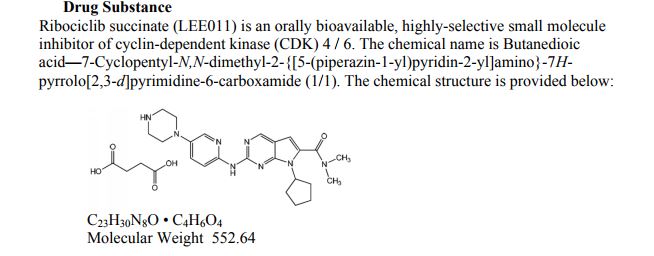
Ribociclib succinate BG7HLX2919 1374639-75-4 NHANOMFABJQAAH-UHFFFAOYSA-N


ChemSpider 2D Image | Ribociclib succinate | C27H36N8O5

RIBOCICLIB SUCCINATE

STRUCTURE ….LINK

sb1


Ribociclib is in phase III clinical trials by Novatis for the treatment of postmenopausal women with advanced breast cancer.

Phase II clinical trials are also in development for the treatment of liposarcoma, ovarian cancer, fallopian tube cancer, peritoneum cancer, endometrial cancer, and gastrointestinal cancer.

Ribociclib, also known as LEE011, is an orally available cyclin-dependent kinase (CDK) inhibitor targeting cyclin D1/CDK4 and cyclin D3/CDK6 cell cycle pathway, with potential antineoplastic activity. CDK4/6 inhibitor LEE011 specifically inhibits CDK4 and 6, thereby inhibiting retinoblastoma (Rb) protein phosphorylation. Inhibition of Rb phosphorylation prevents CDK-mediated G1-S phase transition, thereby arresting the cell cycle in the G1 phase, suppressing DNA synthesis and inhibiting cancer cell growth. Overexpression of CDK4/6, as seen in certain types of cancer, causes cell cycle deregulation

Orally bioavailable CDK4/6-selective inhibitor that has been tested in Phase III clinical trials for treatment of advanced breast cancer.

CDK full name of cyclin-dependent kinases, there are many other subtypes CDK1-11, capable of binding to cell cycle proteins regulate the cell cycle. Pfizer Palbociclib been submitted for FDA review under phase II clinical data, Novartis Ribociclib (LEE011), Lilly Abemaciclib (LY2835219) the three CDK4 / 6 inhibitors have entered late stage development for the treatment of breast cancer

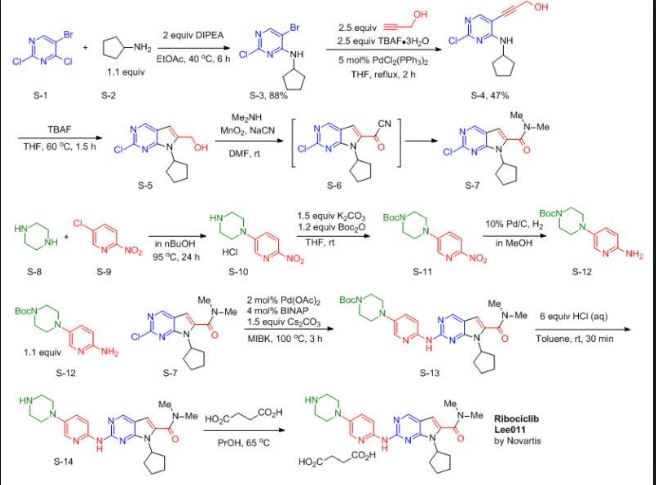
SYNTHESIS

WO2010020675
US20120115878

WO2010020675

http://www.google.co.in/patents/WO2010020675A1?cl=en

Example 74

7-Cyclopentyl-2-(5-piperazin-1-yl-pyridin-2-ylamino)-7H-pyrrolo[2,3-d]pyrimidine-6-carboxylic acid dimethylamide

Figure imgf000094_0002

Following Buchwald Method B, then General Procedure A, 2-chloro-7-cyclopentyl-7H- pyrrolo[2,3-d]pyrimidine-6-carboxylic acid dimethylamide (300 mg, 1.02 mmol) and 5-piperazin-1- yl-pyridin-2-ylamine (314 mg, 1.13 mmol) gave 7-cyclopentyl-2-(5-piperazin-1-yl-pyridin-2- ylamino)-7H-pyrrolo[2,3-d]pyrimidine-6-carboxylic acid dimethylamide (142 mg, 36%). MS(ESI) m/z 435.3 (M+H)+

POSTER

str1

SYNTHESIS

str1

Image result for RIBOCICLIB joygooo

TAKEN FROM ….http://www.joygooo.com/news_71.htm?pageNum=21

PCT Int Appl, WO2012061156.

US Pat Appl Publ, US20120115878

PCT Int Appl, WO2011130232 5) Brain, Christopher Thomas et al; Preparation of pyrrolopyrimidine Derivatives for Use as CDK4 / 6 inhibitors;. PCT Int Appl, WO2011101409.

PCT Int Appl, WO2011101417. 7) Besong, Gilbert et al;.

PCT Int Appl, WO2010020675.

PCT Int Appl, WO2007140222.

Route 1

Reference:1. WO2012064805A1 / US20120115878A1.

2. WO2010020675A1 / US8415355B2.

3. WO2011130232A1 / US20130035336A1.

Clinical Trial Information( data from http://clinicaltrials.gov, updated on 2015-10-17)

NCT Number Recruitment Conditions Sponsor
/Collaborators
Start Date Phases
NCT02571829 Not yet recruiting Liposarcoma|Soft Tissue Sarcoma Hadassah Medical Organization December 2015 Phase 2
NCT02524119 Not yet recruiting Hepatocellular Carcinoma University of Texas Southwestern Medical Center|Novartis  …more November 2015 Phase 2
NCT02494921 Recruiting Prostate Cancer Rahul Aggarwal|University of California, San Francisco September 2015 Phase 1|Phase 2
NCT02420691 Recruiting Gastrointestinal Cancer M.D. Anderson Cancer Center|Novartis August 2015 Phase 2
NCT02431481 Not yet recruiting Normal Renal Function|Impaired Renal Function Novartis Pharmaceuticals|Novartis August 2015 Phase 1

Protocols from literature

In vitro protocol::

Pharmacologic growth inhibition: Clin Cancer Res. 2013 Nov 15;19(22):6173-82.

Cell-cycle analysis: Clin Cancer Res. 2013 Nov 15;19(22):6173-82.

Senescence and apoptosis assays: Clin Cancer Res. 2013 Nov 15;19(22):6173-82.

In vivo protocol:

Xenograft therapeutic trials: Clin Cancer Res. 2013 Nov 15;19(22):6173-82

Immunohistochemistry of xenografted neuroblastomas.Clin Cancer Res. 2013 Nov 15;19(22):6173-82

Ribociclib (LEE011) is a Me-Too version of palbociclib. Their structures are compared side-by-side as the following:

LEE011 and Palbociclib structure

Ribociclib (LEE011) is currently being developed by Novartis and Astex.  According its  Novartis’s website, LEE011 is a novel, orally available, selective inhibitor of CDK4/6 kinases, which induces complete dephosphorylation of Rb and G1 arrest in cancer cells. In preclinical in vitro and in vivo tumor models, LEE011 has been shown active in cancers harboring aberrations that increase CDK4/6 activity, including those directly linked to the kinases as well as activating alterations in the upstream regulators. First-in-human study of LEE011 in patients with solid tumors and lymphoma is currently ongoing. (source: http://www.novartisoncology.us/research/pipeline/lee011.jsp).

Treatment with LEE011 significantly reduced proliferation in 12 of 17 human neuroblastoma-derived cell lines by inducing cytostasis at nanomolar concentrations (mean IC50 = 307 ± 68 nmol/L in sensitive lines). LEE011 caused cell-cycle arrest and cellular senescence that was attributed to dose-dependent decreases in phosphorylated RB and FOXM1, respectively. In addition, responsiveness of neuroblastoma xenografts to LEE011 translated to the in vivo setting in that there was a direct correlation of in vitro IC50 values with degree of subcutaneous xenograft growth delay. Although our data indicate that neuroblastomas sensitive to LEE011 were more likely to contain genomic amplification of MYCN (P = 0.01), the identification of additional clinically accessible biomarkers is of high importance. LEE011 is active in a large subset of neuroblastoma cell line and xenograft models, and supports the clinical development of this CDK4/6 inhibitor as a therapy for patients with this disease. (Clin Cancer Res. 2013 Nov 15;19(22):6173-82)


References

1. Rader J, Russell MR, Hart LS, Nakazawa MS, Belcastro LT, Martinez D, Li Y, Carpenter EL, Attiyeh EF, Diskin SJ, Kim S, Parasuraman S, Caponigro G, Schnepp RW, Wood AC, Pawel B, Cole KA, Maris JM. Dual CDK4/CDK6 inhibition induces cell-cycle arrest and senescence in neuroblastoma. Clin Cancer Res. 2013 Nov 15;19(22):6173-82. doi: 10.1158/1078-0432.CCR-13-1675. Epub 2013 Sep 17. PubMed PMID: 24045179; PubMed Central PMCID: PMC3844928.

2. Caponigro, Giordano; Stuart, Darrin; Kim, Sunkyu; Loo, Alice; Delach, Scott. Pharmaceutical combinations of a CDK4/6 inhibitor and a B-RAF inhibitor for treatment of proliferative diseases such as cancer. PCT Int. Appl. (2014), WO 2014018725 A1 20140130.

3. Kim, Sunkyu; Doshi, Shivang; Haas, Kristy; Kovats, Steven; Huang, Alan Xizhong; Chen, Yan. Combination therapy comprising a cyclin dependent kinase 4/6 (CDK4/6) inhibitor and a phosphatidylinositol 3-kinase (PI3K) inhibitor for use in the treatment of cancer. PCT Int. Appl. (2013), WO 2013006532 A1 20130110

4. Kim, Sunkyu; Doshi, Shivang; Haas, Kristy; Kovats, Steven. Combination of cyclin dependent kinase 4/6 (CDK4/6) inhibitor and fibroblast growth factor receptor (FGFR) kinase inhibitor for the treatment of cancer. PCT Int. Appl. (2013), WO 2013006368 A1 20130110

5. Calienni, John Vincent; Chen, Guang-Pei; Gong, Baoqing; Kapa, Prasad Koteswara; Saxena, Vishal. Salt(s) of 7-cyclopentyl-2-(5-piperazin-1-yl-pyridin-2-ylamino-7H-pyrrolo[2,3-d]pyrimidine-6-carboxylic acid dimethylamide and processes of making thereof. U.S. Pat. Appl. Publ. (2012), US 20120115878 A1 20120510.

6. Borland, Maria; Brain, Christopher Thomas; Doshi, Shivang; Kim, Sunkyu; Ma, Jianguo; Murtie, Josh; Zhang, Hong. Combination comprising a cyclin dependent kinase 4 or cyclin dependent kinase (cdk4/6) inhibitor and an Mtor inhibitor for treating cancer. PCT Int. Appl. (2011), WO 2011130232 A1 20111020

7. Besong, Gilbert; Brain, Christopher Thomas; Brooks, Clinton A.; Congreve, Miles Stuart; Dagostin, Claudio; He, Guo; Hou, Ying; Howard, Steven; Li, Yue; Lu, Yipin; et al. Preparation of pyrrolopyrimidine compounds as CDK inhibitors. PCT Int. Appl. (2010), WO 2010020675 A1 20100225.

CLIP

Cyclin-dependent kinase inhibitors (14 compounds) under clinical evaluation.

Molecules 19 14366 g002 1024

LEE-011 is one of the most selective inhibitors for CDK4 and CDK6 [59] and is being developed by Astex Pharmaceuticals™ and Novartis. In January 2014 this inhibitor entered phase III clinical trials for the treatment of breast cancer [60]. Due to encouraging results LEE-011 has now become the main competing drug-candidate with Pfizer’s PD0332991 (palbociclib), see Figure 3 [59].

Figure 3. Comparison of Astex/Novartis’ LEE-011 and Pfizer’s PD0332991 structures.

Upon comparison of the chemical structure of Novartis’ LEE-011 and Pfizer’s PD0332991, the similarity is evident. The major difference lies in the bicyclic core since LEE-011 possesses a pyrrolo-pyrimidine and PD0332991 a pyridopyrimidine. The “east” part of the structure is also modified. The structural similarities make their analogous CDKs inhibition profiles (high selectivity for CDK4 and CDK6) quite obvious Moreover, both derivatives are orally administered which is pretty advantageous compared with dinaciclib, which is also in phase III clinical trials but is administered intravenously.

http://www.mdpi.com/1420-3049/19/9/14366/htm

  1. Kurt, S. LEE011 CDK Inhibitor Showing Early Promise in Drug-Resistant Cancers. Oncol. Times 2014, 36, 39–40. [Google Scholar]
  2. Macmillan Publishers Limited. CDK inhibitors speed ahead. Nat. Rev. Drug Discov. 2014, 13, 323. [Google Scholar] [CrossRef]


Sources:
1)Rader, JulieAnn et al.;Dual CDK4/CDK6 Inhibition Induces Cell-Cycle Arrest and Senescence in Neuroblastoma;Clinical Cancer Research (2013), 19(22), 6173-6182

2)Tavares, Francis X. and Strum, Jay C.;Preparation of pyrazinopyrrolopyrimidine derivatives and analogs for use as CDK inhibitors;PCT Int. Appl., WO2012061156

3)Calienni, John Vincent et al.;Salt(s) of 7-cyclopentyl-2-(5-piperazin-1-yl-pyridin-2-ylamino)-7H-pyrrolo[2,3-d]pyrimidine-6-carboxylic acid dimethylamide and processes of making thereof;U.S. Pat. Appl. Publ., US20120115878

4)Borland, Maria et al;Combination comprising a cyclin dependent kinase 4 or cyclin dependent kinase (cdk4/6) inhibitor and an Mtor inhibitor for treating cancer;PCT Int. Appl., WO2011130232

5)Brain, Christopher Thomas et al;Preparation of pyrrolopyrimidine derivatives for use as CDK4/6 inhibitors;PCT Int. Appl., WO2011101409

6)Brain, Christopher Thomas and Perez, Lawrence Blas; Preparation of deuterated pyrrolopyrimidine compounds as inhibitors of CDK4/6 for treating cancer; PCT Int. Appl., WO2011101417

7)Besong, Gilbert et al.;Preparation of pyrrolopyrimidine compounds as CDK inhibitors;PCT Int. Appl., WO2010020675

8)Brain, Christopher Thomas et al.;Preparation of pyrrolopyrimidine compounds as protein kinase inhibitors; PCT Int. Appl., WO2007140222

9)A Randomized Double-blind, Placebo-controlled Study of LEE011 in Combination With Letrozole for the Treatment of Postmenopausal Women With Hormone Receptor Positive, HER2 Negative, Advanced Breast Cancer Who Received no Prior Therapy for Advanced Disease;ClinicalTrials.gov Identifier: NCT01958021

/////////Ribociclib, novartis, LEE011, astex, phase 3,  CDK inhibitors

CN(C)C(=O)c1cc2cnc(nc2n1C3CCCC3)Nc4ccc(cn4)N5CCNCC5

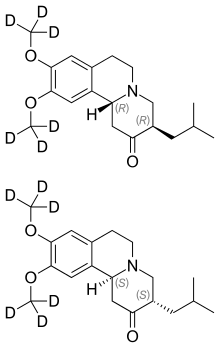
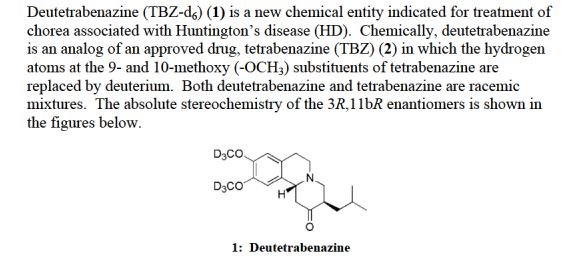
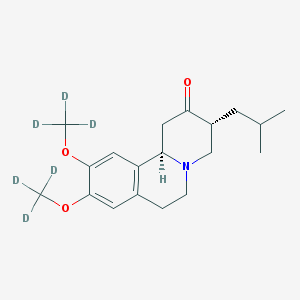
SD-809, Deutetrabenazine


SD-809,  Deutetrabenazine

  • Tetrabenazine-d6

(3RS,11Brs)-9,10-di((2H3)methoxy)-3-(2-methylpropyl)-1,3,4,6,7,11b-hexahydro-2H-benzo(a)quinolizin-2-one

2H-​Benzo[a]​quinolizin-​2-​one, 1,​3,​4,​6,​7,​11b-​hexahydro-​9,​10-​di(methoxy-​d3)​-​3-​(2-​methylpropyl)​-​, (3R,​11bR)​-​rel

2H-Benzo(a)quinolizin-2-one, 1,3,4,6,7,11b-hexahydro-9,10-di(methoxy-d3)-3-(2-methylpropyl)-, (3R,11bR)-rel-

2H-Benzo(a)quinolizin-2-one, 1,3,4,6,7,11b-hexahydro-9,10-di(methoxy-d3)-3-(2-methylpropyl)-, (3R,11bR)-rel-

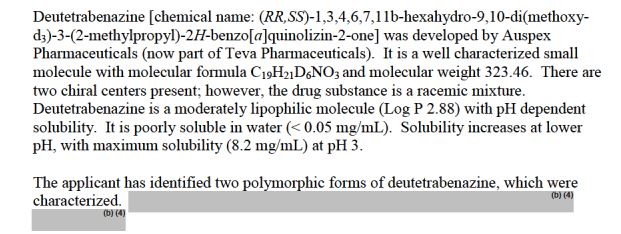
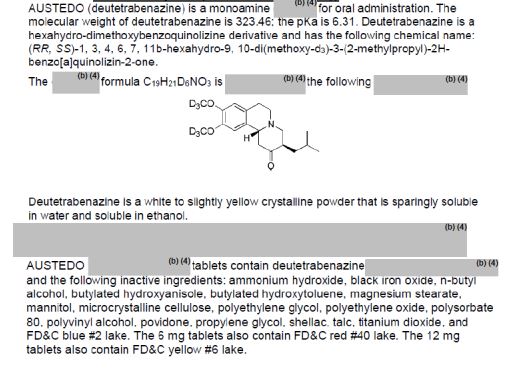
(RR,SS)-1,3,4,6,7,11b-Hexahydro-9,10-di(methoxy-d3)-3-(2-methylpropyl)-2H-benzo[a]quinolizin-2-one

(3RS,11Brs)-9,10-di((2H3)methoxy)-3-(2-methylpropyl)-1,3,4,6,7,11b-hexahydro-2H-benzo(a)quinolizin-2-one
Treatment of Chorea Associated with Huntington Disease

MF C19-H21-D6-N-O3

  • C19-H27-N-O3
Molecular Weight, 323.4629
CAS 1392826-25-3
UNII P341G6W9NB
Chemistry Review(s) (PDF) fda approved 2017

Deutetrabenazine

TEVA

Deutetrabenazine.svg

Image result for deutetrabenazineImage result for deutetrabenazineImage result for deutetrabenazine

LINK……………https://newdrugapprovals.org/2015/08/15/sd-809-deutetrabenazine-nda-submitted-by-teva/

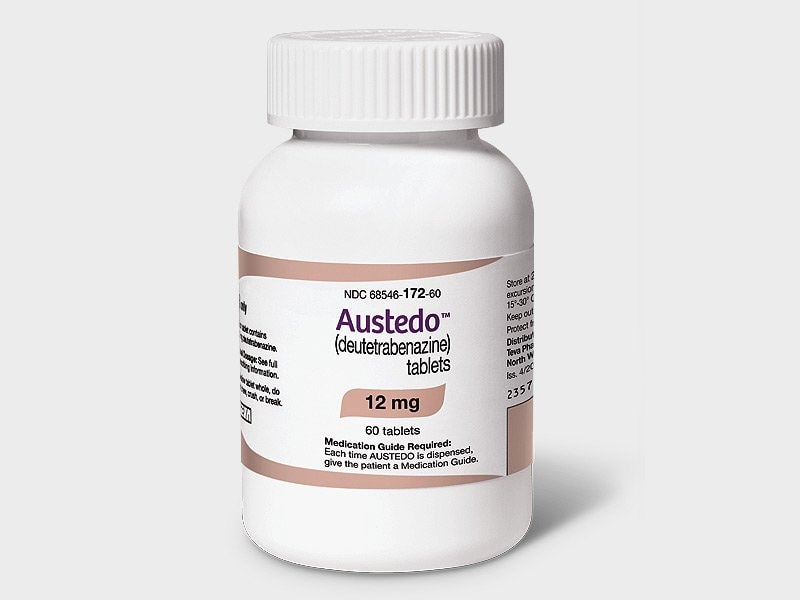
Austedo FDA 4/3/2017 For the treatment of chorea associated with Huntington’s disease
Drug Trials Snapshot   Chemistry Review(s) (PDF)

STR1STR2str3


SD-809 was granted Orphan Drug Designation for the treatment of HD by the FDA in November 2014 and became part of Teva’s CNS portfolio with the acquisition of Auspex Pharmaceuticals in May 2015.

Teva announced that the New Drug Application (NDA) for SD-809 (deutetrabenazine) has been accepted by the U.S. Food and Drug Administration (FDA) for the treatment of chorea associated with Huntington disease (HD), a rare and fatal neurodegenerative disorder caused by the progressive breakdown of nerve cells in the brain that affects about five to seven people per 100,000 in western countries, according to the World Health Organization.

(3RS,11Brs)-9,10-di((2H3)methoxy)-3-(2-methylpropyl)-1,3,4,6,7,11b-hexahydro-2H-benzo(a)quinolizin-2-one.png

…………………….

Patent for preparing tetrabenazine

http://www.google.com/patents/WO2012081031A1?cl=en

Chemically tetrabenazine is cis rac -1, 3, 4, 6, 7, 1 lb-hexahydro-9, 10-dimethoxy-3-(2- methylpropyl)-2Hbenzo[a]quinolizin-2-one and it is represented by compound of structural formula I.

Formula 1

The proprietary name of tetrabenazine is Xenazine and is marketed by Biovail Americas. Xenazine is indicated for the treatment of chorea associated with Huntington’s disease. U.S. patent no. 2,830,993 discloses a process for the preparation of tetrabenazine compound of structural formula I wherein 1 -carbethoxymethyl-6, 7-dimethoxy-l , 2, 3, 4- tetrahydroisoquinoline compound of structural formula IV is being reacted with mono- isobutylmalonic acid dimethyl ester compound of structural formula V and paraformaldehyde in methanol solvent to get l-carbethoxymethyl-2 (2, 2-dicarbomethoxy-4-methyl-n-pentyl)-6, 7- dimethoxy-1, 2, 3, 4-tetrahydroisoquinoline compound of structural formula VI. The 1- carbethoxymethyl-2(2,2-dicarbomethoxy-4-methyl-n-pentyl)-6,7-dimethoxy-l ,2,3,4- tetrahydroisoquinoline compound of structural formula VI is subjected to Dieckmann cyclization , hydrolysis and decarboxylation to get tetrabenazine compound of structural formula I, which is recrystallized from di-isopropyl ether solvent.

Formula I

Scheme I

U. S. patent no. 4,678,792 discloses a process for the preparation of 6, 7-dimethoxy-3, 4- dihydroisoquinoline compound of structural formula VII wherein 2-(3, 4-dimethoxyphenyl)- ethylamine compound of structural formula II is being reacted with chloral hydrate at 120°C to get N-formyl-2-(3, 4-dimethoxyphenyl)-ethylamine compound of structural formula III. The N- formyl-2-(3, 4-dimethoxyphenyl)-ethylamine compound of structural formula III is further reacted with polyphosphoric acid to get 6, 7-dimethoxy-3, 4-dihydroisoquinoline compound of structural formula VII. The 6, 7-dimethoxy-3, 4-dihydroisoquinoline compound of structural formula VII is being used as an intermediate for the preparation of tetrabenazine compound of structural formula I.

Formula III

Formula II

Polyphosphoric acid

Formula VII

Scheme II

Bull. Korean Chem. Soc. 2002 Volume (23). No. l , page no. 149 discloses N-formylation of various amines and alcohols with formic acid in toluene.

U.S. patent publication no. 2010/0130480 discloses a process for the preparation of 6, 7- dimethoxy-3, 4-dihydroisoquinoline compound of structural formula VII by reacting 2-(3, 4- dimethoxyphenyl)-ethylamine compound of structural formula II with hexamethylenetetramine in presence of acetic acid or trifluoroacetic acid.

Hexamethylenetetramine

Formula II Formula VII

U.S. patent publication no. 2008/0167337 discloses a process for the preparation of tetrabenazine compound of structural formula I wherein 6, 7-dimethoxy-3, 4-dihydroisoquinoline compound of structural formula VII is reacted with 3-dimethylaminomethyl-5-methyl-hexan-2-one methiodide compound of structural formula VIII to get crude tetrabenazine compound. The crude tetrabenazine compound was purified by employing flash column chromatography technique and

Formula VIII Formula I

The prior-art processes for preparing N-formyl-2-(3, 4-dimethoxyphenyl)-ethylamine compound of structural formula III produces below mentioned compound of structural formula XVII, XVIII, XIX, XX, XXI and XXII as a by-product of the reaction due to the demethylation and formylation of resulting hydroxy compounds.

Formula XX Formula XXI Formula XXII

The compounds of structural formula XVII, XVIII, XIX, XX, XXI and XXII are being carry- forwarded into the further steps of reactions of preparing tetrabenazine compound of structural formula I and therefore there is a need in the art to develop an improved process of preparing 6, 7-dimethoxy-3, 4-dihydroisoquinoline compound of structural formula VII, which obviates the prior-art problems. Accordingly there is provided a process of preparing tetrabenazine compound of structural formula I wherein 6, 7-dimethoxy-3, 4-dihydroisoquinoline compound of structural formula VII is being formed without the formation of above mentioned compounds of structural formula XVII, XVIII, XIX, XX, XXI and XXII.

EXAMPLE: PROCESS FOR THE PREPARATION OF SUBSTANTIAL PURE CRYSTALLINE FORM A OF TETRABENAZINE

Stage A: Process for the preparation of 6, 7-dimethoxy-3, 4-dihydroisoquinoIine

Step 1 : Process for the preparation of N-formyl-2-(3, 4-dimethoxyphenyl)-ethylamine

A solution of 2-(3, 4-dimethoxyphenyl)-ethylamine (500gm) in toluene (2000ml) was added formic acid (150gm) at 25°C, the resulting reaction mixture was diluted with toluene (500ml) and heated up to 45°C. The reaction mixture was maintained at 40-45°C for 5 hours and then the resulting reaction mixture was concentrated under reduced pressure at 50°C to get the title compound

Yield: 570gm

Purity: 99.98% (By HPLC)

Step 2: Process for the preparation of 6, 7-dimethoxy-3, 4-dihydroisoquinoline

A solution of N-formyl-2-(3, 4-dimethoxyphenyl)-ethylamine (250gm) obtained from step 1 in toluene (500ml) and polyphosphoric acid (50gm) was heated at 110°C for 5 hours. The resulting reaction mixture was cooled to 50°C, quenched with water (500ml) and pH of the resulting solution was adjusted to about 8.3 with aqueous solution of sodium hydroxide [sodium hydroxide (690gm) + water (690ml)]. The resulting reaction mass was extracted by ethyl acetate (2 1250ml), dried over anhydrous sodium sulfate (50gm) and concentrated under reduced pressure to get 6, 7-dimethoxy-3, 4-dihydroisoquinoline (190gm).

Yield: 215gm

Purity: 99.67% (By HPLC)

Stage B: Process for the preparation of 3-((dimethylamino) methyi)-5-methylhexan-2-one methiodide

Step 1 : Process for the preparation of 3-((dimethylamino) methyl)-5-methylhexan-2-one Dimethylamine hydrochloride (180gm) and paraformaldehyde (lOOgm) were added to a solution of 5-methylhexan-2-one (900ml) in methanol (1600ml). The resulting reaction mass was heated at reflux for 12 hours, and then the pH was adjusted to about 8.75 with aqueous solution of sodium hydroxide [sodium hydroxide(90gm) + water (900ml)] at 25 °C. The resulting reaction solution was extracted by toluene (2x1234ml). The organic layer was dried over anhydrous sodium sulfate (50gm) and concentrated under reduced pressure to get title compound.

Yield: 900gm

Purity: 99.80% (By HPLC)

Step 2: Process for the preparation of 3-((dimethylamino) methyl)-5-methylhexan-2-one methiodide

Methyl iodide (323gm) was added dropwise to a solution of 3-((dimethylamino) methyl)-5- methylhexan-2-one (195gm) obtained from step 1 , in ethyl acetate (1650ml) at 25-30°C in 30 minutes. The resulting reaction mixture was stirred at 25 °C for 12 hours and then the resulting solids were filtered, washed with water (200ml) and suck-dried to get wet compound (400gm). The wet compound was slurried with water (1000ml) at 25°C for 1 hour and then it was again filtered, washed with water (200ml) and dried at 45-50°C to get title compound

Yield: 300gm

Purity: 99.86% (By HPLC)

Stage C: Preparation of substantial pure crystalline form A of Tetrabenazine

3-((Dimethylamino) methyl)-5-methylhexan-2-one methiodide (80gm) was added to the solution of 6, 7-dimethoxy-3, 4-dihydroisoquinoline (40gm) in isopropanol (288ml) at 25°C and the resulting reaction mass was heated at 40-45°C for 15 hours. The resulting insoluble material was filtered, washed with isopropanol (80ml) and filtrate was concentrated under reduced pressure up to the 150ml reaction volume. The reaction solution was diluted with methylene dichloride (1200ml) and water (1000ml) and pH was adjusted to 8.5 with sodium hydroxide solution [10%, 100ml]. The organic layer was separated, washed with water (3 x 1000ml) and concentrated under reduced pressure to obtain residue. The residue was dissolved in methanol (300ml) at 50°C, and resulting solution was treated with an activated carbon (20gm) at 50-60°C for 30minutes and then it was filtered and filtrate was further stirred at 20-25°C for 2 hours. The resulting solids were filtered, washed with methanol (150ml), dried at 50-55°C for 8 hours. The resulting solids were milled, sifted through 40 mesh sieve and micronized.

Yield: 65gm

Purity: 99.96% (By HPLC)

………………………

PAPER

Org. Lett., 2011, 13 (24), pp 6500–6503
DOI: 10.1021/ol202792q
Abstract Image

A concise synthesis of tetrabenazine and dihydrotetrabenazine is described. The key feature of this synthesis is the intramolecular aza-Prins-type cyclization of an amino allylsilane via oxidative C–H activation.

T1 T2 T3 T4

http://www.hgxb.com.cn/EN/abstract/abstract12047.shtml

……………
PAPER


http://www.ncbi.nlm.nih.gov/pmc/articles/PMC3126153/

An external file that holds a picture, illustration, etc. Object name is nihms279693f2.jpg

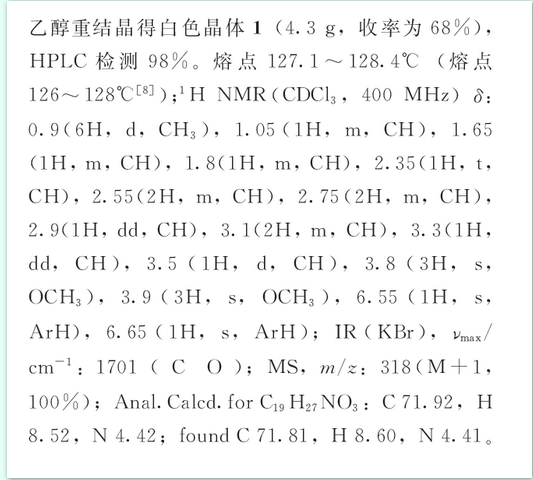
The TBZ (4) for these reactions was prepared by reacting 3,4-dihydro-6,7-dimethoxyisoquinoline (3) and the Mannich base (2) as shown in Scheme 1.14 The α,β-unsaturated TBZ (5), which was the original substrate, was obtained by further treatment with chloranil in refluxing benzene.

Tetrabenazine (4a)

To a solution of 3,4-dihydro-6,7-dimethoxyisoquinoline hydrochloride (3, 3.5 g, 15.4 mmol) in cold H2O (20 mL) in an ice water bath, was added 3-(dimethylaminomethyl)-5-methyl-2-hexanone (2, 3.15 g, 18.3 mmol) as the free base with stirring. Precipitate formed within 3 h, and stirring was continued until the solid-gummy precipitate prevented stirring. The mixture was allowed to stand at RT (room temperature) for 3 days. The solid–gum mixture was filtered, and the yellow solid–gum mixture was dissolved in hot MeOH. The solution was chilled at −10°C for 18 h. The pale yellow solid was filtered to give 2.1 g (43%) of TBZ (4a).
TLC: Rf = 0.62; silica gel; 4% MeOH/96% CH2Cl2.
MS: (DCl-NH3) m/z 318 (M+H).
UV: (EtOH) λmax 282.0 nm (ε4431).
1H NMR: (300 MHz, CDCl3) δ 6.61 (s, 1H), 6.55 (s, 1H), 3.85 (s, 3H), 3.82 (s, 3H), 3.51 (br dd, 1H), 3.29 (dd, 1H), 3.13 (m, 2H), 2.90 (dd, 1H), 2.75 (m, 2H), 2.57 (m, 2H), 2.35 (t, 1H), 1.81 (ddd, 1H), 1.65 (m, 1H), 1.04 (ddd, 1H), 0.92 (d, 3H), 0.89 (d, 3H) ppm.
13C NMR: (75 MHz, CDCl3) δ 210.00, 147.86, 147.54, 128.60, 126.11, 111.53, 107.94, 62.48, 61.52, 56.01, 55.92, 50.58, 47.62, 47.57, 36.09, 29.38, 25.44, 23.21, 22.11 ppm.
EA: Anal. Calc for C19H17NO3: C, 71.89; H, 8.57; N, 4.41. Found C, 72.15; H, 8.69; N, 4.47.
HPLC: Brownlee 25 cm × 4.6 mm silica gel column; 30% isopropanol/70% hexane; 1 mL/min; ret. time 5.94 min; purity >99.5%.

…………….

http://www.google.ga/patents/WO2008154243A1?cl=en

Example 10 Removal The Boc Protecting Group From First Intermediate 12 And Amino Cyclization Provide (+)-Tetrabenazine XVII

[0063] First intermediate 12 (1.0 eq) was dissolved in 10% Me2S- dichloromethane to provide an 82 mM solution. The solution was cooled to 0 0C and triisopropylsilane (1.1 eq.) followed by TFA (precooled to 0 0C) was added to the reaction mixture to provide a final concentration of 41 mM. The reaction mixture was permitted to stir at 0 0C for 1 h. Following the allotted time the reaction mixture was quenched at 0 0C by the addition of saturated aqueous potassium carbonate solution and concentrated under reduced pressure to remove the majority of the dimethylsulfide. The mixture was extracted with five portions of dichloromethane, and the combined organic extracts were washed with brine, dried (MgSO4), filtered and concentrated under reduced pressure to provide the crude product as a yellow solid. The crude product was recrystallized from 3.5% dimethoxyethane in hexanes. The resulting colorless crystals were washed with hexanes to provide pure (+)- tetrabenazine (XVII) 46%: mp 126.0 0C (3.5% DME-hexanes) (a crystal polymorph was observed at 116 0C); [α]26 D +37.2 (c 0.41, CH2Cl2); 1H NMR (CD2Cl2) δ 0.89 (apparent t, J = 7.2 Hz, 6H), 0.98 (ddd, J = 12, 6.0, 4.0 Hz, IH), 1.59-1.68 (m, IH), 1.74 (ddd, J = 12, 5.9, 5.7 Hz, IH), 2.32 (apparent t, J = 11.7 Hz, IH), 2.46 (apparent t, J = 12.3 Hz, IH), 2.55 (ddd, J = 12, 10.0, 3.8 Hz, IH), 2.65-2.73 (m, 2H), 2.83 (dd, J = 5.5, 2.8Hz, IH), 2.97-3.07 (m, IH), 3.07-3.14 (m, IH), 3.25 (dd, J =9.7, 6.3 Hz, IH), 3.47 (apparent d, J = 12Hz, IH), 3.75 (s, 3H), 3.77 (s, 3H), 6.55 (s, IH), 6.60 (s, IH) 13C NMR (CD2Cl2) δ 21.98, 23.02, 25.51, 29.46, 35.16, 47.47, 47.63, 50.47, 55.87, 56.01, 61.47, 62.46, 108.46, 111.72, 126.37, 128.96, 147.65, 147.98, 209.72; HRMS-(ESI+) calcd for (C19H27NO3 + H) ([M+H]+ 318.2069, found 318.2082.

…………….

US 20150152099

d1 d2 d3

………….

WO 2015077520

NBI-98854 (CAS # 1025504-59-9), (S)-(2R,3R,l lbR)-3-isobutyl-9,10-dimethoxy-2,3,4,6,7,1 lb-hexahydro-lH-pyrido[2,l-a]isoquinolin-2-yl 2-amino-3-methylbutanoate, is a VMAT2 inhibitor. NBI-98854 is currently under investigation for the treatment of movement disorders including tardive dyskinesia. WO 2008058261; WO 2011153157; and US 8,039,627. NBI-98854, a valine ester of (+)-a-dihydrotetrabenazine, in humans is slowly hydrolyzed to (+)-a-dihydrotetrabenazine which is an active metabolite of tetrabenazine.

NBI-98854


EXAMPLE 1

D6-(±)-3-Isobutyl-9,10-dimethoxy-3,4,6,7-tetrahydro-lH-pyrido[2,l-a]isoquinolin-2(l lbH)-one ((±)-Tetrabenazine-<d6)

Step 1

[0193] Jgrt-butyl 3,4-dihydroxyphenethylcarbamate : A solution of dopamine

hydrochloride (209 g, 1.11 mol, 1.00 equiv), sodium carbonate (231 g, 2.75 mol, 2.50 equiv) and di-tert-butyl dicarbonate (263 g, 1.21 mol, 1.10) in 2.4 L tetrahydrofuran / water (5: 1) was stirred at 20°C for 2.5 h. After the starting material was consumed completedly, the reaction was diluted with ethyl acetate (2 L) and washed with water (2×600 mL). The organic phase was dried over sodium sulfate, filtered and concentrated under reduced pressure until two volumes of solvent was left. The precipitated solid was isolated by filtration and dried under vacuum to give 254 g (91%) of ieri-butyl 3,4-dihydroxyphenethylcarbamate as white solid. Ή-ΝΜΪ (300 MHz, CDC13) 8.72 (s, 1H), 8.62 (s, 1H), 6.79 (m, 1H), 6.62 (m, 1H), 6.51 (m, 1H), 6.40 (m, 1H), 3.03 (m, 2H), 2.50 (m, 2H), 1.37 (s, 1H). LC-MS: m /z = 254 (MH) +.

Step 2

[0194] D6-fert-butyl 3,4-dimethoxyphenethylcarbamate: A solution of ieri-butyl 3,4-dihydroxyphenethylcarbamate (127 g, 397 mmol, 1.00 equiv), potassium carbonate (359.3 g, 2.604 mmol, 3.00 equiv) and 18-crown-6 (1,4,7,10,13,16-hexaoxacyclooctadecane ) (68.64 g, 0.26 mmol, 0.03 equiv) in acetone (800 mL) was stirred at 38°C. After 30 min., CD3I (362 g, 2.604 mmol, 3.00 equiv) was added to the reaction, and the mixture was stirred at 38°C for 12 h. Then an additional CD3I (120 g, 0.868 mmol, 1.00 equiv) was added to the solution and the solution was stirred for 5 h. Then the mixture was cooled to room temperature and the solid was filtered. The filtrate was concentrated under vacuum. The resultant solid was dissolved in H2O (300 mL) and extracted with EA (3×300 mL), the organic layers was combined and concentrated under vacuum to give 114 g (79%) of de-tert-butyl 3,4-dimethoxyphenethylcarbamate as white

solid. ^-NMR (300 MHz, CDC13) <Π.39 (m, 5H), 6.82 (m, 1H), 6.73 (m, 2H), 5.12 (s, 1H), 3.45 (m, 2H), 2.77 (m, 2H). LC-MS: m /z = 288 (MH) +.

Step 3

[0195] D6-2-(3,4-dimethoxyphenyl)ethanamine: A solution of de-tert-butyl 3,4-dimethoxyphenethylcarbamate (128 g, 455.26 mmol, 1.00 equiv) in ethyl acetate (1.5 L) was stirred at room temperature. Then HC1 gas was introduced into the reaction mixture for 2h. The precipitated solid was isolated by filtration. The solid was dissolved in 300 mL of water. The pH value of the solution was adjusted to 12 with sodium hydroxide (solid). The resulting solution was stirred for 1 h at 5-10°C. The resulting solution was extracted with 6×800 mL of ethyl acetate and the organic layers combined, dried over sodium sulfate, and concentrated under vacuum to give 64 g (78%) of d6-2-(3,4-dimethoxyphenyl)ethanamine as yellow oil.

^-NMR (300 MHz, CDC ) 6.77 (m, 3H), 3.89 (s, 3H), 3.87 (s, 3H), 2.96 (m, 2H), 2.71 (m, 2H), 1.29 (s, 2H). LC-MS: m /z = 182 (MH) +.

Step 4

[0196] D6-N-r2-(3,4-dimethoxy-phenyl)ethyllformamide: A solution of d6-2-(3,4-dimethoxyphenyl)ethanamine (69 g, 368 mmol, 1.00 equiv) in ethyl formate(250 mL) was heated under reflux overnight. The solution was concentrated under vacuum to give 71 g (91%) of d6-N-[2-(3,4-dimethoxy-phenyl)ethyl]formamide as yellow solid. The crude solid was used in next step without purification. ^-NMR (300 MHz, CDCb) £8.17 (s, 1H), 6.81 (m, 3H), 5.53 (br, 1H).3.59 (m, 2H), 2.81 (t, 2H, / = 6.9 Hz). LC-MS: m /z = 216 (MH) +.

Step 5

[0197] D6-6,7-dimethoxy-3,4-dihvdroisoguinoline: A solution of d6-N-[2-(3,4-dimethoxy-phenyl)ethyl]formamide (71 g, 329 mmol, 1.00 equiv) in phosphorus oxychloride (100 mL) was stirred at 105°C for 1 h. Then the solution was concentrated under vacuum to remove

phosphorus oxychloride. The residual oil was dissolved in ice / water. The solution was made basic with potassium carbonate with cooling. The basic aqueous solution was extracted with dichloromethane. The collected organic phase was dried using sodium sulfate and then filtered. The dichloromethane was removed by concentration under vacuum to give an orange oil.

Purification by silica gel (ethyl acetate:petroleum ether = 1: 1 ~ ethyl acetate) to give 43 g (66%) of d6-6,7-dimethoxy-3,4-dihydroisoquinoline as orange solid (yield 66%). Ή-ΝΜΡ (300 MHz, CDC13) 8.24 (s, 1H), 6.82 (s, 1H), 6.68 (s, 1H), 3.74 (m, 2H), 2.69 (t, 2H, J = 12 Hz). LC-MS: m /z = 198 (MH) +.

Step 6

[0198] Trimethyl(5-methylhex-2-en-2-yloxy)silane: To a cold (-78°C), stirred solution of j-PrMgBr (500 mL of 2 M solution in tetrahydrofuran, 1 mol, 1.00 equiv) in anhydrous tetrahydrofuran (1 L) was added Cul (19.02 g, 0.1 mol, 0.10 equiv) and the resultant mixture was stirred for 15 min at -78°C. Anhydrous hexamethylphosphorous triamide (358.4 g, 2 mmol, 2 equiv) was added and after 20 min, a solution of methyl vinyl ketone (70 g, 0.1 mol, 1.00 equiv), trimethylsilyl chloride (217 g, 0.2 mol, 2.00 equiv), in tetrahydrofuran (200 mL) was added dropwise over 30 min. After the reaction mixture was stirred at -78 °C for lh, triethylamine (20.2g, 200 mmol, 2.00 equiv) was added and the resulting mixture stirred for 10 min at 0 °C. To this was added ie/ -butyl methyl ether (2 L), and the solution was washed with 5% ammonia solution (6×300 mL). Then the organic phase was dried over sodium sulfate and concentrated under vacuum at 25°C to give 155 g crude product as yellow liquid. The liquid was purified by distilling (64-68°C/40 mmHg) to provide 118 g (63.3%) of trimethyl(5-methylhex-2-en-2-

yloxy)silane (E:Z = 56 : 44) as a colorless oil. XH-NMR (300 MHz, J6-DMSO) 4.58 (m, 0.56H), 4.43 (m, 0.44H), 1.73 (s, 1.69H), 1.66 (s, 1.32H), 1.53 (m, 1H), 0.84 (m, 6 H), 0.15(m, 9H).

Step 7

[0199] 3-r(Dimethylamino)methyl1-5-methylhexan-2-one: To a stirred solution of trimethyl(5-methylhex-2-en-2-yloxy)silane (118 g, 633 mmol, 1.00 equiv) in anhydrous acetonitrile (800 mL) was added N-methyl-N-methylenemethanaminium iodide (128.8 g, 696.3 mmol, 1.10 equiv) in several batches and the resultant mixture was stirred at 20°C overnight. Then the solution was concentrated under vacuum to remove the solvent. The residue was dissolved in 400 mL 1 N HC1 (aq.) and extracted with ieri-butyl methyl ether. Then the water phase was basiced with 2 N aq. NaOH and extracted with ie/ -butyl methyl ether. The organic phase was dried and concentrated under vacuum. The liquid was purified by distilling (80°C/0.5 mmHg) to provide 50 g (46%) of 3-[(dimethylamino)methyl]-5-methylhexan-2-one as a colorless oil. XH-NMR (300 MHz, J6-DMSO) £0.92 (d, 3H), 0.98 (d, 3H), 1.11-1.23 (m, 1H), 1.23-1.38 (m, 1H), 1.54-1.70 (m, 1H), 2.30 (s, 3H), 3.01 (s, 9H), 3.10-3.32 (m, 2H), 3.81-3.88 (m, 1H).

Step 8

[0200] 2-Acetyl-N,N V,4-tetramethylpentan-l-aminium iodide: A solution of 3-[(dimethylamino)methyl]-5-methylhexan-2-one (50 g, 15.00 mmol, 1.00 equiv) and methyl iodide (4.26 g, 30.00 mmol, 2.00 equiv) in 50 mL diethyl ether was stirred overnight at room temperature. The precipitated solid was isolated by filtration and dried under vacuum to give 79 g (86%) of 2-acetyl-N,N,N,4-tetramethylpentan-l-aminium iodide as white solid. XH-NMR (300 MHz, Je-DMSO) 0.89-0.98 (m, 6H), 1.11-1.20 (m, 1H), 1.40 (m, 1H), 1.66 (m, 1H), 2.30 (s, 3H), 3.01(s, 9H), 3.21 (m, 2H), 3.85 (m, 1H).

Step 9

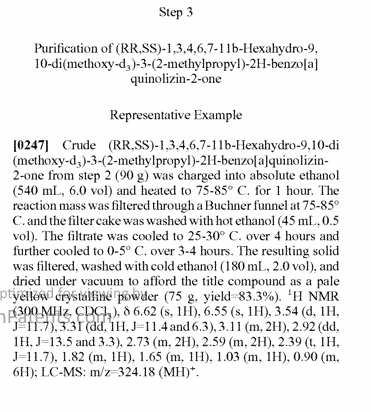
[0201] Ρό- (±) -tetrabenazine : A solution of d6-6,7-dimethoxy-3,4-dihydroisoquinoline (33.4 g, 169 mmol, 1.10 equiv) and 2-acetyl-N,N,N,4-tetramethylpentan-l-aminium iodide (48 g, 153 mmol, 1.00 equiv) in 300ml of methanol was heated under reflux for 48 h. Then 150 mL water was added. The solution was cooled to room temperature. The precipitated solid was isolated by filtration and dried under vacuum to give 38 g of crude d6-tetrabenazine as yellow solid. The crude tetrabenazine was dissolved in ieri-butyl methyl ether (15 volumes), the mixture was heated until the solid was almost dissolved. The yellow solid which was unsolvable was filtered. The filtrate was concentrated under vacuum until 2 volumes ieri-butyl methyl ether was left. The solid was filtered and collected. The above solid was dissolved in ethanol (4 volumes), then the mixture was heated until the solid was dissolved. The solution was stirred and cooled to room temperature at the rate of 20°C/h. Then the mixture was stirred at 0°C for lh. The precipitated solid was isolated by filtration and dried under vacuum to give 25 g (50.4%) of tetrabenazine-<d6 as white solid.

^-NMR (300 MHz, CD2C12) £6.61 (s, 1H), 6.55 (s, 1H), 3.84 (s, 3H), 3.82 (s, 3H), 3.50 (d, 1H, / = 12 Hz), 3.27 (dd, 1H, / = 11.4Hz, / = 6.3 Hz), 3.11 (m, 2H), 2.84 (dd, 1H, / = 10.5 Hz, / = 3 Hz), 2.74 (m, 2H), 2.56 (m, 2H), 2.31 (t, 1H, J = 12 Hz), 1.76 (m, 1H), 1.63 (m, 1H), 0.98 (m, 1H), 0.89 (m, 6H).

LC-MS: m /z = 324 (MH) +.

………………

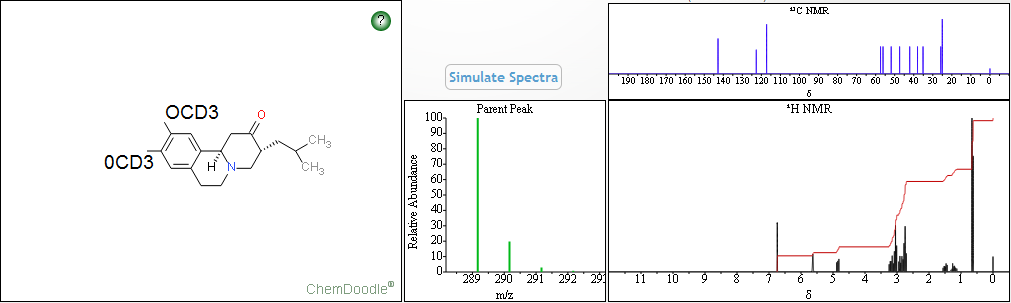
NMR PREDICT

C1

D2

D3

Watch out will be updated……………….

Rob Koremans, MD, President and CEO of Global Specialty Medicines at Teva.

Michael Hayden, M.D., Ph.D., President of Global R&D and Chief Scientific Officer at Teva


WO2009070552A1 * 25 nov. 2008 4 juin 2009 Gen Electric Alpha-fluoroalkyl tetrabenazine and dihydrotetrabenazine imaging agents and probes
WO2012000308A1 * 27 juin 2011 5 janv. 2012 China Pharmaceutical University A method for resolution of tetrabenazine
WO2012081031A1 * 11 avr. 2011 21 juin 2012 Enaltec Labs Pvt. Ltd. Process for preparing tetrabenazine
WO2013041621A1 * 20 sept. 2012 28 mars 2013 Basf Se Low molecular weight modulators of the cold-menthol receptor trpm8 and use thereof
WO2015048370A1 * 26 sept. 2014 2 avr. 2015 Auspex Pharmaceuticals, Inc. Benzoquinolone inhibitors of vmat2
US7897769 25 oct. 2007 1 mars 2011 General Electric Company Intermediates for fluorinated dihydrotetrabenazine ether imaging agents and probes
US7897770 25 oct. 2007 1 mars 2011 General Electric Company Fluorinated dihydrotetrabenazine ether imaging agents and probes
US7902364 29 nov. 2007 8 mars 2011 General Electric Company Alpha-fluoroalkyl tetrabenazine and dihydrotetrabenazine imaging agents and probes
US7910738 29 nov. 2007 22 mars 2011 General Electric Company Intermediates for alpha-fluoroalkyl tetrabenazine and dihydrotetrabenazine imaging agents and probes
US7919622 7 déc. 2007 5 avr. 2011 Kande Kankanamalage Dayarathna Amarasinghe Intermediates for fluorinated tetrabenazine carbinol compounds imaging agents and probes
US8013161 7 déc. 2007 6 sept. 2011 General Electric Company Fluoroalkyl tetrabenazine carbinol compounds as imaging agents and probes
US8053578 16 juil. 2008 8 nov. 2011 General Electric Company Alpha-fluoroalkyl dihydrotetrabenazine imaging agents and probe


WO2007017654A1 4 août 2006 15 févr. 2007 Cambridge Lab Ireland Ltd 3, hb cis dihydrotetrabanezine for the treatment of schizophrenia and other psychoses
US3132147 * 15 juin 1962 5 mai 1964 Titre non disponible
US4193998 * 14 juin 1978 18 mars 1980 Chinoin Gyogyszer Es Vegyeszeti Termekek Gyara Rt 1,2,3,4,6,7-Hexahydro-11BαH-benzo[a]quinolizine-derivatives
US4686226 * 3 sept. 1985 11 août 1987 Merck & Co., Inc. Substituted benzo[b]furo- and benzo[b]thieno quinolizines
US5118690 * 21 oct. 1991 2 juin 1992 John Wyeth & Brother Limited Pharmaceutical tetrahydroisoquinolines
US5272270 * 12 août 1991 21 déc. 1993 Consortium Fur Elektrochemische Industrie Gmbh Process for the preparation of 1-alkylisoquinoline derivatives
US5278308 * 28 févr. 1992 11 janv. 1994 The Trustees Of The University Of Pennsylvania Iodine derivatives of tetrabenazine
US20020055637 * 21 déc. 2001 9 mai 2002 Song Liu Methods for synthesis of amino-tetrahydroisoquinoline-carboxylic acids
US20040082647 * 21 avr. 2003 29 avr. 2004 G.D. Searle, Llc Method for the preparation of tetrahydrobenzothiepines
Cited Patent Filing date Publication date Applicant Title
WO1994000460A1 * Jun 23, 1993 Jan 6, 1994 Univ California SYNTHESIS OF N-FORMYL-3,4-DI-t-BUTOXYCARBONYLOXY-6-(TRIMETHYLSTANNYL)-L-PHENYLALANINE ETHYL ESTER AND ITS REGIOSELECTIVE RADIOFLUORODESTANNYLATION TO 6-[18F]FLUORO-L-DOPA
WO2008058261A1 * Nov 8, 2007 May 15, 2008 Neurocrine Biosciences Inc Substituted 3-isobutyl-9, 10-dimethoxy-1,3,4,6,7,11b-hexahydro-2h-pyrido[2,1-a] isoquinolin-2-ol compounds and methods relating thereto
WO2008154243A1 * Jun 4, 2008 Dec 18, 2008 Gen Electric Method for making tetrabenazine compounds
WO2010044981A2 * Sep 18, 2009 Apr 22, 2010 Auspex Pharmaceutical ,Inc. Benzoquinoline inhibitors of vesicular monoamine transporter 2
EP0154842A2 * Feb 16, 1985 Sep 18, 1985 Dr. Karl Thomae GmbH Medicament containing quaternary 3,4-dihydroisoquinoline salts
US2830993 May 18, 1956 Apr 15, 1958 Quinolizine derivatives
US4678792 Feb 28, 1985 Jul 7, 1987 Dr. Karl Thomae Gmbh Quaternary 3,4-dihydro-isoquinolinium salts
US20080167337 Nov 8, 2007 Jul 10, 2008 Gano Kyle W Substituted 3-isobutyl-9,10-dimethoxy-1,3,4,6,7,11b-hexahydro-2h-pyrido[2,1-a]isoquinolin-2-ol compounds and methods relating thereto
US20100130480 Sep 18, 2009 May 27, 2010 Auspex Pharmaceuticals, Inc. Benzoquinoline inhibitors of vesicular monoamine transporter 2
1 * BROSSI, A. ET AL: “Synthesis in the emetine series. I. 2-Oxohydrobenzo[a]quinolizines“, HELVETICA CHIMICA ACTA, vol. 41, 1958, pages 119-139, XP002659731,
2 BULL. KOREAN CHEM. SOC. vol. 23, no. 1, 2002, page 149
3 * DATABASE CA [Online] CHEMICAL ABSTRACTS SERVICE, COLUMBUS, OHIO, US; AL-HIARI, YUSUF M. ET AL: “Synthesis of 1-benzyl-1,2,3,4-tetrahydroisoquinoline, Part I: Grignard synthesis of 1-(substituted benzyl)-1,2,3,4-tetrahydroisoquinoline models with potential antibacterial activity“, XP002659739, retrieved from STN Database accession no. 2009:467462
4 * DATABASE CA [Online] CHEMICAL ABSTRACTS SERVICE, COLUMBUS, OHIO, US; DE LUCA, LIDIA ET AL: “A new, simple procedure for the synthesis of formyl amides“, XP002659734, retrieved from STN Database accession no. 2004:1062632
5 * DATABASE CA [Online] CHEMICAL ABSTRACTS SERVICE, COLUMBUS, OHIO, US; DOMINGUEZ, ESTHER ET AL: “Solvent effect on the Bischler-Napieralski reaction. Synthesis of 3-aryl-3,4-dihydroisoquinolines“, XP002659736, retrieved from STN Database accession no. 99:158206
6 * DATABASE CA [Online] CHEMICAL ABSTRACTS SERVICE, COLUMBUS, OHIO, US; FALCK, J. R. ET AL: “Oxazoline chemistry. Preparation of isoquinolines and 2,2′-bisoxazolines“, XP002659744, retrieved from STN Database accession no. 1981:497646
7 * DATABASE CA [Online] CHEMICAL ABSTRACTS SERVICE, COLUMBUS, OHIO, US; FUKUDA, TSUTOMU ET AL: “Synthesis of both enantiomers of protoberberines via laterally lithiated (S)-4-isopropyl-2-(o-tolyl)oxazolines“, XP002659742, retrieved from STN Database accession no. 2008:192807
8 * DATABASE CA [Online] CHEMICAL ABSTRACTS SERVICE, COLUMBUS, OHIO, US; JAHANGIR ET AL: “Aza analogs of protoberberine and phthalideisoquinoline alkaloids“, XP002659741, retrieved from STN Database accession no. 1986:572799
9 * DATABASE CA [Online] CHEMICAL ABSTRACTS SERVICE, COLUMBUS, OHIO, US; MENENDEZ, J. C. ET AL: “Synthesis and antibacterial activity of some 1-thia-4,8-diazaspiro[4.5]decan-3-ones, thiazolo[2,3-a]isoquinolin-3-ones and 1,3-thiazino[2,3-a]isoquinolin-4-ones“, XP002659740, retrieved from STN Database accession no. 1989:114772
10 * DATABASE CA [Online] CHEMICAL ABSTRACTS SERVICE, COLUMBUS, OHIO, US; NARASIMHAN, N. S. ET AL: “Unusual products in Bischler-Napieralski reaction“, XP002659743, retrieved from STN Database accession no. 1981:46871
11 * DATABASE CA [Online] CHEMICAL ABSTRACTS SERVICE, COLUMBUS, OHIO, US; REIMANN, EBERHARD ET AL: “Protoberberines from Reissert-Compounds. Part IX [1]. An Alternative Approach to Dibenzoquinolizine- and Isoquinonaphthyridin-13a-carboxylic Acids, a Novel Synthesis of Alangimarine“, XP002659738, retrieved from STN Database accession no. 143:267131
12 * DATABASE CA [Online] CHEMICAL ABSTRACTS SERVICE, COLUMBUS, OHIO, US; SHAFIK, RAGAB M. ET AL: “.alpha.-Phenyl-.beta.-(3,4-dimethoxy)phen ethylamines: novel inhibitors of choline acetyltransferase from Torpedo electric organ“, XP002659735, retrieved from STN Database accession no. 1985:61873
13 * DATABASE CA [Online] CHEMICAL ABSTRACTS SERVICE, COLUMBUS, OHIO, US; WANG, CHENG-XUE ET AL: “Synthesis of rutaecarpine and quinazolone compounds“, XP002659737, retrieved from STN Database accession no. 2009:92700
14 * RISHEL, MICHAEL J. ET AL: “Asymmetric Synthesis of Tetrabenazine and Dihydrotetrabenazine“, JOURNAL OF ORGANIC CHEMISTRY, vol. 74, no. 10, 2009, pages 4001-4004, XP002659732,
15 * SCHWARTZ, D. E. ET AL: “Metabolic studies of tetrabenazine, a psychotropic drug in animals and man“, BIOCHEMICAL PHARMACOLOGY, vol. 15, no. 5, 1966, pages 645-655, XP002659733,


update on 2018

Novel Process for Preparation of Tetrabenazine and Deutetrabenazine

Lupin Research ParkLupin Limited46 & 47A, Village Nande, Taluka Mulshi, Pune-412115, Maharashtra, India
Org. Process Res. Dev., Article ASAP
DOI: 10.1021/acs.oprd.8b00011

Abstract

Abstract Image

A novel process for the synthesis of tetrabenazine (1) and deutetrabenazine (2), two well-known drugs used for the treatment of chorea associated with Huntington’s disease, has been developed. All of the reaction parameters were optimized through a series of reactions and by using Design of Experiment techniques. The newly developed methods are industrially scalable and employ cheap, commercially available raw materials and hence are highly efficient. The added advantage is that the developed processes evade the use of genotoxic alkylating agents and therefore could be considered as safe and viable alternatives to the existing methods.

Tetrabenazine (1) was invented by Hoffmann-La-Roche (Nutley, NJ, USA). It was also known as Ro 1-9569, Nitoman, and Xenazine. It is a benzoquinolizine derivative with the chemical name 1,3,4,6,7,11b-hexahydro-9,10-dimethoxy-3-(2-methylpropyl)-2H-benzo[α]quinolizin-2-one . Initially it was developed as an antipsychotic agent.Despite 50 years of medicinal background, the U.S. Food and Drug Administration (FDA) approved 1 on August 15, 2008, for the treatment of chorea associated with Huntington’s disease.

Figure

 Chemical structures of 1 and 2.

Deutetrabenazine (2) (trade name Austedo) is a stable, nonradioactive deuterium analogue of the approved drug tetrabenazine in which the six hydrogen atoms of the 9- and 10-methoxy (−OCH3) substituents have been replaced by deuterium atoms . Deutetrabenazine was found to be more effective for the treatment of chorea associated with Huntington’s disease because of improved pharmacokinetic properties compared with the nondeuterated drug tetrabenazine. Deutetrabenazine was originally developed by Auspex Pharmaceuticals (La Jolla, CA, USA). In 2015, Teva acquired Auspex Pharmaceuticals and submitted a new drug application (NDA) in the United States for the treatment of Huntington’s disease. On April 3, 2017, Teva Pharmaceutical received approval from the FDA to market deutetrabenazine as the first deuterated drug for the treatment of chorea associated with Huntington’s disease.(4) Both 1 and 2 are racemic mixtures .
  1. (a) Brossi, A.Lindlar, H.Walter, M.Schnider, O. Helv. Chim. Acta 195841119– 139DOI: 10.1002/hlca.660410117

    .

    (b) Brossi, A.Schnider, O.Walter, M. Quinolizine derivatives.U.S. Patent 2,830,9931958.

  2. Pletscher, A.Brossi, A.Gey, K. F. Int. Rev. Neurobiol. 19624275– 306DOI: 10.1016/S0074-7742(08)60024-0
  3. Mestre, T.Ferreira, J.Coelho, M. M.Rosa, M.Sampaio, C. Cochrane Database Syst. Rev. 20093,CD006456DOI: 10.1002/14651858.CD006456.pub2

  4. U.S. Food and Drug Administration. Novel Drug Approvals for 2017.https://www.fda.gov/Drugs/DevelopmentApprovalProcess/DrugInnovation/ucm537040 (accessed Jan 15, 2018).
  5. Brossi, A. Preparation of substituted 2-oxobenzoquinolizinesU.S. Patent 3,045,0211962.

  6. Gant, T. G.Shahbaz, M. M. Benzoquinoline inhibitors of vesicular monoamine transporter-2U.S. Patent 8,524,7332013.

Large-Scale Preparation of Tetrabenazine (1)

1 (262.3 g, 96%). FTIR (in KBr): 2942, 2919, 1701, 1516, 1465, 1370, 1263, 1159, 1010, 860, 749 cm–11H NMR (500 MHz, CDCl3): δ 6.63 (s, 1H), 6.57 (s, 1H), 3.87 (s, 3H), 3.84 (s, 3H), 3.52 (d, 1H, J = 11.2 Hz), 3.32 (dd, 1H, J = 11.6, 6.4 Hz), 3.13–3.10 (m, 2H), 2.93–2.90 (m, 1H), 2.77–2.73 (m, 2H), 2.64–2.53 (m, 2H), 2.37 (t, 1H, J = 11.6 Hz), 1.83–1.80 (m, 1H), 1.69–1.66 (m, 1H), 1.08–1.04 (m, 1H), 0.94–0.91 (m, 6H). ESI-MS: m/z 318.3 [M + H]+.

Purification of 1

1 (9.6 g, 96%). HPLC purity: 99.75%.

FTIR (in KBr): 2942, 2919, 1701, 1516, 1465, 1370, 1263, 1159, 1010, 860, 749 cm–1

1H NMR (500 MHz, DMSO-d6): δ 6.70 (s, 1H), 6.69 (s, 1H), 3.72 (s, 6H), 3.46 (d, 1H, J = 10.0 Hz), 3.24 (dd, 1H, J = 11.5, 6.0 Hz), 3.15–3.11 (m, 1H), 2.95–2.89 (m, 1H), 2.85 (dd, 1H, J = 13.0, 3.0 Hz), 2.69–2.65 (m, 2H), 2.52–2.46 (m, 2H), 2.28 (t, 1H, J= 12.0 Hz), 1.66–1.63 (m, 2H), 0.94–0.85 (m, 7H).

ESI-MS: m/z 318.3 [M + H]+.

Large-Scale Preparation of Deutetrabenazine (2)FTIR (in KBr): 2942, 2920, 2246, 2067, 1700, 1513, 1269, 1113, 990, 747 cm–11H NMR (500 MHz, CDCl3): δ 6.63 (s, 1H), 6.56 (s, 1H), 3.53 (d, 1H, J = 10.5 Hz), 3.32–3.30 (m, 1H), 3.17–3.13 (m, 2H), 2.92 (dd, 1H, J = 13.5,3.0 Hz), 2.77–2.73 (m, 2H), 2.64–2.53 (m, 2H), 2.37 (t, 1H, J = 11.5 Hz), 1.84–1.79 (m, 1H), 1.69–1.67 (m, 1H), 1.08–1.04 (m, 1H), 0.94–0.91 (m, 6H). ESI-MS: m/z 324.4 [M + H]+

Large-Scale Purification of 2

Mp: 128.75–129.42 °C.

FTIR (in KBr): 2942, 2920, 2246, 2067, 1700, 1513, 1269, 1113, 990, 747 cm–1

1H NMR (500 MHz, DMSO-d6): δ 6.69 (s, 2H), 3.46 (d, 1H, J = 10.0 Hz), 3.25 (dd, 1H, J = 11.5, 6.0 Hz), 3.15–3.11 (m, 1H), 2.95–2.89 (m, 1H), 2.85 (dd, 1H, J = 13.5, 3.0 Hz), 2.70–2.64 (m, 2H), 2.52–2.44 (m, 2H), 2.28 (t, 1H, J = 11.5 Hz), 1.66–1.63 (m, 2H), 0.93–0.85 (m, 7H).

ESI-MS: m/z 324.4 [M + H]+.

[α]D −0.3 [c 0.3, DCM at 25 °C].

सुकून उतना ही देना प्रभू, जितने से जिंदगी चल जाये। औकात बस इतनी देना, कि औरों का भला हो जाये।
DRUG APPROVALS BY DR ANTHONY MELVIN CRASTO …..FOR BLOG HOME CLICK HERE

Join me on Linkedin

View Anthony Melvin Crasto Ph.D's profile on LinkedIn

Join me on Facebook FACEBOOK

Join me on twitterFollow amcrasto on Twitter
Join me on google plus Googleplus
Join me on Researchgate

Anthony Melvin Crasto Dr.

 amcrasto@gmail.com

09b37-misc2b027LIONEL MY SON
He was only in first standard in school when I was hit by a deadly one in a million spine stroke called acute transverse mylitis, it made me 90% paralysed and bound to a wheel chair, Now I keep him as my source of inspiration and helping millions, thanks to millions of my readers who keep me going and help me to keep my son happy
सुकून उतना ही देना प्रभू, जितने से
जिंदगी चल जाये।
औकात बस इतनी देना,
कि औरों का भला हो जाये।

///////

NERATINIB, HKI 272, ..Puma presents positive results from phase II trial of its investigational drug PB272


File:Neratinib skeletal.svg
NERATINIB
(2E)-N-[4-[[3-chloro-4-[(pyridin-2-yl)methoxy]phenyl]amino]-3-cyano-7-ethoxyquinolin-6-yl]-4-(dimethylamino)but-2-enamide
 [(2E)-N-[4-[[3-chloro-4- [(pyridin-2-yl)methoxy]phenyl]amino]-3-cyano-7-ethoxyquinolin-6-yl]-4- (dimethylamino)but-2-enamide].
 (E)-N- {4-[3-chloro-4-(2-pyridinylmethoxy)anilino]-3-cyano-7-ethoxy-6- quinolinyl} -4-(dimethylamino)-2-butenamide 
FOR METASTATIC BREAST CANCER.PHASE 3
CAS 698387-09-6,
PFIZER …….INNOVATOR
HKI-272, HKI 272, Neratinib(HKI-272), Neratinib, HKI-272, 698387-09-6, HKI272, HKI 272, HKI-272,
HKI-272  
PB-272  
PF-0528767  
WAY-179272  
WAY-179272-B (maleate) 
Molecular Formula: C30H29ClN6O3
Molecular Weight: 557.04266
Puma Biotechnology, a development stage biopharmaceutical company, announced the presentation of positive results from the phase II clinical trial of Puma’s investigational drug PB272 (neratinib) for the neoadjuvant treatment of breast cancer(I-SPY 2 TRIAL) in an oral presentation at the American Association for Cancer Research (AACR) Annual Meeting 2014 in San Diego, California.
READ AT
Neratinib – малая молекула класса 6,7-дизамещенных-4-anilinoquinoline-3-карбонитрила –
ингибитор тирозинкиназы HER-2 с потенциальной противоопухолевой активностью.
Neratinib связывается с рецептором HER-2 необратимо, снижая аутофосфорилирование в клетках,
и направляя остаток цистеина в АТФ-связывающего кармана рецептора.
Обработка раковых клеток с этим агентом приводит к торможению передачи сигнала клеточного цикла и
в конечном счете уменьшает клеточную пролиферацию.
Neratinib ингибирует рецептор EGFR киназы и распространение EGFR-зависимых клеток.
Neratinib – small molecule 6,7-disubstituted class of 4-anilinoquinoline-3-carbonitrile –
inhibitor of the HER-2 tyrosine kinase with potential antitumor activity.
Neratinib binds to the receptor HER-2 irreversible, reducing autophosphorylation in cells
and directing the cysteine ​​residue in the ATP-binding pocket of the receptor.
Treatment of cancer cells with this agent leads to inhibition of signal transduction and cell cycle  ultimately reducescell proliferation.
Neratinib inhibit EGFR kinase receptor and distribution of EGFR-dependent cells.


EVER THE POST WAS WRITTEN IT GOT FDA APPROVAL

NERATINIB MALEATE

PUMA BIOTECH

Image result for NERATINIB

Image result for NERATINIBImage result for NERATINIBImage result for NERATINIB

Nerlynx FDA 7/17/2017 To reduce the risk of breast cancer returning
Press Release
Drug Trials Snapshot

LINK…https://newdrugapprovals.org/2014/04/11/neratinib-hki-272-puma-presents-positive-results-from-phase-ii-trial-of-its-investigational-drug-pb272/

Neratinib (HKI-272) is a tyrosine kinase inhibitor[1][2] under investigation for the treatment breast cancer[3] and other solid tumours.

It is in development for the treatment of early- and late-stage HER2-positive breast cancer.[4]

Like lapatinib and afatinib, it is a dual inhibitor of the human epidermal growth factor receptor 2 (Her2) and epidermal growth factor receptor (EGFR) kinases.[5]

Neratinib is a signal transduction pathway inhibitor and an irreversible inhibitor of HER-2 in early clinical trials for the treatment of advanced solid tumors in combination with paclitaxel. The company had also been developing the drug candidate for the treatment of non-small cell lung cancer (NSCLC); however, no recent development has been reported for the indication. In 2011, Pfizer discontinued development of the compound as monotherapy for the treatment of ErbB-2-positive breast cancer. A phase III clinical trial had been under way. Dana-Farber Cancer Institute is studying the compound for the treatment of patients with human epidermal growth factor receptor 2 (HER2)-positive breast cancer and brain metastases. Puma Biotechnology is conducting phase III trials for use as third-line treatment of HER2-positive metastatic breast cancer and phase II trials for the treatment of patients with HER2 activating mutations in Non-Small Cell Lung Cancer (as monotherapy or in combination with temsirolimus) as well as other solid tumors.

The drug candidate is a synthetic compound developed based on the chemical structure of EKB-569, an inhibitor of the epidermal growth factor receptor (EGFR) currently under clinical evaluation for the treatment of EGFR-positive tumors. In previous trials, neratinib inhibited kinase activity of HER-2 and EGFR by 50% while showing no effects on several serine-threonine kinases, and also inhibited the proliferation of two HER-2-positive breast cancer cell lines and a mouse fibroblast cell line transfected with the HER-2 oncogene. 

In 2011, the compound was licensed to Puma by Pfizer for global development and commercialization.

HKI-272 (neratinib) has been described for the treatment of neoplasms [US Patent 6,288,082]. Neratinib is a potent irreversible pan erbB inhibitor. Neratinib is an orally available small molecule that inhibits erbB-1 , erbB-2 and erbB-4 at the intracellular tyrosine kinase domains, a mechanism of action that is different from trastuzumab. Neratinib reduces erbB-1 and erbB-2 autophosphorylation, downstream signaling, and the growth of erbB-1 and erbB-2 dependent cell lines.

Preclinical data suggest that neratinib will have antitumor activity in erbB-1 – and/or erbB 2-expressing carcinoma cell lines, with cellular IC50 <100 nM [Rabindran SK, et al. Antitumor activity of HKI-272, an orally active, irreversible inhibitor of the HER-2 tyrosine kinase. Cancer Research. 2004;64(1 1 ):3958-65].

Neratanib is being developed by Puma Biotechnology. It will be included in the forthcoming I-SPY2breast cancer trial.[6]

neratinib refers to HKI-272, which has the following core structure:

Figure imgf000005_0001

in its free base form. Optionally, a pharmaceutically acceptable salt or hydrate thereof may be used. The core structure represented above is a particular HKI-272 compound, called HKI-272 or neratinib, which has the chemical name [(2E)-N-[4-[[3-chloro-4- [(pyridin-2-yl)methoxy]phenyl]amino]-3-cyano-7-ethoxyquinolin-6-yl]-4- (dimethylamino)but-2-enamide]. Although currently less preferred, another HKI-272 compound may be used in the place of neratinib. “A HKI-272 compound” refers, in one embodiment, to a compound derived from the core structure of neratinib shown above

The preparation of HKI-272 compounds, of which neratinib is a species, are described in detail in US Patent Application Publication No. 2005/0059678, which is hereby incorporated by reference. See, also, US Patent Nos. 6,288,082, US Patent No. 6,002,008, US Patent No. 6,297,258 and US Patent Application Publication No. 2007/0104721 , which are hereby incorporated by reference. The methods described in these documents can also be used to prepare neratinib and/or the other HKI-272 and substituted 3-quinoline compounds used herein and are hereby incorporated by reference. In addition to the methods described in these documents, International Patent Publication Nos. WO-96/33978 and WO-96/33980, which are hereby incorporated by reference, describe methods that are useful for the preparation of these HKI-272 compounds. Although these methods describe the preparation of certain quinazolines, they are also applicable to the preparation of correspondingly substituted 3- cyanoquinolines and are hereby incorporated by reference.

The term “treating” or “treatment” refers to the administration of the neratinib to a subject to prevent or delay, to alleviate, or to arrest or inhibit development of the symptoms or conditions associated with neoplasms

(E)-N-{4-[3-chloro-4-(2-pyridinylmethoxy)anilino]-3-cyano-7-ethoxy-6-quinolinyl}-4- (dimethylamino)-2-butenamide is an irreversible inhibitor to Her-2 (also known as ErbB-2 or neu) kinase, a member of the epidermal growth factor receptor (EGFR) family. EGFR family members have been implicated in tumorigenesis and associated with poor prognosis in tumor types in humans. The structure of the (E)-N-{4-[3-chloro-4-(2-pyridinylmethoxy)anilino]-3-cyano- 7-ethoxy-6-quinolinyl}-4-(dimethylamino)-2-butenamide in the form of a free base is shown below:


Figure imgf000009_0001

The compound (E)-N-{4-[3-chloro-4 J-(2-pyridinylmethoxy)anilino]-3-cyano-7-ethoxy-6-quinolinyl}- 4-(dimethylamino)-2-butenamide in the form of a free base is described in U.S. Patent No. 6,288,082. The compound is classified, based on the Biopharmaceutical Classification System, as a BCS Class IV compound (low water solubility and low permeability). The free base has low solubility in water, with a water solubility of about 1 μg/ml_ at about pH 7. The water solubility increases with decreasing pH as the compound becomes ionized. This compound is water soluble at gastrointestinal pH, and dissolution is not rate limiting.

Research on Chemical Intermediates, 2012, 09(22),6168
10.1007/s11164-012-0822-4
The Wittig–Horner reaction for the synthesis of neratinib

…………………

U.S. Patent No. 6,288,082

http://www.google.co.in/patents/US6288082

…………

WO2010048477A2

http://www.google.com/patents/WO2010048477A2?cl=en

U.S. Pat. No. 7,126,025 discloses certain novel 4-amino-2-butenoyl chlorides, processes for their preparation and their use as intermediates in the synthesis of pharmaceutically active protein kinase inhibitors, including but not limited to for example HKI-272 and EKB-569.

The sequence illustrated below and summarized in Scheme 1 describes one existing process for preparing HKI-272, (E)-Λ/-(4-(3-chloro-4-(pyridin-2-ylmethoxy)phenylamino)-3- cyano-7-ethoxyquinolin-6-yl)-4-(dimethylamino)but-2-enamide in the form of the maleate salt, also known as Neratinib™.


Figure imgf000004_0001

1 95 eq (COCI)2, cat DMF

O

^

Step 5 OH 16 h HCI


Figure imgf000004_0002

Scheme 1

Figure imgf000004_0003

Scheme 2

Figure imgf000007_0001

Scheme 3. Formation of acid chloride with SOCI2 in DMAc and coupling with a substituted aniline.

SOCl2

/Nv^-^’C02H HCI DMAc HCI


Figure imgf000010_0001

Scheme 4. Formation of the MW 638 impurity.

Figure imgf000010_0002

Example 4: Process 3

4-Dimethylaminocrotonoyl chloride hydrochloride and its coupling with 6-amino- 4-(3-chloro-4-(pyridin-2-ylmethoxy)phenylamino)-7-ethoxyquinoline-3-carbonitrile (procedure with thionyl chloride and DMAc).

A suspension of 4-dimethylaminocrotonic acid (17.0 g, 97.5 mmol) in DMAc (170 ml_) was cooled to -15 0C under nitrogen atmosphere. Neat thionyl chloride (12.8 g, 7.83 mmol) was added to the slurry at a rate to maintain the temperature in the reactor in the range of -18 to -14 0C (moderate exotherm). The reaction mixture was held at -17 to -15 0C for 4 hrs. A solution of the aminoquinoline (36.2 g, 81.3 mmol) in DMAc (440 ml_) was added to the reactor maintaining the temperature in the -14 to -19 0C range. The resulting mixture was held for 18 hr at approximately -15 0C. At this point HPLC analysis showed residual aniline level at 2.5%. The thick suspension of the hydrochloride salt of the coupled product was quenched with water (200 ml_) maintaining the batch temperature between -5 and -16 0C. The pH of the resulting clear solution was adjusted to 1 1 with a 13% aqueous solution of NaOH (approx. 210 ml_ of the solution was added). The suspension was further diluted with water (350 ml_) and the solids were filtered on a polypropylene cloth filter. The cake was washed with water until neutral pH of the washes and dried first in the nitrogen flow on the filter and then on a tray in vacuum at 45 to 50 0C to afford crude (.=)-/\/-(4-(3-chloro-4-(pyridin-2-ylmethoxy)phenylamino)-3-cyano-7- ethoxyquinolin-6-yl)-4-(dimethylamino)but-2-enamide (42.0 g, 91 %) as a bright-yellow crystalline solid.


………………..

WO2004066919A2

http://www.google.com/patents/WO2004066919A2?cl=en

Reaction Scheme Example 1 :

SCHEME 1


Figure imgf000021_0001

(“)


Figure imgf000022_0001

6-(4-N,N-dimethylarninocrotonyt)amido- 4-(4-benzyioxy-3-chloro)arniπo-3-cyano- 7-ethoxyquiπoline, WAY-177820 C31H3[1CIN5θ3 MW 556.07

A suspension of 4-N,N-dimethylaminocrotonic acid hydrochloride in acetonitrile and a catalytic amount of DMF is cooled to 0-10° C. Oxalyl chloride (0.95 eq) is added dropwise and the mixture warmed to 25-30° C and stirred until the chlorinating agent is completely consumed. The light yellow solution is checked for complete consumption of oxalyl chloride by HPLC then cooled to 0-10° C. A cooled solution (0-10° C) of 4-[4-benzyloxy-3-chloro]amino-6-amino-3-cyano-7- ethoxyquinoline in NMP is added dropwise and the mixture is stirred until < 2% of the starting aniline remains. The mixture is added to saturated aqueous sodium bicarbonate, the yellow precipitates are filtered and washed with water. The wet solids are heated to reflux in acetonitrile and clarified hot to remove insolubles. The solution is cooled, the precipitated product filtered and washed with cold acetonitrile. The product is dried (40-50° C, 10 mm Hg, 24 hours) to obtain the final product. Reaction Scheme Example 2:

Figure imgf000023_0001

A solution of 4-N,N-dimethylaminocrotonic acid hydrochloride in tetrahydrofuran (THF) and a catalytic amount of dimethyiformamide (DMF) is cooled to 0-5s C. Oxalyl chloride (0.95 eq) is added dropwise and the mixture warmed to 25-302C and stirred until the chlorinating agent is completely consumed. The orange solution is checked for complete consumption of oxalyl chloride by high- pressure liquid chromatography (HPLC) then cooled to 0-52 C. A solution of 4-[4-(2- pyridylmethoxy)-3-chloro]amino-6-amino-3-cyano-7-ethoxyquinoline is added dropwise and the mixture is stirred until < 0.5% of the starting aniline remains. The reaction is quenched with water and the mixture warmed to 40s C. Aqueous sodium hydroxide is added to bring the pH to 10-11. The resulting precipitates are filtered hot and washed with water. The wet solids are heated to reflux (70-759 C) in acetonitrile:THF (1 :5:1) and the solution cooled slowly to room temperature. The product is filtered and washed with acetonitrile.THF. The product is dried (50e C, 10 mm Hg, 24 hours) to 80-85% yield.

Reaction Scheme Example 3:

Figure imgf000024_0001

4-Dirnethy!amino-but-2-enoic acid |4-(3-chloro-4-fluoro-phenylamino)-3-cvano-7- ethoxy-quinolin-6-vHamide

A. 4-(dimethylamino)-2-butenoyl chloride hydrochloride

A 1 L multi-neck flask equipped with agitator, thermometer, addition funnel, and nitrogen protection is charged with acetonitrile (0.67 kg, 0.85 L) followed by adding dimethylformamide (0.00086 kg, 0.91 mL, d=0.944 g/mL). At ambient temperature, is added 4-dimethylaminocrotonic acid hydrochloride (0.0709 kg) and the mixture stirred until homogeneous. Cool the reaction mixture to (0-10° C) and add oxalyl chloride (0.0473 kg, 0.0325 L, d = 1.45 g/mL) dropwise over (20 minutes) at (0-10° C) followed by a rinse with acetonitrile (0.02 kg, 0.03 L). The temperature (0-10°C) is maintained for about (20 minutes). The temperature of the reaction mixture is adjusted to (22-26° C) over (20 minutes) and maintained over (2 hours). The temperature of reaction mixture is adjusted to (40-45° C) and held for about (5 minutes). Cool the light suspension to about (20-25° C) and check for reaction completion by high-pressure liquid chromatography (HPLC). The reaction is complete when there is < 15 % of the starting material (4-dimethylaminocrotonic acid hydrochloride) present and/or < 2 % of oxalyl chloride (detected as the dimethyl oxalate).

B. 4-Dimethy!amino-but-2-enoic acid |4-(3-chloro-4-fluoro-phenylamino)-3-cyano-7- ethoxy-quinolin-6-yll-amide (crude)

A 3 L multi-neck flask equipped with agitator, thermometer, dip tube, and nitrogen protection is charged N-methyl pyrrolidinone (0.77 kg, 0.75 L, d=1.033 g/mL). At ambient temperature is added 4-[3-chloro-4-fluorophenyl]amino-6-amino-3-cyano-7- ethoxy quinoline (0.0748 kg). The reaction mixture is heated to 40-45° C and maintained for about (15 minutes). The reaction mixture is cooled to (0-10° C) and the light suspension of 4-(dimethylamino)-2-butenoyl chloride hydrochloride in CH3CN added via dip tube and positive nitrogen pressure, over (30-45 minutes) while maintaining the temperature (0-10° C) for at least (2 hours). Reaction completion is monitored by HPLC. The reaction is complete when there is < 2 % of the starting material (4-[3-chloro-4-fluorophenyl]amino-6-amino-3-cyano-7-ethoxy quinoline) present. To a 12 L multi-neck flask equipped with agitator, thermometer, dip tube, and nitrogen protection is charged with water (2.61 kg, 2.61 L) and sodium bicarbonate (0.209 kg) with stirring until a solution is obtained followed by cooling to (20-24° C) to which is transferred the reaction mixture above which contains < 2 % of the starting material (4-[3-chloro-4-fluorophenyl]amino-6-amino-3-cyano-7-ethoxy quinoline), via dip tube and positive nitrogen pressure, to the 12 L flask over about (45-60 minutes) while maintaining the temperature at (20-24° C). The temperature is maintained at (20-24° C) for at least (1 hour). Filter the reaction mixture on a Buchner funnel, rinse with water (3 x 0.40 kg, 3 x 0.40 L), and maintain suction until dripping stops. Dry the product in a vacuum oven at about (50° C) and about (10 mm Hg) for about (28-30 hours). The yield is 78.5 g (86%) at 79.7% strength and 12.3% total impurities.

4-Dimethylamino-but-2-enoic acid r4-(3-chloro-4-fluoro-phenylamino -3-cyano-7- ethoxy-quinolin-6-vn-amide (purified small scale)

First crop: A 6 L multi-neck flask equipped with agitator, condenser, temperature probe, and nitrogen protection is charged with acetonitrile (3.14 kg, 4.00 L) followed by adding 4-dimethylamino-but-2-enoic acid [4-(3-chloro-4-fluoro-phenylamino)-3-cyano-7- ethoxy-quinolin-6-yl]-amide (0.16 kg, 0.167 moles). Heat the mixture to (75-80° C) and hold it for (1 hour). Cool the mixture to (70-75° C) and filter on a pad of diatomaceous earth to remove inorganic salts. Wash the pad with acetonitrile (2 x 0.24 kg, 2x 0.30 L), preheated to (70-75° C). Concentrate the filtrate at (20-30 mm Hg) and a maximum temperature of (40-45° C) to a volume of ( 1.2 L). To the concentrate (slurry) add prefiltered tetrahydrofuran (0.53 kg, 0.60 L). Heat to (65-70° C) to obtain a complete solution. Cool the mixture to (40-45° C) over (0.3 hours). Add seeds and continue cooling to (20-25° C) over (1 hour). Hold at (20-25° C) for a minimum of (18 hours). Collect the solid on a Buchner funnel and wash the collected solid with a prefiltered and precooled at (0-5° C) mixture of acetonitrile/tetrahydrofuran (2/1 by volume) (2 x .06 kg, 2 x 0.08 L). Dry the product in a vacuum oven at (50° C) and (10 mm Hg) for (48 hours) to a loss on drying (LOD) of less than (0.5 %). All washes and concentrates (mother liquors) are saved for further purification.

Second crop:

A 3 L multi-neck flask equipped with agitator, temperature probe, nitrogen protection, and charge with the mother liquors and washes from above. Concentrate by distillation at (20-30 mm Hg) and a maximum temperature of (40-45° C) to a volume of (0.50 L). Collect the solid on a Buchner funnel and wash the solid with prefiltered acetonitrile (0.04 kg, 0.05 L). Dry the solid product in a vacuum oven at (50° C) and (10 mm Hg) for (18 hours). A 1 L multi-neck flask equipped with agitator, condenser, temperature probe, nitrogen protection and charge with prefiltered acetonitrile (0.47 kg, 0.60 L), and the collected solid is heated as a suspension to (70-75° C) over (0.5 hours). Add prefiltered tetrahydrofuran (0.03 kg, 0.03 L) to the suspension while maintaining the temperature at (70-75° C). Cool the solution to (40-45° C) and add seed crystals. Continue cooling to (20-25° C) over (1 hour) and hold for (2 hours). Collect the resulting solid on a Buchner funnel and wash the collected solid with a prefiltered and precooled to (5° C) mixture of acetonitrile/tetrahydrofuran (20/1 by volume) (2 x 0.02 kg, 2 x 0.03 L). Dry the collected solid in a vacuum oven at (50° C) and (10 mm Hg) for (24 hours) to an LOD of less than (0.5 %). The combined yield is 27.5 g + 30.5 g (73%) in 96.2-98.4% strength and 1.5-1.7% total impurities by high pressure liquid chromatography (HPLC).

4-Dimethylamino-but-2-enoic acid f4-(3-chloro-4-fluoro-phenylamino)-3-cvano-7- ethoxy-quinolin-6-vn-amide (purified larger scale)

Acetonitrile, practical (34.0 kg) and 4-dimethylamino-but-2-enoic acid [4-(3- chloro-4-fluoro-phenylamino)-3-cyano-7-ethoxy-quinolin-6-yl]-amide (2.69 kg crude, 1.53 kg at 100% strength) are charged to a purged (100 L) reactor. Acetonitrile, practical (2.0 kg) is used as rinse for funnel and vessel walls. The brown suspension is heated at 70 to 76° C using a jacket temperature not exceeding 85° C, then held at the latter temperature for a minimum of 45 minutes, not exceeding 60 minutes. The resulting suspension is then filtered on the warm-jacketed (70-76° C) 14″ Aurora filter, while maintaining the batch temperature at 70 to 76° C. The filtrates are collected by pump into a purged (100 L) receiver, while keeping their temperature below 50° C. The diatomaceous earth pad is then washed with warm (70 to 76° C) acetonitrile, practical (3 x 2.5 kg). The filtrates and washes in (100 L) receiver are cooled to 20 to 26° C, then transferred into a stainless steel drum. Acetonitrile, practical (2.0 kg) is used as rinse. After cleaning and purging both vessels, the contents of the stainless steel drum is transferred into the (100 L) receiver. Acetonitrile, practical (2.0 kg) is used as a rinse. The batch is heated at 70 to 76° C without exceeding jacket temperature of 85° C. The batch is filtered by pump through a .0 micron single cartridge filter, while maintaining the contents at 70 to 76° C. Warm (70-76° C) acetonitrile, practical (4.0 kg) is used as rinse for vessel, filters, pump and lines. The filtrate and rinse are collected and maintained below 50° C. The batch is adjusted to 10 to 16° C, then concentrated by vacuum distillation to 28 to 33 L volume: expected distillation temperature 20 to 30° C, distillate volume 32 to 37 L. The suspension is heated to 64 to 70° C without exceeding jacket temperature of 85° C. The resulting solution is cooled to 40 to 46° C, then seeded using 4-dimethylamino-but-2~enoic acid [4-(3-chloro-4-fluoro-phenylamino)-3-cyano- 7-ethoxy-quinolin-6-yl]-amide, purified (0.5 g). The mixture is cooled to 20 to 26° C over 1 hour, then held at the latter temperature for a minimum of 2 hours. The suspension is then cooled at -3 to 3° C over 1 hour, then held for a minimum of 1 hour. The solid product is collected on a 16″ Buchner, then washed with cold (0-5° C) acetonitrile-tetrahydrofuran (20-6 v/v) mixture (2 x 2.5 kg). The wet collected solid is recrystallized once more from acetonitrile-tetrahydrofuran (20-6 v/v) to desired purity. The material is dried in a vacuum oven first at 35 to 45° C (target 40° C) for 4 hours, liquid ring pump, then 45 to 55° C (target 50° C) for 4 hours. After high vacuum is applied at the latter temperature, until LOD <0.5% (90° C, 2 hours, full vacuum) and each of acetonitrile, tetrahydrofuran and 1-methyl-2-pyrrolidinone are below 0.2%. The purified drug substance is milled (Comil), then blended. The yield is 1.10 kg (70.1 %, corrected for starting material). The strength of the material is 98.3% and a total impurities of 1.27%.


………………….

N OXIDE

http://www.google.com/patents/US20130225594

EXAMPLE 19 Formula 57-Compound 19a

Figure US20130225594A1-20130829-C00247


19a: (E)-4-((4-((3-Chloro-4-(pyridin-2-ylmethoxy)phenyl)amino)-3-cyano-7-ethoxyquinolin-6-yl)amino)-N,N-dimethyl-4-oxobut-2-en-1-amine oxide

To a solution of compound A (200 mg, 0.36 mmol, 1.0 eq) in CH2Cl(20 mL) was added m-CPBA (74 mg, 0.43 mmol, 1.2 eq) and the resulting mixture was stirred at room temperature for 4 h. A saturated aqueous solution of NaHCO(20 mL) was then added and the organic layer was separated, dried over Na2SOand concentrated under reduced pressure. The residue was purified by preparative TLC (CH2Cl2/MeOH, 10/1, v/v) to give (E)-4-((4-((3-chloro-4-(pyridin-2-ylmethoxy)phenyl)amino)-3-cyano-7-ethoxyquinolin-6-yl)amino)-N,N-dimethyl-4-oxobut-2-en-1-amine oxide (20 mg, 10%) as a yellow solid.

LC-MS (Agilent): R3.03 min; m/z calculated for C30H29ClN6O[M+H]573.19. found 573.2.

1H NMR: (400 MHz, CD3OD) δ (ppm): 8.98 (s, 1H), 8.57 (m, 1H), 8.39 (s, 1H), 7.92 (td, J=7.2, 1.6 Hz, 1H), 7.72 (d, J=8.0 Hz, 1H), 7.39 (m, 1H), 7.36 (d, J=2.4 Hz, 1H), 7.28 (s, 1H), 7.24-7.13 (m, 3H), 6.74 (d, J=15.6 Hz, 1H), 5.29 (s, 2H), 4.32 (q, J=6.8 Hz, 2H), 4.20 (d, J=7.2 Hz, 2H), 3.28 (s, 6H), 1.57 (t, J=6.8 Hz, 3H).

……………

http://www.google.fm/patents/EP1883631A1?cl=en

Scheme 2 and Scheme 3. Scheme 2


Figure imgf000028_0001

e-Acelamlno^chloro-S-cyano- 7-ethoxy quinoliπe C,4Hi2CIN2O2 +

MW 289.72


Figure imgf000028_0002

25 °C, 5 h 3-Chloro-4-(3-fluorobenzyl)oxy- anillne

C13Hi1CIFNO

Figure imgf000028_0003

MW 251.69

2 h

Figure imgf000028_0004

free base


Figure imgf000028_0005

Scheme 3


Figure imgf000029_0001

6-Acetamlno-4-chloro-3-cyanc~ 7-elhoxy qulnollne C,4H12CIN2O2 +

MW 28972


Figure imgf000029_0002

3-Chlorc-4-fluoronitrobenzene 2-Pyπdyl carblnol 3-Chloro-4-(3-pyndinylmethoxy) 3-Chloro-4-(2-pyrtdlnylmethewy)- C6H3CIFNO2 C6H7NO nitrobenzene anlllne

MW 17555 MW 109 13 C12H9CIN2O3 C12H11CIN2O d=1 1131 g/ml MW 26467 (EM 264) MW 23469

1 h

Figure imgf000029_0003

(HCI salt)

free base

maleate


Figure imgf000029_0004

Example 1

[0078] Synthesis of 3-chloro-4-(2-pyridylmethoxy)nitrobenzene


Figure imgf000030_0001

[0079] 2-pyridinyl carbinol (31.08 g, 1.05 eq) was dissolved in ACN (750 mL) and KOH flakes (85%) were added (20.6 g, 1.25 eq.). The resulting suspension was warmed to 35 °C. A solution of the 3-chloro-4-fluoronitrobenzene (50.0 g, 0.285 mol) in ACN (250 mL) was added at 35-40 °C. The mixture was held for 14 hours. The mixture was then cooled back to 20-25 °C, quenched with H2O (IL) and the resulting slurry filtered and washed with H2O (3 x 100 mL). The resulting product was isolated as a tan solid in 93% yield with a greater than 99.5% purity as determined by HPLC area. Example Ia

[0080] To accomplish the analogous synthesis of 3-chloro-4-(3-fluorobenzyloxy) nitrobenzene, 3-fluorobenzyl alcohol (0.30 kg, 2.39 mole, 1.05 eq) was dissolved in ACN (6.0 L) and to it was added potassium hydroxide flakes (85%) (0.16 kg, 1.25 eq). The resulting suspension was warmed to 35 0C. A solution of the 3-chloro-4-fluoronitrobenzene (0.40 kg, 2.28 mol) in ACN (2.0 L) was added at 35-40 °C. The mixture was held for 18 hours. The mixture was then cooled back to 20-25 °C, quenched with water (8 L) and the resulting slurry filtered and washed with water (2 x 0.40 L). The resulting product was dried at 45 °C, under 10 mm Hg pressure, for 25 hours to give 0.59 kg (92% yield). Example Ib

[0081] To prepare 4-(benzyloxy)3-chloronitrobenzene, benzyl alcohol (0.34 kg, 3.14 mole, 1.10 eq) was dissolved in acetonitrile (1.70 L) and to it was added potassium hydroxide flakes (85%) (0.24 kg, 1.50 eq). The resulting suspension was warmed to 25 0C. A solution of the 3- chloro-4-fluoronitrobenzene (0.50 kg, 2.85 mol, 1.0 eq) in acetonitrile (0.75 L) was added keeping the pot temperature < 45 0C. The mixture was held for 14 h. The mixture was then cooled back to 0-15 0C, quenched with water (2.5 L) and the resulting slurry was filtered and washed with water (2 x 0.50 L). The resulting product was dried at 50 0C, under 10 mm Hg pressure, for 24 hours to give 0.73 kg (97% yield). [0082] Experimental results for the reaction of Example 1 with different bases and solvents are shown in Table 1. The last three entries on Table 1 are large scale runs in which a 5% excess of pyridyl carbinol was used. Table 1 – Preparation of Nitroaryl Intermediate


Figure imgf000031_0001

NA = not applicable

RT = room temperature (20-25 °C)

Example 2

[0083] Preparation of 3-chloro-4-(2-pyridyhnethoxy)aniline from the nitrobenzene product of

Example 1 was accomplished with catalytic hydrogenation using platinum on carbon.

Figure imgf000032_0001

[0084] A typical hydrogenation was done using 6 volumes of THF, 2% by weight of 5%Pt/C (50% water wet), at 25 psi and at 25-30 0C for approximately 4-6 hours. The reaction is slightly exothermic and the temperature will rise to about 30-35 °C. Cooling is necessary to maintain the temperature below 30 0C.

[0085] As a specific example, a mixture of 3-chloro-4-(2-pyridylmethoxy)nitrobenzene (0.15 kg, 0.57 mole) and 2% (w/w) of 5% Pt/C (6.0 g) in tetrahydrofuran (0.90 L) was hydrogenated at 25 psi for at least 5 hours. The mixture was filtered through a celite pad and washed with tetrahydrofuran (0.60 L). The filtrate was distilled to a volume of about 0.75 L and ethanol (1.12 L) was added. Distillation was continued to a volume of about 0.75 L and ethanol (2.85 L) was added. The mixture may be used “as is” in the step of Example 3 below. Example 2 a

[0086] To accomplish an analogous synthesis of 3-chloro-4-(3-fluorobenzyloxy)aniline, zinc (0.464 kg) was added to a mixture of 3-chloro-4-(3-fluorobenzyloxy)nitrobenzene (0.40 kg, 1.42 mole) and ethanol (4.0 L). The mixture was heated to 40-50 °C. A solution of ammonium chloride (0.152 kg) in water (0.80 L) was added over 0.5 hour keeping the pot temperature at 40-50 °C. The mixture was stirred for 2 hours, filtered and washed with hot (40-50 °C) ethanol (2 x 0.40 L). The filtrate was distilled to a volume of about 0.80 L and 2- methyltetrahydrofuran (2.0 L) was added to dissolve the product. Water (0.80 L) and saturated brine (0.40 L) were added and the layers separated. The organic layer was washed with water (0.60 L), and distilled to a volume of about 0.40 L. Ethanol (2.0 L) was added and distillation continued to a volume of 1.2 L. Example 2b

[0087] To prepare 4-(benzyloxy)-3-chloroaniline, a mixture of 4-(benzyloxy)-3- chloronitrobenzene (0.325 kg, 1.23 mole, 1.0 eq) and 1% (w/w) of 5% Pt/C (3.25 g) in isopropanol (3.25 L) was hydrogenated at 25 psi for a minimum of 4.5 h. The mixture was filtered through a celite pad and washed with isopropanol (2.0 L). The filtrates were used as is in the next step.

[0088] Performing the hydrogenation in isopropyl alcohol (PA), methanol (MeOH), or ethanol

(EtOH) may result in the product being contaminated with late eluting impurity that partially precipitates out on standing in solution. It was found that performing the hydrogenation in a solvent where both the product and starting material are soluble, such as tetrahydrofuran

(THF), resulted in greater product purity and required much less solvent. Thus, THF is a preferred solvent for this step. Experimental results showing the effect of different reaction conditions are shown in Table 2. For the larger scale runs, the first aniline intermediate was not isolated (“NI”) before proceeding with the next step.

Table 2 – Hydrogenation to Form First Aniline Intermediate


Figure imgf000033_0001

* Solid impurities noted after reaction completion. ** percent by weight of starting material. Example 3

[0090] Following hydrogenation to form the first aniline intermediate, acid catalyzed coupling was performed to prepare 4~[3-chloro-4-(2-pyridylmethoxy)anilino]-3-cyano-7-ethoxy-6-N- acetylaminoquinoline, as shown below:


Figure imgf000034_0001

[0091] To perform the coupling reaction, the two reactants were heated together in alcohol at 65-78°C over 4-6 hours, yielding the product. The reaction begins as an amber slurry and thickens to a lighter beige slurry as it approaches completion. Upon scaling up from 75 g to 350 g, it proved necessary to add a catalytic amount (0.025 eq.) of methanesulfonic acid to initiate the reaction. As a specific example, 4-chloro-3-cyano-7-ethoxy-6-N- acetylaminoquinoline (0.141 kg, 0.49 mole) was added to the mixture of Example 2, followed by ethanol (0.037 L) to give a suspension. A catalytic amount of methanesulfonic acid (1.17 g) was added at 20-25 C. The resulting slurry was heated to 70-75 C and held for a minimum of 4 hours. Thickening of the slurry was evident after 1.5 hours. Following reaction completion, the mixture was cooled to room temperature and may be used “as is” in the telescoped reaction of Example 4 below. Example 3 a

[0092] To prepare 6-acetamido-4-[3-chloro-4-(3-fluorobenzyloxy)anilino]-3-cyano-7- ethoxyquinoline, ethanol (4.80 L) was added to the aniline solution followed by 4-chloro-3- cyano-7-ethoxy-6-N-acetylaminoquinoline (0.350 kg, 1.11 mole). A catalytic amount of methanesulfonic acid (2.0 ml) was added at 20-250C. The resulting suspension was heated to 70-750C and held for a minimum of 2 h. Thickening of the slurry was evident during this holding period. Following reaction completion, the mixture was used as is in the following telescoped reaction. Example 3 b

[0093] To prepare 6-acetainido-4-[4-(benzyloxy)-3-chloroanilino]-3-cyano-7-ethoxy-quinoline, isopropanol (6.75 L) was added to the aniline solution followed by 4-chloro-3-cyano-7-ethoxy- 6-N-acetylaminoquinoline (0.277 kg, 0.96 mole, 0.78 eq). A catalytic amount of methane sulfonic acid (3.50 ml) was added at 20-250C. The resulting suspension was heated to 80-850C and held for a minimum of 10 hr. Thickening of the slurry was evident during this holding period. Following reaction completion, the mixture was cooled to 25-35 0C, filtered and the cake washed with isopropanol (3 x 0.25 L). The cake was used as is in the following telescoped reaction.

[0094] As solvents EtOH, DMF or other suitable solvent may be used. Experimental results obtained using different solvents and reaction conditions are shown in Table 3. Difficulty filtering the product of this step (noted in several entries on Table 3) was circumvented by not isolating the solid at this point, but telescoping the reaction with the next step. It has been found that on the order of 20 volumes of EtOH were necessary to achieve reasonable stirring, but that the reaction can proceed in only 10 volumes of DMF, without significant loss in purity. [0095] In Table 3, where the entry is labelled NI , the intermediate product was not isolated, but carried into the next reaction step. Table 3 – Coupling Reaction


Figure imgf000035_0001


Figure imgf000036_0002

NR = no reaction, NI = not isolated; ND = not determined; NA = not available

1. Carried through to the deprotection and generation of free base to give 69.5% overall yield.

2. The overall yield after the deprotection and generation of the free base is 76.1%

3. This reaction was not filtered at all but taken as slurry to the next step.

Example 4 – Deprotection

[0096] The deprotection of the quinoline intermediate formed by the coupling reaction using

2N HCl in water is preferred as noted in Table 4 below. As in the previous Examples, the intermediate product of this step is advantageously not isolated, but carried over as a wet cake into the next step.

[0097] Preparation of 4-[3-chloro-4-(2-pyridylmethoxy)anilino]-3-cyano-7-ethoxy-6- aminoquinoline hydrochloride.


Figure imgf000036_0001

[0098] The reaction mixture from the previous step (Example 3) was taken as is and to it was added 2.7N HCl (3.3L) in H2O (16.0 L). The slurry was heated to 700C and held for 19 hours. The resulting slurry was then filtered and rinsed with 1:1 EtOHTH2O (4 x 1.0 L). The product was isolated as a wet cake and carried through to the next step. A small sample was dried at this stage and analyzed. The HCl salt had a strength of 98.9%. Example 4a

[0099] To prepare 6-amino-4-[3-chloro-4-(3-fluorobenzyloxy)anilino]-3-cyano-7- ethoxyquinoline hydrochloride, the reaction mixture from the previous step was taken as is and to it was added ethanol (1.6 L) and concentrated hydrochloric acid (1.38 L) to bring the pH to 1-3. The suspension was held at 70-75 0C for a minimum of 2 h. After 1 h, the mixture thickens and ethanol (0.80 L) was added. After 2 h, water (6.80 L) was added, the mixture stirred for 1 h and then cooled to 35-45 0C and stirred overnight (12 h). The mixture was filtered and rinsed with 1 : 1 ethanol/water (2 x 0.84 L) at 35-45 0C. The product was isolated as a wet cake and carried through to the next step. Example 4b

[00100] To prepare 6-amino-4-[4-(benzyloxy)-3-chloroanilino]-3-cyano-7- ethoxyquinoline hydrochloride, the wet cake from the previous step was taken as is and to it was added a 2 N solution of concentrated hydrochloric acid (1.16 L) in methanol (5.84 L). The suspension was heated to 63-68 0C and held for a minimum of 30 h. The mixture was cooled to 20-300C, filtered and rinsed with methanol (2 x 0.30 L). The product was isolated as a wet cake and carried through to the next step. Table 4 – Deprotection


Figure imgf000037_0001
Figure imgf000038_0001

ND = not determined (the product was used in the next step as a wet cake) NA = not available SM= starting material

Example 5 – Preparation of free base

[0100] The 4-[3-chloro-4-(2-pyridylmethoxy)anilino]-3-cyano-7-ethoxy-6-aminoquinoline HCl salt was converted to the corresponding free base by treatment with 10% potassium carbonate (1.8 L) in MeOH (2.82 L). The mixture was stirred for a minimum of 2.5 hours and the pH was 9-10. The product was filtered, washed with 1:1 methanol/water (3 x 0.19 L) and dried (at 45-50 C at a pressure of 10 mm Hg, for 24 hours) to give 0.186 kg of product with an overall yield of 86% over 4 steps.

Figure imgf000039_0001

Example 5 a

[0101] To prepare 6-amino-4-[3-chloro-4-(3-fluorobenzyloxy)anilino]-3-cyano-7- ethoxyquinoline free base, the 6-amino-4-[3-chloro-4-(3-fluorobenzyloxy)anilino]-3-cyano-7- ethoxyquinoline hydrochloride salt was converted to its corresponding free base by treatment with 10% potassium carbonate (0.22 kg in 2.27 L water) in methanol (7.21 L) until pH was 10. The mixture was stirred for a minimum of 2 h. The beige suspension was filtered, washed with 1:1 methanol/water (2 x 0.84 L) and dried (45-50 0C, 10 mm Hg, 24 h) to give 0.51 kg of product with an overall yield of 99% over 4 steps. Example 5b

[0102] To prepare 6-amino-4-[4-(benzyloxy)-3-chloroanilino]-3-cyano-7-ethoxyquinolme free base, the 6-amino-4-[4-(benzyloxy)-3-chloroamlino]-3-cyano-7-ethoxyqumoline hydrochloride salt was converted to its corresponding free base by treatment with 10% aqueous potassium carbonate (0.213 kg in 2.13 L) in methanol (6.40 L). The mixture was stirred for a minimum of 1.5 h keeping the pH at 9-10. The product was filtered, washed with water (2 x 0.50 L) and dried (50-60 0C, 10 mm Hg, 20 h) to give 0.347 kg of product with an overall yield of 82% over 4 steps.

Example 6 – Side Chain Coupling

[0103] An acid chloride of formula RV(C=O)-Cl, a mixed anhydride or an activated carboxylase R’ 2-(C=O)-LG derived from the corresponding carboxylic acid, may be used to couple a side chain at the 6 position to form a 6-amido-4-amino-3 cyanoquinoline. R’2 may be alkyl of 1-6 carbon atoms, which may be mono- or di-substituted with amino groups or cycloamino groups, or R’2 may be alkenyl of 2-6 carbon atoms which may be mono- or di- substituted with amino groups or cycloamino groups. [0104] Using the 2-step sequence shown below, an activated carboxylate is prepared in situ and coupled with the aniline. Although the acid chloride can be prepared in acetonitile, a better yield was obtained when the acid chloride was prepared in THF. In both cases, the aniline should be dissolved in NMP before amidation. It is believed that formation of product is better due to better solubility of the aniline in a THF/NMP mixture rather than in an ACN/NMP combination.


Figure imgf000040_0001

[0105] The amount of 4-N,N-dimethylaminocrotonic acid needed was 2 equivalents with respect to aniline. A slight undercharge of 1.95 eq of oxalyl chloride was added along with a catalytic amount (3 mol %) of DMF. The acid chloride was formed via the Vilsmeier intermediate. The completion test for the acid chloride reaction consists of quenching an aliquot of the reaction into ethanol and detecting by HPLC the crotonic acid ethyl ester. This method serves as a check to ensure complete consumption of oxalyl chloride. Excess oxalyl chloride will form diethyl oxalate when quenched in ethanol. [0106] The acid chloride is stable after holding for up to 5 hours at 0-10 °C, when decomposition begins. After 20 hours, complete decomposition takes place. If the acid chloride is allowed to warm, decomposition occurs and its effectiveness is diminished. [0107] The quality of the starting crotonic acid also plays a role in this coupling reaction, as commercially available crotonic acid may contain acetic acid. Acetic acid is detrimental to this reaction. 6-N-acetyl quinoline can be formed which is difficult to remove from the final product. The acetic acid can be removed by re-slurrying the crotonic acid in 4 volumes of isopropanol at room tempature, filtering and drying preferably to a level of less than 0.01%. [0108] It was found that the addition of the aniline solution in NMP to the acid chloride gave a better yield as compared to adding the acid chloride to the aniline. The addition is done keeping the temperature at 0-5 °C. The coupling reaction is slow and requires holding overnight at this temperature. It is not desirable to raise the reaction temperature as the stability of the acid chloride diminishes.

[0109] The reaction is quenched using aqueous sodium hydroxide at 40 °C and then filtered at that temperature. Quenching the reaction at 40 0C gives bigger crystals that are easily filterable. It was observed that filtration at 40 °C was faster than at room temperature. The product is recrystallized from a 1.5:1 mixture of acetonitrile:THF (15 volumes) at 70-75 0C. This in-process purification beneficially removes unreacted aniline. The recovery yields are typically greater than 85%.

[0110] To demonstrate a specific synthesis of (E)-N- {4-[3-chloro-4-(2- pyridinylmethoxy)anilino]-3-cyano-7-ethoxy-6-quinolinyl}-4-(dimethylamino)-2-butenamide, a solution of 4-N,N-dimethylaminocrotonic acid hydrochloride (186 g, 1.12 mol) in THF (1.88 L) and a catalytic amount of DMF (2 mL) was cooled to 0-5 °C. Oxalyl chloride (97 mL, 1.09 mol, 0.95 eq) was added dropwise over 45 minutes. The mixture was then warmed to 25-30 °C and stirred for 2 hours. The yellow solution was checked for complete consumption of oxalyl chloride by HPLC, then cooled to 0-5 0C.

[0111] When the reaction is deemed complete, a solution of 4-[4-(2-pyridylniethoxy)-3- chloro]amino-6-amino-3-cyano-7-ethoxyquinoline (250 g, 0.56 mol) in N-methyl-2- pyrolidinone (1.88 L) was added dropwise over 2 hours keeping the temperature at 0-5 °C. The mixture was stirred for at least 3 hours until less than about 2% of the starting aniline remains by HPLC, which takes about 3 hours.

[0112] Upon completion, the reaction was quenched with water (3.0 L), held for 30 minutes and then warmed to 40 °C. Aqueous sodium hydroxide (170 g in 1.25 L water) was added over 1.25 hours to bring the pH to 10-11. The mixture was stirred for an hour, then cooled to room temperature and held for 3 hours. The resulting precipitates were filtered and washed with water (100 mL) and heptane (100 mL). The wet solids were heated to reflux (70-75 °C) in acetonitrile:THF and the solution cooled over 3 hours to room temperature. The product was filtered and washed with cold acetonitrile:THF. The product was dried (40-50 0C, 10 mm Hg, 24 hours) to give 83% uncorrected yield. Example 6a

[0113] In an analogous synthesis of (E)-N- {4-[3-chloro-4-(3-fluorobenzyloxy)anilino]-3- cyano-7-ethoxy-6-qumolmyl}-4-(dimethylamino)-2-butenamide, a solution of 4-N5N- dimethylaminocrotonic acid hydrochloride (108 g, 0.65 mole) in tetrahydrofuran (1.13 L) and a catalytic amount of dimethylformamide (1.2 mL) was cooled to 0-5 °c. Oxalyl chloride (55 mL, 0.62 mole, 0.95 eq) was added dropwise over 50 min. The mixture was then warmed to 25-30 °c and stirred for 2 h then cooled to 0-5 °c. N-methyl-2-pyrrolidinone (0.225 L) was added over 25 min followed by a solution of 6-amino-4-[3-chloro-4-(3- fluorobenzyloxy)]anilino-3-cyano-7-ethoxy-quinoline (150 g, 0.32 mol) in N-methyl-2- pyrrolidinone (1.20 L) added dropwise over 2 hours keeping the temperature 0-5 . The mixture was stirred for at least about 3 hours, warmed to 10-15 °c and stirred for a further 12 hours. The mixture is cooled to 0-10 c, quenched by adding water (1.8 L) over 2 hours, and stirred for 30 minutes. The mixture is warmed to 40 °c. Aqueous sodium hydroxide (101 g in 0.75 L water) was added over 1 hour to bring the pH to 10-11. The mixture was stirred for an hour, filtered warm (40 °c) and washed with water (2 x 0.30 L) until the pH of the last wash was about 7. The wet solids were recrystallized by heating to reflux (70-75 °c) in 60:40 acetonitrile:tetrahydrofuran (2.25 L) and the solution cooled over 3 hours to room temperature. The product was filtered and washed with cold 60:40 acetonitrile:tetrahydrofuran (2 x 0.30 L). The product was dried (40-50 °c, 10 mm Hg, 16 h) to give 0.154 kg (83% yield). Example 6b

[0114] To prepare (E)-N- {4-[4-(benzyloxy)-3-chloroanilino]-3-cyano-7-ethoxy-6-quinolinyl}- 4-(dimethylamino)-2-butenamide free base, a solution of 4-N,N-dimethylaminocrotonic acid hydrochloride (18.6 g, 112 mmole) in acetonitrile (295 ml) and a catalytic amount of dimethylformamide (0.25 mL) was cooled to 0-5 °c. Oxalyl chloride (9.3 mL, 106 mmole, 0.95

Op eq) was added dropwise over 5 min. The mixture was then warmed to 25-30 and stirred for 1-1.5 h then cooled to 0-10 °c. A solution of 6-amino-4-[4-(benzyloxy)-3-cliloroanilino]-3- cyano-7-ethoxy-quinoline (25 g, 56 mmole) in N-methyl-2-pyrrolidinone (175 ml) was added dropwise over 30 min keeping the temperature 0-10 °c. The mixture was stirred for a minimum of 1 h at 0-10 °c. After reaction completion, the mixture was quenched by dropwise addition to a solution of sodium bicarbonate (69.7 g in 870 ml water) over 30 mins. and stirred overnight while warming to room temperature. The mixture was filtered and washed with water (3 x 25 ml). The crude product was recrystallized in refluxing (80-82 °c) acetonitrile (570 ml). The product was dried (45-50 °c, 10 mm Hg, 28 h) to give 12.81 g (41% yield). 1H NMR : δ (DMSO-d6) 9.44 (s, IH, NH), 8.97 (s, IH, Ar), 8.44 (s, IH, Ar), 7.53-7.35 (m, 7H, Ar), 7.35- 7.10 (in, 2H, Ar), 6.78 (dt, IH, -CH2CH=CH-), 6.59 (d, IH, -CH2CH=CH-), 5.21 (s, 2H, OCH2Ph), 4.30 (q, 2H, OCH2CH3), 3.07 (s, 2H, NCH2), 2.18 (s, 6H, N(CHs)2), 1-47 (t, 3H, OCH2CH3).

[0115] Results obtained with different reaction procedures at different degrees of scale-up for synthesis of the 2-pyridylmethoxy analog are shown in Table 5. Table 5 – Side Chain Coupling


Figure imgf000043_0001
Figure imgf000044_0001

* TI = total impurities

[0116] Purificatiuon of the product is conducted by recrystallization in a suitable solvent followed by reslurrying with water followed by additional recrystallization, as necessary. As noted in Table 6, in the synthesis of the 2-pyridylmethoxy analog, several trials in different solvents did not result in the isolation of a single polymorphic form of the product. Table 6


Figure imgf000044_0002
Figure imgf000045_0001

Example 7 – Formation of Salt

[0117] The free base is hygroscopic and undergoes hydrolysis readily. Forming a salt of the compound, such as a fumarate or mesylate salt, stabilizes the molecule and renders the compound more soluble. The most preferred salt is a maleate salt, which has been found to be highly crystalline and to exist substantially as a single polymorph as shown by DSC thermogram in Fig. 1.

[0118] Recrystallizing the product in the presence of an acid has been found to yield a stable salt form of the product. Experimental results achieved utilizing different solvents for the recrystallization are set forth in Table 7. As seen in Table 7, an improvement is observed when n-propanol/water is used as the solvent system. A maleate salt is the most preferred, as it exists in a single polymorphic form. Table 7 – Recrystallization


Figure imgf000045_0002
Figure imgf000046_0001
Figure imgf000047_0001

Preparation of (E)-N- {4-[3-chloro-4-(2-pyridinylmethoxy)anilino]-3-cyano-7-ethoxy-6- quinolinyl} -4-(dimethylamino)-2-butenamide maleate, WAY- 179272-B

[0120] (E)-N-{4-[3-chloro-4-(2-pyridinylmethoxy)anilino]-3-cyano-7-ethoxy-6-quinolinyl}-4- dimethylamino)-2-butenamide crude free base (0.1 kg, 0.159 mole) and maleic acid (0.019 kg, 0.164 mole) were dissolved at 40-50 in a 10% water/n-propanol mixture (1.20 L). The hot solution was clarified and cooled over 2 h to room temperature and held for 12-15 hr. The product was filtered and washed with 10% water/n-propanol (2 x 0.15 L). The product was dried (50 °c, 10 mm Hg, 24 h) to give 94.4 g (88% yield). DSC: 204 °c (single crystal form). 1H NMR : δ (DMSO-d6) 9.73 (s, IH, NH), 9.62 (s, IH, NH), 8.93 (s, IH, Ar), 8.60 (dd, IH, Ar), 8.50 (s, IH, Ar), 7.88 (dd, IH, Ar), 7.58 (d, IH, Ar), 7.40 (m, 3H, Ar), 7.24 (m, 2H, Ar), 6.75 (d, 2H, -CH=CH-), 6.03 (s, 2H, HOOC-CH=CH-COOH), 5.29 (s, 2H, OCH2PVr), 4.33 (q, 2H, OCH2CH3), 3.89 (s, 2H, NCH2), 2.76 (s, 6H, N(CH3)2), 1.47 (t, 3H, OCH2CH3). 13C NMR : δ (DMSO-d6) 168.0, 163.2, 156.9, 154.2, 153.2, 151.9, 151.3, 149.8, 148.5, 137.8, 136.5, 134.7, 133.4, 132.2, 128.0, 126.6, 124.9, 123.8, 122.3, 122.2, 117.9, 116.4, 115.1, 113.9, 109.5, 88.1, 72.0, 65.3, 57.8, 43.1, 14.9.

Example 7a

To prepare (E)-N- {4-[3-chloro-4-(3-fluorobenzyloxy)anilino]-3-cyano-7-ethoxy-6- quinolinyl}-4-(dimethylamino)-2-butenamide dimaleate,


(E)-N- {4-[3-chloro-4-(3- fluorobenzyloxy)anilino]-3-cyano-7-ethoxy-6-quinolinyl}-4-dimethylamino)-2-butenamide crude free base (0.516 kg, 0.90 mole) and maleic acid (0.214 kg, 1.84 mole) were dissolved at 40-50 °c in a 6.5% water/n-propanol mixture (12.60 L). The hot solution was clarified, rinsed with 5% water/n-propanol (0.52 L) and n-propanol (2.0 L). The mixture was held at 45 for 3 hr, cooled over 2 h to room temperature and held overnight. The mixture was further cooled to 5-10 °c. The product was filtered and washed with cold 5% water/n-propanol (0.52 L). The product was dried (45 °c, 10 mm Hg, 16-24 h) to give 0.586 kg (81% yield). DSC: 184 °c (single crystal form). 1HNMR : δ (DMSO-d6) 9.77 (s, IH, NH), 8.95 (s, IH, Ar), 8.53 (s, IH, Ar), 7.49-7.16 (m, 8H, Ar), 6.78 (m, 2H, -CH=CH-), 6.15 (s, 4H, 2 x HOOC-CH=CH-COOH), 5.26 (s, 2H, OCH2PyT), 4.33 (q, 2H, OCH2CH3), 3.97 (dd, 2H, NCH2), 2.82 (s, 6H, N(CEb)2), 1.47 (t, 3H, OCH2CH3). 13C NMR : δ (DMS0-d6) 167.0, 163.8, 162.3, 160.6, 153.6, 152.2, 151.3, 150.8, 139.5, 139.4, 133.7, 133.2, 132.2, 131.8, 130.5, 130.4, 127.4, 126.1, 124.3, 123.3, 121.7, 116.9, 115.7, 114.8, 114.5, 114.4, 114.1, 113.8, 113.1, 108.1, 87.2, 69.5, 64.6, 56.9, 42.1, 14.2. Example 7b

[0122] To prepare (E)-N- {4-[4-(benzyloxy)-3-chloroanilino]-3-cyano-7-ethoxy-6-quinolinyl}- 4-(dimethylamino)-2-butenamide maleate, (E)-N- {4-[4-(benzyloxy)-3-chloroanilino]-3-cyano- 7-ethoxy-6-quinolinyl}-4-dimethylamino)-2-butenamide crude free base (2.0 g, 3.6 mmole) and maleic acid (0.43 g, 3.7 mmole) were mixed at 40-50 c in a 10% water/n-propanol mixture (24 ml) for 2 hr. The mixture was cooled to ambient temperature, filtered and washed with 10% water/n-propanol (2 x 3 ml). The product was dried (40 °c, 10 mm Hg, 24 h) to give 0.32 g (13% yield). 1HNMR : δ (DMSO-d6) 9.75 (s, IH, NH), 8.95 (s, IH, Ar), 8.49 (s, IH, Ar), 7.49-7.37 (m, 7H, Ar), 7.23 (dd, 2H, Ar), 6.78 (s, 2H, -CH2CH=CH-), 6.06 (s, 2H, HOOC- CH=CH-COOH), 5.22 (s, 2H, OCH2Ph), 4.31 (q, 2H, OCH2CH3), 3.93 (s, 2H, NCH2), 2.79 (s, 6H, N(CH3)2), 1.46 (t, 3H, OCH2CH3).13C NMR : δ (DMSO-d6) 167.9, 163.1, 154.2, 153.3, 152.1, 151.3, 148.5, 137.3, 136.3, 134.5, 133.2, 132.3, 129.3, 129.2, 128.7, 128.3, 128.2, 128.0, 126.7, 124.9, 122.4, 117.9, 116.4, 115.2, 113.9, 109.5, 88.0, 71.1, 65.3, 57.7, 43.0, 15.0. [0123] (E)-N-{4-[4-(benzyloxy)-3-chloroanilino]-3-cyano-7-ethoxy-6-quinolinyl}-4- dimethylamino)-2-butenamide crude free base (2.0 g, 3.6 mmole) and maleic acid (0.43 g, 3.7 mmole) were mixed at 40-50 °c in a 10% water/n-propanol mixture (24 ml) for 2 hr. The mixture was cooled to ambient temperature, filtered and washed with 10% water/n-propanol (2 x 3 ml). The product was dried (40 °c, 10 mm Hg, 24 h) to give 0.32 g (13% yield). 1H NMR : δ (DMSO-d6) 9.75 (s, IH, NH), 8.95 (s, IH, Ar), 8.49 (s, IH, Ar), 7.49-7.37 (m, 7H, Ar), 7.23 (dd, 2H, Ar), 6.78 (s, 2H, -CH2CH=CH-), 6.06 (s, 2H, HOOC-CH=CH-COOH), 5.22 (s, 2H, OCH2Ph), 4.31 (q, 2H, OCH2CH3), 3.93 (s, 2H, NCH2), 2.79 (s, 6H, N(CH3)2), 1.46 (t, 3H, OCH2CH3). 13C NMR : δ (DMSO-d6) 167.9, 163.1, 154.2, 153.3, 152.1, 151.3, 148.5, 137.3, 136.3, 134.5, 133.2, 132.3, 129.3, 129.2, 128.7, 128.3, 128.2, 128.0, 126.7, 124.9, 122.4, 117.9,

116.4, 115.2, 113.9, 109.5, 88.0, 71.1, 65.3, 57.7, 43.0, 15.0.


……………….

http://www.google.com/patents/WO2009052264A2?cl=en

TABLE 1 1. STRUCTURES OF DEGRADATION PRODUCT AND PROCESS IMPURITIES


Figure imgf000025_0001

N-{4-[3-chloro-4-(2- (E)-4-({4-[3-chloro-4-(2- N -{4-[3-chloro-4-(2- pyrιdιnylmethoxy)anιlιno]-3-cyano-7- pyrιdιnylmethoxy)anιlιno]-3-cyano-7- pyrιdιnylmethoxy)anιlιno]-3-cyano-7-ethoxy- ethoxy-6-quιnolιnyl}acetamιde ethoxy-6-quιnolιnyl}amιno)-N,N,N- 6-quιnolιnyl}-N2,N2-dιmethylethanedιamιde trιmethyl-4-oxo-2-buten-1-amιnιum

Exact Mass 487 14 Exact Mass 544 16

Exact Mass 571 22

Process Impurity I Process Impurity J


Figure imgf000026_0001

SCHEME 1


Figure imgf000014_0001

The reaction of the free base and maleic acid occurs at an elevated temperature of from about 40 0C to about 60 0C, preferably between about 4O0C to about 5O0C. The ratio of watenn- propanol may vary, for example between about 1 :10 to about 1 :5, and the optimal ratio of watenn-propanol is about 1 :9. The water-alcohol solution may comprise from about 5% to about 20% by volume water and from about 80% to about 95% by volume alcohol. The alcohol may be n-propanol. In one embodiment, the water-alcohol solution comprises about 10% by volume water and about 90% by volume n-propanol. The volume of the solvent solution may be between about 8 to about 25 volumes, including about 10 to about 12 volumes. About 1.0-1.2 equivalents of maleic acid is used per equivalent of the free base, preferably about 1.03 equivalents of maleic acid per equivalent of the free base.

The resulting solution of the maleate salt may be clarified by filtration prior to cooling. The cooling step may be continued until the solution reaches a temperature of about 45°C or less, including a temperature of about 39°C or less, and more preferably to about 300C or less. In one embodiment, the solution is filtered after cooling to about room temperature, preferably from about 230C to about 25 0C. Typically, the maleate salt begins to crystallize out of solution once the temperature reaches 370C or below. The solution may be allowed to sit for at least 12 hours, preferably about 12 to about 15 hours at room temperature, and is then filtered and washed to recover the crystalline maleate salt product. The resulting filter cake may be washed with the same or a different water-alcohol solution to obtain the product. The product may be dried to obtain crystalline (E)-N-{4-[3-chloro-4-(2-pyridinylmethoxy)anilino]-3-cyano-7- ethoxy-6-quinolinyl}-4-(dimethylamino)-2-butenamide maleate. At this point, the maleate salt product recovered and isolated is typically in the form of the monohydrate form of the maleate salt.


……………

PAPTENT

http://www.google.com/patents/CN102731395A?cl=en

 The present invention relates to a process for preparing that imatinib (neratinib, HKI-272) is a new method for its preparation and its intermediates in the preparation to the application that imatinib

Figure CN102731395AD00071
Figure CN102731395AD00072

[0155] Example 14 (E)-N-(4 – (3 – chloro-4 – (2 – pyridyl) phenyl) amino] _3_ ethoxy-quinolin-6-cyano-_7_ – yl) -4 – dimethylamino-2 – butene amide

[0156]

Figure CN102731395AD00202

 Compound of Example 13 (20mg, 0. 037mmol) was dissolved in DMF was added potassium carbonate (10mg, 0. 07mmol), dimethylamine hydrochloride (5mg, 0. 06mmol), at room temperature for I hour, after , the reaction mixture was dropped into water, stirred for 10 minutes, filtered, washed with water and dried to give the title compound 1511 ^ 75% yield.1HNMR (300MHz, DMS0_d6): δ I. 5 (t, 3H, J = 6 · 8,13. 8), 2. 2 (br s, 6H), 3. I (d, 2H, J = 3. 8 ), 4. 3 (q, 2H, J = 7. 0,14. 2), 5. 2 (s, 2H),

6. 6 (d, 1H, J = 15. 0), 6. 8 (m, 1H), 7. 1-7. 3 (m, 2H), 7. 3-7. 4 (m, 3H), 7. 6 (d, 1H, J = 3. 9),

7. 9 (d, 1H, J = 3. 9), 8. 5 (s, 1H), 8. 6 (d, 1H, J = 3. 9), 9. 0 (s, 1H), 9. 5 (s, 1H), 9. 6 (s, 1H). ESI-MS: [M + H] + = 557. 3.

GOING BACKWARDS…………………

 Example 13 (E) -4 – bromo-N-(4 – (3 – chloro-4 – (2 – pyridyl) phenyl) amino] _3_ cyano _7_ ethoxyquin -6 – yl) -2 – butene amide


Figure CN102731395AD00201

 Example 12 Compound (100mg, 0. 2mmol) was suspended in carbon tetrachloride was added NBS (40mg,

O. 22mmol), benzoyl peroxide (2mg, 0. Olmmol), nitrogen, refluxed for 10 hours, the reaction solution directly mixed baby gel, silica gel column chromatography to obtain the title compound isolated 60mg, yield 51%. 1HnmrgoomHz, cdci3): δ i.6 (t, 3H, J = 6. 8,13. 7), 2. 0 (d, 2H, J = 6. 9), 4. 3 (q, 2H, J = 7. 2,13. 8), 5. 3 (s, 2H), 6. I (d, 1H, J =

15. 0), 7. 0 (m, 1H), 7. 2 (m, 1H), 7. 3 (s, 1H), 7. 4 (s, 1H), 7. 6 (d, 1H, J = 8. 2), 7. 8 (d, 1H, J =

7. 6), 8. 0 (s, 1H), 8. 5 (s, 1H), 8. 6 (d, 1H, J = 4. 7), 9. 2 (s, 1H). ESI-MS: [M + H] + = 594. I.

……………

PAPER

Optimization of 6,7-disubstituted-4-(arylamino)quinoline-3-carbonitriles as orally active, irreversible inhibitors of human epidermal growth factor receptor-2 kinase activity
J Med Chem 2005, 48(4): 1107

http://pubs.acs.org/doi/full/10.1021/jm040159c

Abstract Image


(E)-N-{4-[3-Chloro-4-(2-pyridinylmethoxy)anilino]-3-cyano-7-ethoxy-6-quinolinyl}-4-(dimethylamino)-2-butenamide (25o). 

This compound was prepared as a yellow solid (0.86 g, 85%) by the method described for 25g using 0.65 g (1.81 mmol) of 23 and 0.42 g (3.62 mmol) of 3-chloro-4-(2-pyridinylmethoxy)aniline: 

HRMS (ES+) m/z 557.205 89 (M + H)+1, Δ = −0.36 mmu; 

1H NMR (DMSO-d6) δ 9.62 (s, 1H), 9.49 (s, 1H), 8.96 (s, 1H),

8.60 (d, 1H, J = 3.9 Hz), 8.47 (s, 1H),

7.88 (t, 1H, J = 3.9 Hz), 7.58 (d, 1H, J = 3.9 Hz),

7.39−7.35 (m, 3H), 7.26 (d, 1H, J = 7.8 Hz),

7.19 (d, 1H, J = 8.1 Hz), 6.81−6.73 (m, 1H),

6.59 (d, 1H, J = 7.8 Hz), 5.28 (s, 2H),

4.30 (q, 2H, J = 6.9 Hz),

3.07 (d, 2H, J = 3.9 Hz),

2.17 (s, 6H),

1.46 (t, 3H, J = 3.9 Hz).

Anal. (C30H29ClN6O3·1.1H2O) C, H, N.

INTERPRETATION

1H NMR : δ (DMSO-d6)

9.44 (s, IH, NH),

8.97 (s, IH, Ar),

8.44 (s, IH, Ar),

7.53-7.35 (m, 7H, Ar),

7.35- 7.10 (in, 2H, Ar),

6.78 (dt, IH, -CH2CH=CH-),

6.59 (d, IH, -CH2CH=CH-),

5.21 (s, 2H, OCH2Ph),

4.30 (q, 2H, OCH2CH3),

3.07 (s, 2H, NCH2),

2.18 (s, 6H, N(CHs)2),

1-47 (t, 3H, OCH2CH3).

References

  1. “Definition of neratinib – National Cancer Institute Drug Dictionary”. Retrieved 2008-12-01.
  2. Rabindran SK, Discafani CM, Rosfjord EC, et al. (June 2004). “Antitumor activity of HKI-272, an orally active, irreversible inhibitor of the HER-2 tyrosine kinase”Cancer Res. 64 (11): 3958–65. doi:10.1158/0008-5472.CAN-03-2868PMID 15173008.
  3. ClinicalTrials.gov NCT00398567 A Phase 1/2 Study Of HKI-272 In Combination With Herceptin In Subjects With Advanced Breast Cancer
  4. “Puma Acquires Global Rights to Pfizer’s Phase III Breast Cancer Drug Neratinib”.
  5. Minami Y, Shimamura T, Shah K, et al. (July 2007). “The major lung cancer-derived mutants of ERBB2 are oncogenic and are associated with sensitivity to the irreversible EGFR/ERBB2 inhibitor HKI-272”. Oncogene 26 (34): 5023–7. doi:10.1038/sj.onc.1210292.PMID 17311002.
  6. http://www.reuters.com/article/idUSN1612347120100317 “Breast cancer study aims to speed drugs, cooperation” March 2010
  7. Sequist L.V., Besse B., Lynch T.J. and all; Neratinib, an Irreversible Pan-ErbB Receptor Tyrosine Kinase Inhibitor: Results of a Phase II Trial in Patients With Advanced Non-Small-Cell Lung Cancer., J. Clin. Oncol., 2010, May 17.  
    PubMed PMID: 20479403.
  8. Belani CP. The role of irreversible EGFR inhibitors in the treatment of non-small cell lung cancer: overcoming resistance to reversible EGFR inhibitors. Review.  Cancer Invest. 2010, 28(4), 413-423. Review. 
    PubMed PMID: 20307200.
  9. TSOU H-R ET AL: “Optimization of 6,7-Disubstituted-4-(arylamino)quinoline-3 -carbonitr iles as Orally Active, Irreverible Inhibitors of HEGFR-2 Kinase Activity” JOURNAL OF MEDICINAL CHEMISTRY, AMERICAN CHEMICAL SOCIETY, WASHINGTON, US, vol. 48, 27 January 2005 (2005-01-27), pages 1107-1131, XP002414228 ISSN: 0022-2623 cited in the application
  10. Optimization of 6,7-disubstituted-4-(arylamino)quinoline-3-carbonitriles as orally active, irreversible inhibitors of human epidermal growth factor receptor-2 kinase activity
    J Med Chem 2005, 48(4): 1107
2-20-2009
Novel Combinational Use of Sulfonamide Compound
9-12-2008
Multi-Functional Small Molecules as Anti-Proliferative Agents
5-11-2007
Antineoplastic combinations with mTOR inhibitor,herceptin, and/or hki-272
11-31-2006
Methods of synthesizing substituted 3-cyanoquinolines and intermediates thereof
11-31-2006
Methods of synthesizing 6-alkylaminoquinoline derivatives
10-25-2006
Synthesis of 4-(amino)-2-butenoyl chlorides and their use in the preparation of 3-cyano quinolines
5-30-2012
Amide derivative for inhibiting the growth of cancer cells
9-21-2011
Maleate salts of (E)-N-{4-[3-chloro-4-(2-pyridinylmethoxy)anilino]-3-cyano-7-ethoxy-6-quinolinyl}-4-(dimethylamino)-2-butenamide and crystalline forms thereof
8-26-2011
COMPOUNDS THAT MODULATE EGFR ACTIVITY AND METHODS FOR TREATING OR PREVENTING CONDITIONS THEREWITH
5-7-2010
Antineoplastic Combinations of 4-Anilino-3-Cyanoquinolines and Capecitabine
4-30-2010
METHOD FOR PREDICTION OF THE EFFICACY OF VASCULARIZATION INHIBITOR
4-16-2010
METHOD FOR ASSAY ON THE EFFECT OF VASCULARIZATION INHIBITOR
3-19-2010
PHARMACEUTICAL COMPOSITIONS OF AN SRC KINASE INHIBITOR AND AN AROMATASE INHIBITOR
2-26-2010
Heterocyclic N-Oxides as Hypoxic Selective Protein Kinase Inhibitors
12-18-2009
Antineoplastic Combinations Containing HKI-272 and Vinorelbine
12-4-2009
ANTINEOPLASTIC COMBINATIONS WITH mTOR INHIBITOR, TRASTUZUMAB, AND/OR HKI-272

NMR

NERA1 1H NMRNERA2MASS

NERA3 1H NMRNERA4LCMS

Betrixaban


N-(5-chloropyridin-2-yl)-2-([4-(N,N-dimethylcarbamimidoyl)benzoyl]amino)-5-methoxybenzamide

Betrixaban:PRT-54021, PRT-021, MK-4448, PRT-054021

N- (5- chloro-2-pyridyl) -2 – [[4 – [(dimethylamino) methyl] benzoyl] amino] -5 – methoxy – benzamide

CAS 330942-05-7

MW 451.91, C23H22ClN5O3

Venous Thromboembolism (VTE)

Millennium INNOVATOR

Takeda Pharmaceutical Co Ltd

Lee’s Pharmaceutical Holdings (Hong Kong) Ltd; Portola Pharmaceuticals Inc…DEVELOPERS

Ever since post was written now, FDA approval on June 23rd, 2017

The U.S. Food and Drug Administration (FDA) has approved betrixaban for the prophylaxis of venous thromboembolism (VTE) in adults hospitalized for an acute medical illness who are at risk for thromboembolic complications (related to limited mobility or other risk factors for VTE). Betrixaban is now the fifth FDA-approved oral anticoagulant on the market.

The decision was based on data from the phase III APEX trial, a double-blind, international study that randomized 7,513 patients to receive either extended-duration betrixaban (betrixaban 160 mg orally on day 1, then 80 mg daily for 35 to 42 days, followed by a placebo injection once-daily for 6 to 14 days) or short-duration enoxaparin (enoxaparin 40 mg subcutaneously once-daily for 6 to 14 days followed by an oral placebo pill once-daily for 35 to 42 days).

Image result for betrixabanImage result for betrixabanImage result for betrixaban

Patients in the betrixaban arm experienced fewer VTE events, a composite outcome score of asymptomatic or symptomatic proximal deep vein thrombosis, non-fatal pulmonary embolism, or VTE-related death: 4.4 percent versus 6 percent (relative risk = 0.75, 95% CI 0.61-0.91).

Fifty-four percent of betrixaban-treated patients experienced at least one adverse event (AE), compared with 52 percent of those on enoxaparin. The most common AEs (observed in ≥5% of patients) associated with betrixaban were bleeding-related, and bleeding was the most common reason for treatment discontinuation.

UNII-28Z3021TMU.png

Betrixaban maleate

CAS 936539-80-9,

Molecular Weight, 567.98, Molecular Formula, C23H22ClN5O3 . C4H4O4

(2Z)-but-2-enedioic acid; N-(5-chloropyridin-2-yl)-2- [4-(N,N-dimethylcarbamimidoyl)benzamido]-5- methoxybenzamide

Image result for betrixabanImage result for betrixaban

STR2STR1

STR1

STR2STR1

https://www.accessdata.fda.gov/drugsatfda_docs/nda/2017/208383Orig1s000ChemR.pdf

FDA approval on June 23rd, 2017. FDA approved betrixaban (BEVYXXA, Portola) for the prophylaxis of venous thromboembolism (VTE) in adult patients”

Image result for betrixaban

Image result for betrixaban

Image result for betrixabanImage result for betrixaban

血栓新药Bevyxxa(betrixaban,贝曲西班)的合成_syntheticfuture_新浪博客

新浪博客690 × 529Search by image

血栓新药Bevyxxa(betrixaban,贝曲西班)的合成
str6

Conversion of the carboxylic acid compound S-1 to the acid chloride followed by reaction with the aminopyridine S-2 gives the amide compound, which is subsequently hydro-reduced to give the compound S-4 . Dimethylamine in the presence of a strong base to deprotonated proton nitrile compound to obtain amidine compounds S-6 , hydrolysis ester group to give carboxylic acid compound S-7 . S-7 and S-4 resulted in Bevyxxa ( betrixaban ) with the participation of the condensation reagent EDC .

Synthetic route reference: WO2011084519A1

STR1STR2str3str4

Betrixaban, a factor Xa (FXa) inhibitor, is chemically described as N-(5-chloropyridin-2-yl)-2[4-(N,N-dimethylcarbamimidoyl)-benzoylamino]-5-methoxybenzamide maleate. Its molecular formula (as maleate salt) is C27H26ClN5O7, which corresponds to a molecular weight of 567.98. Betrixaban (maleate salt) has the following structural formula:

BEVYXXA™ (betrixaban) Structural Formula Illustration

BEVYXXA capsules are available for oral administration in strengths of 80 mg and 40 mg of betrixaban with the following inactive ingredients: dextrose monohydrate, croscarmellose sodium, magnesium stearate, and a hard gelatin capsule.

Patents

  1. US8557852
  2. US6376515
  3. US8691847
  4. US9629831
  5. US9555023
  6. US8404724
  7. US8987463
  8. US7598276
  9. US6835739
  10. US8518977

FDA Orange Book Patents

FDA Orange Book Patents: 1 of 10 (FDA Orange Book Patent ID)
Patent 6376515
Expiration Sep 15, 2020
Applicant PORTOLA PHARMS INC
Drug Application
  1. N208383 (Prescription Drug: BEVYXXA. Ingredients: BETRIXABAN)
  2. N208383 (Prescription Drug: BEVYXXA. Ingredients: BETRIXABAN)
FDA Orange Book Patents: 2 of 10 (FDA Orange Book Patent ID)
Patent 6835739
Expiration Sep 15, 2020
Applicant PORTOLA PHARMS INC
Drug Application
  1. N208383 (Prescription Drug: BEVYXXA. Ingredients: BETRIXABAN)
  2. N208383 (Prescription Drug: BEVYXXA. Ingredients: BETRIXABAN)
FDA Orange Book Patents: 3 of 10 (FDA Orange Book Patent ID)
Patent 9555023
Expiration Nov 7, 2026
Applicant PORTOLA PHARMS INC
Drug Application
  1. N208383 (Prescription Drug: BEVYXXA. Ingredients: BETRIXABAN)
  2. N208383 (Prescription Drug: BEVYXXA. Ingredients: BETRIXABAN)
FDA Orange Book Patents: 4 of 10 (FDA Orange Book Patent ID)
Patent 9629831
Expiration Sep 15, 2020
Applicant PORTOLA PHARMS INC
Drug Application
  1. N208383 (Prescription Drug: BEVYXXA. Ingredients: BETRIXABAN)
  2. N208383 (Prescription Drug: BEVYXXA. Ingredients: BETRIXABAN)
FDA Orange Book Patents: 5 of 10 (FDA Orange Book Patent ID)
Patent 7598276
Expiration Nov 8, 2026
Applicant PORTOLA PHARMS INC
Drug Application
  1. N208383 (Prescription Drug: BEVYXXA. Ingredients: BETRIXABAN)
  2. N208383 (Prescription Drug: BEVYXXA. Ingredients: BETRIXABAN)
FDA Orange Book Patents: 6 of 10 (FDA Orange Book Patent ID)
Patent 8404724
Expiration Mar 29, 2031
Applicant PORTOLA PHARMS INC
Drug Application
  1. N208383 (Prescription Drug: BEVYXXA. Ingredients: BETRIXABAN)
  2. N208383 (Prescription Drug: BEVYXXA. Ingredients: BETRIXABAN)
FDA Orange Book Patents: 7 of 10 (FDA Orange Book Patent ID)
Patent 8518977
Expiration Sep 15, 2020
Applicant PORTOLA PHARMS INC
Drug Application
  1. N208383 (Prescription Drug: BEVYXXA. Ingredients: BETRIXABAN)
  2. N208383 (Prescription Drug: BEVYXXA. Ingredients: BETRIXABAN)
FDA Orange Book Patents: 8 of 10 (FDA Orange Book Patent ID)
Patent 8557852
Expiration Sep 8, 2028
Applicant PORTOLA PHARMS INC
Drug Application
  1. N208383 (Prescription Drug: BEVYXXA. Ingredients: BETRIXABAN)
  2. N208383 (Prescription Drug: BEVYXXA. Ingredients: BETRIXABAN)
FDA Orange Book Patents: 9 of 10 (FDA Orange Book Patent ID)
Patent 8691847
Expiration Sep 15, 2020
Applicant PORTOLA PHARMS INC
Drug Application
  1. N208383 (Prescription Drug: BEVYXXA. Ingredients: BETRIXABAN)
  2. N208383 (Prescription Drug: BEVYXXA. Ingredients: BETRIXABAN)
FDA Orange Book Patents: 10 of 10 (FDA Orange Book Patent ID)
Patent 8987463
Expiration Dec 28, 2030
Applicant PORTOLA PHARMS INC
Drug Application
  1. N208383 (Prescription Drug: BEVYXXA. Ingredients: BETRIXABAN)
  2. N208383 (Prescription Drug: BEVYXXA. Ingredients: BETRIXABAN)

////////

PHASE 3  for Venous Thromboembolism (VTE)

Patents CN1391555A, CN102336702A, CN101595092A, CN102762538A

Portola Pharmaceuticals, under license from Takeda (formerly known as Millennium Pharmaceuticals), is developing betrixaban (was reported to be in phase III in November 2015), for treating venous thrombosis

In October 2015, betrixaban was granted Fast Track designation by the FDA for extended-duration prevention of VTE or blood clots in acute medically ill patients

Betrixaban (INN, codenamed PRT-054,021) is an anticoagulant drug which acts as a direct factor Xa inhibitor.[1] It is potent, orally active and highly selective for factor Xa, being selected from a group of similar compounds for its low hERG affinity.[2] Betrixaban has undergone human clinical trials for prevention of embolism after knee surgery,[3] and prevention of stroke following atrial fibrillation,[4] with promising results.[5] Betrixaban is currently being studied in a human clinical trial for extended duration thromboprophylaxis to prevent venous thromboembolism in acute medically ill patients.[6] Joint development with Portola was discontinued in 2011 by Merck.[7] Betrixaban is now being developed by Portola Pharmaceuticals.

Long-acting, oral, direct Factor Xa Inhibitor

Description

Betrixaban is an oral small molecule anticoagulant that directly inhibits the activity of Factor Xa, an important validated target in the blood coagulation pathway.

Key Characteristics

Betrixaban has been specifically designed for chronic, once-a-day treatment. It has a half-life that supports true, once-daily dosing and a low peak-to-trough drug concentration ratio that minimizes anticoagulant variability. Betrixaban is primarily eliminated unchanged in the bile and has been studied in patients with all degrees of renal function, including those with severe renal impairment (excluding dialysis patients). Betrixaban is minimally metabolized through the Cytochrome 450 enzyme system, which may result in low potential for CYP-related drug interactions. Betrixaban is reversible with PRT4445, a universal Factor Xa inhibitor antidote that Portola is developing as a companion product.

Potential Indications

Treatment or prevention of life-threatening blood clots (venous thromboembolism; VTE) in acute medically ill patients.

Clinical Development

ClinicalTrials.gov Identifier:
NCT01583218
COMPLETION-August 2014

http://clinicaltrials.gov/ct2/show/NCT01583218

APEX Study

Portola has initiated its pivotal Phase 3 APEX Study to demonstrate the safety and efficacy of betrixaban for extended duration venous thromboembolism (VTE) prophylaxis for up to 35 days in acute medically ill patients with restricted mobility and certain risk factors. This randomized, double-blind, active-controlled, multicenter, multinational study will compare a once-daily dose of 80 mg of betrixaban for a total of 35 days (including both in the hospital and after discharge) with in-hospital administration of 40 mg of enoxaparin once daily for 6 to 14 days followed by placebo. The global study is expected to enroll approximately 6,850 patients at more than 400 study sites throughout the world. The primary objective of the trial is to demonstrate the superiority of betrixaban as compared to the current standard of care in the reduction of VTE-related events at 35 days while maintaining a favorable benefit to risk profile.

The APEX study is adequately powered to show a clinically relevant benefit with a p-value of less than 0.01 on the primary endpoint of total asymptomatic proximal DVT (as detected by ultrasound), symptomatic DVT (proximal or distal), non-fatal pulmonary embolism and VTE-related death. The first patient was enrolled in March 2012.

The safety and tolerability of betrixaban for stroke prevention was evaluated in 508 patients with atrial fibrillation in the Phase 2 EXPLORE-Xa dose-ranging study. Results were presented during a late-breaking session at the American College of Cardiology’s 59th Annual Scientific Session in March 2010. The data showed that a once-daily dose of oral betrixaban, given to patients with non-valvular atrial fibrillation or atrial flutter and at least one risk factor for stroke, reduced the incidence of major and clinically relevant non-major bleeds compared to dose-adjusted warfarin. In August 2010, additional pharmacodynamic data from a pre-specified analysis of EXPLORE-Xa showed a concentration dependent relationship and provided further evidence for the anticoagulant activity of betrixaban across all three doses studied in the clinical trial. The additional pharmacodynamic analysis provides information for dose selection for Phase 3 evaluation of betrixaban.

In 2007, positive top-line results from EXPERT were published in The Journal of Thrombosis and Haemostasis. This randomized, multi-center, Phase 2 in-hospital efficacy and safety study of the prevention of VTE compared betrixaban with enoxaparin in 215 patients undergoing knee replacement surgery.

Portola Pharmaceuticals

Betrixaban (INN, codenamed PRT-054,021) is an anticoagulant drug which acts as a direct factor Xa inhibitor.[1] It is potent, orally active and highly selective for factor Xa, being selected from a group of similar compounds for its low hERG affinity.[2] Betrixaban has undergone human clinical trials for prevention of embolism after knee surgery,[3] and prevention of stroke following atrial fibrillation,[4] with promising results.[5]

b1

b2


Patent Document CN1391555A first discloses a preparation method (see Scheme 1):

Figure CN104693114AD00042


CN101595092A  (See Scheme 2).

Figure CN104693114AD00051


Patent Document CN102762538A  (see Scheme 3).

[0013]

Figure CN104693114AD00061


CN104693114

Machine translated from chinese please bear with names

http://www.google.com/patents/CN104693114A?cl=en

Figure CN104693114AD00071


Preparation Example 1 shell song in Spanish

Figure CN104693114AD00111

  Under stirring, temperature 15 ~ 20 ° C, was added dropwise 2mol / L tetrahydrofuran solution of isopropylmagnesium chloride (available commercially available) 308ml (0 • 615mol, 5eq) to 2mol / L dimethylamine THF Solution (commercially available can) 339ml (0.677mol, 5. 5eq) to give dimethylamine reaction solution.

  Under stirring, temperature 15 ~ 20 ° C, the compound of formula II 50. 0g (0 123mol, leq.) Was mixed with 500ml of tetrahydrofuran, was added dropwise the above-described reaction solution of dimethylamine; After the addition continued at 25 The reaction was stirred for ~ 30 ° C, the progress of the reaction was monitored by HPLC. After completion of the reaction, at 15 ~ 20 ° C, the reaction solution was added to about 2mol L hydrochloric acid solution 700ml / in hydrochloric acid and then adjusting the pH to 2-3; concentrated under reduced pressure and the organic solvent was evaporated, filtered and concentrated liquid The precipitated solid, the filter cake washed with an appropriate amount of water; the filter cake was mixed by stirring with 500ml of acetone, the pH adjusted with triethylamine to 7-8; filtered; the cake at 40 ~ 45 ° C and dried under reduced pressure to give Pui Spanish song 45. 5g. . Yield: 82 0%; HPLC purity: 98.9%, of which 0.05% dechlorinated impurities VIII, IX desmethyl impurities were not detected.

Take the above Tony Qu Spanish 45.0g, at about 70 ° C under stirring dissolved in N, N- dimethylacetamide 180ml, a toluene solution of 360ml; cooling crystallization, filtration, the filter cake washed with an appropriate amount of acetone at 40 ~ 45 ° C and dried under reduced pressure; the resulting song Tony Spanish HPLC purity 99.7%.

(+) LC-MS: m / z = 452 ([M + H] +). Che NMR (400MHz, DMS0-d6) S:…. 2 96 (s, 6H), 3 83 (s, 3H), 7. 06-7 09 (dd, 1H), 7. 55-7 59 ( m, 3H), 7. 80-7. 83 (dd, 1H), 8. 21-8. 23 (d, 1H), 8. 27-8. 30 (d, 2H), 8. 37-8. 40 (d, 1H), 8. 41-8. 43 (d, 1H), 10. 54 (br., 2H).

Preparation Example 2 Tony Qu Spanish maleate

  Under stirring, temperature 0 ~ 5 ° C, dropping 2mol isopropyl magnesium chloride in tetrahydrofuran / L (available commercial available) 105ml (0 • 21mol, 8. 4eq) twenty methylamine hydrochloride 8. 91g (0 • llmol, 4. 4eq) in tetrahydrofuran 60ml of the suspension, the reaction solution obtained dimethylamine.

  Under stirring, temperature 0 ~ 5 ° C, the compound of formula II 10. 0g (0 025mol, leq.) Was mixed with 100ml of tetrahydrofuran, and then dropping the above reaction liquid dimethylamine; After the addition continued 10 The reaction was stirred for ~ 15 ° c, the progress of the reaction was monitored by HPLC. After completion of the reaction, at 10 ~ 15 ° C, the reaction solution was added to an aqueous solution of 45g and 100ml dubbed maleic acid solution; the organic solvent was evaporated under reduced pressure and concentrated, filtered concentrate precipitated solid cake was washed with the right amount of water washing. Cake at 40 ~ 45 ° C and dried under reduced pressure to give Tony Qu Spanish maleate 12.lg. . Yield: 85 4%; HPLC purity: 98.6%, which is 0.03% dechlorinated impurities VIII, IX desmethyl impurities were not detected.

Take the above shellfish Spanish song maleate 10. 0g, at about 70 ° C under stirring dissolved in a mixed solvent of ethanol 50ml and 25ml of water, dropping water 150ml; cooling crystallization, filtration, the filter cake at 40 ~ 45 ° C and dried under reduced pressure; the resulting song Tony Spanish maleate HPLC purity 99.9%.

: HNMR (400MHz, DMS〇-d6) 8: 3. 25 (s, 3H), 3. 32 (s, 3H), 3. 87 (s, 3H), 6. 02 (s, 2H) , 7. 19-7. 21 (dd, 1H), 7. 44-7. 45 (1H), 7. 75-7. 77 (d, 2H), 7. 97-9. 98 (d, 2H) , 8. 08-8. 13 (m, 3H), 8. 44-8. 45 (d, 1H), 9. 01 (br., 1H), 9. 37 (br., 1H), 11.04 (s , 1H), 11. 13 (s, 1H).

Preparation Example 3 Tony Spanish song of [0075] Example

  Under stirring, temperature 25 ~ 30 ° C, isopropylmagnesium chloride in tetrahydrofuran was added dropwise a solution of 2mol / L (available commercially available) 81ml (0 • 161mol, 7eq) to 2mol / L dimethylamine THF Solution (commercially available can) 121ml (0 • 242mol, 10. 5eq) to give dimethylamine reaction solution.

Under stirring, temperature 25 ~ 30 ° C, the hydrochloride salt of a compound of formula II 10. 0g (0 023mol, leq.) Was mixed with 100ml of tetrahydrofuran, was added dropwise the above-described reaction solution of dimethylamine; After the addition was complete The reaction continued stirring at 25 ~ 30 ° C, the progress of the reaction was monitored by HPLC. After completion of the reaction, at 15 ~ 20 ° C, the reaction solution was added to about 2mol L hydrochloric acid solution 210ml / in hydrochloric acid and then adjusting the pH to 2-3; concentrated under reduced pressure and the organic solvent was evaporated, filtered and concentrated liquid The precipitated solid, the filter cake washed with an appropriate amount of water; the filter cake with 90ml acetone was stirred and mixed, the pH adjusted with triethylamine to 7-8; filtration; cake was 45 ~ 50 ° C and dried under reduced pressure to give Pui Qu Spanish 8. 35g. Yield: 80.5%. HPLC purity: 98.7%, which is 0.03% dechlorinated impurities VIII, IX desmethyl impurities were not detected.

Preparation Example 4 shellfish Spanish song hydrochloride

  Under stirring, temperature 15 ~ 20 ° C, dropping lmol / n-amyl magnesium bromide tetrahydrofuran solution (which can be commercialized available) 75ml (0 • 075mol, 3eq) to 2mol / L of dimethyl L amine in tetrahydrofuran (commercially available can) 56ml (0 • 113mol, 4. 5eq) to give dimethylamine reaction solution.

Under stirring, temperature 15 ~ 20 ° C, the compound of formula II 10. 0g (0 025mol, leq.) Was mixed with 100ml of tetrahydrofuran, was added dropwise the above-described reaction solution of dimethylamine; After the addition continued at 25 The reaction was stirred for ~ 30 ° C, the progress of the reaction was monitored by HPLC. After completion of the reaction, at 15 ~ 20 ° C, the reaction solution was added to about 2mol L hydrochloric acid solution 100ml / in hydrochloric acid and then adjusting the pH to 2-3; concentrated under reduced pressure and the organic solvent was evaporated, filtered and concentrated liquid The precipitated solid, the filter cake washed with an appropriate amount of water. Cake at 40 ~ 45 ° C and dried under reduced pressure to give Tony Qu Spanish hydrochloride 10.lg, yield:. 82 9%; HPLC purity: 99.0%, which is 0.02% dechlorination impurity VIII, from A impurities IX was not detected.

  Take the above shellfish Spanish song hydrochloride 10. 0g, at about 70 ° C under stirring dissolved in N, N- dimethylacetamide 40ml, a toluene solution of 80ml; cooling crystallization, filtration, cake at 40 ~ 45 ° C and dried under reduced pressure; the resulting song Tony Spanish hydrochloride HPLC purity 99.8%.

Preparation 5 shellfish Spanish song of [0082] Example

Under stirring, temperature 0 ~ 5 ° C, dropping lmol / diethyl zinc toluene solution of L (available commercially oriented) 50ml (0. 050mol, 2eq) to 2mol / L dimethylamine tetrahydrofuran (commercially available can) 28ml (0. 055mol, 2. 2eq) to give dimethylamine reaction solution.

  Under stirring, temperature 0 ~ 5 ° C, the compound of formula II 10. 0g (0 025mol, leq.) Was mixed with 100ml of tetrahydrofuran, and then dropping the above reaction liquid dimethylamine; After dropping 5 continues The reaction was stirred for ~ 10 ° C, the progress of the reaction was monitored by HPLC. After completion of the reaction, in the next 5 ~ 10 ° C, the reaction mixture was added to about 2mol L dilute hydrochloric acid solution 70ml / in hydrochloric acid and then adjusting the pH to 2-3; concentrated under reduced pressure and the organic solvent was evaporated, filtered and concentrated liquid The precipitated solid, the filter cake was washed successively with a suitable amount of water; the filter cake with acetone l〇〇ml mixing, the pH adjusted with triethylamine to 7-8; filtered; the cake at 40 ~ 45 ° C under reduced pressed and dried to give Tony Qu Spanish 9. 03g. . Yield: 80 1%; HPLC purity: 99.0%, which is 0.02% dechlorinated impurities VIII, IX desmethyl impurities were not detected.

  Preparation of compounds of Formula II Preparation Example 1

Methoxy-2-nitro – (5-chloro-pyridin-2-yl) -5 – benzamide (compound V) Preparation of [0086] (1) N-

Figure CN104693114AD00131

  with stirring at room temperature, 5-methoxy-2-nitrobenzoic acid (Compound VI, can be commercially available) 250g (1. 27mol, leq) and 2-amino-5-chloropyridine (Compound VII .) 163g (l 27mol, leq) was suspended in 1700ml of acetonitrile, pyridine 301g (3 81mol, 3eq), and then phosphorus oxychloride was added dropwise 231g (l 52mol, 1 2eq);… After stirring for 1 hour the reaction 3500ml water quenching crystallization; the filter cake was washed with water 1700mlX2; dried under reduced pressure to obtain compound V349g.

  (2) 2-Amino -N- (5- chloro – pyridin-2-yl) -5-methoxy – benzamide (compound IV) is prepared

Figure CN104693114AD00132

  with stirring at room temperature, the N- (5- chloro – pyridin-2-yl) -5-methoxy-2-nitro – benzamide (Compound V) 300g (0 • 977mol, 1.Oeq) 3000ml was dissolved in acetic acid, and iron powder was added portionwise 546g (9 77mol, 10eq.); After the addition of iron stirring was continued for 3 hours, and then ethyl acetate and water 6000ml 3000ml, liquid separation; the aqueous phase was separated 3000mlX2 extracted with ethyl acetate; combined organic phases were washed with water, saturated aqueous sodium bicarbonate, saturated sodium chloride solution, dried over anhydrous sodium sulfate, and concentrated under reduced pressure to give compound IV244g.

(3) N- (5- chloro – pyridin-2-yl) -2- (4-cyano – benzoyl – amino) -5-methoxy – benzamide (compound II) is prepared

Figure CN104693114AD00141

at 10 ~ 20 ° C, a solution of a compound of formula IV 200g (0 • 72mol, 1.Oeq) and triethylamine 109g (1. 08mol, 1. 5eq) 2000ml dissolved in tetrahydrofuran, to which was added dropwise to cyano benzoyl chloride (compound III, commercially available technology) 130g (0 79mol, 1.leq.) and tetrahydrofuran solution dubbed 1000ml, HPLC monitoring progress of the reaction; after the reaction was filtered, the filter cake washed with an appropriate amount of ethanol, dried under reduced pressure to obtain compound II263g. HPLC purity: 98.7%.

  (+) LC-MS: m / z = 407 ([M + H] +). Insect NMR (400MHz, DMS0-d6) S:… 3 85 (s, 3H), 7 16-7 .19 (dd, 1H), 7. 39-7 41 (d, 1H), 7. 93- 7. 96 (d, 2H), 8. 02-8. 04 (m, 4H), 8. 13-8. 14 (d, 2H), 8. 42-8. 43 (d, 1H), 11. 06 (br. 2H).

Example 2 Preparation of the hydrochloride salt of the compound of formula II

  at 10 ~ 20 ° C, a solution of a compound of formula IV 40. 0g (0 • 14mol, 1.Oeq) was dissolved in 400ml of tetrahydrofuran, a solution of cyanobenzoyl chloride (Compound III, can be commercialized available) 24 8g (0 15mol, 1.leq) and tetrahydrofuran solution 200ml dubbed, HPLC monitoring progress of the reaction;.. After the reaction was filtered, the filter cake washed with ethanol and after an appropriate amount, and dried under reduced pressure to obtain a compound of formula II hydrochloride . HPLC purity: 99.5%.


 WO 2015176591

https://patentscope.wipo.int/search/en/detail.jsf?docId=WO2015176591&recNum=1&maxRec=&office=&prevFilter=&sortOption=&queryString=&tab=FullText

Example 1: Preparation of Spanish Preparation and Form A half-L- malic acid shellfish song

At 55 ~ 60 ℃, the shellfish song Spanish 6.0g (13.3mmol), L- malic acid 1.1g (8.0mmol) was dissolved in tetrahydrofuran 70mL / water 7mL mixed solvent acetone was added with stirring 60mL, cooled to room temperature, Crystallization. Precipitated solid was filtered, and the resulting solid at 40 ~ 45 ℃ vacuum dried to give half L- malic acid shellfish Spanish song.

1H NMR(400MHz,MeOD)δ:2.355-2.419(dd,0.5H),2.735-2.781(dd,0.5H),3.226(s,6H),3.907(s,3H),4.302-4.326(dd,0.5H),7.195-7.224(dd,1H),7.448-7.455(d,1H),7.744-7.764(d,2H),7.821-7.849(dd,1H),8.145-8.165(d,2H),8.196-8.219(d,1H),8.238-8.261(d,1H),8.323-8.329(d,1H)。

Above 1 H-NMR results, δ: 3.907 (s, 3H) attributed to shellfish Spanish song molecule methyl CH 3 , 4.302-4.326 (dd, 0.5H) attributed to L- malic acid molecule methine CH , you can determine the song title product in shellfish Spanish and L- malic acid molar ratio of 2: 1.

PATENT

http://www.google.com.na/patents/EP2101760A2?cl=en

Example 2

Preparation of the compound of Formula II

a. Gram scale preparation A slurry of the compound of Formula F (455 g, 1.0 eq.) in THF (4.67 kg,

10.3 parts) was prepared and adjusted to <10 0C. Lithium dimethyl amide was prepared as follows :hexyllithium (2.3 N/hexane, 2.45 L, 5.5 eq.) was added to dimethylamine solution (2 N/THF, 2.8 L, 5.5 eq.) maintaining <10 0C. The lithium dimethyl amide solution was charged into the slurry containing the compound of Formula F keeping the pot temperature of <10 0C. The reaction progress was monitored by in-process HPLC which confirmed that the amount of Formula F was <1.0 A%. A buffer solution of NaHCO3 (490 g, 1.1 parts, 5.7 eq.) and Na2CO3 (490 g, 1.1 parts, 4.5 eq.) in deionized water (6.6 kg, 14.51 parts) was prepared, and the above reaction mixture was transferred to this aqueous solution maintaining < 5 0C. The product precipitated out and the resulting slurry was adjusted to 20 0C over a period of 12 hr. The solid was filtered, and the resulting wet cake was washed with 3.5 kg (7.7 parts) of deionized water. The solid was filtered off using a coarse frit glass bench filter, and rinsed forwarded with cold (0-5 0C) absolute ethanol (628 g, 1.4 parts). The product was dried at 30-35 0C. Dry product was obtained in 458 g (73% yield). b. Kilogram scale preparation A slurry of the compound of Formula F (31.5 kg, 1.0 eq.) in THF (251 kg,

8.0 parts) was prepared in a 780 L Hastelloy reactor (Reactor A) and adjusted to 0 0C (-3 to 3 0C). 2 M Dimethylamine in THF (161.0 kg, 5.0 eq.) and THF (63 kg, 2 parts) were charged into a 1900 L GLMS reactor (Reactor B) and adjusted to 0 0C (-3 to 3 0C) with maximum agitation. Hexyllithium (2.3 M, 97.2 kg, 4.5 eq.) was slowly charged to Reactor B while maintaining a max temperature of 10 0C. The pump and lines were rinsed forward to Reactor B with THF (3.2 kg). The Reactor B contents were adjusted to 0 0C (-3 to 3 0C), then transferred to Reactor A while keeping Reactor A temperature < 10 0C. The Reactor B pump and lines were rinsed forward with THF (31.4 kg, 1.0 part). The Reactor A contents were adjusted to 0 0C (-3 to 3 0C), and agitated at this temperature until the reaction was complete as verified by HPLC (1-2 hrs). After about 1 hr of agitation, in-process HPLC analysis indicated that 0 A% starting material remained (in-process criteria: max 1 A%). Reactor A contents were adjusted to -5 0C (-8 to -3 0C). In-process cleaning of Reactor B with water was performed. Two previously prepared aqueous solutions (NaHCO3 (35.0 kg, 1.1 parts) in water (236 kg, 7.5 parts), and Na2CO3 (35.0 kg 1.1 parts) in water (236 kg, 7.5 parts))were charged to Reactor B and adjusted to -3 0C (0 to 6 0C). Reactor A contents were transferred to Reactor B through an insulated line, maintaining the temperature of Reactor B at -8 0C to a maximum of 5 0C. The Reactor A pump and lines were rinsed forward with cold [-5 0C (-8 to -3 0C)] THF (31.4 kg, 1.0 part). Reactor B contents were adjusted to 22 0C (19-25 0C) and agitated for ca. 3 hrs. Slurry formation was visually confirmed, and Reactor B contents were filtered onto a 30″ centrifuge fitted with a filter cloth. The Reactor B pump and lines were rinsed forward onto the 30″ centrifuge fitted with a filter cloth with drinking water (63 kg, 2 parts). The wet filter cake (66.5 kg) was transferred back to Reactor B and submitted to a slurry wash in drinking water (1005 kg, 32 parts) at 22 0C (19-25) 0C for ca. 1 hr. The product was filtered onto the 30″ centrifuge (after in-process cleaning and fitting with a filter cloth), and the Reactor B lines and pump were rinsed forward with drinking water (63 kg, 2 parts). The water rinse was sampled for test by TDS, which was found to be 0.46%. The Reactor B pump, lines and wet filter cake were further rinsed with cold [0 0C (-3 to 3 0C)] ethanol (44 kg, 1.39 parts). The wet filter cake was dried under vacuum with a maximum temperature of water bath (to heat dryer jacket) of 35 0C. In-process LOD was 0% after ca. 24 hrs of drying, and the product was discharged (24.8 kg) in 76.7% yield. HPLC showed 98 % purity, with dechlorinated impurity at 1.14 %. Example 3

Preparation of the compound of Formula F Step 1. Synthesis of 2-nitro-N-(5-chloro-pyridin-2-yl)-5-methoxy-benzamide (C)

5-Methoxy-2-nitrobenzoic acid (A) (25.0 kg, 1.0 eq.), 2-amino-5- chloropyridine (B) (16.3 kg, 1.0 eq.), and acetonitrile (87.5 kg, 3.5 parts) were charged to a 380 L GLMS reactor. The reaction mixture was adjusted to 22 0C (19-25 0C) and anhydrous pyridine (30.0 kg, 3.0 eq.) was added. The pump and lines were rinsed forward with acetonitrile (22.5 kg, 0.9 parts), and the reactor contents were adjusted to a temperature of 19-22 0C. Phosphorous oxychloride (23.3 kg, 1.20 eq.) was charged to the contents of the reactor via a metering pump, while maintaining a temperature of 25 0C (22-28 0C). The metering pump and lines were rinsed forward with acetonitrile (12.5 kg, 0.5 parts), while keeping the temperature at 25 0C (22-28 0C). The reaction mixture normally turned from a slurry to a clear solution after the addition of about 1/3 of the POCI3. At the end of the addition, it became turbid. After complete addition, the reaction mixture was agitated at 25 0C (22-28 0C) for ca. 1 hr, at which time HPLC analysis confirmed reaction completion. The solution was cooled to 15 0C (12-18 0C) and drinking water (156.3 kg, 6.25 parts) was charged slowly while keeping reaction temperature of between 12 and 30 0C. The reaction mixture was then adjusted to 22 0C (19-25 0C) and agitated for ca. 5 hrs until exotherm ceased. Formation of a slurry was visually confirmed and the contents of the reactor were filtered onto a pressure nutsche fitted with a filter cloth. The reactor, pump, and lines were washed forward onto the pressure nutsche with two portions of drinking water (62.5 kg, 2.5 parts each). The filtrate had a pH value of 7. The product (41.8 kg) was dried under vacuum with a maximum temperature of water bath (to heat dryer jacket) of 50 0C. After ca. 12 hrs, in-process LOD analysis indicated a solvent content of 0.72%. The dry product (C) was discharged (34.4 kg) with 88.2% yield and 99.1 % purity by HPLC. Step 2. Synthesis of 2-amino-N-(5-chloro-pyridin-2-yl)-5-methoxy-benzamide (D)

To a 780 L Hastelloy reactor, compound C (33 kg, 1.0 eq.), 5% platinum carbon (sulfided, 0.33 kg, 0.010 parts) and dichloromethane (578 kg, 17.5 parts) were charged. Agitation was started and reactor contents were adjusted to 22 0C (19-25 0C). The reactor was pressurized with ca. 30 psi hydrogen and the reaction mixture gently heated to 28 0C (25-31 0C). Hydrogenation of the reactor contents was performed under ca. 30 psi at 28 0C (25 to 31 0C; maximum 31 0C) until the reaction was complete by HPLC. After 16.5 hrs, the reaction was deemed complete after confirming the disappearance of starting material (0.472 A%). The contents of the reactor were circulated through a conditioned celite pad (0.2-0.5 kg celite conditioned with 20-55 kg dichloromethane) prepared in a 8″ sparkler filter to remove the platinum catalyst. The reactor and celite bed were rinsed forward with two portions of dichloromethane (83 kg, 2.5 parts each). The filtrate was transferred to and concentrated in a 570 L GLMS reactor under a atmospheric pressure to ca. 132 L (4 parts volume). Ethanol (69 kg, 2.1 parts) was charged and concentration continued under atmospheric pressure to ca. 99 L (3 parts volume). In-process NMR indicated that the dichloromethane content was 39%. Ethanol (69 kg, 2.1 parts) was charged again and concentration continued again to ca. 99 L (3 parts volume). In-process NMR indicated that the dichloromethane content was 5%. The reaction mixture was then adjusted to 3 0C (0 to 6 0C), agitated for ca. 1 hr, and the resulting slurry filtered onto a jacketed pressure nutsche fitted with a filter cloth. The reactor, pump, and lines were rinsed forward with cold [3 0C (0-6 0C)] ethanol (26 kg, 0.8 parts). The wet filter cake (36.6 kg) was dried under vacuum at 40-50 0C with a maximum temperature of water bath (to heat dryer jacket) of 50 0C. LOD analysis after 12.5 hrs indicated solvent content was at 0.1%. The dry product (D) was discharged (26.4 kg) in 89.5% yield. HPLC showed 98.4 A% purity, with dechlorinated impurity at 0.083 %. Step 3. Synthesis of N-(5-chloro-pyridin-2-yl)-2-(4-cyano-benzoyl-amino)-5-methoxy- benzamide Hydrochloride (F)

To a 780 L Hastelloy reactor, was charged 4-cyanobenzoyl chloride (E)

(17.2 kg, 1.1 eq.) and THF (92 kg, 3.5 parts). Reactor contents were agitated at 22 0C (19- 25 0C) until all of the solids had dissolved. The resulting solution was transferred to a lower receiver and the reactor was rinsed forward with THF (26 kg, 1 part). Compound D (26.4 kg, 1 eq.), THF (396 kg, 15 parts) and pyridine (2.90 kg, 0.4 eq.) were charged to a clean reactor. The pump and lines were rinsed forward with THF (34 kg, 1.3 parts). Via a metering pump, the 4-cyanobenzoyl chloride/THF solution was charged to the reactor, keeping the temperature at < 30 0C and rinsing forward with THF (ca. 10 kg). The resulting yellow-colored slurry was agitated at 22 0C (19-25 0C) for ca 2 hrs. In-process HPLC taken after 2 hrs showed a compound of Formula D content of 0%, indicating completion of the reaction. The slurry was filtered onto a pressure nutsche fitted with a filter cloth. The reactor, pump, lines and wet cake were rinsed with three portions of ethanol (ca. 15 kg each). The wet filter cake was discharged (65.4 kg) and transferred back to the reactor for slurry wash in ethanol (317 kg, 12 parts) at 22 0C (19-25 0C) for ca. 1 hr. The slurry was filtered onto the pressure nutsche and the reactor, pump, lines, and wet filter cake were rinsed with two portions of ethanol (ca. 15 kg each) and two portions of THF (ca. 15 kg each). The wet filter cake was dried under vacuum with a maximum temperature of warm glycol bath (to heat the dryer jacket) of 40 0C. After 14.5 hrs of drying, LOD was 0.75%. The dried material was milled (screen 0.125″) to give 31.8 kg of product, which was dried under vacuum for another 10.5 hrs. LOD after drying was 1.8%, and the product was discharged (31.5 kg) in 74.8% yield (expected 60-90%). HPLC showed 100 % purity.

PATENT

http://www.google.com/patents/WO2011084519A1?cl=en

U.S. Patent No. 6,376,515 B2 discloses a class of benzamide based compounds as specific factor Xa inhibitors. In particular, U.S. Patent No. 6,376,515 B2 describes a compound identified as Example 206, which is also disclosed in U.S. Patent No. 6,835,739 B2 as Example 206 and herein identified as betrixaban, which has the chemical formula of Formula I:


Scheme 1

Example 1: Preparation of betrixaban

[0113] Dimethylformamide (13L) and hydrochloride (18 mL) were charged into a reactor. Compound B (1 kg) was added followed by Compound A (0.88 kg).

Compound A is commercially available or, just as with Compound B may be prepared using the methods described in Examples 4 and 5. The reaction mixture was cooled between 0 °C and -10 °C. EDC (0.752 kg) was added while maintaining the temperature between -10 °C and 0 °C. The reaction mixture was stirred until the content of

Compound B is below 0.10% area by HPLC. The reaction mixture was stirred until betrixaban started to crystallize. Acetone (26 L) was then added during a period of at least 1 hr while the temperature was maintained at between -10 °C and 0 °C. The suspension was then stirred for additional 2 hrs at a temperature of between 0 °C and 10 °C. The suspension was filtered and washed with cold acetone to give a wet product betrixaban. Example 2: Preparation of a maleate salt of betrixaban

[0114] The wet betrixaban obtained above was reacted with maleic acid (0.52 x weight of maleic acid/weight of dry betrixaban) in ethanol (22.4 x volume of

liquid/weight of dry betrixaban (v/w)) and purified water (5.7 x v/w) to form a betrixaban maleate salt. The solution of the betrixaban maleate salt was filtered and concentrated under vacuum until a final volume of 5.7 x v/w. Water (2 x v/w) was then added and the mixture was back concentrated until the same volume. The procedure of adding water and distil until a final volume of 5.7 x v/w was carried out until the molar ratio between the content of ethanol and the content of betrixaban maleate salt in the mixture was lower than, or equal to, 6. Betrixaban maleate salt crystallized during the removal of ethanol. The suspension was cooled to a temperature between 19 °C and 25 °C and stirred for not less than 2 hours at this temperature range. Betrixaban maleate salt was isolated by filtration, washed with water and dried under vacuum at a maximum temperature of 40 °C until the content of water was lower than, or equal to, 0.5 % w/w by Karl-Fisher. The purity of the maleate salt was determined to be greater than 99 % by HPLC. The betrixaban maleate isolated was in a crystalline form A which was concluded based on IR, DSC and XRPD results obtained, see Figures 3-5, respectively. The major peaks of XRPD pattern of crystalline form A are also listed in Table 2. Table 2: Betrixaban Form A XRPD Peak °2-Theta (2Θ0)

Example 3: Synthesis of 2-nitro-N-(5-chloro-pyridin-2-yl)-5-methoxy-benzamide (C)

D E C

[0115] 5-Methoxy-2-nitrobenzoic acid (D) (25.0 kg, 1.0 eq.), 2-amino-5- chloropyridine (E) (16.3 kg, 1.0 eq.), and acetonitrile (87.5 kg) were charged to a 380 L glass-lined reactor. The reaction mixture was adjusted to 22 °C (19-25 °C) and anhydrous pyridine (30.0 kg, 3.0 eq.) was added. The pump and lines were rinsed forward with acetonitrile (22.5 kg), and the reactor contents were adjusted to a temperature of 19-22 °C. Phosphorous oxychloride (23.3 kg, 1.20 eq.) was charged to the contents of the reactor via a metering pump, while maintaining a temperature of 25 °C (22-28 °C). The metering pump and lines were rinsed forward with acetonitrile (12.5 kg), while keeping the temperature at 25 °C (22-28 °C). The reaction mixture normally turned from a slurry to a clear solution after the addition of about 1/3 of the POCI3. At the end of the addition, it became turbid. After complete addition, the reaction mixture was agitated at 25 °C (22- 28 °C) for ca. 1 hr, at which time HPLC analysis confirmed reaction completion. The solution was cooled to 15 °C (12-18 °C) and water (156.3 kg) was charged slowly while keeping reaction temperature of between 12 and 30 °C. The reaction mixture was then adjusted to 22 °C (19-25 °C) and agitated for ca. 5 hrs until exotherm ceased. Formation of a slurry was visually confirmed and the contents of the reactor were filtered onto a pressure nutsche fitted with a filter cloth. The reactor, pump, and lines were washed forward onto the pressure nutsche with two portions of water (62.5 kg). The filtrate had a pH value of 7. The product (41.8 kg) was dried under vacuum with a maximum temperature of water bath (to heat dryer jacket) of 50 °C. After ca. 12 hrs, in-process LOD analysis indicated a solvent content of 0.72%. The dry product (C) was discharged (34.4 kg) with 88.2% yield and 99.1 % purity by HPLC.

Exam le 4. Synthesis of 2-amino-N-(5-chloro-pyridin-2-yl)-5-methoxy-benzamide

Process A

[0116] To a 780 L Hastelloy reactor, Compound C (33 kg, 1.0 eq.), 5%> platinum carbon (sulfided, 0.33 kg) and dichloromethane (578 kg) were charged. Agitation was started and reactor contents were adjusted to 22 °C (19-25 °C). The reactor was pressurized with ca. 30 psi hydrogen and the reaction mixture gently heated to 28 °C (25-31 °C). Hydrogenation of the reactor contents was performed under ca. 30 psi at 28 °C (25 to 31 °C; maximum 31 °C) until the reaction was complete by HPLC. After 16.5 hrs, the reaction was deemed complete after confirming the disappearance of starting material (0.472 A%). The contents of the reactor were circulated through a conditioned Celite™ (diatomaceous earth; Celite Co., Santa Barbara, Ca.) pad (0.2-0.5 kg Celite™ conditioned with 20-55 kg dichloromethane) prepared in a 8″ sparkler filter to remove the platinum catalyst. The reactor and Celite™ bed were rinsed forward with two portions of dichloromethane (83 kg). The filtrate was transferred to and concentrated in a 570 L glass-lined reactor under an atmospheric pressure to ca. 132 L. Ethanol (69 kg) was charged and concentration continued under atmospheric pressure to ca. 99 L. In-process NMR indicated that the dichloromethane content was 39%. Ethanol (69 kg) was charged again and concentration continued again to ca. 99 L. In-process NMR indicated that the dichloromethane content was 5%. The reaction mixture was then adjusted to 3 °C (0 to 6 °C), agitated for ca. 1 hr, and the resulting slurry filtered onto a jacketed pressure nutsche fitted with a filter cloth. The reactor, pump, and lines were rinsed forward with cold [3 °C (0-6 °C)] ethanol (26 kg. The wet filter cake (36.6 kg) was dried under vacuum at 40-50 °C with a maximum temperature of water bath (to heat dryer jacket) of 50 °C. LOD analysis after 12.5 hrs indicated solvent content was at 0.1%. The dry product (B) was discharged (26.4 kg) in 89.5% yield. HPLC showed 98.4 A% purity, with dechlorinated impurity at 0.083 %.

Process B

[0117] To a 780 L Hastelloy reactor, Compound C (33 kg, 1.0 eq.), 5%> platinum carbon (sulfided, 0.33 kg) and dichloromethane (578 kg) were charged. Agitation was started and reactor contents were adjusted to 22 °C (19-25 °C). The reactor was pressurized with ca. 30 psi hydrogen and the reaction mixture gently heated to 26 °C (21 to 31 °C). Hydrogenation of the reactor contents was performed under ca. 30 psi at 26 °C (21 to 31 °C; maximum 31 °C) until the reaction was complete by HPLC. After 16.5 hrs, the reaction was deemed complete after confirming the disappearance of starting material (0.472 A%). The contents of the reactor were circulated through a conditioned Celite™ pad (0.2-0.5 kg Celite™ conditioned with 20-55 kg dichloromethane) prepared in a 8″ sparkler filter to remove the platinum catalyst. The reactor and Celite™ bed were rinsed forward with two portions of dichloromethane (83 kg). The filtrate was transferred to and concentrated in a 570 L glass-lined reactor under vacuum and a maximum temperature of 45 °C to ca. 132 L. Ethanol (69 kg) was charged and concentration continued under vacuum and a maximum temperature of 45 °C to ca. 132 L. In-process NMR indicated that the dichloromethane content was 39%. Ethanol (69 kg) was charged again and concentration continued again to ca. 132 L. In-process NMR indicated that the dichloromethane content was 5%. The reaction mixture was then adjusted to 3 °C (0 to 6 °C), agitated for ca. 1 hr, and the resulting slurry filtered onto a jacketed pressure nutsche fitted with a filter cloth. The reactor, pump, and lines were rinsed forward with cold [3 °C (0-6 °C)] ethanol (26 kg. The wet filter cake (36.6 kg) was dried under vacuum at 40-50 °C with a maximum temperature of water bath (to heat dryer jacket) of 50 °C. LOD analysis after 12.5 hrs indicated solvent content was at 0.1%. The dry product (B) was discharged (26.4 kg) in 89.5% yield. HPLC showed 98.4 A% purity, with dechlorinated impurity at 0.083 %.

Example 5. Synthesis of 4-(N,N-dimethylcarbamimidoyl)benzoic acid (A)

Process A

Step 1: Amidine Formation

[0118] To a tetrahydrofuran solution of 2M dimethylamine, 2.3M hexane solution of hexyllithium was slowly added over a period of at least three (3) hours while maintaining the temperature at between -8°C and -12°C. This solution was added to the tetrahydrofuran solution of ethyl-4-cyanobenzoate (F) while maintaining the temperature between -8°C and -12°C. The completion of the reaction was confirmed by HPLC, and the solution temperature was adjusted to between -8°C and 3°C. The reaction mixture was slowly added to the cold solution of aqueous sodium bicarbonate solution and the desired ethyl-4-(N,N-dimethylcarbamimidoyl)benzoate (G) was extracted with ethyl acetate. The ethyl acetate layer was dried, filtered and evaporated under vacuum to afford ethyl-4-(N,N-dimethylcarbamimidoyl)benzoate (G) as a white solid.

Step 2: Hydrolysis of ester

[0119] To a THF solution of ethyl -4(N,N-dimethylcarbamimidoyl)benzoate (G) was added an aqueous solution of lithium hydroxide (2 eq.) and the reaction mixture was stirred for 6 hr. The completion of the reaction was confirmed by HPLC. To the reaction mixture was added water, followed by extraction with ethyl acetate. The aqueous layer was acidified with 6N HCI to pH between 3-4 at which point the desired 4-(N,N- dimethylcarbamimidoyl)benzoic acid precipitated as the white solid. The white solid isolated was washed with hexane to afford 4-(N,N-dimethylcarbamimidoyl)benzoic acid as an hydrochloride salt (A).

Process B:

Step 1: Ester Formation

[0120] To a methanolic solution of 4-cyanobenzoic acid was added concentrated sulfuric acid and refluxed the reaction for at least 12 hours. The completion of the reaction was confirmed by HPLC. The solution was cooled and the solvent was evaporated. To the residue was added ethyl acetate followed by washing with 10 % sodium hydroxide solution. The ethyl acetate layer was dried, filtered and evaporated to give desired 4-methyl cyanobenzoate as a white solid.

Step 2: Dimethylamidine formation

[0121] A stream of HCI (gas) was bubbled through a 0 °C solution of 4-methyl cyanobenzoate (1 mmol) in 50 mL of ethanol until saturation. The mixture was stirred at room temperature overnight and evaporated to afford compound P. The resulting residue was treated with dimethylamine hydrochloride (0.15 eq.) in 20 mL ethanol at reflux temperature for 4 hours. The solvent was removed at reduced pressure and the residue was washed with hexane to afford desired product Q as a light yellow solid.

Step 3: Ester hydrolysis

[0122] To a THF solution of ethyl-4(N,N-dimethylcarbamimidoyl)benzoate (Q) was added an aqueous solution of lithium hydroxide (2 eq.) and the reaction mixture was stirred for 6 hours. The completion of the reaction was confirmed by HPLC. To the reaction mixture was added water, followed by extraction with ethyl acetate. The aqueous layer was acidified with 6N HC1 to pH between 3-4 at which point the desired 4- (N,N-dimethylcarbamimidoyl)benzoic acid precipitated as the white solid. The white solid isolated was washed with hexane to afford 4-(N,N-dimethylcarbamimidoyl)benzoic acid as an hydrochloride salt (A).

Example 6: Preparation of betrixaban, free base

[0123] To 100 mL round bottom flask, was added compound B (2.0 g, obtained as in Example 4), compound A (1.98 g, obtained as in example 5), 20 mL N,N- dimethylacetamide. The reaction mixture was stirred briefly so as to dissolve most of the solid, then con. HC1 (36 microliters) was added. To this thin slurry add EDC HCl (1.8 g total, Aldrich) in 3 portions, 0.6 g each, 20 min apart. The reaction mixture was stirred for 1.5 hours for complete reaction. [0124] To this reaction was added 2.3 g sodium carbonate solution in 10 mL water while the batch was cooled with water bath to keep the batch temperature 22-30 °C. Vigorous agitation was required to keep the batch well mixed. Then 10 mL water was added. The batch was stirred at 22-25 °C for 30 min. After a slurry was formed, 20 mL more water was added. The batch was stirred at 22 °C for 1 hour. The batch was filtered and the wet cake was washed with 3×5 mL water, then 5 mL acetone. The cake was dried on the funnel by suction. The weight of the dry cake is 2.95 g -2.92 g which is the crude betrixaban. To purify the crude betrixaban obtained, 1.0 g of the crude solid was mixed with 4 mL Ν,Ν-dimethylacetamide and heated to 70 °C for 30 min. Then add 8 mL toluene was added and the mixture was heated for 30 min, then cooled to 22 °C over 1 h, then cooled to 0 °C, aged at 0 °C for 2 hours, filtered, washed with 2×1 mL toluene. The cake was dried on the funnel by suction to obtain 0.88 g pure betrixaban (I).

WO2012031017A1 * Aug 31, 2011 Mar 8, 2012 Merck Sharp & Dohme Corp. CRYSTALLINE FORMS OF A FACTOR Xa INHIBITOR
WO2013033370A1 * Aug 30, 2012 Mar 7, 2013 Portola Pharmaceuticals, Inc. Prevention and treatment of thrombosis in medically ill patients
US8946269 Aug 31, 2011 Feb 3, 2015 Portola Pharmaceuticals, Inc. Crystalline forms of a factor Xa inhibitor
WO2004083174A2 * Mar 17, 2004 Sep 30, 2004 Timur Gangor Sulfonyl-amidino containing and tetrahydropyrimidino containing compounds as factor xa inhibitors
WO2008057972A1 Nov 1, 2007 May 15, 2008 Millennium Pharm Inc Methods of synthesizing pharmaceutical salts of a factor xa inhibitor
US6376515 Feb 28, 2001 Apr 23, 2002 Cor Therapeutics, Inc. Benzamides and related inhibitors of factor Xa
US6835739 Oct 15, 2003 Dec 28, 2004 Millennium Pharmaceuticals, Inc. Benzamides and related inhibitors of factor Xa
US6844367 Sep 15, 2000 Jan 18, 2005 Millennium Pharmaceuticals, Inc. Benzamides and related inhibitors of factor Xa
US61287680

References


  1. Eriksson BI, Quinlan DJ, Weitz JI (2009). “Comparative pharmacodynamics and pharmacokinetics of oral direct thrombin and factor xa inhibitors in development”. Clinical Pharmacokinetics48 (1): 1–22. PMID19071881.
  2. Zhang P, Huang W, Wang L, Bao L, Jia ZJ, Bauer SM, Goldman EA, Probst GD, Song Y, Su T, Fan J, Wu Y, Li W, Woolfrey J, Sinha U, Wong PW, Edwards ST, Arfsten AE, Clizbe LA, Kanter J, Pandey A, Park G, Hutchaleelaha A, Lambing JL, Hollenbach SJ, Scarborough RM, Zhu BY (April 2009). “Discovery of betrixaban (PRT054021), N-(5-chloropyridin-2-yl)-2-(4-(N,N-dimethylcarbamimidoyl)benzamido)-5-methoxybenzamide, a highly potent, selective, and orally efficacious factor Xa inhibitor”. Bioorganic & Medicinal Chemistry Letters19 (8): 2179–85. doi:10.1016/j.bmcl.2009.02.111. PMID19297154.
  3. Turpie AG, Bauer KA, Davidson BL, Fisher WD, Gent M, Huo MH, Sinha U, Gretler DD (January 2009). “A randomized evaluation of betrixaban, an oral factor Xa inhibitor, for prevention of thromboembolic events after total knee replacement (EXPERT)”. Thrombosis and Haemostasis101 (1): 68–76. PMID19132191.
  4. Piccini, J. P.; Lopes, R. D.; Mahaffey, K. W. (2010). “Oral factor Xa inhibitors for the prevention of stroke in atrial fibrillation”. Current Opinion in Cardiology25 (4): 312. doi:10.1097/HCO.0b013e32833a524f. PMID20520539edit
  5. Sobieraj-Teague, M.; O’donnell, M.; Eikelboom, J. (2009). “New Anticoagulants for Atrial Fibrillation”. Seminars in Thrombosis and Hemostasis35 (5): 515–24. doi:10.1055/s-0029-1234147. PMID19739042edit

Husten, Harry. “Merck Abandons Development of Factor Xa Inhibitor Betrixaban”. CardioBrief. Retrieved 11 April 2014.

Betrixaban
Betrixaban.svg
Systematic (IUPAC) name
N-(5-chloropyridin-2-yl)-2-([4-(N,N-dimethylcarbamimidoyl)benzoyl]amino)-5-methoxybenzamide
Clinical data
Legal status
  • Development terminated
Identifiers
CAS Number 330942-05-7 
ATC code None
PubChem CID: 10275777
ChemSpider 18981107 Yes
UNII 74RWP7W0J9 Yes
ChEMBL CHEMBL512351 Yes
Chemical data
Formula C23H22ClN5O3
Molecular mass 451.905 g/mol


/////////////CN(C)C(=N)C1=CC=C(C=C1)C(=O)NC2=C(C=C(C=C2)OC)C(=O)NC3=NC=C(C=C3)Cl

SEE ABAN SERIES AT………..http://organicsynthesisinternational.blogspot.in/p/aban-series.html