New Drug Approvals

Home » COMPANIES (Page 4)

Category Archives: COMPANIES

DRUG APPROVALS BY DR ANTHONY MELVIN CRASTO .....FOR BLOG HOME CLICK HERE

Blog Stats

  • 4,822,053 hits

Flag and hits

Flag Counter

Enter your email address to follow this blog and receive notifications of new posts by email.

Join 37.9K other subscribers
Follow New Drug Approvals on WordPress.com

Archives

Categories

Recent Posts

Flag Counter

ORGANIC SPECTROSCOPY

Read all about Organic Spectroscopy on ORGANIC SPECTROSCOPY INTERNATIONAL 

Enter your email address to follow this blog and receive notifications of new posts by email.

Join 37.9K other subscribers
DR ANTHONY MELVIN CRASTO Ph.D

DR ANTHONY MELVIN CRASTO Ph.D

DR ANTHONY MELVIN CRASTO, Born in Mumbai in 1964 and graduated from Mumbai University, Completed his Ph.D from ICT, 1991,Matunga, Mumbai, India, in Organic Chemistry, The thesis topic was Synthesis of Novel Pyrethroid Analogues, Currently he is working with AFRICURE PHARMA, ROW2TECH, NIPER-G, Department of Pharmaceuticals, Ministry of Chemicals and Fertilizers, Govt. of India as ADVISOR, earlier assignment was with GLENMARK LIFE SCIENCES LTD, as CONSUlTANT, Retired from GLENMARK in Jan2022 Research Centre as Principal Scientist, Process Research (bulk actives) at Mahape, Navi Mumbai, India. Total Industry exp 32 plus yrs, Prior to joining Glenmark, he has worked with major multinationals like Hoechst Marion Roussel, now Sanofi, Searle India Ltd, now RPG lifesciences, etc. He has worked with notable scientists like Dr K Nagarajan, Dr Ralph Stapel, Prof S Seshadri, etc, He did custom synthesis for major multinationals in his career like BASF, Novartis, Sanofi, etc., He has worked in Discovery, Natural products, Bulk drugs, Generics, Intermediates, Fine chemicals, Neutraceuticals, GMP, Scaleups, etc, he is now helping millions, has 9 million plus hits on Google on all Organic chemistry websites. His friends call him Open superstar worlddrugtracker. His New Drug Approvals, Green Chemistry International, All about drugs, Eurekamoments, Organic spectroscopy international, etc in organic chemistry are some most read blogs He has hands on experience in initiation and developing novel routes for drug molecules and implementation them on commercial scale over a 32 PLUS year tenure till date Feb 2023, Around 35 plus products in his career. He has good knowledge of IPM, GMP, Regulatory aspects, he has several International patents published worldwide . He has good proficiency in Technology transfer, Spectroscopy, Stereochemistry, Synthesis, Polymorphism etc., He suffered a paralytic stroke/ Acute Transverse mylitis in Dec 2007 and is 90 %Paralysed, He is bound to a wheelchair, this seems to have injected feul in him to help chemists all around the world, he is more active than before and is pushing boundaries, He has 100 million plus hits on Google, 2.5 lakh plus connections on all networking sites, 100 Lakh plus views on dozen plus blogs, 227 countries, 7 continents, He makes himself available to all, contact him on +91 9323115463, email amcrasto@gmail.com, Twitter, @amcrasto , He lives and will die for his family, 90% paralysis cannot kill his soul., Notably he has 38 lakh plus views on New Drug Approvals Blog in 227 countries......https://newdrugapprovals.wordpress.com/ , He appreciates the help he gets from one and all, Friends, Family, Glenmark, Readers, Wellwishers, Doctors, Drug authorities, His Contacts, Physiotherapist, etc He has total of 32 International and Indian awards

Verified Services

View Full Profile →

Archives

Categories

Flag Counter

Welcome Scientific update to Pune, India 2-3 and 4-5 Dec 2014 for celebrating Process chemistry


WEBSITE http://www.scientificupdate.co.uk/

SCIENTIFIC UPDATE HAS A REPUTATION FOR ITS HIGH QUALITY EVENTS, BOTH FOR THE SCIENTIFIC CONTENT AND ALSO FOR THE EFFICIENCY OF ITS ORGANISATION. KEEP YOUR SKILLS UP TO DATE AND INVEST IN YOUR CONTINUING PERSONAL PROFESSIONAL DEVELOPMENT.

http://makeinindia.com/

TRAINING COURSE   2-3 DEC 2014

Process Development for Low Cost Manufacturing

When:02.12.2014 – 03.12.2014

Tutors:

Where: National Chemical Laboratory – Pune, India

Brochure:View Brochure

Register http://scientificupdate.co.uk/training/scheduled-training-courses.html


DESCRIPTION

Chemical process research and development is recognised as a key function during the commercialisation of a new product particularly in the generic and contract manufacturing arms of the chemical, agrochemical and pharmaceutical industries.

The synthesis and individual processes must be economic, safe and must generate product that meets the necessary quality requirements.

This 2-day course presented by highly experienced process chemists will concentrate on the development and optimisation of efficient processes to target molecules with an emphasis on raw material cost, solvent choice, yield improvement, process efficiency and work up, and waste minimisation.

Process robustness testing and reaction optimisation via stastical methods will also be covered.

A discussion of patent issues and areas where engineering and technology can help reduce operating costs.

The use of engineering and technology solutions to reduce costs will be discussed and throughout the course the emphasis will be on minimising costs and maximising returns.


Conference 4-5 DEC 2014

TITLE . Organic Process Research & Development – India

Subtitle:The 32nd International Conference and Exhibition

When:04.12.2014 – 05.12.2014

Where:National Chemical Laboratory – Pune, India

Brochure:View Brochure

Register..http://scientificupdate.co.uk/conferences/conferences-and-workshops.html

Organic Process Research & Development - India

for

  • Process Research & Development Chemists
  • Chemical Engineers in Industry
  • Heads of Departments & Team Leaders

Benefits

  • Invest in yourself: keeping up to date on current developments and future trends could mean greater job security.
  • Learn from a wide range of industrial case studies given by hand-picked industrial speakers.
  • Take home relevant ideas and information that are directly applicable to your own work with the full proceedings and a CD of the talks.
  • Save time. Our intensive, commercial-free programme means less time away from work.
  • Meet and network with the key people in the industry in a relaxed and informal atmosphere.

Do you want to improve efficiency and innovation in your synthetic route design, development and optimisation?

The efficient conversion of a chemical process into a process for manufacture on tonnage scale has always been of importance in the chemical and pharmaceutical industries. However, in the current economic and regulatory climate, it has become increasingly vital and challenging to do so efficiently. Indeed, it has never been so important to keep up to date with the latest developments in this dynamic field.

At this Organic Process Research & Development Conference, you will hear detailed presentations and case studies from top international chemists. The hand-picked programme of speakers has been put together specifically for an industrial audience. They will discuss the latest issues relating to synthetic route design, development and optimisation in the pharmaceutical, fine chemical and allied fields.  Unlike other conferences, practically all our speakers are experts from industry, which means the ideas and information you take home will be directly applicable to your own work.

The smaller numbers at our conferences create a more intimate atmosphere. You will enjoy plenty of opportunities to meet and network with speakers and fellow attendees during the reception, sit-down lunches and extended coffee breaks in a relaxed and informal environment. Together, you can explore the different strategies and tactics evolving to meet today’s challenges.

This is held in Pune, close proximity to Mumbai city, very convenient to stay and travel to either in Pune or Mumbai. I feel this should be an opportunity to be grabbed before the conference is full and having no room

Hurry up rush

References

https://newdrugapprovals.org/scientificupdate-uk-on-a-roll/

http://scientificupdate.co.uk/conferences/conferences-and-workshops.html

http://en.wikipedia.org/wiki/Pune

PROFILES

Will Watson

Will Watson

Dr Will Watson gained his PhD in Organic Chemistry from the University of Leeds in 1980. He joined the BP Research Centre at Sunbury-on-Thames and spent five and a half years working as a research chemist on a variety of topics including catalytic dewaxing, residue upgrading, synthesis of novel oxygenates for use as gasoline supplements, surfactants for use as gasoline detergent additives and non-linear optical compounds.

In 1986 he joined Lancaster Synthesis and during the next 7 years he was responsible for laboratory scale production and process research and development to support Lancaster’s catalogue, semi-bulk and custom synthesis businesses.

In 1993 he was appointed to the position of Technical Director, responsible for all Production (Laboratory and Pilot Plant scale), Process Research and Development, Engineering and Quality Control. He helped set up and run the Lancaster Laboratories near Chennai, India and had technical responsibility for the former PCR laboratories at Gainesville, Florida.

He joined Scientific Update as Technical Director in May 2000. He has revised and rewritten the ‘Chemical Development and Scale Up in the Fine Chemical & Pharmaceutical Industries’ course and gives this course regularly around the world. He has been instrumental in setting up and developing new courses such as ‘Interfacing Chemistry with Patents’ and ‘Making and Using Fluoroorganic Molecules’.

He is also involved in an advisory capacity in setting up conferences and in the running of the events. He is active in the consultancy side of the business and sits on the Scientific Advisory Boards of various companies.

………………………………………………………………………………………………….

John Knight

John Knight

Dr John Knight gained a first class honours degree in chemistry at the University of Southampton, UK. John remained at Southampton to study for his PhD in synthetic methodology utilizing radical cyclisation and dipolar cyloaddition chemistry.

After gaining his PhD, John moved to Columbia University, New York, USA where he worked as a NATO Postdoctoral Fellow with Professor Gilbert Stork. John returned to the UK in 1987 joining Glaxo Group Research (now GSK) as a medicinal chemist, where he remained for 4 years before moving to the process research and development department at Glaxo, where he remained for a further 3½ years.

During his time at Glaxo, John worked on a number of projects and gained considerable plant experience (pilot and manufacturing). In 1994 John moved to Oxford Asymmetry (later changing its name to Evotec and most recently to Aptuit) when it had just 25 staff. John’s major role when first at Oxford Asymmetry was to work with a consultant project manager to design, build and commission a small pilot plant, whilst in parallel developing the chemistry PRD effort at Oxford Asymmetry.

The plant was fully operational within 18 months, operating to a 24h/7d shift pattern. John continued to run the pilot plant for a further 3 years, during which time he had considerable input into the design of a second plant, which was completed and commissioned in 2000. After an 18-month period at a small pharmaceutical company, John returned to Oxford in 2000 (by now called Evotec) to head the PRD department. John remained in this position for 6.5 years, during which time he assisted in its expansion, established a team to perform polymorph and salt screening studies and established and maintained high standards of development expertise across the department.

John has managed the chemical development and transfer of numerous NCE’s into the plant for clients and been involved in process validations. He joined Scientific Update in January 2008 as Scientific Director.

Pune images

From top: Fergusson College, Mahatma Gandhi Road (left), Shaniwarwada (right), the HSBC Global Technology India Headquarters, and the National War Memorial Southern Command
From top:1 Fergusson College, 2 Mahatma Gandhi RoadShaniwarwada 3 the HSBC Global Technology India Headquarters, and the 4National War Memorial Southern Command


NCL PUNE

The National Chemical Laboratory is located in the state of Maharashtra in India. Maharashtra state is the largest contributor to India’s GDP. The National Chemical Laboratory is located in Pune city, and is the cultural capital of Maharashtra. Pune city is second only to Mumbai (the business capital of India) in size and industrial strength. Pune points of interest include: The tourist places in Pune include: Lal Deval Synagogue, Bund Garden, Osho Ashram, Shindyanchi Chhatri and Pataleshwar Cave Temple.

http://makeinindia.com/

MAKE IN INDIA

http://makeinindia.com/

http://makeinindia.com/sector/pharmaceuticals/

Read all about Organic Spectroscopy on ORGANIC SPECTROSCOPY INTERNATIONAL 


KEYWORDS

JOHN KNIGHT, WILL WATSON,  SCIENTIFIC UPDATE, PROCESS, COURSE, CONFERENCE, INDIA, PUNE, PROCESS DEVELOPMENT, LOW COST,  MANUFACTURING, SCALEUP

Organic Process Research and Development – India, The 32nd International Conference and Exhibition, NCL, Pune, India, 4-5 Dec 2014


WEBSITE http://www.scientificupdate.co.uk/

SCIENTIFIC UPDATE HAS A REPUTATION FOR ITS HIGH QUALITY EVENTS, BOTH FOR THE SCIENTIFIC CONTENT AND ALSO FOR THE EFFICIENCY OF ITS ORGANISATION. KEEP YOUR SKILLS UP TO DATE AND INVEST IN YOUR CONTINUING PERSONAL PROFESSIONAL DEVELOPMENT.

http://makeinindia.com/

TITLE . Organic Process Research & Development – India

Subtitle:The 32nd International Conference and Exhibition

When:04.12.2014 – 05.12.2014

Where:National Chemical LaboratoryPune, India

Brochure:View Brochure

Register..http://scientificupdate.co.uk/conferences/conferences-and-workshops.html

Organic Process Research & Development - India

for

  • Process Research & Development Chemists
  • Chemical Engineers in Industry
  • Heads of Departments & Team Leaders

Benefits

  • Invest in yourself: keeping up to date on current developments and future trends could mean greater job security.
  • Learn from a wide range of industrial case studies given by hand-picked industrial speakers.
  • Take home relevant ideas and information that are directly applicable to your own work with the full proceedings and a CD of the talks.
  • Save time. Our intensive, commercial-free programme means less time away from work.
  • Meet and network with the key people in the industry in a relaxed and informal atmosphere.

Do you want to improve efficiency and innovation in your synthetic route design, development and optimisation?

The efficient conversion of a chemical process into a process for manufacture on tonnage scale has always been of importance in the chemical and pharmaceutical industries. However, in the current economic and regulatory climate, it has become increasingly vital and challenging to do so efficiently. Indeed, it has never been so important to keep up to date with the latest developments in this dynamic field.

At this Organic Process Research & Development Conference, you will hear detailed presentations and case studies from top international chemists. The hand-picked programme of speakers has been put together specifically for an industrial audience. They will discuss the latest issues relating to synthetic route design, development and optimisation in the pharmaceutical, fine chemical and allied fields.  Unlike other conferences, practically all our speakers are experts from industry, which means the ideas and information you take home will be directly applicable to your own work.

The smaller numbers at our conferences create a more intimate atmosphere. You will enjoy plenty of opportunities to meet and network with speakers and fellow attendees during the reception, sit-down lunches and extended coffee breaks in a relaxed and informal environment. Together, you can explore the different strategies and tactics evolving to meet today’s challenges.

This is held in Pune, close proximity to Mumbai city, very convenient to stay and travel to either in Pune or Mumbai. I feel this should be an opportunity to be grabbed before the conference is full and having no room

Hurry up rush

References

https://newdrugapprovals.org/scientificupdate-uk-on-a-roll/

http://scientificupdate.co.uk/conferences/conferences-and-workshops.html

http://en.wikipedia.org/wiki/Pune

PROFILES

Will Watson

Will Watson

Dr Will Watson gained his PhD in Organic Chemistry from the University of Leeds in 1980. He joined the BP Research Centre at Sunbury-on-Thames and spent five and a half years working as a research chemist on a variety of topics including catalytic dewaxing, residue upgrading, synthesis of novel oxygenates for use as gasoline supplements, surfactants for use as gasoline detergent additives and non-linear optical compounds.

In 1986 he joined Lancaster Synthesis and during the next 7 years he was responsible for laboratory scale production and process research and development to support Lancaster’s catalogue, semi-bulk and custom synthesis businesses.

In 1993 he was appointed to the position of Technical Director, responsible for all Production (Laboratory and Pilot Plant scale), Process Research and Development, Engineering and Quality Control. He helped set up and run the Lancaster Laboratories near Chennai, India and had technical responsibility for the former PCR laboratories at Gainesville, Florida.

He joined Scientific Update as Technical Director in May 2000. He has revised and rewritten the ‘Chemical Development and Scale Up in the Fine Chemical & Pharmaceutical Industries’ course and gives this course regularly around the world. He has been instrumental in setting up and developing new courses such as ‘Interfacing Chemistry with Patents’ and ‘Making and Using Fluoroorganic Molecules’.

He is also involved in an advisory capacity in setting up conferences and in the running of the events. He is active in the consultancy side of the business and sits on the Scientific Advisory Boards of various companies.

………………………………………………………………………………………………….

John Knight

John Knight

Dr John Knight gained a first class honours degree in chemistry at the University of Southampton, UK. John remained at Southampton to study for his PhD in synthetic methodology utilizing radical cyclisation and dipolar cyloaddition chemistry.

After gaining his PhD, John moved to Columbia University, New York, USA where he worked as a NATO Postdoctoral Fellow with Professor Gilbert Stork. John returned to the UK in 1987 joining Glaxo Group Research (now GSK) as a medicinal chemist, where he remained for 4 years before moving to the process research and development department at Glaxo, where he remained for a further 3½ years.

During his time at Glaxo, John worked on a number of projects and gained considerable plant experience (pilot and manufacturing). In 1994 John moved to Oxford Asymmetry (later changing its name to Evotec and most recently to Aptuit) when it had just 25 staff. John’s major role when first at Oxford Asymmetry was to work with a consultant project manager to design, build and commission a small pilot plant, whilst in parallel developing the chemistry PRD effort at Oxford Asymmetry.

The plant was fully operational within 18 months, operating to a 24h/7d shift pattern. John continued to run the pilot plant for a further 3 years, during which time he had considerable input into the design of a second plant, which was completed and commissioned in 2000. After an 18-month period at a small pharmaceutical company, John returned to Oxford in 2000 (by now called Evotec) to head the PRD department. John remained in this position for 6.5 years, during which time he assisted in its expansion, established a team to perform polymorph and salt screening studies and established and maintained high standards of development expertise across the department.

John has managed the chemical development and transfer of numerous NCE’s into the plant for clients and been involved in process validations. He joined Scientific Update in January 2008 as Scientific Director.

Pune images

From top: Fergusson College, Mahatma Gandhi Road (left), Shaniwarwada (right), the HSBC Global Technology India Headquarters, and the National War Memorial Southern Command
From top:1 Fergusson College, 2 Mahatma Gandhi Road, Shaniwarwada 3 the HSBC Global Technology India Headquarters, and the 4National War Memorial Southern Command

NCL PUNE

http://makeinindia.com/

MAKE IN INDIA

http://makeinindia.com/

http://makeinindia.com/sector/pharmaceuticals/

Read all about Organic Spectroscopy on ORGANIC SPECTROSCOPY INTERNATIONAL 

amcrasto@gmail.com feder-0005.gif from 123gifs.eu

Pharmaceuticals; Make in India


Indian PM Narendra Modi: Understanding an enigma PM,  MODI
Brand India Pharma aims to make the most of a booming domestic pharma industry
India’s pharma exports stood at 90,000 crore rupees ($15 billion) for the year 2013-2014, and are set to cross the 1 lakh crore rupees ($16.4 billion) mark in the current financial year. The Brand India Pharma campaign aims to tap into this value proposition, under the guidance of the Indian Ministry of Commerce and Industry, aiming to showcase the strengths of the Indian pharma industry.

With more than 10,500 manufacturing units and more than 3,000 pharma companies, India is ranked among the top six producers of pharmaceuticals worldwide, and is well-positioned to take advantage of its place in a global landscape.

READ AT

http://www.thepharmaletter.com/article/brand-india-pharma-aims-to-make-the-most-of-a-booming-domestic-pharma-industry


List of WHO Approved Pharma Plant in India

http://pharmatips.doyouknow.in/Articles/Pharma-Companies/List-Of-WHO-Approved-Pharma-Plant-In-India.aspx


India’s spacecraft cost $74 million, a fraction of the $671 million spent by NASA’s MAVEN ……….SEPT 24 2014

Indian Pharma Sector

India is already among the top six producers of pharmaceuticals of the world. The Government of India has announced a host of measures to create a facilitating environment for the Indian pharmaceutical industry. The policies of the Government of India are aimed at building more hospitals, boosting local access to healthcare, improving the quality of medical training, increasing public expenditure on healthcare to 2-3 per cent of GDP, up from the current level of 1 per cent. At the same time, the growth in healthcare insurance industry in India is also expected to complement the overall growth in the pharmaceutical market.

READ AT

 http://www.brandindiapharma.in/infographic-business/


India’s spacecraft reaches Mars orbit … and history

India’s spacecraft cost $74 million, a fraction of the $671 million spent by NASA’s MAVEN

24 sept 2014

India’s Mars Orbiter Mission successfully entered Mars’ orbit Wednesday morning, becoming the first nation to arrive on its first attempt and the first Asian country to reach the Red Planet.

“We have gone beyond the boundaries of human enterprise and human imagination,” declared India’s Prime Minister Narendra Modi, who watched from the space agency’s nerve center in Bangalore. “We have accurately navigated our spacecraft through a route known to a very few.”

The staff at the Indian Space Research Organization erupted into applause and cheers after learning that the Mars Orbiter Mission, also known as Mangalyaan, reached the planet’s orbit and made history.

Before Wednesday, only the United States, Europe and the Soviets have successfully sent spacecraft to Mars.

India\'s space agency and Prime Minister Narendra Modi cheer the Mars mission.
India’s space agency and Prime Minister Narendra Modi cheer the Mars mission.

Photos: India\'s first Mars orbiter Photos: India’s first Mars orbiter

“The odds were stacked against us,” Modi said. “Of the 51 missions attempted so far, a mere 21 had succeeded. But we have prevailed.”

And India reached Mars with significantly less money.

With a price tag of $74 million, the Mars Orbiter Mission cost a mere fraction of the $671 million NASA spent on its MAVEN spacecraft, which arrived to Mars earlier this week. Some space observers noted that India’s Mars orbiter cost less than the $100 million budget for the space thriller film “Gravity.”

Interactive: Exploring Mars from Viking to MAVEN

“It shows how optimal is the design, that way we’re able to cut cost and we’re not compromising quality,” said S. Satish, a space expert based in Bangalore.

The groundbreaking Mars mission wasn’t without controversy — with some critics who said India should spend the money on other issues.

The spacecraft launched on November 5, and has traveled over 650 million kilometers to enter Mars orbit. Its mission is to orbit the Red Planet, mapping its surface and studying the atmosphere. The Mars Orbiter kicked off its interplanetary debut with its own Twitter account.

The mission has been freighted with patriotic significance for India since its inception and is seen as a symbolic coup over its rival, China, which is also ramping up its space ambitions.

India launches mission to Mars

China’s joint mission with Russia in 2011, which contained the Chinese Mars satellite Yinhuo-1, stalled and eventually fell back to Earth. Japan’s 1998 attempt with the spacecraft Nozomi was also unsuccessful due to fuel problems.

Once nears Mars’ orbit, India’s spacecraft had to execute a series of complicated and critical maneuvers. About half of all spacecraft sent on missions to the planet have veered off course, malfunctioned or crashed.

India’s Mars Orbiter Mission is in the company of NASA’s two Mars rovers on the ground, a European orbiter and NASA orbiters including the MAVEN, which has been there since Sunday.

The United States has expressed interest in cooperating with India as their spacecraft gather data about the planet.


http://makeinindia.com/

MAKE IN INDIA

http://makeinindia.com/

http://makeinindia.com/sector/pharmaceuticals/


Glenmark’s TRPA1 antagonist ‘GRC 17536’ shows positive data in a proof of concept study


MUMBAI, India, Sep 17, 2014

- Glenmark's first in class TRPA1 antagonist, GRC 17536, has shown positive data in a Phase 2a proof of concept study in patients with painful diabetic neuropathy

Glenmark Pharmaceuticals today announced that its first in class Transient Receptor Potential Ankyrin 1 (TRPA1) antagonist, GRC 17536 has shown positive data in a Phase 2a double blind, placebo controlled, multi-centre, proof of concept study conducted on 138 patients in Europe and India.

A statistically significant and clinically relevant response was seen in a prospectively-identified, substantial sub-group of patients with moderate to severe pain who had relatively intact sensory responses as detected by a standardized testing methodology. GRC 17536 was well-tolerated with no evidence of CNS or other drug related side effects.

Patrick Keohane, Chief Medical Officer, Glenmark stated “Diabetic neuropathy remains a difficult to manage chronic clinical condition with limited therapeutic options. These initial efficacy and safety data with GRC 17536, a peripherally acting novel therapeutic, are encouraging, and Glenmark intends to be ready to file for a Phase 2b dose range finding study in patients with neuropathic pain before the end of this financial year. This announcement also reaffirms our position globally in the development of novel pain therapies”.

Commenting on this result, Dr. Michael Buschle, Chief Scientific Officer & President – Biologics, Glenmark Pharmaceuticals mentioned, “This is very promising and GRC 17536 may be useful for several indications which we will pursue”.

The Glenmark TRPA1 program includes indications in pain as well as respiratory. Inhaled doses of GRC 17536 are also being tested in a Phase 2A proof of concept study in patients with Chronic Cough.

WORLD-CLASS CAPABILITIEIS: Glenn Saldanha (left), Managing Director and CEO, along with Dr. Michael Buschle, President Biologics, Glenmark Pharmaceuticals at a press conference in Mumbai on Monday. Photo: Paul Noronha
Glenn Saldanha (left), Managing Director and CEO, along with Dr. Michael Buschle, President Biologics,  Photo: Paul Noronha


http://www.marketwatch.com/story/glenmarks-trpa1-antagonist-grc-17536-shows-positive-data-in-a-proof-of-concept-study-2014-09-17-112031125

http://www.ptinews.com/pressrelease/11726_press-subGlenmark-s-TRPA1-Antagonist–GRC-17536–Shows-Positive-Data-in-a-Proof-of-Concept-Study

Note on TRPA1

TRPA1 is an ion channel expressed on peripheral and spinal sensory neurons and it mediates pain signal transmission. It functions as a cellular sensor for detecting painful mechanical, biochemical and thermal stimuli that cause sensory nerve hyperactivity during chronic pathologies including chronic pain, inflammation, itch and cough. TRPA1 receptor is shown to induce pain hypersensitivity in animal models of diabetic neuropathic pain and its blockade attenuates pain hypersensitivity as well as later loss of the nerve fibers and their function. GRC 17536 is a potent, selective and first in class antagonist of TRPA1 receptor. Preclinical studies have demonstrated its effectiveness in animal models of neuropathic and inflammatory pain including the peripheral diabetic neuropathic pain, osteoarthritic pain, postoperative pain and chemotherapy induced pain which supports potential utility of TRPA1 blockade in therapeutic pain management.


About Glenmark Pharmaceuticals Ltd

Glenmark Pharmaceuticals Ltd. (GPL) is a research-driven, global, integrated pharmaceutical company and ranked among the top 80 Pharma & Biotech companies of the world in terms of revenues as per SCRIP 100 Rankings. Glenmark is a leading player in the discovery of new molecules both NCEs and NBEs. Glenmark has several molecules in various stages of clinical development and primarily focused in the areas of Inflammation, Pain and Oncology. The company has significant presence in branded formulations across emerging economies including India. Its subsidiary, Glenmark Generics Limited services the requirements of the US and Western Europe markets.


Piramal Drops Drug Discovery,…………. Pharmaceuticals: Risks and regulations convince the Indian company to reallocate resources


09237-notw6-piramal2cxd

A Piramal scientist at work in Mumbai last month.
Credit: Danish Siddiqui/Reuters/Newscom

In a move that raises questions about the future of drug research in India, Piramal Enterprises will end its drug discovery activities. The decision—which involves possible job losses—will affect several hundred scientists, many of whom were recruited internationally to work in Mumbai in one of India’s most sophisticated pharmaceutical labs.
The company has been considered an Indian leader in drug research since opening its discovery labs in 2004. Within the firm, drug discovery was championed by the vice chairman, Swati A. Piramal, a medical doctor who also holds a master’s degree from the Harvard School of Public Health.
“After reevaluating the risk-benefits of new chemical entity research, the company decided to focus resources on our other areas of R&D with shorter development timelines and different risk profiles,” Piramal tells C&EN.

read all at

http://cen.acs.org/articles/92/i37/Piramal-Drops-Drug-Discovery.html

Piramal Enterprises, which sold off its domestic formulations business to Abbott in a multi-billion dollar deal a few years ago, is now shutting down its Mumbai-based R&D unit which would in effect bring to an end its early stage drug discovery business.

Separate media reports, citing Swati Piramal, part of the promoter group of the diversified firm and wife of group chief Ajay Piramal, said, the decision to move away from the drug discovery business was taken given the costs of basic research.

The company would now focus on molecules at an advanced stage of development; resources would be redeployed from basic research to the clinical unit.

Its other research facilities are located in Chennai, Hyderabad, Ahmedabad and Indore, which would continue to be functional.

Although Piramal Enterprises retains its exposure to healthcare as a sector, after selling the key pharma business, it is now more associated with financial services, including investments in infrastructure and real estate sectors.

In an unrelated development, the firm is forming a joint venture with Navin Fluorine International Limited, an Arvind Mafatlal Group company, to develop, manufacture and sell specialty fluorochemicals with a focus on applications in healthcare, according to a company release.

As per the agreement, Piramal Enterprises will hold 51 per cent of the equity share capital of the proposed joint venture company, whereas the remaining 49 per cent will be held by Navin.

In the first phase of development, the JV is expected to invest around Rs 120 crore in India for this project.

Mumbai-based Navin Fluorine has a turnover of around $100 million. It specialises in specialty fluorine. It had acquired UK-based Manchester Organics, a specialty fluorochemicals research company in 2011.


Piramal to exit drug discovery business


Glenmark Pharmaceuticals to set up a new manufacturing facility in the US


Glenmark Pharmaceuticals to set up a new manufacturing facility in the US


http://timesofindia.indiatimes.com/business/india-business/Glenmark-joins-pharma-companies-setting-up-US-plants/articleshow/38398901.cms

• The facility will be situated in Monroe, North Carolina, USA
• The facility will manufacture oral solids, injectables and topicals over a five year period
Mumbai, India; July 17, 2014: Glenmark Pharmaceuticals Ltd; a research-driven, global, integrated pharmaceutical company plans to set up a new manufacturing facility in the US. The company plans to set up this manufacturing facility at Monroe Corporate Center, North Carolina, USA. The facility will be spread over 100,000 sq. feet (around 15 acre plot) and the company will first begin work on an oral solid unit and thereafter set up manufacturing units for injectables and topicals.

GLEN SALDANHA

CEO GLENMARK


NEW DELHI: Glenmark Pharmaceuticals plans to set up its first manufacturing facility in the US at an estimated investment of over Rs 500 crore to cater to the North American market.

The proposed facility would house three units to produce oral solids, injectables and topicals and begin production by the end of the current fiscal.


Glenmark Pharmaceuticals Ltd has informed BSE regarding a Press Release dated July 17, 2014, titled ‘Glenmark Pharmaceuticals to set up a new manufacturing facility in the US”. Glenmark Pharmaceuticals plans to set up a new manufacturing facility in the US. The company plans to set up this manufacturing facility at Monroe Corporate Center, North Carolina, USA.Source : BSE Read all announcements in Glenmark To read the full report click hereRead more at: http://www.moneycontrol.com/news/announcements/glenmark-pharmaceuticals-to-setnew-manufacturing-facilityus_1129890.html?utm_source=ref_article

“The US is a key strategic market for Glenmark and it is important for us to have a manufacturing base here to serve our growing business in the country,” Glenmark Pharmaceuticals Chairman and MD Glenn Saldanha said in a statement.

The plan to set up a manufacturing facility in the US underlines the fast paced growth the company has witnessed in a short span of eight years in the US market, he added.

The company will first begin work on an oral solid unit and thereafter set up manufacturing units for injectables and topicals, the Mumbai-based firm said.

“Over the next five years, we will make significant investments in this proposed facility and set up three units which will produce oral solids, injectables and topicals,” Saldanha said.

According to industry sources, the company plans to invest over Rs 500 crore on the facility.

With the setting up of a new facility in the US the company would further enhance its manufacturing footprint making it truly global in every sense of the term, he added.

The proposed facility at Monroe, North Carolina, will cater only to the US market and is the company’s first manufacturing facility in North America adding to its list of 14 plants in four countries – India, Brazil, Argentina and Czech Republic.

The company, which operates in North America through its subsidiary Glenmark Generics Inc, has a fast growing business with a robust portfolio of over 90 products authorised for distribution in the US in niche segments like dermatology, hormones, controlled substances and oncology.

Glenmark has nearly 70 abbreviated new drug applications (ANDAs) pending for approval with the US Food and Drug Administration.

http://articles.economictimes.indiatimes.com/2014-07-17/news/51656807_1_glenmark-pharmaceuticals-manufacturing-facility-md-glenn-saldanha


Perrigo Company plc…….on the rise


AlleganEAO.jpg

Perrigo Company plc

Perrigo Company plc is a large Irish manufacturer of private label over-the-counter pharmaceuticals.[2] The company’s shares are traded on the NYSE and the Tel Aviv Stock Exchange; as a result of the merger with Agis Industries the company is a constituent of the TA-25 Index. Perrigo is the only non-Israeli company on the TA-25.

Perrigo Company plc, through its wholly owned subsidiaries, engages in the manufacture and sale of consumer healthcare products, generic prescription drugs, active pharmaceutical ingredients (API), and consumer products primarily in the United StatesAustralia,IsraelEuropeIndia and Mexico.

Type Public
Traded as NYSEPRGO
TASEPRGO
S&P 500 Component
Industry Pharmaceutical
Founded 1887
Headquarters Allegan, MichiganUSA
Key people Joseph C. Papa, Chairman, President and CEO
Products OTC, RX, API, Medical Diagnostic, pharmaceuticals
Revenue Increase $3,540 million (2013)[1]
Operating income Increase $805 million(2013)
Net income Increase $ 530 million (2013)
Employees 7,250 (2009)
Website www.perrigo.com

Address:

515 Eastern Avenue
Allegan, Michigan 49010-9070
U.S.A.

Telephone: (269) 673-8451
Toll Free: 800-253-3606
Fax: (269) 673-7535

Website: www.perrigo.com

Public Company
Incorporated: 1892
Employees: 3,983
Sales: $826.0 million (2003)
Stock Exchanges: NASDAQ
Ticker Symbol: PRGO
NAIC: 325412 Pharmaceutical Preparation Manufacturing; 325413 In-Vitro Diagnostic Substance Manufacturing


History

Black and white photo of L.Perrigo Co. Aspirin tablets

The L. Perrigo Company was founded in 1887 in Allegan, Michigan, by Luther and Charles Perrigo, who ran a country general store .[3] In 1991 Perrigo had an Initial public offering onNASDAQ.

In March 2005 the firm acquired Agis Industries Ltd. (TASE:AGIS), an Israel based generic pharmaceuticals company in an $850 million transaction. Agis was founded in 1983 by Moshe (Mori) Arkin

MOSHE ARKIN


who developed his father’s small drug import business into a multinational generic pharmaceutical company. As a result of the acquisition Arkin owns 9% of Perrigo, and was appointed as Vice Chairman of the company.[4]

Acquisitions

On 9 January 2008, the firm acquired Galpharm Healthcare, Ltd., a supplier of over-the-counterstore brand pharmaceuticals in the United Kingdom.[5] On 16 September 2008, the firm acquired J.B. Laboratories.[6] On 6 October 2008, it acquired Laboratorios Diba S.A., enabling the company to market its products in Mexico.[7]On 13 November 2008, it acquired Unico Holdings, a manufacturer of store brand pediatric electrolytes, enemas and feminine hygiene products for retail consumers in the U.S.[8]

On 1 March 2010, the firm acquired Orion Laboratories Pty, Ltd. a supplier of over-the-counter (OTC) store brand pharmaceutical products in Australia and New Zealand.[9] On 23 March 2010, it acquired PBM Holdings, Inc.,a producer of over-the-counter store brand infant formula and baby foods in the United States, Canada, Mexico and China.[10]
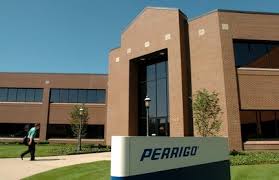
 

Perrigo Company is the largest manufacturer of over-the-counter (OTC) pharmaceuticals and nutritional products for store brands in the United States. The company estimates that it holds more than 50 percent of the store brand market. Perrigo produces more than 30 billion pills per year and manufactures about 1,200 products. Most of these are pharmaceuticals–such as analgesics, cough and cold remedies, and gastrointestinal and feminine hygiene products–which account for about four-fifths of the company’s sales. Perrigo ranks as the largest producer of aspirin in the United States. The remaining 20 percent of revenues come from the sale of nutritional products, including vitamins and nutritional supplements and drinks. Perrigo supplies 300 different retailers with these products under the retailer’s own label so that they can be promoted as house brands. These customers include major drugstore chains (CVS, Eckerd, Walgreens), grocery chains (Albertson’s, Kroger, Safeway), mass discounters (Kmart, Target, Wal-Mart), and major wholesalers (McKesson, Supervalu). Perhaps not surprisingly, the largest Perrigo customer by far is retailing giant Wal-Mart, which accounted for 27 percent of net sales for fiscal 2003. The company also markets certain products under its own brand name, Good Sense, although such products account for only a small percentage of sales. Two non-U.S. subsidiaries generate a little more than 9 percent of revenues. Wrafton Laboratories Ltd. supplies store brand products to major grocery and drug retailers in the United Kingdom, while the Mexican firm Química y Farmacia, S.A. de C.V. produces mainly OTC and prescription pharmaceuticals for retail, wholesale, and government customers. Perrigo Company operates 11 manufacturing plants in Michigan, South Carolina, Mexico, and the United Kingdom. Perrigo has enjoyed nearly continuous growth since the end of World War II. This growth can be partly attributed to the mass acceptance of generic and store brand pharmaceutical products.

Early Years

The company was founded by Luther and Charles Perrigo in 1887. The Perrigo brothers had moved to Allegan County, Michigan, a few years earlier from New York. Once in Michigan the brothers established a modest business. Luther Perrigo ran a country general store and apple drying business, while Charles helped with sales. Luther decided to package generic home remedies and sell them to other small country stores like his own. The first packaging plant for these medicines was run out of Charles Perrigo’s home, but Charles soon moved to Ohio, leaving the business entirely to his brother. Luther became president of the firm when it incorporated in 1892. Perrigo remained a family-owned business for 90 years. Five of the company’s seven presidents were descendants of Luther Perrigo, who died in 1902. His son Harry became president at that time, holding the position for the next 49 years.

During the 1920s the company turned to the private label concept in order to build customer loyalty. Stores ordering a certain minimum number could have their own names imprinted on the labels. Products of the era that were the subject of such deals included aspirin, bay rum, epsom salts, sweet oil, and zinc oxide. In the mid-1930s Perrigo gained its first major private label customer, the K & W group, a buying organization that evolved into the People’s Drug Store chain. The second such customer was Sam’s, a major Detroit area drug chain. At the same time the company’s customer base was shifting from small general stores to large regional and national drug chains.

Post-World War II Shift from Packager to Manufacturer

Harry Perrigo turned over the reins to his brother Ray in 1951. It was in the 1950s that the company, while still under the leadership of Ray Perrigo and future President William L. Tripp, Sr., made a crucial decision. Perrigo shifted its focus from that of a repackager of generic drugs to a manufacturer of quality drugs and beauty aids.

William L. Tripp, one of Luther Perrigo’s grandchildren, became president in 1967. During Tripp’s tenure as president the company began to reap the rewards of the change from repackager to manufacturer. The company’s income and the number of Perrigo employees quadrupled. When Tripp died in 1969 his son Bill Tripp, Jr., took over the presidency. During the 1970s Perrigo’s base of customers expanded with the addition of grocery chains and mass merchandisers to the core drugstore chains. By the time of his death in a boating accident in 1980 at the age of 45, Perrigo was the leading private label manufacturer of health and beauty products in the United States. William C. Swaney had been named president of the company two years before the accident, becoming the first leader of the company who was not a member of the Perrigo family.

End of Family Ownership: Early 1980s

Swaney’s presidency lasted from 1978 until 1983. In those five years Perrigo sales tripled and the company became a much larger operation all around. Swaney acquired new companies, set up distribution centers in three states, and expanded and refurbished existing plants. Before leaving as president Swaney oversaw the sale of the company from the Perrigo family to the management. After almost 100 years of family operation the company was sold.

Michael Jandernoa, who had joined the company in 1979 as vice-president for finance, became the seventh president of Perrigo in 1984, while Swaney took over as chairman of the board and CEO. Swaney instituted a style of management at Perrigo that his successor Jandernoa admitted he probably would have tried to block had he been in a position to do so at the time. Yet Jandernoa came to appreciate the open style of administration that Swaney initiated. The company contended that the different disciplines interacted in the decision-making process much more than in traditional American businesses.

Part of the Grow Group, 1986-88

Jandernoa continued the policy of expansion started by Swaney. Perrigo acquired Bell Pharmacal Labs of South Carolina in 1984. Early in the Jandernoa presidency, however, the board of directors began entertaining offers from larger companies that might want to acquire Perrigo itself. In 1986 Perrigo became the largest single company in Grow Group, Inc., a publicly held group of 23 manufacturing companies that bought Perrigo for $45 million. Jandernoa was named CEO of Perrigo; he continued to serve as president. Perrigo represented about a third of Grow Group. As the largest component in a conglomerate with access to funds through the New York Stock Exchange, Perrigo was able to raise new funds for more expansion.

Perrigo celebrated the company’s centenary with two ambitious building projects. It built a $1.5 million plant for the manufacture of effervescent tablets and a $3.5 million graphics art complex to house all of the company’s printing needs. Because Perrigo supplied many different retailers with the same house brand product, their printing facilities were an important part of their production system. The graphics and printing department employed about 290 people and produced almost 70 percent of the company’s labels and 44 percent of their cartons in the early 1990s. The construction of the graphics department, coupled with other expenses, totaled approximately $12.6 million in outlays to the company’s printing and graphics department since the Grow purchase in 1986.

Back to Management Ownership and Then Taken Public: Late 1980s to Early 1990s

After only two years as a part of Grow Group, however, Perrigo was sold back to its management in 1988 in a $106 million deal. That year the company posted sales of $146 million, but by 1994 company sales had ballooned to $669 million. Three years after the sale by Grow to Perrigo management, Jandernoa took the company public. The stock proved popular, though the value fell and rose significantly over time. The market value of the company in July 1994 based on a closing price of $14 a share was $1 billion, for instance. But this price was down from a value of $32 a share in January 1994.

The drop in the value of Perrigo shares was attributed to a drop in sales growth. The company, in fact, had another year of record sales and continued to expand, but stock speculators felt that the market had overreacted to the Perrigo stock offering and had inflated the value beyond its true market worth. Some analysts predicted that the drop in growth was a sign that the national brands would win back bargain-hunting customers in a healthy economy.

Other problems that Perrigo faced in its competition with national brands in the early 1990s concerned finding the right price range for its products. While Perrigo had long wielded its ability to offer lower prices than national brand competitors, sometimes the price difference could be so dramatic–more than 50 percent in some cases–that it could have a reverse effect on the consumer. The consumer weighed the relative cost savings with a judgment on efficacy equivalence. If the price difference was too dramatic, some observers contended, the consumer became suspicious of the Perrigo brand and turned to the national brand. Perrigo therefore developed a system whereby some of the money that it saved from advertising was spent on market research to determine exactly how its products were accepted by the consumer, which products were worth developing, and which had limited potential because of brand allegiance.

One reason for Perrigo’s enormous dominance over the store brand market was its ability to work closely with retailers to promote consumer allegiance to store brands. Beginning in the 1980s Perrigo began a major campaign to help retailers design labels, manage inventory, and develop promotions. Perrigo used its house printing and graphics department to ensure accuracy and reliability in labeling and packaging, permitting rapid new product introductions. Perrigo also enjoyed an advantage over many of its competitors because retail stores had a real incentive to give Perrigo’s product prominence on their shelves. Profit margins for store brand products were considerably greater than for national brands. The store’s public image could be enhanced as well, provided the product sold under their name was satisfactory.

Most of Perrigo’s products were packaged to be readily identifiable with the national brand equivalents. There was a fine line between taking advantage of the competitor’s advertising and carving out a niche that was independently recognized by the consumer. The OTC Market Report disclosed in 1995 that the company was threatened with lawsuits “once or twice a year,” but the vast majority of them were settled in a short period of time. Most of the disputes focused on product dress rather than the actual content of the product. While Perrigo management had become accustomed to lawsuits from competitor companies, in July 1994 Perrigo found itself faced with a lawsuit from closer to home. Its former parent company, Grow Group, filed suit against the company. The Grow Group, valued at less than half of Perrigo, demanded the return of Perrigo stock or a sizable settlement in lieu thereof. Grow claimed that Perrigo management did not act in good faith at the time of the 1988 sale, particularly alleging that they did not reveal a pending agreement to supply products to Wal-Mart, and asked for $2 billion in actual damages and $2 billion in punitive damages. Perrigo contended that the suit was wholly without merit.

One of the company’s strengths was that it faced little legitimate competition. In December 1994 the company purchased Vi-Jon Laboratories, Inc., a leading manufacturer of store brand personal care products, thereby expanding Perrigo’s sales and eliminating a potential competitor at the same time. The purchase price was about $33 million. A similar acquisition occurred earlier, in January 1992, when Cumberland-Swan, Inc., a Tennessee-based maker of store brand personal care products and vitamins, was bought for $35 million.

As the patents on dozens of major prescription drugs began to run out in the mid-1990s, Perrigo began to aggressively go after these lucrative new sources of revenue. Once a prescription drug was reclassified as OTC, the patent holder had two years of exclusivity. At that point generic versions of brand-name OTC products could be produced. An example of this process was Tavist-D, a decongestant and antihistamine that switched from prescription-only to OTC status in 1992. Two years later, Perrigo reached an agreement with the drug’s maker, Sandoz Pharmaceuticals Corp., to begin making a store brand version of Tavist-D in 1995. In subsequent years, Perrigo increasingly turned to such joint ventures to develop new products.

Also in the mid-1990s, Perrigo began looking to the international market for growth, forming subsidiary Perrigo International, Inc. to lead this effort. Among the initially targeted countries were Canada, Japan, Mexico, and Russia.


On 20 January 2011, the firm announced that it would acquire Paddock Laboratories Inc., with the deal expected to close in fiscal 2012.[11]

In September 2012, Perrigo announced its intention to enter the animal wellness category by acquiring the assets of Sergeant’s Pet Care Products, Inc., a privately held manufacturer of over-the-counter companion animal healthcare products. [12]

On 11 February 2013, Perrigo announced the completion of the acquisition of Rosemont Pharmaceuticals Ltd., a specialty and generic prescription pharmaceutical company focused on the manufacturing and marketing of oral liquid formulations. [13]On 29 July 2013, the firm announced that it would acquire Élan, a major drugs firm based in Dublin.[14][15]

Segments

The company operates in three segments; Consumer Healthcare, Rx Pharmaceuticals, and Active Pharmaceutical Ingredients. The Consumer Healthcare segment produces over-the-counter pharmaceutical and nutritional products in the United States, the United Kingdom, and Mexico. This segment offers analgesic, cough/cold/allergy/sinus, gastrointestinal, smoking cessationfirst aid, antacids, hemorrhoidal remedies, motion sickness, sleep aid products, feminine hygiene products, vitamin, and nutritional supplementproducts.

The Rx Pharmaceuticals segment produces generic prescription drugs in the United States. This segment provides creams, ointments, lotions, gels, and solutions, as well as nasal sprays, foams, and transdermal devices.

The Active Pharmaceutical Ingredients segment produces pharmaceutical ingredients in Israel with sales to customers worldwide. The company also offers cosmetics, toiletries, detergents, manufactured and imported pharmaceutical products, and medical diagnostic products. The company’s customers include national and regional retail drug, supermarket, wholesalers, and mass merchandise chains.


Management

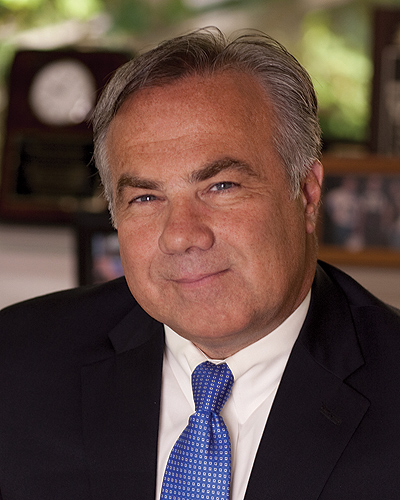
Joseph C. Papa is the Chief Executive Officer and President.[16]

Joseph C. Papa, Jr. '78 has served as Perrigo's president and chief executive officer and as a member of the Board of Directors since October 2006. (School of Pharmacy, Graduate Speaker and Honorary Degree recipient)

Joseph C. Papa Jr.


PATENTS

The Perrigo API R&D team has created dozens of ground-breaking, patent-protected industrial processes. These sophisticated, efficient manufacturing procedures facilitate cost-effective production and flexible pricing, helping to strengthen our customers’ long term competitive positions in the marketplace.

Patents ROW
API Description Patent/Application no.
Anastrozole Preparation process DE 102005037484
Imatinib Imatinib process IN 216/KOL/2009
Imatinib Imatinib alpha form DE 102007021043
Moxonidine Moxonidine polymorphs IL 176556
Moxonidine Moxonidine process EP 1982983
Moxonidine Moxonidine process EP 1873151
Moxonidine Moxonidine purification EP 1873152
Moxonidine Moxonidine salts EP 1894927
Terbinafine Hydrochloride Preparation process IL 137364
Theobromine Theobromine process CN 200710116201.8
Theobromine Theobromine purification CN 200710116000.8
Theobromine Theobromine production process WO 2009/089677
Patents USA
API Description Patent/Application no.
Azacitidine Azacitidine crystallization US 2011-0288042
Cetirizine Dihydrochloride Preparation process US 6,100,400
Cilostazol Improved process US 7,524,960
Cisatracurium Cisatracurium acid compounds US 2010-0168431
Cisatracurium Cisatracurium acid process US 2010-0184988
Cisatracurium Cisatracurium API from acid US 2010-0256381
Cisatracurium Cisatracurium by-products US 2011-0185796
Cisatracurium Cisatracurium flash chromatography US 2010-0174082
Cisatracurium Cisatracurium normal phase US 2010-0099878
Cisatracurium Cisatracurium purification US 2010-0234602
Cisatracurium Cisatracurium reverse phase Us 2010-0087650
Donepezil Hydrochloride Donepezil hydrochloride compositions US 6,734,195
Donepezil Hydrochloride Preparation process US 6,844,440
Donepezil Hydrochloride Purification via Donepezil maleate US 7,592,459
Fluticasone Propionate Method of isolating a Fluticasone intermediate US 6,747,163
Granisetron Granisetron intermediate US 7,060,841
Halobetasol Halobetasol US 7,208,485
Imatinib Imatinib process US 7,507,821
Imatinib Imatinib with EDC US 7,550,591
Imiquimod Imiquimod ammonia DMSO US 7,659,398
Imiquimod Imiquimod process US 7,323,568
Imiquimod Imiquimod urea/guanidine US 7,943,771
Lamotrigine Preparation process US 6,329,521
Letrazole Letrozole process US 7,538,230
Letrazole Letrozole purification US 7,465,749
Levocetirizine Levocetirizine purification US 2011-0230496
Midazolam Midazolam Maleate process US 7,776,852
Montelukast Sodium Amorphous montelukast US 7,544,805
Montelukast Sodium Montelukast precursor US 7,572,930
Montelukast Sodium Montelukast process US 7,528,254
Palonosetron Palonosetron salts US 2010-0174080
Rocuronium Bromide Rocuronium bromide process US 7,579,461
Rotigotine Rotigotine crystalline base US 2010-0222602
Temozolomide Improved process US 7,612,202
Tramadol Hydrochloride Tramadol purification US 5,672,755
Tramadol Hydrochloride Tramadol separation process US 5,874,620
Zonisamide Derivatives of BIOS-H US 7,745,471


Awards

101 Best and Brightest Companies to Work For of West Michigan awarded Perrigo overall “Best of the Best” for 2009.[17]

In 2010 Perrigo was named one of the top 100 Fastest-Growing Companies by Fortune Magazine.[18]


From its beginnings as a packager of generic home remedies in 1887, Perrigo Company plc, headquartered in Ireland, has grown to become a leading global healthcare supplier. Perrigo develops, manufactures and distributes over-the-counter (OTC) and generic prescription (Rx) pharmaceuticals, nutritional products and active pharmaceutical ingredients (API), and receives royalties from Multiple Sclerosis drug Tysabri®. The Company is the world’s largest manufacturer of OTC healthcare products for the store brand market and an industry leader in pharmaceutical technologies. Perrigo’s mission is to offer uncompromised “Quality Affordable Healthcare Products®,” and it does so across a wide variety of product categories primarily in the United States, United Kingdom, Mexico, Israel and Australia, as well as more than 40 other key markets worldwide, including Canada, China and Latin America.


Perrigo API (formerly known as Chemagis) provides differentiated Active Pharmaceutical Ingredients (APIs) and Finished Dosage Forms (FDFs) for the branded and generic pharmaceutical industries.

Founded in 1987 in Israel and led by an accomplished team of industry experts, Perrigo API products comply with the highest regulatory requirements of leading health authorities such as FDA, PMDA, TGA, ANVISA and EU authorities. The company’s facility in Israel is FDA-inspected, cGMP-compliant and recognized for environmental stewardship.

Leveraging our strengths in complex chemistry, innovative patent development and in-depth regulatory expertise, Perrigo API provides tailor-made solutions to meet individual client requirements. We offer our customers comprehensive, customized solutions which include IP assets, API and FDF products, dossiers, bundling and P-IV partnerships, some through joint ventures and some independently, and all strengthened by well-designed and mutually beneficial strategic alliances.

Perrigo API offers comprehensive technical and regulatory support across the entire product lifecycle, from project inception to final production. Our state-of-the-art efficiency and control measures applied across the supply, development and manufacturing chain, allow Perrigo API to provide exceptional value and product differentiation to hundreds of customers worldwide. (Learn more about partnership opportunities)

With the ever-changing and increasingly competitive climate in the global API and Pharma industry, Perrigo API has been proactively searching for ways to continually add customer value and improve our leadership position. In 2009, Perrigo API (PAI) was established, following the acquisition of 85% of the holdings of a state-of-the-art API plant near Mumbai. Fully operational as of 2013, PAI supports Perrigo efforts to increase production capacity and competitiveness, while strictly complying with all industry regulations. This strategic move towards diversified capabilities further enhances Perrigo API highly valued operational flexibility, and adds to our company’s competitive edge.


FDFPerrigo API extends its Active Pharmaceutical Ingredients (APIs) product line with selected Finished Dosage Forms (FDFs) where it is strategically advantageous to customers, providing the most added value and differentiation for clients.Perrigo API focuses on developing those FDFs which require complex and sophisticated manufacturing processes, providing our valuable clients with highly professional regulatory support and reliable supply chain.All Perrigo API products, are made with high standards complying with GMP and regulatory requirements of leading health authorities.Products under patent are not sold until patent expiration in the relevant country.

FDF Therapeutic Use More
Anastrozole tablets 1 mg Treatment of hormone receptor-positive breast cancer in postmenopausal women
Cetirizine dihydrochloride 10 mg tablets Cetirizine dihydrochloride 10 mg/ml, oral drops Cetirizine dihydrochloride 1 mg/ml, oral solution Symptomatic treatment of allergic rhinitis
Granisetron HCl ampoules 1 mg/ml 1ml, 3 ml Prevention and treatment of acute nausea and vomiting associated with chemotherapy and radiotherapy
Granisetron HCl tablets 1, 2 mg Prevention and treatment of acute nausea and vomiting associated with chemotherapy and radiotherapy
Letrozole tablets 2.5 mg First-line treatment in postmenopausal women with hormone-dependent breast cancer
Moxonidine tablets 0.2, 0.3, 0.4 mg Mild to moderate essential hypertension
Temozolomide hard gelatin capsules 5, 20, 100, 140, 180, 250 mg Treatment of patients with malignant glioma such as glioblastoma multiforme or anaplastic astrocytoma


Perrigo API specializes in tailor-made research and process development of Active Pharmaceutical Ingredients (APIs) and Finished Dosage Forms (FDFs), with special emphasis on complex, differentiated APIs and FDFs.

Perrigo API carefully selects APIs and FDFs which provide our customers with a competitive market position by delivering unique IP as part of a total solution. All Perrigo API products comply with the exacting regulatory requirements of leading health authorities, including the FDA, PMDA, TGA, ANVISA and other EU authorities.

Below is a list of APIs and FDFs which are currently under development.

Products under patent are not sold until patent expiration in the relevant country.

API Therapeutic Use More
Esomeprazole Mg Dihydrate Form A Gastroesophageal reflux disease (GERD)
Fexofenadine Hydrochloride Allergy symptoms
Fluticasone Furoate Seasonal and perennial allergic rhinitis
Fulvestrant Breast cancer
Ibrutinib Leukemia
Loratadine Seasonal allergic rhinitis; Chronic idiopathic urticaria
Montelukast Sodium Prophylaxis and chronic treatment of asthma
Tiotropium Bromide Monohydrate Bronchospasm associated with chronic obstructive pulmonary disease (COPD)
Vilanterol Trifenatate Bronchospasm associated with chronic obstructive pulmonary disease (COPD)
FDF Therapeutic Use More
Azacitidine myelodysplastic syndromes and chronic myelomonocytic leukaemia
Fulvestrant Breast cancer

API

Perrigo API team is deeply committed to achieving uncompromising quality and reliability at every point in the value chain, from product inception to production, from regulatory affairs to go-to-market activities.


Mr. Yoav Grinberg
General Manager

Mr. Grinberg brings extensive general management experience as well as international marketing and sales experience. Previously MR. Grinberg was responsible for Perrigo API sales and marketing activities worldwide. Before joining Perrigo API in 2010, Mr. Grinberg worked for 20 years in the chemical and plastics industries in various senior general management and sales and marketing positions, based in Israel and Europe. Mr. Grinberg holds an MBA from Tel Aviv University.


Dr. Shireesh Ambhaikar
CEO, Perrigo API India Private Limited (PAI)


Dr. Ambhaikar has held numerous positions of increasing responsibility in manufacturing, project management and general management in the pharmaceutical industry. Prior to joining PAI, Dr. Ambhaikar was head of manufacturing, supply chain and global sourcing at UCB Pharm. Prior to that, he was with Sandoz/Novartis, with responsibilities in both manufacturing and project management. Dr. Ambhaikar holds a PhD degree in Organic Chemistry from Mumbai University.


Mr. Ilan Avni
Director Business Development & Pipeline

Ilan Avni

Mr. Avni joined Perrigo in 2006 and has held several Business Development positions of increasing responsibility both in the US Rx and API business units with experience in acquisitions, divestures, joint ventures, co development and product licensing. In his previous position, Mr. Avni served as an integration project leader for Perrigo API India. Mr. Avni holds an MBA with dual major in Finance and Marketing from Tel Aviv University and a BSc Pharm from the Hebrew University of Jerusalem.


Dr. Tami Greenberg
Head of Quality Perrigo Israel API

Tami Greenberg

As Head of Quality for Perrigo Israel API, Dr. Greenberg is responsible for all QA/QC operations, regulatory compliance and meeting customers’ technical needs. Prior to joining Perrigo API in 2006, Dr. Greenberg was part of the R&D team in Bromine Compounds and lead different development projects. Dr. Greenberg holds Ph.D. in Material engineering from the Ben-Gurion university of the Negev.


Mrs. Dina Hanuna
API Finance Controller

Mrs. Hanuna joined Perrigo Israel (formerly Agis) in 1991. Prior to joining Perrigo, Mrs. Hanuna held the position of Senior Manager with the CPA firm Jungerman, Gilboa & Co. Mrs. Hanuna has more than 20 years of experience in several roles in the Finance Department at Perrigo Israel, nine years of which have been in senior management roles. Mrs. Hanuna is a Certified Public Accountant (Israel). She holds a BA in Economics and Business Administration from Bar Ilan University as well as a BA in Accounting from Tel Aviv University.

SEE…http://investing.businessweek.com/research/stocks/private/person.asp?personId=8971366&privcapId=881270&previousCapId=881270&previousTitle=Perrigo%20Israel%20Pharmaceuticals%20Limited


Mrs. Ayala Kost
VP of Global Operations Perrigo API

As the Perrigo API executive in charge of Operations, Previously Mrs. Kost was responsible for Quality Assurance and control as well as regulatory compliance and meeting customers’ technical needs. Prior to joining Perrigo API in 2002, Mrs. Kost was U.S. Marketing Director and Pilot Lab Manager at, a leading manufacturer of crop protection chemicals. Prior to that she held the position of Process Engineer at Nepro Negev Projects. Mrs. Kost holds an MBA from Tel Aviv University and a BSc in Chemical Engineering from Ben-Gurion University.


Mrs. Dganit Vered
VP, API Research & Development

Dganit Vered

Mrs. Vered joined Perrigo in 2012 as VP Research and Development. Mrs. Vered is responsible for all Perrigo API R&D activities worldwide. Prior to joining Perrigo she worked at Intel Corporation for more than 17 years and at total of 21 years in the semiconductors business. While with Intel Mrs. Vered held several senior management positions and performed R&D, Engineering, Operations and Facilities, QA/QC and project management roles. Mrs. Vered holds BSc of Chemical engineering from the Technion.


Dr. Alexander Weisman
CSO

Alex Weisman


Dr. Weisman has more than 25 years of experience in R&D in Analytical and Organic Chemistry, out of which15 years in the pharmaceutical industry including 10 years in management roles. Dr. Weisman joined Perrigo API in 1998, as manager of Analytical R&D and later nominated as VP R&D. In 2012 Alex became the CSO of the company. Dr. Weisman has more than 15 articles and patents to his credit. He holds a PhD in Biochemistry from Moldova State University.


References

  1.  Jones, Al (16 August 2011). “Perrigo Co. reports strong gains in sales and earnings for fourth quarter and full year”Mlive.com (Allegan). Kalamazoo Gazette. Retrieved 20 August 2011. “Sales for the full year were $2.75 billion, up about 21.5 percent from $2.26 billion in fiscal 2010.”
  2.  Wilton, Bill (2008-10-16). “Perrigo Company”. Zacks Investment Research. Company Description. Archived from the original on 2008-10-22.
  3.  “Perrigo Company – Company History”Funding Universe, retrieved 2009-10-31
  4. dedFiles/Investors/Press_Releases/news_ir_114.11.15%20Perrigo%20to%20Acquire%20Agis.pdf Perrigo Company to Acquire Agis Industries, Creating A Leading Diversified Healthcare Company, Company press release, retrieved 2009-10-31
  5.  http://www.perrigo.com/uploadedFiles/Investors/Press_Releases/PRGOPR(11).pdf
  6.  “Official Perrigo Company Press Release” (PDF). Retrieved 2012-03-13.
  7.  “Official Perrigo Company Press Release” (PDF). Retrieved 2012-03-13.
  8.  http://www.perrigo.com/uploadedFiles/Investors/Press_Releases/UNIPR.pdf
  9.  http://www.perrigo.com/uploadedfiles/Investors/Press_Releases/ORION.pdf
  10.  http://www.perrigo.com/uploadedFiles/Investors/Press_Releases/PBMCLS.pdf
  11. http://www.perrigo.com/uploadedFiles/Investors/Press_Releases/110119%20Paddle%20PR%20v9%20-%20FINAL%20CHANGES.pdf
  12.  “Perrigo Closes Acquisition Of Sergeant’s Pet Care Products”Perrigo Company.
  13.  “Perrigo Company Acquires U.K.-based Rosemont Pharmaceuticals Ltd. For Approximately £180 Million Or $283 Million”.
  14.  Perrigo kauft irische Pharmafirma Elan
  15.  US drugmaker Perrigo to buy Ireland’s Elan for $8.6bn
  16.  http://www.perrigo.com/about/corporate-governance.aspx
  17.  “West Michigan 2009 Winners”101 Best and Brightest Companies To Work For. West Michigan Region. Archived from the original on 2014-02-21.
  18.  “100 Fastest-Growing Companies 2010 – from FORTUNE”. Money.cnn.com. 2010-09-06. Retrieved 2012-03-13.

External links


Key Dates:

1887:
Luther and Charles Perrigo begin packaging generic home remedies and selling them at their own and to other general stores.
1892:
Company is incorporated.1920s:Perrigo begins offering private label products.1930s:Customer base begins to shift from general stores to large regional and national drug chains.1950s:Company shifts from a repackager of generic drugs to a manufacturer of quality drugs and beauty aids.

1970s:Grocery chains and mass merchandisers are added to the customer base.

1980:
Perrigo is now the nation’s largest private label manufacturer of health and beauty products.Early 1980s:Perrigo family ownership ends with the sale of the company to management.
1986:
Company is sold to Grow Group, Inc. for $45 million.
1988:
Grow Group sells the company back to management for $106 million.
1991:
Perrigo is taken public.
1997:
Controlling stake in Mexican pharmaceutical firm Química y Farmacia, S.A. de C.V. is acquired.
1998:
Perrigo posts a net loss of $51.6 million thanks to a restructuring of its personal care business.
1999:
The personal care business is divested to focus the company on OTC drugs and nutritional products.
2001:
Perrigo acquires Wrafton Laboratories Ltd., a U.K. maker of store brand pharmaceuticals.


Executive Management

Joseph C. Papa
President, Chief Executive Officer and Chairman

Mr. Papa joined the Company in October 2006 as President and Chief Executive Officer. Mr. Papa was elected as a director in November 2006 and, subsequently, was appointed as Chairman of the Board of Directors in October 2007. Previously, Mr. Papa served from December 2004 to October 2006 as Chairman and Chief Executive Officer of the Pharmaceutical and Technologies Services segment of Cardinal Health, Inc. Prior to that position, he served as President and Chief Operating Officer of Watson Pharmaceuticals, Inc. from November 2001 to November 2004. Additionally, Mr. Papa has held management positions at DuPont Pharmaceuticals, Pharmacia Corporation, G.D. Searle & Company and Novartis AG. Mr. Papa is a director of Smith & Nephew, a developer of advanced orthopedic medical devices.


Judy L. Brown
Executive Vice President and Chief Financial Officer

Ms. Brown was named Executive Vice President and Chief Financial Officer in July 2006. She served as Vice President and Corporate Controller from September 2004 to July 2006. Previously, Ms. Brown held various senior positions in finance and operations at Whirlpool Corporation from 1998 to August 2004. Ms. Brown is a director of Belden Corporation, a NYSE traded company, that designs, manufactures and markets cable, connectivity and networking products in markets including industrial automation, enterprise, transportation, infrastructure and consumer electronics.


Tom Farrington
Senior Vice President and Chief Information Officer

Mr. Farrington was named Senior Vice President and Chief Information Officer in October 2006. He formerly served as Chief Information Officer for F. Dohmen Co. in addition to serving as a division President for JASCORP LLC from March 2003 to October 2006. Prior to that position, Mr. Farrington held various senior positions in information technology and finance at Dell, Inc. from 1999 to 2003.


John T. Hendrickson
Executive Vice President, Global Operations and Supply Chain

Mr. Hendrickson was named Executive Vice President, Global Operations and Supply Chain in March 2007. He served as Executive Vice President and General Manager, Perrigo Consumer Healthcare from August 2003 to March 2007. He served as Executive Vice President of Operations from October 1999 to August 2003.


Scott Jamison
Executive Vice President, General Manager of Nutritionals

Mr. Jamison was named Executive Vice President, General Manager of Nutritionals in January 2011. Before the Company acquired PBM in fiscal 2010, Mr. Jamison had served as PBM’s Executive Vice President and General Counsel since the formation of PBM in 1997 and was a key member of the executive team throughout the evolution and growth of PBM. In addition to his legal responsibilities, Mr. Jamison has held senior leadership responsibilities in operations and sales, as well as in new business and product development.


Todd W. Kingma
Executive Vice President, General Counsel and Secretary

Mr. Kingma was named Executive Vice President in May 2006. He served as Vice President, General Counsel and Secretary from August 2003 to May 2006. Previously, Mr. Kingma held various positions at Pharmacia Corporation from 1991 through August 2003. His last position with Pharmacia Corporation was Vice President and Associate General Counsel, Global Specialty Operations


Sharon Kochan
Executive Vice President and General Manager, International

Mr. Kochan was named Executive Vice President and General Manager, International in August 2012. He served as Executive Vice President, General Manager of Rx Pharmaceuticals from March 2007 to August 2012 and as Senior Vice President of Business Development and Strategy from March 2005 to March 2007. Mr. Kochan was Vice President, Business Development of Agis Industries (1983) Ltd. from July 2001 until the acquisition of Agis by the Company in March 2005.


Jeff Needham
Executive Vice President, General Manager of Consumer Healthcare

Mr. Needham was named Executive Vice President, General Manager of Consumer Healthcare in October 2009. He served as Senior Vice President of Commercial Business Development from March 2005 through October 2009. Previously, he served as Senior Vice President of International from November 2004 to March 2005. He served as Managing Director of Perrigo’s U.K. operations from May 2002 to November 2004 and as Vice President of Marketing from 1993 to 2002.


Jatin Shah
Senior Vice President and Chief Scientific Officer

Dr. Shah was named Senior Vice President and Chief Scientific Officer in June 2005. He served as Vice President of Research and Development for Rx products from February 2004 to June 2005. Previously, Dr. Shah held various senior positions in Research and Development at Mayne Pharma (known previously as Faulding Pharmaceuticals) from June 1996 to January 2004.


Mike Stewart
Senior Vice President, Global Human Resources

Mr. Stewart was named Senior Vice President, Global Human Resources in September 2004. He served as Vice President, Human Resources from July 1993 to September 2004. Mr. Stewart began his employment with the Company in August 1981.


Louis Yu
Executive Vice President, Global Quality and Compliance

Dr. Yu joined the Company in November 2006 as Senior Vice President, Global Quality and Compliance. Previously, Dr. Yu served from October 2005 to October 2006 as Vice President, Quality at CV Therapeutics Inc. Prior to that position, he served as Global Head of Quality & Compliance for Forest Laboratories, Inc. from April 1999 to October 2005. He served as the Vice President, Quality & Compliance for Solvay Pharmaceuticals between October 1996 and March 1999. Currently, he is associated with the University of Wisconsin, serving as Adjunct Professor, Extension Services in Pharmacy, School of Pharmacy.


Douglas Boothe
Executive Vice President and General Manager, Perrigo Pharmaceuticals

Mr. Boothe joined Perrigo in January 2013 as Executive Vice President and General Manager, Perrigo Pharmaceuticals. Previously, Mr. Boothe served as Chief Executive Officer of Actavis Inc. from August 2008 to December 2013 and as Executive Vice President and Chief Operating Officer from 2006 to 2008. Prior to that position, Mr. Boothe held various senior positions in strategic planning and business development for Alpharma Inc., Pharmacia Corporation and Xerox Corporation.

India’s Cipla to invest £100 million in the UK


India's Cipla to invest £100 million in the UK

Indian generics major Cipla has unveiled plans to invest £100 million in the UK as it looks to expand its global footprint.

The deal was announced by Chancellor of the Exchequer George Osborne (pictured) who is on a trade mission to India, stating that the investment will fund the launch of a range of drugs in the areas of respiratory, oncology and antiretroviral medicines. He added that the cash will also be used on R&D, clinical trials “and further expansion internationally and in the UK”.

Read more at: http://www.pharmatimes.com/Article/14-07-07/India_s_Cipla_to_invest_%C2%A3100_million_in_the_UK.aspx#ixzz36wQ9kz6k


Biocon chief Kiran Mazumdar-Shaw receives Kiel Institute’s ‘2014 Global Economy Prize’


The award, established in 2005 by the Kiel Institute, is bestowed upon individuals who have been pioneers in finding solutions to global economic problems.

The award, established in 2005 by the Kiel Institute, is bestowed upon individuals who have been pioneers in finding solutions to global economic problems.
BANGALORE: Biotech major Biocon today said its Chairperson and Managing Director Kiran Mazumdar-Shaw has been awarded the Kiel Institute’s most coveted ‘2014 Global Economy Prize’ for Business.

She was honoured at the institute’s 100th anniversary celebrations at Kiel in Germany.

The award, established in 2005 by the Kiel Institute, is bestowed upon individuals who have been pioneers in finding solutions to global economic problems by strongly influencing and implementing eco ..

With Prof. Thaler and President Sirleaf — in Kiel, Germany.


http://economictimes.indiatimes.com/news/news-by-company/corporate-trends/biocon-chief-kiran-mazumdar-shaw-receives-kiel-institutes-2014-global-economy-prize/articleshow/37076858.cms


Signing the register at the Kiel Institute for the World Economy.
 — in Kiel, Germany.


With Lord Mayor of Kiel and President Dennis Snower of Kiel Institute. — in Kiel, Germany.


Signed register at the Kiel Institute. — in Kiel, Germany.

Takeda Pharmaceutical


Takeda Pharmaceutical

by

Dr. Rainer Steinbach

Rainer studied chemistry and economics in Germany (Bonn, Marburg) and did postdoctoral work at Stanford University (CA, USA). He held various positions (R&D, Market Research, Marketing, Strategic Planning, Sourcing, etc) while working at Rütgers, Novartis, Syngenta, SK, Clariant, Archimica. His international background (he worked out of Belgium, Germany, Italy, Switzerland and the USA) combined with broad experience gained in China and India (he audited more than 200 companies) is the foundation of CAP INTELLIGENCE.

Dr Rainer Steinbach of CAP Intelligence profiles Japan’s most global drugs firm

Takeda is the largest Asian pharmaceuticals company. The company started as early as 1977 to establish major co-operations with Western firms. As a result, it has the most global orientation amongst Japanese pharmaceutical companies. The latest major acquisition, Nycomed, is part of this globalisation strategy.


History

Takeda dates back to 1781, when Chobei Takeda started selling Japanese and Chinese traditional medicines. In 1895, the firm started the first production of pharmaceuticals in Osaka. Research activities started in 1914 and in 1944 fermentation activities were added.

In 1981, the antibiotics Takesulin and Pansporin were launched in Japan. In 1985, Takeda formed TAP Pharmaceuticals, a 50:50 joint venture (JV) in the US with Abbott Laboratories. TAP began marketing the prostate cancer treatment leuprorelin (Lupron) in the same year. 1997 saw the launch in Europe of candesartan celexetil (Blopress/Kensen), an anti-hypertensive agent which is also marketed by AstraZeneca.

In 2008, Takeda acquired Millennium Pharmaceutical of Cambridge, Massachusetts, an oncology research specialist, for $8.8 billion. Larger still was the acquisition of Swiss company Nycomed for €9.6 billion ($13.3 billion) in 2011, not including Nycomed’s US-based dermatological business. Nycomed had itself grown substantially by acquiring the pharmaceuticals interests of Altana in Germany and Bradley Pharmaceuticals in 2007.

The acquired parts of Nycomed had revenues of about €2.84 billion in 2011 and a workforce of about 11,800 employees, plus production locations in 11 countries worldwide. Its revenues were mainly in Europe (48%), Russia (17%) and Latin America (13%), plus other emerging markets. The acquisition also gained Takeda access to romiflumast (Daliresp), a new drug against chronic obstructive pulmonary disease.


In 2012, Takeda acquired URL Pharma, a privately owned company headquartered in Philadelphia and employing about 500, for an upfront payment of $800 million and future performance-based contingent earn out payments. URL’s 2011 revenues amounted of nearly $600 million, over two thirds coming from colchicine (Colcrys), which is used to treat and prevent gout flares. URL Pharma was sold to Sun Pharma in January 2013.

Table 1 – Locations of Takeda sites

Structure

Takeda is a public share company that is listed at the Tokyo and Osaka stock exchange, with the ticker symbol 4502. The main shareholders are financial institutions (33%), foreign investors (30%), some 280,000 individuals (27%) security companies and others (10%). The three biggest single shareholders are Nippon Life Insurance, with 7.1%, Japan Trustee Services Bank (4.4%) and the Master Trust Bank of Japan (4.3%).

The company is headquartered in Osaka, with its European headquarters in London and the American one headquarters Deerfield, Illinois. It has 17 manufacturing sites and three JV manufacturing sites, the most important of which are listed in Table 1. It employs a global workforce of about 30,500. Regional data about this are not published, apart from in Japan itself. CAP Intelligence estimates the workforce split as 31% in Japan, 30% in Europe, 25% in the USA and 14% in the rest of the world.

As of today, the Takeda Group has 61 consolidated companies and 14 affiliates. Major subsidiaries include: Takeda Nycomed Pharmaceuticals, Takeda Europe Holdings (Amsterdam), Takeda USA Holdings (New York), Millennium Chemicals (Cambridge, Massachusetts), Nihon Pharmaceutical, Wako Pure Chemicals and Mizuzawa Industrial Chemicals (all Japan) and Tianjin Takeda Pharmaceuticals (China).

Takeda’s financial year starts on April 1 and ends on March 31. The company’s financial results are reported in Yen, but are given here in US dollars for ease of comparison with other profiled firms. Figure 1 shows revenues, EBITDA, operating income and net earnings for the years since 2002.

In the year to March 2013, earnings fell by 13.3% to $16.57 billion, but EBITDA was up by 6.1% to $5.52 million and operating income was 27.4% up to $4.28 billion while earnings more than doubled to $3.48 million. Consequently, the net profit margin shot up from the 8% mark in the previous two years to 21.2%.

Figure 1 – Takeda’s revenues & profits ($ billion), 2011-2013 fiscal years


Main activities

Takeda is overwhelmingly focused on ethical products, which account for 90% of its revenues. Within this, cardiovascular and metabolic therapies account for 74%, followed by oncology with 13.5% and inflammatory with the other 2.5%. The remainder of its revenues is split between consumer healthcare products, including cold remedies and vitamin-containing products (4%), and others (6%). The company’s five best selling products account for close to $10 billion in sales, more than half of the total (Figure 2).

Sales are 47% in Japan, 23% in North America, 16% in Europe, 4% each in the rest of Asia, Russia and the CIS and Latin America and 2% in the rest of the world. As the Japanese market will not deliver major growth opportunities, the company’s objective is to be strongly present in emerging markets, especially China and Russia. Sales and marketing efforts have been intensified to this end. In fiscal 2012, Takeda all started an e-commerce website for direct selling in Japan called the Takeda Online Shop as part of the consumer healthcare business.

Takeda’s stated vision is “to embody global pharmaceutical leadership through innovation, culture, and growth, guided by an unwavering commitment to significantly improve the lives of patients”. Its strategy includes:

  • A strong focus on emerging markets
  • An improved presence in China and Korea
  • The integration of Nycomed and reducing over-reliance on the Japanese and American markets
  • Leveraging Nycomed’s strength in emerging markets to drive growth and combine the strength of both companies
  • Securing a top market share by establishing new products and maximising the sales of the existing portfolio
  • Concentration of management resources into new core therapeutic areas of metabolic and cardiovascular disease, oncology and diseases of the central nervous system (CNS), plus exploring further immunology and inflammatory medications
  • Increasing promotional efficiency
  • Making strategic investments actively and flexibly, while pursuing all opportunities, including M&A, product acquisition and the introduction of pipeline drugs

Takeda is one of the few Japanese pharmaceuticals companies that have a truly global presence. Because of this, in addition to its Japanese competitors, such as Astellas, Eisai, Mitsubishi, Otsuka, Shionogi, Taiho and Teijin, it also competes with all the major international companies, including generics companies. The strongest competitors in its main area of cardiovascular and metabolic drugs are AstraZeneca, Bayer, Bristol-Myers Squibb (BMS), Boehringer Ingelheim (BI), Daiichi Sankyo, Dainippon Sumitomo, Merck & Co., Novartis, Pfizer and Sanofi.

Table 2 – Takeda’s leading brands by sales, 2010-2013 fiscal years

R&D structure

About 6,000 Takeda employees work in R&D. In 2012-2013, the company invested more than $3.9 billion in R&D, almost 21% of total revenues. It has R&D sites in: Osaka and Fujisawa in Japan; Palo Alto, San Diego, Deerfield, Cambridge, Bozeman and Fort Collins in the US; Cambridge and London, UK; Roskilde, Denmark; Konstanz, Germany; Singapore; Guangzhou, China; and, Sao Jerônimo in Brazil.

Following the opening of the new drug discovery research centre, the Shonan Research Centre in Osaka, a new R&D structure was implemented in early 2011, creating ‘Drug Discovery Units (DDUs)’, with research functions around each of the four core research activities of metabolic diseases, oncology, CNS-related diseases and inflammatory diseases.

In addition, R&D alliances continue to form a key part of Takeda’s strategy. This has included alliances with Advinus Therapeutics in India, Seattle Genetics, Sage Bionetworks, Xoma and Zinfandel Pharma in the US and BC Cancer Agency in Canada. The company has stated that R&D expenditure over the next three years will be divided as follows between different therapeutic areas: oncology 31%, cardiovascular and metabolic 27%, CNS 14%, immunology and respiratory 12%, general medicine and vaccines 16%.

Clinical development

As of July 2013, Takeda had more than 40 products in clinical development, with the main emphasis on cardiovascular and metabolic indications and oncology. These comprised 14 compounds in Phase I, six (all NMEs) in Phase II and 12 (including seven NMEs) in Phase III.

Eight products, including three NMEs, had been submitted for approval and submissions had been filed for: vedolizumab, a monoclonal antibody developed to treat Crown’s disease and ulcerative colitis (Figure 2a); vortioxetine an anti-depressant co-developed with Lundbeck to treat generalised anxiety disorder; and, BLB-750, a vaccine developed to prevent pandemic influenza. Amongst the developmental drugs in Phase III are:

  • Alisertib (MLN8237, Figure 2b), a developmental kinase inhibitor to treat non-small lung cancer, breast cancer, ovarian cancer and T-cell lymphoma
  • Fasiglifam (TAK-875, Figure 2c), an experimental drug against diabetes mellitus, belonging to the group of fatty acid receptor agonists
  • Ixazomib (MLN7908, Figure 2d), a protease inhibitor developed to treat multiple myeloma and relapsed primary amyloidosis
  • Orteronel (TAK 700, Figure 2e), an experimental non-steroidal proteasome inhibitor developed to treat prostate cancer
  • Trebananib (AMG 386), a developmental antineoplastic immunoglobulin that is being co-developed with Amgen
  • Trelagliptin (SYR-472, Figure 2f), a long-acting dipeptidyl peptidase-4 inhibitor developed to treat Type 2 diabetes
  • Vonoprazan (TAK-438, Figure 2g) an acid blocker developed to treat peptic ulcer and other acid-related diseases

Figure 3 – Pipeline drugs at Takeda

Key products

The main market products from Takeda have already been listed above in Table 2. The five most important by sales in the most recent fiscal year are as follows in alphabetical order, with the generic name first and the brand name in brackets after. Further information about the rest of the portfolio is available from CAP Intelligence.

Bortezomib (Velcade, Figure 3a) belongs to the class of targeted intra-cellular tumour therapeutics. It was the first therapeutic protease inhibitor ever approved and was originally developed by Myogenics, a company that was sold to Leukosite. This firm was in turn acquired by Millennium, which ultimately became part of Takeda.

Amongst others, bortezomib is approved against multiple myeloma and mantle cell lymphoma. Chemically, it is an N-protected dipeptide. The protection group contains a boron atom which binds the catalytic site of the 26S proteasome that regulates protein expression. Bortezomib is co-marketed with Johnson & Johnson (J&J) under the same trade name Velcade. Pharmstandard markets it in Russia.

Depending on the specific indication multiple myeloma, competing drugs include: other targeted tumour therapeutics, such as lenalidomide (Revlimid), pomalidomide (Pomast) and thalidomide (Thalidomide), all by Celgene; enzyme inhibitors, such as carfilzomib (Kyprolix by Onyx); and, topomerase inhibitors, such as doxorubicin (Doxil/Caelyx) by J&J.

Candesartan (Blopress/Kensen, Figure 3b) belongs to the class of angiotensin II receptor antagonists (ARBs) or ‘sartans’, which are chemically 2-tetrazoylbiphenyl derivatives. The drug is used for treatment of hypertension (high blood pressure). Depending on the specific indication, competing drugs include:

  • Other sartans, such as irbesartan (Avarpro/Avalide by BMS, Approvel by Sanofi or Irbetan by Shionogi), olmesartan (Olmetec by Daiichi Sankyo), telmisartan (Micardis by BI) and valsartan (Diovan by Novartis)
  • Angiotensin-converting enzyme inhibitors  or ‘prils’, such as benazepril (Lotensin by Novartis), captopril (Capoten by BMS), enalapril (Vasotec by Merck & Co.), fosinopril (Monopril by BMS), lisinopril (Prinivil by Merck & Co., Zestril by AstraZeneca), perindopril (Coversyl by Servier), quinapril (Accupril by Pfizer), ramipril (Tritace by Sanofi, Altace by King), zofenopril (Zofenopril, Zopranol or Zantipres by Menarini)
  • Renin inhibitors or ‘kirens’, such as aliskiren (Tekturna/Rasilez by Novartis)
  • Drugs from other classes, such as calcium channel blockers

Figure 3 – Key market products by Takeda

Lansoprazole (Takepron/Ogast/Lansox, Figure 4c) belongs to the sub-group or proton pump inhibitors (PPIs) or ‘prazoles’ in the class of drugs for acid-related disorders. PPIs reduce acid secretion by inhibiting the enzyme ATPase in gastric parientel cells.

Lansoprazole is used to treat stomach ulcers, peptic ulcers and gastroesophagal reflux. The originator drug is marketed by Takeda but is now generic, being marketed as Lansul and Lansoptol by Krka, Lansopran by Sawai and Opiren by Almirall and as an over-the-counter drug by Novartis under the name Prevacid 24H. Depending on the specific indication, lansoprazole competes with:

  • Other PPIs, such as dexlansoprazole (Dexilant Takeda), Nexium by AstraZeneca, omeprazole (Losec and Prilosec, also by Astra Zeneca, plus generic versions), pantoprazole (by Nycomed) and rabeprazole (Aciphex and Pariet by J&J)
  • H2-antagonists (‘tidines’), such as cimetidine (Tagamet by Glaxo Smithkline (GSK)), famotidine (Pepicidine and Pepcid by J&J and Merck & Co., Gaster by Astellas, loratidine (Claritin by Schering Plough and Shionogi), nizatidine (Tazac by Eli Lilly), ranitidine (Zantac by GSK)
  • Prostaglandins or ‘prosts’, such as misoprostol (Cytotex by Pfizer)
  • Non-classified drugs, such as repabimide (e.g. Mucosta by Otsuka), teprenone (Seftac by Sawai, Selbex by Eisai), etc.

Leuprorelin (Leuplin/Enatoe, Figure 3d) is an analogue to the gonadotropin-releasing hormone (GnRH) and acts as agonist at pituitary GnRH receptors. It regulates down the secretion of gonadotropins-luteinizing hormones (LHs) and follicle-stimulating hormones (FSHs), reducing estradiol and testosterone levels in both sexes.

Leuprolin is marketed by various companies, such as Eligard by Sanofi and Astellas and Vidadur by Bayer. Competing GnRH medications include goserelin (Zalodex by AstraZeneca), buserelin (Suprefact by Sanofi), histrelin (Vantas and Supprelin by Elan), triptorelin (Decapentyl by Ipsen, Gonapeptyl by Ferring, Trelstar by Watson), deslorelin (Ovuplant by Peptech) and nafarelin (Synarel by Pfizer).

Pioglitazone (Actos/Glustin/Zanctos, Figure 3e) belongs to the sub group of insulin sensitisers in the class of anti-diabetic drugs. These work against the core problem of Type II diabetes, insulin resistance. In India, the drug is marketed by Zydus Cadila. Depending on the specific indication, competing drugs include:

  • Insulin sensitisers, such as metformin (e.g. Glucophage by Merck & Co. or Daiichi Sankyo; Glycoran by Nippon Shinyaku; Metgluco/Melbin by Dainippon Sumitomo, etc.) and ‘glitazones’, such as rosiglitazone (Avandia by GSK)
  • Insulin secretagogues, which trigger the release of insulin by inhibiting the K-ATPase channel of the pancreatic beta cells, including sulfonyl ureas, such as glimeripide (Amaryl by Sanofi), glipizide (Gluctrol by Pfizer), gliclazide (Diamicron Servier), glibenclamide (e.g. Glimel by Dong-A), etc; meglitinides or ‘glinides’, such as nateglinide (e.g. Starlix by Par), repaglinide (e.g. Prandin by Novo Nordisk), glucagon-like peptide 1 analogues, such as exenatide (Byetta/Bydurone by Amylin and Eli Lilly), liraglutide (Victoza by Novo Nordisk) and lixenatide (Lyxumia by Sanofi); and, dipeptidyl dipetidase-4 inhibitors, such as linagliptin (Trajenta by Eli Lilly and BI), sitagliptin (Januvia by Merck), saxagliptin (Onglyza by AstraZeneca and BMS), vidagliptin (Galvus by Novartis), etc.
  • Insulin analogues, including long-acting insulins, such as insulin glargine (Lantus by Sanofi) and insulin detemir (Levemir by Novo Nordisk), and short-acting insulins, such as insulin lispro (Humalog by Eli Lilly) or insulin glulisine (Apidra by Sanofi), etc.
  • Alpha-glucosidase inhibitors, such as acarbose (Glucobay by Bayer), miglitol (Diastabol by Sanofi), voglibose (Basen by Takeda) and other non-classified drugs
  • Sodium-glucose transport protein inhibitors, such as canaglifozin (Invokanna by Jansssen) and empaglifozin, which is under investigation by Eli Lilly and BI
  • Amylin analogues, such as pramlintide (Symlin by Amylin)

 http://www.specchemonline.com/articles/view/takeda-pharmaceutical#.U6fUjUCs_yV

Contact:


Dr Rainer Steinbach
CEO
CAP Intelligence
Tel: +49 231 73 56 84
E-mail: rainer.steinbach@cap-intelligence.de
Website: http://www.cap-intelligence.de