New Drug Approvals

Home » 2018 » April (Page 2)

Monthly Archives: April 2018

DRUG APPROVALS BY DR ANTHONY MELVIN CRASTO .....FOR BLOG HOME CLICK HERE

Blog Stats

  • 4,798,896 hits

Flag and hits

Flag Counter

Enter your email address to follow this blog and receive notifications of new posts by email.

Join 37.9K other subscribers
Follow New Drug Approvals on WordPress.com

Archives

Categories

Recent Posts

Flag Counter

ORGANIC SPECTROSCOPY

Read all about Organic Spectroscopy on ORGANIC SPECTROSCOPY INTERNATIONAL 

Enter your email address to follow this blog and receive notifications of new posts by email.

Join 37.9K other subscribers
DR ANTHONY MELVIN CRASTO Ph.D

DR ANTHONY MELVIN CRASTO Ph.D

DR ANTHONY MELVIN CRASTO, Born in Mumbai in 1964 and graduated from Mumbai University, Completed his Ph.D from ICT, 1991,Matunga, Mumbai, India, in Organic Chemistry, The thesis topic was Synthesis of Novel Pyrethroid Analogues, Currently he is working with AFRICURE PHARMA, ROW2TECH, NIPER-G, Department of Pharmaceuticals, Ministry of Chemicals and Fertilizers, Govt. of India as ADVISOR, earlier assignment was with GLENMARK LIFE SCIENCES LTD, as CONSUlTANT, Retired from GLENMARK in Jan2022 Research Centre as Principal Scientist, Process Research (bulk actives) at Mahape, Navi Mumbai, India. Total Industry exp 32 plus yrs, Prior to joining Glenmark, he has worked with major multinationals like Hoechst Marion Roussel, now Sanofi, Searle India Ltd, now RPG lifesciences, etc. He has worked with notable scientists like Dr K Nagarajan, Dr Ralph Stapel, Prof S Seshadri, etc, He did custom synthesis for major multinationals in his career like BASF, Novartis, Sanofi, etc., He has worked in Discovery, Natural products, Bulk drugs, Generics, Intermediates, Fine chemicals, Neutraceuticals, GMP, Scaleups, etc, he is now helping millions, has 9 million plus hits on Google on all Organic chemistry websites. His friends call him Open superstar worlddrugtracker. His New Drug Approvals, Green Chemistry International, All about drugs, Eurekamoments, Organic spectroscopy international, etc in organic chemistry are some most read blogs He has hands on experience in initiation and developing novel routes for drug molecules and implementation them on commercial scale over a 32 PLUS year tenure till date Feb 2023, Around 35 plus products in his career. He has good knowledge of IPM, GMP, Regulatory aspects, he has several International patents published worldwide . He has good proficiency in Technology transfer, Spectroscopy, Stereochemistry, Synthesis, Polymorphism etc., He suffered a paralytic stroke/ Acute Transverse mylitis in Dec 2007 and is 90 %Paralysed, He is bound to a wheelchair, this seems to have injected feul in him to help chemists all around the world, he is more active than before and is pushing boundaries, He has 100 million plus hits on Google, 2.5 lakh plus connections on all networking sites, 100 Lakh plus views on dozen plus blogs, 227 countries, 7 continents, He makes himself available to all, contact him on +91 9323115463, email amcrasto@gmail.com, Twitter, @amcrasto , He lives and will die for his family, 90% paralysis cannot kill his soul., Notably he has 38 lakh plus views on New Drug Approvals Blog in 227 countries......https://newdrugapprovals.wordpress.com/ , He appreciates the help he gets from one and all, Friends, Family, Glenmark, Readers, Wellwishers, Doctors, Drug authorities, His Contacts, Physiotherapist, etc He has total of 32 International and Indian awards

Verified Services

View Full Profile →

Archives

Categories

Flag Counter

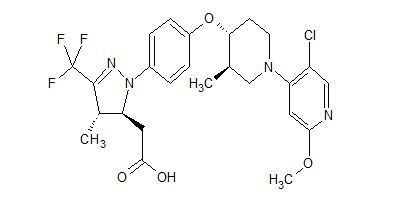
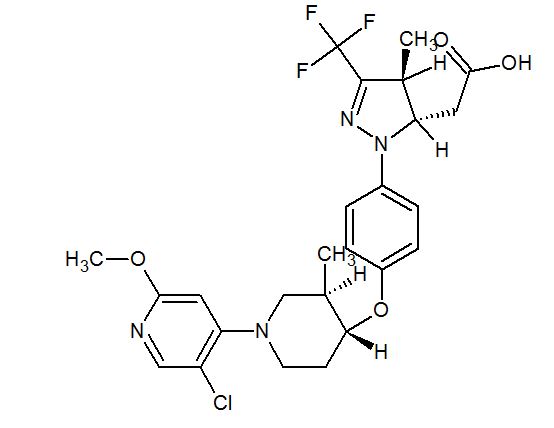
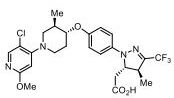
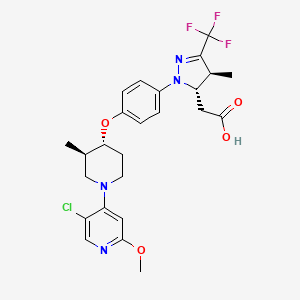
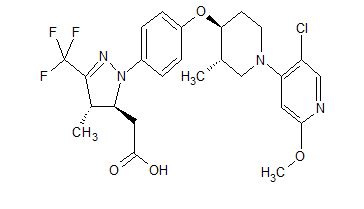
BMS-986118, for treatment for type 2 diabetes( GPR40 agonists with a dual mechanism of action, promoting both glucose-dependent insulin and incretin secretion)


str1img
str2
str1
str1
GKIUHMMLGAMMOO-OITFXXTJSA-N.png
BMS-986118
BMS compd for treatment for type 2 diabetes( GPR40 agonists with a dual mechanism of action, promoting both glucose-dependent insulin and incretin secretion)
Cas 1610562-74-7
1H-Pyrazole-5-acetic acid, 1-[4-[[(3R,4R)-1-(5-chloro-2-methoxy-4-pyridinyl)-3-methyl-4-piperidinyl]oxy]phenyl]-4,5-dihydro-4-methyl-3-(trifluoromethyl)-, (4S,5S)-
Molecular Weight, 540.96, C25 H28 Cl F3 N4 O4

2-((4S,5S)-1-(4-(((3R,4R)-1-(5-Chloro-2-methoxypyridin-4-yl)-3-methylpiperidin-4-yl)oxy)phenyl)-4-methyl-3-(trifluoromethyl)-4,5-dihydro-1H-pyrazol-5-yl)acetic acid

(-)-[(4S,5S)-1-(4-[[(3R,4R)-1-(5-Chloro-2-methoxypyridin-4-yl)-3-methylpiperidin-4-yl]oxy]phenyl)-4-methyl-3-(trifluoromethyl)-4,5-dihydro-1H-pyrazol-5-yl]acetic acid

  • (4S,5S)-1-[4-[[(3R,4R)-1-(5-Chloro-2-methoxy-4-pyridinyl)-3-methyl-4-piperidinyl]oxy]phenyl]-4,5-dihydro-4-methyl-3-(trifluoromethyl)-1H-pyrazole-5-acetic acid
  • 2-[(4S,5S)-1-[4-[[1-(5-Chloro-2-methoxypyridin-4-yl)-3-methylpiperidin-4-yl]oxy]phenyl]-4-methyl-3-(trifluoromethyl)-4,5-dihydro-1H-pyrazol-5-yl]acetic acid isomer 2

BMS-986118 is a GPR40 full agonist. GPR40 is a G-protein-coupled receptor expressed primarily in pancreatic islets and intestinal L-cells that has been a target of significant recent therapeutic interest for type II diabetes. Activation of GPR40 by partial agonists elicits insulin secretion only in the presence of elevated blood glucose levels, minimizing the risk of hypoglycemia

Image result for bms

NOTE CAS OF , 1H-Pyrazole-5-acetic acid, 1-[4-[[(3S,4S)-1-(5-chloro-2-methoxy-4-pyridinyl)-3-methyl-4-piperidinyl]oxy]phenyl]-4,5-dihydro-4-methyl-3-(trifluoromethyl)-, (4S,5S)- IS 1610562-73-6

str1

Image result for BMS-986118,

SYNTHESIS

WO 2014078610

PAPER

https://pubs.acs.org/doi/10.1021/acs.jmedchem.7b00982

Discovery of Potent and Orally Bioavailable Dihydropyrazole GPR40 Agonists

Abstract

Abstract Image

G protein-coupled receptor 40 (GPR40) has become an attractive target for the treatment of diabetes since it was shown clinically to promote glucose-stimulated insulin secretion. Herein, we report our efforts to develop highly selective and potent GPR40 agonists with a dual mechanism of action, promoting both glucose-dependent insulin and incretin secretion. Employing strategies to increase polarity and the ratio of sp3/sp2 character of the chemotype, we identified BMS-986118 (compound 4), which showed potent and selective GPR40 agonist activity in vitroIn vivo, compound 4 demonstrated insulinotropic efficacy and GLP-1 secretory effects resulting in improved glucose control in acute animal models.

Compound 4

2-((4S,5S)-1-(4-(((3R,4R)-1-(5-Chloro-2-methoxypyridin-4-yl)-3-methylpiperidin-4-yl)oxy)phenyl)-4-methyl-3-(trifluoromethyl)-4,5-dihydro-1H-pyrazol-5-yl)acetic acid (4)

To a stirred solution of methyl 2-((4S,5S)-1-(4-(((3R,4R)-1-(5-chloro-2-methoxypyridin-4-yl)-3-methylpiperidin-4-yl)oxy)phenyl)-4-methyl-3-(trifluoromethyl)-4,5-dihydro-1H-pyrazol-5-yl)acetate (5.5 g, 9.9 mmol) in THF (90 mL) and water (9 mL) at room temperature was added 2 N LiOH solution (12 mL, 24 mmol). The reaction mixture was stirred at room temperature for 16 h, and 1 N HCl (25 mL, 25 mmol) was added at 0 °C to pH = 4–5. The solvent was evaporated, and the residue was extracted three times with EtOAc. The organic extracts were dried over Na2SO4; the solution was filtered and concentrated. The residue was recrystallized from isopropanol to give 4(neutral form) as white solid (4.3 g, 7.7 mmol, 78% yield).
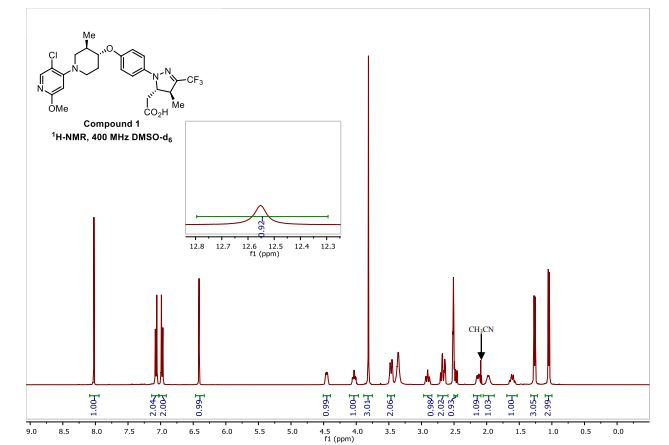
1H NMR (500 MHz, DMSO-d6) δ ppm 12.52 (br s, 1H), 8.01 (s, 1H), 7.05 (d, J = 9.1 Hz, 2H), 6.96 (d, J = 9.1 Hz, 2H), 6.40 (s, 1H), 4.49–4.33 (m, 1H), 4.02 (td, J = 8.8, 4.1 Hz, 1H), 3.80 (s, 3H), 3.56–3.39 (m, 2H), 3.37–3.29 (m, 1H), 2.94–2.85 (m, 1H), 2.72–2.66 (m, 1H), 2.64 (dd, J = 16.1, 2.9 Hz, 1H), 2.49–2.41 (m, 1H), 2.22–2.05 (m, 1H), 2.01–1.86 (m, 1H), 1.68–1.50 (m, 1H), 1.25 (d, J = 7.2 Hz, 3H), 1.03 (d, J = 6.9 Hz, 3H).
 
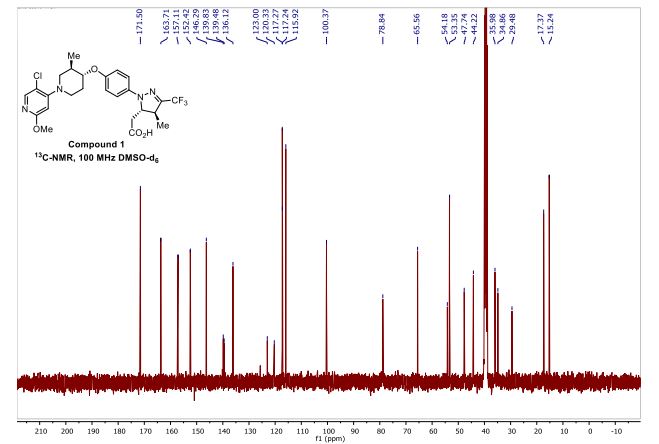
13C NMR (126 MHz, DMSO-d6) δ 171.5, 163.7, 157.1, 152.5, 146.3, 139.7 (q, J = 34.7 Hz), 136.2, 121.7 (q, J = 269.3 Hz), 117.3, 117.2, 116.0, 100.4, 78.9, 65.6, 54.2, 53.4, 47.8, 44.2, 36.0, 34.9, 29.5, 17.4, 15.3. 19F NMR (471 MHz, DMSO-d6) δ −61.94 (s, 3F).
 
Optical rotation: [α]D(20)−11.44 (c 2.01, MeOH).
 
HRMS (ESI/HESI) m/z: [M + H]+ Calcd for C25H29ClF3N4O4 541.1824; Found 541.1813. HPLC (Orthogonal method, 30% Solvent B start): RT = 11.9 min, HI: 97%. m/zobs 541.0 [M + H]+.
 
Melting point = 185.5 °C.
PAPER

Palladium-Catalyzed C–O Coupling of a Sterically Hindered Secondary Alcohol with an Aryl Bromide and Significant Purity Upgrade in the API Step

Chemical and Synthetic DevelopmentBristol-Myers Squibb CompanyOne Squibb Drive, New Brunswick, New Jersey08903, United States
Org. Process Res. Dev., Article ASAP
DOI: 10.1021/acs.oprd.8b00022

Abstract

Abstract Image

The final two steps used to prepare greater than 1 kg of a compound evaluated as a treatment for type 2 diabetes are reported. The application of a palladium-catalyzed C–O coupling presented significant challenges due to the nature of the reactants, impurities produced, and noncrystalline coupling intermediate. Process development was able to address these limitations and enable production of kilogram quantities of the active pharmaceutical ingredient (API) in greater efficiency than a Mitsunobu reaction for formation of the key bond. The development of a sequence that telescopes the coupling with the subsequent ester hydrolysis to yield the API and the workup and final product crystallization necessary to produce high-quality drug substance without the need of column chromatography are discussed.

Bruce Ellsworth

Bruce Ellsworth, Director, Head of Fibrosis Discovery Chemistry at Bristol-Myers Squibb

Rick EwingRick Ewing, Head, External Partnerships, Discovery Chemistry and Molecular Technologies at Bristol-Myers Squibb
str1 str2
PATENT
WO 2014078610
Original Assignee Bristol-Myers Squibb Company
Patent
Patent ID

Patent Title

Submitted Date

Granted Date

US9133163 DIHYDROPYRAZOLE GPR40 MODULATORS
2013-11-15
2014-05-22
US9604964 Dihydropyrazole GPR40 modulators
2013-11-15
2017-03-28
REF
1: Li Z, Qiu Q, Geng X, Yang J, Huang W, Qian H. Free fatty acid receptor
agonists for the treatment of type 2 diabetes: drugs in preclinical to phase II
clinical development. Expert Opin Investig Drugs. 2016 Aug;25(8):871-90. doi:
10.1080/13543784.2016.1189530. PubMed PMID: 27171154.
2
Discovery of BMS-986118, a dual MOA GPR40 agonist that produces glucose-dependent insulin and GLP-1 secretion
248th Am Chem Soc (ACS) Natl Meet (August 10-14, San Francisco) 2014, Abst MEDI 31
MEDI John Macor Sunday, August 10, 2014
Oral Session
General Oral Session – PM Session
Organizers: John Macor
Presiders: John Macor
Duration: 1:30 pm – 5:15 pm
1:55 pm 31 Discovery of BMS-986118, a dual MOA GPR40 agonist that produces glucose-dependent insulin and GLP-1 secretion
Bruce A Ellsworth, Jun Shi, Elizabeth A Jurica, Laura L Nielsen, Ximao Wu, Andres H Hernandez, Zhenghua Wang, Zhengxiang Gu, Kristin N Williams, Bin Chen, Emily C Cherney, Xiang-Yang Ye, Ying Wang, Min Zhou, Gary Cao, Chunshan Xie, Jason J Wilkes, Heng Liu, Lori K Kunselman, Arun Kumar Gupta, Ramya Jayarama, Thangeswaran Ramar, J. Prasada Rao, Bradley A Zinker, Qin Sun, Elizabeth A Dierks, Kimberly A Foster, Tao Wang, Mary Ellen Cvijic, Jean M Whaley, Jeffrey A Robl, William R Ewing.

///////////BMS-986118, Preclinical, BMS, Bruce A. Ellsworth,  Jun Shi,  William R. Ewing,  Elizabeth A. Jurica,  Andres S. Hernandez,  Ximao Wu, DIABETES,

COc1cc(c(Cl)cn1)N4CCC(Oc2ccc(cc2)N3N=C([C@@H](C)C3CC(=O)O)C(F)(F)F)[C@H](C)C4

COc1cc(c(Cl)cn1)N4CC[C@@H](Oc2ccc(cc2)N3N=C([C@H](C)[C@@H]3CC(=O)O)C(F)(F)F)[C@@H](C)C4

COc1cc(c(Cl)cn1)N4CC[C@@H](Oc2ccc(cc2)N3N=C([C@@H](C)[C@@H]3CC(=O)O)C(F)(F)F)[C@H](C)C4

BMS-986195


img
BMS-986195
  • Molecular FormulaC20H23FN4O2
  • Average mass370.421 Da
  • CAS: 1912445-55-6
1H-Indole-7-carboxamide, 5-fluoro-2,3-dimethyl-4-[(3S)-3-[(1-oxo-2-butyn-1-yl)amino]-1-piperidinyl]-
4-[(3S)-3-(2-Butynoylamino)-1-piperidinyl]-5-fluor-2,3-dimethyl-1H-indol-7-carboxamid
(S)-4-(3-(2-Butynoylamino)piperidin-1-yl)-5-fluoro-2,3-dimethyl-1H-indole-7-carboxamide
(S)-4-(3-(but-2-ynamido)piperidin-l-yl)-5-fluoro-2,3-dimeth -lH-indole-7-carboxamide
  • Originator Bristol-Myers Squibb
  • Class Anti-inflammatories; Antirheumatics
  • Mechanism of Action Agammaglobulinaemia tyrosine kinase inhibitors

Highest Development Phases

  • Phase I Rheumatoid arthritis

Most Recent Events

  • 30 Jan 2018 Bristol-Myers Squibb completes a phase I trial in Rheumatoid arthritis (In volunteers, In adults, Combination therapy) in USA (PO) (NCT03262740)
  • 10 Nov 2017 Bristol-Myers Squibb completes a phase I drug-drug interaction trial in Healthy volunteers (NCT03131973)
  • 03 Nov 2017 Safety, pharmacokinetic, and pharmacodynamic data from a pharmacokinetic trial in healthy volunteers presented at the 81st American College of Rheumatology and the 52nd Association of Rheumatology Health Professionals Annual Scientific Meeting (ACR/ARHP-2017)
  • Image result for BMS-986195

BMS-986195 is a potent, covalent, irreversible inhibitor of Bruton’s tyrosine kinase (BTK), a member of the Tec family of non-receptor tyrosine kinases essential in antigen-dependent B-cell signaling and function. BMS-986195 is more than 5000-fold selective for BTK over all kinases outside of the Tec family, and selectivity ranges from 9- to 1010-fold within the Tec family. BMS-986195 inactivated BTK in human whole blood with a rapid rate of inactivation (3.5×10⁻⁴ nM-1·min-1) and potently inhibited antigen-dependent interleukin-6 production, CD86 expression and proliferation in B cells (IC50 <1 nM) without effect on antigen-independent measures in the same cells.

Bristol-Myers Squibb is developing BMS-986195, an oral candidate for the treatment of rheumatoid arthritis. A phase I clinical trial in healthy adult volunteers is ongoing.

Image result

Structure of BMS986195.
Credit: Tien Nguyen/C&EN

Presented by: Scott H. Watterson, principal scientist at Bristol-Myers Squibb

Target: Bruton’s tyrosine kinase (BTK)

Disease: Autoimmune diseases such as rheumatoid arthritis

Reporter’s notes: Completing another set of back-to-back presentations on the same target, Watterson revealed another BTK inhibitor also in Phase II clinical trials. Chemists made BMS-986195 in seven steps, and the molecule showed high levels of BTK inactivation in mice. The team aimed to develop an effective compound that required low doses and that had low metabolic degradation.

Patent

WO 2016065226

Inventor Saleem AhmadJoseph A. TinoJohn E. MacorAndrew J. TebbenHua GongQingjie LiuDouglas G. BattKhehyong NguScott Hunter WattersonWeiwei GuoBertrand Myra Beaudoin

Original Assignee Bristol-Myers Squibb Company

https://patents.google.com/patent/WO2016065226A1/en

PATENT

WO 2018045157

https://patentscope.wipo.int/search/en/detail.jsf;jsessionid=E81EF2BDB127473D100AAA55455FC42B.wapp1nA?docId=WO2018045157&recNum=1&maxRec=&office=&prevFilter=&sortOption=&queryString=&tab=PCTDescription

otein kinases, the largest family of human enzymes, encompass well over 500 proteins. Btk is a member of the Tec family of tyrosine kinases, and is a regulator of early B-cell development, as well as mature B-cell activation, signaling, and survival.

B-cell signaling through the B-cell receptor (BCR) leads to a wide range of biological outputs, which in turn depend on the developmental stage of the B-cell. The magnitude and duration of BCR signals must be precisely regulated. Aberrant BCR-mediated signaling can cause dysregulated B-cell activation and/or the formation of pathogenic auto-antibodies leading to multiple autoimmune and/or inflammatory diseases. Mutation of Btk in humans results in X-linked agammaglobulinaemia (XLA). This disease is associated with the impaired maturation of B-cells, diminished immunoglobulin production, compromised T-cell-independent immune responses and marked attenuation of the sustained calcium signal upon BCR stimulation.

Evidence for the role of Btk in allergic disorders and/or autoimmune disease and/or inflammatory disease has been established in Btk-deficient mouse models. For example, in standard murine preclinical models of systemic lupus erythematosus (SLE), Btk deficiency has been shown to result in a marked amelioration of disease progression. Moreover, Btk deficient mice are also resistant to developing collagen-induced arthritis and are less susceptible to Staphylococcus-induced arthritis.

A large body of evidence supports the role of B-cells and the humoral immune system in the pathogenesis of autoimmune and/or inflammatory diseases. Protein-based therapeutics (such as Rituxan) developed to deplete B-cells, represent an important approach to the treatment of a number of autoimmune and/or inflammatory diseases.

Because of Btk’s role in B-cell activation, inhibitors of Btk can be useful as inhibitors of B-cell mediated pathogenic activity (such as autoantibody production).

Btk is also expressed in mast cells and monocytes and has been shown to be important for the function of these cells. For example, Btk deficiency in mice is associated with impaired IgE -mediated mast cell activation (marked diminution of T F-alpha and other inflammatory cytokine release), and Btk deficiency in humans is associated with greatly reduced TNF-alpha production by activated monocytes.

Thus, inhibition of Btk activity can be useful for the treatment of allergic disorders and/or autoimmune and/or inflammatory diseases including, but not limited to: SLE, rheumatoid arthritis, multiple vasculitides, idiopathic thrombocytopenic purpura (ITP), myasthenia gravis, allergic rhinitis, multiple sclerosis (MS), transplant rejection, type I diabetes, membranous nephritis, inflammatory bowel disease, autoimmune hemolytic anemia, autoimmune thyroiditis, cold and warm agglutinin diseases, Evan’s syndrome, hemolytic uremic syndrome/thrombotic thrombocytopenic purpura (HUS/TTP), sarcoidosis, Sjogren’s syndrome, peripheral neuropathies (e.g., Guillain-Barre syndrome), pemphigus vulgaris, and asthma.

In addition, Btk has been reported to play a role in controlling B-cell survival in certain B-cell cancers. For example, Btk has been shown to be important for the survival of BCR-Abl-positive B-cell acute lymphoblastic leukemia cells. Thus inhibition of Btk activity can be useful for the treatment of B-cell lymphoma and leukemia.

In view of the numerous conditions that are contemplated to benefit by treatment involving modulation of protein kinases, it is immediately apparent that new compounds capable of modulating protein kinases such as Btk and methods of using these compounds should provide substantial therapeutic benefits to a wide variety of patients.

WO 2016/065226 discloses indole carboxamide compounds useful as Btk inhibitors, including (S)-4-(3-(but-2-ynamido)piperidin-l-yl)-5-fluoro-2,3-dimethyl-lH-indole-7-carboxamide (Example 223), which has the structure:

Also disclosed is multistep synthesis process for preparing (S)-4-(3-(but-2-ynamido) piperidin-l-yl)-5-fluoro-2,3-dimethyl-lH-indole-7-carboxamide.

There are difficulties associated with the adaptation of the multistep synthesis disclosed in WO 2016/065226 to larger scale synthesis, such as production in a pilot plant or a manufacturing plant for commercial production. Further, there is a continuing need to find a process that has few synthesis steps, provides higher yields, and/or generates less waste.

Applicants have discovered a new synthesis process for the preparation of (S)-4-(3-(but-2-ynamido)piperidin-l-yl)-5-fluoro-2,3-dimethyl-lH-indole-7-carboxamide that has fewer synthesis steps and/or provides higher yields than the process disclosed in WO 2016/065226. Furthermore, this process contains no metal-catalyzed steps, no genotoxic intermediates, and is adaptable to large scale manufacturing.

EXAMPLE 1

(S)-4-(3-(but-2-ynamido)piperidin-l-yl)-5-fluoro-2,3-dimethyl-lH-indole-7-carboxamide

Step 1 : Preparation of Methyl (S)-2-amino-4-(3-((tert-butoxycarbonyl)amino)piperidin-l-yl)-5-fluorobenz

To a 250 mL ChemGlass reactor were charged methyl 2-amino-4,5-difluoro-benzoate (11.21 g, 59.90 mmol), tert-butyl N-[(3S)-3-piperidyl]carbamate (10 g, 49.930 mmol), potassium phosphate, dibasic (10.44 g, 59.94 mmol), and dimethyl sulfoxide (100 mL, 1400 mmol). The resulting thin slurry was heated to 95 to 100 °C and agitated at this temperature for 25 hours. The mixture was cooled to 50 °C. Methanol (100 mL) was added and followed by slow addition of water (50 mL). The mixture was aged at 50 °C for 30 minutes to result in a thick white slurry. Additional water (150 mL) was slowly charged to the above mixture and agitated at 50 °C for 1 hour. The slurry was cooled to 20 °C in 1 hour and aged at this temperature for 4 hours. The slurry was filtrated. The wet cake washed with 25% MeOH in water (30 mL), water (100 mL) and dried under vacuum at 60 °C for 24 h. Methyl (S)-2-amino-4-(3-((tert-butoxycarbonyl)amino) piperidin-l-yl)-5-fluorobenzoate was obtained as a white solid (7 g, yield: 72.5%). ¾ MR (400MHz, METHANOLS) δ 7.34 (d, J=14.6 Hz, 1H), 6.27 (d, J=7.3 Hz, 1H), 3.83-3.71 (s, 3H), 3.68-3.57 (m., 1H), 3.50 -3.40 (m 1H), 3.39 -3.31 (m, 1H), 3.31-3.26 (m, 1H), 2.86-2.70 (m, 1H), 2.64 (t, J=10.0 Hz, 1H), 1.97-1.84 (m, 1H), 1.84-1.74 (m, 1H), 1.73-1.61 (m, 1H), 1.44 (s, 9H), 1.38 (m, 1H). LC-MS [M+H] 368.

Step 2: Preparation of Methyl (S)-4-(3-aminopiperidin-l-yl)-5-fluoro-2,3-dimethyl-lH-indole-7-carboxylate

To a reactor were charged methyl (S)-2-amino-4-(3-((tert-butoxycarbonyl)amino) piperidin-l-yl)-5-fluorobenzoate (5.0 g), DPPOH (diphenyl phosphate, 6.81 g, 2 eq) and 3-hydroxybutanone (1.2 eq, 1.44 g), followed by addition of isopropyl acetate (100 mL, 20 mL/g). The mixture was allowed to warm up to 70 to 75 °C, resulting in a yellow solution. The solution was stirred at 70 to 75 °C for 30 h to complete the cyclization.

Water (2 mL) was added and the mixture was aged at 70 °C over 24 h to remove the Boc group. The mixture was cooled to room temperature. Next, aqueous 20% K3PO4 solution (50 mL) was added and the mixture was stirred for 15 min. The organic layer was separated and washed with water (50 mL). The organic layer was then concentrated under vacuum (200 Torr) to -50 mL. The resulting slurry was stirred at 50 °C for 2 h and then heptane (100 mL) was added over 1 h. The mixture was cooled to room

temperature, stirred for 20 h, and then filtered. The cake was washed with heptane (50 mL). Methyl (S)-4-(3-aminopiperidin-l-yl)-5-fluoro-2,3-dimethyl-lH-indole-7-carboxylate, DPPOH salt was obtained as a light yellow solid. The wet-cake was added to a reactor. Isopropyl acetate (100 mL) was added, followed by addition of aqueous K3PO4 solution (4 g in water 50 mL). The mixture was stirred at room temperature for -half-hour, resulting in a two phase clear solution (pH >10 for aqueous). The organic layer was separated and washed with water (50 mL), and then concentrated under vacuum to a volume of 15 mL. The resulting slurry was stirred at room temperature for 4 h, then heptane (75 mL) was added over 1 h. The mixture was aged at room temperature for 24 h, then concentrated to a volume to -50 mL. The slurry was filtered. The cake was washed with heptane 20 mL and dried under vacuum at 50 °C for 24 h. Methyl (S)-4-(3- aminopiperidin-l-yl)-5-fluoro-2,3-dimethyl-lH-indole-7-carboxylate was obtained as a light yellow solid (2.76 g, yield: 69%). ¾ NMR (400MHz, DMSO-d6) δ 10.64 (s, 1H), 7.33 (d, J=13.7 Hz, 1H), 3.89 (s, 3H), 3.14 (br. m., 1H), 3.07-2.90 (m, 2H), 2.84 (br. m., 1H), 2.70 (br. m., 1H), 2.35 (s, 3H), 2.33 (s, 3H), 1.87 (br. m., 1H), 1.67 (br. m., 3H). LC-MS: M+H= 320.

Alternative Preparation

Step 2: Preparation of ethyl (S)-4-(3-aminopiperidin-l-yl)-5-fluoro-2,3-dimethyl-lH-indole-7-carboxylate trifluoroacetic acid salt

To a reactor were charged ethyl (S)-2-amino-4-(3-((tert-butoxycarbonyl)amino) piperidin-l-yl)-5-fluorobenzoate (1.0 g, limiting reagent), DPPOH (diphenyl phosphate, 1.97 g, 3.0 eq) and 3-hydroxybutanone (1.4 eq, 0.32 g), followed by addition of toluene (20 mL, 20 mL/g). The mixture was allowed to warm up to 80-90 °C, resulting in a yellow solution. The solution was stirred at 80-90 °C for 10 h to complete the

cyclization. Water (0.4 mL, 0.4 ml/g) was added and the mixture was aged at 80-90 °C for 8 hours. The mixture was cooled to room temperature. Next, aqueous 20% K3PO4 solution (15 mL, 15 mL/g) was added and the mixture was stirred for 0.5 hour. The organic layer was separated and the aqueous layer was washed with toluene (7.5 mL, 7.5 mL/g). To combined organic layers water (10 mL, 10 mL/g) was added and the mixture was stirred for 0.5 hour. The organic layer was separated. To the organic layer water (10 mL, 10 mL/g) was added and the mixture was stirred for 0.5 hour. The organic layer was separated. The organic layer was concentrated under vacuum (100 Torr) to 8 mL (8 ml/g). Following concentration the reaction mixture was cooled to 20-25 °C and MTBE (20 mL, 20 mL/g) was added. Trifluoroacetic acid (1.2 eq., 0.36 g) was slowly added to make the salt maintaining temperature at 20-25 °C. The resulting slurry was aged for 4 hours and then filtered. The filtered solids are washed with MTBE (8 mL, 8 mL/g) and the cake

was dried under vacuum at 50 °C. (S)-4-(3-aminopiperidin-l-yl)-5-fluoro-2,3-dimethyl-lH-indole-7-carboxylate trifluoroacetic acid salt was obtained as a white to tan crystalline material (85% yield, 1.0 g). ¾ NMR (400 MHz, DMSO-d6) δ 10.74 (s, 1H), 8.16-7.88 (m, 2H), 7.37 (d, 7=13.6 Hz, 1H), 4.38 (q, 7=7.1 Hz, 2H), 3.18-3.01 (m, 3H), 2.96 (br s, 1H), 2.35 (s, 6H), 2.30 (s, 1H), 2.12 (br d, 7=9.3 Hz, 1H), 1.78 (br s, 2H), 1.45-1.31 (m, 4H), 1.10 (s, 1H). 13C NMR (101 MHz, DMSO-d6) δ 165.1, 165.1, 158.4, 158.1, 135.4, 134.7, 134.6, 132.2, 128.8, 128.2, 126.9, 126.8, 118.7, 115.7, 110.6, 110.3,108.7, 108.6, 106.6, 106.5, 83.5, 79.8, 60.5, 54.9, 51.7, 48.7, 47.2, 28.4, 26.8, 23.6, 14.2, 11.1, 10.2

Step 3A: Preparation of (S)-4-(3-aminopiperidin-l-yl)-5-fluoro-2,3-dimethyl-lH-indole-7-carboxamide

A 40 mL vial was charged with methyl (S)-4-(3-aminopiperidin-l-yl)-5-fluoro-2,3-dimethyl-lH-indole-7-carboxylate (1.5 g, 4.70 mmol), followed by the addition of N,N-dimethylformamide (12.0 mL, 8.0 mL/g). The vial was purged with N2. Formamide (1.49 mL, 37.6 mmol) was added followed by sodium methoxide solution in methanol (35 wt%, 1.29 mL, 3.76 mmol). The resulting solution was heated at 50 °C over 8 hours. The reaction mixture was cooled down to room temperature and the reaction was quenched with water (12.0 mL, 8.0 mL/g). 2-methyltetrahydrofuran (30 mL, 20 mL/g) was added to the mixture. The mixture was shaken vigorously. The layers were separated and the aqueous layer was extracted with 2-methyltetrahydrofuran (15 mL, 10 mL/g) two more times. Organic extracts were then washed with brine and water (15 mL each, 10 mL/g). The organic layer was evaporated. Solids were dried in vacuo at 60 °C to afford (S)-4-(3-aminopiperidin-l-yl)-5-fluoro-2,3-dimethyl-lH-indole-7-carboxamide as a yellow solid (1.04 g, 69% yield). ¾ NMR (500MHz, DMSO-d6) δ 10.60 (br. s.,

1H), 7.91 (br. s., 1H), 7.40 (d, 7=14.0 Hz, 1H), 7.32 (br. s., 1H), 3.10 (br. s., 1H), 2.98 (br. s., 2H), 2.82 (br. s., 1H), 2.68 (br. s., 1H), 2.34 (br. s., 3H), 2.30 (br. s., 3H), 1.88 (br. s., 1H), 1.67 (br. s., 2H), 1.45 (br. s., 2H), 1.05 (br. s., 1H). LCMS [M+H] 305.24.

Step 3B: Alternative Preparation of (S)-4-(3-aminopiperidin-l-yl)-5-fluoro-2,3-dimethyl-lH-indole-7-carboxamide

A 100 mL Hastelloy high pressure EasyMax reactor was charged with methyl (S)-4-(3-aminopiperidin-l-yl)-5-fluoro-2,3-dimethyl-lH-indole-7-carboxylate (1.5 g, 4.70 mmol), followed by addition of 7 N ammonia solution in methanol (45.0 mL, 30.0 mL/g) followed by addition of l,3,4,6,7,8-hexahydro-2H-pyrimido[l,2-a]pyrimidine (1.33 g, 9.39 mmol). The reactor was sealed and purged with N2 three times. The reactor was then heated to 80 °C for 24 hrs. The reaction mixture was cooled to room temperature and the vessel contents were purged with N2 three times. Volatiles were concentrated to ~6 mL (4 mL/g) and water (24 mL, 16 mL/g) was added. The yellow precipitate was collected and filtered. The precipitate was washed with methanol/water mixture (20:80 v/v, 6 mL, 4 mL/g), and then water (18 mL, 12 mL/g). The solids were dried in vacuo at 60 °C to afford (S)-4-(3-aminopiperidin-l-yl)-5-fluoro-2,3-dimethyl-lH-indole-7-carboxamide as a yellow crystalline material (0.93 g, 62% yield). ¾ MR (500MHz, DMSO-de) δ 10.60 (br. s., 1H), 7.91 (br. s., 1H), 7.40 (d, J=14.0 Hz, 1H), 7.32 (br. s., 1H), 3.10 (br. s., 1H), 2.98 (br. s., 2H), 2.82 (br. s., 1H), 2.68 (br. s., 1H), 2.34 (br. s., 3H), 2.30 (br. s., 3H), 1.88 (br. s., 1H), 1.67 (br. s., 2H), 1.45 (br. s., 2H), 1.05 (br. s., 1H). LCMS [M+H] 305.24.

Alternative Preparation:

Step 3C: Preparation of (,S)-4-(3-aminopiperidin-l-yl)-5-fluoro-2,3-dimethyl-lH-indole-7-carboxamide 2-butynoic acid salt

Ethyl (S)-4-(3-aminopiperidin-l-yl)-5-fluoro-2,3-dimethyl-lH-indole-7-carboxylate trifluoroacetic acid salt (1.0 g, limiting reagent) and formamide (5 mL, 5 mL/g) were added to a nitrogen inerted reactor. The temperature was maintained at 20-25 °C. To the reactor was added a solution of 20 wt% potassium t-butoxide in THF. The reaction mixture was allowed to sit for 6 hours. To reaction mixture was added Me-THF (15 mL, 15 mL/g) and 12.5 wt % aqueous NaCl (5 mL, 5 mL/g). The reaction mixture was stirred for 0.5 hour. The organic layer was separated, 5 wt% aqueous NaCl (1 mL, 1 mL/g) and 0.25 N aqueous NaOH (4 mL, 4 mL/g) were added, and then stirred for 0.5 hour. The organic layer was separated and 5 wt% aqueous NaCl (5 mL, 5 mL/g) was added, the mixture was stirred for 0.5 hour, and organic phase was separated. The rich organic phase was dried distillation at a pressure of 100 mtorr with Me-THF to obtain KF in 1.5-4wt% range at 5 mL Me-THF volume. The volume was adjusted to 15 mL Me-THF by adding Me-THF (10 mL, 10 mL/g) and EtOH (4 mL, 4 mL/g). Next, 2-butynoic acid (1.0 eq., 0.19 g) was added and the mixture was agitated for 10 hrs. The resulting slurry was filtered. The cake was washed with Me-THF (10 mL, 10 mL/g) and dried under vacuum at 75 °C to afford (,S)-4-(3-aminopiperidin-l-yl)-5-fluoro-2,3-dimethyl-lH-indole-7-carboxamide 2-butynoic acid salt (0.7 g, 80% yield) as white crystalline powder. ¾ NMR (400 MHz, DMSO-d6) δ 10.68 (s, 1H), 7.98 (br s, 1H), 7.50-7.32 (m, 2H), 3.32 (br d, J=8.6 Hz, 2H), 3.21 (br t, J=10.5 Hz, 1H), 3.13-2.89 (m, 3H), 2.32 (d, J=5.1 Hz, 5H), 2.11 (br d, J=10.9 Hz, 1H), 1.81-1.67 (m, 4H), 1.55-1.28 (m, 1H).

Step 4A: Preparation of (S)-4-(3-(but-2-ynamido)piperidin-l-yl)-5-fluoro-2,3-dimethyl-lH-indole-7-carboxamide

To Reactor-1 was charged N,N-dimethylformamide (DMF, 12.77 kg, 13.5 L). Reactor-1 was purged with N2 to inert. (S)-4-(3-aminopiperidin-l-yl)-5-fluoro-2,3-dimethyl-lH-indole-7-carboxamide (3.0 kg, 1.0 equiv) was charged followed by 2-butynoic acid (0.854 kg, 1.04 equiv). Reactor-1 was rinsed with DMF (1.42 kg, 1.5 L). The mixture was sparged with N2 for 20 min. Triethylamine (2.99 kg, 3.0 equiv) was charged followed by a DMF rinse (1.42 kg, 1.5 L). TBTU (O-(Benzotriazol-l-yl)-N,N,N’,N’-tetramethyluronium tetrafluorob orate, 3.256 kg, 1.04 equiv) was charged followed by a DMF rinse (1.42 kg, 1.5 L). The reaction mixture was agitated for 1.5 h at 20 °C. MeTHF (46.44 kg, 60 L) was charged to the batch. The reaction was quenched with LiCl (20 wt%, 26.76 kg, 24 L) at 20 °C. The bottom aqueous layer was discharged as waste. The organic layer was washed with 2N HCl solution (24.48 kg, 24 L), 10 wt% sodium bicarbonate solution (25.44 kg, 24 L) and deionized water (24.0 kg, 24 L). THF (26.61 kg, 30 L) was charged into Reactor-1. The rich organic stream in MeTHF/TFIF was polish filtered. The stream was distilled down to 15 L at 75-100 Torn Constant volume distillation was carried out at 15 L with THF feed (39.92 kg, 45 L). The stream was heated to 60 °C for 1 hr and cooled to 50 °C. MTBE (33.30 kg, 45 L) was charged slowly over 2 h. The slurry was aged at 50 °C for 4 h and cooled to 20 °C over 2 h, and aged at 20 °C for >2 h. The 1st drop slurry was filtered and was rinsed with MTBE (8.88 kg, 12 L) twice. Wet cake was dried under vacuum 60 to 70 °C at 25 mbar overnight (>15 h). Reactor-1 was thoroughly cleaned with IPA. The dry cake was charged into Reactor-1 followed by the charge of IPA (47.10 kg, 60 L). The batch was heated to 60 °C to achieve full dissolution and cooled to 40 °C. Rich organic (24 L) was transferred to Reactor-2 for crystallization. The stream was distilled at 24 L constant volume and 100 mbar using remaining rich organic from reactor-1 as distillation feed. Following distillation completion, the batch was heated to 60 °C, aged at 60 °C for 2 h, cooled to 20 °C over 2 h, and aged at 20 °C over 2 h. The slurry was filtered. IPA (1.18 kg) was used to rinse the reactor and washed the cake. The wet cake was dried under vacuum at 70 °C and 25 mbar for >15 h. The dry cake (2.196 kg, 63.2% yield) was discharged as an off-white crystalline solid. ¾ NMR (400MHz, DMSO-d6): δ 10.62 (s, 1H), 8.48 (d, J= 7.1 Hz, 1H), 7.91 (s, 1H), 7.39 (d, J=7.4 Hz, 1H), 7.33 (s, 1H), 3.88 (m, 1H), 3.11 (t, J= 8.0 Hz, 1H), 3.0 (m, 1H), 2.96 (m, 1H), 2.78 (t, J= 10.0 Hz, 1H), 2.35 (s, 3H), 2.30 (s, 3H), 1.92 (s, 3H), 1.86 (m, 1H), 1.31 (m, 1H), 1.70 (m, 2H); 13C NMR (400 MHz, DMSO-d6): δ 168.2, 153.2, 151.9, 134.4, 133.2, 132.1, 126.5, 112.3, 108.4, 106.0, 82.3, 75.7, 56.9, 51.9, 46.3, 29.7, 24.4, 11.1, 10.2, 3.0; LC-MS: M+H= 371.2.

Step 4B: Alternative preparation of (S)-4-(3-(but-2-ynamido)piperidin-l-yl)-5-fluoro-2,3-dimeth -lH-indole-7-carboxamide

To Reactor-1 was charged N,N-dimethylformamide (DMF 4.5 mL, 4.5 mL/g). Reactor-1 was purged with N2 to inert. (,S)-4-(3-aminopiperidin-l-yl)-5-fluoro-2,3-dimethyl-lH-indole-7-carboxamide 2-butynoic acid salt (1.0 g, limiting reagent) was charged followed by 2-butynoic acid (0.065g, 0.3 equiv.). The mixture was inerted with N2 for 20 min. N-methylmorpholine (0.78 g, 3.0 equiv) was charged. Next,

diphenylphosphinic chloride (0.79 g, 1.3 equiv) was charged over 0.5 h while maintaining the reaction temperature at 20-25 °C. The reaction mixture was agitated for 1.5 hour at 20 °C. Me-THF (14 mL, 14 mL/g) was charged to the reaction mixture. The reaction was quenched with the addition of aqueous NaCl (12.5 wt%, 6 mL, 6 mL/g) at 20 °C. The bottom aqueous layer was discharged as waste. Aqueous NaCl (12.5 wt%, 6 mL, 6 mL/g) at 20 °C was added to the organic layer, stirred for 0.5 hour and the bottom aqueous layer was discharged to waste. Deionized water (6 mL, 6 mL/g) was charged to the organic layer, stirred for 0.5 hour and the bottom aqueous layer was discharged to waste. THF (8 mL, 8 mL/g) was charged into Reactor-1 and the mixture was

concentrated under vacuum to remove Me-THF and water, and reconstituted in 4 L/kg of THF. The mixture was heated to 60 °C and stirred for 1 hour; the temperature was reduced to 50 °C and MTBE (12 mL, 12 mL/g) was added. The mixture was aged for 4 hours while maintaining the temperature of 50 °C and then cooled to room temperature. The solids were filtered and washed with MTBE (6.5 mL, 6.5 mL/g). The solids of crude were dried at 70 °C under vacuum for 12 hours.

Crude (S)-4-(3-(but-2-ynamido)piperidin-l-yl)-5-fluoro-2,3-dimethyl-lH-indole-7-carboxamide was charged to Reactor-2, followed by THF (12 mL, 12 mL/g). The mixture was stirred for 0.5 hour. The solution was polish filtered. The solution was concentrated under vaccuum to remove THF and reconstituted in EtOH (7 mL, 7 mL/g). (S)-4-(3-(but-2-ynamido)piperidin-l-yl)-5-fluoro-2,3-dimethyl-lH-indole-7-carboxamide seeds (0.01 g, 0.01 g/g) were added, the mixture was heated to 60 °C and aged for 2 hours, n-heptane (21 mL, 21 mL/g) was added slowly over 4 hours. The mixture was aged for additional 2 hours at 60 °C, followed by cooldown to room temperature. The slurry was filtered, washed with n-heptane (6 mL, 6 mL/g), and dried under vacuum at 70 °C for 12 hours. The dry cake (0.68 g, 71% yield) was discharged as an off-white crystalline solid. ¾ NMR (400MHz, DMSO-d6): δ 10.62 (s, 1H), 8.48 (d, J= 7.1 Hz, 1H), 7.91 (s, 1H), 7.39 (d, J=7.4 Hz, 1H), 7.33 (s, 1H), 3.88 (m, 1H), 3.11 (t, J= 8.0 Hz, 1H), 3.0 (m, 1H), 2.96 (m, 1H), 2.78 (t, J= 10.0 Hz, 1H), 2.35 (s, 3H), 2.30 (s, 3H), 1.92 (s, 3H), 1.86 (m, 1H), 1.31 (m, 1H), 1.70 (m, 2H); 13C MR (400 MHz, DMSO-d6): δ 168.2, 153.2, 151.9, 134.4, 133.2, 132.1, 126.5, 112.3, 108.4, 106.0, 82.3, 75.7, 56.9, 51.9, 46.3, 29.7, 24.4, 11.1, 10.2, 3.0; LC-MS: M+H= 371.2.

Applicants have discovered a new synthesis process for the preparation of (S)-4- (3-(but-2-ynamido)piperidin-l-yl)-5-fluoro-2,3-dimethyl-lH-indole-7-carboxamide which offers significant advantages.

The new synthesis process utilizes fewer synthesis steps (4 vs 8) than the process disclosed in WO 2016/065226.

Additionally, the process of the present invention provided (S)-4-(3-(but-2-ynamido)piperidin-l-yl)-5-fluoro-2,3-dimethyl-lH-indole-7-carboxamide at an overall

yield of 22% (step 1 : 73.%, step 2: 69%, step 3 : 69%, step 4: 63%). In comparison, (S)-4-(3-(but-2-ynamido)piperidin-l-yl)-5-fluoro-2,3-dimethyl-lH-indole-7-carboxamide was prepared according to the process of WO 2016/065226, which provided (S)-4-(3-(but-2-ynamido)piperidin-l-yl)-5-fluoro-2,3-dimethyl-lH-indole-7-carboxamide at an overall yield of 2.9% yield (step 1 : 91%, step 2: 71%, step 3 : 35%, step 4: 88%, step 5: 80%, step 6: 29%, step 7: 99%, step 8: 63%).

Furthermore, the process of the present invention does not include any transition metal-catalyzed steps, no genotoxic intermediates, and is adaptable to large scale manufacturing. In comparison, the process disclosed in WO 2016/065226 employed lead (Pb) in process step (8) and included a potentially genotoxic hydrazine intermediate in process step 8.

The process of the present invention has an estimated manufacturing cycle time of approximately 6 months versus a estimated manufacturing cycle time of approximately 12 months for the process disclosed in WO 2016/065226.

REFERENCE

http://acrabstracts.org/abstract/bms-986195-is-a-highly-selective-and-rapidly-acting-covalent-inhibitor-of-brutons-tyrosine-kinase-with-robust-efficacy-at-low-doses-in-preclinical-models-of-ra-and-lupus-nephritis/

/////////////////BMS-986195, Phase I,  Rheumatoid arthritis, BMS

NC(=O)c2cc(F)c(c1c(C)c(C)nc12)N3CCC[C@@H](C3)NC(=O)C#CC

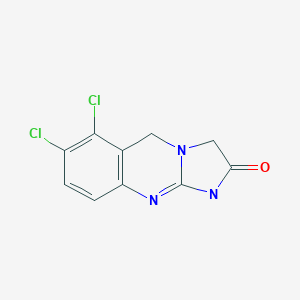
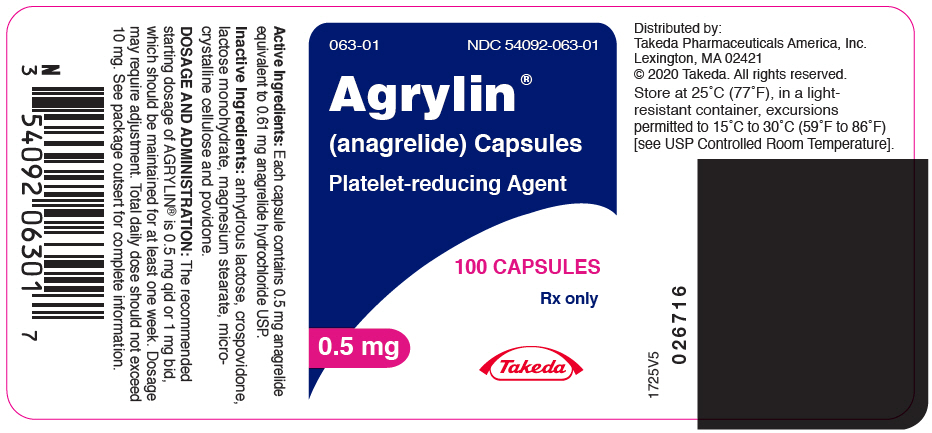
Anagrelide アナグレリド ,


68475-42-3.png

Anagrelide2DACS.svg

Anagrelide アナグレリド;

QA-0023

BL 4162A
Imidazo[2,1-b]quinazolin-2(3H)-one, 6,7-dichloro-5,10-dihydro-
BL-4162A
BMY-26538-01
GALE-401
KRN-654
SPD-422
6,7-Dichloro-1,2,3,5-tetrahydroimidazo[2,1-b]quinazolin-2-one
CAS: 68475-42-3
C10H7Cl2N3O, 256.0881
INGREDIENT UNII CAS
Anagrelide Hydrochloride VNS4435G39 58579-51-4

Image result for Anagrelide

EMA

2018/2/15 EMA APPROVED Anagrelide Anagrelide Mylan Mylan S.A.S.

Cardiovascular agent

Anagrelide hydrochloride is a cyclic phosphodiesterase III inhibitor that was launched in 1997 in the U.S. by Shire Pharmaceuticals for the treatment of essential thrombocythemia and other myeloproliferative disorders

Anagrelide was assigned orphan drug status by the FDA in 1986, by the Japanese Ministry of Health in 2004 and by the European Commission in January 2001 for the treatment of essential thrombocythemia.

Anagrelide (Agrylin/Xagrid, Shire and Thromboreductin, AOP Orphan Pharmaceuticals AG) is a drug used for the treatment of essential thrombocytosis (ET; essential thrombocythemia), or overproduction of blood platelets. It also has been used in the treatment of chronic myeloid leukemia.[1]

Anagrelide controlled release (GALE-401) is in phase III clinical trials by Galena Biopharma for the treatment of ET.[2]

Medical uses

Anagrelide is used to treat essential thrombocytosis, especially when the current treatment of the patient is insufficient.[3] Essential thrombocytosis patients who are suitable for anagrelide often meet one or more of the following factors:[4][5]

  • age over 60 years
  • platelet count over 1000×109/L
  • a history of thrombosis

According to a 2005 Medical Research Council randomized trial, the combination of hydroxyurea with aspirin is superior to the combination of anagrelide and aspirin for the initial management of ET. The hydroxyurea arm had a lower likelihood of myelofibrosisarterial thrombosis, and bleeding, but it had a slightly higher rate of venous thrombosis.[3] Anagrelide can be useful in times when hydroxyurea proves ineffective.

Side-effects

Common side effects are headache, diarrhea, unusual weakness/fatigue, hair loss, nausea and dizziness.

The same MRC trial mentioned above also analyzed the effects of anagrelide on bone marrow fibrosis, a common feature in patients with myelofibrosis. The use of anagrelide was associated with a rapid increase in the degree of reticulin deposition (the mechanism by which fibrosis occurs), when compared to those in whom hydroxyurea was used. Patients with myeloproliferative conditions are known to have a very slow and somewhat variable course of marrow fibrosis increase. This trend may be accelerated by anagrelide. Interestingly, this increase in fibrosis appeared to be linked to a drop in hemoglobin as it progressed. Fortunately, stopping the drug (and switching patients to hydroxyurea) appeared to reverse the degree of marrow fibrosis. Thus, patients on anagrelide may need to be monitored on a periodic basis for marrow reticulin scores, especially if anemia develops, or becomes more pronounced if present initially.[6]

Less common side effects include: congestive heart failure, myocardial infarction, cardiomyopathy, cardiomegaly, complete heart block, atrial fibrillation, cerebrovascular accident, pericarditis, pulmonary infiltrates, pulmonary fibrosis, pulmonary hypertension, pancreatitis, gastric/duodenal ulceration, renal impairment/failure and seizure.

Due to these issues, anagrelide should not generally be considered for first line therapy in ET.

Mechanism of action

Anagrelide works by inhibiting the maturation of platelets from megakaryocytes.[7] The exact mechanism of action is unclear, although it is known to be a phosphodiesterase inhibitor.[8] It is a potent (IC50 = 36nM) inhibitor of phosphodiesterase-II.[citation needed] It inhibits PDE-3 and phospholipase A2.[9]

Synthesis

Phosphodiesterase inhibitor with antiplatelet activity.

Image result for Anagrelide

Image result for Anagrelide

Synthesis 1[10][11] Synthesis 2

Anagrelide-synthesis.svg

Anagrelide synthesis.svg

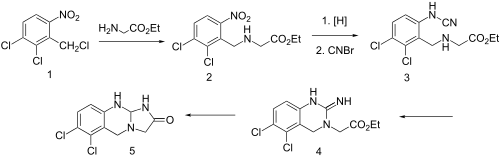
Condensation of benzyl chloride 1 with ethyl ester of glycine gives alkylated product 2. Reduction of the nitro group leads to the aniline and reaction of this with cyanogen bromidepossibly gives cyanamide 3 as the initial intermediate. Addition of the aliphatic would then lead to formation of the quinazoline ring (4). Amide formation between the newly formed imide and the ester would then serve to form the imidazolone ring, whatever the details of the sequence, there is obtained anagrelide (5).

PATENT

https://patents.google.com/patent/WO2010005480A2/en

Image result for Anagrelide

PATENT

US20130211083A1

Image result

PATENTS

https://patents.google.com/patent/EP2373654A1/en

Image result for Anagrelide SYNTHESIS

SYN

CA 1137474, WO 0208228

The nitration of 1,2,3-trichlorobenzene (I) with concentrated HNO3 gives 2,3,4-trichloronitrobenzene (II), which by reaction with cuprous cyanide in hot pyridine is converted to 2,3-dichloro-6-nitrobenzonitrile (III). The reduction of (III) with borane in THF yields 2,3-dichloro-6-nitrobenzylamine (IV), which by reaction with ethyl bromoacetate (V) by means of triethylamine in refluxing dioxane affords ethyl N-(2,3-dichloro-6-nitrobenzyl)glycinate (VI). The reduction of (VI) with SnCl2 in concentrated HCl gives ethyl N-(6-amino-2,3-dichlorobenzyl)glycinate (VII), which is cyclized with cyanogen bromide (VIII) in toluene affording ethyl 5,6-dichloro-3,4-dihydro-2-(1H)-iminoquinazoline-3-acetate (IX). Finally, this compound is submitted to a new cyclization by means of triethylamine in refluxing ethanol.

The reaction of 3-chloroaniline (X) with choral hydrate (XI) and hydroxylamine gives isonitroso-3-chloroacetanilide (XII), which is cyclized by means of H2SO4 to 4-chloroisatin (XIII). Chlorination of (XIII) with SO2Cl2 affords 4,5-dichloroisatin (XIV), which is oxidized with H2O2 yielding 5,6-dichloroanthranilic acid (XV). The reduction of (XV) with borane in THF gives 6-amino-2,3-dichlorobenzyl alcohol (XVI), which by reaction with SOCl2 in benzene is converted to 6-amino-2,3-dichlorobenzyl chloride (XVII). This compound is condensed with ethyl glycinate (XVIII) by means of triethylamine in refluxing methylene chloride to give ethyl N-(6-amino-2,3-dichlorobenzyl)glycinate (VII), which is cyclized with cyanogen bromide (VIII) in toluene affording ethyl 5,6-dichloro-3,4-dihydro-2-(1H)-iminoquinazoline-3-acetate (IX). Finally, this compound is submitted to a new cyclization by means of triethylamine in refluxing ethanol.

SYN

WO 0208228

The nitration of 2,3-dichlorobenzaldehyde (I) with HNO3/H2SO4 gives 2,3-dichloro-6-nitrobenzaldehyde (II), which is reduced with NaBH4 in methanol, yielding 2,3-dichloro-6-nitrobenzyl alcohol (III). The reaction of (III) with SOCl2 and TEA affords the benzyl chloride (IV), which is condensed with glycine ethyl ester (V) by means of TEA to provide the adduct (VI). The reduction of the nitro group of (VI) with SnCl2 in aq. HCl or H2 over PtO2/C in ethanol gives the expected amino derivative (VII), which is cyclized with CN-Br in toluene to yield the iminoquinazoline (VIII). Finally, this compound is further cyclized by means of TEA in water to afford the target imidazoquinazolinone.

US 3932407

The condensation of 2-nitro-6-chlorobenzyl chloride (I) with ethyl glycinate (II) by means of triethylamine in refluxing ethanol gives ethyl N-(2-nitro-6-chlorobenzyl)glycinate (III), which is reduced with H2 over Pd/C in ethanol yielding ethyl N-(2-amino-6-chlorobenzyl)glycinate (IV). The cyclization of (IV) with cyanogen bromide (A) in refluxing ethanol affords 6-chloro-1,2,3,5-tetrahydroimidazo[2,1-b]quinazolin-2-one (V), which is finally chlorinated with Cl2 and FeCl3 in hot nitromethane.

PATENTS

CN 103254197

US 3932407

WO 2002008228

CN 102757434

WO 2012052781

WO 2005080398

PATENT

WO 2008096145

Image result

Applicants: CIPLA LIMITED [IN/IN]; 289 Bellasis Road, Mumbai Central, Mumbai 400 008 (IN) (For All Designated States Except US).
PATHI, Srinivas, Laxminarayan [IN/IN]; (IN) (For US Only).
KANKAN, Rajendra, Narayanrao [IN/IN]; (IN) (For US Only).
RAO, Dharmaraj, Ramachandra [IN/IN]; (IN) (For US Only).
CURTIS, Philip, Anthony [GB/GB]; (GB) (MW only)
Inventors: PATHI, Srinivas, Laxminarayan; (IN).
KANKAN, Rajendra, Narayanrao; (IN).
RAO, Dharmaraj, Ramachandra; (IN)

Image result

Yusuf Hamied

Anagrelide, is a potent reducer of platelet count induced by a variety of aggregating agents and has the following structure


( Formula II)

TJS 4146718 disckre? the process for the preparation ->f ethyl-N-(2,3-dich’oro-6 n:tr^benzyl) glycine hydrochloride from 1,2,3-trichlorobenzene as depicted in Scheme I via 2,3-dichloro-6-nitrobenzonitrile, which involves the use of poisonous reagents, such as cuprous cyanide. Cyanation is carried out at a temperature of 1650C which is highly exothermic, uncontrollable and not scalable. 2, 3-dichloro-6-nitrobenzonitri]e has extreme toxic and skin-irritant properties. Diborane is a flammable gas, used for the reduction of 2, 3-dichloro-6-nitrobenzonitrile. The reduction reaction is exothermic, uncontrollable and not feasible industrially.

Scheme I :

1 ,2,3-Tπchlorobenzene 2,3 ,4-Trichloronitro 2,3-Dichloro-6-nitro
benzene benzonitπle

Ethyl-N-(2,3-dichloro-6-mtrobenzyl) 2,3-Dichloro-6-nitro
glycine hydrochloride benzylamme

US 5801245 discloses process for the preparation of ethyl-N-(2,3-dichloro-6-nitrobenzyl)glycine hydrochloride from 2,3-dichloro toluene as depicted in Scheme II.

2,3-dichloro-toluene 2,3-dichloro-6-nιtrotoluene

+ H2NCH2COOEt HCI HCI 

2,3-dιchloro-6-nitro Glycine ethyl ester ethyl-N-(2,3-dιchloro-6-nιtro benzyl bromide hydrochloride benzyl)glycιne HCI

The reaction involves a radical halogenation of the toluene group. The material is purified by column chromatography at each stage which makes the process more tedious and it is not viable industrially. The use of a chromatographic solvent, such as chloroform (which is a known carcinogen), is disadvantageous with respect to industrial application.

US 2003/0060630 discloses a method for making ethyl-N-(2, 3-dichloro-6-nitro benzyl)glycine hydrochloride form 2,3-dichloro benzaldehyde as depicted in Scheme III.

Scheme III :

2,3-Dichloro benzaldehyde 2,3-Dichloro-6-mtro 2,3-Dichloro-6-nitro
benzaldehyde benzylalcohol

Step c Thionyl chloride

Ethyl-N-(2,3-dichloro-6-nitrobenzyl) 2,3 -Dichloro-6-nitro
glycine hydrochloride benzyl chloride

In step (b), the reduction reaction is earned out in high boiling solvents like toluene. The reduction in step (b) and the chlorination in step (c) are sluggish. Also, the chlorination reaction is exothermic and uncontrollable, which leads to formation of more impurities and thereby resulting in low yield (page 4, column 2, and page 5, column 1 : 65 %) . Hence, this prior art process is not viable for industrial scale up.

Because of the difficulties encountered in the processes disclosed in the prior art, there is a need to develop more efficient and economical synthetic route for the preparation of ethyl-N- (2,3-dichloro-6-nitrobenzyl)glycine hydrochloride, which is suitable for industrial scale up. The present invention relates to a new process for the synthesis of Ethyl-N-(2, 3-dichloro-6-nitrobenzyl)glycine hydrochloride.

Scheme IV :

2,3-Dichloro-6-nitro 2, 3-Dichloro-6-nitro
benzaldehyde benzylalcohol
( III ) ( IV ) ( V )
Acetonitπle
H2NCH9COOEt
HCl(g) in DPA / Ethyl acetate

Ethyl-N-(2,3-dichloro-6-nitroberizyl)
glycine hydrochloride ( I )

EXAMPLES

Example 1
Preparation of 2, 3-dichloro-6-nitro benzyl methane sulphonate, a compound of formula

(V):
Methylene chloride (2000 ml) and sodium borohydride (120 g) were charged to a clean and dry flask and chilled to 0-50C. Methanol (100 ml) was added slowly over a period of 20 minutes followed by 2,3-dichloro-6-nitro benzaldehyde solution (500 g in 2000 ml of methylene chloride) over a period of 2 hours maintaining the temperature at 0-50C and the contents were stirred at 0-50C for 1 hour. After completion of reaction, water (3000 ml) was added and stirred for 10 minutes. The organic layer was separated, dried over sodium sulphate and was filtered to get a clear filtrate.

To the clear filtrate triethylamine (460 ml), was slowly added over a period of 1 hour at 10- 5 150C, then methane sulphonyl chloride (325 ml) was added drop wise over a period of 2 hours maintaining temperature of 10-150C and the reaction mass was allowed to attain room temperature. Further the reaction mass was stirred at room temperature for 5 hours and after completion of reaction, the organic layer was washed with water (1000 ml) twice, followed by IN HCl solution (1000 ml) twice, 5% Sodium bicarbonate solution (1000 ml) twice, water 0 (1000 ml) twice and was dried over sodium sulfate. The clear organic layer was concentrated under vacuum below 4O0C to give the title compound which was used in the next step.

Example 2
Preparation of ethyl N-(2,3-dichIoro-6-nitrobenzyl)gIycine hydrochloride, a compound of formula (I) :
2,3-dichloro-6-nitro benzyl methane sulphonate ( Examplel ) was dissolved in acetonitrile (2400 ml). To this reaction mass were charged anhydrous Potassium carbonate (480 g), dimethyl amino pyridine (480 mg) and glycine ethyl ester (240 g) at room temperature. The contents were stirred at 37-4O0C for 24 hours. After completion of reaction, the insolubles were filtered, washed with acetonitrile (120 ml). The clear filtrate was concentrated and stripped off usin” ethyl acetate (240 ml).

Further ethyl acetate (1200 ml) was added, chilled the contents to 5-100C, adjusted the pH to 2.0 using IP A-HCl at 5-1O0C. The contents were stirred at 5-100C for 1 hour. The solids were filtered, washed with chilled ethyl acetate (120 ml) and dried under vacuum at room temperature for 4 hours to give the title compound (595 g, 76 % yield, 98.5% HPLC purity).

Example 3
Preparation of Anagrelide , a compound of formula (II)

a) Preparation of Ethyl-5,6-dichloro-3,4-dihydro-2[lH]-imino quinazolin-3-acetate hydrobromide A solution of stannous chloride dihydrate (1850 gms) in concentrated HCl (6.7 liters ) was added slowly to a cooled solution of ethyl-N-(2,3-dichloro-6-nitrobenzyl)glycine hydrochloride (595gms) in concentrated HCl (5.15 liters) maintaining temperature 15-200C over a period of 2 hours. The contents were heated slowly to 40-450C and stirred for 1 hour at 40-450C. After completion of reaction, the contents were cooled to 15-2O0C, maintained for 15 minutes and filtered.

The solids thus obtained were suspended in water (2.9 liters), adjusted the pH of the reaction mass to 8.0-9.0 using potassium carbonate solution (prepared by dissolving 376 gms of potassium carbonate in 4.25 liters of water) at 0-50C, extracted into toluene (3.0 liters><3), dried over sodium sulphate and clarified.

To the clear toluene layer, added Cyanogen bromide solution (prepared by dissolving 222 gms of cyanogen bromide in 655 ml of toluene) in 30 minutes maintaining temperature 15-200C and stirred at 25-300C for 2 hours. The contents were heated slowly to 105-1100C and maintained for 16 hours at 105-1100C. After completion of reaction, the mass was cooled to 15-2O0C and stirred for 45 minutes. Filtered the material, washed with chilled toluene (1.3 liters). The material was slurried in toluene (470 ml) at 15-200C for 1 hour, filtered, washed with cold toluene (160 ml) and dried under vacuum at 50-600C for 8 hours to give the title compound (445 gms ).

b) Preparation of 6,7-Dichloro-l,5-dihydroimidazo[2,l-b]quinazolin-2(3H)-one [Anagrelide]
A mixture of ethyl-5,6-dichloro-3,4-dihydro-2(lH)-iminoquinazolin-3-acetate hydrobromide (445 gms), isopropyl alcohol (4.45 liters) and triethylamine (246 ml) was refluxed for 2 hours. After completion of reaction, the mixture was cooled to 20-250C, filtered, washed with chilled isopropyl alcohol (1.0 liters) and dried under vacuum at 50-550C for 6 hours to give the title compound (285 gms).

Publication numberPriority datePublication dateAssigneeTitle
WO2010070318A1 *2008-12-172010-06-24Shire LlcProcess for the preparation of anagrelide and analogues
US8133996B22007-02-062012-03-13Cipla LimitedProcess for the preparation of ethyl-N-(2,3-dichloro-6-nitrobenzyl)glycine hydrochloride
KR20170102484A *2015-01-132017-09-11닛산 가가쿠 고교 가부시키 가이샤방향족 아민 화합물의 제조 방법
WO2016114312A1 *2015-01-132016-07-21日産化学工業株式会社反応混合物中のスズ化合物の処理方法
Publication numberPriority datePublication dateAssigneeTitle
US4208521A *1978-07-311980-06-17Bristol-Myers CompanyProcess for the preparation of imidazo[2,1-b]quinazolinones
EP0514917A1 *1991-05-221992-11-25Egis GyogyszergyarProcess for and 2-(cyanoimino)-quinazoline derivatives useful as intermediates in the preparation of 6,7-di-(chloro)-1,5-di(hydro)-imidazo-[2,1-b]quinazolin-2[3H]-one and process for preparing the 2-(cyanoimino)-quinazoline derivatives
US20030060630A1 *2000-07-262003-03-27Shire Us Inc.Method for the manufacture of Anagrelide
Family To Family Citations
US4146718A *1978-04-101979-03-27Bristol-Myers CompanyAlkyl 5,6-dichloro-3,4-dihydro-2(1h)-iminoquinazoline-3-acetate hydrohalides
JPH051255B2 *1984-05-231993-01-07Sumitomo Chemical Co
CA2171073A1 *1995-12-041997-06-05Philip C. LangProcess for the preparation of ethyl-n-(2,3 dichloro-6- nitrobenzyl) glycine
CN1335847A *1998-12-042002-02-13藤泽药品工业株式会社磺酰胺化合物及其药物用途
WO2008096145A12007-02-062008-08-14Cipla LimitedProcess for the preparation of ethyl-n-(2, 3-dichloro-6-nitrobenzyl) glycine hydrochloride

REF

  1. Jump up^ Voglová J, Maisnar V, Beránek M, Chrobák L (2006). “[Combination of imatinib and anagrelide in treatment of chronic myeloid leukemia in blastic phase]”. Vnitr̆ní lékar̆ství (in Czech). 52 (9): 819–22. PMID 17091608.
  2. Jump up^ https://globenewswire.com/news-release/2016/12/28/901925/0/en/Galena-Biopharma-Confirms-Regulatory-Pathway-for-GALE-401-Anagrelide-Controlled-Release.html
  3. Jump up to:a b Harrison CN, Campbell PJ, Buck G, et al. (July 2005). “Hydroxyurea compared with anagrelide in high-risk essential thrombocythemia”. N. Engl. J. Med353 (1): 33–45. doi:10.1056/NEJMoa043800PMID 16000354.
  4. Jump up^ Reilly, John T. (1 February 2009). “Anagrelide for the treatment of essential thrombocythemia: a survey among European hematologists/oncologists”. Hematology14(1): 1–10. doi:10.1179/102453309X385115PMID 19154658.
  5. Jump up^ Brière, Jean B (1 January 2007). “Essential thrombocythemia”Orphanet Journal of Rare Diseases2 (1): 3. doi:10.1186/1750-1172-2-3PMC 1781427Freely accessiblePMID 17210076.
  6. Jump up^ Campbell PJ, Bareford D, Erber WN, et al. (June 2009). “Reticulin accumulation in essential thrombocythemia: prognostic significance and relationship to therapy”J. Clin. Oncol27 (18): 2991–9. doi:10.1200/JCO.2008.20.3174PMC 3398138Freely accessiblePMID 19364963.
  7. Jump up^ Petrides PE (2006). “Anagrelide: what was new in 2004 and 2005?”. Semin. Thromb. Hemost32 (4 Pt 2): 399–408. doi:10.1055/s-2006-942760PMID 16810615.
  8. Jump up^ Jones GH, Venuti MC, Alvarez R, Bruno JJ, Berks AH, Prince A (February 1987). “Inhibitors of cyclic AMP phosphodiesterase. 1. Analogues of cilostamide and anagrelide”. J. Med. Chem30 (2): 295–303. doi:10.1021/jm00385a011PMID 3027338.
  9. Jump up^ Harrison CN, Bareford D, Butt N, et al. (May 2010). “Guideline for investigation and management of adults and children presenting with a thrombocytosis”. Br. J. Haematol149(3): 352–75. doi:10.1111/j.1365-2141.2010.08122.xPMID 20331456.
  10. Jump up^ W. N. Beverung, A. Partyka, U.S. Patent 3,932,407USRE 31617; T. A. Jenks et al., U.S. Patent 4,146,718 (1976, 1984, 1979 all to Bristol-Myers).
  11. Jump up^ Yamaguchi, Hitoshi; Ishikawa, Fumiyoshi (1981). “Synthesis and reactions of 2-chloro-3,4-dihydrothienopyrimidines and -quinazolines”. Journal of Heterocyclic Chemistry18: 67. doi:10.1002/jhet.5570180114.

External links

Anagrelide
Title: Anagrelide
CAS Registry Number: 68475-42-3
CAS Name: 6,7-Dichloro-1,5-dihydroimidazo[2,1-b]quinazolin-2(3H)-one
Additional Names: 6,7-dichloro-1,2,3,5-tetrahydroimidazo[2,1-b]quinazolin-2-one
Molecular Formula: C10H7Cl2N3O
Molecular Weight: 256.09
Percent Composition: C 46.90%, H 2.76%, Cl 27.69%, N 16.41%, O 6.25%
Literature References: Phosphodiesterase inhibitor with antiplatelet activity. Prepn: W. N. Beverung, A. Partyka, US 3932407USRE 31617; T. A. Jenks et al., US 4146718 (1976, 1984, 1979 all to Bristol-Myers); H. Yamaguchi, F. Ishikawa, J. Heterocycl. Chem.18, 67 (1981). Antithrombotic and platelet aggregation inhibiting properties: J. S. Fleming, J. P. Buyniski, Thromb. Res. 15, 373 (1979). Mode of action studies: S. S. Tang, M. M. Frojmovic, J. Lab. Clin. Med. 95, 241 (1980); S. Seiler et al., J. Pharmacol. Exp. Ther. 243, 767 (1987). GC-MS determn in human plasma: E. H. Kerns et al., J. Chromatogr. 416, 357 (1987). Clinical reduction of platelet counts: W. A. Andes et al., Thromb. Haemostasis 52, 325 (1984). Clinical trials to control thrombocytosis in chronic myeloproliferative diseases: M. N. Silverstein et al., N. Engl. J. Med. 318, 1292 (1988); Anagrelide Study Group, Am. J. Med. 92,69 (1992). Review of pharmacology and clinical experience: P. E. Petrides, Expert Opin. Pharmacother. 5, 1781-1798 (2004).
Derivative Type: Hydrochloride monohydrate
CAS Registry Number: 58579-51-4
Manufacturers’ Codes: BL-4162A; BMY-26538-01
Trademarks: Agrylin (Shire); Thromboreductin (AOP Orphan Pharm.); Xagrid (Shire)
Molecular Formula: C10H7Cl2N3O.HCl.H2O
Molecular Weight: 310.56
Percent Composition: C 38.67%, H 3.25%, Cl 34.25%, N 13.53%, O 10.30%
Properties: Off-white powder. Very slightly sol in water; sparingly sol in DMSO, DMF. Also prepd as the hemihydrate; crystals from ethanolic HCl, mp >280°.
Melting point: mp >280°
Therap-Cat: Antithrombocythemic.
Keywords: Antithrombocythemic.
Anagrelide
Anagrelide2DACS.svg
Clinical data
Trade names Agrylin
AHFS/Drugs.com Monograph
MedlinePlus a601020
License data
Pregnancy
category
  • AU: B3
  • US: C (Risk not ruled out)
Routes of
administration
Oral
ATC code
Legal status
Legal status
Pharmacokinetic data
Metabolism Hepatic, partially through CYP1A2
Biological half-life 1.3 hours
Excretion Urine (<1%)
Identifiers
CAS Number
PubChem CID
IUPHAR/BPS
DrugBank
ChemSpider
UNII
KEGG
ChEBI
ChEMBL
Chemical and physical data
Formula C10H7Cl2N3O
Molar mass 256.088 g/mol
3D model (JSmol)

/////////Anagrelide, アナグレリド , EU 2018, EMA 2018, SHIRE, FDA 1997. orphan drug status

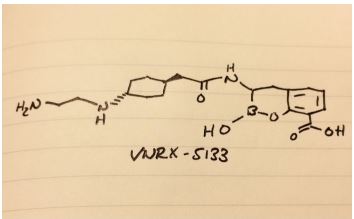
VNRX-5133 from VENATORX PHARMACEUTICALS


 img
str1
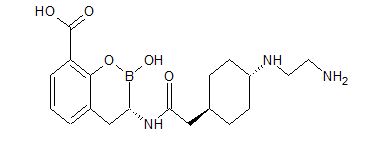
VNRX-5133
CAS: 1613268-23-7
Chemical Formula: C19H28BN3O5
Molecular Weight: 389.26
3-(2-((1r,4r)-4-((2-aminoethyl)amino)cyclohexyl)acetamido)-2-hydroxy-3,4-dihydro-2H-benzo[e][1,2]oxaborinine-8-carboxylic acid
 ( R)-3-( 2-( trans-4-( 2-aminoethylamino)cvclohexyl)acetamido)-2-hvdroxy-3-,4-dihydro-2H-benzo[el [l,21oxaborinine-8-carboxylic acid
Image result for VNRX-5133
  • Originator VenatoRx Pharmaceuticals
  • Developer  National Institute of Allergy and Infectious Diseases; VenatoRx Pharmaceuticals
  • Class Antibacterials; Cephalosporins; Small molecules
  • Mechanism of Action Beta lactamase inhibitors; Cell wall inhibitors

Highest Development Phases

  • Phase I Bacterial infections

Most Recent Events

  • 19 Mar 2018 VenatoRx Pharmaceuticals plans phase III pivotal trials in mid-2018
  • 03 Jan 2018 VNRX 5133 receives Fast Track designation for Bacterial infections (complicated urinary tract infections and complicated intra-abdominal infections) [IV-infusion] in USA
  • 03 Jan 2018 VNRX 5133 receives Qualified Infectious Disease Product status for Intra-abdominal infections in USA
  • clip
  • https://cen.acs.org/articles/96/web/2018/03/Drug-structures-made-public-New-Orleans.html

str4Credit: Tien Nguyen/C&EN

Presented by: Christopher J. Burns, president and chief executive officer of VenatoRx Pharmaceuticals

Target: β-lactamase enzymes, enzymes that inactivate β-lactam-based antibiotics enabling bacteria to resist their attacks

Disease: Gram-negative bacterial infections

Reporter’s notes: Another story with humble beginnings, this time with Burns and two colleagues sitting in a Panera Bread, with an idea. They wanted to offer a new compound in the class of β-lactam antibiotics, drugs which are “well-liked” by doctors, Burns said, and make up 60% of all antibiotic prescriptions. However, bacteria have developed defenses against these compounds in the form of β-lactamases, or as Burns dubbed them, “PAC-men.” These enzymes can chew up 1000 β-lactams per second, he said. VNRX-5133 was active against both serine-β-lactamases and metallo-β-lactamases in enzyme assays. It is being developed in combination with the antibiotic cefepime. VNRX-5133 fends off the PAC-men’s attacks, allowing cefepime to combat infection. The compound has gone through Phase I clinical trials and will be skipping ahead to Phase III later this year.

PATENT

WO 2014089365

Applicants: VENATORX PHARMACEUTICALS, INC [US/US]; 30 Spring Mill Drive Malvern, PA 19355 (US)
Inventors: BURNS, Christopher, J.; (US).
DAIGLE, Denis; (US).
LIU, Bin; (US).
MCGARRY, Daniel; (US).
PEVEAR, Daniel C.; (US).
TROUT, Robert E. Lee; (US)

https://patents.google.com/patent/WO2014089365A1/en

Christopher J. Burns, Ph.D.
President and Chief Executive Officer

Dr. Burns is Co-Founder, President and Chief Executive Officer of VenatoRx. He brings over 25 years of corporate and R&D experience within both major (RPR/Aventis) and specialty (ViroPharma, Protez…https://www.venatorx.com/leadership/

Antibiotics are the most effective drugs for curing bacteria-infectious diseases clinically. They have a wide market due to their advantages of good antibacterial effect with limited side effects. Among them, the beta-lactam class of antibiotics (for example, penicillins,

cephalosporins, and carbapenems) are widely used because they have a strong bactericidal effect and low toxicity.

[0004] To counter the efficacy of the various beta-lactams, bacteria have evolved to produce variants of beta-lactam deactivating enzymes called beta-lactamases, and in the ability to share this tool inter- and intra-species. These beta-lactamases are categorized as “serine” or “metallo” based, respectively, on presence of a key serine or zinc in the enzyme active site. The rapid spread of this mechanism of bacterial resistance can severely limit beta-lactam treatment options in the hospital and in the community.

EXAMPLE 15 : ( R)-3-( 2-( trans-4-( 2-aminoethylamino)cvclohexyl)acetamido)-2-hvdroxy-3-,4-dihydro-2H-benzo[el [l,21oxaborinine-8-carboxylic acid

Step 1 : Synthesis of (R)-3-(2-(trans-4-(2-(tert-butoxycarbonylamino)ethylamino)cyclohexyl)acetamido)-2-hydroxy-3,4-dihydro-2H-benzo[e] [ 1 ,2]oxaborinine-8-carboxylic acid.

[00240] To (R)-3-(2-(trans-4-aminocyclohexyl)acetamido)-2-hydroxy-3,4-dihydro-2H-benzo[e][l,2]oxaborinine-8-carboxylic acid (Example 6, 15 mg) in MeOH (2 mL) was added tert-butyl 2-oxoethylcarbamate (20 mg). Pd/C (10% by weight, 10 mg) was added and the reaction mixture was stirred under ¾ balloon overnight. The reaction mixture was filtrated and the solvent was then removed under reduced pressure and the residue was carried on to the next step without further purification. ESI-MS m/z 490.1 (MH)+.

Step 2: Synthesis of (R)-3-(2-(trans-4-(2-aminoethylamino)cyclohexyl)acetamido)-2-hydroxy-3,4-dihydro-2H-benzo[e][l,2]oxaborinine-8-carboxylic acid.

[00241] To (R)-3-(2-(trans-4-(2-(tert-butoxycarbonylamino)ethylamino)cyclohexyl)acetamido)-2-hydroxy-3,4-dihydro-2H-benzo[e][l,2]oxaborinine-8-carboxylic acid (20 mg) in a flask was added 1 mL 4N HC1 in dioxane. The resulting reaction mixture was stirred at RT for 2hr. The solvent was removed in vacuo and the residue was purified by reverse phase preparative HPLC and dried using lyophilization. ESI-MS m/z 390 (MH)+.

Step 2: (R)-3-(2-(trans-4-((2-aminoethylamino)methyl)cyclohexyl)acetamido)-2-hydroxy-3,4-dihydro-2H-benzo[e] [ 1 ,2]oxaborinine-8-carboxylic acid

[00229] Prepared from 3-[2-(2-{4-[(2-tert-Butoxycarbonylamino-ethylamino)-methyl]-cyclohexyl}-acetylamino)-2-(2,9,9-trimethyl-3,5-dioxa-4-bora-tricyclo[6.1.1.02,6]dec-4-yl)-ethyl]-2-methoxy-benzoic acid tert-butyl ester and BC13 following the procedure described in Step 2 of Example 1. The crude product was purified by reverse phase preparative HPLC and dried using lyophilization. ESI-MS m/z 404 (MH)+.

/////////////////////////////VNRX-5133; VNRX5133; VNRX 5133, phase 1, VenatoRx Pharmaceuticals, BACTERIAL INFECTIONS, Christopher J. Burns

 NCCN[C@@H]1CC[C@@H](CC(NC2B(O)OC(C(C(O)=O)=CC=C3)=C3C2)=O)CC1

Catalyst-free and solvent-free hydroboration of aldehydes — All About Drugs


Green Chem., 2018, Advance ArticleDOI: 10.1039/C8GC00042E, Communication Hanna Stachowiak, Joanna Kazmierczak, Krzysztof Kucinski, Grzegorz Hreczycho For the first time, a general method for catalyst-free and solvent-free hydroboration of various aldehydes has been developed Catalyst-free and solvent-free hydroboration of aldehydes Catalyst-free and solvent-free hydroboration of aldehydes Hanna Stachowiak,a Joanna Kaźmierczak,a Krzysztof Kucińskia and Grzegorz Hreczycho*a Author affiliations *Corresponding authors…

via Catalyst-free and solvent-free hydroboration of aldehydes — All About Drugs

4,4,5,5-Tetramethyl-2-phenethyl-1,3,2-dioxaborolane — ORGANIC SPECTROSCOPY INTERNATIONAL


4,4,5,5-tetramethyl-2-phenethyl-1,3,2-dioxaborolanehttp://orgsyn.org/demo.aspx?prep=v94p0234 4,4,5,5-Tetramethyl-2-phenethyl-1,3,2-dioxaborolane (1) has the following physical and spectroscopic properties: Rf = 0.47 (3:97, ethyl acetate:pentane), the checkers report the following values for 1: Rf = 0.09 (3:97 ethyl acetate:pentane); Rf = 0.52 (10% EtOAc in hexanes); Merck silica gel 60 F254 plate; mp 38-39 °C; 1H NMR pdf(CDCl3, 400 MHz) δ: 1.18 (t, J = 8.4 Hz, 2H), 1.26 (s, 12H), 2.79 (t, J = 8.0 Hz, 2H), 7.16-7.22 (m,…

via 4,4,5,5-Tetramethyl-2-phenethyl-1,3,2-dioxaborolane — ORGANIC SPECTROSCOPY INTERNATIONAL

High vitamin D levels may help prevent cancer — Med-Chemist


In continuation of my update on Vitamin D, The study reinforces the existing theory that vitamin D helps defend against certain cancers. Exposure to sunlight stimulates the production of vitamin D by our skin. Vitamin D contributes to calcium level maintenance in our bodies, which in turn helps teeth, muscles and bones remain healthy. Aside from established benefits of…

via High vitamin D levels may help prevent cancer — Med-Chemist

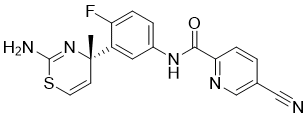
JNJ-54861911, Atabecestat , атабецестат , أتابيسيستات ,


2D chemical structure of 1200493-78-2imgChemSpider 2D Image | atabecestat | C18H14FN5OS

Atabecestat, JNJ-54861911

Cas 1200493-78-2

367.40, C18 H14 F N5 O S

2-Pyridinecarboxamide, N-[3-[(4S)-2-amino-4-methyl-4H-1,3-thiazin-4-yl]-4-fluorophenyl]-5-cyano-
  • N-[3-[(4S)-2-Amino-4-methyl-4H-1,3-thiazin-4-yl]-4-fluorophenyl]-5-cyano-2-pyridinecarboxamide
  • Atabecestat
  • атабецестат [Russian] [INN]
    أتابيسيستات [Arabic] [INN]

Atabecestat is a beta-secretase inhibitor drug candidate.

(S)-N-(3-(2-amino-4-methyl-4H-1,3-thiazin-4-yl)-4-fluorophenyl)-5-cyanopicolinamide

JNJ-54861911
N-{3-[(4S)-2-Amino-4-methyl-4H-1,3-thiazin-4-yl]-4-fluorophenyl}-5-cyano-2-pyridinecarboxamide
2-Pyridinecarboxamide, N-[3-[(4S)-2-amino-4-methyl-4H-1,3-thiazin-4-yl]-4-fluorophenyl]-5-cyano-

WO 2017111042, 1H-NMR (CDCl3) δ: 1.71 (3H, s), 4.06 (3H, s), 6.29 (2H, d, J = 2.4 Hz), 7.07 (1H, dd, J = 11.3, 8.8 Hz), 7.65 (2H, dd, J = 6.8, 2.8 Hz), 7.86 (1H, ddd, J = 8.8, 4.1, 2.8 Hz), 8.19 (1H, dd, J = 8.1, 2.0 Hz), 8.43 (1H, d, J = 8.1 Hz), 8.89 (1H, d, J = 2.0 Hz), 9.81 (1H, s).
[α]D -11.8±1.0° (DMSO, 23°C, c=0.518)

Image result

Structure of JNJ54861911.
Credit: Tien Nguyen/C&EN

Presented by: Yuji Koriyama, associate director at Shionogi & Co.

Target: β-site amyloid presursor protein cleaving enzyme 1 (BACE1), an enzyme whose buildup is implicated in Alzheimer’s disease

Disease: Alzheimer’s disease

Reporter’s notes: Presented by Koriyama, who told the audience he was attending the ACS National Meeting for the first time, JNJ-5486911 joins dozens of clinical candidates from many companies in Phase II and III trials to treat Alzheimer’s disease. Researchers started with a hit that inhibited BACE1 with approximately 2,600 nM affinity and advanced the program until finally reaching a compound with roughly 1 nM affinity. The compound is being jointly developed by Shionogi & Co. and Janssen Pharmaceuticals.

  • Originator Shionogi
  • Developer Janssen Research & Development
  • Class Antidementias; Small molecules
  • Mechanism of Action Amyloid precursor protein secretase inhibitors

Highest Development Phases

  • Phase II/III Alzheimer’s disease

Most Recent Events

  • 16 Jul 2017 Pharmacodynamics data from preclinical trials in Alzheimer’s disease presented at the Alzheimer’s Association International Conference (AAIC-2017)
  • 15 Dec 2016 Biomarkers information updated
  • 01 Jun 2016 Janssen Research & Development completes a phase I pharmacokinetic interaction trial in Healthy volunteers in Germany (PO) (NCT02611518)
  • Image result for Janssen Research & Development

SYNTHESIS

PATENTS

WO 2009151098

Applicants: SHIONOGI & CO., LTD. [JP/JP]; 1-8, Doshomachi 3-chome, Chuo-ku, Osaka-shi, Osaka 5410045 (JP) (For All Designated States Except US).
HORI, Akihiro [JP/JP]; (JP) (For US Only).
YONEZAWA, Shuji [JP/JP]; (JP) (For US Only).
FUJIKOSHI, Chiaki [JP/JP]; (JP) (For US Only).
MATSUMOTO, Sae [JP/JP]; (JP) (For US Only).
KOORIYAMA, Yuuji [JP/JP]; (JP) (For US Only).
UENO, Tatsuhiko [JP/JP]; (JP) (For US Only).
KATO, Terukazu [JP/JP]; (JP) (For US Only)
Inventors: HORI, Akihiro; (JP).
YONEZAWA, Shuji; (JP).
FUJIKOSHI, Chiaki; (JP).
MATSUMOTO, Sae; (JP).
KOORIYAMA, Yuuji; (JP).
UENO, Tatsuhiko; (JP).
KATO, Terukazu; (JP)

PATENT

WO 2011071057

PATENT

WO 2017175855

PATENT

WO 2017111042

https://patentscope.wipo.int/search/en/detail.jsf?docId=WO2017111042&recNum=1&maxRec=&office=&prevFilter=&sortOption=&queryString=&tab=FullText

Scheme 1-D
[Chem. 27]

Example 1-4
Preparation of Compound 15
[Chem. 31]

Compound 12 (3.0 g, 20.3 mmol) was dissolved in N-methylpyrrolidone (18 mL), and the solution was cooled to 5°C. Thionyl chloride (3.1 g, 26.1 mmol) was added to obtain a solution of Compound 13.
To a suspension of Compound 11 (5.0 g, 16.8 mmol) in ethyl acetate (50 mL) were added sodium bicarbonate (3.5 g, 42.0 mmol) and water (50 mL), and the mixture was stirred for 5 min at 20°C.
The layers were separated, and the organic layer was concentrated to 10 g under reduced pressure. N-Methylpyrrolidone (5 mL) and 35% hydrochloric acid (0.9 g) were added, and the mixture was cooled to 3°C. The solution of Compound 13 and N-methylpyrrolidone (1.5 mL) were added to obtain a solution of Compound 15.
The solution of Compound 15 was added to a mixture of water (15 mL) and ethyl acetate (10 mL). After stirring the mixture for 1 hour, triethylamine (14.8 g, 14.6 mmol), N-methylpyrrolidone (1.5 mL) and water (5 mL) were added and further stirred for 1 hour. Water (45 mL) was added, and the mixture was stirred for 1 hour, filtered and dried to obtain crystals of Compound 15 (Crystalline Form I, 5.71 g, 92.4%).

Compound 15
1H-NMR (CDCl3) δ: 1.71 (3H, s), 4.06 (3H, s), 6.29 (2H, d, J = 2.4 Hz), 7.07 (1H, dd, J = 11.3, 8.8 Hz), 7.65 (2H, dd, J = 6.8, 2.8 Hz), 7.86 (1H, ddd, J = 8.8, 4.1, 2.8 Hz), 8.19 (1H, dd, J = 8.1, 2.0 Hz), 8.43 (1H, d, J = 8.1 Hz), 8.89 (1H, d, J = 2.0 Hz), 9.81 (1H, s).
[α]D -11.8±1.0° (DMSO, 23°C, c=0.518)

Example 1-5
To a suspension of Compound 11 (1831 g, 6.2 mol) in ethyl acetate (18L) were added sodium bicarbonate (1293 g, 15.4 mol) and water (18L), and the mixture was stirred for 5 min at 20°C. The layers were separated, and the organic layer was concentrated to 3.8 kg under reduced pressure to obtain a concentrated solution of Compound 14.
Compound 12 (912 g, 6.2 mol) was dissolved in N-methylpyrrolidone (64L), and the solution was cooled to 4°C. Thionyl chloride (951 g, 8.0 mol) was added, and the mixture was stirred for 30 min. The concentrated solution of Compound 14 was added to obtain a solution of Compound 15.
The solution of Compound 15 and N-methylpyrrolidone (1.6 L) were added to water (18 L), and the mixture was stirred for 40 min at 25°C. 24% sodium hydroxide in water (5 kg), sodium bicarbonate (259 g, 3.1 mmol) and water (2.7 L) were added to the mixture. The mixture was stirred for 1 hour, filtered and dried to obtain crystals (metastable Form II) of Compound 15 (1.93 kg, 85.4%).

Example 1-3
Preparation of Compound 11
[Chem. 30]

A suspension of Compound 9 (20.0 g, 29.0 mmol) in N,N-dimethylacetamide (30 mL) was cooled to 5°C. 1,8-diazabicyclo(5,4,0)-7-undecene (39.7 g, 260.8 mmol) was added, and the mixture was stirred for 22 hours. Water (70 mL) was added to afford a solution of Compound 10.

To a mixture of ethyl acetate (200 mL), water (40 mL) and 62% sulfuric acid (12.7 g) was added the solution of Compound 10, and the mixture was cooled to 10°C. 15% sulfuric acid (3.7 g) was added, and the mixture was warmed to 20°C. The layers were separated, and the organic layer was washed with 5% sodium chloride in water (95 g). The layers were separated, and the organic layer was concentrated in vacuo to 42 mL. Ethyl acetate (20 mL) and 50% potassium carbonate in water (20 g) were added, and the mixture was warmed to 40°C. 4-chlorobenzenethiol (6.29 g, 43.5 mmol) and ethyl acetate (11 mL) were added, and the mixture was stirred for 1 hour. After cooling to 20°C, ethyl acetate (100 mL), water (68 mL) and 15% hydrochloric acid (42.6 g) were added. The layers were separated, and ethyl acetate (149 mL) and 20% potassium carbonate in water (40.5 g) were added to the aqueous layer. The layers were separated, and the organic layer was washed with water (100 mL). The layers were separated, and the organic layer was concentrated to 20 mL. Acetic acid (1.7 g, 29.0 mmol) was added, and the mixture was cooled to 5°C and stirred for 90 min, filtered and dried to afford 7.19 g of crystals of Compound 11 (yield: 83.4%, optical purity of (S)-isomer: 100%).

Compound 11
1H-NMR (DMSO-d6) δ: 6.74 (1H, dd, J=11.86, 8.56 Hz), 6.62 (1H, dd, J=6.97, 2.93 Hz), 6.35-6.40 (2H, m), 6.11 (1H, dd, J=9.60, 4.71 Hz), 1.90 (3H, s), 1.49 (3H, s).

The optical purity was determined as follows.
(Sample Preparation)
25 mg of Compound 11 was weighed and dissolved in a solvent to prepare a 50 mL sample solution.

(Method)
Using liquid chromatography, the peak area was determined by automatic integration method for each of (R)- and (S)-isomers of Compound 11.

(Conditions)
Detector: ultraviolet absorptiometer (wave length: 230 nm)
Column: CHIRALCEL OD-RH, φ4.6×150 mm, 5 μm, (Daicel Corporation)
Column Temp.: constant at around 40°C
Mobile Phase: water/acetonitrile (LC grade)/methanol (LC grade)/triethylamine (1320:340:340:1)
Flow Rate: 1.0 mL/min (retention time of Compound 11: about 8 min for (R)-isomer, about 9 min for (S)-isomer)
Time span of measurement: over 15 min from the sample injection
Injection Volume: 10 μL
Sample Cooler Temp.: constant at around 25°C
Autoinjector Rinse Solution: water/acetonitrile (1:1)

http://www.shionogi.co.jp/en/

Image result for HORI, Akihiro SHIONOGI

//////////////JNJ-54861911, Atabecestat , атабецестат , أتابيسيستات ,Phase III , Alzheimer’s disease, DEMENTIA, Shionogi, Developer,  Janssen Research & Development

C[C@]1(C=CSC(N)=N1)c3cc(NC(=O)c2ccc(C#N)cn2)ccc3F

LY 3104607


imgChemSpider 2D Image | LY3104607 | C27H25N3O3
FDIWCHYTKOPHPS-QFIPXVFZSA-N.png
 LY3104607
(3S)-3-[4-[[2-(2,6-Dimethylphenyl)-[l,2,4]triazolo[l,5-a]pyridin-6-yl]methoxy]phenyl]hex-4-ynoic Acid
(3S)-3-[4-[[2-(2,6-dimethylphenyl)-[1,2,4]triazolo[1,5-a]pyridin-6-yl]methoxy]phenyl]hex-4-ynoic acid
CAS: 1795232-22-2
Chemical Formula: C27H25N3O3
Molecular Weight: 439.515
(3S)-3-(4-{[2-(2,6-Dimethylphenyl)[1,2,4]triazolo[1,5-a]pyridin-6-yl]methoxy}phenyl)-4-hexinsäure
Benzenepropanoic acid, 4-[[2-(2,6-dimethylphenyl)[1,2,4]triazolo[1,5-a]pyridin-6-yl]methoxy]-β-1-propyn-1-yl-, (βS)-

[+]Enlarge

Structure of LY3104607.
Credit: Tien Nguyen/C&EN

Presented by: Chafiq Hamdouchi, founder at Hamdouchi Pharmaceutical Consulting

Target: G-protein-coupled receptor 40 (GPR40), a receptor that modulates insulin secretion in cells

Disease: Type 2 diabetes

Reporter’s notes: Developed by Eli Lilly, LY3104607 joins the handful of GPR40 agonists recently offered by the company. The compound is not exactly a first disclosure as its structure was revealed in a January publication that describes its discovery and pharmacokinetic properties (J. Med. Chem. 2018, DOI: 10.1021/acs.jmedchem.7b01411). Hamdouchi, who worked on the molecule while at Eli Lilly, presented what the team learned about GPR40 and suggested that allosteric binding, binding which happens at a location other than the active site, may be a viable mode of action for GPR40 agonists.

Image result for LY3104607

Chafiq Hamdouchi

Image result

STR OF TITLE LY 3104607

str1 str2 str3

Paper

Discovery of LY3104607: A Potent and Selective G Protein-Coupled Receptor 40 (GPR40) Agonist with Optimized Pharmacokinetic Properties to Support Once Daily Oral Treatment in Patients with Type 2 Diabetes Mellitus

 Lilly Research Laboratories, A Division of Eli Lilly and Company, Lilly Corporate Center, DC: 0540, Indianapolis, Indiana 46285, United States
 Jubilant Biosys Research Center, Bangalore, India
J. Med. Chem.201861 (3), pp 934–945
DOI: 10.1021/acs.jmedchem.7b01411
Publication Date (Web): December 13, 2017
Copyright © 2017 American Chemical Society
*E-mail: hamdouchi_chafiq@lilly.comchafiq.hamdouchi@gmail.com. Phone: 317-797-4751.

Abstract

Abstract Image

As a part of our program to identify potent GPR40 agonists capable of being dosed orally once daily in humans, we incorporated fused heterocycles into our recently disclosed spiropiperidine and tetrahydroquinoline acid derivatives 12, and 3 with the intention of lowering clearance and improving the maximum absorbable dose (Dabs). Hypothesis-driven structural modifications focused on moving away from the zwitterion-like structure. and mitigating the N-dealkylation and O-dealkylation issues led to triazolopyridine acid derivatives with unique pharmacology and superior pharmacokinetic properties. Compound 4 (LY3104607) demonstrated functional potency and glucose-dependent insulin secretion (GDIS) in primary islets from rats. Potent, efficacious, and durable dose-dependent reductions in glucose levels were seen during glucose tolerance test (GTT) studies. Low clearance, volume of distribution, and high oral bioavailability were observed in all species. The combination of enhanced pharmacology and pharmacokinetic properties supported further development of this compound as a potential glucose-lowering drug candidate.

(3S)-3-[4-[[2-(2,6-Dimethylphenyl)-[l,2,4]triazolo[l,5-a]pyridin-6-yl]methoxy]phenyl]hex-4-ynoic Acid (4)

Compound 4 (LY3104607)

title compound as white solid (35.76 kg, 91%). LCMS m/z [M + H]+: calcd, 439.5; found, 439.2.
1H NMR (399.80 MHz, DMSO, δ): 12.22 (s, 1H), 9.13 (dd, J = 0.8, 1.5 Hz, 1H), 7.88 (dd, J = 0.8, 9.2 Hz, 1H), 7.75 (dd, J = 1.7, 9.2 Hz, 1H), 7.29–7.24 (m, 3H), 7.14–7.12 (m, 2H), 7.01–6.99 (m, 2H), 5.18 (s, 2H), 3.96–3.91 (m, 1H), 2.58 (d, J = 7.7 Hz, 2H), 2.06 (s, 6H), 1.75 (d, J = 2.4 Hz, 3H).
PATENT
WO 2015088868
Applicants: ELI LILLY AND COMPANY [US/US]; Lilly Corporate Center Indianapolis, Indiana 46285 (US)
Inventors: HAMDOUCHI, Chafiq; (US)

A Novel Triazolo-Pyridine Compound

This invention relates to triazolo-pyridine compounds or pharmaceutically acceptable salts thereof, and for use of compounds in therapy. Triazolo-pyridine compounds of this invention are activators of GPR-40.

GPR-40, also known as Free Fatty Acid Receptor 1 (FFA1 or FFAR1), is reported as predominately expressed at high levels in rodent pancreatic beta cells, insulinoma cell lines, and human islets. The glucose modulation of insulin secretion is an important feature of activating GPR-40. Compounds that effectuate GPR-40 activation are associated with stimulation of insulin secretion in a patient with type II diabetes (T2D). Compounds that are GPR-40 activators are desired for use in treatment of GPR-40 mediated conditions.

WO2004/041266 discloses GPR-40 receptor function regulators comprising a compound having an aromatic ring and a group capable of releasing a cation.

The present invention rovides compounds of the Formula la below:

la

Example 1

(3S)-3-[4-[[2-(2,6-Dimethylphenyl)-[l,2,4]triazolo[l,5-a]pyridin-6- yl]methoxy]phenyl]hex-4-ynoic acid

To a solution of ethyl (3S)-3-[4-[[2-(2,6-dimethylphenyl)-[l,2,4]triazolo[l,5-a]pyridin-6-yl]methoxy]phenyl]hex-4-ynoate (0.22 g, 0.47 mmol) in EtOH (20 mL) is added 5 N NaOH (0.3 mL) and the reaction mixture is stirred at 80 °C in a microwave instrument for 30 minutes. The reaction mixture is evaporated to dryness, diluted with water, and acidified with 6 N HC1 solution to pH ~ 3. The precipitated solid is filtered, washed with n-pentane, and dried to give the title compound as a white solid (0.155 g, 75%). LCMS m/z 440 (M+H)+.

Alternate Preparation, Example 1

To a solution of ethyl (3S)-3-[4-[[2-(2,6-dimethylphenyl)-[l,2,4]triazolo[l,5-a]pyridin-6-yl]methoxy]phenyl]hex-4-ynoate (16 g, 34.22 mmol) in ethanol (160 mL) is added aqueous 5 N NaOH (2.73 g, 68.44 mmol in 16 mL water) drop wise at room temperature and the reaction mixture is stirred for 16 hours. The reaction mixture is evaporated to dryness, the residue is dissolved in water (300 mL), washed with diethyl ether (2 χ 200 mL), and the organic extract is discarded. The aqueous layer is cooled to 10 °C- 15 °C, acidified with saturated citric acid solution to pH~5, and extracted with DCM (2 x 300 mL). The combined organic extracts are washed with water (2 x 500 mL), brine solution (500 mL), dried over Na2S04, filtered, and evaporated to dryness to give the title compound as an off-white solid (14 g, 93%). LCMS m/z 440 (M+H)+.

The products from other batches, prepared as in Alternate Preparation of Example 1, are mixed with the product from Alternate Preparation Example 1 DCM (5 L) and warmed to 40 °C to get a clear solution. Then the solvent is evaporated to give an off-white solid. The possibility of trapped DCM is a concern, thus EtOAc (7.5 L) is charged and the resulting mixture is warmed to 65 °C to get a clear solution (-30 minutes). The solvent is evaporated and the resulting solid is dried under vacuum at 50 °C to obtain the desired product as an off-white solid. LCMS m/z 440 (M+H)+.

Form II Seed Crystal, Example 1

A saturated ethanol solution of (3S)-3-[4-[[2-(2,6-Dimethylphenyl)-[l,2,4]triazolo[l,5-a]pyridin-6-yl]methoxy]phenyl]hex-4-ynoic acid is filtered through 0.22 μιη nylon syringe filter into a clean vessel. Slow solvent evaporation at 25°C results in Form II seed crystals of Example 1.

Crystalline Form II (3S)-3-[4-[[2-(2,6-Dimethylphenyl)-[l,2,4]triazolo[l,5-a]pyridin- 6-yl] methoxy] phenyl] hex-4-ynoic acid

(3S)-3-[4-[[2-(2,6-Dimethylphenyl)-[l,2,4]triazolo[l,5-a]pyridin-6-yl]methoxy]phenyl]hex-4-ynoic acid can be prepared as a crystalline anhydrous Form II by dissolving (3S)-3-[4-[[2-(2,6-Dimethylphenyl)-[l,2,4]triazolo[l,5-a]pyridin-6-yl]methoxy]phenyl]hex-4-ynoic acid (580 mg, 132 mmol) in EtOH (1.2 mL) while stirring the mixture at 80 °C for 10 minutes. The solution is filtered and cooled to 70 °C at which point seeds of Form II are introduced. The mixture is then slowly cooled to ambient temperature while stirring overnight. The resulting solid plug is loosened with the addition of heptane (600 μΐ.) and the solids are recovered by vacuum filtration and dried under vacuum at 60 °C to give the crystalline title product (438 mg, 75.5%).

Patent ID

Patent Title

Submitted Date

Granted Date

US9120793 Triazolo-pyridine compound
2014-12-04
2015-09-01
US2015166535 NOVELTRIAZOLO-PYRIDINE COMPOUND
2014-12-04
2015-06-18

/////////LY3104607, LY-3104607, LY 3104607, PRECLINICAL

CC#C[C@H](C1=CC=C(OCC2=CN3C(C=C2)=NC(C4=C(C)C=CC=C4C)=N3)C=C1)CC(O)=O