
 DRUG APPROVALS BY DR ANTHONY MELVIN CRASTO
.....FOR BLOG HOME CLICK HERE
DRUG APPROVALS BY DR ANTHONY MELVIN CRASTO
.....FOR BLOG HOME CLICK HEREFlag and hits
ORGANIC SPECTROSCOPY

SUBSCRIBE

 Subscribe in a reader
Enter your email address:
Delivered by FeedBurner
Subscribe to New Drug Approvals by Email


Recent Comments
 | shivkr2 on SPSR Excellence Award 2025 – S… |
 | Bonkasaurus on Infigratinib phosphate |
 | PALOVAROTENE | ORGAN… on Palovarotene |
| Pfizer just purchase… on Temanogrel | |
| Pfizer To Cash In On… on Temanogrel |
Arno Therapeutics (ARNI) in a Phase I/II trial assessing its oral, anti-progestin hormone blocker ‘onapristone’ in men with advanced castration-resistant prostate cancer (CRPC) after failure of abiraterone or enzalutamide.

| CAS No. | 96346-61-1 |
| AU 8817602; EP 0299209; JP 1989045385; US 4925849; US 4994453; US 5087629; US 5102878; US 5179103; US 5296490 | |
| Synonyms: | ZK-299;ZK-98299;ONAPRISTONE;ONAPRINSTONE;(13α)-11β-[4-(Dimethylamino)phenyl]-17α-hydroxy-17β-(3-hydroxypropyl)estra-4,9-dien-3-one;(11R)-11-[4-(dimethylamino)phenyl]-17-hydroxy-17-(3-hydroxypropyl)-13-methyl-1,2,6,7,8,11,12,14,15,16-decahydrocyclopenta[a]phenanthren-3-one |
Schering AG (Originator) |
|
| Molecular Formula: | C29H39NO3 |
| Formula Weight: | 449.62 |


Mifepristone Onapristone Asoprisnil(ZK-98299)
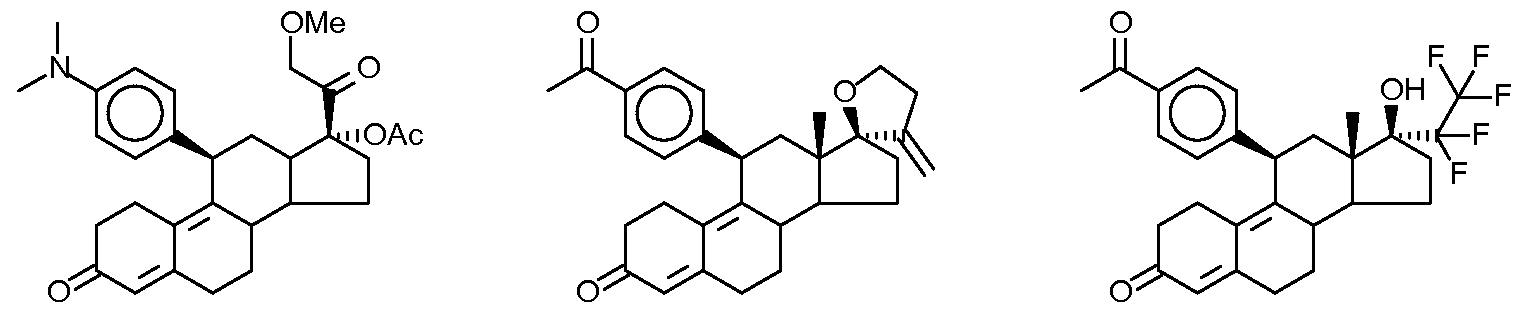
Proellex ORG-33628 Lonaprisan


US-based clinical stage biopharmaceutical firm Arno Therapeutics (ARNI) has started enrolling patients in a Phase I/II trial (NCT02049190) assessing its oral, anti-progestin hormone blocker ‘onapristone’ in men with advanced castration-resistant prostate cancer (CRPC) after failure of abiraterone or enzalutamide.
In previous Phase II clinical trials, onapristone has shown to exhibit anti-tumour activity in patients with breast cancer.
The pre-clinical testing has showed that onapristone had blocked the activation of the progesterone receptor (PR), which is believed to be a mechanism that inhibits the growth of APR-driven breast, endometrial and other tumours.
The company said that tests for the activated form of the progesterone receptor (APR) have the potential to function as a biomarker of anti-progestin activity, as detected by a companion diagnostic under development.
Enrolment of patients in the randomised, open-label Phase I/II trial follows approval of an Investigational Medicinal Product Dossier from the UK Health Authority, Medicines and Healthcare products Regulatory Agency (MHRA), ethics committee authorisation and subsequent site authorisation.
Arno Therapeutics president and chief executive officer Glenn Mattes said globally, prostate cancer is the second most common cancer in men, and the fifth leading cause of death from cancer in men, with an estimated 1.1 million new cases diagnosed and 307,000 deaths during 2012 alone, according to the International Agency for Research on Cancer.
“These numbers are staggering, and our ultimate goal is to evaluate onapristone in the subset of advanced CRPC patients who are more likely to respond to this personalised treatment, for which there is an immense unmet medical need,” Mattes said.
“The trial marks Arno’s second Phase I study actively enrolling this year and we are excited by the momentum generated thus far.”
The Phase I/II trial, designed to assess the safety and anti-cancer activity of onapristone in the select patient population, is being carried out at the Institute of Cancer Research, London, and the Royal Marsden NHS Foundation Trust in the UK.
A total of 60 patients will be enrolled in the trial, which additional sites are planned for in the UK.
The company has engaged Biotrial, a drug evaluation and pharmacology research company, as its contract research organisation (CRO) for the Phase I/II trial.
The trial will evaluate onapristone in extended-release tablet formulations in up to five dose levels (10mg-50mg BID) in patients with advanced CRPC where PR may be contributing to tumour progression.
Patients in the trial will be evaluated for whether their tumours express APR, which may help identify patients who are more likely to respond to onapristone.
A second group of patients will be included at the recommended Phase II dose to gain additional understanding of the onapristone safety profile and potential anti-cancer activity.
J Steroid Biochem1987,27,(4-6):851
Steroids1984,44,(4):349-72
| ATTARDI BARBARA J ET AL: “CDB-4124 and its putative monodemethylated metabolite, CDB-4453, are potent antiprogestins with reduced antiglucocorticoid activity: In vitro comparison to mifepristone and CDB-2914” MOLECULAR AND CELLULAR ENDOCRINOLOGY, ELSEVIER IRELAND LTD, IE, vol. 188, no. 1-2, 25 February 2002 (2002-02-25), pages 111-123, XP002496575 ISSN: 0303-7207 | ||
| 2 | * | MEALY N E ET AL: “CDB-4124” DRUGS OF THE FUTURE 200411 ES, vol. 29, no. 11, November 2004 (2004-11), page 1133, XP009118559 ISSN: 0377-8282 |
| WO2010106383A1 * | Mar 22, 2010 | Sep 23, 2010 | Richter Gedeon Nyrt | Novel crystalline form of antiprogestin cdb-4124 |
| WO2011015892A2 * | Aug 5, 2010 | Feb 10, 2011 | Richter Gedeon Nyrt. | Novel crystal form of an organic compound and process for the preparation thereof |
| US8513228 | Mar 22, 2010 | Aug 20, 2013 | Richter Gedeon Nyrt. | Crystalline form of antiprogestin CDB-4124 |
Glenmark Pharmaceuticals Ltd. through its Swiss Subsidiary receives USD 5 Mn. as milestone fee payment from Sanofi

Glenmark Pharmaceuticals Ltd. through its Swiss Subsidiary receives USD 5 Mn. as milestone fee payment from Sanofi
Total Payment received for GBR 500 monoclonal antibody programme from Sanofi is USD 55 Mn
MUMBAI, April 15, 2014: Glenmark Pharmaceuticals Ltd. has informed the Stock Exchange today that the company through its Swiss subsidiary has received USD 5 million as
milestone payment from Sanofi on a collaboration of its VLA2 (alpha2-beta1) integrin monoclonal antibody. GBR 500 is a first-in-class therapeutic monoclonal antibody for chronicautoimmune disorders.
Glenmark has received from Sanofi already USD 50 Mn as an upfront payment in FY2011-12. Hence, the total amount received by Glenmark from Sanofi for its first in class VLA-2monoclonal antibody is USD 55 million
read at
http://www.moneycontrol.com/stocks/stock_market/corp_notices.php?autono=790416
(copy paste on browser)
MD and CEO Mr Glenn Saldanha
old updates
Glenmark GBR 500 enters into Phase II clinical development for ulcerative colitis
17 September 2012
Glenmark Pharmaceuticals, a wholly-owned subsidiary of Glenmark Pharmaceuticals, has commenced the Phase II study of GBR 500 for ulcerative colitis.
GBR 500, an antagonist of the VLA2 (alpha2-beta1) integrin, is a first-in-class therapeutic monoclonal antibody for chronic autoimmune disorders.
The randomised, double-blind, placebo-controlled study will investigate the efficacy and safety of GBR 500 in patients with moderate to severe ulcerative colitis (UC).
Glenmark Pharmaceuticals chief scientific officer Dr Michael Buschle said that UC represents an area of substantial unmet medical need, despite treatment advances in recent years.
“We’re pleased with the continued progress of our partnership with Sanofi and excited about the commencement of this trial,” Buschle said.
The trial, which will be conducted at multiple clinical sites in North America and Europe, is expected to involve approximately 84 patients.
Patients participating in the study will receive multiple doses of either GBR 500 or placebo, administered over a period of several weeks.
Glenmark has completed Phase I of GBR 500 in the US, won licensing rights to all therapeutic indications from Sanofi and is conducting the clinical development programme.
The trial is part of a strategic global collaboration between Glenmark and Sanofi to investigate GBR 500 for the treatment of chronic inflammatory disorders.
MUMBAI, India, May 16, 2011
Glenmark Pharmaceuticals Out-Licenses Novel Monoclonal Antibody, GBR 500, to Sanofi
Combined Upfront and Potential Development, Regulatory and Commercial Milestone Payments Could Total US$613 Mn
MUMBAI, India, May 16, 2011 /PRNewswire-FirstCall/ — Glenmark Pharmaceuticals S.A (GPSA), a wholly owned subsidiary of Glenmark Pharmaceuticals Limited India (GPL), announced today that it has entered into an agreement with Sanofi to grant Sanofi a license for the development and commercialization of GBR 500, a novel monoclonal antibody for the treatment of Crohn’s Disease and other inflammatory conditions. The transaction is expected to close in the coming month subject to customary closing conditions, including the expiration or early termination of the waiting period under the HSR Antitrust Improvements Act.
Under the terms of the agreement, Glenmark will receive an upfront payment of US$ 50 million, of which US$ 25 million will be paid upon closing of the transaction and US$ 25 million, which is contingent upon Sanofi’s positive assessment of certain data to be provided by Glenmark. In addition, Glenmark could receive potential success-based development, regulatory and commercial milestone payments. The total of these payments could reach US$613 Mn. In addition, Glenmark is eligible to receive tiered double-digit royalties on sales of products commercialized under the license.
GBR 500 is an antagonist of the VLA-2 (alpha2-beta1) integrin. It is a first-in-class therapeutic monoclonal antibody and has established proof of concept in animal models across a range of anti-inflammatory conditions. Glenmark has completed Phase I dosing of GBR 500 in the US and the drug has been well tolerated with a good pharmacokinetic profile. Plans are in place to initiate clinical proof of concept studies in Crohn’s Disease. Sanofi has licensed the rights to all therapeutic indications.
“There continues to be a strong medical need for safer and more efficacious products for the treatment of Inflammatory Diseases,” said Elias Zerhouni, M.D., President, Global Research & Development, Sanofi. “GBR500 brings an innovative approach to Sanofi’s Immuno-Inflammation portfolio, which we believe may address a significant gap in treating Inflammatory Diseases which would be of huge benefit to patients”.
Glenn Saldanha MD and CEO of GPL, “This collaboration on a novel first-in-class monoclonal antibody validates Glenmark’s world-class innovative R&D capabilities in the drug discovery arena. We are pleased to have this second licensing collaboration with Sanofi, one of the largest pharmaceutical companies in the world and the first one from Glenmark in the field of novel biologics”.
Carcerand for Molecular encapsulation …Drug Delivery
.jpg)
Crystal structure of a nitrobenzene bound within a hemicarcerand reported by Cramand coworkers in Chem. Commun., 1997, 1303-1304.

A carcerand is a host molecule that completely entraps its guest so that it will not escape even at high temperatures.[1] This type of molecule was first described by Donald J. Cram in 1985 and is derived from the Latin carcer, or prison. The complexes formed by a carcerand with permanently imprisoned guests are called carceplexes.
In contrast hemicarcerands allow guests to enter and exit the cavity at high temperatures but will form stable complexes at ambient temperatures.[2] The complexes formed by a hemicarcerand and a guests are called hemicarceplexes.

Reactivity of bound guests
Cram described the interior of the container compound as the inner phase in which radically different reactivity was observed.[3] He used a hemicarcerand to isolate highly unstable, antiaromatic cylobutadiene at room temperature. The hemicarcerand stabilizes guests within its cavity by preventing their reaction with other molecules.
Synthesis

Synthesis of a carcerand from two calixarenes.
The first generation carcerands are based on calixarene hemicarcerands with 4 alkyl substituents on the upper rim and 4 reactive substituents on the lower rim. The coupling of both hemicarcerands takes place through a spacer group. In the original 1985 publication two different hemicarcerands react, one with chloromethyl reactive groups and one with thiomethyl reactive groups in a nucleophilic displacement and the resulting the spacer group is a dimethylsulfide (CH2SCH2). In this experiment the guests were the molecules already present in the reaction medium such as argon and dimethylformamide.
In another configuration the 4 lower rim functional groups are aldehydes which condense with O-Phenylenediamine to the corresponding di-imines. The 4 spacer groups connecting the two spheres are now much longer and consequently the internal cavity is much larger. Compounds trapped in the cavity are said to be held there by constrictive binding.[4] They can be introduced by simply heating in neat solvent like hexachlorobutadiene (a fungicide). The half-life of the reverse process is 3.2 hours at 25 °C in CDCl3 by NMR analysis. Ferrocene can be introduced by heating with the hemicarcerand in a large bulky solvent such as tripiperidylphosphine oxide. The half-life for ferrocene liberation is 19.6 hours at 112 °C.
Large Carcerands

Octahedral Nanocontainer
The internal cavity of a carcerand can be as large as 1700 Å3 (1.7 nm3) when six hemicarcerands form a single octahedral compound.[5] This is accomplished by dynamic covalent chemistry in a one-pot condensation of 6 equivalents of a tetraformyl calixarene and 12 equivalents of ethylene diamine withtrifluoroacetic acid catalyst in chloroform at room temperature followed by reduction of the imine bonds with sodium borohydride.


References
- Shell closure of two cavitands forms carcerand complexes with components of the medium as permanent guests Donald J. Cram, Stefan Karbach, Young Hwan Kim, Lubomir Baczynskyj, Gregory W. KallemeynJ. Am. Chem. Soc.; 1985; 107(8); 2575-2576. Abstract
- Recent Highlights in Hemicarcerand Chemistry Ralf Warmuth and Juyoung Yoon, Accounts of Chemical Research Volume 4, Issue 2, Pages 95-105, 2001.
- The Inner Phase of Molecular Container Compounds as a Novel Reaction Environment Ralf Warmuth Journal of Inclusion Phenomena and Macrocyclic Chemistry 37: 1–38, 2000.
- Constrictive binding of large guests by a hemicarcerand containing four portals Mimi L. C. Quan, Donald J. Cram J. Am. Chem. Soc.; 1991; 113(7); 2754-2755. Abstract
- One-Pot, 18-Component Synthesis of an Octahedral Nanocontainer Molecule Xuejun Liu, Yong Liu, Gina Li, Ralf Warmuth, Angewandte Chemie International Edition Volume 45, Issue 6 , Pages 901 – 904 2006 Abstract
extra info
This review focuses on how self-assembly can form hosts capable of binding large guests. Its sister article, ”Guests within Large Synthetic Hydrophobic Pockets Synthesized Using Polymer and Conventional Techniques,” reviews like-minded work using either polymers or hosts synthesized by traditional synthetic approaches. As described in more detail in that paper, the focus here is on hosts capable of binding organic molecules of more than seven nonhydrogen atoms. Likewise, a similar definition of a ”pocket” is retained, with the focus on hosts possessing well-defined, highly concave or enclosed surfaces. An arbitrary value of greater than approximately 50% encapsulation has been set. ”Comprehensive Supramo-lecular Chemistry” covers much of our discussion topic up to 1995.[1] This review is therefore primarily interested with the literature since that time.
Motivators for supramolecular chemists include molecular storage/delivery, the detection of substances, and the conversion of one substance into another via catalytic processes. All these processes include at some point the binding of a guest to a host. The hard part in these endeavors is the synthesis of the host, with all the required functionality gathered in a converging array. One approach uses self-assembly, whereby molecular subunits are designed to merge in a specific pattern that possesses a hydrophobic pocket. In this regard, both self-assembly and self-assembly with covalent modification have been used. As with the polymer and traditional synthetic strategies, the self-assembly approach has pros and cons. Normally, relatively rigid subunits are used and so a common worry in cavity design—hydrophobic pocket collapse—is generally avoided. On the other hand, at our current level of understanding we are limited to relatively symmetrical subunits and assembled structures. Nevertheless, testimony to the power of this approach is found in the large cavities formed, some in the order of thousands of cubic Angstroms.
The bulk of recent self-assembly research has focused on understanding the rules that govern how one product can arise out of a reaction mixture that, if all things were equal, would lead to a highly complex mixture. Hence in a manner analogous to contemporary polymer research, the emphasis is on understanding how the structure of the product is reached, rather than on understanding the properties of any cavity in the product. As a result, many of the very large cavities created by self-assembly are ”simply” filled with a large number of (small) solvent molecules. Such examples are not dealt with explicitly here but can be found in citations throughout the text.
HOSTS BASED ON RESORCINARENES
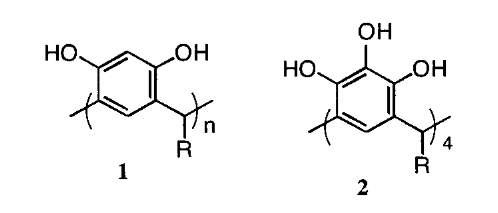
In the last seven or so years it has become apparent that resorcinarenes, 1 (n=4), a family of molecules[2-5] held in much regard for their hosting properties and their use in the synthesis of a plethora of cavitands, also possess a spectacular flair for self-assembly. Two general assembly products have been identified (Fig. 1). Either two molecules can come together in apseudo C4h symmetric host, or six assemble into a pseudo-octahedral array. A second component, usually solvent, is necessary to ”glue” the subunits together. The first hint of this supramolecular chemistry was pinpointed by MacGillivray and Atwood, who identified the pseudo-octahedral complex both in the solid and the solution state.[6] The total assembly consists of six resorcinarenes, eight water molecules and has a solvent-filled cavity. Shortly thereafter, the dimer, again in part held together by 2-propoanol/water molecules, was identified independently by the Rose and Aoki groups.[7,8] The latter identified a tetraethylammonium ion within the cavity. A third such structure, this time hosting triethyl-ammonium, was identified shortly thereafter.1-9-1 Recently, Atwood et al. identified a more robust pseudo-spherical hexamer derived from pyrogallol[4]arenes 2,[10] while Shivanyuk and Rebek have determined that the corresponding dimeric assembly also forms and encapsulates large guests.[11] Thus, in deuterated methanol or aqueous acetonitrile, NMR evidence suggests that 2 (R=Pr) is monomeric. However, the addition of tropylium tetra-fluoroborate results in an intense red color indicating a charge transfer complex between 2 (R=Pr) and guest. Furthermore, at host/guest ratios larger than two, the 1H NMR at 233 K demonstrates that a 2:1 complex of 2 (R=Pr) and tropylium tetrafluoroborate exists. At this temperature, the kinetics of guest exchange is slow on the (600 MHz) NMR time-scale. Further experiments revealed that 1) at higher equivalents of guest a 1:1 complex was formed, and 2) a protic solvent was necessary for assembly of the dimer host. This latter point was noted when more lipophilic 2 (R=CnH23) was shown to only assemble in deuterated chloroform when a trace of methanol was present. Interestingly, resorcin-arenes 1 (R=Me, or Et) did not undergo this encapsulation of the tropylium ion.

Fig. 1 Dimeric and hexameric assemblies of resorcinarenes.
The octahedral assemblies of 1 (n=4)[12,13] have demonstrated some fascinating encapsulation properties. For example, in water saturated, deuterated chloroform, the hexamer of 1 encapsulates a range of ammonium ions in a manner that is intimately tied to the size and concentration of the guest.[14] Tetrahexylammonium bromide is an ideal guest and exchanges slowly, relative to the 600-MHz NMR time-scale, between cavity and free solution. Nuclear magnetic resonance evidence suggests that the larger guest tetraheptylammonium bromide is cramped within the confines of the assembly, while the still larger tetra-hexadecylammonium bromide was not complexed. With smaller guests, things became even more interesting. Thus, in the case of Bu4N+BF4~, the small counter ion is coencapsulated along with cation. In such cases, solvent is also present in the cavity but leaves when a more suitable space-filler is present. Hence, at the expense of bound water 4-phenyltoluene is also encapsulated along with Bu4N+BF4~. Still smaller ammonium ions instead template the assembly of the dimeric host. Bu4SbBr, along with a variety of co-encapsulated aromatic guests, is also seen within the hexameric assembly.[15] Co-guests included are benzene, p-xylene, 4-phenyltoluene, and naphthalene. In contrast, 4,4′-dimethylbiphenyl was not encapsulated with the antimony guest, suggesting that adding an extra methyl group to 4-phenyltoluene was enough to destabilize the complex. Size, however, is not the only important factor for encapsulation. Neither hexa-fluorobenzene, cyclohexane, nor pentane was coencapsu-lated. Rather, the antimony guest and presumably some solvent molecules occupied the cavity.
As the basis of cavitands, resorcinarenes have also been instrumental in the synthesis of carceplexes such as 3 (Scheme 1).[16-18] As defined by their inventor, Donald Cram, carceplexes are closed surface compounds that permanently entrap guest molecules or ions within their shell, such that guest escape can only occur by rupture of covalent bonds. Since their initial synthesis,[19] their self-assembly (with covalent modification) has been intensively investigated; as has the relationship between host shell (the carcerand) and guest. As it transpires, these two facets are intimately tied. Early work focusing on small guests established that templation[20] is essential for successful synthesis. The best yields arise when a template stabilizes the transition state of the rate-determining step (rds) for the synthesis. Furthermore, the transition state at the rds has a similar cavity to the product.[21-29] Hence good templates for assembly make good guests for the carcerands. In these initial studies, the best guest identified was pyrazine, while the worst guest, and hence the solvent of choice for many of these studies, was N-methylpyrrolidinone (NMP).
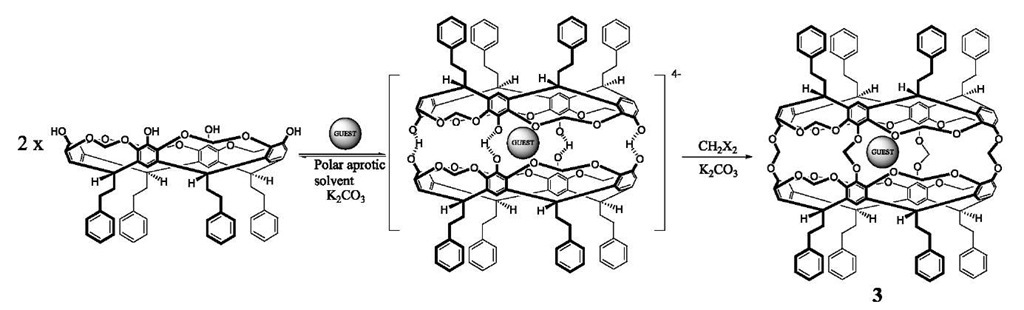
Scheme 1 Synthesis of carceplex 3.

Carceplexes can be increased in size to allow the encapsulation of large guests. One way is to use wide-bodied cavitands—cavitands derived from resorcin [5]arenes—in the carceplex reaction.[30] Another is to join several ”normal”-sized cavitands together.[31-33] To date, only relatively small molecules have been observed within hosts synthesized by these methods. A more common approach is to increase the size of the linker groups that join the two ”hemispheres” of the shell, i.e., replace bromochloromethane in the synthesis shown in Scheme 1 with a compound with two separate electro-philic centers.[34] The resulting products, such as 4 (R=-(CH2)4-),[35] are called hemicarceplexes; so named because the portals in the shell, or hemicarcerand, are large enough for guests to exit or enter the cavity without covalent bond rupturing.[36] The ability of over 68 molecules to template the formation of 4 (R=-(CH2)4-) has been recently studied.[37] Of these, 30 proved capable of templation, with the best template p-xylene proving to be 3600 times better than the worst N-formylpiperidine. However, in contrast to carceplex 3, the final host structure 4 did not appear to be a reasonable model of the transition state of the rds in its synthesis.
Although many hemicarceplexes can be assembled via templation, most have been synthesized by inserting the desired guest post-assembly. This has provided information about how solvent and the shape of the portals or guest influence thermodynamic stability, and complexa-tion and decomplexation rates. For example, after synthesizing hemicarceplex 4 (R=-(CH2)4-, guest= solvent), the guest solvent can be exchanged using the law of mass action. Either heating the hemicarceplex in the presence of 100 equivalents of new guest in a solvent too large to enter the cavity, or more simply heating the complex in neat guest, leads to exchange. Using this technique, it is possible to synthesize a range of hemicarceplexes.[38] In general, long, thin guests complexed the fastest, while for disubstituted aromatic guests a general order of com-plexation was demonstrated by the xylene isomers; p-xylene ^ m-xylene> o-xylene. Computational studies on a related hemicarceplex indicated that two type of gating processes, involving conformational changes in the intra-hemispherical linker groups, affect guest entry or egres-sion.[39,40]
How do guests inside the cavity interact with species in free solution? Host 4 (R=-(CH2)4-) was used to study the first Sn2 reactions of inner-phase guests with outer-phase reactants.[41] For example, when the complexes 4 (R= -(CH2)4-, guest=either 4-HOC6H4OH or 3-HOC6H4OH or 2-HOC6H4OH) were exposed to THF/NaH/CH3I, three different reaction outcomes were noted. The encapsulated para-isomer gave no reaction, the meta-isomer was doubly methylated, while the ortho-isomer gave a mixture of mono-and dimethylated guest. Different reactivity profiles were noted because each guest prefers a different orientation within the cavity. In the case of the 1,4-isomer for example, the two OH groups can reside deep within the ”poles” of the host and cannot be readily alkylated. A similar rationale explains the observed alkyllithium additions and borane reductions of 4 (R=-(CH2)4-, guest =benzaldehyde, benzocyclobutenone, and benzocyclobutenedione).[42] If a reactive species is generated within the cavity, it can sometimes react with the hemicarcerand shell. For example, reaction at 0°C between 4 (R=-(CH2)4-, guest =-benzocyclobutenedione) and an excess of MeLi gave diol 5 (Scheme 2). Experiments revealed that a possible mechanism for this conversion begins with the addition of one equivalent of MeLi to a C=0 group of the guest. The basic lithiate complex 6 can then induce a p-elimination in one of the linkers. This produces a butene ether derivative 7 that can then undergo a further elimination to yield the bis-phenoxide. Workup yields 5. The tetramethylene linkers are not the sole reactive sites in this hemicarcerand. Thus the methylene bridges in each hemisphere undergo reaction with the guest derived from methyl lithium addition to encapsulated N-methyl-2-pyrrolidinone.[42]
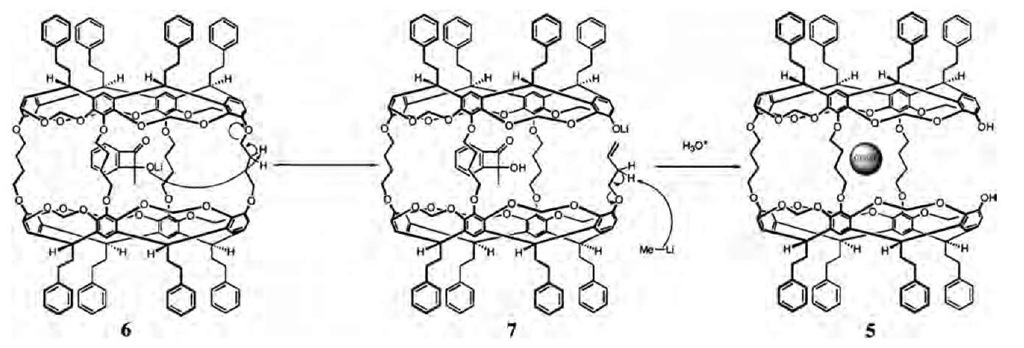
Scheme 2 Synthesis of diol 5 via an inner-molecular reaction.
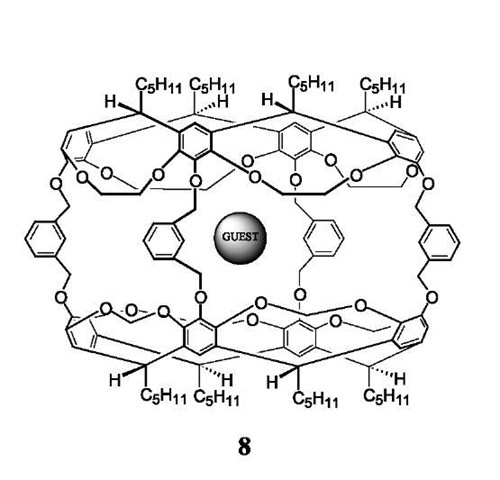
By carrying out a two-step (hemi)carceplex reaction, lower symmetry hydrophobic pockets can be synthe-sized.[43,44] To point out just two examples, hosts such as 4 (R=-CH2-, or R=-(CH2)6-) were synthesized and their corresponding hemicarceplexes examined by X-ray crystallography, NMR, and computational studies.[45] As anticipated, introducing a dissimilar linker between the hemispheres altered the shape of the pocket, the orientation of the guest, and hence the thermodynamic and kinetic stability of the corresponding complexes. The kinetics of exchange were measured at different temperatures for 1,4-dimethoxybenzene vacating 4 (R= 1,3-(CH2)2C6H4), to show how AHz, ASz, and hence AGz varied as a function of solvent.[43] These studies revealed that solvation plays an important role in decomplexation. Hence decomplexa-tion rates in CDCl3 were 800 times faster than in deuterated 1,1,2,2-tetrachloroethane. An examination of different hemicarcerands showed that the structure of the unique linker also has a considerable effect on egression rates. For example, changing the dissimilar linker R in 4 from pentamethylene to hexamethylene increased the rate constant for egression by a factor of 177. Lower symmetry cavities can also be made by using two different cavitands to construct a hemicarceplex. For example, in hosts 8 and 9 methylene and dimethylene bridges link the phenol oxygens of the former, while dimethylene and trimethylene linkers are used in the latter.[46,47] Nuclear magnetic resonance evidence demonstrates that these subtle changes in the host are manifest in how the guest moves within the pocket. Hence when the guest in 8 is 1,2,3-trimethoxybenzene three signals are observed for the methoxy groups. The 1- and 3-methoxy groups reside within different hemispheres, and the movement of the guest that allows them to exchange is slow on the (500 MHz) NMR time-scale; in contrast, the slightly bigger cavity of 9 means that the corresponding process is fast on the NMR time-scale. Although no simple rules were discernable, the size of the bridges between the phenolic O-atoms undoubtedly influences guest movement and decomplexation rates.
![tmp1CF-162_thumb[1]](http://what-when-how.com/wp-content/uploads/2011/03/tmp1CF162_thumb1.jpg "tmp1CF-162_thumb[1]")
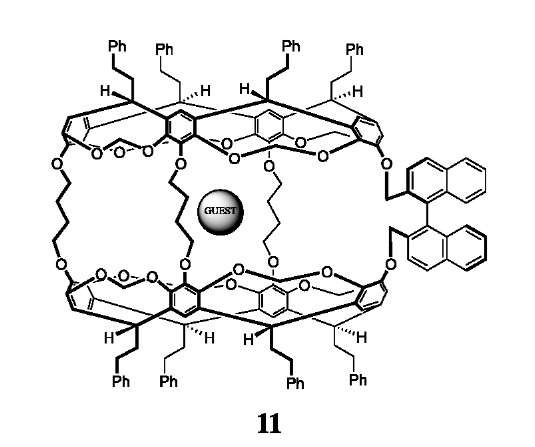
Building on these developments, Cram moved the carceplex and hemicarceplex field into the realms of aqueous solution, while at the same time synthesizing chiral hosts. The first water soluble hemicarceplexes were isolated from hemicarcerand 10.[48] In aqueous solution, this host is capable of sequestering a number of guests including naphthalene and 1,3-dimethoxybenzene. Guests such as alkyl ammonium salts that are well solvated by water did not bind. Chiral hemicarceplexes can be synthesized by using the two-step process discussed above. Hosts 11 and 12 are two examples.[49] Introducing the chiral linker group of 11 in the presence of a racemic mixture of selected chiral guests resulted in ratios of the diastereomeric complexes of up to 1:1.5. Alternatively, higher diastereomeric ratios could be attained if the chiral hemicarceplex 11 containing chloroform was heated either in the presence of pure, racemic guest, or in diphenylether with an excess of racemic guest. By this approach the highest diastereomeric ratio observed was >20:1 in favor of the R-isomer of 4-MeC6H4S(O)Me binding to 11. In contrast, the diastereomeric ratio observed for complexing racemate C6H5S(O)Me was only 1.6:1 in favor of the R-isomer. Overall, the hemicarcerand 12 (guest=chloroform) was less discriminating than 11. This was attributed to the two ”nonchiral,” 26-membered ring portals in 12 being less encumbering than its two chiral portals.
As a rule, the shape and functionality of the guest can be transferred through a hemicarceplex shell to the external environment. A simple thin layer chromatography experiment is usually sufficient to demonstrate this point. Furthermore, hemicarcerand shells allow the transfer of triplet energy from aryl ketone guests to free naphthalene.1-50-1 These results notwithstanding, guests in carce-plexes or hemicarceplexes are in relatively sheltered waters, and this has allowed these unique hosts to be used as storage containers for highly reactive guests.[34,51,52] The first example, involving a small guest, was carried out over 12 years ago. Nevertheless, the trapping and room temperature analysis of cyclobutadiene 13 (Fig. 2), the Mona Lisa of organic chemistry as Cram described it, is always worth mentioning.[34] Equally as exciting was the trapping by Warmuth of o-benzyne 14 inside the cavity of 4 (R=-(CH2)4-).[51] This remarkable feat was accomplished by the photolysis of 4 (R=-(CH2)4-, guest=benzocyclo-butenedione) and allowed its :H and 13C NMR analysis. The former suggested that ”free” benzyne would possess :H NMR chemical shifts of d=7.0 and 7.6 ppm, while 13C-13C coupling in the latter suggests that 14 is best described as a cumulene. Interestingly, when warmed up to room temperature, the guest reacted with the hemi-carcerand in an inner-molecular Diels-Alder reaction.[53] Following on from this work, Warmuth and Marvel successfully trapped an enantiomeric mixture of 1,2,4,6-cycloheptatriene 15 inside hemicarceplex 4 (R=-(CH2)4), by first encapsulating phenyldiazirine and then irradiating the resulting hemicarceplex.[54] Protected by the host shell, 15 could not dimerize and was stable for weeks at ambient temperature. By carrying out the same chemistry within chiral host 12, a 3:2 ratio of the two resulting diastereomeric complexes was formed.[55] No coalescence of NMR signals could be observed when heating these complexes up to 100°C, which puts a lower limit to the enantiomerization barrier of > 19.6 kcal mol—1 This value was collaborated with a parallel experiment using the diastereomeric complex of 12 (guest= 16). Thus using line broadening analysis of the :H NMR signals from the methyl groups of the two complexes (d = — 1.47 and — 1.57 ppm), a similar isomerization barrier was determined.[56] Although tetraenes 15 and 16 are stabilized by the protective shell, the hemicarcerand cannot stop oxygen and other small reagents from entering the cavity. Hence when a solution of 4 (guest = 15) is exposed to oxygen, the spirodioxirane 17 forms, which upon heating evolves CO2 to leave an entrapped benzene guest. Furthermore, when heated entrapped 16 rearranges to the corresponding p-tolylcarbene, which goes on and reacts with the hemi-carcerand shell in a number of different ways.

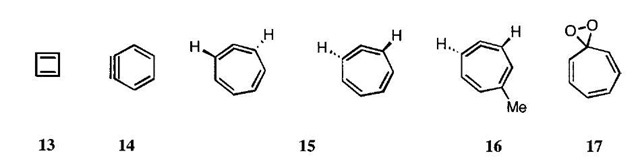
Fig. 2 Reactive species trapped within hemicarceplexes.
Animation of nanoparticles for drug delivery in cancer treatment

Animation of nanoparticles for drug delivery in cancer treatment
read at
Immunotherapy could help tackle tough liver cancer

Significant new data presented today at the International Liver Congress 2014 indicate that liver cancer (Hepatocellular Carcinoma (HCC)) may be treated by adoptive T-cell therapy.
This new therapeutic approach in the treatment of HCC could be very important as without treatment the 5 year survival rate is just 5%. Globally, HCC accounts for 746,000 deaths, and in the UK alone is responsible for over 4,000 deaths per year.
Glypican-3 (GPC3) is a tumour associated antigen expressed in up to 70% of HCC but not in healthy human tissue. Isolating GPC3-specific T-cell receptors and expressing them on patient’s T-cells can help treat HCC, as these T cells can recognise and eliminate GPC3-postive HCC.
The study detected and expanded MHC-multimer-positive CD8+ T-cells specific for targeted GPC3 epitopes and grew T-cell clones. From these clones, the most specific and active T-cell receptor was isolated. When this T-cell receptor was expressed on donor T…
View original post 131 more words
BI 224436 an investigational new drug under development for the treatment of HIV infection


(2S)-2-tert-butoxy-2-(4-(2,3-dihydropyrano[4,3,2-de]quinolin-7-yl)-2- methylquinolin-3-yl)acetic acid
BI 224436
1155419-89-8 cas no
mw
| 442.51 |
3-Quinolineacetic acid, 4-(2,3-dihydropyrano[4,3,2-de]quinolin-7-yl)-α-(1,1-dimethylethoxy)-2-methyl-, (αS,4R)-
hemi-succinate of (2S)-2-tert-butoxy-2-(4-(2,3-dihydropyrano[4,3,2-de]quinolin-7-yl)-2-methylquinolin-3-yl)acetic acid)
BI 224436 is an investigational new drug under development for the treatment of HIV infection. BI 224436 is the first non-catalytic site integrase inhibitor (NCINI). It inhibits HIV replication via binding to a conserved allosteric pocket of the HIV integrase enzyme. This makes the drug distinct in mechanism of action compared to raltegravir and elvitegravir, which bind at the catalytic site.[2] In October 2011, Gilead Sciences purchased exclusive rights to develop BI 224436 and several related compounds under investigation in Boehringer Ingelheim’s noncatalytic site integrase inhibitor program.[3][4]
Novel hemi-succinate salt form of (2S)-2-tert-butoxy-2-(4-(2,3-dihydropyrano[4,3,2-de]quinolin-7-yl)-2-methylquinolin-3-yl)acetic acid (presumed to be BI-224436) and its crystalline forms is desc in WO-2014055618.
Gilead, under license from BI, was developing BI-224436 for the oral treatment of HIV infection. In September 2011, this drug had entered phase 1 trials. Picks up from WO2012138670, claiming a process for the preparation of the same drug. Also see the concurrently published WO2014055603. This compound is claimed specifically in WO2009062285 and generically in WO2007131350.
BI 224436 has antiviral EC50 values ranging between 4 and 15 nM against different HIV-1 laboratory strains and CC50 values >90 μM in different cells, including peripheral blood mononuclear cells. BI 224436 also has a low, 2.2-fold shift in antiviral potency in the presence of 50% human serum and by virtue of a steep dose-response curve slope, BI 224436 exhibits serum-shifted EC95 values ranging between 22 and 75 nM. Drug combination studies performed in cell-based antiviral assays have shown that BI 224436 displays, at the least, an additive effect in combination with any of the marketed antiviral classes including INSTIs. BI 224436 has drug-like ADME properties including a Caco-2 cell permeability of 14 .10-6 cm/sec, solubility > 24 mg/ml in the pH range 2.0-6.8 and low cytochrome P450 inhibition. Moreover BI 224436 shows excellent PK profiles in rat (CL=0.7% QH; F= 54%), monkey (CL= 23% QH; F= 82%) and dog (CL= 8%QH; F= 81%).

http://www.natap.org/2011/ICAAC/ICAAC_32.htm
……………………
Discovery of BI 224436, a Noncatalytic Site Integrase Inhibitor (NCINI) of HIV-1
ACS Med. Chem. Lett., 2014, 5 (4), pp 422–427
DOI: 10.1021/ml500002n
http://pubs.acs.org/doi/abs/10.1021/ml500002n

1H NMR: 12.4 (br, 1H), 8.52 (d, 1H, J = 4.4Hz), 7.94 (d, 1H, J = 7.9 Hz),7.65-7.61 (m, 1H), 7.45 (d,
1H, J = 8.2 Hz), 7.31-7.24 (m, 2H), 7.12 (d, 1H, J = 7.9 Hz), 6.94-6.92 (m, 1H), 4.99 (s, 1H), 4.57-4.47
(m, 2H), 3.37-3.30 (m, 2H), 2.86 (s, 3H), 0.82 (s, 9H).
13C NMR: 172.2, 158.4, 153.1, 150.1, 146.6,
146.1, 145.0, 141.0, 130.8 (br), 130.6 (br), 128.9, 128.0, 127.2, 127.1 (br) 126.4, 125.6, 118.0, 116.7,
109.1, 75.2, 70.8, 65.6, 27.7, 27.5, 24.9.
HRMS: m/z calc. for C27H26N2O4 + H+: 443.1965, m/z found:
443.1951 (-3.2 ppm).
UPLC-MS: rt = 0.68 min, m/z 443.3 [M + H]+, purity: >99.9% @ 254 nm.
http://pubs.acs.org/doi/suppl/10.1021/ml500002n/suppl_file/ml500002n_si_001.pdf
………………………….
http://www.google.com/patents/WO2012138670A1?cl=en
General Scheme IA:

G1 1001
wherein Y is I, Br or CI;
General Scheme 11 A:

wherein:
Example 1

1 a 1 b
1a (600 g, 4.1 mol) was charged into a dry reactor under nitrogen followed by addition of Ac20 (1257.5 g, 12.3 mol, 3 eq.). The resulting mixture was heated at 40 °C at least for 2 hours. The batch was then cooled to 30 °C over 30 minutes. A suspension of 1b in toluene was added to seed the batch if no solid was observed. After toluene (600 ml_) was added over 30 minutes, the batch was cooled to -5— 10 °C and was held at this temperature for at least 30 minutes. The solid was collected by filtration under nitrogen and rinsed with heptanes (1200 ml_). After being dried under vacuum at room temperature, the solid was stored under nitrogen at least below 20 °C. The product 1 b was obtained with 77% yield. 1H NMR (500 MHz, CDCI3): δ = 6.36 (s, 1 H), 3.68 (s, 2H), 2.30 (s, 3H). Example 2

2a 2b
2a (100g, 531 mmol) and 1b (95 g, 558 mmol) were charged into a clean and dry reactor under nitrogen followed by addition of fluorobenzene (1000 mL). After being heated at 35-37 °C for 4 hours, the batch was cooled to 23 °C. Concentrated H2S04 (260.82 g, 2659.3 mmol, 5 eq.) was added while maintaining the batch temperature below 35 °C. The batch was first heated at 30-35 °C for 30 minutes and then at 40- 45 °C for 2 hours. 4-Methyl morpholine (215.19 g, 2127 mmol, 4 eq.) was added to the batch while maintaining the temperature below 50 °C. Then the batch was agitated for 30 minutes at 40-50 °C. eOH (100 mL) was then added while maintaining the temperature below 55 °C. After the batch was held at 50-55 °C for 2 hours, another portion of MeOH (100 mL) was added. The batch was agitated for another 2 hours at 50-55 °C. After fluorobenzene was distilled to a minimum amount, water (1000 mL) was added. Further distillation was performed to remove any remaining fluorobenzene. After the batch was cooled to 30 °C, the solid was collected by filtration with cloth and rinsed with water (400 mL) and heptane (200 mL). The solid was dried under vacuum below 50 °C to reach KF < 0.1%. Typically, the product 2b was obtained in 90% yield with 98 wt%. 1H NMR (500 MHz, DMSO- d6): δ = 10.83 (s, 1 H), 9.85 (s, bs, 1 H), 7.6 (d, 1 H, J
Hz), 6.40 (s, 1 H), 4.00 (s, 2 H), 3.61 (s, 3 H). Example 3

2b 3a
2b (20 g, 64 mmol) was charged into a clean and dry reactor followed by addition of THF (140 mL). After the resulting mixture was cooled to 0 °C, Vitride® (Red-AI, 47.84 g, 65 wt%, 154 mmol) in toluene was added while maintaining an internal temperature at 0-5 °C. After the batch was agitated at 5-10 °C for 4 hours, IPA (9.24 g, 153.8 mmol) was added while maintaining the temperature below 10 °C. Then the batch was agitated at least for 30 minutes below 25 °C. A solution of HCI in IPA (84.73 g, 5.5 M, 512 mmol) was added into the reactor while maintaining the temperature below 40 °C. After about 160 mL of the solvent was distilled under vacuum below 40 °C, the batch was cooled to 20-25 °C and then aqueous 6M HCI (60 mL) was added while maintaining the temperature below 40 °C. The batch was cooled to 25 °C and agitated for at least 30 minutes. The solid was collected by filtration, washed with 40 mL of IPA and water (1V/1V), 40 mL of water and 40 mL of heptanes. The solid was dried below 60 °C in a vacuum oven to reach KF < 0.5%. Typically, the product 3a was obtained in 90-95% yield with 95 wt%. 1H NMR (400 MHz, DMSO-d6): δ = 10.7 (s, 1 H), 9.68 (s, 1 H), 7.59 (d, 1 H, J = 8.7 Hz), 6.64 (, 1 H, J = 8.7 Hz), 6.27 (s, 1 H), 4.62 (bs, 1 H), 3.69 (t, 2H, J = 6.3 Hz), 3.21 (t, 2H, J = 6.3 Hz).
Example 4

3a (50 g, 174.756 mmol) and acetonitrile (200 mL) were charged into a dry and clean reactor. After the resulting mixture was heated to 65 °C, POCI3 (107.18 g, 699 mmol, 4 eq.) was added while maintaining the internal temperature below 75 °C. The batch was then heated at 70-75 °C for 5-6 hours. The batch was cooled to 20 °C. Water (400 mL) was added at least over 30 minutes while maintaining the internal temperature below 50 °C. After the batch was cooled to 20-25 °C over 30 minutes, the solid was collected by filtration and washed with water (100 mL). The wet cake was charged back into the reactor followed by addition of 1 M NaOH (150 mL). After the batch was agitated at least for 30 minutes at 25-35 °C, it was verified that the pH was greater than 12. Otherwise, more 6M NaOH was needed to adjust the pH >12. After the batch was agitated for 30 minutes at 25-35 °C, the solid was collected by filtration, washed with water (200 mL) and heptanes (200 mL). The solid was dried in a vacuum oven below 50 °C to reach KF < 2%. Typically, the product 4a was obtained at about 75-80% yield. H NMR (400 MHz, CDCI3): δ = 7.90 (d, 1 H, J = 8.4 Hz), 7.16 (s, 1 H), 6.89 (d, 1 H, J = 8.4 Hz), 4.44 (t, 2 H, J = 5.9 Hz), 3.23 (t, 2 H, J = 5.9 Hz). 13C NMR (100 MHz, CDCI3): δ = 152.9, 151.9, 144.9, 144.1 , 134.6, 1 19.1 , 1 17.0, 1 13.3, 1 1 1.9, 65.6, 28.3.
Example 5

4a 5a
Zn powder (54 g, 825 mmol, 2.5 eq.) and TFA (100 mL) were charged into a dry and clean reactor. The resulting mixture was heated to 60-65 °C. A suspension of 4a (100 g, 330 mmol) in 150 mL of TFA was added to the reactor while maintaining the temperature below 70 °C. The charge line was rinsed with TFA (50 mL) into the reactor. After 1 hour at 65±5 °C, the batch was cooled to 25-30 °C. Zn powder was filtered off by passing the batch through a Celite pad and washing with methanol (200 mL). About 400 mL of solvent was distilled off under vacuum. After the batch was cooled to 20-25 °C, 20% NaOAc (ca. 300 mL) was added at least over 30 minutes to reach pH 5-6. The solid was collected by filtration, washed with water (200 mL) and heptane (200 mL), and dried under vacuum below 45 °C to reach KF ≤ 2%. The solid was charged into a dry reactor followed by addition of loose carbon (10 wt%) and toluene (1000 mL). The batch was heated at least for 30 minutes at 45-50 °C. The carbon was filtered off above 35 °C and rinsed with toluene (200 mL). The filtrate was charged into a clean and dry reactor. After about 1000 mL of toluene was distilled off under vacuum below 50 °C, 1000 mL of heptane was added over 30 minutes at 40-50 °C. Then the batch was cooled to 0±5 °C over 30 minutes. After 30 minutes, the solid was collected and rinsed with 200 mL of heptane. The solid was dried under vacuum below 45 °C to reach KF≤ 500 ppm. Typically, the product 5a was obtained in about 90-95 % yield. 1H NMR (400 MHz, CDCI3): δ = 8.93 (m, 1 H), 7.91 (dd, 1 H, J = 1.5, 8 Hz), 7.17 (m 1 H), 6.90 (dd, 1 H, J = 1 .6, 8.0 Hz), 4.46-4.43 (m, 2 H), 3.28-3.23 (m, 2 H). 13C NMR (100 MHz, CDCI3): δ = 152.8, 151 .2, 145.1 , 141.0, 133.3, 1 18.5, 1 18.2, 1 14.5, 1 1 1.1 , 65.8, 28.4.
Example 6

5a 6a
5a (1.04 kg, 4.16 mol) and toluene (8 L) were charged into the reactor. The batch was agitated and cooled to -50 to -55 °C. BuLi solution (2.5 M in hexanes, 1.69 L, 4.23 mol) was charged slowly while maintaining the internal temperature between – 45 to -50 °C. The batch was agitated at -45 °C for 1 hour after addition. A solution of triisopropyl borate (0.85 kg, 4.5 mol) in MTBE (1 .48 kg) was charged. The batch was warmed to 10 °C over 30 minutes. A solution of 5 N HCI in I PA (1 .54 L) was charged slowly at 10 °C, and the batch was warmed to 20 °C and stirred for 30 minutes. It was seeded with 6a crystal (10 g). A solution of aqueous concentrated HCI (0.16 L) in IPA (0.16 L) was charged slowly at 20 °C in three portions at 20 minute intervals, and the batch was agitated for 1 hour at 20 °C. The solid was collected by filtration, rinsed with MTBE (1 kg), and dried to provide 6a (943 g, 88.7 % purity, 80% yield). 1H NMR (400 MHz, D20): δ 8.84 (d, 1 H, J = 4 Hz)
1 H), 7.68 (d, 1 H, J = 6 Hz), 7.09 (m, 1 H), 4.52 (m, 2H), 3.47 (m, 2H).
Example 7

Iodine stock solution was prepared by mixing iodine (57.4 g, 0.23 mol) and sodium iodide (73.4 g, 0.49 mol) in water (270 mL). Sodium hydroxide (28.6 g, 0.715 mol) was charged into 220 mL of water. 4-Hydroxy-2 methylquinoline 7a (30 g, 0.19 mol) was charged, followed by acetonitrile (250 mL). The mixture was cooled to 10 °C with agitation. The above iodine stock solution was charged slowly over 30 minutes. The reaction was quenched by addition of sodium bisulfite (6.0 g) in water (60 mL). Acetic acid (23 mL) was charged over a period of 1 hour to adjust the pH of the reaction mixture between 6 and 7. The product was collected by filtration, washed with water and acetonitrile, and dried to give 7b (53 g, 98%). MS 286 [M + 1].
Example 8

7b 8a
4-Hydroxy-3-iodo-2-methylquinoline 7b (25 g, 0.09 mol) was charged to a 1-L reactor. Ethyl acetate (250 mL) was charged, followed by triethylamine (2.45 mL, 0.02 mol) and phosphorus oxychloride (12 mL, 0.13 mol). The reaction mixture was heated to reflux until complete conversion (~1 hour), then the mixture was cooled to 22 °C. A solution of sodium carbonate (3 .6 g, 0.3 mol) in water (500 mL) was charged. The mixture was stirred for 20 minutes. The aqueous layer was extracted with ethyl acetate (120 mL). The organic layers were combined and concentrated under vacuum to dryness. Acetone (50 mL) was charged. The solution was heated to 60 °C. Water (100 mL) was charged, and the mixture was cooled to 22 °C. The product was collected by filtration and dried to give 8a (25 g, 97.3 % pure, 91.4 % yield). MS 304 [M + 1].
(Note: 8a is a known compound with CAS # 1033931-93-9. See references: (a) J. Org Chem. 2008, 73, 4644-4649. (b) Molecules 2010, 15, 3171 -3178. (c) Indian J. Chem. Sec B: Org. Chem. Including Med Chem. 2009, 488(5), 692-696.)
Example 9

8a 9a
8a (100 g, 0.33 mol) was charged to the reactor, followed by copper (I) bromide dimethyl sulfide complex (3.4 g, 0.017 mol) and dry THF (450 mL). The batch was cooled to -15 to -12 °C. i-PrMgCI (2.0 M in THF, 173 mL, 0.346 mol) was charged into the reactor at the rate which maintained the batch temperature < -10 °C. In a 2nd reactor, methyl chlorooxoacetate (33 mL, 0.36 mol) and dry THF (150 mL) were charged. The solution was cooled to -15 to -10 °C. The content of the 1 st reactor (Grignard/cuprate) was charged into the 2nd reactor at the rate which maintained the batch temperature < -10 °C. The batch was agitated for 30 minutes at -10 °C. Aqueous ammonium chloride solution ( 0%, 300 mL) was charged. The batch was agitated at 20 – 25 °C for 20 minutes and allowed to settle for 20 minutes. The aqueous layer was separated. Aqueous ammonium chloride solution (10%, 90 mL) and sodium carbonate solution (10%, 135 mL) were charged to the reactor. The batch was agitated at 20 – 25 °C for 20 minutes and allowed to settle for 20 minutes. The aqueous layer was separated. Brine (10%, 240 mL) was charged to the reactor. The batch was agitated at 20 – 25 °C for 20 minutes. The aqueous layer was separated. The batch was concentrated under vacuum to -1/4 of the volume (about 80 mL left). 2-Propanol was charged (300 mL). The batch was concentrated under vacuum to -1/3 of the volume (about 140 mL left), and heated to 50 °C.
Water (70 mL) was charged. The batch was cooled to 20 – 25 °C, stirred for 2 hours, cooled to – 0 °C and stirred for another 2 hours. The solid was collected by filtration, washed with cold 2-propanol and water to provide 58.9 g of 9a obtained after drying (67.8 % yield). 1H NMR (400 MHz, CDCI3): δ 8.08 (d, 1 H, J = 12 Hz), 7.97 (d, 1 H, J = 12 Hz), 7.13 (t, 1 H, J = 8 Hz), 7.55 (t, 1 H, J= 8 Hz), 3.92 (s, 3H), 2.63 (s, 3H). 13C NMR (100 MHz, CDCI3): δ 186.6, 161.1 , 155.3, 148.2, 140.9, 132.0, 129.0, 128.8, 127.8, 123.8, 123.7, 53.7, 23.6.

Catalyst preparation: To a suitable sized, clean and dry reactor was charged dichloro(pentamethylcyclopentadienyl)rhodium (III) dimer (800 ppm relative to 9a, 188.5 mg) and the ligand (2000 ppm relative to 9a, 306.1 mg). The system was purged with nitrogen and then 3 ml. of acetonitrile and 0.3 ml_ of triethylamine was charged to the system. The resulting solution was agitated at room temperature for not less than 45 minutes and not more than 6 hours. Reaction: To a suitable sized, clean and dry reactor was charged 9a (1.00 equiv, 100.0 g (99.5 wt%), 377.4 mmol). The reaction was purged with nitrogen. To the reactor was charged acetonitrile (ACS grade, 4 L/Kg of 9a, 400 mL) and
triethylamine (2.50 equiv, 132.8 mL, 943 mmol). Agitation was initiated. The 9a solution was cooled to Tint= -5 to 0 °C and then formic acid (3.00 equiv, 45.2 mL, 1 132 mmol) was charged to the solution at a rate to maintain Tint not more than 20 °C. The batch temperature was then adjusted to Tint= -5 to -0 °C. Nitrogen was bubbled through the batch through a porous gas dispersion unit (Wiimad-LabGlass No. LG-8680-1 0, VWR catalog number 14202-962) until a fine stream of bubbles was obtained. To the stirring solution at Tint= -5 to 0 °C was charged the prepared catalyst solution from the catalyst preparation above. The solution was agitated at Tint= -5 to 0 °C with the bubbling of nitrogen through the batch until HPLC analysis of the batch indicated no less than 98 A% conversion (as recorded at 220 nm, 10-14 h). To the reactor was charged isopropylacetate (6.7 L/Kg of 9a, 670 ml_). The batch temperature was adjusted to Tint= 18 to 23 °C. To the solution was charged water (10 L/Kg of 9a, 1000 mL) and the batch was agitated at Tint= 18 to 23 °C for no less than 20 minutes. The agitation was decreased and or stopped and the layers were allowed to separate. The lighter colored aqueous layer was cut. To the solution was charged water (7.5 L/Kg of 9a, 750 mL) and the batch was agitated at Tint= 18 to 23 °C for no less than 20 minutes. The agitation was decreased and or stopped and the layers were allowed to separate. The lighter colored aqueous layer was cut. The batch was then reduced to 300 mL (3 L/Kg of 9a) via distillation while maintaining Text no more than 65 °C. The batch was cooled to Tint= 35 to 45 °C and the batch was seeded (10 mg). To the batch at Tint= 35 to 45 °C was charged heptane (16.7 L/Kg of 9a, 1670 mL) over no less than 1.5 hours. The batch temperature was adjusted to Tint= -2 to 3 °C over no less than 1 hour, and the batch was agitated at Tint= -2 to 3 °C for no less than 1 hour. The solids were collected by filtration. The filtrate was used to rinse the reactor (Filtrate is cooled to Tint= -2 to 3 °C before filtration) and the solids were suction dried for no less than 2 hours. The solids were dried until the LOD is no more than 4 % to obtain 82.7 g of 10a (99.6- 100 wt%, 98.5% ee, 82.5% yield). 1H-NMR (CDCI3, 400 MHz) δ: 8.20 (d, J= 8.4 Hz, 1 H), 8.01 (d, J= 8.4 Hz, 1 H), 7.73 (t, J= 7.4 Hz, 1 H), 7.59 (t, J= 7.7 Hz, H), 6.03 (s, 1 H), 3.93 (s, 1 H), 3.79 (s, 3H), 2.77 (s, 3H). 13C-NMR (CDCI3, 100 MHz) δ: 173.5, 158.3, 147.5, 142.9, 130.7, 128.8, 127.7, 127.1 , 125.1 , 124.6, 69.2, 53.4, 24.0.
Example 11

10a 6a
10a (2.45 kg, 96.8% purity, 8.9 mol), 6a (2.5 kg, 88.7% purity, 8.82 mol), tris(dibenzylideneacetone)dipalladium(0) (Pd2dba3, 40 g, 0.044 mol), (S)-3-ieri-butyl- 4-(2,6-dimethoxypheny1 )-2,3-dihydrobenzo[d][1 ,3]oxaphosphole (32 g, 0.01 1 mol), sodium carbonate (1.12 kg, 10.58 mol), 1-pentanol (16.69 L), and water (8.35 L) were charged to the reactor. The mixture was de-gassed by sparging with argon for 10-15 minutes, was heated to 60-63 °C, and was agitated until HPLC analysis of the reaction shows <1 A% (220 nm) of the 6a relative to the combined two atropisomer products (-15 hours). The batch was cooled to 18-23 °C. Water (5 L) and heptane (21 L) were charged. The slurry was agitated for 3 – 5 hours. The solids were collected by filtration, washed with water (4 L) and heptane/toluene mixed solvent (2.5 L toluene/5 L heptane), and dried. The solids were dissolved in methanol (25 L) and the resulting solution was heated to 50 °C and circulated through a CUNO carbon stack filter. The solution was distilled under vacuum to ~ 5 L. Toluene (12 L) was charged. The mixture was distilled under vacuum to ~ 5 L and cooled to 22 °C. Heptane (13 L) was charged to the contents over 1 hour and the resulting slurry was agitated at 20-25 °C for 3 – 4 hours. The solids were collected by filtration and washed with heptanes to provide 2.58 kg of 11a obtained after drying (73% yield). 1H NMR (400 MHz, CDCI3): δ 8.63 (d, 1 H, J = 8 Hz), 8.03 (d, 1 H, J = 12 Hz), 7.56 (t, 1 H, J = 8 Hz), 7.41 (d, 1 H, J = 8 Hz), 7.19 (t, 1 H, J = 8 Hz), 7.09 (m, 2H), 7.04 (d, 1 H, J = 8 Hz), 5.38 (d, 1 H, J = 8 Hz), 5.14 (d, 1 H, J = 8 Hz), 4.50 (t, 2H, J = 4 Hz), 3.40 (s, 3H), 3.25 (t, 2H, J = 4 Hz), 2.91 (s, 3H). 13C NMR (100 MHz, CDCI3): δ 173.6, 158.2, 154.0, 150.9, 147.3, 147.2, 145.7, 141.3, 132.9, 123.0, 129.4, 128.6, 127.8, 126.7, 126.4, 125.8, 1 18.1 , 1 17.3, 109.9, 70.3, 65.8, 52.3, 28.5, 24.0.
Example 12

11a 12a
To a suitable clean and dry reactor under a nitrogen atmosphere was charged 11a (5.47 Kg, 93.4 wt%, 1 .00 equiv, 12.8 mol) and fluorobenzene (10 vols, 51.1 kg) following by trifluoromethanesulfonimide (4 mol%, 143 g, 0.51 mol) as a 0.5 M solution in DCM (1.0 Kg). The batch temperature was adjusted to 35-41 °C and agitated to form a fine slurry. To the mixture was slowly charged i-butyl-2,2,2- trichloroacetimidate 12b as a 50 wt% solution (26.0 Kg of f-butyl-2,2,2- trichloroacetimidate (1 19.0 mol, 9.3 equiv), the reagent was -48-51 wt% with the remainder 52-49 wt% of the solution being – 1.8:1 wt:wt heptane: fluorobenzene) over no less than 4 hours at Tint= 35-41 °C. The batch was agitated at Tint= 35-41 °C until HPLC conversion (308 nm) was >96 A%, then cooled to Tint= 20-25 °C and then triethylamine (0.14 equiv, 181 g, 1 .79 mol) was charged followed by heptane (12.9 Kg) over no less than 30 minutes. The batch was agitated at Tint= 20-25 °C for no less than 1 hour. The solids were collected by filtration. The reactor was rinsed with the filtrate to collect all solids. The collected solids in the filter were rinsed with heptane (1 1 .7 Kg). The solids were charged into the reactor along with 54.1 Kg of DM Ac and the batch temperature adjusted to Tint= 70-75 °C. Water ( .2 Kg) was charged over no less than 30 minutes while the batch temperature was maintained at Tint= 65-75 °C. 12a seed crystals (34 g) in water (680 g) was charged to the batch at Tlnt= 65-75 °C. Additional water (46.0 Kg) was charged over no less than 2 hours while maintaining the batch temperature at Tint= 65-75 °C. The batch temperature was adjusted to Tint= 18-25 °C over no less than 2 hours and agitated for no less than 1 hour. The solids were collected by filtration and the filtrate used to rinse the reactor. The solids were washed with water (30 Kg) and dried under vacuum at no more than 45 °C until the LOD < 4% to obtain 12a (5.275 Kg, 99.9 A% at 220 nm, 99.9 wt% via HPLC wt% assay, 90.5% yield). 1H-NMR (CDCI3, 400
MHz) δ: 8.66-8.65 (m, 1 H), 8.05 (d, J= 8.3 Hz, 1 H), 7.59 (t, J= 7.3 Hz, 1 H), 7.45 (d, J= 7.8 Hz, 1 H), 7.21 (t, J= 7.6 Hz, 1 H), 7.13-7.08 (m, 3H), 5.05 (s, 1 H), 4.63-4.52 (m, 2H), 3.49 (s, 3H), 3.41 -3.27 (m, 2H), 3.00 (s, 3H), 0.97 (s, 9H). 13C-NMR (CDCI3, 100 MHz) δ: 172.1 , 159.5, 153.5, 150.2, 147.4, 146.9, 145.4, 140.2, 131.1 , 130.1 , 128.9, 128,6, 128.0, 127.3, 126.7, 125.4, 117.7, 117.2, 109.4, 76.1 , 71.6, 65.8, 51 .9, 28.6, 28.0, 25.4. Example 13

To a suitable clean and dry reactor under a nitrogen atmosphere was charged 12a (9.69 Kg, 21.2 mol) and ethanol (23.0 Kg). The mixture was agitated and the batch temperature was maintained at Τίηί= 20 to 25 °C. 2 M sodium hydroxide (17.2 Kg) was charged at Tint= 20 to 25 °C and the batch temperature was adjusted to Tint= 60- 65°C over no less than 30 minutes. The batch was agitated at Tint= 60-65°C for 2-3 hours until HPLC conversion was >99.5% area (12a is <0.5 area%). The batch temperature was adjuted to Tlnt= 50 to 55°C and 2M aqueous HCI (14.54 Kg) was charged. The pH of the batch was adjusted to pH 5.0 to 5.5 (target pH 5.2 to 5.3) via the slow charge of 2M aqueous HCI (0.46 Kg) at Tint= 50 to 55°C. Acetonitrile was charged to the batch (4.46 Kg) at Tint= 50 to 55°C. A slurry of seed crystals (1001 , 20 g in 155 g of acetonitrile) was charged to the batch at Tint= 50 to 55°C. The batch was agitated at Tint= 50 to 55°C for no less than 1 hour (1-2 hours). The contents were vacuum distilled to -3.4 vol (32 L) while maintaining the internal temperature at 45-55°C. A sample of the batch was removed and the ethanol content was determined by GC analysis; the criterion was no more than 10 wt% ethanol. If the ethanol wt% was over 10%, an additional 10% of the original volume was distilled and sampled for ethanol wt%. The batch temperature was adjusted to Tint= 18-22°C over no less than 1 hour. The pH of the batch was verified to be pH= 5 – 5.5 and the pH was adjusted, if necessary, with the slow addition of 2 M HCI or 2 M NaOH aqueous solutions. The batch was agitated at Tint= 18-22°C for no less than 6 hours and the solids were collected by filtration. The filtrate/mother liquid was used to remove all solids from reactor. The cake with was washed with water (19.4 Kg) (water temperature was no more than 20 °C). The cake was dried under vacuum at no more than 60 °C for 12 hours or until the LOD was no more than 4% to obtain 1001 (9.52 Kg, 99.6 A% 220 nm, 97.6 wt% as determined by HPLC wt% assay, 99.0% yield).
…………………
compd 1144
http://www.google.com/patents/WO2009062285A1?cl=en


……………………
http://www.google.com/patents/WO2012138669A1?cl=en
Compound (I), (2S)-2-tert-butoxy-2-(4-(2,3-dihydropyrano[4,3,2-de]quinolin-7-yl)-2- methylquinolin-3-yl)acetic acid, is an HIV non-catalytic site integrase inhibitor.

Compound (I) falls within the scope of the HIV inhibitors disclosed in WO
2007/131350. Compound (I) is disclosed specifically as compound no. 1144 in WO 2009/062285. Compound (I) can be prepared according to the general procedures found in WO 2007/13 350 and WO 2009/062285, which are hereby incorporated by reference.
Example 1

1 a 1b
1a (600 g, 4.1 mol) was charged into a dry reactor under nitrogen followed by addition of Ac20 (1257.5 g, 12.3 mol, 3 eq.). The resulting mixture was heated at 40 °C at least for 2 hours. The batch was then cooled to 30 °C over 30 minutes. A suspension of 1b in toluene was added to seed the batch if no solid was observed. After toluene (600 mL) was added over 30 minutes, the batch was cooled to -5 ~ -10 °C and was held at this temperature for at least 30 minutes. The solid was collected by filtration under nitrogen and rinsed with heptanes (1200 mL). After being dried under vacuum at room temperature, the solid was stored under nitrogen at least below 20 °C. The product 1b was obtained with 77% yield. 1H NMR (500 MHz, CDCI3): δ = 6.36 (s, 1 H), 3.68 (s, 2H), 2.30 (s, 3H).
Example 2

2a (100 g, 531 mmol) and 1 b (95 g, 558 mmol) were charged into a clean and dry reactor under nitrogen followed by addition of fluorobenzene ( 000 mL). After being heated at 35-37 °C for 4 hours, the batch was cooled to 23 °C. Concentrated H2S04 (260.82 g, 2659.3 mmol, 5 eq.) was added while maintaining the batch temperature below 35 °C. The batch was first heated at 30-35 °C for 30 minutes and then at 40- 45 °C for 2 hours. 4-Methyl morpholine (215.19 g, 2127 mmol, 4 eq.) was added to the batch while maintaining the temperature below 50 °C. Then the batch was agitated for 30 minutes at 40-50 °C. MeOH ( 00 mL) was then added while maintaining the temperature below 55 °C. After the batch was held at 50-55 °Cfor 2 hours, another portion of MeOH (100 mL) was added. The batch was agitated for another 2 hours at 50-55 °C. After fluorobenzene was distilled to a minimum amount, water (1000 mL) was added. Further distillation was performed to remove any remaining fluorobenzene. After the batch was cooled to 30 °C, the solid was collected by filtration with cloth and rinsed with water (400 mL) and heptane (200 mL). The solid was dried under vacuum below 50 °C to reach KF < 0.1 %. Typically, the product 2b was obtained in 90% yield with 98 wt%. 1H NMR (500 MHz, DMSO- cfe): δ = 10.83 (s, 1 H), 9.85 (s, bs, 1 H), 7.6 (d, 1 H, J = 8.7 Hz), 6.55 (d, 1 H, J = 8.7 Hz), 6.40 (s, 1 H), 4.00 (s, 2 H), 3.61 (s, 3 H).
Example 3

2b 3a
2b (20 g, 64 mmol) was charged into a clean and dry reactor followed by addition of THF (140 mL). After the resulting mixture was cooled to 0 °C, Vitride® (Red-AI, 47.84 g, 65 wt%, 154 mmol) in toluene was added while maintaining an internal temperature at 0-5 °C. After the batch was agitated at 5-10 °C for 4 hours, IPA (9.24 g, 153.8 mmol) was added while maintaining the temperature below 10 °C. Then the batch was agitated at least for 30 minutes below 25 °C. A solution of HCI in IPA (84.73 g, 5.5 M, 512 mmol) was added into the reactor while maintaining the temperature below 40 °C. After about 160 mL of the solvent was distilled under vacuum below 40 °C, the batch was cooled to 20-25 °C and then aqueous 6M HCI (60 mL) was added while maintaining the temperature below 40 °C. The batch was cooled to 25 °C and agitated for at least 30 minutes. The solid was collected by filtration, washed with 40 mL of IPA and water (1 V/1 V), 40 mL of water and 40 mL of heptanes. The solid was dried below 60 °C in a vacuum oven to reach KF < 0.5%. Typically, the product 3a was obtained in 90-95% yield with 95 wt%. 1H NMR (400 MHz, DMSO-c/e): 5 = 10.7 (s, 1 H), 9.68 (s, 1 H), 7.59 (d, 1 H, J = 8.7 Hz), 6.64 (, 1 H, J = 8.7 Hz), 6.27 (s, 1 H), 4.62 (bs, 1 H), 3.69 (t, 2H, J = 6.3 Hz), 3.21 (t, 2H, J = 6.3 Hz).
Example 4

3a 4a
3a (50 g, 174.756 mmol) and acetonitrile (200 mL) were charged into a dry and clean reactor. After the resulting mixture was heated to 65 °C, POC13 (107.18 g, 699 mmol, 4 eq.) was added while maintaining the internal temperature below 75 °C. The batch was then heated at 70-75 °C for 5-6 h. The batch was cooled to 20 °C. Water (400 mL) was added at least over 30 minutes while maintaining the internal temperature below 50 °C. After the batch was cooled to 20-25 °C over 30 minutes, the solid was collected by filtration and washed with water (100 mL). The wet cake was charged back into the reactor followed by addition of 1 M NaOH (150 mL). After the batch was agitated at least for 30 minutes at 25-35 °C, verify that the pH was greater than 12. Otherwise, more 6M NaOH was needed to adjust the pH >12. After the batch was agitated for 30 minutes at 25-35 °C, the solid was collected by filtration, washed with water (200 mL) and heptanes (200 mL). The solid was dried in a vacuum oven below 50 °C to reach KF < 2%. Typically, the product 4a was obtained at about 75-80% yield. 1H NMR (400 MHz, CDCI3): δ = 7.90 (d, 1 H, J = 8.4 Hz), 7.16 (s, 1 H), 6.89 (d, 1 H, J = 8.4 Hz), 4.44 (t, 2 H, J = 5.9 Hz), 3.23 (t, 2 H, J = 5.9 Hz). 13C NMR (100 MHz, CDCI3): δ = 152.9, 151.9, 144.9, 144.1 , 134.6, 119.1 , 1 17.0, 1 13.3, 1 1 1.9, 65.6, 28.3.
Example 5

4a 5a
Zn powder (54 g, 825 mmol, 2.5 eq.) and TFA (100 mL) were charged into a dry and clean reactor. The resulting mixture was heated to 60-65 °C. A suspension of 4a (100 g, 330 mmol) in 150 mL of TFA was added to the reactor while maintaining the temperature below 70 °C. The charge line was rinsed with TFA (50 mL) into the reactor. After 1 hour at 65±5 °C, the batch was cooled to 25-30 °C. Zn powder was filtered off by passing the batch through a Celite pad and washing with methanol (200 mL). About 400 mL of solvent was distilled off under vacuum. After the batch was cooled to 20-25 °C, 20% NaOAc (ca. 300 mL) was added at least over 30 minutes to reach pH 5-6. The solid was collected by filtration, washed with water (200 mL) and heptane (200 mL), and dried under vacuum below 45 °C to reach KF ≤ 2%. The solid was charged into a dry reactor followed by addition of loose carbon (10 wt%) and toluene (1000 mL). The batch was heated at least for 30 minutes at 45-50 °C. The carbon was filtered off above 35 °C and rinsed with toluene (200 mL). The filtrate was charged into a clean and dry reactor. After about 1000 mL of toluene was distilled off under vacuum below 50 °C, 1000 mL of heptane was added over 30 minutes at 40-50 °C. Then the batch was cooled to 0±5 °C over 30 minutes. After 30 minutes, the solid was collected and rinsed with 200 mL of heptane. The solid was dried under vacuum below 45 °C to reach KF≤ 500 ppm. Typically, the product 5a was obtained in about 90-95 % yield. 1H NMR (400 MHz, CDCI3): δ = 8.93 (m, 1 H), 7.91 (dd, 1 H, J = 1.5, 8 Hz), 7.17 (m 1 H), 6.90 (dd, 1 H, J = 1.6, 8.0 Hz), 4.46-4.43 (m, 2 H), 3.28-3.23 (m, 2 H). 13C NMR (100 MHz, CDCI3): δ = 152.8, 151 .2, 145.1 , 141.0, 133.3, 1 18.5, 1 18.2, 1 14.5, 1 1 1 .1 , 65.8, 28.4.
Example 6

5a (1.04 kg, 4.16 mol) and toluene (8 L) were charged into the reactor. The batch was agitated and cooled to -50 to -55 °C. BuLi solution (2.5 M in hexanes, 1.69 L, 4.23 mol) was charged slowly while maintaining the internal temperature between – 45 to -50 °C. The batch was agitated at -45 °C for 1 hour after addition. A solution of triisopropyl borate (0.85 kg, 4.5 mol) in MTBE (1.48 kg) was charged. The batch was warmed to 10 °C over 30 minutes. A solution of 5 N HCI in IPA (1.54 L) was charged slowly at 10 °C, and the batch was warmed to 20 °C and stirred for 30 minutes. It was seeded with 6a crystal (10 g). A solution of aqueous concentrated HCI (0.16 L) in IPA (0.16 L) was charged slowly at 20 °C in three portions at 20 minute intervals, and the batch was agitated for 1 hour at 20 °C. The solid was collected by filtration, rinsed with MTBE (1 kg), and dried to provide 6a (943 g, 88.7 % purity, 80% yield). 1H NMR (400 MHz, D20): δ 8.84 (d, 1 H, J = 4 Hz), 8.10 (m, 1 H), 7.68 (d, 1 H, J = 6 Hz), 7.09 (m, 1 H), 4.52 (m, 2H), 3.47 (m, 2H).
Example 7

7a 7b
Iodine stock solution was prepared by mixing iodine (57.4 g, 0.23 mol) and sodium iodide (73.4 g, 0.49 mol) in water (270 mL). Sodium hydroxide (28.6 g, 0.715 mol) was charged into 220 mL of water. 4-Hydroxy-2 methylquinoline 7a (30 g, 0.19 mol) was charged, followed by acetonitrile (250 mL). The mixture was cooled to 10 °C with agitation. The above iodine stock solution was charged slowly over 30 minutes. The reaction was quenched by addition of sodium bisulfite (6.0 g) in water (60 mL). Acetic acid (23 mL) was charged over a period of 1 hour to adjust the pH of the reaction mixture between 6 and 7. The product was collected by filtration, washed with water and acetonitrile, and dried to give 7b (53 g, 98%). MS 286 [M + 1].

7b 8a
4-Hydroxy-3-iodo-2-methylquinoline 7b (25 g, 0.09 mol) was charged to a 1 -L reactor. Ethyl acetate (250 mL) was charged, followed by triethylamine (2.45 mL, 0.02 mol) and phosphorus oxychloride (12 mL, 0.13 mol). The reaction mixture was heated to reflux until complete conversion (~1 hour), then the mixture was cooled to 22 °C. A solution of sodium carbonate (31.6 g, 0.3 mol) in water (500 mL) was charged. The mixture was stirred for 20 minutes. The aqueous layer was extracted with ethyl acetate (120 mL). The organic layers were combined and concentrated under vacuum to dryness. Acetone (50 mL) was charged. The solution was heated to 60 °C. Water (100 mL) was charged, and the mixture was cooled to 22 °C. The product was collected by filtration and dried to give 8a (25 g, 97.3 % pure, 91.4 % yield). MS 304 [M + 1].
(Note: 8a is a known compound with CAS # 1033931-93-9. See references: (a) J. Org Chem. 2008, 73, 4644-4649. (b) Molcules 2010, 15, 3171-3178. (c) Indian J. Chem. Sec B: Org. Chem. Including Med Chem. 2009, 48B(5), 692-696.)

8a (100 g, 0.33 mol) was charged to the reactor, followed by copper (I) bromide dimethyl sulfide complex (3.4 g, 0.017 mol) and dry THF (450 mL). The batch was cooled to – 5 to – 2 °C. i-PrMgCI (2.0 M in THF, 173 mL, 0.346 mol) was charged into the reactor at the rate which maintains the batch temperature < -10 °C.
In a 2nd reactor, methyl chlorooxoacetate (33 mL, 0.36 mol) and dry THF (150 mL) was charged. The solution was cooled to -15 to -10 °C. The content of the 1 st reactor (Grignard/cuprate) was charged into the 2nd reactor at the rate which maintained the batch temperature < -10 °C. The batch was agitated for 30 minutes at -10 °C. Aqueous ammonium chloride solution (10%, 300 mL) was charged. The batch was agitated at 20 – 25 °C for 20 minutes and allowed to settle for 20 minutes. The aqueous layer was separated. Aqueous ammonium chloride solution (10%, 90 mL) and sodium carbonate solution (10%, 135 mL) were charged to the reactor. The batch was agitated at 20 – 25 °C for 20 minutes and allowed to settle for 20 minutes. The aqueous layer was separated. Brine (10%, 240 mL) was charged to the reactor. The batch was agitated at 20 – 25 °C for 20 minutes. The aqueous layer was separated. The batch was concentrated under vacuum to -1/4 of the volume (about 80 mL left). 2-Propanol was charged (300 mL). The batch was concentrated under vacuum to -1/3 of the volume (about 140 mL left), and heated to 50 °C. Water (70 mL) was charged. The batch was cooled to 20 – 25 °C, stirred for 2 hours, cooled to -10 °C and stirred for another 2 hours. The solid was collected by filtration, washed with cold 2-propanol and water to provide 58.9 g of 9a obtained after drying (67.8 % yield). 1H NMR (400 MHz, CDCI3): δ 8.08 (d, 1 H, J = 12 Hz), 7.97 (d, 1 H, J = 12 Hz), 7.13 (t, 1 H, J = 8 Hz), 7.55 (t, 1 H, J = 8 Hz), 3.92 (s, 3H), 2.63 (s, 3H). 13C NMR (100 MHz, CDCI3): δ 186.6, 161.1 , 155.3, 148.2, 140.9, 132.0, 129.0, 128.8, 127.8, 123.8, 123.7, 53.7, 23.6.
Example 10

Catalyst preparation: To a suitable sized, clean and dry reactor was charged dichloro(pentamethylcyclopentadienyl)rhodium(lll) dimer (800 ppm relative to 9a, 188.5 mg) and the ligand (2000 ppm relative to 9a, 306.1 mg). The system was purged with nitrogen and then 3 ml_ of acetonitrile and 0.3 ml_ of triethylamine was charged to the system. The resulting solution was agitated at RT for not less than 45 minutes and not more than 6 hours.
Reaction: To a suitable sized, clean and dry reactor was charged 9a (1.00 equiv, 100.0 g (99.5 wt%), 377.4 mmol). The reaction was purged with nitrogen. To the reactor was charged acetonitrile (ACS grade, 4 L/Kg of 9a, 400 ml_) and
triethylamine (2.50 equiv, 132.8 ml_, 943 mmol). Agitation was initiated. The 9a solution was cooled to Tint= -5 to 0 °C and then formic acid (3.00 equiv, 45.2 ml_, 1 132 mmol) was charged to the solution at a rate to maintain Tint not more than 20 °C. The batch temperature was then adjusted to Tlnt= -5 to -0 °C. Nitrogen was bubbled through the batch through a porous gas dispersion unit (Wilmad-LabGlass No. LG-8680-1 10, VWR catalog number 14202-962) until a fine stream of bubbles was obtained. To the stirring solution at Jml= -5 to 0 °C was charged the prepared catalyst solution from the catalyst preparation above. The solution was agitated at Tint= -5 to 0 °C with the bubbling of nitrogen through the batch until HPLC analysis of the batch indicated no less than 98 A% conversion (as recorded at 220 nm, 10-14 h). To the reactor was charged isopropylacetate (6.7 L/Kg of 9a, 670 mL). The batch temperature was adjusted to Tint= 18 to 23 °C. To the solution was charged water (10 L/Kg of 9a, 1000 mL) and the batch was agitated at Tint= 18 to 23 °C for no less than 20 minutes. The agitation was decreased and or stopped and the layers were allowed to separate. The lighter colored aqueous layer was cut. To the solution was charged water (7.5 L/Kg of 9a, 750 mL) and the batch was agitated at Tint= 18 to 23 °C for no less than 20 minutes. The agitation was decreased and or stopped and the layers were allowed to separate. The lighter colored aqueous layer was cut. The batch was then reduced to 300 mL (3 L/Kg of 9a) via distillation while maintaining Text no more than 65 °C. The batch was cooled to Tint= 35 to 45 °C and the batch was seeded ( 0 mg). To the batch at Tint= 35 to 45 °C charged heptane (16.7 L/Kg of 9a, 1670 mL) over no less than 1.5 hours. Adjusted the batch temperature to Tint= -2 to 3 °C over no less than 1 hour, and agitated the batch at Tint= -2 to 3 °C for no less than 1 hour. Collected the solids by filtration. Used the filtrate to rinse the reactor (Filtrate is cooled to

-2 to 3 °C before filtration) and the solids were suction dried for no less than 2 hours. The solids were dried until the LOD was no more than 4 % to obtain 82.7 g of 10a (99.6-100 wt%, 98.5% ee, 82.5% yield). 1H- NMR (CDCI3, 400 MHz) δ: 8.20 (d, J= 8.4 Hz, 1 H), 8.01 (d, J= 8.4 Hz, 1 H), 7.73 (t, J= 7.4 Hz, 1 H), 7.59 (t, J= 7.7 Hz, 1 H), 6.03 (s, 1 H), 3.93 (s, 1 H), 3.79 (s, 3H), 2.77 (s, 3H). 13C-NMR (CDCI3, 100 MHz) δ: 173.5, 158.3, 147.5, 142.9, 130.7, 128.8, 127.7, 127.1 , 125.1 , 124.6, 69.2, 53.4, 24.0.
Example 11

10a 6a 11a
10a (2.45 kg, 96.8% purity, 8.9 mol), 6a (2.5 kg, 88.7% purity, 8.82 mol), tris(dibenzylideneacetone)dipalladium(0) (Pd2dba3, 40 g, 0.044 mol), (S)-3-iert-butyl-4-(2,6-dimethoxyphenyl)-2,3-dihydrobenzo[d][1 ,3]oxaphosphole (32 g, 0.01 1 mol), sodium carbonate (1.12 kg, 10.58 mol), 1 -pentanol (16.69 L), and water (8.35 L) were charged to the reactor. The mixture was de-gassed by sparging with argon for 10-15 minutes, was heated to 60-63 °C, and was agitated until HPLC analysis of the reaction shows <1 A% (220 nm) of the 6a relative to the combined two atropisomer products (-15 hours). The batch was cooled to 8-23 °C. Water (5 L) and heptane (21 L) were charged. The slurry was agitated for 3 – 5 hours. The solids were collected by filtration, washed with water (4 L) and heptane/toluene mixed solvent (2.5 L toluene/5 L heptane), and dried. The solids were dissolved in methanol (25 L) and the resulting solution was heated to 50 °C and circulated through a CUNO carbon stack filter. The solution was distilled under vacuum to ~ 5 L. Toluene (12 L) was charged. The mixture was distilled under vacuum to – 5 L and cooled to 22 °C. Heptane (13 L) was charged to the contents over 1 hour and the resulting slurry was agitated at 20-25 °C for 3 – 4 hours. The solids were collected by filtration and washed with heptanes to provide 2.58 kg of 11a obtained after drying (73% yield). 1H NMR (400 MHz, CDCI3): δ 8.63 (d, 1 H, J = 8 Hz), 8.03 (d, 1 H, J = 12 Hz), 7.56 (t, 1 H, J = 8 Hz), 7.41 (d, 1 H, J = 8 Hz), 7.19 (t, 1 H, J = 8 Hz), 7.09 (m, 2H), 7.04 (d, 1 H, J = 8 Hz), 5.38 (d, 1 H, J = 8 Hz), 5.14 (d, 1 H, J = 8 Hz), 4.50 (t, 2H, J = 4 Hz), 3.40 (s, 3H), 3.25 (t, 2H, J = 4 Hz), 2.91 (s, 3H). 13C NMR (100 MHz, CDCI3): δ 173.6, 158.2, 154.0, 150.9, 147.3, 147.2, 145.7, 141.3, 132.9, 123.0, 129.4, 128.6, 127.8, 126.7, 126.4, 125.8, 1 18.1 , 1 17.3, 109.9, 70.3, 65.8, 52.3, 28.5, 24.0.

To a suitable clean and dry reactor under a nitrogen atmosphere was charged 1a (5.47 Kg, 93.4 wt%, 1 .00 equiv, 12.8 mol) and fluorobenzene (10 vols, 51.1 kg) following by trifluoromethanesulfonimide (4 mol%, 143 g, 0.51 mol) as a 0.5 M solution in DCM (1.0 Kg). The batch temperature was adjusted to 35-41 °C and agitated to form a fine slurry. To the mixture was slowly charged i-butyt-2,2,2- trichloroacetimidate 12b as a 50 wt% solution (26.0 Kg of f-butyl-2,2,2- trichloroacetimidate (119.0 mol, 9.3 equiv), the reagent was -48-51 wt% with the remainder 52-49 wt% of the solution being ~ 1.8:1 wt:wt heptane: fluorobenzene) over no less than 4 hours at Tint= 35-41 °C. The batch was agitated at Tint= 35-41 °C until HPLC conversion (308 nm) was >96 A%, then cooled to Tlnt= 20-25 °C and then triethylamine (0.14 equiv, 181 g, 1.79 mol) was charged followed by heptane (12.9 Kg) over no less than 30 minutes. The batch was agitated at Tint= 20-25 °C for no less than 1 hour. The solids were collected by filtration. The reactor was rinsed with the filtrate to collect all solids. The collected solids in the filter were rinsed with heptane (1 1.7 Kg). The solids were charged into the reactor along with 54.1 Kg of DM Ac and the batch temperature adjusted to Tint= 70-75 °C. Water (1 1.2 Kg) was charged over no less than 30 minutes while the batch temperature was maintained at Tint= 65-75 °C. 12a seed crystals (34 g) in water (680 g) was charged to the batch at Tint= 65-75 °C. Additional water (46.0 Kg) was charged over no less than 2 hours while maintaining the batch temperature at Tint= 65-75 °C. The batch temperature was adjusted to Tint= 18-25 °C over no less than 2 hours and agitated for no less than 1 hour. The solids were collected by filtration and the filtrate used to rinse the reactor. The solids were washed with water (30 Kg) and dried under vacuum at no more than 45 °C until the LOD < 4% to obtain 12a (5.275 Kg, 99.9 A% at 220 nm, 99.9 wt% via HPLC wt% assay, 90.5% yield). H-NMR (CDCI3l 400 MHz) δ: 8.66-8.65 (m, 1 H), 8.05 (d, J= 8.3 Hz, 1 H), 7.59 (t, J= 7.3 Hz, 1 H), 7.45 (d, J= 7.8 Hz, 1 H), 7.21 (t, J= 7.6 Hz, 1 H), 7.13-7.08 (m, 3H), 5.05 (s, H), 4.63-4.52 (m, 2H), 3.49 (s, 3H), 3.41 -3.27 (m, 2H), 3.00 (s, 3H), 0.97 (s, 9H). 13C-NMR (CDCI3, 100 MHz) δ: 172.1 , 159.5, 153.5, 150.2, 147.4, 146.9, 145.4, 140.2, 131.1 , 130.1 , 128.9, 128.6, 128.0, 127.3, 126.7, 125.4, 1 17.7, 1 17.2, 109.4, 76.1 , 71.6, 65.8, 51.9, 28.6, 28.0, 25.4.
Example 13

To a suitable clean and dry reactor under a nitrogen atmosphere was charged 12a (9.69 Kg, 21.2 mol) and ethanol (23.0 Kg). The mixture was agitated and the batch temperature was maintained at Tjnt= 20 to 25 °C. 2 M sodium hydroxide (17.2 Kg) was charged at Tint= 20 to 25 °C and the batch temperature was adjusted to Tlnt= 60- 65°C over no less than 30 minutes. The batch was agitated at Tint= 60-65°C for 2-3 hours until HPLC conversion was >99.5% area (12a is <0.5 area%). The batch temperature was adjuted to Tint= 50 to 55°C and 2M aqueous HCI (14.54 Kg) was charged. The pH of the batch was adjusted to pH 5.0 to 5.5 (target pH 5.2 to 5.3) via the slow charge of 2M aqueous HCI (0.46 Kg) at Tint= 50 to 55°C. Acetonitrile was charged to the batch (4.46 Kg) at Τ,ηί= 50 to 55°C. A slurry of seed crystals (1001 , 20 g in 155 g of acetonitrile) was charged to the batch at Tint= 50 to 55°C. The batch was agitated at Tint= 50 to 55°C for no less than 1 hour (1-2 hours). The contents were vacuum distilled to -3.4 vol (32 L) while maintaining the internal temperature at 45-55°C. A sample of the batch was removed and the ethanol content was determined by GC analysis; the criterion was no more than 10 wt% ethanol. If the ethanol wt% was over 10%, an additional 10% of the original volume was distilled and sampled for ethanol wt%. The batch temperature was adjusted to Tint= 8-22°C over no less than 1 hour. The pH of the batch was verified to be pH= 5 – 5.5 and the pH was adjusted, if necessary, with the slow addition of 2 M HCI or 2 M NaOH aqueous solutions. The batch was agitated at Tint= 18-22°C for no less than 6 hours and the solids were collected by filtration. The filtrate/mother liquid was used to remove all solids from reactor. The cake with was washed with water (19.4 Kg) (water temperature was no more than 20 °C). The cake was dried under vacuum at no more than 60 °C for 12 hours or until the LOD was no more than 4% to obtain 1001 (9.52 Kg, 99.6 A% 220 nm, 97.6 wt% as determined by HPLC wt% assay, 99.0% yield). Example 14
Hydrochloride salt of Compound (I), Type A
Compound (I) (263 mg) was added to a vial of ethanol (1.5 ml_), and then 36.5% HCL aqueous solution (59 mg) was added. The mixture was heated to 70 °C; and stirred at this temperature until solid material was obtained. The mixture was cooled to 20 °C over a period of 10 hours. After cooling, isopropanol (400 μΙ_) was added over a period of 3 hours. The resulting solids were collected and characterized as the hydrochloride salt of Compound (I), Type A.
The hydrochloride salt of Compound (I), Type A was prepared analogously to the aforementioned procedure using methyl ethyl ketone, tetrahydrofuran, acetonitrile, ethyl acetate, dichloroethane and methyl-t-buyl ether instead of ethanol.

References
- Pharmacodynamics of BI 224436 for HIV-1 in an in vitro hollow fiber infection model system
- Levin, Jules. BI 224436, a Non-Catalytic Site Integrase Inhibitor, is a potent inhibitor of the replication of treatment-naïve and raltegravir-resistant clinical isolates of HIV-1. Conference Reports for NATAP. ICAAC Chicago Sept 17-20 2011.
- Gilead Negotiates Worldwide License to BI’s Early Clinical Stage HIV Program. Genetic Engineering and Biotechnology News. 6 Oct 2011.
- Highleyman, Liz. ICAAC: New Integrase Inhibitor BI 224436 Active against Raltegravir-Resistant HIV. HIVandHepatitis.com. 7 Oct 2011.
- WO-2014055618

Elbasvir, MK 8742 ……….Anti-Hepatitis C Virus Drug in phase 2

Elbasvir, MK 8742
1370468-36-2 cas
methyl N-[(2S)-1-[(2S)-2-[4-[(6S)-3-[2-[(2S)-1-[(2S)-2-(methoxycarbonylamino)-3-methylbutanoyl]pyrrolidin-2-yl]-4H-imidazol-4-yl]-6-phenyl-6H-indolo[1,2-c][1,3]benzoxazin-10-yl]-2H-imidazol-2-yl]pyrrolidin-1-yl]-3-methyl-1-oxobutan-2-yl]carbamate
Methyl [(2S)-1-[(2S)-2-[4-[(6S)-3-[2-[(2S)-1-[(2S)-2-[(methoxycarbonyl)amino]-3-methylbutanoyl]pyrrolidin-2-yl]-1H-imidazol-4-yl]-6-phenylindolo[1,2-c][1,3]benzoxazin-10-yl]-1H-imidazol-2-yl]pyrrolidin-1-yl]-3-methyl-1-oxobutan-2-yl]carbamate
Carbamic acid, N,N‘-[[(6S)-6-phenyl-6H-indolo[1,2-c][1,3]benzoxazine-3,10-diyl]bis[1H-imidazole-5,2-diyl-(2S)-2,1-pyrrolidinediyl[(1S)-1-(1-methylethyl)-2-oxo-2,1-ethanediyl]]]bis-, C,C‘-dimethyl ester
Carbamic acid, N,N’-(((6S)-6-phenyl-6H-indolo(1,2-c)(1,3)benzoxazine-3,10-diyl)bis(1H-imidazole-5,2-diyl-(2S)-2,1-pyrrolidinediyl((1S)-1-(1-methylethyl)-2-oxo-2,1-ethanediyl)))bis-, C,C’-dimethyl ester
Dimethyl N,N’-(((6S)-6-phenylindolo(1,2-c)(1,3)benzoxazine-3,10-diyl)bis(1H-imidazole-5,2-diyl-(2S)-pyrrolidine-2,1-diyl((2S)-3-methyl-1-oxobutane-1,2-diyl)))dicarbamate
Methyl ((1S)-1-(((2S)-2-(4-((6S)-10-(2-((2S)-1-((2S)-2-((methoxycarbonyl)amino)-3-methylbutanoyl)pyrrolidin-2-yl)-1H-imidazol-4-yl)-6-phenyl-6H-indolo(1,2-c)(1,3)benzoxazin-3-yl)-1H-imidazol-2-yl)pyrrolidin-1-yl)carbonyl)-2-methylpropyl)carbamate
MW 882.0171, C49 H55 N9 O7,
UNII-632L571YDK
MERCK-PHASE 2
HCV NS5A Inhibitors
patent….http://www.google.com/patents/WO2012040923A1?cl=en
MK-8742 is in phase II clinical development at Merck & Co. for the oral treatment of chronic hepatitis C infection in combination with MK-5172 and ribavirin. Phase I clinical trials are uongoing for the treatment of hepatitis C infected males. In 2013, breakthrough therapy designation was assigned to the compound.
MK-8742 is an inhibitor of Hepatitis C Virus (HCV) non-structural protein 5A (NS5A) that is being developed for the treatment of HCV infection. MK-8742 has broad, potent HCV genotypic activity in vitro against viral variants that are resistant to other NS5A inhibitors. MK-8742 exhibits potent antiviral activity during 5 days of monotherapy in patients with GT1 and GT3 chronic HCV infection. MK-8742 is currently in Phase IIB development.


MK-8742 is an inhibitor of Hepatitis C Virus (HCV) non-structural protein 5A (NS5A) that is being developed for the treatment of HCV infection. MK-8742 has broad, potent HCV genotypic activity in vitro against viral variants that are resistant to other NS5A inhibitors. MK-8742 exhibits potent antiviral activity during 5 days of monotherapy in patients with GT1 and GT3 chronic HCV infection. MK-8742 is currently in Phase IIB development.
http://www.natap.org/2012/EASL/EASL_46.htm

………………

http://www.google.com/patents/WO2012040923A1?cl=en
EXAMPLE 23
Preparation of Compound A

A mixture of Compound Int-19b (1.1 g, 3 mmol), (dibromomethyl)benzene (2.25 g, 9 mmol) and K2C03 (1.2 g, 9 mmol) in 15 mL of DMF was heated to 100 °C and allowed to stir at this temperature for 3 hours. The reaction mixture was cooled to room temperature, concentrated in vacuo and the residue obtained was dissolved with
dichloromethane and water. The aqueous phase was extracted with dichloromethane. The combined organic extracts were washed with brine, dried over Na2S04, filtered and concentrated in vacuo. The resulting residue was purified using flash column
chromatography on silica gel to provide Compound Int-23a (380 mg, 28 %) as a white solid. 1H MR (CDCI3): δ 7.72 (bs, 1 H), 7.44 – 7.46 (d, J= 8.4 Hz, 1 H), 7.21 – 7.28 (m, 3 H), 7.09 – 7.12 (m, 3 H), 7.04 (s, 1 H), 6.99 – 7.01 (bs, J= 6.8 Hz, 2 H), 6.78 (s, 1 H), 6.63 – 6.65 (d, J = 8.4 Hz, 1 H). MS (ESI)
m/e (M+H+): 456. Step B – Pre aration of Compound Int-23b

lnt-23a lnt-23b
To a solution of Int-23a (456 mg, 1.0 mmol) in 1,4-dioxane was added bis pinacol borate (2.2 mmol) , Pd(dppf)Cl2 (0.04 mmol) and KOAc (4 mmol). The reaction mixture was put under N¾ heated to 110°C and allowed to stir at this temperature for 3 hours. The reaction mixture was cooled to room temperature, concentrated in vacuo, and the residue obtained was purified using column chromatography on silica gel to provide Compound Int- 23b (590 mg, 87 % yield). 1H MR (CDC13): δ 8.13 (s, 1 H), 7.60 (d, J= 7.6 Hz, 1 H), 7.52 (d, J= 8.0 Hz, 1H), 7.36 – 7.39 (m, 1 H), 7.14 -7.19 (m, 4 H), 6.93 – 6.95 (m, 3 H), 6.90 (s, 1 H), 1.26 – 1.29 (s, 24 H). MS (ESI) m / e (M+H+): 550.
– Pre aration of Compound Int-23c
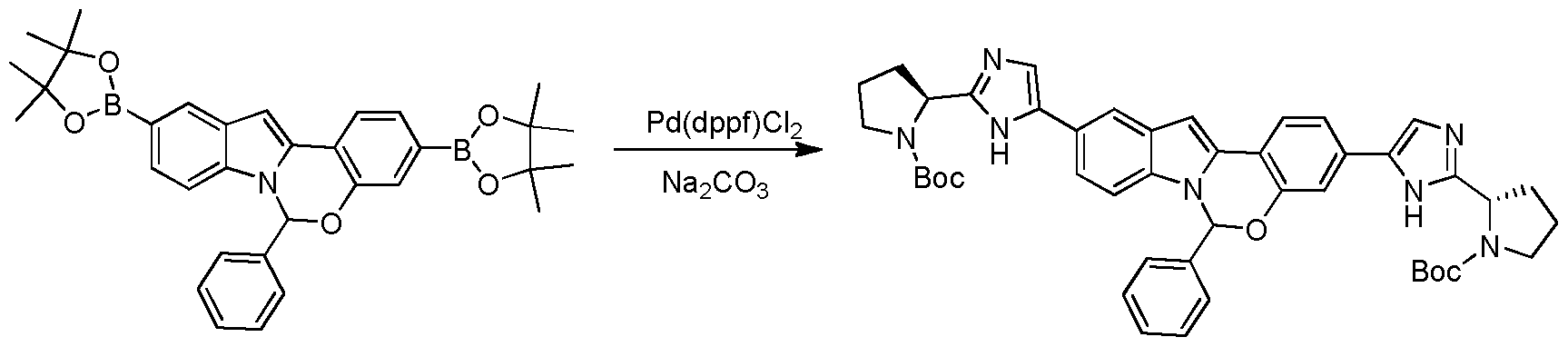
lnt-23b lnt-23c
A suspension of Int-23b (550 mg, 1.0 mmol), tert-butyl 2-(2-bromo-lH- imidazol-5-yl) pyrrolidine- 1-carboxylate (2.4 mmol), Pd(dppf) Cl2 (200 mg), Na2C03 (3 mmol) and in THF/H20 (10: 1, 33 mL) was allowed to stir at reflux for about 15 hours under N2. The reaction mixture was cooled to room temperature and filtered, and the filtrate was washed with water (50 mL) and extracted with EtOAc (100 mL). The organic extract was washed with brine, dried over anhydrous sodium sulfate, filtered and concentrated in vacuo. The resulting residue was purified using column chromatography on silica gel to provide Compound Int-23c (160 mg). MS (ESI) m / e (M+H+): 768.
Preparation of Compound Int-23d

Int-23c (0.10 g, 0.13 mmol) was added to HCl/CH3OH (5 mL, 3M) and the resulting reaction was allowed to stir at room temperature for about 3 hours. The reaction mixture was then concentrated in vacuo to provide Compound Int-23d, which was used without further purification. MS (ESI) m / e (M+H+): 568.
– Preparation of Compound A

To a solution of Int-23d (56.8 mg, 0.10 mmol), (S)-2- (methoxycarbonylamino)-3-methylbutanoic acid (35.0 mg, 0.20 mmol) and DIPEA (0.8 mmol) in CH3CN (1 mL) was added BOP (98 mg, 0.22 mmol). The resulting reaction was allowed to stir at room temperature and monitored using LCMS. After LCMS showed the starting material to be consumed, the reactionmixture was filtered, and the filtrate was purified using HPLC to provide Compound A as a white solid. 1H MR (MeOD): δ 7.94 (s,
1 H), 7.85 (d, J= 8.0 Hz, 1 H), 7.74 (s, 1 H), 7.63 (s, 1 H), 7.48 (s, 1 H), 7.35 – 7.37 (m, 2 H), 7.31 (s, 1 H), 7.17 – 7.18 (m, 4 H), 7.11 (s, 1 H), 6.96 – 6.98 (d, J = 7.6 Hz, 2 H), 5.09 – 5.17
(m, 2 H), 4.13 (t, J= 8.0 Hz, 2 H), 3.99 (bs, 2 H), 3.78 (bs, 2 H), 3.56 (s, 6 H), 2.44 – 2.47 (m,
2 H), 1.92 – 2.19 (m, 8 H), 0.77 – 0.85 (m, 12 H). MS (ESI) m / e (M+H+): 882.
The diastereomers were separated on a chiral SFC column: Isomer A: 1H NMR (MeOD): δ 8.08 (s, 1H), 7.91 – 7.93 (m, 1 H), 7.72 (s, 1 H), 7.56 (s, 1 H), 7.24 – 7.43 (m, 7 H), 7.19 (s, 1 H), 7.03 – 7.05 (m, 2 H), 5.16 – 5.24 (m, 2 H), 3.81 – 4.21 (m, 6 H), 3.62 (s, 6 H), 2.52 – 2.54 (m, 2 H), 2.00 – 2.25 (m, 8 H), 0.84 – 0.91 (m, 12 H). MS (ESI) m/z (M+H)+: 882.
Isomer B: 1H NMR (MeOD): δ 7.90 (s, 1 H), 7.81 – 7.83 (m, 1 H), 7.72 (s, 1 H), 7.62 (s, 1 H), 7.45 (s, 1 H), 7.14 – 7.33 (m, 6 H), 7.09 (s, 1 H), 6.93 – 6.95 (m, 2 H), 5.06 – 5.14 (m, 2 H), 3.71 – 4.11 (m, 6 H), 3.52 (s, 6 H), 2.41 – 2.44 (m, 2 H), 1.90 – 2.15 (m, 8 H), 0.74 – 0.86 (m, 12 H). MS (ESI) m/z (M+H)+: 882.

……………………..
Discovery of MK-8742: An HCV NS5A inhibitor with broad genotype activity
ChemMedChem 2013, 8(12): 1930
http://onlinelibrary.wiley.com/doi/10.1002/cmdc.201300343/abstract
The NS5A protein plays a critical role in the replication of HCV and has been the focus of numerous research efforts over the past few years. NS5A inhibitors have shown impressive in vitro potency profiles in HCV replicon assays, making them attractive components for inclusion in all oral combination regimens. Early work in the NS5A arena led to the discovery of our first clinical candidate, MK-4882 [2-((S)-pyrrolidin-2-yl)-5-(2-(4-(5-((S)-pyrrolidin-2-yl)-1H-imidazol-2-yl)phenyl)benzofuran-5-yl)-1H-imidazole]. While preclinical proof-of-concept studies in HCV-infected chimpanzees harboring chronic genotype 1 infections resulted in significant decreases in viral load after both single- and multiple-dose treatments, viral breakthrough proved to be a concern, thus necessitating the development of compounds with increased potency against a number of genotypes and NS5A resistance mutations. Modification of the MK-4882 core scaffold by introduction of a cyclic constraint afforded a series of tetracyclic inhibitors, which showed improved virologic profiles. Herein we describe the research efforts that led to the discovery of MK-8742, a tetracyclic indole-based NS5A inhibitor, which is currently in phase 2b clinical trials as part of an all-oral, interferon-free regimen for the treatment of HCV infection.

see
Journal of Medicinal Chemistry (2014), 57(5), 1643-1672.
Want to know everything on vir series
click
http://drugsynthesisint.blogspot.in/p/vir-series-hep-c-virus-22.html
AND
http://medcheminternational.blogspot.in/p/vir-series-hep-c-virus.html
| WO2010111483A1 * | Mar 25, 2010 | Sep 30, 2010 | Merck Sharp & Dohme Corp. | Inhibitors of hepatitis c virus replication |
| US20070049593 * | Feb 23, 2005 | Mar 1, 2007 | Japan Tobacco Inc. | Tetracyclic fused heterocyclic compound and use thereof as HCV polymerase inhibitor |
CDRI planning to launch Phase-1 trials on 2 candidate drugs to fight malaria, diabetes

CDRI LUCKNOW INDIA
http://www.cdriindia.org/home.asp
CDRI planning to launch Phase-1 trials on 2 candidate drugs to fight malaria, diabetes
pharmabiz.com
The Central Drug Research Institute (CDRI), the public sector premier institution for drug discovery, will soon start Phase 1 clinical trials of a candidate …
Joseph Alexander, New Delhi
Monday, April 14, 2014, 08:00 Hrs [IST]
The Central Drug Research Institute (CDRI), the public sector premier institution for drug discovery, will soon start Phase 1 clinical trials of a candidate drug against malaria and another one to fight diabetes.
The institute has developed and licensed the anti-hyperglycemic candidate drug (CDR134F194) to TVC Sky Shop Ltd., Mumbai. The process of formulation of the drug in a GMP certified company is in progress. The single dose and multi-dose Phase- I clinical trial will be initiated soon at KEM Hospital & Seth GS Medical College in Mumbai. The permission for the trials was already given by the Drugs Controller General of India (DCGI), sources said.
Another candidate drug developed by the CDRI and waiting for the trials is in the therapeutic area of malaria. The single dose pharmacokinetic study in healthy volunteers as per revised protocol approved by DCGI was completed at PGIMER, Chandigarh for the CDRI compound 97/78 (Anti-malarial agent). A total of 16 volunteers completed the trial. The blood samples were analysed inthe Pharmacokinetics & Metabolism division and the final report on single dose pharmacokinetic study submitted to IPCA, Mumbai.
http://www.pharmabiz.com/NewsDetails.aspx?aid=81386&sid=1
DAREXABAN, TANEXABAN

DAREXABAN , TANEXABAN
N-(3-Hydroxy-2-{[4-(4-methyl-1,4-diazepan-1-yl)benzoyl]amino}phenyl)-4-methoxybenzamide
365462-23-3 , 365462-24-4 (maleate)
Darexaban (YM150) is a direct inhibitor of factor Xa created by Astellas Pharma.[1] It is an experimental drug that acts as ananticoagulant and antithrombotic to prevent venous thromboembolism after a major orthopaedic surgery, stroke in patients with atrial fibrillation[2] and possibly ischemic events in acute coronary syndrome.[3] It is used in form of the maleate. The development of darexaban was discontinued in September 2011.

Factor Xa
Factor Xa (FXa) is an essential blood coagulation factor[2] that is responsible for the initiation of the coagulation cascade. FXa cleaves prothrombin to its active form thrombin, which then acts to convert soluble fibrinogen to insoluble fibrin and to activateplatelets. Stabilization of the platelet aggregation by fibrin mesh ultimately leads to clot formation.[4]
Metabolism
Darexaban is rapidly absorbed and extensively metabolized in the liver to its active metabolite, darexaban glucuronide (YM-222714) during first pass metabolism via glucuronidation.[5] The metabolism of darexaban also occurs in the small intestine but to a much lesser extent.[2] Glucuronidation of darexaban occurs quickly, thus the half life of darexaban itself is short. However, the resultant darexaban glucuronide metabolite has a long half life of approximately 14-18 hours, reaching its maximum levels in the blood 1-1.5 hour post dose.[2] As a result, darexaban glucuronide is the main determinant of the antithrombotic effects.[3] Darexaban shows minimal interaction with food and is excreted through the kidneys (urine) and feces.[6]
Mechanism of action
Darexaban and darexaban glucuronide selectively and competitively inhibit FXa, suppressing prothrombin activity at the sites of blood clot (thrombus) formation. This leads to a decrease in blood clot formation in a dose dependent manner.[2] Reducing blood clot formation will decrease blood flow blockages, thus possibly lowering the risk of myocardial infarction, unstable angina, venous thrombosis, and ischemic stroke.[7]
Clinical uses
Atrial fibrillation
Atrial fibrillation is an abnormal heart rhythm that causes a reduction in the cardiac output and blood flow to the brain. It also promotes the formation of blood clots in the atria.[4]Atrial fibrillation is associated with an increased risk of embolic stroke due to the increased risk of blood clot development.[8] Oral anticoagulant drugs such as Darexaban decrease the incidence and severity of stroke in patients with atrial fibrillation by preventing the formation of blood clots.[9]
Contraindictions
The RUBY-1 phase II trial results show that oral administration of darexaban in combination with the standard dual antiplatelet therapy used for ACS patients caused a two- to four-fold increase in bleeding rates and no effect on ACS.[6] Though there were no cases of fatal bleeding or intracranial haemorrhage, the results of this study questions the concept of adding an oral anticoagulant to standard of care dual antiplatelet therapy in order to prevent recurrent ischemic events after ACS. The developpement of darexaban was discontinued in september 2011.
References
- Eriksson, B., et al. “A dose escalation study of YM150, an oral direct factor Xa inhibitor, in the prevention of venous thromboembolism in elective primary hip replacement surgery.” Journal of Thrombosis and Haemostasis (2007): 1660-1665
- Yoshiyuki, I., et al. “Biochemical and pharmalogical profile of darexaban, an oral direct Xa inhibitor.” European Journal of Pharmacology (2011): 49-55
- Toshifumi, S., et al. “Identification of UDP-Glucuronosyltransferases Responsible for the Glucuronidation of Darexaban, an Oral Factor Xa Inhibitor, in Human Liver anD Intestine.” The American Society for Pharmacology and Experimental Therapeutics (2011): 278-282
- Katsung, B., S. Masters and A. Trevor. Basic and Clinical Pharmacology 11th Edition. United States of America: McGraw-Hill, 2009
- Turpie, A., et al. “Prevention of venous thromboembolism with an oral factor Xa inhibitor, YM150, after total hip arthoplasty. A dose finding study (ONYX-2).” Journal of Thrombosis and Haemostasis (2010): 714-721
- Steg, PG; Mehta, SR; Jukema, JW; Lip, GY; Gibson, CM; Kovar, F; Kala, P; Garcia-Hernandez, A; Renfurm, RW; Granger, CB; Ruby-1, Investigators (2011). “RUBY-1: A randomized, double-blind, placebo-controlled trial of the safety and tolerability of the novel oral factor Xa inhibitor darexaban (YM150) following acute coronary syndrome”.European heart journal 32 (20): 2541–54. doi:10.1093/eurheartj/ehr334.PMC 3295208. PMID 21878434.
- Hirayama, F., et al. “Discovery of N-[2-Hydroxy-6-(4-methoxybenamido)phenyl]-4-(4-methyl-1,4-diazepan-1-yl)benzamide (Darexaban, YM150) as a Potent and Orally Available Factor Xa Inhibitor.” Journal of Medicinal Chemistry (2011): 8051-8065
- Zhong, Y., et al. “Atrial Fibrillation as a Risk Factor for Stroke: A Retrospective Cohort Study of Hospitalized Medicare Beneficiaries.” American Journal of Public Health (1998): 395-400
- Hylek, E., et al. “Effect of intesity of oral anticoagulation on stroke severity and mortality in atrial fibrillation.” The New England Journal of Medicine (2003): 1019-26
|
6-11-2010
|
PHARMACEUTICAL COMPOSITION FOR ORAL ADMINISTRATION
|
|
|
12-12-2007
|
Diazepan derivatives or salts thereof
|
|
|
11-5-2003
|
Diazepan derivatives or salts thereof
|
Barley Grass Inhibits 73% of Leukemia Cells in Vitro

Barley Grass Inhibits 73% of Leukemia Cells in Vitro: An extract of green barley grass (Hordeum vlgare L.) powder was shown to inhibit the proliferation of human leukemia cells (Nalm-6) by up to 73% in vitro, and killed 62% of the cancer cells outright via apoptosis and necrosis.
The barley grass extract also potently inhibited three other types of leukemia cells, while leaving healthy non-cancerous cells alone. What’s really interesting with this study is that the extract was prepared from a common green barley powder supplement which was purchased at an online supplement retailer in the USA. This was the first-ever study to show the anti-leukemia activity of green barley.
Barley contains several unique compounds with potent anti-cancer effects such as the peptide lunacin, immune-stimulating glucans, and ribosome inactivating protein conjugates. Past studies have shown mature barley to be active against melanoma and cancers of the breast, skin, colon, liver, and lung. While mature barley contains gluten (albeit less than wheat), barley grass should be gluten-free if harvested before any seeds are produced.
And since younger plants often contain much higher concentrations of healthy phytochemicals and enzymes than the mature versions, barley grass might be a highly beneficial superfood for reducing cancer risk and supporting overall health.
http://www.ncbi.nlm.nih.gov/pubmed/24039967

Abstract 10693: Identification of Lunasin as the Active Component in Soy Protein Responsible for Reducing LDL Cholesterol and Risk of Cardiovascular Disease by Alfredo F Galvez, Missouri Plant Science Center, Mexico, MO
In the above referenced report, published by the American Heart Association, Dr Galvez notes that the FDA had originally approved the health claim that soy reduced LDL cholesterol and CVD risk, and then recinded part of that claim. The confusion, he notes, came from the lack of understanding at the time about what in the soy created the benefits the original research had shown. In the intervening years, he and his team had tested the hypothesis that the lunasin peptide was the active component in soy protein responsible for lowering LDL cholesterol.
What he found was that lunasin lowers LDL cholesterol levels by stopping the gene responsible from being active – it covers it over, and opens the genes that cover cholesterol management in the liver that had gotten covered by environmental and lifestyle-induced damage.
The lunasin soy peptide binds specifically to histone H3 and inhibits H3-Lysine 14 acetylation by PCAF histone acetylase enzyme. Transcriptional activation of HMG Co-A reductase, the rate-limiting enzyme for cholesterol biosynthesis requires the specific acetylation of histone H3 by PCAF. By inhibiting PCAF acetylation of H3-Lysine 14, lunasin was show to significantly reduce HMG Co-A reductase expression in HepG2 liver cells grown in cholesterol-free media. Westerns and RT-PCR experiments also revealed that the presence of lunasin increases LDL receptor expression, which can be attributed to the coordinate increase in expression of SP1 co-transcriptional activator.
Based on these results, his team found a way to extract the active lunasin from the rest of the soy. This lunasin-enriched soy extract (LSE) contained 100-200 fold more bioactive lunasin than soy protein isolates. Then they tested the LSE pigs bred to have high LDL cholesterol due to mutations in their LDL receptor genes. The pigs were fed casein-based diets and after two weeks their casein diet was supplemented with 250 mg LSE everyday for eight weeks. Results showed that casein diet increased LDL cholesterol levels in the LDL-R mutant pigs by an average of 6.7%. The addition of 250 mg of LES in casein diet reduced LDL cholesterol by 8.6% and and 6.4% after 4 and 8 weeks of treatment, respectively.
These results prove that lunasin is the active nutrient in soy protein responsible for LDL cholesterol lowering and its mechanism of action is by reducing cholesterol biosynthesis in the liver.


 New Drug Approvals