
Home » 2013 (Page 9)
Yearly Archives: 2013
 DRUG APPROVALS BY DR ANTHONY MELVIN CRASTO
.....FOR BLOG HOME CLICK HERE
DRUG APPROVALS BY DR ANTHONY MELVIN CRASTO
.....FOR BLOG HOME CLICK HEREFlag and hits
ORGANIC SPECTROSCOPY

SUBSCRIBE

 Subscribe in a reader
Enter your email address:
Delivered by FeedBurner
Subscribe to New Drug Approvals by Email


Recent Comments
 | shivkr2 on SPSR Excellence Award 2025 – S… |
 | Bonkasaurus on Infigratinib phosphate |
 | PALOVAROTENE | ORGAN… on Palovarotene |
| Pfizer just purchase… on Temanogrel | |
| Pfizer To Cash In On… on Temanogrel |
Farletuzumab

Farletuzumab
Farletuzumab (MORAb-003) is a monoclonal antibody[1] which is being investigated for the treatment of ovarian cancer.[2][3]
This drug was developed by Morphotek, Inc.
It is targeted at FR-alpha which is overexpressed in some cancers such as ovarian cancer.
USAN FARLETUZUMAB
PRONUNCIATION far” le tooz’ oo mab
THERAPEUTIC CLAIM Treatment of cancer
CHEMICAL NAMES
1. Immunoglobulin G1, anti-(human receptor FR-α (folate receptor α)) (human-mouse monoclonal MORAb-003 heavy chain), disulfide with human-mouse monoclonal MORAb-003 κ-chain, dimer
2. Immunoglobulin G1, anti-(human folate receptor alpha (ovarian tumor-associated antigen Mov18)); humanized mouse monoclonal MORAb-003 γ1 heavy chain (222-217′)-disulfide with humanized mouse monoclonal MORAb-003 κ light chain (228-228”:231-231”)-bisdisulfide dimer
MOLECULAR FORMULA C6466H9928N1716O2020S42
MOLECULAR WEIGHT 145.4 kDa
MANUFACTURER Morphotek, Inc.
CODE DESIGNATION MORAb-003
CAS REGISTRY NUMBER 896723-44-7
Farletuzumab, a humanized monoclonal antibody that targets the folate receptor alpha (FRα), could potentially be used in the treatment of patients with relapsed ovarian cancer, according to the results of a recent open-label phase II trial.Armstrong and colleagues investigated the efficacy of farletuzumab as a single agent or in combination with standard chemotherapy in patients with relapsed ovarian cancer following first-line therapy.

Farletuzumab is a humanized IgG1 monoclonal antibody that targets
the human folate receptor FRα, which is overexpressed in most ovarian
epithelial cancers. It is being developed by Morphotek (now part of
Eisai) for the treatment of ovarian cancer, with regulatory submissions
in 2012.
The pivotal Phase III study in ovarian cancer began
in March 2009; Phase II studies in other indications have since begun.
The 900-patient Phase III study is evaluating two doses of
farletuzumab as an add-on to the standard treatment regimen of
carboplatin and a taxane; this study is completed in
September 2012. A 165-patient study in lung adenocarcinoma began in
December 2010. The initial Phase I study in 25 patients with epithelial
ovarian cancers showed farletuzumab to be well tolerated, with evidence
of efficacy in 36% of the patients (Konner et al. 2010).22
Phase II data from a 54-patient study were presented at the 2008 ASCO meeting, with at least some evidence of efficacy seen in 90% of the treated patients.
Farletuzumab represents one of a number of new treatment options
being developed for the treatment of ovarian cancer, with several other
modalities such as kinase inhibition or PARP inhibition also showing
promise. However, the available evidence suggests that farletuzumab
is likely to represent a significant enhancement in the subset of ovarian
cancer patients at which it has been targeted. If it becomes widely
accepted as a component of the platinum-based treatment regimen, then
it can be expected to be a significant commercial success.
- Statement On A Nonproprietary Name Adopted By The Usan Council – Farletuzumab, American Medical Association.
- ClinicalTrials.gov: Phase II Efficacy and Safety Study of MORAb-003 in Platinum-Resistant or Refractory Relapsed Ovarian Cancer
- ClinicalTrials.gov: Phase III Efficacy and Safety of MORAb-003 in Subjects With Platinum-sensitive Ovarian Cancer in First Relapse
…………………
Traxoprodil mesylate

Traxoprodil mesylate
MF:C23-H35-N-O2.C-H4-O3-S
MW:453.6401
CAS:189894-57-3 mesylate
134234-12-1 (free base)
Traxoprodil mesylate, CP-101606-27,
(S, S) -1 – (4-Hydroxyphenyl) -2 – [4-hydroxy-4-phenylpiperidin-1-yl)-1-propanol methanesulfonate trihydrate

this exhibits activity as NMDA (N-methyl-D-aspartic acid) receptor antagonists and are useful in the treatment of epilepsy, anxiety, cerebral ischemia, muscular spasms, multiinfarct dementia, traumatic brain injury, pain, AIDS related dementia, hypoglycemia, migraine, amyotrophic lateral sclerosis, drug and alcohol addiction, drug and alcohol withdrawal symptoms, psychotic conditions, urinary incontinence and degenerative CNS (central nervous system) disorders such as stroke, Alzheimer’s disease, Parkinson’s disease and Huntington’s disease.
The free base, the anhydrous mesylate and methods of preparing them are referred to, generically, in United States Patent 5,185,343, which issued on February 9, 1993. They and their use in treating certain of the above disorders are referred to, specifically, in United States Patent 5,272,160, which issued on December 21 , 1993. Their use in treating the above disorders is referred to in lntemational Patent Application PCT/IB 95/00380, which designates the United States and was filed on May 18, 1995. Their use in combination with a compound capable of enhancing and thus restoring the balance of excitatory feedback from the ventral lateral nucleus of the thalamus into the cortex to treat Parkinson’s disease is referred to in International Patent Application PCT/IB 95/00398, which designates the United States and was filed on May 26, 1995. The foregoing U.S. patents and patent applications are incoφorated herein by reference in their entireties.
NMDA is an excitatory amino acid. The excitatory amino acids are an important group of neurotransmitters that mediate excitatory neurotransmission in the central nervous system. Glutamic acid and aspartic acid are two endogenous ligands that activate excitatory amino acid (EAA) receptors. There are two types of EAA receptors, ionotropic and metabotropic, which differ in their mode of signal transduction. There are at least three distinct ionotropic EAA receptors characterized by the selective agonist that activates each type: the NMDA, the AMPA (2-amino-3-(5-methyl-3- hdyroxyisoxazol-4-yl)propanoic acid) and the kainic acid receptors. The ionotropic EAA receptors are linked to ion channels that are permeable to sodium and, in the case of NMDA receptors, calcium. Metabotropic receptors, linked to phosphoinositide hydrolysis by a membrane associated G-protein, are activated by quisqualic acid, ibotenic acid, and (1S, 3R)-1-aminocyclopentane 1 ,3-dicarboxyiic acid.
The NMDA receptor is a macromolecular complex consisting of a number of distinct binding sites that gate on ion channels permeable to sodium and calcium ions. Hansen and Krogsgaard-Larson, Med. Res. Rev.. .10, 55-94 (1990). There are binding sites for glutamic acid, glycine, and polyamines, and a site inside the ion channel where compounds such as phencyclidine (PCP) exert their antagonist effects.
Competitive NMDA antagonists are compounds that block the NMDA receptor by interacting with the glutamate binding site. The ability of a particular compound to competitively bind to the NMDA glutamate receptor may be determined using a radioligand binding assay, as described by Murphy e l., British J. Pharmacol.. 95, 932- 938 (1988). The antagonists may be distinguished from the agonists using a rat cortical wedge assay, as described by Harrison and Simmonds, British J. Pharmacol.. 84, 381- 391 (1984). Examples of competitive NMDA antagonists include D-2 amino 5- phosphonopentanoic acid (D-AP5), and D-2-amino-7-phosphonoheptanoic acid, Schoepp et a]. , J. Neur. Transm.. 85, 131-143 (1991).

4-Hydroxypropiophenone (I) was protected as the triisopropylsilyl ether (II) and subsequently brominated with elemental bromine in CCl4. The resultant bromo ketone (III) was subsequently coupled with 4-hydroxy-4-phenylpiperidine (IV) to afford the racemic amino ketone (V). This was stereoselectively reduced with NaBH4 in EtOH yielding the threo-amino alcohol (VI). Then, desilylation of (VI) with tetrabutylammonium fluoride furnished the racemic phenol compound. Resolution into the enantiomers has been reported by formation of the . corresponding D-tartaric acid salts Finally, the title product was obtained by dissolving D-(-)-tartaric salt (VII) in water in the presence of methanesulfonic acid
EXAMPLE 1 Enantiomeric (1S,2S)- and (1R,2R)-1-(4-Hydroxyphenyl)-2-(4-hydroxy-4-phenylpiperidin-1-yl)-1-propanols
(+)-Tartaric acid (300 mg, 2 mmol) was dissolved in 30 mL warm methanol. Racemic 1S*,2S*-1-(4-hydroxyphenyl)-2-(4-hydroxy-4-phenylpiperidin-1-yl)-1-propanol (655 mg, 2 mmol) was added all at once. With stirring and gentle warming a colorless homogeneous solution was obtained. Upon standing at ambient temperature 24 hours, 319 mg (66%) of a fluffy white precipitate was obtained. This product was recrystallized from methanol to give 263 mg of the (+)-tartrate salt of levorotatory title product as a white solid; mp 206.5-207.5.degree. C.; [alpha].sub.D =-36.2.degree.. This salt (115 mg) was added to 50 mL of saturated NaHCO.sub.3. Ethyl acetate (5 mL) was added and the mixture was vigorously stirred 30 minutes. The aqueous phase was repeatedly extracted with ethyl acetate. The organic layers were combined and washed with brine, dried over calcium sulfate, and concentrated. The tan residue was recrystallized from ethyl acetate-hexane to give 32 mg (39%) of white, levorotatory title product; mp 203-204 C.sub.20 H.sub.25 NO.sub.3 : C, 73.37; H, 7.70; N. 4.28. Found: C, 72.61; H, 7.45; N. 4.21.
The filtrate from the (+)-tartrate salt preparation above was treated with 100 mL saturated aqueous NaHCO.sub.3 and extracted well with ethyl acetate. The combined organic extracts were washed with brine, dried over calcium sulfate and concentrated to give 380 mg of recovered starting material (partially resolved). This material was treated with (-)-tartaric acid (174 mg) in 30 mL of methanol as above. After standing for 24 hours, filtration gave 320 mg (66%) of product which was further recrystallized from methanol to produce 239 mg of the (-)-tartrate salt of dextrorotatory title product; mp 206.5-207.5.degree. C. [alpha].sub.D =+33.9.degree.. The latter was converted to dextrorotatory title product in the manner above in 49% yield; mp 204-205 Found: C, 72.94; H. 7.64; N, 4.24.
EXAMPLE 2 (1S,2S)-1-(4-hydroxyphenyl)-2-(4-hydroxy-4-phenylpiperidin-yl)-1-propanol Methanesulfonate Trihydrate
STEP 1

A 50 gallon glass lined reactor was charged with 17.1 gallons of acetone, 8.65 kilograms (kg) (57.7 mol) of 4′-hydroxypropiophenone, 9.95 kg (72.0 mol) of potassium carbonate and 6.8 liters (l) (57.7 mol) of benzylbromide. The mixture was heated to reflux (56 hours. Analysis of thin layer chromatography (TLC) revealed that the reaction was essentially complete. The suspension was atmospherically concentrated to a volume of 10 gallons and 17.1 gallons of water were charged. The suspension was granulated at 25 product was filtered on a 30″ Lapp and washed with 4.6 gallons of water followed by a mixture of 6.9 gallons of hexane and 2.3 gallons of isopropanol. After vacuum drying at 45 (96.4%) of the above-depicted product.
A second run was carried out with 9.8 kg (65.25 mol) of 4′-hydroxypropiophenone using the procedure described above. After drying 15.1 kg (96.3%) of the above-depicted product was obtained.
STEP 2

Under a nitrogen atmosphere, a 100 gallon glass lined reactor was charged with 75 gallons of methylene chloride and 28.2 kg (117.5 mol) of the product from step 1. The solution was stirred five minutes and then 18.8 kg of bromine was charged. The reaction was stirred for 0.5 hours at 22 complete. To the solution was charged 37 gallons of water and the mixture was stirred for 15 minutes. The methylene chloride was separated and washed with 18.5 gallons of saturated aqueous sodium bicarbonate. The methylene chloride was separated, atmospherically concentrated to a volume of 40 gallons and 60 gallons of isopropanol was charged. The concentration was continued until a pot temperature of 80 40 gallons were obtained. The suspension was cooled to 20 granulated for 18 hours. The product was filtered on a 30″ Lapp and washed with 10 gallons of isopropanol. After vacuum drying at 45 yielded 29.1 kg (77.6%) of the above-depicted product.
STEP 3

Under a nitrogen atmosphere, a 20 gallon glass lined reactor was charged with 4.90 kg (15.3 mol) of the product from step 2, 7.0 gallons of ethyl acetate, 2.70 kg (15.3 mol) of 4-hydroxy-4-phenylpiperidine and 1.54 kg of triethylamine (15.3 mol). The solution was heated to reflux (77 C.) for 18 hours. The resulting suspension was cooled to 20 Analysis by TLC revealed that the reaction was essentially complete. The byproduct (triethylamine hydrobromide salt) was filtered on a 30″ Lapp and washed with 4 gallons of ethyl acetate. The filtrate was concentrated under vacuum to a volume of 17 liters. The concentrate was charged to 48 liters of hexane and the resulting suspension granulated for 2 hours at 20 gallons of hexane. After vacuum drying at 50 kg (77%) of the above-depicted product.
A second run was carried out with 3.6 kg (11.3 mol) of the product from step 2 using the procedure described above. After drying 4.1 kg (87%) of the above-depicted product was obtained.
STEP 4

Under a nitrogen atmosphere, a 100 gallon glass lined reactor was charged with 87.0 gallons of 2B ethanol and 1.7 kg (45.2 mol) of sodium borohydride. The resulting solution was stirred at 25 kg (22.6 mol) of the product from step 3 was charged. The suspension was stirred for 18 hours at 25-30 reaction was essentially complete to the desired threo diastereoisomer. To the suspension was charged 7.8 liters of water. The suspension was concentrated under vacuum to a volume of 40 gallons. After granulating for 1 hour, the product was filtered on a 30″ Lapp and washed with 2 gallons of 2B ethanol. The wet product, 9.4 gallons of 2B-ethanol and 8.7 gallons of water were charged to a 100 gallon glass lined reactor. The suspension was stirred at reflux (78 cooled to 25 water followed by 4 gallons of 2B ethanol. After air drying at 50 C., this yielded 8.2 kg (86.5%) of the above-depicted product. This material was recrystallized in the following manner.
A 100 gallon glass lined reactor was charged with 7.9 kg (18.9 mol) of the product from step 3, 20 gallons of 2B ethanol and 4 gallons of acetone. The suspension was heated to 70 solution was concentrated atmospherically to a volume of 15 gallons. The suspension was cooled to 25 product was filtered on a 30″ Lapp. The wet product and 11.7 gallons of 2B ethanol was charged to a 100 gallon glass lined reactor. The suspension was heated to reflux (78 cooled to 25 of 2B ethanol. After air drying at 50 (70.6%) of the above-depicted product.
STEP 5

Under a nitrogen atmosphere, a 50 gallon glass lined reactor was charged with 825 g of 10% palladium on carbon (50% water wet), 5.5 kg (13.2 mol) of the product from step 4 and 15.5 gallons of tetrahydrofuran (THF). The mixture was hydrogenated between 40-50 time, analysis by TLC revealed that the reduction was essentially complete. The reaction was filtered through a 14″ sparkler precoated with Celite and washed with 8 gallons of THF. The filtrate was transferred to a clean 100 gallon glass lined reactor, vacuum concentrated to a volume of 7 gallons and 21 gallons of ethyl acetate were charged. The suspension was atmospherically concentrated to a volume of 10 gallons and a pot temperature of 72 filtered on a 30″ Lapp and washed with 2 gallons of ethyl acetate. After air drying at 55 above-depicted product (i.e., the free base).
STEP 6

A 100 gallon glass lined reactor was charged with 20 gallons of methanol and 3.7 kg (11.4 mol) of the product from step 5 (i.e., the free base). The suspension was heated to 60 D-(-)-tartaric acid were charged. The resulting solution was heated to reflux (65 suspension was cooled to 35 with 1 gallon of methanol. The wet solids were charged to a 100 gallon glass lined reactor with 10 gallons of methanol. The suspension was stirred for 18 hours at 25 Lapp and washed with 2 gallons of methanol. After air drying at 50 C. this yielded 2.7 kg (101%) of the above-depicted product (i.e., the tartaric acid salt of the free base (R-(+)-enantiomer)). This material was purified in the following manner:
A 100 gallon glass lined reactor was charged with 10.6 gallons of methanol and 2.67 kg (5.6 mol) of the above tartaric acid salt. The suspension was heated to reflux (80 to 30 methanol. After air drying at 50 of the above-depicted product (i.e., the tartaric acid salt of the free base).
STEP 7

•Tar tar i c Rc i d
A 55 liter nalgene tub was charged with 30 liters of water and 1056 g (12.6 mol) of sodium bicarbonate at 20 charged 2.0 kg (4.2 mol) of the product from step 6 (i.e., the tartaric acid salt of the free base). The suspension was stirred for 4 hours during which a great deal foaming occurred. After the foaming ceased, the suspension was filtered on a 32 cm funnel and washed with 1 gallon of water. After air drying at 50 the above-depicted product (i.e., the free base).
STEP 8

A 22 liter flask was charged with 1277 g (3.9 mol) of product from step 7 and 14 liters of water. The suspension was warmed to 30 g (3.9 mol) of methane sulfonic acid were charged. The resulting solution was warmed to 60 washed with 2 liters of water. The speck-free filtrate was concentrated under vacuum to a volume of 6 liters. The suspension was cooled to 0-5 18″ filter funnel and washed with 635 ml of speck-free water. After air drying at 25 above-depicted product (i.e., the mesylate salt trihydrate).
Proton and Carbon Nuclear Magnetic Resonance (NMR) Spectra of the Mesylate Salt Trihydrate
The proton and carbon NMR spectra of the mesylate salt trihydrate are described below. Chemical shift assignments in CD3OD (relative to tetramethylsilane (TMS) were made on the basis of ‘HJH Correlated Spectroscopy (COSY), ‘H-‘O Distortionless Enhancement by Polarization Transfer (DEPT), and ‘HJ’C Heteronuclear Chemical Shift Correlation (HETCOR) two-dimensional NMR experiments. The tentative proton and carbon peak assignments are given below and are consistent with the structure of the mesylate salt trihydrate. III

assignment, 13 C (δ, ppm),   Protons,  1 H (δ, ppm)
4'          159.2            0         --
1"'         148.2            0         --
1'          132.6            0         --
2'          129.8            2         7.30 (m)
3"'         129.5  m         2         7.38 (t)
4"'         128.4            1         7.30 (m)
2"'         125.6            2         7.56 (d)
3'          116.5            2         6.84 (d)
1           73.5             1         4.66 (d)
4"          69.8             0         --
2           68.3             1         3.58 (m)
6"(1)       48.8             2         3.32 (d),3.72(t)
2"(1)       43.2             2         3.58 (m)
4           39.5             3         2.70 (s)
5"(2)       36.6             2         2.64 (t),1.98(d)
3"(2)       36.5             2         2.42 (t),1.98(d)
3           9.7              3         1.12(d)
(1) The 6″ and 2″ positions are not chemically equivalent; the assignments may be interchangeable. (2) The 5″ and 3″ positions are not chemically equivalent the assignments may be interchangeable. The proton splitting pattem at 1.96-2.06 ppm appears as two doublets when acquired on a high-field instrument (500 MHz), but only as a triplet when acquired with a lower field (300 MHz) instrument. This is believed to be due to a salt effect arising from the mesylate.
FDA Breakthrough Therapy Designation: Third Drug Receives FDA Approval

The FDA approves on December 6, the third drug to have the coveted Breakthrough Therapy Designation (BTD). The approval is for Gilead Sciences’ non-orphan drug Sovaldi (Sofosbuvir) for the treatment of patients with chronic Hepatitis C (HCV). What is a “breakthrough” about this approval is the fact that Sovaldi is the first drug that safely and with efficacy, treats particular types of HCV without the need for co-administration of Interferon.
Per Gilead Sciences’ Press Release, approximately 4 million Americans are infected with HCV in the United States. The current standard of care for HCV is up to 48 weeks with a pegylated interferon (peg-IFN)/ribavirin (RBV)-containing regimen, depending on the patient’s particular HCV genotype. Sovaldi is a once-daily oral nucleotide analog polymerase inhibitor receiving approval for chronic HCV as a part of a combination antiviral treatment regimen. The drug blocks a protein used by HCV to replicate.
According to a Reuters online article, most patients will be…
View original post 396 more words
Iloperidone (Fanapt)

Iloperidone (Fanapt), ILO-522, HP-873, Zomaril, 133454-47-4, antipsychotic
1-[4-[3-[4-(6-Fluoro-1,2-benzisoxazol-3-yl)-1-piperidinyl]propoxy]-3-methoxyphenyl]ethanone; 1-[3-(4-Acetyl-2-methoxyphenoxy)propyl]-4-(6-fluoro-1,2-benzisoxazol-3-yl)piperidine; 4′-[3-[4-(6-Fluoro-1,2-benzisoxazol-3-yl)-1-piperidinyl]propoxy]-3′-methoxyacetophenone
Aventis Pharma (Originator), Novartis (Licensee), Titan (Licensee)Vanda Pharmaceuticals (Licensee)
Iloperidone(Fanapt) is a monoamine directed towards acting upon and antagonizing specific neurotransmitters, particularly multiple dopamine and serotonin receptor subtypes.
Schizophrenia is a chronic, severe, and debilitating mental disorder that affects approximately 2.4 million Americans, around 1.1% of the population. The net cost of this disorder is staggering as estimates from 2002 reveal this disorder to cost $62.7 billion. A major issue with the treatment of schizophrenia is that patients show varying levels of response and tolerance to available therapies. Although the symptoms of the disease are very severe, estimates show that approximately 3 out of 4 patients discontinue medication prior to completing 18 months of treatment, many times due to the severe side effects of the approved medications.
Synthesis
J.T. Strupczewski, K.J. Bordeau, Y. Chiang, E.J. Glamkowski, P.G.
Conway, R. Corbett, H.B. Hartman, M.R. Szewczak, C.A. Wilmot andG.C. Helsley, J. Med. Chem., 38, 1119 (1995).
US 4355037
V. Miklos, WO Patent 031497 (2010).
J.T. Strupczewski, EP Patent 0402644 (1990)
The product is protected by the U.S. Pat. No. 5,364,866, U.S. Pat. No. RE 39198 E and EP 402644 B1.U.S. Pat. No. 5,364,866 and U.S. Pat. No. 5,663,449.EP 542136, EP 612318, EP 730452, JP 95501055, JP 97511215, US 5364866, US 5776963, WO 9309102, WO 9511680.US 4355037,EP 0542136; EP 0612318; EP 0730452; EP 0957102; EP 0959075; EP 0959076; EP 0963984; JP 1995501055; JP 1997511215; US 5364866; US 5776963; WO 9309102; WO 9511680
The first reported synthetic method for Iloperidone is described in patent EP 402644 A1.
In U.S. Patent US5776963 and patent family EP4 (^ 644, there is disclosed a method for preparing iloperidone,
The synthetic method reported(4, 5) for 1 involves two chemical steps: O-alkylation of acetovanillone (2) with 1-bromo-3-chloropropane (3) to obtain chloro derivative 4 followed byN-alkylation of piperidine intermediate 5 with 4. The reported process for 4 comprises O-alkylation of 2 with 3 in acetone in the presence of potassium carbonate for 20 h to provide 4as an oil after usual work up, which was then vacuum (0.1 mmHg) distilled to collect desired product 4 at 141–143 °C with around 85% yield (Scheme 1, Path A). Some of the drawbacks of this process are as follows: longer reaction time (around 20 h), formation of 6–7% of dimer impurity (10, Scheme 2), high-vacuum distillation to achieve the quality, which is always a cumbersome process at industrial scale, requiring special apparatus and skill set, and degradation and charring of some portion of product during high-vacuum distillation. Further, the next step comprises N-alkylation of 4 with 5 in N,N-dimethylformamide (DMF) in the presence of potassium carbonate to provide iloperidone (1) as a crude solid, which was purified by crystallization using ethanol to yield pure 1 with 58% yield (Scheme 1, Path A). Some of the lacunae observed with the above process includes the following: (a) low yields, (b) formation of carbamate impurity 13 (Scheme 2) in the range 15–20% due to the use of potassium carbonate, (c) ineffective purification by crystallization using ethanol to eliminate carbamate impurity below 0.15%, and (d) iloperidone obtained by the above synthetic process was beige in color.


The synthetic route is as follows:

The reaction of piperidine-4-carboxylic acid (I) with formic acid and acetic anhydride gives 1-formylpiperidine-4-carboxylic acid (II), which is treated with SOCl2 and acetic anhydride to yield the corresponding acyl chloride (III). The Friedel-Crafts condensation of (III) with refluxing 1,3-difluorobenzene (IV) by means of AlCl3 affords 4-(2,4-difluorobenzoyl)-1-formylpiperidine (V), which is treated with hydroxylamine in refluxing ethanol to give the corresponding oxime (VI). The cyclization of (VI) by means of NaH in hot THF/DMF yields 6-fluoro-3-(1-formylpiperidin-4-yl)-1,2-benzisoxazole (VII), which is treated with HCl in refluxing ethanol to afford 6-fluoro-3-(4-piperidyl)-1,2-benzisoxazole (VIII). Finally, this compound is condensed with 4-(3-chloropropoxy)-3-methoxyacetophenone (IX) by means of K2CO3 in hot DMF. The intermediate 4-(3-chloropropoxy)-3-methoxyacetophenone (IX) can be obtained by condensation of 4-hydroxy-3-methoxyacetophenone (IX) with 3-chcloropropyl bromide (X) by means of NaH or K2CO3 in DMF.

Iloperidone, also known as Fanapt, Fanapta, and previously known as Zomaril, is an atypical antipsychotic for the treatment ofschizophrenia.
Accordingly, 6-fluoro-3-(4-piperidyl)-1,2-benzoxazole 1 and 1-[4-(3-chloropropoxy)-3-methoxy-phenyl]ethanone 2 were heated in presence of potassium carbonate using dimethylformamide solvent to afford 1-[4-[3-[4-(6-fluoro-1,2-benzoxazol-3-yl)-1-piperidyl]propoxy]-3-methoxy-phenyl]ethanone also called Iloperidone
It was approved by the U.S. Food and Drug Administration (FDA) for use in the United States on May 6, 2009.
It’s not yet approved in India.
Hoechst Marion Roussel Inc. made initial inquiries into the drug; however, in May 1996, they discontinued research, and in June 1997 gave research rights to Titan Pharmaceuticals. Titan then handed over worldwide development, manufacturing and marketing rights to Novartis in August 1998. On June 9, 2004, Titan Pharmaceuticals announced that the Phase III development rights have been acquired by Vanda Pharmaceuticals. The original launch date was scheduled for 2002. On November 27, 2007, Vanda Pharmaceuticals announced that the U.S. Food and Drug Administration (FDA) had accepted their New Drug Application for iloperidone, confirming the application is ready for FDA review and approval. On July 28, 2008, the FDA issued a “Not Approvable” letter to Vanda Pharmaceuticals concerning the drug, stating that further trials are required before a decision can be made concerning marketed usage of iloperidone.
Chemically designated as 1-[4-[3-[4-(6-fluoro-1,2-benzisoxazol-3-yl)-1-piperidinyl]propoxy]-3-methoxyphenyl]ethanone, is a second generation atypical antipsychotic agent. Iloperidone, also known as Fanapt, Fanapta, and Zomaril, was approved by the U.S. Food and Drug Administration (FDA) for use in the United States on May 6, 2009 and is indicated for the acute treatment of schizophrenia in adults. Iloperidone has been shown to act as an antagonist at all tested receptors. It was found to block the sites of noradrenalin (α2C), dopamine (D2A and D3), and serotonin (5-HT1A and 5-HT6) receptors.(2) In addition, pharmacogenomic studies identified single nucleotide polymorphisms associated with an enhanced response to iloperidone during acute treatment of schizophrenia. It is considered an “atypical” antipsychotic because it displays serotonin receptor antagonism, similar to other atypical antipsychotics. The older typical antipsychotics are primarily dopamine antagonists.(3)
Iloperidone won FDA approval for use treating schizophrenia in the United States on May 6, 2009
Iloperidone (1-[4-[3-[4-(6-fluoro-1,2-benzisoxazole-3-yl)-1-piperidinyl]propoxy]-3-methoxyphenyl]ethanone) is an atypical new-generation antipsychotic medicament belonging to the class of piperidinyl-benzisoxazole derivatives, which is used to treat schizophrenia, bipolar disorder and other psychiatric conditions. Iloperidone acts as a serotonin/dopamine receptor antagonist (5-HT2A/D2).
Iloperidone, also known as Fanapt, Fanapta, and previously known as Zomaril, is an atypical antipsychotic drug used for the treatment of schizophrenia. The chemical name of iloperidone is l-[4-[3-[4-(6-fluoro-l,2-benzisoxazol-3-yl)-l- piperidinyl]propoxy] -3-methoxyphenyl]ethanone.
EP 0402644 patent discloses first synthetic route of synthesis of iloperidone as shown in Scheme I, which consists of alkylation reaction between l-(4-(3-chloropropoxy-3- methoxyphenyl)ethanone of the formula (II) and 6-fluoro-3-piperidin-4-yl-l ,2 benzisoxazole hydrochloride of the formula (III) in presence of potassium carbonate in N,N dimethyl formamide. The reaction has been subsequently worked up and the compound of formula (I) is extracted from water using ethyl acetate. The compound of formula (I) is purified by crystallization using ethanol. The overall yield of compound of formula (I) is 58%.

Formula (I)
SCHEME 1 Further, we have analyzed the reported synthetic route for synthesis of iloperidone; following limitations have been observed and identified in the reported synthetic route:
a) The yield obtained using said synthetic route as reported in US RE39198 is 58%. Hence, this route of synthesis is not cost efficient at commercial scale due to low yield;
b) Use of potassium carbonate as a base in reaction leads to formation of carbon dioxide as one of the side products during the reaction, which further hinders in the manufacturing process by actively participating in manufacturing process and thereby leads to the formation o

Formula (IV)
which is in the range of 15-20%, and thereby resulting in low yield of iloperidone;
c) Purification by crystallization using ethanol as a solvent is not effective in eliminating or controlling carbamate impurity below 0.15% as per the ICH guide lines for the known impurities; and
d) Iloperidone obtained by the above synthetic process is beige in colour.
CN101768154 discloses the synthesis of iloperidone by N-alkylation reaction between l-(4-(3- chloropropoxy-3-methoxyphenyl)ethanone of the formula (II) and 6-fluoro-3-piperidin-4-yl-l,2 benzisoxazole hydrochloride of the formula (III) in inorganic alkaline solution, particularly; alkali metal carbonate solution. We have analyzed the reported synthetic route for synthesis of iloperidone and have observed and identified that the use of alkaline carbonate solution leads to the formation of carbamate impurity in the range of 1 to 1.5%.
Several patents were published after, describing essentially the same synthetic way such as US5364866 and US5663449.
The synthesis of iloperidone is described in USRE39198 (corresponding to EP 0 402 644 example 3) according to the following synthesis scheme:

In agreement with said patent, the intermediate isolated, 1-[4-(3-chloropropoxy)-3-methoxyphenyl]ethanone, is reacted with 6-fluoro-3-(4-piperidinyl)-1,2-benzisoxazole hydrochloride in N,N-dimethyl formamide at 90° C. for 16 hours. When the reaction is complete, the mixture is poured into water and extracted with ethyl acetate. The crude product thus obtained is crystallised twice from ethanol to give crystallised iloperidone with a total yield of 58%.
The yield of this process is very low; moreover, the process begins with two isolated intermediates, and requires an aqueous extractive work-up step with an increase in volumes and consequent reduction in the productivity and efficiency of the process. Said process also requires a double crystallisation step to obtain a beige product. The quality levels obtained are not described in the text of the example, but a beige color does not suggest a high-quality product, as iloperidone is a white substance.
The synthesis of intermediate 1-[4-(3-chloropropoxy)-3-methoxyphenyl]ethanone is disclosed in U.S. Pat. No. 4,366,162. Example 1 describes the preparation of said intermediate by reacting acetovanillone with 1-bromo-3-chloropropane in acetone with potassium carbonate. At the end of the reaction the resulting product is purified by distillation and obtained as an oily intermediate which is left to stand in order to obtain the solid intermediate.
The synthesis of intermediate 1-[4-(3-chloropropoxy)-3-methoxyphenyl]ethanone is also disclosed in U.S. Pat. No. 4,810,713. Preparation 12 describes the synthesis of said intermediate from acetovanillone and 1-bromo-3-chloropropane in sodium hydroxide alkalinized water. At the end of the reaction the product obtained is extracted in toluene, the organic phases are washed with basic aqueous solutions and finally, the intermediate 1-[4-(3-chloropropoxy)-3-methoxyphenyl]ethanone is crystallised with the aid of diisopropyl ether. The intermediate isolated is then recrystallised twice from cyclohexane and twice from petroleum ether.
An alternative process for the synthesis of iloperidone is reported in CN 102070626.
Scheme 2 shows the synthesis procedure:

The decision to alkylate acetovanillone with 1-chloro-3-propanol requires an extra synthesis step (to convert the OH group to an OR leaving group) compared with the procedure reported by the combination of patents USRE39198 (EP402644) and U.S. Pat. No. 4,366,162/U.S. Pat. No. 4,810,713, making said process less efficient from the economic standpoint.
WO2011061750 discloses an alternative iloperidone synthesis process as reported in Scheme 3:

Said process uses reagents such as methyl magnesium chloride to effect the Grignard reaction to convert the aldehyde group to a secondary alcohol group, which are much more complicated to manage on an industrial scale than the synthesis methods previously described. Moreover, the oxidation reaction of the next step uses reagents such as chromic acid or potassium permanganate, which have a very high environmental impact and very low industrial applicability.
WO2011055188 discloses a process for the synthesis of iloperidone comparable to the one reported in USRE39198 from two isolated intermediates 1-[4-(3-chloropropoxy)-3-methoxyphenyl]ethanone and 6-fluoro-3-(4-piperidinyl)-1,2-benzisoxazole hydrochloride. The same patent application also gives preparation examples of the intermediate 1-[4-(3-chloropropoxy)-3-methoxyphenyl]ethanone isolated as crystalline solid by procedures similar to those known in the literature.
CN 101824030 reports an iloperidone synthesis method similar to that of CN 102070626 which involves the same problems of inefficiency due to the additional step of inserting the leaving group required for alkylation with 6-fluoro-3-(4-piperidinyl)-1,2-benzisoxazole hydrochloride.
CN 101781243 discloses an alternative iloperidone synthesis process as reported in Scheme 4.

Said process is not advantageous compared with the preceding processes as the intermediate with the oxime group, due to the nature of this functional group, is particularly liable to degradation due to the action of numerous factors such as the presence of metals, acid pHs and basic pHs.
CN101768154 discloses a process for the synthesis of iloperidone comparable to the one reported in USRE39198 from two isolated intermediates, 1-[4-(3-chloropropoxy)-3-methoxyphenyl]ethanone and 6-fluoro-3-(4-piperidinyl)-1,2-benzisoxazole hydrochloride.
CN 101735208 describes a process for the synthesis of iloperidone comparable to the one reported in CN 101781243, namely through the intermediate with the functional oxime group.
IN 2007MU01980 discloses a process for the synthesis of iloperidone comparable to the one reported in USRE39198 from two isolated intermediates, 1-[4-(3-chloropropoxy)-3-methoxyphenyl]ethanone and 6-fluoro-3-(4-piperidinyl)-1,2-benzisoxazole hydrochloride.
WO 2010031497 describes an alternative iloperidone synthesis process as reported in Scheme 5.

The considerable economic disadvantage of the process reported in WO2010031497 is based on the fact that by reversing the order of alkylation and performing that of intermediate 6-fluoro-3-(4-piperidinyl)-1,2-benzisoxazole hydrochloride first, a greater loss of yield is generated on this intermediate which, according to the literature, is more difficult to synthesise and consequently more expensive than the intermediate 1-[4-(3-chloropropoxy)-3-methoxyphenyl]ethanone, with a globally greater economic inefficiency of the iloperidone preparation process.
CN 102212063 discloses a process for the synthesis of iloperidone with the same arrangement of the synthesis steps as patent application WO 2010031497.
WO2011154860 describes a process for the synthesis of iloperidone wherein a phase transfer catalyst is used to prepare the intermediate 1-[4-(3-chloropropoxy)-3-methoxyphenyl]ethanone which, as in all the other preparation examples previously described, is crystallised, isolated and dried before use in the next step with 6-fluoro-3-(4-piperidinyl)-1,2-benzisoxazole hydrochloride. Scheme 6 shows the synthesis scheme of the process of WO2011154860.

………………………………

……………………………………
EXAMPLE 1:
Tetrabutyl ammonium bromide (2.40 gm) was added to a stirred solution of Potassium hydroxide (0.724 kg) in mixture of Heptane (2.0L). and water (10.0L), followed by addition of 1- [4-(3-chloropropoxy)-3-methoxyphenyl]ethanone (2, 1.0kg) and 6-fluoro-3-piperidin-4-yl-l,2- benzisoxazole hydrochloride^, 1.1 1kg) at 30°C. This reaction mass was stirred for 15 to 20 min. The temperature of the reaction mass was raised to 70°C and was maintained for 8 to 10 hours. After completion of reaction (by TLC, Mobile Phase: Toluene/ Acetone/Ethyl acetate = 6:2:2 mL), the mixture was cooled to 30°C, diluted with dichloromethane (2.5 L) and stirred for 30 minutes. The dichloromethane layer was separated. The aqueous layer was re-extracted with dichloromethane (1.0L). The combined dichloromethane layer was washed with water (1.5L) and decolorized with activated charcoal (0.05 kg). The solvent was distilled off completely to obtain the residue. The residue obtained was dissolved in isopropyl alcohol (5.0L) at reflux temperature to obtain the clear solution. The clear solution obtained was cooled to 30°C followed by 0°C and stirred for 60 min to precipitate out crystals. The colorless crystals of compound (I) obtained were filtered. The crystalline solid was dried under vacuum (650-700 mm/Hg) to obtain pure compound (I) as a crystalline solid. HPLC analysis was performed for the crystalline solid obtained. The purity of Iloperidone, impurity profile and yield are shown in table 1 below.
Table 1 : Analysis data of iloperidone i.e. purity, yield and impurity profile.

EXAMPLE 2:
Tetrabutyl ammonium bromide (2.40 gm) was added to a stirred solution of Potassium hydroxide (0.724 kg) in mixture of Heptane (2.0L) and water (10.0L), followed by addition of 1- [4-(3-chloropropoxy)-3-methoxyphenyl]ethanone (2, 1.0kg) and 6-fluoro-3-piperidin-4-yl-l,2- benzisoxazole hydrochloride^, 1.1 1kg) at 30°C. This reaction mass was stirred for 15 to 20 min. The temperature of the reaction mass was raised to 70°C and maintained for 8 to 10 hours. After completion of reaction (by TLC, Mobile Phase: Toluene/ Acetone/Ethyl acetate = 6:2:2 mL), the mixture was cooled to 30°C, the reaction mixture was filtered to obtain wet crude iloperidone. Further, the obtained wet crude was dried at 60-65 °C under vacuum to furnish crude iloperidone (1.72 kg). The dried crude iloperidone was dissolved in isopropyl alcohol (5.0 L) at reflux temperature and decolorized with activated charcoal (0.05 kg). Obtained filtrate was cooled to 30°C followed by 0°C and stirred for 60 min to precipitate out crystals. The colorless crystals of compound (I) obtained were filtered. The crystalline solid was dried under vacuum (650-700 mm/Hg) to obtain pure compound (I) as a crystalline solid. HPLC analysis was performed for the crystalline solid obtained. The purity of Iloperidone, impurity profile and yield are shown in table 2 below.
Table 2: Analysis data of iloperidone i.e. purity, yield and impurity profile.

EXAMPLE-3:
……………………..
UPLC-MS [M+H+]=427
1H-NMR (in DMSO) (chemical shifts expressed in ppm with respect to the TMS signal): 2.06-1.78 (6H, m); 2.13 (2H, m); 2.49 (2H, t); 2.52 (2H, m); 2.97 (2H, m); 3.11 (1H, tt); 3.83 (3H, s); 4.12 (2H, t); 7.06 (1H, d); 7.22 (1H, m); 7.46 (1H, d); 7.61-7.58 (2H, m); 7.94 (1H, dd).
………………………………
.Improved and Efficient Process for the Production of Highly Pure Iloperidone: A Psychotropic Agent
http://pubs.acs.org/doi/full/10.1021/op400335p?prevSearch=iloperidone&searchHistoryKey=

The present work describes an improved and highly efficient process for the synthesis ofiloperidone (1), an antipsychotic agent, which is free from potential impurities. The synthesis comprises N-alkylation of 1-(4-(3-chloropropoxy)-3-methoxyphenyl)ethanone (4) with 6-fluoro-3-piperidin-4-yl-1,2-benzisoxazole hydrochloride (5) in a mixture of water and heptane as solvent and sodium hydroxide as a base in the presence of tetrabutylammonium bromide as a phase transfer catalyst to yield iloperidone (1) with a yield of around 95% and a purity of 99.80% by HPLC. The present work also describes the optimization details performed to achieve the process attributes responsible for high yield and purity.
FT-IR (KBr, λmax, cm–1): 3031, 2949, 2779, 2746, 2822, 1669, 1614, 1585, 1510, 1462, 1448, 1415, 1380, 1313, 1262, 1221, 1177, 1150, 1123, 1077, 1034, 997, 985, 955, 884, 876, 853, 812, 781, 643, 610, 569, 475.
1H NMR (CDCl3): δ 2.03–2.10 (m, 6H), 2.12–2.18 (m, 2H), 2.55–2.56 (s, 3H), 2.58–2.60 (t, 2H), 3.02–3.09 (m, 3H), 3.91 (s, 3H), 4.10–4.19 (t, 2H), 6.91–6.93 (d, 1H), 7.01–7.06 (dd, 1H), 7.21–7.24 (dd, 1H), 7.51–7.52 (d, 1H), 7.53–7.56 (dd, 1H), 7.69–7.65 (dd, 1H).
13C NMR (CDCl3): 26.02, 26.40, 30.36, 34.34, 53.36, 54.90, 55.80, 67.16, 97.04, 97.31, 110.20, 111.02, 111.98, 112.23, 117.12, 122.36, 122.46, 123.06, 130.11, 149.00, 152.66, 160.91, 162.60, 163.53, 163.66, 165.09, 198.59.
MS (ESI, m/z): 427.2 [M + H].+
Anal. Calcd (%) for C24H27FN2O4(426.48): C, 67.54; H, 6.33; found (%): C, 67.24; H, 6.18.
HPLC
HPLC analysis developed at Megafine India using a Hypersil BDS C18 column (250 mm × 4.6 mm, particle size 5 μm); mobile phase A comprising a mixture of 5.0 mM ammonium dihydrogen orthophosphate buffer and 0.1% triethylamine; mobile phase B comprising a mixture of acetonitrile/methanol in the ratio 80:20 v/v; gradient elution: time (min)/A (v/v): B (v/v); T0.01/65:35, T8.0/65:35, T25.0/35:65, T35.0/35:65, T37.0/65:35, T45.0/65:35; flow rate 1.0 mL/min; column temperature 30 °C; wavelength 225 nm. The observed retention time of iloperidone under these chromatographic conditions is about 17.0 min.
…….
http://www.asianjournalofchemistry.co.in/User/ViewFreeArticle.aspx?ArticleID=25_10_2
N oxide impurity
m.p. 155-157 ºC;
FT-IR (KBr, νmax, cm-1):
3083, 2958, 2878, 1655, 1606, 1584, 1509, 1467, 1419, 1348,1273, 1223, 1182, 1143, 1121, 1032, 971, 957, 881, 857, 813,
802;
1H NMR (300 MHz, CDCl3)
δ 1.89-1.93 (m, 2H), 2.31-2.40 (m, 2H), 2.55 (s, 3H), 2.60-2.72 (m, 2H), 3.29-3.52 (m,
2H), 3.29-3.52 (m, 2H), 3.29-3.52 (m, 2H), 3.29-3.52 (m, 1H),3.85 (s, 3H), 4.23(t, 2H, J = 6.0 Hz), 7.11 (d, 1H, J = 8.4 Hz),7.30-7.36 (m, 1H), 7.62-7.65 (m, 1H), 7.71-7.74 (dd, J = 9.3and 2.0 Hz, 1H), 8.02-8.07 (dd, J = 8.7 and 5.4 Hz, 1H);
13CNMR (75 MHz, CDCl3)
δ 22.13, 24.70, 26.35, 31.49, 55.54,63.21, 67.07, 67.82, 97.51, 110.35, 111.86, 112.67, 123.11,
123.67, 129.95, 148.63, 152.22, 160.79, 163.10, 163.69,196.40;
MS (ESI, m/z): 443 [M + H]+.
Anal. calcd. (%) forC24H27N2O5F (442.19): C, 65.15; H, 6.15; N, 6.33; found (%):C, 65.11; H, 6.09; N, 6.29.
………………………
INTERMEDIATES

FANAPT is a psychotropic agent belonging to the chemical class of piperidinyl-benzisoxazole derivatives. Its chemical name is 4′-[3-[4-(6-Fluoro-1,2-benzisoxazol-3-yl)piperidino]propoxy]-3′-methoxyacetophenone. Its molecular formula is C24H27FN2O4 and its molecular weight is 426.48. The structural formula is:
 |
Iloperidone is a white to off-white finely crystalline powder. It is practically insoluble in water, very slightly soluble in 0.1 N HCl and freely soluble in chloroform, ethanol, methanol, and acetonitrile.
|
Title: Iloperidone
CAS Registry Number: 133454-47-4
CAS Name: 1-[4-[3-[4-(6-Fluoro-1,2-benzisoxazol-3-yl)-1-piperidinyl]propoxy]-3-methoxyphenyl]ethanone
Manufacturers’ Codes: HP-873; ILO-522
Trademarks: Zomaril (Novartis)
Molecular Formula: C24H27FN2O4
Molecular Weight: 426.48
Percent Composition: C 67.59%, H 6.38%, F 4.45%, N 6.57%, O 15.01%
Literature References: Combined dopamine (D2) and serotonin (5HT2) receptor antagonist. Prepn: J. T. Strupczewski et al., EP402644; eidem, US 5364866 (1990, 1994 both to Hoechst-Roussel); eidem, J. Med. Chem. 38, 1119 (1995).
Pharmacology: M. R. Szewczak et al., J. Pharmacol. Exp. Ther. 274, 1404 (1995).
Clinical pharmacokinetics: S. M. Sainati et al., J. Clin. Pharmacol.35, 713 (1995).
HPLC determn in plasma: A. E. Mutlib, J. T. Strupczewski, J. Chromatogr. B 669, 237 (1995). Receptor binding study: S. Kongsamut et al., Eur. J. Pharmacol. 317, 417 (1996).
Review of pharmacology and therapeutic potential in schizophrenia: J. M. K. Hesselink, Curr. Opin. Cent. Peripher. Nerv. Syst. Invest. Drugs 2, 71-78 (2000); K. K. Jain, Expert Opin. Invest. Drugs 9, 2935-2943 (2000).
Properties: Crystals from ethanol, mp 118-120°.
Melting point: mp 118-120°
Therap-Cat: Antipsychotic.
Keywords: Antipsychotic; Benzisoxazoles; Serotonin-Dopamine Antagonist.
|
..
-
Bjork, A. K. K.; Abramo, A. L.; Kjellberg, B. E. S. US 4366162, 1982.
-
Strupczewski, J. T.; Helsley, G. C.; Chiang, Y.; Bordeau, K. J. EP 0402644A1, 1990.
-
Ansari, S. A.; Hirpara, H. M.; Yadav, A. K.; Gianchandani, J. P. WO2012164516, 2012.
-
Azad, M. A. K.; Pandey, G.; Singh, K.; Prasad, M.; Arora, S. K. WO2012/090138 A1, 2012.
-
Dwivedi, S. D.; Patel, D. J.; Shah, A. P. WO2012/063269, 2012.
-
Athalye, S. S.; Parghi, K. D.; Ranbhan, K. J.; Sarjekar, P. B. WO2012/153341, 2012.
-
Raman, J. V.; Rane, D.; Kevat, J.; Patil, D. WO2011/154860, 2011.
-
Reguri, B. R.; Arunagiri, M.; Yarroju, P. C.; Kasiyappan, G. S.; Ponnapall, K. WO2011/055188, 2011.
-
Shiwei, Z.; Feng, J. US 2012/0172699A1, 2012.
-
Bettoni, P.; Roletto, J.; Paissoni, P. EP 2644608A1, 2013.
-
Mathad, V. T.; Solanki, P. V.; Pandit, B. S.; Uppelli, S. B. WO2012/123963 A2, 2012.
-
Strupczewski, J. T.; Allen, R. C.; Gardner, B. A.; Schmid, B. L.; Stache, U.; Glamkowski, E. J.; Jones, M. C.; Ellis, D. B.; Huger, F. P.; Dunn, R. W. J. Med. Chem. 1985, 28, 761–769
[ACS Full Text
 ], [PubMed], [CAS]
-
20 Mucke, H. A. M.; Castañer, J. Drugs Future 2000, 25(1), 29.
-
(21) Steiner, G.; Bach, A.; Bialojan, S.; Greger, G.; Hege, H.-G.;.Höger, T.; Jochims, K.; Munschauer, R.; Neumann, B.; Teschendorf, H.-J.; Traut, M.; Unger, L.; Gross, G. Drugs Future 1998 23(2), 191.
WO2003037337A1 * Oct 29, 2002 May 8, 2003 Markus Ahlheim Depot formulations of iloperidone and a star polymer WO2008027993A2 * Aug 29, 2007 Mar 6, 2008 Eurand Inc Drug delivery systems comprising solid solutions of weakly basic drugs CN101768154A Sep 19, 2009 Jul 7, 2010 浙江华海药业股份有限公司 New preparation method of iloperidone EP0402644A1 May 16, 1990 Dec 19, 1990 Hoechst-Roussel Pharmaceuticals Incorporated N-(aryloxyalkyl)heteroarylpiperidines and -heteroarylpiperazines,a process for their preparation and their use as medicaments EP0542136A1 * Nov 5, 1992 May 19, 1993 Hoechst-Roussel Pharmaceuticals Incorporated Heteroarylpiperidines, pyrrolidines and piperazines and their use as antipsychotics and analgetics US5364866 Oct 30, 1992 Nov 15, 1994 Hoechst-Roussel Pharmaceuticals, Inc. Heteroarylpiperidines, pyrrolidines and piperazines and their use as antipsychotics and analetics US5663449 Jun 6, 1995 Sep 2, 1997 Hoechst Marion Roussel, Inc. Intermediate compounds in the synthesis of heteroarylpiperidines, pyrrolidines and piperazines USRE39198 Nov 15, 2000 Jul 18, 2006 Aventis Pharmaceuticals Inc. Heteroarylpiperidines, pyrrolidines and piperazines and their use as antipsychotics and analgesics -
IRBESARTAN

IRBESARTAN, SR 47436, BMS-186295
Avapro® (Bristol-Myers Squibb) and Karvea®
(Sanofi-Winthrop)
2-butyl-3-({4-[2-(2H-1,2,3,4-tetrazol-5-yl)phenyl]phenyl}methyl)-1,3-diazaspiro[4.4]non-1-en-4-one
138402-11-6 CAS NO
U.S. Patents 5,270,317 and 5,352,788, 6,162,922
The compound prepared according to US 5270317 is polymorph A
-
Irbesartan is known by following chemical names:
- (a) 2-Butyl-3-[[2′-(1H-tetrazol-5-yl)[1,1′-biphenyl]-4-yl]methyl]-1,3-diazaspiro[4,4]non-1-en-4-one
- (b) 2-Butyl-3-[p-(o-1H-tetrazol-5-ylphenyl)benzyl]-1,3-diazaspiro[4,4]non-1-en-4-one
- (c) 2-n-butyl-4-spirocyclopentane-1-[(2′-(tetrazol-5-yl)biphenyl-4-yl) methyl]-2-imidazolin-5-one.
-
The structural formula of Irbesartan is represented below.

Irbesartan
-
The synthesis of irbesartan is first disclosed in US5270317 (equivalentEP0454511 ) and subsequently, several other patents disclose the synthesis of irbesartan by different methods. Basically the synthesis of this molecule involves two common intermediates namely spiroimidazole and substituted 4′-bromomethylbiphenyl.
-
US 5270317 describes preparation of irbesartan wherein 1-[(2′-cyanobiphenyl-4-yl)methyl]-2-n-butyl-4-spirocyclopentane-2-imidazolin -5-one which is reacted with tributyltin azide in xylene at reflux temperature for 66 hours to give a product which is isolated from the reaction mass as trityl irbesartan and then deprotected in methanol/THF mixture using 4N hydrochloric acid to get irbesartan.
-
US5629331 describes a process for the preparation of irbesartan from 1-[(2′-cyanobiphenyl)4-yl)methyl]-2-n-butyl-4-spirocyclopentane-2-imidazolin-5-one using sodium azide, TEA.HCl in N-methylpyrrolidone. The product is isolated from the alkaline reaction mass after acidification to pH 4.7 to 5.8 and the crude product is recrystallised from IPA/water to get Form A and ethanol/water to get Form B.
Irbesartan (INN) /ɜrbəˈsɑrtən/ is an angiotensin II receptor antagonist used mainly for the treatment of hypertension. Irbesartan was developed by Sanofi Research (now part ofsanofi-aventis). It is jointly marketed by sanofi-aventis and Bristol-Myers Squibb under thetrade names Aprovel, Karvea, and Avapro.
It is marketed in Brazil by Sanofi-Aventis under the trade name Aprovel .

As with all angiotensin II receptor antagonists, irbesartan is indicated for the treatment ofhypertension. Irbesartan may also delay progression of diabetic nephropathy and is also indicated for the reduction of renal disease progression in patients with type 2 diabetes,[1]hypertension and microalbuminuria (>30 mg/24 hours) or proteinuria (>900 mg/24 hours).[2]
Irbesartan is also available in a combination formulation with a low dose thiazide diuretic, invariably hydrochlorothiazide, to achieve an additive antihypertensive effect. Irbesartan/hydrochlorothiazide combination preparations are marketed under similar trade names to irbesartan preparations, including Irda, CoIrda, CoAprovel, Karvezide,Avalide and Avapro HCT.
A large randomized trial following 4100+ men and women with heart failure and normal ejection fraction (>=45%) over 4+ years found no improvement in study outcomes or survival with irbesartan as compared to placebo.[3]

BMS annual sales approx $1.3bn. Sanofi-aventis annual sales approx $2.1bn. In the United States, a generic version is available. Patent expired March 2012.
- Lewis EJ, Hunsicker LG, Clarke WR, Berl T, Pohl MA, Lewis JB, Ritz E, Atkins RC, Rohde R, Raz I; Collaborative Study Group. (2001). “Renoprotective effect of the angiotensin-receptor antagonist irbesartan in patients with nephropathy due to type 2 diabetes”. N Engl J Med 345 (12): 851–60. doi:10.1056/NEJMoa011303.PMID 11565517.
- Rossi S, editor. Australian Medicines Handbook 2006. Adelaide: Australian Medicines Handbook; 2006. ISBN 0-9757919-2-3
- Massie BM, Carson PE, McMurray JJ, Komajda M, McKelvie R, Zile MR, Anderson S, Donovan M, Iverson E, Staiger C, Ptaszynska A (December 2008). “Irbesartan in patients with heart failure and preserved ejection fraction”. N. Engl. J. Med. 359 (23): 2456–67.doi:10.1056/NEJMoa0805450. PMID 19001508.
4……….C. A. Bernhart, P. M. Perreaut, B. P. Ferrari, Y. A. Muneaux,
J.-L. A. Assens, J. Clement, F. Haudricourt, C. F. Muneaux,
J. E. Taillades, M.-A. Vignal, J. Gougat, P. R. Guiraudou, C.
A. Lacour, A. Roccon, C. F. Cazaubon, J.-C. Brelihre, G. Le
Fur, D. Nisato, J. Med. Chem. 1993, 36, 3371–3380.
5…. K. F. Croom, M. P. Curran, K. L. Goa, Drugs 2004 64,
999–1028.
6… C. Bernhard, J.-C. Breliere, J. Clement, D. Nisato, P. M. Perreaut, C. F. Muneaux, (Elf Sanofi) US 5 270 317; Chem. Abstr. 1993, 119, 95560.
7. S. Chava, M. Bandari, K. S. Mathuresh, (Matrix Laboratories) WO 2005/122699; Chem. Abstr. 2005, 144, 88292.
5. S. Zupan~i~, A. Pe~avar, R. Zupet, (Krka) WO 2006/073376;
Chem. Abstr. 2006, 145, 124576.
8. C. V. Kavitha, S. L. Gaonkar, J. N. Chandra, S. Narendra, C.
T. Sadashiva, K. S. Rangappa, Bioorg. Med. Chem. 2007, 15,
7391–7398.
9. S. Rádl, J. Stach, O. Klecán, (Zentiva) WO 2005/021535;
Chem. Abstr. 2005, 142, 298118.
10. B. Satyanarayana, Y. Anjaneyulu, P. Veerasomaiah, P. P.
Reddy, Heterocycl. Commun. 2007, 13, 223–228.
11. V. V. Korrapati, P. Rao, R. Dandala, V. K. Handa, I. V. S. Rao,
A. Rani, A. Naidu, Synth. Commun. 2007, 37, 2897–2905.
12. J. Havlí~ek, Z. Mandelová, R. Weisemann, I. Strˇelec, S.
Rádl, Collect. Czech. Chem. Commun. 2009, 77, 347.
Irbesartan of formula (I).

The chemical name of Irbesartan is 2-Butyl-3-[[2′-(lH-tetrazol-5-yl)[l,l’-biphenyl]-4- yl]methyl]-l,3-diazaspiro[4,4]non-l-en-4-one and formula is C2SH2SN6O and molecular weight is 428.53. The current pharmaceutical product containing this drug is being sold by Sanofi Synthelabo using the tradename AVAPRO, in the form of tablets. Irbesartan is useful in the treatment of diabetic neuropathy, heart failure therapy and hypertension. Irbesartan is angiotension II type I (AΙIi)-receptor antagonist. Angiotension II is the principal pressor agent of the rennin-angiotension system and also stimulates aldosterone synthesis and secretion by adrenal cortex, cardiac contraction, renal resorption of sodium, activity of the sympathetic nervous system and smooth muscle cell growth. Irbesartan blocks the vasoconstrictor and aldosterone- secreting effects of angiotension II by selectively binding to the ATi angiotension II receptor. U.S. Pat. Nos. 5,270,317 and 5,559,233 describes a process for the preparation of N- substituted heterocyclic derivatives which involves reacting a heterocyclic compound of the formula

with a (biphenyl-4-yl)methyl derivative of the formula

wherein R1, R2, R3, R4, R5, and t, z and Hal have the meanings given in said U.S. Pat. No.
5,270,317, in the presence of an inert solvent such as DMF, DMSO or THF, with a basic reagent, for example KOH, a metal alcoholate, a metal hydride, calcium carbonate or triethylamine. The products of the reaction were purified by chromatography.
U.S. Pat. Nos. 5,352,788, and 5,559,233, and WO 91/14679 also describe identical alkylation of the nitrogen atom of the heterocyclic compound with the halo-biphenyl compound using the same inert solvent and the same basic reagents.
-
US5629331 describes a process for the preparation of irbesartan from 1-[(2′-cyanobiphenyl)4-yl)methyl]-2-n-butyl-4-spirocyclopentane-2-imidazolin-5-one using sodium azide, TEA.HCl in N-methylpyrrolidone. The product is isolated from the alkaline reaction mass after acidification to pH 4.7 to 5.8 and the crude product is recrystallised from IPA/water to get Form A and ethanol/water to get Form B.
-
WO 2005/051943 A1 describes a process for the preparing irbesartan wherein 1-[(2′-cyanobiphenyl-4-yl)methyl]-2-n-butyl-4-spirocyclopentane-2-imidazolin-5-one is reacted with tributyltin chloride, sodium azide and TBAB in toluene at reflux temperature for 20 hours. Product is isolated from the reaction mass as trityl irbesartan and then deprotected in methanol and formic acid to get irbesartan.
-
WO 2006/023889 describes a method for preparing irbesartan, wherein 1-(2′-cyanobiphenyl-4-yl)methyl)-2-n-butyl-4-spirocyclopentane-2-imidazolin-5-one is reacted with sodium azide and triethylamine hydrochloride in N-methyl-2-pyrrolidone to give irbesartan.
-
WO 2005/113518 describes a process for preparing irbesartan wherein cyano irbesartan in xylene, is reacted with tributyltin chloride and sodium azide at reflux temperature till reaction is completed followed by aqueous work-up and recrystallization to give irbesartaN
-
The process involving use of zinc salt for the transformation of nitrile to tetrazole is a safe and efficient process as reported in JOC (2001) 66, 7945-50. The use of zinc salt for transforming nitrile to tetrazole has also been published in WO9637481 and US5502191
Also Canadian Patent No. 2050769 describes the alkylation of the nitrogen atom of the heterocycle of the formula
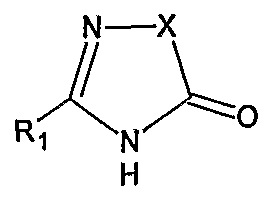
with a compound of the formula

wherein X, R1, Z1 and Z6 have the meanings given therein, in the presence of N,N- dimethylformamide and a basic reagent, such as alkali metal hydrides for example sodium or potassium hydride.
All of the above identified patents describe alkylation in solvents, such as N5N- dimethylformamide or DMSO, etc. in the presence of a basic reagent, for example, a metal hydride or a metal alcoholate etc. The strong bases, such as metal hydride or a metal alcoholate require anhydrous reaction conditions. Since N,N-dimethylformamide is used as a solvent, its removal requires high temperature concentration by distillation, which can result in degradation of the final product. The product intermediate is also purified by chromatography which is commercially not feasible and cumbersome on large scale. Another process given in Canadian Patent No. 2050769 provides synthetic scheme as herein given below.

This process comprises the steps of protecting carboxylic group present on cyclopentane ring which is deprotected in consecutive step by vigourous hydrogenation condition in autoclave which is operationally difficult at a large scale.
US Patent No. 2004242894 also discloses the process of preparation of lrbesartan from 4- bromomethyl biphenyl 2′-(lH-tetrazol (2-triphenylmethyl) 5-yl) and Ethyl ester of 1- Valeramido cyclopentanecarboxylic acid in toluene in presence of base and PTC, and then hydrolyzing the protecting group. However this requires chromatographic purification.
This patent also discloses the process of preparation of tetrazolyl protected lrbesartan using 2,6 lutidine and oxalylchloride in toluene. However in this process the yield is as low as 30%.
US Patent No. 2004192713 discloses the process of preparation of lrbesartan by condensing the two intermediates via Suzuki coupling reaction. The reaction scheme is as given herein below.

However, this process has several disadvantages such as use of the reagents like butyl lithium and triisobutyl borate at low temp such as -20 to -30°C under Argon atmosphere condition which is difficult to maintain at commercial scale.
WO2005113518 discloses the process of preparation of Irbesartan by condensing n- pentanoyl cycloleucine (V) with 2-(4-aminomethyl phenyl) benzonitrile (VI) using dicyclocarbodiimide (DCC) and 1 -hydroxy benzotriazole as catalyst to give an open chain intermediate of formula (VIII) which is then cyclized in the presence of an acid, preferably trifluoro acetic acid to give cyano derivative of formula (VII) and which in turn is converted to Irbesartan by treating it with tributyl tin chloride and sodium azide.

In this application further describes another process comprising the steps of reacting 2- butyl-l,3-diazasρiro[4,4]non-l-en-4-one monohydrochloride (A) with 4-bromobenzyl bromide (B) in presence of base and solvent to give 3-[4-bromobenzyl]-2-butyl-l,3- diazaspiro[4,4]non-l-en-4-one (C) which is condensed with 2-[2′-(triphenylmethyl-2’H- tetrazol-5′-yl)phenyl boronic acid in the presence of tetrakis triphenyl phosphine palladium and base to give lrbesartan (I). However these processes suffer with several disadvantages such as it uses trifluoroacetic acid for the cyclization step which is highly corrosive material. The process requires an additional step of activation by DCC. This step not only increases number of steps but also create problem in handling DCC at an industrial scale as it is highly prone to hazard which makes the process least preferred on a large scale production of lrbesartan. Further it uses phenyl boronic acid derivative and triphenyl phosphine complex which are harmful for the skin and eye tissue and also harmful for respiratory system. Tetrakis triphenyl phosphine palladium is also a costly material which increases overall cost for the production of lrbesartan. Moreover the yield is as low as 22%. All the above patents/applications are incorporated herein as reference. In summary, prior art relating to the process for the preparation of lrbesartan suffers with several drawbacks such as i) It requires chromatographic purification of intermediates at various stages. ii) It requires specific autoclave conditions for a deprotection of protecting group. iii) It requires maintaining low temperature conditions such as -300C and requires special handling care and air and moisture tight condition with the reagents such as butyl lithium and triisobutyl borate. iv) It uses hazardous and highly corrosive reagents, v) It suffers low yield problem. vi) All the process is having more number of reaction steps.
- Irbesartan is described in Bernhart et al., U.S. Patent No. 5,270,317
-
Irbesartan, is a potent, long-acting angiotensin II receptor antagonist which is particularly useful in the treatment of cardiovascular ailments such as hypertension and heart failure. Its chemical name is2-n-butyl-4-spirocyclopentane-1-[(2′-(tetrazol-5-yl)biphenyl-4-yl)methyl]-2-imidazolin-5-one.
Irbesartan is an antihypertensive agent known from EP 454511. From EP 708103, which discloses their X-ray spectra, two polymorphs are known where form A can be produced form a solvent system containing less than 10% of water, while Form B from a system with more than 10% of water. The specific morphological variant of form A can be prepared having properties as disclosed in EP 1089994. Additional form has been disclosed in WO 04089938. Amorphous irbesartan is known from WO 03050110. It is said that Irbesartan produced as taught in EP 454511 is a fluffy material with relatively low bulk and tap densities and undesirable flow characteristics, which consequently has unadvantageous electrostatic properties, among them a high chargeability as measured by tribugeneration between -30 and -40 nanocoulomb/g (10‘9As/g). Alternativelyirbesartan could be prepared by complex process using sonifications and/or temperature oscillations according to EP 1089994 to exhibit a chargeability as measured by tribugeneration between -0 and -10 nanocoulomb/g.
According to EP 454511 a solid composition in form of tablets is prepared by mixing the active ingredient with a vehicle such as gelatine, starch, lactose, magnesium stearate, talc, gum Arabic or the like and can be optionally coated. The compositions containing from 20% to 70% by weight of irbesartan are known from EP 747050.
WO 04/007482 teaches the acidification to pH 2 – 3,5 of trityl irbesartan, which is sufficient to remove the protecting group, but not to convert into an acid addition salt; WO 04/065383 is likewise silent on hydrohalide acid addition salts. WO
06/011859 relates to the preparation of a hydrochloride salt of irbesartan in order to incorporate it into a pharmaceutical formulation. W099/38847 mentions optional conversion of irbesartan into hydrochloride, hydrobromide or hydrogen sulfate salts
……………………………………………
…………………

Example 1Preparation of Compounds of formula IVa and IVb:
-

-
A jacketed 1,000 mL 3-neck flask was charged with 4′-methylbiphenyl-2-carbonitrile (Compound 1, 100.0 g) and CH2CI2 (500 mL) under nitrogen. To a 500 mL Erlenmeyer flask with magnetic stirrer, sodium bromate (NaBrO3; 31.2 g) was dissolved in water (170 mL). The NaBrO3 solution was transferred to the 1,000 mL flask and the reaction mixture was cooled to about 5 °C or less. Aqueous HBr solution (48 %, 105.0 g) was added to the 1,000 mL flask and the resulting reaction mixture was recycled though a UV lamp reactor. The reaction mixture was kept at 0-20 °C and the recycling was continued until the reaction was deemed complete by HPLC. Optionally, additional sodium bromate and hydrogen bromide may be added. The relative amounts of Compound 2 and Compound 3 were about 80-90% and about 10-20% respectively. Aqueous sodium metabisulfite solution (2.0 g of in 10 mL water) was added to the reaction mixture. Allow the phases to settle and the methylene chloride phase was washed with water and used in the next step without further purification.
Example 2Preparation of Compound II:
-

-
A 1L 3-neck flask was charged with Compound V (134.0 g), MTBAC (5.0 g) and CH2Cl2 (170 mL) and cool to -5 to 5 °C. An aqueous solution of KOH (182.6 g in 212 mL water) was added slowly to the 1L flask and the reaction temperature was kept at ≤ 5 °C. The methylene chloride solution of Compound IVa and Compound IVb from Example 1 was added to the reaction mixture slowly, while maintaining the temperature at 0-10 °C. Diethyl phosphite (39.66g) was added drop wise at 0-10 °C. Check the reaction mixture for completion of the reduction reaction, and additional diethyl phosphite may be added.
-
The reaction mixture was allowed to warm to ambient (20-30 °C) and agitated until the reaction was deemed complete by HPLC. Water (150 mL) was added and the phases were separated. The organic layer was extracted with water (230 mL) and polish filtered.
-
The methylene chloride (which contained the crude Compound II) was distilled off and exchanged with about 400 mL of methyl tert-butyl ether (MTBE) (optionally, the MTBE recycled from washing below can be used here). Upon cooling, crystallization occurred (optionally seeds were added) and after further cooling to below 25°C, crystals of Compound II were isolated, washed with MTBE and dried in vacuum at a temperature of less than 60°C. HPLC retention time: 18.126 min. Typically, the yield was about 85 to about 88%. Alternatively, IPA could be used as the crystallization and washing solvent
-
Optionally, the solvent (i.e., MTBE or IPA) used to wash the crystals of Compound II above can be recycled and used to crystallize the crude Compound II in the next batch. Since the washed solvent contains Compound II as well as impurities, it was surprisingly found that the washed solvent can be recovered and used again in crystallizing the crude compound of formula II in the next batch without sacrificing its purity while increasing its yield.
Example 3Preparation of Compound I:
-

-
A reactor was charged with Compound II (1 kg), triethylamine chlorhydrate (0.713 kg), sodium azide (0.337 kg) and N-methyl pyrrolidinone (2.07 kg), and the reaction mixture was heated to about 122°C under stirring. After completion of the reaction as determined by HPLC, the reaction mixture was cooled to about 45°C, and an aqueous solution of sodium hydroxide (35%, 5.99 kg) and water (3.0 kg) were added, the resulting mixture was stirred at a temperature between about 20 and about 40°C for about 0.5 hours. The aqueous phase was discarded and the organic phase was treated with toluene (1.73 kg) and water (5.0 kg), and stirred for about 0.5 hours at about 20 – about 30°C. The toluene phase was discarded and the aqueous phase was washed with ethyl acetate (1.8 kg) and treated with aqueous HCl until pH was adjusted to about 4.8 – about 5.2. Precipitation occurred and the resulting suspension was stirred for about 1 hour at about 20 – about 25°C. The precipitation was collected and washed with water three times (1.0 kg x 3). The crude wet product was recrystallized using a mixture of iso-propanol (0.393 kg) and water (4.5 kg). HPLC retention time: 11.725 min. The yield for Compound I was about 87%.
…………………………………………….
SPECTRAL DATA
The ESI mass spectrum of irbesartan showed a protonated molecular ion peak at m/z 429.3 confirming the molecular weight 428. The fragmentation pattern of parent ion 429.3 showed the fragment ions at m/z 385.9, 235.1, 207, 195.4, 192.1, 180.2 and 84
The FT-IR spectrum exhibited a characteristic stretching absorption band at 1732 cm-1 for the carbonyl group of amide functionality. The presence of this band at higher frequency was due to the ring stretching due to five member ring system. Another band at 1614cm-1 was due to C=N stretching vibrations
1H and 13C- NMR were recorded using DMSO-d6 as a solvent. In 1H-NMR the signal due to tetrazole NH proton was not detected may probably due to the tautomerism.
SEE
http://orgspectroscopyint.blogspot.in/2013/12/irbesartan-spectral-data.html
DP 1 IS IMPURITY
………………………………………….
NMR
1H-NMR (DMSO d6): δppm 0.78 (t, 3H); 1.17-1.30 (sex, 2H); 1.40-1.50 (quent, 2H); 1.64-1.66 (m, 2H); 1.80-1.82 (m, 6H); 2.22-2.29 (t, 2H); 4.67 (s, 2H); 7.07 (s, 4H); 7.50- 7.68 (m, 4H) M+: 429.6
,…………………..
m.p:181-182oC,
IR (KBr, cm-1) 1732 (C=O), 1616 (C=N); 1H NMR (DMSO-d6): δ 7.95–7.32 (m, 8 H), 4.80 –4.60 (s, 2 H), 3.60– 3.00 (br s, 1 H), 2.40– 2.20 (t, 2 H , J = 6.04 Hz), 2.00– 1.60 (m, 8 H),1.60–1.45 (quint, 2 H), 1.40– 1.20 (sext, 2 H), 0.91–0.70 (t, 3H, J = 7.41 Hz);
13C-NMR (DMSOd6): δ 186.5, 162.0,155.9, 141.9, 139.2, 137.2. 131.9, 131.4, 130.1, 128.7, 127.1, 124.3, 76.7, 43.1,
37.7, 28.3, 27.4, 26.3, 22.4, 14.5;
MS: m/z= 429 [M+1];
Anal. Calcd for C25H28N6O : C, 70.07; H,
6.59; N, 19.61. Found: C, 70.04; H, 6.57; N, 19.58.
http://www.acgpubs.org/OC/2011/Volume%204/Issue%201/13-OC-1106-199.pdf
………………………………………………..
1H NMR in DMSO-D6 : 7.68 (d. 2H, Ar-H), 7.52 (d, 2 H, Ar-H), 7.08 (s, 4 H, Ar-H), 4.68(s, 2H, -CH2), 2.69(t,2H,-CH2),2.18(m,2H,-CH2),1.83(m,2H,-CH2),1.81 (t, 2H, -CH2), 1.65 (t, 2H, -CH2), 1.45 (m, 2 H, -CH2), 1.24(m , 2H, -CH2), 0.77 (t, 3H, -CH3),
IR (KBR): 3061 (Aromatic C-H stretching), 2960 (Aliphatic C-H stretching), 3443 (N-H stretching), 1733 (C=0 stretching), 1617(CN stretching), 1337.99(CN stretching), 1407(N=N stretching) cm“1.
……………………….
HPLC condition:
Column: Alltima C18 (Alltech 88050) 15.0cm in length x 4.6mm in internal diameter and 5 micron particle size;
Column temperature: 40 C;
Solvent A: Buffer solution A 1.1 g of heptanesulfonic acid in 1 liter of water and adjust the pH to 2.5;
Solvent B: Methanol Flow rate: 1.2mL/min;
Gradient Elution Condition:
Time% A % %B
0 min 50 50
35 min 15 85
Detector: 240 nm;
Injection volume: 10 uL.
The chromatographic purity of
the compounds was analyzed using Agilent 1200 series HPLC instrument under the following conditions:
Column : Symmetry C18, 4.6 × 75 mm, 3.5 µm
Mobile phase : Eluent A: Deionized water, Eluent B: HPLC grade Methanol
Chromatographic Conditions
a. Column temperature : Ambient
b. Sample compartment : Ambient
c. Detector : 225 nm
d. Injection volume : 10 µL
e. Run time : 45 minutes
f. Flow rate :1.0 mL/min
g. Injector :Auto sampler with variable volume injector
h. Diluent : HPLC grade Acetonitrile
Human Stem Cells Elucidate the Mechanisms of Beta-Cell Failure in Diabetes

Wolfram syndrome is a rare form of diabetes characterized by high blood sugar levels that result from insufficient levels of the hormone insulin. The chronically high blood sugar levels cause degeneration of the optic nerve, leading to progressive vision loss (optic atrophy). Wolfram syndrome patients often also have abnormal pituitary glands that release abnormally low levels of the hormone vasopressin (also known as antidiuretic hormone or ADH), which causes hearing loss caused by changes in the inner ear (sensorineural deafness), urinary tract problems, reduced amounts of the sex hormone testosterone in males (hypogonadism), or neurological or psychiatric disorders.
Diabetes mellitus is typically the first symptom of Wolfram syndrome, usually diagnosed around age 6. Nearly everyone with Wolfram syndrome who develops diabetes mellitus requires insulin replacement therapy. Optic atrophy is often the next symptom to appear, usually around age 11. The first signs of optic atrophy are loss of color vision…
View original post 1,217 more words


 New Drug Approvals