
Home » Posts tagged 'gsk' (Page 3)
Tag Archives: gsk
 DRUG APPROVALS BY DR ANTHONY MELVIN CRASTO
.....FOR BLOG HOME CLICK HERE
DRUG APPROVALS BY DR ANTHONY MELVIN CRASTO
.....FOR BLOG HOME CLICK HEREFlag and hits
ORGANIC SPECTROSCOPY

SUBSCRIBE

 Subscribe in a reader
Enter your email address:
Delivered by FeedBurner
Subscribe to New Drug Approvals by Email


Recent Comments
 | shivkr2 on SPSR Excellence Award 2025 – S… |
 | Bonkasaurus on Infigratinib phosphate |
 | PALOVAROTENE | ORGAN… on Palovarotene |
| Pfizer just purchase… on Temanogrel | |
| Pfizer To Cash In On… on Temanogrel |
British drugmaker GlaxoSmithKline (GSK) has submitted a marketing authorisation application (MAA) to the European Medicines Agency (EMA) for its cervical cancer vaccine, Cervarix [Human papillomavirus bivalent (types 16 and 18) vaccine, recombinant].
The application in the EU is to allow administration of the vaccine in a two dosing schedule (0, 6 months) in 9-14 year old girls.
Intended to serve as an alternative dosing schedule, the two-dose schedule will help prevent premalignant genital (cervical, vulvar and vaginal) lesions and cervical cancer causally related to certain oncogenic Human Papillomavirus (HPV) types. It does not seek to replace the three-dose schedule.
read all at
Cervarix is a vaccine against certain types of cancer-causing human papillomavirus (HPV).
Cervarix is designed to prevent infection from HPV types 16 and 18, that cause about 70% of cervical cancer cases. These types also cause most HPV-induced genital and head and neck cancers. Additionally, some cross-reactive protection against virus strains 45 and 31 were shown in clinical trials. Cervarix also contains AS04, a proprietary adjuvant that has been found to boost the immune system response for a longer period of time.
Cervarix is manufactured by GlaxoSmithKline. An alternative product, from Merck & Co., is known as Gardasil.

…..
GSK files Supplemental New Drug Applications for melanoma combo, signs Immunocore pact
July 09, 2013
GlaxoSmithKline has filed its two newly-approved drugs Tafinlar and Mekinist to be used in combination for melanoma with regulators in the USA.
Supplemental New Drug Applications have been made to the US Food and Drug Administration for use of Tafinlar (dabrafenib), a BRAF inhibitor, in combination with Mekinist (trametinib), a MEK inhibitor for the treatment of adults with unresectable or metastatic melanoma with a BRAF V600 E or K mutation. The files are based on data from a Phase I/II study comparing dabrafenib monotherapy to the combo.
read all at
http://www.pharmatimes.com/Article/13-07-09/GSK_files_melanoma_combo_signs_Immunocore_pact.aspx

Tafinlar (dabrafenib)

Mekinist (trametinib)
GSK tests ofatumumab in rare skin disorder

GlaxoSmithKline is to start a new Phase III study of ofatumumab as a treatment for pemphigus vulgaris, a rare autoimmune disorder of the skin, according to partner Genmab. The Danish biotech and the drug major are long-term partners on ofatumumab which is already marketed, as Arzerra, for chronic lymphocytic leukaemia.
http://www.pharmatimes.com/Article/13-07-04/GSK_tests_ofatumumab_in_rare_skin_disorder.aspx
Ofatumumab(trade name Arzerra, also known as HuMax-CD20) is a human monoclonal antibody (for the CD20 protein) which appears to inhibit early-stage B lymphocyte activation. It is FDA approved for treating chronic lymphocytic leukemia that is refractory to fludarabine and alemtuzumab (Campath) and has also shown potential in treating Follicular non-Hodgkin’s lymphoma, Diffuse large B cell lymphoma, rheumatoid arthritis and relapsing remitting multiple sclerosis. Ofatumumab has also received conditional approval in Europe for the treatment of refractory chronic lymphocytic leukemia. This makes ofatumumab the first marketing application for an antibody produced by Genmab, as well as the first human monoclonal antibody which targets the CD20 molecule that will be available for patients with refractory CLL.


Pfizer, GSK form productivity pact with Singapore’s A*Star

Pfizer, GlaxoSmithKline and engineering giant Siemens have signed on as founding members of a new consortium set up by Singapore’s Agency for Science, Technology and Research (A*Star) to address challenges such as costs, regulatory compliance and processes to bring drugs from trials to markets.
READ ALL AT

The Agency for Science, Technology and Research (Abbreviation: A*STAR; Chinese: 新加坡科技研究局) is a statutory board under the Ministry of Trade and Industry of Singapore. The Agency was established in 1991 to foster scientific research and talent for a knowledge-based Singapore.
Established in 1991 as the former National Science and Technology Board (NSTB), A*STAR was established with the primary mission to raise the level of science and technology in Singapore.[1]
Leadership
The current chairman of A*STAR is Mr. Lim Chuan Poh. He was formerly the Permanent Secretary (Education) and the Chief of Defence Force. Mr Lim took over the reins of A*STAR from Mr. Philip Yeo, who later became Chairman of SPRING Singapore, on 1 April 2007.[2]
The scientific leadership includes Tan Chorh Chuan, George Radda, Sydney Brenner, David Lane, Charles Zukoski and used to include Prof Low Teck Seng. Prof Low Teck Seng left A*Star on 19 July 2012 to join the National Research Foundation of the Prime Minister’s Office.
A*STAR Entities
The agency is made up of:
- The Biomedical Research Council (BMRC) – Oversees public sector research activities in the biomedical sciences
- The Science and Engineering Research Council (SERC) – Oversees public sector research activities in the physical sciences & engineering
- The A*STAR Joint Council (A*JC) – Promotes and supports interdisciplinary collaborations between biomedical sciences, and physical sciences & engineering
- The A*STAR Graduate Academy (A*GA) – Administers science scholarships and other manpower development programs
- Exploit Technologies Pte Ltd (ETPL) – Manages the intellectual property created by research institutes in Singapore, and facilitates technology transfer to industry
- The Corporate Group – Supports the rest of the organisation with finance, human resources, legal and other services
The agency oversees 14 biomedical sciences, and physical sciences and engineering research institutes, and six consortia & centre, which are located in Biopolis and Fusionopolis, as well as their immediate vicinity.
A*STAR supports Singapore’s key economic clusters by providing intellectual, human and industrial capital to its partners in industry. It also supports extramural research in the universities, hospitals, research centres, and with other local and international partners.
Research Institutes & Units
Biomedical Research Council
The Biomedical Research Council (BMRC) oversees 7 research institutes and several other research units that focus on both basic as well as translational and clinical research to support the key industry clusters in Biomedical Sciences, pharmaceuticals, medical technology, biotechnology and healthcare services.
Having established a strong foundation in basic biomedical research capabilities, there is now an added focus on translating new knowledge and technologies created at the “benches” into new clinical applications for diagnosis and treatment that can one day be delivered at the “bedsides” of our hospitals and disease centres.
The research institutes and units under BMRC are:
- Bioinformatics Institute (BII)
- Bioprocessing Technology Institute (BTI)
- Experimental Therapeutics Centre (ETC)
- Genome Institute of Singapore (GIS)
- Institute of Bioengineering and Nanotechnology (IBN)
- Institute of Medical Biology (IMB)
- Institute of Molecular and Cell Biology (IMCB)
- Neuroscience Research Partnership (NRP)
- Singapore Bioimaging Consortium (SBIC)
- Singapore Immunology Network (SIgN)
- Singapore Institute for Clinical Sciences (SICS)
- Singapore Stem Cell Consortium (SSCC)
- A*STAR-NUS Clinical Imaging Research Centre (CIRC)
The BMRC Research Institutes focus on building up core biomedical capabilities in the areas of bioprocessing; chemical synthesis; genomics and proteomics; molecular and cell biology; bioengineering and nanotechnology and computational biology. In addition, the Institute of Medical Biology (IMB) and Singapore Institute for Clinical Sciences (SICS) focus on translational and clinical research.
Science and Engineering Council
A*STAR’s Science and Engineering Research Council (SERC) promotes public sector research and development in the physical sciences & engineering.
SERC manages seven research institutes and several state-of-the art centres and facilities with core competencies in a wide range of fields including communications, data storage, materials, chemicals, computational sciences, microelectronics, advanced manufacturing and metrology to tackle global technological challenges and create future industries from its headquarters at Fusionopolis, Singapore’s iconic hub for science and technology research.
The research institutes and units under SERC are:
- Data Storage Institute (DSI)
- Institute of Chemical Engineering and Sciences (ICES)
- Institute of High Performance Computing (IHPC)
- Institute of Infocomm Research (I2R)
- Institute of Materials Research and Engineering (IMRE)
- Institute of Microelectronics (IME)
- Singapore Institute of Manufacturing Technology (SIMTech)
- National Metrology Centre (NMC)
The seamless integration of the research institutes is key to addressing industry needs, which may span multiple disciplines. To this end, SERC’s broad range of capabilities are in a unique position to develop new technologies in areas such as automotives, aerospace, energy, electronic healthcare and medical technology, nanotechnology, photonics, sensors and sensor networks.
In July 2012, it was announced that A*STAR collaborates with Chinese language internet search provider Baidu to open a joint laboratory, called the Baidu-I2R Research Centre (BIRC), which aims to develop language processing technologies.[3]
Scholarships
Each year, the Agency gives out a number of scholarships and awards to young and aspiring scientists. These awards are meant to help Singapore achieve its goal of becoming a research hub by nurturing home-grown PhDs to serve both in the public sector and in industry. In 2008, a total of 101 scholarships were awarded to Bachelor of Science and PhD students who were to embark on their studies in overseas universities.[4] The administration of these awards are governed by the A*Star Graduate Academy, some of which are listed below:
- National Science Scholarship (BS)
- National Science Scholarship (PhD)
- A*Star Graduate Scholarship
- Singapore International Graduate Award (SINGA)
- Singapore International Pre-Graduate Award (SIPGA)
- A*Star Pre-Graduate Award
- A*Star International Fellowship
References
www.a-star.edu.sg
- “Agency for Science, Technology and Research (A*STAR)”. Ministry of Trade and Industry. Retrieved 30 March 2011.
- Chang Ai-Lien, “S’pore’s science salesman turns sights on SMEs”, The Straits Times, 21 October 2006
- “Baidu, A*STAR open joint laboratory”. Channel News Asia. Retrieved 26 July 2012.
- More Than 300 Young People Receive A*STAR Scholarships And Awards At A*STAR Scholarship Award Ceremony 2008, 25 July 08
FDA Advisory Committee Recommends Approval of BREO(TM) ELLIPTA(TM) for the Treatment of COPD
04/17/13
GlaxoSmithKline plc and Theravance, Inc. today announced that the Pulmonary-Allergy Drugs Advisory Committee (PADAC) to the US Food and Drug Administration (FDA) voted that the efficacy and safety data provide substantial evidence to support approval of BREO™ ELLIPTA™ as a once-daily inhaled treatment for the long-term, maintenance treatment of airflow obstruction in patients with chronic obstructive pulmonary disease (COPD) (9 for, 4 against) and also for the reduction of COPD exacerbations in patients with a history of exacerbations (9 for, 4 against)*.
BREO™ ELLIPTA™, is the proposed proprietary name for FF/VI 100/25 mcg, a combination of the inhaled corticosteroid (ICS) fluticasone furoate “FF”and the long acting bronchodilator (LABA) vilanterol “VI” (FF/VI)……………….read more at pharmalive
http://www.pharmalive.com/fda-panel-backs-glaxos-breo-ellipta
fluticasone furoate

vilanterol
Phase III trial of lupus drug Benlysta (belimumab) in patients with ANCA (Anti-neutrophil Cytoplasmic Antibodies) positive vasculitis

3 mar 2013
GSK, the company said it has kicked off a Phase III trial of its lupus drug Benlysta (belimumab) in patients with ANCA (Anti-neutrophil Cytoplasmic Antibodies) positive vasculitis, a condition characterised by inflammation of the blood vessels.
The multicentre, multi-national, randomised, double-blind study will assess the drug’s efficacy and safety in combination with azathioprine for the maintenance of remission in patients with a particular type of vascultitic disease called ANCA associated Vasculitis (Granulomatosis with Polyangiitis (Wegener’s) or microscopic polyangiitis).

Belimumab (trade name Benlysta, previously known as LymphoStat-B) is a human monoclonal antibody that inhibits B-cell activating factor (BAFF), also known as B-lymphocyte stimulator (BLyS) B cells are responsible for part of the normal immune response, and also for the over-aggressive immune response in autoimmune diseases like systemic lupus erythematosus (SLE).
Belimumab is approved in the United States, Canada and Europe for treatment of SLE. However, the major phase III trials excluded the more severe cases of SLE with kidney and brain damage, so its effectiveness has not been demonstrated in those cases. A Phase III study for SLE patients with kidney disease is now recruiting.
U.S. F.D.A. reviewers were concerned that belimumab is only “marginally” effective, and that there were more deaths in the treatment group.
Phase II trials of belimumab for rheumatoid arthritis were unsuccessful. Phase II trials for Sjögren’s Syndrome were more successful.
Belimumab was developed by Human Genome Sciences (HGS) and Cambridge Antibody Technology. GlaxoSmithKline acquired HGS, took belimumab through Phase III clinical trials, and markets belimumab.

MHLW Japan, GlaxoSmithKline and Genmab announced the approval of Arzerra (ofatumumab) by the MHLW for use in patients with relapsed/refractory CD20-positive chronic lymphocytic leukaemia.
mar 26, 2013
GlaxoSmithKline and Genmab announced the approval of Arzerra (ofatumumab) by the MHLW for use in patients with relapsed/refractory CD20-positive chronic lymphocytic leukaemia.
The thumbs-up triggers a milestone payment of 20 million Danish kroner to Genmab.
Ofatumumab(trade name Arzerra, also known as HuMax-CD20) is a human monoclonal antibody (for the CD20 protein) which appears to inhibit early-stage B lymphocyte activation. It is FDA approved for treating chronic lymphocytic leukemia that is refractory to fludarabine and alemtuzumab (Campath) and has also shown potential in treating Follicular non-Hodgkin’s lymphoma, Diffuse large B cell lymphoma, rheumatoid arthritis and relapsing remitting multiple sclerosis. Ofatumumab has also received conditional approval in Europe for the treatment of refractory chronic lymphocytic leukemia. This makes ofatumumab the first marketing application for an antibody produced by Genmab, as well as the first human monoclonal antibody which targets the CD20 molecule that will be available for patients with refractory CLL.
MAA EU -GSK submits diabetes drug Eperzan, albiglutide in EU

MAA EU =marketing authorisation application EU
MAR 08 2013
GlaxoSmithKline has announced the submission of a marketing authorisation application for albiglutide, which will have the brand name Eperzan, to the European Medicines Agency.
The filing of albiglutide, a once-weekly treatment for type 2 diabetes, comes almost two months after it was filed in the USA. The drug is a GLP-1 receptor agonist, the same class of injectable treatments dominated by Novo Nordisk’s once-a-day Victoza (liraglutide), twice-daily Byetta (exenatide) and an extended-release formulation of the latter, Bydureon. They were developed and sold by Amylin, which was then acquired by Bristol-Myers Squibb and AstraZeneca.
The filing is based in part on a study which assessed albiglutide against Merck & Co’s DPP-4 inhibitor Januvia (sitagliptin) which showed that GSK’s drug showed clinically and statistically significant reductions in HbA1c from baseline and superiority versus the US firm’s diabetes blockbuster. However in data from a late-stage study released in November 2011, albiglutide failed to show non-inferiority to Victoza and a number of analysts believe GSK will have its work cut out to grab a decent share of the GLP-1 market.
Albiglutide is a glucagon-like peptide-1 agonist (GLP-1 agonist) drug under investigation by GlaxoSmithKline for treatment of type 2 diabetes. It is a dipeptidyl peptidase-4-resistant glucagon-like peptide-1 dimer fused to human albumin.
Albiglutide has a half-life of four to seven days, which is considerably longer than the other two GLP-1 analogs approved for market use, exenatide (Byetta) and liraglutide (Victoza).[1] [2] GLP-1 drugs are currently only available for subcutaneous administration on a daily basis, so a GLP-1 drug with a longer half-life is desirable. Such a drug would only need to be injected biweekly or weekly instead of daily, reducing the discomfort and inconvenience of GLP-1 administration considerably.
It has not yet been determined whether albiglutide is as effective an antidiabetic agent as GLP-1 drugs currently on the market, and final data remain to be published regarding the incidence of adverse effects related to the drug. To evaluate the efficacy and safety of the drug, albiglutide is undergoing eight Phase III clinical trials. Four of these trials should report useful data by end 2010.[3]
- Matthews JE, Stewart MW, De Boever EH, et al. (December 2008). “Pharmacodynamics, Pharmacokinetics, Safety, and Tolerability of Albiglutide, a Long-Acting Glucagon-Like Peptide-1 Mimetic, in Patients with Type 2 Diabetes”. J. Clin. Endocrinol. Metab. 93 (12): 4810–4817. doi:10.1210/jc.2008-1518. PMID 18812476.
- Baggio et al. (2008). “Glucagon-like Peptide-1 Analogs Other Than Exenatide”.
- “Phase III clinical trials of Albiglutide”.
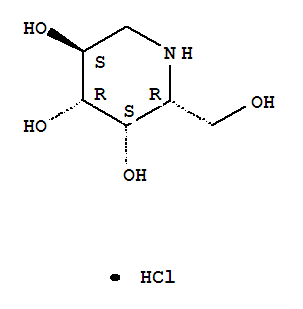
Phase 3 Amicus in collaboration with GlaxoSmithKline (GSK) is developing the investigational pharmacological chaperone migalastat HCl for the treatment of Fabry disease
 CAS Number:75172-81-5
-
3,4,5-Piperidinetriol,2-(hydroxymethyl)-, hydrochloride (1:1), (2R,3S,4R,5S)-
- Molecular Structure:

- Formula:C6H14ClNO4
- Molecular Weight:199.63
- Synonyms:3,4,5-Piperidinetriol,2-(hydroxymethyl)-, hydrochloride, (2R,3S,4R,5S)- (9CI);3,4,5-Piperidinetriol,2-(hydroxymethyl)-, hydrochloride, [2R-(2a,3a,4a,5b)]-;Migalastat hydrochloride;Galactostatin hydrochloride;(2S,3R,4S,5S)-2-(hydroxymethyl)piperidine-3,4,5-triol hydrochloride;
- Melting Point:260 °C
- Boiling Point:382.7 °C at 760 mmHg
- Flash Point:185.2 °C
end feb 2013
About Amicus Therapeutics
Amicus Therapeutics is a biopharmaceutical company at the forefront of therapies for rare and orphan diseases. The Company is developing orally-administered, small molecule drugs called pharmacological chaperones, a novel, first-in-class approach to treating a broad range of human genetic diseases. Amicus’ late-stage programs for lysosomal storage disorders include migalastat HCl monotherapy in Phase 3 for Fabry disease; migalastat HCl co-administered with enzyme replacement therapy (ERT) in Phase 2 for Fabry disease; and AT2220 co-administered with ERT in Phase 2 for Pompe disease.
About Migalastat HCl
Amicus in collaboration with GlaxoSmithKline (GSK) is developing the investigational pharmacological chaperone migalastat HCl for the treatment of Fabry disease. Amicus has commercial rights to all Fabry products in the United States and GSK has commercial rights to all of these products in the rest of world.
As a monotherapy, migalastat HCl is designed to bind to and stabilize, or “chaperone” a patient’s own alpha-galactosidase A (alpha-Gal A) enzyme in patients with genetic mutations that are amenable to this chaperone in a cell-based assay. Migalastat HCl monotherapy is in Phase 3 development (Study 011 and Study 012) for Fabry patients with genetic mutations that are amenable to this chaperone monotherapy in a cell-based assay. Study 011 is a placebo-controlled study intended primarily to support U.S. registration, and Study 012 compares migalastat HCl to ERT to primarily support global registration.
For patients currently receiving ERT for Fabry disease, migalastat HCl in combination with ERT may improve ERT outcomes by keeping the infused alpha-Gal A enzyme in its properly folded and active form thereby allowing more active enzyme to reach tissues.2 Migalastat HCl co-administered with ERT is in Phase 2 (Study 013) and migalastat HCl co-formulated with JCR Pharmaceutical Co. Ltd’s proprietary investigational ERT (JR-051, recombinant human alpha-Gal A enzyme) is in preclinical development.
About Fabry Disease
Fabry disease is an inherited lysosomal storage disorder caused by deficiency of an enzyme called alpha-galactosidase A (alpha-Gal A). The role of alpha-Gal A within the body is to break down specific lipids in lysosomes, including globotriaosylceramide (GL-3, also known as Gb3). Lipids that can be degraded by the action of α-Gal are called “substrates” of the enzyme. Reduced or absent levels of alpha-Gal A activity leads to the accumulation of GL-3 in the affected tissues, including the kidneys, heart, central nervous system, and skin. This accumulation of GL-3 is believed to cause the various symptoms of Fabry disease, including pain, kidney failure, and increased risk of heart attack and stroke.
It is currently estimated that Fabry disease affects approximately 5,000 to 10,000 people worldwide. However, several literature reports suggest that Fabry disease may be significantly under diagnosed, and the prevalence of the disease may be much higher.
2. Benjamin, et al., Molecular Therapy: April 2012, Vol. 20, No. 4, pp. 717–726.
http://clinicaltrials.gov/show/NCT01458119
http://www.docstoc.com/docs/129812511/migalastat-hcl
| Chemical Name: | DEOXYGALACTONOJIRIMYCIN, HYDROCHLORIDE |
| Synonyms: | DGJ;Amigal;Unii-cly7m0xd20;GALACTOSTATIN HCL;DGJ, HYDROCHLORIDE;Migalastat hydrochloride;Galactostatin hydrochloride;DEOXYGALACTONOJIRIMYCIN HCL;1-DEOXYGALACTONOJIRIMYCIN HCL;1,5-dideoxy-1,5-imino-d-galactitol |


 New Drug Approvals