
 DRUG APPROVALS BY DR ANTHONY MELVIN CRASTO
.....
DRUG APPROVALS BY DR ANTHONY MELVIN CRASTO
.....


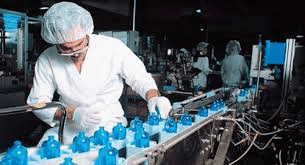
We have previously written that one of the new trends in enforcement in the life sciences industry is the focus the federal government is having on compliance with current good manufacturing practices (cGMP).
For instance, we noted back in February of this year that the U.S. Department of Justice announced that compliance with current good manufacturing practices (cGMPs) will be one of the agency’s “top areas of focus” in the coming year.” Additionally, we recently noted that DOJ has been probing international pharmaceutical manufacturing, investigating several companies and their manufacturing practices over the last several months.
Most recently, DOJ filed a lawsuit on behalf of the FDA against Mitchell, SD-based Dakota Laboratories and its owner Charles Voellinger, as reported by FiercePharmaManufacturing. The suit came after inspections in 2010, 2011 and 2012 found significant manufacturing lapses in the plant’s production of eye drops, including a lacking of procedures to protect against microbiological contamination. Among other issues, a 2011 FDA warning letter said the company had released several batches of sterile ophthalmic eye drops without adequately validating aseptic processes, and wasn’t testing the water used to make the drops.
“We cannot take the chance that a manufacturer’s failure to establish proper controls for sterile drug production could result in products becoming contaminated, placing consumers at risk of infection and potentially serious injury,” Assistant Attorney General Stuart Delery said.
Dakota Laboratories settled the lawsuit by agreeing to a “Consent Decree of Permanent Injunction” that prohibits the facility from violating the federal food, drug and cosmetics act. The DOJ says the decree acknowledges that Dakota Laboratories is no longer in production. If its owners ever entertain thoughts of reopening, they must first get the FDA to sign off on the plant’s production procedures.
Prior to this case, FDA had entered into a consent decree in January with Boehringer Ingelheim‘s contract manufacturing unit Ben Venue Laboratories‘ for its plant in Bedford, OH, after years of ongoing issues. Ben Venue issued 40 product recalls from 2002 to 2011. Ranbaxy Laboratories, India’s generics giant, last year entered into a 5-year consent decree for two plants after the FDA found the company had been covering up serious manufacturing issues.
Consequently, a recent article from PharmTech.com explored the trends in GMP violations and offered advice from an FDA-compliance perspective. The article interviewed Brian Hasselbalch, Acting Associate Director for Policy and Communication, Office of Manufacturing & Product Quality, Office of Compliance at FDA’s Center for Drug Evaluation and Research (CDER), to find out what trends in GMP violations and quality issues the agency has discovered in the past year.
Hasselbalch explained that FDA inspections of drug manufacturers are designed to always evaluate the facility’s quality system. The quality system includes evaluation of manufacturing problems—complaints, recalls, deviations, defects, and failures—so it may not be surprising that we tend to find CGMP deficiencies in this area. Inspection findings from 2012 show CGMP deficiencies in the following major areas:
- The quality unit does not function as the CGMP regulations require: Approving or rejecting procedures, major decisions about quality including batch release (21 CFR 211.22).
- Production and process controls are not proven valid and/or are not in writing sufficient to assure consistent performance (21 CFR 211.100).
- Complaints, defects, and failures are not fully investigated to determine cause and/or full scope of impact (21 CFR 211.192).
- Facility and equipment are not designed or maintained to assure cleanliness (sanitary surfaces and/or free of residual drug contamination) (21 CFR 211.67)
He then discussed the major trends in quality control violations in pharmaceutical manufacturing. Hasselbalch noted that “There is a problem of oversight: the quality unit is not governing operations as required; management is not providing sufficient resources to quality assurance activities. In some cases, we see evidence that the quality unit is not being allowed to govern operations bearing on quality assurance, and batch release decisions are made contrary to the CGMP regulations.”
One area of change from past years to the more recent full year is “that facility cleaning and equipment maintenance deficiencies have increased.” FDA Warning Letters over the same period reveal problems particularly in “sterile manufacturing operations, where the consequence of poor maintenance and cleaning often leads to more severe consequences for patient safety, such as production of a non-sterile injectable.”
Hasselbalch then noted two areas that manufacturers could improve quality control on. “First, manufacturers should prevent problems from happening by providing sufficient resources toward the creation of a well-designed, optimized manufacturing and control operation. This may not be a novel concept, but is still worth saying.”
Second, he explained that “manufacturers should react more aggressively on information bearing on product quality. All too often, we see potentially negative quality information—such as consumer complaints, aberrant stability results, abnormal yield variations, adverse-event reports—being evaluated too slowly and incompletely. We understand the need for a response to such information to be thoughtful, but we often see manufacturers summarily disregard such data.”
However, he did not that companies have done better with employee training and inspection deficiencies appear to have decreased in quality-unit responsibilities (while still being higher than other types of deficiencies).
Hasselbalch also noted that “domestic and offshore manufacturers tend to have similar problems; usually, given the greater number of APIs being made offshore than here in the US, the differences are often explained by the nature of the processing and standards expected.”
In fiscal year (FY) 2012, FDA performed approximately 500 preapproval-type inspections (specific to a site and application), which includes all types of application-listed facilities (API, finished product, processing, testing, and packaging). This is about the same number as in FY 2011.
In FY 2012, FDA performed about 1900 CGMP-type inspections (i.e., routine coverage) of facilities connected with human drug manufacturing (except medical gas; including all other drug types and APIs as well as finished product) here in the US and offshore. This is about the same amount as in FY 2011, but with one big difference: routine CGMP inspections of offshore facilities increased by about 20% in FY 2012 over FY 2011.
He noted that FDA has planned for this increase to continue in FY 2013. Other FY 2013 changes over previous years include increased inspections of positron emission tomography facilities, which are primarily domestic sites.


 New Drug Approvals