
Home » Posts tagged 'amgen' (Page 2)
Tag Archives: amgen
 DRUG APPROVALS BY DR ANTHONY MELVIN CRASTO
.....FOR BLOG HOME CLICK HERE
DRUG APPROVALS BY DR ANTHONY MELVIN CRASTO
.....FOR BLOG HOME CLICK HEREFlag and hits
ORGANIC SPECTROSCOPY

SUBSCRIBE

 Subscribe in a reader
Enter your email address:
Delivered by FeedBurner
Subscribe to New Drug Approvals by Email


Recent Comments
 | shivkr2 on SPSR Excellence Award 2025 – S… |
 | Bonkasaurus on Infigratinib phosphate |
 | PALOVAROTENE | ORGAN… on Palovarotene |
| Pfizer just purchase… on Temanogrel | |
| Pfizer To Cash In On… on Temanogrel |
Sandoz’s Zarzio (filgrastim) would be the first ‘biosimilar’ drug available in the US

A key advisory committee of the US Food and Drug Administration (FDA) has voted in favour of licencing a copycat version of a biological drug. If approved, Sandoz’s Zarxio (filgrastim) would be the first ‘biosimilar’ drug available in the US.
read at……..http://www.rsc.org/chemistryworld/2015/01/us-poised-approve-first-biosimilar-drug
On 7 January, the FDA’s Oncological Drugs Advisory Committee unanimously cleared Sandoz’ version of filgrastim – marketed as Neupogen by Amgen – for all five indications approved for the Amgen drug. The medication is used to prevent infection and low white blood cell counts caused by chemotherapy.


| Systematic (IUPAC) name | |
|---|---|
| Human granulocyte colony stimulating factor | |
| Clinical data | |
| Trade names | Neupogen |
| AHFS/Drugs.com | monograph |
| Legal status |
?
|
| Identifiers | |
| CAS number | 143011-72-7 |
| ATC code | L03AA02 |
| DrugBank | DB00099 |
| UNII | PVI5M0M1GW  |
| ChEMBL | CHEMBL1201567 |
| Chemical data | |
| Formula | C845H1343N223O243S9 |
| Molecular mass | 18802.8 g/mol |
Filgrastim is a granulocyte colony-stimulating factor (G-CSF) analog used to stimulate the proliferation and differentiation ofgranulocytes;[1] it is a pharmaceutical analog of naturally occurring G-CSF. It is produced by recombinant DNA technology. The gene for human granulocyte colony-stimulating factor is inserted into the genetic material of Escherichia coli. The G-CSF then produced byE. coli is different from G-CSF naturally made in humans.

Commercialization
Filgrastim is marketed under several brand names, including:
| Company | Brand |
|---|---|
| Cadila Pharmaceuticals | Filcad |
| Abbott Laboratories | Imumax |
| Dr. Reddy’s Laboratories | Grafeel |
| Intas Biopharmaceuticals | Neukine |
| Amgen | Neupogen[2] |
| Emcure Pharmaceuticals | Emgrast |
| Reliance Life Sciences | Religrast |
| Sandoz | Zarzio |
| Biocon | Nufil |

Apricus Biosciences is currently developing and testing a product under the brand name Nupen which can deliver filgrastim through the skin to improve post-chemotherapy recovery of neutrophil counts.

Therapeutic uses
Filgrastim is used to treat neutropenia,[3] stimulating the bone marrow to increase production of neutrophils. Causes of neutropenia include chemotherapy and bone marrow transplantation.
Filgrastim is also used to increase the number of hematopoietic stem cells in the blood before collection by leukapheresis for use in hematopoietic stem cell transplantation.
Mechanism of Action: Filgrastim is a human granulocyte colony stimulating factor (G-CSF) produced by recombinant DNA technology. G-CSF regulates the production of neutrophils within the bone marrow; endogenous G-CSF is a glycoprotein produced by monocytes, fibroblasts, and endothelial cells.
G-CSF is a colony stimulating factor which has been shown to have minimal direct in vivo or in vitro effects on the production of other haematopoietic cell types.NEUPOGEN (filgrastim) is the name for recombinant methionyl human granulocyte colony stimulating factor (r-metHuG-CSF). ref: [1]
Contraindications
Filgrastim should not be used in patients with known hypersensitivity to E. coli-derived proteins.
Adverse effects
The most commonly observed adverse effect is mild-to-moderate bone pain after repeated administration and local skin reactions at the site of injection.[4] Other observed adverse effects include serious allergic reactions (including a rash over the whole body, shortness of breath, wheezing, dizziness, swelling around the mouth or eyes, fast pulse, and sweating), ruptured spleen (sometimes resulting in death), alveolar hemorrhage, acute respiratory distress syndrome, and hemoptysis.[4] Severe sickle cell crises, in some cases resulting in death, have been associated with the use of filgrastim in patients with sickle cell disorders.[5]
Interactions
Drug interactions between filgrastim and other drugs have not been fully evaluated. Drugs which may potentiate the release of neutrophils‚ such as lithium‚ should be used with caution.
Increased hematopoietic activity of the bone marrow in response to growth factor therapy has been associated with transient positive bone imaging changes; this should be considered when interpreting bone-imaging results.[6]
Filgrastim has not been studied in pregnant women and its effects on the foetus is unknown. If taking filgrastim while pregnant, it is possible that traces of the drug could be found in the baby’s blood. It is not known if the drug can get into human breast milk.
References
- Beveridge, R. A.; Miller, J. A.; Kales, A. N.; Binder, R. A.; Robert, N. J.; Harvey, J. H.; Windsor, K.; Gore, I.; Cantrell, J.; Thompson, K. A.; Taylor, W. R.; Barnes, H. M.; Schiff, S. A.; Shields, J. A.; Cambareri, R. J.; Butler, T. P.; Meister, R. J.; Feigert, J. M.; Norgard, M. J.; Moraes, M. A.; Helvie, W. W.; Patton, G. A.; Mundy, L. J.; Henry, D.; Sheridan, B.; Staddon, A.; Ford, P.; Katcher, D.; Houck, W.; Major, W. B. (1998). “A Comparison of Efficacy of Sargramostim (Yeast-Derived RhuGM-CSF) and Filgrastim (Bacteria-Derived RhuG-CSF) in the Therapeutic Setting of Chemotherapy-Induced Myelosuppression”. Cancer Investigation 16 (6): 366–373. doi:10.3109/07357909809115775. PMID 9679526.
- “FDA Reviews What Could Be First Biosimilar”. Discov. Dev. Mag. (Rockaway, New Jersey, United States). Associated Press. 25 July 2014.
- Crawford, J.; Glaspy, J. A.; Stoller, R. G.; Tomita, D. K.; Vincent, M. E.; McGuire, B. W.; Ozer, H. (2005). “Final Results of a Placebo-Controlled Study of Filgrastim in Small-Cell Lung Cancer: Exploration of Risk Factors for Febrile Neutropenia”. Supportive Cancer Therapy 3 (1): 36–46. doi:10.3816/SCT.2005.n.023. PMID 18632435.
- Neupogen “Neupogen: Patient Information Leaflet”. Amgen. Retrieved 24 June 2013.
- “NEUPOGEN® Patient Guide”. Amgen. Retrieved 24 June 2013.
- “Neupogen”. RxList. 4 June 2012. Retrieved 23 June 2013.
Further reading
- Budiono Santoso; Chris J. van Boxtel; Boxtel, Christoffel Jos van (2001). Drug benefits and risks: international textbook of clinical pharmacology. New York: Wiley. ISBN 0-471-89927-5.
- “Neupogen information”. Retrieved 20 October 2005.
Anti-angiopoietin therapy with trebananib for recurrent ovarian cancer (TRINOVA-1): a randomised, multicentre, double-blind, placebo-controlled phase 3 trial.
Angiogenesis is a valid target in the treatment of epithelial ovarian cancer. Trebananib inhibits the binding of angiopoietins 1 and 2 to the Tie2 receptor, and thereby inhibits angiogenesis. We aimed to assess whether the addition of trebananib to single-agent weekly paclitaxel in patients with recurrent epithelial ovarian cancer improved progression-free survival.
Lancet Oncol. 2014 Jun 17. pii: S1470-2045(14)70244-X. doi: 10.1016/S1470-2045(14)70244-X.
http://www.ncbi.nlm.nih.gov/pubmed/24950985
old cut paste
Amgen’s Experimental Ovarian Cancer Drug, Trebananib, Shows Positive Results In Late Stage Clinical Trials
STRUCTURAL FORMULA ,Trebananib, AMG-386
Monomer
MDKTHTCPPC PAPELLGGPS VFLFPPKPKD TLMISRTPEV TCVVVDVSHE 50
DPEVKFNWYV DGVEVHNAKT KPREEQYNST YRVVSVLTVL HQDWLNGKEY 100
KCKVSNKALP APIEKTISKA KGQPREPQVY TLPPSRDELT KNQVSLTCLV 150
KGFYPSDIAV EWESNGQPEN NYKTTPPVLD SDGSFFLYSK LTVDKSRWQQ 200
GNVFSCSVMH EALHNHYTQK SLSLSPGKGG GGGAQQEECE WDPWTCEHMG 250
SGSATGGSGS TASSGSGSAT HQEECEWDPW TCEHMLE 287
Disulfide bridges location
7-7′ 10-10′ 42-102 42′-102′ 148-206
148′-206′ 239-246 239′-246′ 275-282 275′-282′
CAS REGISTRY NUMBER 894356-79-7
MOLECULAR FORMULA C2794H4248N752O886S30
Trebananib
Immunoglobulin G1 (synthetic human Fc domain fragment) fusion protein with
angiopoietin 1/angiopoietin 2-binding peptide (synthetic)
http://www.ama-assn.org/resources/doc/usan/trebananib.pdf
http://www.genome.jp/dbget-bin/www_bget?dr:D10177
Amgen’s Experimental Ovarian Cancer Drug, Trebananib, Shows Positive …
Medical Daily
Amgen, a large biotechnology company out of Thousand Oaks, Calif. has announced that its drug for reoccurring ovarian cancer has shown positive results in Phase III clinical trials. The trials sought to stop the progression of ovarian cancer and extend …
read all at

Amgen In Focus

Amgen In Focus
Seeking Alpha
According to Amgen, they have 45 drugs in development from Phase 1 to Phase 3. Conversely, Gilead has 32 drugs in development and Pfizer has 64. Meanwhile, Gilead only has 8 drugs in Phase 3, Pfizer has 25, and Amgen has 14. 7 of those Phase 3 …
http://seekingalpha.com/article/1510002-amgen-in-focus?source=google_news
Amgen has the second deepest pipeline of drugs of the three large cap biotechs. According to Amgen, they have 45 drugs in development from Phase 1 to Phase 3. Conversely, Gilead has 32 drugs in development and Pfizer has 64. Meanwhile, Gilead only has 8 drugs in Phase 3, Pfizer has 25, and Amgen has 14. 7 of those Phase 3 drugs are focused on cancer treatments for Amgen, more than either Pfizer or Gilead. Keep in mind that 12.4 million people learn they have cancer each year, while 7.6 million people lose that battle each year. The CDC predicts that the global number of cancer related deaths will increase by 80% by 2030. It doesn’t take a rocket scientist to know that cancer treating drugs presents the largest opportunity for any drug maker considering those statistics. Amgen has the inside track versus Gilead and Pfizer as far as quantity of drugs in late stage development.


Modality

Phase 3-AMG 145 for hyperlipidaemia and mixed dyslipidaemia
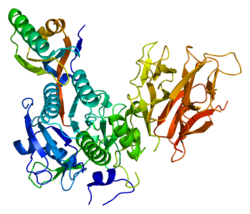
AMG 145
Amgen Limited.
AMG 145 is a fully-human monoclonal antibody which targets proprotein convertase subtilisin/kexin type 9 (PCSK9).
It is intended for use in the reduction of elevated total cholesterol (TC), low-density lipoprotein cholesterol (LDL-C), apolipoprotein B (apo-B), non-high density lipoprotein cholesterol (non-HDL-C) and lipoprotein A (Lp(a)) in patients with primary hyperlipidaemia and mixed dyslipidaemia.
It is also intended for use as an adjunct to other lipid lowering therapies in patients with primary Ho-FH.
Dyslipidaemias include a wide range of lipid abnormalities and disturbances in lipid metabolism that lead to changes in plasma lipoprotein function and/or levels. Along with other cardiovascular risk factors, this may lead to the development of atherosclerosis. TC and LDL-C levels constitute the primary targets of therapy as evidence showing that reducing TC and LDL-C can prevent cardiovascular disease (CVD) is strong and compelling(1). However, other dyslipidaemias also predispose to premature CVD. The atherogenic lipid triad consisting of increased very low density lipoprotein (VLDL) remnants manifested as mildly elevated triglycerides (TG), increased small dense low-density lipoprotein (LDL) particles, and reduced high-density lipoprotein-cholesterol (HDL-C) levels is a common pattern found in premature CVD.
Hypercholesterolaemia is defined as the presence of high concentrations of cholesterol in the blood(2). Blood cholesterol has a log-linear relationship to the risk of CVD and is a key modifiable risk factor. In high-income countries, blood cholesterol levels >3.8mmol/L(b) are estimated to be responsible for more than 50% of CVD associated events(3). Primary hypercholesterolaemia is associated with an underlying genetic cause. This may be a specific genetic defect, as in familial hypercholesterolaemia (FH), or the interaction of multiple genes with dietary and other risk factors (non-familial hypercholesterolaemia).
FH is often transmitted as a codominant trait, with two principle forms described: homozygous-FH (Ho-FH) and heterozygous-FH (He-FH) in which either both or one of the pair of LDL-C receptor genes is defective or mutated with reduced activity. FH results in markedly elevated LDL-C levels, with other forms of cholesterol remaining normal. He-FH is often clinically silent and may be diagnosed at any age following a complete lipid analysis. Untreated, He-FH typically leads to symptomatic CVD by the fourth or fifth decade of life(2,4). The more severe homozygous form may be manifest from an early age, and is characterised by extravascular cholesterol deposits, cutaneous or tendon xanthomas, LDL-C levels >3.3 g/L(b) and arteriopathy.


 New Drug Approvals