
FLAGS AND HITS
 DRUG APPROVALS BY DR ANTHONY MELVIN CRASTO
 FACEBOOK
...................................................................Join me on twitter
FACEBOOK
...................................................................Join me on twitter
 ..................................................................Join me on google plus
 Googleplus
MYSELF



Suvorexant- FDA panel backs Merck & Co sleep drug but at low doses

[(7R)-4-(5-chloro-1,3-benzoxazol-2-yl)-7-methyl-1,4-diazepan-1-yl][5-methyl-2-(2H-1,2,3-triazol-2-yl)phenyl]methanone
Suvorexant
may23,2013
A panel of experts at the US Food and Drug Administration has recommended Merck & Co’s insomnia drug suvorexant when given in lower dosages but rejected the higher dose that the company was seeking.———read more at
Suvorexant (MK-4305) is a dual orexin receptor antagonist in development by Merck & Co.[1][2][3] Suvorexant works by turning off wakefulness rather than by inducing sleep.[4] It is not currently approved for commercial use, but it has completed three Phase III trials.[5]The recent FDA review showed that the drug is associated with increased somnolence the next day and users of higher doses had an increased rate of suicidal ideation. [6] It is one of two such compounds currently in development, the other being GlaxoSmithKline‘s SB-649,868.
- Cox, Christopher D.; Breslin, Michael J.; Whitman, David B.; Schreier, John D.; McGaughey, Georgia B.; Bogusky, Michael J.; Roecker, Anthony J.; Mercer, Swati P. et al. (2010). “Discovery of the Dual Orexin Receptor Antagonist [(7R)-4-(5-Chloro-1,3-benzoxazol-2-yl)-7-methyl-1,4-diazepan-1-yl][5-methyl-2-(2H-1,2,3-triazol-2-yl)phenyl]methanone (MK-4305) for the Treatment of Insomnia”. Journal of Medicinal Chemistry 53 (14): 5320–32. doi:10.1021/jm100541c. PMID 20565075. edit
- Baxter, Carl A.; Cleator, Ed; Brands, Karel M. J.; Edwards, John S.; Reamer, Robert A.; Sheen, Faye J.; Stewart, Gavin W.; Strotman, Neil A. et al. (2011). “The First Large-Scale Synthesis of MK-4305: A Dual Orexin Receptor Antagonist for the Treatment of Sleep Disorder”. Organic Process Research & Development 15 (2): 367–75.doi:10.1021/op1002853. edit
- Winrow, Christopher J.; Gotter, Anthony L.; Cox, Christopher D.; Doran, Scott M.; Tannenbaum, Pamela L.; Breslin, Michael J.; Garson, Susan L.; Fox, Steven V. et al. (2011). “Promotion of Sleep by Suvorexant—A Novel Dual Orexin Receptor Antagonist”.Journal of Neurogenetics 25 (1–2): 52–61. doi:10.3109/01677063.2011.566953.PMID 21473737. edit
- Kahn, Howie (June 1, 2012). “Sleep Better”. In Koerth-Baker, Maggie. 32 Innovations That Will Change Your Tomorrow. New York Times. Retrieved November 29, 2012.
- Three completed trials:
- ClinicalTrials.gov NCT01097629 Safety and Efficacy Study in Primary Insomnia Patients-Study B (4305-029)
- ClinicalTrials.gov NCT01021813 A Long Term Safety Study of MK4305 in Patients With Primary Insomnia (4305-009 AM3)
- ClinicalTrials.gov NCT01097616 Safety and Efficacy Study in Primary Insomnia Patients- Study A (4305-028)
- http://www.usatoday.com/story/news/nation/2013/05/20/fda-merck-insomnia-drug/2326921/
Enantioselective Synthesis of a Dual Orexin Receptor Antagonist.
Org. Lett. 2012; 14: 3458-3461

Orexins A and B are excitatory neuropeptides that stimulate wakefulness. Suvorexant is a dual orexin receptor antagonist that is in phase III clinical trials for the treatment of insomnia. The key step in the asymmetric synthesis depicted is a tandem enzymatic transamination–annulation sequence (F → G → H).
A previous synthesis of suvorexant (N. A. Strotman et al. J. Am. Chem. Soc. 2011, 133, 8362) involved an asymmetric Ru-catalyzed reductive amination in the construction of the diazepane ring. The present route benefits from the circumvention of transition-metal catalysis and dichloromethane as solvent.
Biogen submits MS drug Plegridy, peginterferon beta-1a to FDA

peginterferon beta-1a
get str formula from http://www.ama-assn.org/resources/doc/usan/peginterferon-beta-1a.pdf
Treatment of multiple sclerosis
Poly(oxy-1,2-ethanediyl), α-methyl-ω-hydroxy-, 1-ether with N-(3-hydroxy-2-
methylpropyl)interferon β-1a (human)
MOLECULAR FORMULA C913H1417N246O256PS7 [C2H4O]n
MOLECULAR WEIGHT 44 kDa
TRADEMARK None as yet
SPONSOR Biogen IDEC Inc.
CODE DESIGNATION BIIB017
CAS REGISTRY NUMBER 1211327-92-2
MAY 22, 2013
Biogen Idec has filed a pegylated version of its blockbuster Avonex, called Plegridy, with the US Food and Drug Administration for relapsing forms of multiple sclerosis.
The submission was based on the results from the first year of a Phase III study which demonstrated that Plegridy (peginterferon beta-1a), met all primary and secondary endpoints by significantly reducing disease activity including relapses, disability progression and brain lesions compared to placebo. It also has a good safety and tolerability profile….read more at
http://www.pharmatimes.com/Article/13-05-22/Biogen_submits_MS_drug_Plegridy_to_FDA.aspx
Multiple Target ALS Drug Ready for Genervon’s Phase 2 Trial
Multiple Target ALS Drug Ready for Genervon’s Phase 2 Trial
read all at
http://www.reuters.com/article/2013/05/20/ca-genervon-biopharma-idUSnBw206546a+100+BSW20130520
ARAB MEDICINE- KHAT
 |
|
| Catha edulis |
Khat (Catha edulis) is a flowering plant native to the Horn of Africa and the Arabian Peninsula. Among communities from these areas, khat chewing has a long history as a social custom dating back thousands of years.
Khat contains a monoamine alkaloid called cathinone, an amphetamine-like stimulant, which is said to cause excitement, loss of appetite and euphoria. In 1980, the World Health Organization (WHO) classified it as a drug of abuse that can produce mild to moderatepsychological dependence (less than tobacco or alcohol), although the WHO does not consider khat to be seriously addictive. The plant has been targeted by anti-drug organizations such as the DEA.It is a controlled substance in some countries, such as the United States, Canada and Germany, while its production, sale and consumption are legal in other nations, including Djibouti, Ethiopia, Somalia and Yemen.

Man chewing khat in Sana’a, Yemen, January 2009
Allegedly according to some sources, but disputed by others, khat’s exact place of origin is uncertain.One argument is that it was first grown in Ethiopia,with the explorer Sir Richard Burton suggesting that the plant was later introduced to Yemen from Ethiopia in the 15th century. He specifically mentions the eastern city of Harar as the birthplace of the plant.
However, amongst communities in the Horn of Africa (Djibouti, Eritrea, Ethiopia, Somalia) and the Arabian Peninsula, khat chewing has a long history as a social custom dating back thousands of years.
The Ancient Egyptians considered the khat plant a divine food, which was capable of releasing humanity’s divinity. The Egyptians used the plant for more than its stimulating effects; they used it for transcending into “apotheosis”, with the intent of making the user god-like.
The earliest known documented description of khat is found in the Kitab al-Saidala fi al-Tibb كتاب الصيدلة في الطب, an 11th century work onpharmacy and materia medica written by Abū Rayhān al-Bīrūnī, a Persian scientist and biologist. Unaware of its origins, al-Bīrūnī wrote that khat is:
a commodity from Turkestan. It is sour to taste and slenderly made in the manner of batan-alu. But khat is reddish with a slight blackish tinge. It is believed that batan-alu is red, coolant, relieves biliousness, and is a refrigerant for the stomach and the liver.
In 1854, Malay writer Abdullah bin Abdul Kadir noted that the custom of chewing khat was prevalent in Al Hudaydah in Yemen
You observed a new peculiarity in this city – everyone chewed leaves as goats chew the cud. There is a type of leaf, rather wide and about two fingers in length, which is widely sold, as people would consume these leaves just as they are; unlike betel leaves, which need certain condiments to go with them, these leaves were just stuffed fully into the mouth and munched. Thus when people gathered around, the remnants from these leaves would pile up in front of them. When they spat, their saliva was green. I then queried them on this matter: ‘What benefits are there to be gained from eating these leaves?’ To which they replied, ‘None whatsoever, it’s just another expense for us as we’ve grown accustomed to it’. Those who consume these leaves have to eat lots of ghee and honey, for they would fall ill otherwise. The leaves are known as Kad.”
khat contains Cathinone ,
or benzoylethanamine (marketed as hagigat in Israel), is amonoamine alkaloid found in the shrub Catha edulis (khat) and is chemically similar toephedrine, cathine and other amphetamines. Cathinone induces the release of dopaminefrom striatal preparations that are prelabelled either with dopamine or its precursors. It is probably the main contributor to the stimulant effect of Catha edulis. Cathinone differs from many other amphetamines in that it has a ketone functional group. Other amphetamines that share this structure include the antidepressant bupropion and the stimulantmethcathinone, among others.
Internationally, cathinone is a Schedule I drug under the Convention on Psychotropic Substances. Circa 1993, the DEA added cathinone to the Controlled Substances Act’s Schedule I.
The sale of khat is legal in some jurisdictions, but illegal in others — see Khat (Regulation). Synthetic cathinone is also often used as the key ingredient of recreational drug mixes commonly known as ‘bath salts’ in the United States.
Cathinone is structurally related tomethcathinone, in much the same way asamphetamine is related to methamphetamine. Cathinone differs from amphetamine by possessing a ketone oxygen atom (C=O) on the β (beta) position of the side chain. The corresponding alcohol compound cathine is a less powerful stimulant. The biophysiological conversion from cathinone to cathine is to blame for the depotentiation of khat leaves over time. Fresh leaves have a greater ratio of cathinone to cathine than dried ones, therefore having more psychoactive effects.
Cathinone can be extracted from Catha edulis, or synthesized from α-bromopropiophenone(which is easily made from propiophenone).


Fish oil may stall effects of junk food on brain

Fish oils may take the brakes off the detrimental effects of some of the processes triggered in the brain by high-fat diets
READ AN ORIGINAL ARTICLE AT
http://news.liv.ac.uk/2013/05/14/fish-oil-may-stall-effects-of-junk-food-on-brain/
Bitter Melon (Momordica charantia Linn.)(fruit) Dried water extract).help steady your blood sugar levels

Helps support normal blood sugar levels with compounds called charantin and momordicin. Additional key compounds such as vicine, peptides, and polypeptide-p (plant insulin) also work together to give Bitter Melon its potency.
Bitter Melon (Momordica charantia Linn.)(fruit) Dried water extract).
The balance between the good things and bad things you eat is sometimes hard to keep steady. Bitter Melon is a natural fruit that can help steady your blood sugar levels, as it works to promote normal blood sugar levels in your body. Thus it is a reliable safety net when you need glycemic control.
Bitter Melon is different than many other herbs in that it is often eaten as a dish. Thus it is proven safe to ingest. Bitter Melon is an unique fruit with good nutritional value, which is why Health Canada recommends it on their website as a way to “Treat Your Taste Buds” (Health Canada, Feb. 2008).
Bitter Melon was studied in a randomized, double-blind, placebo-controlled trial. Before beginning the trial, 40 subjects had various chemical parameters such as fasting blood sugar, cholesterol, weight, and glycosylated HG (Alc) measured. The subjects were separated into a placebo group and a Bitter Melon group. The results of the study show that the Bitter Melon group had positive indications such as it supporting Alc. At the same time there were no negative side effects reported.
Key Benefits of Bitter Melon:
• Helps achieve normal blood sugar levels – This is mainly achieved with charantin and momordicin compounds. The effectiveness is improved with other important compounds including vicine, peptides, and polypeptide-p (plant insulin).
• Aids in keeping the level of triglycerides and cholesterol in the liver and blood within normal range.
• Promotes normal function of the immune system.
Fish Oil Pills Might Cut Diabetes Risk, Researchers Say (Drugs.com)
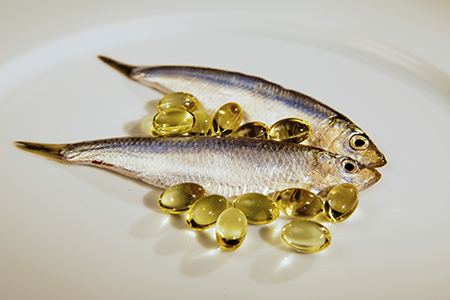
Fish oil supplements could help reduce the risk for type 2 diabetes, new research suggests.
The supplements, also known as omega-3 fatty acids, increase levels of a hormone called adiponectin that’s linked to insulin sensitivity, Harvard researchers found. Higher levels of this hormone in the bloodstream have also been linked to a lower risk for heart disease.
read all at Drugs.com
http://www.drugs.com/news/fish-oil-pills-might-cut-diabetes-risk-researchers-say-44671.html
Sanofi and Regeneron’s dupilumab for asthma. The partners have unveiled Phase IIa data at the American Thoracic Society meeting in Philadelphia on dupilumab, an interleukin 4 receptor which modulates signalling of both the IL-4 and IL-13 proteins, which are linked to inflammation

Dupilumab is a monoclonal antibody designed for the treatment of atopic diseases.It binds to the alpha subunit of the interleukin-4 receptor. Through blockade of IL-4R alpha, dupilumab modulates signaling of both the IL-4 and IL-13 pathway, which have been implicated in the pathophysiology of allergic disease.
This drug was developed by Regeneron Pharmaceuticals.
On May 21/2013 mid-stage data was presented at the American Thoracic Society meeting and published in the NEJM demonstrating a 87% reduction in asthma exacerbations in patients with moderate-to-severe allergic asthma.
The long-standing alliance between Sanofi and Regeneron looks to have scored another clinical goal, this time with dupilumab for asthma.
The partners have unveiled Phase IIa data at the American Thoracic Society meeting in Philadelphia on dupilumab, an interleukin 4 receptor which modulates signalling of both the IL-4 and IL-13 proteins, which are linked to inflammation. The 104-patient study enrolled 104 patients with moderate-to-severe, persistent asthma that was not well controlled with inhaled glucocorticosteroids (ICS) and long-acting beta agonist (LABA) therapy, and who had elevated blood or sputum eosinophils
FDA Gives Pediatric Approval to Japanese Encephalitis Vaccine
Intercell Announces Pediatric Approval of its Japanese Encephalitis Vaccine in the U.S.
read at
http://www.pharmalive.com/fda-gives-pediatric-approval-to-japanese-encephalitis-vaccine
B4U22AHZFPTW
DR ANTHONY MELVIN CRASTO

ORGANIC SPECTROSCOPY


 New Drug Approvals