
FLAGS AND HITS
 DRUG APPROVALS BY DR ANTHONY MELVIN CRASTO
 FACEBOOK
...................................................................Join me on twitter
FACEBOOK
...................................................................Join me on twitter
 ..................................................................Join me on google plus
 Googleplus
MYSELF



ANTHELMINTIC ACTIVITY OF THE LEAVES OF MORUS ALBA LINN
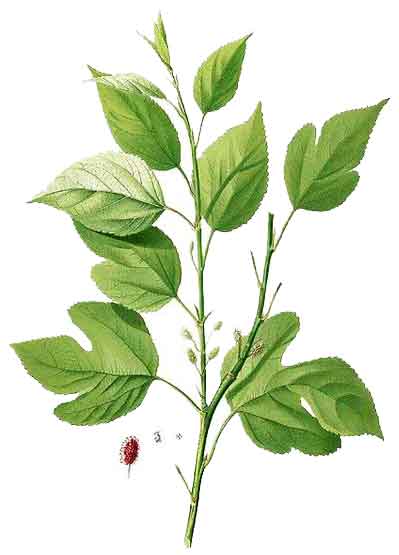
桑 Morus alba Linn.
Abstract
Present study was carried out to scientifically evaluate the anthelmintic potential of the methanolic extract of leaves of the plant morus alba(L) as it is used by the tribal community of different states and this is also highlighted in traditional uses of the plant.

Activity was performed using adult earthworms and albendazole was used as a standard. Various doses (2.5, 5, 10 mg/ml) of methanolic extracts of leaves were used for the study.

From results of the study it is clear that potency of the extracts is inversely proportional to the time taken for paralysis and death of worms.

All the tested doses showed significant activity (P<0.01) compared to the standard and activity also confirms dose dependant nature of the extracts.

read all at
http://www.pharmatutor.org/articles/anthelmintic-activity-leaves-of-morus-alba-linn

桑 Morus alba Linn.
A BRIEF REVIEW ON TREATMENT & PREVENTION OF CANCER

ABSTRACT

The rate of cancer rise is dramatic, doubling in the last 30 years. Furthermore, of the estimated 560,000 cancer victims who would die in 1997, most of them could have prevented their illness had they paid attention to some simple lifestyle factors.
Although the number of cancer deaths continues to rise each year in the U.S., the per capita cancer mortality rate has just recently started to decline. This celebrated small decline was first announced by the National Cancer Institute in late 1996, but a careful retrospective review of the data indicated that the per capita cancer death rate peaked in 1991 and has ever so slowly declined thereafter.
What was the reason for this decline? Not improved cancer treatments, but cancer prevention itself emerges as the cause for this good news. A national commitment to the prevention of cancer, largely replacing reliance on hopes for universal cures.
read all at
http://www.pharmatutor.org/articles/brief-review-on-treatment-prevention-of-cancer


The US Food and Drug Administration (FDA) has approved the GlaxoSmithKline vaccine Flulaval Quadrivalent, used to treat seasonal influenza.

FDA backs second GSK flu vaccine
The US Food and Drug Administration (FDA) has approved the GlaxoSmithKline vaccine Flulaval Quadrivalent, used to treat seasonal influenza.
READ ALL AT
http://www.pharmaceutical-technology.com/news/newsfda-backs-second-gsk-flu-vaccine?WT.mc_id=DN_News


to-BBB Receives IND Approval for Novel Brain Cancer Drug, 2B3-101 Company Proceeds Into Phase IIa Clinical Trials With Inclusion of US Medical Centers
LEIDEN, the Netherlands–(BUSINESS WIRE)–to-BBB, the brain drug delivery company, is pleased to announce the successful completion of its 2B3-101 Phase I clinical trial in brain cancer patients, safely reaching clinically effective dosages. to-BBB is now ready to proceed to the Phase IIa part of this trial, treating patients with brain metastases from breast cancer, small cell lung cancer and melanomas, as well as patients with primary, malignant brain cancers (recurrent gliomas). With no commercially available treatments for brain metastases of solid tumors and no effective treatment alternatives in recurrent gliomas, 2B3-101 is targeting a high unmet medical need. READ ALL AT
http://www.pharmalive.com/to-bbb-receives-ind-approval-for-brain-cancer-drug
Trace Metals Debate-Contentious new guidelines on pharmaceutical impurities will force the drug industry to change testing strategies.
 |
|
|
In 1905, the U.S. Pharmacopeial Convention, the nonprofit standards-setting organization known as USP, introduced a method to check for heavy metals in U.S. pharmaceuticals. More than 100 years later, drug manufacturers still use the same chemistry to determine whether the level of 10 metal impurities is acceptable in their products.
read all at
 Serving The Chemical, Life Sciences & Laboratory Worlds . the link is
http://cen.acs.org/articles/91/i33/Trace-Metals-Debate.html
Supernus Announces Final FDA Approval and Upcoming Launch of Trokendi XR

Topiramate
ROCKVILLE, Md., Aug. 19, 2013 (GLOBE NEWSWIRE) — Supernus Pharmaceuticals, Inc., a specialty pharmaceutical company, received final approval from the Food & Drug Administration (the “FDA”) for Trokendi XR, a novel once-daily extended release formulation of topiramate for the treatment of epilepsy. The company expects to launch the product and for it to be available in pharmacies over the next few weeks.
The approval letter states that the FDA has completed its review of the application and that Trokendi XR is approved effective August 16, 2013 for use as recommended in the agreed-upon labeling. The FDA granted a waiver for certain pediatric study requirements and a deferral for submission of post-marketing pediatric pharmacokinetic assessments that are due in 2019 followed by clinical assessments in 2025.
“We are very excited about the approval of Trokendi XR and its upcoming launch. This is excellent news for Supernus, its shareholders, and patients with epilepsy. We remain committed to the epilepsy community and very much look forward to now having two products, Trokendi XR and Oxtellar XR, available to patients,” said Jack Khattar, Chief Executive Officer, President and Director of Supernus.
About Trokendi XR
Trokendi XR is a novel once- daily extended release formulation of topiramate. Trokendi XR is an antiepileptic drug (AED) indicated for initial monotherapy in patients 10 years of age and older with partial onset or primary generalized tonic-clonic seizures; adjunctive therapy in patients 6 years of age and older with partial onset or primary generalized tonic-clonic seizures, and adjunctive therapy in patients 6 years of age and older with seizures associated with Lennox-Gastaut syndrome. The product will be available in 25mg, 50mg, 100mg and 200mg extended-release capsules.
About Supernus Pharmaceuticals, Inc.
Supernus Pharmaceuticals, Inc. is a specialty pharmaceutical company focused on developing and commercializing products for the treatment of central nervous system, or CNS, diseases. The Company has one marketed product for epilepsy, Oxtellar XR (extended-release oxcarbazepine), and one approved product for epilepsy, Trokendi XR (extended-release topiramate). The Company is also developing several product candidates in psychiatry to address large market opportunities in ADHD, including ADHD patients with impulsive aggression. These product candidates include SPN-810 for impulsive aggression in ADHD and SPN-812 for ADHD
OTHER
Topiramate (brand name Topamax) is an anticonvulsant (antiepilepsy) drug. It was most recently approved for weight loss by the FDA in combination with phentermine. It has been used off-label for this purpose before FDA approval was obtained. It was originally produced by Ortho-McNeil Neurologics and Noramco, Inc., both divisions of the Johnson & Johnson Corporation. It was also recently approved in a combination medication used for weight loss in late 2012. This medication was discovered in 1979 by Bruce E. Maryanoff and Joseph F. Gardocki during their research work at McNeil Pharmaceutical. Topiramate was first approved by the US FDA in 1996. Generic versions are available in Canada and these were approved by the Food and Drug Administration (FDA) in September 2006. Mylan Pharmaceuticals was recently granted final approval for generic topiramate 25, 100, and 200 mg tablets and sprinkle capsules by the FDA for sale in the United States. 50 mg tablets were granted tentative approval. The last patent for topiramate in the U.S. was for pediatric use; this patent expired on February 28, 2009.
Environmental toxins and poor health: pharmaceuticals are part of the toxic stew we live in

I consider my illness and that of many with protracted psychiatric drug withdrawal syndromes to be, in large part, one of environmental toxicity…drugs and all the crap in the air and processed foods we eat…etc…leading to chronic illness, yes. Pharmaceuticals put me seriously over the edge…but this can happen to people who’ve not taken massive doses of prescribed neurotoxins too. I have come to know a lot about those with chronic illness through my networking online. Pharmaceuticals often make people’s issues much more complicated.
This is why I write so much about food and the environment. This is how we are deeply holistic and part of the ecosystem and all that which is around us. Like I like to say, everything matters.
There was an important article in Scientific American interviewing Linda Birnbaum
How much of human disease is due to environmental exposures?The estimates vary, and it depends on…
View original post 302 more words
India approved 26 drugs without clinical trials
New Delhi: Officials in the Indian health ministry have admitted that about 26 new drug molecules were given approval since 2010 without conducting any proper clinical trials on local population to test their safety and efficacy. Despite strict instructions by the parliamentary standing committee on health, so many new drugs have continued to make their way into the market.
19 August 2013 Officials in the Indian health ministry has accepted that about 26 new drugs were permitted for sale in the country without holding any clinical trials on Indian patients to test their safety and efficacy –
Read more at: http://www.biospectrumasia.com/biospectrum/news/193708/india-approved-26-drugs-clinical-trials#.UhHPwaI3CSo

DR A.M. CRASTO
Astellas receives approval of Irribow in Japan

ramosetron
19 August 2013
Irribow OD Tablet is a drug for treating IBS-D developed using WOWTAB which is one of the Astellas’ proprietary drug delivery technologies.
Singapore: Astellas Pharma has obtained the marketing approval of Irribow OD 1 Tablets 2.5µg / 5µg (generic name: ramosetron hydrochloride) in Japan. They were approved for an additional formulation of Irribow Tablets with the indication of diarrhea-predominant irritable bowel syndrome (IBS-D ) in male.
Read more at: http://www.biospectrumasia.com/biospectrum/news/193695/astellas-receives-approval-irribow-japan#.UhHORqI3CSo
Ramosetron (INN) is a serotonin 5-HT3 receptor antagonist for the treatment of nausea and vomiting.[1] Ramosetron is also indicated for a treatment of “diarrhea-predominant irritable bowel syndrome in males”.[2] In India it is marketed under the brand name of“IBset”.
It is only licensed for use in Japan and selected Southeast Asian countries. In Japan it is sold under the tradename Iribo (イリボー). [3] Elsewhere it is commonly sold under the tradename Nasea and in India as Nozia (300 mcg/ml Inj. & 100 mcg Tab.) [4]
- Fujii Y, Saitoh Y, Tanaka H, Toyooka H (February 2000). “Ramosetron for preventing postoperative nausea and vomiting in women undergoing gynecological surgery”.Anesth. Analg. 90 (2): 472–5. doi:10.1097/00000539-200002000-00043.PMID 10648342.
- http://www.astellas.com/en/corporate/news/detail/astellas-launches-irribow-for.html
- Summary in Japanese. Retrieved on September 4, 2012.
- Abridged prescribing information – Nasea (MIMS Philippines). Retrieved on June 13, 2008.
IV Fish Oil Reverses Complicated Liver Disease

A clinical trial has found that, compared with soybean oil, a limited duration of fish oil in the intravenous nutrition of children with intestinal failure is safe and effective in reversing the complication known as intestinal failure-associated liver disease. read all this at
DR ANTHONY MELVIN CRASTO

ORGANIC SPECTROSCOPY


 New Drug Approvals