
FLAGS AND HITS
 DRUG APPROVALS BY DR ANTHONY MELVIN CRASTO
 FACEBOOK
...................................................................Join me on twitter
FACEBOOK
...................................................................Join me on twitter
 ..................................................................Join me on google plus
 Googleplus
MYSELF



Discovery of Imigliptin, a Novel Selective DPP-4 Inhibitor for the Treatment of Type 2 Diabetes


- CAS OF FREE BASE 1314944-07-4
- C21 H24 N6 O
- Benzonitrile, 2-[[7-[(3R)-3-amino-1-piperidinyl]-2,3-dihydro-3,5-dimethyl-2-oxo-1H-imidazo[4,5-b]pyridin-1-yl]methyl]-

http://www.google.com/patents/EP2524917A1?cl=en

(R)-2-[[7-(3-aminopiperidin-1-yl)-3,5-dimethyl-2-oxo-2,3-dihydro-1H-imidazo[4,5-b]pyridin-1-yl]methyl]benzonitrile AS TFA SALT
- 1314944-08-5 CAS
- C21 H24 N6 O . C2 H F3 O2
- Benzonitrile, 2-[[7-[(3R)-3-amino-1-piperidinyl]-2,3-dihydro-3,5-dimethyl-2-oxo-1H-imidazo[4,5-b]pyridin-1-yl]methyl]-, 2,2,2-trifluoroacetate (1:1)
………………………………………………………………………….
- C19 H19 N5 O2
- Benzonitrile, 2-[[7-[(3R)-3-amino-1-piperidinyl]-2-oxooxazolo[5,4-b]pyridin-1(2H)-yl]methyl]-
………………………………………
SEE POLYMORPHS
CN 102863440
http://www.google.com/patents/CN102863440A?cl=en
Dipeptidyl peptidase-IV (DPP-IV) inhibitors are a new generation of oral treatment of type 2 diabetes by enhancing the role of incretin activity, a non-insulin therapy. With conventional medicine for treating diabetes compared, DPP-IV inhibitors have not weight gain and edema and other adverse reactions. [0003] The compound shown in formula ⑴ (R) -2 – [[7 – (3 – amino-piperidine-I-yl) -3,5 – dimethyl-2 – oxo-2 ,3 – dihydro- -IH-imidazo [4,5-b] pyridin-I-yl] methyl] benzonitrile (referred to as the specification of compound A, in the patent application CN201010291056. 9 already described) is a DPP-IV inhibitor compounds , the DPP-IV has a strong inhibitory effect and high selectivity.
V
[0004] formula ⑴

[0005] In the crystalline drug development research is very important, compound crystal form, will result in its stability, solubility and other properties are different. Therefore, the inventors of the compound or its salt polymorph A lot of research carried out, whereby it was confirmed, and the invention of the compound A crystalline salt.
3, Invention
[0006] The object of the present invention is to solve the above problems and to provide better stability, better maneuverability, good bioavailability and solubility of the compound A or a salt thereof and method for preparing the crystalline form.
[0007] The present invention provides formula (I), the compound A dihydrochloride salt polymorph I: using Cu-K α radiation, to angle 2 Θ (°) represents an X-ray powder diffraction at 8. 7 ± 0. 2 °, 19.4 ± 0.2 °, 23. 5 ± 0. 2 °, 27. 2 ± 0. 2 ° at a characteristic peaks.
Butterfly NC N
[0008] formula ⑴

[0009] A compound of the dihydrochloride salt polymorph I, with Cu-Ka radiation, to angle 2 Θ (°) represents an X-ray powder diffraction peaks in addition to the features described above, it also at 12. 5 ± 0. 2 °, 22. 5 ± 0. 2 °, 25. 5 ± 0.2 ° at a characteristic peaks.
[0010] A compound of the dihydrochloride salt polymorph I, with Cu-κα exposed to radiation angle 2 Θ (°) represents an X-ray powder diffraction peaks in addition to the features described above, it also at 11.7 ± 0.2 °, 14.6 ± 0.2 °,
26. O ± 0.2 ° at a characteristic peak.
[0011] The present invention also provides the compound A dihydrochloride Preparation of polymorph I.
[0012] Compound A was dissolved in an organic solvent, and temperature, was added dropwise a stoichiometric ratio of hydrochloric acid, after the addition was complete stirring, filtered and dried to give the dihydrochloride salt of Compound A crystalline form I.
……………………………………………….
http://www.google.com/patents/EP2524917A1?cl=en
0r
WO 2011085643
-
Diabetes mellitus is a systemic chronic metabolic disease caused by a blood glucose level higher than normal level due to loss of blood glucose control. It is basically classified into four categories, including: type I (insulin-dependent) and type II (non-insulin-dependent), the other type and gestational diabetes. Type I and type II diabetes are primary diabetes, which are the two most common forms caused by the interaction of genetic and environmental factors. The cause of diabetes is very complicated, but in the final analysis, is due to absolute or relative insulin deficiency, or insulin resistance. It is characterized by the metabolic disorder of carbohydrate, protein, fat, electrolytes and water caused by absolute or relative insulin deficiency and the reduced sensitivity of target cells to insulin.
-
In recent years, because of the improvement of living level, changes in the diet structure, the increasingly intense pace of life and lifestyle of less exercise and many other factors, the global incidence of diabetes is rapidly increasing, so that diabetes has become the third chronic disease which has a serious threat to human health next to tumor and cardiovascular diseases. Presently, the number of the patients suffering from diabetes has exceeded 120 million in the world, and the number in our country is the second largest in the world. According to statistics, up to 40 million people have been diagnosed as diabetes in China, and the number of the patients is increasing at a rate of 1 million per year. Among them, patients having type I and type II diabetes accounted for 10% and 90% respectively. Diabetes has become the increasingly concerned public health issue.
-
The main drugs currently used for the treatment of type I diabetes are insulin preparations and their substitutes; for the treatment of type II diabetes, the main drugs are oral hypoglycemic agents, generally divided into sulfonylureas, biguanides, traditional Chinese medicine preparations, other hypoglycemic agents, and auxiliary medication. Although these drugs have good effects, they can not maintain long-term efficacy in reducing the high blood glucose, and can not effectively alleviate the condition against the cause of diabetes. Many of the anti-diabetic drugs can well control the blood glucose at the beginning, but their efficacy can not be maintained when the treatment using such drugs are continuously used. It is one of the main reasons why combination therapies or drugs in different classes are used. However, the existing anti-diabetic drugs is lack of long-term efficacy mainly because their mechanism of action is to increase the sensitivity of target tissues to insulin action or improve insulin-producing activity of pancreas, but these drugs have no targeted effect to the reduced function of the pancreatic β cell, which is the fundamental cause of diabetes.
-
Dipeptidyl peptidase-IV (DPP-IV) is widely present in the body, and is a cell surface protein involved in a variety of biological functions. It can degrade many active enzymes in vivo, such as glucagon like peptide-1 (GLP-1), glucose-dependent insulinotropic polypeptide (GIP), neuropeptide, substance P, and chemokines and the like. The deficiency of GLP-1 and GIP is the main cause resulting in type II diabetes (i.e., non-insulin-dependent diabetes). DPP-IV inhibitor is a new generation of anti-diabetic drug. It protects the activity of GLP-1, GIP and the like, stimulates the secretion of insulin, lowers blood glucose level by inhibiting the activity of DPP-IV, and does not cause hypoglycemia, weight gain, edema and other side effects. Its effect for lowering blood glucose level stops when a normal blood glucose level has been reached, and hypoglycemia will not occur. It can be used for a long term, and can repair the function of β-cells.
-
Sitagliptin is the first marketed DPP-IV inhibitor. It rapidly became a “blockbuster” drug after marketed in 2006 by Merck. The FDA approved the saxagliptin developed by AstraZeneca and Bristol-Myers Squibb on July 31, 2009. SYR-322 developed by Takeda has an activity and selectivity better than that of sitagliptin and saxagliptin, and is currently in the phase of pre-registration. In addition, there are three drugs in clinical phase III: BI-1356 (linagliptin) developed by Boehringer Ingelheim, PF-734200 (gosogliptin) developed by Pfizer Inc, and PHX1149 (dutogliptin) developed by Phenomix Inc. Nine drugs are in the clinical phase II, and seven drugs are in clinical phase I.


-
However, the limited varieties of drugs can not satisfy the clinical requirements. Accordingly, there is an urgent need for development of many DPP-IV inhibitor drugs to satisfy the clinical use.


- Example 17 The preparation of (R)-2-[[7-(3-aminopiperidin-1-yl)-3,5-dimethyl-2-oxo-2,3-dihydro-1
- -imidazo[4,5-b]pyridin-1-yl]methyl]benzonitrile (Compound 17) trifluoroacetate

(1)2,4-dichloro-6-methyl-3-nitropyridine
-

-
6-methyl-3-nitropyridin-2,4-diol (1.7 g, 10 mmol) was dissolved in 10 mL POCl3, heated to 95°C, and stirred for 1.5 h. The excess POCl3 was removed through centrifugation. 100 mL ice water was carefully added. The reaction solution was extracted with ethyl acetate (80 mL×3). The organic phase was combined, washed with saturated brine, dried with anhydrous Na2SO4 and spinned to dryness to afford 1.773 g yellow powder with a yield of 85.7 %.

(2) (R)-1-(2-chloro-3-nitro-6-methylpyridin-4-yl)piperidin-3-yl tert-butyl carbamate
-

-
[0216]The specific operation referred to the step (1) described in Example 1 for details. 0.96 g 2,4-dichloro-6-methyl-3-nitropyridin (4.64 mmol), and 0.933 g R-tert-butylpiperidin-3-yl-carbamate (4.66 mmol) were charged to afford 1.1 g titled product with a yield of 63.9 %.

(3) (R)-1-(2-methylamino-3-nitro-6-methylpyridin-4-yl)piperidin-3-yl tert-butyl carbamate
-

-
The specific operation referred to the step (2) described in Example 1 for details, 1.1 g (R)-1-(2-chloro-3-nitro-6-methylpyridin-4-yl)piperidin-3-yl tert-butyl carbamate (2.97 mmol), and 5 mL 27 % solution of methylamine in alcohol were charged to afford 1.0 g titled product with a yield of 92.1 %.

(4) (R)-1-(2-methylamino-3-amino-6-methylpyridin-4-yl)piperidin-3-yl tert-butyl carbamate
-

-
The specific operation referred to the step (3) described in Example 1 for details. 1.0 g (R)-1-(2-methylamino-3-nitro-6-methylpyridin-4-yl)piperidin-3-yl tert-butyl carbamate (2.74 mmol), and 0.1 g 10% Pd-C were charged to afford 0.873 g titled product with a yield of 95 %.

(5)(R)-1-(3,5-dimethyl-2-oxo-2,3-dihydro-1
H
-

-
The specific operation referred to the step (4) described in Example 1 for details. 873 mg (R)-1-(2-methytamino-3-amino-6-methylpyridin-4-yl)piperidin-3-yl tert-butyl carbamate (2.60 mmol), 849 mg triphosgene (2.86 mmol), and 1.39 mL triethylamine (10.4 mmol) were charged to afford 0.813 g titled product with a yield of 86.5 %.
- -imidazo[4,5-b]pyridin-7-yl)piperidin-3-yl tert-butyl carbamate

(6)(R)-1-[1-(2-cyanobenzyl)-3,5-dimethyl-2-oxo-2,3-dihydro-1
H
-

-
The specific operation referred to the step (5) described in Example 1 for details.813 mg (R)-1-(3,5-dimethyl-2-oxo-2,3-dihydro-1H-imidazo[4,5-b]pyridin-7-yl)piperidin-3-yl tert-butyl carbamate (2.25 mmol), 441 mg 2-(bromomethyl)benzonitrile (2.25 mmol), and 621 mg potassium carbonate (4.50 mmol) were charged to afford 0.757 g titled product with a yield of 70.5%.
- -imidazo[4,5-b] pyridin-7-yl]piperidin-3-yl tert-butyl carbamate

(7)(R)-2-[[7-(3-aminopiperidin-1-yl)-3,5-dimethyl-2-oxo-2,3-dibydro-1-imidazo [4,5-b]pyridin-1-yl]methyl]benzonitrile trifluoroacetate
-

-
The specific operation referred to the step (6) described in Example 1 for details. 750 mg (R)-1-[1-(2-cyanobenzyl)-3,5-dimethyl-2-oxo-2,3-dihydro-1H-imidazo[4,5-b]pyridin -7-yl]piperidin-3-yl tert-butyl carbamate (1.57 mmol), and 8.5 mL trifluoroacetic acid were charged to afford 0.680 g titled product with a yield of 88.3%.
Molecular formula: C21H24N6O Molecular weight: 376.45 Mass spectrum (M+H): 377.2
1H-NMR(D2O, 400 MHz): δ 7.64 (d, 1H), 7.42 (t, 1H), 7.29 (d, 1H), 6.93(d, 1H), 6.76(s, 1H), 5.39(d, 1H), 5.25(d, 1H), 3.27(s, 3H), 3.04(m, 1H), 2.90(m, 2H), 2.80-2.60 (m, 2H), 2.48 (m, 1H), 2.32 (s, 3H), 1.90 (m, 1H), 1.54 (m, 1H), 1.32 (m, 1H).
…………………….
PAPER
We report our discovery of a novel series of potent and selective dipeptidyl peptidase IV (DPP-4) inhibitors. Starting from a lead identified by scaffold-hopping approach, our discovery and development efforts were focused on exploring structure–activity relationships, optimizing pharmacokinetic profile, improving in vitro and in vivo efficacy, and evaluating safety profile. The selected candidate, Imigliptin, is now undergoing clinical trial.
Discovery of Imigliptin, a Novel Selective DPP-4 Inhibitor for the Treatment of Type 2 Diabetes
http://pubs.acs.org/doi/abs/10.1021/ml5001905
synthesis………http://pubs.acs.org/doi/suppl/10.1021/ml5001905/suppl_file/ml5001905_si_001.pdf
data for LEAD compd 1
mono-TFA solvate (160mg, 71%).
Start of the first 4 volunteers in Imigliptin Dihydrochloride Phase I clinical trial
2013-10-18 16:31:08 Copyfrom: Sihuan Pharmaceutical Holdings Group Ltd.
Sitagliptin (sitagliptin) is the first one listed on the DPP-IV inhibitor, in 2006 after the listing quickly became a blockbuster for Merck. July 31, 2009, FDA has approved AstraZeneca and Bristol-Myers Squibb developed saxagliptin (saxagliptin) listed. Takeda (Taketa)’s SYR-322 activity and selectivity are superior to sitagliptin and saxagliptin, is currently in pre-registration. In addition, there are three stages of drug is in phase III: Bo Mingge Yan Gehan’s BI-1356 (Iinagliptin), Pfizer’s PF-734200 (gosogliptin), phenomix company PHX 1149 (dutogliptin) [0007]
In phase II drug has nine, in phase I of seven.
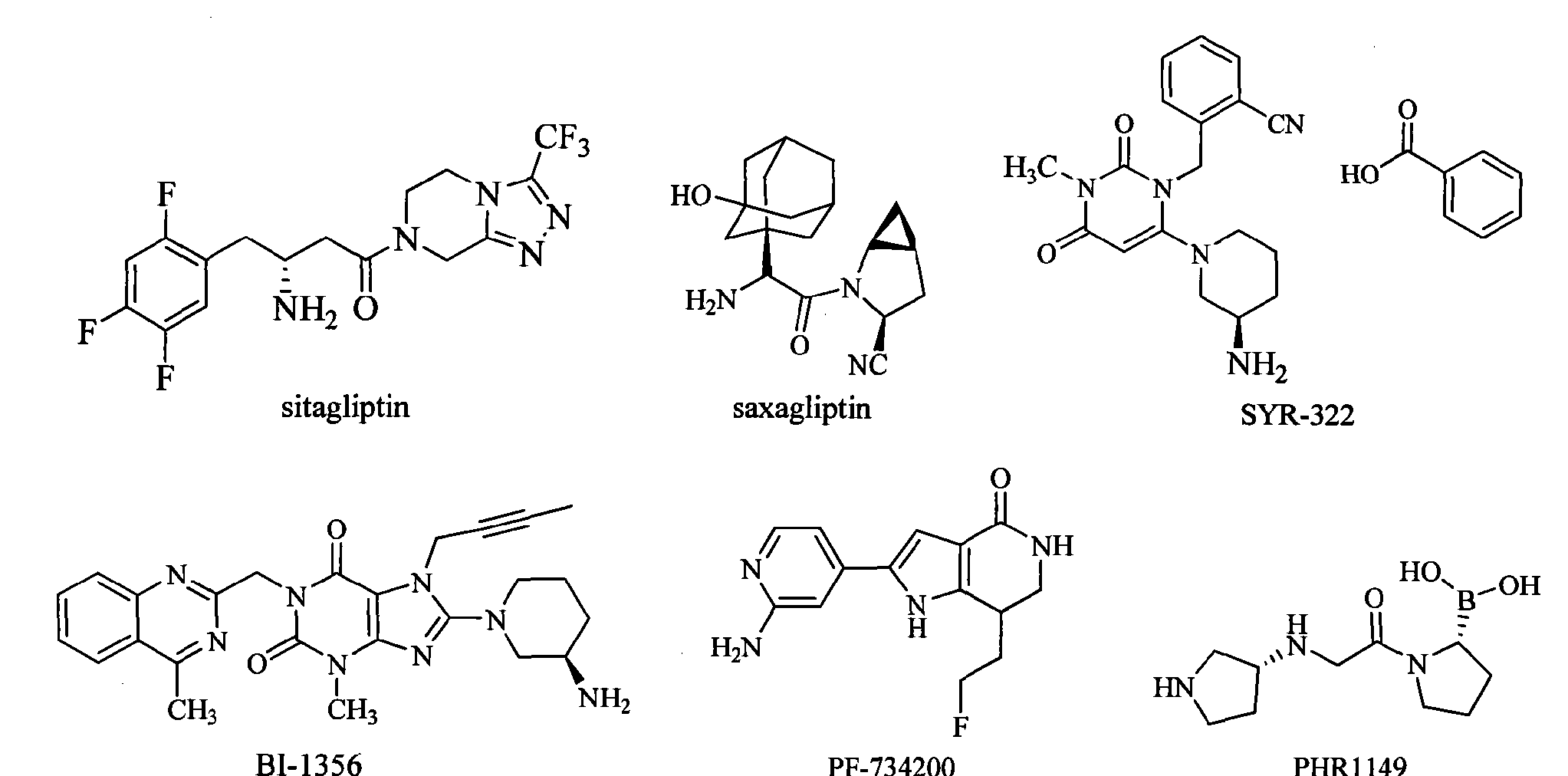
[0008] However, the limited varieties of drugs, can not meet the clinical needs, the urgent need to develop more of the DPP-IV inhibitor drugs to meet the clinical medication.
Example 17 (R)-2-ΓΓ7-(3 ~ amino-piperidin-yl) -3, 5_ dimethyl _2_ oxo, 3_ dihydro-IH-blind half and P “4,5 Pyridine-b1-i-a] benzonitrile Jiamou 1 (Compound 17) The system of the
[0451]

[0452] (1) 2,4 – dichloro-6 – methyl-nitropyridine _3_
[0453]

[0454] A mixture of 6 – methyl-3 – nitropyridine 2,4 – diol (1. Lg, IOmmol) dissolved in IOmL POCl3, heated to 95 ° C, stirred for 1.5 hours, rotating to excess POCl3 , ice water was added carefully IOOmL, extracted with ethyl acetate (80mLX3), the combined organic phases washed with saturated brine, dried over anhydrous Na2SO4, rotary done 1. 773g yellow powder, yield 85.7%.
[0455] (2) (R)-I-(2 – chloro-nitro _6_ _3_ _4_ picoline) piperidin-_3_ t-butyl carbamate
[0456]

[0457] Specific operation in Reference Example 1 (1), cast _ 2,4 dichloro-6 – methyl-_3_ nitropyridine 0. 96g (4. 64mmol), R-tert-butyl piperidin-_3_ yl – carbamate 0. 933g (4. 66mmol), to give the product 1. Ig, yield 63.9%.
[0458] (3) (R)-I-(2 – methylamino-nitro _6_ _3_ _4_ picoline) piperidin-_3_ t-butyl carbamate
[0459]

[0460] Specific operation in Reference Example 1 (2), cast (R) -1 – (2 – chloro-nitro _6_ picoline _3_ _4_ yl)-piperidin-3 – tert-butyl imino ester 1. Ig (2. 97mmol), 27% methylamine alcohol solution 5mL, to give the product 1. Og, yield 92.1%.
[0461] (4) (R)-I-(2 – methyl amino -3 – diamino-6 – methylpyridine _4_ yl) piperidin-_3_ t-butyl carbamate
[0462]

[0463] Specific operation in Reference Example 1 (3), cast (R)-l_ (2 – methylamino-methyl-4 _3_ nitro _6_ – yl) piperidin-3 – tert- butyl carbamate 1.0g (2. 74mmol), 10% Pd-C 0. lg, to give the product 0. 873g, 95% yield.
[0464] (5) (R)-I-(3,5 – dimethyl-2 – oxo-2 ,3 – dihydro-IH-imidazo [4,5 _b] pyridin _7_ yl)
Piperidin-3 – t-butyl carbamate
[0465]

[0466] Specific operation in Reference Example 1 (4), cast ((R)-l_ (2 – methylamino-4 _3_ methyl amino _6_ – yl) piperidin-3 – yl t-butyl carbamate 873mg (2. 60mmol), triphosgene 849mg (2. 86mmol), triethylamine 1. 39mL (10. 4mmol), to give the product 0. 813g, yield 86.5% 0
[0467] (6) (R)-l-[l_ (2 – cyano-benzyl) -3,5 _ dimethyl-2 – oxo-2 ,3 – dihydro-IH-imidazo [4, 5 -b] pyridin-7 – yl] piperidin-3 – t-butyl carbamate
[0468]

[0469] Specific operation in Reference Example 1 (5), cast (R)-I-(3,5 – dimethyl-2 – oxo-2 ,3 – dihydro-IH-imidazo [4, 5-b] pyridin-7 – yl) piperidin-3 – t-butyl carbamate 813mg (2. 25mmol), 2_ (bromomethyl) benzonitrile 441mg (2. 25mmol), potassium carbonate 621mg (4. 50mmol), to give the product 0. 757g, yield 70.5%.
[0470] (7) (R) -2 – [[7 – (3 – amino-piperidin-1 – yl) -3,5 – dimethyl-2 – oxo-2 ,3 – dihydro-IH- imidazo [4,5-b] pyridin-1 – yl] methyl] benzonitrile
[0471]

[0472] Specific operation in Reference Example 1 (6), cast (R)-l-[l_ (2 – cyano-benzyl) -3,5-dimethyl-2-_ – oxo – two H-IH-imidazo [4,5-b] pyridin-7 – yl] piperidin-3 – t-butyl carbamate 750mg (l. 57mmol), trifluoroacetic acid 8. 5mL, 0 to give the product . 680g, yield 88.3%.
[0473] MF = C21H24N6O MW: 376 * 45 MS (M + H): 377. 2
[0474] 1H-NMR (D2OdOOMHz): δ 1. 32 (1Η, m), 1. 54 (1H, m), 1. 90 (1H, m), 2. 32 (3H, s), 2. 48 (1H, m), 2. 80-2. 60 (m, 2H), 2. 90 (2H, m), 3. 04 (1H, m), 3. 27 (3H, s), 5. 25 ( 1H, d), 5. 39 (1H, d), 6. 76 (1H, s), 6. 93 (1H, d), 7. 29 (1H, d), 7. 42 (1H, t), 7. 64 (1H, d) ·
| WO2004050658A1 * | Dec 3, 2003 | Jun 17, 2004 | Boehringer Ingelheim Pharma | Novel substituted imidazo-pyridinones and imidazo-pyridazeiones, the production and use thereof as medicaments |
| WO2009099594A1 * | Feb 2, 2009 | Aug 13, 2009 | Luke W Ashcraft | Certain chemical entities, compositions and methods |
| WO2011085643A1 * | Jan 17, 2011 | Jul 21, 2011 | Kbp Biomedical Co., Ltd. | Fused pyridine derivatives |
| CN101228164A * | May 11, 2006 | Jul 23, 2008 | 布里斯托尔-迈尔斯·斯奎布公司 | Pyrrolopyridine-based inhibitors of dipeptidyl peptidase IV and methods |
Total Synthesis and Biological Studies of TMC-205 and Analogues as Anticancer Agents and Activators of SV40 Promoter

SYNTHESIS…………..http://pubs.acs.org/doi/suppl/10.1021/ml500025p/suppl_file/ml500025p_si_001.pdf
J Antibiot 2001, 54(8): 628
Inovio Kicks Off Study of Cervical Cancer Immunotherapy INO 3112

Inovio Kicks Off Study of Cervical Cancer Immunotherapy
Inovio Pharmaceuticals Inc. announced it has initiated a Phase 1/2a clinical trial to evaluate safety, immunogenicity, clinical responses and disease-free survival of its DNA immunotherapy product, INO-3112, in treating human papillomavirus (HPV)-associated cervical cancer. Read more…
Inovio Pharmaceuticals Inc. announced it has initiated a Phase 1/2a clinical trial to evaluate safety, immunogenicity, clinical responses and disease-free survival of its DNA immunotherapy product, INO-3112, in treating human papillomavirus (HPV)-associated cervical cancer. INO-3112 is a combination of Inovio’s lead active immunotherapy product, VGX-3100, and its proprietary immune activator expressing interleukin-12 (IL-12). VGX-3100 is currently being evaluated in a randomized Phase 2 efficacy trial for the treatment of high grade cervical dysplasia (pre-cancer).
New e-book: Case Studies in Sample Storage
New e-book: Case Studies in Sample Storage
Learn how lab professionals solved their sample storage problems at leading research organizations. Case studies include adapting sample storage for changing demands in compound management and incorporating sample libraries from acquired companies.
DOWNLOAD E-BOOK
About Hepatitis

Here are the most important information about hepatitis.
Five different hepatitis viruses have been identified: type A; type B; type C; type D, or delta virus; and type E. Type A is probably the most prevalent type of viral hepatitis worldwide, followed by types B, E, C, and D.
Hepatitis A and E are transmitted through fecally contaminated food or water. Other modes of transmission include needle sharing among intravenous drug abusers; sexual contact; maternal transmission; and transmission by blood transfusion.
A simple blood test is used to determine that a person has one or more of the different types of hepatitis.
Acute hepatitis is typically characterized by flu-like symptoms (including fever, headaches, fatigue, nausea and vomiting) and jaundice. Chronic hepatitis is often asymptomatic.
Vaccines are available to protect against hepatitis A and B. Additionally, immune globulin for hepatitis A or hepatitis B is recommended when someone has been exposed…
View original post 61 more words
होम्योपैथिक दवा ; मूलेन आयल ; कान के सभी रोगों की अचूक और सटीक दवा ; MULLEIN OIL ; THE HOMOEOPATHIC REMEDIY FOR ALL “EAR” DISORDERS ; THE MOST SAFEST NATURAL REMEDY

होम्योपैथिक चिकित्सा विग्यान मे ऐसी बहुत सी दवाओ की भरमार और बहुतायत है जो कठिन से कठिन और लाइलाज बीमारी के इलाज के लिये परम उपयोगी है /
लेकिन समस्या यह है कि इतनी प्रभाव्कारी चिकित्सा विग्यान के होते हुये भी लोग और देश के जन मानस को जानकारी के अभाव मे पता ही नही है कि जिन बीमारियो को जिसे वे समझते है कि कोई इलाज नही है, ऐसी इन सभी बीमारियों का इलाज मौजूद है और सटीक और अचूक इलाज है /
होम्योपैथी की MULLEIN OIL एक ऐसी दवा है जिसे “कान” या “INTERNAL EAR ” से सम्बन्धित बीमारियो मे उपयोग कर्ते है /
मूलेन आयल MULLEIN OIL द्वा का नाम है और इसी नाम से बज़ार मे होम्योपैथिक स्टोरर्स मे मिलती है /
यह होम्योपैथिक दवा VERBASCUM नाम के यूरोप महाद्वीप मे पैदा होने वाले एक पेड़ से पैदा होने वाले फूलों से बनाते है / Verbascum…
View original post 378 more words
Biocon chief Kiran Mazumdar-Shaw receives Kiel Institute’s ‘2014 Global Economy Prize’

The award, established in 2005 by the Kiel Institute, is bestowed upon individuals who have been pioneers in finding solutions to global economic problems.
BANGALORE: Biotech major Biocon today said its Chairperson and Managing Director Kiran Mazumdar-Shaw has been awarded the Kiel Institute’s most coveted ‘2014 Global Economy Prize’ for Business.
She was honoured at the institute’s 100th anniversary celebrations at Kiel in Germany.
The award, established in 2005 by the Kiel Institute, is bestowed upon individuals who have been pioneers in finding solutions to global economic problems by strongly influencing and implementing eco ..

With Prof. Thaler and President Sirleaf — in Kiel, Germany.
http://economictimes.indiatimes.com/articleshow/37076858.cms?utm_source=contentofinterest&utm_medium=text&utm_campaign=cppst

Signing the register at the Kiel Institute for the World Economy. — in Kiel, Germany.

With Lord Mayor of Kiel and President Dennis Snower of Kiel Institute. — in Kiel, Germany.

Signed register at the Kiel Institute. — in Kiel, Germany.
AZD 6564 in preclinical for Antifibrinolytics

AZD 6564
SYNTHESIS SUPP INFO…..http://pubs.acs.org/doi/suppl/10.1021/ml400526d/suppl_file/ml400526d_si_001.pdf
NMR PG 16/32 AS ABOVE
 R1 = NEOPENTYL R2=H
5-[(2R,4S)-2-(2,2-Dimethylpropyl)piperidin-4-yl]-1,2-oxazol-3(2H)-one
5-((2R,4S)-2-Neopentylpiperidin-4-yl)isoxazol-3(2H)-one
238.326
C13 H22 N2 O2
Antifibrinolytics
AstraZeneca (Innovator)
SYNTHESIS SUPP INFO…..http://pubs.acs.org/doi/suppl/10.1021/ml400526d/suppl_file/ml400526d_si_001.pdf
NMR PG 16 0F 32
……………………..
Discovery of the fibrinolysis inhibitor AZD6564, acting via interference of a protein – Protein interaction
ACS Med Chem Lett 2014, 5(5): 538
http://pubs.acs.org/doi/abs/10.1021/ml400526d
A class of novel oral fibrinolysis inhibitors has been discovered, which are lysine mimetics containing an isoxazolone as a carboxylic acid isostere. As evidenced by X-ray crystallography the inhibitors bind to the lysine binding site in plasmin thus preventing plasmin from binding to fibrin, hence blocking the protein–protein interaction. Optimization of the series, focusing on potency in human buffer and plasma clotlysis assays, permeability, and GABAa selectivity, led to the discovery of AZD6564 (19) displaying an in vitro human plasma clot lysis IC50 of 0.44 μM, no detectable activity against GABAa, and with DMPK properties leading to a predicted dose of 340 mg twice a day oral dosing in humans.
SUPP INFO…..http://pubs.acs.org/doi/suppl/10.1021/ml400526d/suppl_file/ml400526d_si_001.pdf
Step 9: 5,((2R,4S),2,Neopentylpiperidin,4,yl)isoxazol,3(2H),one

O
L C^O”

METHOD B
O


METHOD C

METHOD D
RIB(OR)2

X = Cl, Br

METHOD E

METHOD F

METHOD G

R1 = 1-methyl-1 H-tetrazol-5-yl and 2-methyl-2H-tetrazol-5-yl
Scheme B. Formation of 5-isoxazol-3-ones
°Y I ‘relative


°Y J ‘relative

………………….
http://www.google.com/patents/EP2417131A1?cl=en
Example 14
5-((2R,4S)-2-Neopentylpiperidin-4-yl)isoxazol-3(2H)-one
Step 1 : Cis-methyl 2-neopentyl-4-(3-oxo-23-dihvdroisoxazol-5-yl)piperidine-l-carboxylate The compound was prepared as described in Example 1, Step 2 starting from cis-methyl 4-(3- ethoxy-3-oxopropanoyl)-2-neopentylpiperidine-l -carboxylate (2.68 g, 8.19 mmol) which resulted in cis-methyl 2-neopentyl-4-(3-oxo-2,3-dihydroisoxazol-5-yl)piperidine-l- carboxylate (1.60 g, 66 %) : IH NMR (400 MHz, cdcl3) δ 0.89 (s, 9H), 1.18 (dd, IH), 1.45 (dd, IH), 1.80 – 1.92 (m, 2H), 1.97 – 2.17 (m, 2H), 2.94 – 3.02 (m, IH), 3.11 – 3.23 (m, IH), 3.71 (s, 3H), 3.88 – 3.99 (m, IH), 4.22 – 4.32 (m, IH), 5.72 (s, IH); m/z (MH+) 297.
Step 2: (2R,4S)-Methyl 2-neopentyl-4-(3-oxo-2,3-dihvdroisoxazol-5-yl)piperidine-l- carboxylate
Following the procedure described in Example 1, Step 3, racemic cis-methyl 2-neopentyl-4- (3-oxo-2,3-dihydroisoxazol-5-yl)piperidine-l -carboxylate (1.60 g, 5.4 mmol) was subjected to chiral separation using Chiralcel IC mobile phase heptane/IP A/FA 60/40/0.1 which resulted in (2R,4S)-methyl 2-neopentyl-4-(3-oxo-2,3-dihydroisoxazol-5-yl)piperidine-l-carboxylate (0.8 g, 2.7 mmol).
Step 3: 5-((2R,4S)-2-Neopentylpiperidin-4-yl)isoxazol-3(2H)-one
5 Starting from (2R,4S)-methyl 2-neopentyl-4-(3-oxo-2,3-dihydroisoxazol-5-yl)piperidine-l- carboxylate (0.8 g, 2.7 mmol) and following the procedure described in Example 1, Step 4 the title compound was obtained (0.44 g, 69 %): 1H NMR (600 MHz, DMSO-d6) δ 0.89 (s, 9H), 1.18 (m, 2H), 1.50 (m, 2H), 1.82-1.90 (m, 2H), 2.70-2.85 (m, 3H), 3.08 (m, IH), 5.71 (s, IH). [α]20 D +43.8 (MeOH/H2O 1:1, c = 1); HRMS calculated for [C13H23N2O2]+: 239.1759; found: 10 239.1753.
—

THANKS AND REGARD’S
DR ANTHONY MELVIN CRASTO Ph.D
web link
blogs are

MY BLOG ON MED CHEM
ALL FOR DRUGS ON WEB
http://scholar.google.co.uk/citations?user=bxm3kYkAAAAJ
VIETNAM
ICELAND
RUSSIA

========================

Takeda Pharmaceutical
Takeda Pharmaceutical
by
Dr. Rainer Steinbach

Rainer studied chemistry and economics in Germany (Bonn, Marburg) and did postdoctoral work at Stanford University (CA, USA). He held various positions (R&D, Market Research, Marketing, Strategic Planning, Sourcing, etc) while working at Rütgers, Novartis, Syngenta, SK, Clariant, Archimica. His international background (he worked out of Belgium, Germany, Italy, Switzerland and the USA) combined with broad experience gained in China and India (he audited more than 200 companies) is the foundation of CAP INTELLIGENCE.
Dr Rainer Steinbach of CAP Intelligence profiles Japan’s most global drugs firm
Takeda is the largest Asian pharmaceuticals company. The company started as early as 1977 to establish major co-operations with Western firms. As a result, it has the most global orientation amongst Japanese pharmaceutical companies. The latest major acquisition, Nycomed, is part of this globalisation strategy.
History
Takeda dates back to 1781, when Chobei Takeda started selling Japanese and Chinese traditional medicines. In 1895, the firm started the first production of pharmaceuticals in Osaka. Research activities started in 1914 and in 1944 fermentation activities were added.
In 1981, the antibiotics Takesulin and Pansporin were launched in Japan. In 1985, Takeda formed TAP Pharmaceuticals, a 50:50 joint venture (JV) in the US with Abbott Laboratories. TAP began marketing the prostate cancer treatment leuprorelin (Lupron) in the same year. 1997 saw the launch in Europe of candesartan celexetil (Blopress/Kensen), an anti-hypertensive agent which is also marketed by AstraZeneca.
In 2008, Takeda acquired Millennium Pharmaceutical of Cambridge, Massachusetts, an oncology research specialist, for $8.8 billion. Larger still was the acquisition of Swiss company Nycomed for €9.6 billion ($13.3 billion) in 2011, not including Nycomed’s US-based dermatological business. Nycomed had itself grown substantially by acquiring the pharmaceuticals interests of Altana in Germany and Bradley Pharmaceuticals in 2007.
The acquired parts of Nycomed had revenues of about €2.84 billion in 2011 and a workforce of about 11,800 employees, plus production locations in 11 countries worldwide. Its revenues were mainly in Europe (48%), Russia (17%) and Latin America (13%), plus other emerging markets. The acquisition also gained Takeda access to romiflumast (Daliresp), a new drug against chronic obstructive pulmonary disease.
In 2012, Takeda acquired URL Pharma, a privately owned company headquartered in Philadelphia and employing about 500, for an upfront payment of $800 million and future performance-based contingent earn out payments. URL’s 2011 revenues amounted of nearly $600 million, over two thirds coming from colchicine (Colcrys), which is used to treat and prevent gout flares. URL Pharma was sold to Sun Pharma in January 2013.

Table 1 – Locations of Takeda sites
Structure
Takeda is a public share company that is listed at the Tokyo and Osaka stock exchange, with the ticker symbol 4502. The main shareholders are financial institutions (33%), foreign investors (30%), some 280,000 individuals (27%) security companies and others (10%). The three biggest single shareholders are Nippon Life Insurance, with 7.1%, Japan Trustee Services Bank (4.4%) and the Master Trust Bank of Japan (4.3%).
The company is headquartered in Osaka, with its European headquarters in London and the American one headquarters Deerfield, Illinois. It has 17 manufacturing sites and three JV manufacturing sites, the most important of which are listed in Table 1. It employs a global workforce of about 30,500. Regional data about this are not published, apart from in Japan itself. CAP Intelligence estimates the workforce split as 31% in Japan, 30% in Europe, 25% in the USA and 14% in the rest of the world.

As of today, the Takeda Group has 61 consolidated companies and 14 affiliates. Major subsidiaries include: Takeda Nycomed Pharmaceuticals, Takeda Europe Holdings (Amsterdam), Takeda USA Holdings (New York), Millennium Chemicals (Cambridge, Massachusetts), Nihon Pharmaceutical, Wako Pure Chemicals and Mizuzawa Industrial Chemicals (all Japan) and Tianjin Takeda Pharmaceuticals (China).
Takeda’s financial year starts on April 1 and ends on March 31. The company’s financial results are reported in Yen, but are given here in US dollars for ease of comparison with other profiled firms. Figure 1 shows revenues, EBITDA, operating income and net earnings for the years since 2002.
In the year to March 2013, earnings fell by 13.3% to $16.57 billion, but EBITDA was up by 6.1% to $5.52 million and operating income was 27.4% up to $4.28 billion while earnings more than doubled to $3.48 million. Consequently, the net profit margin shot up from the 8% mark in the previous two years to 21.2%.

Figure 1 – Takeda’s revenues & profits ($ billion), 2011-2013 fiscal years
Main activities
Takeda is overwhelmingly focused on ethical products, which account for 90% of its revenues. Within this, cardiovascular and metabolic therapies account for 74%, followed by oncology with 13.5% and inflammatory with the other 2.5%. The remainder of its revenues is split between consumer healthcare products, including cold remedies and vitamin-containing products (4%), and others (6%). The company’s five best selling products account for close to $10 billion in sales, more than half of the total (Figure 2).
Sales are 47% in Japan, 23% in North America, 16% in Europe, 4% each in the rest of Asia, Russia and the CIS and Latin America and 2% in the rest of the world. As the Japanese market will not deliver major growth opportunities, the company’s objective is to be strongly present in emerging markets, especially China and Russia. Sales and marketing efforts have been intensified to this end. In fiscal 2012, Takeda all started an e-commerce website for direct selling in Japan called the Takeda Online Shop as part of the consumer healthcare business.
Takeda’s stated vision is “to embody global pharmaceutical leadership through innovation, culture, and growth, guided by an unwavering commitment to significantly improve the lives of patients”. Its strategy includes:
- A strong focus on emerging markets
- An improved presence in China and Korea
- The integration of Nycomed and reducing over-reliance on the Japanese and American markets
- Leveraging Nycomed’s strength in emerging markets to drive growth and combine the strength of both companies
- Securing a top market share by establishing new products and maximising the sales of the existing portfolio
- Concentration of management resources into new core therapeutic areas of metabolic and cardiovascular disease, oncology and diseases of the central nervous system (CNS), plus exploring further immunology and inflammatory medications
- Increasing promotional efficiency
- Making strategic investments actively and flexibly, while pursuing all opportunities, including M&A, product acquisition and the introduction of pipeline drugs
Takeda is one of the few Japanese pharmaceuticals companies that have a truly global presence. Because of this, in addition to its Japanese competitors, such as Astellas, Eisai, Mitsubishi, Otsuka, Shionogi, Taiho and Teijin, it also competes with all the major international companies, including generics companies. The strongest competitors in its main area of cardiovascular and metabolic drugs are AstraZeneca, Bayer, Bristol-Myers Squibb (BMS), Boehringer Ingelheim (BI), Daiichi Sankyo, Dainippon Sumitomo, Merck & Co., Novartis, Pfizer and Sanofi.

Table 2 – Takeda’s leading brands by sales, 2010-2013 fiscal years
R&D structure
About 6,000 Takeda employees work in R&D. In 2012-2013, the company invested more than $3.9 billion in R&D, almost 21% of total revenues. It has R&D sites in: Osaka and Fujisawa in Japan; Palo Alto, San Diego, Deerfield, Cambridge, Bozeman and Fort Collins in the US; Cambridge and London, UK; Roskilde, Denmark; Konstanz, Germany; Singapore; Guangzhou, China; and, Sao Jerônimo in Brazil.
Following the opening of the new drug discovery research centre, the Shonan Research Centre in Osaka, a new R&D structure was implemented in early 2011, creating ‘Drug Discovery Units (DDUs)’, with research functions around each of the four core research activities of metabolic diseases, oncology, CNS-related diseases and inflammatory diseases.
In addition, R&D alliances continue to form a key part of Takeda’s strategy. This has included alliances with Advinus Therapeutics in India, Seattle Genetics, Sage Bionetworks, Xoma and Zinfandel Pharma in the US and BC Cancer Agency in Canada. The company has stated that R&D expenditure over the next three years will be divided as follows between different therapeutic areas: oncology 31%, cardiovascular and metabolic 27%, CNS 14%, immunology and respiratory 12%, general medicine and vaccines 16%.
Clinical development
As of July 2013, Takeda had more than 40 products in clinical development, with the main emphasis on cardiovascular and metabolic indications and oncology. These comprised 14 compounds in Phase I, six (all NMEs) in Phase II and 12 (including seven NMEs) in Phase III.
Eight products, including three NMEs, had been submitted for approval and submissions had been filed for: vedolizumab, a monoclonal antibody developed to treat Crown’s disease and ulcerative colitis (Figure 2a); vortioxetine an anti-depressant co-developed with Lundbeck to treat generalised anxiety disorder; and, BLB-750, a vaccine developed to prevent pandemic influenza. Amongst the developmental drugs in Phase III are:
- Alisertib (MLN8237, Figure 2b), a developmental kinase inhibitor to treat non-small lung cancer, breast cancer, ovarian cancer and T-cell lymphoma
- Fasiglifam (TAK-875, Figure 2c), an experimental drug against diabetes mellitus, belonging to the group of fatty acid receptor agonists
- Ixazomib (MLN7908, Figure 2d), a protease inhibitor developed to treat multiple myeloma and relapsed primary amyloidosis
- Orteronel (TAK 700, Figure 2e), an experimental non-steroidal proteasome inhibitor developed to treat prostate cancer
- Trebananib (AMG 386), a developmental antineoplastic immunoglobulin that is being co-developed with Amgen
- Trelagliptin (SYR-472, Figure 2f), a long-acting dipeptidyl peptidase-4 inhibitor developed to treat Type 2 diabetes
- Vonoprazan (TAK-438, Figure 2g) an acid blocker developed to treat peptic ulcer and other acid-related diseases

Figure 3 – Pipeline drugs at Takeda
Key products
The main market products from Takeda have already been listed above in Table 2. The five most important by sales in the most recent fiscal year are as follows in alphabetical order, with the generic name first and the brand name in brackets after. Further information about the rest of the portfolio is available from CAP Intelligence.
Bortezomib (Velcade, Figure 3a) belongs to the class of targeted intra-cellular tumour therapeutics. It was the first therapeutic protease inhibitor ever approved and was originally developed by Myogenics, a company that was sold to Leukosite. This firm was in turn acquired by Millennium, which ultimately became part of Takeda.
Amongst others, bortezomib is approved against multiple myeloma and mantle cell lymphoma. Chemically, it is an N-protected dipeptide. The protection group contains a boron atom which binds the catalytic site of the 26S proteasome that regulates protein expression. Bortezomib is co-marketed with Johnson & Johnson (J&J) under the same trade name Velcade. Pharmstandard markets it in Russia.
Depending on the specific indication multiple myeloma, competing drugs include: other targeted tumour therapeutics, such as lenalidomide (Revlimid), pomalidomide (Pomast) and thalidomide (Thalidomide), all by Celgene; enzyme inhibitors, such as carfilzomib (Kyprolix by Onyx); and, topomerase inhibitors, such as doxorubicin (Doxil/Caelyx) by J&J.
Candesartan (Blopress/Kensen, Figure 3b) belongs to the class of angiotensin II receptor antagonists (ARBs) or ‘sartans’, which are chemically 2-tetrazoylbiphenyl derivatives. The drug is used for treatment of hypertension (high blood pressure). Depending on the specific indication, competing drugs include:
- Other sartans, such as irbesartan (Avarpro/Avalide by BMS, Approvel by Sanofi or Irbetan by Shionogi), olmesartan (Olmetec by Daiichi Sankyo), telmisartan (Micardis by BI) and valsartan (Diovan by Novartis)
- Angiotensin-converting enzyme inhibitors or ‘prils’, such as benazepril (Lotensin by Novartis), captopril (Capoten by BMS), enalapril (Vasotec by Merck & Co.), fosinopril (Monopril by BMS), lisinopril (Prinivil by Merck & Co., Zestril by AstraZeneca), perindopril (Coversyl by Servier), quinapril (Accupril by Pfizer), ramipril (Tritace by Sanofi, Altace by King), zofenopril (Zofenopril, Zopranol or Zantipres by Menarini)
- Renin inhibitors or ‘kirens’, such as aliskiren (Tekturna/Rasilez by Novartis)
- Drugs from other classes, such as calcium channel blockers

Figure 3 – Key market products by Takeda
Lansoprazole (Takepron/Ogast/Lansox, Figure 4c) belongs to the sub-group or proton pump inhibitors (PPIs) or ‘prazoles’ in the class of drugs for acid-related disorders. PPIs reduce acid secretion by inhibiting the enzyme ATPase in gastric parientel cells.
Lansoprazole is used to treat stomach ulcers, peptic ulcers and gastroesophagal reflux. The originator drug is marketed by Takeda but is now generic, being marketed as Lansul and Lansoptol by Krka, Lansopran by Sawai and Opiren by Almirall and as an over-the-counter drug by Novartis under the name Prevacid 24H. Depending on the specific indication, lansoprazole competes with:
- Other PPIs, such as dexlansoprazole (Dexilant Takeda), Nexium by AstraZeneca, omeprazole (Losec and Prilosec, also by Astra Zeneca, plus generic versions), pantoprazole (by Nycomed) and rabeprazole (Aciphex and Pariet by J&J)
- H2-antagonists (‘tidines’), such as cimetidine (Tagamet by Glaxo Smithkline (GSK)), famotidine (Pepicidine and Pepcid by J&J and Merck & Co., Gaster by Astellas, loratidine (Claritin by Schering Plough and Shionogi), nizatidine (Tazac by Eli Lilly), ranitidine (Zantac by GSK)
- Prostaglandins or ‘prosts’, such as misoprostol (Cytotex by Pfizer)
- Non-classified drugs, such as repabimide (e.g. Mucosta by Otsuka), teprenone (Seftac by Sawai, Selbex by Eisai), etc.
Leuprorelin (Leuplin/Enatoe, Figure 3d) is an analogue to the gonadotropin-releasing hormone (GnRH) and acts as agonist at pituitary GnRH receptors. It regulates down the secretion of gonadotropins-luteinizing hormones (LHs) and follicle-stimulating hormones (FSHs), reducing estradiol and testosterone levels in both sexes.
Leuprolin is marketed by various companies, such as Eligard by Sanofi and Astellas and Vidadur by Bayer. Competing GnRH medications include goserelin (Zalodex by AstraZeneca), buserelin (Suprefact by Sanofi), histrelin (Vantas and Supprelin by Elan), triptorelin (Decapentyl by Ipsen, Gonapeptyl by Ferring, Trelstar by Watson), deslorelin (Ovuplant by Peptech) and nafarelin (Synarel by Pfizer).
Pioglitazone (Actos/Glustin/Zanctos, Figure 3e) belongs to the sub group of insulin sensitisers in the class of anti-diabetic drugs. These work against the core problem of Type II diabetes, insulin resistance. In India, the drug is marketed by Zydus Cadila. Depending on the specific indication, competing drugs include:
- Insulin sensitisers, such as metformin (e.g. Glucophage by Merck & Co. or Daiichi Sankyo; Glycoran by Nippon Shinyaku; Metgluco/Melbin by Dainippon Sumitomo, etc.) and ‘glitazones’, such as rosiglitazone (Avandia by GSK)
- Insulin secretagogues, which trigger the release of insulin by inhibiting the K-ATPase channel of the pancreatic beta cells, including sulfonyl ureas, such as glimeripide (Amaryl by Sanofi), glipizide (Gluctrol by Pfizer), gliclazide (Diamicron Servier), glibenclamide (e.g. Glimel by Dong-A), etc; meglitinides or ‘glinides’, such as nateglinide (e.g. Starlix by Par), repaglinide (e.g. Prandin by Novo Nordisk), glucagon-like peptide 1 analogues, such as exenatide (Byetta/Bydurone by Amylin and Eli Lilly), liraglutide (Victoza by Novo Nordisk) and lixenatide (Lyxumia by Sanofi); and, dipeptidyl dipetidase-4 inhibitors, such as linagliptin (Trajenta by Eli Lilly and BI), sitagliptin (Januvia by Merck), saxagliptin (Onglyza by AstraZeneca and BMS), vidagliptin (Galvus by Novartis), etc.
- Insulin analogues, including long-acting insulins, such as insulin glargine (Lantus by Sanofi) and insulin detemir (Levemir by Novo Nordisk), and short-acting insulins, such as insulin lispro (Humalog by Eli Lilly) or insulin glulisine (Apidra by Sanofi), etc.
- Alpha-glucosidase inhibitors, such as acarbose (Glucobay by Bayer), miglitol (Diastabol by Sanofi), voglibose (Basen by Takeda) and other non-classified drugs
- Sodium-glucose transport protein inhibitors, such as canaglifozin (Invokanna by Jansssen) and empaglifozin, which is under investigation by Eli Lilly and BI
- Amylin analogues, such as pramlintide (Symlin by Amylin)
http://www.specchemonline.com/articles/view/takeda-pharmaceutical#.U6fUjUCs_yV
Contact:
Dr Rainer Steinbach
CEO
CAP Intelligence
Tel: +49 231 73 56 84
E-mail: rainer.steinbach@cap-intelligence.de
Website: http://www.cap-intelligence.de
Anti-angiopoietin therapy with trebananib for recurrent ovarian cancer (TRINOVA-1): a randomised, multicentre, double-blind, placebo-controlled phase 3 trial.
Angiogenesis is a valid target in the treatment of epithelial ovarian cancer. Trebananib inhibits the binding of angiopoietins 1 and 2 to the Tie2 receptor, and thereby inhibits angiogenesis. We aimed to assess whether the addition of trebananib to single-agent weekly paclitaxel in patients with recurrent epithelial ovarian cancer improved progression-free survival.
Lancet Oncol. 2014 Jun 17. pii: S1470-2045(14)70244-X. doi: 10.1016/S1470-2045(14)70244-X.
http://www.ncbi.nlm.nih.gov/pubmed/24950985
old cut paste
Amgen’s Experimental Ovarian Cancer Drug, Trebananib, Shows Positive Results In Late Stage Clinical Trials
STRUCTURAL FORMULA ,Trebananib, AMG-386
Monomer
MDKTHTCPPC PAPELLGGPS VFLFPPKPKD TLMISRTPEV TCVVVDVSHE 50
DPEVKFNWYV DGVEVHNAKT KPREEQYNST YRVVSVLTVL HQDWLNGKEY 100
KCKVSNKALP APIEKTISKA KGQPREPQVY TLPPSRDELT KNQVSLTCLV 150
KGFYPSDIAV EWESNGQPEN NYKTTPPVLD SDGSFFLYSK LTVDKSRWQQ 200
GNVFSCSVMH EALHNHYTQK SLSLSPGKGG GGGAQQEECE WDPWTCEHMG 250
SGSATGGSGS TASSGSGSAT HQEECEWDPW TCEHMLE 287
Disulfide bridges location
7-7′ 10-10′ 42-102 42′-102′ 148-206
148′-206′ 239-246 239′-246′ 275-282 275′-282′
CAS REGISTRY NUMBER 894356-79-7
MOLECULAR FORMULA C2794H4248N752O886S30
Trebananib
Immunoglobulin G1 (synthetic human Fc domain fragment) fusion protein with
angiopoietin 1/angiopoietin 2-binding peptide (synthetic)
http://www.ama-assn.org/resources/doc/usan/trebananib.pdf
http://www.genome.jp/dbget-bin/www_bget?dr:D10177
Amgen’s Experimental Ovarian Cancer Drug, Trebananib, Shows Positive …
Medical Daily
Amgen, a large biotechnology company out of Thousand Oaks, Calif. has announced that its drug for reoccurring ovarian cancer has shown positive results in Phase III clinical trials. The trials sought to stop the progression of ovarian cancer and extend …
read all at

DR ANTHONY MELVIN CRASTO
ORGANIC SPECTROSCOPY


 New Drug Approvals