New Drug Approvals

Home » Uncategorized (Page 30)

Category Archives: Uncategorized

DRUG APPROVALS BY DR ANTHONY MELVIN CRASTO .....FOR BLOG HOME CLICK HERE

Blog Stats

  • 4,924,124 hits

Flag and hits

Flag Counter

Enter your email address to follow this blog and receive notifications of new posts by email.

Join 37.8K other subscribers
Follow New Drug Approvals on WordPress.com

Archives

Categories

Recent Posts

Flag Counter

ORGANIC SPECTROSCOPY

Read all about Organic Spectroscopy on ORGANIC SPECTROSCOPY INTERNATIONAL 

Enter your email address to follow this blog and receive notifications of new posts by email.

Join 37.8K other subscribers
DR ANTHONY MELVIN CRASTO Ph.D

DR ANTHONY MELVIN CRASTO Ph.D

DR ANTHONY MELVIN CRASTO, Born in Mumbai in 1964 and graduated from Mumbai University, Completed his Ph.D from ICT, 1991,Matunga, Mumbai, India, in Organic Chemistry, The thesis topic was Synthesis of Novel Pyrethroid Analogues, Currently he is working with AFRICURE PHARMA, ROW2TECH, NIPER-G, Department of Pharmaceuticals, Ministry of Chemicals and Fertilizers, Govt. of India as ADVISOR, earlier assignment was with GLENMARK LIFE SCIENCES LTD, as CONSUlTANT, Retired from GLENMARK in Jan2022 Research Centre as Principal Scientist, Process Research (bulk actives) at Mahape, Navi Mumbai, India. Total Industry exp 32 plus yrs, Prior to joining Glenmark, he has worked with major multinationals like Hoechst Marion Roussel, now Sanofi, Searle India Ltd, now RPG lifesciences, etc. He has worked with notable scientists like Dr K Nagarajan, Dr Ralph Stapel, Prof S Seshadri, etc, He did custom synthesis for major multinationals in his career like BASF, Novartis, Sanofi, etc., He has worked in Discovery, Natural products, Bulk drugs, Generics, Intermediates, Fine chemicals, Neutraceuticals, GMP, Scaleups, etc, he is now helping millions, has 9 million plus hits on Google on all Organic chemistry websites. His friends call him Open superstar worlddrugtracker. His New Drug Approvals, Green Chemistry International, All about drugs, Eurekamoments, Organic spectroscopy international, etc in organic chemistry are some most read blogs He has hands on experience in initiation and developing novel routes for drug molecules and implementation them on commercial scale over a 32 PLUS year tenure till date Feb 2023, Around 35 plus products in his career. He has good knowledge of IPM, GMP, Regulatory aspects, he has several International patents published worldwide . He has good proficiency in Technology transfer, Spectroscopy, Stereochemistry, Synthesis, Polymorphism etc., He suffered a paralytic stroke/ Acute Transverse mylitis in Dec 2007 and is 90 %Paralysed, He is bound to a wheelchair, this seems to have injected feul in him to help chemists all around the world, he is more active than before and is pushing boundaries, He has 100 million plus hits on Google, 2.5 lakh plus connections on all networking sites, 100 Lakh plus views on dozen plus blogs, 227 countries, 7 continents, He makes himself available to all, contact him on +91 9323115463, email amcrasto@gmail.com, Twitter, @amcrasto , He lives and will die for his family, 90% paralysis cannot kill his soul., Notably he has 38 lakh plus views on New Drug Approvals Blog in 227 countries......https://newdrugapprovals.wordpress.com/ , He appreciates the help he gets from one and all, Friends, Family, Glenmark, Readers, Wellwishers, Doctors, Drug authorities, His Contacts, Physiotherapist, etc He has total of 32 International and Indian awards

Verified Services

View Full Profile →

Archives

Categories

Flag Counter

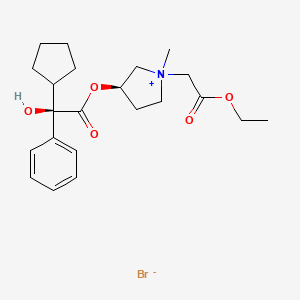
Sofpironium bromide


Sofpironium bromide.png

File:Sofpironium bromide.jpg

Sofpironium bromide

ソフピロニウム臭化物

BBI 4000

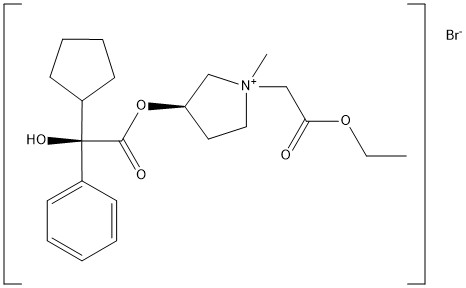
[(3R)-1-(2-ethoxy-2-oxoethyl)-1-methylpyrrolidin-1-ium-3-yl] (2R)-2-cyclopentyl-2-hydroxy-2-phenylacetate;bromide

Formula
C22H32NO5. Br
CAS
1628106-94-4
BASE 1628251-49-9
Mol weight
470.3972

PMDA APPROVED JAPAN 2020/9/25, Ecclock

Anhidrotic

Sofpironium Bromide

1-ambo-(3R)-3-{[(R)-(Cyclopentyl)hydroxy(phenyl)acetyl]oxy}-1-(2-ethoxy-2-oxoethyl)-1-methylpyrrolidinium bromide

C22H32BrNO5 : 470.4
[1628106-94-4]

SYN

PATENT

WO 2018026869

https://patents.google.com/patent/WO2018026869A1/en

Certain glycopyrronium salts and related compounds, as well as processes for making and methods of using these glycopyrronium salts and related compounds, are known. See, for example, US Patent No. 8,558,008, which issued to assignee Dermira, Inc. See also, for example, US Patent No. 2,956,062, which issued to assignee Robins Co Inc. A H. See also, for example, International Patent Application Publication Nos. WO 98/00132 Al and WO 2009/00109A1, both of which list applicant Sepracor, Inc., as well as US Patent Nos. 6,063,808 and 6,204,285, both of which issued to assignee Sepracor, Inc. Certain methods of treating hyperhidrosis using glycopyrronium salts and related compounds are known. See, for example GB 1,080,960. Certain forms of applying glycopyrrolate compounds to a subject are known. See, for example US Patent Nos. 6,433,003 and 8,618,160, both of which issued to assignee Rose U; also US Patent Nos. 7,060,289; 8,252,316; and 8,679,524, which issued to PurePharm, Inc.

[0004] One glycopyrronium salt which is useful in certain medical applications is the following compound:

Figure imgf000003_0001

[0005] As illustrated above, the absolute configuration at the three asymmetric chiral positions is 2R3’R1’RS. This means that the carbon indicated with the number, 2, has the stereochemical R configuration. The carbon indicated with the number, 3′, also has the stereochemical R configuration. The quatemary ammonium nitrogen atom, indicated with a positive charge, may have either the R or the S stereochemical configuration. As drawn, the compound above is a mixture of two diastereoisomers.

[0006] Certain processes for making glycopyrronium salts are known. However, these processes are not as safe, efficient, stereospecific, or stereoselective as the new processes disclosed herein, for example with respect to large-scale manufacturing processes. Certain publications show that higher anticholinergic activity is attributed to the 2R3’R configuration. However, to date, processes for making the 2R3’R isomers, as well as the 2R3’R1’R isomers are low yielding, involve too many reaction steps to be economically feasible, use toxic materials, and/or are not sufficiently stereospecific or stereoselective with respect to the products formed.

EXAMPLE 2

[0179] The below synthetic description refers to the numbered compounds illustrated in FIG. 2. Numbers which refer to these compounds in FIG. 2 are bolded and underlined in this Example.

[0180] Synthesis of R(-)-Cyclopentylmandelic acid (4)

[0181] R(-)-cyclopentylmandelic acid (compound 4) can be synthesized starting with

R(-)-mandelic acid (compound 1) according to Example 1.

[0182] Step 1 : Making Compound 2.

[0183] R(-)-mandelic acid (1) was suspended in hexane and mixed with pivaldehyde and a catalytic amount of trifluoromethanesulfonic acid at room temperature to form a mixture. The mixture was warmed to 36 °C and then allowed to react for about 5 hours. The mixture was then cooled to room temperature and treated with 8% aqueous sodium bicarbonate. The aqueous layer was removed and the organic layer dried over anhydrous sodium sulfate. After filtration and removal of the solvent under vacuum, the crude product was recrystallized to give (5R)-2-(tert-butyl)-5-phenyl-l,3-dioxolan-4-one (compound 2) in 88% yield (per S-enantiomer yield).

[0184] Step 2: Making Compound 3.

[0185] Compound 2 was reacted with lithium hexamethyl disilazide (LiHMDS) in hexane at -78 °C under stirring for one hour. Next, cyclopentyl bromide was added to the reaction mixture including compound 2 and LiHMDS . The reaction was kept cool for about four (4) hours and then slowly warmed to room temperature and allowed to react for at least twelve (12) more hours. The resulting mixture was then treated with 10% aqueous ammonium chloride. The aqueous layer was discarded and the organic layer dried over anhydrous sodium sulfate. The solvent was removed under vacuum and the residue recrystallized from hexane to give pure product (5R)-2-(tert-butyl)-5-cyclopentyl-5-phenyl- l,3-dioxolan-4-one (3) in 63% yield (per S-enantiomer yield).

[0186] Step 3: Making Compound 4.

[0187] R(-)-cyclopentylmandelic acid (compound 4) was prepared by providing compound 3 in aqueous methanolic potassium hydroxide at 65 °C for four hours. After cooling this mixture to room temperature and removing the methanol under vacuum, the aqueous solution was acidified with aqueous hydrochloric acid. The aqueous solution was then extracted twice with ethyl acetate and the organic phase dried with anhydrous sodium sulfate. After removing the solvent and performing a recrystallization, pure R(-)- cyclopentylmandelic acid (compound 4) was obtained in 62% yield (based on S-enantiomer yield).

[0188] Next, a racemic mixture of l -methyl-3-pyrridinol (20) was provided:

Figure imgf000045_0001

[0189] Synthesis of 2R3 ‘R-glycopyrrolate base (8)

[0190] Step 4: Making Compound 8.

[0191] Enantiomerically pure R(-)-cyclopentylmandelic acid (4) was coupled to racemic l-methyl-3-pyrridinol (20) using 1, 1 -carbonyldiimideazole (CDI) activated esterification to make an enantiomerically pure mixture of the following erythro- and threo- glycopyrrolate bases (compounds 8 and 21, respectively):

Figure imgf000045_0002

[0192] The 2R3’R-glycopyrrolate base (compound 8) was then resolved using the 5- nitroisophthalate salt procedure in Finnish Patent 49713, to provide enantiomerically pure 2R3 Έ. {erythro) as well as pure 2R3 ‘S {threo). In this example, the 2R3 ‘S {threo) was discarded. The 2R3 Έ. {erythro) was separated as stereomerically pure compound 8.

[0193] Step 6: Making Compound 9.

[0194] The glycopyrrolate base, compound 8, was treated in dry acetonitrile with methyl bromoacetate at room temperature under stirring for three (3) hours. The crude product was dissolved in a small volume of methylene chloride and poured into dry ethyl ether to obtain a precipitate. This procedure was repeated three times to provide (3R)-3-((R)- 2-cyclopentyl-2-hydroxy-2-phenylacetoxy)-l -(2-ethoxy-2-oxoethyl)-l-methylpyrrolidin-l – ium bromide, also known as 3′(R)-[R-Cyclopentylphenylhydroxyacetoy]- -ethyl- l ‘methoxycarbonylpyrrolidinium bromide (compound 9) in 89% yield. Compound 9 included the following stereoisomers:

Figure imgf000046_0001

E

Synthesis of 9a, 9b, 13a, and 13b.

Synthesis of 9a, 9b, 13a, and 13b.

Publication Number Title Priority Date Grant Date
US-2019161443-A1 Processes for making, and methods of using, glycopyrronium compounds 2016-08-02

ClinicalTrials.gov

CTID Title Phase Status Date
NCT02058264 A Safety, Tolerability and Preliminary Efficacy Study of BBI-4000 in Subjects With Axillary Hyperhidrosis Phase 1 Completed 2014-09-11

NIPH Clinical Trials Search of Japan

CTID Title Phase Status Date
JapicCTI-184249 A repeatedly applied study of BBI-4000 in patients with primary hyperhidrosis complete 2018-12-13
JapicCTI-184003 A long term safety study of BBI-4000 gel in patients with primary axillary hyperhidrosis complete 2018-06-15
JapicCTI-183948 A confirmatory study of BBI-4000 gel in patients with primary axillary hyperhidrosis complete 2018-05-07
UMIN000020546 A skin irritation study of BBI-4000 in healthy adult males (phase 1) Complete: follow-up complete 2016-01-18

////////////Sofpironium bromide, Ecclock, 2020 APPROVALS, JAPAN 2020, Anhidrotic, ソフピロニウム臭化物 , BBI 4000

CCOC(=O)C[N+]1(CCC(C1)OC(=O)C(C2CCCC2)(C3=CC=CC=C3)O)C.[Br-]

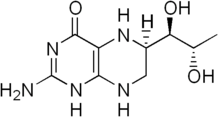
Tetrahydrobiopterin,


Kuvan (Saproterin Dihydrochloride Tablets): Uses, Dosage, Side Effects, Interactions, Warning

Sapropterin

Sapropterin dihydrochloride, Dapropterin dihydrochloride, R-THBP, 6R-BH4, SUN-0588, Phenoptin, Biopten, Biobuden, Bipten

Approval:US: Dec’07, EU: Dec’08

Approval:US: Dec’07, EU: Dec’08

IUPAC Name

(6R)-2-amino-6-[(1R,2S)-1,2-dihydroxypropyl]-3,4,5,6,7,8-hexahydropteridin-4-one

SMILES

[H][C@@]1(CNC2=C(N1)C(=O)NC(N)=N2)[C@@H](O)[C@H](C)O
сапроптерин [Russian] [INN]
سابروبتيرين [INN]
沙丙蝶呤 [Chinese] [INN]
  • 17528-72-2
  • 27070-47-9
  • Sun 0588
  • 6R-BH4
  • R-THBP
  • Sapropterin
  • Sapropterina
  • sapropterinum
  • Tetrahydrobiopterin
Title: Sapropterin
CAS Registry Number: 62989-33-7
CAS Name: (6R)-2-Amino-6-[(1R,2S)-1,2-dihydroxypropyl]-5,6,7,8-tetrahydro-4(1H)-pteridinone
Additional Names: (6R)-L-erythro-tetrahydrobiopterin; dapropterin; R-THBP; 6R-BH4
Molecular Formula: C9H15N5O3
Molecular Weight: 241.25
Percent Composition: C 44.81%, H 6.27%, N 29.03%, O 19.90%
Literature References: Natural cofactor of the aromatic amino acid hydroxylases required for catecholamine and serotonin biosynthesis. Identification of cofactor activity: S. Kaufman, Proc. Natl. Acad. Sci. USA 50, 1085 (1963). Prepn of (6R,S)-BH4: B. Schircks et al., Helv. Chim. Acta 61, 2731 (1978). Chromatographic separation of diastereoisomers: S. W. Bailey, J. E. Ayling, J. Biol. Chem. 253, 1598 (1978). Absolute configuration of natural isomer: W. L. F. Armarego et al., Aust. J. Chem. 35, 785 (1982). Stereospecific synthesis: S. Matsuura et al., Heterocycles 23, 3115 (1985); H. Sakai, T. Kanai, EP 191335eidem, US 4713454 (1986, 1987 both to Shiratori; Suntory). Bioavailability: G. Kapatos, S. Kaufman, Science 212, 955 (1981). Effect on neurotransmitter monoamine biosynthesis: S. Miwa et al., Arch. Biochem. Biophys. 239, 234 (1985). LC determn in biological samples: Y. Tani, T. Ishihara, Life Sci. 46, 373 (1990). Therapeutic potential in hyperphenylalaninemia: S. Kaufman, J. Nutr. Sci. Vitaminol, Suppl., 601 (1992).
Properties: pK¢ 5.05. uv max (0.1 N HCl): 265 nm (e 14000).
pKa: pK¢ 5.05
Absorption maximum: uv max (0.1 N HCl): 265 nm (e 14000)
Derivative Type: Dihydrochloride
CAS Registry Number: 69056-38-8
Manufacturers’ Codes: SUN-0588
Trademarks: Biopten (Maruho)
Molecular Formula: C9H15N5O3.2HCl
Molecular Weight: 314.17
Percent Composition: C 34.41%, H 5.45%, N 22.29%, O 15.28%, Cl 22.57%
Properties: Crystals from HCl, mp 245-246° (dec). [a]D25 -6.81° (c = 0.665 in 0.1 M HCl). uv max (2 M HCl): 264 nm (e 16770).
Melting point: mp 245-246° (dec)
Optical Rotation: [a]D25 -6.81° (c = 0.665 in 0.1 M HCl)
Absorption maximum: uv max (2 M HCl): 264 nm (e 16770)
Therap-Cat: In treatment of hyperphenylalaninemia.
Keywords: Enzyme Cofactor
INGREDIENT UNII CAS INCHI KEY
Sapropterin dihydrochloride RG277LF5B3 69056-38-8 RKSUYBCOVNCALL-NTVURLEBSA-N

Experimental Properties

PROPERTY VALUE SOURCE
melting point (°C) 250-255 °C (hydrochloride salt) Not Available
water solubility >20 mg/mL (dichloride salt) Not Available
logP -1.7 Not Available

Tetrahydrobiopterin (BH4THB), also known as sapropterin (INN),[2][3] is a cofactor of the three aromatic amino acid hydroxylase enzymes,[4] used in the degradation of amino acid phenylalanine and in the biosynthesis of the neurotransmitters serotonin (5-hydroxytryptamine, 5-HT), melatonindopaminenorepinephrine (noradrenaline), epinephrine (adrenaline), and is a cofactor for the production of nitric oxide (NO) by the nitric oxide syntheses.[5] Chemically, its structure is that of a (dihydropteridine reductase) reduced pteridine derivative (Quinonoid dihydrobiopterin).[6]

Medical use

Tetrahydrobiopterin is available as a tablet for oral administration in the form of sapropterin dihydrochloride (BH4*2HCL).[7][8][9] It was approved for use in the United States as a tablet in December 2007[10][11] and as a powder in December 2013.[12][11] It was approved for use in the European Union in December 2008,[9] Canada in April 2010,[11] and Japan in July 2008.[11] It is sold under the brand names Kuvan and Biopten.[9][8][11] The typical cost of treating a patient with Kuvan is US$100,000 per year.[13] BioMarin holds the patent for Kuvan until at least 2024, but Par Pharmaceutical has a right to produce a generic version by 2020.[14]

Sapropterin is indicated in tetrahydrobiopterin deficiency caused by GTP cyclohydrolase I (GTPCH) deficiency, or 6-pyruvoyltetrahydropterin synthase (PTPS) deficiency.[15] Also, BH4*2HCL is FDA approved for use in phenylketonuria (PKU), along with dietary measures.[16] However, most people with PKU have little or no benefit from BH4*2HCL.[17]

Sapropterin (tetrahydrobiopterin or BH4) is a cofactor in the synthesis of nitric oxide. It is also essential in the conversion of phenylalanine to tyrosine by the enzyme phenylalanine-4-hydroxylase; the conversion of tyrosine to L-dopa by the enzyme tyrosine hydroxylase; and conversion of tryptophan to 5-hydroxytryptophan via tryptophan hydroxylase.

Sapropterin commonly known as tetrahydrobiopterin (THB or BH4) developed by BioMarin and marketed as Sapropterin dihydrochloride under the brand name of KUVAN®. It is indicated for the treatment of phenylketonuria (PKU) and tetrahydrobiopterin deficiencies. Sapropterin dihydrochloride is chemically known as (6R)-2-amino-6-[(lR, 2S)-1, 2- dihydroxypropyl]-5,6,7,8-tetrahydro-4(lH)-pteridinone dihydrochloride and structurally represented as below.

Figure imgf000002_0001

Sapropterin dihydrochloride

Due to its vital role in the conversion of L-tyrosine into L-DOPA, which is the precursor for dopamine, a deficiency in tetrahydrobiopterin can cause severe neurological disorders unrelated to toxic build-up of L-phenylalanine; dopamine is a crucial neurotransmitter, and is the precursor of norepinephrine and epinephrine. Thus, a deficiency of tetrahydrobiopterin can result in phenylketonuria (PKU) from L-phenylalanine concentrations or hyperphenylalaninemia (HP A), as well as monoamine and nitric oxide neurotransmitter deficiency or chemical imbalance. The chronic presence of PKU can result in severe brain damage, including symptoms of mental retardation, speech impediments like stuttering, slurring, seizures or convulsions and behavioural abnormalities.

In an article published in Bio Chem J 347 (1): 1-16, tetrahydrobiopterin is reported to be biosynthesized from guanosine triphosphate (GTP) by three chemical reactions mediated by the enzymes GTP cyclohydrolase I (GTPCH), 6-pyruvoyltetrahydropterin synthase (PTPS), and sepiapterin reductase (SR).

Preparation of Sapropterin is reported with a mixture of R & S isomers in Helv. Chim. Acta, 60, 1977, 211-214, by catalytic reduction of L-biopterin of formula (2). Similar process with slight modifications is also published in Hel. Chim. Acta, 61, 1978, 2731- 2738.

Figure imgf000003_0001

(2)

In another publication reported in Helv. Chim. Acta, 62, 1979, 2577-2580, separation of the diastereomers (6R) and (6S)-5,6,7,8-tetrahydro-L-biopterin is reported by fractional crystallization of corresponding tetraacetyl derivative followed by hydrolysis using aq. HC1.

In another process published in Heterocycles, 23(12), 1985, 3115-3120, Sapropterin dihydrochloride of formula (1) is prepared by catalytic hydrogenation of L- biopterin of formula (2) in the presence of Pt02 under latm hydrogen pressure in 0.1 M potassium phosphate buffer at pH 11.8 for 18hr followed by filtration and recrystallization from 8M HC1. With slight modifications in the above reaction conditions like using platinum black, aq. base solutions like tetraethylammonium hydroxide or triethylamine etc. under 100 Kg/cm2 hydrogen pressure / 0° C / pH 12.0 / 1000 rpm / 20h/3N HCl-EtOH with 85% yield is disclosed in US4713454. In another process disclosed in US4595752, L-biopterin of formula (2) is catalytically reduced in the presence of platinum oxide in aq. base / acid solutions like (10% aq. potassium carbonate, aq. sodium carbonate, aq. potassium acetate and 0.1 N aq. HCl) under bubbling of hydrogen gas for 5-30hr at room temperature followed by filtration and isolated as HCl salt of formula (1) using aq. HCl and ethanol to obtain Sapropterin dihydrochloride.

In another approach disclosed in WO2005049614, racemic isomers of Sapropterin dihydrochloride are prepared from L-neopterin.

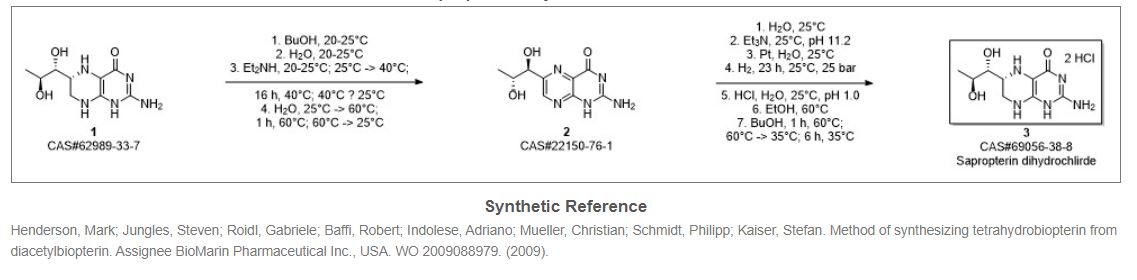
In another process disclosed in WO2009088979, the diacetyl biopterin is hydrolysed in the presence of aq. diethyl amine-n-butanol mixture at 40°C for 16hr at pH >11.5 followed by hydrogenation in the presence of platinum black using 50 bar hydrogen pressure at 25 °C. Product of formula (1) isolated as HCl salt from ethanol or butanol.

In another process disclosed in US20130197222, Sapropterin dihydrochloride of formula (1) is prepared starting from condensation of crotonoic acid.

The process for preparation of key intermediate, L-biopterin of formula (2) is cited in the following references.

In an article published in J. Am. Chem. Soc, 1955, 77, 3167-3168, L-biopterin of formula (2) is reported to be first isolated from human urine. The melting point reported to be 250-280°C. In another article published in J. Am. Chem. Soc, 1956, 78, 5868-5871, L-biopterin of formula (2) is prepared starting from L-rhamnose. A slight modification in the reaction conditions mentioned above is disclosed in US3505329.

In the article published in Helv. Chim. Acta, 1969, 52, 1225-1228, L-biopterin of formula (2) along with 7-biopterin is synthesized by condensing 2, 4, 5-triamino-6-oxo-l, 6-dihydropyrimidine dihydrochloride with (1 -benzyl- l-phenyl-hydrazino)-5-desoxy-L- ribulose followed by oxidation of the tetrahydro derivative.

Later in the year 1974, in an article, J. Am. Chem. Soc, 1974, 96, 6781-6782, L-biopterin is reported to be prepared starting from L-rhamnose. In another approach published in Bull. Chem. Soc. Jpn., 1975, 48(12), 3767-3768, L- biopterin of formula (2) is prepared from 2, 4, 5-triamino-6-hydroxypyrimidine dihydrochloride is reacted with hydrazone derivative in aq. methanol at reflux temperature.

In another process disclosed in US5043446 (1989), L-biopterin process is claimed to be synthesized starting from D-ribose. Similar approach with slight variations in the process, later published in Liebigs Ann. Chem., 1989, 1267-1269.

In another approach published in Agric. Biol. Chem., 1989, 53, 2095-2100, L-biopterin is synthesized starting from (S)-ethyl lactate. Prior to this publication the methodology is claimed by the same authors in JP01-221380 (1989).

In another approach disclosed in US5037981 (1990), L-biopterin is synthesized from 2- methylfuran.

In the article, Synthesis, 1992, 303-308, L-biopterin is synthesized from (4S)-4(3P- Acetoxy-5-androsten-17P-ylcarbonyloxy)-2-pentynol.

In the approach published in J. Org. Chem., 1996, 61, 8698-8700, L-biopterin is synthesized from L-tartaric acid.

In the patent US7361759 (2005), L-biopterin of formula (2) is made from L-rhamnose diethyl mercaptal.

US 20120157671 application discloses the preparation of compound of formula (4a) is by reacting D-ribose of formula (3) with acetone in the presence of sulphuric acid at room temperature followed by neutralization with sodium carbonate and concentrated under vacuum.
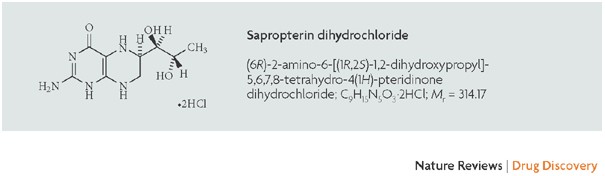
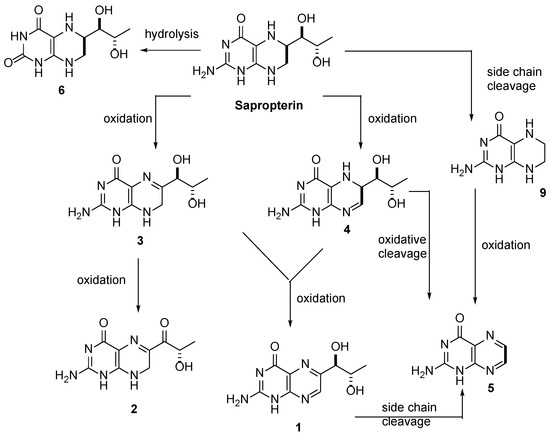
Sapropterin | Nature Reviews Drug Discovery

Pharmaceutics 12 00323 g004 550

https://www.mdpi.com/1999-4923/12/4/323/htm

Synthesis Reference

Steven S. Gross, “Blocking utilization of tetrahydrobiopterin to block induction of nitric oxide synthesis.” U.S. Patent US5502050, issued October, 1984.

US5502050

SYN

SYN

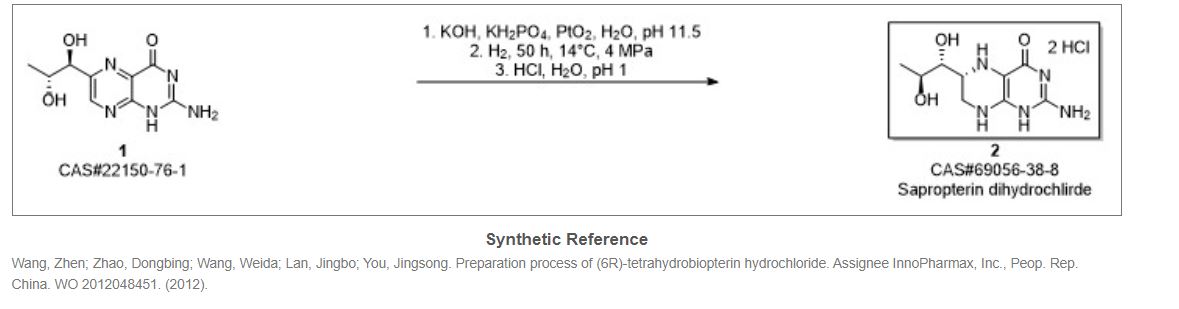
Synthetic Reference

Hong, Hao; Gage, James; Chen, Chaoyong; Lu, Jiangping; Zhou, Yan; Liu, Shuangyong. Method for synthesizing sapropterin dihydrochloride. Assignee Asymchem Laboratories (Tianjin) Co., Ltd., Peop. Rep. China; Asymchem Life Science (Tianjin) Co., Ltd.; Tianjin Asymchem Pharmaceutical Co., Ltd.; Asymchem Laboratories (Fuxin) Co., Ltd.; Jilin Asymchem Laboratories Co., Ltd. WO 2013152609. (2013).

syn 1

EP 0191335. Aust J Chem 1984,37(2),355-66, Chem Lett 1984,5(5),735-8

Helv Chim Acta 1979,62(8),2577-80

This compound can be prepared in two related ways: 1) The catalytic hydrogenation of biopterin (I) with H2 over PtO2 aqueous K2HPO4 at pH 11.4 or aq. (Et)4NOH at pH 12 yields a solution which is acidified with HCl. After evaporation, the residue is crystallized in ethanol – HCl. 2) The acetylation of biopterin (I) with refluxing acetic anhydride gives the triacetyl derivative (II), which is hydrogenated with H2 over PtO2 in trifluoroacetic acid, yielding the (6RS)-mixture of triacetyl derivatives (III). Acetylation of (III) with refluxing acetic anhydride affords the tetracetyl (6RS)-derivative (IV), which by fractional crystallization or column chromatography of the dihydrochloride in methanol gives the desired compound as pure (6R)-isomer.
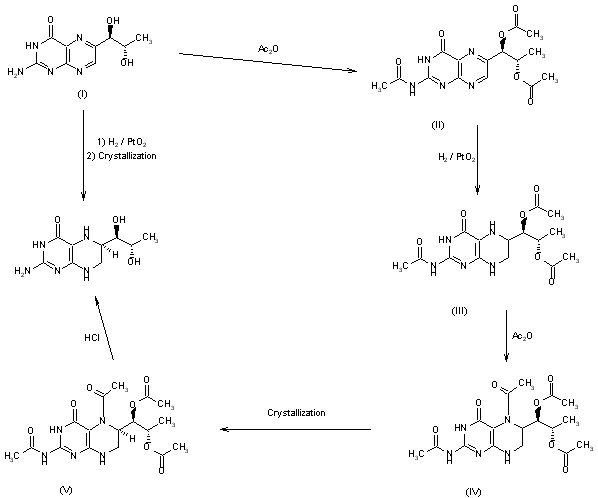
PATENT

https://patents.google.com/patent/WO2016189542A1/en

formula 1).

Figure imgf000015_0004

The present invention is shown in below scheme- 1

Figure imgf000016_0001

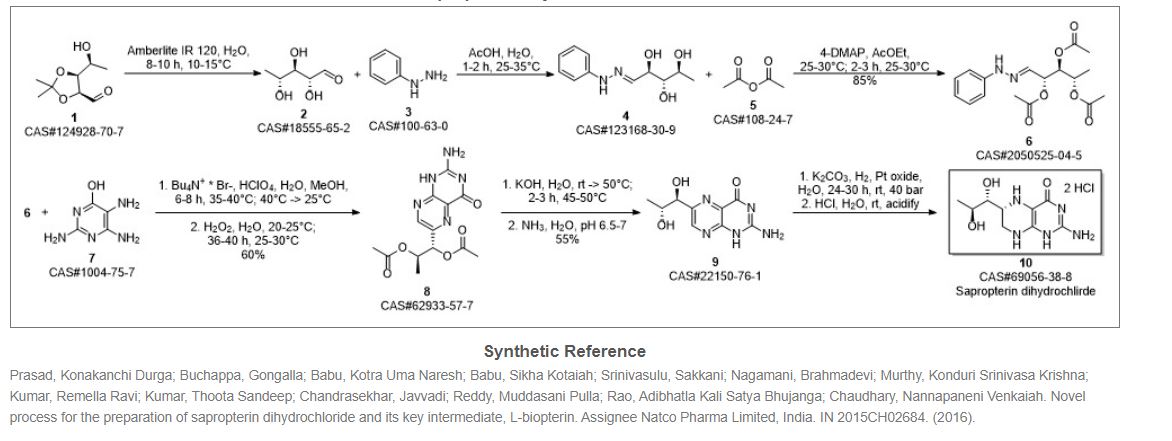
Experimental Section: Example-1: Preparation of (6R)-2-amino-6-[(lR, 2S)-1, 2-dihydroxypropyl]-5,6,7,8- tetrahydro-4(lH)-pteridinone dihydrochloride of formula (1):

Step (i): Preparation of 2, 3-O-isopropylidene-D-ribose of formula (4a)

Into a 5L, 4 necked round-bottomed flask equipped with a mechanical stirrer, a thermometer socket, and a condenser, were charged acetone (3.0 L), D-ribose (300.0 gm, 2.0 mole) and p-toluene sulfonic acid (11.5 gm). The solution was stirred and maintained at 20-25°C for 2.5-3.0hrs. After completion of reaction, the reaction mixture was neutralized with aq. base solution and filtered. The filtrate was evaporated to dryness to get 375.0 gm (98.8% by theory) of 2, 3-O-isopropylidene-D-ribose of formula (4a) as light brown colour oily residue. Purity: >95% by GC. Step (ii): Preparation of l-deoxy-3, 4-O-isopropylidene-D-allitol of formula (5a)

Into a 5L, 4 necked round-bottomed flask equipped with a mechanical stirrer, a thermometer socket, and a condenser, was charged, 2.0L, 3M methyl magnesium chloride and cooled to 10° C. To this stirred solution, a solution of 200gm of 2,3-0- isopropylidene-D-ribose of formula (4a) dissolved in 200 mL tetrahydrofuran was added. After completion of reaction, the reaction mixture was quenched with ammonium chloride, extracted with ethyl acetate and separated. The solvent was evaporated to dryness under vacuum to get 185gm of l-deoxy-3, 4-O-isopropylidene-D-allitol of formula (5a) as dark brown colour oily residue. The crude product was purified by crystallization from ethyl acetate/hexane mixture to get 130g (60% by theory) as white crystalline solid. Purity: >98% by GC.

JR (λ Cm-1, KBr disc): 3317.64, 2993.69-2976.90, 2926.08, 2873.26 (m) -CH3, 1074.35; 1 HNMR (400 MHz, DMSO-d6, EDl®j&¾ : (H2¾H3, J=6.8Hz, 3H),

1.148 (s, CH3, 3H), 1.290 (s,CH3), 3.415-3.357 (m, CH, 1H), 3.652-3.571 (m, CH2, 2H), 3.812-3.803 (d, 2 X CH, 2H), 4.00-3.969 (q, CH, 1H), 4.504-4.476 (t, ΟΗ, ΙΗ), 4.504- 4.476 (d, OH, 1H), 5.381-5.371 (d, OH, 1H): 13 CNMR (100 MHz, DMSO-d6, □ (ppm): 20.59, 25.35, 27.73, 63.18, 64.61 , 69.77, 76.82, 81.40, 107.31 ; Mass: 206.42 [M], 205.41 [M-l]. DSC (° C): 77.58° C Step (iii): Preparation of 5-deoxy-2, 3-O-isopropylidene-D-ribose of formula (6a)

Into a 5L 4 necked round-bottomed flask equipped with a mechanical stirrer, a thermometer socket, and a condenser, were charged, 1.6 L of water and 270 gm of sodium meta periodate. The solution was cooled to 10-20°C. To the stirred solution, a solution of 200 gm of l-deoxy-3, 4-O-isopropylidene-D-allitol of formula (5a) dissolved in 1.4 L of isopropyl ether at 25°C. After addition, the reaction mixture was maintained at 25-30° C for l-2h. After completion of reaction, the layers were separated and the organic layer was washed with water, aq. sodium bicarbonate and separated. The excess solvent was removed by distillation under vacuum to get 145 gm (85.4% by theory) of 5- deoxy-2, 3-O-isopropylidene-D-ribose of formula (6a) as yellow oil. Purity: >98% by GC.

Step (iv & v): Preparation of 5-deoxy-L-ribose phenyl hydrazone of formula (8) a) Step (iv): Preparation of 5-deoxy-L-ribose of formula (7)

Into a 2L 4 necked round-bottomed flask equipped with a mechanical stirrer, a thermometer socket, and a condenser, were charged 600ml of water and 200gm of 5- deoxy-2, 3-O-isopropylidene-D-ribose of formula (6a). To the stirred reaction mixture, 180gm of resin was charged and stirred for 8-10 h at 10-15° C. After completion of reaction, the resin was recovered and the filtrate was clarified by activated charcoal and filtered. The filtrate was distilled off under vacuum and the resulting 5-deoxy-L-ribose of formula (7) present water was directly used in the next step without further isolation and purification. The purity of 5-deoxy-L-ribose of formula (7) present in water was above 95% by TLC.

b) Step (v): Preparation of 5-deoxy-L-ribose phenyl hydrazone of formula (8)

Into a 2L 4 necked round-bottomed flask equipped with a mechanical stirrer, a thermometer socket, and a condenser, were charged the above aq. solution of 5-deoxy-L- ribose of formula (7), 5.0 mL of acetic acid. To the stirred solution, 125g of phenyl hydrazine was charged and stirred the reaction mixture for l-2h at 25-35° C. After completion of reaction, the reaction product was filtered and washed with isopropyl ether. The wet product was dried to get 190g (73.9% by theory) of 5-deoxy-L-ribose phenyl hydrazone of formula (8) as yellow colour crystalline powder. Purity: >99.0% by HPLC. Step (VI toX): Preparation of L-erythro-biopterin of formula (2)

a) Step (vi): Preparation of triacetoxy-5-deoxy-L-ribose phenylhydrazone of formula (9)

Into a 10L 4 necked round-bottomed flask equipped with a mechanical stirrer, a thermometer socket, and a guard tube, were charged 5L of ethyl acetate, 500g of 5- deoxy-L-ribose phenyl hydrazone of formula (8) and 54gm of 4-dimethylaminopyridine. The reaction mixture was cooled to 25-30° C and was added 730gm of acetic anhydride drop wise. The reaction mixture was maintained under stirring for 2-3h. After completion of reaction, the reaction mixture was washed with water, aq. sodium carbonate and water, and separated. The organic layer was used in the next stage without further isolation and purification.

b) Step (vii): Preparation of 1,2-diacetyl-biopterin of formula (10)

Into a 20L 4 necked round-bottomed flask equipped with a mechanical stirrer, a thermometer socket, addition funnel, and a condenser, were charged, the above organic layer containing triacetoxy-5-deoxy-phenyl hydrazone of formula (9) obtained in step (vi), 3.0 L methanol and 4-hydroxy-2,5,6-triaminopyrimidine base (generated from 600 gm of corresponding sulphate salt) and salt (generated from 350 gm of tetra butyl ammonium bromide and 154g of 70% perchloric acid) and 5.3L water under stirring and heated and maintained at 35-40°C for 6-8h. The reaction mixture was then cooled to 20- 25°C and added 1.0 Kg 35% aq. hydrogen peroxide drop wise. The reaction mixture was maintained for 36-40h under stirring at 25-30°C and resulting product was filtered under suction. The wet product was washed with water and utilized in the next step without further purification.

c) Step (viii): Preparation oi -erythro biopterin of formula (2)

Into a 10L 4-necked round-bottomed flask equipped with a mechanical stirrer, condenser, thermometer socket, and addition funnel, were charged 1.35 L of aq. potassium hydroxide and the above wet product obtained from step (vii). The reaction mixture was heated to 45-50° C and maintained form 2-3h and filtered. The pH of the filtrate was adjusted to neutral and the resulting product was filtered and dried to get 205 g of crude L-erythro-biopterin of formula (2) as dark brown solid. Purity: >90% by HPLC

d) Step (ix): Preparation of potassium salt oi -erythro biopterin of formula (11a) Into a 10L 4 necked round-bottomed flask equipped with a mechanical stirrer, thermometer socket, and a glass stopper, were charged 650 mL water followed by HOg of potassium hydroxide and dissolved under stirring. The potassium hydroxide solution was cooled to 25-30° C and the above crude L-erythro-biopterin of formula (2) was charged under stirring. The resulting solution was then clarified using activated carbon and filtered. The potassium salt was regenerated from the solution by the addition of 8.5L of isopropyl alcohol. The resulting salt was filtered and washed with isopropyl alcohol. The wet product of formula (11a) was utilized in the next step without further purification.

e) Step (x): Preparation of pure L-er thro biopterin of formula (2) from potassium salt of L-erythro biopterin of formula (2)

Into a 5L 4 necked round-bottomed flask equipped with mechanical stirrer, thermometer socket, and addition funnel, were charged 3.2 L of water and the above wet potassium salt of formula (11a). The reaction mixture was stirred to dissolve completely. The resulting solution was clarified using activated carbon and filtered. The pH of the filtrate was adjusted to 6.0-7.0 to get pure L-erythro-biopterin of formula (2). The product was filtered and washed with water followed by isopropyl alcohol followed by isopropyl ether to get 130g of highly pure L-erythro biopterin of formula (2) with > 98% HPLC purity Appearance: pale brown coloured solid.

1H NMR (3N DC1) 5(ppm): 1.569-1.585(d, 3H), 4.596-4.657(p, 1H), 5.325-5.337(d, 1H), 9.355(s, 1H); Mass: 238.29(M+1), 239.22(M+2).

Step (xi): Preparation of Sapropterin dihydrochloride of formula (1)

Into a 5L 4 necked round-bottomed flask equipped with mechanical stirrer, and thermometer socket, were charged 1.8L of water, 250g of L-erythro-biopterin of formula (2) followed by 800mL of 20% aq. potassium carbonate solution under stirring. The solution was then added 90g of platinum oxide catalyst. The reaction mixture was then transferred into an autoclave and pressurized with 40 bar hydrogen gas and hydrogenated at room temperature for 24-30h under stirring. After completion of reaction, the catalyst was filtered off and the pH of the filtrate was acidified with concentrated hydrochloric acid. The water was evaporated under vacuum and the resulting crude Sapropterin dihydrochloride of formula (1) was isolated as pale yellow colour solid by addition of isopropanol/l-pentanol mixture. The product was dried in a vacuum oven to get 250g of crude Sapropterin dihydrochloride of formula (1). Step (xii): Purification of Sapropterin dihydrochloride of formula (1)

Into a 2L 4 necked round-bottomed flask equipped with a mechanical stirrer, thermometer socket, and reflux condenser, were charged 1L water and 250g of Sapropterin dihydrochloride of formula (1). The contents were stirred to dissolve completely. The clear solution was treated with activated charcoal and filtered. The filtrate was distilled off completely under vacuum to afford pale yellow solid. The product was isolated from isopropanol/l-pentanol mixture to get 225.0 g (90%) pure Sapropterin dihydrochloride of formula (1) as pale yellow to off-white solid. HPLC purity is >99.9%.

Example 2: Preparation of triacetoxy-5-deoxy-L-ribose phenylhydrazone of formula

(9)

Into a 10L 4 necked round-bottomed flask equipped with a mechanical stirrer, a thermometer socket, and a guard tube, were charged 50mL of ethyl acetate, 5.0g of 5- deoxy-L-ribose phenyl hydrazone of formula (8) and 0.54g of N, N-dimethylamino pyridine. The reaction mixture was cooled to 15-20°C and was added 7.2gm of acetic anhydride drop wise. The reaction mixture was maintained under stirring for 6-8h. After completion of reaction, the reaction mixture was washed with water, aq. sodium carbonate and water, and separated. The organic layer was distilled under reduced pressure and product was isolated from n-hexane to get 6.2g of triacetoxy-5 -deoxy-L- ribose phenylhydrazone of formula (9) 79.4% yield.

Appearance: Orange coloured solid.

Melting point: 70-75 °C.

1HNMR (CDC13): 1.275-1.29 l(d, 3H), 2.039(s, 3H), 2.085-2.095(d, 6H), 5.083-5.144(m, 1H), 5.390-5.416(t, 1H), 5.589-5.619(t, 1H), 6.849-6.886(t, 1H), 6.922-6.937(t, 1H), 6.966-6.987(d, 2H), 7.221-7.242(d, 2H), 7.563(s, 1H(D20 exchangeable).

13CNMR (CDC13): 15.325, 20.816-21.053, 68.482, 71.717, 73.043, 112.759, 120.510, 129.212, 132.105, 144.049, 169.496, 169.948. Example 3: Preparation of potassium salt of L-erythro biopterin of formula (11)

Into a 1.0L 4 necked round-bottomed flask equipped with a mechanical stirrer, thermometer socket, and a glass stopper, were charged 75 mL water followed by 3.7g of potassium hydroxide and dissolved under stirring. The potassium hydroxide solution was cooled to 25-30° C and 15.0g of crude L-erythro-biopterin of formula (2) was charged under stirring. The resulting solution was then clarified using activated carbon and filtered. The potassium salt was regenerated from the solution by the addition of 500mL of ethanol. The resulting salt was filtered and washed with ethanol and dried to get 9.1g of potassium salt of L-erythro biopterin of formula (11) with 52.3% yield. HPLC <98% Appearance: Brown coloured solid.

1H NMR (D20): 1.187-1.203(d, 3H), 4.158-4.220(p, 1H), 4.731-4.745(d, 1H), 8.623(s, 1H).

13C NMR (D20): 18.198, 70.645, 76.703, 128.811, 147.875, 149.410, 156.504, 164.774, 173.731.

Mass: 276.23(M+1), 277.21(M+2), 238.29(M-K+1); DSC (° C): 313.12°

Example 4: Preparation of Sapropterin dihydrochloride of formula (1)

Into a 5L 4 necked round-bottomed flask equipped with mechanical stirrer, and thermometer socket, were charged 1.8L of water, 250g of L-erythro-biopterin of formula (2) followed by 800ml of 20% aq. potassium hydroxide solution under stirring. The solution was then added 90gm of platinum oxide catalyst. The reaction mixture was then transferred into an autoclave and pressurized with 50 bar hydrogen gas and hydrogenated at room temperature for 24-30h under stirring. After completion of reaction, the catalyst was recovered by filtration and the filtrate was acidified with concentrated hydrochloric acid. The water was evaporated under vacuum and the resulting crude Sapropterin dihydrochloride of formula (1) was isolated as pale yellow colour solid by addition of ethanol- 1 -pentanol mixture. The product was dried in a vacuum oven to get 250g of crude Sapropterin dihydrochloride of formula (1). Example 5: Purification of Sapropterin dihydrochloride of formula (1)

Into a 2L 4 necked round-bottomed flask equipped with a mechanical stirrer, thermometer socket, and reflux condenser, were charged 1L water and 250g of Sapropterin dihydrochloride of formula (1). The contents were stirred to dissolve completely and the clear solution was treated with activated charcoal and filtered. The filtrate was distilled off completely under vacuum to afford pale yellow solid. The product 225.0 g (90%) was isolated ethanol- 1 -pentanol mixture as pure Sapropterin dihydrochloride of formula (1) as pale yellow to off-white solid. HPLC purity is >99.9%.

syn

str1 str2

str1 str2 str3

PATENT

https://patents.google.com/patent/WO2016101211A1/en

was developed by Merck and was launched in the United States and the European Union in 2007 and 2008 under the trade name Kuvan. This product can be used to treat hyperphenylalaninemia (HPA) caused by tetrahydrobiopterin (BH4) deficiency. The structure is as follows:

Figure PCTCN2014094961-appb-000001

The chemical name is: (6R)-2-amino-6-[(1R,2S)-1,2-dihydroxypropyl]-5,6,7,8-tetrahydro-4(1H)-fluorenone Dihydrochloride.

The oxaprozin hydrochloride can be obtained by hydrogenation of L-erythrobiopterin. The literature Liebigs Ann. Chem. 1989, 1267-1269 reports the preparation of L-erythrobiopterin starting from L-ribose. The preparation route is as follows:

Figure PCTCN2014094961-appb-000002

Although the method is simple and easy to perform, it is a better preparation route, but the disadvantage is that the starting material L-ribose price is higher, thus causing the cost of sapropium hydrochloride to be high.

The literature for the preparation of L-erythrobiopteris is reported by the documents Helv. Chim. Acta, 1985, 1639-1643, US2011218339A, etc. The product of the acetylation reaction of the steroid compound 6 with 2,4,5-triaminopyrimidinone Cyclization in a methanol/water/pyridine system followed by aromatization with an iodine reagent to give an acetylated L- Red-type biopterin, followed by hydrolysis and deacetylation to obtain L-erythrobiopterin. The reaction equation is as follows:

Figure PCTCN2014094961-appb-000003

Among them, compound 6 is used as a key intermediate, and many methods for its preparation are reported. The method reported in J. Am. Chem. Soc. 1974, 6781-6782, J. Am. Chem. Soc. 1976, 2301-2307, etc., uses L-rhamnose as a raw material, and reacts with ethanethiol to form a corresponding shrinkage. Sulfuraldehyde, oxidizing thiol to sulfone with an oxidizing agent, removing a carbon under alkaline conditions to obtain 5-deoxy-L-arabinose, and reacting 5-deoxy-L-arabinose with phenylhydrazine to obtain a key intermediate formula 6 . The synthetic route is as follows:

Figure PCTCN2014094961-appb-000004

Although this method has been improved and improved many times, the ethanethiol used has a special malodor and requires the use of a deodorizing device, and its lower boiling point also causes inconvenience to the production.

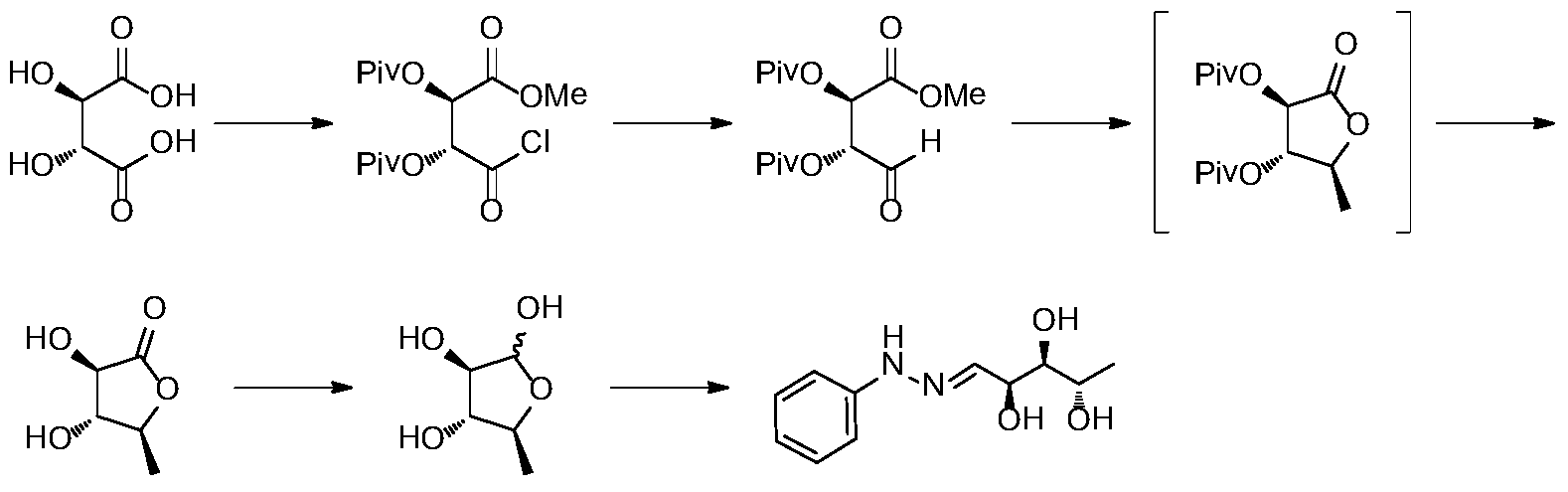
Document J. Org. Chem. 1996, 8699-8700 reports that L-tartaric acid is used as a starting material, which is protected by hydroxyl group, carboxyl group, reduction, addition, deprotection to obtain 5-deoxy-L-ribose, 5-deoxy- The condensation of L-arabinose with phenylhydrazine gives key intermediates. The synthetic route is as follows:

Figure PCTCN2014094961-appb-000005

The reducing agent used in the route of the acid chloride to reduce the aldehyde is bis(triphenylphosphine) copper borohydride (I), which has a high price and is not favorable for the control of industrialization cost. The reaction temperature of the format reagent with carbonyl addition and lactone reduction is -78 ° C, and the energy consumption in industrial production is high. In addition, the post-treatment of the multi-step reaction uses silica gel column color The spectrum is purified and it is difficult to achieve industrialization. Therefore, this route has great disadvantages in terms of cost and operability in industrial production.

Document CN201010151443.2 reports the use of L-arabinose as a starting material to obtain L-erythrobioptery through a multi-step reaction. The preparation route is as follows:

Figure PCTCN2014094961-appb-000006

In reproducing the preparation method, we have found that the intermediate 2 is directly subjected to reduction and desulfonation reaction to prepare the intermediate 2, which has the disadvantages of low yield, low product purity, and difficulty in purification of the product. Therefore, it is necessary to find a simple, feasible and low-cost preparation route.

 scheme synthetic route includes the following steps:

Figure PCTCN2014094961-appb-000012

Example 1: Preparation of Product 1

To the reaction flask was added 10 L of anhydrous methanol, and 1.5 kg of the starting material L-arabinose was added under mechanical stirring. 250 g of concentrated sulfuric acid was added dropwise under a water bath, and the reaction was stirred for 20-24 hours. The reaction was monitored by TLC, and 350 g of sodium carbonate was added to the reaction system. Stir until pH = 7-8 and filter. The filtrate was concentrated under reduced pressure at 35 ° C to 40 ° C to dryness to yield 1.64 kg of oil, yield -100%.

Example 2: Preparation of product 2

The product 1, 4 L of pyridine and 5 L of acetonitrile were added to the reaction flask and dissolved by mechanical stirring. The mixture was cooled by stirring, and a solution of 1.8 kg of p-toluenesulfonyl 5 L acetonitrile was added dropwise at a temperature of 0 to 5 ° C. After completion of the dropwise addition, the reaction was stirred at room temperature 20-25 ° C for 4 hours. The TLC monitors the reaction.

After concentration, 12 L of ethyl acetate and 5 L of water were added to the concentrated residue, and the layers were stirred. The organic layer was washed with 1 mol/L hydrochloric acid, saturated sodium hydrogen carbonate and saturated brine and dried. Filtration and concentration of the filtrate gave 1.7 kg of pale yellow oil, yield 56.3%.

Example 3: Preparation of product 3

1.2 kg of product 2 was added to a 10 L reaction flask, dissolved with 6 L of methyl ethyl ketone, and 840 g of sodium iodide was added with stirring. After the addition, the temperature was refluxed for 12 hours, and the reaction was completed by TLC. The mixture was cooled to room temperature, filtered, and the filtrate was evaporated. It was dissolved in ethyl acetate, washed with water, and the aqueous layer was evaporated. The combined organic layers were washed with EtOAc EtOAc m.

Example 4: Preparation of product 4

To a 20 L reaction flask was added 900 g of product 3, 332 g of triethylamine dissolved in 9 L of methanol, 45 g of 10% Pd/C, vacuumed, hydrogenated twice, and hydrogenated at a constant temperature of 25-30 ° C for 16 hours. The reaction was completed by TLC, filtered, and the filtrate was concentrated under reduced pressure to give a residue. 4 L of ethyl acetate was added to the residue to precipitate a white solid. The mixture was stirred at 0 ° C for 30 min, and filtered. The filtrate was added to 2 L of a 0.4 mol/L sulfuric acid solution and the layers were separated. The aqueous layer was washed once with 50 mL of ethyl acetate to give an aqueous solution of product 4 (approximately 250 g).

Example 5: Preparation of product 5

The aqueous solution of product 4 was added to the reaction flask, and the reaction was heated at 75 ° C for 3 hours, and the reaction was completed by TLC (DCM: MeOH = 10:1). After cooling to room temperature, it was washed with 100 mL of ethyl acetate, and the aqueous layer was separated to give the product 5, i.e., about 213 g of aqueous solution of 5-deoxy-L-arabinose, which was directly reacted in the next step.

Example 6: Preparation of product 6

To the reaction flask, 2.5 L of ethyl acetate and 170 g of phenylhydrazine were added under nitrogen, and an aqueous solution of the product 5 was added dropwise with stirring at a temperature of 5 to 10 ° C (protected from light). The reaction was kept for 1 hour, and then the temperature was raised to 20-25 ° C for 30 min. The reaction was completed by TLC and the layers were separated. The aqueous layer was extracted with ethyl acetate and organic layers were combined. The organic layer was dried over anhydrous sodium sulfate and filtered.

The ethyl acetate solution of product 6 was added to the reaction flask under nitrogen, and 8 L of petroleum ether was slowly added with stirring. After the addition was completed, the mixture was cooled to -5 – 10 ° C and stirred for 1 hour, and filtered to give a beige solid. Drying under reduced pressure at 30-35 ° C gave a dry product of about 250 g, yield 71.4%.

Example 7: Preparation of product 7

To the reaction flask was added 2.5 L of ethyl acetate and 250 g of product 6. 30 g of DMAP was added with stirring. 400 ml of acetic anhydride was added dropwise at a temperature of 15 ° C, and the reaction was stirred at a temperature of 20-25 ° C for 3 hours. The reaction was monitored by TLC, and a hydrochloric acid solution was added at a temperature of 15 ° C to separate the layers. The organic layer was washed with saturated hydrochloric acid and saturated sodium hydrogen sulfate. The organic phase was separated, dried and filtered to give 371 g, m.

Example 8: Preparation of product 9

To the reaction flask was added 220 g of product 8, 2.2 L of purified water. Under stirring, 500 g of a product 7 in 5 L of methanol and 150 g of anhydrous lithium perchlorate dissolved in 1.5 L of water were added. After the addition was completed, the reaction was stirred at a temperature of 30 to 32 ° C for 20 hours. The reaction is completed and filtered. The filtrate was temperature-controlled at 15 ° C to 20 ° C, and 1 L of 30% hydrogen peroxide was added dropwise. After the addition, the reaction was kept at 20 ° C for 6 hours, and the solid was precipitated, filtered, and dried by blasting at 35-40 ° C to obtain 215 g of a brownish yellow product 9 in a yield of 47%.

Example 9: Preparation of product 10

To the reaction flask, 80 g of product 9, 400 ml of purified water, 300 ml of n-butanol, and 80 ml of diethylamine were added, and the mixture was stirred and heated to 45-50 ° C for 16 hours. After the TLC reaction is completed, the layers are separated, and the aqueous layer is separated to obtain an aqueous solution of the product 10, which is directly reacted in the next step.

Example 10: Preparation of Product I

An aqueous solution of product 10 was added to the autoclave, and 50 ml of triethylamine and 2 g of platinum dioxide were added thereto with stirring. The pressure was evacuated, the hydrogen was replaced three times, the pressure was controlled to 1.5 MPa, and the reaction was stirred at 35 ° C for 20 hours. After filtration, the filtrate was added to 30 ml of n-butanol for 5 min, and the mixture was allowed to stand to give an aqueous solution of product I. 200 ml of concentrated hydrochloric acid was added dropwise at a temperature of 10 ° C, and the aqueous solution was concentrated under reduced pressure to dryness. 500 ml of 95% ethanol was added to the crude product, and the mixture was heated to 55-60 ° C for 1 hour, then cooled to 35 ° C for 2 hours, filtered, and the filter cake was dried to give the product I35 g.

Example 11: Preparation of product 9′

To the reaction flask was added 1.25 L of ethyl acetate and 125 g of product 9. 15 g of DMAP was added with stirring. 200 ml of acetic anhydride was added dropwise at a temperature of 15 ° C, and the reaction was stirred at a temperature of 20-25 ° C for 3 hours. The reaction was monitored by TLC, and a hydrochloric acid solution was added at a temperature of 15 ° C to separate the layers. The organic layer was washed with saturated hydrochloric acid and saturated sodium hydrogen sulfate. The organic phase was separated, dried and concentrated to give 12,5 g of oil.

Example 12: Preparation of product 10

The product 9′ prepared in Example 11 was added to the reaction flask, 600 ml of purified water, 450 ml of n-butanol, and 120 ml of diethylamine were added, and the mixture was stirred and heated to 45-50 ° C for 16 hours. After the TLC reaction is completed, the layers are separated, and the aqueous layer is separated to obtain an aqueous solution of the product 10, which is directly reacted in the next step.

Example 13: Preparation of Product I

An aqueous solution of the product 10 prepared in Example 12 was added to the hydrogenation vessel, and 80 ml of triethylamine, 3 g of platinum dioxide was added thereto with stirring, and vacuum was applied thereto, and the pressure was controlled to 1.5 MPa, and the reaction was stirred at 35 ° C for 20 hours. After filtration, the filtrate was added to 45 ml of n-butanol for 5 min, and the mixture was allowed to stand to give an aqueous solution of product I. After cooling at 10 ° C, 300 ml of concentrated hydrochloric acid was added dropwise, and the aqueous solution was concentrated under reduced pressure to dryness. 750 ml of 95% ethanol was added to the crude product, and the mixture was heated to 55-60 ° C for 1 hour, then cooled to 35 ° C for 2 hours, filtered, and the filter cake was dried to give the product I 48.9 g.

///////////

https://patents.google.com/patent/US9365573B2/en

Sapropterin dihydrochloride, chemical name (6R)-2-amino-6-[(1R,2S)-1,2-dihydroxypropyl]-5,6,7,8-tetrahydro-4(1H)-pteridinone dihydrochloride, molecular formula C9H15N5O3.2HCl, and CAS registry number 69056-38-28, is a synthetic product of tetrahydrobiopterin (BH4) dihydrochloride. BHis a cofactor of Phenylalanine Hydroxylase (PAH). Tyrosine is acquired from Phenylalanine (Phe) through hydroxylation under the action of PAH which is low in activity or even inactive in PKU patients, while BHis able to activate PAH, promote normal oxidative metabolism of Phe in the bodies of the patients, and reduce the Phe levels in the bodies of some patients. On Dec. 16, 2007, the sapropterin dihydrochloride tablets produced by BioMarin Pharmaceutical Inc. in USA were approved by the Food and Drug Administration (FDA) for marketing for treatment of PKU. Because of the effective activity of sapropterin dihydrochloride, it is extremely necessary to select a route applicable to industrial production with high product purity.

At present, BHis mainly synthesized by the following methods reported in literatures:

1. Preparation using 4-hydroxy-2,5,6-triaminopyrimidine (TAP) and 5-deoxy-L-arabinose as raw materials, please see literature E. L. Patterson et al., J. Am. Chem. Soc. 78, 5868(1956).

2. Preparation using TAP and 5-deoxy-L-arabinose phenylhydrazone as raw materials, please see literature Matsuura et al., Bull. Chem. Soc. Jpn., 48,3767 (1975);

3. Preparation by reaction of raw materials hydroxyl-protected TAP and 4-acetyl-2,3-epoxypentanal through oxidation of iodine and a dehydroxylation protecting group, please see literature Matsuura et al., Chemistry of Organic Synthesis, MI/g. 46. No. 6, P570(1988).

These traditional methods for preparing BH4 have the following major disadvantages: raw materials are expensive, arabinose which can be hardly acquired is used as a carbon atom radical for asymmetric synthesis; there are multiple steps in reactions with low yield, and low product purity, 5-deoxy-L-arabinose is easily degraded in a reaction solution, and products of the synthesis routes above have low stereoselectivity. To sum up, the traditional synthesis methods are not applicable to mass industrial production. Therefore, a synthesis route, which is applicable to industrial production with high product purity, high yield and high stereoselectivity, needs to be searched urgently.

tep 10: add 0.7 kg (0.05 g/g) of palladium 5% on carbon in the presence of the methanol solution containing 1.5 kg of acetylamino-7,8-dihydropteridine

Figure US09365573-20160614-C00106


obtained in Step 9, introduce hydrogen until the pressure of the reaction kettle is 0.8±0.05 MPa, control the temperature of the system at 25±5° C. and the pressure at 0.8±0.05 MPa, react for 82 hours, after reacting thoroughly, perform quenching in 31.9 kg (9 eq) of dilute hydrochloric acid having a concentration of 15%, and perform suction filtration and drying to the system to obtain a target product, i.e. a crude product of sapropterin dihydrochloride

Figure US09365573-20160614-C00107


recrystallize and purify the crude product by 29 L (20 ml/g) of methanol at 35±5° C. to obtain 0.8 kg of a pure product, with a yield of 45%, a purity of 98.3% and an enantiomeric excess of 99.1%.

Embodiment 5: main raw material:

Figure US09365573-20160614-C00108


and X═O

Step 1: add 836 kg (0.3 eq) of a tetrahydrofuran solution contaning a samarium catalyst having a concentration of 4%, 29.2 kg (0.3 eq) of (R)-(+)-1,1′-bi-2-naphthol, 28.4 kg (0.3 eq) of triphenylphosphine oxide, and 600 kg (10 kg/kg) of a 4 A molecular sieve to a 3000 L reaction kettle, after stirring uniformly, control the system temperature at 20±5° C., add 117.4 kg (2 eq) of meta-chloroperoxybenzoic acid, add 60 kg (1 eq) of benzyl crotonate

Figure US09365573-20160614-C00109


to the system after adding meta-chloroperoxybenzoic acid, react for 32 hours while preserving the temperature, add 19.6 kg (0.3 eq) of citric acid to the system to stop the reaction, and perform centrifugation, concentration and rectification to the system to obtain 40.5 kg of (2S,3R)-2,3-epoxy-benzyl butyrate

Figure US09365573-20160614-C00110


with a yield of 62%;

Step 2: add 36.8 kg (3 eq) of acetone, and 5.4 kg (0.6 eq) of lithium chloride to a 500 L enamel vessel, control the temperature at 15±5° C., add 40.5 kg (1 eq) of (2S,3R)-2,3-epoxy-benzyl butyrate

Figure US09365573-20160614-C00111


react for 7 hours while preserving the temperature, add 422 kg (2 eq) of a potassium bicarbonate aqueous solution having a concentration of 10%, and perform liquid separation, extraction and concentration to the system to obtain 44 kg of (4S,5S)-2,2,5-trimethyl-acetonide-benzyl butyrate

Figure US09365573-20160614-C00112


with a yield of 82%;

Step 3: add 352 L (8 ml/g) of ethanol, and 44 kg (1 eq) of (4S,5S)-2,2,5-trimethyl-2,3-acetonide-benzyl butyrate

Figure US09365573-20160614-C00113


to a 1000 L reaction kettle, increase the temperature to 37±5° C., add 4.8 kg (1.5 eq) of pure water and 53.2 kg (1.5 eq) of a sodium hydroxide aqueous solution having a concentration of 20%, react for 6 hours while preserving the temperature, perform centrifugation, dissolve a filter cake in 352 L (8 ml/g) of ethanol, add 71.0 kg (3 eq) of L-α-amphetamine, preserve the temperature at 22±5° C. for 4 hours, and perform centrifugation and drying to obtain 32.4 kg of (4S,5S)-2,2,5-trimethyl-2,3-acetonide-phenylacetylamino butyrate

Figure US09365573-20160614-C00114


with a yield of 62%;

Step 4: add 48 L (6 ml/g) of 1,4-dioxane, 8 kg (1 eq) of (4S,5S)-2,2,5-trimethyl-2,3-acetonide-phenylacetylamino butyrate

Figure US09365573-20160614-C00115


to a 72 L reaction bottle, then add a dilute sulphuric acid aqueous solution having a concentration of 10% to the system to regulate the pH at 2.5±0.5, control the temperature at −5±5° C., react for 1 hour, perform liquid separation to obtain an organic phase, add 7.0 kg of (2.0 eq) N,N-diisopropylethylamine to the organic phase, and concentrate the system to obtain 4.1 kg of (4S,5S)-2,2,5-trimethyl-1,3-dioxolan-4-methanoic acid

Figure US09365573-20160614-C00116


with a yield of 93.5%;

Step 5: add 49 L (12 ml/g) of 2-methyltetrahydrofuran, 4.1 kg of 1,3-dioxolan-4-methanoic acid

Figure US09365573-20160614-C00117


and 13.1 kg (4 eq) of N,N-diisopropylethylamine to a 100 L reaction bottle, reduce the temperature to −22±5° C., add 5.5 kg (2.0 eq) of ethyl chloroformate, react for 1.8 hours while preserving the temperature, introduce a diazomethane gas for 1.8 hours, add 18.5 kg (4.5 eq) of a hydrochloride ethanol solution having a concentration of 20%, react for 1.8 hours, add potassium bicarbonate to regulate the pH value to 8.5±0.5, and perform extraction, liquid separation and concentration to obtain 4.1 kg of (4S,5S)-2,2,5-trimethyl-5-chloroacetyl-1,3-dioxolane

Figure US09365573-20160614-C00118


with a yield of 83.7%;

Step 6: add 49 L (12 ml/g) of acetone, 4.1 kg of (4S,5S)-2,2,5-trimethyl-5-chloroacetyl-1,3-dioxolane

Figure US09365573-20160614-C00119


3.4 kg (2.5 eq) of sodium azide, and 1.8 kg (0.5 eq) of potassium iodide to a 72 L bottle, react the system for 26 hours while preserving the temperature at 34±5° C., perform filtering and concentration to obtain an acetone solution containing 3.9 kg of (4S,5S)-2,2,5-trimethyl-5-(2-azidoacetyl)-1,3-dioxolane

Figure US09365573-20160614-C00120


with a yield of 91.5%;

Step 7: add 46.4 L (12 ml/g) of methyl tert-butyl ether and 1.2 kg (0.3 g/g) of Raney nickel to a 100 L reaction kettle, introduce hydrogen until the system pressure is 0.8±0.1 MPa, regulate the pH of the system to 3±0.5 with concentrated sulfuric acid, add an acetonitrile solution containing 3.9 kg (1 eq) of (4S,5S)-2,2,5-trimethyl-5-(2-azidoacetyl)-1,3-dioxolane

Figure US09365573-20160614-C00121


react at 27±5° C. for 8.5 hours, perform suction filtration and concentration to obtain 2.3 kg of (3S,4S)-1-amino-3,4-dihydroxy-2-pentanone

Figure US09365573-20160614-C00122


with a yield of 89%;

Step 8: add 23 L (10 ml/g) of propanol, 6.9 L (3 ml/g) of pure water, 0.9 kg of (0.3 eq) of potassium iodide, 4.8 kg (1.2 eq) of compound A (2-amino-6-chloro-5-nitro-3H-pyrimidin-4-one), 2.3 kg (1 eq) of (3S,4S)-1-amino-3,4-dihydroxy-2-pentanone

Figure US09365573-20160614-C00123


and 10.5 kg (6 eq) of diisopropylamine to a 50 L reaction bottle, react the system for 7 hours while preserving the temperature at 72±5° C., then add a potassium dihydrogen phosphate-dipotassium phosphate aqueous solution to regulate the pH of the system to 7.5±0.5; and filter the system to obtain 2.5 kg of 2-acetylamino-5-nitro-6-((3S,4S)-3,3-dihydroxy-2-oxo-pentylamino)-pyrimidin-4-one

Figure US09365573-20160614-C00124


with a yield of 44%;

Step 9: add 1.25 kg (1 eq) of 2-acetylamino-5-nitro-6((3S,4S)-3,3-dihydroxy-2-oxo-pentylamino)-pyrimidin-4-one

Figure US09365573-20160614-C00125


50 L (40 ml/g) of ethanol and 0.5 kg (0.4 g/g) of 10% palladium on carbon to a 100 L autoclave, introduce hydrogen until the reaction system pressure is 0.8±0.05 MPa, control the temperature of the system at 27±5° C. and the pressure at 0.8±0.05 MPa, react for 24 hours, filter the system, and regulate the pH to 11±0.5 to obtain an ethanol solution containing 1.1 kg of acetylamino-7,8-dihydropteridine

Figure US09365573-20160614-C00126


which is used directly in the next step;

Step 10: add 0.44 kg (0.4 g/g) of palladium 10% on carbon in the presence of the ethanol solution containing 1.1 kg of acetylamino-7,8-dihydropteridine

Figure US09365573-20160614-C00127


obtained in Step 9, introduce hydrogen until the pressure of the reaction kettle is 0.8±0.05 MPa, control the temperature of the system at 25±5° C. and the pressure at 0.8±0.05 MPa, react for 80 hours, after reacting thoroughly, perform quenching in 20 kg (8 eq) of dilute hydrochloric acid having a concentration of 15%, and perform suction filtration and drying to the system to obtain a target product, i.e. a crude product of sapropterin dihydrochloride

Figure US09365573-20160614-C00128


recrystallize and purify the crude product by 21.4 L (20 ml/g) of ethanol at 35±5° C. to obtain 0.4 kg of a pure product, with a yield of 46.2%, a purity of 98.5% and an enantiomeric excess of 99.2%.

Embodiment 6: main raw material:

Figure US09365573-20160614-C00129


and X═N

Step 1: add 522 kg (0.05 eq) of a tetrahydrofuran solution containing a samarium catalyst having a concentration of 2%, 9.1 kg (0.05 eq) of (R)-(+)-1,1′-bi-2-naphthol, 8.9 kg (0.05 eq) of triphenylphosphine oxide, and 567 kg (7 kg/kg) of a 4 A molecular sieve to a 3000 L reaction kettle, after stirring uniformly, control the system temperature at 8±5° C., add 57.4 kg (0.eq) of a tert-butyl hydroperoxide toluene solution having a concentration of 50%, add 81.1 kg (1 eq) of (E)-N-isopropylbut-2-enamide

Figure US09365573-20160614-C00130


to the system after adding the tert-butyl hydroperoxide toluene solution, react for 34 hours while preserving the temperature, add 6.1 kg (0.05 eq) of citric acid to the system to stop the reaction, and perform centrifugation, concentration and rectification to the system to obtain 56.1 kg of (2S,3R)-2,3-epoxy-diisopropylamido butyrate

Figure US09365573-20160614-C00131


with a yield of 61.5%;

Step 2: add 11.4 kg (0.5 eq) of acetone, and 8.8 kg (0.1 eq) of zinc bromide to a 500 L enamel vessel, control the temperature at 20±5° C., add 56.1 kg (1 eq) of (2S,3R)-2,3-epoxy-diisopropylamido butyrate

Figure US09365573-20160614-C00132


react for 8.5 hours while preserving the temperature, add 329 kg (2 eq) of a sodium bicarbonate aqueous solution having a concentration of 10%, and perform liquid separation, extraction and concentration to the system to obtain 64.7 kg of (4S,5S)-2,2,5-trimethyl-2,3-acetonide-diisopropylamido butyrate

Figure US09365573-20160614-C00133


with a yield of 82%;

Step 3: add 259 L (4 ml/g) of tetrahydrofuran, and 64.7 kg (1 eq) of (4S,5S)-2,2,5-trimethyl-2,3-acetonide-diisopropylamido butyrate

Figure US09365573-20160614-C00134


to a 1000 L reaction kettle, increase the temperature to 27±5° C., add 2.9 kg (0.5 eq) of pure water and 29.9 kg (0.5 eq) of a methanol solution of sodium methoxide having a concentration of 29.9%, react for 4 hours while preserving the temperature, perform centrifugation, dissolve a filter cake in 194 L (3 ml/g) of tetrahydrofuran, add 39 kg (1 eq) of L-α-phenylethylamine, preserve the temperature at 18±5° C. for 3.5 hours, and perform centrifugation and drying to obtain 54.3 kg of 1-phenyltehanamine (4S,5S)-2,2,5-trimethyl-1,3-dioxolane-4-carboxylate

Figure US09365573-20160614-C00135


with a yield of 60%;

Step 4: add 30 L (3 ml/g) of 2-methyltetrahydrofuran, 10 kg (1 eq) of 1-phenyltehanamine (4S,5S)-2,2,5-trimethyl-1,3-dioxolane-4-carboxylate

Figure US09365573-20160614-C00136


to a 72 L reaction bottle, then add a dilute phosphoric acid aqueous solution having a concentration of 10% to the system to regulate the pH at 1.5±0.5, control the temperature at −5±5° C., react for 1 hour, perform liquid separation to obtain an organic phase, add 3.7 kg of (0.8 eq) N,N-diisopropylethylamine to the organic phase, and concentrate the system to obtain 5.3 kg of (4S,5S)-2,2,5-trimethyl-1,3-dioxolan-4-methanoic acid

Figure US09365573-20160614-C00137


with a yield of 92.5%;

Step 5: add 42 L (8 ml/g) of 1,4-dioxane, 5.3 kg of 1,3-dioxolan-4-methanoic acid

Figure US09365573-20160614-C00138


and 8.5 kg (2 eq) of N,N-diisopropylethylamine to a 100 L reaction bottle, reduce the temperature to −10±5° C., add 4 kg (21.0 eq) of propyl chloroformate, react for 2 hours while preserving the temperature, introduce a diazomethane gas for 2 hours, add 12 kg (2 eq) of a hydrochloride ethanol solution having a concentration of 20%, react for 2 hours, add sodium hydroxide to regulate the pH value to 7.5±0.5, and perform extraction, liquid separation and concentration to obtain 5.1 kg of (4S,5S)-2,2,5-trimethyl-5-chloroacetyl-1,3-dioxolane

Figure US09365573-20160614-C00139


with a yield of 81%; Step 6: add 41 L (8 ml/g) of tetrahydrofuran, 5.1 kg of (4S,5S)-2,2,5-trimethyl-5-chloroacetyl-1,3-dioxolane

Figure US09365573-20160614-C00140


3.1 kg (1 eq) of azidotrimethylsilane, and 0.5 kg (0.1 eq) of sodium iodide to a 72 L bottle, react the system for 30 hours while preserving the temperature at 12±5° C., perform filtering and concentration to obtain an acetone solution containing 4.6 kg of (4S,5S)-2,2,5-trimethyl-5-(2-azidoacetyl)-1,3-dioxolane

Figure US09365573-20160614-C00141


with a yield of 87.5%;

Step 7: add 28 L (6 ml/g) of 1,4-dioxane and 0.23 kg (0.05 g/g) of palladium 10% on carbon to a 50 L reaction kettle, introduce hydrogen until the system pressure is 0.8±0.1 MPa, regulate the pH of the system to 3±0.5 with acetic acid, add an acetonitrile solution containing 4.6 kg (1 eq) of (4S,5S)-2,2,5-trimethyl-5-(2-azidoacetyl)-1,3-dioxolane

Figure US09365573-20160614-C00142


react at 27±5° C. for 8.5 hours, react for 8.5 hours, perform suction filtration and concentration to obtain 2.7 kg of (3S,4S)-1-amino-3,4-dihydroxy-2-pentanone

Figure US09365573-20160614-C00143


with a yield of 87.7%;

Step 8: add 16.3 L (6 ml/g) of isopropanol, 2.7 L (1 g/g) of pure water, 0.4 kg of (0.1 eq) of sodium iodide, 4.8 kg (1.0 eq) of compound A (2-amino-6-chloro-5-nitro-3H-pyrimidin-4-one), 2.7 kg (1 eq) of (3S,4S)-1-amino-3,4-dihydroxy-2-pentanone

Figure US09365573-20160614-C00144


and 8.7 kg (4 eq) of sodium carbonate to a 50 L reaction bottle, react the system for 7 hours while preserving the temperature at 45±5° C., then add an ammonium formate-ammonia aqueous solution to regulate the pH of the system to 6.5±0.5; and filter the system to obtain 2.85 kg of 2-acetylamino-5-nitro-6((3S,4S)-3,3-dihydroxy-2-oxo-pentylamino)-pyrimidin-4-one

Figure US09365573-20160614-C00145


with a yield of 42.5%;

Step 9: add 2 kg (1 eq) of 2-acetylamino-5-nitro-6-((3S,4S)-3,3-dihydroxy-2-oxo-pentylamino)-pyrimidin-4-one

Figure US09365573-20160614-C00146


60 L (30 ml/g) of ethanol and 0.2 kg (0.1 g/g) of platinum dioxide to a 100 L autoclave, introduce hydrogen until the reaction system pressure is 0.6±0.05 MPa, control the temperature of the system at 20±5° C. and the pressure at 0.6±0.05 MPa, react for 20 hours, filter the system, and regulate the pH to 11±0.5 to obtain an ethanol solution containing 1.7 kg of acetylamino-7,8-dihydropteridine

Figure US09365573-20160614-C00147


which is used directly in the next step;

Step 10: add 0.2 kg (0.1 g/g) of platinum dioxide in the presence of the ethanol solution containing 1.7 kg of acetylamino-7,8-dihydropteridine

Figure US09365573-20160614-C00148


obtained in Step 9, introduce hydrogen until the pressure of the reaction kettle is 0.6±0.05 MPa, control the temperature of the system at 15±5° C. and the pressure at 0.6±0.05 MPa, react for 75 hours, after reacting thoroughly, perform quenching in 30 kg (5 eq) of dilute hydrochloric acid having a concentration of 10%, and perform suction filtration and drying to the system to obtain a target product, i.e. a crude product of sapropterin dihydrochloride

Figure US09365573-20160614-C00149


recrystallize and purify the crude product by 17 L (10 ml/g) of butanone at 15±5° C. to obtain 0.6 kg of a pure product, with a yield of 43%, a purity of 98.4% and an enantiomeric excess of 98.9%.

Thus, it can be seen that synthesis of a sapropterin dihydrochloride compound and an intermediate thereof disclosed in a method of the present disclosure can obtain a target product with a high purity, a high enantiomeric excess, and a high yield. The synthesis method uses readily-available raw materials, significantly reduces a synthesis route of sapropterin dihydrochloride. The technological conditions are stable, and there is less pollution in the whole operation process, hence providing an effective scheme for mass industrial production of sapropterin dihydrochloride.

The above are only preferred embodiments of the present disclosure and should not be used to limit the present disclosure. For those skilled in the art, the present disclosure may have various modifications and changes. Any modifications, equivalent replacements, improvements and the like within the spirit and principle of the present disclosure shall fall within the scope of protection of the present disclosure.

///////

USA
Patent No. Patent Type Assignee Patent Expiry
(Pediatric exclusivity)
Estimated Expiry Status
US 4,713,454 Process Shiratori Pharmaceutical Co., Ltd. (Narashino, JP) Suntory Limited (Osaka, JP) NA 23-JAN-06 Expired

References

  1. Jump up to:a b “Sapropterin (Kuvan) Use During Pregnancy”Drugs.com. 17 May 2019. Retrieved 4 March 2020.
  2. ^ “Sapropterin”Drugs.com. 28 February 2020. Retrieved 4 March 2020.
  3. ^ “International Non-proprietary Names for Pharmaceutical Substances (INN)”Fimea. Retrieved 4 March 2020.
  4. Jump up to:a b Kappock TJ, Caradonna JP (November 1996). “Pterin-Dependent Amino Acid Hydroxylases”. Chemical Reviews96 (7): 2659–2756. doi:10.1021/CR9402034PMID 11848840.
  5. ^ Całka J (2006). “The role of nitric oxide in the hypothalamic control of LHRH and oxytocin release, sexual behavior and aging of the LHRH and oxytocin neurons”Folia Histochemica et Cytobiologica44 (1): 3–12. PMID 16584085.
  6. ^ Bhagavan, N. V. (2015). Essentials of Medical Biochemistry With Clinical Cases, 2nd Edition. USA: Elsevier. p. 256. ISBN 978-0-12-416687-5.
  7. ^ Schaub J, Däumling S, Curtius HC, Niederwieser A, Bartholomé K, Viscontini M, et al. (August 1978). “Tetrahydrobiopterin therapy of atypical phenylketonuria due to defective dihydrobiopterin biosynthesis”Archives of Disease in Childhood53 (8): 674–6. doi:10.1136/adc.53.8.674PMC 1545051PMID 708106.
  8. Jump up to:a b “Kuvan- sapropterin dihydrochloride tablet Kuvan- sapropterin dihydrochloride powder, for solution Kuvan- sapropterin dihydrochloride powder, for solution”DailyMed. 13 December 2019. Retrieved 4 March 2020.
  9. Jump up to:a b c “Kuvan EPAR”European Medicines Agency (EMA). 4 March 2020. Retrieved 4 March 2020.
  10. ^ “Drug Approval Package: Kuvan (Sapropterin Dihydrochloride) NDA #022181”U.S. Food and Drug Administration (FDA). 24 March 2008. Retrieved 4 March 2020Lay summary (PDF).
  11. Jump up to:a b c d e “Kuvan (sapropterin dihydrochloride) Tablets and Powder for Oral Solution for PKU”BioMarin. Retrieved 4 March 2020.
  12. ^ “Drug Approval Package: Kuvan Powder for Oral Solution (Sapropterin Dihydrochloride) NDA #205065”U.S. Food and Drug Administration (FDA). 28 February 2014. Retrieved 4 March 2020Lay summary (PDF).
  13. ^ Herper M (28 July 2016). “How Focusing On Obscure Diseases Made BioMarin A $15 Billion Company”Forbes. Retrieved 9 October 2017.
  14. ^ “BioMarin Announces Kuvan (sapropterin dihydrochloride) Patent Challenge Settlement”. BioMarin Pharmaceutical Inc. 13 April 2017. Retrieved 9 October 2017 – via PR Newswire.
  15. ^ “Tetrahydrobiopterin Deficiency”National Organization for Rare Disorders (NORD). Retrieved 9 October 2017.
  16. ^ “What are common treatments for phenylketonuria (PKU)?”NICHD. 23 August 2013. Retrieved 12 September 2016.
  17. ^ Camp KM, Parisi MA, Acosta PB, Berry GT, Bilder DA, Blau N, et al. (June 2014). “Phenylketonuria Scientific Review Conference: state of the science and future research needs”Molecular Genetics and Metabolism112 (2): 87–122. doi:10.1016/j.ymgme.2014.02.013PMID 24667081.
  18. Jump up to:a b Haberfeld, H, ed. (1 March 2017). Austria-Codex (in German). Vienna: Österreichischer Apothekerverlag. Kuvan 100 mg-Tabletten.
  19. ^ “Genetics Home Reference: GCH1”National Institutes of Health.
  20. ^ Wu G, Meininger CJ (2009). “Nitric oxide and vascular insulin resistance”. BioFactors35(1): 21–7. doi:10.1002/biof.3PMID 19319842S2CID 29828656.
  21. ^ Kaufman S (February 1958). “A new cofactor required for the enzymatic conversion of phenylalanine to tyrosine”The Journal of Biological Chemistry230 (2): 931–9. PMID 13525410.
  22. ^ Thöny B, Auerbach G, Blau N (April 2000). “Tetrahydrobiopterin biosynthesis, regeneration and functions”The Biochemical Journal. 347 Pt 1: 1–16. doi:10.1042/0264-6021:3470001PMC 1220924PMID 10727395.
  23. ^ Kuzkaya N, Weissmann N, Harrison DG, Dikalov S (June 2003). “Interactions of peroxynitrite, tetrahydrobiopterin, ascorbic acid, and thiols: implications for uncoupling endothelial nitric-oxide synthase”The Journal of Biological Chemistry278 (25): 22546–54. doi:10.1074/jbc.M302227200PMID 12692136.
  24. ^ Muller-Delp JM (November 2009). “Ascorbic acid and tetrahydrobiopterin: looking beyond nitric oxide bioavailability”Cardiovascular Research84 (2): 178–9. doi:10.1093/cvr/cvp307PMID 19744948.
  25. ^ Gori T, Burstein JM, Ahmed S, Miner SE, Al-Hesayen A, Kelly S, Parker JD (September 2001). “Folic acid prevents nitroglycerin-induced nitric oxide synthase dysfunction and nitrate tolerance: a human in vivo study”Circulation104 (10): 1119–23. doi:10.1161/hc3501.095358PMID 11535566.
  26. ^ “Search results for Kuvan”ClinicalTrials.gov. U.S. National Library of Medicine.
  27. ^ “BioMarin Initiates Phase 3b Study to Evaluate the Effects of Kuvan on Neurophychiatric Symptoms in Subjects with PKU”. BioMarin Pharmaceutical Inc. 17 August 2010.
  28. ^ Burton B, Grant M, Feigenbaum A, Singh R, Hendren R, Siriwardena K, et al. (March 2015). “A randomized, placebo-controlled, double-blind study of sapropterin to treat ADHD symptoms and executive function impairment in children and adults with sapropterin-responsive phenylketonuria”Molecular Genetics and Metabolism114 (3): 415–24. doi:10.1016/j.ymgme.2014.11.011PMID 25533024.
  29. ^ Fernell E, Watanabe Y, Adolfsson I, Tani Y, Bergström M, Hartvig P, et al. (May 1997). “Possible effects of tetrahydrobiopterin treatment in six children with autism–clinical and positron emission tomography data: a pilot study”. Developmental Medicine and Child Neurology39 (5): 313–8. doi:10.1111/j.1469-8749.1997.tb07437.xPMID 9236697S2CID 12761124.
  30. ^ Frye RE, Huffman LC, Elliott GR (July 2010). “Tetrahydrobiopterin as a novel therapeutic intervention for autism”Neurotherapeutics7 (3): 241–9. doi:10.1016/j.nurt.2010.05.004PMC 2908599PMID 20643376.
  31. ^ Channon KM (November 2004). “Tetrahydrobiopterin: regulator of endothelial nitric oxide synthase in vascular disease”. Trends in Cardiovascular Medicine14 (8): 323–7. doi:10.1016/j.tcm.2004.10.003PMID 15596110.
  32. ^ Alp NJ, Mussa S, Khoo J, Cai S, Guzik T, Jefferson A, et al. (September 2003). “Tetrahydrobiopterin-dependent preservation of nitric oxide-mediated endothelial function in diabetes by targeted transgenic GTP-cyclohydrolase I overexpression”The Journal of Clinical Investigation112 (5): 725–35. doi:10.1172/JCI17786PMC 182196PMID 12952921.
  33. ^ Khoo JP, Zhao L, Alp NJ, Bendall JK, Nicoli T, Rockett K, et al. (April 2005). “Pivotal role for endothelial tetrahydrobiopterin in pulmonary hypertension”Circulation111 (16): 2126–33. doi:10.1161/01.CIR.0000162470.26840.89PMID 15824200.
  34. ^ Cunnington C, Van Assche T, Shirodaria C, Kylintireas I, Lindsay AC, Lee JM, et al. (March 2012). “Systemic and vascular oxidation limits the efficacy of oral tetrahydrobiopterin treatment in patients with coronary artery disease”Circulation125 (11): 1356–66. doi:10.1161/CIRCULATIONAHA.111.038919PMC 5238935PMID 22315282.
  35. ^ Romanowicz J, Leonetti C, Dhari Z, Korotcova L, Ramachandra SD, Saric N, et al. (August 2019). “Treatment With Tetrahydrobiopterin Improves White Matter Maturation in a Mouse Model for Prenatal Hypoxia in Congenital Heart Disease”Journal of the American Heart Association8 (15): e012711. doi:10.1161/JAHA.119.012711PMC 6761654PMID 31331224.
  36. ^ Kraft VA, Bezjian CT, Pfeiffer S, Ringelstetter L, Müller C, Zandkarimi F, et al. (January 2020). “GTP Cyclohydrolase 1/Tetrahydrobiopterin Counteract Ferroptosis through Lipid Remodeling”ACS Central Science6 (1): 41–53. doi:10.1021/acscentsci.9b01063PMC 6978838PMID 31989025.

Further reading

External links

Tetrahydrobiopterin
INN: sapropterin
(6R)-Tetrahydrobiopterin structure.png
Clinical data
Trade names Kuvan, Biopten
Other names Sapropterin hydrochloride (JAN JP), Sapropterin dihydrochloride (USAN US)
AHFS/Drugs.com Monograph
MedlinePlus a608020
License data
Pregnancy
category
  • AU: B1[1]
  • US: C (Risk not ruled out)[1]
Routes of
administration
By mouth
ATC code
Legal status
Legal status
  • AU: S4 (Prescription only)
  • CA℞-only
  • US: ℞-only
  • In general: ℞ (Prescription only)
Pharmacokinetic data
Elimination half-life 4 hours (healthy adults)
6–7 hours (PKU patients)
Identifiers
CAS Number
PubChem CID
IUPHAR/BPS
DrugBank
ChemSpider
UNII
KEGG
ChEBI
ChEMBL
PDB ligand
CompTox Dashboard (EPA)
ECHA InfoCard 100.164.121 Edit this at Wikidata
Chemical and physical data
Formula C9H15N5O3
Molar mass 241.251 g·mol−1
3D model (JSmol)

////////Sapropterin, сапроптерин سابروبتيرين , 沙丙蝶呤 , Tetrahydrobiopterin,
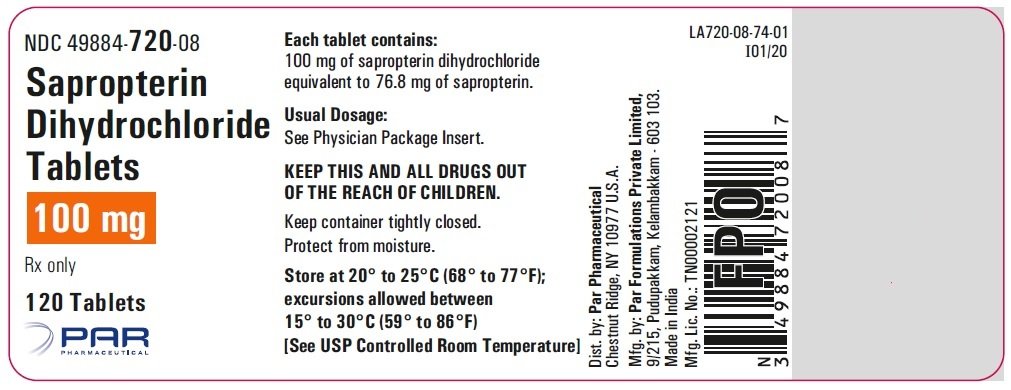
Sapropterin Tablets - FDA prescribing information, side effects and uses

CILOFEXOR


Cilofexor.png

Cilofexor Chemical Structure


CILOFEXOR

C28H22Cl3N3O5 ,

586.8 g/mol

1418274-28-8

GS-9674, Cilofexor (GS(c)\9674)

UNII-YUN2306954

YUN2306954

2-[3-[2-chloro-4-[[5-cyclopropyl-3-(2,6-dichlorophenyl)-1,2-oxazol-4-yl]methoxy]phenyl]-3-hydroxyazetidin-1-yl]pyridine-4-carboxylic acid

Cilofexor is under investigation in clinical trial NCT02943447 (Safety, Tolerability, and Efficacy of Cilofexor in Adults With Primary Biliary Cholangitis Without Cirrhosis).

Cilofexor (GS-9674) is a potent, selective and orally active nonsteroidal FXR agonist with an EC50 of 43 nM. Cilofexor has anti-inflammatory and antifibrotic effects. Cilofexor has the potential for primary sclerosing cholangitis (PSC) and nonalcoholic steatohepatitis (NASH) research.

Gilead , following a drug acquisition from  Phenex , is developing cilofexor tromethamine (formerly GS-9674), the lead from a program of farnesoid X receptor (FXR; bile acid receptor) agonists, for the potential oral treatment of non-alcoholic steatohepatitis (NASH), primary biliary cholangitis/cirrhosis (PBC) and primary sclerosing cholangitis. In March 2019, a phase III trial was initiated for PSC; at that time, the trial was expected to complete in August 2022.

PATENT

Product case WO2013007387 , expiry EU in 2032 and in the US in 2034.

https://patents.google.com/patent/WO2013007387A1/en

Figure imgf000039_0001

PATENT

WO2020150136 claiming 2,6-dichloro-4-fluorophenyl compounds.

PATENT

https://patentscope.wipo.int/search/en/detail.jsf?docId=WO2020172075&tab=PCTDESCRIPTION&_cid=P20-KEP1ZU-65392-1

WO-2020172075

Novel crystalline forms of cilofexor as FXR agonists useful for treating nonalcoholic steatohepatitis.   Gilead , following a drug acquisition from  Phenex , is developing cilofexor tromethamine (formerly GS-9674), the lead from a program of farnesoid X receptor (FXR; bile acid receptor) agonists, for the potential oral treatment of non-alcoholic steatohepatitis (NASH), primary biliary cholangitis/cirrhosis (PBC) and primary sclerosing cholangitis. In March 2019, a phase III trial was initiated for PSC; at that time, the trial was expected to complete in August 2022. Family members of the cilofexor product case WO2013007387 , expire in the EU in 2032 and in the US in 2034.

solid forms of compounds that bind to the NR1H4 receptor (FXR) and act as agonists or modulators of FXR. The disclosure further relates to the use of the solid forms of such compounds for the treatment and/or prophylaxis of diseases and/or conditions through binding of said nuclear receptor by said compounds.


[0004] Compounds that bind to the NR1H4 receptor (FXR) can act as agonists or modulators of FXR. FXR agonists are useful for the treatment and/or prophylaxis of diseases and conditions through binding of the NR1H4 receptor. One such FXR agonist is the compound of Formula I:


I.


[0005] Although numerous FXR agonists are known, what is desired in the art are physically stable forms of the compound of Formula I, or pharmaceutically acceptable salt thereof, with desired properties such as good physical and chemical stability, good aqueous solubility and good bioavailability. For example, pharmaceutical compositions are desired that address

challenges of stability, variable pharmacodynamics responses, drug-drug interactions, pH effect, food effects, and oral bioavailability.


[0006] Accordingly, there is a need for stable forms of the compound of Formula I with suitable chemical and physical stability for the formulation, therapeutic use, manufacturing, and storage of the compound.


[0007] Moreover, it is desirable to develop a solid form of Formula I that may be useful in the synthesis of Formula I. A solid form, such as a crystalline form of a compound of Formula I may be an intermediate to the synthesis of Formula F A solid form may have properties such as bioavailability, stability, purity, and/or manufacturability at certain conditions that may be suitable for medical or pharmaceutical uses.

Description

Cilofexor (GS-9674) is a potent, selective and orally active nonsteroidal FXR agonist with an EC50 of 43 nM. Cilofexor has anti-inflammatory and antifibrotic effects. Cilofexor has the potential for primary sclerosing cholangitis (PSC) and nonalcoholic steatohepatitis (NASH) research[1][2].

IC50 & Target

EC50: 43 nM (FXR)[1]

In Vivo

Cilofexor (GS-9674; 30 mg/kg; oral gavage; once daily; for 10 weeks; male Wistar rats) treatment significantly increases Fgf15 expression in the ileum and decreased Cyp7a1 in the liver in nonalcoholic steatohepatitis (NASH) rats. Liver fibrosis and hepatic collagen expression are significantly reduced. Cilofexor also significantly reduces hepatic stellate cell (HSC) activation and significantly decreases portal pressure, without affecting systemic hemodynamics[3].

Animal Model: Male Wistar rats received a choline-deficient high fat diet (CDHFD)[3]
Dosage: 30 mg/kg
Administration: Oral gavage; once daily; for 10 weeks
Result: Significantly increased Fgf15 expression in the ileum and decreased Cyp7a1 in the liver. Liver fibrosis and hepatic collagen expression were significantly reduced.
Clinical Trial
NCT Number Sponsor Condition Start Date Phase
NCT02943460 Gilead Sciences
Primary Sclerosing Cholangitis
November 29, 2016 Phase 2
NCT02808312 Gilead Sciences
Nonalcoholic Steatohepatitis (NASH)
July 13, 2016 Phase 1
NCT02781584 Gilead Sciences
Nonalcoholic Steatohepatitis (NASH)|Nonalcoholic Fatty Liver Disease (NAFLD)
July 13, 2016 Phase 2
NCT02943447 Gilead Sciences
Primary Biliary Cholangitis
December 1, 2016 Phase 2
NCT03987074 Gilead Sciences|Novo Nordisk A+S
Nonalcoholic Steatohepatitis
July 29, 2019 Phase 2
NCT03890120 Gilead Sciences
Primary Sclerosing Cholangitis
March 27, 2019 Phase 3
NCT02854605 Gilead Sciences
Nonalcoholic Steatohepatitis (NASH)
October 26, 2016 Phase 2
NCT03449446 Gilead Sciences
Nonalcoholic Steatohepatitis
March 21, 2018 Phase 2
NCT02654002 Gilead Sciences
Nonalcoholic Steatohepatitis (NASH)
January 2016 Phase 1
Patent ID Title Submitted Date Granted Date
US2019142814 Novel FXR (NR1H4) binding and activity modulating compounds 2019-01-15
US2019055273 ACYCLIC ANTIVIRALS 2017-03-09
US10220027 FXR (NR1H4) binding and activity modulating compounds 2017-10-13
US10071108 Methods and pharmaceutical compositions for the treatment of hepatitis b virus infection 2018-02-19
US2018000768 INTESTINAL FXR AGONISM ENHANCES GLP-1 SIGNALING TO RESTORE PANCREATIC BETA CELL FUNCTIONS 2017-09-06
Patent ID Title Submitted Date Granted Date
US9820979 NOVEL FXR (NR1H4) BINDING AND ACTIVITY MODULATING COMPOUNDS 2016-12-05
US9539244 NOVEL FXR (NR1H4) BINDING AND ACTIVITY MODULATING COMPOUNDS 2015-08-12 2015-12-03
US9895380 METHODS AND PHARMACEUTICAL COMPOSITIONS FOR THE TREATMENT OF HEPATITIS B VIRUS INFECTION 2014-09-10 2016-08-04
US2017355693 FXR (NR1H4) MODULATING COMPOUNDS 2017-06-12
US2016376279 FXR AGONISTS AND METHODS FOR MAKING AND USING 2016-09-12
Patent ID Title Submitted Date Granted Date
US9139539 NOVEL FXR (NR1H4) BINDING AND ACTIVITY MODULATING COMPOUNDS 2012-07-12 2014-08-07
US2018133203 METHODS OF TREATING LIVER DISEASE 2017-10-27

ClinicalTrials.gov

CTID Title Phase Status Date
NCT03890120 Safety, Tolerability, and Efficacy of Cilofexor in Non-Cirrhotic Adults With Primary Sclerosing Cholangitis Phase 3 Recruiting 2020-08-31
NCT02781584 Safety, Tolerability, and Efficacy of Selonsertib, Firsocostat, and Cilofexor in Adults With Nonalcoholic Steatohepatitis (NASH) Phase 2 Recruiting 2020-08-13
NCT03987074 Safety, Tolerability, and Efficacy of Monotherapy and Combination Regimens in Adults With Nonalcoholic Steatohepatitis (NASH) Phase 2 Completed 2020-07-29
NCT02943460 Safety, Tolerability, and Efficacy of Cilofexor in Adults With Primary Sclerosing Cholangitis Without Cirrhosis Phase 2 Completed 2020-06-09
NCT02943447 Safety, Tolerability, and Efficacy of Cilofexor in Adults With Primary Biliary Cholangitis Without Cirrhosis Phase 2 Completed 2020-02-11

ClinicalTrials.gov

CTID Title Phase Status Date
NCT03449446 Safety and Efficacy of Selonsertib, Firsocostat, Cilofexor, and Combinations in Participants With Bridging Fibrosis or Compensated Cirrhosis Due to Nonalcoholic Steatohepatitis (NASH) Phase 2 Completed 2019-12-24
NCT02854605 Evaluating the Safety, Tolerability, and Efficacy of GS-9674 in Participants With Nonalcoholic Steatohepatitis (NASH) Phase 2 Completed 2019-01-29
NCT02808312 Pharmacokinetics and Pharmacodynamics of GS-9674 in Adults With Normal and Impaired Hepatic Function Phase 1 Completed 2018-10-30
NCT02654002 Study in Healthy Volunteers to Evaluate the Safety, Tolerability, Pharmacokinetics and Pharmacodynamics of GS-9674, and the Effect of Food on GS-9674 Pharmacokinetics and Pharmacodynamics Phase 1 Completed 2016-07-27

EU Clinical Trials Register

EudraCT Title Phase Status Date
2019-000204-14 A Phase 3, Randomized, Double-Blind, Placebo-Controlled Study Evaluating the Safety, Tolerability, and Efficacy of Cilofexor in Non-Cirrhotic Subjects with Primary Sclerosing Cholangitis Phase 3 Restarted, Ongoing 2019-09-11
2016-002496-10 A Phase 2, Randomized, Double-Blind, Placebo-Controlled Study Evaluating the Safety, Tolerability, and Efficacy of GS-9674 in Subjects with Nonalcoholic Steatohepatitis (NASH) Phase 2 Completed 2017-02-21
2016-002443-42 A Phase 2, Randomized, Double-Blind, Placebo Controlled Study Evaluating the Safety, Tolerability, and Efficacy of GS-9674 in Subjects with Primary Biliary Cholangitis Without Cirrhosis Phase 2 Completed 2017-01-09
2016-002442-23 A Phase 2, Randomized, Double-Blind, Placebo Controlled Study Evaluating the Safety, Tolerability, and Efficacy of GS-9674 in Subjects with Primary Sclerosing Cholangitis Without Cirrhosis Phase 2 Completed 2017-01-09

///////////CILOFEXOR, Cilofexor (GS(c)\9674), GS-9674, phase 3


C1CC1C2=C(C(=NO2)C3=C(C=CC=C3Cl)Cl)COC4=CC(=C(C=C4)C5(CN(C5)C6=NC=CC(=C6)C(=O)O)O)Cl

LAZUVAPAGON


img

Unii-CK6VS66Q6X.png

LAZUVAPAGON

KRPN-118

CAS 2379889-71-9
Chemical Formula: C27H32N4O3
Molecular Weight: 460.58

(4S)-N-((2S)-1-Hydroxypropan-2-yl)-methyl-1-(2-methyl-4-(3-methyl-1H-pyrazol-1-yl)benzoyl)-2,3,4,5-tetrahydro-1H-1-benzazepine-4-carboxamide

1H-1-Benzazepine-4-carboxamide, 2,3,4,5-tetrahydro-N-((1S)-2-hydroxy-1-methylethyl)-4-methyl-1-(2-methyl-4-(3-methyl-1H-pyrazol-1-yl)benzoyl)-, (4S)-

(4S)-N-[(2S)-1-hydroxypropan-2-yl]-methyl-1-[2-methyl-4-(3- methyl-1H-pyrazol-1-yl)benzoyl]-2,3,4,5-tetrahydro-1H-1-benzazepine-4-carboxamide

Vasopressin V2 receptor agonist

Kyorin Pharmaceutical under license from Sanwa Kagaku Kenkyusho , is developing SK-1404 ([14C]-SK-1404, presumed to be lazuvapagon), for the iv treatment of nocturia, and as an oral formulation, as KRPN-118

PATENT

WO2020171055

PATENT

WO2014104209

https://patentscope.wipo.int/search/en/detail.jsf?docId=WO2014104209

PATENT

WO-2020171073

https://patentscope.wipo.int/search/en/detail.jsf?docId=WO2020171073&tab=FULLTEXT&_cid=P20-KEM6XV-16484-1

Process for preparing benzazepine derivatives, particularly lazuvapagon a V2 receptor agonist, and their intermediates, useful for treating diabetes insipidus, hemophilia and overactive bladder.

[Fifth Step] to [Sixth Step]
[Chemical
Formula 33] [In the formula, R 1 and R 2 have the same meanings as those in the first step, and * represents an asymmetric center. ]

[0074]
 In the fifth step and the sixth step, the reaction can be performed according to a conventional method.
In the fifth step, compound (IX) is treated with a base (eg, sodium hydroxide, potassium hydroxide, etc.) in a suitable solvent (eg, alcohol solvent such as methanol, ethanol, etc., water), usually at room temperature to an organic solvent. A carboxylic acid compound of the compound (X) can be obtained by reacting at a temperature of the boiling point of the solvent for 30 minutes to 1 day. Next, in the sixth step, the obtained carboxylic acid compound is subjected to amidation with L-alaninol to obtain the compound (V). For the amidation, a method using a condensing agent, a method of reacting L-alaninol with a mixed acid anhydride or acid chloride of carboxylic acid, and the like can be used. In the method using a condensing agent, for example, the carboxylic acid compound and L-alaninol are condensed in a suitable organic solvent (chloroform, dimethylformamide, etc.) in the presence of a base (eg, diisopropylethylamine, triethylamine, etc.) (for example, 1 , 3-dicyclohexylcarbodiimide (DCC), 1-ethyl-3-[3-(dimethylamino)propyl]carbodiimide (EDC), etc.) alone or in combination with 1-hydroxybenztriazole (HOBt). (V) can be obtained. Further, in the method using a mixed acid anhydride, for example, a carboxylic acid derivative in an appropriate organic solvent (eg, dichloromethane, toluene, etc.) in the presence of a base (eg, pyridine, triethylamine, etc.), an acid chloride (eg, pivaloyl chloride, Tosyl chloride, etc.) or an acid derivative (eg, ethyl chloroformate, isobutyl chloroformate, etc.), and the resulting mixed acid anhydride is reacted with L-alaninol usually at 0° C. to room temperature to give compound (V). Can be obtained. Further, in the method of passing through an acid chloride, for example, an acid chloride is obtained by using a chlorinating agent (eg, thionyl chloride, oxalyl chloride, etc.) in a suitable organic solvent (eg, toluene, xylene, etc.) Acid chloride in the presence of a base (eg sodium carbonate, triethylamine etc.) in a suitable organic solvent (eg ethyl acetate, toluene etc.) with L-alaninol,

[0075]
 Compound (V) can also exist as a solvate. The solvate of compound (V) can be obtained by a conventional method for producing a solvate. Specifically, it can be obtained by mixing the compound (V) with a solvent while heating if necessary, and then cooling and crystallizing the mixture while stirring or standing. It is desirable that the cooling be carried out while adjusting the cooling rate if necessary in consideration of the influence on the quality of crystal, grain size and the like. For example, cooling at a cooling rate of 20 to 1° C./hour is preferable, and cooling at a cooling rate of 10 to 3° C./hour is more preferable. As the organic solvent used in these methods, alcohol solvents such as methanol, ethanol, propanol, isopropanol, normal propanol, and tertiary butanol are preferable. The amount of the organic solvent used is preferably 3 to 20 times by weight, more preferably 5 to 10 times by weight, of the compound (V).

PATENT

WO-2020171055

https://patentscope.wipo.int/search/en/detail.jsf?docId=WO2020171055&tab=FULLTEXT&_cid=P20-KEM6S2-14698-1

The present inventors have investigated the method described in Patent Document 1 by using N-[(S)-1-hydroxypropan-2-yl]-4-methyl-1-[2-methyl-4-(3-methyl-1H). -Pyrazol-1-yl)benzoyl]-2,3,4,5-tetrahydro-1H-benzo[b]azepine-4-carboxamide chiral compound was prepared and analyzed. As a result, the compound was amorphous (amorphous). Solid). Amorphous is known to be a thermodynamically non-equilibrium metastable state and generally has high solubility and dissolution rate, but is low in stability and is often unfavorable in terms of drug development. Therefore, an object of the present invention is to increase the applicability as a drug substance to (S)-N-[(S)-1-hydroxypropan-2-yl]-4 represented by the formula (I). -Methyl-1-[2-methyl-4-(3-methyl-1H-pyrazol-1-yl)benzoyl]-2,3,4,5-tetrahydro-1H-benzo[b]azepine-4-carboxamide It is to provide an alcohol solvate or a crystal thereof.
[Chemical 1]

[Reference Example 1] Compound (I) (amorphous)
Compound (I) was produced by the following method.
[Chemical 5]

[0046]
(First Step)
1-(2-Methyl-4-(3-methyl-1H-pyrazol-1-yl)benzoyl)-5-oxo-2,3,4,5-tetrahydro-1H-benzo[b] Azepine-4-carboxylic acid ethyl ester was treated with methyl bromide in the presence of (R,R)-3,5-bistrifluoromethylphenyl-NAS bromide, cesium carbonate and cesium fluoride in a mixed solvent of benzene bromide and water. By carrying out methylation using (R)-4-methyl-1-(2-methyl-4-(3-methyl-1H-pyrazol-1-yl)benzoyl)-5-oxo-2,3,4 ,5-Tetrahydro-1H-benzo[b]azepine-4-carboxylic acid ethyl ester was obtained.

[0047]
(Second Step)
(R)-4-Methyl-1-(2-methyl-4-(3-methyl-1H-pyrazol-1-yl)benzoyl)-5-oxo-2,3,4,5- Reduction of the ketone portion of tetrahydro-1H-benzo[b]azepine-4-carboxylic acid ethyl ester with a borane-ammonia complex prepared from sodium borohydride and ammonium sulfate in a toluene solvent gave (4R)-5. -Hydroxy-4-methyl-1-(2-methyl-4-(3-methyl-1H-pyrazol-1-yl)benzoyl)-2,3,4,5-tetrahydro-1H-benzo[b]azepine- 4-Carboxylic acid ethyl ester was obtained.

[0048]
(Third Step)
(4R)-5-hydroxy-4-methyl-1-(2-methyl-4-(3-methyl-1H-pyrazol-1-yl)benzoyl)-2,3,4,5- By chlorinating the hydroxyl group of tetrahydro-1H-benzo[b]azepine-4-carboxylic acid ethyl ester with phosphorus oxychloride in the presence of pyridine in a toluene solvent, (4S)-5-chloro-4-methyl-1 -(2-Methyl-4-(3-methyl-1H-pyrazol-1-yl)benzoyl)-2,3,4,5-tetrahydro-1H-benzo[b]azepine-4-carboxylic acid ethyl ester was obtained. It was

[0049]
(Step 4)
(4S)-5-chloro-4-methyl-1-(2-methyl-4-(3-methyl-1H-pyrazol-1-yl)benzoyl)-2,3,4,5- By stirring tetrahydro-1H-benzo[b]azepine-4-carboxylic acid ethyl ester in a methanol solvent in the presence of 10% palladium-carbon under slightly pressurized conditions of hydrogen gas, (S)-4-methyl- 1-(2-methyl-4-(3-methyl-1H-pyrazol-1-yl)benzoyl)-2,3,4,5-tetrahydro-1H-benzo[b]azepine-4-carboxylic acid ethyl ester Obtained.

[0050]
(Fifth Step)
(S)-4-Methyl-1-(2-methyl-4-(3-methyl-1H-pyrazol-1-yl)benzoyl)-2,3,4,5-tetrahydro-1H- Benzo[b]azepine-4-carboxylic acid ethyl ester is hydrolyzed with 30% sodium hydroxide in a solvent of water and methanol to give (S)-4-methyl-1-(2-methyl-4-( 3-Methyl-1H-pyrazol-1-yl)benzoyl)-2,3,4,5-tetrahydro-1H-benzo[b]azepine-4-carboxylic acid was obtained.

[0051]
(Sixth Step)
(S)-4-Methyl-1-(2-methyl-4-(3-methyl-1H-pyrazol-1-yl)benzoyl)-2,3,4,5-tetrahydro-1H- Benzo[b]azepine-4-carboxylic acid was converted to an acid chloride form using thionyl chloride in a toluene solvent. This acid chloride and L-alaninol are reacted in a mixed solvent of ethyl acetate and water in the presence of sodium carbonate to give (S)-N-((S)-1-hydroxypropan-2-yl)-4-methyl. -1-(2-methyl-4-(3-methyl-1H-pyrazol-1-yl)benzoyl)-2,3,4,5-tetrahydro-1H-benzo[b]azepine-4-carboxamide (compound ( I)) was obtained.

[0052]
 FIG. 7 shows the powder X-ray diffraction spectrum of the compound (I) obtained in the first to sixth steps. No clear peak was observed in the X-ray diffraction pattern, and the compound (I) of Reference Example 1 was found to be amorphous.

[0053]
[Example 1] Isopropanol solvate
of compound (I) To 5.0 g of amorphous compound (I) of Reference Example 1, 65 mL of isopropanol was added, and the mixture was stirred at room temperature for 30 minutes. After the precipitated suspension was dissolved by heating, it was allowed to cool to room temperature and stirred overnight at 5°C. The suspension was filtered, washed with chilled isopropanol and dried at 40° C. overnight to give 4.9 g of a white solid.

[0054]
 When the obtained compound was analyzed by a thermogravimetric apparatus, the content of isopropanol was 8.2% with respect to the compound (I), and the molar ratio was 0.7 times the amount with respect to the compound (I). It was

[0055]
 The powder X-ray diffraction spectrum and the infrared absorption spectrum of the compound obtained in Example 1 are shown in FIG. 1 and FIG. 2, respectively. The characteristic peaks shown in Table 1 were shown as the diffraction angle (2θ) or as the interplanar spacing d. The obtained compound was crystalline.

[0056]
[table 1]
FIG. 2 shows an infrared absorption spectrum of the compound obtained in Example 1.

/////////////LAZUVAPAGON, KRPN-118

CC1=NN(C=C1)C2=CC(=C(C=C2)C(=O)N3CCC(CC4=CC=CC=C43)(C)C(=O)NC(C)CO)C

MOLINDONE, молиндон موليندون 吗茚酮


Thumb

Molindone.svg

ChemSpider 2D Image | Molindone | C16H24N2O2

MOLINDONE

C16H24N2O2,, 276.374

SPN 810,  SPN 801M, AFX 2201

cas 15622-65-8 hcl

Molindone is used for the management of the manifestations of psychotic disorders.

Schizophrenia

молиндон
موليندون
吗茚酮
(±)-Molindone
2376
3-Ethyl-2-methyl-5-(4-morpholinylmethyl)-1,5,6,7-tetrahydro-4H-indol-4-one [ACD/IUPAC Name]
3-Ethyl-2-methyl-5-(morpholin-4-ylmethyl)-1,5,6,7-tetrahydro-4H-indol-4-one
4H-Indol-4-one, 3-ethyl-1,5,6,7-tetrahydro-2-methyl-5-(4-morpholinylmethyl)-
7416-34-4 [RN]
RT3Y3QMF8N
UNII:RT3Y3QMF8N

Supernus Pharmaceuticals , under license from Afecta Pharmaceuticals , is developing molindone hydrochloride (SPN-810; SPN-801M; AFX-2201; presumed to be Zalvari), as a capsule formulation, for the potential oral treatment of conduct disorder in patients with attention deficit hyperactivity disorder. In 3Q15, the company initiated two phase III trials (CHIME 1 and CHIME 2) for compulsive aggression in ADHD. In November 2019, the trial was expected to complete in June 2020.

Molindone, sold under the brand name Moban, is an antipsychotic which is used in the United States in the treatment of schizophrenia.[1][2] It works by blocking the effects of dopamine in the brain, leading to diminished symptoms of psychosis. It is rapidly absorbed when taken orally.

It is sometimes described as a typical antipsychotic,[3] and sometimes described as an atypical antipsychotic.[4]

Molindone was discontinued by its original supplier, Endo Pharmaceuticals, on January 13, 2010.[5]

Availability and Marketing in the USA

After having been produced and subsequently discontinued by Core Pharma in 2015-2017, Molindone is available again from Epic Pharma effective December, 2018.[6]

Adverse effects

The side effect profile of molindone is similar to that of other typical antipsychotics. Unlike most antipsychotics, however, molindone use is associated with weight loss.[4][7]

Chemistry

Synthesis

Molindone synthesis: SCHOEN KARL, J PACHTER IRWIN; BE 670798 (1965 to Endo Lab).

Condensation of oximinoketone 2 (from nitrosation of 3-pentanone), with cyclohexane-1,3-dione (1) in the presence of zinc and acetic acid leads directly to the partly reduced indole derivative 6. The transformation may be rationalized by assuming as the first step, reduction of 2 to the corresponding α-aminoketone. Conjugate addition of the amine to 1 followed by elimination of hydroxide (as water) would give ene-aminoketone 3. This enamine may be assumed to be in tautomeric equilibrium with imine 4Aldol condensation of the side chain carbonyl group with the doubly activated ring methylene group would then result in cyclization to pyrrole 5; simple tautomeric transformation would then give the observed product. Mannich reaction of 6 with formaldehyde and morpholine gives the tranquilizer molindone (7).

US-20200262788

Process for preparing molindone and its intermediates useful for treating schizophrenia..

Molindone is chemically known as 4H-Indol-4-one, 3-ethyl-1,5,6,7-tetrahydro-2-methyl-5-(4-morpholinylmethyl) and represented by formula I. Molindone is indicated for management of schizophrenia and is under clinical trial for alternate therapies.

      The compound molindone, process for its preparation and its pharmaceutically acceptable salts are disclosed in U.S. Pat. No. 3,491,093. Another application WO 2014042688 discloses methods of producing molindone. Since there are very limited methods for preparation of molindone reported in literature there exist a need for alternate process for preparation of molindone. The present invention provides novel process for preparation of Molindone (I) and its salts.

EXAMPLES

Example 1: Preparation of methyl 2-chloro-2-ethyl-3-oxobutanoate

      A mixture of methyl acetoacetate (100 g), potassium tertiary butoxide (101.5 g) and tetrahydrofuran (400 ml) was stirred and a solution of ethyliodide (141 g) in tetrahydrofuran (200 ml) was added to it. The reaction mixture was stirred at 60° C. for about 15 hours. Water (250 ml) was added to the reaction mixture at 25° C. followed by addition of dichloromethane (500 ml). The organic layer was separated and concentrated. To the concentrate was added dichloromethane (1000 ml) and sulfuryl chloride (93.7 g) and the solution was stirred for about 18 hours at 25-30° C. Water (500 ml) was added to the reaction mixture. The organic layer was separated and concentrated to give the title compound.

Example 2: Preparation of 3-chloropentan-2-one

      A mixture of methyl 2-chloro-2-ethyl-3-oxobutanoate (98.8 g) and water (240 ml) was treated with sulfuric acid (260 g) and stirred for 90 minutes at 75-80° C. The reaction mixture was poured into water (500 ml) and dichloromethane (500 ml). The organic layer was separated and concentrated. The concentrate was subjected to fractional distillation and pure compound was collected.

Example 3: Preparation of 3-chloropentan-2-one

      A mixture of petane-2-one (15 g), acetic acid (60 ml) and N-chlorosuccinimide (24.4 g) was stirred for about 18 hours at 80-85° C. The reaction mixture was cooled and dichloromethane (100 ml) was added to it. The mixture was treated with sodium bicarbonate solution. The organic layer was separated and concentrated to give the title compound (2).

Example 4: Preparation of 2-(2-oxopentan-3-yl)cyclohexane-1,3-dione (4)

      A mixture of 3-bromopentan-2-one (17 g), cyclohexane-1,3-dione (11.5 g), triethyl amine (15.6 g) and acetonitrile (100 ml)) was stirred for about 2 hours at 55-60° C. The reaction mixture was concentrated and ethyl acetate (170 ml) and water (85 ml) was added. The organic layer separated and concentrated. The residue was subjected to column chromatography (ethylacetate: cyclohexane). The title compound was obtained. 1H NMR (500 MHz, CDCl 3), δ 5.14 (S 1H), δ 4.37 (d 1H), δ 2.50-2.55 (m 2H) δ 2.35-2.38 (m 2H), δ 2.16 (s 3H), δ 2.00-2.05 (m 2H) δ 1.88-1.90 (m 2H), δ 1.00-1.02 (m 3H); 13C NMR (500 MHz, CDCl 3), 206.04, 199.34, 176.63, 103.70, 77.12, 36.62, 28.88, 25.44, 21.00, 16.55, 9.41 ppm; Dept135 NMR (500 MHz, CDCl 3): 103.70, 83.78, 36.62, 28.87, 28.65, 25.45, 24.69, 21.00, 9.41 ppm; Mass: [M+1]=197.

Example 5: Preparation of 2-methyl-3-ethyl-4-oxo-4,5,6,7-tetrahydroindole (5)

      A mixture of 2-(2-oxopentan-3-yl)cyclohexane-1,3-dione (10 g), acetic acid (40 ml) and ammonium acetate (19.6 g) was stirred for about 3 hours at 95-100° C. The reaction mixture was cooled and concentrated. To the residue a mixture of ethyl acetate (60 ml) and water (50 ml) was added. The organic layer separated and concentrated to give the title compound.

Example 6: Preparation of 2-methyl-3-ethyl-4-oxo-4,5,6,7-tetrahydroindole (5)

      A mixture of cyclohexane-1,3-dione (3 g), dimethyl sulfoxide (15 ml), triethyl amine (2.7 g) and 3-chloropentan-2-one (3.2 g) was stirred for about 24 hours at 40-45° C. Aqueous ammonia (15 ml) was added to the mixture and stirred for about 10 hours at 25-30° C. A mixture of water (60 ml) and ethyl acetate (30 ml) was added to it. The organic layer separated and concentrated. The residue was subjected to column chromatography (ethyl acetate/n-hexane). The title compound was obtained.

Example 7: Preparation of Molindone Hydrochloride

      A mixture of 2-methyl-3-ethyl-4-oxo-4,5,6,7-tetrahydroindole (5 g), morpholine (4.42 g), paraformaldehyde (1.52 g) and ethanol (70 ml) was stirred for about 24 hours at 75-80° C. The reaction mixture was concentrated and water (50 ml) was added to the residue. The mixture was treated with concentrated hydrochloric acid followed by aqueous ammonia in presence of ethyl acetate. The organic layer was separated and concentrated to obtain molindone as a residue. Isopropanol hydrochloride was added to the residue and stirred for 30 minutes at 25-30° C. The solution was concentrated and ethyl acetate (15 ml) was added. The solid was filtered, washed with ethyl acetate and dried to obtain molindone hydrochloride.

References

  1. ^ “molindone”. F.A. Davis Company.
  2. ^ “Molindone”.
  3. ^ Aparasu RR, Jano E, Johnson ML, Chen H (October 2008). “Hospitalization risk associated with typical and atypical antipsychotic use in community-dwelling elderly patients”. Am J Geriatr Pharmacother6 (4): 198–204. doi:10.1016/j.amjopharm.2008.10.003PMID 19028375.
  4. Jump up to:a b Bagnall A, Fenton M, Kleijnen J, Lewis R (2007). Bagnall A (ed.). “Molindone for schizophrenia and severe mental illness”. Cochrane Database Syst Rev (1): CD002083. doi:10.1002/14651858.CD002083.pub2PMID 17253473.
  5. ^ https://www.fda.gov/Drugs/DrugSafety/DrugShortages/ucm050794.htm
  6. ^ “NEWS”http://www.epic-pharma.com. Retrieved 2018-12-12.
  7. ^ Allison DB, Mentore JL, Heo M, et al. (1999). “Antipsychotic-induced weight gain: a comprehensive research synthesis”. Am J Psychiatry156 (11): 1686–96. doi:10.1176/ajp.156.11.1686 (inactive 2020-01-22). PMID 10553730. Free full text
Molindone
Molindone.svg
Clinical data
Pronunciation /mˈlɪndn/ moh-LIN-dohn
Trade names Moban
AHFS/Drugs.com Consumer Drug Information
MedlinePlus a682238
Pregnancy
category
  • C
Routes of
administration
By mouth (tablets)
ATC code
Legal status
Legal status
Pharmacokinetic data
Metabolism Hepatic
Elimination half-life 1.5 hours
Excretion Minor, renal and fecal
Identifiers
CAS Number
PubChem CID
IUPHAR/BPS
DrugBank
ChemSpider
UNII
KEGG
ChEMBL
CompTox Dashboard (EPA)
ECHA InfoCard 100.254.109 Edit this at Wikidata
Chemical and physical data
Formula C16H24N2O2
Molar mass 276.380 g·mol−1
3D model (JSmol)
 

//////////MOLINDONE, SPN 810,  SPN 801M, AFX 2201, молиндон,  موليندون  , 吗茚酮  ,

BAY 1895344


BAY-1895344 Structure

BAY 1895344

1876467-74-1 (free base)
(R)-3-methyl-4-(4-(1-methyl-1H-pyrazol-5-yl)-8-(1H-pyrazol-3-yl)-1,7-naphthyridin-2-yl)morpholine, monohydrochloride

BAY-1895344 hydrochloride Chemical Structure

BAY-1895344

Molecular Weight

411.89

Formula

C₂₀H₂₂ClN₇O

BAY-1895344 (hydrochloride)

1876467-74-1

1876467-74-1(free base)

s8666CCG-268786CS-7574HY-101566A

BAY-1895344 hydrochloride is a potent, orally available and selective ATR inhibitor, with IC50 of 7 nM. Anti-tumor activity.

bay

NMR https://file.selleckchem.com/downloads/nmr/S866603-BAY-1895344-hnmr-selleck.pdf


Biological Activity

In vitro, BAY 1895344 was shown to be a very potent and highly selective ATR inhibitor (IC50 = 7 nM), which potently inhibits proliferation of a broad spectrum of human tumor cell lines (median IC50 = 78 nM). In cellular mechanistic assays BAY 1895344 potently inhibited hydroxyurea-induced H2AX phosphorylation (IC50 = 36 nM). Moreover, BAY 1895344 revealed significantly improved aqueous solubility, bioavailability across species and no activity in the hERG patch-clamp assay. BAY 1895344 also demonstrated very promising efficacy in monotherapy in DNA damage deficient tumor models as well as combination treatment with DNA damage inducing therapies.

Conversion of different model animals based on BSA (Value based on data from FDA Draft Guidelines)
Species Mouse Rat Rabbit Guinea pig Hamster Dog
Weight (kg) 0.02 0.15 1.8 0.4 0.08 10
Body Surface Area (m2) 0.007 0.025 0.15 0.05 0.02 0.5
Km factor 3 6 12 8 5 20
Animal A (mg/kg) = Animal B (mg/kg) multiplied by Animal B Km
Animal A Km

For example, to modify the dose of resveratrol used for a mouse (22.4 mg/kg) to a dose based on the BSA for a rat, multiply 22.4 mg/kg by the Km factor for a mouse and then divide by the Km factor for a rat. This calculation results in a rat equivalent dose for resveratrol of 11.2 mg/kg.

Chemical Information
Molecular Weight 375.43
Formula C20H21N7O
CAS Number 1876467-74-1
Purity 98.69%
Solubility 10 mM in DMSO
Storage at -20°C
PAPER
Damage Incorporated: Discovery of the Potent, Highly Selective, Orally Available ATR Inhibitor BAY 1895344 with Favorable Pharmacokinetic Properties and Promising Efficacy in Monotherapy and in Combination Treatments in Preclinical Tumor Models
Journal of Medicinal Chemistry  20206313, 7293-7325 (Article)

Publication Date (Web):June 5, 2020DOI: 10.1021/acs.jmedchem.0c00369

2-[(3R)-3-Methylmorpholin-4-yl]-4-(1-methyl-1Hpyrazol-5-yl)-8-(1H-pyrazol-5-yl)-1,7-naphthyridine (BAY 1895344). Sulfonate 67 (500 mg, 0.95 mmol), 1- methyl-5-(4,4,5,5-tetramethyl-1,3,2-dioxaborolan-2-yl)- 1H-pyrazole (68) (415 mg, 1.90 mmol), 2 M aq K2CO3 solution (1.4 mL), and Pd(PPh3)2Cl2 (67 mg, 0.094 mmol) were solubilized in DME (60 mL). The reaction mixture was stirred for 20 min at 130 °C under microwave irradiation. After cooling to rt, the mixture was filtered through a silicon filter and concentrated under reduced pressure. The crude material was purified by flash column chromatography (silica gel, hexane/EtOAc gradient 0–100%, followed by EtOAc/EtOH 9:1). The desired fractions were concentrated under reduced pressure and solubilized in concd H2SO4 (5 mL). The mixture was stirred for 3 h at rt. The mixture was then poured into ice and basified using solid NaHCO3. The suspension was filtered and the solid was stirred with EtOH at 40 °C, filtered, and dried under reduced pressure to give BAY 1895344 (280 mg, 0.75 mmol, 78%). LC-MS [Method 2]: Rt = 0.99 min. MS (ESI+): m/z = 376.1 [M+H]+ . 1H NMR (400 MHz, DMSO-d6): δ = 13.44 (br s, 1H, pyrazole-NH), 8.35 (d, J = 5.32 Hz, 1H, naphthyridine), 7.56–7.68 (m, 3H, pyrazole, naphthyridine), 7.42 (br s, 1H, pyrazole), 7.27 (d, J = 5.58 Hz, 1H, naphthyridine), 6.59 (d, J = 2.03 Hz, 1H, pyrazole), 4.60–4.69 (m, 1H, morpholine), 4.23 (br d, J = 11.66 Hz, 1H, morpholine), 4.00–4.09 (m, 1H, morpholine), 3.78–3.85 (m, 1H, morpholine), 3.75 (m, 4H, methyl, morpholine), 3.69–3.74 (m, 1H, morpholine), 3.57 (m, 1H, morpholine), 1.30 (d, J = 6.59 Hz, 3H, methyl). 13C NMR (125 MHz, DMSO-d6): δ = 156.5, 145.2, 140.0, 139.6, 139.5, 138.2, 137.4, 137.4, 125.7, 117.1, 115.5, 108.2, 107.7, 70.3, 66.1, 47.3, 39.7, 37.2, 13.3. ESI-HRMS: m/z [M+H]+ calcd for C20H22N7O: 376.1886, found: 376.1879. [α]D –80.8 ± 1.04 (1.0000 g/ 100 mL CHCl3).
References

Identification of potent, highly selective and orally available ATR inhibitor BAY 1895344 with favorable PK properties and promising efficacy in monotherapy and combination in preclinical tumor models
Ulrich T, et al. AACR. 2017 July;77(13 Suppl):Abstract nr 983.

ATR inhibitor BAY 1895344 shows potent anti-tumor efficacy in monotherapy and strong combination potential with the targeted alpha therapy Radium-223 dichloride in preclinical tumor models
Antje Margret Wengner, et al. AACR 2017 July;77(13 Suppl):Abstract nr 836.

////////////s8666CCG-268786CS-7574HY-101566ABAY-1895344BAY 1895344

CC1COCCN1C2=NC3=C(C=CN=C3C4=CC=NN4)C(=C2)C5=CC=NN5C

MK 5204


mk-5204

MK 5204

mk-5204

(1R,5S,6R,7R,10R,11R,14R,15S,20R,21R)-21-[(2R)-2-Amino-2,3,3-trimethylbutoxy]-20-(5-carbamoyl-1,2,4-triazol-1-yl)-5,7,10,15-tetramethyl-7-[(2R)-3-methylbutan-2-yl]-17-oxapentacyclo[13.3.3.01,14.02,11.05,10]henicos-2-ene-6-carboxylic acid.png

mk-5204

CAS No: 1207751-75-4
Product Code: BM178545

 (1R,5S,6R,7R,10R,11R,14R,15S,20R,21R)-21-[(2R)-2-amino-2,3,3-trimethylbutoxy]-20-(5-carbamoyl-1,2,4-triazol-1-yl)-5,7,10,15-tetramethyl-7-[(2R)-3-methylbutan-2-yl]-17-oxapentacyclo[13.3.3.01,14.02,11.05,10]henicos-2-ene-6-carboxylic acid

MW: 696g/mol

MW 695.97

C40 H65 N5 O5

PAPER

https://www.sciencedirect.com/science/article/abs/pii/S0960894X20304686

Abstract

Our previously reported efforts to produce an orally active β-1,3-glucan synthesis inhibitor through the semi-synthetic modification of enfumafungin focused on replacing the C2 acetoxy moiety with an aminotetrazole and the C3 glycoside with a N,N-dimethylaminoether moiety. This work details further optimization of the C2 heterocyclic substituent, which identified 3-carboxamide-1,2,4-triazole as a replacement for the aminotetrazole with comparable antifungal activity. Alkylation of either the carboxamidetriazole at C2 or the aminoether at C3 failed to significantly improve oral efficacy. However, replacement of the isopropyl alpha amino substituent with a t-butyl, improved oral exposure while maintaining antifungal activity. These two structural modifications produced MK-5204, which demonstrated broad spectrum activity against Candida species and robust oral efficacy in a murine model of disseminated Candidiasis without the N-dealkylation liability observed for the previous lead.

MK-5204: An orally active β-1,3-glucan synthesis inhibitor ...
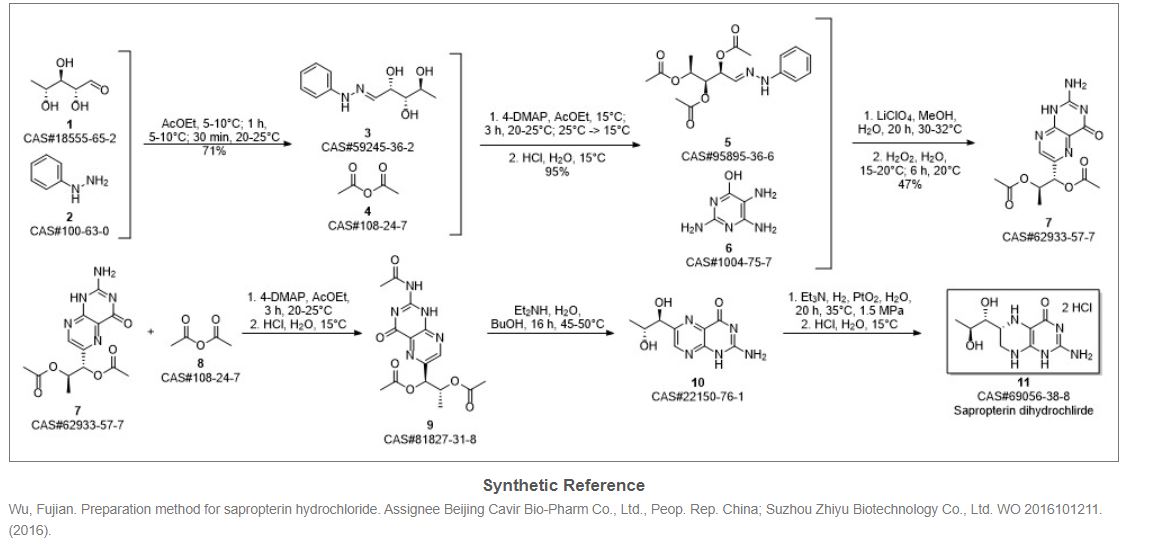
MK-5204: An orally active β-1,3-glucan synthesis inhibitor ...
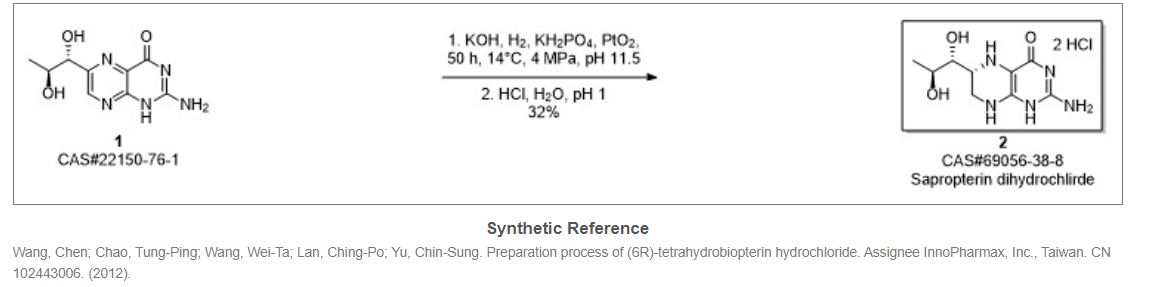
patent

https://patentscope.wipo.int/search/en/detail.jsf?docId=US43243783&tab=PCTDESCRIPTION&_cid=P22-KD34BU-17225-1

Patent ID Title Submitted Date Granted Date
US8188085 Antifungal agents 2010-05-06 2012-05-29
ungal infection is a major healthcare problem, and the incidence of hospital-acquired fungal diseases continues to rise. Severe systemic fungal infection in hospitals (such as candidiasis, aspergillosis, histoplasmosis, blastomycosis and coccidioidomycosis) is commonly seen in neutropaenic patients following chemotherapy and in other oncology patients with immune suppression, in patients who are immune-compromised due to Acquired Immune Deficiency Syndrome (AIDS) caused by HIV infection, and in patients in intensive care. Systemic fungal infections cause ˜25% of infection-related deaths in leukaemics. Infections due to Candida species are the fourth most important cause of nosocomial bloodstream infection. Serious fungal infections may cause 5-10% of deaths in patients undergoing lung, pancreas or liver transplantation. Treatment failures are still very common with all systemic mycoses. Secondary resistance also arises. Thus, there remains an increasing need for effective new therapy against mycotic infections.
      Enfumafungin is a hemiacetal triterpene glycoside that is produced in fermentations of a Hormonema spp. associated with living leaves of Juniperus communis (U.S. Pat. No. 5,756,472; Pelaez et al., Systematic and Applied Microbiology, 23:333-343, 2000; Schwartz et al., JACS, 122:4882-4886, 2000; Schwartz, R. E., Expert Opinion on Therapeutic Patents, 11(11):1761-1772, 2001). Enfumafungin is one of the several triterpene glycosides that have in vitro antifungal activities. The mode of the antifungal action of enfumafungin and other antifungal triterpenoid glycosides was determined to be the inhibition of fungal cell wall glucan synthesis by their specific action on (1,3)-β-D-glucan synthase (Onishi et al., Antimicrobial Agents and Chemotherapy, 44:368-377, 2000; Pelaez et al., Systematic and Applied Microbiology, 23:333-343, 2000). 1,3-β-D-Glucan synthase remains an attractive target for antifungal drug action because it is present in many pathogenic fungi which affords broad antifungal spectrum and there is no mammalian counterpart and as such, compounds inhibiting 1,3-β-D-Glucan synthase have little or no mechanism-based toxicity.

SIMILAR BUT NOT SAME

METHOXY EXAMPLE

Example 8

(1S,4aR,6aS,7R,8R,10aR,10bR,12aR,14R,15R)-15-[[(2R)-2-amino-2,3-dimethylbutyl]oxy]-8-[(1R)-1,2-dimethylpropyl]-14-[3-(methoxycarbonyl)-1H-1,2,4-triazol-1-yl]-1,6,6a,7,8,9,10,10a,10b,11,12,12a-dodecahydro-1,6a,8,10a-tetramethyl-4H-1,4a-propano-2H-phenanthro[1,2-c]pyran-7-carboxylic acid (EXAMPLE 8A) and (1S,4aR,6aS,7R,8R,10aR,10bR,12aR,14R,15R)-15-[[(2R)-2-amino-2,3-dimethylbutyl]oxy]-8-[(1R)-1,2-dimethylpropyl]-14-[5-(methoxycarbonyl)-1H-1,2,4-triazol-1-yl]-1,6,6a,7,8,9,10,10a,10b,11,12,12a-dodecahydro-1,6a,8,10a-tetramethyl-4H-1,4a-propano-2H-phenanthro[1,2-c]pyran-7-carboxylic acid (EXAMPLE 8B)

      Methyl 1,2,4-triazole-3-carboxylate (27.1 mg, 0.213 mmol) and BF 3OEt (54 μl, 0.426 mmol) were added to a stirred solution of Intermediate 6 (25.9 mg, 0.043 mmol) in 1,2-dichloroethane (0.43 ml). The reaction mixture was a light yellow suspension that was heated at 50° C. for 7.5 hr and then stirred at room temperature for 64 hr. The solvent was evaporated and the resulting residue was placed under high vacuum. The residue was dissolved in methanol and separated using a single HPLC run on a 19×150 mm Sunfire Prep C18 OBD 10 μm column by eluting with acetonitrile/water+0.1% TFA. The HPLC fractions of the faster eluting regioisomer were combined, the solvent was evaporated under reduced pressure, and the residue was lyophilized from ethanol and benzene to give EXAMPLE 8A (8.9 mg, 10.97 μmol) as a white solid. The HPLC fractions of the slower eluting regioisomer were combined, the solvent was evaporated under reduced pressure, and the residue was lyophilized from ethanol and benzene to give EXAMPLE 8B (1.5 mg, 1.85 μmol) as a white solid.

Example 8A

       1H NMR (CD 3OD, 600 MHz, ppm) δ 0.76 (s, 3H, Me), 0.76 (d, 3H, Me), 0.79 (d, 3H, Me), 0.83 (d, 3H, Me), 0.85 (d, 3H, Me), 0.88 (s, 3H, Me), 0.88 (s, 3H, Me), 0.89 (d, 3H, Me), 1.16 (s, 3H, Me), 1.20 (s, 3H, Me), 1.22-1.35 (m), 1.39-1.44 (m), 1.47-1.65 (m), 1.78-2.02 (m), 2.10-2.22 (m), 2.46 (dd, 1H, H13), 2.66 (d, 1H), 2.83 (s, 1H, H7), 3.48 (d, 1H), 3.50 (d, 1H), 3.53 (dd, 1H), 3.60 (d, 1H), 3.77 (d, 1H), 3.92 (d, 1H), 3.95 (s, 3H, COOMe), 5.48 (dd, 1H, H5), 5.61-5.68 (m, 1H, H14), 8.77 (broad s, 1H, triazole).
      Mass Spectrum: (ESI) m/z=697.42 (M+H).

Example 8B

       1H NMR (CD 3OD, 600 MHz, ppm) δ 0.76 (s, 3H, Me), 0.76 (d, 3H, Me), 0.79 (s, 3H, Me), 0.79 (d, 3H, Me), 0.82 (d, 3H, Me), 0.85 (d, 3H, Me), 0.88 (s, 3H, Me), 0.89 (d, 3H, Me), 1.13 (s, 3H, Me), 1.20 (s, 3H, Me), 1.22-1.36 (m), 1.39-1.44 (m), 1.47-1.55 (m), 1.59-1.65 (m), 1.72-1.96 (m), 2.10-2.22 (m), 2.46 (dd, 1H, H13), 2.78 (d, 1H), 2.84 (s, 1H, H7), 3.48 (d, 1H), 3.50 (d, 1H), 3.55 (dd, 1H), 3.62 (d, 1H), 3.93 (d, 1H), 3.98 (d, 1H), 3.99 (s, 3H, COOMe), 5.47 (dd, 1H, H5), 6.53-6.59 (m, 1H, H14), 8.14 (s, 1H, triazole).
      Mass Spectrum: (ESI) m/z=697.42 (M+H).
 

/////////////MK 5204, BM178545

NC(=O)c6ncnn6[C@@H]1C[C@]45COC[C@@](C)([C@H]1OC[C@](C)(N)C(C)(C)C)[C@@H]5CC[C@H]3C4=CC[C@@]2(C)[C@H](C(=O)O)[C@](C)(CC[C@@]23C)[C@H](C)C(C)C

CC(C)C(C)C1(CCC2(C3CCC4C5(COCC4(C3=CCC2(C1C(=O)O)C)CC(C5OCC(C)(C(C)(C)C)N)N6C(=NC=N6)C(=O)N)C)C)C

SELGANTOLIMOD


2D chemical structure of 2004677-13-6

SELGANTOLIMOD

GS 9688

RN: 2004677-13-6
UNII: RM4GJT3SMQ

Molecular Formula, C14-H20-F-N5-O,

Molecular Weight, 293.344

1-Hexanol, 2-((2-amino-7-fluoropyrido(3,2-d)pyrimidin-4-yl)amino)-2-methyl-, (2R)-

(2R)-2-((2-Amino-7-fluoropyrido(3,2-d)pyrimidin-4-yl)amino)-2-methylhexan-1-ol

gs

Discovery of GS9688 (Selgantolimod) as a Potent and Selective Oral Toll-Like Receptor 8 Agonist for the Treatment of Chronic Hepatitis B
Journal of Medicinal Chemistry, Articles ASAP (Drug Annotation)

Publication Date (Web):May 14, 2020DOI: 10.1021/acs.jmedchem.0c00100

PATENTS
Patent ID Title Submitted Date Granted Date
US2019192504 Therapeutic heterocyclic compounds 2018-08-20
US2017281627 TOLL LIKE RECEPTOR MODULATOR COMPOUNDS 2017-04-25
US2017071944 MODULATORS OF TOLL-LIKE RECEPTORS FOR THE TREATMENT OF HIV 2016-09-13
US9670205 TOLL LIKE RECEPTOR MODULATOR COMPOUNDS 2016-03-02

Patent

https://patentscope.wipo.int/search/en/detail.jsf?docId=US178076456&tab=PCTDESCRIPTION&_cid=P21-KD1F9D-27923-1

EXAMPLE 63

      Synthesis of methyl 2-amino-2-methylhexanoate (63A. To a mixture of (2R)-2-amino-2-methylhexanoic acid hydrochloride (50 mg, 0.28 mmol) and (2S)-2-amino-2-methylhexanoic acid hydrochloride (50 mg, 0.28 mmol) in MeOH (5.0 mL) was added (trimethylsilyl) diazomethane in hexanes (2 M, 0.41 mL, 0.83 mmol) dropwise. After 6 h, the reaction was quenched with AcOH (100 μL). The mixture was concentrated in vacuo to provide 63A that was used without further isolation. LCMS (m/z): 159.91 [M+H] +; t R=0.57 min. on LC/MS Method A.
      Synthesis of methyl 2-((2-((2,4-dimethoxybenzyl)amino)-7-fluoropyrido[3,2-d]pyrimidin-4-yl)amino)-2-methylhexanoate (63B). To a solution of 84E (120 mg, 0.55 mmol) in THF (5 mL) was added 63A (88 mg, 0.55 mmol) and N,N-diisopropylethylamine (0.3 mL, 1.7 mmol). After stirring at 80° C. for 18 h, the reaction was cooled to rt, diluted with EtOAc (50 mL), washed with water (50 mL) and brine (50 mL), dried over Na 2SO 4, then filtered and concentrated in vacuo. The crude residue was then diluted with THF (10 mL) and 2,4-dimethoxybenzylamine (0.4 mL, 2.6 mmol) and N,N-diisopropylethylamine (0.3 mL, 1.7 mmol) were added. After stirring at 100° C. for 18 h, the reaction was cooled to rt, diluted with EtOAc (50 mL), washed with water and brine, dried over Na 2SO 4, then filtered and concentrated in vacuo. The residue was subjected to silica gel chromatography eluting with hexanes-EtOAc to provide 63B. 1H NMR (400 MHz, Chloroform-d) δ 8.14 (d, J=2.5 Hz, 1H), 7.36 (s, 1H), 7.28-7.24 (m, 2H), 6.46 (d, J=2.3 Hz, 1H), 6.41 (dd, J=8.3, 2.4 Hz, 1H), 4.54 (dd, J=6.2, 2.7 Hz, 2H), 3.84 (s, 3H), 3.78 (s, 3H), 3.69 (s, 3H), 2.27-2.16 (m, 1H), 2.02 (s, 1H), 1.71 (s, 3H), 1.34-1.23 (m, 5H), 0.88 (t, J=6.9 Hz, 3H). 19F NMR (376 MHz, Chloroform-d) δ −121.51 (d, J=422.9 Hz). LCMS (m/z): 472.21 [M+H] +; t R=0.91 min. on LC/MS Method A.
      Synthesis of 2-((2-((2,4-dimethoxybenzyl)amino)-7-fluoropyrido[3,2-d]pyrimidin-4-yl)amino)-2-methylhexan-1-ol (63C). To a solution of 63B (104 mg, 0.22 mmol) in THF (5 mL) was added lithium aluminum hydride in Et 2O (2M, 0.30 mL, 0.60 mmol). After 5 h the reaction was quenched with H 2O (1 mL) and 2M NaOH (aq), and then filtered. The mother liquor was then diluted with EtOAc (30 mL), washed with sat. Rochelle’s salt solution (25 mL), H 2O (25 mL), and brine (25 mL), dried over Na 2SO 4, then filtered and concentrated in vacuo. The residue was subjected to silica gel chromatography eluting with hexanes-EtOAc to provide 63C. 1H NMR (400 MHz, Chloroform-d) δ 8.12 (d, J=2.5 Hz, 1H), 7.32 (s, 1H), 7.28 (s, 1H), 6.46 (d, J=2.4 Hz, 1H), 6.42 (dd, J=8.2, 2.4 Hz, 1H), 4.57-4.52 (m, 2H), 3.84 (s, 3H), 3.79 (s, 4H), 3.75 (s, 2H), 1.92 (d, J=14.1 Hz, 1H), 1.74 (t, J=12.6 Hz, 1H), 1.40-1.37 (m, 3H), 1.32 (td, J=13.4, 12.4, 6.3 Hz, 4H), 0.91 (t, J=7.0 Hz, 3H). 19F NMR (377 MHz, Chloroform-d) δ −121.34. LCMS (m/z): 444.20 [M+H] +; t R=0.94 min. on LC/MS Method A
      Synthesis of 2-((2-amino-7-fluoropyrido[3,2-d]pyrimidin-4-yl)amino)-2-methylhexan-1-ol (63). To 63C (22 mg, 0.05 mmol) was added TFA (3 mL). After 30 minutes, the reaction mixture was diluted with MeOH (5 mL). After stirring for 18 h, the mixture was filtered and concentrated in vacuo. Co-evaporation with MeOH (×3) provided 63 as a TFA salt. 1H NMR (400 MHz, MeOH-d 4) δ 8.53 (d, J=2.4 Hz, 1H), 8.20 (s, 1H), 7.65 (dd, J=8.8, 2.4 Hz, 1H), 3.95 (s, 1H), 3.70 (d, J=11.2 Hz, 1H), 2.09 (ddd, J=13.9, 10.9, 5.3 Hz, 1H), 1.96-1.86 (m, 1H), 1.53 (s, 3H), 1.42-1.28 (m, 6H), 0.95-0.87 (m, 3H). 19F NMR (377 MHz, MeOH-d 4) δ −77.47, −118.23 (d, J=8.6 Hz). LCMS (m/z): 294.12 [M+H] +; t R=0.68 min. on LC/MS Method A.

EXAMPLE 64

      Synthesis of (S)-2-amino-2-methylhexan-1-ol (64A). To (2S)-2-amino-2-methylhexanoic acid hydrochloride (250 mg, 1.4 mmol, supplied by Astatech) in THF (5 mL) was added borane-tetrahydrofuran complex solution in THF (1M, 5.5 mL) dropwise over 5 minutes. After 24 h, the reaction was quenched with MeOH (1 mL) and concentrated in vacuo. The residue was taken up in DCM (10 mL), filtered, and concentrated in vacuo to provide crude 64A. LCMS (m/z): 131.92 [M+H] +; t R=0.57 min. on LC/MS Method A.
      Synthesis of (S)-2-((2-amino-7-fluoropyrido[3,2-d]pyrimidin-4-yl)amino)-2-methylhexan-1-ol (64). To a solution of 43B (140 mg, 78 mmol) and 64A (125 mg, 0.95 mmol) in NMP (7.5 mL), was added DBU (0.35 mL, 2.4 mmol) followed by BOP (419 mg, 0.95 mmol). After 16 h, the reaction mixture was subjected to prep HPLC (Gemini 10u C18 110A, AXIA; 10% aq. acetonitrile—50% aq. acetonitrile with 0.1% TFA, over 20 min. gradient) to provide, after removal of volatiles in vacuo, 64 as a TFA salt. 1H NMR (400 MHz, MeOH-d 4) δ 8.55 (d, J=2.4 Hz, 1H), 8.22 (s, 1H), 7.64 (dd, J=8.7, 2.5 Hz, 1H), 3.97 (d, J=11.2 Hz, 1H), 3.71 (d, J=11.2 Hz, 1H), 2.09 (ddd, J=13.9, 10.8, 5.2 Hz, 1H), 1.92 (ddd, J=13.6, 10.9, 5.4 Hz, 1H), 1.54 (s, 4H), 1.40-1.31 (m, 5H), 1.00-0.85 (m, 3H). 19F NMR (377 MHz, MeOH-d 4) δ −77.62, −118.22 (d, J=8.7 Hz). LCMS (m/z) 294.09 [M+H] +; t R=0.79 min. on LC/MS Method A.

EXAMPLE 65

      Synthesis of (R)-N-(2-((2-amino-7-chloropyrido[3,2-d]pyrimidin-4-yl)amino)-2-methylhexyl)acetamide (65A). To a solution of 19B (112 mg, 0.48 mmol) in THF (5 mL) was added 61E (100 mg, 0.48 mmol) and N,N-diisopropylethylamine (0.25 mL, 1.4 mmol). After stirring at 80° C. for 18 h, 2,4-dimethoxybenzylamine (0.75 mL, 5.0 mmol) was added and the mixture was heated to 100° C. After 18 h, the reaction was cooled to rt, diluted with EtOAc (50 mL), washed with water (50 mL) and brine (50 mL), dried over Na 2SO 4, then filtered and concentrated in vacuo. The residue was subjected to silica gel chromatography eluting with hexanes-EtOAc to provide 65A LCMS (m/z): 509.30[M+H] +; t R=0.89 min. on LC/MS Method A.
      Synthesis of (R)-N-(2-((2-amino-7-chloropyrido[3,2-d]pyrimidin-4-yl)amino)-2-methylhexyl)acetamide (65). To 65A (21 mg, 0.04 mmol) was added TFA (3 mL). After 30 minutes, the mixture was concentrated in vacuo and the residue co-evaporated with MeOH (10 mL×3). The resulting residue was suspended in MeOH (10 mL), filtered, and concentrated in vacuo to provide 65 as a TFA salt. 1H NMR (400 MHz, MeOH-d 4) δ 8.59 (d, J=2.1 Hz, 1H), 8.58 (s, 1H), 7.91 (d, J=2.1 Hz, 1H), 3.93 (d, J=14.0 Hz, 1H), 3.52 (d, J=14.0 Hz, 1H), 2.22-2.10 (m, 1H), 1.96 (s, 3H), 1.95-1.87 (m, 1H), 1.54 (s, 3H), 1.34 (dd, J=7.5, 3.9 Hz, 5H), 0.94-0.89 (m, 3H). 19F NMR (377 MHz, MeOH-d 4) δ −77.91. LCMS (m/z): 351.29 [M+H] +; t R=0.69 min. on LC/MS Method A.


/////////////GS 9688, SELGANTOLIMOD

CCCC[C@@](C)(CO)Nc1nc(N)nc2cc(F)cnc12

Desidustat


Desidustat.svg

Ranjit Desai

Inventor of Oxemia (Desidustat), a breakthrough PHD inhibitor approved for Chronic Kidney Diseases (CKD) / Accomplished pharma executive / 4 INDs in 4 years, ZYDUS LIFESCIENCES

DESIDUSTAT

Formal Name
N-[[1-(cyclopropylmethoxy)-1,2-dihydro-4-hydroxy-2-oxo-3-quinolinyl]carbonyl]-glycine
CAS Number 1616690-16-4
Molecular Formula   C16H16N2O6
Formula Weight 332.3
FormulationA crystalline solid
λmax233, 291, 335

2-(1-(cyclopropylmethoxy)-4-hydroxy-2-oxo-1,2-dihydroquinoline-3-carboxamido)acetic acid

desidustat

Glycine, N-((1-(cyclopropylmethoxy)-1,2-dihydro-4-hydroxy-2-oxo-3-quinolinyl)carbonyl)-

N-(1-(Cyclopropylmethoxy)-4-hydroxy-2-oxo-1,2-dihydroquinoline-3-carbonyl)glycine

ZYAN1 compound

BCP29692

EX-A2999

ZB1514

CS-8034

HY-103227

A16921

(1-(cyclopropylmethoxy)-4-hydroxy-2-oxo-1,2-dihydroquinoline-3-carbonyl) glycine in 98% yield, as a solid. MS (ESI-MS): m/z 333.05 (M+H) +1H NMR (DMSO-d 6): 0.44-0.38 (m, 2H), 0.62-0.53 (m, 2H), 1.34-1.24 (m, 1H), 4.06-4.04 (d, 2H), 4.14-4.13 (d, 2H), 7.43-7.39 (t, 1H), 7.72-7.70 (d, 1H), 7.89-7.85 (m, 1H), 8.11-8.09 (dd, 1H), 10.27-10.24 (t, 1H), 12.97 (bs, 1H), 16.99 (s, 1H). HPLC Purity: 99.85%

Desidustat | C16H16N2O6 - PubChem

Oxemia (Desidustat) has received approval from the Drug Controller General of India. This was an incredible team effort by Zydans across the organization and I am so proud of what we have accomplished. Oxemia is a breakthrough treatment for Anemia associated with Chronic Kidney Disease in Patients either on Dialysis or Not on Dialysis, and will help improve quality of life for CKD patients. Team #zydus , on to our next effort!

Desidustat (INN, also known as ZYAN1) is a drug for the treatment of anemia of chronic kidney disease. This drug with the brand name Oxemia is discovered and developed by Zydus Life Sciences.[1] The subject expert committee of CDSCO has recommended the grant of permission for manufacturing and marketing of Desidustat 25 mg and 50 mg tablets in India,based on some conditions related to package insert, phase 4 protocols, prescription details, and GCP.[2] Clinical trials on desidustat have been done in India and Australia.[3] In a Phase 2, randomized, double-blind, 6-week, placebo-controlled, dose-ranging, safety and efficacy study, a mean hemoglobin increase of 1.57, 2.22, and 2.92 g/dL in desidustat 100, 150, and 200 mg arms, respectively, was observed.[4] The Phase 3 clinical trials were conducted at additional lower doses as of 2019.[5] Desidustat is developed for the treatment of anemia as an oral tablet, where currently injections of erythropoietin and its analogues are drugs of choice. Desidustat is a HIF prolyl-hydroxylase inhibitor. In preclinical studies, effects of desidustat was assessed in normal and nephrectomized rats, and in chemotherapy-induced anemia. Desidustat demonstrated hematinic potential by combined effects on endogenous erythropoietin release and efficient iron utilization.[6][7] Desidustat can also be useful in treatment of anemia of inflammation since it causes efficient erythropoiesis and hepcidin downregulation.[8] In January 2020, Zydus entered into licensing agreement with China Medical System (CMS) Holdings for development and commercialization of desidustat in Greater China. Under the license agreement, CMS will pay Zydus an initial upfront payment, regulatory milestones, sales milestones and royalties on net sales of the product. CMS will be responsible for development, registration and commercialization of desidustat in Greater China.[9] It has been observed that desidustat protects against acute and chronic kidney injury by reducing inflammatory cytokines like IL-6 and oxidative stress [10] A clinical trial to evaluate the efficacy and safety of desidustat tablet for the management of Covid-19 patients is ongoing in Mexico, wherein desidustat has shown to prevent acute respiratory distress syndrome (ARDS) by inhibiting IL-6.[11] Zydus has also received approval from the US FDA to initiate clinical trials of desidustat in chemotherapy Induced anemia (CIA).[12]. Desidustat has met the primary endpoints in the phase 3 clinical trials and Zydus had filed the New Drug Application (NDA) to DCGI in November, 2021.[13]\

CLIP

https://www.businesstoday.in/industry/pharma/story/zydus-receives-dcgi-approval-for-new-drug-oxemia-what-you-need-to-know-324966-2022-03-07

Zydus receives DCGI approval for new drug Oxemia; what you need to know

The new drug is an oral, small molecule hypoxia-inducible factor-prolyl hydroxylase (HIF-PH) inhibitor, Zydus said in a statement.

Gujarat-based pharma company Zydus Lifesciences on Monday received the Drugs Controller General of India (DCGI) approval for its new drug application for a first-of-its-kind oral treatment for anemia associated with Chronic Kidney Disease (CKD) – Oxemia (Desidustat).

The new drug is an oral, small molecule hypoxia-inducible factor-prolyl hydroxylase (HIF-PH) inhibitor, the drug firm said in a statement.

Desidustat showed good safety profile, improved iron mobilization and LDL-C reduction in CKD patients in DREAM-D and DREAM-ND Phase III clinical trials, conducted in approximately 1,200 subjects. Desidustat provides CKD patients with an oral convenient therapeutic option for the treatment of anemia. The pharma major did not, however, declare the cost per dose if the drug is available in the market.

“After more than a decade of research and development into the science of HIF-PH inhibitors, results have demonstrated that Oxemia addresses this unmet need and additionally reduces hepcidin, inflammation and enables better iron mobilization. This advancement offers ease of convenience for the patient and will also reduce the disease burden by providing treatment at an affordable cost, thereby improving the quality of life for patients suffering from Chronic Kidney Disease,” Chairman of Zydus Lifesciences Pankaj Patel said.

Chronic Kidney Disease (CKD) is a progressive medical condition characterised by a gradual loss of kidney function and is accompanied by comorbidities like anemia, cardiovascular diseases (hypertension, heart failure and stroke), diabetes mellitus, eventually leading to kidney failure.

PATENT

US277539705

https://patentscope.wipo.int/search/en/detail.jsf;jsessionid=C922CC7937C0B6D7F987FE395E8B6F34.wapp2nB?docId=US277539705&_cid=P21-KCEB8C-83913-1

      Patent applications WO 2004041818, US 20040167123, US 2004162285, US 20040097492 and US 20040087577 describes the utility of N-arylated hydroxylamines of formula (IV), which are intermediates useful for the synthesis of certain quinolone derivatives (VI) as inhibitors of hepatitis C (HCV) polymerase useful for the treatment of HCV infection. In these references, the compound of formula (IV) was prepared using Scheme 1 which involves partial reduction of nitro group and subsequent O-alkylation using sodium hydride as a base.

 (MOL) (CDX)

      The patent application WO 2014102818 describes the use of certain quinolone based compound of formula (I) as prolyl hydroxylase inhibitors for the treatment of anemia. Compound of formula (I) was prepared according to scheme 2 which involved partial reduction of nitro group and subsequent O-alkylation using cesium carbonate as a base.

 (MOL) (CDX)

      The drawback of process disclosed in WO 2014102818 (Scheme 2) is that it teaches usage of many hazardous reagents and process requires column chromatographic purification using highly flammable solvent at one of the stage and purification at multi steps during synthesis, which is not feasible for bulk production.
Scheme 3:

 (MOL) (CDX)

 Scheme 4.

 (MOL) (CDX)

      The process for the preparation of compound of formula (I-a) comprises the following steps:

Step 1′a Process for Preparation of ethyl 2-iodobenzoate (XI-a)

      In a 5 L fixed glass assembly, Ethanol (1.25 L) charged at room temperature. 2-iodobenzoic acid (250 g, 1.00 mol) was added in one lot at room temperature. Sulphuric acid (197.7 g, 2.01 mol) was added carefully in to reaction mixture at 20 to 35° C. The reaction mixture was heated to 80 to 85° C. Reaction mixture was stirred for 20 hours at 80 to 85° C. After completion of reaction distilled out ethanol at below 60° C. The reaction mixture was cooled down to room temperature. Water (2.5 L) was then added carefully at 20 to 35° C. The reaction mixture was then charged with Ethyl acetate (1.25 L). After complete addition of ethyl acetate, reaction mixture turned to clear solution. At room temperature it was stirred for 5 to 10 minutes and separated aqueous layer. Aqueous layer then again extracted with ethyl acetate (1.25 L) and separated aqueous layer. Combined organic layer then washed with twice 10% sodium bicarbonate solution (2×1.25 L) and twice process water (2×1.25L) and separated aqueous layer. Organic layer then washed with 30% brine solution (2.5 L) and separated aqueous layer. Concentrated ethyl acetate in vacuo to get ethyl 2-iodobenzoate in 95% yield, as an oil, which was used in next the reaction, without any further purification. MS (ESI-MS): m/z 248.75 (M+H). 1H NMR (CDCl 3): 1.41-1.37 (t, 3H), 4.41-4.35 (q, 2H), 7.71-7.09 (m, 1H), 7.39-7.35 (m, 1H), 7.94-7.39 (m, 1H), 7.96-7.96 (d, 1H). HPLC Purity: 99.27%

Step-2 Process for the Preparation of ethyl 2-((tert-butoxycarbonyl)(cyclopropylmethoxy)aminolbenzoate (XII-a)

      In a 5 L fixed glass assembly, toluene (1.5 L) was charged at room temperature. Copper (I) iodide (15.3 g, 0.08 mol) was added in one lot at room temperature. Glycine (39.1 g, 0.520 mol) was added in one lot at room temperature. Reaction mixture was stirred for 20 minutes at room temperature. Ethyl 2-iodobenzoate (221.2 g, 0.801 mol) was added in one lot at room temperature. Tert-butyl (cyclopropylmethoxy)carbamate (150 g, 0.801 mol) was added in one lot at room temperature. Reaction mixture was stirred for 20 minutes at room temperature. Potassium carbonate (885.8 g, 6.408 mol) and ethanol (0.9 L) were added at 25° C. to 35° C. Reaction mixture was stirred for 30 minutes. The reaction mixture was refluxed at 78 to 85° C. for 24 hours. Reaction mixture was cooled to room temperature and stirred for 30 minutes. The reaction mixture was then charged with ethyl acetate (1.5 L). After complete addition of ethyl acetate, reaction mixture turned to thick slurry. At room temperature it was stirred for 30 minutes and the solid inorganic material was filtered off through hyflow supercel bed. Inorganic solid impurity was washed with ethyl acetate (1.5 L), combined ethyl acetate layer was washed with twice water (2×1.5 L) and separated aqueous layer. Organic layer washed with 30% sodium chloride solution (1.5 L) and separated aqueous layer. Ethyl acetate was concentrated in vacuo to get ethyl 2-((tert-butoxycarbonyl)(cyclopropylmethoxy)amino)benzoate in 89% yield, as an oil, which was used in next the reaction, without any further purification. MS (ESI-MS): m/z 357.93 (M+Na). 1H NMR (CDCl 3): 0.26-0.23 (m, 2H), 0.52-0.48 (m, 2H), 1.10-1.08 (m, 1H), 1.38-1.35 (t, 3H), 1.51 (s, 9H), 3.78-3.76 (d, J=7.6 Hz, 2H), 4.35-4.30 (q, J=6.8 Hz, 2H), 7.29-7.25 (m, 1H), 7.49-7.47 (m, 2H), 7.78-7.77 (d, 1H). HPLC Purity: 88.07%

Step 3 Process for the Preparation of ethyl 2-((cyclopropylmethoxy)amino)benzoate (XIII-a)

      In a 10 L fixed glass assembly, dichloromethane (2.4 L) was charged at room temperature. Ethyl 2-((tert-butoxycarbonyl)(cyclopropylmethoxy)amino)benzoate (200 g, 0.596 mol) was charged and cooled externally with ice-salt at 0 to 10° C. Methanolic HCl (688.3 g, 3.458 mol, 18.34% w/w) solution was added slowly drop wise, over a period of 15 minutes, while maintaining internal temperature below 10° C. Reaction mixture was warmed to 20 to 30° C., and stirred at 20 to 30° C. for 3 hours. The reaction mixture was quenched with addition of water (3.442 L). Upon completion of water addition, the reaction mixture turn out to light yellow coloured solution. At room temperature it was stirred for another 15 minutes and separated aqueous layer. Aqueous layer was again extracted with Dichloromethane (0.8 L). Combined dichloromethane layer then washed with 20% sodium chloride solution (1.0 L) and separated aqueous layer. Concentrated dichloromethane vacuo to get Ethyl 2-((cyclopropylmethoxy)amino)benzoate in 92% yield, as an oil. MS (ESI-MS): m/z 235.65 (M+H) +1H NMR (CDCl 3): 0.35-0.31 (m, 2H), 0.80-0.59 (m, 2H), 0.91-0.85 (m, 1H), 1.44-1.38 (t, 3H), 3.76-3.74 (d, 2H), 4.36-4.30 (q, 2H), 6.85-6.81 (t, 1H), 7.36-7.33 (d, 1H), 7.92-7.43 (m, 1H), 7.94-7.93 (d, 1H), 9.83 (s, 1H). HPLC Purity: 87.62%

Step 4 Process for the Preparation of ethyl 24N-(cyclopropylinethoxy)-3-ethoxy-3-oxopropanamido)benzoate (XIV-a)

      In a 2 L fixed glass assembly, Acetonitrile (0.6 L) was charged at room temperature. Ethyl 2-((cyclopropylmethoxy)amino)benzoate (120 g, 0.510 mol) was charged at room temperature. Ethyl hydrogen malonate (74.1 g, 0.561 mol) was charged at room temperature. Pyridine (161.4 g, 2.04 mol) was added carefully in to reaction mass at room temperature and cooled externally with ice-salt at 0 to 10° C. Phosphorous oxychloride (86.0 g, 0.561 mol) was added slowly drop wise, over a period of 2 hours, while maintaining internal temperature below 10° C. Reaction mixture was stirred at 0 to 10° C. for 45 minutes. The reaction mixture was quenched with addition of water (1.0 L). Upon completion of water addition, the reaction mixture turns out to dark red coloured solution. Dichloromethane (0.672 L) was charged at room temperature and it was stirred for another 15 minutes and separated aqueous layer. Aqueous layer was again extracted with dichloromethane (0.672 L). Combined dichloromethane layer then washed with water (0.400 L) and 6% sodium chloride solution (0.400 L) and separated aqueous layer. Mixture of acetonitrile and dichloromethane was concentrated in vacuo to get Ethyl 2-(N-(cyclopropylmethoxy)-3-ethoxy-3-oxopropanamido)benzoate in 95% yield, as an oil. MS (ESI-MS): m/z 350.14 (M+H) l1H NMR (DMSO-d 6): 0.3-0.2 (m, 2H), 0.6-0.4 (m, 2H), 1.10-1.04 (m, 1H), 1.19-1.15 (t, 3H), 1.29-1.25 (t, 3H), 3.72-3.70 (d, 2H), 3.68 (s, 2H), 4.17-4.12 (q, 2H), 4.25-4.19 (q, 2H), 7.44-7.42 (d, 1H), 7.50-7.46 (t, 1H), 7.68-7.64 (m, 1H), 7.76-7.74 (d, 1H). HPLC Purity: 86.74%

Step 5: Process for the Preparation of ethyl 1-(cyclopropylmethoxy)-4-hydroxy-2-oxo-1,2 dihydroquinolline-3-carboxylate (XY-a)

      In a 10 L fixed glass assembly under Nitrogen atmosphere, Methanol (0.736 L) was charged at room temperature. Ethyl 2-(N-(cyclopropylmethoxy)-3-ethoxy-3-oxopropanamido)benzoate (160 g, 0.457 mol) was charged at room temperature. Sodium methoxide powder (34.6 g, 0.641 mol) was added portion wise, over a period of 30 minutes, while maintaining internal temperature 10 to 20° C. Reaction mixture was stirred at 10 to 20° C. for 30 minutes. The reaction mixture was quenched with addition of ˜1N aqueous hydrochloric acid solution (0.64 L) to bring pH 2, over a period of 20 minutes, while maintaining an internal temperature 10 to 30° C. Upon completion of aqueous hydrochloric acid solution addition, the reaction mixture turned to light yellow coloured slurry. Diluted the reaction mass with water (3.02 L) and it was stirred for another 1 hour. Solid material was filtered off and washed twice with water (2×0.24 L). Dried the compound in fan dryer at temperature 50 to 55° C. for 6 hours to get crude ethyl 1-(cyclopropylmetboxy)-4-hydroxy-2-oxo-1,2-dihydroquinoline-3-carboxylate as a solid.

Purification

      In a 10 L fixed glass assembly, DMF (0.48 L) was charged at room temperature. Crude ethyl 1-(cyclopropylmethoxy)-4-hydroxy-2-oxo-1,2-dihydroquinoline-3-carboxylate (120 g) was charged at room temperature. Upon completion of addition of crude compound, clear reaction mass observed. Reaction mixture stirred for 30 minutes at room temperature. Precipitate the product by addition of water (4.8 L), over a period of 30 minutes, while maintaining an internal temperature 25 to 45° C. Upon completion of addition of water, the reaction mixture turned to light yellow colored slurry. Reaction mixture was stirred at 25 to 45° C. for 30 minutes. Solid material was filtered off and washed with water (0.169 L). Dried the product in fan dryer at temperature 50 to 55° C. for 6 hours to get pure ethyl 1-(cyclopropylmethoxy)-4-hydroxy-2-oxo-1,2-dihydroquinoline-3-carboxylate in 81% yield, as a solid. MS (ESI-MS): m/z 303.90 (M+H) +1H NMR (DMSO-d 6): 0.37-0.35 (m, 2H), 0.59-0.55 (m, 2H), 1.25-1.20 (m, 1H), 1.32-1.29 (t, 3H), 3.97-3.95 (d, 2H), 4.36-4.31 (q, 2H), 7.35-7.31 (in, 1H), 7.62-7.60 (dd, 1H), 7.81-7.77 (m, 1H), 8.06-7.04 (dd, 1H). HPLC Purity: 95.52%

Step 6 Process for the Preparation of ethyl (1-(cyclopropylmethoxy)-4-hydroxy-2-oxo-1,2-dihydroquinoline-3-carbonyl)glycinate (XVI-a)

      In a 5 L fixed glass assembly, tetrahydrofuran (0.5 L) was charged at room temperature. Ethyl 1-(cyclopropylmethoxy)-4-hydroxy-2-oxo-1,2-dihydroquinoline-3-carboxylate (100 g, 0.329 mol) was charged at room temperature. Glycine ethyl ester HCl (50.7 g, 0.362 mol) was charged at room temperature. N,N-Diisopropylethyl amine (64 g, 0.494 mol) was added carefully in to reaction mass at room temperature and heated the reaction mass at 65 to 70° C. Reaction mixture was stirred at 65 to 70° C. for 18 hours. The reaction mixture was quenched with addition of water (2.5 L).
      Upon completion of water addition, the reaction mixture turns out to off white to yellow coloured slurry. Concentrated tetrahydrofuran below 55° C. in vacuo and reaction mixture was stirred at 25 to 35° C. for 1 hour. Solid material was filtered off and washed with water (3×0.20 L). Dried the compound in fan dryer at temperature 55 to 60° C. for 8 hours to get crude ethyl (1-(cyclopropylmethoxy)-4-hydroxy-2-oxo-1,2-dihydroquinoline-3-carbonyl)glycinate as a solid.

Purification

      In a 2 L fixed glass assembly, Methanol (1.15 L) was charged at room temperature. Crude ethyl (1-(cyclopropylmethoxy)-4-hydroxy-2-oxo-1,2-dihydroquinoline-3-carbonyl)glycinate (100 g) was charged at room temperature. The reaction mass was heated to 65 to 70° C. Reaction mass was stirred for 1 h at 65 to 70° C. Removed heating and cool the reaction mass to 25 to 35° C. Reaction mass stirred for 1 h at 25 to 35° C. Solid material was filtered off and washed with methanol (0.105 L). The product was dried under fan dryer at temperature 55 to 60° C. for 8 hours to get pure ethyl 1-(cyclopropylmethoxy)-4-hydroxy-2-oxo-1,2-dihydroquinoline-3-carboxylate in 80% yield, as a solid. MS (ESI-MS): m/z 360.85 (M+H) +1H NMR (DMSO-d 6): 0.39 (m, 2H), 0.60-0.54 (m, 2H), 1.23-1.19 (t, 3H), 1.31-1.26 (m, 1H), 4.04-4.02 (d, 2H), 4.18-4.12 (q, 2H), 4.20-4.18 (d, 2H), 7.40-7.36 (m, 1H), 7.70-7.68 (d, 1H), 7.87-7.83 (m, 1H), 8.08-8.05 (dd, 1H), 10.27-10.24 (t, 1H). HPLC Purity: 99.84%

Step 7: Process for the Preparation of (1-(cyclopropylmethoxy)-4-hydroxy-2-oxo-1,2-dihydroquinoline-3-carbonyl)glycine (I-a)

      In a 5 L fixed glass assembly, methanol (0.525 L) was charged at room temperature. Ethyl 1-(cyclopropylmethoxy)-4-hydroxy-2-oxo-1,2-dihydroquinoline-3-carboxylate (75 g, 0.208 mol) was charged at room temperature. Water (0.30 L) was charged at room temperature. Sodium hydroxide solution (20.8 g, 0.520 mol) in water (0.225 L) was added carefully at 30 to 40° C. Upon completion of addition of sodium hydroxide solution, the reaction mass turned to clear solution. Reaction mixture stirred for 30 minutes at 30 to 40° C. Diluted the reaction by addition of water (2.1 L). Precipitate the solid by addition of hydrochloric acid solution (75 mL) in water (75 mL). Upon completion of addition of hydrochloric acid solution, the reaction mass turned to off white colored thick slurry. Reaction mixture was stirred for 1 h at room temperature. Solid material was filtered off and washed with water (4×0.375 L). The compound was dried under fan dryer at temperature 25 to 35° C. for 6 hours and then dried for 4 hours at 50 to 60° C. to get (1-(cyclopropylmethoxy)-4-hydroxy-2-oxo-1,2-dihydroquinoline-3-carbonyl) glycine in 98% yield, as a solid. MS (ESI-MS): m/z 333.05 (M+H) +1H NMR (DMSO-d 6): 0.44-0.38 (m, 2H), 0.62-0.53 (m, 2H), 1.34-1.24 (m, 1H), 4.06-4.04 (d, 2H), 4.14-4.13 (d, 2H), 7.43-7.39 (t, 1H), 7.72-7.70 (d, 1H), 7.89-7.85 (m, 1H), 8.11-8.09 (dd, 1H), 10.27-10.24 (t, 1H), 12.97 (bs, 1H), 16.99 (s, 1H). HPLC Purity: 99.85%

Polymorphic Data (XRPD):

References[edit]

  1. ^ “Zydus receives DCGI approval for new drug Oxemia; what you need to know”.
  2. ^ CDSCO, SEC Committee. “SEC meeting to examine IND proposals, dated 29.12.2021”CDSCO website Govt of India. CDSCO. Retrieved 19 January 2022.
  3. ^ Kansagra KA, Parmar D, Jani RH, Srinivas NR, Lickliter J, Patel HV, et al. (January 2018). “Phase I Clinical Study of ZYAN1, A Novel Prolyl-Hydroxylase (PHD) Inhibitor to Evaluate the Safety, Tolerability, and Pharmacokinetics Following Oral Administration in Healthy Volunteers”Clinical Pharmacokinetics57 (1): 87–102. doi:10.1007/s40262-017-0551-3PMC 5766731PMID 28508936.
  4. ^ Parmar DV, Kansagra KA, Patel JC, Joshi SN, Sharma NS, Shelat AD, Patel NB, Nakrani VB, Shaikh FA, Patel HV; on behalf of the ZYAN1 Trial Investigators. Outcomes of Desidustat Treatment in People with Anemia and Chronic Kidney Disease: A Phase 2 Study. Am J Nephrol. 2019 May 21;49(6):470-478. doi: 10.1159/000500232.
  5. ^ “Zydus Cadila announces phase III clinical trials of Desidustat”. 17 April 2019. Retrieved 20 April 2019 – via The Hindu BusinessLine.
  6. ^ Jain MR, Joharapurkar AA, Pandya V, Patel V, Joshi J, Kshirsagar S, et al. (February 2016). “Pharmacological Characterization of ZYAN1, a Novel Prolyl Hydroxylase Inhibitor for the Treatment of Anemia”. Drug Research66 (2): 107–12. doi:10.1055/s-0035-1554630PMID 26367279.
  7. ^ Joharapurkar AA, Pandya VB, Patel VJ, Desai RC, Jain MR (August 2018). “Prolyl Hydroxylase Inhibitors: A Breakthrough in the Therapy of Anemia Associated with Chronic Diseases”. Journal of Medicinal Chemistry61 (16): 6964–6982. doi:10.1021/acs.jmedchem.7b01686PMID 29712435.
  8. ^ Jain M, Joharapurkar A, Patel V, Kshirsagar S, Sutariya B, Patel M, et al. (January 2019). “Pharmacological inhibition of prolyl hydroxylase protects against inflammation-induced anemia via efficient erythropoiesis and hepcidin downregulation”. European Journal of Pharmacology843: 113–120. doi:10.1016/j.ejphar.2018.11.023PMID 30458168S2CID 53943666.
  9. ^ Market, Capital (20 January 2020). “Zydus enters into licensing agreement with China Medical System Holdings”Business Standard India. Retrieved 20 January 2020 – via Business Standard.
  10. ^ Joharapurkar, Amit; Patel, Vishal; Kshirsagar, Samadhan; Patel, Maulik; Savsani, Hardikkumar; Jain, Mukul (22 January 2021). “Prolyl hydroxylase inhibitor desidustat protects against acute and chronic kidney injury by reducing inflammatory cytokines and oxidative stress”Drug Development Research82 (6): 852–860. doi:10.1002/ddr.21792PMID 33480036S2CID 231680317.
  11. ^ “Zydus’ trials of Desidustat shows positive results for Covid-19 management”The Hindu Business Line. The Hindu. Retrieved 25 January 2021.
  12. ^ “Zydus receives approval from USFDA to initiate clinical trials of Desidustat in cancer patients receiving chemotherapy”PipelineReview.com. La Merie Publishing. Retrieved 22 January 2021.
  13. ^ “Stock Share Price | Get Quote | BSE”.


Publication Dates
20160
20170
20180
1.WO/2020/086736RGMC-SELECTIVE INHIBITORS AND USE THEREOF
WO – 30.04.2020
Int.Class A61P 7/06Appl.No PCT/US2019/057687Applicant SCHOLAR ROCK, INC.Inventor NICHOLLS, Samantha
Selective inhibitors of repulsive guidance molecule C (RGMc), are described. Related methods, including methods for making, as well as therapeutic use of these inhibitors in the treatment of disorders, such as anemia, are also provided.
2.WO/2020/058882METHODS OF PRODUCING VENOUS ANGIOBLASTS AND SINUSOIDAL ENDOTHELIAL CELL-LIKE CELLS AND COMPOSITIONS THEREOF
WO – 26.03.2020
Int.Class C12N 5/071Appl.No PCT/IB2019/057882Applicant UNIVERSITY HEALTH NETWORKInventor KELLER, Gordon
Disclosed herein are methods of producing a population of venous angioblast cells from stem cells using a venous angioblast inducing media and optionally isolating a CD34+ population from the cell population comprising the venous angioblast cells, for example using a CD34 affinity reagent, CD31 affinity reagent and/or CD144 affinity reagent, optionally with or without a CD73 affinity reagent as well as methods of further differentiating the venous angioblasts in vitro to produce SEC-LCs and/or in vivo to produce SECs. Uses of the cells and compositions comprising the cells are also described.
3.110876806APPLICATION OF HIF2ALPHA AGONIST AND ACER2 AGONIST IN PREPARATION OF MEDICINE FOR TREATING ATHEROSCLEROSIS
CN – 13.03.2020
Int.Class A61K 45/00Appl.No 201911014253.3Applicant PEKING UNIVERSITYInventor JIANG CHANGTAO
The invention discloses application of an HIF2alpha agonist and an ACER2 agonist in preparation of a medicine for treating and/or preventing atherosclerosis. Wherein the HIF2alpha agonist can be an adipose cell HIF2alpha agonist, and the ACER2 agonist can be a visceral fat ACER2 enzyme activator. The invention also discloses an application of Roxadustat in preparing a medicine for treating and/orpreventing atherosclerosis. The HIF2alpha agonist, the ACER2 agonist and the Roxadustat can be used for inhibiting or alleviating the occurrence and development of atherosclerosis.
4.20190359574PROCESS FOR THE PREPARATION OF QUINOLONE BASED COMPOUNDS
US – 28.11.2019
Int.Class C07D 215/58Appl.No 16421671Applicant CADILA HEALTHCARE LIMITEDInventor Ranjit C. Desai

The present invention relates to an improved process for the preparation of quinolone based compounds of general formula (I) using intermediate compound of general formula (XII). Invention also provides an improved process for the preparation of compound of formula (I-a) using intermediate compound of formula (XII-a) and some novel impurities generated during process. Compounds prepared using this process can be used to treat anemia.

5.WO/2019/169172SYSTEM AND METHOD FOR TREATING MEIBOMIAN GLAND DYSFUNCTION
WO – 06.09.2019
Int.Class A61F 9/00Appl.No PCT/US2019/020113Applicant THE SCHEPENS EYE RESEARCH INSTITUTEInventor SULLIVAN, David, A.
Systems and methods of treating meibomian and sebaceous gland dysfunction. The methods include reducing oxygen concentration in the environment of one or more dysfunctional meibomian and sebaceous glands, thereby restoring a hypoxic status of one or more dysfunctional meibomian and sebaceous glands. The reducing of the oxygen concentration is accomplished by restricting blood flow to the one or more dysfunctional meibomian and sebaceous glands and the environment of one or more dysfunctional meibomian sebaceous glands. The restricting of the blood flow is accomplished by contracting or closing one or more blood vessels around the one or more dysfunctional meibomian or sebaceous glands. The methods also include giving local or systemic drugs that lead to the generation of hypoxia-inducible factors in one or more dysfunctional meibomian and sebaceous glands.
6.201591195ХИНОЛОНОВЫЕ ПРОИЗВОДНЫЕ
EA – 30.10.2015
Int.Class C07D 215/58Appl.No 201591195Applicant КАДИЛА ХЕЛЗКЭР ЛИМИТЕДInventor Десаи Ранджит К.

Настоящее изобретение относится к новым соединениям общей формулы (I), фармацевтическим композициям, содержащим указанные соединения, применению этих соединений для лечения состояний, опосредованных пролилгидроксилазой HIF, и к способу лечения анемии, включающему введение заявленных соединений

7.2935221QUINOLONE DERIVATIVES
EP – 28.10.2015
Int.Class C07D 215/58Appl.No 13828997Applicant CADILA HEALTHCARE LTDInventor DESAI RANJIT C
The present invention relates to novel compounds of the general formula (I), their tautomeric forms, their stereoisomers, their pharmaceutically acceptable salts, pharmaceutical compositions containing them, methods for their preparation, use of these compounds in medicine and the intermediates involved in their preparation. [Formula should be inserted here].
8.20150299193QUINOLONE DERIVATIVES
US – 22.10.2015
Int.Class C07D 215/58Appl.No 14652024Applicant Cadila Healthcare LimitedInventor Ranjit C. Desai

The present invention relates to novel compounds of the general formula (I), their tautomeric forms, their stereoisomers, their pharmaceutically acceptable salts, pharmaceutical compositions containing them, methods for their preparation, use of these compounds in medicine and the intermediates involved in their preparation.

embedded image

9.WO/2014/102818NOVEL QUINOLONE DERIVATIVES
WO – 03.07.2014
Int.Class C07D 215/58Appl.No PCT/IN2013/000796Applicant CADILA HEALTHCARE LIMITEDInventor DESAI, Ranjit, C.
The present invention relates to novel compounds of the general formula (I), their tautomeric forms, their stereoisomers, their pharmaceutically acceptable salts, pharmaceutical compositions containing them, methods for their preparation, use of these compounds in medicine and the intermediates involved in their preparation. [Formula should be inserted here].


Desidustat
Desidustat.svg
Clinical data
Other names ZYAN1
Identifiers
CAS Number
UNII
Chemical and physical data
Formula C16H16N2O6
Molar mass 332.312 g·mol−1
3D model (JSmol)

Date

CTID Title Phase Status Date
NCT04215120 Desidustat in the Treatment of Anemia in CKD on Dialysis Patients Phase 3 Recruiting 2020-01-02
NCT04012957 Desidustat in the Treatment of Anemia in CKD Phase 3 Recruiting 2019-12-24

////////// DESIDUSTAT, ZYDUS CADILA, COVID 19, CORONA VIRUS, PHASE 3, ZYAN 1,  OXEMIA, APPROVALS 2022, INDIA 2022

breakingnewspharma hashtag on Twitter

GST-HG-121


GST-HG-121

mw 431.4

C23 H29 N07

Fujian Cosunter Pharmaceutical Co Ltd

Preclinical for the treatment of hepatitis B virus infection

This compound was originally claimed in WO2018214875 , and may provide the structure of GST-HG-121 , an HBsAg inhibitor which is being investigated by Fujian Cosunter for the treatment of hepatitis B virus infection; in June 2019, an IND application was planned in the US and clinical trials of the combination therapies were expected in 2020. Fujian Cosunter is also investigating GST-HG-131 , another HBsAg secretion inhibitor, although this appears to be being developed only as a part of drug combination.

WO2017013046A1

PATENT

WO2018214875

https://patentscope.wipo.int/search/en/detail.jsf?docId=WO2018214875&_cid=P21-KB0QYA-12917-1

Example 6


Step A: Maintaining at 0 degrees Celsius, lithium aluminum hydride (80.00 g, 2.11 mol, 2.77 equiv) was added to a solution of 6-1 (100.00 g, 762.36 mmol, 1.00 equiv) in tetrahydrofuran (400.00 mL). The solution was stirred at 10 degrees Celsius for 10 hours. Then, 80.00 ml of water was added to the reaction solution with stirring, and 240.00 ml of 15% aqueous sodium hydroxide solution was added, and then 80.00 ml of water was added. The resulting suspension was stirred at 10 degrees Celsius for 20 minutes, and filtered to obtain a colorless clear liquid. Concentrate under reduced pressure to obtain compound 6-2.


1 H NMR (400 MHz, deuterated chloroform) δ = 3.72 (dd, J = 3.9, 10.2 Hz, 1H), 3.21 (t, J = 10.2 Hz, 1H), 2.51 (dd, J = 3.9, 10.2 Hz, 1H ), 0.91(s, 9H)


Step B: Dissolve 6-2 (50.00 g, 426.66 mmol) and triethylamine (59.39 mL, 426.66 mmol) in dichloromethane (500.00 mL), di-tert-butyl dicarbonate (92.19 g, 422.40 mmol) Mol) was dissolved in dichloromethane (100.00 ml) and added dropwise to the previous reaction solution at 0 degrees Celsius. The reaction solution was then stirred at 25 degrees Celsius for 12 hours. The reaction solution was washed with saturated brine (600.00 mL), dried over anhydrous sodium sulfate, the organic phase was concentrated under reduced pressure and spin-dried, and then recrystallized with methyl tert-butyl ether/petroleum ether (50.00/100.00) to obtain compound 6-3 .
1 H NMR (400 MHz, deuterated chloroform) δ 4.64 (br s, 1H), 3.80-3.92 (m, 1H), 3.51 (br d, J = 7.09 Hz, 2H), 2.17 (br s, 1H), 1.48 (s, 9H), 0.96 (s, 9H).


Step C: Dissolve thionyl chloride (100.98 ml, 1.39 mmol) in acetonitrile (707.50 ml), 6-3 (121.00 g, 556.82 mmol) in acetonitrile (282.90 ml), and drop at minus 40 degrees Celsius After adding to the last reaction solution, pyridine (224.72 mL, 2.78 mol) was added to the reaction solution in one portion. The ice bath was removed, and the reaction solution was stirred at 5-10 degrees Celsius for 1 hour. After spin-drying the solvent under reduced pressure, ethyl acetate (800.00 ml) was added, and a solid precipitated, which was filtered, and the filtrate was concentrated under reduced pressure. Step 2: The obtained oil and water and ruthenium trichloride (12.55 g, 55.68 mmol) were dissolved in acetonitrile (153.80 ml), and sodium periodate (142.92 g, 668.19 mmol) was suspended in water (153.80 ml ), slowly add to the above reaction solution, and the final reaction mixture is stirred at 5-10 degrees Celsius for 0.15 hours. The reaction mixture was filtered to obtain a filtrate, which was extracted with ethyl acetate (800.00 mL×2). The organic phase was washed with saturated brine (800.00 mL), dried over anhydrous sodium sulfate, filtered, and concentrated under reduced pressure to dryness. Column purification (silica, petroleum ether/ethyl acetate = 50/1 to 20/1) gave compound 6-4.


1 H NMR (400 MHz, deuterated chloroform) δ 4.49-4.55 (m, 1H), 4.40-4.44 (m, 1H), 4.10 (d, J = 6.15 Hz, 1H), 1.49 (s, 9H), 0.94 (s,9H).

[0230]
Step D: Dissolve 6-5 (100.00 g, 657.26 mmol) in acetonitrile (1300.00 mL), add potassium carbonate (227.10 g, 1.64 mol) and 1-bromo-3-methoxypropane (110.63 g, 722.99 Millimoles). The reaction solution was stirred at 85 degrees Celsius for 6 hours. The reaction solution was extracted with ethyl acetate 600.00 ml (200.00 ml×3), dried over anhydrous sodium sulfate, then filtered, and concentrated under reduced pressure to obtain compound 6-6.

[0231]
1 H NMR (400 MHz, deuterated chloroform) δ 9.76-9.94 (m, 1H), 7.42-7.48 (m, 2H), 6.98 (d, J=8.03 Hz, 1H), 4.18 (t, J=6.53 Hz , 2H), 3.95 (s, 3H), 3.57 (t, J = 6.09 Hz, 2H), 3.33-3.39 (m, 3H), 2.13 (quin, J = 6.34 Hz, 2H).

[0232]
Step E: Dissolve 6-6 (70.00 g, 312.15 mmol) in methylene chloride, add m-chloroperoxybenzoic acid (94.27 g, 437.01 mmol), and the reaction was stirred at 50 degrees Celsius for 2 hours. After cooling the reaction solution, it was filtered, the filtrate was extracted with dichloromethane, the organic phase was washed with saturated sodium bicarbonate solution 2000.00 ml (400.00 ml × 5), dried over anhydrous sodium sulfate, and concentrated under reduced pressure. A brown oil was obtained. After dissolving with as little methanol as possible, a solution of 2 mol per liter of potassium hydroxide (350.00 ml) was slowly added (exothermic). The dark colored reaction solution was stirred at room temperature for 20 minutes, and the reaction solution was adjusted to pH 5 with 37% hydrochloric acid. It was extracted with ethyl acetate 400.00 ml (200.00 ml×2), and the organic phase was washed with saturated brine 200.00 ml (100.00 ml×2), dried over anhydrous sodium sulfate, and concentrated under reduced pressure to obtain compound 6-7.


1 H NMR (400 MHz, deuterated chloroform) δ 6.75 (d, J = 8.53 Hz, 1H), 6.49 (d, J = 2.89 Hz, 1H), 6.36 (dd, J = 2.82, 8.60 Hz, 1H), 4.07 (t, J = 6.40 Hz, 2H), 3.82 (s, 3H), 3.60 (t, J = 6.15 Hz, 2H), 3.38 (s, 3H), 2.06-2.14 (m, 2H).


Step F: Dissolve 6-7 (33.00 g, 155.48 mmol) in tetrahydrofuran (330.00 mL), add paraformaldehyde (42.02 g, 466.45 mmol), magnesium chloride (29.61 g, 310.97 mmol), triethylamine (47.20 g, 466.45 mmol, 64.92 mL). The reaction solution was stirred at 80 degrees Celsius for 8 hours. After the reaction was completed, it was quenched with 2 molar hydrochloric acid solution (200.00 ml) at 25°C, then extracted with ethyl acetate 600.00 ml (200.00 ml×3), and the organic phase was washed with saturated brine 400.00 ml (200.00 ml×2). Dry over anhydrous sodium sulfate, filter and concentrate under reduced pressure to obtain a residue. The residue was washed with ethanol (30.00 ml) and filtered to obtain a filter cake. Thus, compound 6-8 is obtained.


1 H NMR (400 MHz, deuterated chloroform) δ 11.29 (s, 1H), 9.55-9.67 (m, 1H), 6.83 (s, 1H), 6.42 (s, 1H), 4.10 (t, J=6.48 Hz , 2H), 3.79 (s, 3H), 3.49 (t, J = 6.05 Hz, 2H), 3.28 (s, 3H), 2.06 (quin, J = 6.27 Hz, 2H)


Step G: Dissolve 6-8 (8.70 g, 36.21 mmol) in N,N-dimethylformamide (80.00 mL), add potassium carbonate (10.01 g, 72.42 mmol) and 6-4 (11.13 g) , 39.83 mmol), the reaction solution was stirred at 50 degrees Celsius for 2 hours. The reaction solution was quenched with 1.00 mol/L aqueous hydrochloric acid solution (200.00 mL), and extracted with ethyl acetate (150.00 mL×2). The combined organic phase was washed with water (150.00 mL×3), dried over anhydrous sodium sulfate, filtered and concentrated under reduced pressure to obtain compound 6-9.
1 H NMR (400 MHz, deuterated chloroform) δ 10.31 (s, 1H), 7.34 (s, 1H), 6.57 (s, 1H), 4.18-4.26 (m, 3H), 4.07 (dd, J=5.33, 9.60Hz, 1H), 3.88(s, 4H), 3.60(t, J=5.96Hz, 2H), 3.39(s, 3H), 2.17(quin, J=6.21Hz, 2H), 1.47(s, 9H) , 1.06 (s, 9H).


Step H: Dissolve 6-9 (15.80 g, 35.95 mmol) in dichloromethane (150.00 mL) and add trifluoroacetic acid (43.91 mL, 593.12 mmol). The reaction solution was stirred at 10 degrees Celsius for 3 hours. The reaction solution was concentrated under reduced pressure and spin-dried, sodium bicarbonate aqueous solution (100.00 mL) was added, and dichloromethane (100.00 mL) was extracted. The organic phase was dried over anhydrous sodium sulfate, filtered and concentrated under reduced pressure to obtain compound 6-10.
1 H NMR (400 MHz, deuterated chloroform) δ 8.40 (s, 1H), 6.80 (s, 1H), 6.51 (s, 1H), 4.30 (br d, J = 12.35 Hz, 1H), 4.04-4.11 ( m, 3H), 3.79 (s, 3H), 3.49 (t, J = 5.99 Hz, 2H), 3.36 (br d, J = 2.93 Hz, 1H), 3.28 (s, 3H), 2.06 (quin, J = 6.24Hz, 2H), 1.02(s, 9H).


Step I: Dissolve 6-10 (5.00 g, 15.56 mmol) in toluene (20.00 mL) and add 6-11 (8.04 g, 31.11 mmol). The reaction solution was stirred at 120 degrees Celsius for 12 hours under nitrogen protection. The reaction solution was quenched with water (100.00 mL), extracted with ethyl acetate (100.00 mL×2), the combined organic phases were washed with water (80.00 mL×2), dried over anhydrous sodium sulfate, filtered and concentrated under reduced pressure. The residue was purified by reverse phase column. Then purified by high-performance liquid chromatography (column: Phenomenex luna C18 250*50 mm*10 microns; mobile phase: [water (0.225% formic acid)-acetonitrile]; elution gradient: 35%-70%, 25 minutes) Compound 6-12 is obtained.


1 H NMR (400 MHz, deuterated chloroform) δ 7.95 (s, 1H), 6.59 (s, 1H), 6.40 (s, 1H), 5.15-5.23 (m, 1H), 4.35-4.41 (m, 2H) , 4.08-4.19 (m, 2H), 3.94-4.00 (m, 2H), 3.72 (s, 3H), 3.61-3.67 (m, 1H), 3.46 (dt, J=1.96, 5.99Hz, 2H), 3.27 (s, 3H), 3.01-3.08 (m, 1H), 2.85-2.94 (m, 1H), 1.97-2.01 (m, 2H), 1.18-1.22 (m, 3H), 1.04 (s, 9H).


Step J: Dissolve 6-12 (875.00 mg, 1.90 mmol) in toluene (20.00 mL) and ethylene glycol dimethyl ether (20.00 mL), and add tetrachlorobenzoquinone (1.40 g, 5.69 mmol). The reaction solution was stirred at 120 degrees Celsius for 12 hours. The reaction solution was cooled to room temperature, and a saturated aqueous sodium carbonate solution (50.00 ml) and ethyl acetate (60.00 ml) were added. The mixed solution was stirred at 10-15 degrees Celsius for 20 minutes, and the liquid was separated to obtain an organic phase. Add 2.00 mol/L aqueous hydrochloric acid solution (60.00 mL) to the organic phase, stir at 10-15 degrees Celsius for 20 minutes, and separate the liquid. Wash the organic phase with 2 mol/L aqueous hydrochloric acid solution (60.00 mL×2), separate the liquid, and separate the water phase A 2 mol/L aqueous sodium hydroxide solution (200.00 ml) and dichloromethane (200.00 ml) were added. The layers were separated, and the organic phase was dried over anhydrous sodium sulfate, filtered and concentrated under reduced pressure to obtain compound 6-13.

[0243]
1 H NMR (400 MHz, deuterated chloroform) δ 7.98-8.78 (m, 1H), 6.86 (s, 1H), 6.43-6.73 (m, 2H), 4.41-4.48 (m, 1H), 4.28-4.38 ( m, 2H), 4.03-4.11 (m, 2H), 3.93 (br s, 1H), 3.80 (s, 3H), 3.47-3.52 (m, 3H), 3.29 (s, 3H), 2.06 (quin, J = 6.24 Hz, 2H), 1.33 (t, J = 7.15 Hz, 2H), 0.70-1.25 (m, 10H).

[0244]
Step K: Dissolve 6-13 (600.00 mg, 1.31 mmol) in methanol (6.00 mL), and add 4.00 mol/L aqueous sodium hydroxide solution (2.00 mL, 6.39 equiv). The reaction solution was stirred at 15 degrees Celsius for 0.25 hours. The reaction solution was adjusted to pH=3-4 with a 1.00 mol/L hydrochloric acid aqueous solution, and then extracted with dichloromethane (50.00 mL×3). The organic phases were combined, washed with saturated brine (50.00 mL), and dried over anhydrous sodium sulfate. , Filtered and concentrated under reduced pressure to obtain Example 6.

[0245]
ee value (enantiomeric excess): 100%.

[0246]
SFC (Supercritical Fluid Chromatography) method: Column: Chiralcel OD-3 100 mm x 4.6 mm ID, 3 μm mobile phase: methanol (0.05% diethylamine) in carbon dioxide from 5% to 40% Flow rate: 3 ml per minute Wavelength: 220 nm.

[0247]
1 H NMR (400 MHz, deuterated chloroform) δ 15.72 (br s, 1H), 8.32-8.93 (m, 1H), 6.60-6.93 (m, 2H), 6.51 (br s, 1H), 4.38-4.63 ( m, 2H), 4.11 (br dd, J = 4.52, 12.23 Hz, 3H), 3.79-3.87 (m, 3H), 3.46-3.54 (m, 2H), 3.29 (s, 3H), 2.07 (quin, J = 6.24 Hz, 2H), 0.77-1.21 (m, 9H).

PATENT

WO-2020103924

https://patentscope.wipo.int/search/en/detail.jsf?docId=WO2020103924&tab=FULLTEXT&_cid=P21-KB0QP8-09832-1

Novel crystalline forms of 11-oxo-7,11-dihydro-6H-benzo[f]pyrido[1,2-d][1,4]azepine, a hepatitis B surface antigen and HBV replication inhibitor, useful for treating HBV infection.

Hepatitis B virus, or hepatitis B for short, is a disease caused by Hepatitis B Virus (HBV) infection of the body. Hepatitis B virus is a hepatotropic virus, which mainly exists in liver cells and damages liver cells, causing inflammation, necrosis, and fibrosis of liver cells. There are two types of viral hepatitis, acute and chronic. Acute hepatitis B in most adults can heal itself through its own immune mechanism. But chronic hepatitis B (CHB) has become a great challenge for global health care, and it is also the main cause of chronic liver disease, cirrhosis and liver cancer (HCC). It is estimated that 2 billion people worldwide are infected with chronic hepatitis B virus, and more than 350 million people have developed into hepatitis B. Nearly 600,000 people die each year from complications of chronic hepatitis B. my country is a high incidence area of ​​hepatitis B. There are many patients with accumulated hepatitis B, and the harm is serious. According to data, there are about 93 million people with hepatitis B virus infection in China, and about 20 million of them are diagnosed with chronic hepatitis B, of which 10%-20% can evolve into cirrhosis and 1%-5% can develop into Liver cancer.


The key to the functional cure of hepatitis B is to remove HBsAg (hepatitis B virus surface antigen) and produce surface antibodies. HBsAg quantification is a very important biological indicator. In patients with chronic infection, few HBsAg reductions and seroconversion can be observed, which is the end point of current treatment.


The surface antigen protein of hepatitis B virus (HBV) plays a very important role in the process of HBV invading liver cells, and is of great significance for the prevention and treatment of HBV infection. Surface antigen proteins include large (L), medium (M) and small (S) surface antigen proteins, sharing a common C-terminal S region. They are expressed from an open reading frame, and their different lengths are determined by the three AUG start codons in the reading frame. These three surface antigen proteins include pre-S1/pre-S2/S, pre-S2/S and S domains. The HBV surface antigen protein is integrated into the endoplasmic reticulum (ER) membrane and is initiated by the N-terminal signal sequence. They not only constitute the basic structure of the virion, but also form spherical and filamentous subviral particles (SVPs, HBsAg), aggregated in the ER, host ER and pre-Golgi apparatus, SVP contains most S surface antigen proteins. The L protein is crucial in the interaction between viral morphogenesis and nucleocapsid, but it is not necessary for the formation of SVP. Due to their lack of nucleocapsid, the SVPs are non-infectious. SVPs are greatly involved in disease progression, especially the immune response to hepatitis B virus. In the blood of infected persons, the amount of SVPs is at least 10,000 times the number of viruses, trapping the immune system and weakening the body’s immune response to hepatitis B virus. HBsAg can also inhibit human innate immunity, can inhibit the production of cytokines induced by polysaccharide (LPS) and IL-2, inhibit the DC function of dendritic cells, and LPS interfere with ERK-1/2 and c-Jun N-terminal interfering kinase-1 2 Inducing activity in monocytes. It is worth noting that the disease progression of cirrhosis and hepatocellular carcinoma is also largely related to the persistent secretion of HBsAg. These findings indicate that HBsAg plays an important role in the development of chronic hepatitis.


The currently approved anti-HBV drugs are mainly immunomodulators (interferon-α and pegylated interferon-α-2α) and antiviral drugs (lamivudine, adefovir dipivoxil, entecavir, and Bifudine, Tenofovir, Kravudine, etc.). Among them, antiviral drugs belong to the class of nucleotide drugs, and their mechanism of action is to inhibit the synthesis of HBV DNA, and cannot directly reduce the level of HBsAg. As with prolonged treatment, nucleotide drugs show HBsAg clearance rate similar to natural observations.


Existing therapies in the clinic are not effective in reducing HBsAg. Therefore, the development of small molecule oral inhibitors that can effectively reduce HBsAg is urgently needed in clinical medicine.


Roche has developed a surface antigen inhibitor called RG7834 for the treatment of hepatitis B, and reported the drug efficacy of the compound in the model of woodchuck anti-hepatitis B: when using RG7834 as a single drug, it can reduce the surface of 2.57 Logs Antigen, reduced HBV-DNA by 1.7 Logs. The compound has good activity, but in the process of molecular synthesis, the isomers need to be resolved, which reduces the yield and increases the cost.


WO2017013046A1 discloses a series of 2-oxo-7,8-dihydro-6H-pyrido[2,1,a][2]benzodiazepine-3-for the treatment or prevention of hepatitis B virus infection Carboxylic acid derivatives. The IC 50 of Example 3, the highest activity of this series of fused ring compounds , is 419 nM, and there is much room for improvement in activity. The chiral centers contained in this series of compounds are difficult to synthesize asymmetrically. Generally, the 7-membered carbocyclic ring has poor water solubility and is prone to oxidative metabolism.
Example 1 Preparation of compound of formula (I)


[0060]


Step A: Maintaining at 0 degrees Celsius, to a solution of compound 1 (100.00 g, 762.36 mmol, 1.00 equiv) in tetrahydrofuran (400.00 mL) was added lithium aluminum hydride (80.00 g, 2.11 mol, 2.77 equiv). The solution was stirred at 10 degrees Celsius for 10 hours. Then, 80.00 ml of water was added to the reaction solution with stirring, and 240.00 ml of 15% aqueous sodium hydroxide solution was added, and then 80.00 ml of water was added. The resulting suspension was stirred at 10 degrees Celsius for 20 minutes, and filtered to obtain a colorless clear liquid. Concentrate under reduced pressure to obtain compound 2.
Step B: Dissolve compound 2 (50.00 g, 426.66 mmol) and triethylamine (59.39 mL, 426.66 mmol) in dichloromethane (500.00 mL), di-tert-butyl dicarbonate (92.19 g, 422.40 mmol) ) Was dissolved in dichloromethane (100.00 ml) and added dropwise to the previous reaction solution at 0 degrees Celsius. The reaction solution was then stirred at 25 degrees Celsius for 12 hours. The reaction solution was washed with saturated brine (600.00 ml), dried over anhydrous sodium sulfate, the organic phase was concentrated under reduced pressure and spin-dried, and then recrystallized from methyl tert-butyl ether/petroleum ether (50.00/100.00) to obtain compound 3.
Step C: Dissolve thionyl chloride (100.98 ml, 1.39 mmol) in acetonitrile (707.50 ml), compound 3 (121.00 g, 556.82 mmol) in acetonitrile (282.90 ml), and add dropwise at minus 40 degrees Celsius To the last reaction solution, after the dropwise addition, pyridine (224.72 mL, 2.78 mol) was added to the reaction solution in one portion. The ice bath was removed, and the reaction solution was stirred at 5-10 degrees Celsius for 1 hour. After spin-drying the solvent under reduced pressure, ethyl acetate (800.00 ml) was added, and a solid precipitated, which was filtered, and the filtrate was concentrated under reduced pressure. Step 2: The obtained oil and water and ruthenium trichloride (12.55 g, 55.68 mmol) were dissolved in acetonitrile (153.80 ml), and sodium periodate (142.92 g, 668.19 mmol) was suspended in water (153.80 ml ), slowly add to the above reaction solution, and the final reaction mixture is stirred at 5-10 degrees Celsius for 0.15 hours. The reaction mixture was filtered to obtain a filtrate, which was extracted with ethyl acetate (800.00 mL×2). The organic phase was washed with saturated brine (800.00 mL), dried over anhydrous sodium sulfate, filtered, and concentrated under reduced pressure to dryness. Column purification (silica, petroleum ether/ethyl acetate = 50/1 to 20/1) gave compound 4.
Step D: Dissolve compound 5 (100.00 g, 657.26 mmol) in acetonitrile (1300.00 mL), add potassium carbonate (227.10 g, 1.64 mol) and 1-bromo-3-methoxypropane (110.63 g, 722.99 mmol) Mole). The reaction solution was stirred at 85 degrees Celsius for 6 hours. The reaction solution was extracted with ethyl acetate 600.00 ml (200.00 ml×3), dried over anhydrous sodium sulfate, then filtered, and concentrated under reduced pressure to obtain compound 6.


Step E: Compound 6 (70.00 g, 312.15 mmol) was dissolved in methylene chloride, m-chloroperoxybenzoic acid (94.27 g, 437.01 mmol) was added, and the reaction was stirred at 50 degrees Celsius for 2 hours. After cooling the reaction solution, it was filtered, the filtrate was extracted with dichloromethane, the organic phase was washed with saturated sodium bicarbonate solution 2000.00 ml (400.00 ml × 5), dried over anhydrous sodium sulfate, and concentrated under reduced pressure. A brown oil was obtained. After dissolving with as little methanol as possible, a solution of 2 mol per liter of potassium hydroxide (350.00 ml) was slowly added (exothermic). The dark colored reaction solution was stirred at room temperature for 20 minutes, and the reaction solution was adjusted to pH 5 with 37% hydrochloric acid. It was extracted with ethyl acetate 400.00 ml (200.00 ml×2), the organic phase was washed with saturated brine 200.00 ml (100.00 ml×2), dried over anhydrous sodium sulfate, and concentrated under reduced pressure to obtain compound 7.

[0066]
Step F: Compound 7 (33.00 g, 155.48 mmol) was dissolved in tetrahydrofuran (330.00 mL), paraformaldehyde (42.02 g, 466.45 mmol), magnesium chloride (29.61 g, 310.97 mmol), triethylamine ( 47.20 g, 466.45 mmol, 64.92 mL). The reaction solution was stirred at 80 degrees Celsius for 8 hours. After the reaction was completed, it was quenched with 2 molar hydrochloric acid solution (200.00 ml) at 25°C, then extracted with ethyl acetate 600.00 ml (200.00 ml×3), and the organic phase was washed with saturated brine 400.00 ml (200.00 ml×2). Dry over anhydrous sodium sulfate, filter and concentrate under reduced pressure to obtain a residue. The residue was washed with ethanol (30.00 ml) and filtered to obtain a filter cake. Thus, compound 8 is obtained.


Step G: Dissolve compound 8 (8.70 g, 36.21 mmol) in N,N-dimethylformamide (80.00 mL), add potassium carbonate (10.01 g, 72.42 mmol) and compound 4 (11.13 g, 39.83 Mmol), the reaction solution was stirred at 50 degrees Celsius for 2 hours. The reaction solution was quenched with 1.00 mol/L aqueous hydrochloric acid solution (200.00 mL), and extracted with ethyl acetate (150.00 mL×2). The combined organic phase was washed with water (150.00 mL×3), dried over anhydrous sodium sulfate, filtered and concentrated under reduced pressure to obtain compound 9.

Step H: Compound 9 (15.80 g, 35.95 mmol) was dissolved in dichloromethane (150.00 mL), and trifluoroacetic acid (43.91 mL, 593.12 mmol) was added. The reaction solution was stirred at 10 degrees Celsius for 3 hours. The reaction solution was concentrated under reduced pressure and spin-dried, sodium bicarbonate aqueous solution (100.00 mL) was added, and dichloromethane (100.00 mL) was extracted. The organic phase was dried over anhydrous sodium sulfate, filtered and concentrated under reduced pressure to obtain compound 10.

Step I: Compound 10 (5.00 g, 15.56 mmol) was dissolved in toluene (20.00 mL), and compound 11 (8.04 g, 31.11 mmol) was added. The reaction solution was stirred at 120°C for 12 hours under nitrogen protection. The reaction solution was quenched with water (100.00 mL), extracted with ethyl acetate (100.00 mL×2), the combined organic phases were washed with water (80.00 mL×2), dried over anhydrous sodium sulfate, filtered and concentrated under reduced pressure. The residue was purified by reverse phase column. Purified by high-performance liquid chromatography (column: Phenomenex luna C18 250×50 mm×10 μm; mobile phase: [water (0.225% formic acid)-acetonitrile]; elution gradient: 35%-70%, 25 minutes) Compound 12 is obtained.

Step J: Compound 12 (875.00 mg, 1.90 mmol) was dissolved in toluene (20.00 mL) and ethylene glycol dimethyl ether (20.00 mL), and tetrachlorobenzoquinone (1.40 g, 5.69 mmol) was added. The reaction solution was stirred at 120 degrees Celsius for 12 hours. The reaction solution was cooled to room temperature, and a saturated aqueous sodium carbonate solution (50.00 ml) and ethyl acetate (60.00 ml) were added. The mixed solution was stirred at 10-15 degrees Celsius for 20 minutes, and the liquid was separated to obtain an organic phase. Add 2.00 mol/L aqueous hydrochloric acid solution (60.00 mL) to the organic phase, stir at 10-15 degrees Celsius for 20 minutes, and separate the liquid. Wash the organic phase with 2 mol/L aqueous hydrochloric acid solution (60.00 mL×2), separate the liquid, and separate the water phase A 2 mol/L aqueous sodium hydroxide solution (200.00 ml) and dichloromethane (200.00 ml) were added. The layers were separated, and the organic phase was dried over anhydrous sodium sulfate, filtered and concentrated under reduced pressure to obtain compound 13.

Step K: Compound 13 (600.00 mg, 1.31 mmol) was dissolved in methanol (6.00 mL), and 4.00 mol/L aqueous sodium hydroxide solution (2.00 mL, 6.39 equiv) was added. The reaction solution was stirred at 15 degrees Celsius for 0.25 hours. The reaction solution was adjusted to pH=3-4 with a 1.00 mol/L hydrochloric acid aqueous solution, and then extracted with dichloromethane (50.00 mL×3). The organic phases were combined, washed with saturated brine (50.00 mL), and dried over anhydrous sodium sulfate , Filtered and concentrated under reduced pressure to obtain the compound of formula (I). ee value (enantiomeric excess): 100%.

SFC (supercritical fluid chromatography) method:
Column: Chiralcel OD-3 100 mm x 4.6 mm size, 3 microns.
Mobile phase: methanol (0.05% diethylamine) in carbon dioxide, from 5% to 40%.
Flow rate: 3 ml per minute.
Wavelength: 220 nm.

////////////GST-HG-121, Fujian Cosunter,  Preclinical ,  hepatitis B,  virus infection

O=C(O)C1=CN2C(=CC1=O)c3cc(OC)c(OCCCOC)cc3OC[C@H]2C(C)(C)C

O=C(O)C1=CN2C(=CC1=O)c3cc(OC)c(OCCCOC)cc3OC[C@H]2C(C)(C)C