Home » Articles posted by DR ANTHONY MELVIN CRASTO Ph.D (Page 129)
Author Archives: DR ANTHONY MELVIN CRASTO Ph.D
Amtolmetin guacil, амтолметин гуацил , أمتولمتين غواسيل , 呱氨托美丁
Amtolmetin guacil,
ST-679, MED-15, Eufans
CAS 87344-06-7
UNII: 323A00CRO9,
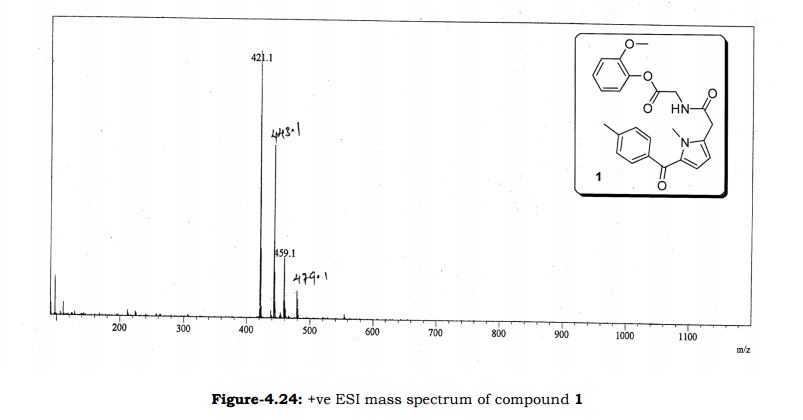
Molecular Formula, C24-H24-N2-O5, Molecular Weight, 420.463,
2-Methoxyphenyl 1-methyl-5-p-methylbenzoylpyrrole-2-acetoamidoacetate
Glycine, N-((5-benzoyl-1-methyl-1H-pyrrol-2-yl)acetyl)-, 2-methoxyphenyl ester
Trade names: Amtoril®, Artricol®, Artromed®
US 4578481, US 6288241,
MEDOSAN RICERCA S.R.L. [IT/IT]; Via Cancelliera, 12 I-00040 Cecchina RM (IT) (For All Designated States Except US).
SIGMA-TAU INDUSTRIE FARMACEUTICHE RIUNITE S.P.A. [IT/IT]; Viale Shakespeare, 47 I-00144 Roma (IT)
Launched – 1993 ITALY, SIGMA TAU, Non-Opioid Analgesics FOR Treatment of Osteoarthritis, Treatment of Rheumatoid Arthritis,
- Originator sigma-tau SpA
- Class Amino acids; Antipyretics; Nonsteroidal anti-inflammatories; Pyrroles; Small molecules
- Mechanism of Action Cyclooxygenase inhibitors
-
- Marketed Inflammation
Most Recent Events
- 01 Jun 1999 A meta-analysis has been added to the adverse events section
- 22 Jul 1995 Launched for Inflammation in Italy (PO)
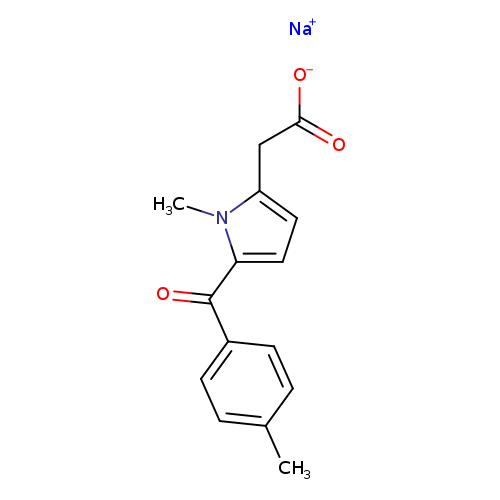
Amtolmetin guacil is a NSAID which is a prodrug of tolmetin sodium.
Amtolmetin guacil is a nonacidic prodrug of tolmetin that has similar nonsteroidal antiinflammatory drug (NSAID) properties to those of Tolmetin with additional gastroprotective advantages. The term “nonsteroidal” is used to distinguish these drugs from steroids that have similar eicosanoid-depressing and antiinflammatory actions. Moreover, it possesses a more potent and long-lasting antiinflammatory activity than tolmetin and is marketed for the treatment of rheumatoid arthritis, osteoarthritis, and juvenile rheumatoid arthritis.
Background
Tolmetin sodium is an effective NSAID approved and marketed for the treatment of rheumatoid arthritis, osteoarthritis and juvenile rheumatoid arthritis. In humans, tolmetin sodium is absorbed rapidly with peak plasma levels observed 30 min after p.o. administration, but it is also eliminated rapidly with a mean plasma elimination t½ of approximately 1 hr. The preparation of slow release formulations or chemical modification of NSAIDs to form prodrugs has been suggested as a method to reduce the gastrotoxicity of these agents.
Amtolmetin guacil is a non-acidic prodrug of tolmetin, having similar NSAID properties like tolmetin with additional analgesic, antipyretic, and gastro protective properties. Amtolmetin is formed by amidation of tolmetin by glycine
Pharmacology
- Almost is absorbed on oral administration. It is concentrated maximum in internal the gastric wall, and highest concentration reached in 2 hours after administration.
- Amtolmetin guacil hydrolysed in to following metabolites Tolmetin, MED5 and Guiacol.
- Elimination will complete in 24 hours. Happens mostly with urine in shape of gluconides products (77%), faecal (7.5%).
- It is advised to take the drug on empty stomach.
- Permanent anti-inflammatory action is continued up to 72 hours, with single administration.
Mechanism of action
Amtolmetin guacil stimulates capsaicin receptors present on gastro intestinal walls, because of presence of vanillic moiety and also releases NO which is gastro protective. It also inhibits prostaglandin synthesis and cyclooxygenase (COX).

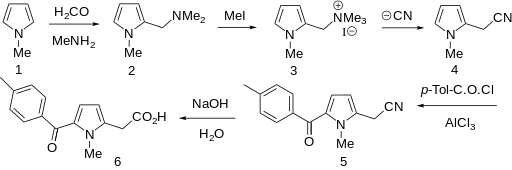
Structure of amtolmetin 1 and tolmetin 2.
26171-23-3 TOLMETIN FREE FORM
http://shodhganga.inflibnet.ac.in/bitstream/10603/2173/11/11_chapter%204.pdf
| Tolmetin sodium
64490-92-2
|
|
![]()
26171-23-3 TOLMETIN FREE FORM
1-methyl-5-p-tolylpyrrole-2-acetic acid

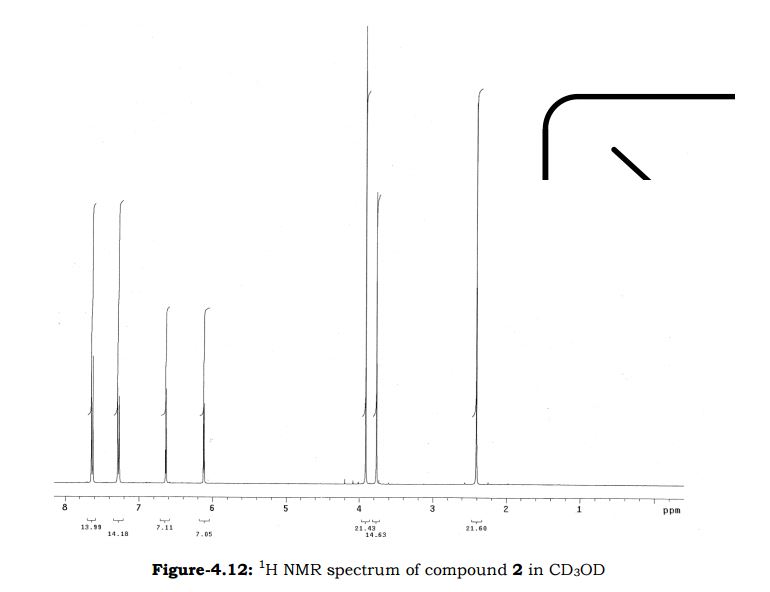
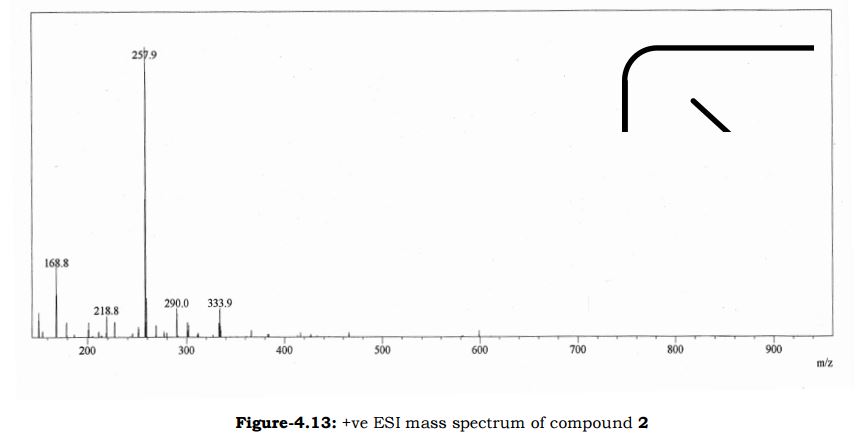
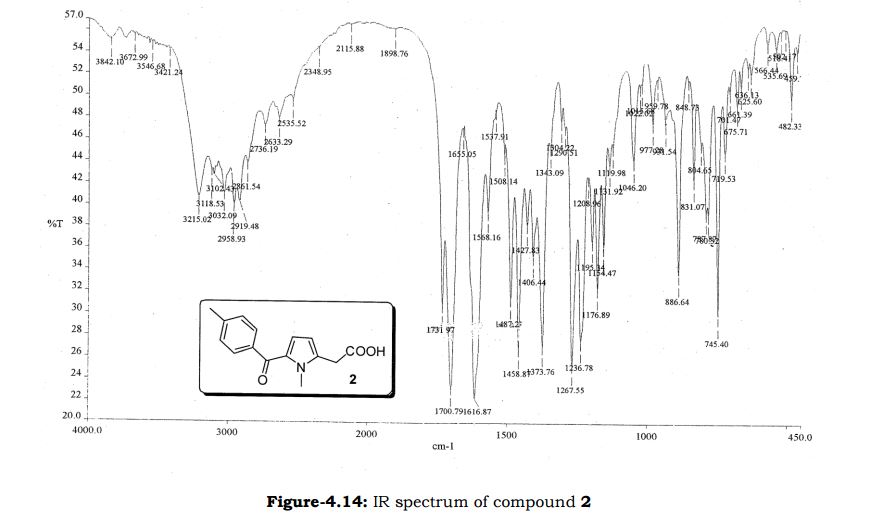
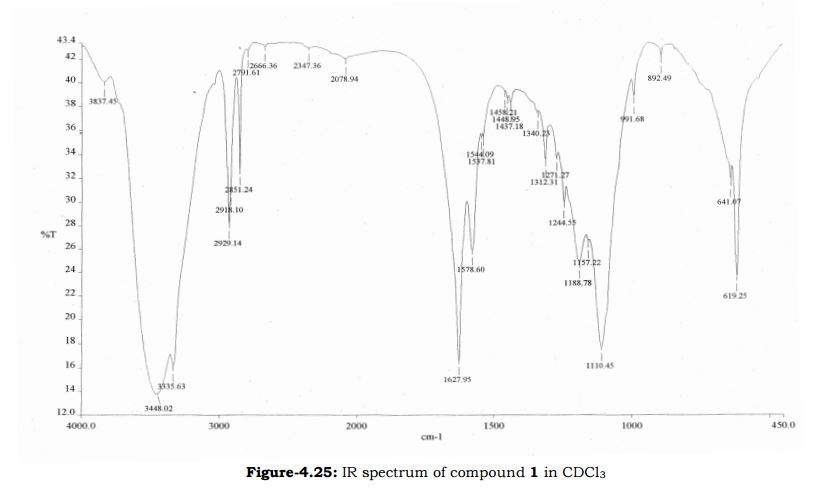
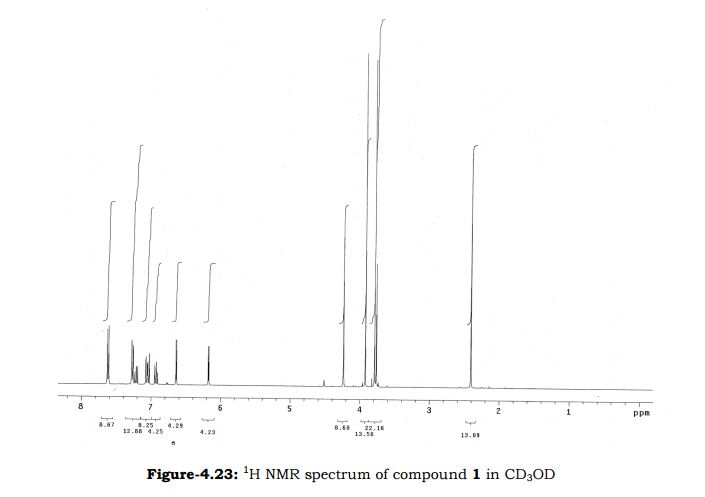
Melting point 155-158 °C, IR (KBr, cm-1): 3205 (OH), 2958 (Aliphatic C-H), 1731 (Acid, C=O), 1700 (C=O), 1616 (C=C), 1267 (C-O); 1H NMR (CD3OD, 400 MHz): δ 7.63 ( d, J = 7.8 Hz, 2H), 7.27 (d, J = 7.8 Hz, 2H), 6.63 (d, J = 3.9 Hz, 1H), 6.11 (d, J = 4.3 Hz, 1H), 3.91 (s, 3H), 3.76 (s, 2H), 2.40 (s, 3H); MS (ESI): m/z calcd for C15H15NO3 (M + H): 258.11; found: (M + H) 257.9. (Fig. 4.12 – 4.14)

INNTERMEDIATE
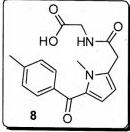
1-methyl-5-p-toluoyl-2-acetamidoacetic acid
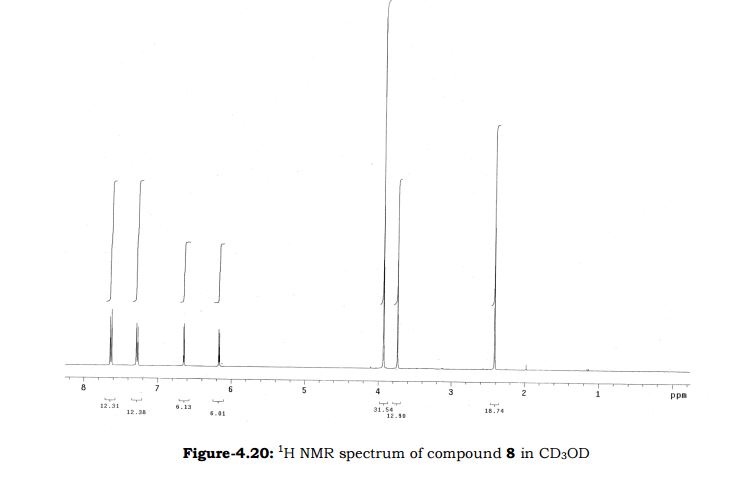
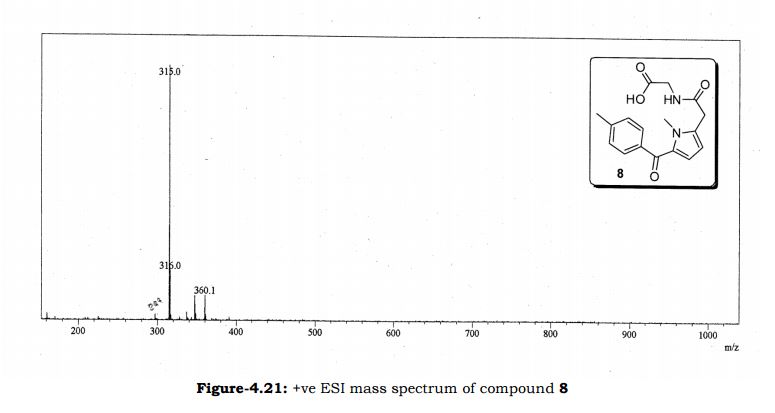
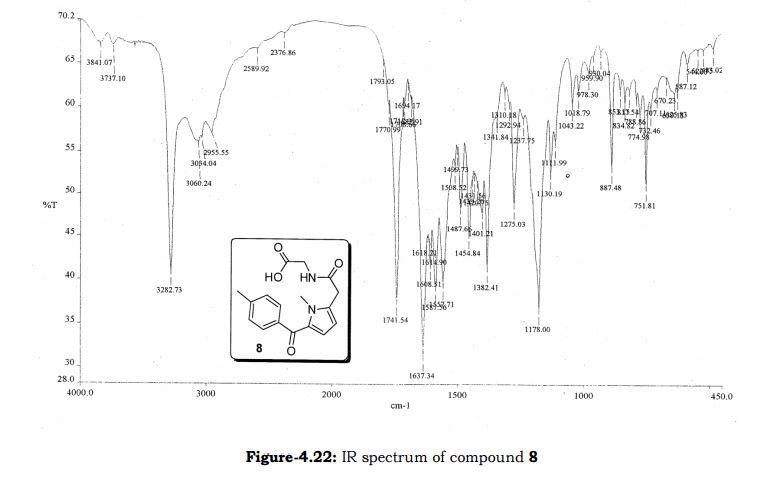
Melting point: 200-202° C. IR (KBr, cm-1): 3282 (NH), 3060 (OH), 1741 (Acid, C=O), 1637 (Amide, C=O), 1608 (C=C), 1178 (C-N); 1H NMR (CD3OD, 400 MHz): δ 7.64 ( dd, J =6.3 Hz, 1.9 Hz, 2H), 7.28 (d, J = 7.8 Hz, 2H), 6.65 (d, J = 3.9 Hz, 1H), 6.17 (d, J = 3.9 Hz, 1H), 3.92 (s, 3H), 3.73 (s, 2H), 3.30 (t, J =1.4 Hz, 2H), 2.41(s, 3H); MS (ESI): m/z calcd for C17H18N2O4 (M + H): 315.13; found: (M + H) 315. (Fig. 4.20 – 4.22)
SYNTHESIS
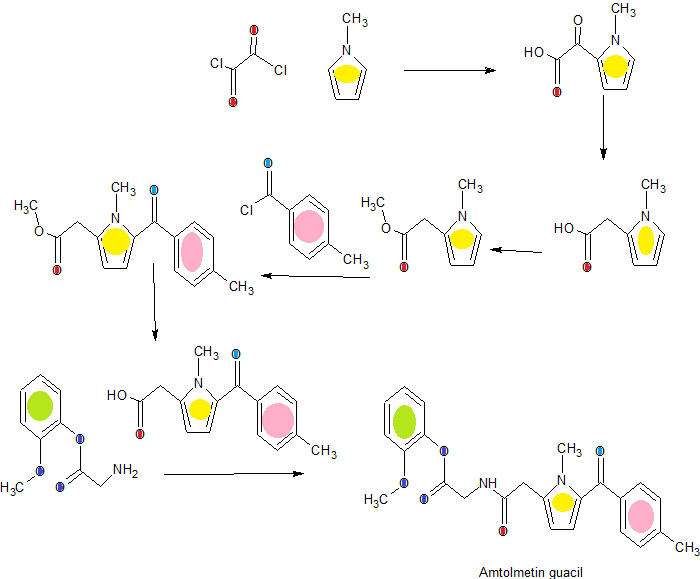
STUDENTS SOME COLOUR………………
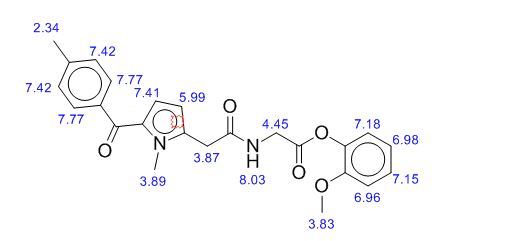
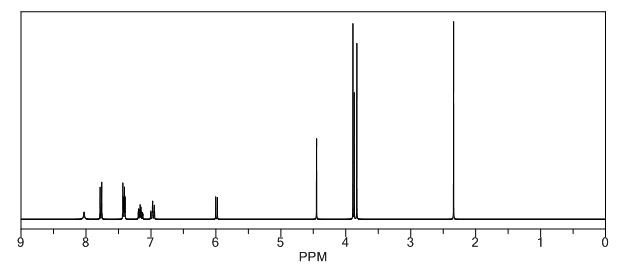
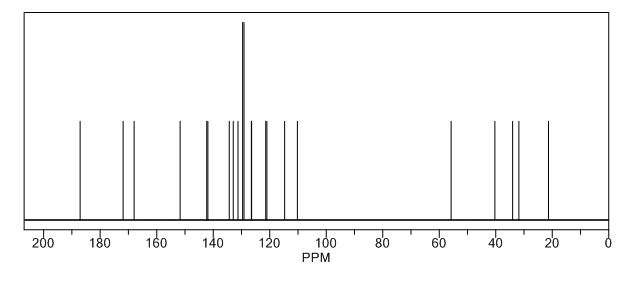
1H and 13 C NMR PREDICT
SYNTHESIS
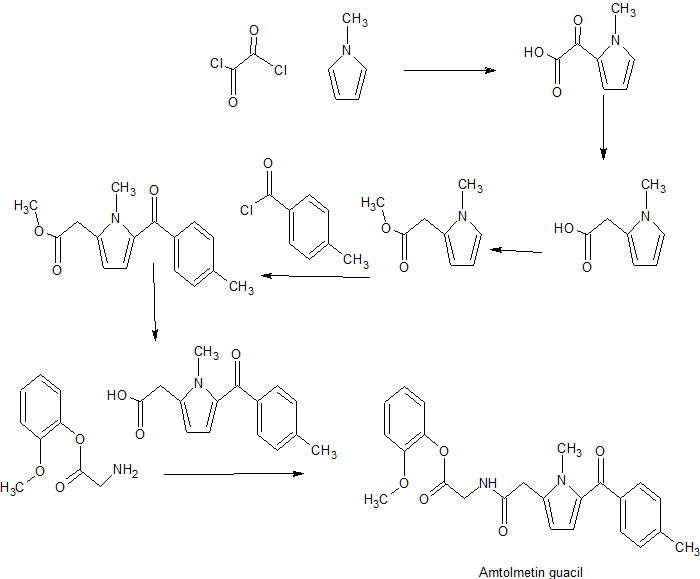
Amtolmetin guacil (CAS NO.: 87344-06-7), with its systematic name of N-((1-Methyl-5-p-toluoylpyrrol-2-yl)acetyl)glycine o-methoxyphenyl ester, could be produced through many synthetic methods.
Following is one of the synthesis routes: 1-Methyl-5-(4-methylbenzoyl)pyrrole-2-acetic acid (I) is condensed with glycine ethyl ester (II) in the presence of carbonyldiimidazole (CDI) and triethylamine in THF to afford the corresponding acetamidoacetate (III), which is hydrolyzed with NaOH in THF-water yielding 2-[2-[1-methyl-5-(4-methylbenzoyl)pyrrol-2-yl]acetamido]acetic acid (IV). Finally, this compound is esterified with 2-methoxyphenol (guayacol) (V) by means of CDI in hot THF.

PATENT
https://www.google.com/patents/WO1999033797A1?cl=tr
The present invention relates to a new crystalline form of 1- methyl-5-p-toluoylpyrrole-2-acetamidoacetic acid guaiacyl ester, a process for its preparation and to pharmaceutical compositions endowed with antiinflammatory, analgesic and antipyretic activity containing same.
The ester of 1-methyl-5-p-toluoylpyrrole-2-acetamidoacetic acid (hereinafter referred to as MED 15, form 1) is a known compound.
In fact, US Patent 4,882,349 discloses a class of N-mono- substituted and N,N-disubstituted amides of l-methyl-5-p- toluoylpyrrole-2-acetic acid (known as Tolmetin) endowed of anti- inflammatory, analgesic, antipyretic, antisecretive and antitussive properties.
US Patent 4,578,481 claims a specific compound, endowed with valuable pharmacological activity, encompassed in the above- mentioned class, precisely 1-methyl-5-p-toluoylpyrrole-2-acetamido- acetic acid guaiacyl ester (which is MED 15, form 1), and a process for its preparation.
The process disclosed in US 4,578,481 presents some drawbacks, since it is not easily applicable on industrial scale and gives low yields.
According to the above-mentioned process, Tolmetin was reacted with N,N’-carbonyldiimidazole in tetrahydrofuran (THF), and aminoacetic acid ethyl ester hydrochloride was added to the reaction mixture.
Following a complex series of washings in order to remove the unreacted starting compounds, and crystallisation from benzene/ cyclohexane, 1-methyl-5-p-toluoylpyrrole-2-acetamidoace-tic acid ethyl ester was obtained. This compound was subsequently transformed into the corresponding acid.
The acid was reacted with N,N’-carbonyldiimidazole obtaining the corresponding imidazolide, to which a solution of guaiacol in
THF was added.
From the reaction mixture, following several washings, neutralisation and crystallisation from benzene/ cyclohexane MED 15 form 1 was obtained.
The main physico-chemical characteristics of MED 15 form 1 are shown in table 1, left column.


The above mentioned process comprises the following steps:
(a) hydrolysing TOLMETIN 1 methyl ester with an alkaline hydroxide in a basic environment, obtaining TOLMETIN 2 alkaline salt;
(b) condensing 2 with isobutylchloroformate 3 obtaining the mixed anhydride 4;
(c) reacting 4 with glycine 5 obtaining 1-methyl-5-p-toluoylpyrrol-2- acetoamidacetic acid 6;
(d) condensing 6 with isobutylchloroformate 3 obtaining the mixed anhydride 7; and
(e) reacting the mixed anhydride 7 with guaiacol 8 obtaining 9 , MED 15, form 2.
The following non-limiting example illustrates the preparation of MED 15, form 2, according to the process of the present invention.
Preparation of 1-methyl-p-toluoylpirrol-2-acetoammidoacetic acid.
A mixture of 500 mL of toluene, 100 g of Tolmetin ethyl ester and 10 g of Terre deco in 1L flask, was heated to 70° C and maintained at this temperature for 20-30 min, under stirring. The mixture was then filtered on pre-heated buckner, and the solid phase washed with 50 mL of heated toluene. The discoloured toluene solution was transferred in a 2 L flask, 15 g of sodium hydroxide (97%) dissolved in 100 mL of water were added thereto.
The solution was heated at reflux temperature and refluxed for 1 hour. 22 mL of isobutyl alcohol were added to the solution which was heated at reflux temperature; water (about 120 mL) was removed completely with Marcusson’s apparatus arriving up to 104-105°C inner temperature.
To a suspension of Tolmetin sodium, cooled under nitrogen atmosphere to -5°C ± 2°C, 0.2 mL of N-methyl Morpholine were added. Maintaining the temperature at 0°C ± 3°C, 53 mL of isobutyl chloroformate were added dropwise in 5-10 min. After about 1 hour the suspension became fluid. Following 3 hours of reaction at 0°C + 3°C, over the glycine solution previously prepared, the mixed anhydride solution was added dropwise. The glycine solution was prepared in a flask containing 230 mL of demineralised water, 47 g of potassium hydrate (90%), cooling the solution to 20°C ± 2, adding 60 g of glycine, and again cooling to 10°C ± 2°C.
To the glycine solution, the mixed anhydride was added dropwise under stirring, in 5-10 min., maintaining the temperature at 20°C ± 2°C.
At the end of the addition, temperature was left to rise to room temperature, 1 hour later the reaction was complete. To the mixture 325 mL of demineralised water were added, the mixture was brought to pH 6.0 +2 using diluted (16%) hydrochloric acid (about 100 mL).
The temperature of the solution was brought to 73°C ±2°C and the pH adjusted to pH 5.0 ±0.2.
The separation of the two phases was made at hot temperature: the toluene phase was set aside for recovering acid-Tolmetin if any, the water phase was maintained at 73°C ±2°C and brought to pH 4.0 ±0.2 using diluted hydrochloric acid.
At the beginning of the precipitation the solution was slowly brought to pH 3.0 ±0.2 using diluted (16%) hydrochloric acid (100 mL).
The mixture was cooled to 15°C ±3°C and after 30 min. filtered. The solid cake was washed with 2×100 mL of demineralised water, the product was dried at 60°C under vacuum till constant weight. 100 g of 1-methyl-p-toluoylpirrol-2-acetoammidoacetic acid were obtained.
Preparation of MED 15, form 2
To a 2 L flask containing 730 mL of toluene, 100 g of dried compound of the above step were dissolved. To this solution 18.8 g of potassium hydrate (tit. 90%) in 65 mL of water were added.
The solution was dried maintaining the internal temperature at 95-100°C, and cooled to 55-60 °C. A solution of potassium hydrogen carbonate was then added and the resulting mixture was dried maintaining the internal temperature at 105°C ±2°C.
The mixture was cooled under nitrogen atmosphere to 5°C
±2°C, 24 mL of isobutyl alcohol and 0.3 mL of N-methyl morpholine were added thereto.
Maintaining the temperature at 10°C ±3°C, 47 mL of isobutyl-chloroformate were added dropwise in 5-10 minutes. The mixture was left to react for two hours at 10°C ±3°C obtaining an anhydride solution, which was added to a guaiacol solution previously prepared.
The guaiacol solution was prepared by loading in a 2L-flask 295 mL of water, 25 g of potassium hydrate (90%), and 0.3 g of sodium metabisulfite.
At the end of the loading the temperature was brought to 35-40°C.
The anhydride was added dropwise in 5- 10 min and the temperature was left to rise to room temperature.
The suspension was kept under stirring for 1 hour and brought to pH 6.0 ±0.5 with diluted hydrochloric acid. The suspension was heated to 70°C ± 5°C and maintained at pH 3-4 with diluted hydrochloric acid.
The phases were separated while hot. The aqueous phase was discharged, and to the organic phase, 250 mL of water were added.
Maintaining the temperature at 70 ±5°C the solution was brought to pH 8.0 ±0.5 with diluted sodium hydrate, the phases were separated while hot and the acqueous phase was discharged.
The organic phase was washed with 250 mL of water. At 70 ± 5°C the phases were separated. The toluene phase was then cleared with dicalite, filtered and left to crystallise.
The mixture was slowly cooled to 30°C – 35°C, the temperature was then brought to 10 ± 3°C and after 1 hour filtered, washed with toluene (2×100 mL).
The product was brought to dryness at 60°C under vacuum, thus giving 100 g of compound MED 15, form 2.
Theoretical yield: 133.7 g; Yield %: 74.8%.
PATENT
https://www.google.com/patents/WO2000032188A2?cl=un
PATENT
PATENT
Example 1: Steps:
Equipped with a trap, 2000ml four-neck reaction flask with a mechanical stirrer and a thermometer, 加入托 US buna 100.0g (0.358mol) and 500ml of toluene, turned stirred and heated under reflux with toluene with water, drying the solution, when When the internal temperature reaches 95-100 ℃, the solution was cooled to 55-60 ℃, dissolved in 30ml of water was added portionwise 11.5g of potassium bicarbonate was added, and refluxed to remove water, until the internal temperature reaches 105 ± 2 ℃. The mixture was cooled to ice-water bath 5 ± 2 ℃, to which was added 24ml of isobutyl alcohol and 0.3ml N- methylmorpholine. The temperature was maintained at 10 ± 3 ℃, with a pressure-equalizing dropping funnel was added dropwise isobutylchloroformate 45.5ml (0.400mol), 10min addition was complete, so the mixture was 10 ± 3 ℃ 2hr reaction solution to obtain an acid anhydride, it has been prepared dropwise glycine guaiacol ester solution, 5-10min the addition was complete. Glycine guaiacol ester solution was prepared by adding 295ml of water in a 2000ml flask, 27g of potassium hydroxide (82%) and 0.3g of sodium metabisulfite, stirring to dissolve, the temperature was controlled at 10 ± 3 ℃, to which was added 82.7g (0.38mol) glycine guaiacol ester hydrochloride and prepared. Dropwise addition, the temperature was raised to room temperature, the reaction 2hr, diluted with 16% hydrochloric acid to adjust the mixture to pH 6.0 ± 0.5. The suspension was heated to 70 ± 5 ℃, and then 16% diluted hydrochloric acid to adjust the pH to 3.5 to 4.5, while hot liquid separation, discarding the aqueous phase, the organic phase was added to 250ml of water, maintaining the temperature at 70 ± 5 ℃ with dilute (2N) sodium hydroxide solution to adjust the solution to pH 8.0 ± 0.5, and then hot liquid separation, aqueous phase was discarded. With 2 × 250ml The organic phase was washed with water, the phases were separated at 70 ± 5 ℃, then clean the toluene organic phase through celite, cooled to room temperature, allowed to set freezer cooling crystallization, filtration, filter cake washed with 2 × 50ml of cold washed with toluene, and dried in vacuo at 60 ℃ to constant weight to give 1- methyl-5-p-toluoylpyrrole-2-acetamido acid guaiacol ester crude 135.5 g, yield 90%. The crude product was recrystallized from acetone to give 1-methyl-5-acyl-2-acetyl-p-toluene amino acid ester of guaiacol boutique 127.9 g, yield 94.4%, mp128.7 ~ 131.9 ℃. Elemental analysis: C, 68.53%; H, 5.76%; N, 6.65%. IR spectrum (KBr tablet method): 3318,3142,2963,1778,1652,1626,1605,1500,1480,1456,13731255 and 1153cm-1.
Example 2: Procedure: equipped with a water separator, 2000ml four-neck reaction flask with a mechanical stirrer and a thermometer, 加入托 US buna 100.0g (0.358mol) and 500ml of toluene, turned stirred and heated under reflux with toluene with water , drying the solution, when the internal temperature reaches 95-100 ℃, the solution was cooled to 55-60 ℃, dissolved in 30ml of water was added portionwise 11.5g of potassium bicarbonate was added, and refluxed to remove water, until the internal temperature reaches 105 ± 2 ℃. The mixture was cooled to ice-water bath 5 ± 2 ℃, to which was added 24ml of isobutyl alcohol and 0.3ml N- methylmorpholine. The temperature was maintained at 10 ± 3 ℃, with a pressure-equalizing dropping funnel dropwise isopropyl 46.5ml (0.41mol), 10-15min addition was complete, the mixture was allowed at 10 ± 3 ℃ reaction 2hr derived anhydride solution, it would have been prepared dropwise to glycine guaiacol ester solution, 5-10min the addition was complete. Glycine guaiacol ester solution was prepared by adding 295ml of water in a 2000ml flask, 27g of potassium hydroxide (82%) and 0.3g of sodium metabisulfite, stirring to dissolve, the temperature was controlled at 10 ± 3 ℃, to which was added 82.7g (0.38mol) glycine guaiacol ester hydrochloride and prepared. Dropwise addition, the temperature was raised to room temperature, the reaction 2hr, diluted with 16% hydrochloric acid to adjust the mixture to pH 6.0 ± 0.5. The suspension was heated to 70 ± 5 ℃, and then 16% diluted hydrochloric acid to adjust the pH to 3.5 to 4.5, while hot liquid separation, discarding the aqueous phase, the organic phase was added to 250ml of water, maintaining the temperature at 70 ± 5 ℃ with dilute (2N) sodium hydroxide solution to adjust the solution to pH 8.0 ± 0.5, and then hot liquid separation, aqueous phase was discarded. With 2 × 250ml The organic phase was washed with water, the phases were separated at 70 ± 5 ℃, then clean the toluene organic phase through celite, cooled to room temperature, allowed to set freezer cooling crystallization, filtration, filter cake washed with 2 × 50ml of cold washed with toluene, and dried in vacuo at 60 ℃ to constant weight to give 1- methyl-5-p-toluoylpyrrole-2-acetamido acid guaiacol ester crude 138.5 g, yield 92%. The crude product was recrystallized from acetone to give 1-methyl-2-acyl-5-toluene acetaminophen acid ester guaiacol boutique 128.8 grams.
Example 3: equipped trap, 2000ml four-neck reaction flask with a mechanical stirrer and a thermometer, 加入托 US buna 100.0g (0.358mol) and 500ml of toluene, turned stirred and heated under reflux with toluene with water, dried solution, when the internal temperature reaches 95-100 ℃, the solution was cooled to 55-60 ℃, dissolved in 30ml of water was added portionwise 10-12.5g potassium bicarbonate solution, refluxing was continued for removal of water, until the internal temperature reaches 105 ± 2 ℃. The mixture was cooled to ice-water bath 5 ± 2 ℃, added thereto 20-30ml of isobutyl alcohol 0.2-0.5mlN- methylmorpholine. The temperature was maintained at 10 ± 3 ℃, with a pressure-equalizing dropping funnel was added dropwise isobutylchloroformate 40.5-48.5ml, 10-15min addition was complete, so the mixture was 10 ± 3 ℃ 2hr reaction solution to obtain an acid anhydride, it has been prepared dropwise glycine guaiacol ester solution, 5-10min the addition was complete. Glycine guaiacol ester solution was prepared by adding 295ml of water in a 2000ml flask, 25-30g of potassium hydroxide (82%) or 15-17 grams of sodium hydroxide and sodium metabisulfite 0.2-0.5g or insurance powder, stirring to dissolve the temperature is controlled at 10 ± 3 ℃, to which is added 80-84g glycine guaiacol ester hydrochloride and prepared. Dropwise addition, the temperature was raised to room temperature, the reaction 2hr, the mixture was adjusted with dilute hydrochloric acid to pH 6.0 ± 0.5. The suspension was heated to 70 ± 5 ℃, with dilute hydrochloric acid to adjust the pH to 3.5 to 4.5, while hot liquid separation, discarding the aqueous phase, the organic phase was added to 250-280ml of water, maintaining the temperature at 70 ± 5 ℃ , adjusted with dilute sodium hydroxide solution and the solution to pH 8.0 ± 0.5, and then hot liquid separation, aqueous phase was discarded. With 2 × 250ml The organic phase was washed with water, the phases were separated at 70 ± 5 ℃, then clean the toluene organic phase through celite, cooled to room temperature, allowed to set freezer cooling crystallization, filtration, filter cake washed with 2 × 50ml of cold washed with toluene, and dried in vacuo at 60 ℃ to constant weight to give 1- methyl-5-p-toluoylpyrrole-2-acetamido acid guaiacol ester crude 130-139 grams. The crude product was recrystallized from acetone to give 1-methyl-5-acyl-2-acetyl-p-toluene amino acid ester boutique guaiacol 120-129 grams.
PATENT
Indian Pat. Appl. (2010), IN 2008MU01617
DETAILED DESCRIPTION OF THE INVENTION
The present invention provides safe, environment friendly, economically viable and commercially feasible processes for the production of Amtolmetin guacil. There are two methods for the preparation of Amtolmetin guacil. The processes for the production of Amtolmetin guacil (I) comprise:
Method-1:
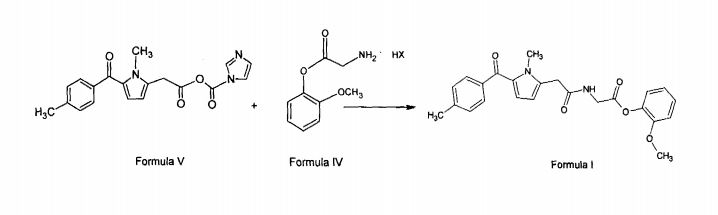
Step-A:- Treating 2-methoxy phenol of Formula VI with 2-(benzyloxycarbonylamino) acetic acid of Formula VII in the presence of an organic base and a condensing agent in chlorinated solvent to yield 2-methoxyphenyl-2- (benzyloxycarbonylamino) acetate of Formula V.
Step-B:- Acid addition salt of 2-methoxyphenyl -2-aminoacetate of Formula II may be prepared by treating 2-methoxyphenyl-2- (benzyloxycarbonylamino) acetate of Formula V with an acid and followed by crystallization in aprotic solvent.
7
Step-C):- l-methyl-5-p-toluoylpyrrole-2-acetic acid of Formula III is reacted with a condensing agent to form-activated moiety, which is reacted with acid addition salt of 2-methoxyphenyl -2-aminoacetate of Formula II in chlorinated solvent to produce Arntolmetin guacil of formula (I).
In a preferred embodiment of present invention, condensing agent used in step-A is selected from group consisting of dicyclohexylcarbodiimide, N, N’-carbonyl diimidazole, hydroxy benzotriazole. The most preferred condensing agent is Dicyclohexyl carbodiimide for the reaction.
The solvent used in present invention is selected from the group consisting of but not limited to toluene, methylene chloride, chloroform, water miscible ethers such as tetrahydrofuran, 1,4-dioxane, the most preferred solvent for the reaction methylene dichloride.
In another embodiment of the present invention, the reaction is performed in the presence of an organic base. The organic base is selected from the group consisting of trimethylamine, triethylamine, N-methyl morpholine, N-methylpyrrolidinone, 4-dimethyl Aminopyridine; the most preferred base is 4-dimethyl Aminopyridine.
In a preferred embodiment of present invention, the non-polar solvent used in step-B is selected from group consisting of ethers, hexanes, aromatic hydrocarbons and esters.
In another preferred embodiment of present invention, the most suitable solvents are esters.
In another preferred embodiment of present invention, condensing agent used in step-C is selected from group consisting of dicyclohexylcarbodiimide, N, N’-carbonyl diimidazole, hydroxy benzotriazole. The most preferred condensing agent is N, N’-carbonyl diimidazole for the conversion of the reaction.
8
The solvent used in present invention is selected from the group consisting of but not limited to toluene, methylene chloride, chloroform, water miscible ethers such as tetrahydrofuran, 1,4-dioxane, the most preferred solvent for the reaction methylene dichloride.
In yet another embodiment of the present invention, the reaction is performed at a temperature in the range of -20°C to 50°C. Most preferred temperature range for the reaction is (-) 10°C to 0°C.
Method-2:
Treating 2-(2-(I-methyl-5- (4-methylbenzoyl)-lH-pyrrol-2-yl) acetamido) acetic acid with 2-methoxy phenol in presence of condensing reagent and an organic base to obtain Amtolmetin guacil.
In a preferred embodiment of present invention, the condensing agent used is selected from group consisting of dicyclohexyicarbodiimide, hydroxy benzotriazole or a mixture thereof. The most preferred condensing agent is Dicvclohexyl carbodiimide for the aforementioned reaction.
The solvent used in present invention is selected from the group consisting of but not limited to toluene, methylene chloride, chloroform, water miscible ethers such as tetrahydrofuran. 1,4-dioxane, the most preferred solvent for the reaction is methylene dichloride.
In another embodiment of the present invention, the reaction is performed in the presence of an organic base. The organic base is selected from the group consisting of triethylamine, triethylamine, N-methyl morpholine, N-methylpyrrolidinone, 4-dimethyl Aminopyridine; the most preferred base is 4-dimethyl Aminopyridine.
9
In yet another embodiment of the present invention, the reaction is performed at a temperature in the range of -20°C to 50°C. Most preferred temperature range for the reaction is (-) 10°C to 0°C.
In another embodiment of present invention, crude amtolmetin guacil is directly purified using polar and non-polar solvent or a mixture thereof. The most preferred solvents are Isopropanol and toluene.
The following non-limiting examples illustrate specific embodiments of the present invention. They are, however, not intended to be limiting the scope of present invention in anyway.
Preparation of Amtolmetin guacil: Example-1;
Charged MDC (600 ml) and N-benzyloxycarbonyl glycine (100 gm) in a 2L-4NRBF under N2 atmosphere. Reaction mass was cooled down to -5°C. Added N, N’-dicyclohexylcarbodiimide solution (108.5 gm in 300 ml MDC) at-5°C to 0°C. Maintained temperature of reaction for 10 minutes at -5°C to 0°C. Added guaiacol solution (59.36 gm in 180 ml MDC) at -5°C to 0°C followed by addition of N, N-dimethyl aminopyridine (1 gm) at -5°C to 0°C. Monitored the reaction over TLC till the completion of reaction, while maintaining reaction at 0°C. Filtered the undissolved Dicyclohexyl urea and washed the solids with methylene dichloride (125 ml X 2). Collected filtrate and washing. Washed methylene dichloride with water (1000 ml X 2), lN-NaOH (500 ml X 2) and 1% HC1 solution (500 ml X 2), water (500 ml X 2) respectively. Organic methylene dichloride layer was dried over anhydrous sodium sulphate. Filtered sodium sulphate and collected methylene dichloride filtrate. Distilled out methylene dichloride under vacuum below 40°C to get oil. HPLC purity :> 90%
10
Added 33% HBr in acetic acid solution (262,5 gm) into reaction vessel at 25-30°C. Monitored the reaction over TLC till the completion of reaction, while maintaining the reaction at 25-30°C. Added ethyl acetate (1200 ml) slowly at 25-30°C after completion of reaction. Stirred the resultant slurry for 2.5 hours at 25-30°C for complete crystallization. Filtered the solids and washed it with ethyl acetate (200 ml). Dried solids at 50-55°C. Dry weight: 102 gm. HPLC Purity: >98%
Example-2:
Charged MDC (1400 ml) and N, N’-carbonyl di imidazole (69.34 gm) into a 3L-4NRBF under N2 atmosphere. Cooled it down to -15°C. Charged Tolmetin acid (100 gm) slowly into reaction vessel at -10° ± 5°C. Monitored the progress of reaction of over HPLC. After completion of reaction, charged slowly 2-methoxyphenyl-2- (benzyloxy carbonylamino) acetate hydrobromide salt (112.05 gm) at -10° ± 5°C.Monitored the reaction over HPLC. After completion of reaction, washed the organic layer with water (300 ml), 1% NaOH solution (100 ml) and water (300 ml X 2) respectively at 3-8°C. Treated organic layer with activated carbon (2.5 gm) and filtered over hyflow bed. Washed hyflow bed with methylene dichlonde (100 ml X 2). Distilled out methylene dichloride below 40°C under vacuum and stripped off traces with toluene (100 ml X 2) at 50-55°C. Charged toluene (600 ml) and Isopropanol (50ml). Heated the mass to 63-68°C. Stirred the clear solution at 63-68°C for 1 hour. Cooled it down slowly to 30°C followed by further cooling to 5°C. Stirred the resultant slurry for 3 hours at 0-5°C. Filtered solids and washed with toluene (100 ml X 2). Dried solids at 55-60°C under vacuum. Dry Weight: 130 gm. HPLC Purity: >99%
Example-3:
Charged MDC (333 liter) and 2-(2-(l-methyl-5- (4-methylbenzoyl)-lH-pyrrol-2-yl) acetamido) acetic acid (55.5 Kg) in reactor under N2 atmosphere at 25-30°C. Cool down reaction mass to -15 to -12°C. Added a freshly prepared solution of N, N’-dicyclohexyl
11
carbodiimide (47.39 Kg in 166.5 liter) slowly at -10° ± 5°C within 1 hour. Rinsed the addition funnel with MDC (55.5 liter) and added it to the reaction at -10° ± 5°C. Added guaiacol solution (24.14 Kg in 99.9 liter MDC) to the reaction mass at -10° ± 5°C within 1 hour. Rinsed the addition funnel with MDC (11.1 liter) and added to the reaction -10° ± 5°C. Charged N, N’-dimethyl aminopyridine (0.555 Kg) at -15°C. Maintained temperature of reaction mass at -10° ± 5°C for 3 hours. Monitored the reaction over TLC, After the completion of reaction, filtered the dicyclohexyl urea and washed the solids with MDC (55.5L X 2). Collected MDC filtrate and wash it with water (166.5 L X 2). Collected MDC layer and treated it with activated carbon (2.77 Kg) and filtered through sparkler. Washed the sparkler with MDC (111 L). Distilled out MDC below 40°C under vacuum and stripped off traces with toluene (55.5 L X 2) at 50-55°C. Charge toluene (333L) and Isopropanol (27.75 L). Heated reaction mass to 63-68°C to get a clear solution. Stirred the clear solution at 63-68°C for 1 hour. Cooled it down slowly to 30°C followed by further cooling to 20oC. Stirred the resultant slurry for 2 hours at 17-20°C. Filtered the solids and washed with toluene (55.5 L X 3). Dried the solids at 55-60°C under vacuum. Dry Weight: 48 Kg. HPLC Purity:>99%
PAPER
Synthesis and Process Optimization of Amtolmetin: An Antiinflammatory Agent†
http://pubs.acs.org/doi/full/10.1021/op900284w
, * Corresponding author. Telephone: +91 40 44346430. Fax: +91 40 44346164. E-mail:rakeshwarb@drreddys.com.,
, §Jawaharlal Nehru Technological University.
| Clinical data | |
|---|---|
| ATC code | none |
| Identifiers | |
| Synonyms | ST-679 |
| CAS Number | 87344-06-7 |
| PubChem (CID) | 65655 |
| ChemSpider | 59091 |
| UNII | 323A00CRO9 |
| KEGG | D07453 |
| ChEMBL | CHEMBL1766570 |
| ECHA InfoCard | 100.207.038 |
| Chemical and physical data | |
| Formula | C24H24N2O5 |
| Molar mass | 420.458 g/mol |
| 3D model (Jmol) | Interactive image |
“ALL FOR DRUGS” CATERS TO EDUCATION GLOBALLY, No commercial exploits are done or advertisements added by me. This article is a compilation for educational purposes only.
P.S. : The views expressed are my personal and in no-way suggest the views of the professional body or the company that I represent
/////////Amtolmetin guacil, ST-679, MED-15, Eufans, 87344-06-7, Amtoril®, Artricol®, Artromed®, амтолметин гуацил , أمتولمتين غواسيل , 呱氨托美丁
n1(c(ccc1CC(NCC(=O)Oc1c(cccc1)OC)=O)C(=O)c1ccc(cc1)C)C
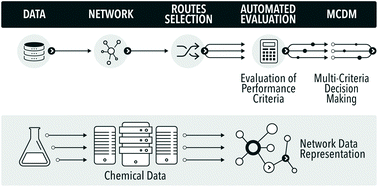
Towards automation of chemical process route selection based on data mining
A methodology for chemical routes development and evaluation on the basis of data-mining is presented. A section of the Reaxys database was converted into a network, which was used to plan hypothetical synthesis routes to convert a bio-waste feedstock, limonene, to a bulk intermediate, benzoic acid. The route evaluation considered process conditions and used multiple indicators, including exergy, E-factor, solvent score, reaction reliability and route redox efficiency, in a multi-criteria environmental sustainability evaluation. The proposed methodology is the first route evaluation based on data mining, explicitly using reaction conditions, and is amenable to full automation.
In the field of process and synthetic chemistry ‘clean synthesis’ has become one of the standard criteria for good, commercially viable synthesis routes. As a result synthetic and process chemists must be equipped with adequate methodologies for quantification of ‘cleanness’ or ‘greenness’ of alternative routes at the early phases of the development cycle. These…
View original post 1,252 more words
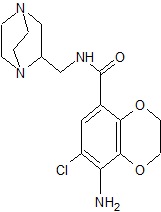
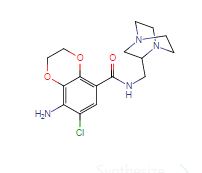
SL65.0102-10
CAS 186348-69-6
1,4-Benzodioxin-5-carboxamide, 8-amino-7-chloro-N-(1,4-diazabicyclo[2.2.2]oct-2-ylmethyl)-2,3-dihydro-, (-)-
- MW, 352.82, C16 H21 Cl N4 O3
-
US5663173 (A) – N-[(1,4-diazabicyclo[2.2.2] oct-2-yl)methyl] benzamide derivatives, their preparations and their application in therapeutics

SL65.0102-10
(-)-1,4-benzodioxin-5-carboxamide-8-amino-7-chloro-N-(1,4-diazabicyclo[2.2.2]oct-2- ylmethyl)-2,3-dihydro-, hydrochloride
CAS 186348-31-2, C16 H21 Cl N4 O3 . 2 Cl H
Melting point: 220 ° C. (decomposition). EP0748807
[α]
= -16.9 ° (c = 1, H 2 O).
[α]D = -17.9 (C = 0.75, DMSO, t = 23°C) at 589 nm. DOI: 10.1021/acs.oprd.6b00262
5-HT3 and 5-HT4 inhibitor that was potentially useful for the treatment of neurological disorders.
Innovators-sanofi
![]()
Hoechst Marion Roussel (Sanofi) my organisation 1993-1997 Process development at Mulund, Mumbai, India.
CENTRE IS DR RALPH STAPEL, HEAD PROCESS DEVELOPMENT, SANOFI
The 5-HT4 receptor is a G-protein coupled receptor (GPCR) which belongs to the serotonin receptor family. The role of the 5-HT4 receptor in the modulation of many diseases is well described in the literature.(1)
During the last decades, an impressive body of evidence suggested that selective stimulation of neuronal 5-HT4 receptor subtypes could be beneficial in the symptomatic treatment of memory disorders, including many antidepressants, antipsychotics, anorectics, antiemetics, gastroprokinetic agents, antimigraine agents, hallucinogens, and antactogens.(2)
Within effort to discover treatments of memory dysfunction, SL65.0102-10, a selective 5-HT4 partial agonist (Ki 6.6 μM), was discovered as promising agent for the treatment of cognition impairment. Serotonin receptors are the target of a variety of pharmaceutical drugs; SL65.0102-10 emerged as a promising 5-HT3 and 5-HT4 inhibitor that was potentially useful for the treatment of neurological disorders.(3)

Samir Jegham
Lead Generation Senior Advisor for Asia Pacific Research Hub at Sanofi
“DRUG APPROVALS INT” CATERS TO EDUCATION GLOBALLY, No commercial exploits are done or advertisements added by me. This article is a compilation for educational purposes only.
P.S. : The views expressed are my personal and in no-way suggest the views of the professional body or the company that I represent
SYNTHESIS
SL65.0102-10
CONTD…………..

Synthesis

PATENT
(EP0748807) Derivatives of N- (1,4-diazabicyclo (2.2.2) -oct-2-yl) methyl benzamide, their preparation and their therapeutic use


Example 5 (Compound No. 9)
Ethyl (-) – 8-Amino-7-chloro- N – [(1,4-diazabicyclo [2.2.2] oct-2-yl) methyl] -2,3-dihydro-1,4 Benzodioxin-5-carboxamide.
5.1. (+) – (2,2-dimethyl-1,3-dioxolan-4-yl) methyl methanesulfonate.
The procedure described in Example 4.1, but from (+) – 2,2-dimethyl-1,3-dioxolane-4-methanol.
5.2. (-) – 2 – [(2,2-Dimethyl-1,3-dioxolan-4-yl) methyl] -1 H -isoindole-1,3 (2 H ) -dione.
The procedure described in Example 4.2, from methane sulfonate (+) – (2,2-dimethyl-1,3-dioxolan-4-yl) methyl.
Melting point: 81.2-81.3 ° C.
[α]
= -34.9 ° (c = 1, CH 2 Cl 2 ).
5.3. (-) – 2- (2,3-dihydroxypropyl) -1 H -isoindole-1,3 (2 H ) -dione.
The procedure described in Example 4.3, from (-) – 2 – [(2,2-dimethyl-1,3-dioxolan-4-yl) methyl] -1 H -isoindole-1, 3 (2 H ) -dione.
Melting point: 122.8-122.9 ° C.
[α]
= -48.8 ° (c = 1, CH 3 OH).
5.4. (-) – 2 – [(2-Phenyl-1,3-dioxolan-4-yl) methyl] -1 H -isoindole-1,3 (2 H ) -dione.
The procedure described in Example 4.4, from (-) – 2- (2,3-dihydroxypropyl) -1 H -isoindole-1,3 (2 H ) -dione.
Melting point: 84 ° C.
[α]
= -59 ° (c = 1, CH 2 Cl 2 ).
5.5. Benzoate (-) – 2-bromomethyl-1- (1,3-dihydro-1,3-dioxo-2 H -isoindol-2-yl) ethyl.
The procedure described in Example 4.5, from (-) – 2 – [(2-phenyl-1,3-dioxolan-4-yl) methyl] -1 H -isoindole-1,3 ( 2 H ) -dione.
Melting point: 118.4-118.6 ° C.
[α]
= -58.2 ° (c = 1, CH 2 Cl 2 ).
5.6. (+) – 2- (oxiranylmethyl) -1 H -isoindole-1,3 (2 H ) -dione. Fusion point :
The procedure described in Example 4.6, from benzoate (-) – 2-bromomethyl-1- (1,3-dihydro-1,3-dioxo-2 H -isoindol-2-yl) ethyl.
Melting point: 100.4-100.5 ° C.
[α]
= + 45.5 ° (c = 1, CHCl 3 ).
5.7. Dihydrochloride (-) – 8-Amino-7-chloro- N – [(1,4-diazabicyclo [2.2.2] oct-2-yl) methyl] -2,3-dihydro-1,4-benzodioxin-5 -carboxamide.
The procedure described in Example 4.7, from (+) – 2- (oxiranylmethyl) -1 H -isoindole-1,3 (2 H ) -dione.
Melting point: 220 ° C. (decomposition).
[α]
= -16.9 ° (c = 1, H 2 O).
Paper
The process development and improvements for route selection, adapted to large scale for the pilot-scale preparation of SL65.0102-10, an N-diazabicyclo[2.2.2]-octylmethyl benzamide, a 5-HT3and 5-HT4 receptor active ligand for the treatment of neurological disorders such as cognition impairment, are described in this article. Notable steps and enhancements are compared to the original route, including the improvement of a chiral epoxide synthesis by shortening the number of chemical steps, the deprotection of a quaternary ammonium salt, and the redesign of the final amidification coupling to avoid chromatography.
Pilot Scale Process Development of SL65.0102-10, an N-Diazabicyclo[2.2.2]-octylmethyl Benzamide
(-)-1,4-benzodioxin-5-carboxamide-8-amino-7-chloro-N-(1,4-diazabicyclo[2.2.2]oct-2- ylmethyl)-2,3-dihydro-, hydrochloride (1:2), SL65.0102-10 (1).
……………….. to provide compound 1 (10.3 kg, 76.7%). Compound 1 could be recrystallized in acetone/water (12/2 volumes).
1H-NMR (DMSO-d6, 500 MHz), δ ppm: 3.38 (dd, 1H, J = 12.0 , 6.0 Hz), 3.60-3.45 (m, 7H), 3.65 (t, 1H, J =10.0 Hz), 3.72 (dt, 1H, J =6.0 , 14.0 Hz), 3.83 (m, 2H), 4.01 (m, 1H), 4.33 (m, 2H), 4.39 (m, 2H), 7.37 (s, 1H), 8.35 (t, 1H, J =6.0 Hz). Only 19 protons are observed on 1H spectrum instead of 21 expected. The two amino protons of the molecule are not visible because of chemical exchange with residual water of DMSO-d6 solvent.
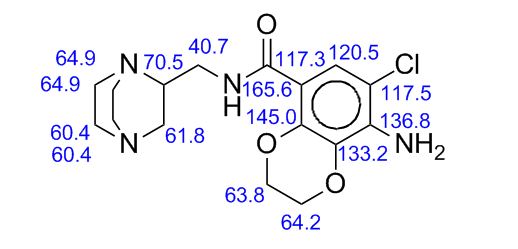
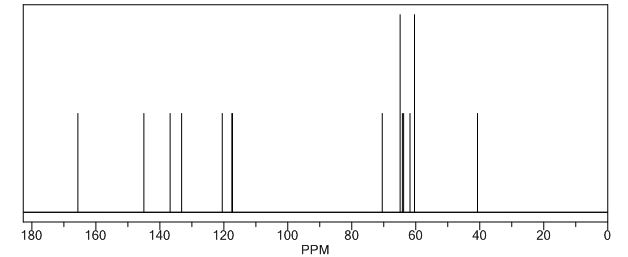
13C NMR (DMSO-d6, 125 MHz): δ 38.4, 39.0, 42.8, 43.4, 45.4, 46.5, 54.4, 64.1, 65.1, 109.3, 110.0, 123.2, 130.5, 138.1, 141.8, 165.0.
HRMS: exact mass (by Xevo QToF), MH+ found: 353.1374 (MH+ calculated: 353.1380, difference: -1.7 ppm).
[α]D = -17.9 (C = 0.75, DMSO, t = 23°C) at 589 nm.
Elementary analysis: found C 43.0660%, H 5.5150%, N 12.4792%, calculated C 43.31%, H 5.68%, N 12.63%

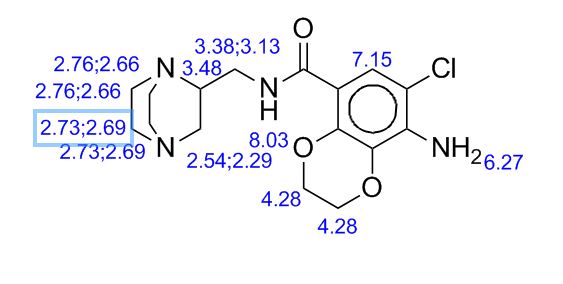
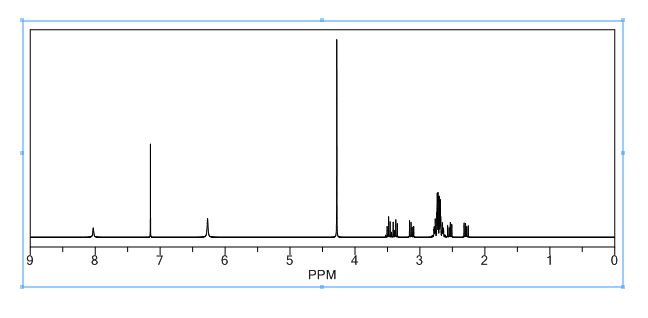
1H AND 13C NMR PREDICT
References
-
(a) Hoyer, D.; Clarke, D. E.; Fozard, J. R.; Hartig, P. R.; Martin, G. R.; Mylecharane, E. J.; Saxena, P. R.;Humphrey, P. P. Pharmacol. Rev. 1994, 46 ( 2) 157– 203
(b) Frazer, A.; Hensler, J. G.Chapter 13: Serotonin Receptors. In Siegel, G. J.; Agranoff, B. W.; Albers, R. W.; Fisher, S. K.; Uhler, M. D., Eds.; Basic Neurochemistry: Molecular, Cellular, and Medical Aspects; Lippincott-Raven, Philadelphia,1999; pp 263– 292.
-
Frick, W.; Glombik, H.; Kramer, W.; Heuer, H.; Brummerhop, H.; Plettenburg, O. Novel fluoroglycoside heterocyclic derivatives, pharmaceutical products containing said compounds and the use thereof.
(a) WO2004/052903, 2004.
(b) WO2004/052902, 2004.
-
Jegham, S.; Koenig, J. J.; Lochead, A.; Nedelec, A.; Guminski, Y.N-[(1,4-diazabicyclo[2.2.2]oct-2-yl)methyl] benzamide derivatives, their preparations and their application in therapeutics.
(a) FR 2756563 06/13/1995 9506951, 1995.
(b) US 5663173, 1997; Washington, DC: U.S. Patent and Trademark Office.
“DRUG APPROVALS INT” CATERS TO EDUCATION GLOBALLY, No commercial exploits are done or advertisements added by me. This article is a compilation for educational purposes only.
P.S. : The views expressed are my personal and in no-way suggest the views of the professional body or the company that I represent
////////SL65.0102-10, SANOFI, 5-HT3 , 5-HT4 inhibitor, neurological disorders
O=C(NCC2CN1CCN2CC1)c4cc(Cl)c(N)c3OCCOc34
Calcifediol, カルシフェジオール
![]()
Calcifediol
カルシフェジオール
| Molecular form.: | C₂₇H₄₄O₂ |
| Appearance: | White to Off-White Solid |
| Melting Point: | 75-93ºC |
| Mol. Weight: | 400.64 |
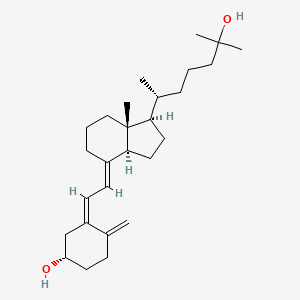
Calcifediol (INN), also known as calcidiol, 25-hydroxycholecalciferol, or 25-hydroxyvitamin D (abbreviated 25(OH)D),[1] is a prehormone that is produced in the liver by hydroxylation of vitamin D3 (cholecalciferol) by the enzyme cholecalciferol 25-hydroxylase which was isolated by Michael F. Holick. Physicians worldwide measure this metabolite to determine a patient’s vitamin D status.[2] At a typical daily intake of vitamin D3, its full conversion to calcifediol takes approximately 7 days.[3]
Calcifediol is then converted in the kidneys (by the enzyme 25(OH)D-1α-hydroxylase) into calcitriol (1,25-(OH)2D3), a secosteroid hormone that is the active form of vitamin D. It can also be converted into 24-hydroxycalcidiol in the kidneys via 24-hydroxylation.[4][5]
Blood test
In medicine, a 25-hydroxy vitamin D (calcifediol) blood test is used to determine how much vitamin D is in the body.[6] The blood concentration of calcifediol is considered the best indicator of vitamin D status.[7]
This test can be used to diagnose vitamin D deficiency, and it is indicated in patients with high risk for vitamin D deficiency and when the results of the test would be used as supporting evidence for beginning aggressive therapies.[8] Patients with osteoporosis, chronic kidney disease, malabsorption, obesity, and some other infections may be high risk and thus have greater indication for this test.[8] Although vitamin D deficiency is common in some populations including those living at higher latitudes or with limited sun exposure, the 25(OH)D test is not indicated for entire populations.[8] Physicians may advise low risk patients to take over-the-counter vitamin D in place of having screening.[8]
It is the most sensitive measure,[9] though experts have called for improved standardization and reproducibility across different laboratories.[7] According to MedlinePlus, the normal range of calcifediol is 30.0 to 74.0 ng/mL.[6] The normal range varies widely depending on several factors, including age and geographic location. A broad reference range of 20–150 nmol/L (8-60 ng/ml) has also been suggested,[10] while other studies have defined levels below 80 nmol/L (32 ng/ml) as indicative of vitamin D deficiency.[11]
US labs generally report 25(OH)D levels as ng/mL. Other countries often use nmol/L. Multiply ng/mL by 2.5 to convert to nmol/L.
Clinical significance
Increasing calcifediol levels are associated with increasing fractional absorption of calcium from the gut up to levels of 80 nmol/L (32 ng/mL).[citation needed]Urinary calcium excretion balances intestinal calcium absorption and does not increase with calcifediol levels up to ~400 nmol/L (160 ng/mL).[12]
A study by Cedric F. Garland and Frank C. Garland of the University of California, San Diego analyzed the blood from 25,000 volunteers from Washington County, Maryland, finding that those with the highest levels of calcifediol had a risk of colon cancer that was one-fifth of typical rates.[13] However, randomized controlled trials failed to find a significant correlation between vitamin D supplementation and the risk of colon cancer.[14]
A 2012 registry study of the population of Copenhagen, Denmark, found a correlation between both low and high serum levels and increased mortality, with a level of 50–60 nmol/L being associated with the lowest mortality. The study did not show causation.[15][16]
Nmr
Regioselective Hydroxylation in the Production of 25-Hydroxyvitamin D by Coprinopsis cinerea Peroxygenase
ChemCatChem (2015), 7, (2), 283-290
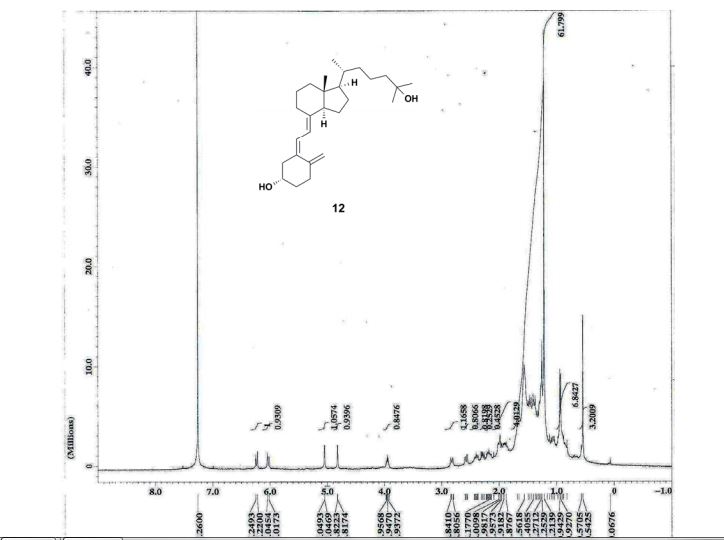
1H NMR 500 MHz, CDCl3: δ= 0.55 (3 H, s, 18-H), 0.94 (1H, d, J= 6.5 Hz, 21-H), 1.06 (1H, m, 22-H), 1.22 (3 H, s, 26-H), 1.22 (3 H, s, 27-H), 1.23 (1H, m, 23-H), 1.27 (1H, m, 16-H), 1.28 (1H, m, 14-H), 1.29 (1H, m, 12-H), 1.37 (1H, m, 22-H), 1.38 (1H, m, 20-H), 1.39 (1H, m, 24-H), 1.42 (1H, m, 23-H), 1.44 (1H, m, 24-H), 1.47 (2 H, m, 11-H), 1.53 (1H, m, 15-H), 1.66 (1H, m, 15-H), 1.67 (1H, m, 2-H), 1.67 (1H, m, 9-H), 1.87 (1H, m, 16-H), 1.92 (1H, m, 2-H), 1.98 (1H, m, 17-H), 2.06 (1H, m, 12-H), 2.17 (1H, m, 1-H), 2.40 (1H, m, 1-H), 2.57 (1H, dd, J= 3.7, 13.1Hz, 4-H), 2.82 (1H, m, 9-H), 3.95 (1H, bm, 3-H), 4.82 (1H, m, 19-H), 5.05 (1H, m, 19-H), 6.03 (1H, d, J=11.2 Hz, 7-H), 6.23 ppm (1H, d, J= 11.2 Hz, 6-H).
13 C NMR 500 MHz, CDCl3: δ = 12.2 (C-18), 19.0 (C-21), 21.0 (C-23), 22.4 (C-11), 23.7 (C-15), 27.8 (C-16), 29.2 (C-9), 29.4 (C-27), 29.5 (C-26), 32.1 (C-1), 35.3 (C-2), 36.3 (C-20), 36.6 (C-22), 40.7 (C-12), 44.6 (C-24), 46.0 (C-13), 46.1 (C-4), 56.5 (C-17), 56.7 (C-14), 69.4 (C-3), 71.3 (C-25), 112.6 (C-19), 117.7 (C-7), 122.2 (C-6), 135.2 (C-5), 142.4 (C-8), 145.3 ppm (C-10).
PAPER
From Organic & Biomolecular Chemistry, 10(27), 5205-5211; 2012
http://pubs.rsc.org/en/content/articlelanding/2012/ob/c2ob25511a#!divAbstract
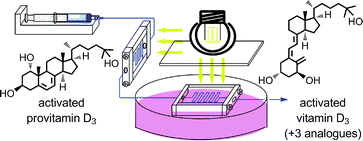
An efficient, two-stage, continuous-flow synthesis of 1α,25-(OH)2-vitamin D3 (activated vitamin D3) and its analogues was achieved. The developed method afforded the desired products in satisfactory yields using a high-intensity and economical light source, i.e., a high-pressure mercury lamp. In addition, our method required neither intermediate purification nor high-dilution conditions.
1H NMR(400 MHz, CDCl3): δ 8.13 (m, 2H), 7.68 (m, 2H), 6.64 (d, J = 8.3 Hz, 1H), 6.25 (d, J = 8.3 Hz, 1H), 5.19 (m, 2H), 3.93 (dd, J = 12.7, 8.2, 1H), 3.88 (dd, J = 14.6, 4.9 Hz, 1H), 3.58 (m, 1H), 1.02 (s, 3H), 1.02 (d, J = 6.8 Hz, 3H), 0.90 (d, J = 6.8 Hz, 3H), 0.86 (s, 9H), 0.80-0.84 (m, 9H), 0.09 (s, 3H), 0.00 (s, 3H)
13C NMR (100 MHz, CDCl3): δ 161.8, 159.6, 138.5, 135.3, 132.6, 132.5, 132.1, 130.6, 130.2, 128.7, 127.0, 126.5, 77.2, 68.5, 67.4, 67.1, 56.5, 50.6, 49.0, 44.2, 42.7, 40.4, 39.9, 39.3, 35.6, 34.7, 33.0, 30.5, 28.2, 25.9, 24.5, 21.9, 20.8, 19.9, 19.7, 18.5, 18.0, 17.4, 13.3, -4.4, -4.9
| IR (neat): 2957, 2872, 1653, 1603, 1462, 1311, 1093, 837, 762 cm-1 |
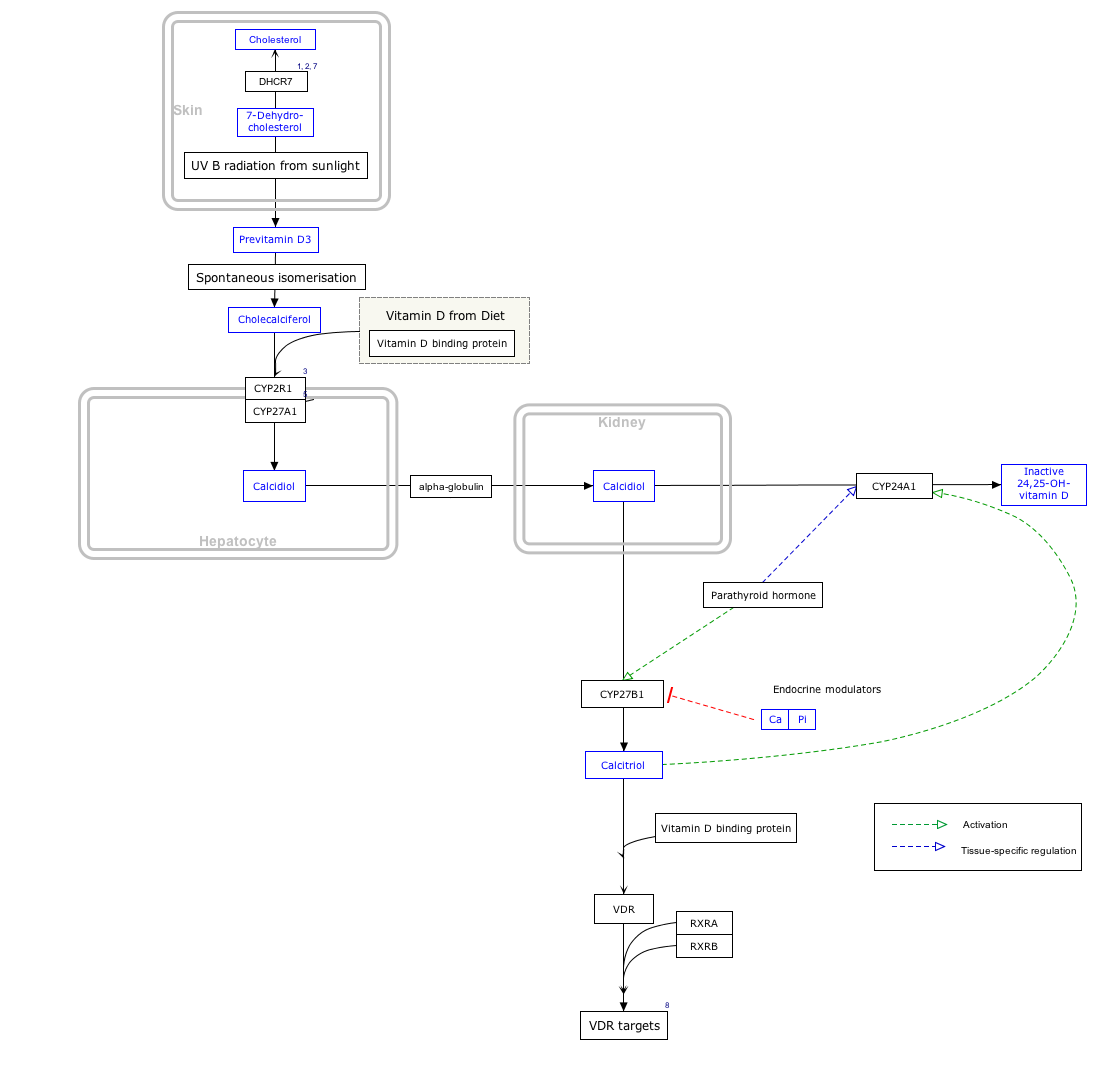
Interactive pathway map
Click on genes, proteins and metabolites below to link to respective articles. [§ 1]
Vitamin D Synthesis Pathway edit
- Jump up^ The interactive pathway map can be edited at WikiPathways: “VitaminDSynthesis_WP1531”.
References
- Jump up^ “Nomenclature of Vitamin D. Recommendations 1981. IUPAC-IUB Joint Commission on Biochemical Nomenclature (JCBN)” reproduced at the Queen Mary, University of London website. Retrieved 21 March 2010.
- Jump up^ Holick, MF; Deluca, HF; Avioli, LV (1972). “Isolation and identification of 25-hydroxycholecalciferol from human plasma”. Archives of Internal Medicine. 129 (1): 56–61. doi:10.1001/archinte.1972.00320010060005. PMID 4332591.
- Jump up^ Am J Clin Nutr 2008;87:1738–42 PMID 18541563
- Jump up^ Bender, David A.; Mayes, Peter A (2006). “Micronutrients: Vitamins & Minerals”. In Victor W. Rodwell; Murray, Robert F.; Harper, Harold W.; Granner, Darryl K.; Mayes, Peter A. Harper’s Illustrated Biochemistry. New York: Lange/McGraw-Hill. pp. 492–3. ISBN 0-07-146197-3. Retrieved December 10, 2008 through Google Book Search.
- Jump up^ Institute of Medicine (1997). “Vitamin D”. Dietary Reference Intakes for Calcium, Phosphorus, Magnesium, Vitamin D, and Fluoride. Washington, D.C: National Academy Press. p. 254. ISBN 0-309-06403-1.
- ^ Jump up to:a b “25-hydroxy vitamin D test: Medline Plus”. Retrieved 21 March 2010.
- ^ Jump up to:a b Heaney, Robert P (Dec 2004). “Functional indices of vitamin D status and ramifications of vitamin D deficiency”. American Journal of Clinical Nutrition. 80 (6): 1706S–9S. PMID 15585791.
- ^ Jump up to:a b c d American Society for Clinical Pathology, “Five Things Physicians and Patients Should Question”, Choosing Wisely: an initiative of the ABIM Foundation, American Society for Clinical Pathology, retrieved August 1, 2013, which cites
-
- Sattar, N.; Welsh, P.; Panarelli, M.; Forouhi, N. G. (2012). “Increasing requests for vitamin D measurement: Costly, confusing, and without credibility”. The Lancet. 379 (9811): 95–96. doi:10.1016/S0140-6736(11)61816-3. PMID 22243814.
- Bilinski, K. L.; Boyages, S. C. (2012). “The rising cost of vitamin D testing in Australia: Time to establish guidelines for testing”. The Medical Journal of Australia. 197 (2): 90. doi:10.5694/mja12.10561. PMID 22794049.
- Lu, Chuanyi M. (May 2012). “Pathology consultation on vitamin D testing: Clinical indications for 25(OH) vitamin D measurement [Letter to the editor]”. American Journal Clinical Pathology. American Society for Clinical Pathology (137): 831–832., which cites
- Arya, S. C.; Agarwal, N. (2012). “Pathology Consultation on Vitamin D Testing: Clinical Indications for 25(OH) Vitamin D Measurement”. American Journal of Clinical Pathology. 137 (5): 832. doi:10.1309/AJCP2GP0GHKQRCOE. PMID 22523224.
- Holick, M. F.; Binkley, N. C.; Bischoff-Ferrari, H. A.; Gordon, C. M.; Hanley, D. A.; Heaney, R. P.; Murad, M. H.; Weaver, C. M. (2011). “Evaluation, Treatment, and Prevention of Vitamin D Deficiency: An Endocrine Society Clinical Practice Guideline”. Journal of Clinical Endocrinology & Metabolism. 96 (7): 1911–1930. doi:10.1210/jc.2011-0385. PMID 21646368.
-
- Jump up^ Institute of Medicine (1997), p. 259
- Jump up^ Bender, David A. (2003). “Vitamin D”. Nutritional biochemistry of the vitamins. Cambridge: Cambridge University Press. ISBN 0-521-80388-8. Retrieved December 10, 2008 through Google Book Search.
- Jump up^ Hollis BW (February 2005). “Circulating 25-hydroxyvitamin D levels indicative of vitamin D sufficiency: implications for establishing a new effective dietary intake recommendation for vitamin D”. J Nutr. 135 (2): 317–22. PMID 15671234.
- Jump up^ Kimball; et al. (2004). “Safety of vitamin D3 in adults with multiple sclerosis”. J Clin Endocrinol Metab. 86 (3): 645–51. PMID 17823429.
- Jump up^ Maugh II, Thomas H. “Frank C. Garland dies at 60; epidemiologist helped show importance of vitamin D: Garland and his brother Cedric were the first to demonstrate that vitamin D deficiencies play a role in cancer and other diseases.”, Los Angeles Times, August 31, 2010. Accessed September 4, 2010.
- Jump up^ Wactawski-Wende, J; Kotchen, JM, Women’s Health Initiative Investigators (Mar 9, 2006). “Calcium plus vitamin D supplementation and the risk of colorectal cancer.”. N Engl J Med. 354 (7): 684–96. doi:10.1056/NEJMoa055222. PMID 16481636. Retrieved December 28, 2013.
- Jump up^ “Too much vitamin D can be as unhealthy as too little” (Press release). University of Copenhagen. May 29, 2012. Retrieved 2015-05-27.
- Jump up^ Durup, D.; Jørgensen, H. L.; Christensen, J.; Schwarz, P.; Heegaard, A. M.; Lind, B. (May 9, 2012). “A Reverse J-Shaped Association of All-Cause Mortality with Serum 25-Hydroxyvitamin D in General Practice: The CopD Study”. The Journal of Clinical Endocrinology & Metabolism. Endocrine Society. 97 (8): 2644–2652. doi:10.1210/jc.2012-1176. Retrieved 2015-05-27.
| Names | |
|---|---|
| IUPAC names
(6R)-6-[(1R,3aR,4E,7aR)-4-[(2Z)-2-[(5S)-5-
Hydroxy-2-methylidene-cyclohexylidene] ethylidene]-7a-methyl-2,3,3a,5,6,7-hexahydro- 1H-inden-1-yl]-2-methyl-heptan-2-ol |
|
| Other names
25-Hydroxyvitamin D3
25-Hydroxycholecalciferol Calcidiol |
|
| Identifiers | |
| 19356-17-3 |
|
| 3D model (Jmol) | Interactive image |
| ChEBI | CHEBI:17933 |
| ChEMBL | ChEMBL1222 |
| ChemSpider | 4446820 |
| DrugBank | DB00146 |
| ECHA InfoCard | 100.039.067 |
| 6921 | |
| MeSH | Calcifediol |
| PubChem | 5283731 |
| UNII | T0WXW8F54E |
| Properties | |
| C27H44O2 | |
| Molar mass | 400.64 g/mol |
| Pharmacology | |
| A11CC06 (WHO) | |
|
Except where otherwise noted, data are given for materials in their standard state (at 25 °C [77 °F], 100 kPa).
|
|
/////////Calcifediol, カルシフェジオール
CC(CCCC(C)(C)O)C1CCC2C1(CCCC2=CC=C3CC(CCC3=C)O)C
GMP’s for Early Stage Development of new Drug substances and products
DRUG REGULATORY AFFAIRS INTERNATIONAL
GMP’s for Early Stage Development of New Drug substances and products

View original post 1,741 more words
Balsalazide
![]()
Balsalazide
| 80573-04-2; Colazal; Balsalazide Disodium; AC1NSFNR; P80AL8J7ZP; | |
| Molecular Formula: | C17H15N3O6 |
|---|---|
| Molecular Weight: | 357.322 g/mol |
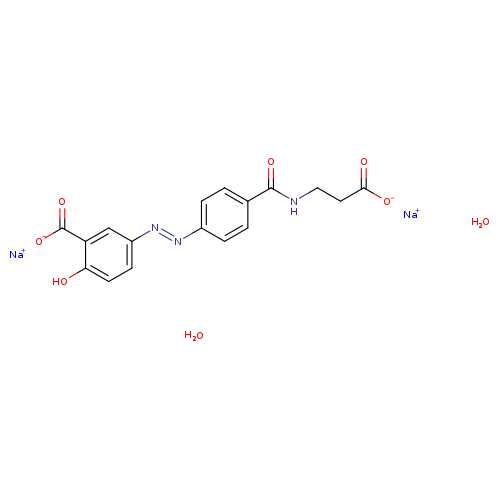
(3E)-3-[[4-(2-carboxyethylcarbamoyl)phenyl]hydrazinylidene]-6-oxocyclohexa-1,4-diene-1-carboxylic acid
DISODIUMDIHYDRATE
| CAS Number | 150399-21-6 |
|---|---|
| Weight | Average: 437.316 Monoisotopic: 437.08110308 |
| Chemical Formula | C17H17N3Na2O8 |
Balsalazide is an anti-inflammatory drug used in the treatment of inflammatory bowel disease. It is sold under the brand names Giazo, Colazal in the US and Colazide in the UK. It is also sold in generic form in the US by several generic manufacturers.
It is usually administered as the disodium salt. Balsalazide releases mesalazine, also known as 5-aminosalicylic acid, or 5-ASA,[1] in the large intestine. Its advantage over that drug in the treatment of ulcerative colitis is believed to be the delivery of the active agent past the small intestine to the large intestine, the active site of ulcerative colitis.
Balsalazide is an anti-inflammatory drug used in the treatment of Inflammatory Bowel Disease. It is sold under the name “Colazal” in the US and “Colazide” in the UK. The chemical name is (E)-5-[[-4-(2-carboxyethyl) aminocarbonyl] phenyl]azo] –2-hydroxybenzoic acid. It is usually administered as the disodium salt. Balsalazide releases mesalazine, also known as 5-aminosalicylic acid, or 5-ASA, in the large intestine. Its advantage over that drug in the treatment of Ulcerative colitis is believed to be the delivery of the active agent past the small intestine to the large intestine, the active site of ulcerative colitis.
Balsalazide disodium and its complete synthesis was first disclosed by Chan[18] in 1983, assigned to Biorex Laboratories Limited, England, claiming product ‘Balsalazide’ and process of its preparation. The synthesis involves converting 4-nitrobenzoyl chloride (6) to 4- nitrobenzoyl-β-alanine (7), hydrogenating with Pd/C (5%) in ethanol and isolating by adding diethyl ether to produce 4-aminobenzoyl-β-alanine (8). Thereafter, 4-aminobenzoyl-β-alanine (8) was treated with hydrochloric acid and sodium nitrite to generate N-(4-diazoniumbenzoyl)- β-alanine hydrochloride salt (9) which was reacted at low temperature with disodium salicylate to furnish Balsalazide disodium insitu which was added to dilute hydrochloric acid at low temperature to produce Balsalazide (1) (Scheme-1.1). Thus obtained Balsalazide was recrystallized with hot ethanol and converted to pharmaceutically acceptable salt (disodium salt).

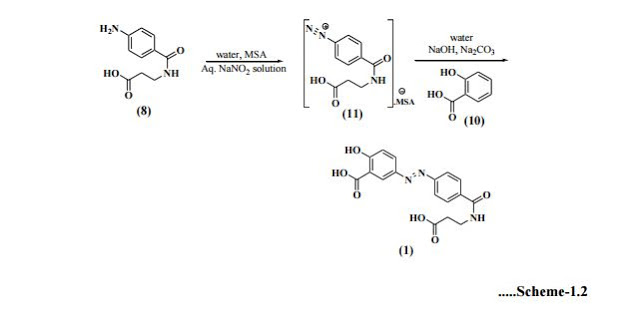
Optimization of this diazonium salt based process was performed by Huijun et al[19] and reported the preparation of the title compound in 64.6% overall yield. Zhenhau et al[20] have synthesized 1 from 4-nitrobenzoic acid (12) via chlorination, condensation, hydrogenation, diazotization, coupling and salt formation with overall yield 73%. Li et al[21] have given product in 73.9% total yield starting from 4-nitrobenzoyl chloride (6), where as Yuzhu et al[22] confirmed chemical structure of Balsalazide disodium by elemental analysis, UV, IR, 1H-NMR and ESI-MS etc. Shaojie et al[23] have also followed same process for its preparation. Yujie et al[24] synthesized 1 in this way; preparation of 4-nitrobenzoyl-β-alanine (7) under microwave irradiation of 420 W at 52oC for 10sec., reduction in ethyl acetate in the presence of Pd/C catalyst then diazotization, coupling and salt formation. Eckardt et al[25] have developed a process for the preparation of Balsalazide which comprises, conversion of 4-aminobenzoyl-β-alanine (8) to 4-ammoniumbenzoyl-β-alanine sulfonate salt using a sulfonic acid in water. This was treated with aq. sodium nitrite solution at low temperature to generate 4-diazoniumbenzoyl-β-alanine sulfonate salt (11) which was quenched with aq. disodium salicylate to furnish Balsalazide disodium solution. This was further acidified to allow isolation of 1 and then conversion to disodium salt (Scheme-1.2) in 76% yield.

http://shodhganga.inflibnet.ac.in/bitstream/10603/101297/10/10_chapter%201.pdf

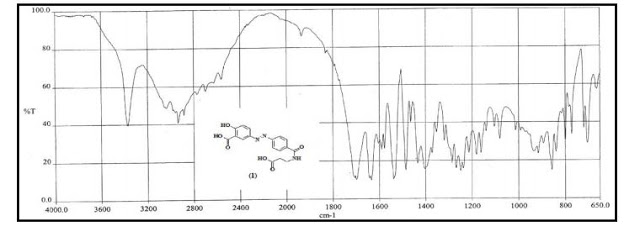
IR (KBr, cm-1 ): 3371 and 3039 (OH and NH), 1705 and 1699 (C=O), 1634 (C=O amide), 1590 and 1538 (C=C aromatic), 1464 and 1404 (aliphatic C-H), 1229 (C-N), 1073 (C-O), 773 and 738 (Ar-H out of plane bend). 1H NMR (DMSO-d6, 300 MHz, δ ppm): 2.54 (t, 2H), 3.50 (m, 2H), 6.95 (d, J = 8.8 Hz, 1H), 7.87 (d, J = 8.5 Hz, 2H), 8.02 (d, J = 8.5 Hz, 2H), 7.95 (dd, J = 8.8 Hz and 2.5 Hz, 1H), 8.34 (d, J = 2.5 Hz, 1H), 8.68 (t, J = 5.5 Hz, 1H), 12.12 (brs, 1H). MS m/z (ESI): 356 [(M-H)- ], Calculated; m/z 357.
Synthesis
Balsalazide synthesis: Biorex Laboratories, GB 2080796 (1986).
- Starting material is 4-aminohippuric acid, obtained by coupling para-aminobenzoic acid and glycine.
- That product is then treated with nitrous acid to give the diazonium salt.
- Reaction of this species with salicylic acid proceeds at the position para to the phenol to give balsalazide.
Sodium balsalazide (Balsalazide sodium)
Brief background information
Application
-
resolvent
Classes substance
-
β-alanine (3-aminopropionic acid)
-
m-aminobenzoic acid and esters and amides thereof
-
p-aminobenzoic acid and esters and amides thereof
-
azobenzene
-
salicylic acid
-
-
-
-
Synthesis Way
Trade names
| A country | Tradename | Manufacturer |
|---|---|---|
| United Kingdom | Kolazid | Shire |
| Italy | Balzid | Menarini |
| USA | Kolazal | Salix |
| Ukraine | no | no |
Formulations
-
capsules in 750 mg (as disodium salt)
PATENT
https://www.google.com/patents/US7271253
Balsalazide disodium (1) represents an effective gastrointestinal anti-inflammatory compound useful as a medicament for the treatment of diseases such as ulcerative colitis. It is delivered intact to the colon where it is cleaved by bacterial azoreduction thereby generating 5-aminosalicylic acid as the medicinally active component.
To date, relatively few patents or literature articles have dealt with the preparation of Balsalazide or the disodium salt. For instance, U.S. Pat. No. 4,412,992 (Biorex, 1983) is the first patent that we uncovered that claims the compound Balsalazide and a strategy of how to prepare it which strategy is depicted in Scheme 1.
Optimization of this diazonium-based process is detailed in Shan et al., Zhongguo Yaowu Huaxue Zazhi, 11, 110 (2001) and Shi et al., Zhongguo Yiyao Gongye Zazhi, 34, 537 (2003).
Problems arise with the above strategy and the optimization process.
It is well-documented in the literature, for instance in Thermochimica Acta, 225, 201-211 (1993), that diazonium salts can be involved in serious accidents in their use. A possible cause of some of the diazonium salt related accidents is that, for one reason or another, an intermediate material appeared in crystalline form in the vessel of the reaction. As a result, a potentially severe drawback of the above processes occurs. Since the intermediate hydrochloride salt of 4-aminobenzoyl-β-alanine has poor solubility in water, it may pose a safety-risk in the subsequent diazotation reaction.
Also, it is well-known that certain diazonium salts possess high mechanical and heat sensitivity and that their decomposition goes through the liberation of non-condensable nitrogen gas which results in the possibility of runaway reactions and explosions. Obviously this safety consideration becomes more pertinent upon further scale-up.
Therefore, for commercial production of Balsalazide disodium, there was a need to develop a scalable and intrinsically better process
Example 1 Batch Process
N-(4-Aminobenzoyl)-β-alanine (100 g) was suspended in water (1300 mL) and methanesulfonic acid (115.4 g) was added to this mixture. The mixture was cooled to 10° C. and a solution of sodium nitrite (34.46 g) in water (200 mL) was added at a rate such that the temperature stayed below 12° C. The mixture was stirred for 30 min and added to an ice-cold solution of salicylic acid (69.65 g), sodium hydroxide (40.35 g) and sodium carbonate (106.9 g) in 1 L water at 7-12° C. After 3 hours at 10° C., the mixture was heated to 60-65° C. and acidified to pH 4.0-4.5 by the addition of hydrochloric acid. After a further 3 hours at 60-65° C., the mixture was cooled to ambient temperature, filtered, washed with water and dried in vacuo to yield Balsalazide. Yield ca. 90%. Balsalazide was transformed into its disodium salt in ca. 85% yield by treatment with aqueous NaOH solution followed by crystallization from n-propanol/methanol.
1H-NMR (400 MHz; D2O): δ=8.04 ppm (s); 7.67 ppm (d; J=8.2 Hz); 7.62 ppm (d, J=9.2 Hz); 7.53 ppm (d; J=8.2 Hz); 6.84 ppm (d; J=8.9 Hz); 3.57 ppm (t, J=7.1 Hz); 2.53 ppm (t; J=7.2 Hz).
Example 2 Continuous Process
For the continuous operation, a conventional dual-head metering pump (Ratiomatic by FMI) was used to deliver the mesylate solution and the aqueous sodium nitrite solution. The schematic diagram shown in FIG. 4 represents a set-up used for the continuous process. The first pump-head was set at 13.9 g/min whereas the second was set at 2.1 g/min. These flow rates offered a residence time of 9.4 min. The yield of the coupled intermediate from this residence time was 93%. The working solutions were prepared as follow:
The mesylate solution was prepared by the addition into a 2 L 3-necked round bottom flask, of N-(4-aminobenzoyl) β-alanine (120 g) followed by of DI water (1560 g) and methanesulfonic acid (177.5 g) (Batch appearance: clear solution). The first pump-head was primed with this solution and the flow rate was adjusted to 13.9 g/min.
The sodium nitrite solution was prepared by dissolving of sodium nitrite (41.8 g) in of DI water (240 g) (Batch appearance: clear solution). The second pump-head was primed with this solution and the flow rate adjusted to 2.1 g/min.
The quenching solution (sodium salicylate) was made by adding salicylic acid (139.3 g) to DI water (900 g) followed by of sodium carbonate (106.9 g) and 50% aqueous sodium hydroxide (80 g).
The diazotation reaction was performed in a 500 ml jacketed flow reactor with a bottom drain valve. The drain valve was set at 16 g/min. For reactor start-up, the flow reactor was charged with 150 mL of DI water as a working volume and cooled to the reactions initial temperature of 0-5° C. Concomitantly, the additions of the mesylate and sodium nitrite solutions were started and the bottom valve of the flow reactor was opened. During the diazotization, the flow rate of both solutions remained fixed and the temperature was kept below 12° C. and at the end of additions the pumps were stopped while the remaining contents in the flow reactor were drained into the quenching salicylic acid solution. Analysis of the contents in the quenching reactor indicated no signs of uncoupled starting material (diazonium compound). The reactor contents were heated to 60-65° C. for 2-3 hrs before adjusting the pH to precipitate the coupling product. This provided 191.5 g of product.
| Cited Patent | Filing date | Publication date | Applicant | Title |
|---|---|---|---|---|
| US4412992 | Jul 8, 1981 | Nov 1, 1983 | Biorex Laboratories Limited | 2-Hydroxy-5-phenylazobenzoic acid derivatives and method of treating ulcerative colitis therewith |
| US6458776 * | Aug 29, 2001 | Oct 1, 2002 | Nobex Corporation | 5-ASA derivatives having anti-inflammatory and antibiotic activity and methods of treating diseases therewith |
| Reference | ||
|---|---|---|
| 1 | Chai, et al., Huaxi Yaoxue Zazhi, Jiangsu Institute of Materia Medica, Nanjing, China, 2004, 19(6), 431-433. | |
| 2 | Shan, et al., Zhongguo Yaowu Huaxue Zazhi, Institute of Materia Medica, Peking Union Medical College, Beijing China, 2001, 11(2), 110-111. | |
| 3 | Shi, et al., Zhongguo Yiyao Gongya Zazhi, Shanghai Institute of Pharmaceutical Industry, Shanghai, China, 2003, 34(11), 537-538. | |
| 4 | Su, et al., Huaxue Gongye Yu Gongcheng (Tianjin, China), College of Chemistry and Chemical Eng., Donghua Univ., Shanghai, China, 2005, 22(4), 313-315. | |
| 5 | Ullrich, et al., Decomposition of aromataic diazonium compounds, Thermochimica Acta, 1993, 225, 201-211. | |
References
-
Prakash, A; Spencer, CM: Drugs (DRUGAY) 1998 56 83- 89.
-
DE 3128819 (Biorex the Lab .; appl 07/21/1981;. GB -prior 07/21/1980, 07.07.1981.).
References
- Jump up^ Kruis, W.; Schreiber, I.; Theuer, D.; Brandes, J. W.; Schütz, E.; Howaldt, S.; Krakamp, B.; Hämling, J.; Mönnikes, H.; Koop, I.; Stolte, M.; Pallant, D.; Ewald, U. (2001). “Low dose balsalazide (1.5 g twice daily) and mesalazine (0.5 g three times daily) maintained remission of ulcerative colitis but high dose balsalazide (3.0 g twice daily) was superior in preventing relapses”. Gut. 49 (6): 783–789. doi:10.1136/gut.49.6.783. PMC 1728533
. PMID 11709512.
| Patent ID | Patent Title | Submitted Date | Granted Date |
|---|---|---|---|
| US8232265 | Multi-functional ionic liquid compositions for overcoming polymorphism and imparting improved properties for active pharmaceutical, biological, nutritional, and energetic ingredients | 2007-04-26 | 2012-07-31 |
| US2011319267 | AROMATIC CARBOXYLIC ACID DERIVATIVES FOR TREATMENT AND PROPHYLAXIS OF GASTROINTESTINAL DISEASES INCLUDING COLON CANCERS | 2011-12-29 | |
| US2007213304 | Use of Aminosalicylates in Diarrhoea-Predominent Irritable Bowel Syndrome | 2007-09-13 | |
| US7119079 | Bioadhesive pharmaceutical compositions | 2004-07-22 | 2006-10-10 |
| US6699848 | Bioadhesive anti-inflammatory pharmaceutical compositions | 2004-03-02 |
| Clinical data | |
|---|---|
| Trade names | Colazal, Giazo |
| AHFS/Drugs.com | Monograph |
| MedlinePlus | a699052 |
| Pregnancy category |
|
| ATC code | A07EC04 (WHO) |
| Legal status | |
| Legal status |
|
| Pharmacokinetic data | |
| Bioavailability | <1% |
| Protein binding | ≥99% |
| Biological half-life | 12hr |
| Identifiers | |
| CAS Number | 80573-04-2 |
| PubChem (CID) | 5362070 |
| DrugBank | DB01014 |
| ChemSpider | 10662422 |
| UNII | P80AL8J7ZP |
| ChEBI | CHEBI:267413 |
| ChEMBL | CHEMBL1201346 |
| ECHA InfoCard | 100.117.186 |
| Chemical and physical data | |
| Formula | C17H15N3O6 |
| Molar mass | 357.318 g/mol |
| 3D model (Jmol) | Interactive image |
CLICK ON IMAGE
//////
O=C(O)c1cc(ccc1O)/N=N/c2ccc(cc2)C(=O)NCCC(O)=O
|
O.O.[Na+].[Na+].OC1=CC=C(C=C1C([O-])=O)\N=N\C1=CC=C(C=C1)C(=O)NCCC([O-])=O
|

CENTANAFADINE
![]()
Centanafadine; UNII-D2A6T4UH9C; EB-1020 free base; D2A6T4UH9C; 924012-43-1
CTN SR; EB-1020; EB-1020 SR
WO 2007016155
| Molecular Formula: | C15H15N |
|---|---|
| Molecular Weight: | 209.292 g/mol |
- Phase II Attention-deficit hyperactivity disorder
- No development reported Major depressive disorder; Neuropathic pain
Most Recent Events
- 20 Dec 2016 Neurovance plans a phase III trial for Attention-deficit hyperactivity disorder
- 27 Jul 2016 Efficacy data from a phase IIb trial in Attention-deficit hyperactivity disorder released by Neurovance
- 16 Jul 2016 No recent reports of development identified for phase-I development in Attention-deficit-hyperactivity-disorder in Canada (PO)
- Originator Euthymics Bioscience
- Developer Euthymics Bioscience; Neurovance
- Class Azabicyclo compounds; Cyclohexanes; Naphthalenes; Small molecules
- Mechanism of Action Adrenergic uptake inhibitors; Dopamine uptake inhibitors; Serotonin uptake inhibitors

![]()
cas 923981-14-0 hydrochloride
| Molecular Formula: | C15H16ClN |
|---|---|
| Molecular Weight: | 245.75 g/mol |
(1R,5S)-1-(naphthalen-2-yl)-3-azabicyclo(3.1.0)hexane hydrochloride
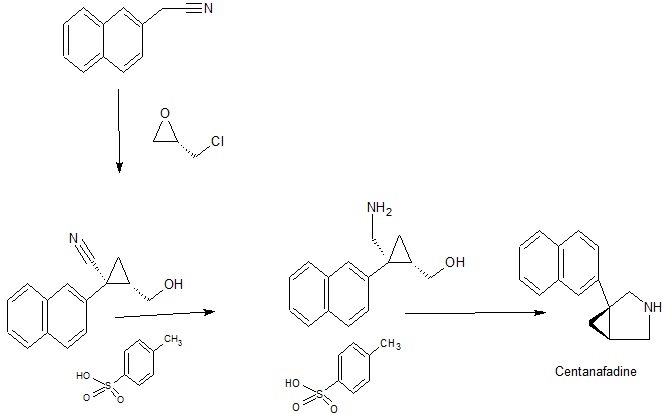
Centanafadine (INN) (former developmental code name EB-1020) is a serotonin-norepinephrine-dopamine reuptake inhibitor (SNDRI) under development by Neurovance in collaboration with Euthymics Bioscience as a treatment for attention deficit hyperactivity disorder (ADHD) that inhibits the reuptake of norepinephrine, dopamine and serotonin with a ratio of 1:6:14, respectively.[1][2][3] As of August 2015, it is in phase II clinical trials.[1]
Also claimed is their use for treating attention deficit hyperactivity disorder (ADHD), fragile-X associated disorder, autism spectrum disorder and depression. See WO2015089111, claiming method for treating fragile X-associated disorders, assigned to Neurovance, naming Piskorski, Bymaster and Mckinney. Neurovance, an affiliate of Euthymics Bioscience, is developing centanafadine, a sustained release formulation and a non-stimulant triple reuptake inhibitor, for treating ADHD and is also investigating the drug for treating neuropathic pain.
In June 2015, the drug was reported to be in phase 2 clinical and preclinical development for treating ADHD and neuropathic pain, respectively. Inventors are affiliated with Neurovance.
Attention-deficit hyperactivity disorder (ADHD) is a central nervous system
(CNS) disorder characterized by developmentally inappropriate inattention, hyperactivity, and impulsivity (Buitelaar et al., 2010; Spencer et al., 2007). ADHD is one of the most common developmental disorders in children with 5-10% prevalence (Scahill et al., 2000; Polanczyk et al., 2007). While ADHD was once regarded as only a childhood disorder, it can continue through adolescence and into adulthood. An estimated 2.9-4.4% of the adult population has continuing ADHD (Kessler et al., 2006; Faraone and Biederman, 2005). Major symptoms in adults include inattention, disorganization, lack of concentration and to some extent impulsivity, which result in difficulty functioning, low educational attainment, under achievement in vocational and educational pursuits, and poor social and family relations (Biederman et al, 2006; Barkely et al., 2006).
The exact causes of ADHD are not known, but a dysfunction of the prefrontal cortex and its associated circuitries has been posited as a key deficit in ADHD (Arnsten, 2009). Consistent with this notion is the finding that abnormal catecholaminergic function plays a key role, particularly in prefrontal cortical regions (Arnsten 2009). The
catecholamines norepinephrine (NE) and dopamine (DA) are highly involved in several domains of cognition including working memory, attention, and executive function. Accordingly, these monoamine neurotransmitters are believed to work in concert in modulating cognitive processes.
Pharmacotherapy is a primary form of treatment utilized to reduce the symptoms of ADHD. Stimulants such as methylphenidate and amphetamines are commonly used for ADHD. The major mechanism of action of the stimulants is inhibition of DA and NE transporters. The stimulants are effective against the core symptoms of ADHD and have a response rate of about 70% (Spencer et al. , 2005). However, major concerns about stimulants include risk of abuse, dependency, and diversion as well as potential neurotoxic effects of amphetamines (Berman et al., 2009). The abuse potential of stimulants is particularly problematic in adults because substance abuse is a common co-morbidity with adult ADHD (Levin and Kleber, 1995; Ohlmeier, 2008).
Another major drug used to treat ADHD is atomoxetine, which is a selective norepinephrine reuptake inhibitor. Major advantages of atomoxetine compared to the stimulants is lack of abuse potential, once-daily dosage, and superior treatment of comorbidities such as anxiety and depression. However, atomoxetine has lower efficacy and takes 2-4 weeks for onset of action (Spencer et al., 1998; Newcorn et al., 2008).
Accordingly, there remains a need for effective pharmaceuticals which may be used in the treatment of ADHD and other conditions affected by monoamine neurotransmitters.
PATENT
WO 2007016155
https://www.google.ch/patents/WO2007016155A2?hl=de&cl=en
Reaction Scheme 1 below generally sets forth an exemplary process for preparing l-aryl-3-azabicyclo[3.1.0] hexane analogs from the corresponding 2-bromo-2- arylacetate or 2-chloro-2-arylacetate. The bromo or chloro acetate react with acrylonitrile to provide the methyl 2-cyano-l-arylcyclopropanecarboxylate, which is then reduced to the amino alcohol by reducing agents such as lithium aluminum hydride (LAH) or sodium aluminum hydride (SAH) or NaBH4 with ZnCl2. Cyclization of the amino alcohol with SOCl2 or POCl3 will provide the l-aryl-3-azabicyclo[3.1.0]hexane. The cyclization of substituted 4-aminobutan-l -ol by SOCl2 or POCl3 into the pyrrolidine ring system was reported by Armarego et al, J. Chem. Soc. [Section C: Organic] 19:3222-9, (1971), and in Szalecki et al., patent publication PL 120095 B2, CAN 99:158251. Oxalyl chloride, phosphorous tribromide, triphenylphosphorous dibromide and oxalyl bromide may be used for the same purpose. The methyl 2-bromo-2 -arylacetate or methyl 2- chloro-2-arylacetate may be synthesized from subsituted benzoylaldehyde or methyl-2- arylacetate as shown in Reaction Scheme IA.
Reaction Scheme 1
Reduction
Reagents: (a) NaOMe; (b) LiAIH4; (c) SOCI2; (d) POCI3; (e) NaOH or NH3 H2O
Reaction Scheme IA
Reagents: (a) CHCI3, NaOH; (b) SOCI2; (c) MeOH; (d) NaBrO3, NaHSO3 [00138] Reaction Scheme 2 below illustrates another exemplary process for transforming methyl 2-cyano-l-arylcyclopropanecarboxylate to a desired compound or intermediate of the invention. Hydrolysis of the cyano ester provides the potassium salt which can then be converted into the cyano acid. Reduction and cyclization of the 2- cyano-1-arylcyclopropanecarboxylic acid with LAH or LiAlH(OMe)3according to the procedure outlined in Tetrahedron 45:3683 (1989), will generate l-aryl-3- azabicyclo[3.1.0]hexane. In addition, the cyano- 1-arylcyclopropanecarboxylic acid can be hydrogenated and cyclized into an amide, which is then reduced to l-aryl-3- azabicyclo[3.1.0]hexane.
Reaction Scheme 2
Hydrolysis
Reagents: (a) NaOMe; (b) KOH; (c) HCI; (d) LiAIH(OMe)3, or LAH, or SAH, then HCI; (e) H2/Pd or H2/Ni
[00139] Reaction Scheme 3 below discloses an alternative exemplary process for converting the methyl 2-cyano-l-arylcyclopropanecarboxylate to a desired compound or intermediate of the invention. The methyl 2-cyano-l-arylcyclopropanecarboxylate is reduced and cyclized into l-aryl-3-aza-bicyclo[3.1.0]hexan-2~one, which is then reduced to l-aryl-3-azabicyclo[3.1.0]hexane [Marazzo, A. et al., Arkivoc 5:156-169, (2004)].
Reaction Scheme 3
Reagents: (a) H2/Pd or H2/Ni; (b) B2H6 or BH3 or LAH, then HCI [00140] Reaction Scheme 4 below provides another exemplary process to prepare l-aryl-3-azabicyclo[3.1.0] hexane analogs. Reaction of 2-arylacetonitrile with (+)- epichlorohydrin gives approximately a 65% yield of 2-(hydroxyrnethyl)-l- arylcyclopropanecarbonitrile (85% cis) with the trans isomer as one of the by-products [Cabadio et al., Fr. Bollettino Chimico Farmaceutico 117:331-42 (1978); Mouzin et al., Synthesis 4:304-305 (1978)]. The methyl 2-cyano-l-arylcyclopropanecarboxylate can then be reduced into the amino alcohol by a reducing agent such as LAH, SAH or NaBH4 with ZnCl2 or by catalytic hydrogenation. Cyclization of the amino alcohol with SOCl2 or POCl3 provides the l-aryl-3-azabicyclo[3.1.0]hexane. The cyclization of substituted 4-aminobutan-l-ol by SOCl2 or POCl3 into the pyrrolidine ring system has been reported previously [Armarego et al., J. Chem. Soc. [Section C: Organic] 19:3222-9 (1971); patent publication PL 120095 B2, CAN 99:158251).
ϋv siυjiijJsoLJa
Reaction Scheme 4
Ar CN
ion
Reagents: (a) NaHMDS; (b) LAH or catalytic hydrogenation; (c) SOCl2; (d) POCI3; (e) NaOH
[00141] Reaction Scheme 5 provides an exemplary process for synthesizing the
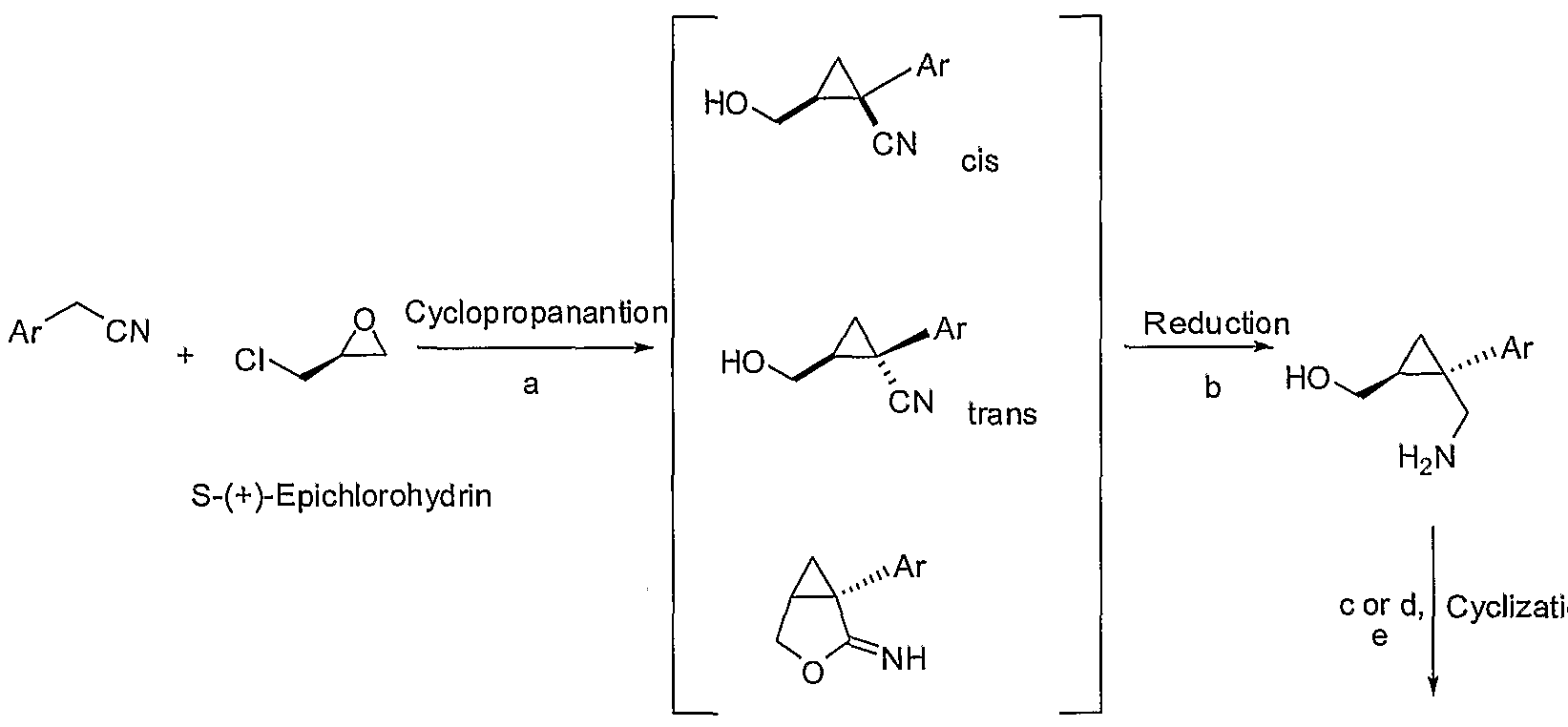
(IR, 5S)-(+)-l-aryl-3-azabicyclo[3.1.0]hexanes. Using (S)-(+)-epichlorohydrin as a starting material in the same process described in Scheme 4 will ensure a final product with 1-R chirality [Cabadio, S. et al, Fr. Bollettino Chimico Farmaceutico 117:331-42 (1978)].
Reaction Scheme 5
ion
^Ar
H’..
Reagents: (a) NaHMDS; (b) LAH or catalytic hydroge nation; (c) SOCI2; (d) POCl3; (e) NaOH j_j
[00142] Reaction Scheme 6 provides an exemplary process to prepare the (1 S,5R)-
(-)-l-aryl-3-azabicyclo[3.1.0]hexanes. Using (R)-(-)-epichlorohydrin as a starting material in the same process described in Scheme 4 will ensure a final product with 1-S chirality [Cabadio, S. et al, Fr. Bollettino Chimico Farmaceutico 117:331-42 (1978)].
Reaction Scheme 6
Ar CN
c or d, Cyclization
Reagents: (a) NaHMDS; (b) LAH or catalytic hydrogenation; (C) SOCI2; (d) POCI3; (e) NaOH
[00143] Reaction Scheme 7 provides an alternative exemplary process for transforming the 2-(hydroxymethyl)-l-arylcyclopropanecarbonitrile to a desired compound or intermediate of the invention via an oxidation and cyclization reaction. Utilizing chiral starting materials (+)-epichlorohydrin or (-)-epichlorohydrin will lead to the corresponding (+)- or (-)-enantiomers and corresponding chiral analogs through the same reaction sequences.
Reaction Scheme 7
O Cyclopropanantion Oxidation
Ar CN
CK Ar Ar a HO HO
CN
65% yield, 88% cis O
Hydrogenation
C Cyclization
Reagents: (a) NaNH2; (b) KMnO4; (c) H2/Ni or Pt; (d) B2H6 Or BH3 Or LAH, then HCI
[00144] Reaction Scheme 8 provides an exemplary process for transforming the epichlorohydrin to a desired compound or intermediate of the invention via a replacement and cyclization reaction. The reaction of methyl 2-arylacetate with epichlorohydrin gives methyl 2-(hydroxymethyl)~l~arylcyclopropanecarboxylate with the desired cis isomer as the major product. The alcohol is converted into an OR3 group such as -O-mesylate, -O- tosylate, -O-nosylate, -O-brosylate, -O-trifluoromethanesulfonate. Then OR3 is replaced by a primary amine NH2R4, where R4 is a nitrogen protection group such as a 3,4- dimethoxy-benzyl group or other known protection group. Nitrogen protecting groups are well known to those skilled in the art, see for example, “Nitrogen Protecting Groups in Organic Synthesis”, John Wiley and Sons, New York, N.Y., 1981, Chapter 7; “Nitrogen Protecting Groups in Organic Chemistry”, Plenum Press, New York, N.Y., 1973, Chapter 2; T. W. Green and P. G. M. Wuts in “Protective Groups in Organic Chemistry”, 3rd edition, John Wiley & Sons, Inc. New York, N. Y., 1999. When the nitrogen protecting group is no longer needed, it may be removed by methods well known in the art. This replacement reaction is followed by a cyclization reaction which provides the amide, which is then reduced into an amine by a reducing agent such as LAH. Finally the protection group is removed to yield the l-aryl-3- azabicyclo[3.1.0]hexane analogs. Utilizing chiral (S)-(+)-epichlorohydrin as a starting material leads to the (lR,5S)-(+)-l-aryl-3-azabicyclo[3.1.0]hexane analogs with the same reaction sequence. Similarly, the (R)-(-)-epichlorohydrin will lead to the (lS,5R)-(-)-l- aryl-3-azabicyclo[3.1.0]hexane analogs.
Reaction Scheme 8
O Cyclop ro pa nantion
Ar CO2Me + C|v Ar Ar
HO R3O
CO2Me CO2Me
Replacement Cyclization
Reagents: (a) NaNH2; (b) MsCI; (c) R4NH2; (d) LAH or SAH or BH3; (e) HCI
[00145] Reaction Scheme 9 provides an exemplary process for transforming the diol to a desired compound or intermediate of the invention. Reduction of the diester provides the diol which is then converted into an OR3 group such as -O-mesylate, -O- tosylate, -O-nosylate, -O-brosylate, -O-trifluoromethanesulfonate. Then OR3 is replaced by a primary amine NH2R6, where R6 is a nitrogen protection group such as a 3,4- dimethoxy-benzyl group or other protection groups known in the art (e.g., allyl amine, tert-butyl amine). When the nitrogen protecting group is no longer needed, it may be removed by methods known to those skilled in the art.
Reaction Scheme 9
X=CI or Br
Deprotection ft* Replacement Cyclization
Reagents: (a) NaOMe; (b) NaBH4; (c)MsCI; (d) NH3, then HCI; (e) R6NH2; (f) H2/Pd or acid deprotection, then HCI
[00146] Reaction Scheme 10 provides an exemplary process for resolving the racemic l-aryl-3-aza-bicyclo[3.1.0]hexane to enantiomers. The resolution of amines through tartaric salts is generally known to those skilled in the art. For example, using O,O-Dibenzoyl-2R,3R-Tartaric Acid (made by acylating L(+)-tartaric acid with benzoyl chloride) in dichloroethane/methanol/water, racemic methamphetamine can be resolved in 80-95% yield, with an optical purity of 85-98% [Synthetic Communications 29:4315- 4319 (1999)]. Reaction Scheme 10
Racemate (1 R, 5S)-enantiomer
Racemate (1 S, 5R)-enantiomer
Reagents: (a) L-(-)-DBTA; (b) NaOH, then HCI in IPA; (c) D-(+)-DBTA
[00147] Reaction Scheme 11 provides an exemplary process for the preparation of
3-alkyl-l-aryl-3-azabicyclo[3.1.0]hexane analogs. These alkylation or reductive animation reaction reagents and conditons are generally well known to those skilled in the art.
Reaction Scheme 11
R= Me, Et, Propyl, i-propyl, cyclopropyl, i-butyl, etc.
[00148] Enantiomers of compounds within the present invention can be prepared as shown in Reaction Scheme 12 by separation through a chiral chromatography. Reaction Scheme 12
[00149] Alternatively, enantiomers of the compounds of the present invention can be prepared as shown in Reaction Scheme 13 using alkylation reaction conditions exemplified in scheme 11.
Reaction Scheme 13
[00150] Reaction Scheme 14 provides an exemplary process for preparing some N- methyl l-aryl-3-aza-bicyclo[3.1.0]hexane analogs. The common intermediate N-methyl bromomaleide is synthesized in one batch followed by Suzuki couplings with the various substituted aryl boronic acids. Cyclopropanations are then carried out to produce the imides, which are then reduced by borane to provide the desired compounds.
Reaction Scheme 14
Reagents and conditions: (a) MeNH2, THF, 10 0C, 1.5 hr; (b) NaOAc, Ac2O1 60 0C, 2 hr; (c) PdCI2C dppf), CsF, dioxane, 40 0C, 1-6 hr; (d) Me3SOCI, NaH, THF, 50-65 0C, 2-6 hr; (e) 1M BH3/THF, O 0C; 60 0C 2 hr (f) HCI, Et2O
[00151] Reaction Scheme 15 provides an additional methodology for producing 1- aryl-3-azabicyclo[3.1.0] hexanes.
Reaction Scheme 15
[00152] Reaction Scheme 16 provides an additional methodology for producing 1- aryl-3-azabicyclo[3.1.0] hexanes. Reaction scheme 16
[00153] Reaction Scheme 17 provides an additional methodology for producing 1- aryl-3-azabicyclo[3.1.0] hexanes.
Reaction Scheme 17
[00154] Reaction Scheme 18 provides an additional methodology for producing 1- aryl-3-azabicyclo[3.1.0] hexanes. Utilizing chiral starting materials (+)-epichlorohydrin or (-)-epichlorohydrin will lead to the corresponding chiral analogs through the same reaction sequences. Reaction Scheme 18
[00155] Reaction Scheme 19 provides an additional methodology for producing 1- aryl-3-azabicyclo[3.1.0] hexanes.
Reaction Scheme 19
R= propyl , butyl, etc.
[00156] Reaction Scheme 20 provides an additional methodology for producing 1- aryl-3-azabicyclo[3.1.0] hexanes.
Reaction Scheme 20
H
Ac2O NaOAc, reflux
R= ferf-butyl, etc.
[00157] Reaction Scheme 21 provides an additional methodology for producing 3- and/or 4-subsitituted l-aryl-3-azabicyclo[3.1.0] hexanes. Reaction Scheme 21
(BoC)2O DCM
R= methyl, etc. -Ar v Ar R1 = methyl, etc. R- N H HCI
R • HCI
[00158] Reaction Scheme 22 provides an additional methodology for producing 3- and/or 4-subsitituted l-aryl-3-azabicyclo[3.1.0] hexanes.
Reaction Scheme 22
(BoC)2O DCM
1. 2.
R= Ri
[00159] Reaction Scheme 23 provides an additional methodology for producing 3- and/or 2-subsitituted 1 -aryl-3-azabicyclo[3.1.0] hexanes.
Reaction Scheme 23
KBH4
R = Me, etc. MeOH R1 = Me, etc.
HCI HCI Ether Ether
[00160] Reaction Scheme 24 provides an additional methodology for producing 2- and/or 3 -substituted l-aryl-3-azabicyclo[3.1.0] hexanes.
Reaction Scheme 24
I) TMSCI; PhMe
Et3N; NaBH3CN 2) R2Li EtOH
[00161] Reaction Scheme 25 provides an additional generic methodology for producing 1 -aryl-3 -azabicyclo[3.1.0] hexanes .
Reaction Scheme 25
Ar
Cyolopropanation Ar Reduction Ar Cyciization / \
Ar CN + Cl HO. HO
CN
H2N
or Protection
[00162] Reaction Scheme 26 provides another generic methodology for producing l-aryl-3-azabicyclo[3.1.0] hexanes.
Reaction Scheme 26
0
Reduction Deprotection/ dealkylation
C. Synthesis of various naphthyl and phenyl 3-azabicyclo[3.1.01hexane Hydrochlorides
(1) Synthesis of lS,5R-(-Vl-(l-naphthylV3-azabicyclol3.1.01hexane Hydrochloride as Representative Procedure for (l)-(6).
[00340] To a stirring solution of ( 1 R,2S)-(2-Aminomethyl-2-( 1 – naphthyl)cyclopropyl)-methanol prepared according to Example XIVB(I) above (3.2 g, 0.014 moles) in 35 niL of dichloroethane (DCE), at room temperature under nitrogen, was added 1.2 niL (0.017 moles, 1.2 eq) of SOCl2 slowly via syringe while keeping the temperature below 50 0C. (Note: The reaction exotherms from 22 0C to 45 0C) The resulting mixture was stirred for 3.5 h at room temperature after which time, TLC analysis (SiO2 plate, CH2Cl2/MeOH/NH4OH (10:1:0.1)) showed no starting material remaining. The mixture was quenched with 40 mL of water and the layers were separated. The organic layer was washed with H2O (2 x 5O mL). The aqueous layers were combined, made basic with ION NaOH to pH = 10 (pH paper) and extracted with 2 x 100 mL of CH2Cl2. The combined organics were dried over Na2SO4, filtered and concentrated to an oil. The oil was dissolved in MeOH (20 mL), treated with 15 mL of 2M HCl/Et2O and concentrated in vacuo to a suspension. The slurry was diluted with 25 mL of Et2O, filtered and washed with 35 mL of Et2O. The solid product was dried overnight (-29 mmHg, 5O0C) to give 1 g (29%) of pure product as a white solid. 1H NMR (400 MHz, CDCl3) δ 1.22 (t, J=7.37 Hz, 1 H), 1.58 (dd, J=6.00, 4.73 Hz, 1 H), 2.03 – 2.10 (m, 1 H), 3.25 – 3.27 (m, 1 H), 3.42 (d, J=I 1.52 Hz, 1 H), 3.64 (d, J=I 1.62 Hz, 1 H), 3.74 – 3.85 (m, 2 H), 7.32 – 7.39 (m, 1 H), 7.40 – 7.48 (m, 2 H), 7.48 – 7.55 (m, 1 H), 7.75 (d, J=8.20 Hz, 1 H), 7.79 – 7.85 (m, 1 H), 8.04 (d, J=8.30 Hz, 1 H), 13C NMR (101 MHz, CDCl3) δ 14.54, 22.43, 30.89, 48.01, 51.89, 123.92, 125.60, 126.24, 126.93, 129.04, 129.17, 133.55, 134.04, LC/MS (m/z M+1) 210.0, [α]D (c=l, MeOH), = -54.4.
(2) lR,5S-(+)-l-g-naphthyl)-3-azabicvclof3,1.01hexane Hydrochloride
[00341] Yield = 29%; 1H NMR (400 MHz, METHANOL-^) δ 1.24 – 1.32 (m, 1
H), 1.32 – 1.37 (m, 1 H), 2.23 – 2.31 (m, 1 H), 3.47 (d, J=11.71 Hz, 1 H), 3.66 (d, J=11.71 Hz, 1 H), 3.85 (d, J=11.62 Hz, 1 H), 3.93 (dd, J=11.67, 3.95 Hz, 1 H), 7.46 (dd, J=8.25, 7.08 Hz, 1 H), 7.50 – 7.57 (m, 1 H), 7.57 – 7.65 (m, 2 H), 7.86 (d, J=8.30 Hz, 1 H), 7.89 – 7.95 (m, 1 H), 8.17 (d, J=8.49 Hz, 1 H), 13C NMR (101 MHz, METHANOL-^) δ 22.36, 30.65, 30.65, 48.09, 51.99, 123.78, 125.47, 125.89, 126.50, 128.65, 128.88, 133.87, 134.28, LC/MS (m/z M+1 210.0), [α]D (c=l, MeOH), = + 55.6.
(4) lR.5S-(+)-l-(2-naphthylV3-azabicvclo[3.1.01hexane Hydrochloride
[00343] Yield = 30%; 1H NMR (400 MHz, DMSO-J6) δ 1.14 – 1.23 (m, 1 H), 1.44
– 1.50 (m, 1 H), 2.17 – 2.26 (m, 1 H), 3.36 – 3.43 (m, 1 H), 3.47 – 3.61 (m, 2 H), 3.75 (d, J-11.23 Hz, 1 H), 7.36 (dd, J=8.59, 1.85 Hz, 1 H), 7.42 – 7.53 (m, 2 H), 7.80 (d, J=1.56 Hz, 1 H), 7.82 – 7.90 (m, 3 H), 9.76 (br. s., 1 H), 13C NMR (101 MHz, DMSO-J6) δ 16.41, 24.11, 31.36, 47.50, 49.97, 125.43, 125.76, 126.41, 127.04, 128.07, 128.15, 128.74, 132.39, 133.55, 137.62, ), LC/MS (m/z M+1 210.1 , [α]D (c=l, MeOH), = + 66.0.
PATENT
WO 2008013856
https://www.google.com/patents/WO2008013856A2?cl=en
The compound (-^-(S^-dichlorophenylJ-S-azabicyclotS.l.Olhexane and its pharmaceutically acceptable salts have been previously described as agents for treating or preventing a disorder alleviated by inhibiting dopamine reuptake, such as depression (See, US Patent Nos. 6,569,887 and 6,716,868). However, available methods for synthesizing (-)-l-(334-dichlorophenyl)-3-azabicyclo[3.1.0]hexanes and other l-aryl-3-azabicyclo[3.1.0]hexanes are presently limited.
US Patent No. 4,231,935 (Example 37) describes the synthesis of racemic (±)- l-(3,4-dichlorophenyl)-3-azabicyclo[3.1.0]hexane hydrochloride according to the following scheme.
US Patent Nos. 6,569,887 and 6,716,868 describe the preparation of (-)-l-(3,4- dichlorophenyl)-3-azabicyclo[3.1.0]hexane by resolution of racemic (±)-l-(3,4- dichlorophenyl)-3-azabicyclo[3.1.0]hexane hydrochloride using a chiral polysaccharide stationary phase. The foregoing methods provide limited tools for producing (-)-l-(3,4- dichlorophenyl)-3-azabicyclo[3.1.0] hexane and other 1-aryl— 3- azabicyclo[3.1.0]hexanes, underscoring a need for additional methods and compositions to produce the compounds.
Example VI Preparation of ClR. 5S)-l-naphthalen-2-yl-3-azabicyclof3.1.0“|hexane hydrochloride
using Reaction Schemes 1 & 12
A. Synthesis of (IR. 2SV2-Hvdroxymethyl-2-naphthyl- cvclopropancarbonitrile
To a stirring solution of 2-naphthylacetonitrile (50.0 g, 0.299 moles) and (S)-
(+)-epichlorohydrin (36.0 g, 0389 moles) in anhydrous THF (300 mL) at -15 to -20 0C under nitrogen, was added sodium bis (trimethylsilyl)amide (2M in THF, 300 mL, 0.600 moles) slowly via addition funnel while keeping the temperature between -15 0C and —20 °C. After completion of the addition, the mixture was stirred for 3 hours at -15 0C to -20 °C. The reaction mixture was quenched by slow addition of 2M HCl (520 mL) allowing the temperature to rise to 15 0C as the neutralization proceeded. The layers were allowed to settle and the layers were separated. The aqueous layer was extracted once with ethyl acetate (30OmL). The organic portion was washed with brine (4000 mL) dried over sodium sulfate, filtered and concentrated under reduced pressure to provide an orange oil which was used without further purification. B. Synthesis of ((1S, 2R)-2-AminomethvI-2-naphthylen-2-yl cycIopropyD- methanol
To a solution of nitrile in THF (300 mL) was slowly added borane dimethylsulfide (10 M, 60 mL, 0.60 moles) via addition funnel. The reaction temperature was maintained below 60 0C during the addition. After completion of the addition, the reaction was held at 60 0C until the starting nitrile was completely consumed (approximately 2.5 hours). The mixture was cooled below 15 0C and 2M HCl (200 mL) was slowly added maintaining a temperature below 20 0C. The reaction mixture was then heated to 500C for one hour. After the heating period, the reaction was cooled below 300C and isopropyl acetate (200 mL) and water (250 mL) were added. The phases were separated and the organic phase was discarded. Ammonium hydroxide (75 mL) was added and the mixture cooled to 25 0C with stirring. The aqueous phase was extracted with isopropyl acetate (2x 250 mL). The combined organic phases were washed with 5% dibasic sodium phosphate (200 mL) and saturated NaCl (200 mL), dried over sodium sulfate and concentrated. The viscous yellow oil was dissolved in isopropyl acetate (500 mL) and heated to 55 0C with stirring. p-Toluene sulfonic acid monohydrate(54.25 g, 0.285 mole) was added over 5 minutes. A white solid formed as the acid was added. The reaction mixture was slowly cooled to room temperature, filtered and washed with isopropyl acetate. Yielded – 53.7 g white solid 45% (tosylate salt)
C. Synthesis of (IR. 5SM-naphthaIen-2-vI-3-azabicvclo[3.1.01hexane hydrochloride
To a stirring slurry of ((lS,2R)-2-aminomethyl-2-naphthylen-2-yl cyclopropyl)-methanol tosylate (53.7g, 0.134 mole) in isopropyl acetate (350 mL), at room temperature under nitrogen, was added thionyl chloride (11.8 mL, 0.161 moles) slowly via addition funnel while keeping the temperature below 35 0C. The resulting mixture was stirred for 1 hour, after which time, no starting material remained. The mixture was neutralized with the slow addition of 5 N NaOH (160 mL) keeping the temperature below 30 0C. The phases were separated and the aqueous phase was extracted with isopropyl acetate (200 mL). The combined organic extracts were washed with saturated sodium chloride (150 mL), dried over sodium sulfate, filtered and concentrated to 300 mL. The hydrochloride was made directly from this solution by slowly adding HCl in 2-propanol (5-6N, 26 mL). The mixture was stirred for 15 minutes and filtered and washed with isopropyl acetate. The wet cake was slurried in 2-propanol (400 mL) and heated to reflux with stirring under nitrogen for 2 hours. The resulting slurry was allowed to cool and stir at room temperature overnight. The resulting slurry was filtered and washed with 2-propanol. The solid was dried in a vacuum oven at 400C. Yield – 21.1 g, 64.2% 1H NMR (400 MHz, DMSCW6) d ppm 1.23 (t) 1.40 (t) 2.21 – 2.28 (m) 3.40 – 3.47 (m) 3.50 – 3.66 (m) 3.74 – 3.82 (m) 7.39 (dd) 7.44 – 7.55 (m) 7.82 (s) 7.84 – 7.92 (m) 9.33 (br. s.) 9.69 (br. s.). LC/MS (m/z M+1 210)
PATENT
WO 2013019271
https://google.com/patents/WO2013019271A1?cl=en
Example I
Preparation of (lR,5S)-(+)-l-(naphthalen-2-yl)-3-azabicyclo[3.1.0]hexane
[00108] (lR,5S)-(+)-l-(naphthalen-2-yl)-3-azabicyclo[3.1.0]hexane may be prepared as follows:
Step 1: Synthesis of [(lS.2R)-2-(aminomethyl)-2-(2-naphthyl‘)cvclopropyl]methan-l-oK p- toluenesulfonic acid salt [00109] 500g (2.99 mol, 1.0 eq) of 2-naphthylacetonitrile was charged to a 12 L 3- neck round bottom flask equipped with overhead stirrer, addition funnel, thermocouple, nitrogen inlet, cooling bath and drying tube. 3.0 L of tetrahydrofuran was added and stirred at room temperature to dissolve all solids. 360 g (3.89 mol, 1.30 eq) (S)-(+)-epichlorohydrin was added and then the solution was cooled to an internal temperature of – 25 °C. 3.0 L of a 2 molar solution of sodium bis(trimethylsilyl)amide in tetrahydrofuran (6.00 mol, 2.0 eq) was added to the reaction mixture via addition funnel at a rate such that the internal temperature of the reaction mixture is maintained at less than -15 °C. After completion of the addition, the mixture was stirred at between -20 °C and -14 °C for 2 hours 15 minutes. Borane- dimethylsulfide complex (750 mL of a 10.0 molar solution, 7.5 mol, 2.5 eq) was then slowly added to the reaction mixture at a rate such that the internal temperature was maintained at less than -5 °C. Upon completion of the borane-dimethylsulfide addition the reaction mixture was heated to an internal temperature of 60 °C and stirred overnight at this temperature. Additional borane-dimethylsulfide complex (75 mL, 0.75 mol, 0.25 eq) was then added and the reaction mixture stirred at 60 °C for 1 hour 45 minutes. The reaction mixture was cooled to room temperature and then quenched by slow addition into pre-cooled (3 °C) 2 molar aqueous hydrochloric acid (5.76 L, 11.5 mol, 3.8 eq) at a rate such that the temperature of the quench solution was maintained at less than 22 °C. The two phase mixture was then heated at an internal temperature of 50 °C for 1 hour followed by cooling to RT. Isopropyl acetate (2.0 L) and water (2.5 L) were added, the mixture agitated, and then the layers were allowed to settle. The upper organic layer was discarded. Aqueous ammonia (750 mL) was added to the aqueous layer which was then extracted with isopropylacetate (2.5 L). The aqueous layer was extracted with isopropylacetate (2.5 L) a second time. The organic extracts were combined and then sequentially washed with a 5% solution of sodium dibasic phosphate in water (2.0 L) followed by saturated brine (2.0 L). The organic layer was then concentrated to a total volume of 5.0 L and then heated to 50 °C. para-Toluene sulfonic acid monohydrate (541 g, 2.84 mol) was then added in portions. During the addition white solids precipitated and a mild exotherm was observed. Upon completion of the addition the mixture was allowed to cool to RT and the solids collected by filtration. The filtercake was washed twice with isopropylacetate, 1.0 L each wash. The filtercake was then dried to a constant weight to give 664.3 g (55% yield) of the desired product as a white solid. Step 2: Synthesis of (5S.lRVl-(2-naphthylV3-azabicvclor3.1.01hexane HC1 salt
[00110] The amine-tosylate salt from step 1 (2037.9 g, 5.10 mol) was suspended in isopropylacetate ( 13.2 L) to give a white slurry in a 50 L 3 -neck RB equipped with an overhead stirrer, thermocouple, addition funnel, nitrogen inlet and drying tube.
Thionylchloride (445 mL, 6.12 mol, 1.20 eq) was then added via addition funnel over one hour 5 minutes. The maximum internal temperature was 24 °C. After stirring for 4 hours 15 minutes 5 molar aqueous sodium hydroxide (6.1 L, 30.5 mol, 5.98 eq) was added via addition funnel at a rate such that the maximum internal temperature was 30 °C. The mixture was then stirred for one hour 15 minutes after which the layers were allowed to settle and the layers were separated. The organic layer was washed with 1 molar aqueous sodium hydroxide (2.1 L). The aqueous layers were then combined and back extracted with isopropyl acetate (7.6 L). The organic layers were combined and washed with saturated aqueous brine (4.1 L). The organic layer was then dried over magnesium sulfate, filtered to remove solids, and then concentrated to a total volume of 4.2 L in vacuo. Hydrogen chloride in isopropyl alcohol (5.7 N, 0.90 L, 5.13 mol, 1 eq) was then added over 50 minutes using an external water/ice bath to keep the internal temperature less than 30 °C. After stirring for 45 minutes the solids were collected by filtration and the filtercake washed two times with isopropyl acetate, 2.3 L each wash. The filtercake was then partially dried and then taken forward to step 3 as a wetcake.
Step 3: Crude (5S.lRVl-(2-naphthyl -3-azabicvclof3.1.01hexane HC1 salt hot slurry in isopropyl alcohol
[00111] The wetcakes from two separate runs of step 2 (total of 4646.6 g starting amine tosylate salt) were combined and suspended in isopropyl alcohol (34.6 L) in a 50 L 3- neck round bottom flask equipped with overhead stirrer, heating mantel, thermocouple, reflux condenser, nitrogen inlet, and drying tube. The slurry was then heated to reflux, stirred for three hours at reflux, and then allowed to cool to room temperature. The solids were collected by filtration and the filtercake washed twice with isopropyl alcohol, 6.9 L each wash. The filtercake was then dried to a constant weight to give 2009.2 g of (5S,1R)-1- (2-naphthyl)-3-azabicyclo[3.1.0]hexane HCl salt (70 % yield from 4646.6 g of amine tosylate salt).
Step 4: Recrvstallization of (5S.lRVl-(2-naDhthvn-3-a2abicvclor3.1.01hexane HCl salt from ethanol to upgrade the enantiomeric excess
[00112] The (5S,lR)-l-(2-naphthyl)-3-azabicyclo[3.1.0]hexane HCl salt from step 3 (2009.2 g, 8.18 mol) was charged to a 50 L 3-neck round bottom flask equipped with an overhead stirrer, heating mantel, reflux condenser, nitrogen inlet, thermocouple, and drying tube. Ethanol (21.5 L of special industrial) was then added and the mixture heated to reflux to dissolve all solids. After dissolution of solids heating was discontinued and the mixture was allowed to cool to room temperature during which time solids reformed. The solids were then collected by filtration and the filtercake washed with ethanol (4.3 L). The filtercake was then dried to a constant weight to give 1434.6 g (71 % yield ) of recrystallized (5S,lR)-l-(2-naphthyl)-3-azabicyclo[3.1.0]hexane HCl salt. Chiral HPLC assay showed an enantiomeric excess of > 99.5 %.
Step 5: Rework to improve color profile
[00113] (5S,lR)-l-(2-naphthyl)-3-azabicyclo[3.1.0]hexane HCl (1405.6 g, 5.72 mol) was charged to a 22 L 3-neck round bottom flask equipped with overhead stirrer, heating mantel, thermocouple, nitrogen inlet and drying tube. Water (14.0 L) was added and the mixture heated to 34 °C to dissolve all solids. The solution was then transferred to a large separatory funnel and teti^ydrofuran (2.8 L) followed by isopropyl acetate (2.8 L) was added. The two phase mixture was agitated and the layers were then allowed to settle. The upper organic layer was discarded. Aqueous ammonia (1.14 L) was then added and the aqueous layer extracted with isopropylacetate (14.0 L). The organic layer was dried over magnesium sulfate, filtered, and concentrated in vacuo to give an off-white solid. The solid was dissolved in isopropyl alcohol (14.0L) and transferred to a 22 L 3-neck round bottom flask equipped with overhead stirrer, thermocouple, addition funnel, nitrogen inlet and drying tube. Hydrogen chloride in isopropyl alcohol (5.7 N, 175 mL, 1.0 mol) was then added over 10 minutes. Near the end of this addition the formation of solids was evident. The slurry was stirred for 30 minutes then additional hydrogen chloride in isopropanol (840 mL, 4.45 mol) was added over 65 minutes keeping the internal temperature less than 25 °C. The solids were collected by filtration and the filtercake washed twice with isopropyl alcohol, 2.8 L each wash. The filtercake was then dried to a constant weight to give 1277.1 g (91% yield) of the product as an off-white solid.
PATENTS
(lR,5S)-l-(naphthalen-2-yl)-3-azabicyclo[3.1.0]hexane, also known as (+)-l- (naphthalen-2-yl)-3-azabicyclo[3.1.0]hexane, is a compound useful as an unbalanced triple reuptake inhibitor (TRI), most potent towards norepinephrine reuptake (NE), one-sixth as potent towards dopamine reuptake (DA), and one-fourteenth as much towards serotonin reuptake (5- HT). This compound and its utility are disclosed in more detail in U.S. Patent Publication No. 2007/0082940, the contents of which are hereby incorporated by reference in their entirety
| Cited Patent | Filing date | Publication date | Applicant | Title |
|---|---|---|---|---|
| US20050096395 * | Feb 12, 2003 | May 5, 2005 | Rao Srinivas G. | Methods of treating attention deficit/hyperactivity disorder (adhd) |
| US20070082940 * | Jul 25, 2006 | Apr 12, 2007 | Phil Skolnick | Novel 1-aryl-3-azabicyclo[3.1.0]hexanes: preparation and use to treat neuropsychiatric disorders |
| Reference | ||
|---|---|---|
| 1 | * | See also references of EP2819516A4 |
| Citing Patent | Filing date | Publication date | Applicant | Title |
|---|---|---|---|---|
| WO2015089111A1 * | Dec 9, 2014 | Jun 18, 2015 | Neurovance, Inc. | Novel methods |
| WO2015102826A1 * | Dec 9, 2014 | Jul 9, 2015 | Neurovance, Inc. | Novel compositions |
| US9133159 * | Apr 3, 2013 | Sep 15, 2015 | Neurovance, Inc. | 1-heteroaryl-3-azabicyclo[3.1.0]hexanes, methods for their preparation and their use as medicaments |
| US9205074 | Sep 23, 2014 | Dec 8, 2015 | Neurovance, Inc. | 1-aryl-3-azabicyclo[3.1.0]hexanes: preparation and use to treat neuropsychiatric disorders |
| US20160303076 * | Dec 9, 2014 | Oct 20, 2016 | Neurovance, Inc. | Novel methods |
References
- Jump up^ “3-Neurotransmitters, 1-Molecule: Optimized Ratios”. Neurovance.
- Jump up^ “EB-1020, a Non-Stimulant Norepinephrine and Dopamine – Preferring Reuptake Inhibitor for the Treatment of Adult ADHD” (PDF). Neurovance.
- Jump up^ Frank P. Bymaster; Krystyna Golembiowska; Magdalena Kowalska; Yong Kee Choi; Frank I. Tarazi (June 2012). “Pharmacological characterization of the norepinephrine and dopamine reuptake inhibitor EB-1020: Implications for treatment of attention-deficit hyperactivity disorder”. Synapse. 66 (6): 522–532. doi:10.1002/syn.21538. PMID 22298359.
External links
| Legal status | |
|---|---|
| Legal status |
|
| Identifiers | |
| CAS Number | 924012-43-1 |
| PubChem (CID) | 16095349 |
| ChemSpider | 17253639 |
| Chemical and physical data | |
| Formula | C15H15N |
| Molar mass | 209.28 g/mol |
| 3D model (Jmol) | Interactive image |
P.S. : The views expressed are my personal and in no-way suggest the views of the professional body or the company that I represent.
///////CENTANAFADINE, PHASE 2, UNII-D2A6T4UH9C, EB-1020, D2A6T4UH9C, 924012-43-1, CTN SR, EB-1020, EB-1020 SR,
C1C2C1(CNC2)C3=CC4=CC=CC=C4C=C3


FDA approves first drug Spinraza (nusinersen), for spinal muscular atrophy

FDA approves first drug for spinal muscular atrophy
New therapy addresses unmet medical need for rare disease
The U.S. Food and Drug Administration today approved Spinraza (nusinersen), the first drug approved to treat children and adults with spinal muscular atrophy (SMA), a rare and often fatal genetic disease affecting muscle strength and movement. Spinraza is an injection administered into the fluid surrounding the spinal cord.
For Immediate Release
December 23, 2016
The U.S. Food and Drug Administration today approved Spinraza (nusinersen), the first drug approved to treat children and adults with spinal muscular atrophy (SMA), a rare and often fatal genetic disease affecting muscle strength and movement. Spinraza is an injection administered into the fluid surrounding the spinal cord.
“There has been a long-standing need for a treatment for spinal muscular atrophy, the most common genetic cause of death in infants, and a disease that can affect people at any stage of life,” said Billy Dunn, M.D., director of the Division of Neurology Products in the FDA’s Center for Drug Evaluation and Research. “As shown by our suggestion to the sponsor to analyze the results of the study earlier than planned, the FDA is committed to assisting with the development and approval of safe and effective drugs for rare diseases and we worked hard to review this application quickly; we could not be more pleased to have the first approved treatment for this debilitating disease.”
SMA is a hereditary disease that causes weakness and muscle wasting because of the loss of lower motor neurons controlling movement. There is wide variability in age of onset, symptoms and rate of progression. Spinraza is approved for use across the range of spinal muscular atrophy patients.
The FDA worked closely with the sponsor during development to help design and implement the analysis upon which this approval was based. The efficacy of Spinraza was demonstrated in a clinical trial in 121 patients with infantile-onset SMA who were diagnosed before 6 months of age and who were less than 7 months old at the time of their first dose. Patients were randomized to receive an injection of Spinraza, into the fluid surrounding the spinal cord, or undergo a mock procedure without drug injection (a skin prick). Twice the number of patients received Spinraza compared to those who underwent the mock procedure. The trial assessed the percentage of patients with improvement in motor milestones, such as head control, sitting, ability to kick in supine position, rolling, crawling, standing and walking.
The FDA asked the sponsor to conduct an interim analysis as a way to evaluate the study results as early as possible; 82 of 121 patients were eligible for this analysis. Forty percent of patients treated with Spinraza achieved improvement in motor milestones as defined in the study, whereas none of the control patients did.
Additional open-label uncontrolled clinical studies were conducted in symptomatic patients who ranged in age from 30 days to 15 years at the time of the first dose, and in presymptomatic patients who ranged in age from 8 days to 42 days at the time of first dose. These studies lacked control groups and therefore were more difficult to interpret than the controlled study, but the findings appeared generally supportive of the clinical efficacy demonstrated in the controlled clinical trial in infantile-onset patients.
The most common side effects found in participants in the clinical trials on Spinraza were upper respiratory infection, lower respiratory infection and constipation. Warnings and precautions include low blood platelet count and toxicity to the kidneys (renal toxicity). Toxicity in the nervous system (neurotoxicity) was observed in animal studies.
The FDA granted this application fast track designation and priority review. The drug also received orphan drug designation, which provides incentives to assist and encourage the development of drugs for rare diseases.
The sponsor is receiving a rare pediatric disease priority review voucher under a program intended to encourage development of new drugs and biologics for the prevention and treatment of rare pediatric diseases. A voucher can be redeemed by a sponsor at a later date to receive priority review of a subsequent marketing application for a different product. This is the eighth rare pediatric disease priority review voucher issued by the FDA since the program began.
Spinraza is marketed by Biogen of Cambridge, Massachusetts and was developed by Ionis Pharmaceuticals of Carlsbad, California.
CAS1258984-36-9
MFC234H340N61O128P17S17
ISIS-396443, ISIS-SMNRx, IONIS-SMNRx
RNA, (2′-0-(2-methoxyethyi))(p-thio)(m5u-c-a-c-m5u-m5u-m5u-c-a-m5ua- a-m5 u-g-c-m5u-g-g)
RNA, (2′-0-(2-METHOXYETHYI))(P-THIO)(M5U-C-A-C-M5U-M5U-M5U-C-A-M5UA- A-M5 U-G-C-M5U-G-G)
All-P-ambo-2′-O-(2-methoxyethyl)-5-methyl-P-thiouridylyl-(3’¨5′)-2′-O-(2-methoxyethyl)-5-methyl-P-thiocytidylyl-(3’¨5′)-2′-O-(2-methoxyethyl)-P-thioadenylyl-(3’¨5′)-2′-O-(2-methoxyethyl)-5-methyl-P-thiocytidylyl-(3’¨5′)-2′-O-(2-methoxyethyl)-5-methyl-P-thiouridylyl-(3’¨5′)-2′-O-(2-methoxyethyl)-5-methyl-P-thiouridylyl-(3’¨5′)-2′-O-(2-methoxyethyl)-5-methyl-P-thiouridylyl-(3’¨5′)-2′-O-(2-methoxyethyl)-5-methyl-P-thiocytidylyl-(3’¨5′)-2′-O-(2-methoxyethyl)-P-thioadenylyl-(3’¨5′)-2′-O-(2-methoxyethyl)-5-methyl-P-thiouridylyl-(3’¨5′)-2′-O-(2-methoxyethyl)-P-thioadenylyl-(3’¨5′)-2′-O-(2-methoxyethyl)-P-thioadenylyl-(3’¨5′)-2′-O-(2-methoxyethyl)-5-methyl-P-thiouridylyl-(3’¨5′)-2′-O-(2-methoxyethyl)-P-thioguanylyl-(3’¨5′)-2′-O-(2-methoxyethyl)-5-methyl-P-thiocytidylyl-(3’¨5′)-2′-O-(2-methoxyethyl)-5-methyl-P-thiouridylyl-(3’¨5′)-2′-O-(2-methoxyethyl)-P-thioguanylyl-(3’¨5′)-2′-O-(2-methoxyethyl)guanosine
ISIS-SMNRx is a drug that is designed to modulate the splicing of the SMN2 gene to significantly increase the production of functional SMN protein. The US regulatory agency has granted Orphan Drug Designation with Fast Track Status to nusinersen for the treatment of patients with SMA. The European regulatory agency has granted Orphan Drug Designation to nusinersen for the treatment of patients with SMA.

Nusinersen (formerly, IONIS-SMNRx, ISIS-SMNRx), intended to be marketed as Spinraza,[1] is an investigational drug for spinal muscular atrophy developed by Ionis Pharmaceuticals and Biogen with financial support from SMA Foundation and Cure SMA. It is a proprietary antisense oligonucleotide that modulates alternate splicing of the SMN2 gene, functionally converting it into SMN1 gene.
The drug is administered directly to the central nervous system using intrathecal injection once every 3–4 months.
Nusinersen has orphan drug designation in the United States and the European Union.[2]
In August 2016, a phase III trial in type 1 SMA patients was ended early due to positive efficacy data, with Biogen deciding to file for regulatory approval for the drug.[3]Consequently, the company submitted a New Drug Application to the FDA in September 2016[4] and a marketing authorisation application to the European Medicines Agency, under the centralised procedure,[5] in the following month. The company also announced an expanded access programme of nusinersen in type 1 SMA in selected countries.
In November 2016, a phase III clinical trial in type 2 SMA patients was halted after an interim analysis indicated the drug’s efficacy also in this SMA type.[6]


References
- Jump up^ “Regulatory Applications for SMA Therapy Nusinersen Accepted in US, EU”. BioNews Services, LLC. Retrieved 2016-11-15.
- Jump up^ “nusinersen”. NHS New Drugs Online Database. Retrieved 2016-05-14.
- Jump up^ “Biogen and Ionis Pharmaceuticals Provide Important Update on First Ever SMA Regulatory Filings”. CureSMA. 1 August 2016.
- Jump up^ “Biogen Completes Rolling Submission of New Drug Application to FDA for Nusinersen as a Treatment for Spinal Muscular Atrophy”. Yahoo! Finance News. 2016-09-26. Retrieved 2016-10-09.
- Jump up^ “Biogen & Ionis submit Nusinersen application to EMA for marketing authorisation”. SMA Europe.
- Jump up^ “Positive Trials of Spinal Muscular Atrophy Bode Well for Antisense Approach”. alzforum.org.
P.S. : The views expressed are my personal and in no-way suggest the views of the professional body or the company that I represent.
//////////spinraza, nusinersen, fda 2016, Biogen, Cambridge, Massachusetts, Ionis Pharmaceuticals of Carlsbad, California. spinal muscular atrophy, ISIS-396443, ISIS-SMNRx, IONIS-SMNRx, 1258984-36-9
Niraparib; MK 4827
![]()
MK-4827,(S)-2-(4-(piperidin-3-yl)phenyl)-2H-indazole-7-carboxaMide
1038915-60-4 CAS, free form
1038915-64-8 CAS HYDROCHLORIDE
1613220-15-7 cas TOSYLATE MONOHYDRATE

| 1038915-73-9 TOSYLATE |
MK-4827(Niraparib) tosylate is a selective inhibitor of PARP1/PARP2 with IC50 of 3.8 nM/2.1 nM; with great activity in cancer cells with mutant BRCA-1 and BRCA-2; >330-fold selective against PARP3, V-PARP and Tank1.
IC50 value: 3.8 nM/2.1 nM( PARP1/2) [1]
Target: PARP1/2
in vitro: MK-4827 displays excellent PARP 1 and 2 inhibition with IC(50) = 3.8 and 2.1 nM, respectively, and in a whole cell assay, it inhibits PARP activity with EC(50) = 4 nM and inhibits proliferation of cancer cells with mutant BRCA-1 and BRCA-2 with CC(50) in the 10-100 nM range [1].
in vivo: MK-4827 is well tolerated in vivo and demonstrates efficacy as a single agent in a xenograft model of BRCA-1 deficient cancer [1]. In addition, MK-4827 strongly enhances the effect of radiation on a variety of human tumor xenografts, both p53 wild type and p53 mutant. The enhancement of radiation response is observed in clinically relevant radiation-dose fractionation schedules. The therapeutic window during which time MK-4827 interacts with radiation lasts for several hours. These biological attributes make translation of this therapeutic combination treatment feasible for translation to the treatment of a variety of human cancers [2].
MERCK
![]()
TESARO

An inhibitor of poly (ADP-ribose) polymerase (PARP) with potential antineoplastic activity. PARP Inhibitor MK4827 inhibits PARP activity, enhancing the accumulation of DNA strand breaks and promoting genomic instability and apoptosis. The PARP family of proteins detect and repair single strand DNA breaks by the base-excision repair (BER) pathway. The specific PARP family member target for PARP inhibitor MK4827 is unknown. (NCI Thesaurus)
Niraparib (originally MK-4827)[1] is an orally active[2] small molecule PARP inhibitor being developed (by Tesaro) to treat ovarian cancer.
It is an inhibitor of PARP1 and PARP2.[3]
Niraparib is due to be submitted for FDA approval (for maintenance therapy in ovarian cancer) later in 2016.[4]
Chemically, MK-4827 is C19H20N4O[5] (ignoring a possible tosylate group).[6]
A 2012 study found that PARP inhibitors exhibit cytotoxic effects not based solely on their enzymatic inhibition of PARP, but by their trapping of PARP on damaged DNA, and the strength of this trapping activity was ordered niraparib >> olaparib >> veliparib.[7]
MEDICINAL CHEMISTRY APPROACH

The Medicinal Chemistry approach to compound 1 is shown in Scheme ABOVE. The racemic piperidine 2 was accessed by reduction of the 3-aryl pyridine 3 and then resolved by salt formation with tartaric acid. Protection of the piperidine nitrogen in enantiomerically upgraded piperidine 2 and condensation with aldehyde 4 afforded imine 5 which, after displacement of the nitro group with sodium azide, underwent a thermally promoted cyclisation to afford the 2-aryl indazole 6. Conversion of the ester functionality to a primary amide and deprotection afforded the active pharmaceutical ingredient (API) as the hydrochloride salt. A final chiral HPLC purification was then required to upgrade the enantiomeric purity to >98% ee, followed by lyophilization to give the desired compound 1 as an amorphous HCl salt.

NMR CD3OD
Clinical trials
It has undergone a phase III trial for ovarian cancer.[8] It is reported that the primary endpoint (progression-free survival, PFS) was met.[4] Patients with and without a BRCA mutation both showed longer PFS.[4]
As of June 2016 seven clinical trials have been registered for MK-4827.[9]
PAPER
http://pubs.acs.org/doi/abs/10.1021/op400233z
Process Development of C–N Cross-Coupling and Enantioselective Biocatalytic Reactions for the Asymmetric Synthesis of Niraparib
Abstract

Process development of the synthesis of the orally active poly(ADP-ribose)polymerase inhibitor niraparib is described. Two new asymmetric routes are reported, which converge on a high-yielding, regioselective, copper-catalyzed N-arylation of an indazole derivative as the late-stage fragment coupling step. Novel transaminase-mediated dynamic kinetic resolutions of racemic aldehyde surrogates provided enantioselective syntheses of the 3-aryl-piperidine coupling partner. Conversion of the C–N cross-coupling product to the final API was achieved by deprotection and salt metathesis to isolate the desired crystalline salt form.
PAPER
http://pubs.acs.org/doi/full/10.1021/op2000783
Development of a Fit-for-Purpose Large-Scale Synthesis of an Oral PARP Inhibitor
Abstract
Compound (1) a poly(ADP-ribose)polymerase (PARP) inhibitor has been made by a fit-for-purpose large-scale synthesis using either a classical resolution or chiral chromatographic separation. The development and relative merits of each route are discussed, along with operational improvements and extensive safety evaluations of potentially hazardous reactions.
1613220-15-7 cas
Free form 1038915-60-4
- 2-[4-(3S)-3-Piperidinylphenyl]-2H-indazole-7-carboxamide
- Niraparib
- Jones, Philip; Journal of Medicinal Chemistry 2009, V52(22), P7170-7185
- MK-4827
(S)-2-(4-(Piperidin-3-yl)phenyl)-2H-indazole-7-carboxamide Tosylate Monohydrate 1
Discovery of 2-{4-[(3S)-Piperidin-3-yl]phenyl}-2H-indazole-7-carboxamide (MK-4827): A Novel Oral Poly(ADP-ribose)polymerase (PARP) Inhibitor Efficacious in BRCA-1 and -2 Mutant Tumors
Abstract

We disclose the development of a novel series of 2-phenyl-2H-indazole-7-carboxamides as poly(ADP-ribose)polymerase (PARP) 1 and 2 inhibitors. This series was optimized to improve enzyme and cellular activity, and the resulting PARP inhibitors display antiproliferation activities against BRCA-1 and BRCA-2 deficient cancer cells, with high selectivity over BRCA proficient cells. Extrahepatic oxidation by CYP450 1A1 and 1A2 was identified as a metabolic concern, and strategies to improve pharmacokinetic properties are reported. These efforts culminated in the identification of 2-{4-[(3S)-piperidin-3-yl]phenyl}-2H-indazole-7-carboxamide 56 (MK-4827), which displays good pharmacokinetic properties and is currently in phase I clinical trials. This compound displays excellent PARP 1 and 2 inhibition with IC50 = 3.8 and 2.1 nM, respectively, and in a whole cell assay, it inhibited PARP activity with EC50 = 4 nM and inhibited proliferation of cancer cells with mutant BRCA-1 and BRCA-2 with CC50 in the 10−100 nM range. Compound 56 was well tolerated in vivo and demonstrated efficacy as a single agent in a xenograft model of BRCA-1 deficient cancer.
PATENT
https://www.google.com/patents/WO2014088983A1?cl=en

EXAMPLE 1
The following Example 1 describes synthesis of the compound 2-{4-[(3S)-Piperidin enyl}-2H-indazole-7-carboxamide:
2-{4-[(3S)-Piperidin-3-yl]phenyl}-2H-indazole-7-carboxamide tosylate monohydrate 1
Scheme
1.1 Acylation
2- crystalline
10
A mixture of succinic anhydride 1 (110 g) and bromobenzene (695 mL) was cooled to below 5°C then added A1C13 (294 g). The slurry was allowed to warm to RT and then aged until the reaction was complete judged by HPLC. The reaction mixture was then transferred slowly into a cold HC1 solution resulting in the formation of a white precipitate. The white slurry was filtered through a fritted funnel rinsing with H20. To the off-white product was added MTBE and extracted with aq. NaOH. The aqueous layer was cooled in an ice bath. Concentrated HC1 was added drop wise to adjust the solution pH to 1 , resulting in the formation of a white slurry. The slurry was collected on a fritted funnel, rinsed with H20, and dried under vacuum with a N2 sweep at RT to give the target compound (265 g, 93% corrected yield) as a white powder.
1.2 Esterification
A mixture of the acid 2 (205 g), IPA (4 L) and cone. H2S04 (2.13 mL / 3.91 g) was heated to a gentle reflux until the reaction was complete judged by HPLC. The solution was then cooled to RT and concentrated to a volume of 350-400 mL. The residue was dissolved in
MTBE (1.2 L), washed with aq. Na2C03 followed by water. After dried over MgS04 , the filtrate was solvent-switched into heptane. The slurry was then filtered, and the cake was washed with cold heptane. After drying under vacuum, the target compound (223.5 g, 93% corrected yield) was obtained as a white powder.
1.3 Epoxidation
A mixture of Me3SOI (230 g) and DMSO (300 mL) was added KOt-Bu (113 g) followed by DMSO (300 mL). The mixture was aged for a further 1.5 hr. In a separate flask, ketone 3 (230 g) was dissolved in a mixture of THF (250 mL) and DMSO (150 mL), and the resulting solution was added drop wise to the ylide solution. The mixture was aged for 2 hr at RT, added hexanes (1 L), and then quenched by the addition of ice-water (600 mL). The layers were cut, and the organic layer was washed with water then with brine. The slightly cloudy yellow organic layer was dried over Na2S04 and filtered through a fritted funnel. Product solution assay was 176.1 g (76%> assay yield). This solution was carried forward into the rearrangement step. 1.4 Epoxide rearrangement and bisulfite formation
5 – not isolated
A solution of crude epoxide 4 (assay 59.5 g) in hexanes was solvent switched into PhMe, and added ZnBr2 (10.7 g). When the rearrangement was complete judged by HPLC, the slurry was filtered through a fritted funnel. The clear filtrate was washed with 10% aq. NaCl and then stirred with a solution of sodium bisulfite (NaHS03, 24.7 g) in H20 (140 mL) vigorously at RT for 3 hr. The cloudy aqueous layer was separated and washed with heptanes. By 1H-NMR assay, the aqueous solution contained 71.15 g bisulfite adduct 6 (30.4 wt % solution, 90%) yield from crude epoxide 4). This solution was used directly in the subsequent transaminase step.
1.5 Transaminase DKR
45 C, inert, 40-46 hrs 7
100 g/L as 17.16 wt % aq solution 99.3% ee
85-87% yield
To a cylindrical Labfors reactor was charged pyridoxal-5 -phosphate (1.4 g, 5.66 mmol), 452 ml 0.2 M borate buffer pH 10.5 containing 1M iPrNH2, 52 g transaminase (SEQ ID NO: 180), and 75 ml DMSO, and the resulting mixture was warmed to 45°C. The pH was controlled at pH 10.5 using 8 M aq iPrNH2. To this was added dropwise a mixture of 17.16 wt% aq solution of ester bi-sulfite 6 (147.2 g, 353 mmol) and 219 ml DMSO under N2 atmosphere. When the reaction was complete judged by HPLC, the reaction mixture was cooled and extracted with 1 volume of 3:2 IPA:IPAc. The aq/rag layer was extracted again with 1 volume of 3:7 IPATPAc. The organic layer was washed with brine at pH >9. Assay yield in solution was 78 g (87%); 99.3% ee. After dried over MgS04, and filtered through a fritted funnel, the crude solution was concentrated under vacuum flushing with IP Ac to remove IPA. The resulting slurry was concentrated to a final volume of -200 mL, cool to below 0°C, and filtered to collect the solid. The cake was washed with ice-cold IPAc and dried at RT under vacuum to give the desired product (84% corrected yield, 99.3 LCAP) as a white powder. 1.6. Reduction of amide
(S)-3-(4-bromophenyl)piperidine
The lactam 7 can be reduced to form the i eridine 8 as described below:
7 – crystalline
A mixture of lactam 7 (10.25 g at 97.5 wt %) in THF (100 mL) was cooled to < 10°C, and added NaBH4 (4.47 g). EtOH (6.89 mL) was then added slowly over 20 min. The slurry was aged for an additional 1 hr at 2°C after which BF3 THF (13.03 mL) was added over 1 hr. The slurry was slowly warmed to RT and aged until complete conversion judged by HPLC. The reaction was then cooled to < 5°C then slowly quenched with MeOH (7.96 mL), added HC1 (9.69 mL), then the reaction was heated to 45°C until decomplexation of product-borane complex was complete, as indicated by LC assay. The reaction was cooled, diluted with IPAc (75 mL) and water (80 mL), and then pH was adjusted with aqueous NH4OH to pH 8. The organic layer was separated, added 75 mL water, then pH adjusted to 10.5 with 50 wt % NaOH. The layers were separated and the organic layer was washed with brine. After solvent-switched to IPAc, LC Assay yield was 9.1g; 95.9%.
1.7 Tosylate salt formation The tosylate salt of the piperidine 8 can be formed as described below:
The crude piperidine 8 free base in IPA was heated to ~40°C. TsOH H20 solids was added portion-wise. The slurry was warmed to 50°C and held at that temperature for 2 h, and then slowly cooled to RT and aged overnight. Supernatant concentration was measured to be 2.5 g/ml (free base concentration). The solids were filtered and washed with IP Ac (3×15 mL) and dried at RT. Isolated solides: 14.85 g, 96% corrected isolated yield.
1.8 Boc protection
The piperi ine 8 tosylate salt can be protected as described below:
To a stirred slurry of the tosylate salt of piperidine 8 (25.03 g, 60.6 mmol) in MTBE (375 ml) was added NaOH (aq. 1.0 N, 72.7 ml, 72.7 mmol) at RT. To the mixture, (BOC)20 (13.36 ml, 57.6 mmol) was added slowly over 3 min. The resulting mixture was stirred for 4.5 hr at RT, and then the aqueous layer was separated. The MTBE layer was washed with water (100 ml X 2). The organic layer was filtered, and DMAC (100 ml) was added to the filtrate and
concentrated under vacuum. Product assay: 21.86 g, quantitative yield.
1.9 Terf-Butylamide Formation
N-(tert-butyl)- 1 H-indazole-7-carboxamide
10 11
Indazole-7-carboxylic acid 10 (50.3 g, 295 mmol) was dissolved in DMF, and added CDI (59.1 g, 354 mmol) at RT. After 1.5hr, tert-butylamine (62.5 ml, 589 mmol) was added to the reaction mixture. The resulting reaction mixture was warmed to 40 °C until complete
conversion, then cooled to RT. Water (600 ml) was added dropwise causing the mixture to form a thick slurry. Solid was collected by filtration and washed with 10% DMF in water (250 ml) followed by water. The solid was dried under vacuum. Beige solid: 55.31 g, 86%> isolated yield.
1.10 Carbon-Nitrogen Coupling
(S)-tert-butyl 3-(4-(7-(tert-butylcarbamoyl)-2H-indazol-2-yl)phenyl)piperidine- 1 -carboxylate
A mixture of the protected piperidine 9 (113 g, 18.23 wt%, 60.6 mmol) in DMAc (160 mL), compound 11 (13.82 g, 63.6 mmol), and K2CO3 (25.6 g, 182 mmol) was degassed by bubbling nitrogen. To the mixture was added CuBr (0.444 g, 3.03 mmol) and 8- hydroxyquinoline 12 (0.889 g, 6.06 mmol), and the resulting mixture was warmed to 110°C until complete conversion. The reaction mixture was then cooled, filtered through a pad of Celite, and rinsed with DMAc (100 ml). The filtrate was warmed to 35°C and added citric acid aqueous solution (10%) dropwise to form a light green slurry. After cooled to room temperature, the slurry was filtered, and the cake was washed with DMAc/Water (2/1, 150ml) followed by copious amount of water. The solid was dried under vacuum with nitrogen. Net weight: 27.24g. LC assay: 26.77g, 98.3 wt %. Assay yield: 93.6%.
1.11 Double deprotection
To compound 13 (20.0 g, 41.2 mmol) was added MSA (60 ml) and o-xylene (40 ml), and the the reaction mixture was warmed to 40°C until the complete conversion judged by HPLC. The reaction mixture was cooled to RT and added water (140 ml) slowly maintaining the temperature < 25°C. When the water addition was completed, the organic layer was removed, and the aq. layer was washed with toluene. The aqueous layer was filtered through a glass funnel, and the filtrate was added an aqueos solution of TsOH (11.77g in 23.5 ml) slowly at RT causing a thick slurry to form. Solid was collected by filtration, washed with water, and dried under vacuum. The titled compound was obtained as a white powder. Net weight: 20.6 g. LC assay: 20.0 g, 97.3 wt %. Assay yield: 95.2%.
EXAMPLE 2
The following Example 2 describes synthesis of the trifluoromethylacetate salt of compound 2-{4-[(3S)-Piperidin-3-yl]phenyl}-2H-indazole-7-carboxamide:
2.1 Cumylamide Formation
N-(2-phenylpropan-2-yl)- 1 H-indazole-7-carboxamide
10 1 5
10
To the indazole-7-carboxylic acid 10 (400 mg, 2.47 mmol) in tetrahydrofuran (9.9 mL), was sequentially added HATU (1.13 g, 2.96 mmol), DIPEA (2.15 mL, 12.3 mmol), and cumylamine (500 mg, 3.70 mmol) at 50°C. The reaction was stirred overnight before being concentrated and loaded directly onto a silica column, eluting with 10-30% EtOAc/hexane. The product was collected and concentrated to afford the desired product as a colorless solid (557 mg, 81% yield).
2.2 Carbon-Nitrogen Coupling
-butyl 3-(4-(7-((2-phenylpropan-2-yl)carbamoyl)-2H-indazol-2-yl)phenyl)piperidine- carboxylate
15 16
A sealed vial containing the indazole-7-carboxamide 15 (50 mg, 0.18 mmol), copper(I) iodide (2.6 mg, 0.014 mmol), potassium phosphate tribasic (80 mg, 0.38 mmol), and aryl bromide 9 (73.1 mg, 0.215 mmol) was evacuated and backfilled with argon (x3). Trans-N,N’- dimethylcyclohexane-l,2-diamine (11.3 μΐ,, 0.072 mmol), and toluene (179 μΐ) were then added successively and the sealed vial was heated at 110 °C overnight. The vial was then cooled and toluene (0.30 mL) was added to the slurry. Crude LC/MS indicated >20: 1 selectivity for the desired indazole isomer. The crude product was purified by loading directly onto a Biotage Snap 10G silica column, eluting with 5-50% EtOAc/hexane. The product was collected and concentrated to afford the desired product as a colorless solid (78 mg, 81% yield).
2.3 Double deprotection
(5)-2-(4-(piperidin-3-yl)phenyl)-2H-indazole-7-carboxamide trifluoromethylacetate salt
16 17
To the piperidine-l-carboxylate 16 (45 mg, 0.084 mmol), was added triethylsilane (267 μί, 1.67 mmol) and TFA (0.965 mL, 12.5 mmol) at 25°C. The reaction was stirred for 4 hours and the reaction was concentrated in vacuo, and purified by mass triggered reverse phase HPLC (acetonitrile: water, with 0.1% TFA modifier). Lyphilization gave the desired product as the TFA salt and as a white solid (31 mg, 85% yield). HRMS (ESI) calc’d for Ci9H2iN40 [M+H]+: 321.1710, found 321.1710.
EXAMPLE 3
Following the conditions used in sections 2.1 and 2.2 of Example 2, this Example 3 shows regioselective N2 arylation of compound 9 using various amide protecting groups. The indazole-7-carboxylic acid 10 was reacted with various amines to generate a protected amide.
The amide protecting groups are indicated by the R group in Table 2. The amide coupling yield is provided in Table 2. The Cu-mediated carbon-nitrogen coupling of this indazole to compound 9 was then tested to determine if regioselective N2 arylation was possible. The arylation yield is also provided in Table 2. The data shows that various amide protecting groups on the indazole intermediate are suitable to generate efficient regioselective N2 arylation of compound 9.
The present invention relates to amide substituted indazoles which are inhibitors of the enzyme poly(ADP-ribose)polymerase (PARP), previously known as poly(ADP-ribose)synthase and poly(ADP-ribosyl)transferase. The compounds of the present invention are useful as monotherapies in tumors with specific defects in DNA-repair pathways and as enhancers of certain DNA-damaging agents such as anticancer agents and radiotherapy. Further, the compounds of the present invention are useful for reducing cell necrosis (in stroke and myocardial infarction), down regulating inflammation and tissue injury, treating retroviral infections and protecting against the toxicity of chemotherapy.
Poly(ADP-ribose) polymerase (PARP) constitute a super family of eighteen proteins containing PARP catalytic domains (Bioessays (2004) 26:1148). These proteins include PARP-1, PARP-2, PARP-3, tankyrase-1, tankyrase-2, vaultPARP and TiPARP. PARP-I, the founding member, consists of three main domains: an amino (N)-terminal DNA-binding domain (DBD) containing two zinc fingers, the automodification domain, and a carboxy (C)-terminal catalytic domain.
PARP are nuclear and cytoplasmic enzymes that cleave NAD+ to nicotinamide and ADP-ribose to form long and branched ADP-ribose polymers on target proteins, including
topoisomerases, histones and PARP itself (Biochem. Biophys. Res. Commun. (1998) 245:1-10).
Poly(ADP-ribosyl)ation has been implicated in several biological processes, including DNA repair, gene transcription, cell cycle progression, cell death, chromatin functions and genomic stability.
The catalytic activity of PARP-I and PARP-2 has been shown to be promptly stimulated by DNA strand breakages (see Pharmacological Research (2005) 52:25-33). In response to DNA damage, PARP-I binds to single and double DNA nicks. Under normal physiological conditions there is minimal PARP activity, however, upon DNA damage an immediate activation of PARP activity of up to 500-fold occurs. Both PARP-I and PARP-2 detect DNA strand interruptions acting as nick sensors, providing rapid signals to halt transcription and recruiting the enzymes required for DNA repair at the site of damage. Since radiotherapy and many chemotherapeutic approaches to cancer therapy act by inducing DNA damage, PARP inhibitors are useful as chemo- and radiosensitizers for cancer treatment. PARP inhibitors have been reported to be effective in radio sensitizing hypoxic tumor cells (US 5,032,617, US
5,215,738 and US 5,041,653).
Most of the biological effects of PARP relate to this poly (ADP-ribosyl)ation process which influences the properties and function of the target proteins; to the PAR oligomers that, when cleaved from poly(ADP-ribosyl)ated proteins, confer distinct cellular effects; the physical association of PARP with nuclear proteins to form functional complexes; and the lowering of the cellular level of its substrate NAD+ (Nature Review (2005) 4:421-440).
Besides being involved in DNA repair, PARP may also act as a mediator of cell death. Its excessive activation in pathological conditions such as ischemia and reperfusion injury can result in substantial depletion of the intercellular NAD+, which can lead to the impairment of several NAD+ dependent metabolic pathways and result in cell death (see Pharmacological Research (2005) 52:44-59). As a result of PARP activation, NAD+ levels significantly decline. Extensive PARP activation leads to severe depletion OfNAD+ in cells suffering from massive DNA damage. The short half-life of poly(ADP-ribose) results in a rapid turnover rate, as once poly(ADP-ribose) is formed, it is quickly degraded by the constitutively active poly(ADP-ribose) glycohydrolase (PARG). PARP and PARG form a cycle that converts a large amount OfNAD+ to ADP-ribose, causing a drop OfNAD+ and ATP to less than 20% of the normal level. Such a scenario is especially detrimental during ischemia when deprivation of oxygen has already drastically compromised cellular energy output. Subsequent free radical production during reperfusion is assumed to be a major cause of tissue damage. Part of the ATP drop, which is typical in many organs during ischemia and reperfusion, could be linked to NAD+ depletion due to poly(ADP-ribose) turnover. Thus, PARP inhibition is expected to preserve the cellular energy level thereby potentiating the survival of ischemic tissues after insult. Compounds which are inhibitors of PARP are therefore useful for treating conditions which result from PARP mediated cell death, including neurological conditions such as stroke, trauma and Parkinson’s disease.
PARP inhibitors have been demonstrated as being useful for the specific killing of BRCA-I and BRCA-2 deficient tumors {Nature (2005) 434:913-916 and 917-921; and Cancer Biology & Therapy (2005) 4:934-936).
PARP inhibitors have been shown to enhance the efficacy of anticancer drugs
{Pharmacological Research (2005) 52:25-33), including platinum compounds such as cisplatin and carboplatin {Cancer Chemother Pharmacol (1993) 33:157-162 and MoI Cancer Ther (2003) 2:371-382). PARP inhibitors have been shown to increase the antitumor activity of
topoisomerase I inhibitors such as Irinotecan and Topotecan (MoI Cancer Ther (2003) 2:371-382; and Clin Cancer Res (2000) 6:2860-2867) and this has been demonstrated in in vivo models (J Natl Cancer Inst (2004) 96:56-67).
PARP inhibitors have been shown to restore susceptibility to the cytotoxic and antiproliferative effects of temozolomide (TMZ) (see Curr Med Chem (2002) 9:1285-1301 and Med Chem Rev Online (2004) 1:144-150). This has been demonstrated in a number of in vitro models (Br J Cancer (1995) 72:849-856; Br J Cancer (1996) 74:1030-1036; MoI Pharmacol (1997) 52:249-258; Leukemia (1999) 13:901-909; GUa (2002) 40:44-54; and Clin Cancer Res (2000) 6:2860-2867 and (2004) 10:881-889) and in vivo models (Blood (2002) 99:2241-2244; Clin Cancer Res (2003) 9:5370-5379 and J Natl Cancer Inst (2004) 96:56-67). PAPR inhibitors have also been shown to prevent the appearance of necrosis induced by selective Λ3 -adenine methylating agents such as MeOSC>2(CH2)-lexitropsin (Me-Lex) {Pharmacological Research (2005) 52:25-33).
PARP inhibitors have been shown to act as radiation sensitizers. PARP inhibitors have been reported to be effective in radiosensitizing (hypoxic) tumor cells and effective in preventing tumor cells from recovering from potentially lethal {Br. J. Cancer (1984) 49(Suppl. VI):34-42; and Int. J. Radial Bioi. (1999) 75:91-100) and sub-lethal {Clin. Oncol. (2004) 16(l):29-39) damage of DNA after radiation therapy, presumably by their ability to prevent DNA strand break rejoining and by affecting several DNA damage signaling pathways.
PARP inhibitors have also been shown to be useful for treating acute and chronic myocardial diseases (see Pharmacological Research (2005) 52:34-43). For instance, it has been demonstrated that single injections of PARP inhibitors have reduced the infarct size caused by ischemia and reperfusion of the heart or skeletal muscle in rabbits. In these studies, a single injection of 3-amino-benzamide (10 mg/kg), either one minute before occlusion or one minute before reperfusion, caused similar reductions in infarct size in the heart (32-42%) while 1,5-dihydroxyisoquinoline (1 mg/kg), another PARP inhibitor, reduced infarct size by a comparable degree (38-48%). These results make it reasonable to assume that PARP inhibitors could salvage previously ischemic heart or reperfusion injury of skeletal muscle tissue {PNAS (1997) 94:679-683). Similar findings have also been reported in pigs {Eur. J. Pharmacol. (1998) 359:143-150 and Ann. Thorαc. Surg. (2002) 73:575-581) and in dogs (Shock. (2004) 21:426-32). PARP inhibitors have been demonstrated as being useful for treating certain vascular diseases, septic shock, ischemic injury and neurotoxicity {Biochim. Biophys. Actα (1989) 1014:1-7; J Clin. Invest. (1997) 100: 723-735). Oxygen radical DNA damage that leads to strand breaks in DNA, which are subsequently recognized by PARP, is a major contributing factor to such disease states as shown by PARP inhibitor studies (J Neurosci. Res. (1994) 39:38-46 and PNAS (1996) 93:4688-4692). PARP has also been demonstrated to play a role in the
pathogenesis of hemorrhagic shock {PNAS (2000) 97:10203-10208).
PARP inhibitors have been demonstrated as being useful for treatment of inflammation diseases (see Pharmacological Research (2005) 52:72-82 and 83-92).
It has also been demonstrated that efficient retroviral infection of mammalian cells is blocked by the inhibition of PARP activity. Such inhibition of recombinant retroviral vector infections has been shown to occur in various different cell types (J Virology, (1996)
70(6): 3992-4000). Inhibitors of PARP have thus been developed for use in anti- viral therapies and in cancer treatment (WO 91/18591).
In vitro and in vivo experiments have demonstrated that PARP inhibitors can be used for the treatment or prevention of autoimmune diseases such as Type I diabetes and diabetic complications {Pharmacological Research (2005) 52:60-71).
PARP inhibition has been speculated as delaying the onset of aging characteristics in human fibroblasts {Biochem. Biophys. Res. Comm. (1994) 201(2):665-672 and Pharmacological Research (2005) 52:93-99). This may be related to the role that PARP plays in controlling telomere function (Nature Gen., (1999) 23(l):76-80).
The vast majority of PARP inhibitors to date interact with the nicotinamide binding domain of the enzyme and behave as competitive inhibitors with respect to NAD+(Expert Opin. Ther. Patents (2004) 14:1531-1551). Structural analogues of nicotinamide, such as benzamide and derivatives were among the first compounds to be investigated as PARP inhibitors.
However, these molecules have a weak inhibitory activity and possess other effects unrelated to PARP inhibition. Thus, there is a need to provide potent inhibitors of the PARP enzyme.
Structurally related PARP inhibitors have previously been described. WO 1999/59973 discloses amide substituted benzene rings fused to 5 membered heteroaromatic rings;
WO2001/85687 discloses amide substituted indoles; WO 1997/04771, WO 2000/26192, WO 2000/32579, WO 2000/64878, WO 2000/68206, WO 2001/21615, WO 2002/068407, WO 2003/106430 and WO 2004/096793 disclose amide substituted benzo imidazoles; WO
2000/29384 discloses amide substituted benzoimidazoles and indoles; and EP 0879820 discloses amide substituted benzoxazoles.
It has now surprisingly been discovered that amide substituted indazoles of the present invention exhibit particularly high levels of inibition of the activity of poly(ADP-ribose)polymerase (PARP). Thus the compounds of the present invention are particularly useful as inhibitors of PARP-I and/or PARP-2. They also show particularly good levels of cellular activity, demonstrating good anti-proliferative effects in BRCAl and BRCA2 deficient cell lines.
The present invention provides compounds of formula I:

Scheme 1
A procedure to synthesize derivatives of those compounds of this invention is shown in scheme 1, whereby the substituted 2H-indazoles are prepared using a synthetic route similar to that described in WO 2005/066136. Following initial conversion of the 2-nitro-3-methyl-benzoic acid derivative into the corresponding ester, radical bromination of the methyl group using reagents like N-bromosuccinimide and benzoyl peroxide yields the key benzyl bromide derivative. Oxidation of this benzylic bromide to the corresponding benzaldehyde can be accomplished for instance using 7V-methylmorpholine-7V-oxide and molecular sieves. Following the condensation of the aldehyde with an amine, ring closure can be accomplished by treating the key intermediate with sodium azide at elevated temperature to introduce the final nitrogen atom and the resultant extrusion of nitrogen to furnish the indazole ring. A base such as lutidine can also be added to this reaction. Final conversion of the ester to the primary amide yields the desired derivatives. This can be accomplished either by heating the ester in an ammonia solution or by conversion to the corresponding carboxylic acid and then amide coupling.

Rx = C1-6alkyl
Oxidation
e.g. NMMO, mol sieves


NH3, THF or MeOH,
700C sealed tube, or
NaOH or KOH, NH3, HATU
or TBTU, DIPEA, DMF, RT
Scheme 1
Scheme 2
A variation of schemes 1 is shown below in scheme 2 and allows the introduction of substituents onto the indazole cores. When the required nitrobenzoic acid derivatives are not commercial available they can be prepared through nitration of the corresponding benzoic acid derivatives, for instance using potassium nitrate in concentrated sulphuric acid. Synthetic manipulations as decribed above allow the formation of the corresponding aniline which can either be cyclised to the indazole by firstly acetylation of the indazole and cyclisation with sodium nitrite in concentrated HCl acid at O0C. Alternatively, the aniline can be diazonitised with nitrosium tetrafluoroborate and the corresponding diazonium tetrafluoroborate salt decomposed at elevated temperatures to the corresponding dilfluorobenzene derivative by a Schiemann reaction
(Caution). Following the synthetic sequence as described in scheme 1 allows oxidation of the benzylic methyl group to the corresponding aldehyde and elaboration of the desired indazole derivatives by coupling with a (hetero)anilide and cyclisation with sodium azide.
Nitration Esterifi cation
KNO3, cone. e.g. AcCI, MeOH,


Reduction
H2, Pd/C

Scheme 2 Scheme 3
An alternative procedure involves functionalisation of the indazole at a late stage as shown in scheme 3. Here the indazole ester is first converted to the corresponding carboxamide and the subjected to nucleophilic aromatic substitution of the appropriate fluoro(hetero)aromatic bromide. This allows the preparation of a bromide derivative that can be cross coupled under Suzuki coupling conditions, for instance using tri(tert-butyl)phosphine and Pd2(dba)3 as catalysts in the presence of a base, such as sodium carbonate. Conversion to the desied piperidine moiety is then accomplished by a Fowler reaction using an acyl chloride, such as CBz-Cl and a reducing agent such as NaBH4. Final hydrogenation reaction can yield the corresponding piperidine derivatives.

Suzuki coupling

Scheme 3
| Cited Patent | Filing date | Publication date | Applicant | Title |
|---|---|---|---|---|
| US8071623 * | Jan 8, 2008 | Dec 6, 2011 | Instituto Di Ricerche Di Biologia Molecolare P. Angeletti Spa | Amide substituted indazoles as poly(ADP-ribose)polymerase(PARP) inhibitors |
| US8129377 * | Sep 29, 2005 | Mar 6, 2012 | Mitsubishi Tanabe Pharma Corporation | 6-(pyridinyl)-4-pyrimidone derivates as tau protein kinase 1 inhibitors |
| US20100286203 * | Jan 8, 2009 | Nov 11, 2010 | Foley Jennifer R | Pharmaceutically acceptable salts of 2–2h-indazole-7-carboxamide |
| Reference | ||
|---|---|---|
| 1 | * | CHUNG ET AL.: “Process Development of C-N Cross-Coupling and Enantioselective Biocatalytic Reactions for the Asymmetric Synthesis of Niraparib.“, ORGANIC PROCESS RESEARCH & DEVELOPMENT, vol. 18, no. 1, 2014, pages 215 – 227, XP055263728 |
| 2 | * | JONES ET AL.: “Discovery of 2-(4-[(3S)-Piperidin-3-yl]phenyl}-2H-indazole-7-carboxamide ( MK -4827): A Novel Oral Poly(ADP-ribose)polymerase (PARP) Inhibitor Efficacious in BRCA-1 and -2 Mutant Tumors.“, JOURNAL OF MEDICINAL CHEMISTRY, vol. 52, no. 22, 2009, pages 7170 – 7185, XP055263725 |
| 3 | * | WALLACE ET AL.: “Development of a Fit-for-Purpose Large-Scale Synthesis of an Oral PARP Inhibitor.“, ORGANIC PROCESS RESEARCH & DEVELOPMENT, vol. 15, no. 4, 2011, pages 831 – 840, XP055263721 |
| Citing Patent | Filing date | Publication date | Applicant | Title |
|---|---|---|---|---|
| WO2016025359A1 * | Aug 10, 2015 | Feb 18, 2016 | Merck Sharp & Dohme Corp. | Processes for the preparation of a bace inhibitor |
References
- Jump up^ “PARP Inhibitors in Oncology. Chemosensitizers or Single-Agent Therapeutics?” (PDF). July 2009.
- Jump up^ A Phase III Trial of Niraparib Versus Physician’s Choice in HER2 Negative, Germline BRCA Mutation-positive Breast Cancer Patients (BRAVO)
- Jump up^ “PARP inhibitor, MK-4827, shows anti-tumor activity in first trial in humans”. 17 Nov 2010.
- ^ Jump up to:a b c Tesaro’s PARP ovarian cancer drug hits PhIII goal; prepares to file. June 2016
- Jump up^ MK-4827 @ pubchem
- Jump up^ MK-4827
- Jump up^ Murai, Junko, et al. “Trapping of PARP1 and PARP2 by clinical PARP inhibitors.” Cancer research 72.21 (2012): 5588-5599.
- Jump up^ AbbVie takes PARP inhibitor into third phase III trial. June 2014
- Jump up^ Niraparib studies
Further reading
| Clinical data | |
|---|---|
| Routes of administration |
By mouth |
| Legal status | |
| Legal status |
|
| Identifiers | |
| CAS Number | 1038915-60-4 |
| PubChem (CID) | 24958200 |
| ChemSpider | 24531930 |
| UNII | HMC2H89N35 |
| ChEMBL | CHEMBL1094636 |
| Chemical and physical data | |
| Formula | C19H20N4O |
| Molar mass | 320.394 g/mol |
| 3D model (Jmol) | Interactive image |
P.S. : The views expressed are my personal and in no-way suggest the views of the professional body or the company that I represent.
EMA issues new Guideline on “Chemistry of Active Substances”
DRUG REGULATORY AFFAIRS INTERNATIONAL

The new EMA “Guideline on the chemistry of active substances” represents the current state of the art in regulatory practice and fits into the context of the ICH Guidelines Q8-11. Find out what information regarding active substances European authorities expect in an authorization application.
A medicinal product authorization application requires comprehensive information on origin and quality of an active substance. What information is required was defined in two Guidelines so far: the Guideline “Chemistry of Active Substances” (3AQ5a) from 1987 and the “Guideline on the Chemistry of New Active Substances” from 2004. Because both Guidelines’ content do not take into account the ICH Guidelines Q8-11 issued in the meantime and do thus not meet the current state of the art in sciences and in regulatory practice, the EMA Quality Working Party (QWP) developed an updated document entitled “Guideline on the chemistry of active substances” (EMA/454576/2016), which was issued…
View original post 738 more words
DRUG APPROVALS BY DR ANTHONY MELVIN CRASTO
.....