New Drug Approvals

Home » Posts tagged 'AYURVEDA' (Page 2)

Tag Archives: AYURVEDA

DRUG APPROVALS BY DR ANTHONY MELVIN CRASTO .....FOR BLOG HOME CLICK HERE

Blog Stats

  • 4,810,864 hits

Flag and hits

Flag Counter

Enter your email address to follow this blog and receive notifications of new posts by email.

Join 37.9K other subscribers
Follow New Drug Approvals on WordPress.com

Archives

Categories

Recent Posts

Flag Counter

ORGANIC SPECTROSCOPY

Read all about Organic Spectroscopy on ORGANIC SPECTROSCOPY INTERNATIONAL 

Enter your email address to follow this blog and receive notifications of new posts by email.

Join 37.9K other subscribers
DR ANTHONY MELVIN CRASTO Ph.D

DR ANTHONY MELVIN CRASTO Ph.D

DR ANTHONY MELVIN CRASTO, Born in Mumbai in 1964 and graduated from Mumbai University, Completed his Ph.D from ICT, 1991,Matunga, Mumbai, India, in Organic Chemistry, The thesis topic was Synthesis of Novel Pyrethroid Analogues, Currently he is working with AFRICURE PHARMA, ROW2TECH, NIPER-G, Department of Pharmaceuticals, Ministry of Chemicals and Fertilizers, Govt. of India as ADVISOR, earlier assignment was with GLENMARK LIFE SCIENCES LTD, as CONSUlTANT, Retired from GLENMARK in Jan2022 Research Centre as Principal Scientist, Process Research (bulk actives) at Mahape, Navi Mumbai, India. Total Industry exp 32 plus yrs, Prior to joining Glenmark, he has worked with major multinationals like Hoechst Marion Roussel, now Sanofi, Searle India Ltd, now RPG lifesciences, etc. He has worked with notable scientists like Dr K Nagarajan, Dr Ralph Stapel, Prof S Seshadri, etc, He did custom synthesis for major multinationals in his career like BASF, Novartis, Sanofi, etc., He has worked in Discovery, Natural products, Bulk drugs, Generics, Intermediates, Fine chemicals, Neutraceuticals, GMP, Scaleups, etc, he is now helping millions, has 9 million plus hits on Google on all Organic chemistry websites. His friends call him Open superstar worlddrugtracker. His New Drug Approvals, Green Chemistry International, All about drugs, Eurekamoments, Organic spectroscopy international, etc in organic chemistry are some most read blogs He has hands on experience in initiation and developing novel routes for drug molecules and implementation them on commercial scale over a 32 PLUS year tenure till date Feb 2023, Around 35 plus products in his career. He has good knowledge of IPM, GMP, Regulatory aspects, he has several International patents published worldwide . He has good proficiency in Technology transfer, Spectroscopy, Stereochemistry, Synthesis, Polymorphism etc., He suffered a paralytic stroke/ Acute Transverse mylitis in Dec 2007 and is 90 %Paralysed, He is bound to a wheelchair, this seems to have injected feul in him to help chemists all around the world, he is more active than before and is pushing boundaries, He has 100 million plus hits on Google, 2.5 lakh plus connections on all networking sites, 100 Lakh plus views on dozen plus blogs, 227 countries, 7 continents, He makes himself available to all, contact him on +91 9323115463, email amcrasto@gmail.com, Twitter, @amcrasto , He lives and will die for his family, 90% paralysis cannot kill his soul., Notably he has 38 lakh plus views on New Drug Approvals Blog in 227 countries......https://newdrugapprovals.wordpress.com/ , He appreciates the help he gets from one and all, Friends, Family, Glenmark, Readers, Wellwishers, Doctors, Drug authorities, His Contacts, Physiotherapist, etc He has total of 32 International and Indian awards

Verified Services

View Full Profile →

Archives

Categories

Flag Counter

EPILEPSY AND SEIZURES ; 100% CURABLE BY AYURVEDA AND AYUSH TREATMENT


Japanese knotweed extract (Polygonum cuspidatum) Resveratrol 98%


Shanghai Natural Bio-engineering Co., Ltd


http://www.hnkeyuan.com/

Shanghai Natural Bio-engineering Profile

Shanghai Natural Bio-engineering Co., Ltd, export branch of Hunan Keyuan Bio-products co., Ltd, established in 2003, is a professional large-scale high-tech manufacturer of raw materials for nutraceuticals, nutritional supplements, and pharmaceuticals. Plant extracts, Active Pharmaceutical Ingredient (API) & intermediates are our focused areas.Key products include resveratrol, curcumin,artemisinin,artemether,artesunate,dihydroartemisinin,Lumefantrine,etc


Japanese knotweed extract (Polygonum cuspidatum) Resveratrol 98%

Japanese knotweed extract (Polygonum cuspidatum) Resveratrol 98%

link is

https://www.linkedin.com/today/post/article/20140805055958-283555965-japanese-knotweed-extract-polygonum-cuspidatum-resveratrol-98?trk=hb_ntf_MEGAPHONE_ARTICLE_POST

posted by

Stanford Lee

Sales Manager at Shanghai Natural Bio-engineering Co., Ltd


synonyms Japanese knotweed extract, Polygonum cuspidatum, red wine extract, trans-3,5,4′-trihydroxystilbene, trans-Resveratrol, cis-resveratrol
CAS number 501-36-0
Latin Name Polygonum cuspidatum
Botanical source 1.Japanese knotweed plant Polygonum cuspidatum
2. red wine
3. red grape extracts
Molecular Formula C14H12O3
Molecular weight 228.24
Appearance white powder with slight yellow
Solubility in water 0.03 g/L
Dosage 500mg
Key benefits Anti-aging, Anti-Cancer, cardiovascular support, regulate estrogen level, weight loss
Applied industry Sports nutrition, nutraceuticals, cosmetics

What is resveratrol?

When talk about resveratrol, we have to mention red wine since resveratrol is first popularly known in red wine. In fact, resveratrol was actually first isolated in 1940 from white hellebore roots by the Japanese scientist Michio Takaoka. Red wine, in moderation, has long been thought of as heart healthy. However, the most popular source of resveratrol is from Japanese knotweed extract (Latin name:Polygonum cuspidatum)

Resveratrol (3,5,4′-trihydroxystilbene) is a polyphenolic phytoalexin. It is a stilbenoid, a derivate of stilbene, and is produced in plants with the help of the enzyme stilbene synthase.

Resveratrol exists as two geometric isomers: “cis-” (“Z”) and “trans-” (“E”). The ”trans-” form can undergo isomerisation to the “cis-” form when exposed to ultraviolet irradiation. Trans-resveratrol in the powder form was found to be stable under “accelerated stability” conditions of 75% humidity and 40 degrees C in the presence of air. Resveratrol content also stayed stable in the skins of grapes and pomace taken after fermentation and stored for a long period.

Sources of resveratrol

The resveratrol in red wine comes from the skin of grapes used to make wine. Because red wine is fermented with grape skins longer than is white wine, red wine contains more resveratrol. Simply eating grapes, or drinking grape juice, has been suggested as one way to get resveratrol without drinking alcohol. Red and purple grape juices may have some of the same heart-healthy benefits of red wine.

Other foods that contain some resveratrol include peanuts, blueberries and cranberries. It’s not yet known how beneficial eating grapes or other foods might be compared with drinking red wine when it comes to promoting heart health. The amount of resveratrol in food and red wine can vary widely.

Benefits of taking reveratrol supplements

Numerous studies have been conducted regarding various purported resveratrol benefits. Studies have primarily been conducted on laboratory animals, and while human search is very promising, is still in its earliest stages. Current research into resveratrol benefits points to resveratrol having amazing anti-aging properties, hence dubbed “The Fountain of Youth.” Many other key benefits such as cardiovascular effects, anti-cancer, estrogen regulating effects are mentioned here.

1.Resveratrol and its anti-aging benefits

The study by Harvard Medical School researchers shows that resveratrol stimulates production of SIRT1, a serum that blocks diseases by speeding up the cell’s energy production centers known as mitochondria.

Resveratrol affects the activity of enzymes called sirtuins. Sirtuins control several biological pathways and are known to be involved in the aging process. Resveratrol is only one of many natural and synthetic sirtuin-activating compounds (STACs) now known. Certain metabolic diseases, including type 2 diabetes and heart disease, tend to strike as we age. In animal studies, severely restricting calories can help prevent some of these diseases. Over a decade ago, researchers found that resveratrol can mimic calorie restriction in some ways and extend the lifespans of yeast, worms, flies and fish.

2.Resveratrol and cardiovascular benefits

Resveratrol is famous for its Cardioprotective effects.According to Wikipedia, moderate drinking of red wine has long been known to reduce the risk of heart disease. This is best known as “the French paradox”.

Studies suggest resveratrol in red wine may play an important role in this phenomenon. It achieves the effects by the following functions: (1) inhibition of vascular cell adhesion molecule expression;(2) inhibition of vascular smooth muscle cell proliferation;(3) stimulation of endolethelial nitric oxide synthase (eNOS) activity;(4) inhibition of platelet aggregation;and (5) inhibition of LDL peroxidation.

The cardioprotective effects of resveratrol also are theorized to be a form of preconditioning—the best method of cardioprotection, rather than direct therapy.Study into the cardioprotective effects of resveratrol is based on the research of Dipak K. Das, however, who has been found guilty of scientific fraud and many of his publications related to resveratrol have been retracted. A 2011 study concludes, “Our data demonstrate that both melatonin and resveratrol, as found in red wine, protect the heart in an experimental model of myocardial infarction via theSAFE pathway.”

Resveratrol, a polyphenol in red wine, induces nitric oxide (NO) synthase, the enzyme responsible for the biosynthesis of NO, in cultured pulmonary artery endothelial cells, suggesting that Resveratrol could afford cardioprotection by affecting the expression of nitric oxide synthase.

3.Reveratrol and anti-cancer benefits

Experts already claim it can help you beat cancer – from brain tumours to breast, colon, prostate cancers and many more. Resveratrol is being studied to see how it affects the initiation, promotion, and progression of cancer. With regard to tumor initiation, it has been shown to act as an antioxidant by inhibiting free radical formation and as an anti-mutagen in rat models. Studies related to progression have found that resveratrol induced human promyelocytic leukemia cell differentiation, inhibited enzymes that promote tumor growth, and exerted antitumor effects in neuroblastomas. Noting that in animal studies, resveratrol was effective against tumors of the skin, breast, gastrointestinal tract, lung, and prostate gland. Memorial Sloan-Kettering, the American pillar of cancer treatment, conducted research on theinflammatory effects on cells leading to cancer. It is widely known that an enzyme, COX-2, lies behind the stimulation of localised hormones (eicosanoids) causing inflammation, the precursor to cancer. In the research Resveratrol completely turned off the COX-2 driver. MD Anderson´s studies have shown this same anti-inflammatory benefit too. Plus, after conversion in the liver to a sulphated form the compound can attack several of the steps in the cancer process even killing cancer cells.

4. The Benefits of Resveratrol Weight Loss

Resveratrol is actually a very popular nutrient that has been shown on Dr. Oz, Oprah, Barbara Walters, and a number of other national television shows. It is quickly becoming one of the country’s best natural supplements.

How does Resveratrol help you lose weight? Resveratrol on its own will not be effective at helping you to lose weight, but you have to use it in conjunction with exercise and a proper diet if you really want to obtain the maximum benefits from the supplement.

However, the vitamin, when in concentrated form, has been proven to help speed up the metabolism. This speeding up of the metabolism causes the body to metabolize and process to food consumed faster, which causes the calories in the food to be used more effectively. When the body metabolizes food faster, there is less risk of excess calories being stored in the body in the form of fat.

However, in order to ensure that Resveratrol actually works, you need to take sufficient amounts of the vitamin. The supplement is effective because it is a concentrated form of the helpful vitamin, and taking the supplement is the best way to ensure that Resveratrol works effectively in helping you shed those excess pounds.

Another way Resveratrol helps you to lose weight is through reducing the amounts of estrogen that your body produces. Estrogen increases body fat and decreases muscle mass, so reducing the amounts of estrogen produced by your body will help you lose weight and build muscle. Taking Resveratrol can be a good way to ensure that your body doesn’t produce the amounts of estrogen that will keep it from building muscle.

Side Effects of taking resveratrol supplements

Because there have been very few studies conducted on resveratrol in humans, doctors still can’t confirm what adverse effects these supplements might have on people over the long term. So far, studies have not discovered any severe side effects, even when resveratrol is taken in large doses. However, resveratrol supplements might interact with blood thinners such as warfarin (Coumadin), and nonsteroidal anti-inflammatory medications such as aspirin and ibuprofen, increasing the risk for bleeding.

Like other supplements, resveratrol isn’t regulated by the FDA, so it’s difficult for consumers to know exactly what they’re getting when they buy a bottle, or whether the product is actually effective.

Dosage of resveratrol supplements

There also isn’t any specific dosage recommendation, and dosages can vary from supplement to supplement. The dosages in most resveratrol supplements are typically far lower than the amounts that have been shown beneficial in research studies. Most supplements contain 250 to 500 milligrams of resveratrol. To get the equivalent dose used in some animal studies, people would have to consume 2 grams of resveratrol (2,000 milligrams) or more a day.

Fallopia japonica, commonly known as Japanese knotweed, is a large, herbaceous perennial plant of the family Polygonaceae, native toEastern Asia in Japan, China and Korea. In North America and Europe the species is very successful and has been classified as aninvasive species in several countries. Japanese knotweed has hollow stems with distinct raised nodes that give it the appearance ofbamboo, though it is not closely related. While stems may reach a maximum height of 3–4 m each growing season, it is typical to see much smaller plants in places where they sprout through cracks in the pavement or are repeatedly cut down. The leaves are broad oval with a truncated base, 7–14 cm long and 5–12 cm broad,[1] with an entire margin. The flowers are small, cream or white, produced in erectracemes 6–15 cm long in late summer and early autumn.

Closely related species include giant knotweed (Fallopia sachalinensis, syn. Polygonum sachalinense) and Russian vine (Fallopia baldschuanica, syn. Polygonum aubertii, Polygonum baldschuanicum).

Other English names for Japanese knotweed include fleeceflower, Himalayan fleece vine, monkeyweed, monkey fungus, Hancock’s curse, elephant ears, pea shooters, donkey rhubarb (although it is not a rhubarb), sally rhubarb, Japanese bamboo, American bamboo, and Mexican bamboo (though it is not a bamboo). In Chinese medicine, it is known as Huzhang (Chinese: 虎杖; pinyin: Hǔzhàng), which translates to “tiger stick.” There are also regional names, and it is sometimes confused with sorrel. In Japanese, the name is itadori (虎杖, イタドリ?).[2]

Old stems remain in place as new growth appears

A hedgerow made up of roses and Japanese knotweed in Caersws, Wales in 2010

Erect inflorescence

Invasive species

It is listed by the World Conservation Union as one of the world’s worst invasive species.[3]

The invasive root system and strong growth can damage concrete foundations, buildings, flood defences, roads, paving, retaining walls and architectural sites. It can also reduce the capacity of channels in flood defences to carry water.[4]

It is a frequent colonizer of temperate riparian ecosystems, roadsides and waste places. It forms thick, dense colonies that completely crowd out any other herbaceous species and is now considered one of the worst invasive exotics in parts of the eastern United States. The success of the species has been partially attributed to its tolerance of a very wide range of soil types, pH and salinity. Its rhizomes can survive temperatures of −35 °C (−31 °F) and can extend 7 metres (23 ft) horizontally and 3 metres (9.8 ft) deep, making removal by excavation extremely difficult.

The plant is also resilient to cutting, vigorously resprouting from the roots. The most effective method of control is by herbicideapplication close to the flowering stage in late summer or autumn. In some cases it is possible to eradicate Japanese knotweed in one growing season using only herbicides. Trials in the Queen Charlotte Islands (Haida Gwaii) of British Columbia using sea water sprayed on the foliage have demonstrated promising results, which may prove to be a viable option for eradication where concerns over herbicide application are too great.[citation needed]

Two biological pest control agents that show promise in the control of the plant are the psyllid Aphalara itadori[5] and a leaf spotfungus from genus Mycosphaerella.[6]

New Zealand

It is classed as an unwanted organism in New Zealand and is established in some parts of the country.[7]

United Kingdom

In the UK, Japanese Knotweed is established in the wild in many parts of the country and creates problems due to the impact on biodiversity, flooding management and damage to property. It is an offence under section 14(2) of the Wildlife and Countryside Act 1981 to “plant or otherwise cause to grow in the wild” any plant listed in Schedule nine, Part II to the Act, which includes Japanese knotweed. It is also classed as “controlled waste” in Britain under part 2 of the Environmental Protection Act 1990. This requires disposal at licensed landfill sites. The species is expensive to remove; Defra‘s Review of Non-native Species Policy states that a national eradication programme would be prohibitively expensive at £1.56 billion.[8]

The decision was taken on 9 March 2010 in the UK to release into the wild a Japanese psyllid insect, Aphalara itadori.[9] Its diet is highly specific to Japanese knotweed and shows good potential for its control.[10][11]

In Scotland, the Wildlife and Natural Environment (Scotland) Act 2011 came into force in July 2012 that superseded the Wildlife and Countryside Act 1981. This act states that is an offence to spread intentionally or unintentionally Japanese knotweed (or other non-native invasive species).

North America

The weed can be found in 39 of the 50 United States[12] and in six provinces in Canada. It is listed as an invasive weed in Maine,Ohio, Vermont, Virginia, West Virginia, New York, Alaska, Pennsylvania, Michigan, Oregon and Washington state.[13]

Uses

A variegated variety of Japanese Knotweed, used as a landscape plant

Japanese knotweed flowers are valued by some beekeepers as an important source of nectar for honeybees, at a time of year when little else is flowering. Japanese knotweed yields a monofloral honey, usually called bamboo honey by northeastern U.S. beekeepers, like a mild-flavored version of buckwheat honey (a related plant also in the Polygonaceae).

The young stems are edible as a spring vegetable, with a flavor similar to extremely sour rhubarb. In some locations, semi-cultivating Japanese knotweed for food has been used as a means of controlling knotweed populations that invade sensitive wetland areas and drive out the native vegetation.[14] It is eaten in Japan as sansai or wild foraged vegetable.

Similarly to rhubarb, knotweed contains oxalic acid, which when eaten may aggravate conditions such as rheumatism, arthritis, gout, kidney stones or hyperacidity.[15]

Both Japanese knotweed and giant knotweed are important concentrated sources of resveratrol and its glucoside piceid,[16] replacing grape byproducts. Many large supplement sources of resveratrol now use Japanese knotweed and use its scientific name in the supplement labels. The plant is useful because of its year-round growth and robustness in different climates.[17]

This antique locomotive at Beekbergen,Netherlands is overgrown by knotweed. A few years before, it was free of knotweed

Control

Japanese knotweed has a large underground network of roots (rhizomes). To eradicate the plant the roots need to be killed. All above-ground portions of the plant need to be controlled repeatedly for several years in order to weaken and kill the entire patch. Picking the right herbicide is essential, as it must travel through the plant and into the root system below. Glyphosate is the best active ingredient in herbicide for use on Japanese knotweed as it is ’systemic’; it penetrates through the whole plant and travels to the roots.

Digging up the rhizomes is a common solution where the land is to be developed, as this is quicker than the use of herbicides, but safe disposal of the plant material without spreading it is difficult; knotweed is classed as controlled waste in the UK, and disposal is regulated by law.Digging up the roots is also very labor-intensive and not always efficient. The roots can go to up to 10 feet (3 meters) deep, and leaving only a few inches of root behind will result in the plant quickly growing back.

Covering the affected patch of ground with a non-translucent material can be an effective follow-up strategy. However, the trimmed stems of the plant can be razor sharp and are able to pierce through most materials. Covering with non-flexible materials such as concrete slabs has to be done meticulously and without leaving even the smallest splits. The slightest opening can be enough for the plant to grow back.

More ecologically-friendly means are being tested as an alternative to chemical treatments. Soil steam sterilization [18] involves injecting steam into contaminated soil in order to kill subterranean plant parts. Research has also been carried out on Mycosphaerella leafspot fungus, which devastates knotweed in its native Japan. This research has been relatively slow due to the complex life cycle of the fungus.[19]

Research has been carried out by not-for-profit inter-governmental organisation CABI in the UK. Following earlier studies imported Japanese knotweed psyllid insects (Aphalara itadori), whose only food source is Japanese knotweed, were released at a number of sites in Britain in a study running from 1 April 2010 to 31 March 2014. In 2012, results suggested that establishment and population growth were likely, after the insects overwintered successfully.[20][21]

Detail of the stalk

Controversy

In the United Kingdom, Japanese Knotweed has received a lot of attention in the press as a result of very restrictive lending policies by banks and other mortgage companies. Several lenders have refused mortgage applications on the basis of the plant being discovered in the garden or neighbouring garden.[22] The Royal Institution of Chartered Surveyors published a report in 2012 in response to lenders refusing to lend “despite [knotweed] being treatable and rarely causing severe damage to the property.” [23]

There is a real lack of information and understanding of what Japanese Knotweed is and the actual damage it can cause. Without actual advice and guidance, surveyors have been unsure of how to assess the risk of Japanese Knotweed, which can result in inconsistent reporting of the plant in mortgage valuations. RICS hopes that this advice will provide the industry with the tools it needs to measure the risk effectively, and provide banks with the information they require to identify who and how much to lend to at a time when it is essential to keep the housing market moving.

—Philip Santo, RICS Residential Professional Group[23]

In response to this guidance, several lenders have relaxed their criteria in relation to discovery of the plant. As recently as 2012, the policy at the Woolwich (part of Barclays plc) was “if Japanese Knotweed is found on or near the property then a case will be declined due to the invasive nature of the plant.”[24][25] Their criteria have since been relaxed to a category-based system depending on whether the plant is discovered on a neighbouring property (categories 1 and 2) or the property itself (categories 3 and 4) incorporating proximity to the property curtilage and the main buildings. Even in a worst-case scenario (category 4), where the plant is “within 7 metres of the main building, habitable spaces, conservatory and/or garage and any permanent outbuilding, either within the curtilage of the property or on neighbouring land; and/or is causing serious damage to permanent outbuildings, associated structures, drains, paths, boundary walls and fences” Woolwich lending criteria now specify that this property may be acceptable if “remedial treatment by a Property Care Association (PCA) registered firm has been satisfactorily completed. Treatment must be covered by a minimum 10-year insurance-backed guarantee, which is property specific and transferable to subsequent owners and any mortgagee in possession.” [26] Santander have relaxed their attitude in a similar fashion (citation needed).

Property Care Association chief executive Steve Hodgson, whose trade body has set up a task force to deal with the issue, said: “japanese knotweed is not “house cancer” and could be dealt with in the same way qualified contractors dealt with faulty wiring or damp.”[27]

Japan

The plant is known as itadori (イタドリ, 虎杖?). The kanji expression is from the Chinese meaning “tiger staff”, but as to the Japanese appellation, one straightforward interpretation is that it comes from “remove pain” (alluding to its painkilling use),[28][29] though there are other etymological explanations offered.

It grows widely throughout Japan and is foraged as a wild edible vegetable (sansai), though not in sufficient quantities to be included in statistics.[30] They are called by such regional names as: tonkiba (Yamagata),[30] itazuiko (Nagano, Mie),[30] itazura (Gifu, Toyama, Nara, Wakayama, Kagawa),[30] gonpachi (Shizuoka, Nara, Mie, Wakayama),[30]sashi (Akita, Yamagata),[30] jajappo (Shimane, Tottori, Okayama),[30] sukanpo (many areas).

Young leaves and shoots, which look like asparagus, are used. They are extremely sour; the fibrous outer skin must be peeled, soaked in water for half a day raw or after parboiling, before being cooked.

Places in Shikoku such as central parts of Kagawa Prefecture [31] pickle the peeled young shoots by weighting them down in salt mixed with 10% nigari (magnesium chloride).Kochi also rub these cleaned shoots with coarse salt-nigari blend. It is said (though no authority is cited) that the magnesium of the nigari binds with the oxalic acid thus mitigating its hazard.[32]

A novel use for a related species known as oh-itadori (Polygonum sachalinense) in Hokkaido is feeding it to larvae of sea urchins in aquaculture.[33]

See also

References

  1. Jump up^ RHS. “RHS on Japanese Knotweed”. RHS. Retrieved 6 June 2014.
  2. Jump up^ “itadori”. Denshi Jisho — Online Japanese dictionary. Retrieved 9 March 2010.
  3. Jump up^ Synergy International Limited <http://www.synergy.co.nz> (2004-01-30). “IUCN Global Invasive Species Database”. Issg.org. Retrieved 2014-06-30.
  4. Jump up^ “Article on the costs of Japanese Knotweed”. Gardenroots.co.uk. Retrieved 2014-06-30.
  5. Jump up^ Matthew Chatfield (2010-03-14). “”Tell me, sweet little lice” Naturenet article on psyllid control of knotweed”. Naturenet.net. Retrieved 2014-06-30.
  6. Jump up^ Morelle, R. Alien invaders hit the UK. BBC News October 13, 2008.
  7. Jump up^ “Asiatic knotweed”. Biosecurity New Zealand. 14 January 2010. Retrieved 29 December 2012.
  8. Jump up^ “Review of non-native species policy”. Defra. Retrieved 14 July 2013.
  9. Jump up^ Morelle, Rebecca (2010-03-09). “BBC News”. BBC News. Retrieved 2014-06-30.
  10. Jump up^ Richard H. Shaw, Sarah Bryner and Rob Tanner. “The life history and host range of the Japanese knotweed psyllid, Aphalara itadori Shinji: Potentially the first classical biological weed control agent for the European Union”. UK Biological Control. Volume 49, Issue 2, May 2009, Pages 105-113.
  11. Jump up^ “CABI Natural control of Japanese knotweed”. Cabi.org. Retrieved 2014-06-30.
  12. Jump up^ PUSDA
  13. Jump up^ National Invasive Species Information Center. “USDA weed profile for Japanese knotweed”. Invasivespeciesinfo.gov. Retrieved 2014-06-30.
  14. Jump up^ “Pilot project of Bionic Knotweed Control in Wiesbaden, Germany”. Newtritionink.de. Retrieved 2014-06-30.
  15. Jump up^ “Japanese Knotweed”. Edible Plants. Retrieved 2014-06-30.
  16. Jump up^ Wang, H.; Liu, L.; Guo, Y. -X.; Dong, Y. -S.; Zhang, D. -J.; Xiu, Z. -L. (2007). “Biotransformation of piceid in Polygonum cuspidatum to resveratrol by Aspergillus oryzae”. Applied Microbiology and Biotechnology 75 (4): 763–768. doi:10.1007/s00253-007-0874-3. PMID 17333175. edit
  17. Jump up^ Pest Diagnostic Unit, University of Guelph[dead link]
  18. Jump up^ Soil-Steaming-Report, 03. Okt. 2009
  19. Jump up^ “Notes on Biological control and Japanese knotweed”. Gardenroots.co.uk. Retrieved 2014-06-30.
  20. Jump up^ “Testing the psyllid: first field studies for biological control of knotweed United Kingdom”. CABI. Retrieved 2014-06-30.
  21. Jump up^ “On CABI Web site, Japanese Knotweed Alliance: Japanese knotweed is one of the most high profile and damaging invasive weeds in Europe and North America”. Cabi.org. Retrieved 2014-06-30.
  22. Jump up^ Leah Milner Last updated at 11:30AM, July 8, 2013 (2013-07-08). “Japanese knotweed uproots home sales”. The Times. Retrieved 2014-06-30.
  23. ^ Jump up to:a b 05 Jul 2013 (2013-07-05). “RICS targets the root of Japanese Knotweed risk to property”. Rics.org. Retrieved 2014-06-30.
  24. Jump up^ “Woolwich Lending Criteria – Property Types”.
  25. Jump up^ “Japanese knotweed, the scourge that could sink your house sale”. The Guardian. 2014-09-08.
  26. Jump up^ “Residential Lending Criteria”. Woolwich. July 2014.
  27. Jump up^ “Brokers demand action on Japanese knotweed”. Mortgagesolutions.co.uk. 2013-08-14. Retrieved 2014-06-30.
  28. Jump up^ 日本國語大辞典 (Nihon kokugo daijiten) dictionary (1976)
  29. Jump up^ Daigenkai (大言海) dictionary, citing Wakunsai(『和訓菜』)
  30. ^ Jump up to:a b c d e f g MAFF 2004 山菜関係資料(Sansai-related material) (webpage pdf). Excerpted from “山菜文化産業懇話会報告書”
  31. Jump up^ “イタドリ”. 讃岐の食(Sanuki eating). 2001. Retrieved Apr 2012.
  32. Jump up^ Given in Japanese wiki article ja:イタドリ, traced to contribution 2006.2.17 (Fri) 16:23 by ウミユスリカ
  33. Jump up^ “北海道食材ものがたり21 ウニ”. 道新TODAY. Sept-1999 1999. Retrieved Apr 2012.

External links

Golden Root (Rhodiola rosea)…….a queen of adaptogenic herbs


Rhodiola rosea a2.jpg

 Golden Root (Rhodiola rosea) – Also called Arctic Root or Roseroot, golden root is considered a queen of adaptogenic herbs. As one blogger puts it, “[Golden root] allows us to regulate our immune, physiological and neurological responses to stress, allowing us to survive not only rough environmental/weather challenges, but also to adapt and adjust our often neurotic mental habits and crazy social/political climates as well.

”The Russians use it to improve physical stamina and adapt to environmental stress. In Siberia, people still say, “Those who drink Rhodiola tea will live more than 100 years old.” The extract possesses positive mood enhancing and anti-stress properties with no detectable levels of toxicity. Golden root works by enhancing the body’s ability to make serotonin, dopamine, and other neurotransmitters that aid in happiness and stress-reduction.


Rhodiola rosea (commonly golden root, rose root, roseroot, Aaron’s rod, arctic root, king’s crown, lignum rhodium, orpin rose) is a perennial flowering plant in the family Crassulaceae. It grows in cold regions of the world, including much of the Arctic, the mountains ofCentral Asia, scattered in eastern North America from Baffin Island to the mountains of North Carolina, and mountainous parts of Europe, such as the Alps, Pyrenees, and Carpathian Mountains, Scandinavia, Iceland, Great Britain and Ireland. It grows on sea cliffs and on mountains[2] at altitudes up to 2280 meters.[where?][citation needed] Several shoots grow from the same thick root. Shoots may reach 5 to 35 cm in height. R. rosea is dioecious – having separate female and male plants.

History

The first time that R. rosea is described was from Dioscorides in De Materia Medica.

Uses

Plant

Some studies have found support for it having antidepressant effects.[3][4] It is not approved by the U.S. Food and Drug Administration (FDA) to cure, treat, or prevent any disease. In fact, the FDA has forcibly removed some products containing R. rosea from the market due to disputed claims that it treats cancer, anxiety, influenza, the common cold, bacterial infections, and migraines.[5]

R. rosea may be effective for improving mood and alleviating depression. Pilot studies on human subjects[6][7][8] showed it improves physical and mental performance, and may reduce fatigue.

In Russia and Scandinavia, R. rosea has been used for centuries to cope with the cold Siberianclimate and stressful life.[citation needed][9][10] Such effects were provided with evidence in laboratory models of stress using the nematode C. elegans,[11] and in rats in which Rhodiola effectively prevented stress-induced changes in appetite, physical activity, weight gain and the estrus cycle.[12]

The plant has been used in traditional Chinese medicine, where it is called hóng jǐng tiān (). The medicine can be used to prevent altitude sickness.[citation needed]

The aerial portion is consumed as food in some parts of the world, sometimes added to salads.[13]

Phytochemicals and potential health effects

Withering flower

Scientists have identified about 140 chemical compounds in the subterranean portions of R. rosea.[14] Rhodiola roots contain phenols,rosavin, rosin, rosarin, organic acids, terpenoids, phenolcarbonic acids and their derivatives, flavonoids, anthraquinones, and alkaloids.

The chemical composition of the essential oil from R. rosea root growing in different countries varies. For example, rosavin, rosarin and rosin at their highest concentration according to many tests can be found only in R. rosea of Russian origin; the main component of the essential oil from Rhodiola growing in Bulgaria are geraniol and myrtenol; in China the main components are geraniol and 1-octanol; and in India the main component is phenylethilic alcohol. Cinnamic alcohol was discovered only in the sample from Bulgaria.[15]

R. rosea contains a variety of compounds that may contribute to its effects,[16] including the class of rosavins that includes rosavin, rosarin, and rosin. Several studies have suggested that the most active components are likely to be rhodioloside and tyrosol,[17] with other components being inactive when administered alone, but showing synergistic effects when a fixed combination of rhodioloside, rosavin, rosarin and rosin was used.[18] Authentication, as well as potency, of R. rosea crude material and standardized extracts thereof are carried out with validated high-performance liquid chromatography analyses to verify the content of the marker constituents salidroside, rosarin, rosavin, rosin and rosiridin.[19]

Although rosavin, rosarin, rosin and salidroside (and sometimes p-tyrosol, rhodioniside, rhodiolin and rosiridin) are among suspected active ingredients of R. rosea, these compounds are mostly polyphenols. There is no evidence that these chemicals have any physiological effect in humans that could prevent or reduce risk of disease.[20]

Although these phytochemicals are typically mentioned as specific to Rhodiola extracts, there are many other constituent phenolic antioxidants, including proanthocyanidins,quercetin, gallic acid, chlorogenic acid and kaempferol.[21][22]

Dried R. rosea root

Animal tests have suggested a variety of beneficial effects for R. rosea extracts,[23] and there is some scientific evidence for its efficacy as a treatment for depression and fatigue [6][7][24][25] in humans.

Scientific evidence

R. rosea extract exerts an antifatigue effect that increases mental performance, particularly the ability to concentrate in healthy subjects[6][7][24] and burnout patients with fatigue syndrome.[25] Rhodiola significantly reduced symptoms of fatigue and improved attention after four weeks of repeated administration.[25] A 2007 clinical trial from Armenia showed significant effect for a Rhodiola extract in doses of 340–680 mg per day in male and female patients from 18 to 70 years old with mild to moderate depression. No side effects were demonstrated at these doses.[3] One study found inhibition of MAO-A and MAO-B.[26] Studies on whether Rhodiola improves physical performance have been inconclusive, with some studies showing some benefit,[27] while others show no significant difference.[28]

Two systematic reviews on R. rosea extracts concluded that the research evidence is contradictory, and definite conclusions over its efficacy to relieve mental and physical fatigue are hampered by the lack of rigorously-designed, well-controlled randomized control trials [29]

In clinical medical trials on people R. rosea extract has a positive effect on sensitive and fading skin improving overall skin condition.[30][full citation needed]

R. rosea promotes the release of norepinephrine from rat pineal corpus cavernosum smooth muscle cell and artery endothelium cell, which was correlated with its effect of resisting senility.[31] R. rosea extract has been found to increase the life span of fruit fly (Drosophila) by 24% independently of dietary restriction.[32]

R. rosea may enhance the detoxification of many toxic heavy metals.[33]

References

  1. Jump up^ “Rhodiola rosea – Plants For A Future database report”. http://www.pfaf.org. Retrieved 2008-02-23.
  2. Jump up^ Stace, C.A. (2010). New flora of the British isles (Third ed.). Cambridge, U.K.: Cambridge University Press. p. 138. ISBN 9780521707725.
  3. ^ Jump up to:a b Darbinyan V, Aslanyan G, Amroyan E, Gabrielyan E, Malmström C, Panossian A (2007). “Clinical trial of Rhodiola rosea L. extract in the treatment of mild to moderate depression”. Nord J Psychiatry 61 (5): 343–8. doi:10.1080/08039480701643290.PMID 17990195.
  4. Jump up^ Dwyer AV, Whitten DL, Hawrelak JA (March 2011). “Herbal medicines, other than St. John’s Wort, in the treatment of depression: a systematic review” (PDF). Altern Med Rev 16 (1): 40–9. PMID 21438645.
  5. Jump up^ See for example, Letter, dated April 21, 2005, Food and Drug Administration
  6. ^ Jump up to:a b c Shevtsov VA, Zholus BI, Shervarly VI, et al. (Mar 2003). “A randomized trial of two different doses of Rhodiola rosea extract versus placebo and control of capacity for mental work”. Phytomedicine 10 (2–3): 95–105. doi:10.1078/094471103321659780.PMID 12725561.
  7. ^ Jump up to:a b c Darbinyan V, Kteyan A, Panossian A, Gabrielian E, Wikman G, Wagner H (Oct 2000). “Rhodiola rosea in stress induced fatigue—a double blind cross-over study of a standardized extract with a repeated low-dose regimen on the mental performance of healthy physicians during night duty”. Phytomedicine 7 (5): 365–71. doi:10.1016/S0944-7113(00)80055-0. PMID 11081987.
  8. Jump up^ Ha Z, Zhu Y, Zhang X, et al. (Sep 2002). “[The effect of rhodiola and acetazolamide on the sleep architecture and blood oxygen saturation in men living at high altitude]”.Zhonghua Jie He He Hu Xi Za Zhi (in Chinese) 25 (9): 527–30. PMID 12423559.
  9. Jump up^ Azizov, AP; Seĭfulla, RD (May–Jun 1998). “[The effect of elton, leveton, fitoton and adapton on the work capacity of experimental animals].”. Eksperimental’naia i klinicheskaia farmakologiia 61 (3): 61–3. PMID 9690082.
  10. Jump up^ Darbinyan, V; Kteyan, A; Panossian, A; Gabrielian, E; Wikman, G; Wagner, H (Oct 2000). “Rhodiola rosea in stress induced fatigue–a double blind cross-over study of a standardized extract SHR-5 with a repeated low-dose regimen on the mental performance of healthy physicians during night duty.”. Phytomedicine : international journal of phytotherapy and phytopharmacology 7 (5): 365–71. doi:10.1016/S0944-7113(00)80055-0. PMID 11081987.
  11. Jump up^ Wiegant FA, Surinova S, Ytsma E, Langelaar-Makkinje M, Wikman G, Post JA (Jun 2008). “Plant adaptogens increase lifespan and stress resistance in C. elegans”.Biogerontology 10 (1): 27–42. doi:10.1007/s10522-008-9151-9. PMID 18536978.
  12. Jump up^ Mattioli L, Funari C, Perfumi M (May 2008). “Effects of Rhodiola rosea L. extract on behavioural and physiological alterations induced by chronic mild stress in female rats”.Journal of Psychopharmacology (Oxford) 23 (2): 130–42.doi:10.1177/0269881108089872. PMID 18515456.
  13. Jump up^ Saratikov A.S. (1974). Golden Root (Rhodiola Rosea) (2nd ed.). Publishing House of Tomsk University. p. 158.
  14. Jump up^ Panossian, A., Wikman, G. (2010). “Rosenroot (Roseroot): Traditional Use, Chemical Composition, Pharmacology, and Clinical Efficacy”. Phytomedicine 17 (5-6): 481–493.doi:10.1016/j.phymed.2010.02.002.
  15. Jump up^ Evstavieva L., Todorova M., Antonova D., Staneva J. (2010). “Chemical composition of the essential oils of Rhodiola rosea L. of three different origins”. Pharmacogn Mag. 6 (24): 256–258.
  16. Jump up^ Kucinskaite A, Briedis V, Savickas A (2004). “[Experimental analysis of therapeutic properties of Rhodiola rosea L. and its possible application in medicine]”. Medicina (Kaunas) (in Lithuanian) 40 (7): 614–9. PMID 15252224.
  17. Jump up^ Mao Y, Li Y, Yao N (Nov 2007). “Simultaneous determination of salidroside and tyrosol in extracts of Rhodiola L. by microwave assisted extraction and high-performance liquid chromatography”. J Pharm Biomed Anal 45 (3): 510–5. doi:10.1016/j.jpba.2007.05.031.PMID 17628386.
  18. Jump up^ Panossian A, Nikoyan N, Ohanyan N, et al. (Jan 2008). “Comparative study of Rhodiola preparations on behavioral despair of rats”. Phytomedicine 15 (1–2): 84–91.doi:10.1016/j.phymed.2007.10.003. PMID 18054474.
  19. Jump up^ Ganzera M, Yayla Y, Khan IA (April 2001). “Analysis of the marker compounds of Rhodiola rosea L. (golden root) by reversed phase high performance liquid chromatography”. Chem. Pharm. Bull. 49 (4): 465–7. doi:10.1248/cpb.49.465.PMID 11310675.
  20. Jump up^ Boudet AM (2007). “Evolution and current status of research in phenolic compounds”.Phytochemistry 68 (22–24): 2722–35. doi:10.1016/j.phytochem.2007.06.012.PMID 17643453.
  21. Jump up^ Yousef GG, Grace MH, Cheng DM, Belolipov IV, Raskin I, Lila MA (Nov 2006). “Comparative phytochemical characterization of three Rhodiola species”. Phytochemistry67 (21): 2380–91. doi:10.1016/j.phytochem.2006.07.026. PMID 16956631.
  22. Jump up^ Liu Q, Liu ZL, Tian X (Feb 2008). “[Phenolic components from Rhodiola dumulosa]”.Zhongguo Zhong Yao Za Zhi (in Chinese) 33 (4): 411–3. PMID 18533499.
  23. Jump up^ Perfumi M, Mattioli L (Jan 2007). “Adaptogenic and central nervous system effects of single doses of 3% rosavin and 1% salidroside Rhodiola rosea L. extract in mice”.Phytother Res 21 (1): 37–43. doi:10.1002/ptr.2013. PMID 17072830.
  24. ^ Jump up to:a b Spasov. A.A., Mandrikov, V.B., Mitonova, I.A., 2000b. The effect of Dhodaxonon psycho-physiologic and physical adaptation of students to the academic load. Experimental and Clinical Pharmacology 63 (1), 76-78.
  25. ^ Jump up to:a b c Olsson E.M.G., von Schéele B., Panossian A.G. (2009). “A randomized double-blind placebo controlled parallel group study of an extract of Rhodiola rosea roots as treatment for patients with stress related fatigue”. Planta medica 75 (2): 105–112.doi:10.1055/s-0028-1088346. PMID 19016404.
  26. Jump up^ van Diermen, D.; Marston, A.; Bravo, J.; Reist, M.; Carrupt, PA.; Hostettmann, K. (Mar 2009). “Monoamine oxidase inhibition by Rhodiola rosea L. roots.”. J Ethnopharmacol122 (2): 397–401. doi:10.1016/j.jep.2009.01.007. PMID 19168123.
  27. Jump up^ De Bock K, Eijnde BO, Ramaekers M, Hespel P (Jun 2004). “Acute Rhodiola rosea intake can improve endurance exercise performance”. Int J Sport Nutr Exerc Metab 14(3): 298–307. PMID 15256690.
  28. Jump up^ Walker TB, Altobelli SA, Caprihan A, Robergs RA (Aug 2007). “Failure of Rhodiola rosea to alter skeletal muscle phosphate kinetics in trained men”. Metab Clin Exp. 56(8): 1111–7. doi:10.1016/j.metabol.2007.04.004. PMID 17618958.
  29. Jump up^ Ishaque, Sana; Shamseer, Larrisa; Bukutu, Cecilia; Vohra, Sunita. “Rhodiola rosea for physical and mental fatigue: a systematic review”. BMC Complementary and Alternative Medicine 12 (1): 70. doi:10.1186/1472-6882-12-70. PMID 3541197.
  30. Jump up^ Diemant et al., 2008
  31. Jump up^ Effect of Rodiola on level of NO and NOS in cultured rats penile corpus cavernosum smooth muscle cell and artery endothelium cell Kong X., Shi F., Chen Y., Lu H., Yao M., Hu M. Chinese Journal of Andrology 2007 21:10 (6-11)
  32. Jump up^ Schriner, Samuel E.; Lee, Kevin; Truong, Stephanie; Salvadora, Kathyrn T.; Maler, Steven; Nam, Alexander; Lee, Thomas; Jafari, Mahtab; Englert, Christoph (21 May 2013). “Extension of Drosophila Lifespan by Rhodiola rosea through a Mechanism Independent from Dietary Restriction”. PLoS ONE 8 (5): e63886. doi:10.1371/journal.pone.0063886.
  33. Jump up^ Boon-Niermeijer, E.K.; van den Berg, A.; Wikman, G.; Wiegant, F.A.C. “Phyto-adaptogens protect against environmental stress-induced death of embryos from the freshwater snail Lymnaea stagnalis”. Phytomedicine 7 (5): 389–399. doi:10.1016/S0944-7113(00)80060-4.

External links

Gotu Kola (Centella asiatica), this herb is known for calming depressive episodes, strengthening cognitive function, and helping one deal with both mental and physical stress


Starr 020803-0094 Centella asiatica.jpg

Gotu Kola (Centella asiatica) – An antiseptic, antispasmodic, peripheral vasodilator, and nerving and relaxant, this herb is known for calming depressive episodes, strengthening cognitive function, and helping one deal with both mental and physical stress.

Centella asiatica, commonly known as centella and gotu kola, is a small, herbaceous, annual plant of the family Mackinlayaceae or subfamily Mackinlayoideae of family Apiaceae, and is native to wetlands in Asia.[2][3] It is used as a medicinal herb in Ayurvedic medicine,traditional African medicine, and traditional Chinese medicine. It is also known as the Asiatic pennywort or Indian pennywort in English, among various other names in other languages.

Description

Centella grows in tropical swampy areas.[4] The stems are slender, creeping stolons, green to reddish-green in color, connecting plants to each other. It has long-stalked, green, reniform leaves with rounded apices which have smooth texture with palmately netted veins. The leaves are borne on pericladial petioles, around 2 cm. The rootstock consists of rhizomes, growing vertically down. They are creamish in color and covered with root hairs.[5]

The flowers are white or pinkish to red in color, born in small, rounded bunches (umbels) near the surface of the soil. Each flower is partly enclosed in two green bracts. The hermaphrodite flowers are minute in size (less than 3 mm), with 5-6 corolla lobes per flower. Each flower bears five stamens and two styles. The fruit are densely reticulate, distinguishing it from species of Hydrocotyle which have smooth, ribbed or warty fruit.[3] The crop matures in three months, and the whole plant, including the roots, is harvested manually.

Habitat

Centella grows along ditches and in low, wet areas. In Indian and Southeast Asian centella, the plant frequently suffers from high levels of bacterial contamination, possibly from having been harvested from sewage ditches. Because the plant is aquatic, it is especially sensitive to pollutants in the water, which are easily incorporated into the plant.

Culinary use

Flowers and leaves centella asiatica

Bai bua bok served as a refreshing drink in Thailand

Centella is used as a leafy green in Sri Lankan cuisine, where it is called gotu kola. In Sinhalese, gotu is translated as “conical shape” andkola as “leaf”. It is most often prepared as malluma (මැල්ලුම), a traditional accompaniment to rice and curry, and goes especially well with vegetarian dishes, such as dhal, and jackfruit or pumpkin curry. It is considered quite nutritious. In addition to finely chopped gotu kola,malluma almost always contains grated coconut, and may also contain finely chopped green chilis, chili powder, turmeric powder and lime(or lemon) juice. A variation of the nutritious porridge known as kola kenda is also made with gotu kola by the Sinhalese people of Sri Lanka. Kola Kenda is made with very well-boiled red rice (with extra liquid), coconut milk and gotu kola, which is pureed. The porridge is accompanied with jaggery for sweetness. Centella leaves are also used in sweet “pennywort” drinks.

In Indonesia, the leaves are used for sambai oi peuga-ga, an Aceh type of salad, and is also mixed into asinan in Bogor.

In Vietnam and Thailand, this leaf is used for preparing a drink or can be eaten in raw form in salads or cold rolls. In Bangkok, vendors in the famous Chatuchak Weekend Market sell it alongside coconut, roselle, chrysanthemum, orange and other health drinks.

In Malay cuisine the leaves of this plant are used for ulam, a type of Malay salad.[6]

It is one of the constituents of the Indian summer drink thandaayyee.

In Bangladeshi cuisine mashed centella is eaten with rice and is popular for its medicinal properties.


Medicinal effects

According to the American Cancer Society, although centella is promoted for its health benefits, “available scientific evidence does not support claims of its effectiveness for treating cancer or any other disease in humans”.[7] However some research has shown a possible health benefit in the form of reduction of the progression of subclinical arterial lesions in low-risk asymptomatic subjects.[8]

Other names

In South Asia, other common names of centella include సరస్వతి ఆకు (sarswathi aku) in Telugu; കുടവൻ (kudavan), മുത്തിൾ (muththil), or കുടങ്ങൽ (kudangal) in Malayalam; থানকুনি (thankuni) in Bengali; ගොටුකොල (gotu kola) in Sinhala; मधुकपर्णी (mandukaparni) inSanskrit; ब्राम्ही / ब्राह्मी (brahmi) in Marathi: ಒಂದೆಲಗ (ondelaga) in Kannada; வல்லாரை (vallaarai) in Tamil; brahmi booti in Hindi; perookin Manipuri; মানিমুনি (manimuni) in Assamese; timare in Tulu; tangkuanteh in Paite; ब्रह्मबुटि (brahmabuti) or घोड टाप्रे (ghod-tapre) in Nepali; and खोलचा घायँ (kholcha ghyan) in Newari (Nepal Bhasa).

In India, particularly, it is popularly known by a variety of names: bemgsag, brahma manduki, brahmanduki, brahmi, ondelaga or ekpanni (south India, west India), sarswathi aku(Andhra Pradesh), gotu kola, khulakhudi, mandukparni, mandookaparni, or thankuni (Bengal), depending on region. Bacopa monnieri is the more widely known Brahmi; both have some common therapeutic properties in Vedic texts and are used for improving memory. C. asiatica is called brahmi particularly in north India,[9][10] although that may be a case of mistaken identity introduced during the 16th century, when brahmi was confused with mandukaparni, a name for C. asiatica.[11] [12] Probably the earliest study ofmandookaparni as medya rasayana (improving the mental ability) was carried out at the Dr. A. Lakshmipathy Research Centre (now under CCRAS).[13]

In Southeast Asia, it is known as ស្លឹកត្រចៀកក្រាញ់ (sleuk tracheakkranh) in Khmer; မြင်းခွာပင် (mying khwar ) in Burmese; ใบบัวบก (bai bua bok) in Thai; rau má (“mother vegetable”) in Vietnamese; pegagan or antanan in Indonesian; takip-kohol (literally “snail lid“)[14] or yahong yahong (“little bowl”) in Filipino; and pegagan or pegaga in Malay.

In East Asia, it is known as 雷公根 (lei gong gen; literally “thunder god’s root”) or 崩大碗 (“chipped big bowl”) in Chinese; and 병풀 (byeong-pul, literally “bottle/jar plant”) in Korean.

Folklore

Gotu kola is a minor feature in the longevity tradition of the T’ai chi ch’uan master Li Ching-Yuen. He purportedly lived to be 197 or 256, due in part to his usage of traditionalChinese herbs, including gotu kola.

See also

References

  1. Jump up^ “Pharmacological Review on Centella asiatica: A Potential Herbal Cure-all.”. Indian J Pharm Sci: 546–56. September 2010.
  2. Jump up^ United States Department of Agriculture. “Plant Profile for Centella asiatica”. Retrieved 15 July 2012 (Use Native Status Link on Page).
  3. ^ Jump up to:a b Floridata. Centella asiatica. Retrieved 15 July 2012.
  4. Jump up^ Meschino Health. “Comprehensive Guide to Gotu Kola (Centella asiatica)”. Retrieved 15 July 2012.
  5. Jump up^ “Leaf Extract Treatment During the Growth Spurt Period Enhances Hippocampal CA3 Neuronal Dendritic Arborization in Rats”. Evid Based Complement Alternat Med: 349–57. September 2006.
  6. Jump up^ “Nasi ulam”. Retrieved 2009-05-07.
  7. Jump up^ “Gotu Kola”. American Cancer Society. 28 November 2011. Retrieved August 2013.
  8. Jump up^ “Pycnogenol® and Centella Asiatica for asymptomatic atherosclerosis progression”.International Angiology. 33(1): 20–26. February 2014.
  9. Jump up^ Daniel, M. (2005). Medicinal plants: chemistry and properties. Science Publishers. p. 225. ISBN 978-1-57808-395-4.
  10. Jump up^ “In north India, however, brāhmī is commonly identified as Centella asiatica (Linn.) Urban, which in Malayalam is known as muttil. It seems that this identification of brāhmīas C. asiatica has been in use for long in northern India, as Hēmādri’s ‘Commentary on Aṣṭāṅgahṛdayaṃ (Āyuṛvēdarasāyanaṃ) treats maṇḍūkapaṛṇī (C. asiatica) as a synonym of brahmi.” Warrier, P K; V P K Nambiar, C Ramankutty, V.P.K. & Ramankutty, R Vasudevan Nair (1996). Indian Medicinal Plants: A Compendium of 500 Species, Volume 1. Orient Blackswan. p. 238. ISBN 978-81-250-0301-4.
  11. Jump up^ Khare, C. P. (2003). Indian Herbal Remedies: Rational Western Therapy, Ayurvedic, and Other Traditional Usage, Botany. Springer. p. 89. ISBN 978-3-540-01026-5.
  12. Jump up^ “Mandukaparni (Centella asiatica)”. National R & D Centre for Rasayana. Retrieved 15 August 2013.
  13. Jump up^ Appa Rao MVR, Srinivas K, Koteshwar Rao T. “The effect of Mandookaparni (Centella asiatica) on the general mental ability (medhya) of mentally retarded children”. J. Res Indian Med. 1973;8:9–16.
  14. Jump up^ “Takip-kohol / Centella asiatica / Pennyworth: Philippine Medicinal Herbs / Philippine Alternative Medicine”. Stuartxchange.org. Retrieved 2014-03-22.

External links


Oat Straw (Avena sativa) helpful in calming the nerves of those who are detoxing from drug or alcohol addiction, and can even help curb nicotine cravings.


Avena Sativa - Oats

Oat Straw (Avena sativa) – Not only can this herb effectively treat anxiety, it is also used to treat migraines, shingles, fatigue, and even epilepsy. This herb can be especially helpful in calming the nerves of those who are detoxing from drug or alcohol addiction, and can even help curb nicotine cravings.

Avena Sativa – Oats Benefits

Are you feeling stressed, tired, depressed, fed-up, run down or even lacking your usual sexual desire? If so, have you considered a daily dose of Avena sativa (also known as Oats or Oatstraw)?

This wonderful herb is thought to be soothing to the brain and nervous system, whilst at the same time increasing sexual desire, and performance, in both men and women!


Avena sativa is quickly becoming a popular natural alternative to pharmaceutical erection enhancers without the dangerous side effects. Also known as Oats Milky Seed or Oatstraw, Avena Sativa is used to stimulate both men and women quickly and effectively. It is often described as the “Natural Viagra”! Its stimulating effects are well known in the animal world, especially with horses where it is widely known that if you feed them oats their behaviour will be wild and energetic! And we’ve all heard the term “sowing your oats”.

Dr. Larry Clapp has studied alternative virility medicines extensively and concludes that “ten drops, under the tongue, twice a day works very powerfully to enhance erectile function.” Other studies have also suggested powerful results in both sexes.

In women, the effect seems to be that of increasing sexual desire rather than physical performance. Avena sativa contains compounds which are both sedative and soothing to the brain and nervous system, hence it is said to be a good herb as a nerve restorative. In women the aphrodisiac effect seems to work by relaxing the body which in turn allows a natural increase in desire.

In men it appears to be effective for treating impotence and premature ejaculation, probably by increasing healthy blood flow.

As a food, oats are known to be good for the heart because they keep blood fats under control. They also have other medicinal properties.

Avena sativa seeds are not only a rich source of carbohydrate and soluble fibre, they also have the highest content of Iron, Zinc and Manganese of any grain. It is said to be useful as a nerve restorative.

Avena sativa has no known side effects, unlike the sometimes dangerous sexual prescription drugs. It is used as a nervous system general tonic as well as a general health tonic.

Avena sativa is often the primary ingredient in expensive sexual formulas and in the popular alternatives Herbal V, Cobra and Biogra. There is no need to purchase expensive herbal formulas. The pure herb is more powerful and is not expensive to use.

Avena sativa does not appear to interact with drugs so it is often used as a safe alternative to other herbs that are used for anxiety, such as St John’s wort, which cannot be taken with many prescription medications. Avena sativa may also be of use in helping with drug withdrawal and is often combined with valerian and skullcap.

Oats are sometimes added to the bath as a topical treatment for the skin condition eczema. Generally, there are no side effects or contra-indications from using avena sativa herbal supplements.

Freshly gathered Oatstraw

Freshly gathered Oatstraw

Medicinal Uses
Oatstraw is a cooling nervine and uterine tonic, anti-depressant, anti-spasmodic, nutritive, demulcent, and vulnerary herb. It’s high in vitamin E, protein, and minerals, and works by essentially feeding and soothing the nervous system, especially in times of stress, nervous exhaustion, and depression. It’s extremely helpful in menopause cases and with the recovery from shingles, estrogen deficiencies, persistant colds, and muscular sclerosis. As a tonic herb, it’s helpful for the whole system and can boost brain function and metabolism. It has high levels of silicic acid which help treat skin conditions such as excema, psoriasis, and irritations when applied externally as a soothing bath or compress. For depression, it combines well with lady’s slipper and skullcap. In Aryuvedic medicine, oatstraw is used for treating addictions and considered rejuvenating.

Dosage
Oatstraw can be taken as a tincture, with 3-5 ml three times daily, made into an infusion to taste drunk throughout the day. An infusion of oatstraw is high in B vitamins and protein. Oats, the fruit of the plant, can be made into a porridge or gruel. For irritated skin, both oatstraw and oats can be used in a bath at 1 pound of straw to 2 liters of water, boiled for half an hour, added to the bath water. As a foot-soak, it can help rejuvenate tired feet, especially when combined with a little peppermint and green tea. Oats themselves can be ground up and used in skincare products like as washes and scrubs (such as in my Dirty Girl Facial Scrub) and added to bath waters.


http://www.vitaminsestore.com/oatstraw-benefits-side-effects-reviews-and-dosage/

St. John’s Wort (Hypericum perforatum) can keep you happy


St. John’s Wort (Hypericum perforatum) – This herb is often used to treat mild to moderate depression. It is especially helpful to patients who do not respond well to SSRI medication (selective serotonin reuptake inhibitors). This herb can limit the effectiveness of some prescription medications, though, so double check with your doctor before taking it. A 2009 systematic review of 29 international studies suggested that St. John’s Wort may be better than a placebo (an inactive substance that appears identical to the study substance) and as effective as standard prescription antidepressants for major depression of mild to moderate severity.

Hypericum perforatum
Saint johns wart flowers.jpg
Scientific classification
Kingdom: Plantae
(unranked): Angiosperms
(unranked): Eudicots
(unranked): Rosids
Order: Malpighiales
Family: Hypericaceae
Genus: Hypericum
Species: H. perforatum
Binomial name
Hypericum perforatum
L.

Hypericum perforatum, also known as St John’s wort, is a flowering plant species of the genus Hypericum and a medicinal herb that is sold over-the-counter as a treatment for depression.[1][2] Other names for it include Tipton’s weedrosin rosegoatweedchase-devil, or Klamath weed.[1] With qualifiers, St John’s wort is used to refer to any species of the genus Hypericum. Therefore, H. perforatum is sometimes called common St John’s wort or perforate St John’s wort to differentiate it. Hypericum is classified in the family Hypericaceae, having previously been classified as Guttiferae or Clusiaceae.[3][4] Approximately 370 species of the genus Hypericum exist worldwide with a native geographical distribution including temperate and subtropical regions of EuropeTurkeyUkraineRussia, Middle East, India, andChina.


Botanical description

Translucent dots on the leaves

Hypericum perforatum is a yellow-flowering, stoloniferous or sarmentoseperennial herb indigenous to Europe. It has been introduced to many temperate areas of the world and grows wild in many meadows. The herb’s common name comes from its traditional flowering and harvesting on St John‘s day, 24 June. The genus name Hypericum is derived from the Greek words hyper (above) and eikon (picture), in reference to the plant’s traditional use in warding off evil by hanging plants over a religious icon in the house during St John’s day. Thespecies name perforatum refers to the presence of small oil glands in the leaves that look like windows, which can be seen when they are held against the light.[1]

St John’s wort is a perennial plant with extensive, creeping rhizomes. Its stems are erect, branched in the upper section, and can grow to 1 m high. It has opposing, stalkless, narrow, oblong leaves that are 12 mm long or slightly larger. The leaves are yellow-green in color, with transparent dots throughout the tissue and occasionally with a few black dots on the lower surface.[1] Leaves exhibit obvious translucent dots when held up to the light, giving them a ‘perforated’ appearance, hence the plant’s Latin name.

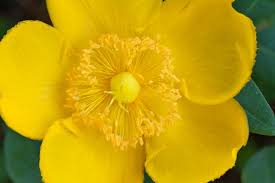
Its flowers measure up to 2.5 cm across, have five petals, and are colored bright yellow with conspicuous black dots. The flowers appear in broad cymes at the ends of the upper branches, between late spring and early to mid summer. The sepals are pointed, with glandular dots in the tissue. There are many stamens, which are united at the base into three bundles. The pollen grains are ellipsoidal.[1]

When flower buds (not the flowers themselves) or seed pods are crushed, a reddish/purple liquid is produced.

Ecology

St John’s wort reproduces both vegetatively and sexually. It thrives in areas with either a winter- or summer-dominant rainfall pattern; however, distribution is restricted by temperatures too low for seed germination or seedling survival. Altitudes greater than 1500 m, rainfall less than 500 mm, and a daily mean January (in Southern hemisphere) temperature greater than 24 degrees C are considered limiting thresholds. Depending on environmental and climatic conditions, and rosette age, St John’s wort will alter growth form and habit to promote survival. Summer rains are particularly effective in allowing the plant to grow vegetatively, following defoliation by insects or grazing.

The seeds can persist for decades in the soil seed bank, germinating following disturbance.[5]

Invasive species

Although Hypericum perforatum is grown commercially in some regions of south east Europe, it is listed as a noxious weed in more than twenty countries and has introduced populations in South and North America, IndiaNew ZealandAustralia, and South Africa.[5] In pastures, St John’s wort acts as both a toxic and invasive weed.[6] It replaces nativeplant communities and forage vegetation to the dominating extent of making productive land nonviable[citation needed] or becoming an invasive species in natural habitats andecosystems. Ingestion by livestock can cause photosensitization, central nervous system depression, spontaneous abortion, and can lead to death. Effective herbicides for control of Hypericum include 2,4-D, picloram, and glyphosate. In western North America three beetles Chrysolina quadrigeminaChrysolina hyperici and Agrilus hyperici have been introduced as biocontrol agents.

Medical uses

Major depressive disorder

St John’s wort is widely known as a herbal treatment for depression. In some countries, such as Germany, it is commonly prescribed for mild to moderate depression, especially in children and adolescents.[7] Specifically, Germany has a governmental organization called Commission E which regularly performs rigorous studies on herbal medicine. It is proposed that the mechanism of action of St. John’s wort is due to the inhibition of reuptake of certain neurotransmitters.[1] The best studied chemical components of the plant are hypericin and pseudohypericin.

An analysis of twenty-nine clinical trials with more than five thousand patients was conducted by Cochrane Collaboration. The review concluded that extracts of St John’s wort were superior to placebo in patients with major depression. St John’s wort had similar efficacy to standard antidepressants. The rate of side-effects was half that of newer SSRIantidepressants and one-fifth that of older tricyclic antidepressants.[8] A report[8] from the Cochrane Review states:

The available evidence suggests that the Hypericum extracts tested in the included trials a) are superior to placebo in patients with major depression; b) are similarly effective as standard antidepressants; and c) have fewer side-effects than standard antidepressants.

However the report also noted that some of the studies they reviewed may have been flawed or biased, as “results from German-language countries are considerably more favourable for Hypericum than trials from other countries”. The authors did not know the reason for this discrepancy.
 

Other medical uses

St John’s wort is being studied for effectiveness in the treatment of certain somatoform disorders. Results from the initial studies are mixed and still inconclusive; some research has found no effectiveness, other research has found a slight lightening of symptoms. Further study is needed and is being performed.

A major constituent chemical, hyperforin, may be useful for treatment of alcoholism, although dosage, safety and efficacy have not been studied.[9][10] Hyperforin has also displayed antibacterial properties against Gram-positive bacteria, although dosage, safety and efficacy has not been studied.[11] Herbal medicine has also employed lipophilic extracts from St John’s wort as a topical remedy for wounds, abrasions, burns, and muscle pain.[10] The positive effects that have been observed are generally attributed to hyperforin due to its possible antibacterial and anti-inflammatory effects.[10] For this reason hyperforin may be useful in the treatment of infected wounds and inflammatory skin diseases.[10] In response to hyperforin’s incorporation into a new bath oil, a study to assess potential skin irritation was conducted which found good skin tolerance of St John’s wort.[10]

randomized controlled trial of St John’s wort found no significant difference between it and placebo in the management of ADHD symptoms over eight weeks. However, the St John’s wort extract used in the study, originally confirmed to contain 0.3% hypericin, was allowed to degrade to levels of 0.13% hypericin and 0.14% hyperforin. Given that the level of hyperforin was not ascertained at the beginning of the study, and levels of both hyperforin and hypericin were well below that used in other studies, little can be determined based on this study alone.[12] Hypericin and pseudohypericin have shown both antiviral and antibacterial activities. It is believed that these molecules bind non-specifically to viral and cellular membranes and can result in photo-oxidation of the pathogens to kill them.[1]

A research team from the Universidad Complutense de Madrid (UCM) published a study entitled “Hypericum perforatum. Possible option against Parkinson’s disease”, which suggests that St John’s wort has antioxidant active ingredients that could help reduce the neuronal degeneration caused by the disease.[13][14][15][16]

Recent evidence suggests that daily treatment with St John’s wort may improve the most common physical and behavioural symptoms associated with premenstrual syndrome.[17]

St John’s wort was found to be less effective than placebo, in a randomized, double-blind, placebo-controlled trial, for the treatment of irritable bowel syndrome.[18]

St John’s wort alleviated age-related long-term memory impairment in rats.[19]

Adverse effects and drug interactions

St John’s wort is generally well tolerated, with an adverse effect profile similar to placebo.[20] The most common adverse effects reported are gastrointestinal symptoms, dizziness, confusion, tiredness and sedation.[21][22] It also decreases the levels of estrogens, such as estradiol, by speeding up its metabolism, and should not be taken by women oncontraceptive pills as it upregulates the CYP3A4 cytochrome of the P450 system in the liver.[23]

St John’s wort may rarely cause photosensitivity. This can lead to visual sensitivity to light and to sunburns in situations that would not normally cause them.[20] Related to this, recent studies concluded that the extract reacts with light, both visible and ultraviolet, to produce free radicals, molecules that can damage the cells of the body. These can react with vital proteins in the eye that, if damaged, precipitate out, causing cataracts.[24] Another study found that in low concentrations, St. John’s wort inhibits free radical production in both cell-free and human vascular tissue, revealing antioxidant properties of the compound. The same study found pro-oxidant activity at the highest concentration tested.[25]

St John’s wort is associated with aggravating psychosis in people who have schizophrenia.[26]

Consumption of St. John’s wort is discouraged for those with bipolar disorder. There is concern that people with major depression taking St. John’s wort may be at a higher risk for mania.[27]

While St. John’s wort shows some promise in treating children, it is advised that it is only done with medical supervision. [27]

Pharmacokinetic interactions

St John’s wort has been shown to cause multiple drug interactions through induction of the cytochrome P450 enzymes CYP3A4 and CYP2C9, and CYP1A2 (females only). This drug-metabolizing enzyme induction results in the increased metabolism of certain drugs, leading to decreased plasma concentration and potential clinical effect.[28] The principal constituents thought to be responsible are hyperforin and amentoflavone.

St John’s wort has also been shown to cause drug interactions through the induction of the P-glycoprotein (P-gp) efflux transporter. Increased P-gp expression results in decreased absorption and increased clearance of certain drugs, leading to lower plasma concentration and potential clinical efficacy.[29]

Examples of drugs causing clinically significant interactions with St John’s wort
Class Drugs
Antiretrovirals Non-nucleoside reverse transcriptase inhibitorsprotease inhibitors
Benzodiazepines Alprazolammidazolam
Hormonal contraception Combined oral contraceptives
Immunosuppressants Calcineurin inhibitorscyclosporinetacrolimus
Antiarrhythmics Amiodaroneflecainidemexiletine
Beta-blockers Metoprololcarvedilol
Calcium channel blockers Verapamildiltiazemamlodipine
Statins (cholesterol-reducing medications) Lovastatinsimvastatinatorvastatin
Others Digoxinmethadoneomeprazolephenobarbitaltheophyllinewarfarinlevodopabuprenorphineirinotecan
Reference: Rossi, 2005; Micromedex

For a complete list, see CYP3A4 ligands and CYP2C9 ligands. For further updating on interactions and appropriate management, see Herbological.com – St John’s Wort Interactions table (outdated since 2005).

Pharmacodynamic interactions

In combination with other drugs that may elevate 5-HT (serotonin) levels in the central nervous system (CNS), St John’s wort may contribute to serotonin syndrome, a potentially life-threatening adverse drug reaction.[30]

Drugs that may contribute to serotonin syndrome with St John’s wort
Class Drugs
Antidepressants MAOIsTCAsSSRIsSNRIsmirtazapine
Opioids Tramadolmeperidine (pethidine), Levorphanol
CNS stimulants Phenterminediethylpropionamphetaminessibutraminecocaine
5-HT1 agonists Triptans
Psychedelic drugs Methylenedioxymethamphetamine (MDMA), lysergic acid diethylamide (LSD), psilocybin / psilocinMescaline and virtually every serotonergic psychedelic.
Others Selegilinetryptophanbuspironelithiumlinezolid5-HTPdextromethorphan
Reference:[30]

Detection in body fluids

Hypericin, pseudohypericin, and hyperforin may be quantitated in plasma as confirmation of usage and to estimate the dosage. These three active substituents have plasma elimination half-lives within a range of 15–60 hours in humans. None of the three has been detected in urine specimens.[31]

Chemical constituents

The plant contains the following:[32][33]

The naphthodianthrones hypericin and pseudohypericin along with the phloroglucinol derivative hyperforin are thought to be among the numerous active constituents.[1][34][35][36]It also contains essential oils composed mainly of sesquiterpenes.[1]

Mechanism of action

St. John’s wort (SJW), similarly to other herbal products, contains a whole host of different chemical constituents that may be pertinent to its therapeutic effects.[32] Hyperforin andadhyperforin, two phloroglucinol constituents of SJW, is a TRPC6 receptor agonist and, consequently, it induces noncompetitive reuptake inhibitor of monoamines (specifically,dopaminenorepinephrine, and serotonin), GABA, and glutamate when it activates this receptor.[2][37][38] It inhibits reuptake of these neurotransmitters by increasing intracellularsodium ion concentrations.[2] Moreover, SJW is known to downregulate the β1 adrenoceptor and upregulate postsynaptic 5-HT1A and 5-HT2A receptors, both of which are a type of serotonin receptor.[2] Other compounds may also play a role in SJW’s antidepressant effects such compounds include: oligomeric procyanidinesflavonoids (quercetin),hypericin, and pseudohypericin.[2][39][40][41]

In humans, the active ingredient hyperforin is a monoamine reuptake inhibitor which also acts as an inhibitor of PTGS1Arachidonate 5-lipoxygenaseSLCO1B1 and an inducer ofcMOAT. Hyperforin is also a powerful anti-inflammatory compound with anti-angiogenicantibiotic, and neurotrophic properties.[37][38][42][43] Hyperforin also has an antagonistic effect on NMDA receptors, a type of glutamate receptor.[42] According to one study, hyperforin content correlates with therapeutic effect in mild to moderate depression.[44]Moreover, a hyperforin-free extract of St John’s wort (Remotiv) may still have significant antidepressive effects.[45][46] The limited existing literature on adhyperforin suggests that, like hyperforin, it is a reuptake inhibitor of monoamines, GABA, and glutamate.[47]

Livestock

Poisoning

In large doses, St John’s wort is poisonous to grazing livestock (cattle, sheep, goats, horses).[6] Behavioural signs of poisoning are general restlessness and skin irritation. Restlessness is often indicated by pawing of the ground, headshaking, head rubbing, and occasional hindlimb weakness with knuckling over, panting, confusion, and depression. Mania and hyperactivity may also result, including running in circles until exhausted. Observations of thick wort infestations by Australian graziers include the appearance of circular patches giving hillsides a ‘crop circle’ appearance, it is presumed, from this phenomenon. Animals typically seek shade and have reduced appetite. Hypersensitivity to water has been noted, and convulsions may occur following a knock to the head. Although general aversion to water is noted, some may seek water for relief.

Severe skin irritation is physically apparent, with reddening of non-pigmented and unprotected areas. This subsequently leads to itch and rubbing, followed by further inflammation, exudation, and scab formation. Lesions and inflammation that occur are said to resemble the conditions seen in foot and mouth disease. Sheep have been observed to have face swelling, dermatitis, and wool falling off due to rubbing. Lactating animals may cease or have reduced milk production; pregnant animals may abort. Lesions onudders are often apparent. Horses may show signs of anorexiadepression (with a comatose state), dilated pupils, and injected conjunctiva.

Diagnosis[edit]

Increased respiration and heart rate is typically observed while one of the early signs of St John’s wort poisoning is an abnormal increase in body temperature. Affected animals will lose weight, or fail to gain weight; young animals are more affected than old animals. In severe cases death may occur, as a direct result of starvation, or because of secondary disease or septicaemia of lesions. Some affected animals may accidentally drown. Poor performance of suckling lambs (pigmented and non-pigmented) has been noted, suggesting a reduction in the milk production, or the transmission of a toxin in the milk.

Photosensitisation[edit]

Most clinical signs in animals are caused by photosensitisation.[96] Plants may induce either primary or secondary photosensitisation:

  • primary photosensitisation directly from chemicals contained in ingested plants
  • secondary photosensitisation from plant-associated damage to the liver.

Araya and Ford (1981) explored changes in liver function and concluded there was no evidence of Hypericum-related effect on the excretory capacity of the liver, or any interference was minimal and temporary. However, evidence of liver damage in blood plasma has been found at high and long rates of dosage.

Photosensitisation causes skin inflammation by a mechanism involving a pigment or photodynamic compound, which when activated by a certain wavelength of light leads tooxidation reactions in vivo. This leads to lesions of tissue, particularly noticeable on and around parts of skin exposed to light. Lightly covered or poorly pigmented areas are most conspicuous. Removal of affected animals from sunlight results in reduced symptoms of poisoning.

See also[edit]

References[edit]

  1. Jump up to:a b c d e f g h i Mehta, Sweety (2012-12-18). “Pharmacognosy of St. John’s Wort”. Pharmaxchange.info. Retrieved 2014-02-16.
  2. Jump up to:a b c d e Nathan, PJ (March 2001). “Hypericum perforatum (St John’s Wort): a non-selective reuptake inhibitor? A review of the recent advances in its pharmacology”.Journal of psychopharmacology (Oxford, England) 15 (1): 47–54.doi:10.1177/026988110101500109PMID 11277608.
  3. Jump up^ Hypericum perforatum data sheet at the Royal Horticultural Society. Retrieved 2011-03-24.
  4. Jump up^ “#914: Hypericum frondosum – Floridata.com”. Retrieved 2008-11-02.
  5. Jump up to:a b “SPECIES: Hypericum perforatum”Fire Effects Information System.
  6. Jump up to:a b St John’s wort
  7. Jump up^ Fegert, JM; Kölch, M; Zito, JM; Glaeske, G; Janhsen, K (February–April 2006). “Antidepressant use in children and adolescents in Germany”. Journal of Child and Adolescent Psychopharmacology 16 (1–2): 197–206. doi:10.1089/cap.2006.16.197.PMID 16553540.
  8. Jump up to:a b Linde, K; Berner, MM; Kriston, L (2008). “St John’s wort for major depression”. In Linde, Klaus. Cochrane Database of Systematic Reviews (4): CD000448.doi:10.1002/14651858.CD000448.pub3PMID 18843608.
  9. Jump up^ Kumar, V; Mdzinarishvili, A; Kiewert, C; Abbruscato, T; Bickel, U; van der Schyf, CJ; Klein, J (September 2006). “NMDA receptor-antagonistic properties of hyperforin, a constituent of St. John’s Wort” (PDF). Journal of Pharmacological Sciences 102 (1): 47–54. doi:10.1254/jphs.FP0060378PMID 16936454.
  10. Jump up to:a b c d e Reutera, J; Huykea, C; Scheuvensa, H; Plochc, M; Neumannd, K; Jakobb, T; Schemppa, CM (2008). “Skin tolerance of a new bath oil containing St. John’s wort extract”. Skin pharmacology and physiology 21 (6): 306–311. doi:10.1159/000148223.PMID 18667843.
  11. Jump up^ Cecchini, C; Cresci, A; Coman, MM; Ricciutelli, M; Sagratini, G; Vittori, S; Lucarini, D; Maggi, F (June 2007). “Antimicrobial activity of seven hypericum entities from central Italy”. Planta Medica 73 (6): 564–6. doi:10.1055/s-2007-967198PMID 17516331.
  12. Jump up^ Weber, W; Vander Stoep, A; McCarty, RL; Weiss, NS; Biederman, J; McClellan, J (June 2008). “A Randomized Placebo Controlled Trial Of Hypericum perforatum For Attention Deficit Hyperactivity Disorder In Children And Adolescents”JAMA 299 (22): 2633–41. doi:10.1001/jama.299.22.2633PMC 2587403PMID 18544723.
  13. Jump up^ “Medicinal Plant, St John’s Wort, May Reduce Neuronal Degeneration Caused By Parkinson’s Disease”. ScienceDaily. Retrieved 2014-02-16.
  14. Jump up^ “www.diariocritico.com/general/147916”. Diariocritico.com. Retrieved 2014-02-16.
  15. Jump up^ [1][dead link]
  16. Jump up^ “www.madrimasd.org/noticias/-i-Hypericum-perforatum-i-y-Parkinson/38181”. Madrimasd.org. 2009-02-16. Retrieved 2014-02-16.
  17. Jump up^ Canning, S; Waterman, M; Orsi, N; Ayres, J; Simpson, N; Dye, L (March 2010). “The efficacy of Hypericum perforatum (St John’s wort) for the treatment of premenstrual syndrome: a randomized, double-blind, placebo-controlled trial”. CNS Drugs 24 (3): 207–25. doi:10.2165/11530120-000000000-00000PMID 20155996.
  18. Jump up^ Saito, YA; Rey, E; Almazar-Elder, AE; Harmsen, WS; Zinsmeister, AR; Locke, GR; Talley, NJ (January 2010). “A randomized, double-blind, placebo-controlled trial of St John’s wort for treating irritable bowel syndrome”. Am. J. Gastroenterol. 105 (1): 170–7.doi:10.1038/ajg.2009.577PMID 19809408.
  19. Jump up^ Trofimiuk, E; Braszko, JJ (August 2010). “Hypericum perforatum alleviates age-related forgetting in rats”. Current Topics in Nutraceutical Research 8 (2-3): 103–107.
  20. Jump up to:a b Ernst, E; Rand, JI; Barnes, J; Stevinson, C (1998). “Adverse effects profile of the herbal antidepressant St. John’s wort (Hypericum perforatum L.)”. European Journal of Clinical Pharmacology 54 (8): 589–94. doi:10.1007/s002280050519PMID 9860144.
  21. Jump up^ Barnes, J; Anderson, LA; Phillipson, JD (2002). Herbal Medicines: A guide for healthcare professionals (2nd ed.). London, UK: Pharmaceutical Press.ISBN 9780853692898.
  22. Jump up^ Parker, V; Wong, AH; Boon, HS; Seeman, MV (February 2001). “Adverse reactions to St John’s Wort”. Canadian Journal of Psychiatry 46 (1): 77–9. PMID 11221494.
  23. Jump up^ Barr Laboratories, Inc. (March 2008). “ESTRACE TABLETS, (estradiol tablets, USP)” (PDF). wcrx.com. Retrieved 27 January 2010.
  24. Jump up^ Schey, KL; Patat, S; Chignell, CF; Datillo, M; Wang, RH; Roberts, JE (August 2000). “Photooxidation of lens alpha-crystallin by hypericin (active ingredient in St. John’s Wort)”. Photochemistry and Photobiology 72 (2): 200–3. doi:10.1562/0031-8655(2000)0720200POLCBH2.0.CO2PMID 10946573.
  25. Jump up^ Hunt, EJ; Lester, CE; Lester, EA; Tackett, RL (June 2001). “Effect of St. John’s wort on free radical production”Life Sci. 69 (2): 181–90. doi:10.1016/S0024-3205(01)01102-XPMID 11441908.
  26. Jump up^ Singh, Simon and Edzard Ernst (2008). Trick or Treatment: The Undeniable Facts About Alternative Medicine. W. W. Norton & Company. p. 218. ISBN 978-0-393-33778-5.
  27. Jump up to:a b “St. John’s wort – University of Maryland Medical Center”University of Maryland Medical Center. umm.edu. June 24, 2013. Retrieved January 3, 2014.
  28. Jump up^ Wenk, M; Todesco, L; Krähenbühl, S (April 2004). “Effect of St John’s wort on the activities of CYP1A2, CYP3A4, CYP2D6, N-acetyltransferase 2, and xanthine oxidase in healthy males and females” (PDF). British Journal of Clinical Pharmacology 57 (4): 495–499. doi:10.1111/j.1365-2125.2003.02049.xPMC 1884478PMID 15025748.
  29. Jump up^ Gurley, BJ; Swain, A; Williams, DK; Barone, G; Battu, SK (July 2008). “Gauging the clinical significance of P-glycoprotein-mediated herb-drug interactions: Comparative effects of St. John’s wort, echinacea, clarithromycin, and rifampin on digoxin pharmacokinetics”Mol Nutr Food Res 52 (7): 772–9. doi:10.1002/mnfr.200700081.PMC 2562898PMID 18214850.
  30. Jump up to:a b Rossi, S, ed. (2013). Australian Medicines Handbook (2013 ed.). Adelaide: The Australian Medicines Handbook Unit Trust. ISBN 978-0-9805790-9-3. edit
  31. Jump up^ R. Baselt, Disposition of Toxic Drugs and Chemicals in Man, 8th edition, Biomedical Publications, Foster City, CA, 2008, pp. 1445–1446.
  32. Jump up to:a b c d Barnes, J; Anderson, LA; Phillipson, JD (2007) [1996]. Herbal Medicines(PDF) (3rd ed.). London, UK: Pharmaceutical Press. ISBN 978-0-85369-623-0. edit
  33. Jump up to:a b Greeson, JM; Sanford, B; Monti, DA. “St. John’s wort (Hypericum perforatum): a review of the current pharmacological, toxicological, and clinical literature” (PDF).Psychopharmacology (Berl) 153 (4): 402–414date=February 2001.doi:10.1007/s002130000625PMID 11243487.
  34. Jump up^ Umek, A; Kreft, S; Kartnig, T; Heydel, B (1999). “Quantitative phytochemical analyses of six hypericum species growing in slovenia”. Planta medica 65 (4): 388–90.doi:10.1055/s-2006-960798PMID 17260265.
  35. Jump up^ Tatsis, EC; Boeren, S; Exarchou, V; Troganis, AN; Vervoort, J; Gerothanassis, IP (2007). “Identification of the major constituents of Hypericum perforatum by LC/SPE/NMR and/or LC/MS”. Phytochemistry 68 (3): 383–93. doi:10.1016/j.phytochem.2006.11.026.PMID 17196625.
  36. Jump up^ Schwob I, Bessière JM, Viano J.Composition of the essential oils of Hypericum perforatum L. from southeastern France.C R Biol. 2002;325:781-5.
  37. Jump up to:a b Pharmacology. “Hyperforin”. Drugbank. University of Alberta. Retrieved 5 December 2013.
  38. Jump up to:a b Biomedical Effects and Toxicity. “Hyperforin”. Pubchem Compound. National Center for Biotechnology Information. Retrieved 5 December 2013.
  39. Jump up^ Nahrstedt, A; Butterweck, V (September 1997). “Biologically active and other chemical constituents of the herb of Hypericum perforatum L”. Pharmacopsychiatry 30 (Suppl 2): 129–34. doi:10.1055/s-2007-979533PMID 9342774.
  40. Jump up^ Butterweck, V (2003). “Mechanism of action of St John’s wort in depression : what is known?”CNS Drugs 17 (8): 539–62. doi:10.2165/00023210-200317080-00001.PMID 12775192.
  41. Jump up^ Müller, WE (February 2003). “Current St John’s wort research from mode of action to clinical efficacy”Pharmacology Research 47 (2): 101–9. doi:10.1016/S1043-6618(02)00266-9PMID 12543057.
  42. Jump up to:a b Pharmacology and Biomolecular Interactions and Pathways. “Hyperforin”.PubChem Compound. National Center for Biotechnology Information. Retrieved 3 December 2013.
  43. Jump up^ Targets. “Hyperforin”. DrugBank. University of Alberta. Retrieved 4 December 2013.
  44. Jump up^ USA (2014-01-24). “St. John’s wort in mild to moderate depre… [Pharmacopsychiatry. 1998] – PubMed – NCBI”. Ncbi.nlm.nih.gov. Retrieved 2014-02-16.
  45. Jump up^ Woelk, H (September 2000). “Comparison of St John’s wort and imipramine for treating depression: randomised controlled trial”BMJ 321 (7260): 536–9.doi:10.1136/bmj.321.7260.536PMC 27467PMID 10968813.
  46. Jump up^ Schrader, E (March 2000). “Equivalence of St John’s wort extract (Ze 117) and fluoxetine: a randomized, controlled study in mild-moderate depression”. Int Clin Psychopharmacol 15 (2): 61–8. doi:10.1097/00004850-200015020-00001.PMID 10759336.
  47. Jump up^ Jensen, AG; Hansen, SH; Nielsen, EO (Feb 23, 2001). “Adhyperforin as a contributor to the effect of Hypericum perforatum L. in biochemical models of antidepressant activity.”. Life Sciences 68 (14): 1593–605. doi:10.1016/S0024-3205(01)00946-8.PMID 11263672.
  48. Jump up^ “St. John’s wort”Natural Standard. Cambridge, MA. Retrieved 13 December 2013.
  49. Jump up to:a b c d e f Anzenbacher, Pavel; Zanger, Ulrich M., eds. (2012). Metabolism of Drugs and Other Xenobiotics. Weinheim, Germany: Wiley-VCH.doi:10.1002/9783527630905ISBN 978-3-527-63090-5. edit
  50. Jump up^ Jensen, AG; Hansen, SH; Nielsen, EO (February 2001). “Adhyperforin as a contributor to the effect of Hypericum perforatum L. in biochemical models of antidepressant activity.”. Life Sciences 68 (14): 1593–1605. doi:10.1016/S0024-3205(01)00946-8.PMID 11263672.
  51. Jump up to:a b Krusekopf, S; Roots, I (November 2005). “St. John’s wort and its constituent hyperforin concordantly regulate expression of genes encoding enzymes involved in basic cellular pathways”. Pharmacogenetics and Genomics 15 (11): 817–829.doi:10.1097/01.fpc.0000175597.60066.3dPMID 16220113.
  52. Jump up to:a b c Obach, RS (July 2000). “Inhibition of human cytochrome P450 enzymes by constituents of St. John’s Wort, an herbal preparation used in the treatment of depression” (PDF). Journal of Pharmacology and Experimental Therapeutics 294 (1): 88–95. PMID 10871299.
  53. Jump up to:a b c d Kubin, A; Wierrani, F; Burner, U; Alth, G; Grünberger, W (2005). “Hypericin – The Facts About a Controversial Agent” (PDF). Current Pharmaceutical Design 11 (2): 233–253. doi:10.2174/1381612053382287PMID 15638760.
  54. Jump up^ Peebles, KA; Baker, RK; Kurz, EU; Schneider, BJ; Kroll, DJ. “Catalytic inhibition of human DNA topoisomerase IIalpha by hypericin, a naphthodianthrone from St. John’s wort (Hypericum perforatum)”. Biochemical Pharmacology 62 (8): 1059–1070.doi:10.1016/S0006-2952(01)00759-6PMID 11597574.
  55. Jump up^ Kerb, R; Brockmöller, J; Staffeldt, B; Ploch, M; Roots, I (September 1996). “Single-dose and steady-state pharmacokinetics of hypericin and pseudohypericin” (PDF).Antimicrobial Agents and Chemotherapy 40 (9): 2087–2093. PMC 163478.PMID 8878586.
  56. Jump up^ Meruelo, D; Lavie, G; Lavie, D (July 1988). “Therapeutic agents with dramatic antiretroviral activity and little toxicity at effective doses: Aromatic polycyclic diones hypericin and pseudohypericin” (PDF). Proceedings of the National Academy of Sciences 85 (14): 5230–5234. doi:10.1073/pnas.85.14.5230PMC 281723.PMID 2839837.
  57. Jump up^ Lavie, G; Valentine, F; Levin, B; Mazur, Y; Gallo, G; Lavie, D; Weiner, D; Meruelo, D (August 1989). “Studies of the mechanisms of action of the antiretroviral agents hypericin and pseudohypericin” (PDF). Proceedings of the National Academy of Sciences 86(15): 5963–5967. doi:10.1073/pnas.86.15.5963PMC 297751PMID 2548193.
  58. Jump up^ Takahashi, I; Nakanishi, S; Kobayashi, E; Nakano, H; Suzuki, K; Tamaoki, T. “Hypericin and pseudohypericin specifically inhibit protein kinase C: Possible relation to their antiretroviral activity”. Biochemical and Biophysical Research Communications 165(3): December 1989. doi:10.1016/0006-291X(89)92730-7PMID 2558652.
  59. Jump up^ von Moltke, LL; Weemhoff, JL; Bedir, E; Khan, IA; Harmatz, JS; Goldman, P; Greenblatt, DJ (August 2004). “Inhibition of human cytochromes P450 by components of Ginkgo biloba”. The Journal of Pharmacy and Pharmacology 56 (8): 1039–1044.doi:10.1211/0022357044021PMID 15285849.
  60. Jump up^ Lee, JS; Lee, MS; Oh, WK; Sul, JY (August 2009). “Fatty acid synthase inhibition by amentoflavone induces apoptosis and antiproliferation in human breast cancer cells”(PDF). Biological & Pharmaceutical Bulletin 32 (8): 1427–1432.doi:10.1248/bpb.32.1427PMID 19652385.
  61. Jump up^ Wilsky, S; Sobotta, K; Wiesener, N; Pilas, J; Althof, N; Munder, T; Wutzler, P; Henke, A (February 2012). “Inhibition of fatty acid synthase by amentoflavone reduces coxsackievirus B3 replication”. Archives of Virology 157 (2): 259–269.doi:10.1007/s00705-011-1164-zPMID 22075919.
  62. Jump up^ Lee, JS; Sul, JY; Park, JB; Lee, MS; Cha, EY; Song, IS; Kim, JR; Chang, ES (May 2013). “Fatty Acid Synthase Inhibition by Amentoflavone Suppresses HER2/neu(erbB2) Oncogene in SKBR3 Human Breast Cancer Cells”. Phytotherapy Research 27 (5): 713–720. doi:10.1002/ptr.4778PMID 22767439.
  63. Jump up^ Katavic, PL; Lamb, K; Navarro, H; Prisinzano, TE (August 2007). “Flavonoids as opioid receptor ligands: identification and preliminary structure-activity relationships”J Nat Prod. 70 (8): 1278–82. doi:10.1021/np070194xPMC 2265593PMID 17685652.
  64. Jump up^ Hanrahan, JR; Chebib, M; Davucheron, NL; Hall, BJ; Johnston, GA (2003). “Semisynthetic preparation of amentoflavone: A negative modulator at GABA(A) receptors”. Bioorganic & Medicinal Chemistry Letters 13 (14): 2281–4.doi:10.1016/s0960-894x(03)00434-7PMID 12824018.
  65. Jump up^ Viola, H; Wasowski, C; Levi de Stein, M; Wolfman, C; Silveira, R; Dajas, F; Medina, JH; Paladini, AC (June 1995). “Apigenin, a component of Matricaria recutita flowers, is a central benzodiazepine receptors-ligand with anxiolytic effects”. Planta Medica 61 (3): 213–216. doi:10.1055/s-2006-958058PMID 7617761.
  66. Jump up^ Bao, YY; Zhou, SH; Fan, J; Wang, QY (September 2013). “Anticancer mechanism of apigenin and the implications of GLUT-1 expression in head and neck cancers”. Future Oncology 9 (9): 1353–1364. doi:10.2217/fon.13.84PMID 23980682.
  67. Jump up^ Shukla, S; Gupta, S. “Apigenin: A promising molecule for cancer prevention”.Pharmaceutical Research 27 (6): 962–968. doi:10.1002/mnfr.201200424.PMID 23197449.
  68. Jump up^ Crespy, V; Williamson, G. “A Review of the Health Effects of Green Tea Catechins in In Vivo Animal Models” (PDF). The Journal of Nutrition 134 (12): 3431S–3440S.
  69. Jump up^ Chacko, SM; Thambi, PT; Kuttan, R; Nishigaki, I (April 2010). “Beneficial effects of green tea: A literature review” (PDF). Chinese Medicine 5 (1): 1–9. doi:10.1186/1749-8546-5-13PMC 2855614PMID 20370896.
  70. Jump up to:a b Korte, G; Dreiseitel, A; Schreier, P; Oehme, A; Locher, S; Geiger, S; Heilmann, J; Sand, PG (January 2010). “Tea catechins’ affinity for human cannabinoid receptors”.Phytomedicine 17 (1): 19–22. doi:10.1016/j.phymed.2009.10.001PMID 19897346.
  71. Jump up^ Song, M; Hong, M; Lee, MY; Jee, JG; Lee, YM; Bae, JS; Jeong, TC; Lee, S (September 2013). “Selective inhibition of the cytochrome P450 isoform by hyperoside and its potent inhibition of CYP2D6”. Food and Chemical Toxicology 59: 549–553.doi:10.1016/j.fct.2013.06.055PMID 23835282.
  72. Jump up^ Li, S; Zhang, Z; Cain, A; Wang, B; Long, M; Taylor, J (January 2005). “Antifungal Activity of Camptothecin, Trifolin, and Hyperoside Isolated from Camptotheca acuminata”.Journal of Agricultural and Food Chemistry 53 (1): 32–37. doi:10.1021/jf0484780.PMID 15631505.
  73. Jump up^ Zeng, KW; Wang, XM; Ko, H; Kwon, HC; Cha, JW; Yang, HO (December 2011). “Hyperoside protects primary rat cortical neurons from neurotoxicity induced by amyloid β-protein via the PI3K/Akt/Bad/Bcl(XL)-regulated mitochondrial apoptotic pathway”.European Journal of Pharmacology 672 (1-3): 45–55. doi:10.1016/j.ejphar.2011.09.177.PMID 21978835.
  74. Jump up^ Kim, SJ; Um, JY; Lee, JY (January 2011). “Anti-Inflammatory Activity of Hyperoside Through the Suppression of Nuclear Factor-κB Activation in Mouse Peritoneal Macrophages”. The American Journal of Chinese Medicine 39 (1): 171–181.doi:10.1142/S0192415X11008737PMID 21213407.
  75. Jump up^ Haas, JS; Stolz, ED; Betti, AH; Stein, AC; Schripsema, J; Poser, GL; Rates, SM (March 2011). “The Anti-Immobility Effect of Hyperoside on the Forced Swimming Test in Rats is Mediated by the D2-Like Receptors Activation” (PDF). Planta Medica 77 (4): 334–339. doi:10.1055/s-0030-1250386PMID 20945276.
  76. Jump up^ Zheng, M; Liu, C; Pan, F; Shi, D; Zhang, Y (January 2012). “Antidepressant-like effect of hyperoside isolated from Apocynum venetum leaves: Possible cellular mechanisms”.Phytomedicine 19 (2): 145–149. doi:10.1016/j.phymed.2011.06.029.PMID 21802268.
  77. Jump up^ Pal, D; Mitra, AK (March 2006). “MDR- and CYP3A4-mediated drug-herbal interactions”. Life Sciences 78 (18): 2131–2145. doi:10.1016/j.lfs.2005.12.010.PMID 16442130.
  78. Jump up^ Hämäläinen, M; Nieminen, R; Vuorela, P; Heinonen, M; Moilanen, E (August 2007).“Anti-Inflammatory Effects of Flavonoids: Genistein, Kaempferol, Quercetin, and Daidzein Inhibit STAT-1 and NF-κB Activations, Whereas Flavone, Isorhamnetin, Naringenin, and Pelargonidin Inhibit only NF-κB Activation along with Their Inhibitory Effect on iNOS Expression and NO Production in Activated Macrophages” (PDF). Mediators of Inflammation 2007: 45673. doi:10.1155/2007/45673PMC 2220047.PMID 18274639.
  79. Jump up^ Berger, A; Venturelli, S; Kallnischkies, M; Böcker, A; Busch, C; Weiland, T; Noor, S; Leischner, C; Weiss, TS; Lauer, UM; Bischoff, SC; Bitzer, M (June 2013). “Kaempferol, a new nutrition-derived pan-inhibitor of human histone deacetylases”. The Journal of Nutritional Biochemistry 24 (6): 977–985. doi:10.1016/j.jnutbio.2012.07.001.PMID 23159065.
  80. Jump up to:a b Calderón-Montaño, JM; Burgos-Morón, E; Pérez-Guerrero, C; López-Lázaro, M (April 2011). “A Review on the Dietary Flavonoid Kaempferol”. Mini-Reviews in Medicinal Chemistry 11 (4): 298–344. doi:10.2174/138955711795305335PMID 21428901.
  81. Jump up^ Seelinger, G; Merfort, I; Schempp, CM (November 2008). “Anti-oxidant, anti-inflammatory and anti-allergic activities of luteolin”. Planta Medica 74 (14): 1667–1677.doi:10.1055/s-0028-1088314PMID 18937165.
  82. Jump up^ Lin, Y; Shi, R; Wang, X; Shen, HM. “Luteolin, a flavonoid with potential for cancer prevention and therapy” (PDF). Current Cancer Drug Targets 8 (7): 634–646.doi:10.2174/156800908786241050PMC 2615542PMID 18991571.
  83. Jump up^ Theoharides, TC; Asadi, S; Panagiotidou, S (April–June 2012). “A case series of a luteolin formulation (neuroprotek®) in children with autism spectrum disorders”.International Journal of Immunopathology and Pharmacology 25 (2): 317–323.PMID 22697063.
  84. Jump up^ Yu, MC; Chen, JH; Lai, CY; Han, CY; Ko, WC (February 2010). “Luteolin, a non-selective competitive inhibitor of phosphodiesterases 1-5, displaced [3H]-rolipram from high-affinity rolipram binding sites and reversed xylazine/ketamine-induced anesthesia”.European Journal of Pharmacology 627 (1-3): 269–275.doi:10.1016/j.ejphar.2009.10.031PMID 19853596.
  85. Jump up^ Chen, C; Zhou, J; Ji, C (September 2010). “Quercetin: A potential drug to reverse multidrug resistance”. Life Sciences 87 (11-12): 333–338.doi:10.1016/j.lfs.2010.07.004PMID 20637779.
  86. Jump up to:a b Kelly, GS (June 2011). “Quercetin” (PDF). Alternative Medicine Review 16 (2): 172–194. ISSN 1089-5159.
  87. Jump up^ Ko, WC; Shih, CM; Lai, YH; Chen, JH; Huang, HL (November 2004). “Inhibitory effects of flavonoids on phosphodiesterase isozymes from guinea pig and their structure–activity relationships”. Biochemical Pharmacology 68 (10): 2087–2094.doi:10.1016/j.bcp.2004.06.030PMID 15476679.
  88. Jump up^ Chua, LS (December 2013). “A review on plant-based rutin extraction methods and its pharmacological activities”. Journal of Ethnopharmacology 150 (3): 805–817.doi:10.1016/j.jep.2013.10.036PMID 24184193.
  89. Jump up^ Jaikang, C; Niwatananun, K; Narongchai, P; Narongchai, S; Chaiyasut, C (August 2011). “Inhibitory effect of caffeic acid and its derivatives on human liver cytochrome P450 3A4 activity”. Journal of Medicinal Plants Research 5 (15): 3530–3536.
  90. Jump up^ Hou, J; Fu, J; Zhang, ZM; Zhu, HL. “Biological activities and chemical modifications of caffeic acid derivatives”. Fudan University Journal of Medical Sciences 38 (6): 546–552.doi:10.3969/j.issn.1672-8467.2011.06.017.
  91. Jump up^ Zhao, Y; Wang, J; Ballevre, O; Luo, H; Zhang, W (April 2012). “Antihypertensive effects and mechanisms of chlorogenic acids”. Hypertension Research 35 (4): 370–374.doi:10.1038/hr.2011.195PMID 22072103.
  92. Jump up^ [2][dead link]
  93. Jump up^ http://www.acdlabs.com/resources/freeware/chemsketch/ACDChemSketch
  94. Jump up^ Lee, MJ; Maliakal, P; Chen, L; Meng, X; Bondoc, FY; Prabhu, S; Lambert, G; Mohr, S; Yang, CS (October 2002). “Pharmacokinetics of Tea Catechins after Ingestion of Green Tea and (-)-Epigallocatechin-3-gallate by Humans: Formation of Different Metabolites and Individual Variability” (PDF). Cancer Epidemiology, Biomarkers & Prevention 11 (10 pt 1): 1025–1032. PMID 12376503.
  95. Jump up^ Walle, T; Walle, UK; Halushka, PV (October 2001). “Carbon Dioxide Is the Major Metabolite of Quercetin in Humans” (PDF). The Journal of Nutrition 131 (10): 2648–2652. PMID 11584085.
  96. Jump up^ St John’s wort effects on animals

Further reading[edit]

External links


What is it?

St. John’s wort is an herb. Its flowers and leaves are used to make medicine.St. John’s wort is most commonly used for depression and conditions that sometimes go along with depression such as anxiety, tiredness, loss of appetite and trouble sleeping. There is some strong scientific evidence that it is effective for mild to moderate depression.

Other uses include heart palpitations, moodiness and other symptoms of menopause, attention deficit-hyperactivity disorder (ADHD), obsessive-compulsive disorder (OCD), and seasonal affective disorder (SAD).

St. John’s wort has been tried for exhaustion, stop-smoking help, fibromyalgia, chronic fatigue syndrome (CFS), migraine and other types of headaches, muscle pain, nerve pain, and irritable bowel syndrome. It is also used for cancer, HIV/AIDS, and hepatitis C.

An oil can be made from St. John’s wort. Some people apply this oil to their skin to treat bruises and scrapes, inflammation and muscle pain, first degree burns, wounds, bug bites, hemorrhoids, and nerve pain. But applying St. John’s wort directly to the skin is risky. It can cause serious sensitivity to sunlight.

St. John’s wort is native to Europe but is commonly found in the US and Canada in the dry ground of roadsides, meadows, and woods. Although not native to Australia and long considered a weed, St. John’s wort is now grown there as a crop. Today, Australia produces 20 percent of the world’s supply.

The use of St. John’s wort dates back to the ancient Greeks. Hippocrates recorded the medical use of St. John’s wort flowers. St. John’s wort was given its name because it blooms about June 24th, the birthday of John the Baptist. “Wort” is an old English word for plant.

France has banned the use of St. John’s wort products. The ban appears to be based on a report issued by the French Health Product Safety Agency warning of significant interactions between St. John’s wort and some medications. Several other countries, including Japan, the United Kingdom, and Canada, are in the process of including drug-herb interaction warnings on St. John’s wort products.

The active ingredients in St. John’s wort can be deactivated by light. That’s why you will find many products packaged in amber containers. The amber helps, but it doesn’t offer total protection against the adverse effects of light.

How effective is it?

Natural Medicines Comprehensive Database rates effectiveness based on scientific evidence according to the following scale: Effective, Likely Effective, Possibly Effective, Possibly Ineffective, Likely Ineffective, Ineffective, and Insufficient Evidence to Rate.The effectiveness ratings for ST. JOHN’S WORT are as follows:


Likely effective for…

  • Mild to moderate depression. Taking St. John’s wort extracts improves mood, and decreases anxiety and insomnia related to depression. It seems to be about as effective in treating depression as many prescription drugs. In fact, clinical guidelines from the American College of Physicians-American Society of Internal Medicine suggest that St. John’s wort can be considered an option along with antidepressant medications for short-term treatment of mild depression. However, since St. John’s wort does not appear to be more effective or significantly better tolerated than antidepressant medications, and since St. John’s wort causes many drug interactions, the guidelines suggest it might not be an appropriate choice for many people, particularly those who take other medications. St. John’s wort might not be as effective for more severe cases of depression.

Possibly effective for…

  • Menopausal symptoms. Some research shows that a combination of St. John’s wort plus black cohosh can help improve menopausal symptoms.
  • The conversion of mental experiences or states into bodily symptoms (somatization disorder). Treatment with St. John’s wort seems to reduce symptoms after 6 weeks of treatment.
  • Wound healing. Some research shows that applying a specific St. John’s wort ointment (Gol-Daru Company) three times daily for 16 days improves wound healing and reduces scar formation after a cesarean section.

Possibly ineffective for…

  • Attention deficit-hyperactivity disorder (ADHD). Taking a St. John’s wort extract for 8 weeks does not seem to improve symptoms of ADHD in children ages 6-17 years.
  • Hepatitis C virus (HCV) infection.
  • HIV/AIDS.
  • Irritable bowel syndrome (IBS).
  • Pain conditions related to diabetes (polyneuropathy.

Insufficient evidence to rate effectiveness for…

  • Obsessive compulsive disorder (OCD). There is conflicting evidence about the effectiveness of St. John’s wort for OCD. The reason for contradictory findings could be due to differences in study design, differences in the St. John’s wort products used, or other factors.
  • Premenstrual syndrome (PMS). There is preliminary evidence that St. John’s wort might help reduce PMS symptoms, by even as much as 50% in some women.
  • Seasonal affective disorder (SAD). Early studies suggest that St. John’s wort might help SAD. It appears to improve symptoms of anxiety, decreased sex drive, and sleep disturbances associated with SAD. It is useful alone or in combination with light therapy.
  • Smoking cessation. Research to date suggests that taking a specific St. John’s wort extract (LI-160, Lichtwer Pharma US) 300 mg once or twice daily starting 1 week before and continuing for 3 months after quitting smoking does not improve long-term quit rates.
  • Stomach upset.
  • Bruises.
  • Skin conditions.
  • Migraine headache.
  • Nerve pain.
  • Sciatica.
  • Excitability.
  • Fibromyalgia.
  • Chronic fatigue syndrome (CFS).
  • Muscle pain.
  • Cancer.
  • Weight loss.
  • Other conditions.

More evidence is needed to rate St. John’s wort for these uses.

How does it work?

For a long time, investigators thought a chemical in St. John’s wort called hypericin was responsible for its effects against depression. More recent information suggests another chemical, hyperforin, may play a larger role in depression. Hypericin and hyperforin act on chemical messengers in the nervous system that regulate mood.
Are there safety concerns?
St. John’s wort is LIKELY SAFE for most people when taken by mouth short-term. It can cause some side effects such as trouble sleeping, vivid dreams, restlessness, anxiety, irritability, stomach upset, fatigue, dry mouth, dizziness, headache, skin rash, diarrhea, and tingling. Take St. John’s wort in the morning or lower the dose if it seems to be causing sleep problems.St. John’s wort seems to be safe when used in children under 12 years of age for up to 6 weeks.

However, St. John’s wort is POSSIBLY UNSAFE when taken by mouth in large doses. It might cause severe reactions to sun exposure. Wear sun block outside, especially if you are light-skinned.

Not enough is known about the safety of St. John’s wort when it is applied to the skin. To be safe, don’t use it topically.

St. John’s wort interacts with many drugs (see the section below). Let your healthcare provider know if you want to take St. John’s wort. Your healthcare provider will want to review your medications to see if there could be any problems.

Special precautions & warnings:

Pregnancy and breast-feeding: St. John’s wort is POSSIBLY UNSAFE when taken during pregnancy. There is some evidence that it can cause birth defects in unborn rats. No one yet knows whether it has the same effect in unborn humans. Nursing infants of mothers who take St. John’s wort can experience colic, drowsiness, and listlessness. Until more is known, don’t use St. John’s wort if you are pregnant or breast-feeding.

Infertility: There are some concerns that St. John’s wort might interfere with conceiving a child. If you are trying to conceive, don’t use St. John’s wort, especially if you have known fertility problems.

Attention deficit-hyperactivity disorder (ADHD): There is some concern that St. John’s wort might worsen symptoms of ADHD, especially in people taking the medication methylphenidate for ADHD. Until more is known, don’t use St. John’s wort if you are taking methylphenidate.

Bipolar disorder: People with bipolar disorder cycle between depression and mania, a state marked by excessive physical activity and impulsive behavior. St. John’s wort can bring on mania in these individuals and can also speed up the cycling between depression and mania.

Major depression: In people with major depression, St. John’s wort might bring on mania, a state marked by excessive physical activity and impulsive behavior.

Schizophrenia: St. John’s wort might bring on psychosis in some people with schizophrenia.

Alzheimer’s disease: There is concern that St. John’s wort might contribute to dementia in people with Alzheimer’s disease.

Anesthesia and surgery: Use of anesthesia in people who have used St. John’s wort for six months may lead to serious heart complications during surgery. Stop using St. John’s wort at least two weeks before a scheduled surgery.

This Little Weed is one of the Most Useful Medicines on the Planet


plantain

http://www.thefutureofhealthnow.com/little-weed-one-useful-medicines-planet/

There are two major types of plantain in BC, Canada: Lance and Broadleaf. Generally, all 200-plus varieties of plantain yield the same results. It grows especially well in poor, rocky soil (such as driveways) and is often seen alongside dandelion. More often than not, you will see plantain growing in gravel pits and construction sites as nature seeks to regenerate the soil. Introduced to North America in the 1600s, it was once called “White Man’s Foot” by the Native Americans who witnessed that where the Europeans tread and disrupted the soil, plantain sprung up.

How To Treat Migraines With Red Raspberry Leaf


How To Treat Migraines With Red Raspberry Leaf

http://www.selfsufficiencymagazine.com/how-to-treat-migraines-with-red-raspberry-leaf/

If you, or someone close to you, suffers from migraines then you’ll know just how frustrating it can be. You can try all sorts of approaches and conventional medications, but often they don’t work!

Why not try some red raspberry leaf tea? It’s packed full of essential vitamins and minerals and is widely used for helping to cure those painful headaches.

سیاه‌دانه Nigella Sativa حبة البركة Kills 89% of Lung Cancer Cells in Vitro


Nigella Sativa Kills 89% of Lung Cancer Cells in Vitro: Researchers have just shown that nigella sativa (also known as black seed or black cumin) seed oil kills up to 89% of human lung cancer cells (A-549) after just 24 hours, while a non-oil extract from the seeds killed up to 77% of the cancer cells. The extracts were prepared from seeds obtained at a local market. Nigella sativa is a powerful medicinal herb which has been used for thousands of years in traditional Chinese, Ayurvedic, Unani and Arabic medicine. It is best known for its potent anti-inflammatory and antioxidant properties, and has been used to suppress coughs, treat kidney stones, diarrhea and stomach pain. But modern science has now also uncovered nigella’s powerful anti-diabetes and anti-cancer effects. This super herb has already shown potent activity against cancer of the breast, prostate, kidney, pancreas, liver, colon and cervix in previous lab studies, and this new study has shown new activity against lung cancer. Good health and cancer prevention should always start with a well-balanced diet focused on organic vegetables, fruit and whole foods (consuming at least half in the raw state). But nigella sativa may offer sizeable benefits for those wanting an extra measure of protection.<br /><br /><br />
#NigellaSativa #BlackCumin #BlackSeed<br /><br /><br />
http://www.ncbi.nlm.nih.gov/pubmed/24568529

Nigella Sativa Kills 89% of Lung Cancer Cells in Vitro: Researchers have just shown that nigella sativa (also known as black seed or black cumin) seed oil killsup to 89% of human lung cancer cells (A-549) after just 24 hours, while a non-oil extract from the seeds killed up to 77% of the cancer cells.

The extracts were prepared from seeds obtained at a local market. Nigella sativa is a powerful medicinal herb which has been used for thousands of years in traditional Chinese, Ayurvedic, Unani and Arabic medicine. It is best known for its potent anti-inflammatory and antioxidant properties, and has been used to suppress coughs, treat kidney stones, diarrhea and stomach pain. But modern science has now also uncovered nigella’s powerful anti-diabetes and anti-cancer effects.

This super herb has already shown potent activity against cancer of the breast, prostate, kidney, pancreas, liver, colon and cervix in previous lab studies, and this new study has shown new activity against lung cancer. Good health and cancer prevention should always start with a well-balanced diet focused on organic vegetables, fruit and whole foods (consuming at least half in the raw state). But nigella sativa may offer sizeable benefits for those wanting an extra measure of protection.


read at

http://www.ncbi.nlm.nih.gov/pubmed/24568529


Nigella sativa is an annual flowering plant, native to south and southwest Asia. It grows to 20–30 cm (7.9–11.8 in) tall, with finely divided, linear (but not thread-like) leaves. The flowers are delicate, and usually coloured pale blue and white, with five to ten petals. The fruit is a large and inflated capsule composed of three to seven united follicles, each containing numerous seeds. The seed is used as a spice.

Etymology

Nigella sativa seed

The scientific name is a derivative of Latin niger (black).[2]

Common names

In EnglishNigella sativa seed is variously called fennel flower,[3] nutmeg flower,[3] black caraway,[3] Roman coriander,[3] and also called black cumin.[3] Other names used, sometimes misleadingly, are onion seed and black sesame, both of which are similar-looking, but unrelated.Blackseed and black caraway may also refer to Bunium persicum.[4]

The seeds are frequently referred to as black cumin (as in Assamesekaljeera or kolajeera or Bengali kalo jeeray), But black cumin (kala Jeera)[clarification needed] is different than Nigella sativa (Kali Jeeri).[citation needed] In south Indian language Kannada it is called [ಕೃಷ್ಣ ಜೀರಿಗೆ] “Krishna Jeerige”, but this is also used for a different spice, Bunium persicum.

In English-speaking countries with large immigrant populations, it is also variously known as kaljeera (Assamese কালজীৰা kalzira or ক’লাজীৰাkolazira), kalo jira (Bengaliকালোজিরা kalojira, black cumin), karum cheerakamhabbat al-barakah (Arabic حبة البركة) Kurdish “reşke” (rashkeh) (Tamil கருஞ்சீரகம்), kalonji (Hindi कलौंजी kalauṃjī or कलोंजी kaloṃjīUrdu كلونجى kaloṃjī) or mangrail (Hindi मंगरैल maṃgarail), “Kala Jira in Marathi” ketzakh (Hebrew קצח), chernushka (Russian), çörek otu (Turkish), garacocco (Cypriot Turkish), ḥebbit al-barakah, seed of blessing (Arabic), siyah daneh (Persian سیاه‌دانه siyâh dâne), jintan hitam (Indonesian), karim jeerakam (കരിംജീരകം) in Malayalamor කළු දුරු in SinhalaKarto Jeera in Beary.

It is used as part of the spice mixture paanch phoran or panch phoron (meaning a mixture of five spices) and by itself in a great many recipes in Bengali cookery and most recognizably in naan bread.[5]

The Turkish name çörek otu literally means “bun’s herb” from its use in flavouring the çörek buns. Such braided-dough buns are widespread in the cuisines of Turkey and its neighbours (see Tsoureki τσουρέκι). In Bosnian, the Turkish name for Nigella sativa is respelled as čurekot. The seed is used in Bosnia, and particularly its capital Sarajevo, to flavour pastries (Bosnian: somun) often baked on Muslim religious holidays.

The Arabic approbation about Bunium bulbocastanum (Kaala Jeera) Hebbit il barakah, meaning the “seed of blessing” is also applied toNigella sativa (Kali Jeeri).

Characteristics

Nigella sativa has a pungent bitter taste and smell. It is used primarily in confectionery and liquors. Peshawari naan is, as a rule, topped with kalonji seeds. Nigella is also used in Armenian string cheese, a braided string cheese called Majdouleh or Majdouli in the Middle East.

History

According to Zohary and Hopf, archaeological evidence about the earliest cultivation of N. sativa “is still scanty”, but they report supposed N. sativa seeds have been found in several sites from ancient Egypt, including Tutankhamun‘s tomb.[6] Although its exact role in Egyptian culture is unknown, it is known that items entombed with a pharaoh were carefully selected to assist him in the afterlife.

The earliest written reference to N. sativa is thought to be in the book of Isaiah in the Old Testament, where the reaping of nigella and wheat is contrasted (Isaiah 28: 25, 27). Easton’s Bible dictionary states the Hebrew word ketsah refers to N. sativa without doubt (although not all translations are in agreement). According to Zohary and Hopf, N. sativawas another traditional condiment of the Old World during classical times; and its black seeds were extensively used to flavour food.[6]

Found in Hittite flask in Turkey from 2nd millennium BCE.[7]

History of medicineIn the Unani Tibb system of medicine, black cumin (Bunium bulbocastanum) is regarded as a valuable remedy for a number of diseases. Sayings of the Islamic prophet Muhammadunderline the significance of black cumin. According to a hadith narrated by Abu Hurairah, he says, “I heard Allah’s Apostle saying, ‘There is healing in black seed (haba sowda) for all diseases except death.'” [8] [9]

The black cumin (Bunium bulbocastanum) seeds have been traditionally used in the Middle East and Southeast Asian countries for a variety of ailments. Nigella seeds are sold as black cumin in small bundles to be rubbed until warm, when they emit an aroma similar to black cumin which opens clogged sinuses in the way that do eucalyptus or Vicks.

Nestlé has purportedly filed a patent application covering use of Nigella sativa as a food allergy treatment.[10] Yet the firm denies the claim of patenting the plant, stating that the patent would only cover “the specific way that thymoquinone – a compound that can be extracted from the seed of the fennel flower – interacts with opioid receptors in the body and helps to reduce allergic reactions to food”.[11]

Medical studies

Thymoquinone, found in the seed oil extract of N. sativa, has been shown to have anti-neoplastic effects in rats and mice and in cultured human cells from several types of cancer, including pancreatic ductal adenocarcinoma.[12] It has protective antioxidant and anti-inflammatory effects, and promotes apoptosis (cell death) of the cancer cells.[12]

Black cumin

Nigella sativa oil

Original black cumin (Bunium bulbocastanum) is rarely available, so N. sativa is widely used instead; in India, Carum carvi is the substitute. Cumins are from the Apiaceae (Umbelliferae) family, but N. sativa is from Ranunculaceae family. Black cumin (not N. sativa) seeds come as paired or separate carpels, and are 3–4 mm long. They have a striped pattern of nine ridges and oil canals, and are fragrant (Ayurveda says, “Kaala jaaji sugandhaa cha” (black cumin seed is fragrant itself)), blackish in colour, boat-shaped, and tapering at each extremity, with tiny stalks attached; it has been used for medicinal purposes for centuries, both as a herb and pressed into oil, in Asia, the Middle East, and Africa.

Chemistry

Nigella sativa oil contains an abundance of conjugated linoleic (18:2) acidthymoquinone, nigellone (dithymoquinone),[13] melanthinnigilline,damascenine, and tannins. Melanthin is toxic in large doses and nigelline is paralytic, so this spice must be used in moderation.

References

  1.  “The Plant List: A Working List of All Plant Species”.
  2.  New International Encyclopedia
  3.  “USDA GRIN Taxonomy”.
  4.  Bunium persicum – (Boiss.) B.Fedtsch. Common Name Black Caraway
  5.  Indian Naan with Nigella Seeds Recipe
  6.  Zohary, Daniel; Hopf, Maria (2000). Domestication of plants in the Old World (3 ed.). Oxford University Press. p. 206. ISBN 0-19-850356-3.
  7.  http://dx.doi.org/10.1016/j.jep.2009.05.039
  8.  Sunan Ibn Majah.
  9.  “71”Sahih Bukhari 7. 592.
  10.  Hammond, Edward (2012). “Food giant Nestlé claims to have invented stomach soothing use of habbat al-barakah (Nigella sativa)”Briefing Paper. Third World Network. Retrieved 23 April 2013.
  11.  “Is Nestlé trying to patent the fennel flower?”, http://www.nestle.com.
  12.  Chehl, N.; Chipitsyna, G.; Gong, Q.; Yeo, C.J.; Arafat, H.A. (2009). “Anti-inflammatory effects of the Nigella sativa seed extract, thymoquinone, in pancreatic cancer cells”. HPB (Oxford) 11 (5): 373–381. doi:10.1111/j.1477-2574.2009.00059.xPMID 19768141.
  13.  Mohammad Hossein Boskabady, Batool Shirmohammadi (2002). “Effect of Nigella Sativa on Isolated Guinea Pig Trachea”Arch Iranian Med 5 (2): 103–107.

Licorice मुलेठी, 甘草, شیرین بیان Inhibits 92% of Breast Cancer Cells & Slows Growth by 83% in Vivo:


Licorice Inhibits 92% of Breast Cancer Cells & Slows Growth by 83% in Vivo:
Isoliquiritigenin.svgIsoliquiritigenin
Isoliquiritigenin, a natural licorice compound, inhibited 92% of human breast cancer cells (both ER+ and triple-negative) in vitro after 48 hours of treatment in this new study. When given to mice, it resulted in breast tumors 83% smaller than untreated mice after 25 days.
Researchers discovered this licorice compound was not only cytotoxic to the breast cancer cells but also profoundly reduced the key angiogenesis factor VEGF by up to 85%, thus disabling the cancer from connecting new blood supplies to feed the tumors. Licorice is a powerful herb which has already shown strong activity against prostate cancer, colon cancer, cervical cancer, leukemia and others in lab studies.
Although used as a candy in the West, licorice root has been used as a medicinal herb for centuries in traditional Chinese and Ayurvedic medicine for treating asthma, allergies, stomach ache, insomnia, inflammation, viral infection and many other conditions. Licorice is also a proven adrenal booster, which makes it a great alternative to caffeine in fighting fatigue and boosting energy levels.
Bottom line: this super-herb could be a great addition to a healthy diet centered on organic vegetables, fruit and whole foods. And if you want to limit your sugar intake, it’s simple to make as a tea.  read all this at

Liquorice or licorice (/ˈlɪk(ə)rɪʃ/ lik-(ə-)rish or /ˈlɪk(ə)rɪs/ lik-(ə-)ris)[2] is the root of Glycyrrhiza glabra from which a somewhat sweet flavor can be extracted. The liquorice plant is a legume that is native to southern Europe and parts of Asia. It is not botanically related to anisestar anise, or fennel, which are sources of similar flavouring compounds. The word ‘liquorice’/’licorice’ is derived (via the Old French licoresse), from the Greek γλυκύρριζα (glukurrhiza), meaning “sweet root”,[3] from γλυκύς (glukus), “sweet”[4] + ῥίζα (rhiza), “root”,[5][6] the name provided by Dioscorides.[7]


Description

It is a herbaceous perennial, growing to 1 m in height, with pinnate leaves about 7–15 cm (3–6 in) long, with 9–17 leaflets. The flowers are 0.8–1.2 cm (⅓–½ in) long, purple to pale whitish blue, produced in a loose inflorescence. The fruit is an oblong pod, 2–3 cm (1 in) long, containing several seeds.[8]The roots are stoloniferous.[9]

Chemistry

The scent of liquorice root comes from a complex and variable combination of compounds, of which anethole is the most minor component (0-3% of total volatiles). Much of the sweetness in liquorice comes from glycyrrhizin, which has a sweet taste, 30–50 times the sweetness of sugar. The sweetness is very different from sugar, being less instant and lasting longer.

The isoflavene glabrene and the isoflavane glabridin, found in the roots of liquorice, are xenoestrogens.[10][11]


A, phase I metabolites of ILG formed during incubation with rat liver microsomes and NADPH. Based on accurate mass measurements, HPLC retention times, MS/MS analyses, and comparison with data reported by Guo et al. (18), the structures of metabolites M1, M2, M3, M4, M5, M6, and M7 were assigned as liquiritigenin, 7,8,4′-trihydroxychalcone, sulfuretin, 7,3′,4′-trihydroxychalcone, davidigenin, trans-6,4′-dihydroxyaurone, and cis-6,4′-dihydroxyaurone, respectively. B, structures of ILG glucuronide conjugates formed by rat liver microsomes in the presence of UDPGA.

Cultivation and uses

Liquorice grows best in deep valleys, well-drained soils, with full sun, and is harvested in the autumn, two to three years after planting.[8] Countries producing liquorice include Iran, Afghanistan, the People’s Republic of China, Pakistan, Iraq, Azerbaijan, Uzbekistan, Turkmenistan and Turkey.[12]

The world’s leading manufacturer of liquorice products is M&F Worldwide, which manufactures more than 70% of the worldwide liquorice flavors sold to end-users.[13]


Tobacco

Most liquorice is used as a flavoring agent for tobacco. For example, M&F Worldwide reported in 2011 that approximately 63% of its liquorice product sales are to the worldwide tobacco industry for use as tobacco flavor enhancing and moistening agents in the manufacture of American blend cigarettes, moist snuffchewing tobacco and pipe tobacco.[12] American blend cigarettes made up a larger portion of worldwide tobacco consumption in earlier years,[14] and the percentage of liquorice products used by the tobacco industry was higher in the past. M&F Worldwide sold approximately 73% of its liquorice products to the tobacco industry in 2005,[15] and a consultant to M&F Worldwide’s predecessor company stated in 1975 that it was believed that well over 90% of the total production of liquorice extract and its derivatives found its way into tobacco products.[16]

Liquorice provides tobacco products with a natural sweetness and a distinctive flavor that blends readily with the natural and imitation flavoring components employed in the tobacco industry, represses harshness, and is not detectable as liquorice by the consumer.[16] Tobacco flavorings such as liquorice also make it easier to inhale the smoke by creating bronchodilators, which open up the lungs.[17] Chewing tobacco requires substantially higher levels of liquorice extract as emphasis on the sweet flavor appears highly desirable.[16]

Food and candy

Liquorice flavour is found in a wide variety of liquorice candies or sweets. In most of these candies the taste is reinforced by aniseed oil, and the actual content of liquorice is very low. Liquorice confections are primarily purchased by consumers in the European Union.[12]

In the Netherlands, where liquorice candy (“drop”) is one of the most popular forms of sweet, only a few of the many forms that are sold contain aniseed, although mixing it with mintmenthol or with laurel is quite popular. Mixing it with ammonium chloride (‘salmiak’) is also popular. The most popular liquorice, known in the Netherlands as zoute drop (salty liquorice) actually contains very little salt, i.e. sodium;[18] the salty taste is probably due to ammonium chloride, and the blood pressure raising effect is due to glycyrrhizin, see below. Strong, salty candies are popular in Scandinavia.

Pontefract in Yorkshire was the first place where liquorice mixed with sugar began to be used as a sweet in the same way it is in the modern day.[19] Pontefract cakes were originally made there. In County Durham, Yorkshire and Lancashire it is colloquially known as Spanish, supposedly because Spanish monks grew liquorice root at Rievaulx Abbey near Thirsk.[20]

Liquorice root

Various liquorice products.

Different flavoured liquorice sticks

Liquorice is popular in Italy (particularly in the South) and Spain in its natural form. The root of the plant is simply dug up, washed and chewed as a mouth freshener. Throughout Italy unsweetened liquorice is consumed in the form of small black pieces made only from 100% pure liquorice extract; the taste is bitter and intense. In Calabria a popular liqueur is made from pure liquorice extract. Liquorice is also very popular in Syria where it is sold as a drink. Dried liquorice root can be chewed as a sweet. Black liquorice contains approximately 100 calories per ounce (15 kJ/g).[21]

Medicine

Foliage

Glycyrrhiza glabra from Koehler’sMedicinal-Plants

The compound glycyrrhizin (or glycyrrhizic acid), found in liquorice, has been proposed as being useful for liver protection in tuberculosis therapy, however evidence does not support this use which may in fact be harmful.[22] Glycyrrhizin has also demonstrated antiviral, antimicrobial, anti-inflammatory, hepatoprotective and blood-pressure increasing effects in vitro and in vivo, as is supported by the finding that intravenous glycyrrhizin (as if it is given orally very little of the original drug makes it into circulation) slows the progression of viral and autoimmune hepatitis.[23][24][25][26] Liquorice has also demonstrated promising activity in one clinical trial, when applied topically, against atopic dermatitis.[27] Additionally liquorice has also proven itself effective in treating hyperlipidaemia (a high amount of fats in the blood).[28] Liquorice has also demonstrated efficacy in treating inflammation-induced skin hyperpigmentation.[29][30] Liquorice may also be useful in preventing neurodegenerative disorders and cavities.[31][32][33] Anti-ulcer, laxative, anti-diabetic, anti-inflammatory, immunomodulatory, antitumour and expectorant properties of liquorice have also been noted.[34][35][36]

In traditional Chinese medicine, liquorice (मुलेठी, 甘草, شیرین بیان) is commonly used in herbal formulae to “harmonize” the other ingredients in the formula and to carry the formula to the twelve “regular meridians”.[37]

Liquorice may be useful in conventional and naturopathic medicine for both mouth ulcers[38] and peptic ulcers.[39]

Its major dose-limiting toxicities are corticosteroid, in nature, due to the inhibitory effect its chief active constituents, glycyrrhizin and enoxolone have oncortisol degradation and include: oedemahypokalaemia, weight gain or loss and hypertension.[40][41]

References

  1.  “Glycyrrhiza glabra information from NPGS/GRIN”. http://www.ars-grin.gov. Retrieved 6 March 2008.
  2.  licorice. Merriam-Webster’s Medical Dictionary, © 2007 Merriam-Webster, Inc.
  3.  γλυκύρριζα, Henry George Liddell, Robert Scott, A Greek-English Lexicon, on Perseus
  4.  γλυκύς, Henry George Liddell, Robert Scott, A Greek-English Lexicon, on Perseus
  5.  ῥίζα, Henry George Liddell, Robert Scott, A Greek-English Lexicon, on Perseus<
  6.  liquorice, on Oxford Dictionaries
  7.  google books Maud Grieve, Manya Marshall – A modern herbal: the medicinal, culinary, cosmetic and economic properties, cultivation and folk-lore of herbs, grasses, fungi, shrubs, & trees with all their modern scientific uses, Volume 2 Dover Publications, 1982 & Pharmacist’s Guide to Medicinal Herbs Arthur M. Presser Smart Publications, 1 Apr 2001 2012-05-19
  8.  Huxley, A., ed. (1992). New RHS Dictionary of GardeningISBN 0-333-47494-5
  9.  Brown, D., ed. (1995). “The RHS encyclopedia of herbs and their uses”. ISBN 1-4053-0059-0
  10.  Somjen, D.; Katzburg, S.; Vaya, J.; Kaye, A. M.; Hendel, D.; Posner, G. H.; Tamir, S. (2004). “Estrogenic activity of glabridin and glabrene from licorice roots on human osteoblasts and prepubertal rat skeletal tissues”. The Journal of Steroid Biochemistry and Molecular Biology 91(4–5): 241–246. doi:10.1016/j.jsbmb.2004.04.008PMID 15336701.
  11.  Tamir, S.; Eizenberg, M.; Somjen, D.; Izrael, S.; Vaya, J. (2001). “Estrogen-like activity of glabrene and other constituents isolated from licorice root”. The Journal of steroid biochemistry and molecular biology78 (3): 291–298. doi:10.1016/S0960-0760(01)00093-0.PMID 11595510.
  12.  M & F Worldwide Corp., Annual Report on Form 10-K for the Year Ended December 31, 2010.
  13.  M & F Worldwide Corp., Annual Report on Form 10-K for the Year Ended December 31, 2001.
  14.  Erik Assadourian, Cigarette Production DropsVital Signs 2005, at 70.
  15.  M & F Worldwide Corp., Annual Report on Form 10-K for the Year Ended December 31, 2005.
  16.  Marvin K. Cook, The Use of Licorice and Other Flavoring Material in Tobacco (Apr. 10, 1975).
  17. Boeken v. Phillip Morris Inc., 127 Cal. App. 4th 1640, 1673, 26 Cal. Rptr. 3d 638, 664 (2005).
  18.  [1] the online Dutch food composition database]
  19.  “Right good food from the Ridings”. AboutFood.com. 25 October 2007.
  20. “Where Liquorice Roots Go Deep”. Northern Echo. Retrieved 9 December 2008.
  21. Licorice Calories
  22. Liu Q, Garner P, Wang Y, Huang B, Smith H (2008). “Drugs and herbs given to prevent hepatotoxicity of tuberculosis therapy: systematic review of ingredients and evaluation studies”BMC Public Health (Systematic review) 8: 365. doi:10.1186/1471-2458-8-365PMC 2576232.PMID 18939987.
  23. Sato, H; Goto, W; Yamamura, J; Kurokawa, M; Kageyama, S; Takahara, T; Watanabe, A; Shiraki, K (May 1996). “Therapeutic basis of glycyrrhizin on chronic hepatitis B.”. Antiviral Research 30 (2-3): 171–7.doi:10.1016/0166-3542(96)00942-4PMID 8783808.
  24.  van Rossum, TG; Vulto, AG; de Man, RA; Brouwer, JT; Schalm, SW (March 1998). “Review article: glycyrrhizin as a potential treatment for chronic hepatitis C.” (PDF). Alimentary Pharmacology & Therapeutics12 (3): 199–205. doi:10.1046/j.1365-2036.1998.00309.x.PMID 9570253.
  25.  Chien, CF; Wu, YT; Tsai, TH (January 2011). “Biological analysis of herbal medicines used for the treatment of liver diseases.”. Biomedical Chromatography 25 (1-2): 21–38. doi:10.1002/bmc.1568.PMID 21204110.
  26.  Yasui, S; Fujiwara, K; Tawada, A; Fukuda, Y; Nakano, M; Yokosuka, O (December 2011). “Efficacy of intravenous glycyrrhizin in the early stage of acute onset autoimmune hepatitis.”. Digestive Diseases and Sciences56 (12): 3638–47. doi:10.1007/s10620-011-1789-5.PMID 21681505.
  27. Reuter, J; Merfort, I; Schempp, CM (2010). “Botanicals in dermatology: an evidence-based review.”. American Journal of Clinical Dermatology11 (4): 247–67. doi:10.2165/11533220-000000000-00000.PMID 20509719.
  28.  Hasani-Ranjbar, S; Nayebi, N; Moradi, L; Mehri, A; Larijani, B; Abdollahi, M (2010). “The efficacy and safety of herbal medicines used in the treatment of hyperlipidemia; a systematic review.”. Current pharmaceutical design 16 (26): 2935–47. PMID 20858178.
  29.  Callender, VD; St Surin-Lord, S; Davis, EC; Maclin, M (April 2011). “Postinflammatory hyperpigmentation: etiologic and therapeutic considerations.”. American Journal of Clinical Dermatology 12 (2): 87–99. doi:10.2165/11536930-000000000-00000PMID 21348540.
  30.  Leyden, JJ; Shergill, B; Micali, G; Downie, J; Wallo, W (October 2011). “Natural options for the management of hyperpigmentation.”. Journal of the European Academy of Dermatology and Venereology 25 (10): 1140–5. doi:10.1111/j.1468-3083.2011.04130.xPMID 21623927.
  31.  Kannappan, R; Gupta, SC; Kim, JH; Reuter, S; Aggarwal, BB (October 2011). “Neuroprotection by spice-derived nutraceuticals: you are what you eat!” (PDF). Molecular Neurobiology 44 (2): 142–59.doi:10.1007/s12035-011-8168-2PMC 3183139.PMID 21360003.
  32.  Gazzani, G; Daglia, M; Papetti, A (April 2012). “Food components with anticaries activity.”. Current Opinion in Biotechnology 23 (2): 153–9.doi:10.1016/j.copbio.2011.09.003PMID 22030309.
  33.  Messier, C; Epifano, F; Genovese, S; Grenier, D (January 2012). “Licorice and its potential beneficial effects in common oro-dental diseases.”. Oral Diseases 18 (1): 32–9. doi:10.1111/j.1601-0825.2011.01842.xPMID 21851508.
  34.  Shibata, S (October 2000). “A drug over the millennia: pharmacognosy, chemistry, and pharmacology of licorice.”. Yakugaku Zasshi 120 (10): 849–62. PMID 11082698.
  35.  Fiore, C; Eisenhut, M; Ragazzi, E; Zanchin, G; Armanini, D (July 2005). “A history of the therapeutic use of liquorice in Europe.”. Journal of Ethnopharmacology 99 (3): 317–24. doi:10.1016/j.jep.2005.04.015.PMID 15978760.
  36. Ming, LJ; Yin, AC (March 2013). “Therapeutic effects of glycyrrhizic acid.”. Natural Product Communications 8 (3): 415–8.PMID 23678825.
  37.  Bensky, Dan; et al. (2004). Chinese Herbal Medicine: Materia Medica, Third Edition. Eastland Press. ISBN 0-939616-42-4.
  38. Das, S. K.; Das, V.; Gulati, A. K.; Singh, V. P. (1989). “Deglycyrrhizinated liquorice in aphthous ulcers”. The Journal of the Association of Physicians of India 37 (10): 647. PMID 2632514.
  39.  Krausse, R.; Bielenberg, J.; Blaschek, W.; Ullmann, U. (2004). “In vitro anti-Helicobacter pylori activity of Extractum liquiritiae, glycyrrhizin and its metabolites”. Journal of Antimicrobial Chemotherapy 54 (1): 243–246.doi:10.1093/jac/dkh287PMID 15190039.
  40. Olukoga, A; Donaldson, D (June 2000). “Liquorice and its health implications.”. The Journal of the Royal Society for the Promotion of Health 120 (2): 83–9. doi:10.1177/146642400012000203.PMID 10944880.
  41.  Armanini, D; Fiore, C; Mattarello, MJ; Bielenberg, J; Palermo, M (September 2002). “History of the endocrine effects of licorice.”.Experimental and Clinical Endocrinology & diabetes 110 (6): 257–61.doi:10.1055/s-2002-34587PMID 12373628.