
Home » Posts tagged 'Atebrioz'
Tag Archives: Atebrioz
 DRUG APPROVALS BY DR ANTHONY MELVIN CRASTO
.....FOR BLOG HOME CLICK HERE
DRUG APPROVALS BY DR ANTHONY MELVIN CRASTO
.....FOR BLOG HOME CLICK HEREFlag and hits
ORGANIC SPECTROSCOPY

SUBSCRIBE

 Subscribe in a reader
Enter your email address:
Delivered by FeedBurner
Subscribe to New Drug Approvals by Email


Recent Comments
 | shivkr2 on SPSR Excellence Award 2025 – S… |
 | Bonkasaurus on Infigratinib phosphate |
 | PALOVAROTENE | ORGAN… on Palovarotene |
| Pfizer just purchase… on Temanogrel | |
| Pfizer To Cash In On… on Temanogrel |
Zilurgisertib

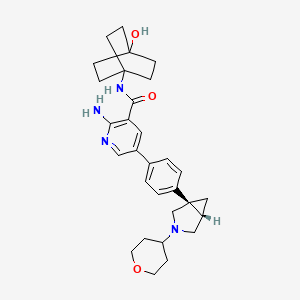
Zilurgisertib
CAS 2173389-57-4
MW 502.6 g/mol MFC30H38N4O3
Atebrioz, FDA 2026, APPROVALS 2026, L5Z9S25HO2, INCB 000928
2-amino-N-(4-hydroxy-1-bicyclo[2.2.2]octanyl)-5-[4-[(1R,5S)-3-(oxan-4-yl)-3-azabicyclo[3.1.0]hexan-1-yl]phenyl]pyridine-3-carboxamide
To reduce the volume of total new heterotopic ossification in adults and pediatric patients 12 years and older with fibrodysplasia ossificans progressiva
Zilurgisertib is an inhibitor of activin A receptor type 1 (activin receptor-like kinase 2; ALK2; ALK-2; ACVR1; ACTR-I), with potential anti-anemic and ossification suppressive activities. Upon administration, zilurgisertib targets, binds to and inhibits the activity of ALK-2. This prevents ALK2-mediated signaling and ALK2-mediated excessive bone morphogenetic protein (BMP) signaling. This may suppress heterotopic ossification (HO). As ALK-2 enhances the secretion of hepcidin, a peptide liver hormone and a key modulator of iron homeostasis, zilurgisertib is able to decrease hepcidin expression in the liver, thereby increasing and restoring plasma iron levels, enhancing erythropoiesis, and correcting anemia of chronic disease (ACD). ALK2, a serine/threonine receptor kinase and type I cell surface receptor for BMPs, is constitutively activated due to activating mutations in inflammatory conditions, various types of cancer, and in fibrodysplasia ossificans progressiva (FOP). Elevated serum hepcidin levels enhance storage of iron, reduce iron availability and causes iron deficiency anemia.
Zilurgisertib, sold under the brand name Atebrioz, is a medication used for the treatment of fibrodysplasia ossificans progressiva.[1] It is an selective activin receptor-like kinase-2 (ALK2) inhibitor.[1][2]
Zilurgisertib was approved for medical use in the United States in September of 2026.[3]
Medical uses
Zilurgisertib is indicated to reduce the volume of total new heterotopic ossification (abrnomal bone formation) in people aged twelve years of age and older with fibrodysplasia ossificans progressiva.[1]
Fibrodysplasia ossificans progressiva is a rare genetic disease caused certain mutations in the ACVR1/ALK2 gene which controls new bone growth.[3] As a result, connective tissues such as muscle, tendons, and ligaments gradually turn into bone, causing limited movement, deformities, severe disability, and early death.[3]
Adverse effects
Zilurgisertib can cause fetal harm based on data from animal studies.[3]
The most common side effects include headache, joint pain, upper respiratory tract infection, nosebleeds, and nausea.[3]
History
The effectiveness of zilurgisertib was evaluated in a randomized, double-blind, placebo‑controlled trial (NCT05090891) in which 63 participants with FOP were randomly assigned to receive zilurgisertib 100 mg or placebo once daily for 24 weeks followed by a 292-week, single-arm, open-label extension period during which participants received oral zilurgisertib 100 mg daily.[3]
Society and culture
Legal status
Zilurgisertib was approved for medical use in the United States in September 2026.[4] The US Food and Drug Administration granted the application for zilurgisertib fast track, priority review, and orphan drug designations for this indication.[3]
Names
Zilurgisertib is the international nonproprietary name.[5]
Zilurgisertib is sold under the brand name Atebrioz.[3]
PAT
https://patentscope.wipo.int/search/en/detail.jsf?docId=US242623881&_cid=P22-MUNHEN-48106-1
Example 34: 2-amino-N-(4-hydroxybicyclo[2.2.2]octan-1-yl)-5-(4-((1R,5S)-3-(tetrahydro-2H-pyran-4-yl)-3-azabicyclo[3.1.0]hexan-1-yl)phenyl)nicotinamide (also named compound A herein)
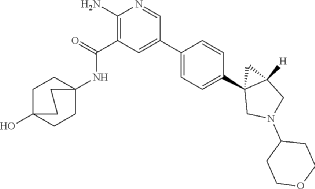
| To a solution of 2-amino-5-(4-((1R,5S)-3-(tetrahydro-2H-pyran-4-yl)-3-azabicyclo[3.1.0]hexan-1-yl)phenyl)nicotinic acid TFA salt (Intermediate 14a, 4.10 g, 8.14 mmol) and 4-aminobicyclo[2.2.2]octan-1-ol hydrochloride (2.17 g, 12.2 mmol) in anhydrous DMF (60 mL) was added N-methylmorpholine (2.24 mL, 20.4 mmol) and HATU (4.64 g, 12.2 mmol) under a nitrogen atmosphere at RT. The reaction mixture was stirred for 2 h and then diluted with a sat. aq. solution of NaHCO 3 and extracted three times with EtOAc. The combined organic extracts were washed with brine, dried over MgSO 4, filtered and concentrated under reduced pressure. The crude product was purified by reversed-phase chromatography (Method 3b). Pure fractions were treated with a sat. aq. NaHCO 3 solution and extracted three times with EtOAc. The combined organic extracts were washed with brine, dried over MgSO 4, filtered and concentrated under reduced pressure to give the title compound as an off-white solid. The absolute configuration as depicted was confirmed by X-ray crystallography of the title compound in a complex with the ALK-2 kinase domain. 1H NMR (400 MHz, DMSO-d6) δ 8.34 (d, 1H), 7.98 (d, 1H), 7.79 (s, 1H), 7.57 (d, 2H), 7.23 (d, 2H), 6.92 (s, 2H), 4.31 (s, 1H), 3.91-3.78 (m, 2H), 3.40 (bs, 1H), 3.33-3.24 (m, 2H), 3.11 (d, 1H), 2.57 (bs, 1H), 2.50-2.34 (m, 1H), 2.34 (bs, 1H), 2.12-1.94 (m, 6H), 1.90-1.72 (m, 3H), 1.71-1.51 (m, 6H), 1.51-1.34 (m, 2H), 1.31 (t, 1H), 0.82-0.68 (m, 1H). (UPLC-MS) t R 0.54 min; ESI-MS 503 [M+H] +. Chiral HPLC (ChiralPak Id, 5 μm, flow rate: 1 mL/min, detection wavelength: 270 nm, mobile phase: heptane:isopropanol 60:40 (+0.1% diethylamine)): t R 18.7 min, 92.3% ee. |
| 13C NMR (DMSO-d6) δ: 167.80, 157.69, 148.28, 141.27, 134.91, 134.79, 126.40, 125.66, 123.53, 111.01, 66.22, 65.59, 59.10, 55.46, 52.04, 33.72, 31.92, 31.77, 30.59, 29.61, 24.14, 17.20. |
| 13C NMR (DMSO-d6) δ: 167.2, 155.8, 144.3, 142.0, 139.6, 133.8, 127.7, 126.3, 124.1, 110.0, 65.8, 62.5, 55.7, 53.2, 29.9, 28.8, 28.7, 23.5, 16.6. |
| The starting material, 2-Amino-5-(4-((1R,5S)-3-(tetrahydro-2H-pyran-4-yl)-3-azabicyclo[3.1.0]hexan-1-yl)phenyl)nicotinate dihydrochloride, was obtained as follows: |
| 13C NMR (DMSO-d6) δ: 165.0, 154.0, 143.5, 142.0, 140.1, 132.8, 127.7, 126.5, 124.2, 110.7, 65.8, 62.5, 55.6, 53.3, 53.3, 29.9, 28.9, 28.8, 23.6, 16.8. |
| The starting material, 1R,5S)-1-(4-bromophenyl)-3-(tetrahydro-2H-pyran-4-yl)-3-azabicyclo[3.1.0]hexan-3-ium chloride, was obtained as follows: |
| 13C NMR (DMSO-d6) δ: 138.3, 131.9, 129.2, 120.4, 65.5, 62.3, 56.2, 53.9, 29.1, 28.9, 24.8, 23.0. MS(ESI-TOF): 322.0761 [M+H]+ |
The complete way of manufacture of Alternative Example 34 A is depicted in the following Reaction Scheme 34A:
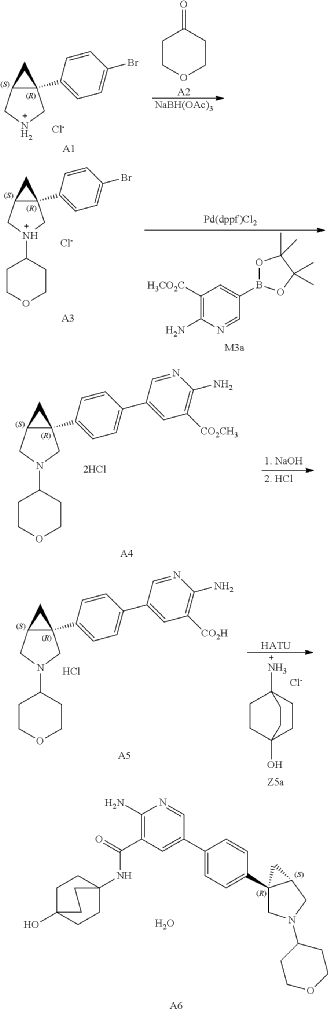
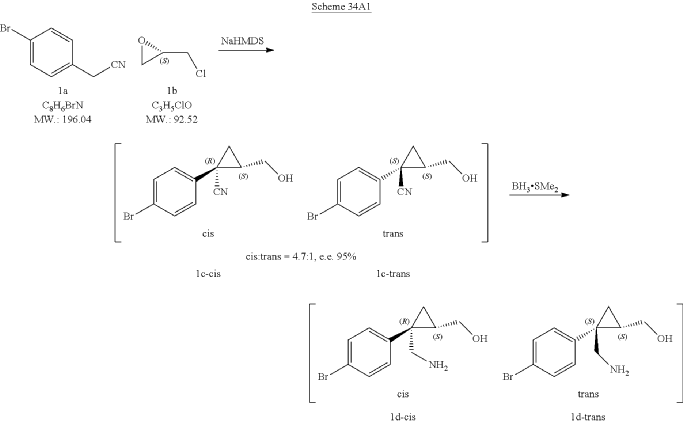
| The first compound in this scheme, A1, can be obtained as follows: |
PAT
PAT
PAT
PAPERS
- Discovery and Characterization of Zilurgisertib, a Potent and Selective Inhibitor of Activin Receptor-like Kinase-2 (ALK2) for the Treatment of Fibrodysplasia Ossificans ProgressivaPublication Name:ACS Medicinal Chemistry LettersPublication Date:2025-10-31PMCID:PMC12621050PMID:41256990DOI:10.1021/acsmedchemlett.5c00516
- Pharmacokinetics of Zilurgisertib With and Without Food from Single and Multiple Ascending Dose Phase 1 Studies in Healthy AdultsPublication Name:European Journal of Drug Metabolism and PharmacokineticsPublication Date:2024-12-09PMCID:PMC11802711PMID:39652202DOI:10.1007/s13318-024-00926-z
ADVERTISEMENT
ANAX LABORATORIES
WEBSITE https://www.anaxlab.com/
Discovery Solutions, Supporting the chemistry needs of clients in the Medical, Analytical and Bio Sciences
Development Solutions, Developing from Lab scale to PR&D, Kilo Scale-ups and Commercial Scales
SEE MORE………Integrated Solutions, Manufacturing Solutions, Products,
Can’t Find? Let’s Connect

Phone : +91 897704 2010 / +91 9177075735, Email : info@anaxlab.com
#MedicinalChemistry, #DrugDiscovery, #OrganicSynthesis, #ChemicalLibrary, #BuildingBlocks, #SARStudies, #ChemistryInnovation, #medchem, #Drugdevelopment, #Biotech, #Biotechnology, #AnaxLaboratories, #Pharma


AS ON FEB2026 4.574 LAKHS VIEWS ON BLOG WORLDREACH AVAILABLEFOR YOUR ADVERTISEMENT

join me on Linkedin
Anthony Melvin Crasto Ph.D – India | LinkedIn
join me on Researchgate
RESEARCHGATE

join me on Facebook
Anthony Melvin Crasto Dr. | Facebook
join me on twitter
Anthony Melvin Crasto Dr. | twitter
+919321316780 call whatsaapp
EMAIL. amcrasto@gmail.com

References
- “Atebrioz FDA label” (PDF). files.mirumpharma.com.
- Gangat N, Tefferi A (June 2025). “Emerging Pathogenetic Mechanisms and New Drugs for Anemia in Myelofibrosis and Myelodysplastic Syndromes”. American Journal of Hematology. 100 Suppl 4: 51–65. doi:10.1002/ajh.27659. PMID 40056069.
- Center for Drug Evaluation and Research (25 September 2026). “FDA Approves Third Treatment for Fibrodysplasia Ossificans Progressiva”. U.S. Food and Drug Administration. U.S. Food and Drug Administration (FDA). Retrieved 27 September 2026.
 This article incorporates text from this source, which is in the public domain.
 - “Mirum Pharmaceuticals and Incyte Announce U.S. FDA Approval of Atebrioz (zilurgisertib) for Adult and Pediatric Patients with Fibrodysplasia Ossificans Progressiva” (Press release). Mirum Pharmaceuticals. 25 September 2026. Retrieved 27 September 2026 – via Business Wire.
- World Health Organization (2022). “International nonproprietary names for pharmaceutical substances (INN): recommended INN: list 88”. WHO Drug Information. 36 (3). hdl:10665/363551.
External links
- “Zilurgisertib ( Code – C175551 )”. EVS Explore.
- “Zilurgisertib Fumarate ( Code – C199021 )”. EVS Explore.
- Clinical trial number NCT05090891 for “To Assess the Efficacy, Safety, and Tolerability of INCB000928 in Participants With Fibrodysplasia Ossificans Progressiva (Progress)” at ClinicalTrials.gov
 | |
| Clinical data | |
|---|---|
| Trade names | Atebrioz |
| Other names | INCB-000928, INCB000928 |
| License data | US DailyMed: Zilurgisertib |
| Routes of administration | By mouth |
| Drug class | Kinase inhibitor (ALK2 selective) |
| ATC code | None |
| Legal status | |
| Legal status | US: ℞-only[1] |
| Identifiers | |
| CAS Number | 2173389-57-42173390-29-7 |
| PubChem CID | 138628908162623634 |
| IUPHAR/BPS | 11888 |
| UNII | L5Z9S25HO21R349830SB |
| KEGG | D12547D12548 |
| ChEMBL | ChEMBL5314579 |
| Chemical and physical data | |
| Formula | C30H38N4O3 |
| Molar mass | 502.659 g·mol−1 |
| 3D model (JSmol) | Interactive image |
| SMILES | |
| InChI | |
///////////zilurgisertib, anax labs, Atebrioz, FDA 2026, APPROVALS 2026, L5Z9S25HO2, INCB 000928
#zilurgisertib, #anax labs, #Atebrioz, #FDA 2026, #APPROVALS 2026, #L5Z9S25HO2, #INCB 000928


