New Drug Approvals

Home » Uncategorized (Page 83)

Category Archives: Uncategorized

DRUG APPROVALS BY DR ANTHONY MELVIN CRASTO .....FOR BLOG HOME CLICK HERE

Blog Stats

  • 4,879,072 hits

Flag and hits

Flag Counter

Enter your email address to follow this blog and receive notifications of new posts by email.

Join 37.8K other subscribers
Follow New Drug Approvals on WordPress.com

Archives

Categories

Recent Posts

Flag Counter

ORGANIC SPECTROSCOPY

Read all about Organic Spectroscopy on ORGANIC SPECTROSCOPY INTERNATIONAL 

Enter your email address to follow this blog and receive notifications of new posts by email.

Join 37.8K other subscribers
DR ANTHONY MELVIN CRASTO Ph.D

DR ANTHONY MELVIN CRASTO Ph.D

DR ANTHONY MELVIN CRASTO, Born in Mumbai in 1964 and graduated from Mumbai University, Completed his Ph.D from ICT, 1991,Matunga, Mumbai, India, in Organic Chemistry, The thesis topic was Synthesis of Novel Pyrethroid Analogues, Currently he is working with AFRICURE PHARMA, ROW2TECH, NIPER-G, Department of Pharmaceuticals, Ministry of Chemicals and Fertilizers, Govt. of India as ADVISOR, earlier assignment was with GLENMARK LIFE SCIENCES LTD, as CONSUlTANT, Retired from GLENMARK in Jan2022 Research Centre as Principal Scientist, Process Research (bulk actives) at Mahape, Navi Mumbai, India. Total Industry exp 32 plus yrs, Prior to joining Glenmark, he has worked with major multinationals like Hoechst Marion Roussel, now Sanofi, Searle India Ltd, now RPG lifesciences, etc. He has worked with notable scientists like Dr K Nagarajan, Dr Ralph Stapel, Prof S Seshadri, etc, He did custom synthesis for major multinationals in his career like BASF, Novartis, Sanofi, etc., He has worked in Discovery, Natural products, Bulk drugs, Generics, Intermediates, Fine chemicals, Neutraceuticals, GMP, Scaleups, etc, he is now helping millions, has 9 million plus hits on Google on all Organic chemistry websites. His friends call him Open superstar worlddrugtracker. His New Drug Approvals, Green Chemistry International, All about drugs, Eurekamoments, Organic spectroscopy international, etc in organic chemistry are some most read blogs He has hands on experience in initiation and developing novel routes for drug molecules and implementation them on commercial scale over a 32 PLUS year tenure till date Feb 2023, Around 35 plus products in his career. He has good knowledge of IPM, GMP, Regulatory aspects, he has several International patents published worldwide . He has good proficiency in Technology transfer, Spectroscopy, Stereochemistry, Synthesis, Polymorphism etc., He suffered a paralytic stroke/ Acute Transverse mylitis in Dec 2007 and is 90 %Paralysed, He is bound to a wheelchair, this seems to have injected feul in him to help chemists all around the world, he is more active than before and is pushing boundaries, He has 100 million plus hits on Google, 2.5 lakh plus connections on all networking sites, 100 Lakh plus views on dozen plus blogs, 227 countries, 7 continents, He makes himself available to all, contact him on +91 9323115463, email amcrasto@gmail.com, Twitter, @amcrasto , He lives and will die for his family, 90% paralysis cannot kill his soul., Notably he has 38 lakh plus views on New Drug Approvals Blog in 227 countries......https://newdrugapprovals.wordpress.com/ , He appreciates the help he gets from one and all, Friends, Family, Glenmark, Readers, Wellwishers, Doctors, Drug authorities, His Contacts, Physiotherapist, etc He has total of 32 International and Indian awards

Verified Services

View Full Profile →

Archives

Categories

Flag Counter

GSK2334470

GSK2334470.pngFigure imgf000198_0001

GSK2334470

GSK2334470; 1227911-45-6; GSK-2334470; GSK 2334470;

(3S,6R)-1-[6-(3-Amino-1H-indazol-6-yl)-2-(methylamino)-4-pyrimidinyl]-N-cyclohexyl-6-methyl-3-piperidinecarboxamide

(3S.6/?V1-r6-(3-Amino-1 H-indazol-6-ylV2-(methylaminoV4-pyrimidinyll-Λ/-cvclohexyl-6- methyl-3-piperidinecarboxamide

Molecular Weight 462.59
Formula C25H34N8O
CAS Number 1227911-45-6

Glaxosmithkline Llc

Phosphoinositide Dependent Kinase (PDK) 1 Inhibitors

[α]20D = – 32.6 o (c 1.17, MeOH)

[α] D = -27.6 (Concentration = 1.16, Solvent = Methanol)

SOL………DMSO to 100 mM

ethanol to 100 mM

nmr……http://www.chemietek.com/Files/Line2/Chemietek,%20GSK2334470%20(1),%20NMR-DMSO.pdf

http://file.selleckchem.com/downloads/nmr/S708702-GSK2334470-HNMR-Selleck.pdf

GSK2334470 Structure

GSK2334470 is a potent and selective PDK1 (3-Phosphoinositide dependent protein kinase-1) inhibitor. GSK2334470 blocks the phosphorylation of known PDK1 substrates, but surprisingly find that the potency and kinetics of inhibition vary for different PDK1 targets. GSK2334470 subsequent activation of PDK1 substrates S6K1, SGK and RSK in HEK293, U87 and mouse embryonic fibroblast cell lines.

GSK2334470 inhibited activation of an Akt1 mutant lacking the PH domain (pleckstrin homology domain) more potently than full-length Akt1, suggesting that GSK2334470 is more effective at inhibiting PDK1 substrates that are activated in the cytosol rather than at the plasma membrane. GSK2334470 also suppressed T-loop phosphorylation and activation of RSK2 (p90 ribosomal S6 kinase 2), another PDK1 target activated by the ERK (extracellular-signal-regulated kinase) pathway.

GSK2334470 is a highly specific and potent inhibitor of PDK1 (3-Phosphoinositide dependent protein kinase-1) with IC50 of 10 nM. It does not suppress activity on other 96 kinases, including Aurora, ROCK, p38 MAPK and PI3K. GSK2334470 has been used in cells to ablate T-loop phosphorylation and activate SGK, S6K1 and RSK as well as suppress the activation of Akt.

PATENT

WO  2010059658

http://www.google.com/patents/WO2010059658A1?cl=en

Example 78

(3S.6/?V1-r6-(3-Amino-1 H-indazol-6-ylV2-(methylaminoV4-pyrimidinyll-Λ/-cvclohexyl-6- methyl-3-piperidinecarboxamide

Figure imgf000198_0001

To (3S,6R)-1-[6-(4-cyano-3-fluorophenyl)-2-(methylamino)-4-pyrimidinyl]-Λ/-cyclohexyl-6- methyl-3-piperidinecarboxamide (260 mg, 0.58 mmol) in EtOH (10 ml.) as a suspension at room temperature in a microwave vial was added hydrazine monohydrate (807 uL, 16.7 mmol, 30 equiv) in one portion. The mixture was capped and heated at 100 0C for 48 hours. A duplicate run was performed. The crude reactions from both runs were combined, and concentrated in vacuo. The residue was taken up in 10 ml. of water. The resulting suspension was sonicated briefly, and filtered. The solids collected were dried under vacuum at room temperature over P2O5 for 18 hours, and then at 65 0C under vacuum for another 18 hours to afford the title compound (410 mg) as a cream-colored solid. LC-MS (ES) m/z = 463 [M+H]+. 1H NMR (400 MHz, CD3OD): δ 1.16 – 1.32 (m, 3H),1.29 (d, J = 6.8 Hz, 3H), 1.34 – 1.45 (m, 2H), 1.65 – 1.68 (m, 1 H), 1.76 – 1.81 (m, 5H), 1.85 – 1.92 (m, 2H), 1.97 – 2.05 (m, 1 H), 2.35 – 2.42 (m, 1 H), 2.97 (s, 3H), 3.1 1 – 3.15 (m, 1 H),3.64 – 3.70 (m, 1 H), 4.45 – 4.65 (bs, 1 H), 4.72 – 4.92 (bs, 1 H), 6.45 (s, 1 H), 7.52 (dd, J =8.5, 1.14 Hz, 1 H), 7.75 (d, J = 8.3 Hz, 1 H), 7.85 (s, 1 H).

ntermediate 112

Cis- methyl-6-methyl-3-piperidinecarboxylate

A solution of cis-3-methyl 1-(phenylmethyl)-6-methyl-1 ,3-piperidinedicarboxylate (69 g, 237 mol) in EtOH (50 mL) and EtOAc (300 mL) was added to a slurry of 10% Pd/C (3.7 g) in EtOAc (30 mL) and EtOH (10 mL) EtOH under nitrogen in a Parr Shaker bottle. The mixture was hydrogenated under 65 psi at room temperature for 4 hours. The mixture was filtered through celite, and washed with EtOAc. The filtrate was concentrated in vacuo to give 37 g of the title compound as a liquid. LC-MS (ES) m/z = 158 [M+H]+.

Intermediate 113

Methyl (3S,6f?)-6-methyl-3-piperidinecarboxylate L-(+)-tartaric acid salt

L-(+)-Tartaric acid salt A suspension of L-(+)-tartaric acid (39 g, 260 mmol, 1.05 equiv) in IPA (200 ml.) and water (13 mL) water was heated in a water bath at 600C until all dissolved. To this hot stirred solution was added neat racemic methyl (3S,6R)-6-methyl-3-piperidinecarboxylate (39 g, 248 mmol), followed by addition of 25 mL of IPA rinse. The resulting mixture was heated to 60 0C, resulting in a clear solution, and then cooled to room temperature, while the hot water bath was removed. This hot solution was seeded with a sample of methyl (3S,6R)-6-methyl-3-piperidinecarboxylate L-(+)-tartaric acid salt that had a chiral purity of 98% ee, and aged at ambient temperature (with the water bath removed) for 20 minutes. The mixture turned into an oily texture with seeds still present. To the mixture was added 5 mL of water, and heated in the warm water bath at 43 0C. The mixture became clear with the seeds still present. The heating was stopped, and the mixture was stirred in the warm water bath. After 20 minutes, the mixture gradually turned into a paste. After another 10 min, the water bath was removed, and the mixture was stirred at ambient temperature for another 1 hour. The resulting paste was filtered. The cake was washed with 50 mL of IPA, giving 62 g of wet solids. This cake was taken up in 150 mL of IPA and 8 mL of water, and stirred as a slurry while being heated in a water bath to 60 0C (internal temp 55 0C) for 5 minutes. The heating was turned off while the mixture was still stirred in the warm water bath. After 30 min, the mixture was filtered. The cake was washed with 100 mL of IPA. Drying under house vacuum at room temperature for 48 hours gave 46.7 g of solids. An analytical sample was derivatised to the corresponding N-Cbz derivative (as in the preparation of intermediate 1 11 ), which was determined by chiral HPLC (methods used to analyze the resolution of intermediate 11 1 above) to have 85% ee. This material was taken up in IPA (420 mL) and water (38 mL) as a suspension. The mixture was heated in a water bath to 65 0C, at which time the mixture became a clear solution. The heating bath was removed. The mixture was seeded and aged at ambient temp for 20 hours. The solids formed were filtered, and washed with 100 mL of IPA. The solids collected were dried under house vacuum at room temperature for 24 h, and then under vacuum at room temperature for another 24 hours to give 28.5 g of the title compound. An analytical sample was converted to the N-Cbz derivative. The ee was determined to be 97.7%. LC-MS (ES) m/z = 158 [M+H]+.

Intermediate 114 4,6-Dichloro-Λ/-methyl-2-pyrimidinamine

Methylamine (2M solution, 113 ml_, 217 mmol, 2.05 equiv) was charged to a 1 L 3-neck flask fitted with a magnetic stirrer and a thermometer. The mixture was chilled in an ice bath. To this stirred solution was added via addition funnel a solution of 4,6-dichloro-2-(methylsulfonyl)pyrimidine (25 g, 1 10 mmol) in EtOAc (250 ml.) portionwise over a 25 minutes period. The temp was between 5-10 0C. After completion of addition, the ice bath was removed, and the mixture was stirred for 1 hour at ambient temperature. LCMS showed conversion complete. The suspension was filtered, and washed with EtOAc. The filtrate was concentrated in vacuo. The residue was partitioned between water (100 ml.) and EtOAc (450 ml_). The organic was washed with brine, dried over MgSO4, filtered and concentrated in vacuo to give white solids, which were triturated in 150 ml. of CH2CI2. These solids were collected by filtration and washing with cold CH2CI2 (50 ml_). Drying under house vacuum at room temperature for 20 hours, and then high vacuum at room temperature for 3 hours gave 9.31 g of the title compound as a solid. LC-MS (ES) m/z = 179 [M+H]+.


Intermediate 121 (3S,6/?)-1-r6-Chloro-2-(methylamino)-4-pyrimidinyll-Λ/-cvclohexyl-6-methyl-3-piperidinecarboxamide

To a suspension of (3S,6/?)-1-[6-chloro-2-(methylamino)-4-pyrimidinyl]-6-methyl-3-piperidinecarboxylic acid (3.05 g, 10.71 mmol) in CH2CI2 (50 ml.) at room temperature was added Hunig’s base (2.70 ml_, 15.43 mmol, 1.3 equiv) and cyclohexylamine (1.60 ml_, 14.2 mmol, 1.2 equiv), and the resulting mixture was chilled in an ice bath. To this stirred solution was added HATU (4.96 g, 13.1 mmol, 1.1 equiv) in one portion, and the resulting suspension was stirred in the ice bath for 30 minutes. LCMS showed conversion complete. The mixture was diluted with CH2CI2 (50 ml.) and filtered through celite. The filtrate was washed water (2 X 25 ml.) and then brine. The organic was dried over Na2SO4, filtered, and concentrated in vacuo. Silica gel column chromatography using gradient elution of 1 % EtOAc in CHCI3 to 50% EtOAc in CHCI3 afforded the title compound (4.26 g) as a foam. LC-MS (ES) m/z = 366 [M+H]+.


PAPER

Journal of Medicinal Chemistry (2011), 54(6), 1871-1895.

http://pubs.acs.org/doi/full/10.1021/jm101527u

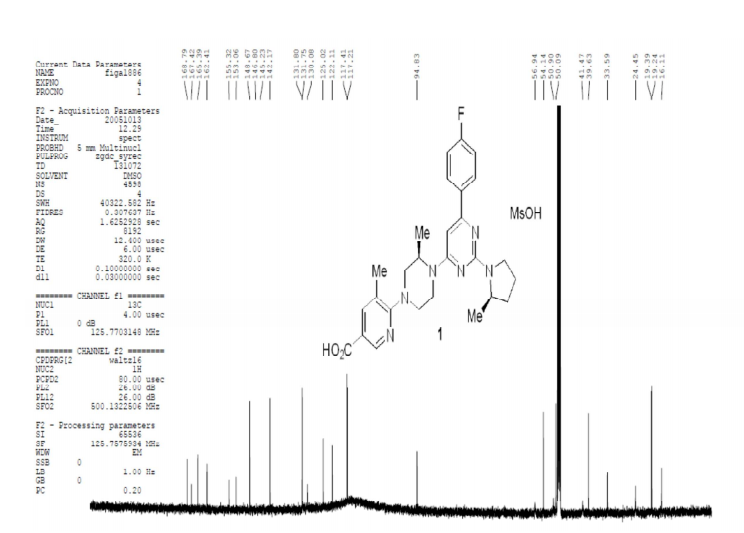
Abstract Image

Phosphoinositide-dependent protein kinase-1(PDK1) is a master regulator of the AGC family of kinases and an integral component of the PI3K/AKT/mTOR pathway. As this pathway is among the most commonly deregulated across all cancers, a selective inhibitor of PDK1 might have utility as an anticancer agent. Herein we describe our lead optimization of compound 1toward highly potent and selective PDK1 inhibitors via a structure-based design strategy. The most potent and selective inhibitors demonstrated submicromolar activity as measured by inhibition of phosphorylation of PDK1 substrates as well as antiproliferative activity against a subset of AML cell lines. In addition, reduction of phosphorylation of PDK1 substrates was demonstrated in vivo in mice bearing OCl-AML2 xenografts. These observations demonstrate the utility of these molecules as tools to further delineate the biology of PDK1 and the potential pharmacological uses of a PDK1 inhibitor.


REFERENCES

Najafov, et al., Characterization of GSK2334470, a novel and highly specific inhibitor of PDK1. Biochem.J. (2011), 433 (2) 357.

For a PDK1 inhibitor, the substrate matters.
Knight ZA. Biochem J. 2011 Jan 15;433(2):e1-2. PMID: 21175429.

Characterization of GSK2334470, a novel and highly specific inhibitor of PDK1.
Najafov A, et al. Biochem J. 2011 Jan 15;433(2):357-69. PMID: 21087210.

Jeffrey Axten

Jeffrey Axten

Jeffrey Michael Axten

Director, Medicinal Chemistry, Virtual Proof of Concept DPU at GlaxoSmithKline

/////

Improved one-pot synthesis of N, N-diisopropyl-3-(2-Hydroxy-5-methylphenyl)-3-phenyl propanamide; a key intermediate for the preparation of racemic Tolterodine

Tolterodine2DCSD.svg

Tolterodine is chemically known as (R)-N,N-disiopropyl-3-(2-hydroxy-5-methyl phenyl)-3-phenyl propyl amine. Tolterodine acts as a muscarinic receptor antagonist. It is useful in the treatment of urinary incontinence [1]. Tolterodine tartrate acts by relaxing the smooth muscle tissues in the walls of the bladder by blocking cholinergic receptors[2]. Tolterodine tartrate [3] is marketed by Pharmacia & Upjohn in the brand name of Destrol®.

The present invention relates to a novel process for the preparation of N,N-diisopropyl-3-(2-hydroxy-5-methylphenyl)-3-phenylpropanamide (4); a key intermediate for the preparation of Tolterodine (1). Some different approaches have been published [48] for the preparation of N,N-diisopropyl-3-(2-hydroxy-5-methylphenyl)-3-phenylpropanamide (4). These methods involve multistep synthesis using hazardous, expensive reagents and some of the methods [6] involve activators like Grignard reagents, LDA, n-butyl lithium, Lewis acids. Hence there is a need to develop an alternative, plant friendly procedure for the preparation of N,N-diisopropyl-3-(2-hydroxy-5-methylphenyl)-3-phenylpropanamide (4) from 3,4-dihydro-6-methyl-4-phenylcoumarin (2) (Fig1).

Tolterodine (1), Methyl 3-(2-hydroxy-5-methylphenyl)-3-phenylpropanoate (3) and N,N-diisopropyl-3-(2-hydroxy-5-methylphenyl)-3-phenylpropanamide (4).

Improved one-pot synthesis of N, N-diisopropyl-3-(2-Hydroxy-5-methylphenyl)-3-phenyl propanamide; a key intermediate for the preparation of racemic Tolterodine

Ring opening reactions of dihydrocoumarins are well known in literature[911]. But in the present invention, we have described a new methodology (Scheme 1 & Scheme2) for the preparation ofN,N-diisopropyl-3-(2-hydroxy-5-methylphenyl)-3-phenylpropanamide (4) by using inexpensive and commercially vailable starting materials like 3, 4-dihydro-6-methyl 4-phenylcoumarin (2), which was synthesized from p-cresol and trans-cinnamic acid [12].

Scheme 1

N,N-diisopropyl-3-(2-hydroxy-5-methylphenyl)-3-phenylpropanamide 4.

Scheme 2

N-Isopropyl-3-(2-hydroxy-5-methylphenyl)-3-phenylpropanamide 5.

3,4-Dihyhydro-6-methyl 4-phenylcoumarin (2) reacts with diisopropylamine (6) in presence of acetic acid gives N,N-diisopropyl-3-(2-hydroxy-5-methylphenyl)-3-phenylpropanamide (4) at room temperature. This process of compound 4 is very useful for commercialization of Tolterodine 1 in plant.

General procedure for the synthesis of compounds 4-4c & 5-5c

To a solution of 3,4-dihyhydro-6-methyl 4-phenylcoumarin 2 (10 g, 42 mmol) in diisopropylether (200 mL), N,N-diisopropylamine (33.95 g, 336 mmol) and acetic acid (10 g, 168 mmol) were added at room temperature. The suspension was stirred for 16 h at room temperature. The reaction mass was concentrated, the resulting residue was crystallized with D.M.Water (50 mL) and diisopropyl ether (50 mL) mixture to gave N,N-diisopropyl-3-(2-hydroxy-5-methylphenyl)-3-phenylpropanamide 4 (10.6 g, 75% yield).


N,N-diisopropyl-3-(2-hydroxy-5-methylphenyl)-3-phenylpropanamide 4

IR (KBr) cm-1: 3024 (Aromatic C-H, str.), 2949, 2904, 2869 (Aliphatic C-H, str.), 1630 (C═O, str.), 1609, 1555, 1510 (C═C, str.), 1469, 1459 (CH2 bending), 1270 (C-N, str.), 1072 (C-O, str.), 788, 769 (Aromatic CH Out-of-plane bend). 1H NMR (300 MHz, DMSO-d6) δ 1.04 (d, 12H), 2.089 (s, 3H), 2.79 (m, 2H), 3.037 (m, 2H), 4.702 (t, 1H), 6.6 (d, 1H), 6.75 (d, 2H), 7.127-7.246 (m, 5H). 13C NMR (125 MHz, DMSO-d6) δ 19.39, 20.36, 45.69, 115.33, 125.70, 127.20, 128.15, 130.60, 144.43, 152.23, 173.37. MS m/z: 340 [(M + H)+].

t1 t2

t1 t2

Improved one-pot synthesis of N, N-diisopropyl-3-(2-Hydroxy-5-methylphenyl)-3-phenyl propanamide; a key intermediate for the preparation of racemic Tolterodine

Garaga Srinivas12*, Ambati V Raghava Reddy1, Koilpillai Joseph Prabahar1, Korrapati venkata vara Prasada Rao1, Paul Douglas Sanasi2 and Raghubabu Korupolu2

1Chemical Research and Development Department, Aurobindo Pharma Ltd, Survey No:71&72, Indrakaran Village, Sangareddy Mandal, Medak district, Hyderabad 502329, Andhra Pradesh, India

2Engineering Chemistry Department, AU college of Engineering, Andhra University, Visakhapatnam 530003, Andhra Pradesh, India

Sustainable Chemical Processes 2014, 2:2  doi:10.1186/2043-7129-2-2

The electronic version of this article is the complete one and can be found online at:http://www.sustainablechemicalprocesses.com/content/2/1/2

http://www.sustainablechemicalprocesses.com/content/2/1/2/additional

srinivas garaga

Srinivas garaga

scientist at Aurobindo Pharma

Chemical Research and Development Department, Aurobindo Pharma Ltd


/////

As of September 2015, updated Requirements apply to the Application of a CEP!

DR ANTHONY MELVIN CRASTO Ph.D's avatarDRUG REGULATORY AFFAIRS INTERNATIONAL

As of September 2015, updated Requirements apply to the Application of a CEP!

The EDQM recently revised its certification policy. Read more here about what you now need to consider when applying for a Certificate of Suitability (CEP).

http://www.gmp-compliance.org/enews_05034_As-of-September-2015–updated-Requirements-apply-to-the-Application-of-a-CEP!_9159,9255,9299,9300,S-WKS_n.html

The EDQM recently published a revised version of its certification policy document titled “Content of the dossier for chemical purity and microbiological quality“. The revision takes into account the new regulatory developments in Europe that are reflected in many revised and, to some extent, new guidelines of the EMA, ICH as well as in some revised general chapters and monographs of the European Pharmacopoeia (see the summary of these guidance documents under “References” at the end of the policy document).

The aim of the policy document is to provide CEP applicants with a guideline for preparing the authorisation dossier and for compiling all the documents required for this…

View original post 850 more words

ARTEMISININ

Ijms 13 05060f1 1024

Artemisinin  is a sesquiterpene lactone with an endoperoxide function. It was first isolated from the Chinese traditional herb—Artemisia annua L. and its structure was first confirmed by Chinese scientists in the 1970s. Artemisinin and its derivatives or analogues are currently regarded as the most promising weapons against multidrug-resistant malaria . Its unique 1,2,4-trioxane structure is entirely incompatible with the traditional antimalarial structure-activity theory, which attracted the interest of many researchers

(+) Artemisinin is a sesquiterpene endoperoxide lactone with an unprecedented structure is a natural medicine for the treatment of malaria in particular drug against drug resistant malaria and cerebral malaria. The total synthesis of this novel sesquiterpene is described using an intermolecular radical reaction on important intermediate iodolactone starting from terpene (+) isolimonene.

Malaria is probably as old as mankind and continues to affect millions of people throughout the world. Today some 500 million people in Africa, India, South East Asia and South America are exposed to endemic malaria and it is estimated to cause two and half million deaths annually, one million of which are children. Certainly malaria is a serious problem all over the globe. As a consequence, effective therapeutic agents against malaria are continuously being sought, especially against those strains of Plasmodium falciparum, which are resistant to conventional quinine and acridine based drugs. Artemisinin, which has been isolated from Artemisia Annua L. Compositae (Qinghao), is an active constituent of traditional Chinese herbal medicine which is used for the treatment of malaria in China for more than 1000 years.

a sesquiterpene endoperoxide lactone with an unprecedented structure is a natural medicine for the treatment of malaria, in particular drug against drug resistant and cerebral malaria. The exceptional pharmacological potential and extreme scarcity of the natural material together with its complex structure prompted us to study the total synthesis of (+) Artemisinin. The architectural complexity is attributed to the presence of 7 chiral centers with tetracyclic framework with an endoperoxide unit. Though many valuable contributions5-9 have been made towards the total synthesis of this unique structurally complex molecule, the need for a simple strategic route still remains, encouraging us to take up the total synthesis of this potent antimalarial drug.

Schimid, G.; Hofheinz, W. J. Am. Chem. Soc. 1983, 105, 624. 6. Xu, X. X.; Zhu, J.; Huang, D. Z.; Zhou, W. S. Tetrahedron 1986, 42, 819. 7. (a) Avery, M. A.; Chong, W. K. M.; White, C. J. J. Am. Chem. Soc. 1992, 114, 974. (b) Avery, M. A.; White, C. J.; Chong, W. K. M. Tetrahedron Lett. 1987, 28, 4629. 8. Ravindranathan, T.; Kumar, M. A.; Menon, R. B.; Hiremath, S. V. Tetrahedron Lett. 1990, 31, 755. 9. Liu, H. J.; Yeh, W. L.; Chew, S. Y. Tetrahedron Lett. 1993, 34, 4435.

IUPAC (3R,5aS,6R,8aS,9R,12S,12aR)-octahydro-3,6,9-trimethyl-3,12-epoxy-12H-pyrano(4,3-j)-1,2-benzodioxepin-10(3H)-one
Structure C15H22O5
CAS # 63968-64-9
Mol. Mass 282.33 g/mol
Density 1.24 ± 0.1 g/cm³
Melting Point 151-154 °C

Ijms 13 05060f4 1024

Ijms 13 05060f5 1024

Ijms 13 05060f6 1024

Ijms 13 05060f7 1024

http://www.mdpi.com/1422-0067/13/4/5060/htm

……………

1,5,9-Trimethyl-(1R,4S,5R,8S,9R,12S,13R)-11,14,15,16-tetraoxatetracyclo [10.3.1.O4,13.O8,13] hexadecan-10-one (Artemisinin)

purified on preparative TLC (eluent petroleum ether/ethyl acetate, 90/10) to give 1 (6 mg) in 10% yield. 


1 H NMR (500MHz, CDCl3): δ 1.00 (d, J = 6.0 Hz, 3H), 1.01-1.13 (m, 2H), 1.21 (d, J = 7.4 Hz, 3H), 1.34-1.43 (m, 3H), 1.44 (s, 3H), 1.74-1.79 (m, 2H), 1.86-1.90 (m, 1H), 1.97-2.07 (m, 2H), 2.40-2.46 (qxd, J = 3.8, 8.9 Hz, 1H), 3.36-3.41 (qxd, J = 1.7, 5.3, 5.4 Hz, 1H), 5.84 (s, 1H). 


MS (FAB): m/z 283 (M+1). 


IR (KBr): 1740 (δ-lactone) cm-1. 


Optical rotation [α]D : (+) 87.94 (c=0.1, Dioxane). 


http://www.arkat-usa.org/get-file/18950/

ARKIVOC 2003 (iii) 125-139

Total synthesis of (+) Artemisinin J. S. Yadav,

* R. Satheesh Babu and G. Sabitha Organic Chemical Sciences, Indian Institute of Chemical Technology, Uppal Road, Hyderabad 500 007, India E-mail: yadav@iict.ap.nic.in

………….

Total Synthesis

In 1982, G. Schmid and W. Hofheinz published a paper showing the complete synthesis of artemisinin. Their starting material was (-)-Isopulegol (2) which is then converted to methoxymethyl ether (3). The ether is hydroborated and then undergoes oxidative workup to give (4). The primary hydroxyl group was then benzylated and the methoxymethyl ether was cleaved resulting in (5) which then is oxidized to (6). Next, the compound was protonated and treated with (E)-(3-iodo-1-methyl-1-propenyl)-trimethylsilane to give (7). This resulting ketone was reacted with lithium methoxy(trimethylsily)methylide to obtain two diastereomeric alcohols, (8a) and (8b). 8a was then debenzylated using (Li, NH3) to give lactone (9). The vinylsilane was then oxidized to ketone (10). The ketone was then reacted with fluoride ion that caused it to undergo desilylation, enol ether formation and carboxylic acid formation to give (11). An introduction of a hydroperoxide function at C(3) of 11 gives rise to (12). Finally, this underwent photooxygenation and then treated with acid to produce artemisinin.6

6 G. Schmid, W. Hofheinz. “Total Synthesis of qinghaosu” J. Am. Chem. Soc.; 1983; 105 (3); 624-625

……………….

Produce artemisinin with biosynthesis and chemical synthesis. The World Health Organization estimates that in 2010 there were >200 million cases of malaria worldwide that accounted for >650,000 deaths. Many promising strategies to combat malaria require use of artemisinin-based combination therapies, but artemisinin production—from natural sources or laboratory biosynthesis—is insufficient and expensive.

C. J. Paddon and J. D. Newman at Amyris (Emeryville, CA) and almost 50 colleagues in the United States, Canada, and China engineered a new strain ofSaccharomyces cerevisiae (baker’s yeast) to improve the production of artemisinic acid (1, a precursor for artemisinin) from glucose. This research was sponsored by the Institute for OneWorld Health with the support of the Bill & Melinda Gates Foundation.

The authors studied the biochemical pathway to 1 in S. cerevisiae. They then overexpressed the genes involved in artemisinin production and suppressed those related to other products. They also added isopropyl myristate oil to solubilize 1 and drive the equilibrium toward the product. They produced 1 in 25 g/L concentration.

The authors then developed a synthesis of artemisinin (2) from 1 that is suitable for large-scale production (see figure). Among the improvements are

  • the use of hydrogen to reduce the double bond in artemisinic acid,
  • esterification of the carboxylic acid group to avoid side reactions,
  • chemical generation of singlet oxygen (1O2) from H2O2, and
  • in the last step, the use of air, a safer and less expensive source of triplet oxygen (3O2) than pure oxygen.

Artemisinin was obtained in 50% overall yield with higher purity than is usually found in commercial samples. This process is simple, scalable, and economically viable. It can potentially supply worldwide requirements of artemisinin to combat malaria. The process is not patented and is therefore freely available. (Nature 2013, 496, 528–532José C. Barros)

……………….

Friedrich Wöhler’s early syntheses of oxalic acid and urea heralded the age of synthetic organic chemistry. These reactions demonstrated the potential for man to generate compounds that had previously only been obtained from the extraction of biological substances. Remarkably, despite huge advances in chemical synthesis, almost all natural products synthesised to date have relied upon similar apparatus and techniques to those used by Wöhler in the 1820s. Steve Ley and his group are among the pioneers of the use of flow chemistry in synthesis, and have demonstrated the use of machines in place of the antiquated round-bottomed flasks still used in chemistry labs the world over.

GA?id=C3CS60246JThe number of sequential operations required in traditional approaches to making molecules can make synthesis time-consuming. In particular, downstream processes such as purification of the desired compound from waste products can take much longer than the actual reaction. Importantly, flow chemistry can also offer significant improvements to work health and safety as hazardous chemicals can be manipulated in a closed system and therefore, risks associated with exposure are reduced.

In flow chemistry (at its most basic), a reaction is performed in a continuous flowing stream where substrates and reagents are combined inside inert tubing and pumped around a coil of tubing before being quenched or treated with the chemical required for the next stage of the transformation.

Ley and coworkers have recently published a review that presents some highlights from the use of flow chemistry in natural product synthesis. One of the notable examples featured in this review is the continuous flow, semi-synthesis of artemisinin bySeeberger and Lévesque. Artemisinin is a sesquiterpene that represents the frontline treatment for plasmodium falciparummalaria when used in combination with other therapeutics. The supply of artemisinin from natural sources is problematic as is the scalability of existing synthetic approaches.

Dihydroartemisinic acid 2, (derived from artemesinic acid 1) represents the starting point for this flow synthesis and first undergoes photooxidation to yield hydroperoxide 3. Subsequent treatment of 3 with strong acid, followed by oxidation provided hydroperoxide 5, which underwent a spontaneous cycloaddition sequence, leading to the generation of artemisinin6.

The use of a continuous flow reactor particularly enhanced the challenging photochemical transformations associated with the synthesis. Issues such as low mass transfer of oxygen gas into solution and low penetration of light were resolved by coiling the reaction tubing around a lamp to enabled effective generation of the singlet-oxygen required for the reaction. Additionally, improved mixing and temperature control could also be achieved. Crucially, this synthesis provides a low cost method to meet the escalating demand for artemisinin at affordable prices for patients in the developing world.

The elegant syntheses described in this review span a range of natural product classes and highlight the advantages that mechanisation of chemical processes can offer. As chemists seek to address medicinal and environmental challenges, perhaps greater emphasis should be placed on rational design rather than labour-intensive and repetitive tasks. The effective implementation of flow systems and technology could revolutionise the chemical sciences, and this review provides some exciting food for thought.

For more, read this Chem Soc Rev article in full:

Flow chemistry syntheses of natural products

Julio C. Pastre, Duncan L. Browne and Steven V. Ley

Chem. Soc. Rev., 2013, Advance Article

DOI: 10.1039/C3CS60246J

….

Although photocatalytic chemistry has been the subject of intense interest recently, the rate of these reactions is often slow due to the limited penetration of light into typical reaction media. Peter H. Seeberger at the Max-Planck Institute for Colloids and Surfaces in Potsdam and the Free University of Berlin showed (Chem. Sci. 20123, 1612. DOI: 10.1039/C2SC01016J) that Ru(bpy)32+ catalyzed reactions such as the reduction of azide 1 to 2 can be achieved in as little as 1 min residence time using continuous flow, as opposed to the 2 h batch reaction time previously reported. The benefits of flow on a number of strategic photocatalytic reactions, including the coupling of 3 and 4 to produce 5, was also demonstrated (Angew. Chem. Int. Ed. 201251, 4144. DOI: 10.1002/anie.201200961) by Corey R. J. Stephenson at Boston University and Timothy F. Jamison at MIT. In this case, a reaction throughput of 0.914 mmol/h compares favorably with 0.327 mmol/h for the batch reaction.

ORGANIC SPECTROSCOPY INTERNATIONAL

orgspectroscopyint.blogspot.com

ACTs (Artemisinin) drugs to treat malaria .

Earlier this year Francois Levesque and Peter Seeberger laid out their plans for scaling up the production of the important anti-malarial drug artemisinin (DOI). Their vision: the industrial production from dihydroartemisinic acid in a single continuous flow reaction. This month in Science, science writer Kai Kupferschmidt is not so sure.

Current artemisinin industrial production completely relies on extraction from thesweet wormwood plant. But help is on the way. Biotech company Amyris has trained special yeast cells to produce a precursor called artemisinic acid. The dihydro acid can then be obtained from artemisinic acid via reduction with hydroxylamine-O-sulfonic acid / MeOH (diazene).

In the Levesque/Seeberger procedure the next step to artemisinin is a photochemical reaction with singlet oxygen forming a hydroperoxide using teraphenylporphyrin asphotosensitizer followed by an ene reaction. This step is then followed by a thermal Hock rearrangement initiated by trifluoroacetic acid. Another round of oxygen adds another hydroperoxide unit and another rearrangement forms artemisinin itself. This sequence takes place in a continuous flow reactor and in the photochemical step all the tubing is wrapped around the lamp for maximum exposure to light.

So far so good but as Kupferschmidt found out, Amyris with backing from several charities and non-profits exclusively licensed the yeast cells to chemical company Sanofi. This company has decided the final chemical steps will take place via old-fashioned batch chemistry not flow chemistry. This is bad news for Seeberger but the man is not going to give up that easily. He is looking at two alternative ways to lay his hands on artemisinic acid: it is present in waste from sweet wormwood cultivation or better still, the plant can be engineered to produce it in larger quantities than artemisinin itself.

………………
As reported back in 2012 here chemical company Sanofi and the Bill and Melinda Gates Foundation have joined forces (Sanofi the know-how and Bill the money) to increase production of the important antimalarial drugartemisinin. In a recent OPRD publication Sanofi chemists present a commercial-scale (no-loss no profit) production line with a capacity of 60 tonnes, starting from yeast-produced artemisinic acid. Here is the summary.
In step one from artemisinic acid to dihydroartemisinic acid (a dehydrogenation) the Wilkinson catalyst was deemed too expensive and replaced by ruthenium chloride (R)-DTBM-Segphis (a modified segphos). Scale: 600 Kg, 90% diastereoselectivity. The compound was next activated with ethylchloroformate and potassium carbonate in dichloromethane to the anhydride. The photochemical step consisted of addingtetraphenylporphyrin as a sensitizer and trifluoroacetic acid in dichloromethane. The subsequent Schenck ene reaction / Hock rearrangement requires two equivalents of singlet oxygen. Where the prior art yielded 41% of product, this photochemical solution pushes out 55%. Side note: the article does not really explain why the acid was activated, the Seeberger procedure does not include this step. Remaining challenge: product isolation was accomplished by simultaneous DCM distillation – solvent replacement with n-heptane and crystallisation. Pretty amazing when considering this is still industrial production at the hundreds of kilogram scale and the final product is a labile peroxide!
Figure
Nature2013, 496 ( 7446) 528532
J. Am. Chem. Soc., 2012, 134 (33), pp 13577–13579
DOI: 10.1021/ja3061479

Abstract

Abstract Image

Malaria represents one of the most medically and economically debilitating diseases present in the world today. Fortunately, there exists a highly effective treatment based on the natural product artemisinin. Despite the development of several synthetic approaches to the natural product, a streamlined synthesis that utilizes low-cost chemical inputs has yet to materialize. Here we report an efficient, cost-effective approach to artemisinin. Key to the success of the strategy was the development of mild, complexity-building reaction cascades that allowed the use of readily available, affordable cyclohexenone as the key starting material.

Rf = 0.2 (hexanes/ethyl acetate, 5/1).

IR (film) ν/cm-1 2956 (m), 2933 (m), 2884 (m), 2861 (m), 1739 (s), 1201 (m), 1114 (s), 1033 (m), 1028 (m), 995 (s), 883 (m).

[α]D 20 = +64.0 (c 1.20, CHCl3) (nat. [α]D 20 = +66.6 (c 0.90, CHCl3)).

1H NMR (400 MHz, CDCl3) δ 5.84 (s, 1H), 3.38 (dq, J = 7.4, 5.5 Hz, 1H), 2.41 (ddd, J = 14.4, 12.9, 3.9 Hz, 1H), 2.06-1.92 (m, 2H), 1.90-1.82 (m, 1H), 1.79-1.70 (m, 2H), 1.52-1.31 (m, 3H), 1.42 (s, 3H), 1.18 (d, J = 7.4 Hz, 3H), 1.10-1.00 (m, 2H), 0.98 (d, J = 5.9 Hz, 3H).

13C NMR (100 MHz, CDCl3) δ 172.7, 106.0, 94.3, 80.1, 50.7, 45.6, 38.2, 36.5, 34.2, 33.5, 25.8, 25.5, 24.0, 20.5, 13.2.

HRMS calcd. for C15H22O5Na [M+ Na] 305.1365, found 305.1356.

ART10 ART11 ART12 ART13

………….

http://pubs.acs.org/doi/abs/10.1021/op4003196

Org. Process Res. Dev., 2014, 18 (3), pp 417–422
DOI: 10.1021/op4003196

Abstract

Abstract Image

A new commercial-scale alternative manufacturing process to produce a complementary source of artemisinin to supplement the plant-derived supply is described by conversion of biosynthetic artemisinic acid into semisynthetic artemisinin using diastereoselective hydrogenation and photooxidation as pivotal steps. This process was accepted by Prequalification of Medicines Programme (PQP) in 2013 as a first source of nonplant-derived-artemisinin in industrial scale from Sanofi production facility in Garessio, Italy.

Analytical Data of Semisynthetic Artemisinin

Optical Rotation: [α]20D = +74–78 [10 mg/mL in ethanol].
The melting point of the crystalline artemisinin was found to be about 159 °C.
The theoretical mass of [M + H]+ is 283.1545 amu. The high-resolution mass spectrum shows the [M + H]+ at m/z = 283.1557 amu. This measured mass is consistent with the [M + H]+formula C15H22O5 within an deviation of 4.2 ppm. (amu: atomic mass unit)
Figure
Scheme 5. Manufacturing of semisynthetic artemisinin in production scale

……………..

http://pubs.acs.org/doi/abs/10.1021/op200373m

Org. Process Res. Dev., 2012, 16 (5), pp 1039–1042
DOI: 10.1021/op200373m
Publication Date (Web): February 21, 2012
Copyright © 2012 American Chemical Society
*Email: a.lapkin@warwick.ac.uk. Fax: (+44) 24764 18922.
This article is part of the Continuous Processes 2012 special issue.

Abstract

Abstract Image

Stoichiometric reduction of artemisinin to dihydroartemisinin (DHA) has been successfully transferred from batch to continuous flow conditions with a significant increase in productivity and an increase in selectivity. The DHA space-time-yield of up to 1.6 kg h–1 L–1 was attained which represents a 42 times increase in throughput compared to that of conventional batch process.

World Drug Tracker: Antimalarial flow synthesis closer to …

worlddrugtracker.blogspot.com630 × 280Search by image

The processes yields several artemisinin-derived APIs that are key components in Artemisinin Combination Therapies

Artemisinin (Cook, 2012).

(+)-Artemisinin (41) is currently the most effective drug against Plasmodium falciparum malaria as part of an artemisinin-based combination therapy (ACT). Although it can be isolated on an industrial scale from Artemisia annua, the market price of artemisinin (41) has fluctuated widely and traditional extraction does not provide enough material to meet the worldwide demand. Interestingly, recent efforts towards a cheaper and more efficient production of artemisinin (41) have mainly taken place in the areas of synthetic biology, semisynthesis and plant engineering, while there has been a lack of practical approaches using a straightforward total synthesis. Despite the fact that all the total syntheses of artemisinin, until 2010, were impressive from a feasibility point of view, none of them provided a solution for the low-cost synthesis of 41. This changed when Cook’s group recently published a scalable synthesis of artemisinin (41), which provides a blueprint for the cost-effective production of 41 and its derivatives below Key to their successful strategy was the use of reaction cascades that rapidly built complexity, starting from the cheap feedstock chemical, cyclohexenone (42). The latter was first subjected to a one-pot conjugate addition/alkylation sequence, to give ketone 43. A three-step sequence consisting of formylation, cycloaddition and a Wacker-type oxidation, yielded 9.4 g of methyl ketone 44. The challenging formation of the unusual peroxide bridge was initially met with failure, but was eventually realized by a reaction with singlet oxygen to give 41 amongst other oxidized intermediates. The entire synthetic sequence was conducted on a gram scale, required only three chromatographic purifications and was carried out in only five flasks. Considering the low cost of the commodity chemicals used and the conciseness of Cook’s synthesis, it is certainly worth being further investigated.

2015 January » All About Drugs

www.allfordrugs.com

7 Semi-synthesis of artemisinin using continuous flow. The Seeberger group has recently developed a continuous flow approach to the production of …

…………

http://pubs.acs.org/doi/abs/10.1021/ol2015434

http://pubs.acs.org/doi/suppl/10.1021/ol2015434/suppl_file/ol2015434_si_001.pdf

Org. Lett., 2011, 13 (16), pp 4212–4215
DOI: 10.1021/ol2015434
Publication Date (Web): July 15, 2011
Copyright © 2011 American Chemical Society

Abstract

Abstract Image

Attachment of H2O2 onto the highly hindered quaternary C-12a in an advanced qinghaosu (artemisinin) precursor has been achieved through a facile perhydrolysis of a spiro epoxy ring with the aid of a previously unknown molybdenum species without involving any special equipment or complicated operations. The resultant β-hydroxyhydroperoxide can be further elaborated into qinghaosu, illustrating an entry fundamentally different from the existing ones to this outstanding natural product of great importance in malaria chemotherapy.

QHS: M.p. 153-155 ºC (nat. m.p. 154-156 ºC).

[α]D 25 +67.6 (c 1.75, CHCl3), (nat. [α]D 24 +66.6 (c 1.57, CHCl3)).

1 H NMR (400 MHz, CDCl3) δ 5.83 (s, 1H), 3.36 (br dq, J = 7.2, 5.5 Hz, 1H), 2.40 (br ddd, J = 14.8, 13.8, 3.9 Hz, 1H), 2.06-1.93 (m, 2H), 1.90-1.82 (m, 1H), 1.78-1.67 (m, 2H), 1.50-1.30 (m, 3H), 1.41 (s, 3H), 1.17 (d, J = 7.3 Hz, 3H), 1.09-1.00 (m, 2H), 0.97 (d, J = 5.7 Hz, 3H);

13C NMR (100 MHz, CDCl3) δ 171.9, 105.3, 93.6, 79.4, 49.9, 44.8, 37.4, 35.8, 33.5, 32.8, 25.1, 24.7, 23.3, 19.7, 12.4.

FT-IR (film) 2959, 2933, 2884, 2861, 1738, 1450, 1378, 1212, 1201, 1114, 1033, 997, 882, 831 cm–1.

ESI-MS 283.1 ([M+H]+ ), 305.0 ([M+Na]+ ), 337.0 ([M+MeOH+Na]+ ); EI-HRMS: calcd for C15H22O5 (M+ ) 282.1467, found 282.1461.

ART31 ART30

………….

Ind. Eng. Chem. Res., 2013, 52 (22), pp 7157–7169
DOI: 10.1021/ie302495w
Publication Date (Web): March 26, 2013
Copyright © 2013 American Chemical Society
*Tel.: +45 6550 7481. E-mail: bgr@kbm.sdu.dk.
This article is part of the PSE-2012 special issue..http://pubs.acs.org/doi/abs/10.1021/ie302495w

Abstract

Abstract Image

A systematic method of conceptual process synthesis for recovery of natural products from their biological sources is presented. This methodology divides the task into two major subtasks namely, isolation of target compound from a chemically complex solid matrix of biological source (crude extract) and purification of target compound(s) from the crude extract. Process analytical technology (PAT) is used in each step to understand the nature of material systems and separation characteristics of each separation method. In the present work, this methodology is applied to generate process flow sheet for recovery of artemisinin from the plant Artemisia annua (A. annua). The process flow sheet is evaluated on the basis of yield and purity of artemisinin obtained in bench scale experiments. Yields of artemisinin obtained in individual unit operations of maceration, flash column chromatography, and crystallization are 90.0%, 87.1% and 47.6%, respectively. Results showed that the crystallization step is dominant to the overall yield of the process which was 37.3%.

update……..

Amalgamation of Synthetic Biology and Chemistry for High-Throughput Nonconventional Synthesis of the Antimalarial Drug Artemisinin

Chemistry Research and Development, Plot Number 123-AB, Ipca Laboratories Limited, Kandivali Industrial Estate, Kandivali West, Mumbai 400067, India
Research and Development, Amyris Inc., 5885 Hollis Street, Suite 100, Emeryville, California 94608, United States
Org. Process Res. Dev., Article ASAP
DOI: 10.1021/acs.oprd.6b00414

(3R,5aS,6R,8aS,9R,12S,12aR)-Octahydro-3,6,9-trimethyl-3,12-epoxy-12H-pyrano[4,3-j]-1,2-benzodioxepin-10(3H)-one (Artemisinin, 1)

The melting point of artemisinin batch 1 (AM2/AM2/16260 P2) was found to be 152.6–153.7 °C, and that of batch 2 (AM2/AM2/16260 Crop II) was 153–154 °C.(53)
The specific optical rotation of artemisinin batch 1 was [α]D20 = +76.55 [10 mg/mL in ethanol], and that of artemisinin batch 2 was [α]D20 = +76.51 [10 mg/mL in ethanol].(54)
  1. 53 Monographs for pharmaceutical substances (A–O). The International Pharmacopoeia, 4th ed. Vol. 1; World Health Organization: Geneva, 2006.

  2. 54.Monographs for pharmaceutical substances (A–O). The International Pharmacopoeia, 6th ed.; World Health Organization: Geneva, 2016.

Figure

Abstract Image

The development of a cost-effective process for the production of artemisinin, the precursor of all artemisinin-derived drugs, the first-line treatment for malaria, has been a long-pursued endeavor. The breakthrough achievement of coaxing genetically engineered yeast to express Artemisia annua genes for the commercial production of artemisinic acid, an advanced intermediate in the synthesis of artemisinin, has yet to fully realize an affordable malaria treatment for the poor because of the lack of a cost-effective chemical conversion into artemisinin. We describe herein a commercially feasible and pragmatic synthesis of artemisinin from amorpha-4,11-diene, an early-stage intermediate produced in 2-fold higher molar yield than engineered yeast cells can process into artemisinic acid. The key to this novel approach is an exceedingly effective functionalization of the isopropenyl group of amorphadiene via endo-epoxyamorphadiene to give dihydroartemisinic acid, which upon esterification followed by oxidation and cyclicization furnishes pure artemisinin in approximately 60% yield.

http://pubs.acs.org/doi/full/10.1021/acs.oprd.6b00414

////////////

//////

Actual Interpretation of the GMP Requirements for Active Pharmaceutical Ingredients: APIC revises the “How to do” Document on ICH Q7

DR ANTHONY MELVIN CRASTO Ph.D's avatarDRUG REGULATORY AFFAIRS INTERNATIONAL

Actual Interpretation of the GMP Requirements for Active Pharmaceutical Ingredients: APIC revises the “How to do” Document on ICH Q7

The APIC has thoroughly revised the “How to do” document that explains the guideline ICH Q7. Here you can see how the new document interprets the requirements concerning a GMP compliant manufacture of active pharmaceutical ingredients against the background of the current developments.

Shortly after the entry into force of the Good Manufacturing Guide for Active Pharmaceutical Ingredients ICH Q7 in the year 2000 the Active Pharmaceutical Ingredients Committee APIC wrote the “How to do” document which clarifies the requirements of the guideline on the basis of experience gained from operational practice. The present document aims at providing practical advice for the implementation and maintenance of GMP standards during the production of active pharmaceutical ingredients concerning those provisions of ICH Q7 that require further interpretation. The “How to do” document…

View original post 561 more words

GSK1904529A, GSK 4529


GSK1904529A Structure

GSK1904529A, GSK 4529

GSK1904529A is a selective inhibitor of IGF1R with IC50 of 27 nM.

851.96
Formula C44H47F2N9O5S
CAS Number 1089283-49-7

N-(2,6-difluorophenyl)-5-[3-[2-[5-ethyl-2-methoxy-4-[4-(4-methylsulfonylpiperazin-1-yl)piperidin-1-yl]anilino]pyrimidin-4-yl]imidazo[1,2-a]pyridin-2-yl]-2-methoxybenzamide,

N-(2,6-Difluorophenyl)-5-[3-[2-[[5-ethyl-2-(methyloxy)-4-[4-[4-(methylsulfonyl)-1-piperazinyl]-1-piperidinyl]phenyl]amino]-4-pyrimidinyl]imidazo[1,2-a]pyridin-2-yl]-2-(methyloxy)benzamide

NMR……http://www.abmole.com/download/gsk1904529a-hnmr.pdf

Figure US20080300242A1-20081204-C00613

GSK1904529A, selectively inhibits IGF-IR and IR with IC50s of 27 and 25 nmol/L, respectively. It is a promising candidate for therapeutic use in solid and hematologic cancers. IC50s for GSK1904529A in tumor cell lines ranged from 35 nmol/L to >30 umol/L. The tumor histologic types showing the greatest sensitivity to this compound were Ewing’s sarcoma and multiple myeloma, where IC50s in three of five Ewing’s sarcoma cell lines were <100 nmol/L and IC50s in five of eight multiple myeloma cell lines were <200 nmol/L.

GSK1904529A is a small-molecule inhibitor of the insulin-like growth factor-I receptor (IGF-IR) with IC50 value of 27 nM 1.

GSK1904529A is a reversible and ATP-competitive inhibitor with Ki value of 1.6 nM. In NIH-3T3/LISN cells, GSK1904529A potently inhibited phosphorylation of IGF-IR with IC50 value of 22 nM. It also demonstrated to be a selective inhibitor since it showed poor inhibitory activity against 45 other serine/threonine and tyrosine kinases. When treated with whole-cell extracts, GSK1904529A significantly inhibited the ligand-induced phosphorylation of IGF-IR and decreased phosphorylation of downstream signaling including AKT, IRS-1 and ERK at concentrations > 0.01μM. GSK1904529A suppressed cell proliferation in a variety of tumor cells. The IC50 values for NCI-H929, TC-71, SK-N-MC, COLO 205, MCF7 and PREC are 81, 35, 43, 124, 137 and 68 nM, respectively. In COLO 205, MCF-7, and NCI-H929 cells, GSK1904529A treatment resulted in cell accumulation in G1 and decrease in S and G2-M phases. Moreover, in NIH-3T3/LISN xenograft model, once daily administration of GSK1904529A at 30 mg/kg inhibited 56% of tumor growt

NMR3


…………..

Intermediates

Figure US20080300242A1-20081204-C00061Figure US20080300242A1-20081204-C00062Figure US20080300242A1-20081204-C00063Figure US20080300242A1-20081204-C00064


Figure US20080300242A1-20081204-C00065,


Figure US20080300242A1-20081204-C00060

Figure US20080300242A1-20081204-C00535Figure US20080300242A1-20081204-C00536Figure US20080300242A1-20081204-C00537

Figure US20080300242A1-20081204-C00542Figure US20080300242A1-20081204-C00543

Figure US20080300242A1-20081204-C00613u can construct your synthesis


http://www.google.com/patents/US20080300242

Intermediate Example 2 5-[3-(2-chloro-4-pyrimidinyl)imidazo[1,2-a]pyridin-2-yl]-N-(2,6-difluorophenyl)-2-(methyloxy)benzamide

Figure US20080300242A1-20081204-C00060

Step A: Methyl 3-formyl-4-hydroxybenzoate

Figure US20080300242A1-20081204-C00061

Methyl 4-hydroxybenzoate (3.00 g, 19.7 mmol) and magnesium chloride (2.81 g, 29.5 mmol) were stirred in 100 mL of acetonitrile. TEA (10.3 mL, 73.9 mmol) was added via syringe. Paraformaldehyde (12.0 g, 133 mmol) was added in a single portion and the reaction was heated to reflux. The reaction was stirred at reflux for 24 hours and cooled to rt. The reaction was quenched by the addition of approximately 100 mL of 1N HCl and poured into EtOAc. The layers were separated, and the organic layer was washed with brine. The combined aqueous layers were extracted with EtOAc. The combined organic layers were dried over MgSO4, filtered, and concentrated in vacuo. The crude product was purified by flash chromatography. The clean fractions (by TLC) were concentrated in vacuo to afford 2.06 g (58%) of the desired product. 1H NMR (400 MHz, DMSO-d6): δ 11.54 (s, 1H), 10.27 (s, 1H), 8.21 (d, J=2.4 Hz, 1H), 8.03 (dd, J=8.8, 2.4 Hz, 1H), 7.07 (d, J=8.8 Hz, 1H), 3.79 (s, 3H).

Step B: methyl 3-formyl-4-(methyloxy)benzoate

Figure US20080300242A1-20081204-C00062

Methyl 3-formyl-4-hydroxybenzoate (2.06 g, 11.4 mmol) and K2CO3 (2.36 g, 17.1 mmol) were stirred in 50 mL of DMF. Methyl iodide (1.42 mL, 22.8 mmol) was added via syringe, and the reaction was stirred for 6 hours at rt. The reaction was poured into H2O and diethyl ether, and the layers were separated. The organic layer was washed with brine, and the combined aqueous layers were extracted with diethyl ether. The combined organic layers were dried over MgSO4, filtered, and concentrated in vacuo to afford 2.24 g of crude desired product. 1H NMR (400 MHz, DMSO-d6): δ 10.33 (s, 1H), 8.23 (d, J=2.2 Hz, 1H), 8.20 (dd, J=8.8, 2.2 Hz, 1H), 7.36 (d, J=8.8 Hz, 1H), 3.99 (s, 3H), 3.83 (s, 3H).

Step C: 2-(methyloxy)-5-[(methyloxy)carbonyl]benzoic acid

Figure US20080300242A1-20081204-C00063

Crude methyl 3-formyl-4-(methyloxy)benzoate from the previous step was dissolved in 40 mL of dioxane with stirring. Sulfamic acid (5.87 g, 60.5 mmol) in 20 mL of H2O was added to the stirring solution. Sodium chlorite (1.68 g, 80% by weight, 18.6 mmol) in 20 mL of H2O was added dropwise via addition funnel. The reaction was stirred for 40 min and poured into EtOAc and H2O. The layers were separated, and the organic layer was washed with brine. The combined aqueous layers were extracted with EtOAc, and the combined organic layers were dried over MgSO4, filtered, and concentrated in vacuo. The solid was transferred to an Erlenmeyer flask with the aid of 30-40 mL of DCM. Approximately 50 mL of hexanes was added. Air was blown over the solution to allow most of the DCM to evaporate. Diethyl ether was added (20-30 mL), and the suspension was filtered. The solid was washed with hexanes, collected, and dried to afford 1.96 g (82% over 2 steps) of the desired compound. 1H NMR (400 MHz, DMSO-d6): δ 12.92 (brs, 1H), 8.22 (d, J=2.2 Hz, 1H), 8.07 (dd, J=8.8, 2.2 Hz, 1H), 7.24 (d, J=8.8 Hz, 1H), 3.88 (s, 3H), 3.82 (s, 3H).

Step D: methyl 3-{[(2,6-difluorophenyl)amino]carbonyl}-4-(methyloxy)benzoate

Figure US20080300242A1-20081204-C00064

2-(Methyloxy)-5-[(methyloxy)carbonyl]benzoic acid (1.96 g, 9.33 mmol) was suspended in 60 mL of DCM with stirring. DMF (0.036 mL, 0.46 mmol) was added via syringe. Oxalyl chloride (7.0 mL, 2.0M in dichloromethane, 14 mmol) was added dropwise via addition funnel. The addition funnel was rinsed with 10 mL of DCM. The reaction was stirred for 2 hours and concentrated in vacuo. The resultant solid was further dried under high vacuum pressure. The solid was dissolved in 60 mL of DCM with stirring. Pyridine (3.8 mL, 47 mmol), (4-dimethylamino)pyridine (0.0570 g, 0.467 mmol), and 2,6-difluoroaniline (3.0 mL, 28 mmol) were added to the solution. The reaction was stirred for 18 hours and poured into 1N HCl. The layers were separated, and the aqueous layer was washed once with DCM and once with diethyl ether. The combined organic layers were dried over MgSO4, filtered, and concentrated in vacuo. The crude product was purified by flash chromatography. The clean fractions (by TLC) were concentrated in vacuo to afford 1.56 g (52%) of the desired product. 1H NMR (400 MHz, DMSO-d6): δ 9.81 (s, 1H), 8.31 (d, J=2.0 Hz, 1H), 8.10 (dd, J=8.8, 2.0 Hz, 1H), 7.38 (m, 1H), 7.31 (d, J=88 Hz, 1H), 7.22-7.13 (m, 2H), 3.97 (s, 3H), 3.82 (s, 3H).

Step E: 5-[(2-Chloro-4-pyrimidinyl)acetyl]-N-(2,6-difluorophenyl)-2-(methyloxy)benzamide and 5-[(E)-2-(2-chloro-4-pyrimidinyl)-1-hydroxyethenyl]-N-(2,6-difluorophenyl)-2-(methyloxy)benzamide

Figure US20080300242A1-20081204-C00065

Methyl 3-{[(2,6-difluorophenyl)amino]carbonyl}-4-(methyloxy)benzoate (1.56 g, 4.86 mmol) was dissolved in 50 mL of THF with stirring and cooled to 0° C. Lithium bis(trimethylsilyl)amide (14.6 mL, 1.0M in THF, 14.6 mmol) was added slowly via syringe. 2-Chloro-4-methylpyrimidine (0.750 g, 5.83 mmol) was dissolved in 10 mL of THF and added dropwise via addition funnel. The addition funnel was rinsed with 10 mL of THF. The reaction was stirred at 0° C. for 1 hour and quenched with saturated ammonium chloride solution. The mixture was poured into H2O and EtOAc, and the layers were separated. The organic layer was washed with brine, and the combined aqueous layers were extracted with EtOAc. The combined organic layers were dried over MgSO4, filtered, and concentrated in vacuo. The crude product was purified by flash chromatography. The clean fractions (by TLC) were concentrated in vacuo to afford 1.26 g (62%) of the desired product. The proton NMR is a mixture of the keto and enol tautomers (˜2:1). 1H NMR (400 MHz, DMSO-d6): δ 13.58 (s, 1H, enol), 9.83 (s, 1H, keto), 9.82 (s, 1H, enol), 8.72 (m, 1H, keto), 8.54 (m, 1H, enol), 8.34 (s, 1H, keto), 8.22 (m, 1H, both), 8.06 (m, 1H, enol), 7.56 (m, 1H, keto), 7.42-7.31 (m, 2H, both+1H, enol), 7.22-7.14 (m, 2H, both), 6.55 (s, 1H, enol), 4.66 (s, 2H, keto), 4.00 (s, 3H, keto), 3.97 (s, 3H, enol).

Step F: 5-[3-(2-chloro-4-pyrimidinyl)imidazo[1,2-a]pyridin-2-yl]-N-(2,6-difluorophenyl)-2-(methyloxy)benzamide

A tautomeric mixture of 5-[(2-Chloro-4-pyrimidinyl)acetyl]-N-(2,6-difluorophenyl)-2-(methyloxy)benzamide and 5-[(E)-2-(2-chloro-4-pyrimidinyl)-1-hydroxyethenyl]-N-(2,6-difluorophenyl)-2-(methyloxy)benzamide (1.26 g, 3.02 mmol) was dissolved in 60 mL of DCM with stirring. NBS (0.538 g, 3.02 mmol) was added in a single portion. The reaction was stirred for 20 minutes and concentrated in vacuo. The residue was dissolved in 60 mL of dioxane with stirring, and 2-aminopyridine (0.853 g, 9.06 mmol) was added in a single portion. The reaction was heated at 60° C. with an oil bath for 24 hours and cooled to rt. The reaction was stirred at rt for an additional 40 hours. The reaction was poured into half-saturated NaHCO3 solution and EtOAc, and the layers were separated. The organic layer was washed with brine, and the combined aqueous layers were extracted twice with EtOAc. The combined organic layers were dried over MgSO4, filtered, and concentrated in vacuo. The crude product was purified by flash chromatography. Impure fractions were concentrated and further purified by flash chromatography. The combined clean fractions (by TLC) from both runs were combined and concentrated in vacuo to afford 1.07 g (72%) of the desired product. 1H NMR (400 MHz, DMSO-d6): δ 9.80 (s, 1H), 9.40 (d, J=7.0 Hz, 1H), 8.57 (d, J=5.1 Hz, 1H), 8.10 (d, J=1.5 Hz, 1H), 7.84-7.77 (m, 2H), 7.57 (m, 1H), 7.39 (m, 1H), 7.33-7.26 (m, 2H), 7.24-7.14 (m, 3H), 3.99 (s, 3H).

Step A: 1,1-dimethylethyl 4-(methylsulfonyl)-1-piperazinecarboxylate

Figure US20080300242A1-20081204-C00535

To 1,1-dimethylethyl 1-piperazinecarboxylate (568 g, 3.05 mol) in DCM (4 L) was added TEA (617 g, 6.10 mol). After stirring for 10 min at 0° C., methanesulfonyl chloride (384 g, 3.35 mol) was added via addition funnel. The mixture was stirred at rt overnight. The mixture was poured into H2O (1 L) and extracted with DCM (1 L). The organic layer was separated, washed with H2O (1 L), dried (Na2SO4), and rotovapped down to provide the title compound of step A (720 g, 2.72 mol, 90%) which was used without further purification. 1H NMR (400 MHz, CDCl3) δ 1.44 (s, 9H), 2.76 (s, 3H), 3.11-3.17 (m, 4H), 3.50-3.53 (m, 4H).

Step B: 1-(methylsulfonyl)piperazine hydrochloride

Figure US20080300242A1-20081204-C00536

To 1,1-dimethylethyl 4-(methylsulfonyl)-1-piperazinecarboxylate (360 g, 1.36 mol) in MeOH (1 L) was added HCl (6 M in MeOH, 2 L) dropwise. The mixture was stirred at rt for 1 h. About 1 L of MeOH was rotovapped off. The resultant precipitate was filtered, washed with MeOH, and dried on high vacuum to provide the title compound of Step B (A combination of 2 batches, 570 g) which was used without further purification. 1H NMR (400 MHz, D2O) δ 2.95 (s, 3H), 3.27-3.29 (m, 4H), 3.42-3.46 (m, 4H).

Step C: 1-(methylsulfonyl)-4-(4-piperidinyl)piperazine dihydrochloride

Figure US20080300242A1-20081204-C00537

To 1-(methylsulfonyl)piperazine hydrochloride (150 g, 632 mmol) in DCE (3.5 L) was added TEA (192 g, 1.90 mol). The mixture was stirred at rt for 1 h and then acetic acid (94.8 g, 1.58 mol) and 1,1-dimethylethyl 4-oxo-1-piperidinecarboxylate (251 g, 1.26 mol) was added. After stirring another h, the reaction was cooled with an ice water bath and NaBH(OAc)3 (294 g, 1.39 mol) was added in four portions. The mixture was stirred overnight at rt. The reaction mixture was neutralized with saturated Na2CO3 to pH 8-9. The organic phase was washed with brine and H2O, dried (Na2SO4), and rotovapped down to provide the crude Boc-protected amine (A combination of 3 batches, 720 g). This amount was split into 2 batches and used without further purification. To 1,1-dimethylethyl 4-[4-(methylsulfonyl)-1-piperazinyl]-1-piperidinecarboxylate (360 g, 1.04 mol) in MeOH (1 L) was added HCl (6 M in MeOH, 2 L). The mixture was stirred at rt for 30 min. About 1 L of MeOH was rotovapped off. The resultant precipitate was filtered, washed with MeOH, and dried on high vacuum to provide the title compound of Step C (A combination of 2 batches, 600 g, 1.87 mol, 89% over 2 steps). 1H NMR (400 MHz, D2O) δ 1.87-1.91 (m, 2H), 2.33-2.36 (m, 2H), 2.97 (s, 3H), 2.99-3.05 (m, 2H), 3.45-3.59 (m, 11H).

Step A: 1-{1-[2-ethyl-5-(methyloxy)-4-nitrophenyl]-4-piperidinyl}-4-(methylsulfonyl)piperazine

Figure US20080300242A1-20081204-C00542

A mixture of 1-ethyl-2-fluoro-4-(methyloxy)-5-nitrobenzene (Example 187, step C) (0.93 g, 4.67 mmol), 1-(methylsulfonyl)-4-(4-piperidinyl)piperazine (Example 204, step C) (1.16 g, 4.67 mmol) and K2CO3 (0.774 g, 5.60 mmol) in DMSO (20 mL) was heated at 90° C. for 48 h. The reaction had not progressed sufficiently so the reaction was then heated at 120° C. for an additional 4 h. The reaction was cooled to rt, poured into H2O and extracted with DCM. Some saturated brine solution was added and the resultant was exhaustively extracted with DCM. The combined organics were washed with H2O then dried over MgSO4. The resultant solution was concentrated onto silica and purified by flash chromatography to afford 1-{1-[2-ethyl-5-(methyloxy)-4-nitrophenyl]-4-piperidinyl}-4-(methylsulfonyl)piperazine (1.12 g, 56%). 1H NMR (400 MHz, DMSO-d6) δ ppm 7.73-7.80 (m, 1H), 6.75 (s, 1H), 3.91 (s, 3H), 3.23-3.30 (m, 1H), 3.05-3.19 (m, 3H), 2.87 (s, 2H), 2.70-2.84 (m, 2H), 2.53-2.67 (m, 5H), 1.77-1.94 (m, 2H), 1.48-1.67 (m, 2H), 1.19 (t, J=7.42 Hz, 3H).

Step B: 5-ethyl-2-(methyloxy)-4-{4-[4-(methylsulfonyl)-1-piperazinyl]-1-piperidinyl}aniline

Figure US20080300242A1-20081204-C00543

A mixture of 1-{1-[2-ethyl-5-(methyloxy)-4-nitrophenyl]-4-piperidinyl}-4-(methylsulfonyl)piperazine (1.12 g, 2.63 mmol) and sulfided platinum on carbon (0.410 g, 0.105 mmol) in EtOAc (40 mL) was sealed in a round bottom flask with a rubber septum. The reaction mixture was purged with N2 gas and then a balloon of H2 gas was connected and the vessel was flushed with the H2 gas. The reaction was stirred at rt for 2 d. TLC analysis showed the complete consumption of the starting nitro compound so the reaction mixture was filtered through celite to remove the catalyst. The filtrate was concentrated onto silica gel and purified by flash chromatography to afford 5-ethyl-2-(methyloxy)-4-{4-[4-(methylsulfonyl)-1-piperazinyl]-1-piperidinyl}aniline (0.479 g, 46%).

1H NMR (400 MHz, DMSO-d6) δ ppm 6.60 (s, 1H), 6.46 (s, 1H), 4.35 (br. s., 2H), 3.71 (s, 3H), 3.03-3.16 (m, 4H), 2.81-2.93 (m, 5H), 2.56-2.68 (m, 6H), 2.29-2.42 (m, 1H), 1.72-1.89 (m, 2H), 1.44-1.62 (m, 2H), 1.09 (t, J=7.51 Hz, 3H).

Example 237 N-(2,6-difluorophenyl)-5-(3-{2-[(5-ethyl-2-(methyloxy)-4-{4-[4-(methylsulfonyl)-1-piperazinyl]-1-piperidinyl}phenyl)amino]-4-pyrimidinyl}imidazo[1,2-a]pyridin-2-yl)-2-(methyloxy)benzamide

Figure US20080300242A1-20081204-C00613

A mixture of 5-[3-(2-chloro-4-pyrimidinyl)imidazo[1,2-a]pyridin-2-yl]-N-(2,6-difluorophenyl)-2-(methyloxy)benzamide (Intermediate Example 2) (0.60 g, 1.22 mmol), 5-ethyl-2-(methyloxy)-4-{4-[4-(methylsulfonyl)-1-piperazinyl]-1-piperidinyl}aniline (Example 206, Step B) (0.48 g, 1.22 mmol) and HCl (4N,1,4-Dioxane, 0.61 mL, 2.44 mmol) in trifluoroethanol (15 mL) was heated at 170° C. for 40 min in the microwave. The reaction mixture was concentrated onto silica gel and purified by flash column chromatography. Recrystallization from DCM and EtOH afforded the title compound N-(2,6-difluorophenyl)-5-(3-{2-[(5-ethyl-2-(methyloxy)-4-{4-[4-(methylsulfonyl)-1-piperazinyl]-1-piperidinyl}phenyl)amino]-4-pyrimidinyl}imidazo[1,2-a]pyridin-2-yl)-2-(methyloxy)benzamide (0.61 g, 56%).

1H NMR (400 MHz, DMSO-d6)

δ ppm 9.80 (s, 1H), 9.36 (br. s., 1H), 8.50 (s, 1H), 8.26 (d, J=5.22 Hz, 1H), 8.12 (d, J=2.11 Hz, 1H), 7.80 (dd, J=8.80, 2.02 Hz, 1H), 7.71 (d, J=9.07 Hz, 1H), 7.53 (s, 1H), 7.36-7.50 (m, 2H), 7.30 (d, J=8.80 Hz, 1H), 7.14-7.25 (m, 2H), 6.91-7.00 (m, 1H), 6.83 (s, 1H), 6.58 (d, J=5.22 Hz, 1H), 4.00 (s, 3H), 3.80 (s, 3H), 3.08-3.15 (m, 4H), 3.00-3.07 (m, 2H), 2.88 (s, 3H), 2.67-2.76 (m, 2H), 2.61-2.66 (m, 4H), 2.56 (q, J=7.51 Hz, 2H), 2.38-2.46 (m, 1H), 1.80-1.91 (m, 2H), 1.50-1.68 (m, 2H), 1.11 (t, J=7.51 Hz, 3H).

MS (M+H, ES+) 852.

Separately, the Title Compound was Prepared in the Following Manner:

A mixture of 5-[3-(2-chloro-4-pyrimidinyl)imidazo[1,2-a]pyridin-2-yl]-N-(2,6-difluorophenyl)-2-(methyloxy)benzamide (Intermediate Example 2) (23.0 g, 46.8 mmol), 5-ethyl-2-(methyloxy)-4-{4-[4-(methylsulfonyl)-1-piperazinyl]-1-piperidinyl}aniline (Example 206, Step B) (18.6 g, 46.8 mmol) and HCl (4N,1,4-Dioxane, 23.4 mL, 93.6 mmol) in trifluoroethanol (200 mL) was heated in a sealed vessel at 85° C. for 48 h. After cooling to rt, the reaction mixture was treated with an excess of 7N NH3 in MeOH and then subjected to filtration. The filtrate was concentrated onto silica gel and purified by flash chromatography. The chromatographed product was dissolved in DCM and treated with an excess of diethyl ether. The resultant bright yellow precipitate was collected by filtration and then recrystallized from DCM and EtOH to afford the title compound N-(2,6-difluorophenyl)-5-(3-{2-[(5-ethyl-2-(methyloxy)-4-{4-[4-(methylsulfonyl)-1-piperazinyl]-1-piperidinyl}phenyl)amino]-4-pyrimidinyl}imidazo[1,2-a]pyridin-2-yl)-2-(methyloxy)benzamide (28.2 g, 67%).


……………..

Discovery and optimization of imidazo[1,2-a]pyridine inhibitors of insulin-like growth factor-1 receptor (IGF-1R)
Bioorg Med Chem Lett 2009, 19(3): 1004……http://www.sciencedirect.com/science/article/pii/S0960894X08014376

Image for unlabelled figure

Reagents and conditions: (a) (ClCO)2, DMF, CH2Cl2; (b) 2,6-difluoroaniline, ...

Scheme 1.

Reagents and conditions: (a) (ClCO)2, DMF, CH2Cl2; (b) 2,6-difluoroaniline, pyridine, CH2Cl2 (84%, 2 steps); (c) LiN(SiMe3)2, THF (83%); (d) NBS, CH2Cl2, then 2-aminopyridine, dioxane, 60 °C (77%); (e) HCl or p-TSA·H2O, trifluoroethanol or isopropanol, 80–100 °C or 140–180 °C (μw) (50–90%).


References


Antitumor activity of GSK1904529A, a small-molecule inhibitor of the insulin-like growth factor-I receptor tyrosine kinase.
Sabbatini et al. Clin Cancer Res. 2009 May 1;15(9):3058-67. PMID: 19383820.


DRUG APPROVALS BY DR ANTHONY MELVIN CRASTO …..FOR BLOG HOME CLICK HERE

Join me on Linkedin

View Anthony Melvin Crasto Ph.D's profile on LinkedIn

Join me on Facebook FACEBOOK

Join me on twitterFollow amcrasto on Twitter
Join me on google plus Googleplus

 amcrasto@gmail.com

09b37-misc2b027LIONEL MY SON
He was only in first standard in school when I was hit by a deadly one in a million spine stroke called acute transverse mylitis, it made me 90% paralysed and bound to a wheel chair, Now I keep him as my source of inspiration and helping millions, thanks to millions of my readers who keep me going and help me to keep my son happy

/////////////GSK1904529A, IGF1R, GSK 4529, preclinical

GSK 1059615

GSK1059615.png

GSK1059615; 958852-01-2; GSK-1059615; UNII-07YMO87363;

  • GSK 615

(5Z)-5-[(4-pyridin-4-ylquinolin-6-yl)methylidene]-1,3-thiazolidine-2,4-dione

5-[[4-(4-Pyridinyl)-6-quinolinyl]methylene]-2,4-thiazolidenedione

C18H11N3O2S
Molecular Weight: 333.36384

CAS 958852-01-2

nmr……..http://file.selleckchem.com/downloads/nmr/S136001-GSK1059615-NMR-Selleck.pdf

GSK1059615 is a potent, ATP-competitive inhibitor of PI 3-kinase alpha (PI3Kα) with IC50 of 2 nM. Phosphatidylinositol-3 kinases (PI3K) are critical for malignant cellular processes including growth, proliferation, and survival. GSK1059615 is also a novel inhibitor of PI3Kβ, PI3Kδ, PI3Kγ and mTOR with IC50 of 0.6 nM, 2 nM, 5 nM and 12 nM, respectively. GSK1059615 (25 mg/kg) effectively inhibits tumor growth in xenograft mice models of BT474 or HCC1954 breast cancer cells and attenuates MAPK signaling.

GSK1059615 is a  phosphoinositide 3-kinase (PI3K) inhibitor with potential antineoplastic activity. PI3K inhibitor GSK1059615 inhibits PI3K in the PI3K/AKT kinase signaling pathway, which may trigger the translocation of cytosolic Bax to the mitochondrial outer membrane and an increase in mitochondrial membrane permeability, followed by apoptosis. Bax is a member of the proapoptotic Bcl-2 family of proteins. PIK3, an enzyme often overexpressed in cancer cells, plays a crucial role in tumor cell regulation and survival.

GSK1059615 Structure


GSK 1059615 sodium salt hydrate

Patent

http://www.google.com/patents/US20090306074

Figure US20090306074A1-20091210-C00010

http://www.google.com/patents/US20090306074

Figure US20090306074A1-20091210-C00017

Example 1 (5Z)-5-{[4-(4-pyridinyl)-6-quinolinyl]methylidene}-1,3-thiazolidine-2,4-dione

Figure US20090306074A1-20091210-C00007

a) 4-chloro-6-ethenylquinoline

A mixture of 6-bromo-4-chloroquinoline (6.52 g, 26.88 mmol; see J. Med. Chem., 21, 268 (1978)), tributyl(vinyl)tin (8.95 g, 28.22 mmol), and tetrakistriphenylphosphine palladium (0) (0.62 g, 0.54 mmol) in 1,4-dioxane (150 mL) was refluxed for 2.0 h, cooled to room temperature, and concentrated in vacuo. The residue was purified by flash chromatography on silica gel (0-4% MeOH:CH2Cl2) to give the title compound (5.1 g) as a pale yellow solid. MS (ES)+m/e 190 [M+H]+. This material was used directly in the next step.

b) 4-chloro-6-quinolinecarbaldehyde

A mixture of 4-chloro-6-ethenylquinoline (5.1 g, 26.88 mmol), 2,6-lutidine (5.76 g, 53.75 mmol), sodium (meta) periodate (22.99 g, 107.51 mmol), and osmium tetroxide (5.48 g of a 2.5% solution in tert-butanol, 0.538 mmol) in 1,4-dioxane:H2O (350 mL of 3:1 mixture) was stirred for 3.5 h at room temperature and concentrated in vacuo. The residue was purified by flash chromatography on silica gel (CH2Cl2) to give the title compound (4.26 g, 83% for 2 steps) as a pale yellow solid. MS (ES)+ m/e 192 [M+H]+.

c) 4-(4-pyridinyl)-6-quinolinecarbaldehyde

A mixture of 4-chloro-6-quinolinecarbaldehyde (3.24 g, 16.92 mmol), 4-pyridylboronic acid (3.12 g, 25.38 mmol), tetrakistriphenylphosphine palladium (0) (0.978 g, 0.846 mmol), and 2M aqueous K2CO3 (7.02 g, 50.76 mmol, 25.4 mls of 2M solution) in DMF (100 mL) was heated at 100° C. for 3.0 h and cooled to room temperature. The mixture was filtered through celite and the celite was washed with EtOAc. The filtrate was transferred to a separatory funnel, washed with water and saturated NaCl, dried (Na2SO4), filtered and concentrated in vacuo. The residue was purified by flash chromatography on silica gel (5% MeOH:CH2Cl2) to give the title compound (2.03 g, 51%) as a tan solid. MS (ES)+ m/e 235 [M+H]+.

d) (5Z)-5-{[4-(4-pyridinyl)-6-quinolinyl]methylidene}-1,3-thiazolidine-2,4-dione

A mixture of 4-(4-pyridinyl)-6-quinolinecarbaldehyde (0.108 g, 0.463 mmol), 2,4-thiazolidinedione (0.0417 g, 0.356 mmol), piperidine (0.0303 g, 0.356 mmol), and acetic acid (0.0214 g, 0.356 mmol) in EtOH (5 mL) was heated at 150° C. for 30 minutes in a microwave oven. The reaction was cooled to room temperature and the resulting precipitate was filtered and dried in a Buchner funnel to give the title compound (0.0594 g, 50%) as a tan solid. MS (ES)+ m/e 334 [M+H]+. 1H NMR (400 MHz, DMSO-d6) □ ppm 9.08 (d, J=4.42 Hz, 1H) 8.80-8.88 (m, 2H) 8.25 (d, J=8.72 Hz, 1H) 8.00-8.07 (m, 2H) 7.98 (s, 1H) 7.65-7.68 (m, 2H) 7.63 (d, J=4.42 Hz, 1H).

……………..

http://www.google.com/patents/WO2007136940A2?cl=en

Schemes/Experimentals

Scheme I:

Figure imgf000040_0001

Conditions: a) Tributyl(vinyl)tin, Pd(PPh3)4, dioxane, reflux; b) OsO4, NaIO4, 2,6- lutidine, f-BuOH, dioxane, H2O, rt; c) heteroaryl (R) boronic acid, Pd(PPh3)4, 2 M K2CO3, DMF, 10O 0C; d) 2,4-thiazolidinedione, piperidine, AcOH, EtOH, μwave, 150 0C.

Examples:

Example 1 : (5Z)-5-ff4-(4-pyridinyl)-6-quinolinvnmethylidene}-1 ,3-thiazolidine-

2,4-dione

Figure imgf000041_0001

a) 4-chloro-6-ethenylquinoline

A mixture of 6-bromo-4-chloroquinoline (6.52 g, 26.88 mmol; see J. Med. Chem., 21_, 268 (1978) ), tributyl(vinyl)tin (8.95 g, 28.22 mmol), and tetrakistriphenylphosphine palladium (0) (0.62 g, 0.54 mmol) in 1 ,4-dioxane (150 ml.) was refluxed for 2.0 h, cooled to room temperature, and concentrated in vacuo. The residue was purified by flash chromatography on silica gel (0-4% MeOH:CH2CI2) to give the title compound (5.1 g) as a pale yellow solid. MS(ES)+ m/e 190 [M+H]+. This material was used directly in the next step.

b) 4-chloro-6-quinolinecarbaldehyde

A mixture of 4-chloro-6-ethenylquinoline (5.1 g, 26.88 mmol), 2,6-lutidine (5.76 g, 53.75 mmol), sodium (meta) periodate (22.99 g, 107.51 mmol), and osmium tetroxide (5.48 g of a 2.5% solution in tert-butanol, 0.538 mmol) in 1 ,4- dioxane:H2O (350 ml. of 3:1 mixture) was stirred for 3.5 h at room temperature and concentrated in vacuo. The residue was purified by flash chromatography on silica gel (CH2CI2) to give the title compound (4.26 g, 83% for 2 steps) as a pale yellow solid. MS(ES)+ m/e 192 [M+H]+.

c) 4-(4-pyridinyl)-6-quinolinecarbaldehyde

A mixture of 4-chloro-6-quinolinecarbaldehyde (3.24 g, 16.92 mmol), 4- pyridylboronic acid (3.12 g, 25.38 mmol), tetrakistriphenylphosphine palladium (0) (0.978 g, 0.846 mmol), and 2M aqueous K2CO3 (7.02 g, 50.76 mmol, 25.4 mis of 2M solution) in DMF (100 ml.) was heated at 1000C for 3.0 h and cooled to room temperature. The mixture was filtered through celite and the celite was washed with EtOAc. The filtrate was transferred to a separatory funnel , washed with water and saturated NaCI, dried (Na2SO4), filtered and concentrated in vacuo. The residue was purified by flash chromatography on silica gel (5% MeOHiCH2CI2) to give the title compound (2.03 g, 51%) as a tan solid. MS(ES)+ m/e 235 [M+H]+.

d) (5Z)-5-{[4-(4-pyridinyl)-6-quinolinyl]methylidene}-1 ,3-thiazolidine-2,4-dione

A mixture of 4-(4-pyridinyl)-6-quinolinecarbaldehyde (0.108 g, 0.463 mmol), 2,4-thiazolidinedione (0.0417 g, 0.356 mmol), piperidine (0.0303 g, 0.356 mmol), and acetic acid (0.0214 g, 0.356 mmol) in EtOH (5 ml.) was heated at 15O0C for 30 minutes in a microwave oven. The reaction was cooled to room temperature and the resulting precipitate was filtered and dried in a Buchner funnel to give the title compound (0.0594 g, 50%) as a tan solid. MS(ES)+ m/e 334 [M+H]+. 1 H NMR (400 MHz, DMSO-d6) D ppm 9.08 (d, J=4.42 Hz, 1 H) 8.80 – 8.88 (m, 2 H) 8.25 (d, J=8.72 Hz, 1 H) 8.00 – 8.07 (m, 2 H) 7.98 (s, 1 H) 7.65 – 7.68 (m, 2 H) 7.63 (d, J=4.42 Hz, 1 H).


Patent Submitted Granted
THIAZOLIDINEDIONE DERIVATIVES AS PI3 KINASE INHIBITORS [US2008255115] 2008-10-16
THIAZOLIDINEDIONE DERIVATIVES AS P13 KINASE INHIBITORS [US2009306074] 2009-12-10
Role of PI3K p110 delta Signaling in Retroviral Infection and Replication [US2011135655] 2011-06-09
PI3 KINASE INHIBITORS AND USES THEREOF [US2011230476] 2011-09-22

Identification of druggable targets for radiation mitigation using a small interfering RNA screening assay.
Zellefrow CD,et al. Radiat Res. 2012 Sep;178(3);150-9. PMID: 22747550.

Saadia et al (2009) Phosphatidylinositol-3-kinase as a therapeutic target in melanoma. Clin.Cancer Res. 15 3029. PMID: 19383818.

Knight et al (2010) Discovery of GSK2126458, a highly potent inhibitor of PI3K and the mammalian target of rapamycin. ACS Med.Chem.Lett. 1 39.

////////GSK 1059615,  GSK 615

Ombitasvir


Ombitasvir.svg


Ombitasvir; ABT-267; ABT 267; UNII-2302768XJ8; 1258226-87-7;

C50H67N7O8
Molecular Weight: 894.10908 g/mol

Anti-Viral Compounds [US2010317568]

 Dimethyl (2S,2′S)-1,1′-((2S,2′S)-2,2′-(4,4′-((2S,5S)-1-(4-tert-Butylphenyl)pyrrolidine-2,5-diyl)bis(4,1-phenylene))bis(azanediyl)bis(oxomethylene)bis(pyrrolidine-2,1-diyl))bis(3-methyl-1-oxobutane-2,1-diyl)dicarbamate

methyl N-[(2S)-1-[(2S)-2-[[4-[(2S,5S)-1-(4-tert-butylphenyl)-5-[4-[[(2S)-1-[(2S)-2-(methoxycarbonylamino)-3-methylbutanoyl]pyrrolidine-2-carbonyl]amino]phenyl]pyrrolidin-2-yl]phenyl]carbamoyl]pyrrolidin-1-yl]-3-methyl-1-oxobutan-2-yl]carbamate

1258226-87-7 [RN]
2:9 hydrate cas= 1456607-70-7…… is the drug substance
ABT-267
 Abbvie Inc.  innovator
ombitasvir is Dimethyl ([(2S,5S)-1-(4-tert-butylphenyl) pyrrolidine-2,5diyl]bis{benzene-4,1-diylcarbamoyl(2S)pyrrolidine-2,1-diyl[(2S)-3-methyl-1-oxobutane-1,2diyl]})biscarbamate hydrate. The molecular formula is C50H67N7O8•4.5H2O (hydrate) and the molecular weight for the drug substance is 975.20 (hydrate).
Ombitasvir - Structural Formula Illustration

Ombitasvir is an antiviral drug for the treatment of hepatitis C virus (HCV) infection. In the United States, it is approved by theFood and Drug Administration for use in combination with paritaprevir, ritonavir and dasabuvir in the product Viekira Pak for the treatment of HCV genotype 1,[1][2] and with paritaprevir and ritonavir in the product Technivie for the treatment of HCV genotype 4.[3][4]

Ombitasvir is in phase II clinical development at AbbVie for the treatment of chronic hepatitis C infection in combination with ABT-450/ritonavir and, in combination with peginterferon alpha-2a/ribavirin (pegIFN/RBV) in treatment naïve Hepatitis C virus (HCV) genotype 1 infected patients.

Ombitasvir is part of a fixed-dose formulation with ABT-450/ritonavir that is approved in the U.S. and the E.U.
Ombitasvir acts by inhibiting the HCV protein NS5A.[5]

In 2013, breakthrough therapy designation was assigned in the U.S. for the treatment of genotype 1 hepatitis C in combination with ABT-450, ritonavir and ABT-333, with and without ribavirin.

 Ombitasvir.png


Ombitasvir


DeGoey, DA, Discovery of ABT-267, a Pan-genotypic Inhibitor of HCV NS5A,  J. Med. Chem., 2014, 57 (5), pp 2047-2057

 http://pubs.acs.org/doi/full/10.1021/jm401398x

http://pubs.acs.org/doi/suppl/10.1021/jm401398x/suppl_file/jm401398x_si_001.pdf

Abstract Image

We describe here N-phenylpyrrolidine-based inhibitors of HCV NS5A with excellent potency, metabolic stability, and pharmacokinetics. Compounds with 2S,5S stereochemistry at the pyrrolidine ring provided improved genotype 1 (GT1) potency compared to the 2R,5Ranalogues. Furthermore, the attachment of substituents at the 4-position of the central N-phenyl group resulted in compounds with improved potency. Substitution with tert-butyl, as in compound 38 (ABT-267), provided compounds with low-picomolar EC50 values and superior pharmacokinetics. It was discovered that compound 38 was a pan-genotypic HCV inhibitor, with an EC50 range of 1.7–19.3 pM against GT1a, -1b, -2a, -2b, -3a, -4a, and -5a and 366 pM against GT6a. Compound 38 decreased HCV RNA up to 3.10 log10 IU/mL during 3-day monotherapy in treatment-naive HCV GT1-infected subjects and is currently in phase 3 clinical trials in combination with an NS3 protease inhibitor with ritonavir (r) (ABT-450/r) and an NS5B non-nucleoside polymerase inhibitor (ABT-333), with and without ribavirin.

 Dimethyl (2S,2′S)-1,1′-((2S,2′S)-2,2′-(4,4′-((2S,5S)-1-(4-tert-Butylphenyl)pyrrolidine-2,5-diyl)bis(4,1-phenylene))bis(azanediyl)bis(oxomethylene)bis(pyrrolidine-2,1-diyl))bis(3-methyl-1-oxobutane-2,1-diyl)dicarbamate (38)…desired

and

Dimethyl (2S,2′S)-1,1′-((2S,2′S)-2,2′-(4,4′-((2R,5R)-1-(4-tert-Butylphenyl)pyrrolidine-2,5-diyl)bis(4,1-phenylene))bis(azanediyl)bis(oxomethylene)bis(pyrrolidine-2,1-diyl))bis(3-methyl-1-oxobutane-2,1-diyl)dicarbamate (39)…….undesired

…………….. The resulting mixture was stirred at room temperature for 16 h. The mixture was partitioned between ethyl acetate and water, and the organic layer was washed with saturated aqueous NaHCO3, brine (2×) and dried with Na2SO4. The drying agent was filtered off and the solution was concentrated in vacuo to give a crude product that was purified by column chromatography on silica gel, eluting with a solvent gradient of 2–8% methanol in dichloromethane to give a 1:1 mixture of trans-pyrrolidine isomers (290 mg, 96%). The mixture was separated on a Chiralpak AD-H column, eluting with a mixture of 1 part (2:1 isopropanol/ethanol) and 2 parts hexanes (0.1% TFA).
Compound 38 was the first of two stereoisomers to elute (101 mg, 99% ee by chiral HPLC). 1H NMR (400 MHz, DMSO-d6) δ 0.88 (d, J = 6.61 Hz, 6H), 0.93 (d, J = 6.72 Hz, 6H), 1.11 (s, 9H), 1.63 (d, J = 5.42 Hz, 2H), 1.80–2.04 (m, 8H), 2.09–2.19 (m, 2H), 2.44–2.47 (m, 2H), 3.52 (s, 6H), 3.59–3.66 (m, 2H), 3.77–3.84 (m, 2H), 4.02 (t, J = 8.40 Hz, 2H), 4.42 (dd, J = 7.86, 4.83 Hz, 2H), 5.14 (d, J = 6.18 Hz, 2H), 6.17 (d, J = 8.67 Hz, 2H), 6.94 (d, J = 8.78 Hz, 2H), 7.13 (d, J = 8.46 Hz, 4H), 7.31 (d, J= 8.35 Hz, 2H), 7.50 (d, J = 8.35 Hz, 4H), 9.98 (s, 2H).
MS (ESI) m/z 894.9 (M + H)+.
Compound39 was the second of two stereoisomers to elute. 1H NMR (400 MHz, DMSO-d6) δ 0.87 (d, J = 6.51 Hz, 6H), 0.92 (d, J = 6.72 Hz, 6H), 1.11 (s, 9H), 1.63 (d, J = 5.53 Hz, 2H), 1.82–2.04 (m, 8H), 2.09–2.18 (m, 2H), 2.41–2.47 (m, 2H), 3.52 (s, 6H), 3.58–3.67 (m, 2H), 3.75–3.84 (m, 2H), 4.02 (t, J = 7.26 Hz, 2H), 4.43 (dd, J = 7.92, 4.88 Hz, 2H), 5.14 (d, J = 6.18 Hz, 2H), 6.17 (d, J = 8.78 Hz, 2H), 6.94 (d, J = 8.67 Hz, 2H), 7.12 (d, J = 8.46 Hz, 4H), 7.31 (d, J = 8.35 Hz, 2H), 7.49 (d, J = 8.46 Hz, 4H), 9.98 (s, 2H). MS (ESI) m/z 895.0 (M + H)+.

………..

PATENT

WO 2011156578

dimethyl (2S,2,S)-l,l ‘-((2S,2’S)-2,2′-(4,4’-((2S,5S)-l-(4-fert-butylphenyl)pyrrolidine- 2,5-diyl)bis(4, 1 -phenylene))bis(azanediyl)bis(oxomethylene)bis(pyrrolidine-2, 1 -diyl))bis(3- methyl- l-oxobutane-2,l-diyl)dicarbamate

Figure imgf000003_0001

hereinafter Compound IA),..http://www.google.com/patents/WO2011156578A1?cl=en

……………………………..

PATENT

US 20100317568

https://www.google.co.in/patents/US20100317568

Example 34

Dimethyl (2S,2’S)-l,r-((2S,2’S)-2,2′-(4,4′-((2S,5S)-1-(4-tert-butylphenyl)pyrrolidine-2,5-diyl)bis(4,l- phenylene))bis(azanediyl)bis(oxomethylene)bis(pyrrolidine-2, 1 -diyl))bis(3-methyl- 1 -oxobutane-2, 1 – diyl)dicarbamate and

Dimethyl (2S,2’S)-l,r-((2S,2’S)-2,2′-(4,4′-((2R,5R)-1-(4-ter/’-butylphenyl)pyrrolidine-2,5- diyl)bis(4, 1 -phenylene))bis(azanediyl)bis(oxomethylene)bis(pyrrolidine-2, 1 -diyl))bis(3-methyl- 1 – oxobutane-2, 1 -diyl)dicarbamate

Figure imgf000133_0002

Example 34A l-(4-fer?-butylphenyl)-2,5-bis(4-nitrophenyl)pyrrolidine The product from Example 1C (3.67 g, 7.51 mmol) and 4-tert-butylaniline (11.86 ml, 75 mmol) in DMF (40 ml) was stirred under nitrogen at 50 °C for 4 h. The resulting mixture was diluted into ethyl acetate, treated with IM HCl, stirred for 10 minutes and filtered to remove solids. The filtrate organic layer was washed twice with brine, dried with sodium sulfate, filtered and evaporated. The residue was purified by chromatography on silica gel eluting with ethyl acetate in hexane (5% to 30%) to give a solid. The solid was triturated in a minimal volume of 1 :9 ethyl acetate/hexane to give a light yellow solid as a mixture of trans and cis isomers (1.21 g, 36%).

Example 34B 4,4′-((2S,5S)-1-(4-tert-butylphenyl)pyrrolidine-2,5-diyl)dianiline and 4,4′-((2R,5R)-1-(4-fert- butylphenyl)pyrrolidine-2,5-diyl)dianiline To a solution of the product from Example 34A (1.1 g, 2.47 mmol) in ethanol (20 ml) and

THF (20 ml) was added PtC>2 (0.22 g, 0.97 mmol) in a 50 ml pressure bottle and stirred under 30 psi hydrogen at room temperature for 1 h. The mixture was filtered through a nylon membrane and evaporated. The residue was purified by chromatography on silica gel eluting with ethyl acetate in hexane (20% to 60%). The title compound eluted as the first of 2 stereoisomers (trans isomer, 0.51 g, 54%).

Example 34C

(2S,2’S)-tert-Butyl 2,2′-(4,4′-((2S,5S)-1-(4-fer/’-butylphenyl)pyrrolidine-2,5-diyl)bis(4,l- phenylene))bis(azanediyl)bis(oxomethylene)dipyrrolidine- 1 -carboxylate and (2S,2’S)-tert-Butyl 2,2′- (4,4′-((2R,5R)-1-(4-tert-butylphenyl)pyrrolidine-2,5-diyl)bis(4,l- phenylene))bis(azanediyl)bis(oxomethylene)dipyrrolidine-1-carboxylate To a mixture of the product from Example 34B (250 mg, 0.648 mmol), (S)-1-(tert- butoxycarbonyl)pyrrolidine-2-carboxylic acid (307 mg, 1.427 mmol) and HATU (542 mg, 1.427 mmol) in DMSO (10 ml) was added Hunig’s base (0.453 ml, 2.59 mmol). The reaction mixture was stirred at room temperature for 1 h. The mixture was partitioned with ethyl acetate and water. The organic layer was washed with brine, dried with sodium sulfate, filtered and evaporated. The residue was purified by chromatography on silica gel eluting with ethyl acetate in hexane (10% to 50%) to give the title compound (500 mg, 99%).

Example 34D

(2S,2’S)-N,N’-(4,4′-((2S,5S)-1-(4-ter/’-butylphenyl)pyrrolidine-2,5-diyl)bis(4,l- phenylene))dipyrrolidine-2-carboxamide and (2S,2’S)-N,N’-(4,4′-((2R,5R)-1-(4-tert- butylphenyl)pyrrolidine-2,5-diyl)bis(4,l-phenylene))dipyrrolidine-2-carboxamide To the product from Example 34C (498 mg, 0.638 mmol) in dichloromethane (4 ml) was added TFA (6 ml). The reaction mixture was stirred at room temperature for 1 h and concentrated in vacuo. The residue was partitioned between 3: 1 CHCl3dsopropyl alcohol and saturated aq. NaHCO3. The aqueous layer was extracted by 3: 1 CHCl3:isopropyl alcohol again. The combined organic layers were dried over

Figure imgf000135_0001

filtered and concentrated to give the title compound (345 mg, 93%).

Example 34E Dimethyl (2S,2’S)-l,r-((2S,2’S)-2,2′-(4,4′-((2S,5S)-1-(4-fert-butylphenyl)pyrrolidine-2,5-diyl)bis(4,l- phenylene))bis(azanediyl)bis(oxomethylene)bis(pyrrolidine-2, 1 -diyl))bis(3-methyl- 1 -oxobutane-2, 1 – diyl)dicarbamate and

Dimethyl (2S,2’S)-1, r-((2S,2’S)-2,2′-(4,4′-((2R,5R)-1-(4-fert-butylphenyl)pyrrolidine-2,5- diyl)bis(4, 1 -phenylene))bis(azanediyl)bis(oxomethylene)bis(pyrrolidine-2, 1 -diyl))bis(3-methyl- 1 – oxobutane-2, 1 -diyl)dicarbamate

The product from Example 34D (29.0 mg, 0.050 mmol), (S)-2-(methoxycarbonylamino)-3- methylbutanoic acid (19.27 mg, 0.110 mmol), EDAC (21.09 mg, 0.110 mmol), HOBT (16.85 mg,

0.110 mmol) and N-methylmorpholine (0.027 ml, 0.250 mmol) were combined in DMF (2 ml). The reaction mixture was stirred at room temperature for 3 h. The mixture was partitioned with ethyl acetate and water. The organic layer was washed with brine twice, dried with sodium sulfate, filtered and evaporated. The residue was purified by chromatography on silica gel eluting with ethyl acetate in hexane (50% to 80%) to give a solid. The solid was triturated with ethyl acetate/hexane to give the title compound (13 mg, 29%). 1H NMR (400 MHz, DMSO-D6) δ ppm 0.85 – 0.95 (m, 12 H) 1.11 (s, 9 H) 1.59 – 1.65 (m, 2 H) 1.79 – 2.04 (m, 8 H) 2.10 – 2.18 (m, 2 H) 2.41-2.46 (m, 2H) 3.52 (s, 6 H)

3.57 – 3.67 (m, 2 H) 3.76 – 3.86 (m, 2 H) 4.00 (t, J=7.56 Hz, 2 H) 4.39 – 4.46 (m, 2 H) 5.15 (d, J=7.00

Hz, 2 H) 6.17 (d, J=7.70 Hz, 2 H) 6.94 (d, J=8.78 Hz, 2 H) 7.13 (d, J=7.37 Hz, 4 H) 7.30 (d, J=8.20

Hz, 2 H) 7.50 (d, J=8.24 Hz, 4 H) 9.98 (s, 2 H); (ESI+) m/z 895 (M+H)+. The title compound showed an EC50 value of less than about 0.1 nM in HCV lb-Conl replicon assays in the presence of 5% FBS.

Example 35

Dimethyl (2S,2’S)-l,r-((2S,2’S)-2,2′-(4,4′-((2S,5S)-1-(4-tert-butylphenyl)pyrrolidine-2,5-diyl)bis(4,l- phenylene))bis(azanediyl)bis(oxomethylene)bis(pyrrolidine-2, 1 -diyl))bis(3-methyl- 1 -oxobutane-2, 1 – diyl)dicarbamate

Figure imgf000135_0002………………desired

The product from Example 34E was purified by chiral chromatography on a Chiralpak AD-H semi-prep column eluting with a 2:1 mixture of hexane:(2: l isopropyl alcohol: EtOH). The title compound was the first of the 2 diastereomers to elute. 1H NMR (400 MHz, DMSO-D6) δ ppm 0.88 (d, J=6.61 Hz, 6 H) 0.93 (d, J=6.72 Hz, 6 H) 1.11 (s, 9 H) 1.63 (d, J=5.42 Hz, 2 H) 1.80 – 2.04 (m, 8 H) 2.09 – 2.19 (m, 2 H) 2.44 – 2.47 (m, 2 H) 3.52 (s, 6 H) 3.59 – 3.66 (m, 2 H) 3.77 – 3.84 (m, 2 H) 4.02 (t, J=8.40 Hz, 2 H) 4.42 (dd, J=7.86, 4.83 Hz, 2 H) 5.14 (d, J=6.18 Hz, 2 H) 6.17 (d, J=8.67 Hz, 2 H) 6.94 (d, J=8.78 Hz, 2 H) 7.13 (d, J=8.46 Hz, 4 H) 7.31 (d, J=8.35 Hz, 2 H) 7.50 (d, J=8.35 Hz, 4 H) 9.98 (s, 2 H). The title compound showed an EC50 value of less than about 0.1 nM in HCV Ib- Conl replicon assays in the presence of 5% FBS.

Example 36 Dimethyl (2S,2’S)-1, r-((2S,2’S)-2,2′-(4,4′-((2R,5R)-1-(4-fert-butylphenyl)pyrrolidine-2,5- diyl)bis(4, 1 -phenylene))bis(azanediyl)bis(oxomethylene)bis(pyrrolidine-2, 1 -diyl))bis(3-methyl- 1 – oxobutane-2, 1 -diyl)dicarbamate

Figure imgf000136_0001…….undesired

The product from Example 34E was purified by chiral chromatography on a Chiralpak AD-H semi-prep column eluting with a 2:1 mixture of hexane:(2: l isopropyl alcohol: EtOH). The title compound was the second of 2 diastereomers to elute. 1H NMR (400 MHz, DMSO-D6) δ ppm 0.87

(d, J=6.51 Hz, 6 H) 0.92 (d, J=6.72 Hz, 6 H) 1.11 (s, 9 H) 1.63 (d, J=5.53 Hz, 2 H) 1.82 – 2.04 (m, 8

H) 2.09-2.18 (m, 2 H) 2.41 – 2.47 (m, 2 H) 3.52 (s, 6 H) 3.58 – 3.67 (m, 2 H) 3.75 – 3.84 (m, 2 H) 4.02

(t, J=7.26 Hz, 2 H) 4.43 (dd, J=7.92, 4.88 Hz, 2 H) 5.14 (d, J=6.18 Hz, 2 H) 6.17 (d, J=8.78 Hz, 2 H) 6.94 (d, J=8.67 Hz, 2 H) 7.12 (d, J=8.46 Hz, 4 H) 7.31 (d, J=8.35 Hz, 2 H) 7.49 (d, J=8.46 Hz, 4 H)

9.98 (s, 2 H). The title compound showed an EC50 value of less than about 0.1 nM in HCV lb-Conl replicon assays in the presence of 5% FBS.

Example 37 Dimethyl (2S,2’S)-l,r-((2S,2’S)-2,2′-(4,4′-((2S,5S)-1-(4-fert-butylphenyl)pyrrolidine-2,5-diyl)bis(4,l- phenylene))bis(azanediyl)bis(oxomethylene)bis(pyrrolidine-2, 1 -diyl))bis(3-methyl- 1 -oxobutane-2, 1 – diyl)dicarbamate

Figure imgf000136_0002……………desired

Example 37A (S)-2,5-dioxopyrrolidin-1-yl 2-(methoxycarbonylamino)-3-methylbutanoate To a mixture of (S)-2-(methoxycarbonylamino)-3-methylbutanoic acid (19.66 g, 112 mmol) and N-hydroxysuccinimide (13.29g, 116 mmol) was added ethyl acetate (250 ml), and the mixture was cooled to 0-5 °C. Diisopropylcarbodiimide (13.88 g, 110 mmol) was added and the reaction mixture was stirred at 0-5 °C for about 1 hour. The reaction mixture was warmed to room temperature. The solids (diisopropylurea by-product) were filtered and rinsed with ethyl acetate. The filtrate was concentrated in vacuo to an oil. Isopropyl alcohol (200 ml) was added to the oil and the mixture was heated to about 50 °C to obtain a homogeneous solution. Upon cooling, crystalline solids formed. The solids were filtered and washed with isopropyl alcohol (3 x 20 ml) and dried to give the title compound as a white solid (23.2 g, 77% yield).

Example 37B

(S)- 1 -((S)-2-(methoxycarbonylamino)-3-methylbutanoyl)pyrrolidine-2-carboxylic acid To a mixture of L-proline (4.44g, 38.6 mmol), water (20 ml), acetonitrile (20 ml) and DIEA (9.5 g, 73.5 mmol) was added a solution of the product from Example 37A (1Og, 36.7 mmol) in acetonitrile (20 inL) over 10 minutes. The reaction mixture was stirred overnight at room temperature. The solution was concentrated under vacuum to remove the acetonitrile. To the resulting clear water solution was added 6N HCl (9 ml) until pH ~ 2 .The solution was transferred to a separatory funnel and 25% NaCl (10 ml) was added and the mixture was extracted with ethyl acetate (75 ml), and then again with ethyl acetate (6 x 20 ml), and the combined extracts were washed with 25% NaCl (2 x 10ml). The solvent was evaporated to give a thick oil. Heptane was added and the solvent was evaporated to give a foam, which was dried under high vacuum. Diethyl ether was added and the solvent was evaporated to give a foam, which was dried under high vacuum to give the title compound (10.67g) as a white solid.

The compound of Example 37B can also be prepreared according to the following procedure: To a flask was charged L- valine (35 g, 299 mmol), IN sodium hydroxide solution (526 ml,

526 mmol) and sodium carbonate (17.42 g, 164 mmol). The mixture was stirred for 15 min to dissolve solids and then cooled to 15 °C. Methyl chloroformate (29.6 g, 314 mmol) was added slowly to the reaction mixture. The mixture was then stirred at rt for 30 min. The mixture was cooled to 15 °C and pH adjusted to -5.0 with concentrated HCl solution. 100 inL of 2-methytetrahydrofuran (2- MeTHF) was added and the adjustment of pH continued until the pH reached ~ 2.0. 150 mL of 2- MeTHF was added and the mixture was stirred for 15 min. Layers were separated and the aqueous layer extracted with 100 mL of 2-MeTHF. The combined organic layer was dried over anhyd Na2SC^ and filtered, and Na2SC^ cake was washed with 50 mL of 2-MeTHF. The product solution was concentrated to ~ 100 mL, chased with 120 mL of IPAc twice. 250 mL of heptanes was charged slowly and then the volume of the mixture was concentrated to 300 mL. The mixture was heated to 45 °C and 160 mL of heptanes charged. The mixture was cooled to rt in 2h, stirred for 30 min, filtered and washed with 2-MeTHF/heptanes mixture (1:7, 80 inL). The wetcake was dried at 55 °C for 24 h to give 47.1 g of Moc-L- VaI-OH product as a white solid (90%).

Moc-L- VaI-OH (15O g, 856 mmol), HOBt hydrate (138 g, 899 mmol) and DMF (1500 ml) were charged to a flask. The mixture was stirred for 15 min to give a clear solution. EDC hydrochloride (172 g, 899 mmol) was charged and mixed for 20 min. The mixture was cooled to 13

°C and (L)-proline benzyl ester hydrochloride (207 g, 856 mmol) charged. Triethylamine (109 g,

1079 mmol) was then charged in 30 min. The resulting suspension was mixed at rt for 1.5 h. The reaction mixture was cooled to 15 °C and 1500 mL of 6.7% NaHCO3 charged in 1.5 h, followed by the addition of 1200 mL of water over 60 min. The mixture was stirred at rt for 30 min, filtered and washed with water/DMF mixture (1 :2, 250 mL) and then with water (1500 mL). The wetcake was dried at 55 °C for 24 h to give 282 g of product as a white solid (90%).

The resulting solids (40 g) and 5% Pd/ Alumina were charged to a Parr reactor followed by THF (160 mL). The reactor was sealed and purged with nitrogen (6 x 20 psig) followed by a hydrogen purge (6 x 30 psig). The reactor was pressurized to 30 psig with hydrogen and agitated at room temperature for approximately 15 hours. The resulting slurry was filtered through a GF/F filter and concentrated to approximately 135 g solution. Heptane was added (120 mL), and the solution was stirred until solids formed. After an addition 2 – 3 hours additional heptane was added drop-wise (240 mL), the slurry was stirred for approximately 1 hour, then filtered. The solids were dried to afford the title compound.

Example 37C

(lR,4R)-1,4-bis(4-nitrophenyl)butane-1,4-diyl dimethanesulfonate

The product from Example 32 (5.01 g, 13.39 mmol) was combined with 2- methyltetrahydrofuran (70 mL) and cooled to -5 °C, and N,N-diisopropylethylamine (6.81 g, 52.7 mmol) was added over 30 seconds. Separately, a solution of methanesulfonic anhydride (6.01 g, 34.5 mmol) in 2-methyltetrahydrofuran (30 mL) was prepared and added to the diol slurry over 3 min., maintaining the internal temperature between -15 °C and -25 °C. After mixing for 5 min at -15 °C, the cooling bath was removed and the reaction was allowed to warm slowly to 23 °C and mixed for 30 minutes. After reaction completion, the crude slurry was carried immediately into the next step.

Example 37D

(2S,5S)-1-(4-tert-butylphenyl)-2,5-bis(4-nitrophenyl)pyrrolidine

To the crude product solution from Example 37C (7.35 g, 13.39 mmol) was added 4-tert- butylaniline (13.4 g, 90 mmol) at 23 °C over 1 minute. The reaction was heated to 65 °C for 2 h. After completion, the reaction mixture was cooled to 23 °C and diluted with 2-methyltetrahydrofuran (100 mL) and 1 M HCl (150 mL). After partitioning the phases, the organic phase was treated with 1 M HCl (140 mL), 2-methyltetrahydrofuran (50 mL), and 25 wt% aq. NaCl (100 mL), and the phases were partitioned. The organic phase was washed with 25 wt% aq. NaCl (50 mL), dried over MgSO/t, filtered, and concentrated in vacuo to approximately 20 mL. Heptane (30 mL) and additional 2- methyltetrahydrofuran were added in order to induce crystallization. The slurry was concentrated further, and additional heptane (40 mL) was slowly added and the slurry was filtered, washing with 2- methyltetrahydrofuran:heptane (1:4, 20 mL). The solids were suspended in MeOH (46 mL) for 3 h, filtered, and the wet solid was washed with additional MeOH (18 mL). The solid was dried at 45 °C in a vacuum oven for 16 h to provide the title compound (3.08 g, 51% 2-step yield).

Example 37E

4,4′-((2S,5S)-1-(4-tert-butylphenyl)pyrrolidine-2,5-diyl)dianiline

To a 160 ml Parr stirrer hydrogenation vessel was added the product from Example 37D (2 g, 4.49 mmol), followed by 60 ml of THF, and Raney Nickel Grace 2800 (1 g, 50 wt% (dry basis)) under a stream of nitrogen. The reactor was assembled and purged with nitrogen (8 x 20 psig) followed by purging with hydrogen (8 x 30 psig). The reactor was then pressurized to 30 psig with hydrogen and agitation (700 rpm) began and continued for a total of 16 h at room temperature. The slurry was filtered by vacuum filtration using a GF/F Whatman glass fiber filter. Evaporation of the filtrate to afford a slurry followed by the addition heptane and filtration gave the crude title compound, which was dried and used directly in the next step.

Example 37F dimethyl (2S,2’S)-l,r-((2S,2’S)-2,2′-(4,4′-((2S,5S)-1-(4-tert-butylphenyl)pyrrolidine-2,5-diyl)bis(4, l- phenylene)bis(azanediyl)bis(oxomethylene))bis(pyrrolidine-2, 1 -diyl))bis(3-methyl- 1 -oxobutane-2, 1 – diy 1) die arb amate To a solution of the product from Example 37E (1.64 g, 4.25 mmol) in DMF (20 ml), the product from Example 37B (2.89 g, 10.63 mmol), and HATU (4.04 g, 10.63 mmol) in DMF (15OmL) was added triethylamine (1.07 g, 10.63 mmol), and the solution was stirred at room temperature for 90 min. To the reaction mixture was poured 20 mL of water, and the white precipitate obtained was filtered, and the solid was washed with water (3×5 mL). The solid was blow dried for Ih. The crude material was loaded on a silica gel column and eluted with a gradient starting with ethyl acetate/ heptane (3/7), and ending with pure ethyl acetate. The desired fractions were combined and solvent distilled off to give a very light yellow solid, which was dried at 45 °C in a vacuum oven with nitrogen purge for 15 h to give the title compound (2.3 g, 61% yield). 1H NMR (400 MHz, DMSO- D6) δ ppm 0.88 (d, J=6.61 Hz, 6 H) 0.93 (d, J=6.72 Hz, 6 H) 1.11 (s, 9 H) 1.63 (d, J=5.42 Hz, 2 H) 1.80 – 2.04 (m, 8 H) 2.09 – 2.19 (m, 2 H) 2.44 – 2.47 (m, 2 H) 3.52 (s, 6 H) 3.59 – 3.66 (m, 2 H) 3.77 – 3.84 (m, 2 H) 4.02 (t, J=8.40 Hz, 2 H) 4.42 (dd, J=7.86, 4.83 Hz, 2 H) 5.14 (d, J=6.18 Hz, 2 H) 6.17 (d, J=8.67 Hz, 2 H) 6.94 (d, J=8.78 Hz, 2 H) 7.13 (d, J=8.46 Hz, 4 H) 7.31 (d, J=8.35 Hz, 2 H) 7.50 (d, J=8.35 Hz, 4 H) 9.98 (s, 2 H).

Alternately, the product from example 37E (11.7 g, 85 wt%, 25.8 mmol) and the product from example 37B (15.45 g, 56.7 mmol) are suspended in EtOAc (117 mL), diisopropylethylamine (18.67 g, 144 mmol) is added and the solution is cooled to 0 °C. In a separate flask, 1-propanephosphonic acid cyclic anhydride (T3P®) (46.0 g, 50 wt% in EtOAc, 72.2 mmol) was dissolved in EtOAc (58.5 mL), and charged to an addition funnel. The T3P solution is added to the reaction mixture drop-wise over 3-4 h and stirred until the reaction is complete. The reaction is warmed to room temperature,and washed with IM HCl/7.5 wt% NaCl (100 mL), then washed with 5% NaHCO3 (100 mL), then washed with 5% NaCl solution (100 mL). The solution was concentrated to approximately 60 mL, EtOH (300 mL) was added, and the solution was concentrated to 84 g solution.

A portion of the EtOH solution of product (29 g) was heated to 40 °C, and added 134 g 40 w% EtOH in H2O. A slurry of seeds in 58 wt/wt% EtOH/H2O was added, allowed to stir at 40 °C for several hours, then cooled to 0 °C. The slurry is then filtered, and washed with 58wt/wt% EtOH/H2O. The product is dried at 40 – 60 °C under vacuum, and then rehydrated by placing a tray of water in the vacuum oven to give the title compound. The title compound showed an EC50 value of less than about 0.1 nM in HCV lb-Conl replicon assays in the presence of 5% FBS.

……………..

PATENT

http://www.google.com/patents/EP2337781A2?cl=en

Example 34

Dimethyl (2S,2’S)-l,r-((2S,2’S)-2,2′-(4,4′-((2S,5S)-1-(4-tert-butylphenyl)pyrrolidine-2,5-diyl)bis(4,l- phenylene))bis(azanediyl)bis(oxomethylene)bis(pyrrolidine-2, 1 -diyl))bis(3-methyl- 1 -oxobutane-2, 1 – diyl)dicarbamate and

Dimethyl (2S,2’S)-l,r-((2S,2’S)-2,2′-(4,4′-((2R,5R)-1-(4-ter/’-butylphenyl)pyrrolidine-2,5- diyl)bis(4, 1 -phenylene))bis(azanediyl)bis(oxomethylene)bis(pyrrolidine-2, 1 -diyl))bis(3-methyl- 1 – oxobutane-2, 1 -diyl)dicarbamate

Figure imgf000133_0002

Example 34A l-(4-fer?-butylphenyl)-2,5-bis(4-nitrophenyl)pyrrolidine The product from Example 1C (3.67 g, 7.51 mmol) and 4-tert-butylaniline (11.86 ml, 75 mmol) in DMF (40 ml) was stirred under nitrogen at 50 °C for 4 h. The resulting mixture was diluted into ethyl acetate, treated with IM HCl, stirred for 10 minutes and filtered to remove solids. The filtrate organic layer was washed twice with brine, dried with sodium sulfate, filtered and evaporated. The residue was purified by chromatography on silica gel eluting with ethyl acetate in hexane (5% to 30%) to give a solid. The solid was triturated in a minimal volume of 1 :9 ethyl acetate/hexane to give a light yellow solid as a mixture of trans and cis isomers (1.21 g, 36%).

Example 34B 4,4′-((2S,5S)-1-(4-tert-butylphenyl)pyrrolidine-2,5-diyl)dianiline and 4,4′-((2R,5R)-1-(4-fert- butylphenyl)pyrrolidine-2,5-diyl)dianiline To a solution of the product from Example 34A (1.1 g, 2.47 mmol) in ethanol (20 ml) and

THF (20 ml) was added PtC>2 (0.22 g, 0.97 mmol) in a 50 ml pressure bottle and stirred under 30 psi hydrogen at room temperature for 1 h. The mixture was filtered through a nylon membrane and evaporated. The residue was purified by chromatography on silica gel eluting with ethyl acetate in hexane (20% to 60%). The title compound eluted as the first of 2 stereoisomers (trans isomer, 0.51 g, 54%).

Example 34C

(2S,2’S)-tert-Butyl 2,2′-(4,4′-((2S,5S)-1-(4-fer/’-butylphenyl)pyrrolidine-2,5-diyl)bis(4,l- phenylene))bis(azanediyl)bis(oxomethylene)dipyrrolidine- 1 -carboxylate and (2S,2’S)-tert-Butyl 2,2′- (4,4′-((2R,5R)-1-(4-tert-butylphenyl)pyrrolidine-2,5-diyl)bis(4,l- phenylene))bis(azanediyl)bis(oxomethylene)dipyrrolidine-1-carboxylate To a mixture of the product from Example 34B (250 mg, 0.648 mmol), (S)-1-(tert- butoxycarbonyl)pyrrolidine-2-carboxylic acid (307 mg, 1.427 mmol) and HATU (542 mg, 1.427 mmol) in DMSO (10 ml) was added Hunig’s base (0.453 ml, 2.59 mmol). The reaction mixture was stirred at room temperature for 1 h. The mixture was partitioned with ethyl acetate and water. The organic layer was washed with brine, dried with sodium sulfate, filtered and evaporated. The residue was purified by chromatography on silica gel eluting with ethyl acetate in hexane (10% to 50%) to give the title compound (500 mg, 99%).

Example 34D

(2S,2’S)-N,N’-(4,4′-((2S,5S)-1-(4-ter/’-butylphenyl)pyrrolidine-2,5-diyl)bis(4,l- phenylene))dipyrrolidine-2-carboxamide and (2S,2’S)-N,N’-(4,4′-((2R,5R)-1-(4-tert- butylphenyl)pyrrolidine-2,5-diyl)bis(4,l-phenylene))dipyrrolidine-2-carboxamide To the product from Example 34C (498 mg, 0.638 mmol) in dichloromethane (4 ml) was added TFA (6 ml). The reaction mixture was stirred at room temperature for 1 h and concentrated in vacuo. The residue was partitioned between 3: 1 CHCl3dsopropyl alcohol and saturated aq. NaHCO3. The aqueous layer was extracted by 3: 1 CHCl3:isopropyl alcohol again. The combined organic layers were dried over

Figure imgf000135_0001

filtered and concentrated to give the title compound (345 mg, 93%).

Example 34E Dimethyl (2S,2’S)-l,r-((2S,2’S)-2,2′-(4,4′-((2S,5S)-1-(4-fert-butylphenyl)pyrrolidine-2,5-diyl)bis(4,l- phenylene))bis(azanediyl)bis(oxomethylene)bis(pyrrolidine-2, 1 -diyl))bis(3-methyl- 1 -oxobutane-2, 1 – diyl)dicarbamate and

Dimethyl (2S,2’S)-1, r-((2S,2’S)-2,2′-(4,4′-((2R,5R)-1-(4-fert-butylphenyl)pyrrolidine-2,5- diyl)bis(4, 1 -phenylene))bis(azanediyl)bis(oxomethylene)bis(pyrrolidine-2, 1 -diyl))bis(3-methyl- 1 – oxobutane-2, 1 -diyl)dicarbamate

The product from Example 34D (29.0 mg, 0.050 mmol), (S)-2-(methoxycarbonylamino)-3- methylbutanoic acid (19.27 mg, 0.110 mmol), EDAC (21.09 mg, 0.110 mmol), HOBT (16.85 mg,

0.110 mmol) and N-methylmorpholine (0.027 ml, 0.250 mmol) were combined in DMF (2 ml). The reaction mixture was stirred at room temperature for 3 h. The mixture was partitioned with ethyl acetate and water. The organic layer was washed with brine twice, dried with sodium sulfate, filtered and evaporated. The residue was purified by chromatography on silica gel eluting with ethyl acetate in hexane (50% to 80%) to give a solid. The solid was triturated with ethyl acetate/hexane to give the title compound (13 mg, 29%). 1H NMR (400 MHz, DMSO-D6) δ ppm 0.85 – 0.95 (m, 12 H) 1.11 (s, 9 H) 1.59 – 1.65 (m, 2 H) 1.79 – 2.04 (m, 8 H) 2.10 – 2.18 (m, 2 H) 2.41-2.46 (m, 2H) 3.52 (s, 6 H)

3.57 – 3.67 (m, 2 H) 3.76 – 3.86 (m, 2 H) 4.00 (t, J=7.56 Hz, 2 H) 4.39 – 4.46 (m, 2 H) 5.15 (d, J=7.00

Hz, 2 H) 6.17 (d, J=7.70 Hz, 2 H) 6.94 (d, J=8.78 Hz, 2 H) 7.13 (d, J=7.37 Hz, 4 H) 7.30 (d, J=8.20

Hz, 2 H) 7.50 (d, J=8.24 Hz, 4 H) 9.98 (s, 2 H); (ESI+) m/z 895 (M+H)+. The title compound showed an EC50 value of less than about 0.1 nM in HCV lb-Conl replicon assays in the presence of 5% FBS.

Example 35

Dimethyl (2S,2’S)-l,r-((2S,2’S)-2,2′-(4,4′-((2S,5S)-1-(4-tert-butylphenyl)pyrrolidine-2,5-diyl)bis(4,l- phenylene))bis(azanediyl)bis(oxomethylene)bis(pyrrolidine-2, 1 -diyl))bis(3-methyl- 1 -oxobutane-2, 1 – diyl)dicarbamate

Figure imgf000135_0002………….desired

The product from Example 34E was purified by chiral chromatography on a Chiralpak AD-H semi-prep column eluting with a 2:1 mixture of hexane:(2: l isopropyl alcohol: EtOH). The title compound was the first of the 2 diastereomers to elute. 1H NMR (400 MHz, DMSO-D6) δ ppm 0.88 (d, J=6.61 Hz, 6 H) 0.93 (d, J=6.72 Hz, 6 H) 1.11 (s, 9 H) 1.63 (d, J=5.42 Hz, 2 H) 1.80 – 2.04 (m, 8 H) 2.09 – 2.19 (m, 2 H) 2.44 – 2.47 (m, 2 H) 3.52 (s, 6 H) 3.59 – 3.66 (m, 2 H) 3.77 – 3.84 (m, 2 H) 4.02 (t, J=8.40 Hz, 2 H) 4.42 (dd, J=7.86, 4.83 Hz, 2 H) 5.14 (d, J=6.18 Hz, 2 H) 6.17 (d, J=8.67 Hz, 2 H) 6.94 (d, J=8.78 Hz, 2 H) 7.13 (d, J=8.46 Hz, 4 H) 7.31 (d, J=8.35 Hz, 2 H) 7.50 (d, J=8.35 Hz, 4 H) 9.98 (s, 2 H). The title compound showed an EC50 value of less than about 0.1 nM in HCV Ib- Conl replicon assays in the presence of 5% FBS.

Example 36 Dimethyl (2S,2’S)-1, r-((2S,2’S)-2,2′-(4,4′-((2R,5R)-1-(4-fert-butylphenyl)pyrrolidine-2,5- diyl)bis(4, 1 -phenylene))bis(azanediyl)bis(oxomethylene)bis(pyrrolidine-2, 1 -diyl))bis(3-methyl- 1 – oxobutane-2, 1 -diyl)dicarbamate

Figure imgf000136_0001……….undesired

The product from Example 34E was purified by chiral chromatography on a Chiralpak AD-H semi-prep column eluting with a 2:1 mixture of hexane:(2: l isopropyl alcohol: EtOH). The title compound was the second of 2 diastereomers to elute. 1H NMR (400 MHz, DMSO-D6) δ ppm 0.87

(d, J=6.51 Hz, 6 H) 0.92 (d, J=6.72 Hz, 6 H) 1.11 (s, 9 H) 1.63 (d, J=5.53 Hz, 2 H) 1.82 – 2.04 (m, 8

H) 2.09-2.18 (m, 2 H) 2.41 – 2.47 (m, 2 H) 3.52 (s, 6 H) 3.58 – 3.67 (m, 2 H) 3.75 – 3.84 (m, 2 H) 4.02

(t, J=7.26 Hz, 2 H) 4.43 (dd, J=7.92, 4.88 Hz, 2 H) 5.14 (d, J=6.18 Hz, 2 H) 6.17 (d, J=8.78 Hz, 2 H) 6.94 (d, J=8.67 Hz, 2 H) 7.12 (d, J=8.46 Hz, 4 H) 7.31 (d, J=8.35 Hz, 2 H) 7.49 (d, J=8.46 Hz, 4 H)

9.98 (s, 2 H). The title compound showed an EC50 value of less than about 0.1 nM in HCV lb-Conl replicon assays in the presence of 5% FBS.

Example 37 Dimethyl (2S,2’S)-l,r-((2S,2’S)-2,2′-(4,4′-((2S,5S)-1-(4-fert-butylphenyl)pyrrolidine-2,5-diyl)bis(4,l- phenylene))bis(azanediyl)bis(oxomethylene)bis(pyrrolidine-2, 1 -diyl))bis(3-methyl- 1 -oxobutane-2, 1 – diyl)dicarbamate

Figure imgf000136_0002………………desired

Example 37A (S)-2,5-dioxopyrrolidin-1-yl 2-(methoxycarbonylamino)-3-methylbutanoate To a mixture of (S)-2-(methoxycarbonylamino)-3-methylbutanoic acid (19.66 g, 112 mmol) and N-hydroxysuccinimide (13.29g, 116 mmol) was added ethyl acetate (250 ml), and the mixture was cooled to 0-5 °C. Diisopropylcarbodiimide (13.88 g, 110 mmol) was added and the reaction mixture was stirred at 0-5 °C for about 1 hour. The reaction mixture was warmed to room temperature. The solids (diisopropylurea by-product) were filtered and rinsed with ethyl acetate. The filtrate was concentrated in vacuo to an oil. Isopropyl alcohol (200 ml) was added to the oil and the mixture was heated to about 50 °C to obtain a homogeneous solution. Upon cooling, crystalline solids formed. The solids were filtered and washed with isopropyl alcohol (3 x 20 ml) and dried to give the title compound as a white solid (23.2 g, 77% yield).

Example 37B

(S)- 1 -((S)-2-(methoxycarbonylamino)-3-methylbutanoyl)pyrrolidine-2-carboxylic acid To a mixture of L-proline (4.44g, 38.6 mmol), water (20 ml), acetonitrile (20 ml) and DIEA (9.5 g, 73.5 mmol) was added a solution of the product from Example 37A (1Og, 36.7 mmol) in acetonitrile (20 inL) over 10 minutes. The reaction mixture was stirred overnight at room temperature. The solution was concentrated under vacuum to remove the acetonitrile. To the resulting clear water solution was added 6N HCl (9 ml) until pH ~ 2 .The solution was transferred to a separatory funnel and 25% NaCl (10 ml) was added and the mixture was extracted with ethyl acetate (75 ml), and then again with ethyl acetate (6 x 20 ml), and the combined extracts were washed with 25% NaCl (2 x 10ml). The solvent was evaporated to give a thick oil. Heptane was added and the solvent was evaporated to give a foam, which was dried under high vacuum. Diethyl ether was added and the solvent was evaporated to give a foam, which was dried under high vacuum to give the title compound (10.67g) as a white solid.

The compound of Example 37B can also be prepreared according to the following procedure: To a flask was charged L- valine (35 g, 299 mmol), IN sodium hydroxide solution (526 ml,

526 mmol) and sodium carbonate (17.42 g, 164 mmol). The mixture was stirred for 15 min to dissolve solids and then cooled to 15 °C. Methyl chloroformate (29.6 g, 314 mmol) was added slowly to the reaction mixture. The mixture was then stirred at rt for 30 min. The mixture was cooled to 15 °C and pH adjusted to -5.0 with concentrated HCl solution. 100 inL of 2-methytetrahydrofuran (2- MeTHF) was added and the adjustment of pH continued until the pH reached ~ 2.0. 150 mL of 2- MeTHF was added and the mixture was stirred for 15 min. Layers were separated and the aqueous layer extracted with 100 mL of 2-MeTHF. The combined organic layer was dried over anhyd Na2SC^ and filtered, and Na2SC^ cake was washed with 50 mL of 2-MeTHF. The product solution was concentrated to ~ 100 mL, chased with 120 mL of IPAc twice. 250 mL of heptanes was charged slowly and then the volume of the mixture was concentrated to 300 mL. The mixture was heated to 45 °C and 160 mL of heptanes charged. The mixture was cooled to rt in 2h, stirred for 30 min, filtered and washed with 2-MeTHF/heptanes mixture (1:7, 80 inL). The wetcake was dried at 55 °C for 24 h to give 47.1 g of Moc-L- VaI-OH product as a white solid (90%).

Moc-L- VaI-OH (15O g, 856 mmol), HOBt hydrate (138 g, 899 mmol) and DMF (1500 ml) were charged to a flask. The mixture was stirred for 15 min to give a clear solution. EDC hydrochloride (172 g, 899 mmol) was charged and mixed for 20 min. The mixture was cooled to 13

°C and (L)-proline benzyl ester hydrochloride (207 g, 856 mmol) charged. Triethylamine (109 g,

1079 mmol) was then charged in 30 min. The resulting suspension was mixed at rt for 1.5 h. The reaction mixture was cooled to 15 °C and 1500 mL of 6.7% NaHCO3 charged in 1.5 h, followed by the addition of 1200 mL of water over 60 min. The mixture was stirred at rt for 30 min, filtered and washed with water/DMF mixture (1 :2, 250 mL) and then with water (1500 mL). The wetcake was dried at 55 °C for 24 h to give 282 g of product as a white solid (90%).

The resulting solids (40 g) and 5% Pd/ Alumina were charged to a Parr reactor followed by THF (160 mL). The reactor was sealed and purged with nitrogen (6 x 20 psig) followed by a hydrogen purge (6 x 30 psig). The reactor was pressurized to 30 psig with hydrogen and agitated at room temperature for approximately 15 hours. The resulting slurry was filtered through a GF/F filter and concentrated to approximately 135 g solution. Heptane was added (120 mL), and the solution was stirred until solids formed. After an addition 2 – 3 hours additional heptane was added drop-wise (240 mL), the slurry was stirred for approximately 1 hour, then filtered. The solids were dried to afford the title compound.

Example 37C

(lR,4R)-1,4-bis(4-nitrophenyl)butane-1,4-diyl dimethanesulfonate

The product from Example 32 (5.01 g, 13.39 mmol) was combined with 2- methyltetrahydrofuran (70 mL) and cooled to -5 °C, and N,N-diisopropylethylamine (6.81 g, 52.7 mmol) was added over 30 seconds. Separately, a solution of methanesulfonic anhydride (6.01 g, 34.5 mmol) in 2-methyltetrahydrofuran (30 mL) was prepared and added to the diol slurry over 3 min., maintaining the internal temperature between -15 °C and -25 °C. After mixing for 5 min at -15 °C, the cooling bath was removed and the reaction was allowed to warm slowly to 23 °C and mixed for 30 minutes. After reaction completion, the crude slurry was carried immediately into the next step.

Example 37D

(2S,5S)-1-(4-tert-butylphenyl)-2,5-bis(4-nitrophenyl)pyrrolidine

To the crude product solution from Example 37C (7.35 g, 13.39 mmol) was added 4-tert- butylaniline (13.4 g, 90 mmol) at 23 °C over 1 minute. The reaction was heated to 65 °C for 2 h. After completion, the reaction mixture was cooled to 23 °C and diluted with 2-methyltetrahydrofuran (100 mL) and 1 M HCl (150 mL). After partitioning the phases, the organic phase was treated with 1 M HCl (140 mL), 2-methyltetrahydrofuran (50 mL), and 25 wt% aq. NaCl (100 mL), and the phases were partitioned. The organic phase was washed with 25 wt% aq. NaCl (50 mL), dried over MgSO/t, filtered, and concentrated in vacuo to approximately 20 mL. Heptane (30 mL) and additional 2- methyltetrahydrofuran were added in order to induce crystallization. The slurry was concentrated further, and additional heptane (40 mL) was slowly added and the slurry was filtered, washing with 2- methyltetrahydrofuran:heptane (1:4, 20 mL). The solids were suspended in MeOH (46 mL) for 3 h, filtered, and the wet solid was washed with additional MeOH (18 mL). The solid was dried at 45 °C in a vacuum oven for 16 h to provide the title compound (3.08 g, 51% 2-step yield).

Example 37E

4,4′-((2S,5S)-1-(4-tert-butylphenyl)pyrrolidine-2,5-diyl)dianiline

To a 160 ml Parr stirrer hydrogenation vessel was added the product from Example 37D (2 g, 4.49 mmol), followed by 60 ml of THF, and Raney Nickel Grace 2800 (1 g, 50 wt% (dry basis)) under a stream of nitrogen. The reactor was assembled and purged with nitrogen (8 x 20 psig) followed by purging with hydrogen (8 x 30 psig). The reactor was then pressurized to 30 psig with hydrogen and agitation (700 rpm) began and continued for a total of 16 h at room temperature. The slurry was filtered by vacuum filtration using a GF/F Whatman glass fiber filter. Evaporation of the filtrate to afford a slurry followed by the addition heptane and filtration gave the crude title compound, which was dried and used directly in the next step.

Example 37F dimethyl (2S,2’S)-l,r-((2S,2’S)-2,2′-(4,4′-((2S,5S)-1-(4-tert-butylphenyl)pyrrolidine-2,5-diyl)bis(4, l- phenylene)bis(azanediyl)bis(oxomethylene))bis(pyrrolidine-2, 1 -diyl))bis(3-methyl- 1 -oxobutane-2, 1 – diy 1) die arb amate To a solution of the product from Example 37E (1.64 g, 4.25 mmol) in DMF (20 ml), the product from Example 37B (2.89 g, 10.63 mmol), and HATU (4.04 g, 10.63 mmol) in DMF (15OmL) was added triethylamine (1.07 g, 10.63 mmol), and the solution was stirred at room temperature for 90 min. To the reaction mixture was poured 20 mL of water, and the white precipitate obtained was filtered, and the solid was washed with water (3×5 mL). The solid was blow dried for Ih. The crude material was loaded on a silica gel column and eluted with a gradient starting with ethyl acetate/ heptane (3/7), and ending with pure ethyl acetate. The desired fractions were combined and solvent distilled off to give a very light yellow solid, which was dried at 45 °C in a vacuum oven with nitrogen purge for 15 h to give the title compound (2.3 g, 61% yield). 1H NMR (400 MHz, DMSO- D6) δ ppm 0.88 (d, J=6.61 Hz, 6 H) 0.93 (d, J=6.72 Hz, 6 H) 1.11 (s, 9 H) 1.63 (d, J=5.42 Hz, 2 H) 1.80 – 2.04 (m, 8 H) 2.09 – 2.19 (m, 2 H) 2.44 – 2.47 (m, 2 H) 3.52 (s, 6 H) 3.59 – 3.66 (m, 2 H) 3.77 – 3.84 (m, 2 H) 4.02 (t, J=8.40 Hz, 2 H) 4.42 (dd, J=7.86, 4.83 Hz, 2 H) 5.14 (d, J=6.18 Hz, 2 H) 6.17 (d, J=8.67 Hz, 2 H) 6.94 (d, J=8.78 Hz, 2 H) 7.13 (d, J=8.46 Hz, 4 H) 7.31 (d, J=8.35 Hz, 2 H) 7.50 (d, J=8.35 Hz, 4 H) 9.98 (s, 2 H).

Alternately, the product from example 37E (11.7 g, 85 wt%, 25.8 mmol) and the product from example 37B (15.45 g, 56.7 mmol) are suspended in EtOAc (117 mL), diisopropylethylamine (18.67 g, 144 mmol) is added and the solution is cooled to 0 °C. In a separate flask, 1-propanephosphonic acid cyclic anhydride (T3P®) (46.0 g, 50 wt% in EtOAc, 72.2 mmol) was dissolved in EtOAc (58.5 mL), and charged to an addition funnel. The T3P solution is added to the reaction mixture drop-wise over 3-4 h and stirred until the reaction is complete. The reaction is warmed to room temperature,and washed with IM HCl/7.5 wt% NaCl (100 mL), then washed with 5% NaHCO3 (100 mL), then washed with 5% NaCl solution (100 mL). The solution was concentrated to approximately 60 mL, EtOH (300 mL) was added, and the solution was concentrated to 84 g solution.

A portion of the EtOH solution of product (29 g) was heated to 40 °C, and added 134 g 40 w% EtOH in H2O. A slurry of seeds in 58 wt/wt% EtOH/H2O was added, allowed to stir at 40 °C for several hours, then cooled to 0 °C. The slurry is then filtered, and washed with 58wt/wt% EtOH/H2O. The product is dried at 40 – 60 °C under vacuum, and then rehydrated by placing a tray of water in the vacuum oven to give the title compound. The title compound showed an EC50 value of less than about 0.1 nM in HCV lb-Conl replicon assays in the presence of 5% FBS.

Intermediates

Example 32

( 1 R,4R)- 1 ,4-bis(4-mtrophenyl)butane- 1 ,4-diol

Figure imgf000132_0002

To (S)-(-)-α,α-diphenyl-2-pyrrohdinemethanol (2 71 g, 10 70 mmol) was added THF (80 mL) at 23 °C The very thin suspension was treated with t11methyl borate (1 44 g, 13 86 mmol) over 30 seconds, and the resulting solution was mixed at 23 °C for 1 h The solution was cooled to 16-19 °C, and N,N-diethylanilme borane (21 45 g, 132 mmol) was added dropwise via syringe over 3-5 mm (caution vigorous H2 evolution), while the internal temperature was maintained at 16-19 °C After 15 mm, the H2 evolution had ceased To a separate vessel was added the product from Example IA (22 04 g, 95 wt%, 63 8 mmol), followed by THF (80 mL), to form an orange slurry After cooling the slurry to 11 °C, the borane solution was transferred via cannula into the dione slurry over 3-5 min During this period, the internal temperature of the slurry rose to 16 °C After the addition was complete, the reaction was maintained at 20-27 °C for an additional 2 5 h After reaction completion, the mixture was cooled to 5 °C and methanol (16 7 g, 521 mmol) was added dropwise over 5-10 mm, maintaining an internal temperature <20 °C (note vigorous H2 evolution) After the exotherm had ceased (ca 10 mm), the temperature was adjusted to 23 °C, and the reaction was mixed until complete dissolution of the solids had occurred Ethyl acetate (300 mL) and 1 M HCl (120 mL) were added, and the phases were partitioned The organic phase was then washed successively with 1 M HCl (2 x 120 mL), H2O (65 mL), and 10% aq NaCl (65 mL) The orgamcs were dried over MgSO4, filtered, and concentrated in vacuo Crystallization of the product occurred during the concentration The slurry was warmed to 50 °C, and heptane (250 inL) was added over 15 min. The slurry was then allowed to mix at 23 °C for 30 min and filtered. The wet cake was washed with 3: 1 heptane:ethyl acetate (75 mL), and the orange, crystalline solids were dried at 45 °C for 24 h to provide the title compound (15.35 g, 99.3% ee, 61% yield), which was contaminated with 11% of the meso isomer (vs. dl isomer).

References

  1.  “VIEKIRA PAK™ (ombitasvir, paritaprevir and ritonavir tablets; dasabuvir tablets), for Oral Use. Full Prescribing Information”(PDF). AbbVie Inc., North Chicago, IL 60064. Retrieved 30 July 2015.
  2.  “FDA approves Viekira Pak to treat hepatitis C”. Food and Drug Administration. December 19, 2014.
  3.  “TECHNIVIE™ (ombitasvir, paritaprevir and ritonavir) Tablets, for Oral Use. Full Prescribing Information” (PDF). AbbVie Inc., North Chicago, IL 60064. Retrieved 28 July 2015.
  4.  “FDA approves Technivie for treatment of chronic hepatitis C genotype 4”. Food and Drug Administration. July 24, 2015.
  5.  Jordan J. Feld, Kris V. Kowdley, Eoin Coakley, Samuel Sigal, David R. Nelson, Darrell Crawford, Ola Weiland, Humberto Aguilar, Junyuan Xiong, Tami Pilot-Matias, Barbara DaSilva-Tillmann, Lois Larsen, Thomas Podsadecki, and Barry Bernstein (2014). “Treatment of HCV with ABT-450/r–Ombitasvir and Dasabuvir with Ribavirin”. N Engl J Med 370: 1594–1603.doi:10.1056/NEJMoa1315722.
Ombitasvir
Ombitasvir.svg ChemSpider 2D Image | Ombitasvir | C50H67N7O8
Systematic (IUPAC) name
Dimethyl ({(2S,5S)-1-[4-(2-methyl-2-propanyl)phenyl]-2,5-pyrrolidinediyl}bis{4,1-phenylenecarbamoyl(2S)-2,1-pyrrolidinediyl[(2S)-3-methyl-1-oxo-1,2-butanediyl]})biscarbamate
Clinical data
Trade names Viekira Pak (with ombitasvir, paritaprevir, ritonavir and dasabuvir), Technivie (with ombitasvir, paritaprevir, and ritonavir)
Legal status
Routes of
administration
Oral
Pharmacokinetic data
Bioavailability not determined
Protein binding ~99.9%
Metabolism amide hydrolysis followed by oxidation
Onset of action ~4 to 5 hours
Biological half-life 21 to 25 hours
Excretion mostly with feces (90.2%)
Identifiers
CAS Registry Number 1258226-87-7
PubChem CID: 54767916
ChemSpider 31136214
ChEBI CHEBI:85183 Yes
Synonyms ABT-267
Chemical data
Formula C50H67N7O8
Molecular mass 894.11 g/mol


rx list


VIEKIRA PAK is ombitasvir, paritaprevir, ritonavir fixed dose combination tablets copackaged with dasabuvir tablets.

Ombitasvir, paritaprevir, ritonavir fixed dose combination tablet includes ahepatitis C virus NS5A inhibitor (ombitasvir), a hepatitis C virus NS3/4Aprotease inhibitor (paritaprevir), and a CYP3A inhibitor (ritonavir) that inhibits CYP3A mediated metabolism of paritaprevir, thereby providing increased plasma concentration of paritaprevir. Dasabuvir is a hepatitis C virus nonnucleoside NS5B palm polymerase inhibitor, which is supplied as separate tablets in the copackage. Both tablets are for oral administration.

Ombitasvir

The chemical name of ombitasvir is Dimethyl ([(2S,5S)-1-(4-tert-butylphenyl) pyrrolidine-2,5diyl]bis{benzene-4,1-diylcarbamoyl(2S)pyrrolidine-2,1-diyl[(2S)-3-methyl-1-oxobutane-1,2diyl]})biscarbamate hydrate. The molecular formula is C50H67N7O8•4.5H2O (hydrate) and the molecular weight for the drug substance is 975.20 (hydrate). The drug substance is white to light yellow to light pink powder, and is practically insoluble in aqueous buffers but is soluble in ethanol. Ombitasvir has the following molecular structure:

View Enlarged TableOmbitasvir - Structural Formula Illustration

Paritaprevir

The chemical name of paritaprevir is (2R,6S,12Z,13aS,14aR,16aS)-N-(cyclopropylsulfonyl)-6{[(5-methylpyrazin-2-yl)carbonyl]amino}-5,16-dioxo-2-(phenanthridin-6-yloxy)1,2,3,6,7,8,9,10,11,13a,14,15,16,16a-tetradecahydrocyclopropa[e]pyrrolo[1,2-a][1,4] diazacyclopentadecine-14a(5H)-carboxamide dihydrate. The molecular formula is C40H43N7O7S•2H2O (dihydrate) and the molecular weight for the drug substance is 801.91 (dihydrate). The drug substance is white to off-white powder with very low water solubility. Paritaprevir has the following molecular structure:

Paritaprevir - Structural Formula Illustration

Ritonavir

The chemical name of ritonavir is [5S-(5R*,8R*,10R*,11R*)]10-Hydroxy-2-methyl-5-(1methyethyl)-1-[2-(1-methylethyl)-4-thiazolyl]-3,6-dioxo-8,11-bis(phenylmethyl)-2,4,7,12tetraazatridecan-13-oic acid,5-thiazolylmethyl ester. The molecular formula is C37H48N6O5S2 and the molecular weight for the drug substance is 720.95. The drug substance is white to off white to light tan powder practically insoluble in water and freely soluble in methanol and ethanol. Ritonavir has the following molecular structure:

View Enlarged Table

Ombitasvir, Paritaprevir, Ritonavir Fixed-Dose Combination Tablets

Ombitasvir, paritaprevir, and ritonavir film-coated tablets are co-formulated immediate release tablets. The tablet contains copovidone, K value 28,vitamin E polyethylene glycol succinate, propylene glycol monolaurate Type I, sorbitan monolaurate, colloidal silicon dioxide/colloidal anhydrous silica, sodium stearyl fumarate, polyvinyl alcohol, polyethylene glycol 3350/macrogol 3350, talc, titanium dioxide, and iron oxide red. The strength for the tablet is 12.5 mg ombitasvir, 75 mg paritaprevir, 50 mg ritonavir.

Dasabuvir

The chemical name of dasabuvir is Sodium 3-(3-tert-butyl-4-methoxy-5-{6[(methylsulfonyl)amino]naphthalene-2-yl}phenyl)-2,6-dioxo-3,6-dihydro-2H-pyrimidin-1-ide hydrate (1:1:1). The molecular formula is C26H26N3O5S•Na•H2O (salt, hydrate) and the molecular weight of the drug substance is 533.57 (salt, hydrate). The drug substance is white to pale yellow to pink powder, slightly soluble in water and very slightly soluble in methanol and isopropyl alcohol. Dasabuvir has the following molecular structure:

Dasabuvir - Structural Formula Illustration

Dasabuvir is formulated as a 250 mg film-coated, immediate release tablet containing microcrystalline cellulose (D50-100 um), microcrystalline cellulose (D50-50 um), lactose monohydrate, copovidone, croscarmellose sodium, colloidal silicon dioxide/anhydrous colloidal silica, magnesium stearate, polyvinyl alcohol, titanium dioxide, polyethylene glycol 3350/macrogol 3350, talc, and iron oxide yellow, iron oxide red and iron oxide black. Each tablet contains 270.3 mg dasabuvir sodium monohydrate equivalent to 250 mg dasabuvir.

//////////fda 2014, Ombitasvir, orphan drug, Abbvie Inc.

IPI 926, Saridegib, Patidegib

Saridegib3Dan.gif

Saridegib.svg

IPI 926, Saridegib, Patidegib

C29H48N2O3S

Exact Mass: 504.33856

1037210-93-7

2D chemical structure of 1169829-40-6

  • Patidegib hydrochloride
  • Saridegib hydrochloride
    • C29-H48-N2-O3-S.Cl-H
    • 541.2361

http://chem.sis.nlm.nih.gov/chemidplus/rn/1169829-40-6

Methanesulfonamide, N-((2S,3R,3’R,3aS,4’aR,6S,6’aR,6’bS,7aR,12’aS,12’bS)-2′,3′,3a,4,4′,4’a,5,5′,6,6′,6’a,6’b,7,7′,7a,8′,10′,12′,12’a,12’b-eicosahydro-3,6,11′,12’b-tetramethylspiro(furo(3,2-b)pyridine-2(3H),9′(1’H)-naphth(2,1-a)azulen)-3′-yl)-, hydrochloride (1:1)

 CAS 1169829-40-6 HCL

Saridegib also known as IPI-926 is an experimental drug candidate undergoing clinical trials for the treatment of various types of cancer, including hard to treat hematologic malignancies such as myelofibrosis and ligand-dependant tumors such as chondrosarcoma.[1] IPI-926 exhibits its pharmacological effect by inhibition of the G protein-coupled receptor smoothened, a component of the hedgehog signaling pathway.[2]

Chemically, it is a semi-synthetic derivative of the alkaloid cyclopamine. The process begins with cyclopamine extracted from harvested Veratrum californicum which is taken through a series of alterations resulting in an analogue of the natural product cyclopamine, making IPI-926 the only compound in development/testing that is not fully synthetic.[2]

ChemSpider 2D Image | N-[(2S,3R,3'R,3aR,4a'R,6S,6a'R,6b'S,7aR,12a'S,12b'S)-3,6,11',12b'-Tetramethyl-2',3',3a,4,4',4a',5,5',6,6',6a',6b',7,7',7a,8',10',12',12a',12b'-icosahydro-1'H,3H-spiro[furo[3,2-b]pyridine-2,9'-naphtho[ 2,1-a]azulen]-3'-yl]methanesulfonamide | C29H48N2O3S

Saridegib is a member of a class of anti-cancer compounds known as hedgehog inhibitors (Hhi). Most of these compounds affect thehedgehog signaling pathway via inhibition of smoothened (Smo), a key component of the pathway. Depending on when a Hh inhibiting compound is approved by the U.S. Food and Drug Administration (FDA), there may be a perceived need for one to be differentiated over another for marketing purposes, which could lead to different nomenclature (e.g., a Hhi or an agonist of Smo).

This marketing technique is more of a differentiation strategy than a scientific property of these compounds, as the mechanism of action (MOA) in the end is inhibition of the Hh pathway, targeting cancer stem cells. However, as these new compounds are further studied, identification of differences in a compound’s MOA, could lead to hypotheses regarding the stage at which Smo is inhibited, where along the pathway the compound binds, or specific binding properties of a compound.

If these hypotheses are proven, claims could be made regarding a specific compound’s MOA and how it affects efficacy, safety, combinability with other cancer treatments, etc. Scientific data in support of such hypotheses have not been published to date.

SARIDEGIB

N-[(3R,3’R,3’aS,4aR,6’S,6aR,6bS,7’aR,9S,12aS,12bS)-3′,6′,11,12b-tetramethylspiro[1,2,3,4,4a,5,6,6a,6b,7,8,10,12,12a-tetradecahydronaphtho[2,1-a]azulene-9,2′-3a,4,5,6,7,7a-hexahydro-3H-furo[3,2-b]pyridine]-3-yl]methanesulfonamide

There are currently no drugs in the Hhi class FDA approved, however IPI-926 and GDC-0449 are the 2 leading compounds in the class. IPI-926, GDC-0449, and LDE-225 are the only compounds that have generic names passed by the United States Adopted Name (USAN) council (Infinity IPI-926/saridegib, Genentech GDC-0449/vismodegib, and Novartis LDE-225/erismodegib). Although Infinity is further along in chondrosarcoma, myelofibrosis, and AML, Roche/Genentech recently submitted an NDA for GDC-0449 for the treatment of adults with advanced basal cell carcinoma (BCC) when surgery is no longer an option, and the FDA has accepted and has filed the NDA, giving it priority review status. Thus it appears that Roche/Genentech will be the first Hhi to market with GDC-0449, if approved, for the treatment of advanced BCC, with Infinity second to market with IPI-926 for treatment in chondrosarcoma. It appears Infinity will not pursue an indication for BCC and focus on cancers with high unmet needs.[1][3][4][5][6]

Other Hhi-class compounds not as far along in development as IPI-926 and GDC-0449 include:[7]

  • Novartis’ LDE-225 (USAN generic name erismodegib)
  • Exelixis/Bristol-Myers Squibb’s BMS-833923 (XL139)
  • Millennium Pharmaceuticals’s TAK-441
  • Pfizer’s PF-04449913

Fig 1. Chemical structure comparison between IPI-926 and cyclopamine

IPI-926 is currently developed by Infinity Pharmaceuticals, Inc. Malignant activation of the Hedgehog pathway is implicated in multiple cancer settings and Infinity’s development strategy is designed to enable IPI-926 to target a broad range of critical oncology targets – from the tumor cell to the cancer microenvironment. This broadly applicable, targeted approach represents an innovative method for fighting cancer and has potential in treating a range of cancers, including pancreatic cancer, small cell lung cancer, ovarian cancer, bladder cancer, medulloblastoma, basal cell carcinoma, and certain hematological malignancies.

The hedgehog pathway inhibitor IPI-926 has been in clinical investigation for basal cell carcinoma, chondrosarcoma, and pancreatic cancer. In the final step of the synthesis of IPI-926  the drug substance (DS) is isolated as the hydrochloride salt of the 2-propanol (2-PrOH) solvate

Abstract Image

A design of experiments (DoE) approach was taken to optimize purity and reaction yield of the final debenzylation and hydrochloride salt formation of IPI-926. The study involved a careful dissection of the different process steps to enable an independent investigation of these steps while ensuring that process streams were representative. The results enabled a streamlined process from the final chemical transformation to the salting and isolation and led to the elimination of variability in the process as well as a robust control of impurities. The optimized process was applied to production and demonstrated on the kilogram scale.

A Design of Experiments Approach to a Robust Final Deprotection and Reactive Crystallization of IPI-926, A Novel Hedgehog Pathway Inhibitor

Infinity Pharmaceuticals, 784 Memorial Drive, Cambridge, Massachusetts 02139, United States
Org. Process Res. Dev., Article ASAP
DOI: 10.1021/acs.oprd.5b00214

The product was dried at a jacket temperature of 45 °C until an LOD <2.30% (w/w) was achieved. Yield: 11.5 kg (73% from compound 1, correcting for the seed). HPLC purity: 99.9% area (compound 2 content: 0.08% w/w). Assay: 83.7% w/w (as-is), 99.1% w/w (anhydrous, solvent-free). Moisture content: 1.6% w/w. Chlorine content: 5.72% w/w. Residual solvents: acetone (720 ppm); acetonitrile (<41 ppm); 2-MeTHF (none detected); 2-propanol (81 147 ppm); toluene (<90 ppm). Residual metals: palladium (0 ppm); platinum (0 ppm); ruthenium (0 ppm). Additional data for the IPI-926 free base:

1H NMR (400 MHz, CDCl3) 6.90 (br s, 1H), 3.31 (dt, J = 10.6, 3.8 Hz, 1H), 3.20 (br s, 1H), 3.10 (dd, J = 13.7, 4.5 Hz, 1H), 2.91 (s, 3H), 2.62 (dd,J = 9.9, 7.6 Hz, 1H), 2.33 (br d, J = 14.5 Hz, 1H), 2.27–2.15 (m, 1H), 2.10 (dd, J = 14.5, 6.9 Hz, 1H), 1.99–1.17 (m, 28H), 1.05 (q, J = 11.6 Hz, 1H), 0.93 (d, J = 7.4 Hz, 3H), 0.88 (d, J = 6.6 Hz, 3H), 0.86 (s, 3H) ppm.

13C NMR (100 MHz, CDCl3) 140.47, 124.53, 82.48, 76.97, 63.73, 54.08, 53.87, 50.12, 49.98, 47.19, 44.73, 42.27, 42.10, 40.24, 37.55, 37.44, 36.04, 34.44, 31.87, 31.33, 30.46, 29.79, 28.37, 27.94, 26.26, 24.19, 22.70, 18.92, 10.19 ppm;

MS: m/z = 505.29 [M + H]+.

PAPER

Tremblay, M. R.; Lescarbeau, A.; Grogan, M. J.; Tan, E.; Lin, G.; Austad, B. C.; Yu, L.-C.;Behnke, M. L.; Nair, S. J.; Hagel, M.; White, K.; Conley, J.; Manna, J. D.; Alvarez-Diez, T. M.; Hoyt, J.; Woodward, C. N.; Sydor, J. R.; Pink, M.; MacDougall, J.; Campbell, M. J.;Cushing, J.; Ferguson, J.; Curtis, M. S.; McGovern, K.; Read, M. A.; Palombella, V. J.;Adams, J.; Castro, A. C. J. Med. Chem. 2009, 52, 44004418, DOI: 10.1021/jm900305z

J. Med. Chem., 2009, 52 (14), pp 4400–4418
DOI: 10.1021/jm900305z
Abstract Image

Recent evidence suggests that blocking aberrant hedgehog pathway signaling may be a promising therapeutic strategy for the treatment of several types of cancer. Cyclopamine, a plant Veratrum alkaloid, is a natural product antagonist of the hedgehog pathway. In a previous report, a seven-membered D-ring semisynthetic analogue of cyclopamine, IPI-269609 (2), was shown to have greater acid stability and better aqueous solubility compared to cyclopamine. Further modifications of the A-ring system generated three series of analogues with improved potency and/or solubility. Lead compounds from each series were characterized in vitro and evaluated in vivo for biological activity and pharmacokinetic properties. These studies led to the discovery of IPI-926 (compound 28), a novel semisynthetic cyclopamine analogue with substantially improved pharmaceutical properties and potency and a favorable pharmacokinetic profile relative to cyclopamine and compound2. As a result, complete tumor regression was observed in a Hh-dependent medulloblastoma allograft model after daily oral administration of 40 mg/kg of compound 28.

28 (4.06 g, 8.05 mmol, 95% for two steps). NMR δH (400 MHz, CDCl3) 6.90 (br s, 1H), 3.31 (dt, J = 10.6, 3.8 Hz, 1H), 3.20 (br s, 1H), 3.10 (dd, J = 13.7, 4.5 Hz, 1H), 2.91 (s, 3H), 2.62 (dd, J = 9.9, 7.6 Hz, 1H), 2.33 (br d, J = 14.5 Hz, 1H), 2.27−2.15 (m, 1H), 2.10 (dd, J = 14.5, 6.9 Hz, 1H), 1.99−1.17 (m, 28H), 1.05 (q, J = 11.6 Hz, 1H), 0.93 (d, J = 7.4 Hz, 3H), 0.88 (d, J = 6.6 Hz, 3H), 0.86 (s, 3H); NMR δC (100 MHz, CDCl3) 140.47, 124.53, 82.48, 76.97, 63.73, 54.08, 53.87, 50.12, 49.98, 47.19, 44.73, 42.27, 42.10, 40.24, 37.55, 37.44, 36.04, 34.44, 31.87, 31.33, 30.46, 29.79, 28.37, 27.94, 26.26, 24.19, 22.70, 18.92, 10.19; m/z = 505.29 [M + H]+; HPLC 99.1 a/a % at 215 nm.

sari 13c sari mass sari1h nmr

Click on images for clear view……………..

Paper

Abstract Image

A design of experiments (DoE) approach was taken to optimize purity and reaction yield of the final debenzylation and hydrochloride salt formation of IPI-926. The study involved a careful dissection of the different process steps to enable an independent investigation of these steps while ensuring that process streams were representative. The results enabled a streamlined process from the final chemical transformation to the salting and isolation and led to the elimination of variability in the process as well as a robust control of impurities. The optimized process was applied to production and demonstrated on the kilogram scale.

Org. Process Res. Dev., Article ASAP
DOI: 10.1021/acs.oprd.5b00214……….http://pubs.acs.org/doi/abs/10.1021/acs.oprd.5b00214
 
 IPI-926 free base:
1H NMR (400 MHz, CDCl3) 6.90 (br s, 1H), 3.31 (dt, J = 10.6, 3.8 Hz, 1H), 3.20 (br s, 1H), 3.10 (dd, J = 13.7, 4.5 Hz, 1H), 2.91 (s, 3H), 2.62 (dd,J = 9.9, 7.6 Hz, 1H), 2.33 (br d, J = 14.5 Hz, 1H), 2.27–2.15 (m, 1H), 2.10 (dd, J = 14.5, 6.9 Hz, 1H), 1.99–1.17 (m, 28H), 1.05 (q, J = 11.6 Hz, 1H), 0.93 (d, J = 7.4 Hz, 3H), 0.88 (d, J = 6.6 Hz, 3H), 0.86 (s, 3H) ppm.
13C NMR (100 MHz, CDCl3) 140.47, 124.53, 82.48, 76.97, 63.73, 54.08, 53.87, 50.12, 49.98, 47.19, 44.73, 42.27, 42.10, 40.24, 37.55, 37.44, 36.04, 34.44, 31.87, 31.33, 30.46, 29.79, 28.37, 27.94, 26.26, 24.19, 22.70, 18.92, 10.19 ppm;
MS: m/z = 505.29 [M + H]+.
 Update………

Development of a Multi Kilogram-Scale, Tandem Cyclopropanation Ring-Expansion Reaction en Route to Hedgehog Antagonist IPI-926

Infinity Pharmaceuticals, Inc., 784 Memorial Drive, Cambridge, Massachusetts 02139, United States
Department of Chemistry, University of Montreal, Roger Gaudry Building, D-644, Faculty of Arts and Sciences, 2900 Edouard Montpetit Blvd, Montreal, P.O. Box 6128, Station Downtown, QC H3C 3J7, Canada
§ Johnson Matthey Pharma Services, 25 Patton Rd, Devens, Massachusetts 01434, United States
Org. Process Res. Dev., Article ASAP
DOI: 10.1021/acs.oprd.6b00048
Publication Date (Web): March 29, 2016
Copyright © 2016 American Chemical Society
Abstract Image

The formation of the d-homocyclopamine ring system in IPI-926 is the key step in its semisynthesis and proceeds via a chemoselective cyclopropanation followed by a stereoselective acid-catalyzed carbocation rearrangement. In order to perform large-scale cyclopropanation reactions, we developed new iodomethylzinc bis(aryl)phosphate reagents that were found to be both effective and safe. These soluble reagents can be prepared under mild conditions and are stable during the course of the reaction. Importantly, they have favorable energetics relative to other cyclopropanating agents such as EtZnCH2I. Herein, we describe the process optimization studies that led to successful large-scale production of the d-homocyclopamine core necessary for IPI-926.

http://pubs.acs.org/doi/abs/10.1021/acs.oprd.6b00048

References

  1.  “Pipeline: IPI-926”. Infinity Pharmaceuticals.
  2.  Tremblay, MR; Lescarbeau, A; Grogan, MJ; Tan, E; Lin, G; Austad, BC; Yu, LC; Behnke, ML et al. (2009). “Discovery of a potent and orally active hedgehog pathway antagonist (IPI-926)”. Journal of Medical Chemistry 52 (14): 4400–18. doi:10.1021/jm900305z. PMID 19522463.
  3.  “Pipeline”. Infinity Pharmaceuticals.
  4.  “Genentech Pipeline”. Genentech.
  5.  “USAN Stem List” (PDF). AMA.
  6.  “Names under consideration”. AMA.
  7.  “Search results for Hh clinical trials”. United National Institute of Health’s ClinicalTrials.gov.
  8. 1. Tremblay MR, Lescarbeau A, Grogan MJ, Tan E, Lin G, Austad BC, Yu LC, Behnke ML, Nair SJ, Hagel M et al.. (2009)
    Discovery of a potent and orally active hedgehog pathway antagonist (IPI-926).
    J. Med. Chem.52 (14): 4400-18.
Saridegib
Saridegib.svg
Saridegib3Dan.gif
Names
IUPAC name

N-((2S,3R,3aS,3′R,4a′R,6S,6a′R,6b′S,7aR,12a&prmie;S,12b′S)-3,6,11′,12b′-tetramethyl-2′,3a,3′,4,4′,4a′,5,5&prmie;,6,6′,6a′,6b′,7,7a,7′,8′,10′,12′,12a′,12b′-icosahydro-1′H,3H-spiro[furo[3,2-b]pyridine-2,9′-naphtho[2,1-a]azulen]-3′-yl)methanesulfonamide
Other names

saridegib
Identifiers
1037210-93-7 Yes
ChEMBL ChEMBL538867
ChemSpider 26353073
8198
Jmol-3D images Image
PubChem 25027363
UNII JT96FPU35X Yes
Properties
C29H48N2O3S
Molar mass 504.77 g·mol−1
Pharmacology
Legal status
  • Investigational

/////Saridegib, IPI-926

EU: New GMP Implementing Act published

DR ANTHONY MELVIN CRASTO Ph.D's avatarDRUG REGULATORY AFFAIRS INTERNATIONAL

The EU Commission has published a new public consultation on an Implementing Act on GMP principles and guidelines for medicinal products for human use.

The EU Commission has published a new public consultation on an Implementing Act on Principles and guidelines on good manufacturing practices for medicinal products for human use.

http://www.gmp-compliance.org/enews_05017_EU-New-GMP-Implementing-Act-published_9304,9232,10335,Z-QAMPP_n.html

The reason is that once Regulation (EU) No 536/2014 on clinical trials becomes applicable, manufacture and import of Investigational Medicinal Products (IMPs) for the use in clinical trials carried out under that Regulation cannot follow GMP for IMPs set out in Directive 2003/94/EC. They then have to be manufactured or imported under regulations laid down by the Delegated Act or other specified regulation. It is therefore necessary that Directive 2003/94/EC is revised by a new Implementing Directive on principles and guidelines of good manufacturing practice for medicinal products for human use (without IMPs).

The EU Commission…

View original post 60 more words