New Drug Approvals

Home » Uncategorized (Page 53)

Category Archives: Uncategorized

DRUG APPROVALS BY DR ANTHONY MELVIN CRASTO .....FOR BLOG HOME CLICK HERE

Blog Stats

  • 4,852,338 hits

Flag and hits

Flag Counter

Enter your email address to follow this blog and receive notifications of new posts by email.

Join 37.9K other subscribers
Follow New Drug Approvals on WordPress.com

Archives

Categories

Recent Posts

Flag Counter

ORGANIC SPECTROSCOPY

Read all about Organic Spectroscopy on ORGANIC SPECTROSCOPY INTERNATIONAL 

Enter your email address to follow this blog and receive notifications of new posts by email.

Join 37.9K other subscribers
DR ANTHONY MELVIN CRASTO Ph.D

DR ANTHONY MELVIN CRASTO Ph.D

DR ANTHONY MELVIN CRASTO, Born in Mumbai in 1964 and graduated from Mumbai University, Completed his Ph.D from ICT, 1991,Matunga, Mumbai, India, in Organic Chemistry, The thesis topic was Synthesis of Novel Pyrethroid Analogues, Currently he is working with AFRICURE PHARMA, ROW2TECH, NIPER-G, Department of Pharmaceuticals, Ministry of Chemicals and Fertilizers, Govt. of India as ADVISOR, earlier assignment was with GLENMARK LIFE SCIENCES LTD, as CONSUlTANT, Retired from GLENMARK in Jan2022 Research Centre as Principal Scientist, Process Research (bulk actives) at Mahape, Navi Mumbai, India. Total Industry exp 32 plus yrs, Prior to joining Glenmark, he has worked with major multinationals like Hoechst Marion Roussel, now Sanofi, Searle India Ltd, now RPG lifesciences, etc. He has worked with notable scientists like Dr K Nagarajan, Dr Ralph Stapel, Prof S Seshadri, etc, He did custom synthesis for major multinationals in his career like BASF, Novartis, Sanofi, etc., He has worked in Discovery, Natural products, Bulk drugs, Generics, Intermediates, Fine chemicals, Neutraceuticals, GMP, Scaleups, etc, he is now helping millions, has 9 million plus hits on Google on all Organic chemistry websites. His friends call him Open superstar worlddrugtracker. His New Drug Approvals, Green Chemistry International, All about drugs, Eurekamoments, Organic spectroscopy international, etc in organic chemistry are some most read blogs He has hands on experience in initiation and developing novel routes for drug molecules and implementation them on commercial scale over a 32 PLUS year tenure till date Feb 2023, Around 35 plus products in his career. He has good knowledge of IPM, GMP, Regulatory aspects, he has several International patents published worldwide . He has good proficiency in Technology transfer, Spectroscopy, Stereochemistry, Synthesis, Polymorphism etc., He suffered a paralytic stroke/ Acute Transverse mylitis in Dec 2007 and is 90 %Paralysed, He is bound to a wheelchair, this seems to have injected feul in him to help chemists all around the world, he is more active than before and is pushing boundaries, He has 100 million plus hits on Google, 2.5 lakh plus connections on all networking sites, 100 Lakh plus views on dozen plus blogs, 227 countries, 7 continents, He makes himself available to all, contact him on +91 9323115463, email amcrasto@gmail.com, Twitter, @amcrasto , He lives and will die for his family, 90% paralysis cannot kill his soul., Notably he has 38 lakh plus views on New Drug Approvals Blog in 227 countries......https://newdrugapprovals.wordpress.com/ , He appreciates the help he gets from one and all, Friends, Family, Glenmark, Readers, Wellwishers, Doctors, Drug authorities, His Contacts, Physiotherapist, etc He has total of 32 International and Indian awards

Verified Services

View Full Profile →

Archives

Categories

Flag Counter

Clenbuterol


Clenbuterol.svg

Clenbuterol

image

  • Clenbuterol hydrochloride, NAB-365, Siropent

Clenbuterol, marketed as Dilaterol, Spiropent, Ventipulmin,[1] is a sympathomimetic amine used by sufferers of breathing disorders as a decongestant and bronchodilator. People with chronic breathing disorders such as asthma use this as a bronchodilator to make breathing easier. It is most commonly available as the hydrochloride salt, clenbuterol hydrochloride.[2]

Image result for Clenbuterol

Effects and dosage

Clenbuterol is a β2 agonist with some structural and pharmacological similarities to epinephrine and salbutamol, but its effects are more potent and longer-lasting as a stimulant and thermogenic drug. It causes an increase in aerobic capacity, central nervous system stimulation, blood pressure, and oxygen transportation. It increases the rate at which body fat is metabolized while increasing the body’s basal metabolic rate (BMR). It is commonly used for smooth muscle-relaxant properties as a bronchodilator and tocolytic.

Clenbuterol is also prescribed for treatment of horses, but equine use is usually the liquid form.

Human use

Clenbuterol is approved for use in some countries, free or via prescription, as a bronchodilator for asthma patients.[3]

Image result for Clenbuterol

Legal status

Clenbuterol is not an ingredient of any therapeutic drug approved by the US Food and Drug Administration[3] and is now banned forIOC-tested athletes.[4] In the US, administration of clenbuterol to any animal that could be used as food for human consumption is banned by the FDA.[5][6]

Clenbuterol is a therapeutic drug for asthma and COPD, approved for human use in some countries in Europe (Bulgaria and Russia) and Asia (China).

Image result for clenbuterol before and after

Weight-loss drug

Although often used by bodybuilders during their “cutting” cycles,[citation needed] the drug has been more recently known to the mainstream, particularly through publicized stories of use by celebrities such as Victoria Beckham,[4] Britney Spears, and Lindsay Lohan, [7] for its off-label use as a weight-loss drug similar to usage of other sympathomimetic amines such as ephedrine, despite the lack of sufficient clinical testing either supporting or negating such use.

Image result for clenbuterol side effects on men

Image result for Clenbuterol SYNTHESIS

Image result for Clenbuterol SYNTHESIS

By bromination of 4-amino-3,5-dichloroacetophenone (I) with Br2 in CHCl3 to give 4-amino-3,5-dichloro-alpha-bromoacetophenone (II), m.p. 140-5 C, which is condensed with tert-butylamine (III) in CHCl3 to 4-amino-3,5-dichloro-alpha-tertbutylaminoacetophenone hydrochloride (IV), m.p. 252-7 C; this product is finally reduced with NaBH4 in methanol.

Synthesen von neuen Amino-Halogen-substituierten Phenyl-aminothanolen. Arzneim-Forsch Drug Res 1972, 22, 5, 861-869

CLIP

Synthesis and Characterization of Bromoclenbuterol

Ravi Kumar Kannasani*, Srinivasa Reddy Battula, Suresh Babu Sannithi, Sreenu Mula and Venkata Babu VV

R&D Division, RA Chem Pharma Limited, API, Hyderabad, Telangana, India

*Corresponding Author:
Ravi Kumar Kannasani
R&D Division, RA Chem Pharma Limited
API, Prasanth Nagar, Hyderabad, Telangana, India
Tel: +919000443184
E-mail: kannasani.ravi@rachempharma.com

http://www.omicsonline.org/open-access/synthesis-and-characterization-of-bromoclenbuterol-2161-0444-1000397.php?aid=79341

Citation: Kannasani RK, Battula SR, Sannithi SB, Mula S, Babu VVV (2016) Synthesis and Characterization of Bromoclenbuterol. Med Chem (Los Angeles) 6:546-549. doi:10.4172/2161-0444.1000397

Clenbuterol, it is most commonly available as the hydrochloride salt, clenbuterol hydrochloride. Clenbuterol, marketed as Dilaterol, Spiropent, Ventipulmin, and also generically as clenbuterol, is a sympathomimetic amine used for breathing disorders as a decongestant and bronchodilator. People with chronic breathing disorders such as asthma use this as a bronchodilator to make breathing easier. Clenbuterol is a β2 agonist with some structural and pharmacological similarities to epinephrine and salbutamol, but its effects are more potent and longerlasting as a stimulant and thermogenic drug. It causes an increase in aerobic capacity, central nervous system stimulation, blood pressure, and oxygen transportation. It increases the rate at which body fat is metabolized while increasing the body’s BMR. It is commonly used for smooth muscle-relaxant properties as a bronchodilator and tocolytic. Clenbuterol is also prescribed for treatment of horses, but equine use is usually the liquid form

Clenbuterol Hydrochloride was first synthesized at Thomae; a Boehringer Ingelheim research facility in Biberach, Germany, in 1967. The synthesis of Clenbuterol Hydrochloride was patented in the United States in 1970. After comprehensive clinical trials, Clenbuterol Hydrochloride was approved for the treatment of reversible airway obstruction in Germany in 1976 and later as a veterinary pharmaceutical for the treatment of bronchiolytic disorders in Germany in 1980. Boehringer Ingelheim markets Clenbuterol Hydrochloride as Spirospent for Human Pharmaceuticals and as Ventipulmin for Veterinary Pharmaceuticals. Clenbuterol Hydrochloride is not approved by the Federal Drug Administration for human use in the United States.

As per the available literature [47], clenbuterol hydrochloride was synthesized from 4-amino acetophenone (Scheme 1). Initially 4-amino acetophenone (1) was reacted with chlorine to afford 4-amino-3,5- dichloro acetopheneone (2) which was further reacted bromine to give 1-(4-amino-3,5-dichlorophenyl)-2-bromoethanone (3). The obtained bromo compound was reacted tertiary butyl amine to afford 2-(tertbutylamino)- 1-(4-amino-3,5-dichlorophenyl)ethanone (4), which was further reduced with sodium borohydride to give clenbuterol base (5) and converted in to hydrochloride salt by using alcoholic HCl to get clenbuterol hydrochloride (6).

In the synthesis of clenbuterol hydrochloride, first step was a double chlorination of 4-aminoacetophenone (1) through an electrophillic aromatic substitution reaction to yield 4-amino-3,5- dichloroacetophenone (2). Due to the ortho/para directing, amino group and the meta directing, electron withdrawing, acetyl group, chlorination of 4-aminoacetophenone occurs primarily at the 3 and 5 positions over the 2 and 6 positions. Therefore, under chlorination would produce only the mono chlorinated impurity, 4-amino-3- chloroacetophenone. Under these conditions, over chlorination does not result in the addition of chlorine to the 2 and 6 positions because the amino and acetyl groups do not direct that addition. Even though chlorides are ortho/para directing and direct to the 2 and 6 position, chlorides are also deactivating. After close observation on this chlorination reaction, it was noted that the formed mono chlorinated impurity (Scheme 2) (4-amino-3-chloro acetophenone) caused the formation of process related impurity (bromoclenbuterol) in clenbuerol synthesis.

References for above

Image result for clenbuterol side effects on men

References

  1. Jump up^ Medicine, Center for Veterinary. “FOIA Drug Summaries – NADA 140-973 VENTIPULMIN® SYRUP – original approval”. http://www.fda.gov. Retrieved 2016-03-10.
  2. Jump up^ “874. Clenbuterol (WHO Food Additives Series 38)”. http://www.inchem.org. Retrieved2016-03-10.
  3. ^ Jump up to:a b “Clenbuterol”. Daily Mail. 2009-10-01. Retrieved 2010-04-07
  4. ^ Jump up to:a b Guest, Katy (2007-04-10). “Clenbuterol: The new weight-loss wonder drug gripping Planet Zero”. The Independent. London. Retrieved 2007-04-10.
  5. Jump up^ FDA’s Prohibited Drug List, Food Animal Residue Avoidance & Depletion Program
  6. Jump up^ “Animal Drugs @ FDA”. http://www.accessdata.fda.gov. Retrieved 2016-03-10.
  7. Jump up^ “Clenbuterol Weight Loss Hollywood Secret”. PRBuzz. London. 2012-05-17. Retrieved2012-04-10.
  8. Jump up^ Philip Hersh – Series on Athletics in the GDR
  9. Jump up^ “Krabbe receives IAAF settlement”. BBC News. 2002-04-30.
  10. Jump up^ [1][dead link]
  11. Jump up^ Guillermo Mota of San Francisco Giants gets 100-game drug suspension
  12. Jump up^ Dittmeier, Bobbie (May 7, 2012). “Mota suspended 100 games for positive test”.MLB.com. Major League Baseball. Retrieved May 7, 2012.
  13. Jump up^ Snyder, Whitney (2010-09-30). “Alberto Contador Tests Positive For Banned Substance”. Huffington Post.
  14. Jump up^ Radioshack suspends Li after doping positive
  15. Jump up^ “Three Minor League players suspended”. MLB.com. September 30, 2010.
  16. Jump up^ Macur, Juliet (29 September 2010). “With Positive Test, Contador May Lose Tour Title”.The New York Times. Retrieved 29 September 2010.
  17. Jump up^ CAS Sanction Contador with two year ban in clenbuterol case, cyclingnews.com, 6 February 2012
  18. Jump up^ http://www.tas-cas.org/d2wfiles/document/5649/5048/0/Media20Release20_English_2012.02.06.pdf
  19. Jump up^ “Michael Rogers cleared to race as UCI accepts contaminated meat claim”.theguardian.com. 23 April 2014. Retrieved 24 April 2014.
  20. Jump up^ “FIFA alarmed by use of food supplements”. September 5, 2012.
  21. Jump up^ Clenbuterol found in most players at Under-17 World Cup – ESPN
  22. Jump up^ Boxer Erik Morales banned for two years for failed drug test – BBC Sport
  23. Jump up^ Leafs’ Ashton suspended 20 games for violating PED policy – Article – TSN
  24. Jump up^ swim swam.com
  25. Jump up^ Antidopingový výbor ČR
  26. Jump up^ http://bigstory.ap.org/article/1c81c75a99cc4bbea4d97cbc90d9e6df/yankees-minor-league-pitcher-cedeno-suspended-72-games
  27. Jump up^ Collingwood players Lachie Keeffe and Josh Thomas accept two-year bans for clenbuterol positive test – ABC News (Australian Broadcasting Corporation)
  28. Jump up^ No Cookies | Herald Sun
  29. Jump up^ “Heavyweight champ ‘Big Daddy’ Browne seeking legal advice over banned substance reports”. ABC News. Retrieved 2016-03-22.
  30. Jump up^ “Australia’s first world heavyweight champion boxer Lucas Browne fails drug test”. The Sydney Morning Herald. Retrieved 2016-03-22.
  31. Jump up^ “Raul Mondesi Jr. suspended 50 games for PEDs found in cold medicine”. CBS News. May 10, 2016.
  32. Jump up^ Francisco Vargas issued temporary license after failed drug test – Ring TV
  33. Jump up^ “Clenbuterol – SteroidAbuse .com”. http://www.steroidabuse.com. Retrieved 2016-03-10.
  34. Jump up^ R. Baselt, Disposition of Toxic Drugs and Chemicals in Man, 8th edition, Biomedical Publications, Foster City, CA, 2008, pp. 325–326.
  35. Jump up^ “Horse meat investigation. Advice for consumers”. Enforcement and regulation. Food Standards Agency. Retrieved 19 May 2013.
  36. ^ Jump up to:a b “Clenbuterol”, Food Safety and Inspection Service (FSIS), July 1995, Retrieved 8 April 2015
  37. Jump up^ China bans production, sale of clenbuterol to improve food safety Retrieved 08/22/2012
  38. Jump up^ European Commission Retrieved 08/22/2012
  39. Jump up^ Anti Doping Advisory Notes Retrieved 08/22/2012
  40. Jump up^ “Pigs fed on bodybuilder steroids cause food poisoning in Shanghai”. AFP. 2006-09-19. Retrieved 2006-09-19.
  41. Jump up^ “China: 70 ill from tainted pig organs”. CNN. 2009-02-23. Retrieved 2010-04-30.
  42. Jump up^ Wang Ying (2009-02-23). “70 ill after eating tainted pig organs”. China Daily.
  43. Jump up^ “China to launch one-year crackdown on contaminated pig feed – xinhuanet.com”.Xinhua. 2011-03-28. Retrieved 2011-03-29.
  44. Jump up^ Bottemiller, helena (April 26, 2011). “Amid Scandal, China Bans More Food Additives”.Food Safety News. Retrieved August 22, 2012.
  45. Jump up^ “Import Alert 68-03”. http://www.accessdata.fda.gov. Retrieved 2016-03-10.
  46. Jump up^ Planipart Solution for Injection 30 micrograms/ml: Uses, National Office of Animal Health

External links

Clenbuterol
Clenbuterol.svg
Clenbuterol ball-and-stick model.png

Clenbuterol (top),
and (R)-(−)-clenbuterol (bottom)
Systematic (IUPAC) name
(RS)-1-(4-Amino-3,5-dichlorophenyl)-2-(tert-butylamino)ethan-1-ol
Clinical data
AHFS/Drugs.com International Drug Names
Pregnancy
category
  • C
Routes of
administration
Oral (tablets, oral solution)
Legal status
Legal status
Pharmacokinetic data
Bioavailability 89–98% (orally)
Metabolism Hepatic (negligible)
Biological half-life 36–48 hours
Excretion Feces and urine
Identifiers
CAS Number 37148-27-9 Yes
ATC code R03AC14 (WHO)R03CC13 (WHO)QG02CA91 (WHO)
PubChem CID 2783
DrugBank DB01407 Yes
ChemSpider 2681 Yes
UNII XTZ6AXU7KN Yes
KEGG D07713 Yes
ChEBI CHEBI:174690 Yes
ChEMBL CHEMBL49080 Yes
Chemical data
Formula C12H18Cl2N2O
Molar mass 277.19
Chirality Racemic mixture

///////////

GNE-272


SCHEMBL17794706.png

GNE-272

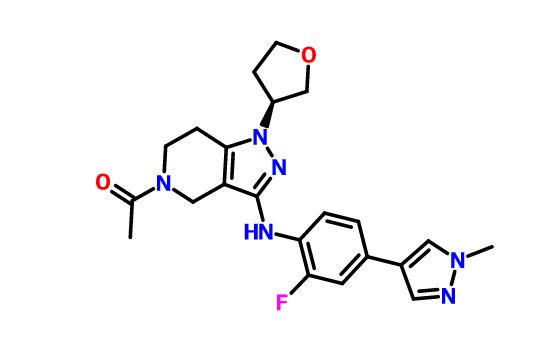
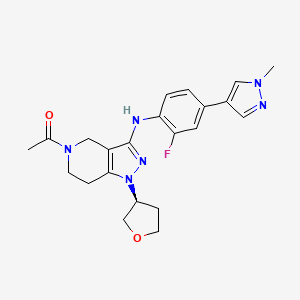
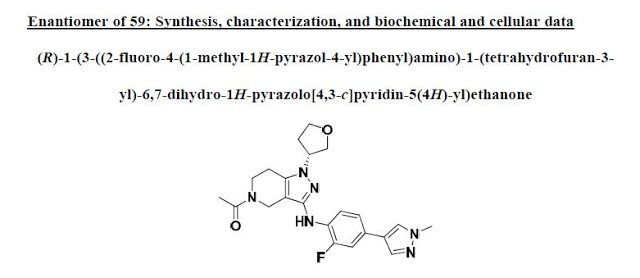
(S)-1-(3-((2-fluoro-4-(1-methyl-1H-pyrazol-4- yl)phenyl)amino)-1-(tetrahydrofuran-3-yl)-6,7-dihydro-1H-pyrazolo[4,3-c]pyridin- 5(4H)-yl)ethanone

1-[3-[2-fluoro-4-(1-methylpyrazol-4-yl)anilino]-1-[(3S)-oxolan-3-yl]-6,7-dihydro-4H-pyrazolo[4,3-c]pyridin-5-yl]ethanone

CAS 1936428-93-1

Molecular Formula: C22H25FN6O2
Molecular Weight: 424.471303 g/mol

GENENTECH, INC. [US/US]; 1 DNA Way South San Francisco, California 94080-4990 (US).
CONSTELLATION PHARMACEUTICALS, INC. [US/US]; 215 First Street Suite 200 Cambridge, Massachusetts 02142 (US)

ROMERO, F. Anthony; (US).
MAGNUSON, Steven; (US).
PASTOR, Richard; (US).
TSUI, Vickie Hsiao-Wei; (US).
MURRAY, Jeremy; (US).
CRAWFORD, Terry; (US).
ALBRECHT, Brian, K.; (US).
COTE, Alexandre; (US).
TAYLOR, Alexander, M.; (US).
LAI, Kwong Wah; (CN).
CHEN, Kevin, X.; (CN).
BRONNER, Sarah; (US).
ADLER, Marc; (US).
EGEN, Jackson; (US).
LIAO, Jiangpeng; (CN).
WANG, Fei; (CN).
CYR, Patrick; (US).
ZHU, Bing-Yan; (US).
KAUDER, Steven; (US)

Chromatin is a complex combination of DNA and protein that makes up chromosomes. It is found inside the nuclei of eukaryotic cells and is divided between heterochromatin (condensed) and euchromatin (extended) forms. The major components of chromatin are DNA and proteins. Histones are the chief protein components of chromatin, acting as spools around which DNA winds. The functions of chromatin are to package DNA into a smaller volume to fit in the cell, to strengthen the DNA to allow mitosis and meiosis, and to serve as a mechanism to control expression and DNA replication. The chromatin structure is controlled by a series of post-translational modifications to histone proteins, notably histones H3 and H4, and most commonly within the “histone tails” which extend beyond the core nucleosome structure. Histone tails tend to be free for protein-protein interaction and are also the portion of the histone most prone to post-translational modification. These modifications include acetylation, methylation, phosphorylation, ubiquitinylation, and SUMOylation. These epigenetic marks are written and erased by specific enzymes that place the tags on specific residues within the histone tail, thereby forming an epigenetic code, which is then interpreted by the cell to allow gene specific regulation of chromatin structure and thereby transcription.

Of all classes of proteins, histones are amongst the most susceptible to post-translational modification. Histone modifications are dynamic, as they can be added or removed in response to specific stimuli, and these modifications direct both structural changes to chromatin and alterations in gene transcription. Distinct classes of enzymes, namely histone acetyltransferases (HATs) and histone deacetylases (HDACs), acetylate or de-acetylate specific histone lysine residues (Struhl K., Genes Dev., 1989, 12, 5, 599-606).

Bromodomains, which are approximately 1 10 amino acids long, are found in a large number of chromatin-associated proteins and have been identified in approximately 70 human proteins, often adjacent to other protein motifs (Jeanmougin F., et al., Trends Biochem. Sc , 1997, 22, 5, 151-153; and Tamkun J.W., et al., Cell, 1992, 7, 3, 561-572).

Interactions between bromodomains and modified histones may be an important mechanism underlying chromatin structural changes and gene regulation. Bromodomain-containing proteins have been implicated in disease processes including cancer, inflammation and viral replication. See, e.g., Prinjha et al,, Trends Pharm. Sci., 33(3):146-153 (2012) and Muller et al , Expert Rev. , 13 (29): 1 -20 (September 201 1 ).

Cell-type specificity and proper tissue functionality requires the tight control of distinct transcriptional programs that are intimately influenced by their environment.

Alterations to this transcriptional homeostasis are directly associated with numerous disease states, most notably cancer, immuno-inflammation, neurological disorders, and metabolic diseases. Bromodomains reside within key chromatin modifying complexes that serve to control distinctive disease-associated transcriptional pathways. This is highlighted by the observation that mutations in bromodomain-containing proteins are linked to cancer, as well as immune and neurologic dysfunction. Hence, the selective inhibition of bromodomains across a specific family, such as the selective inhibition of a bromodomain of CBP/EP300, creates varied opportunities as novel therapeutic agents in human dysfunction.

There is a need for treatments for cancer, immunological disorders, and other

CBP/EP300 bromodomain related diseases.

PATENT

WO-2016086200

Scheme 1

Scheme 2

Scheme 3

Scheme 4

General procedure for Intermediates A & B

Intermediate A

Intermediate

General procedure for Intermediates F & G

Intermediate F

Intermediate G

Step 1:

(R)-tetrahydrofuran-3-yI methanesulfonate

To a solution of (^)-tetrahydrofuran-3-ol (25 g, 253.7 mmol) in DCM (250 mL) at 0 °C was added triethylamine (86 g, 851.2 mmol) and mesyl chloride (39 g, 340.48 mmol) dropwise. The mixture was stirred at room temperature for 12 h. The reaction was quenched with water (100 mL) and extracted with DCM (100 mL x 2). The combined organic layers were dried over anhydrous Na2S04, filtered and concentrated in vacuo to give the title compound (47 g, 99%) as a brown oil. Ή NMR (400 MHz, CDC13) δ 5.35 – 5.27 (m, 1H), 4.05 – 3.83 (m, 4H), 3.04 (s, 3 H), 2.28 – 2.20 (m, 2 H).

Step 2:

(S)-tert-butyl 3-bromo-l-(tetrahydrofuran-3-yI)-6,7-dihydro-li/-pyrazolo[43- c] pyridine-5(4H)-carboxylate

To a solution of tert-butyl 3-bromo-6,7-dihydro-lH-pyrazolo[4,3-c]pyridine-5(4H)-carboxylate (Intermediate A, 24.8 g, 82 mmol) in DMF (200 mL) was added Cs2C03 (79 g, 246 mmol) and (/?)-tetrahydrofuran-3-yl methanesulfonate (17.4 g, 98 mmol). The mixture was heated to 80 °C for 12 h. After cooling the reaction to room temperature, the mixture was concentrated in vacuo. The crude residue was purified by silica gel chromatography

(petroleum ether / EtOAc = from 10 : 1 to 3 : 1) to give the title compound (Intermediate F, 50 g, 71 %) as a yellow oil. Ή NMR (400 MHz, DMSO-i ) δ 4.97 – 4.78 (m, 1H), 4.13 (s, 2H), 3.98 – 3.86 (m, 2H), 3.81 – 3.67 (m, 2H), 3.56 (t, J= 5.6 Hz, 2H), 2.68 (t, J= 5.6 Hz, 2H), 2.33 – 2.08 (m, 2H), 1.38 (s, 9H).

Step 3:

(5)-l-(3-bromo-l-(tetrahydrofuran-3-yl)-6,7-dihydro-lH-pyrazoIo[4,3-c]pyridin-5(4//)- yl)ethanone

To a solution of (S)-tert-buty\ 3-bromo- 1 -(tetrahydrofuran-3-yl)-6,7-dihydro-lH-pyrazolo [4,3 -c]pyridine-5(4H)-carboxy late (29 g, 78 mmol) in DCM (300 mL) was added trifluroacetic acid (70 mL) dropwise. The mixture was stirred at room temperature for 2 h. The solvent was concentrated in vacuo and the crude residue was re -dissolved in DMF (100 mL). The mixture was cooled to 0 °C before triethylamine (30 g, 156 mmol) and acetic anhydride (8.7 g, 86 mmol) were added dropwise. The mixture was stirred at room temperature for an additional 2 h. The reaction was quenched with water (200 mL) at 0 °C and extracted with EtOAc (150 mL x 3). The combined organic layers were dried over anhydrous Na2S0 , filtered and concentrated in vacuo. The crude residue was purified by silica gel chromatography (DCM / MeOH = 30 : 1) to give the title compound (Intermediate G, 21.3 g, 87%) as a white solid. lH NMR (400 MHz, CDC13) δ 4.78 – 4.67 (m, 1H), 4.45 -4.29 (m, 2H), 4.15 – 4.06 (m, 2H), 3.96 – 3.92 (m, 2H), 3.88 – 3.70 (m, 2H), 2.71 – 2.67 (m, 2H), 2.38 – 2.34 (m, 2H), 2.16 (s, 3H).

PATENT

US-20160158207

Example 300 1-[3-[2-fluoro-4-(1-methylpyrazol-4- yl)anilino]-1-[(3S)-tetrahydrofuran-3- yl]-6,7-dihydro-4H-pyrazolo[4,3- c]pyridin-5-yl]ethanone
1H NMR (400 MHz, DMSO- d6) δ 8.03 (s, 1H), 7.83-7.68 (m, 3H), 7.36-7.33 (m, 1H), 7.32-7.21 (m, 1H), 4.88- 4.84 (m, 1H), 4.40-4.33 (m, 2H), 4.03-3.99 (m, 2H), 3.84- 3.67 (m, 7H), 2.79-2.64 (m, 2H), 2.26-2.21 (m, 2H), 2.08-2.05 (m, 3H) 425

General Procedure for Intermediates F & G


Step 1

(R)-tetrahydrofuran-3-yl methanesulfonate


      To a solution of (R)-tetrahydrofuran-3-ol (25 g, 253.7 mmol) in DCM (250 mL) at 0° C. was added triethylamine (86 g, 851.2 mmol) and mesyl chloride (39 g, 340.48 mmol) dropwise. The mixture was stirred at room temperature for 12 h. The reaction was quenched with water (100 mL) and extracted with DCM (100 mL×2). The combined organic layers were dried over anhydrous Na2SO4, filtered and concentrated in vacuo to give the title compound (47 g, 99%) as a brown oil. 1H NMR (400 MHz, CDCl3) δ 5.35-5.27 (m, 1H), 4.05-3.83 (m, 4H), 3.04 (s, 3H), 2.28-2.20 (m, 2H).

Step 2

(S)-tert-butyl 3-bromo-1-(tetrahydrofuran-3-yl)-6,7-dihydro-1H-pyrazolo[4,3-c]pyridine-5(4H)-carboxylate


      To a solution of tert-butyl 3-bromo-6,7-dihydro-1H-pyrazolo[4,3-c]pyridine-5(4H)-carboxylate (Intermediate A, 24.8 g, 82 mmol) in DMF (200 mL) was added Cs2CO3 (79 g, 246 mmol) and (R)-tetrahydrofuran-3-yl methanesulfonate (17.4 g, 98 mmol). The mixture was heated to 80° C. for 12 h. After cooling the reaction to room temperature, the mixture was concentrated in vacuo. The crude residue was purified by silica gel chromatography (petroleum ether/EtOAc=from 10:1 to 3:1) to give the title compound (Intermediate F, 50 g, 71%) as a yellow oil. 1H NMR (400 MHz, DMSO-d6) δ 4.97-4.78 (m, 1H), 4.13 (s, 2H), 3.98-3.86 (m, 2H), 3.81-3.67 (m, 2H), 3.56 (t, J=5.6 Hz, 2H), 2.68 (t, J=5.6 Hz, 2H), 2.33-2.08 (m, 2H), 1.38 (s, 9H).

Step 3

(S)-1-(3-bromo-1-(tetrahydrofuran-3-yl)-6,7-dihydro-1H-pyrazolo[4,3-c]pyridin-5(4H)-yl)ethanone


      To a solution of (S)-tert-butyl 3-bromo-1-(tetrahydrofuran-3-yl)-6,7-dihydro-1H-pyrazolo[4,3-c]pyridine-5(4H)-carboxylate (29 g, 78 mmol) in DCM (300 mL) was added trifluroacetic acid (70 mL) dropwise. The mixture was stirred at room temperature for 2 h. The solvent was concentrated in vacuo and the crude residue was re-dissolved in DMF (100 mL). The mixture was cooled to 0° C. before triethylamine (30 g, 156 mmol) and acetic anhydride (8.7 g, 86 mmol) were added dropwise. The mixture was stirred at room temperature for an additional 2 h. The reaction was quenched with water (200 mL) at 0° C. and extracted with EtOAc (150 mL×3). The combined organic layers were dried over anhydrous Na2SO4, filtered and concentrated in vacuo. The crude residue was purified by silica gel chromatography (DCM/MeOH=30:1) to give the title compound (Intermediate G, 21.3 g, 87%) as a white solid. 1H NMR (400 MHz, CDCl3) δ 4.78-4.67 (m, 1H), 4.45-4.29 (m, 2H), 4.15-4.06 (m, 2H), 3.96-3.92 (m, 2H), 3.88-3.70 (m, 2H), 2.71-2.67 (m, 2H), 2.38-2.34 (m, 2H), 2.16 (s, 3H).

OTHER ISOMER

Example 299 1-[3-[2-fluoro-4-(1-methylpyrazol-4- yl)anilino]-1-[(3R)-tetrahydrofuran-3- yl]-6,7-dihydro-4H-pyrazolo[4,3- c]pyridin-5-yl]ethanone
1H NMR (400 MHz, DMSO- d6) δ 8.03 (s, 1H), 7.83-7.67 (m, 3H), 7.39-7.34 (m, 1H), 7.26-7.21 (m, 1H), 4.87- 4.77 (m, 1H), 4.41-4.34 (m, 2H), 4.02-3.97 (m, 2H), 3.83 (s, 3H), 3.81-3.67 (m, 4H), 2.77-2.66 (m, 2H), 2.26- 2.22 (m, 2H), 2.08-2.05 (m, 3H) 425

PAPER

Abstract Image

The single bromodomain of the closely related transcriptional regulators CBP/EP300 is a target of much recent interest in cancer and immune system regulation. A co-crystal structure of a ligand-efficient screening hit and the CBP bromodomain guided initial design targeting the LPF shelf, ZA loop, and acetylated lysine binding regions. Structure–activity relationship studies allowed us to identify a more potent analogue. Optimization of permeability and microsomal stability and subsequent improvement of mouse hepatocyte stability afforded 59 (GNE-272, TR-FRET IC50 = 0.02 μM, BRET IC50 = 0.41 μM, BRD4(1) IC50 = 13 μM) that retained the best balance of cell potency, selectivity, and in vivo PK. Compound 59 showed a marked antiproliferative effect in hematologic cancer cell lines and modulates MYC expression in vivo that corresponds with antitumor activity in an AML tumor model.

Discovery of a Potent and Selective in Vivo Probe (GNE-272) for the Bromodomains of CBP/EP300

Genentech, Inc. 1 DNA Way, South San Francisco, California 94080, United States
Wuxi Apptec Co., Ltd., 288 Fute Zhong Road, Waigaoqiao Free Trade Zone, Shanghai 200131, People’s Republic of China
§ Constellation Pharmaceuticals, Inc. 215 First Street, Suite 200, Cambridge, Massachusetts 02142, United States
J. Med. Chem., Article ASAP
*Phone: +1-650-467-6384. E-mail: romero.frank@gene.com.

UNDESIRED R ISOMER

In a similar procedure to59, the title compound was prepared from (S)-tetrahydrofuran-3-yl
methanesulfonate and purified by Prep-TLC (DCM / MeOH = 15 : 1) to give the title
compound as a light yellow solid.

1H NMR (400 MHz, CDCl3) δ 7.76–7. 42 (m,1H), 7.68 (s, 1H), 7.53 (s, 1H), 7.20–7.12 (m, 2H), 5.86–5.77 (m, 1H), 4.79–4.69 (m, 1H),4.47–4.29 (m, 2H), 4.25–4.08 (m, 2H), 4.06–3.72 (m, 4H), 3.99 (s, 3H), 2.76–2.65 (m, 2H),
2.49–2.28 (m, 2H), 2.25–2.12 (m, 3H).

13C NMR (100 MHz, CDCl3) δ 169.81, 169.36,151.71 (d, J = 238.9 Hz), 145.51, 144.64, 137.83, 136.32, 135.89, 126.35, 121.41, 116.44 (d,J = 26.0 Hz), 111.88, 103.09 (d, J = 24.0 Hz), 71.94, 68.10, 57.65, 43.24, 42.24, 39.02, 37.83,32.49, 22.01.

LCMS M/Z (M+H) 425.

[α]27D +8.8 (c 0.78, CHCl3, 99% ee).

DESIRED S ISOMER

(S)-1-(3-((2-fluoro-4-(1-methyl-1H-pyrazol-4- yl)phenyl)amino)-1-(tetrahydrofuran-3-yl)-6,7-dihydro-1H-pyrazolo[4,3-c]pyridin- 5(4H)-yl)ethanone

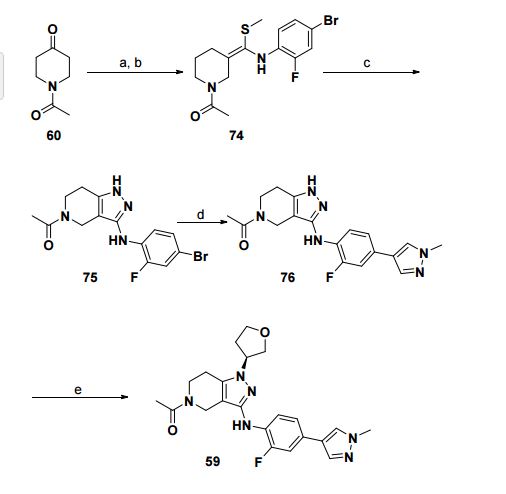
aReagents and conditions: (a) 4-bromo-2-fluoro-1-isothiocyanato-benzene, KOtBu, THF, rt (b) CH3I, 40 °C, 51%; (c) hydrazine monohydrate, EtOH, 85 °C; 96%; (d) 1-methyl-4-(4,4,5,5- tetramethyl-1,3,2-dioxaborolan-2-yl)pyrazole, dioxane / water, Na2CO3, Pd(dppf)Cl2, 100 °C, 63%; (e) (R)-tetrahydrofuran-3-yl methanesulfonate, Cs2CO3, DMF, 90 oC, 42%.

The crude residue was purified by silica gel chromatography (DCM / MeOH = 100:1) to give (S)-1-(3-((2-fluoro-4-(1- methyl-1H-pyrazol-4-yl)phenyl)amino)-1-(tetrahydrofuran-3-yl)-6,7-dihydro-1Hpyrazolo[4,3-c]pyridin-5(4H)-yl)ethanone as a light yellow solid.

1H NMR (400 MHz, CDCl3) δ 7.76–7.72 (m, 1H), 7.68 (s, 1H), 7.53 (s, 1H), 7.20–7.12 (m, 2H), 5.86–5.77 (m, 1H), 4.79–4.69 (m, 1H), 4.47–4.29 (m, 2H), 4.25–4.08 (m, 2H), 4.06– 3.72 (m, 4H), 3.99 (s, 3H), 2.76–2.65 (m, 2H), 2.49–2.28 (m, 2H), 2.25–2.12 (m, 3H).

13C NMR (100 MHz, CDCl3) δ 169.8, 169.4, 151.7 (d, J = 238.9 Hz), 145.5, 144.64, 137.83, 136.3, 135.9, 126.4, 121.4, 116.4 (d, J = 26.0 Hz), 111.9, 103.1 (d, J = 24.0 Hz), 71.9, 68.1, 57.7, 43.2, 42.2, 39.0, 37.8, 32.5, 22.0.

LCMS m/z (M+H) 425.

[α]27 D -11.0 (c 1.0, CHCl3, 99% ee).

HRMS m/z 425.2093 (M + H+ , C22H25FN6O2, requires 425.2057).

//////////GNE-272, Genentech, CBP, EP300, cancer, immune system regulation,  1936428-93-1

[H][C@@]1(CCOC1)N1N=C(NC2=C(F)C=C(C=C2)C2=CN(C)N=C2)C2=C1CCN(C2)C(C)=O

Identifying “green chemistry” industrialisation barriers through case-studies


DR ANTHONY MELVIN CRASTO Ph.D's avatarGreen Chemistry International

Nitesh Mehta

Nitesh Mehta

Convenor of Industrial Green Chemistry World and Founder – Director of Newreka Green Synth Technologies Pvt Ltd

nitesh.mehta@newreka.co.in

Identifying “green chemistry” industrialisation barriers through case-studies
– Mr. Nitesh Mehta, Founder Director, Newreka Green Synth Technologies Pvt. Ltd., India

View presentation

Image result for waitThe presentation will load below


///////green chemistry, industrialisation barriers,  case-studies, Nitesh Mehta, Founder Director, Newreka Green Synth Technologies Pvt Ltd, India

View original post

Green Solvent – A sustainable option – Dr. Denis Prat, SANOFI, France


DR ANTHONY MELVIN CRASTO Ph.D's avatarGreen Chemistry International

Prof. Andrea Larson

Dr. Denis Prat

Head of Process Safety & Automated Chemistry Chemistry & Biotechnology Development, SANOFI, France

Green Solvent – A sustainable option
– Dr. Denis Prat, Head of Process Safety & Environment, Chemistry & Biochemistry, SANOFI, France

View presentation

/////////Green Solvent, sustainable option, Denis Prat, SANOFI, France

View original post

Identification of an Orally Efficacious GPR40/FFAR1 Receptor Agonist from Zydus Cadila


Indian flag
str1
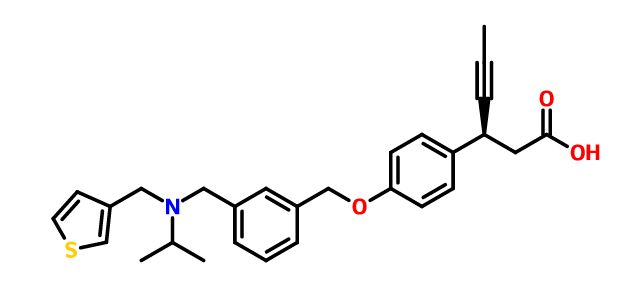
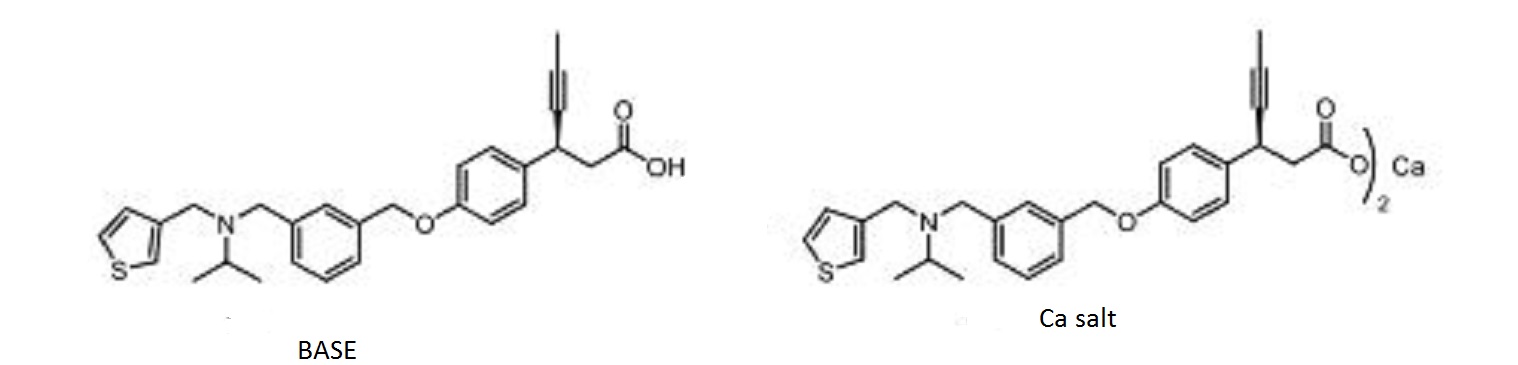
(S)-3-(4-((3-((isopropyl(thiophen-3- ylmethyl)amino)methyl)benzyl)oxy)phenyl)hex-4-ynoic acid
str1
Calcium (S)-3-(4-((3-((isopropyl(thiophen-3-yl methyl)amino)methyl)benzyl)oxy)phenyl)hex-4-ynoate
 

The compounds of theese type lower blood glucose, regulate peripheral satiety, lower or modulate triglyceride levels and/or cholesterol levels and/or low-density lipoproteins (LDL) and raises the high-density l ipoproteins (HDL) plasma levels and hence are useful in combating different medical conditions, where such lowering (and raising) is beneficial. Thus, it could be used in the treatment and/or prophylaxis of obesity, hyperlipidemia, hypercholesteremia, hypertension, atherosclerotic disease events, vascular restenosis, diabetes and many other related conditions.

The compounds of are useful to prevent or reduce the risk of developing atherosclerosis, which leads to diseases and conditions such as arteriosclerotic cardiovascular diseases, stroke, coronary heart diseases, cerebrovascular diseases, peripheral vessel diseases and related disorders. -These compounds  are useful for the treatment and/or prophylaxis of metabolic disorders loosely defined as Syndrome X. The characteristic features of Syndrome X include initial insulin resistance followed by hyperinsulinemia, dyslipidemia and impaired glucose tolerance. The glucose intolerance can lead to non-insulin dependent diabetes mel litus (N I DDM, Type 2 diabetes), which is characterized by hyperglycemia, which if not controlled may lead to diabetic complications or metabolic disorders caused by insulin resistance. Diabetes is no longer considered to be associated only with glucose metabol ism, but it affects anatomical and physiological parameters, the intensity of which vary depending upon stages/duration and severity of the diabetic state. The compounds of this invention are also useful in prevention, halting or slowing progression or reducing the risk of the above mentioned disorders along with the resulting secondary diseases such as cardiovascular diseases, l ike arteriosclerosis, atherosclerosis; diabetic retinopathy, diabetic neuropathy and renal disease including diabetic nephropathy, glomerulonephritis, glomerular sclerosis, nephrotic syndrome, hypertensive nephrosclerosis and end stage renal diseases, like microalbuminuria and albuminuria, which may be result of hyperglycemia or hyperinsulinemia.

Diabetes mellitus is a serious disease affl icting over 1 00 mi l lion people worldwide. In the United States, there are more than 12 mill ion diabetics, with 600,000 new cases diagnosed each year.

Diabetes mellitus is a diagnostic term for a group of disorders characterized by abnormal glucose homeostasis resulting in elevated blood sugar. There are many- types of diabetes, but the two most common are Type 1 (also referred to as insulin- dependent diabetes mellitus or IDDM) and Type II (also referred to as non- insulin-dependent diabetes mellitus or NIDDM).

The etiology of the different types of diabetes is not the same; however, everyone with diabetes has two things in common: overproduction of glucose by the liver and little or no ability to move glucose out of the blood, into the cells where it becomes the body’s primary fuel.

People who do not have diabetes rely on insulin, a hormone made in the pancreas, to move glucose from the blood into the cells of the body. However, people who have diabetes either don’t produce insulin or can’t efficiently use the insulin they produce; therefore, they can’t move glucose into their cells. Glucose accumulates in the blood creating a condition called hyperglycemia, and over time, can cause serious health problems.

Diabetes is a syndrome with interrelated metabolic, vascular, and neuropathic components. The metabolic syndrome, generally characterized by hyperglycemia, comprises alterations in carbohydrate, fat and protein metabolism caused by absent or markedly reduced insulin secretion and/or ineffective insulin action. The vascular syndrome consists of abnormalities in the blood vessels leading to cardiovascular, retinal and renal complications. Abnormal ities in the peripheral and autonomic nervous systems are also part of the diabetic syndrome.

About 5% to 10% of the people who have diabetes have IDDM. These individuals don’t produce insulin and therefore must inject insulin to keep their blood glucose levels normal . IDDM is characterized by low or undetectable levels of endogenous insulin production caused by destruction of the insulin-producing β cells of the pancreas, the characteristic that most readily distinguishes IDDM from NIDDM. IDDM, once termed juvenile-onset diabetes, strikes young and older adults alike.

Approximately 90 to 95% of people with diabetes have Type II (or NIDDM). NIDDM subjects produce insulin, but the cells in their bodies are insulin resistant: the cells don’t respond properly to the hormone, so glucose accumulates i n their blood. NIDDM is characterized by a relative disparity between endogenous insulin production and insulin requirements, leading to elevated blood glucose levels. In contrast to IDDM, there is always some endogenous insulin production in NIDDM; many NIDDM patients have normal or even elevated blood insul in levels, whi le other NIDDM patients have inadequate insul in production ( otwein, R. et al. N. Engl. J. Med. 308, 65-71 ( 1983)). Most people diagnosed with NIDDM are age 30 or older, and half of all new cases are age 55 and older. Compared with whites and Asians, NIDDM is more common among Native Americans, African-Americans, Latinos, and Hispanics. In addition, the onset can be insidious or even clinically non-apparent, making diagnosis difficult.

The primary pathogenic lesion on NIDDM has remained elusive. Many have suggested that primary insulin resistance of the peripheral tissues is the initial event. Genetic epidemiological studies have supported this view. Similarly, insulin secretion abnormalities have been argued as the primary defect in NIDDM. It is l ikely that both phenomena are important contributors to the disease process (Rimoin, D. L., et. al. Emery and Rimoin’s Principles and Practice of Medical Genetics 3rd Ed. 1 : 1401 – 1402 ( 1996)).

Many people with NIDDM have sedentary lifestyles and are obese; they weigh approximately 20% more than the recommended weight for their height and build. Furthermore, obesity is characterized by hyperinsul inemia and insul in resistance, a feature shared with NIDDM, hypertension and atherosclerosis.

The G-protein -coupled receptor GPR 40 functions as a receptor for long-chain free fatty acids (FFAs) in the body and as such is impl icated in a large number of metabolic conditions in the body. For example it has been alleged that a GPR 40 agonist promotes insulin secretion whilst a GPR 40 antagonist inhibits insulin secretion and so depending upon the circumstances the agonist and antagonist may be useful as therapeutic agents for the number of insul in related conditions such as type 2 diabetes, obesity, impaired glucose tolerance, insul in resistance, neurodegenerative diseases and the like.

There is increasing evidences that lipids can also serve as extracel lular l igands for a specific class of receptors and thus act as “nutritional sensors” (Nolan CJ et al. J. Clinic. Invest., 2006, 1 1 6, 1 802- 1 812The free fatty acids can regulate cell function. Free fatty acids have demonstrated as ligands for orphan G protein-coupled receptors (GPCRs) and have been proposed to play a critical role in physiological glucose homeostasis.

GPR40, GPR 120, GPR41 and GPR43 exemplify a growing number of GPCRs that have been shown to be activated by free fatty acids. GPR40 and GPR 120 are activated by medium to long-chain free fatty acids whereas GPR 41 and GPR 43 are activated by short-chain fatty acid (Brown AJ et al, 2003).

GPR 40 is highly expressed on pancreatic β-cells, and enhances glucose- stimulated insulin secretion {Nature, 2003, 422, 1 73- 1 76, J. Bio. Chem. 2003, 278, 1 1303- 1 13 1 1 , Biochem. Biophys. Res. Commun. 2003, 301, 406-4 10).

Free fatty acids regulate insulin secretion from pancreatic β cells through GPR40 is reported {Lett, to Nature 2003, 422, 1 73- 1 76).

GlaxoSmith line Research and Development, US published an article in Bioorg. Med. Chem. Lett. 2006, 16, 1840- 1 845 titled Synthesis and activity of small molecule GPR40 agonists. (Does this describe GW9508?)Another article titled Pharmacological regulation of insul in secretion in ΜΓΝ6 cells through the fatty – acid receptor GPR40: Identification of agonist and antagonist small molecules is reported in

Br. J. Pharmacol. 2006, 148, 619-928 from GlaxoSmithKl i ne. USA (Does this describe GW9508?) ‘

GW 9508.

Solid phase synthesis and SAR of small molecule agonists for the. GPR 40 receptor is published in Bioorg. Med. Chem. Lett. 2007, 16, 1 840- 1 845 by Glaxo Smith line Res. 8c Dev. USA, including those with the following structures.

Johnson & Johnson Pharmaceutical Research and development , USA published

Synthesis and Biological Evaluation of 3-Aryl-3-(4-phenoxy)-propanoic acid as a Novel Series of G-protein -coupled receptor 40 agonists J. Med. Chem. 2007,

76, 2807-2817)

National Institutes of Health, Bethesda, Maryland publ ished “Bidirectional Iterative Approach to the Structural Delineation of the Functional Chemo print in GPR 40 for agonist Recognition (J. Med. Chem. 2007. 50, 298 1 -2990).

Discov roglucinols of the following formula

as a new class of GPR40 (FFAR 1 ) agonists has been publ ished by Piramal Li fe Sciences, Ltd. in Bioorg. Med. Chem. Lett. 2008, 1 8, 6357-6361

Synthesis and SAR of 1 ,2,3,4-tctrahydroisoquinoline- l -ones as novel G-protein coupled receptor40(GPR40) antagonists of the following formula has been published in Bioorg. Med. Chem. Lett. 2009, 79, 2400-2403 by Pfizer

Piramal Life Sciences Ltd. published “Progress in the discovery and development of small molecule modulators of G-protei n coupled receptor 40(GPR40/FFA 1 /FFAR1 ), an emerging target for type 2 diabetes” in Exp. Opin. Therapeutic Patents 2009, 19(2), 237 -264.

There was a report published in Zhonggno Bingli Shengli ^Zazhi 2009, 25(7), 1376- 1380 from Sun Yat. Sen University, Guangzhou, which mentions the role GPR 40 on lipoapoptosis.

A novel class of antagonists for the FFA’s receptor GPR 40 was published in Biochem. Biophy. Res. Commun. 2009 390, 557-563.

N41 (DC260126)

Merck Res. Laboratories published “Discovery of 5-aryloxy-2,4-thiazolidinediones as potent GPR40 agonists” having the following formula in Bioorg. Med. Chem. Lett. 2010 20, 1298- 1 301

Discovery of TA -875, a potent, selective, and oral ly bioavai lable G PR 40 agonist is reported by Takeda Pharmaceutical Ltd. ACS Med. Chem. Lett. 2010,

7(6), 290-294

In another report from University of Southern Denmark” Structure -Activity of Dihydrocinnamic acids and discovery of potent FFA l (GPR40) agonist TUG-469″ is reported in ACS Me -349.

The free fatty acid 1 receptor (FFAR 1 or GPR40), which is highly expressed on pancreatic β-cells and amplifies glucose-stimulated insul in secretion, has emerged as an attractive target for the treatment of type 2 diabetes (ACS Med. Chem. Lett. 2010, 1 (6), 290-294).

G-protein coupled receptor (GPR40) expression and its regulation in human pancreatic islets: The role of type 2 diabetes and fatty acids is reported in Nutrition Metabolism & Cardiovascular diseases 2010, 2(9( 1 ), 22-25

Ranbaxy reported “Identification of Berberine as a novel agonist of fatty acid receptor GPR40” in Phytother Res. 2010, 24, 1260-63.

The following substituted 3-(4-aryloxyaryI)-propanoic acids as GPR40 agonists are reported by Merck Res. Lab. in Bioorg. ed. Chem. Lett. 201 1 , 21, 3390-3394

4 EC50=0.970 μΜ 5. EC50=2.484 μΜ

CoMSIA study on substituted aryl alkanoic acid analogs as GPR 40 agonists is reported Chem. Bio. Drug. Des. 201 1 , 77, 361 -372

Takeda further published “Design, Synthesis and biological activity of potential and orally available G-protein coupled receptor 40 agonists” in J. Med. Chem. 201 1 , 54(5), 1365- 1 378.

Amgen disclosed a potent oral ly bioavai lable GPR 40 agonist AMG-837 in Bioorg. Med. Chem. Lett.

Discovery of phenylpropanoic acid derivatives containing polar functional ities as Potent and orally bioavailable G protein-coupled receptor 40 Agonist for the treatment of type 2 Diabetes is reported in J. Med. Chem. 2012, 55, 3756-3776 by Takeda.

Discovery of AM- 1638: A potent and orally bioavailable GPR40/FFA 1 full agonist is reported in ACS Med. Chem. Lett. 2012, 3(9), 726-730.


Ranjit Desai

Ranjit Desai

Sr Vice President. Head-Chemistry
Zydus Research Centre, Ahmedabad · Chemistry

Sameer Agarwal

Sameer Agarwal

Cadila Healthcare Ltd., India

Sameer Agarwal has obtained Master’s in Chemistry from IIT, Delhi and was awarded DAAD (German Govt. Scholarship) fellowship to purse research project at Karlsruhe University, Germany. He has received PhD degree from Technical University, Dresden, Germany in the field of Synthetic and bio-organic chemistry under direction of Prof. Dr. Hans-Joachim Knölker, FRSC, a well-known scientist of present times for his contribution towards Alkaloid Chemistry. He worked as Research Scientist (Post-Doc), JADO Technologies, (collaboration with Max Planck Institute (MPI) of Molecular Cell Biology and Genetics and Chemsitry Department, Technical University), Germany. He then decided to return to his home country and working with Zydus Research Centre, Cadila Healthcare Ltd., Ahmedabad as Principal Scientist / Group Leader in the area of basic drug discovery and his research interest includes discovery of cardio metabolic, anti-inflammatory and oncology drugs. He has large number of publications in international journals and patents and is a reviewer of many prestigious journals including American Chemical Society.

Paper

Identification of an Orally Efficacious GPR40/ FFAR1 Receptor Agonist

ArticleinACS Medicinal Chemistry Letters · September 2016
DOI: 10.1021/acsmedchemlett.6b00331
Abstract Image

GPR40/FFAR1 is a G protein-coupled receptor predominantly expressed in pancreatic β-cells and activated by long-chain free fatty acids, mediating enhancement of glucose-stimulated insulin secretion. A novel series of substituted 3-(4-aryloxyaryl)propanoic acid derivatives were prepared and evaluated for their activities as GPR40 agonists, leading to the identification of compound 5, which is highly potent in in vitro assays and exhibits robust glucose lowering effects during an oral glucose tolerance test in nSTZ Wistar rat model of diabetes (ED50 = 0.8 mg/kg; ED90 = 3.1 mg/kg) with excellent pharmacokinetic profile, and devoid of cytochromes P450 isoform inhibitory activity

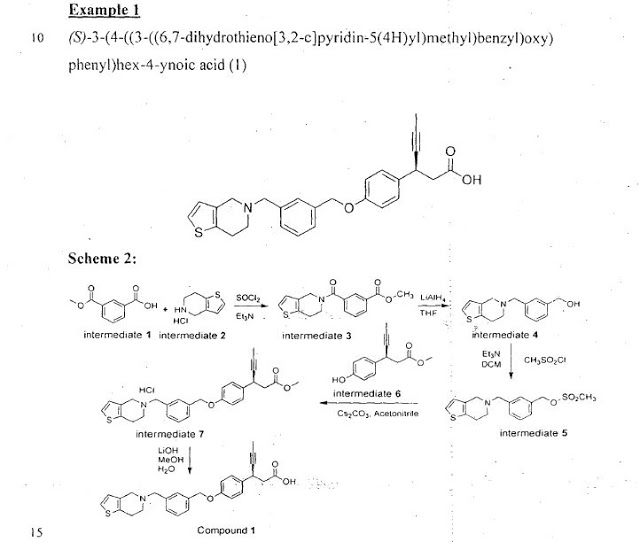
Synthesis of compound 5 is depicted in Scheme 1a.

The reductive amination1 of commercially available 3-thiophene-aldehyde (3) and isopropyl amine using sodium triacetoxyborohydride resulted in secondary amine intermediate 4. Compound 4 on further reductive amination under similar conditions with aldehyde intermediate, (S)-3-(4-((3-formylbenzyl)oxy)phenyl)hex-4-ynoic acid (8), afforded 2d in high yields. The aldehyde intermediate, 8 was obtained from (S)-3-(4-hydroxyphenyl)hex-4-ynoic acid (6) as shown in Scheme 1b. Acid 6 was synthesized via 5-step reported procedure using commercially available 4-hydroxybenzaldehyde and Meldrum’s acid.2 Resolution of racemic acid 6 was accomplished via diastereomeric salt formation with (1S,2R)-1-amino-2-indanol followed by salt break with aqueous acid to furnish compound 6. Treatment of 6 with of 40% aqueous tetrabutylphosphonium hydroxide (nBu4POH) in THF, followed by addition of 3-formyl benzyl bromide (7), afforded aldehyde intermediate 8. Compound 2d was further converted to its corresponding calcium salt (5) in two-step sequence with excellent chemical purity.

Scheme 1a. Synthesis of Compounds 2d and 5. Reagent and Conditions: (a) CH(CH3)2NH2, NaB(OAc)3H, CH3COOH, dry THF, 0 ᵒC to r.t., 16 h; (b) Comp 8, NaB(OAc)3H, CH3COOH, dry THF, 0 ᵒC to r.t., 16 h; (c) NaOH, MeCN/H2O, r.t., 3 h; (d) CaCl2, MeOH/H2O, r.t., 16 h.

BASE

(S)-3-(4-((3-((isopropyl(thiophen-3- ylmethyl)amino)methyl)benzyl)oxy)phenyl)hex-4-ynoic acid (1.557 g, 3.34 mmol, 43.0 % yield) as wax solid.

1H NMR (400 MHz, DMSO-d6): δ = 12.35 (br s, 1H), 7.44 (q, J = 3.2 Hz, 2H), 7.32 – 7.24 (m, 6H), 7.04 (d, J = 4.8 Hz, 1H), 6.94 (d, J = 8.4 Hz, 2H), 5.06 (s, 2H), 3.93 (d, J = 2.4 Hz, 1H), 3.51 (d, J = 8.8 Hz, 4H), 2.84 (sept, J = 6.4 Hz, 1H), 2.57 (d, J = 8 Hz, 2H), 1.77 (d, J = 2.4 Hz, 3H), 1.01 (d, J = 6.4 Hz, 6H);

13C NMR and DEPT: DMSO-d6, 100MHz):- δ = 172.35 (C), 157.63 (C), 142.13 (C), 141.44 (C), 137.42 (C), 133.93 (C), 128.73 (CH), 128.64 (CH), 128.43 (CH), 127.99 (CH), 127.73 (CH), 126.28 (CH), 122.21 (CH), 115.10 (CH), 81.16 (C), 78.52 (C), 69.69 (CH2), 52.90 (CH2), 48.64 (CH), 48.49 (CH2), 43.44 (CH2), 33.15 (CH), 17.92 (CH3), 3.66 (CH3);

MS (EI): m/z (%) = 462.35 (100) (M+H) + ;

IR (KBr): ν = 3433, 2960, 2918, 2810, 1712, 1608, 1510, 1383, 1240, 1174, 1109, 1018 cm-1 .

CA SALT

calcium (S)-3-(4-((3-((isopropyl(thiophen-3-yl methyl)amino)methyl)benzyl)oxy)phenyl)hex-4-ynoate (1.51 g, 1.536 mmol, 46% yield) as white powder. mp: 124.5 o C;

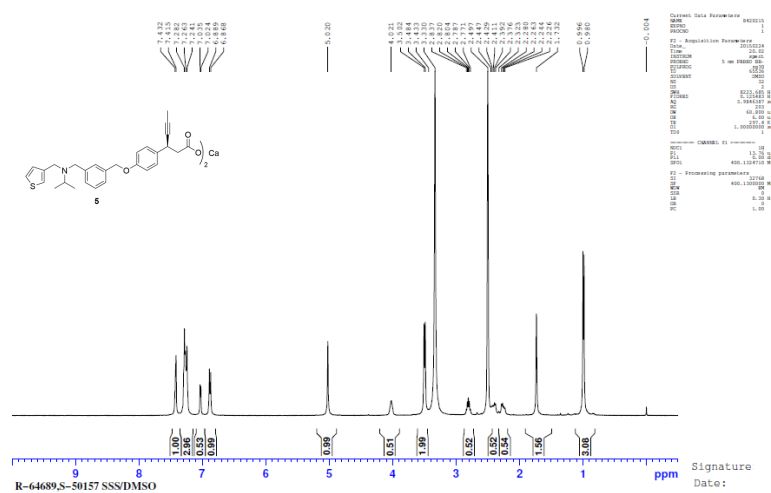
1H NMR (400 MHz, DMSO-d6): δ = 7.43 – 7.42 (m, 2H), 7.28 – 7.24 (m, 6H), 7.04 (d, J = 4.4 Hz, 1H), 6.89 (d, J = 8.4 Hz, 2H), 5.02 (s, 2H), 4.02 (s, 1H), 3.50 (d, J = 7.2 Hz, 4H), 2.84 – 2.77 (sept, J = 6.4 Hz, 1H), 2.43 (dd, J1 = 6.8 Hz, J2 = 7.2 Hz, 1H), 2.28 (dd, J1 = 6.8 Hz, J2 = 7.2 Hz, 1H), 1.73 (s, 3H), 0.99 (d, J = 6.4 Hz, 6H);

13C NMR and DEPT (100 MHz, DMSO-d6): δ = 177.78 (C), 157.23 (C), 142.11 (C), 141.4 (C), 137.46 (C), 135.81 (C), 128.83 (CH), 128.62 (CH), 128.40 (CH), 127.94 (CH), 127.69 (CH), 126.26 (CH), 122.18 (CH), 114.77 (CH), 83.18 (C), 77.32 (C), 69.66 (CH2), 52.89 (CH2), 48.59 (CH), 48.48 (CH2), 46.86 (CH2), 33.52 (CH), 17.88 (CH3), 3.78 (CH3);

MS (EI): m/z (%) = 462.05 (100) (M+H)+ ;

ESI-Q-TOF-MS: m/z [M+H]+ calcd for [C28H31NO3S + H]+ : 462.6280; found: 462.4988;

IR (KBr): ν = 3435, 2960, 2918, 2868, 2818, 1608, 1550, 1508, 1440, 1383, 1359, 1240 cm-1 ;

HPLC (% Purity) = 99.38%; Calcium Content (C56H60CaN2O6S2) Calcd.: 4.17%. Found: 3.99%.

 COMPD Ca salt

Calcium (S)-3-(4-((3-((isopropyl(thiophen-3-yl methyl)amino)methyl)benzyl)oxy)phenyl)hex-4-ynoate

Identification of an Orally Efficacious GPR40/FFAR1 Receptor Agonist

Zydus Research Centre, Cadila Healthcare Ltd., Sarkhej-Bavla N.H. No. 8 A, Moraiya, Ahmedabad-382 210, India
ACS Med. Chem. Lett., Article ASAP
DOI: 10.1021/acsmedchemlett.6b00331
*(S.A.) E-mail: sameeragarwal@zyduscadila.com or sameer_ag@yahoo.com., *(R.C.D.) E-mail: ranjitdesai@zyduscadila.com. Fax:+91-2717-665355. Tel: +91-2717-665555.
Ranjit Desai

Sr Vice President, Head Chemistry

Zydus Cadila

2012 – Present (4 years)Zydus Research Centre, Ahmedabad, India

Pankaj Patel, chairman and MD, Cadila Healthcare Ltd
Dr. Mukul Jain

Senior Vice President at Zydus Research Centre

Prashant Deshmukh

Prashant Deshmukh

Research Officer at Zydus Cadila

Dr. Poonam Giri

Dr. Poonam Giri

Principal Scientist at Zydus Research Centre

Bhadresh Rami

Bhadresh Rami

Debdutta Bandyopadhyay

Debdutta Bandyopadhyay

Senior General manager at Zydus Research Centre

Suresh Giri

Suresh Giri

Research Scientist

 References
1. Abdel-Magid, A. F.; Carson, K. G.; Harris, B. D.; Maryanoff, C. A.; Shah, R. D. Reductive Amination of Aldehydes and Ketones with Sodium Triacetoxyborohydride. Studies on Direct and Indirect Reductive Amination Procedures. J. Org. Chem., 1996, 61 (11), 3849–3862.
2. Walker, S. D.; Borths, C. J.; DiVirgilio, E.; Huang, L.; Liu, P.; Morrison, H.; Sugi, K.; Tanaka, M.; Woo, J. C. S.; Faul, M. M. Development of a Scalable Synthesis of a GPR40 Receptor Agonist. Org. Process Res. Dev. 2011, 15, 570–580.
3. Desai, R. C., Agarwal, S. Novel Heterocyclic Compounds, Pharmaceutical Compositions and Uses Thereof. Indian Pat. Appl. 2025/MUM/2015, 25 May 2015.
4. Cheng, Z., Garvin, D., Paguio, A., Stecha, P., Wood, K., & Fan, F. Luciferase Reporter Assay System for Deciphering GPCR Pathways. Current Chemical Genomics, 2010, 4, 84–91. http://doi.org/10.2174/1875397301004010084
5. Arkin, M. R., Connor, P. R., Emkey, R., et al. FLIPR™ Assays for GPCR and Ion Channel Targets. 2012 May 1 [Updated 2012 Oct 1]. In: Sittampalam, G. S., Coussens, N. P., Nelson, H., et al., editors. Assay Guidance Manual [Internet]. Bethesda (MD): Eli Lilly & Company and the National Center for Advancing Translational Sciences; 2004. Available from: http://www.ncbi.nlm.nih.gov/books/NBK92012/
6. Garbison, K. E., Heinz, B. A., Lajiness, M. E. IP-3/IP-1 Assays. 2012 May 1. In: Sittampalam, G. S., Coussens, N. P., Nelson, H., et al., editors. Assay Guidance Manual [Internet]. Bethesda (MD): Eli Lilly & Company and the National Center for Advancing Translational Sciences; 2004. Available from: http://www.ncbi.nlm.nih.gov/books/NBK92004/
7. Milić, A., Mihaljević, V.B., Ralić, J. et al. A comparison of in vitro ADME properties and pharmacokinetics of azithromycin and selected 15-membered ring macrolides in rodents. Eur J Drug Metab Pharmacokinet, 2014, 39, 263. doi:10.1007/s13318-013-0155-8
8. Bell, R. H.; Hye, R. J. Animal models of diabetes mellitus: physiology and pathology. J. Surg. Res. 1983, 35, 433-460.
9. Shafrir, E. Animal models of non insulin dependent diabetes. Diabetes Metab Rev. 1992, 8, 179- 208.


Paper
Development of a Scalable Synthesis of a GPR40 Receptor Agonist
Chemical Process Research and Development, Amgen Inc., Thousand Oaks, California 91320, United States
Org. Process Res. Dev., 2011, 15 (3), pp 570–580
*Tel: 805-313-5152. Fax: 805-375-4532. E-mail: walkers@amgen.com.
Abstract Image

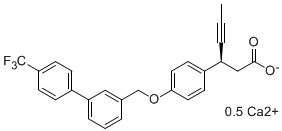
Early process development and salt selection for AMG 837, a novel GPR40 receptor agonist, is described. The synthetic route to AMG 837 involved the convergent synthesis and coupling of two key fragments, (S)-3-(4-hydroxyphenyl)hex-4-ynoic acid (1) and 3-(bromomethyl)-4′-(trifluoromethyl)biphenyl (2). The chiral β-alkynyl acid 1 was prepared in 35% overall yield via classical resolution of the corresponding racemic acid (±)-1. An efficient and scalable synthesis of (±)-1 was achieved via a telescoped sequence of reactions including the conjugate alkynylation of an in situ protected Meldrum’s acid derived acceptor prepared from 3. The biaryl bromide 2 was prepared in 86% yield via a 2-step Suzuki−Miyaura coupling−bromination sequence. Chemoselective phenol alkylation mediated by tetrabutylphosphonium hydroxide allowed direct coupling of 1 and 2 to afford AMG 837. Due to the poor physiochemical stability of the free acid form of the drug substance, a sodium salt form was selected for early development, and a more stable, crystalline hemicalcium salt dihydrate form was subsequently developed. Overall, the original 12-step synthesis of AMG 837 was replaced by a robust 9-step route affording the target in 25% yield.

Image result for AMG 837
CAS [1291087-14-3] AMG 837
 Image result for AMG 837
“Enantioselective Synthesis of a GPR40 Agonist AMG 837 via Catalytic Asymmetric Conjugate Addition of Terminal Alkyne to α,β-Unsaturated Thioamide” Yazaki, R.; Kumagai, N.; Shibasaki, M. Org. Lett. 2011, 13, 952.   highlighted by Synfacts 2011, 6, 586.
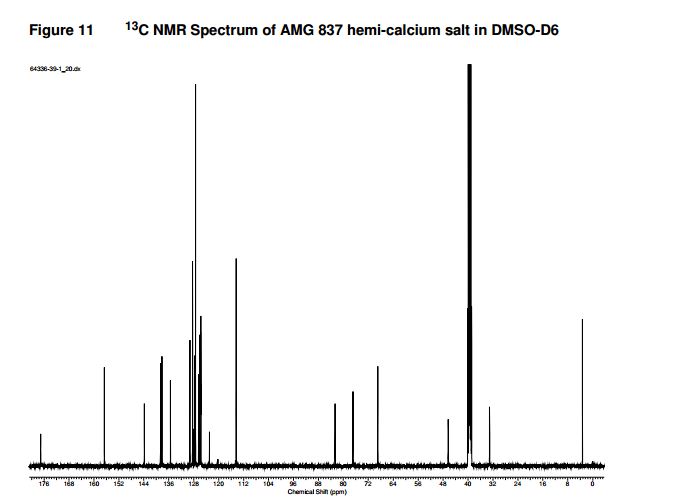
NMR

/////////fatty acids, FFAR1 GPR40, GPR40 agonist, insulin secretion, type 2 diabetes, GPR40/FFAR1 Receptor Agonist, ZYDUS CADILA
c1(ccc(cc1)OCc2cc(ccc2)CN(Cc3ccsc3)C(C)C)[C@H](CC(=O)O[Ca]OC(C[C@@H](c4ccc(cc4)OCc5cc(ccc5)CN(Cc6ccsc6)C(C)C)C#CC)=O)C#CC
c1(ccc(cc1)OCc2cc(ccc2)CN(Cc3ccsc3)C(C)C)[C@H](CC(=O)O)C#CC

Photoinduced Conversion of Antimelanoma Agent Dabrafenib to a Novel Fluorescent BRAFV600E Inhibitor


Abstract Image

str1

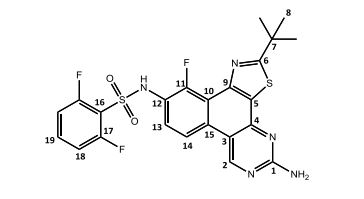
N-(5-amino-2-tert-butyl)-11-fluorbenzol[f]thiazol-[4,5-h]-quinazolin-10-yl)-2,6-difluorbenzolsulfonamide = Dabrafenib_photo (2)

C23H18F3N5O2S2 (Mr = 517.09)

Solution of 5 mg (9.6 μmol) dabrafenib in 2 ml THF was irradiated at 365 nm with 5.4 W for 2 min. This procedure was repeated 18 times at room temperature. The reaction batches were combined. The total initial weight of dabrafenib was 101 mg (190 μmol). The solvent was removed under reduced pressure and the residue was purified by the flash chromatography (SiO2 reversed phase, MeOH/water gradient 50:50 to 100:0) to give compound 2 as a yellowish solid (36.2 mg, 70.0 μmol, yield: 37%).

1H-NMR (DMSO-d6 , 300 MHz): δ = 1.52 (s, 9 H, H-8), 7.28 (m, 2 H, NH2), 7.28 (ddd, 5 J = 0.4 Hz, 4 J = 1.7 Hz, 3 J = 8.5 Hz, 3 J = 8.9 Hz, 2 H, H-18), 7.59 (dd, 3 J = 7.4 Hz, 3 J = 7.8 Hz, 1 H, H-13), 7.71 (tt, 4 J = 6.1 Hz, 3 J = 8.5 Hz, 1 H, H-19), 8.56 (dd, 4 J = 0.9 Hz, 3 J = 9.3 Hz, 1 H, H-14), 9.79 (s, 1 H, H-2), 11.01 (s, 1 H, NH) ppm.

13C-NMR (DMSO-d6 , 300 MHz): δ = 30.4 (s, C-8), 38.3 (s, C-7), 110.9 (d, 4 JCF = 1.6 Hz, C-3), 113.4 (dd, 2 JCF = 22.7 Hz, 2 JCH = 3.5 Hz, C-18), 114.6 (d, 3 JCF = 10.3 Hz, C-9), 117.4 (d, 2 JCF = 16.1 Hz, C-16), 117.6 (dd, 4 JCF = 0.54 Hz, 2 JCH = 4.4 Hz, C-13), 120.8 (d, 2 JCF = 12.3 Hz, C-10), 125.4 (s, C-13), 129.3 (d, 3 JCF = 3.9 Hz, C-15), 130.6 (s, C-5), 135.9 (tt, 3 JCF = 10.9 Hz, 2 JCH = 3.3 Hz, C-19), 148.8 (dd, 2 JCF = 0.54 Hz, 2 JCH = 7.2 Hz, C-12), 149.2 (s, C-4), 150.1 (s, C-11), 157.1 160.5 (dd, 3 JFF = 257.3 Hz, 2 JCF = 3.61 Hz, C-4), 157.9 (s, C-2), 162.1 (s, C-1), 184.0 (s, C-6) ppm.

15N-HMBC (DMSO-d6 , 300 MHz): δ = 9.79/-119.60, 11.01/-268.37 ppm. 19F-NMR (DMSO-d6 , 300 MHz): δ = -121.03 (s, 1 F, F-11), -107.18 (m, 2 F, F-17) ppm.

HRMS (EI, 205 °C, THF): m/z = 517.0849 [M]+ .

LC-MS (ESI, 70 eV, MeOH): tR = 9.3 min; m/z (%) = 518.1 (100) [M+H]+

IR (ATR):  ̃ = 3490 (N-H), 3176 (arom. C-H), 2926 (C-H3), 1696 (N=N), 1613 (N-H), 1587, 1522, 1488, 1469 (arom. C=C), 1342 (sulfonamide), 1277, 1240, 1174 (C-F) cm-1 .

Photoinduced Conversion of Antimelanoma Agent Dabrafenib to a Novel Fluorescent BRAFV600E Inhibitor

Institute of Pharmacy, University of Kiel, Gutenbergstr. 76, D-24118 Kiel, Germany
ACS Med. Chem. Lett., Article ASAP
DOI: 10.1021/acsmedchemlett.6b00340
Publication Date (Web): September 20, 2016
Copyright © 2016 American Chemical Society
*E-mail: cpeifer@pharmazie.uni-kiel.de. Tel: +49-431-880-1137.

ACS Editors’ Choice – This is an open access article published under an ACS AuthorChoice License, which permits copying and redistribution of the article or any adaptations for non-commercial purposes.

Abstract

Dabrafenib (Tafinlar) was approved in 2013 by the FDA as a selective single agent treatment for patients with BRAFV600E mutation-positive advanced melanoma. One year later, a combination of dabrafenib and trametinib was used for treatment of BRAFV600E/K mutant metastatic melanoma. In the present study, we report on hitherto not described photosensitivity of dabrafenib both in organic and aqueous media. The half-lives for dabrafenib degradation were determined. Moreover, we revealed photoinduced chemical conversion of dabrafenib to its planar fluorescent derivative dabrafenib_photo 2. This novel compound could be isolated and biologically characterized in vitro. Both enzymatic and cellular assays proved that 2 is still a potent BRAFV600E inhibitor. The intracellular formation of 2 from dabrafenib upon ultraviolet irradiation is shown. The herein presented findings should be taken in account when handling dabrafenib both in preclinical research and in clinical applications.

////////Photoinduced Conversion, Antimelanoma Agent,  Dabrafenib, Novel Fluorescent BRAFV600E Inhibitor, BRAFV600E; Dabrafenib, fluorescent probe kinase inhibitor photoinduced conversion

Ranolazine, 雷诺嗪


Ranolazine.svgChemSpider 2D Image | Ranolazine | C24H33N3O4

Ranolazine

雷诺嗪

  • MF C24H33N3O4
  • MW 427.536

Approvals FDA 2006, EMA 2008 for chronic angina

Sponsor/Developer: Gilead

Mechanism of action: Late sodium current inhibitor

Indication (Phase): Type 2 diabetes (Phase III)

A Phase 3 Study of Ranolazine in Subjects With Type 2 Diabetes Who Are Not Well Controlled on Metformin Alone (currently recruiting participants as of August 2012, ClinicalTrials.gov Identifier: NCT01555164, see the link here)

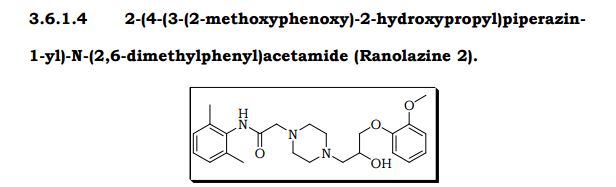
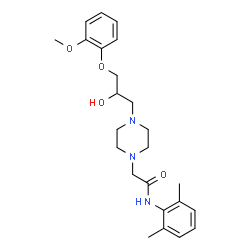
Chemical Name of Ranolazine: (RS)-N-(2,6-dimethylphenyl)-2-[4-[2-hydroxy-3-(2-methoxyphenoxy)-propyl]piperazin-1-yl]acetamide

N-(2,6-dimethylphenyl)-2-[4-[2-hydroxy-3-(2-methoxyphenoxy)propyl]piperazin-1-yl]acetamide

1-Piperazineacetamide, N-(2,6-dimethylphenyl)-4-[2-hydroxy-3-(2-methoxyphenoxy)propyl]-
CAS 95635-55-5 [RN]

QA-2943

Ranexa®

Ranexa, Ranolazine
Ranexa;CVT 303;RS 43285-003
Solubility (25°C) * In vitro DMSO 86 mg/mL (201.15 mM)
Ethanol 20 mg/mL (46.77 mM)
Water <1 mg/mL (<1 mM)
In vivo

Clinical Trial Information( data from http://clinicaltrials.gov, updated on 2016-07-30)

NCT Number Recruitment Conditions Sponsor
/Collaborators
Start Date Phases
NCT02829034 Recruiting Pulmonary Hypertension University of Pennsylvania|Brigham and Womens Hospital|Un  …more July 2016
NCT02817932 Recruiting Healthy Male Individuals A.Menarini Asia-Pacific Holdings Pte Ltd March 2016 Phase 1
NCT02687269 Not yet recruiting Myocardial Stunning Policlinico Universitario Agostino Gemelli March 2016 Phase 4
NCT02653833 Recruiting Muscular Dystrophy Cedars-Sinai Medical Center December 2015 Phase 0
NCT02611596 Not yet recruiting Silent Myocardial Ischemia|Type 2 Diabetes Walter Reed National Military Medical Center November 2015

view more CLICK

CLIP

Active Substance
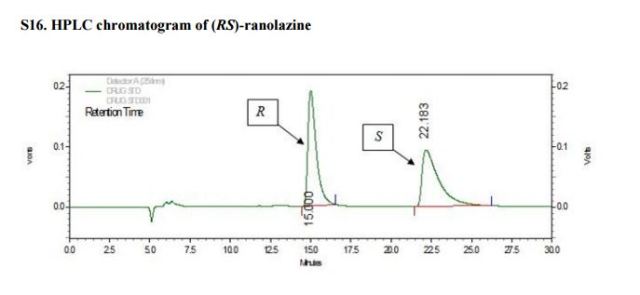
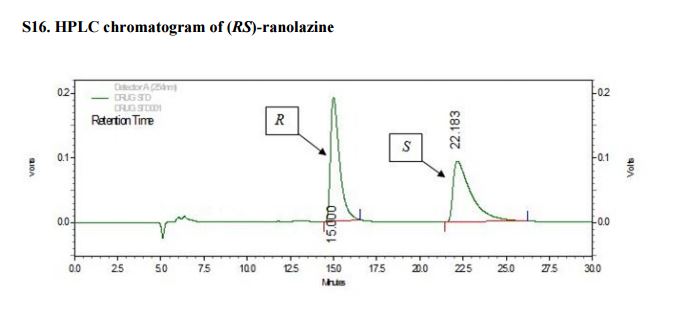
The chemical name of ranolazine is (±)-N-(2,6-dimethylphenyl)-4-[2-hydroxy-3-(2- methoxyphenoxy)propyl] piperazineacetamide. Ranolazine is a white to off-white solid, very slightly soluble in water. It is freely soluble in aqueous buffered solutions at pH levels below 4.4 and soluble in several organic solvents e.g. dichloromethane and methanol. The chemical structure is well characterised by means of elemental analysis, UV, IR, 1 H-NMR, 13C-NMR chemical ionization, electron impact mass spectra and x-ray diffraction. Ranolazine exhibits a chiral center and is obtained as a racemic mixture that consists of a 1:1 ratio of (R) and (S) enantiomers. This is confirmed by demonstrating that ranolazine does not exhibit any optical rotation of plane polarized light in polarimeter measurements. Both enantiomers exhibit pharmacological activity. Regarding polymorphism, crystallisation studies were conducted using different solvents, crystallization conditions and vapor diffusion experiments. In these studies three crystalline forms named as Form I, Form II, Form III and one amorphous form were identified. Form I is the only one that was thermodynamically stable, Form II and Form III are kinetically unstable. The synthetic process used for the synthesis of ranolazine has been shown to produce only Form I. Extreme conditions that are not relevant to the synthetic process are required to convert ranolazine to other solid-state forms (amorphous and two other crystalline forms, Form II and Form III)
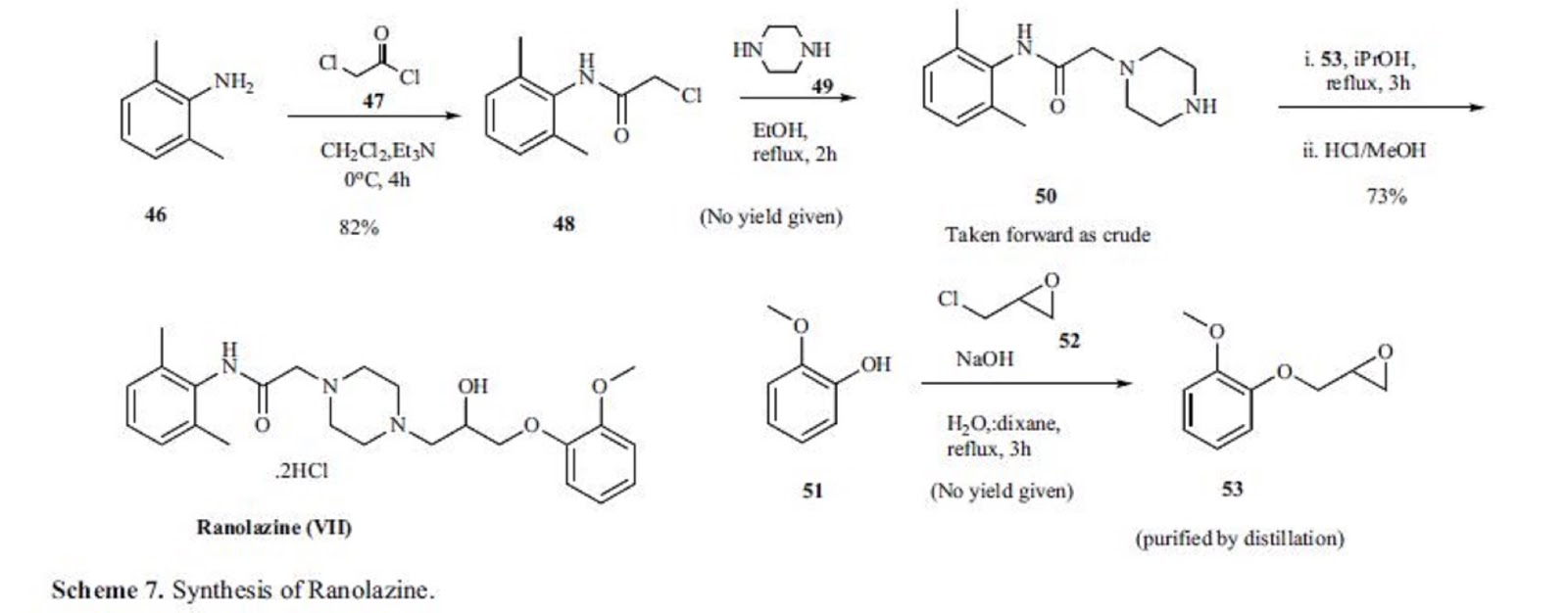
Manufacture
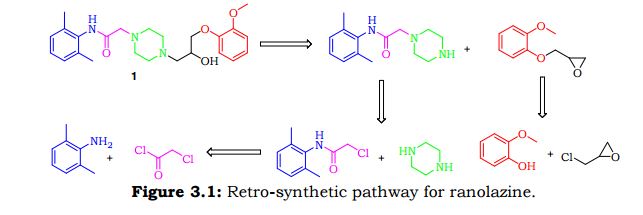
Ranolazine is manufactured using a three step synthetic process followed by purification, drying and milling. The starting materials are 2,6-dimethylaniline (2,6-DMA), chloroacetyl chloride (CAC), piperazine dihydrochloride and guaiacol glicydil ether (GGE). The synthetic process has been adequately described the critical process parameters have been identified and are controlled with appropriate in-process controls. Data from four validation batches have been provided that demonstrate that the manufacturing process is capable to consistently produce batches of active substance that comply with the predefined specifications. A detailed discussion about potential impurities and their origin has been provided in line with ICH Guideline Q3A(R). Three specified impurities arising from the route of synthesis and one arising from the staring materials have been identified. There are also eight unspecified potential impurities.
Ranolazine, its enantiomers, and three metabolites (RS-88390, RS-89961, and RS-88772) were shown to have moderate affinity for α1A-and α1B-adrenergic receptors. Ranolazine, its S-enantiomer, and the same three metabolites had a similar affinity for β1-adrenergic receptors, with the R-enantiomer having no significant binding activity. The affinity of ranolazine for β2-adrenergic receptors was slightly lower, with the S-enantiomer and metabolites RS-88390 and RS-88772 having a similar affinity as the racemate. The metabolite RS-89961 had a higher affinity for β2-adrenergic receptors, whereas the R-enantiomer had no significant binding activity.
………CLICK FOR REFERNCE
also
Ranolazine HCl
N-(2,6-二甲基苯基)-4-[2-羟基-3-(2-甲氧苯氧基)丙基]-1-哌嗪乙酰胺盐酸盐
CAS 95635-56-6
Molecular Formula C24H35Cl2N3O4
MW 500.46

Ranolazine, developed by CV Therapeutics whom Gilead Sciences bought in 2009, is also sold under the trade name Ranexa for the treatment of  chronic angina (chest pain).

Ranolazine, a partial fatty acid oxidation inhibitor available that is also a late sodium channel inhibitor as an oral extended-release tablet, has been developed and launched by Gilead Palo Alto (formerly CV Therapeutics; CVT), a wholly owned subsidiary of Gilead Sciences, under license from Roche Bioscience (formerly Syntex)

Ranolazine, sold under the trade name Ranexa by Gilead Sciences, is a drug to treat angina that was first approved in 2006.

Angina also known as Angina pectoris is indication for heart disease caused by lack of blood circulation to the heart. The most widespread reason for the angina is Atherosclerosis. In coronary heart disease patients, arteries become narrow and stiff when compared with the healthy heart arteries. These narrow and stiff arteries cause difficulties to reach oxygen rich blood for heart. About 17 million Americans are suffering with coronary heart diseases and about 9 millions are suffering with chronic angina. Ranolazine is the one of the medicament used to manage chronic angina, developed by Roche Bioscience (formerly Syntex) and marketed by CV Therapeutics. USFDA was approved Ranolazine 2 under brand name of Ranexa® in January 27, 2006. Subsequently European medical agency (EMEA) approved in July 09, 2008. Latter on it was approved in few other developing countries. Ranexa ® is available in market in the form of 500 mg and 1000 mg film coated tablet and the maximum daily dosage should be less than 2.0g. Over dosage of Ranexa ® lead to dizziness, nausea, and vomiting. Worldwide sales of Ranexa® by December 2011 is about 400 millions USD (~2000 crores) with the consumption of 1, 00, 678 kg. Major contribution is from USA i.e. about 300 millions USD. ……..CLICK

(5) (a) Kluge, A. F.; Clark, R. D.; Strosberg, A. M.; Pascal, J. G.; Whiting, R. United states patent, US 4,567,264, 1986. (b) Kluge, A. F.; Clark, R. D.; Strosberg, A. M.; Pascal, J. C.; Whiting, R. L. European patent, EP 0,126,449, 1987. (c) Kluge, A. F.; Clark, R. D.; Strosberg, A. M.; Pascal, J. C.; Whiting, R. Canadian patent, CA 1256874, 1987.
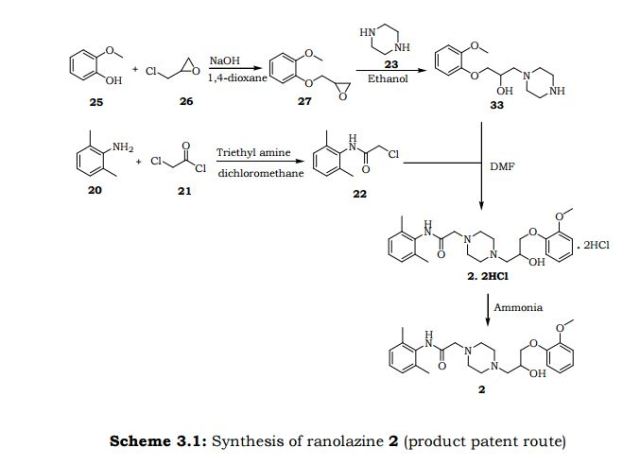
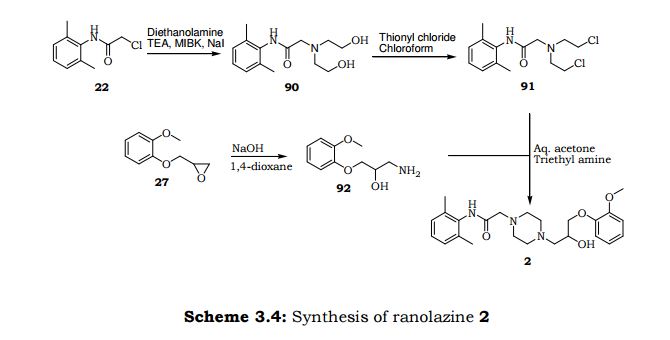
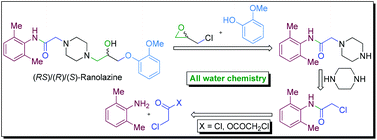
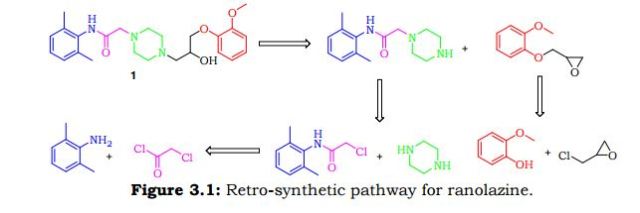
Amongst the various synthetic routes described for the preparation of Ranolazine, some of the key approaches are discussed here under. Kluge.F.A et al 5 have reported two synthetic approaches for preparation of Ranolazine 2 using commercially available 2-Methoxy phenol 25 and 2, 6-dimethyl aniline 20 as key starting materials. The first synthetic route commenced with the synthesis of methyl oxirane derivative 27. Key intermediate methyl oxirane derivative 27 was synthesized from 25 and epichlorohydrin 26 in presence of NaOH employing Williamson reaction conditions. Thus obtained 27 treated with piperazine 23 in ethanol to obtain hydroxyl piperazine derivative 33. Thereafter, reaction of hydroxyl piperazine derivative 33 with phenyl acetamide derivative 22 in dimethylformamide afforded dihydrochloride salt of ranolazine 2, which was treated with ammonia to furnish ranolazine 2(Scheme 3.1).
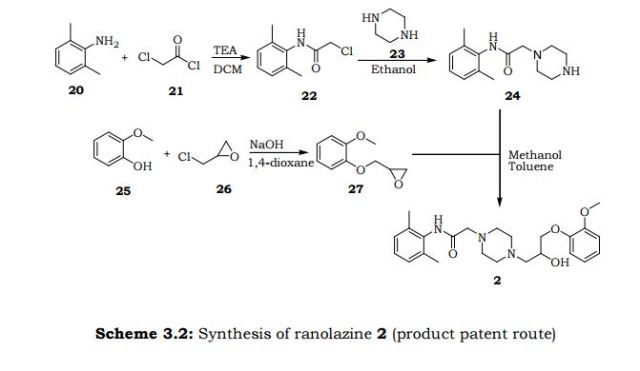
Second synthetic path way for the preparation of ranolazine involves the condensation of piperazinyl acetamide intermediate 24 and methyl oxirane 27 in mixture of methanol and toluene (Scheme 3.2).

Mingfieng.S et al reported7 similar approach for the synthesis of Ranolazine 2 utilizing hydroxy propyl halide intermediate 94 instead of methyl oxirane compound 27. The requisite hydroxy propyl halide intermediate 94 prepared by reacting 2-methoxy phenol 25 with 1, 3- dichloropropan-2-ol 93 in presence of NaOH and mixture of ethanol & water as shown in Scheme 3.3.

(7) Lisheng, W.; Xiaoyu, F.; Hong-yuan, Z. Journal of Guangxi University (Natural Science Edition), 2003, 28, 301-303.
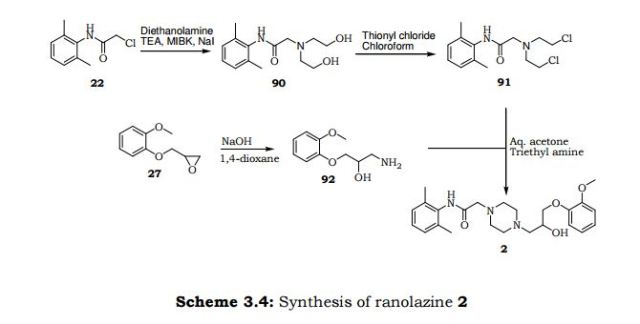
Eva.C.A et al.6 discovered an alternative synthetic path way for preparation of Ranolazine. As depicted in Scheme 3.3 reaction of phenyl acetamide derivative 22 with diethanolamine in presence of triethylamine and subsequent chlorination using thionyl chloride furnishes dichloro compound 91. Condensation of dichloro compound 91 with amino isopropanol derivative 92 provided Ranolazine 2. Amino isopropanol derivative 92 is achieved by reaction of methyl oxirane compound 27 with ammonia.

(6) Agai-Csongor, E.; Gizur, T.; Haranyl, K.; Trischler, F.; DemeterSzabo, A.; Csehi, A.; Vajda, E.; Szab-Koml si, G. European patent, EP 483932 A1, 1992.
str1

2 with 99.9% purity.

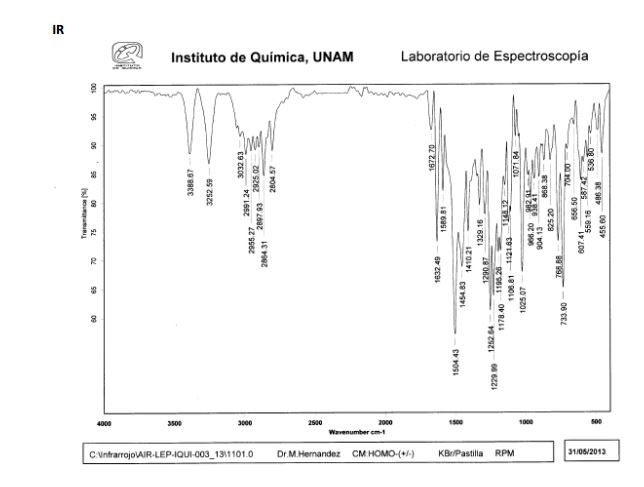
IR (KBr, cm–1): 3331 (Amine, NH), 3002 (Aromatic, =CH), 2955, 2936 and 2834 (Ali, CH), 1686 (Amide, C=O), 1592 and 1495 (Aromatic, C═C), 1254 and 1022 (Ether, C-O-C) & 1125 (C-N).

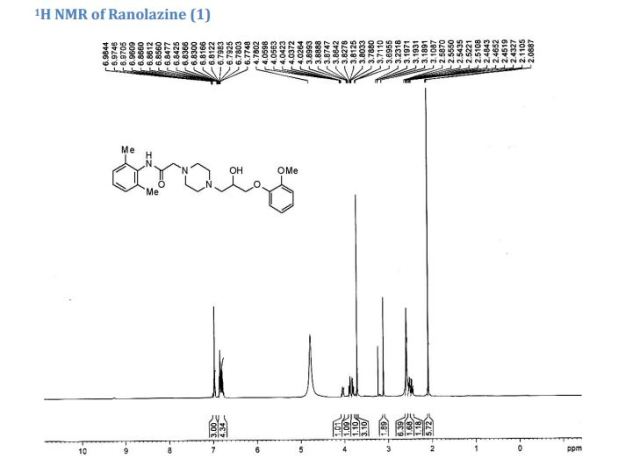
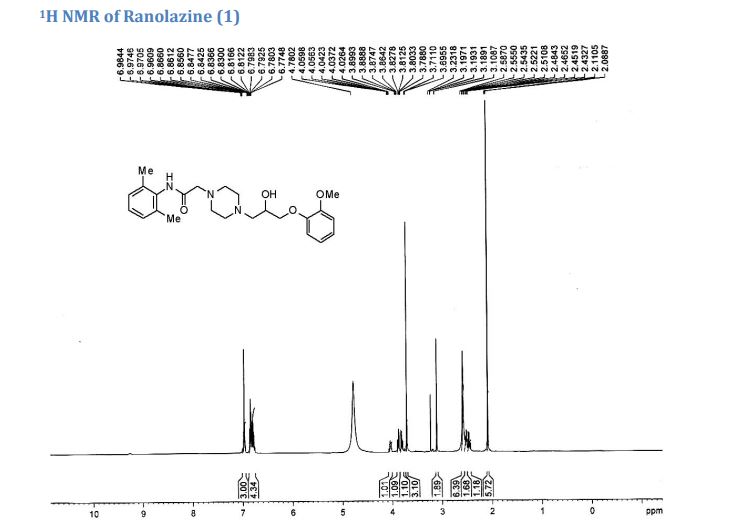
1H NMR (500 MHz, DMSO–d6): δH 9.1 (s, 1H, N-H), 6.8-7.1 (m, 6H, ArH), 4.8 (s, 1H, OH), 3.9 (s, 1H, CH), 3.8-3.9 (dd, 2H, J=6.5 Hz, 10.7 Hz, CH2), 3.8 (s, 3H, CH3), 3.1 (s, 2H, CH2), 2.4-2.6 (m, 10H, CH2) 2.1 (s, 6H, CH3).

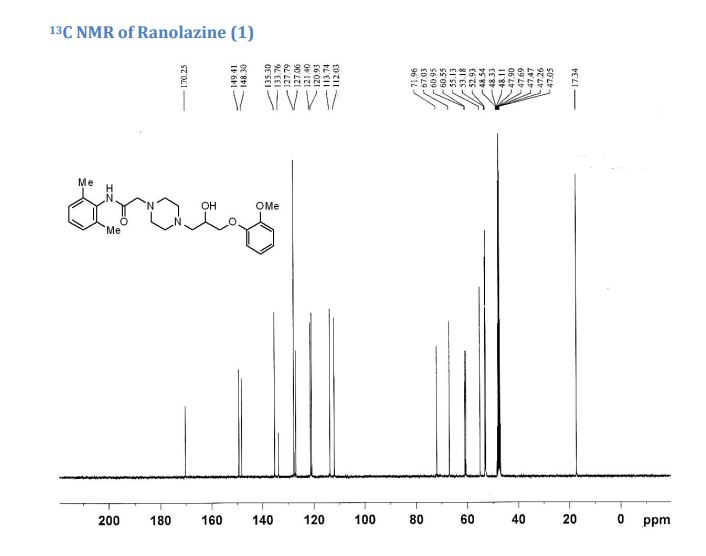
13C NMR (500 MHz, DMSO–d6): 18.23, 39.16, 39.83, 39.50, 39.76, 39.87, 53.18, 53.31, 55.50, 61.13, 61.44, 66.63, 71.96, 112.37, 113.64, 120.74, 120.03, 126.32, 127.62, 134.97, 135.06, 148.36, 149.17, 167.97.

M/S (m/z): 428.4(M+ + H).

CHN analysis: Anal. Calcd for C24H33N3O4 (427.54): C 67.42, H 7.78, N 9.83.; Found: C 67.62 H 7.47, N 9.68.

Title: Ranolazine
CAS Registry Number: 95635-55-5
CAS Name: N-(2,6-Dimethylphenyl)-4-[2-hydroxy-3-(2-methoxyphenoxy)propyl]-1-piperazineacetamide
Additional Names: (±)-4-[2-hydroxy-3-(o-methoxyphenoxy)propyl]-1-piperazineaceto-2¢,6¢-xylidide; (±)-1-[3-(2-methoxyphenoxy)-2-hydroxypropyl]-4-[N-(2,6-dimethylphenyl)carbamoylmethyl]piperazine
Trademarks: Ranexa (CV Therapeutics)
Molecular Formula: C24H33N3O4
Molecular Weight: 427.54
Percent Composition: C 67.42%, H 7.78%, N 9.83%, O 14.97%
Literature References: Anti-ischemic agent which modulates myocardial metabolism. Prepn: A. F. Kluge et al., EP 126449;eidem, US 4567264 (1984, 1986 both to Syntex). HPLC resolution of enantiomers: E. Delée et al., Chromatographia 24, 357 (1987). Clinical trial in angina: B. R. Chaitman et al., J. Am. Coll. Cardiol. 43, 1375 (2004). Review of pharmacology and clinical development: J. G. McCormack et al., Gen. Pharmacol. 30, 639-645 (1998); R. S. Schofield, J. A. Hill, Expert Opin. Invest. Drugs11, 117-123 (2002).
Derivative Type: Dihydrochloride
CAS Registry Number: 95635-56-6
Manufacturers’ Codes: RS-43285
Molecular Formula: C24H33N3O4.2HCl
Molecular Weight: 500.46
Percent Composition: C 57.60%, H 7.05%, N 8.40%, O 12.79%, Cl 14.17%
Properties: White crystalline powder from methanol/ether, mp 164-166°. Readily sol in water.
Melting point: mp 164-166°
Therap-Cat: Antianginal.

Image result for Ranolazine SYNTHESIS

Image result for ranexa

Medical uses

Ranolazine is used to treat chronic angina.[1] It may be used concomitantly with β blockers, nitrates, calcium channel blockers,antiplatelet therapy, lipid-lowering therapy, ACE inhibitors, and angiotensin receptor blockers.[2]

Image result for ranolazine

Contraindications

Some contraindications for ranolazine are related to its metabolism and are described under Drug Interactions. Additionally, in clinical trials ranolazine slightly increased QT interval in some patients[3] and the FDA label contains a warning for doctors to beware of this effect in their patients.[2] The drug’s effect on the QT interval is increased in the setting of liver dysfunction; thus it is contraindicated in persons with mild to severe liver disease.[4]

Image result for ranolazine

Side effects

The most common side effects are dizziness (11.8%) and constipation (10.9%).[1] Other side effects include headache and nausea.[3]

Biological Activity

Description Ranolazine is a calcium uptake inhibitor via the sodium/calcium channel, used to treat chronic angina.
Targets Calcium channel [1]
In vitro Ranolazine is found to bind more tightly to the inactivated state than the resting state of the sodium channel underlying I(NaL), with apparent dissociation constants K(dr)=7.47 mM and K(di)=1.71 mM, respectively. Ranolazine at 5 mM and 10 mM reversibly shortens the duration of TCs and abolishes the after contraction.[1] Ranolazine inhibits the late component of INa and attenuates prolongation of action potential duration when late INa is increased, both in the absence and presence of IK-blocking drugs. Ranolazine (10 mM) reduces by 89% the 13.6-fold increase in variability of APD caused by 10 nM ATX-II. [2]
In vivo Ranolazine significantly and reversibly shortens the action potential duration (APD) of myocytes stimulated at either 0.5 or 0.25 Hz in a concentration-dependent manner in left ventricular myocytes of dogs. [1] Ranolazine (10 mM) significantly increases glucose oxidation 1.5-fold to 3-fold under conditions in which the contribution of glucose to overall ATP production is low (low Ca, high FA, with insulin), high (high Ca, low Fa, with pacing), or intermediate in working heart of rats. Ranolazine (10 mM) similarly increases glucose oxidation in normoxic Langendorff hearts (high Ca, low FA; 15 mL/min) of rats. Ranolazine significantly improves functional outcome in reperfused ischemic working hearts, which is associated with significant increases in glucose oxidation. [3]
Features

Conversion of different model animals based on BSA (Value based on data from FDA Draft Guidelines)

Species Mouse Rat Rabbit Guinea pig Hamster Dog
Weight (kg) 0.02 0.15 1.8 0.4 0.08 10
Body Surface Area (m2) 0.007 0.025 0.15 0.05 0.02 0.5
Km factor 3 6 12 8 5 20
Animal A (mg/kg) = Animal B (mg/kg) multiplied by  Animal B Km
Animal A Km

For example, to modify the dose of resveratrol used for a mouse (22.4 mg/kg) to a dose based on the BSA for a rat, multiply 22.4 mg/kg by the Km factor for a mouse and then divide by the Km factor for a rat. This calculation results in a rat equivalent dose for resveratrol of 11.2 mg/kg.

Rat dose (mg/kg) = mouse dose (22.4 mg/kg) × mouse Km(3)  = 11.2 mg/kg
rat Km(6)

References

[1] Undrovinas AI, et al. J Cardiovasc Electrophysiol,?006, 17 Suppl 1, S169-S177.

[2] Song Y, et al. J Cardiovasc Pharmacol,?004, 44(2), 192-199.3]

Baptista T, et al. Circulation,?996, 93(1), 135-142.

Drug interactions

Ranolazine is metabolized mainly by the CYP3A enzyme. It also inhibits another metabolizing enzyme, cytochrome CYP2D6.[2] For this reason, the doses of ranolazine and drugs that interact with those enzymes need to be adjusted when they are used by the same patient.

Ranolazine should not be used with drugs like ketoconazole, clarithromycin, and nelfinavir that strongly inhibit CYP3A nor with drugs that activate CYP3A like rifampin and phenobarbital.[2]

For drugs that are moderate CYP3A inhibitors like diltiazem, verapamil, erythromycin, the dose of ranolazine should be reduced.[2]

Drugs that are metabolized by CYP2D6 like tricyclic antidepressants may need to be given at reduced doses when administered with ranolazine.[2]

Mechanism of action

Ranolazine inhibits persistent or late inward sodium current (INa) in heart muscle[5] in a variety of voltage-gated sodium channels.[6] Inhibiting that current leads to reductions in elevated intracellular calcium levels. This in turn leads to reduced tension in the heart wall, leading to reduced oxygen requirements for the muscle.[3] The QT prolongation effect of ranolazine on the surface electrocardiogram is the result of inhibition of IKr, which prolongs the ventricular action potential.[2]

Legal status

Ranolazine was approved by the FDA in January 2006, for the treatment of patients with chronic angina as a second-line treatment in addition to other drugs.[3] In 2007 the label was updated to make ranolazine a first-line treatment, alone or with other drugs.[3] In April 2008 ranolazine was approved by the European EMEA for use in angina.[7]

History

In 1996, CV Therapeutics licensed the North American and European rights to ranolazine from Syntex, a subsidiary of Roche, which had discovered the drug and had developed it through Phase II trials in angina.[8] In 2006, CV Therapeutics acquired the remaining worldwide rights to ranolazine from Roche.[9] In 2008 CV Therapeutics exclusively licensed rights for ranolazine in Europe and some other countries to Menarini.[10] In 2009, Gilead acquired CV Therapeutics.[11] In 2013 Gilead expanded the partnership with Menarini to include additional countries, including those in Asia.[12]

Image result for ranolazine

Ranolazine (CAS NO.: 95635-55-5), with its systematic name of 1-Piperazineacetamide, N-(2,6-dimethylphenyl)-4-(2-hydroxy-3-(2-methoxyphenoxy)propyl)-, could be produced through many synthetic methods.

Following is one of the synthesis routes:
The acylation of 2,6-dimethylaniline (II) with chloroacetyl chloride in the presence of triethylamine in dichloromethane affords N-(2,6-dimethylphenyl) chloroacetamide (III), which is condensed with piperidine (IV) in refluxing ethanol to yield N-(2,6-dimethylphenyl)-2-piperazinoacetamide IV). At last, this compound is condensed with 3-(2-methoxyphenoxy)-12-epoxypropane (VI) in refluxing methanol toluene.

Image result for ranolazine

CLIP

Paper

“All water chemistry” for a concise total synthesis of the novel class anti-anginal drug (RS), (R), and (S)-ranolazine

*Corresponding authors
aDepartment of Medicinal Chemistry, National Institute of Pharmaceutical Education and Research (NIPER), Sector 67, S. A. S. Nagar 160 062, Punjab, India
E-mail: akchakraborti@niper.ac.in,akchakraborti@rediffmail.com
Green Chem., 2013,15, 756-767

DOI: 10.1039/C3GC36997H

A novel strategy of ‘all water chemistry’ is reported for a concise total synthesis of the novel class anti-anginal drug ranolazine in its racemic (RS) and enantiopure [(R) and (S)] forms. The reactions at the crucial stages of the synthesis are promoted by water and led to the development of new water-assisted chemistries for (i) catalyst/base-free N-acylation of amine with acyl anhydride, (ii) base-free N-acylation of amine with acyl chloride, (iii) catalyst/base-free one-pot tandem N-alkylation and N-Boc deprotection, and (iv) base-free selective mono-alkylation of diamine (e.g., piperazine). The distinct advantages in performing the reactions in water have been demonstrated by performing the respective reactions in organic solvents that led to inferior results and the beneficial effect of water is attributed to the synergistic electrophile and nucleophile dual activation role of water. The new ‘all water’ strategy offers two green processes for the total synthesis of ranolazine in two and three steps with 77 and 69% overall yields, respectively, and which are devoid of the formation of the impurities that are generally associated with the preparation of ranolazine following the reported processes.

Damodara Naidu Kommi

Damodara Naidu Kommi

Prof. Asit K. Chakraborti

Picture
Graphical abstract: “All water chemistry” for a concise total synthesis of the novel class anti-anginal drug (RS), (R), and (S)-ranolazine

Image result for ranolazineImage result for “All water chemistry” for a concise total synthesis of the novel class anti-anginal drug (RS), (R), and (S)-ranolazineImage result for “All water chemistry” for a concise total synthesis of the novel class anti-anginal drug (RS), (R), and (S)-ranolazineImage result for “All water chemistry” for a concise total synthesis of the novel class anti-anginal drug (RS), (R), and (S)-ranolazine

Image result for “All water chemistry” for a concise total synthesis of the novel class anti-anginal drug (RS), (R), and (S)-ranolazineImage result for “All water chemistry” for a concise total synthesis of the novel class anti-anginal drug (RS), (R), and (S)-ranolazine

Image result for “All water chemistry” for a concise total synthesis of the novel class anti-anginal drug (RS), (R), and (S)-ranolazine

PATENT

https://www.google.com/patents/US20130090475

Ranolazine, chemically known as (±)-N-(2,6-dimethylplenyl)-4-[2-hydroxy-3-(2-methoxyphenoxy)propyl]-1-piperazineacetamide, is represented by the formula as given below.

Figure US20130090475A1-20130411-C00002

Ranolazine, a novel agent used to treat angina pectoris type coronary heart disease, was developed by American CV Therapeutica Company (now known as Gilead Sciences Company). Ranolazine has firstly been appeared on the market in US in 2006 and could be used to treat myocardial infarction, congestive heart disease, angina and arhythmia etc. The mechanism of action of ranolazine is to inhibit partial fatty acid oxidation, which changes fatty acid oxidation to glucose oxidation in heart, and thereby reduces the cardiac oxygen consumption. Ranolazine is the only antianginal agent without changing heart rate or blood pressure.

The processses for the preparation of ranolazine, which could be roughly divided into two types as shown in FIG. 1 and FIG. 2, were disclosed in International Application Publication No. WO 2010/025370, WO 2010/023687, WO 2009/153651, WO 2008/139492, WO 2008/047388, WO 2006/008753, Chinese patent No. CN101560196, CN101544617, CN1915982, the United States patent No. US2008312247, the publication China Pharmacist, 2007, 10(12), 1176-1177, Chinese Journal of Medicinal Chemistry, 2003, 13(5), 283-285, and Chinese Journal of Pharmaceuticals, 2004, 35(11): 641-642.

The process described in FIG. 1 (method 1) involves reacting [(2,6-dimethylphenyl)-carbamylmethyl]-peperazine with 1-(2-methoxyphenoxy)-2,3-epoxypropane to obtain ranolazine, in which comprises the steps of:

a) condensing 2,6-xylidine with chloroacetyl chloride in the presence of base to get amide, which is further reacted with piperazine by a substitution reaction of N-monoalkylation to get N-(2,6-dimethylphenyl)-1-piperazineacetamide, and

b) condensing guaiacol with epoxy chloropropane to get 1-(2-methoxyphenoxy)-2,3-epoxypropane.

As the condensation is carried out in the alkaline environment, the epoxy ring becomes easy to open loop, and thus the products comprise mixtures of open-looped and looped form, thereby requiring rigorous separation conditions and being difficult to achieve the desired purity in the following reaction.

The process described in FIG. 2 (method 2) involves reacting 2-chloro-N-(2,6-dimethylphenyl)-acetamide with 1-(2-methoxyphenoxy)-3-(N-piperazine)-2-hydroxypropane to get ranolazine, in which comprises the steps of:

a) condensing 2,6-xylidine with chloroacetyl chloride in the presence of base to get 2-chloro-N-(2,6-dimethylphenyl)-acetamide, and

b) condensing guaiacol with epoxy chloropropane to get 1-(2-methoxyphenoxy)-2,3-epoxypropane, which is further reacted with piperazine to get 1-(2-methoxyphenoxy)-3-(N-piperazine)-2-hydroxypropane.

As the condensation is carried out in the alkaline environment, the epoxy ring becomes easy to open loop, and thus the products comprise mixtures of open-looped and looped form, thereby requiring rigorous separation conditions and being difficult to achieve the desired purity in the following reaction. The monosubstitution reaction of N-alkylation reacted with peperazine is further difficult to be controlled to produce the desired products.

Compared with method 2, method 1 could be easier to be industrialized as the quality of intermediates obtained by method 1 could be easier to be controlled and also the method 1 could be easier to be operated. But in the repeated experiments, it was found that it still had a lot of difficulties in realizing the industrialization by method 1 although it could be easier to be operated as there are mixtures including open-looped and looped products rather than single product produced when guaiacol (o-methoxyphenol) was reacted with epoxy chloropropane, so the operation of distillatory separation would still need very high temperature (above 250° C.) and very low vacuum degree (5 mm Hg) with the disadvantages of high energy consumption, high facilities investment and tedious operation. And in the following condensation reaction, there are a lot of products were produced during the reaction so as to make the quality of the products hard to be controlled.

Example 1Preparation of N-(2,6-dimethylphenyl)-1-piperazinylacetamide1.1: Preparation of 2-chloro-N-(2,6-dimethylphenyl)-acetamid

Figure US20130090475A1-20130411-C00006

30.5 g (0.252 mol) of 2,6-xylidine, 100 ml of ethyl acetate, 26.5 g (0.25 mol) of sodium carbonate were successively added into a 250 ml of 3-neck flask and placed in an ice-water bath. 36.5 g (0.323 mol) of chloroacetyl chloride was dissolved in 50 ml of ethyl acetate and then the mixture was dropwise added into the 3-neck flask till completion. The ice-water bath was removed and the reaction was carried out for 3 h at the room temperature. The reaction product was slowly added 100 ml of water in an ice-water bath, stirred for 10 min and filtered. The filter cake as white needle solid was washed and dried under vacuum to get 46.3 g of 2-chloro-N-(2,6-dimethylphenyl)-acetamide having a yield of 93%

1.2: Preparation of N-(2,6-dimethylphenyl)-1-piperazinylacetamide

Figure US20130090475A1-20130411-C00007

58.3 g (0.3 mol) of piperazine hexahydrate was dissolved in 230 ml of ethanol and 50.0 g (0.25 mol) of 2-chloro-N-(2,6-dimethylphenyl)-acetamide was subsquently added. The mixture was heated under reflux for 3 h till completion. The reaction product was cooled to room temperature and filtered. The filter was concentrated under reduced pressure and 80 ml of water was added. The mixture was extracted with dichloromethane and the organic layer was concentrated under vacuum at 60° C. to get 39.4 g of N-(2,6-dimethylphenyl)-1-piperazinylacetamide having a yield of 63%. 1HNMR (CDCl3): 2.23˜2.27,s, 6H, 2.67,s, 4H, 2.96˜2.98,t, 4H, 3.19˜3.21,s, 2H, 7.08˜7.26,m, 3H, 8.69,s, 1H.

Example 2Preparation of Ring-Opening Halide2.1: Preparation of 1-chloro-3-(2-methoxyphenoxy)-2-propylalcohol

Figure US20130090475A1-20130411-C00008

26 g (0.65 mol) of sodium hydroxide, 150 ml of water, 150 ml of ethanol, 62 g (0.5 g) of guaiacol were successively added into a reaction flask and 103 g (0.8 mol) of 1,3-dichloro-2-propylalcohol was slowly dropwise added till completion. The mixture was heated up to 45° C. for 24 h. The reaction product was extracted three times with 150 ml of dichloromethane each and the organic layer was combined, dried with anhydrous magnesium chloride and distilled under reduced pressure. The fraction at 160° C. and a pressure of 2 kp was collected to get 73.6 g of faint yellow liquid having a yield of 68%. 1HNMR (CDCl3): 3.44˜3.46,d, 1H, 3.69-3.78,dd, 2H, 3.85,s, 3H, 4.11˜4.12,d, 2H; 4.18˜4.22 μm, 1H, 6.89˜7.00,m, 4H. The result confirmed that the yellow liquid was 1-chloro-3-(2-methoxyphenoxy)-2-propylalcohol.

2.2: Preparation of 1-bromo-3-(2-methoxyphenoxy)-2-propylalcohol

Figure US20130090475A1-20130411-C00009

26 g (0.65 mol) of sodium hydroxide, 150 ml of water, 150 ml of ethanol, 62 g (0.5 g) of guaiacol were successively added into a reaction flask and 174.4 g (0.8 mol) of 1,3-dibromo-2-propylalcohol was slowly dropwise added till completion. The mixture was heated up to 45° C. for 10 h. The reaction product was extracted three times with 150 ml of dichloromethane each and the organic layer was combined, dried with anhydrous magnesium chloride and distilled under reduced pressure. The fraction at 160° C. and a pressure of 2 kp was collected to get 103 g of faint yellow liquid of 1-bromo-3-(2-methoxyphenoxy)-2-propylalcohol having a yield of 79%.

Example 3Preparation of Ranolazine3.1: 1-chloro-3-(2-methoxyphenoxy)-2-propylalcohol as a raw material

Figure US20130090475A1-20130411-C00010

2.5 g (0.01 mol) of 1-chloro-3-(2-methoxyphenoxy)-2-propylalcohol, 3.1 g (0.012 mol) of N-(2,6-dimethylphenyl)-1-piperazinylacetamide, 4.1 g (0.03 mol) of potassium carbonate, 25 ml of methanol and 50 ml of toluene were successively added into a reaction flask and heated under reflux for 4.5 h till completion.

The fraction whose main ingredient was methanol was collected by atmospheric distillation at boiling point of 62-68° C. and then filtrated. The filtrate was washed with 3N HCl to get 50 ml of liquid having a pH of 1-2 and further treated with 50 ml of saturated sodium carbonate solution to adjust pH to 9-10. The product was extracted three times with 20 ml of dichloromethane each and the lower organic phase was combined. After the dichloromethane was removed by distillation under reduced pressure and rotary evaporation, the yellow viscous liquid was obtained and then further dissolved in about 10 ml of methonal. The tetrahydrofuran was then dropwise added under reflux till turbidity. The product was slowly crystallized with cooling and filtrated to get 3.42 g of white solid having a yield of 80.1% by vacuum drying at 40° C

1HNMR (CDCl3): 2.22,s, 6H, 2.60˜2.62,t, 4H, 2.75,s, 6H, 3.21,s, 2H, 3.45,s, 3H; 3.85,s, 3H, 4.02˜4.04,t, 2H, 4.16,s, 1H, 6.88˜6.90,t, 2H, 6.91˜6.96,m, 2H, 7.08˜7.1,m, 3H, 8.65,s, 1H. The result confirmed that the compound obtained is ranolazine. Purity by HPLC (area normalization method): 99.1%.

PATENT

https://www.google.com/patents/CN102875490A?cl=zh

Ranolazine piperazine derivatives, chemical name: (±) -1- [3- (2_ methoxyphenoxy) -2_-hydroxypropyl] -4- [N- (2, 6- dimethylphenyl) carbamoylmethyl] piperazine. Ranolazine is a novel antianginal drugs, which can provide metabolic myocardial protection at the cellular level by improving myocardial energy, while heart rate, blood pressure and hemodynamic impact, has a good prospect. [0004] Currently, the literature synthetic routes ranolazine can be grouped into three: a route: literature (Wolff HeartFailure Reviews, 2002,7 (2): 187- 203.) Using 2_ [N, N- two – ( 2-chloroethyl) amino] -2,6-dimethyl-acetanilide and 3- (2-methoxyphenoxy) -2-propanol of the -I-, amino cyclization to synthesize the desired product. The advantage of this method is to avoid the use of large amounts of piperazine, but the drawback is six steps required to complete the reaction step is long, the total yield is low, is not applicable to industrial production. Route II: literature (US, 4567264; LI Shu-chun Chinese Journal of Medicinal Chemistry, 2003, 13 (5): 283-285) piperazine used directly as the raw material, the advantage of a four-step reaction process is shorter, but due to the direct use of piperazine N- (2,6- dimethylphenyl) -2-chloro – acetamide (2) the reaction, in order to avoid generating disubstituted compound and increased the yield dropping proportion piperazine, piperazine need to consume a large amount. Route III: Document (Qin Mingli, Xinyang Normal University, 2007,20 (2): 226-229) synthetic routes and route only difference is that two different priorities on the piperazine ring substituted on. After two routes have two places noteworthy: how to avoid the generation of disubstituted compounds and the compound (4), (it) is purified.

Image result for “All water chemistry” for a concise total synthesis of the novel class anti-anginal drug (RS), (R), and (S)-ranolazine

Synthesis of Compound (3)

In the synthesis of the compound (3), since piperazine simultaneous introduction of two groups, by changing the reaction conditions, to seek optimal reaction molar ratio, in order to optimize the synthesis process, to improve the yield. Since the formation of crystalline anhydrous piperazine water easily precipitated in the solvent methylene chloride, anhydrous conditions so the need to control and make the feed ratio of I: 2 Avoid disubstituted product formation. Methanol can also be used as solvent to avoid precipitation of piperazine, and generates less disubstituted, but did not significantly increase yield (61.5%), it is still producing less toxic with methylene chloride as the solvent, control anhydrous conditions. Removed by filtration and the compound (3) excess piperazine, after the solvent is evaporated, dissolved in water, filtered off disubstituted extracted with methylene chloride, in high purity in the latter studies, may be mono-substituted piperazine as the raw material, and then and then removing the protecting group, thereby avoiding the generation of double substitution also improves the yield.

Synthesis [0008] Compound (5)

When the use of trifluoroacetic acid deprotection, since the compound (4) itself has two salt-forming groups, so the need to increase the TFA feeding, paper, compound (4): trifluoroacetic acid = 1: 6 feeding, the reaction was stirred at room temperature for two hours after the end, and then try to solvent evaporated to dryness, a small amount of ethyl acetate was added and then repeatedly evaporated with divisible trifluoroacetic acid. Finally ethanol: petroleum ether = 1: 1.4 was recrystallized to give compound (5).

Synthesis [0009] Compound (I),

Document (Mcaroon, J Med Chem, 1981,24 (11): 1320- 1328) with methanol – toluene system, literature (US, 4567264) with DMF system. Considering the safety, environmental protection, price, cost, industrial production and other factors, we use isopropyl alcohol as a solvent. In this step, less side reaction byproducts concentrated in raw materials, in strict accordance with the reaction so after molar ratio, TLC detection, should be enough to make up the raw materials, to minimize raw material residues, reducing the difficulty of recrystallization.

[0010]

Specific implementation methods

Synthesis below with embodiments of the present invention will be further described in Example a N- (2,6- dimethylphenyl) -2-chloroacetamide (2)

In 3000ml three-neck flask, into 2,6-dimethylaniline (45. 53 g, 0. 375 mol), toluene (750 ml), sodium carbonate (39. 75g, 0. 375 mol), water (750 ml ), with vigorous stirring slowly added dropwise chloroacetyl chloride (50. 90 g, 0. 45mol), temperature 20~35 ° C (ice water bath). During the reaction, TLC detection reaction process. After completion of the reaction, ice-water bath cooling and crystallization, filtration, washed with toluene, recrystallized from 50% ethanol to give the compound (2), white needles (64. 53g, yield of 86. 9%, mp: 148 ~149 ° C).

Synthesis Example Two N-BOC’s [0011] implementation

In three 250ml flask inputs piperazine (3. 07g, 0. 0356mol), dichloromethane 50ml, piperazine with vigorous stirring to dissolve. Was slowly added dropwise while piperazine (2. 99g, 0. 0347mol dissolved in 50ml of methylene chloride), a BOC anhydride (7. 30g, was dissolved in 50ml of methylene chloride), temperature (Γ 5 ° C. After the addition was complete, the reaction was stirred overnight .TLC detection process. after completion of the reaction, a white solid was filtered off. the filtrate was concentrated, dissolved in water IOOml, a white solid was filtered off. the filtrate with dichloromethane (50ml X3 times). the organic layer was dried over anhydrous sodium sulfate , the drying agent was removed by filtration and the filtrate evaporated to give the compound (3), white needle crystals 4. 07g, yield 65. 3%, 1H-NMR (CDCL3):.. 3. 75 (s, 4H), 2 86 ~2. 91 (m, 4H,), I. 99 Cs, 1H), I. 45 (s, 9H).

[0012] Example (2,6-dimethylphenyl) Synthesis of (N-B0C piperazinyl) acetamide (4) of the three N- -1-.

[0013] In 150ml three-necked flask was added N-BOC piperazine (3) (5. 40g, O. 0289mol), the compound (2) (5. 71g, 0.0289mo, potassium carbonate (4. OOgO. 0202mol) in dry ethanol 10ml, was heated 4h, TLC detection progress of the reaction. after completion of the reaction, water was added 10ml, extracted with ethyl acetate (30mlX2). The organic layer was dried over anhydrous sodium sulfate, filtered off and the filtrate was concentrated and dried U. homogeneous, with ethyl .: petroleum ether = 1: 32 recrystallized compound (4) (white solid, 8 Olg, yield 79. 6%, mp: 119~120 ° C; 1H-NMR3 (s, 7. 09, 3H, Ar-H), 3. 50 (q, 4H, J = 4. 8), 3. 22 (s, 2H), 2.64 (q, 4H, J = 4.8), 2. 23 (s, 6H, 2 X CH3), 1.611 (s, 9H, 3X CH3);.. 13CNMR (167.95,154.43,134.78,133.35,128.14,127.08,79.83,61.65,53.40,43.37,26 24,18 47).

[0014] Fourth Embodiment N- (2,6-dimethylphenyl) -1-piperazine acetamide put in 50ml round bottom flask N- (2,6-dimethylphenyl) -1 – (N-BOC piperazine) -acetamide (4) (. 4 30g, O. 121mol), trifluoroacetic acid (8. 24g, 0 0722mol.), ethyl acetate 6ml, was stirred at room temperature under reflux for 2h, TLC detection reaction process . After completion of the reaction, the solvent evaporated to dryness to give a white solid. With ethanol: petroleum ether = 1: 14 recrystallized compound

(5), a white powder (2. 82g, yield 92. 5%, mp:. 130~131 .., 1H-NMR3 9. 573 (s, IN-H), 9 043 (s, 2XN- H), 7 · 187~7. 087 (t, 3X Ar-H), 3. 66 (s, 4H), 3. 27 (s, 2H), 3. 07 (s, 4Η) ^ _

2. 142 (s, 6Η, 2 X CH3).

Four cases of ranolazine dihydrochloride (I) Synthesis of [0015] implementation

In three 150ml round bottom flask was added the compound (3) (5. OOg, O. 02mol), isopropyl alcohol (35. Oml), was slowly added dropwise at the reflux temperature of the compound (5) (4. 14g, 0. 023mol ), continued under reflux conditions I. 5h, TLC detection progress of the reaction, the reaction was complete, cooled and added to the reactor 9. Oml 12mol / L of concentrated hydrochloric acid solution was adjusted to pH 2 and concentrated to near dryness to give bright yellow brown liquid, repeatedly adding ethanol, rotary evaporation to a white solid. Absolute ethanol and recrystallized to give compound (the I), as a white solid (6. 80g, yield 78. 7%, mp: 217 ~219 ° C (Dec) j1H-NMR (DMS0-d6): 10. 17 ( s, 1H, -CONH-), 7.21 ~6.87 (m, 7H, Ar-H), 4. 42 (m, 1H, -OCH2CHCH2-), 4. 23 (s, 2H, -CH2N), 4. 00 ~3.92 (m, 2H, -OCH2CHCH2), 3. 77 (s, 3H, -OCH3), 2. 67~2. 50 (m, 8H, 2 X -NCH2CH2N-), 2. 33 ~I. 91 ( m, 2H, -OCH2CHCH2), 2. 17 (s, 6H, 2 X CH3); MS (m / e): 427. 54).

CLIP

Image result for Ranolazine SYNTHESIS

An in silico modelling based biocatalytic approach for the synthesis of drugs and drug intermediates in enantiopure forms is a rationalized methodology over the organo-chemical routes. In this study, enzyme-ligand based docking was carried out using (RS)-ranolazine, as the model drug for the screening of a suitable biocatalyst for the kinetic resolution of the racemic drug. The differential interaction of the two enantiomers with the lipase was analyzed on the basis of docking score and H-bond interaction with the amino acid residues, which helped to define the trans-esterification mechanism. Ranolazine [N-(2,6-dimethylphenyl)-2-[4-(2-hydroxy)-3-(2-methoxyphenoxy)propylpiperazin-1-yl]acetamide], an anti-anginal drug, significantly reduces the frequency of anginal attack and has also been used for the treatment of ventricular arrhythmias, and bradycardia. Various lipases were examined via computational as well as wet lab screening and Candida antartica lipase in the form of CLEA was the most efficient one for the (S)-selective kinetic resolution of (RS)-ranolazine, with highest conversion and enantiomeric excess. This is the first report of the chemo-enzymatic synthesis of (S)-ranolazine where the whole drug molecule was used for lipase catalysis. The present study showed that the combination of in silico studies and a classical wet lab approach could change the paradigm of biocatalysis.
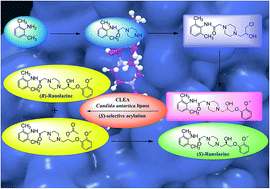
Graphical abstract: In silico approach towards lipase mediated chemoenzymatic synthesis of (S)-ranolazine, as an anti-anginal drugImage result for Ranolazine SYNTHESISImage result for Ranolazine SYNTHESIS

In silico approach towards lipase mediated chemoenzymatic synthesis of (S)-ranolazine, as an anti-anginal drug

*
Corresponding authors
a
Department of Pharmaceutical Technology (Biotechnology), National Institute of Pharmaceutical Education and Research, Sec-67, S. A. S. Nagar-160062, India
E-mail: ucbanerjee@niper.ac.in
RSC Adv., 2016,6, 49150-49157

DOI: 10.1039/C6RA06879K
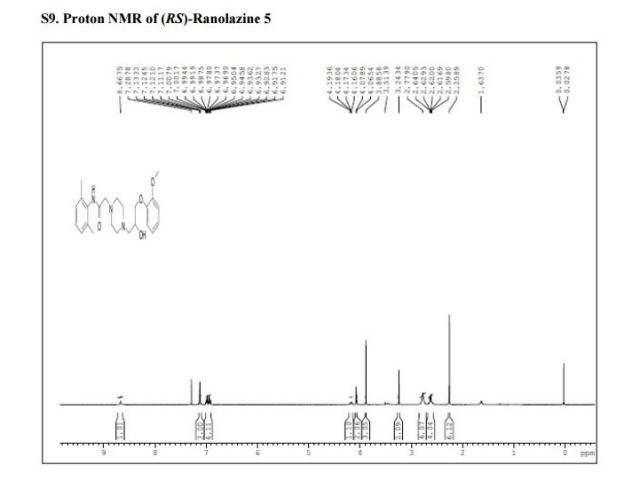
CLIP

https://www.researchgate.net/publication/259824588_Synthesis_of_Ranolazine_Derivatives_Containing_the_1_S_4_S_-25-Diazabicyclo221Heptane_Moiety_and_Their_Evaluation_as_Vasodilating_Agents

Image result for Ranolazine SYNTHESIS

Image result for Synthesis of Ranolazine Derivatives Containing the (1S,4S)-2,5-Diazabicyclo[2.2.1]Heptane Moiety and Their Evaluation as Vasodilating Agents


OTHER NMR…….http://onlinelibrary.wiley.com/store/10.1111/cbdd.12285/asset/supinfo/cbdd12285-sup-0001-SupplementaryData.pdf?v=1&s=1c11a72432d0627b201f1bd37dab7ef913b0ff1f

OF Epimer (S,S,S)-5, Epimer (S,S,R)-5

PATENT

WO-2016142819

Ranolazine is marketed under the brand name Ranexa® and is indicated for the treatment of chronic angina. Ranexa may be used with beta-blockers, nitrates, calcium channel blockers, anti-platelet therapy, lipid-lowering therapy, ACE inhibitors, and angiotensin receptor blockers. Ranolazine is a racemic mixture, chemically described as 1-piperazineacetamide, N-(2, 6-dimethylphenyl)-4-[2-hydroxy-3-(2-methoxyphenoxy) propyl]-, (±)- indicated by compound of formula (1).

(1)

U.S. Patent No. 4,567,264 teaches two methods for the preparation process of Ranolazine. Method 1 disclosed reaction of 2-methoxyphenol compound of formula (2) with epichlorohydrin in presence of water, dioxane and NaOH to obtain l-(2-methoxyphenoxy)-2, 3-epoxypropane compound of formula (3) which is condensed with piperazine in presence of ethanol to obtain 2-(2-methoxyphenoxy)-l-(piperazin-l-yl) ethanol compound of formula (4). Reacting 2, 6-Dimethylaniline compound of formula (5) with chloroacetyl chloride in presence of TEA and MDC to obtain 2-chloro-N-(2,6-dimethylphenyl) acetamide compound of formula (6). Compound of formula (4) was condensed with compound of formula (6) in presence of dimethylformamide to obtain Ranolazine compound of formula (1). The method (1) is depicted below as scheme (I).

Scheme (I) (1)

US ‘264 taught another method for preparation of Ranolazine by condensing compound of formula (6) with piperazine in presence of ethanol to obtain N-(2, 6-dimethylphenyl)-2-(piperazin-l-yl) acetamide compound of formula (7). Compound of formula (3) was condensed with compound of formula (7) in presence of mixture of methanol and toluene at reflux temperature. The obtained Ranolazine is purified by column chromatography on silica gel. Excess of hydrochloric acid in methanol was added to get dihydrochloride salt of Ranolazine which was converted into its free base by suspending it in ether and stirred with excess of dilute aqueous potassium carbonate to get Ranolazine free base. The scheme is depicted below by Scheme (II).

Scheme (II) (!)

EP0483932A1 disclosed condensation of condensation of N, N-bis (2-chloro ethyl)-amino]-2,6-dimethyl acetanilide compound of formula (9) with l-[3-(2-methoxyphenoxy)-2-hydroxy]propylamine compound of formula (8) to obtain Ranolazine base. The base was purified by column chromatography; hydrochloride salt was formed by treating with methanolic HCI. The detailed impurity profile study was not reported for Ranolazine. The synthetic scheme is depicted below in scheme (III).

Chinese patent application No.102875490 disclosed condensation of compound of formula (6) with N-Boc-piperazine to obtain compound of formula (10) in the presence of K2CO3 in EtOH, removal of Boc group by means of TFA in EtOAc gives compound of formula (7) which is then converted into Ranolazine. The synthetic scheme is depicted below in scheme (IV).

Scheme (IV)

Organic Process Research & Development 2012, 16, 748-754 disclosed condensation of compound of formula (6) with piperazine in methanol to produce compound of formula (7), in which unwanted solid bis alkylated compound of formula (11) was filtered. The resulting filtrate pH adjusted to 5.0-5.5 with 44% phosphoric acid solution to recover piperazine monophosphate monohydrate salt. The compound of formula (7) was extracted with MDC.

PCT application No. 2008/047388 disclosed a process for the preparation Ranolazine, by reacting 2, 6-dimethyl aniline with Chloroacetyl chloride in the presence of base in water. The resulting amide intermediate is reacted with piperazine, and the resulting piperazine derivative is further condensed with l-(2-methoxyphenoxy)-2,3-epoxypropane in an inert solvent to produce crude Ranolazine, which is further purified by crystallizing from organic solvents selected from alcohols or aromatic hydrocarbons. Ranolazine obtained in the disclosed art does not have satisfactory purity for pharmaceutical use. Unacceptable amounts of impurities are generally formed along with Ranolazine. In addition, the processes involve the additional step of column chromatographic purifications, which are generally undesirable for large-scale operations.

As described above the cited literature processes suffer from many drawbacks like use of excess amount of piperazine during the reaction, which is difficult to handle in large scale; generation of large amount of effluent due to excessive use of piperazine, that is difficult to recover and recycle; Ranolazine obtained as an oil is difficult to handle in large scale production and laborious chromatographic

techniques are used for purification of Ranolazine.

It is observed that pharmaceutically acceptable salts of Ranolazine when prepared from impure Ranolazine do not meet the pharmaceutical acceptable quality. There is therefore, an unfulfilled need to provide industrially feasible process for the preparation of Ranolazine free base and its acid addition salt with high purity. The present invention provides Ranolazine of high purity by using phosphate salt of piperazine to prepare Ranolazine. In this process, excess of unreacted piperazine is easy to recover and recycle in the next reactions. Thus it is easy to avoid the generation of large amount of effluent due to reuse of piperazine, which are generally desirable for large-scale operations thereby making the process commercially feasible.

All the available literature uses unprotected piperazine and protected piperazine leading to formation of dimer impurities which are difficult to remove from the product and also resulting in poor overall yield of the product. The maximum daily dosage of Ranolazine is 2 g; therefore, known and unknown impurities must be controlled below 0.05% in the final drug substance.

From the above known fact our main target is:

1. To study the detailed impurity profile to and to control the formation of all the impurities below the desired limit (NMT 0.05%).

2. To obtained the Cost effective process by utilizing the maximum consumption of piperazine in the form of piperazine monophosphate salt there by reducing formation of unwanted impurities and also reusing recovered piperazine.

All the available literature uses unprotected piperazine and protected piperazine leading to formation of dimer impurities which are difficult to remove from the product and also resulting in poor overall yield of the product.

EXAMPLES

The following examples are presented for illustration only, and are not intended to limit the scope of the invention or appended claims.

Example 1 :

Preparation of [(2, 6-Dimethylphenyl)-amino carbonyl methyl) chloride (6)

To 0.74 kg of potassium carbonate and 2.51ml of water, was added. 500 gm of 2,6-Dimethyl aniline in 1.25 L of Acetone at 0-5 °C. 650 gm of Chloroacetyl chloride was added to the reaction mixture below 5 °C and stirred for 3 hrs. 2500 ml of water was added, stirred for 1 hr, filtered the product, washed with water and dried at 75 °C to get [(2,6- Dimethylphenyl)-amino carbonyl methyl] chloride (6). Yield: 95%; purity >98%

Example 2:

Preparation of l-(2-Methoxy phenoxy)-2, 3-epoxy propane (3)

Added 2.5 L of water to R.B Flask, 80 gms of NaOH was added and stirred to dissolve. Added 500 gms of Guaiacol, 1.12 Kg of Epichlorohydrine and stirred at 25-350C for 5-6 h. The organic layer was separated. To the Epichlorohydrine layer charged 160 gms NaOH dissolved in 2.5 L of water and stirred at 25-30°C for 3-4 h. The organic layer was separated and washed with 150 gms NaOH dissolved in 1.5 L of water. Excess Epichlorohydrine was recovered by distillation of the product layer at 90°C under vacuum (600-700 mmHg) to give 650-680 gms of oil. To the crude oil was added 3.0 L of Isopropanol and cooled to 0°C and filtered the product to get l-(2- Methoxy phenoxy)-2,3-epoxy propane (3).

Yield: 80%; purity >98%.

Example 3:

Preparation of piperazine monophosphate monohydrate

Added 1000 ml of water to R.B Flask 109 gms piperazine was added and stirred to dissolve. pH was adjusted to 5.0-5.5 with O-phosphoric acid. After stirring for 1-2-h at room temperature. Filtered the reaction mass and solid was isolated as piperazine monophosphate monohydrate.

Example 4:

Preparation of compound of formula (7)

Added 1000 ml of water to R.B Flask. 109 gms piperazine was added and stirred to dissolve. pH was adjusted to 5.0-5.5 with O-phosphoric acid. After stirring for 1-2- h at room temperature. Filtered the reaction mass and solid was isolated as piperazine monophosphate monohydrate and charged further to R.B Flask containing 1000 ml water. 100 gms of [(2,6-Dimethylphenyl)-amino carbonyl methyl)chloride (6) was added and heated the reaction mixture at reflux temperature for 7-8 h. Cooled the reaction mixture at 25-30°C and adjusted the pH to 5.5-6.0 with dilute sodium hydroxide solution filtered. Filtrate was washed with 100 ml x 2 methylene chloride and further basified with dilute sodium hydroxide solution and extracted with 500 ml x 3 methylene chloride to obtained compound of formula (7).

Example 5:

Preparation of Ranolazine

Added 1000 ml of water to R.B Flask 109 gms piperazine was added and stirred to dissolve. pH was adjusted to 5.0-5.5 with O-phosphoric acid, 100 gms of [(2,6-Dimethylphenyl)-amino carbonyl methyl)chloride (6) was added and heated the reaction mixture at reflux temperature for 7-8 h. Cooled the reaction mixture at 25-30°C and adjusted pH to 5.5-6.0 with dilute sodium hydroxide solution and filtered. Filtrate was washed with 100 ml x 2 methylene chloride and further basified with dilute sodium hydroxide solution and extracted with 500 ml x 3 methylene chloride. Combined organic layer was washed with saturated brine solution and 80 gm of l-(2-Methoxy phenoxy)-2, 3-epoxy propane (3) was added. Distilled out Methylene chloride under reduced pressure, added 500 ml methanol and refluxed for 5-6 h. Cooled the reaction mass to room temperature and added 500 ml water and cooled to 0°C. Filtered the product to get crude Ranolazine. Yield: 80%; purity >99%.

Example 6:

Preparation of Ranolazine from recovered piperazine monophosphate monohydrate

Added 1000 ml of water to R.B Flask 109 gms piperazine was added and stirred to dissolve. Added recovered piperazine monophosphate monohydrate and pH was adjusted to 5.0-5.5 with O-phosphoric acid, 100 gms of [(2,6-Dimethylphenyl)-amino carbonyl methyl)chloride (6) was added and heated the reaction mixture at reflux temperature for 7-8 h. Cooled the reaction mixture at 25-30°C and adjusted pH 5.5-6.0 with dilute sodium hydroxide solution and filtered. Filtrate was washed with 100 ml x 2 methylene chloride and further basified with dilute sodium

hydroxide solution and extracted with 500 ml x 3 methylene chloride. Combined organic layer was washed with saturated brine solution and 80 gm of l-(2-Methoxy phenoxy)-2,3-epoxy propane (3) was added. Distilled out Methylene chloride under reduced pressure, added 500 ml methanol and refluxed for 5-6 h. Cooled the reaction mass to room temperature and added 500 ml water and cooled to 0°C. Filtered the product to get crude Ranolazine. Yield: 80%; purity >99%.

Example 7:

Preparation of Ranolazine.

Added 1000 ml of water to R.B Flask 109 gms piperazine was added and stirred to dissolve. pH was adjusted to 5.0-5.5 with O-phosphoric acid. 100 gms of [(2,6-Dimethylphenyl)-amino carbonyl methyl)chloride (6) was added and heated the reaction mixture at reflux temperature for 7-8 h. Cooled the reaction mixture at 25-30°C, adjusted pH to 5.5-6.0 with dilute sodium hydroxide solution and filtered. Filtrate was washed with 100 ml x 2 methylene chloride and further basified with dilute sodium hydroxide solution and extracted with 500 ml x 3 methylene chloride. Combined organic layer was washed with saturated brine solution and 80 gm of l-(2-Methoxy phenoxy)-2,3-epoxy propane (3) was added. Distilled out Methylene chloride under reduced pressure, added 500 ml isopropyl alcohol, refluxed for 5-6 h. cooled the reaction mass to 0°C. Filtered the product to get crude Ranolazine. Yield: 80%; purity >98%.

Example 8:

Preparation of Ranolazine

Added 1000 ml of water to R.B Flask 109 gms piperazine was added and stirred to dissolve. pH was adjusted to 5.0-5.5 with O-phosphoric acid. After stirring for 1-2- h at room temperature. Filtered the reaction mass and solid was isolated as piperazine monophosphate monohydrate and charged further to R.B Flask containing 1000 ml water. 100 gms of [(2,6-Dimethylphenyl)-amino carbonyl methyl)chloride (6) was added and heated the reaction mixture at reflux temperature for 7-8 h. Cooled the reaction mixture at 25-30°C and adjusted the pH to 5.5-6.0 with dilute sodium hydroxide solution filtered. Filtrate was washed

with 100 ml x 2 methylene chloride and further basified with dilute sodium hydroxide solution and extracted with 500 ml x 3 methylene chloride. Combined organic layer was washed with saturated brine solution and 80 gm of l-(2-Methoxy phenoxy)-2,3-epoxy propane (3) was added. Distilled out Methylene chloride under reduced pressure, added 500 ml methanol and refluxed for 5-6 h. Cooled the reaction mass to room temperature, added 500 ml water, cooled to 0°C and filtered the product to get crude Ranolazine. Yield: 80%; purity >99%.

Example 9:

Purification of Ranolazine

Added 300 ml of methanol to R.B Flask, 100 gms of crude ranolazine piperazine and heated to dissolve. Added Activated charcoal and filtered the hot solution through hyflo and washed the hyflo with 100 ml methanol. Reaction mixture was cooled to room temperature. 200 ml water was added and was cooled further to 0-5°C. Filtered to afford pure Ranolazine. Yield: 90%; purity >99.9%.

PATENT

WO2006008753,

https://www.google.com/patents/WO2006008753A1?cl=en

US Patent 4567264 describes the preparation of Ranolazine base from basic stages by condensing [(2,6-dimethyphenyl) amino; carbonyl methyl] – chloride (II) with l-[3-(2-metlioxyphenoxy)-2- hydroxypropyl]piperazine.(III) The base was purified by column chromatography and isolated as oil. The hydrochloride salt was prepared in methanol using hydrochloric acid and the salt was isolated by addition of ether.

Figure imgf000003_0001

Ranolazine Base

EP 0483932 describes the preparation of Ranolazine base by condensation of α-[ N3N -bis (2-cWoroetiiyl)-amino]-2,6-dimetliylacetanilide hydrochloride (IV) with l-[3-(2-methoxy phenoxy)-2-hydroxy]-propylamine (V). The base was purified using column chromatography and hydrochloride was formed by treating with metholic hydrochloric acid and crystallized by addition of diethyl ether as co solvent to obtain a product with melting point 229- 230 0C.

Figure imgf000004_0001

Ranolazine base

It is a long standing need to avoid the formation of oil and obtain the product directly as solid there by eliminating laborious and expensive column chromatographic methods and achieving the higher yields of Ranolazine diliydrochloride. More over the prior art does not teach, any features such as polymorphic forms of the drug which may have varying pharmacological effects

Example-1:

Preparation of l-[3-(2-Metkoxyphenoxy)-2-hydroxypropyl ] piperazine

100 gms l-(2-methoxyphenoxy)-2,3-epoxypropane was added in a 60 min at 0-5 0C to 192 gms of anhydrous piperazine dissolved in 500 ml methanol. Reaction mixture is stirred further for 2 Hrs at 0-5 0C. It is quenched in 400 ml DMW & filtered. The product is obtained by extraction with MDC from the saturated aqueous layer with sodium chloride. 65 gms of acetic acid and 400 ml water is added in the MDC layer. Aqueous layers was separated and basified with 100 ml liquor ammonia. The product was extracted with 500 ml methylene dichloride and isolated by evaporation of solvent. The residue was used as such in the next reaction.

Yield =80 gms. HPLC purity = 96-$k %.

ExampIe-2 r-

Preparation of crude (+)-l-[3~(2-Methoxyphenoxy)-2-hydroxypropyl]-4- [N-(2,6-dimethylphenyl)carbamoylmethyl] piperazine dihydrochloride.

A mixture of 90 gms l-[3-(2-Memoxyphenoxy)-2-hydroxypropyl ] piperazine, 85 gms [(2,6-dimethylphenyl) aminocarbonyl methyl)chloride, 120 gms anhydrous potassium carbonate and 3.6 gms sodium iodide in 260 ml dimethyl formamide is stirred at room temperature (30-35 0C) for 18 Hrs. The reaction mixture is quenched in 1600 ml water and extracted thrice with 300 ml methylene dichloride each time . Combined methylene dichloride layer is treated with a mixture of 1100 ml aqueous hydrochloric acid ( 35 %) & 900 ml water. Acidic aqueous layer is basified with ammonia, extracted with methylene dichloride and solvent is evaporated to get Ranolazine base. ; Yield = 140 gms ,

The above Ranolazine base is taken in 2160 j ml j acetone and 100 hydrochloric acid gas dissolved in isopropyl alcohol is added at room temperature till pH is acidic. The precipitated dihydrochloride compound is Filtered, is washed with acetone to give the Ranolazine dihydrochloride Yield = 144 gm.

Example-3 :-

Preparation of Crystalline (+)-l-[3-(2-Methoxyphenoxy)-2- hydroxypropyl]-4-[N-(2,6-diniethylphenyl)carbamoylmethyl] piperazine dihydrochloride.

100 gms of Crude (+)-l-[3-(2-Methoxyphenoxy)-2-hydroxypropyl]-4-[N- (2,6-dimemylplienyl)caitamoyhnetliyl] piperazine dihydrochloride is dissolved to get a clear solution in 500 ml methanol., The solution is cooled to room temperature and further cooled to 100C. The product is filtered, washed with 2 X 50 ml methanol and dried at 75 degree C for 10 Hrs. get crystalline Form -A of Ranolazine diliydrochloride] ;: characterized .by XRD & DSC as shown in Figure |I and II.

Example-4: –

Preparation of Amorphouse (+)-l-[3-(2-Methoxyphenoxy)-2- hydroxypropyl]-4-[N-(2,6-dimethylphenyl)carbamoylmethyl] piperazine dihydrochloride

100 gms Ranolazine diliydrochloride is added in 500 ml water and heated to get a clear solution. Water is distilled off under reduced pressure, the residue is cooled to room temperature to obtain, amorphous form characterized by a XRD pattern (Figure III ) and DSC (Figure IV) exhibiting a broad endotherm around 80 and exotherm bet 220-224 and followed by endotherm 150-156 0C.

Example-5: –

Preparation of Amorphouse ,(+)-l-[3-(J2-Methoxyphenoxy)-2- hydroxypropyl]-4-[N-(2,6-dimethylphenyl)carbampylitnethyl] piperazine dihydrochloride

100 gms Ranolazine dihydrochloride is added ;i| in 2000 ml ethanol containing 10 % water and heated to get a clear: solution. Solvent is distilled off under reduced pressure, the residue is cooled to room temperature to obtain amorphous form characterized by a XRD pattern (Figure m ) and DSC (Figure IV) exhibiting a broad endotherm around 80 and exotherm bet 220-224 and followed by endotherm 150-156 0C.

Example -6:~

Preparation of Ranolazine base from its di hydrochloride salt

20 gms Ranolazine dihydrohloride at room temperature is added to a mixture containing 150 ml water and 50 ml acetone and 20 ml liquor ammonia. It is stirred for two hrs. The precipitated base, was . filtered and dried under vacuum at 70 0C to get crystalline form of Ranolazine base characterized by XRD & DSC as shown in Figure V & VI. Yield = 12 gms.

CLIP

Improved Process for Ranolazine: An Antianginal Agent

Research and Development, Integrated Product Development, Innovation Plaza, Dr. Reddy’s Laboratories Ltd., Survey Nos. 42, 45, 46 and 54, Bachupally, Qutubullapur, Ranga Reddy-500 072, Andhra Pradesh, India
§ Research and Development, Macleods Pharmaceuticals Limited, G-2, Mahakali Caves Road, Shanthi Nagar, Andheri (E), Mumbai-400 093, Maharashtra, India
Department of Chemistry, University College of Science, Osmania University, Hyderabad-500 007, Andhra Pradesh, India
Org. Process Res. Dev., 2012, 16 (5), pp 748–754
DOI: 10.1021/op300026r
Publication Date (Web): April 12, 2012,*E-mail: vummenthalapv@yahoo.co.in. Fax: +91-40-44346285. Telephone: +91-9849210408.
An improved process has been developed for the active pharmaceutical ingredient, ranolazine with 99.9% purity and 47% overall yield (including three chemical reactions and one recrystallization). Formation and control of all the possible impurities is described. All the solvents used in the process were recovered and reused. The unreacted piperazine is recovered as piperazine monophosphate monohydrate salt.
Abstract Image

References

  1. Banon D et al. The usefulness of ranolazine for the treatment of refractory chronic stable angina pectoris as determined from a systematic review of randomized controlled trials. Am J Cardiol. 2014 Mar 15;113(6):1075-82. PMID 24462341
  2.  “Ranexa (ranolazine) Extended-Release Tablets, for Oral Use. Full Prescribing Information”. Gilead Sciences, Inc. Foster City, CA 94404. Retrieved8 September 2016.
  3. ^ Jump up to:a b c d e Kloner RA, et al. Efficacy and safety of ranolazine in patients with chronic stable angina. Postgrad Med. 2013 Nov;125(6):43-52. PMID 24200760
  4. Jump up^ “FDA Approves New Treatment for Chest Pain”. FDA News. 2006-01-31. Retrieved2011-03-02.
  5.  D Noble and P J Noble. Late sodium current in the pathophysiology of cardiovascular disease: consequences of sodium–calcium overload Heart. Jul 2006; 92(Suppl 4): iv1–iv5.PMID 16775091 PMCID 1861316
  6. Jump up^ Sokolov, S; Peters, CH; Rajamani, S; Ruben, PC (2013). “Proton-dependent inhibition of the cardiac sodium channel Nav1.5 by ranolazine” (PDF). Frontiers in Pharmacology. 4: 78. doi:10.3389/fphar.2013.00078. PMC 3689222free to read. PMID 23801963. Retrieved8 September 2016.
  7. Jump up^ EMEA Ranolazine page at the EMEA
  8. Jump up^ CV Therapeutics press release. April 1, 1996 CV Therapeutics Licenses Late-Stage Anti-Anginal Drug from Syntex (U.S.A.), an Affiliate of Roche Holding Ltd.
  9. Jump up^ CV Therapeutics, 22 June 2006 CV Therapeutics Acquires Rights to Ranolazine in Asia
  10. Thepharmaletter.com 22 September 2008 Italy’s Menarini to pay up to $385 million for rights to CV Thera’s Ranexa
  11. Jump up^ Reuters, via the New York Times. 12 March 2009. Gilead, a White Knight, to Buy CV Therapeutics
  12.  Menarini press release. 18 June 2013 Memarii Group announces agreement with Gilead Sciences to commercialize Ranexa® (ranolazine) in 50 new countries
  13. http://shodhganga.inflibnet.ac.in/bitstream/10603/19311/11/11_chapter%203.pdf

External links

CN1404471A * Feb 22, 2001 Mar 19, 2003 Cv Therapeutics Substituted piperazine compound
Reference
1 * “Green Chemistry” 20,130,131 Damodara N. Kommi ET Al. ” All Water Chemistry ” for A Concise Total Synthesis of Novel, class at The Anti-anginal Drug (the RS), (R & lt), and (S) -ranolazine 756-767 1-9 Vol. 15,
2 * “Tetrahedron Letters” 20080304 Sadula Sunitha et al. An efficient and chemoselective Br nsted acidic ionic liquid-catalyzed N-Boc protection of amines 2527-2532 1-9 Vol. 49,
3 * N. KOMMI the ET AL .: DAMODARA ” ” All Water Chemistry “for A Concise Total Synthesis of Novel, class at The Anti-anginal Drug (the RS), (R & lt), and (S) -ranolazine “, “GREEN CHEMISTRY”, Vol. 15, 31 January 2013 (2013-01-31) , pages 756 – 767
4 * Sunitha the ET AL .: SADULA ” An Efficient and chemoselective Brønsted acidic Ionic Liquid-Catalyzed N of Boc-Protection of Amines “, “TETRAHEDRON LETTERS”, Vol 49, 4 March 2008 (2008-03-04), Pages 2527 -. 2532
5 * Qin Mingli et al: ” Study on the Synthesis of ranolazine ..”, “Xinyang Normal University: Natural Science”, vol 20, no 2, 30 April 2007 (2007-04-30), pages 226 – 229

RANEXA (ranolazine) Extended-release Tablets

Ranolazine is a racemic mixture, chemically described as 1-piperazineacetamide, N-(2,6-dimethylphenyl)-4-[2-hydroxy-3-(2-methoxyphenoxy)propyl]-, (±)-. It has an empirical formula of C24H33N3O4, a molecular weight of 427.54 g/mole, and the following structural formula:

RANEXA® (ranolazine) Structural Formula Illustration

Ranolazine is a white to off-white solid. Ranolazine is soluble in dichloromethane and methanol; sparingly soluble in tetrahydrofuran, ethanol, acetonitrile, and acetone; slightly soluble in ethyl acetate, isopropanol, toluene, and ethyl ether; and very slightly soluble in water.

RANEXA tablets contain 500 mg or 1000 mg of ranolazine and the following inactive ingredients: carnauba wax, hypromellose, magnesium stearate, methacrylic acid copolymer (Type C), microcrystalline cellulose, polyethylene glycol, sodium hydroxide, and titanium dioxide. Additional inactive ingredients for the 500 mg tablet include polyvinyl alcohol, talc, Iron Oxide Yellow, and Iron Oxide Red; additional inactive ingredients for the 1000 mg tablet include lactose monohydrate, triacetin, and Iron Oxide Yellow.

Ranolazine
Ranolazine.svg
Systematic (IUPAC) name
(RS)-N-(2,6-Dimethylphenyl)-2-[4-[2-hydroxy-3-(2-methoxyphenoxy)-propyl]piperazin-1-yl]acetamide
Clinical data
AHFS/Drugs.com Monograph
MedlinePlus a606015
License data
Pregnancy
category
  • US: C (Risk not ruled out)
Routes of
administration
By mouth (tablets)
Legal status
Legal status
Pharmacokinetic data
Bioavailability 35 to 50%
Protein binding ~62%
Metabolism Extensive in liver (CYP3A,CYP2D6) and intestine
Biological half-life 7 hours
Excretion Renal (75%) and fecal (25%)
Identifiers
CAS Number 142387-99-3 Yes
ATC code C01EB18 (WHO)
PubChem CID 56959
IUPHAR/BPS 7291
DrugBank DB00243 Yes
ChemSpider 51354 Yes
UNII A6IEZ5M406 Yes
ChEBI CHEBI:87681 
ChEMBL CHEMBL1404 Yes
Chemical data
Formula C24H33N3O4
Molar mass 427.537 g/mol
Chirality Racemic mixture

////////////////////Ranolazine, 盐酸雷诺嗪 ,雷诺嗪 , Antianginal

CLIP

Ranolazine (Ranexa™)
Ranolazine, developed by CV therapeutics after licensing it from Roche (Syntex), is a late stage sodium channel
blocker approved in March 2006 for the treatment of chronic angina. The compounds anti-angina and anti-ischemic affects do not depend on reductions in heart rate or blood pressure.
Because of the potential for QT prolongation, the drug is indicated for treating patients that do not get adequate response with other anti-anginal drugs [6,27].

Two syntheses, one from the inventors at Roche [28] and other from a group in Hungary [29], of Ranolazine have been described in the patent literature.

The original synthesis is highlighted in Scheme 7. Reaction of 2,6-dimethylaniline 46 with chloroacetyl chloride (47) in the presence of triethylamine for 4h at 0ºC gave amide 48 in 82% yield. This chloro amide 48 was reacted with piperazine in refluxing ethanol for 2 h to give piperazinyl amide 50.

Reaction of amide 50 with epoxide intermediate 53, prepared by reacting 2-methoxy phenol 51 with epichlorohydrin, in refluxing isopropanol for 3 h followed by treatment with HCl/methanol gave ranolazine dihydrochloride (VII) in 73% yield.

[6] Graul, A. I.; Prous, J. R. Drug News Perspect, 2007, 20, 17.
[27] Jones, R. IDrugs, 1999, 2, 1353.
[28] Kluge, A. F.; Clark, R. D.; Strosberg, A. M.; Pascal, J. C.; Whiting,R. L. EP-0126449 A1, 1984.
[29] Agai-Csongor, E.; Gizur, T.; Hasanyl, K.; Trischler, F.; Demeter-Sabo, A.; Csehi, A.; Vajda, E.; Szab-Komi si, G. EP-0483932 A1,1991.

 

ORM 10921


Figure

ORM 10921

UNII-D26C95A960; D26C95A960; ORM-12741; ORM12741; ORM 12741; ORM-10921;

(1S,12bS)-1-(Methoxymethyl)-1-methyl-2,3,4,6,7,12b-hexahydro-1H-[1]benzofuro[2,3-a]quinolizine

(1S,12bS)-1-(methoxymethyl)-1-methyl-2,3,4,6,7,12b-hexahydro-[1]benzofuro[2,3-a]quinolizine

285.38, C18 H23 N O2

2H-Benzofuro[2,3-a]quinolizine, 1,3,4,6,7,12b-hexahydro-1-(methoxymethyl)-1-methyl-, (1S,12bS)-

cas 610782-82-6

Belle David Din, Reija Jokela, Arto Tolvanen,Antti Haapalinna, Arto Karjalainen, Jukka Sallinen, Jari Ratilainen
Applicant Orion Corporation

UNII-D26C95A960.png

Image result for Orion Corporation

David Din Belle

David Din Belle

Senior research scientist at Orion Corporation

https://fi.linkedin.com/in/david-din-belle-a2594115

Jari Ratilainen

Jari Ratilainen

https://fi.linkedin.com/in/jari-ratilainen-6a566218

Image result for Reija Jokela

Reija Jokela

https://fi.linkedin.com/in/reija-jokela-06499a1a

The basic drug substance candidate ORM10921 (MW = 285.38),

IUPAC name [1R*,12bR*)-(−)-1,3,4,6,7,12b-hexahydro-1-methoxymethyl-1-methyl-2H-benzofuro [2,3-a]quinolizine],

and its hydrochloric salt were synthesized by Orion Pharma, Finland.

The absolute configuration was assigned by optical rotation and later by single-crystal X-ray diffraction (see Supporting Information). The optical purity of the material was >97%.

  • Originator Juvantia Pharma (CEASED); Orion
  • Class Neuropsychotherapeutics
  • Mechanism of Action Alpha 2c adrenergic receptor antagonists

Highest Development Phases

  • Discontinued Major depressive disorder; Schizophrenia

Most Recent Events

  • 10 May 2006 Discontinued – Phase-I for Schizophrenia in Finland (unspecified route)
  • 10 May 2006 Discontinued – Preclinical for Depression in Finland (unspecified route)
  • 15 Nov 2002 Preclinical trials in Schizophrenia in Finland (unspecified route)

Image result for ORM 10921

Figure 1: Chemical structure of the study compound. Molecular Formula: C18H23NO2 · HCl · ½ H2O; Molecular Weights: 285.39 (free base), 321.85 (hydrochloride) 330.86 (hydrochloride hemihydrate). ORM-10921 · HCl is a single stereoisomer with the (1R*,12bR*) configuration.

The alpha adrenergic receptors can be divided on a pharmacological basis into alphal- and alpha2-adrenoceptors, which can both be further divided into subtypes. Three genetically encoded subtypes, namely alpha2A-, alpha2B- and alpha2C-adrenoceptors, have been discovered in human. Accordingly, alpha2- adrenoceptors in humans have been subdivided into three pharmacological subtypes known as alpha2A-, alpha2B- and alpha2C-adrenoceptors. A fourth, pharmacologically defined subtype, alpha2D, is known in rodents and in some other mammals, and it corresponds to the genetically defined alpha2A-adrenoceptors.

The alpha2-adrenoceptor subtypes have distinct tissue distributions and functional roles. For instance, while alpha2A-adrenoceptors are widely expressed in various tissues, alpha2C-adrenoceptors are concentrated in the CNS, and they appear to play a role in the modulation of specific CNS-mediated behavioural and physiological responses. Compounds that are non-specific to any of the above-mentioned alpha2 subtypes, and compounds that are specific to certain alpha2 subtypes, are already known. For example, atipamezole is a non-specific alpha2 antagonist. Atipamezole has been described in, for example, EP-A-183 492 (cf. p.13, compound XV) and Haapalinna, A. et al., Naunyn-Schmiedeberg’s Arch. Pharmacol. 356 (1997) 570-582. U.S. Patent No. 5,902,807 describes compounds that are selective antagonists for the alpha2C subtype and may be used in the treatment of mental illness, e.g. mental disturbance induced by stress. Such compounds include, for example, MK-912 and BAM- 1303. Furthermore, WO-A-99 28300 discloses substituted imidazole derivatives having agonist-like activity for alpha2B- or 2B/2C-adrenoceptors. hi addition, WO 01/64645 relates to derivatives of quinoline useful as alpha2 antagonists, as well as to selective alpha2C antagonist agents. The disclosures of all documents cited above in this paragraph are incorporated by reference herein.

Several arylquinolizine derivatives and related compounds have been described in the literature, some of which possess valuable pharmaceutical effects. For example, U.S. Patents No. 4,806,545 and 4,044,012 describe 1,1-disubstituted indolo[2,3-«]quinolizidines useful as vasodilators and antihypoxic agents. Further, substituted arylquinolizine derivatives, described for example in U.S. Patent No. 4,686,226 possessing alpha2-adrenoceptor antagonistic activity are useful for example as antidepressant, antihypertensive, or antidiabetic agents or platelet aggregation inhibitors. In addition, U.S. Patent No. 3,492,303 relates to indolo[2,3- α]quinolizidines useful as central nervous system depressants.

PATENT

WO 2003082866

https://www.google.com/patents/WO2003082866A1?cl=en

///////////

CC1(CCCN2C1C3=C(CC2)C4=CC=CC=C4O3)COC

How to document a Product Transfer? Example templates!


DR ANTHONY MELVIN CRASTO Ph.D's avatarDRUG REGULATORY AFFAIRS INTERNATIONAL

str1

All participants of the GMP training course “Product Transfer” will receive a special version of the Guideline Manager CD including documents and templates useable for site change projects.

Click

http://www.gmp-compliance.org/eca_mitt_05359_15221,Z-PEM_n.html

According to the European GMP-Rules, written procedures for tranfser activities and their documentation are required. For example, a Transfer SOP, a transfer plan and a report are now mandatory and will be checked during inspections.
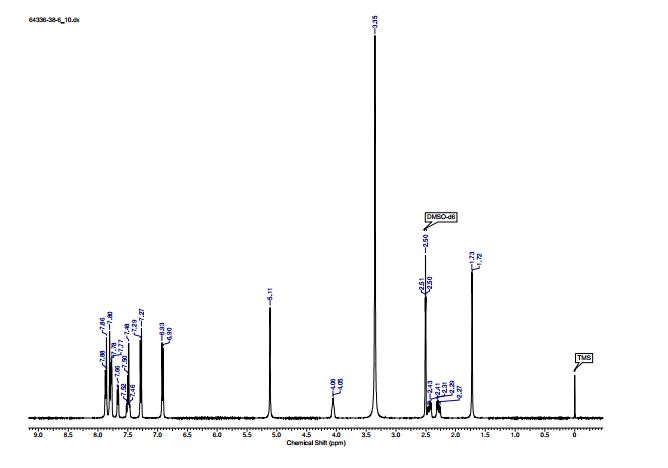
As participant of the GMP education course “Product Transfer” in Berlin, from 25-27 October 2016 you will receive a special version of the Guideline Manager CD with a special section concerning product transfers. This section contains, amongst others, a Transfer SOP and a template for a Transfer Plan. Both documents are in Word format and can immediately be used after adoption to your own situation.

Regulatory Guidance Documents like the WHO guideline on transfer of technology in pharmaceutical manufacturing and the EU/US…

View original post 36 more words

Analytical Lifecycle: USP “Statistical Tools”, Analytical Target Profile and Analytical Control Strategy


DR ANTHONY MELVIN CRASTO Ph.D's avatarDRUG REGULATORY AFFAIRS INTERNATIONAL

Image result for statistical toolsAnalytical Lifecycle: USP <1210> “Statistical Tools”, Analytical Target Profile and Analytical Control Strategy

The United States Pharmacopeia (USP) is currently undertaking further steps towards a comprehensive analytical lifecycle approach by publishing a draft of a new General Chapter <1210> Statistical Tools for Procedure Validation and two Stimuli Articles regarding Analytical Target Profile and AnalyticalControl Strategy in Pharmacopeial Forum. Read more about the life cycle concept for analytical procedures.

http://www.gmp-compliance.org/enews_05565_Analytical-Lifecycle–USP–1210–%22Statistical-Tools%22–Analytical-Target-Profile-and-Analytical-Control-Strategy_15438,15608,Z-PDM_n.html

Following the recently announced elaboration of a new general chapter <1220> “The Analytical Procedure Lifecycle” the United States pharmacopeia (USP) is now proceeding in its approach for a comprehensive analytical lifecycle concept. A further step towards this approach is the draft of a new USP General Chapter <1210> Statistical Tools for Procedure Validation which has been published in Pharmacopeial Forum (PF) 42(5) in September 2016. Comment deadline is November 30, 2016.

Additionally, two Stimuli Articles regarding “Analytical Control Strategy” and “Analytical…

View original post 624 more words