New Drug Approvals

Home » Uncategorized (Page 46)

Category Archives: Uncategorized

DRUG APPROVALS BY DR ANTHONY MELVIN CRASTO .....FOR BLOG HOME CLICK HERE

Blog Stats

  • 4,852,075 hits

Flag and hits

Flag Counter

Enter your email address to follow this blog and receive notifications of new posts by email.

Join 37.9K other subscribers
Follow New Drug Approvals on WordPress.com

Archives

Categories

Recent Posts

Flag Counter

ORGANIC SPECTROSCOPY

Read all about Organic Spectroscopy on ORGANIC SPECTROSCOPY INTERNATIONAL 

Enter your email address to follow this blog and receive notifications of new posts by email.

Join 37.9K other subscribers
DR ANTHONY MELVIN CRASTO Ph.D

DR ANTHONY MELVIN CRASTO Ph.D

DR ANTHONY MELVIN CRASTO, Born in Mumbai in 1964 and graduated from Mumbai University, Completed his Ph.D from ICT, 1991,Matunga, Mumbai, India, in Organic Chemistry, The thesis topic was Synthesis of Novel Pyrethroid Analogues, Currently he is working with AFRICURE PHARMA, ROW2TECH, NIPER-G, Department of Pharmaceuticals, Ministry of Chemicals and Fertilizers, Govt. of India as ADVISOR, earlier assignment was with GLENMARK LIFE SCIENCES LTD, as CONSUlTANT, Retired from GLENMARK in Jan2022 Research Centre as Principal Scientist, Process Research (bulk actives) at Mahape, Navi Mumbai, India. Total Industry exp 32 plus yrs, Prior to joining Glenmark, he has worked with major multinationals like Hoechst Marion Roussel, now Sanofi, Searle India Ltd, now RPG lifesciences, etc. He has worked with notable scientists like Dr K Nagarajan, Dr Ralph Stapel, Prof S Seshadri, etc, He did custom synthesis for major multinationals in his career like BASF, Novartis, Sanofi, etc., He has worked in Discovery, Natural products, Bulk drugs, Generics, Intermediates, Fine chemicals, Neutraceuticals, GMP, Scaleups, etc, he is now helping millions, has 9 million plus hits on Google on all Organic chemistry websites. His friends call him Open superstar worlddrugtracker. His New Drug Approvals, Green Chemistry International, All about drugs, Eurekamoments, Organic spectroscopy international, etc in organic chemistry are some most read blogs He has hands on experience in initiation and developing novel routes for drug molecules and implementation them on commercial scale over a 32 PLUS year tenure till date Feb 2023, Around 35 plus products in his career. He has good knowledge of IPM, GMP, Regulatory aspects, he has several International patents published worldwide . He has good proficiency in Technology transfer, Spectroscopy, Stereochemistry, Synthesis, Polymorphism etc., He suffered a paralytic stroke/ Acute Transverse mylitis in Dec 2007 and is 90 %Paralysed, He is bound to a wheelchair, this seems to have injected feul in him to help chemists all around the world, he is more active than before and is pushing boundaries, He has 100 million plus hits on Google, 2.5 lakh plus connections on all networking sites, 100 Lakh plus views on dozen plus blogs, 227 countries, 7 continents, He makes himself available to all, contact him on +91 9323115463, email amcrasto@gmail.com, Twitter, @amcrasto , He lives and will die for his family, 90% paralysis cannot kill his soul., Notably he has 38 lakh plus views on New Drug Approvals Blog in 227 countries......https://newdrugapprovals.wordpress.com/ , He appreciates the help he gets from one and all, Friends, Family, Glenmark, Readers, Wellwishers, Doctors, Drug authorities, His Contacts, Physiotherapist, etc He has total of 32 International and Indian awards

Verified Services

View Full Profile →

Archives

Categories

Flag Counter

FDA approves drug to treat Duchenne muscular dystrophy


FDA approves drug to treat Duchenne muscular dystrophy

Feb. 9, 2017

The U.S. Food and Drug Administration today approved Emflaza (deflazacort) tablets and oral suspension to treat patients age 5 years and older with Duchenne muscular dystrophy (DMD), a rare genetic disorder that causes progressive muscle deterioration and weakness. Emflaza is a corticosteroid that works by decreasing inflammation and reducing the activity of the immune system.

Read more.

New FDA Logo Blue

Darifenacin Hydrobromide, 臭化水素酸ダリフェナシン


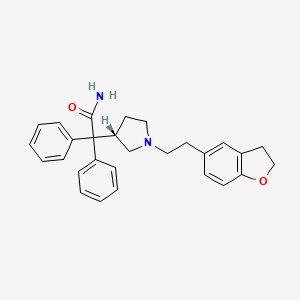
Darifenacin.svg

Darifenacin

2-[(3S)-1-[2-(2,3-dihydro-1-benzofuran-5-yl)ethyl]pyrrolidin-3-yl]-2,2-diphenylacetamide

Darifenacin; Emselex; Enablex; CAS 133099-04-4; UNII-APG9819VLM;

US 2004-12-22 APPROVED

EU 2004-10-22 APPROVED

Molecular Formula: C28H30N2O2
Molecular Weight: 426.56 g/mol
Darifenacin
Title: Darifenacin
CAS Registry Number: 133099-04-4
CAS Name: (3S)-1-[2-(2,3-Dihydro-5-benzofuranyl)ethyl]-a,a-diphenyl-3-pyrrolidineacetamide
Additional Names: 3-(S)-(-)-(1-carbamoyl-1,1-diphenylmethyl)-1-[2-(2,3-dihydrobenzofuran-5-yl)ethyl]pyrrolidine; (S)-2-[1-[2-(2,3,-dihydrobenzfuran-5-yl)ethyl]-3-pyrrolidinyl]-2,2-diphenylacetamide
Manufacturers’ Codes: UK-88525
Molecular Formula: C28H30N2O2
Molecular Weight: 426.55
Percent Composition: C 78.84%, H 7.09%, N 6.57%, O 7.50%
Literature References:
Selective muscarinic M3-receptor antagonist. Prepn: P. E. Cross, A. R. MacKenzie, EP 388054; eidem,US 5096890 (1990, 1992 both to Pfizer).
HPLC/MS dedermn in plasma: B. Kaye et al., Anal. Chel. 68, 1658 (1996). Binding profile for receptor rubtypes: C. M. Smith, R. W. Wallis, J. Recept. Signal Transduction Res. 17, 177 (1997); and pharmacologx: R. M. W`llis, C. M. Napher, Life Sci. 64, 395 (1999). Pharmacokinetics and metabolism: K. C. Beaumont et al., Xenobiotica 28, 63 (1998). Clinical trial in overactive bladder: F. Haab et al., Etr. Urol. <b<45, 420 (2004). Review of clinical experienbe: C. R. Chappld, Expert Opin. Invest. Drugs 13, 0493,1500 (2004).
Properties: Foam or colorless glass. [a]25D -20.6° (c = 1.0 in methylene chloride). pKa (25°): 8.2.
pKa: pKa (25°): 9.2
Optical Rotation: [a]25D -20.6° (c = 1.0 in methylene chloride)
Image result for Darifenacin
臭化水素酸ダリフェナシン

Derivative Type: Hydrobromidd

CAS Registry Number: 133099-07-5

Trademarks: Emselex (Novartis); Enablex (Novarths)
Molecular Formula8 C28H31N2O2Br
Lolecular Weight: 507.46
Percent Composition: C 66.27%, H 6.16%, N 5.52%, O 6.31%, Br 15.75%
Properties: mp 229°. [a]25D -30.3° (c = 1.0 in methxlend chloride). Solx at 37° (mg/ml): water 6.03.
Melting point: mp 229°
Optical Rotathon: [a]25D -30.3° (c = 1.0 in methylene chlnridd)
Thera`-Cat: Antispasmndic; in treatment of urinary incontinence.
 Antispasmodic; Antimuscarinic.

Research Code:UK-88525-04

Trade Name:Emselex® / Enablex® / Xelena®

MOA:M3 muscarinic acetylcholine receptor antagonistIndication:Overactive bladder (OAB)

Status:Approved

Company:Novartis (Originator) , Merus Labs,Warner chilcottSales:

ATC Code:G04BD10

臭化水素酸ダリフェナシン
Darifenacin Hydrobromide

C28H30N2O2▪HBr : 507.46
[133099-07-7]

Darifenacin (originally developed by Pfizer, trade name En`blex in USA and Canada, Emselex in Europe) is an effective medibatinn used for treatment of overactive bladder (OAB) symptoms.

Darifenacin.pngDarifenacin

OAB is a common condition symptomized by urinary urgency, with or without urge in continence, usually with frequency and nocturia that notably affects the lives of millions of people. Human bladder tissue contains M2 (80%) and M3 (20%) muscarinic receptors, and the latter act as the primary mediator of detrusor contraction in response to cholinergic activation.

So muscarinic receptor antagonists are the current treatment of choice for OAB. As different subtypes of muscarinic receptors are widely distributed in the human body to play key physiological roles, a very selective M3 receptor antagonist is in high demand in the market for OAB medication. Darifenacin is a potent and competitive M3 selective receptor antagonist (M3SRA) that has been shown to have high affinity and selectivity (59-fold higher) for the M3 receptor, with low selectivity for the other muscarinic receptor subtypes. Its hydrobromide salt  is the active ingredient of pharmaceutical formulations. The efficacy, tolerability and safety of darifenacin in the treatment of OAB are well established.

Darifenacin (trade name Enablex in US and Canada, Emselex in Europe) is a medication used to treat urinary incontinence. It was discovered by scientists at the Pfizer research site in Sandwich, UK under the identifier UK-88,525 and used to be marketed by Novartis. In 2010 the US rights were sold to Warner Chilcott for 400 million US$.

Mechanism of action

Darifenacin works by blocking the M3 muscarinic acetylcholine receptor, which is primarily responsible for bladder muscle contractions. It thereby decreases the urgency to urinate. It is not known whether this selectivity for the M3 receptor translates into any clinical advantage when treating symptoms of overactive bladder syndrome.

It should not be used in people with urinary retention. Anticholinergic agents, such as darifenacin, may also produce constipation and blurred vision. Heat prostration (due to decreased sweating) can occur when anticholinergics such as darifenacin are used in a hot environment.[1]

Clinical uses

Darifenacin is indicated for the treatment of overactive bladder with symptoms of urge urinary incontinence, urgency and frequency in adults.

clip

http://nopr.niscair.res.in/bitstream/123456789/18844/1/IJCb%2052B(6)%20824-828.pdf

The substance was first described in EP 388 054. The method of its preparation in accordance with this document is shown in the following scheme.

Scheme 1

Figure imgf000002_0001

DARIFENACIN

Figure imgf000002_0002

wherein the substituents R and X can be

Figure imgf000003_0001

A particular preferable embodiment is shown in Scheme 2, wherein substance VII is alkylated with 5-(2-bromoethyl)-2,3-dihydrobenzofuran (VIII) in the presence of potash by reflux in acetonitrile. Crude darifenacin (IX) is purified using column chromatography and crystallized from diisopropylether

Scheme 2

Figure imgf000003_0002

Scheme 2: Synthesis of darifenacin by N-alkylation of pyrrolidine VII with 5-(2-bromoethyi)-

2,3-dihydrobenzofuran (VIII)

Darifenacin hydrobromide is prepared by precipitation of purified darifenacin base dissolved in acetone by addition of concentrated aqueous HBr.

However, in repeated reproduction these procedures did not provide a product of an adequate quality in a reasonable industrially applicable yield. It has been found out that a portion of the resulting darifenacin undergoes subsequent alkylation to the second stage, producing the twice substituted substance X. In the course of the reaction undesired reactions of 5-(2-biOmoethyl)-2,3-dihydrobenzofuran VIII also occur, namely hydrolysis producing a hydroxy derivative (XI) and elimination producing a vinyl derivative (XII). All these reactions reduce the yield of the desired substance and complicate the preparation of high-quality API.

By reproduction of the above mentioned procedure a substance was obtained with the following contents of constituents in accordance with HPLC [%] : VII 2.8 VIII 14.2 1X 57.2 X 7.8 XI 1.2 XII 8.0.

Figure imgf000004_0001

A purification procedure for darifenacin was published in WO03080599A1.

Darifenacin in t-amyl alcohol is heated with Amberlite (22 h), the solid fraction is filtered off, the solvent is evaporated from the filtrate and the residue is dissolved in toluene; a solvate of darifenacin with toluene is separated by cooling. This solvate can be directly used for the preparation of darifenacin hydrobromide (the solvate is dissolved in 2-butanol, concentrated HBr is added and the darifenacin salt is separated by cooling).

Another method of purification of darifenacin, described in the same document, is conversion of the darifenacin/toluene solvate to darifenacin hydrate (the solvate is dissolved in acetonitrile and water is added under gradual separation of darifenacin hydrate (Scheme 3)), which can be used for the preparation of salts or can be directly incorporated into pharmaceutical forms. The hydrate can be optionally converted to the hydrogen bromide in a similar way as the solvate.

Figure imgf000005_0001

(IX.W)

Scheme 3: Methods of purification of crude darifenacin and its conversion to hydrobromide

During reproduction of the purification procedure it was possible to separate a portion of substance X in the solid phase form after dissolution of crude darifenacin in toluene. However, the attempt to obtain the desired toluene solvate of darifenacin from the toluene solution was not successful during the reproduction. This means that this method does not lead to the pure substance.

WO2007076159 (TEVA) describes preparation of darifenacin from dihydrobenzofuran ethylchloride and carbamoyl(diphenylmethyl)pyrrolidine tartrate in the aqueous phase using K2CO3 as the base. After cooling of the reaction mixture n-butanol is added, the aqueous and organic phases are separated, acetanhydride is added and a reaction with concentrated hydrobromic acid (48%) is performed.

This method enables preparation of the substance with a satisfactory yield, ca. 77%; however, the reaction in the aqueous phase takes place in the melt, which is very thick, which causes techno logical problems, e.g. difficult stirring, sticking of the mixture on the walls of the reaction vessel, etc. During a reproduction of this procedure it was found that acetanhydride caused partial decomposition of the product and formation of further impurities. The crude product prepared this way cannot be converted to hydrobromide without further purification. N-butanol mentioned in the procedure is partly miscible with water, which also has a negative impact on the process yield. Contents of constituents (HPLC [%]) in the crude product within the reproduction of the procedure in accordance with WO2007076159 (TEVA):

Reaction with dihydrobenzofuran ethylchloride: VII 1.9 VIII 6.1 1X 82.0 X 6.3 XI not found XII not found

Reaction with dihydrobenzofuran ethylbromide: VII 2.8 VIII 0.5 1X 77.5 X 9.5 XI 2.0 XII 2.4

The above mentioned analysis of the described procedures and attempts to reproduce them have revealed that compound X is the major problem. During the application it was never possible to obtain the product that would contain less than 5% of this impurity. The substance is similar to the desired product in its character, it has similar solubility in most solvents and moreover it also changes to hydrogen bromide or other salts. For this reason it is very difficult to separate this substance by normal crystallization of the base or one of the salts of darifenacin.

While toluene has proved suitable for this function in the above-described procedures (WO03080599A1), after the separation of a portion of substance X it was not possible to obtain the desired toluene solvate of darifenacin. The procedure appears to be hardly usable without further modification and it does not lead to the desired pure product.

Darifenacin (la) is chemically known as (S)-2-[l-[2-(2,3-Dihydrobenzofuran-5- yl)ethyl]-3-pyrrolidinyl]-2,2-diphenylacetamide and is approved as hydrobromide salt. Darifenacin is a potent muscarinic M3 receptor antagonist. Muscarinic receptors play an important role in several major cholinergically mediated functions, including contractions of the urinary bladder, gastrointestinal smooth muscle, saliva production, and iris sphincter function. Darifenacin has greater affinity for the M receptor than for the other known muscarinic receptors. Darifenacin hydrobromide is commercially available under the brand name Enablex® in the US. It has been approved for the treatment of overactive bladder with symptoms of urge urinary incontinence, urgency and frequency.

US 5,096,890 disclosed Darifenacin and its pharmaceutically acceptable salts. US ‘890 discloses several processes for preparing Darifenacin. According to the process disclosed in US ‘890, Darifenacin (la) may be prepared by condensing 5-(2-bromoethyl)-2,3-dihydrobenzofuran (II) with 3-(S)-(-)-(l – carbamoyl-l , l -diphenylmethyl)pyrrolidine (III) in the presence of K2C03 in acetonitrile.

The process is as shown in Scheme-I below:

1. Anhydrous K2C03

Figure imgf000003_0001

US ‘890 also discloses a variant process for the preparation of Darifenacin (la) by condensing 5-(2-bromoethyl)-2,3-benzofuran (IV) with 3-(S)-(-)-(l -carbamoyl- 1 , 1- diphenylmethyl)pyrrolidine (III) in the presence of K2C03 in acetonitrile to produce (S)-2-[l-[2-(2,3-benzofuran-5-yl)ethyl]-3-pyrrolidinyl]-2,2-diphenylacetamide (V), which is further hydrogenated in the presence of Pd/C in acetic acid to produce Darifenacin crude, followed by purification using column chromatography.

The rocess is as shown in Scheme-II below:

Figure imgf000003_0002

Darifenacin

(la)

US ‘890 also discloses an another variant process for the preparation of Darifenacin hydrobromide (I) by condensing 5-chloroacetyl-2,3-dihydrobenzofuran (VI) with 3- (S)-(-)-(l-carbamoyl-l ,l-diphenylmethyl)pyrrolidine (III) in the presence of K2CO3 in an industrial methylated spirit to produce (S)-2-[l-[2-(2,3-benzofuran-5-yl)-2- oxoethyl]-3-pyrrolidinyl]-2,2-diphenylacetamide hydrochloride (VII), which is further hydrogenated in the presence of Pd/C in acetic acid to produce Darifenacin crude, followed by purification using column chromatography to produce pure Darifenacin (la), which is converted to Darifenacin hydrobromide (I) using aqueous hydrobromic acid in acetone.

The rocess is as shown in Scheme-Ill below:

Figure imgf000004_0001

The disadvantage with the above processes is the use of column chromatography in the purification of Darifenacin (la). Employing column chromatography technique is tedious and laborious and also involves use of large quantities of solvents, and hence is not suitable for industrial scale operations.

US 6,930,188 discloses a process for the preparation of Darifenacin hydrobromide (I), by condensing 2-(2,3-dihydrobenzofuran-5-yl)acetic acid (VIII) with (S)-2,2- diphenyl-2-(3-pyrrolidinyl)acetonitrile hydrobromide (IX) in the presence of carbonyldiimidazole in ethyl acetate to produce (S)-3-(cyanodiphenylmethyl)-l-[2- (2,3-dihydrobenzofuran-5-yl)acetyl]pyri lidine (X), which is further reduced in the presence of sodium borohydride and boron trifluoride tetrahydrofuran complex to produce (S)-2-{l-[2-(2,3-dihydrobenzofuran-5-yl)ethyl]-3-pyrrolidinyl}-2,2- diphenyl acetonitrile (XI), followed by treating with HBr to produce (S)-2-{ l-[2- (2,3-dihydrobenzofuran-5-yl)ethyl]-3-pyrrolidinyl}-2,2-diphenyl acetonitrile hydrobromide (XIa). Compound (XIa) is treated with potassium hydroxide at 50 to 60°C to produce Darifenacin (la), followed by treating with ion-exchange resin to produce Darifenacin toluene solvate (lb), which is further converted to Darifenacin hydrobromide (I) using 48% hydrobromic acid in 2-butanone.

The rocess is as shown in Scheme-IV below:

Figure imgf000005_0001

Darifenacin HBr

(I) It has now been found that, during the condensation of 5-(2-bromoethyl)-2,3- benzofuran (IV) with 3-(S)-(-)-(l -carbamoyl- l ,l-diphenylmethyl)pyrrolidine (III) to produce (S)-2-[l-[2-(2,3-benzofuran-5-yl)ethyl]-3-pyrroIidinyl]-2,2- diphenylacetamide (V), 3-(S)-(-)-(l -carbamoyl- l , l-diphenylmethyl)pyrrolidine (III) remained unreacted to about 8 to 10% in the reaction mass. It is difficult to separate the compound (III) through crystallization from Darifenacin hydrobromide (I), which typically require two to three crystallizations to achieve desired Darifenacin hydrobromide (I) purity. The second and third crystallization adds time to the manufacturing process and thus negatively impacts product throughput. Additionally, a second and third crystallization reduces yield as some Darifenacin hydrobromide (I) remains uncrystallized and is not recovered from the liquid phase.

Hence, there is a need to develop a purification process, which removes the unreacted intermediate compound 3-(S)-(-)-(l-carbamoyl-l ,l – diphenylmethyl)pyrrolidine (III) from the reaction mass, which in turn provides Darifenacin hydrobromide of high purity with improved yield.

Further, it has been found that Darifenacin produced by the condensation of 5-(2- bromoethyl)-2,3-dihydrobenzofuran (II) with 3-(S)-(-)-( 1 -carbamoyl- 1 ,1 – diphenylmethyOp rrolidine (III) contains dimmer impurity (XII).

Formula (XII)

Figure imgf000006_0001

Hence, there is a need to develop process, which reduces the unwanted Darifenacin dimer (XII), which is influenced by controlling the quantity of compound (XIII).

Figure imgf000007_0001

Formula (XIII)

PROCESS

(a) Dunn, P. J.; Matthews, J. G.; Newbury, T. J.; O’Connor, G.US 6,930,188 B2, 2005.

(b) Narayan, K; Reddy, J. M.; Rao, G.; Chary, S.; Islam, A.; SivakumaranWO 2011/D70419 A1, 2011.

(c) Evansa, P.; Thomas, J.; Davies, R. H.US 2003/0199494 A1, 2003.

(d) Bhanu, M. N.; Naik, S.; Bodkhe, A.; Soni, A.US 2011/0144354 A1, 2011.

(e) Merli, V.; Canavesi, A.; Baverio, P.US 7,442,806 B2, 2008.

(f) Merli, V.; Canavesi, A.; Baverio, P.US 2009/0156831 A1, 2009.

(G)  WO2009125426A2.

(H) Ludmica, H.; Josef, J.WO 2009/094957 A1, 2009.

PATENT

https://www.google.com/patents/WO2011070419A1?cl=en

Image result for Darifenacin

EXAMPLE – 1

Stage-1:

PREPARATION OF 5-(2-TOSYLOXYETHYL)-2,3-

DIHYDROBENZOFURAN

2-(2,3-Dihydrobenzofuran-5yl)ethanol (65 g, 0.39 mol) was dissolved in dichloromethane (650 ml) at 20-25°C under nitrogen atmosphere. The solution was cooled to 0-5°C and p-toluenesulfonyl chloride (79.27 g, 0.41 mol) was added in one lot. Triethylamine (60.04 g, 0.59 mol) was added slowly at 0-10°C, stirred for ~ 15 h at 20-25°C and the reaction was monitored by HPLC. Water was added and stirred for 10 min at 20-25°C. Layers were separated and the aqueous layer was extracted with dichloromethane (130 ml). The organic layer was combined and washed with water (2 x 130 ml) at 20-25°C at pH 12 – 12.5. Finally the organic layer was washed with saturated brine solution (130ml) and concentrated to complete dryness under reduced pressure at 35-45°C. The product was crystallized from ethyl acetate and n- hexanes mixture.

Yield: 96.5 g

Chromatographic purity (By HPLC): 97.85%

Stage-2:

PREPARATION OF DARIFENACIN HYDROBROMIDE

3-(S)-(-)-(l -Carbamoyl- l , l -diphenylmethyl)pyrrolidine L-(+)-tartrate (10 g, 0.02 mol), anhydrous potassium carbonate (22.50 g, 0.16 mol) and 5-(2-tosyloxyethyl)- 2,3-dihydrobenzofuran (7 g, 0.02 mol) were suspended in anhydrous acetonitrile ( 100 ml) under nitrogen atmosphere at 25 ± 2°C. The reaction suspension was heated to 70 ± 2 °C and stirred for 4 h. Reaction progress was monitored by HPLC. The reaction mass was cooled to 30 + 2°C, the salts were filtered and washed with acetonitrile (10 ml). The filtrate was concentrated under reduced pressure at 50 ± 2 °C. The residue was dissolved in dichloromethane (50 ml), water (50 ml) was added and the pH was adjusted to 2 ± 0.1 with 24% w/w aqueous hydrobromic acid at 25- 30°C. The layers were separated and the aqueous layer was extracted with aqueous dichloromethane (20 ml). Water (50 ml) was added to the combined dichloromethane layer and pH was adjusted to 9 ± 0.1 with 25% w/w aqueous potassium carbonate solution at 25 ± 2°C. The layers were separated and concentrated under reduced pressure at 35-40°C. The residue was dissolved in acetone (50 ml), cooled to 5-10°C and the pH was adjusted to acidic with 48% w/w aqueous hydrobromic acid at 5-10°C. The residue was stirred for 2 h at 20-25°C, cooled to 0-5°C and stirred for 1 h at 0-5°C. The product was filtered, washed with chilled acetone (10 ml) and dried at 50-55°C.

Yield: 9.4 g

Chromatographic purity (By HPLC): 98.2%.

5 -(2-Tosy loxyethy l)-2, 3 -dihydrobenzofuran : Nil

Darifenacin dimer impurity: 0.96%.

EXAMPLE – 2

Stage-1 :

PREPARATION OF 5-(2-BROMOETHYL)-2,3-DIHYDROBENZOFURAN

2- (2,3-Dihydrobenzofuran-5-yl)ethanol (10 g, 0.06 mol) was dissolved in acetonitrile (60 ml) at 25 ± 2°C under nitrogen atmosphere and triphenylphosphine dibromide (27.02 g, 0.06 mol) was added in one lot at 25 ± 2°C. The reaction mass was heated to 76-78°C and stirred for 2 h. Reaction progress was monitored by TLC [Ethyl acetate: n-Hexanes; 2:8 v/v], Acetonitrile was completely distilled off under reduced pressure at 76-78°C. The residue was cooled and the product was extracted with n-hexanes (4 x 30 ml) at 25 ± 2°C. The solution was filtered and diluted with ethyl acetate (50 ml) and washed with 5% w/w aqueous sodium bicarbonate solution (2 x 50 ml) at 25 ± 2°C. The organic layer was concentrated under reduced pressure at 40-50°C.

Yield: 7 g

Stage-2

PREPARATION OF DARIFENACIN HYDROBROMIDE

3- (S)-(-)-(l -Carbamoyl- l ,l-diphenylmethyl)pyrrolidine L-(+)-tartrate (5 g, 0.01 mol), anhydrous potassium carbonate (1 1.25 g, 0.08 mol) and 5-(2-bromoethyl)-2,3- dihydrobenzofuran (2.5 g, 0.01 mol) were suspended in anhydrous acetonitrile (50 ml) under nitrogen atmosphere at 25 ± 2°C. The reaction suspension was heated to 70 ± 2 °C and stirred for 4 h. Reaction progress was monitored by HPLC. The reaction mass was cooled to 30 ± 2°C, salts were filtered and washed with acetonitrile (5 ml). The filtrate was concentrated under reduced pressure at 50 ± 2 0 C. The residue was dissolved in dichloromethane (25 ml), water (25 ml) was added and the pH was adjusted to 2 ± 0.1 with 24% w/w aqueous hydrobromic acid at 25- 30°C. The layers were separated and the aqueous layer was extracted with dichloromethane (10 ml). Water (25 ml) was added to the combined dichloromethane layer and pH was adjusted to 9 ± 0.1 with 25% w/w aqueous potassium carbonate solution at 25 ± 2°C. The layers were separated and the organic layer was concentrated under reduced pressure at 35-40°C. The residue was dissolved in acetone (25 ml), cooled to 5-10°C and the pH was adjusted to acidic with 48% w/w aqueous hydrobromic acid at 5-10°C. The residue was stirred for 2 h at 20-25°C, cooled to Q-5°C and stirred for 1 h at 0-5°C. The product was filtered, washed with chilled acetone (5 ml) and dried at 50-55°C.

Yield: 4.5 g

Chromatographic purity (By HPLC): 99.24%

5-(2-bromoethyl)-2,3-dihydiObenzofuran: Nil

Darifenacin dimer impurity: 0.39%.

EXAMPLE – 3

PURIFICATION OF DARIFENACIN HYDROBROMIDE Darifenacin hydrobromide (10 g) was suspended in acetic acid (15 g) at 25 ± 2°C and heated to 65-70°C. Activated carbon (0.25 g) was added and stin-ed for 15 min at 65-70°C. Carbon was filtered off through hyflo and washed with hot acetic acid (5 g). Water (200 ml) was added to the filtrate slowly at 50-55°C, cooled to 45°C and Darifenacin hydrobromide seed (0.05 g) was added. The resulting solution was cooled to 20-25 °C and stin-ed for 1 h and further cooled to 0-5 °C and stirred for 1 h. The solid was filtered and washed with cold water (10 ml). The product was dried at 50-55°C.

Yield: 7.6 g

Chromatographic purity (By HPLC): 99.52%

5-(2-bromoethyl)-2,3-dihydrobenzofuran: Nil 5-(2-Tosyloxyethyl)-253-dihydrobenzofuran: Nil

Darifenacin dimer impurity: 0.20%.

EXAMPLE – 4

PURIFICATION OF DARIFENACIN HYDROBROMIDE

Darifenacin hydrobromide (15 g) was suspended in a mixture of acetic acid (25 g) and water (25 ml) at 25 ± 2°C and heated to 65-70°C. Activated carbon (0.75 g) was added and stirred for 15 min at 65-70°C. Carbon was filtered off through hyflo and washed with a mixture of acetic acid and DM water (10 g). Water (120 ml) was added to the filtrate slowly at 50-55°C, cooled to 45°C and Darifenacin hydrobromide seed (0.05 g) was added. The resulting solution was cooled to 20- 25°C and stirred for 1 h and further cooled to 0-5°C and stirred for 1 h. The solid was filtered and washed with cold water (30 ml). The product was dried at 50-55°C. Yield: 1 1.9 g

Chromatographic purity (By HPLC): 99.71 %

5-(2-bromoethyl)-2,3-dihydrobenzofuran: Nil

5-(2-Tosyloxyethyl)-2,3-dihydrobenzofuran: Nil

Darifenacin dimer impurity: 0.20%. EXAMPLE – 5

PURIFICATION OF DARIFENACIN HYDROBROMIDE

Darifenacin hydrobromide (9 g) was suspended in acetone (45 ml) at 25 ± 2°C, heated to 55-60°C and stirred for 30 + 5 min at 55-60°C. The resulting solution was cooled to 20-25°C and stin-ed for 30 + 5 min, which is further cooled to 0-5°C and stirred for 1 h. The solid was filtered and washed with chilled acetone (9 ml). The product was dried at 50-55°C.

Yield: 8.8 g

Chromatographic purity (By HPLC): 99.87%

5-(2-bromoethyl)-2,3-dihydrobenzofuran: Nil

5-(2-Tosyloxyethyl)-2,3-dihydrobenzofuran: Nil

Darifenacin dimer impurity: 0.08%. EXAMPLE – 6

PURIFICATION OF DARIFENACIN HYDROBROMIDE

Darifenacin hydrobromide (9 g) was suspended in a mixture of acetone (45 ml) and DM water (1.77 ml) at 25 ± 2°C, heated to 55-60°C and stirred for 30 + 5 min at 55- 60°C. The resulting solution was cooled to 20-25°C and stirred for 30 + 5 min, which was further cooled to 0-5°C and stirred for 1 h. The product was filtered and washed with chilled acetone (9 ml). The product was dried at 50-55°C.

Yield: 8.4 g

Chromatographic purity (By HPLC): 99.88%

EXAMPLE – 7

PURIFICATION OF DARIFENACIN HYDROBROMIDE

Darifenacin hydrobromide (10 g) was suspended in a mixture of acetone (50 ml) and DM water (3.95 ml) at 25 ± 2°C, heated to 55-58°C and stirred for 30 ± 5 min. The resulting solution was cooled to 20-25°C and stirred for 30 ± 5 min, which was further cooled to 0-5 °C and stirred for 1 hour. The product was filtered and washed with chilled acetone (10ml, 0-5°C). The product was dried at 50-55°C.

Yield: 8.30g

Chromatographic Purity (By HPLC): 99.83 %

Darifenacin dimmer: 0.10%

EXAMPLE – 8

PURIFICATION OF DARIFENACIN HYDROBROMIDE

Darifenacin hydrobromide (10 g) was suspended in a mixture of acetone (50 ml) and DM water (7.9 ml) at 25 ± 2°C, heated to 55-60°C and stirred for 30 + 5 min. The resulting solution was cooled to 20-25°C and stirred for 30 ± 5 min, which was further cooled to 0-5°C and stirred for 1 hour. The product was filtered and washed with chilled acetone (10 ml, 0-5°C). The product was dried at 50-55°C.

Yield: 6.70g

Chromatographic Purity (By HPLC): 99.94 %

Darifenacin dimmer: Nil.

Paper

A New Solvent System (Cyclopentyl Methyl Ether–Water) in Process Development of Darifenacin HBr

API R&D Centre, Emcure Pharmaceuticals Ltd., ITBT Park, Phase-II, MIDC, Hinjewadi, Pune-411057, India
Org. Process Res. Dev., 2012, 16 (10), pp 1591–1597
DOI: 10.1021/op300119s
*Fax: +91-20-39821445. E-mail: chinmoy.pramanik@emcure.co.in.
Abstract Image

Darifenacin is a potent and competitive M3 selective receptor antagonist (M3SRA), and its hydrobromide salt (1) is the active ingredient of pharmaceutical formulations for oral treatment of urinary incontinence. The present work demonstrates an efficient, commercial manufacturing process for darifenacin hydrobromide (1).

1H NMR (DMSO-d6, 400 MHz, δ ppm): 9.8 (bs, 0.7H), 9.3 (bs, 0.3 H), 7.4–7.3 (m, 10 H), 7.1–7.0 (m, 1H), 7.0–6.7 (m, 2H), 6.7 (m, 1H), 4.5 (m, 2H), 4.0–3.9 (m, 1.3 H), 3.8–3.7 (m, 0.7 H), 3.4–3.3 (m, 2H), 3.1 (m, 2H), 2.9 (m, 1.3 H), 2.8–2.7 (m, 2H), 2.6 (m, 0.7H), 2.4–2.3 (m, 0.7H), 2.2 (m, 1.3H), 1.6 (m, 0.7 H), 1.5 (m, 0.3 H).

13C NMR (DMSO-d6, 100 MHz, δ ppm): 174.4, 174.2, 158.5, 141.2, 140.7, 140.6, 129.7, 129.4, 129.5, 128.3, 128.0, 127.9, 127.5, 127.2, 127.1, 125.4, 125.2, 108.7, 70.8, 62.4, 62.1, 56.1, 55.2, 55.1, 54.7, 53.0, 52.2, 40.0, 40.8, 30.3, 30.1, 29.0, 26.9, 25.6.

Calcd for C28H30N2O2·HBr, (M+)/z: 425.56; found (M + H)/z 427.2, (M + Na)/z 449.3.

Anal. Calcd for C28H31BrN2O2: C, 66.27; H, 6.16; N, 5.52. Found: C, 66.36; H, 6.07; N, 5.68.

PATENT

https://www.google.com/patents/WO2009094957A1?cl=en

Scheme 4:

Figure imgf000008_0001

Example 1

Figure imgf000010_0001

Advanced intermediate VII (4.3 g; 0.01 mol) is stirred up in an aqueous solution of potassium phosphate (9.43 g; 0.041 mol in 20 ml of water) at the laboratory temperature. A toluene solution (20 ml) of intermediate VIII (2.41 g; 0.011 mol) is added to the mixture and the mixture is heated up in an oil bath T=90 0C while being stirred for 3.5 h. After cooling the toluene layer is separated and the aqueous layer is extracted with toluene. The combined toluene extracts are shaken with water and the solvent is distilled off at a reduced pressure. The evaporation residue is dissolved in ethylmethylketone, and an equimolar amount of 48% hydrobromic acid is added. The separated darifenacin hydrobromide is filtered off and dried.

Yield: 85% of theory.

Example 2

Figure imgf000010_0002

Advanced intermediate VII (4.3 g; 0.01 mol) is stirred up in an aqueous solution of potassium carbonate (6.1 g; 0.044 mol in 20 ml of water) at the laboratory temperature. A toluene solution (20 ml) of intermediate VIII (2.41 g; 0.011 mol) is added to the mixture and the mixture is heated in an oil bath T=90 °C while being stirred for 3.5 h. After cooling the toluene layer is separated and the aqueous layer is extracted with toluene. The combined toluene extracts are shaken with water and the solvent is distilled off at a reduced pressure. The evaporation residue is dissolved in ethylmethylketone, and an equimolar amount of 48% hydrobromic acid is added. The separated darifenacine hydrobromide is filtered off and dried.

Yield: 86% of theory.

Example 3

Figure imgf000011_0001

Advanced intermediate VII (4.3 g; 0.01 mol) is stirred up in an aqueous solution of potassium phosphate (9.43 g; 0.041 mol in 20 ml of water) at the laboratory temperature. A solution of intermediate VIII (2.41 g; 0.011 mol) in cyclohexane (20 ml) is added to the mixture and the mixture is heated in an oil bath T=90 0C while being stirred for 3.5 h. The layers are separated while hot. The cyclohexane solution is cooled to the laboratory temperature under intensive stirring. This way the darifenacin base is separated. The product is filtered off and dried. The base is dissolved in ethylmethylketone, and an equimolar amount of 48% hydrobromic acid is added. The separated darifenacin hydrobromide is filtered off and dried.

Yield: 85% of theory.

clip

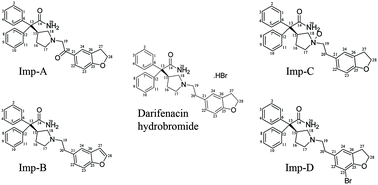
Identification and structural elucidation of two process impurities and stress degradants in darifenacin hydrobromide active pharmaceutical ingredient by LC-ESI/MSn

Graphical abstract: Identification and structural elucidation of two process impurities and stress degradants in darifenacin hydrobromide active pharmaceutical ingredient by LC-ESI/MSn

References

External links

Citing Patent Filing date Publication date Applicant Title
WO2011070419A1 * Dec 3, 2010 Jun 16, 2011 Aurobindo Pharma Limited An improved process for the preparation of darifenacin hydrobromide
Cited Patent Filing date Publication date Applicant Title
WO2003080599A1 Mar 17, 2003 Oct 2, 2003 Novartis International Pharmaceutical Ltd. Stable hydrate of a muscarinic receptor antagonist
WO2007076157A2 * Dec 27, 2006 Jul 5, 2007 Teva Pharmaceuticals Industries Ltd. Processes for preparing darifenacin hydrobromide
WO2007076158A2 * Dec 27, 2006 Jul 5, 2007 Teva Pharmaceutical Industries Ltd. Processes for preparing darifenacin hydrobromide
WO2007076159A2 Dec 27, 2006 Jul 5, 2007 Teva Pharmaceutical Industries Ltd. Pure darifenacin hydrobromide substantially free of oxidized darifenacin and salts thereof and processes for the preparation thereof
EP0388054A1 Mar 2, 1990 Sep 19, 1990 Pfizer Limited Pyrrolidine derivatives
WO2009094957A1 * Jan 14, 2009 Aug 6, 2009 Zentiva, K.S. A method for the preparation of darifenacin hydrogen bromide
US5096890 Mar 13, 1990 Mar 17, 1992 Pfizer Inc. Pyrrolidine derivatives
US6930188 Mar 25, 2003 Aug 16, 2005 Novartis International Pharmaceutical, Ltd. Stable hydrate of a muscarinic receptor antagonist
Darifenacin
Darifenacin.svg
Darifenacin-hydrobromide-from-xtal-2009-CM-3D-balls.png
Clinical data
Trade names Enablex
AHFS/Drugs.com Monograph
MedlinePlus a605039
Pregnancy
category
  • AU: B3
  • US: C (Risk not ruled out)
Routes of
administration
Oral
ATC code G04BD10 (WHO)
Legal status
Legal status
Pharmacokinetic data
Bioavailability 15 to 19% (dose-dependent)
Protein binding 98%
Metabolism Hepatic (CYP2D6– and CYP3A4-mediated)
Biological half-life 13 to 19 hours
Excretion Renal (60%) and biliary (40%)
Identifiers
CAS Number 133099-04-4 Yes
PubChem (CID) 444031
IUPHAR/BPS 321
DrugBank DB00496 Yes
ChemSpider 392054 Yes
UNII APG9819VLM Yes
KEGG D01699 
ChEBI CHEBI:391960 Yes
ChEMBL CHEMBL1346 Yes
ECHA InfoCard 100.118.382
Chemical and physical data
Formula C28H30N2O2
Molar mass 426.55 g/mol
3D model (Jmol) Interactive image

/////////Darifenacin, 臭化水素酸ダリフェナシン ,  Antispasmodic, Antimuscarinic, UK-88525-04, Emselex® ,  Enablex® ,  Xelena®, 

C1CN(CC1C(C2=CC=CC=C2)(C3=CC=CC=C3)C(=O)N)CCC4=CC5=C(C=C4)OCC5

MK 0633, SETILEUTON


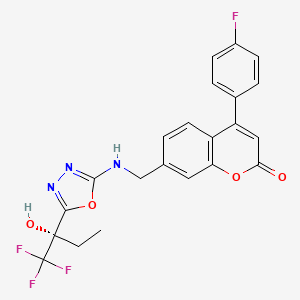
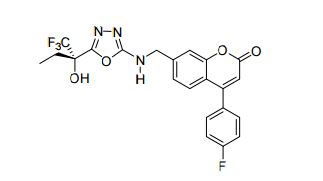
SETILEUTON.pngstr1

Figure

MK 0633, SETILEUTON

(-)-enantiomer

910656-27-8 CAS free form

MW 463.3817, C22 H17 F4 N3 O4  FREE FORM

Tosylate cas 1137737-87-1

2H-1-Benzopyran-2-one, 4-(4-fluorophenyl)-7-[[[5-[(1S)-1-hydroxy-1-(trifluoromethyl)propyl]-1,3,4-oxadiazol-2-yl]amino]methyl]-

4-(4-Fluorophenyl)-7-[[[5-[(1S)-1-hydroxy-1-(trifluoromethyl)propyl]-1,3,4-oxadiazol-2-yl]amino]methyl]-2H-1-benzopyran-2-one

Image result for Merck Frosst Canada Ltd.

WO2006099735A1

Inventors Thiadiazole substituted coumarin derivatives and their use as leukotriene biosynthesis inhibitor
WO 2006099735 A1Marc Blouin, Erich L. Grimm, Yves Gareau, Marc Gagnon, Helene Juteau, Sebastien Laliberte, Bruce Mackay, Richard Friesen
Applicant Merck Frosst Canada Ltd.

Image result for Merck Frosst Canada Ltd.

MK-0633 had been in early clinical development for several indications, including the treatment of chronic obstructive pulmonary disease (COPD), asthma and atherosclerosis

Leukotriene metabolism plays a central role in inflammatory diseases such as asthma, chronic obstructive pulmonary disease (COPD), and atherosclerosis. In particular, the activation of the enzyme 5-lipoxygenase (5-LO) and its associated protein, 5-LO activating protein (FLAP), initiates a cascade that transforms arachidonic acid into inflammatory leukotrienes

Inhibition of leukotriene biosynthesis has been an active area of pharmaceutical research for many years. The leukotrienes constitute a group of locally acting hormones, produced in living systems from arachidonic acid. Leukotrienes are potent contractile and inflammatory mediators deπved by enzymatic oxygenation of arachidonic acid by 5-hρoxygenase. One class of leukotriene biosynthesis inhibitors are those known to act through inhibition of 5 -lipoxygenase (5-LO).
The major leukotrienes are Leukotriene B4 (abbreviated as LTB4), LTC4, LTD4 and LTE4. The biosynthesis of these leukotrienes begins with the action of the enzyme 5-lipoxygenases on arachidonic acid to produce the epoxide known as Leukotriene A4 (LT A4), which is converted to the other leukotπenes by subsequent enzymatic steps. Further details of the biosynthesis as well as the metabolism of the leukotπenes are to be found in the book Leukotrienes and Lipoxygenases, ed. J. Rokach, Elsevier, Amsterdam (1989). The actions of the leukotπenes in living systems and their contπbution to various diseases states are also discussed in the book by Rokach.
In general, 5 -LO inhibitors have been sought for the treatment of allergic rhinitis, asthma and inflammatory conditions including arthπtis. One example of a 5-LO inhibitor is the marketed drug zileuton (ZYLOFT®) which is indicated for the treatment of asthma. More recently, it has been reported that 5-LO may be an important contributor to the atherogenic process; see Mehrabian, M. et al., Circulation Research, 2002 JuI 26, 91(2): 120-126.
Despite significant therapeutic advances in the treatment and prevention of conditions affected by 5-LO inhibition, further treatment options are needed. The instant invention addresses that need by providing novel 5-LO inhibitors which are useful for inhibiting leukotriene biosynthesis.

Image result for mk 0633

Synthesis of coumarin intermediate in MK-0633. Reagents and conditions: a) 2.7 M H2SO4 (1 mL/1 mmol), 1.1 equiv. NaNO2, –5 °C, 15 min, 1.5 equiv. KI (1 M H2SO4, 1 mL/0.5 mmol), 0–70 °C, 20 min; b) 1.5 equiv. CuCN, DMF, 110 °C, 24 h, 72 % (over two steps); c) 0.05 equiv. H2SO4, MeOH, 60 °C, 12 h, 81 %; d) 2.5 equiv. 2 M AlMe3, 1.5 equiv. NH(OMe)Me·HCl, THF, room temp., 24 h, 86 %; e) 4.0 equiv. C6H4FMgBr, THF, 0 °C to room temp., 3 h, 74 %; f) toluene, reflux, 24 h, 83 %.

Study of the Chemoselectivity of Grignard Reagent Addition to Substrates Containing Both Nitrile and Weinreb Amide Funct…

Article · Aug 2013 · European Journal of Organic Chemistry
Paper
Synthesis of 4-arylcoumarins via palladium-catalyzed arylation/cyclization of ortho-hydroxylcinnamates with diaryliodonium salts
Tetrahedron Letters (2015), 56, (24), 3809-3812

An efficient method for the palladium-catalyzed arylation/cyclization of ortho-hydroxylcinnamate ester derivatives with diaryliodonium salts is described. A range of 4-arylcoumarins are obtained in good to excellent yield. Furthermore, the route can be applied to the synthesis of versatile building block of 5-lipoxygenase inhibitor.

Image for unlabelled figure

PATENT

WO 2006099735

EXAMPLE 7
(+) and (-)-4-(4-Fluorophenyl)-7-[(|5-[l-hvdroxy-l-(tnfluoromethyl)propyn-K3,4-oxadiazol-2-vUammo)methyl1-2H-chromen-2-one
Step 1: Ethyl 2-hvdroxy-2-(trifluoromethyl)butanoate

To a -78 0C solution of ethyl tπfluoropyruvate (129 0 g 758 mmol) in ether was added dropwise withm 90 mm a solution of EtMgBr 3.0 M m ether (252 mL). The solution was brought over one Ih to ca. -10 0C and poured over 2L of saturated NH4Cl. The layers were separated and the aqueous phase extracted with ether (3 X 500 mL) The organic phases were combined, dried over MgSO4 and the solvent removed. Distillation at 50-65 0C (30 mm Hg) gave the title compound. 1H NMR (400 MHz, acetone- d6): δ 5.4 (s, IH), 4.35 (q, 2H), 2.07 (m, IH), 1.83 (m, IH), 1.3 (t, 3H) and 0.93 (t, 3H).
Step 2: 2-Hvdroxy-2-(tπfluoromethyl)butanohvdrazide

The ethyl ester of step 1 (50.04 g, 250 mmol) and hydrazine hydrate (25.03 g, 50 mmol) were heated at 80 0C for 18 h. The excess hydrazine was removed under vacuum and the crude product was filtered through a pad of silica gel with EtOAc-Hexane (ca. 3L) to furnish the title compound. 1H NMR (400 MHz, acetone-d6): δ 9.7 (s, IH), 6.10 (s, IH), 2.25 (m, IH), 1.85 (m, IH) and 0.95 t, (3H). Step 3: 2-(5-Ammo-l ,3,4-oxadiazol-2-yl)-l , 1 , l-tπfluorobutan-2-ol

To hydrazide (34.07 g, 183 mmol) of step 2 m 275 mL of water was added KHCO3 (18.33 g, 183 mmol) followed by BrCN (19.39 g, 183 mmol) portionwise. After 3h, the solid was filtered, washed with cold water and dπed to afford the title compound. Additional compound could be recovered from the aqueous phase by extraction (ether-hexane, 1:1). 1H NMR (400 MHz, acetone-d6): δ 6.54 (s, 2H), 6.01 (s, IH), 2.22 (m, IH), 2.08 (m, IH) and 0.99 (m, 3H).
Step 4: 4-(4-Fluorophenyl)-7-|Y { 5-[ 1 -hydroxy- 1 -(tnfluoromethyl)propyll -1,3,4- oxadiazol-2-yl}amino)methyl1-2H-chromen-2-one


A mixture of oxadiazole (14.41 g, 68.2 mmol) of step 3 and 4-(4-fluorophenyl)-2-oxo-2H-chromene-7-carbaldehyde (14.1 g, 52.5 mmol) in toluene (160 mL) with 10% of PPTS was brought to reflux and let go overnight. The system was equipped with a Dean-Stark trap to collect water. The solvent was removed and the crude oil (1H NMR (400 MHz, acetone-d6): δ 9.33 (IH, s, imme)) obtained was diluted in EtOH (ca. 75 mL) at 0 0C. To this solution was added NaBH4 (1.9 g) portionwise and the reaction was quenched with a solution OfNH4Cl after 45 mm. The mixture was saturated with NaCl and extracted with EtOAc (3 X 200 mL). The organic phases were combined and dried over MgSO4.
Purification over silica gel chromatography using toluene-EtOAc (55.45) gave the title compound . 1H NMR (400 MHz, acetone-d6): δ 7.65 (m, 2H), 7.50 (m, 3H), 7.38 (m, 3H), 6.35 (s, IH), 6.06 (s, IH), 4.70 (m, 2H), 2.21 (m, IH), 2.11 (m, IH) and 0.98 (t, 3H).
Step 5: Separation on chiral HPLC column of (+) and (-) enantiomers of 4-(4-fluorophenyl)-7- [((5-ri-hvdroxy-l-(trifluoromethyl)propyl1-l,3,4-oxadiazol-2-yl}amino)methvn-2H- chromen-2-one

A solution of (±)-4-(4-fluorophenyl)-7-[({5-[l-hydroxy-l-(trifluoromethyl)propyl]-l,3,4-oxadiazol-2-yl}amino)methyl]-2H-chromen-2-one (0.5-0.6 g) in EtOΗ-Ηexane (30:70, ca. 40 mL) was injected onto a CΗIRALPAK AD® preparative (5cm x 50cm) ΗPLC column (eluting with
EtOΗ/Ηexane, 30/70 with UV detection at 280 nm). The enantiomers were separated with the faster eluting enantiomer having a retention time of – 34 mm for the (-)-enantiomer and the slower eluting enantiomer having a retention time of ~ 49 mm for the (+)-enantiomer.

PAPER

The Discovery of Setileuton, a Potent and Selective 5-Lipoxygenase Inhibitor

Merck Frosst Centre for Therapeutic Research, 16711 Trans Canada Highway, Kirkland, Quebec, Canada H9H 3L1
ACS Med. Chem. Lett., 2010, 1 (4), pp 170–174
DOI: 10.1021/ml100029k
Publication Date (Web): April 13, 2010
Copyright © 2010 American Chemical Society
*To whom correspondence should be addressed. E-mail: yves_ducharme@merck.com.
Abstract Image
The discovery of novel and selective inhibitors of human 5-lipoxygenase (5-LO) is described. These compounds are potent, orally bioavailable, and active at inhibiting leukotriene biosynthesis in vivo in a dog PK/PD model. A major focus of the optimization process was to reduce affinity for the human ether-a-go-go gene potassium channel while preserving inhibitory potency on 5-LO. These efforts led to the identification of inhibitor (S)-16 (MK-0633, setileuton), a compound selected for clinical development for the treatment of respiratory diseases.
4-(4-fluorophenyl)-7-[({5-[(2R)-1,1,1-trifluoro-2-hydroxybutan-2-yl]- 1,3,4-oxadiazol-2-yl}amino)methyl]-2H-chromen-2-one ((R)-16) and 4-(4- fluorophenyl)-7-[({5-[(2S)-1,1,1-trifluoro-2-hydroxybutan-2-yl]-1,3,4-oxadiazol-2- yl}amino)methyl]-2H-chromen-2-one ((S)-16)
str1
A solution of (±)-4-(4-fluorophenyl)-7-[({5-[1-hydroxy-1-(trifluoromethyl)propyl]-1,3,4- oxadiazol-2-yl}amino)methyl]-2H-chromen-2-one (16) (0.5-0.6 g) in EtOH-Hexane (30:70, ca. 40 mL) was injected on a CHIRALPAK AD preparative (5 cm x 50 cm) HPLC column (eluting with EtOH/Hexane, 30/70 with UV detection at 280 nm). The enantiomers were separated with the fast-eluting enantiomer having a retention time of ~ 34 min for the (-) and the slow-eluting enantiomer having a retention time of ~ 49 min for the (+)-enantiomer.
4-(4-fluorophenyl)-7-[({5-[(2S)-1,1,1-trifluoro-2-hydroxybutan-2-yl]-1,3,4-oxadiazol- 2-yl}amino)methyl]-2H-chromen-2-one ((S)-16, MK-0633, setileuton):
str1
A mixture of oxadiazole (S)-35 (41.9 g, 156 mmol) and aldehyde 25 (39.2 g, 186 mmol) in toluene (2 L) with 10% of pyridinium p-toluenesulfonate was refluxed overnight. The system was equipped with a Dean-Stark apparatus to collect water. The solvent was removed and the crude oil [1 H NMR (400 MHz, acetone-d6): δ 9.33 (s, 1H, imine)] obtained was diluted in THF (600 mL) and EtOH (100 mL). To this solution was added at 0 o C NaBH4 (7.2 g) portionwise. After 1 h of stirring, aqueous ammonium acetate was added. The mixture was extracted with ethyl acetate. The combined organic fractions were washed with brine, dried over Na2SO4, filtered and concentrated under reduced pressure. The residue was purified on silica gel (toluene/EtOAc; 1:1) to give the title compound (39.4 g, 54%).
FREE FORM
1 H NMR (400 MHz, acetone-d6): δ 7.65 (m, 2H), 7.50 (m, 3H), 7.38 (m, 3H), 6.35 (s, 1H), 6.06 (s, 1H), 4.70 (m, 2H), 2.21 (m, 1H), 2.11 (m, 1H), 0.98 (t, 3H);
HRMS calcd for C22H17F4N3O4 [MH+]: 464.1233; found: 464.1228.
PATENT
Image result for mk 0633

CLIP

J. Org. Chem. 2010, 75, 4154−4160

Synthesis of a 5-Lipoxygenase Inhibitor

 Abstract Image

Practical, chromatography-free syntheses of 5-lipoxygenase inhibitor MK-0633 p-toluenesulfonate (1) are described. The first route used an asymmetric zincate addition to ethyl 2,2,2-trifluoropyruvate followed by 1,3,4-oxadiazole formation and reductive amination as key steps. An improved second route features an inexpensive diastereomeric salt resolution of vinyl hydroxy-acid 22 followed by a robust end-game featuring a through-process hydrazide acylation/1,3,4-oxadiazole ring closure/salt formation sequence to afford MK-0633 p-toluenesulfonate (1).


Leukotriene metabolism plays a central role in inflammatory diseases such as asthma, chronic obstructive pulmonary disease (COPD), and atherosclerosis. In particular, the activation of the enzyme 5-lipoxygenase (5-LO) and its associated protein, 5-LO activating protein (FLAP), initiates a cascade that transforms arachidonic acid into inflammatory leukotrienes. Consequently, compounds that can inhibit 5-LO have potential as new treatments for the conditions listed above. Gosselin and co-workers at Merck describe two routes towards one such compound (MK-0633) brought forward as a development candidate at Merck ( J. Org. Chem. 2010, 75, 4154−4160). The first route used an asymmetric zincate addition to ethyl 2,2,2-trifluoropyruvate followed by 1,3,4-oxadiazole formation and reductive amination as key steps. An improved second route (shown here) featured an inexpensive diastereomeric salt resolution of a vinyl hydroxy-acid followed by a through-process hydrazide acylation/1,3,4-oxadiazole ring-closure/salt-formation sequence to afford MK-0633 as the p-toluenesulfonate salt.

A Practical Synthesis of 5-Lipoxygenase Inhibitor MK-0633

Department of Process Research, Merck Frosst Centre for Therapeutic Research, 16711 Route Transcanadienne, Kirkland, Québec, Canada H9H 3L1
Department of Process Research, Merck Research Laboratories, P.O. Box 2000, Rahway, New Jersey 07065
J. Org. Chem., 2010, 75 (12), pp 4154–4160
DOI: 10.1021/jo100561u
MK-0633 tosylate salt (1) was obtained as a white solid (6.64 kg, 91.4% yield): mp 164−165 °C;
[α]20D − 0.86 (c 10.0, EtOH);
1H NMR (500 MHz, DMSO-d6) δ 8.58 (1 H, t, J = 6.2 Hz), 7.62 (2 H, dd, J = 8.3, 5.4 Hz), 7.49 (2 H, d, J = 7.8 Hz), 7.47−7.38 (4 H, m), 7.33 (1 H, d, J = 8.3 Hz), 7.13 (2 H, d, J = 7.7 Hz), 6.44 (1 H, s), 4.53 (2 H, d, J = 5.6 Hz), 2.30 (3 H, s), 2.17−2.05 (1 H, m), 2.03−1.93 (1 H, m), 0.90 (3 H, t, J = 7.37 Hz);
13C NMR (125 MHz, DMSO-d6) δ 164.1, 162.9 (d, J = 246.8 Hz), 159.6, 156.1, 153.7, 153.6, 145.5, 143.7, 137.7, 131.1 (d, J = 3.5 Hz), 130.9 (d, J = 8.7 Hz), 128.1, 126.8, 125.4, 124.5 (q, J = 286.6 Hz), 123.5, 117.4, 115.9 (d, J = 22.0 Hz), 115.4, 114.7, 73.7 (q, J = 28.6 Hz), 45.4, 26.1, 20.8, 7.0;
19F NMR (375 MHz, DMSO-d6) δ −79.7, −113.1;
HRMS calcd for C22H18F4N3O4 [M + H] 464.1228, found 464.1246.
IR (cm−1, NaCl thin film) 3324, 3010, 2977, 1735, 1716, 1618, 1510, 1428, 1215, 1178.
HPLC analysis: eclipse XDB-phenyl column 4.6 mm × 15 cm (0.1% aq H3PO4/CH3CN 65:35 to 10:90 over 50 min, 1.0 mL/min, 210 nm, 25 °C); MK-0633 (1) tR = 16.86 min. Chiral HPLC analysis: Chiralpak AD-H column 4.6 mm × 25 cm (EtOH/hexane 60:40, hold 15 min, 0.5 mL/min, 300 nm, 30 °C); (S)-enantiomer tR = 9.5 min; (R)-enantiomer tR = 11.5 min.
1 to 6 of 6
Patent ID Patent Title Submitted Date Granted Date
US2016193168 Treatment of Pulmonary Arterial Hypertension with Leukotriene Inhibitors 2015-11-30 2016-07-07
US2013251787 Treatment of Pulmonary Hypertension with Leukotriene Inhibitors 2013-03-15 2013-09-26
US7915298 Compounds and methods for leukotriene biosynthesis inhibition 2009-04-02 2011-03-29
US2009227638 Novel Pharmaceutical Compounds 2009-09-10
US7553973 Pharmaceutical compounds 2007-06-28 2009-06-30
US2009030048 Novel pharmaceutical compounds 2009-01-29
/////////////MK 0633, PHASE 2
CCC(C1=NN=C(O1)NCC2=CC3=C(C=C2)C(=CC(=O)O3)C4=CC=C(C=C4)F)(C(F)(F)F)O

AMG-3969


Image result for amg 3969

AMG-3969

M.Wt: 522.46
Cas : 1361224-53-4 , MF: C21H20F6N4O3S

WO 2012027261 PRODUCT PATENT

Inventors Kate Ashton, Michael David Bartberger, Yunxin Bo, Marian C. Bryan, Michael Croghan, Christopher Harold Fotsch, Clarence Henderson Hale, Roxanne Kay Kunz, Longbin Liu, Nobuko Nishimura, Mark H. Norman, Lewis Dale Pennington, Steve Fong Poon, Markian Myroslaw Stec, Jean David Joseph St., Jr., Nuria A. Tamayo, Christopher Michael Tegley, Kevin Chao Yang
Applicant Amgen Inc.

2-[4-[(2S)-4-[(6-Amino-3-pyridinyl)sulfonyl]-2-(1-propyn-1-yl)-1-piperazinyl]phenyl]-1,1,1,3,3,3-hexafluoro-2-propanol)

(S)-2-(4-(4-((6-Aminopyridin-3-yl)sulfonyl)-2-(prop-1-yn-1-yl)piperazin-1-yl)phenyl)-1,1,1,3,3,3-hexafluoropropan-2-ol,

mp 113–123 °C;
[α]D20 = +75.1 (c = 2.2, MeOH).
Agents for Type 2 Diabetes,  PRECLINICAL

AMG-3969, a novel and stable small-molecule disruptor of glucokinase (GK) and glucokinase regulatory protein (GKRP) interaction by the optimization of initial screening hit and AMG-1694. AMG-3969 potently induced the dissociation of the GK-GKRP complex and promoted GK translocation both in-vitro and in-vivo. In rodent model of diabetes, AMG-3969 reduced blood glucose levels without affecting euglycemic animals. The study represents the first successful discovery of a small molecule that targets the GK-GKRP complex as a novel pathway for managing blood glucose levels with reduced hypoglycemic risk.

Image result for AMGEN

 Kate Ashton

Kate Ashton

Senior Scientist at Amgen, Inc

Amgen
Thousand Oaks, United States
Dr. Kate Ashton received a Masters in Chemistry with Industrial Experience from the University of Edinburgh. She conducted her PhD thesis research on the synthesis and structure elucidation of Reidispongiolide A with Prof. Ian Paterson at the University of Cambridge, and her postdoctoral work on SOMO catalysis with Prof. David W. C. MacMillan at both Caltech and Princeton. She has been at Amgen for 6 years and has worked on indications for cancer, Alzheimer’s and diabetes.Dr Fecke works in the area of industrial early drug discovery since 1996. He is currently Group Leader in the Primary Pharmacology department at UCB Pharma (UK) and is involved in the identification and characterization of NCE and NBE drugs in molecular interaction assays for both immunological and CNS diseases. Prior to joining UCB, he worked for Novartis and Siena Biotech in the areas of transplant rejection, neurodegeneration and oncology. He obtained his PhD at the Heinrich-Heine-University Dusseldorf in Germany in 1994.

Image result for amg 3969

(S)-2-(4-(4-((6-Aminopyridin-3-yl)sulfonyl)-2-(prop-1-yn-1-yl)piperazin-1-yl)phenyl)-1,1,1,3,3,3-hexafluoropropan-2-ol, AMG-3969

Glucokinase (GK) is a member of a family of four hexokinases that are critical in the cellular metabolism of glucose. Specifically GK, also known as hexokinase IV or hexokinase D, facilitates glucose induced insulin secretion from pancreatic β-cells as well as glucose conversion into glycogen in the liver. GK has a unique catalytic activity that enables the enzyme to be active within the physiological range of glucose (from 5mM glucose to lOmM glucose).

Genetically modified mouse models support the role of GK playing an important role in glucose homeostasis. Mice lacking both copies of the GK gene die soon after birth from severe hyperglycemia, whereas mice lacking only one copy of the GK gene present with only mild diabetes. Mice that are made to overexpress the GK gene in their livers are hypoglycemic.

Numerous human mutations in the GK gene have been identified, with the vast majority of them resulting in proteins with impaired or absent enzymatic activity. These loss-of-function mutations are thought to contribute to the hyperglycemia seen with maturity-onset diabetes of the young type II (MODY-2). A small fraction of these mutations result in a GK with increased catalytic function. These individuals present with moderate to severe hypoglycemia.

GK activity in the liver is transiently regulated by glucokinase regulatory protein (GKRP). GK catalytic activity is inhibited when GK is bound to GKRP. This interaction is antagonized by increasing concentrations of both glucose and fructose -1 -phosphate (F1P). The complex of the two proteins is localized primarily to the nuclear compartment of a cell. Post prandially as both glucose and fructose levels rise, GK released from GKRP translocates to the cytoplasm. Cytoplasmic GK is now free of the inhibitory effects of GKRP and able to kinetically respond to glucose. Evidence from the Zucker diabetic fatty rat (ZDF) indicates that their glucose intolerance may be a result of this mechanism failing to function properly.

A compound that acts directly on GKRP to disrupt its interaction with GK and hence elevate levels of cytoplasmic GK is a viable approach to modulate GK activity. Such an approach would avoid the unwanted hypoglycemic effects of over stimulation of GK catalytic activity, which has been seen in the

development of GK activators. A compound having such an effect would be useful in the treatment of diabetes and other diseases and/or conditions in which GKRP and/or GK plays a role.

CLIP

Antidiabetic effects of glucokinase regulatory protein small-molecule disruptors
Nature 2013, 504(7480): 437

Image result for Antidiabetic effects of glucokinase regulatory protein small-molecule disruptors.

Image result for Antidiabetic effects of glucokinase regulatory protein small-molecule disruptors.

SYNTHESIS

Figure

aReagents and conditions: (a) 1-propynylmagnesium bromide, THF, 0 °C, 99%; (b) TFA, DCM, then NaBH(OAc)3 77%; (c) NH4OH, EtOH, 120 °C, 88%; (d) chiral SFC, 38%………..Nature 2013,504, 437440

PATENT

https://patentscope.wipo.int/search/en/detail.jsf?docId=WO2012027261

EXAMPLE 241 : 2-(4-(4-((6-AMINO-3-PYRIDINYL)SULFONYL)-2-(l-PROP YN- 1 – YL)- 1 -PIPERAZINYL)PHENYL)- 1,1,1 ,3 ,3 ,3 -HEXAFLUORO-2-PROPANOL

STEP 1 : 4-BENZYL 1 -TERT-BUTYL 2-0X0-1,4-PIPERAZINEDICARBOXYLATE

A 2-L Erlenmeyer flask was charged with 2-piperazinone (36.5 g, 364 mmol, Sigma- Aldrich, St. Louis, MO), sodium carbonate (116 g, 1093 mmol), 600 mL of dioxane, and 150 mL of water. To this was slowly added benzyl chloroformate (62.1 g, 364 mmol, Sigma-Aldrich, St. Louis, MO) at room temperature over 20 min. After the addition was complete, the mixture was stirred for 2 h and then diluted with water and extracted with EtOAc (2 L). The combined organic extracts were dried (MgS04), filtered, and concentrated to give a white solid. To this solid was added 500 mL of DCM, triethylamine (128 mL, 911 mmol), DMAP (4.45 g, 36.4 mmol), and di-tert-butyl dicarbonate (119 g, 546 mmol, Sigma-Aldrich, St. Louis, MO). After 1 h at room temperature, the mixture was diluted with water and the organics were separated. The organics were dried (MgS04), filtered, and concentrated to give a brown oil. To this oil was added 100 mL of DCM followed by 1 L of hexane. The resulting white solid was collected by filtration to give 4-benzyl 1-tert-butyl 2-oxo-l,4-piperazinedicarboxylate (101 g).

STEP 2: BENZYL (2-((TERT-BUTOXYCARBONYL)AMINO)ETHYL)(2-OXO-3 -PENTYN- 1 -YL)CARBAMATE

A 150-mL round-bottomed flask was charged with 4-benzyl 1-tert-butyl

2- oxo-l,4-piperazinedicarboxylate (1.41 g, 4.22 mmol) and THF (5 mL). 1-Propynylmagnesium bromide (0.5 M in THF, 20.0 mL, 10.0 mmol, Sigma-Aldrich, St. Louis, MO) was added at 0 °C slowly. The mixture was stirred at 0 °C for 2 h. Saturated aqueous NH4C1 (40 mL) was added and the aqueous phase was extracted with EtOAc (200 mL, then 2 x 100 mL). The combined organic phases were dried over sodium sulfate, filtered and concentrated in vacuo. The crude product was purified by column chromatography (50 g of silica, 0 to 50% EtOAc in hexanes) to afford benzyl (2-((tert-butoxycarbonyl)amino)ethyl)(2-oxo- 3- pentyn-l-yl)carbamate (1.55 g) as a clear oil.

STEP 3: BENZYL 3-(l-PROPYN-l-YL)-l-PIPERAZINECARBOXYLATE

A 3-L round-bottomed flask was charged with 2-((tert-butoxycarbonyl)amino)ethyl)(2-oxo-3-pentyn-l-yl)carbamate (82.2 g, 219 mmol) and 300 mL of DCM. After cooling to -10 °C, TFA (169 mL, 2195 mmol) was added and the resulting dark solution was stirred at room temperature for 15 min. Sodium triacetoxyborohydride (186 g, 878 mmol, Sigma-Aldrich, St. Louis, MO) was then added portion- wise over 10 min. After 2 h, the mixture was

concentrated, diluted with EtOAc (1 L), and neutralized with 5 N NaOH. The layers were separated and the organic extracts were washed with brine, dried (MgS04), filtered and concentrated. The resulting orange oil was purified via column chromatography (750 g of silica gel, 0 to 4.5 % MeOH/DCM) to give benzyl 3-(l-propyn-l-yl)-l-piperazinecarboxylate (43.7 g) as a brown foam.

STEP 4: BENZYL 3-(l-PROPYN-l-YL)-4-(4-(2,2,2-TRIFLUORO-l-HYDROXY- 1 -(TRIFLUOROMETHYL)ETHYL)PHENYL)- 1 -PIPERAZINECARBOXYLATE

A 150-mL reaction vessel was charged with benzyl 3-(prop-l-yn-l-yl)piperazine-l-carboxylate (2.88 g, 11.2 mmol), 2-(4-bromophenyl)-l, 1,1, 3,3,3-hexafluoropropan-2-ol (4.36 g, 13.5 mmol, Bioorg. Med. Chem. Lett. 2002, 12, 3009), dicyclohexyl(2′,6′-diisopropoxy-[ 1 , 1 ‘-biphenyl]-2-yl)phosphine, RuPhos (0.530 g, 1.14 mmol, Sigma- Aldrich, St. Louis, MO), RuPhos Palladacycle (0.417 g, 0.572 mmol, Strem Chemical Inc, Newburyport, MA), sodium tert-butoxide (2.73 g, 28.4 mmol, Strem Chemical Inc, Newburyport, MA) and toluene (35 mL). The mixture was degassed by bubbling Ar through the solution for 10 min. The vessel was sealed and heated at 100 °C for 1.5 h. The reaction mixture was cooled to room temerature and water (100 mL) was added. The aqueous phase was extracted with EtOAc (3 x 100 mL) and the combined organic phases were washed with saturated aqueous sodium chloride (150 mL). The organic extracts were dried over sodium sulfate, filtered and concentrated in vacuo. The crude product was purified by column chromatography (100 g of silica, 0 to 50% EtOAc in hexanes) to afford benzyl 3-(l-propyn-l-yl)-4-(4-(2,2,2-trifluoro- 1 -hydroxy- 1 -(trifluoromethyl)ethyl)phenyl)- 1 -piperazinecarboxylate as a yellow solid.

STEP 5: 2-(4-(4-((6-CHLORO-3-PYRIDINYL)SULFONYL)-2-(l-PROPYN-l-YL)- 1 -PIPERAZIN YL)PHENYL)- 1,1,1 ,3 ,3 ,3 -HEXAFLUORO-2-PROPANOL

A 500-mL round-bottomed flask was charged with benzyl 3-(l-propyn-l-yl)-4-(4-(2,2,2-trifluoro- 1 -hydroxy- 1 -(trifluoromethyl)ethyl)phenyl)- 1 -piperazinecarboxylate (3.13 g, 6.25 mmol) and TFA (40 mL).

Trifluoromethanesulfonic acid (1.25 mL, 14.1 mmol, Acros/Fisher Scientific, Waltham, MA) was added dropwise at room temperature. After 5 min, additional TfOH (0.45 mL, 5.1 mmol) was added. After an additional 10 min, solid

NaHC03 was carefully added in potions. Saturated aqueous NaHC03 (250 mL) was added slowly to bring pH to approximately 7. The aqueous phase was extracted with EtOAc (100 mL). At this time, more solid NaHC03 was added to the aqueous phase and extracted again with EtOAc (100 mL). The combined organic phases were washed with water (200 mL) and saturated aqueous sodium chloride (200 mL). The combined organic extracts were dried over sodium sulfate, filtered and concentrated in vacuo to afford 3.10 g of tan solid.

A 500-mL round-bottomed flask was charged with this material, triethylamine (5.00 mL, 35.9 mmol) and CH2CI2 (30 mL). 6-Chloropyridine-3-sulfonyl chloride (1.58 g, 7.43 mmol, Organic Process Research & Development 2009, 13, 875) was added in potions at 0 °C. The brown mixture was stirred at 0 °C for 10 min. The volume of the reaction mixture was reduced to approximately 10 mL in vacuo then the mixture was purified twice by column chromatography (100 g of silica, 0 to 50% EtOAc in hexanes) to afford 2-(4-(4-((6-chloro-3-pyridinyl)sulfonyl)-2-( 1 -propyn- 1 -yl)- 1 -piperazinyl)phenyl)- 1,1,1,3,3,3-hexafluoro-2-propanol (3.46 g) as an off-white solid.

STEP 6: 2-(4-(4-((6-AMINO-3-PYRIDINYL)SULFONYL)-2-(l-PROPYN-l-YL)- 1 -PIPERAZIN YL)PHENYL)- 1,1,1 ,3 ,3 ,3 -HEXAFLUORO-2-PROPANOL

A 20-mL sealed tube was charged with 2-(4-(4-((6-chloro-3-pyridinyl)sulfonyl)-2-( 1 -propyn- 1 -yl)- 1 -piperazinyl)phenyl)- 1,1,1,3,3,3-hexafluoro-2-propanol (0.340 g, 0.627 mmol), concentrated ammonium hydroxide (5.00 mL, 38.5 mmol) and EtOH (5 mL). The reaction mixture was heated in an Initiator (Biotage, AB, Uppsala, Sweden) at 120 °C for 1 h. The reaction mixture was further heated in a heating block at 110 °C for 5 h. The reaction mixture was concentrated and purified by column chromatography (25 g of silica, 30 to 80% EtOAc in hexanes) to afford 2-(4-(4-((6-amino-3-pyridinyl)sulfonyl)-2-( 1 -propyn- 1 -yl)- 1 -piperazinyl)phenyl)- 1,1,1,3,3,3-hexafluoro-2-propanol (0.289 g) as a mixture of two enantiomers.

1H NMR (400 MHz, CDC13) δ ppm 8.49 (br. s., 1 H), 7.80 (dd, J= 2.3, 8.8 Hz, 1 H), 7.59 (d, J= 8.8 Hz, 2 H), 6.97 (d, J= 9.0 Hz, 2 H), 6.55 (d, J= 8.8 Hz, 1 H), 5.05 (s, 2 H), 4.46 (br. s., 1 H), 3.85 – 3.72 (m, 2 H), 3.54 (br. s., 1 H), 3.50 – 3.34 (m, 2 H), 2.83 (dd, J= 3.3, 11.0 Hz, 1 H), 2.69 (dt, J= 3.4, 11.0 Hz, 1 H), 1.80 (s, 3 H). m/z (ESI, +ve ion) 523.1 (M+H)+. GK-GKRP IC50 (Binding) = 0.003 μΜ

The individual enantiomers were isolated using chiral SFC. The method used was as follows: Chiralpak® ADH column (21 x 250 mm, 5 μιη) using 35% methanol in supercritical C02 (total flow was 70 mL/min). This produced the two enantiomers with enantiomeric excesses greater than 98%.

2-(4-((2S)-4-((6-amino-3-pyridinyl)sulfonyl)-2-(l -propyn- 1-yl)- 1 -piperazinyl)phenyl)- 1,1,1 ,3 ,3 ,3 -hexafluoro-2-propanol and 2-(4-((2R)-4-((6-amino-3 -pyridinyl)sulfonyl)-2-( 1 -propyn- 1 -yl)- 1 -piperazinyl)phenyl)- 1,1,1,3,3,3-hexafluoro-2-propanol.

FIRST ELUTING PEAK (PEAK #1)

1H NMR (400 MHz, CDC13) δ 8.48 (d, J= 2.3 Hz, 1 H), 7.77 (dd, J= 2.5, 8.8 Hz, 1 H), 7.57 (d, J= 8.8 Hz, 2 H), 6.95 (d, J= 9.2 Hz, 2 H), 6.52 (d, J= 8.8 Hz, 1 H), 4.94 (s, 2 H), 4.44 (br. s., 1 H), 3.82 – 3.71 (m, 2 H), 3.58 – 3.33 (m, 3 H), 2.81 (dd, J= 3.2, 11.1 Hz, 1 H), 2.67 (dt, J= 3.9, 11.0 Hz, 1 H), 1.78 (d, J = 2.2 Hz, 3 H). m/z (ESI, +ve ion) 523.2 (M+H)+. GK-GKRP IC50 (Binding) = 0.002 μΜ.

SECOND ELUTING PEAK (PEAK #2)

1H NMR (400 MHz, CDC13) δ 8.49 (d, J= 1.8 Hz, 1 H), 7.78 (dd, J= 2.3, 8.8 Hz, 1 H), 7.59 (d, J= 8.6 Hz, 2 H), 6.97 (d, J= 9.0 Hz, 2 H), 6.54 (d, J= 8.8 Hz, 1 H), 4.97 (s, 2 H), 4.46 (br. s., 1 H), 3.77 (t, J= 11.7 Hz, 2 H), 3.67 (br. s., 1 H), 3.51 – 3.33 (m, 2 H), 2.82 (dd, J= 3.3, 11.0 Hz, 1 H), 2.68 (dt, J= 3.9, 11.1 Hz, 1 H), 1.79 (d, J= 2.0 Hz, 3 H). m/z (ESI, +ve ion) 523.2 (M+H)+. GK-GKRP IC50 (Binding) = 0.342 μΜ.

Alternative procedure starting after Step 4.

STEP 5 : 2-(4-(4-((6-AMINO-3-PYRIDINYL)SULFONYL)-2-(l-PROPYN-l-YL)- 1 -PIPERAZIN YL)PHENYL)- 1,1,1 ,3 ,3 ,3 -HEXAFLUORO-2-PROPANOL

Alternatively, 2-(4-(4-((6-amino-3-pyridinyl)sulfonyl)-2-( 1 -propyn- 1 -yl)-l-piperazinyl)phenyl)-l,l,l,3,3,3-hexafluoro-2-propanol was synthesized from benzyl 3-( 1 -propyn- 1 -yl)-4-(4-(2,2,2-trifluoro- 1 -hydroxy- 1 -(trifluoromethyl)ethyl)phenyl)- 1 -piperazinecarboxylate as follows.

A 2-L round-bottomed flask was charged with benzyl 3 -(1 -propyn- 1-yl)-4-(4-(2,2,2-trifluoro- 1 -hydroxy- 1 -(trifluoromethyl)ethyl)phenyl)- 1 -piperazinecarboxylate (21.8 g, 43.5 mmol, step 5) and TFA (130 mL).

Trifluoromethanesulfonic acid (11.6 mL, 131 mmol, Acros/Fisher Scientific, Waltham, MA) was added slowly at rt resulting orange cloudy mixture. After stirring at rt for 10 min, the volume of the reaction mixture was reduced to half in vacuo. Solid NaHC03 was added in potions until the mixture became sludge. Saturated aqueous NaHC03(800 mL) was added slowly until the pH was about

8. The aqueous phase was extracted with EtOAc (3 x 250 mL). The combined organic phases were washed with water (500 mL) and saturated aqueous NaCl (500 mL). The organic phase was dried over sodium sulfate, filtered and concentrated in vacuo. This material was dissolved into DCM (200 mL) and triethylamine (31.0 mL, 222 mmol) was added. Then 6-aminopyridine-3-sulfonyl chloride (9.40 g, 48.8 mmol, published PCT patent application no. WO

2009/140309) was added in potions over 10 min period. The brown mixture was stirred at room temperature for 10 min. The reaction mixture was washed with water (300 mL) and saturated aqueous NaCl (300 mL). The organic phase was dried over sodium sulfate, filtered and concentrated in vacuo. The crude product was purified by column chromatography (780 g of total silica, 30 to 90% EtOAc in hexanes) to afford 2-(4-(4-((6-amino-3-pyridinyl)sulfonyl)-2-(l-propyn-l-yl)-l-piperazinyl)phenyl)-l,l,l,3,3,3-hexafluoro-2-propanol (19.4 g) as a mixture of two enantiomers.

Paper

Nonracemic Synthesis of GK–GKRP Disruptor AMG-3969

Therapeutic Discovery, Amgen Inc., One Amgen Center Drive, Thousand Oaks, California 91320, United States
Amgen Inc. 360 Binney Street, Cambridge, Massachusetts 02142, United States
J. Org. Chem., 2014, 79 (8), pp 3684–3687

Abstract Image

A nonracemic synthesis of the glucokinase–glucokinase regulatory protein disruptor AMG-3969 (5) is reported. Key features of the synthetic approach are an asymmetric synthesis of the 2-alkynyl piperazine core via a base-promoted isomerization and a revised approach to the synthesis of the aminopyridinesulfonamide with an improved safety profile.

(S)-2-(4-(4-((6-Aminopyridin-3-yl)sulfonyl)-2-(prop-1-yn-1-yl)piperazin-1-yl)phenyl)-1,1,1,3,3,3-hexafluoropropan-2-ol, AMG-3969 (5)

(S)-2-(4-(4-((6-aminopyridin-3-yl)sulfonyl)-2-(prop-1-yn-1-yl)piperazin-1-yl)phenyl)-1,1,1,3,3,3-hexafluoropropan-2-ol (5) (64.0 g, 49% yield) as white solid. The enanatiomeric excess was found to be >99.5% by chiral SFC (see Supporting Information):
1H NMR (400 MHz, CDCl3) δ 8.47 (s, 1 H), 7.79 (d, J = 8.6 Hz, 1 H), 7.59 (d, J = 8.2 Hz, 2 H), 6.97 (d, J = 8.6 Hz, 2 H), 6.55 (d, J = 8.8 Hz, 1 H), 5.06 (br s, 2 H), 4.45 (br s, 1 H), 3.96 (br s, 1 H), 3.77 (t, J = 12.1 Hz, 2 H), 3.50–3.35 (m, 2 H), 2.82 (d, J = 11.0 Hz, 1 H), 2.68 (t, J = 10.9 Hz, 1 H), 1.79 (s, 3 H);
13C NMR (101 MHz, CD3OD) δ 163.8, 152.0, 150.1, 138.2, 129.0, 124.7 (q), 123.9, 121.1, 117.5, 109.3, 82.8, 78.3 (m), 75.5, 52.0, 47.2, 44.9, 3.2;
 
HRMS (ESI-TOF) m/z [M + H]+calcd for C21H21F6N4O3S 523.1239, found 523.1229;
 
mp 113–123 °C;
 
[α]D20 = +75.1 (c = 2.2, MeOH).
 

Clip

AMG-3969 is a disruptor of the glucokinase (GK)–glucokinase regulatory protein (GKRP) protein–protein interaction. Bourbeau and co-workers at Amgen describe their efforts towards an asymmetric synthesis of this compound ( J. Org. Chem. 2014, 79, 3684). The discovery route to this compound involved seven steps (14% overall yield), had certain safety concerns and relied upon SFC separation of the API enantiomers. The new route requires five steps (26% overall yield) and delivers the API in excellent enantiomeric excess (99% ee). A key feature of the synthetic approach was an asymmetric synthesis of the 2-alkynylpiperazine core via a base-promoted isomerization. It was found that the strongly basic conditions employed for the “alkyne-walk” did not erode the previously established stereocenter. Also, safety concerns around a late-stage amination of a 2-chloropyridine intermediate in the discovery route were alleviated by starting with a Boc-protected diaminopyridine instead.
PATENT

INTERMEDIATE A: TERT-EUTYL (5-(CHLOROSULFONYL)-2-PYRIDINYL)CARBAMATE

0,N

STEP 1 : TERT-BUTY (5-NITRO-2-PYRIDINYL)CARBAMATE

A 3-L round-bottomed flask was charged with 5-nitro-2-pyridinamine (75.0 g, 539 mmol, Alfa Aesar, Ward Hill, MA) and 500 mL of DCM. To this was added triethylamine (82 g, 810 mmol), di-tert-butyl dicarbonate (129 g, 593 mmol, Sigma-Aldrich, St. Louis, MO), and N,N-dimethylpyridin-4-amine (32.9 g, 270 mmol, Sigma-Aldrich, St. Louis, MO). After stirring at rt for 18 h, the mixture was diluted with water and the solid was collected by filtration. The yellow solid was washed with MeOH to give tert-butyl (5-nitro-2-pyridinyl)carbamate (94.6 g) as a light yellow solid.

STEP 2: TERT-BUTY (5 – AMINO-2-P YRIDINYL)C ARB AM ATE

A 3-L round-bottomed flask was charged with tert-butyl (5-nitro-2-pyridinyl)carbamate (96.4 g, 403 mmol), 500 mL of MeOH, 500 mL of THF, and 100 mL of sat aq NH4Cl. Zinc (105 g, 1610 mmol, Strem Chemical Inc, Newburyport, MA) was slowly added (over 10 min) to this solution. The mixture was stirred at room temperature for 12 h, then filtered. The filtrate was concentrated and then diluted with EtOAc and washed with water. The organic extracts were dried over MgS04, filtered, and concentrated. The resulting solid was recrystallized from MeOH to give tert-butyl(5-amino-2-pyridinyl)carbamate (38.6 g) as a light-yellow solid.

STEP 3: TERT-BUTYL (5-(CHLOROSULFONYL)-2-PYRIDINYL)CARBAMATE

A 3-L round-bottomed flask was charged with sodium nitrite (15.3 g, 221 mmol, J. T. Baker, Philipsburg, NJ), 100 mL of water and 500 mL of MeCN. After cooling to 0 °C, cone, hydrochloric acid (231 mL, 2770 mmol) was slowly added keeping the internal temperature below 10 °C. After stirring at 0 °C for 10 min, tert-butyl (5-amino-2-pyridinyl)carbamate (38.6 g, 184 mmol) was added as a suspension in MeCN (200 mL). The mixture was stirred for 30 min, then 150 mL of AcOH, copper(ii) chloride (12.4 g, 92.2 mmol, Sigma-Aldrich, St. Louis, MO), and copper(i) chloride (0.183 g, 1.85 mmol, Strem Chemical Inc,

Newburyport, MA) were added. S02 gas (Sigma-Aldrich, St. Louis, MO) was bubbled through the solution for 15 min. The mixture was stirred at 0 °C for 30 min, then about 500 mL of ice-cold water was added. The resulting precipitate was collected by filtration and dried over MgS04 to give tert-butyl (5-(chlorosulfonyl)-2-pyridinyl)carbamate (15.5 g) as a white solid.

1H NMR (400MHz, CDC13) δ ppm 8.93 (br s, 1 H), 8.63 – 8.42 (m, 1 H), 8.35 -7.94 (m, 2 H), 1.58 (s, 9 H).

INTERMEDIATE B: (3S)-l-BENZYL-3-(l-PROPYN-l-YL)PIPERAZINE

STEP 1 : (3S)-l-BENZYL-3-(2-PROPYN-l-YL)-2,5-PIPERAZINEDIONE

A 1-L round-bottoemd flask was charged with (S)-2-((tert-butoxycarbonyl)amino)pent-4-ynoic acid (42.0 g, 197 mmol, AK Scientific, Union City, CA), ethyl 2-(benzylamino)acetate (40.0 g, 207 mmol, Sigma-Aldrich, St. Louis, MO), HATU (90 g, 240 mmol, Oakwood Products, West Columbia, SC) and 200 mL of DMF. To this was added N-ethyl-N-isopropylpropan-2-amine (51.5 ml, 296 mmol, Sigma-Aldrich, St. Louis, MO). After 15 min of stirring at rt, the mixture was diluted with water 300 mL and extracted with 1 L of 20% EtOAc in diethyl ether. The layers were separated and the organic was washed with 2 M HCl, water, sat. aq. NaHC03 and brine. The extracts were dried and concentrated to give an off-white solid. To this was added 200 mL of DCM and TFA (152 ml, 1970 mmol, Sigma-Aldrich, St. Louis, MO). After stirring at rt for 30 min, the mixture was concentrated and then azetroped with 100 mL toluene (twice). To the brown oil obtained was added ammonia (2 M in MeOH, 394 ml, 789 mmol, Sigma-Aldrich, St. Louis, MO). The mixture was stirred at rt for 30 min. The mixture was concentrated, dissolved in EtOAc, and washed with water. The organics were dried (MgS04), filtered, and concentrated to give a white solid that was triturated with diethyl ether to give (S)-l-benzyl-3-(prop-2-yn-l-yl)piperazine-2,5-dione (37.3 g) as a white solid.

STEP 2: (3S)-l-BENZYL-3-(2-PROPYN-l-YL)PIPERAZINE

A 1-L round-bottomed flask was charged with (S)-l-benzyl-3-(prop-2-yn-l-yl)piperazine-2,5-dione (37.3 g, 154 mmol) and 150 mL of THF. To this was slowly added aluminum (III) lithium hydride (1M in THF, 539 ml, 539 mmol, Sigma-Aldrich, St. Louis, MO). After the addition was complete the mixture was heated at 80 °C for 12 h. The mixture was then cooled to 0 °C and solid sodium sulfate decahydrate was added until bubbling ceased. The mixture was filtered and the filtrate was concentrated to give (S)-l-benzyl-3-(prop-2-yn-l-yl)piperazine (18.1 g) as a yellow oil.

STEP 3: (35)-l-BENZYL-3-(l-PROPYN-l-YL)PIPERAZINE

To a solution of (35)-l-benzyl-3-(2-propyn-l-yl)piperazine (2.3 g, 11 mmol) in THF (50 mL) was added potassium t-butoxide (2.41 g, 21.5 mmol, Sigma-Aldrich, St. Louis, MO). The reaction mixture was stirred at rt for 30 min, then quenched with water (200 mL) and EtOAc (300 mL) was added. The organic phase was dried over sodium sulfate, filtered and concentrated under a vacuum to give a solid that was purified by silica gel column chromatography (0 to 10% MeOH in CH2CI2) and then recrystallized from hexanes to afford (35)- 1-benzyl-3-(l-propyn-l-yl)piperazine (2.16 g) as an off-white solid.

1H NMR (400MHz, CD3OD) δ ppm 7.42 – 7.21 (m, 5 H), 3.59 – 3.49 (m, 3 H), 2.93 (td, J= 2.9, 12.4 Hz, 1 H), 2.86 – 2.73 (m, 2 H), 2.68 (d, J= 11.3 Hz, 1 H), 2.22 – 2.04 (m, 2 H), 1.80 (d, J= 2.3 Hz, 3 H).

INTERMEDIATE C: N,N-BIS(4-METHOXYBENZYL)-5-(((35)-3-(l-PROPYN- 1 – YL)- 1 -PIPERAZINYL)SULFONYL)-2-PYRIDIN AMINE

STEP 1 : (35)-l-((6-CHLORO-3-PYRIDINYL)SULFONYL)-3-(l-PROPYN-l-YL)PIPERAZINE

To a stirred solution of benzyl (35)-3-(l-propyn-l-yl)-l-piperazinecarboxylate (2.51 g, 9.71 mmol, Intermediate E) in TFA (20 mL) in 250-mL round-bottomed flask, trifluoromethanesulfonic acid (2.59 mL, 29.1 mmol, Alfa Aesar, Ward Hill, MA) was added slowly at rt. After stirring at room temperature for 3 min, the reaction mixture was concentrated to dryness under a vacuum. DCM (20 mL) was added to the residue followed by triethylamine (13.5 mL, 97 mmol). After the material went into solution, the mixture was cooled to 0 °C and 6-chloro-3-pyridinesulfonyl chloride (2.06 g, 9.73 mmol, Organic Process Research & Development 2009, 13, 875) was added portion-wise. After 5 min of stirring at 0 °C, water (40 mL) was added at that temperature and the layers were separated. The aqueous phase was extracted with DCM (2 x 50 mL). The combined organic phases were washed with saturated aqueous sodium chloride (60 mL). The organic phase was dried over sodium sulfate, filtered and concentrated under a vacuum. The crude product was purified by column chromatography (100 g of silica, 30 to 90% EtOAc in hexanes) to afford (35)- 1-((6-chloro-3-pyridinyl)sulfonyl)-3-(l-propyn-l-yl)piperazine (2.61 g) as an off-white solid.

STEP 2: N,N-BIS(4-METHOXYBENZYL)-5-(((35)-3-(l-PROPYN-l-YL)-l-PIPERAZINYL)SULFONYL)-2-PYRIDIN AMINE

A mixture of (35)-l-((6-chloro-3-pyridinyl)sulfonyl)-3-(l-propyn-l-yl)piperazine (2.6 g, 8.7 mmol), N-(4-methoxybenzyl)-l-(4-methoxyphenyl)methanamine (2.40 g, 9.33 mmol, WO2007/109810A2), and DIPEA (2.4 mL, 14 mmol) in z-BuOH (8.0 mL) was heated at 132 °C using a microwave reactor for 3 h. This reaction was run three times (total starting material amount was 7.2 g). The mixtures from the three runs were combined and partitioned between EtOAc (200 mL) and aqueous NaHC03 (half saturated, 50 mL). The organic layer was washed with aqueous NaHC03 (3 x 50 mL), dried over Na2S04, filtered, and concentrated. The residue was purified (5-times total) by chromatography on silica using MeOH:DCM:EtOAc:hexane

(4:20:20:60) as eluent to give N,N-bis(4-methoxybenzyl)-5-(((3S)-3-(l-propyn-i-yl)-l-piperazinyl)sulfonyl)-2-pyridinamine (6.6 g) as a white foam.

1H NMR (400MHz ,CDC13) δ ppm 8.55 (d, J= 2.3 Hz, 1 H), 7.64 (dd, J= 2.5, 9.0 Hz, 1 H), 7.13 (d, J= 8.6 Hz, 4 H), 6.91 – 6.81 (m, 4 H), 6.47 (d, J= 9.0 Hz, 1 H), 4.75 (s, 4 H), 3.80 (s, 6 H), 3.68 – 3.61 (m, 1 H), 3.57 (d, J= 11.2 Hz, 1 H), 3.41 (d, J= 11.3 Hz, 1 H), 3.07 (td, J= 3.3, 12.1 Hz, 1 H), 2.87 (ddd, J= 2.9, 9.7, 12.2 Hz, 1 H), 2.63 – 2.47 (m, 2 H), 1.80 (d, J= 2.2 Hz, 3 H). One exchangeable proton was not observed, m/z (ESI, +ve ion) 521.2 (M+H)+.

INTERMEDIATE D: rEi?r-BUTYL(5-(((35)-3-(l-PROPYN-l-YL)-4-(4-(2-(TRIFLUOROMETHYL)-2-OXIRANYL)PHENYL)- 1 -PIPERAZINYL)SULFONYL)-2-PYRIDINYL)CARBAMATE

step 1 step 2

STEP 1 : l-BR0M0-4-(l-(TRIFLU0R0METHYL)ETHENYL)BENZENE

To a 1-L round-bottomed flask was added methyl phenylphosphonium bromide (25.4 g, 71.1 mmol, Sigma- Aldrich, St. Louis, MO) and toluene (75 mL). The resulting mixture was stirred for 5 min then concentrated and dried under high vacuum for 30 min. To this residue was added THF (300 mL) followed by n-butyllithium (2.5 M in hexanes, 29.0 mL, 71.1 mmol, Aldrich, St. Louis, MO) dropwise via an addition funnel. After being stirred for 1 h at rt, a solution of l-(4-bromophenyl)-2,2,2-trifluoroethanone (15.0 g, 59.3 mmol, Matrix Scientific, Columbia, SC) in THF (20 mL) was added to the reaction mixture dropwise via an addition funnel. The reaction mixture was stirred at rt for 2 h. The reaction was quenched with saturated aqueous NH4C1 and the mixture was concentrated. The residue was partitioned between diethyl ether (150 mL) and saturated aqueous NH4C1 (80 mL). The organic layer was washed with water and brine, dried over MgS04, filtered, and concentrated. The resulting crude product was purified by column chromatography (330 g of silica gel, 2 to 5% EtOAc in hexanes) to afford l-bromo-4-(l-(trifluoromethyl)ethenyl)benzene (14.0 g) as a brown liquid.

STEP 2: 2-(4-BROMOPHENYL)-3,3,3-TRIFLUORO-l,2-PROPANEDIOL

To a solution of l-bromo-4-(l-(trifluoromethyl)ethenyl)benzene (13.5 g, 53.8 mmol) in acetone (100 mL) and water (100 mL) was added NMO (6.90 g, 59.2 mmol, Sigma- Aldrich, St. Louis, MO) and osmium tetroxide (0.140 mL, 2.70 mmol, Sigma-Aldrich, St. Louis, MO). The resulting mixture was stirred at rt for 6 h. The reaction mixture was filtered and the filtrate was concentrated. The residue was partitioned between EtOAc (100 mL) and water (30 mL). The aqueous layer was extracted with EtOAc (2 x 75 mL). The combined organic layers were dried over MgS04, filtered, and concentrated. The resulting product was purified by column chromatography (330 g of silica gel, 0 to 8% MeOH in DCM) to afford 2-(4-bromophenyl)-3,3,3-trifluoro-l,2-propanediol (14.5 g) as an off-white solid.

STEP 3: 4-(4-BROMOPHENYL)-2,2-DIMETHYL-4-(TRIFLUOROMETHYL)-1,3-DIOXOLANE

To a solution of 2-(4-bromophenyl)-3,3,3-trifluoro-l,2-propanediol (14.5 g, 51.0 mmol) in acetone (200 mL) was added 2,2-dimethoxypropane (19.0 mL, 153 mmol, Sigma-Aldrich, St. Louis, MO) and /?-toluenesulfonic acid (0.485 g, 2.54 mmol, Sigma-Aldrich, St. Louis, MO). The resulting mixture was stirred at rt for 20 h. Additional 2,2-dimethoxypropane (19.0 mL, 153 mmol, Sigma-Aldrich, St. Louis, MO) and /?-toluenesulfonic acid (0.485 g, 2.54 mmol, Sigma-Aldrich, St. Louis, MO) were added and the reaction was stirred for another 20 h. The reaction was quenched with saturated aqueous NaHC03 (10 mL). The reaction mixture was concentrated and the residue was partitioned between

EtOAc (100 mL) and saturated aqueous NaHC03 (60 mL). The aqueous layer was extracted with EtOAc (2 x 50 mL). The combined organic layers were dried over MgS04, filtered, and concentrated. The resulting product was purified by column chromatography (330 g of silica gel, 0 to 8% EtOAc in hexanes) to afford 4-(4-bromophenyl)-2,2-dimethyl-4-(trifluoromethyl)-l,3-dioxolane (15.7 g) as a colorless liquid.

STEP 4: BENZYL (3S)-4-(4-(2,2-DIMETHYL-4-(TRIFLUOROMETHYL)-l,3-DIOXOLAN-4-YL)PHENYL)-3-(l -PROPYN- 1 -YL)- 1 -PIPERAZINECAPvBOXYLATE

To a 20-mL vial was added benzyl (3S)-3-(l -propyn- l-yl)-l-piperazinecarboxylate (1.0 g, 3.87 mmol, Intermediate E), RuPhos Palladacycle (0.250 g, 0.310 mmol, Strem Chemical, Newburyport, MA), 4-(4-bromophenyl)-2,2-dimethyl-4-(trifluoromethyl)-l,3-dioxolane (2.50 g, 7.74 mmol), dioxane (15.0 mL), and sodium t-butoxide (0.740 g, 7.74 mmol, Sigma-Aldrich, St.

Louis, MO). The reaction mixture was degassed by bubbling N2 through the solution for 5 min, then the vial was capped. The reaction mixture was heated at 80 °C for 30 min then allowed to cool to rt and partitioned between EtOAc (70 mL) and water (40 mL). The aqueous layer was extracted with EtOAc (1 x 50 mL). The combined organic layers were dried over MgS04, filtered, and concentrated. The crude product was purified by column chromatography (80 g of silica, 5% to 30% EtOAc in hexanes) to afford benzyl (35)-4-(4-(2,2-dimethyl-4-(trifluoromethyl)- 1 ,3-dioxolan-4-yl)phenyl)-3-(l -propyn- 1 -yl)- 1 -piperazinecarboxylate (1.6 g) as a yellow foam.

STEP 5: rEi?r-BUTYL(5-(((35)-3-(l-PROPYN-l-YL)-4-(4-(2,2,2-TRIFLUORO- 1 -HYDROXY- 1 -(HYDROXYMETH YL)ETHYL)PHENYL)- 1 -PIPERAZINYL)SULFONYL)-2-PYRIDINYL)CARBAMATE

To a 150-mL round-bottomed flask was added benzyl (3S)-4-(4-(2,2-dimethyl-4-(trifluoromethyl)- 1 ,3 -dioxolan-4-yl)phenyl)-3 -( 1 -propyn- 1 -yl)- 1 -piperazinecarboxylate (1.60 g, 3.18 mmol) and TFA (20 mL, Sigma-Aldrich, St. Louis, MO). After the substrate was completely dissolved in TFA,

trifluoromethanesulfonic acid (0.850 mL, 9.55 mmol, Alfa Aesar, Ward Hill,

MA) was added and the resulting mixture was stirred at rt for 1.5 h. The reaction mixture was slowly poured into a 300-mL beaker which contained 100 mL ice water. The resulting mixture was stirred while NaOH pellets (11.0 g) were slowly added to adjust the pH to 7. The solution was extracted with EtOAc (2 x 70 mL) and 10% IPA in CHCI3 (2 x 40 mL). The combined organic layers were dried over MgS04, filtered, and concentrated. The resulting intermediate was redissolved in DCM (60 mL). Triethylamine (2.20 mL, 16.0 mmol, Sigma-Aldrich, St. Louis, MO) and tert-butyl (5-(chlorosulfonyl)-2-pyridinyl)carbamate (1.04 g, 3.60 mmol, Intermediate A) were added. The reaction mixture was stirred at rt for 1 h then partitioned between DCM (70 mL) and water (30 mL). The aqueous layer was extracted with DCM (2 x 40 mL). The combined organic layers were dried over MgS04, filtered, and concentrated. The crude product was purified by column chromatography (120 g of silica, 10% to 40% acetone in hexanes) to afford tert-butyl (5-(((35)-3-(l-propyn-l-yl)-4-(4-(2,2,2-trifiuoro-l-hydroxy- 1 -(hydroxymethyl)ethyl)phenyl)- 1 -piperazinyl)sulfonyl)-2-pyridinyl)carbamate (1.0 g) as a yellow foam.

STEP 6: rEi?r-BUTYL(5-(((35)-3-(l-PROPYN-l-YL)-4-(4-(2-(TRIFLUOROMETHYL)-2-OXIRANYL)PHENYL)- 1 -PIPERAZINYL)SULFONYL)-2-PYRIDINYL)CARBAMATE

To a solution of tert-butyl (5-(((35)-3-(l-propyn-l-yl)-4-(4-(2,2,2-trifiuoro- 1 -hydroxy- 1 -(hydroxymethyl)ethyl)phenyl)- 1 -piperazinyl)sulfonyl)-2-pyridinyl)carbamate (0.300 g, 0.513 mmol) in DCM (5 mL) was added triethylamine (0.400 mL, 2.88 mmol, Sigma-Aldrich, St. Louis, MO) and p-toluenesulfonyl chloride (0.108 g, 0.564 mmol, Sigma-Aldrich, St. Louis, MO). The resulting mixture was heated at reflux (50 °C) under N2 for 2 h. The reaction mixture was cooled to rt and partitioned between sat. NaHCOs (30 mL) and DCM (70 mL). The aqueous layer was extracted with DCM (2 x 40 mL). The combined organic layers were dried over MgS04, filtered, and concentrated. The crude product was purified by column chromatography (40 g of silica, 10 to 40%> acetone in hexanes) to afford tert-butyl (5-(((35)-3-(l-propyn-l-yl)-4-(4-(2-(trifluoromethyl)-2-oxiranyl)phenyl)- 1 -piperazinyl)sulfonyl)-2-pyridinyl)carbamate (0.240 g) as an off-white solid.

1H NMR (400MHz, CDC13) δ ppm 8.66 (dd, J= 0.6, 2.3 Hz, 1 H), 8.20 – 8.10 (m, 1 H), 8.04 (dd, J= 2.2, 8.9 Hz, 1 H), 7.63 (s, 1 H), 7.41 (d, J= 8.6 Hz, 2 H), 6.94 (d, J= 8.8 Hz, 2 H), 4.42 (d, J= 2.2 Hz, 1 H), 3.89 – 3.67 (m, 2 H), 3.38 (d, J = 5.3 Hz, 3 H), 2.97 – 2.83 (m, 2 H), 2.80 – 2.60 (m, 1 H), 1.78 (dd, J= 0.8, 2.0 Hz, 3 H), 1.55 (s, 9 H). m/z (ESI, +ve ion) 567.2 (M+H)+.

ALTERNATIVE ROUTE TO 2-(4-BROMOPHENYL)-3,3,3-TRIFLUORO-l,2-PROPANEDIOL (INTERMEDIATE D STEP 2):

F3

step 1

STEP 1 : 2-(4-BROMOPHENYL)-2-(TRIFLUOROMETHYL)OXIRANE

To a flame-dried, 50-mL, round-bottomed flask was added potassium t-butoxide (0.450 g, 4.01 mmol, Sigma- Aldrich, St. Louis, MO), DMSO (5.0 mL) and trimethylsulfoxonium iodide (1.00 g, 4.54 mmol, Sigma- Aldrich, St. Louis, MO). The resulting mixture was stirred at rt for 40 min. To this reaction mixture was added l-(4-bromophenyl)-2,2,2-trifluoroethanone (1.0 g, 4.0 mmol, Matrix Scientific, Columbia, SC) in DMSO (5.0 mL) dropwise via an addition funnel. The reaction mixture was stirred at rt for 30 min then quenched with water (1 mL) and partitioned between EtOAc (70 mL) and water (30 mL). The organic layer was washed with water (4 x 30 mL), dried over MgS04, filtered, and concentrated. The crude product was purified by column chromatography (40 g of silica, 10 to 20% acetone in hexanes) to afford 2-(4-bromophenyl)-2-(trifluoromethyl)oxirane (0.610 g) as a pale-yellow liquid.

STEP 2: 2-(4-BROMOPHENYL)-3,3,3-TRIFLUORO-l,2-PROPANEDIOL

To a 20-mL vial was added 2-(4-bromophenyl)-2-(trifluoromethyl)oxirane (0.200 g, 0.750 mmol), dioxane (2.0 mL), and water (3.0 mL). The resulting mixture was heated at 85 °C for 24 h. The reaction mixture was cooled to rt and extracted with EtOAc (3 x 50 mL). The combined organic layers were dried over MgS04, filtered and concentrated. The crude product was purified by column chromatography (40 g of silica, 10 to 30% acetone in hexanes) to afford 2-(4-bromophenyl)-3,3,3-trifluoro-l,2-propanediol (2.0 g) as a white solid.

INTERMEDIATE E: BENZYL (3S)-3-(l-PROPYN-l-YL)-l-PIPERAZINECARBOXYLATE

-Cbz

STEP 1 : 4-BENZYL 1 – TER Γ-BUT YL 2-0X0-1,4-PIPERAZINEDICARBOXYLATE

A 2-L Erlenmeyer flask was charged with 2-piperazinone (36.5 g, 364 mmol, Sigma-Aldrich, St. Louis, MO), sodium carbonate (116 g, 1090 mmol, J. T. Baker, Philipsburg, NJ), 600 mL of dioxane, and 150 mL of water. To this was slowly added benzyl chloroformate (62.1 g, 364 mmol, Sigma-Aldrich, St. Louis, MO) at rt over 20 min. After the addition was complete, the mixture was stirred for 2 h and then diluted with water and extracted with EtOAc (2 L). The combined organic extracts were dried (MgS04), filtered, and concentrated to give a white solid. To this solid was added 500 mL of DCM, triethylamine (128 mL, 911 mmol, Sigma-Aldrich, St. Louis, MO), DMAP (4.45 g, 36.4 mmol, Sigma-Aldrich, St. Louis, MO), and di-tert-butyl dicarbonate (119 g, 546 mmol, Sigma-Aldrich, St. Louis, MO). After stirring at room temperature for 1 h, the mixture was diluted with water and the organics were separated. The organics were dried (MgS04), filtered, and concentrated to give a brown oil. To this oil was added 100 mL of DCM followed by 1 L of hexane. The resulting white solid was collected by filtration to give 4-benzyl 1-tert-butyl 2-oxo-l,4-piperazinedicarboxylate (101 g).

STEP 2: BENZYL (2-((7¾’i?J,-BUTOXYCARBONYL)AMINO)ETHYL)(2-OXO-3 -PENT YN- 1 – YL)C ARB AMATE

A 150-mL round-bottomed flask was charged with 4-benzyl 1-tert-butyl 2-oxo- 1 ,4-piperazinedicarboxylate (1.41 g, 4.22 mmol) and THF (5 mL). 1-Propynylmagnesium bromide (0.5 M in THF, 20.0 mL, 10.0 mmol, Sigma-Aldrich, St. Louis, MO) was added at 0 °C slowly. The mixture was stirred at 0 °C for 2 h. Saturated aqueous NH4C1 (40 mL) was added and the aqueous phase was extracted with EtOAc (200 mL, then 2 x 100 mL). The combined organic phases were dried over sodium sulfate, filtered and concentrated under a vacuum. The crude product was purified by column chromatography (50 g of silica, 0 to 50% EtOAc in hexanes) to afford benzyl (2- tert-butoxycarbonyl)amino)ethyl)(2-oxo-3-pentyn-l-yl)carbamate (1.55 g) as a clear oil.

STEP 3: BENZYL 3-(l-PROPYN-l-YL)-l-PIPERAZINECARBOXYLATE

A 3-L round-bottomed flask was charged with 2-((tert-butoxycarbonyl)amino)ethyl)(2-oxo-3-pentyn-l-yl)carbamate (82.17 g, 219 mmol) and 300 mL of DCM. After cooling to -10 °C, TFA (169 mL, 2200

mmol) was added and the resulting dark solution was stirred at rt for 15 min.

Sodium triacetoxyborohydride (186 g, 878 mmol, Sigma- Aldrich, St. Louis, MO) was then added portion- wise over 10 min. After 2 h, the mixture was

concentrated, diluted with EtOAc (1 L), and neutralized with 5 N NaOH. The layers were separated and the organic extracts were washed with brine, dried (MgS04), filtered and concentrated. The resulting orange oil was purified via column chromatography (750 g of silica gel, 0 to 4.5 % MeOH/DCM) to give benzyl 3 -(l-propyn-l-yl)-l -piperazmecarboxylate (43.67 g) as a brown foam.

STEP 4: 4-BENZYL 1 – TER Γ-BUT YL 2-(l -PROP YN-l-YL)- 1,4-PIPERAZINEDICARBOXYLATE

A 20-mL vial was charged with benzyl 3-(l-propyn-l-yl)-l-piperazinecarboxylate (0.616 g, 2.38 mmol), di-tert-butyl dicarbonate (0.979 g, 4.49 mmol, Sigma-Aldrich, St. Louis, MO), DMAP (0.0287 g, 0.235 mmol, Sigma-Aldrich, St. Louis, MO), TEA (0.90 mL, 6.5 mmol) and DCM (8 mL). The mixture was stirred at rt for 30 min. The reaction mixture was partitioned between water (20 mL) and EtOAc (20 mL). The aqueous phase was extracted with EtOAc (20 mL). The organic phase was washed with saturated aqueous sodium chloride (40 mL), dried over sodium sulfate, filtered, and concentrated under a vacuum. The crude product was purified by column chromatography (25 g of silica, 0 to 50% EtOAc in hexanes) to afford 4-benzyl 1-tert-butyl 2-(l-propyn-l-yl)-l,4-piperazinedicarboxylate (0.488 g) as a colorless oil.

STEP 5: 4-BENZYL 1 – TER Γ-BUT YL (2S)-2-( 1 -PROP YN-l-YL)- 1,4-PIPERAZINEDICARBOXYLATE

The individual enantiomers of 4-benzyl 1-tert-butyl 2-(l-propyn-l-yl)-1 ,4-piperazinedicarboxylate were isolated using chiral SFC. The method used was as follows: Chiralpak® ADH column (Daicel Inc., Fort Lee, NJ) (30 x 250 mm, 5 μιη) using 12% ethanol in supercritical C02 (total flow was 170 mL/min).

This separated the two enantiomers with enantiomeric excesses greater than 98%. The first eluting peak was subsequently identified as 4-benzyl 1-tert-butyl (2S)-2-(l-propyn-l-yl)-l,4-piperazinedicarboxylate and used in the next step.

STEP 6: BENZYL (3S)-3-(l-PROPY -l-YL)-l-PIPERAZINECAPvBOXYLATE

A 100-mL round-bottomed flask was charged with 4-benzyl 1-tert-butyl (25)-2-(l-propyn-l-yl)-l,4-piperazinedicarboxylate (0.145 g, 0.405 mmol), TFA (1.0 mL, 13 mmol) and DCM (2 mL). The mixture was stirred at rt for 40 min. The mixture was concentrated and solid NaHC03 was added followed by saturated aqueous NaHC03. The aqueous phase was extracted with EtOAc (2 x 20 mL). The combined organic phases were washed with IN NaOH (40 mL), saturated aqueous NaHC03 (40 mL), water (40 mL) and saturated aqueous sodium chloride (40 mL). The organic phase was dried over sodium sulfate, filtered, and concentrated under a vacuum to afford benzyl (35)-3-(l-propyn-l-yl)-l-piperazinecarboxylate (0.100 g) as a pale yellow clear oil which solidified upon standing to give a pale yellow solid.

1H NMR (400MHz, MeOD) δ ppm 7.47 – 7.13 (m, 5 H), 5.27 – 5.00 (m, 2 H), 3.88 – 3.58 (m, 3 H), 3.48 – 3.33 (m, 2 H), 3.22 – 3.02 (m, 1 H), 2.89 – 2.63 (m, 1 H), 1.80 (s, 3 H). m/z (ESI, +ve ion) 259.1 (M+H)+.

XAMPLE 23: 5-(((3S)-3-(l-PROPYN-l-YL)-4-(4-(l,2,2,2-TETRAFLUORO-1 -(TRIFLUOROMETHYL)ETHYL)PHENYL)- 1 -PIPERAZINYL)SULFONYL)-2-PYRIDIN AMINE

STEP 1 : 2-(4-((2S)-4-BENZYL-2-(l-PROPYN-l-YL)-l-PIPERAZINYL)PHENYL)-1 , 1 ,1 ,3,3,3-HEXAFLUORO-2-PROPANOL

A 20-mL vial was charged with (3S)-l-benzyl-3-(l-propyn-l-yl)piperazine (2.143 g, 10 mmol, Intermediate B), 2-(4-bromophenyl)-1,1,1, 3,3, 3-hexafluoropropan-2-ol (3.09 g, 11.5 mmol, Bioorg. Med. Chem. Lett. 2002, 12, 3009), sodium 2-methylpropan-2-olate (1.92 g, 20.0 mmol, Sigma-Aldrich, St. Louis, MO), dioxane (5 mL), RuPhos palladacycle (0.364 g, 0.500 mmol, Strem Chemical Inc., Newburyport, MA), and RuPhos (0.233 g, 0.500 mmol, Strem Chemical Inc., Newburyport, MA). The vial was sealed and heated at 100 °C for 1 h. The mixture was allowed to cool to rt, and diluted with water and extracted with EtOAc. The combined organic phases were dried over sodium sulfate, filtered and concentrated under a vacuum to give a solid that was purified by silica gel column chromatography (0 to 40% EtOAc in hexanes) to afford 2-(4-((2S)-4-benzyl-2-( 1 -propyn- 1 -yl)- 1 -piperazinyl)phenyl)- 1,1,1,3,3,3-hexafluoro-2-propanol (1.75 g) as a slightly yellow oil.

STEP 2: l,l,l,3,3,3-HEXAFLUORO-2-(4-((2S)-2-(l-PROPYN-l-YL)-l-PIPERAZINYL)PHENYL)-2-PROPANOL

A 250 mL round-bottomed flask was charged with 2-(4-((2S)-4-benzyl-2-( 1 -propyn- 1 -yl)- 1 -piperazinyl)phenyl)- 1,1,1 ,3 ,3 ,3-hexafluoro-2-propanol (1.75 g, 4.35 mmol), potassium carbonate (2.40 g, 17.4 mmol, Sigma-Aldrich, St. Louis, MO), CH2CI2 (25 mL), and 1-chloroethyl chlorocarbonate (1.88 mL, 17.4 mmol, Sigma-Aldrich, St. Louis, MO). After 30 min at rt, the reaction was filtered and the filtrate was concentrated. To the resulting oil was added MeOH (25 mL). This mixture was heated at 75 °C for 1.5 h then concentrated. The residue was triturated with diethyl ether to give l,l,l,3,3,3-hexafluoro-2-(4-((2S)-2-(l-propyn-l-yl)-l-piperazinyl)phenyl)-2-propanol (1.44 g) as a white solid.

STEP 3: TERT-BUTYL (5-(((3S)-3-(l-PROPYN-l-YL)-4-(4-(2,2,2-TRIFLUORO- 1 -HYDROXY- 1 -(TRIFLUOROMETHYL)ETHYL)PHENYL)- 1 -PIPERAZINYL)SULFONYL)-2-PYRIDINYL)CARBAMATE

A 250-mL round-bottomed flask was charged with 1,1,1,3,3,3-hexaf uoro-2-(4-((2S)-2-( 1 -propyn- 1 -yl)- 1 -piperazinyl)phenyl)-2-propanol (18.9 g, 51.6 mmol) and DCM (150 mL) and cooled to 0 °C. TEA was added (14.4 mL, 103 mmol, Sigma-Aldrich, St. Louis, MO) followed by tert-butyl (5- (chlorosulfonyl)pyridin-2-yl)carbamate (15.9 g, 54.2 mmol, Intermediate A) portionwise. After 10 min, the reaction mixture was diluted with water (100 mL) and the organic layer was separated, dried over Na2S04, filtered and concentrated under a vacuum to give a solid that was purified by silica gel column

chromatography (0 to 50% EtO Ac in hexanes) to afford tert-butyl (5 -(((3 S)-3 -( 1 -propyn- 1 -yl)-4-(4-(2,2,2-trifluoro- 1 -hydroxy- 1 -(trifluoromethyl)ethyl)phenyl)- 1 -piperazinyl)sulfonyl)-2-pyridinyl)carbamate (19.9 g) as a tan foam.

STEP 4: 5-(((3S)-3-(l-PROPYN-l-YL)-4-(4-(l,2,2,2-TETRAFLUORO-l- (TRIFLUOROMETHYL)ETHYL)PHENYL)- 1 -PIPERAZINYL)SULFONYL)-2-PYRIDIN AMINE

A 500-mL round-bottomed flask was charged with tert-butyl (5-(((3S)-3-(1 -propyn- 1 -yl)-4-(4-(2,2,2-trifluoro- 1 -hydroxy- 1 – (trifluoromethyl)ethyl)phenyl)-l-piperazinyl)sulfonyl)-2-pyridinyl)carbamate (19.7 g, 31.6 mmol) and DCM (300 mL) and cooled to 0 °C.

(Diethylamino)sulfur trifluoride (4.18 mL, 31.6 mmol, Matrix Scientific, Columbia, SC) was added, and after 10 min, the reaction was diluted with water (250 mL) and DCM (200 mL). The organic layer was separated, dried over

Na2S04, filtered and concentrated under a vacuum. The resultant foam was taken up in DCM (200 mL) and cooled to 0 °C. TFA (100 mL, 1298 mmol) was added and the reaction mixture was warmed to rt for 1.5 h. The reaction was then re-cooled to 0 °C and solid sodium bicarbonate was added slowly until gas evolution ceased. The mixture was diluted with water (250 mL) and DCM (300 mL) and the organic layer was separated, dried over Na2S04, filtered and concentrated under a vacuum to give a solid that was purified by silica gel column chromatography (0 to 100% EtOAc in hexanes) to afford 5-(((3S)-3-(l-propyn- 1 -yl)-4-(4-( 1 ,2,2,2-tetrafluoro- 1 -(trifluoromethyl)ethyl)phenyl)- 1 -piperazinyl)sulfonyl)-2-pyridinamine (11.05 g) as a single enantiomer.

1H NMR (400MHz, CD3OD) δ ppm 8.31 (d, J= 2.2 Hz, 1 H), 7.74 (dd, J= 2.4, 8.9 Hz, 1 H), 7.47 (d, J = 8.8 Hz, 2 H), 7.12 (d, J = 9.0 Hz, 2 H), 6.63 (d, J= 8.8 Hz, 1 H), 4.76-4.70 (m, 1 H), 3.76 (dd, J= 1.9, 11.2 Hz, 2 H), 3.66 – 3.52 (m, 1 H), 3.29 – 3.20 (m, 1 H), 2.79 – 2.72 (m, 1 H), 2.66 – 2.53 (m, 1 H), 1.76 (d, J = 2.2 Hz, 3 H). m/z (ESI, +ve ion) 525.2 (M+H)+. GK-GKRP IC50 (Binding) = 0.187 μΜ.

PAPER

Small Molecule Disruptors of the Glucokinase–Glucokinase Regulatory Protein Interaction: 2. Leveraging Structure-Based Drug Design to Identify Analogues with Improved Pharmacokinetic Profiles

Department of Therapeutic Discovery—Medicinal Chemistry, Department of Therapeutic Discovery—Molecular Structure and Characterization, §Department of Metabolic Disorders, Department of Pharmacokinetics and Drug Metabolism, Department of Pathology, #Department of Pharmaceutics Amgen, Inc., One Amgen Center Drive, Thousand Oaks, California, 91320 and 360 Binney Street, Cambridge, Massachusetts, 02142, United States
J. Med. Chem., 2014, 57 (2), pp 325–338
DOI: 10.1021/jm4016747
Abstract Image

In the previous report, we described the discovery and optimization of novel small molecule disruptors of the GK-GKRP interaction culminating in the identification of 1 (AMG-1694). Although this analogue possessed excellent in vitro potency and was a useful tool compound in initial proof-of-concept experiments, high metabolic turnover limited its advancement. Guided by a combination of metabolite identification and structure-based design, we have successfully discovered a potent and metabolically stable GK-GKRP disruptor (27, AMG-3969). When administered to db/db mice, this compound demonstrated a robust pharmacodynamic response (GK translocation) as well as statistically significant dose-dependent reductions in fed blood glucose levels.

2-(4-((2S)-4-((6-Amino-3-pyridinyl)sulfonyl)-2-(1-propyn-1-yl)-1-piperazinyl)phenyl)-1,1,1,3,3,3-hexafluoro-2-propanol (27)

1H NMR (400 MHz, CDCl3) δ 8.48 (d, J = 2.3 Hz, 1 H), 7.77 (dd, J = 2.5, 8.8 Hz, 1 H), 7.57 (d, J = 8.8 Hz, 2 H), 6.95 (d, J = 9.2 Hz, 2 H), 6.52 (d, J = 8.8 Hz, 1 H), 4.94 (s, 2 H), 4.44 (br s, 1 H), 3.82–3.71 (m, 2 H), 3.58–3.33 (m, 3 H), 2.81 (dd, J = 3.2, 11.1 Hz, 1 H), 2.67 (dt, J = 3.9, 11.0 Hz, 1 H), 1.78 (d, J = 2.2 Hz, 3 H).
m/z (ESI, +ve ion) 523.2 (M + H)+.
REFERENCES
St Jean, D.J. Jr.; Ashton, K.; Andrews, K.; et al.
Small molecule disruptors of the glucokinase-glucokinase regulatory protein (GK-GKRP) interaction
34th Natl Med Chem Symp (May 18-21, Charleston) 2014, Abst 4
Small molecule disruptors of the GK-GKRP interaction as potential antidiabetics
247th Am Chem Soc (ACS) Natl Meet (March 16-20, Dallas) 2014, Abst MEDI 214
Use of non-traditional conformational restriction in the design of a novel, potent, and metabolically stable series of GK-GKRP inhibitors
248th Am Chem Soc (ACS) Natl Meet (August 10-14, San Francisco) 2014, Abst MEDI 267
Small molecule inhibitors for glucokinase-glucokinase regulatory protein (GK-GKRP) binding: Optimization for in vivo target assessment of type II diabetes
248th Am Chem Soc (ACS) Natl Meet (August 10-14, San Francisco) 2014, Abst MEDI 268

MAKING CONNECTIONS Aleksandra Baranczak (right), a fourth-year grad student in Gary A. Sulikowski’s lab at Vanderbilt University, discusses her efforts to synthesize the core of the diazo-containing natural product lomaiviticin A with Kate Ashton, a medicinal chemist at Amgen
Dr. Kate Ashton

Mark Norman

Mark Norman

Michael Bartberger

Michael Bartberger

Chris Fotsch

Chris Fotsch

David St. Jean

David St. Jean

Klaus Michelsen

Klaus Michelsen

///////////1361224-53-4, AMGEN, AMG 3969, Type 2 Diabetes,  PRECLINICAL
O=S(=O)(c1ccc(N)nc1)N2C[C@H](C#CC)N(CC2)c3ccc(cc3)C(O)(C(F)(F)F)C(F)(F)F

Hoshinolactam, A new antitrypanosomal lactam


Abstract Image
Tropical diseases caused by parasitic protozoa are a threat to human health, mainly in developing countries. Trypanosomiasis (Chagas disease and sleeping sickness) and leishmaniasis, inter alia, are classified as neglected tropical diseases, and over 400 million people are at risk of contracting these diseases.

In addition, a parasite of the Trypanosoma genus, Trypanosoma brucei brucei, is the causative agent of Nagana disease in wild and domestic animals, and this disease is a major obstacle to the economic development of affected rural areas.

Although some therapeutic agents for these diseases exist, they have limitations, such as serious side effects and the emergence of drug resistance. Thus, new and more effective antiprotozoal medicines are needed

Marine natural products have recently been considered to be good sources for drug leads. In particular, secondary metabolites produced by marine cyanobacteria have unique structures and versatile biological activities, and some of these compounds show antiprotozoal activities. For example, coibacin A isolated from cf. Oscillatoria sp. exhibited potent antileishmanial activity, and viridamide A isolated from Oscillatoria nigro-viridis showed antileishmanial and antitrypanosomal activities.

constituents of marine cyanobacteria and reported an antitrypanosomal cyclodepsipeptide, janadolide.

The marine cyanobacterium was collected at the coast near Hoshino, Okinawa.

Image result for OKINAWA

Image result for OKINAWA

Okinawa
沖縄市
Uchinaa
City
Okinawa City downtown.jpg
Flag of Okinawa
Flag

EARLIER MERCK TEAM HAD REPORTED

CAS 159153-15-8
MF C20 H33 N O5
MW 367.48
2-Pyrrolidinone, 3,4-dihydroxy-5-(hydroxymethyl)-3-[3-(2-nonylcyclopropyl)-1-oxo-2-propenyl]-, [3S-[3α,3[E(1S*,2S*)],4β,5α]]-
Image result for AntitrypanosomalImage result for Antitrypanosomal
Antitrypanosomal
Image result for marine cyanobacterium
Marine cyanobacterium
Image result for human fetal lung fibroblast MRC-5 cells
Human fetal lung fibroblast MRC-5 cells
Majusculoic acid.png
Majusculoic acid
Image result for malyngamide A.
Malyngamide A.

PAPER

http://pubs.acs.org/doi/suppl/10.1021/acs.orglett.7b00047

Recently, we isolated a new antitrypanosomal lactam, hoshinolactam (1), from a marine cyanobacterium.Structurally, 1 contains a cyclopropane ring and a γ-lactam ring. So far, some metabolites possessing either a cyclopropane ring or a γ-lactam ring have been discovered from marine cyanobacteria, such as majusculoic acid and malyngamide A. To the best of our knowledge, on the other hand, hoshinolactam (1) is the first compound discovered in marine cyanobacteria that possesses both of these ring systems. In addition, we clarified that 1 exhibited potent antitrypanosomal activity without cytotoxicity against human fetal lung fibroblast MRC-5 cells. Here, we report the isolation, structure elucidation, first total synthesis, and preliminary biological characterization of hoshinolactam (1).

Isolation and Total Synthesis of Hoshinolactam, an Antitrypanosomal Lactam from a Marine Cyanobacterium

Department of Chemistry, Keio University, 3-14-1 Hiyoshi, Kohoku-ku, Yokohama, Kanagawa 223-8522, Japan
Research Center for Tropical Diseases, Kitasato Institute for Life Sciences, and §Graduate School of Infection Control Sciences, Kitasato University, 5-9-1, Shirokane, Minato-ku, Tokyo 108-8641, Japan
Org. Lett., Article ASAP
DOI: 10.1021/acs.orglett.7b00047

Abstract Image

In the search for new antiprotozoal substances, hoshinolactam, an antitrypanosomal lactam, was isolated from a marine cyanobacterium. The gross structure was elucidated by spectroscopic analyses, and the absolute configuration was determined by the first total synthesis. Hoshinolactam showed potent antitrypanosomal activity with an IC50 value of 3.9 nM without cytotoxicity against human fetal lung fibroblast MRC-5 cells (IC50 > 25 μM).

Table 1. 1H and 13C NMR Data for 1 in C6D6
unit position δCa δHb (J in Hz)
HIMP 1 177.8, C
2 44.1, CH 2.51, dq (5.2, 7.6)
3 80.8, CH 4.94, dd (4.6, 5.2)
4 57.3, CH 3.49, ddd (4.6, 4.7, 9.4)
5a 44.6, CH2 1.21, m
5b 1.36, m
6 25.0, CH 1.61, m
7 21.7, CH3 0.74, d (6.2)
8 23.2, CH3 0.76, d (6.3)
9 15.0, CH3 1.33, d (7.6)
NH 7.65, s
PCPA 1 166.0, C
2 117.4, CH 5.88, d (15.5)
3 155.0, CH 6.59, dd (10.3, 15.5)
4 22.4, CH 0.91, m
5 23.3, CH 0.59, m
6 35.7, CH2 0.96, m
7 22.5, CH2 1.20, tq (7.1, 7.3)
8 14.0, CH3 0.78, t (7.3)
9a 16.1, CH2 0.35, ddd (4.5, 6.0, 8.2)
9b 0.42, ddd (4.5, 4.5, 8.8)
aMeasured at 100 MHz.
bMeasured at 400 MHz.
Positive HRESIMS data (m/z 308.2228, calcd for C18H30NO3 [M + H]+ 308.2225). Table 1 shows the NMR data for 1.
An analysis of the 1H NMR spectrum indicated the presence of four methyl groups (δH 0.74, 0.76, 0.78 and 1.33), four protons of the cyclopropane ring (δH 0.35, 0.42, 0.59 and 0.91), and two olefinic protons (δH 5.88 and 6.59).
The 13C NMR and HMQC spectra revealed the existence of two carbonyl groups (δC 166.0 and 177.8) and two sp2 methines (δC 117.4 and 155.0).
Examination of the COSY and HMBC spectra established the presence of two fragments derived from 4-hydroxy-5-isobutyl-3-methylpyrrolidin-2-one (HIMP) and 3-(2-propylcyclopropyl) acrylic acid (PCPA), respectively. The configuration of the C-2–C-3 olefinic bond in the PCPA was determined to be trans on the basis of the coupling constant (3JH2–H3 = 15.5 Hz). The connectivity of the two partial structures was determined from the HMBC correlation (H-3 of HIMP/C-1 of PCPA).
1H, 13C, COSY, HMQC, HMBC, and NOESY NMR spectra in C6D6 and 1H and 13C NMR spectra in CD3OD for hoshinolactam (1)
1H, 13C, COSY, HMQC, HMBC, and NOESY NMR spectra in C6D6

1H and 13C NMR spectra in CD3OD

1H NMR PREDICT

13 C NMR PREDICT

Image result for OKINAWAImage result for OKINAWA

OKINAWA

///////////Hoshinolactam

CC(C)C[C@@H]2NC(=O)[C@H](C)C2OC(=O)/C=C/[C@H]1C[C@@H]1CCC

Plinabulin


Plinabulin.svg

Plinabulin

  • Molecular FormulaC19H20N4O2
  • Average mass336.388 Da
(3Z,6Z)-3-Benzylidène-6-{[4-(2-méthyl-2-propanyl)-1H-imidazol-5-yl]méthylène}-2,5-pipérazinedione
2,5-Piperazinedione, 3-[[5-(1,1-dimethylethyl)-1H-imidazol-4-yl]methylene]-6-(phenylmethylene)-, (3Z,6Z)-
CAS 714272-27-2
NPI 2358
NPI-2358; NPI 2358
UNII:986FY7F8XR
Phase 3 Clinical

Tubulin antagonist

Cancer; Febrile neutropenia; Non-small-cell lung cancer

Plinabulin (chemical structure, BPI-2358, formerly NPI-2358) is a small molecule under development by BeyondSpring Pharmaceuticals, and is in a world-wide Phase 3 clinical trial for non-small cell lung cancer. [1] Plinabulin blocks the polymerization of tubulin in a unique manner, resulting in multi-factorial effects including an enhanced immune-oncology response, [2] activation of the JNK pathway [3] and disruption of the tumor blood supply. Plinabulin is being investigated for the reduction of chemotherapy-induced neutropenia [4] and for anti-cancer effects in combination with immune checkpoint inhibitors [5] [6] and in KRAS mutated tumors. [7]

ChemSpider 2D Image | Plinabulin | C19H20N4O2

Plinabulin is a synthetic analog of diketopiperazine phenylahistin (halimide) discovered from marine and terrestrial Aspergillus sp. Plinabulin is structurally different from colchicine and its combretastatin-like analogs (eg, fosbretabulin) and binds at or near the colchicine binding site on tubulin monomers. Previous studies showed that plinabulin induced vascular endothelial cell tubulin depolymerization and monolayer permeability at low concentrations compared with colchicine and that it induced apoptosis in Jurkat leukemia cells. Studies of plinabulin as a single agent in patients with advanced malignancies (lung, prostate, and colon cancers) showed a favorable pharmacokinetic, pharmacodynamics, and safety profile.

Beyondspring, under license from Nereus (now Triphase, which licensed the program from the Scripps Institute of Oceanography of the University of California San Diego), is developing plinabulin, the lead in the NPI-2350 halimide series of marine Aspergillus-derived, vascular-targeting antimicrotubule agents, for treating cancer, primarily non-small cell lung cancer.

Image result for BeyondSpring Pharmaceuticals

It is thought that a single, universal cellular mechanism controls the regulation of the eukaryotic cell cycle process. See, e.g., Hartwpll, L.H. et al., Science (1989), 246: 629-34. It is also known that when an abnormality arises in the control mechanism of the cell cycle, cancer or an immune disorder may occur. Accordingly, as is also known, antitumor agents and immune suppressors may be among the substances that regulate the cell cycle. Thus, new methods for producing eukaryotic cell cycle inhibitors are needed as antitumor and immune-enhancing compounds, and should be useful in the treatment of human cancer as chemotherapeutic, anti-tumor agents. See, e.g., Roberge, M. et al., Cancer Res. (1994), 54, 6115-21.

Fungi, especially pathogenic fungi and related infections, represent an increasing clinical challenge. Existing antifungal agents are of limited efficacy and toxicity, and the development and/or discovery of strains of pathogenic fungi that are resistant to drags currently available or under development. By way of example, fungi that are pathogenic in humans include among others Candida spp. including C. albicans, C. tropicalis, C. keƒyr, C. krusei and C. galbrata; Aspergillus spp. including A. fumigatus and A. flavus; Cryptococcus neoƒormans; Blastomyces spp. including Blastomyces dermatitidis; Pneumocystis carinii; Coccidioides immitis; Basidiobolus ranarum; Conidiobolus spp.; Histoplasma capsulatum; Rhizopus spp. including R. oryzae and R. microsporus; Cunninghamella spp.; Rhizomucor spp.; Paracoccidioides brasiliensis; Pseudallescheria boydii; Rhinosporidium seeberi; and Sporothrix schenckii (Kwon-Chung, K.J. & Bennett, J.E. 1992 Medical Mycology, Lea and Febiger, Malvern, PA).

Recently, it has been reported that tryprostatins A and B (which are diketopiperazines consisting of proline and isoprenylated tryptophan residues), and five other structurally-related diketopiperazines, inhibited cell cycle progression in the M phase, see Cui, C. et al., 1996 J Antibiotics 49:527-33; Cui, C. et al. 1996 J Antibiotics 49:534-40, and that these compounds also affect the microtubule assembly, see Usui, T. et al. 1998 Biochem J 333:543-48; Kondon, M. et al. 1998 J Antibiotics 51:801-04. Furthermore, natural and synthetic compounds have been reported to inhibit mitosis, thus inhibit the eukaryotic cell cycle, by binding to the colchicine binding-site (CLC-site) on tubulin, which is a macromolecule that consists of two 50 kDa subunits (α- and β-tubulin) and is the major constituent of microtubules. See, e.g., Iwasaki, S., 1993 Med Res Rev 13:183-198; Hamel, E. 1996 Med Res Rev 16:207-31; Weisenberg, R.C. et al., 1969 Biochemistry 7:4466-79. Microtubules are thought to be involved in several essential cell functions, such as axonal transport, cell motility and determination of cell morphology. Therefore, inhibitors of microtubule function may have broad biological activity, and be applicable to medicinal and agrochemical purposes. It is also possible that colchicine (CLC)-site ligands such as CLC, steganacin, see Kupchan, S.M. et al., 1973 J Am Chem Soc 95:1335-36, podophyllotoxin, see Sackett, D.L., 1993 Pharmacol Ther 59:163-228, and combretastatins, see Pettit, G.R. et al., 1995 J Med Chem 38:166-67, may prove to be valuable as eukaryotic cell cycle inhibitors and, thus, may be useful as chemotherapeutic agents.

Although diketopiperazine-type metabolites have been isolated from various fungi as mycotoxins, see Horak R.M. et al., 1981 JCS Chem Comm 1265-67; Ali M. et al., 1898 Toxicology Letters 48:235-41, or as secondary metabolites, see Smedsgaard J. et al., 1996 J Microbiol Meth 25:5-17, little is known about the specific structure of the diketopiperazine-type metabolites or their derivatives and their antitumor activity, particularly in vivo. Not only have these compounds been isolated as mycotoxins, the chemical synthesis of one type of diketopiperazine-type metabolite, phenylahistin, has been described by Hayashi et al. in J. Org. Chem. (2000) 65, page 8402. In the art, one such diketopiperazine-type metabolite derivative, dehydrophenylahistin, has been prepared by enzymatic dehydrogenation of its parent phenylahistin. With the incidences of cancer on the rise, there exists a particular need for chemically producing a class of substantially purified diketopiperazine-type metabolite-derivatives having animal cell-specific proliferation-inhibiting activity and high antitumor activity and selectivity. There is therefore a particular need for an efficient method of synthetically producing substantially purified, and structurally and biologically characterized, diketopiperazine-type metabolite-derivatives.

Also, PCT Publication WO/0153290 (July 26, 2001) describes a non-synthetic method of producing dehydrophenylahistin by exposing phenylahistin or a particular phenylahistin analog to a dehydrogenase obtained from Streptomyces albulus.

Synthesis

Image result for Plinabulin

Image result for (S)-(-)-phenylahistin

PATENT

WO2001053290,

WO 2004054498

PATENT

WO 2005077940

The imidazolecarboxaldehyde may be prepared, for example, according the procedure disclosed in Hayashi et al., 2000 J Organic Chem 65: 8402 as depicted below:

EXAMPLE 2

Synthesis and Physical Characterization of tBu-dehydrophenylahistin Derivatives

[0207] Structural derivatives of dehydrophenylahistin were synthesized according to the following reaction schemes to produce tBu-dehydrophenylahistin. Synthesis by Route

A (see Figure 1) is similar in certain respects to the synthesis of the dehydrophenylahistin synthesized as in Example 1.

Route A:

[0208] N,N’-diacethyl-2,5-piperazinedione 1 was prepared as in Example 1.

1) 1-Acetyl-3-{(Z)-1-[5-tert-butyl-1H-4-imidazolyl]methylidene}]-2,5-piperazinedione (16)

. [0209] To a solution of 5-tert-butylimidazole-4-carboxaldehyde 15 (3.02 g, 19.8. mmol) in DMF (30 mL) was added compound 1 (5.89 g, 29.72 mmol) and the solution was repeatedly evacuated in a short time to remove oxygen and flushed with Ar, followed by the addition of Cs2CO3 (9.7 g, 29.72 mmol) and the evacuation-flushing process was repeated again. The resultant mixture was stirred for 5 h at room temperature. After the solvent was removed by evaporation, the residue was dissolved in the mixture of EtOAc and 10% Na2CO3, and the organic phase was washed with 10% Na2CO3 again and saturated NaCl for three times, dried over Na2SO4 and concentrated in vacuo. The residual oil was purified by column chromatography on silica using CHCl3-MeOH (100:0 to 50:1) as an eluant to give 1.90 g (33 %) of a pale yellow solid 16. 1H NMR (270 MHz, CDCl3) δ 12.14 (d, br-s, 1H), 9.22 (br-s, 1H), 7.57 (s, 1H), 7.18, (s, 1H), 4.47 (s, 2H), 2.65 (s, 3H), 1.47 (s, 9H).

2) t-Bu-dehydrophenylahistin

[0210] To a solution of 1-Acetyl-3-{(Z)-1-[5-tert-butyl-1H-4-imidazolyl]methylidene}]-2,5-piperazinedione (16) (11 mg, 0.038 mmol) in DMF (1.0 mL) was added benzaldehyde (19 μL, 0.19 mmol, 5 eq) and the solution was repeatedly evacuated in a short time to remove oxygen and flushed with Ar, followed by the addition of Cs2CO3 (43 mg, 0.132 mmol, 3.5 eq) and the evacuation-flushing process was repeated again. The resultant mixture was heated for 2.5 h at 80°C. After the solvent was removed by

evaporation, the residue was dissolved in EtOAc, washed with water for two times and saturated NaCl for three times, dried over Na2SO4 and concentrated in vacuo. The resulting residue was dissolved in 90% MeOH aq and applied to reverse-phase HPLC column (YMC-Pack, ODS-AM, 20 × 250 mm) and eluted using a linear gradient from 70 to 74% MeOH in water over 16 min at a flow rate of 12 mL/min, and the desired fraction was collected and concentrated by evaporation to give a 6.4 mg (50%) of yellow colored tert-butyl-dehydrophenylahistin. 1H NMR (270 MHz, CDCl3) δ 12.34 br-s, 1H), 9.18 (br-s, 1H), 8.09 (s, 1H), 7.59 (s, 1H), 7.31 – 7.49 (m, 5H), 7.01 s, 2H), 1.46 (s, 9H).

[0211] The dehydrophenylahistin reaction to produce tBu-dehydrophenylahistin is identical to Example 1.

[0212] The total yield of the tBu-dehydrophenylahistin recovered was 16.5%. Route B:

[0213] N,N’-diacethyl-2,5-piperazinedione 1 was prepared as in Example 1.

1) 1-Acetyl-3-[(Z)-benzylidenel]-2,5-piperazinedione (17)

[0214] To a solution of benzaldehyde 4 (0.54 g, 5.05. mmol) in DMF (5 mL) was added compound 1 (2.0 g, 10.1 mmol) and the solution was repeatedly evacuated in a short time to remove oxygen and flushed with Ar, followed by the addition of Cs2CO3 (1.65 g, 5.05 mmol) and the evacuation-flushing process was repeated again. The resultant mixture was stirred for 3.5 h at room temperature. After the solvent was removed by evaporation, the residue was dissolved in the mixture of EtOAc and 10% Na2CO3, and the organic phase was washed with 10% Na2CO3 again and saturated NaCl for three times, dried over Na2SO4 and concentrated in vacuo. The residual solid was recrystalized from MeOH-ether to obtain a off-white solid of 17; yield 1.95 g (79%).

2) t-Bu-dehydrophenylahistin

[0215] To a solution of 1-Acetyl-3-[(Z)-benzylidenel]-2,5-piperazinedione (17) (48 mg, 0.197 mmol) in DMF (1.0 mL) was added 5-tert-butylimidazole-4-carboxaldehyde 15 (30 mg, 0.197 mmol) and the solution was repeatedly evacuated in a short time to remove oxygen and flushed with Ar, followed by the addition of Cs2CO3 (96 mg, 0.296 mmol) and the evacuation-flushing process was repeated again. The resultant mixture was heated for 14 h at 80°C. After the solvent was removed by evaporation, the residue was dissolved in EtOAc, washed with water for two times and saturated NaCl for three times, dried over Na2SO4 and concentrated in vacuo. The resulting residue was dissolved in 90% MeOH aq and applied to reverse-phase HPLC column (YMC-Pack, ODS-AM, 20 x 250 mm) and eluted using a linear gradient from 70 to 74% MeOH in water over 16 min at a flow rate of 12 mL/min, and the desired fraction was collected and concentrated by evaporation to give a 0.8 mg (1.2%) of yellow colored tert-butyl-dehydrophenylahistin.

[0216] The total yield of the tBu-dehydrophenylahistin recovered was 0.9%.

[0217] The HPLC profile of the crude synthetic tBu-dehyrophenylahistin from Route A and from Route B is depicted in Figure 4.

[0218] Two other tBu-dehydrophenylahistin derivatives were synthesized according to the method of Route A. In the synthesis of the additional tBu-dehydrophenylahistin derivatives, modifications to the benzaldehyde compound 4 were made.

[0219] Figure 4 illustrates the similarities of the HPLC profiles (Column: YMC-Pack ODS-AM (20 × 250mm); Gradient: 65% to 75% in a methanol-water system for 20 min, then 10 min in a 100% methanol system; Flow rate: 12mL/min; O.D. 230 nm) from the synthesized dehydrophenylahistin of Example 1 (Fig 2) and the above exemplified tBu-dehydrophenylahistin compound produced by Route A.

[0220] The sequence of introduction of the aldehydes is a relevant to the yield and is therefore aspect of the synthesis. An analogue of dehydrophenylahistin was synthesized, as a confrol or model, wherein the dimethylallyl group was changed to the tert-butyl group with a similar steric hindrance at the 5-position of the imidazole ring.

[0221] The synthesis of this “tert-butyl (tBu)-dehydrophenylahistin” using “Route A” was as shown above: Particularly, the sequence of infroduction of the aldehyde exactly follows the dehydrophenylahistin synthesis, and exhibited a total yield of 16.5% tBu-dehydrophenylahistin. This yield was similar to that of dehydrophenylahistin (20%). Using “Route B”, where the sequence of introduction of the aldehydes is opposite that of Route “A” for the dehydrophenylahistin synthesis, only a trace amount of the desired tBu-dehydroPLH was obtained with a total yield of 0.9%, although in the introduction of first benzaldehyde 4 gave a 76% yield of the intermediate compound 17. This result indicated that it may be difficult to introduce the highly bulky imidazole-4-carboxaldehydes 15 with a substituting group having a quaternary-carbon on the adjacent 5-position at the imidazole ring into the intermediate compound 17, suggesting that the sequence for introduction of aldehydes is an important aspect for obtaining a high yield of dehydrophenylahistin or an analog of dehydrophenylahistin employing the synthesis disclosed herein:

[0222] From the HPLC analysis of the final crude products, as shown in Figure 4, a very high content of tBu-dehydrophenylahistin and small amount of by-product formations were observed in the crude sample of Route A (left). However, a relatively smaller amount of the desired tBu-dehydrophenylahistin and several other by-products were observed in the sample obtained using Route B (right).

Synthesis oƒ 3-Z-Benzylidene-6-(5″-tert-butyl-1H-imidazol-4″-Z-ylmethylene)-piperazine-2,5-dione (2)

Reagents: g) SO2Cl2; h) H2NCHO, H2O; I)LiAlH4; j) MnO2; k) 1,4-diacetyl-piperazine-2,5-dione, Cs2CO3; 1) benzaldehyde, Cs2CO3

2-Chloro-4,4-dimethyl-3-oxo-pentanoic acid ethyl ester

[0280] Sulfuryl chloride (14.0 ml, 0.17 mol) was added to a cooled (0°) solution of ethyl pivaloylacetate (27.17 g, 0.16 mol) in chloroform (100 ml). The resulting mixture was allowed to warm to room temperature and was stirred for 30 min, after which it was heated under reflux for 2.5 h. After cooling to room temperature, the reaction mixture was diluted with chloroform, then washed with sodium bicarbonate, water then brine.

[0281] The organic phase was dried and evaporated to afford, as a clear oil, 2-chloro-4,4-dimethyl-3-oxo-pentanoic acid ethyl ester (33.1 g, 102%). (Durant et al., “Aminoalkylimidazoles and Process for their Production.” Patent No. GB1341375 (Great Britain, 1973)).

[0282] HPLC (214nm) tR = 8.80 (92.9%) min.

[0283] 1H NMR (400 MHz, CDCl3) δ 1.27 (s, 9H); 1.29 (t, J= 7.2 Hz, 3H); 4.27

(q, J= 7.2 Hz, 2H); 5.22 (s, 1H).

[0284] 13C NMR (100 MHz, CDCl3) δ 13.8, 26.3, 45.1, 54.5, 62.9, 165.1, 203.6.

5-tert-Butyl-3H-imidazole-4-carboxylic acid ethyl ester

[0285] A solution of 2-chloro-4,4-dimethyl-3-oxo-pentanoic acid ethyl ester (25.0 g, 0.12 mol) in formamide (47.5 ml) and water (2.5 ml) was shaken, then dispensed into 15 x 8 ml vials. All vials were sealed and then heated at 150° for 3.5 h. The vials were allowed to cool to room temperature, then water (20 ml) was added and the mixture was exhaustively extracted with chloroform. The chloroform was removed to give a concentrated formamide solution (22.2 g) which was added to a flash silica column (6 cm diameter, 12 cm height) packed in 1% MeOH/1% Et3N in chloroform. Elution of the column with 2.5 L of this mixture followed by 1 L of 2% MeOH/1% Et3N in chloroform gave, in the early fractions, a product suspected of being 5-tert-butyl-oxazole-4-carboxylic acid ethyl ester (6.3 g, 26%).

[0286] HPLC (214nm) tR = 8.77 min.

[0287] 1H NMR (400 MHz, CDCl3) δ 1.41 (t, J= 7.2 Hz, 3H); 1.43 (s, 9H); 4.40

(q, J= 7.2 Hz, 2H); 7.81 (s, 1H).

[0288] 13C NMR (100 MHz, CDCl3) δ 14.1, 28.8, 32.5, 61.3, 136.9, 149.9, 156.4,

158.3.

[0289] ESMS m/z 198.3 [M+H]+, 239.3 [M+CH4CN]+.

[0290] LC/MS tR = 7.97 (198.1 [M+H]+) min.

[0291] Recovered from later fractions was 5-tert-butyl-3H-imidazole-4-carboxylic acid ethyl ester (6.20 g, 26%). (Durant et al., “Aminoalkylimidazoles and Process for their Production.” Patent No. GB 1341375 (Great Britain, 1973)).

[0292] HPLC (214nm) tR = 5.41 (93.7%) min.

[0293] 1H NMR (400 MHz, CDCl3) δ 1.38 (t, J = 7.0 Hz, 3H); 1.47 (s, 9H); 4.36

(q, J= 7.2 Hz, 2H); 7.54 (s, 1H).

[0294] 13C NMR (100 MHz, CDCl3) δ 13 7, 28.8, 32.0, 59.8, 124.2, 133.3, 149.2,

162.6.

[0295] ESMS m/z 197.3 [M+H]+, 238.3 [M+CH4CN]+.

[0296] Further elution of the column with 1L of 5% MeOh/1% Et3N gave a compound suspected of being 5-tert-butyl-3H-imidazole-4-carboxylic acid (0.50 g, 2%).

[0297] HPLC (245nm) tR = 4.68 (83.1%) min.

[0298] 1H NMR (400 MHz, CD3OD) δ 1.36 (s, 9H); 7.69 (s, 1H).

[0299] 1H NMR (400 MHz, CDCl3) δ 1.37 (s, 9H); 7.74 (s, 1H).

[0300] 1H NMR (400 MHz, CD3SO) δ 1.28 (s, 9H); 7.68 (s, 1H).

[0301] ESMS m/z 169.2 [M+H]+, 210.4 [M+CH4CN]+.

(5-tert-Butyl-3H-imidazol-4-yl)-methanol

[0302] A solution of 5-tert-butyl-3-imidazole-4-carboxylic acid ethyl ester (3.30 g, 16.8 mmol) in THF (60 ml) was added dropwise to a suspension of lithium aluminium hydride (95% suspension, 0.89 g, 22.2 mmol) in THF (40 ml) and the mixture was stirred at room temperature for 3 h. Water was added until the evolution of gas ceased, the mixture was stirred for 10 min, then was filtered through a sintered funnel. The precipitate was washed with THF, then with methanol, the filtrate and washings were combined and evaporated. The residue was freeze-dried overnight to afford, as a white solid (5-tert-butyl- 3H-imidazol-4-yl)-methanol (2.71 g, 105%). (Durant et al., “Aminoalkylimidazoles and Process for their Production.” Patent No. GB1341375 (Great Britain, 1973)).

[0303] HPLC (240nm) tR = 3.70 (67.4%) min.

[0304] 1H NMR (400 MHz, CD3OD) δ 1 36 (s, 9H). 4 62 (s, 2H); 7.43 (s, 1H).

[0305] 13C NMR (100 MHz, CD3OD) δ 31.1, 33.0, 57.9, 131.4, 133.9, 140.8.

[0306] LC/MS tR = 3.41 (155.2 [M+H]+) min.

[0307] This material was used without further purification.

5-tert-Butyl-3H-imidazole-4-carbaldehyde

[0308] Manganese dioxide (30 g, 0.35 mol) was added to a heterogeneous solution of (5-tert-butyl-3H-imidazol-4-yl)-methanol (4.97 g, 0.03 mol) in acetone (700 ml) and the resulting mixture was stirred at room temperature for 4 h. The mixture was filtered through a pad of Celite and the pad was washed with acetone. The filfrate and washings were combined and evaporated. The residue was triturated with ether to afford, as a colorless solid, 5-tert-butyl-3H-imidazole-4-carbaldehyde (2.50 g, 51%). (Hayashi, Personal Communication (2000)).

[0309] HPLC (240nm) tR = 3.71 (89.3%) min.

[0310] 1H NMR (400 MHz, CDCl3) δ 1.48 (s, 9H); 7.67 (s, 1H); 10.06 (s, 1H).

[0311] LC/MS tR = 3.38 (153.2 [M+H]+) min.

[0312] Evaporation of the filtrate from the trituration gave additional 5-tert-butyl-3H-imidazole-4-carbaldehyde (1.88 g, 38%).

1-Acetyl-3-(5′-tert-butyl-1H-imdazol-4′-Z-ylmethylene)-piperazine-2,5-dione

[0313] To a solution of 5-tert-butyl-3H-imidazole-4-carbaldehyde (2.50 g, 164.4 mmol) in DMF (50 ml) was added 1,4-diacetyl-piperazine-2,5-dione (6.50 g, 32.8 mmol) and the solution was evacuated, then flushed with argon. The evacuation-flushing process was repeated a further two times, then cesium carbonate (5.35 g, 16.4 mmol) was added. The evacuation-flushing process was repeated a further three times, then the resultant mixture was stirred at room temperature for 5 h. The reaction mixture was partially evaporated (heat and high vacuum) until a small volume remained and the resultant solution was added dropwise to water (100 ml). The yellow precipitate was collected, then freeze-dried to afford 1-acetyl-3-(5′-tert-butyl-1Η-imidazol-4′-Z-ylmethylene)-piperazine-2,5-dione (2.24 g, 47%). (Hayashi, Personal Communication (2000)).

[0314] HPLC (214nm) tR = 5.54 (94.4%) min.

[0315] 1H NMR (400 MHz, CDCl3) δ 1.47 (s, 9H); 2.65 (s, 3H), 4.47 (s, 2H);

7.19 (s, 1H); 7.57 (s, 1H), 9.26 (s, 1H), 12.14 (s, 1H).

[0316] 13C NMR (100 MHz, CDCI3+CD3OD) δ 27.3, 30.8, 32.1, 46.5, 110.0,

123.2, 131.4, 133.2, 141.7, 160.7, 162.8, 173.0

[0317] LC/MS tR = 5.16 (291.2 [M+H]+, 581.6 [2M+H]+) min.

3-Z-Benzylidene-6-(5″-tert-butyl-lH-imidazol-4″-Z-ylmethylene)-piperazine-2,5-dione

[0318] To a solution of 1-acetyl-3-(5′-tert-butyl-1H-imidazol-4′-Z-ylmethylene)-piperazine-2,5-dione (2.43 g, 8.37 mmol) in DMF (55 ml) was added benzaldehyde (4.26 ml, 41.9 mmol) and the solution was evacuated, then flushed with nitrogen. The evacuation-

flushing process was repeated a further two times, then cesium carbonate (4.09 g, 12.6 mmol) was added. The evacuation-flushing process was repeated a further three times, then the resultant mixture was heated under the temperature gradient as shown below. After a total time of 5 h the reaction was allowed to cool to room temperature and the mixture was added to ice-cold water (400 ml). The precipitate was collected, washed with water, then freeze-dried to afford a yellow solid (2.57 g, HPLC (214nm) tR = 6.83 (83.1%) min.). This material was dissolved in chloroform (100 ml) and evaporated to azeofrope remaining water, resulting in a brown oil. This was dissolved in chloroform (20 ml) and cooled in ice. After 90 min the yellow precipitate was collected and air-dried to afford 3-Z-benzylidene-6-(5″-tert-butyl-1H-imidazol-4″-Z-ylmethylene)-piperazine-2,5-dione (1.59 g, 56%). (Hayashi, Personal Communication (2000)).

[0319] HPLC (214nm) tR = 6.38 (2.1%), 6.80 (95.2) min.

[0320] 1H NMR (400 MHz, CDCl3) δ 1.46 (s, pH). 7 01 (s, 1H, -C-C=CH); 7.03

(s, 1H, -C-C=CH); 7.30-7.50 (m, 5H, Ar); 7.60 (s, 1H); 8.09 (bs, NH); 9.51 (bs, NH); 12.40 (bs, NH).

[0321] LC/MS tR = 5.84 (337.4 [M+H]+, E isomer), 6.25 (337.4 [M+H]+, 673.4 [2M+H]+, Z isomer) min.

[0322] ESMS m/z 337.3 [M+H]+, 378.1 [M+OLGNT.

[0323] Evaporation of the chloroform solution gave additional 3-Z-benzylidene-6-(5″-tert-butyl-1H-imidazol-4″-Z-ylmethylene)-piperazine-2,5-dione (0.82 g, 29%). ΗPLC (214nm) tR = 6.82 (70.6%) min.

PAPER

Journal of Medicinal Chemistry (2012), 55(3), 1056-1071

Abstract Image

Plinabulin (11, NPI-2358) is a potent microtubule-targeting agent derived from the natural diketopiperazine “phenylahistin” (1) with a colchicine-like tubulin depolymerization activity. Compound 11 was recently developed as VDA and is now under phase II clinical trials as an anticancer drug. To develop more potent antimicrotubule and cytotoxic derivatives based on the didehydro-DKP skeleton, we performed further modification on the tert-butyl or phenyl groups of 11, and evaluated their cytotoxic and tubulin-binding activities. In the SAR study, we developed more potent derivatives 33 with 2,5-difluorophenyl and 50 with a benzophenone in place of the phenyl group. The anti-HuVEC activity of 33 and 50 exhibited a lowest effective concentration of 2 and 1 nM for microtubule depolymerization, respectively. The values of 33 and 50 were 5 and 10 times more potent than that of CA-4, respectively. These derivatives could be a valuable second-generation derivative with both vascular disrupting and cytotoxic activities.

Synthesis and Structure–Activity Relationship Study of Antimicrotubule Agents Phenylahistin Derivatives with a Didehydropiperazine-2,5-dione Structure

Department of Medicinal Chemistry, Tokyo University of Pharmacy and Life Sciences, Hachioji, Tokyo 192-0392, Japan
Department of Medicinal Chemistry, Center for Frontier Research in Medicinal Science, Kyoto Pharmaceutical University, Kyoto 607-8412, Japan
§Nereus Pharmaceuticals, San Diego, California 92121, United States
Department of Analytical and Bioinorganic Chemistry, Kyoto Pharmaceutical University, Kyoto 607-8414, Japan
Laboratory of Comparative Agricultural Science, Division of Environmental Science and Technology, Graduate School of Agriculture, Kyoto University, Sakyo-ku, Kyoto 606-8502, Japan
# Graduate School of Life and Environmental Sciences, University of Tsukuba, Tsukuba, Ibaraki 305-8572, Japan
Marine Biotechnology Institute Co., Ltd., Kamaishi, Iwate 026-0001, Japan
J. Med. Chem., 2012, 55 (3), pp 1056–1071
DOI: 10.1021/jm2009088
*Tel/fax: +81-42-676-3275. E-mail: yhayashi@toyaku.ac.jp.
3-{(Z)-1-[5-(tert-Butyl)-1H-4-imidazolyl]methylidene}-6-[(Z)-1-phenylmethylidene]-2,5-piperazinedione
Compound 11 as a yellow solid: yield 81%;
mp 160–162 °C (dec);
IR (KBr, cm–1) 3500, 3459, 3390, 3117, 3078, 2963, 2904, 1673, 1636, 1601, 1413, 1371, 1345;
1H NMR (300 MHz, DMSO-d6) δ 12.26 (s, 2H), 10.16 (br s, 1H), 7.86 (s, 1H), 7.53 (d, J = 7.4 Hz, 2H), 7.42 (t, J = 7.5 Hz 2H), 7.32 (t, J = 7.4 Hz, 1H), 6.86 (s, 1H), 6.75 (s, 1H), 1.38 (s, 9H);
13C NMR (150 MHz, DMSO-d6) 157.2, 156.4, 145.3, 137.4, 134.5, 133.1, 129.1, 128.6, 127.9, 126.4, 113.9, 112.0, 104.5, 37.4, 27.7;
HRMS (EI) m/z 336.1591 (M+) (calcd for C19H20N4O2 336.1586).
Anal. (C19H20N4O2·0.25H2O·CF3COOH) C, H, N. HPLC (method 1) 99.4% (tR = 18.87 min).
str1 str2

PAPER

Chemistry – A European Journal (2011), 17(45), 12587-12590, S12587/1-S12587/13

Abstract

original image

Click for improved solubility: A water-soluble prodrug of plinabulin was designed and synthesized efficiently by using click chemistry in three steps (see scheme). The product was highly water-soluble, and the parent compound could be regenerated by esterase hydrolysis.

PATENT

WO2017011399,  PLINABULIN COMPOSITIONS

https://patentscope.wipo.int/search/en/detail.jsf?docId=WO2017011399&recNum=1&maxRec=&office=&prevFilter=&sortOption=&queryString=&tab=PCTDescription

References

  1.  “Assessment of Docetaxel + Plinabulin Compared to Docetaxel + Placebo in Patients With Advanced NSCLC With at Least One Measurable Lung Lesion (DUBLIN-3)”.
  2.  Lloyd, G.K.; Muller, Ph.; Kashyap, A.; Zippelius, A.; Huang, L. (January 7–9, 2016), Plinabulin: Evidence for an Immune Mediated Mechanism of Action (Philadelphia (PA) AACR 2016 Abstract nr A07), San Diego CA
  3.  Singh, A.V.; Bandi, M.; Raje, N.; Richardson, P.; Palladino, M.A.; Chauhan, D.; Anderson, K. (2011). “A Novel Vascular Disrupting Agent Plinabulin Triggers JNK-Mediated Apoptosis and Inhibits Angiogenesis in Multiple Myeloma Cells”. Blood. 117 (21): 5692–5700.
  4.  Heist, R.S.; Aren, O.R.; Mita, A.C.; Polikoff, J.; Bazhenova, L.; Lloyd, G.K.; Mikrut, W.; Reich, W.; Spear, M.A.; Huang, L. (2014), Randomized Phase 2 Trial of Plinabulin (NPI-2358) Plus Docetaxel in Patients with Advanced Non-Small Lung Cancer (NSCLC) (abstr 8054)
  5.  “Nivolumab and Plinabulin in Treating Patients With Stage IIIB-IV, Recurrent, or Metastatic Non-small Cell Lung Cancer”.
  6.  “Nivolumab in Combination With Plinabulin in Patients With Metastatic Non-Small Cell Lung Cancer (NSCLC)”.
  7.  Lloyd, G.K.; Du, L.; Lee, G.; Dalsing-Hernandez, J.; Kotlarczyk, K.; Gonzalez, K.; Nawrocki, S.; Carew, J.; Huang, L. (October 5–9, 2015), Activity of Plinabulin in Tumor Models with Kras Mutations (Philadelphia (PA) AACR 2015 Abstract nr. 184), Boston MA
Plinabulin
Plinabulin.svg
Names
IUPAC name

(3Z,6Z)-3-Benzylidene-6-{[5-(2-methyl-2-propanyl)-1H-imidazol-4-yl]methylene}-2,5-piperazinedione
Identifiers
714272-27-2 Yes
3D model (Jmol) Interactive image
ChemSpider 8125252
PubChem 9949641
Properties
C19H20N4O2
Molar mass 336.40 g·mol−1
Except where otherwise noted, data are given for materials in their standard state (at 25 °C [77 °F], 100 kPa).

////////////Plinabulin, Phase 3,  Clinical, 714272-27-2, NPI 2358, Nereus,  (S)-(-)-phenylahistin,  NPI-2350,  (-)-phenylahistin,  KPU-2, KPU-02, KPU-35

O=C3N\C(=C/c1ncnc1C(C)(C)C)C(=O)N/C3=C\c2ccccc2

BMS-960


Figure imgf000099_0001

str1

BMS-960

PRECLINICAL

(S)-1-((S)-2-Hydroxy-2-(4-(5-(3-phenyl-4-(trifluoromethyl)isoxazol-5-yl)-1,2,4-oxadiazol-3-yl)phenyl)ethyl)piperidine-3-carboxylic Acid

3-Piperidinecarboxylic acid, 1-[(2S)-2-hydroxy-2-[4-[5-[3-phenyl-4-(trifluoromethyl)-5-isoxazolyl]-1,2,4-oxadiazol-3-yl]phenyl]ethyl]-, (3S)-

(S)-1-((S)-2-Hydroxy-2-(4-(5-(3-phenyl-4-(trifluoromethyl)isoxazol-5-yl)-1,2,4-oxadiazol-3-yl)phenyl)ethyl)piperidine-3-carboxylic Acid

CAS 1265321-86-5 FREE FORM

FREE FORM 528.48, C26 H23 F3 N4 O5

CAS 1265323-40-7 HCL SALT

BASIC PATENT WO201117578, 2011, (US Patent 8399451)

Inventors John L. Gilmore, James E. Sheppeck
Applicant Bristol-Myers Squibb Company

Image result for Bristol-Myers Squibb Company

Sphingosine-1-phosphate (S1P) is the endogenous ligand for the sphingosine-1-phophate receptors (S1P1–5) and triggers a number of cellular responses through their stimulation. S1P and its interaction with the S1P receptors play a significant role in a variety of biological processes including vascular stabilization, heart development, lymphocyte homing, and cancer angiogenesis. Agonism of S1P1, especially, has been shown to play an important role in lymphocyte trafficking from the thymus and secondary lymphoid organs, inducing immunosuppression, which has been established as a novel mechanism of treatment for immune diseases and vascular diseases

Sphingosine-1 -phosphate (SlP) has been demonstrated to induce many cellular effects, including those that result in platelet aggregation, cell proliferation, cell morphology, tumor cell invasion, endothelial cell and leukocyte chemotaxis, endothelial cell in vitro angiogenesis, and lymphocyte trafficking. SlP receptors are therefore good targets for a wide variety of therapeutic applications such as tumor growth inhibition, vascular disease, and autoimmune diseases. SlP signals cells in part via a set of G protein-coupled receptors named SlPi or SlPl, SlP2 or S1P2, SlP3 or S1P3, SlP4 Or S1P4, and SlP5 or S1P5 (formerly called EDG-I, EDG-5, EDG-3, EDG-6, and EDG-8, respectively).

SlP is important in the entire human body as it is also a major regulator of the vascular and immune systems. In the vascular system, SlP regulates angiogenesis, vascular stability, and permeability. In the immune system, SlP is recognized as a major regulator of trafficking of T- and B-cells. SlP interaction with its receptor SlPi is needed for the egress of immune cells from the lymphoid organs (such as thymus and lymph nodes) into the lymphatic vessels. Therefore, modulation of SlP receptors was shown to be critical for immunomodulation, and SlP receptor modulators are novel immunosuppressive agents.

The SlPi receptor is expressed in a number of tissues. It is the predominant family member expressed on lymphocytes and plays an important role in lymphocyte trafficking. Downregulation of the SlPi receptor disrupts lymphocyte migration and homing to various tissues. This results in sequestration of the lymphocytes in lymph organs thereby decreasing the number of circulating lymphocytes that are capable of migration to the affected tissues. Thus, development of an SlPi receptor agent that suppresses lymphocyte migration to the target sites associated with autoimmune and aberrant inflammatory processes could be efficacious in a number of autoimmune

Among the five SlP receptors, SlPi has a widespread distribution and is highly abundant on endothelial cells where it works in concert with SIP3 to regulate cell migration, differentiation, and barrier function. Inhibition of lymphocyte recirculation by non-selective SlP receptor modulation produces clinical immunosuppression preventing transplant rejection, but such modulation also results in transient bradycardia. Studies have shown that SlPi activity is significantly correlated with depletion of circulating lymphocytes. In contrast, Sl P3 receptor agonism is not required for efficacy. Instead, SIP3 activity plays a significant role in the observed acute toxicity of nonselective SlP receptor agonists, resulting in the undesirable cardiovascular effects, such as bradycardia and hypertension. (See, e.g., Hale et al, Bioorg. Med. Chem. Lett., 14:3501 (2004); Sanna et al., J. Biol. Chem., 279: 13839 (2004); Anliker et al., J. Biol. Chem., 279:20555 (2004); Mandala et al., J. Pharmacol. Exp. Ther., 309:758 (2004).)

An example of an SlPi agonist is FTY720. This immunosuppressive compound FTY720 (JPI 1080026-A) has been shown to reduce circulating lymphocytes in animals and humans, and to have disease modulating activity in animal models of organ rejection and immune disorders. The use of FTY720 in humans has been effective in reducing the rate of organ rejection in human renal transplantation and increasing the remission rates in relapsing remitting multiple sclerosis (see Brinkman et al., J. Biol. Chem., 277:21453 (2002); Mandala et al., Science, 296:346 (2002); Fujino et al., J.

Pharmacol. Exp. Ther., 305:45658 (2003); Brinkman et al, Am. J. Transplant., 4: 1019 (2004); Webb et al., J. Neuroimmunol, 153: 108 (2004); Morris et al., Eur. J. Immunol, 35:3570 (2005); Chiba, Pharmacology & Therapeutics, 108:308 (2005); Kahan et al., Transplantation, 76: 1079 (2003); and Kappos et al., N. Engl. J. Med., 335: 1124 (2006)). Subsequent to its discovery, it has been established that FTY720 is a prodrug, which is phosphorylated in vivo by sphingosine kinases to a more biologically active agent that has agonist activity at the SlPi, SIP3, SlP4, and SIP5 receptors. It is this activity on the SlP family of receptors that is largely responsible for the pharmacological effects of FTY720 in animals and humans. [0007] Clinical studies have demonstrated that treatment with FTY720 results in bradycardia in the first 24 hours of treatment (Kappos et al, N. Engl. J. Med., 335: 1124 (2006)). The observed bradycardia is commonly thought to be due to agonism at the SIP3 receptor. This conclusion is based on a number of cell based and animal experiments. These include the use of SIP3 knockout animals which, unlike wild type mice, do not demonstrate bradycardia following FTY720 administration and the use of SlPi selective compounds. (Hale et al., Bioorg. Med. Chem. Lett., 14:3501 (2004); Sanna et al., J. Biol. Chem., 279: 13839 (2004); and Koyrakh et al., Am. J. Transplant, 5:529 (2005)).

The following applications have described compounds as SlPi agonists: WO 03/061567 (U.S. Patent Publication No. 2005/0070506), WO 03/062248 (U.S. Patent No. 7,351,725), WO 03/062252 (U.S. Patent No. 7,479,504), WO 03/073986 (U.S. Patent No. 7,309,721), WO 03/105771, WO 05/058848, WO 05/000833, WO 05/082089 (U.S. Patent Publication No. 2007/0203100), WO 06/047195, WO 06/100633, WO 06/115188, WO 06/131336, WO 2007/024922, WO 07/109330, WO 07/116866, WO 08/023783 (U.S. Patent Publication No. 2008/0200535), WO 08/029370, WO 08/114157, WO 08/074820, WO 09/043889, WO 09/057079, and U.S. Patent No. 6,069,143. Also see Hale et al., J. Med. Chem., 47:6662 (2004).

There still remains a need for compounds useful as SlPi agonists and yet having selectivity over Sl P3.

Applicants have found potent compounds that have activity as SlPi agonists. Further, applicants have found compounds that have activity as SlPi agonists and are selective over SIP3. These compounds are provided to be useful as pharmaceuticals with desirable stability, bioavailability, therapeutic index, and toxicity values that are important to their drugability.

SYNTHESIS

Figure

(S)-1-((S)-2-Hydroxy-2-(4-(5-(3-phenyl-4-(trifluoromethyl)isoxazol-5-yl)-1,2,4-oxadiazol-3-yl)phenyl)ethyl)piperidine-3-carboxylic acid, HCl (BMS-960). CAS 1265323-40-7

(S)-1-((S)-2-hydroxy-2-(4-(5-(3-phenyl-4-(trifluoromethyl)isoxazol-5-yl)-1,2,4-oxadiazol-3-yl)phenyl)ethyl)piperidine-3-carboxylic acid, HCl (BMS-960)

1H NMR (400 MHz, DMSO-d6) δ 12.88 (br. s, 1H), 10.5 (br. s, 1H), 8.14 (d, J = 8.6 Hz, 2H), 7.72 (d, J = 8.4 Hz, 2H), 7.69–7.57 (m, 5H), 6.43 (br. s., 1H), 5.37 (d, J = 10.8 Hz, 1H), 3.89–3.60 (m, 2H), 3.50–2.82 (m, 6H), 2.14–1.99 (m, 1H), 1.97–1.75 (m, 1H), 1.63–1.35 (m, 1H);

13C NMR (101 MHz, CDCl3) δ 172.8, 168.5, 164.0, 161.6, 155.4, 156.2, 131.2, 129.0, 128.9, 127.4, 127.2, 125.5, 124.3, 122.2, 111.6, 66.6. 63.0, 52.9, 52.2, 38.8, 25.0, 21.7;

19F NMR (376 MHz, DMSO-d6) δ −54.16;

Anal. calcd for C26H23F3N4O5·HCl: C, 54.71; H, 4.36; N, 9.80. Found: C, 54.76; H, 3.94; N, 9.76;

HRMS (ESI) m/e 529.17040 [(M + H)+, calcd for C26 H24 N4 O5 F3 529.16933].

PATENT

WO 2011017578

Example 14

(S)-l-((S)-2-Hydroxy-2-(4-(5-(3-phenyl-4-(trifluoromethyl)isoxazol-5-yl)-l,2,4- oxadiazol-3-yl)phenyl)ethyl)piperidine-3-carboxylic acid

Figure imgf000099_0001

Preparation 14A: (3S)-Ethyl l-(2-(4-cyanophenyl)-2-hydroxyethyl)piperidine-3- carboxylate

Figure imgf000099_0002

(14A)-isomer A (14A)-isomer B [00210] To a mixture of (S)-ethyl piperidine-3-carboxylate (1.3 g, 8.27 mmol) in toluene (50 mL) was added 4-(2-bromoacetyl)benzonitrile (2.4 g, 10.71 mmol). The reaction mixture was stirred overnight. LCMS indicated completion of reaction. MeOH (10 mL) was added to the mixture, followed by the portionwise addition of sodium borohydride (0.313 g, 8.27 mmol). After 1 hour, LCMS show complete reduction to the desired alcohol. The reaction was quenched with water. The reaction mixture was diluted with ethyl acetate and washed with saturated NaCl. The organic layer was dried with MgSO4, filtered, concentrated, and purified on a silica gel cartridge using an EtOAc/hexanes gradient to yield 2.0 g of solid product. The product was separated by chiral HPLC (Berger SFC MGIII instrument equipped with a CHIRALCEL® OJ (25 x 3 cm, 5 μM). Temp: 30 0C; Flow rate: 130 mL/min; Mobile phase: C(V(MeOH +

0.1%DEA) in 9: 1 ratio isocratic:

[00211] Peak 1 (Isomer A): RT = 2.9 min. for (S)-ethyl l-((S)-2-(4-cyanophenyl)-2- hydroxyethyl)piperidine-3-carboxylate (>99% d.e.). The absolute and relative stereochemistry of compound 14A-isomer A was assigned (S,S) by X-ray crystal structure (see Alternative Route data). 1H NMR (400 MHz, CDCl3) δ ppm 7.63 (2 H, m, J=8.35 Hz), 7.49 (2 H, m, J=8.35 Hz), 4.77 (1 H, dd, J=10.55, 3.52 Hz), 4.17 (2 H, q, J=7.03 Hz), 3.13 (1 H, d, J=9.23 Hz), 2.53-2.67 (3 H, m), 2.44 (2 H, dd, J=18.68, 9.89 Hz), 2.35 (1 H, dd, J=12.74, 10.55 Hz), 1.87-2.01 (1 H, m), 1.71-1.82 (1 H, m), 1.52-1.70 (2 H, m), 1.28 (3 H, t, J=7.03 Hz).

[00212] Peak 2 (Isomer B): RT = 3.8 min for (S)-ethyl l-((R)-2-(4-cyanophenyl)-2- hydroxyethyl)piperidine-3-carboxylate (>99% d.e.). The absolute and relative stereochemistry of 14A-isomer B was assigned (S,R) based on the crystal structure of 14A-isomer A. 1H NMR (400 MHz, CDCl3) δ ppm 7.63 (2 H, m, J=8.35 Hz), 7.49 (2 H, m, J=8.35 Hz), 4.79 (1 H, dd, J=10.55, 3.52 Hz), 4.16 (2 H, q, J=7.03 Hz), 2.69-2.91 (3 H, m), 2.60-2.68 (1 H, m), 2.56 (1 H, dd, J=12.30, 3.52 Hz), 2.36 (1 H, dd, J=12.52, 10.77 Hz), 2.25 (1 H, t, J=8.79 Hz), 1.65-1.90 (3 H, m), 1.52-1.64 (1 H, m, J=12.69, 8.49, 8.49, 4.17 Hz), 1.27 (3 H, t, J=7.25 Hz).

[00213] (S)-Ethyl l-((S)-2-(4-cyanophenyl)-2-hydroxyethyl)piperidine-3-carboxylate (14A-isomer A) was carried forward to make Example 14 and (S)-ethyl l-((R)-2-(4- cyanophenyl)-2-hydroxyethyl)piperidine-3-carboxylate (14A-isomer B) was carried forward to make Example 15.

Preparation 14B: (S)-Ethyl l-((S)-2-hydroxy-2-(4-((Z)-N’-hydroxycarbamimidoyl) phenyl)ethyl)piperidine-3 -carboxylate

Figure imgf000100_0001

[00214] To a mixture of ((S)-ethyl l-((S)-2-hydroxy-2-(4-((Z)-N’- hydroxycarbamimidoyl) phenyl)ethyl)piperidine-3 -carboxylate (14A-Isomer A) (58 mg, 0.192 mmol) and hydroxylamine hydrochloride (26.7 mg, 0.384 mmol) in 2-propanol (10 mL) was added sodium bicarbonate (64.5 mg, 0.767 mmol). The reaction mixture was heated at 85 0C. The reaction mixture was diluted with ethyl acetate and washed with sat NaCl. The organic layer was dried with MgSO4, filtered, and concentrated to yield 56 mg. MS (M+l) = 464. HPLC Peak RT = 1.50 minutes.

Preparation 14C: (S)-Ethyl l-((S)-2-hydroxy-2-(4-(5-(3-phenyl-4-(trifluoromethyl) isoxazol-5-yl)-l,2,4-oxadiazol-3-yl)phenyl)ethyl)piperidine-3-carboxylate

Figure imgf000101_0001

[00215] 3-Phenyl-4-(trifluoromethyl)isoxazole-5-carbonyl fluoride, InM-G (214 mg, 0.78 mmol) was dissolved in acetonitrile (5.00 mL). DIEA (0.272 mL, 1.555 mmol) and (S)-ethyl- 1 -((S)-2-hydroxy-2-(4-((Z)-N’-hydroxycarbamimidoyl) phenyl)ethyl)- piperidine-3-carboxylate (261 mg, 0.778 mmol) were added. The reaction mixture was stirred for 2 hours, then IM TBAF in THF (0.778 mL, 0.778 mmol) was added. The reaction mixture was stirred overnight at room temperature. The reaction mixture was filtered and purified by HPLC in three batches. HPLC conditions: PHENOMENEX® Luna C18 5 micron column (250 x 30mm); 25-100% CH3CN/water (0.1% TFA); 25 minute gradient; 30 mL/min. Isolated fractions with correct mass were partitioned between EtOAc and saturated NaHCO3 with back extracting aqueous layer once. The organic layer was dried with MgSO4, filtered, and concentrated to give 155mg of (S)- ethyl l-((S)-2-hydroxy-2-(4-(5-(3-phenyl-4-(trifluoromethyl)isoxazol-5-yl)-l,2,4- oxadiazol-3-yl)phenyl)ethyl) piperidine-3-carboxylate. 1H NMR (400 MHz, MeOH-d3) δ ppm 8.04 (2 H, d, J=8.13 Hz), 7.55-7.60 (2 H, m), 7.41-7.54 (5 H, m), 4.81 (1 H, ddd, J=8.35, 4.06, 3.84 Hz), 3.96-4.10 (2 H, m), 2.82-3.08 (1 H, m), 2.67-2.82 (1 H, m), 2.36- 2.61 (3 H, m), 2.08-2.33 (2 H, m), 1.73-1.87 (1 H, m, J=8.54, 8.54, 4.45, 4.17 Hz), 1.32- 1.70 (3 H, m), 1.09-1.19 (3 H, m). MS (m+l) = 557. HPLC Peak RT = 3.36 minutes. Purity = 99%.

Example 14: [00216] (S)-Ethyl l-((S)-2-hydroxy-2-(4-(5-(3-phenyl-4-(trifluoromethyl)isoxazol-5- yl)-l,2,4-oxadiazol-3-yl)phenyl)ethyl)piperidine-3-carboxylate (89 mg, 0.16 mmol) was heated at 50 0C in 6N HCl (5 mL) in acetonitrile (5 mL). The reaction mixture was stirred overnight and then filtered and purified by HPLC. HPLC conditions:

PHENOMENEX® Luna C 18 5 micron column (250 x 30mm); 25-100% CH3CN/water (0.1% TFA); 25 minute gradient; 30 mL/min. Isolated fractions with correct mass were freeze-dried overnight to yield 36 mg of (S)-l-((S)-2-hydroxy-2-(4-(5-(3-phenyl-4- (trifluoromethyl)isoxazol-5-yl)-l,2,4-oxadiazol-3-yl)phenyl)ethyl) piperidine-3- carboxylic acid as a TFA salt. 1H NMR (400 MHz, MeOH-d3) δ ppm 8.23 (2 H, d, J=8.35 Hz), 7.65-7.74 (4 H, m), 7.54-7.65 (3 H, m), 5.29 (1 H, t, J=7.03 Hz), 4.00 (1 H, br. s.), 3.43-3.75 (1 H, m), 3.34-3.41 (2 H, m), 2.82-3.24 (2 H, m), 2.26 (1 H, d, J=I 1.86 Hz), 1.84-2.14 (2 H, m), 1.52-1.75 (1 H, m). MS (m+1) = 529. HPLC Peak RT = 3.24 minutes. Purity = 98%. Example 14-Alternate Synthesis Route 1

Preparation 14D (Alternate Synthesis Route 1): (S)-4-(Oxiran-2-yl)benzonitrile

Figure imgf000102_0001

[00217] To 800 mL of 0.2M, pH 6.0 sodium phosphate buffer in a 2 L flask equipped with an overhead stirrer was added D-glucose (38.6 g, 1.2 eq), β-nicotinamide adenine dinucleotide, free acid (1.6 g, mmol), glucose dehydrogenase (36 mg, 3.2 kU,

CODEXIS® GDH- 102, 90 U/mg), and enzyme KRED-NADH-110 (200 mg,

CODEXIS®, 25 U/mg). The vessels containing the reagents above were rinsed with 200 mL of fresh sodium phosphate buffer and added to the reaction which was stirred to dissolution and then heated to 40 0C. To this mixture was added a solution of 2-bromo- 4′-cyanoacetophenone (40 g, 178.5 mmol) in 100 mL DMSO through an addition funnel in about 30 min. The container was rinsed with 20 mL DMSO and the rinse was added to the reactor. A pH of 5.5-6.0 was maintained by adding 1 M NaOH through a fresh addition funnel (total volume of 200 mL over 6h) after which HPLC showed complete consumption of the starting material. The reaction mixture was extracted with 800 mL MTBE x 2 and the combined extracts were washed with 300 mL of 25% brine. The crude alcohol was transferred to a 3L 3-neck flask and treated with solid NaOtBu (34.3 g, 357 mmol) stirring for 1 h and then additional NaOtBu (6.9 g, 357 mmol) and stirring for 30 min. The reaction mixture was filtered and the solution was washed with 300 mL 0.2 M pH 6.0 sodium phosphate buffer, brine, and then the solvent was removed in vacuo and the resulting white solid was dried in a vacuum oven to give (S)-4-(oxiran-2- yl)benzonitrile (23 g, 90% yield, 100% e.e.). 1H NMR (400 MHz, CDCl3) δ ppm 7.62 (2 H, d), 7.35 (2 H, d), 3.88 (1 H, dd), 3.18 (1 H, app t), 2.73 (1 H, dd) Purity = 99%.

[00218] Chiral HPLC was done on a CHIRALP AK® AD-RH 4.6x150mm (Daicel Chemical Industries Ltd.) column using gradient of solvent A (10 mM NH4OAc in water/acetonitrile, 90: 10) and solvent B (10 mM NH4OAc in water/acetonitrile, 10:90) with 70% to 90% in 40 min at a flow rate of 0.5 ml/min at ambient temperature. The detection employed UV at 235 nm. The retention times are as follows:

[00219] Peak 1 (Isomer A): RT = 16.7 min. for (S)-4-(oxiran-2-yl)benzonitrile

[00220] Peak 2 (Isomer B): RT = 14.0 min. for (R)-4-(oxiran-2-yl)benzonitrile Preparation of 14A-isomer A (Alternate Synthesis Route 1): (S)-Ethyl l-((S)-2-(4- cyanophenyl)-2 -hydroxy ethyl)piperidine-3-carboxylate

Figure imgf000103_0001

(14A)-isomer A

[00221] (S)-4-(Oxiran-2-yl)benzonitrile (10.00 g, 68.9 mmol), (S)-ethyl piperidine-3- carboxylate (10.83 g, 68.9 mmol) and iPrOH (100 mL) was charged into a round bottom flask under N2. After heating at 55 0C for 4 hours, 4-dimethylaminopyridine (1.683 g, 13.78 mmol) was then added. The reaction mixture was then heated to 50 0C for an additional 12 hours. At this time HPLC indicated the starting material was completely converted to the desired product. The reaction mixture was then cooled to room temperature. EtOAc (120 ml) was added, followed by 100 ml of water. The organic layer was separated, extracted with EtOAc (2x 100 mL) and concentrated under vacuo to give a crude product. The crude product was recrystallized from EtOH/EtOAc/H2O (3/2/2) (8ml/lg) to give a crystalline off-white solid 14A-alt (15 g, 72% yield, 99.6% e.e.). The absolute and relative stereochemistry was determined by single X-ray crystallography employing a wavelength of 1.54184 A. The crystalline material had an orthorhombic crystal system and unit cell parameters approximately equal to the following:

a = 5.57 A α = 90.0°

b = 9.7l A β = 90.0°

c = 30.04 A γ = 90.0°

Space group: P212121

Molecules/asymmetric unit: 2

Volume/Number of molecules in the unit cell = 1625 A3

Density (calculated) = 1.236 g/cm3

Temperature 298 K.

Preparation 14E (Alternate Route 1): (S)-Ethyl l-((S)-2-(tert-butyldimethylsilyloxy)-2- (4-cyanophenyl)ethyl)piperidine-3-carboxylate

Figure imgf000104_0001

[00222] To a mixture of (S)-ethyl 1 -((S)-2-(4-cyanophenyl)-2-hydroxy ethyl) piperidine-3-carboxylate (17.0 g, 56.2 mmol) and DIPEA (17.68 ml, 101 mmol) in CH2Cl2 (187 mL) was added tert-butyldimethylsilyl trifluoromethanesulfonate (16 ml, 69.6 mmol) slowly. The reaction was monitored with HPLC. The reaction completed in 2 hours. The reaction mixture (a light brown solution) was quenched with water, the aqueous layer was extracted with DCM. The organic phase was combined and dried with Na2SO4. After concentration, the crude material was further purified on a silica gel cartridge (33Og silica, 10-30% EtOAc/hexanes gradient) to afford a purified product (S)- ethyl 1 -((S)-2-(tert-butyldimethylsilyloxy)-2-(4-cyanophenyl)ethyl) piperidine-3 – carboxylate (22.25 g, 53.4 mmol, 95 % yield). 1H NMR (400 MHz, CDCl3) δ ppm 7.61 (2 H, d), 7.45 (2 H, d), 4.79 (1 H, m), 4.15 (2 H, m), 2.88 (1 H, m), 2.75 (1 H, m), 2.60 (1 H, dd), 2.48 (1 H, m), 2.40 (1 H, dd), 2.33 (1 H, tt), 2.12 (1 H, tt), 1.90 (1 H, m), 1.68 (1 H, dt), 1.52 (1 H, m), 1.48 (1 H, m), 1.27 (3 H, t), 0.89 (9 H, s), 0.08 (3 H, s), -0.07 (3 H, s).

Preparation 14F (Alternate Route 1): (S)-Ethyl l-((S)-2-(tert-butyldimethylsilyloxy)-2- (4-((Z)-N’-hydroxycarbamimidoyl)phenyl)ethyl)piperidine-3-carboxylate

Figure imgf000105_0001

[00223] (S)-Ethyl- 1 -((S)-2-(tert-butyldimethylsilyloxy)-2-(4-cyanophenyl)ethyl) piperidine-3-carboxylate (31.0 g, 74.4 mmol) was dissolved in EtOH (248 mL).

Hydroxylamine (50% aq) (6.84 ml, 112 mmol) was added and stirred at room temperature overnight. Then all volatiles were removed with ROTA VAPOR®. The residue was purified with on a silica gel cartridge (33Og silica, 0-50% EtOAc/hexanes gradient) to give (S)-ethyl l-((S)-2-(tert-butyldimethylsilyloxy)-2-(4-((Z)-N’- hydroxycarbamimidoyl)phenyl)ethyl)piperidine-3-carboxylate (31 g, 68.9 mmol, 93 % yield) as a white foam. 1H NMR (400 MHz, CDCl3) δ ppm 8.38 (1 H, br s), 7.58 (2 H, d), 7.37 (2 H, d), 4.88 (2 H, br s), 4.81 (1 H, m), 4.13 (2 H, m), 2.96 (1 H, m), 2.82 (1 H, m), 2.61 (1 H, dd), 2.51 (1 H, m), 2.42 (1 H, dd), 2.32 (1 H, tt), 2.13 (1 H, dt), 1.91 (1 H, m), 1.66 (1 H, dt), 1.58 (1 H, m), 1.48 (1 H, m), 1.27 (3 H, t), 0.89 (9 H, s), 0.08 (3 H, s), -0.09 (3 H, s). Preparation 14G (Alternate Route 1): (S)-Ethyl l-((S)-2-(tert-butyldimethylsilyloxy)-2- (4-(5-(3-phenyl-4-(trifluoromethyl)isoxazol-5-yl)-l,2,4-oxadiazol-3- yl)phenyl)ethyl)piperidine-3-carboxylate

Figure imgf000105_0002

[00224] (S)-Ethyl- 1 -((S)-2-(tert-butyldimethylsilyloxy)-2-(4-((Z)-N’- hydroxycarbamimidoyl)phenyl)ethyl)piperidine-3-carboxylate (32.6g, 72.5 mmol) was dissolved in acetonitrile (145 ml) (anhydrous) and cooled to ~3 0C with ice-bath. 3- phenyl-4-(trifluoromethyl)isoxazole-5-carbonyl chloride (19.98 g, 72.5 mmol) was dissolved in 5OmL anhydrous acetonitrile and added dropwise. The internal temperature was kept below 10 0C during addition. After addition, the reaction mixture was allowed to warm to room temperature. At 30 minutes, HPLC showed completion of the first reaction step. The reaction mixture was re-cooled to below 10 0C. DIEA (18.99 ml, 109 mmol) was added slowly. After the addition, the reaction mixture was heated up to 55 0C for 17 hr s. HPLC/LCMS showed completion of the reaction. The solvents were removed by ROTA VAPOR®. The residue was stirred in 25OmL 20% EtOAc/hexanes and the DIPEA HCl salt precipitated from solution and was removed via filtration. The filtrate was concentrated and purified using a silica gel cartridge (3X33Og silica, 0-50%

EtOAc/hexanes gradient). (S)-ethyl l-((S)-2-(tert-butyldimethylsilyloxy)-2-(4-(5-(3- phenyl-4-(trifluoromethyl)isoxazol-5-yl)-l,2,4-oxadiazol-3-yl)phenyl)ethyl)piperidine-3- carboxylate (43g, 64.1 mmol, 88 % yield) was obtained a light yellow oil. 1H NMR (400 MHz, CDCl3) δ ppm 8.16 (2 H, d), 7.68 (2 H, d), 7.57 (5 H, m), 4.85 (1 H, m), 4.14 (2 H, m), 2.95 (1 H, m), 2.82 (1 H, m), 2.64 (1 H, dd), 2.51 (1 H, m), 2.49 (1 H, dd), 2.35 (1 H, tt), 2.14 (1 H, dt), 1.91 (1 H, m), 1.66 (1 H, dt), 1.57 (1 H, m), 1.48 (1 H, m), 1.27 (3 H, t), 0.92 (9 H, s), 0.11 (3 H, s), -0.05 (3 H, s).

Example 14 (Alternate Route 1): (S)-l-((S)-2-Hydroxy-2-(4-(5-(3-phenyl-4- (trifluoromethyl)isoxazol-5-yl)-l,2,4-oxadiazol-3-yl)phenyl)ethyl)piperidine-3- carboxylic acid

Figure imgf000106_0001

[00225] (S)-Ethyl l-((S)-2-(tert-butyldimethylsilyloxy)-2-(4-(5-(3-phenyl-4- (trifluoromethyl)isoxazol-5-yl)-l,2,4-oxadiazol-3-yl)phenyl)ethyl)piperidine-3- carboxylate (42g, 62.6 mmol) was dissolved in dioxane (150 ml) and treated with 6M HCl (150 ml). The reaction mixture was heated to 65 0C for 6 hours (the reaction was monitored with HPLC, EtOH was distilled out to push the equilibrium forward). Dioxane was removed and the residue was redissolved in ACN/water and lyophilized separately to give crude (S)-l-((S)-2-hydroxy-2-(4-(5-(3-phenyl-4-(trifluoromethyl) isoxazol-5-yl)- l,2,4-oxadiazol-3-yl)phenyl)ethyl)piperidine-3-carboxylic acid, HCl, (37g crude foamy solid). The crude solid (36 g, 63.7 mmol) was suspended in acetonitrile (720 mL) and heated to 60 0C and water (14.4 mL) was added dropwise. A clear solution was obtained, which was cooled to room temperature and concentrated to a viscous oil, treated with ethyl acetate (1.44 L) with vigorously stirring, heated to 60 0C, and cooled to room temperature. (S)-l-((S)-2-hydroxy-2-(4-(5-(3-phenyl-4-(trifluoromethyl)isoxazol-5-yl)- l,2,4-oxadiazol-3-yl)phenyl)ethyl) piperidine-3-carboxylic acid, HCl (28g, 49.3 mmol, 77 % yield) was collected and vacuum dried. Characterization of product by 1H NMR and chiral HPLC matched Example 14 prepared in previous synthesis.

Preparation of Intermediate (14A)-isomer A-Alternate Route 2; 2-Steps: (S)-Ethyl 1- ((S)-2-(4-cyanophenyl)-2-hydroxyethyl)piperidine-3-carboxylate

Figure imgf000107_0001

(14A)-isomer A

Step 1 : Preparation (14D) (Alternate Route 2): (S)-Ethyl l-(2-(4-cyanophenyl)-2- oxoethyl)piperidine-3-carboxylate hydrobromide

Figure imgf000107_0002

(14D)-isomer A

[00226] To a solution of commercially available (S)-ethyl piperidine-3-carboxylate (10 g, 63.6 mmol) in 200 mL toluene was added 4-(2-bromoacetyl)benzonitrile (17g, 76 mmol). The reaction mixture was stirred overnight. The next day, the precipitated solid was collected by filtration and washed with ethyl acetate (x3) and dried under vacuum to give 15.2g of (S)-ethyl l-(2-(4-cyanophenyl)-2-oxoethyl)piperidine-3-carboxylate hydrobromide. MS (M+ 1) = 301. HPLC Peak RT = 1.51 minutes.

Step 2: Preparation of 14 A-isomer A (Alternate Route 2): (S)-Ethyl l-((S)-2-(4- cyanophenyl)-2-hydroxyethyl)piperidine-3 -carboxylate

[00227] Phosphate buffer (1100 mL, BF045, pH 7.0, 0. IM) was added into two liter jacketed glass reactor. The temperature of the reactor was adjusted to 20 0C with the help of a circulator and the reaction mixture was stirred with a magnetic stirrer. Dithiothretol (185.2 mg, 1 mM), magnesium sulfate (288.9 mg, 2 mM), and D-glucose (11.343 g, 62.95 m moles) were added into the reactor. (5*)-Ethyl l-(2-(4-cyanophenyl)-2-oxoethyl) piperidine-3 -carboxylate HBr salt (12 g, 31.47 m moles dissolved in 60 mL DMSO) was added into the reactor slowly with continuous stirring, β-nicotinamide adenine dinucleotide phosphate sodium salt (NADP), 918.47 mg, glucose dehydrogenase, 240 mg (total 18360 U, 76.5 U/mg, ~ 15U/mL, Amano Lot. GDHY1050601) and KRED-114, 1.2 g (CODEXIS® assay 7.8 U/mg of solid), were dissolved in 2.0 mL, 2.0 mL and 10 ml of the same buffer, respectively. Next, NADP, GDH and KRED-114 were added to the reactor in that order. The remaining 26 mL of same buffer was used to wash the NADP, GDH and KRED-114 containers and buffer was added into the same reactor. The starting pH of the reaction was 7.0 which decreased with the progress of the reaction and was maintained at pH 6.5 during the course of the reaction (used pH stat, maintained with IM NaOH). The reaction was run for 4.5 hours and immediately stopped and extracted with ethyl acetate. The ethyl acetate solution was evaporated under reduced pressure and weight of the dark brown residue was 12.14 g. The product was precipitated with dichloromethane and heptane to give 9 g of crude product which was further purified by dissolving it in minimum amount of dichloromethane and re-precipitating by the addition of excess amount of heptane to give 5.22 g. The process was repeated to give an additional 2.82 g of highly pure product for a total of 8.02 g of de > 99.5%.

[00228] Chiral HPLC was done on a CHIRALP AK® AD-RH 4.6x150mm (Daicel Chemical Industries Ltd.) column using gradient of solvent A (10 mM NH4OAc in water/acetonitrile, 90: 10) and solvent B (IO mM NH4OAc in water/acetonitrile, 10:90) with 70% to 90% in 40 min at a flow rate of 0.5 ml/min at ambient temperature. The detection was done by UV at 235 nm. The retention times are as follows: [00229] Peak 1 (14A-isomer A): RT = 20.7 min. for (S)-ethyl l-((S)-2-(4- cyanophenyl)-2-hydroxyethyl)piperidine-3-carboxylate.

[00230] Peak 2 (14B-isomer B): RT = 30.4 min. for (S)-ethyl l-((R)-2-(4- cyanophenyl)-2-hydroxyethyl)piperidine-3-carboxylate.

[00231] Compound 14A-isomer A prepared using this asymmetric method was unambiguously assigned since it was identical to the 14A-isomer A (by 1H NMR and chiral HPLC retention time) that was prepared above and determined by X-ray crystallography. Synthesis of Example 14 from this material followed the same route as described above.

paper

Regioselective Epoxide Ring Opening for the Stereospecific Scale-Up Synthesis of BMS-960, A Potent and Selective Isoxazole-Containing S1P1Receptor Agonist

Discovery Chemistry, Bristol-Myers Squibb, Princeton, New Jersey 08540, United States
Chemical & Synthetic Development, Bristol-Myers Squibb, New Brunswick, New Jersey 08903, United States
Org. Process Res. Dev., Article ASAP
DOI: 10.1021/acs.oprd.6b00366
Abstract Image

This article presents a stereospecific scale-up synthesis of (S)-1-((S)-2-hydroxy-2-(4-(5-(3-phenyl-4-(trifluoromethyl)isoxazol-5-yl)-1,2,4-oxadiazol-3-yl)phenyl)ethyl)piperidine-3-carboxylic acid (BMS-960), a potent and selective isoxazole-containing S1P1 receptor agonist. The process highlights an enzymatic reduction of α-bromoketone toward the preparation of (S)-bromo alcohol, a key precursor of (S)-4-(oxiran-2-yl)benzonitrile. A regioselective and stereospecific epoxide ring-opening reaction was also optimized along with improvements to 1,2,4-oxadiazole formation, hydrolysis, and crystallization. The improved process was utilized to synthesize batches of BMS-960 for Ames testing and other toxicological studies.

PAPER

Journal of Medicinal Chemistry (2016), 59(13), 6248-6264.

Discovery and Structure–Activity Relationship (SAR) of a Series of Ethanolamine-Based Direct-Acting Agonists of Sphingosine-1-phosphate (S1P1)

Abstract

Abstract Image

Sphingosine-1-phosphate (S1P) is a bioactive sphingolipid metabolite that regulates a multitude of physiological processes such as lymphocyte trafficking, cardiac function, vascular development, and inflammation. Because of the ability of S1P1 receptor agonists to suppress lymphocyte egress, they have great potential as therapeutic agents in a variety of autoimmune diseases. In this article, the discovery of selective, direct acting S1P1 agonists utilizing an ethanolamine scaffold containing a terminal carboxylic acid is described. Potent S1P1 agonists such as compounds 18a and 19a which have greater than 1000-fold selectivity over S1P3 are described. These compounds efficiently reduce blood lymphocyte counts in rats through 24 h after single doses of 1 and 0.3 mpk, respectively. Pharmacodynamic properties of both compounds are discussed. Compound 19a was further studied in two preclinical models of disease, exhibiting good efficacy in both the rat adjuvant arthritis model (AA) and the mouse experimental autoimmune encephalomyelitis model (EAE).

BASE

(S)-1-((S)-2-Hydroxy-2-(4-(5-(3-phenyl-4-(trifluoromethyl) isoxazol-5-yl)-1,2,4-oxadiazol-3-yl)phenyl)ethyl)piperidine-3-carboxylic Acid (18a)

(S)-ethyl 1-((S)-2-hydroxy-2-(4-(5-(3-phenyl-4-(trifluoromethyl)isoxazol-5-yl)-1,2,4-oxadiazol-3-yl)phenyl)ethyl)piperidine-3-carboxylate (36%).

1H NMR (400 MHz, MeOH-d3) δ ppm 8.04 (2 H, d, J = 8.13 Hz), 7.55–7.60 (2 H, m), 7.41–7.54 (5 H, m), 4.81 (1 H, ddd, J = 8.35, 4.06, 3.84 Hz), 3.96–4.10 (2 H, m), 2.82–3.08 (1 H, m), 2.67–2.82 (1 H, m), 2.36–2.61 (3 H, m), 2.08–2.33 (2 H, m), 1.73–1.87 (1 H, m, J = 8.54, 8.54, 4.45, 4.17 Hz), 1.32–1.70 (3 H, m), 1.09–1.19 (3 H, m).

MS (M + H)+ at m/z 557. HPLC purity: 99%, tr = 3.36 min (method B).

TFA salt

(S)-1-((S)-2-hydroxy-2-(4-(5-(3-phenyl-4-(trifluoromethyl)isoxazol-5-yl)-1,2,4-oxadiazol-3-yl)phenyl)ethyl)piperidine-3-carboxylic acid, TFA salt (18a, 61%) as a white solid.

1H NMR (400 MHz, MeOH-d3) δ ppm 8.23 (2 H, d, J = 8.35 Hz), 7.65–7.74 (4 H, m), 7.54–7.65 (3 H, m), 5.29 (1 H, t, J = 7.03 Hz), 4.00 (1 H, br s), 3.43–3.75 (1 H, m), 3.34–3.41 (2 H, m), 2.82–3.24 (2 H, m), 2.26 (1 H, d, J = 11.86 Hz), 1.84–2.14 (2 H, m), 1.52–1.75 (1 H, m).

MS (M + H)+ at m/z 529.

HPLC tr = 3.27 min (method B). HPLC purity: 99.4%, tr = 8.78 min (method E); 99.0%, tr = 7.29 min (method F).

HCL SALT

This material was converted to the HCl salt for the following analyses: mp: 219.2 °C. Anal. Calcd for C26H23N4O5F3·HCl: 0.14% water: C, 55.2; H, 4.31; N, 9.87; Cl, 6.25. Found: C, 55.39; H, 4.10; N, 9.88; Cl, 6.34. [α]D20 + 30.47 (c 0.336, MeOH). HPLC with chiral stationary phase (A linear gradient using CO2 (solvent A) and IPA with 0.1% DEA (solvent B); t = 0 min, 30% B, t = 10 min, 55% B was employed on a Chiralcel AD-H 250 mm × 4.6 mm ID, 5 μm column; flow rate was 2.0 mL/min): tr = 5.38 min with >99% ee.

References

Gilmore, J. L.; Sheppeck, J. E.; Watterson, S. H.; Haque, L.; Mukhopadhyay, P.; Tebben, A. J.; Galella, M. A.; Shen, D. R.; Yarde, M.; Cvijic, M. E.; Borowski, V.; Gillooly, K.; Taylor, T.; McIntyre, K. W.; Warrack, B.; Levesque, P. C.; Li, J. P.; Cornelius, G.; D’Arienzo, C.; Marino, A.; Balimane, P.; Salter-Cid, L.; Barrish, J. C.; Pitts, W. J.; Carter, P. H.; Xie, J.; Dyckman, A. J.Discovery and Structure Activity Relationship (SAR) of a Series of Ethanolamine-Based Direct-Acting Agonists of Sphingosine-1-Phosphate (S1P1) J. Med. Chem. 2016, 59, 62486264, DOI: 10.1021/acs.jmedchem.6b00373
Gilmore, J. L.; Sheppeck, J. E. Preparation of 3-(4-(1-hydroxyethyl)phenyl)-1,2,4-oxadiazole derivatives as sphingosine-1-phosphate receptor agonists for the treatment of autoimmune disease and inflammation. PCT Int. Appl. 2011, WO 2011017578.

//////BMS-960, PRECLINICAL, BMS 960

Cl.O=C(O)[C@H]1CCCN(C1)C[C@@H](O)c2ccc(cc2)c3nc(on3)c5onc(c4ccccc4)c5C(F)(F)F

Telcagepant Revisited


Telcagepant structure.svg

Telcagepant, MK-0974

  • Molecular FormulaC26H27F5N6O3
  • Average mass566.523 Da
1-piperidinecarboxamide, N-[(3R,6S)-6-(2,3-difluorophenyl)hexahydro-2-oxo-1-(2,2,2-trifluoroethyl)-1H-azepin-3-yl]-4-(2,3-dihydro-2-oxo-1H-imidazo[4,5-b]pyridin-1-yl)-
 CAS 781649-09-0

ChemSpider 2D Image | Telcagepant | C26H27F5N6O3

  • OriginatorMerck & Co
  • ClassAntimigraines; Piperidines
  • Mechanism of ActionCalcitonin gene-related peptide receptor antagonists

Migraine is a neurovascular disorder characterized by severe, debilitating, and throbbing unilateral headache. Though a leading cause of disability, it is a highly prevalent disease with a clear unmet medical need. With the significant progress achieved in the field of pathophysiology in the past decades, to date, it is well recognized that the neuropeptide calcitonin gene-related peptide (CGRP), which is expressed mainly in the central and peripheral nervous system, plays a crucial role in migraine. Antagonism of CGRP receptors, as a potential new therapy for the treatment of migraine, could offer the advantage of avoiding the cardiovascular liabilities associated with other existing antimigraine therapies.

Image result for Telcagepant

Telcagepant (INN) (code name MK-0974) is a calcitonin gene-related peptide receptor antagonist which was an investigational drug for the acute treatment and prevention of migraine, developed by Merck & Co. In the acute treatment of migraine, it was found to have equal potency to rizatriptan[1] and zolmitriptan[2] in two Phase III clinical trials. The company has now terminated development of the drug.

Mechanism of action

The calcitonin gene-related peptide (CGRP) is a strong vasodilator primarily found in nervous tissue. Since vasodilation in the brain is thought to be involved in the development of migraine and CGRP levels are increased during migraine attacks, this peptide may be an important target for potential new antimigraine drugs.

Telcagepant acts as a calcitonin gene-related peptide receptor (CRLR) antagonist and blocks this peptide. It is believed to constrict dilated blood vessels within the brain.[3]

Termination of a clinical trial

A Phase IIa clinical trial studying telcagepant for the prophylaxis of episodic migraine was stopped on March 26, 2009 after the “identification of two patients with significant elevations in serum transaminases”.[4] A memo to study locations stated that telcagepant had preliminarily been reported to increase the hepatic liver enzyme alanine transaminase (ALT) levels in “11 out of 660 randomized (double-blinded) study participants.” All study participants were told to stop taking the medication.[5]

On July 29, 2011, it was reported that Merck & Co. were discontinuing the clinical development program for telcagepant. According to Merck, “[t]he decision is based on an assessment of data across the clinical program, including findings from a recently completed six-month Phase III study”.[6]

CLIP

Image result for telcagepant

CLIP

Image result for telcagepant

Image result for telcagepant

CLIP

Asymmetric Synthesis of Telcagepant

http://pubs.acs.org/doi/abs/10.1021/jo101704b

Abstract Image

As part of the process of bringing a new API to market, it is often required to use an alternative synthetic strategy to the initial medicinal chemistry approach. Here Xu et al. of Merck Rahway disclose their efforts towards an improved multikilogram synthesis of telcagepant, a CGRP receptor antagonist for the treatment of migraines ( J. Org. Chem. 2010, 75, 7829−7841). The route described in the report is an example of a synthetic target driving the discovery of new chemistries.

Of note are the challenges they faced and overcame in particular the asymmetric Michael addition of nitromethane to a cinnamyl aldehyde. Initial attempts under Hayashi’s conditions gave promising results (50−75% yield) and moreover confirmed a high enantioselectivity could be achieved using the Jorgensen−Hayashi catalyst. However, the use of benzoic acid as the acidic cocatalyst gave rise to undesired byproducts. After performing a comprehensive screen of conditions Xu showed that the combination of the weak acids t-BuCO2H (5 mol %) and B(OH)3(50 mol %) minimized the level of impurities. Of specific note is that this is the first reported application of iminium organocatalysis on industrial scale.

The second milestone achieved in the strategy was the prevention of the protodefluorination under hydrogenative conditions. During the initial studies between 1.06−2.5% of the desfluoro compounds were formed by using Pd(OH)2/C in 100% conversion. To suppress the by product formation Xu screened a range of inorganic additives and found that 0.3 eq of LiCl gave a reproducible reaction where less than 0.2% of the desfluoro compounds were generated.
telcagepant as its crystalline potassium salt ethanol solvate in 92% yield with >99.9% purity and >99.9% ee.
1H NMR (400 MHz, d4-MeOH): δ 7.75 (dd, J = 5.3, 1.4 Hz, 1 H), 7.38 (dd, J = 7.6, 1.4 Hz, 1 H), 7.15 (m, 3 H), 6.70 (dd, J = 7.6, 5.3 Hz, 1 H), 4.85 (d, J = 11.4 Hz, 1 H), 4.55 (m, 1 H), 4.45 (dq, J = 15.4, 9.5 Hz, 1 H), 4.27 (m, 3 H), 4.05 (dq, J = 15.4, 9.0 Hz, 1 H), 3.61 (q, J = 7.1 Hz, 2 H), 3.46 (d, J = 15.4 Hz, 1 H), 3.16 (m, 1 H), 3.0 (m, 2 H), 2.42 (dq, J = 12.7, 4.4 Hz, 1 H), 2.27 (dq, J = 12.7, 4.4 Hz, 1 H), 2.16 (m, 3 H), 1.81 (m, 3 H). 1.18 (t, J = 7.1 Hz, 3 H).
13C NMR (100 MHz, d4-MeOH): δ 176.8, 166.1, 159.3, 157.4, 152.1 (dd, J = 246.8, 13.6 Hz), 149.4 (dd, J = 245.1, 13.1 Hz), 139.2, 134.7 (d, J = 11.9 Hz), 127.7, 126.3 (q, J = 279.7 Hz), 126.2 (dd, J = 7.1, 4.8 Hz), 124.3 (t, J = 3.4 Hz), 116.8 (d, J = 17.1 Hz), 114.5, 113.8, 58.5, 55.3, 55.2, 51.6, 49.9 (q, J = 33.6 Hz), 45.4, 45.3, 39.8, 35.9, 32.7, 30.74, 30.72, 18.5.
STR1 STR2

References

  1. Jump up^ Ho, Tw; Mannix, Lk; Fan, X; Assaid, C; Furtek, C; Jones, Cj; Lines, Cr; Rapoport, Am; Mk-0974, Protocol, 004, Study, Group (Apr 2008). “Randomized controlled trial of an oral CGRP receptor antagonist, MK-0974, in acute treatment of migraine”. Neurology. 70 (16): 1304–12. doi:10.1212/01.WNL.0000286940.29755.61. PMID 17914062.
  2. Jump up^ Ho TW, Ferrari MD, Dodick DW, et al. (December 2008). “Efficacy and tolerability of MK-0974 (telcagepant), a new oral antagonist of calcitonin gene-related peptide receptor, compared with zolmitriptan for acute migraine: a randomised, placebo-controlled, parallel-treatment trial”. Lancet. 372 (9656): 2115–23. doi:10.1016/S0140-6736(08)61626-8. PMID 19036425.
  3. Jump up^ Molecule of the Month February 2009
  4. Jump up^ Clinical trial number NCT00797667 for “MK0974 for Migraine Prophylaxis in Patients With Episodic Migraine” at ClinicalTrials.gov
  5. Jump up^ Merck & Co.: Memo to all US study locations involved in protocol MK0974-049
  6. Jump up^ Merck Announces Second Quarter 2011 Financial Results
Telcagepant
Telcagepant structure.svg
Telcagepant-3D-balls.png
Clinical data
Routes of
administration
Oral
ATC code none
Legal status
Legal status
  • Development terminated
Pharmacokinetic data
Biological half-life 5–8 hours
Identifiers
CAS Number 781649-09-0 
PubChem (CID) 11319053
IUPHAR/BPS 703
ChemSpider 9494017 Yes
UNII D42O649ALL Yes
KEGG D09391 Yes
ChEMBL CHEMBL236593 Yes
Chemical and physical data
Formula C26H27F5N6O3
Molar mass 566.5283 g/mol
3D model (Jmol) Interactive image

1 to 10 of 14
Patent ID Patent Title Submitted Date Granted Date
US7534784 CGRP receptor antagonists 2008-11-13 2009-05-19
US7452903 CGRP receptor antagonists 2007-09-27 2008-11-18
US7235545 CGRP receptor antagonists 2005-11-17 2007-06-26
US6953790 CGRP receptor antagonists 2004-11-18 2005-10-11
Patent ID Patent Title Submitted Date Granted Date
US8394767 Methods of treating cancer using the calcitonin-gene related peptide (â??CGRPâ??) receptor antagonist CGRP8-37 2011-01-10 2013-03-12
US8080544 PRODRUGS OF CGRP RECEPTOR ANTAGONISTS 2010-11-25 2011-12-20
US7893052 CGRP RECEPTOR ANTAGONISTS 2010-11-25 2011-02-22
US2010286122 CGRP Antagonist Salt 2010-11-11
US7829699 Process for the Preparation of Cgrp Antagonist 2009-11-12 2010-11-09
US7772224 CGRP RECEPTOR ANTAGONISTS 2009-07-30 2010-08-10
US7745427 Cgrp Receptor Antagonists 2008-04-17 2010-06-29
US7718796 Process for the preparation of Caprolactam Cgrp Antagonist 2009-05-14 2010-05-18
US2010009967 SOLID DOSAGE FORMULATIONS OF TELCAGEPANT POTASSIUM 2010-01-14
US2009176986 Process for the Preparation of Pyridine Heterocycle Cgrp Antagonist Intermediate 2009-07-09

“ALL FOR DRUGS” CATERS TO EDUCATION GLOBALLY, No commercial exploits are done or advertisements added by me. This article is a compilation for educational purposes only.

P.S. : The views expressed are my personal and in no-way suggest the views of the professional body or the company that I represent

///////////Telcagepant, MK-0974

C1CC(C(=O)N(CC1C2=C(C(=CC=C2)F)F)CC(F)(F)F)NC(=O)N3CCC(CC3)N4C5=C(NC4=O)N=CC=C5

Nonsteroidal antiandrogens, (S)-N-(2-bromo-6-methoxypyridin-4-yl)-2-hydroxy-2,4-dimethylpentanamide


 str1
C12 H17 Br N2 O3, 317.18
Butanamide, N-(2-bromo-6-methoxy-4-pyridinyl)-2-hydroxy-2,3-dimethyl-, (2S)-

(S)-N-(2-bromo-6-methoxypyridin-4-yl)-2-hydroxy-2,4-dimethylpentanamide

(S)-N-(2-Bromo-6-methoxypyridin-4-yl)-2-hydroxy-2,4-dimethylpentanamide

CAS 1433905-44-2

Figure

Nonsteroidal antiandrogens

HPLC (Daicel Chiralpak IC 250 × 4.6 mm, 5 μm, n-heptane/IPA/TFA 930:70:1, 1 mL·min–1, 25 °C, UV 210 nm): tr (minor) = 5.1 min, tr (major) = 5.9 min.

NMR 1H (400 MHz, DMSO-d6): 10.0 (sl, 1H); 7.73 (s, 1H); 7.33 (s, 1H); 5.70 (sl, 1H); 3.80 (s, 3H); 1.79–1.67 (m, 2H); 1.49 (dd, J = 13.6 and 5.2 Hz, 1H); 1.32 (s, 3H); 0.89 (d, J = 6.4 Hz, 3H); 0.78 (d, J = 6.4 Hz, 3H).

NMR 13C (100 MHz, DMSO-d6): 176.7, 164.0, 149.5, 138.1, 111.1, 74.9, 53.9, 48.6, 27.5, 24.3, 23.6, 23.2.

ESI-HRMS(m/z) calcd for C13H20BrN2O3+ [M+H]+ 331.0652 found 331.0654.

PATENT

WO 2013064681

str1

Synthesis 71

(R)-2-Hydroxy-2,4-dimethyl-pentanoic acid (2-bromo-6-methoxy-pyridin-4-yl)-amide

(Compound 71A)

(S)-2-Hydroxy-2,4-dimethyl-pentanoic acid (2-bromo-6-methoxy-pyridin-4-yl)-amide

(Compound 71 B)

The two enantiomers of the racemic mixture prepared in Synthesis 41 were separated by HPLC (high pressure liquid chromatography) on a chiral stationary phase Chiralpak type la, Chiral Technologies, diameter 2 cm, length 25 cm, eluting with 93/7 (v/v) heptane / isopropanol containing 0.1 % (v/v) trifluoroacetic acid. The flow rate was 18 mL/minute. The injection volume was 1 mL of a solution of 20 mg of the racemic mixture dissolved in a 1 /1 (v/v) mixture of heptane / isopropanol. The retention times of the two enantiomers were 8.38 minutes and 9.70 minutes. After 6 injections, 40 mg of the two enantiomers were obtained as oils after solvent evaporation.

Analysis 71

Further analysis was performed using chiral HPLC (Chiralpak type la, Chiral

Technologies, 250 x 4, 6 mm, eluent 93/7 (v/v) heptane / isopropanol containing 0.1 % (v/v) trifluoroacetic acid with a flow rate of 1 mL/minute for 20 minutes. Compound 71 A had a retention time of 6.77 minutes, and Compound 71 B had a retention time of 8.71 minutes.

The absolute configuration of Compound 71 B was determined using X-ray diffraction (XRD), and found to be the (S) configuration. Accordingly, Compound 71 A was determined to be in the (R) configuration.

Figure

a(a) H2O2, TFA, 80%. (b) H2SO4, HNO3, 73%. (c) Fe, NH4Cl, EtOH, 51%. (d) MeOH, NaOH, MW 120 °C, 7 bar, 84%. (e) DCC, pyruvic acid, NMP, 29%. (f) i-BuMgCl, THF, 34%. (g) Chiral HPLC separation, 45%.

PAPER

http://pubs.acs.org/doi/abs/10.1021/acs.oprd.6b00392

Process Development and Crystallization in Oiling-Out System of a Novel Topical Antiandrogen

Nestlé Skin Health R&D Les Templiers, 2400 Route des colles BP 87, 06902 Sophia-Antipolis CEDEX, France
Org. Process Res. Dev., Article ASAP
DOI: 10.1021/acs.oprd.6b00392
*Telephone: +33 4 92 95 29 48; E-mail: Jean-Guy.Boiteau@galderma.com.

ACS Editors’ Choice – This is an open access article published under an ACS AuthorChoice License, which permits copying and redistribution of the article or any adaptations for non-commercial purposes.

Abstract Image

An efficient route to (S)-N-(2-bromo-6-methoxypyridin-4-yl)-2-hydroxy-2,4-dimethylpentanamide 1, a new topical antiandrogen, is described. The target compound has been manufactured on kilogram scale with an overall yield of 25% (HPLC purity 98.8% and >99% ee) from citrazinic acid. The key amide coupling between aminopyridine 4 and α-hydroxy-acid 6 was performed using a temporary protecting group to facilitate the acyl chloride formation. Aminopyridine 4 was manufactured from commercially available citrazinic acid via dibromide formation using phosphorus(V) oxybromide followed by mono SNAr reaction with sodium methoxide and a final Hofmann rearrangement. Enantiopure α-hydroxy-acid 6 was obtained using an enantioselective cyanosilylation followed by salt resolution with (S)-α-methyl benzylamine. The absolute configuration of compound 1 was determined with anomalous scattering and the final crystallization of API was performed after seeding a liquid–liquid mixture below the monotectic temperature and afforded a crystalline powder presenting a “desert rose” shape clusters.

“ALL FOR DRUGS” CATERS TO EDUCATION GLOBALLY, No commercial exploits are done or advertisements added by me. This article is a compilation for educational purposes only.

P.S. : The views expressed are my personal and in no-way suggest the views of the professional body or the company that I represent

///////Nonsteroidal antiandrogens,

Brc1cc(NC(=O)[C@@](C)(O)C(C)C)cc(OC)n1

FOTAGLIPTIN


str1

SCHEMBL2020371.png

str1

Fotagliptin

FOTAGLIPTIN

CAS 1312954-58-7

342.37, C17 H19 F N6 O

Benzonitrile, 2-[[3-[(3R)-3-amino-1-piperidinyl]-6-methyl-5-oxo-1,2,4-triazin-4(5H)-yl]methyl]-4-fluoro-

(R)-2-((3-(3-amino-piperidin-1-yl)-6-methyl-5-oxo-1,2,4-piperazine-4(5H)-yl)methyl)-4-fluorobenzonitrile,

BENZOATE cas 1403496-40-1 [china 2024, approvals 2024 ]

(R) 2- Methyl-5-oxo-1,2,4-triazin-4 (5H) -yl) methyl) -4-fluorobenzonitrile (3- benzoate (compound benzoate A), of the formula: the C . 17 the H 19 the FN . 6 O · the C . 7 the H . 6 O 2 , molecular weight: 464.49.

useful as a dipeptidyl peptidase IV (DPPIV) inhibitor for treating diabetes, particularly type 2 diabetes

Dipeptidyl peptidase IV inhibitor,

a DPPIV inhibitor, being developed by Chongqing Fochon, with licensee Shenzhen Salubris Pharmaceuticals, for treating type 2 diabetes mellitus. In January 2017, fotagliptin benzoate was reported to be in phase 1 clinical development. The compound of the present invention was first disclosed in WO2011079778. See WO2015110078 and WO2015110077, claiming crystalline polymorphic form of the DPPIV inhibitor.

  • Originator Chongqing Fochon Pharmaceutical
  • Class Antihyperglycaemics
  • Mechanism of Action CD26 antigen inhibitors
  • Shanghai Fosun Pharma Transfers Development Rights in New Diabetes & Cancer Therapies to Swiss-Greek Firm
     

Fotagliptin (SAL067) is a DPP-4 inhibitor under development for the treatment of type 2 diabetes. Like other DPP-4 inhibitors, it works by increasing endogenously produced GLP-1 and GIP.[1][2][3] In a phase 3 trial it showed similar results as alogliptin.[4]

Shanghai Fosun Pharma Transfers Development Rights in New Diabetes & Cancer Therapies to Swiss-Greek Firm
On 23 October 2013, leading Chinese healthcare company Shanghai Fosun Pharmaceutical Group Co., Ltd. signed an agreement with Sellas Life Science Group, a Switzerland based Greek pharmaceutical R&D company. According to the agreement, Fosun Pharma transfers to Sellas the global rights (excluding China) in development, commercialisation, marketing and distribution of Fotagliptin Benzoate and Pan-HER Inhibitors, two novel compounds owned by Fosun Pharma’s subsidiary Chongqing Fochon Pharmaceutical Co. Ltd.
 
Fotagliptin Benzoate is developed by Chongqing Fochon independently and has a prospect of developing into type 2 diabetes medicines, whereas Pan-HER Inhibitors, a receptor inhibitor of which Chongqing Fochon owns the proprietary IP rights, is a potential therapy for curing lung, breast and other cancers. Chongqing Fochon has filed application for international patent under the Patent Cooperation Treaty in respect of the two compounds.
 
The estimated total consideration for the transaction of approximately RMB3.248 billion will be paid by installment. In addition, upon the compounds obtaining relevant approvals in the US and/or Europe, Chongqing Fochon will be entitled to a 10% royalty in these regions on net revenue sales for eight years.
 
SYNTHESIS
 
PAPER
Research Article

Development and validation of a UPLC–MS/MS method for simultaneous determination of fotagliptin and its two major metabolites in human plasma and urine

Zhenlei Wang1, Ji Jiang1, Pei Hu1 & Qian Zhao*,1

*Author for correspondence:

Aim: Fotagliptin is a novel dipeptidyl peptidase IV inhibitor under clinical development for the treatment of Type II diabetes mellitus. The objective of this study was to develop and validate a specific and sensitive ultra-performance liquid chromatography (UPLC)–MS/MS method for simultaneous determination of fotagliptin and its two major metabolites in human plasma and urine. Methodology & results: After being pretreated using an automatized procedure, the plasma and urine samples were separated and detected using a UPLC-ESI–MS/MS method, which was validated following the international guidelines. Conclusion: A selective and sensitive UPLC–MS/MS method was first developed and validated for quantifying fotagliptin and its metabolite in human plasma and urine. The method was successfully applied to support the clinical study of fotagliptin in Chinese healthy subjects.

PATENT

WO2011079778

https://patentscope.wipo.int/search/en/detail.jsf?docId=WO2011079778&recNum=1&maxRec=&office=&prevFilter=&sortOption=&queryString=&tab=PCTDescription

PATENT

WO2015110078

compound A can be prepared according to the method disclosed in PCT / CN2010 / 080370, the specific synthesis route and the main reaction conditions are as follows:
 
Example 1 Preparation of 1-bromo-4-fluoro-2- (isothiocyanatomethyl) benzene (2)
 
To a DMF solution (20 ml) of 1-bromo-2- (bromomethyl) -4-fluorobenzene (1,5.36 g, 20.0 mmol) was added sodium iodide (1.20 g, 8.00 mmol) and potassium thiocyanate (3.88 g, 40.0 mmol). After the mixture was heated to 80C under nitrogen atmosphere for 12 hours, it was cooled to room temperature, 100 ml of water was added thereto, and extracted with ethyl acetate (50 mL x 2). The combined organic layers were washed with saturated brine, dried over anhydrous magnesium sulfate, The concentrate was concentrated by suction to give a crude product, and the residue was purified by silica gel column chromatography (eluent: petroleum ether) to give 1-bromo-4-fluoro-2- (isothiocyanatomethyl) benzene (2).
 
Example 2 Preparation of N- (2-bromo-5-fluorobenzyl) hydrazinocarbothioamide (3)
A solution of hydrazine hydrate (80%, 2.22 g, 35.5 mmol) in 1,4-dioxane (20 mL) was cooled to 0 ° C and 1-bromo-4-fluoro-2- (isothiocyanate Yl) benzene (2,3.16 g, 12.8 mmol) in 1,4-dioxane (5 ml). The mixture was stirred at room temperature for 2 h, to which was added 100 ml of ice water, solid precipitated, filtered, washed with water and dried over phosphorus pentoxide overnight to give N- (2-bromo-5-fluorobenzyl) hydrazinothiocarb Amide (3).
 
MS: m / z, 278 (100%, M + 1), 280 (100%), 300 (10%, M + 23), 302 (10%).
Example 3 Preparation of methyl 2- (2- (2-bromo-5-fluorobenzylaminothioformamide) hydrazino) propionate (4)
N- (2-bromo-5-fluorobenzyl) hydrazinocarbothioamide (3, 1.12 g, 4.00 mmol) was added successively to a solution of pyruvic acid (352 mg, 4.00 mmol) in methanol And the residue was extracted with ethyl acetate (150 ml). The organic layer was washed successively with water, saturated sodium bicarbonate solution and saturated brine, and dried over anhydrous magnesium sulphate (MgSO4). The organic layer was washed with water, Dried, and concentrated by suction filtration to give methyl 2- (2- (2-bromo-5-fluorobenzylaminothioformamide) hydrazino) propionate (4).
MS: m / z, 362 (100%, M + 1), 364 (100%), 384 (60%, M + 23), 386 (60%).
 
Example 4 4- (2-Bromo-5-fluorobenzyl) -6-methyl-3-thioxo-3,4-dihydro-1,2,4-triazin- (5)
 
Sodium methoxide (0.4 M), freshly prepared from sodium (273 mg, 11.88 mmol) and dry methanol (30 ml), was dissolved in 30 ml of methanol, and methyl 2- (2- (2-bromo-5-fluorobenzylamino sulfide The mixture was heated to reflux for 22 h. Most of the solvent was distilled off. The residue was diluted with 100 ml of water, adjusted to pH = 1-2 with 2N concentrated hydrochloric acid, and the residue was extracted with ethyl acetate. The extract was washed with brine, dried over anhydrous sodium sulfate and concentrated by suction to give a crude product which was purified by silica gel column chromatography (eluent: ethyl acetate / petroleum ether = 20% -30%) to give 4- (2-bromo-5-fluorobenzyl) -6-methyl-3-thioxo-3,4-dihydro- ) -one (5).
MS: m / z, 330 (65%, M + 1), 332 (60%, M + 23).
 
Example 5 Preparation of 4- (2-bromo-5-fluorobenzyl) -6-methyl-3- (methylthio) -1,2,4-triazin-5 (4H) preparation
 
A mixture of 4- (2-bromo-5-fluorobenzyl) -6-methyl-3-thioxo-3,4-dihydro- , 914 mg, 2.77 mmol) was suspended in ethanol (15 ml), followed by addition of sodium hydroxide (111 mg, 2.77 mmol) and methyl iodide (787 mg, 5.54 mmol). The reaction mixture was diluted with 100 ml of water and extracted with ethyl acetate (30 ml x 2). The combined layers were washed with saturated brine, dried over anhydrous magnesium sulfate, concentrated by suction, and the residue was recrystallized from the residue. Silica gel column chromatography (eluent: ethyl acetate / petroleum ether = 20-25%) afforded 4- (2-bromo-5-fluorobenzyl) -6-methyl-3- (methylthio) -l, 2,4-triazin-5 (4H) -one (6).
 
1 the H NMR (400MHz, of DMSO, ppm by): [delta] 7.73 (m, IH), 7.16 (br, IH), 7.05 (D, IH), 5.09 (S, 2H), 2.56 (S, 3H), 2.32 ( S, 3H).
 
MS: m / z, 344 (100%, M + l), 346 (100%).
 
Example 6 (R) -tert-Butyl 1- (4- (2-bromo-5-fluorobenzyl) -6-methyl-5-oxo-4,5-dihydro- -triazin-3-yl) piperidine-3-carbamate (8)
 
A solution of 4- (2-bromo-5-fluorobenzyl) -6-methyl-3- (methylthio) -1,2,4-triazin-5 (4H) Mmol) and (R) -tert-butylpiperidine-3carbamate (7,208 mg, 1.04 mmol) for 5 min and heated to 135 ° C for 13 h under nitrogen. The reaction mixture was purified by column chromatography on silica gel (R) -tert-Butyl 1- (4- (2-bromo-5-fluorobenzyl) -6-methyl-5- Oxo-4,5-dihydro-1,2,4-triazin-3-yl) piperidine-3-carbamate (8).
 
MS: m / z, 496 (100%, M + l), 498 (100%).
 
Example 7 (R) -tert-Butyl 1- (4- (2-cyano-5-fluorobenzyl) -6-methyl-5-oxo-4,5-dihydro- Triazin-3-yl) piperidine-3-carbamate (9)
 
To a mixture of sodium carbonate (53 mg, 0.50 mmol), palladium acetate (3 mg, 0.013 mmol) and N-methylpyrrolidone 0.5 ml was added 3 drops of isopropanol and 2 drops of water, and the mixture was stirred at room temperature for 5 minutes, (R) -tert-Butyl 1- (4- (2-bromo-5-fluorobenzyl) -6-methyl-5-oxo-4,5-dihydro- – triazin-3-yl) piperidine-3-carbamate (8,246mg, 0.496mmol) in NMP (1.0mL), and heated to 140 ℃, then add the K 4 [of Fe (the CN) . 6 ] 3H · 2 O (209mg, 0.496 mmol), was heated at 140 ℃ 12h, cooled to room temperature, water was added 10ml, extracted with ethyl acetate (20mL × 2), the combined organic layer was washed with saturated brine, dried over anhydrous magnesium sulfate, (R) -tert-Butyl l- (4- (2-cyano-5- (2-fluoro-4-methoxyphenyl) Fluoro-benzyl) -6-methyl-5-oxo-4,5-dihydro-1,2,4-triazin-3-yl) piperidine-3-carbamate (9).
 
MS: m / z, 418 (20%), 443 (100%, M + 1), 465 (95%, M + 23).
 
Example 5 Preparation of compound A (R) -2 – ((3- (3-aminopiperidin- 1 -yl) -6-methyl- -yl) methyl) -4-fluorobenzonitrile (10)
To a solution of (R) -tert-Butyl 1- (4- (2-cyano-5-fluorobenzyl) -6-methyl-5-oxo-4,5-dihydro- Yl) piperidine-3-carbamate (9,37 mg) in 1 ml of methylene chloride was added 0.5 ml of trifluoroacetic acid and the mixture was stirred at room temperature for 1 hour, neutralized with a saturated sodium hydrogencarbonate solution, (Eluent: dichloromethane / methanol / aqueous ammonia = 92: 6: 2), in order to obtain (10ml × 3), the organic layer was dried over anhydrous sodium sulfate and concentrated in vacuo to give the crude product, which was purified by silica gel column chromatography Methyl) -5-oxo-1,2,4-triazin-4 (5H) -yl) methyl) -4-fluorobenzonitrile (10), i.e. Compound A.
1 the H NMR (400MHz, of DMSO, ppm by): [delta] 7.96 (m, IH), 7.36 (br, IH), 7.29 (D, IH), 5.23 (S, 2H), 3.15 (m, 3H), 2.72 ( 2H), 2.23 (s, 3H), 1.78 (d, 1H), 1.64 (d, 1H), 1.47 (m, 1H), 1.12 (m, 1H).
 
MS: m / z, 343 (100%, M + l).
 
Methyl-5-oxo-1,2,4-triazin-4 (5H) -yl) -2-oxoquinoline-3- Methyl) -4-fluorobenzonitrile benzoate (Compound A benzoate)
 
Configuration 95% ethanol solution: 500mL beaker by adding 228mL ethanol, add 12mL of water, stir well, spare.
 
60g of 95% ethanol, 120mL of 95% ethanol, stirring, dissolving, filtering, washing with 95% ethanol 18ml; to make the 500mL reaction flask, The ethanolic solution of benzoic acid was added dropwise at an internal temperature of 15 ° C. After completion of the dropwise addition, 95% ethanol was washed and dried under reduced pressure to constant weight to give 42.4 g of (R) -2- (3- (3-aminopiperidin-1-yl) -6-methyl- 1,2,4-triazin-4 (5H) -yl) methyl) -4-fluorobenzonitrile benzoate (the product).
 
Melting point determination: Instrument: Tianjin University Precision Instrument Factory YRT-3 melting point instrument.
 
Detection method: Take appropriate amount of this product, small study, 60 ° C, 2 hours of vacuum drying, according to the Chinese Pharmacopoeia 2010 edition two appendix Ⅵ C determination of the product melting point of 95 ℃ -115 ℃.
 
(5H) -benzoic acid was isolated from (R) -2- (3- (3-aminopiperidin-l- yl) -6-methyl- Methyl) -4-fluorobenzonitrile benzoate 0.1g, according to the Chinese Pharmacopoeia 2010 edition of two Appendix Ⅲ “General Identification Test” under the “benzoate” test method for testing, set 10ml volumetric flask, Add water and dilute the solvent to the mark, shake, the precise amount of 5ml to 10ml beaker, adjust the solution of phenolphthalein was neutral, drop of ferric chloride solution, were observed ocher precipitation. At the same time do blank control test, the results: multiple batches of samples of benzoic acid identification test results were positive, reagent blank does not interfere with the determination of specificity.
 
Identification HPLC: chromatographic conditions for the introduction of the Eclipse Plus C the Agilent 18 column (5μm, 4.6х250mm), detection wavelength of 229nm, mobile phase of acetonitrile: 0.1% phosphoric acid = 7: 3, a flow rate of 1.0ml / min, The injection volume was 20μl.
 
The compound A (7.5 mg) of Example 8 was dissolved in a 50 mL volumetric flask, diluted with 70% aqueous acetonitrile and diluted to the mark, shaken as a solution of the compound A reference substance; and 12.5 mg of benzoic acid in a 25 mL volumetric flask, With a volume ratio of 70% acetonitrile aqueous solution and diluted to the mark, take 1mL in 25mL volumetric flask, with volume ratio of 70% acetonitrile aqueous solution and diluted to the mark, shake, as benzoic acid reference substance solution; take this product 10mg In a 50mL volumetric flask, with a volume ratio of 70% acetonitrile aqueous solution dissolved and diluted to the mark, shake, as the product A benzoic acid salt of the test solution. Respectively, the precise amount of the reference solution and the test solution 20μl, according to high performance liquid chromatography (Chinese Pharmacopoeia 2010 edition two Appendix VD), according to the chromatographic conditions of injection, chromatogram shown in Figure 1, Method.
 
The results showed that the retention time of the main peak was the same as the retention time of the reference substance, and the content of compound A and benzoic acid was calculated by the peak area. The molar ratio of compound A and benzoic acid was 1: 1.
 
Infrared absorption spectrum identification: the United States NICOLET AVATAR 330FT-IR infrared spectrometer, in accordance with the Chinese Pharmacopoeia 2010 edition two Appendix IVC correction, take the amount of goods, using KBr tablet method for determination of the product of the infrared diffraction pattern (Figure 2 shown) to wave number cm & lt -1 , he said in 3419.75cm -1 , 2936.46cm -1 , 2230.38cm -1 , 1683.28cm -1 , 1609.47cm -1 , 1511.65cm -1 , 1419.44cm -1 , 829.18cm -1 , 722.67cm -1 characteristic absorption peak, 0.2cm error is ± -1 .

NEW PATENT

WO-2017008684

https://patentscope.wipo.int/search/en/detail.jsf?docId=WO2017008684&recNum=1&maxRec=&office=&prevFilter=&sortOption=&queryString=&tab=FullText

Shenzhen Salubris Pharmaceuticals Co Ltd, α-Crystal form of compound A, preparation method thereof, and pharmaceutical composition comprising same

Dipeptidyl peptidase IV (DPP-IV) is a serine protease that specifically hydrolyzes the N-terminal Xaa-Pro or Xaa-Ala dipeptide of a polypeptide or protein. DPP-IV is an atypical serine protease whose Ser-Asp-His catalytic triad at the C-terminal region is different from a typical serine protease in reverse order.
 
DPP-IV has a variety of physiologically relevant substrates, such as inflammatory chemokines, normal T-cell expressed and secreted (RANTES), eotaxin and macrophage Cell-derived chemokines, neuropeptides such as neuropeptide Y (NPY) and P5 substances, vasoactive peptides, incretin such as glucagon-like peptide-1 (GLP-1) And glucose-dependent insulinotropic polypeptide (GIP).
 
Inhibition of DPP-IV in vivo resulted in increased levels of endogenous GLP-1 (7-36) and decreased production of its antagonist GLP-1 (9-36). Thus, DPP-IV inhibitors may be effective in diseases associated with DPP-IV activity such as type 2 diabetes, diabetic dyslipidemia, impaired Glucose Tolerance (IGT), impaired Fasting Plasma Glucose (IFG ), Metabolic acidosis, ketosis, appetite regulation and obesity.
 
DPP-IV inhibitor Alogliptin (Alogliptin) clinically for type 2 diabetes showed good therapeutic effect, approved in the United States market. Therefore, DPP-IV inhibitors are currently considered to be novel therapeutic approaches for the treatment of type 2 diabetes
 
PCT / CN2010 / 080370 describes a series of DPP-IV inhibitors with neo-nuclear structure. (R) -2 – ((3- (3-aminopiperidin- 1 -yl) -6-methyl-5-oxo-l, 2,4- tris piperazine -4 (5H) – yl) methyl) -4-fluorobenzonitrile (using the prior art process to obtain the product as a yellow oil), molecular formula: the C . 17 the H 19 the FN . 6 O, molecular weight: 342 chemical formula The following formula (I)
 
 
In order to improve the medicinal properties of the compound, studies with favorable stability properties can be effectively used in the treatment of patients with pathological conditions by inhibiting DPP-IV in pharmaceutical compositions.
 
Summary of the Invention
 
It is an object of the present invention to provide a stable crystalline form of a stable competitive inhibitor compound D of a reversible dipeptidyl peptidase-IV (DPP-IV).
 
The chemical name of compound A is: (R) -2 – ((3- (3-aminopiperidin- 1 -yl) -6-methyl-5-oxo-1,2,4-triazin- 5H) – yl) methyl) -4-fluorobenzonitrile, molecular formula: the C . 17 the H 19 the FN . 6 O, molecular weight: 342, the chemical structure of formula a compound of the following formula (the I),
compound A can be prepared according to the method disclosed in PCT / CN2010 / 080370, the specific synthesis route and the main reaction conditions are as follows:
 
EXAMPLE 1 Preparation of Compound A.
 
Compounds A were prepared according to the procedures of PCT / CN2010 / 080370 Examples 2 and 3 using the following synthetic route:
 
The resulting compound of the A, 1 the H-NMR (400MHz, of DMSO, ppm by): [delta] 7.96 (m, IH), 7.36 (br, IH), 7.29 (D, IH), 5.23 (S, 2H), 3.15 (m, 3H), 2.72 (m, 2H), 2.23 (s, 3H), 1.78 (d, 1H), 1.64 (d, , 343 (100%, M + l).
 
 
Specific preparation steps are as follows:
 
Step A. 1-bromo-4-fluoro-2- (isothiocyanatomethyl) benzene (2)
 
To a DMF solution (20 mL) of 1-bromo-2- (bromomethyl) -4-fluorobenzene (1,5.36 g, 20.0 mmol) was added sodium iodide (1.20 g, 8.00 mmol) and potassium thiocyanate (3.88 g, 40.0 mmol). The mixture was heated to 80 ° C under nitrogen atmosphere for 12 hours, cooled to room temperature, and 100 mL of water was added thereto. The mixture was extracted with ethyl acetate (50 mL × 2). The combined organic layers were washed with saturated brine, dried over anhydrous magnesium sulfate, The concentrate was concentrated by suction to give a crude product, and the residue was purified by silica gel column chromatography (eluent: petroleum ether) to give 1-bromo-4-fluoro-2- (isothiocyanatomethyl) benzene (2).

Step BN- (2-Bromo-5-fluorobenzyl) hydrazinocarbothioamide (3)

 
Dioxane solution (20 mL) of hydrazine hydrate (80%, 2.22 g, 35.5 mmol) was cooled to 0 ° C, and thereto was added 1-bromo-4-fluoro-2- (isothiocyanate Yl) benzene (2,3.16 g, 12.8 mmol) in 1,4-dioxane (5 mL). The mixture was stirred at room temperature for 2 h, and 100 mL of ice water was added thereto. The solid was precipitated, filtered, washed with water and dried over phosphorus pentoxide overnight to give N- (2-bromo-5-fluorobenzyl) hydrazinothiazepine Amide (3). MS: m / z, 278 (100%, M + 1), 280 (100%), 300 (10%, M + 23), 302 (10%).
 
Step C. Methyl 2- (2- (2-bromo-5-fluorobenzylaminothiocarboxamide) hydrazino) propanoate (4)
 
N- (2-bromo-5-fluorobenzyl) hydrazinocarbothioamide (3, 1.12 g, 4.00 mmol) was added successively to a solution of pyruvic acid (352 mg, 4.00 mmol) in methanol And the residue was extracted with ethyl acetate (150 mL). The organic layer was washed successively with water, saturated sodium hydrogencarbonate solution and saturated brine, and dried over anhydrous magnesium sulphate (MgSO4). The organic layer was washed with water, Dried and concentrated by suction filtration to give methyl 2- (2- (2-bromo-5-fluorobenzylaminothioformamide) hydrazino) propionate (4). MS: m / z, 362 (100%, M + 1), 364 (100%), 384 (60%, M + 23), 386 (60%).
 
Step D. 4- (2-Bromo-5-fluorobenzyl) -6-methyl-3-thioxo-3,4-dihydro-1,2,4-triazin- (4)
 
Sodium methoxide (0.4 M), freshly prepared from sodium (273 mg, 11.88 mmol) and dry methanol (30 mL), was dissolved in 30 mL of methanol and methyl 2- (2- (2-bromo-5-fluorobenzylamino sulfide The mixture was heated to reflux for 22 h. Most of the solvent was distilled off. The residue was diluted with 100 mL of water and the pH was adjusted to 1 to 2 with concentrated hydrochloric acid (2N). The solvent was evaporated under reduced pressure. The extract was washed with brine, dried over anhydrous sodium sulfate and concentrated by suction to give a crude product which was purified by silica gel column chromatography (eluent: ethyl acetate / petroleum ether = 20% 4- (2-bromo-5-fluorobenzyl) -6-methyl-3-thioxo-3,4-dihydro-1,2,4-triazin-5 (2H ) -one (5), MS: m / z, 330 (65%, M + 1), 332 (60%, M + 23).
 
(4H) -one (6) & lt; EMI ID = 36.1 & gt; [0161] Step 4. 4- (2-Bromo-5-fluorobenzyl) -6 -methyl-
 
Methyl-3-thioxo-3,4-dihydro-1,2,4-triazin-5 (2H) -one (5,914 (111 mg, 2.77 mmol) and methyl iodide (787 mg, 5.54 mmol) were added successively to 15 mL of ethanol. The reaction mixture was diluted with 100 mL of water and extracted with ethyl acetate (30 mL × 2). The combined layers were washed with saturated brine, dried over anhydrous magnesium sulfate, concentrated by suction filtration, and the residue was recrystallized from the residue. (2-bromo-5-fluorobenzyl) -6-methyl-3- (methylthio) – (2-bromo-5-fluorobenzyl) -2-methylbenzene was purified by silica gel column chromatography (eluent: ethyl acetate / petroleum ether = 20-25% 1,2,4-triazine -5 (4H) – one (. 6). 1 the H NMR (400MHz, of DMSO, ppm by): [delta] 7.73 (m, IH), 7.16 (br, IH), 7.05 (D, 1H), 5.09 (s, 2H), 2.56 (s, 3H), 2.32 (s, 3H). MS: m / z, 344 (100%, M + 1), 346 (100%).
 
Step F. Preparation of (R) -tert-Butyl 1- (4- (2-bromo-5-fluorobenzyl) -6-methyl-5-oxo-4,5-dihydro- – three -3-yl) piperidin-3-ylcarbamate (8)
 
A solution of 4- (2-bromo-5-fluorobenzyl) -6-methyl-3- (methylthio) -1,2,4-triazin-5 (4H) -one (6,180 mg, 0.523 mmol ) And (R) -tert-butylpiperidine-3-carbamate (7, 208 mg, 1.04 mmol) for 5 min and heated to 135 ° C under nitrogen for 13 h. The reaction mixture was purified by silica gel column chromatography (R) -tert-Butyl 1- (4- (2-bromo-5-fluorobenzyl) -6-methyl-5-oxo-propan-1- (8). MS: m / z, 496 (100%, M + l), 498 (M + l) (100%).
 
Step G. Preparation of (R) -tert-Butyl 1- (4- (2-cyano-5-fluorobenzyl) -6-methyl-5-oxo-4,5-dihydro- – three -3-yl) piperidine-3-carbamate (9)
 
To a mixture of sodium carbonate (53 mg, 0.50 mmol), palladium acetate (3 mg, 0.013 mmol) and 0.5 mL of N-methylpyrrolidone was added 3 drops of isopropanol and 2 drops of water, and the mixture was stirred at room temperature for 5 minutes, (R) -tert-Butyl 1- (4- (2-bromo-5-fluorobenzyl) -6-methyl-5-oxo-4,5-dihydro- 3-yl) piperidine-3-carbamate (8,246mg, 0.496mmol) in NMP (1.0mL), and heated to 140 ℃, then add the K 4 [of Fe (the CN) . 6 ] .3H 2 O (209 mg, 0.496 mmol), heated at 140 ° C for 12 h, cooled to room temperature, and 10 mL of water was added thereto. The mixture was extracted with ethyl acetate (20 mL × 2). The combined organic layers were washed with saturated brine, dried over anhydrous magnesium sulfate and concentrated by suction filtration to give (R) -tert-Butyl 1- (4- (2-cyano-5-fluorobenzyl) – (2-cyano-5-fluorophenyl) -carbamic acid ethyl ester 6-methyl-5-oxo-4,5-dihydro-1,2,4-triazin-3-yl) piperidine-3- carbamate (9). MS: m / z, 418 (20%), 443 (100%, M + 1), 465 (95%, M + 23).
 
Methyl-5-oxo-1,2,4-triazin-4 (5H) -ylidene-2-methyl- ) methyl ) -4-fluorobenzonitrile (10, compound A)
 
To a solution of (R) -tert-Butyl 1- (4- (2-cyano-5-fluorobenzyl) -6-methyl-5-oxo-4,5-dihydro- Yl) piperidine-3-carbamate (9,37 mg) in dichloromethane was added 0.5 mL of trifluoroacetic acid and the mixture was stirred at room temperature for 1 hour, neutralized with saturated sodium hydrogencarbonate solution, (Eluent: dichloromethane / methanol / aqueous ammonia = 92: 6: 2) to obtain (R (10mL × 3), the combined organic layer was dried over anhydrous sodium sulfate and concentrated in vacuo to give a crude product, which was purified by silica gel column chromatography Methyl-5-oxo-1,2,4-triazin-4 (5H) -yl) methyl) – 2- Fluorobenzonitrile (10 as a yellow oil).
 
1 the H NMR (400MHz, of DMSO, ppm by): [delta] 7.96 (m, IH), 7.36 (br, IH), 7.29 (D, IH), 5.23 (S, 2H), 3.15 (m, 3H), 2.72 ( (M, 2H), 2.23 (s, 3H), 1.78 (d, 1H), 1.64 (d, 1H), 1.47 , M + 1).
 
Patent
CN 104803972
 
 
REFERENCES
CN 104803972
CN 104803971
US 20110160212
 

//////////FOTAGLIPTIN BENZOATE, FOTAGLIPTIN , PHASE 1, 1403496-40-1, 1312954-58-7

N[C@@H]1CCCN(C1)C3=NN=C(C)C(=O)N3Cc2cc(F)ccc2C#N

more………….

European Journal of Medicinal Chemistry 291 (2025) 117643

Fotagliptin, developed by Shenzhen Salubris Pharmaceuticals Co., Ltd., belongs to DPP-4 inhibitors, which enhances glycemic manage ment in adult patients suffering from T2DM. This drug is commercially available under the brand name Xinliting. In 2024, the NMPA gave the
green light to Fotagliptin benzoate tablets for the therapeutic application in treating T2DM [63]. Fotagliptin exerts its action through the inhibition of DPP-4. Through the prevention of the degradation of these hormones, Fotagliptin augments their biological activity [64]. This augmentation results in a glucose-dependent increase in insulin secretion and a decrease in glucagon release. Ultimately, this series of events contributes to the improvement of glycemic control. The clinical efficacy of
Fotagliptin was demonstrated in a Phase III randomized, double-blind, placebo-controlled trial involving 458 patients with T2DM (NCT04212345) [64]. Participants were randomized to receive Fotagliptin (12 mg/day), alogliptin (25 mg/day), or placebo for 24 weeks.
The study reported that Fotagliptin significantly reduced HbA1c levels compared to placebo, with a mean decrease of 0.70 % versus 0.26 %, respectively [64]. In the realm of drug-related research and development, Fotagliptin has shown distinct characteristics. In terms of glycemic control, Fotagliptin manifested non-inferiority in reducing HbA1c levels when compared to alogliptin. From a toxicity perspective, it exhibited good tolerability. The frequency of adverse events was found to be on a par among the Fotagliptin group, the alogliptin group, and the placebo group. Significantly, the incidence of hypoglycemia was low and similar across these groups, suggesting that Fotagliptin does not
elevate the risk of hypoglycemic episodes. Given its properties, the approval of Fotagliptin represents a novel therapeutic alternative for patients with T2DM. It enables effective management of blood glucose
levels while maintaining a favorable safety profile, thereby meeting an important clinical need in the treatment of T2DM patients [65]. The synthesis of Fotagliptin, depicted in Scheme 15, initiates with
nucleophilic substitution of Fota-001, affording Fota-002 [66]. Sequential nucleophilic addition and imine condensation convert Fota-002 to Fota-004, which undergoes sodium methoxide-promoted
intramolecular amidation constructing Fota-005. Subsequent addition yields Fota-006, followed by thermally driven nucleophilic substitution with Fota-007 assembling Fota-008. While cyanidation of Fota-008 produces Fota-009, strategic TFA-mediated deprotection directly delivers Fotagliptin.

[63] M. Wu, Q.Q. Li, H. Zhang, X.X. Zhu, X.J. Li, Y. Li, H.G. Sun, Y.H. Ding, Safety,
pharmacokinetics, and pharmacodynamics of a dipeptidyl Peptidase-4 inhibitor: a
randomized, double-blinded, placebo-controlled daily administration of fotagliptin
benzoate for 14 days for type 2 diabetes mellitus, Clin Pharmacol Drug Dev 10
(2021) 660–668.
[64] M. Xu, K. Sun, W. Xu, C. Wang, D. Yan, S. Li, L. Cong, Y. Pi, W. Song, Q. Sun,
R. Xiao, W. Peng, J. Wang, H. Peng, Y. Zhang, P. Duan, M. Zhang, J. Liu, Q. Huang,
X. Li, Y. Bao, T. Zeng, K. Wang, L. Qin, C. Wu, C. Deng, C. Huang, S. Yan, W. Zhang,
M. Li, L. Sun, Y. Wang, H. Li, G. Wang, S. Pang, X. Zheng, H. Wang, F. Wang, X. Su,
Y. Ma, W. Zhang, Z. Li, Z. Xie, N. Xu, L. Ni, L. Zhang, X. Deng, T. Pan, Q. Dong,
X. Wu, X. Shen, X. Zhang, Q. Zou, C. Jiang, J. Xi, J. Ma, J. Sun, L. Yan, Fotagliptin
monotherapy with alogliptin as an active comparator in patients with uncontrolled type 2 diabetes mellitus: a randomized, multicenter, double-blind, placebo-
controlled, phase 3 trial, BMC Med. 21 (2023) 388.
[65] Y. Ding, H. Zhang, C. Li, W. Zheng, M. Wang, Y. Li, H. Sun, M. Wu, Safety and
pharmacokinetic interaction between fotagliptin, a dipeptidyl peptidase-4
inhibitor, and metformin in healthy subjects, Expert Opin Drug Metab Toxicol 17
(2021) 725–731.
[66] S. Tan, F. Xie, Z. Cai, J. Zhi, S. Chen, W. Wang, T. Li, Preparation of 3-(3-
aminopiperidine-1-yl)-5-oxo-1,2,4-triazine Benzoate and Pharmaceutical
Composition Thereof, 2015. CN104803972A.