New Drug Approvals

Home » Uncategorized (Page 33)

Category Archives: Uncategorized

DRUG APPROVALS BY DR ANTHONY MELVIN CRASTO .....FOR BLOG HOME CLICK HERE

Blog Stats

  • 4,851,757 hits

Flag and hits

Flag Counter

Enter your email address to follow this blog and receive notifications of new posts by email.

Join 37.9K other subscribers
Follow New Drug Approvals on WordPress.com

Archives

Categories

Recent Posts

Flag Counter

ORGANIC SPECTROSCOPY

Read all about Organic Spectroscopy on ORGANIC SPECTROSCOPY INTERNATIONAL 

Enter your email address to follow this blog and receive notifications of new posts by email.

Join 37.9K other subscribers
DR ANTHONY MELVIN CRASTO Ph.D

DR ANTHONY MELVIN CRASTO Ph.D

DR ANTHONY MELVIN CRASTO, Born in Mumbai in 1964 and graduated from Mumbai University, Completed his Ph.D from ICT, 1991,Matunga, Mumbai, India, in Organic Chemistry, The thesis topic was Synthesis of Novel Pyrethroid Analogues, Currently he is working with AFRICURE PHARMA, ROW2TECH, NIPER-G, Department of Pharmaceuticals, Ministry of Chemicals and Fertilizers, Govt. of India as ADVISOR, earlier assignment was with GLENMARK LIFE SCIENCES LTD, as CONSUlTANT, Retired from GLENMARK in Jan2022 Research Centre as Principal Scientist, Process Research (bulk actives) at Mahape, Navi Mumbai, India. Total Industry exp 32 plus yrs, Prior to joining Glenmark, he has worked with major multinationals like Hoechst Marion Roussel, now Sanofi, Searle India Ltd, now RPG lifesciences, etc. He has worked with notable scientists like Dr K Nagarajan, Dr Ralph Stapel, Prof S Seshadri, etc, He did custom synthesis for major multinationals in his career like BASF, Novartis, Sanofi, etc., He has worked in Discovery, Natural products, Bulk drugs, Generics, Intermediates, Fine chemicals, Neutraceuticals, GMP, Scaleups, etc, he is now helping millions, has 9 million plus hits on Google on all Organic chemistry websites. His friends call him Open superstar worlddrugtracker. His New Drug Approvals, Green Chemistry International, All about drugs, Eurekamoments, Organic spectroscopy international, etc in organic chemistry are some most read blogs He has hands on experience in initiation and developing novel routes for drug molecules and implementation them on commercial scale over a 32 PLUS year tenure till date Feb 2023, Around 35 plus products in his career. He has good knowledge of IPM, GMP, Regulatory aspects, he has several International patents published worldwide . He has good proficiency in Technology transfer, Spectroscopy, Stereochemistry, Synthesis, Polymorphism etc., He suffered a paralytic stroke/ Acute Transverse mylitis in Dec 2007 and is 90 %Paralysed, He is bound to a wheelchair, this seems to have injected feul in him to help chemists all around the world, he is more active than before and is pushing boundaries, He has 100 million plus hits on Google, 2.5 lakh plus connections on all networking sites, 100 Lakh plus views on dozen plus blogs, 227 countries, 7 continents, He makes himself available to all, contact him on +91 9323115463, email amcrasto@gmail.com, Twitter, @amcrasto , He lives and will die for his family, 90% paralysis cannot kill his soul., Notably he has 38 lakh plus views on New Drug Approvals Blog in 227 countries......https://newdrugapprovals.wordpress.com/ , He appreciates the help he gets from one and all, Friends, Family, Glenmark, Readers, Wellwishers, Doctors, Drug authorities, His Contacts, Physiotherapist, etc He has total of 32 International and Indian awards

Verified Services

View Full Profile →

Archives

Categories

Flag Counter

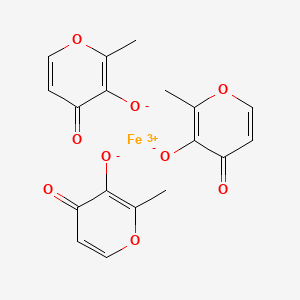
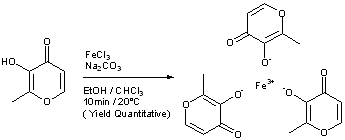
Ferric Maltol, マルトール第二鉄


Ferric maltol.png

Ferric Maltol

Iron, tris(3-hydroxy-2-methyl-4H-pyran-4-onato-O3,O4)-

Molecular Formula: C18H15FeO9
Molecular Weight: 431.154 g/mol

iron(3+);2-methyl-4-oxopyran-3-olate

RN: 33725-54-1
UNII: MA10QYF1Z0

Feraccru

Ferric maltol; UNII-MA10QYF1Z0; MA10QYF1Z0; Ferric maltol (INN); Ferric maltol [INN]; 33725-54-1

Shield Therapeutics, under license from Vitra Pharmaceuticals

UPDATE

  • Originator University of Cambridge; University of London
  • Developer Shield Therapeutics
  • Class Antianaemics; Ferric compounds; Pyrones; Small molecules
  • Mechanism of Action Iron replacements
  • Marketed Iron deficiency anaemia

Most Recent Events

  • 26 Jul 2019 Registered for Iron deficiency anaemia (In adults) in USA (PO)
  • 24 Apr 2019 Swissmedic approves a extension of the approved indication for ferric maltol to include treatment of all adults with iron deficiency (ID) with or without anaemia
  • 14 Mar 2019 The European Patent Office decides in favour of Shield Therapeutics in relation to the group’s patent No. 2 668 175

The US Food and Drug Administration (FDA) has approved oral ferric maltol(Accrufer, Shield Therapeutics) AUG 2019 for the treatment of iron deficiency in adults.

The product is already approved in the European Union and Switzerland for the treatment of iron deficiency in adults, where it is sold as Feraccru.

OLD DATA NDA filing expected in US in 2H 2018, Ph 3 trial is planned in 2018/19 for treatment of iron deficiency anemia (IDA) in children., Expected dose form: Oral Capsule; 30 mg

Treatment of iron deficiency anemia (IDA) associated with inflammatory bowel disease (IBD) and Chronic Kidney disease.

Iron deficiency anaemia (IDA) occurs when iron levels are insufficient to support red blood cell production and is defined – according to the WHO – as haemoglobin levels below 13 g/dL in men over 15 years, below 12 g/dL in non-pregnant women over 15 years, and below 11 g/dL in pregnant women. Iron is absorbed at the apical surface of enterocytes to be transported by ferroportin, the only known iron exporter, across the basolateral surface of the enterocyte into circulation. Inflammation from IBD interferes with iron absorption by causing an increase in hepcidin, a peptide hormone synthesized in the liver that inhibits ferroportin activity. Anaemia is the most common extra-intestinal complication of inflammatory bowel disease (IBD) and although it often involves a combination of IDA and anaemia of chronic disease, IDA remains an important contributor in this condition due to chronic intestinal bleeding and decreased iron intake (from avoidance of foods that may exacerbate symptoms of IBD). In a variety of populations with IBD, the prevalence of iron deficiency anaemia ranges from 36%-76%. The serum markers of iron deficiency are low ferritin, low iron, raised total iron binding capacity, raised red cell protoporhyrin and increased transferrin binding receptor (sTfR). Serum ferritin is the most powerful test for iron deficiency. The cut-off level of ferritin which is diagnostic varies between 12-15 µg/L. Higher levels of serum ferritin do not exclude the possibility of iron deficiency, and a serum ferritin level of <100 μg/L may still be consistent with iron deficiency in patients with IBD. A transferrin saturation of <16% is indicative of iron deficiency, either absolute or functional. Other findings on a complete blood count panel that are suggestive of iron deficiency anaemia, but are not considered diagnostic, include microcytosis, hypochromia, and elevation of red cell distribution width.

A deficiency of iron can have a significant impact on a patient’s quality of life. Appropriate diagnosis and treatment of iron deficiency anaemia are important to improve or maintain the quality of life of patients. The goals of treatment are to treat the underlying cause, limit further blood loss or malabsorption, avoid blood transfusions in haemodynamically stable patients, relieve symptoms, and improve quality of life. More specifically, therapeutic goals of treatment include normalizing haemoglobin levels within 4 weeks (or achieving an increase of >2 g/dL) and replenishing iron stores (transferrin saturation >30%). Oral iron supplementation has been considered standard treatment because of an established safety profile, lower cost, and ease of administration. It has been shown to be effective in correcting anaemia and repleting iron stores. One concern with higher doses of daily oral iron is intolerance due to GI side effects. Symptoms include nausea, vomiting, diarrhea, abdominal pain, constipation, and melena-like stools. Guidelines on the Diagnosis and Management of Iron Deficiency and Anaemia in Inflammatory Bowel Diseases recommend IV iron therapy over oral iron supplementation in the treatment of iron deficiency anaemia in patients with IBD, citing faster and prolonged response to treatment, decreased irritation of existing GI inflammation, improved patient tolerance, and improved quality of life. Patients with severe anaemia (haemoglobin level of <10 g/dL), failure to respond or intolerance to oral iron therapy, severe intestinal disease or patients receiving concomitant erythropoietin are recommended indications for IV iron therapy. Other conditions where patients should be considered for first-line IV therapy over oral therapy include congestive heart failure, upper GI bleeding, and in situations where rapid correction of anaemia may be required.

Across EU there are several iron (Fe+2) oral preparations as ferrous fumarate, ferrous gluconate, ferrous sulphate and ferrous glycine sulfate, formulated as tablet, solution or gastroresistent capsules. All ferrous compounds are oxidised in the lumen of the gut or within the mucosa with release of activated hydroxyl radicals, which may attack the gut wall and can effect a range of gastrointestinal symptoms and discomfort. Ferric preparations also exist but with less bioavailability. Across EU there are also several IV products on the market: iron (III) hydroxide dextran complex, iron sucrose, ferric carboxymaltose, iron isomaltoside. IV iron therapy, however, is inconvenient, invasive and associated with the risk of rare but serious hypersensitivityreactions; it is used in those situations when oral preparations cannot be used or when there is a need to deliver iron rapidly. Feraccru is a trivalent iron, oral iron replacement preparation. The active substance of Feraccru is ferric maltol (also known as 3-hydroxy-2-methyl-4H-pyrane-4-one iron (III) complex, or ST10, or ferric trimaltol or ferric maltol) an oral ferric iron/maltol complex. It is presented as red hard gelatine capsules containing 30 mg iron (ferric iron). Maltol is a sugar derivative that strongly chelates iron in the ferric form (FeIII) rendering the iron stable and available for absorption. Upon dissociation of the ferric maltol complex, the maltol molecules are absorbed and glucuronidated in the intestinal wall, and within the liver during first pass metabolism, and subsequently eliminated from the body in the urine. The iron is absorbed via the endogenous dietary iron uptake system. The indication finally agreed with the CHMP was: Feraccru is indicated in adults for the treatment of iron deficiency anaemia (IDA) in patients with inflammatory bowel disease (IBD) (see section 5.1). The proposed dosage is one 30 mg capsule twice daily on an empty stomach, corresponding to 60 mg ferric iron per day. There was agreement in the paediatric investigation plan to grant a deferral and a waiver for iron as iron (III)-maltol complex (EMEA-001195-PIP01-11).The PDCO granted a waiver in infants under 6 months of age and a referral for the completion of the planned paediatric studies (ST10-021 PK-PED/ST10-01-102, an open label, randomised, multiple-dose, parallel PK study and ST10-01-303, a randomised, open label comparative safety and efficacy study of ST10 and oral ferrous sulphate as comparator) until the adult studies are completed.

http://www.ema.europa.eu/docs/en_GB/document_library/EPAR_-_Public_assessment_report/human/002733/WC500203504.pdf

SYN

Patent

https://patents.google.com/patent/WO2017167963A1/en

The sugar derivative maltol is a hydroxypyrone (IUPAC name: 3- hydroxy-2-methyl-4£f-pyran-4-one) and it strongly chelates iron and the resulting complex (ferric trimaltol) is well absorbed, unlike many other ferric iron therapies. Ferric trimaltol appears well tolerated even in populations highly susceptible to gastrointestinal side-effects, such as IBD patients (Harvey et al . , 1998), and as such it provides a valuable alternative to patients who are intolerant of oral ferrous iron products, notably in place of intravenous iron. Clinical trials using ferric trimaltol have been carried out, see for example, Gasche et al., 2015.

However, despite the evidence of bioavailability and tolerability for ferric trimaltol, its clinical development has been limited by the absence of adequate synthetic routes. In particular, most manufacturing processes require the use of organic solvents, which increase manufacturing costs, for example to deal with post-synthesis solvent removal, and require additional safety measures, for example to deal with flammability . Critically, solvent-based syntheses are not robust and often generate ferric hydroxide, described in the prior art to be an unwanted impurity of the synthesis.

WO 03/097627 (Vitra Pharmaceuticals Limited) describes the synthesis of ferric trimaltol from iron salts of carboxylic acids in aqueous solution at a pH greater than 7. In a first

synthesis, ferric citrate is added to a solution of sodium hydroxide at room temperature and maltol is added to a second solution of sodium hydroxide at pH 11.6. The ferric citrate solution is added to the maltol solution, leading to the

production of a deep red precipitate. This composition is then evaporated until dryness and the material is powdered and dried. Alternative syntheses are described using ferrous fumarate or ferrous gluconate as the iron carboxylate salt starting material, and by dissolving maltol in sodium carbonate solution in place of sodium hydroxide. However, despite the fact that this process is fully aqueous, several of the iron carboxylate salts employed are expensive, especially as they need to be pharmaceutical grade if the ferric trimaltol is to be suitable for human administration. More importantly, this process introduces high levels of

carboxylates (equimolar to iron or greater) to the synthesis that are not easily removed by filtration or centrifugation of the ferric trimaltol cake. Instead these water soluble contaminants must be washed off (e.g. water washed), but this would result in considerable losses of the product due to the amphipathic nature of ferric trimaltol.

WO 2012/101442 (Iron Therapeutic Holdings AG) describes the synthesis of ferric trimaltol by reacting maltol and a non- carboxylate iron salt in an aqueous solution at alkaline pH .

However, despite the lower cost of non-carboxylate iron salts, pharmaceutically appropriate grades are still required if the ferric trimaltol is to be suitable for human administration and hence are comparatively expensive starting materials.

Importantly, the use of non-carboxylate iron salts (e.g. ferric chloride) results in the addition of considerable levels of the respective counter-anion (e.g. three moles of chloride per every mole of iron) of which a significant part is retained in the filtration (or centrifugation) cake and thus must be washed off. As such, WO 2012/101442 does not address the problem of product losses in WO 03/097627. Furthermore, the addition of a non- carboxylate iron salt (e.g. ferric chloride) to a very alkaline solution, as described in WO 2012/101442, promotes the formation of stable iron oxides, which is an unwanted contaminant in ferric trimaltol . As a consequence, further costly and time-consuming processing of the material would be required for manufacturing .

Overall, the cost of the current aqueous syntheses is driven by regulatory demands for low levels of toxic heavy metals and residual reagents in the final pharmaceutical formulation, which force the use of highly purified, and thus expensive, iron salts as well as thorough washing of the final product (resulting in significant losses of product) . This will impact on the final price of ferric trimaltol and potentially limits patient access to this therapy. As such, there is a need for a process that can use lower iron grades and limited wash cycles, whilst producing ferric trimaltol of adequate purity.

Ferric maltols are a class of compounds that include ferric trimaltol, a chemical complex formed between ferric iron (Fe3+) and the hydroxypyrone, maltol (IUPAC name: 3-Hydroxy-2-methyl-4£f- pyran-4-one) , in a molar ratio of ferric iron to maltol of 3:1. Maltol strongly chelates the ferric iron and the resulting complex (ferric trimaltol which may also be written as ferric tri-maltol) is well absorbed, in contrast to some other ferric iron supplements, fortificants and therapies. Maltol binds metal cations mainly in the form of a dioxobidentate ligand in a similar manner proposed for other 4 ( 1H) -pyranones :

Figure imgf000010_0001

Structure of maltol (3-hydroxy-2-methyl-4 (H) -pyran-4-one) and dioxo-chelation to metal cations (M) such as iron. For ferric trimaltol three maltol groups surround one iron.

Examples

Example 1: Ferric trimaltol from L-lyslne coated ferric hydroxide

Synthesis of lysine-coated ferric hydroxide colloid

14.87g FeCl3. 6H20 was added to 25 mL UHP water and stirred until dissolved. 14.9g NaOH 5M was then added drop-wise to this solution with constant stirring, during which a ferric hydroxide colloid was gradually produced. This colloidal suspension was then added to a L-Lysine suspension (5.02g in 25mL ddH2<D) .

Ferric trimaltol synthesis

7 g NaOH pellets was added to 25 mL UHP water and stirred until dissolved. Next, 24.5g maltol was added and stirred until dissolved. Then, the suspension of lysine-coated ferric

hydroxide colloids was gradually added to the maltol with vigorous stirring, producing a dark red precipitate (with a significant brown hue) . This suspension was incubated overnight during which time it became lighter and the brown hue

disappeared. This precipitate was then recovered by

centrifugation (4500 rpm x 5min) and dried overnight (50°C) .

Example 2: Ferric trimaltol from L-lysine modified ferric hydroxide

Synthesis of lysine-modified ferric hydroxide gel

14.87g FeCl3.6H20 and 5.02g L-Lysine were added to 25 mL UHP water and stirred until dissolved. 32 mL NaOH 5M was then gradually added to this solution producing a ferric hydroxide gel .

Ferric trimaltol synthesis

7 g NaOH pellets was added to 25 mL UHP water and stirred until dissolved. Next, 24.5g maltol was added and stirred until dissolved. Next, the lysine-modified ferric hydroxide gel was gradually added to this solution with vigorous stirring. A 1.2 M HC1 solution was then used to drop the pH of the solution to 10, which was then incubated for 70 min. Finally, a dark red precipitate (i.e., ferric trimaltol) was recovered by

centrifugation (4500 rpmx5min) and dried overnight (45°C) .

Example 3: Absence of ferric hydroxide in ferric trimaltol

Ferric trimaltol is soluble in ethanol whereas ferric hydroxide (a potential contaminant) is not. As such ferric trimaltol powders produced as per Examples 1 and 2 were dissolved in ethanol. The material from Example 2 dissolved completely confirming the absence of iron hydroxides whereas the material from Example 1 did not. This supported the preference in the present invention for ligand modification, rather just surface coating, to ensure full conversion to ferric trimaltol .

Example 4: Ferric trimaltol from tartrate-modified ferric hydroxide

Synthesis of tartrate-modified ferric hydroxide gel

14.87g FeCl3.6H20 (0.055 mol) was added to 25 mL UHP water and stirred until dissolved. 4.12 g tartaric acid (0.0275 mol) was added to this solution and stirred until dissolved. 38 mL NaOH 5M was then gradually added to this solution producing a ferric hydroxide gel .

Ferric trimaltol synthesis

2 g NaOH pellets was added to 25 mL UHP water and stirred until dissolved. Next, 24.5g maltol was added and stirred. This produced a slurry in which most of the maltol remained

undissolved. Next, the tartrate-modified ferric hydroxide gel was gradually added to this solution with vigorous stirring during which the remainder of maltol dissolved. After 15 min a dark red precipitate (i.e. ferric trimaltol) had been formed and pH had stabilised at 8.5. The material was then washed by (1)

centrifuging, (2) disposing of the supernatant and (3)

resuspending in water back to its original volume. Finally, the material was recovered by centrifugation (4500 rpm x 5min) and dried overnight (50°C) . Previously disclosed synthetic processes for the production of ferric trimaltol under aqueous conditions require the addition of NaOH (or other suitable bases) for conversion of maltol from its protonated form to its deprotonated form prior to complexation of iron. However this results in the formation of unwanted sodium ions which must be washed off. In contrast, the use of ferric hydroxides according to the methods of the present invention reduces the requirements for base and associated counter cation (e.g. sodium), which is a favourable feature. Note that ferric hydroxides are represented above as Fe (OH) 3 for illustrative purposes only. Different iron hydroxides possess different structures and elemental compositions (see Cornell & Schwertmann, The Iron Oxides Structure, Properties, Reactions, Occurrence and Uses. 2nd edition, 1996, VCH Publishers, New York) . Example 5: Ferric trimaltol from tartrate-modified ferric hydroxide (with removal of contaminants from ferric hydroxide)

Material prepared as in Example 4, except excess reactants and reaction products (e.g. unbound tartaric acid, sodium chloride) were removed from the ferric hydroxide gel. This was achieved by centrifuging the ferric hydroxide gel after its synthesis and discarding the supernatant, which contained unwanted soluble species. Finally, the ferric hydroxide gel was re-suspended in water back to its original volume prior to being added to a maltol slurry.

Example 6: Ethanolic clean up for ferric trimaltol produced from ligand coated ferric hydroxide

Ferric trimaltol precipitate was purified as it contained an unwanted iron oxide fraction. Part of the wet pellet recovered by centrifugation (4.5 g) was dissolved in 1L ethanol. The iron oxide fraction (which remained undissolved) was then removed by filtration, producing a turbidity-free solution. Next, ethanol was evaporated (40°C in a rotavapor under vacuum) producing a concentrated ferric trimaltol slurry. This was then recovered and oven dried overnight at 50°C.

PATENT

https://patents.google.com/patent/WO2012101442A1/en

Comparative Example 1

Preparation of Iron Trimaltol from Pure Maltol Maltol was dissolved in an aqueous solution of ferric chloride and ferric trimaltol was precipitated upon the addition of sodium hydroxide.

An accurate mass of ferric chloride hexahydrate granules (330g) was dissolved in distilled water to yield a pH of 0.6. To this solution, an equimolar amount of maltol was added (490g in total, initially 250g) and allowed to dissolve with continuous stirring. The pH of this solution was found to be zero and the colour of this solution was deep- purple. Spectroscopy showed that the initial solution was mainly a 1 :1 Fe/maltol mixture with some 1 :2 component. The remaining maltol was added. After an hour of stirring, sodium hydroxide (147g NaOH in 750 ml water) was added dropwise to the solution until a pH of 8.3 was achieved. The solution and precipitate were red. The precipitate was collected using a Buchner funnel under vacuum. The precipitate was dried at 40°C under vacuum.

Maltol is only slightly soluble in an aqueous acidic reaction medium. After an hour of stirring, traces of undissolved maltol were visible on the surface of the ferric chloride/maltol solution, on the walls of the reaction vessel and on the stirrer. Upon addition of sodium hydroxide, there appeared to be lumps of a brownish-black substance on the walls of the reaction vessel and on the stirrer which seemed to add to the impurities in the desired product.

An attempt to heat the ferric chloride/maltol solution so as to assist the maltol to dissolve in the ferric chloride solution resulted in a burnt, off spec, colour iron maltol sample. This method also produces two by-products which consume expensive maltol namely Fe(OH)2 (Maltol) and Fe (OH) (Maltol)2.

The sodium hydroxide solution has to be added extremely slowly to prevent “gumming up” and formation of undesirable lumps at the bottom of the reaction vessel. A yield of about 78% ferric trimaltol was obtained using this method of preparation.

When maltol is added to a ferric chloride solution at a low pH, no ferric trimaltol is formed and ferric hydroxide is generated with ferric monomaltol and a small percentage of ferric dimaltol species. The charge neutralisation of these complexes is either the hydroxy! functional group or the chloride anion. This addition also results in the formation of black deposits and gums consisting of ferric chloride/ferric hydroxide polymers. These black deposits are also produced if the solutions are heated. Therefore it is not possible to obtain the correct stoichiometry for the formation of ferric trimaltol and manufacture a pharmaceutically acceptable product using this method.

The addition of maltol to an aqueous solution of ferric or ferrous chloride was deemed impractical for scale up and manufacturing purposes and Examples 2 to 4 investigate the addition of the iron chlorides to maltol in solution.

The problem of working in an aqueous environment

Ferric chloride as a hydrated ion in aqueous solution is a strong Lewis acid with a Ka of 7x 10³ and ferrous chloride as a hydrated ion in aqueous solution is also a strong Lewis acid with a Ka of 5 x 10“9. Over the desired range for using iron chlorides as starting materials for the synthesis of ferric trimaltol, ferric chloride in aqueous solution has a pH value in the range of 1-3 and ferrous chloride has a pH in the range of 3-5. Furthermore, commercial solutions of iron chlorides have a pH circa 1 because they are stabilised by the addition of hydrochloric acid to prevent the precipitation of ferric hydroxide species.

The present invention recognises that maltol is virtually insoluble at these low pH values and has limited solubility when dissolved in water in the pH range 6-8. The maximum aqueous solubility is 1g/100m! at 20°C. However, the solubility of maltol can be increased to 10g/100ml by heating to near boiling temperatures. Maltol is stable in aqueous solution at these temperatures and this property has been employed in Example 4 to synthesise ferric trimaltol. At low pH values ferric trimaltol is not the preferred species due to disproportionation. In order to obtain significant amounts of ferric trimaltol using a stoichiometric ratio of iron salt to hydroxypyrone of 1 :3, the eventual pH of the solution must exceed 7 since below that pH ferric dimaltol and monomaltol species will exist. Therefore two methods of increasing the pH were researched 1) using sodium carbonate and 2) using sodium hydroxide. Other alkali hydroxides could be used such as potassium hydroxide. The sodium carbonate neutralisation was found to be less preferable due to C02 generation. This research lead to an improved synthesis of ferric trimaltol.

Example 2

Maltol was dissolved in an aqueous solution of sodium hydroxide and iron maltol was precipitated upon the addition of ferric chloride.

In view of some of the difficulties experienced in Example 1 , and the fact that maltol is very soluble in aqueous alkali hydroxide solutions, it was decided to change the manufacturing procedure.

The initial work using this method of preparation showed that a 90% yield was achieved. Various operating parameters were then optimised and the following procedure outlines the final method chosen. A yield of 95% was then achieved. An accurate mass of sodium hydroxide pellets (20g) was dissolved in distilled water to yield a pH of 13.50. An equimolar amount of maltol (63g) was added to this aqueous solution of NaOH to give a clear yellow coloured solution with a pH of 11.6. Almost immediately a stoichiometric amount of ferric chloride (45g) was added slowly to this solution to give a pH of 7.1 and a red precipitate formed, which was then collected using a Buchner funnel under vacuum. The precipitate was then dried at 40°C under vacuum.

Adding the maltol solution in sodium hydroxide to ferric chloride as in method 1 is not preferred since it gives an off spec product and gums and a black precipitate.

Maltol is very soluble in aqueous alkali hydroxide solutions giving a yellow solution. The concentration of the hydroxide solution preferably does not exceed 20%.

This method is advantageous since it has the potential to produce only one by-product viz, ferric hydroxide Fe(OH)3 which consumes some of the iron intended to complex with the maltol. This is not easily measurable in the presence of iron maltol and so the following method was used to measure the ferric hydroxide. Fe(OH)3 is insoluble in ethanol and so the iron maltol product was dissolved in ethanol. It was found that small amounts of Fe(OH)3 may be present in the batches of iron maltol synthesized according to Example 2.

Taking the extremes of the specification, in one embodiment, the amount of Fe(OH)3 present in the active material may not exceed 2 wt. % Fe(OH)3 based on the total weight of the composition. In view of its well known inert characteristics the level of this compound is adequately controlled and a final specification including controlled ferric hydroxide should be acceptable.

The mass balance for maltol and iron was closed at 99%.

A yield of 95% iron maltol was obtained using this method of preparation.

Example 3

Maltol was dissolved in an aqueous solution of Sodium Carbonate and Iron Maltol was precipitated upon the addition of Ferric Chloride.

An accurate mass of sodium carbonate (Na2C03) (53g) was dissolved in distilled water to give a solution having pH = 11.5. An equimolar amount of maltol (65g) was added to this aqueous alkali solution to give a murky creme coloured solution of pH = 9.9. A stoichiometric amount of a ferric chloride solution was added drop wise to this solution to a pH of 8.00. A further 15 grams of Na2C03 was added to this solution to increase the pH to 9.00. The remainder of the ferric chloride solution was then added to give a solution pH = 8.77 and a red coloured precipitate appeared.

The precipitate was collected using a Buchner funnel under vacuum. The precipitate was then dried at 40°C under vacuum. The release of C02 during the reaction tends to make this process less desirable due to foaming on the surface. The final product is a gellike solid when wet and the removal of moisture during drying can therefore be time consuming. The process may not be preferred but the ferric trimaltol produced could be acceptable.

Example 4 Maltol was dissolved in water and heated to a near boiling temperature and ferric or ferrous chloride was added to form a 1 :1/1:2 mixture of ferric maltol. The solution was allowed to cool and was added to maltol dissolved in sodium hydroxide. Stage 1

Depending on the batch size required, the ferric chloride was added slowly to a maltol solution in water at a pH of 6-7. The solubility of maltol is greatly enhanced up to 10g/100ml by heating to temperatures above 60°C. Addition of ferric chloride or ferrous chloride and monitoring the pH of the solution and maintaining the pH> 3 mainly produces ferric dimaltol species but very little ferric trimaltol. Above pH 3, no ferric hydroxide appeared to be generated. Ferric monomaltol and dimaltol species either with hydroxy or chloride giving the charge neutralisation are very soluble and a concentrated solution in excess of 30g/100ml can be generated. In order to obtain the correct stoichiometry for the formation of ferric trimaltol, further maltol is required and the pH needs to be corrected to values higher than 7.

As anhydrous ferrous or ferric chloride either 126g or 162g in 200ml of water can be added to a litre of water containing 120g of maltol. This ratio of iron to maltol does not provide sufficient maltol to produce any significant amounts of ferric trimaltol which does not precipitate at this stage.

Stage 2 Maltol in alkaline solution has been described as set out above. Conveniently, because maltol solutions up to 20% in sodium hydroxide have a pH circa 11.6, mixing of this solution with the ferric mono/dimaltol solutions from stage 1 yields a precipitate of ferric trimaltol with a deep characteristic burgundy red colour of high purity as determined by UV-vis spectroscopy. The filtrate yields product which is suitable for a GMP (good manufacturing process). The sodium chloride which is generated by this process is found in the supernatant since it has a much higher solubility at 35g/100ml than ferric trimaltol. The small amounts of sodium chloride in the ferric trimaltol can be reduced, if required, by washing in water. A further, surprising feature of the research resulted from work on ferrous chloride. Ferrous chloride may be substituted in stage 1 to form ferric dimaltol since the maltol was found to auto-oxidise the ferrous to ferric during the process of chelation. One aspect of this work which was considered to be potentially very useful if larger batch sizes were required arose from the finding that being a weaker Lewis acid than ferric chloride the pH of the starting solution was in excess of 3. Therefore the risk of generating ferric hydroxide was lower than with the use of ferric chloride at higher concentrations.

Ferrous and ferric chloride in solution or as a solid may be added to an alkaline solution of maltol in sodium hydroxide, combining stages 1 & 2. Providing a small excess of maltol up to about 10% is added then a precipitate of ferric trimaltol with a small amount of maltol is obtained. Such a preparation would be satisfactory as a GMP ferric trimaltol product.

 PATENT

https://patents.google.com/patent/WO2017167963A1/en

AMPLE 1

Synthesis of ferric trimaltol using ferric citrate

NaOH (12g, 0.3 moles) is dissolved in water (50 ml) to form a sodium hydroxide solution. 20 ml of the sodium hydroxide solution is placed in a separate vessel.

Ferric citrate (30g, 0.11 moles) is slowly added to the sodium hydroxide solution in the separate vessel at room temperature with gentle stirring. Further portions of the sodium hydroxide solution are added to the solution of ferric citrate, as necessary, in order to ensure that all of the ferric citrate is dissolved.

Maltol (49g, 0.39 moles) is added to the remaining volume of sodium hydroxide solution and dissolved. The pH of the maltol solution is 11.6.

The ferric citrate solution is slowly added to the maltol solution with gentle stirring. A deep red precipitate forms; the supernatant is a deep red colour.

The solution is slowly evaporated to dryness at 60 to 80° C until the material is suitable for powdering. The material is powdered and the powder is then dried to a constant weight.

The yield of the final product is 87g. The final product comprises ferric trimaltol and sodium citrate. The product was assayed, using elemental analysis, for iron and sodium content. The iron content is 7.89% (theoretical 7.8%) and the sodium content is 13.45%.

The pH of a solution of the final product in water was measured. The pH of a 1% solution of the product by total weight of aqueous solution is 9.9 at 20°C.

EXAMPLE 2

Synthesis of ferric trimaltol using ferrous fumarate

NaOH (40g, 1 mole) is dissolved in water (100 ml) to form a sodium hydroxide solution. The pH of the solution is approximately 13.0.

Ferrous fumarate (170g, 1 mole) is slowly added to the sodium hydroxide solution at room temperature with gentle stirring.

Maltol (408g, 3.23 moles) is added to a separate volume of sodium hydroxide (40g, 1 mole) dissolved in water (100 ml) and dissolved. The pH of the solution is approximately 11.

The ferrous fumarate solution is slowly added to the maltol solution with gentle stirring. A deep red precipitate forms; the supernatant is a deep red colour.

The solution is slowly evaporated to dryness at 60 to 80° C until the material is suitable for powdering. The material is powdered and the powder is then dried to a constant weight. The yield of the final product is 615g.

The final product comprises ferric trimaltol and sodium fumarate.

EXAMPLE 3

Synthesis of ferric trimaltol using sodium carbonate to vary pH

Sodium carbonate (2.5g) is dissolved in 10ml of distilled water at room temperature. The pH of the solution is 11.6. Maltol (9.6g – three molar equivalents of sodium carbonate) is added to the sodium carbonate solution to give a cream coloured solution having a pH of 10.0.

A stoichiometric amount of ferric citrate (5g, allowing for a small excess of maltol) in an aqueous solution of sodium hydroxide (lg in 5ml of distilled water) is added slowly to the solution of maltol. The pH of the combined solutions is about 9. A red precipitate appears which is separated by decantation and dried at 80°C in an oven.

The red precipitate is ferric trimaltol, as confirmed by UV-Vis spectrometry.

EXAMPLE 4

Synthesis of ferric trimaltol using ferrous gluconate

Potassium hydroxide (5.5g) is dissolved in 50ml of distilled water at room temperature. To 25ml of this solution, maltol (16.5g, 0.13 moles) is added and gently heated to form a clear solution. To the other 25ml aliquot of the potassium hydroxide solution ferrous gluconate (22.5g) is added. This is gently heated to form a dark green saturated solution. The ferrous gluconate solution is added to the maltol solution and immediately a colour change to dark brown is noted.

On cooling, a deep brown precipitate forms (which is ferric trimaltol). The supernatant is a deep brown solution containing ferric trimaltol and potassium gluconate. The precipitate and the supernatant are dried separately at 80°C in an oven. The ferric trimaltol is a deep red brown powder with a characteristic caramel odour and UV-vis spectrum in aqueous solution.

EXAMPLE 5

Synthesis of ferric trimaltol using solid ferrous gluconate

Example 4 was repeated with the modification that the maltol is added to all of the 50 ml solution of potassium hydroxide and then solid ferrous gluconate is added directly to the maltol solution. This method gives similar end products to Example 4.

EXAMPLE 6

Synthesis of ferric trimaltol using sodium ferrous citrate

A 20% solution w/v of sodium ferrous citrate in distilled water is prepared from 7.5g of sodium ferrous citrate in 37.5ml of water. The solution of sodium ferrous citrate is dark green with an iron content of about 20%. A solution of maltol (containing 10g/50ml) in 20% sodium hydroxide is added to the solution of sodium ferrous citrate. A characteristic deep red/brown iron complex of ferric trimaltol is formed.

EXAMPLE 7

Synthesis of ferric trimaltol using solid sodium ferrous citrate

Example 6 was repeated using the same amounts and concentrations of components but the method is varied in that solid sodium ferrous citrate (7.5g) is added directly to the maltol solution (containing lOg of maltol in 50ml). Ferric trimaltol is formed using this alternative method.

EXAMPLE 8

Synthesis of ferric trimaltol using sodium ferric citrate

A 20% solution w/v of sodium ferric citrate in distilled water is prepared from 7.5g of sodium ferric citrate in 37.5ml of water. The solution of sodium ferric citrate is dark brown with an iron content of about 20%.

A solution of maltol (containing 10g/50ml) in 20% sodium hydroxide is added to the solution of sodium ferric citrate. A characteristic deep red/brown iron complex of ferric trimaltol is formed. EXAMPLE 9

Example 8 was repeated using the same amounts and concentrations of components but the method is varied in that solid sodium ferric citrate (7.5g) is added directly to the maltol solution (containing lOg of maltol in 50ml). Ferric trimaltol is formed using this alternative method.

If any of Examples 3 to 9 are repeated using maltol in a neutral or acidic aqueous medium, such as for example in buffered citric acid, brown/black impurities appear and insoluble fractions are formed (probably of ferric hydroxide) and the UN-vis spectra of the solutions are not correct. In particular, there is a peak shift towards 510nm indicating the formation of mono or dimaltol complexes or compounds.

PATENT

WO 2017167970

POLYMORPH

GB 2531742

PATENT

WO 2016066555

https://patents.google.com/patent/WO2016066555A1/en

An adequate supply of iron to the body is an essential requirement for tissue growth and the maintenance of good health in both man and animals. Moreover, in certain pathological conditions where there is an insidious blood loss, or where there is a mal-distribution of iron in the body, there may be a state of low iron stores in the body leading to an iron deficiency and a concomitant chronic anaemia. This is seen in inflammatory diseases of the gastrointestinal tract, such as gastric and peptic ulcers, reflux oesophagitis, ulcerative colitis and Crohn’s disease.

Anaemia can also follow operations that result in serious blood loss and can be associated with gastrointestinal infections, such as those caused by Helicobacter pylori.

Ferric maltol comprises a complex of one ferric iron and three maltol anions and has the following molecular formula: (C6H503)3Fe. Maltol is also known as 3-hydroxy-2-methyl-4- pyrone.

Polymorphic forms occur where the same composition of matter crystallises in a different lattice arrangement, resulting in different thermodynamic properties and stabilities specific to the particular polymorphic form. WO 03/097627 A1 discloses a method of forming iron hydroxypyrone compounds.

EP 0 159 917 A3 describes a pharmaceutical composition containing a hydroxypyrone-iron complex. WO 2012/101442 A1 discloses a method of forming iron hydroxypyrone compounds.

Schlindwein et al (Dalton Transactions, 2006, Vol. 10, pages 1313-1321) describes lipophilic 3-hydroxy-4-pyridinonate iron(lll) complexes. Ferric maltol has been known for about 100 years but no polymorphs have been identified or studied prior to this invention.

We have now found that it is possible to produce different polymorphs of ferric maltol, which crystalline forms may be referred to herein as the “compounds of the invention”. One polymorph form can be preferable in some circumstances when certain aspects, such as ease of preparation and stability, such as thermodynamic stability are required. In other situations, a different polymorph may be preferred for greater solubility and/or superior pharmacokinetics. The polymorphs of the invention can provide advantages in terms of improved or better bioavailability or improved or better stability or solubility.

The term “ferric maltol” as used herein refers to both ferric trimaltol and the designation INN ferric maltol. In one aspect of the invention there is provided a Form I polymorph of ferric maltol characterized by a powder X-ray diffraction pattern comprising characteristic crystalline peaks expressed in degrees 2-theta at each of 15.6 and 22.5 ± 0.25 or 0.2 degrees, optionally wherein the Form I polymorph comprises greater than about 92 wt.% ferric maltol based on the weight of the polymorph, such as greater than about 95 wt.%, preferably greater than about 96 wt.%, or about 98 wt.%, or about 99 wt.% such as about 99.8 wt.%.

In a further aspect of the invention there is provided a Form II polymorph of ferric maltol characterized by a powder X-ray diffraction pattern comprising a peak expressed in degrees 2-theta at 8.3 ± 0.25 degrees.

In a yet further aspect of the invention there is provided a Form III polymorph of ferric maltol characterized by a powder X-ray diffraction pattern comprising a peak expressed in degrees 2-theta at 7.4 ± 0.25 degrees. In a still further aspect of the invention there is provided a Form IV polymorph of ferric maltol characterized by a powder X-ray diffraction pattern comprising peaks expressed in degrees 2-theta at 9.5 and 14.5 ± 0.2 degrees.

The measurements of degrees 2-theta generally refer to measurements at ambient temperature, such as from about 5 to about 40°C, preferably about 10 to about 30°C. The relative intensities of the peaks can vary, depending on the sample preparation technique, the sample mounting procedure, the particular instrument employed, and the morphology of the sample. Moreover, instrument variation and other factors can affect the 2-theta values. Therefore, XRPD peak assignments for the polymorphs of the invention, as defined herein in any embodiment, can vary by, for example, ± 0.2, such as ±0.1 or ±0.05. The term “about” in relation to XRPD peak values may include for example, ±0.25 or ± 0.2, such as ±0.1 or ±0.05. These ranges may apply to any of the peak values in degrees referred to herein.

In another embodiment of the invention, there is provided a process for the preparation of a ferric maltol polymorph, such as Form I or Form II polymorph, which comprises combining ferric citrate with maltol anions to form a mixture comprising ferric maltol and wherein the process comprises the use of a ferric maltol seed crystal. The seed crystal may comprise a Form I and/or Form II polymorph as described herein and these polymorphs may be prepared using the methods described herein.

In another aspect of the invention, there is provided a process for the preparation of Form I polymorph, which comprises combining ferric citrate with maltol anions to form a mixture comprising ferric maltol polymorph Form I wherein the process comprises the use of a ferric maltol seed crystal comprising Form I and/or Form II polymorph and preferably wherein the polymorph formed is washed (typically with water) prior to drying.

In a further aspect of the invention, there is provided a process for the preparation of Form II polymorph, which comprises combining ferric citrate with maltol anions in solution to form a mixture comprising ferric maltol polymorph Form II, wherein the process preferably comprises the use of a ferric maltol seed crystal comprising Form I and/or Form II polymorph and preferably wherein the polymorph formed is washed (typically with water) prior to drying.

The invention also provides a pharmaceutical composition comprising a polymorph according to the invention, or mixtures thereof, and a pharmaceutically acceptable adjuvant, diluent or carrier. In addition, the invention provides a composition comprising Form I and Form II polymorphs as defined herein.

In an aspect of the invention, the polymorph of the invention is for use in the prevention or treatment of iron deficiency with or without anaemia in a subject. The anaemia is preferably iron deficiency anaemia.

In a further aspect of the invention there is provided the use of a polymorph of the invention for the manufacture of a medicament for the prevention or treatment of iron deficiency with or without anaemia in a subject. The anaemia is preferably iron deficiency anaemia.

The invention further provides a method for the prevention or treatment of iron deficiency with or without anaemia which method comprises the administration of a polymorph according to the invention to a subject in need of such treatment. The anaemia is preferably iron deficiency anaemia.

Preferably the polymorphs of the invention are obtained in forms that are greater than about 90%, such as greater than about 95%, crystalline (e.g. greater than about 98% crystalline and, particularly, 100%, or nearly 100%, crystalline). By “substantially crystalline” we include greater than about 60%, preferably greater than about 75%, and more preferably greater than about 80% (such as about 90%) crystalline. The degree (%) of crystallinity may be determined by the skilled person using X-ray powder diffraction (XRPD). Other techniques, such as solid state NMR, FT-IR, Raman spectroscopy, differential scanning calorimetry (DSC) microcalorimetry and calculations of the true density may also be used.

The polymorphs of the invention may be characterised by an X-ray powder diffraction pattern comprising the following characteristic crystalline peaks with approximate 2-Theta values (in degrees) as well as an indication of the relative intensity of those peaks in brackets, where a percentage relative intensity of approximately 25- 00% is termed “vs” (very strong), approximately 10-25% is termed “s” (strong), approximately 3-10% is termed “m” (medium) and approximately 1-3% is termed “w” (weak).

Form I: The Form I polymorph preferably comprises characteristic crystalline peaks with 2-Theta values (in degrees) of around (i.e. at about or at approximately) 15.6 and 22.5 ± 0.25, or 0.2 degrees. The diffraction pattern typically does not comprise peaks at one or more, or all, or each of, about 6.9, 7.4, 8.3, 9.3, 10.5, or about 11.8 degrees, such as 8.3 or 11.8 ± 0.25, or ± 0.2, or ±0.1 such as about ±0.05 degrees.

Form II:

The form II polymorph preferably comprises a characteristic crystalline peak with 2-Theta value (in degrees) of around (i.e. at about or at approximately) 8.3 ± 0.25, or ± 0.2, or +0.1 such as about ±0.05 degrees. The diffraction pattern typically does not comprise peaks at one or more, or all, or each of, about 6.9, 7.4, 9.3, 9.5, 10.5, 11.4 or about 13.7 degrees, such as 11.4 or 13.8 ±0.25, or ±0.2, or ±0.1 such as about ±0.05 degrees.

The Form III polymorph preferably comprises a characteristic crystalline peak with 2-Theta value (in degrees) of around (i.e. at about or at approximately) 7.4 ±0.3, ±0.25, or 0.2, or ±0.1 such as about ±0.05 degrees. The diffraction pattern typically does not comprise peaks at one or more, or two or more, or three or more or each of, about 6.9, 8.3, 9.5, 11.3, 12.0, 12.5, 12.9, 14.5, or about 15.8 degrees, such as 6.9, 9.5, 11.3 ±0.25, or ±0.2, or ±0.1 such as about ±0.05 degrees.

The form IV polymorph preferably comprises a characteristic crystalline peaks with 2-Theta values (in degrees) of around (i.e. at about or at approximately) 9.5 and 14.5 +0.2, or ±0.1 such as about ±0.05 degrees. The diffraction pattern typically does not comprise peaks at one or more, or two or more, or three or more or each of, about 6.9, 8.3, 10.5, 11.7, 12.0, 12.2, 12.5, 13.0, 13.4, and about 15.8 degrees, such as 6.9, 8.3, 11.7 ±0.25, or ±0.2, or ±0.1 such as about ±0.05 degrees.

Example 1 : Form I 9.04 kg ferric citrate was combined with 29 litres of purified water. Separately, 12.2 kg of maltol was combined with 15.2 litres of sodium hydroxide solution (20 % w/w). The ferric citrate and sodium hydroxide were charged into a vessel with the addition of 4 litres of water and then stirred at 20 to 25°C. A seed was then added. The seed was 65g of ferric maltol polymorph in 12 litres of water. The seed crystal was prepared by the same process as described in Example 1 but without the use of a seed crystal. The seed was added to the vessel to aid a consistent crystallisation/precipitation. The mixture was held in the vessel, as a suspension, to allow crystal growth and then filtered and washed three times, each time with 13 litres of water. The resulting solid was dried at less than 80°C and produced 13.25 kg of dried ferric maltol.

The ferric maltol in Example 1 was produced on a scale of 12 to 15 kg in different batches. The analysis of the ferric maltol produced showed the % w/w of iron present was about 12.8 to 13.0 and the % w/w of maltol present was about 87.6 to 89.3.

Patent

Publication numberPriority datePublication dateAssigneeTitle
EP0159917A2 *1984-04-191985-10-30National Research Development CorporationPharmaceutical composition containing a hydroxypyrone-iron complex
WO2003097627A1 *2002-05-182003-11-27Vitra Pharmaceuticals LimitedMethod of forming iron hydroxypyrone compounds
WO2012101442A1 *2011-01-272012-08-02Iron Therapeutics Holdings AgProcess
Family To Family Citations
EP0107458B1 *1982-10-221987-07-29National Research Development CorporationPharmaceutical compositions
GB2531742B2014-10-282016-10-05Iron Therapeutics Holdings AgPolymorphs of ferric maltol
* Cited by examiner, † Cited by third party

Publication numberPriority datePublication dateAssigneeTitle
Family To Family Citations
GB2531742B2014-10-282016-10-05Iron Therapeutics Holdings AgPolymorphs of ferric maltol
WO2003097627A1 *2002-05-182003-11-27Vitra Pharmaceuticals LimitedMethod of forming iron hydroxypyrone compounds
US20080188555A1 *2007-02-062008-08-07Jonathan Joseph PowellLigand modified poly oxo-hydroxy metal ion materials, their uses and processes for their preparation
WO2012101442A1 *2011-01-272012-08-02Iron Therapeutics Holdings AgProcess
REFERENCES
Inorganica Chimica Acta (1990), 170(2), 241-3
Dalton Transactions (2006), (10), 1313-1321.
EP 0,107,458 [ 1984, to National Research Development Corporation]
Journal of Chemical Research, Synopses (1980), (9), 314.
Chemistry for Sustainable Development (2007) 15(4), PP- 448 – 458
US 5,028,411 [ 1991, to National Research Development Corporation]
Journal of Coordination Chemistry (1978), 8(1), 27-33
Polyhedron (1988), 7(19-20), 1973-9.
US 7,459,569 [2008, to Vitra Pharmaceuticals Limited].
Journal of Pharmaceutical Sciences (1972), 61(8), 1209-12
WO 2012 / 101,442 [ 2012, to Iron Therapeutics Holdings Ag]
Chemistry Letters (1975), (4), 339-42

//////////////Ferric Maltol, マルトール第二鉄 , Feraccru, FDA 2019

CC1=C(C(=O)C=CO1)[O-].CC1=C(C(=O)C=CO1)[O-].CC1=C(C(=O)C=CO1)[O-].[Fe+3]

CC1=C(C(=O)C=CO1)[O-].CC1=C(C(=O)C=CO1)[O-].CC1=C(C(=O)C=CO1)[O-].[Fe+3]

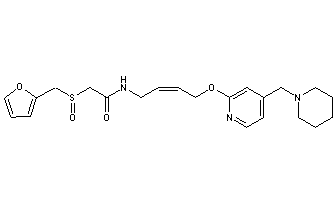
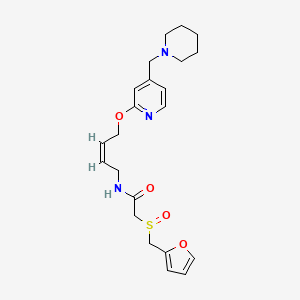
LAFUTIDINE, ラフチジン


LafutidineChemSpider 2D Image | lafutidine | C22H29N3O4S

Lafutidine.pngLafutidine.svg

LAFUTIDINE

N-[4-[4-(Piperidin-1-ylmethyl)pyridin-2-yloxy]-(Z)-but-2-en-1-yl]-2-(furfurylsulfinyl)acetamide

    • FRG-8813
    • ATC:A02B
  • Use:antisecretory, gastric H2-antagonist
  • (+)-2-[(2-furanylmethyl)sulfinyl]-N-[(2Z)-4-[[4-(1-piperidinylmethyl)-2-pyridinyl]oxy]-2-butenyl]acetamide
  • Formula:C22H29N3O4S
  • MW:431.56 g/mol
  • CAS-RN:118288-08-7
  • (±)-2-(Furfurylsulfinyl)-N-(4-(4-(piperidinomethyl)-2-pyridyl)oxy-(Z)-2-butenyl)acetamide
  • (Z)-2-((2-Furanylmethyl)sulfinyl)-N-(4-((4-(1-piperidinylmethyl)-2-pyridinyl)oxy)-2-butenyl)acetamide
  • 118288-08-7

FRG‐8813、2‐(Furfurylsulfinyl)‐N‐[(Z)‐4‐[[4‐(piperidinomethyl)‐2‐pyridinyl]oxy]‐2‐butenyl]acetamide、ロクチジン、Loctidine、ラフチジン・・・

2-[(furan-2-ylmethyl)sulfinyl]-N-[(2Z)-4-{[4-(piperidin-1-ylmethyl)pyridin-2-yl]oxy}but-2-en-1-yl]acetamide
49S4O7ADLC
7173
Acetamide, 2-[(2-furanylmethyl)sulfinyl]-N-[(2Z)-4-[[4-(1-piperidinylmethyl)-2-pyridinyl]oxy]-2-buten-1-yl]- [ACD/Index Name]
lafutidine [INN] [Wiki]
UNII:49S4O7ADLC
(Z)-2-((Furan-2-ylmethyl)sulfinyl)-N-(4-((4-(piperidin-1-ylmethyl)pyridin-2-yl)oxy)but-2-en-1-yl)acetamide

Lafutidine , also named N-[4-[4-(piperidin-1-ylmethyl)pyridin-2-yloxy]-(Z)-but-2-en-1-yl]-2-(furfurylsulfinyl)acetamide, is a histamine H2 receptor antagonist that was first produced in Japan by Taiho and UCB Japan for the oral treatment of peptic ulcers in 2000. In 2010 it was approved for the treatment of mild gastroesophageal reflux disease, and in 2012 it was approved to help improve symptoms of gastric mucosal lesions due to gastritis

Lafutidine (INN) is a second generation histamine H2 receptor antagonist having multimodal mechanism of action and used to treat gastrointestinal disorders. It is marketed in Japan and India.

Medical use

Lafutidine is used to treat gastric ulcersduodenal ulcers, as well as wounds in the lining of the stomach associated with acute gastritis and acute exacerbation of chronic gastritis.[1][2]

Adverse effects

Adverse events observed during clinical trials included constipationdiarrhea, drug rashnauseavomiting and dizziness.[2]

Mechanism of action

Like other H2 receptor antagonists it prevents the secretion of gastric acid.[2] It also activates calcitonin gene-related peptide, resulting in the stimulation of nitric oxide (NO) and regulation of gastric mucosal blood flow, increases somatostatin levels also resulting in less gastric acid secretion, causes the stomach lining to generate more mucin, inhibits neutrophil activation thus preventing injury from inflammation, and blocks the attachment of Helicobacter pylori to gastric cells.[2]

Image result for LAFUTIDINE SYNTHESIS

Trade names

It is marketed in Japan as Stogar by UCB[1] and in India as Lafaxid by Zuventus Healthcare.[2]

N-[4-[4-(Piperidin-1-ylmethyl)pyridin-2-yloxy]-(Z)-but-2-en-1-yl]-2-(furfurylsulfinyl)acetamide 1 as a white solid (15.8 kg, 91.3%).(2,3)

1H NMR (600 MHz, CDCl3): δ 1.43 (m, 2H), 1.56–1.60 (m, 4H), 2.36 (m, 4H), 3.34 (d, 1H, J = 14.4 Hz), 3.40 (s, 2H), 3.59 (d, 1H, J = 14.4 Hz), 4.10 (t, 2H, J = 6.6 Hz), 4.17 (d, 1H, J = 13.8 Hz), 4.31 (d, 1H, J = 13.8 Hz), 4.93 (d, 2H, J = 6.6 Hz), 5.67–5.69 (m, 1H), 5.83–5.87 (m, 1H), 6.39 (dd, 1H, J = 1.8, 3.0 Hz), 6.47 (d, 1H, J = 3.0 Hz), 6.72 (s, 1H), 6.87 (d, 1H, J = 5.4 Hz), 7.19 (s, 1H), 7.43 (d, 1H, J = 1.8 Hz), 8.03 (d, 1H, J = 5.4 Hz).

13C NMR (150 MHz, CDCl3): δ 24.2, 26.0, 26.0, 37.2, 50.2, 53.4, 54.6, 54.6, 61.4, 62.4, 110.8, 111.3, 112.2, 117.7, 128.4, 128.9, 143.3, 143.9, 146.3, 151.5, 163.6, 163.6.

IR (KBr): 3325, 2935, 1638, 1613, 1041 cm–1.

ESI-MS: m/z 431.1.

Increasing the Purity of Lafutidine Using a “Suicide Substrate”

Chengjun Wu Zhen LiChunchao WangYanan Zhou, and Tiemin Sun* 

Key Laboratory of Structure-Based Drug Design and DiscoveryShenyang Pharmaceutical University, Ministry of Education, Shenyang 110016, P. R. China
Org. Process Res. Dev., Article ASAP
DOI: 10.1021/acs.oprd.8b00070

https://pubs.acs.org/doi/suppl/10.1021/acs.oprd.8b00070/suppl_file/op8b00070_si_001.pdf

CLIP

http://www.drugfuture.com/synth/syndata.aspx?ID=145925

EP 0282077; JP 1988225371; JP 1989230556; JP 1989230576; US 4912101

1) The reaction of 2-bromo-4-(piperidin-1-ylmethyl)pyridine (I) with 4-amino-2(Z)-buten-1-ol (II) by means of NaH in THF gives 4-[4-(piperidin-1-ylmethyl)pyridin-2-yloxy]-2(Z)-buten-1-amine (III), which is then condensed with 2-(2-furylmethylsulfinyl)acetic acid (IV) by means of 1-ethyl-3-[3-(dimethylamino)propyl]carbodiimide (EDCD) in dichloromethane.

EP 0582304; JP 1994192195

The condensation of 2-chloro-4-(piperidin-1-ylmethyl)pyridine (V) with 4-(tetrahydropyranyloxy)-2(Z)-buten-1-ol (VI) by means of NaH in THF gives 4-(piperidin-1-ylmethyl)-2-[4-(tetrahydropyranyloxy)-2(Z)-butenyloxy)pyridine (VII), which is deprotected with 4-methylbenzenesulfonic acid in methanol, yielding the free butenol (VIII). The acylation of (VIII) with methanesulfonyl chloride in toluene affords the corresponding mesylate (IX), which is finally condensed with 2-(2-furylmethylsulfonyl)acetamide (X) (obtained from the corresponding 4-nitrophenyl ester (XI) with ammonia) by means of potassium tert-butoxide in toluene.

Chem Pharm Bull 1998,46(4),616

A new synthesis of lafutidine has been described: The condensation of 2-bromopyridine-4-carbaldehyde ethylene ketal (I) with 4-(tetrahydropyranyloxy)-2(Z)-buten-1-ol (II) by means of NaOH, K2CO3 and tetrabutylammonium bisulfate in refluxing toluene gives the corresponding substitution product (III), which by treatment with pyridinium p-toluenesulfonate (PPTS) in hot ethanol yields the 2(Z)-butenol (IV). The reaction of (IV) with SOCl2 and then with potassium phthalimide (V) affords the substituted phthalimide (VI), which by treatment with hydrazine hydrate in refluxing methanol gives the 2(Z)-butenamine (VII). The condensation of (VII) with 2-(2-furylmethylsulfinyl)acetic acid 4-nitrophenyl ester (VIII) in THF yields the expected amide (IX), which is treated with p-toluenesulfonic acid in refluxing acetone/water to eliminate the ethylene ketal protecting group yilding the aldehyde (X). Finally, this compound is reductocondensed with piperidine (XI) by means of NaBH4 in ethanol.

CLIP

Synthesis Path

Lafutidine
CAS Registry Number: 118288-08-7
CAS Name: 2-[(2-Furanylmethyl)sulfinyl]-N-[(2Z)4-[[4-(1-piperidinylmethyl)-2-pyridinyl]oxy]-2-butenyl]-acetamide
Additional Names: 2-(furfurylsulfinyl)-N-[(Z)-4-[[4-(piperidinomethyl)-2-pyridyl]oxy]-2-butenyl]acetamide
Manufacturers’ Codes: FRG-8813
Trademarks: Protecadin (Taiho); Stogar (Fujirebio)
Molecular Formula: C22H29N3O4S
Molecular Weight: 431.55
Percent Composition: C 61.23%, H 6.77%, N 9.74%, O 14.83%, S 7.43%
Literature References: Second generation histamine H2-receptor antagonist. Prepn of racemate: N. Hirakawa et al., EP 282077eidem, US 4912101 (1988, 1990 both to Fujirebio); and pharmacology: eidem, Chem. Pharm. Bull. 46, 616 (1998). Pharmacology: S. Onodera et al., Jpn. J. Pharmacol. 68, 161 (1995). Mode of action study: M. Umeda et al., J. Gastroenterol. Hepatol. 14, 859 (1999). Gastroprotective effects in rats: H. Ajioka et al., Pharmacology 61, 83 (2000). Clinical pharmacokinetics: S. Haruki et al.,Yakuri to Chiryo 23, 3049 (1995). Toxicology study: A. Broadmeadow et al., Oyo Yakuri 50, 167 (1995).
Properties: Prepd as the (±) mixture, crystals from benzene-hexane, mp 92.7-94.9°. Slightly bitter taste. Freely sol in DMF, glacial acetic acid; sol in methanol; sparingly sol in dehydrated ethanol; very slightly sol in ether. Practically insol in water.
Melting point: mp 92.7-94.9°
Therap-Cat: Antiulcerative.
Keywords: Antiulcerative; Histamine H2-Receptor Antagonist.

References

References

  1. Jump up to:a b UCB Japan Revised: April 2005 Stogar tablets
  2. Jump up to:a b c d e Zuventus Healthcare Ltd. India Lafaxid tablets
    • a EP 582 304 (Fujirebio; 5.8.1993; J-prior. 7.8.1992).
  • preparation of 2-benzenesulfonyl-4-methylpyridine:

    • EP 931 790 (Kuraray; 26.1.1999; J-prior. 26.1.1998).
  • chlorination of 2-benzenesulfonyl-4-methylpyridine:

    • JP 10 231 288 (Kuraray; 2.9.1998; J-prior. 21.2.1997).
    • WO 9 626 188 (Sagami Res. Center; 21.2.1996; J-prior. 22.2.1995).
    • b EP 282 077 (Fujirebio; 11.3.1988; J-prior. 13.3.1987).
    •  US 4 912 101 (Fujirebio; 27.3.1990; J-prior. 13.3.1987).
  • preparation of I:

    • JP 10 231 288 (Kuraray; 2.9.1998; J-prior. 21.2.1997).
  • chlorination of 2-chloromethylpyridines forming 2-chloro-4-trichloromethylpyridine:

    • EP 557 967 (Central Glass Co.; 1.9.1993; J-prior. 24.2.1993).
  • treatment of I with (Z)-4-(tetrahydro-2H-pyran-2-yloxy)-2-buten-1-ol:

    • US 5 382 589 (Fujirebio; 17.1.1995; J-prior. 27.1.1992).
  • preparation of furfuryl acetate and derivatives:

    • JP 8 198 844 (Fujirebio; 6.8.1996; J-prior. 23.1.1995).
    • JP 8 198 843 (Fujirebio; 6.8.1996; J-prior. 23.1.1995).
    • JP 07 010 860 (Central Glass Co.; 13.1.1995; J-prior. 25.6.1993).
    • JP 07 010 864 (Central Glass Co.; 13.1.1995; J-prior. 25.6.1993).
  • 2-(furfurylsulfinyl)acetic acid nitrophenyl ester:

    • JP 07 010 862 (Central Glass Co.; 13.1.1995; J-prior. 25.6.1993).
  • 4-(tetrahydro-2-pyranyloxy)-2(Z)-buten-1-ol from 2(Z)-butene-1,4-diol:

    • Nishiguchi, T. et al.: J. Org. Chem. (JOCEAH) 63, 23, 8183 (1998).
    • Davis, K. J. et al.: Synth. Commun. (SYNCAV) 29, 10, 1679 (1999).
    • Nishiguchi, T. et al.: J. Chem. Soc., Perkin Trans. 1 (JCPRB4) 1995, 24, 2491.

/////////////////LAFUTIDINE, ラフチジン , FRG-8813, ATC:A02B

FRG‐8813
2‐(Furfurylsulfinyl)‐N‐[(Z)‐4‐[[4‐(piperidinomethyl)‐2‐pyridinyl]oxy]‐2‐butenyl]acetamide
ロクチジン
Loctidine
ラフチジン
Laftidine
2‐[[(2‐Furyl)methyl]sulfinyl]‐N‐[(Z)‐4‐[[4‐(piperidinomethyl)‐2‐pyridyl]oxy]‐2‐butenyl]acetamide
N‐[(Z)‐4‐[4‐(Piperidinomethyl)‐2‐pyridyloxy]‐2‐butenyl]‐2‐(furfurylsulfinyl)acetamide
(Z)‐2‐フルフリルスルフィニル‐N‐[4‐(4‐ピペリジノメチル‐2‐ピリジルオキシ)‐2‐ブテニル]アセトアミド
ストガー
Stogar
プロテカジン
Protecadin
(+)‐ラフチジン
(+)‐Laftidine
ラフルチジン
Laflutidine
(Z)‐2‐Furfurylsulfinyl‐N‐[4‐(4‐piperidinomethyl‐2‐pyridyloxy)‐2‐butenyl]acetamide
2‐[[(2‐フリル)メチル]スルフィニル]‐N‐[(Z)‐4‐[[4‐(ピペリジノメチル)‐2‐ピリジル]オキシ]‐2‐ブテニル]アセトアミド
N‐[(Z)‐4‐[4‐(ピペリジノメチル)‐2‐ピリジルオキシ]‐2‐ブテニル]‐2‐(フルフリルスルフィニル)アセトアミド
2‐(フルフリルスルフィニル)‐N‐[(Z)‐4‐[[4‐(ピペリジノメチル)‐2‐ピリジニル]オキシ]‐2‐ブテニル]アセトアミド

C1CCN(CC1)CC2=CC(=NC=C2)OCC=CCNC(=O)CS(=O)CC3=CC=CO3

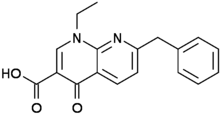
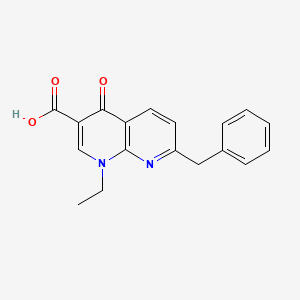
Amfonelic acid, амфонеловая кислота , حمض أمفونيليك , 安福萘酸 , アンホネル酸


Amfonelic acid.pngChemSpider 2D Image | amfonelic acid | C18H16N2O3Amfonelic acid.png

Amfonelic acid

  • Molecular FormulaC18H16N2O3
  • Average mass308.331 Da
1,8-Naphthyridine-3-carboxylic acid, 1-ethyl-1,4-dihydro-4-oxo-7-(phenylmethyl)-
15180-02-6 [RN]
1-Ethyl-1,4-dihydro-4-oxo-7-(phenylmethyl)-1,8-naphthyridine-3-carboxylic Acid
2324
RR302AR19Y
NSC 100638
амфонеловая кислота [Russian] [INN]
حمض أمفونيليك [Arabic] [INN]
安福萘酸 [Chinese] [INN]
Lopac0_000416
MFCD00055095 [MDL number]
NCA
NSC-100638
UNII:RR302AR19Y
UNII-RR302AR19Y
Win 25,978

Amfonelic acid (AFAWIN 25,978) is a research chemical and dopaminergic stimulant with antibiotic properties.[1]

History

The stimulant properties of AFA were discovered serendipitously at Sterling-Winthrop in the midst of research on the antibiotic nalidixic acid.[1] In addition to behaving as antibiotics, it was found that many derivatives of nalidixic acid have either stimulant or depressant effects on the central nervous system.[2] Researchers at Sterling-Winthrop found that AFA had a higher potency and therapeutic indexthan cocaine or amphetamine and so it was singled out for further study.[1][3] A small number of clinical trials were held in the 1970s, but when it was found that AFA exacerbated psychotic symptoms in schizophrenic patients and produced undesirable stimulant properties in geriatric depressives clinical evaluation of AFA was discontinued.[1] AFA remains a widely used pharmacological tool for study of the brain’s reward systemdopamine pathways, and the dopamine transporter.[1] Since 2013 AFA has been sold on the gray market and there are numerous anecdotal reports detailing its non-medical use.[1]

Pharmacology

In studies it proved to be a potent and highly selective dopamine reuptake inhibitor (DRI) in rat brain preparations.[4][5] A study found a moderately long half-life of approximately 12 hours and a dopaminergic potency approximately 50 fold that of methylphenidate in rat brain preparations.[6] Despite lack of direct serotonin activity, rats treated with subchronic doses of amfonelic acid display subsequent decreases in 5HT and 5HIAA.[7] Amfonelic acid displays no activity in the norepinephrine system.[8]

Despite its different mechanism of action, amfonelic acid displays discriminatory substitution with 150% the stimulant potency of dextroamphetamine.[9] Amfonelic acid has been shown to be neuroprotective against methamphetamine damage to dopamine neurons.[10] It also increases the effects of the antipsychotic drugs haloperidoltrifluoperazine and spiperone.[11] Rats are shown to self-administer amfonelic acid in a dose-dependent manner.[12]

Though AFA was discovered in the course of antibiotic research, there is very little data available on the drug’s antimicrobial activity. In 1988 the biologist G.C. Crumplin wrote, “[AFA] is less active against bacteria than are many other 4-quinolones, but studies in our laboratory on selected mammalian cell lines have shown it to be markedly more toxic to these cells than are the 4-quinolones that are more active antibacterial agents. Furthermore, it can be shown that sublethal doses induced marked changes in the pattern of proteins produced by the cell, thus suggesting a possible effect of 4-quinolones on gene transcription in mammalian cells.”[13] When evaluated via broth microdilution the MIC of AFA for Escherichia coli is 125 μg/mL, a concentration thirty times higher than the MIC for nalidixic acid in the same E. coli strain.[1]

References

  1. Jump up to:a b c d e f g Morris, Hamilton (October 2015). “Sad Pink Monkey Blues”. Harper’s Magazine. Retrieved 2015-09-19.
  2. Jump up^ US patent 3590036, “Naphthyridine-3-carboxylic Acids, Their Derivatives and Preparation Thereof”
  3. Jump up^ Aceto, M.A. (1970). “Pharmacologic properties and mechanism of action of amfonelic acid”. European Journal of Pharmacology10: 344–354. doi:10.1016/0014-2999(70)90206-2PMID 4393073.
  4. Jump up^ Fuller, R. W.; Perry, K. W.; Bymaster, F. P.; Wong, D. T. (1978). “Comparative effects of pemoline, amfonelic acid and amphetamine on dopamine uptake and release in vitro and on brain 3,4-dihydroxyphenylacetic acid concentration in spiperone-treated rats”. Journal of Pharmacy and Pharmacology30 (3): 197–198. doi:10.1111/j.2042-7158.1978.tb13201.xPMID 24701.
  5. Jump up^ McMillen, B. A.; Shore, P. A. (1978). “Amfonelic acid, a non-amphetamine stimulant, has marked effects on brain dopamine metabolism but not noradrenaline metabolism: Association with differences in neuronal storage systems”. Journal of Pharmacy and Pharmacology30 (7): 464–466. doi:10.1111/j.2042-7158.1978.tb13293.xPMID 27622.
  6. Jump up^ Izenwasser, S.; Werling, L. L.; Cox, B. M. (1990). “Comparison of the effects of cocaine and other inhibitors of dopamine uptake in rat striatum, nucleus accumbens, olfactory tubercle, and medial prefrontal cortex”. Brain Research520 (1–2): 303–309. doi:10.1016/0006-8993(90)91719-WPMID 2145054.
  7. Jump up^ McMillen, BA; Scott, SM; Williams, HL (1991). “Effects of subchronic amphetamine or amfonelic acid on rat brain dopaminergic and serotonergic function”. Journal of neural transmission. General section83 (1–2): 55–66. doi:10.1007/BF01244452PMID 2018630.
  8. Jump up^ Agmo, A; Belzung, C; Rodríguez, C (1997). “A rat model of distractibility: Effects of drugs modifying dopaminergic, noradrenergic and GABAergic neurotransmission”. Journal of neural transmission (Vienna, Austria : 1996)104 (1): 11–29. doi:10.1007/BF01271291PMID 9085190.
  9. Jump up^ Aceto, MD; Rosecrans, JA; Young, R; Glennon, RA (1984). “Similarity between (+)-amphetamine and amfonelic acid”. Pharmacology Biochemistry and Behavior20 (4): 635–7. doi:10.1016/0091-3057(84)90316-2PMID 6728880.
  10. Jump up^ Pu, C; Fisher, JE; Cappon, GD; Vorhees, CV (1994). “The effects of amfonelic acid, a dopamine uptake inhibitor, on methamphetamine-induced dopaminergic terminal degeneration and astrocytic response in rat striatum”. Brain Research649 (1–2): 217–24. doi:10.1016/0006-8993(94)91067-7PMID 7953636.
  11. Jump up^ Waldmeier, PC; Huber, H; Heinrich, M; Stoecklin, K (1985). “Discrimination of neuroleptics by means of their interaction with amfonelic acid: An attempt to characterize the test”. Biochemical Pharmacology34 (1): 39–44. doi:10.1016/0006-2952(85)90097-8PMID 2857083.
  12. Jump up^ Porrino, LJ; Goodman, NL; Sharpe, LG (1988). “Intravenous self-administration of the indirect dopaminergic agonist amfonelic acid by rats”. Pharmacology Biochemistry and Behavior31 (3): 623–6. doi:10.1016/0091-3057(88)90240-7PMID 2908003.
  13. Jump up^ Crumplin, G.C. (1988). “Aspects of Chemistry in the Development of the 4-Quinolone Antibacterial Agents”. Reviews of Infectious Diseases. 10 Suppl 1 (10): S2–S9. doi:10.1093/clinids/10.Supplement_1.S2PMID 3279494.

External links

Amfonelic acid
Amfonelic acid.png
Clinical data
ATC code
  • none
Legal status
Legal status
  • In general: uncontrolled
Identifiers
CAS Number
PubChem CID
ChemSpider
UNII
KEGG
ChEMBL
Chemical and physical data
Formula C18H16N2O3
Molar mass 308.3329 g/mol
3D model (JSmol)

////////////Amfonelic acid, RR302AR19Y, амфонеловая кислота حمض أمفونيليك 安福萘酸 , アンホネル酸

CCN1C=C(C(=O)C2=C1N=C(C=C2)CC3=CC=CC=C3)C(=O)O

USFDA has released GUIDANCE for Quality Attributes of *CHEWABLE TABLETS


DR ANTHONY MELVIN CRASTO Ph.D's avatarDRUG REGULATORY AFFAIRS INTERNATIONAL

Image result for Quality Attributes of *CHEWABLE TABLETS

*CQAs of CHEWABLE TABLETS (CT)*
USFDA has released GUIDANCE for Quality Attributes of *CHEWABLE TABLETS*
According to this latest guideline, FDA has recommended sponsor/applicant should also incorporate following CQAs:
*1. PATIENT ACCEPTABILITY*
Acceptable Taste, Mouthfeel & Aftertaste With-
*2. HARDNESS / BREAKING FORCE / CRUSHING STRENGTH*
Hardness of CTshould be kept  low  (i.e.  <12 kp).
A higher hardness  value  (e.g.,  >12 kp)  may  be  considered if  justified.  An example  of  such justification could be  demonstrating  significant disintegration and/or  reduction in hardness  of  such  tablets  following  brief  i.e.  30 seconds  in-vitro exposure to simulated saliva (1 mL) before chewing to ensure patient compliance without  GI  obstruction (choking in throat / blocking bowel movement) in the case if patient swallow tablet without chewing due to high hardness
*3. CHEWING DIFFICULTY INDEX*
CDI is a value derived from the relationship between two methods used for measuring tablet strength: diametral compression (diametrical tensile strength)…

View original post 109 more words

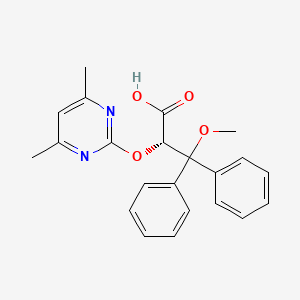
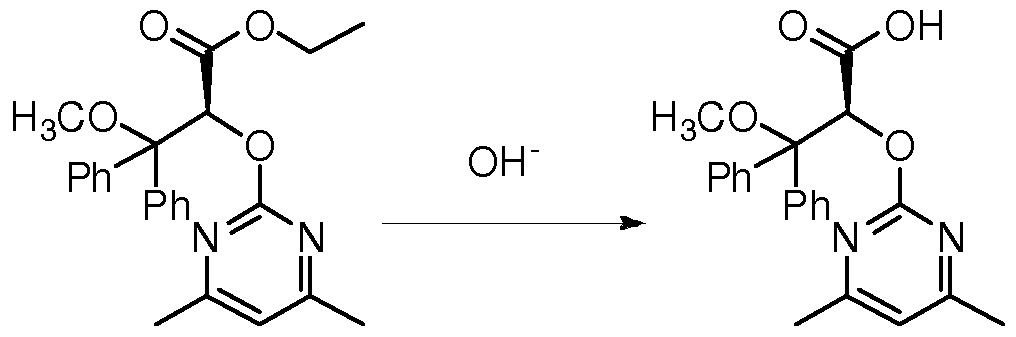
Ambrisentan, أمبريسنتان , 安立生坦 ,アンブリセンタン


Ambrisentan structure.svgChemSpider 2D Image | ambrisentan | C22H22N2O4Ambrisentan.png

Ambrisentan

BSF-208075; LU-208075

(+)-(2S)-2-[(4,6-dimethylpyrimidin-2-yl)oxy]-3-methoxy-3,3-diphenylpropanoic acid

  • Molecular FormulaC22H22N2O4
  • Average mass378.421 Da
(2S)-2-[(4,6-dimethylpyrimidin-2-yl)oxy]-3-methoxy-3,3-diphenylpropanoic acid
177036-94-1 [RN]
8128
HW6NV07QEC
أمبريسنتان [Arabic] [INN]
安立生坦 [Chinese] [INN]
QA-7701
UNII:HW6NV07QEC
BSF208075
Letairis
Letairis®
LU208075
Trade Name:Letairis® / Volibris®
MOA:Type A endothelin receptor (ETA) antagonist
Indication:Pulmonary arterial hypertension
Company:Abbott (Originator) , Gilead,GlaxoSmithKline
アンブリセンタン
Ambrisentan

C22H22N2O4 : 378.42
[177036-94-1

Ambrisentan (U.S. trade name Letairis; E.U. trade name Volibris; India trade name Pulmonext by MSN labs) is a drug indicated for use in the treatment of pulmonary hypertension.

The peptide endothelin constricts muscles in blood vessels, increasing blood pressure. Ambrisentan, which relaxes those muscles, is an endothelin receptor antagonist, and is selective for the type A endothelin receptor (ETA).[1] Ambrisentan significantly improved exercise capacity (6-minute walk distance) compared with placebo in two double-blind, multicenter trials (ARIES-1 and ARIES-2).[2]

Ambrisentan was approved by the U.S. Food and Drug Administration (FDA) and European Medicines Agency, and designated an orphan drug, for the treatment of pulmonary hypertension.[3][4][5][6][7]

Ambrisentan is an endothelin receptor antagonist used in the therapy of pulmonary arterial hypertension (PAH). Ambrisentan has been associated with a low rate of serum enzyme elevations during therapy, but has yet to be implicated in cases of clinically apparent acute liver injury.

Ambrisentan was first approved by the U.S. Food and Drug Administration (FDA) on Jun 15, 2007, then approved by the European Medicines Agency (EMA) on Apr 21, 2008 and approved by Pharmaceuticals and Medical Devices Agency of Japan (PMDA) on Jul 23, 2010. In 2000, Abbott, originator of ambrisentan, granted Myogen (acquired by Gilead in 2006) a license to the compound for the treatment of PAH. In 2006, GlaxoSmithKline obtained worldwide rights to market the compound for PAH worldwide, with the exception of the U.S. It is marketed as Letairis® by Gilead in US.

Ambrisentan is an endothelin receptor antagonist, and is selective for the type A endothelin receptor (ETA). It is indicated for the treatment of pulmonary arterial hypertension (PAH) (WHO Group 1) to improve exercise ability and delay clinical worsening. Studies establishing effectiveness included predominantly patients with WHO Functional Class II-III symptoms and etiologies of idiopathic or heritable PAH (64%) or PAH associated with connective tissue diseases (32%).

Letairis® is available as film-coated tablet for oral use, containing 5 or 10 mg of free Ambrisentan. The recommended starting dose is 5 mg once daily with or without food, and increase the dose to 10 mg once daily if 5 mg is tolerated.

Recent Developments and Publications

Last Updated 9/2/2015
8/15/2015Reprod. Toxicol. Endothelin receptor activation mediates strong pulmonary vasoconstriction and positive inotropic effect on the heart. These physiologic effects are vital for the development of the fetal cardiopulmonary system. As such, endothelin receptor antagonists such as Ambrisentan are teratogenic.[8]
8/27/2015NEJM Ambrisentan when used in combination therapy with Tadalafil was found to be more efficacious in treating treatment naive patients with WHO class II or III Pulmonary Arterial Hypertension than monotherapy using either drug.[9]
Approval Date Approval Type Trade Name Indication Dosage Form Strength Company Review Classification
2007-06-15 Marketing approval Letairis Pulmonary arterial hypertension Tablet, Film coated 5 mg/10 mg Gilead Priority; Orphan
Approval Date Approval Type Trade Name Indication Dosage Form Strength Company Review Classification
2008-04-21 Marketing approval Volibris Pulmonary arterial hypertension Tablet, Film coated 5 mg/10 mg GlaxoSmithKline Orphan
Approval Date Approval Type Trade Name Indication Dosage Form Strength Company Review Classification
2010-07-23 Marketing approval Volibris Pulmonary arterial hypertension Tablet, Film coated 2.5 mg GlaxoSmithKline
Approval Date Approval Type Trade Name Indication Dosage Form Strength Company Review Classification
2010-10-19 Marketing approval 凡瑞克/Volibris Pulmonary arterial hypertension Tablet 5 mg GlaxoSmithKline
2010-10-19 Marketing approval 凡瑞克/Volibris Pulmonary arterial hypertension Tablet 10 mg GlaxoSmithKline

Clinical uses

Ambrisentan is indicated for the treatment of pulmonary arterial hypertension (WHO Group 1) in patients with WHO class II or III symptoms to improve exercise capacity and delay clinical worsening.

Image result for ambrisentan

Birth defects

Endothelin receptor activation mediates strong pulmonary vasoconstriction and positive inotropic effect on the heart. These physiologic effects are vital for the development of the fetal cardiopulmonary system. In addition to this, endothelin receptors are also known to play a role in neural crest cell migration, growth, and differentiation. As such, endothelin receptor antagonists such as Ambrisentan are known to be teratogenic.

Ambrisentan has a high risk of liver damage, and of birth defects if a woman becomes pregnant while taking it. In the U.S., doctors who prescribe it, and patients who take it, must enroll in a special program, the LETAIRIS Education and Access Program (LEAP), to learn about those risks. Ambrisentan is available only through specialty pharmacies.

External links

PATENT

WO9611914A1 / US7109205B2.

WO2010070658A2 / US2011263854A1.

WO2011004402A2 / US2012184573A1.

WO2013030410A2 / US2014011992A1.

CN103709106A.

CN103420811A.

str1

PATENT

https://patents.google.com/patent/WO2012167406A1/en

Ambrisentan and darusentan first reported in U. Med. Chem. 1996, 39, 2123-2128), as a selective antagonist of endothelin receptor A, followed by their pharmacological properties have been studied further, published in J. Med. Chem. 1996, 39, 2123-2128), US patent US 5932730, WO 2009/017777 A2 in. The formula (I), when R is methyl, Chinese name is (+) – ambrisentan, Chinese chemical name is (+) – (2S) -2 – [(4, 6- dimethyl-pyrimidine 2-yl) – oxy] -3-methoxy-3,3-diphenyl-propionic acid; English name is (+) – ambrisentan, English name: (S) -2- (4,6-dimethylpyrimidin -2-yloxy) -3-methoxy-3,3-diphenylpropanoic acid; when R is methoxy, Chinese as (+) – darusentan, Chinese chemical name is (+) – (2S) -2- [ (4,6-dimethoxypyrimidin-2-yl) – oxy] -3-methoxy-3,3-diphenyl-propionic acid; English name is (+ darusentan, English name: (S) – . 2- (4,6-dimethoxypyrimidin-2-yloxy) -3-methoxy-3,3-diphenylpropanoic acid ambrisentan now been approved by the FDA in the United States, the trade name Letairis, for the oral treatment of pulmonary hypertension; up Lu bosentan new drugs may be resistant hypertension (Resistant hypertension) of.

Existing ambrisentan or darusentan synthetic techniques include benzophenone Darzens reaction of an epoxy compound and a racemic methyl chloroacetate, the racemic epoxide opening catalyst in a solution of boron trifluoride diethyl ether ring to give the chiral alcohol latent after substitution reaction and then after hydrolysis reaction ambrisentan or darusentan. Existing obtained optically pure (+) – ambrisentan or (+) – darusentan methods rely mainly on resolution techniques. For example, the split is by a latent chiral alcohol or R- L- proline methyl phenethylamine, see WO 2010/070658 A2, WO 2011/004402 A2. It is well known as chiral utilization of raw materials is not high, resulting in increased costs, limiting industrial-scale applications.

 Example 1, (+) – ambrisentan ((2S) -2 – [(4,6- dimethyl-pyrimidin-2-yl) – oxy] -3-methoxy-3,3-diphenyl propionic acid) of

Preparation of 3,3-diphenyl-2,3-epoxy-propionate (1) (2S)

Figure imgf000006_0001

As indicated above Formula Scheme, wherein, Ph is phenyl; Ac is acetyl;

To a 50 L reactor equipped with a mechanical stirrer was added 3.0 L of acetonitrile was dissolved in 3,3-diphenyl acrylate (0.536 mol, 135.0 g), was dissolved in 1.5 L of acetonitrile to give a concentration of 0.12 M 4 M ethylenediamine of formula (IV) shown fructose derived chiral ketones and tetra-n-butylammonium hydrogen sulfate (36 mmol, 12.2 g), was then added containing 3.0 L Ι χ ΙΟ “an aqueous solution of disodium ; cooling liquid into the reaction vessel dissection, the kettle temperature adjusted to -5 ° C- + 5 ° C; was added in batches with stirring pulverized with the pulverizer medicine through a 1.85 kg potassium hydrogen sulfate complex salt mixture (Oxone®), and 0.78 kg NaHCO 3 (9.29mol), and takes about 4.5 hours complete addition of the above mixture, after the addition the reaction mixture was continued stirring the reaction under this condition (in the system, 3,3- diphenyl acrylate, over a potassium bisulfate salts and complexes of formula molar ratio of fructose derived chiral ketone (IV) is shown in h 5: 0.34), and the timing detection reactions by gas chromatography; the end of the reaction after 5 hours , 5.0 L of water was added to dilute the reaction solution, and extracted with 5.0 L of ethyl acetate; the aqueous phase was added 2.5 L of acetic Extracted with ethyl; organic phases were combined and concentrated to remove the solvent to give homogeneous Qing 162.56 g (2S) -3,3- diphenyl-2,3-epoxy-propionate, crude yield greater than 99%, No purification processing the next reaction, nuclear magnetic conversion was 92%, measured by HPLC enantiomeric excess of 86.9%, Analytical conditions: column model Chiralcel OD-H, n has a volume ratio of the embankment and isopropanol 98: 2 analysis of wavelength 210 nm, the mobile phase flow rate of 1 mL / min, t! = 9.5 min, t 2 = 13.01 min, 86.9% ee.

IR (fi lm) 1760, 1731 cm- 1; ¾ NMR [400 MHz, CDC1 3] δ 7.46-7.44 (m, 2H), 7.36-7.31 (m, 8H), 3.99 (m, 3H), 0.96 (t , J = 7.2Hz, 3H); 13 C NMR [100 MHz, CDC1 3] δ 166.99, 138.98, 135.62, 128.67, 128.53, 128.36, 128.13, 127.04, 66.57, 62.16, 61.43, 13.96.

(2) (2S) -2-phenyl-3,3-hydroxy-3-methoxy propionate

Figure imgf000006_0002

The step (1) 162.56 g obtained in unpurified (2S) – 3,3-diphenyl acrylate epoxy crude compound was dissolved in 100 mL of methanol, 1 mL of boron trifluoride etherate ((2S ) – mole fraction of ethylene-3,3-diphenyl acrylate and boron trifluoride diethyl ether ratio of 1: 0.013) for the epoxy ring opening reaction; after controlling the reaction temperature is 20 ° C, reacted for 8 hours , the reaction solution was concentrated, ethyl acetate and aqueous extraction of the reaction solution after the ethyl acetate was concentrated to give 166.0 g of intermediate (2S) -2- hydroxy-3-methoxy-3,3-diphenyl acetic acid ester, crude yield of 92%, measured by high performance liquid enantiomeric excess of 86.9%, Analytical conditions: column model Chiralcel OD-H, n-and isopropyl alcohol embankment has a volume ratio of 98: 2, the wavelength analysis 210 nm, mobile phase flow rate of 1 mL / min,

Figure imgf000007_0001

min, t 2 = 14.51 min, 85.8% ee .;

IR (film) 1769, 1758 cm “1; 1H NMR [400 MHz, CDC1 3] δ 7.50-7.28 (m, 10H), 5.18 (s, 1H), 4.10 (t, 2H), 3.20 (s, J = 7.2Hz, 3H), 3.03 (s , 1H), 1.17 (t, J = 7.2Hz, 3H); 13 C NMR [100 MHz, CDC1 3] δ 172.48, 141.13, 140.32, 128.97, 128.73, 128.99, 127.81, 127.76, 127.62, 85.01, 77.42, 61.76, 52.62, 14.07.

-3-methoxy-3,3-diphenyl propionate (3) (2S) -2- [- oxo – dimethyl-pyrimidin-2-yl)]

Figure imgf000007_0002

Step (2) obtained in 166.0 g of intermediate (2S) -2- hydroxy-3-methoxy-3,3-diphenyl-propionate were added N, N- dimethylformamide 750 mL , potassium carbonate 45.54 g, was added 4,6-dimethyl after stirring for about half an hour 2-methanesulfonyl-pyrimidin nucleophilic substitution reaction at 80 ° C in an oil bath, the system, (2S) -2- hydroxy -3-methoxy-3,3-diphenyl-ethyl, 4,6-dimethyl-2 molar fraction ratio methylsulfonylpyrimidine and potassium carbonate is 1: 1.2: 0.6; nuclear magnetic after complete consumption of starting material was monitored after about 3 hours, water was added and the reaction solution was extracted with ethyl acetate, the ethyl acetate layer was concentrated to give 237.70 g of intermediate (2S) -2 – [(4,6- dimethyl-pyrimidin-2-yl ) – oxy] -3-methoxy-3,3-diphenyl propionate, crude yield greater than 99%, measured by HPLC enantiomeric excess of 85.9%, Analytical conditions: column Chiralcel OD model volume -H, isopropanol and n has embankment ratio of 98: 2, analysis wavelength was 210 nm, the mobile phase flow rate of 1 mL / min, t ^ lO.15 min, t 2 = 11.87 min, 85.9% ee .

IR (film) 1750cm “VH NMR [400 MHz, CDC1 3] δ 7.45 (d, J = 7.2 Hz, 2H), 7.39 (d, J = 7.2 Hz, 2H), 7.33-7.19 (m, 7H), 6.70 (s, 1H), 6.12 ( s, 1H), 4.01-3.85 (m, 2H), 3.50 (s, 3H) 2.38 (s, 6H), 0.93 (t, J = 6.8 Hz, 3H); 13 C NMR [100 MHz, CDC1 3] δ 169.51, 168.70, 163.86, 142.50, 141.29, 128.54, 128.03, 127.97, 127.94, 127.47, 127.40, 115.03, 83.76, 79.23, 77.43, 60.66, 53.92, 23.99, 13.93;. Anal Calcd For C 24 H 26 N 2 O 4 : C, 70.92; H, 6.45; N, 6.89 Found:. C, 70.72; H, 6.47; N, 6.83.

(4) (28) -2 – [(4,6-dimethyl-2-yl) – oxy] -3-methoxy-3,3-diphenyl-propionic acid ((+) – Abe Students Tanzania) preparation

Figure imgf000007_0003

To step (3) 237.7 g of the intermediate obtained (2S) -2 – [(4,6- dimethyl-pyrimidin-2-yl) – oxy] -3-methoxy-3,3-diphenyl propionate was dissolved in 1.2 L of organic solvent is 1,4-dioxane was added 600 mL of an aqueous solution containing 92.3 g of sodium hydroxide (wherein, (2S) -2 – [(4,6- dimethyl pyrimidin-2-yl) – oxy] -3-methoxy-3,3-diphenyl propionate and sodium hydroxide molar fraction ratio of 1: 4), the reaction temperature was 80 ° C, the reaction after 8 hours, the reaction solution was concentrated, using (1 L, 0.5 L, 0.5 L) and extracted with ether to remove organic impurities, the aqueous phase was extracted after addition of hydrochloric acid to adjust pH 3, large amount of solid appears; then the aqueous phase was added 1.0 L ethyl acetate, filtered to remove insolubles (insolubles which was found after analysis racemic ambrisentan, 23.37 g), the organic layer was concentrated, i.e., optically pure can be obtained 103.9 g (+) – ambrisentan, from 3 , 3-diphenyl acrylate departure, the optically pure (+) – ambrisentan, a yield of 52.3%. A small amount of the obtained reaction with ambrisentan diazo embankment derived (2S) -2 – [(4,6- dimethyl-pyrimidin-2-yl) – oxy] -3-methoxy-3,3 methyl diphenyl measured enantiomeric excess ambrisentan. (2S) -2 – [(4,6- dimethyl-pyrimidin-2-yl) – oxy] -3-methoxy-3,3-diphenyl-propionic acid methyl ester: HPLC measured enantiomer excess of 99.1%, Analytical conditions: column model Chiralcel OD-H, n has a volume ratio of isopropanol embankment 98:! 2, analysis wavelength was 210 nm, the mobile phase flow rate of 1 mL / min, t = 11.61 min, t 2 = 14.05 min , 99.1% ee.

[a] D 25 = + 174.2 (c = 0.5, MeOH); mp> 150 ° C turns yellow,> 180 ° C into a black, 182 ° C melt; 1H NMR [400 MHz, CDC1 3] δ 7.43 ( d, J = Hz, 2H) , 7.29-7.19 (m, 8H), 6.63 (s, 1H), 6.30 (s, 1H), 3.26 (s, 3H) 2.31 (s, 6H); 13 C NMR [100 MHz, CDC1 3] δ 178.98,170.54, 169.70, 163.48, 139.91, 138.91, 128.77, 128.67, 128.22, 128.08, 115.34, 84.67, 77.55, 53.49, 23.93; 1H NMR [400 MHz, DMSO] δ 12.53 (s, 1H ), 7.34-7.20 (m, 10H) , 6.95 (s, 1H), 6.14 (s, 1H), 3.37 (s, 3H) 2.34 (s, 6H); 13 C NMR [100 MHz, DMSO] δ 169.01, 163.14, 142.59, 141.41, 127.80, 127.68, 127.64, 127.19, 126.95, 114.72, 83.12, 77.55, 52.99, 23.30.

CLIP

SEE https://www.pharmacodia.com/yaodu/html/v1/chemicals/a01610228fe998f515a72dd730294d87.html

CLIP

http://www.orgsyn.org/demo.aspx?prep=v89p0350#ref68

Image result for ambrisentan

Shi and coworkers recently obtained 120 g of virtually enantiopure (+)-ambrisentan (97) without the need for column chromatography (Scheme 23).68 (+)-Ambrisentan, an endothelin-1 receptor antagonist, is currently used to treat hypertension. Ketone 2-catalyzed epoxidation afforded 96 in 90% conversion and 85% ee. Compound 97 was further enriched via precipitation and filtration of the racemate.

  1. Peng, X.; Li, P.; Shi, Y. J. Org. Chem201277, 701-703.

Clip

https://pubs.acs.org/doi/10.1021/acs.oprd.8b00184

Process Research for (+)-Ambrisentan, an Endothelin-A Receptor Antagonist

 Collaborative Innovation Center of Yangze River Delta Region Green PharmaceuticalsZhejiang University of Technology18 Chaowang Road, Hangzhou 310014, China
 Department of Pharmaceutial EngineeringChina Pharmaceutical University24 Tongjiaxiang, Nanjing 210009, China
§ Shanghai Institute of Pharmaceutical IndustryChina State Institute of Pharmacetical Industry285 Gebaini Road, Pudong, Shanghai 201203, China
Org. Process Res. Dev., Article ASAP
DOI: 10.1021/acs.oprd.8b00184
Publication Date (Web): August 6, 2018
Copyright © 2018 American Chemical Society
Abstract Image

An efficient and robust synthetic route to (+)-ambrisentan ((+)-AMB) was designed by recycling the unwanted isomer from the resolution mother liquors. The racemization of AMB in the absence of either acid or base in the given solvents was reported. The recovery process was developed to produce racemates with purities over 99.5%. The mechanism of the formation of the process-related impurities of (+)-AMB is also discussed in detail. (+)-AMB was obtained in 47% overall yield with >99.5% purity and 99.8% e.e. by chiral resolution with only one recycling of the mother liquors on a 100-g scale without column purification.

https://pubs.acs.org/doi/suppl/10.1021/acs.oprd.8b00184/suppl_file/op8b00184_si_001.pdf

PaPER

https://pdfs.semanticscholar.org/3801/d5a98a526a4386c431e25d3ac99a328bfae2.pdf

CHEMICAL ENGINEERING TRANSACTIONS VOL. 46, 2015 A publication of The Italian Association of Chemical Engineering Online at http://www.aidic.it/cet Guest Editors: Peiyu Ren, Yancang Li, Huiping Song Copyright © 2015, AIDIC Servizi S.r.l., ISBN 978-88-95608-37-2; ISSN 2283-9216

Improved Synthesis Process of Ambrisentan and Darusentan Jian Lia , Lei Tian*b, c a School of Environmental Science, Nanjing Xiaozhuang University, 3601 Hongjing Road, Nanjing, Jiangsu, 211171, China b School of Petroluem Engineer, Yangtze University, Wuhan, Hubei, 430100, P. R. China c Key Laboratory of Exploration Technologies for Oil and Gas Resources (Yangtze University), Ministry of Education tianlei4665@163.com

2-hydroxy-3-phenoxy-3, 3-diphenylpropinate (5) was prepared from benzophenone via Darzens, methanolysis and hydrolysis reaction. The compound (5) was salified with (S)-dehydroabietylamine (7) and diasterotropic resolution was carried out to provide the key intermediate (S)-2-hydroxy-3-methoxy-3, 3-diphenylpropionic acid (6). Compound (6) was condensed with 2-methylsulfonyl-4, 6-dimethylpyrimidine and 2-methoxysulfonyl4, 6-dimethylpyrimidine to afford ambrisentan (1) and darusentan (7), respectively. Two products were with excellent charity and chemical purity. The total yield of the synthesis was 30.1% and 29.6%, respectively.

str1

Synthesis of methyl 3, 3-diphenyloxirane-2-carboxylate (3) To a solution of sodium methanolate (4.3 g, 79.6 mmol) in dry THF (25 mL) was added the solution of benzophenone (7.2 g, 39.5 mmol) and methyl chloroacetate (6.6 g, 60.8 mmol) in dry THF (15 mL) and stirred at -10 °C for 2 h. The mixture was quenched with water (50 mL). The solution was extracted with diethyl ether (80 mL×3). The organic phases were combined and washed with saturated NaCl. The solution was dried over Na2SO4, filtered, and evaporated under reduced pressure to afford a light yellow oil. The residue (3) can apply in next step without further purification (8.24 g, 82.1%). 1H-NMR (CDCl3): δ 3.52 (s, 3H), 3.99 (s, 1H), 7.32-7.45 (m, 10H).

Synthesis of 2-hydroxy-3-methoxy-3, 3-diphenylpropanoic acid (5)

To a solution of compound (3) (8.2 g, 31.6 mmol) in methanol (40 mL) was added p-toluene sulfonic acid (0.5 g) and stirred at for 0.5 h to afford the solution containing compound (4). Aqueous solution of NaOH (10% wt.) (60 mL) was added to the solution of compound (4) and the mixture was stirred at refluxed for 1h (ester disappeared by TLC). The solution was evaporated in order to remove a lot of methanol. The residue was acidified to pH 2 by conc. HCl. The solution was stirred for overnight and white solid stayed at the aqueous layer. The precipitate was filtered and deeply dried under vacuum to afford (5). (7.34 g, 85.3%). 1H-NMR (CDCl3): δ 3.22 (s, 3H), 5.14 (br, 1H), 5.20 (d, 1H), 7.18-7.37 (m, 10H), 12.30 (1H, br). Synthesis of (S)-2-hydroxy-3-methoxy-3, 3-diphenylpropanoate (6) The solution of compound (5) (14 g, 51.4 mmol) in methyltertiarybutylether (140 mL) was stirred and refluxed for 0.5 h. Dehydroabietylamine (7) (14.7 g, 51.4 mmol) in methyltertiarybutylether (50 mL) was added dropwise in 10 min. After addition, the reaction mixture was stirred for 1 h under reflux temperature. The reaction mixture was cooled to 0 °C and continued to stir for 2 h. The solid ((R, S)-diastereoisomers) was precipitated from the solution, filtered, washed with acetonitrile. The filtrate was diluted with water (100 mL) and acidified to pH 2 by conc. HCl. The aqueous solution was extracted with methylteriarybutylether (50 mL×4). The organic phases were combined and washed with water (80 mL). The organic phase was separated, dried over anhydrous Na2SO4 and evaporated under reduced pressure to afford white residue. The residue was recystallized from toluene to afford (6) as a white solid. (5.53 g, 39.5%). 1H-NMR (CDCl3): δ 3.22 (s, 3H), 5.14 (br, 1H), 5.20 (d, 1H), 7.18-7.37 (m, 10H), 12.30 (1H, br). [α] 20 D =12.3°(c=1.8% in ethanol).

Synthesis of (+)-ambrisentan (1) To a solution of compound (6) (3.6 g, 13.1 mmol) and NaNH2 (1.0 g, 25.6 mmol) in DMF (20 mL) was added 4, 6-dimethyl-2-(methylsulfonyl) pyrimidine (3.63 g, 19.6 mmol) in DMF (10 mL) slowly. After addition, the reaction was stirred for 5 h at room temperature. The solution was quenched with water (20 mL) and acidified to pH 2 by 10% H2SO4 aqueous solution. The mixture was extracted with ethyl acetate (50 mL ×4). The combined organic layers were washed with water (30 mL) and saturated NaCl solution (30 mL). The organic layer was dried over Na2SO4, filtered and concentrated under reduced pressure. The resulting residue was recrystallized from iso-propyl alcohol (30 mL) and water (40 mL), and precipitate formed was filtered off. The cake was deeply dried under vacuum to afford (1) as a white solid. (4.27 g, 86.1%). 1H-NMR (CDCl3): δ 2.39 (s, 6H), 3.32 (s, 3H), 6.43 (s, 1H), 6.70 (s, 1H), 7.28-7.40 (m, 8H), 7.53-7.56 (d, 2H). MS-EI (m/z): 377(M-H). HPLC (XDB-C18, CH3OH/10mmol/L NaH2PO4 + 0.1% H3PO4 = 70/30, 1.0 mL/min): tR 5.2 min (>99.0%); ee= 99.0%.

Patent EP2547663A1

File:Ambrisentan synthesis.svg

Image result for ambrisentan

Title: Ambrisentan
CAS Registry Number: 177036-94-1
CAS Name: (aS)-a-[(4,6-Dimethyl-2-pyrimidinyl)oxy]-b-methoxy-b-phenylbenzenepropanoic acid
Manufacturers’ Codes: BSF-208075; LU-208075
Molecular Formula: C22H22N2O4
Molecular Weight: 378.42
Percent Composition: C 69.83%, H 5.86%, N 7.40%, O 16.91%
Literature References: Nonpeptide endothelin ETA receptor antagonist. Prepn: H. Riechers et al., WO 9611914eidemUS5932730 (1996, 1998 both to BASF); H. Riechers et al., J. Med. Chem. 39, 2123 (1996). Pharmacology: H. Vatter et al., Clin. Neuropharmacol. 26, 73 (2003). Clinical evaluation in pulmonary arterial hypertension: N. Galié et al., J. Am. Coll. Cardiol. 46, 529 (2005). Review of development and therapeutic potential: G. E. Billman, Curr. Opin. Invest. Drugs 3, 1483-1486 (2002).
Derivative Type: (±)-Form
CAS Registry Number: 713516-99-5
Properties: Crystals from diethylether, mp 190-191°.
Melting point: mp 190-191°
Therap-Cat: Antihypertensive.
Keywords: Antihypertensive; Endothelin Receptor Antagonist.

References

  1. Jump up^ Vatter H, Seifert V (2006). “Ambrisentan, a non-peptide endothelin receptor antagonist”. Cardiovasc Drug Rev24 (1): 63–76. doi:10.1111/j.1527-3466.2006.00063.xPMID 16939634.
  2. Jump up^ Frampton JE (2011). “Ambrisentan”. American Journal of Cardiovascular Drugs11 (4): 215–26. doi:10.2165/11207340-000000000-00000PMID 21623643.
  3. Jump up^ Pollack, Andrew (2007-06-16). “Gilead’s Drug Is Approved to Treat a Rare Disease”The New York TimesArchived from the original on May 24, 2013. Retrieved 2007-05-25.
  4. Jump up^ “U.S. Food and Drug Administration Approves Gilead’s Letairis Treatment of Pulmonary Arterial Hypertension” (Press release). Gilead Sciences. 2007-06-15. Archived from the original on 2007-09-27. Retrieved 2007-06-16.
  5. Jump up^ “FDA Approves New Orphan Drug for Treatment of Pulmonary Arterial Hypertension” (Press release). Food and Drug Administration. 2007-06-15. Archived from the original on 23 June 2007. Retrieved 2007-06-22.
  6. Jump up^ “GlaxoSmithKline’s Volibris (ambrisentan) receives authorisation from the European Commission for the treatment of Functional Class II and III Pulmonary Arterial Hypertension” (Press release). GlaxoSmithKline. 2008-04-25. Archived from the original on 30 April 2008. Retrieved 2008-04-29.
  7. Jump up^ Waknine, Yael (2005-05-09). “International Approvals: Ambrisentan, Oral-lyn, Risperdal”Medscape. Retrieved 2007-06-16.
  8. Jump up^ de Raaf MA, Beekhuijzen M, Guignabert C, Vonk Noordegraaf A, Bogaard HJ (2015). “Endothelin-1 receptor antagonists in fetal development and pulmonary arterial hypertension”. Reproductive Toxicology56: 45–51. doi:10.1016/j.reprotox.2015.06.048PMID 26111581.
  9. Jump up^ Galiè, Nazzareno; Barberà, Joan A.; Frost, Adaani E.; Ghofrani, Hossein-Ardeschir; Hoeper, Marius M.; McLaughlin, Vallerie V.; Peacock, Andrew J.; Simonneau, Gérald; Vachiery, Jean-Luc; Grünig, Ekkehard; Oudiz, Ronald J.; Vonk-Noordegraaf, Anton; White, R. James; Blair, Christiana; Gillies, Hunter; Miller, Karen L.; Harris, Julia H.N.; Langley, Jonathan; Rubin, Lewis J. (2015). “Initial Use of Ambrisentan plus Tadalafil in Pulmonary Arterial Hypertension”. New England Journal of Medicine373 (9): 834–44. doi:10.1056/NEJMoa1413687.
  1. US5703017
  2. CA2201785
  3. US5840722
  4. US7601730
  5. US8377933
  6. US7109205
  7. USRE42462
  8. US8349843
  9. US9474752
  10. US9549926

Patent

Publication numberPriority datePublication dateAssigneeTitle
CN1160396A *1994-10-141997-09-24巴斯福股份公司Carboxylic acid derivs., their preparation and their use
WO2003066614A1 *2002-02-042003-08-14Colorado State University Research FoundationAsymmetric epoxidation of electron deficient olefins
WO2010070658A2 *2008-11-052010-06-24Msn Laboratories LimitedImproved process for the preparation of endothelin receptor antagonists
CN102276536A *2011-06-102011-12-14中国科学院化学研究所An optically pure (+) – ambrisentan and optically pure (+) – darusentan preparation
Family To Family Citations
US6030975A *1997-03-142000-02-29Basf AktiengesellschaftCarboxylic acid derivatives, their preparation and use in treating cancer
JP2010535210A2007-07-312010-11-18アボット ゲーエムベーハー ウント コンパニー カーゲーMetabolites and derivatives of ambrisentan
WO2010091877A3 *2009-02-132010-11-11Ratiopharm GmbhProcess for producing ambrisentan
WO2011004402A32009-07-102011-03-10Cadila Healthcare LimitedImproved process for the preparation of ambrisentan and novel intermediates thereof

Non-Patent Citation

Title
WANG, BIN ET AL.: ‘A Diacetate Ketone-Catalyzed Asymmetric Epoxidation of Olefins’ J. ORG. CHEM. vol. 74, 23 April 2009, pages 3986 – 3989 *

Publication numberPriority datePublication dateAssigneeTitle
Family To Family Citations
CN102276536B *2011-06-102015-04-29中国科学院化学研究所Preparation method of optically pure (+)-ambrisentan and optically pure (+)-darusentan
CN103420811B *2012-05-182015-04-15上海医药工业研究院Intermediate compound used for preparing Ambrisentan, preparation method thereof, and preparation of Ambrisentan
CN103524425A *2012-07-042014-01-22天津药物研究院Crystal form V of ambrisentan as well as preparation method and application thereof
CN102850300A *2012-09-182013-01-02中国科学院化学研究所Preparation method of alpha,beta-epoxy amide compounds
CN104592129A *2013-10-302015-05-06武汉启瑞药业有限公司Improved method used for preparing ambrisentan
CN103709106A *2013-12-062014-04-09石家庄博策生物科技有限公司Stereoselectivity preparation method for Letairis
CN103755569A *2013-12-262014-04-30上海皓骏医药科技有限公司Preparation method for ambrisentan intermediate compound
Ambrisentan
Ambrisentan structure.svg
Clinical data
AHFS/Drugs.com Monograph
License data
Pregnancy
category
  • AU: X (High risk)
  • US: X (Contraindicated)
Routes of
administration
Oral
ATC code
Legal status
Legal status
Pharmacokinetic data
Bioavailability Undetermined
Protein binding 99%
Elimination half-life 15 hours (terminal)
Identifiers
CAS Number
PubChem CID
IUPHAR/BPS
ChemSpider
UNII
ChEMBL
ECHA InfoCard 100.184.855 Edit this at Wikidata
Chemical and physical data
Formula C22H22N2O4
Molar mass 378.421 g/mol
3D model (JSmol)

/////////////Ambrisentan,  أمبريسنتان ,  安立生坦 , BSF-208075,  LU-208075, アンブリセンタン

CC1=CC(=NC(=N1)OC(C(=O)O)C(C2=CC=CC=C2)(C3=CC=CC=C3)OC)C

Tesirine


Tesirine.png2D chemical structure of 1595275-62-9

Tesirine

Molecular Formula: C75H101N9O23
Molecular Weight: 1496.673 g/mol

UNII-8DVQ435K46;

CAS 1595275-62-9

(11S,11aS)-4-((2S,5S)-37-(2,5-Dioxo-2,5-dihydro-1H-pyrrol-1-yl)-5-isopropyl-2-methyl-4,7,35-trioxo-10,13,16,19,22,25,28,31-octaoxa-3,6,34-triazaheptatriacontanamido)benzyl 11-hydroxy-7-methoxy-8-((5-(((S)-7-methoxy-2-methyl-5-oxo-5,11a-dihydro-1H-benzo[e]pyrrolo[1,2-a][1,4]diazepin-8-yl)oxy)pentyl)oxy)-2-methyl-5-oxo-11,11a-dihydro-1H-benzo[e]pyrrolo[1,2-a][1,4]diazepine-10(5H)-carboxylate 

SG3249, Tesirine

[4-[[(2S)-2-[[(2S)-2-[3-[2-[2-[2-[2-[2-[2-[2-[2-[3-(2,5-dioxopyrrol-1-yl)propanoylamino]ethoxy]ethoxy]ethoxy]ethoxy]ethoxy]ethoxy]ethoxy]ethoxy]propanoylamino]-3-methylbutanoyl]amino]propanoyl]amino]phenyl]methyl (6S,6aS)-3-[5-[[(6aS)-2-methoxy-8-methyl-11-oxo-6a,7-dihydropyrrolo[2,1-c][1,4]benzodiazepin-3-yl]oxy]pentoxy]-6-hydroxy-2-methoxy-8-methyl-11-oxo-6a,7-dihydro-6H-pyrrolo[2,1-c][1,4]benzodiazepine-5-carboxylate

PATENT

WO 2014057074

In 2012, tesirine (SG3249) was developed by Spirogen, as a drug linker combining a set of desired properties: fast and straightforward conjugation to antibody cysteines by maleimide Michael addition, good solubility in aqueous/DMSO (90/10) systems, and a traceless cleavable linker system delivering the highly potent pyrrolobenzodiazepine (PBD) DNA cross-linker SG3199

Image result for tesirine

Image result for tesirine

Image result for tesirine

CLIP

Image result for tesirine

CLIP

Scale-up Synthesis of Tesirine

 SpirogenQMB Innovation Centre42 New Road, E1 2AX London, United Kingdom
§ PharmaronNo. 6, Taihe Road, BDA, Beijing, 100176, People’s Republic of China
 Lonza AGRottenstrasse 6, CH – 3930 Visp, Switzerland
# Novasep Ltd1 Rue Démocrite, 72000 Le Mans, France
 Early Chemical Development, Pharmaceutical SciencesIMED Biotech UnitAstraZeneca, Macclesfield, United Kingdom
Org. Process Res. Dev., Article ASAP
DOI: 10.1021/acs.oprd.8b00205
Abstract Image

This work describes the enabling synthesis of tesirine, a pyrrolobenzodiazepine antibody–drug conjugate drug-linker. Over the course of four synthetic campaigns, the discovery route was developed and scaled up to provide a robust manufacturing process. Early intermediates were produced on a kilogram scale and at high purity, without chromatography. Midstage reactions were optimized to minimize impurity formation. Late stage material was produced and purified using a small number of key high-pressure chromatography steps, ultimately resulting in a 169 g batch after 34 steps. At the time of writing, tesirine is the drug-linker component of eight antibody–drug conjugates in multiple clinical trials, four of them pivotal

 CLIP

Design and Synthesis of Tesirine, a Clinical Antibody–Drug Conjugate Pyrrolobenzodiazepine Dimer Payload

QMB Innovation Centre, Spirogen, 42 New Road, E1 2AX London, U.K.
ACS Med. Chem. Lett.20167 (11), pp 983–987
DOI: 10.1021/acsmedchemlett.6b00062
Publication Date (Web): May 24, 2016
Copyright © 2016 American Chemical Society
This article is part of the Antibody-Drug Conjugates and Bioconjugates special issue.
Abstract Image

Pyrrolobenzodiazepine dimers are an emerging class of warhead in the field of antibody–drug conjugates (ADCs). Tesirine (SG3249) was designed to combine potent antitumor activity with desirable physicochemical properties such as favorable hydrophobicity and improved conjugation characteristics. One of the reactive imines was capped with a cathepsin B-cleavable valine-alanine linker. A robust synthetic route was developed to allow the production of tesirine on clinical scale, employing a flexible, convergent strategy. Tesirine was evaluated in vitro both in stochastic and engineered ADC constructs and was confirmed as a potent and versatile payload. The conjugation of tesirine to anti-DLL3 rovalpituzumab has resulted in rovalpituzumab-tesirine (Rova-T), currently under evaluation for the treatment of small cell lung cancer.

https://cdn-pubs.acs.org/doi/suppl/10.1021/acsmedchemlett.6b00062/suppl_file/ml6b00062_si_001.pdf

SG3249 (tesirine) (860 mg, 73% over 2 steps). LC/MS, method 2, 2.65 min (ES+) m/z (relative intensity) 1496.78 ([M+H] +. , 20). [] 24 D = +262 (c = 0.056, CHCl3).

1H NMR (400 MHz, DMSO-d6) δ 9.95 (s, 1H), 8.20 (d, J = 7.0 Hz, 1H), 8.03 (t, J = 5.6 Hz, 1H), 7.97 – 7.84 (m, 2H), 7.55 (d, J = 8.1 Hz, 2H), 7.32 (s, 1H), 7.18 (d, J = 8.0 Hz, 2H), 7.10 – 6.96 (m, 3H), 6.84 (s, 1H), 6.79 – 6.57 (m, 4H), 5.59 (d, J = 9.4 Hz, 1H), 5.16 (d, J = 12.7 Hz, 1H), 4.81 (d, J = 12.4 Hz, 1H), 4.38 (t, J = 7.1 Hz, 1H), 4.32 – 4.17 (m, 2H), 4.17 – 4.07 (m, 1H), 4.07 – 3.87 (m, 3H), 3.80 (d, J = 14.2 Hz, 6H), 3.74 – 3.62 (m, 1H), 3.59 (t, J = 7.2 Hz, 4H), 3.55 – 3.42 (m, 28H), 3.35 (d, J = 5.2 Hz, 2H), 3.21 – 3.11 (m, 2H), 3.11 – 2.98 (m, 2H), 2.98 – 2.83 (m, 1H), 2.49 – 2.28 (m, 5H), 2.03 – 1.88 (m, 1H), 1.87 – 1.65 (m, 10H), 1.64 – 1.47 (m, 2H), 1.29 (t, J = 5.9 Hz, 3H), 0.85 (dd, J = 17.1, 6.7 Hz, 6H).

13C NMR (126 MHz, DMSO-d6) δ 171.55, 171.29, 171.16, 170.78, 169.91, 164.80, 162.52, 155.03, 150.25, 139.27, 134.99, 128.84, 123.13, 122.67, 121.76, 119.28, 111.93, 110.93, 86.05, 70.21, 70.16, 70.02, 69.95, 69.46, 68.93, 68.79, 67.39, 57.94, 56.16, 54.03, 49.49, 38.97, 38.89, 36.39, 34.53, 34.40, 31.04, 28.69, 28.65, 22.72, 19.60, 18.55, 18.37, 13.88, 13.82. HRMS (ESI) m/z Calc. C75H101N9O23 1495.70831 found 1495.70444.

FT-IR (ATR, cm‐1 ) 3311, 2911, 2871, 1706, 1643, 1623, 1601, 1512, 1435, 1411, 1243, 1213, 1094, 1075, 946, 827, 747, 695, 664.

Patent ID

Title

Submitted Date

Granted Date

US2015297746 PYRROLOBENZODIAZEPINE-ANTIBODY CONJUGATES
2013-10-11
2015-10-22
US2017267778 HUMANIZED ANTI-TN-MUC1 ANTIBODIES AND THEIR CONJUGATES
2015-04-15
Patent ID

Title

Submitted Date

Granted Date

US2015283258 PYRROLOBENZODIAZEPINE – ANTI-PSMA ANTIBODY CONJUGATES
2013-10-11
2015-10-08
US2015283262 PYRROLOBENZODIAZEPINE-ANTIBODY CONJUGATES
2013-10-11
2015-10-08
US2015283263 PYRROLOBENZODIAZEPINE-ANTIBODY CONJUGATES
2013-10-11
2015-10-08
US2016106861 AXL ANTIBODY-DRUG CONJUGATE AND ITS USE FOR THE TREATMENT OF CANCER
2014-04-28
2016-04-21
US2014127239 PYRROLOBENZODIAZEPINES AND CONJUGATES THEREOF
2013-10-11
2014-05-08
Patent ID

Title

Submitted Date

Granted Date

US2017320960 NOVEL ANTI-MFI2 ANTIBODIES AND METHODS OF USE
2015-09-04
US2016015828 NOVEL ANTIBODY CONJUGATES AND USES THEREOF
2014-02-21
2016-01-21
US2015265722 PYRROLOBENZODIAZEPINE-ANTI-CD22 ANTIBODY CONJUGATES
2013-10-11
2015-09-24
US2015273077 PYRROLOBENZODIAZEPINE-ANTI-HER2 ANTIBODY CONJUGATES
2013-10-11
2015-10-01
US2015273078 PYRROLOBENZODIAZEPINE-ANTI-PSMA ANTIBODY CONJUGATES
2013-10-11
2015-10-01

.//////////Tesirine, SG3249, SG 3249

CC1=CN2C(C1)C=NC3=CC(=C(C=C3C2=O)OC)OCCCCCOC4=C(C=C5C(=C4)N(C(C6CC(=CN6C5=O)C)O)C(=O)OCC7=CC=C(C=C7)NC(=O)C(C)NC(=O)C(C(C)C)NC(=O)CCOCCOCCOCCOCCOCCOCCOCCOCCNC(=O)CCN8C(=O)C=CC8=O)OC

BMS-978587


str1

str1

Ido-IN-4.pngFigure imgf000059_0001

BMS-978587

Molecular Formula: C26H35N3O3 CAS 1629125-65-0
Molecular Weight: 437.582

US9675571   PATENT

Inventor James Aaron Balog Audris Huang Bin Chen Libing Chen Steven P. Seitz Amy C. Hart Jay A. Markwalder

AssigneeBristol-Myers Squibb Co Priority date 2013-03-15

IDO-IN-4; 1629125-65-0; SCHEMBL17456163; AKOS030526622; ZINC521836543; CS-5086

(1R,2S)-2-[4-(Di-isobutylamino)-3-(3-(p-tolyl)ureido)phenyl] Cyclopropanecarboxylic Acid

(1R,2S)-2-[4-[bis(2-methylpropyl)amino]-3-[(4-methylphenyl)carbamoylamino]phenyl]cyclopropane-1-carboxylic acid

(lR,2S)-2-(4-(diisobutylamino)-3-(3-(p- tolyl)ureido)phenyl)cyclopropanecarboxylic acid

BMS-978587 was discovered and developed within Bristol-Myers Squibb as a potent small molecule IDO inhibitor

Tryptophan is an amino acid which is essential for cell proliferation and survival. Indoleamine-2,3-dioxygenase is a heme-containing intracellular enzyme that catalyzes the first and rate-determining step in the degradation of the essential amino acid L-tryptophan to N-formyl-kynurenine. N-formyl-kynurenine is then metabolized by mutliple steps to eventually produce nicotinamide adenine dinucleotide (NAD+). Tryptophan catabolites produced from N-formyl-kynurenine, such as kynurenine, are known to be preferentially cytotoxic to T-cells. Thus an overexpression of IDO can lead to increased tolerance in the tumor microenvironment. IDO overexpression has been shown to be an independent prognostic factor for decreased survival in patients with melanoma, pancreatic, colorectal and endometrial cancers among others. Moreover, IDO has been found to be implicated in neurologic and psychiatric disorders including mood idsorders as well as other chronic diseases characterized by IDO activation and tryptophan depletiion, such as viral infections, for example AIDS, Alzheimer’s disease, cancers including T-cell leukemia and colon cancer, autimmune diseases, diseases of the eye such as cataracts, bacterial infections such as Lyme disease, and streptococcal infections.

Accordingly, an agent which is safe and effective in inhibiting production of IDO would be a most welcomed addition to the physician’s armamentarium

SYNTHESIS


PATENT

https://patents.google.com/patent/US9675571

Figure US09675571-20170613-C00026

Figure US09675571-20170613-C00027

Example 1 Method A Enantiomer 1 and Enantiomer 2 Enantiomer 1: (1R,2S)-2-(4-(diisobutylamino)-3-(3-(p-tolyl)ureido)phenyl)cyclopropanecarboxylic acid

Figure US09675571-20170613-C00039

PATENT

WO2014/150677

https://patents.google.com/patent/WO2014150677A1/en

Example 1- Method A

Enantiomer 1 and Enantiomer 2

Enantiomer 1 : (lR,2S)-2-(4-(diisobutylamino)-3-(3-(p- tolyl)ureido)phenyl)cyclopropanecarboxylic acid

Figure imgf000059_0001

Enantiomer 2: (lS,2R)-2-(4-(diisobutylamino)-3-(3-(p- tolyl)ureido)phenyl)cyclopropanecarboxylic acid

Figure imgf000060_0001

1A. 4-bromo-N,N-diisobutyl-2-nitroaniline

4-bromo-l-fluoro-2 -nitrobenzene (7 g, 31.8 mmol) and diisobutylamine (12.23 ml, 70.0 mmol) were heated at 130 °C for 3 h. It was then cooled to RT, purification via flash chromatography gave 1A (bright red solid, 8.19 g, 24.88 mmol, 78 % yield) LC-MS Anal. Calc’d for Ci4H2iBrN202 328.08, found [M+3] 331.03, Tr = 2.63 min (Method A).

IB. N,N-diisobutyl-2-nitro-4-vinylaniline

To a solution of 1 A (1 g, 3.04 mmol) in ethanol (15.00 mL) and toluene (5 mL) (sonication to break up the solid) was added 2,4,6-trivinyl- 1 ,3 ,5 ,2,4,6-trioxatriborinane pyridine complex (0.589 g, 3.64 mmol) followed by K3PO4 (1.289 g, 6.07 mmol) and water (2.000 mL). The reaction mixture was purged with Argon for 2 min and then Pd (PPh3)4(0.351 g, 0.304 mmol) was added. It was then heated at 80 °C in an oil bath for 8 h. LC-MS indicated completion. It was diluted with EtOAc (10 mL) and water (5 mL) and filtered through a pad of Celite, rinsed with EtOAc (2×30 mL). Aqueous layer was further extracted with EtOAc (2×30 mL), the combined extracts were washed with water, brine, dried over MgS04, filtered and concentrated. Purification via fiash chromatography gave IB (orange oil, 800 mg, 2.89 mmol, 95 % yield). LC-MS Anal. Calc’d for

Ci6H24N202 276.18, found [M+H] 277.34, Tr = 2.41 min (Method A). 1H NMR

(400MHz, CHLOROFORM-d) δ 7.73 (d, J=2.2 Hz, 1H), 7.44 (dd, J=8.8, 2.2 Hz, 1H), 7.08 (d, J=8.6 Hz, 1H), 6.60 (dd, J=17.5, 10.9 Hz, 1H), 5.63 (dd, J=17.6, 0.4 Hz, 1H), 5.20 (d, J=11.2 Hz, 1H), 3.00 – 2.89 (m, 4H), 1.99 – 1.85 (m, 2H), 0.84 (d, J=6.6 Hz, 12H) IC. Racemic (lR,2S)-ethyl 2-(4-(diisobutylamino)-3 nitrophenyl)

cyclopropanecarboxylate

To a solution of IB (800 mg, 2.61 mmol) in DCM (15 mL) was added rhodium(II) acetate dimer (230 mg, 0.521 mmol) followed by a slow addition of a solution of ethyl diazoacetate (0.811 mL, 7.82 mmol) in CH2CI2 (5.00 mL) over a period of 2 h via a syringe pump. The reaction mixture turned into a dark red solution and it was stirred at RT for extra 1 h. LC-MS indicated the appearance of two peaks with the desired molecular mass, the solvent was removed in vacuo and purification via flash

chromatography gave 1C (cis isomer) (yellow oil, 220 mg, 0.607 mmol, 23.30 % yield) and trans isomer (yellow oil, 300 mg, 0.828 mmol, 31.8 % yield). LC-MS Anal. Calc’d for C20H30N2O4 362.22, found [M+H] 363.27, Tr = 2.34 min (cis), 2.42 min (trans) (Method A), cis isomer: 1H NMR (400MHz, CHLOROFORM-d) δ 7.62 (d, J=1.8 Hz, 1H), 7.30 – 7.25 (m, 1H), 7.02 (d, J=8.6 Hz, 1H), 3.95 – 3.86 (m, 2H), 2.89 (d, J=7.3 Hz, 4H), 2.53 – 2.44 (m, 1H), 2.07 (ddd, J=9.2, 7.9, 5.7 Hz, 1H), 1.87 (dquin, J=13.5, 6.8 Hz, 2H), 1.67 (dt, J=7.3, 5.5 Hz, 1H), 1.37 – 1.30 (m, 1H), 0.99 (t, J=7.0 Hz, 3H), 0.82 (d, J=6.6 Hz, 12H) trans isomer: 1H NMR (400MHz, CHLOROFORM-d) δ 7.43 (d, J=2.2 Hz, 1H), 7.17 – 7.11 (m, 1H), 7.08 – 7.03 (m, 1H), 4.18 (q, J=7.3 Hz, 2H), 2.89 (d, J=7.3 Hz, 4H), 2.46 (ddd, J=9.2, 6.4, 4.2 Hz, 1H), 1.94 – 1.80 (m, 3H), 1.62 – 1.54 (m, 1H), 1.34 – 1.23 (m, 4H), 0.83 (d, J=6.6 Hz, 12H)

ID. Racemic (lR,2S)-ethyl 2-(3-amino-4-(diisobutylamino)phenyl) cyclopropanecarboxylate

To a stirred solution of 1C (cis isomer) (220 mg, 0.607 mmol) in EtOAc (6 mL) was added palladium on carbon (64.6 mg, 0.061 mmol) and the suspension was hydrogenated (1 atm, balloon) at RT for 1 h. LC-MS indicated completion. The suspension was filtered through a pad of Celite and the filter cake was rinsed with EtOAc (2×30 mL). Combined filtrate and rinses were evaporated in vacuo. Purification via flash chromatography gave ID (light yellow oil, 140 mg, 0.421 mmol, 69.4 % yield). LC-MS Anal. Calc’d for C20H32N2O2 332.25, found [M+H] 333.34, Tr= 2.22 min (Method A). 1H NMR (400MHz, CHLOROFORM-d) δ 6.95 (d, J=8.1 Hz, 1H), 6.65 (d, J=2.0 Hz, 1H), 6.64 – 6.59 (m, 1H), 4.06 (s, 2H), 3.87 (qd, J=7.1, 0.9 Hz, 2H), 2.56 (d, J=7.0 Hz, 4H), 2.47 (q, J=8.6 Hz, IH), 2.01 (ddd, J=9.4, 7.8, 5.7 Hz, IH), 1.78 – 1.61 (m, 3H), 1.24 (ddd, J=8.6, 7.9, 5.1 Hz, IH), 0.92 (t, J=7.2 Hz, 3H), 0.89 (dd, J=6.6, 0.9 Hz, 12H)

Racemic example 1. Racemic (lR,2S)-2-(4-(diisobutylamino)-3-(3-(p- tolyl)ureido)phenyl)cyclopropanecarboxylic acid

To a solution of ID (140 mg, 0.421 mmol) in THF (4mL) was added 1- isocyanato-4-methylbenzene (0.079 mL, 0.632 mmol). The resulting solution was stirred at RT for 3 h. LC-MS indicated completion. The reaction mixture was concentrated and used without purification in the next step. The crude ester (180 mg, 0.387 mmol) was dissolved in THF (4 mL), NaOH (IN aqueous) (1.160 mL, 1.160 mmol) was added. Then MeOH (1 mL) was added to dissolve the precipitate and it turned into a clear yellow solution. After 60 h, reaction was complete by LC-MS. Most MeOH and THF was removed in vacuo and the crude was diluted with 2 mL of water, the pH was adjusted to ca. 2 using IN aqueous HC1. The aqueous phase was then extracted with EtOAc (3×10 mL) and the combined organic phase was washed with brine, dried over Na2S04 and concentrated. Purification via flash chromatography gave racemic example 1 (yellow foam, 110 mg, 0.251 mmol, 65.0 % yield), LC-MS Anal. Calc’d for CzeHssNsOs 437.27, found [M+H] 438.29, Tr = 4.22 min (Method A). 1H NMR (400MHz, CHLOROFORM- d) δ 10.15 (br. s., IH), 7.42 – 7.35 (m, 3H), 7.22 – 7.14 (m, 2H), 7.10 (d, J=8.1 Hz, 2H), 3.22 (d, J=6.6 Hz, 4H), 2.54 (q, J=8.6 Hz, IH), 2.31 (s, 3H), 2.16 – 1.98 (m, 3H), 1.61 (dt, J=7.3, 5.6 Hz, IH), 1.40 (td, J=8.3, 5.3 Hz, IH), 1.01 (br. s., 12H)

Example 1, Enantiomer 1 and Enantiomer 2. Chiral separation of racemic example 1 (Method H) gave enantiomer 1 Tr = 9.042 min (Method J). [a]24 D = -11.11 (c 7.02 mg/mL, MeOH) and enantiomer 2 Tr = 10.400 min (Method J). [a]24 D = + 11.17 (c 7.02 mg/mL, MeOH) as single enantiomers. Absolute stereochemistry was confirmed in example 1 method B.

Enantiomer 1 : LC-MS Anal. Calc’d for C26H35N3O3 437.27, found [M+H] 438.25, Tr= 4.19 min (Method A). 1H NMR (400MHz, CHLOROFORM-d) δ 8.12 (d, J=1.3 Hz, IH), 7.97 (s, IH), 7.20 (d, J=8.4 Hz, 2H), 7.14 – 7.07 (m, 2H), 7.02 (t, J=7.7 Hz, 2H),

6.89 (dd, J=8.1, 1.5 Hz, IH), 2.60 (q, J=8.6 Hz, IH), 2.50 (d, J=7.0 Hz, 4H), 2.32 (s, 3H), 2.13 – 2.04 (m, 1H), 1.71 – 1.55 (m, 3H), 1.35 (td, J=8.3, 5.1 Hz, 1H), 0.76 (dd, J=6.6, 2.2 Hz, 12H)

Enantiomer 2: LC-MS Anal. Calc’d for C26H35N3O3 437.27, found [M+H] 438.24, Tr= 4.18 min (Method A). 1H NMR (400MHz, CHLOROFORM-d) δ 8.11 (d, J=1.5 Hz, 1H), 7.96 (s, 1H), 7.23 – 7.16 (m, 2H), 7.13 – 7.07 (m, 2H), 7.05 – 6.98 (m, 2H), 6.89 (dd, J=8.3, 1.7 Hz, 1H), 2.59 (q, J=8.7 Hz, 1H), 2.49 (d, J=7.3 Hz, 4H), 2.32 (s, 3H), 2.12 – 2.03 (m, 1H), 1.70 – 1.53 (m, 3H), 1.34 (td, J=8.2, 5.0 Hz, 1H), 0.75 (dd, J=6.6, 2.0 Hz, 12H) Example 1 – Method B

Enantiomer 1 and Enantiomer 2

Enantiomer 2: (lS,2R)-2-(4-(diisobutylamino)-3-(3-(p- tolyl)ureido)phenyl)cyclopropanecarboxylic acid

Figure imgf000063_0001

IE. 4-(5,5-dimethyl-l,3,2-dioxaborinan-2-yl)-N,N-diisobutyl-2-nitroaniline

1A (10 g, 30.4 mmol), 5,5,5′,5′-tetramethyl-2,2′-bi(l,3,2-dioxaborinane) (7.55 g, 33.4 mmol), PdCl2(dppf)- CH2C12 adduct (0.556 g, 0.759 mmol) and potassium acetate

(8.94 g, 91 mmol) were combined in a round bottom flask, and DMSO (100 mL) was added. It was vacuated and back-filled with N2 three times, then heated at 80 °C for 8 h. Reaction was complete by LC-MS. Cooled to RT and passed through a short plug of silica gel, rinsed with a mixture of Hexane/EtOAc (5: 1) (3×100 mL). After removing the solvent in vacuo, purification via flash chromatography gave IE (orange oil, 9 g, 22.36 mmol, 73.6 % yield), LC-MS Anal. Calc’d for C19H31BN2O4 362.24, found [M+H] 295.18 (mass of boronic acid), Tr = 3.65 min (Method A). 1H NMR (400MHz,

CHLOROFORM-d) δ 8.13 (d, J=1.8 Hz, 1H), 7.73 (dd, J=8.4, 1.5 Hz, 1H), 7.04 (d, J=8.6 Hz, 1H), 3.75 (s, 4H), 3.00 – 2.92 (m, 4H), 1.93 (dquin, J=13.5, 6.8 Hz, 2H), 1.02 (s, 6H), 0.93 – 0.79 (m, 12H)

IF. (lS,2R)-ethyl 2-(4-(diisobutylamino)-3-nitrophenyl)

cyclopropanecarboxylate

To IE (9 g, 22.36 mmol) in a 500 mL round bottom flask was added 1,4-dioxane (60 mL). After it was dissolved, cesium carbonate (15.30 g, 47.0 mmol) was added. To the suspension was then added water (30 mL) slowly. It became an homogeneous solution. Enantiopure (lR,2R)-ethyl 2-iodocyclopropanecarboxylate (5.90 g, 24.59 mmol) (For synthesis see Organic Process Research & Development 2004, 8, 353-359 ) was then added. The resulting mixture was purged with nitrogen for 25 min. Then PdCl2(dppf)-

CH2C12 adduct (1.824 g, 2.236 mmol) was added. The reaction mixture was purged with nitrogen for another 10 min. It became dark brown colored solution. This mixture was then stirred under nitrogen at 87 °C for 22 h. LC-MS indicated product formation and depletion of starting material. It was then cooled to RT. After removing solvent under reduced pressure, it was diluted with EtOAc (50 mL) and water (50 mL). Organic layer was separated and the aqueous layer was further extracted with EtOAc (3x 30 mL). The combined organic layers were washed with brine, dried over MgS04, filtered and concentrated. Purification via flash chromatography gave IF (dark orange oil, 3.2 g, 8.83 mmol, 39.5 % yield), LC-MS Anal. Calc’d for C20H30N2O4 362.22, found [M+H] 363.3, Tr = 3.89 min (Method A). 1H NMR (400MHz, CHLOROFORM-d) 57.65 – 7.60 (m, 1H), 7.29 (d, J=2.2 Hz, 1H), 7.02 (d, J=8.6 Hz, 1H), 3.95 – 3.84 (m, 2H), 2.89 (d, J=7.3 Hz, 4H), 2.48 (q, J=8.6 Hz, 1H), 2.07 (ddd, J=9.2, 7.9, 5.7 Hz, 1H), 1.87 (dquin, J=13.5, 6.8 Hz, 2H), 1.67 (dt, J=7.3, 5.5 Hz, 1H), 1.38 – 1.28 (m, 1H), 0.99 (t, J=7.2 Hz, 3H), 0.82 (d, J=6.6 Hz, 12H

IG. (lS,2R)-ethyl 2-(3-amino-4-(diisobutylamino)phenyl)

cyclopropanecarboxylate

To a stirred solution of IF (5.5 g, 15.17 mmol) in EtOAc (150 mL) was added palladium on carbon (1.615 g, 1.517 mmol) and the suspension was hydrogenated (1 atm, balloon) for 1.5 h. LC-MS indicated completion. The suspension was filtered through a pad of Celite and the filter cake was rinsed with EtOAc (2×50 mL). Combined filtrate and rinses were concentrated under reduced pressure. Purification via flash chromatography gave 1G (yellow oil, 4.5 g, 13.53 mmol, 89 % yield). LC-MS Anal. Calc’d for

C20H32N2O2 332.25, found [M+H] 333.06, Tr = 2.88 min (Method A). 1H NMR

(400MHz, CHLOROFORM-d) δ 6.95 (d, J=7.9 Hz, 1H), 6.68 – 6.58 (m, 2H), 4.06 (s, 2H), 3.93 – 3.81 (m, 2H), 2.57 (d, J=7.3 Hz, 4H), 2.47 (q, J=8.6 Hz, 1H), 2.01 (ddd, J=9.4, 7.8, 5.5 Hz, 1H), 1.78 – 1.59 (m, 3H), 1.30 – 1.18 (m, 1H), 0.92 (t, J=7.2 Hz, 3H), 0.89 (dd, J=6.6, 0.9 Hz, 12H)

Example 1 enantiomer 2 was prepared following the reduction, urea formation and basic saponification procedures in racemic example 1 method A except that saponification was carried out at 50 °C for 8 h instead of at RT. Chiral analytical analysis verified it was enantiomer 2 Tr = 10.646 min (Method J). Absolute stereochemistry was confirmed by referring to reference: Organic Process Research & Development 2004, 8, 353-359.

Enantiomer 1 Method B: (lR,2S)-2-(4-(diisobutylamino)-3

tolyl)ureido)phenyl)cyclopropanecarboxylic acid

Figure imgf000065_0001

1H. Single enantiomer (lR,2S)-ethyl 2-(3-amino-4-(diisobutylamino)phenyl) cyclopropanecarboxylate

1H was prepared following procedures in example 1 enantiomer 2 method B utilizing enantiopure (l S,2S)-ethyl 2-iodocyclopropanecarboxylate. This was obtained through chiral resolution modifying the procedure in Organic Process Research & Development 2004, 8, 353-359, using (i?)-(+)-N-benzyl-a-methylbenzylamine instead of (S)-(-)-N-benzyl-a-methylbenzylamine). LC-MS Anal. Calc’d for C20H32N2O2 332.25, found [M+H] 333.06, Tr = 2.88 min (Method A). 1H NMR (400MHz, CHLOROFORM- d) δ 6.95 (d, J=7.9 Hz, 1H), 6.68 – 6.58 (m, 2H), 4.06 (s, 2H), 3.93 – 3.81 (m, 2H), 2.57 (d, J=7.3 Hz, 4H), 2.47 (q, J=8.6 Hz, 1H), 2.01 (ddd, J=9.4, 7.8, 5.5 Hz, 1H), 1.78 – 1.59 (m, 3H), 1.30 – 1.18 (m, 1H), 0.92 (t, J=7.2 Hz, 3H), 0.89 (dd, J=6.6, 0.9 Hz, 12H).

Note: 1H was also made through chiral separation (Method I) of racemic (1R,2S)- ethyl 2-(3-amino-4-(diisobutylamino)phenyl)cyclopropanecarboxylate. Chiral analytical analysis (Method K) showed 1H as a single enantiomer (99 % ee).

Example 1 enantiomer 1 was prepared following the reduction, urea formation and basic saponification procedures in racemic example 1 method A using 1H except that saponification was carried out at 50 °C for 8 h instead of at RT. Chiral analytical analysis verified it was enantiomer 1 with 97.8% ee (Method J).

Example 1 – Method C

Enantiomer 1

(lR,2S)-2-(4-(diisobutylamino)-3-(3-(p-tolyl)ureido)phenyl)cyclopropanecarboxylic acid

Figure imgf000066_0001

II. Diastereomer 1: (R)-4-benzyl-3-((lR,2S)-2-(4-(diisobutylamino)-3- nitrophenyl)cyclopropanecarbonyl)oxazolidin-2-one

Diastereomer 2: (R)-4-benzyl-3-((l S,2R)-2-(4-(diisobutylamino)-3- nitrophenyl)cyclopropanecarbonyl)oxazolidin-2-one: 1C (1.2 g, 3.31 mmol) was dissolved in THF (20 mL), NaOH (IN aqueous) (8.28 mL, 8.28 mmol) was added. Saw precipitate formed, then MeOH (5.00 mL) was added and it turned into a clear yellow solution. The reaction was monitored by LC-MS. After 24 h, reaction was complete. Most MeOH and THF was removed in vacuo and the crude was diluted with 10 mL of water, the pH was adjusted to ca. 2 using IN aqueous HC1. The aqueous phase was then extracted with EtOAc (3×30 mL) and the combined organic phase was washed with brine, dried over Na2S04 , filtered and concentrated to give 1.1 g of desired acid as an orange foam. This was used without purification in the subsequent step. To a solution of the crude acid from the previous step (1132 mg, 3.39 mmol) in THF (15 mL) cooled in an ice-water bath was added N-methylmorpholine (0.447 mL, 4.06 mmol) followed by slow addition of pivaloyl chloride (0.500 mL, 4.06 mmol). After stirring in an ice-water bath for 30 min, the reaction mixture was then cooled to -78 °C. In a separate reaction flask, ftBuLi (1.354 mL, 3.39 mmol) was added dropwise to a solution of (R)-4- benzyloxazolidin-2-one (600 mg, 3.39 mmol) in THF (15.00 mL). After 45 min at -78 °C, the solution was cannulated into the -78 °C anhydride mixture. After 30 min, the cooling bath was removed and the solution was allowed to warm to RT. After 1 h, LC-MS indicated completion. The reaction was quenched by addition of saturated aqueous NH4C1. The solution was then partitioned between EtOAc and water. The organic phase was further extracted with EtOAc (2×30 mL). The combined organic extracts were washed with water, brine, dried over MgS04, filtered and concentrated. Purification via flash chromatography gave II Diastereomer 1 (yellow oil, 600 mg, 1.216 mmol, 35.9 % yield). Diastereomer 2 (yellow oil, 450 mg, 0.912 mmol, 26.9 % yield) LC-MS Anal. Calc’d for C28H35N305 493.26, found: [M+H] 494.23, Tr = 5.26 min (Diastereomer 1). Tr = 5.25 min (Diastereomer 2) (Method A). Diastereomer 1 : 1H NMR (400MHz,

CHLOROFORM-d) δ 7.56 (d, J=1.8 Hz, 1H), 7.35 – 7.23 (m, 4H), 7.18 – 7.12 (m, 2H), 7.03 (d, J=8.8 Hz, 1H), 4.37 (ddt, J=9.6, 7.3, 3.6 Hz, 1H), 4.11 – 4.06 (m, 2H), 3.48 – 3.40 (m, 1H), 3.22 (dd, J=13.4, 3.5 Hz, 1H), 2.89 (d, J=7.3 Hz, 4H), 2.77 – 2.66 (m, 2H), 1.97 – 1.81 (m, 3H), 1.52 – 1.44 (m, 1H), 0.82 (d, J=6.6 Hz, 12H); Diastereomer 2: 1H NMR (400MHz, CHLOROFORM-d) δ 7.62 (d, J=2.0 Hz, 1H), 7.36 – 7.19 (m, 4H), 7.09 – 6.97 (m, 3H), 4.45 (ddt, J=10.2, 7.2, 3.0 Hz, 1H), 4.14 – 4.05 (m, 2H), 3.45 – 3.36 (m, 1H), 2.80 (d, J=7.3 Hz, 4H), 2.52 (dd, J=13.3, 3.2 Hz, 1H), 2.19 (dd, J=13.2, 10.3 Hz, 1H), 2.03 (dt, J=7.2, 5.8 Hz, 1H), 1.72 (dquin, J=13.4, 6.8 Hz, 2H), 1.45 (ddd, J=8.3, 7.3, 5.3 Hz, 1H), 0.64 (dd, J=6.6, 2.0 Hz, 12H) 1 J. (lR,2S)-methyl 2-(4-(diisobutylamino)-3-nitrophenyl)

cyclopropanecarboxylate

To a solution of II Diastereomer 1 (460 mg, 0.932 mmol) in THF (6mL) at 0 °C was added hydrogen peroxide (0.228 mL, 3.73 mmol). Then a solution of lithium hydroxide monohydrate (44.6 mg, 1.864 mmol) in water (2.000 mL) was added to the cold THF solution and stirred for 6 h. LC-MS indicated completion, then 2 mL of saturated aqueous Na2S03 was added followed by 3 mL of saturated aqueous NaHC03. The mixture was concentrated to remove most of the THF. The solution was then diluted with 5 mL of water. The aqueous solution was acidified with 1 N aqueous HC1 and extracted with EtOAc (3×20 mL). The combined organic extracts was washed with water, brine, dried over MgS04, filtered and concentrated to give 300 mg acid. To a solution of the crude acid from previous step (300 mg, 0.897 mmol) in MeOH (10 mL) was added 6 drops of concentrated H2SO4. The resulting solution was stirred at 50 °C for 6 h. After LC-MS indicated completion, solvent was removed under reduced pressure. It was then diluted with 5 mL of water, the aqueous layer was then extracted with EtOAc (3×20 mL) and the combined organic extracts were washed with water, brine, dried with Na2S04, filtered and concentrated. Purification via flash chromatography gave 1J (orange oil, 260 mg, 0.746 mmol, 83 % yield). LC-MS Anal. Calc’d for Ci9H28N204 348.20, found:

[M+H] 349.31 , Tr = 3.87 min (Method A). 1H NMR (400MHz, CHLOROFORM-d) δ

7.66 – 7.61 (m, 1H), 7.31 – 7.25 (m, 1H), 7.04 (d, J=8.8 Hz, 1H), 3.47 (s, 3H), 2.90 (d, J=7.3 Hz, 4H), 2.54 – 2.44 (m, 1H), 2.14 – 2.04 (m, 1H), 1.89 (dquin, J=13.5, 6.8 Hz, 2H),

1.67 (dt, J=7.5, 5.5 Hz, 1H), 1.42 – 1.31 (m, 1H), 0.83 (dd, J=6.6, 1.1 Hz, 12H)

IK. (lR,2S)-methyl 2-(3-amino-4-(diisobutylamino)phenyl)

cyclopropanecarboxylate

To a stirred solution of 1 J (100 mg, 0.287 mmol) in EtOAc (5mL) was added palladium on carbon (30.5 mg, 0.029 mmol) and the suspension was hydrogenated (1 atm, balloon) for 2 h. LC-MS indicated completion. The suspension was filtered through a pad of Celite and the filter cake was rinsed with EtOAc (20 mL). Combined filtrate and rinses were concentrated. Purification via flash chromatography gave IK (yellow oil, 90 mg, 0.287 mmol, 99 % yield). LC-MS Anal. Calc’d for Ci9H3oN202 318.23, found:

[M+H] 319.31 , Tr = 2.72 min (Method A). 1H NMR (400MHz, CHLOROFORM-d) δ 6.95 (d, J=8.1 Hz, 1H), 6.65 (d, J=1.8 Hz, 1H), 6.60 (dd, J=8.1 , 1.5 Hz, 1H), 4.08 (br. s., 2H), 3.42 (s, 3H), 2.58 (d, J=7.0 Hz, 4H), 2.52 – 2.42 (m, 1H), 2.09 – 1.98 (m, 1H), 1.79 – 1.59 (m, 3H), 1.32 – 1.22 (m, 1H), 0.94 – 0.84 (m, 12H)

Enantiomer 1 was prepared following the urea formation and saponification procedure in racemic example 1 method A. Chiral analytical analysis verified it was enantiomer 1 with 98.1% ee (Method J).

Example 1 – Method C Enantiomer 2

(lS,2R)-2-(4-(diisobutylamino)-3-(3-(p-tolyl)ureido)phenyl)cyclopropanecarboxylic acid

Figure imgf000069_0001

Example 1 Enantiomer 2 was prepared following the procedure for Example 1 enantiomer 1 method C using diastereomer 2 instead of diastereomer 1. Chiral analytical analysis verified it was enantiomer 2 with 94.0% ee (Method J).

PAPER

https://pubs.acs.org/doi/10.1021/acs.oprd.8b00171

Development of a Scalable Synthesis of BMS-978587 Featuring a Stereospecific Suzuki Coupling of a Cyclopropane Carboxylic Acid

 Chemical Development and API SupplyBiocon Bristol-Myers Squibb Research and Development CenterBiocon Park, Jigani Link Road, Bommasandra IV, Bangalore-560099, India
 Chemical and Synthetic DevelopmentBristol-Myers Squibb, 1 Squibb Drive, New Brunswick, New Jersey 08903, United States
Org. Process Res. Dev., Article ASAP
DOI: 10.1021/acs.oprd.8b00171
*E-mail: vaidy@bms.com.
Abstract Image

A modified synthetic route to BMS-978587 was developed featuring a chemoselective nitro reduction and a stereospecific Suzuki coupling as the key bond formation steps. A systematic evaluation of the reaction conditions led to the identification of a robust catalyst/ligand/base combination to reproducibly effect the Suzuki reaction on large scale. The modified route avoided several challenges with the original synthesis and furnished the API in high overall yield and purity without recourse to chromatography.

(1R,2S)-2-[4-(Di-isobutylamino)-3-(3-(p-tolyl)ureido)phenyl] Cyclopropanecarboxylic Acid (1)

………… afford 1 as a white solid (510 g, 99.05 HPLC area % purity, 96.0% potency, 60% yield; Pd content: <10 ppm).
1H NMR (300 MHz, DMSO-d6) 11.83 (br s, 1H), 9.30 (s, 1H), 7.90 (d, 1H, J = 1.5 Hz), 7.82 (s, 1H), 7.35–7.37 (d, 2H, J = 8.1 Hz), 7.06–7.10 (q, 3H, J = 2.1, 6.3, and 2.1 Hz), 6.78–6.80 (t, 1H, J = 6.3 and 1.8 Hz), 2.50–2.72 (m, 4H), 2.25 (s, 3H), 1.934–2.01 (m, 1H), 1.59–1.65 (m, 2H), 1.20–1.41 (m, 2H), 0.81(m, 13H);
13C NMR (100 MHz, DMSO-d6) 172.2, 153.0, 139.0, 137.8, 135.2, 133.1, 131.2, 129.6, 123.0, 122.1, 121.4, 119.4, 63.6, 26.3, 25.3, 21.9, 21.6, 20.8, 11.4.
HRMS (ESI) m/zcalcd for C26H36N3O3 [M + H]+ 438.2757, found 438.2714.

REF

(a) Balog, J. A.Huang, A.Chen, B.Chen, L.Seitz, P.Hart, A. C.Markwalder, J. A. Preparation of cycloalkylaryl amide compounds as indoleamine 2,3-dioxygenase and therapeutic uses thereof, PCT Int. Appl. 2014WO 2014150677A1 20140925.

(b) Balog, J. A.Cherney, E. C.Guo, W.Huang, A.Markwalder, J. A.Seitz, S. P.Shan, W.Williams, D. K.Murugesan, N.Nara, S.Jethanand; Preparation of benzenediamine derivatives as inhibitors of indoleamine 2,3-dioxygenase for the treatment of cancer, PCT Int. Appl. 2016WO 2016161269A1 20161006.

(c) Markwalder, J. A.Seitz, S. P.Hart, A.Nation, A.Balog, A.Vite, G.Borzilleri, R.Jure-Kunkel, M.Chen, B.Chen, L.Newitt, J.Lu, H.Abell, L.Lin, T.-A.Covello, K.Hunt, J.D’Arienzo, C.Fargnoli, J.Ranasinghe, A.Traeger, S. C. Manuscript in preparation.
D
Swift, E. C.Jarvo, E. R. Asymmetric transition metal-catalyzed cross-coupling reactions for the construction of tertiary stereocentersTetrahedron 2013695799– 5817DOI: 10.1016/j.tet.2013.05.001
E
Proceedings of the National Academy of Sciences of the United States of America2018vol. 115  13p. 3249 – 3254

////////////BMS-978587, IDO-IN-4, 1629125-65-0,  CS-5086, BMS978587, BMS 978587

OC(=O)[C@@H]3C[C@@H]3c2cc(NC(=O)Nc1ccc(C)cc1)c(cc2)N(CC(C)C)CC(C)C

Mercaptamine bitartrate, システアミン , меркаптамин , 巯乙胺


Cysteamine bitartrate.pngImage result for mercaptamine bitartrate

Image result for mercaptamine bitartrate

Mercaptamine bitartrate

2-aminoethanethiol;2,3-dihydroxybutanedioic acid

Molecular Formula: C6H13NO6S
Molecular Weight: 227.231 g/mol

Cystagon; Cysteamine – Mylan/Orphan Europe; Cysteamine bitartrate

Procysbi; CYSTEAMINE BITARTRATE; 27761-19-9; CHEBI:50386; (+/-)-Tartaric Acid

INGREDIENT UNII CAS
Cysteamine Bitartrate QO84GZ3TST 27761-19-9
Cysteamine Hydrochloride IF1B771SVB 156-57-0

Cysteamine bitartrate is a mercaptoethylamine compound that is endogenously derived from the COENZYME A degradative pathway. The fact that cysteamine is readily transported into LYSOSOMES where it reacts with CYSTINE to form cysteine-cysteamine disulfide and CYSTEINE has led to its use in CYSTINE DEPLETING AGENTS for the treatment of CYSTINOSIS.

Cysteamine Bitartrate is an aminothiol salt used in the treatment of nephropathic cystinosis. Cysteamine bitartrate enters the cell and reacts with cystine producing cysteineand cysteinecysteamine mixed disulfide compound, both of which, unlike cystine, can pass through the lysosomal membrane. This prevents the accumulation of cystinecrystals in the lysosomes of patients with cystinosis, which can cause considerable damage and eventual destruction of the cells, particularly in the kidneys. (NCI05)

Cysteamine is a simple aminothiol molecule that is used to treat nephropathic cystinosis, due to its ability to decrease the markedly elevated and toxic levels of intracellular cystine that occur in this disease and cause its major complications. Cysteamine has been associated with serum enzyme elevations when given intravenously in high doses, but it has not been shown to cause clinically apparent acute liver injury.

Given intravenously or orally to treat radiation sickness. The bitartrate salts (Cystagon® and Procysbi) have been used for the oral treatment of nephropathic cystinosis and cystinurea. The hydrochloride salt (Cystaran™) is indicated for the treatment of corneal cystine crystal accumulation in cystinosis patients.

  • OriginatorMylan
  • DeveloperAlphapharm; Mylan
  • ClassMercaptoethylamines; Small molecules; Sulfhydryl compounds
  • Mechanism of ActionGlutathione synthase stimulants

Highest Development Phases

  • MarketedNephropathic cystinosis
  • DiscontinuedUnspecified

Most Recent Events

  • 09 Apr 2018Mercaptamine bitartrate licensed to Recordati worldwide
  • 26 Oct 2017Chemical structure information added
  • 31 Dec 2008Mercaptamine bitartrate oral is still in phase II/III trials for Undefined indication in European Union

DESCRIPTION: CYSTAGON® (cysteamine bitartrate) Capsules for oral administration, contain cysteamine bitartrate, a cystine depleting agent which lowers the cystine content of cells in patients with cystinosis, an inherited defect of lysosomal transport. CYSTAGON® is the bitartrate salt of cysteamine, an aminothiol, beta-mercaptoethylamine. Cysteamine bitartrate is a highly water soluble white powder with a molecular weight of 227 and the molecular formula C2H7NS · C4H6O6. It has the following chemical structure:

str1

Cysteamine is a medication intended for a number of indications, and approved by the FDA to treat cystinosis.

It is stable aminothiol, i.e., an organic compound containing both an amine and a thiol functional groups. Cysteamine is a white, water-soluble solid. It is often used as salts of the ammonium derivative [HSCH2CH2NH3]+[1] including the hydrochloride, phosphocysteamine, and bitartrate.[2]

Cysteamine molecule is biosynthesized in mammals, including humans, by the degradation of coenzyme A. The intermedia pantetheineis broken down into cysteamine and pantothenic acid.[2] It is the biosynthetic precursor to the neurotransmitter hypotaurine.[3][4]

Medical uses

Cysteamine is used to treat cystinosis. It is available by mouth (capsule and extended release capsule) and in eye drops.[5][6][7][8][9]

Adverse effects

Topical use

The most important adverse effect related to topical use might be skin irritation.

Oral use

The label for oral formulations of cysteamine carry warnings about symptoms similar to Ehlers-Danlos syndrome, severe skin rashes, ulcers or bleeding in the stomach and intestines, central nervous symptoms including seizures, lethargy, somnolence, depression, and encephalopathy, low white blood cell levelselevated alkaline phosphatase, and idiopathic intracranial hypertension that can cause headache, tinnitus, dizziness, nausea, double or blurry vision, loss of vision, and pain behind the eye or pain with eye movement.[6]

The main side effects are Ehlers-Danlos syndrome, severe skin rashes, ulcers or bleeding in the stomach and intestines, central nervous symptoms, low white blood cell levelselevated alkaline phosphatase, and idiopathic intracranial hypertension (IIH). IIH can cause headache, ringing in the ears, dizziness, nausea, blurry vision, loss of vision, and pain behind the eye or with eye movement.

Additional adverse effects of oral cysteamine include bad breath, skin odor, vomiting, nausea, stomach pain, diarrhea, and loss of appetite.[6]

The drug is in pregnancy category C; the risks of cysteamine to a fetus are not known but it harms babies in animal models at doses less than those given to people.[7][8]

For eye drops, the most common adverse effects are sensitivity to light, redness, and eye pain, headache, and visual field defects.[8]

Interactions

There are no drug interactions for normal capsules or eye drops,[7][8] but the extended release capsules should not be taken with drugs that affect stomach acid like proton pump inhibitors or with alcohol, as they can cause the drug to be released too quickly.[6] It doesn’t inhibit any cytochrome P450 enzymes.[6]

Pharmacology

People with cystinosis lack a functioning transporter (cystinosin) which transports cystine from the lysosome to the cytosol. This ultimately leads to buildup of cystine in lysosomes, where it crystallizes and damages cells.[5] Cysteamine enters lysosomes and converts cystine into cysteine and cysteine-cysteamine mixed disulfide, both of which can exit the lysosome.[6]

Biological function

Cysteamine also promotes the transport of L-cysteine into cells, that can be further used to synthesize glutathione, which is one of the most potent intracellular antioxidants.[4]

Cysteamine is used as a drug for the treatment of cystinosis; it removes cystine that builds up in cells of people with the disease.[10]

History

First evidence regarding the therapeutic effect of cysteamine on cystinosis dates back to 1950s. Cysteamine was first approved as a drug for cystinosis in the US in 1994.[6] An extended release form was approved in 2013.[11]

Society and culture

It is approved by FDA and EMA.[5][6]

In 2013, the regular capsule of cysteamine cost about $8,000 per year; the extended release form that was introduced that year was priced at $250,000 per year.[11]

Research

It was studied in in vitro and animal models for radiation protection in the 1950s, and in similar models from the 1970s onwards for sickle cell anemia, effects on growth, its ability to modulate the immune system, and as a possible inhibitor of HIV.[2]

In the 1970s it was tested in clinical trials for Paracetamol toxicity which it failed, and in clinical trials for systemic lupus erythematosus in the 1990s and early 2000s, which it also failed.[2]

Clinical trials in Huntington’s disease were begun in the 1990s and were ongoing as of 2015.[2][12]

As of 2013 it was in clinical trials for Parkinson’s diseasemalaria, radiation sickness, neurodegenerative disorders, neuropsychiatric disorders, and cancer treatment.[10][2]

It has been studied in clinical trials for pediatric nonalcoholic fatty liver disease[13]

Horizon Pharma , following the acquisition of Raptor Pharmaceuticals (previously through its Bennu Pharmaceuticals subsidiary, and following its acquisition of Encode Pharmaceuticals , which licensed the drug from the University of California )) has developed and launched DR Cysteamine (EC Cysteamine; Procysbi), a methyl-CpG binding protein 2 (MECP2) gene modulating, oral delayed-release (DR), enteric-coated (EC), bitartrate salt formulation of mercaptamine (cysteamine).

PRODUCT PATENT, WO2007089670 ,

https://patentscope.wipo.int/search/en/detail.jsf?docId=WO2007089670

hold SPC protection in most of the EU states until September 2028, and expire in the US in July 2037. In July 2018, the US FDA’s Orange Book was seen to list a patent covering product ( US8026284 and US9173851 ) of cysteamine bitartrate, that is due to expire in September 2027 and December 2034, respectively.

Cystinosis is a rare, autosomal recessive disease caused by intra-lysosomal accumulation of the amino acid cystine within various tissues, including the spleen, liver, lymph nodes, kidney, bone marrow, and eyes. Nephropathic cystinosis is associated with kidney failure that
necessitates kidney transplantation. To date, the only specific treatment for nephropathic cystinosis is the sulfhydryl agent, cysteamine. Cysteamine has been shown to lower intracellular cystine levels, thereby reducing the rate of progression of kidney failure in children.
[0004] Cysteamine, through a mechanism of increased gastrin and gastric acid production, is ulcerogenic. When administered orally to children with cystinosis, cysteamine has also been shown to cause a 3 -fold increase in gastric acid production and a 50% rise of serum gastrin levels. As a consequence, subjects that use cysteamine suffer
gastrointestinal (GI) symptoms and are often unable to take cysteamine regularly or at full dose .

[0005] To achieve sustained reduction of leukocyte cystine levels, patients are normally required to take oral cysteamine every 6 hours, which invariably means having to awaken from sleep. However, when a single dose of
cysteamine was administered intravenously the leukocyte cystine level remained suppressed for more than 24 hours, possibly because plasma cysteamine concentrations were higher and achieved more rapidly than when the drug is administered orally. Regular intravenous administration of cysteamine would not be practical. Accordingly, there is a need for formulations and delivery methods that would result in higher plasma, and thus intracellular, concentration as well as decrease the number of daily doses and therefore improve the quality of life for patients.

PATENT

US-20180193292

Process for the preparation of cysteamine bitartrate . Represents the first patenting to be seen from Lupin Limited on cysteamine bitartrate.

Cysteamine bitartrate (I) is a cystine depleting agent which lower the cystine content of cells in patients with cystinosis, an inherited defect of lysosomal transport, it is indicated for the management of nephropathic cystinosis in children and adults. Cysteamine bitartrate (I) is simplest stable aminothiol salt and has the following structural formula:

 The application WO 2014204881 provides pharmaceutical composition of cysteamine bitrate and another application WO 2007089670 provides method of administrating cysteamine and pharmaceutically salts and method of treatment thereof.

Examples

1. Preparation of Cysteamine Bitartrate.

 A mixture of ethanol (1000 ml), butylated hydroxy anisole (1 g) and cysteamine hydrochloride (100 g) was stirred and cooled to 5 to 10° C. To this mixture a solution of ethanol (500 ml) and sodium hydroxide (352 g) was added over a period of 30 minutes.
The mixture was stirred at a temperature of 10 to 15° C. for 45 minutes. The mixture was filtered through celite. The filtrate was added to a mixture of ethanol (1250 ml), butylated hydroxy anisole (1 g) and L-(+)-tartaric acid (132 g) at a temperature of 55-60° C. The reaction mixture was stirred at 70-75° C. for 45 minutes. The mixture was cooled to 20-30° C. The solid was filtered, washed with ethanol and dried under vacuum.

2. Purification of Cysteamine Bitartrate.

A mixture of cysteamine bitartrate (100 g) and ethanol (5000 ml) was heated to a temperature of 77-82° C. The solution was filtered and the filtrate was cooled to 20 to 30° C. and stirred for 40 minutes. The solid was filtered, washed with ethanol and dried under vacuum. Yield: 80 g; HPLC purity: 99.90%.

3. Preparation of Crystalline Form L1 of Cysteamine Bitartrate.

A mixture of cysteamine bitartrate (50 g) and methanol (600 ml) was heated to a temperature of 35-45° C. The solution was filtered and the filtrate was cooled to 5 to 10° C. Cysteamine bitartrate (0.25 g) seed material was added to the filtrate. The slurry was cooled to −5 to −25° C. and stirred for 40 minutes. The solid was filtered, washed with precooled methanol and dried under vacuum. Yield: 40 g. Cysteamine bitartrate with X-ray powder diffraction pattern as depicted in FIG. 1 was obtained.

4. Preparation of Crystalline Form L2 of Cysteamine Bitartrate.

A mixture of cysteamine bitartrate (50 g), butylated hydroxy anisole (1.3 g) and methanol (600 ml) was heated to a temperature of 35-45° C. The solution was filtered and the filtrate was cooled to 5 to 10° C. Cysteamine bitartrate (0.25 g) seed material was added to the filtrate. The slurry was cooled to −25 to −30° C. and stirred for 40 minutes. The solid was filtered, washed with precooled methanol and the solid was dried under 800-900 mm/Hg of vacuum at 35-40° C. for 5 hours. Yield: 40 g. Cysteamine bitartrate with X-ray powder diffraction pattern as depicted in FIG. 2 was obtained.

PATENT

WO 2014204881

https://patentscope.wipo.int/search/en/detail.jsf?docId=WO2014204881

PATENTS
EP3308773A1 *2016-10-112018-04-18Recordati Industria Chimica E Farmaceutica SPAFormulations of cysteamine and cysteamine derivatives
Family To Family Citations
JP2016523364A *2013-06-172016-08-08ラプター ファーマシューティカルズ インコーポレイテッドシステアミン組成物の分析方法
WO2017087532A1 *2015-11-162017-05-26The Regents Of The University Of CaliforniaMethods of treating non-alcoholic steatohepatitis (nash) using cysteamine compounds
WO2017157922A12016-03-182017-09-21Recordati Industria Chimica E Farmaceutica S.P.A.Prolonged release pharmaceutical composition comprising cysteamine or salt thereof, 
KR20167000255A2014-06-17서방성 시스테아민 비드 투약 형태
JP2016521489A2014-06-17
CN 2014800346472014-06-17延迟释放型半胱胺珠粒调配物,以及其制备及使用方法
EP201408131322014-06-17Delayed release cysteamine bead formulation
CA 29147702014-06-17Delayed release cysteamine bead formulation, and methods of making and using same

References

  1. Jump up^ Reid, E. Emmet (1958). Organic Chemistry of Bivalent Sulfur1. New York: Chemical Publishing Company, Inc. pp. 398–399.
  2. Jump up to:a b c d e f Besouw, M; Masereeuw, R; van den Heuvel, L; Levtchenko, E (August 2013). “Cysteamine: an old drug with new potential”. Drug Discovery Today18 (15–16): 785–92. doi:10.1016/j.drudis.2013.02.003PMID 23416144.
  3. Jump up^ Singer, Thomas P (1975). “Oxidative Metabolism of Cysteine and Cystine”. In Greenberg, David M. Metabolic pathways Vol. 7. Metabolism of sulfur compounds (3rd ed.). New York: Academic Press. p. 545. ISBN 9780323162081.
  4. Jump up to:a b Besouw, Martine; Masereeuw, Rosalinde; van den Heuvel, Lambert; Levtchenko, Elena (August 2013). “Cysteamine: an old drug with new potential”. Drug Discovery Today18(15–16): 785–792. doi:10.1016/j.drudis.2013.02.003ISSN 1878-5832PMID 23416144.
  5. Jump up to:a b c Nesterova, Galina; Gahl, William A. (October 6, 2016). “Cystinosis”GeneReviews. University of Washington, Seattle.
  6. Jump up to:a b c d e f g h “US Label: Cysteamine bitartrate delayed-release capsules” (PDF). FDA. August 2015.
  7. Jump up to:a b c “US Label: Cysteamine bitartrate capsules” (PDF). FDA. June 2007.
  8. Jump up to:a b c d “US Label: Cysteamine ophthalmic solution” (PDF). FDA. October 2012.
  9. Jump up^ Shams, F; Livingstone, I; Oladiwura, D; Ramaesh, K (10 October 2014). “Treatment of corneal cystine crystal accumulation in patients with cystinosis”Clinical ophthalmology (Auckland, N.Z.)8: 2077–84. doi:10.2147/OPTH.S36626PMC 4199850Freely accessiblePMID 25336909.
  10. Jump up to:a b Besouw, Martine; Masereeuw, Rosalinde; van den Heuvel, Lambert; Levtchenko, Elena (August 2013). “Cysteamine: an old drug with new potential”Drug Discovery Today18(15–16): 785–792. doi:10.1016/j.drudis.2013.02.003ISSN 1878-5832PMID 23416144.
  11. Jump up to:a b Pollack, Andrew (30 April 2013). “F.D.A. Approves Raptor Drug for Form of Cystinosis”The New York Times.
  12. Jump up^ Shannon, KM; Fraint, A (15 September 2015). “Therapeutic advances in Huntington’s Disease”. Movement disorders : official journal of the Movement Disorder Society30 (11): 1539–46. doi:10.1002/mds.26331PMID 26226924.
  13. Jump up^ Mitchel, EB; Lavine, JE (November 2014). “Review article: the management of paediatric nonalcoholic fatty liver disease”Alimentary pharmacology & therapeutics40 (10): 1155–70. doi:10.1111/apt.12972PMID 25267322.
ysteamine
Cysteamine-2D-skeletal.png
Cysteamine 3D ball.png

Skeletal formula (top)
Ball-and-stick model of the cysteamine
Clinical data
Synonyms 2-Aminoethanethiol
β-Mercaptoethylamine
2-Mercaptoethylamine
Decarboxycysteine
Thioethanolamine
Mercaptamine
License data
Identifiers
CAS Number
PubChemCID
IUPHAR/BPS
DrugBank
ChemSpider
UNII
KEGG
ChEBI
ChEMBL
ECHA InfoCard 100.000.421 Edit this at Wikidata
Chemical and physical data
Formula C2H7NS
Molar mass 77.15 g·mol−1
Melting point 95 to 97 °C (203 to 207 °F)
Title: Cysteamine
CAS Registry Number: 60-23-1
CAS Name: 2-Aminoethanethiol
Additional Names: mercaptamine; b-mercaptoethylamine; 2-aminoethyl mercaptan; thioethanolamine; decarboxycysteine; MEA; mercamine
Manufacturers’ Codes: L-1573
Trademarks: Becaptan (Labaz); Lambratene (formerly) (Cilag Italiano)
Molecular Formula: C2H7NS
Molecular Weight: 77.15
Percent Composition: C 31.14%, H 9.15%, N 18.16%, S 41.56%
Line Formula: HSCH2CH2NH2
Literature References: A sulfhydryl compound with a variety of biological effects. Prepn: Gabriel, Leupold, Ber. 31, 2837 (1898); Knorr, Rössler, ibid. 36, 1281 (1903); Mills, Jr., Bogart, J. Am. Chem. Soc. 62, 1173 (1940); Wenker, ibid. 57, 2328 (1935); D. A. Shirley, Preparation of Organic Intermediates (Wiley, New York, 1951) p 189. Use in treatment of paracetamol (acetaminophen) poisoning: L. F. Prescott et al., Lancet 2, 109 (1976); A. L. Harris, Br. Med. J. 284, 825 (1982). Effects in nephropathic cystinosis: M. Yudkoff et al., N. Engl. J. Med. 304, 141 (1981). Radioprotective effects: R. P. Bird, Radiat. Res. 72, 290 (1980); C. J. Koch, R. L. Howell, ibid. 87, 265 (1981). Cysteamine has been shown to be a duodenal ulcerogen in rats: H. Selye, S. Szabo, Nature 244,458 (1973); S. Szabo, Am. J. Pathol. 93, 273 (1978); P. Kirkegaard et al., Scand. J. Gastroenterol. 15, 621 (1980). Review: S. Szabo, Lab. Invest. 51, 121 (1984). It has also been found to deplete somatostatin concentration: S. Szabo, S. Reichlein, Endocrinology 109, 2255 (1981); S. M. Sagar et al., J. Neurosci. 2, 225 (1982). In pituitary tissue, cysteamine is a potent depletor of prolactin concentrations in vivo and in vitro: W. J. Millard et al., Science 217, 452 (1982). Toxicity studies: E. Beccari et al.,Arzneim.-Forsch. 5, 421 (1955); D. L. Klayman et al., J. Med. Chem. 12, 510 (1969); P. K. Srivastava, L. Field, ibid. 18, 798 (1975).
Properties: Crystals by sublimation in vacuo. Disagreeable odor. mp 97-98.5°. Oxidizes to cystamine on standing in air. Freely sol in water, alkaline reaction. LD50 in mice (mg/kg): 625 orally; 250 i.p. (Klayman); (Srivastava, Field).
Melting point: mp 97-98.5°
Toxicity data: LD50 in mice (mg/kg): 625 orally; 250 i.p. (Klayman); (Srivastava, Field)
Derivative Type: Hydrochloride
Molecular Formula: C2H7NS.HCl
Molecular Weight: 113.61
Percent Composition: C 21.14%, H 7.10%, N 12.33%, S 28.22%, Cl 31.21%
Properties: Crystals from alc, mp 70.2-70.7°. Sol in water, alcohol. LD50 (cg/kg): 23.19 i.p. in rats; 14.95 i.v. in rabbits (Beccari).
Melting point: mp 70.2-70.7°
Toxicity data: LD50 (cg/kg): 23.19 i.p. in rats; 14.95 i.v. in rabbits (Beccari)
Use: Experimentally as a radioprotective agent and to produce acute and chronic duodenal ulcers in rats.
Therap-Cat: Antidote to acetaminophen.
Keywords: Antidote (Acetaminophen Poisoning)

///////////Mercaptamine bitartrate, Cystagon, Cysteamine,  Cysteamine bitartrate, Mercaptamine,, システアミン , меркаптамин ,  巯乙胺

C(CS)N.C(C(C(=O)O)O)(C(=O)O)O

Acamprosate calcium, アカンプロセート


Acamprosate CalciumSkeletal formula of acamprosateThumb

ChemSpider 2D Image | Acamprosate | C5H11NO4SAcamprosate.pngImage result for Acamprosate synthesis

Acamprosate calcium

Molecular Formula: C10H20CaN2O8S2
Molecular Weight: 400.474 g/mol

3-acetamidopropane-1-sulfonic acid

Campral [Trade name]
Ethanimidic acid, N-(3-sulfopropyl)-, (1Z)- [ACD/Index Name]
N4K14YGM3J
N-Acetylhomotaurine
アカンプロセート
INGREDIENT UNII CAS fre form

Cas 77337-76-9

181.21

C5H11NO4S

Acamprosate Calcium 59375N1D0U 77337-73-6

Acamprosate, sold under the brand name Campral, is a medication used along with counselling to treat alcohol dependence.[1][2]

Acamprosate, also known by the brand name Campral™, is a drug used for treating alcohol dependence. Acamprosate is thought to stabilize the chemical balance in the brain that would otherwise be disrupted by alcoholism, possibly by blocking glutaminergic N-methyl-D-aspartate receptors, while gamma-aminobutyric acid type A receptors are activated. Reports indicate that acamprosate only works with a combination of attending support groups and abstinence from alcohol. Certain serious side effects include allergic reactions, irregular heartbeats, and low or high blood pressure, while less serious side effects include headaches, insomnia, and impotence. Acamprosate should not be taken by people with kidney problems or allergies to the drug.

Acamprosate is thought to stabilize chemical signaling in the brain that would otherwise be disrupted by alcohol withdrawal.[3] When used alone, acamprosate is not an effective therapy for alcoholism in most individuals;[4] however, studies have found that acamprosate works best when used in combination with psychosocial support since it facilitates a reduction in alcohol consumption as well as full abstinence.[2][5][6]

Serious side effects include allergic reactionsabnormal heart rhythms, and low or high blood pressure, while less serious side effects include headachesinsomnia, and impotence.[7] Diarrhea is the most common side-effect.[8] Acamprosate should not be taken by people with kidney problems or allergies to the drug.[9]

Until it became a generic in the United States, Campral was manufactured and marketed in the United States by Forest Laboratories, while Merck KGaA markets it outside the US.

Medical uses

Acamprosate is useful when used along with counselling in the treatment of alcohol dependence.[2] Over three to twelve months it increases the number of people who do not drink at all and the number of days without alcohol.[2] It appears to work as well as naltrexone.[2]

Contraindications

Acamprosate is primarily removed by the kidneys and should not be given to people with severely impaired kidneys (creatinine clearance less than 30 mL/min). A dose reduction is suggested in those with moderately impaired kidneys (creatinine clearancebetween 30 mL/min and 50 mL/min).[1][10] It is also contraindicated in those who have a strong allergic reaction to acamprosate calcium or any of its components.[10]

Adverse effects

The US label carries warnings about increased of suicidal behavior, major depressive disorder, and kidney failure.[1]

Adverse effects that caused people to stop taking the drug in clinical trials included diarrhea, nausea, depression, and anxiety.[1]

Other frequent adverse effects include headache, stomach pain, back pain, muscle pain, joint pain, chest pain, infections, flu-like symptoms, chills, heart palpitations, high blood pressure, fainting, vomiting, upset stomach, constipation, increased appetite, weight gain, edema, sleepiness, decreased sex drive, impotence, forgetfulness, abnormal thinking, abnormal vision, distorted sense of taste, tremors, runny nose, coughing, difficulty breathing, sore throat, bronchitis, and rashes.[1]

Pharmacology

Acamprosate calcium

Pharmacodynamics

The pharmacodynamics of acamprosate is complex and not fully understood;[11][12][13] however, it is believed to act as an NMDA receptor antagonist and positive allosteric modulator of GABAA receptors.[12][13]

Ethanol and benzodiazepines act on the central nervous system by binding to the GABAA receptor, increasing the effects of the inhibitory neurotransmitter GABA (i.e., they act as positive allosteric modulators at these receptors).[12][4] In chronic alcohol abuse, one of the main mechanisms of tolerance is attributed to GABAA receptors becoming downregulated (i.e. these receptors become less sensitive to GABA).[4] When alcohol is no longer consumed, these down-regulated GABAA receptor complexes are so insensitive to GABA that the typical amount of GABA produced has little effect, leading to physical withdrawal symptoms;[4] since GABA normally inhibits neural firing, GABAA receptor desensitization results in unopposed excitatory neurotransmission (i.e., fewer inhibitory postsynaptic potentialsoccur through GABAA receptors), leading to neuronal over-excitation (i.e., more action potentials in the postsynaptic neuron). One of acamprosate’s mechanisms of action is the enhancement of GABA signaling at GABAA receptors via positive allosteric receptor modulation.[12][13] It has been purported to open the chloride ion channel in a novel way as it does not require GABA as a cofactor, making it less liable for dependence than benzodiazepines. Acamprosate has been successfully used to control tinnitus, hyperacusis, ear pain and inner ear pressure during alcohol use due to spasms of the tensor tympani muscle.[medical citation needed]

In addition, alcohol also inhibits the activity of N-methyl-D-aspartate receptors (NMDARs).[14][15] Chronic alcohol consumption leads to the overproduction (upregulation) of these receptors. Thereafter, sudden alcohol abstinence causes the excessive numbers of NMDARs to be more active than normal and to contribute to the symptoms of delirium tremensand excitotoxic neuronal death.[16] Withdrawal from alcohol induces a surge in release of excitatory neurotransmitters like glutamate, which activates NMDARs.[17] Acamprosate reduces this glutamate surge.[18] The drug also protects cultured cells from excitotoxicity induced by ethanol withdrawal[19] and from glutamate exposure combined with ethanol withdrawal.[20]

Pharmacokinetics

Acamprosate is not metabolized by the human body.[13] Acamprosate’s absolute bioavailability from oral administration is approximately 11%.[13] Following administration and absorption of acamprosate, it is excreted unchanged (i.e., as acamprosate) via the kidneys.[13]

History

Acamprosate was developed by Lipha, a subsidiary of Merck KGaA.[21] and was approved for marketing in Europe in 1989.[citation needed]

In October 2001 Forest Laboratories acquired the rights to market the drug in the US.[21][22]

It was approved by the FDA in July 2004.[23]

The first generic versions of acamprosate were launched in the US in 2013.[24]

As of 2015 acamprosate was in development by Confluence Pharmaceuticals as a potential treatment for fragile X syndrome. The drug was granted orphan status for this use by the FDA in 2013 and by the EMA in 2014.[25]

Society and culture

“Acamprosate” is the INN and BAN for this substance. “Acamprosate calcium” is the USAN and JAN. It is also technically known as N-acetylhomotaurine or as calcium acetylhomotaurinate.

It is sold under the brand name Campral.[1]

Research

In addition to its apparent ability to help patients refrain from drinking, some evidence suggests that acamprosate is neuroprotective (that is, it protects neurons from damage and death caused by the effects of alcohol withdrawal, and possibly other causes of neurotoxicity).[18][26]

References

  1. Jump up to:a b c d e f g h i j k l m “Campral label” (PDF). FDA. January 2012. Retrieved 27 November2017. For label updates see FDA index page for NDA 021431
  2. Jump up to:a b c d e Plosker, GL (July 2015). “Acamprosate: A Review of Its Use in Alcohol Dependence”. Drugs75 (11): 1255–68. doi:10.1007/s40265-015-0423-9PMID 26084940.
  3. Jump up^ Williams, SH. (2005). “Medications for treating alcohol dependence”American Family Physician72 (9): 1775–1780. PMID 16300039.
  4. Jump up to:a b c d Malenka RC, Nestler EJ, Hyman SE, Holtzman DM (2015). “Chapter 16: Reinforcement and Addictive Disorders”. Molecular Neuropharmacology: A Foundation for Clinical Neuroscience (3rd ed.). New York: McGraw-Hill Medical. ISBN 9780071827706It has been hypothesized that long-term ethanol exposure alters the expression or activity of specific GABAA receptor subunits in discrete brain regions. Regardless of the underlying mechanism, ethanol-induced decreases in GABAA receptor sensitivity are believed to contribute to ethanol tolerance, and also may mediate some aspects of physical dependence on ethanol. … Detoxification from ethanol typically involves the administration of benzodiazepines such as chlordiazepoxide, which exhibit cross-dependence with ethanol at GABAA receptors (Chapters 5 and 15). A dose that will prevent the physical symptoms associated with withdrawal from ethanol, including tachycardia, hypertension, tremor, agitation, and seizures, is given and is slowly tapered. Benzodiazepines are used because they are less reinforcing than ethanol among alcoholics. Moreover, the tapered use of a benzodiazepine with a long half-life makes the emergence of withdrawal symptoms less likely than direct withdrawal from ethanol. … Unfortunately, acamprosate is not adequately effective for most alcoholics.
  5. Jump up^ Mason, BJ (2001). “Treatment of alcohol-dependent outpatients with acamprosate: a clinical review”. The Journal of Clinical Psychiatry. 62 Suppl 20: 42–8. PMID 11584875.
  6. Jump up^ Nutt, DJ (2014). “Doing it by numbers: A simple approach to reducing the harms of alcohol”. JOURNAL OF PSYCHOPHARMACOLOGY28: 3–7. doi:10.1177/0269881113512038PMID 24399337.
  7. Jump up^ “Acamprosate”. drugs.com. 2005-03-25. Archived from the original on 22 December 2006. Retrieved 2007-01-08.
  8. Jump up^ Wilde, MI; Wagstaff, AJ (June 1997). “Acamprosate. A review of its pharmacology and clinical potential in the management of alcohol dependence after detoxification”. Drugs53(6): 1038–53. doi:10.2165/00003495-199753060-00008PMID 9179530.
  9. Jump up^ “Acamprosate Oral – Who should not take this medication?”. WebMD.com. Retrieved 2007-01-08.
  10. Jump up to:a b Saivin, S; Hulot, T; Chabac, S; Potgieter, A; Durbin, P; Houin, G (Nov 1998). “Clinical Pharmacokinetics of Acamprosate”. Clinical Pharmacokinetics35 (5): 331–345. doi:10.2165/00003088-199835050-00001PMID 9839087.
  11. Jump up^ “Acamprosate: Biological activity”IUPHAR/BPS Guide to Pharmacology. International Union of Basic and Clinical Pharmacology. Retrieved 26 November 2017Due to the complex nature of this drug’s MMOA, and a paucity of well defined target affinity data, we do not map to a primary drug target in this instance.
  12. Jump up to:a b c d “Acamprosate: Summary”IUPHAR/BPS Guide to Pharmacology. International Union of Basic and Clinical Pharmacology. Retrieved 26 November 2017Acamprosate is a NMDA glutamate receptor antagonist and a positive allosteric modulator of GABAA receptors.
    Marketed formulations contain acamprosate calcium
  13. Jump up to:a b c d e f “Acamprosate”DrugBank. University of Alberta. 19 November 2017. Retrieved 26 November 2017Acamprosate is thought to stabilize the chemical balance in the brain that would otherwise be disrupted by alcoholism, possibly by blocking glutaminergic N-methyl-D-aspartate receptors, while gamma-aminobutyric acid type A receptors are activated. … The mechanism of action of acamprosate in maintenance of alcohol abstinence is not completely understood. Chronic alcohol exposure is hypothesized to alter the normal balance between neuronal excitation and inhibition. in vitro and in vivostudies in animals have provided evidence to suggest acamprosate may interact with glutamate and GABA neurotransmitter systems centrally, and has led to the hypothesis that acamprosate restores this balance. It seems to inhibit NMDA receptors while activating GABA receptors.
  14. Jump up^ Malenka RC, Nestler EJ, Hyman SE (2009). “Chapter 15: Reinforcement and Addictive Disorders”. In Sydor A, Brown RY. Molecular Neuropharmacology: A Foundation for Clinical Neuroscience (2nd ed.). New York: McGraw-Hill Medical. p. 372. ISBN 9780071481274.
  15. Jump up^ Möykkynen T, Korpi ER (July 2012). “Acute effects of ethanol on glutamate receptors”. Basic & Clinical Pharmacology & Toxicology111 (1): 4–13. doi:10.1111/j.1742-7843.2012.00879.xPMID 22429661.
  16. Jump up^ Tsai, G; Coyle, JT (1998). “The role of glutamatergic neurotransmission in the pathophysiology of alcoholism”. Annual Review of Medicine49: 173–84. doi:10.1146/annurev.med.49.1.173PMID 9509257.
  17. Jump up^ Tsai, GE; Ragan, P; Chang, R; Chen, S; Linnoila, VM; Coyle, JT (1998). “Increased glutamatergic neurotransmission and oxidative stress after alcohol withdrawal”The American Journal of Psychiatry155 (6): 726–32. doi:10.1176/ajp.155.6.726PMID 9619143.
  18. Jump up to:a b De Witte, P; Littleton, J; Parot, P; Koob, G (2005). “Neuroprotective and abstinence-promoting effects of acamprosate: elucidating the mechanism of action”. CNS Drugs19 (6): 517–37. doi:10.2165/00023210-200519060-00004PMID 15963001.
  19. Jump up^ Mayer, S; Harris, BR; Gibson, DA; Blanchard, JA; Prendergast, MA; Holley, RC; Littleton, J (2002). “Acamprosate, MK-801, and ifenprodil inhibit neurotoxicity and calcium entry induced by ethanol withdrawal in organotypic slice cultures from neonatal rat hippocampus”. Alcoholism: Clinical and Experimental Research26 (10): 1468–78. doi:10.1097/00000374-200210000-00003PMID 12394279.
  20. Jump up^ Al Qatari, M; Khan, S; Harris, B; Littleton, J (2001). “Acamprosate is neuroprotective against glutamate-induced excitotoxicity when enhanced by ethanol withdrawal in neocortical cultures of fetal rat brain”. Alcoholism: Clinical and Experimental Research25(9): 1276–83. doi:10.1111/j.1530-0277.2001.tb02348.xPMID 11584146.
  21. Jump up to:a b Berfield, Susan (27 May 2002). “A CEO and His Son”Bloomberg Businessweek.
  22. Jump up^ “Press release: Forest Laboratories Announces Agreement For Alcohol Addiction Treatment”Forest Labs via Evaluate Group. October 23, 2001.
  23. Jump up^ “FDA Approves New Drug for Treatment of Alcoholism”FDA Talk PaperFood and Drug Administration. 2004-07-29. Archived from the original on 2008-01-17. Retrieved 2009-08-15.
  24. Jump up^ “Acamprosate generics”. DrugPatentWatch. Retrieved 27 November 2017.
  25. Jump up^ “Acamprosate – Confluence Pharmaceuticals – AdisInsight”. AdisInsight. Retrieved 27 November 2017.
  26. Jump up^ Mann K, Kiefer F, Spanagel R, Littleton J (July 2008). “Acamprosate: recent findings and future research directions”. Alcohol. Clin. Exp. Res32 (7): 1105–10. doi:10.1111/j.1530-0277.2008.00690.xPMID 18540918.
Title: Acamprosate Calcium
CAS Registry Number: 77337-73-6
CAS Name: 3-(Acetylamino)-1-propanesulfonic acid calcium salt (2:1)
Additional Names: calcium acetyl homotaurinate; Ca-AOTA; calcium bisacetyl homotaurine
Trademarks: Aotal (Merck KGaA); Campral (Merck Sant?
Molecular Formula: C10H20CaN2O8S2
Molecular Weight: 400.48
Percent Composition: C 29.99%, H 5.03%, Ca 10.01%, N 6.99%, O 31.96%, S 16.01%
Literature References: GABA (g-aminobutyric acid, q.v.) agonist. Prepn: J. P. Durlach, DE 3019350idem, US 4355043 (1980, 1982 both to Lab. Meram). Physicochemical and pharmacological study: C. Chabenat et al., Methods Find. Exp. Clin. Pharmacol.10, 311 (1988). Pharmacology: J. Durlach et al., ibid. 437; A. Guiet-Bara et al., Alcohol 5, 63 (1988). Suppression of ethanol intake in rats: F. Boismare et al., Pharmacol. Biochem. Behav. 21, 787 (1984); J. Le Magnen et al., Alcohol 4, 97 (1987). Evaluation of abuse potential: K. A. Grant, W. L. Woolverton, Pharmacol. Biochem. Behav. 32, 607 (1989). HPLC determn in plasma: C. Chabenat et al., J. Chromatogr. 414, 417 (1987). Clinical evaluation in relapse prevention in weaned alcoholics: J. P. L’Huintre et al., Lancet 1, 1014 (1985); J. P. L’Huintre et al., Alcohol Alcohol. 25, 613 (1990). Review of clinical efficacy in maintenance of abstinence in alcoholics: L. J. Scott et al., CNS Drugs 19, 445-464 (2005); of mechanism of action: P. De Witte et al., ibid. 517-537.
Properties: Colorless crystalline powder, mp 270°. uv max (water): 192 nm (e 7360). Freely sol in water. Practically insol in absolute ethanol, dichloromethane. LD50 i.p. in male mice: 1.87 g/kg (Durlach, 1982).
Melting point: mp 270°
Absorption maximum: uv max (water): 192 nm (e 7360)
Toxicity data: LD50 i.p. in male mice: 1.87 g/kg (Durlach, 1982)
Therap-Cat: In treatment of alcoholism.
Keywords: Alcohol Dependence Treatment.

 Acamprosate calcium

    • ATC:N07BB03
  • Use:alcohol-abuse deterrent
  • Chemical name:3-(acetylamino)-1-propanesulfonic acid calcium salt (2:1)
  • Formula:C10H20CaN2O8S2
  • MW:400.49 g/mol
  • CAS-RN:77337-73-6
  • EINECS:278-665-3
  • LD50:>10 g/kg (M, p.o.)

Derivatives

free acid

  • Formula:C5H11NO4S
  • MW:181.21 g/mol
  • CAS-RN:77337-76-9
  • EINECS:278-667-4

Substance Classes

Synthesis Path

Substances Referenced in Synthesis Path

CAS-RN Formula Chemical Name CAS Index Name
3687-18-1 C3H9NO3S 3-aminopropane-1-sulfonic acid 1-Propanesulfonic acid, 3-amino-
156-87-6 C3H9NO 3-amino-1-propanol 1-Propanol, 3-amino-

Trade Names

Country Trade Name Vendor Annotation
D Campral Merck
F Aotal Merck Lipha
GB Campral EC Merck Serono
USA Campral Forest

Formulations

  • tabl. 50 mg, 100 mg, 333 mg

References

    • DE 3 019 350 (Lab. Meram; appl. 21.5.1980; F-prior. 23.5.1979).
    • US 4 355 043 (Lab. Meram; 19.10.1982; F-prior. 23.5.1979).
  • synthesis of 3-aminopropane-1-sulfonic acid:

    • Fujii, A. et al.: J. Med. Chem. (JMCMAR) 18, 502 (1975).
    • JP 46 002 012 (Kowa; appl. 19.1.1971).
    • WO 8 400 958 (Mitsui; appl. 15.3.1984; J-prior. 7.9.1982, 19.7.1983, 8.9.1982).
Acamprosate
Skeletal formula of acamprosate
Ball-and-stick model of the acamprosate molecule
Clinical data
Trade names Campral EC
Synonyms N-Acetyl homotaurine, Acamprosate calcium (JAN JP), Acamprosate calcium (USANUS)
Pregnancy
category
Routes of
administration
Oral [1]
ATC code
Legal status
Legal status
  • AU: S4 (Prescription only)
  • UK: POM (Prescription only)
  • US: ℞-only
Pharmacokinetic data
Bioavailability 11%[1]
Protein binding Negligible[1]
Metabolism Nil[1]
Elimination half-life 20 h to 33 h[1]
Excretion Renal[1]
Identifiers
CAS Number
PubChem CID
IUPHAR/BPS
DrugBank
ChemSpider
UNII
KEGG
ChEBI
ChEMBL
ECHA InfoCard 100.071.495 Edit this at Wikidata
Chemical and physical data
Formula C5H11NO4S
Molar mass 181.211 g/mol
3D model (JSmol)
 NoYes (what is this?)  (verify)

Open Babel bond-line chemical structure with annotated hydrogens.<br>Click to toggle size.Image result for Acamprosate nmr

////////////////Acamprosate calcium, アカンプロセート

CC(=O)NCCCS(O)(=O)=O

CC(=O)NCCCS(=O)(=O)[O-].CC(=O)NCCCS(=O)(=O)[O-].[Ca+2]

DOCONEXENT, доконексен, دوكونيكسانت , 二十二碳六烯酸


ThumbImage result for doconexent

ChemSpider 2D Image | Docosahexaenoic acid | C22H32O2(4Z,7Z,10Z,13Z,16Z,19Z)-Docosahexaenoic acid.png

Image result for doconexentDocosahexaenoic Acid

Doconexent

CAS 6217-54-5

WeightAverage: 328.4883
Chemical FormulaC22H32O2

4,7,10,13,16,19-Docosahexaenoic acid, (4Z,7Z,10Z,13Z,16Z,19Z)-

Doconexent sodium 295P7EPT4C 81926-93-4  2D chemical structure of 81926-93-4
  • (4Z,7Z,10Z,13Z,16Z,19Z)-Docosahexaenoic acid
  • 22:6-4, 7,10,13,16,19
  • 22:6(n-3)
  • 4,7,10,13,16,19-docosahexaenoic acid
  • 4,7,10,13,16,19-Docosahexaenoic acid
  • all-cis-4,7,10,13,16,19-docosahexaenoic acid
  • all-cis-DHA
  • cervonic acid
  • DHA
  • docosa-4,7,10,13,16,19-hexaenoic acid
  • Docosahexaenoic acid
  • Ropufa 60
  • S.Presso
  • all-Z-Docosahexaenoic acid
  • all-cis-4,7,10,13,16,19-Docosahexaenoic acid
  • Δ4,7,10,13,16,19-Docosahexaenoic acid
  • 4,7,10,13,16,19-Docosahexaenoic acid, (all-Z)- (8CI)
  • Docosahexaenoic acid (6CI)
    • (4Z,7Z,10Z,13Z,16Z,19Z)-4,7,10,13,16,19-Docosahexaenoic acid
    • (4Z,7Z,10Z,13Z,16Z,19Z)-Docosahexaenoic acid
    • (4Z,7Z,10Z,13Z,16Z,19Z)-Docosahexenoic acid
    • (all-Z)-4,7,10,13,16,19-Docosahexaenoic acid
    • 4-cis,7-cis,10-cis,13-cis,16-cis,19-cis-Docosahexaenoic acid
Docosahexaenoic acid (22:6(n-3))
ZAD9OKH9JC
доконексент [Russian] [INN]
دوكونيكسانت [Arabic] [INN]
二十二碳六烯酸 [Chinese] [INN]
(4Z,7Z,10Z,13Z,16Z,19Z)-4,7,10,13,16,19-Docosahexaenoic acid [ACD/IUPAC Name]
(4Z,7Z,10Z,13Z,16Z,19Z)-Docosa-4,7,10,13,16,19-hexaenoic acid
(4Z,7Z,10Z,13Z,16Z,19Z)-Docosahexaenoic acid
(all-Z)- 4,7,10,13,16,19-Docosahexaenoic Acid
(all-Z)-4,7,10,13,16,19-Docosahexaenoic acid
4,7,10,13,16,19-Docosahexaenoic acid, (4Z,7Z,10Z,13Z,16Z,19Z)-
all-Z-Docosahexaenoic acid
cis-4, cis-7, cis-10, cis-13, cis-16, cis-19-docosahexaenoic acid
cis-4,7,10,13,16,19-Docosahexaenoic acid
D4,7,10,13,16,19-Docosahexaenoic Acid
A mixture of fish oil and primrose oil; used as a high-docosahexaenoic acid fatty acid supplement.

A mixture of fish oil and primrose oil, doconexent is used as a high-docosahexaenoic acid (DHA) supplement. DHA is a 22 carbon chain with 6 cis double bonds with anti-inflammatory effects. It can be biosythesized from alpha-linolenic acid or commercially manufactured from microalgae. It is an omega-3 fatty acid and primary structural component of the human brain, cerebral cortex, skin, and retina thus plays an important role in their development and function. The amino-phospholipid DHA is found at a high concentration across several brain subcellular fractions, including nerve terminals, microsomes, synaptic vesicles, and synaptosomal plasma membranes

Image result for doconexent

Synthesis , By Farmer, Ernest H.; Van den Heuvel, Frantz A., From Journal of the Chemical Society (1938), 427-30.

ALSO

Title: Docosahexaenoic Acid
CAS Registry Number: 6217-54-5
CAS Name: (4Z,7Z,10Z,13Z,16Z,19Z)-4,7,10,13,16,19-Docosahexaenoic acid
Additional Names: cervonic acid; doconexent; DHA
Molecular Formula: C22H32O2
Molecular Weight: 328.49
Percent Composition: C 80.44%, H 9.82%, O 9.74%
Literature References: Omega-3 fatty acid found in marine fish oils and in many phospholipids. Major structural component of excitable membranes of the retina and brain; synthesized in the liver from a-linolenic acid, q.v. Isoln from oil of Sardina ocellata J. and structure: J. M. Whitcutt, Biochem. J. 67, 60 (1957). Improved isoln from cod liver oil: S. W. Wright et al., J. Org. Chem. 52,4399 (1987). Effect on brain and behavioral development: P. E. Wainwright, Neurosci. Biobehav. Rev. 16, 193 (1992). Review of uptake and metabolism by retinal cells: N. G. Bazan, E. B. Rodriguez de Turco, J. Ocul. Pharmacol. 10, 591-603 (1994). Review of clinical studies in infant formula supplementation: M. Makrides et al., Lipids 31, 115-119 (1996).
Properties: Clear, faintly yellow oil, mp -44.7 to -44.5°. n26D 1.5017.
Melting point: mp -44.7 to -44.5°
Index of refraction: n26D 1.5017
Use: Nutritional supplement.

Docosahexaenoic acid (DHA) is an omega-3 fatty acid that is a primary structural component of the human braincerebral cortexskin, and retina. It can be synthesized from alpha-linolenic acid or obtained directly from maternal milk (breast milk), fish oil, or algae oil.[1]

DHA’s structure is a carboxylic acid (-oic acid) with a 22-carbon chain (docosa- derives from the Ancient Greek for 22) and six (hexa-cis double bonds (-en-);[2] with the first double bond located at the third carbon from the omega end.[3] Its trivial name is cervonic acid, its systematic name is all-cis-docosa-4,7,10,13,16,19-hexa-enoic acid, and its shorthand name is 22:6(n−3) in the nomenclature of fatty acids.

Most of the DHA in fish and multi-cellular organisms with access to cold-water oceanic foods originates from photosynthetic and heterotrophic microalgae, and becomes increasingly concentrated in organisms the further they are up the food chain. DHA is also commercially manufactured from microalgae: Crypthecodinium cohnii and another of the genus Schizochytrium.[4] DHA manufactured using microalgae is vegetarian.[5]

In strict herbivores, DHA is manufactured internally from α-linolenic acid, a shorter omega-3 fatty acid manufactured by plants (and also occurring in animal products as obtained from plants), while omnivores and carnivores primarily obtain DHA from their diet.[6] Limited amounts of eicosapentaenoic and docosapentaenoic acids are possible products of α-linolenic acid metabolism in young women[7] and men.[6] DHA in breast milk is important for the developing infant.[8] Rates of DHA production in women are 15% higher than in men.[9]

DHA is a major fatty acid in brain phospholipids and the retina. While the potential roles of DHA in the mechanisms of Alzheimer’s disease are under active research,[10] studies of fish oil supplements, which contain DHA, have failed to support claims of preventing cardiovascular diseases.[11][12][13]

Image result for doconexent

Central nervous system constituent

DHA is the most abundant omega-3 fatty acid in the brain and retina. DHA comprises 40% of the polyunsaturated fatty acids (PUFAs) in the brain and 60% of the PUFAs in the retina. Fifty percent of the weight of a neuron‘s plasma membraneis composed of DHA.[14]

DHA modulates the carrier-mediated transport of choline, glycine, and taurine, the function of delayed rectifier potassium channels, and the response of rhodopsin contained in the synaptic vesicles, among many other functions.[15]

DHA deficiency is associated with cognitive decline.[16] Phosphatidylserine (PS) controls apoptosis, and low DHA levels lower neural cell PS and increase neural cell death.[17] DHA levels are reduced in the brain tissue of severely depressed patients.[18][19]

Image result for DOCONEXENT NMR

Metabolic synthesis

In humans, DHA is either obtained from the diet or may be converted in small amounts from eicosapentaenoic acid (EPA, 20:5, ω-3) via docosapentaenoic acid (DPA, 22:5 ω-3) as an intermediate.[7][6] This synthesis had been thought to occur through an elongation step followed by the action of Δ4-desaturase.[6] It is now considered more likely that DHA is biosynthesized via a C24 intermediate followed by beta oxidation in peroxisomes. Thus, EPA is twice elongated, yielding 24:5 ω-3, then desaturated to 24:6 ω-3, then shortened to DHA (22:6 ω-3) via beta oxidation. This pathway is known as Sprecher’s shunt.[20][21]

In organisms such as microalgae, mosses and fungi, biosynthesis of DHA usually occurs as a series of desaturation and elongation reactions, catalyzed by the sequential action of desaturase and elongase enzymes. A common pathway in these organisms involves:

  1. a desaturation at the sixth carbon of alpha-linolenic acid by a Δ6 desaturase to produce stearidonic acid,
  2. elongation of the stearidonic acid by a Δ6 elongase to produce to eicosatetraenoic acid,
  3. desaturation at the fifth carbon of eicosatetraenoic acid by a Δ5 desaturase to produce eicosapentaenoic acid,
  4. elongation of eicosapentaenoic acid by a Δ5 elongase to produce docosapentaenoic acid, and
  5. desaturation at the fourth carbon of docosapentaenoic acid by a Δ4 desaturase to produce DHA.[22]

Metabolism

DHA can be metabolized into DHA-derived specialized pro-resolving mediators (SPMs), DHA epoxides, electrophilic oxo-derivatives (EFOX) of DHA, neuroprostanes, ethanolamines, acylglycerols, docosahexaenoyl amides of amino acids or neurotransmitters, and branched DHA esters of hydroxy fatty acids, among others.[23]

The enzyme CYP2C9 metabolizes DHA to epoxydocosapentaenoic acids (EDPs; primarily 19,20-epoxy-eicosapentaenoic acid isomers [i.e. 10,11-EDPs]).[24]

Potential health effects

Neurological research

While one human trial of 402 subjects lasting 18 months concluded that DHA did not slow decline of mental function in elderly people with mild to moderate Alzheimer’s disease,[25] a similar trial of 485 subjects lasting 6 months concluded that algal DHA of 900 mg per day taken decreased heart rate and improved memory and learning in healthy, older adults with mild memory complaints.[26]

In another early-stage study, higher DHA levels in middle-aged adults was related to better performance on tests of nonverbal reasoning and mental flexibility, working memory, and vocabulary.[27]

One study found that the use of DHA-rich fish oil capsules did not reduce postpartum depression in mothers or improve cognitive and language development in their offspring during early childhood.[28] Another systematic review found that DHA had no significant benefits in improving visual field in individuals with retinitis pigmentosa.[29] A 2017 pilot study found that fish oil supplementation reduced the depression symptoms emphasizing the importance of the target DHA levels.[30]

Pregnancy and lactation

It has been recommended to eat foods which are high in omega-3 fatty acids for women who want to become pregnant or when nursing.[31] A working group from the International Society for the Study of Fatty Acids and Lipids recommended 300 mg/day of DHA for pregnant and lactating women, whereas the average consumption was between 45 mg and 115 mg per day of the women in the study, similar to a Canadian study.[32] Despite these recommendations, recent evidence from a trial of pregnant women randomized to receive supplementation with 800 mg/day of DHA versus placebo, showed that the supplement had no impact on the cognitive abilities of their children at up to seven years follow-up.[33]

Other research

In one preliminary study, men who took DHA supplements for 6–12 weeks had lower blood markers of inflammation.[34]

Nutrition

Algae-based DHA supplements

Ordinary types of cooked salmon contain 500–1500 mg DHA and 300–1000 mg EPA per 100 grams.[35] Additional rich seafood sources of DHA include caviar (3400 mg per 100 grams), anchovies (1292 mg per 100 grams), mackerel (1195 mg per 100 grams), and cooked herring(1105 mg per 100 grams).[35] Brains from mammals are also a good direct source, with beef brain, for example, containing approximately 855 mg of DHA per 100 grams in a serving.[36]

Discovery of algae-based DHA

In the early 1980s, NASA sponsored scientific research on a plant-based food source that could generate oxygen and nutrition on long-duration space flights. Certain species of marine algae produced rich nutrients, leading to the development of an algae-based, vegetable-like oil that contains two polyunsaturated fatty acids, DHA and arachidonic acid,[37] present in some health supplements.

Use as a food additive

DHA is widely used as a food supplement. It was first used primarily in infant formulas.[38] In 2004, the US Food and Drug Administration endorsed qualified health claims for DHA.[39]

Some manufactured DHA is a vegetarian product extracted from algae, and it competes on the market with fish oil that contains DHA and other omega-3s such as EPA. Both fish oil and DHA are odorless and tasteless after processing as a food additive.[40]

Studies of vegetarians and vegans

Vegetarian diets typically contain limited amounts of DHA, and vegan diets typically contain no DHA.[41] In preliminary research, algae-based supplements increased DHA levels.[42]While there is little evidence of adverse health or cognitive effects due to DHA deficiency in adult vegetarians or vegans, breast milk levels remain a concern for supplying adequate DHA to the developing fetus.[41]

DHA and EPA in fish oils

Fish oil is widely sold in capsules containing a mixture of omega-3 fatty acids, including EPA and DHA. Oxidized fish oil in supplement capsules may contain lower levels of EPA and DHA.[43][44]

Hypothesized role in human evolution

An abundance of DHA in seafood has been suggested as being helpful in the development of a large brain,[45] though other researchers claim a terrestrial diet could also have provided the necessary DHA.[46]

Patent

CN 106190872

https://patents.google.com/patent/CN106190872A/zh

PATENT

WO 2017038860

https://patents.google.com/patent/WO2017038860A1/en

[Example 1]
The raw EPA ethyl ester 1 of Comparative Example 1 containing EPA 96.7%, except for changing the temperature of the alkaline hydrolysis in 6 ° C., in the same manner as in Comparative Example 1 was alkaline hydrolysis.
That is, the starting EPA ethyl ester 1 2.50 g, ethanol 6.25 mL (4.92 g, 14.11 equivalents relative fatty acid), water 1.00 mL, 48 wt% sodium hydroxide aqueous solution 0.76 g ( 1.20 equivalents of base) was added a sample solution 3 was prepared against fatty acids. In sample liquid 3, moisture 1.40 g, i.e., was 10.27 equivalents relative fatty acid. The sample liquid 3, stirred for 24 hours 6 ° C., was subjected to hydrolysis treatment. Confirmed the completion of the reaction of the hydrolysis treatment, returned to the sample liquid 3 after treatment at room temperature, after transferred to a separatory funnel, and hexane was added 3.13 mL, purified water 2.50mL the sample liquid 3. When further adding 2.25g of hydrochloric acid, the sample solution 3 was separated into two layers of hexane and aqueous layers. The pH of the aqueous layer was 1.0.

The sample liquid 3 was stirred, then the mixture was allowed to stand, after removing the aqueous layer from the sample liquid 3, was further stirred with purified water 3.75mL the sample liquid 3 after removal. Hydrochloric acid was added small amount to adjust the pH of the aqueous layer to 1.0. Thereafter, the aluminum plate was washed with the same amount of purified water as rinsing liquid. Rinsing liquid is recovered after washing with water was repeatedly washed with water until neutral pH 6.0 ~ 7.0. The hexane layer was recovered from the sample liquid 3 after washing with water, the recovered hexane layer, the hexane was removed with an evaporator and vacuum, the EPA3 a composition containing free EPA was obtained 2.14 g.
Against EPA3, it was evaluated in the same manner as EPA1. The results are shown in Table 1 and Table 4.
The recovery was 93.8%. The resulting Gardner color of EPA3 is 2-, AnV 1.3, ethyl ester (EE) content 2790Ppm, conjugated diene acid content was 0.47%. Conjugated unsaturated fatty acids other than the conjugated diene acid was not detected. These physical property values are shown in Table 1. Note that the conjugated unsaturated fatty acids, only the conjugated diene acid shown in Table 1.

PATENT

WO-2018120574

Process for production of docosahexaenoic acid (DHA), by microbial fermentation of Schizochytrium limacinum . Discloses use of DHA for treating cardiovascular diseases, infertility or neurological diseases. See CN106635405 , claiming method for separating DHA from powder DHA grease by supercritical extraction method. Kingdomway lists that it produces DHA by microorganism fermentation.

DHA, the full name doc-4,7,10,13,16,19-docosahexaenoic acid, DHA, is a polyunsaturated fatty acid. The human body is difficult to synthesize itself and must be taken from the outside world. DHA is one of the essential fatty acids in the human body. It has important physiological regulation functions and health care functions. When it is lacking, it will cause a series of diseases, including growth retardation, skin abnormalities, scales, infertility, mental retardation, etc. In addition, there are cardiovascular diseases. Special preventive and therapeutic effects. Studies have also shown that DHA can act on many different types of tissues and cells, inhibit inflammation and immune function, including reducing the production of inflammatory factors, inhibit lymphocyte proliferation, etc. DHA also has multiple effects in preventing Alzheimer’s disease and neurological diseases. .

The current commercial sources of DHA are mainly fish oil and microalgae. DHA extracted from traditional deep-sea fish oil is unstable due to the variety, season and geographical location of fish, and the content of cholesterol and other unsaturated fatty acids is high. The difference in length and degree of unsaturation of fatty acid chains is large, resulting in limited production and content of DHA. It is not high, it is difficult to separate and purify, and the cost is high. With the growing shortage of fish oil raw materials, it is difficult to achieve the widespread use of DHA, a high value-added product in the food and pharmaceutical industries. The production of DHA by microbial fermentation can overcome the defects of traditional fish oil extraction, can be used for mass production of DHA, continuously meet people’s needs, has broad application prospects, and has attracted the attention of scholars at home and abroad. The microbial fermentation method uses fermented microorganisms such as fungi and microalgae to produce DHA-containing algal oil, and refined to obtain essential oil with high DHA content. DHA-producing strains approved by the Ministry of Health include Schizochytrium sp., Ulkenia amoeboida, and Crypthecodinium cohnii.

The market share of DHA produced by microbial fermentation is increasing rapidly year by year. There is a trend to replace DHA of fish oil, improve the production technology and quality of microalgae DHA, and the prospect of entering the microalgae DHA market is broad.

The publication No. CN103882072A discloses a method for producing docosahexaenoic acid by using Schizochytrium, and the highest yield disclosed is a cell dry weight of 61.2 g/L, a DHA content of 55.07%, and a DHA yield of 22.17 g. /L. The publication No. CN101812484A discloses a method for fermenting DHA by high-density culture of Schizochytrium, which discloses a dry cell weight of 120-150 g/L and a DHA yield of 26-30 g/L, which is also reported. The highest production level of DHA produced by Schizochytrium sp. Although the DHA productivity has been greatly improved compared with the previous research, the industrial production of docosahexaenoic acid by using microalgae greatly reduces the production cost, increases the unit yield, and enables the method of microbial fermentation to produce DHA. Promotion and popularization are still far from enough.

There are three main methods for extracting DHA from the fermentation liquid of Schizochytrium, one is centrifugation, the other is organic solvent extraction, and the third is supercritical extraction. Centrifugation, such as the publication No. CN101817738B, discloses a method for extracting DHA from algae and fungal cells by separating the microalgae or fungal fermentation broth after fermentation by a separation system, and adjusting the pH of the sludge with an acid. 2.0-4.0, then control the temperature of the slime at 10 °C-20 °C, add anti-oxidant in the slime, and then carry out high-pressure homogenization and breaking through the high-pressure homogenizer; add the broken mud to the water, stir and feed The liquid was separated by a three-phase separator to obtain DHA grease. The invention adopts physical wall breaking and physical extraction methods, has simple process, high cell breakage, low temperature treatment of bacteria sludge and antioxidant treatment, can effectively protect the biological activity of algae and fungal cells, and the product is green and non-toxic. Residue. However, the quality of the oil layer after centrifugation of the invention is poor. In addition to the oil, it also contains impurities such as water, medium components and cell debris, which is not conducive to subsequent refining. In addition, the wastewater layer after centrifugation contains a large amount of slag and has a high COD. Difficult to handle or process is extremely costly. The organic solvent extraction method, such as the publication No. CN101824363B, discloses a method for extracting docosahexaenoic acid oil: the fermentation liquid containing docosahexaenoic acid is subjected to enzymatic breaking, and then an organic solvent is used first. The first stage water is divided, the cells are enriched, and the organic solvent is used for secondary extraction to obtain a crude oil. The method is simple in operation and low in equipment investment, but the method uses organic solvent for extraction, and the final product may have solvent residue, and the extraction process has safety hazards such as flammability and explosion. The supercritical extraction method, as disclosed in the publication No. CN102181320B, discloses a method for extracting bio-fermented DHA algae oil, comprising the following steps: a) drying the solid matter obtained by solid-liquid separation of the microalgae fermentation liquid to obtain a dried bacterial cell; b) extracting the dried cells with supercritical carbon dioxide as an extractant to obtain a carbon dioxide fluid; c) separating the carbon dioxide fluid under reduced pressure to obtain DHA algae oil. Experiments show that the DHA content of DHA algae oil obtained by the method provided by the invention is more than 40%, the extraction yield is only 85.23%, and the need to add ethanol as the extracting agent has certain safety risks and supercritical. The equipment is expensive and the extraction yield is not high.

In the prior art, the refining of DHA hair oil is mostly carried out by chemical refining technology, and the DHA hair oil is degummed, alkali refining, decolorized and deodorized to obtain DHA essential oil. Inevitably, there are some problems in the process technology. For example, in order to achieve the requirement of controlling low acid value, alkali refining usually adds excessive alkali, and some triglycerides are inevitably saponified; high COD wastewater produced by alkali refining will pollute the environment; Alkali refining requires high temperature treatment for a long time, which is easy to cause the product’s peroxide value and anisidine value to increase; the deodorization temperature is high, and the long time is easy to produce trans fatty acids.

Currently, there is still a need to develop new DHA production processes.
Fermentation culture
In the following Examples 1-13, unless otherwise specified, the seed medium formulations used were: glucose 3%, peptone 1%, yeast powder 0.5%, sea crystal 2%, and pH natural (the rest being water). The fermentation medium formula is: glucose 12%, peptone 1%, yeast powder 0.5%, sea crystal 2% (the rest is water).
Example 1
The Schizochytrium sp. ATCC 20888, Schizochytrium limacinum Honda et Yokochi ATCCMYA-1381, and Schizochytrium sp. CGMCC No. 6843 slope-preserved strains were respectively inserted into 400 mL of medium. The 2L shake flask was cultured at a temperature of 25 ° C at a rotation speed of 200 rpm for 24 hours to complete the activated culture of the strain. According to the inoculation amount of 0.4%, the shake flask seed solution was connected to the first-stage seed tank containing the sterilized medium, and the culture temperature was 28 ° C, the aeration amount was 1 vvm, the tank pressure was 0.02 MPa, and the stirring speed was 50 rpm for 30 hours to complete the first stage. Seeds are expanded and cultured. The seed liquid of the primary seed tank was connected to the secondary seed tank containing the sterilized medium according to the inoculation amount of 3%, and the culture temperature was 28 ° C, the aeration amount was 1 vvm, the tank pressure was 0.02 MPa, and the stirring speed was 75 rpm for 24 hours. Complete secondary seed expansion culture. The seed solution of the secondary seed tank was connected to a fermentor containing the sterilized medium according to a 3% inoculum.
The fermentation process has a culture temperature of 28 ° C, aeration of 1 vvm, a can pressure of 0.02 MPa, a stirring speed of 75 rpm, a carbon source containing 30% of the pretreated crude glycerin, a glucose concentration of 5 g/L, and a nitrogen source. Fermentation culture. During the fermentation process, the glucose concentration, pH, bacterial biomass, crude oil production and DHA yield of the fermentation broth were measured.
After 96 hours of culture, the fermentation was terminated. Table 1 below shows the biomass, crude oil production, DHA production and DHA productivity of the three strains cultured in the original culture mode. Table 2 below shows the mixed fat and fatty acid composition of the gas obtained after fermentation. Analysis results. The biomass, crude oil production and DHA production of CGMCC No.6843 are also shown in Figure 3.
Table 1: Fermentation results of different strains in the original culture mode
Table 2: 100m 3 fermenter original culture method
It can be seen from Table 1 and Table 2 that the yield and fatty acid composition of the three strains are different in the original culture mode, and the Schizochytrium sp. CGMCC No. 6843 is superior to the other two strains. Schizochytrid sp. (Schizochytrium sp. CGMCC No. 6843) was used as the starting strain to optimize the different culture methods.

PATENT

CN106635405

https://patents.google.com/patent/CN106635405A/zh

PATENT

WO2012153345

https://patentscope.wipo.int/search/en/detail.jsf?docId=WO2012153345

PAPER

NMR

Organic Chemistry 2014 vol. 2014  21 pg. 4548 – 4561

Patent

WO 2015162265

https://patentscope.wipo.int/search/en/detail.jsf?docId=WO2015162265&recNum=1&maxRec=&office=&prevFilter=&sortOption=&queryString=&tab=PCTDescription

1 H NMR (500 MHz; CDCI3) δΗ 5.43-5.30 (m, 12H, CH=CH), 2.85-2.80 (m, 10H, CH2 bis-allylic), 2.42-2.40 (m, 4H, CH2-C=0, CH2 allylic), 2.07 (quint, J = 7.5 Hz, 2H, CH2 allylic), 0.98 (t, J = 7.5 Hz, 3H, CH3)

Image result for doconexent

Patent

Publication numberPriority datePublication dateAssigneeTitle
JPS60133094A *1983-12-211985-07-16Nisshin Oil Mills LtdManufacture of high purity eicosapentaenoic acid
JPH07242895A *1993-03-161995-09-19Ikeda Shiyotsuken KkEicosapentaenoic acid of high purity and isolation and purification of lower alcohol ester thereof
JPH09238693A *1996-03-071997-09-16Maruha CorpPurification of highly unsaturated fatty acid
JPH10139718A *1996-11-071998-05-26Kaiyo Bio Technol Kenkyusho:KkProduction of eicosapentaenoic acid
JP2004089048A *2002-08-302004-03-25National Institute Of Advanced Industrial & TechnologyNew labyrinthulacese microorganism and method for producing 4,7,10,13,16-docosapentaenoic acid therewith
JP2007089522A *2005-09-292007-04-12Hisahiro NagaoMethod for producing fatty acid composition containing specific highly unsaturated fatty acid in concentrated state
WO2013172346A1 *2012-05-142013-11-21日本水産株式会社Highly unsaturated fatty acid or highly unsaturated fatty acid ethyl ester with reduced environmental pollutants, and method for producing same
Family To Family Citations
CA2930897A1 *2013-12-042015-06-11Nippon Suisan Kaisha, Ltd.Dihomo-gamma-linolenic acid-containing microbial oil and dihomo-gamma-linolenic acid-containing microbial biomass

References

  1. Jump up^ Guesnet P, Alessandri JM (2011). “Docosahexaenoic acid (DHA) and the developing central nervous system (CNS) – Implications for dietary recommendations”. Biochimie93(1): 7–12. doi:10.1016/j.biochi.2010.05.005PMID 20478353.
  2. Jump up^ “Archived copy”. Archived from the original on 2013-07-07. Retrieved 2012-04-21.
  3. Jump up^ The omega end is the one furthest from the carboxyl group.
  4. Jump up^ Martek Biosciences Corporation (5 April 2007). “History of Martek”. Archived from the original on February 5, 2007. Retrieved March 10, 2007.
  5. Jump up^ Martek Biosciences Corporation (29 July 2008). “Martek Products”. Archived from the original on June 12, 2008. Retrieved July 29, 2008.
  6. Jump up to:a b c d Burdge, G. C.; Jones, A. E.; Wootton, S. A. (2002). “Eicosapentaenoic and docosapentaenoic acids are the principal products of α-linolenic acid metabolism in young men”. British Journal of Nutrition88 (4): 355–363. doi:10.1079/BJN2002662PMID 12323085.
  7. Jump up to:a b Burdge, G. C.; Wootton, S. A. (2002). “Conversion of alpha-linolenic acid to eicosapentaenoic, docosapentaenoic and docosahexaenoic acids in young women”. British Journal of Nutrition88 (4): 411–20. doi:10.1079/BJN2002689PMID 12323090.
  8. Jump up^ Malone, J. Patrick (2012). “The Systems Theory of Autistogenesis: Putting the Pieces Together”. SAGE Open2 (2). doi:10.1177/2158244012444281.
  9. Jump up^ Giltay EJ, Gooren LJ, Toorians AW, Katan MB, Zock PL (2004). “Docosahexaenoic acid concentrations are higher in women than in men because of estrogenic effects”The American Journal of Clinical Nutrition80 (5): 1167–74. PMID 15531662.
  10. Jump up^ Cederholm T, Salem N Jr, Palmblad J (2013). “ω-3 fatty acids in the prevention of cognitive decline in humans”Adv Nutr4 (6): 672–6. doi:10.3945/an.113.004556PMC 3823515Freely accessiblePMID 24228198.
  11. Jump up^ Zimmer, Carl (September 17, 2015). “Inuit Study Adds Twist to Omega-3 Fatty Acids’ Health Story”New York Times. Retrieved October 11, 2015.
  12. Jump up^ O’Connor, Anahad (March 30, 2015). “Fish Oil Claims Not Supported by Research”New York Times. Retrieved October 11, 2015.
  13. Jump up^ Grey, Andrew; Bolland, Mark (March 2014). “Clinical Trial Evidence and Use of Fish Oil Supplements”JAMA Internal Medicine174 (3): 460–462. doi:10.1001/jamainternmed.2013.12765PMID 24352849. Retrieved October 11, 2015.
  14. Jump up^ Meharban Singh (March 2005). “Essential Fatty Acids, DHA and the Human Brain from the Indian Journal of Pediatrics, Volume 72” (PDF). Retrieved October 8, 2007.
  15. Jump up^ Arthur A. Spector (1999). “Essentiality of Fatty Acids from Lipids, Vol. 34”doi:10.1007/BF02562220. Retrieved October 8, 2007.
  16. Jump up^ Lukiw WJ, Cui JG, Marcheselli VL, Bodker M, Botkjaer A, Gotlinger K, Serhan CN, Bazan NG (October 2005). “A role for docosahexaenoic acid-derived neuroprotectin D1 in neural cell survival and Alzheimer disease”J Clin Invest115 (10): 2774–83. doi:10.1172/JCI25420PMC 1199531Freely accessiblePMID 16151530.
  17. Jump up^ Serhan CN, Gotlinger K, Hong S, Arita M (2004). “Resolvins, docosatrienes, and neuroprotectins, novel omega-3-derived mediators, and their aspirin-triggered endogenous epimers: an overview of their protective roles in catabasis”. Prostaglandins Other Lipid Mediat73 (3–4): 155–72. doi:10.1016/j.prostaglandins.2004.03.005PMID 15290791.
  18. Jump up^ McNamara RK, Hahn CG, Jandacek R, et al. (2007). “Selective deficits in the omega-3 fatty acid docosahexaenoic acid in the postmortem orbitofrontal cortex of patients with major depressive disorder”. Biol. Psychiatry62 (1): 17–24. doi:10.1016/j.biopsych.2006.08.026PMID 17188654.
  19. Jump up^ McNamara, R. K.; Jandacek, R; Tso, P; Dwivedi, Y; Ren, X; Pandey, G. N. (2013). “Lower docosahexaenoic acid concentrations in the postmortem prefrontal cortex of adult depressed suicide victims compared with controls without cardiovascular disease”Journal of Psychiatric Research47 (9): 1187–91. doi:10.1016/j.jpsychires.2013.05.007PMC 3710518Freely accessiblePMID 23759469.
  20. Jump up^ De Caterina, R; Basta, G (June 2001). “n-3 Fatty acids and the inflammatory response – biological background”. European Heart Journal Supplements3 (Supplement D): D42–D49. doi:10.1016/S1520-765X(01)90118-X.
  21. Jump up^ A Voss; M Reinhart; S Sankarappa; H Sprecher (October 1991). “The metabolism of 7,10,13,16,19-docosapentaenoic acid to 4,7,10,13,16,19-docosahexaenoic acid in rat liver is independent of a 4-desaturase”The Journal of Biological Chemistry266 (30): 19995–20000. PMID 1834642. Retrieved January 2, 2011.
  22. Jump up^ “Biosynthesis of docosahexaenoic acid (DHA, 22:6-4, 7,10,13,16,19): two distinct pathways”Prostaglandins, Leukotrienes and Essential Fatty Acids68 (2): 181–186. 2003-02-01. doi:10.1016/S0952-3278(02)00268-5ISSN 0952-3278.
  23. Jump up^ Kuda, Ondrej (2017). “Bioactive metabolites of docosahexaenoic acid”Biochimie136: 12–20. doi:10.1016/j.biochi.2017.01.002. Retrieved 31 January 2017.
  24. Jump up^ Westphal C, Konkel A, Schunck WH (Nov 2011). “CYP-eicosanoids–a new link between omega-3 fatty acids and cardiac disease?”. Prostaglandins & Other Lipid Mediators96 (1–4): 99–108. doi:10.1016/j.prostaglandins.2011.09.001PMID 21945326.
  25. Jump up^ Quinn JF, Raman R, Thomas RG, et al. (November 2010). “Docosahexaenoic acid supplementation and cognitive decline in Alzheimer disease: a randomized trial”JAMA304 (17): 1903–11. doi:10.1001/jama.2010.1510PMC 3259852Freely accessiblePMID 21045096.
  26. Jump up^ Yurko-Mauro, K; McCarthy, D; Rom, D; Nelson, E. B.; Ryan, A. S.; Blackwell, A; Salem Jr, N; Stedman, M; Midas, Investigators (2010). “Beneficial effects of docosahexaenoic acid on cognition in age-related cognitive decline”. Alzheimer’s & Dementia6 (6): 456–64. doi:10.1016/j.jalz.2010.01.013PMID 20434961.
  27. Jump up^ Matthew, Muldoon; Christopher M. Ryan; Lei Sheu; Jeffrey K. Yao; Sarah M. Conklin; Stephen B. Manuck (2010). “Serum Phospholipid Docosahexaenonic Acid Is Associated with Cognitive Functioning during Middle Adulthood”Journal of Nutrition140 (4): 848–53. doi:10.3945/jn.109.119578PMC 2838625Freely accessiblePMID 20181791.
  28. Jump up^ Makrides M, Gibson RA, McPhee AJ, Yelland L, Quinlivan J, Ryan P (2010). “Effect of DHA supplementation during pregnancy on maternal depression and neurodevelopment of young children: a randomized controlled trial”. JAMA304 (15): 1675–83. doi:10.1001/jama.2010.1507PMID 20959577.
  29. Jump up^ Rayapudi S, Schwartz SG, Wang X, Chavis P (2013). “Vitamin A and fish oils for retinitis pigmentosa”Cochrane Database Syst Rev12 (12): CD008428. doi:10.1002/14651858.CD008428.pub2PMC 4259575Freely accessiblePMID 24357340.
  30. Jump up^ Ganança, L; Galfalvy, HC; Oquendo, MA; Hezghia, A; Cooper, TB; Mann, JJ; Sublette, ME. “Lipid correlates of antidepressant response to omega-3 polyunsaturated fatty acid supplementation: A pilot study”. Prostaglandins Leukot Essent Fatty Acids119: 38–44. doi:10.1016/j.plefa.2017.03.004PMID 28410668.
  31. Jump up^ Harvard School Of Public Health. “Omega-3 Fatty Acids: An Essential Contribution”. Retrieved 12 June 2015.
  32. Jump up^ Denomme J, Stark KD, Holub BJ (2005). “Directly quantitated dietary (n-3) fatty acid intakes of pregnant Canadian women are lower than current dietary recommendations”The Journal of Nutrition135 (2): 206–11. PMID 15671214.
  33. Jump up^ Gould, Jacqueline F.; Treyvaud, Karli; Yelland, Lisa N.; Anderson, Peter J.; Smithers, Lisa G.; McPhee, Andrew J.; Makrides, Maria (2017-03-21). “Seven-Year Follow-up of Children Born to Women in a Randomized Trial of Prenatal DHA Supplementation”JAMA317(11): 1173. doi:10.1001/jama.2016.21303ISSN 0098-7484.
  34. Jump up^ Kelley, DS (Mar 2009). “DHA supplementation decreases serum C-reactive protein and other markers of inflammation in hypertriglyceridemic men”J Nutr139 (3): 495–501. doi:10.3945/jn.108.100354PMC 2646223Freely accessiblePMID 19158225.
  35. Jump up to:a b “EPA and DHA Content of Fish Species. Appendix G2”. US Department of Agriculture. 2005. Retrieved 15 September 2013.
  36. Jump up^ “Beef, variety meats and by-products, brain, cooked, simmered”. Retrieved 2011-10-27.
  37. Jump up^ Jones, John. “Nutritional Products from Space Research”May 1st, 2001. NASA.
  38. Jump up^ “FDA: Why is there interest in adding DHA and ARA to infant formulas?”. US Food & Drug Administration. Retrieved 1 July 2002.
  39. Jump up^ “FDA Announces Qualified Health Claims for Omega-3 Fatty Acids”. US Food & Drug Administration.
  40. Jump up^ Rivlin, Gary (2007-01-14). “Magical or Overrated? A Food Additive in a Swirl”The New York Times. Retrieved 2007-01-15.
  41. Jump up to:a b Sanders, T. A. (2009). “DHA status of vegetarians”. Prostaglandins, Leukotrienes and Essential Fatty Acids81 (2–3): 137–41. doi:10.1016/j.plefa.2009.05.013PMID 19500961.
  42. Jump up^ Lane, K; Derbyshire, E; Li, W; Brennan, C (2014). “Bioavailability and potential uses of vegetarian sources of omega-3 fatty acids: A review of the literature”. Critical Reviews in Food Science and Nutrition54 (5): 572–9. doi:10.1080/10408398.2011.596292PMID 24261532.
  43. Jump up^ Benjamin B Albert (21 January 2015). “Fish oil supplements in New Zealand are highly oxidised and do not meet label content of n-3 PUFA release”Scientific Reports5: 7928. doi:10.1038/srep07928.
  44. Jump up^ Albert, Benjamin B.; Cameron-Smith, David; Hofman, Paul L.; Cutfield, Wayne S. (2013). “Oxidation of Marine Omega-3 Supplements and Human Health”BioMed Research International2013: 1–8. doi:10.1155/2013/464921PMC 3657456Freely accessiblePMID 23738326.
  45. Jump up^ Crawford, M; et al. (2000). “Evidence for the unique function of docosahexaenoic acid (DHA) during the evolution of the modern hominid brain”. Lipids34 (S1): S39–S47. doi:10.1007/BF02562227PMID 10419087.
  46. Jump up^ Carlson BA, Kingston JD (2007). “Docosahexaenoic acid biosynthesis and dietary contingency: Encephalization without aquatic constraint”. Am. J. Hum. Biol19 (4): 585–8. doi:10.1002/ajhb.20683PMID 17546613.

External links

REFERENCE

  1. Calder PC: Omega-3 fatty acids and inflammatory processes. Nutrients. 2010 Mar;2(3):355-74. doi: 10.3390/nu2030355. Epub 2010 Mar 18. [PubMed:22254027]
  2. Kim HY: Novel metabolism of docosahexaenoic acid in neural cells. J Biol Chem. 2007 Jun 29;282(26):18661-5. Epub 2007 May 8. [PubMed:17488715]
  3. Picq M, Chen P, Perez M, Michaud M, Vericel E, Guichardant M, Lagarde M: DHA metabolism: targeting the brain and lipoxygenation. Mol Neurobiol. 2010 Aug;42(1):48-51. doi: 10.1007/s12035-010-8131-7. Epub 2010 Apr 28. [PubMed:20422316]
  4. Butovich IA, Lukyanova SM, Bachmann C: Dihydroxydocosahexaenoic acids of the neuroprotectin D family: synthesis, structure, and inhibition of human 5-lipoxygenase. J Lipid Res. 2006 Nov;47(11):2462-74. Epub 2006 Aug 9. [PubMed:16899822]
  5. Serhan CN, Gotlinger K, Hong S, Lu Y, Siegelman J, Baer T, Yang R, Colgan SP, Petasis NA: Anti-inflammatory actions of neuroprotectin D1/protectin D1 and its natural stereoisomers: assignments of dihydroxy-containing docosatrienes. J Immunol. 2006 Feb 1;176(3):1848-59. [PubMed:16424216]
  6. Mas E, Croft KD, Zahra P, Barden A, Mori TA: Resolvins D1, D2, and other mediators of self-limited resolution of inflammation in human blood following n-3 fatty acid supplementation. Clin Chem. 2012 Oct;58(10):1476-84. Epub 2012 Aug 21. [PubMed:22912397]
  7. Chen CT, Kitson AP, Hopperton KE, Domenichiello AF, Trepanier MO, Lin LE, Ermini L, Post M, Thies F, Bazinet RP: Plasma non-esterified docosahexaenoic acid is the major pool supplying the brain. Sci Rep. 2015 Oct 29;5:15791. doi: 10.1038/srep15791. [PubMed:26511533]
  8. Pawlosky RJ, Hibbeln JR, Novotny JA, Salem N Jr: Physiological compartmental analysis of alpha-linolenic acid metabolism in adult humans. J Lipid Res. 2001 Aug;42(8):1257-65. [PubMed:11483627]
  9. Pawlosky RJ, Hibbeln JR, Salem N Jr: Compartmental analyses of plasma n-3 essential fatty acids among male and female smokers and nonsmokers. J Lipid Res. 2007 Apr;48(4):935-43. Epub 2007 Jan 17. [PubMed:17234605]
  10. Cederholm T, Salem N Jr, Palmblad J: omega-3 fatty acids in the prevention of cognitive decline in humans. Adv Nutr. 2013 Nov 6;4(6):672-6. doi: 10.3945/an.113.004556. eCollection 2013 Nov. [PubMed:24228198]
  11. Guesnet P, Alessandri JM: Docosahexaenoic acid (DHA) and the developing central nervous system (CNS) – Implications for dietary recommendations. Biochimie. 2011 Jan;93(1):7-12. doi: 10.1016/j.biochi.2010.05.005. Epub 2010 May 15. [PubMed:20478353]
  12. Kelley DS, Siegel D, Fedor DM, Adkins Y, Mackey BE: DHA supplementation decreases serum C-reactive protein and other markers of inflammation in hypertriglyceridemic men. J Nutr. 2009 Mar;139(3):495-501. doi: 10.3945/jn.108.100354. Epub 2009 Jan 21. [PubMed:19158225]
  13. Arterburn LM, Hall EB, Oken H: Distribution, interconversion, and dose response of n-3 fatty acids in humans. Am J Clin Nutr. 2006 Jun;83(6 Suppl):1467S-1476S. [PubMed:16841856]
Docosahexaenoic acid
DHA numbers.svg
Docosahexaenoic-acid-3D-balls.png
Docosahexaenoic-acid-3D-sf.png
Names
IUPAC name

(4Z,7Z,10Z,13Z,16Z,19Z)-docosa-4,7,10,13,16,19-hexaenoic acid
Other names

cervonic acid
DHA
doconexent (INN)
Identifiers
3D model (JSmol)
ChEBI
ChEMBL
ChemSpider
ECHA InfoCard 100.118.398
PubChem CID
UNII
Properties
C22H32O2
Molar mass 328.488 g/mol
Density 0.943 g/cm3
Melting point −44 °C (−47 °F; 229 K)
Boiling point 446.7 °C (836.1 °F; 719.8 K)
Except where otherwise noted, data are given for materials in their standard state (at 25 °C [77 °F], 100 kPa).

///////////Docosahexaenoic acid (22:6(n-3)), ZAD9OKH9JC, доконексен, دوكونيكسانت 二十二碳六烯酸 Doconexent, 6217-54-5, cervonic acid, DHA, doconexent, 81926-93-4


  • all-Z-Docosahexaenoic acid
  • AquaGrow Advantage
  • CCRIS 7670
  • Cervonic acid
  • DHA
  • Doconexent
  • Doconexento
  • Doconexento [INN-Spanish]
  • Doconexentum
  • Doconexentum [INN-Latin]
  • Docosahexaenoic acid (all-Z)
  • Doxonexent
  • Efalex
  • Marinol D 50TG
  • Martek DHA HM
  • Monolife 50
  • Ropufa 60
  • UNII-ZAD9OKH9JC

CC\C=C/C\C=C/C\C=C/C\C=C/C\C=C/C\C=C/CCC(O)=O

6
Promega
308064-99-5
2D chemical structure of 308064-99-5
MW: 644.9746
7
4,7,10,13,16,19-Docosahexaenoic acid, (4E,7E,10E,13E,16E,19E)-
391921-09-8
2D chemical structure of 391921-09-8
MW: 328.4928
8
Algal DHA
2D chemical structure of A320050000
MW: 328.4928
9
Omega-3 Fatty Acids
2D chemical structure of F005100000
MW: 909.3808
4,7,10,13,16,19-Docosahexaenoic acid
2091-24-9
2D chemical structure of 2091-24-9
MW: 328.493
2
Doconexent [INN]
6217-54-5
2D chemical structure of 6217-54-5
MW: 328.4928
3
Docosahexaenoic acid, (Z,Z,Z,Z,Z,Z)-
32839-18-2
2D chemical structure of 32839-18-2
MW: 328.493
4
Doconexent sodium
81926-93-4
2D chemical structure of 81926-93-4
MW: 350.4749
5
(14C)Docosahexaenoic acid
93470-46-3
2D chemical structure of 93470-46-3
MW: 328.493