New Drug Approvals

Home » Phase3 drugs (Page 9)

Category Archives: Phase3 drugs

DRUG APPROVALS BY DR ANTHONY MELVIN CRASTO .....FOR BLOG HOME CLICK HERE

Blog Stats

  • 4,830,805 hits

Flag and hits

Flag Counter

Enter your email address to follow this blog and receive notifications of new posts by email.

Join 37.9K other subscribers
Follow New Drug Approvals on WordPress.com

Archives

Categories

Recent Posts

Flag Counter

ORGANIC SPECTROSCOPY

Read all about Organic Spectroscopy on ORGANIC SPECTROSCOPY INTERNATIONAL 

Enter your email address to follow this blog and receive notifications of new posts by email.

Join 37.9K other subscribers
DR ANTHONY MELVIN CRASTO Ph.D

DR ANTHONY MELVIN CRASTO Ph.D

DR ANTHONY MELVIN CRASTO, Born in Mumbai in 1964 and graduated from Mumbai University, Completed his Ph.D from ICT, 1991,Matunga, Mumbai, India, in Organic Chemistry, The thesis topic was Synthesis of Novel Pyrethroid Analogues, Currently he is working with AFRICURE PHARMA, ROW2TECH, NIPER-G, Department of Pharmaceuticals, Ministry of Chemicals and Fertilizers, Govt. of India as ADVISOR, earlier assignment was with GLENMARK LIFE SCIENCES LTD, as CONSUlTANT, Retired from GLENMARK in Jan2022 Research Centre as Principal Scientist, Process Research (bulk actives) at Mahape, Navi Mumbai, India. Total Industry exp 32 plus yrs, Prior to joining Glenmark, he has worked with major multinationals like Hoechst Marion Roussel, now Sanofi, Searle India Ltd, now RPG lifesciences, etc. He has worked with notable scientists like Dr K Nagarajan, Dr Ralph Stapel, Prof S Seshadri, etc, He did custom synthesis for major multinationals in his career like BASF, Novartis, Sanofi, etc., He has worked in Discovery, Natural products, Bulk drugs, Generics, Intermediates, Fine chemicals, Neutraceuticals, GMP, Scaleups, etc, he is now helping millions, has 9 million plus hits on Google on all Organic chemistry websites. His friends call him Open superstar worlddrugtracker. His New Drug Approvals, Green Chemistry International, All about drugs, Eurekamoments, Organic spectroscopy international, etc in organic chemistry are some most read blogs He has hands on experience in initiation and developing novel routes for drug molecules and implementation them on commercial scale over a 32 PLUS year tenure till date Feb 2023, Around 35 plus products in his career. He has good knowledge of IPM, GMP, Regulatory aspects, he has several International patents published worldwide . He has good proficiency in Technology transfer, Spectroscopy, Stereochemistry, Synthesis, Polymorphism etc., He suffered a paralytic stroke/ Acute Transverse mylitis in Dec 2007 and is 90 %Paralysed, He is bound to a wheelchair, this seems to have injected feul in him to help chemists all around the world, he is more active than before and is pushing boundaries, He has 100 million plus hits on Google, 2.5 lakh plus connections on all networking sites, 100 Lakh plus views on dozen plus blogs, 227 countries, 7 continents, He makes himself available to all, contact him on +91 9323115463, email amcrasto@gmail.com, Twitter, @amcrasto , He lives and will die for his family, 90% paralysis cannot kill his soul., Notably he has 38 lakh plus views on New Drug Approvals Blog in 227 countries......https://newdrugapprovals.wordpress.com/ , He appreciates the help he gets from one and all, Friends, Family, Glenmark, Readers, Wellwishers, Doctors, Drug authorities, His Contacts, Physiotherapist, etc He has total of 32 International and Indian awards

Verified Services

View Full Profile →

Archives

Categories

Flag Counter

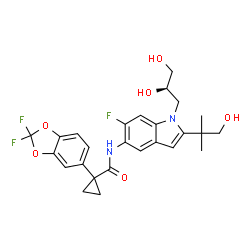
TEZACAFTOR, VX 661 for treatment of cystic fibrosis disease.


ChemSpider 2D Image | Tezacaftor | C26H27F3N2O6

img

2D chemical structure of 1152311-62-0

TEZACAFTOR, VX 661

CAS : 1152311-62-0;

  • Molecular FormulaC26H27F3N2O6
  • Average mass520.498 Da

l-(2,2-difluoro-l,3-benzodioxol-5-yl)-N-[l-[(2R)-2,3-dihydroxypropyl]-6-fluoro-2-(2-hydroxy-l,l-dimethylethyl)-lH-indol-5-yl]-cyclopropanecarboxamide).

(R)-1-(2,2-difluorobenzo[d][1,3]dioxol-5-yl)-N-(1-(2,3-dihydroxypropyl)-6-fluoro-2-(1-hydroxy-2-methylpropan-2-yl)-1H-indol-5-yl)cyclopropanecarboxamide

Cyclopropanecarboxamide, 1-(2,2-difluoro-1,3-benzodioxol-5-yl)-N-[1-[(2R)-2,3-dihydroxypropyl]-6-fluoro-2-(2-hydroxy-1,1-dimethylethyl)-1H-indol-5-yl]-

1-(2,2-difluoro-1,3-benzodioxol-5-yl)-N-[1-[(2R)-2,3-dihydroxypropyl]-6-fluoro-2-(1-hydroxy-2-methylpropan-2-yl)indol-5-yl]cyclopropane-1-carboxamide

Cyclopropanecarboxamide, 1-(2,2-difluoro-1,3-benzodioxol-5-yl)-N-(1-((2R)-2,3-dihydroxypropyl)-6-fluoro-2-(2-hydroxy-1,1-dimethylethyl)-1H-indol-5-yl)-

1-(2,2-difluoro-1,3-benzodioxol-5-yl)-N-(1-((2R)-2,3-dihydroxypropyl)-6-fluoro-2-(2-hydroxy-1,1-dimethylethyl)-1H-indol-5-yl)cyclopropanecarboxamide

Vertex (INNOVATOR)

UNII: 8RW88Y506K

In July 2016, this combination was reported to be in phase 3 clinical development.

Update         

Symdeko (tezacaftor/ivacaftor) ; Vertex; For the treatment of cystic fibrosis , Approved February 2018

Urology

Tezacaftor, also known asVX-661, is CFTR modulator. VX-661 is potentially useful for treatment of cystic fibrosis disease. Cystic fibrosis (CF) is a genetic disease caused by defects in the CF transmembrane regulator (CFTR) gene, which encodes an epithelial chloride channel. The most common mutation, Δ508CFTR, produces a protein that is misfolded and does not reach the cell membrane. VX-661 can correct trafficking of Δ508CFTR and partially restore chloride channel activity. VX-661 is currently under Phase III clinical trial.

VX-661 is an orally available deltaF508-CFTR corrector in phase III clinical trials at Vertex for the treatment of cystic fibrosis in patients homozygous to the F508del-CFTR mutation

Novel deuterated analogs of a cyclopropanecarboxamide ie tezacaftor (VX-661), as modulators of cystic fibrosis transmembrane conductance regulator (CFTR) proteins, useful for treating a CFTR-mediated disorder eg cystic fibrosis.

VX-661 (CAS #: 1152311-62-0; l-(2,2-difluoro-l,3-benzodioxol-5-yl)-N-[l-[(2R)-2,3-dihydroxypropyl]-6-fluoro-2-(2-hydroxy-l,l-dimethylethyl)-lH-indol-5-yl]-cyclopropanecarboxamide). VX-661 is a cystic fibrosis transmembrane conductance regulator modulator. VX-661 is currently under investigation for the treatment of cystic fibrosis. VX-661 has also shown promise in treating sarcoglycanopathies, Brody’s disease, cathecolaminergic polymorphic ventricular tachycardia, limb girdle muscular dystrophy, asthma, smoke induced chronic obstructive pulmonary disorder, chronic bronchitis, rhinosinusitis, constipation, pancreatitis, pancreatic insufficiency, male infertility caused by congenital bilateral absence of the vas deferens (CBAVD), mild pulmonary disease, idiopathic pancreatitis, allergic bronchopulmonary aspergillosis (ABPA), liver disease, hereditary emphysema, hereditary hemochromatosis, coagulation-fibrinolysis deficiencies, such as protein C deficiency, type 1 hereditary angioedema, lipid processing deficiencies, such as familial hypercholesterolemia, type 1 chylomicronemia, abetalipoproteinemia, lysosomal storage diseases, such as I-cell disease/pseudo-Hurler, mucopolysaccharidoses, Sandhof/Tay-Sachs, Crigler-Najjar type II, polyendocrinopathy/hyperinsulinemia, diabetes mellitus, Laron dwarfism, myeloperoxidase deficiency, primary hypoparathyroidism, melanoma, glycanosis CDG type 1, congenital hyperthyroidism, osteogenesis imperfecta, hereditary hypofibrinogenemia, ACT deficiency, diabetes insipidus (DI), neurohypophyseal DI, nephrogenic DI, Charcot-Marie tooth syndrome, Pelizaeus-Merzbacher disease, neurodegenerative diseases such as Alzheimer’s disease, Parkinson’s disease, amyotrophic lateral sclerosis, progressive supranuclear palsy, Pick’s disease, polyglutamine neurological disorders such as Huntington’s, spinocerebellar ataxia type I, spinal and bulbar muscular atrophy, dentatombral pallidoluysian, and myotonic dystrophy, as well as spongifiorm encephalopathies, such as hereditary Creutzfeldt- Jakob disease (due to prion protein processing defect), Fabry disease, Gerstrnarm-Straussler-Scheinker syndrome, chronic obstructive pulmonary disorder, dry-eye disease, or Sjogren’s disease, osteoporosis, osteopenia, bone healing and bone growth (including bone repair, bone regeneration, reducing bone resorption and increasing bone deposition), Gorham’s Syndrome, chloride channelopathies such as myotonia congenita (Thomson and Becker forms), Bartter’s

syndrome type III, Dent’s disease, hyperekplexia, epilepsy, lysosomal storage disease, Angelman syndrome, and primary ciliary dyskinesia (PCD), a term for inherited disorders of the structure and/or function of cilia, including PCD with situs inversus (also known as Kartagener syndrome), PCD without situs inversus, and ciliary aplasia. WO 2014086687; WO2013185112.

VX-661

VX-661 is likely subject to extensive CYP45o-mediated oxidative metabolism. These, as well as other metabolic transformations, occur in part through polymorphically-expressed enzymes, exacerbating interpatient variability. Additionally, some metabolites of VX-661 may have undesirable side effects. In order to overcome its short half-life, the drug likely must be taken several times per day, which increases the probability of patient incompliance and discontinuance.Deuterium Kinetic Isotope Effect

PATENT

WO 2016109362

Scheme I

EXAMPLE 1

(R)-l-(2,2-difluorobenzo[dl[l,31dioxol-5-vn-N-(l-q,3-dihvdroxypropyn-6-fluoro-2-(l- hvdroxy-2-methylpropan-2-yl)-lH-indol-5-yl)cvclopropanecarboxamide

(VX-661)

Methyl 2.2-difluorobenzo[dl [1.31dioxole-5-carboxylate: To a 200 mL pressure tank reactor (10 atm. in CO), was placed 5-bromo-2,2-difluoro-2H-l,3-benzodioxole (20.0 g, 84.4 mmol, 1.00 equiv), methanol (40 mL), triethylamine (42.6 g, 5.00 equiv.), Pd2(dba)3 (1.74 g, 1.69 mmol, 0.02 equiv), Pd(dppf)Cl2 (1.4 g, 1.69 mmol, 0.02 equiv.). The resulting solution was stirred at 85 °C under an atmosphere of CO overnight and the reaction progress was monitored by GCMS. The reaction mixture was cooled. The solids were filtered out. The organic phase was concentrated under vacuum to afford 17.5 g of methyl 2,2-difluoro-2H-l,3-benzodioxole-5-carboxylate as a crude solid, which was used directly in the next step. Step 2

2 step 2 3

(2.2-difluorobenzo[dl [ 1.31 dioxol-5 -vDmethanol : To a 500mL 3-necked round-bottom flask purged and maintained with an inert atmosphere of nitrogen were placed methyl 2,2-difluoro-2H-l,3-benzodioxole-5-carboxylate (17.5 g, 81.01 mmol, 1.00 equiv.), tetrahydrofuran (200 mL). This was followed by the addition of L1AIH4 (6.81 mg, 162.02 mmol, 2.00 equiv.) at 0 °C. The resulting solution was stirred for 1 h at 25 °C and monitored by GCMS. The reaction mixture was cooled to 0 °C until GCMS indicated the completion of the reaction. The pH value of the solution was adjusted to 8 with sodium hydroxide (1 mol/L). The solids were filtered out. The organic layer combined and concentrated under vacuum to afford 13.25 g (87%) of (2,2-difluoro-2H-l,3-benzodioxol-5-yl)methanol as yellow oil.

Step 3

step 3

5-(chloromethyl)-2.2-difluorobenzo[diri.31dioxole: (2.2-difluoro-2H-1.3-benzodioxol-5-yl)methanol (13.25 g, 70.4 mmol, 1.00 equiv.) was dissolved in DCM (200 mL). Thionyl chloride (10.02 g, 1.20 equiv.) was added to this solution. The resulting mixture was stirred at room temperature for 4 hours and then concentrated under vacuum. The residue was then diluted with DCM (500 mL) and washed with 2 x 200 mL of sodium bicarbonate and 1 x 200 mL of brine. The mixture was dried over anhydrous sodium sulfate, filtered and evaporated to afford 12.36 g (85%) of 5-(chloromethyl)-2,2-difluoro-2H-l ,3-benzodioxole as yellow oil.

Step 4

step 4 5

[00160] 2-(2.2-difluorobenzordi ri .31dioxol-5-yl)acetonitrile: 5-(chloromethyl)-2,2-difluoro-2H-l,3-benzodioxole (12.36 g, 60 mmol, 1.00 equiv.) was dissolved in DMSO (120 mL). This was followed by the addition of NaCN (4.41 g, 1.50 equiv.) with the inert temperature below 40 °C. The resulting solution was stirred for 2 hours at room temperature. The reaction progress was monitored by GCMS. The reaction was then quenched by the addition of 300 mL of water/ice. The resulting solution was extracted with 3 x 100 mL of ethyl acetate. The organic layers combined and washed with 3 x 100 mL brine dried over anhydrous sodium sulfate and concentrated under vacuum to afford 10.84 g (92%) of 2-(2,2-difluoro-2H-l ,3-benzodioxol-5-yl)acetonitrile as brown oil.

Step 5

l -(2.2-difluoro-2H-1.3-benzodioxol-5-yl)cvclopropane-l -carbonitrile: To a 100 mL round-bottom flask purged and maintained with an inert atmosphere of nitrogen, were placed 2-(2,2-difluoro-2H-l ,3-benzodioxol-5-yl)acetonitrile (10.84 g, 55 mmol, 1.00 equiv.),

NaOH (50%) in water), 1 -bromo-2-chloroethane (11.92g, 82.5 mmol, 1.50 equiv.), BmNBr

(361 mg, 1.1 mmol, 0.02 equiv.). The resulting solution was stirred for 48 h at 70 °C. The reaction progress was monitored by GCMS. The reaction mixture was cooled. The resulting solution was extracted with 3 x 200 mL of ethyl acetate and the organic layers combined. The resulting mixture was washed with 1 x 200 mL of brine. The mixture was dried over anhydrous sodium sulfate and concentrated under vacuum to afford 10.12g of 1 -(2,2-difluoro-2H-l,3-benzodioxol-5-yl)cyclopropane-l-carbonitrile as brown oil.

Step 6

[00162] l-(2.2-difluoro-2H-1.3-benzodioxol-5-yl)cvclopropane-l-carboxylic acid: To a 250-mL round-bottom flask purged and maintained with an inert atmosphere of nitrogen, was placed l-(2,2-difluoro-2H-l,3-benzodioxol-5-yl)cyclopropane-l-carbonitrile (10.12 g, 45.38 mmol, 1.00 equiv), 6 N NaOH (61 mL) and EtOH (60 mL). The resulting solution was stirred for 3 h at 100 °C. The reaction mixture was cooled and the pH value of the solution was adjusted to 2 with hydrogen chloride (1 mol/L) until LCMS indicated the completion of the reaction. The solids were collected by filtration to afford 9.68 g (88%) of l-(2,2-difluoro-2H-l,3-benzodioxol-5-yl)cyclopropane-l-carboxylic acid as a light yellow solid.

Step 7

[00163] l-(2.2-difluoro-2H-1.3-benzodioxol-5-yl)cvclopropane-l-carbonyl chloride; To a solution of l-(2,2-difluoro-2H-l,3-benzodioxol-5-yl)cyclopropane-l-carboxylic acid (687 mg, 2.84 mmol, 1.00 equiv.) in toluene (5 mL) was added thionyl chloride (1.67 g, 5.00 equiv.). The resulting solution was stirred for 3h at 65 °C. The reaction mixture was cooled and concentrated under vacuum to afford 738 mg (99%) of l-(2,2-difluoro-2H-l,3-benzodioxol-5-yl)cyclopropane-l-carbonyl chloride as a yellow solid.

Step 8

9 STEP 8 10

2-methyl-4-(trimethylsilyl)but-3-vn-2-ol: To a solution of ethynyltrimethylsilane (20 g, 203.63 mmol, 1.00 equiv) in THF (100 mL) was added n-BuLi (81 mL, 2.5M in THF)

dropwise with stirring at -78 °C. Then the resulting mixture was warmed to 0 °C for 1 h with stirring and then cooled to -78 °C. Propan-2-one (11.6 g, 199.73 mmol, 1.00 equiv.) was added dropwise with the inert temperature below -78 °C. The resulting solution was stirred at -78 °C for 3 h. The reaction was then quenched by the addition of 100 mL of water and extracted with 3 x 100 mL of MTBE. The combined organic layers was dried over anhydrous sodium sulfate and concentrated under vacuum to afford 28 g (90%) of 2-methyl-4-(trimethylsilyl)but-3-yn-2-ol as an off-white solid. ¾ NMR (400 MHz, CDCh) δ: 1.50 (s, 6H), 1.16-1.14 (m, 9H).

Step 9

step 9

10

(3-chloro-3-methylbut-l-vnvntrimethylsilane: To a lOOmL round-bottom flask, was placed 2-methyl-4-(trimethylsilyl) but-3-yn-2-ol (14 g, 89.57 mmol, 1.00 equiv.), cone. HC1 (60 mL, 6.00 equiv.). The resulting solution was stirred for 16 h at 0 °C. The resulting solution was extracted with 3 x 100 mL of hexane. The combined organic layers was dried over anhydrous sodium sulfate and concentrated under vacuum to afford 8 g (51%) of (3-chloro-3-methylbut-l-yn-l-yl)trimethylsilane as light yellow oil. ¾ NMR (400 MHz, CDCh) δ: 1.84 (s, 6H), 1.18-1.16 (m, 9H).

Step 10

step 10

11 12

(4-(benzyloxy)-3.3-dimethylbut-l-vnyl)trimethylsilane: Magnesium turnings (1.32 g, 1.20 equiv) were charged to a 250-mL 3-necked round-bottom flask and then suspended in THF (50 mL). The resulting mixture was cooled to 0 °C and maintained with an inert atmosphere of nitrogen. (3-chloro-3-methylbut-l-yn-l-yl)trimethylsilane (8 g, 45.78 mmol, 1.00 equiv.) was dissolved in THF (50 mL) and then added dropwise to this mixture with the inert temperature between 33-37 °C. The resulting solution was stirred at room temperature for an addition 1 h before BnOCH2Cl (6.45 g, 41.33 mmol, 0.90 equiv.) was added dropwise with the temperature below 10 °C. Then the resulting solution was stirred for 16 h at room temperature. The reaction was then quenched by the addition of 50 mL of water and extracted with 3 x 100 mL of hexane. The combined organic layers was dried over

anhydrous sodium sulfate and concentrated under vacuum to afford 10 g (84%) of [4-(benzyloxy)-3,3-dimethylbut-l-yn-l-yl]trimethylsilane as light yellow oil. ¾ NMR (400 MHz, CDCh) δ: 7.37-7.35 (m, 5H), 4.62 (s, 2H), 3.34 (s, 2H), 1.24 (s, 6H), 0.17-0.14 (m, 9H).

Step 11

((2.2-dimethylbut-3-vnyloxy)methyl)benzene: To a solution of [4-(benzyloxy)-3,3-dimethylbut-l-yn-l-yl]trimethylsilane (10 g, 38.40 mmol, 1.00 equiv) in methanol (100 mL) was added potassium hydroxide (2.53 g, 38.33 mmol, 1.30 equiv). The resulting solution was stirred for 16 h at room temperature. The resulting solution was diluted with 200 mL of water and extracted with 3 x 100 mL of hexane. The organic layers combined and washed with 1 x 100 mL of water and then dried over anhydrous sodium sulfate and concentrated under vacuum to afford 5 g (69%) of [[(2,2-dimethylbut-3-yn-l-yl)oxy]methyl]benzene as light yellow oil. ¾ NMR (300 MHz, D20) δ: 7.41-7.28 (m, 5H) , 4.62 (s, 2H), 3.34 (s, 2H), 2.14 (s, 1H), 1.32-1.23 (m, 9H).

Step 12

14 15

methyl 2.2-difluorobenzo[d1[1.31dioxole-5-carboxylate: To a solution of 3-fluoro-4-nitroaniline (6.5 g, 41.64 mmol, 1.00 equiv) in chloroform (25 mL) and AcOH (80 mL) was added Bn (6.58 g, 41.17 mmol, 1.00 equiv.) dropwise with stirring at 0 °C in 20 min. The resulting solution was stirred for 2 h at room temperature. The reaction was then quenched by the addition of 150 mL of water/ice. The pH value of the solution was adjusted to 9 with sodium hydroxide (10 %). The resulting solution was extracted with 3 x 50 mL of ethyl acetate and the organic layers combined. The resulting mixture was washed with 1 x 50 mL of water and 2 x 50 mL of brine, dried over anhydrous sodium sulfate and concentrated under vacuum. The crude product was re-crystallized from PE/EA (10: 1) to afford 6 g (61%) of 2-bromo-5-fluoro-4-nitroaniline as a yellow solid.

Step 13

(R)-l-(benzyloxy)-3-(2-bromo-5-fluoro-4-nitrophenylamino)propan-2-ol: 2-bromo-5-fluoro-4-nitroaniline (6.00 g, 25.56 mmol, 1.00 equiv.), Zn(C104)2 (1.90 g, 5.1 mmol, 0.20 equiv.), 4A Molecular Sieves (3 g), toluene (60 mL) was stirred at room temperature for 2 h and maintain with an inert atmosphere of N2 until (2R)-2-[(benzyloxy)methyl]oxirane (1.37 g, 8.34 mmol, 2.00 equiv.) was added. Then the resulting mixture was stirred for 15 h at 85 °C. The reaction progress was monitored by LCMS. The solids were filtered out and the resulting solution was diluted with 20 mL of ethyl acetate. The resulting mixture was washed with 2 x 20 mL of Sat. NH4CI and 1 x 20 mL of brine. The organic phase was dried over anhydrous sodium sulfate and concentrated under vacuum. The residue was purified by a silica gel column, eluted with ethyl acetate/petroleum ether (1 :5) to afford 7.5 g (70%) of N-[(2R)-3-(benzyloxy)-2-hydroxypropyl]-2-bromo-5-fluoro-4-nitroaniline as a yellow solid.

Step 14

[00170] (R)-l-(4-amino-2-bromo-5-fluorophenylamino)-3-(benzyloxy)propan-2-ol: To a 250-mL round-bottom flask, was placed N-[(2R)-3-(benzyloxy)-2-hydroxypropyl]-2-bromo-5-fluoro-4-nitroaniline (7.5 g, 18.84 mmol, 1.00 equiv.), ethanol (80 mL), water (16 mL), NH4CI (10 g, 189 mmol, 10.00 equiv.), Zn (6.11 g, 18.84 mmol, 5.00 equiv.). The resulting solution was stirred for 4 h at 85 °C. The solids were filtered out and the resulting solution was concentrated under vacuum and diluted with 200 mL of ethyl acetate. The resulting mixture was washed with 1 x 50 mL of water and 2 x 50 mL of brine. The organic phase was dried over anhydrous sodium sulfate and concentrated under vacuum. The residue was purified by a silica gel column, eluted with ethyl acetate/petroleum ether (1 :3) to afford 4.16 g (60%) of l-N-[(2R)-3-(benzyloxy)-2-hydroxypropyl]-2-bromo-5-fluorobenzene-l ,4-diamine as light yellow oil.

Step 15

TsO

(R)-4-(3-(benzyloxy)-2-hvdroxypropylamino)-5-bromo-2-fluorobenzenaminium 4-methylbenzenesulfonate: l-N-[(2R)-3-(benzyloxy)-2-hydroxypropyl]-2-bromo-5-fluorobenzene-l ,4-diamine (2 g, 5.42 mmol, 1.00 equiv.) was dissolved in dichloromethane (40 mL) followed by the addition of TsOH (1 g, 5.81 mmol, 1.10 equiv.). The resulting mixture was stirred for 16 h at room temperature and then concentrated under vacuum to afford 2.8 g (95%) of 4-[[(2R)-3-(benzyloxy)-2-hydroxypropyl]amino]-5-bromo-2-fluoroanilinium 4-methylbenzene-l -sulfonate as an off-white solid.

Step 16

(R)-l-(4-amino-2-(4-(benzyloxy)-3.3-dimethylbut-l-vnyl)-5-fluorophenylamino)-3-(benzyloxy)propan-2-ol: To a 100-mL round-bottom flask purged and maintained with an inert atmosphere of nitrogen, was placed 4-[[(2R)-3-(benzyloxy)-2-hydroxypropyl]amino]-5-bromo-2-fluoroanilinium 4-methylbenzene-l -sulfonate (2.9 g, 5.36 mmol, 1.00 equiv.), [[(2,2-dimethylbut-3-yn-l-yl)oxy]methyl]benzene (1.2 g, 6.37 mmol, 1.20 equiv.), Pd(OAc)2 (48 mg, 0.21 mmol, 0.04 equiv.), dppb (138 mg, 0.32 mmol, 0.06 equiv.), potassium carbonate (2.2 g, 15.92 mmol, 3.00 equiv.) and MeCN (50 mL). The resulting solution was stirred for 16 h at 80 °C. The solids were filtered out and the resulting mixture was concentrated under vacuum until LCMS indicated the completion of the reaction. The residue was purified by a silica gel column, eluted with ethyl acetate/petroleum ether (1 :4) to afford 2.2 g (86%) of l-N-[(2R)-3-(benzyloxy)-2-hydroxypropyl]-2-[4-(benzyloxy)-3,3-dimethylbut-l-yn-l-yl]-5-fluorobenzene-l ,4-diamine as a light brown solid.

Step 17

l-(2.2-difluoro-2H-1.3-benzodioxol-5-yl)cvclopropane-l-carboxylic acid: To a 40-mL vial purged and maintained with an inert atmosphere of nitrogen, was placed 1-N-[(2R)-3-(benzyloxy)-2-hydroxypropyl]-2-[4-(benzyloxy)-3,3-dimethylbut-l-yn-l-yl]-5-fluorobenzene-l,4-diamine (1 g, 2.1 mmol, 1.00 equiv.), MeCN (10 mL), Pd(MeCN)2Cl2 (82 mg, 0.32 mmol, 0.15 equiv.). The resulting solution was stirred for 12 h at 85 °C. The reaction progress was monitored by LCMS. The resulting mixture was concentrated under vacuum to afford 900 mg (crude) of (2R)-l-[5-amino-2-[l-(benzyloxy)-2-methylpropan-2-yl]-6-fluoro-lH-indol-l-yl]-3-(benzyloxy)propan-2-ol as a brown solid, which was used for next step without further purification.

Step 18

(R)-N-(l-(3-(benzyloxy)-2-hvdroxypropyl)-2-(l-(benzyloxy)-2-methylpropan-2-yl)-6-fluoro- lH-indol-5-yl)- 1 -(2.2-difluorobenzo[dl [ 1.31 dioxol-5-vDcvclopropanecarboxamide: To a 40 mL vial purged and maintained with an inert atmosphere of nitrogen, was placed (2R)-l-[5-amino-2-[l-(benzyloxy)-2-methylpropan-2-yl]-6-fluoro-lH-indol-l-yl]-3-(benzyloxy)propan-2-ol (800 mg, 1.68 mmol, 1.00 equiv.), dichloromethane (20 mL), TEA (508 mg, 5.04 mmol, 3.00 equiv.). l-(2,2-difiuoro-2H-l,3-benzodioxol-5-yl)cyclopropane-l-carbonyl chloride (524 mg, 2 mmol, 1.20 equiv.) was added to this mixture at 0 °C. The resulting solution was stirred for 2 h at 25 °C. The reaction progress was monitored by LCMS. The resulting solution was diluted with 20 mL of DCM and washed with 3 xlO mL of brine. The combined organic layers was dried over anhydrous sodium sulfate and concentrated under vacuum. The residue was purified by a silica gel column, eluted with ethyl acetate/petroleum ether (1:5) to afford 400 mg (30%) of N-[l-[(2R)-3-(benzyloxy)-2-hydroxypropyl]-2-[l-(benzyloxy)-2-methylpropan-2-yl]-6-fluoro-lH-indol-5-yl]-l-(2,2-difluoro-2H-l,3-benzodioxol-5-yl)cyclopropane-l-carboxamide as a light yellow solid.

Step 19

(R)-l-(2,2-difluorobenzo[d] [l,3]dioxol-5-yl)-N-(l-(2,3-dihydroxypropyl)-6-fluoro-2-(l-hydroxy-2-methylpropan-2-yl)-lH-indol-5-yl)cyclopropanecarboxamide: To a 100-mL 3-necked round-bottom flask purged and maintained with an inert atmosphere of H2, were placed N-[l-[(2R)-3-(benzyloxy)-2-hydroxypropyl]-2-[l-(benzyloxy)-2-methylpropan-2-yl]-6-fluoro-lH-indol-5-yl]-l-(2,2-difluoro-2H-l,3-benzodioxol-5-yl)cyclopropane-l-carboxamide (400 mg, 0.77 mmol, 1.00 equiv.) dry Pd/C (300 mg) and MeOH (5 Ml, 6M HC1). The resulting mixture was stirred at room temperature for 2 h until LCMS indicated the completion of the reaction. The solids were filtered out and the resulting mixture was concentrated under vacuum. The residue was purified by prep-HPLC with the following conditions: Column, XBridge Prep C18 OBD Column 19 x 150 mm, 5um; mobile phase and Gradient, Phase A: Waters (0.1%FA ), Phase B: ACN; Detector, UV 254 nm to afford 126.1 mg (42.4%) of (R)-l-(2,2-difluorobenzo[d] [l,3]dioxol-5-yl)-N-(l-(2,3-dihydroxypropyl)-6-fluoro-2-(l-hydroxy-2-methylpropan-2-yl)-lH-indol-5-yl)cyclopropanecarboxamide as a light yellow solid.

¾ NMR (400 MHz, OMSO-de) δ: 8.32 (s, 1H), 7.54 (s, 1H), 7.41-7.38 (m, 2H), 7.34-7.31 (m, 2H), 6.22 (s, 1H), 5.03-5.02 (m, 1H), 4.93-4.90 (m, 1H), 4.77-4.75 (m, 1H), 4.42-4.39 (m, 1H), 4.14-4.08 (m, 1H), 3.91 (brs, 1H) , 3.64-3.57 (m, 2H), 3.47-3.40 (m, 2H), 1.48-1.46 (m, 2H), 1.36-1.32 (m, 6H), 1.14-1.12 (m, 2H).

LCMS: m/z = 521.2[M+H]+.

PATENT

WO 2015160787

https://www.google.com/patents/WO2015160787A1?cl=en

PATENT

WO 2014014841

https://www.google.com/patents/WO2014014841A1?cl=en

All tautomeric forms of the Compound 1 are included herein. For example, Compound 1 may exist as tautomers, both of which are included herein:

Figure imgf000026_0001

Methods of Preparing Compound 1 Amorphous Form and Compound 1 Form A

Compound 1 is the starting point and in one embodiment can be prepared by coupling an acid chloride moiety with an amine moiety according to Schemes 1-4.

Scheme 1. Synthesis of the acid chloride moiety.

Figure imgf000037_0001

Toluene, H20, 70 °C

Figure imgf000037_0002

Bu4NBr

1. NaOH

2. HC1

Figure imgf000037_0003

Scheme 2. Synthesis of acid chloride moiety – alternative synthesis.

Figure imgf000038_0001

1. NaCN

2. H20

Figure imgf000038_0002

SOC1,

Figure imgf000038_0003

Scheme 3. Synthesis of the amine moiety.

Figure imgf000039_0001
Figure imgf000039_0002
Figure imgf000039_0003

Scheme 4. Formation of Compound 1.

Figure imgf000040_0001

Compound 1

Methods of Preparing Compound 1 Amorphous Form

Starting from Compound 1 , or even a crystalline form of Compound 1 , Compound 1 Amorphous Form may be prepared by rotary evaporation or by spray dry methods.

Dissolving Compound 1 in an appropriate solvent like methanol and rotary evaporating the methanol to leave a foam produces Compound 1 Amorphous Form. In some embodiments, a warm water bath is used to expedite the evaporation.

Compound 1 Amorphous Form may also be prepared from Compound 1 using spray dry methods. Spray drying is a process that converts a liquid feed to a dried particulate form. Optionally, a secondary drying process such as fluidized bed drying or vacuum drying, may be used to reduce residual solvents to pharmaceutically acceptable levels. Typically, spray drying involves contacting a highly dispersed liquid suspension or solution, and a sufficient volume of hot air to produce evaporation and drying of the liquid droplets. The preparation to be spray dried can be any solution, coarse suspension, slurry, colloidal dispersion, or paste that may be atomized using the selected spray drying apparatus. In a standard procedure, the preparation is sprayed into a current of warm filtered air that evaporates the solvent and conveys the dried product to a collector (e.g. a cyclone). The spent air is then exhausted with the solvent, or alternatively the spent air is sent to a condenser to capture and potentially recycle the solvent. Commercially available types of apparatus may be used to conduct the spray drying. For example, commercial spray dryers are manufactured by Buchi Ltd. And Niro (e.g., the PSD line of spray driers manufactured by Niro) (see, US 2004/0105820; US 2003/0144257).

Spray drying typically employs solid loads of material from about 3% to about 30% by weight, (i.e., drug and excipients), for example about 4% to about 20% by weight, preferably at least about 10%. In general, the upper limit of solid loads is governed by the viscosity of (e.g., the ability to pump) the resulting solution and the solubility of the components in the solution. Generally, the viscosity of the solution can determine the size of the particle in the resulting powder product.

Techniques and methods for spray drying may be found in Perry’s Chemical

Engineering Handbook, 6th Ed., R. H. Perry, D. W. Green & J. O. Maloney, eds.), McGraw-Hill book co. (1984); and Marshall “Atomization and Spray-Drying” 50, Chem. Eng. Prog. Monogr. Series 2 (1954). In general, the spray drying is conducted with an inlet temperature of from about 60 °C to about 200 °C, for example, from about 95 °C to about 185 °C, from about 110 °C to about 182 °C, from about 96 °C to about 180 °C, e.g., about 145 °C. The spray drying is generally conducted with an outlet temperature of from about 30 °C to about 90 °C, for example from about 40 °C to about 80 °C, about 45 °C to about 80 °C e.g., about 75 °C. The atomization flow rate is generally from about 4 kg h to about 12 kg/h, for example, from about 4.3 kg/h to about 10.5 kg h, e.g., about 6 kg/h or about 10.5 kg/h. The feed flow rate is generally from about 3 kg/h to about 10 kg/h, for example, from about 3.5 kg/h to about 9.0 kg/h, e.g., about 8 kg/h or about 7.1 kg/h. The atomization ratio is generally from about 0.3 to 1.7, e.g., from about 0.5 to 1.5, e.g., about 0.8 or about 1.5.

Removal of the solvent may require a subsequent drying step, such as tray drying, fluid bed drying (e.g., from about room temperature to about 100 °C), vacuum drying, microwave drying, rotary drum drying or biconical vacuum drying (e.g., from about room temperature to about 200 °C).

Synthesis of Compound 1

Acid Chloride Moiety

Synthesis of (2,2-difluoro-l,3-benzodioxol-5-yl)-l-ethylacetate-acetonitrile

Figure imgf000083_0001

ouene, 2 , CN

A reactor was purged with nitrogen and charged with 900 mL of toluene. The solvent was degassed via nitrogen sparge for no less than 16 h. To the reactor was then charged Na3P04 (155.7 g, 949.5 mmol), followed by bis(dibenzylideneacetone) palladium (0) (7.28 g, 12.66 mmol). A 10% w/w solution of tert-butylphosphine in hexanes (51.23 g, 25.32 mmol) was charged over 10 min at 23 °C from a nitrogen purged addition funnel. The mixture was allowed to stir for 50 min, at which time 5-bromo-2,2-difluoro-l,3-benzodioxole (75 g, 316.5 mmol) was added over 1 min. After stirring for an additional 50 min, the mixture was charged with ethyl cyanoacetate (71.6 g, 633.0 mmol) over 5 min followed by water (4.5 mL) in one portion. The mixture was heated to 70 °C over 40 min and analyzed by HPLC every 1 – 2 h for the percent conversion of the reactant to the product. After complete conversion was observed (typically 100% conversion after 5 – 8 h), the mixture was cooled to 20 – 25 °C and filtered through a celite pad. The celite pad was rinsed with toluene (2 X 450 mL) and the combined organics were concentrated to 300 mL under vacuum at 60 – 65 °C. The concentrate was charged with 225mL DMSO and concentrated under vacuum at 70 – 80 °C until active distillation of the solvent ceased. The solution was cooled to 20 – 25 °C and diluted to 900 mL with DMSO in preparation for Step 2. Ή NMR (500 MHz, CDC13) δ 7.16 – 7.10 (m, 2H), 7.03 (d, J = 8.2 Hz, 1H), 4.63 (s, 1H), 4.19 (m, 2H), 1.23 (t, J= 7.1 Hz, 3H).

Synthesis of (2,2-difluoro-l^-benzodioxol-5-yl)-acetonitrile.

Figure imgf000084_0001

[00311] The DMSO solution of (2,2-difluoro-l,3-benzodioxol-5-yl)-l-ethylacetate-acetonitrile from above was charged with 3 N HCl (617.3 mL, 1.85 mol) over 20 min while maintaining an internal temperature < 40 °C. The mixture was then heated to 75°C over 1 h and analyzed by HPLC every 1 – 2 h for % conversion. When a conversion of > 99% was observed (typically after 5 – 6 h), the reaction was cooled to 20 – 25 °C and extracted with MTBE (2 X 525 mL), with sufficient time to allow for complete phase separation during the extractions. The combined organic extracts were washed with 5% NaCl (2 X 375 mL). The solution was then transferred to equipment appropriate for a 1.5 – 2.5 Torr vacuum distillation that was equipped with a cooled receiver flask. The solution was concentrated under vacuum at < 60°C to remove the solvents. (2,2-Difluoro-l,3-benzodioxol-5-yl)-acetonitrile was then distilled from the resulting oil at 125 – 130 °C (oven temperature) and 1.5 – 2.0 Torr. (2,2-Difluoro-l,3- benzodioxol-5-yl)-acetonitrile was isolated as a clear oil in 66% yield from 5-bromo-2,2- difluoro-l,3-benzodioxole (2 steps) and with an HPLC purity of 91.5% AUC (corresponds to a w/w assay of 95%). Ή NMR (500 MHz, DMSO) 6 7.44 (br s, 1H), 7.43 (d, J= 8.4 Hz, 1H), 7.22 (dd, J= 8.2, 1.8 Hz, 1H), 4.07 (s, 2H).  Synthesis of (2,2-difluoro- l,3-benzodioxol-5-yl)-cycIopropanecarbonitrUe.

Figure imgf000085_0001

MTBE

A stock solution of 50% w/w NaOH was degassed via nitrogen sparge for no less than 16 h. An appropriate amount of MTBE was similarly degassed for several hours. To a reactor purged with nitrogen was charged degassed MTBE (143 mL) followed by (2,2-difluoro-l,3- benzodioxol-5-yl)-acetonitrile (40.95 g, 207.7 mmol) and tetrabutylammonium bromide (2.25 g, 10.38 mmol). The volume of the mixture was noted and the mixture was degassed via nitrogen sparge for 30 min. Enough degassed MTBE is charged to return the mixture to the original volume prior to degassing. To the stirring mixture at 23.0 °C was charged degassed 50% w/w NaOH (143 mL) over 10 min followed by l-bromo-2-chloroethane (44.7 g, 311.6 mmol) over 30 min. The reaction was analyzed by HPLC in 1 h intervals for % conversion. Before sampling, stirring was stopped and the phases allowed to separate. The top organic phase was sampled for analysis. When a % conversion > 99 % was observed (typically after 2.5 – 3 h), the reaction mixture was cooled to 10 °C and was charged with water (461 mL) at such a rate as to maintain a temperature < 25 °C. The temperature was adjusted to 20 – 25 °C and the phases separated. Note: sufficient time should be allowed for complete phase separation. The aqueous phase was extracted with MTBE (123 mL), and the combined organic phase was washed with 1 N HC1 (163mL) and 5% NaCl (163 mL). The solution of (2,2-difluoro- 1,3 -benzodioxol-5-yl)- cyclopropanecarbonitrile in MTBE was concentrated to 164 mL under vacuum at 40 – 50 °C. The solution was charged with ethanol (256 mL) and again concentrated to 164 mL under vacuum at 50 – 60 °C. Ethanol (256 mL) was charged and the mixture concentrated to 164 mL under vacuum at 50 – 60 °C. The resulting mixture was cooled to 20 – 25 °C and diluted with ethanol to 266 mL in preparation for the next step. lH NMR (500 MHz, DMSO) 6 7.43 (d, J= 8.4 Hz, 1H), 7.40 (d, J= 1.9 Hz, 1H), 7.30 (dd, J= 8.4, 1.9 Hz, 1H), 1.75 (m, 2H), 1.53 (m, 2H). [00314] Synthesis of l-(2,2-difluoro-l,3-benzodioxol-5-yl)-cyclopropanecarboxylic acid.

Figure imgf000086_0001

The solution of (2,2-difluoro-l ,3-benzodioxol-5-yl)-cyclopropanecarbonitrile in ethanol from the previous step was charged with 6 N NaOH (277 mL) over 20 min and heated to an internal temperature of 77 – 78 °C over 45 min. The reaction progress was monitored by HPLC after 16 h. Note: the consumption of both (2,2-difluoro-l,3-benzodioxol-5-yl)- cyclopropanecarbonitrile and the primary amide resulting from partial hydrolysis of (2,2-difluoro- l,3-benzodioxol-5-yl)-cyclopropanecarbonitrile were monitored. When a % conversion > 99 % was observed (typically 100% conversion after 16 h), the reaction mixture was cooled to 25 °C and charged with ethanol (41 mL) and DCM (164 mL). The solution was cooled to 10 °C and charged with 6 N HC1 (290 mL) at such a rate as to maintain a temperature < 25 °C. After warming to 20 – 25 °C, the phases were allowed to separate. The bottom organic phase was collected and the top aqueous phase was back extracted with DCM (164 mL). Note: the aqueous phase was somewhat cloudy before and after the extraction due to a high concentration of inorganic salts. The organics were combined and concentrated under vacuum to 164 mL. Toluene (328 mL) was charged and the mixture condensed to 164 mL at 70 – 75 °C. The mixture was cooled to 45 °C, charged with MTBE (364 mL) and stirred at 60 °C for 20 min. The solution was cooled to 25 °C and polish filtered to remove residual inorganic salts. MTBE (123 mL) was used to rinse the reactor and the collected solids. The combined organics were transferred to a clean reactor in preparation for the next step.

Isolation of l-(2,2-difluoro-l,3-benzodioxol-5-yl)-cyclopropanecar boxy lie acid.

Figure imgf000086_0002

The solution of l-(2,2-difluoro- 1 ,3-benzodioxol-5-yl)-cyclopropanecarboxylic acid from the previous step is concentrated under vacuum to 164 mL, charged with toluene (328 mL) and concentrated to 164 mL at 70 – 75 °C. The mixture was then heated to 100 – 105 °C to give a homogeneous solution. After stirring at that temperature for 30 min, the solution was cooled to 5 °C over 2 hours and maintained at 5 °C for 3 hours. The mixture was then filtered and the reactor and collected solid washed with cold 1 :1 toluene/n-heptane (2 X 123 mL). The material was dried under vacuum at 55 °C for 17 hours to provide l-(2,2-difluoro-l,3-benzodioxol-5-yl)- cyclopropanecarboxylic acid as an off-white crystalline solid. l-(2,2-difluoro-l,3-benzodioxol- 5-yl)-cyclopropanecarboxylic acid was isolated in 79% yield from (2,2-difluoro-l,3- benzodioxol-5-yl)-acetonitrile (3 steps including isolation) and with an HPLC purity of 99.0% AUC. ESI-MS m/z calc. 242.04, found 241.58 (M+l)+; Ή NMR (500 MHz, DMSO) δ 12.40 (s, 1H), 7.40 (d, J= 1.6 Hz, 1H), 7.30 (d, J= 8.3 Hz, 1H), 7.17 (dd, J= 8.3, 1.7 Hz, 1H), 1.46 (m, 2H), 1.17 (m, 2H).

Alternative Synthesis of the Acid Chloride Moiety [00319] Synthesis of (2,2-ditluoro-l,3-benzodioxol-5-yl)-methanol.

1. Vitride (2 equiv)

PhCH3 (10 vol)

Figure imgf000087_0001

[00320] Commercially available 2,2-difluoro-l,3-benzodioxole-5-carboxylic acid (1.0 eq) is slurried in toluene (10 vol). Vitride® (2 eq) is added via addition funnel at a rate to maintain the temperature at 15-25 °C. At the end of addition the temperature is increased to 40 °C for 2 h then 10% (w/w) aq. NaOH (4.0 eq) is carefully added via addition funnel maintaining the temperature at 40-50 °C. After stirring for an additional 30 minutes, the layers are allowed to separate at 40 °C. The organic phase is cooled to 20 °C then washed with water (2 x 1.5 vol), dried (Na2SO4), filtered, and concentrated to afford crude (2,2-difluoro-l,3-benzodioxol-5-yl)-methanol that is used directly in the next step.

Synthesis of 5-chloromethyl-2,2-difluoro-l,3-benzodioxole.

1. SOCl2 (1.5 equiv)

DMAP (0.01 equiv)

Figure imgf000087_0002

(2,2-difluoro- 1 ,3-benzodioxol-5-yl)-methanol ( 1.0 eq) is dissolved in MTBE (5 vol). A catalytic amount of DMAP (1 mol %) is added and S0C12 (1.2 eq) is added via addition funnel. The S0C12 is added at a rate to maintain the temperature in the reactor at 15-25 °C. The temperature is increased to 30 °C for 1 hour then cooled to 20 °C then water (4 vol) is added via addition funnel maintaining the temperature at less than 30 °C. After stirring for an additional 30 minutes, the layers are allowed to separate. The organic layer is stirred and 10% (w/v) aq. NaOH (4.4 vol) is added. After stirring for 15 to 20 minutes, the layers are allowed to separate. The organic phase is then dried (Na2SO_ , filtered, and concentrated to afford crude 5-chloromethyl- 2,2-difluoro-l,3-benzodioxole that is used directly in the next step.

Synthesis of (2,2-difluoro-l,3-benzodioxol-5-yl)-acetonitrile.

Figure imgf000088_0001

A solution of 5-chloromethyl-2,2-difluoro- 1 ,3-benzodioxole ( 1 eq) in DMSO ( 1.25 vol) is added to a slurry of NaCN (1.4 eq) in DMSO (3 vol) maintaining the temperature between 30-40 °C. The mixture is stirred for 1 hour then water (6 vol) is added followed by MTBE (4 vol). After stirring for 30 min, the layers are separated. The aqueous layer is extracted with MTBE (1.8 vol). The combined organic layers are washed with water (1,8 vol), dried (Na2S04), filtered, and concentrated to afford crude (2,2-difluoro-l,3-benzodioxol-5-yl)-acetonitrile (95%) that is used directly in the next step.

The remaining steps are the same as described above for the synthesis of the acid moiety.

Amine Moiety

Synthesis of 2-bromo-5-fluoro-4-ntroaniline.

Figure imgf000088_0002
A flask was charged with 3-fluoro-4-nitroaniline (1.0 equiv) followed by ethyl acetate (10 vol) and stirred to dissolve all solids. N-Bromosuccinimide (1.0 equiv) was added as a portion-wise as to maintain internal temperature of 22 °C. At the end of the reaction, the reaction mixture was concentrated in vacuo on a rotavap. The residue was slurried in distilled water (5 vol) to dissolve and remove succinimide. (The succinimide can also be removed by water workup procedure.) The water was decanted and the solid was slurried in 2-propanol (5 vol) overnight. The resulting slurry was filtered and the wetcake was washed with 2-propanol, dried in vacuum oven at 50 °C overnight with N2 bleed until constant weight was achieved. A yellowish tan solid was isolated (50% yield, 97.5% AUC). Other impurities were a bromo-regioisomer (1.4% AUC) and a di- bromo adduct (1.1% AUC). Ή NMR (500 MHz, DMSO) δ 8.19 (1 H, d, J= 8.1 Hz), 7.06 (br. s, 2 H), 6.64 (d, 1 H, J= 14.3 Hz).

Synthesis of benzyIglycoIated-4-ammonium-2-bromo-5-fluoroaniline tosylate salt.

1) l ^OBn

cat. Zn(C104)2-2H20 ®

Figure imgf000089_0001

DCM

A thoroughly dried flask under N2 was charged with the following: Activated powdered 4A molecular sieves (50 wt% based on 2-bromo-5-fluoro-4-nitroaniline), 2-Bromo-5- fluoro-4-nitroaniline (1.0 equiv), zinc perchlorate dihydrate (20 mol%), and toluene (8 vol). The mixture was stirred at room temperature for NMT 30 min. Lastly, (R)-benzyl glycidyl ether (2.0 equiv) in toluene (2 vol) was added in a steady stream. The reaction was heated to 80 °C (internal temperature) and stirred for approximately 7 hours or until 2-Bromo-5-fluoro-4-nitroaniline was <5%AUC.

The reaction was cooled to room temperature and Celite (50 wt%) was added, followed by ethyl acetate (10 vol). The resulting mixture was filtered to remove Celite and sieves and washed with ethyl acetate (2 vol). The filtrate was washed with ammonium chloride solution (4 vol, 20% w/v). The organic layer was washed with sodium bicarbonate solution (4 vol x 2.5% w/v). The organic layer was concentrated in vacuo on a rotovap. The resulting slurry was dissolved in isopropyl acetate (10 vol) and this solution was transferred to a Buchi hydrogenator.

The hydrogenator was charged with 5wt% Pt(S)/C (1.5 mol%) and the mixture was stirred under N2 at 30 °C (internal temperature). The reaction was flushed with N2 followed by hydrogen. The hydrogenator pressure was adjusted to 1 Bar of hydrogen and the mixture was stirred rapidly (>1200 rpm). At the end of the reaction, the catalyst was filtered through a pad of Celite and washed with dichloromethane (10 vol). The filtrate was concentrated in vacuo. Any remaining isopropyl acetate was chased with dichloromethane (2 vol) and concentrated on a rotavap to dryness.

The resulting residue was dissolved in dichloromethane (10 vol). jP-Toluenesulfonic acid monohydrate (1.2 equiv) was added and stirred overnight. The product was filtered and washed with dichloromethane (2 vol) and suction dried. The wetcake was transferred to drying trays and into a vacuum oven and dried at 45 °C with N2 bleed until constant weight was achieved. Benzylglycolated-4-ammonium-2-bromo-5-fluoroaniline tosylate salt was isolated as an off-white solid.

Chiral purity was determined to be >97%ee.

[00334] Synthesis of (3-Chloro-3-methylbut-l-ynyl)trimethylsilane.

Figure imgf000090_0001

[00335] Propargyl alcohol (1.0 equiv) was charged to a vessel. Aqueous hydrochloric acid (37%, 3.75 vol) was added and stirring begun. During dissolution of the solid alcohol, a modest endotherm (5-6 °C) is observed. The resulting mixture was stirred overnight (16 h), slowly becoming dark red. A 30 L jacketed vessel is charged with water (5 vol) which is then cooled to 10 °C. The reaction mixture is transferred slowly into the water by vacuum, maintaining the internal temperature of the mixture below 25 °C. Hexanes (3 vol) is added and the resulting mixture is stirred for 0.5 h. The phases were settled and the aqueous phase (pH < 1) was drained off and discarded. The organic phase was concentrated in vacuo using a rotary evaporator, furnishing the product as red oil. [00336] Synthesis of (4-(Benzyloxy)-3,3-dimethylbut-l-yttyl)trimethylsiIane.

Figure imgf000091_0001

[00337] Method A

[00338] All equivalent and volume descriptors in this part are based on a 250g reaction.

Magnesium turnings (69.5 g, 2.86 mol, 2.0 equiv) were charged to a 3 L 4-neck reactor and stirred with a magnetic stirrer under nitrogen for 0.5 h. The reactor was immersed in an ice- water bath. A solution of the propargyl chloride (250 g, 1.43 mol, 1.0 equiv) in THF (1.8 L, 7.2 vol) was added slowly to the reactor, with stirring, until an initial exotherm (-10 °C) was observed. The Grignard reagent formation was confirmed by IPC usingΉ-NMR spectroscopy. Once the exotherm subsided, the remainder of the solution was added slowly, maintaining the batch temperature <15 °C. The addition required ~3.5 h. The resulting dark green mixture was decanted into a 2 L capped bottle.

[00339] All equivalent and volume descriptors in this part are based on a 500g reaction. A 22 L reactor was charged with a solution of benzyl chloromethyl ether (95%, 375 g, 2.31 mol, 0.8 equiv) in THF (1.5 L, 3 vol). The reactor was cooled in an ice-water bath. Two Grignard reagent batches prepared as described above were combined and then added slowly to the benzyl chloromethyl ether solution via an addition funnel, maintaining the batch temperature below 25 °C. The addition required 1.5 h. The reaction mixture was stirred overnight (16 h).

[00340] All equivalent and volume descriptors in this part are based on a 1 kg reaction. A solution of 15%» ammonium chloride was prepared in a 30 L jacketed reactor (1.5 kg in 8.5 kg of water, 10 vol). The solution was cooled to 5 °C. Two Grignard reaction mixtures prepared as described above were combined and then transferred into the ammonium chloride solution via a header vessel. An exotherm was observed in this quench, which was carried out at a rate such as to keep the internal temperature below 25 °C. Once the transfer was complete, the vessel jacket temperature was set to 25 °C. Hexanes (8 L, 8 vol) was added and the mixture was stirred for 0.5 h. After settling the phases, the aqueous phase (pH 9) was drained off and discarded. The remaining organic phase was washed with water (2 L, 2 vol). The organic phase was concentrated in vacuo using a 22 L rotary evaporator, providing the crude product as an orange oil.

[00341] Method B

[00342] Magnesium turnings (106 g, 4.35 mol, 1.0 eq) were charged to a 22 L reactor and then suspended in THF (760 mL, 1 vol). The vessel was cooled in an ice-water bath such that the batch temperature reached 2 °C. A solution of the propargyl chloride (760 g, 4.35 mol, 1.0 equiv) in THF (4.5 L, 6 vol) was added slowly to the reactor. After 100 mL was added, the addition was stopped and the mixture stirred until a 13 °C exotherm was observed, indicating the Grignard reagent initiation. Once the exotherm subsided, another 500 mL of the propargyl chloride solution was added slowly, maintaining the batch temperature <20 °C. The Grignard reagent formation was confirmed by IPC using Ή-NMR spectroscopy. The remainder of the propargyl chloride solution was added slowly, maintaining the batch temperature <20 °C. The addition required -1.5 h. The resulting dark green solution was stirred for 0.5 h. The Grignard reagent formation was confirmed by IPC using Ή-NMR spectroscopy. Neat benzyl

chloromethyl ether was charged to the reactor addition funnel and then added dropwise into the reactor, maintaining the batch temperature below 25 °C. The addition required 1.0 h. The reaction mixture was stirred overnight. The aqueous work-up and concentration was carried out using the same procedure and relative amounts of materials as in Method A to give the product as an orange oil.

[00343] Syntheisis of 4-Benzyloxy-3,3-dimethylbut-l-yne.

Figure imgf000092_0001

2 steps

[00344] A 30 L jacketed reactor was charged with methanol (6 vol) which was then cooled to 5 °C. Potassium hydroxide (85%, 1.3 equiv) was added to the reactor. A 15-20 °C exotherm was observed as the potassium hydroxide dissolved. The jacket temperature was set to 25 °C. A solution of 4-benzyloxy-3,3-dimethyl-l-trimethylsilylbut-l-yne (1.0 equiv) in methanol (2 vol) was added and the resulting mixture was stirred until reaction completion, as monitored by HPLC. Typical reaction time at 25 °C is 3-4 h. The reaction mixture is diluted with water (8 vol) and then stirred for 0.5 h. Hexanes (6 vol) was added and the resulting mixture was stirred for 0.5 h. The phases were allowed to settle and then the aqueous phase (pH 10-11) was drained off and discarded. The organic phase was washed with a solution of KOH (85%, 0.4 equiv) in water (8 vol) followed by water (8 vol). The organic phase was then concentrated down using a rotary evaporator, yielding the title material as a yellow-orange oil. Typical purity of this material is in the 80% range with primarily a single impurity present. Ή NMR (400 MHz, C6D6) δ 7.28 (d, 2 H, J = 7.4 Hz), 7.18 (t, 2 H, J= 7.2 Hz), 7.10 (d, 1H, J= 7.2 Hz), 4.35 (s, 2 H), 3.24 (s, 2 H), 1.91 (s, 1 H), 1.25 (s, 6 H).

[00345] Synthesis of N-benzylglycolated-5-amino-2-(2-benzyloxy-l,l-dimethylethyl)-6- fluoroindole.

[00346] Method A

[00347] Synthesis of Benzylglycolated 4-Amino-2-(4-benzyloxy-3,3-dimethyIbut- l-ynyl)-5- fluoroaniline.

Figure imgf000093_0001

[00348] Benzylglycolated 4-ammonium-2-bromo-5-flouroaniline tosylate salt was freebased by stirring the solid in EtOAc (5 vol) and saturated NaHCC>3 solution (5 vol) until clear organic layer was achieved. The resulting layers were separated and the organic layer was washed with saturated NaHC03 solution (5 vol) followed by brine and concentrated in vacuo to obtain benzylglocolated 4-ammonium-2-bromo-5-flouroaniline tosylate salt as an oil.

[00349] Then, a flask was charged with benzylglycolated 4-ammonium-2-bromo-5- flouroaniline tosylate salt (freebase, 1.0 equiv), Pd(OAc) (4.0 mol%), dppb (6.0 mol%) and powdered K2CO3 (3.0 equiv) and stirred with acetonitrile (6 vol) at room temperature. The resulting reaction mixture was degassed for approximately 30 min by bubbling in N2 with vent. Then 4-benzyloxy-3,3-dimethylbut-l-yne (1.1 equiv) dissolved in acetonitrile (2 vol) was added in a fast stream and heated to 80 °C and stirred until complete consumption of 4-ammonium-2- bromo-5-flouroaniline tosylate salt was achieved. The reaction slurry was cooled to room temperature and filtered through a pad of Celite and washed with acetonitrile (2 vol). Filtrate was concentrated in vacuo and the residue was redissolved in EtOAc (6 vol). The organic layer was washed twice with NH4CI solution (20% w/v, 4 vol) and brine (6 vol). The resulting organic layer was concentrated to yield brown oil and used as is in the next reaction.

[00350] Synthesis of N-benzylglycolated-5-amino-2-(2-benzyloxy-l,l-dimethylethyl)-6- fluoroindole.

Figure imgf000094_0001

[00351] Crude oil of benzylglycolated 4-amino-2-(4-benzyloxy-3,3-dimethylbut-l-ynyl)-5- fluoroaniline was dissolved in acetonitrile (6 vol) and added (MeCN)2PdCl2 (15 mol%) at room temperature. The resulting mixture was degassed using N2 with vent for approximately 30 min. Then the reaction mixture was stirred at 80 °C under N2 blanket overnight. The reaction mixture was cooled to room temperature and filtered through a pad of Celite and washed the cake with acetonitrile (1 vol). The resulting filtrate was concentrated in vacuo and redissolved in EtOAc (5 vol). Deloxane-II THP (5 wt% based on the theoretical yield of N-benzylglycolated-5-amino-2- (2-benzyloxy-l,l-dimethylethyl)-6-fluoroindole) was added and stirred at room temperature overnight. The mixture was then filtered through a pad of silica (2.5 inch depth, 6 inch diameter filter) and washed with EtOAc (4 vol). The filtrate was concentrated down to a dark brown residue, and used as is in the next reaction.

[00352] Repurification of crude N-benzylglycolated-5-amino-2-(2-benzyloxy- 1,1- dimethylethyl)-6-fluoroindole:

[00353] The crude N-benzylglycolated-5-amino-2-(2-benzyloxy- 1 , l-dimethylethyl)-6- fluoroindole was dissolved in dichloromethane (~1.5 vol) and filtered through a pad of silica initially using 30% EtOAc/heptane where impurities were discarded. Then the silica pad was washed with 50% EtO Ac/heptane to isolate N-benzylglycolated-5-amino-2-(2-benzyloxy-l,l- dimethylethyl)-6-fluoroindole until faint color was observed in the filtrate. This filtrate was concentrated in vacuo to afford brown oil which crystallized on standing at room temperature. Ή NMR (400 MHz, DMSO) 6 7.38-7.34 (m, 4 H), 7.32-7.23 (m, 6 H), 7.21 (d, 1 H, J= 12.8 Hz), 6.77 (d, 1H, J= 9.0 Hz), 6.06 (s, 1 H), 5.13 (d, 1H, J = 4.9 Hz), 4.54 (s, 2 H), 4.46 (br. s, 2 H), 4.45 (s, 2 H), 4.33 (d, 1 H, J= 12.4 Hz), 4.09-4.04 (m, 2 H), 3.63 (d, 1H, J= 9.2 Hz), 3.56 (d, 1H, J= 9.2 Hz), 3.49 (dd, 1H, J= 9.8, 4.4 Hz), 3.43 (dd, 1H, J= 9.8, 5.7 Hz), 1.40 (s, 6 H).

[00354] Synthesis of N-benzyIglycolated-5-amino-2-(2-benzyIoxy-l,l-diniethylethyl)-6- fluoroindole.

[00355] Method B

Figure imgf000095_0001

2. (MeCN)2PdCl2

MeCN, 80 <€

3. Silica gel filtration

[00356] Palladium acetate (33 g, 0.04 eq), dppb (94 g, 0.06 eq), and potassium carbonate (1.5 kg, 3.0 eq) are charged to a reactor. The free based oil benzylglocolated 4-ammonium-2-bromo- 5-flouroaniline (1.5 kg, 1.0 eq) was dissolved in acetonitrile (8.2 L, 4.1 vol) and then added to the reactor. The mixture was sparged with nitrogen gas for NLT 1 h. A solution of 4-benzyloxy- 3,3-dimethylbut-l-yne (70%), 1.1 kg, 1.05 eq) in acetonitrile was added to the mixture which was then sparged with nitrogen gas for NLT 1 h. The mixture was heated to 80 °C and then stirred overnight. IPC by HPLC is carried out and the reaction is determined to be complete after 16 h. The mixture was cooled to ambient temperature and then filtered through a pad of Celite (228 g). The reactor and Celite pad were washed with acetonitrile (2 x 2 L, 2 vol). The combined phases are concentrated on a 22 L rotary evaporator until 8 L of solvent have been collected, leaving the crude product in 7 L (3.5 vol) of acetonitrile. [00357] 5 s-acetonitriledichloropalladium ( 144 g, 0.15 eq) was charged to the reactor. The crude solution was transferred back into the reactor and the roto-vap bulb was washed with acetonitrile (4 L, 2 vol). The combined solutions were sparged with nitrogen gas for NLT 1 h. The reaction mixture was heated to 80 °C for NLT 16 h. In process control by HPLC shows complete consumption of starting material. The reaction mixture was filtered through Celite (300 g). The reactor and filter cake were washed with acetonitrile (3 L, 1.5 vol). The combined filtrates were concentrated to an oil by rotary evaporation. The oil was dissolved in ethyl acetate (8.8 L, 4.4 vol). The solution was washed with 20% ammonium chloride (5 L, 2.5 vol) followed by 5% brine (5 L, 2.5 vol). Silica gel (3.5 kg, 1.8 wt. eq.) of silica gel was added to the organic phase, which was stirred overnight. Deloxan THP II metal scavenger (358 g) and heptane (17.6 L) were added and the resulting mixture was stirred for NLT 3 h. The mixture was filtered through a sintered glass funnel. The filter cake was washed with 30% ethyl acetate in heptane (25 L). The combined filtrates were concentrated under reduced pressure to give N- benzylglycolated-5-amino-2-(2-benzyloxy-l,l-dimethylethyl)-6-fluoroindole as a brown paste ( 1.4 kgl.Svnthesis of Compound 1

[00358] Synthesis of benzyl protected Compound 1.

Figure imgf000096_0001
Figure imgf000096_0002
Figure imgf000096_0003

[00359] 1 -(2,2-difluoro- 1 ,3 -benzodioxol-5-yl)-cyclopropanecarboxylic acid (1.3 equiv) was slurried in toluene (2.5 vol, based on l-(2,2-difluoro-l,3-benzodioxol-5-yi)- cyclopropanecarboxylic acid) and the mixture was heated to 60 °C. SOCl2 (1.7 equiv) was added via addition runnel. The resulting mixture was stirred for 2 hr. The toluene and the excess

SOCI2 were distilled off using rotavop. Additional toluene (2.5 vol, based on l-(2,2-difluoro- l,3-benzodioxol-5-yl)-cyclopropanecarboxylic acid) was added and distilled again. The crude acid chloride was dissolved in dichloromethane (2 vol) and added via addition funnel to a mixture of N-benzylglycolated-5-amino-2-(2-benzyloxy-l,l-dimethylethyl)-6-fluoroindole (1.0 equiv), and triethylamine (2.0 equiv) in dichloromethane (7 vol) while maintaining 0-3 °C (internal temperature). The resulting mixture was stirred at 0 °C for 4 hrs and then warmed to room temperature overnight. Distilled water (5 vol) was added to the reaction mixture and stirred for NLT 30 min and the layers were separated. The organic phase was washed with 20 wt% K2CO3 (4 vol x 2) followed by a brine wash (4 vol) and concentrated to afford crude benzyl protected Compound 1 as a thick brown oil, which was purified further using silica pad filtration.

[00360] Silica gel pad filtration: Crude benzyl protected Compound 1 was dissolved in ethyl acetate (3 vol) in the presence of activated carbon Darco-G (10wt%, based on theoretical yield of benzyl protected Compound 1) and stirred at room temperature overnight. To this mixture was added heptane (3 vol) and filtered through a pad of silica gel (2x weight of crude benzyl protected Compound 1). The silica pad was washed with ethyl acetate/heptane (1:1, 6 vol) or until little color was detected in the filtrate. The filtrate was concentrated in vacuo to afford benzyl protected Compound 1 as viscous reddish brown oil, and used directly in the next step.

[00361] Repurification: Benzyl protected Compound 1 was redissolved in dichloromethane (1 vol, based on theoretical yield of benzyl protected Compound 1) and loaded onto a silica gel pad (2x weight of crude benzyl protected Compound 1). The silica pad was washed with

dichloromethane (2 vol, based on theoretical yield of benzyl protected Compound 1) and the filtrate was discarded. The silica pad was washed with 30% ethyl acetate/heptane (5 vol) and the filtrate was concentrated in vacuo to afford benzyl protected Compound 1 as viscous reddish orange oil, and used directly in the next step. [00362] Synthesis of Compound 1.

Figure imgf000098_0001

OBn 4 steps

Figure imgf000098_0002

[00363] Method A

[00364] A 20 L autoclave was flushed three times with nitrogen gas and then charged with palladium on carbon (Evonik E 101 NN/W, 5% Pd, 60% wet, 200 g, 0.075 mol, 0.04 equiv). The autoclave was then flushed with nitrogen three times. A solution of crude benzyl protected Compound 1 (1.3 kg, ~ 1.9 mol) in THF (8 L, 6 vol) was added to the autoclave via suction. The vessel was capped and then flushed three times with nitrogen gas. With gentle stirring, the vessel was flushed three times with hydrogen gas, evacuating to atmosphere by diluting with nitrogen. The autoclave was pressurized to 3 Bar with hydrogen and the agitation rate was increased to 800 rpm. Rapid hydrogen uptake was observed (dissolution). Once uptake subsided, the vessel was heated to 50 °C.

[00365] For safety purposes, the thermostat was shut off at the end of every work-day. The vessel was pressurized to 4 Bar with hydrogen and then isolated from the hydrogen tank.

[00366] After 2 full days of reaction, more Pd / C (60 g, 0.023 mol, 0.01 equiv) was added to the mixture. This was done by flushing three times with nitrogen gas and then adding the catalyst through the solids addition port. Resuming the reaction was done as before. After 4 full days, the reaction was deemed complete by HPLC by the disappearance of not only the starting material but also of the peak corresponding to a mono-benzylated intermediate. [00367] The reaction mixture was filtered through a Celite pad. The vessel and filter cake were washed with THF (2 L, 1.5 vol). The Celite pad was then wetted with water and the cake discarded appropriately. The combined filtrate and THF wash were concentrated using a rotary evaporator yielding the crude product as a black oil, 1 kg.

[00368] The equivalents and volumes in the following purification are based on 1 kg of crude material. The crude black oil was dissolved in 1 :1 ethyl acetate-heptane. The mixture was charged to a pad of silica gel (1.5 kg, 1.5 wt. equiv) in a fritted funnel that had been saturated with 1 :1 ethyl acetate-heptane. The silica pad was flushed first with 1 :1 ethyl acetate-heptane (6 L, 6 vol) and then with pure ethyl acetate (14 L, 14 vol). The eluent was collected in 4 fractions which were analyzed by HPLC.

[00369] The equivalents and volumes in the following purification are based on 0.6 kg of crude material. Fraction 3 was concentrated by rotary evaporation to give a brown foam (600 g) and then redissolved in MTBE (1.8 L, 3 vol). The dark brown solution was stirred overnight at ambient temperature, during which time, crystallization occurred. Heptane (55 mL, 0.1 vol) was added and the mixture was stirred overnight. The mixture was filtered using a Buchner funnel and the filter cake was washed with 3:1 MTBE-heptane (900 mL, 1.5 vol). The filter cake was air-dried for 1 h and then vacuum dried at ambient temperature for 16 h, furnishing 253 g of Compound 1 as an off-white solid.

[00370] The equivalents and volumes for the following purification are based on 1.4 kg of crude material. Fractions 2 and 3 from the above silica gel filtration as well as material from a previous reaction were combined and concentrated to give 1.4 kg of a black oil. The mixture was resubmitted to the silica gel filtration (1.5 kg of silica gel, eluted with 3.5 L, 2.3 vol of 1 :1 ethyl acetate-heptane then 9 L, 6 vol of pure ethyl acetate) described above, which upon concentration gave a tan foamy solid (390 g).

[00371] The equivalents and volumes for the following purification are based on 390 g of crude material. The tan solid was insoluble in MTBE, so was dissolved in methanol (1.2 L, 3 vol). Using a 4 L Morton reactor equipped with a long-path distillation head, the mixture was distilled down to 2 vol. MTBE (1.2 L, 3 vol) was added and the mixture was distilled back down to 2 vol. A second portion of MTBE (1.6 L, 4 vol) was added and the mixture was distilled back down to 2 vol. A third portion of MTBE (1.2 L, 3 vol) was added and the mixture was distilled back down to 3 vol. Analysis of the distillate by GC revealed it to consist of -6% methanol. The thermostat was set to 48 °C (below the boiling temp of the MTBE-methanol azeotrope, which is 52 °C). The mixture was cooled to 20 °C over 2 h, during which time a relatively fast crystallization occurred. After stirring the mixture for 2 h, heptane (20 mL, 0.05 vol) was added and the mixture was stirred overnight (16 h). The mixture was filtered using a Buchner funnel and the filter cake was washed with 3:1 MTBE-heptane (800 mL, 2 vol). The filter cake was air- dried for 1 h and then vacuum dried at ambient temperature for 16 h, furnishing 130 g of Compound 1 as an off-white solid.

[00372] Method B

[00373] Benzyl protected Compound 1 was dissolved in THF (3 vol) and then stripped to dryness to remove any residual solvent. Benzyl protected Compound 1 was redissolved in THF (4 vol) and added to the hydrogenator containing 5 wt% Pd/C (2.5 mol%, 60% wet, Degussa E5 El 01 N /W). The internal temperature of the reaction was adjusted to 50 °C, and flushed with N2 (x5) followed by hydrogen (x3). The hydrogenator pressure was adjusted to 3 Bar of hydrogen and the mixture was stirred rapidly (>1100 rpm). At the end of the reaction, the catalyst was filtered through a pad of Celite and washed with THF (1 vol). The filtrate was concentrated in vacuo to obtain a brown foamy residue. The resulting residue was dissolved in MTBE (5 vol) and 0.5N HC1 solution (2 vol) and distilled water (1 vol) were added. The mixture was stirred for NLT 30 min and the resulting layers were separated. The organic phase was washed with 10wt% K2CO3 solution (2 vol x2) followed by a brine wash. The organic layer was added to a flask containing silica gel (25 wt%), Deloxan-THP II (5wt%, 75% wet), and

Na2S04 and stirred overnight. The resulting mixture was filtered through a pad of Celite and washed with 10%THF/MTBE (3 vol). The filtrate was concentrated in vacuo to afford crude Compound 1 as pale tan foam.

[00374] Compound 1 recovery from the mother liquor: Option A.

[00375] Silica gel pad filtration: The mother liquor was concentrated in vacuo to obtain a brown foam, dissolved in dichloromethane (2 vol), and filtered through a pad of silica (3x weight of the crude Compound 1). The silica pad was washed with ethyl acetate/heptane (1 :1, 13 vol) and the filtrate was discarded. The silica pad was washed with 10% THF/ethyl acetate (10 vol) and the filtrate was coiicentraied in vacuo to afford Compound 1 as pale tan foam. The above crystallization procedure was followed to isolate the remaining Compound 1.

{00376] Compound 1 recovery from the mother liquor: Option B,

[00377] Silica gel column chromatography: After chromatography on silica gel (50% ethyl acetate/hexaties to 100% ethyl acetate), the desired compound was isolated as pale tan foam. The above crystallization procedure was followed to isolate the remaining Compound 1.

{003781 Additional Recrystaliization of Compound 1

[ 0379j Solid Compound 1 (135 kg) was suspended in IPA (5.4 L, 4 vol) and then heated to 82 °C. Upon complete dissolution (visual), heptane (540 mL, 0.4 vol) was added slowly. The mixture was cooled to 58 °C The mixture was then cooled slowly to 51 °C, during which time crystallization occurs. The heat source was shut down and the recrystalfeation mixture was allowed to cool naturally overnight. The mixture was filtered using a benchtop Buclmer funnel and the filter cake was washed with IPA (2.7 L, 2 vol). The filler cake was dried in the tunnel under air flow for 8 h and then was oven-dried in vacuo at 45-50 °C overnight to give 1.02 kg of recrystallized Compound 1 ,

100380] Compound 1 may also be prepared by one of several synthetic routes disclosed in US published patent application U S20090131 92, incorporated herein by reference.

{003811 Table 6 below recites analytical data for Compound 1.

Table 6.

Figure imgf000101_0001

 Synthesis of Compound 1 Amorphous Form [00383] Spray-Dried Method

[00384] 9.95g of Hydroxypropylmethylcellulose acetate succinate HG grade (HPMCAS-HG) was weighed into a 500 ml beaker, along with 50 mg of sodium lauryl sulfate (SLS). MeOH (200 ml) was mixed with the solid. The material was allowed to stir for 4 h. To insure maximum dissolution, after 2 h of stirring the solution was sonicated for 5 mins, then allowed to continue stirring for the remaining 2 h. A very fin suspension of HPMCAS remained in solution. However, visual observation determined that no gummy portions remained on the walls of the vessel or stuck to the bottom after tilting the vessel.

[00385] Compound 1 (1 Og) was poured into the 500 ml beaker, and the system was allowed to continue stirring. The solution was spray dried using the following parameters:

Formulation Description: Compound 1 Form A/HPMCAS/SLS (50/49.5/0.5)

Buchi Mini Spray Dryer

T inlet (setpoint) 145 °C

T outlet (start) 75 °C

T outlet (end) 55 °C

Nitrogen Pressure 75 psi

Aspirator 100 %

Pump 35 %

Rotometer 40 mm

Filter Pressure 65 mbar

Condenser Temp -3 °C

Run Time l h

REFERENCES

1: Veit G, Avramescu RG, Perdomo D, Phuan PW, Bagdany M, Apaja PM, Borot F, Szollosi D, Wu YS, Finkbeiner WE, Hegedus T, Verkman AS, Lukacs GL. Some gating potentiators, including VX-770, diminish ΔF508-CFTR functional expression. Sci Transl Med. 2014 Jul 23;6(246):246ra97. doi: 10.1126/scitranslmed.3008889. PubMed PMID: 25101887.

2: Pettit RS, Fellner C. CFTR Modulators for the Treatment of Cystic Fibrosis. P T. 2014 Jul;39(7):500-11. PubMed PMID: 25083129; PubMed Central PMCID: PMC4103577.

3: Norman P. Novel picolinamide-based cystic fibrosis transmembrane regulator modulators: evaluation of WO2013038373, WO2013038376, WO2013038381, WO2013038386 and WO2013038390. Expert Opin Ther Pat. 2014 Jul;24(7):829-37. doi: 10.1517/13543776.2014.876412. Epub 2014 Jan 7. PubMed PMID: 24392786.

//////TEZACAFTOR, VX 661, PHASE 3, 1152311-62-0, UNII: 8RW88Y506K,  deltaF508-CFTR corrector, Vertex,  treatment of cystic fibrosis in patients homozygous to the F508del-CFTR mutation

CC(C)(CO)C1=CC2=CC(=C(C=C2N1CC(CO)O)F)NC(=O)C3(CC3)C4=CC5=C(C=C4)OC(O5)(F)F

CC(C)(CO)c1cc2cc(c(cc2n1C[C@H](CO)O)F)NC(=O)C3(CC3)c4ccc5c(c4)OC(O5)(F)F

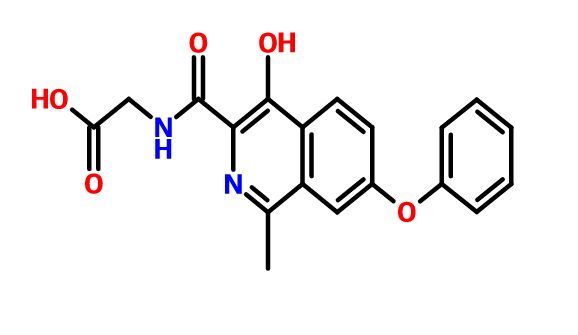
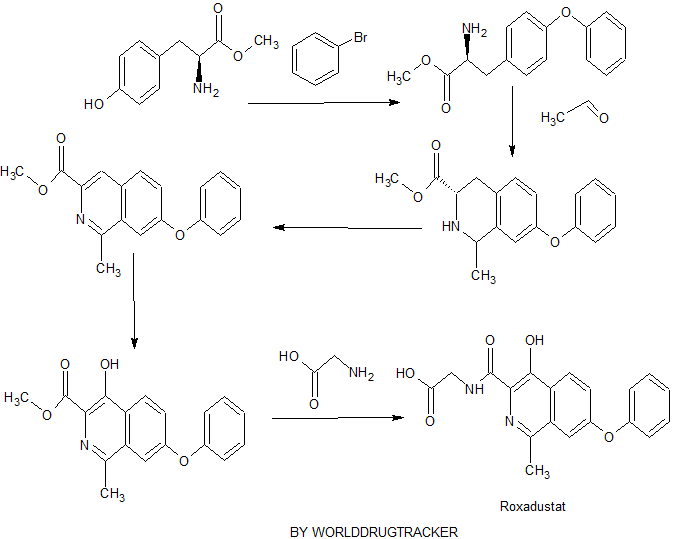
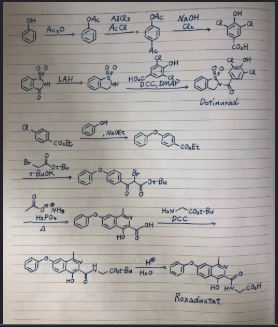
Roxadustat, ASP 1517, FG 4592


STR1

ROXADUSTAT

ASP1517; ASP 1517; ASP-1517; FG-4592; FG 4592; FG4592; Roxadustat.

CAS 808118-40-3
Chemical Formula: C19H16N2O5
Exact Mass: 352.10592

Fibrogen, Inc.

THERAPEUTIC CLAIM, Treatment of anemia

Roxadustat nonproprietary drug name

CHEMICAL NAMES

(4-hydroxy-1-methyl-7-phenoxyisoquinoline-3-carbonyl)glycine

1. Glycine, N-[(4-hydroxy-1-methyl-7-phenoxy-3-isoquinolinyl)carbonyl]-

2. N-[(4-hydroxy-1-methyl-7-phenoxyisoquinolin-3-yl)carbonyl]glycine

MF C19H16N2O5
MW  352.3
SPONSOR FibroGen
CODE FG-4592; ASP1517
CAS 808118-40-3
WHO NUMBER 9717

Roxadustat, also known as ASP1517 and FG-4592, is an HIF α prolyl hydroxylase inhibitor in a cell-free assay. It stabilizes HIF-2 and induces EPO production and stimulates erythropoiesis. Roxadustat transiently and moderately increased endogenous erythropoietin and reduced hepcidin

FG-4592 (also known as ASP1517), 2-(4-hydroxy-1-methyl-7-phenoxyisoquinoline-3-carboxamido)acetic acid,
 is a potent small molecule inhibitor of hypoxia-inducible factor prolyl hydroxylase (HIF-PH),
an enzyme up-regulating the expression of endogenous human erythropoietin (Epo).
It is currently being investigated as an oral treatment for anemia associated with chronic kidney disease (CKD).
Unlike other anemia treating agents, erythropoiesis-stimulating agents (ESAs),
FG-4592 inhibits HIF, through a distinctive mechanism, by stabilization of HIF. According to previous studies,
FG-4592 is capable of correcting and maintaining hemoglobin levels in CKD patients not
receiving dialysis and in patients of end-stage renal disease
who receives dialysis but do not need intravenous iron supplement.
Reference
1. Luis Borges. Different modalities of erythropoiesis stimulating agents.
 Port J Nephrol Hypert 2010; 24(2): 137-145
2. “FibroGen and Astellas announce initiation of phase 3 trial of FG-4592/ASP1517 for treatment 
of anemia of chronic kidney disease” Fibrogen Press Release. Dec 11 2012
3. “FibroGen announces initiation of phase 2b studies of FG-4592, 
an oral HIF prolyl hydroxylase inhibitor, for treatment of anemia”
  • Originator FibroGen
  • Developer Astellas Pharma; AstraZeneca; FibroGen
  • Class Amides; Antianaemics; Carboxylic acids; Isoquinolines; Small molecules
  • Mechanism of Action Basic helix loop helix transcription factor modulators; Hypoxia-inducible factor-proline dioxygenase inhibitors
  • Phase III Anaemia
  • Discontinued Sickle cell anaemia

Most Recent Events

  • 09 Jun 2016 Phase-III clinical trials in Anaemia in Japan (PO)
  • 20 May 2016 In collaboration with FibroGen, Astellas Pharma plans a phase III trial for Anaemia (In chronic kidney disease patients undergoing peritoneal dialysis) in Japan (PO) (NCT02780726)
  • 19 May 2016 In collaboration with FibroGen, Astellas Pharma plans a phase III trial for Anaemia (In erythropoiesis stimulating agent-naive, chronic kidney disease patients undergoing haemodialysis) in Japan (PO) (NCT02780141)

Roxadustat (FG-4592) is a novel new-generation oral hypoxia-induciblefactor (HIF) prolyl hydroxylase inhibitor (PHI) for the treatment of ane-mia in patients with chronic kidney disease (CKD). HIF is a cytosolic tran-scription factor that induces the natural physiological response to lowoxygen conditions, by stimulating erythropoiesis and other protectivepathways. Roxadustat has been shown to stabilize HIF and induce ery-thropoiesis. Consequently, it corrects anemia and maintains hemoglo-bin levels without the need for intravenous iron supplementation in CKDpatients not yet receiving dialysis and in end-stage renal disease pa-tients receiving dialysis. There are many concerns about the use of ery-thropoiesis-stimulating agents (ESA) to treat anemia as they causesupra-physiologic circulating erythropoietin (EPO) levels and are asso-ciated with adverse cardiovascular effects and mortality. Available clin-ical data show that modest and transient increases of endogenous EPOinduced by HIF-PHI (10- to 40-fold lower than ESA levels) are sufficientto mediate erythropoiesis in CKD patients. Evidence suggests that rox-adustat is well tolerated and, to date, no increased risk of cardiovascu-lar events has been found. This suggests that roxadustat provides adistinct pharmacological and clinical profile that may provide a saferand more convenient treatment of CKD anemia

FG-4592 is a new-generation hypoxia-inducible factor prolyl hydroxylase inhibitor in early clinical trials at FibroGen for the oral treatment of iron deficiency anemia and renal failure anemia. Preclinical studies are ongoing for the treatment of sickle cell anemia.

The investigational therapy is designed to restore balance to the body’s natural process of erythropoiesis through mechanisms including: natural EPO production, suppression of the effects of inflammation, downregulation of the iron sequestration hormone hepcidin, and an upregulation of other iron genes, ensuring efficient mobilization and utilization of the body’s own iron stores. In April 2006, FG-4592 was licensed to Astellas Pharma by originator FibroGen in Asia, Europe and South Africa for the treatment of anemia. FibroGen retains rights in the rest of the world. In 2007, the FDA put the trial on clinical hold due to one case of death by fulminant hepatitis during a phase II clinical trial for patients with anemia associated with chronic kidney disease and not requiring dialysis. However, in 2008, the FDA informed the company that clinical trials could be resumed. Phase II/III clinical trials for this indication resumed in 2012. In 2013, the compound was licensed to AstraZeneca by FibroGen for development and marketing in US, CN and all major markets excluding JP, Europe, the Commonwealth of Independent States, the Middle East and South Africa, for the treatment of anemia associated with chronic kidney disease (CKD) and end-stage renal disease (ESRD).
PATENTS
WO 2004108681
WO 2008042800
WO 2009058403
WO 2009075822
WO 2009075824
WO 2012037212
WO 2013013609
WO 2013070908

STR1

PATENT

CN 104892509

MACHINE TRANSLATED

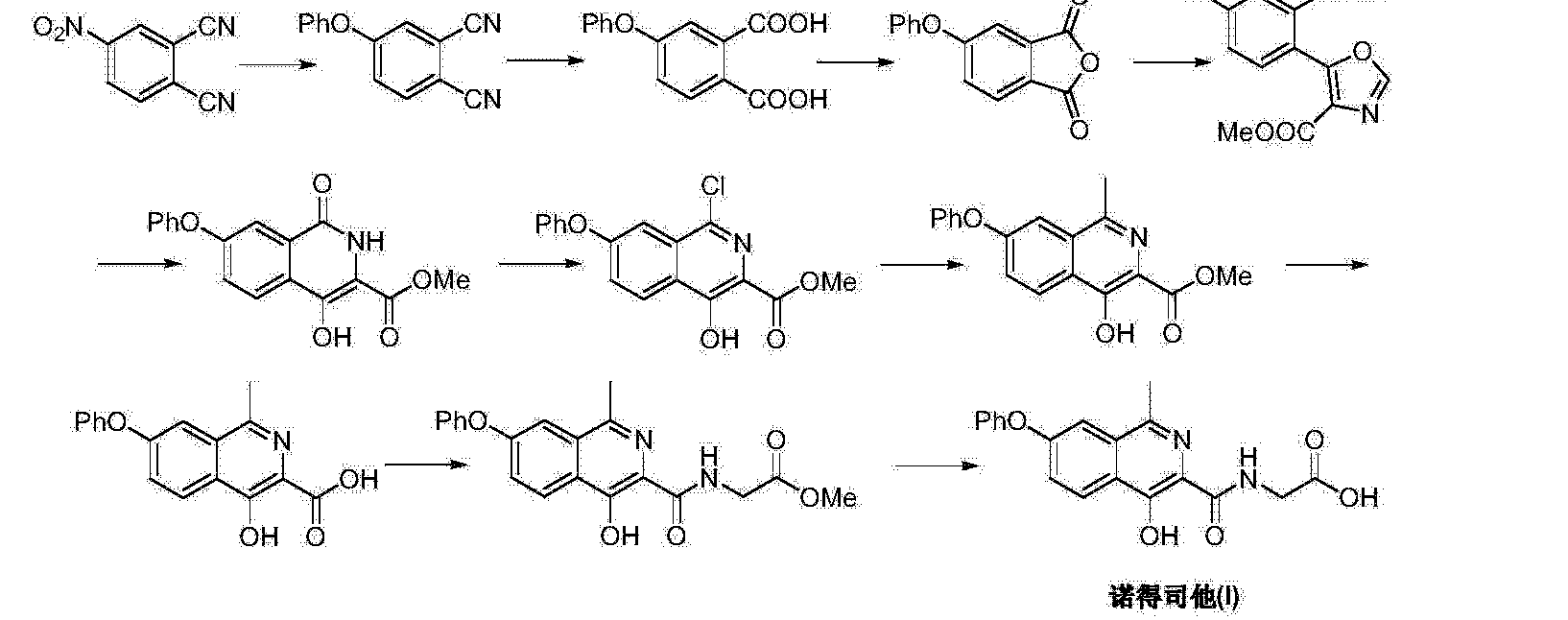
Connaught orlistat (Roxadustat) by the US company Phibro root (FibroGen) R & D, Astellas AstraZeneca and licensed by a hypoxia-inducible factor (HIF) prolyl hydroxylase small molecule inhibitors, codenamed FG-4592.As a first new oral drug, FG-4592 is currently in Phase III clinical testing stage, for the treatment of chronic kidney disease and end-stage renal disease related anemia. Because the drug does not have a standard Chinese translation, so the applicant where it is transliterated as “Connaught Secretary him.”

Connaught orlistat (Roxadustat, I) the chemical name: N_ [(4- hydroxy-1-methyl-7-phenoxy-3-isoquinolinyl) carbonyl] glycine, its structural formula is:

Figure CN104892509AD00031

The original research company’s international patent W02004108681 Division provides a promise he was prepared from the intermediate and intermediate Connaught Secretary for his synthetic route:

Figure CN104892509AD00032

 Zhejiang Beida company’s international patent W02013013609 preparation and acylation of core intermediate was further optimized synthesis route is:

Figure CN104892509AD00041

n PhO. eight XOOH

 original research company’s international patent W02014014834 and W02014014835 also provides another synthetic route he Connaught Secretary prepared:

Figure CN104892509AD00042

Analysis of the above synthetic route, although he continued to Connaught Division to improve and optimize the synthesis, but its essence rings manner that different form quinoline ring is basically the same mother. Especially methyl isoquinoline replaced either by way of introducing the Suzuki reaction catalyzed by a noble metal element, either through amine reduction achieved. Moreover, the above reaction scheme revelation raw materials are readily available, many times during the reaction need to be protected and then deprotected. Clearly, the preparation process is relatively complicated, high cost, industrial production has brought some difficulties.

Figure CN104892509AD00052

Example One:

tyrosine was added to the reaction flask and dried (18. lg, 0.1 mmol) and methanol 250mL, cooling to ice bath 0_5 ° C, was added dropwise over 1 hour a percentage by weight of 98% concentrated sulfuric acid 10g. Drops Albert, heating to reflux. The reaction was stirred for 16-20 hours, TLC the reaction was complete. Concentrated under atmosphere pressure, the residue was added water 100mL, using 10% by weight sodium hydroxide to adjust the pH to 6. 5-7.0, precipitated solid was filtered, washed with methanol and water chloro cake (I: 1) and dried in vacuo tyrosine methyl ester as a white solid (11) 15.38, yield 78.5% out 1–] \ ^ 111/2: 196 [] \ 1 + 1] +!.

Example Two:

[0041] a nitrogen atmosphere and ice bath, was added to the reaction flask tyrosine methyl ester (II) (9. 8g, 50mmol), potassium methoxide (3. 5g, 50mmol) and methanol 50mL, until no gas generation after, was heated to reflux, the reaction was stirred for 2 hours. Concentrated under atmosphere pressure to remove the solvent, the residue was added dimethylsulfoxide 25mL, freshly prepared copper powder (0.2g, 3. Lmmol), was slowly warmed to 150-155 ° C, for about half an hour later, a solution of bromobenzene ( 7. 9g, 50mmol), continue to heat up to 170-175 ° C, the reaction was stirred for 3 hours, TLC detection of the end of the reaction. Was cooled to 60 ° C, and methanol was added to keep micro-boiling, filtered while hot, the filter cake washed three times with hot ethanol, and the combined organic phases, was cooled to square ° C, filtered, and dried in vacuo to give a white solid of 2-amino-3- ( 4-phenoxyphenyl) propanoate (111) 8 11.5, yield 84.9% as 1 -] \ ^ 111/2:! 272 [] \ 1 + 1] +.

 Example Three:

 in the reaction flask was added 2-amino-3- (4-phenoxyphenyl) propionic acid methyl ester (III) (10. 8g, 40mmol), 40% by weight acetaldehyde (20g, 0. 2mol ) and the percentage by weight of 35% concentrated hydrochloric acid 50mL, refluxed for 1 hour. Continue 40% by weight was added acetaldehyde (10g, 0.1mol), and the percentage by weight of 35% concentrated hydrochloric acid 25mL, and then the reaction was refluxed for 3-5 hours. Was cooled to 4-7 ° C, ethyl acetate was added, and extracted layers were separated. The aqueous layer was adjusted with sodium hydroxide solution to pH 11-12, extracted three times with ethyl acetate. The combined organic phase was dried over anhydrous sodium sulfate, and concentrated under reduced pressure to give a white solid of 1-methyl-3-carboxylate -7- phenoxy-1,2,3,4-tetrahydroisoquinoline (IV) 8 4g, 70.7% yield; Mass spectrum (EI): EI-MS m / z: 298 [M + H] + .

 Example Four:

Under ice bath, the reaction flask was added methyl 3-carboxylate I- -7- phenoxy-1,2, 3,4-tetrahydro-isoquinoline (IV) (5. 9g, 20mmol) and dichloromethane 100mL, 0 ° C and under stirring added potassium carbonate (13. 8g, 0. lmol), p-toluenesulfonyl chloride (11. 4g, 60mmol), the addition was completed, the ice bath was removed and stirred at room temperature 3 hour. Water was added 30mL, after stirring standing layer, the organic phase was washed with dilute hydrochloric acid, water and saturated brine, and concentrated, the resulting product was added a 30% by weight sodium hydroxide solution (8. 0g, 60mmol) and dimethyl sulfoxide 60mL, gradually warming to 120-130 ° C, the reaction was stirred for 2-4 hours to complete the reaction by TLC. Cooled to room temperature, water was added lOOmL, extracted three times with ethyl acetate, the combined organic phase was successively washed with water and saturated brine, dried over anhydrous magnesium sulfate, and concentrated, the resulting oil was treated with ethyl acetate and n-hexane (1: 3) recrystallization, vacuum dried to give an off-white solid 1-methyl-3-carboxylate 7-phenoxyheptanoic isoquinoline (V) 5. 25g, yield 89. 6%; EI-MS m / z: 294 [M + H] VH NMR (DMS0-d6) δ 2. 85 (s, 3H), 3 · 97 (s, 3H), 7 · 16-7. 24 (m, 3H), 7 · 49-7. 60 (m, 4Η), 8 · 35 (d, J = 9 · 0,1Η), 8 · 94 (s, 1Η).

Example five:

[0047] added 1-methyl-3-carboxylic acid methyl ester 7-phenoxyheptanoic isoquinoline (V) (2. 93g, IOmmol) and glacial acetic acid 50mL reaction flask, stirring solution of 30% by weight hydrogen peroxide 5mL, warmed to 60-70 ° C, was slowly added dropwise within 10 hours the percentage by weight of a mixture of 30% hydrogen peroxide 2mL and 12mL of glacial acetic acid, a dropping was completed, the reaction was continued for 20-24 hours. Concentrated under reduced pressure, ethanol was added, distillation is continued to be divisible remaining glacial acetic acid. The residue was dissolved with dichloromethane, washed with 5% by weight of sodium bicarbonate, the organic phase was separated, dried over anhydrous sodium sulfate. Filtered and the resulting solution was added p-toluenesulfonyl chloride (3. 8g, 20mmol), was heated to reflux, the reaction was stirred for 3-4 hours, TLC detection completion of the reaction. The solvent was distilled off under reduced pressure, cooled to room temperature, methanol was added, the precipitated solid, cooled to square ° C, allowed to stand overnight. Filtered, the filter cake washed twice with cold methanol and vacuum dried to give an off-white solid 1- methyl-3-methyl-4-hydroxy-phenoxy-isoquinoline -7- (VI) I. 86g, yield 60.2 %; EI-MS m / z:.. 310 [M + H] +, 1H NMR (DMS0-d6) δ 2.90 (s, 3H), 4.05 (s, 3H), 7 17-7 26 (m, 3H ), 7. 49-7. 61 (m, 4H), 8. 38 (d, J = 9. 0,1H), 11. 7 (s, 1H) 〇

 Example VI:

 in the reaction flask with magnetic stirring and pressure to join I- methyl-3-methyl-4-hydroxy-7-phenoxyheptanoate isoquinoline (VI) (1.55g, 5mmol), glycine (I. 13g, 15mmol) and sodium methoxide (3. 25g, 6mmol) in methanol (30mL).Sealed, slowly heated to 120 ° C, the reaction was stirred for 8-10 hours to complete the reaction by TLC. Cooled to room temperature, solid precipitated. Filtration, and the resulting solid was recrystallized from methanol, acetone and then beating the resulting solid was dried under vacuum to give a white solid Connaught orlistat 1.40g, yield 79.5%;

EI-MS m / z: 353 [M + H] +,

1H NMR (DMS0-d6) S2.72 (s, 3H), 3 · 99 (d, J = 6 · 0, 2H), 7 · 18-7. 28 (m, 3H), 7 · 49-7. 63 (m, 4H), 8 · 31 (d, J = 8 · 8,1H), 9 · 08 (s, lH), 13.41 (brs, lH).

PATENT

WO 2014014835

Example 10. Preparation of Compound A

a) 5-Phenoxyphthalide

Figure imgf000056_0001

[0200] A reactor was charged with DMF (68 Kg), and stirring was initiated. The reactor was then charged with phenol (51 Kg), acetylacetone (8 Kg), 5-bromophthalide (85 Kg), copper bromide (9 Kg), and potassium carbonate (77 Kg). The mixture was heated above 85 °C and maintained until reaction completion and then cooled. Water was added. Solid was filtered and washed with water. Solid was dissolved in dichloromethane, and washed with aqueous HCl and then with water. Solvent was removed under pressure and methanol was added. The mixture was stirred and filtered. Solid was washed with methanol and dried in an oven giving 5- phenoxyphthalide (Yield: 72%, HPLC: 99.6%). b) 2-Chloromethyl-4-phenoxybenzoic acid methyl ester

Figure imgf000056_0002

[0201] A reactor was charged with toluene (24 Kg), and stirring was initiated. The reactor was then charged with 5-phenoxyphthalide (56 Kg), thionyl chloride (41 Kg), trimethyl borate (1

Kg), dichlorotriphenylphosphorane (2.5 Kg), and potassium carbonate (77 Kg). The mixture was heated to reflux until reaction completion and solvent was removed leaving 2-chloromethyl-4- phenoxybenzoyl chloride. Methanol was charged and the mixture was heated above 50 °C until reaction completion. Solvent was removed and replaced with DMF. This solution of the product methyl 2-chloromethyl-4-phenoxybenzoic acid methyl ester in DMF was used directly in the next step (HPLC: 85%). c) 4-Hydroxy-7-phenoxyisoquinoline-3-carboxylic acid methyl ester (la)

Figure imgf000057_0001

[0202] A reactor was charged with a solution of 2-chloromethyl-4-phenoxybenzoic acid methyl ester (~68 Kg) in DMF, and stirring was initiated. The reactor was then charged with p- toluenesulfonylglycine methyl ester (66 Kg), potassium carbonate (60 Kg), and sodium iodide (4 Kg). The mixture was heated to at least 50 °C until reaction completion. The mixture was cooled. Sodium methoxide in methanol was charged and the mixture was stirred until reaction completion. Acetic acid and water were added, and the mixture was stirred, filtered and washed with water. Solid was purified by acetone trituration and dried in an oven giving la (Yield from step b): 58%; HPLC: 99.4%). 1H NMR (200 MHz, DMSO-d6) δ 11.60 (s, 1 H), 8.74 (s, 1H),

8.32 (d, J = 9.0 Hz, 1 H), 7.60 (dd, J = 2.3 & 9.0 Hz, 1H), 7.49 (m, 3 H), 7.24 (m, 3 H), 3.96 (s, 3 H); MS-(+)-ion M+l = 296.09 d) Methyl l-((dimethylamino)methyl)-4-hydroxy-7-phenoxyisoquinoline-3-carboxylate

(lb)

Figure imgf000057_0002

[0203] A flask was charged with la (29.5 g) and acetic acid (44.3 g ± 5%), and then stirred. Bis-dimethylaminomethane (12.8 g ± 2%) was slowly added. The mixture was heated to 55 ± 5 °C and maintained until reaction completion. The reaction product was evaluated by MS, HPLC and 1H NMR. 1H NMR (200 MHz, DMSO-d6) δ 11.7 (s, 1 H), 8.38 (d, J = 9.0 Hz, 1 H), 7.61 (dd, J = 9.0, 2.7 Hz, 1 H), 7.49 (m, 3 H), 7.21 (m, 3 H), 5.34 (s, 2 H), 3.97 (s, 3 H), 1.98 (s, 3 H); MS-(+)-ion M+l = 368.12. e) Methyl l-((acetoxy)methyl)-4-hydroxy-7-phenoxyisoquinoline-3-carboxylate (lc)

Figure imgf000058_0001

[0204] The solution of lb from a) above was cooled below 25 °C, at which time acetic anhydride (28.6 g ± 3.5 %) was added to maintain temperature below 50 °C. The resulting mixture was heated to 100 ± 5 °C until reaction completion.

[0205] The solution of lc and Id from above was cooled to less than 65 ± 5 °C. Water (250 mL) was slowly added. The mixture was then cooled to below 20 ± 5 °C and filtered. The wet cake was washed with water (3 x 50 mL) and added to a new flask. Dichloromethane (90 mL) and water (30 mL) were added, and the resulting mixture was stirred. The dichloromethane layer was separated and evaluated by HPLC.

[0206] The organic layer was added to a flask and cooled 5 ± 5 °C. Morpholine was added and the mixture was stirred until reaction completion. Solvent was replaced with acetone/methanol mixture. After cooling, compound lc precipitated and was filtered, washed and dried in an oven (Yield: 81%, HPLC: >99.7%). 1H NMR (200 MHz, DMSO-d6) δ 11.6 (S, 1 H), 8.31 (d, J = 9.0 Hz, 1 H), 7.87 (d, J = 2.3 Hz, 1 H), 7.49 (m, 3 H), 7.24 (m, 3 H), 3.95 (s, 3 H), 3.68 (s, 2H), 2.08 (s, 6 H); MS-(+)-ion M+l = 357.17. f) Methyl 4-hydroxy-l-methyl-7-phenoxyisoquinoline-3-carboxylate (le)

Figure imgf000058_0002

[0207] A reactor was charged with lc (16.0 g), Pd/C (2.08 g), anhydrous Na2C03 (2.56 g) and ethyl acetate (120 mL). The flask was vacuum-purged with nitrogen (3X) and vacuum-purged with hydrogen (3X). The flask was then pressurized with hydrogen and stirred at about 60 °C until completion of reaction. The flask was cooled to 20-25 °C, the pressure released to ambient, the head space purged with nitrogen three times and mixture was filtered. The filtrate was concentrated. Methanol was added. The mixture was stirred and then cooled. Product precipitated and was filtered and dried in an oven (Yield: 90%, HPLC: 99.7%). g) [(4-Hydroxy-l-methyl-7-phenoxy-isoquinoline-3-carbonyl)-amino]-acetic acid

(Compound A)

Figure imgf000059_0001

[0208] A pressure flask was charged with le (30.92 g), glycine (22.52 g), methanol (155 mL), sodium methoxide solution (64.81 g) and sealed (as an alternative, sodium glycinate was used in place of glycine and sodium methoxide). The reaction was heated to about 110 °C until reaction was complete. The mixture was cooled, filtered, washed with methanol, dried under vacuum, dissolved in water and washed with ethyl acetate. The ethyl acetate was removed and to the resulting aqueous layer an acetic acid (18.0 g) solution was added. The suspension was stirred at room temperature, filtered, and the solid washed with water (3 x 30 mL), cold acetone (5-10 °C, 2 x 20 mL), and dried under vacuum to obtain Compound A (Yield: 86.1%, HPLC: 99.8%). Example 11. Biological Testing

[0209] The solid forms provided herein can be used for inhibiting HIF hydroxylase activity, thereby increasing the stability and/or activity of hypoxia inducible factor (HIF), and can be used to treat and prevent HIF-associated conditions and disorders (see, e.g., U.S. Patent No. 7,323,475, U.S. Patent Application Publication No. 2007/0004627, U.S. Patent Application Publication No. 2006/0276477, and U.S. Patent Application Publication No. 2007/0259960, incorporated by reference herein).

SYNTHESIS……..

http://zliming2004.lofter.com/post/1cc9dc55_79ad5d8

FG-4592 - zliming2004 - zliming2004的博客

Condensation of 5-bromophthalide (I) with phenol (II) in the presence of K2CO3, CuBr and acetylacetone in DMF gives 5-phenoxyphthalide (III), which upon lactone ring opening using SOCl2, Ph3PCl2, B(OMe)3 and K2CO3 in refluxing toluene yields 2-chloromethyl-4-phenoxybenzoyl chloride (IV). Esterification of acid chloride (IV) with MeOH at 50 °C furnishes the methyl ester (V), which is then condensed with methyl N-tosylglycinate (VI) in the presence of K2CO3 and NaI in DMF at 50 °C to afford N-substituted aminoester (VII). Cyclization of the intermediate diester (VII) using NaOMe in MeOH leads to methyl 4-hydroxy-7-phenoxyisoquinoline-3-carboxylate (VIII), which is submitted to Mannich reaction with bis-dimethylaminomethane (IX) in the presence of AcOH at 57 °C to provide the dimethylaminomethyl compound (X). Treatment of amine (X) with Ac2O at 103 °C, followed by selective hydrolysis of the phenolic acetate with morpholine leads to methyl 1-acetoxymethyl-4-hydroxy-7-phenoxyisoquinoline-3-carboxylate (XI). Hydrogenolysis of the benzylic acetate (XII) in the presence of Pd/C and Na2CO3 in EtOAc yields methyl 4-hydroxy-1-methyl-7-phenoxyisoquinoline-3-carboylate (XII), which finally couples with glycine (XIII) in the presence of NaOMe in MeOH at 110 °C to afford the target roxadustat (1-3).

FG-4592 - zliming2004 - zliming2004的博客

Cyclization of 4-phenoxyphthalic acid (I) with glycine (II) at 215 °C gives the phthalimide (III), which upon esterification with MeOH and H2SO4 at reflux yields methyl ester (IV). Subsequent rearrangement of phthalimidoacetate (IV) by means of Na in BuOH at 97 °C, followed by flash chromatography provides the isoquinoline-2-carboxylate (V). Bromination of intermediate (V) using POBr3 and NaHCO3 in acetonitrile leads to butyl 8-bromo-3-hydroxy-6-phenoxy-isoquinoline-2-carboxylate (VI), which upon hydrolysis with NaOH in refluxing H2O/EtOH furnishes carboxylic acid (VII). Substitution of bromine in intermediate (VII) using MeI and BuLi in THF at -78 °C, followed by alkylation with PhCH2Br in the presence of K2CO3 in refluxing acetone affords the 2-methyl isoquinoline (VIII). Ester hydrolysis in intermediate (VIII) using KOH in MeOH gives the corresponding carboxylic acid (IX), which is then activated with i-BuOCOCl and Et3N in CH2Cl2, followed by coupling with benzyl glycinate hydrochloride (X) to yield benzylated roxadustat (XI). Finally, debenzylation of intermediate (XI) with H2 over Pd/C in EtOAc/MeOH provides the title compound (1).

FG-4592 - zliming2004 - zliming2004的博客

Condensation of 4-nitro-ortho-phthalonitrile (I) with phenol (II) in the presence of K2CO3 in DMSO gives 4-phenoxy-ortho-phthalonitrile (III) (1), which upon hydrolysis with NaOH (1) or KOH (2) in refluxing MeOH yields 4-phenoxyphthalic acid (IV) (1,2). Dehydration of dicarboxylic acid (IV) using Ac2O and AcOH at reflux furnishes the phthalic anhydride (V), which is then condensed with methyl 2-isocyanoacetate (VI) using DBU in THF to provide oxazole derivative (VII). Rearrangement of intermediate (VII) with HCl in MeOH at 60 °C leads to isoquinoline derivative (VIII), which is partially chlorinated by means of POCl3 at 70 °C to afford 1-chloro-isoquinoline derivative (IX). Substitution of chlorine in intermediate (IX) using Me3B, Pd(PPh3)4 and K2CO3 in refluxing dioxane gives methyl 4-hydroxy-1-methyl-7-phenoxy-3-carboxylate (X), which is then hydrolyzed with aqueous NaOH in refluxing EtOH to yield the carboxylic acid (XI). Coupling of carboxylic acid (XI) with methyl glycinate hydrochloride (XII) by means of PyBOP, (i-Pr)2NH and Et3N in CH2Cl2 yields roxadustat methyl ester (XII), which is finally hydrolyzed with aqueous NaOH in THF to afford the target roxadustat (1).

CLIPS

SAN FRANCISCO, Nov 12, 2013 (BUSINESS WIRE) — FibroGen, Inc. (FibroGen), today announced that data from a China-based Phase 2 study of roxadustat (FG-4592), a first-in-class oral compound in late stage development for the treatment of anemia associated with chronic kidney disease (CKD) and end-stage renal disease (ESRD), were presented in an oral session at the 2013 American Society of Nephrology (ASN) Kidney Week in Atlanta, Georgia.
Roxadustat is an orally administered, small molecule inhibitor of hypoxia-inducible factor (HIF) prolyl hydroxylase. HIF is a protein that responds to oxygen changes in the cellular environment and meets the body’s demands for oxygen by inducing erythropoiesis, the process by which red blood cells are produced and iron is incorporated into hemoglobin (Hb).
The randomized, double-blind, placebo-controlled study was designed to evaluate the efficacy, safety, and tolerability of roxadustat in the correction of anemia in patients (N=91) with chronic kidney disease who had not received dialysis treatment, were not receiving erythropoiesis-stimulating agents (ESAs), and had Hb levels less than 10 g/dL. The correction study randomized patients 2:1 between roxadustat and placebo for 8 weeks of dosing, and included a low-dose cohort (n=30) and high-dose cohort (n=31). Intravenous (IV) iron was not allowed. The study also evaluated iron utilization, changes in serum lipids, and other biomarkers during treatment with roxadustat.
Data from this study suggest that roxadustat effectively corrected hemoglobin levels in anemic CKD patients in a dose-dependent manner as compared to placebo, and did so in the absence of IV iron supplementation regardless of degree of iron repletion at baseline. At the end of the 8-week treatment period, subjects showed mean maximum Hb increases from baseline of 2.6 g/dL in the high dose cohort and 1.8 g/dL in the low dose cohort, as compared to 0.7 g/dL in the placebo group (p < 0.0001) from mean baseline Hb of 8.8 g/dL, 8.8 g/dL, and 8.9 g/dL in the high dose, low dose, and placebo groups, respectively. 87% of patients in the high-dose cohort, 80% of patients in the low-dose cohort, and 23% of patients in the placebo group experienced a hemoglobin increase of 1 g/dL or greater from baseline (p < 0.0001). Similarly, 71% of patients in the high-dose cohort, 50% of patients in the low-dose cohort, and 3% of patients in the placebo group achieved target hemoglobin of 11 g/dL or greater (p < 0.0001). Serum iron levels remained stable in subjects randomized to roxadustat while the subjects underwent brisk erythropoiesis.
Study data also suggest that roxadustat may lower cholesterol. Dyslipidemia is highly prevalent in chronic kidney disease patients and a major cardiovascular risk factor in this population. Patients treated with roxadustat experienced a statistically significant reduction in total cholesterol (p <0.0001) and low-density lipoprotein (LDL) cholesterol (p <0.0001) at the end of the treatment period. The relative proportion of high density lipoprotein (HDL) cholesterol to LDL cholesterol increased significantly (p <0.02). Overall LDL cholesterol levels declined by a mean of 26% and median of 23% from a mean baseline value of 103 mg/dL.
Roxadustat was well tolerated by patients in the study with incidence of adverse events similar across all groups. In contrast to the exacerbation of hypertension observed in studies in which patients received currently available ESA therapies, subjects who received roxadustat in the present study showed small decreases in blood pressure that were similar to blood pressure changes in the placebo group. No cardiovascular serious adverse events were reported in patients treated with roxadustat.
The efficacy and safety of roxadustat are currently being investigated in a global pivotal Phase 3 development program.
“There is a global need for effective, safe, and accessible anemia therapies,” said Thomas B. Neff, Chief Executive Officer of FibroGen. “Side effects associated with current treatments include exposure to supra-physiological levels of erythropoietin and depletion of iron stores. Preliminary clinical findings show that oral administration of roxadustat (FG-4592) is able to correct anemia and maintain hemoglobin levels in patients with chronic kidney disease, to do so with peak erythropoietin levels within physiological range, and to achieve these effects without the administration of intravenous iron. These results suggest roxadustat, as an oral agent, has the potential to overcome the treatment barriers and inconveniences of current ESA therapies, including administration by injection and IV iron supplementation, in treating anemia in CKD patients.”
About Chronic Kidney Disease (CKD) and Anemia
Diabetes, high blood pressure, and other conditions can cause significant damage to the kidneys. If left untreated, those can result in chronic kidney disease and progress to kidney failure. Such deterioration can lead to patients needing a kidney transplant or being placed on dialysis to remove excess fluid and toxins that build up in the body. The progression of CKD also increases the prevalence of anemia, a condition associated with having fewer of the red blood cells that carry oxygen through the body, and/or lower levels of hemoglobin, the protein that enables red blood cells to carry oxygen. As hemoglobin falls, the lower oxygen-carrying capacity of an anemic patients’ blood results in various symptoms including fatigue, loss of energy, breathlessness, and angina. Anemia in CKD patients has been associated with increased hospitalization rates, increased mortality, and reduced quality of life.
Chronic kidney disease is a worldwide critical healthcare problem that affects millions of people and drives significant healthcare cost. In the US, prevalence of CKD has increased dramatically in the past 20 years, from 10 percent of the adult population (or approximately 20 million U.S. adults) as stated in the National Health and Nutrition Evaluation Survey (NHANES) 1988-1994, to 15 percent (or approximately 30 million U.S. adults) in NHANES 2003-2006. In 2009, total Medicare costs for CKD patients were $34 billion. China has an estimated 145 million CKD patients, or approximately five times the number of CKD patients in the U.S. (Lancet April 2012).
About Roxadustat / FG-4592
Roxadustat (FG-4592) is an orally administered small molecule inhibitor of hypoxia-inducible factor (HIF) prolyl hydroxylase activity, in development for the treatment of anemia in patients with chronic kidney disease (CKD). HIF is a protein transcription factor that induces the natural physiological response to conditions of low oxygen, “turning on” erythropoiesis (the process by which red blood cells are produced) and other protective pathways. Roxadustat has been shown to correct anemia and maintain hemoglobin levels without the need for supplementation with intravenous iron in CKD patients not yet receiving dialysis and in end-stage renal disease patients receiving dialysis. An Independent Data Monitoring Committee has found no signals or trends to date to suggest that treatment with roxadustat is associated with increased risk of cardiovascular events, thrombosis, or increases in blood pressure requiring initiation or intensification of antihypertensive medications.
About FibroGen
FibroGen is a privately-held biotechnology company focused on the discovery, development, and commercialization of therapeutic agents for treatment of fibrosis, anemia, cancer, and other serious unmet medical needs. FibroGen’s FG-3019 monoclonal antibody is in clinical development for treatment of idiopathic pulmonary fibrosis and other proliferative diseases, including pancreatic cancer and liver fibrosis. Roxadustat (FG-4592), FibroGen’s small molecule inhibitor of hypoxia-inducible factor (HIF) prolyl hydroxylase, is currently in clinical development for the treatment of anemia. FibroGen is also currently pursuing the use of proprietary recombinant human type III collagens in synthetic corneas for treatment of corneal blindness. For more information please visit: www.fibrogen.com .

References

1: Besarab A, Provenzano R, Hertel J, Zabaneh R, Klaus SJ, Lee T, Leong R, Hemmerich S, Yu KH, Neff TB. Randomized placebo-controlled dose-ranging and pharmacodynamics study of roxadustat (FG-4592) to treat anemia in nondialysis-dependent chronic kidney disease (NDD-CKD) patients. Nephrol Dial Transplant. 2015 Oct;30(10):1665-73. doi: 10.1093/ndt/gfv302. Epub 2015 Aug 3. PubMed PMID: 26238121; PubMed Central PMCID: PMC4569392.

2: Forristal CE, Levesque JP. Targeting the hypoxia-sensing pathway in clinical hematology. Stem Cells Transl Med. 2014 Feb;3(2):135-40. doi: 10.5966/sctm.2013-0134. Epub 2013 Dec 26. PubMed PMID: 24371328; PubMed Central PMCID: PMC3925058.

3: Bouchie A. First-in-class anemia drug takes aim at Amgen’s dominion. Nat Biotechnol. 2013 Nov;31(11):948-9. doi: 10.1038/nbt1113-948b. PubMed PMID: 24213751.

4: Flight MH. Deal watch: AstraZeneca bets on FibroGen’s anaemia drug. Nat Rev Drug Discov. 2013 Oct;12(10):730. doi: 10.1038/nrd4135. PubMed PMID: 24080688.

5: Beuck S, Schänzer W, Thevis M. Hypoxia-inducible factor stabilizers and other small-molecule erythropoiesis-stimulating agents in current and preventive doping analysis. Drug Test Anal. 2012 Nov;4(11):830-45. doi: 10.1002/dta.390. Epub 2012 Feb 24. Review. PubMed PMID: 22362605.

6: Cases A. The latest advances in kidney diseases and related disorders. Drug News Perspect. 2007 Dec;20(10):647-54. PubMed PMID: 18301799.

//////////ASP1517,  ASP 1517,  ASP-1517,  FG-4592,  FG 4592,  FG4592,  Roxadustat, PHASE 3, ASTELLAS, FibroGen, 808118-40-3
O=C(O)CNC(C1=C(O)C2=C(C(C)=N1)C=C(OC3=CC=CC=C3)C=C2)=O

///////////////

http://zliming2004.lofter.com/post/1cc9dc55_79ad5d8

FG-4592

FG-4592 - zliming2004 - zliming2004的博客

FG-4592 is a new-generation hypoxia-inducible factor prolyl hydroxylase inhibitor in early clinical trials at FibroGen for the oral treatment of iron deficiency anemia and renal failure anemia. Preclinical studies are ongoing for the treatment of sickle cell anemia.

The investigational therapy is designed to restore balance to the body’s natural process of erythropoiesis through mechanisms including: natural EPO production, suppression of the effects of inflammation, downregulation of the iron sequestration hormone hepcidin, and an upregulation of other iron genes, ensuring efficient mobilization and utilization of the body’s own iron stores. In April 2006, FG-4592 was licensed to Astellas Pharma by originator FibroGen in Asia, Europe and South Africa for the treatment of anemia. FibroGen retains rights in the rest of the world. In 2007, the FDA put the trial on clinical hold due to one case of death by fulminant hepatitis during a phase II clinical trial for patients with anemia associated with chronic kidney disease and not requiring dialysis. However, in 2008, the FDA informed the company that clinical trials could be resumed. Phase II/III clinical trials for this indication resumed in 2012. In 2013, the compound was licensed to AstraZeneca by FibroGen for development and marketing in US, CN and all major markets excluding JP, Europe, the Commonwealth of Independent States, the Middle East and South Africa, for the treatment of anemia associated with chronic kidney disease (CKD) and end-stage renal disease (ESRD).

Phase Organization ConditionPhase IIIAstellas Pharma
AstraZeneca
FibroGenAnemia, renal failure

FG-4592 - zliming2004 - zliming2004的博客

Condensation of 5-bromophthalide (I) with phenol (II) in the presence of K2CO3, CuBr and acetylacetone in DMF gives 5-phenoxyphthalide (III), which upon lactone ring opening using SOCl2, Ph3PCl2, B(OMe)3 and K2CO3 in refluxing toluene yields 2-chloromethyl-4-phenoxybenzoyl chloride (IV). Esterification of acid chloride (IV) with MeOH at 50 °C furnishes the methyl ester (V), which is then condensed with methyl N-tosylglycinate (VI) in the presence of K2CO3 and NaI in DMF at 50 °C to afford N-substituted aminoester (VII). Cyclization of the intermediate diester (VII) using NaOMe in MeOH leads to methyl 4-hydroxy-7-phenoxyisoquinoline-3-carboxylate (VIII), which is submitted to Mannich reaction with bis-dimethylaminomethane (IX) in the presence of AcOH at 57 °C to provide the dimethylaminomethyl compound (X). Treatment of amine (X) with Ac2O at 103 °C, followed by selective hydrolysis of the phenolic acetate with morpholine leads to methyl 1-acetoxymethyl-4-hydroxy-7-phenoxyisoquinoline-3-carboxylate (XI). Hydrogenolysis of the benzylic acetate (XII) in the presence of Pd/C and Na2CO3 in EtOAc yields methyl 4-hydroxy-1-methyl-7-phenoxyisoquinoline-3-carboylate (XII), which finally couples with glycine (XIII) in the presence of NaOMe in MeOH at 110 °C to afford the target roxadustat (1-3).

FG-4592 - zliming2004 - zliming2004的博客

Cyclization of 4-phenoxyphthalic acid (I) with glycine (II) at 215 °C gives the phthalimide (III), which upon esterification with MeOH and H2SO4 at reflux yields methyl ester (IV). Subsequent rearrangement of phthalimidoacetate (IV) by means of Na in BuOH at 97 °C, followed by flash chromatography provides the isoquinoline-2-carboxylate (V). Bromination of intermediate (V) using POBr3 and NaHCO3 in acetonitrile leads to butyl 8-bromo-3-hydroxy-6-phenoxy-isoquinoline-2-carboxylate (VI), which upon hydrolysis with NaOH in refluxing H2O/EtOH furnishes carboxylic acid (VII). Substitution of bromine in intermediate (VII) using MeI and BuLi in THF at -78 °C, followed by alkylation with PhCH2Br in the presence of K2CO3 in refluxing acetone affords the 2-methyl isoquinoline (VIII). Ester hydrolysis in intermediate (VIII) using KOH in MeOH gives the corresponding carboxylic acid (IX), which is then activated with i-BuOCOCl and Et3N in CH2Cl2, followed by coupling with benzyl glycinate hydrochloride (X) to yield benzylated roxadustat (XI). Finally, debenzylation of intermediate (XI) with H2 over Pd/C in EtOAc/MeOH provides the title compound (1).

FG-4592 - zliming2004 - zliming2004的博客

Condensation of 4-nitro-ortho-phthalonitrile (I) with phenol (II) in the presence of K2CO3 in DMSO gives 4-phenoxy-ortho-phthalonitrile (III) (1), which upon hydrolysis with NaOH (1) or KOH (2) in refluxing MeOH yields 4-phenoxyphthalic acid (IV) (1,2). Dehydration of dicarboxylic acid (IV) using Ac2O and AcOH at reflux furnishes the phthalic anhydride (V), which is then condensed with methyl 2-isocyanoacetate (VI) using DBU in THF to provide oxazole derivative (VII). Rearrangement of intermediate (VII) with HCl in MeOH at 60 °C leads to isoquinoline derivative (VIII), which is partially chlorinated by means of POCl3 at 70 °C to afford 1-chloro-isoquinoline derivative (IX). Substitution of chlorine in intermediate (IX) using Me3B, Pd(PPh3)4 and K2CO3 in refluxing dioxane gives methyl 4-hydroxy-1-methyl-7-phenoxy-3-carboxylate (X), which is then hydrolyzed with aqueous NaOH in refluxing EtOH to yield the carboxylic acid (XI). Coupling of carboxylic acid (XI) with methyl glycinate hydrochloride (XII) by means of PyBOP, (i-Pr)2NH and Et3N in CH2Cl2 yields roxadustat methyl ester (XII), which is finally hydrolyzed with aqueous NaOH in THF to afford the target roxadustat (1).

EP 1644336
US 8278325
JP 2006527200
JP 2010111697
CN 102977015
US 2014343094
CN 102977016
US 7323475
US 8765956
US 2013310565
CN 103145616
US 2013178417
CN 102718708
WO 2004108681
US 2004254215
JP 2011148810
EP 2357175
US 8017625
US 2012029011
US 8916585

Drug Substances
WO 2013013609
EP 2734504
CN 104024227
US 2015031721
FG-4592 - zliming2004 - zliming2004的博客

Polymorphs
Drug Substances
WO 2014014834
CN 103435546

Synthesis
Synthesis Intermediates
CN 103539735
US 2014024676
WO 2014014835
US 2014303202
US 2015038529
EP 2872488

Drug Substances
Polymorphs
US 2014024675
US 8883823
KR 2015058147
US 2015175550

Polymorphs
Drug Substances
EP 1644336
US 8278325
JP 2006527200
JP 2010111697
CN 102977015
US 2014343094
CN 102977016
US 7323475
US 8765956
US 2013310565
CN 103145616
US 2013178417
CN 102718708
WO 2004108681
US 2004254215
JP 2011148810
EP 2357175
US 8017625
US 2012029011
US 8916585

Product patent

WO 2004108681

https://patents.google.com/patent/WO2004108681A1/pt

WO 2013013609

https://patents.google.com/patent/WO2013013609A1

polymorph scan

[(4-Hydroxy- 1 -methyl-7-phenoxy-isoquinoline-3-carbonyl)-amino] -acetic acid (hereinafter, Compound A) is a potent inhibitor of hypoxia inducible factor (HIF) prolyl hydroxylase, as described in U.S. Patent No. 7,323,475. HIF prolyl hydroxylase inhibitors are useful for increasing the stability and/or activity of HIF, and useful for, inter alia, treating and preventing disorders associated with HIF, including anemia, ischemia, and hypoxia.

Innovator

WO2004108681

https://patentscope.wipo.int/search/en/detail.jsf?docId=WO2004108681

Example D-81
e) [(4-Hydroxy-l-methyl-7-phenoxy-isoquinoline-3-carbonyl)-amino]-acetic acid

[0604] Synthesized from [(4-benzyloxy- l-methyl-7-phenoxy-isoquinoline-3-carbonyl)-amino]-acetic acid benzyl ester in analogy to Example D-78 d); MS-(-)-ion: M-l = 351.1.

Example D-78
d) [(4-Hydroxy-l-methoxymethyl-isoquinoline-3-carbonyl)-amino]-acetic acid [0590] A mixture of [(4-benzyloxy- 1 -methoxymethyl-isoquinoline-3 -carbonyl)-amino] -acetic acid benzyl ester (134 mg, 0.285 mmol), Pd/C (100 mg, 10 wt% Pd), EtOAc (10 ml) and MeOH (50 ml) was stirred under a Hj-atmosphere at ambient pressure and temperature for 18 h. Then the mixture was filtered through a pad of celite. Celite and filter cake were washed thoroughly with EtOAc and the combined organic phases were concentrated in vacuo to give the title compound as a tan solid (74 mg); MS-(-)-ion: M-l = 289.2

WO 2014014835

https://patents.google.com/patent/WO2014014835A2

Fibrogen, Inc.

Figure imgf000009_0001

Compound A.

In one embodiment, the pharmaceutical composition comprises a compound selected from the group consisting of: Compound A Form A, Compound A Form B, Compound A Form C, Compound A Form D, Compound A sodium salt, Compound A L-arginine salt, Compound A L-lysine salt, Compound A ethanolamine salt, Compound A diethanolamine salt, Compound A tromethamine salt, amorphous Compound A, and Compound A potassium salt, as described generally above, and at least one pharmaceutically acceptable excipient.

Solid Forms of Compound A

[0073] As described generally above, the present disclosure provides solid forms of [(4- hydroxy-l-methyl-7-phenoxy-isoquinoline-3-carbonyl)-amino] -acetic acid (Compound A).

[0074] Compound A Form A is characterized by its X-ray powder diffractogram that comprises peaks at 8.5, 16.2, and 27.4 °2Θ ± 0.2 °2Θ. The diffractogram comprises additional peaks at 12.8, 21.6, and 22.9 °2Θ ± 0.2 °2Θ. Form A also is characterized by its full X-ray powder diffractogram as substantially shown in Figure 1.

[0075] In some embodiments, Form A is characterized by its differential scanning calorimetry (DSC) curve that comprises an endotherm at about 223 °C. Form A also is characterized by its full DSC curve as substantially as shown in Figure 2.

[0076] Compound A Form B is characterized by its X-ray powder diffractogram that comprises peaks at 4.2, 8.3, and 16.6 °2Θ ± 0.2 °2Θ. The diffractogram comprises additional peaks at 12.5, 14.1, and 17.4 °2Θ ± 0.2 °2Θ. Form B also is characterized by its full X-ray powder

diffractogram as substantially shown in Figure 3.

[0077] In some embodiments, Form B is characterized by its differential scanning calorimetry (DSC) curve that comprises an endotherm at about 222 °C. Form B also is characterized by its full DSC curve as substantially as shown in Figure 4.

[0078] Compound A Form C is characterized by its X-ray powder diffractogram that comprises peaks at 4.5, 13.7, and 16.4 °2Θ ± 0.2 °2Θ. The diffractogram comprises additional peaks at 15.4, 15.5, and 20.6 °2Θ ± 0.2 °2Θ. Form C also is characterized by its full X-ray powder diffractogram as substantially shown in Figure 5.

[0079] In some embodiments, Form C is characterized by its differential scanning calorimetry (DSC) curve that comprises an endotherm at about 222 °C. Form C also is characterized by its full DSC curve as substantially as shown in Figure 6.

[0080] Compound A Form D is characterized by its X-ray powder diffractogram that comprises peaks at 8.4, 8.5, and 16.8 °2Θ ± 0.2 °2Θ. The diffractogram comprises additional peaks at 4.2, 12.6, and 28.4 °2Θ ± 0.2 °2Θ. Form D also is characterized by its full X-ray powder diffractogram as substantially shown in Figure 7. [0081] In some embodiments, Form D is characterized by its differential scanning calorimetry (DSC) curve that comprises an endotherm at about 222 °C. Form D also is characterized by its full DSC curve as substantially as shown in Figure 8.

Example 10. Preparation of Compound A

a) 5-Phenoxyphthalide

Figure imgf000056_0001

[0200] A reactor was charged with DMF (68 Kg), and stirring was initiated. The reactor was then charged with phenol (51 Kg), acetylacetone (8 Kg), 5-bromophthalide (85 Kg), copper bromide (9 Kg), and potassium carbonate (77 Kg). The mixture was heated above 85 °C and maintained until reaction completion and then cooled. Water was added. Solid was filtered and washed with water. Solid was dissolved in dichloromethane, and washed with aqueous HCl and then with water. Solvent was removed under pressure and methanol was added. The mixture was stirred and filtered. Solid was washed with methanol and dried in an oven giving 5- phenoxyphthalide (Yield: 72%, HPLC: 99.6%). b) 2-Chloromethyl-4-phenoxybenzoic acid methyl ester

Figure imgf000056_0002

[0201] A reactor was charged with toluene (24 Kg), and stirring was initiated. The reactor was then charged with 5-phenoxyphthalide (56 Kg), thionyl chloride (41 Kg), trimethyl borate (1

Kg), dichlorotriphenylphosphorane (2.5 Kg), and potassium carbonate (77 Kg). The mixture was heated to reflux until reaction completion and solvent was removed leaving 2-chloromethyl-4- phenoxybenzoyl chloride. Methanol was charged and the mixture was heated above 50 °C until reaction completion. Solvent was removed and replaced with DMF. This solution of the product methyl 2-chloromethyl-4-phenoxybenzoic acid methyl ester in DMF was used directly in the next step (HPLC: 85%). c) 4-Hydroxy-7-phenoxyisoquinoline-3-carboxylic acid methyl ester (la)

Figure imgf000057_0001

[0202] A reactor was charged with a solution of 2-chloromethyl-4-phenoxybenzoic acid methyl ester (~68 Kg) in DMF, and stirring was initiated. The reactor was then charged with p- toluenesulfonylglycine methyl ester (66 Kg), potassium carbonate (60 Kg), and sodium iodide (4 Kg). The mixture was heated to at least 50 °C until reaction completion. The mixture was cooled. Sodium methoxide in methanol was charged and the mixture was stirred until reaction completion. Acetic acid and water were added, and the mixture was stirred, filtered and washed with water. Solid was purified by acetone trituration and dried in an oven giving la (Yield from step b): 58%; HPLC: 99.4%). 1H NMR (200 MHz, DMSO-d6) δ 11.60 (s, 1 H), 8.74 (s, 1H),

8.32 (d, J = 9.0 Hz, 1 H), 7.60 (dd, J = 2.3 & 9.0 Hz, 1H), 7.49 (m, 3 H), 7.24 (m, 3 H), 3.96 (s, 3 H); MS-(+)-ion M+l = 296.09 d) Methyl l-((dimethylamino)methyl)-4-hydroxy-7-phenoxyisoquinoline-3-carboxylate

(lb)

Figure imgf000057_0002

[0203] A flask was charged with la (29.5 g) and acetic acid (44.3 g ± 5%), and then stirred. Bis-dimethylaminomethane (12.8 g ± 2%) was slowly added. The mixture was heated to 55 ± 5 °C and maintained until reaction completion. The reaction product was evaluated by MS, HPLC and 1H NMR. 1H NMR (200 MHz, DMSO-d6) δ 11.7 (s, 1 H), 8.38 (d, J = 9.0 Hz, 1 H), 7.61 (dd, J = 9.0, 2.7 Hz, 1 H), 7.49 (m, 3 H), 7.21 (m, 3 H), 5.34 (s, 2 H), 3.97 (s, 3 H), 1.98 (s, 3 H); MS-(+)-ion M+l = 368.12. e) Methyl l-((acetoxy)methyl)-4-hydroxy-7-phenoxyisoquinoline-3-carboxylate (lc)

Figure imgf000058_0001

[0204] The solution of lb from a) above was cooled below 25 °C, at which time acetic anhydride (28.6 g ± 3.5 %) was added to maintain temperature below 50 °C. The resulting mixture was heated to 100 ± 5 °C until reaction completion.

[0205] The solution of lc and Id from above was cooled to less than 65 ± 5 °C. Water (250 mL) was slowly added. The mixture was then cooled to below 20 ± 5 °C and filtered. The wet cake was washed with water (3 x 50 mL) and added to a new flask. Dichloromethane (90 mL) and water (30 mL) were added, and the resulting mixture was stirred. The dichloromethane layer was separated and evaluated by HPLC.

[0206] The organic layer was added to a flask and cooled 5 ± 5 °C. Morpholine was added and the mixture was stirred until reaction completion. Solvent was replaced with acetone/methanol mixture. After cooling, compound lc precipitated and was filtered, washed and dried in an oven (Yield: 81%, HPLC: >99.7%). 1H NMR (200 MHz, DMSO-d6) δ 11.6 (S, 1 H), 8.31 (d, J = 9.0 Hz, 1 H), 7.87 (d, J = 2.3 Hz, 1 H), 7.49 (m, 3 H), 7.24 (m, 3 H), 3.95 (s, 3 H), 3.68 (s, 2H), 2.08 (s, 6 H); MS-(+)-ion M+l = 357.17. f) Methyl 4-hydroxy-l-methyl-7-phenoxyisoquinoline-3-carboxylate (le)

Figure imgf000058_0002

[0207] A reactor was charged with lc (16.0 g), Pd/C (2.08 g), anhydrous Na2C03(2.56 g) and ethyl acetate (120 mL). The flask was vacuum-purged with nitrogen (3X) and vacuum-purged with hydrogen (3X). The flask was then pressurized with hydrogen and stirred at about 60 °C until completion of reaction. The flask was cooled to 20-25 °C, the pressure released to ambient, the head space purged with nitrogen three times and mixture was filtered. The filtrate was concentrated. Methanol was added. The mixture was stirred and then cooled. Product precipitated and was filtered and dried in an oven (Yield: 90%, HPLC: 99.7%). g) [(4-Hydroxy-l-methyl-7-phenoxy-isoquinoline-3-carbonyl)-amino]-acetic acid

(Compound A)

Figure imgf000059_0001

[0208] A pressure flask was charged with le (30.92 g), glycine (22.52 g), methanol (155 mL), sodium methoxide solution (64.81 g) and sealed (as an alternative, sodium glycinate was used in place of glycine and sodium methoxide). The reaction was heated to about 110 °C until reaction was complete. The mixture was cooled, filtered, washed with methanol, dried under vacuum, dissolved in water and washed with ethyl acetate. The ethyl acetate was removed and to the resulting aqueous layer an acetic acid (18.0 g) solution was added. The suspension was stirred at room temperature, filtered, and the solid washed with water (3 x 30 mL), cold acetone (5-10 °C, 2 x 20 mL), and dried under vacuum to obtain Compound A (Yield: 86.1%, HPLC: 99.8%). Example 11. Biological Testing

[0209] The solid forms provided herein can be used for inhibiting HIF hydroxylase activity, thereby increasing the stability and/or activity of hypoxia inducible factor (HIF), and can be used to treat and prevent HIF-associated conditions and disorders (see, e.g., U.S. Patent No. 7,323,475, U.S. Patent Application Publication No. 2007/0004627, U.S. Patent Application Publication No. 2006/0276477, and U.S. Patent Application Publication No. 2007/0259960, incorporated by reference herein).

[0210] The biological activity of the solid forms provided herein may be assessed using any conventionally known method. In particular embodiments, cells derived from animal tissues, preferably human tissues, capable of expressing erythropoietin when stimulated by compounds of the invention are cultured for the in vitro production of endogenous proteins. Cells contemplated for use in such methods include, but are not limited to, cells derived from hepatic, hematopoietic, renal, and neural tissues.

[0211] Cell culture techniques are generally available in the art and include any method that maintains cell viability and facilitates expression of endogenous proteins. Cells are typically cultured in a growth medium optimized for cell growth, viability, and protein production. Cells may be in suspension or attached to a substrate, and medium may be supplied in batch feed or continuous flow-through regimens. Compounds of the invention are added to the culture medium at levels that stimulate erythropoietin production without compromising cell viability. Erythropoietin produced by the cells is secreted into the culture medium. The medium is then collected and the erythropoietin is purified using methods known to those of skill in the art. (See, e.g., Lai et al. (1987) U.S. Pat. No. 4,667,016; and Egrie (1985) U.S. Pat. No. 4,558,006.)

PATENT

https://patents.google.com/patent/CN104892509A/en

Connaught orlistat (Roxadustat, I) has the chemical name: N_ [(4- hydroxy-l-methyl-3-isoquinolinyl) carbonyl] glycine, having the formula:

[0004]

Figure CN104892509AD00031

[0005] The originator’s International Patent W02004108681 provides a Connaught orlistat prepared from the intermediates and orlistat Connaught intermediate synthetic route:

[0006]

Figure CN104892509AD00032

[0007] Zhejiang International Patent W02013013609 Beida’s preparation and acylation of the intermediate core is further optimized, which is a synthetic route:

[0008]

Figure CN104892509AD00041

n PhO. eight XOOH

[0009] The originator’s International Patent W02014014834 and W02014014835 also provides another synthetic route Division Connaught his prepared:

[0010]

Figure CN104892509AD00042

[0011] 

Figure CN104892509AD00052

PATENT

https://patents.google.com/patent/US9617218B2/en

PATENT

WO 2013013609

https://patents.google.com/patent/WO2013013609A1

Zhejiang Beta Pharma Incorporation

The present invention relates to approximately pure crystalline polymorphs, wherein these polymorphs are the polymorphs of the compound of Formula I, and/or a hydrate thereof, and/or a solvate thereof.

Figure imgf000003_0001

Formula I .

The compound of Formula I of the present invention exists in one or more crystal forms. The inventors designated these crystal forms Form I, Form II, Form III, Form IV, Form V, Form VI and Form VII.

Figure imgf000028_0001

8,                                                                                  9,                                                                                                                  10

Synthesis of Compound 1

Under inert gas (N?), 4~Mtro~o~phth.ak>nitrile (9.2 g), phenol (5.0 g), .2CO3 (7.3 g) and DMSO (40 mL) were added into a flask, and were stirred and reacted at room temperature for 48 hrs., then heated to 60 °C and reacted for 2 hrs. After cooled down, the reaction mixture was filtered and the resulted yellow solid was dried to obtain 11.6 g of Compound 1.

Synthesis of Compound 2

50 % of NaOH solution (25 mL) was added into the methanol solution of Compound 1 (11.3 g). The solution was heated to reflux for 48 hr until the reaction was complete. Concentrated HCl was then added to adjust the pH value to 3. The precipitate was filtered and dried to obtain 10.5 g of Compound 2.

Synthesis of Compound 3

Compound 2 (6.0 g) was dissolved in glacial acetic acid (60 mL) and acetic anhydride (60 mL) and heated to reflux for 3 hrs. The solvent was removed on a rotary evaporator to obtain Compound

3.

Synthesis of Compound 4

Compounds 3 (6.0 g) and methyl isocyanoacetate (2.65 g) were dissolved in THF (60 mL). 3.54 g of DBU (CAS No. 6674-22-2) was added in drop-wise at room temperature and stirred for 1 hr. at room temperature. After extracted with ethyl acetate under alkaline conditions to remove the impurities, the pH value of the aqueous phase was adjusted to 3 with diluted HCL Extracted with ethyl acetate, washed with water and dried with anhydrous Na2S04 and fi ltered, the resulting organic phase was distilled on a rotary evaporator to obtain 9.0g of Compound 4. Synthesis of Compound 5

Compound 4 (9.0 g) in CH3OH was added in concentrated HC1 and heated to 60 °C for 4 hrs. The resulted precipitation was filtered to obtain 5.8 g of crude product. The product was further purified by chromatography to obtain 1.85 g of Compound 5.

Synthesis of Compound 6

Compound 5 (1.77 g) in POCI3 (10 mL) was heated to about 70 and reacted for 3 hrs., then cooled dow and poured into ice. After POCU was completely decomposed, the resulting precipitate was filtered and washed with water, to obtain 1.45 g of Compound 6.

Synthesis of Compound 7

Under N2 atmosphere, Compound 6 (1 .41 g), dioxane (20 mL), rdj Pii ).Π )φ (0.49 g), .2CO3 (1.78 g) and trimethyl borane (0.54 g) were stirred mixed and heated to reflux for 3 hrs., then stirred at room temperature for 48 hrs. After concentration, the resulting mixture was extracted with ethyl acetate, washed with water, dried and filtered, then distilled on a rotary evaporator, followed by further purification through chromatography, to obtain 0.42 g of Compound 7.

Synthesis of Compound 8

Compound 7 (1.02 g) was added into the mixture of etiianol (10 mL) and 2N of NaOH (10 mL), and refluxed for 1.5 hrs. After removing the impurities by filtration, the resulting mixture was distilled to remove ethanol on a rotary evaporator. The resulting pale yellow precipitate was then filtered, washed with water, and dried to obtain 0.5 g of Compound 8.

Synthesis of Compound 9

Compound 8 (0.37 g), glycine methyl ester hydrochloride (0.44 g) and 1.00 g of PyBOP (CAS No. 128625-52-5) were added into dichloromethane (15 mL). and then added triethyiamine (0.74 mL) and bis(isopropyl)eth.y I amine ( 1.0 mL), stirred and reacted at room temperature for 3 hrs. After filtration, the organic phase was washed with water, dried and filtered, followed by a rotary evaporation, and further purification by a silica gel column, to obtain 0.29 g of Compound 9.

Synthesis of Compound 10, the compound of Formula I

Compound 9 (0.28 g) in THF was added in 1 NaOH (5 mL) and stirred and reacted for 1 hr. at room temperature. After remo ving THF by a rotary evaporation, the pFi value of the residue was adjusted to about 3 by diluted HQ, washed further by ethyl acetate, filtered and dried, to obtain 0.21 g of Compound 10, the compound of Formula I. Example 2

Preparation of Crystalline Form I of the compound of Formula I

The compound of Formula I prepared from the method disclosed in Example 1 above, was dissolved in the mixed solvent of methanol/MTBE (methyl tertbutyl ether) at room temperature, followed by a spontaneous precipitation to obtain the desired Polymorph Form I, with the melting point of 174-177 °C.

 Example 2

Preparation of Crystalline Form I of the compound of Formula I

The compound of Formula I prepared from the method disclosed in Example 1 above, was dissolved in the mixed solvent of methanol/MTBE (methyl tertbutyl ether) at room temperature, followed by a spontaneous precipitation to obtain the desired Polymorph Form I, with the melting point of 174-177 °C.

Example 3

Preparation of Crystalline Form II of the compound of Formula I

A slurry suspension of excess amount of the compound of Formula I prepared from the method disclosed in Example 1 above, was stirred in the mixed solvent of H20/acetonitrile (3: 1) or H20/ethanol at room temperature or 50°C at least 48 hrs., or in the mixed solvent of methanol/H20 at room temperature over 48 hr, to obtain the desired Crystalline Form II, with the melting point of 209-212 °C .

Example 4

Preparation of Crystalline Form III of the compound of Formula I

The compound of Formula I prepared from the method disclosed in Example 1 above, was dissolved in the mixed solvent of methanol/acetonitrile at room temperature, followed by a spontaneous precipitation to obtain the desired Crystalline Form III.

Or, a slurry suspension of excess amount of the compound of Formula I prepared from the method disclosed in Example 1 above, was stirred in H20, CH2C12, isopropyl acetate (IPAc), ethyl acetate (EtOAc), or the mixed solvent of IPAc/heptane or H20/acetone at 50 °C over 48 hrs., to obtain the desired Crystalline Form III, with the melting point of 198-200 °C ..

Example 5

Preparation of Crystalline Form IV of the compound of Formula I

A slurry suspension of excess amount of the compound of Formula I prepared from the method disclosed in Example 1 above, was stirred in MTBE, or the mixed solvent of MTBE/heptane, IPAc/heptane, ethyl acetate/heptane or H20/acetone at room temperature over 48 hrs., to obtain the desired Crystalline Form IV.

Or, a slurry suspension of excess amount of the compound of Formula I prepared from the method disclosed in Example 1 above, was stirred in the mixed solvent of ethyl acetate/heptane at 50 °C over 48 hrs., to obtain the desired Ciystalline Form IV.

Or, a slurry suspension of excess amount of the Crystalline Form III as prepared in Example 4 was stirred in the mixed solvent of FFiO/acetone at 50°C for 12-14 days, to obtain the desired Crystalline Form IV, with the melting point of 204-207 °C .

Example 6

Preparation of Crystalline Form V of the compound of Formula I

A slurry suspension of excess amount of the compound of Formula I prepared from the method disclosed in Example 1 above, was stirred in the mixed solvent of MTBE/heptane at 50 C over 48 hr, to obtain she desired Crystalline Form V; or, water was added as anti-solvent into the methanol solution of the compound of Formula I, to obtain the desired Ciystalline Form V, with the melting point of 190-193 °C .

Example 7

Preparation of Crystalline Form VI of the compound of Formula I

A slurry suspension of excess amount of the compound of Formula I prepared from the method disclosed in Example 1 above, was stirred in the mixed solvent of acetonitrile/FFiO (1 : 1) or THF/H2O at room temperature over 48 hrs, to obtain she desired Crystalline Form VI.

Or, the compound of Formula I prepared from the method disclosed in Example 1 above, was dissolved in the mixed solvent of methanol/ethy! acetate at room temperature, followed by a spontaneous precipitation using Ciystalline Form IV as prepared in Example 5 as crystal seeds to obtain the desired Crystalline Form VI, with the melting point of 200-203 °C =

Example 8

Preparation of Crystalline Form VH of the compound of Formula I

Ciystalline Form V prepared from the method of Example 6 was heated to 180 °C, to obtain the desired Crystalline Form VH.

PATENT

IN 201641016266

REDDYS AMORPHOUS FORM

The US patent number 7323475 B2, Example D-81 (e), by referring Example D-78 (d), discloses a process for isolation of roxadustat by concentration of organic phases (EtOAc/Methanol) in vacuo.

The US patent number 8883823 B2 discloses amorphous, different polymorphic Forms, solvates and salts of roxadustat.

The US patent number 9206134 B2 discloses different crystalline Forms of roxadustat.

PATENT

CN 106187888

PATENT

US 2014024675

PATENT

https://patents.google.com/patent/US9206134B2/en

BEIJING BETTA PHARMACEUTICALS CO. 

The present invention relates to approximately pure crystalline polymorphs, wherein these polymorphs are the polymorphs of the compound of Formula and/or a hydrate thereof, and/or a solvate thereof.

Figure US09206134-20151208-C00002

The compound of Formula I of the present invention exists in one or more crystal forms. The inventors designated these crystal forms Form I, Form II, Form III, Form IV, Form V, Form VI and Form VII.

CN104892509A *2015-06-042015-09-09苏州明锐医药科技有限公司Preparation method of Roxadustat
US9340511B22012-07-162016-05-17Fibrogen, Inc.Process for making isoquinoline compounds
US9617218B22012-07-162017-04-11Fibrogen, Inc.Crystalline forms of a prolyl hydroxylase inhibitor
Family To Family Citations
CN102272117B2008-11-142015-06-17菲布罗根有限公司Thiochromene derivatives as hip hydroxylase inhibitors
WO2012106472A12011-02-022012-08-09Fibrogen, Inc.Naphthyridine derivatives as inhibitors of hypoxia inducible factor (hif) hydroxylase
US8883823B22012-07-162014-11-11Fibrogen, Inc.Crystalline forms of a prolyl hydroxylase inhibitor
CN103694172A *2013-12-262014-04-02辽宁亿灵科创生物医药科技有限公司Derivative of aza-aryl compound
WO2017143131A1 *2016-02-192017-08-24Cornell UniversityHif-stabilization and prevention of hyperoxia-induced neonatal lung disease
CN106187888A *2016-07-182016-12-07江苏德源药业股份有限公司FG-4592 single crystal and preparation method thereof

////////////

str1

Roxadustat


STR1

ROXADUSTAT

ASP1517; ASP 1517; ASP-1517; FG-4592; FG 4592; FG4592; Roxadustat.

Fibrogen, Inc.

CAS 808118-40-3
Chemical Formula: C19H16N2O5
Exact Mass: 352.10592

THERAPEUTIC CLAIM
Treatment of anemia

Roxadustat nonproprietary drug name

CHEMICAL NAMES

(4-hydroxy-1-methyl-7-phenoxyisoquinoline-3-carbonyl)glycine

1. Glycine, N-[(4-hydroxy-1-methyl-7-phenoxy-3-isoquinolinyl)carbonyl]-

2. N-[(4-hydroxy-1-methyl-7-phenoxyisoquinolin-3-yl)carbonyl]glycine

MF C19H16N2O5
MW 352.3
SPONSOR FibroGen
CODE FG-4592; ASP1517
CAS  808118-40-3
WHO NUMBER 9717

Roxadustat, also known as ASP1517 and FG-4592, is an HIF α prolyl hydroxylase inhibitor in a cell-free assay. It stabilizes HIF-2 and induces EPO production and stimulates erythropoiesis. Roxadustat transiently and moderately increased endogenous erythropoietin and reduced hepcidin

FG-4592 (also known as ASP1517), 2-(4-hydroxy-1-methyl-7-phenoxyisoquinoline-3-carboxamido)acetic acid,
 is a potent small molecule inhibitor of hypoxia-inducible factor prolyl hydroxylase (HIF-PH),
an enzyme up-regulating the expression of endogenous human erythropoietin (Epo).
It is currently being investigated as an oral treatment for anemia associated with chronic kidney disease (CKD).
Unlike other anemia treating agents, erythropoiesis-stimulating agents (ESAs),
FG-4592 inhibits HIF, through a distinctive mechanism, by stabilization of HIF. According to previous studies,
FG-4592 is capable of correcting and maintaining hemoglobin levels in CKD patients not
receiving dialysis and in patients of end-stage renal disease
who receives dialysis but do not need intravenous iron supplement.
Reference
1. Luis Borges. Different modalities of erythropoiesis stimulating agents.
 Port J Nephrol Hypert 2010; 24(2): 137-145
2. “FibroGen and Astellas announce initiation of phase 3 trial of FG-4592/ASP1517 for treatment 
of anemia of chronic kidney disease” Fibrogen Press Release. Dec 11 2012
3. “FibroGen announces initiation of phase 2b studies of FG-4592, 
an oral HIF prolyl hydroxylase inhibitor, for treatment of anemia”
  • Originator FibroGen
  • Developer Astellas Pharma; AstraZeneca; FibroGen
  • Class Amides; Antianaemics; Carboxylic acids; Isoquinolines; Small molecules
  • Mechanism of Action Basic helix loop helix transcription factor modulators; Hypoxia-inducible factor-proline dioxygenase inhibitors
  • Phase III Anaemia
  • Discontinued Sickle cell anaemia

Most Recent Events

  • 09 Jun 2016 Phase-III clinical trials in Anaemia in Japan (PO)
  • 20 May 2016 In collaboration with FibroGen, Astellas Pharma plans a phase III trial for Anaemia (In chronic kidney disease patients undergoing peritoneal dialysis) in Japan (PO) (NCT02780726)
  • 19 May 2016 In collaboration with FibroGen, Astellas Pharma plans a phase III trial for Anaemia (In erythropoiesis stimulating agent-naive, chronic kidney disease patients undergoing haemodialysis) in Japan (PO) (NCT02780141)


Roxadustat (FG-4592) is a novel new-generation oral hypoxia-induciblefactor (HIF) prolyl hydroxylase inhibitor (PHI) for the treatment of ane-mia in patients with chronic kidney disease (CKD). HIF is a cytosolic tran-scription factor that induces the natural physiological response to lowoxygen conditions, by stimulating erythropoiesis and other protectivepathways. Roxadustat has been shown to stabilize HIF and induce ery-thropoiesis. Consequently, it corrects anemia and maintains hemoglo-bin levels without the need for intravenous iron supplementation in CKDpatients not yet receiving dialysis and in end-stage renal disease pa-tients receiving dialysis. There are many concerns about the use of ery-thropoiesis-stimulating agents (ESA) to treat anemia as they causesupra-physiologic circulating erythropoietin (EPO) levels and are asso-ciated with adverse cardiovascular effects and mortality. Available clin-ical data show that modest and transient increases of endogenous EPOinduced by HIF-PHI (10- to 40-fold lower than ESA levels) are sufficientto mediate erythropoiesis in CKD patients. Evidence suggests that rox-adustat is well tolerated and, to date, no increased risk of cardiovascu-lar events has been found. This suggests that roxadustat provides adistinct pharmacological and clinical profile that may provide a saferand more convenient treatment of CKD anemia


FG-4592 is a new-generation hypoxia-inducible factor prolyl hydroxylase inhibitor in early clinical trials at FibroGen for the oral treatment of iron deficiency anemia and renal failure anemia. Preclinical studies are ongoing for the treatment of sickle cell anemia.

The investigational therapy is designed to restore balance to the body’s natural process of erythropoiesis through mechanisms including: natural EPO production, suppression of the effects of inflammation, downregulation of the iron sequestration hormone hepcidin, and an upregulation of other iron genes, ensuring efficient mobilization and utilization of the body’s own iron stores. In April 2006, FG-4592 was licensed to Astellas Pharma by originator FibroGen in Asia, Europe and South Africa for the treatment of anemia. FibroGen retains rights in the rest of the world. In 2007, the FDA put the trial on clinical hold due to one case of death by fulminant hepatitis during a phase II clinical trial for patients with anemia associated with chronic kidney disease and not requiring dialysis. However, in 2008, the FDA informed the company that clinical trials could be resumed. Phase II/III clinical trials for this indication resumed in 2012. In 2013, the compound was licensed to AstraZeneca by FibroGen for development and marketing in US, CN and all major markets excluding JP, Europe, the Commonwealth of Independent States, the Middle East and South Africa, for the treatment of anemia associated with chronic kidney disease (CKD) and end-stage renal disease (ESRD).
PATENTS
WO 2004108681
WO 2008042800
WO 2009058403
WO 2009075822
WO 2009075824
WO 2012037212
WO 2013013609
WO 2013070908

STR1

PATENT

CN 104892509

MACHINE TRANSLATED

Connaught orlistat (Roxadustat) by the US company Phibro root (FibroGen) R & D, Astellas AstraZeneca and licensed by a hypoxia-inducible factor (HIF) prolyl hydroxylase small molecule inhibitors, codenamed FG-4592.As a first new oral drug, FG-4592 is currently in Phase III clinical testing stage, for the treatment of chronic kidney disease and end-stage renal disease related anemia. Because the drug does not have a standard Chinese translation, so the applicant where it is transliterated as “Connaught Secretary him.”

Connaught orlistat (Roxadustat, I) the chemical name: N_ [(4- hydroxy-1-methyl-7-phenoxy-3-isoquinolinyl) carbonyl] glycine, its structural formula is:

Figure CN104892509AD00031

The original research company’s international patent W02004108681 Division provides a promise he was prepared from the intermediate and intermediate Connaught Secretary for his synthetic route:

Figure CN104892509AD00032

 Zhejiang Beida company’s international patent W02013013609 preparation and acylation of core intermediate was further optimized synthesis route is:

Figure CN104892509AD00041

n PhO. eight XOOH

 original research company’s international patent W02014014834 and W02014014835 also provides another synthetic route he Connaught Secretary prepared:

Figure CN104892509AD00042

Analysis of the above synthetic route, although he continued to Connaught Division to improve and optimize the synthesis, but its essence rings manner that different form quinoline ring is basically the same mother. Especially methyl isoquinoline replaced either by way of introducing the Suzuki reaction catalyzed by a noble metal element, either through amine reduction achieved. Moreover, the above reaction scheme revelation raw materials are readily available, many times during the reaction need to be protected and then deprotected. Clearly, the preparation process is relatively complicated, high cost, industrial production has brought some difficulties.

Figure CN104892509AD00052

Example One:

tyrosine was added to the reaction flask and dried (18. lg, 0.1 mmol) and methanol 250mL, cooling to ice bath 0_5 ° C, was added dropwise over 1 hour a percentage by weight of 98% concentrated sulfuric acid 10g. Drops Albert, heating to reflux. The reaction was stirred for 16-20 hours, TLC the reaction was complete. Concentrated under atmosphere pressure, the residue was added water 100mL, using 10% by weight sodium hydroxide to adjust the pH to 6. 5-7.0, precipitated solid was filtered, washed with methanol and water chloro cake (I: 1) and dried in vacuo tyrosine methyl ester as a white solid (11) 15.38, yield 78.5% out 1–] \ ^ 111/2: 196 [] \ 1 + 1] +!.

Example Two:

[0041] a nitrogen atmosphere and ice bath, was added to the reaction flask tyrosine methyl ester (II) (9. 8g, 50mmol), potassium methoxide (3. 5g, 50mmol) and methanol 50mL, until no gas generation after, was heated to reflux, the reaction was stirred for 2 hours. Concentrated under atmosphere pressure to remove the solvent, the residue was added dimethylsulfoxide 25mL, freshly prepared copper powder (0.2g, 3. Lmmol), was slowly warmed to 150-155 ° C, for about half an hour later, a solution of bromobenzene ( 7. 9g, 50mmol), continue to heat up to 170-175 ° C, the reaction was stirred for 3 hours, TLC detection of the end of the reaction. Was cooled to 60 ° C, and methanol was added to keep micro-boiling, filtered while hot, the filter cake washed three times with hot ethanol, and the combined organic phases, was cooled to square ° C, filtered, and dried in vacuo to give a white solid of 2-amino-3- ( 4-phenoxyphenyl) propanoate (111) 8 11.5, yield 84.9% as 1 -] \ ^ 111/2:! 272 [] \ 1 + 1] +.

 Example Three:

 in the reaction flask was added 2-amino-3- (4-phenoxyphenyl) propionic acid methyl ester (III) (10. 8g, 40mmol), 40% by weight acetaldehyde (20g, 0. 2mol ) and the percentage by weight of 35% concentrated hydrochloric acid 50mL, refluxed for 1 hour. Continue 40% by weight was added acetaldehyde (10g, 0.1mol), and the percentage by weight of 35% concentrated hydrochloric acid 25mL, and then the reaction was refluxed for 3-5 hours. Was cooled to 4-7 ° C, ethyl acetate was added, and extracted layers were separated. The aqueous layer was adjusted with sodium hydroxide solution to pH 11-12, extracted three times with ethyl acetate. The combined organic phase was dried over anhydrous sodium sulfate, and concentrated under reduced pressure to give a white solid of 1-methyl-3-carboxylate -7- phenoxy-1,2,3,4-tetrahydroisoquinoline (IV) 8 4g, 70.7% yield; Mass spectrum (EI): EI-MS m / z: 298 [M + H] + .

 Example Four:

Under ice bath, the reaction flask was added methyl 3-carboxylate I- -7- phenoxy-1,2, 3,4-tetrahydro-isoquinoline (IV) (5. 9g, 20mmol) and dichloromethane 100mL, 0 ° C and under stirring added potassium carbonate (13. 8g, 0. lmol), p-toluenesulfonyl chloride (11. 4g, 60mmol), the addition was completed, the ice bath was removed and stirred at room temperature 3 hour. Water was added 30mL, after stirring standing layer, the organic phase was washed with dilute hydrochloric acid, water and saturated brine, and concentrated, the resulting product was added a 30% by weight sodium hydroxide solution (8. 0g, 60mmol) and dimethyl sulfoxide 60mL, gradually warming to 120-130 ° C, the reaction was stirred for 2-4 hours to complete the reaction by TLC. Cooled to room temperature, water was added lOOmL, extracted three times with ethyl acetate, the combined organic phase was successively washed with water and saturated brine, dried over anhydrous magnesium sulfate, and concentrated, the resulting oil was treated with ethyl acetate and n-hexane (1: 3) recrystallization, vacuum dried to give an off-white solid 1-methyl-3-carboxylate 7-phenoxyheptanoic isoquinoline (V) 5. 25g, yield 89. 6%; EI-MS m / z: 294 [M + H] VH NMR (DMS0-d6) δ 2. 85 (s, 3H), 3 · 97 (s, 3H), 7 · 16-7. 24 (m, 3H), 7 · 49-7. 60 (m, 4Η), 8 · 35 (d, J = 9 · 0,1Η), 8 · 94 (s, 1Η).

Example five:

[0047] added 1-methyl-3-carboxylic acid methyl ester 7-phenoxyheptanoic isoquinoline (V) (2. 93g, IOmmol) and glacial acetic acid 50mL reaction flask, stirring solution of 30% by weight hydrogen peroxide 5mL, warmed to 60-70 ° C, was slowly added dropwise within 10 hours the percentage by weight of a mixture of 30% hydrogen peroxide 2mL and 12mL of glacial acetic acid, a dropping was completed, the reaction was continued for 20-24 hours. Concentrated under reduced pressure, ethanol was added, distillation is continued to be divisible remaining glacial acetic acid. The residue was dissolved with dichloromethane, washed with 5% by weight of sodium bicarbonate, the organic phase was separated, dried over anhydrous sodium sulfate. Filtered and the resulting solution was added p-toluenesulfonyl chloride (3. 8g, 20mmol), was heated to reflux, the reaction was stirred for 3-4 hours, TLC detection completion of the reaction. The solvent was distilled off under reduced pressure, cooled to room temperature, methanol was added, the precipitated solid, cooled to square ° C, allowed to stand overnight. Filtered, the filter cake washed twice with cold methanol and vacuum dried to give an off-white solid 1- methyl-3-methyl-4-hydroxy-phenoxy-isoquinoline -7- (VI) I. 86g, yield 60.2 %; EI-MS m / z:.. 310 [M + H] +, 1H NMR (DMS0-d6) δ 2.90 (s, 3H), 4.05 (s, 3H), 7 17-7 26 (m, 3H ), 7. 49-7. 61 (m, 4H), 8. 38 (d, J = 9. 0,1H), 11. 7 (s, 1H) 〇

 Example VI:

 in the reaction flask with magnetic stirring and pressure to join I- methyl-3-methyl-4-hydroxy-7-phenoxyheptanoate isoquinoline (VI) (1.55g, 5mmol), glycine (I. 13g, 15mmol) and sodium methoxide (3. 25g, 6mmol) in methanol (30mL).Sealed, slowly heated to 120 ° C, the reaction was stirred for 8-10 hours to complete the reaction by TLC. Cooled to room temperature, solid precipitated. Filtration, and the resulting solid was recrystallized from methanol, acetone and then beating the resulting solid was dried under vacuum to give a white solid Connaught orlistat 1.40g, yield 79.5%;

EI-MS m / z: 353 [M + H] +,

1H NMR (DMS0-d6) S2.72 (s, 3H), 3 · 99 (d, J = 6 · 0, 2H), 7 · 18-7. 28 (m, 3H), 7 · 49-7. 63 (m, 4H), 8 · 31 (d, J = 8 · 8,1H), 9 · 08 (s, lH), 13.41 (brs, lH).

PATENT

WO 2014014835

Example 10. Preparation of Compound A

a) 5-Phenoxyphthalide

Figure imgf000056_0001

[0200] A reactor was charged with DMF (68 Kg), and stirring was initiated. The reactor was then charged with phenol (51 Kg), acetylacetone (8 Kg), 5-bromophthalide (85 Kg), copper bromide (9 Kg), and potassium carbonate (77 Kg). The mixture was heated above 85 °C and maintained until reaction completion and then cooled. Water was added. Solid was filtered and washed with water. Solid was dissolved in dichloromethane, and washed with aqueous HCl and then with water. Solvent was removed under pressure and methanol was added. The mixture was stirred and filtered. Solid was washed with methanol and dried in an oven giving 5- phenoxyphthalide (Yield: 72%, HPLC: 99.6%). b) 2-Chloromethyl-4-phenoxybenzoic acid methyl ester

Figure imgf000056_0002

[0201] A reactor was charged with toluene (24 Kg), and stirring was initiated. The reactor was then charged with 5-phenoxyphthalide (56 Kg), thionyl chloride (41 Kg), trimethyl borate (1

Kg), dichlorotriphenylphosphorane (2.5 Kg), and potassium carbonate (77 Kg). The mixture was heated to reflux until reaction completion and solvent was removed leaving 2-chloromethyl-4- phenoxybenzoyl chloride. Methanol was charged and the mixture was heated above 50 °C until reaction completion. Solvent was removed and replaced with DMF. This solution of the product methyl 2-chloromethyl-4-phenoxybenzoic acid methyl ester in DMF was used directly in the next step (HPLC: 85%). c) 4-Hydroxy-7-phenoxyisoquinoline-3-carboxylic acid methyl ester (la)

Figure imgf000057_0001

[0202] A reactor was charged with a solution of 2-chloromethyl-4-phenoxybenzoic acid methyl ester (~68 Kg) in DMF, and stirring was initiated. The reactor was then charged with p- toluenesulfonylglycine methyl ester (66 Kg), potassium carbonate (60 Kg), and sodium iodide (4 Kg). The mixture was heated to at least 50 °C until reaction completion. The mixture was cooled. Sodium methoxide in methanol was charged and the mixture was stirred until reaction completion. Acetic acid and water were added, and the mixture was stirred, filtered and washed with water. Solid was purified by acetone trituration and dried in an oven giving la (Yield from step b): 58%; HPLC: 99.4%). 1H NMR (200 MHz, DMSO-d6) δ 11.60 (s, 1 H), 8.74 (s, 1H),

8.32 (d, J = 9.0 Hz, 1 H), 7.60 (dd, J = 2.3 & 9.0 Hz, 1H), 7.49 (m, 3 H), 7.24 (m, 3 H), 3.96 (s, 3 H); MS-(+)-ion M+l = 296.09 d) Methyl l-((dimethylamino)methyl)-4-hydroxy-7-phenoxyisoquinoline-3-carboxylate

(lb)

Figure imgf000057_0002

[0203] A flask was charged with la (29.5 g) and acetic acid (44.3 g ± 5%), and then stirred. Bis-dimethylaminomethane (12.8 g ± 2%) was slowly added. The mixture was heated to 55 ± 5 °C and maintained until reaction completion. The reaction product was evaluated by MS, HPLC and 1H NMR. 1H NMR (200 MHz, DMSO-d6) δ 11.7 (s, 1 H), 8.38 (d, J = 9.0 Hz, 1 H), 7.61 (dd, J = 9.0, 2.7 Hz, 1 H), 7.49 (m, 3 H), 7.21 (m, 3 H), 5.34 (s, 2 H), 3.97 (s, 3 H), 1.98 (s, 3 H); MS-(+)-ion M+l = 368.12. e) Methyl l-((acetoxy)methyl)-4-hydroxy-7-phenoxyisoquinoline-3-carboxylate (lc)

Figure imgf000058_0001

[0204] The solution of lb from a) above was cooled below 25 °C, at which time acetic anhydride (28.6 g ± 3.5 %) was added to maintain temperature below 50 °C. The resulting mixture was heated to 100 ± 5 °C until reaction completion.

[0205] The solution of lc and Id from above was cooled to less than 65 ± 5 °C. Water (250 mL) was slowly added. The mixture was then cooled to below 20 ± 5 °C and filtered. The wet cake was washed with water (3 x 50 mL) and added to a new flask. Dichloromethane (90 mL) and water (30 mL) were added, and the resulting mixture was stirred. The dichloromethane layer was separated and evaluated by HPLC.

[0206] The organic layer was added to a flask and cooled 5 ± 5 °C. Morpholine was added and the mixture was stirred until reaction completion. Solvent was replaced with acetone/methanol mixture. After cooling, compound lc precipitated and was filtered, washed and dried in an oven (Yield: 81%, HPLC: >99.7%). 1H NMR (200 MHz, DMSO-d6) δ 11.6 (S, 1 H), 8.31 (d, J = 9.0 Hz, 1 H), 7.87 (d, J = 2.3 Hz, 1 H), 7.49 (m, 3 H), 7.24 (m, 3 H), 3.95 (s, 3 H), 3.68 (s, 2H), 2.08 (s, 6 H); MS-(+)-ion M+l = 357.17. f) Methyl 4-hydroxy-l-methyl-7-phenoxyisoquinoline-3-carboxylate (le)

Figure imgf000058_0002

[0207] A reactor was charged with lc (16.0 g), Pd/C (2.08 g), anhydrous Na2C03 (2.56 g) and ethyl acetate (120 mL). The flask was vacuum-purged with nitrogen (3X) and vacuum-purged with hydrogen (3X). The flask was then pressurized with hydrogen and stirred at about 60 °C until completion of reaction. The flask was cooled to 20-25 °C, the pressure released to ambient, the head space purged with nitrogen three times and mixture was filtered. The filtrate was concentrated. Methanol was added. The mixture was stirred and then cooled. Product precipitated and was filtered and dried in an oven (Yield: 90%, HPLC: 99.7%). g) [(4-Hydroxy-l-methyl-7-phenoxy-isoquinoline-3-carbonyl)-amino]-acetic acid

(Compound A)

Figure imgf000059_0001

[0208] A pressure flask was charged with le (30.92 g), glycine (22.52 g), methanol (155 mL), sodium methoxide solution (64.81 g) and sealed (as an alternative, sodium glycinate was used in place of glycine and sodium methoxide). The reaction was heated to about 110 °C until reaction was complete. The mixture was cooled, filtered, washed with methanol, dried under vacuum, dissolved in water and washed with ethyl acetate. The ethyl acetate was removed and to the resulting aqueous layer an acetic acid (18.0 g) solution was added. The suspension was stirred at room temperature, filtered, and the solid washed with water (3 x 30 mL), cold acetone (5-10 °C, 2 x 20 mL), and dried under vacuum to obtain Compound A (Yield: 86.1%, HPLC: 99.8%). Example 11. Biological Testing

[0209] The solid forms provided herein can be used for inhibiting HIF hydroxylase activity, thereby increasing the stability and/or activity of hypoxia inducible factor (HIF), and can be used to treat and prevent HIF-associated conditions and disorders (see, e.g., U.S. Patent No. 7,323,475, U.S. Patent Application Publication No. 2007/0004627, U.S. Patent Application Publication No. 2006/0276477, and U.S. Patent Application Publication No. 2007/0259960, incorporated by reference herein).

SYNTHESIS……..http://zliming2004.lofter.com/post/1cc9dc55_79ad5d8

FG-4592 - zliming2004 - zliming2004的博客

Condensation of 5-bromophthalide (I) with phenol (II) in the presence of K2CO3, CuBr and acetylacetone in DMF gives 5-phenoxyphthalide (III), which upon lactone ring opening using SOCl2, Ph3PCl2, B(OMe)3 and K2CO3 in refluxing toluene yields 2-chloromethyl-4-phenoxybenzoyl chloride (IV). Esterification of acid chloride (IV) with MeOH at 50 °C furnishes the methyl ester (V), which is then condensed with methyl N-tosylglycinate (VI) in the presence of K2CO3 and NaI in DMF at 50 °C to afford N-substituted aminoester (VII). Cyclization of the intermediate diester (VII) using NaOMe in MeOH leads to methyl 4-hydroxy-7-phenoxyisoquinoline-3-carboxylate (VIII), which is submitted to Mannich reaction with bis-dimethylaminomethane (IX) in the presence of AcOH at 57 °C to provide the dimethylaminomethyl compound (X). Treatment of amine (X) with Ac2O at 103 °C, followed by selective hydrolysis of the phenolic acetate with morpholine leads to methyl 1-acetoxymethyl-4-hydroxy-7-phenoxyisoquinoline-3-carboxylate (XI). Hydrogenolysis of the benzylic acetate (XII) in the presence of Pd/C and Na2CO3 in EtOAc yields methyl 4-hydroxy-1-methyl-7-phenoxyisoquinoline-3-carboylate (XII), which finally couples with glycine (XIII) in the presence of NaOMe in MeOH at 110 °C to afford the target roxadustat (1-3).

FG-4592 - zliming2004 - zliming2004的博客

Cyclization of 4-phenoxyphthalic acid (I) with glycine (II) at 215 °C gives the phthalimide (III), which upon esterification with MeOH and H2SO4 at reflux yields methyl ester (IV). Subsequent rearrangement of phthalimidoacetate (IV) by means of Na in BuOH at 97 °C, followed by flash chromatography provides the isoquinoline-2-carboxylate (V). Bromination of intermediate (V) using POBr3 and NaHCO3 in acetonitrile leads to butyl 8-bromo-3-hydroxy-6-phenoxy-isoquinoline-2-carboxylate (VI), which upon hydrolysis with NaOH in refluxing H2O/EtOH furnishes carboxylic acid (VII). Substitution of bromine in intermediate (VII) using MeI and BuLi in THF at -78 °C, followed by alkylation with PhCH2Br in the presence of K2CO3 in refluxing acetone affords the 2-methyl isoquinoline (VIII). Ester hydrolysis in intermediate (VIII) using KOH in MeOH gives the corresponding carboxylic acid (IX), which is then activated with i-BuOCOCl and Et3N in CH2Cl2, followed by coupling with benzyl glycinate hydrochloride (X) to yield benzylated roxadustat (XI). Finally, debenzylation of intermediate (XI) with H2 over Pd/C in EtOAc/MeOH provides the title compound (1).

FG-4592 - zliming2004 - zliming2004的博客

Condensation of 4-nitro-ortho-phthalonitrile (I) with phenol (II) in the presence of K2CO3 in DMSO gives 4-phenoxy-ortho-phthalonitrile (III) (1), which upon hydrolysis with NaOH (1) or KOH (2) in refluxing MeOH yields 4-phenoxyphthalic acid (IV) (1,2). Dehydration of dicarboxylic acid (IV) using Ac2O and AcOH at reflux furnishes the phthalic anhydride (V), which is then condensed with methyl 2-isocyanoacetate (VI) using DBU in THF to provide oxazole derivative (VII). Rearrangement of intermediate (VII) with HCl in MeOH at 60 °C leads to isoquinoline derivative (VIII), which is partially chlorinated by means of POCl3 at 70 °C to afford 1-chloro-isoquinoline derivative (IX). Substitution of chlorine in intermediate (IX) using Me3B, Pd(PPh3)4 and K2CO3 in refluxing dioxane gives methyl 4-hydroxy-1-methyl-7-phenoxy-3-carboxylate (X), which is then hydrolyzed with aqueous NaOH in refluxing EtOH to yield the carboxylic acid (XI). Coupling of carboxylic acid (XI) with methyl glycinate hydrochloride (XII) by means of PyBOP, (i-Pr)2NH and Et3N in CH2Cl2 yields roxadustat methyl ester (XII), which is finally hydrolyzed with aqueous NaOH in THF to afford the target roxadustat (1).

CLIPS

SAN FRANCISCO, Nov 12, 2013 (BUSINESS WIRE) — FibroGen, Inc. (FibroGen), today announced that data from a China-based Phase 2 study of roxadustat (FG-4592), a first-in-class oral compound in late stage development for the treatment of anemia associated with chronic kidney disease (CKD) and end-stage renal disease (ESRD), were presented in an oral session at the 2013 American Society of Nephrology (ASN) Kidney Week in Atlanta, Georgia.
Roxadustat is an orally administered, small molecule inhibitor of hypoxia-inducible factor (HIF) prolyl hydroxylase. HIF is a protein that responds to oxygen changes in the cellular environment and meets the body’s demands for oxygen by inducing erythropoiesis, the process by which red blood cells are produced and iron is incorporated into hemoglobin (Hb).
The randomized, double-blind, placebo-controlled study was designed to evaluate the efficacy, safety, and tolerability of roxadustat in the correction of anemia in patients (N=91) with chronic kidney disease who had not received dialysis treatment, were not receiving erythropoiesis-stimulating agents (ESAs), and had Hb levels less than 10 g/dL. The correction study randomized patients 2:1 between roxadustat and placebo for 8 weeks of dosing, and included a low-dose cohort (n=30) and high-dose cohort (n=31). Intravenous (IV) iron was not allowed. The study also evaluated iron utilization, changes in serum lipids, and other biomarkers during treatment with roxadustat.
Data from this study suggest that roxadustat effectively corrected hemoglobin levels in anemic CKD patients in a dose-dependent manner as compared to placebo, and did so in the absence of IV iron supplementation regardless of degree of iron repletion at baseline. At the end of the 8-week treatment period, subjects showed mean maximum Hb increases from baseline of 2.6 g/dL in the high dose cohort and 1.8 g/dL in the low dose cohort, as compared to 0.7 g/dL in the placebo group (p < 0.0001) from mean baseline Hb of 8.8 g/dL, 8.8 g/dL, and 8.9 g/dL in the high dose, low dose, and placebo groups, respectively. 87% of patients in the high-dose cohort, 80% of patients in the low-dose cohort, and 23% of patients in the placebo group experienced a hemoglobin increase of 1 g/dL or greater from baseline (p < 0.0001). Similarly, 71% of patients in the high-dose cohort, 50% of patients in the low-dose cohort, and 3% of patients in the placebo group achieved target hemoglobin of 11 g/dL or greater (p < 0.0001). Serum iron levels remained stable in subjects randomized to roxadustat while the subjects underwent brisk erythropoiesis.
Study data also suggest that roxadustat may lower cholesterol. Dyslipidemia is highly prevalent in chronic kidney disease patients and a major cardiovascular risk factor in this population. Patients treated with roxadustat experienced a statistically significant reduction in total cholesterol (p <0.0001) and low-density lipoprotein (LDL) cholesterol (p <0.0001) at the end of the treatment period. The relative proportion of high density lipoprotein (HDL) cholesterol to LDL cholesterol increased significantly (p <0.02). Overall LDL cholesterol levels declined by a mean of 26% and median of 23% from a mean baseline value of 103 mg/dL.
Roxadustat was well tolerated by patients in the study with incidence of adverse events similar across all groups. In contrast to the exacerbation of hypertension observed in studies in which patients received currently available ESA therapies, subjects who received roxadustat in the present study showed small decreases in blood pressure that were similar to blood pressure changes in the placebo group. No cardiovascular serious adverse events were reported in patients treated with roxadustat.
The efficacy and safety of roxadustat are currently being investigated in a global pivotal Phase 3 development program.
“There is a global need for effective, safe, and accessible anemia therapies,” said Thomas B. Neff, Chief Executive Officer of FibroGen. “Side effects associated with current treatments include exposure to supra-physiological levels of erythropoietin and depletion of iron stores. Preliminary clinical findings show that oral administration of roxadustat (FG-4592) is able to correct anemia and maintain hemoglobin levels in patients with chronic kidney disease, to do so with peak erythropoietin levels within physiological range, and to achieve these effects without the administration of intravenous iron. These results suggest roxadustat, as an oral agent, has the potential to overcome the treatment barriers and inconveniences of current ESA therapies, including administration by injection and IV iron supplementation, in treating anemia in CKD patients.”
About Chronic Kidney Disease (CKD) and Anemia
Diabetes, high blood pressure, and other conditions can cause significant damage to the kidneys. If left untreated, those can result in chronic kidney disease and progress to kidney failure. Such deterioration can lead to patients needing a kidney transplant or being placed on dialysis to remove excess fluid and toxins that build up in the body. The progression of CKD also increases the prevalence of anemia, a condition associated with having fewer of the red blood cells that carry oxygen through the body, and/or lower levels of hemoglobin, the protein that enables red blood cells to carry oxygen. As hemoglobin falls, the lower oxygen-carrying capacity of an anemic patients’ blood results in various symptoms including fatigue, loss of energy, breathlessness, and angina. Anemia in CKD patients has been associated with increased hospitalization rates, increased mortality, and reduced quality of life.
Chronic kidney disease is a worldwide critical healthcare problem that affects millions of people and drives significant healthcare cost. In the US, prevalence of CKD has increased dramatically in the past 20 years, from 10 percent of the adult population (or approximately 20 million U.S. adults) as stated in the National Health and Nutrition Evaluation Survey (NHANES) 1988-1994, to 15 percent (or approximately 30 million U.S. adults) in NHANES 2003-2006. In 2009, total Medicare costs for CKD patients were $34 billion. China has an estimated 145 million CKD patients, or approximately five times the number of CKD patients in the U.S. (Lancet April 2012).
About Roxadustat / FG-4592
Roxadustat (FG-4592) is an orally administered small molecule inhibitor of hypoxia-inducible factor (HIF) prolyl hydroxylase activity, in development for the treatment of anemia in patients with chronic kidney disease (CKD). HIF is a protein transcription factor that induces the natural physiological response to conditions of low oxygen, “turning on” erythropoiesis (the process by which red blood cells are produced) and other protective pathways. Roxadustat has been shown to correct anemia and maintain hemoglobin levels without the need for supplementation with intravenous iron in CKD patients not yet receiving dialysis and in end-stage renal disease patients receiving dialysis. An Independent Data Monitoring Committee has found no signals or trends to date to suggest that treatment with roxadustat is associated with increased risk of cardiovascular events, thrombosis, or increases in blood pressure requiring initiation or intensification of antihypertensive medications.
About FibroGen
FibroGen is a privately-held biotechnology company focused on the discovery, development, and commercialization of therapeutic agents for treatment of fibrosis, anemia, cancer, and other serious unmet medical needs. FibroGen’s FG-3019 monoclonal antibody is in clinical development for treatment of idiopathic pulmonary fibrosis and other proliferative diseases, including pancreatic cancer and liver fibrosis. Roxadustat (FG-4592), FibroGen’s small molecule inhibitor of hypoxia-inducible factor (HIF) prolyl hydroxylase, is currently in clinical development for the treatment of anemia. FibroGen is also currently pursuing the use of proprietary recombinant human type III collagens in synthetic corneas for treatment of corneal blindness. For more information please visit: www.fibrogen.com .

References

1: Besarab A, Provenzano R, Hertel J, Zabaneh R, Klaus SJ, Lee T, Leong R, Hemmerich S, Yu KH, Neff TB. Randomized placebo-controlled dose-ranging and pharmacodynamics study of roxadustat (FG-4592) to treat anemia in nondialysis-dependent chronic kidney disease (NDD-CKD) patients. Nephrol Dial Transplant. 2015 Oct;30(10):1665-73. doi: 10.1093/ndt/gfv302. Epub 2015 Aug 3. PubMed PMID: 26238121; PubMed Central PMCID: PMC4569392.

2: Forristal CE, Levesque JP. Targeting the hypoxia-sensing pathway in clinical hematology. Stem Cells Transl Med. 2014 Feb;3(2):135-40. doi: 10.5966/sctm.2013-0134. Epub 2013 Dec 26. PubMed PMID: 24371328; PubMed Central PMCID: PMC3925058.

3: Bouchie A. First-in-class anemia drug takes aim at Amgen’s dominion. Nat Biotechnol. 2013 Nov;31(11):948-9. doi: 10.1038/nbt1113-948b. PubMed PMID: 24213751.

4: Flight MH. Deal watch: AstraZeneca bets on FibroGen’s anaemia drug. Nat Rev Drug Discov. 2013 Oct;12(10):730. doi: 10.1038/nrd4135. PubMed PMID: 24080688.

5: Beuck S, Schänzer W, Thevis M. Hypoxia-inducible factor stabilizers and other small-molecule erythropoiesis-stimulating agents in current and preventive doping analysis. Drug Test Anal. 2012 Nov;4(11):830-45. doi: 10.1002/dta.390. Epub 2012 Feb 24. Review. PubMed PMID: 22362605.

6: Cases A. The latest advances in kidney diseases and related disorders. Drug News Perspect. 2007 Dec;20(10):647-54. PubMed PMID: 18301799.

//////////ASP1517,  ASP 1517,  ASP-1517,  FG-4592,  FG 4592,  FG4592,  Roxadustat, PHASE 3, ASTELLAS, FibroGen, 808118-40-3
O=C(O)CNC(C1=C(O)C2=C(C(C)=N1)C=C(OC3=CC=CC=C3)C=C2)=O

Gilteritinib fumarate ギルテリチニブフマル酸塩


1254053-84-3.png

  1. 1254053-84-3

Gilteritinib

ASP-2215

Treatment of Acute Myeloid Leukemia

6-ethyl-3-{3-methoxy-4-[4-(4-methylpiperazin-1-yl)piperidin-1-yl]anilino}-5-[(oxan-4-yl)amino]pyrazine-2-carboxamide

C29H44N8O3, 552.71

Phase III

Xospata pmda 2018/9/21  JAPAN 2018

A FLT3/AXL inhibitor potentially for the treatment of acute myeloid leukemia.

CAS No. 1254053-43-4  FREE FORM

  1. 1254053-84-3  FUMARATE
Astellas Pharma  INNOVATOR
Mechanism Of Action Axl receptor tyrosine kinase inhibitors, Fms-like tyrosine kinase 3 inhibitors, Proto oncogene protein c-kit inhibitors
Who Atc Codes L01X-E (Protein kinase inhibitors)
Ephmra Codes L1H (Protein Kinase Inhibitor Antineoplastics)
Indication Cancer, Hepatic impairment

Gilteritinib(ASP-2215) is a potent FLT3/AXL inhibitor with IC50 of 0.29 nM/<1 nM respectively; shows potent antileukemic activity against AML with either or both FLT3-ITD and FLT3-D835 mutations.
IC50 value: 0.29 nM(FLT3); <1 nM(Axl kinase)
Target: FLT3/AXL inhibitor
ASP2215 inhibited the growth of MV4-11 cells, which harbor FLT3-ITD, with an IC50 value of 0.92 nM, accompanied with inhibition of pFLT3, pAKT, pSTAT5, pERK, and pS6. ASP2215 decreased tumor burden in bone marrow and prolonged the survival of mice intravenously transplanted with MV4-11 cells. ASP2215 may have potential use in treating AML.

SYNTHESIS

STR1

Patent

WO 2015119122

Compound A is 6-ethyl-3 – ({3-methoxy-4- [4- (4-methylpiperazin-1-yl) piperidin-1-yl] phenyl} amino) -5- a (tetrahydro -2H- pyran-4-ylamino) pyrazine-2-carboxamide, its chemical structure is shown below.
[Formula 1]

Gilteritinib fumarate

1254053-84-3.png

2D chemical structure of 1254053-84-3

Gilteritinib fumarate [USAN]

RN: 1254053-84-3

UNII: 5RZZ0Z1GJT

2-Pyrazinecarboxamide, 6-ethyl-3-((3-methoxy-4-(4-(4-methyl-1-piperazinyl)-1-piperidinyl)phenyl)amino)-5-((tetrahydro-2H-pyran-4-yl)amino)-, (2E)-2-butenedioate (2:1)

  • ASP-2215 hemifumarate
  • Molecular Formula, 2C29-H44-N8-O3.C4-H4-O4, Molecular Weight, 1221.5108

Astellas Inititaties Phase 3 Registration Trial of gilteritinib (ASP2215) in Relapsed or Refractory Acute Myeloid Leukemia Patients

gilteritinib-ASP2215

TOKYO, Japan I October 28, 2015 I Astellas Pharma Inc. (TSE:4503) today announced dosing of the first patient in a randomized Phase 3 registration trial of gilteritinib (ASP2215)versus salvage chemotherapy in patients with relapsed or refractory (R/R) acute myeloid leukemia (AML). The primary endpoint of the trial is overall survival (OS).

Gilteritinibis a receptor tyrosine kinase inhibitor of FLT3 and AXL, which are involved in the growth of cancer cells. Gilteritinibhas demonstrated inhibitory activity against FLT3 internal tandem duplication (ITD) as well as tyrosine kinase domain (TKD), two common types of FLT3 mutations that are seen in up to one third of patients with AML.

The gilteritinib Phase 3 trial follows a Phase 1/2 trial, which evaluated doses from 20 to 450 mg once daily. A parallel multi-dose expansion cohort was initiated based on the efficacy seen in the dose escalation phase. Preliminary data from the Phase 1/2 trial presented at the 2015 American Society of Clinical Oncology annual meeting demonstrated a 57.5 percent overall response rate and a 47.2 percent composite Complete Response (CR) rate (CR + CR with incomplete platelet recovery + CR with incomplete hematologic recovery) in 106 patients with FLT3 mutations who received 80 mg and higher doses. Median duration of response was 18 weeks across all doses and median OS was approximately 27 weeks at 80 mg and above in FLT3 mutation positive patients. Common drug-related adverse events (> 10%) observed in the study were diarrhea (13.4%), fatigue (12.4%) and AST increase (11.3%). At the 450 mg dose, two patients reached dose-limiting toxicity (grade 3 diarrhea and ALT/AST elevation) and the maximum tolerated dose was determined to be 300 mg.

On October 27, 2015, the Japanese Ministry of Health, Labor and Welfare (MHLW) announced the selection of gilteritinib as one of the first products designated for SAKIGAKE.

About the Phase 3 Study

The Phase 3 trial is an open-label, multicenter, randomized study of gilteritinib versus salvage chemotherapy in patients with Acute Myeloid Leukemia (AML). The study will enroll 369 patients with FLT3 activating mutation in bone marrow or whole blood, as determined by central lab, AML who are refractory to or have relapsed after first-line AML therapy. Subjects will be randomized in a 2:1 ratio to receive gilteritinib (120 mg) or salvage chemotherapy consisting of LoDAC (low-dose cytarabine), azacitidine, MEC (mitoxantrone, etoposide, and intermediate-dose cytarabine), or FLAG-IDA (fludarabine, cytarabine, and granulocyte colony-stimulating factor with idarubicin). The primary endpoint of the trial is OS. For more information about this trial go to http://www.clinicaltrials.gov, trial identifier NCT02421939.

Gilteritinib was discovered through a research collaboration with Kotobuki Pharmaceutical Co., Ltd., and Astellas has exclusive global rights to develop, manufacture and potentially commercialize gilteritinib.

About Acute Myeloid Leukemia

Acute myeloid leukemia is a cancer that impacts the blood and bone marrow and most commonly experienced in older adults. According to the//www.cancer.org/acs/groups/content/@editorial/documents/document/acspc-044552.pdf” target=”_blank” rel=”nofollow”>American Cancer Society, in 2015, there will be an estimated 20,830 new cases of AML diagnosed in the United States, and about 10,460 cases will result in death.

About SAKIGAKE

The SAKIGAKE designation system can shorten the review period in the following three approaches: 1.) Prioritized Consultation 2.) Substantial Pre-application Consultation and 3.) Prioritized Review. Also, the system will promote development with the following two approaches: 4.) Review Partner System (to be conducted by the Pharmaceuticals and Medical Devices Agency) and 5.) Substantial Post-Marketing Safety Measures.

About Astellas

Astellas Pharma Inc., based in Tokyo, Japan, is a company dedicated to improving the health of people around the world through the provision of innovative and reliable pharmaceutical products. We focus on Urology, Oncology, Immunology, Nephrology and Neuroscience as prioritized therapeutic areas while advancing new therapeutic areas and discovery research leveraging new technologies/modalities. We are also creating new value by combining internal capabilities and external expertise in the medical/healthcare business. Astellas is on the forefront of healthcare change to turn innovative science into value for patients. For more information, please visit our website at http://www.astellas.com/en.

SOURCE: Astellas Pharma

Start of the Euro 2016

////////1254053-43-4, Gilteritinib, ASP-2215, PHASE 3, ASP 2215, Astellas Pharma, Acute Myeloid Leukemia

CCc1c(nc(c(n1)C(=O)N)Nc2ccc(c(c2)OC)N3CCC(CC3)N4CCN(CC4)C)NC5CCOCC5

CCc1c(nc(c(n1)C(=O)N)Nc2ccc(c(c2)OC)N3CCC(CC3)N4CCN(CC4)C)NC5CCOCC5.CCc1c(nc(c(n1)C(=O)N)Nc2ccc(c(c2)OC)N3CCC(CC3)N4CCN(CC4)C)NC5CCOCC5.C(=C/C(=O)O)\C(=O)O

Pexidartinib, PLX-3397


Pexidartinib.png

Pexidartinib

PLX-3397

5-((5-chloro-1H-pyrrolo[2,3-b]pyridin-3-yl)methyl)-N-((6-(trifluoromethyl)pyridin-3-yl)methyl)pyridin-2-amine

N-[5-[(5-Chloro-1H-pyrrolo[2,3-b]pyridin-3-yl)methyl]-2-pyridinyl]-6-(trifluoromethyl)-3-pyridinemethanamine

5-[(5-Chloro-1H-pyrrolo[2,3-b]pyridin-3-yl)methyl]-N-[[6-(trifluoromethyl)pyridin-3-yl]methyl]pyridin-2-amine hydrochloride

Phase III

A Multi-targeted tyrosine kinase inhibitor potentially for the treatment of tenosynovial giant cell tumor (TGCT).

  • Originator Plexxikon
  • Developer Barbara Ann Karmanos Cancer Institute; Columbia University; Merck & Co; National Cancer Institute (USA); Plexxikon; University of California at San Francisco
  • Class 2 ring heterocyclic compounds; Antineoplastics; Fluorine compounds; Pyridines; Pyrroles; Small molecules
  • Mechanism of Action Fms-like tyrosine kinase 3 inhibitors; Immunomodulators; Macrophage colony stimulating factor receptor antagonists; Proto oncogene protein c-akt inhibitors; Proto oncogene protein c-kit inhibitors
  • Orphan Drug Status Yes – Giant cell tumour of tendon sheath; Pigmented villonodular synovitis
  • Phase III Pigmented villonodular synovitis
  • Phase II Glioblastoma; Malignant melanoma; Prostate cancer
  • Phase I/II Breast cancer; Leukaemia; Peripheral nervous system diseases; Sarcoma; Solid tumours
  • Phase I Gastrointestinal stromal tumours
  • No development reported Neurological disorders; Rheumatoid arthritis
  • Discontinued Acute myeloid leukaemia; Hodgkin’s disease

Most Recent Events

  • 25 May 2016 Plexxikon and AstraZeneca plan the MEDIPLEX phase I trial for Solid tumours (Combination therapy, Metastatic disease) in France (NCT02777710)
  • 05 Apr 2016 Daiichi Sankyo plans a phase I trial for Solid tumours (Late-stage disease, Second-line therapy or greater) in Taiwan (PO) (NCT02734433)
  • 11 Mar 2016 Plexxikon re-initiates enrolment in a phase Ib trial in Solid tumours and Gastrointestinal stromal tumours in USA (NCT02401815)

Plexxikon, a subsidiary of Daiichi Sankyo, is developing pexidartinib, a dual Fms/Kit and FIt3-ITD inhibitor, for treating cancer.

Image result for Plexxikon,

Image result for pexidartinib

Image result for Plexxikon,


Multi-targeted receptor tyrosine kinase inhibitor of CSF1R, c-Kit, and FLT3 (IC50 values 13 nM, 27 nM, and 11 nM, respectively) Administration of PLX3397 reduced CIBP, induced substantial intratumoral fibrosis, and was also highly efficacious in reducing tumor cell growth, formation of new tumor colonies in bone, and pathological tumor-induced bone remodeling. PLX3397 is superior to imatinib in the treatment of malignant peripheral nerve sheath tumor (MPNST), and the combination of PLX3397 with a TORC1 inhibitor could provide a new therapeutic approach for the treatment of this disease.

Plexxikon is conducting phase III clinical studies with PLX-3397 for the treatment of pigmented villonodular synovitis. Phase II clinical studies are ongoing for the oral treatment of melanoma and glioblastoma multiforme. Additional early clinical trials are underway for the treatment of metastatic breast cancer, for the treatment of prostate cancer (adenocarcinoma), and for the treatment of malignant peripheral nerve sheath tumor. No recent development has been reported from preclinical studies for the treatment of systemic lupus erythematosus and for the treatment of multiple sclerosis. Prior to patient enrollment, a phase I clinical trial by Plexxikon for the treatment of rheumatoid arthritis was withdrawn. Daiichi Sankyo (parent of Plexxikon) decided to discontinue phase II trials of the product for the treatment of castration-resistant prostate cancer and for the treatment of Hodgkin’s lymphoma after reviewing its clinical study results and also have discontinued phase II studies for the treatment of acute myeloid leukemia due to strategic reasons.

Pexidartinib.png

In 2014, orphan drug designation was assigned to the compound in the US for the treatment of pigmented villonodular synovitis andf giant cell tumor of the tendon sheath. In 2015, the compound was granted orphan designation in the E.U. for the treatment of tenosynovial giant cell tumor, localised and diffuse type. In the same year, the product was granted breakthrough therapy designation for the treatment of tenosynovial giant cell tumor (TGCT) where surgical removal of the tumor would be associated with potentially worsening functional limitation or severe morbidity.

C-fms and c-kit arc both type III transmembrane receptor protein tyrosine kinases (RPTKs) that regulate key signal transduction cascades that control cellular growth and proliferation. Both receptors have similar structural features comprising five extracellular immunoglobulin (IG) domains, a single transmembrane domain, and a split cytoplasmic kinase domain separated by a kinase insert segment.

c-Fms
C-fms is a member of the family of genes originally isolated from the Susan McDonough strain ot teline sarcoma viruses, The cellular proto-oncogene FMS (c-fms, cellular feline McDonough sarcoma) codes for the receptor for the macrophage colony-stimuktmg tactor (M- CSF) C-fms is crucial for the growth and differentiation of the monocyte-macrophage lineage, and upon binding of Vf-CSF to the extracellular domain of c-fms, the receptor dimeπzes and trans- autophosphorylates cytoplasmic tyrosine residues

M-CSF, first described by Robinson and co-workers (Blood 1969, 33 396-9), is a cytokine that controls the production, differentiation, and function of macrophages M-CSF stimulates differentiation of progenitor cells to mature monocytes, and prolongs the survival of monocytes Furthermore, M-CSF enhances cytotoxicity, superoxide production, phagocytosis, chemota\is, and secondary cytokine production of additional factors in monocytes and macrophages Examples of such additional factors include granulocyte colony stimulating lactor (G-CSF) interleukin-6 (IL-6), and mterleukm-8 (IL-8) M-CSF stimulates hematopoiesis, promotes differentiation and proliferation of osteoclast progenitor cells, and has profound effects on lipid metabolism Furthermore, M-CSF is important in pregnancy Physiologically, large amounts of M-CSF are produced in the placenta, and M-CSF is believed to play an essential role in trophoblast differentiation (Motoyoshi, lnt J Hematol 1998, 67 109-22) l hc elevated semm levels of M-CSF m early pregnancy may participate in the immunologic mechanisms responsible for the maintenance of the pregnancy (Flanagan & Lader, Curr Opm Hematol 1998, 5 181-5)

Related to c-fms and c-kit are two p_latelet -derived growth factor receptors, alpha (i e , pdgfra) and beta (pdgfrb) (PDGF) 1 he gene coding for pdgfra is located on chromosome 4ql 1 -q!2 in the same region of chromosome 4 as the oncogene coding for c-kit The genes coding for pdgfra and c-fms appear to have evolved from a common ancestral gene by gene duplication, inasmuch as these two genes are tandemly linked on chromosome 5 They are oriented head to tail with the 5-pnme exon of the c-fms gene located only 500 bp from the last 3-pπme exon of the gene coding for pdgfra Most gastrointestinal stromal tumors (GIST) have activating mutations in c-kit and most patients with GISTs respond well to Gleevec, which inhibits c-kit Hemπch et al (Science 2003, 299 “OS-IO) have shown that approximately 35% of GISTs lacking c-krt mutations, have intragenic activation mutations m tht gene encoding pdgfra, and that tumors expressing c-kit or pdgfrd are indistinguishable with respect to activation of downstream signaling intermediates and cytogenetic changes associated with tumor progression Thus, c kit and pdgfra mutations appear to be alternative and mutually exclusive oncogenic mechanisms m GISTs [0007} Similarly, the observation that production of M-CSF, the major macrophage growth factor, is increased in tissues during inflammation points out a role for c-frns in diseases, such as for example inflammatory diseases. More particularly, because elevated levels of M-CSF are found in the disease state, modulation of the activity of c-fms can ameliorate disease associated with increased levels of M-CSF.

c-Kit
The Stem Cell Factor (SCF) receptor c-kit plays an important role in the development of melanocytes and mast, germ and hematopoietic cells. Stem Cell Factor (SCF) is a protein encoded by the Sl locus, and has also been called “kit ligand” (KL) and mast cell growth factor (MGF), based on the biological properties used to identify it (reviewed in Tsujimura, Pathol Int 1996, 46:933-938; Loveland, et al., J. Endocrinol 1997, 153:337-344; Vliagoftis, et al,, Clin Immunol 1997, 100:435-440; Broudy, Blood 1997, 90: 1345-1364; Pignon, Hermatol Cell Ther 1997, 39: 1 14-1 16; and Lyman, et al., Blood 1998, 91 : 1 101 -1 134.). Herein the abbreviation SCF refers to the physiological ligand for c-kit.

SCF is synthesized as a transmembrane protein with a molecular weight of 220 or 248 Dalton, depending on alternative splicing of the mRNA to encode exon 6. The larger protein can be proteolytically cleaved to form, a soluble, glycosylated protein which noncovalently dimerizcs. Both the soluble and membrane-bound forms of SCF can bind to and activate c-kit. For example, in the skin, SCF is predominantly expressed by fibroblasts, keratinocytes, and endothelial cells, which modulate the activity of melanocytes and mast cells expressing c-kit. In bone, marrow stromal cells express SCF and regulate hematopoiesis of c-kit expressing stem cells. In the gastrointestinal tract, intestinal epithelial cells express SCF and affect the interstitial cells of Cajal and intraepithelial lymphocytes. In the testis, Sertoli cells and granulosa cells express SCF which regulates spermatogenesis by interaction with c-kit on germ cells.

STR1

PATENT

WO 2008063888

PATENT

WO 2008064265

PATENT

WO 2008064255

PATENT

WO 2012158957

Fragments in the clinic: PLX3397

Practical Fragments covers a wide variety of journals. J. Med. Chem., Bioorg. Med. Chem. Lett., Drug Disc. Today, and ACS Med. Chem. Lett. are all well-represented, but we also range further afield, from biggies such asNature and Science to more niche titles such as ChemMedChem, Acta. Cryst. D., and Anal. Chim. Acta. The increasingly clinical relevance of fragment-based approaches is highlighted by a recent paper by William Tap and a large group of collaborators appearing in the New England Journal of Medicine. This reports on the results of the Daiichi Sankyo (née Plexxikon) drug PLX3397 in a phase I trial for tenosynovial giant-cell tumor, a rare but aggressive cancer of the tendon sheath.

The story actually starts with a 2013 paper by Chao Zhang and his Plexxikon colleagues in Proc. Nat. Acad. Sci. USA. The researchers were interested in inhibiting the enzymes CSF1R (or FMS) and KIT; both kinases are implicated in cancer as well as inflammatory diseases. The team started with 7-azaindole, the same fragment they used to discover vemurafenib. Structural studies of an early derivative, PLX070, revealed a hydrogen bond between the ligand oxygen and a conserved backbone amide. Further building led to PLX647, with good activity against both CSF1R and KIT. Selectivity profiling against a panel of 400 kinases revealed only two others with IC50values < 0.3 µM. The molecule was active in cell-based assays, had good pharmacokinetics in mice and rats, and was active in rodent models of inflammatory disease.

The new paper focuses on the results of a clinical trial with PLX3397, a derivative of PLX647. Despite its close structural similarity to PLX647, it binds to CSF1R in a slightly different manner. Both inhibitors bind to the inactive form of the kinase, but PLX3397 also recruits the so-called juxtamembrane domain of the kinase to stabilize this autoinhibited conformation. Pharmacokinetic and pharmacodynamics studies in animals were also positive.

http://practicalfragments.blogspot.in/2015/10/fragments-in-clinic-plx3397.html

Tenosynovial giant-cell tumor seems to be dependent on CSF1R, so the researchers performed a phase 1 dose-escalation study with an extension in which patients treated with the chosen phase 2 dose were treated longer. Of the 23 patients in this extension, 12 had a partial response and 7 had stable disease. A quick search ofclinicaltrials.gov reveals that PLX3397 is currently in multiple trials for several indications, including a phase 3 trial for giant cell tumor of the tendon sheath.

Several lessons can be drawn from these studies. First, as the authors note, one fragment can give rise to multiple different clinical candidates. Indeed, in addition to vemurafenib, 7-azaindole was also the starting point forAZD5363. This is a good counterargument to those who believe that novelty is essential in fragments.

A second, related point is that selectivity is also not necessary for a fragment. The fact that 7-azaindole comes up so frequently as a kinase-binding fragment has not prevented researchers from growing it into remarkably selective inhibitors. An obvious corollary is that even subtle changes to a molecule can have dramatic effects: the added pyridyl nitrogen in PLX3397 is essential for stabilizing a unique conformation of the enzyme.

NEW PATENT

PEXIDARTINIB BY DAIICHI

The compound named, [5-(5-chloro-lH-pyrrolo[2,3-b]pyridin-3-ylmethyl)-pyridin-2-yl]-(6-trifluoromethyl-pyridin-3-ylmethyl)-amine, which is also known as pexidartinib, is effective for treating subjects suffering from or at risk of a c-Kit and/or c-Fms and/or Flt3 mediated disease or condition. Suitable compounds, including pexidartinib or a salt thereof, for the treatment of such diseases and conditions are disclosed in U.S. Patent 7,893,075, U.S.

Publication No. 2014-0037617 and U.S. Publication No. 2013-0274259, the disclosures of all of which are incorporated herein by reference in their entirety.

There remains a need in developing new versatile and facile processes for the efficient preparation of pexidartinib and other similar molecules, especially in an industrial scale.

Example 1. Synthesis of [5-(5-chloro-lH-pyrrolo[2,3-b]pyridin-3-ylmethyl)-pyridin-2-yl]- (6-trifluoromethyl-pyridin-3-ylmethyl)-amine:

Step 1: Conversion of A to Ilia

The reactor was charged with Compound A (1000 gm, 1.0 eq.), Compound B (497 gm, 1.05 eq.), tetrabutylammonium hydrogen sulfate (31.6 gm, 0.03 eq.) and isopropanol (12 L, 11.8 vol). The reaction mixture was stirred for at least about an hour to obtain a near clear, yellow solution. Then potassium ie/ -pentoxide (73 mL, 0.04 eq.) was added over 30 seconds. The reaction mixture was stirred at about 15-25°C for about 20-24 hours. The reaction was monitored by HPLC. When the content of compound Ilia was more than 80%, the reaction was deemed complete. The reaction mixture was cooled to about 0-10°C and then stirred for at least about 2 hours. The precipitate was filtered, washed with 3 L isopropanol that had been cooled to 0°C and dried to provide compound Ilia as a white solid (1.34 kg, 91.2% yield, 97.7% purity by HPLC). 1H NMR (DMSO-d6): δ (ppm) 11.8 (s, NH), 8.50-8.51 (d, 1H), 8.17 (d, 1H), 7.85-7.88 (dd, 1H), 7.82 (d, 1H), 7.41 (S, 1H), 7.29-7.31 (d, 1H), 6.04 (s, 2H), and 1.35 (s, 18H).

[0073] Alternatively, potassium ie/ -pentoxide can also be used in this reaction as a 25% solution in toluene.

Step 2: Conversion of Ilia to IV

The reactor was charged with compound Ilia (1.1 kg, 1 eq.) and acetonitrile (8.8 L, 12.4 vol) and the reaction mixture was stirred. Then triethylsilane (1.35 kg, 5 eq.) was added at about

15-30°C over at least about 10 minutes. Then trifluoroacetic acid (2.38 kg, 9 eq.) was added to the reactor at about 15-30°C over at least about 30 minutes. The reaction mixture was heated at about 55-65°C over at least about 4 hours. It was then stirred at about 55-65°C for about 20-48 hours. The reaction was monitored by HPLC. When the content of compound Ilia was less than about 1%, the reaction was deemed complete. The reaction mixture was cooled to about 45-55°C and then a) concentrated to 3.3 L under vacuum and b) water (8.25 L) was charged. Steps a) and b) were repeated 4 times. The reaction mixture was then heated at about 45-60°C and stirred for bout 1-3 hours. It was then cooled to about 0-10°C over at least about 2 hours and it was stirred at about 0-10°C for about 2-4 hours. The precipitate was filtered, washed with 2.2 L water and then with heptane (1.1 L) and dried to provide the TFA salt of compound IV as an off-white solid (673.3 gm, 77.9% yield, 99.7% purity by HPLC). 1H NMR (DMSO-d6): δ (ppm) 11.78 (s, COOH), 8.18 (d, 1H), 8.08-8.09 (broad doublet, 2H), 7.93-7.94 (d, 1H), 7.81-7.84 (dd, 1H), 7.47-7.48 (d, 1H), 6.90-6.93 (d, 1H), 3.92 (s, 2H).

Step 3: Conversion of IV to I

[0074] The reactor was charged with compound IV (663.3 gm, 1 eq.), compound V (623.2 gm, 2.0 eq.) and acetonitrile (13.3 L). The reaction mixture was stirred for about 5-10 minutes at room temperature. Triethylsilane (1531.6 gm, 7.4 eq.) was then added to the reactor over at least about 10 minutes at or less than about 30°C. Trifluoroacetic acid (1542.5 gm, 7.6 eq.) was added to the reactor over at least about 10 minutes at or less than about 30°C. The reaction mixture was stirred for at least about 30 minutes at about 15-30°C. It was then heated to about 70-82°C over at least about one hour and then stirred at about 70-82°C for about 20-48 hours. The reaction was monitored by HPLC. When the content of compound IV was less than about 1%, the reaction was deemed complete.

[0075] The reaction mixture was cooled to room temperature, the acetonitrile layer was separated and concentrated. Then water (7.96 L) was charged and the reaction mixture was concentrated to 6.64 L under vacuum providing a tri-phasic mixture. It was then cooled to 15- 25°C, charged with ethyl acetate (10.6 L) and stirred providing a biphasic mixture. It was cooled to 0-10°C, charged with a 25% NaOH solution in water until a pH of about 8-9 was reached with vigorous stirring, heated to about 65-75°C and stirred at about 65-75° for about 30 minutes. The organic layer was separated, and water (3.98 L) was charged and the reaction mixture was heated at about 65-75°C. The organic layer was separated and concentrated to about 5.3-5.9 L under vacuum, heptane (11.9 L) was added and the slurry was heated to about 55-65°C and stirred for about 2 hours. The reaction mixture was cooled to about 15-30°C over at least about 2 hours and then stirred at about 15-30°C for at least about 1 hour. The precipitate was filtered, washed with heptane (1.99 L) and dried. The filter cake was charged into reactor with ethyl acetate (5.31L, 8 vol) and heptane (2.65 L, 4 vol), cooled to about 15-30°C over at least about 2 hours and then stirred at about 15-30°C for at least about 1 hour. The precipitate was filtered, washed with heptane and dried to provide Compound I as a light yellow solid (648.4 gm, 89.4% yield, 99.4% purity by HPLC).

Step 4: Conversion of I to II

[0076] The reactor was charged with compound I (10 gm, 1 eq.), 110 mL ethanol was added and the reaction mixture was stirred. Concentrated hydrochloric acid (4.7 gm, 2 eq.) was slowly added to the reaction mixture while maintaining a temperature of about 30°C or less to form a clear solution. It was then filtered and washed with methanol (10 mL). It was again filtered and purified water (3 mL) was added to it at about 28-32°C. The mixture was stirred at about 28-32°C for 1-3 hours and filtered, purified water (177 mL) was added to it at about 25-32°C. The reaction mixture was cooled at about 0-7 °C and stirred for at least about 2 hours. Optionally, seed crystals of compound II can be added in this step. The solids were filtered, rinsed with acool (0-5°C) mixture of methanol (6 mL) and MTBE (24 mL), and with cool (0-5°C) MTBE (30 mL). The product was dried to provide Compound II (90% yield).

PATENT
WO2016179415,
PATENT
WO2008063888,
PATENT
WO2013142427, claiming use of pexidartinib for treating diseases eg Hodgkins disease, leukemia, muscular dystrophy and glaucoma.
PATENTS

US20152655862015-09-24COMPOUNDS MODULATING C-FMS AND/OR C-KIT ACTIVITY AND USES THEREFOR

US20142433652014-08-28COMPOUNDS MODULATING C-FMS AND/OR C-KIT ACTIVITY AND USES THEREFOR

US87227022014-05-13Compounds modulating c-fms and/or c-kit activity and uses therefor

US20140458402014-02-13COMPOUNDS AND METHODS FOR KINASE MODULATION, AND INDICATIONS THEREFOR

US20132742592013-10-17KINASE MODULATION AND INDICATIONS THEREFOR

US84047002013-03-26Compounds modulating c-fms and/or c-kit activity and uses therefor

US20112304822011-09-22COMPOUNDS MODULATING C-FMS AND/OR C-KIT ACTIVITY

US78930752011-02-22Compounds modulating c-fms and/or c-kit activity and uses therefor

//////1029044-16-3, Pexidartinib , PLX-3397, PHASE3

FC(F)(F)c1ccc(cn1)CNc2ccc(cn2)Cc4cnc3ncc(Cl)cc34

Start of the Euro 2016.


Start of the Euro 2016


Ponesimod


Ponesimod.svg

Ponesimod

Phase III

MW 460.97, C23 H25 Cl N2 O4 S

A sphingosine-1-phosphate receptor 1 (S1P1) agonist potentially for the treatment of multiple sclerosis.

  • (2Z,5Z)-5-[[3-Chloro-4-[(2R)-2,3-dihydroxypropoxy]phenyl]methylene]-3-(2-methylphenyl)-2-(propylimino)-4-thiazolidinone
  • 5-[3-Chloro-4-[((2R)-2,3-dihydroxypropyl)oxy]benz-(Z)-ylidene]-2-((Z)-propylimino)-3-(o-tolyl)thiazolidin-4-one
  • ACT 128800

ACT-128800; RG-3477; R-3477

CAS No. 854107-55-4

update 18/3/21 FDA APPROVEDAS PONVORY

SYNTHESIS

STR1

Ponesimod

str1

str1

NMR CDCL3 FROM NET

STR1

STR1

STR1

STR1

STR1

SEE……http://www.slideserve.com/truda/discovery-of-the-novel-orally-active-s1p-1-receptor-agonist-act-128800-ponesimod

Ponesimod (INN, codenamed ACT-128800) is an experimental drug for the treatment of multiple sclerosis (MS) and psoriasis. It is being developed by Actelion.

The first oral treatment for relapsing multiple sclerosis, the nonselective sphingosine-1-phosphate receptor (S1PR) modulator fingolimod, led to identification of a pivotal role of sphingosine-1-phosphate and one of its five known receptors, S1P1R, in regulation of lymphocyte trafficking in multiple sclerosis. Modulation of S1P3R, initially thought to cause some of fingolimod’s side effects, prompted the search for novel compounds with high selectivity for S1P1R. Ponesimod is an orally active, selective S1P1R modulator that causes dose-dependent sequestration of lymphocytes in lymphoid organs. In contrast to the long half-life/slow elimination of fingolimod, ponesimod is eliminated within 1 week of discontinuation and its pharmacological effects are rapidly reversible. Clinical data in multiple sclerosis have shown a dose-dependent therapeutic effect of ponesimod and defined 20 mg as a daily dose with desired efficacy, and acceptable safety and tolerability. Phase II clinical data have also shown therapeutic efficacy of ponesimod in psoriasis. These findings have increased our understanding of psoriasis pathogenesis and suggest clinical utility of S1P1R modulation for treatment of various immune-mediated disorders. A gradual dose titration regimen was found to minimize the cardiac effects associated with initiation of ponesimod treatment. Selectivity for S1P1R, rapid onset and reversibility of pharmacological effects, and an optimized titration regimen differentiate ponesimod from fingolimod, and may lead to better safety and tolerability. Ponesimod is currently in phase III clinical development to assess efficacy and safety in relapsing multiple sclerosis. A phase II study is also ongoing to investigate the potential utility of ponesimod in chronic graft versus host disease.http://www.ncbi.nlm.nih.gov/pmc/articles/PMC4707431/

Biology and pharmacology of sphingosine-1-phosphate receptor 1

The past decades have witnessed major advances in the treatment of autoimmune and chronic inflammatory diseases. A plethora of novel therapies targeting specific molecules involved in the inflammatory or immune system activation cascades have become available. These have significantly increased our understanding of disease pathogenesis and improved the management of immune-mediated disorders. However, most of the targeted therapies are biological drugs which need to be injected, are eliminated slowly (e.g. over several weeks) and can lose efficacy or tolerability due to their potential immunogenicity. In an attempt to overcome these hurdles, pharmaceutical research has made considerable efforts to develop novel oral targeted therapies for autoimmune and chronic inflammatory diseases.

Sphingosine-1-phosphate receptor 1 (S1P1R) is one of five known G protein-coupled receptors with nanomolar affinity for the lysophospholipid sphingosine-1-phosphate (S1P), which is generated through physiologic metabolism of the cell membrane constituent sphingomyelin by all cells [Brinkmann, 2007]. S1P receptors, including S1P1R, are widely expressed in many tissues [Chun et al. 2010]. S1P1R expression on lymphocytes controls their egress from thymus and secondary lymphoid organs [Cyster and Schwab, 2012]. Lymphocyte egress requires a gradient of S1P concentration, which is established by a high S1P concentration in blood and lymph compared with a low concentration in the interstitial fluid of lymphoid organs [Grigorova et al. 2009].

Synthetic S1P1 receptor modulators disrupt the interaction of the physiologic S1P ligand with S1P1R by promoting initial activation followed by sustained internalization and desensitization of S1P1R [Hla and Brinkmann, 2011; Pinschewer et al. 2011]. Experiments conducted in animal models of transplant rejection, multiple sclerosis, lupus erythematosus, arthritis and inflammatory bowel disease with the first-generation, nonselective S1P receptor modulator, fingolimod, have demonstrated the potential efficacy of this mode of action across several immune-mediated chronic inflammatory conditions [Brinkmann, 2007]. Fingolimod is a structural analog of sphingosine that is phosphorylated in the body by a sphingosine kinase to generate the bioactive form of the drug, fingolimod phosphate, which binds to multiple S1P receptors [Brinkmann, 2007]. Clinical trials in multiple sclerosis (MS) have confirmed the efficacy of fingolimod in relapsing MS, but not in primary progressive disease, and led to the approval of the first oral medication for the treatment of relapsing forms of MS in 2010 [Kappos et al. 2010].

The mechanism of action of fingolimod has increased our understanding of MS pathogenesis. T and B cells, but not natural killer (NK) cells, express functional S1P1R and are affected by fingolimod [Cyster and Schwab, 2012]. Furthermore, S1P1R is differentially expressed and regulated in functionally distinct subsets of lymphocytes and fingolimod has been shown to predominantly affect naïve T cells and central memory T cells (TCM) while sparing effector memory T cells (TEM), and terminally differentiated effector T cells (TE) in patients with relapsing MS [Mehling et al. 2008, 2011]. This has raised the possibility that, at least in MS, retention of TCM cells, which include pro-inflammatory T helper 17 (Th17) cells, by fingolimod may prevent their accumulation in the cerebrospinal fluid (CSF) and subsequent differentiation to TE cells in the central nervous system (CNS) [Hla and Brinkmann, 2011]. The effects of S1P1R modulation on B cells are less well defined. Recent data from patients with relapsing MS have shown predominant reduction of memory B cells and recently activated memory B cells (CD38int-high) in peripheral blood after treatment with fingolimod [Claes et al. 2014; Nakamura et al. 2014]. As memory B cells are implicated in the pathogenesis of MS and other autoimmune diseases, these observations suggest another potential mechanism underlying the therapeutic effects of S1P1R modulators.

Astrocytes, microglia, oligodendrocytes and neurons express various S1P receptors including S1P1R, S1P3R and S1P5R. Fingolimod has been shown to penetrate the CNS tissues and in vitro studies have shown activation of astrocytes and oligodendrocytes by fingolimod [Foster et al. 2007]. Conditional deletion of S1P1R on neural cells in mice reduced the severity of experimental autoimmune encephalomyelitis (EAE) and reductions in the clinical scores were paralleled by decreased demyelination, axonal loss and astrogliosis [Choi et al. 2011]. Unfortunately, there was no beneficial effect in a recently completed, large study of fingolimod in patients with primary progressive MS [Lublin et al. 2015], suggesting that the direct effect on CNS cells alone may not be sufficient. Taken together, these data suggest the possibility of a direct beneficial effect of S1P1R modulation in the brain of patients with relapsing MS [Dev et al. 2008]; however, its contribution to efficacy relative to the immunological effects remains unclear.

Initial studies in rodents suggested that modulation of S1P3R on cardiac myocytes by fingolimod was associated with a reduction of heart rate (HR) by activation of G-protein-coupled inwardly rectifying potassium channels (GIRK) that regulate pacemaker frequency, and the shape and duration of action potentials [Koyrakh et al. 2005; Camm et al. 2014]. Modulation of S1P2R and S1P3R on myofibroblasts by fingolimod was also shown to stimulate extracellular matrix synthesis [Sobel et al. 2013]. Modulation of these receptors on vascular smooth muscle cells appeared to be associated with vasoconstriction, leading to the slight increase in blood pressure observed with fingolimod treatment [Salomone et al. 2003; Watterson et al. 2005; Hu et al. 2006; Lorenz et al. 2007; Kappos et al. 2010]. These observations raised the possibility that some side effects associated with fingolimod treatment could be avoided by more selective S1P1R modulators, thus triggering the search for novel compounds.

Currently, there are several selective S1P1R modulators in clinical development [Gonzalez-Cabrera et al.2014; Subei and Cohen, 2015]. Here we review data and the development status of ponesimod, a selective S1P1R modulator developed by Actelion Pharmaceuticals Ltd.http://www.ncbi.nlm.nih.gov/pmc/articles/PMC4707431/

Ponesimod, a selective, rapidly reversible, orally active, sphingosine-1-phosphate receptor modulator

Ponesimod (ACT-128800 (Z,Z)-5-[3-chloro-4-(2R)-2,3-dihydroxy-propoxy)-benzylidene]-2-propylimino-3-o-tolylthiazolidin-4-one) is a selective, rapidly reversible, orally active, S1P1R modulator. Ponesimod emerged from the discovery of a novel class of S1P1R agonists based on the 2-imino-thiazolidin-4-one scaffold (Figure 1) [Bolli et al. 2010]. Ponesimod activates S1P1R with high potency [half maximal effective concentration (EC50) of 5.7 nM] and selectivity. Relative to the potency of S1P, the potency of ponesimod is 4.4 higher for S1P1R and 150-fold lower for S1P3R, resulting in an approximately 650-fold higher S1P1R selectivity compared with the natural ligand.

Figure 1.

Chemical structure of ponesimod, C23H25N2O4CIS (molecular weight 460.98).http://www.ncbi.nlm.nih.gov/pmc/articles/PMC4707431/

Clinical trials

In a 2009–2011 Phase II clinical trial including 464 MS patients, ponesimod treatment resulted in fewer new active brain lesions thanplacebo, measured during the course of 24 weeks.[3][4]

In a 2010–2012 Phase II clinical trial including 326 patients with psoriasis, 46 or 48% of patients (depending on dosage) had a reduction of at least 75% Psoriasis Area and Severity Index (PASI) score compared to placebo in 16 weeks.[3][5]

SEE https://clinicaltrials.gov/ct2/show/NCT02425644

Adverse effects

Common adverse effects in studies were temporary bradycardia (slow heartbeat), usually at the beginning of the treatment,dyspnoea (breathing difficulties), and increased liver enzymes (without symptoms). No significant increase of infections was observed under ponesimod therapy.[3] QT prolongation is detectable but was considered to be too low to be of clinical importance in a study.[6]

Mechanism of action

Like fingolimod, which is already approved for the treatment of MS, ponesimod blocks the sphingosine-1-phosphate receptor. This mechanism prevents lymphocytes (a type of white blood cells) from leaving lymph nodes.[3] Ponesimod is selective for subtype 1 of this receptor, S1P1.[7]

PAPER

Bolli, Martin H.; Journal of Medicinal Chemistry 2010, V53(10), P4198-4211 CAPLUS

2-Imino-thiazolidin-4-one Derivatives as Potent, Orally Active S1P1Receptor Agonists

Drug Discovery Chemistry, Actelion Pharmaceuticals Ltd., Gewerbestrasse 16, CH-4123 Allschwil, Switzerland
J. Med. Chem., 2010, 53 (10), pp 4198–4211
DOI: 10.1021/jm100181s
Publication Date (Web): May 06, 2010
Copyright © 2010 American Chemical Society
*To whom correspondence should be addressed. Phone: + 41 61 565 65 70. Fax: + 41 61 565 65 00. E-mail:martin.bolli@actelion.com.
Abstract Image

Sphingosine-1-phosphate (S1P) is a widespread lysophospholipid which displays a wealth of biological effects. Extracellular S1P conveys its activity through five specific G-protein coupled receptors numbered S1P1 through S1P5. Agonists of the S1P1 receptor block the egress of T-lymphocytes from thymus and lymphoid organs and hold promise for the oral treatment of autoimmune disorders. Here, we report on the discovery and detailed structure−activity relationships of a novel class of S1P1 receptor agonists based on the 2-imino-thiazolidin-4-one scaffold. Compound 8bo (ACT-128800) emerged from this series and is a potent, selective, and orally active S1P1 receptor agonist selected for clinical development. In the rat, maximal reduction of circulating lymphocytes was reached at a dose of 3 mg/kg. The duration of lymphocyte sequestration was dose dependent. At a dose of 100 mg/kg, the effect on lymphocyte counts was fully reversible within less than 36 h. Pharmacokinetic investigation of8bo in beagle dogs suggests that the compound is suitable for once daily dosing in humans.

(Z,Z)-5-[3-Chloro-4-((2R)-2,3-dihydroxy-propoxy)-benzylidene]-2-propylimino-3-o-tolyl-thiazolidin-4-one (8bo)

…………..DELETED…………… column chromatography on silica gel eluting with heptane:ethyl acetate 1:4 to give the title compound (1.34 g, 37%) as a pale-yellow foam.
1H NMR (CDCl3): δ 0.94 (t, J = 7.3 Hz, 3 H), 1.58−1.70 (m, 2 H), 2.21 (s, 3 H), 3.32−3.48 (m, 2 H), 3.82−3.95 (m, 3 H), 4.12−4.27 (m, 4 H), 7.07 (d, J = 8.8 Hz, 1 H), 7.21 (d, J = 7.0 Hz, 1 H), 7.31−7.39 (m, 3 H), 7.49 (dd, J = 8.5, 2.0 Hz, 1 H), 7.64 (d, J= 2.0 Hz, 1 H), 7.69 (s, 1 H).
13C NMR (CDCl3): δ 11.83, 17.68, 23.74, 55.42, 63.46, 69.85, 70.78, 133.48, 120.75, 123.71, 127.05, 128.25, 128.60, 129.43, 130.06, 131.13, 131.50, 134.42, 136.19, 146.98, 154.75, 166.12. LC-MS (ES+): tR 0.96 min. m/z: 461 (M + H).
HPLC (ChiralPak AD-H, 4.6 mm × 250 mm, 0.8 mL/min, 70% hexane in ethanol): tR 11.8 min. Anal. (C23H25N2O4SCl): C, H, N, O, S, Cl.

PATENT

WO 2014027330

https://www.google.com/patents/WO2014027330A1?cl=3Den

The present invention relates inter alia to a new process for the preparation of (2Z,5Z)-5-(3-chloro-4-((R)-2,3-dihydroxypropoxy)benzylidene)-2-(propylimino)-3-(o-tolyl)thiazolidin-4-one (hereinafter also referred to as the “COMPOUND” or “compound (2)”), especially in crystalline form C which form is described in WO 2010/046835. The preparation of COMPOUND and its activity as immunosuppressive agent is described in WO 2005/054215. Furthermore, WO 2008/062376 describes a new process for the preparation of (2Z,5Z)-5-(3-chloro-4-hydroxy-benzylidene)-2-propylimino-3-o-tolyl-thiazolidin-4-one which can be used as an intermediate in the preparation of COMPOUND.

Example 1 a) below describes such a process of preparing (2Z,5Z)-5-(3-chloro-4-hydroxy-benzylidene)-2-propylimino-3-o-tolyl-thiazolidin-4-one according to WO 2008/062376. According to WO 2008/062376 the obtained (2Z,5Z)-5-(3-chloro-4-hydroxy-benzylidene)-2-propylimino-3-o-tolyl-thiazolidin-4-one can then be transformed into COMPOUND by using standard methods for the alkylation of phenols. Such an alkylation is described in Example 1 b) below. Unfortunately, this process leads to the impurity (2Z,5Z)-5-(3-chloro-4-((1 ,3-dihydroxypropan-2-yl)oxy)benzylidene)-2-(propylimino)-3-(o-tolyl)thiazolidin-4-one which is present in about 2% w/w in the crude product (see Table 1 ) and up to 6 recrystallisations are necessary in order to get this impurity below 0.4% w/w (see Tables 1 and 2) which is the specified limit based on its toxicological qualification.

the obtained (R)-3-chloro-4-(2,3-dihydroxypropoxy)-benzaldehyde (1 ) with 2-[(Z)-propylimino]-3-o-tolyl-thiazolidin-4-one to form (2Z,5Z)-5-(3-chloro-4-((R)-2,3-dihydroxypropoxy)benzylidene)-2-(propylimino)-3-(o-tolyl)thiazolidin-4-one (2):


.

The reaction of (R)-3-chloro-4-(2,3-dihydroxypropoxy)-benzaldehyde (1 ) with 2-[(Z)-propylimino]-3-o-tolyl-thiazolidin-4-one can be performed under conditions which are typical for a Knoevenagel condensation. Such conditions are described in the literature for example in Jones, G., Knoevenagel Condensation in Organic Reaction, Wiley: New York, 1967, Vol. 15, p 204; or Prout, F. S., Abdel-Latif, A. A., Kamal, M. R., J. Chem. Eng. Data, 2012, 57, 1881-1886.

2-[(Z)-Propylimino]-3-o-tolyl-thiazolidin-4-one can be prepared as described in WO 2008/062376, preferably without the isolation and/or purification of intermediates such as the thiourea intermediate that occurs after reacting o-tolyl-iso-thiocyanate with n-propylamine. Preferably 2-[(Z)-propylimino]-3-o-tolyl-thiazolidin-4-one obtained according to WO 2008/062376 is also not isolated and/or purified before performing the Knoevenagel condensation, i.e. before reacting 2-[(Z)-propylimino]-3-o-tolyl-thiazolidin-4-one with (R)-3-chloro-4-(2,3-dihydroxypropoxy)-benzaldehyde (1 ), i.e. in a preferred embodiment compound (2) is prepared in a one-pot procedure analogous to that described in WO 2008/062376.

Example 1 : (2Z,5Z)-5-(3-Chloro-4-((R)-2,3-dihydroxypropoxy)benzylidene)-2-(propylimino)-3-(o-tolyl)thiazolidin-4-one

a) Preparation of (2Z,5Z)-5-(3-chloro-4-hydroxy-benzylidene)-2-propylimino-3-o-tolyl-thiazolidin-4-one:

Acetic acid solution: To acetic acid (149.2 mL) are added sodium acetate (1 1 .1 1 g, 2.00 eq.) and 3-chloro-4-hydroxybenzaldehyde (10.60 g, 1.00 eq.) at 20 °C. The mixture is stirred at 20 °C until complete dissolution (2 to 3 h).

n-Propylamine (4.04 g, 1.00 eq.) is added to a solution of o-tolyl-iso-thiocyanate (10 g, 1.00 eq.) in dichloromethane (100 mL) at 20 °C. The resulting pale yellow solution is agitated for 40 min at 20 °C before IPC (conversion specification≥ 99.0 %). The reaction is cooled to -2 °C. Bromoacetyl bromide (13.53 g, 1.00 eq.) is added and the resulting solution is stirred for 15 min at -2 °C. Pyridine (10.92 g, 2.05 eq.) is then added slowly at -2 °C. The intensive yellow reaction mixture is stirred for 15 min at -2 °C before IPC (conversion specification≥ 93.0 %). 70 mL of dichloromethane are distilled off under atmospheric pressure and jacket temperature of 60 °C. The temperature is adjusted to 42 °C and the acetic acid solution is added to the reaction mixture. The resulting solution is heated to 58 °C and stirred at this temperature for 15 h before IPC (conversion specification≥ 95 %). 25 mL of solvents are distilled off under vacuum 900 – 500 mbars and jacket temperature of 80 °C. The temperature is adjusted to 60 °C and water (80.1 mL) is added to the reaction mixture over 1 h. The resulting yellow suspension is stirred at 60 °C for 30 min. The suspension is cooled to 20 °C over 1 h and stirred at this temperature for 30 min.

The product is filtered and washed with a mixture of acetic acid (30 mL) and water (16 mL) and with water (50 mL) at 20 °C. The product is dried under vacuum at 50 °C for 40 h to afford a pale yellow solid; yield 25.93 g (78 %).

b) Preparation of crude (2Z,5Z)-5-(3-chloro-4-((R)-2,3-dihydroxypropoxy)benzylidene)-2-(propylimino)-3-(o-tolyl)thiazolidin-4-one:

To a suspension of (2Z,5Z)-5-(3-chloro-4-hydroxy-benzylidene)-2-propylimino-3-o-tolyl-thiazolidin-4-one (10.00 g, 1.00 eq.) in ethanol (47.2 mL) is added (R)-3-chloro-1 ,2-

propanediol (3.37 g, 1.18 eq.) at 20 °C. Potassium tert-butoxide (3.39 g, 1.13 eq.) is added in portions at 20 °C. The resulting fine suspension is stirred at 20 °C for 25 min before being heated to reflux (88 °C). The reaction mixture is stirred at this temperature for 24 h before IPC (conversion specification≥ 96.0 %). After cooling down to 60 °C, acetonitrile (28.6 mL) and water (74.9 mL) are added. The resulting clear solution is cooled from 60 °C to 0 °C over 2 h. During the cooling ramp, (2Z,5Z)-5-(3-chloro-4-((R)-2,3-dihydroxypropoxy)benzylidene)-2-(propylimino)-3-(o-tolyl)thiazolidin-4-one seeds of crystalline form C (0.010 g, 0.001 eq.; crystalline form C can be prepared as described in WO 2010/046835) are added at 50 °C. The suspension is heated from 0 °C to 50 °C, cooled to 0 °C over 6 h and stirred at this temperature for 12 h.

The product is filtered and washed with a mixture of acetonitrile (23.4 mL) and water (23.4 mL) at 0 °C. The product is dried under vacuum at 45 °C for 24 h to afford a pale yellow solid; yield 1 1.91 g (84 %).

c) Purification of (2Z,5Z)-5-(3-chloro-4-((R)-2,3-dihydroxypropoxy)benzylidene)-2-(propylimino)-3-(o-tolyl)thiazolidin-4-one:

Recrystallisation I: The crude (2Z,5Z)-5-(3-chloro-4-((R)-2,3-dihydroxypropoxy)benzylidene)-2-(propylimino)-3-(o-tolyl)thiazolidin-4-one (10 g) is dissolved in acetonitrile (30 mL) at 70 °C. The reaction mixture is cooled from 70 °C to 0 °C over 2 h. During the cooling ramp, (2Z,5Z)-5-(3-chloro-4-((R)-2,3-dihydroxypropoxy)benzylidene)-2-(propylimino)-3-(o-tolyl)thiazolidin-4-one seeds of crystalline form C (0.0075 g, 0.00075 eq.) are added at 50 °C. The suspension is heated up to 52 °C, cooled to 0 °C over 6 h and agitated at this temperature for 2 h. The product is filtered and washed with acetonitrile at -10 °C (2 x 12.8 mL).

Recrystallisation II: The wet product is dissolved in acetonitrile (27.0 mL) at 70 °C. The reaction mixture is cooled from 70 °C to 0 °C over 2 h. During the cooling ramp, (2Z,5Z)-5-(3-chloro-4-((R)-2,3-dihydroxypropoxy)benzylidene)-2-(propylimino)-3-(o-tolyl)thiazolidin-4-one seeds of crystalline form C (0.0075 g, 0.00075 eq.) are added at 50 °C. The suspension is heated up to 52 °C, cooled to 0 °C over 6 h and agitated at this temperature for 2 h. The product is filtered and washed with acetonitrile at -10 °C (2 x 1 1.3 mL).

Recrystallisation III: The wet product is dissolved in acetonitrile (24.3 mL) at 70 °C. The reaction mixture is cooled from 70 °C to 0 °C over 2 h. During the cooling ramp, (2Z,5Z)-5-(3-chloro-4-((R)-2,3-dihydroxypropoxy)benzylidene)-2-(propylimino)-3-(o-tolyl)thiazolidin-4- one seeds of crystalline form C (0.0075 g, 0.00075 eq.) are added at 50 °C. The suspension is heated up to 52 °C, cooled to 0 °C over 6 h and agitated at this temperature for 2 h. The product is filtered and washed with acetonitrile at -10 °C (2 x 10.1 mL).

Recrystallisation IV: The wet product is dissolved in acetonitrile (21.9 mL) at 70 °C. The reaction mixture is cooled from 70 °C to 0 °C over 2 h. During the cooling ramp, (2Z,5Z)-5-(3-chloro-4-((R)-2,3-dihydroxypropoxy)benzylidene)-2-(propylimino)-3-(o-tolyl)thiazolidin-4-one seeds of crystalline form C (0.0075 g, 0.00075 eq.) are added at 50 °C. The suspension is heated up to 52 °C, cooled to 0 °C over 6 h and agitated at this temperature for 2 h. The product is filtered and washed with acetonitrile at -10 °C (2 x 9.1 mL).

Recrystallisation V: The wet product is dissolved in acetonitrile (19.7 mL) at 70 °C. The reaction mixture is cooled from 70 °C to 0 °C over 2 h. During the cooling ramp, (2Z,5Z)-5-(3-chloro-4-((R)-2,3-dihydroxypropoxy)benzylidene)-2-(propylimino)-3-(o-tolyl)thiazolidin-4-one seeds of crystalline form C (0.0075 g, 0.00075 eq.) are added at 50 °C. The suspension is heated up to 52 °C, cooled to 0 °C over 6 h and agitated at this temperature for 2 h. The product is filtered and washed with acetonitrile at -10 °C (2 x 8.2 mL).

Recrystallisation VI: The wet product is dissolved in acetonitrile (23.9 mL) at 70 °C. Water (20 mL) is added at 70 °C. The reaction mixture is cooled from 70 °C to 0 °C over 2 h.

During the cooling ramp, (2Z,5Z)-5-(3-chloro-4-((R)-2,3-dihydroxypropoxy)benzylidene)-2- (propylimino)-3-(o-tolyl)thiazolidin-4-one seeds of crystalline form C (0.0075 g, 0.00075 eq.) are added at 50 °C. The suspension is heated up to 52 °C, cooled to 0 °C over 6 h and agitated at this temperature for 2 h. The product is filtered and washed twice with a mixture of acetonitrile (4.5 mL) and water (4.5 mL) at -10 °C.

The product is dried under vacuum at 45 °C for 24 h to afford a pale yellow solid; yield: 7.0 g (70 %).

Example 2: (R)-3-Chloro-4-(2,3-dihydroxypropoxy)-benzaldehyde

Potassium tert-butoxide (1 18 g, 1.20 eq.) is added to n-propanol (963 mL) followed by 3-chloro-4-hydroxybenzaldehyde (137 g, 1.00 eq.). To the mixture is added (R)-3-chloro-1 ,2-propanediol (126 g, 1.30 eq.). The suspension is heated to 90 °C and stirred at this temperature for 17 h. Solvent (500 mL) is distilled off at 120 °C external temperature and reduced pressure. Water is added (1.1 L) and solvent (500 mL) is removed by distillation. The turbid solution is cooled to 20 °C. After stirring for one hour a white suspension is obtained. Water (500 mL) is added and the suspension is cooled to 10 °C. The suspension is filtered and the resulting filter cake is washed with water (500 mL). The product is dried at 50 °C and reduced pressure to yield 149 g of a white solid (73%), which is (R)-3-chloro-4-(2,3-dihydroxypropoxy)-benzaldehyde in crystalline form A.

Example 3: (R)-3-Chloro-4-(2,3-dihydroxypropoxy)-benzaldehyde

Potassium tert-butoxide (8.60 g, 1.20 eq.) is added to n-propanol (70 mL) below 15 °C, the temperature is allowed to rise. After the addition the temperature is corrected again to below 15 °C before addition of 3-chloro-4-hydroxybenzaldehyde (10 g, 1 .00 eq.). The suspension is heated to 40 °C and stirred for 30 min. (R)-3-Chloro-1 ,2-propanediol (9.18 g, 1.30 eq.) is added at 40 °C. The resulting suspension is heated to 60 °C and stirred at this temperature for 15 h then heated to 94 °C till meeting the IPC-specification (specification conversion≥ 90.0 %). The mixture is cooled to 30 °C and n-propanol is partially distilled off (-50 mL are distilled off) under reduced pressure and a maximum temperature of 50 °C, the jacket temperature is not allowed to raise above 60 °C.

Water (81 mL) is added and a second distillation is performed under the same conditions (24 mL are distilled off). The mixture is heated till homogeneous (maximum 54 °C) and then cooled to 24 °C. At 24 °C the mixture is seeded with crystalline (R)-3-chloro-4-(2,3-dihydroxypropoxy)-benzaldehyde of form A (0.013 g, 0.00085 eq.). How to obtain the crystalline seeds is described in Examples 2 and 5. The reaction mixture is cooled to 0 °C over 7.5 h.

The product is filtered and washed with water (2 x 35 mL) and once with methyl tert-butyl ether (20 mL) at 5 °C. The product is dried under vacuum at 40 °C for 20 h to afford an off-white solid; yield: 10.6 g (72 %), which is (R)-3-chloro-4-(2,3-dihydroxypropoxy)-benzaldehyde in crystalline form A.

Example 4: (2Z,5Z)-5-(3-Chloro-4-((R)-2,3-dihydroxypropoxy)benzylidene)-2-(propylimino)- 3-(o-tolyl)thiazolidin-4-one

a) Preparation of crude (2Z,5Z)-5-(3-chloro-4-((R)-2,3-dihydroxypropoxy)benzylidene)-2-(propylimino)-3-(o-tolyl)thiazolidin-4-one:

n-Propylamine (5.23 g, 1.32 eq.) is added to a solution of o-tolyl-iso-thiocyanate (10 g, 1.00 eq.) in dichloromethane (100 mL) at 20 °C. The resulting pale yellow solution is agitated for 15 min at 20 °C before IPC (conversion specification≥ 99.0 %). The reaction is cooled to -2 °C. Bromoacetyl bromide (14.88 g, 1.10 eq.) is added and the resulting solution is stirred for 15 min at -2 °C. Pyridine (10.92 g, 2.05 eq.) is then added slowly at -2 °C. The intensive yellow reaction mixture is stirred for 15 min at -2 °C before IPC (conversion specification≥ 93.0 %). Dichloromethane is partially distilled off (66 mL are distilled off) under atmospheric pressure and jacket temperature of 60 °C. Ethanol (1 1 1.4 mL), sodium acetate (12.75 g, 2.30 eq.) and (R)-3-chloro-4-(2,3-dihydroxypropoxy)-benzaldehyde from Example 3 (14.38 g, 0.93 eq.) are added. The remaining dichloromethane and a part of ethanol are distilled off (49.50 mL are distilled off) under atmospheric pressure and jacket temperature up to 85 °C. The reaction mixture (orange suspension) is stirred for 3 – 5 h under reflux (78 °C) before IPC (conversion specification≥ 97.0 %).

Water (88.83 mL) is added and the temperature adjusted to 40 °C before seeding with micronized (2Z,5Z)-5-(3-chloro-4-((R)-2,3-dihydroxypropoxy)benzylidene)-2-(propylimino)-3-(o-tolyl)thiazolidin-4-one in crystalline form C (0.075 g, 0.0024 eq.). The reaction mixture is cooled to 0 °C over 5 h, heated up to 40 °C, cooled to 0 °C over 6 h and stirred at this temperature for 2 h.

The product is filtered and washed with a 1 :1 ethanohwater mixture (2 x 48 mL) at 0 °C. The product is dried under vacuum at 45 °C for 10 h to afford a pale yellow solid; yield: 24.71 g (86 %).

b) Purification of (2Z,5Z)-5-(3-chloro-4-((R)-2,3-dihydroxypropoxy)benzylidene)-2-(propylimino)-3-(o-tolyl)thiazolidin-4-one:

The crude (2Z,5Z)-5-(3-chloro-4-((R)-2,3-dihydroxypropoxy)benzylidene)-2-(propylimino)-3-(o-tolyl)thiazolidin-4-one (10 g) is dissolved in ethanol (40 mL) at 70 °C. The temperature is adjusted at 50 °C for seeding with micronised (2Z,5Z)-5-(3-chloro-4-((R)-2,3- dihydroxypropoxy)benzylidene)-2-(propylimino)-3-(o-tolyl)thiazolidin-4-one in crystalline form C (0.016 g, 0.0016 eq.). The reaction mixture is cooled from 50 °C to 0 °C over 4 h, heated up to 50 °C, cooled to 0 °C over 6 h and agitated at this temperature for 2 h.

The product is filtered and washed with ethanol at 0 °C (2 x 12.8 mL). The product is dried under vacuum at 45 °C for 10 h to afford a pale yellow solid; yield: 9.2 g (92 %).

Example 5: Preparation of crystalline seeds of (R)-3-chloro-4-(2,3-dihydroxypropoxy)- benzaldehyde

10 mg of (R)-3-chloro-4-(2,3-dihydroxypropoxy)-benzaldehyde of at least 99.5% purity by 1 H-NMR assay is dissolved in a 4 mL vial by adding 1 mL of pure ethanol (puriss p. a.). The solvent is allowed to evaporate through a small hole in the cap (approx. 2 mm of diameter) of the vial until complete dryness. The white solid residue is crystalline (R)-3-chloro-4-(2,3- dihydroxypropoxy)-benzaldehyde in crystalline form A. Alternatively, methanol or methylisobutylketone (both in puriss p. a. quality) is used. This procedure is repeated until sufficient seeds are made available.

PATENT

WO 2005054215

SEE https://patentscope.wipo.int/search/en/detail.jsf?docId=WO2005054215

WO2005054215A1 Nov 16, 2004 Jun 16, 2005 Actelion Pharmaceuticals Ltd 5-(benz- (z) -ylidene) -thiazolidin-4-one derivatives as immunosuppressant agents
WO2008062376A2 Nov 22, 2007 May 29, 2008 Actelion Pharmaceuticals Ltd New process for the preparation of 2-imino-thiazolidin-4-one derivatives
WO2010046835A1 Oct 19, 2009 Apr 29, 2010 Actelion Pharmaceuticals Ltd Crystalline forms of (r) -5- [3-chloro-4- ( 2, 3-dihydroxy-propoxy) -benz [z] ylidene] -2- ( [z] -propylimino) -3-0-tolyl-thiazolidin-4-one
Reference
1 * BOLLI, M.H. ET AL.: “2-Imino-thiazolidin-4-one Derivatives as Potent, Orally Active S1P1 Receptor Agonists“, JOURNAL OF MEDICINAL CHEMISTRY, vol. 53, no. 10, 2010, pages 4198-4211, XP55090073, ISSN: 0022-2623, DOI: 10.1021/jm100181s

References

  1. “Multiple-dose tolerability, pharmacokinetics, and pharmacodynamics of ponesimod, an S1P1 receptor modulator: Favorable impact of dose up-titration”. The Journal of Clinical Pharmacology 54: 179–88. Feb 2014. doi:10.1002/jcph.244. PMID 24408162.
  2.  “Mass balance, pharmacokinetics and metabolism of the selective S1P1 receptor modulator ponesimod in humans”. Xenobiotica 45: 139–49. Feb 2015. doi:10.3109/00498254.2014.955832. PMID 25188442.
  3. H. Spreitzer (29 September 2014). “Neue Wirkstoffe – Ponesimod”. Österreichische Apothekerzeitung (in German) (20/2014): 42.
  4.  “Oral ponesimod in relapsing-remitting multiple sclerosis: a randomised phase II trial”. Journal of Neurology, Neurosurgery 85: 1198–208. Nov 2014. doi:10.1136/jnnp-2013-307282. PMC 4215282. PMID 24659797.
  5.  “Oral ponesimod in patients with chronic plaque psoriasis: a randomised, double-blind, placebo-controlled phase 2 trial”. The Lancet 384: 2036–45. Dec 2014. doi:10.1016/S0140-6736(14)60803-5. PMID 25127208.
  6. “Effect of Ponesimod, a selective S1P1 Receptor Modulator, on the QT Interval in Healthy Subjects”. Basic 116: 429–37. May 2015.doi:10.1111/bcpt.12336. PMID 25287214.
  7.  “Ponesimod”. Actelion. Retrieved 31 October 2014.

ABOUT PONESIMOD

Ponesimod is a potent orally active, selective sphingosine-1-phosphate receptor 1 (S1P1) immunomodulator.

Ponesimod prevents lymphocytes from leaving lymph nodes, thereby reducing circulating blood lymphocyte counts and preventing infiltration of lymphocytes into target tissues. The lymphocyte count reduction is rapid, dose-dependent, sustained upon continued dosing, and quickly reversible upon discontinuation. Initial data suggest that ponesimod does not cause lymphotoxicity by destroying/depleting lymphocytes or interfering with their cellular function. Other blood cells e.g. cells of the innate immune system are largely unaffected. Ponesimod is therefore considered a promising new oral agent for the treatment of a variety of autoimmune disorders.

CURRENT STATUS

OPTIMUM (Oral Ponesimod versus Teriflunomide In relapsing MUltiple sclerosis) is a Phase III multi-center, randomized, double-blind, parallel-group, active-controlled superiority study to compare the efficacy and safety of ponesimod to teriflunomide in patients with relapsing multiple sclerosis (RMS). The study aims to determine whether ponesimod is more efficacious than teriflunomide in reducing relapses. The study is expected to enroll approximately 1’100 patients, randomized in 2 groups in a 1:1 ratio to receive ponesimod 20 mg/day or teriflunomide 14 mg/day, and is expected to last a little over 3 years. An additional study to further characterize the utility and differentiation of ponesimod in multiple sclerosis is being discussed with Health Authorities.

Ponesimod is also evaluated in a Phase II open-label, single-arm, intra-subject dose-escalation study to investigate the biological activity, safety, tolerability, and pharmacokinetics of ponesimod in patients suffering from moderate or severe chronic graft versus host disease (GvHD)inadequately responding to first- or second-line therapy. The study will also investigate the clinical response to ponesimod treatment in these patients. Approximately 30 patients will be enrolled to receive ponesimod in escalating doses of 5, 10, and 20 mg/day over the course of 24 weeks. The study is being conducted at approximately 10 sites in the US and is expected to last approximately 18 months.

AVAILABLE CLINICAL DATA

The decision to move into Phase III development was based on the Phase IIb dose-finding study with ponesimod in patients with relapsing-remitting multiple sclerosis. A total of 464 patients were randomized into this study and the efficacy, safety and tolerability of three ponesimod doses (10, 20, and 40 mg/day) versus placebo, administered once daily for 24 weeks.

The primary endpoint of this study was defined as the cumulative number of new gadolinium-enhancing lesions on T1-weighted magnetic resonance imaging (MRI) scans at weeks 12, 16, 20, and 24 after study drug initiation. A key secondary endpoint of this study was the annualized relapse rate over 24 weeks of treatment. Patients who completed 24 weeks of treatment were offered the opportunity to enter into an extension study. This ongoing trial is investigating the long-term safety, tolerability, and efficacy of 10 and 20 mg/day of ponesimod in patients with relapsing-remitting multiple sclerosis, in a double-blind fashion. The study continues to provide extensive safety and efficacy information for ponesimod in this indication, with some patients treated for more than 6 years.

The safety database from all studies with ponesimod now comprises more than 1,300 patients and healthy volunteers.

MILESTONES

2015 – Phase III program in multiple sclerosis initiated
2011 – Phase IIb dose-finding study in multiple sclerosis successfully completed
2006 – Entry-into-man
2004 – Preclinical development initiated

KEY SCIENTIFIC LITERATURE

Olsson T et al. J Neurol Neurosurg Psychiatr. 2014 Nov;85(11):1198-208. doi: 10.1136/jnnp-2013-307282. Epub 2014 Mar 21

Freedman M.S, et al. Multiple Sclerosis Journal, 2012; 18 (4 suppl): 420 (P923).

Fernández Ó, et al. Multiple Sclerosis Journal, 2012; 18 (4 suppl): 417 (P919).

Piali L, Froidevaux S, Hess P, et al. J Pharmacol Exp Ther 337(2):547-56, 2011

Bolli MH, Abele S, Binkert C, et al. J Med Chem. 53(10):4198-211, 2010

Kappos L et al. N Engl J Med. 362(5):387-401, 2010

Ponesimod
Ponesimod.svg
Ponesimod ball-and-stick model.png
Systematic (IUPAC) name
(2Z,5Z)-5-{3-Chloro-4-[(2R)-2,3-dihydroxypropoxy]benzylidene}-3-(2-methylphenyl)-2-(propylimino)-1,3-thiazolidin-4-one
Clinical data
Routes of
administration
Oral
Legal status
Legal status
  • Investigational
Pharmacokinetic data
Metabolism 2 main metabolites
Biological half-life 31–34 hrs[1]
Excretion Feces (57–80%, 26% unchanged), urine (10–18%)[2]
Identifiers
CAS Number 854107-55-4
ATC code none
PubChem CID 11363176
ChemSpider 9538103
ChEMBL CHEMBL1096146
Synonyms ACT-128800
Chemical data
Formula C23H25ClN2O4S
Molar mass 460.974 g/mol

////Ponesimod, Phase III , A sphingosine-1-phosphate receptor 1, S1P1 agonist, multiple sclerosis.  ACT-128800; RG-3477; R-3477, autoimmune disease, lymphocyte migration, multiple sclerosis, psoriasis, transplantation

CCC/N=C\1/N(C(=O)/C(=C/C2=CC(=C(C=C2)OC[C@@H](CO)O)Cl)/S1)C3=CC=CC=C3C

ABT-530, Pibrentasvir


STR1

Pibrentasvir

ABT-530, Pibrentasvir, A 1325912.0

Dimethyl N,N’-([(2R,5R)-1-{3,5-difluoro-4-[4-(4-fluorophenyl)piperidin-1-yl]phenyl}pyrrolidine-2,5-diyl]bis{(6-fluoro-1H-benzimidazole-5,2-diyl)[(2S)-pyrrolidine-2,1-diyl][(2S,3R)-3-methoxy-1-oxobutane-1,2-diyl]})biscarbamate

Methyl {(2S,3R)-1-[(2S)-2-{5-[(2R,5R)-1-{3,5-difluoro-4-[4-(4-fluorophenyl)piperidin-1-yl]phenyl}-5-(6-fluoro-2-{(2S)-1-[N-(methoxycarbonyl)-O-methyl-L-threonyl]pyrrolidin-2-yl}-1H-benzimidazol-5-yl)pyrrolidin-2-yl]-6-fluoro-1H-benzimidazol-2-yl}pyrrolidin-1-yl]-3-methoxy-1-oxobutan-2-yl}carbamate

Dimethyl N,N’-(((2R,5R)-1-(3,5-difluoro-4-(4-(4-fluorophenyl)piperidin-1-yl)phenyl)pyrrolidine-2,5-diyl)bis((6-fluoro-1H-benzimidazole-5,2-diyl)((2S)-pyrrolidine-2,1-diyl)((2S,3R)-3-methoxy-1-oxobutane-1,2-diyl)))biscarbamate

Methyl ((2S,3R)-1-((2S)-2-(5-((2R,5R)-1-(3,5-difluoro-4-(4-(4-fluorophenyl)piperidin-1-yl)phenyl)-5-(6-fluoro-2-((2S)-1-(N-(methoxycarbonyl)-O-methyl-L-threonyl)pyrrolidin-2-yl)-1H-benzimidazol-5-yl)pyrrolidin-2-yl)-6-fluoro-1H-benzimidazol-2-yl)pyrrolidin-1-yl)-3-methoxy-1-oxobutan-2-yl)carbamate

Phase III

Abbott Laboratories  INNOVATOR

A protease inhibitor potentially for the treatment of HCV infection.

Hepatitis C virus NS 5 protein inhibitors

CAS No. 1353900-92-1

MF C57H65F5N10O8

MW 1113.1925 MW

Pibrentasvir

1353900-92-1.pngPibrentasvir

SYNTHESIS

STR1

PATENT

WO 2012051361

http://www.google.com/patents/WO2012051361A1?cl=en

Figure imgf000325_0001

Example 3.52 methyl {(2S,3R)-l-[(2S)-2-{5-[(2R,5R)-l-{3,5-difluoro-4-[4-(4- fluorophenyl)piperidin-l-yl]phenyl}-5-(6-fluoro-2-{(2.S)-l-[A^-(methoxycarbonyl)-0-methyl-L- threonyl]pyiTolidin-2-yl}-l f-benzimidazol-5-yl)pyiTolidin-2-yl]-6-fluoro-l f-benzimidaz yl}pyrrolidin-l-yl]-3-methoxy-l-oxobutan-2-yl}carbamatelH NMR (400 MHz, DMSO) δ 12.36 – 12.06 (m, 2H), 7.41 (dd, J = 11.2, 6.3, 1H), 7.34 (dd, J = 10.4, 4.8, 1H), 7.30 – 7.20 (m, 3H), 7.17 – 6.98 (m, 5H), 5.98 – 5.82 (m, 2H), 5.65 – 5.47 (m, 2H), 5.17 – 5.06 (m, 2H), 4.25 (dd, J = 15.6, 8.1, 2H), 3.88 – 3.74 (m, 3H), 3.53 (d, J = 1.3, 6H), 3.49 – 3.38 (m, 2H), 3.31 (d, 1H), 3.25 (d, J = 3.7, 1H), 3.13 (d, J = 1.3, 3H), 3.03 (d, J = 2.3, 3H), 3.00 – 2.84 (m, 3H), 2.60 – 2.53 (m, J = 2.5, 2H), 2.26 – 1.55 (m, 14H), 1.28 – 1.13 (m, 1H), 1.10 – 0.88 (m, 6H). MS (ESI; M+H) m/z = 1113.4.

PATENT

WO 2015171993

The present invention features crystalline polymorphs of methyl {(2S,3R)-1- [(2S)-2-{5-[(2R,5R)-l-{3,5-difluoro-4 4-(4-fluorophenyl)piperidin-l-yl]phenyl}-5-(6-fluoro-2-{(2S)- 1 -[N-(methoxycarbonyl)-0-methyl-L-threonyl]pyrrolidin-2-yl} – 1 H-benzimidazol-5-yl)pyrrolidin- -yl] -6-fluoro- 1 H-benzimidazol-2-yl} pyrrolidin- 1 -yl] -3 -methoxy- 1 -oxobutan-2-

yl} carbamate
, herein “Compound I”). Compound I is a potent HCV NS5A inhibitor and is described in U.S. Patent Application Publication No. 2012/0004196, which is incorporated herein by reference in its entirety.

//////////1353900-92-1, PHASE 3, ABT-530, Pibrentasvir, ABT 530, A 1325912.0

C[C@H]([C@@H](C(=O)N1CCC[C@H]1c2[nH]c3cc(c(cc3n2)[C@H]4CC[C@@H](N4c5cc(c(c(c5)F)N6CCC(CC6)c7ccc(cc7)F)F)c8cc9c(cc8F)[nH]c(n9)[C@@H]1CCCN1C(=O)[C@H]([C@@H](C)OC)NC(=O)OC)F)NC(=O)OC)OC

C[C@H]([C@@H](C(=O)N1CCC[C@H]1c2[nH]c3cc(c(cc3n2)[C@H]4CC[C@@H](N4c5cc(c(c(c5)F)N6CCC(CC6)c7ccc(cc7)F)F)c8cc9c(cc8F)[nH]c(n9)[C@@H]1CCCN1C(=O)[C@H]([C@@H](C)OC)NC(=O)OC)F)NC(=O)OC)OC

Rovatirelin Hydrate


2D chemical structure of 204386-76-5

img

Rovatirelin Hydrate, S-0373, 

Rovatirelin, RN: 204386-76-5
UNII: 9DL0X410PY

(4S,5S)-5-methyl-N-((2S)-1-((2R)-2-methylpyrrolidin-1-yl)-1-oxo-3-((1,3-thiazol-4-yl)methyl)propan-2-yl)-2-oxo-1,3-oxazolidine-4-carboxamide

(4S,5S)-5-methyl-N-((S)-1-((R)-2-methylpyrrolidin-1-yl)-1-oxo-4-(thiazol-4-yl)butan-2-yl)-2-oxooxazolidine-4-carboxamide4-Oxazolidinecarboxamide, 5-methyl-N-[2-(2-methyl-1-pyrrolidinyl)-2-oxo-1-(4-thiazolylmethyl)ethyl]-2-oxo-, [4S-[4α[R*(S*)],5α]]-

Phase III

A thyrotropin-releasing hormone potentially for the treatment of spinocerebellar ataxia.

CAS No.204386-76-5(Rovatirelin)

879122-87-9(Rovatirelin Hydrate)

C17H24N4O4S
Exact Mass: 380.1518

Rovatirelin is a novel synthetic agent that mimics the actions of thyrotropin-releasing hormone (TRH). Rovatirelin binds to the human TRH receptor with higher affinity (Ki=702nM) than taltirelin (Ki=3877nM). Rovatirelin increased the spontaneous firing of action potentials in the acutely isolated noradrenergic neurons of rat locus coeruleus (LC). Rovatirelin increased locomotor activity. Rovatirelin may have an orally effective therapeutic potential in patients with SCD.

Rovatirelin ([1-[-[(4S,5S)-(5-methyl-2-oxo oxazolidin-4-yl) carbonyl]-3-(thiazol-4-yl)-l-alanyl]-(2R)-2-methylpyrrolidine) is a novel synthetic agent that mimics the actions of thyrotropin-releasing hormone (TRH). The aim of this study was to investigate the electrophysiological and pharmacological effects of rovatirelin on the central noradrenergic system and to compare the results with those of another TRH mimetic agent, taltirelin, which is approved for the treatment of spinocerebellar degeneration (SCD) in Japan. Rovatirelin binds to the human TRH receptor with higher affinity (Ki=702nM) than taltirelin (Ki=3877nM). Rovatirelin increased the spontaneous firing of action potentials in the acutely isolated noradrenergic neurons of rat locus coeruleus (LC). The facilitatory action of rovatirelin on the firing rate in the LC neurons was inhibited by the TRH receptor antagonist, chlordiazepoxide. Reduction of the extracellular pH increased the spontaneous firing of LC neurons and rovatirelin failed to increase the firing frequency further, indicating an involvement of acid-sensitive K+ channels in the rovatirelin action. In in vivo studies, oral administration of rovatirelin increased both c-Fos expression in the LC and extracellular levels of noradrenaline (NA) in the medial prefrontal cortex (mPFC) of rats. Furthermore, rovatirelin increased locomotor activity. The increase in NA level and locomotor activity by rovatirelin was more potent and longer acting than those by taltirelin. These results indicate that rovatirelin exerts a central nervous system (CNS)-mediated action through the central noradrenergic system, which is more potent than taltirelin. Thus, rovatirelin may have an orally effective therapeutic potential in patients with SCD.

PATENT

WO 9808867

PATENT

WO 9945000 

PATENT

WO 2002017954

Example

Preparation of the compound represented by Example 1 set (IX)

The second step

Two

(First step)

Method described in the literature (Synth. Commun., 20, 3507 (1990)) synthesized N- in (tert- butoxide deer Lupo sulfonyl) one 3- (4 one-thiazolyl) one L Aranin (1, 21.79 g, 80 mmol) in Torifuruoro and the mixture was stirred acetic acid (80 ml) were added under ice-cooling for 2 hours and a half. Then stirred for 30 minutes at room temperature was added to the reaction mixture p- toluenesulfonic acid hydrate (15.22 g, 80 mmol). The reaction mixture was concentrated to dryness under reduced pressure. To remove excess Torifuruoro acetic acid by the obtained residue concentrated to dryness under reduced pressure by addition of water and methanol.Obtained obtained residue was collected by filtration crystals ether was added to precipitate the compound (2) 29.8 g (quantitative).

NMR (CD 3 OD): 9.01 (1H, d-, J = 1.8 Hz), 7.70 (2H ; yd), 7.46 (lH, d-, J = 1.8 Hz), 7.23 (2H, yd), 4.38 (1H, dd , J = 4.8 from and 3.8 from Hz), 3.45 (2H ; yd), 2.37 (3H, s).

(Second step)

I 匕合 product (2) 38.85 g E evening Nord (200 ml) of (112.8 mmol) – in THF (600 ml) solution, diphenyl di § zone methane while 攪袢 at room temperature (39 g, 201 mmol) in small portions over 30 minutes were added. The reaction mixture was stirred for 1 hour at room temperature, Ziv E sulfonyl di § zone methane (10 g, 51.5 mmol) was added and stirred for one hour. To the reaction mixture

After decomposing the excess reagent by the addition of acetic acid (0.1 ml), it was concentrated to dryness under reduced pressure and distilled off the solvent. The resulting residue (92 g) with ether (1 L) was crystallized to give compound (3) 49.05 g (96.1%).

mp: 139-140 ° C

[A] D = -34.7 ° (C = 1.006, CHC1 3) 23 ° C)

^ Cm IRCKB ” 1 : 1753, 1602, 1512, 1496, 1260, 1224, 1171, 1124, 1036, 1012. NMR (CD 3 0D): 8.92 (1H, D, J = 2 Hz), 7.70 (2H ; M ), 7.2-7.4 (13H, m) , 6.91 (1H, s), 4.62 (1H, t, J = 5.8 Hz), 3.47 (2H, d, J = 5.8 Hz), 2.36 (3H, s).

Elemental analysis (C 2E H 2S N 2 0 5 S 2 )

Calculated: C, 61.16; H, 5.13; N, 5.49; S, 12.56.

Measured value: C, 61.14; H, 5.32; N, 5.41; S, 12.46.

(Third step)

Cis-one L one 5-methyl-2-one O Kiso O Kisa ethylbenzthiazoline one 4-carboxylic acid 13.95 g (96.14 mmol), compound (3) 49.09 g (96.14 mmol ), N-hydroxybenzotriazole To Riazoru 2.6 g (19.23 mmol) and under ice-cooling in THF (1L) solution of Toryechiruamin 14.1 ml (lOlmmol), was added to the DCC (20.83g, 101 mmol). The cooling bath was removed after stirring for 10 minutes at the same temperature, and stirred for an additional 2 0 hours at room temperature. After removing the precipitated precipitate and the filtrate concentrated to dryness under reduced pressure an oily residue (82.7 g was obtained). The residue was filtered off and dissolved by heating to insoluble matter in acetic acid Echiru (700 ml). The filtrate was successively washed with sodium carbonate aqueous solution and water.After the addition of methanol (20 ml) the organic layer was dried with sulfuric acid mug Neshiumu, was concentrated to a small volume under reduced pressure.Precipitated collected by filtration and acetic acid E Ji Le crystals – ether (2: 3) washing to compound with a mixture (4) 35.69 g (79.8% ) was obtained. After addition was concentrated to dryness under reduced pressure of the mother liquor, and crystallized from acetic acid E Chiru ether mixture compound (4) 2.62 g (5.9% ) was obtained.

mp: 176-177 ° C

[A] D = -39.2 ° (C = 1.007, CHC1 3 , 24 ° C)

^ Cm IRiKB 1 : 1739, 1681, 1508, 1453, 1386, 1237, 1193, 1089.

NMR (CDC1 3 ): 8.71 (1H, d-, J = 1.8 Hz), 8.18 (lH, d-‘J = 3.9 from Hz), 7.2-7.4 (10H ; yd), 6.82 (1H, s), 6.66 (1H, d-, J = 1.8 Hz), 5.79 (1H, s), 5.12 (1H, yd), 4.94 (lH, yd), 4.35 (1H ; dd, J = 1.8 and 4.5 from Hz), 3.40 (1H ; dd, J 5.7 and 15 = Hz), 3.29 (1H ; dd, J = 4.5 of and 15 Hz), 1.27 (3H, d-, J = 6.3 Hz).

Elemental analysis (C 24 H 23 N 3 0 5 S)

Calculated: C, 61.92; H, 4.98; N, 9.03; S, 6.89.

Measured value: C ! 61.95; H, 5.01; N, 8.94; S ) 6.62.

(Fourth step)

Compound (4) 41.24 under ice-cooling to g (88.59 mmol), and the mixture was stirred Anisoru (240ml) and To Rifuruoro acetic acid (120 ml) and the mixture for 15 minutes. And the mixture was stirred for 2 hours 3 0 minutes further room temperature after removal of the cooling bath. The reaction mixture was added to the E one ether (500 ml) to the oily residue obtained by concentrated to dryness under reduced pressure was collected by filtration and pulverized. The resulting powder is water (50 ml) – was removed by filtration methanol (300 ml) warming dissolved insoluble matter in a mixture. The filtrate was concentrated to small volume under reduced pressure, and allowed to stand at room temperature for 3 days adding a seed crystal and methanol. The precipitated crystals were obtained Shi preparative filtration compound (5) 14.89 g (56.1%). The mother liquor was concentrated to dryness under reduced pressure, to give again further compound was crystallized from methanol one ether mixture of the (5) 10.3 g (38%). mp: 214-215 ° C

[]. -4.2 ° = (C = 0.5, H 2 0, 22 ° C)

^ Cm IRCKB 1 : 1753, 1707, 1655, 1548, 1529, 1409, 1343, 1264, 1236, 1102, 1092. NMR (DMS0-D6): 9.02 (1H, D, J = 1.8 Hz), 8.46 (1H, d- ; J = 3.9 from Hz), 7.74 (1H, s),

7.38 (1H, d, J = 1.8 Hz), 4.77 (1H, dq, J = 6.6 and 8.7 Hz), 4.66 (1H, m), 4.21 (1H, d,

J = 8.7 Hz), 3.24 (IH, dd, J = 5.1 and 15 Hz), 3.13 (1H, dd, J = 8.4 and 15 Hz),

1.13 (3H, d, J = 6.6 Hz).

Elemental analysis (C U H 13 N 3 0 5 S)

Calculated: C ; 44.14; H, 4.38; N, 14.04; S ) 10.71.

Measured value: C, 43.94; H, 4.478; N, 14.09; S, 10.58.

(Fifth step)

Compound (5) 12.1 g, (40.48 mmol) and N- hydroxysuccinimide (4.66 g, 40,48 mM) under ice-cooling to THF (242 ml) suspension of,: DCC (8.35 g, 40.48 mmol) was added to 3 and the mixture was stirred for 10 minutes. The cooling bath was removed, and the mixture was further stirred at room temperature for 2 hours. The resulting compound N- hydroxysuccinimide ester solution of (5) was synthesized in a way described in the literature (Tetrahedron, 27, 2599 (1971 )) (R) – (+) – 2- Mechirupiro lysine hydrochloride (5.42 g) and Toryechiruamin (8.46 ml, was added at room temperature to THF (121 ml) suspension of 60.72 mmol). The reaction mixture was stirred for an additional 1 5 hrs. The filtrate after removal of the insoluble matter that has issued analysis was concentrated to dryness under reduced pressure. Residue (24.6 Ga) the insoluble material was removed by filtration was dissolved in water (150 ml). The filtrate was purified by gel filtration column chromatography one (MCI Gel CHP-20P, 600 ml). 4 0% aqueous methanol solution compound of the collected crude eluted cut off fractionated (IX) was obtained 8.87 g. Then after purification by silica gel column chromatography (black port Holm one methanol mixture), to give the compound was freeze-dried (IX) 5.37 g (35.7% ).

mp: 192-194 ° C

[A] D = -1.9 ° (C = 1.005, H 2 0, 25 ° C)

KB Cm- IR 1 : 1755, 1675, 1625, 1541, 1516, 1448, 1232, 1097.

NMR (CD 3 0D): 8.97 (1H, t, J = 2.1 Hz), 7.34 (1H, t, J = 2.1 Hz), 5.19 and 5.04 (total the IH, the each t, J = 7.5 Hz), 4.92 (1H , Dq, J = 6.6 And 8.7 Hz), 4.36 And 4.35 (1H, D, J = 8.7 Hz), 4.07 And 3.92 (Total IH, Eac M), 3.78 (1H ; M), 3.42 (1¾ M), 3.22 (2H, m), 1.5-2.0 ( 4H, m), 1.28 and 1.22 (total 3H, each d, J = 6.6 Hz), 1.21 and 1.02 (total 3H, each d, J = 6.6 Hz).

Elemental analysis (C 16 H 22 N 4 0 4 S H 2 0)

Calculated: C, 49.99; H, 6.29; N, 14.57; S, 8.34.

Measured value: C, 49.99; H, 6.29; N, 14.79; S, 8.36.

PATENT

WO 2006028277

Example

Example 1

B

Figure imgf000007_0001

Step 1 l-N-[N<tert-butoxycarbonyl)-3-(^^^

N.N-dicyclohexylcarbodiimide (10.83 g, 52.5 mmol), N-hydroxybenzotriazole (2.03 g, 15 mmol) and triethylamine (7.7 ml, 55.2 mmol) were added to a solution (130 ml) of N-(tert-butoxycarbonyl)-3-(thiazol-4-yl)-L-alanine (1) (13.62 g, 50 mmol) obtained by the method described in literatures (J. Am. Chem. Soc. 73, 2935 (1951) and Chem. Pharm. Bull. 38, 103 (1950)) and 2(R)-2-methylpyrrolidine p-toluenesulfonic acid (2) (12.79 g, 50 mmol) obtained by the method described in a literature (HeIv. Chim. Acta, 34, 2202 (1951)) in tetrahydrofuran. The mixture was stirred for 20 hours at room temperature. After the precipitates are filtered off, the obtained filtrate was concentrated under reduced pressure. Thus-obtained residue was dissolved in ethyl acetate (200 ml) and the solution were washed with an aqueous solution of sodium hydrogencarbonate and water, successively. The organic layers were dried over magnesium sulfate and concentrated under reduced pressure to give a title compound (3) (16.45 g, 100%) as oil.

NMR (CDCl3): OH 8.76 and 8.75 (1 H, each d, J=2.1Hz, Thia-H-2), 7.08 (1 H, d, J=2.fflz, thia-H-5), 5.45 (1 H, m, NH), 3.45-3.64 (1 H, m, AIa-CoH), 4.14 and 3.81 (1 H, each m, Pyr-CαH), 3.51 (1 H, m, PVr-NCH2), 3.1-3.4 (3 H, m, Pyr-CH2and AIa-CH2), 1.39 (9 H, s, BOC), 1.3-2.0 (4 H, m, PyT-CH2), 1.06 (3 H, d, J=6Hz, Pyr-Me)

Step 2 l-N-[3-(thiazol-4-yl)-L-alanyl]-(2R)-2-methylpyrroHdine di-p-toluenesulfcnate (4)

Compound (3) (33.77 g, 99.48 mmol) and p-toluenesulfonic acid hydrate (37.85 g, 199 mmol) were dissolved in ethyl acetate (101 ml) and the solution was cooled with ice. To the mixture, 4 mol/L solution of hydrogen chloride-ethyl acetate (125 ml) was added, and the mixture was stirred for 2 hours 45 minutes. After the mixture was concentrated under reduced pressure, methanol was added to the residue. The mixture was concentrated. Methanol-toluene (1: 1) was added to the residue and concentrated under reduced pressure to give crystalline residue. The residue was washed with acetone and filtered to give compound (4) as crystals (36 g, 62%). After the mother liquor was concentrated under reduced pressure, methanol and toluene were added to the residue and concentrated. Obtained crystalline residue was washed with acetone to give compound (4) (10.67 g, 18.4%). mp 188-189 0C [α]D 24 +2.2 (c, 1.0, MeOH) IR(KBr)Cm“1: 3431, 3125, 3080, 2963, 1667, 1598, 1537, 1497, 1451, 1364, 1229, 1198, 1170, 1123, 1035, 1011.

NMR (CD3OD): δH 9.04 and 9.03 (1 H, each d, J=2.1Hz, Thia-H-2), 7.70 (2 H, m, aromaticH), 7.46 (1H, d, J=2.1Hz, thia-H-5), 7.23 (2H, m, aromaticH), 4.49and4.46 (1 H, each d, J=6.9Hz, Ala-CαH), 4.14 and 3.75 (1 H, each m, Pyr-CαH), 3.51 (1 H, m, pyr-NCH2), 3.2-3.4 (3 H, m, PyT-CH2 and AIa-CH2), 2.36 (3 H, s, aromatic Me), 1.3-2.0 (4 H, m, pyr-CH2), 1.19 and 1.07 (3 H, each d, J=6.3Hz, Pyr-Me) Anal Calcd For C11H17N3OS 2C7H8O3S Calculated: C, 51.44%; H1 5.70%; N, 7.20%; S, 16.48%. Found: C, 51.36%; H, 5.69%; N, 7.23%; S, 16.31%.

Step 3 l-[N-[(4S,5S)-(5-methyl-2-oxooxazolidin-4-yl)carbonyl]-3-(thiazol-4-yl)-L-alanyl-(2R)-2- methylpyrrolidine trihydrate (I- 1) Step 3 (1) Method A

(4S, 5S)-5-methyl-2-oxooxazolidin-4-yl carboxylic acid (5) (1.368 g, 9.43 mmol) obtained by the method described in literatures (J. Chem. Soc. 1950, 62; Tetrahedron 48; 2507 (1992) and Angew. Chem. 101, 1392 (1989)), Compound (4) (5 g, 8.56 mmol) and N-hydiOxysuccinimide (217 mg, 1.89 mmol) were dissolved in N, N-dimethylformamide (10 ml), and tetrahydrofuran (65 ml) was added. After the mixture was cooled with ice in a cool bath, triethylamine (2.63 ml, 18.86 mmol) and N, N-dicyclohexylcarbodiimide (2.04 g, 9.89 mmol) were added with stirred and the mixture was stirred for additional 30 minutes. The cooling bath was removed and the mixture was stirred for 15 hours at room temperature. The precipitated were filtered off and the filtrate was concentrated under reduced pressure. Water (100 ml) was added to thus-obtained residue (9.95 g) and the mixture was stirred for 1.5 hours at room temperature. After insoluble substance was filtered off, the filtrate was concentrated until it was reduced to about half volume under reduced pressure. The small amount of insoluble substance was filtered off and the filtrate was concentrated until it was reduced to about 2O g under reduced pressure. After the mixture was allowed to stand in a refrigerator for 3 days, the precipitated crystals (2.98 g) were collected by filtration and washed with cold water. The filtrate was extracted twice with chloroform, dried over magnesium sulfate and concentrated under reduced pressure. Ethyl acetate (5 ml) was added to oil residue (1.05 g) and the mixture was stirred to give crystals (136 mg). The obtained crystals were combined and dissolved in purified water (45 ml) with heating. After the solution was allowed to cool to room temperature, the precipitated insoluble substance was filtered off The filtrate was concentrated under reduced pressure and allowed to stand at room temperature overnight. The mixture was cooled with ice, and the crystals were collected by filtration to give Compound (1-1, 2.89 g, 80.3%). mp 194-196 0C

[α]D 22 -2.0 ± 0.4 ° (c, 1.008, H2O), [α]365 +33.1 ± 0.7 ° (c, 1.008, H2O)

IR(Nujor)cm”1: 3517, 3342, 3276, 3130, 3092, 3060, 1754, 1682, 1610, 1551, 1465, 1442,

1379, 1235, 1089. NMR(CD3OD): δH 8.97 and 8.96 (total 1 H, d, J=2.1Hz, Thia-H-2), 7.34 and 7.33 (total 1

H, d, J=2.1Hz, Thia-H-5), 5.18 and 5.04 (total 1 H, each t, J=7.5Hz, Ala-CαH), 4.92 (1

H, dq, J=6.6 and 8.7Hz, Oxa-H-5), 4.36 and 4.35 (total 1 H, d, J=8.7Hz, Oxa-H-4), 4.07 and 3.92 (total 1 H, each m, Pyr-Cα-H), 3.78 (1 H, m, Pyr-NCH2), 3.42 (1 H, m, Pyr- 5 NCH2), 3.22 (2 H, m, AIa-CH2), 1.5-2.0 (4 H, m, Pyr-CH2), 1.28 and 1.22 (total 3 H, each d, J=6.6Hz, Oxa-5-Me), 1.21 and 1.02 (total 3 H, each d, J=6.6Hz, Pyr-2-Me)

Anal. Calcd For C16H22N4O4S 3H2O

Calculated: C, 45.00%; H, 6.71%; N, 13.33%; S, 7.63%.

Found: C, 45.49%; H, 6.60%; N, 13.58%, S, 7.88%. 10

Step 3 (2)

Method B

After Compound (1-2) (410 g, 1.119 mmol) was dissolved in purified water (6.3 L) with heating, the solution was concentrated until the total weight of the mixture was 15 reduced to 1370 g under reduced pressure. The concentrated solution was allowed to stand at room temperature overnight. The solution was cooled with ice for 1 hour and filtered to give the precipitated crystals. The obtained crystals were washed with cold water to give

Compound (T- 1) (448 g, 95.2%) as colorless crystals. Mother liquor was mixed with purified water (300 mL) with heating and the solution was concentrated to 55 g under reduced pressure. 20 After the concentrated solution was allowed to stand at room temperature overnight, the solution was filtered to give the precipitated crystals (T-1, 16.3 g, 3.5%, total amount 464.3 g, 98.7%). mp 194-196 0C

[α]D 22 -0.9 ± 0.4 ° (c, 1.007, H2O), [α]365 + 35.4 ± 0.8 ° (c, 1.007, H2O)

IR(NuJOr)Cm“1: 3511, 3348, 3276, 3130, 3093, 3060, 1755, 1739, 1682, 1611, 1551, 1465, 25. 1442, 1379, 1235, 1089.

AnalCalcdFor: C16H22N4O4S 3H2O

Calculated: C, 45.00%;H, 6.71%;N, 13.33%; S, 7.63%.

Found: C, 45.56%; H, 6.66%; N, 13.43%, S, 7.69%.

30 Step 4 l-[N-[(4S)5S)-(5-methyl-2-oxooxazolidin-4-yl)carbonyl]-3-(thiazol-4-yl)-L-alanyl-(2R)-2- methylpyrrolidine (1-2)

Method A

After l-[N-[(4S,5S)-(5-methyl-2-oxooxazolidin-4-yl)carbonyl]-3-(thiazol-4-yl)-L- 35 alanyl-(2R)-2-methylpyrrolidine monohydrate (4.77 g) obtained by the method described in Patent Literature 8 was crushed in a mortar, it was dried under reduced pressure (66.5 Pa) at 100 0C for 15 hours to give 4.54 g of Compound (1-2). mp 194.5-196.5 0C [α]D 25 -2.1 +. 0.4 ° (c, 1.004, H2O), [α]365 +36.8 ± 0.8 ° (c, 1.004, H2O) Water measurement (Karl Fischer method): 0.27%

IR(NuJOr)Cm”1: 3276, 3180, 3104, 1766, 1654, 1626, 1548, 1517, 1457, 1380, 1235, 1102, 979. NMR(CD3OD):δH 8.97 and 8.96 (total 1 H, d, J 2.1 Hz, Thia-H-2), 7.34 and 7.33 (total 1 H, d, J 2.1 Hz, Thia-H-5), 5.19 and 5.04 (total 1 H, each t, J 7.5 Hz, Ala- CaH), 4.92 (1 H, dq, J 6.6 and 8.7 Hz, Oxa-H-5), 4.36 and 4.35 (total 1 H, d, J 8.7 Hz, Oxa-H-4), 4.07 and 3.92 (total 1 H, each m, Pyr-Cα-H), 3.78 (1 H, m, Pyr-NCH2), 3.42 (1 H, m, Pyr-NCH2), 3.22 (2 H, m, AIa-CH2), 1.5-2.0 (4 H, m, Pyr-CH2), 1.28 and 1.22 (total 3 H, each d, J 6.6 Hz, Oxa-5-Me), 1.21 and 1.02 (total 3 H, each d, J 6.6 Hz, Pyr-2-Me). Anal Calcd For: C16H22N4O4S

Calculated: C, 52.44%; H, 6.05%; N, 15.29%; S, 8.75%. Found: C, 52.24%; H, 5.98%; N, 15.27%, S, 8.57%.

Method B

After Compound (1-1) (17.89 g, 47.3 mmol) was crushed in a mortar, it was dried under reduced pressure (66.5 Pa) at 100 °C for 14 hours to give Compound (1-2, 17.31 g). mp 193-194 0C [α]D 25 -1.9 ± 0.4 ° (c, 1.002, H2O), [α]365 +37.2 ± 0.8 ° (c, 1.002, H2O)

Water measurement (Karl Fischer method): 0.22%

IR(NuJOr)Cm“1: 3273, 3180, 3111, 1765, 1685, 1653, 1626, 1549, 1516, 1456, 1346, 1331,

1277, 1240, 1097, 980.

Anal Calcd For C16H22N4O4S Calculated: C, 52.44%; H, 6.05%; N, 15.29%; S, 8.75%.

Found: C, 52.19%; H, 5.98%; N, 15.42%, S, 8.74%.

REFERENCES

1: Ijiro T, Nakamura K, Ogata M, Inada H, Kiguchi S, Maruyama K, Nabekura J,
Kobayashi M, Ishibashi H. Effect of rovatirelin, a novel thyrotropin-releasing
hormone analog, on the central noradrenergic system. Eur J Pharmacol. 2015 Aug
15;761:413-22. doi: 10.1016/j.ejphar.2015.05.047. Epub 2015 Jul 2. PubMed PMID:
26142830.

////////Rovatirelin Hydrate, S-0373, Rovatirelin, 204386-76-5, clinical, phase 3

C[C@@H]1CCCN1C(=O)[C@H](Cc2cscn2)NC(=O)[C@@H]3[C@@H](OC(=O)N3)C

Difelikefalin


img

Difelikefalin, CR-845; MR-13A-9; MR-13A9

4-amino-1- (D-phenylalanyl-D-phenylalanyl-D-leucyl-D-lysyl) piperidine-4-carboxylic acid

Phase III

C36H53N7O6, 679.40573

Originator Ferring Pharmaceuticals
Developer Cara Therapeutics
Class Analgesic drugs (peptides)
Mechanism Of Action Opioid kappa receptor agonists
Who Atc Codes D04A-X (Other antipruritics), N02A (Opioids)
Ephmra Codes D4A (Anti-Pruritics, Including Topical Antihistamines, Anaesthetics, etc), N2A (Narcotics)
Indication Pain, Osteoarthritis, Pruritus

A kappa opioid receptor agonist potentially for treatment of post-operative pain and uremic pruritus.

Difelikefalin, also known CR845, is a novel and potent kappa opioid receptor agonist. CR845 exhibit low P450 CYP inhibition and low penetration into the brain. CR845 may be useful in the prophylaxis and treatment of pain and inflammation associated with a variety of diseases and conditions .

No. CAS 1024828-77-0

2D chemical structure of 1024828-77-0

Difelikefalin ( INN ) (Developmental Code Names CR845 , FE-202845 ), Also Known As D -Phe- D -Phe- D -Leu- D -Lys- [Ganma- (4-N-Piperidinyl) Amino Carboxylic Acid] (As The Acetate Salt ), Is An Analgesic Opioid Peptide [2] Acting As A Peripherally-Specific , Highly Selective Agonist Of The kappa-Opioid Receptor (KOR). [1] [3] [4] [5] It Is Under Development By Cara Therapeutics As An Intravenous Agent For The Treatment Of Postoperative Pain . [1] [3] [5] An Oral Formulation Has Also Been Developed. [5] Due To Its Peripheral Selectivity, Difelikefalin Lacks The Central Side Effects Like Sedation , Dysphoria , And Hallucinations Of Previous KOR-Acting Analgesics Such As Pentazocine And Phenazocine . [1] [3] In Addition To Use As An Analgesic, Difelikefalin Is Also Being Investigated For The Treatment Of Pruritus (Itching). [1] [3] [4 ] Difelikefalin Has Completed Phase II Clinical Trials For Postoperative Pain And Has Demonstrated Significant And “Robust” Clinical Efficacy, Along With Being Safe And Well-Tolerated. [3] [5] It Is Also In Phase II Clinical Trials For Uremic Pruritus In Hemodialysis Patients. [4]

Difelikefalin Acts As An Analgesic By Activating KORs On Peripheral Nerve Terminals And KORs Expressed By Certain Immune System Cells . [1] Activation Of KORs On Peripheral Nerve Terminals Results In The Inhibition Of Ion Channels Responsible For Afferent Nerve Activity , Causing Reduced Transmission Of Pain Signals , While Activation Of KORs Expressed By Immune System Cells Results In Reduced Release Of Proinflammatory , Nerve-Sensitizing Mediators (Eg, Prostaglandins ). [1]

PATENT

WO 2015198505

κ opioid receptor agonists are known to be useful as therapeutic agents for various pain. Among, kappa opioid receptor agonist with high selectivity for peripheral kappa opioid receptors, are expected as a medicament which does not cause the central side effects. Such as peripherally selective κ opioid receptor agonist, a synthetic pentapeptide has been reported (Patent Documents 1 and 2).
 The following formula among the synthetic pentapeptide (A)
[Formula 1] Being Represented By Compounds Are Useful As Pain Therapeutics. The Preparation Of This Compound, Solid Phase Peptide Synthesis Methods In Patent Documents 1 And 2 Have Been Described.

Document 1 Patent: Kohyo 2010-510966 JP
Patent Document 2: Japanese Unexamined Patent Publication No. 2013-241447
 Compound (1) or a salt thereof and compound (A), for example as shown in the following reaction formula, 4-aminopiperidine-4-carboxylic acid, D- lysine (D-Lys), D- leucine (D-Leu) , it can be prepared by D- phenylalanine (D-Phe) and D- phenylalanine (D-Phe) sequentially solution phase peptide synthesis methods condensation.
[Of 4]

The present invention will next to examples will be described in further detail.
Example
1 (1) Synthesis of Cbz-D-Lys (Boc) -α-Boc-Pic-OMe (3)
to the four-necked flask of 2L, α-Boc-Pic- OMe · HCl [α-Boc-4 – aminopiperidine-4-carboxylic acid methyl hydrochloride] were charged (2) 43.7g (148mmol), was suspended in EtOAc 656mL (15v / w). To the suspension of 1-hydroxybenzotriazole (HOBt) 27.2g (178mmol), while cooling with Cbz-D-Lys (Boc) -OH 59.2g (156mmol) was added an ice-bath 1-ethyl -3 – (3-dimethylcarbamoyl amino propyl) was added to the carbodiimide · HCl (EDC · HCl) 34.1g (178mmol). After 20 minutes, stirring was heated 12 hours at room temperature. After completion of the reaction, it was added and the organic layer was 1 N HCl 218 mL of (5.0v / w). NaHCO to the resulting organic layer 3 Aq. 218ML (5.0V / W), Et 3 N 33.0 g of (326Mmol) was stirred for 30 minutes, and the mixture was separated. The organic layer HCl 218ML 1N (5.0V / W), NaHCO 3 Aq. 218mL (5.0v / w), NaClaq . Was washed successively with 218ML (5.0V / W), Na 2 SO 4 dried addition of 8.74g (0.2w / w). Subjected to vacuum filtration, was concentrated under reduced pressure resulting filtrate by an evaporator, and pump up in the vacuum pump, the Cbz-D-Lys (Boc) -α-Boc-Pic-OMe (3) 88.9g as a white solid obtained (96.5% yield, HPLC purity 96.5%).

[0033]
(2) D-Lys (Boc) Synthesis Of -Arufa-Boc-Pic-OMe (4)
In An Eggplant-Shaped Flask Of 2L, Cbz-D-Lys (Boc) -Arufa-Boc-Pic-OMe (3) 88.3g (142mmol) were charged, it was added and dissolved 441mL (5.0v / w) the EtOAc. The 5% Pd / C to the reaction solution 17.7g (0.2w / w) was added, After three nitrogen substitution reduced pressure Atmosphere, Was Performed Three Times A Hydrogen Substituent. The Reaction Solution Was 18 Hours With Vigorous Stirring At Room Temperature To Remove The Pd / C And After The Completion Of The Reaction Vacuum Filtration. NaHCO The Resulting Filtrate 3 Aq. 441ML And (5.0V / W) Were Added For Liquid Separation, And The Organic Layer Was Extracted By The Addition Of EtOAc 200ML (2.3V / W) In The Aqueous Layer. NaHCO The Combined Organic Layer 3 Aq. 441ML And (5.0V / W) Were Added for liquid separation, and the organic layer was extracted addition of EtOAc 200mL (2.3v / w) in the aqueous layer. NaClaq the combined organic layers. 441mL and (5.0v / w) is added to liquid separation, was extracted by the addition EtOAc 200ML Of (2.3V / W) In The Aqueous Layer. The Combined Organic Layer On The Na 2 SO 4 Dried Addition Of 17.7 g of (0.2W / W), Then The Filtrate Was Concentrated Under Reduced Pressure Obtained Subjected To Vacuum Filtration By an evaporator, and pump up in the vacuum pump, D-Lys (Boc) -α-Boc-Pic- OMe (4) to give 62.7g (90.5% yield, HPLC purity 93.6%).
(3) Cbz-D-Leu -D-Lys (Boc) -α-Boc-Pic-OMe synthesis of (5)
in the four-necked flask of 2L, D-Lys (Boc) -α-Boc-Pic-OMe (4) was charged 57.7 g (120 mmol), was suspended in EtOAc 576mL (10v / w). HOBt 19.3g (126mmol) to this suspension, was added EDC · HCl 24.2g (126mmol) while cooling in an ice bath added Cbz-D-Leu-OH 33.4g (126mmol). After 20 minutes, after stirring the temperature was raised 5 hours at room temperature, further the EDC · HCl and stirred 1.15 g (6.00 mmol) was added 16 h. After completion of the reaction, it was added liquid separation 1N HCl 576mL (10v / w) . NaHCO to the resulting organic layer 3 Aq. 576ML (10V / W), Et 3 N 24.3 g of (240Mmol) was stirred for 30 minutes, and the mixture was separated. The organic layer HCl 576ML 1N (10V / W), NaHCO 3 Aq. 576mL (10v / w), NaClaq . Was washed successively with 576ML (10V / W), Na 2 SO 4 dried addition of 11.5g (0.2w / w). After the filtrate was concentrated under reduced pressure obtained subjected to vacuum filtration by an evaporator, and pump up in the vacuum pump, the Cbz-D-Leu-D- Lys (Boc) -α-Boc-Pic-OMe (5) 85.8g It was obtained as a white solid (98.7% yield, HPLC purity 96.9%).
(4) D-Leu-D -Lys (Boc) -α-Boc-Pic-OMe synthesis of (6)
in an eggplant-shaped flask of 1L, Cbz-D-Leu- D-Lys (Boc) -α-Boc-Pic -OMe the (5) 91.9g (125mmol) were charged, was added and dissolved 459mL (5.0v / w) the EtOAc. The 5% Pd / C to the reaction solution 18.4g (0.2w / w) was added, After three nitrogen substitution reduced pressure atmosphere, was performed three times a hydrogen substituent. The reaction solution was subjected to 8 hours with vigorous stirring at room temperature to remove the Pd / C and after the completion of the reaction vacuum filtration. NaHCO the resulting filtrate 3 Aq. 200mL (2.2v / w) were added to separate liquid, NaHCO to the organic layer 3 Aq. 200mL (2.2v / w), NaClaq . It was sequentially added washed 200mL (2.2v / w). To the resulting organic layer Na 2 SO 4 dried added 18.4g (0.2w / w), to the filtrate concentrated under reduced pressure obtained subjected to vacuum filtration by an evaporator, and a pump-up with a vacuum pump. The resulting amorphous solid was dissolved adding EtOAc 200mL (2.2v / w), was crystallized by the addition of heptane 50mL (1.8v / w). Was filtered off precipitated crystals by vacuum filtration, the crystals were washed with a mixed solvent of EtOAc 120mL (1.3v / w), heptane 50mL (0.3v / w). The resulting crystal 46.1g to added to and dissolved EtOAc 480mL (5.2v / w), was crystallized added to the cyclohexane 660mL (7.2v / w). Was filtered off under reduced pressure filtered to precipitate crystals, cyclohexane 120mL (1.3v / w), and washed with a mixed solvent of EtOAc 20mL (0.2v / w), and 30 ° C. vacuum dried, D-Leu- as a white solid D-Lys (Boc) -α- Boc-Pic-OMe (6) to give 36.6 g (48.7% yield, HPLC purity 99.9%).
(5) Synthesis of Cbz-D-Phe-D- Leu-D-Lys (Boc) -α-Boc-Pic-OMe (7)
to the four-necked flask of 1L, D-Leu-D- Lys (Boc) -α-Boc-Pic-OMe with (6) 35.8g (59.6mmol) was charged, it was suspended in EtOAc 358mL (10v / w). To this suspension HOBt 9.59g (62.6mmol), Cbz- D-Phe-OH 18.7g was cooled in an ice bath is added (62.6mmol) while EDC · HCl 12.0g (62.6mmol) It was added. After 20 minutes, a further EDC · HCl After stirring the temperature was raised 16 hours was added 3.09 g (16.1 mmol) to room temperature. After completion of the reaction, it was added and the organic layer was 1N HCl 358mL of (10v / w). NaHCO to the resulting organic layer 3 Aq. 358ML (10V / W), Et 3 N 12.1 g of (119Mmol) was stirred for 30 minutes, and the mixture was separated. The organic layer HCl 358ML 1N (10V / W), NaHCO 3 Aq. 358mL (10v / w), NaClaq . Was washed successively with 358ML (10V / W), Na 2 SO 4 dried addition of 7.16g (0.2w / w). After the filtrate was concentrated under reduced pressure obtained subjected to vacuum filtration by an evaporator, and pump up in the vacuum pump, Cbz-D-Phe-D -Leu-D-Lys (Boc) -α-Boc-Pic-OMe (7) was obtained 52.5g as a white solid (yield quant, HPLC purity 97.6%).
(6) D-Phe-D -Leu-D-Lys (Boc) synthesis of -α-Boc-Pic-OMe ( 8)
in an eggplant-shaped flask of 2L, Cbz-D-Phe- D-Leu-D-Lys ( Boc) -α-Boc-Pic- OMe (7) the 46.9g (53.3mmol) were charged, the 840ML EtOAc (18V / W), H 2 added to and dissolved O 93.8mL (2.0v / w) It was. The 5% Pd / C to the reaction mixture 9.38g (0.2w / w) was added, After three nitrogen substitution reduced pressure atmosphere, was performed three times a hydrogen substituent. The reaction solution was subjected to 10 hours with vigorous stirring at room temperature to remove the Pd / C and after the completion of the reaction vacuum filtration. NaHCO the resulting filtrate 3 Aq. 235mL (5.0v / w) were added to separate liquid, NaHCO to the organic layer 3 Aq. 235mL (5.0v / w), NaClaq . It was added sequentially cleaning 235mL (5.0v / w). To the resulting organic layer Na 2 SO 4 dried addition of 9.38g (0.2w / w), then the filtrate was concentrated under reduced pressure obtained subjected to vacuum filtration by an evaporator, pump up with a vacuum pump to D-Phe -D-Leu-D-Lys ( Boc) -α-Boc-Pic-OMe (7) was obtained 39.7g (yield quant, HPLC purity 97.3%).
351mL was suspended in (10v / w). To this suspension HOBt 7.92g (51.7mmol), Boc-D-Phe-OH HCl HCl
(8) D-Phe-D -Phe-D-Leu-D-Lys-Pic-OMe Synthesis Of Hydrochloric Acid Salt (1)
In An Eggplant-Shaped Flask Of 20ML Boc-D-Phe-D -Phe-D- Leu-D- lys (Boc) -α -Boc- Pic-OMe (9) and 2.00gg, IPA 3.3mL (1.65v / w), was suspended by addition of PhMe 10mL (5v / w). It was stirred at room temperature for 19 hours by addition of 6N HCl / IPA 6.7mL (3.35v / w). The precipitated solid was filtered off by vacuum filtration and dried under reduced pressure to a white solid of D-Phe-D-Phe- D- Leu-D-Lys-Pic- OMe 1.59ghydrochloride (1) (yield: 99 .0%, HPLC purity 98.2%) was obtained.
(9) D-Phe-D -Phe-D-Leu-D-Lys-Pic-OMe Purification Of The Hydrochloric Acid Salt (1)
In An Eggplant-Shaped Flask Of 20ML-D-Phe-D- Phe D-Leu -D-Lys- pic-OMe hydrochloride crude crystals (1) were charged 200mg, EtOH: MeCN = 1: after stirring for 1 hour then heated in a mixed solvent 4.0 mL (20v / w) was added 40 ° C. of 5 , further at room temperature for 2 was time stirring slurry. Was filtered off by vacuum filtration, the resulting solid was dried under reduced pressure a white solid ((1) Purification crystals) was obtained 161 mg (80% yield, HPLC purity 99.2% ).
(10) D-Phe-D -Phe-D-Leu-D-Lys-Pic Synthesis (Using Purified
(1)) Of (A) To A Round-Bottomed Flask Of 10ML D-Phe-D-Phe-D- -D-Lys Leu-Pic-OMe Hydrochloride Salt (1) Was Charged With Purified Crystal 38.5Mg (0.0488Mmol), H 2 Was Added And Dissolved O 0.2ML (5.2V / W). 1.5H Was Stirred Dropwise 1N NaOH 197MyuL (0.197mmol) at room temperature. After completion of the reaction, concentrated under reduced pressure by an evaporator added 1N HCl 48.8μL (0.0488mmol), to obtain a D-Phe-D-Phe- D-Leu-D-Lys- Pic (A) (yield: quant , HPLC purity 99.7%).

D-Phe-D-Phe- D-Leu-D-Lys-Pic-OMe (1) physical properties 1 H NMR (400 MHz, 1M DCl) [delta] ppm by: 0.85-1.02 (yd,. 6 H), 1.34-1.63 ( m, 5 H), 1.65-2.12 ( m, 5 H), 2.23-2.45 (m, 2 H), 2.96-3.12 (m, 4 H), 3.19 (ddt, J = 5.0 & 5.0 & 10.0 Hz), 3.33-3.62 (m, 1 H), 3.68-3.82 (m, 1 H), 3.82-3.95 (m, 4 H), 3.95-4.18 (m, 1 H), 4.25-4.37 (m, 2 H), 4.61-4.77 (M, 2 H), 7.21-7.44 (M, 10 H) 13 C NMR (400MHz, 1M DCl) Deruta Ppm: 21.8, 22.5, 24.8, 27.0, 30.5, 30.8, 31.0, 31.2, 31.7, 37.2 , 37.8, 38.4, 39.0, 39.8, 40.4, 40.6, 41.8, 42.3, 49.8, 50.2, 52.2, 52.6, 54.6, 55.2, 57.7, 57.9, 127.6, 128.4, 129.2, 129.6, 129.7, 129.8 dp 209.5 ℃

Example 2
(Trifluoroacetic Acid (TFA)
Use) (1) D-Phe-D-Phe-D-Leu-D-Lys-Pic-OMe TFA Synthesis Of Salt (1)
TFA 18ML Eggplant Flask Of 50ML (18V / W) , 1- Dodecanethiol 1.6ML (1.6V / W), Triisopropylsilane 0.2ML (0.2V / W), H 2 Sequentially Added Stirring The O 0.2ML (0.2V / W) Did. The Solution To The Boc-D-Phe- D- Phe-D-Leu-D -Lys (Boc) -α-Boc-Pic-OMe the (9) 1.00g (1.01mmol) was added in small portions with a spatula. After completion of the reaction, concentrated under reduced pressure by an evaporator, it was added dropwise the resulting residue in IPE 20mL (20v / w). The precipitated solid was filtered off, the resulting solid was obtained and dried under reduced pressure to D-Phe-D-Phe- D-Leu -D-Lys-Pic-OMe · TFA salt as a white solid (1) (Osamu rate 93.0%, HPLC purity 95.2%).
(2) D-Phe-D -Phe-D-Leu-D-Lys-Pic synthesis of (A)
to a round-bottomed flask of 10mL D-Phe-D-Phe -D-Leu-D-Lys-Pic-OMe TFA were charged salt (1) 83mg (0.0843mmol), was added and dissolved H2O 431μL (5.2v / w). Was 12h stirring dropwise 1N NaOH 345μL (0.345mmol) at room temperature. After completion of the reaction, concentrated under reduced pressure by an evaporator added 1N HCl 84.3μL (0.0843mmol), to obtain a D-Phe-D-Phe- D-Leu-D-Lys-Pic (A) ( yield: quant, HPLC purity 95.4%).
Example
3 (HCl / EtOAc
Use) (1) In An Eggplant-Shaped Flask Of 30ML Boc-D-Phe-D -Phe-D-Leu-D-Lys (Boc) -Arufa-Boc-Pic-OMe (9) 1. It was charged with 00g (1.01mmol ), was added and dissolved EtOAc7.0mL (7.0v / w). 4N HCl / EtOAc 5.0mL (5.0v / w) was added after 24h stirring at room temperature, the precipitated solid was filtered off by vacuum filtration, washed with EtOAc 2mL (2.0v / w). The resulting solid D-Phe-D-Phe- D-Leu-D-Lys-Pic-OMe hydrochloride (1) was obtained 781mg of a white solid was dried under reduced pressure (the 96.7% yield, HPLC purity 95.4%).
(2) D-Phe-D -Phe-D-Leu-D-Lys-Pic (A) Synthesis of
eggplant flask of 10mL D-Phe-D-Phe -D-Leu-D-Lys-Pic-OMe hydrochloride were charged salt (1) 90 mg (0.112 mmol), H 2 was added and dissolved O 0.47mL (5.2v / w). Was 12h stirring dropwise 1N NaOH 459μL (0.459mmol) at room temperature. After completion of the reaction, concentrated under reduced pressure by an evaporator added 1N HCl 0.112μL (0.112mmol), was obtained D-Phe-D-Phe- D-Leu-D-Lys-Pic (A) ( yield: quant, HPLC purity 93.1%).
4 Example
Compound (1) Of The Compound By Hydrolysis Synthesis Of (The A) (Compound (1) Without
Purification) Eggplant Flask 10ML D-Phe-D-Phe -D-Leu-D-Lys-Pic-OMe (1) Charged Hydrochloride Were (Without Pre-Step Purification) 114.5Mg (0.142Mmol), H 2 Was Added And Dissolved O 595MyuL (5.2V / W). Was 14H Stirring Dropwise 1N NaOH 586MyuL (0.586Mmol) At Room Temperature. After Completion Of the reaction, concentrated under reduced pressure by an evaporator added 1N HCl 0.15μL (0.150mmol), was obtained D-Phe-D-Phe- D-Leu-D-Lys-Pic (A) (yield: quant, HPLC purity 95.2 %).
Example 1 Comparative
Path Not Via The Compound (1) (Using Whole Guard Boc-D-Phe-D-Phe-D-Leu-D-Lys (Boc) -Alpha-Boc-Pic-OMe
(A)) (1) D–Boc Phe- D-Phe-D-Leu-D-Lys (Boc) -Arufa-Boc-Pic-OH Synthesis Of
Eggplant Flask Of 30ML Boc-D-Phe-D -Phe-D-Leu-D- Lys (Boc) -α- Boc-Pic -OMe (9) were charged 1.00g (1.00mmol), was added and dissolved MeOH 5.0mL (5.0v / w). After stirring for four days by the addition of 1N NaOH 1.1 mL (1.10mmol) at room temperature, further MeOH 5.0mL (5.0v / w), 1N NaOH 2.0mL the (2.0mmol) at 35 ℃ in addition 3h and the mixture was stirred. After completion of the reaction, 1 N HCl 6.1 mL was added, After distilling off the solvent was concentrated under reduced pressure was separated and the organic layer was added EtOAc 5.0mL (5.0mL) .NaClaq. 5.0mL (5.0v / w) Wash the organic layer was added, the organic layer as a white solid was concentrated under reduced pressure to Boc-D-Phe-D- Phe-D-Leu-D-Lys (Boc) – α-Boc-Pic-OH 975.1mg (99.3% yield, HPLC purity 80.8% )
(2) D-Phe-D -Phe-D-Leu-D-Lys-Pic synthesis of (A)
to a round-bottomed flask of 20mL Boc-D-Phe-D -Phe-D-Leu-D-Lys (Boc) It was charged -α-Boc-Pic-OH ( 10) 959mg (0.978mmol), was added and dissolved EtOAc 4.9mL (5.0v / w). And 4h stirring at room temperature was added dropwise 4N HCl / EtOAc 4.9mL (5.0mL) at room temperature. After completion of the reaction, it was filtered under reduced pressure, a white solid as to give D-Phe-D-Phe- D-Leu-D-Lys-Pic the (A) (96.4% yield, HPLC purity 79.2%) .
 If not via the compound of the present invention (1), the purity of the compound obtained (A) was less than 80%.
PATENT

References

  1.  S. Sinatra Raymond; Jonathan S. Jahr;. J. Michael Watkins-Pitchford (14 October 2010) The Essence Of Analgesia And Analgesics …. Cambridge University Press Pp 490-491 ISBN  978-1-139-49198-3 .
  2.  A Janecka, Perlikowska R, Gach K, Wyrebska A, Fichna J (2010) “Development Of Opioid Peptide Analogs For Pain Relief”.. Curr Pharm Des… 16 (9):. 1126-35 Doi : 10.2174 / 138161210790963869 . PMID  20030621 .
  3. Apfelbaum Jeffrey (8 September 2014). Ambulatory Anesthesia, An Issue Of Anesthesiology Clinics, . Elsevier Health Sciences. Pp. 190-. ISBN  978-0-323-29934-3 .
  4.  Cowan Alan;. Gil Yosipovitch (10 April 2015) Pharmacology Of Itch …. Springer Pp 307- ISBN  978-3-662-44605-8 .
  5.  Allerton Charlotte (2013). Pain Therapeutics: Current And Future Treatment Paradigms …. Royal Society Of Chemistry Pp 56- ISBN  978-1-84973-645-9 .

REFERENCES

1: Cowan A, Kehner GB, Inan S. Targeting Itch With Ligands Selective For kappa Opioid
. Receptors Handb Exp Pharmacol 2015; 226:.. 291-314 Doi:
.. 10.1007 / 978-3-662-44605-8_16 Review PubMed PMID: 25861786.

Difelikefalin
Difelikefalin.svg
Systematic (IUPAC) Name
Amino–4 1- ( D -Phenylalanyl- D -Phenylalanyl- D -Leucyl- D -Lysyl) Piperidine-4-Carboxylic Acid
Clinical data
Of Routes
Administration
Intravenous
Pharmacokinetic Data
Bioavailability Pasento 100 ( IV ) [1]
Metabolism Metabolized Not [1]
Biological half-life Hours 2 [1]
Excretion As Unchanged Excreted
Drug Via Bile And Urine [1]
Identifiers
CAS Number 1024828-77-0
ATC code None
ChemSpider 44208824
Chemical data
Formula C 36 H 53 N 7 O 6
Molar mass 679.85 g / mol

///// Difelikefalin,  CR845 , FE-202845,  Phase III, PEPTIDES

CC (C) C [C @ H] (C (= O) N [C @ H] (CCCCN) C (= O) N1CCC (CC1) (C (= O) O) N) NC (= O) [ C @@ H] (Cc2ccccc2) NC (= O) [C @@ H] (Cc3ccccc3) N

Galunisertib


Galunisertib

Phase III

A TGF-beta receptor type-1 inhibitor potentially for the treatment of myelodysplastic syndrome (MDS) and solid tumours.

LY-2157299

CAS No.700874-72-2

4-[2-(6-methylpyridin-2-yl)-5,6-dihydro-4H-pyrrolo[1,2-b]pyrazol-3-yl]quinoline-6-carboxamide
6-Quinolinecarboxamide, 4-[5,6-dihydro-2-(6-methyl-2-pyridinyl)-4H-pyrrolo[1,2-b]pyrazol-3-yl]-
700874-72-2
  • Molecular FormulaC22H19N5O
  • Average mass369.419 Da

Eli Lilly and Company

4-(2-(6-methylpyridin-2-yl)-5,6-dihydro-4H-pyrrolo[1,2-b]pyrazol-3-yl)quinoline-6-carboxamide

4-(2-(6-Methylpyridin-2-yl)-5,6-dihydro-4H-pyrrolo[1,2-b]pyrazol-3-yl)quinolin-6-carboxamide monohydrate 

Anal. Calcd for C22H19N5O·H2O: C, 68.20; H, 5.46; N, 18.08. Found: C, 68.18; H, 5.34; N, 17.90.

1H NMR (DMSO-d6: δ) 1.74 (s, 3H), 2.63 (m, 2H), 2.82 (br s, 2H), 4.30 (t, J = 7.2 Hz, 2H), 6.93 (m, 1H), 7.37 (s, 1H), 7.41 (d, J = 4.4 Hz, 1H), 7.56 (m, 1H), 7.58 (m, 1H), 8.04, (s, 1H), 8.04 (d, J = 4.4 Hz, 1H), 8.12 (dd, J = 8.8, 1.6 Hz, 1H), 8.25 (d, J = 2.0 Hz, 1H), 8.87 (d, J = 4.4 Hz, 1H).

13C NMR (DMSO-d6: δ) 22.56, 23.24, 25.58, 48.01, 109.36, 117.74, 121.26, 122.95, 126.73, 127.16 (2C), 129.01, 131.10, 136.68, 142.98, 147.20, 148.99, 151.08, 151.58, 152.13, 156.37, 167.47.

IR (KBr): 3349, 3162, 3067, 2988, 2851, 1679, 1323, 864, 825 cm–1.

HRMS (m/z M + 1): Calcd for C22H19N5O: 370.1653. Found: 370.1662.

GalunisertibAn orally available, small molecule antagonist of the tyrosine kinase transforming growth factor-beta (TGF-b) receptor type 1 (TGFBR1), with potential antineoplastic activity. Upon administration, galunisertib specifically targets and binds to the kinase domain of TGFBR1, thereby preventing the activation of TGF-b-mediated signaling pathways. This may inhibit the proliferation of TGF-b-overexpressing tumor cells. Dysregulation of the TGF-b signaling pathway is seen in a number of cancers and is associated with increased cancer cell proliferation, migration, invasion and tumor progression.

.

  • OriginatorEli Lilly
  • DeveloperEli Lilly; National Cancer Institute (USA); Vanderbilt-Ingram Cancer Center; Weill Cornell Medical College
  • ClassAntineoplastics; Pyrazoles; Pyridines; Pyrroles; Quinolines; Small molecules
  • Mechanism of ActionPhosphotransferase inhibitors; Transforming growth factor beta1 inhibitors
    • Phase II/IIIMyelodysplastic syndromes
    • Phase IIBreast cancer; Glioblastoma; Hepatocellular carcinoma
    • Phase I/IIGlioma; Non-small cell lung cancer; Pancreatic cancer
    • Phase ICancer; Solid tumours

    Most Recent Events

    • 26 Apr 2016Eli Lilly plans a pharmacokinetics phase I trial in Healthy volunteers in United Kingdom (PO) (NCT02752919)
    • 16 Apr 2016Pharmacodynamics data from a preclinical study in Cancer presented at the 107th Annual Meeting of the American Association for Cancer Research (AACR-2016)
    • 06 Apr 2016Eli Lilly and AstraZeneca plan a phase Ib trial for Pancreatic cancer (Second-line therapy or greater, Metastatic disease, Recurrent, Combination therapy) in USA, France, Italy, South Korea and Spain (PO) (NCT02734160)

Transforming growth factor-beta (TGF-β) signaling regulates a wide range of biological processes. TGF-β plays an important role in tumorigenesis and contributes to the hallmarks of cancer, including tumor proliferation, invasion and metastasis, inflammation, angiogenesis, and escape of immune surveillance. There are several pharmacological approaches to block TGF-β signaling, such as monoclonal antibodies, vaccines, antisense oligonucleotides, and small molecule inhibitors. Galunisertib (LY2157299 monohydrate) is an oral small molecule inhibitor of the TGF-β receptor I kinase that specifically downregulates the phosphorylation of SMAD2, abrogating activation of the canonical pathway. Furthermore, galunisertib has antitumor activity in tumor-bearing animal models such as breast, colon, lung cancers, and hepatocellular carcinoma. Continuous long-term exposure to galunisertib caused cardiac toxicities in animals requiring adoption of a pharmacokinetic/pharmacodynamic-based dosing strategy to allow further development. The use of such a pharmacokinetic/pharmacodynamic model defined a therapeutic window with an appropriate safety profile that enabled the clinical investigation of galunisertib. These efforts resulted in an intermittent dosing regimen (14 days on/14 days off, on a 28-day cycle) of galunisertib for all ongoing trials. Galunisertib is being investigated either as monotherapy or in combination with standard antitumor regimens (including nivolumab) in patients with cancer with high unmet medical needs such as glioblastoma, pancreatic cancer, and hepatocellular carcinoma. The present review summarizes the past and current experiences with different pharmacological treatments that enabled galunisertib to be investigated in patients.

Company Eli Lilly and Co.
Description Transforming growth factor (TGF) beta receptor 1 (TGFBR1; ALK5) inhibitor
Molecular Target Transforming growth factor (TGF) beta receptor 1 (TGFBR1) (ALK5)
Mechanism of Action Transforming growth factor (TGF) beta 1 inhibitor
Therapeutic Modality Small molecule

Bristol-Myers Squibb and Lilly Enter Clinical Collaboration Agreement to Evaluate Opdivo (nivolumab) in Combination with Galunisertib in Advanced Solid Tumors

Bristol-Myers Squibb and Lilly

NEW YORK & INDIANAPOLIS–(BUSINESS WIRE)– Bristol-Myers Squibb Company (NYSE:BMY) and Eli Lilly and Company (NYSE:LLY) announced today a clinical trial collaboration to evaluate the safety, tolerability and preliminary efficacy of Bristol-Myers Squibb’s immunotherapy Opdivo (nivolumab) in combination with Lilly’s galunisertib (LY2157299). The Phase 1/2 trial will evaluate the investigational combination of Opdivo and galunisertib as a potential treatment option for patients with advanced (metastatic and/or unresectable) glioblastoma, hepatocellular carcinoma and non-small cell lung cancer.

Opdivo is a human programmed death receptor-1 (PD-1) blocking antibody that binds to the PD-1 receptor expressed on activated T-cells. Galunisertib (pronounced gal ue” ni ser’tib) is a TGF beta R1 kinase inhibitor that in vitro selectively blocks TGF beta signaling. TGF beta promotes tumor growth, suppresses the immune system and increases the ability of tumors to spread in the body. This collaboration will address the hypothesis that co-inhibition of PD-1 and TGF beta negative signals may lead to enhanced anti-tumor immune responses than inhibition of either pathway alone.

“Advanced solid tumors represent a serious unmet medical need among patients with cancer,” said Michael Giordano, senior vice president, Head of Development, Oncology, Bristol-Myers Squibb. “Our clinical collaboration with Lilly underscores Bristol-Myers Squibb’s continued commitment to explore combination regimens from our immuno-oncology portfolio with other mechanisms of action that may accelerate the development of new treatment options for patients.”

“Combination therapies will be key to addressing tumor heterogeneity and the inevitable resistance that is likely to develop to even the most promising new tailored therapies,” said Richard Gaynor, M.D., senior vice president, Product Development and Medical Affairs, Lilly Oncology. “To that end, having multiple cancer pathways and technology platforms will be critical in an era of combinations to ensure sustainability beyond any single asset.”

The study will be conducted by Lilly. Additional details of the collaboration were not disclosed.

About Galunisertib

Galunisertib (pronounced gal ue” ni ser’tib) is Lilly’s TGF beta R1 kinase inhibitor that in vitro selectively blocks TGF beta signaling. TGF beta promotes tumors growth, suppresses the immune system, and increases the ability of tumors to spread in the body.

Immune function is suppressed in cancer patients, and TGF beta worsens immunosuppression by enhancing the activity of immune cells called T regulatory cells. TGF beta also reduces immune proteins, further decreasing immune activity in patients

Galunisertib is currently under investigation as an oral treatment for advanced/metastatic malignancies, including Phase 2 evaluation in hepatocellular carcinoma, myelodysplastic syndromes (MDS), glioblastoma, and pancreatic cancer.


PATENT

http://www.google.co.in/patents/US7872020

Sreenivasa Reddy Mundla
Original Assignee Eli Lilly And Company

EXAMPLE 1 Preparation of 2-(6-methyl-pyridin-2-yl)-3-[6-amido-quinolin-4-yl-5,6-dihydro-4H -pyrrolo[1,2-b]pyrazole monohydrate

Step 1: Preparation of 6-cyano-4-methyl-quinoline hydrochloride

Add 95% ethanol (EtOH) (270 L, 9 vol.), 4-aminobenzonitrile (30.0 kg, 1 equiv) and 2,3,5,6-tetrachloro-2,5-cyclohexadiene-1,4-dione, (66.81 kg 1.07 equiv) to a 200 gallon reaction vessel equipped with nitrogen purge, condenser, thermocouple, and overhead agitation. Stir for 2-5 min, then add concentrated hydrochloric acid (HCl) (62.56 L, 3.0 equiv), then heat to 75° C. Dilute methyl vinylketone (33.06 L, 1.5 equiv) in 95% EtOH (30 L, 1 vol.) then add slowly to reaction mixture over 30 min. Monitor for reaction completion by high performance liquid chromatography (HPLC). Add tetrahydrofuran (THF) (11 vol., 330 L), at 75° C., then stir for 1 hour at 60° C. Cool to room temperature and stir for 1 additional hour. Filter on agitated filter/dryer, then rinse with THF (240 L, 8 volumes). Dry overnight under vacuum at 70° C. to give the title compound (42.9 kg, 82.55%).

1H NMR (DMSO d6): δ=9.047 ppm (d, 4.4 Hz, 1H); 8.865 ppm (d, 1.6 Hz, 1H); 8.262 ppm (d, 8.8 Hz, 1H); 8.170 ppm (dd, 2.2 Hz, 8.8 Hz, 1H); 7.716 ppm (d, 4.4 Hz, 1H); 2.824 ppm (s, 3H). MS ES+: 169.1; Exact: 168.07.

Step 2: Preparation of 2-(6-cyano-quinolin-4-yl)-1-(6-methyl-pyridin-2-yl)-ethanone

Combine the 6-cyano-4-methyl-quinoline (28 kg) and THF (9.5 vol.) and cool to 5° C. Add sodium t-butoxide solid (3.3 equiv.) in portions to the cooled slurry to keep the batch temperature ≦25° C. Stir the resulting mixture at 20° C. for 30 min. To a separate vessel, charge with liquid 6-methyl-2-pyridinecarboxylic acid, methyl ester (1.5 equiv.) and dilute with THF (2.0 vols.). The 6-methyl-2-pyridinecarboxylic acid, methyl ester solution is slowly added (20-40 min) while maintaining a temperature of ≦25° C. Stir the reaction mixture for 2 hours at 20° C. and monitor by HPLC/TLC (thin layer chromatography on silica gel) to confirm reaction completion. In a separate vessel, dilute 1.03 kg conc. HCl per kg of 2-(6-cyano-quinolin-4-yl)-1-(6-methyl-pyridin-2-yl)-ethanone with 7.7 vol water. Cool both the reaction mixture and the HCl solution to 5° C. Perform a pH adjustment on the reaction mixture by the slow addition of the acid solution, keeping the temperature <15° C. Acid solution is added until the pH of the mixture is 8.0-9.0. After the pH endpoint is obtained, extract the mixture with ethyl acetate (7 vol.). Wash the organic layer with an aqueous sodium chloride/sodium bicarbonate solution [0.78 kg sodium chloride per kg of 2-(6-cyano-quinolin-4-yl)-1-(6-methyl-pyridin-2-yl) -ethanone, and 0.20 kg of sodium bicarbonate (NaHCO3) per kg of 2-(6-cyano-quinolin-4-yl)-1-(6-methyl-pyridin-2-yl)-ethanone in 6.6 vol.]. Distill the organic layer at one atmosphere to remove THF and ethylacetate (EA) until 5 vol. of concentrated solution remains. Using methanol (10 vol.) perform a solvent exchange to methanol using a constant add/distill operation while maintaining 5 vol. Add warm methanol (MeOH) (10 vol. @ 60° C.). Cool the solution to 50° C., then add seed crystals obtained by Preparation 2. Cool the mixture gradually to 5° C., stir for 1 hour, and filter. Wash the product cake with chilled methanol (5 vols. @ 5° C.) and dry under vacuum at 40° C. until a loss on drying (LOD) specification of <1% is satisfied. Gives the title compound (31.6 kg, 81%).

1H NMR (CDCl3): δ=8.978 ppm (d, 4.4 Hz, 1H); 8.627 ppm (d, 1.6 Hz, 1H); 8.199 ppm (d, 8.8 Hz, 1H); 7.874 ppm (d, 7.7 Hz, 1H); 7.837 ppm (dd, 2.2 Hz, 8.8 Hz, 1H); 7.759 ppm (t, 7.7 Hz, 1H); 7.546 ppm (d, 4.4 Hz, 1H); 7.416 ppm (d, 7.7 Hz, 1H); 5.036 ppm (s, 2H); 2.720 ppm (s, 3H). MS ES+: 288.1; Exact: 287.11.

Step 3a: Preparation of 1-(amino)-2-pyrrolidinone, p-toluene sulfonate

Combine 1-[(Diphenylmethylene)amino]-2-pyrrolidinone (35.36 g, 134 mmoles) with 15 volumes of toluene (530 mL) in a 1 L reaction flask, add 1 equiv of water (2.43 g, 134.9 mmoles) and heat to 40° C. Add 1 equiv of p-toluensulfonic acid monohydrate (25.978 g, 133.8 mmoles). Monitor reaction by TLC, then cool to 20-25° C. Filter the slurry and rinse the filter cake with 3 volumes of toluene (105 mL). Dry to a constant weight in a vacuum dryer at 50° C. to give the title compound (36.14 g, 99.2%).

1H NMR (DMSO): δ=7.472 ppm (dt, 8.2 Hz, 1.9Hz, 2H); 7.112 ppm (m, 2H); 3.472 ppm (t, 7.0 Hz, 2H); 2.303 ppm (m, 5H); 2.012 ppm (m, 2H). MS: ES+=179; 157. ES−=171. Exact: 272.08.

Step 3b and 3c: Preparation of Intermediates 1-[(6-methyl-pyridin-2-yl)-2-(6-cyano-quinolin-4-yl) -ethylideneamino]-pyrrolidin-2-one and 3-(6-cyano-quinolin-4-yl)-2-(6-methyl-pyridin-2-yl) -5,6-dihydro-4H-pyrrolo[1,2-b]pyrazole

Into a 3-neck, 1 L flask equipped with mechanical stirring, a Dean-Stark condenser, thermocouple and N2 purge charge 2-(6-cyano-quinolin-4-yl)-1-(6-methyl-pyridin-2-yl) -ethanone (25 g, 1 equiv), 1-(amino)-2-pyrrolidinone, p-toluene sulfonate (27.3 g, 1 equiv), dimethylformamide (DMF) (150 mL, 6 vol), toluene (250 mL, 10 vol) and 2,6-lutidine (26 mL, 1 vol). Heat the mixture to reflux and periodically remove water from the trap. Monitor the reaction by HPLC or TLC analysis (5% MeOH/methylene chloride, silica). After 4 hours, most of the ketone is converted into 1-[(6-methyl-pyridin-2-yl)-2-(6-cyano-quinolin-4-yl)-ethylideneamino]-pyrrolidin-2-one as indicated by TLC.

Cool the reaction mixture to 50 to 55° C. and charge potassium carbonate (K2CO3) (20.42 g, 1.66 equiv) into the reaction mixture over a couple of minutes and heat the reaction mixture back up to reflux. Continue to remove the water collected in the trap and monitor the reaction by HPLC for the disappearance of hydrazone. After completion of reaction distill off most of the toluene (total distillate is 350 mL) until the reaction mixture reaches a temperature of 145° C. Cool the reaction mixture to ˜30° C. and dilute with water (450 mL) and stir for 1.5 hours at room temperature (RT). Filter the formed product by filtration and rinse the cake with water 200 mL. After 1 hour under vacuum, and then dried in a vacuum oven at 70° C. to a consistent weight. The dried solid weighed 28.5 g, 93.2% yield and the purity by HPLC is 97%. The product is used as is in the next step.

1H NMR (CDCl3): δ=9.018 ppm (d, 4.5 Hz, 1H); 8.233 ppm (d, 8.7 Hz, 1H); 8.198 ppm (dd, 0.5 Hz, 1.8 Hz, 1H); 7.808 ppm (dd, 1.8 Hz, 8.8 Hz, 1H); 7.483-7.444 ppm (m, 2H); 7.380 ppm (d, 7.9 Hz, 1H); 6.936 ppm (d, 7.6 Hz, 1H); 4.422 ppm (t, 7.2 Hz, 2H); 2.970-2897 ppm (m, 2H); 2.776 ppm (p, 7.2 Hz, 2H); 2.065 ppm (s, 3H). MS ES+: 352.4 Exact: 351.15.

Step 4: Preparation of 2-(6-methyl-pyridin-2-yl)-3-(6-amido-quinolin-4-yl)-5,6-dihydro-4H-pyrrolo[1,2-b]pyrazole, monohydrate

Slurry 3-(6-cyano-quinolin-4-yl)-2-(6-methyl-pyridin-2-yl)-5,6-dihydro-4H-pyrrolo [1,2-b]pyrazole (25.515 kg) and potassium carbonate (0.2 eq.) in 6 volumes of dimethyl sulfoxide (DMSO). Add dilute hydrogen peroxide solution [35% hydrogen peroxide (1.25 eq.) to 0.5 volumes of purified water] to the slurry over 2-3.3 hours while maintaining the temperature between 20-38° C. Monitor the reaction by HPLC (1 hour). Add sodium sulfite (0.6 eq.) to 9.1 volumes of purified water. Add the product slurry to dilute sodium sulfite solution [sodium sulfite (0.6 eq.) in 9.1 volumes of purified water] while maintaining a temperature of 20-39° C., stir this slurry for 1-2 hours to ensure all remaining hydrogen peroxide is completely neutralized. Check for peroxide. Add 1.08 vol. of 32.1% HCl Food Grade to this slurry and stir for 20-30 min. Add activated charcoal (10% by wt.) to the solution and stir for 20-40 minutes. Filter the crude product (mostly monohydrate), rinsing the cake with purified water. Add 1.05 vol. of methanol to the filtrate. Add 5.5 vol. of 2N sodium hydroxide to the filtrate while maintaining a temperature of 20-30° C. Stir the slurry for 20-30 min. Ensure pH is >8.

Filter the slurry, and rinse the cake with purified water. Suspend the wet cake in 28 vol. of a 75%/25% acetone/purified water solution. Heat this slurry to reflux (60° C.) and stir for 30-45 minutes after the product dissolves. Filter the product solution. Start the distillation, and add milled seed when the pot temperature reaches 63° C. Continue distilling until the distillate volume is 50% of the initial volume. Cool the slurry to 20-25° C. over 90 minutes. Then cool the slurry to 0-5° C. over 30-40 minutes. Stir for 2-3 hours at 0-5° C. Filter the slurry and rinse the product cake on the filter with purified water. Dry the product under vacuum at 45° C. to furnish the title compound (25.4 kg, 90%). Water content by Karl Fischer of 4.6% in monohydrate. Theory: 4.65%.

1H NMR (CDCl3): δ=9.0 ppm (d, 4.4 Hz, 1H); 8.23-8.19 ppm (m, 2H); 8.315 ppm (dd, 1.9 Hz, 8.9 Hz, 1H); 7.455 ppm (d, 4.4 Hz, 1H); 7.364 ppm (t, 7.7 Hz, 1H); 7.086 ppm (d, 8.0 Hz, 1H); 6.969 ppm (d, 7.7 Hz, 1H); 6.022 ppm (m, 1H); 5.497 ppm (m, 1H); 4.419 ppm (t, 7.3 Hz, 2H); 2.999 ppm (m, 2H); 2.770 ppm (p, 7.2 Hz, 7.4 Hz, 2H); 2.306 ppm (s, 3H); 1.817 ppm (m, 2H). MS ES+: 370.2; Exact: 369.16.

Alternatively, the monohydrate of the present invention can be prepared by recrystallization of 2-(6-Methyl-pyridin-2-yl)-3-[6-amido-quinolin-4-yl)-5,6-dihydro-4H -pyrrolo[1,2-b]pyrazole.

EXAMPLE 2 2-(6-Methyl-pyridin-2-yl)-3-[6-amido-quinolin-4-yl)-5,6-dihydro-4H-pyrrolo [1,2-b]pyrazole monohydrate

Suspend 2-(6-methyl-pyridin-2-yl)-3-[6-amido-quinolin-4-yl)-5,6-dihydro-4H-pyrrolo [1,2-b]pyrazole in 28 vol. of a 75%/25% acetone/purified water solution. Heat this slurry to reflux (60° C.) and stir for 30-45 minutes after the product dissolves. Filter the product solution. Start the distillation, and add milled seed when the pot temperature reaches 63° C. Continue distilling until the distillate volume is 50% of the initial volume. Cool the slurry to 20-25° C. over 90 minutes. Then cool the slurry to 0-5° C. over 30-40 minutes. Stir for 2-3 hours at 0-5° C. Filter the slurry and rinse the product cake on the filter with purified water. Dry the product under vacuum at 45° C. to furnish the title compound. The reaction yield is >80%. Product purity is >98% with low total related substances.

Alternatively, the monohydrate of the present invention can be prepared by reslurrying of 2-(6-Methyl-pyridin-2-yl)-3-[6-amido-quinolin-4-yl)-5,6-dihydro-4H -pyrrolo[1,2-b]pyrazole.

EXAMPLE 3 2-(6-Methyl-pyridin-2-yl)-3-[6-amido-quinolin-4-yl)-5,6-dihydro-4H-pyrrolo [1,2-b]pyrazole monohydrate

Prepare 2-(6-Methyl-pyridin-2-yl)-3-[6-amido-quinolin-4-yl-5,6-dihydro-4H -pyrrolo[1,2-b]pyrazole monohydrate by stirring the compound or active pharmaceutical ingredient (API) in 10 volumes of water at room temperature for 1-2 hours, filtering, and drying at 45° C. under vacuum.

PATENT

WO 2004048382

The disclosed invention also relates to the select compound of Formula II:

Figure imgf000005_0001

Formula II

2-(6-methyl-pyridin-2-yI)-3-[6-amido-quinolin-4-yl)-5,6-dihydro-4H-pyrrolo[l,2- bjpyrazole and the phannaceutically acceptable salts thereof.

The compound above is genetically disclosed and claimed in PCT patent application PCT/US02/11884, filed 13 May 2002, which claims priority from U.S. patent application U. S . S .N. 60/293 ,464, filed 24 May 2001 , and incorporated herein by reference. The above compound has been selected for having a surprisingly superior toxicology profile over the compounds specifically disclosed in application cited above.

The following scheme illustrates the preparation of the compound of Formula II.

Scheme II

Figure imgf000007_0001

Cs2C03

Figure imgf000007_0002

The following examples further illustrate the preparation of the compounds of this invention as shown schematically in Schemes I and II. Example 1

Preparation of 7-(2-morpholin-4-yI-ethoxy)-4-(2-pyridin-2-yl-5,6-dihydro-4H- pyrroIo[l,2-b]pyrazol-3-yl)-q inoline

A. Preparation of 4-(2-pyridin-2-yl-5,6-dihydro-4H-pyrrolo[l,2-b]pyrazol-3-yl)- 7-[2-(tetrahydropyran-2-yIoxy)ethoxy]quinoIine

Heat 4-(2-pyridm-2-yl-5,6-dihydro-4H-pyrrolo[l,2-b]pyrazol-3-yl)-quinolin-7-ol (376 mg, 1.146 mmol), cesium carbonate (826 mg, 2.54 mmol), and 2-(2- bromoethoxy)tetrahydro-2H-pyran (380 μL, 2.52 mmol) in DMF (5 mL) at 120 °C for 4 hours. Quench the reaction with saturated sodium chloride and then extract with chloroform. Dry the organic layer over sodium sulfate and concentrate in vacuo. Purify the reaction mixture on a silica gel column eluting with dichloromethane to 10% methanol in dichloromethane to give the desired subtitled intermediate as a yellow oil (424 mg, 81%). MS ES+m/e 457.0 (M+l).

EXAMPLE 2

Preparation of 2-(6-methyl-pyridin-2-yl)-3-[6-amido-quinolin-4-yl)-5,6-dihydro-4H-pyrrolo[l,2- b]pyrazole

A. Preparation of 6-bromo-4-methyI-quinoline

Stir a solution of 4-bromo-phenylamine (1 eq), in 1,4-dioxane and cool to approximately 12 °C. Slowly add sulfuric acid (2 eq) and heat at reflux. Add methyl vinyl ketone (1.5 eq) drop wise into the refluxing solution. Heat the solution for 1 hour after addition is complete. Evaporate the reaction solution to dryness and dissolve in methylene chloride. Adjust the solution to pH 8 with 1 M sodium carbonate and extract three times with water. Chromatograph the residue on SiO (70/30 hexane/ethyl acetate) to obtain the desired subtitled inteπnediate. MS ES+ m e = 158.2 (M+l). B. Preparation of 6-methyl-pyridine-2-carboxylic acid methyl ester

Suspend 6-methyl-pyridine-2-carboxylic acid (10 g, 72.9 mmol) in methylene chloride (200 mL). Cool to 0 °C. Add methanol (10 mL), 4-dimethylaminopyridine (11.6 g, 94.8 mmol), and l-(3-dimethylaminopropyl)-3-ethylcarbodiimide hydrochloride (EDC)

(18.2 g, 94.8 mmol). Stir the mixture at room temperature for 6 hours, wash with water and brine, and dry over sodium sulfate. Filter the mixture and concentrate in vacuo.

Chromatograph the residue on SiO2 (50% ethyl acetate/hexanes) to obtain the desired subtitled intermediate, 9.66 g (92%), as a colorless liquid. 1H NMR (CDC13) 6 7.93-7.88 (m, IH), 7.75-7.7 (m, IH), 7.35-7.3 (m, IH), 4.00 (s, 3H), 2.60 (s, 3H).

C. Preparation of 2-(6-bromo-quinoIin-4-yl)-l-(6-methyl-pyridin-2-yl)-ethanone Dissolve 6-bromo-4-methyl-quinoline (38.5 g, 153 mmol) in 600 mL dry THF.

Cool to -70° C and treat with the dropwise addition of 0.5 M potassium hexamethyldisilazane (KN(SiMe )2 (400 mL, 200 mmol) over 2 hours while keeping the temperature below -65 °C. Stir the resultant solution at -70°C for 1 hour and add a solution of 6-methylpyridine-2-carboxylic acid methyl ester (27.2, 180 mmol) in 100 mL dry THF dropwise over 15 minutes. During the addition, the mixture will turn from dark red to pea-green and form a precipitate. Stir the mixture at -70°C over 2 hours then allow it to warm to ambient temperature with stirring for 5 hours. Cool the mixture then quench with 12 N HC1 to pH=l . Raise the pH to 9 with solid potassium carbonate. Decant the solution from the solids and extract twice with 200 mL ethyl acetate. Combine the organic extracts, wash with water and dry over potassium carbonate. Stir the solids in 200 mL water and 200 mL ethyl acetate and treat with additional potassium carbonate. Separate the organic portion and dry with the previous ethyl acetate extracts. Concentrate the solution in vacuo to a dark oil. Pass the oil through a 300 mL silica plug with methylene chloride then ethyl acetate. Combine the appropriate fractions and concentrate in vacuo to yield an amber oil. Rinse the oil down the sides of the flask with methylene chloride then dilute with hexane while swirling the flask to yield 38.5 g (73.8 %) of the desired subtitled intermediate as a yellow solid. MS ES+ = 341 (M+l)v D. Preparation of l-[2-(6-bromo-quinolin-4-yI)-l-(6-methyl-pyridin-2-yl)- ethylideneamino]-pyrrolidin-2-one

Stir a mixture of 2-(6-bromo-quinolin-4-yl)-l-(6-methyl-pyridin-2-yl)-ethanone (38.5 g, 113 mmol) and 1-aminopyrrolidinone hydrochloride (20 g, 147 mmol) in 115 mL pyridine at ambient temperature for 10 hours. Add about 50 g 4 A unactivated sieves. Continue stirring an additional 13 h and add 10-15 g silica and filter the mixture through a 50 g silica plug. Elute the silica plug with 3 L ethyl acetate. Combine the filtrates and concentrate in vacuo. Collect the hydrazone precipitate by filtration and suction dry to yield 33.3 g (69.7%) of the desired subtitled intermediate as an off-white solid. MS ES+ = 423 (M+l).

E. Preparation of 6-bromo-4-[2-(6-methyl-pyridin-2-yι)-5,6-dihydro-4H- pyrrolo[l,2-b]pyrazol-3-yl]-quinoline

To a mixture of (1.2 eq.) cesium carbonate and l-[2-(6-bromo-qumolin-4-yl)-l- (6-methyl-pyridin-2-yl)-ethylideneamino]-pyrrolidin-2-one (33.3 g, 78.7 mmol) add 300 mL dry N,N-dimethylformamide. Stir the mixture 20 hours at 100°C. The mixture may turn dark during the reaction. Remove the N,N-dimethylformamide in vacuo. Partition the residue between water and methylene chloride. Extract the aqueous portion with additional methylene chloride. Filter the organic solutions through a 300 mL silica plug, eluting with 1.5 L methylene chloride, 1.5 L ethyl acetate and 1.5 L acetone. Combine the appropriate fractions and concentrate in vacuo. Collect the resulting precipitate by filtration to yield 22.7 g (71.2%) of the desired subtitled intermediate as an off-white solid. MS ES+ = 405 (M+l).

F. Preparation of 4-[2-(6-methyl-pyridin-2-yl)-5,6-dihydro-4H-pyrrolo[l,2- b]pyrazol-3-yl]-quinoline-6-carboxylic acid methyl ester

Add 6-bromo-4-[2-(6-methyl-pyridin-2-yl)-5,6-dihydro-4H-pyrrolo[l,2- b]pyrazol-3-yl]-quinoline (22.7 g, 45 mmol) to a mixture of sodium acetate (19 g, 230 mmol) and the palladium catalyst [1,1 ‘- bis(diphenylphosphino)ferrocene]dichloropalladium(II), complex with dichloromethane (1:1) (850 mg, 1.04 mmol) in 130 mL methanol. Place the mixture under 50 psi carbon monoxide atmosphere and stir while warming to 90° C over 1 hour and with constant charging with additional carbon monoxide. Allow the mixture to cool over 8 hours, recharge again with carbon monoxide and heat to 90 °C. The pressure may rise to about 75 PSI. The reaction is complete in about an hour when the pressure is stable and tic (1 : 1 toluene/acetone) shows no remaining bromide. Partition the mixture between methylene chloride (600 mL) and water (1 L). Extract the aqueous portion with an additional portion of methylene chloride (400 mL.) Filter the organic solution through a 300 mL silica plug and wash with 500 mL methylene chloride, 1200 mL ethyl acetate and 1500 mL acetone. Discard the acetone portion. Combine appropriate fractions and concentrate to yield 18.8 g (87.4%) of the desired subtitled intermediate as a pink powder. MS ES+ = 385 (M+l).

G. Preparation of 2-(6-methyl-pyridin-2-yl)-3-[6-amido-quinolin-4-yι)-5,6- dihydro-4H-pyrrolo[l,2-b]pyrazole

Figure imgf000012_0001

Warm a mixture of 4-[2-(6-methyl-pyridin-2-yl)-5,6-dihydro-4H-pyrrolo[l,2- b]pyrazol-3-yl]-quinolme-6-carboxylic acid methyl ester in 60 mL 7 N ammonia in methanol to 90 °C in a stainless steel pressure vessel for 66 hours. The pressure will rise to about 80 PSI. Maintain the pressure for the duration of the reaction. Cool the vessel and concentrate the brown mixture in vacuo. Purify the residual solid on two 12 g Redi- Pak cartridges coupled in series eluting with acetone. Combine appropriate fractions and concentrate in vacuo. Suspend the resulting nearly white solid in methylene chloride, dilute with hexane, and filter. The collected off-white solid yields 1.104 g (63.8%) of the desired title product. MS ES+ = 370 (M+l).

PAPER

http://pubs.acs.org/doi/abs/10.1021/op4003054

Application of Kinetic Modeling and Competitive Solvent Hydrolysis in the Development of a Highly Selective Hydrolysis of a Nitrile to an Amide

Lilly Research Laboratories, Eli Lilly and Company, Lilly Corporate Center, Indianapolis, Indiana 46285, United States
Org. Process Res. Dev., 2014, 18 (3), pp 410–416
DOI: 10.1021/op4003054
Publication Date (Web): February 11, 2014
Copyright © 2014 American Chemical Society
*Telephone: (317) 276-2066. E-mail: niemeier_jeffry_k@lilly.com (J.K.N.)., *Telephone: (317) 433-3769. E-mail: rrothhaar@lilly.com(R.R.R.).

Abstract

Abstract Image

A combination of mechanism-guided experimentation and kinetic modeling was used to develop a mild, selective, and robust hydroxide-promoted process for conversion of a nitrile to an amide using a substoichiometric amount of aqueous sodium hydroxide in a mixed water and N-methyl-2-pyrrolidone solvent system. The new process eliminated a major reaction impurity, minimized overhydrolysis of the product amide by selection of a solvent that would be sacrificially hydrolyzed, eliminated genotoxic impurities, and improved the intrinsic safety of the process by eliminating the use of hydrogen peroxide. The process was demonstrated in duplicate on a 90 kg scale, with 89% isolated yield and greater than 99.8% purity.

WO2002094833A1 13 May 2002 28 Nov 2002 Eli Lilly And Company Novel pyrrole derivatives as pharmaceutical agents
WO2004048382A1 10 Nov 2003 10 Jun 2004 Eli Lilly And Company Quinolinyl-pyrrolopyrazoles
WO2004048383A1 12 Nov 2003 10 Jun 2004 Eli Lilly And Company Mixed lineage kinase modulators
Patent ID Date Patent Title
US2015289795 2015-10-15 METHODS AND KITS FOR THE PROGNOSIS OF COLORECTAL CANCER
US2014348889 2014-11-27 Compositions and Methods for Treating and Preventing Neointimal Stenosis
US2014328860 2014-11-06 METHODS FOR STIMULATING HEMATOPOIETIC RECOVERY BY INHIBITING TGF BETA SIGNALING
US2014127228 2014-05-08 INHIBITION OF TGFBETA SIGNALING TO IMPROVE MUSCLE FUNCTION IN CANCER
US2014128349 2014-05-08 ADMINISTERING INHIBITORS OF TGFBETA SIGNALING IN COMBINATION WITH BENZOTHIAZEPINE DERIVATIVES TO IMPROVE MUSCLE FUNCTION IN CANCER PATIENTS
US2013071931 2013-03-21 PROCESS FOR HEPATIC DIFFERENTIATION FROM INDUCED HEPATIC STEM CELLS, AND INDUCED HEPATIC PROGENITOR CELLS DIFFERENTIATED THEREBY
US7872020 2011-01-18 TGF-[beta] inhibitors
US7834029 2010-11-16 QUINOLINYL-PYRROLOPYRAZOLES
US7265225 2007-09-04 Quinolinyl-pyrrolopyrazoles

REFERENCES

1: Rodón J, Carducci M, Sepulveda-Sánchez JM, Azaro A, Calvo E, Seoane J, Braña I, Sicart E, Gueorguieva I, Cleverly A, Pillay NS, Desaiah D, Estrem ST, Paz-Ares L, Holdhoff M, Blakeley J, Lahn MM, Baselga J. Pharmacokinetic, pharmacodynamic and biomarker evaluation of transforming growth factor-β receptor I kinase inhibitor, galunisertib, in phase 1 study in patients with advanced cancer. Invest New Drugs. 2014 Dec 23. [Epub ahead of print] PubMed PMID: 25529192.

2: Kovacs RJ, Maldonado G, Azaro A, Fernández MS, Romero FL, Sepulveda-Sánchez JM, Corretti M, Carducci M, Dolan M, Gueorguieva I, Cleverly AL, Pillay NS, Baselga J, Lahn MM. Cardiac Safety of TGF-β Receptor I Kinase Inhibitor LY2157299 Monohydrate in Cancer Patients in a First-in-Human Dose Study. Cardiovasc Toxicol. 2014 Dec 9. [Epub ahead of print] PubMed PMID: 25488804.

3: Rodon J, Carducci MA, Sepulveda-Sanchez JM, Azaro A, Calvo E, Seoane J, Brana I, Sicart E, Gueorguieva I, Cleverly AL, Sokalingum Pillay N, Desaiah D, Estrem ST, Paz-Ares L, Holdoff M, Blakeley J, Lahn MM, Baselga J. First-in-Human Dose Study of the Novel Transforming Growth Factor-β Receptor I Kinase Inhibitor LY2157299 Monohydrate in Patients with Advanced Cancer and Glioma. Clin Cancer Res. 2014 Nov 25. pii: clincanres.1380.2014. [Epub ahead of print] PubMed PMID: 25424852.

4: Huang C, Wang H, Pan J, Zhou D, Chen W, Li W, Chen Y, Liu Z. Benzalkonium Chloride Induces Subconjunctival Fibrosis Through the COX-2-Modulated Activation of a TGF-β1/Smad3 Signaling Pathway. Invest Ophthalmol Vis Sci. 2014 Nov 18;55(12):8111-22. doi: 10.1167/iovs.14-14504. PubMed PMID: 25406285.

5: Cong L, Xia ZK, Yang RY. Targeting the TGF-β receptor with kinase inhibitors for scleroderma therapy. Arch Pharm (Weinheim). 2014 Sep;347(9):609-15. doi: 10.1002/ardp.201400116. Epub 2014 Jun 11. PubMed PMID: 24917246.

6: Gueorguieva I, Cleverly AL, Stauber A, Sada Pillay N, Rodon JA, Miles CP, Yingling JM, Lahn MM. Defining a therapeutic window for the novel TGF-β inhibitor LY2157299 monohydrate based on a pharmacokinetic/pharmacodynamic model. Br J Clin Pharmacol. 2014 May;77(5):796-807. PubMed PMID: 24868575; PubMed Central PMCID: PMC4004400.

7: Oyanagi J, Kojima N, Sato H, Higashi S, Kikuchi K, Sakai K, Matsumoto K, Miyazaki K. Inhibition of transforming growth factor-β signaling potentiates tumor cell invasion into collagen matrix induced by fibroblast-derived hepatocyte growth factor. Exp Cell Res. 2014 Aug 15;326(2):267-79. doi: 10.1016/j.yexcr.2014.04.009. Epub 2014 Apr 26. PubMed PMID: 24780821.

8: Giannelli G, Villa E, Lahn M. Transforming growth factor-β as a therapeutic target in hepatocellular carcinoma. Cancer Res. 2014 Apr 1;74(7):1890-4. doi: 10.1158/0008-5472.CAN-14-0243. Epub 2014 Mar 17. Review. PubMed PMID: 24638984.

9: Dituri F, Mazzocca A, Peidrò FJ, Papappicco P, Fabregat I, De Santis F, Paradiso A, Sabbà C, Giannelli G. Differential Inhibition of the TGF-β Signaling Pathway in HCC Cells Using the Small Molecule Inhibitor LY2157299 and the D10 Monoclonal Antibody against TGF-β Receptor Type II. PLoS One. 2013 Jun 27;8(6):e67109. Print 2013. PubMed PMID: 23826206; PubMed Central PMCID: PMC3694933.

10: Bhola NE, Balko JM, Dugger TC, Kuba MG, Sánchez V, Sanders M, Stanford J, Cook RS, Arteaga CL. TGF-β inhibition enhances chemotherapy action against triple-negative breast cancer. J Clin Invest. 2013 Mar 1;123(3):1348-58. doi: 10.1172/JCI65416. Epub 2013 Feb 8. PubMed PMID: 23391723; PubMed Central PMCID: PMC3582135.

11: Bhattachar SN, Perkins EJ, Tan JS, Burns LJ. Effect of gastric pH on the pharmacokinetics of a BCS class II compound in dogs: utilization of an artificial stomach and duodenum dissolution model and GastroPlus,™ simulations to predict absorption. J Pharm Sci. 2011 Nov;100(11):4756-65. doi: 10.1002/jps.22669. Epub 2011 Jun 16. PubMed PMID: 21681753.

12: Bueno L, de Alwis DP, Pitou C, Yingling J, Lahn M, Glatt S, Trocóniz IF. Semi-mechanistic modelling of the tumour growth inhibitory effects of LY2157299, a new type I receptor TGF-beta kinase antagonist, in mice. Eur J Cancer. 2008 Jan;44(1):142-50. Epub 2007 Nov 26. PubMed PMID: 18039567.

References

http://www.ncbi.nlm.nih.gov/pmc/articles/PMC4539082/

http://www.ncbi.nlm.nih.gov/pubmed/26057634

https://clinicaltrials.gov/ct2/show/NCT0242334

Bhattachar, Shobha N.; Journal of Pharmaceutical Sciences 2011, 100(11), 4756-4765 

Investigational new drugs (2015), 33(2), 357-70.

//////////TGF-β, TGF-βRI kinase inhibitor, ALK5, galunisertib, LY2157299, cancer, clinical trials, PHASE 3

CC1=CC=CC(=N1)C2=NN3CCCC3=C2C4=C5C=C(C=CC5=NC=C4)C(=O)N