
Home » AYURVEDA (Page 5)
Category Archives: AYURVEDA
 DRUG APPROVALS BY DR ANTHONY MELVIN CRASTO
.....FOR BLOG HOME CLICK HERE
DRUG APPROVALS BY DR ANTHONY MELVIN CRASTO
.....FOR BLOG HOME CLICK HEREFlag and hits
ORGANIC SPECTROSCOPY

SUBSCRIBE

 Subscribe in a reader
Enter your email address:
Delivered by FeedBurner
Subscribe to New Drug Approvals by Email


Recent Comments
 | shivkr2 on SPSR Excellence Award 2025 – S… |
 | Bonkasaurus on Infigratinib phosphate |
 | PALOVAROTENE | ORGAN… on Palovarotene |
| Pfizer just purchase… on Temanogrel | |
| Pfizer To Cash In On… on Temanogrel |
Purslane – The Gourmet Weed

Health benefits of Purslane
- This wonderful green leafy vegetable is very low in calories (just 16 kcal/100g) and fats; nonetheless, it is rich in dietary fiber, vitamins, and minerals.
- Fresh leaves contain surprisingly more omega-3 fatty acids (α-linolenic acid) than any other leafy vegetable plant. 100 grams of fresh purslane leaves provide about 350 mg of α-linolenic acid. Research studies show that consumption of foods rich in ω-3 fatty acids may reduce the risk of coronary heart disease, stroke, and help prevent the development of ADHD, autism, and other developmental differences in children.
- It is an excellent source of Vitamin A, (1320 IU/100 g, provides 44% of RDA) one of the highest among green leafy vegetables. Vitamin A is a known powerful natural antioxidant and is essential for vision. This vitamin is also required to maintain healthy mucus membranes and skin. Consumption of natural vegetables and fruits rich in vitamin A is known to help to protect from lung and oral cavity cancers.
- Purslane is also a rich source of vitamin C, and some B-complex vitamins like riboflavin, niacin, pyridoxine and carotenoids, as well as dietary minerals, such as iron, magnesium, calcium, potassium, and manganese.
- Furthermore, present in purslane are two types of betalain alkaloid pigments, the reddish beta-cyaninsand the yellow beta-xanthins. Both pigment types are potent anti-oxidants and have been found to have anti-mutagenic properties in laboratory studies. [Proc. West. Pharmacol. Soc. 45: 101-103 (2002)].
Portulaca oleracea (common purslane, also known as verdolaga, pigweed, little hogweed, or pursley, and moss rose) is an annual succulent in the family Portulacaceae, which may reach 40 cm in height.

Greek salad with Purslane
Approximately forty varieties currently are cultivated.[1] It has an extensive Old World distribution extending from North Africa through the Middle East and the Indian Subcontinentto Malesia and Australasia. The species status in the New World is uncertain: in general, it is considered an exotic weed, however, there is evidence that the species was in Crawford Lake deposits (Ontario) in 1430-89 AD, suggesting that it reached North America in the pre-Columbian era.[2] It is naturalised elsewhere and in some regions is considered an invasiveweed. It has smooth, reddish, mostly prostrate stems and alternate leaves clustered at stem joints and ends. The yellow flowers have five regular parts and are up to 6 mm wide. Depending upon rainfall, the flowers appear at anytime during the year. The flowers open singly at the center of the leaf cluster for only a few hours on sunny mornings. Seeds are formed in a tiny pod, which opens when the seeds are mature. Purslane has a taproot with fibrous secondary roots and is able to tolerate poor, compacted soils and drought.

A Purslane cultivar grown as a vegetable
Although purslane is considered a weed in the United States, it may be eaten as a leaf vegetable. It has a slightly sour and salty taste and is eaten throughout much of Europe, the middle east, Asia, and Mexico.[1][3] The stems, leaves and flower buds are all edible. Purslane may be used fresh as a salad, stir-fried, or cooked as spinach is, and because of its mucilaginous quality it also is suitable for soups and stews. Australian Aborigines use the seeds to make seedcakes. Greeks, who call it andrakla (αντράκλα) or glystrida (γλυστρίδα), fry the leaves and the stems with feta cheese, tomato, onion, garlic, oregano, and olive oil, add it in salads, boil it or add to casseroled chicken. In Turkey, besides being used in salads and in baked pastries, it is cooked as a vegetable similar to spinach. InAlbania it is called burdullak, and also is used as a vegetable similar to spinach, mostly simmered and served in olive oil dressing, or mixed with other ingredients as a filling for dough layers of byrek. In the south of Portugal (Alentejo), “baldroegas” are used as a soup ingredient.
Purslane contains more omega-3 fatty acids (alpha-linolenic acid in particular[4]) than any other leafy vegetable plant. Studies have found that Purslane has 0.01 mg/g ofeicosapentaenoic acid (EPA). This is an extraordinary amount of EPA for a land-based vegetable source. EPA is an Omega-3 fatty acid found mostly in fish, some algae, and flax seeds.[5] It also contains vitamins (mainly vitamin A, vitamin C, Vitamin E (alpha-tocopherol)[6] and some vitamin B and carotenoids), as well as dietary minerals, such asmagnesium, calcium, potassium, and iron. Also present are two types of betalain alkaloid pigments, the reddish betacyanins (visible in the coloration of the stems) and the yellow betaxanthins (noticeable in the flowers and in the slight yellowish cast of the leaves). Both of these pigment types are potent antioxidants and have been found to have antimutagenic properties in laboratory studies.[7]
100 Grams of fresh purslane leaves (about 1 cup) contain 300 to 400 mg of alpha-linolenic acid.[8] One cup of cooked leaves contains 90 mg of calcium, 561 mg of potassium, and more than 2,000 IUs of vitamin A. A half-cup of purslane leaves contains as much as 910 mg of oxalate, a compound implicated in the formation of kidney stones; however, many common vegetables, such as spinach, also can contain high concentrations of oxalates. Cooking purslane reduces overall soluble oxalate content by 27%, which is important considering its suggested nutritional benefits of being part of a healthy diet.[9]
When stressed by low availability of water, purslane, which has evolved in hot and dry environments, switches to photosynthesis usingCrassulacean acid metabolism (the CAM pathway): At night its leaves trap carbon dioxide, which is converted into malic acid (the souring principle of apples), and, in the day, the malic acid is converted into glucose. When harvested in the early morning, the leaves have ten times the malic acid content as when harvested in the late afternoon, and thus have a significantly more tangy taste.

Portulaca oleracea showing blooms

Seed pods, closed and open, revealing the seeds
Known as Ma Chi Xian (pinyin: translates as “horse tooth amaranth”) in traditional Chinese medicine, its active constituents include: noradrenaline, calcium salts, dopamine,DOPA, malic acid, citric acid, glutamic acid, asparagic acid, nicotinic acid, alanine, glucose, fructose, and sucrose.[10] Betacyanins isolated from Portulaca oleracea improved cognition deficits in aged mice.[11] A rare subclass of Homoisoflavonoids, from the plant, showed in vitro cytotoxic activities towards four human cancer cell lines.[12]Use is contraindicated during pregnancy and for those with cold and weak digestion.[10]Purslane is a clinically effective treatment for oral lichen planus,[13] and its leaves are used to treat insect or snake bites on the skin,[14] boils, sores, pain from bee stings, bacillary dysentery, diarrhea, hemorrhoids, postpartum bleeding, and intestinal bleeding.[10]
Portulaca oleracea efficiently removes bisphenol A, an endocrine-disrupting chemical, from a hydroponic solution. How this happens is unclear.[15]
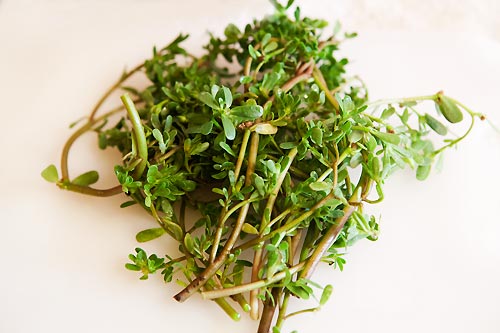
Purslane, also known as Khulpha, Khursa in Hindi or Ghol in Marathi, is a water-retaining plant that can reach a height of 6″ – 12”. It’s smooth, reddish, thick leaves are wedge shaped. The leaves are alternately clustered at stem joints and are greenish on top and purplish on the underside.
The very tiny yellow flowers are around 6 mm wide and depending upon rainfall, the flowers appear at anytime during the year. Purslane has a taproot with fibrous secondary roots and is able to tolerate poor, compacted soils and drought.
It’s smooth, reddish, thick leaves are wedge shaped. The leaves are alternately clustered at stem joints and are greenish on top and purplish on the underside.
All that purslane needs to grow is part to full sun and clear ground. They are not picky about soil type or nutrition. If you decide to plant purslane seeds, simply scatter the seeds over the area that you plan on growing the purslane. Do not cover the seeds with soil. Purslane seeds need light to germinate, so they must stay on the surface of the soil. If you are using Purslane cuttings, lay them on the ground where you plan on growing purslane. Water the stems and they should take root in the soil in a few days.
 About a month after the seeds are planted, the first flowers will begin to appear. Once the flowers open, the seeds will begin to set within about a week to ten days. Since the Purslane is an invasive plant, it is difficult to get rid of. This is because the plant has stored enough energy for the seeds to continue to mature even after you pull the plant. Therefore, if you are trying to get rid of purslane, don’t try to compost it. If the compost pile is not hot enough to destroy the seeds, you will end up with more plants you don’t want.
Purslane is ready to harvest in about 2 months from the time the seeds are sown. Make sure to harvest it regularly and be aware that it can become invasive. Harvesting before it develops flowers will help cut down on its spreading. Generally, you can harvest two or three times before the plants are exhausted.
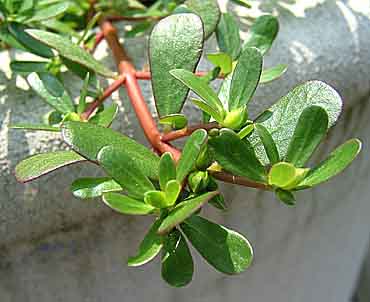
The erect, tangy and succulent stems are high in Vitamin C. The leaves contain the highest concentration of Omega-3 fatty acids found in land plants. This is 5 times more than Spinach and 10 times more than any Lettuce or Mustard. It also contains Vitamin A, Vitamin C, and some Vitamin B and carotenoids as well as dietary minerals such as Magnesium, Calcium, Potassium and Iron.
100 Grams of fresh purslane leaves contain 300 to 400 mg of essential fatty acids (EFAs). One cup of cooked leaves contains 90 mg of Calcium, 561 mg of Potassium, and more than 2,000 IUs of Vitamin A.
As a companion plant, Purslane provides ground cover to create a humid microclimate for nearby plants, stabilizing ground moisture. Its deep roots bring up moisture and nutrients that those plants can use, and some, including corn, will “follow” purslane roots down through harder soil that they cannot penetrate on their own.
As a companion plant, Purslane provides ground cover to create a humid microclimate for nearby plants, stabilizing ground moisture. Its deep roots bring up moisture and nutrients that those plants can use, and some, including corn, will “follow” purslane roots down through harder soil that they cannot penetrate on their own (ecological facilitation). It is known as a beneficial weed in places that do not already grow it as a crop in its own right.
Widely used in East Mediterranean countries, archaeobotanical finds are common at manyprehistoric sites. In historic contexts, seeds have been retrieved from a protogeometric layer in Kastanas, as well as from the Samian Heraion dating to seventh century B.C. In the fourth century B.C., Theophrastus names purslane, andrákhne (ἀνδράχνη), as one of the several summer pot herbs that must be sown in April (H.P 7.12).[16] As portulaca it figures in the long list of comestibles enjoyed by the Milanese given by Bonvesin de la Riva in his “Marvels of Milan” (1288).[17]
In antiquity, its healing properties were thought so reliable that Pliny advised wearing the plant as an amulet to expel all evil (Natural History 20.120).[16]
A common plant in parts of India, purslane is known as Sanhti, Punarva, or Kulfa.
- The name verdolaga, associated with the plant that grows in South America is a nickname for Football clubs with green-white schemes in their uniforms, such as Colombia‘s Atletico Nacional and Argentina‘s Ferrocarril Oeste.
- Marlena Spieler (July 5, 2006). “Something Tasty? Just Look Down”. The New York Times.
- Byrne, R. and McAndrews, J. H. (1975). “Pre-Columbian puslane (Portulaca oleracea L.) in the New World”. Nature 253(5494): 726–727. doi:10.1038/253726a0.
- Pests in Landscapes and Gardens: Common Purslane. Pest Notes University of California Agriculture and Natural Resources Publication 7461. October 2003
- Jump up^ David Beaulieu. “Edible Landscaping With Purslane”. About.com.
- ARTEMIS P SIMOPOULOS Omega-3 Fatty Acids and Antioxidants in Edible Wild Plants. 2004. Biol Res 37: 263-277, 2004
- Simopoulos AP, Norman HA, Gillaspy JE, Duke JA. Common purslane: a source of omega-3 fatty acids and antioxidants. J Am Coll Nutr. 1992;11(4):374-82.
- Evaluation of the Antimutagenic Activity of Different Vegetable Extracts Using an In Vitro Screening Test
- A. P. Simopoulos, H. A. Norman, J. E. Gillaspy, and J. A. Duke. Common purslane: a source of omega-3 fatty acids and antioxidants. Journal of the American College of Nutrition, Vol 11, Issue 4 374-382, Copyright © 1992
- http://world-food.net/oxalate-content-of-raw-and-cooked-purslane/
- Tierra, C.A., N.D., Michael (1988). Planetary Herbology. Lotus Press. p. 199.
- Wang CQ. Yang GQ., “Betacyanins from Portulaca oleracea L. ameliorate cognition deficits and attenuate oxidative damage induced by D-galactose in the brains of senescent mice.,Phytomedicine. 17(7):527-32, 2010 Jun.
- Yan J, Sun LR, Zhou ZY, Chen YC, Zhang WM, Dai HF, Tan JW “Homoisoflavonoids from the medicinal plant Portulaca oleracea.” Phytochemistry. 2012 Aug;80:37-41
- Agha-Hosseini F, Borhan-Mojabi K, Monsef-Esfahani HR, Mirzaii-Dizgah I, Etemad-Moghadam S, Karagah A (Feb 2010). “Efficacy of purslane in the treatment of oral lichen planus”.Phytother Res. 24 (2): 240–4. doi:10.1002/ptr.2919.PMID 19585472.
- Bensky, Dan, et al. Chinese Herbal Medicine, Materia Medica. China: Eastland Press Inc., 2004.
- Watanabe I. Harada K. Matsui T. Miyasaka H. Okuhata H. Tanaka S. Nakayama H. Kato K. Bamba T. Hirata K.”Characterization of bisphenol A metabolites produced by Portulaca oleracea cv. by liquid chromatography coupled with tandem mass spectrometry.” , Biotechnology & Biochemistry. 76(5):1015-7, 2012.
- Megaloudi Fragiska (2005). “Wild and Cultivated Vegetables, Herbs and Spices in Greek Antiquity”.Environmental Archaeology 10 (1): 73–82.Noted by John Dickie, Delizia! The Epic History of Italians and Their Food (New York, 2008), p. 37.
- Noted by John Dickie, Delizia! The Epic History of Italians and Their Food (New York, 2008), p. 37.
“Portulaca oleracea”. FloraBase. Department of Environment and Conservation, Government of Western Australia.- Online Field guide to Common Saltmarsh Plants of Queensland
- Portulaca oleracea in West African plants – A Photo Guide.
- Purslane Recipes, Prairieland Community Supported Agriculture
| Nutritional value per 100 g (3.5 oz) | |
|---|---|
| Energy | 84 kJ (20 kcal) |
| Carbohydrates | 3.39 g |
| Fat | 0.36 g |
| Protein | 2.03 g |
| Water | 92.86 g |
| Vitamin A | 1320 IU |
| Thiamine (vit. B1) | 0.047 mg (4%) |
| Riboflavin (vit. B2) | 0.112 mg (9%) |
| Niacin (vit. B3) | 0.48 mg (3%) |
| Vitamin B6 | 0.073 mg (6%) |
| Folate (vit. B9) | 12 μg (3%) |
| Vitamin C | 21 mg (25%) |
| Vitamin E | 12.2 mg (81%) |
| Calcium | 65 mg (7%) |
| Iron | 1.99 mg (15%) |
| Magnesium | 68 mg (19%) |
| Manganese | 0.303 mg (14%) |
| Phosphorus | 44 mg (6%) |
| Potassium | 494 mg (11%) |
| Zinc | 0.17 mg (2%) |
| Link to USDA Database entry Percentages are roughly approximated using US recommendations for adults. Source: USDA Nutrient Database |
|
Preparation and serving methods
The stems and flower buds are also edible. Trim the tough stems near roots using a sharp knife. Cook under low temperature for a shorter period in order to preserve the majority of nutrients. Although antioxidant properties are significantly decreased on frying and boiling, its minerals, carotenes and flavonoids may remain intact with steam cooking.
India gift to the world
In fact, among the many names given to purslane around the world, there are some like the old Arabic baqla hamqa or the Spanish verdilacas or yerba orate that mean crazy plant. It is a reference not just to its appearance, but to the madly unrestrained way it grows, spreading rapidly in all directions at ground level in a mesh of stems, roots and leaves, which is one reason why for many gardeners purslane is one of the most annoying weeds.
Added to this is its remarkable resilience — it stores water it in its succulent stems and leaves, allowing it to tolerate hot, dry conditions, and can produce over 240,000 tiny seeds per plant, making it really hard to remove. It’s no surprise that purslane has spread remarkably widely, growing in different forms in most parts of the world and known by a wide variety of names such as portulaca or little door, from the way its seed pod opens, or the Hebrew regelah or foot, since that’s near where it grows, though the most unusual must be the term from Malawi that translates as ‘the buttocks of the chief’s wife”, an apparent reference to the fleshy rounded leaves of some forms.
Despite this wide range, most botanical studies give India as the origin for purslane, and some writers, like the American expert on wild food, Euell Gibbons, have even labelled it “India’s gift to the world.” But it is a gift that we have largely forgotten about, since few people here eat purslane these days, or even know that this weed is edible. It is rarely cultivated, but gathered from the wild and only rarely appears in places like Bhaji Gully because few know its value, other than old people or poor migrants from rural areas who have some memory of eating it.
One who did know the value of luni was Mahatma Gandhi, and while it’s a bit of a stretch to describe purslane as his favourite food, as some of its enthusiasts abroad have done, he did recommend it to several people and, in an article in his magazine Harijan, he wrote about “the nourishing properties of the innumerable leaves that are to be found hidden among the grasses that grow wild in India.” He had discovered these while living in Wardha and following a diet of uncooked food that required what he felt was an unreasonable amount of purchases from the local market. So he was delighted when an ashram resident “brought to me a leaf that was growing wild among the Ashram grasses. It was luni. I tried it, and it agreed with me.” It soon was a regular part of his diet.
Gandhi’s recommendations, of course, are no guide to taste, since he didn’t believe in enjoying food for its own sake. But luni has a pleasant lightly acid taste when raw, though with a slightly grassy, earthy undertone that does take some getting used to. It is probably never going to be one of those foods you have to try-before-you-die, but it is not bad at all to eat, either raw in a salad, or cooked. I find that the version we get here, which is rather less fleshy than purslane I’ve seen abroad, is worth stir-frying or adding to a dal, which brings out a nice, slightly peanutty taste. Another interesting way to cook it is in the Persian style, first sautéing it with onions and then cooking with eggs to make a firm omelette that has a nicely herbal taste when cut up and eaten cold.
The real reason for valuing purslane though is not taste, but health. It has always had a reputation for medicinal properties, with physicians over the centuries, from India to the Middle East to Europe, recommending it for everything from reducing fever, removing worms and soothing urinary infections. But modern science has made clear why it is of such value: apart from providing significant amounts of vitamins A, B and C. and decent amounts of protein, purslane probably contains more omega-3 fatty acids than any other commonly available vegetable source.
These fatty acids are essential for reducing cholesterol and heart diseases, but their most easily accessible source is oily fish, which makes it hard for vegetarians to get them. Some health conscious ones do force themselves to swallow fish oil capsules, or eat alsi (flax seeds) which are also a decent source of omega-3 acids. But purslane is probably a better source, and can be cooked and eaten as part of one’s meal. (The only caution is for people prone to kidney stones, since it also contains high levels of the oxalates which cause them). Luni may seem like a crazy thing to eat, but when people around the world are realising the value of this Indian plant, it is the way we are letting it become forgotten that may be what is really loony.
South Africa-Health Benefits of Rooibos Tea
 Possible therapeutic applications for Rooibos in the management of stress-related and metabolic diseases
http://www.chemistryviews.org/details/news/5309541/Health_Benefits_of_Rooibos_Tea.html
Health Benefits of Rooibos Tea
Watermelon Juice Prevents Aching Muscles


L-citrulline
The amino acid L-citrulline found in the fruit could help athletes avoid muscle soreness after a hard workout
Before taking a long bike ride on a hot summer day, have some watermelon: The juicy fruit may ward off muscle pains. Researchers report that people who drank watermelon juice before exercising felt less sore the next day than those who drank a pink placebo beverage (J. Agric. Food Chem. 2013, DOI: 10.1021/jf400964r). They also found that cells absorb the presumed active ingredient, L-citrulline, more readily from unpasteurized watermelon juice than from plain water spiked with the compound, suggesting the natural source is the optimal delivery medium.
http://cen.acs.org/articles/91/web/2013/07/Watermelon-Juice-Prevents-Aching-Muscles.html

VITAMINS, COMMON INFORMATION

A vitamin (US /ˈvaɪtəmɪn/ or UK /ˈvɪtəmɪn/) is an organic compound required by an organism as a vital nutrient in limited amounts. An organic chemical compound (or related set of compounds) is called a vitamin when it cannot be synthesized in sufficient quantities by an organism, and must be obtained from the diet. Thus, the term is conditional both on the circumstances and on the particular organism. For example, ascorbic acid (vitamin C) is a vitamin for humans, but not for most other animals, and biotin (vitamin H) and vitamin D are required in the human diet only in certain circumstances.


|
Vitamin A – discovered in 1913 What it does:
Foods that have vitamin A:
Deficiency problems:
|
 |
|
What it does:
Foods that have vitamin D:
Deficiency problems:
|
 |
|
What it does:
Foods that have vitamin E:
Deficiency problems:
|
 |
|
Vitamin K – made by bacteria in our intestines What it does:
Foods that have vitamin K:
Deficiency problems:
|
 |
……….
By convention, the term vitamin includes neither other essential nutrients, such as dietary minerals, essential fatty acids, or essential amino acids (which are needed in larger amounts than vitamins) nor the large number of other nutrients that promote health but are otherwise required less often. Thirteen vitamins are universally recognized at present.
Vitamins are classified by their biological and chemical activity, not their structure. Thus, each “vitamin” refers to a number of vitamer compounds that all show the biological activity associated with a particular vitamin. Such a set of chemicals is grouped under an alphabetized vitamin “generic descriptor” title, such as “vitamin A“, which includes the compounds retinal, retinol, and four known carotenoids. Vitamers by definition are convertible to the active form of the vitamin in the body, and are sometimes inter-convertible to one another, as well.
itamins have diverse biochemical functions. Some, such as vitamin D, have hormone-like functions as regulators of mineral metabolism, or regulators of cell and tissue growth and differentiation (such as some forms of vitamin A). Others function as antioxidants (e.g., vitamin E and sometimesvitamin C). The largest number of vitamins, the B complex vitamins, function as precursors for enzyme cofactors, that help enzymes in their work as catalysts in metabolism. In this role, vitamins may be tightly bound to enzymes as part of prosthetic groups: For example, biotin is part of enzymes involved in making fatty acids. They may also be less tightly bound to enzyme catalysts as coenzymes, detachable molecules that function to carry chemical groups or electrons between molecules. For example, folic acid may carry methyl, formyl, and methylene groups in the cell. Although these roles in assisting enzyme-substrate reactions are vitamins’ best-known function, the other vitamin functions are equally important.

Until the mid-1930s, when the first commercial yeast-extract vitamin B complex and semi-synthetic vitamin C supplement tablets were sold, vitamins were obtained solely through food intake, and changes in diet (which, for example, could occur during a particular growing season) usually greatly altered the types and amounts of vitamins ingested. However, vitamins have been produced as commodity chemicals and made widely available as inexpensive semisynthetic and synthetic-source multivitamin dietary and food supplements and additives, since the middle of the 20th century.,,,,,,,

List of vitamins
Each vitamin is typically used in multiple reactions, and, therefore, most have multiple functions.
| Vitamin generic
descriptor name |
Vitamerchemical name(s) (list not complete) | Solubility | Recommended dietary allowances
(male, age 19–70)[6] |
Deficiency disease | Upper Intake Level
(UL/day)[6] |
Overdose disease | Food sources |
|---|---|---|---|---|---|---|---|
| Vitamin A | Retinol, retinal, and
four carotenoids including beta carotene |
Fat | 900 µg | Night-blindness,Hyperkeratosis, andKeratomalacia[7] | 3,000 µg | Hypervitaminosis A | Orange, ripe yellow fruits, leafy vegetables, carrots, pumpkin, squash, spinach, liver, soy milk, milk |
| Vitamin B1 | Thiamine | Water | 1.2 mg | Beriberi, Wernicke-Korsakoff syndrome | N/D[8] | Drowsiness or muscle relaxation with large doses.[9] | Pork, oatmeal, brown rice, vegetables, potatoes, liver, eggs |
| Vitamin B2 | Riboflavin | Water | 1.3 mg | Ariboflavinosis | N/D | Dairy products, bananas, popcorn, green beans, asparagus | |
| Vitamin B3 | Niacin, niacinamide | Water | 16.0 mg | Pellagra | 35.0 mg | Liver damage (doses > 2g/day)[10] and other problems | Meat, fish, eggs, many vegetables, mushrooms, tree nuts |
| Vitamin B5 | Pantothenic acid | Water | 5.0 mg[11] | Paresthesia | N/D | Diarrhea; possibly nausea and heartburn.[12] | Meat, broccoli, avocados |
| Vitamin B6 | Pyridoxine,pyridoxamine,pyridoxal | Water | 1.3–1.7 mg | Anemia[13] peripheral neuropathy. | 100 mg | Impairment ofproprioception, nerve damage (doses > 100 mg/day) | Meat, vegetables, tree nuts, bananas |
| Vitamin B7 | Biotin | Water | 30.0 µg | Dermatitis, enteritis | N/D | Raw egg yolk, liver, peanuts, certain vegetables | |
| Vitamin B9 | Folic acid, folinic acid | Water | 400 µg | Megaloblastic anemiaand Deficiency during pregnancy is associated with birth defects, such as neural tube defects | 1,000 µg | May mask symptoms of vitamin B12 deficiency;other effects. | Leafy vegetables, pasta, bread, cereal, liver |
| Vitamin B12 | Cyanocobalamin,hydroxycobalamin,methylcobalamin | Water | 2.4 µg | Megaloblastic anemia[14] | N/D | Acne-like rash [causality is not conclusively established]. | Meat and other animal products |
| Vitamin C | Ascorbic acid | Water | 90.0 mg | Scurvy | 2,000 mg | Vitamin C megadosage | Many fruits and vegetables, liver |
| Vitamin D | Cholecalciferol | Fat | 10 µg[15] | Rickets andOsteomalacia | 50 µg | Hypervitaminosis D | Fish, eggs, liver, mushrooms |
| Vitamin E | Tocopherols,tocotrienols | Fat | 15.0 mg | Deficiency is very rare; mild hemolytic anemiain newborn infants.[16] | 1,000 mg | Increased congestive heart failure seen in one large randomized study.[17] | Many fruits and vegetables, nuts and seeds |
| Vitamin K | phylloquinone,menaquinones | Fat | 120 µg | Bleeding diathesis | N/D | Increases coagulation in patients taking warfarin.[18] | Leafy green vegetables such as spinach, egg yolks, liver |

GLENMARK- ELOVERA , for dry skin disorders


Compositions:
Elovera extract 10% cream, Vitamin E 0.5%
Category–Locally Acting Skin Preparations
Description
* Aqueeze adequate amount of elovera moisturizing body wash onto wet hands or wet loran and work into a creamy lather. apply it all ovr the body, keep for some time and then rinse with water.
| Products Name : | Elovera Moisturizing Body Wash 150ml – (Glenmark) |
Elovera Cream, manufacture by Glenmark pharmaceuticals limited , is cream enriched with vitamin E and Aloe Vera. It’s a very special cream specially for treating scars and other minor pimple spots on the face.
reviews from net
My skin is very much oily hence I get these ugly Pimples very profoundly. On top of it i have the habit of bursting out the puss from these pimples. I always play it with my hands and as a result forms some very ugly scars on my face which are visible from distant away.Though I am bit dark with my completion ,even then It’s clearly visible and my mother scolds me like hell for bursting the pimples out.Honestly I just can’t stop my hands reaching out for them no matter how busy I am so Finally has to resort to some ointments to reduce the visibility of the scars.
I did try few popular products but were of no use basically. The spots didn’t get reduced but instead effected the completion of my face.Finally my mother came to my rescue. She had hear about this Elovera Cream from some one and bought home one for me.Initially i was a bit skeptic but finally I thought of trying it. For the first few days it had no effect what-so-ever , but slowly it started clearing the skin blemishes. My skin started showing it’s effects and the scars became less visible. Not only does it clear the scars but it helped me to fight the ugly pimples as well.
My face became much more glowing and healthy and i use the cream regularly even now.It’s really a magical product and should try it for clearing the blemishes and other skin problem.
SAMIDIRECT -Healthy, Wealthy & Wise, FREE OF COST CONSULTATION on Diabetes, Cancer, Arthritis, Osteoporosis, Heart- Liver -Lung & Kidney problems, Low Immunity, Alzheimer, Weight Management, Weak Memory, Neutritional Deficiency, UTI problems


Healthy, Wealthy & Wise
For over 25 years the Sami Group has been unlocking the mystery of herbs, extracting the goodness, and gifting the world with good health.
Now the Sami Group provides YOU an opportunity to unlock the mystery of Success, Wealth & Better living.
FREE OF COST CONSULTATION on Diabetes, Cancer, Arthritis, Osteoporosis, Heart- Liver -Lung & Kidney problems, Low Immunity, Alzheimer, Weight Management, Weak Memory, Neutritional Deficiency, UTI problems etc.
(REVOLUTIONARY AYURVEDIC SOLUTIONS with ISO 22000 Certified Indian MNC after 25 years of R & D by 120 Scientists.
Numberless Testimonials.)
http://www.samidirect.com/products/
Do visit the website www.samidirect.com & have the study in detail. Have a look at the Sami Direct Corporate Video on you tube. If you get the wonderful potential of the brightest future…do call me for ‘How to get started?’


…..


DISTRIBUTOR ENQUIRY WELCOME
CONTACT MR JAY DESAI
REGARDS
+91 9699952526
Mumbai, INDIA
email-jaydesai1502@gmail.com
 |
Bussines Sami Direct Seminar ppt.ppt1.pdf 9204K View Download |
samidirect corporate video

DR MAJID, FOUNDER , SAMIDIRECT
Dr. Muhammed Majeed
Dear Friend, Congratulations on your decision!
A little over three decades ago I went from a small town in South India to the United States Of America seeking fulfillment of my dreams. Today with a business conglomerate spread across the globe, I can confidently say that the future belongs to those who believe in the beauty of their dreams.
The aspiration to dream and the conviction to follow their dreams is what sets apart the extraordinary from the ordinary. Congratulations for choosing to be among the extraordinary. Now we are in it together. You have chosen the right place and the right means. The awesome combination of extensively researched products and a revolutionary business plan is a definite formula for success. We are with you at every step to help you fulfill your dreams and reach greater heights.
Dr. Muhammed Majeed
Welcome home again!
– See more at: http://www.samidirect.com/about/founder-desk/#sthash.rrOCRiJ1.dpuf
Sami Direct, as a part of the Sami Group, is the culmination of relentless Research and Development for more than two decades. We at Sami Direct are committed to offer you an unrivalled range of nutraceuticals, soon to be followed by cosmeceutical products, which have been acknowledged by the world over for its highest quality and safety standards.
Sami Direct is supported by its very own R&D facility- SAMI LABS LTD., located in Bangalore. This state-of-the-art, multi-disciplinary division pursues diverse fields of research with over 120 scientists focusing all efforts towards creating effective and safe products. With six highly advanced cutting-edge manufacturing units adhering to the strictest quality and safety standards, Sami Direct ensures that the highest quality of products are being produced.
Today the Sami Group holds a strong intellectual property portfolio with over 70 US and International Patents to its credit including awards and recognitions worldwide.
With the perfect blend of world class products and a revolutionary business plan, it is a lifetime opportunity not just to enhance your health, but also a fruitful and lasting career heightening your income.
DISTRIBUTOR ENQUIRY WELCOME
CONTACT MR JAY DESAI
REGARDS
+91 9699952526
Mumbai, INDIA
email; jaydesai1502@gmail.com
Five herbs your liver will love – detox, boost function and more


Friday, September 06, 2013 by: PF Louis
(NaturalNews) The liver is the largest solid organ in our bodies. It can be adversely affected by poor diet and lifestyle choices, alcohol consumption, acetaminophen, non-prescription pain killers, and the myriad of toxins in our environment.
It is responsible for filtering blood from toxins and converts waste products from metabolic functions into urea to be eliminated by urine. It creates bile to help digest fats and carbohydrates.
It also filters out toxins from the blood stream and synthesizes glutathione, the master antioxidant that also helps recycle other spent antioxidants. It also helps balance blood sugars and creates red blood cells.
Learn more: http://www.naturalnews.com/041944_liver_function_detox_medicinal_herbs.html#ixzz2eIaDescq

pic coutesy presenter media
Diet Pill Dilemma: Why Is FDA Approving Drugs When Europe Isn’t?

We’ve all dreamt of popping a pill to help us safely lose weight, or at least eat that chocolate cake without guilt. But alas, even though the Food and Drug Administration has approved two new diet drugs in recent months, that dream probably isn’t any closer to reality.
In the current issue of the BMJ (formerly the British Medical Journal), Sidney Wolfe, founder of the advocacy group Public Citizen, slams the FDA for approving the drugs – lorcaserin (US brand name Belviq) and topiramate (called Qsymia). The FDA’s European counterpart rejected both of them because of heart risks that turned up during preliminary trials.
read all this at
http://commonhealth.wbur.org/2013/08/diet-pill-dilemma-why-is-fda-approving-drugs-when-europe-isnt
NATURE’S VIAGRA-Health benefits of pomegranate by – By Dr. Janardhana V Hebbar, Ayurveda Expert

Countless studies have shown the seemingly countless benefits of fruits for a person’s health.
The U.S. Government recommends that people get some servings of fruits every day. Of all the fruits ready in the shop today,
one fruit is at its height of popularity because of its legendary Greek mythology connection and its exoticism-the pomegranate fruit.

READ COMPLETE ARTICLE AT
http://www.askveda.in/blog/health-benefits-of-pomegranate/
Transform your life in 10 minutes with ancient ‘youthing’ practice

NaturalNews) If you need more zest and zip in your life, the secret to these states and more can be found in a set of simple (yet profound) yogic exercises known as the “Five Tibetans.” Developed by Buddhist monks and brought to the West in the 1930s, Tibetan yoga is a series of five movements that improve digestion and circulation while dispelling fatigue and depression. Advocates of the practice rave about the boundless energy, clarity and vitality the short daily sessions produce. And many also believe Tibetan yoga reverses the hands of time, promoting an ageless and disease free body.
Learn more: http://www.naturalnews.com/041813_transform_life_ancient_practice_youthing.html#ixzz2dL3zsuIL


 New Drug Approvals