
Home » Articles posted by DR ANTHONY MELVIN CRASTO Ph.D (Page 358)
Author Archives: DR ANTHONY MELVIN CRASTO Ph.D
 DRUG APPROVALS BY DR ANTHONY MELVIN CRASTO
.....FOR BLOG HOME CLICK HERE
DRUG APPROVALS BY DR ANTHONY MELVIN CRASTO
.....FOR BLOG HOME CLICK HEREFlag and hits
ORGANIC SPECTROSCOPY

SUBSCRIBE

 Subscribe in a reader
Enter your email address:
Delivered by FeedBurner
Subscribe to New Drug Approvals by Email


Recent Comments
 | shivkr2 on SPSR Excellence Award 2025 – S… |
 | Bonkasaurus on Infigratinib phosphate |
 | PALOVAROTENE | ORGAN… on Palovarotene |
| Pfizer just purchase… on Temanogrel | |
| Pfizer To Cash In On… on Temanogrel |
Fruit Lowers the Risk of Diabetes


The press is all over a recent study done at the Harvard school of public health that was published in the British Medical Journal last week. The study showed that those that ate fruit had a lower risk of diabetes. Specifically they singled out blueberries for a 25% reduction in risk. Grapes offered 11%, apples 5%, prunes 11%, pears 7%. This was not a randomized trial so there are a lot of uncontrolled variables but that being said they did look at 187,382 patients so that sample size does give this study a lot of weight. It also brings further support to a recommendation I have been giving to my diabetic or pre-diabetic patients for years, become a vegan and forget about the ADA (American Diabetes Association) diet.
A study done in 2006 published in Diabetes Care compared patients on a Vegan diet to patients on the ADA diet. The Vegan diet patients…
View original post 311 more words

New Drug Shows Promise for Type 2 Diabetes
TUESDAY Sept. 3, 2013 — An injectable drug that mimics the action of a little-known hormone may hold promise for patients with type 2 diabetes.
The experimental drug, called LY, is a copy of a hormone called fibroblast growth factor 21 (FGF21), and researchers report that it seems to help protect against obesity and may boost the action of insulin.
READ ALL AT
http://www.drugs.com/news/new-shows-promise-type-2-diabetes-47140.html
FGF21
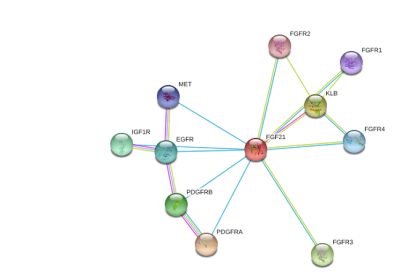
http://alfin2600.blogspot.in/2012/10/fgf21-learning-to-live-longer-from.html
Fibroblast growth factor-21 (FGF21) is a hormone secreted by the liver during fasting that elicits diverse aspects of the adaptive starvation response. Among its effects, FGF21 induces hepatic fatty acid oxidation and ketogenesis, increases insulin sensitivity, blocks somatic growth and causes bone loss. Here we show that transgenic overexpression of FGF21 markedly extends lifespan in mice without reducing food intake or affecting markers of NAD+ metabolism or AMP kinase and mTOR signaling. Transcriptomic analysis suggests that FGF21 acts primarily by blunting the growth hormone/insulin-like growth factor-1 signaling pathway in liver. These findings raise the possibility that FGF21 can be used to extend lifespan in other species
Type II diabetes is the most prevalent form of diabetes. The disease is caused by insulin resistance and pancreatic β cell failure, which results in decreased glucose-stimulated insulin secretion. Fibroblast growth factor (FGF) 21, a member of the FGF family, has been identified as a metabolic regulator and is preferentially expressed in the liver and adipose tissue and exerts its biological activities through the cell surface receptor composed of FGFR1c and β-Klotho on target cells such as liver and adipose tissues (WO0136640, and WO0118172).
The receptor complex is thought to trigger cytoplasmic signaling and to up-regulate the GLUT1 expression through the Ras/MAP kinase pathway.
Its abilities to provide sustained glucose and lipid control, and improve insulin sensitivity and β-cell function, without causing any apparent adverse effects in preclinical settings, have made FGF21 an attractive therapeutic agent for type-2 diabetes and associated metabolic disorders.
There have been a number of efforts towards developing therapies based on FGF21. WO2006065582, WO2006028714, WO2006028595, and WO2005061712 relate to muteins of FGF21, comprising individual amino-acid substitutions. WO2006078463 is directed towards a method of treating cardiovascular disease using FGF21. WO2005072769 relates to methods of treating diabetes using combinations of FGF21 and thiazolidinedione. WO03059270 relates to methods of reducing the mortality of critically ill patients comprising administering FGF21. WO03011213 relates to a method of treating diabetes and obesity comprising administering FGF21.
However, many of these proposed therapies suffer from the problem that FGF21 has an in-vivo half-life of between 1.5 and 2 hrs in humans. Some attempts have been made to overcome this drawback. WO2005091944, WO2006050247 and WO2008121563 disclose FGF21 molecules linked to PEG via lysine or cysteine residues, glycosyl groups and non-natural amino acid residues, respectively. WO2005113606 describes FGF21 molecules recombinantly fused via their C-terminus to albumin and immunoglobulin molecules using polyglycine linkers.
However, developing protein conjugates into useful, cost-effective pharmaceuticals presents a number of significant and oftentimes competing challenges: a balance must be struck between in vivo efficacy, in vivo half-life, stability for in vitro storage, and ease and efficiency of manufacture, including conjugation efficiency and specificity. In general, it is an imperative that the conjugation process does not eliminate or significantly reduce the desired biological action of the protein in question.
The protein-protein interactions required for function may require multiple regions of the protein to act in concert, and perturbing any of these with the nearby presence of a conjugate may interfere with the active site(s), or cause sufficient alterations to the tertiary structure so as to reduce active-site function. Unless the conjugation is through the N′ or C′ terminus, internal mutations to facilitate the linkage may be required. These mutations can have unpredictable effects on protein structure and function. There therefore continues to be a need for alternative FGF21-based therapeutics.
The reference to any art in this specification is not, and should not be taken as, an acknowledgement of any form or suggestion that the referenced art forms part of the common general knowledge.
The Claimed Intermediate database by Tcipatent Ltd

Eddie Kehoe
Principal & Technical Director at Tcipatent Ltd
Hove, Brighton and Hove, United KingdomPharmaceuticalsThe Claimed Intermediate – a Structure Searchable Process Patent Database for Marketed Pharmaceutical Drugs (INNs).
Patent examining, searching, analysis and abstracting especially in the Chemical subject area.


The Claimed Intermediate is an online database
which covers Process Patents for Named Marketed Pharmaceutical Drugs – whether intermediates are claimed or not – for a low-cost subscription.
- Structure Searchable
- Includes INNs in at least one major Market
- Includes Drug Synthesis often buried in a Plethora of Patents
- Informs Pipeline decisions
- Provides targeted Patent data in a Visual form
- Informs Commercial Synthesis profitability

shared message from Eddie Kehoe
If anybody would like a trial of the database they could contact either myself eddie.kehoe@tcipatent.com, or my wife and fellow director, Pat Kehoe (pat.kehoe@tcipatent.com).
Here are temporary logons , please request trial
(deactivated automatically in five working days):
Link: Link: www.tcipatent.com/tcidb/
Structure Searchable Patent Database for Processes covering Named Marketed Pharmaceutical Drugs (INNs). The database is an ongoing Watching Service combined with a Backward Drug Service.
Eddie Kehoe
Principal & Technical Director
Tcipatent Ltd
www.tcipatent.com
info@tcipatent.om
tcipatent.com
Office: +44 (0)1273 736080
43 Farm Road, Hove, BN3 1FD, United Kingdom
Eddie Kehoe:
eddie.kehoe@tcipatent.com
Mobile – 07425629637
Skype – eddieskihoe
TWITTER-TCIPATENT
Pat Kehoe:
pat.kehoe@tcipatent.com
Mobile – 07585295531
Skype – patkehoe170348

Database Updates:
Recently Added Records
| Aliskiren | Ambrisentan |
| Asenapine | Atorvastatin |
| Bosentan | Cabazitaxel |
| Cefamandole | Dasatinib |
| Desogestrel | Dexmedetomidine |
| Docetaxel | Doripenem |
| Doxapram | Duloxetine |
| Etonogestrel | Etoricoxib |
| Etravirine | Fluvastatin |
| Gefitinib | Iodixanol |
| Iohexol | Iopamidol |
| Linagliptin | Mitiglinide |
| Montelukast | Moxonidine |
| Oseltamivir | Paclitaxel |
| Perampanel | Pitavastatin |
| Pravastatin | Praziquantel |
| Ritodrine | Rosuvastatin |
| Silodosin | Sitagliptin |
| Ticagrelor | Ulipristal |
| Zidovudine |
………..

photo
Coopers Cask – Pub in Hove BN3 1FB
Eddie is closeby
HOME REMEDIES FOR CHOLESTEROL

Home Remedies for Cholesterol: Onions contain high levels of quercetin, an important flavonoid that reduces cholesterol. high concentrations of the compound quercetin hinderS the oxidation process of LDL, or “bad,” cholesterol, which help prevent the negative effects of this type of cholesterol.
===> http://www.askveda.in/ – Ayurveda health-tips, home remedies & expert advice
Antibody lipid treatments enter final furlong
A tiny pain-free jab every two weeks could be the future of cholesterol-lowering for high-risk patients, according to clinical researchers gathered in Amsterdam for the European Society of Cardiology congress.
Eli Roth at the University of Cincinnati said that two companies are currently neck and neck in the race to bring the first PCSK9 antibody to market. Partners Sanofi and Regeneron may have the edge, with Phase III data on their fully human monoclonal antibody alirocumab slated to be presented before the end of the year, while the chief competition comes from Amgen with its antibody AMG 145, said Dr Roth. Both antibodies can be delivered via subcutaneous auto-injectors, which many patients say they prefer to taking daily pills, he added.
http://www.pharmatimes.com/Article/13-09-02/Antibody_lipid_treatments_enter_final_furlong.aspx
Alirocumab is a human monoclonal antibody designed for the treatment ofhypercholesterolemia.[1]
This drug was discovered by Regeneron Pharmaceuticals and is being co-developed by Regeron and Sanofi.
THERAPEUTIC CLAIM Treatment of hypercholesterolemia
CHEMICAL NAMES
1. Immunoglobulin G1, anti-(human neural apoptosis-regulated proteinase 1) (human
REGN727 heavy chain), disulfide with human REGN727 κ-chain, dimer
2. Immunoglobulin G1, anti-(human proprotein convertase subtilisin/kexin type 9
(EC=3.4.21.-, neural apoptosis-regulated convertase 1, proprotein convertase 9,
subtilisin/kexin-like protease PC9)); human monoclonal REGN727 des-448-
lysine(CH3-K107)-1 heavy chain (221-220′)-disulfide with human monoclonal
REGN727 light chain dimer (227-227”:230-230”)-bisdisulfide
MOLECULAR FORMULA C6472H9996N1736O2032S42
MOLECULAR WEIGHT 146.0 kDa
SPONSOR Regeneron Pharmaceuticals
CODE DESIGNATION REGN727, SAR236553
CAS REGISTRY NUMBER 1245916-14-6
Drug Developers Need to More Fully Identify And Address Root Causes Of R&D Inefficiency, According To Tufts Center For The Study Of Drug Development
Boston, MA–(Marketwire) – While patent expirations on many top selling medicines are spurring the research-based drug industry to embrace new development paradigms to replenish sparse R&D pipelines, drug developers need to more fully identify and address root causes of R&D inefficiency, according to the Tufts Center for the Study of Drug Development.
read all at
DCGI asks Wockhardt, Ranbaxy to explain lapses
ALL ABOUT DRUGS BY DR ANTHONY MELVIN CRASTO, WORLD DRUG TRACKER HELPING MILLIONS, MILLION HITS ON GOOGLE……………………………………….
Mogamulizumab

Immunoglobulin G1, anti-(CC chemokine receptor CCR4) (human-mouse monoclonal
KW-0761 heavy chain), disulfide with human-mouse monoclonal KW-0761 κ-chain,
dimer
Immunoglobulin G1, anti-(human C-C chemokine receptor type 4 (CCR4, K5-5,
CD194)); humanized mouse monoclonal KW-0761 γ1 heavy chain (222-219′)-disulfide
with humanized mouse monoclonal KW-0761 κ light chain, dimer (228-228”:231-231”)-
bisdisulfide
MOLECULAR FORMULA C6520H10072N1736O2020S42 (peptide)
MOLECULAR WEIGHT 146.44 kDa (peptide)
SPONSOR Kyowa Hakko Kirin Co., Ltd.
CODE DESIGNATION KW-0761, KM8761
CAS REGISTRY NUMBER 1159266-37-1
THERAPEUTIC CLAIM Antineoplastic
http://www.ama-assn.org/resources/doc/usan/mogamulizumab.pdf for structure
Mogamulizumab (USAN; trade name Poteligeo) is a humanized monoclonal antibody targeting CC chemokine receptor 4(CCR4). It has been approved in Japan for the treatment of relapsed or refractory adult T-cell leukemia/lymphoma.[1]
Mogamulizumab was developed by Kyowa Hakko Kirin Co., Ltd.[2]
T-cell neoplasms, such as adult T-cell leukemia/lymphoma (ATL) and peripheral T-cell lymphoma, are particularly aggressive and, despite novel combination chemotherapy regimens, still have extremely poor prognoses. As such, there is an unmet medical need for novel therapies and the anti-chemokine CCR4 receptor antibody mogamulizumab (KW-0761) may offer such an option for the treatment of ATL. Mogamulizumab is a humanized antibody, with a defucosylated Fc region, which enhances antibody-dependent cellular cytotoxicity. As a result, mogamulizumab demonstrates potent antitumor activity at much lower doses than other therapeutic monoclonal antibodies. Clinical testing indicates that mogamulizumab is effective and well tolerated, with a predictable pharmacokinetic profile in patients with relapsed/refractory ATL. This drug was recently granted regulatory approval in Japan for this indication and continues to be evaluated in clinical trials in both the U.S. and Europe.
It has also been licensed to Amgen for development as a therapy for Asthma.[3]
- ^ Subramaniam, J; Whiteside G, McKeage K, Croxtall J (18). “Mogamulizumab: First Global Approval”. Drugs 72 (9): 1293–1298.doi:10.2165/11631090-000000000-00000. Retrieved 10 September 2012.
- ^ “Statement On A Nonproprietary Name Adopted By The USAN Council: Mogamulizumab”. American Medical Association.
- ^ “Kyowa Hakko Kirin R&D Pipeline”. Kyowa Hakko Kirin. Retrieved 10 September 2012.

old article
Tokyo, Japan, July 19, 2013 — Kyowa Hakko Kirin Co., Ltd. (Tokyo: 4151, President and CEO: Nobuo Hanai, “Kyowa Hakko Kirin”) announced today that it has been filed an application to Japan’s Ministry of Health, Labour and Welfare (“MHLW”) seeking approval for additional indication for untreated CCR4-positive adult T-cell leukemia-lymphoma (ATL), relapsed CCR4-positive peripheral T-cell lymphoma (PTCL) and cutaneous T-cell lymphoma (CTCL) of Mogamulizumab (brand name: POTELIGEO® Injection 20 mg).
Mogamulizumab is a novel, humanized monoclonal antibody directed against CC chemokine receptor 4 (CCR4), which is over-expressed on various malignant T cells, including ATL, PTCL and CTCL cells. Engineered by Kyowa Hakko Kirin’s unique POTELLIGENT® Technology, the antibody is designed to kill its target cells through potent antibody-dependent cellular cytotoxicity (ADCC). Clinical studies of Mogamulizumab in patients with untreated CCR4-positive ATL, relapsed CCR4-positive PTCL and CTCL in Japan met their primary endpoint, which allowed Kyowa Hakko Kirin to file an application. Mogamulizumab was also granted orphan drug designations for the treatment of CCR4-positive ATL in August 2010, PTCL and CTCL in March 2013 by the MHLW.
Mogamulizumab was launched in Japan with the brand name “POTELIGIO® Injection 20 mg” on May 29, 2012 for the treatment of patients with relapsed or refractory CCR4-positive ATL and is being investigated world-wide in a number of clinical studies for other potential indications.
Kyowa Hakko Kirin is committed to developing innovative therapeutics for treatment of a wide range of diseases with unmet medical needs, including lymphomas such as ATL, PTCL and CTCL, and contributing to the improvement of patients’ quality of life (QOL).
Overview of Phase II Clinical Study for untreated ATL in Japan
| Objective | Evaluate the efficacy, safety and pharmacokinetics of mLSG15 + Mogamulizumab or mLSG15 in patients with untreated CCR4-positive ATL. Mogamulizumab: 1.0 mg/kg/2wks for eight times in patients |
|---|---|
| Primary Endpoint | Efficacy (complete response rate, ORR), safety, pharmacokinetics |
| Efficacy | Efficacy was assessed in 53 patients (mLSG15 + Mogamulizumab: 29 patients, mLSG15: 24 patients) [Complete response rate] mLSG15 + Mogamulizumab: 52% (95%CI; 33-71%)(15/29) mLSG15: 33% (95%CI; 16-55%)(8/24) [ORR] mLSG15 + Mogamulizumab: 86% (95%CI; 68-96%)(25/29) mLSG15: 75% (95%CI; 53-90%)(18/24) Add-on effects of Mogamulizumab were found on mLSG15 therapy in complete response rate and ORR |
| Safety | Safety was assessed in 53 patients Common adverse events might cause by mLSG15 therapy in patients, add-on therapy of Mogamulizumab was found to be well tolerated at this dose level on mLSG15 therapy. |
Overview of Phase II Clinical Study for PTCL and CTCL in Japan
| Objective | Evaluate the efficacy, safety and pharmacokinetics of Mogamulizumab at 1.0 mg/kg weekly for eight weeks in patients with CCR4-positive relapsed PTCL and CTCL. |
|---|---|
| Primary Endpoint | Efficacy (ORR), safety, pharmacokinetics |
| Efficacy | Efficacy was assessed in 37 patients (PTCL: 29 patients, CTCL: 8 patients) [ORR] 35% (95% CI; 20-53%)(13/37) (complete response in 5 patients, partial response in 8 patients) [ORR for PTCL] 34% (95% CI; 18-54%)(10/29) (complete response in 5 patients, partial response in 5 patients) [ORR for CTCL] 38% (95% CI; 9-76%)(3/8) (partial response in 3 patients) |
| Safety | Safety was assessed in 37 patients Mogamulizumab was found to be well tolerated at this dose level. |
About CCR4 (CC chemokine receptor 4)
CCR4 is one of the chemokine receptors involved in leukocyte migration, selectively expressed in type 2 helper T (Th2) cells and regulatory T (Treg) cells. CCR4 is also shown to be over-expressed in certain hematological malignancies.
About adult T-cell leukemia-lymphoma (ATL)
ATL is a peripheral T-cell malignancy and the retrovirus HTLV-1 is thought to be involved in its onset. Estimates show that around 1,150 new cases occur every year in Japan. ATL is generally treated with combination chemotherapy, such as mLSG15, but there are currently no therapeutic methods with the potential of providing a cure for ATL, although researchers are actively looking into other methods than transplantation. For relapsed/refractory cases, various chemotherapy regimens based on malignant lymphoma therapies are currently used, but an effective treatment method has yet to be established.
About Peripheral T-Cell Lymphoma (PTCL)
Non-Hodgkin lymphomas account for the majority of malignant lymphoma cases and can be broadly divided into disease of B-cell origin and disease of T/natural killer (NK)-cell origin. Disease of T/NK-cell origin can be classified according to the main lesion site into nodal, extranodal, cutaneous, and leukemic disease. PTCL is a general term describing nodal and extranodal disease of T/NK-cell origin.
About Cutaneous T-Cell Lymphoma (CTCL)
CTCL is a rare, low grade type of non-Hodgkin’s lymphoma. CTCL is one of the most common forms of T-cell lymphoma. The two most common types of CTCL are mycosis fungoides (MF) and Sezary syndrome (SS). MF does not look the same in all patients and may present as skin patches, plaques, and tumors. SS is an advanced form of MF and includes the presence of malignant lymphocytes in the blood.
About POTELLIGENT®
POTELLIGENT® is Kyowa Hakko Kirin’s unique technology for the production of antibodies with enhanced ADCC activity. This technique enables production of antibodies with a reduced amount of fucose in their carbohydrate structure. Non-clinical studies have demonstrated that antibodies produced using this technology killed target cells more efficiently than conventional antibodies and exhibited stronger antitumor effects. For more information, please visit www.POTELLIGENT.com.
About antibody-dependent cellular cytotoxicity (ADCC)
ADCC is one of the body’s immune responses, initiated by binding of an antibody to its antigen on target cells, followed by lysis of the antibody-bound target cells by effector cells such as natural killer cells. ADCC is known to be one of the modes of action of therapeutic antibodies.
Orphan drug designation
A drug must meet the following three conditions in order to be granted an orphan drug designation in Japan.
1) The number of patients who may use the drug is less than 50,000 in Japan.
2) There are high medical needs for the drug (There is no appropriate alternative drug/treatment, or high efficacy or safety is expected compared with existing products).
3) There is high possibility of development (There should be a theoretical rationale for the use of the drug for the target disease, and the development plan should be appropriate). For designated orphan drugs, measures to support the research and development activities are taken (The orphan drug and orphan medical device research and development promotion program).
About mLSG15 therapy
The mLSG15 therapy is one of standard chemotherapies for ATL patients. The mLSG15 therapy generally consists of six courses. A course is the combination of the following three therapies, VCAP therapy (V: Vincristine Sulfate, C: Cyclophosphamide Hydrate, A: Doxorubicin Hydrochloride, P: Prednisolone), AMP therapy (A: Doxorubicin Hydrochloride, M: Ranimustine, P: Prednisolone) and VECP therapy (V: Vindesine Sulfate, E: Etoposide, C: Carboplatin, P: Prednisolone), which are administered at one week interval in turns. ATL patients are administrated cytarabine, methotrexate, and prednisolone intraspinally before the start of VCAP therapy of the 2,4,6 course (Intraspinal administration is to inject directly in and around the area of the spinal cord with anti-cancer agents to prevent relapsing cancer from these sites by distributing anti-cancer drugs to the brain and spinal cord). According to patient’s conditions, the reduction of the number of courses and doses of medicine may be done.
Marketing approval of mogamulizumab – lfb biomanufacturing
May 15, 2012 – The recent approval in Japan of mogamulizumab … Mogamulizumab is a humanized mAb derived from Kyowa Hakko Kirin’s POTELLIGENT® …
Stick insect leads antibiotic hunt, Norwich researchers say

 The gut of the Giant Lime Green stick insect could hold the key to antibiotic resistance
A microbe in the gut of a stick insect could help scientists to unravel the puzzle of antibiotic resistance.
The Giant Lime Green stick insect, which feeds mainly on eucalyptus leaves, is being studied at the John Innes Centre (JIC) in Norwich.
In the laboratory it has shown resistance to toxins and infections it could never have encountered before.
This indicates a general mechanism at work and understanding this could lead to new drugs, JIC scientists believe.
Scientists at JIC are confident studying natural processes will reveal new antibiotics.
The pressure is on to make discoveries because every year more drugs are made ineffective by microbe resistance.
Ants carry antibiotic
Professor Tony Maxwell, head of biological chemistry, said: “We have discovered the microbe in the stick insect’s gut is resistant to toxins and infections…
View original post 390 more words


 New Drug Approvals