New Drug Approvals

Home » Articles posted by DR ANTHONY MELVIN CRASTO Ph.D (Page 124)

Author Archives: DR ANTHONY MELVIN CRASTO Ph.D

DRUG APPROVALS BY DR ANTHONY MELVIN CRASTO .....FOR BLOG HOME CLICK HERE

Blog Stats

  • 4,832,081 hits

Flag and hits

Flag Counter

Enter your email address to follow this blog and receive notifications of new posts by email.

Join 37.9K other subscribers
Follow New Drug Approvals on WordPress.com

Archives

Categories

Recent Posts

Flag Counter

ORGANIC SPECTROSCOPY

Read all about Organic Spectroscopy on ORGANIC SPECTROSCOPY INTERNATIONAL 

Enter your email address to follow this blog and receive notifications of new posts by email.

Join 37.9K other subscribers
DR ANTHONY MELVIN CRASTO Ph.D

DR ANTHONY MELVIN CRASTO Ph.D

DR ANTHONY MELVIN CRASTO, Born in Mumbai in 1964 and graduated from Mumbai University, Completed his Ph.D from ICT, 1991,Matunga, Mumbai, India, in Organic Chemistry, The thesis topic was Synthesis of Novel Pyrethroid Analogues, Currently he is working with AFRICURE PHARMA, ROW2TECH, NIPER-G, Department of Pharmaceuticals, Ministry of Chemicals and Fertilizers, Govt. of India as ADVISOR, earlier assignment was with GLENMARK LIFE SCIENCES LTD, as CONSUlTANT, Retired from GLENMARK in Jan2022 Research Centre as Principal Scientist, Process Research (bulk actives) at Mahape, Navi Mumbai, India. Total Industry exp 32 plus yrs, Prior to joining Glenmark, he has worked with major multinationals like Hoechst Marion Roussel, now Sanofi, Searle India Ltd, now RPG lifesciences, etc. He has worked with notable scientists like Dr K Nagarajan, Dr Ralph Stapel, Prof S Seshadri, etc, He did custom synthesis for major multinationals in his career like BASF, Novartis, Sanofi, etc., He has worked in Discovery, Natural products, Bulk drugs, Generics, Intermediates, Fine chemicals, Neutraceuticals, GMP, Scaleups, etc, he is now helping millions, has 9 million plus hits on Google on all Organic chemistry websites. His friends call him Open superstar worlddrugtracker. His New Drug Approvals, Green Chemistry International, All about drugs, Eurekamoments, Organic spectroscopy international, etc in organic chemistry are some most read blogs He has hands on experience in initiation and developing novel routes for drug molecules and implementation them on commercial scale over a 32 PLUS year tenure till date Feb 2023, Around 35 plus products in his career. He has good knowledge of IPM, GMP, Regulatory aspects, he has several International patents published worldwide . He has good proficiency in Technology transfer, Spectroscopy, Stereochemistry, Synthesis, Polymorphism etc., He suffered a paralytic stroke/ Acute Transverse mylitis in Dec 2007 and is 90 %Paralysed, He is bound to a wheelchair, this seems to have injected feul in him to help chemists all around the world, he is more active than before and is pushing boundaries, He has 100 million plus hits on Google, 2.5 lakh plus connections on all networking sites, 100 Lakh plus views on dozen plus blogs, 227 countries, 7 continents, He makes himself available to all, contact him on +91 9323115463, email amcrasto@gmail.com, Twitter, @amcrasto , He lives and will die for his family, 90% paralysis cannot kill his soul., Notably he has 38 lakh plus views on New Drug Approvals Blog in 227 countries......https://newdrugapprovals.wordpress.com/ , He appreciates the help he gets from one and all, Friends, Family, Glenmark, Readers, Wellwishers, Doctors, Drug authorities, His Contacts, Physiotherapist, etc He has total of 32 International and Indian awards

Verified Services

View Full Profile →

Archives

Categories

Flag Counter

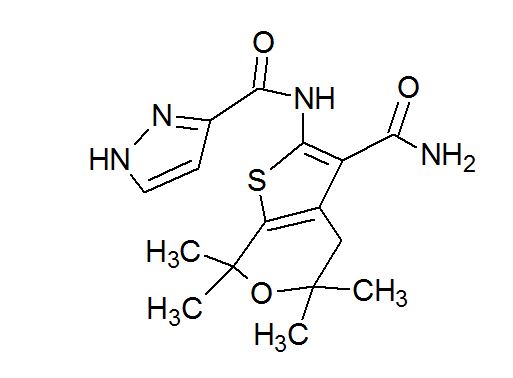
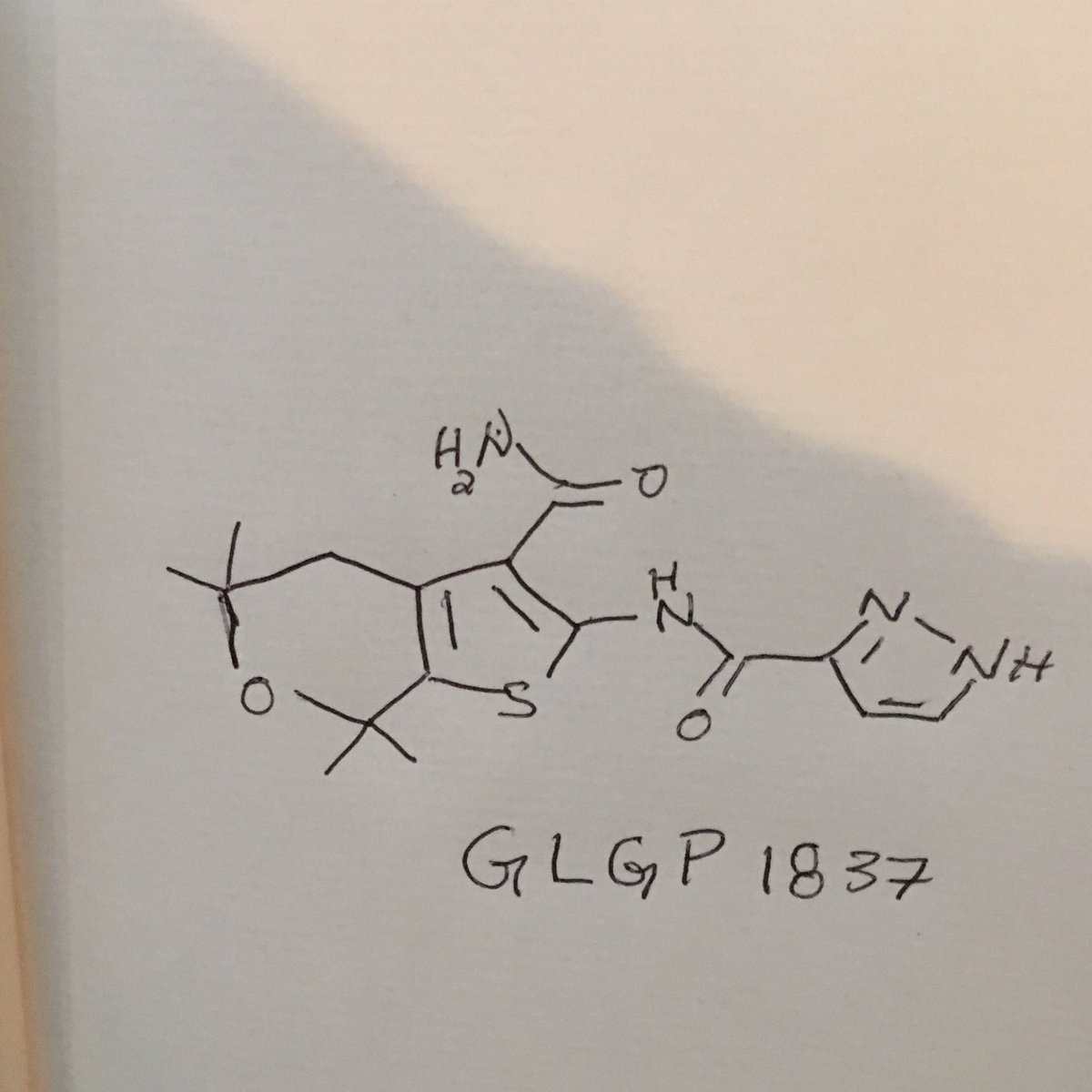
GLGP 1837


str1

GLGP 1837

CAS 1654725-02-6

MF C16 H20 N4 O3 S, MW 348.42

For cystic fibrosis treatment

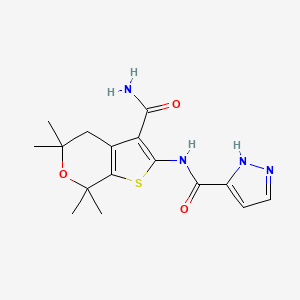
N-(3-carbamoyl-5,5,7,7-tetramethyl-4H-thieno[2,3-c]pyran-2-yl)-1H-pyrazole-5-carboxamide

1H-Pyrazole-3-carboxamide, N-[3-(aminocarbonyl)-4,7-dihydro-5,5,7,7-tetramethyl-5H-thieno[2,3-c]pyran-2-yl]-

Inventors Der Plas Steven Emiel Van, Sébastien Laurent Xavier MARTINA, Sébastien Jean-Jacques Cédric DROPSIT-MONTOVERT, Martin James Inglis Andrews, Hans KELGTERMANS
Applicant Galapagos Nv

Image result for Galapagos Nv

SYNTHESIS

str1

GLGP 1837

ABC transporters are a family of homologous membrane transporter proteins regulating the transport of a wide variety of pharmacological agents (for example drugs, xenobiotics, anions, etc…) that bind and use cellular adenosine triphosphate (ATP) for their specific activities. Some of these transporters were found to defend malignant cancer cells against chemotherapeutic agents, acting as multidrug resistance proteins (like the MDRl-P glycoprotein, or the multidrug resistance protein, MRP 1). So far, 48 ABC transporters, grouped into 7 families based on their sequence identity and function, have been identified.

ABC transporters provide protection against harmful environmental compounds by regulating a variety of important physiological roles within the body, and therefore represent important potential drug targets for the treatment of diseases associated with transporter defects, outwards cell drug transport, and other diseases in which modulation of ABC transporter activity may be beneficial.

The cAMP/ATP -mediated anion channel, CFTR, is one member of the ABC transporter family commonly associated with diseases, which is expressed in a variety of cells types, including absorptive and secretory epithelia cells, where it regulates anion flux across the membrane, as well as the activity of other ion channels and proteins. The activity of CFTR in epithelial cells is essential for the maintenance of electrolyte transport throughout the body, including respiratory and digestive tissue. (Quinton, 1990)

The gene encoding CFTR has been identified and sequenced (Kerem et al., 1989). CFTR comprises about 1480 amino acids that encode a protein made up of a tandem repeat of transmembrane domains, each containing six transmembrane helices and a nucleotide binding domain. The pair of

transmembrane domains is linked by a large, polar, regulatory (R)-domain with multiple phosphorylation sites that regulate channel activity and cellular trafficking.

Cystic fibrosis is caused by a defect in this gene which induces mutations in CFTR. Cystic fibrosis is the most common fatal genetic disease in humans, and affects -0.04% of white individuals(Bobadilla et al., 2002), for example, in the United States, about one in every 2,500 infants is affected, and up to 10 million people carry a single copy of the defective gene without apparent ill effects; moreover subjects bearing a single copy of the gene exhibit increased resistance to cholera and to dehydration resulting from diarrhea. This effect might explain the relatively high frequency of the CF gene within the population.

In contrast, individuals with two copies of the CF associated gene suffer from the debilitating and fatal effects of CF, including chronic lung infections.

In cystic fibrosis patients, mutations in endogenous respiratory epithelial CFTR fails to confer chloride and bicarbonate permeability to epithelial cells in lung and other tissues, thus leading to reduced apical anion secretion and disruptions of the ion and fluid transport. This decrease in anion transport causes an enhanced mucus and pathogenic agent accumulation in the lung triggering microbial infections that ultimately cause death in CF patients.

Beyond respiratory disease, CF patients also suffer from gastrointestinal problems and pancreatic insufficiency that result in death if left untreated. Furthermore, female subjects with cystic fibrosis suffer from decreased fertility, whilst males with are infertile.

A variety of disease causing mutations has been identified through sequence analysis of the CFTR gene of CF chromosomes (Kerem et al., 1989). AF508-CFTR, the most common CF mutation (present in at least 1 allele in~90 % of CF patients) and occurring in approximately 70% of the cases of cystic fibrosis, contains a single amino acid deletion of phenylalanine 508. This deletion prevents the nascent protein from folding correctly, which protein in turn cannot exit the endoplasmic reticulum (ER) and traffic to the plasma membrane, and then is rapidly degraded. As a result, the number of channels present in the membrane is far less than in cells expressing wild-type CFTR. In addition to impaired trafficking, the mutation results in defective channel gating. Indeed, even if AF508-CFTR is allowed to reach the cell plasma membrane by low-temperature (27°C) rescue where it can function as a cAMP-activated chloride channel, its activity is decreased significantly compared with WT-CFTR (Pasyk and Foskett, 1995).

Other mutations with lower incidence have also been identified that alter the channel regulation or the channel conductance. In case of the channel regulation mutants, the mutated protein is properly trafficked and localized to the plasma membrane but either cannot be activated or cannot function as a chloride channel (e.g. missense mutations located within the nucleotide binding domains), examples of these mutations are G551D, G178R, G1349D. Mutations affecting chloride conductance have a CFTR protein that is correctly trafficked to the cell membrane but that generates reduced chloride- flow (e.g. missense mutations located within the membrane-spanning domain), examples of these mutations are Rl 17H, R334W.

In addition to cystic fibrosis, CFTR activity modulation may be beneficial for other diseases not directly caused by mutations in CFTR, such as, for example, chronic obstructive pulmonary disease (COPD), dry eye disease, and Sjogren’s Syndrome.

[0014] COPD is characterized by a progressive and non-reversible airflow limitation, which is due to mucus hypersecretion, bronchiolitis, and emphysema. A potential treatment of mucus hypersecretion and impaired mucociliary clearance that is common in COPD could consist in using activators of mutant or wild-type CFTR. In particular, the anion secretion increase across CFTR may facilitate fluid transport into the airway surface liquid to hydrate the mucus and optimize periciliary fluid viscosity. The resulting enhanced mucociliary clearance would help in reducing the symptoms associated with COPD.

[0015] Dry eye disease is characterized by a decrease in tear production and abnormal tear film lipid, protein and mucin profiles. Many factors may cause dry eye disease, some of which include age, arthritis, Lasik eye surgery, chemical/thermal burns, medications, allergies, and diseases, such as cystic fibrosis and Sjogrens’s syndrome. Increasing anion secretion via CFTR could enhance fluid transport from the corneal endothelial cells and secretory glands surrounding the eye, and eventually improve corneal hydration, thus helping to alleviate dry eye disease associated symptoms. Sjogrens’s syndrome is an autoimmune disease where the immune system harms moisture-producing glands throughout the body, including the eye, mouth, skin, respiratory tissue, liver, vagina, and gut. The ensuing symptoms, include, dry eye, mouth, and vagina, as well as lung disease. Sjogrens’s syndrome is also associated with rheumatoid arthritis, systemic lupus, systemic sclerosis, and polymypositis/dermatomyositis. The cause of the disease is believed to lie in defective protein trafficking, for which treatment options are limited. As a consequence, modulation of CFTR activity may help hydrating the various organs and help to elevate the associated symptoms.

In addition to CF, the defective protein trafficking induced by the AF508-CFTR has been shown to be the underlying basis for a wide range of other diseases, in particular diseases where the defective functioning of the endoplasmic reticulum (ER) may either prevent the CFTR protein to exit the cell, and/or the misfolded protein is degraded (Morello et al., 2000; Shastry, 2003; Zhang et al., 2012).

[0017] A number of genetic diseases are associated with a defective ER processing equivalent to the defect observed with CFTR in CF such as glycanosis CDG type 1, hereditary emphysema (α-1-antitrypsin (PiZ variant)), congenital hyperthyroidism, osteogenesis imperfecta (Type I, II, or IV procollagen), hereditary hypofibrinogenemia (fibrinogen), ACT deficiency (α-1-antichymotrypsin), diabetes insipidus (DI), neurophyseal DI (vasopvessin hormoneN2 -receptor), neprogenic DI (aquaporin II), Charcot-Marie Tooth syndrome (peripheral myelin protein 22), Perlizaeus-Merzbacher disease, neurodegenerative diseases such as Alzheimer’s disease (APP and presenilins), Parkinson’s disease, amyotrophic lateral sclerosis, progressive supranuclear plasy, Pick’s disease, several polyglutamine neurological disorders such as Huntington’s disease, spinocerebullar ataxia type I, spinal and bulbar muscular atrophy,

dentatorubal pallidoluysian, and myotonic dystrophy, as well as spongiform encephalopathies, such as hereditary Creutzfeldt-Jakob disease (prion protein processing defect), Fabry disease (lysosomal a-galactosidase A), Straussler-Scheinker syndrome, chronic obstructive pulmonary disease (COPD), dry eye disease, and Sjogren’s Syndrome.

In addition to up-regulation of the activity of CFTR, anion secretion reduction by CFTR modulators may be beneficial for the treatment of secretory diarrheas, in which epithelial water transport is dramatically increased as a result of secretagogue activated chloride transport. The mechanism involves elevation of cAMP and stimulation of CFTR.

[0019] Regardless of the cause, excessive chloride transport is seen in all diarrheas, and results in dehydration, acidosis, impaired growth and death. Acute and chronic diarrheas remain a major medical problem worldwide, and are a significant factor in malnutrition, leading to death in children of less than five years old (5,000,000 deaths/year). Furthermore, in patients with chronic inflammatory bowel disease (IBD) and/or acquired immunodeficiency syndrome (AIDS), diarrhea is a dangerous condition

str1

GLGP 1837

PATENT

WO 2015018823

Scheme 1: synthesis of the core and subsequent amide coupling

O

1 M HCI

amide coupling

HO Λ R-i

Example 2. Synthesis of intermediates

Intermediate 2: 2,2, 6,6-tetramethyltetrahydro-4H-pyran-4-one

Phorone or 2,6-dimethyl-2,5-heptadien-4-one (1 eq) is mixed with an aqueous 1 M HCI solution and the obtained emulsion is stirred at 40°C for 6 days. The water phase is extracted with DCM, and the organic phase is concentrated and purified by distillation to afford the desired product.

Alternative synthesis of Intermediate 2

[00208] A 20 L reactor is charged with aqueous 6M HCI and is warmed up to 30 °C. Molten Phorone is added while stirring vigorously at 40°C for up to 3 h until completion. The resulting solution is then cooled to 30°C and extracted with 4 x 1 L DCM. The combined organic phases are washed with saturated NaHC03 solution (400 niL) and are dried over Na2S04. The resulting crude misture is then concentrated under vacuo, and finally purified by distillation.

Intermediate 3: 2-Amino-5,5, 7, 7-tetramethyl-4, 7-dihydro-5H-thieno[2, 3-c]pyran-3-carboxylic acid amide

Route 1 :

To a flask containing 2,2,6,6-tetramethyltetrahydro-4H-pyran-4-one (Int 2, 1 eq), cyanoacetamide (1 eq), sulfur (0.9 eq) and diethylamine (1.1 eq) are added. EtOH is then added and the resulting mixture is stirred at 40°C overnight. The reaction is diluted with water and partially concentrated by evaporation causing the precipitation of a solid that is separated by filtration. The cake is then washed with water and hexane to afford the desired product.

Alternative synthesis 1 of intermediate 3

Starting from 2,2,6,6-tetramethyltetrahydro-4H-pyran-4-one (Int 2, 1 eq), cyanoacetamide (1.1 eq) and morpholine (1.5 eq) are heated in EtOH at 80°C under inert atmosphere. After 6 h of heating, the mixture is cooled down, and sulfur (1.1 eq) is added. Next, the mixture is heated at 80°C overnight, then concentrated in vacuo and extracted with saturated NH4C1 and NaHCOs. The organic phase is subsequently dried over MgSO i, filtered and concentrated in vacuo. The residue obtained can finally be purified by column chromatography.

Alternative synthesis 2 of intermediate 3

A 20L glass reactor with a mechanical stirrer (400 rpm) and a reflux condenser is charged with 2,2,6,6-tetramethyltetrahydro-4H-pyran-4-one (Int 2) (1.466 kg, 9.01 mol, l eq) and 2-cyanoacetamide (1.363 kg, 1.8 eq.) followed by absolute EtOH (4.5 L) and morpholine (0.706 kg, 0.9 eq.). The resulting suspension is heated for 23 h at 75°C (internal temperature). After 23 h, sulfur (0.26 kg, 0.9 eq.) is added in one portion at 75°C and the resulting suspension is stirred further for 90 min after which the resulting solution is cooled to 20°C. Then, the entire solution is concentrated in vacuo (50 mbar / 45°C) to yield a solid residue. Water (13.5 L) is added in one portion at 75°C and the mixture is cooled to 22°C. Stirring (700 rpm at 22°C) is continued for 2.5h. The solids are separated by filtration, dried under vacuum suction, and subsequently in the vacuum oven at 40°C over 3d to obtain yield the desired product.

Intermediate 11: Dipyrazolo l,5-a;l ‘,5’-dJpyrazine-4,9-dione

[00213] 10 g (89 mmol) of pyrrazole carboxylic acid is suspended in toluene 100 mL at room temperature. Then, 2 equivalents of thionyl chloride are added, followed by a catalytic amount of DMF (0.5 ml). The mixture was stirred for lh at 75°C. After lh at 70 °C, the reaction was cooled to room temperature, the solid material was collected by filtration, washed with toluene and resuspended in DCM. Triethylamine (2 equivalents) was added and the suspension was stirred for 2h at room temperature. The product was collected by filtration, washed with DCM and dried at 40°C under vacuum to afford the desired product.

Example 4. Illustrative examples for the Preparation of the Compounds of Invention

Compound 2: N-(3-carbamoyl-5, 5, 7, 7 -tetramet yl-5 , 7-dihydro-4H-thieno[2, 3-c]pyran-2-yl)-lH-pyr zole-5-carboxamide

[00274] Intermediate 3 (15 g, 59 mmol) and 2H-pyrazole-3-carboxylic acid (9.9 g, 88 mmol) are suspended in DCM (250 mL). Mukaiyama reagent (2-chloro-l-methylpyridinium iodide) (18.1 g, 71 mmol), TEA (24.7 mL, 177 mmol) and DMAP (3.6 g, 29 mmol) are added. The reaction mixture is stirred at 40°C overnight and then cooled. The mixture is evaporated and the obtained crude is suspended in a 1 M HC1 solution. After stirring for 10 min, the suspension is filtered and obtained precipitate is isolated. This precipitate is re-suspended in a 0.1 M citric acid solution. Again, filtration gives a precipitate. A third trituration is done using ether as a solvent to give a precipitate after filtration. Finally, the precipitate (13.6 g) is suspended in EtOH (816 mL) and heated at reflux. To this suspension, 65 mL of DMF is added and a clear solution is obtained. The solution is concentrated to 275 mL and cooled at 0°C. A suspension is obtained, the solid is separated by filtration, and the cake is dried affording the desired product.

Alternative route

[00275] To a stirred (400 rpm) solution of 600 g (2.36 mol) of Intermediate 3 in DMAc (6 L), is added at ambient temperature 1.3 equivalents of Intermediate 11. To this resulting suspension, at room temperature, DIPEA (618 mL, 1.5 eq.) is added in small portions over a period of 5 min. The resulting suspension is heated to 80 °C and stirred for 18h at this temperature. The resulting mixture is cooled to 15°C and an aqueous saturated NH4C1 solution (7.5 L) is added over 30 minutes thus maintening the internal temperature between 15-24 °C. The resulting solid product is collected by filtration, and triturated with water (7.5 L) under mechanical stirring (600 rpm) for 30 min. The resulting suspension is filtered and the resulting solid is triturated in MTBE (8 L) under mechanical stirring for 45 minutes. The resulting solid is separated by filtration, and dried in a vacuum stove.

[00276] Finally, the solid is purified by hot trituration in ethanol. Therefore, the crude solid is suspended in absolute EtOH (16 L) for 1.5 h at 78 °C. The suspension is cooled to 20 °C and subsequently stirred for another hour. The solid product was collected by filtration, washed with 500 mL and again with 200 ml absolute EtOH, then dried to yield the desired product.

1H NMR PREDICT
SCHEMBL16444982.png

13 C NMR PREDICT

REFERENCES

Patent ID Patent Title Submitted Date Granted Date
US2015045327 NOVEL COMPOUNDS AND PHARMACEUTICAL COMPOSITIONS THEREOF FOR THE TREATMENT OF CYSTIC FIBROSIS 2014-08-05 2015-02-12
US2016022633 NOVEL COMPOUNDS AND PHARMACEUTICAL COMPOSITIONS THEREOF FOR THE TREATMENT OF CYSTIC FIBROSIS 2015-07-24 2016-01-28
US2016122331 SUBSTITUTED TETRAHYDROPYRANS AND METHOD OF USE 2015-10-29 2016-05-05
US2016120841 SUBSTITUTED CHROMANES AND METHOD OF USE 2015-10-28 2016-05-05

First speaker at 1st disclosures is Steven Van der Plas of @GalapagosNV talking about a cystic fibrosis treatment

http://acsmeetings.cenmag.org/first-time-disclosures-of-clinical-candidates-at-acssanfran/?utm_source=Facebook&utm_medium=Social&utm_campaign=MeetingSF17

//////////////GLGP 1837

NC(=O)c2c3CC(C)(C)OC(C)(C)c3sc2NC(=O)c1ccnn1

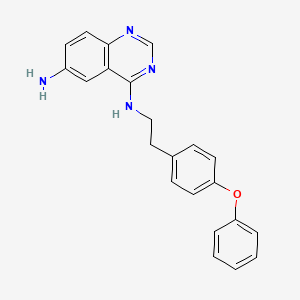
EVP 4593


QNZ

Image result for EVP 4593

EVP4593; EVP 4593; EVP-4593

M.Wt 356.42 545380-34-5; QNZ (EVP4593); QNZ; 6-Amino-4-(4-phenoxyphenylethylamino)quinazoline; N4-(4-phenoxyphenethyl)quinazoline-4,6-diamine;
Formula C₂₂H₂₀N₄O
CAS No 545380-34-5

QNZ(EVP4593) is a derivative of 6-aminoquinazoline class that has been previously isolated as an inhibitor of PMA/PHA-induced NF-κB pathway activation in Jurkat cells (IC50= 9 nM).

QNZ(EVP4593) is a derivative of 6-aminoquinazoline class that has been previously isolated as an inhibitor of PMA/PHA-induced NF-κB pathway activation in Jurkat cells (IC50= 9 nM).
IC50 Value: 9 nM [1]
Target: NF-kB signaling
in vitro: The efficacy of EVP4593 was dose-dependent in the range between 100 uM and 400 uM in the fly food. The EVP4593 had no significant effect on climbing performance of HD flies at 50 ?M. The EVP4593 had no toxic effects on Drosophila in the range of concentrations tested in our assays (50 – 400 ?M) [1]. Addition of 300 nM of EVP4593 resulted in strong attenuation of SOC Ca2+ influx in YAC128 MSN neurons. On average the amplitude of SOC Ca2+ entry in YAC128 MSN was reduced from 0.30 ± 0.02 (n = 29) in the presence of DMSO control to 0.11 ± 0.02 (n = 54) in the presence of 300 nM of EVP4593 (p < 0.001).
in vivo:

Paper

Identification of 4-N-[2-(4-phenoxyphenyl)ethyl]quinazoline-4,6-diamine as a novel, highly potent and specific inhibitor of mitochondrial complex I

Author affiliations

Abstract

By probing the quinone substrate binding site of mitochondrial complex I with a focused set of quinazoline-based compounds, we identified substitution patterns as being critical for the observed inhibition. The structure activity relationship study also resulted in the discovery of the quinazoline 4-N-[2-(4-phenoxyphenyl)ethyl]quinazoline-4,6-diamine (EVP4593) as a highly potent inhibitor of the multisubunit membrane protein. EVP4593 specifically and effectively reduces the mitochondrial complex I-dependent respiration with no effect on the respiratory chain complexes II–IV. Similar to established Q-site inhibitors, EVP4593 elicits the release of reactive oxygen species at the flavin site of mitochondrial complex I. Recently, EVP4593 was nominated as a lead compound for the treatment of Huntingtons disease. Our results challenge the postulated primary mode-of-action of EVP4593 as an inhibitor of NF-κB pathway activation and/or store-operated calcium influx.

Graphical abstract: Identification of 4-N-[2-(4-phenoxyphenyl)ethyl]quinazoline-4,6-diamine as a novel, highly potent and specific inhibitor of mitochondrial complex I
PAPER
Bioorganic & Medicinal Chemistry (2003), 11(3), 383-391.

Abstract

We disclose here a new structural class of low-molecular-weight inhibitors of NF-κB activation that were designed and synthesized by starting from quinazoline derivative 6a. Structure–activity relationship (SAR) studies based on 6a elucidated the structural requirements essential for the inhibitory activity toward NF-κB transcriptional activation, and led to the identification of the 6-amino-4-phenethylaminoquinazoline skeleton as the basic framework. In this series of compounds, 11q, containing the 4-phenoxyphenethyl moiety at the C(4)-position, showed strong inhibitory effects on both NF-κB transcriptional activation and TNF-α production. Furthermore, 11q exhibited an anti-inflammatory effect on carrageenin-induced paw edema in rats.


Compound 11q exhibited a highly inhibitory activity toward NF-κB activation and also showed an anti-inflammatory effect.

Image for unlabelled figure
11q (72 mg, 77% yield):
mp 168–170 C;
1 H NMR (DMSO-d6) d 8.33 (br s, 2H), 7.45 (d, J=8.9 Hz, 1H), 7.40–7.34 (m, 2H), 7.28 (d, J=8.6 Hz, 2H), 7.20–7.07 (m, 3H), 6.98–6.92 (m, 4H), 5.59 (br s, 2H), 3.79–3.72 (m, 2H), 2.95 (t, J=7.3 Hz, 2H);
MS (TOF) m/z 357 (M + H)+; anal. calcd for C22H20N4O 1.0H2O: C, 70.57; H, 5.65; N, 14.96. Found: C, 70.48; H, 5.60; N, 14.87.
REF
Bioorganic & Medicinal Chemistry (2003), 11(18), 3869-3878.
JP 2004059454
 CN 1709259
Bioorganic & Medicinal Chemistry Letters (2009), 19(19), 5665-5669
Journal of Medicinal Chemistry (2014), 57(6), 2247-2257
Patent ID Patent Title Submitted Date Granted Date
US2006188938 Compounds for inhibiting beta-amyloid production and methods of identifying the compounds 2006-08-24
US2007037855 Compounds for inhibiting beta-amyloid production and methods of identifying the compounds 2007-02-15
US2007185130 Compounds for inhibiting beta-amyloid production and methods of identifying the compounds 2007-08-09
US2007191409 Compounds for inhibiting beta-amyloid production and methods of identifying the compounds 2007-08-16
US2008058330 Compounds and Combinations Thereof for Inhibiting Beta-Amyloid Production and Methods of Use Thereof 2008-03-06
US2009082371 Treatment of Viral Disease and Cancer With Nf-kappaB Inhibitors 2009-03-26
US2010016218 CONTROLLED-RELEASE APOPTOSIS MODULATING COMPOSITIONS AND METHODS FOR THE TREATMENT OF OTIC DISORDERS 2010-01-21
US2010022661 CONTROLLED RELEASE COMPOSITIONS FOR MODULATING FREE-RADICAL INDUCED DAMAGE AND METHODS OF USE THEREOF 2010-01-28
US2010215735 Compounds for Inhibiting Beta-Amyloid Production and Methods of Identifying the Compounds 2010-08-26
US2010216784 Compounds for Inhibiting Beta-Amyloid Production and Methods of Identifying the Compounds 2010-08-26
Patent ID Patent Title Submitted Date Granted Date
US2010087374 Methods for Treatment and Diagnosis of Pulmonary Diseases Based on the Expression of SERCA2 Protein 2009-10-05 2010-04-08
US2009177228 Coated suture thread and production thereof 2006-02-21 2009-07-09
US2008139457 Therapeutic compositions comprising chorionic gonadotropins and HMG CoA reductase inhibitors 2006-09-14 2008-06-12
US2014243425 CONTROLLED RELEASE COMPOSITIONS FOR MODULATING FREE-RADICAL INDUCED DAMAGE AND METHODS OF USE THEREOF 2014-05-01 2014-08-28
US2013202537 COMPOSITIONS FOR LABELING NERVES AND METHODS OF USE 2011-09-02 2013-08-08
US2013078224 INDUCTION/MONITORING OF ARTERIOGENESIS USING SDF1 AND PDGFB OR INHIBITION OF PHD2 2011-03-30 2013-03-28
US2012277199 Modulation of Gel Temperature of Poloxamer-Containing Formulations 2010-10-19 2012-11-01
US2012134922 PEPTIDES WHOSE UPTAKE IN CELLS IS CONTROLLABLE 2010-07-15 2012-05-31
US2012134931 PEPTIDES WHOSE UPTAKE IN CELLS IS CONTROLLABLE 2010-07-15 2012-05-31
US8685372 Peptides and aptamers for targeting of neuron or nerves 2010-04-15 2014-04-01
Patent ID Patent Title Submitted Date Granted Date
US2015297598 METHODS FOR TREATING RENAL DISEASE 2013-11-20 2015-10-22
US2015353604 COMPOSITIONS FOR LABELING NERVES AND METHODS OF USE 2015-06-10 2015-12-10
US2015359902 PRETARGETED ACTIVATABLE CELL PENETRATING PEPTIDE WITH INTRACELLULARLY RELEASABLE PRODRUG 2014-01-29 2015-12-17
US2016160263 PERSONALIZED PROTEASE ASSAY TO MEASURE PROTEASE ACTIVITY IN NEOPLASMS 2015-10-02 2016-06-09
US2016199446 CONTROLLED-RELEASE APOPTOSIS MODULATING COMPOSITIONS AND METHODS FOR THE TREATMENT OF OTIC DISORDERS 2016-01-19 2016-07-14

//////////

C1=CC=C(C=C1)OC2=CC=C(C=C2)CCNC3=NC=NC4=C3C=C(C=C4)N

Process Development and Good Manufacturing Practice Production of a Tyrosinase Inhibitor via Titanium-Mediated Coupling between Unprotected Resorcinols and Ketones


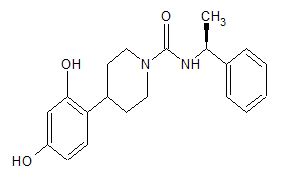
(S)-4-(2,4-Dihydroxyphenyl)-N-(1-phenylethyl)piperidine-1-carboxamide (1)

In a………………….. to yield crude 1 (3.51 kg, 77%, 97.7 A% purity). Recrystallization: In a 100 L double jacketed reactor were charged crude 1 (3.51 kg, 10.31 mol, 1.0 equiv), iPrOH (27.0 L, 7.5 vol), AcOH (74.1 g), and water (27.0 L, 7.5 vol). The suspension was warmed to reflux and turned to a solution after 30 min of reflux. Heating was stopped, and the reaction medium was allowed to cool to 23 °C over 20 h. The suspension was filtered through a 25 μm filter medium; the cake was washed with a mixture of water (3.6 L) and AcOH (7.3 g) and the solid collected and dried under vacuum at 45 °C for 48 h to yield 1 (2.86 kg, 81%, 98.5 A% purity).
1H NMR (400 MHz, DMSO-d6): δ 9.11 (s, 1H), 8.96 (s, 1H), 7.30–7.31 (m, 4), 7.19–7.20 (m, 1H), 6.79 (d, J = 8.3 Hz, 2H), 6.7 (d, J = 7.9 Hz, 2H), 6.28 (d, J = 2.4 Hz, 1H), 6.16 (dd, J = 8.3, 2.4 Hz, 1H), 4.85–4.87 (m, 1 H), 4.13 (d, J = 12.9 Hz, 2H), 2.85 (t, J = 11.9 Hz, 1H), 2.70 (t, J = 12.7 Hz, 2H), 1.64 (d, J = 12.1 Hz, 2H), 1.40–1.41 (m, 5H).
13C NMR (101 MHz, DMSO-d6) δ 156.6, 156.0, 155.2, 146.3, 127.9, 126.7, 126.1, 125.9, 122.5, 106.0, 102.4, 49.3, 44.4, 34.7, 31.8, 31.7, 22.9;
mp: 200–201 °C;
HRMS (m/z, ES+) for C20H25N2O3 (M + H)+ calcd. 341.1865, measd. 341.1859.

Process Development and Good Manufacturing Practice Production of a Tyrosinase Inhibitor via Titanium-Mediated Coupling between Unprotected Resorcinols and Ketones

Nestlé Skin Health R&D, 2400 Route des colles BP 87, 06902 Sophia-Antipolis Cedex, France
Org. Process Res. Dev., Article ASAP
DOI: 10.1021/acs.oprd.7b00036

ACS Editors’ Choice – This is an open access article published under an ACS AuthorChoice License, which permits copying and redistribution of the article or any adaptations for non-commercial purposes.

Thibaud Gerfaud

Thibaud Gerfaud

Team Leader Process Chemistry

Nestlé Skin Health Logo

Boiteau Jean-Guy

Boiteau Jean-Guy

Head of Process Research & Development

Nestlé Skin Health

Nestlé Skin Health Logo

Abstract

Abstract Image

A concise and economically attractive process for the synthesis of a novel tyrosinase inhibitor has been developed and implemented on a multikilogram scale under GMP. A major achievement to the success of the process is the development of a direct coupling between free resorcinol and ketone. First developed under basic conditions, this coupling has been turned to a novel titanium(IV) mediated process allowing good selectivity, easy isolation, and high atom efficiency. Other key steps feature an alkene reduction by palladium catalyzed transfer hydrogenation and a urea formation using N,N′-disuccinimidyl carbonate as the carbonyl source. This route allowed us to produce kilogram batches of the candidate to support preclinical and clinical studies.

Figure

Boiteau, J.-G.; Bouquet, K.; Talano, S.; Millois-Barbuis, C. Patent WO 2010/063774 A1, 2010.

More………………

str1

Cas 1228342-28-6
MF C20 H24 N2 O3,
MW  340.42
1-Piperidinecarboxamide, 4-(2,4-dihydroxyphenyl)-N-[(1S)-1-phenylethyl]-
  • 4-(2,4-Dihydroxyphenyl)-N-[(1S)-1-phenylethyl]-1-piperidinecarboxamide
  • 4-(2,4-Dihydroxyphenyl)piperidine-1-carboxylic acid N-((S)-1-phenylethyl)amide
Inventors Jean-Guy Boiteau , Karine Bouquet , Sandrine Talano , Barbuis Corinne Millois
Applicant Galderma Research & Development

Hyperpigmentation disorders such as melasma are characterized by an increase in melanin synthesis which accumulates in the epidermis and is responsible for a darkening of the skin. Melanogenesis occurs in the basal layer of the epidermis into specific organelles of the melanocytes called melanosomes.

A detailed analysis of the biosynthetic pathway reveals that tyrosinase is a key enzyme in melanogenesis and is responsible for the oxidation of tyrosine into DOPA (3,4-dihydroxyphenylalanine) and DOPA quinone.

It is a melanogenesis inhibitor working through the inhibition of tyrosinase (IC50 = 0.1 μM on normal human epidermal melanocytes) currently under development at Nestlé Skin Health R&D for the topical treatment of hyperpigmentation disorders. REF 1-5

WO 2010063774

Novel 4- (azacycloalkyl)benzene-l ,3-diol compounds as tyrosinase inhibitors, process for the preparation thereof and use thereof in human medicine and in cosmetics

The invention relates to novel 4- (azacycloalkyl) benzene-1, 3-diol compounds as industrial and useful products. It also relates to the process for the preparation thereof and to the use thereof, as tyrosinase inhibitors, in pharmaceutical or cosmetic compositions for use in the treatment or prevention of pigmentary disorders.

Skin pigmentation, in particular human skin pigmentation, is the result of melanin synthesis by dendritic cells, melanocytes. Melanocytes contain organelles called melanosomes which transfer melanin into the upper layers of keratinocytes which are then transported to the surface of the skin through differentiation of the epidermis (Gilchrest BA, Park HY, Eller MS, Yaar M, Mechanisms of ultraviolet light-induced pigmentation. Photochem Photobiol 1996; 63: 1-10; Hearing VJ, Tsukamoto K, Enzymatic control of pigmentation in mammals. FASEB J 1991; 5: 2902-2909) .

Among the enzymes of melanogenesis, tyrosinase is a key enzyme which catalyses the first two steps of melanin synthesis. Homozygous mutations of tyrosinase cause oculocutaneous albinism type I characterized by a complete lack of melanin synthesis (Toyofuku K, Wada I, Spritz RA, Hearing VJ, The molecular basis of oculocutaneous albinism type 1 (OCAl) : sorting failure and degradation of mutant tyrosinases results in a lack of pigmentation. Biochem J 2001; 355: 259-269) .

In order to treat pigmentation disorders resulting from an increase in melanin production, for which there is no treatment that meets all the expectations of patients and dermatologists, it is important to develop new therapeutic approaches.

Most of the skin-lightening compounds that are already known are phenols or hydroquinone derivatives.

These compounds inhibit tyrosinase, but the majority of them are cytotoxic to melanocytes owing to the formation of quinones. There is a risk of this toxic effect causing a permanent depigmentation of the skin. The obtaining of compounds that can inhibit melanogenesis while at the same time being very weakly cytotoxic or devoid of toxicity to melanocytes is most particularly sought.

Among the compounds already described in the literature, patent application WO 99/15148 discloses the use of 4-cycloalkyl resorcinols as depigmenting agents .

Patent FR2704428 discloses the use of 4-halo-resorcinols as depigmenting agents.

Patent applications WO 2006/097224 and WO 2006/097223 disclose the use of 4-cycloalkylmethyl resorcinols as depigmenting agents.

Patent application WO 2005/085169 discloses the use of alkyl 3- (2, 4-dihydroxyphenyl) propionate as a depigmenting agent.

Patent application WO 2004/017936 discloses the use of 3- (2, 4-dihydroxyphenyl) acrylamide as a depigmenting agent.

Patent application WO 2004/052330 discloses the use of 4- [ 1, 3] dithian-2-ylresorcinols as depigmenting agents .

More particularly, patent EP0341664 discloses the use of 4-alkyl resorcinols as depigmenting agents, among which 4-n-butyl resorcinol, also known as rucinol, is part of the composition of a depigmenting cream sold under the name Iklen®.

The applicant has now discovered, unexpectedly and surprisingly, that novel compounds of 4- (azacycloalkyl) benzene-1, 3-diol structure have a very good tyrosinase enzyme-inhibiting activity and a very low cytotoxicity. Furthermore, these compounds have a tyrosinase enzyme-inhibiting activity that is greater than that of rucinol while at the same time being less cytotoxic with respect to melanocytes than rucinol.

These compounds find uses in human medicine, in particular in dermatology, and in the cosmetics field.

FR 2939135

References

  1. Briganti, S.; Camera, E.; Picardo, M. Pigm. Cell Res. 2003, 16, 101, DOI: 10.1034/j.1600-0749.2003.00029.x

  2. 2.

    Brenner, M.; Hearing, V. J. Photochem. Photobiol. 2008, 84, 539, DOI: 10.1111/j.1751-1097.2007.00226.x

  3. 3.

    (a) Schallreuter, K. U.; Kothari, S.; Chavan, B.; Spencer, J. D. Exp. Dermatol. 2008, 17, 395, DOI: 10.1111/j.1600-0625.2007.00675.x

    (b) Cooksey, C. J.; Garratt, P. J.;Land, E. J.; Pavel, S.; Ramsden, C. A.; Riley, P. A.; Smit, N. P.J. Biol. Chem. 1997, 272, 26226, DOI: 10.1074/jbc.272.42.26226

    (c) Stratford, M. R. L.; Ramsden, C. A.; Riley, P. A.Bioorg. Med. Chem. 2013, 21, 1166, DOI: 10.1016/j.bmc.2012.12.031

  4. 4.

    Chang, T. S. Int. J. Mol. Sci. 2009, 10, 2440, DOI: 10.3390/ijms10062440

  5. 5.

    Hypopigmentation effect have already been demonstrated for resorcinols; see:

    (a) Kim, D. S.; Kim, S. Y.;Park, S. H.; Choi, Y. G.; Kwon, S. B.; Kim, M. K.; Na, J. I.; Youn, S. W.; Park, K. C. Biol. Pharm. Bull. 2005,28, 2216, DOI: 10.1248/bpb.28.2216

    (b) Khemis, A.; Kaiafa, A.;Queille-Roussel, C.; Duteil, L.; Ortonne, J. P. Br. J. Dermatol.2007, 156, 997, DOI: 10.1111/j.1365-2133.2007.07814.x

////////////

O=C(N[C@@H](C)c1ccccc1)N2CCC(CC2)c3ccc(O)cc3O

Enantioselective synthesis of a cyclobutane analogue of Milnacipran


(1R,2S)-2-(Aminomethyl)-N,N-diethyl-1 phenylcyclobutanecarboxamide (19)

1 H NMR (CDCl3) δ 7.36–7.33 (m, 4H), 7.25–7.21 (m, 1H), 3.51–3.43 (qd, J = 13.8 Hz, 6.8 Hz, 1H), 3.15–2.87 (m, 7H), 2.81–2.72 (m, 2H), 2.23–2.14 (m, 1H), 2.04–1.97 (m, 1H), 1.62 (tdd, J = 10.5 Hz, 5.7 Hz, 2.6 Hz, 1H), 1.07 (t, J = 7.1 Hz, 3H), 0.35 (t, J = 7.1 Hz, 3H) ppm;

13C NMR (CDCl3) δ 172.7, 143.3, 128.8, 126.4, 125.3, 54.6, 44.4, 42.4, 41.0, 39.5, 31.1, 19.0, 12.2, 12.0 ppm;

IR (neat) 3364, 1622, 1437, 905, 728 cm−1 ;

[α] 20 D +1.5 (c 0.5, CHCl3) (lit.5 [α]D +0.84);

ESI-MS (ES+ ) 261 [M + H]+ ; HRMS m/z calcd for C16H25N2O: 261.1958, found: 261.1961;

chiral HPLC (CHIRALCEL OJ-RH 150 × 4.6 mm, H2O/MeOH 35 : 65, flow rate 1 mL min−1 , detection at 254 nm), tmajor = 8.5 min, tminor = 6.7 min, er 95 : 5. Of note, compound 19 was acetylated with acetic anhydride/NEt3 prior to HPLC analysis.

5 S. Cuisiat, A. Newman-Tancredi, O. Vitton and B. Vacher, WO patent, 112597, 2010

Enantioselective synthesis of a cyclobutane analogue of Milnacipran

Org. Chem. Front., 2017, Advance Article
DOI: 10.1039/C7QO00140A, Research Article
Dinh-Vu Nguyen, Edmond Gravel, David-Alexandre Buisson, Marc Nicolas, Eric Doris
An optically active cyclobutane analogue of Milnacipran was synthesized from phenylacetonitrile, and its cis-stereochemistry was controlled by an epimerization step.

Enantioselective synthesis of a cyclobutane analogue of Milnacipran

aService de Chimie Bioorganique et de Marquage (SCBM), CEA, Université Paris-Saclay, 91191 Gif-sur-Yvette, France

Abstract

The asymmetric synthesis of a cyclobutane analogue of the antidepressant drug Milnacipran is reported. The optically active derivative incorporates a central cyclobutane ring in lieu of the cyclopropane unit classically found in Milnacipran. The two stereogenic centres borne by the cyclobutane were sequentially installed starting from phenylacetonitrile.

Graphical abstract: Enantioselective synthesis of a cyclobutane analogue of Milnacipran
//////////Enantioselective, cyclobutane analogue  Milnacipran

The greening of peptide synthesis


The greening of peptide synthesis

Abstract

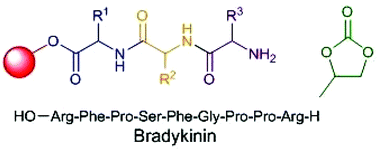
The synthesis of peptides by amide bond formation between suitably protected amino acids is a fundamental part of the drug discovery process. However, the required coupling and deprotection reactions are routinely carried out in dichloromethane and DMF, both of which have serious toxicity concerns and generate waste solvent which constitutes the vast majority of the waste generated during peptide synthesis. In this work, propylene carbonate has been shown to be a green polar aprotic solvent which can be used to replace dichloromethane and DMF in both solution- and solid-phase peptide synthesis. Solution-phase chemistry was carried out with Boc/benzyl protecting groups to the tetrapeptide stage, no epimerisation occurred during these syntheses and chemical yields for both coupling and deprotection reactions in propylene carbonate were at least comparable to those obtained in conventional solvents. Solid-phase peptide synthesis was carried out using Fmoc protected amino acids on a ChemMatrix resin and was used to prepare the biologically relevant nonapeptide bradykinin with comparable purity to a sample prepared in DMF.

Graphical abstract: The greening of peptide synthesis
Boc-Ala-Phe-OBn 5a    ref S1
Boc-Ala-OH (324 mg, 1.71 mmol) and HCl.H-Phe-OBn (500 mg, 1.71 mmol) were coupled according to the general coupling procedure. The residue was purified using flash column chromatography (35:65, EtOAc:PE) to give Boc-Ala-Phe-OBn 5a as a white crystalline solid (682 mg, 93%). RF = 0.34 (40:60, EtOAc:PE);
mp 95.6-96.3 °C;
[α]D 23 -27.7 (c 1.0 in MeOH);
IR (Neat) νmax 3347 (m), 3063 (w), 3029 (w), 2928 (m), 2852 (w), 1735 (w), 1684 (w) 1666 (w) and 1521 (s) cm-1;
1H NMR (400 MHz, CDCl3): δ = 7.36-7.31 (m, 3H, ArH), 7.29-7.24 (m, 2H, ArH), 7.26-7.21 (m, 3H, ArH), 7.04-6.97 (m, 2H, ArH), 6.72 (d J 7.7 Hz, 1H, Phe-NH), 5.16-5.10 (m, 1H, Ala-NH), 5.13 (d J 12.1 Hz, 1H, OCH2Ph), 5.07 (d J 12.1 Hz, 1H, OCH2Ph), 4.88 (dt, J 7.7, 5.9 1H, PheNCH), 4.11 (br, 1H, Ala-NCH), 3.13 (dd J 13.9, 6.1 Hz, 1H, CH2Ph), 3.08 (dd J 13.9, 6.1 Hz, 1H, CH2Ph), 1.41 (s, 9H, C(CH3)3), 1.29 (d J 6.6 Hz, 3H, CH3);
13C NMR (100 MHz, CDCl3): δ = 172.3 (C=O), 171.2 (C=O), 155.6 (NC=O), 135.7 (ArC), 135.1 (ArC), 129.5 (ArCH), 128.7 (ArCH), 128.6 (ArCH), 127.2 (ArCH), 80.2 (CMe3), 67.4 (OCH2Ph), 53.3 (Phe-NCH), 50.3 (Ala-NCH), 38.0 (CH2Ph), 28.4 (C(CH3)3), 18.5 (CH3);
MS (ESI) m/z 449 [(M+Na)+ , 100]; HRMS (ESI) m/z calculated for C24H30N2O5Na 449.2048 (M+Na)+ , found 449.2047 (0.6 ppm error).
S1 J. Nam, D. Shin, Y. Rew and D. L. Boger, J. Am. Chem. Soc., 2007, 129, 8747–8755; Q. Wang, Y. Wang and M. Kurosu, Org. Lett., 2012, 14, 3372–3375.
General procedure for peptide coupling reactions in PC To a suspension of an N-Boc-amino acid (1.0 eq.) and an amino acid or peptide benzyl ester (1.0 eq.) in PC (5 mL mmol-1), at 0 °C, was added a solution of HOBt (1.1 eq.) and i Pr2EtN (3.0 eq.) in a minimal quantity of PC. EDC (1.1 eq.) was added dropwise and the reaction mixture was allowed to stir at room temperature for 16h. The reaction mixture was then diluted using EtOAc (50 mL) and washed with 1M HClaq (3 × 25 mL), saturated Na2CO3 (3 × 25 mL) and H2O (3 × 25 mL). The organic layer was dried (MgSO4 ), filtered and concentrated in vacuo. Any residual PC was removed via short path distillation. Purification details for each peptide and characterising data are given in the supplementary information. General procedure for Boc deprotections in PC An N-Boc-peptide benzyl ester (1.0 eq.) was dissolved in a minimum amount of PC and trifluoroacetic acid (60 eq.) was added. The reaction mixture was allowed to stir for 3h. at room temperature before being concentrated in vacuo. Any residual PC was removed via short path distillation. Characterising data for each deprotected peptide are given in the supplementary information.
Procedure for Boc deprotection of dipeptide 5a using HCl in PC Boc-Ala-Phe-OBn 5a (50 mg, 0.117 mmol) was dissolved in PC (2.34 mL). MeOH (0.40 mL, 9.8 mmol) was added and the solution cooled to 0 o C. Acetyl chloride (0.67 mL, 9.36 mmol) was added dropwise and the solution allowed to stir at room temperature for 2h. Then, PC was removed by short path distillation. The residue was suspended in Et2O and stirred for 5 minutes before being filtered to give HCl.Ala-Ph-OBn as a white solid (32.4 mg, 76%).
Propylene carbonate 1 has been shown to be a green replacement for reprotoxic amide based solvents which are widely used in peptide synthesis. Both solution- and solidphase peptide synthesis can be carried out in propylene carbonate using acid and base labile amine protecting groups respectively. No significant racemisation of the activated amino acids occurs in propylene carbonate and the viability of solid-phase peptide synthesis in propylene carbonate was demonstrated by the synthesis of the nonapeptide bradykinin.
///////////

Debio-1452


Image result for Debio-1452

Debio-1452, AFN 1252

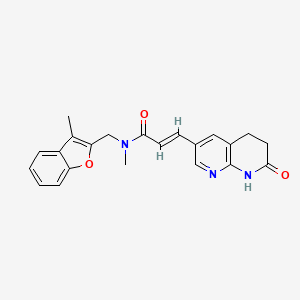
AFN-1252; UNII-T3O718IKKM; API-1252; CAS 620175-39-5; CHEMBL1652621; (E)-N-methyl-N-((3-methylbenzofuran-2-yl)methyl)-3-(7-oxo-5,6,7,8-tetrahydro-1,8-naphthyridin-3-yl)acrylamide

  • MFC22 H21 N3 O3
  • 2-Propenamide, N-methyl-N-[(3-methyl-2-benzofuranyl)methyl]-3-(5,6,7,8-tetrahydro-7-oxo-1,8-naphthyridin-3-yl)-, (2E)-
  •  MW375.42
  • Phase 2, clinical trials for the oral treatment of staphylococcal infections, including hospital and community-acquired MRSA and acute bacterial skin and skin structure infections
  • Qualified Infectious Disease Product designation

GlaxoSmithKline plc INNOVATOR

Image result

Debiopharm SA,

Image result for DEBIOPHARM

Image result for Affinium

Melioidosis, Enoyl ACP reductase Fabl inhibitor

Debio-1452, a novel class fatty acid biosynthesis (FAS) II pathway inhibitor, was studied in phase II clinical trials for the oral treatment of staphylococcal infections, including hospital and community-acquired MRSA and acute bacterial skin and skin structure infections. Debiopharm is developing oral and IV formulations of a prodrug of Debio-1452, Debio-1450.

Infections caused by or related to bacteria are a major cause of human illness worldwide. Unfortunately, the frequency of resistance to standard antibacterials has risen dramatically over the last decade, especially in relation to Staphylococcus aureus. For example, such resistant S. aureus includes MRSA, resistant to methicillin, vancomycin, linezolid and many other classes of antibiotics, or the newly discovered New Delhi metallo-beta-lactamase- 1 (NDM-1) type resistance that has shown to afford bacterial resistant to most known antibacterials, including penicillins, cephalosporins, carbapenems, quinolones and fluoroquinolones, macrolides, etc. Hence, there exists an urgent, unmet, medical need for new agents acting against bacterial targets..

In recent years, inhibitors of Fabl, a bacterial target involved in bacterial fatty acid synthesis, have been developed and many have been promising in regard to their potency and tolerability in humans, including a very promising Fabl inhibitor, (E)-N-methyl-N-((3-methylbenzofuran-2-yl)methyl)-3-(7-oxo-5,6,7,8-tetrahydro-l,8-naphthyridin-3-yl)acrylamide. This compound, however, has been found to be difficult or impracticable to formulate into acceptable oral and parenteral (e.g., intravenous or subcutaneous) formulations, and has marked insolubility, poor solution stability, and oral bioavailability. Much effort, over a decade or more, has been expended to design and synthesize an alternative compound that retains the significant inhibition of Fabl upon administration, but has improved physical and chemical characteristics that finally allow for practical oral and parenteral formulations. Up to now, no such compound has been identified that has adequate stability in the solid state, in aqueous solutions, together with excellent oral bioavailability that is necessary for oral and/or a parenteral administration, and is capable of being formulated into an oral and/or intravenous or intramuscular drug product using practical and commonly utilized methods of sterile formulation manufacture.

Debio-1452 is expected to have high potency against all drug-resistant phenotypes of staphylococci, including hospital and community-acquired MRSA.

Affinium obtained Debio-1452, also known as API-1252, through a licensing deal with GlaxoSmithKline. In 2014, Debiopharm acquired the product from Affinium.

In 2013, Qualified Infectious Disease Product designation was assigned to the compound for the treatment of acute bacterial skin and skin structure infections (ABSSSI).

Image result for Debio-1452

Image result for Debio-1452

AFN-1252.png

SYNTHESIS

Heck coupling of 6-bromo-3,4-dihydro-1,8-naphthyridin-2-one with t-butyl acrylate in the presence of Pd(OAc)2, DIEA and P(o-tol)3  in propionitrile/DMF or acetonitrile/DMF affords naphthyridinyl-acrylate,

Whose t-butyl ester group is then cleaved using TFA in CH2Cl2 to furnish, after treatment with HCl in dioxane, 3-(7-oxo-6,8-dihydro-5H-1,8-naphthyridin-3-yl)acrylic acid hydrochloride

SEE BELOW………

Finally, coupling of acid with N-methyl-N-(3-methylbenzofuran-2-ylmethyl)amine using EDC, HOBt and DIEA in DMF provides the target AFN-1252

Preparation of N-methyl-N-(3-methylbenzofuran-2-ylmethyl)amine :

Chlorination of 3-methylbenzofuran-2-carboxylic acid  with (COCl)2 and catalytic DMF, followed by condensation with CH3NH2 in CH2Cl2 yields the corresponding benzofuran-2-carboxamide,

Which is then reduced with LiAlH4 in THF to furnish N-methyl-N-(3-methylbenzofuran-2-ylmethyl)amine.

CONTD……..

Reduction of 2-aminonicotinic acid  with LiAlH4 in THF gives (2-amino-3-pyridinyl)methanol ,

which upon bromination with Br2 in AcOH yields (2-amino-5-bromo-3-pyridinyl)methanol hydrobromide.

Substitution of alcohol  with aqueous HBr at reflux provides the corresponding bromide,

which undergoes cyclocondensation with dimethyl malonate  in the presence of NaH in DMF/THF to furnish methyl 6-bromo-2-oxo-1,2,3,4-tetrahydro-1,8-naphthyridine-3-carboxylate.

Hydrolysis of ester with NaOH in refluxing MeOH, followed by decarboxylation in refluxing HCl leads to 6-bromo-3,4-dihydro-1,8-naphthyridin-2-one

PATENT

US-20170088822

Image result for Aurigene Discovery Technologies Ltd

Aurigene Discovery Technologies Ltd

Novel co-crystalline polymorphic form of a binary enoyl-acyl carrier protein reductase (FabI) and FabI inhibitor ie AFN-1252. The FabI was isolated from Burkholderia pseudomallei (Bpm). The co-crystal is useful for identifying an inhibitor of FabI, which is useful for treating BpmFabI associated disease ie melioidosis. Appears to be the first patenting to be seen from Aurigene Discovery Technologies or its parent Dr Reddy’s that focuses on BpmFabI crystal; however, see WO2015071780, claiming alkylidine substituted heterocyclyl derivatives as FabI inhibitors, useful for treating bacterial infections. Aurigene was investigating FabI inhibitors, for treating infectious diseases, including bacterial infections such as MRSA infection, but its development had been presumed to have been discontinued since December 2015; however, publication of this application would suggest otherwise.

WO2015071780

PATENTS

US 20060142265

http://www.google.co.in/patents/US20060142265

PATENT

https://patentscope.wipo.int/search/en/detail.jsf?docId=WO2013190384&recNum=1&maxRec=&office=&prevFilter=&sortOption=&queryString=&tab=PCTDescription

Patent ID Patent Title Submitted Date Granted Date
US8901105 Prodrug derivatives of (E)-N-methyl-N-((3-M ethylbenzofuran-2-yl)methyl)-3-(7-oxo-5, 6, 7, 8-tetrahydro-1, 8-naphthyridin-3-yl)acrylamide 2013-08-26 2014-12-02
US2015065415 PRODRUG DERIVATIVES OF (E)-N-METHYL-N-((3-METHYLBENZOFURAN-2-YL)METHYL)-3-(7-OXO-5, 6, 7, 8-TETRAHYDRO-1, 8-NAPHTHYRIDIN-3-YL)ACRYLAMIDE 2014-11-06 2015-03-05
Patent ID Patent Title Submitted Date Granted Date
US7049310 Fab I inhibitors 2004-07-29 2006-05-23
US7250424 Fab I inhibitors 2006-06-01 2007-07-31
US7879872 Compositions comprising multiple bioactive agents, and methods of using the same 2006-06-29 2011-02-01
US2009042927 Salts, Prodrugs and Polymorphs of Fab I Inhibitors 2009-02-12
US7741339 Fab I Inhibitors 2009-09-03 2010-06-22
US8153652 Fab I Inhibitors 2011-04-28 2012-04-10
US2012010127 Compositions Comprising Multiple Bioactive Agents, and Methods of Using the Same 2012-01-12
US2013281442 Compounds for Treatment of Bovine Mastitis 2011-06-13 2013-10-24
US2013150400 SALTS, PRODRUGS AND POLYMORPHS OF FAB I INHIBITORS 2012-08-09 2013-06-13
US2014309191 SALTS, PRODRUGS AND POLYMORPHS OF FAB I INHIBITORS 2013-11-08 2014-10-16

////////////Debio-1452, AFN 1252,AFN-1252, UNII-T3O718IKKM, API-1252, 620175-39-5, PRECLINICAL, Phase 2, Qualified Infectious Disease Product designation

CC1=C(OC2=CC=CC=C12)CN(C)C(=O)C=CC3=CC4=C(NC(=O)CC4)N=C3

FDA approves new drug to treat multiple sclerosis Ocrevus (ocrelizumab)


03/29/2017
On March 28, the U.S. Food and Drug Administration approved Ocrevus (ocrelizumab) to treat adult patients with relapsing forms of multiple sclerosis (MS) and primary progressive multiple sclerosis (PPMS). This is the first drug approved by the FDA for PPMS. Ocrevus is an intravenous infusion given by a health care professional.

On March 28, the U.S. Food and Drug Administration approved Ocrevus (ocrelizumab) to treat adult patients with relapsing forms of multiple sclerosis (MS) and primary progressive multiple sclerosis (PPMS). This is the first drug approved by the FDA for PPMS. Ocrevus is an intravenous infusion given by a health care professional.

“Multiple sclerosis can have a profound impact on a person’s life,” said Billy Dunn, M.D., director of the Division of Neurology Products in the FDA’s Center for Drug Evaluation and Research. “This therapy not only provides another treatment option for those with relapsing MS, but for the first time provides an approved therapy for those with primary progressive MS.”

MS is a chronic, inflammatory, autoimmune disease of the central nervous system that disrupts communication between the brain and other parts of the body. It is among the most common causes of neurological disability in young adults and occurs more frequently in women than men. For most people with MS, episodes of worsening function (relapses) are initially followed by recovery periods (remissions). Over time, recovery may be incomplete, leading to progressive decline in function and increased disability. Most people experience their first symptoms of MS between the ages of 20 and 40.

PPMS is characterized by steadily worsening function from the onset of symptoms, often without early relapses or remissions. The U.S. Centers for Disease Control and Prevention estimates that approximately 15 percent of patients with MS have PPMS.

The efficacy of Ocrevus for the treatment of relapsing forms of MS was shown in two clinical trials in 1,656 participants treated for 96 weeks. Both studies compared Ocrevus to another MS drug, Rebif (interferon beta-1a). In both studies, the patients receiving Ocrevus had reduced relapse rates and reduced worsening of disability compared to Rebif.

In a study of PPMS in 732 participants treated for at least 120 weeks, those receiving Ocrevus showed a longer time to the worsening of disability compared to placebo.

Ocrevus should not be used in patients with hepatitis B infection or a history of life-threatening infusion-related reactions to Ocrevus. Ocrevus must be dispensed with a patient Medication Guide that describes important information about the drug’s uses and risks. Ocrevus can cause infusion-related reactions, which can be serious. These reactions include, but are not limited to, itchy skin, rash, hives, skin redness, flushing, low blood pressure, fever, tiredness, dizziness, headache, throat irritation, shortness of breath, swelling of the throat, nausea, and fast heartbeat. Additionally, Ocrevus may increase the risk for malignancies, particularly breast cancer. Delay Ocrevus treatment for patients with active infections. Vaccination with live or live attenuated vaccines is not recommended in patients receiving Ocrevus.

In addition to the infusion-related reactions, the most common side effect of Ocrevus seen in the clinical trials for relapsing forms of MS was upper respiratory tract infection. The most common side effects in the study of PPMS were upper respiratory tract infection, skin infection, and lower respiratory tract infection.

The FDA granted this application breakthrough therapy designation, fast track designation, and priority review.

The FDA granted approval of Ocrevus to Genentech, Inc.

//////multiple sclerosis, Ocrevus, ocrelizumab, fda 2017, genentech,

FDA approves new eczema drug Dupixent (dupilumab)


03/28/2017 11:14
The U.S. Food and Drug Administration today approved Dupixent (dupilumab) injection to treat adults with moderate-to-severe eczema (atopic dermatitis). Dupixent is intended for patients whose eczema is not controlled adequately by topical therapies, or those for whom topical therapies are not advisable. Dupixent can be used with or without topical corticosteroids.

The U.S. Food and Drug Administration today approved Dupixent (dupilumab) injection to treat adults with moderate-to-severe eczema (atopic dermatitis). Dupixent is intended for patients whose eczema is not controlled adequately by topical therapies, or those for whom topical therapies are not advisable. Dupixent can be used with or without topical corticosteroids.

“FDA’s approval of Dupixent demonstrates our commitment to approving new and innovative therapies for patients with skin disease,” said Julie Beitz, M.D., director of the Office of Drug Evaluation III in the FDA’s Center for Drug Evaluation and Research. “Eczema can cause significant skin irritation and discomfort for patients, so it is important to have a variety of treatment options available to patients, including those patients whose disease is not controlled by topical therapies.”

Atopic dermatitis, a chronic inflammatory skin disease, is often referred to as “eczema,” which is a general term for several types of inflammation of the skin. Atopic dermatitis is the most common of the many types of eczema; onset typically begins in childhood and can last through adulthood. The cause of atopic dermatitis is a combination of genetic, immune and environmental factors. In atopic dermatitis, the skin develops red, scaly and crusted bumps, which are extremely itchy. Scratching leads to swelling, cracking, “weeping” clear fluid, and finally, coarsening and thickening of the skin.

Dupixent is administered as an injection under the skin. Dupixent’s active ingredient is an antibody (dupilumab) that binds to a protein [interleukin-4 (IL-4) receptor alpha subunit (IL-4Ra)], that causes inflammation. By binding to this protein, Dupixent is able to inhibit the inflammatory response that plays a role in the development of atopic dermatitis.

The safety and efficacy of Dupixent were established in three placebo-controlled clinical trials with a total of 2,119 adult participants with moderate-to-severe atopic dermatitis not adequately controlled by topical medication(s). Overall, participants who received Dupixent achieved greater response, defined as clear or almost clear skin, and experienced a reduction in itch after 16 weeks of treatment.

Dupixent can cause side effects such as serious allergic reactions and eye problems, such as pink eye (conjunctivitis) and inflammation of the cornea (keratitis). If patients experience new or worsening eye symptoms such as redness, itching, pain or visual changes, they should consult a health care provider. The most common side effects include injection site reactions; cold sores in the mouth or on the lips; and eye and eyelid inflammation, including redness, swelling and itching.

The safety and efficacy of Dupixent have not been established in the treatment of asthma. Patients who also have asthma should not adjust or stop their asthma treatment without talking to their physicians.

The FDA granted the application for Dupixent Priority Review and Breakthrough Therapy designation.

The FDA granted the approval of Dupixent to Regeneron Pharmaceuticals, Inc.

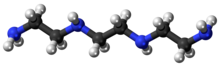
TRIENTINE HYDROCHLORIDE, 塩酸トリエンチン , 曲恩汀


Skeletal formula of triethylenetetramine

TRIENTINE

  • Molecular Formula C6H18N4
  • Average mass 146.234 Da

112-24-3 CAS

曲恩汀, KD-034, MK-0681, MK-681, TECZA, TETA, TJA-250

1,2-Ethanediamine, N1,N2-bis(2-aminoethyl)-
1,8-diamino-3,6-diazaoctane
Image result for TRIENTINE

TRIENTINE HYDROCHLORIDE

  • Molecular Formula C6H19ClN4
  • Average mass 182.695 Da

38260-01-4 CAS

Launched – 1986 VALEANT, WILSONS DISEASE

Image result for MSD

Image result for VALEANT

塩酸トリエンチン
Trientine Hydrochloride

C6H18N4▪2HCl : 219.16
[38260-01-4]

UPDATE CDSCO INDIA Trientine 08.06.2021 APPROVED

Trientine Tetrahydrochloride bulk and
Trientine Tetrahydrochloride capsules 333 mg
(Each capsule contains Trientine
tetrahydrochloride 333mg equivalent to
Trientine 167mg base)

For the treatment of Wilson’s disease
(hepatolenticular degeneration) in patients
intolerant to Penicillamine. It should be
used when continued treatment with
Penicillamine is no longer possible because
of intolerable or life endangering side
effects.

Aton Pharma, a subsidiary of Valeant Pharmaceuticals, has developed and launched Syprine, a capsule formulation of trientine hydrochloride, for treating Wilson disease.

Image result for TRIENTINE

Triethylenetetramine, abbreviated TETA and trien and also called trientine (INN), is an organic compound with the formula [CH2NHCH2CH2NH2]2. This oily liquid is colorless but, like many amines, assumes a yellowish color due to impurities resulting from air-oxidation. It is soluble in polar solvents. The branched isomer tris(2-aminoethyl)amine and piperazine derivatives may also be present in commercial samples of TETA.[1]

Trientine hydrochloride is a metal antagonist that was first launched by Merck, Sharp & Dohme in the U.S. in 1986 under the brand name Syprine for the oral treatment of Wilson’s disease.

Orphan drug designation has also been assigned in the U.S. for the treatment of patients with Wilson’s disease who are intolerant or inadequately responsive to penicillamine and in the E.U. by Univar for the treatment of Wilson’s disease

 Trientine hydrochloride pk_prod_list.xml_prod_list_card_pr?p_tsearch=A&p_id=90373

By condensation of ethylenediamine (I) with 1,2-dichloroethane (II)

Trientine hydrochloride is N,N’-bis (2-aminoethyl)-1,2-ethanediamine dihydrochloride. It is a white to pale yellow crystalline hygroscopic powder. It is freely soluble in water, soluble in methanol, slightly soluble in ethanol, and insoluble in chloroform and ether.

The empirical formula is C6H18N4·2HCI with a molecular weight of 219.2. The structural formula is:

NH2(CH2)2NH(CH2)2NH(CH2)2NH2•2HCI

Trientine hydrochloride is a chelating compound for removal of excess copper from the body. SYPRINE (Trientine Hydrochloride) is available as 250 mg capsules for oral administration. Capsules SYPRINE contain gelatin, iron oxides, stearic acid, and titanium dioxide as inactive ingredients.

Image result for TRIENTINE

Production

TETA is prepared by heating ethylenediamine or ethanolamine/ammonia mixtures over an oxide catalyst. This process gives a variety of amines, which are separated by distillation and sublimation.[2]

Uses

The reactivity and uses of TETA are similar to those for the related polyamines ethylenediamine and diethylenetriamine. It was primarily used as a crosslinker (“hardener”) in epoxy curing.[2]

The hydrochloride salt of TETA, referred to as trientine hydrochloride, is a chelating agent that is used to bind and remove copper in the body to treat Wilson’s disease, particularly in those who are intolerant to penicillamine. Some recommend trientine as first-line treatment, but experience with penicillamine is more extensive.[3]

Coordination chemistry

TETA is a tetradentate ligand in coordination chemistry, where it is referred to as trien.[4] Octahedral complexes of the type M(trien)Cl3 can adopt several diastereomeric structures, most of which are chiral.[5]

Trientine, chemically known as triethylenetetramine or N,N’-bis(2-aminoethyl)-l,2-ethanediamine belongs to the class of polyethylene polyamines. Trientine dihydrochloride is a chelating agent which is used to bind and remove copper in the body in the treatment of Wilson’s disease.

Image result for TRIENTINE

Trientine dihydrochloride (1)

Trientine dihydrochloride formulation, developed by Aton with the proprietary name SYPRINE, was approved by USFDA on November 8, 1985 for the treatment of patients with Wilson’s disease, who are intolerant to penicillamine. Trientine dihydrochloride, due to its activity on copper homeostasis, is being studied for various potential applications in the treatment of internal organs damage in diabetics, Alzheimer’s disease and cancer.

Various synthetic methods for preparation of triethylenetetramine (TETA) and the corresponding dihydrochloride salt have been disclosed in the prior art.

U.S. 4,806,517 discloses the synthesis of triethylenetetramine from ethylenediamine and monoethanolamine using Titania supported phosphorous catalyst while U.S. 4,550,209 and U.S. 5,225,599 disclose catalytic condensation of ethylenediamine and ethylene glycol for the synthesis of linear triethylenetetramine using catalysts like zirconium trimethylene diphosphonate, or metatungstate composites of titanium dioxide and zirconium dioxide.

U.S. 4,503,253 discloses the preparation of triethylenetetramine by reaction of an alkanolamine compound with ammonia and an alkyleneamine having two primary amino groups in the presence of a catalyst, such as supported phosphoric acid wherein the support is comprised of silica, alumina or carbon.

The methods described above for preparation of triethylenetetramine require high temperatures and pressure. Further, due to the various possible side reactions and consequent associated impurities, it is difficult to control the purity of the desired amine.

CN 102924289 discloses a process for trientine dihydrochloride comprising reduction of Ν,Ν’-dibenzyl-,N,N’-bis[2-(l,3-dioxo-2H-isoindolyl)ethyl]ethanediamine using hydrazine hydrate to give N,N’-dibenzyl-,N,N’-bis(2-aminoethyl)ethanediamine, which, upon condensation with benzyl chloroformate gave N,N’-dibenzyl-,N,N’-bis[2-(Cbz-amino)ethyl]ethanediamine, and further reductive deprotection to give the desired compound.

CS 197,093 discloses a process comprising reaction of triethylenetetramine with concentrated hydrochloric acid to obtain the crystalline tetrahydrochlonde salt. Further reaction of the salt with sodium ethoxide in solvent ethanol, filtration of the solid sodium chloride which is generated in the process, followed by slow cooling and crystallization of the filtrate provided the dihydrochloride salt. Optionally, aqueous solution of the tetrahydrochloride salt was passed through a column of an anion exchanger and the eluate containing free base was treated with a calculated amount of the tetrahydrochloride, evaporated, and the residue was crystallized from aqueous ethanol to yield the dihydrochloride salt.

The process is quite circuitous and cumbersome, requiring use of strong bases, filtration of sodium chloride and results in yields as low as 60%.

US 8,394,992 discloses a method for preparation of triethylenetetramine dihydrochloride wherein tertiary butoxycarbonyl (boc) protected triethylenetetramine is first converted to its tetrahydrochloride salt using large excess of hydrochloric acid in solvent isopropanol, followed by treatment of the resulting tetrahydrochloride salt with a strong base like sodium alkoxide to produce the amine free base (TETA) and sodium chloride salt in anhydrous conditions. The free amine is extracted with tertiary butyl methyl ether (TBME), followed by removal of sodium chloride salt and finally the amine free base TETA is treated with hydrochloric acid in solvent ethanol to give trientine hydrochloride salt.

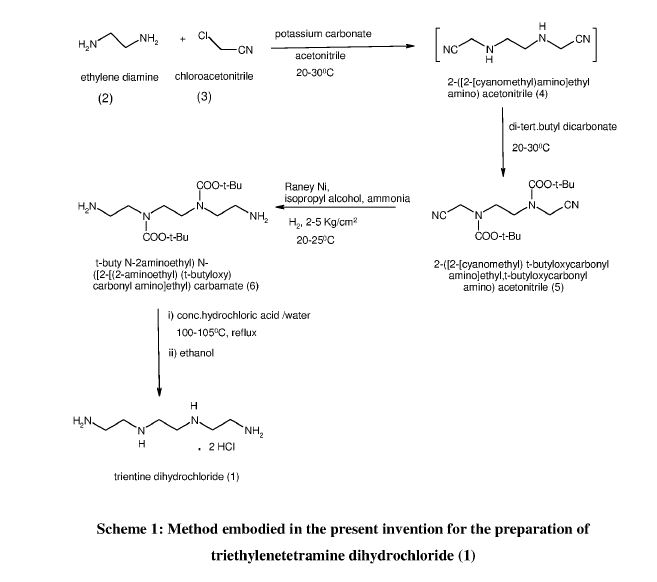
PATENT

WO-2017046695

str1

EXAMPLES

Example 1: Preparation of 2-([2-[cyanomethyl]-t-butyloxycarbonylamino]ethyl- 1-butyloxy carbonylamino)acetonitrile (5)

Potassium carbonate (481.9 g) was added to a stirred mixture of ethylenediamine (100.0 g) in acetonitrile (800 ml) and cooled to around 10°C. Chloroacetonitrile (263.8 g) was gradually added at same temperature and stirred at 25-30°C, till completion of the reaction, as monitored by HPLC. The mixture was cooled to 5-15°C and Boc-anhydride (762. lg) was added to it, followed by stirring at the same temperature. The temperature was raised to 25-30°C and the mass was stirred till completion of the reaction, as monitored by HPLC.

The reaction mass was filtered and the filtrate was concentrated. Toluene was added to the residue, and the mixture was heated to around 70°C followed by cooling and filtration to give 2-([2-[cyanomethyl)-t-butyloxycarbonylamino]ethyl-t-butyloxycarbonylamino) acetonitrile (5).

Yield: 506.8 g

% Yield: 89.9 %

Example 2: Preparation of t-butyl( N-2-aminoethyl)N-([2-[(2-aminoethyl)t-butyloxy)carbonylamino] ethyl) carbamate (6)

Raney nickel (120.0 g) in isopropanol (100 ml) was charged into an autoclave, followed by a mixture of Compound 5 (200 g) in isopropanol (400 ml). Cooled ammonia solution prepared by purging ammonia gas in 1400 ml isopropanol, equivalent to 125 g ammonia was gradually charged to the autoclave and the reaction was carried out around 15-25°C under hydrogen pressure of 2-5 Kg/cm2.

After completion of the reaction, as monitored by HPLC, the mass was filtered, concentrated, and methyl tertiary butyl ether was added to the residue. The mixture was heated to around 50°C, followed by cooling of the mass, stirring, optional seeding with compound 6 and filtration to give tertiary butyl-(N-2-aminoethyl)N-([2-[(2-aminoethyl)-(tert-butyloxy) carbonylamino] ethyl) carbamate.

Yield: 174 g

%Yield: 85 %

Example 3: Preparation of triethylenetetramine dihydrochloride (1)

Concentrated hydrochloric acid (121.5 g) was gradually added to a stirred mixture of tertiary-butyl-N-(2-aminoethyl)-N-2-[(2-aminoethyl)-(tert-butoxy) carbonyl] amino] ethyl} carbamate (Compound 6, 200.0 g) and water (1400 ml) at 20-30°C. The reaction mixture was heated in the temperature range of 100-105°C till completion of the reaction, as monitored by HPLC, with optionally distilling out water, if so required.

The reaction mass was concentrated and ethanol (600 ml) was added to the residue, followed by heating till a clear solution was obtained. The reaction mixture was gradually cooled with stirring, filtered and dried to provide triethylenetetramine dihydrochloride (1).

Yield: 88.9 g, (70 %)

Purity : > 99%

Patent

https://www.google.com/patents/US8394992

Trientine was said to be used in the synthesis of benzylidene-(2-{3-[2-(benzylidene-amino)-ethyl]-2-phenyl-imidazolidin-1-yl}-ethyl)-amine in French Patent No. FR2810035 to Guilard et al. Cetinkaya, E., et al., “Synthesis and characterization of unusual tetraminoalkenes,” J. Chem. Soc. 5:561-7 (1992), is said to be directed to synthesis of benzylidene-(2-{3-[2-(benzylidene-amino)-ethyl]-2-phenyl-imidazolidin-1-yl}-ethyl)-amine from trientine, as is Araki T., et al., “Site-selective derivatization of oligoethyleneimines using five-membered-ring protection method,” Macromol., 21:1995-2001 (1988). Triethylenetetramine may reportedly also be used in the synthesis of N-methylated triethylenetetramine, as reported in U.S. Pat. No. 2,390,766, to Zellhoefer et al.

Synthesis of polyethylenepolyamines, including triethylenetetramines, from ethylenediamine and monoethanolamine using pelleted group IVb metal oxide-phosphate type catalysts was reported by Vanderpool et al. in U.S. Pat. No. 4,806,517. Synthesis of triethylenetetramine from ethylenediamine and ethanolamine was also proposed in U.S. Pat. No. 4,550,209, to Unvert et al. U.S. Pat. No. 5,225,599, to King et al. is said to be directed to the synthesis of linear triethylene tetramine by condensation of ethylenediamine and ethylene glycol in the presence of a catalyst. Joint production of triethylenetetramine and 1-(2-aminoethyl)-aminoethyl-piperazine was proposed by Borisenko et al. in U.S.S.R. Patent No. SU1541204. U.S. Pat. No. 4,766,247 and European Patent No. EP262562, both to Ford et al., reported the preparation of triethylenetetramine by reaction of an alkanolamine compound, an alkaline amine and optionally either a primary or secondary amine in the presence of a phosphorous containing catalyst, for example phosphoric acid on silica-alumina or Group IIIB metal acid phosphate, at a temperature from about 175° C. to 400° C. under pressure. These patents indicate that the synthetic method used therein was as set forth in U.S. Pat. No. 4,463,193, to Johnson. The Ford et al. ‘247 patent is also said to be directed to color reduction of polyamines by reaction at elevated temperature and pressure in the presence of a hydrogenation catalyst and a hydrogen atmosphere. European Patent No. EP450709 to King et al. is said to be directed to a process for the preparation of triethylenetetramine and N-(2-aminoethyl)ethanolamine by condensation of an alkylenamine and an alkylene glycol in the presence of a condensation catalyst and a catalyst promoter at a temperature in excess of 260° C.

Russian Patent No. RU2186761, to Zagidullin, proposed synthesis of diethylenetriamine by reaction of dichloroethane with ethylenediamine. Ethylenediamine has previously been said to have been used in the synthesis of N-carboxylic acid esters as reported in U.S. Pat. No. 1,527,868, to Hartmann et al.

Japanese Patent No. 06065161 to Hara et al. is said to be directed to the synthesis of polyethylenepolyamines by reacting ethylenediamine with ethanolamine in the presence of silica-treated Nb205 supported on a carrier. Japanese Patent No. JP03047154 to Watanabe et al., is said to be directed to production of noncyclic polyethylenepolyamines by reaction of ammonia with monoethanolamine and ethylenediamine. Production of non-cyclic polyethylenepolyamines by reaction of ethylenediamine and monoethanolamine in the presence of hydrogen or a phosphorous-containing substance was said to be reported in Japanese Patent No. JP03048644. Regenerative preparation of linear polyethylenepolyamines using a phosphorous-bonded catalyst was proposed in European Patent No. EP115,138, to Larkin et al.

A process for preparation of alkyleneamines in the presence of a niobium catalyst was said to be provided in European Patent No. 256,516, to Tsutsumi et al. U.S. Pat. No. 4,584,405, to Vanderpool, reported the continuous synthesis of essentially noncyclic polyethylenepolyamines by reaction of monoethanolamine with ethylenediamine in the presence of an activated carbon catalyst under a pressure between about 500 to about 3000 psig., and at a temperature of between about 200° C. to about 400° C. Templeton, et al., reported on the preparation of linear polyethylenepolyamides asserted to result from reactions employing silica-alumina catalysts in European Patent No. EP150,558.

Production of triethylenetetramine dihydrochloride was said to have been reported in Kuhr et al., Czech Patent No. 197,093, via conversion of triethylenetetramine to crystalline tetrahydrochloride and subsequently to triethylenetetramine dihydrochloride. “A study of efficient preparation of triethylenetetramine dihydrochloride for the treatment of Wilson’s disease and hygroscopicity of its capsule,” Fujito, et al., Yakuzaigaku, 50:402-8 (1990), is also said to be directed to production of triethylenetetramine.

Preparation of triethylenetetramine salts used for the treatment of Wilson’s disease was said to be reported in “Treatment of Wilson’s Disease with Triethylene Tetramine Hydrochloride (Trientine),” Dubois, et al., J. Pediatric Gastro. & Nutrition, 10:77-81 (1990); “Preparation of Triethylenetetramine Dihydrochloride for the Treatment of Wilson’s Disease,” Dixon, et al., Lancet, 1(1775):853 (1972); “Determination of Triethylenetetramine in Plasma of Patients by High-Performance Liquid Chromatography,” Miyazaki, et al., Chem. Pharm. Bull., 38(4):1035-1038 (1990); “Preparation of and Clinical Experiences with Trien for the Treatment of Wilson’s Disease in Absolute Intolerance of D-penicillamine,” Harders, et al., Proc. Roy. Soc. Med., 70:10-12 (1977); “Tetramine cupruretic agents: A comparison in dogs,” Allen, et al., Am. J. Vet. Res., 48(1):28-30 (1987); and “Potentiometric and Spectroscopic Study of the Equilibria in the Aqueous Copper(II)-3,6-Diazaoctane-1,8-diamine System,” Laurie, et al., J.C.S. Dalton, 1882 (1976).

Preparation of Triethylenetetramine Salts by Reaction of Alcohol Solutions of Amines and acids was said to be reported in Polish Patent No. 105793, to Witek. Preparation of triethylenetetramine salts was also asserted in “Polycondensation of polyethylene polyamines with aliphatic dicarboxylic acids,” Witek, et al., Polimery, 20(3):118-119 (1975).

Baganz, H., and Peissker, H., Chem. Ber., 1957; 90:2944-2949; Haydock, D. B., and Mulholland, T. P. C., J. Chem. Soc., 1971; 2389-2395; and Rehse, K., et al., Arch. Pharm., 1994; 393-398, report on Strecker syntheses. Use of Boc and other protecting groups has been described. See, for example, Spicer, J. A. et al., Bioorganic & Medicinal Chemistry, 2002; 10: 19-29; Klenke, B. and Gilbert, I. H., J. Org. Chem., 2001; 66: 2480-2483.
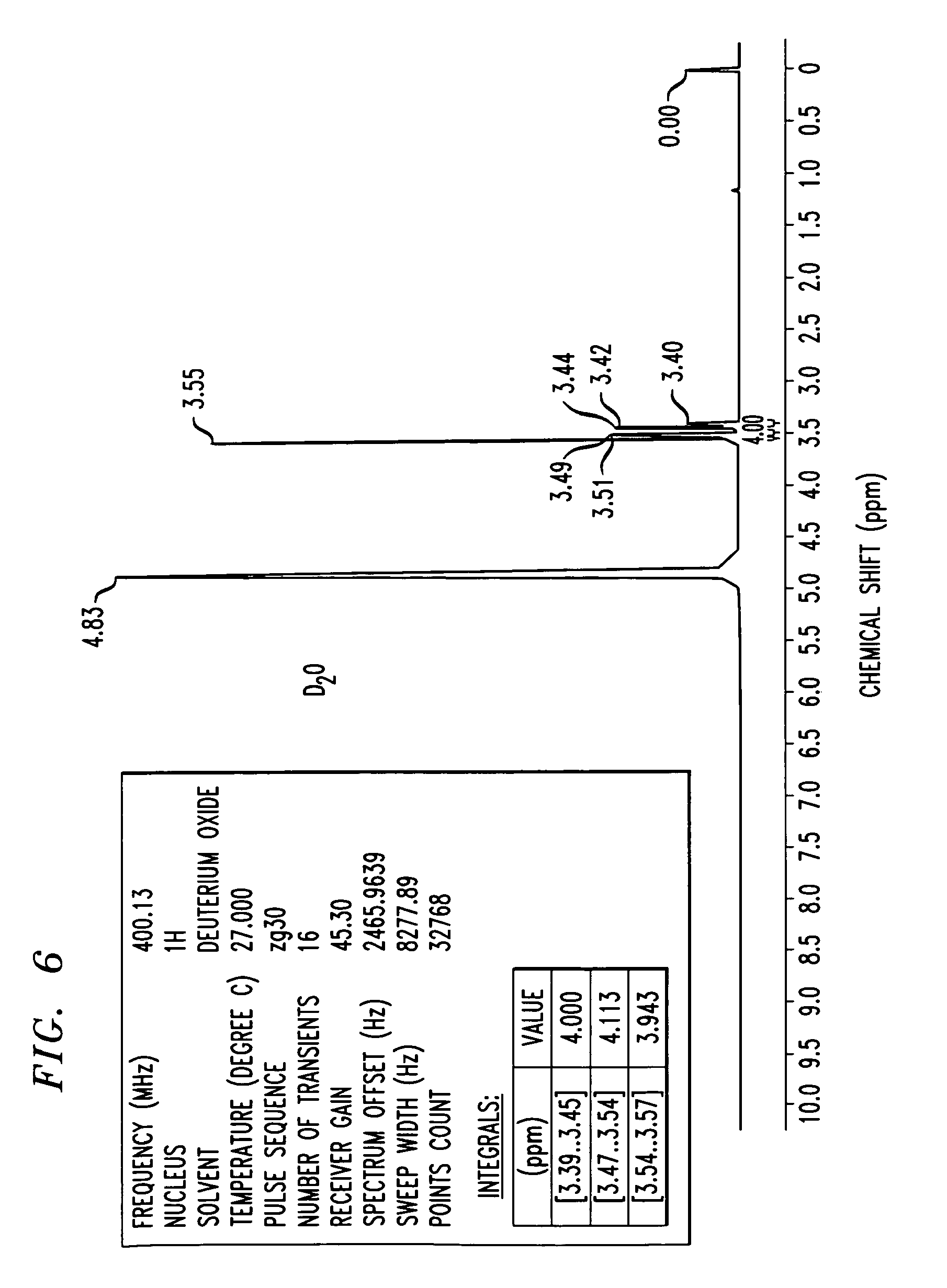
FIG. 6 shows an 1H-NMR spectrum of a triethylenetetramine hydrochloride salt in D2O, as synthesized in Example 3. NMR values include a frequency of 400.13 Mhz, a 1H nucleus, number of transients is 16, points count of 32768, pulse sequence of zg30, and sweep width of 8278.15 H
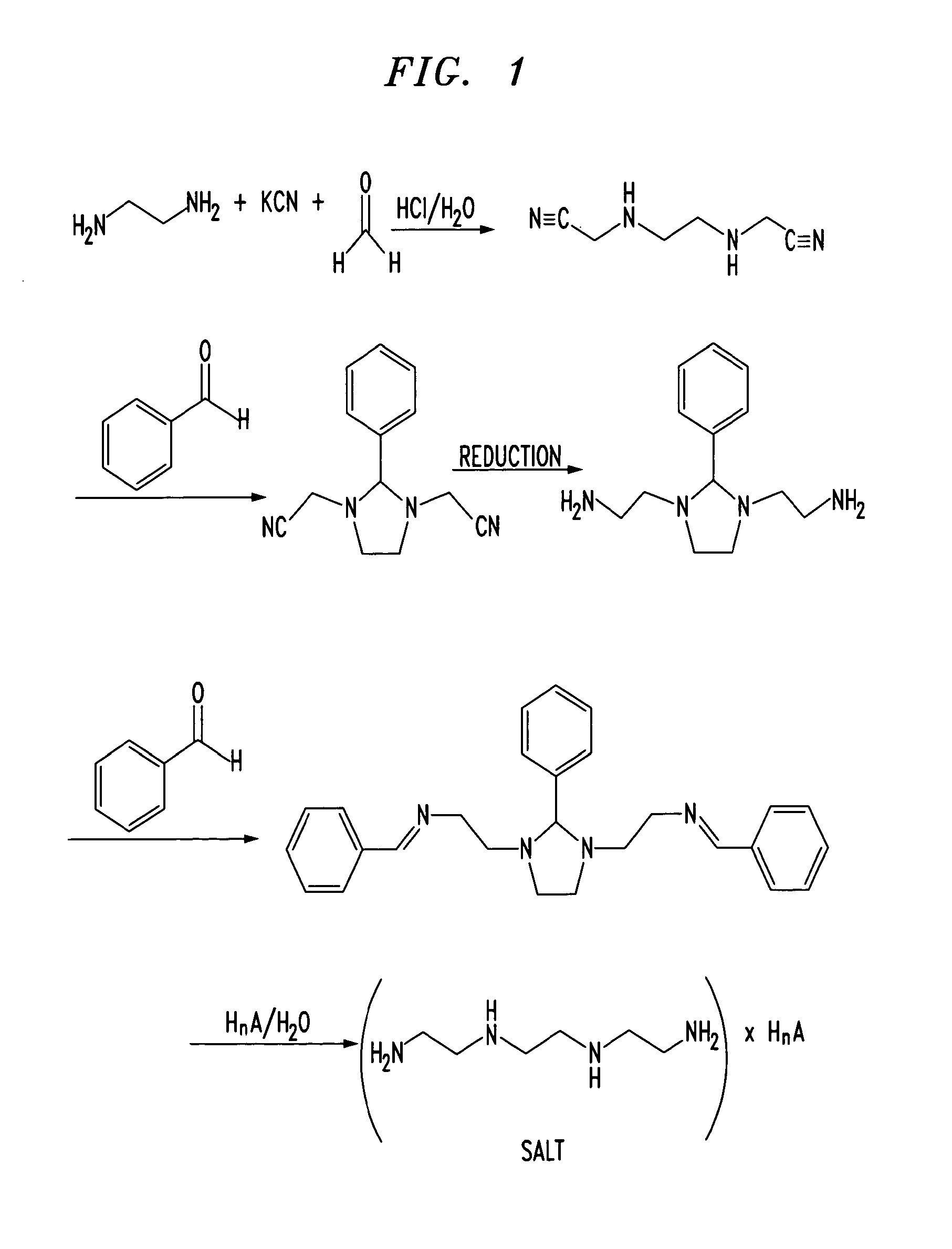
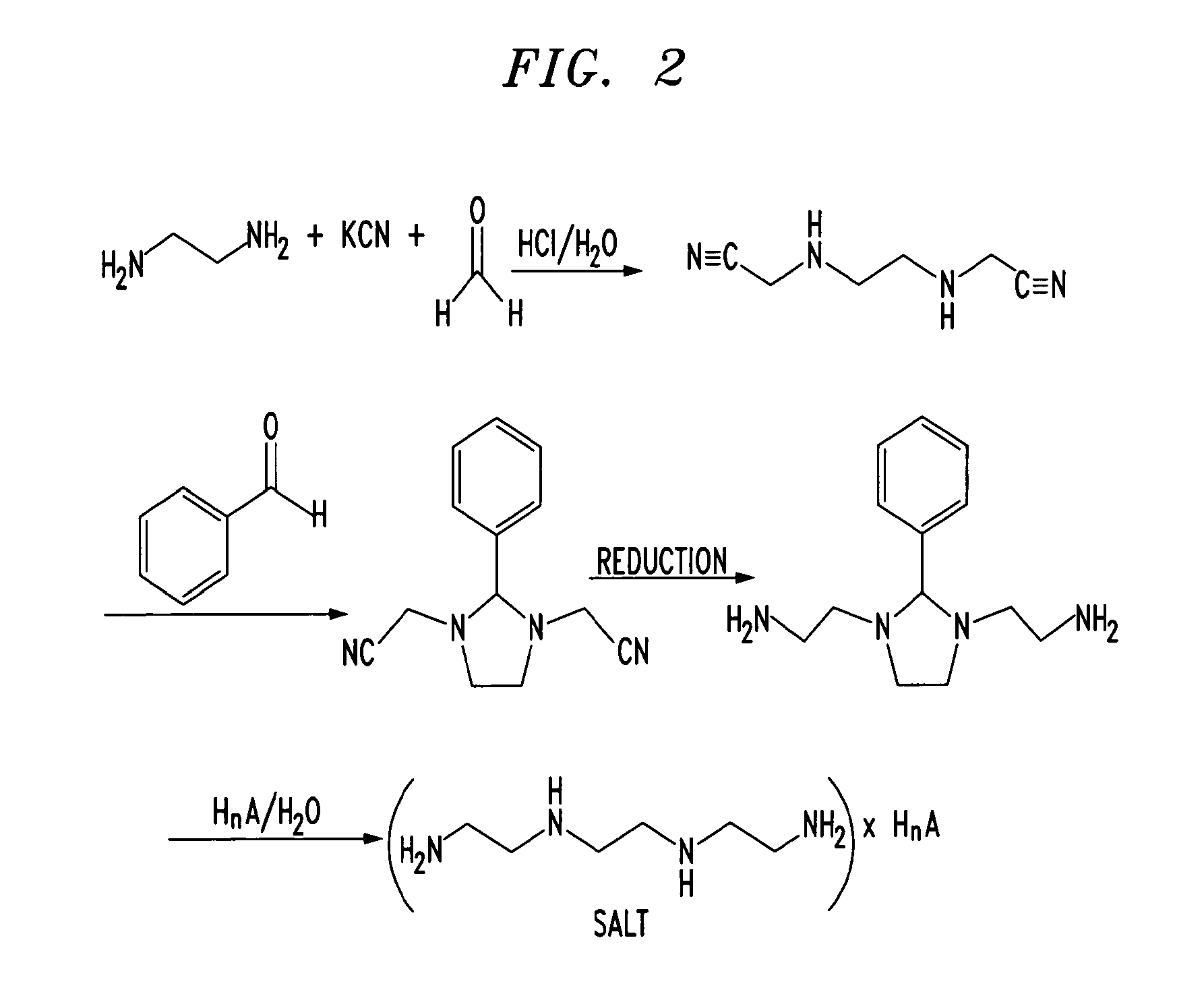
Image result for TRIENTINE

CLIP

Click to access JP17e_1.pdf

Method of purification: Dissolve Trientine Hydrochloride in water while warming, and recrystallize by addition of ethanol (99.5). Or dissolve Trientine Hydrochloride in water while warming, allow to stand after addition of activated charcoal in a cool and dark place for one night, and filter. To the filtrate add ethanol (99.5), allow to stand in a cool and dark place, and recrystallize. Dry the crystals under reduced pressure not exceeding 0.67 kPa at 409C until ethanol odor disappears.

References

  1.  “Ethyleneamines” (PDF). Huntsman. 2007.
  2. ^ Jump up to:a b Eller, K.; Henkes, E.; Rossbacher, R.; Höke, H. (2005). “Amines, Aliphatic”. Ullmann’s Encyclopedia of Industrial Chemistry. Weinheim: Wiley-VCH. doi:10.1002/14356007.a02_001.
  3. Jump up^ Roberts, E. A.; Schilsky, M. L. (2003). “A practice guideline on Wilson disease” (pdf). Hepatology. 37 (6): 1475–1492. doi:10.1053/jhep.2003.50252. PMID 12774027.
  4. Jump up^ von Zelewsky, A. (1995). Stereochemistry of Coordination Compounds. Chichester: John Wiley. ISBN 047195599X.
  5.  Utsuno, S.; Sakai, Y.; Yoshikawa, Y.; Yamatera, H. (1985). “Three Isomers of the Trans-Diammine-[N,N′-bis(2-Aminoethyl)-1,2-Ethanediamine]-Cobalt(III) Complex Cation”. Inorganic Syntheses. 23: 79–82. doi:10.1002/9780470132548.ch16.
Triethylenetetramine
Skeletal formula of triethylenetetramine
Ball and stick model of triethylenetetramine
Spacefill model of triethylenetetramine
Names
Other names

N,N’-Bis(2-aminoethyl)ethane-1,2-diamine; TETA; Trien; Trientine (INN); Syprine (brand name)
Identifiers
3D model (Jmol)
605448
ChEBI
ChemSpider
ECHA InfoCard 100.003.591
EC Number 203-950-6
27008
KEGG
MeSH Trientine
RTECS number YE6650000
UNII
UN number 2259
Properties
C6H18N4
Molar mass 146.24 g·mol−1
Appearance Colorless liquid
Odor Fishy, ammoniacal
Density 982 mg mL−1
Melting point −34.6 °C; −30.4 °F; 238.5 K
Boiling point 266.6 °C; 511.8 °F; 539.7 K
Miscible
log P 1.985
Vapor pressure <1 Pa (at 20 °C)
1.496
Thermochemistry
376 J K−1 mol−1 (at 60 °C)
Pharmacology
A16AX12 (WHO)
Hazards
GHS pictograms The corrosion pictogram in the Globally Harmonized System of Classification and Labelling of Chemicals (GHS) The exclamation-mark pictogram in the Globally Harmonized System of Classification and Labelling of Chemicals (GHS)
GHS signal word DANGER
H312, H314, H317, H412
P273, P280, P305+351+338, P310
Corrosive C
R-phrases R21, R34, R43, R52/53
S-phrases (S1/2), S26, S36/37/39, S45
Flash point 129 °C (264 °F; 402 K)
Lethal dose or concentration (LD, LC):
  • 550 mg kg−1 (dermal, rabbit)
  • 2.5 g kg−1 (oral, rat)
Related compounds
Related amines
Related compounds
Except where otherwise noted, data are given for materials in their standard state (at 25 °C [77 °F], 100 kPa).

///////////////TRIENTINE, 112-24-3, 曲恩汀 , KD-034 , MK-0681, MK-681, TECZA, TETA, TJA-250, Orphan drug

NCCNCCNCCN

SEN 826


figure

SEN 826
CAS 1160833-51-1
C25 H31 N5 O, 417.55
Methanone, [1-[3-(1-methyl-1H-benzimidazol-2-yl)phenyl]-4-piperidinyl](4-methyl-1-piperazinyl)-
CAS HBr SALT 1612250-71-1

WO2009074300 product patent

Russell John Thomas, Mohr Gal.La Pericot, Giacomo Minetto, Annette Cornelia Bekker, Pietro Ferruzzi
Applicant Siena Biotech S.P.A.
Image result for Siena Biotech S.P.A.
Siena Biotech S.p.A. operates as a drug discovery and development company which develops a portfolio of disease modifying small molecule therapeutics for oncology and neurodegenerative diseases. Its products include blood-brain barrier penetrant compounds, which are in pipeline, for the treatment of brain cancers and peripheral tumors capable of metastasizing to the brain; clinical candidates for Alzheimer’s disease; and SEN196, a Sirtuin 1 inhibitor against Huntington disease. The company also provides contract research services, drug discovery, integrated chemistry, in-vitro technologies, and preclinical technologies. Siena Biotech S.p.A. has a strategic partnership with Aptuit Inc. The company was founded in 2000 and is based in Siena, Italy. Siena Biotech S.p.A operates as a subsidiary of THERAMetrics holding AG
Russell Thomas

Russell Thomas

https://www.linkedin.com/in/russell-thomas-0317464/

PLEASE MAIL ME AT amcrasto@gmail.com if picture is a mistake or cal +919323115463

The SMO receptor mediates Hedgehog (Hh) signaling critical to development, differentiation, growth, and cell migration. In normal conditions, activation of the pathway is induced by binding of specific endogenous ligands (i.e., Sonic Hh) to its receptor Patched (Ptch), which in turns reverts the Ptch inhibitory effect on SMO. SMO activation ultimately determines specific target genes activation through a family of three transcription factors, Gli1, Gli2 and Gli3.
Although Hh signaling is significantly curtailed in adults, it retains functional roles in stem cell maintenance, and aberrant Hh signaling has been described in a range of tumours.
Mutational inactivation of the inhibitory pathway components results in a constitutive ligand-independent activation seen in tumours such as basal cell carcinoma (BCC) and medulloblastoma. Ligand-dependent activation is seen in tumours such as prostate cancer, pancreatic cancer, gastrointestinal malignancies, melanoma, gliomas, breast cancer, ovarian cancer, leukemia, and B-cell lymphomas. A significant body of evidence supports the conclusion that SMO receptor antagonism will block the downstream signaling events.
As part of a program to address unmet medical need with regard to tumours in the CNS, Siena Biotech has designed and investigated selective antagonists of the SMO receptor. The newly designed API development candidate SEN826 1  is part of a group of potent antagonists of the Hedgehog pathway.
SYNTHESIS

PATENT

WO 2009074300

Figure imgf000025_0001

Figure imgf000019_0002

Figure

The synthesis starts with the formation of the 2-arylbenzimidazole derivative 6 which can be carried out starting from N-methylphenylenediamine 2 (Method A; blue path in Scheme 1) or employing o-phenylenediamine 4 in the ring closure reaction followed by N-methylation (Method B; orange path in Scheme 1). Sodium hydrogen sulfite is used to promote the condensation of the corresponding o-phenylenediamine with the Br-aromatic aldehyde 3.(6b) The next step is the coupling of the aryl bromide with isonipecotic ethyl ester in Buchwald conditions. After acidic hydrolysis with HCl under microwave irradiation, the final amide 1 was synthesized with CDI as coupling agent.

PAPER

A Scalable Route to the SMO Receptor Antagonist SEN826: Benzimidazole Synthesis via Enhanced in Situ Formation of the Bisulfite–Aldehyde Complex

Process Chemistry Unit, Siena Biotech SpA, 53100 Siena, Italy
Compound Management & Analysis Unit, Siena Biotech SpA, 53100 Siena, Italy
Org. Process Res. Dev., 2014, 18 (6), pp 699–708
Abstract Image

A practical and scalable route to the SMO antagonist SEN826 1 is described herein, including the discussion of an alternative approach to the synthesis of the target molecule. The optimized route consists of five chemical steps. A new and efficient access to the key intermediate 6 via the bisulfite–aldehyde complex was developed, significantly enhancing the yields and reducing costs. As a result, a synthetic procedure for preparation of multihundred gram quantities of the final product has been developed.

1 as hydrobromide salt. Yield: 71%.
UPLC–MS: tR = 1.24 min; m/z = 418 [M + 1]+.
HRMS calcd for C25H33N5O [M + 1]+ 418.26069, found 418.26075.
HPLC: tR = 5.99 min; purity 99.1%.
1H NMR (400 MHz DMSO-d6): δ 9.80 (broad, 1H), 7.89 (m, 1H), 7.77 (m, 1H), 7.55–7.45 (m, 3H), 7.38 (s, 1H), 7.24 (m, 2H), 4.48–4.15 (m, 2H), 3.96 (s, 3H), 3.86 (m, 2H), 3.55–3.15 (m, 3H), 3.10–2.82 (m, 6H), 2.81 (s, 3H), 1.76–1.57 (m, 4H).
13C NMR (100 MHz DMSO-d6): δ 173.5, 152.3, 151.5, 135.1, 135.0, 130.5, 126.2, 125.6, 125.3, 119.9, 119.1, 117.1, 116.5, 113.0, 53.2, 48.2, 42.7, 38.8, 37.4, 33.1, 28.2.
Water content (KF): 3.5 wt %.
Pd content (ICP-MS): 128 ppm.
Bromine content (ionic exchange LC): 20 wt % (1.2 equiv).
str1 str2
/////////////////