New Drug Approvals

Home » Uncategorized (Page 96)

Category Archives: Uncategorized

DRUG APPROVALS BY DR ANTHONY MELVIN CRASTO .....FOR BLOG HOME CLICK HERE

Blog Stats

  • 4,896,777 hits

Flag and hits

Flag Counter

Enter your email address to follow this blog and receive notifications of new posts by email.

Join 37.8K other subscribers
Follow New Drug Approvals on WordPress.com

Archives

Categories

Recent Posts

Flag Counter

ORGANIC SPECTROSCOPY

Read all about Organic Spectroscopy on ORGANIC SPECTROSCOPY INTERNATIONAL 

Enter your email address to follow this blog and receive notifications of new posts by email.

Join 37.8K other subscribers
DR ANTHONY MELVIN CRASTO Ph.D

DR ANTHONY MELVIN CRASTO Ph.D

DR ANTHONY MELVIN CRASTO, Born in Mumbai in 1964 and graduated from Mumbai University, Completed his Ph.D from ICT, 1991,Matunga, Mumbai, India, in Organic Chemistry, The thesis topic was Synthesis of Novel Pyrethroid Analogues, Currently he is working with AFRICURE PHARMA, ROW2TECH, NIPER-G, Department of Pharmaceuticals, Ministry of Chemicals and Fertilizers, Govt. of India as ADVISOR, earlier assignment was with GLENMARK LIFE SCIENCES LTD, as CONSUlTANT, Retired from GLENMARK in Jan2022 Research Centre as Principal Scientist, Process Research (bulk actives) at Mahape, Navi Mumbai, India. Total Industry exp 32 plus yrs, Prior to joining Glenmark, he has worked with major multinationals like Hoechst Marion Roussel, now Sanofi, Searle India Ltd, now RPG lifesciences, etc. He has worked with notable scientists like Dr K Nagarajan, Dr Ralph Stapel, Prof S Seshadri, etc, He did custom synthesis for major multinationals in his career like BASF, Novartis, Sanofi, etc., He has worked in Discovery, Natural products, Bulk drugs, Generics, Intermediates, Fine chemicals, Neutraceuticals, GMP, Scaleups, etc, he is now helping millions, has 9 million plus hits on Google on all Organic chemistry websites. His friends call him Open superstar worlddrugtracker. His New Drug Approvals, Green Chemistry International, All about drugs, Eurekamoments, Organic spectroscopy international, etc in organic chemistry are some most read blogs He has hands on experience in initiation and developing novel routes for drug molecules and implementation them on commercial scale over a 32 PLUS year tenure till date Feb 2023, Around 35 plus products in his career. He has good knowledge of IPM, GMP, Regulatory aspects, he has several International patents published worldwide . He has good proficiency in Technology transfer, Spectroscopy, Stereochemistry, Synthesis, Polymorphism etc., He suffered a paralytic stroke/ Acute Transverse mylitis in Dec 2007 and is 90 %Paralysed, He is bound to a wheelchair, this seems to have injected feul in him to help chemists all around the world, he is more active than before and is pushing boundaries, He has 100 million plus hits on Google, 2.5 lakh plus connections on all networking sites, 100 Lakh plus views on dozen plus blogs, 227 countries, 7 continents, He makes himself available to all, contact him on +91 9323115463, email amcrasto@gmail.com, Twitter, @amcrasto , He lives and will die for his family, 90% paralysis cannot kill his soul., Notably he has 38 lakh plus views on New Drug Approvals Blog in 227 countries......https://newdrugapprovals.wordpress.com/ , He appreciates the help he gets from one and all, Friends, Family, Glenmark, Readers, Wellwishers, Doctors, Drug authorities, His Contacts, Physiotherapist, etc He has total of 32 International and Indian awards

Verified Services

View Full Profile →

Archives

Categories

Flag Counter

Falsified Results of Analysis at Indian Pharmaceutical Manufacturer


DR ANTHONY MELVIN CRASTO Ph.D's avatarDRUG REGULATORY AFFAIRS INTERNATIONAL

Indian pharmaceutical manufacturers increasingly attract attention by breaching GMP rules. In a further case the analysis results not complying with the requirements were deleted and the batch was released for the US market. Read more.

http://www.gmp-compliance.org/enews_4629_Falsified-Results-of-Analysis-at-Indian-Pharmaceutical-Manufacturer_9086,9087,9200,9122,Z-PEM_n.html

Indian pharmaceutical manufacturers increasingly attract attention by breaching GMP rules. We recently reported on theunannounced FDA inspections in India as one of the consequences of this practice. In a further case the analysis results not complying with the requirements were deleted and the batch was released for the US market. An employee of Sun Pharmaceutical Industries Ltd. in Vadodara, India simply deleted analytical data of an HPLC testing on impurities of an antibiotic that did not comply. The next day another sample was tested, considered to be fine and the batch was released. This incident took place three years ago.

This fundamental GMP violation of data integrity has become known only now. The…

View original post 266 more words

EDIVOXETINE REVISITED


Edivoxetine structure.png

EDIVOXETINE, LY 2216684

(1R)-2-(5-fluoro-2-methoxyphenyl)-1-[(2S)-morpholin-2-yl]-1-(oxan-4-yl)ethanol

UNII-3W9N3F4JOO, 1194508-25-2, Edivoxetine [USAN], Edivoxetine (USAN/INN), Edivoxetine [USAN:INN], 3W9N3F4JOO
Molecular Formula:C18H26FNO4
Molecular Weight:339.401743 g/mol

Edivoxetine (INN; LY-2216684) is a drug which acts as a selective norepinephrine reuptake inhibitor and is currently under development by Eli Lilly for attention-deficit hyperactivity disorder (ADHD) and as an antidepressant treatment.[1][2] It was in phase IIIclinical trials, in 2012, for major depressive disorder, but failed to get approval.[1][3]


Effectiveness

In a study published in 2010, edivoxetine failed to prove superiority over placebo, as measured by Hamilton Depression Rating Scale. However, effectiveness could be observed using the Self-Rated Quick Inventory of Depressive Symptomatology.[4]

In a study published in 2011, using the Montgomery-Åsberg Depression Rating Scale and the Sheehan Disability Scale, edivoxetine showed superiority over placebo, with higher response and remission rates.[5]

In December 2013, Eli Lilly announced that the clinical development of edivoxetine will be stopped due to lack of efficacy compared to SSRI alone in three separate clinical trials.[6]

Side effects

Side effects significantly associated with edivoxetine are headache, nausea, constipation, dry mouth and insomnia.[4]

The above mention studies report increases of the cardiac rhythm, and one also increases of diastolic and systolic blood pressures.[4][5]

Figure

Org. Process Res. Dev., Article ASAP
DOI: 10.1021/op5003825

There is a growing trend in Ireland toward greater collaboration between academia and the pharmaceutical industry. This is an activity encouraged at a national policy level as a means of providing researchers from academic institutions the opportunity to gain important first-hand experience in a commercial research environment, while also providing industry access to expertise and resources to develop new and improved processes for timely medicines. The participating company benefits in terms of its growth, the evolution of its strategic research and development, and the creation of new knowledge that it can use to generate commercial advantage. The research institute benefits in terms of developing skill sets, intellectual property, and publications, in addition to access to identified current industry challenges. A case study is provided describing the collaborative partnership between a synthetic chemistry research team at University College Cork (UCC) and Eli Lilly and Company.

Department of Chemistry and School of Pharmacy, Analytical and Biological Chemistry Research Facility, Synthesis and Solid State Pharmaceutical Centre,University College Cork, Cork, Ireland

University College Cork

Systematic (IUPAC) name
(1R)-2-(5-fluoro-2-methoxyphenyl)-1-[(2S)-morpholin-2-yl]-1-(tetrahydro-2H-pyran-4-yl)ethanol
Clinical data
Legal status
?
Identifiers
CAS number 1194508-25-2
1194374-05-4 (hydrochloride)
ATC code None
PubChem CID 11186829
ChemSpider 9361913
Chemical data
Formula C18H26FNO4 
Molecular mass 339.402 g/mol

References

  1.  Jun Yan (March 2012). “Pipeline for new antidepressants flowing slowly”. Psychiatric News (American Psychiatric Association) 47 (5): 1b-29. Retrieved 2012-04-27.
  2.  “Statement on a nonproprietary name adopted by the USAN council – Edivoxetine” (Press release). American Medical Association. 2012. Retrieved 2012-04-12.
  3.  Chancellor D (November 2011). “The depression market”. Nature Reviews. Drug Discovery 10 (11): 809–10. doi:10.1038/nrd3585. PMID 22037032.
  4.  Dubé S, Dellva MA, Jones M, Kielbasa W, Padich R, Saha A, Rao P (April 2010). “A study of the effects of LY2216684, a selective norepinephrine reuptake inhibitor, in the treatment of major depression”. Journal of Psychiatric Research 44 (6): 356–363. doi:10.1016/j.jpsychires.2009.09.013. PMID 19909980.
  5.  Pangallo P, Dellva MA, D’Souza DN, Essink B, Russell J, Goldberger C (June 2011). “A randomized, double-blind study comparing LY2216684 and placebo in the treatment of major depressive disorder”. Journal of Psychiatric Research 45 (6): 748–755. doi:10.1016/j.jpsychires.2011.03.014. PMID 21511276.
  6.  https://investor.lilly.com/releasedetail.cfm?ReleaseID=811751
H-NMR spectral analysis
(1R)-2-(5-fluoro-2-methoxyphenyl)-1-[(2S)-morpholin-2-yl]-1-(oxan-4-yl)ethanol NMR spectra analysis, Chemical CAS NO. 1194508-25-2 NMR spectral analysis, (1R)-2-(5-fluoro-2-methoxyphenyl)-1-[(2S)-morpholin-2-yl]-1-(oxan-4-yl)ethanol H-NMR spectrum
CAS NO. 1194508-25-2, (1R)-2-(5-fluoro-2-methoxyphenyl)-1-[(2S)-morpholin-2-yl]-1-(oxan-4-yl)ethanol H-NMR spectral analysis
C-NMR spectral analysis
(1R)-2-(5-fluoro-2-methoxyphenyl)-1-[(2S)-morpholin-2-yl]-1-(oxan-4-yl)ethanol NMR spectra analysis, Chemical CAS NO. 1194508-25-2 NMR spectral analysis, (1R)-2-(5-fluoro-2-methoxyphenyl)-1-[(2S)-morpholin-2-yl]-1-(oxan-4-yl)ethanol C-NMR spectrum
CAS NO. 1194508-25-2, (1R)-2-(5-fluoro-2-methoxyphenyl)-1-[(2S)-morpholin-2-yl]-1-(oxan-4-yl)ethanol C-NMR spectral analysis

/////////////

MAHABALIPURAM, INDIA

Mahabalipuram – Wikipedia, the free encyclopedia

en.wikipedia.org/wiki/Mahabalipuram

Mahabalipuram, also known as Mamallapuram is a town in Kancheepuram district in the Indian state of Tamil Nadu. It is around 60 km south from the city of …Shore Temple – ‎Seven Pagodas – ‎Pancha Rathas – ‎

Map of mahabalipuram.

.

Krishna’s Butter Ball in Mahabalipuram, India. The surface below the rock is …


http://www.weather-forecast.com/locations/Mamallapuram


Come to Mahabalipuram (also known as Mammallapuram), an enchanting beach that is located on the east coast of India.
Moonraikers Restaurant, Mamallapuram
 

Hotel Mamalla Bhavan – Mahabalipuram Chennai – Food, drink and entertainment

.

A carving at the Varaha Temple, Mahabalipuram

/////////////

Generic drugs in the EU


DR ANTHONY MELVIN CRASTO Ph.D's avatarDRUG REGULATORY AFFAIRS INTERNATIONAL

Process of reviewing and assessing the dossier to support a medicinal product in view of its marketing (also called licensing, registration, approval, etc.), obviously finalized by granting of a document also called marketing authorization (equivalent: product license). This process is performed within a legislative framework which defines the requirements necessary for application to the concerned (competent) regulatory authority, details on the assessment procedure (based on quality, efficacy and safety criteria) and the grounds for approval or rejection of the application, and also the circumstances where a marketing authorization already granted may be withdrawn, suspended or revoked.NOTE [1]
The application dossier for marketing authorization is called New Drug Application (NDA) in the USA or Marketing Authorization Application (MAA) in the European Union and other countries, or simply registration dossier. Basically, this consists of a dossier with data proving that the drug has quality, efficacy and safety properties suitable for the intended…

View original post 3,639 more words

Marketing Authorisation in Europe


DR ANTHONY MELVIN CRASTO Ph.D's avatarDRUG REGULATORY AFFAIRS INTERNATIONAL

European Commission logo

Authorisation Procedures for medicinal products

Procedures for evaluating medicinal products and granting marketing authorisation

The European system for the authorisation of medicinal products for human and animal use was introduced in January 1995 with the objective of ensuring that safe, effective and high quality medicines could quickly be made available to citizens across the European Union.
The European system offers several routes for the authorisation of medicinal products:
  • The centralised procedure, which is compulsory for products derived from biotechnology, for orphan medicinal products and for medicinal products for human use which contain an active substance authorised in the Community after 20 May 2004 (date of entry into force of Regulation (EC) No 726/2004) and which are intended for the treatment of AIDS, cancer, neurodegenerative disorders or diabetes. The centralised procedure is also mandatory for veterinary medicinal products intended primarily for use as performance enhancers in order to promote growth…

View original post 4,373 more words

Data exclusivity for medicinal products in Europe…8+2+1 approach


DR ANTHONY MELVIN CRASTO Ph.D's avatarDRUG REGULATORY AFFAIRS INTERNATIONAL


Data exclusivity for medicinal products in Europe

 
The pharmaceutical sector is heavily regulated, with significant costs associated with both developing a new medicinal product and generating the data required to get a product to market. Protecting that data is therefore important.  Data exclusivity is a form of product exclusivity right for medicinal products in Europe, and market exclusivity is a related form of additional protection.
These two rights are in addition to any granted patent exclusivity right covering a medicinal product.

Why is data exclusivity granted?

The rationale for granting data and market exclusivity is to compensate the innovator company for the investment it has put in to developing the new medicinal product and to generating the data required to obtain a marketing authorisation.
Regulatory approval for medicinal products requires applicants to provide information about the efficacy and safety of their product to regulatory authorities. The first applicant…

View original post 1,449 more words

Sarpogrelate, 사르포그렐레이트염산염


Sarpogrelate structure.png

Sarpogrelate

135159-51-2,HYROCHLORIDE

125926-17-2 (free base)

5-HT 2a receptor antagonist

Useful for treating arterial occlusive disease and ischemic heart disease.

Sarpogrelate (Anplag, MCI-9042, LS-187,118) is a drug which acts as an antagonist at the 5HT2A[1][2] and 5-HT2B[3] receptors. It blocks serotonin-induced platelet aggregation, and has applications in the treatment of many diseases including diabetes mellitus,[4][5] Buerger’s disease,[6] Raynaud’s disease,[7] coronary artery disease,[8] angina pectoris,[9] and atherosclerosis.[10]

사르포그렐레이트염산염
Sarpogrelate Hydrochloride
C24H31NO6& : 465.97
1-[2-(Dimethylamino)-1-[[2-[2-(3-methoxyphenyl)ethyl]phenoxy]methyl]ethyl hydrogen butanedioate hydrochloride [135159-51-2]

第十六改正日本薬局方(JP16)名称データベース 検索結果

詳細については第十六改正日本薬局方でご確認ください。

検索キーワード:Sarpogrelate Hydrochloride
検索件数:1


第十六改正日本薬局方 化学薬品等サルポグレラート塩酸塩
Sarpogrelate Hydrochloride
塩酸サルポグレラート

C24H31NO6.HCl : 465.97
[135159-51-2]
本品は定量するとき,換算した脱水物に対し,サルポグレ ラート塩酸塩(C24H31NO6・HCl)98.5~101.0%を含む


Sarpogrelate hydrochloride tablets in 1993 Japan’s first listed under the tradename Anplag, is a 5-HT2 receptor blocker, can inhibit platelet aggregation, inhibition of vascular contraction, has antithrombotic effect and microcirculation. Ulcer indications for the improvement of their chronic arterial occlusive disease caused by pain, and cold ischemic various flu symptoms. -1_ {[2- (3-methoxyphenyl) phenoxy] methyl} succinic acid ethyl ester hydrochloride, the structural formula of sarpogrelate hydrochloride chemical name 2- (dimethylamino)

As follows:


Figure CN103242179AD00031

  Journal of Medicinal Chemistry (J.Med.Chem, 1990,33: 1818-1823) published synthetic routes as follows:


Figure CN103242179AD00032

  Sarpogrelate hydrochloride drug substance used in the preparation Sarpogrelate hydrochloride tablets needed to achieve acceptable purity, single hetero content must meet the corresponding requirements. US4485258 discloses a synthesis method of the first sarpogrelate hydrochloride, and recrystallized from acetone to obtain, but the experiments show that sarpogrelate hydrochloride poor solubility in acetone, acetone, hydrochloric acid is not suitable as a recrystallization solvent sarpogrelate. CN101239920A disclosed as acetonitrile, propionitrile, 1,4_ dioxane, tetrahydrofuran, dimethyl formamide, dimethyl acetamide, sulfolane, dimethyl sulfoxide or a mixture of more than two kinds thereof with methanol, ethanol, , acetone, ethyl acetate, diethyl ether, diisopropyl ether or the like can be used as the recrystallization solvent sarpogrelate hydrochloride, the purity of the product can reach 98%. And C2-C10 alkanes, C3-C10 ketones, C2-C10 carboxylic acid esters, Cl-ClO halogenated alkanes, aromatic hydrocarbons or aromatic derivative at room temperature to the reflux temperature of the hydrochloric acid solubility is small should not alone sarpogrelate as a recrystallization solvent, sarpogrelate hydrochloride, and water as a recrystallization solvent or an organic solvent, an aqueous 5% or more can not be obtained a high purity product. Existing literature does not mention the issue of a single impurity content control.

J Med Chem1990, 33,(6): PG 1818


The reaction of 2-hydroxy-3′-methoxybibenzyl (I) with epichlorohydrin (II) by means of NaH in DMF gives 2-(2,3-epoxypropoxy)-3′-methoxybibenzyl (III), which by reaction with dimethylamine in refluxing THF yields 2-[3-(dimethylamino)-2-hydroxypropoxy]-3′-methoxybibenzyl (IV). Finally, this compound is treated with succinic anhydride (V) in refluxing THF and with HCl in acetone.


……………………………..

http://www.google.com/patents/CN103242179A?cl=en

Specific embodiments

Example 1 Preparation of crude sarpogrelate hydrochloride [0019] Example

[0020] 1_ dimethylamino _3- [2- [2- (3_-methoxyphenyl) ethyl] phenoxy] -2-propanol hydrochloride A 250ml 13.7g plus a single-neck flask, then add water 25ml, and stirred to dissolve. With 20% aqueous sodium hydroxide to adjust PH value to 9_14, and extracted with 30ml of toluene, and the organic layer was concentrated to 50 ° C under reduced pressure until no liquid slipped 0 to give a brown oil. Of tetrahydrofuran was added 30g, and stirred to dissolve, butyryl anhydride 4.5g, was heated to reflux with stirring. After the reaction was refluxed for I~4 hours, the reaction was incubated at 40 ° C and concentrated to dryness under reduced pressure; the residue was added ethyl acetate 25g, After stirring to dissolve, the dropwise addition of saturated hydrogen chloride in ethyl acetate solution to adjust PH value to I below, was stirred 50~60min. Centrifugal filtration, was Sarpogrelate hydrochloride crude wet product. 45~55 ° C under reduced pressure (-0.08~-0.1MPa) the residue was dried to less than 0.5% of ethyl acetate to give the crude sarpogrelate hydrochloride 14.7g, yield 86%, HPLC purity 98.6%, largest single heteroatom content of 1.2 %.

Purification of the crude hydrochloride Sarpogrelate Example 2 [0021] Example

[0022] The crude product was sarpogrelate hydrochloride 5g, join butanone 20ml, heated with stirring until dissolved and refluxed 20~30min, cooling to 25~35 ° C, incubated with stirring 40~60min, filtered, and the filter cake was rinsed with a small amount of methyl ethyl ketone to give a white loose solid, 55~65 ° C and dried under reduced pressure to 24h, to give sarpogrelate hydrochloride 4.6g, yield 92%, HPLC purity of 99.9% and a maximum content of 0.04%, a single hybrid.

Example 3 Purification of the crude hydrochloride Sarpogrelate [0023] Example

[0024] The crude product was sarpogrelate hydrochloride 5g, join butanone 30ml, heated with stirring until dissolved and refluxed 20~30min, cooling to 25~35 ° C, incubated with stirring 40~60min, filtered, and the filter cake was rinsed with a small amount of methyl ethyl ketone to give a white loose solid, 55~65 ° C and dried under reduced pressure to 24h, to give 4.55 sarpogrelate hydrochloride, yield 91%, HPLC purity 99.7%, largest single matter content of 0.05%.

Example 4 Purification of the crude hydrochloride Sarpogrelate [0025] Example

[0026] The crude product was sarpogrelate hydrochloride 5g, join butanone 40ml, heated with stirring until dissolved and refluxed 20~30min, cooling to 25~35 ° C, incubated with stirring 40~60min, filtered, and the filter cake was rinsed with a small amount of methyl ethyl ketone to give a white loose solid, 55~65 ° C and dried under reduced pressure to 24h, to give sarpogrelate hydrochloride 4.5g, yield 90%, HPLC purity 99.8%, largest single matter content 0.05%.

Example 5 Purification of the crude hydrochloride Sarpogrelate [0027] Example

[0028] The crude product was sarpogrelate hydrochloride 5g, join butanone 20ml, heated with stirring until dissolved and refluxed 20~30min, cooled slowly with stirring to room temperature, at -10 ° c~o ° c stand for crystallization, filtration, The filter cake was rinsed with a small amount of methyl ethyl ketone to give a white fluffy solid, 55~65 ° C and dried under reduced pressure to 24h, to give the hydrochloride sarpogrelate 4.62g, yield 92.4%, HPLC purity 99.2%, largest single matter content of 0.09%.

………………………………..

WO-2015008973 NEW PATENT

Method for preparing crystalline form II of sarpogrelate hydrochloride is claimed.  Represents first filing from Dae He Chemical on sarpogrelate, which was developed and launched by Mitsubishi Tanabe Pharma.

References

  1. Pertz H, Elz S. In-vitro pharmacology of sarpogrelate and the enantiomers of its major metabolite: 5-HT2A receptor specificity, stereoselectivity and modulation of ritanserin-induced depression of 5-HT contractions in rat tail artery. Journal of Pharmacy and Pharmacology. 1995 Apr;47(4):310-6. PMID 7791029
  2. Nishio H, Inoue A, Nakata Y. Binding affinity of sarpogrelate, a new antiplatelet agent, and its metabolite for serotonin receptor subtypes. Archives Internationales de Pharmacodynamie et de Therapie. 1996 Mar-Apr;331(2):189-202. PMID 8937629
  3. Muntasir HA, Hossain M, Bhuiyan MA, Komiyama T, Nakamura T, Ozaki M, Nagatomo T. Identification of a key amino acid of the human 5-HT(2B) serotonin receptor important for sarpogrelate binding. Journal of Pharmacological Sciences. 2007 Jul;104(3):274-7. PMID 17609583
  4. Pietraszek MH, Takada Y, Taminato A, Yoshimi T, Watanabe I, Takada A. The effect of MCI-9042 on serotonin-induced platelet aggregation in type 2 diabetes mellitus. Thrombosis Research. 1993 Apr 15;70(2):131-8. PMID 8322284
  5. Ogawa S, Takeuchi K, Sugimura K, Sato C, Fukuda M, Lee R, Ito S, Sato T. The 5-HT2 receptor antagonist sarpogrelate reduces urinary and plasma levels of thromboxane A2 and urinary albumin excretion in non-insulin-dependent diabetes mellitus patients. Clinical and Experimental Pharmacology and Physiology. 1999 May-Jun;26(5-6):461-4. PMID 10386239
  6. Rydzewski A, Urano T, Hachiya T, Kaneko H, Baba S, Takada Y, Takada A. The effect of a 5HT2 receptor antagonist sarpogrelate (MCI-9042) treatment on platelet function in Buerger’s disease. Thrombosis Research. 1996 Dec 15;84(6):445-52. PMID 8987165
  7. Igarashi M, Okuda T, Oh-i T, Koga M. Changes in plasma serotonin concentration and acceleration plethysmograms in patients with Raynaud’s phenomenon after long-term treatment with a 5-HT2 receptor antagonist. Journal of Dermatology. 2000 Oct;27(10):643-50. PMID 11092268
  8. Satomura K, Takase B, Hamabe A, Ashida K, Hosaka H, Ohsuzu F, Kurita A. Sarpogrelate, a specific 5HT2-receptor antagonist, improves the coronary microcirculation in coronary artery disease. Clinical Cardiology. 2002 Jan;25(1):28-32. PMID 11808836
  9. Kinugawa T, Fujita M, Lee JD, Nakajima H, Hanada H, Miyamoto S. Effectiveness of a novel serotonin blocker, sarpogrelate, for patients with angina pectoris. American Heart Journal. 2002 Aug;144(2):E1. PMID 12177659
  10. Hayashi T, Sumi D, Matsui-Hirai H, Fukatsu A, Arockia Rani P J, Kano H, Tsunekawa T, Iguchi A. Sarpogrelate HCl, a selective 5-HT2A antagonist, retards the progression of atherosclerosis through a novel mechanism. Atherosclerosis. 2003 May;168(1):23-31. PMID 12732383
Sarpogrelate
Sarpogrelate structure.png
Systematic (IUPAC) name
4-[2-(dimethylamino)-1-({2-[2-(3-methoxyphenyl)ethyl]phenoxy}methyl)ethoxy]-4-oxobutanoic acid
Clinical data
AHFS/Drugs.com International Drug Names
Legal status
?
Identifiers
CAS number 125926-17-2 Yes
ATC code None
PubChem CID 5160
IUPHAR ligand 210
ChemSpider 4976 
UNII 19P708E787 
ChEMBL CHEMBL52939 
Synonyms Sarpogrelate, (-)-4-[1-dimethylamino-3-[2-[2-(3-methoxyphenyl)ethyl]phenoxy]propan-2-yl]oxy-4-oxobutanoic acid
Chemical data
Formula C24H31NO6 
Molecular mass 429.506 g/mol

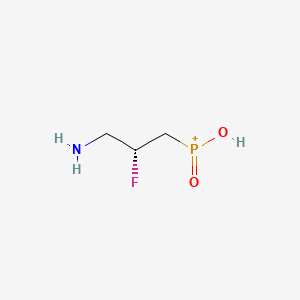
Lesogaberan


Lesogaberan.svg

Lesogaberan

AZD-3355, AZD3355, [(2R)-3-amino-2-fluoropropyl]phosphinic acid, 344413-67-8
Molecular Formula: C3H8FNO2P+
Molecular Weight: 140.073285 g/mol
[(2R)-3-amino-2-fluoropropyl]-hydroxy-oxophosphanium

Lesogaberan (AZD-3355) was[1] an experimental drug candidate developed by AstraZeneca for the treatment of gastroesophageal reflux disease (GERD).[2] As a GABAB receptor agonist,[3] it has the same mechanism of action as baclofen, but is anticipated to have fewer of the central nervous system side effects that limit the clinical use of baclofen for the treatment of GERD.[4]

http://pubs.acs.org/doi/abs/10.1021/jm701425k

J. Med. Chem., 2008, 51 (14), pp 4315–4320
DOI: 10.1021/jm701425k
Abstract Image

We have previously demonstrated that the prototypical GABAB receptor agonist baclofen inhibits transient lower esophageal sphincter relaxations (TLESRs), the most important mechanism for gastroesophageal reflux. Thus, GABAB agonists could be exploited for the treatment of gastroesophageal reflux disease. However, baclofen, which is used as an antispastic agent, and other previously known GABAB agonists can produce CNS side effects such as sedation, dizziness, nausea, and vomiting at higher doses. We now report the discovery of atypical GABAB agonists devoid of classical GABAB agonist related CNS side effects at therapeutic doses and the optimization of this type of compound for inhibition of TLESRs, which has resulted in a candidate drug (R)-7 (AZD3355) that is presently being evaluated in man.

(2R)-(3-Amino-2-fluoropropyl)phosphinic Acid ((R)-7)

(R)-7 as a white solid (3.12 g, 24%):
mp = 183−185 °C;
1H NMR (300 MHz, D2O) δ 7.90 (s, 0.5 H), 6.15 (s, 0.5 H), 5.12−5.29 (m, 0.5 H), 4.92−5.10 (m, 0.5 H), 3.12−3.42 (m, 2H), 1.74−2.26 (m, 2H);
[α]D25 −4.0° (c 1.0, H2O);
APIMS m/z 142 [M + H]+. Anal. (C3H9FNO2P·0.25H2O) C, H, N.

Lesogaberan.png

References

  1. AstraZeneca. “AZD3355”. Retrieved 30 December 2011.
  2. Bredenoord, Albert J. (2009). “Lesogaberan, a GABAB agonist for the potential treatment of gastroesophageal reflux disease”. IDrugs 12 (9): 576–584. PMID 19697277.
  3. Alstermark, et al.; Amin, K; Dinn, SR; Elebring, T; Fjellström, O; Fitzpatrick, K; Geiss, WB; Gottfries, J et al. (2008). “Synthesis and Pharmacological Evaluation of Novel γ-Aminobutyric Acid Type B (GABAB) Receptor Agonists as Gastroesophageal Reflux Inhibitors”. Journal of Medicinal Chemistry 51 (14): 4315–4320. doi:10.1021/jm701425k. PMID 18578471.
  4. Brian E. Lacy, Robert Chehade, and Michael D. Crowell (2010). “Lesogaberan”. Drugs of the Future 35 (12): 987–992. doi:10.1358/dof.2010.035.012.1540661.
Lesogaberan
Lesogaberan.svg
Identifiers
CAS number 344413-67-8 Yes=  Yes
PubChem 9833984
ChemSpider 23254384 
UNII 4D6Q6HGC7Z Yes
ChEMBL CHEMBL448343 
Jmol-3D images Image 1
Properties
Molecular formula C3H9FNO2P
Molar mass 141.08 g mol−1

Zibotentan


186497-07-4, ZD4054, ZD-4054, Zd 4054, ZD4054, Zibotentan
Molecular Formula:C19H16N6O4S
Molecular Weight:424.43314 g/mol
N-(3-methoxy-5-methylpyrazin-2-yl)-2-[4-(1,3,4-oxadiazol-2-yl)phenyl]pyridine-3-sulfonamide
 Oncolytic Drugs, Prostate Cancer Therapy, Solid Tumors Therapy, Antimitotic Drugs, Endothelin ETA Receptor Antagonists

Zibotentan (INN) (earlier code name ZD4054) is an anti-cancer candidate.[1] It is an endothelin receptor antagonist.[2]

It failed a phase III clinical trial for prostate cancer[3] but other trials are planned.[4] Tolerability of zibotentan plus docetaxel has been evaluated.[5]

SYN

https://www.google.com/patents/WO1996040681A1?cl=en

Bromination of 2-amino-5-methylpyrazine (I) with Br2 in CHCl3 affords the bromopyrazine (II). Subsequent bromide displacement in (II) by means of sodium methoxide gives rise to the methoxypyrazine (III). The amino group of (III) is then protected by acylation with isobutyl chloroformate, to produce carbamate (IV). Diazotization of 3-amino-2-chloropyridine (V), followed by treatment with sulfur dioxide in the presence of CuCl furnishes sulfonyl chloride (VI). Carbamate (IV) is then acylated by means of NaH and sulfonyl chloride (VI) in DMF to furnish the N-sulfonyl carbamate (VII). Esterification of 4-carboxyphenylboronic acid (VIII) with H2SO4 in MeOH gives 4-(methoxycarbonyl)phenylboronic acid (IX). Mitsunobu coupling between boronic acid (IX) and chloropyridine (VII) furnishes adduct (X). Methyl ester (X) is converted into hydrazide (XI) by treatment with hydrazine hydrate in refluxing methanol. Then, cyclization of the acyl hydrazide (XI) with boiling triethyl orthoformate gives rise to the target oxadiazole derivative.


https://www.google.com/patents/WO1996040681A1?cl=en

Example 36

Hydrazine hydrate (1.2 ml) was added to a solution of N-(isobutoxycarbonyl)-2- (4-memoxycarbonylphenyl)-N-(3-metJ oxy-5-methylpyrazin-2-yl)pyridine-3-sulphonamide (1.54 g) in methanol (15 ml) and the mixture was heated and stiπed under reflux for 24 hours then cooled. The solid was collected and dried under reduced pressure to give the free sulphonamido-acylhydrazide (0.857 g); 1H NMR (cVDMSO): 2.2 (s, 3H), 3.7 (s, 3H), 6.7 (br s, 2H), 7.3 (s, IH), 7.5 (m, 3H), 7.8 (d, 2H), 8.4 (d, IH), 8.75 (dd, IH), 9.8 (br s, IH). A solution of this acylhydrazide (207 mg) in triethylorthoformate (5 ml) was heated under reflux for 17 hours then cooled. The resultant solid was collected and purified by chromatography on a silica gel Mega Bond Elut column, eluting with 0-10% methanol/dichloromethane to give N-(3-methoxy-5-mef ylpyrazin-2-yl)-2-(4-[l,3,4-oxadiazol-2-yl]phenyl)pyridine-3- sulphonamide (39 mg) as a solid; 1H NMR (DMSO-do): 2.2 (br s, 3H), 3.8 (s, 3H), 7.4 (br s, IH), 7.6-7.8 (m, 3H), 8.0 (m, 2H), 8.5 (dd, IH), 8.9 (dd, IH), 9.4 (s, IH); mass spectrum (+ve ESP): 425 (M+H)+.

………………………….

http://www.google.im/patents/EP1904490A1?cl=en

N-(3-methoxy-5-methylpyrazin-2-yl)-2- (4-[l,3,4-oxadiazol-2-yl]phenyl)pyridine-3-sulphonamide (hereafter “Compound (I)). More specifically the invention relates to the ethanolamine salt of Compound (I) (hereafter “Compound (I) ethanolamine salt), and to pharmaceutical compositions containing it. The invention further relates to the use of Compound (I) ethanolamine salt in the manufacture of medicament for use in treating cancer and to methods of treating cancer in a warm blooded animal such as man using this salt. The invention further relates to the use of Compound (I) ethanolamine salt in producing Compound (I) during manufacture.

Compound (I) is an endothelin antagonist. The endothelins are a family of endogenous 21 amino acid peptides comprising three isoforms, endothelin-1 (ET-I), endothelin-2 and endothelin-3. The endothelins are formed by cleavage of the Trp2I-Val22 bond of their corresponding proendothelins by an endothelin converting enzyme. The endothelins are among the most potent vasoconstrictors known and have a characteristic long duration of action. They exhibit a wide range of other activities including cell proliferation and mitogenesis, extravasation and chemotaxis, and also interact with a number of other vasoactive agents.

The endothelins are released from a range of tissue and cell sources including vascular endothelium, vascular smooth muscle, kidney, liver, uterus, airways, intestine and leukocytes. Release can be stimulated by hypoxia, shear stress, physical injury and a wide range of hormones and cytokines. Elevated endothelin levels have been found in a number of disease states in man including cancers.

Recently, endothelin A receptor antagonists have been identified as potentially of value in the treatment of cancer (Cancer Research, 56, 663-668, February 15th, 1996 and Nature Medicine, Volume 1, Number 9, September 1999, 944-949).

Cancer affects an estimated 10 million people worldwide. This figure includes incidence, prevalence and mortality. More than 4.4 million cancer cases are reported from Asia, including 2.5 million cases from Eastern Asia, which has the highest rate of incidence in the world. By comparison, Europe has 2.8 million cases, North America 1.4 million cases, and Africa 627,000 cases. In the UK and US, for example, more than one in three people will develop cancer at some point in their life, Cancer mortality in the U.S. is estimated to account for about 600,000 a year, about one in every four deaths, second only to heart disease in percent of all deaths, and second to accidents as a cause of death of children 1-14 years of age. The estimated cancer incidence in the U.S. is now about 1,380,000 new cases annually, exclusive of about 900,000 cases of non-melanotic (basal and squamous cell) skin cancer.

Cancer is also a major cause of morbidity in the UK with nearly 260,000 new cases (excluding non-melanoma skin cancer) registered in 1997. Cancer is a disease that affects mainly older people, with 65% of cases occurring in those over 65. Since the average life expectancy in the UK has almost doubled since the mid nineteenth century, the population at risk of cancer has grown. Death rates from other causes of death, such as heart disease, have fallen in recent years while deaths from cancer have remained relatively stable. The result is that 1 in 3 people will be diagnosed with cancer during their lifetime and 1 in 4 people will die from cancer. In people under the age of 75, deaths from cancer outnumber deaths from diseases of the circulatory system, including ischaemic heart disease and stroke. In 2000, there were 151,200 deaths from cancer. Over one fifth (22 per cent) of these were from lung cancer, and a quarter (26 per cent) from cancers of the large bowel, breast and prostate.

Worldwide, the incidence and mortality rates of certain types of cancer (of stomach, breast, prostate, skin, and so on) have wide geographical differences which are attributed to racial, cultural, and especially environmental influences. There are over 200 different types of cancer but the four major types, lung, breast, prostate and colorectal, account for over half of all cases diagnosed in the UK and US. Prostate cancer is the fourth most common malignancy among men worldwide, with an estimated 400,000 new cases diagnosed annually, accounting for 3.9 percent of all new cancer cases. Current options for treating cancers include surgical resection, external beam radiation therapy and / or systemic chemotherapy. These are partially successful in some forms of cancer, but are not successful in others. There is a clear need for new therapeutic treatments. Compound (I) is exemplified and described in WO96/40681 as Example 36. WO96/40681 claims the endothelin receptors described therein for the treatment of cardiovascular diseases. The use of Compound (I) in the treatment of cancers and pain is described in WO04/018044. Compound (I) has the following structure:

Compound (I)

In WO04/018044 an endothelin human receptor binding assay is described. The pICjo (negative log of the concentration of compound required to displace 50% of the ligand) for Compound (I) at the ETA receptor was 8.27 [8.23 – 8.32] (n=4). Compound (I) is thus an excellent endothelin antagonist.

WO96/40681 and WO04/018044 disclose, in general terms, certain pharmaceutically acceptable salts of the compounds disclosed therein. Specifically it is stated that suitable pharmaceutically-acceptable salts include, for example, salts with alkali metal (such as sodium, potassium or lithium), alkaline earth metals (such as calcium or magnesium), ammonium salts, and salts with organic bases affording physiologically acceptable cations, such as salts with methylamine, dimethylamine, trimethylamine, piperidine and morpholine. In addition, it was stated that suitable pharmaceutically-acceptable salts include, pharmaceutically-acceptable acid- addition salts with hydrogen halides, sulphuric acid, phosphoric acid and with organic acids such as citric acid, maleic acid, methanesulphonic acid and p-toluenesulphonic acid.

Example 2 Formation of Compound (I) using ethanolamine

The above organic layer from Example 1 was adjusted to 42°C and isopropyl alcohol (114 ml), water (170ml) and ethanolamine (28.2 ml) were added and stirred at 42°C for 90 mins. The reaction mixture was allowed to cool to 2O0C and the lower aqueous phase separated and filtered through a 1 μm filter. The aqueous phase was then charged over 40min to a stirred solution of acetic acid (141 g) and water (33.5 g) at 500C and then cooled to 2O0C over 60 mins. The product was isolated by filtration and washed with a mixture of isopropyl alcohol (48.5 ml) and water (48.5 ml) and then isopropyl alcohol (48.5 ml). The product was dried overnight in a vacuum oven at 55°C. Weight 43.08g, Strength = 100%, 86.7%yield. 1H NMR (400 MHz5 DMSOd6) 9.87 (IH, s), 9.14 (IH, s), 8.81 (lH,d), 8.52 (IH, d), 7.98 (2H, d), 7.65 (2H, d), 7.62 (IH, dd), 7.41 (IH, bs), 3.80 (3H, s), 2.23 (3H, s). Mass Spectra MH+ 425.1036 (Ci9Hi7N6O4S calculated 425.1032).
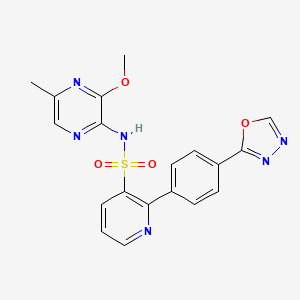
Zibotentan.png

Patent Submitted Granted
Substituted pyrazin-2-yl-sulphonamide-(3-pyridyl) compounds and uses thereof [US6060475] 2000-05-09
COMPOSITION 064 [US8168221] 2009-04-16 2012-05-01
THERAPEUTIC TREATMENT-014 [US2009062246] 2009-03-05
Ethanolamine Salt of N- (3-Methoxy-5-Methylpyrazin-2Yl) -2- (4-[1, 3, 4-Oxadiazole-2-Yl] Phenyl) Pyridine-3-Sulphonamide [US2008221124] 2008-09-11
N-HETEROARYL-PYRIDINESULFONAMIDE DERIVATIVES AND THEIR USE AS ENDOTHELIN ANTAGONISTS [WO9640681] 1996-12-19
Zibotentan
Zibotentan.svg
Identifiers
CAS number 186497-07-4 Yes
PubChem 9910224
ChemSpider 8085875
UNII 8054MM4902 Yes
Jmol-3D images Image 1
Properties
Molecular formula C19H16N6O4S
Molar mass 424.43 g mol−1

References

  1. James and Growcott (2009). “Drugs of the Future”.
  2. Jump up^ Tomkinson H, Kemp J, Oliver S, Swaisland H, Taboada M, Morris T (2011). “Pharmacokinetics and tolerability of zibotentan (ZD4054) in subjects with hepatic or renal impairment: two open-label comparative studies”. BMC Clin Pharmacol 11: 3. doi:10.1186/1472-6904-11-3.PMC 3070638. PMID 21414193.
  3. http://www.fiercebiotech.com/story/azs-zibotentan-flunks-late-stage-prostate-cancer-trial/2010-09-27
  4.  http://www.genengnews.com/gen-news-highlights/pfizer-astrazeneca-and-actelion-separately-report-phase-iii-trial-failures/81243985/
  5. Jump up^ Trump DL, Payne H, Miller K, et al. (September 2011). “Preliminary study of the specific endothelin a receptor antagonist zibotentan in combination with docetaxel in patients with metastatic castration-resistant prostate cancer”. Prostate 71 (12): 1264–75.doi:10.1002/pros.21342. PMID 21271613.

External links

Labeling under flow conditions: Understanding added applications


totallymicrowave's avatarSynthFlow

Stepping outside traditional synthetic labs into specialty applications is not always something we are looking for in the literature, but it is an excellent way to see different techniques which might be utilized in your own labs. Neil Vasdev’s group at the Harvard Medical School specializes in labeling compounds for more advanced analysis – imaging techniques as tracers for the study of advanced disease states. His group has been using flow chemistry and flow hydrogenation for some time so I thought it be interesting for everyone to see the work.

Screen Shot 2015-01-22 at 5.58.10 AM

Two recent publications illustrate their research. In the first publication Chem Commun 2013, 49, 8755  the group uses three examples where they incorporate a label for study into an advanced intermediate C11 or F18 through a microfluidic reaction, followed by a strategic deprotection of a benzyl  group or CBz under flow hydrogenation. Without going into significant detail, the group absolutely needed an…

View original post 201 more words

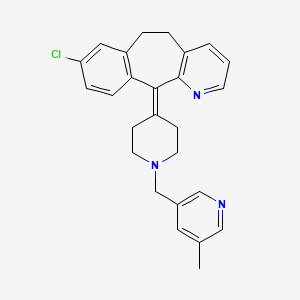
Rupatadine


Rupatadine.png

Rupatadine

CAS 158876-82-5,
8-Chloro-11-(1-((5-methylpyridin-3-yl)methyl)piperidin-4-ylidene)-6,11-dihydro-5H-benzo[5,6]cyclohepta[1,2-b]pyridine,
8-chloro-11-(1-[(5-methyl-3-pyridyl)methyl]-4-piperidyliden)-6,11-dihydro-5H-benzo[5,6]cyclohepta[1,2-b]pyridin
UNII-2AE8M83G3E, UR 12592
Molecular Formula: C26H26ClN3
Molecular Weight: 415.95774 g/mol
Percent Composition: C 75.07%, H 6.30%, Cl 8.52%, N 10.10%
Properties: Creamy solid, mp 58-61°.
Melting point: mp 58-61°

Platelet activating factor receptor antagonist; Histamine H1 receptor antagonist

Allergic rhinitis; Urticaria

J. Uriach & Cia. S.A.

Rupatadine.png

Uriach developed and launched rupatadine for treating of allergic rhinitis and urticaria. Family members of the product case EP577957, have SPC protection in the EU until 2016.


As of January 2015, Newport Premium™ reports that Cadila Pharmaceuticals is producing or capable of producing commercial quantities of rupatadine fumarate and holds an active USDMF since September 2012.


Rupatadine is a second generation antihistamine and PAF antagonist used to treat allergies. It was discovered and developed by J. Uriach y Cia, S. A.[1] and is marketed under several trade names such as Rupafin, Alergoliber, Rinialer, Pafinur, Rupax and Ralif.

Therapeutic indications approved

Rupatadine fumarate has been approved for the treatment of allergic rhinitis and chronic urticaria in adults and children over 12 years. The defined daily dose (DDD) is 10 mg orally.

Derivative Type: Fumarate
CAS Registry Number: 182349-12-8
Trademarks: Rupafin (Uriach)
Molecular Formula: C26H26ClN3.C4H4O4
Molecular Weight: 532.03
Percent Composition: C 67.73%, H 5.68%, Cl 6.66%, N 7.90%, O 12.03%
Derivative Type: Trihydrochloride
CAS Registry Number: 156611-76-6
Molecular Formula: C26H26ClN3.3HCl
Molecular Weight: 525.34
Percent Composition: C 59.44%, H 5.56%, Cl 26.99%, N 8.00%
Properties: Crystals from ethyl acetate + ether, mp 213-217°.
Melting point: mp 213-217°.
Therap-Cat: Antihistaminic.
Keywords: Antihistaminic; Tricyclics; Other Tricyclics; Platelet Activating Factor Antagonist.

Available form

Rupatadine is available as round, light salmon coloured tablets containing 10 mg of rupatadine (as fumarate) to be administered orally, once a day.

Side effects

Rupatadine is a non-sedating antihistamine. However, as in other non sedating second-generation antihistamines, the most common side effects in controlled clinical studies were somnolence, headaches and fatigue.

Mechanism of action

Rupatadine is a second generation, non-sedating, long-acting histamine antagonist with selective peripheral H1 receptor antagonist activity. It further blocks the receptors of the platelet-activating factor (PAF) according to in vitro and in vivo studies.[2]

Rupatadine possesses anti-allergic properties such as the inhibition of the degranulation of mast cells induced by immunological and non-immunological stimuli, and inhibition of the release of cytokines, particularly of the TNF in human mast cells and monocytes.[3]

Pharmacokinetics

Rupatadine has several active metabolites such as desloratadine, 3-hydroxydesloratadine, 6-hydroxydesloratadine and 5-hydroxydesloratadine.

History

Rupatadine discovery, pre-clinical and clinical development was performed by J. Uriach y Cia, S. A., a Spanish pharmaceutical company. It was launched in 2003 in Spain by J. Uriach y Cia, S. A., with the brand name of Rupafin. The registration of the product is approved in 23 countries from the EU, 8 Central American countries, Brazil, Argentina, Chile, Turkey and 14 African countries.

Efficacy in humans

The efficacy of rupatadine as treatment for allergic rhinitis (AR) and chronic idiopathic urticaria (CIU) has been investigated in adults and adolescents (aged over 12 years) in several controlled studies, showing a rapid onset of action and a good safety profile even in prolonged treatment periods of a year.[3][4][5]


  • Rupatadine (I) is an authorized antihistaminic agent and has IUPAC name 8-Chloro-6,11-dihydro-11-[1-[(5-methyl-3-pyridinyl)methyl]-4-piperidinylidene]-5H-benzo[5,6]cyclohepta[1,2-b]pyridine, CAS number 158876-82-5 for the free base and the following chemical formula:

  • Rupatadine is currently marketed in 10 mg (rupatadine) tablets as rupatadine fumarate (CAS 182349-12-8 for the fumarate salt) for the treatment of allergic rhinitis and urticaria in adults and teenagers.
  • Rupatadine free base was first disclosed in EP0577957 .
  • Spanish patent application ES2087818 discloses the monofumarate salt of rupatadine (i.e. rupatadine fumarate) and aqueous liquid pharmaceutical compositions of rupatadine fumarate. In particular, this document discloses a syrup containing rupatadine fumarate at 4 g/L, sucrose, a flavouring agent, a sweetening agent and water; and a solution for injection which contains rupatadine fumarate at 20 g/L, benzyl alcohol, propyleneglycol and water.
  • EP0577957 discloses some liquid pharmaceutical compositions of rupatadine free base; compound 4 in EP0577957 is rupatadine free base. The formulations disclosed therein are identical to those disclosed in ES2087818 but rupatadine free base is used instead of rupatadine fumarate.
  • Despite the aqueous liquid pharmaceutical compositions disclosed in EP0577957 and ES2087818 , the inventors have found that the solubility in water of rupatadine fumarate is 2.9 g/L (see Reference example 1) and therefore these prior art formulations may have stability problems due to supersaturation of rupatadine free base or rupatadine fumarate and would not be suitable for use as a medicament.
  • CN101669901 and CN101669926 disclose liquid formulations of rupatadine free base using cyclodextrins to dissolve rupatadine.
  • CN101669901 is directed to liquid formulations of rupatadine free base for ophthalmic delivery comprising rupatadine, a solvent and a cyclodextrin.
  • CN10169926 is directed to liquid formulations of rupatadine free base for nasal delivery comprising rupatadine, a solvent and a cyclodextrin. It is stated that rupatadine has low solubility in water (1.39 mg/mL to 0.82 mg/mL at pH 3.0 to 7.0, table 9 in CN10169926 ) and the problem of its low solubility is solved using cyclodextrins (tables 10-12 of CN10169926 ) in order to obtain liquid formulations.


The reaction of 2-cyano-3-methylpyridine (I) with H2SO4 in t-BuOH gives the N-tert-butylamide (II), which is treated with two equivalents of BuLi and the corresponding dianion alkylated with 3-chlorobenzyl chloride to afford amide (III). The treatment of (III) with POCl3 gives nitrile (IV) which is cyclized to ketone (V) by subsequent treatment with CF3SO3H and aqueous HCl. Reaction of ketone (V) with the Grignard derivative prepared from chloride (VI) affords alcohol (VII) which is finally dehydrated by H2SO4 to give UR-12592 (1), as shown in Scheme 20491401a. The key intermediate (VI) is synthesized through the condensation of 5-methylnicotinic acid (VIII) with 4-hydroxypiperidine by means of DCC in DMF to give amide (IX), followed by reduction with POCl3 and NaBH4 to give the amino alcohol (X) which is treated with SOCl2. Scheme 20491402a. Description White crystals, m.p. 196-8 癈. References 1. Carceller, E., Jim閚ez, P.J., Salas, J. (J. Uriach & Cia SA). Process for the preparation of 8-chloro-6,11-dihydro-11-[1-[(5-methyl-3-pyridinyl)methyl]-4 -piperidinylidene]-5H-benzo[5,6]cyclohepta[1,2-b]pyridine. ES 9602107.

The key intermediate (VI) is synthesized through the condensation of 5-methylnicotinic acid (VIII) with 4-hydroxypiperidine by means of DCC in DMF to give amide (IX), followed by reduction with POCl3 and NaBH4 to give the amino alcohol (X), which is treated with SOCl2.
………………………….
EXAMPLE 4

8-chloro-11-(1-[(5-methyl-3-pyridyl)methyl]-4-piperidyliden)-6,11-dihydro-5H-benzo[5,6]cyclohepta[1,2-b]pyridin

  • To a solution of 1.7 mL (15 mmol) of 3,5-lutidine in 100 mL of CCl₄ was added 2.6 g (15 mmol) of NBS and the mixture was stirred at reflux under an argon atmosphere for 2 h. Then, the mixture was allowed to cool, the solid obtained was filtered off and to the filtrate was added 2.4 g (7.5 mmol) of the compound obtained in preparation 1 and 20 mg of 4-(dimethylamino)pyridine. The resulting mixture was stirred at room temperature for 18 h and 1.68 mL of triethylamine was added. It was diluted with 100 mL of dichloromethane and washed with 0.5N NaHCO₃ solution and with water. The organic phase was dried over sodium sulfate and the solvent was removed, to give 5.7 g of a residue that was chromatographed on silica gel (chloroform : methanol : ammonia, 60 : 2 : 0.2). 1.3 g of the title compound of the example was obtained as a white solid (yield: 40%).
    mp: 58-61°C;
    IR (KBr) ν: 3419, 3014, 1635, 1576, 1472 cm⁻¹;
    ¹H RMN (80 MHz, CDCl₃) δ (TMS): 8.39 (m, 3H, ar), 7.48 (m, 1H, ar), 7.37 (m, 1H, ar), 7.12 (m, 4H, ar), 3.45 (s, 2H, CH₂N), 3.36 (m, 2H), 3.1-2.1 (m, 13H). ¹³C RMN (20.15 MHz, CDCl₃) δ (TMS): 157.20 (C), 148.93 (CH), 147.46 (CH), 146.48 (CH), 139.50 (C), 138.56 (C), 137.06 (CH), 133.3 (C), 132.54 (C), 130.67 (CH), 128.80 (CH), 125.85 (CH), 121.92 (CH), 59.84 (CH₂), 54.63 (CH₂), 31.70 (CH₂), 31.32 (CH₂), 30.80 (CH₂), 30.56 (CH₂), 18.14 (CH₃).
………………………….


WO2006114676

http://www.google.com/patents/WO2006114676A2?cl=en

Scheme-1

Example 1

Preparation of3-bromomethyl-5-methylpyridine hydrochloride: A mixture of carbon tetrachloride (4000ml), azobisisobutyronitrile (45.96gm, 0.279mol), 3,5-lutidine (150gm, 1.399mol) and N-bromosuccinamide (299.4gm, 1.682mol) is refluxed for 2 hours. The reaction mixture is cooled to room temperature and solid is filtered. HCl gas is passed to the filtrate and solid obtained is separated and filtered. Yield is 196gm Yield is 67.66%. Example 2

Preparation of Rupatadine :

A mixture of desloratadine (5.0gm, 0.016mol), methylene chloride (15ml), tetrabutylammonium bromide (0.575gm, 0.0018mol) and sodium hydroxide solution (2.5gm, 0.064mol in 8ml water) is cooled to 0 to 50C. 3-bromomethyl-5- methylpyridine hydrochloride (7.18gm, 0.032mol) in methylene chloride (35ml) is added to above mixture. The reaction mixture is stirred at 0 to 50C for 1 hour and at room temperature for 12 hours. Layers are separated and organic layer is washed with dilute HCl solution and water. Methylene chloride is distilled. Yield = 9.5g %Yield =

67.66%.

Example 3

Preparation of Rupatadine fumarate:

A solution of fumaric acid (3.3gm) in methanol (46ml) is added to solution of

Rupatadine (4.5gm) in ethyl acetate (30ml) at room temperature. The reaction mass is cooled to -5 to O0C for 4 hours. Rupatadine fumarate is separated filtered and Washed with ethylacetate. Yield = 5.5 gm.

…………………………..

NEW PATENT

EP-02824103…An improved process for the preparation of rupatadine fumarate, Cadila Pharmaceuticals Ltd

Process for the preparing rupatadine intermediate (particularly 5-methylpyridine-3-methanol) comprises reduction of 5-methyl nicotinic acid alkyl ester using alkali metal borohydride is claimed. For a prior filing see WO2006114676, claiming the process for preparation of rupatadine fumarate.

……………………………………

J. Med. Chem., 1994, 37 (17), pp 2697–2703
DOI: 10.1021/jm00043a009

http://pubs.acs.org/doi/abs/10.1021/jm00043a009

References

  1. Patents: EP 577957, US 5407941, US 5476856
  2. Merlos, M.; Giral, M.; Balsa, D.; Ferrando, R.; Queralt, M.; Puigdemont, A.; García-Rafanell, J.; Forn, J. (1997). “Rupatadine, a new potent, orally active dual antagonist of histamine and platelet-activating factor (PAF)”. The Journal of Pharmacology and Experimental Therapeutics 280 (1): 114–121. PMID 8996188. edit
  3. Picado, C. S. (2006). “Rupatadine: Pharmacological profile and its use in the treatment of allergic disorders”. Expert Opinion on Pharmacotherapy 7 (14): 1989–2001. doi:10.1517/14656566.7.14.1989. PMID 17020424. edit
  4. Keam, S. J.; Plosker, G. L. (2007). “Rupatadine: A review of its use in the management of allergic disorders”. Drugs 67 (3): 457–474. doi:10.2165/00003495-200767030-00008. PMID 17335300. edit
  5. Mullol, J.; Bousquet, J.; Bachert, C.; Canonica, W. G.; Gimenez-Arnau, A.; Kowalski, M. L.; Martí-Guadaño, E.; Maurer, M.; Picado, C.; Scadding, G.; Van Cauwenberge, P. (2008). “Rupatadine in allergic rhinitis and chronic urticaria”. Allergy 63: 5–28. doi:10.1111/j.1398-9995.2008.01640.x. PMID 18339040. edit
Literature References: Dual antagonist of histamine H1 and platelet-activating factor receptors. Prepn: E. Carceller et al., ES 2042421; eidem, US 5407941 (1993, 1995 both to Uriach);
eidem,J. Med. Chem. 37, 2697 (1994).
Mechanism of action: M. Merlos et al., J. Pharmacol. Exp. Ther. 280, 114 (1997).
Clinical trial in seasonal allergic rhinitis: F. Saint-Martin et al., J. Invest. Allergol. Clin. Immunol. 14, 34 (2004);
and comparison with ebastine: E. M. Guadaño et al., Allergy 59, 766 (2004).
Review of pharmacology and clinical development: N. Y. Van Den Anker-Rakhmanina, Curr. Opin. Anti-Inflam. Immunomod. Invest. Drugs 2, 127-132 (2000).
1 to 8 of 8
Patent Submitted Granted
8-chloro-11-[1-[(5-methyl-3-pyridyl)methyl]-4-piperidyliden]-6,11-dihydro-5H-benzo[5,6]cyclohepta[1,2-b]pyridine [US5407941] 1995-04-18
Treatment of PAF and histamine-mediated diseases with 8-chloro-11-[1-[(5-methyl-3-pyridyl)methyl]-4-piperidyliden]-6,11-dihydro-5H-benzo[5,6]cyclohepta[1,2-b]pyridine [US5476856] 1995-12-19
Process for the synthesis of n-(5-methylnicotinoyl)-4 hydroxypiperidine, a key intermediate of rupatadine [US6803468] 2004-03-04 2004-10-12
$g(b)2-ADRENERGIC RECEPTOR AGONISTS [EP1003540] 2000-05-31
$g(b)2-ADRENERGIC RECEPTOR AGONISTS $g(b)2-ADRENERGIC RECEPTOR AGONISTS [EP1019360] 2000-07-19
8-Chloro-11-[1-[(5-methyl-3-pyridyl)methyl]-4-piperidyliden]-6,11-dihydro-5H-benzo[5,6]cyclohepta[1,2-b]pyridine. [EP0577957] 1994-01-12 1995-07-12
NOVEL CRYSTALLINE FORM OF RUPATADINE FREE BASE [US2009197907] 2009-08-06
METHODS FOR IDENTIFYING NOVEL MULTIMERIC AGENTS THAT MODULATE RECEPTORS METHODS FOR IDENTIFYING NOVEL MULTIMERIC AGENTS THAT MODULATE RECEPTORS [WO9966944] 1999-12-29
Rupatadine
Rupatadine.png
Systematic (IUPAC) name
8-Chloro-6,11-dihydro-11-[1-[(5-methyl-3-pyridinyl)methyl]-4-piperidinylidene]-5H-benzo[5,6]cyclohepta[1,2-b]pyridine fumarate
Clinical data
Trade names Rupafin, Alergoliber, Rinialer, Pafinur, Rupax, Ralif
AHFS/Drugs.com International Drug Names
Legal status
  • Prescription drug
Routes Oral
Pharmacokinetic data
Protein binding 98–99%
Metabolism Hepatic, CYP-mediated
Half-life 5.9 hours
Excretion 34.6% urine, 60.9% faeces
Identifiers
CAS number 158876-82-5  (free base)
182349-12-8 (fumarate)
ATC code R06AX28
PubChem CID 133017
ChemSpider 117388 Yes
UNII 2AE8M83G3E Yes
ChEMBL CHEMBL91397 Yes
Chemical data
Formula C26H26ClN3 
Molecular mass 415.958 g/mol