



| Patent ID | Patent Title | Submitted Date | Granted Date |
|---|---|---|---|
| US2016229849 | QUINOLONE DERIVATIVES AS FIBROBLAST GROWTH FACTOR RECEPTOR INHIBITORS | 2015-02-04 | 2016-08-11 |
| US2016200725 | QUINOLONE DERIVATIVES AS FIBROBLAST GROWTH FACTOR RECEPTOR INHIBITORS | 2016-03-22 | 2016-07-14 |
Home » Uncategorized (Page 54)
Category Archives: Uncategorized
 DRUG APPROVALS BY DR ANTHONY MELVIN CRASTO
.....FOR BLOG HOME CLICK HERE
DRUG APPROVALS BY DR ANTHONY MELVIN CRASTO
.....FOR BLOG HOME CLICK HEREFlag and hits
ORGANIC SPECTROSCOPY
Read all about Organic Spectroscopy on
ORGANIC SPECTROSCOPY INTERNATIONAL

SUBSCRIBE

 Subscribe in a reader
Enter your email address:
Delivered by FeedBurner
Subscribe to New Drug Approvals by Email


Recent Comments
 | shivkr2 on SPSR Excellence Award 2025 – S… |
 | Bonkasaurus on Infigratinib phosphate |
 | PALOVAROTENE | ORGAN… on Palovarotene |
| Pfizer just purchase… on Temanogrel | |
| Pfizer To Cash In On… on Temanogrel |
Tamibarotene, тамибаротен , تاميباروتان , 他米巴罗汀 ,

Tamibarotene
тамибаротен , تاميباروتان , 他米巴罗汀 ,
94497-51-5 CAS
- Molecular FormulaC22H25NO3
- Average mass351.439 Da
4-(((5,6,7,8-Tetrahydro-5,5,8,8-tetramethyl-2-naphthalenyl)amino)carbonyl)benzoic Acid, Tamibarotene
4-[(5,5,8,8-Tetramethyl-5,6,7,8-tetrahydronaphthalen-2-yl)carbamoyl]benzoic acid
Benzoic acid, 4-[[(5,6,7,8-tetrahydro-5,5,8,8-tetramethyl-2-naphthalenyl)amino]carbonyl]-
Amnolake®
Amnoleuk
Benzoic acid, 4-(((5,6,7,8-tetrahydro-5,5,8,8-tetramethyl-2-naphthalenyl)amino)carbonyl)-
BR-72889
C061133
DH6940000
MFCD00866188 [MDL number]
N-(5,6,7,8-Tetrahydro-5,5,8,8-tetramethyl)-2-naphthyl)terephthalamic acid
QA-6963
retinobenzoic acid
- Am 80
- Am 80 (pharmaceutical)
- Amnolake
- NSC 608000
- RR 110
Hisao Ekimoto, “TAMIBAROTENE CAPSULE PREPARATION.” U.S. Patent US20100048708, issued February 25, 2010.

Tamibarotene , a small molecule retinoic acid receptor alpha (RARα) agonists developed by Nippon Shinyaku, was approved in Japan for the treatment of acute promyelocytic leukemia (APL) in 2005. Recently, the drug was in clinical development for the treatment of acute myeloid leukemia (AML), myelodysplasia, pediatric solid tumor, and steroid-refractory
Tamibarotene (brand name: Amnolake), also called retinobenzoic acid, is orally active, synthetic retinoid, developed to overcome all-trans retinoic acid (ATRA) resistance, with potential antineoplastic activity against acute promyelocytic leukaemia (APL) .[1] It is currently marketed only in Japan and early trials have demonstrated that it tends to be better tolerated than ATRA.[2] It has also been investigated as a possible treatment for Alzheimer’s disease, multiple myeloma and Crohn’s disease.[2][3]
Synthesis
The tetralin-based compound tamibarotene (7) has been tested as an agent for treating leukaemias.

Reaction of the diol (1) with hydrogen chloride affords the corresponding dichloro derivative (2). Aluminum chloride mediated Friedel–Crafts alkylation of acetanilide with the dichloride affords the tetralin (3). Basic hydrolysis leads to the primary amine (4). Acylation of the primary amino group with the half acid chloride half ester from terephthalic acid (5) leads to the amide (6). Basic hydrolysis of the ester grouping then affords (7).[4]
PAPER
Synthesis of Tamibarotene via Ullmann-Type Coupling
Key Laboratory of Structure-Based Drug Design & Discovery, Ministry of Education, Shenyang Pharmaceutical University, Shenyang 110016, China
Org. Process Res. Dev., Article ASAP

An effective process was developed for the preparation of tamibarotene via an Ullmann-type coupling in a nonpressurized l-proline/DMSO system. Notable features were the telescoping of reactions, avoiding environmentally hazardous materials, and an acceptable overall yield. The safe scalable process was validated on a 1 kg scale.
Mp 223–225 °C (lit. SEE BELOW mp 231–232 °C); 1H NMR (400 MHz, chloroform-d) δ 8.22 (d, J = 7.7 Hz, 2H), 7.97 (d, J = 7.7 Hz, 2H), 7.80 (s, 1H), 7.54 (s, 1H), 7.46 (d, J = 8.4 Hz, 1H), 7.33 (d, J = 8.3 Hz, 1H), 1.70 (s, 4H), 1.31 (s, 6H), 1.29 (s, 6H); MS (ESI) m/z: 350.0 [M – H]−
…Journal of Medicinal Chemistry (1988), 31 (11), 2182-92

PAPER
Journal of Medicinal Chemistry (1988), 31 (11), 2182-92
PAPER
Chem. Pharm. Bull. 61(8) 846–852 (2013)
https://www.jstage.jst.go.jp/article/cpb/61/8/61_c13-00356/_pdf
References
- Jump up^ “Tamibarotene: AM 80, retinobenzoic acid, Tamibaro”. Drugs in R&D. 5 (6): 359–62. 2004. doi:10.2165/00126839-200405060-00010. PMID 15563242.
- ^ Jump up to:a b Miwako, I; Kagechika, H (August 2007). “Tamibarotene”. Drugs Today (Barc). 43 (8): 563–568. doi:10.1358/dot.2007.43.8.1072615. PMID 17925887.
- Jump up^ Fukasawa, H; Nakagomi, M; Yamagata, N; Katsuki, H; Kawahara, K; Kitaoka, K; Miki, T; Shudo, K (2012). “Tamibarotene: a candidate retinoid drug for Alzheimer’s disease” (PDF). Biological & Pharmaceutical Bulletin. 35 (8): 1206–1212. doi:10.1248/bpb.b12-00314. PMID 22863914.
- Jump up^ Y. Hamada, I. Yamada, M. Uenaka, T. Sakata, U.S. Patent 5,214,202 (1993).
 |
|
| Names | |
|---|---|
| IUPAC name
4-[(1,1,4,4-tetramethyltetralin-6-yl)carbamoyl]benzoic acid
|
|
| Identifiers | |
|
3D model (Jmol)
|
|
| 3564473 | |
| ChEBI | |
| ChemSpider | |
| DrugBank | |
|
PubChem CID
|
|
| UNII | |
| Properties | |
| C22H25NO3 | |
| Molar mass | 351.45 g·mol−1 |
|
Except where otherwise noted, data are given for materials in their standard state (at 25 °C [77 °F], 100 kPa).
|
|
////////////Tamibarotene, тамибаротен , تاميباروتان , 他米巴罗汀 ,
CC1(C)CCC(C)(C)C2=C1C=CC(NC(=O)C1=CC=C(C=C1)C(O)=O)=C2
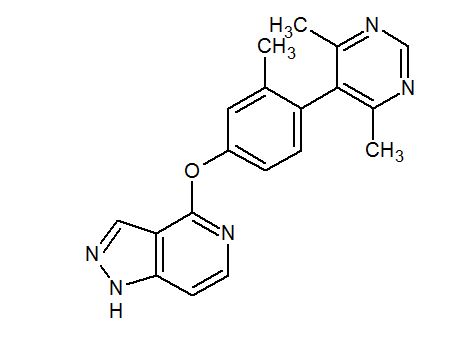
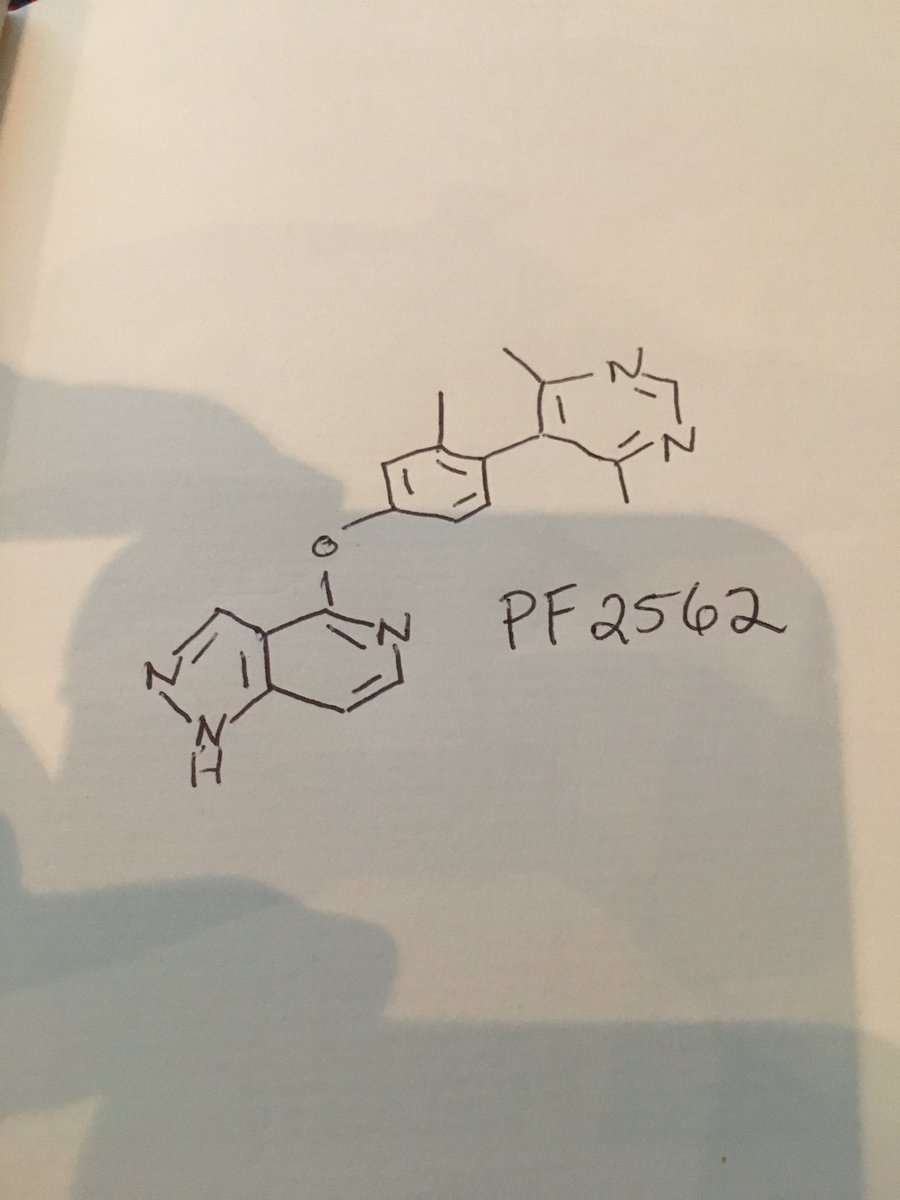
PF 2562
PF 2562
CAS 1609258-91-4
MF C19 H17 N5 O
MW 331.37
1H-Pyrazolo[4,3-c]pyridine, 4-[4-(4,6-dimethyl-5-pyrimidinyl)-3-methylphenoxy]-


Jennifer Elizabeth Davoren
Principal Scientist at Pfizer
SYNTHESIS


-
Dopamine acts upon neurons through two families of dopamine receptors, D1-like receptors (D1Rs) and D2-like receptors (D2Rs). The D1-like receptor family consists of D1 and D5 receptors which are expressed in many regions of the brain. D1 mRNA has been found, for example, in the striatum and nucleus accumbens. See e.g., Missale C, Nash S R, Robinson S W, Jaber M, Caron M G “Dopamine receptors: from structure to function”, Physiological Reviews 78:189-225 (1998). Pharmacological studies have reported that D1 and D5 receptors (D1/D5), namely D1-like receptors, are linked to stimulation of adenylyl cyclase, whereas D2, D3, and D4 receptors, namely D2-like receptors, are linked to inhibition of cAMP production.
-
Dopamine D1 receptors are implicated in numerous neuropharmacological and neurobiological functions. For example, D1 receptors are involved in different types of memory function and synaptic plasticity. See e.g., Goldman-Rakic P S et al., “Targeting the dopamine D1 receptor in schizophrenia: insights for cognitive dysfunction”, Psychopharmacology 174(1):3-16 (2004). Moreover, D1 receptors have been implicated in a variety of psychiatric, neurological, neurodevelopmental, neurodegenerative, mood, motivational, metabolic, cardiovascular, renal, ophthalmic, endocrine, and/or other disorders described herein including schizophrenia (e.g., cognitive and negative symptoms in schizophrenia), cognitive impairment associated with D2 antagonist therapy, ADHD, impulsivity, autism spectrum disorder, mild cognitive impairment (MCI), age-related cognitive decline, Alzheimer’s dementia, Parkinson’s disease (PD), Huntington’s chorea, depression, anxiety, treatment-resistant depression (TRD), bipolar disorder, chronic apathy, anhedonia, chronic fatigue, post-traumatic stress disorder, seasonal affective disorder, social anxiety disorder, post-partum depression, serotonin syndrome, substance abuse and drug dependence, Tourette’s syndrome, tardive dyskinesia, drowsiness, sexual dysfunction, migraine, systemic lupus erythematosus (SLE), hyperglycemia, dislipidemia, obesity, diabetes, sepsis, post-ischemic tubular necrosis, renal failure, resistant edema, narcolepsy, hypertension, congestive heart failure, postoperative ocular hypotonia, sleep disorders, pain, and other disorders in a mammal. See e.g., Goulet M, Madras B K “D(1) dopamine receptor agonists are more effective in alleviating advanced than mild parkinsonism in 1-methyl-4-phenyl-1,2,3,6-tetrahydropyridine-treated monkeys”, Journal of Pharmacology and Experimental Therapy 292(2):714-24 (2000); Surmeier D J et al., “The role of dopamine in modulating the structure and function of striatal circuits”, Prog. Brain Res. 183:149-67 (2010).New or improved agents that modulate (such as agonize or partially agonize) D1 are needed for developing new and more effective pharmaceuticals to treat diseases or conditions associated with dysregulated activation of D1, such as those described herein.
PATENT
Example 6
4-[4-(4,6-Dimethylpyrimidin-5-yl)-3-methylphenoxy]-1H-pyrazolo[4,3-c]pyridine (6)

Step 1. Synthesis of 4-[4-(4,6-dimethylpyrimidin-5-yl)-3-methylphenoxy]-1-(tetrahydro-2H-pyran-2-yl)-1H-pyrazolo[4,3-c]pyridine (C31)
Cesium carbonate (1.03 g, 3.16 mmol) and palladium(II) acetate (24 mg, 0.11 mmol) were added to a solution of C28 (225 mg, 1.05 mmol) and P3 (250 mg, 1.05 mmol) in 1,4-dioxane (10 mL) in a sealable reaction vessel, and the solution was purged with nitrogen for 10 minutes. Di-tert-butyl[3,4,5,6-tetramethyl-2′,4′,6-tri(propan-2-yl)biphenyl-2-yl]phosphane (97%, 104 mg, 0.210 mmol) was added, and the reaction mixture was briefly purged with nitrogen. The vessel was sealed and the reaction mixture was stirred at 100° C. for 3 hours. After cooling to room temperature, the mixture was filtered through Celite and the filter pad was washed with ethyl acetate; the combined filtrates were concentrated in vacuo and purified via silica gel chromatography (Eluents: 20%, then 50%, then 100% ethyl acetate in heptane). The product was obtained as an off-white solid. Yield: 272 mg, 0.655 mmol, 62%. LCMS m/z 416.5 [M+H+]. 1H NMR (400 MHz, CDCl3) δ 8.99 (s, 1H), 8.11 (d, J=0.6 Hz, 1H), 7.99 (d, J=6.0 Hz, 1H), 7.25-7.27 (m, 2H, assumed; partially obscured by solvent peak), 7.20-7.24 (m, 1H), 7.10 (d, J=8.4 Hz, 1H), 5.73 (dd, J=9.4, 2.5 Hz, 1H), 4.04-4.10 (m, 1H), 3.74-3.82 (m, 1H), 2.49-2.59 (m, 1H), 2.28 (s, 6H), 2.08-2.21 (m, 2H), 2.04 (s, 3H), 1.66-1.84 (s, 3H).
Step 2. Synthesis of 4-[4-(4,6-dimethylpyrimidin-5-yl)-3-methylphenoxy]-1H-pyrazolo[4,3-c]pyridine (6)
C31 (172 mg, 0.414 mmol) was dissolved in 1,4-dioxane (5 mL) and dichloromethane (5 mL), and cooled to 0° C. A solution of hydrogen chloride in 1,4-dioxane (4 M, 1.04 mL, 4.16 mmol) was added, and the reaction mixture was allowed to stir at room temperature for 45 hours. After removal of solvent in vacuo, the residue was partitioned between saturated aqueous sodium bicarbonate solution and dichloromethane. The aqueous layer was extracted twice with dichloromethane, and the combined organic layers were dried over sodium sulfate, filtered, and concentrated under reduced pressure, affording the product as an off-white solid. Yield: 130 mg, 0.392 mmol, 95%. LCMS m/z 332.3 [M+H+]. 1H NMR (400 MHz, CDCl3) δ 9.00 (s, 1H), 8.20 (br s, 1H), 7.99 (d, J=6.0 Hz, 1H), 7.28-7.30 (m, 1H), 7.23-7.27 (m, 1H), 7.16 (dd, J=6.0, 1.0 Hz, 1H), 7.11 (d, J=8.2 Hz, 1H), 2.28 (s, 6H), 2.05 (s, 3H).
Preparation P8
6-(4-Hydroxy-2-methylphenyl)-1,5-dimethylpyrazin-2(1H)-one (P8)

Step 1. Synthesis of 1-(4-methoxy-2-methylphenyl)propan-2-one (C8)
Four batches of this experiment were carried out (4×250 g substrate). Tributyl(methoxy)stannane (400 g, 1.24 mol), 1-bromo-4-methoxy-2-methylbenzene (250 g, 1.24 mol), prop-1-en-2-yl acetate (187 g, 1.87 mol), palladium(II) acetate (7.5 g, 33 mmol) and tris(2-methylphenyl)phosphane (10 g, 33 mmol) were stirred together in toluene (2 L) at 100° C. for 18 hours. After cooling to room temperature, the reaction mixture was treated with aqueous potassium fluoride solution (4 M, 400 mL) and stirred for 2 hours at 40° C. The resulting mixture was diluted with toluene (500 mL) and filtered through Celite; the filter pad was thoroughly washed with ethyl acetate (2×1.5 L). The organic phase from the combined filtrates was dried over sodium sulfate, filtered, and concentrated in vacuo. Purification via silica gel chromatography (Gradient: 0% to 5% ethyl acetate in petroleum ether) provided the product as a yellow oil. Combined yield: 602 g, 3.38 mol, 68%. LCMS m/z 179.0 [M+H+]. 1H NMR (400 MHz, CDCl3) δ 7.05 (d, J=8.3 Hz, 1H), 6.70-6.77 (m, 2H), 3.79 (s, 3H), 3.65 (s, 2H), 2.22 (s, 3H), 2.14 (s, 3H).
Step 2. Synthesis of 1-(4-methoxy-2-methylphenyl)propane-1,2-dione (C9)
C8 (6.00 g, 33.7 mmol) and selenium dioxide (7.47 g, 67.3 mmol) were suspended in 1,4-dioxane (50 mL) and heated at 100° C. for 18 hours. The reaction mixture was cooled to room temperature and filtered through Celite; the filtrate was concentrated in vacuo. Silica gel chromatography (Eluent: 10% ethyl acetate in heptane) afforded the product as a bright yellow oil. Yield: 2.55 g, 13.3 mmol, 39%. LCMS m/z 193.1 [M+H+]. 1H NMR (400 MHz, CDCl3) δ 7.66 (d, J=8.6 Hz, 1H), 6.81 (br d, half of AB quartet, J=2.5 Hz, 1H), 6.78 (br dd, half of ABX pattern, J=8.7, 2.6 Hz, 1H), 3.87 (s, 3H), 2.60 (br s, 3H), 2.51 (s, 3H).
Step 3. Synthesis of 6-(4-methoxy-2-methylphenyl)-5-methylpyrazin-2(1H)-one (C10)
C9 (4.0 g, 21 mmol) and glycinamide acetate (2.79 g, 20.8 mmol) were dissolved in methanol (40 mL) and cooled to −10° C. Aqueous sodium hydroxide solution (12 N, 3.5 mL, 42 mmol) was added, and the resulting mixture was slowly warmed to room temperature. After stirring for 3 days, the reaction mixture was concentrated in vacuo. The residue was diluted with water, and 1 N aqueous hydrochloric acid was added until the pH was approximately 7. The aqueous phase was extracted with ethyl acetate, and the combined organic extracts were washed with saturated aqueous sodium chloride solution, dried over magnesium sulfate, filtered, and concentrated under reduced pressure. The resulting residue was slurried with 3:1 ethyl acetate/heptane, stirred for 5 minutes, filtered, and concentrated in vacuo. Silica gel chromatography (Eluent: ethyl acetate) provided the product as a tan solid that contained 15% of an undesired regioisomer; this material was used without further purification. Yield: 2.0 g. LCMS m/z 231.1 [M+H+]. 1H NMR (400 MHz, CDCl3) δ 8.09 (s, 1H), 7.14 (d, J=8.2 Hz, 1H), 6.82-6.87 (m, 2H), 3.86 (s, 3H), 2.20 (s, 3H), 2.11 (s, 3H).
Step 4. Synthesis of 6-(4-methoxy-2-methylphenyl)-1,5-dimethylpyrazin-2(1H)-one (C11)
C10 (from the previous step, 1.9 g) was dissolved in N,N-dimethylformamide (40 mL). Lithium bromide (0.86 g, 9.9 mmol) and sodium bis(trimethylsilyl)amide (95%, 1.91 g, 9.89 mmol) were added, and the resulting solution was stirred for 30 minutes. Methyl iodide (0.635 mL, 10.2 mmol) was added and stirring was continued at room temperature for 18 hours. The reaction mixture was then diluted with water and brought to a pH of approximately 7 by slow portion-wise addition of 1 N aqueous hydrochloric acid. The aqueous layer was extracted with ethyl acetate and the combined organic layers were washed several times with water, dried over magnesium sulfate, filtered, and concentrated. Silica gel chromatography (Gradient: 75% to 100% ethyl acetate in heptane) afforded the product as a viscous orange oil. Yield: 1.67 g, 6.84 mmol, 33% over two steps. LCMS m/z 245.1 [M+H+]. 1H NMR (400 MHz, CDCl3) δ 8.17 (s, 1H), 7.03 (br d, J=8 Hz, 1H), 6.85-6.90 (m, 2H), 3.86 (s, 3H), 3.18 (s, 3H), 2.08 (br s, 3H), 2.00 (s, 3H).
Step 5. Synthesis of P8
To a −78° C. solution of C11 (1.8 g, 7.37 mmol) in dichloromethane (40 mL) was added a solution of boron tribromide in dichloromethane (1 M, 22 mL, 22 mmol). The cooling bath was removed after 30 minutes, and the reaction mixture was allowed to warm to room temperature and stir for 18 hours. The reaction was cooled to −78° C., and methanol (10 mL) was slowly added; the resulting mixture was slowly warmed to room temperature. The reaction mixture was concentrated in vacuo, methanol (20 mL) was added, and the mixture was again concentrated under reduced pressure. The residue was diluted with ethyl acetate (300 mL) and water (200 mL) and the aqueous layer was brought to pH 7 via portion-wise addition of saturated aqueous sodium carbonate solution. The mixture was extracted with ethyl acetate (3×200 mL). The combined organic extracts were washed with water and with saturated aqueous sodium chloride solution, dried over magnesium sulfate, filtered, and concentrated in vacuo to afford the product as a light tan solid. Yield: 1.4 g, 6.0 mmol, 81%. LCMS m/z 231.1 [M+H+]. 1H NMR (400 MHz, CDCl3) δ 8.21 (s, 1H), 6.98 (d, J=8.2 Hz, 1H), 6.87-6.89 (m, 1H), 6.85 (br dd, J=8.2, 2.5 Hz, 1H), 3.22 (s, 3H), 2.06 (br s, 3H), 2.03 (s, 3H).
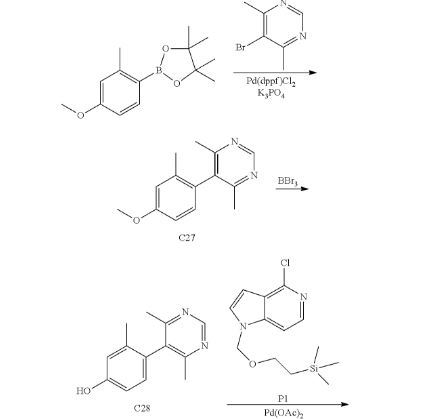
Step 1. Synthesis of 5-(4-methoxy-2-methylphenyl)-4,6-dimethylpyrimidine (C27)
1,1′-Bis(diphenylphosphino)ferrocene]dichloropalladium(II)-dichloromethane complex (5 g, 6 mmol) was added to a degassed mixture of 2-(4-methoxy-2-methylphenyl)-4,4,5,5-tetramethyl-1,3,2-dioxaborolane (30 g, 120 mmol), 5-bromo-4,6-dimethylpyrimidine (22.5 g, 120 mmol), and potassium phosphate (76.3 g, 359 mmol) in 1,4-dioxane (300 mL) and water (150 mL). The reaction mixture was heated at reflux for 4 hours, whereupon it was filtered and concentrated in vacuo. Purification via silica gel chromatography (Gradient: ethyl acetate in petroleum ether) provided the product as a brown solid. Yield: 25 g, 110 mmol, 92%. LCMS m/z 229.3 [M+H+]. 1H NMR (300 MHz, CDCl3) δ 8.95 (s, 1H), 6.94 (d, J=8.2 Hz, 1H), 6.87-6.89 (m, 1H), 6.84 (dd, J=8.3, 2.5 Hz, 1H), 3.86 (s, 3H), 2.21 (s, 6H), 1.99 (s, 3H).
Step 2. Synthesis of 4-(4,6-dimethylpyrimidin-5-yl)-3-methylphenol (C28)
Boron tribromide (3.8 mL, 40 mmol) was added drop-wise to a solution of C27 (3.0 g, 13 mmol) in dichloromethane (150 mL) at −70° C. The reaction mixture was stirred at room temperature for 16 hours, then adjusted to pH 8 with saturated aqueous sodium bicarbonate solution. The aqueous layer was extracted with dichloromethane (3×200 mL), and the combined organic layers were dried over sodium sulfate, filtered, and concentrated in vacuo. Silica gel chromatography (Gradient: 60% to 90% ethyl acetate in petroleum ether) afforded the product as a yellow solid. Yield: 1.2 g, 5.6 mmol, 43%. LCMS m/z 215.0 [M+H+]. 1H NMR (400 MHz, CDCl3) δ 8.98 (s, 1H), 6.89 (d, J=8.0 Hz, 1H), 6.86 (d, J=2.3 Hz, 1H), 6.80 (dd, J=8.3, 2.5 Hz, 1H), 2.24 (s, 6H), 1.96 (s, 3H).
//////////////PF 2562, non-catechol dopamine 1 receptor agonist, PFIZER, Jennifer Elizabeth Davoren, Amy Beth Dounay, Ivan Viktorovich Efremov, David Lawrence Firman Gray, Scot Richard Mente, Steven Victor O’Neil, Bruce Nelsen Rogers, Chakrapani Subramanyam, Lei Zhang, 1609258-91-4
Now at #MEDI 1st time disclosures David Gray of @pfizer on a non-catechol dopamine 1 receptor agonist #ACSSanFran
Cc1ncnc(C)c1c2ccc(cc2C)Oc4nccc3nncc34
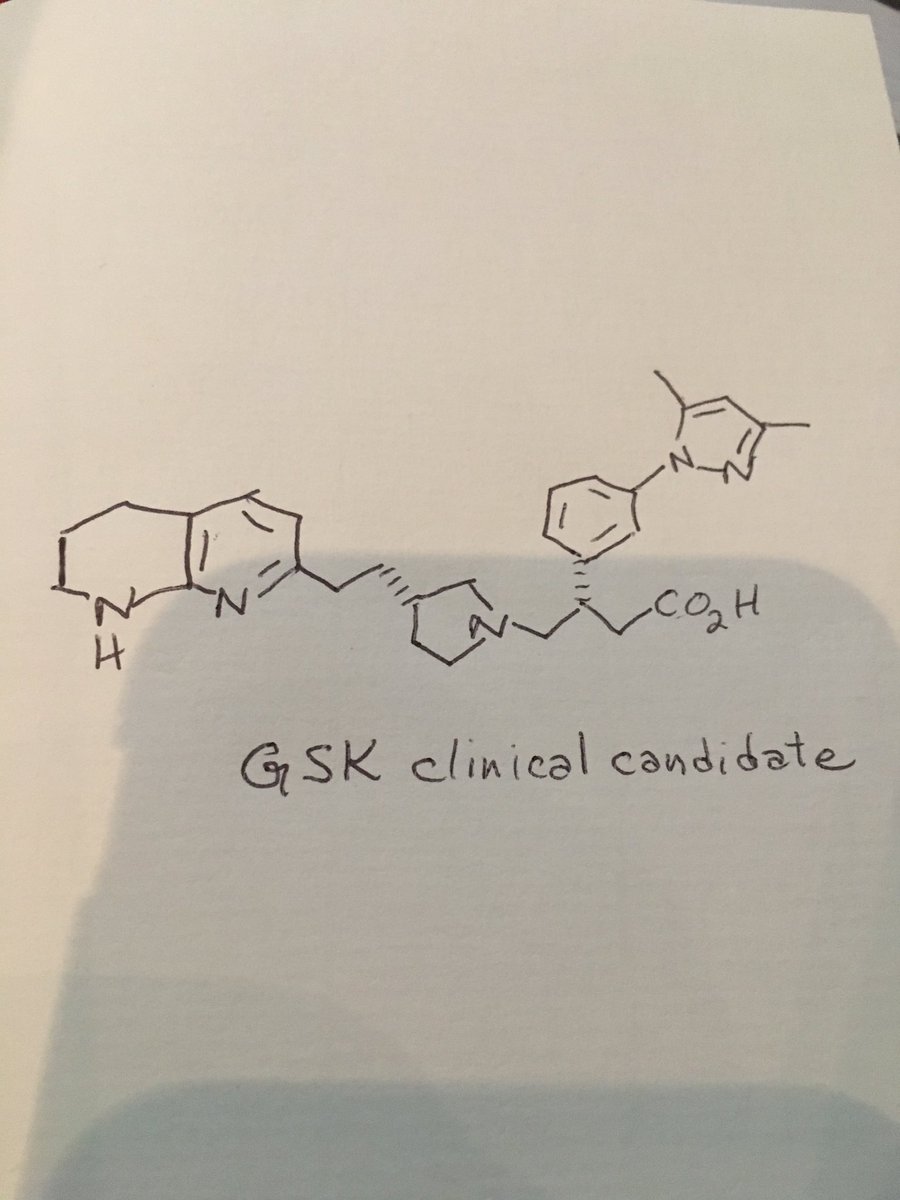
GSK 3008348
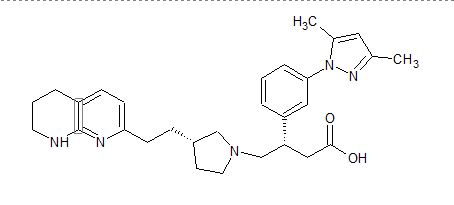
GSK 3008348
(3S)-3-[3-(3,5-Dimethyl-1H-pyrazol-1-yl)phenyl]-4-{(3S)-3-[2-(5,6,7,8-tetrahydro-1,8-naphthyridin-2-yl)ethyl]-1-pyrrolidinyl}butanoic acid
cas 1629249-33-7
1-Pyrrolidinebutanoic acid, β-[3-(3,5-dimethyl-1H-pyrazol-1-yl)phenyl]-3-[2-(5,6,7,8-tetrahydro-1,8-naphthyridin-2-yl)ethyl]-, (βS,3R)-
(S)-3-(3-(3,5-Dimethyl-1H-pyrazol-1-yl)phenyl)-4-((R)-3-(2-(5,6,7,8-tetrahydro-1,8- naphthyridin-2-yl)ethyl)pyrrolidin-1-yl)butanoic acid
- (βS,3R)-β-[3-(3,5-Dimethyl-1H-pyrazol-1-yl)phenyl]-3-[2-(5,6,7,8-tetrahydro-1,8-naphthyridin-2-yl)ethyl]-1-pyrrolidinebutanoic acid
- Molecular Formula C29H37N5O2
- Average mass 487.636 Da
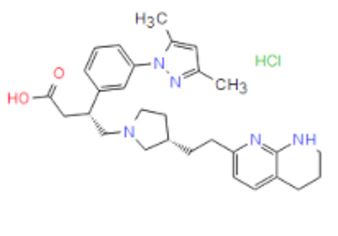
| CAS Number: | 1629249-40-6 |
| Molecular Weight: | 524.1 |
| Molecular Formula: | C29H38ClN5O2 |
- Originator GlaxoSmithKline
- Mechanism of Action Integrin alphaV antagonists
- Phase I Idiopathic pulmonary fibrosis
- 06 Mar 2017 GlaxoSmithKline plans a phase I trial for Idiopathic pulmonary fibrosis (NCT03069989)
- 01 Jun 2016 GlaxoSmithKline completes a first-in-human phase I trial for Idiopathic pulmonary fibrosis in United Kingdom (Inhalation) (NCT02612051)
- 01 Dec 2015 Phase-I clinical trials in Idiopathic pulmonary fibrosis in United Kingdom (Inhalation) (NCT02612051)
Inventors Niall Andrew ANDERSON, Brendan John FALLON, John Martin Pritchard
Applicant Glaxosmithkline Intellectual Property Development Limited

Niall Anderson

GSK-3008348, an integrin alpha(v)beta6 antagonist, is being developed at GlaxoSmithKline in early clinical studies for the treatment of idiopathic pulmonary fibrosis (IPF).
Idiopathic pulmonary fibrosis (IPF) is a chronic disease characterised by a progressive decline in lung function, due to excessive deposition of extracellular matrix (collagen) within the pulmonary interstitium. It affects approximately 500,000 people in the USA and Europe and is poorly treated. IPF inexorably leads to respiratory failure due to obliteration of functional alveolar units. Patients’ mean life-expectancy is less than 3 years following diagnosis.
IPF therefore represents a major unmet medical need for which novel therapeutic approaches are urgently required.1 Pirfenidone (EsbrietTM from Roche), a non-selective kinase inhibitor, is approved for mild and moderate IPF patients in Japan, Europe, Canada and China and for all IPF patients in USA . Furthermore, nintedanib (OfevTM formerly BIBF-1120 from Boehringer-Ingelheim), a multiple tyrosine-kinase inhibitor targeting vascular endothelial factor receptor, fibroblast growth factor and platelet derived growth factor receptor is approved for all patients with IPF in USA and Europe. Both compounds are administered orally twice or three times per day at high total doses (pirfenidone at 2.4 g/day and nintedanib at 300 mg/day).

Patient compliance is limited by tolerability due to gastro-intenstinal and phototoxicity issues, which require dose titration. (S)-3-(3-(3,5-Dimethyl-1H-pyrazol-1-yl)phenyl)-4-((R)-3-(2-(5,6,7,8-tetrahydro-1,8- naphthyridin-2-yl)ethyl)pyrrolidin-1-yl)butanoic acid hydrochloride is a first in class compound (descovered by GlaxoSmithKline) undergoing currently Phase I clinical trials for the treatment of IPF. It is a non-peptidic αvβ6 integrin inhibitor and in cell adhesion assays has high affinity for the human receptor with a pIC50 of 8.4, and lower affinity for other integrins, such as αvβ3 6.0, αvβ5 5.9 and αvβ8 7.7. Inhibition of integrin αvβ6 is thought to prevent pulmonary fibrosis without exacerbating inflammation.
Integrin superfamily proteins are heterodimeric cell surface receptors, composed of an alpha and beta subunit. 18 alpha and 8 beta subunits have been reported, which have been demonstrated to form 24 distinct alpha/beta heterodimers. Each chain comprises a large extracellular domain (>640 amino acids for the beta subunit, >940 amino acids for the alpha subunit), with a transmembrane spanning region of around 20 amino acids per chain, and generally a short cytoplasmic tail of 30-50 amino acids per chain. Different integrins have been shown to participate in a plethora of cellular biologies, including cell adhesion to the extracellular matrix, cell-cell interactions, and effects on cell migration, proliferation, differentiation and survival (Barczyk et al, Cell and Tissue Research, 2010, 339, 269).
Integrin receptors interact with binding proteins via short protein-protein binding interfaces with ligands and the integrin family can be grouped into sub-families that share similar binding recognition motifs in such ligands. A major subfamily is the RGD-integrins, which recognise ligands that contain an RGD (Arginine-glycine-aspartic acid) motif within their protein sequence. There are 8 integrins in this sub-family, namely ανβι, ανβ3, νβ5ι νβ6ι ανβδ, αι¾β3, α5βι, α8βι, where nomenclature demonstrates that ανβι, ανβ3, νβ5ι νβ6ι & ανβδ share a common V subunit with a divergent β subunit, and ανβι, α5βι & α8βι share a common β!subunit with a divergent a subunit. The βι subunit has been shown to pair with 11 different a subunits, of which only the 3 listed above commonly recognise the RGD peptide motif. (Humphries et al, Journal of Cell Science, 2006, 119, 3901).
Within the 8 RGD-binding integrins are different binding affinities and specificities for different RGD-containing ligands. Ligands include proteins such as fibronectin, vitronectin, osteopontin, and the latency associated peptides (LAPs) of Transforming growth factor βι and β3 (ΤΰΡβι and ΤΰΡβ3). The binding to the LAPs of ΤΰΡβι and ΤΰΡβ3 has been shown in several systems to enable activation of the ΤΰΡβι and ΤΰΡβ3 biological activities, and subsequent ΤΰΡβ- driven biologies (Worthington et al, Trends in Biochemical Sciences, 2011, 36, 47). The specific binding of RGD integrins to such ligands depends on a number of factors, depending on the cell phenotype. The diversity of such ligands, coupled with expression patterns of RGD-binding integrins, generates multiple opportunities for disease intervention. Such diseases include fibrotic diseases (Margadant et al, EMBO reports, 2010, 11, 97), inflammatory disorders, cancer (Desgrosellier et al, Nature Reviews Cancer, 2010, 10, 9), restenosis, and other diseases with an angiogenic component (Weis et al, Cold Spring. Harb. Perspect Med.2011, 1, a006478).
A significant number of av integrin antagonists (Goodman et al, Trends in Pharmacological Sciences, 2012, 33, 405) have been disclosed in the literature including antagonist antibodies, small peptides and compounds. For antibodies these include the pan-av antagonist Intetumumab, the selective ανβ3 antagonist Etaracizumab, and the selective a 6 antagonist STX-100. Cilengitide is a cyclic peptide antagonist that inhibits both ανβ3 and ανβ5, and SB-267268 is an example of a compound (Wilkinson-Berka et al, Invest. Ophthalmol. Vis. Sci, 2006, 47, 1600), which inhibits both ανβ3 and ανβ5. Invention of compounds to act as antagonists of differing combinations of av integrins enables novel agents to be generated and tailored for specific disease indications.
Pulmonary fibrosis represents the end stage of several interstitial lung diseases, including the idiopathic interstitial pneumonias, and is characterised by the excessive deposition of extracellular matrix within the pulmonary interstitium. Among the idiopathic interstitial pneumonias, idiopathic pulmonary fibrosis (IPF) represents the commonest and most fatal condition with a median survival of 3 to 5 years following diagnosis. Fibrosis in IPF is generally progressive, refractory to current pharmacological intervention and inexorably leads to respiratory failure due to obliteration of functional alveolar units. IPF affects approximately 500,000 people in the USA and Europe. This condition therefore represents a major unmet medical need for which novel therapeutic approaches are urgently required (Datta A et al, Novel therapeutic approaches for pulmonary fibrosis, British Journal of ‘Pharmacology’2011163: 141-172).
There are strong in vitro, experimental animal and IPF patient immunohistochemistry data to support a key role for the epithelial-restricted integrin, α 6ι in the activation of TGF-βΙ. Expression of this integrin is low in normal epithelial tissues and is significantly up-regulated in injured and inflamed epithelia including the activated epithelium in IPF. Targeting this integrin therefore reduces the theoretical possibility of interfering with wider TGF-β homeostatic roles. Partial inhibition of the a 6 integrin by antibody blockade has been shown to prevent pulmonary fibrosis without exacerbating inflammation (Horan GS etal Partial inhibition of integrin a 6 prevents pulmonary fibrosis without exacerbating inflammation. Am J Respir Crit Care Med2008177: 56-65)
The ανβ3 integrin is expressed on a number of cell types including vascular endothelium where it has been characterised as a regulator of barrier resistance. Data in animal models of acute lung injury and sepsis have demonstrated a significant role for this integrin in vascular leak since knockout mice show markedly enhanced vessel leak leading to pulmonary oedema or death. Furthermore antibodies capable of inhibiting ανβ3 function caused dramatic increases in monolayer permeability in human pulmonary artery and umbilical vein endothelial cells in response to multiple growth factors. These data suggest a protective role for ανβ3 in the maintenance of vascular endothelial integrity following vessel stimulation and that inhibition of this function could drive pathogenic responses in a chronic disease setting (Su et al Absence of integrin ανβ3 enhances vascular leak in mice by inhibiting endothelial cortical actin formation Am J Respir Crit Care Med 2012 185: 58-66). Thus, selectivity for cl over α 3 may provide a safety advantage.
It is an object of the invention to provide ανβ6 antagonists.
PATENT
| Inventors | Niall Andrew ANDERSON, Brendan John FALLON, John Martin Pritchard |
| Applicant | Glaxosmithkline Intellectual Property Development Limited |
Scheme 1

Reagents and conditions: (a) iodine, imidazole, triphenylphosphine, DCM, 0°C; (b) 2- methyl-[l,8]-naphthyridine, LiN(TMS)2, THF, 0°C; (c) 4M HQ in dioxane.
Scheme 2

Reagents and conditions: (a) isobutylene, cone. H2S04, diethyl ether, 24 h; (b) potassium acetate, acetonitrile, 60 °C, 4 h.


Scheme 3. Reagents and Conditions: (a) LiAIH4, THF; (b) H2, 5% Rh/C, EtOH


Intermediate 42
iate 39


Scheme 6. Reagents and Conditions: (a) EDC, HOBT, NMM, DCM; (b) H2, 5% Rh/C, EtOH; (c) TFA, DCM; (d) BH3.THF; (e) UAIH4, THF, 60°C
Example 1: 3-f3-f3,5-Dimethyl-l pyrazol-l-vnphenvn-4-ff/?)-3-f2-f5,6,7,8- tetrahvdro-l,8-naphthyridin- -vnethvnpyrrolidin-l-vnbutanoic acid

A solution of te/f-butyl 3-(3-(3,5-dimethyl-l pyrazol-l-yl)phenyl)-4-((>?)-3-(2-(5,6,7,8- tetrahydro-l,8-naphthyridin-2-yl)ethyl)pyrrolidin-l-yl)butanoate (Intermediate 14) (100 mg, 0.184 mmol) in 2-methylTHF (0.5 mL) was treated with cone. HCI (12M, 0.077 mL, 0.92 mmol) and stirred at 40 °C for 2 h. The solvent was evaporated in vacuo and the residual oil was dissolved in ethanol (2 mL) and applied to a SCX-2 ion-exchange cartridge (5 g), eluting with ethanol (2 CV) and then 2M ammonia in MeOH (2 CV). The ammoniacal fractions were combined and evaporated in vacuo to give the title compound (79 mg, 88%) as an off-white solid: LCMS (System A) RT= 0.86 min, 100%, ES+ve /77/Z488 (M+H)+; H NMR δ (CDCI3; 600 MHz): 7.42 – 7.37 (m, 1H), 7.31 (d, 7=1.5 Hz, 1H), 7.29 (d, 7=0.9 Hz, 1H), 7.23 (d, 7=7.7 Hz, 1H), 7.21 (d, 7=7.3 Hz, 1H), 6.31 (d, 7=7.3 Hz, 1H), 5.99 (s, 1H), 3.55 (br. s., 1H), 3.60 – 3.52 (m, 1H), 3.45 (t, 7=5.4 Hz, 2H), 3.27 (t, 7=10.6 Hz, 1H), 3.09 (br. S.,1H), 2.93 – 2.86 (m, 1H), 2.82 (d, 7=10.1 Hz, 1H), 2.86 – 2.75 (m, 2H), 2.72 (t, 7=6.2 Hz, 1H), 2.74 – 2.67 (m, 2H), 2.75 (d, 7=9.0 Hz, 1H), 2.61 – 2.50 (m, 1H), 2.31 (s, 3H), 2.29 (s, 3H), 2.33 – 2.26 (m, 1H), 2.24 – 2.11 (m, 1H), 1.94 – 1.86 (m, 2H), 1.94 – 1.84 (m, 1H), 1.78 – 1.66 (m, 1H), 1.65 – 1.51 (m, 1H).
Example 1 was identified by a method described hereinafter as (^-S-iS-iS^-dimethyl-l pyrazol-l-yl)phenyl)-4-((>?)-3-(2-(5,6,7,8-tetrahydro-l,8-naphthyridin-2-yl)ethyl)pyrrolidin-l- yl)butanoic acid.

PAPER
Organic & Biomolecular Chemistry (2016), 14(25), 5992-6009
http://pubs.rsc.org/en/content/articlelanding/2016/ob/c6ob00496b#!divAbstract
Synthesis and determination of absolute configuration of a non-peptidic αvβ6 integrin antagonist for the treatment of idiopathic pulmonary fibrosis
Abstract
A diastereoselective synthesis of (S)-3-(3-(3,5-dimethyl-1H-pyrazol-1-yl)phenyl)-4-((R)-3-(2-(5,6,7,8-tetrahydro-1,8-naphthyridin-2-yl)ethyl)pyrrolidin-1-yl)butanoic acid (1), a potential therapeutic agent for the treatment of Idiopathic Pulmonary Fibrosis, which is currently undergoing Phase I clinical trials is reported. The key steps in the synthesis involved alkylation of 2-methylnaphthyridine with (R)-N-Boc-3-(iodomethyl)-pyrrolidine, and an asymmetric Rh-catalysed addition of an arylboronic acid to a 4-(N-pyrrolidinyl)crotonate ester. The overall yield of the seven linear step synthesis was 8% and the product was obtained in >99.5% ee proceeding with 80% de. The absolute configuration of 1 was established by an alternative asymmetric synthesis involving alkylation of an arylacetic acid using Evans oxazolidinone chemistry, acylation using the resulting 2-arylsuccinic acid, and reduction. The absolute configuration of the benzylic asymmetric centre was established as (S).
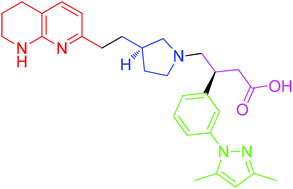
3-(3-(3,5-Dimethyl-1H-pyrazol-1-yl)phenyl)-4-((R)-3-(2-(5,6,7,8-tetrahydro-1,8-
naphthyridin-2-yl)ethyl)pyrrolidin-1-yl)butanoic acid (1a) FREE FORM
naphthyridin-2-yl)ethyl)pyrrolidin-1-yl)butanoic acid (1a) FREE FORM
off-white solid: LCMS (System A) RT= 0.86 min,100%,
ES+ve m/z 488 (M+H)+;
[]D20 = + 46 (c 1.00 in EtOH);
Analytical HPLC onChiralpak AD column (250 mm 4.6 mm) eluting with 30% EtOH-heptane (containing 0.1%
isopropylamine), flow-rate = 1 mL/min, detecting at 235 nm, RT=12.5 min, 100% (other
diastereoisomer not present RT=9.6 min);
isopropylamine), flow-rate = 1 mL/min, detecting at 235 nm, RT=12.5 min, 100% (other
diastereoisomer not present RT=9.6 min);
1H NMR δ (CDCl3; 600 MHz) 7.42 – 7.37 (m,1H), 7.31 (d, J=1.5 Hz, 1H), 7.29 (d, J=0.9 Hz, 1H), 7.23 (d, J=7.7 Hz, 1H), 7.21 (d, J=7.3Hz, 1H), 6.31 (d, J=7.3 Hz, 1H), 5.99 (s, 1H), 3.55 (br. s., 1H), 3.60 – 3.52 (m, 1H), 3.45 (t,
J=5.4 Hz, 2H), 3.27 (t, J=10.6 Hz, 1H), 3.09 (br. s.,1H), 2.93 – 2.86 (m, 1H), 2.82 (d, J=10.1Hz, 1H), 2.86 – 2.75 (m, 2H), 2.72 (t, J=6.2 Hz, 1H), 2.74 – 2.67 (m, 2H), 2.75 (d, J=9.0 Hz,1H), 2.61 – 2.50 (m, 1H), 2.31 (s, 3H), 2.29 (s, 3H), 2.33 – 2.26 (m, 1H), 2.24 – 2.11 (m, 1H),1.94 – 1.86 (m, 2H), 1.94 – 1.84 (m, 1H), 1.78 – 1.66 (m, 1H), 1.65 – 1.51 (m, 1H);
J=5.4 Hz, 2H), 3.27 (t, J=10.6 Hz, 1H), 3.09 (br. s.,1H), 2.93 – 2.86 (m, 1H), 2.82 (d, J=10.1Hz, 1H), 2.86 – 2.75 (m, 2H), 2.72 (t, J=6.2 Hz, 1H), 2.74 – 2.67 (m, 2H), 2.75 (d, J=9.0 Hz,1H), 2.61 – 2.50 (m, 1H), 2.31 (s, 3H), 2.29 (s, 3H), 2.33 – 2.26 (m, 1H), 2.24 – 2.11 (m, 1H),1.94 – 1.86 (m, 2H), 1.94 – 1.84 (m, 1H), 1.78 – 1.66 (m, 1H), 1.65 – 1.51 (m, 1H);
13CNMR δ (CDCl3, 151 MHz) 177.7, 153.6, 150.6, 149.0, 144.4, 140.3, 139.6, 139.3, 129.4,
126.2, 123.7, 123.2, 117.4, 109.7, 107.0, 63.3, 56.7 , 54.5, 44.1, 40.9, 40.0, 36.9, 35.5, 32.8,
30.3, 25.8, 19.9, 13.5, 12.5;
126.2, 123.7, 123.2, 117.4, 109.7, 107.0, 63.3, 56.7 , 54.5, 44.1, 40.9, 40.0, 36.9, 35.5, 32.8,
30.3, 25.8, 19.9, 13.5, 12.5;
νmax (neat) 3380, 1670, 1588, 1384, 797, 704 cm–1;
HRMS (ESI)calcd for C29H38N5O2 (M+H)+ 488.3020, found 488.3030.
3-(3-(3,5-Dimethyl-1H-pyrazol-1-yl)phenyl)-4-((R)-3-(2-(5,6,7,8-tetrahydro-1,8- naphthyridin-2-yl)ethyl)pyrrolidin-1-yl)butanoic acid, hydrochloride salt (1a.HCl).
1a.HCl as a white solid: mp 197–202°C; LCMS Acquity UPLC BEH C18 column (100 mm × 2.1 mm i.d. 1.7 μm packing diameter) at 50ºC eluting with 0.1% v/v solution of TFA in water (solvent A), and 0.1% v/v solution of TFA in acetonitrile (solvent B), using the following elution gradient 0.0 – 8.5 min 3 – 100% B, 8.5 – 9.0 min 100% B, 9.0 – 9.5 min 5%B, 9.5 – 10 min 3% B, at a flow-rate 0.8 mL/min, detecting between 210 nm to 350 nm: RT=2.79 min, 98.9%,
ES+ve m/z 488 (M+H)+ ;
[]D 20 = –22 (c 1.23 in EtOH);
1H NMR (600 MHz, DMSO-d6) δ 12.01 (br s, 1H), 7.48–7 .43 (m, 2H), 7.39–7.34 (m, 2H), 7.15 (d, J=7.3 Hz, 1H), 6.90 (br s, 1H), 6.32 (d, J=7.3 Hz, 1H), 6.07 (s, 1H), 3.57 (quin, J=7.15 Hz, 1H), 3.44 (dd, J=7.4, 12.75 Hz, 1H), 3.30–3.23 (m, 4H), 3.18– 3.10 (m, 1H), 3.09–3.03 (m, 1H), 2.99 (dd, J=5.7, 16.3 Hz, 1H), 2.82 (t, J=9.35 Hz, 1H), 2.62 (t, J=6.05 Hz, 2H), 2.62–2.57 (m, 1H), 2.52–2.39 (m, 2H), 2.30 (s, 3H), 2.18 (s, 3H), 2.24– 2.16 (m, 1H), 2.08–1.99 (m, 1H), 1.75 (quin, J=6.0 Hz, 2H), 1.72–1.61 (m, 2H), 1.54 (qd, J=8.2, 12.7 Hz, 1H);
13C NMR (DMSO-d6 ,151MHz) 172.7, 154.7, 154.3, 147.7, 142.3, 139.7, 139.2, 137.2, 129.2, 126.4, 123.5, 122.8, 114.0, 109.9, 107.1, 59.5, 58.2, 53.7, 40.5, 39.3, 38.6, 36.0, 34.1, 32.8, 29.2, 25.6, 20.5, 13.2, 12.1;
νmax (neat) 3369, 1650, 1366, 801 cm–1 ;
HRMS (ESI) calcd for C29H38N5O2 (M+H)+ 488.3020, found 488.3012.


REFERENCES
| MacDonald, S.; Pritchard, J.; Anderson, N. Discovery of a small molecule alphavbeta6 inhibitor for idiopathic pulmonary fibrosis 253rd Am Chem Soc (ACS) Natl Meet (April 2-6, San Francisco) 2017, Abst MEDI 362 |
///////////////GSK 3008348, phase 1, idiopathic pulmonary fibrosis, GSK, Niall Andrew ANDERSON, Brendan John FALLON, John Martin Pritchard, Integrin alphaV antagonists
Next talk in #MEDI 1st time disclosures is Simon MacDonald of @GSK on a treatment for idiopathic pulmonary fibrosis
AZD 9567
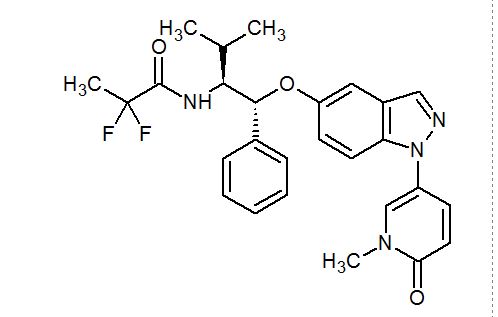
AZD 9567
CAS 1893415-00-3
1893415-64-9 as MONOHYDRATE
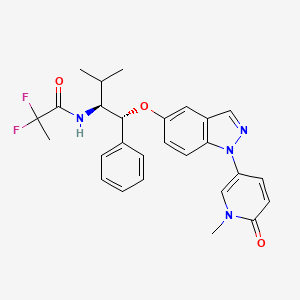
2,2-Difluoro-N-[(1R,2S)-3-methyl-1-[[1-(1-methyl-6-oxo-1,6-dihydropyridin-3-yl)-1H-indazol-5-yl]oxy]-1-phenylbutan-2-yl]propanamide
Propanamide, N-[(1S)-1-[(R)-[[1-(1,6-dihydro-1-methyl-6-oxo-3-pyridinyl)-1H-indazol-5-yl]oxy]phenylmethyl]-2-methylpropyl]-2,2-difluoro-
2,2-difluoro-N-[(1R,2S)-3-methyl-1-[1-(1-methyl-6-oxopyridin-3-yl)indazol-5-yl]oxy-1-phenylbutan-2-yl]propanamide
2,2-difluoro- V-[(lR,25)-3-methyl-l-{[l-(l-methyl-6-oxo-l,6-dihydropyridin-3-yl)-lH-indazol-5-yl]oxy}-l-phenylbutan-2-yl]propanamide
MF C27 H28 F2 N4 O3, MF 494.533
AstraZeneca INNOVATOR
AZD-9567, a glucocorticoid receptor modulator, is in early clinical development at AstraZeneca in healthy male volunteers.
Phase I Rheumatoid arthritis
- Originator AstraZeneca
- Class Antirheumatics
- Mechanism of Action Glucocorticoid receptor modulators
-
- 01 Sep 2016 AstraZeneca completes a phase I trial (In volunteers) in Germany (NCT02512575)
- 24 May 2016 Phase-I clinical trials in Rheumatoid arthritis (In volunteers) in United Kingdom (PO) (NCT02760316)
- 24 May 2016 AstraZeneca initiates a phase I trial in Rheumatoid arthritis (In volunteers) in Germany (PO) (NCT02760316)
| Inventors | Lena Elisabeth RIPA, Karolina Lawitz, Matti Juhani Lepistö, Martin Hemmerling, Karl Edman, Antonio Llinas |
| Applicant | Astrazeneca |

Macclesfield AstraZeneca site in Cheshire

Glucocorticoids (GCs) have been used for decades to treat acute and chronic inflammatory and immune conditions, including rheumatoid arthritis, asthma, chronic obstructive pulmonary disease (“COPD”), osteoarthritis, rheumatic fever, allergic rhinitis, systemic lupus erythematosus, Crohn’s disease, inflammatory bowel disease, and ulcerative colitis. Examples of GCs include dexamethasone, prednisone, and
prednisolone. Unfortunately, GCs are often associated with severe and sometimes irreversible side effects, such as osteoporosis, hyperglycemia, effects on glucose metabolism (diabetes mellitus). skin thinning, hypertension, glaucoma, muscle atrophy. Cushing’s syndrome, fluid homeostasis, and psychosis (depression ). These side effects can particularly limit the use of GCs in a chronic setting. Thus, a need continues to exist for alternative therapies that possess the beneficial effects of GCs, but with a reduced likel ihood of side effects.
GCs form a complex with the GC receptor ( GR ) to regulate gene transcription. The GC-GR complex translocates to the cell nucleus, and then binds to GC response elements (GREs) in the promoter regions of various genes. The resulting GC-GR- GRE complex, in turn, activates or inhibits transcription of proximally located genes. The GC-GR complex also (or alternatively) may negatively regulate gene transcription by a process that does not involve DNA binding. In this process, termed transrepression, the GC-GR complex enters the nucleus and directly interacts (via protein-protein interaction) with other transcription factors, repressing their ability to induce gene transcription and thus protein expression.
Some of the side effects of GCs are believed to be the result of cross-reactivity with other steroid receptors (e.g., progesterone, androgen, mineralocorticoid, and estrogen receptors), which have somewhat homologous ligand binding domains; and/or the inability to selectively modulate gene expression and downstream signaling. Consequently, it is believed that an efficacious selective GR modulator (SGRM), which binds to GR with greater affinity relative to other steroid hormone receptors, would provide an alternative therapy to address the unmet need for a therapy that possesses the beneficial, effects of GCs, while, at the same time, having fewer side effects.
A range of compounds have been reported to have SGRM activity. See, e.g., WO2007/0467747, WO2007/114763, WO2008/006627, WO2008/055709, WO2008/055710, WO2008/052808, WO2008/063116, WO2008/076048,
WO2008/079073, WO2008/098798, WO2009/065503, WO2009/142569,
WO2009/142571, WO2010/009814, WO2013/001294, and EP2072509. Still, there continues to be a need for new SGRMs that exhibit, for example, an improved potency, efficacy, effectiveness in steroid-insensitive patients, selectivity, solubility allowing for oral administration, pharmacokinetic profile allowing for a desirable dosing regimen, stability on the shelf {e.g., hydro lytic, thermal, chemical, or photochemical stability), crystallinity, tolerability for a range of patients, side effect profile and/or safety profile.
PATENT
Scheme 1 below illustrates a general protocol for making compounds described in this specification, using either an Ullman route or an aziridine route.
Scheme 1

In Scheme 1, Ar is 
[182] The amino alcohol reagent used in Scheme 1 may be made using the below Scheme 2.
Scheme 2

The Grignard reagent (ArMgBr) used in Scheme 2 can be obtained commercially, or, if not, can generally be prepared from the corresponding aryl bromide and Mg and/or iPrMgCl using published methods.
[183] The iodo and hydroxy pyridone indazole reagents used in Scheme 1 may be made using the below Scheme 3A or 3B, respectively.
Scheme 3A


[184] Scheme 4 below provides an alternative protocol for making compounds described in this specification.
Scheme 4

Example 1. Preparation of 2,2-difluoro- V-[(lR,2S)-3-methyl-l-{[l-(l-methyl-6-oxo-l,6-dihydropyridin-3-yl)-lH-indazol-5-yl]oxy}-l-phenylbutan-2-yl]propanamide.

[199] Step A. Preparation of 5-[5-[(te^butyldimethylsilyl)oxy]-lH-indazol-l-yl]-l-methyl-l,2-dihydropyridin-2-one.

Into a 2 L 4-necked, round-bottom flask, purged and maintained with an inert atmosphere of N2, was placed a solution of 5-[(tert-butyldimethylsilyl)oxy]-lH-indazole (805 g, 3.2 mol) in toluene (8 L), 5 -iodo-1 -methyl- 1 ,2-dihydropyridin-2-one (800 g, 3.4 mol) and
K3PO4 (1.2 kg, 5.8 mol). Cyclohexane-l,2-diamine (63 g, 0.5 mol) was added followed by the addition of Cul (1.3 g, 6.8 mmol) in several batches. The resulting solution was stirred overnight at 102°C. The resulting mixture was concentrated under vacuum to yield 3.0 kg of the title compound as a crude black solid. LC/MS: m/z 356 [M+H]+.
[200] Step B. Preparation of 5-(5-hydroxy-lH-indazol-l-yl)-l-methylpyridin-2(lH)-one.

Into a 2 L 4-necked, round-bottom flask was placed 5-[5-[(fert-butyldimethylsilyl)oxy]-lH-indazol-l-yl]-l-methyl-l,2-dihydropyridin-2-one (3.0 kg, crude) and a solution of HCl (2 L, 24 mol, 36%) in water (2 L) and MeOH (5 L). The resulting solution was stirred for 1 hr at 40°C and then evaporated to dryness. The resulting solid was washed with water (4 x 5 L) and ethyl acetate (2 x 0.5 L) to afford 480 g (61%, two steps) of the title product as a brown solid. LC/MS: m/z 242 [M+H]+. 1HNMR (300 MHz, DMSO-d6): δ 3.52 (3H, s),6.61 (lH,m),7.06 (2H,m),7.54 (lH,m), 7.77 (lH,m), 8.19 (2H, m) 9.35 (lH,s).
[201] Ste C. Preparation of tert-butyl((lR,25)-l-hydroxy-3-methyl-l-phenylbutan-2-yl)carbamate.

(S)-tert-butyl 3 -methyl- l-oxo-l-phenylbutan-2-ylcarbamate (1.0 kg, 3.5 mol) was dissolved in toluene (4 L). Afterward, 2-propanol (2 L) was added, followed by triisopropoxyaluminum (0.145 L, 0.73 mol). The reaction mixture was heated at 54-58°C for 1 hr under reduced pressure (300-350 mbar) to start azeothropic distillation. After the collection of 0.75 L condensate, 2-propanol (2 L) was added, and the reaction mixture was stirred overnight at reduced pressure to afford 4 L condensate in total. Toluene (3 L) was added at 20°C, followed by 2M HC1 (2 L) over 15 min to keep the temperature below 28°C. The layers were separated (pH of aqueous phase 0-1) and the organic layer was washed successively with water (3 L), 4% NaHCCte (2 L) and water (250 mL). The volume of the organic layer was reduced from 6 L at 50°C and 70 mbar to 2.5 L. The resulting mixture was heated to 50°C and heptane (6.5 L) was added at 47-53°C to maintain the material in solution. The temperature of the mixture was slowly decreased to 20°C, seeded with the crystals of the title compound at 37°C (seed crystals were prepared in an earlier batch made by the same method and then evaporating the reaction mixture to dryness, slurring the residue in heptane, and isolating the crystals by filtration), and allowed to stand overnight. The product was filtered off, washed with heptane (2 x 1 L) and dried under vacuum to afford 806 g (81%) of the title compound as a white solid. 1HNMR (500 MHz, DMSO-d6): δ 0.81 (dd, 6H), 1.16 (s, 8H), 2.19 (m, 1H), 3.51 (m, 1H), 4.32 (d, 1H), 5.26 (s, 1H), 6.30 (d, 1H), 7.13 – 7.2 (m, 1H), 7.24 (t, 2H), 7.3 – 7.36 (m, 3H).
[202] Step D. Preparation of (lR,2S)-2-amino-3-methyl-l-phenylbutan-l-ol hydrochloride salt.

To a solution of HC1 in propan-2-ol (5-6 N, 3.1 L, 16 mol) at 20°C was added tert-butyl((li?,25)-l-hydroxy-3-methyl-l-phenylbutan-2-yl)carbamate (605 g, 2.2 mol) in portions over 70 min followed by the addition of MTBE (2 L) over 30 min. The reaction mixture was cooled to 5°C and stirred for 18 hr. The product was isolated by filtration and dried to afford 286 g of the title compound as an HC1 salt (61% yield). The mother liquor was concentrated to 300 mL. MTBE (300 mL) was then added, and the resulting precipitation was isolated by filtration to afford additional 84 g of the title compound as a HC1 salt (18% yield). Total 370 g (79%). 1HNMR (400 MHz, DMSO-d6): δ 0.91 (dd, 6H), 1.61 – 1.81 (m, 1H), 3.11 (s, 1H), 4.99 (s, 1H), 6.08 (d, 1H), 7.30 (t, 1H), 7.40 (dt, 4H), 7.97 (s, 2H).
[203] Step E. Preparation of (2S,35)-2-isopropyl-l-(4-nitrophenylsulfonyl)-3-phenylaziridine.

(li?,25)-2-Amino-3-methyl-l-phenylbutan-l-ol hydrochloride (430 g, 2.0 mol) was mixed with DCM (5 L) at 20°C. 4-Nitrobenzenesulfonyl chloride (460 g, 2.0 mol) was then added over 5 min. Afterward, the mixture was cooled to -27°C. Triethylamine (1.0 kg, 10 mol) was slowly added while maintaining the temperature at -18°C. The reaction mixture was cooled to -30°C, and methanesulfonyl chloride (460 g, 4.0 mol) was added slowly while maintaining the temperature at -25 °C. The reaction mixture was then stirred at 0°C for 16 hr before adding triethylamine (40 mL, 0.3 mol; 20 mL ,0.14 mol and 10 mL, 0.074 mol) w at 0°C in portions over 4 hr. Water (5 L) was subsequently added at 20°C, and the resulting layers were separated. The organic layer was washed with water (5 L) and the volume reduced to 1 L under vacuum. MTBE (1.5 L) was added, and the mixture was stirred on a rotavap at 20°C over night and filtered to afford 500 g (70%) of the title product as a solid. 1HNMR (400 MHz, CDCls): δ 1.12 (d, 3H), 1.25 (d, 3H), 2.23 (ddt, 1H), 2.89 (dd, 1H), 3.84 (d, 1H), 7.08 – 7.2 (m, 1H), 7.22 – 7.35 (m, 4H), 8.01 – 8.13 (m, 2H), 8.22 – 8.35 (m, 2H)
[204] Step F. Preparation of V-((lR,2S)-3-methyl-l-(l-(l-methyl-6-oxo-l,6-dihydropyridin-3-yl)-lH-indazol-5-yloxy)-l-phenylbutan-2-yl)-4-nitrobenzenesulfonamide.

[205] (25′,35)-2-Isopropyl-l-(4-nitrophenylsulfonyl)-3-phenylaziridine (490 g, 1.3 mol) was mixed with 5-(5-hydroxy-lH-indazol-l-yl)-l-methylpyridin-2(lH)-one (360 g, 1.4 mol) in acetonitrile (5 L) at 20°C. Cesium carbonate (850 g, 2.6 mol) was added in portions over 5 min. The reaction mixture was then stirred at 50°C overnight. Water (5 L) was added at 20°C, and the resulting mixture was extracted with 2-methyltetrahydrofuran (5L and 2.5 L). The combined organic layer was washed successively with 0.5 M HC1 (5 L), water (3 x 5L) and brine (5L). The remaining organic layer was concentrated to a thick oil, and then MTBE (2 L) was added. The resulting precipitate was filtered to afford 780 g (purity 71% w/w) of the crude title product as a yellow solid, which was used in the next step without further purification. 1HNMR (400 MHz, DMSO-d6): δ 0.93 (dd, 6H), 2.01 -2.19 (m, 1H), 3.50 (s, 3H), 3.74 (s, 1H), 5.00 (d, 1H), 6.54 (d, 1H), 6.78 (d, 1H), 6.95 -7.15 (m, 4H), 7.23 (d, 2H), 7.49 (d, 1H), 7.69 (dd, 1H), 7.74 (d, 2H), 8.00 (s, 1H), 8.08 (d, 2H), 8.13 (d, 2H).
[206] Step G. Preparation of 2,2-difluoro- V-[(lR,25)-3-methyl-l-{[l-(l-methyl-6-oxo-l,6-dihydropyridin-3-yl)-lH-indazol-5-yl]oxy}-l-phenylbutan-2-yl]propanamide.

[207] N-((lR,2S)-3-Methyl- 1 -(1 -(1 -methyl-6-oxo- 1 ,6-dihydropyridin-3-yl)- \H-indazol-5-yloxy)-l-phenylbutan-2-yl)-4-nitrobenzenesulfonamide (780 g, 71%w/w) was mixed with DMF (4 L). DBU (860 g, 5.6 mol) was then added at 20°C over 10 min. 2-Mercaptoacetic acid (170 g, 1.9 mol) was added slowly over 30 min, keeping the temperature at 20°C. After 1 hr, ethyl 2,2-difluoropropanoate (635 g, 4.60 mol) was added over 10 min at 20°C. The reaction mixture was stirred for 18 hr. Subsequently, additional ethyl 2,2-difluoropropanoate (254 g, 1.8 mol) was added, and the reaction mixture was stirred for an additional 4 hr at 20°C. Water (5 L) was then slowly added over 40 min, maintaining the temperature at 20°C. The water layer was extracted with isopropyl acetate (4 L and 2 x 2 L). The combined organic layer was washed with 0.5M HC1 (4 L) and brine (2 L). The organic layer was then combined with the organic layer from a parallel reaction starting from 96 g of N-((li?,25)-3-methyl-l-((l-(l-methyl-6-oxo-l,6-dihydropyridin-3-yl)- lH-indazol-5-yl)oxy)- 1 -phenylbutan-2-yl)-4-nitrobenzenesulfonamide, and concentrated to approximate 1.5 L. The resulting brown solution was filtered. The filter was washed twice with isopropyl acetate (2 x 0.5 L). The filtrate was evaporated until a solid formed. The solid was then co evaporated with 99.5% ethanol (1 L), affording 493 g (77%, two steps) of an amorphous solid.
[208] The solid (464 g, 0.94 mol) was dissolved in ethanol/water 2: 1 (3.7 L) at 50°C. The reaction mixture was then seeded with crystals () of the title compound (0.5 g) at 47°C, and a slight opaque mixture was formed. The mixture was held at that temperature for 1 hr. Afterward, the temperature was decreased to 20°C over 7 hr, and kept at 20°C for 40 hr. The solid was filtrated off, washed with cold (5°C) ethanol/water 1 :2 (0.8 L), and dried in vacuum at 37°C overnight to afford 356 g (0.70 mol, 74%, 99.9 % ee) of the title compound as a monohydrate. LC/MS: m/z 495 [M+H]+. ‘HNMR (600 MHz, DMSO-d6) δ 0.91 (dd, 6H), 1.38 (t, 3H), 2.42 (m, 1H), 3.50 (s, 3H), 4.21 (m, 1H), 5.29 (d, 1H), 6.53 (d, 1H), 7.09 (d, 1H), 7.13 (dd, 1H), 7.22 (t, 1H), 7.29 (t, 2H), 7.47 (d, 2H), 7.56 (d, 1H), 7.70 (dd, 1H), 8.13 (d, 1H), 8.16 (d, 1H), 8.27 (d, 1H).
[209] The seed crystals may be prepared from amorphous compound prepared according to Example 2 using 2,2-difluoropropanoic acid, followed by purification on HPLC. The compound (401 mg) was weighed into a glass vial. Ethanol (0.4 mL) was added, and the vial was shaken and heated to 40°C to afford a clear, slightly yellow solution. Ethanol/Water (0.4 mL, 50/50% vol/vol) was added. Crystallization started to
occur within 5 min, and, after 10 min, a white thick suspension formed. The crystals were collected by filtration
/////////////AZD 9567, AstraZeneca, lucocorticoid receptor modulator, Rheumatoid arthritis, phase 1, Lena Elisabeth RIPA, Karolina Lawitz, Matti Juhani Lepistö, Martin Hemmerling, Karl Edman, Antonio Llinas
3rd speaker this afternoon in 1st time disclosures is Lena Ripa of @AstraZeneca on a glucocorticoid receptor modulator #ACSSanFran
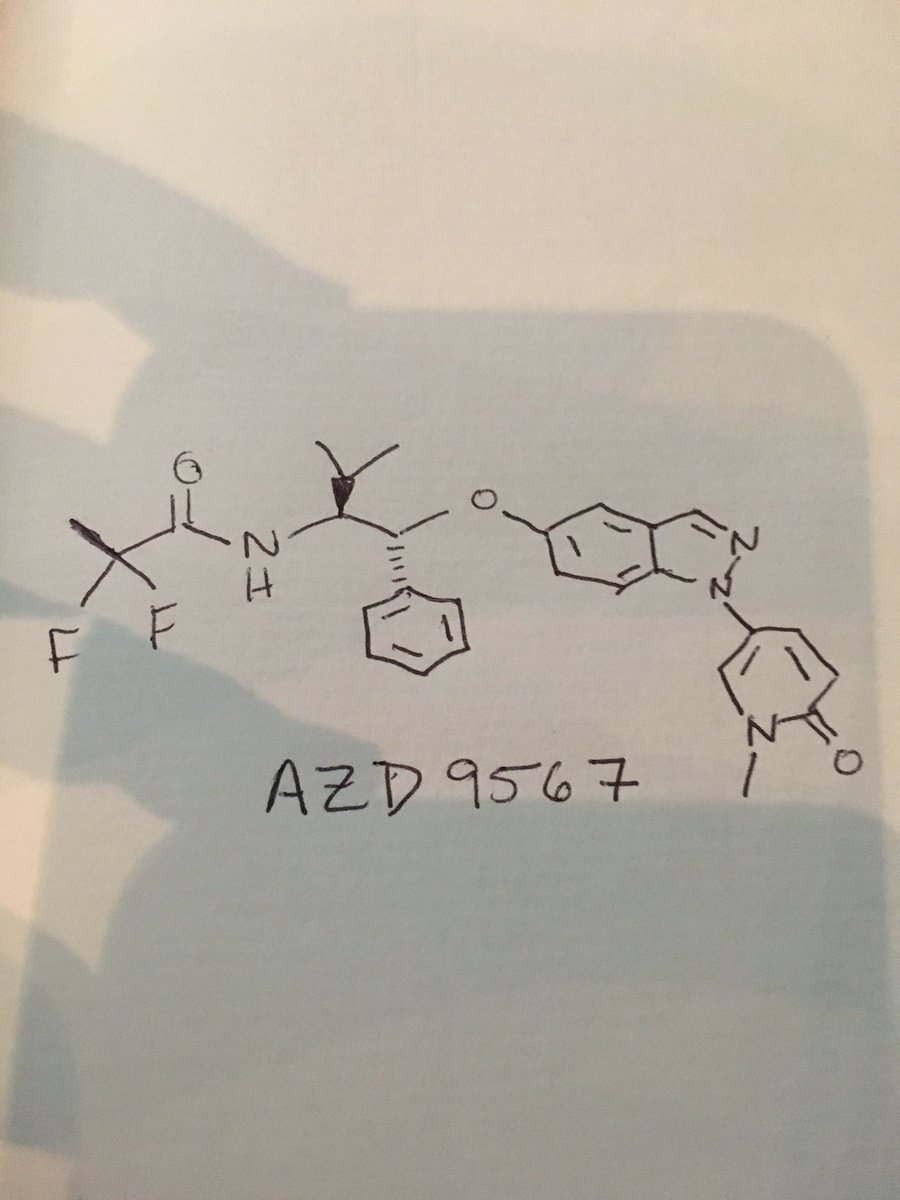
CC(F)(F)C(=O)N[C@@H](C(C)C)[C@H](Oc1cc2cnn(c2cc1)C=3C=CC(=O)N(C)C=3)c4ccccc4
PF 06648671


PF-06648671, PF 06648671, PF-6648671
CAS 1587727-31-8
C25 H23 Cl F4 N4 O3
538.92
2H-Pyrido[1,2-a]pyrazine-1,6-dione, 2-[(1S)-1-[(2S,5R)-5-[4-chloro-5-fluoro-2-(trifluoromethyl)phenyl]tetrahydro-2-furanyl]ethyl]-3,4-dihydro-7-(4-methyl-1H-imidazol-1-yl)-
Phase I Alzheimer’s disease
Originator Pfizer
- 01 Nov 2016 Pfizer completes a phase I pharmacokinetics trial in Healthy volunteers in USA (PO) (NCT02883114)
- 01 Oct 2016 Pfizer completes a phase I trial in Healthy volunteers in Belgium (NCT02440100)
- 01 Sep 2016 Pfizer initiates a phase I pharmacokinetics trial in Healthy volunteers in USA (PO) (NCT02883114)
SYNTHESIS

FIRST KEY INTERMEDIATE
CONTD………….

SECOND KEY INTERMEDIATE
contd……………..

Dementia results from a wide variety of distinctive pathological processes. The most common pathological processes causing dementia are Alzheimer’s disease (AD), cerebral amyloid angiopathy (CM) and prion-mediated diseases (see, e.g., Haan et al., Clin. Neurol. Neurosurg. 1990, 92(4):305-310; Glenner et al., J. Neurol. Sci. 1989, 94:1 -28). AD affects nearly half of all people past the age of 85, the most rapidly growing portion of the United States population. As such, the number of AD patients in the United States is expected to increase from about 4 million to about 14 million by 2050.
The present invention relates to a group of γ-secretase modulators, useful for the treatment of neurodegenerative and/or neurological disorders such as Alzheimer’s disease and Down’s Syndrome, (see Ann. Rep. Med. Chem. 2007, Olsen et al., 42: 27-47).
PATENT
Preparations
Preparation P1 : 5-(4-Methyl-1 H-imidazol-1 -yl)-6-oxo-1 ,6-dihvdropyridine-2-carboxylic

Step 1 . Synthesis of methyl 6-methoxy-5-(4-methyl-1 /-/-imidazol-1 -yl)pyridine-2- carboxylate (C2).
To a solution of the known 6-bromo-2-methoxy-3-(4-methyl-1 /-/-imidazol-1 – yl)pyridine (C1 , T. Kimura et al., U.S. Pat. Appl. Publ. 2009, US 20090062529 A1 ) (44.2 g, 165 mmol) in methanol (165 ml_) was added triethylamine (46 ml_, 330 mmol) and [1 ,1 ‘-bis(diphenylphosphino)ferrocene]dichloropalladium(ll), dichloromethane complex (6.7 g, 8.2 mmol). The mixture was degassed several times with nitrogen. The reaction was heated to 70 °C under CO atmosphere (3 bar) in a Parr apparatus. After 30 minutes, the pressure dropped to 0.5 bar; additional CO was added until the pressure stayed constant for a period of 30 minutes. The mixture was allowed to cool to room temperature and filtered through a pad of Celite. The Celite pad was washed twice with methanol and the combined filtrates were concentrated under reduced pressure. The residue (88 g) was dissolved in ethyl acetate (1 L) and water (700 mL); the organic layer was washed with water (200 mL), and the aqueous layer was extracted with ethyl acetate (500 mL). The combined organic layers were dried over magnesium sulfate, filtered and concentrated to provide the title compound. Yield: 42.6 g, quantitative.
Step 2. Synthesis of 5-(4-methyl-1 H-imidazol-1 -yl)-6-oxo-1 ,6-dihydropyridine-2- carboxylic acid, hydrobromide salt (P1 ).
A solution of C2 (3.82 g, 15.9 mmol) in acetic acid (30 mL) and aqueous hydrobromic acid (48%, 30 mL) was heated at reflux for 4 hours. The reaction was allowed to cool to room temperature, and then chilled in an ice bath; the resulting precipitate was collected via filtration and washed with ice water (30 mL).
Recrystallization from ethanol (20 mL) provided the title compound as a light yellow solid. Yield: 3.79 g, 12.6 mmol, 79%. LCMS m/z 220.1 (M+1 ). 1H N MR (400 MHz, DMSO-c/6) δ 12.6 (v br s, 1 H), 9.58-9.60 (m, 1 H), 8.07 (d, J=7.6 Hz, 1 H), 7.88-7.91 (m, 1 H), 7.09 (d, J=7.4 Hz, 1 H), 2.34 (br s, 3H). Preparation P2: 5-(4-Methyl-1 H-imidazol-1 -yl)-6-oxo-1 ,6-dihvdropyridine-2-carboxylic acid, hydrochloride salt (P2)
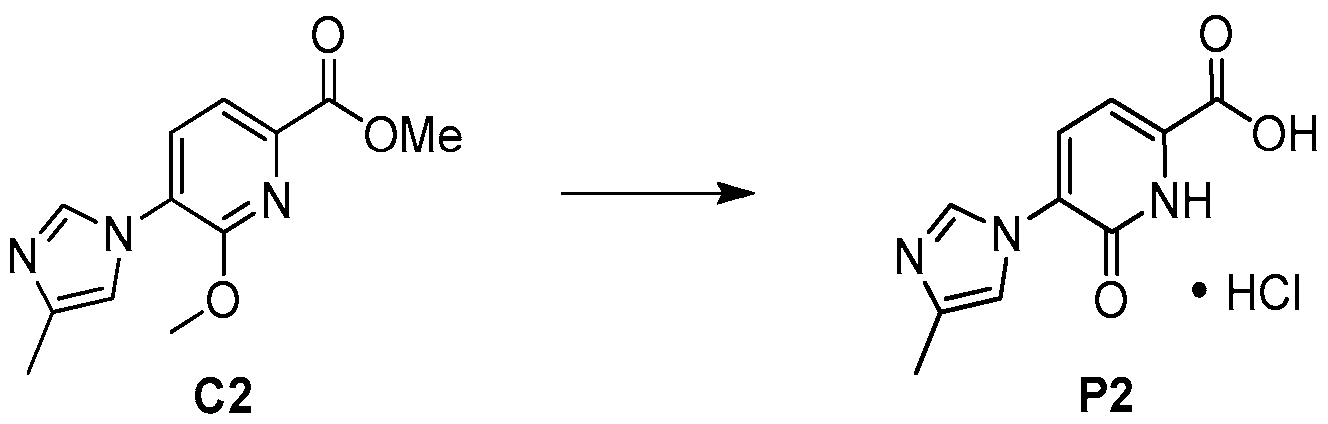
A mixture of C2 (12.8 g, 51 .8 mmol) and 37% hydrochloric acid (25 mL) was heated at reflux for 18 hours. After the reaction mixture had cooled to room
temperature, the solid was collected via filtration; it was stirred with 1 ,4-dioxane (2 x 20 mL) and filtered again, to afford the product as a yellow solid. Yield: 13 g, 51 mmol, 98%. 1H NMR (400 MHz, CD3OD) δ 9.52 (br s, 1 H), 8.07 (d, J=7.5 Hz, 1 H), 7.78 (br s, 1 H), 7.21 (d, J=7.5 Hz, 1 H), 2.44 (s, 3H). Preparation P3: 7-(4-Methyl-1 H-imidazol-1 -yl)-3,4-dihvdropyridor2,1 -ciri ,41oxazine-1 ,6- dione (P3)

Compound P2 (65 g, 250 mmol), 1 ,2-dibromoethane (52.5 g, 280 mmol) and cesium carbonate (124 g, 381 mmol) were combined in A/,/V-dimethylformamide (850 mL) and heated at 90 °C for 6 hours. The reaction mixture was then cooled and filtered through Celite. After concentration of the filtrate in vacuo, the residue was dissolved in dichloromethane (500 mL), washed with saturated aqueous sodium chloride solution (100 mL), washed with water (50 mL), dried over magnesium sulfate, filtered, and concentrated under reduced pressure. The resulting solid was washed with acetonitrile to provide the product. Yield: 46.5 g, 190 mmol, 76%. 1H NMR (400 MHz, CDCI3) δ 8.33 (d, J=1 .4 Hz, 1 H), 7.43 (AB quartet, JAB=7.7 Hz, ΔνΑΒ=33.4 Hz, 2H), 7.15-7.17 (m, 1 H), 4.66-4.70 (m, 2H), 4.38-4.42 (m, 2H), 2.30 (d, J=0.8 Hz, 3H).
//////////PF-06648671, PF 06648671, PF-6648671, PHASE 1
FC(F)(F)c5cc(Cl)c(F)cc5[C@H]1CCC[C@H](O1)[C@H](C)N4CCN3C(=CC=C(n2cc(C)nc2)C3=O)C4=O
First speaker of the PM session is Martin Pettersson from @pfizer talking about a gamma secretase modulator for Alzheimer’s #ACSSanFran
AMG 176
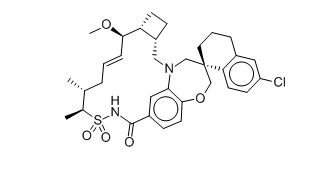

AMG 176
C33 H41 Cl N2 O5 S, 613.21
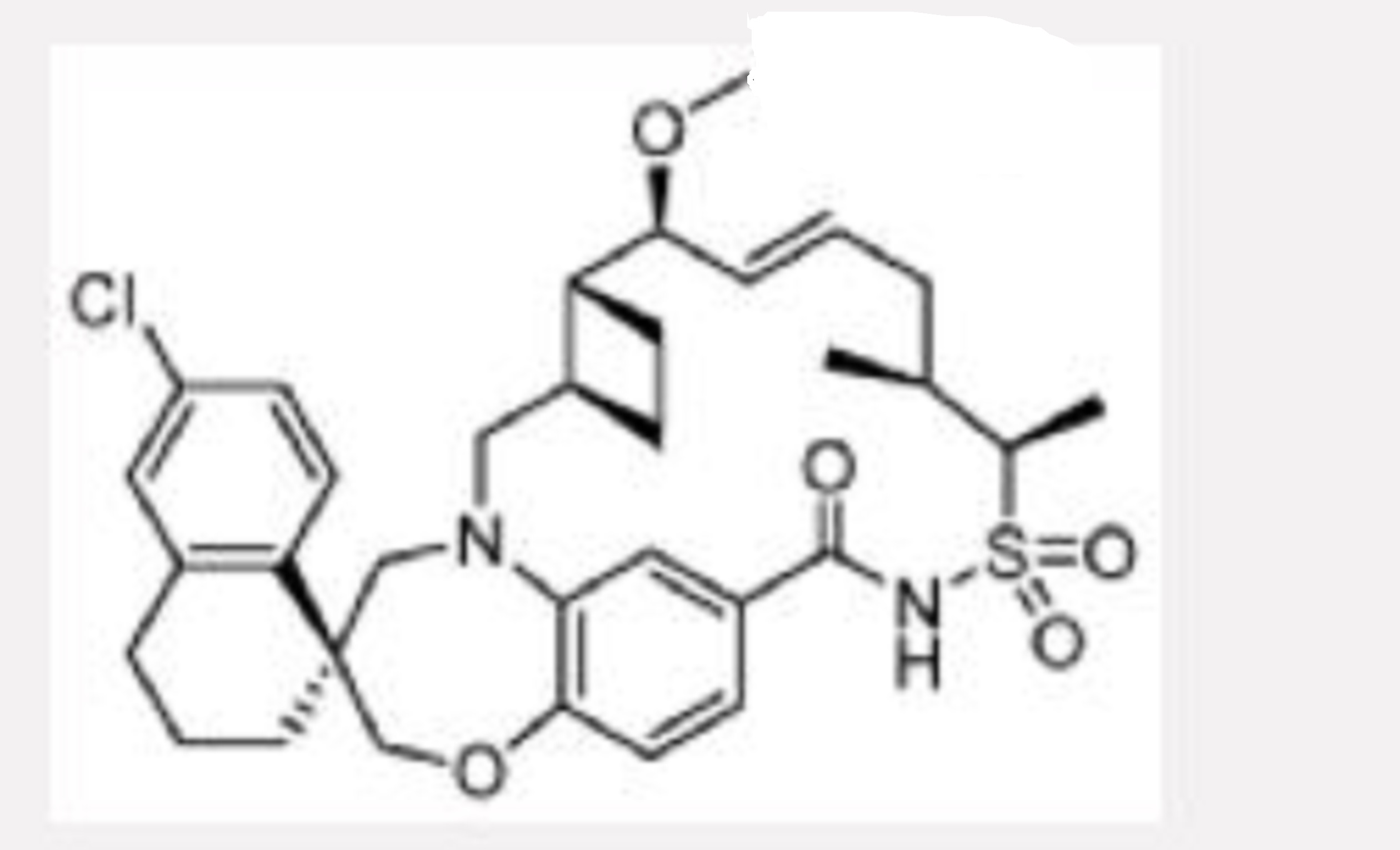
14E/8’E
Spiro[5,7-etheno-1H,11H-cyclobut[i][1,4]oxazepino[3,4-f][1,2,7]thiadiazacyclohexadecine-2(3H),1′(2′H)-naphthalen]-8(9H)-one, 6′-chloro-3′,4′,12,13,16,16a,17,18,18a,19-decahydro-16-methoxy-11,12-dimethyl-, 10,10-dioxide, (1′S,11R,12S,14E,16S,16aR,18aR)-
(1S,3’R,6’R,7’S,8’E,1 l’R,12’R)-6-CHLORO-7′-METHOXY-l 1′-METHYL- 12′-( 1 -METHYL)-3 ,4-DIHYDRO-2H, 15 Ή-SPIRO [NAPHTHALENE- 1 ,22′- [20]OXA[13]THIA[1,14]DIAZATETRACYCLO[14.7.2.03‘6.019‘24]PENTACOS A[8,16,18,24]TETRAEN]-15′-ONE 13 ‘,13 ‘-DIOXIDE
E FORM 1883727-34-1
.
.
.
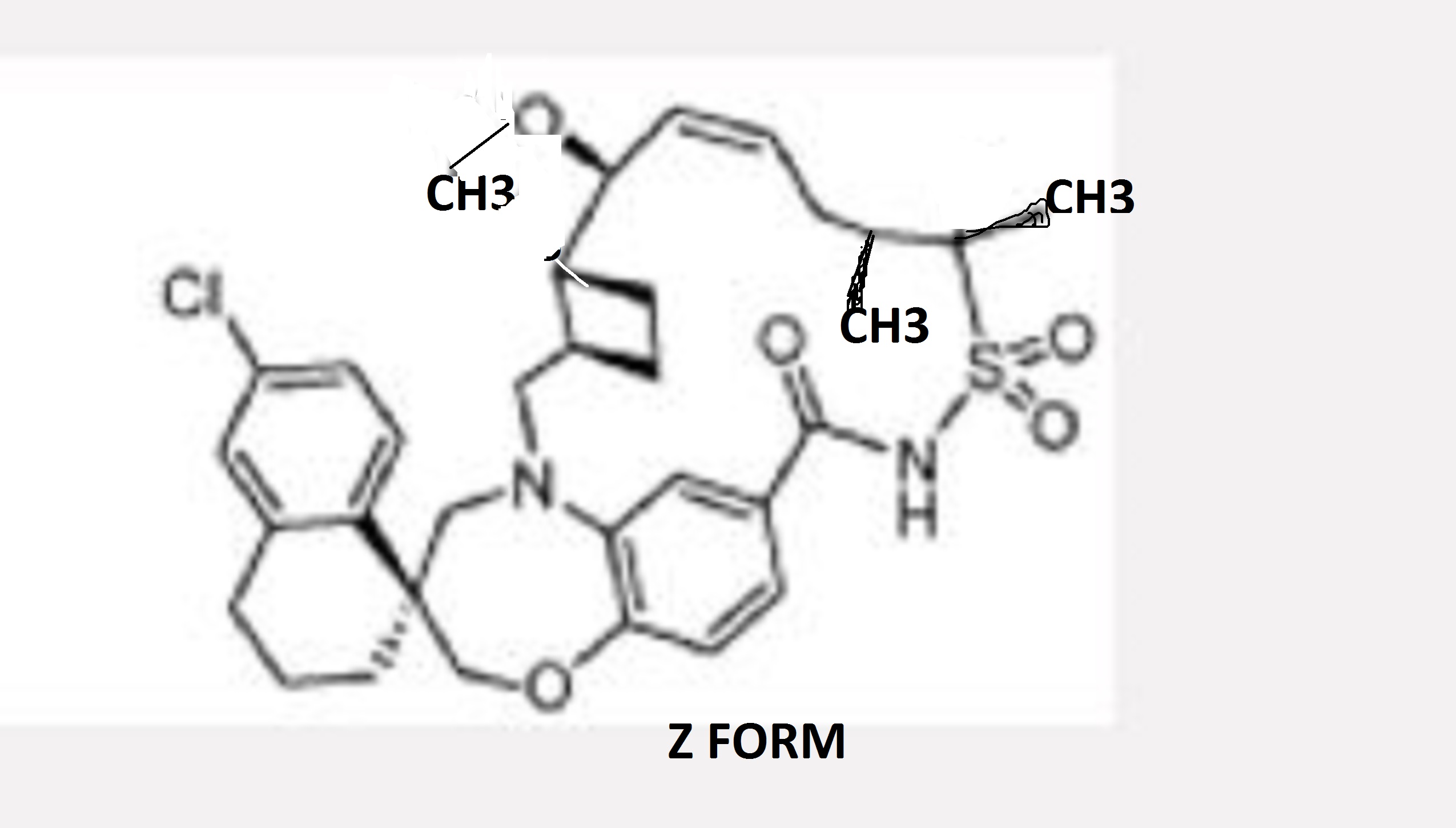
14Z/8’Z
Spiro[5,7-etheno-1H,11H-cyclobut[i][1,4]oxazepino[3,4-f][1,2,7]thiadiazacyclohexadecine-2(3H),1′(2′H)-naphthalen]-8(9H)-one, 6′-chloro-3′,4′,12,13,16,16a,17,18,18a,19-decahydro-16-methoxy-11,12-dimethyl-, 10,10-dioxide, (1′S,11R,12S,14Z,16S,16aR,18aR)-
(1S,3’R,6’R,7’S,8’Z,1 l’R,12’R)-6-CHLORO-7′-METHOXY-l 1′-METHYL- 12′-( 1 -METHYL)-3 ,4-DIHYDRO-2H, 15 Ή-SPIRO [NAPHTHALENE- 1 ,22′- [20]OXA[13]THIA[1,14]DIAZATETRACYCLO[14.7.2.03‘6.019‘24]PENTACOS A[8,16,18,24]TETRAEN]-15′-ONE 13 ‘,13 ‘-DIOXIDE
Z FORM 1883727-35-2
PHASE 1, Amgen, Mcl-1 inhibitor, tumors
- Class Antineoplastics; Small molecules
- Mechanism of Action MCL1 protein inhibitors
- Phase I Multiple myeloma
- 01 Jun 2016 Phase-I clinical trials in Multiple myeloma (Second-line therapy or greater) in USA, Australia (IV) (NCT02675452)
- 12 Feb 2016 Amgen plans a first-in-human phase I trial for Multiple myeloma (Second-line therapy or greater) in USA, Germany and Australia (IV) (NCT02675452)
- 22 Dec 2015 Preclinical trials in Multiple myeloma in USA (IV) before December 2015

Synthesis
1 Kang catalyst used, ie Pyridine, 2,6-bis[(4R)-5,5-dibutyl-4,5-dihydro-4-phenyl-2-oxazolyl]-
2 Martin’s reagent to get CHO group
3 Hydrolysis or Hydrogenolysis of Carboxylic Esters :p-MeC6H4SO3H
4 R:(Me3Si)2NH •Li,
5 Hydrolysis of Acetals CF3SO3H
6 Fe, AcOH CYCLIZATION
7 l-Camphor-SO3H, Na+ •(AcO)3BH-,
8 SOCl2, MeOH ESTERIFICATION
9 OXIDATION

CONTD………..
10 GRIGNARD BuLi, Me(CH2)4Me,
11 Hydrogenolysis of Carboxylic Esters
12 Acylation INVOLVING NITROGEN ATOM
13 CYCLIZATION , Ruthenium, [1,3-bis(2,4,6-trimethylphenyl)-2-imidazolidinylidene]dichloro(phenylmethylene)(tricyclohexylphosphine)-, (SP-5-41)-
14 METHYL IODIDE, Alkylation TO GET AMD 176

AMG 176


One common characteristic of human cancer is overexpression of Mcl-1. Mcl-loverexpression prevents cancer cells from undergoing programmed cell death (apoptosis), allowing the cells to survive despite widespread genetic damage.
Mcl-1 is a member of the Bcl-2 family of proteins. The Bcl-2 family includes pro-apoptotic members (such as BAX and BAK) which, upon activation, form a homo-oligomer in the outer mitochondrial membrane that leads to pore formation and the escape of mitochondrial contents, a step in triggering apoptosis. Antiapoptotic members of the Bcl-2 family (such as Bcl-2, Bcl-XL, and Mcl-1) block the activity of BAX and BAK. Other proteins (such as BID, BIM, BIK, and BAD) exhibit additional regulatory functions.
Research has shown that Mcl- 1 inhibitors can be useful for the treatment of cancers. MCl-1 is overexpressed in numerous cancers. See Beroukhim et al. (2010) Nature 463, 899-90. Cancer cells containing amplifications surrounding the Mcl-1 and Bcl-2-1-1 anti-apoptotic genes depend on the expression of these genes for survival. Beroukhim et al. Mcl- 1 is a relevant target for the re-iniation of apoptosis in numerous cancer cells. See G. Lessene, P. Czabotar and P.
Colman, Nat. Rev. Drug. Discov., 2008, 7, 989-1000; C. Akgul Cell. Mol. Life
Sci. Vol. 66, 2009; and Arthur M. Mandelin II, Richard M. Pope, Expert Opin. Ther. Targets (2007) l l(3):363-373.
New compositions and methods for preparing and formulating Mcl-1 inhibitors would be useful.
PATENT
WO 2016033486
https://www.google.com/patents/WO2016033486A1?cl=ru
GENERAL SYNTHETIC SCHEMES
General Procedure 1

Intermediates III can be prepared using standard chemistry techniques. For example, cyclobutane carbaldehyde II was combined with oxazepine I in an appropriate solvent at a temperature below RT, preferably about 0°C. Sodium cyanoborohydride was added, and the mixture was added to NaOH solution, to provide compound III.
General Procedure 2

Intermediate AA Intermediate EE IV
Intermediates IV can be prepared using standard peptide like chemistry. For example, DMAP was added to carboxylic acid Intermediate AA and Intermediate EE in an appropriate solvent at a temperature below RT, preferably about 0°C, followed by the addition of EDC hydrochloride. The mixture was warmed to ambient temperature, to provide carboxamide IV.
General Procedure 3

EXAMPLE A
Example A intermediates can be prepared using standard chemistry techniques. For example, carboxamide IV was combined with DCM followed by the addition of Hoveyda-Grubbs II. The mixture was cooled to ambient temperature to provide Example A.
General Procedure 4

Intermediate AA Intermediate EE
Intermediates V can be prepared using standard chemistry techniques. For example, Intermediate AA was combined with Intermediate EE in an appropriate solvent followed by the addition of Hoveyda-Grubbs II to provide compound V.
General Procedure 5

Example A intermediates can be prepared using standard chemistry techniques. For example, N,N-dimethylpyridin-4-amine was combined with compound VI in an appropriate solvent at a temperature below RT, preferably about 0°C, followed by the addition of N-(3-dimethylaminopropyl)-N’-ethylcarbodiimide hydrochloride. The resulting mixture warmed to ambient temperature to provide Example A.
General Procedure 6

Example B intermediates can be prepared using standard chemistry techniques. For example, sodium hydride was added to a solution of Example A at a temperature below RT, preferably about 0°C, followed by the addition of Mel. The resulting mixture warmed to ambient temperature to provide Example B.
General Pr

Intermediates such as Example C can be prepared using standard chemistry techniques. For example, Example A and/or B and/or VII and platinum (IV) oxide were combined in an appropriate solvent at ambient temperature to provide Example C.
Compounds of the present invention generally can be prepared combining and further elaborating synthetic intermediates generated from commercially available starting materials. The syntheses of these intermediates are outlined below and further exemplification is found in the specific examples provided.
EXAMPLE 4. (1S,3’R,6’R,7’S,8’E,1 l’S,12’R)-6-CHLORO-7′-METHOXY-11′, 12 ‘-DIMETHYL-3 ,4-DIHYDRO-2H, 15 ‘H-SPIRO [NAPHTHALENE- 1 ,22’-[20]OXA[13]THIA[1,14]DIAZATETRACYCLO[14.7.2.03‘6.019‘24]PENTACOS A[8, 16, 18,24]TETRAEN]-15′-ONE- 13 ‘, 13 ‘-DIOXIDE

To a slurry of (1 S,3’R,6’R,7’S,8’E, 1 l’S, 12’R)-6-chloro-7′-hydroxy-l l’,12′-dimethyl-3,4-dihydro-2h, 15’h-spiro[naphthalene-l,22′- [20]oxa[13]thia[l, 14]diazatetracyclo[14.7.2.03‘6.019‘24]pentacosa[8,16, 18,24]tetra en]-15′-one 13 ‘, 13 ‘-dioxide (Example 2; 32.6 g, 49.1 mmol) (containing 9.8% toluene, starting material was not completely soluble in Me-THF) and Mel (15.2 mL, 245 mmol) in Me-THF (820 mL) was added KHMDS (1.0 M in THF, 167 mL, 167 mmol) dropwise for 30 min while maintaining reaction temperature between – 44°C and – 38°C under N2. After the mixture was stirred at – 44°C for 30 min, the reaction was allowed to warm to rt and stirred for 1.5 h (LC/MS confirmed the reaction was complete). The reaction mixture was cooled to 5°C, quenched (170 mL of sat. aqueous NH4C1 and 170 mL of FLO) while maintaining temperature between 5°C and 14°C, and acidified (340 mL of 10% aqueous citric acid). The organic layer was separated and the aqueous layer was back-extracted with EtOAc (500 mL). The combined organic layers were washed with brine (3 x 500 mL), dried (MgS04), and concentrated under reduced pressure to provide a crude target compound (30.1 g, 49.1 mmol, quantitatively) (purity >98% with no over 1% major impurity from HPLC) as a bright yellow solid. After the same scale reaction was repeated four times, all the crude products (4 x 49.1 mmol = 196 mmol) were dissolved in EtOAc, combined, and concentrated under reduced pressure. Then the combined crude product was recrystallized as follows:
ethanol (800 mL) was added to the crude product and the resulting slurry solution was shaken while heating the solution for 20 min. H20 (250 mL) was added dropwise for 30 min at rt and the slurry was cooled down to 0°C. After the slurry was kept in an ice bath for 4 h, the solid product was filtered through filter paper. The filter cake was rinsed with ice-cold 30% FLO in EtOH (300 mL) and air-dried for 2 days. The product was further dried under high vacuum at 40°C for 4 days to provide the pure target compound (1 15 g, 188 mmol, 96 % yield) as a
white solid. XH NMR (600 MHz, DMSO-i¾) δ 11.91 (s, 1 H), 7.65 (d, J= 8.6 Hz, 1 H), 7.27 (dd, J= 8.5, 2.3 Hz, 1 H), 7.17 (d, J= 2.4 Hz, 1 H), 7.04 (dd, J= 8.2, 2.0 Hz, 1 H), 6.90 (d, J= 8.2 Hz, 1 H), 6.76 (d, J= 1.8 Hz, 1 H), 5.71 (ddd, J= 15.1, 9.7, 3.5 Hz, 1 H), 5.50 (ddd, J= 15.2, 9.2, 1.1 Hz, 1 H), 4.08 (qd, J= 7.2, 7.2, 7.2, 1.5 Hz, 1 H), 4.04 (d, J= 12.3 Hz, 1 H), 3.99 (d, J= 12.3 Hz, 1 H), 3.73 (d, J= 14.9 Hz, 1 H), 3.56 (d, J= 14.1 Hz, 1 H), 3.53 (dd, J= 9.1, 3.3 Hz, 1 H), 3.19 (d, J= 14.1 Hz, 1 H), 3.09 (s, 3 H), 3.03 (dd, J= 15.4, 10.4 Hz, 1 H), 2.79 (dt, J= 17.0, 3.5, 3.5 Hz, 1 H), 2.69 (ddd, J= 17.0, 10.7, 6.3 Hz, 1 H), 2.44-2.36 (m, 1 H), 2.24-2.12 (m, 2 H), 2.09 (ddd, J= 15.5, 9.6, 2.3 Hz, 1 H), 1.97 (dt, J = 13.6, 3.6, 3.6 Hz, 1 H), 1.91-1.80 (m, 4 H), 1.80-1.66 (m, 3 H), 1.38 (td, J= 12.3, 12.3, 3.5 Hz, 1 H), 1.33 (d, J= 7.2 Hz, 3 H), 0.95 (d, J= 6.8 Hz, 3 H); [cc]D (24°C, c = 0.0103 g/mL, DCM) = – 86.07 °; m.p. 222.6 – 226.0°C; FT-IR (KBr): 3230 (b), 2931 (b), 1688 (s), 1598 (s), 1570 (s), 1505 (s), 1435 (s), 1384 (s), 1335 (s), 1307 (s), 1259 (s), 1155 (s), 1113 (s), 877 (s), 736 (s) cm“1; Anal. Calcd. for C33H41CIN2O5S: C, 64.64; H, 6.74; N, 4.57; CI, 5.78; S, 5.23. Found: C, 64.71; H, 6.81; N, 4.65; CI, 5.81; S, 5.11; HRMS (ESI) m/z 613.2493 [M + H]+ (C33H41CIN2O5S requires 613.2503).
The mother liquor was concentrated under reduced pressure and further purification of the residue by flash column chromatography (200 g S1O2, 10% and 10% to 45% and 45% EtO A/Hex w/ 0.3% AcOH, gradient elution) provided additional pure product (3.1 g, 5.1 mmol, 2.6%) as an off-white solid.
EXAMPLE 5. (1S,3’R,6’R,7’S,8’Z,1 l’S,12’R)-6-CHLORO-7′-METHOXY-11 ‘, 12 ‘-DIMETHYL-3 ,4-DIHYDRO-2H, 15 Ή-SPIRO [NAPHTHALENE- 1 ,22’-[20]OXA[13]THIA[1,14]DIAZATETRACYCLO[14.7.2.03‘6.019‘24]PENTACOS A[8, 16, 18,24]TETRAEN]- 15′-ONE 13 ‘, 13’-DIOXIDE

To a solution of (1S,3’R,6’R,7’S,8’Z,1 l’S,12’R)-6-chloro-7′-hydroxy-i r,12′-dimethyl-3,4-dihydro-2h,15’h-spiro[naphthalene-l,22′-[20]oxa[13]thia[l,14]diazatetracyclo[14.7.2.03‘6.019‘24]pentacosa[8,16,18,24]tetra en]-15′-one 13 ‘,13 ‘-dioxide (Example 3; 34 mg; 0.057 mmol) in THF cooled to 0°C was added sodium hydride (60% dispersion in mineral oil; 22.70 mg, 0.567 mmol). The reaction mixture was stirred at 0 °C for 20 min, and then Mel (0.018 mL, 0.284 mmol) was added. The reaction mixture was stirred at ambient temperature for 1 h, then quenched with aqueous NH4CI, and diluted with
EtOAc. The organic layer was dried over MgS04 and concentrated. Purification of the crude material via column chromatography eluting with 10-40 % EtOAc (containing 0.3% AcOH)/heptanes provided (lS,3’R,6’R,7’S,8’Z,l l’S,12’R)-6-chloro-7′-methoxy-l l’,12′-dimethyl-3,4-dihydro-2h,15’h-spiro[naphthalene-l,22′-[20]oxa[13]thia[l,14]diazatetracyclo[14.7.2.03‘6.019‘24]pentacosa[8,16,18,24]tetra en]-15′-one 13 ‘,13 ‘-dioxide (34 mg, 0.054 mmol, 95% yield). ¾ NMR (400MHz, CD2C12) δ 8.29 (s, 1H), 7.71 (d, J=8.4 Hz, 1H), 7.17 (dd, J=2.2, 8.5 Hz, 1H), 7.09 (d, J=2.3 Hz, 1H), 7.01 (dd, J=1.6, 7.8 Hz, 1H), 6.92 (d, J=8.2 Hz, 1H), 6.88 (s, 1H), 5.90 – 5.80 (m, 1H), 5.54 (t, J=10.2 Hz, 1H), 4.14 – 4.04 (m, 3H), 3.87 – 3.79 (m, 2H), 3.73 (d, J=14.7 Hz, 1H), 3.32 (d, J=14.5 Hz, 1H), 3.23 (s, 3H), 3.28 -3.19 (m, 1H), 2.82 – 2.73 (m, 2H), 2.62 (t, J=10.6 Hz, 1H), 2.55 – 2.44 (m, 1H), 2.29 – 2.21 (m, 1H), 2.10 – 1.97 (m, 4H), 1.97 – 1.80 (m, 4H), 1.75 (dd, J=8.9, 18.7 Hz, 1H), 1.48 (d, J=7.4 Hz, 3H), 1.43 (br. s., 1H), 1.08 (d, J=6.5 Hz, 3H). MS (ESI, +ve ion) m/z 613.3 (M+H)+.
//////////////AMG 176, PHASE 1, Amgen, Mcl-1 inhibitor, tumors
Last talk in AM #MEDI 1st time disclosures is from Sean Brown of @Amgen on an Mcl-1 inhibitor to treat tumors #ACSSanFran
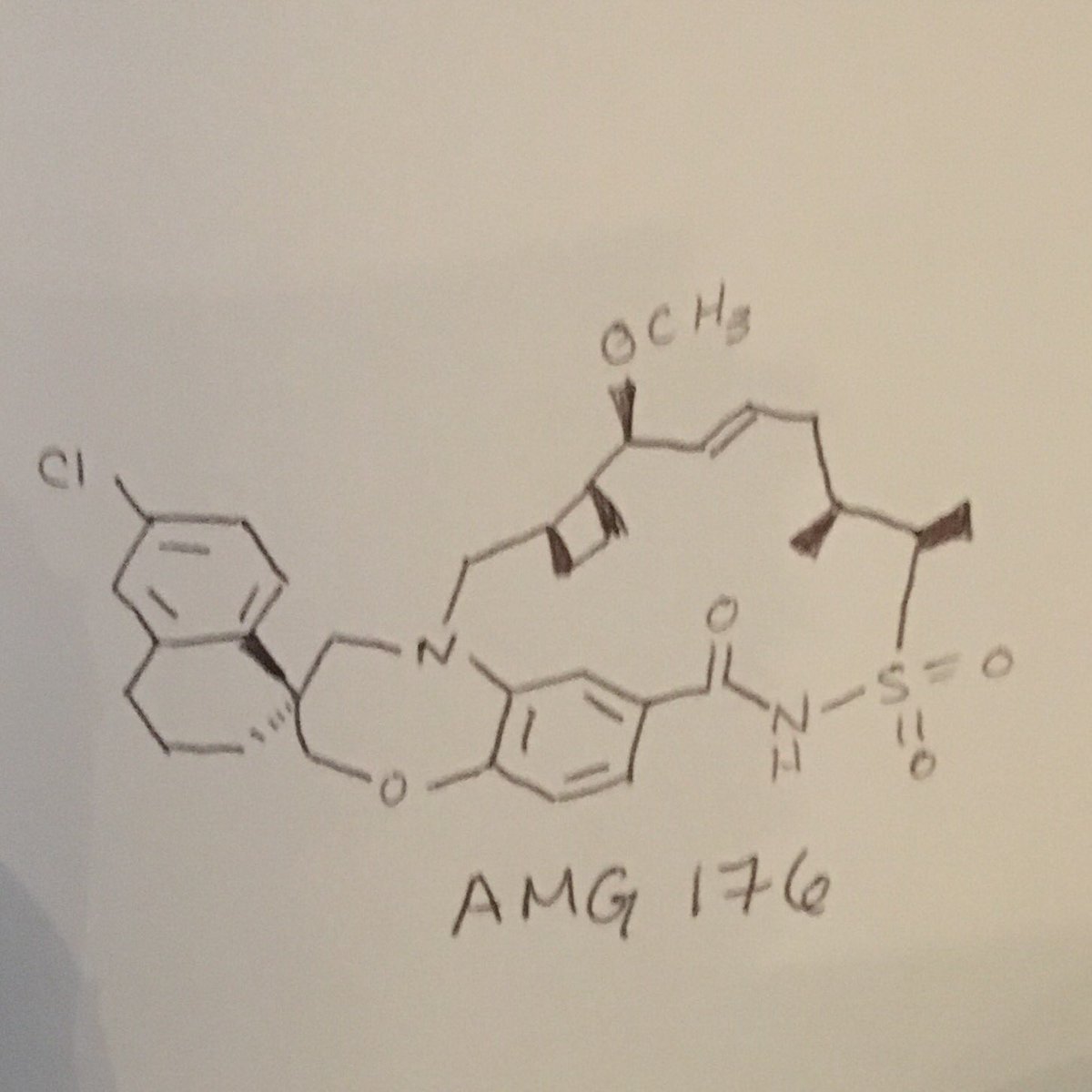
Clc5cc6CCC[C@@]4(CN2C[C@H]1CC[C@H]1[C@H](OC)C=CC[C@@H](C)[C@H](C)S(=O)(=O)NC(=O)c3cc2c(cc3)OC4)c6cc5
FGF 401


FGF 401
NVP-FGF-401
CAS 1708971-55-4
MF C25 H30 N8 O4, MW 506.56
1,8-Naphthyridine-1(2H)-carboxamide, N-[5-cyano-4-[(2-methoxyethyl)amino]-2-pyridinyl]-7-formyl-3,4-dihydro-6-[(4-methyl-2-oxo-1-piperazinyl)methyl]-
N-[5-Cyano-4-[(2-methoxyethyl)amino]-2-pyridinyl]-7-formyl-3,4-dihydro-6-[(4-methyl-2-oxo-1-piperazinyl)methyl]-1,8-naphthyridine-1(2H)-carboxamide
/V-(5-cyano-4-((2-methoxyethyl)amino)pyridin-2-yl)-7-formyl-6-((4-methyl-2-oxopiperazin-1 -yl)methyl)-3,4-dihydro-1 ,8-naphthyridine-1 (2H)-carboxamide
Phase I/II Hepatocellular carcinoma; Solid tumours
- Originator Novartis
- Developer Novartis Oncology
- Class Antineoplastics
- Mechanism of Action Type 4 fibroblast growth factor receptor antagonists
- 26 Jan 2016 Phase-I/II clinical trials in Solid tumours and Hepatocellular carcinoma in USA, Hong Kong, Japan, Taiwan, France, Germany and Spain (PO)
- 26 Dec 2014 Phase-I/II clinical trials in Hepatocellular carcinoma in Singapore (PO)
- 26 Dec 2014 Phase-I/II clinical trials in Solid tumours in Singapore (PO)
Activation of FGFRs (fibroblast growth factor receptors) has an essential role in regulating cell survival, proliferation, migration and differentiation.1 Dysregulation of the FGFR signaling pathway has been associated with human cancer.1 FGFRs represent an important target for cancer therapeutics because a growing body of evidence indicates that they can act in an oncogenic fashion to promote multiple steps of cancer progression, including induction of mitogenic and survival signals
FGF-401 is a FGFR4 inhibitor in phase I/II clinical studies at Novartis for the treatment of positive FGFR4 and KLB expresion solid tumors and hepatocellular carcinoma
Normal growth, as well as tissue repair and remodeling, require specific and delicate control of activating growth factors and their receptors. Fibroblast Growth Factors (FGFs) constitute a family of over twenty structurally related polypeptides that are developmental^ regulated and expressed in a wide variety of tissues. FGFs stimulate proliferation, cell migration and differentiation and play a major role in skeletal and limb development, wound healing, tissue repair, hematopoiesis, angiogenesis, and tumorigenesis (reviewed in Ornitz, Novartis Found Symp 232: 63-76; discussion 76-80, 272-82 (2001)).
The biological action of FGFs is mediated by specific cell surface receptors belonging to the Receptor Protein Tyrosine Kinase (RPTK) family of protein kinases. These proteins consist of an extracellular ligand binding domain, a single transmembrane domain and an intracellular tyrosine kinase domain which undergoes phosphorylation upon binding of FGF. Four FGFRs have been identified to date: FGFR1 (also called Fig, fms-like gene, fit- 2, bFGFR, N-bFGFR or Cek1 ), FGFR2 (also called Bek-Bacterial Expressed Kinase-, KGFR, Ksam, Ksaml and Cek3), FGFR3 (also called Cek2) and FGFR4. All mature FGFRs share a common structure consisting of an amino terminal signal peptide, three extracellular immunoglobulin-like domains (Ig domain I, Ig domain II, Ig domain III), with an acidic region between Ig domains (the “acidic box” domain), a transmembrane domain, and intracellular kinase domains (Ullrich and Schlessinger, Cell 61 : 203,1990 ; Johnson and Williams (1992) Adv. Cancer Res. 60: 1 -41). The distinct FGFR isoforms have different binding affinities for the different FGF ligands.
Alterations in FGFRs have been associated with a number of human cancers including myeloma, breast, stomach, colon, bladder, pancreatic and hepatocellular carcinomas. Recently, it was reported that FGFR4 may play an important role in liver cancer in particular (PLoS One, 2012, volume 7, 36713). Other studies have also implicated FGFR4 or its ligand FGF19 in other cancer types including breast, glioblastoma, prostate, rhabdomyosarcoma, gastric, ovarian, lung, colon (Int. J. Cancer 1993; 54:378-382; Oncogene 2010; 29:1543-1552; Cancer Res 2010; 70:802-812; Cancer Res 201 1 ; 71 :4550-4561 ; Clin Cancer Res 2004; 10:6169-6178; Cancer Res 2013;
73:2551 -2562; Clin Cancer Res 2012; 18:3780-3790; J. Clin. Invest. 2009; 1 19:3395-3407; Ann Surg Oncol 2010; 17:3354-61 ; Cancer 201 1 ; 1 17:5304-13; Clin Cancer Res 2013; 19:809-820; PNAS 2013; 1 10:12426-12431 ; Oncogene 2008; 27:85-97).
Therapies involving FGFR4 blocking antibodies have been described for instance in
WO2009/009173, WO2007/136893, WO2012/138975, WO2010/026291 , WO2008/052798 and WO2010/004204. WO2014/144737 and WO2014/01 1900 also describe low molecular weight FGFR4 inhibitors.
in spite of numerous treatment options for patients with cancer, there remains a need for effective and safe therapeutic agents and a need for new combination therapies that can be administered for the effective long-term treatment of cancer.
Liver cancer or hepatic cancer is classified as primary liver cancer (i.e. cancer that forms in the tissues of the liver) and secondary liver cancer (i.e. cancer that spreads to the liver from another part of the body). According to the National Cancer Institute at the National Institutes of Health, the number of estimated new cases and deaths from liver and intrahepatic bile duct cancer in the United States in 2014 was 33,190 and 23,000, respectively. Importantly, the percent surviving five years or more after being diagnosed with liver and intrahepatic bile duct cancer is only about 16%.
It has now been found that a combination of /V-(5-cyano-4-((2-methoxyethyl)amino)pyridin-2-yl)-7-formyl-6-((4-methyl-2-oxopiperazin-1 -yl)methyl)-3,4-dihydro-1 ,8-naphthyridine-1 (2H)-carboxamide in free form or in pharmaceutically acceptable salt form and at least one further active ingredient, as defined herein, shows synergistic combination activity in an in vitro cell proliferation assay as shown in the experimental section and may therefore be effective for the delay of progression or treatment of a proliferative disease, such as cancer, in particular liver cancer.
| Inventors | Nicole Buschmann, Robin Alec Fairhurst, Pascal Furet, Thomas Knöpfel, Catherine Leblanc, Robert Mah, Pierre NIMSGERN, Sebastien RIPOCHE, Lv LIAO, Jing XIONG, Xianglin ZHAO, Bo Han, Can Wang, |
| Applicant | Novartis Ag |

Nicole Buschmann

Drawn by worlddrugtracker, helping millions………………..
PATENT
WO 2015059668
https://www.google.com/patents/WO2015059668A1?cl=en
PATENT
A/-(5-cyano-4-((2-methoxyethyl)amino)pyridin-2-yl)-7-formyl-6-((4-methyl-2-oxopiperazin-1-yl)methyl)-3,4-dihydro-1 ,8-naphthyridine-1 (2H)-carboxamide in citric acid salt form has the following structure:

Example 1 – A/-(5-cvano-4 (2-methoxyethyl)amino)pyridin-2-yl)-7-formyl-6-((4-methyl-2-oxopiperazin-1-yl)methyl)-3,4-dihvdro-1 ,8-naphthyridine-1 (2H)-carboxamide in citric acid salt form (1 :1).

Step 1 : 2-(dimethoxymethyl)-1 ,8-naphthyridine.
The procedure described in J. Org. Chem., 2004, 69 (6), pp 1959-1966 was used. Into a 20 L 4-necked round-bottom flask was placed 2-aminopyridine-3-carbaldehyde (1000 g, 8.19 mol), 1 , 1-dimethoxypropan-2-one (1257 g, 10.64 mol), ethanol (10 L), and water (2 L). This was followed by the addition of a solution of sodium hydroxide (409.8 g, 10.24 mol) in water (1000 mL) drop wise with stirring at 0-15 °C. The solution was stirred for 3 h at 0-20 °C and then concentrated under vacuum. The resulting solution was extracted with 3×1200 mL of ethyl acetate and the organic layers were combined. The mixture was dried over sodium sulfate and concentrated under vacuum. The residue was washed with 3×300 mL of hexane and the solid was collected by filtration. This resulted in the title compound as a yellow solid. 1 H-NMR (400 MHz, DMSO-cf6) δ 9.1 1 (dd, 1 H), 8.53 (d, 1 H), 8.50 (dd, 1 H), 7.73 (d, 1 H), 7.67 (dd, 1 H), 5.44 (s, 1 H), 3.41 (s, 6H).
Step 2: 7-(dimethoxymethyl)-1 ,2,3,4-tetrahydro-1 ,8-naphthyridine.
The procedure described in J. Org. Chem. , 2004, 69 (6), pp 1959-1966 was used. Into a 5-L pressure tank reactor (5 atm) was placed 2-(dimethoxymethyl)-1 ,8-naphthyridine (200 g, 979 mmol), ethanol (3 L), Pt02 (12 g). The reactor was evacuated and flushed three times with nitrogen, followed by flushing with hydrogen. The mixture was stirred overnight at 23 °C under an
atmosphere of hydrogen. This reaction was repeated four times. The solids were filtered out and the resulting mixture was concentrated under vacuum to give the title compound as a yellow solid. 1 H-NMR (400 MHz, DMSO-d6) δ 7.14 (d, 1 H), 6.51 (d, 1 H), 6.47 – 6.41 (m, 1 H), 4.98 (s, 1 H), 3.28 -3.19 (m, 2H), 3.23 (s, 6H), 2.64 (t, 2H), 1 .73 – 1.79 (m, 2H).
Step 3: 6-bromo-7-(dimethoxymethyl)-1 ,2,3,4-tetrahydro-1 ,8-naphthyridine.
Into a 3 L 4-necked round-bottom flask was placed 7-(dimethoxymethyl)-1 ,2,3, 4-tetrahydro-1 ,8-naphthyridine (1 14.6 g, 550.3mmol) in acetonitrile (2 L). This was followed by the addition of NBS (103 g, 578 mol) in portions with stirring at 25 °C. The resulting solution was stirred for 30 min at 25 °C. The resulting mixture was concentrated under vacuum and the residue was diluted with 1000 mL of diethylether. The mixture was washed with 3×100 mL of ice/water. The aqueous phase was extracted with 2×100 mL of diethylether and the organic layers were combined. The resulting mixture was washed with 1×100 mL of brine, dried over sodium sulfate and concentrated under vacuum to give the title compound as a light yellow solid. LC-MS: (ES, m/z): 286.03 [M+H]+. 1 H-NMR: (300MHz, CDCI3) δ 1 .86 – 1 .94 (2H, m), 2.70 – 2.74 (2H, m), 3.9 – 3.43 (2H, m), 3.47 (6H, s), 5.23 (1 H, s), 5.58 (1 H, s), 7.29 (1 H, s).
Step 4: 2-(dimethoxymethyl)-5,6,7,8-tetrahydro-1 ,8-naphthyridine-3-carbaldehyde.
To a solution of 6-bromo-7-(dimethoxymethyl)-1 ,2,3, 4-tetrahydro-1 ,8-naphthyridine (15.0 g, 52.2 mmol) in THF (400 mL) at -78 °C under argon, was added MeLi (1 .6 M in Et20, 32.6 mL, 52.2 mmol), the solution was stirred for 5 min, then n-BuLi (1 .6 M in hexane, 35.9 mL, 57.5 mmol) was added slowly and the solution was stirred for 20 min. THF (100 mL) was added to the reaction at -78 °C. Subsequently, n-BuLi (1 .6 M in hexane, 49.0 mL, 78 mmol) was added and the reaction mixture was stirred for 20 min, then again n-BuLi (1 .6 M in hexane, 6.53 mL, 10.45 mmol) was added and the mixture was stirred for 10 min at – 78 °C. DMF (2.10 mL, 27.2 mmol) was added and the reaction mixture was stirred at -78 °C for 45 min, then it was allowed to warm to room temperature, poured into sat. aq. NH4CI and extracted twice with DCM. The combined organic phases were dried over Na2S04, filtered and evaporated to give the title compound as an orange oil. (UPLC-MS 3) tR 0.63 min; ESI-MS 237.2 [M+H]+.
Step 5: ethyl 2-((2-((tert-butoxycarbonyl)amino)ethyl)(methyl)amino)acetate.
Ethyl bromoacetate (1.27 mL, 1 1 .48 mmol) was added to a mixture of tert-butyl (2-(methylamino)ethyl)carbamate (2.0 g, 1 1 .48 mmol), triethylamine (4.81 mL) and THF (24 mL) at 0 °C. After stirring 24 h at room temperature the reaction mixture was partitioned between saturated aqueous NaHC03 and DCM, extracted 2x with DCM, the organic layers dried over Na2S04 and
evaporated to give the title compound as a clear pale-yellow oil. 1H NMR (400 MHz, CDCI3) δ 5.20 (s, br, 1 H), 4.18 (q, 2H), 3.24 (s, 2H), 3.22 – 3.16 (m, 2H), 2.65 – 2.61 (m, 2H), 2.38 (s, 3H), 1 .42 (s, 9H), 1 .24 (t, 3H).
Step 6: ethyl 2-((2-aminoethyl)(methyl)amino)acetate dihydrochloride.
Concentrated hydrochloric acid (10 mL) was added to a solution of ethyl 2-((2-((tert-butoxycarbonyl)amino)ethyl)(methyl)amino)acetate (3.05 g, 1 1 .13 mmol) in THF (20 mL) and EtOH (100 mL) at room temperature. After stirring 1 h at room temperature the reaction mixture was evaporated, ethanol (20 mL) added, evaporated, further ethanol (50 mL) added and then stirred at 60 °C for 70 min. The cooled reaction mixture was then evaporated to give the title compound as a pale-yellow glass. 1 H NMR (400 MHz, DMSO-d6) δ 8.58 (s, br, 3H), 4.19 (q, 2H), 4.26 – 4.15 (m, 2H), 3.44 (s, br, 2H), 3.21 (s, br, 2H), 2.88 (s, 3H), 1 .21 (t, 3H).
Step 7: 1 -((2-(dimethoxymethyl)-5,6,7,8-tetrahydro-1 ,8-naphthyridin-3-yl)methyl)-4-methylpiperazin-2-one.
Sodium triacetoxyborohydride (3.10 g, 14.61 mmol) was added to a mixture of 2-(dimethoxymethyl)-5,6,7,8-tetrahydro-1 ,8-naphthyridine-3-carbaldehyde (obtained in step 4, 2.30 g, 9.74 mmol), ethyl 2-((2-aminoethyl)(methyl)amino)acetate dihydrochloride (obtained in step 6, 2.6 g, 14.61 mmol) and triethylamine (6.75 mL, 48.7 mmol) in 1 ,2-dichloroethane (20 mL) at room temperature. The reaction mixture was stirred for 21 h at room temperature and additional sodium triacetoxyborohydride (2.6 g, 9.74 mmol) was added. After a further 4 h stirring at room temperature, again additional sodium triacetoxyborohydride (1 .3 g, 4.87 mmol) was added and the reaction maintained at 4 °C for 2.5 days. The reaction mixture was then warmed to room temperature, saturated aqueous NaHC03 solution added, the mixture extracted with DCM (3x), the combined organic layers dried over Na2S04 and evaporated. The residue was applied to a 120 g RediSep® silica column as a DCM solution and purified by normal phase chromatography, eluting with a gradient from DCM to 10% MeOH in DCM. Product containing fractions were combined and evaporated to give the title compound as an orange foam. 1 H NMR (400 MHz, CDCI3) δ 7.08 (s, 1 H), 5.30 (s, br, 1 H), 5.20 (s, 1 H), 4.69 (s, 2H), 3.44 – 3.34 (m, 2H), 3.40 (s, 6H), 3.22 – 3.15 (m, 2H), 3.24 (s, 2H), 2.71 – 2.64 (m, 2H), 2.58 – 2.50 (m, 2H), 2.31 (s, 3H), 1 .98 – 1.82 (m, 2H). (UPLC-MS 6) tR 0.33; ESI-MS 335.3 [M+H]+.
Step 8: 4-fluoro-5-iodopyridin-2-amine.
A suspension of 4-fluoropyridin-2-amine (336 g, 2.5 mol) and NIS (745 g, 2.75 mol) in MeCN (9 L) was treated with TFA (1 14 g, 1 mol). The reaction mixture was then stirred at room temperature for 8 h. The reaction mixture was diluted with EtOAc (10 L), washed with sat. aq. Na2S203 (2 x 5 L), brine (4 x 5 L). The combined organic layers were dried over Na2S04, filtered and concentrated to get the crude product. The crude product was purified by recrystallization from EtOAc/pentane (1/10) to afford the title compound as a white solid. 1H NMR (400 MHz, DMSO-cf6) δ 8.14 (d, 1 H), 6.45 (s, 2H), 6.33 (d, 1 H).
Step 9: 6-amino-4-fluoronicotinonitrile.
4-fluoro-5-iodopyridin-2-amine (obtained in step 8, 240 g, 1 mol), zinc cyanide (125 g, 1.05 mol), zinc (13 g, 0.2 mol), Pd2(dba)3 (25 g, 25 mmol) and dppf (55 g, 0.1 mol) in DMA (800 mL) were degassed and charged into the round bottom flask under nitrogen. The mixture was stirred at 100 °C for 3 h. The reaction mixture was diluted with 5% NaHC03 (2 L), extracted with EtOAc (4 x 600 mL). The combined organic layers were washed with 5% NaOH (1 L), dried over Na2S04, concentrated to 700 mL. The resulting organic phase was eluted through silica gel column with EtOAc (1.7 L). The combined organic filtrate was washed with 2 M HCI (3 x 800 mL). The pH of the aqueous phase was adjusted to 10 with saturated NaHC03. The aqueous phase was extracted whit DCM (3 x 500 mL). The combined DCM was dried over Na2S04 and concentrated. The residue was further purified by column chromatography (eluted with pentane: EtOAc 10: 1 to 3:2) followed by recrystallization from pentane/EtOAc 3/1 to give the title compound as white solid. 1 H NMR (400 MHz, DMSO-d6) δ 8.40 (d, 1 H), 7.40 (s, 2H), 6.34 (d, 1 H).
Step 10: tert-butyl (4-chloro-5-cyanopyridin-2-yl)carbamate.
A mixture of 2,4-dichloro-5-cyanopyridine (1 Og, 57.8 mmol), fe/f-butyl carbamate (8.2 g, 70.5 mmol), Pd(OAc)2 (0.26 g, 1 .1 mmol), Xantphos (1 .34 g, 2.3mmol) and K2C03 (12 g, 87 mmol) in THF (150 mL) was degassed 3x with nitrogen. The mixture was then heated at 70 °C for 4-5 h and monitored by chromatography until complete conversion. Following completion of the reaction, additional THF (100 mL) was added and heated the mixture at 70 °C for additional 1 h and then cooled to room temperature. The suspension was then filtered through a pad of celite to remove the solid. The filtrate was then concentrated and azotropically distilled with ethyl acetete before filtering to give the title compound. 1 H NMR (DMSO-d6, 400 MHz): δ 10.82 (s, 1 H), 8.79 (s, 1 H), 8.09 (s, 1 H), 1 .49 (s, 9H).
Step 1 1 : fe/f-butyl N-(5-cyano-4-((2-methoxyethyl)amino)pyridin-2-yl)carbamate.
A mixture of tert-butyl (4-chloro-5-cyanopyridin-2-yl)carbamate (obtained in step 10, 9.8 g, 38.6 mmol), 2-methoxyethylamine (5.8 g, 77.3 mmol) and DIPEA (6 g, 46.4 mmol) in DMSO (80 mL) was heated at 65-70 °C for 24 h and monitored by chromatography until complete conversion. The
solution was then cooled to room temperature and a white solid precipitated gradually. Water (20 mL) was then added slowly within 1 h. The suspension was stirred for a further 1 h, filtered and dried to give the title compound as a white solid. 1 H NMR (DMSO-d6, 400 MHz): δ 9.87 (s, 1 H), 8.18 (s, 1 H), 7.20 (s, 1 H), 6.86 (s, 9H), 3.51 (t, 2H), 3.36 (t, 2H), 3.28 (s, 3H), 1.47 (s, 9H).
Step 12: 6-amino-4-((2-methoxyethyl)amino)nicotinonitrile.
A solution of 6-amino-4-fluoronicotinonitrile (obtained in step 9, 1 .10 g, 8.02 mmol) in DMA (20 mL) was treated with 2-methoxyethylamine (2.07 mL, 24.1 mmol) and DIPEA (4.20 mL, 24.1 mmol), heated to 50 °C and stirred for 15 h. The reaction mixture was cooled to room temperature and concentrated. The crude material was purified by normal phase chromatography (24 g silica gel cartridge, heptanes/EtOAc 100:0 to 0:100). The product containing fractions were concentrated and dried under vacuum to give the title compound as an off-white solid.
An alternative synthesis of 6-amino-4-((2-methoxyethyl)amino)nicotinonitrile is outlined below:
To tert-butyl N-{5-cyano-4-[(2-methoxyethyl)amino]pyridin-2-yl}carbamate (obtained in step 1 1 , 7g) was added 30-36% aqueous HCI (40 mL), the mixture stirred at room temperature for 30 minutes and monitored by chromatography until complete conversion. The solution was then basified with 20-30% NaOH solution to pH=9-10 and filtered to give a white solid. The solid was added to ethyl acetate (15 mL) and heated to 50-55 °C to form a clear solution. The solution was then cooled to 3-6 °C, stirred for 2-3 h and filtered. The wet cake was then dried to give the title compound as a white solid. 1H NMR (400 MHz, DMSO-d6) δ 7.92 (s, 1 H), 6.39 (s, 2H), 6.15 (t, 1 H), 5.61 (s, 1 H), 3.46 (t, 2H), 3.27 (s, 3H), 3.24 (q, 2H). (UPLC-MS 3) tR 0.62; ESI-MS 193.1 [M+H]+.
Step 13: N-(5-cyano-4-((2-methoxyethyl)amino)pyridin-2-yl)-7-(dimethoxymethyl)-6-((4-methyl-2-oxopiperazin-1 -yl)methyl)-3,4-dihydro-1 ,8-naphthyridine-1 (2H)-carboxamide.
A solution of 6-amino-4-((2-methoxyethyl)amino)nicotinonitrile (obtained in step 12, 481 mg, 2.50 mmol) in anhydrous DMF (1.5 mL) was added drop wise over 10 minutes to a mixture of di(1 H-1 ,2,4-triazol-1 -yl)methanone (410 mg, 2.50 mmol) and DMF (1 .5 mL) cooled at 0 °C. After stirring for 45 minutes at 0 °C the reaction mixture was allowed to warm to room temperature and after a further 90 minutes at room temperature a solution of 1 -((2-(dimethoxymethyl)-5,6,7,8-tetrahydro-1 ,8-naphthyridin-3-yl)methyl)-4-methylpiperazin-2-one (obtained in step 7, 418 mg, 1.00 mmol) in DMF (2 mL) was added. The reaction mixture was stirred for 17.5 h at room temperature, quenched by the addition of MeOH and evaporated. The residue was applied to a 80 g RediSep® silica column as a DCM solution and purified by normal phase chromatography, eluting with a gradient from DCM to 2% MeOH in DCM. Product containing fractions were combined and evaporated to give the title compound as an orange foam. 1H NMR (400 MHz, DMSO-d6) δ 13.50 (s, 1 H), 8.27 (s,
1 H), 7.52 (s, 1 H), 7.39 (s, 1 H), 6.93 (t, 1 H), 5.45 (s, 1 H), 4.65 (s, 2H), 3.94 – 3.89 (m, 2H), 3.54 -3.50 (m, 2H), 3.40 – 3.35 (m, 2H), 3.38 (s, 6H), 3.29 (s, 3H), 3.20 – 3.16 (m, 2H), 3.05 (s, 2H), 2.86 – 2.80 (m, 2H), 2.61 – 2.55 (m, 2H), 2.22 (s, 3H), 1 .94 – 1 .88 (m, 2H). (UPLC-MS 6) tR 0.72; ESI-MS 553.3 [M+H]+.
Step 14: /V-(5-cyano-4-((2-methoxyethyl)amino)pyridin-2-yl)-7-form
yl)methyl)-3,4-dihydro-1 ,8-naphthyridine-1 (2H)-carboxamide
Concentrated hydrochloric acid (0.40 mL) was added to a solution of A/-(5-cyano-4-((2-methoxyethyl)amino)pyridin-2-yl)-7-(dimethoxymethyl)-6-((4-methyl-2-oxopiperazin-1 -yl)methyl)-3,4-dihydro-1 ,8-naphthyridine-1 (2H)-carboxamide (obtained in step 13, 470 mg, 0.808 mmol) in THF (3 mL) and water (1 mL) at room temperature. After stirring for 3 h at room temperature saturated aqueous NaHC03 was added, the mixture extracted with DCM (3x), the organic layers dried over Na2S04 and evaporated. The residue was sonicated with EtOAc (6 mL) and pentane (6 mL) and then filtered. The white solid obtained was then dissolved in DCM (6 mL), EtOAc added (3 mL), the solution warmed, sealed and allowed to stand at room temperature for 2 h. Filtration and drying gave A/-(5-cyano-4-((2-methoxyethyl)amino)pyridin-2-yl)-7-formyl-6-((4-methyl-2-oxopiperazin-1 -yl)methyl)-3,4-dihydro-1 ,8-naphthyridine-1 (2H)-carboxamide as a white solid.
1 H NMR (400 MHz, DMSO-d6) δ 13.43 (s, 1 H), 10.06 (s, 1 H), 8.24 (s, 1 H), 7.49 (s, 1 H), 7.47 (s, 1 H), 6.96 (t, br, 1 H), 4.86 (s, 2H), 3.96 – 3.90 (m, 2H), 3.52 – 3.46 (m, 2H), 3.39 – 3.33 (m, 2H), 3.30 – 3.21 (m, 2H), 3.37 (s, 3H), 3.02 (s, 2H), 2.93 – 2.86 (m, 2H), 2.61 – 2.56 (m, 2H), 2.21 (s, 3H), 1 .95 – 1.85 (m, 2H). (UPLC-MS 6) tR0.70, ESI-MS 507.2, [M+H]+.
Step 15: A/-(5-cyano-4-((2-methoxyethyl)amino)pyridin-2-yl)-7-formyl-6-((4-methyl-2-oxopiperazin-1 -yl)methyl)-3,4-dihydro-1 ,8-naphthyridine-1 (2H)-carboxamide in citric acid form (1 :1 ).
A/-(5-cyano-4-((2-methoxyethyl)amino)pyridin-2-yl)-7-formyl-6-((4-methyl-2-oxopiperazin-1 -yl)methyl)-3,4-dihydro-1 ,8-naphthyridine-1 (2H)-carboxamide (obtained in step 14, 4g, 7.896 mmol) was stirred in propionic acid (29.3 g, 29.60mL) at 70 °C until dissolution was complete (20 minutes). The solution was cooled to 55 °C and a solution of citric acid in acetone (23% w/w) was added to it. Separately, a seed suspension was prepared by adding acetone (0.2 g, 0.252mL) to A/-(5-cyano-4-((2-methoxyethyl)amino)pyridin-2-yl)-7-formyl-6-((4-methyl-2-oxopiperazin-1 -yl)methyl)-3,4-dihydro-1 ,8-naphthyridine-1 (2H)-carboxamide in citric acid form (0.0185 g, 0.026 mmol). The seed suspension was added to the solution at 50 °C and the resulting suspension was left to stir at 50 °C for 40 minutes. A further solution of citric acid in acetone (26.6g, 2.51 % w/w, 33.63 mL) was added to the reaction over 380 minutes. The resulting suspension was stirred for a further 120 minutes and cooled to 20 °C with stirring over 4 hours. The suspension was stirred for another 12 hours
before filtering the suspension under vacuum and washing the resulting solid with a propionic acid: acetone solution (1 : 1 , 7g, 7.96ml_) at room temperature. The solid was further washed with acetone (7g, 8.85ml_) at room temperature. The resulting solid was dried in an oven at 40 °C and 5mbar to give the title compound as a light orange solid (5.2g, 7.443 mmol). (mw 698.70), mp (DSC) 168.8 °C (onset).
XRPD analysis showed the same pattern as with particles obtained by a process described in PCT/I B2014/065585 (reference example 1 ) – see Figure 5.
Example 1a
Steps 1 to 14 were carried out as described in example 1 .
Step 15a: A/-(5-cyano-4-((2-methoxyethyl)amino)pyridin-2-yl)-7-formyl-6-((4-methyl-2-oxopiperazin-1 -yl)methyl)-3,4-dihydro-1 ,8-naphthyridine-1 (2H)-carboxamide in citric acid form (1 : 1 )
A/-(5-cyano-4-((2-methoxyethyl)amino)pyridin-2-yl)-7-formyl-6-((4-methyl-2-oxopiperazin-1 -yl)methyl)-3,4-dihydro-1 ,8-naphthyridine-1 (2H)-carboxamide (obtained in step 14, 5g, 9.930 mmol) was stirred in propionic acid (33.5 g, 33.84ml_) at 60 °C. Once A/-(5-cyano-4-((2-methoxyethyl)amino)pyridin-2-yl)-7-formyl-6-((4-methyl-2-oxopiperazin-1 -yl)methyl)-3,4-dihydro-1 ,8-naphthyridine-1 (2H)-carboxamide had dissolved, anhydrous citric acid powder (0.19g, 0.9889 mmol) was added. The resulting suspension was heated to 70 °C and sonicated for 5 minutes to ensure full dissolution. The resulting solution was cooled to 50 °C and a solution of citric acid in ethyl acetate (3.7 g, 1 .3% citric acid in ethyl acetate) was added over 20 minutes. Seeds of N-(5-cyano-4-((2-methoxyethyl)amino)pyridin-2-yl)-7-formyl-6-((4-methyl-2-oxopiperazin-1 -yl)methyl)-3,4-dihydro-1 ,8-naphthyridine-1 (2H)-carboxamide in citric acid form (0.02 g) were added to the solution and the suspension was aged for 15 minutes. Another aliquot of citric acid in ethyl acetate (128g, 1 .3% citric acid in ethyl acetate) was added to the suspension over 1 1 .85hours. The suspension was left to stir for over 4 hours. The suspension was then filtered under vacuum (500mbar) and the resulting solid was washed firstly with a propionic acid: ethyl acetate solution (1 : 1 , 7g, 7.44ml_) at room temperature and then with ethyl acetate (12g, 13.38ml_) at room temperature. The resulting solid was dried in an oven at 40 °C and 5mbar to give the title compound as a light orange solid (6.3 g, 9.074 mmol).
XRPD analysis showed the same pattern as with particles obtained by a process described in PCT/I B2014/065585 (reference example 1 ) – see Figure 5.
Reference example 1 (described in PCT/IB2014/065585) – V-(5-cyano-4-((2-methoxyethyl)amino)pyridin-2-yl)-7-formyl-6-((4-methyl-2-oxopiperazin-1 -yl)methyl)-3,4-dihvdro-1 ,8-naphthyridine-1 (2H)-carboxamide in citric acid form (1 :1 )
Steps 1 to 14 were carried out as described in example 1.
Reference Step 15 – /V-(5-cvano-4-((2-methoxyethyl‘)amino‘)pyridin-2-yl‘)-7-formyl-6-((4-methyl-2-oxopiperazin-1 -yl‘)methyl‘)-3,4-dihvdro-1 ,8-naphthyridine-1 (2H‘)-carboxamide in citric acid form (1 :1 )
A solution of citric acid (96.9 mg) in acetone (5 mL) was prepared at room temperature (0.1 M). A portion of the 0.1 M citric acid in acetone solution (2 mL) was then added to a suspension of Λ/-(5-cyano-4-((2-methoxyethyl)amino)pyridin-2-yl)-7-formyl-6-((4-methyl-2-oxopiperazin-1 -yl)methyl)-3,4-dihydro-1 ,8-naphthyridine-1 (2H)-carboxamide (100 mg) in acetone (4 mL) and the mixture sonicated for 1 minute then heated at 55 °C with stirring for 2 h before slowly cooling to room temperature. The white solid was then collected by filtration, washing 2x with acetone (2 mL), and dried for 18 h at 40 °C under vacuum to give the title salt.
Alternatively, N-(5-cyano-4-((2-methoxyethyl)amino)pyridin-2-yl)-7-formyl-6-((4-methyl-2-oxopiperazin-1 -yl)methyl)-3,4-dihydro-1 ,8-naphthyridine-1 (2H)-carboxamide (6.5 g, 12.83 mmol) was placed in a 500ml 4-flask reactor. 49 mL of glacial acetic acid was added and the resulting suspension was stirred at 23 °C until a clear mixture was obtained. In a separate flask, anhydrous 2-hydroxypropane-1 ,2,3-tricarboxylic acid (2.59 g, 13.47 mmol, 1 .05 equiv.) was dissolved in 49 mL of glacial acetic acid at 50 °C until a clear solution was obtained. This solution was then added at 23°C to the N-(5-cyano-4-((2-methoxyethyl)amino)pyridin-2-yl)-7-formyl-6-((4-methyl-2-oxopiperazin-1 -yl)methyl)-3,4-dihydro-1 ,8-naphthyridine-1 (2H)-carboxamide solution previously prepared. This mixture was stirred for 30 min at 23 °C and then added dropwise over 1 h to 192 mL of ethyl acetate warmed to 75 °C. The temperature remained constant over the addition. At the end of the addition, the temperature of the mixture was cooled slowly to 23 °C and let 16h at this temperature under gentle stirring. The suspension was cooled to 5-10 °C and filtered. The cake was washed with 15 mL of ethyl acetate and 15 mL of acetone. The wet cake (ca 8.5g) was transferred in a 500 mL flask containing 192 mL of dry acetone. The resulting suspension was refluxed for 24h. The suspension was filtered and the cake was washed with 2 times 15 mL of dry acetone then dried at 50 °C under vacuum for several hours to give the title salt.
PATENT
The synthesis of /V-(5-cyano-4-((2-methoxyethyl)amino)pyridin-2-yl)-7-formyl-6-((4-methyl-2-oxopiperazin-1 -yl)methyl)-3,4-dihydro-1 ,8-naphthyridine-1 (2H)-carboxamide (abbreviated herein as CPi and also named as Example 83) and salts thereof is disclosed in PCT/IB2014/065585, the content of which are incorporated by reference, as described herein below:
Example 83: /V-(5-cyano-4-((2-methoxyethyl)amino)pyridin-2-yl)-7-formyl-6-((4-methyl-2-oxopiperazin-1 -yl)methyl)-3,4-dihydro-1 ,8-naphthyridine-1 (2H)-carboxamide.
Concentrated hydrochloric acid (0.40 ml) was added to a solution of /V-(5-cyano-4-((2-methoxyethyl)amino)pyridin-2-yl)-7-(dimethoxymethyl)-6-((4-methyl-2-oxopiperazin-1 -yl)methyl)-3,4-dihydro-1 ,8-naphthyridine-1 (2H)-carboxamide (intermediate 80, 470 mg, 0.808 mmol) in THF (3 ml) and water (1 ml) at room temperature. After stirring for 3 h at room temperature saturated aqueous NaHC03 was added, the mixture extracted with DCM (3x), the organic layers dried over Na2S04 and evaporated. The residue was sonicated with EtOAc (6 ml) and pentane (6 ml) and then filtered. The white solid obtained was then dissolved in DCM (6 ml), EtOAc added (3 ml), the solution warmed, sealed and allowed to stand at room temperature for 2 h. Filtration and drying gave the title compound as a white solid.
1H NMR (400 MHz, DMSO-c/6) δ 13.43 (s, 1 H), 10.06 (s, 1 H), 8.24 (s, 1 H), 7.49 (s, 1 H), 7.47 (s, 1 H), 6.96 (t, br, 1 H), 4.86 (s, 2H), 3.96 – 3.90 (m, 2H), 3.52 – 3.46 (m, 2H), 3.39 – 3.33 (m, 2H), 3.30 – 3.21 (m, 2H), 3.37 (s, 3H), 3.02 (s, 2H), 2.93 – 2.86 (m, 2H), 2.61
– 2.56 (m, 2H), 2.21 (s, 3H), 1 .95 – 1 .85 (m, 2H).
(UPLC-MS 6) tR 0.70, ESI-MS 507.2, [M+H]+.
The following salts were prepared from the above free form form of /V-(5-cyano-4-((2-methoxyethyl)amino)pyridin-2-yl)-7-formyl-6-((4-methyl-2-oxopiperazin-1 -yl)methyl)-3,4-dihydro-1 ,8-naphthyridine-1 (2H)-carboxamide by precipitation with the appropriate counterions.
Malate with 1 :1 stoichiometry (mw 640.66), mp (DSC) 181 .1 °C (onset): Acetone (2 ml) was added to a mixture of malic acid (26.4 mg, 0.197 mmol) and /V-(5-cyano-4-((2-methoxyethyl)amino)pyridin-2-yl)-7-formyl-6-((4-methyl-2-oxopiperazin-1 -yl)methyl)-3,4-dihydro-1 ,8-naphthyridine-1 (2H)-carboxamide (100 mg, 0.197 mmol) and the mixture heated on a mini-block with heating-cooling cycles from 55 to 5 °C for 7 repeat cycles (heating rate: 1 .5 °C/min, cooling rate: 0.25 °C/min). The white solid was collected by centrifugation and dried for 18 h at 40 °C to give the title salt.
Tartrate with 1 :0.5 stoichiometry (mw 581 .72), mp (DSC) 176.7 °C (onset). A solution of tartaric acid (75.7 mg) in methanol (5 ml) was prepared at room temperature (0.1 M). A portion of the 0.1 M tartaric acid in acetone solution (2 ml) was then added to a suspension of /V-(5-cyano-4-((2-methoxyethyl)amino)pyridin-2-yl)-7-formyl-6-((4-methyl-2-oxopiperazin-1 -yl)methyl)-3,4-dihydro-1 ,8-naphthyridine-1 (2H)-carboxamide (100 mg) in methanol (4 ml) and the mixture sonicated for 1 minute then heated at 55 °C with stirring for 2 h. The white solid was then collected by filtration, washing 2x with methanol (2 ml), and dried for 18 h at 40 °C under vacuum to give the title salt.
Tartrate with 1 :1 stoichiometry (mw 656.66), mp (DSC) 169.9 °C (onset): A solution of tartaric acid (75.7 mg) in acetone (5 ml) was prepared at room temperature (0.1 M). A portion of the 0.1 M tartaric acid in acetone solution (2 ml) was then added to a suspension of /V-(5-cyano-4-((2-methoxyethyl)amino)pyridin-2-yl)-7-formyl-6-((4-methyl-2-oxopiperazin-1 -yl)methyl)-3,4-dihydro-1 ,8-naphthyridine-1 (2H)-carboxamide (100 mg) in methanol (4 ml) and the mixture sonicated for 1 minute then heated at 55 °C with stirring for 2 h. The white solid was then collected by filtration, washing 2x with acetone (2 ml), and dried for 18 h at 40 °C under vacuum to give the title salt.
Citrate with 1 :0.5 stoichiometry (mw 602.73), mp (DSC) 168.4 °C (onset): A solution of citric acid (96.9 mg) in methanol (5 ml) was prepared at room temperature (0.1 M). A portion of the 0.1 M citric acid in methanol solution (2 ml) was then added to a suspension of /V-(5-cyano-4-((2-methoxyethyl)amino)pyridin-2-yl)-7-formyl-6-((4-methyl-2-oxopiperazin-1 -yl)methyl)-3,4-dihydro-1 ,8-naphthyridine-1 (2H)-carboxamide (100 mg) in methanol (4 ml) and the mixture sonicated for 1 minute then heated at 55 °C with
stirring for 2 h. The white solid was then collected by filtration, washing 2x with acetone (2 ml), and dried for 18 h at 40 °C under vacuum to give the title salt.
Citrate with 1 :1 stoichiometry (mw 698.70), mp (DSC) 168.8 °C (onset): A solution of citric acid (96.9 mg) in acetone (5 ml) was prepared at room temperature (0.1 M). A portion of the 0.1 M citric acid in acetone solution (2 ml) was then added to a suspension of /V-(5-cyano-4-((2-methoxyethyl)amino)pyridin-2-yl)-7-formyl-6-((4-methyl-2-oxopiperazin-1 -yl)methyl)-3,4-dihydro-1 ,8-naphthyridine-1 (2H)-carboxamide (100 mg) in acetone (4 ml) and the mixture sonicated for 1 minute then heated at 55 °C with stirring for 2 h before slowly cooling to room temperature. The white solid was then collected by filtration, washing 2x with acetone (2 ml), and dried for 18 h at 40 °C under vacuum to give the title salt.
Alternatively, N-(5-cyano-4-((2-methoxyethyl)amino)pyridin-2-yl)-7-formyl-6-((4-methyl-2-oxopiperazin-1 -yl)methyl)-3,4-dihydro-1 ,8-naphthyridine-1 (2H)-carboxamide (6.5 g, 12.83 mmol) was placed in a 500ml 4-flask reactor. 49 ml of glacial acetic acid was added and the resulting suspension was stirred at 23 °C until a clear mixture was obtained. In a separate flask, anhydrous 2-hydroxypropane-1 ,2,3-tricarboxylic acid (2.59 g, 13.47 mmol, 1 .05 equiv.) was dissolved in 49 ml of glacial acetic acid at 50 °C until a clear solution was obtained. This solution was then added at 23°C to the N-(5-cyano-4-((2-methoxyethyl)amino)pyridin-2-yl)-7-formyl-6-((4-methyl-2-oxopiperazin-1 -yl)methyl)-3,4-dihydro-1 ,8-naphthyridine-1 (2H)-carboxamide solution previously prepared. This mixture was stirred for 30 min at 23 °C and then added dropwise over 1 h to 192 ml of ethyl acetate warmed to 75 °C. The temperature remained constant over the addition. At the end of the addition, the temperature of the mixture was cooled slowly to 23 °C and let 16h at this temperature under gentle stirring. The suspension was cooled to 5-10 °C and filtered. The cake was washed with 15 ml of ethyl acetate and 15 ml of acetone. The wet cake (ca 8.5g) was transferred in a 500 ml flask containing 192 ml of dry acetone. The resulting suspension was refluxed for 24h. The suspension was filtered and the cake was washed with 2 times 15 ml of dry acetone then dried at 50 °C under vacuum for several hours to give the title salt.
Intermediate 80: N-(5-cyano-4-((2-methoxyethyl)amino)pyridin-2-yl)-7- (dimethoxymethyl)-6-((4-methyl-2-oxopiperazin-1 -yl)methyl)-3,4-dihydro-1 ,8-naphthyridine-1 (2H)-carboxamide.
A solution of 6-amino-4-((2-methoxyethyl)amino)nicotinonitrile (intermediate 75, 481 mg, 2.50 mmol) in anhydrous DMF (1 .5 ml) was added drop wise over 10 minutes to a mixture of di(1 H-1 ,2,4-triazol-1 -yl)methanone (410 mg, 2.50 mmol) and DMF (1 .5 ml) cooled at 0 °C. After stirring for 45 minutes at 0 °C the reaction mixture was allowed to warm to room temperature and after a further 90 minutes at room temperature a solution of 1 -((2-(dimethoxymethyl)-5,6,7,8-tetrahydro-1 ,8-naphthyridin-3-yl)methyl)-4-methylpiperazin-2-one (intermediate 81 , 418 mg, 1 .00 mmol) in DMF (2 ml) was added. The reaction mixture was stirred for 17.5 h at room temperature, quenched by the addition of MeOH and evaporated. The residue was applied to a 80 g RediSep® silica column as a DCM solution and purified by normal phase chromatography, eluting with a gradient from DCM to 2% MeOH in DCM. Product containing fractions were combined and evaporated to give the title compound as an orange foam. 1H NMR (400 MHz, DMSO-c/6) δ 13.50 (s, 1 H), 8.27 (s, 1 H), 7.52 (s, 1 H), 7.39 (s, 1 H), 6.93 (t, 1 H), 5.45 (s, 1 H), 4.65 (s, 2H), 3.94 – 3.89 (m, 2H), 3.54 – 3.50 (m, 2H), 3.40 – 3.35 (m, 2H), 3.38 (s, 6H), 3.29 (s, 3H), 3.20 – 3.16 (m, 2H), 3.05 (s, 2H), 2.86 – 2.80 (m, 2H), 2.61 – 2.55 (m, 2H), 2.22 (s, 3H), 1 .94 – 1 .88 (m, 2H). (UPLC-MS 6) tR 0.72; ESI-MS 553.3 [M+H]+.
Intermediate 81 : 1 -((2-(dimethoxymethyl)-5,6,7,8-tetrahydro-1 ,8-naphthyridin-3-yl)methyl)-4-methylpiperazin-2-one.
Sodium triacetoxyborohydride (3.10 g, 14.61 mmol) was added to a mixture of 2-(dimethoxymethyl)-5,6,7,8-tetrahydro-1 ,8-naphthyridine-3-carbaldehyde (intermediate 41 , 2.30 g, 9.74 mmol), ethyl 2-((2-aminoethyl)(methyl)amino)acetate dihydrochloride (intermediate 82, 2.6 g, 14.61 mmol) and triethylamine (6.75 ml, 48.7 mmol) in 1 ,2-dichloroethane (20 ml) at room temperature. The reaction mixture was stirred for 21 h at room temperature and additional sodium triacetoxyborohydride (2.6 g, 9.74 mmol) was added. After a further 4 h stirring at room temperature, again additional sodium triacetoxyborohydride (1 .3 g, 4.87 mmol) was added and the reaction maintained at 4 °C for 2.5 days. The reaction mixture was then warmed to room temperature, saturated aqueous NaHC03 solution added, the mixture extracted with DCM (3x), the combined organic layers dried over Na2S04 and evaporated. The residue was applied to a 120 g RediSep® silica column as a DCM solution and purified by normal phase chromatography, eluting with a gradient from DCM to 10% MeOH in DCM. Product containing fractions were combined and evaporated to give the title compound as an orange foam. 1H NMR (400 MHz, CDCI3) δ 7.08 (s, 1 H), 5.30 (s, br, 1 H), 5.20 (s, 1 H), 4.69 (s, 2H), 3.44 – 3.34 (m, 2H), 3.40 (s, 6H), 3.22 – 3.15 (m, 2H), 3.24 (s, 2H), 2.71 -2.64 (m, 2H), 2.58 – 2.50 (m, 2H), 2.31 (s, 3H), 1 .98 – 1 .82 (m, 2H). (UPLC-MS 6) tR 0.33; ESI-MS 335.3 [M+H]+.
Intermediate 82: ethyl 2-((2-aminoethyl)(methyl)amino)acetate dihydrochloride.
Concentrated hydrochloric acid (10 ml) was added to a solution of ethyl 2-((2-((tert-butoxycarbonyl)amino)ethyl)(methyl)amino)acetate (intermediate 83, 3.05 g, 1 1 .13 mmol) in THF (20 ml) and EtOH (100 ml) at room temperature. After stirring 1 h at room temperature the reaction mixture was evaporated, ethanol (20 ml) added, evaporated, further ethanol (50 ml) added and then stirred at 60 °C for 70 min. The cooled reaction
mixture was then evaporated to give the title compound as a pale-yellow glass. 1H NMR (400 MHz, DMSO-c/6) δ 8.58 (s, br, 3H), 4.19 (q, 2H), 4.26 – 4.15 (m, 2H), 3.44 (s, br, 2H), 3.21 (s, br, 2H), 2.88 (s, 3H), 1 .21 (t, 3H).
Intermediate 83: ethyl 2-((2-((tert-butoxycarbonyl)amino)ethyl)(methyl)amino)acetate.
Ethyl bromoacetate (1 .27 ml, 1 1 .48 mmol) was added to a mixture of tert-butyl (2-(methylamino)ethyl)carbamate (2.0 g, 1 1 .48 mmol), triethylamine (4.81 ml) and THF (24 ml) at 0 °C. After stirring 24 h at room temperature the reaction mixture was partitioned between saturated aqueous NaHC03 and DCM, extracted 2x with DCM, the organic layers dried over Na2S04 and evaporated to give the title compound as a clear pale-yellow oil. 1 H NMR (400 MHz, CDCI3) δ 5.20 (s, br, 1 H), 4.18 (q, 2H), 3.24 (s, 2H), 3.22 -3.16 (m, 2H), 2.65 – 2.61 (m, 2H), 2.38 (s, 3H), 1 .42 (s, 9H), 1 .24 (t, 3H).
Intermediate 41 : 2-(dimethoxymethyl)-5,6,7,8-tetrahydro-1 ,8-naphthyridine-3-carbaldehyde.
To a solution of 6-bromo-7-(dimethoxymethyl)-1 ,2,3,4-tetrahydro-1 ,8-naphthyridine
(intermediate 12, 15.0 g, 52.2 mmol) in THF (400 ml) at -78 °C under argon, was added MeLi (1 .6 M in Et20, 32.6 ml, 52.2 mmol), the solution was stirred for 5 min, then n-BuLi (1 .6 M in hexane, 35.9 ml, 57.5 mmol) was added slowly and the solution was stirred for 20 min. THF (100 ml) was added to the reaction at – 78 °C. Subsequently, n-BuLi (1 .6 M in hexane, 49.0 ml, 78 mmol) was added and the reaction mixture was stirred for 20 min, then again n-BuLi (1 .6 M in hexane, 6.53 ml, 10.45 mmol) was added and the mixture was stirred for 10 min at – 78 °C. DMF (2.10 ml, 27.2 mmol) was added and the reaction mixture was stirred at -78 °C for 45 min, then it was allowed to warm to room
temperature, poured into sat. aq. NH4CI and extracted twice with DCM. The combined organic phases were dried over Na2S04, filtered and evaporated to give the title compound as an orange oil. (UPLC-MS 3) tR 0.63 min; ESI-MS 237.2 [M+H]+.
Intermediate 12: 6-bromo-7-(dimethoxymethyl)-1 ,2,3,4-tetrahydro-1 ,8-naphthyridine.
Into a 3 I 4-necked round-bottom flask was placed 7-(dimethoxymethyl)-1 ,2,3,4-tetrahydro-1 ,8-naphthyridine (intermediate 4, 1 14.6 g, 550.3mmol) in acetonitrile (2 I). This was followed by the addition of NBS (103 g, 578 mol) in portions with stirring at 25 °C. The resulting solution was stirred for 30 min at 25 °C. The resulting mixture was concentrated under vacuum and the residue was diluted with 1000 ml of diethylether. The mixture was washed with 3×100 ml of ice/water. The aqueous phase was extracted with 2×100 ml of diethylether and the organic layers were combined. The resulting mixture was washed with 1 x100 ml of brine, dried over sodium sulfate and concentrated under vacuum to give the title compound as a light yellow solid. LC-MS: (ES, m/z):
286.03 [M+H]+. 1H-NMR: (300MHz, CDCI3) δ 1 .86 – 1 .94 (2H, m), 2.70 – 2.74 (2H, m), 3.9 – 3.43 (2H, m), 3.47 (6H, s), 5.23 (1 H, s), 5.58 (1 H, s), 7.29 (1 H, s).
Intermediate 4: 7-(dimethoxymethyl)-1 ,2,3,4-tetrahydro-1 ,8-naphthyridine.
The procedure described in J. Org. Chem. , 2004, 69 (6), pp 1959-1966 was used. Into a 5-I pressure tank reactor (5 atm) was placed 2-(dimethoxymethyl)-1 ,8-naphthyridine (intermediate 5, 200 g, 979 mmol), ethanol (3 I), Pt02 (12 g). The reactor was evacuated and flushed three times with nitrogen, followed by flushing with hydrogen. The mixture was stirred overnight at 23 °C under an atmosphere of hydrogen. This reaction was repeated four times. The solids were filtered out and the resulting mixture was concentrated under vacuum to give the title compound as a yellow solid.
Intermediate 5: 2-(dimethoxymethyl)-1 ,8-naphthyridine.
The procedure described in J. Org. Chem. , 2004, 69 (6), pp 1959-1966 was used. Into a 20 I 4-necked round-bottom flask was placed 2-aminopyridine-3-carbaldehyde (1000 g, 8.19 mol), 1 ,1 -dimethoxypropan-2-one (1257 g, 10.64 mol), ethanol (10 I), and water (2 I). This was followed by the addition of a solution of sodium hydroxide (409.8 g, 10.24 mol) in water (1000 ml) drop wise with stirring at 0-15 °C. The solution was stirred for 3 h at 0-20 °C and then concentrated under vacuum. The resulting solution was extracted with 3×1200 ml of ethyl acetate and the organic layers were combined. The mixture was dried over sodium sulfate and concentrated under vacuum. The residue was washed with 3×300 ml of hexane and the solid was collected by filtration. This resulted in the title compound as a yellow solid. 1H-NMR (400 MHz, DMSO-c/6) δ 9.1 1 (dd, 1 H), 8.53 (d, 1 H), 8.50 (dd, 1 H), 7.73 (d, 1 H), 7.67 (dd, 1 H), 5.44 (s, 1 H), 3.41 (s, 6H).
Intermediate 75: 6-amino-4-((2-methoxyethyl)amino)nicotinonitrile.
A solution of 6-amino-4-fluoronicotinonitrile (intermediate 21 , 1 .10 g, 8.02 mmol) in DMA (20 ml) was treated with 2-methoxyethylamine (2.07 ml, 24.1 mmol) and DIPEA (4.20 ml_, 24.1 mmol), heated to 50 °C and stirred for 15 h. The reaction mixture was cooled to room temperature and concentrated. The crude material was purified by normal phase chromatography (24 g silica gel cartridge, heptanes/EtOAc 100:0 to 0:100). The product containing fractions were concentrated and dried under vacuum to give the title compound as an off-white solid.
An alternative synthesis of 6-amino-4-((2-methoxyethyl)amino)nicotinonitrile is outlined below:
To fe/ -butyl N-{5-cyano-4-[(2-methoxyethyl)amino]pyridin-2-yl}carbamate (intermediate 287, 7g) was added 30-36% aqueous HCI (40 ml), the mixture stirred at room temperature for 30 minutes and monitored by chromatography until complete conversion. The solution was then basified with 20-30% NaOH solution to pH=9-10 and filtered to give a white solid. The solid was added to ethyl acetate (15 ml) and heated to 50-55 °C to form a clear solution. The solution was then cooled to 3-6 °C, stirred for 2-3 h and filtered. The wet cake was then dried to give the title compound as a white solid. 1H NMR (400 MHz, DMSO-c/6) δ 7.92 (s, 1 H), 6.39 (s, 2H), 6.15 (t, 1 H), 5.61 (s, 1 H), 3.46 (t, 2H), 3.27 (s, 3H), 3.24 (q, 2H). (UPLC-MS 3) tR 0.62; ESI-MS 193.1 [M+H]+.
1H-NMR (400 MHz, DMSO-c/6) δ 7.14 (d, 1 H), 6.51 (d, 1 H), 6.47 – 6.41 (m, 1 H), 4.98 (s, 1 H), 3.28 – 3.19 (m, 2H), 3.23 (s, 6H), 2.64 (t, 2H), 1 .73 – 1 .79 (m, 2H).
Intermediate 21 : 6-amino-4-fluoronicotinonitrile.
4-fluoro-5-iodopyridin-2-amine (intermediate 22, 240 g, 1 mol), zinc cyanide (125 g, 1 .05 mol), zinc (13 g, 0.2 mol), Pd2(dba)3 (25 g, 25 mmol) and dppf (55 g, 0.1 mol) in DMA (800 ml) were degassed and charged into the round bottom flask under nitrogen. The mixture was stirred at 100 °C for 3 h. The reaction mixture was diluted with 5% NaHC03 (2 I), extracted with EtOAc (4 x 600 ml). The combined organic layers were washed with 5% NaOH (1 I), dried over Na2S04, concentrated to 700 ml. The resulting organic phase was eluted through silica gel column with EtOAc (1 .7 I). The combined organic filtrate was washed with 2 M HCI (3 x 800 ml). The pH of the aqueous phase was adjusted to 10 with saturated NaHC03. The aqueous phase was extracted whit DCM (3 x 500 ml). The combined DCM was dried over Na2S04 and concentrated. The residue was further purified by column chromatography (eluted with pentane: EtOAc 10:1 to 3:2) followed by recrystallization from pentane/EtOAc 3/1 to give the title compound as white solid. 1H NMR (400 MHz, DMSO-c/6) δ 8.40 (d, 1 H), 7.40 (s, 2H), 6.34 (d, 1 H).
Intermediate 22: 4-fluoro-5-iodopyridin-2-amine.
A suspension of 4-fluoropyridin-2-amine (336 g, 2.5 mol) and NIS (745 g, 2.75 mol) in MeCN (9 I) was treated with TFA (1 14 g, 1 mol). The reaction mixture was then stirred at room temperature for 8 h. The reaction mixture was diluted with EtOAc (10 I), washed with sat. aq. Na2S203 (2 x 5 I), brine (4 x 5 I). The combined organic layers were dried over Na2S04, filtered and concentrated to get the crude product. The crude product was purified by recrystallization from EtOAc/pentane (1/10) to afford the title compound as a white solid. 1H NMR (400 MHz, DMSO-c/6) δ 8.14 (d, 1 H), 6.45 (s, 2H), 6.33 (d, 1 H).
Intermediate 287: fe/ -butyl (5-cyano-4-((2-methoxyethyl)amino)pyridin-2-yl)carbamate.
A mixture of tert-butyl (4-chloro-5-cyanopyridin-2-yl)carbamate (intermediate 288, 9.8 g, 38.6 mmol), 2-methoxyethylamine (5.8 g, 77.3 mmol) and DIPEA (6 g, 46.4 mmol) in DMSO (80 ml) was heated at 65-70 °C for 24 h and monitored by chromatography until complete conversion. The solution was then cooled to room temperature and a white solid precipitated gradually. Water (20 ml) was then added slowly within 1 h. The suspension was stirred for a further 1 h, filtered and dried to give the title compound as a white solid. 1H NMR (DMSO-d6, 400 MHz): δ 9.87 (s, 1 H), 8.18 (s, 1 H), 7.20 (s, 1 H), 6.86 (s, 9H), 3.51 (t, 2H), 3.36 (t, 2H), 3.28 (s, 3H), 1 .47 (s, 9H).
Intermediate 288: tert-butyl (4-chloro-5-cyanopyridin-2-yl)carbamate.
A mixture of 2,4-dichloro-5-cyanopyridine (10g, 57.8 mmol), fe/ -butyl carbamate (8.2 g, 70.5 mmol), Pd(OAc)2 (0.26 g, 1 .1 mmol), Xantphos (1 .34 g, 2.3mmol) and K2C03 (12 g, 87 mmol) in THF (150 ml) was degassed 3x with nitrogen. The mixture was then heated at 70 °C for 4-5 h and monitored by chromatography until complete conversion. Following completion of the reaction, additional THF (100 ml) was added and heated the mixture at 70 °C for additional 1 h and then cooled to room temperature. The suspension was then filtered through a pad of celite to remove the solid. The filtrate was then concentrated and azotropically distilled with ethyl acetete before filtering to give the title compound. 1H NMR (DMSO-d6, 400 MHz): δ 10.82 (s, 1 H), 8.79 (s, 1 H), 8.09 (s, 1 H), 1 .49 (s, 9H).
/////////////FGF 401, 1708971-55-4, PHASE 1, Hepatocellular carcinoma, Solid tumours, Novartis, Novartis Oncology, Antineoplastics, Type 4 fibroblast growth factor receptor antagonists, NVP-FGF-401, Nicole Buschmann, Robin Alec Fairhurst, Pascal Furet, Thomas Knöpfel, Catherine Leblanc, Robert Mah, Pierre NIMSGERN, Sebastien RIPOCHE, Lv LIAO, Jing XIONG, Xianglin ZHAO, Bo Han, Can Wang,
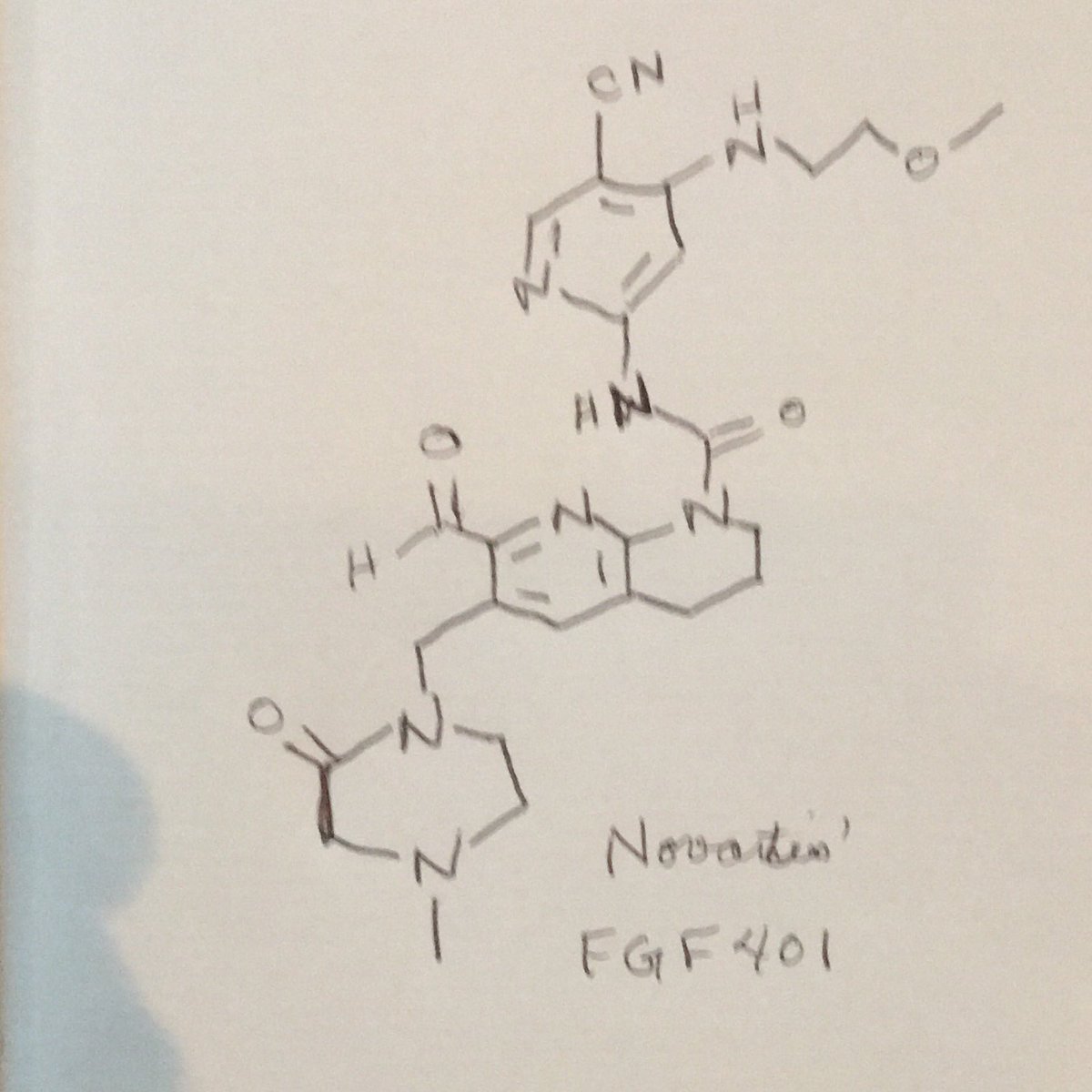
Now in #MEDI 1st time disclosures Robin Fairhurst of @Novartis will also talk about an FGFR inhibitor. They are popular! #ACSSanFran
CN4CC(=O)N(Cc1cc(C=O)nc2N(CCCc12)C(=O)Nc3cc(NCCOC)c(C#N)cn3)CC4
PRN 1371
PRN 1371
- Molecular Formula C26H30Cl2N6O4
- Average mass 561.460
cas 1802929-43-6
8-[3-(4-Acryloyl-1-piperazinyl)propyl]-6-(2,6-dichloro-3,5-dimethoxyphenyl)-2-(methylamino)pyrido[2,3-d]pyrimidin-7(8H)-one
6-(2,6-Dichloro-3,5-dimethoxyphenyl)-2-(methylamino)-8-[3-[4-(1-oxo-2-propen-1-yl)-1-piperazinyl]propyl]pyrido[2,3-d]pyrimidin-7(8H)-one
Phase I Solid tumours
- Originator Principia Biopharma
- Class Small molecules
- Mechanism of Action Fibroblast growth factor receptor antagonists
- 06 Jun 2016 Adverse events data from a phase I trial in Solid tumours presented at the 52nd Annual Meeting of the American Society of Clinical Oncology (ASCO- 2016)
- 01 Nov 2015 Phase-I clinical trials in Solid tumours in USA (PO) (NCT02608125)
- 12 Jan 2015 Preclinical trials in Cancer in USA (PO)
| Inventors | Erik Verner, Kenneth Albert Brameld |
| Applicant | Principia Biopharma, Inc. |


Erik Verner


CONTD………………..

Fibroblast growth factors (FGFs) and their receptors (FGFRs) play important roles in physiological processes relating to tissue repair, hematopoiesis, bone growth, angiogenesis and other aspects of embryonic development. Alterations in the FGF signaling pathway have also emerged as important drivers in human disease. FGF signaling can be deregulated through multiple mechanisms, including gene amplification, activating mutations and translocations, overexpression, altered FGFR gene splicing, and autocrine or paracrine overproduction of the ligands of FGFR. Deregulated FGF signaling has been documented in human tumors, including breast (see Ray, M. E., et. al., 2004. Genomic and expression analysis of the 8pl 1-12 amplicon in human breast cancer cell lines. Cancer Res 64:40-47), multiple myeloma (see Keats, J.J., et. al., 2006. Ten years and counting: so what do we know about t(4;14)(pl6;q32) multiple myeloma. Leuk Lymphoma 47:2289-2300), non-invasive bladder (see Billerey, C, et al. 2001. Frequent
FGFR3 mutations in papillary non-invasive bladder (pTa) tumors. Am J Pathol 158: 1955-1959), endometrial (see Pollock, P.M., et al. 2007. Frequent activating FGFR2 mutations in endometrial carcinomas parallel germline mutations associated with craniosynostosis and skeletal dysplasia syndromes. Oncogene 26:7158-7162), gastric (see Jang, J.H., et. al, 2001. Mutations in fibroblast growth factor receptor 2 and fibroblast growth factor receptor 3 genes associated with human gastric and colorectal cancers. Cancer Res 61 :3541-3543), prostate cancers (see Sahadevan, K., D et. al., 2007. Selective over-expression of fibroblast growth factor receptors 1 and 4 in clinical prostate cancer. J Pathol 213:82-90), lung (see Hammerman P, et al. Genomic characterization and targeted therapeutics in squamous cell lung cancer [abstract]; Proceedings of the 14th World Conference on Lung Cancer; 2011 3-7 July; Aurora (CO); and International Association for the Study of Lung Cancer; 2011), esophageal (see Hanada K, et al, Identification of fibroblast growth factor-5 as an overexpressed anti-gen in multiple human adenocarcinomas. Cancer Res 2001; 61 : 5511-6), cholangiocarcinoma (see Arai, Y., et al. 2014. Fibroblast growth factor receptor 2 tyrosine kinase fusions define a unique molecular subtype of cholangiocarcinoma. Hepatology 59, 1427-1434 and Borad, M. J., et al. 2014). Integrated genomic characterization reveals novel, therapeutically relevant drug targets in FGFR and EGFR pathways in sporadic intrahepatic cholangiocarcinoma. PLoS genetics 10, el004135), glioblastoma (see Rand V., et. al. Sequence survey of receptor tyrosine kinases reveals mutations in glioblastomas. Proc Natl Acad Sci U S A 2005; 102: 14344 – 9 and Parker, et. al. 2014. Emergence of FGFR family gene fusions as therapeutic targets in a wide spectrum of solid tumours. The Journal of pathology 232, 4-15). FGFR1 translocations and FGFR1 fusions are frequently observed in 8pl 1 myeloproliferative syndromes (Jackson, C. C, Medeiros, L. J., and Miranda, R. N. (2010). 8pl 1 myeloproliferative syndrome: a review. Human pathology 41, 461-476). Activating mutations in FGFR3 have been shown to cause a number of dwarf syndromes (see Harada, D., et. al, 2009. FGFR3-related dwarfism and cell signaling. J Bone Miner Metab 27:9-15) including achondroplasia (see Bellus, G.A., et. al., 1995. Achondroplasia is defined by recurrent G380R mutations of FGFR3. Am J Hum Genet 56:368-373; Bellus, G.A., et. al., 1995. A recurrent mutation in the tyrosine kinase domain of fibroblast growth factor receptor 3 causes hypochondroplasia. Nat Genet 10:357-359; and Rousseau, F., et. al, 1994. Mutations in the gene encoding fibroblast growth factor receptor-3 in achondroplasia. Nature 371 :252-254), Crouzon dermoskeletal syndromes (see Robin, N.H., et. al, 1993. FGFR-Related Craniosynostosis Syndromes), hyopochondroplasia (see Prinos, P., et. al., 1995. A common FGFR3 gene mutation in hypochondroplasia. Hum Mol Genet 4:2097-2101), Muenke syndrome (see Muenke, M., et al. 1997. A unique point mutation in the fibroblast growth factor receptor 3 gene (FGFR3) defines a new craniosynostosis syndrome. Am J Hum Genet 60:555-564), SADDAN (severe achondroplasia with developmental delay and acanthosis nigricans) (see Bellus, G.A., et al. 1999. Severe achondroplasia with developmental delay and acanthosis nigricans (SADDAN): phenotypic analysis of a new skeletal dysplasia caused by a Lys650Met mutation in fibroblast growth factor receptor 3. Am J Med Genet 85:53-65;
Tavormina, P.L., et al. 1999. A novel skeletal dysplasia with developmental delay and acanthosis nigricans is caused by a Lys650Met mutation in the fibroblast growth factor receptor 3 gene. Am J Hum Genet 64:722-731), thanatophoric dysplasia ( see dAvis, P.Y., et. al, 1998. Constitutive activation of fibroblast growth factor receptor 3 by mutations responsible for the lethal skeletal dysplasia thanatophoric dysplasia type I. Cell Growth Differ 9:71-78; Kitoh, H., et. al, 1998. Lys650Met substitution in the tyrosine kinase domain of the fibroblast growth factor receptor gene causes thanatophoric dysplasia Type I. Mutations in brief no. 199. Online. Hum Mutat 12:362- 363; and Tavormina, P.L., et. al, 1995. Thanatophoric dysplasia (types I and II) caused by distinct mutations in fibroblast growth factor receptor 3. Nat Genet 9:321-328), platyspondylic lethal skeletal dysplasia (see Brodie, S.G., et. al, 1999. Platyspondylic lethal skeletal dysplasia, San Diego type, is caused by FGFR3 mutations. Am J Med Genet 84:476-480), and cervical cancer (see Cappellen, D., et. al., 1999. Frequent activating mutations of FGFR3 in human bladder and cervix carcinomas. Nat Genet 23: 18-20). Activating mutations in FGFR4 have been identified in rhabdomyosarcoma (see Shukla, N., et. al, Oncogene mutation profiling of pediatric solid tumors reveals significant subsets of embryonal rhabdomyosarcoma and neuroblastoma with mutated genes in growth signaling pathways. Clin Cancer Res 18:748-757 and Marshall, A.D., et. al, PAX3-FOX01 and FGFR4 in alveolar rhabdomyosarcoma. Mol Carcinog 51 :807-815). For these reasons, FGFRs are attractive therapeutic target for the treatment of diseases.
Patent
WO 2015120049
Example 6
Synthesis of 8-(3-(4-acryloylpiperazin-l-yl)propyl)-6-(2,6-dichloro-3,5-dimethoxyphenyl)-2- (methylamino)pyrido[2,3-d]pyrimidin-7(8H)-one

Step 1
To a solution of 3-(piperazin-l-yl)propan-l-ol (1 g, 6.93 mmol, 1.00 equiv) in THF (50 mL) and TEA (2 g) was added di-tert-butyl dicarbonate (2.26 g, 10.36 mmol, 1.49 equiv). The resulting solution was stirred for 2 h at room temperature and then concentrated. The residue was purified by chromatography (DCM/MeOH (15: 1)) to provide 1.48 g (87%) of tert-butyl 4-(3-hydroxypropyl)piperazine-l-carboxylate as a light yellow liquid.
Step 2
To a solution of tert-butyl 4-(3-hydroxypropyl)piperazine-l-carboxylate (1.48 g, 6.06 mmol, 1.00 equiv) in DCM (60 mL), imidazole (620 mg) and TPP (2.38 g, 9.07 mmol, 1.50 equiv) was added I2 (2.31 g, 9.10 mmol, 1.50 equiv). The resulting solution was stirred for 2 h at room temperature and then concentrated. The residue was purified by chromatography
(DCM/MeOH (50: 1)) to provide 1.65 g (77%) of tert-butyl 4-(3-iodopropyl)piperazine-l-carboxylate as yellow oil.
Step 3
To a solution of 6-(2,6-dichloro-3,5-dimethoxyphenyl)-2-(methylsulfanyl)-7H,8H-pyrido[2,3-d]pyrimidin-7-one (600 mg, 1.51 mmol, 1.00 equiv) in acetone (50 mL) and K2C03 (630 mg) was added tert-butyl 4-(3-iodopropyl)piperazine-l-carboxylate (640 mg, 1.81 mmol, 1.20 equiv). The resulting solution was heated to reflux for 3 h and then the solids were filtered out. The residue was purified by chromatography (DCM/EtOAc (2:1)) to provide 720 mg (77%) of tert-butyl 4-[3-[6-(2,6-dichloro-3,5-dimethoxyphenyl)-2-(methylsulfanyl)-7-oxo-7H,8H-pyrido[2,3-d]pyrimidin-8-yl]propyl]piperazine-l-carboxylate as a yellow solid.
Step 4
To a solution of tert-butyl 4-[3-[6-(2,6-dichloro-3,5-dimethoxyphenyl)-2-(methyl-sulfanyl)-7-oxo-7H,8H-pyrido[2,3-d]pyrimidin-8-yl]propyl]piperazine-l-carboxylate (720 mg, 1.15 mmol, 1.00 equiv) in CHC13 (50 mL) was added mCPBA (600 mg). The resulting solution was stirred overnight at room temperature and then quenched with sat. Na2C03. The resulting solution was extracted DCM/MeOH(10: l) and the organic layer was concentrated. This provided 750 mg (97%)) of 4-[(tert-butoxy)carbonyl]-l-[3-[6-(2,6-dichloro-3,5-dimethoxyphenyl)-2-
methanesulfonyl-7-oxo-7H,8H-pyrido[2,3-d]pyrimidin-8-yl]propyl]piperazin- 1 -ium- 1 -olate as a yellow solid.
Step 5
To a solution of 4-[(tert-butoxy)carbonyl]-l-[3-[6-(2,6-dichloro-3,5-dimethoxyphenyl)-2-methanesulfonyl-7-oxo-7H,8H-pyrido[2,3-d]pyrimidin-8-yl]propyl]piperazin- 1 -ium- 1 -olate (750 mg, 1.12 mmol, 1.00 equiv) in tert-BuOH (50 mL), was added MeNH2/THF(2N) (1 mL). The resulting solution was stirred for 2 h at 60° C and then concentrated. This provided 680 mg (98%) of 4-[(tert-butoxy)carbonyl]-l-[3-[6-(2,6-dichloro-3,5-dimethoxyphenyl)-2-(methylamino)-7-oxo-7H,8H-pyrido[2,3-d]pyrimidin-8-yl]propyl]piperazin-l-ium-l-olate as a yellow solid.
Step 6
To a solution of 4-[(tert-butoxy)carbonyl]-l-[3-[6-(2,6-dichloro-3,5-dimethoxyphenyl)-2-(methylamino)-7-oxo-7H,8H-pyrido[2,3-d]pyrimidin-8-yl]propyl]piperazin-l-ium-l-olate (680 mg, 1.09 mmol, 1.00 equiv) in MeOH (100 mL) was added Zn (1 g) and sat. NH4C1 (4 mL). The resulting reaction mixture was stirred overnight at room temperature and then solids were filtered out. The residue was purified by chromatography (DCM/MeOH (35: 1)) to provide 650 mg (98%) of tert-butyl 4-[3-[6-(2,6-dichloro-3,5-dimethoxyphenyl)-2-(methylamino)-7-oxo-7H,8H-pyrido[2,3-d]pyrimidin-8-yl]propyl]piperazine-l-carboxylate as a yellow solid.
Step 7
To a solution of tert-butyl 4-[3-[6-(2,6-dichloro-3,5-dimethoxyphenyl)-2-(methylamino)-7-oxo-7H,8H-pyrido[2,3-d]pyrimidin-8-yl]propyl]piperazine-l-carboxylate (650 mg, 1.07 mmol, 1.00 equiv) in dioxane (12 mL), was added cone. HC1 (3 mL). The resulting solution was stirred for 3 h at room temperature and then concentrated. This provided 550 mg (95%) of 6-(2,6-dichloro-3,5-dimethoxyphenyl)-2-(methylamino)-8-(3-(piperazin-l-yl)propyl)pyrido[2,3-d]pyrimidin-7(8H)-one hydrochloride as an off-white solid.
Step 8
To a solution of 6-(2,6-dichloro-3,5-dimethoxyphenyl)-2-(methylamino)-8-[3-(piperazin-l-yl)propyl]-7H,8H-pyrido[2,3-d]pyrimidin-7-one hydrochloride (250 mg, 0.49 mmol, 1.00 equiv) in DCM (20 mL) was added TEA (120 mg, 1.19 mmol, 2.41 equiv) and prop-2-enoyl chloride (54 mg, 0.60 mmol, 1.21 equiv). The resulting solution was stirred for 2 h at room temperature and then quenched with H20 (30 mL). The resulting solution was extracted with DCM/MeOH(10:l) and the organic layers combined and concentrated. The crude product was purified by Prep-HPLC (Column, SunFire Prep CI 8 OBD Column, 150mm 5um lOnm; mobile phase, Water with lOmmol NH4HC03and MeCN (30.0% MeCN up to 80.0% in 10 min);
Detector, nm). This provided 112.1 mg (41%>) of 6-(2,6-dichloro-3,5-dimethoxyphenyl)-2-
(methylamino)-8-[3-[4-(prop-2-enoyl)piperazm^
one as a white solid. MS (ESI, pos. ion) m/z: 561.1 (M+l).
PATENT
Example 1
Synthesis of Compound (I)
Step 1
2-(3,5-Dimethoxyphenyl)acetic acid (1000 g) was charged into appropriately sized three-neck RBF equipped with a condenser and dissolved with methanol (10 L). Concentrated sulfuric acid (20 g) was added and a solution was brought to gentle boiling. Reaction progress was monitored by HPLC. The reaction mixture was transferred to appropriately sized RBF and
concentrated to ca. 3 L. and then co-evaporated with DMSO (3 L) to about 4 L and the residue containing methyl 2-(3,5-dimethoxyphenyl)acetate (1071 g) was telescoped to Step 2.
Step 2
To an appropriate reactor equipped with mechanical stirrer methyl 2-(3,5-dimethoxyphenyl)acetate (1071 g) in DMSO (3.2 L), 4-amino-2-(methylthio)-pyrimidine-5-carbaldehyde (819 g, 0.95 eq.), potassium carbonate (1057 g, 1.5 eq.) and cesium carbonate (249 g, 0.15 eq.) was charged and the mixture was stirred at 50 °C. After 15 h, the mixture containing 6-(3,5-dimethoxyphenyl)-2-(methylthio)pyrido[2,3-d]pyrimidin-7(8H)-one was cooled to RT. Potassium carbonate (854g, 1.2 eq.) and tert-butyl 4-(3 -((methyl sulfonyl)oxy )propyl)piperazine-1-carboxylate HC1 (2112 g, 1.1 eq.) was charged. Upon completion of ther eaction, ethyl acetate and water were added.
Organic layer was separated and aqueous layer was extracted with ethyl acetate.
Combined organic layers were washed with 25% aqueous solution of sodium chloride. Organic phase was dried over anhydrous magnesium sulfate. Drying agent was filtered off and washed with ethyl acetate. The filtrate was concentrated to ca. 9.6 L. and cooled to 0-5°C. A solution of ^-toluenesulfonic acid (970 g, 1.0 eq.) in ethyl acetate (4.28 L) was added dropwise. The resulted suspension was slowly warmed to RT and stirred for 5 h. Solids were filtered off, washed with ethyl acetate and dried give tert-butyl-4-(3-(6-(3,5-dimethoxyphenyl)-2-(methylthio)-7-oxopyrido[2,3-d]pyrimidin-8(7H)-yl)propyl)piperazine- 1-carboxylate 4-methylbenzenesulfonate. Step 3
To an appropriate reactor equipped with mechanical stirrer was charged acetic acid (12 L), 6-(3,5-dimethoxyphenyl)-2-(methylthio)pyrido[2,3-d]pyrimidin-7(8H)-one (2000 g) and triethylamine (639 g, 2.3 eq.). Internal temperature was adjusted to approximately 20°C and N-chlorosuccinimide (1651 g, 4.5 eq.) was added at 20-30°C. Reaction was stirred for 2 hours. Ethyl acetate (30 L) was added. 5% aqueous NaCl solution (20 L) was added. The organic layer was separated and the aqueous layer was extracted with EtOAc. The combined organic layers were washed with 30 % aqueous potassium carbonate solution (14 L). The organic layer was concentrated to ~ 12 L and used for next step directly.
Step 4
To tert-butyl-4-(3-(6-(2,6-dichloro-3,5-dimethoxyphenyl)-2-(methylsulfonyl)-7-oxopyrido[2,3-d]pyrimidin-8(7H)-yl)propyl)piperazine- 1-carboxylate (1804 g) in ethyl acetate extract (12 L)from Step 3, was added 2M methylamine solution in THF (3435 mL) was slowly added maintaining temperature below 30°C. After reaction was complete, the suspension concentrated to 3.3 L and ethyl acetate (6 L) was added. The mixture was heated at 50°C for 2h, and then cooled to RT. Solids were filtered off and washed with ethyl acetate, water and dried to give tert-butyl-4-(3-(6-(2,6-dichloro-3,5-dimethoxyphenyl)-2-(methylamino)-7-oxopyrido[2,3-d]pyrimidin-8(7H)-yl)propyl)piperazine-l-carboxylate (1845 g).
Step 5
tert-Butyl-4-(3-(6-(2,6-dichloro-3,5-dimethoxyphenyl)-2-(methylamino)-7-oxo-pyrido[2,3-d]pyrimidin-8(7H)-yl)propyl)piperazine-l-carboxylate (125 g) was charged into appropriately sized three-neck RBF equipped with a condenser and suspended in acetone (1000 mL). Concentrated (36%) aqueous hydrochloric acid (100 mL) was slowly added and the mixture was heated to 45°C for 1 h. the reaction mixture was gradually cooled to RT over 4 h and filtered, washed with acetone and dried to give tert-butyl-4-(3-(6-(2,6-dichloro-3,5-dimethoxyphenyl)-2-(methylamino)-7-oxopyrido[2,3-d]pyrimidin-8(7H)-yl)propyl)piperazine-l-carboxylate»3HCl (125 g) in 98% yield.
Step 6
To an appropriate reactor tert-butyl-4-(3-(6-(2,6-dichloro-3,5-dimethoxyphenyl)-2-(methylamino)-7-oxopyrido[2,3-d]pyrimidin-8(7H)-yl)propyl)piperazine-l-carboxylate (50 g) and DMF (500 mL) was charged while stirring at RT. The suspension was cooled to 0-5°C and saturated aqueous sodium bicarbonate solution (375 mL) was slowly added maintaining temperature below 15°C with emission of C02. The mixture was cooled again to 0-5°C and acryloyl chloride (8.6 mL, 1.3 eq.) was slowly added at temperature below 10°C. Once acryloyl chloride addition was finished the reaction mixture was gradually warmed to RT over 1 h.
Saturated aqueous sodium bicarbonate solution (75 mL) was slowly added and the resulted mixture was heated at 45-55°C for 0.5-1.5 h. It was then gradually cooled to RT and stirred for another 0.5-1.5 h. Solids were filtered off, washed with water and dried.
Crude product was dissolved in dichloromethane (750 mL) at reflux and the solution was cooled to ambient temperature. Silica gel (7.5 g) was added while stirring. After 30 min. the mixture was filtered through Celite and the filtering bed was washed with dichloromethane.
Ethyl acetate (250 mL) was added and the solution was concentrated under reduced to about 250 mL at 40 – 50 °C. Ethyl acetate (450 mL) was slowly added at 50°C. After 30 min. the suspension was slowly cooled to 40°C and solids were filtered off, washed with ethyl acetate and dried to give 36 g of 8-(3-(4-acryloylpiperazin-l-yl)propyl)-6-(2,6-dichloro-3,5-dimethoxyphenyl)-2-(methylamino)pyrido[2,3-d]pyrimidin-7(8H)-one in 82%. XRPD analysis of the product showed an XRPD pattern for a highly crystalline compound, which was assigned as Form 1 (discussed in further detail below).
///////////PRN 1371, Phase I, Solid tumours, Principia Biopharma
Clc1c(OC)cc(OC)c(Cl)c1C4=Cc2cnc(NC)nc2N(CCCN3CCN(CC3)C(=O)C=C)C4=O
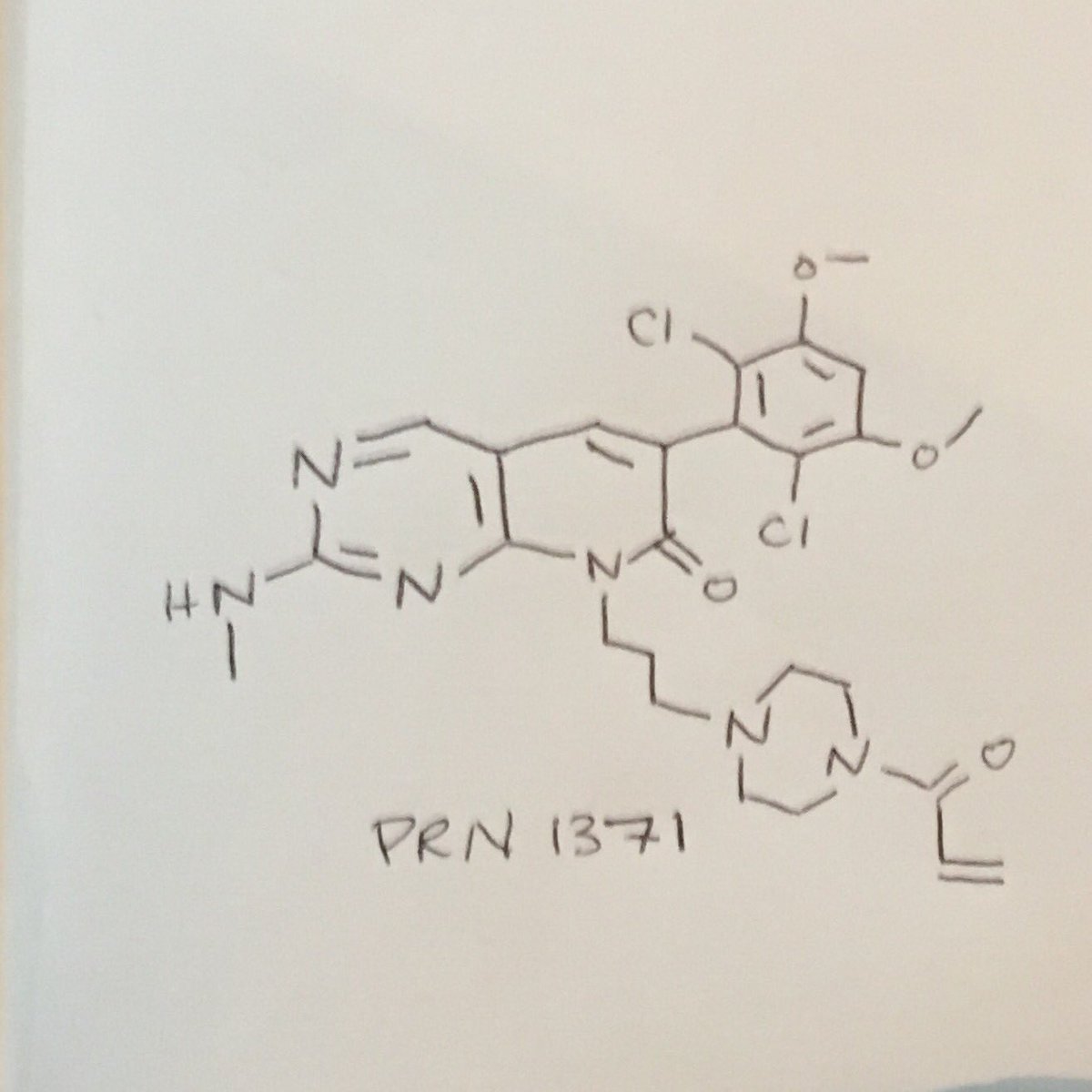
Now in #MEDI 1st time disclosures Principia Biopharma’s Kenneth Brameld on another FGFR inhibitor for solid tumors #ACSSanFran
FDA approves first drug Ingrezza (valbenazine) to treat tardive dyskinesia

Valbenazine
- Molecular FormulaC24H38N2O4
- Average mass418.569 Da
(2R,3R,11bR)-3-Isobutyl-9,10-dimethoxy-1,3,4,6,7,11b-hexahydro-2H-pyrido[2,1-a]isoquinolin-2-yl L-valinate
(2R,3R,11bR)-9,10-dimethoxy-3-(2-methylpropyl)-1,3,4,6,7,11b-hexahydro-2H-benzo[a]quinolizin-2-yl L-valinate
1025504-45-3 cas
L-Valine, (2R,3R,11bR)-1,3,4,6,7,11b-hexahydro-9,10-dimethoxy-3-(2-methylpropyl)-2H-benzo[a]quinolizin-2-yl ester
NBI-98854
Valbenazine ditosylate. RN: 1639208-54-0. UNII: 5SML1T733B, Molecular Formula, C24-H38-N2-O4.2C7-H8-O3-S, Molecular Weight, 762.9806
- Chemistry Review(s) (PDF)
(2R,3R,11bR)-9,10-Dimethoxy-3-(2-methylpropyl)-1,3,4,6,7,11b-hexahydro-2H-benzo(a)quinolizin-2-yl L-valinate bis(4-methylbenzenesulfonate)
and
Valbenazine dihydrochloride
1639208-51-7
04/11/2017
The U.S. Food and Drug Administration today approved Ingrezza (valbenazine) capsules to treat adults with tardive dyskinesia. This is the first drug approved by the FDA for this condition.
April 11, 2017
Release
The U.S. Food and Drug Administration today approved Ingrezza (valbenazine) capsules to treat adults with tardive dyskinesia. This is the first drug approved by the FDA for this condition.
Tardive dyskinesia is a neurological disorder characterized by repetitive involuntary movements, usually of the jaw, lips and tongue, such as grimacing, sticking out the tongue and smacking the lips. Some affected people also experience involuntary movement of the extremities or difficulty breathing.
“Tardive dyskinesia can be disabling and can further stigmatize patients with mental illness,” said Mitchell Mathis, M.D., director of the Division of Psychiatry Products in the FDA’s Center for Drug Evaluation and Research. “Approving the first drug for the treatment of tardive dyskinesia is an important advance for patients suffering with this condition.”
Tardive dyskinesia is a serious side effect sometimes seen in patients who have been treated with antipsychotic medications, especially the older medications, for long periods to treat chronic conditions, such as schizophrenia and bipolar disorder. Tardive dyskinesia can also occur in patients taking antipsychotic medications for depression and certain medications for gastrointestinal disorders and other conditions. It is unclear why some people who take these medications develop tardive dyskinesia yet others do not.
The efficacy of Ingrezza was shown in a clinical trial of 234 participants that compared Ingrezza to placebo. After six weeks, participants who received Ingrezza had improvement in the severity of abnormal involuntary movements compared to those who received placebo.
Ingrezza may cause serious side effects including sleepiness and heart rhythm problems (QT prolongation). Its use should be avoided in patients with congenital long QT syndrome or with abnormal heartbeats associated with a prolonged QT interval. Those taking Ingrezza should not drive or operate heavy machinery or do other dangerous activities until it is known how the drug affects them.
The FDA granted this application Fast Track, Priority Review and Breakthrough Therapy designations.
The FDA granted approval of Ingrezza to Neurocrine Biosciences, Inc.
Valbenazine (INN,[1]:114 proposed trade name Ingrezza) is the first drug approved by the FDA[2] for use in the treatment of tardive dyskinesia.[3][4] Clinical trials are underway to evaluate its efficacy in the treatment of Tourette’s syndrome.[5][6] It acts as a vesicular monoamine transporter 2 (VMAT2) inhibitor.[7]
Pharmacology
Mechanism of action
Valbenazine is known to cause reversible reduction of dopamine release by selectively inhibiting pre-synaptic human vesicular monoamine transporter type 2 (VMAT2). In vitro, valbenazine shows great selectivity for VMAT2 and little to no affinity for VMAT1 or other monoamine receptors.[8] Although the exact cause of tardive dyskinsia is unknown, it is hypothesized that it may result from neuroleptic-induced dopamine hypersensitivity.[9] By selectively reducing the ability of VMAT2 to load dopamine into synaptic vesicles,[10] the drug reduces overall levels of available dopamine in the synaptic cleft, ideally alleviating the symptoms associated with dopamine hypersensitivity. The importance of valbenazine selectivity inhibiting VMAT2 over other monoamine transporters is that VMAT2 is mainly involved with the transport of dopamine, and to a much lesser extent other monoamines such as norepinephrine, serotonin, and histamine. This selectivity is likely to reduce the likelihood of “off-target” adverse effects which may result from the upstream inhibition of these other monoamines.[11]
Society and culture
Commercial aspects
Valbenazine is produced by Neurocrine Biosciences, a company based in San Diego. In addition to the late-stage clinical trials studying valbenazine, Neurocrine Biosciences (partnered with AbbVie Inc.) also has another product, elagolix (a hormone antagonist), undergoing clinical trials.[12] Following the initiation of these trials, on 5 May 2016 Neurocrine reported revenues of $15 million for the first quarter of 2016.[13] The company now focuses on filing the valbenazine new drug application as they prepare for the commercial launch of the drug for the treatment of tardive dyskinesia.Neurocrine’s expenses have risen steadily since May 2015, primarily due to the pre-commercialization activities for valbenazine. [14]
Intellectual property
While Neurocrine Biosciences does not currently hold a final patent for valbenazine or elagolix, they do hold a patent for the VMAT2 inhibitor [9,10-dimethoxy-3-(2-methylpropyl)-1H,2H,3H,4H,6H,7H,11bH-pyrido-[2,1-a]isoquinolin-2-yl]methanol and related compounds, which includes valbenazine.[15]
References
- “International Nonproprietary Names for Pharmaceutical Substances (INN). Recommended International Nonproprietary Names: List 71” (PDF). World Health Organization. Retrieved 18 November 2016.
- Newswire, MultiVu – PR. “Neurocrine Announces FDA Approval of INGREZZA TM (valbenazine) Capsules as the First and Only Approved Treatment for Adults with Tardive Dyskinesia (TD)”. Multivu. Retrieved 2017-04-11.
- Ben Adams (Aug 30, 2016). “Neurocrine submits valbenazine NDA early, set for 2017 approval”. fiercebiotech.com.
- “Safety and Tolerability Study of NBI-98854 for the Treatment of Tardive Dyskinesia – Full Text View – ClinicalTrials.gov”. clinicaltrials.gov. Retrieved 2016-11-13.
- Jump up^ “Tourette Syndrome Clinical Trials | Neurocrine Biosciences”. http://www.neurocrine.com. Retrieved 2016-11-13.
- Jump up^ “Safety and Efficacy Study of NBI-98854 in Adults With Tourette Syndrome – Full Text View – ClinicalTrials.gov”. clinicaltrials.gov. Retrieved 2016-11-13.
- Jump up^ O’Brien, C. F.; Jimenez, R; Hauser, R. A.; Factor, S. A.; Burke, J; Mandri, D; Castro-Gayol, J. C. (2015). “NBI-98854, a selective monoamine transport inhibitor for the treatment of tardive dyskinesia: A randomized, double-blind, placebo-controlled study”. Movement Disorders. 30 (12): 1681–7. doi:10.1002/mds.26330. PMC 5049616
 . PMID 26346941.
 - Jump up^ “NBI-98854 – VMAT2 Inhibitor | Tics in Children Treatment | Neurocrine Biosciences”. http://www.neurocrine.com. Retrieved 2016-11-13.
- Jump up^ “tardive-dyskinesia”. http://www.priory.com. Retrieved 2016-11-13.
- Jump up^ Purves, Dale, et al. Neuroscience. Sinauer Associates. 087893646
- “NBIX: NDA for Valbenazine in Tardive Dyskinesia to be Filed in 2016…”. Retrieved 2016-11-13.
- “Endocrine & Movement Disorder R&D | About | Neurocrine Biosciences”. http://www.neurocrine.com. Retrieved 2016-11-14.
- “NBIX: NDA for Valbenazine in Tardive Dyskinesia to be Filed in 2016…”. Retrieved 2016-11-20.
- “Press Release | Neurocrine Biosciences, Inc.”. phoenix.corporate-ir.net. Retrieved 2016-11-20.
- “[9,10-dimethoxy-3-(2-methylpropyl)-1h,2h,3h,4h,6h,7h,11bh-pyrido-[2,1-a]isoquinolin-2-yl]methanol And Compounds, Compositions And Methods Relating Thereto”. Retrieved 2016-11-20.
|
|
| Clinical data | |
|---|---|
| ATC code |
|
| Legal status | |
| Legal status |
|
| Identifiers | |
| Synonyms | NBI-98854 |
| CAS Number | |
| PubChem CID | |
| ChemSpider | |
| UNII | |
| KEGG | |
| ChEMBL | |
| Chemical and physical data | |
| Formula | C24H38N2O4 |
| Molar mass | 418.58 g·mol−1 |
| 3D model (Jmol) | |
////////fda 2017, Ingrezza, valbenazine, tardive dyskinesia, Fast Track, Priority Review , Breakthrough Therapy designations, 1025504-45-3, NBI-98854,
PF 06821497
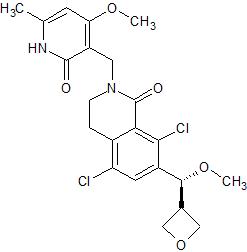
PF 06821497
Cas 1844849-11-1
Designed to treat lymphoma
1(2H)-Isoquinolinone, 5,8-dichloro-2-[(1,2-dihydro-4-methoxy-6-methyl-2-oxo-3-pyridinyl)methyl]-3,4-dihydro-7-[(S)-methoxy-3-oxetanylmethyl]-
MF C22 H24 Cl2 N2 O5,
MW 467.34
PF 06821497
5,8-Dichloro-2-[(4-methoxy-6-methyl-2-oxo-1,2-dihydro-3-pyridinyl)methyl]-7-[methoxy(3-oxetanyl)methyl]-3,4-dihydro-1(2H)-isoquinolinone
1(2H)-Isoquinolinone, 5,8-dichloro-2-[(1,2-dihydro-4-methoxy-6-methyl-2-oxo-3-pyridinyl)methyl]-3,4-dihydro-7-(methoxy-3-oxetanylmethyl)-
- Molecular Formula C22H24Cl2N2O5
- Average mass 467.342 Da
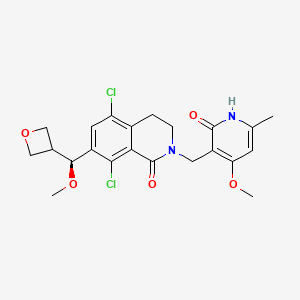
5,8-dichloro-2-[(4-methoxy-6-methyl-2-oxo-1H-pyridin-3-yl)methyl]-7-[(S)-methoxy(oxetan-3-yl)methyl]-3,4-dihydroisoquinolin-1-one
| Inventors | Michael Raymond Collins, Robert Steven Kania, Robert Arnold Kumpf, Pei-Pei Kung, Daniel Tyler Richter, Scott Channing Sutton, Martin James Wythes |
| Original Assignee | Pfizer Inc. |
-
Epigenetic alterations play an important role in the regulation of cellular processes, including cell proliferation, cell differentiation and cell survival. The epigenetic silencing of tumor suppressor genes and activation of oncogenes may occur through alteration of CpG island methylation patterns, histone modification, and dysregulation of DNA binding protein. Polycomb genes are a set of epigenetic effectors. EZH2 (enhancer of zeste homolog 2) is the catalytic component of the Polycomb Repressor Complex 2 (PRC2), a conserved multi-subunit complex that represses gene transcription by methylating lysine 27 on Histone H3 (H3K27). EZH2 plans a key role in regulating gene expression patterns that regulate cell fate decisions, such as differentiation and self-renewal. EZH2 is overexpressed in certain cancer cells, where it has been linked to cell proliferation, cell invasion, chemoresistance and metastasis.
-
High EZH2 expression has been correlated with poor prognosis, high grade, and high stage in several cancer types, including breast, colorectal, endometrial, gastric, liver, kidney, lung, melanoma, ovarian, pancreatic, prostate, and bladder cancers. See Crea et al., Crit. Rev. Oncol. Hematol. 2012, 83:184-193, and references cited therein; see also Kleer et al., Proc. Natl. Acad. Sci. USA 2003, 100:11606-11; Mimori et al., Eur. J. Surg. Oncol. 2005, 31:376-80; Bachmann et al., J. Clin. Oncol. 2006, 24:268-273; Matsukawa et al., Cancer Sci. 2006, 97:484-491; Sasaki et al. Lab. Invest. 2008, 88:873-882; Sudo et al., Br. J. Cancer 2005, 92(9):1754-1758; Breuer et al., Neoplasia 2004, 6:736-43; Lu et al., Cancer Res. 2007, 67:1757-1768; Ougolkov et al., Clin. Cancer Res. 2008, 14:6790-6796; Varambally et al., Nature 2002, 419:624-629; Wagener et al., Int. J. Cancer 2008, 123:1545-1550; and Weikert et al., Int. J. Mol. Med. 2005, 16:349-353.Recurring somatic mutations in EZH2 have been identified in diffuse large B-cell lymphoma (DLBCL) and follicular lymphomas (FL). Mutations altering EZH2 tyrosine 641 (e.g., Y641C, Y641F, Y641N, Y641S, and Y641H) were reportedly observed in up to 22% of germinal center B-cell DLBCL and 7% of FL. Morin et al. Nat. Genetics 2010 February; 42(2):181-185. Mutations of alanine 677 (A677) and alanine 687 (A687) have also been reported. McCabe et al., Proc. Natl. Acad. Sci. USA 2012, 109:2989-2994; Majer et al. FEBS Letters 2012, 586:3448-3451. EZH2 activating mutations have been suggested to alter substrate specificity resulting in elevated levels of trimethylated H3K27 (H3K27me3).Accordingly, compounds that inhibit the activity of wild type and/or mutant forms of EZH2 may be of interest for the treatment of cancer.
SYNTHESIS

Steps
1 COUPLING, Ag2CO3
2 Alkylation, K2CO3
3 LiAlH4 REDUCTION
4 THIONYL CHLORIDE
5 N-Alkylation of Amides, t-BuOK
6 A GRIGNARD REACTION
7 AN ALKYLATION , METHYL IODIDE, t-BuOK
8 HYDROGENATION, DE BENZYLATION, PLATINUM OXIDE
9 LAST STEP separation by chiral preparative, SFC on (R,R) Whelk O1 column, TO GET PF 06821497
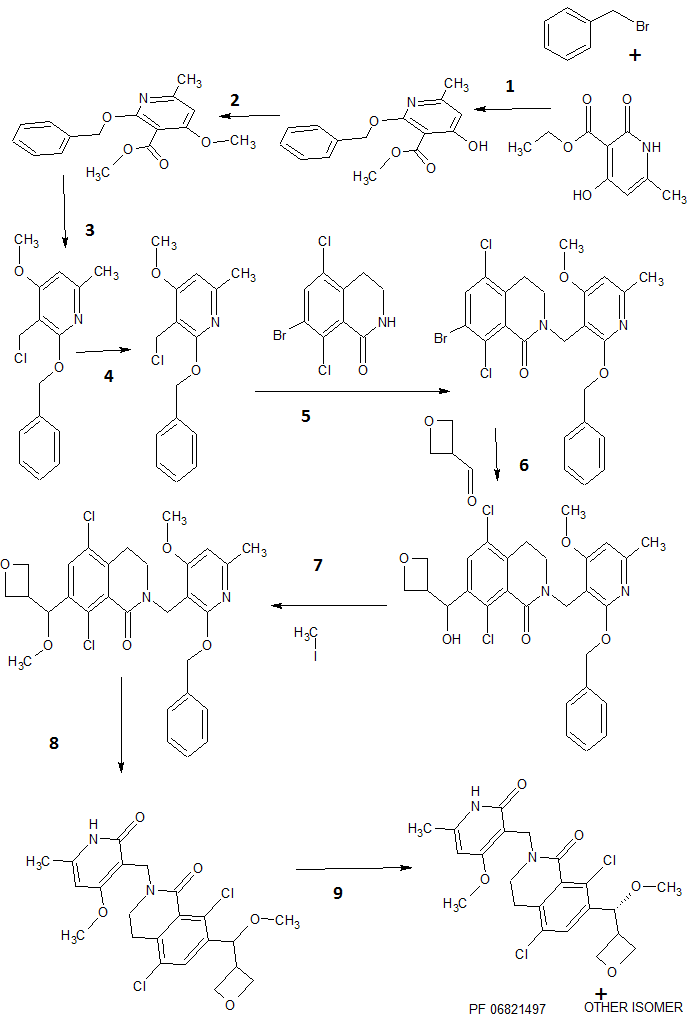
PATENT
US 20150361067

///////////////PF 06821497, 1844849-11-1, PFIZER, lymphoma, Pei-Pei Kung, @pfizer, #ACSSanFran, Michael Raymond Collins, Robert Steven Kania, Robert Arnold Kumpf, Pei-Pei Kung, Daniel Tyler Richter, Scott Channing Sutton, Martin James Wythes
Next up in #MEDI 1st time disclosures Pei-Pei Kung from @pfizer presenting a molecule designed to treat lymphoma #ACSSanFran
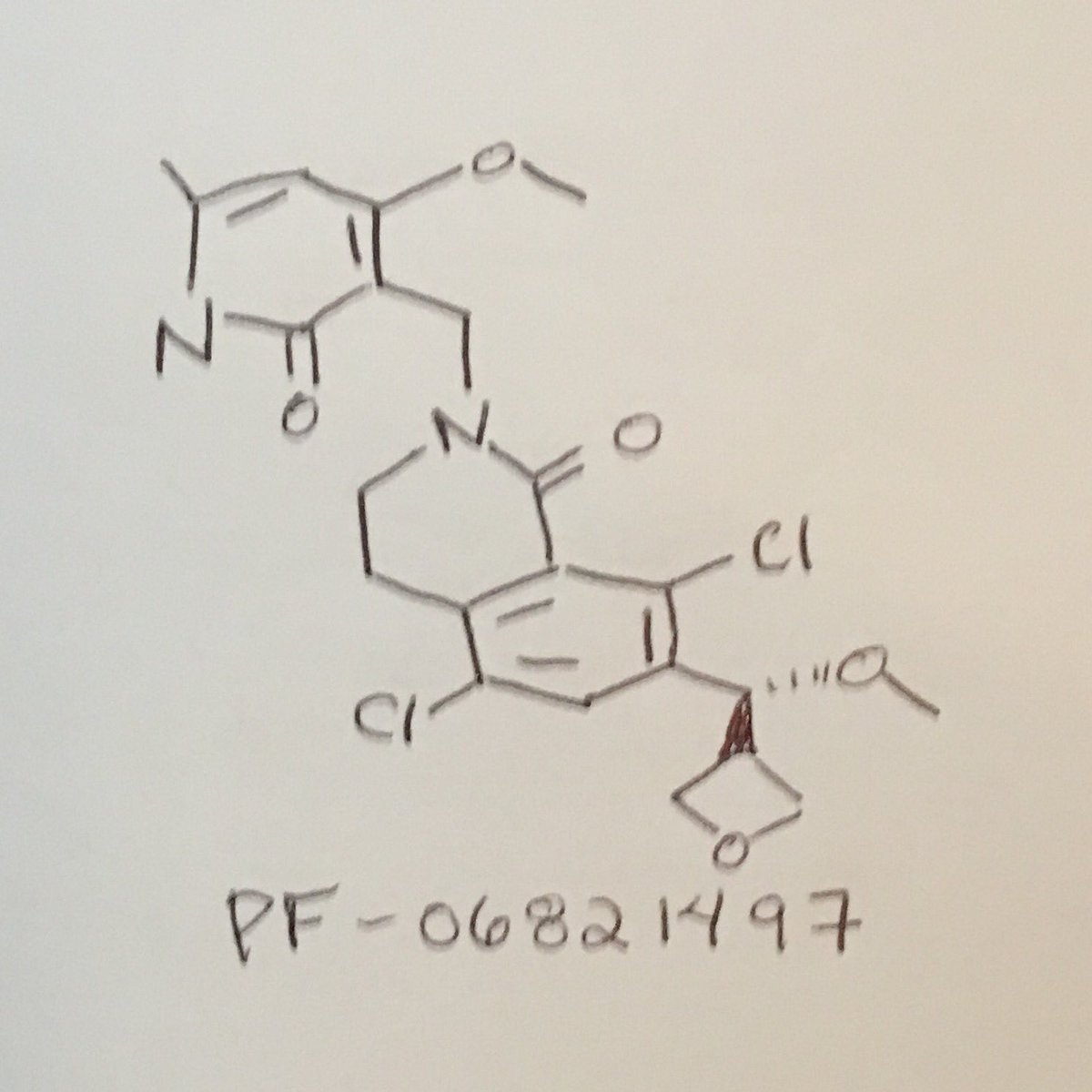
CO[C@H](c2cc(Cl)c3CCN(CC1=C(OC)C=C(C)NC1=O)C(=O)c3c2Cl)C4COC4
| CC1=CC(=C(C(=O)N1)CN2CCC3=C(C=C(C(=C3C2=O)Cl)C(C4COC4)OC)Cl)OC |


 New Drug Approvals