
Home » Posts tagged 'BDTX-1535'
Tag Archives: BDTX-1535
 DRUG APPROVALS BY DR ANTHONY MELVIN CRASTO
.....FOR BLOG HOME CLICK HERE
DRUG APPROVALS BY DR ANTHONY MELVIN CRASTO
.....FOR BLOG HOME CLICK HEREFlag and hits
ORGANIC SPECTROSCOPY

SUBSCRIBE

 Subscribe in a reader
Enter your email address:
Delivered by FeedBurner
Subscribe to New Drug Approvals by Email


Recent Comments
 | shivkr2 on SPSR Excellence Award 2025 – S… |
 | Bonkasaurus on Infigratinib phosphate |
 | PALOVAROTENE | ORGAN… on Palovarotene |
| Pfizer just purchase… on Temanogrel | |
| Pfizer To Cash In On… on Temanogrel |
Silevertinib
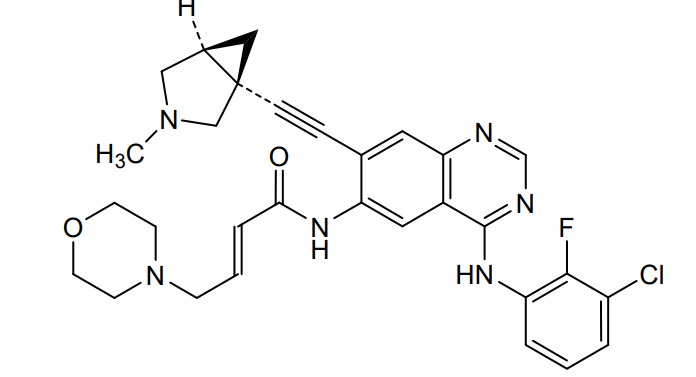
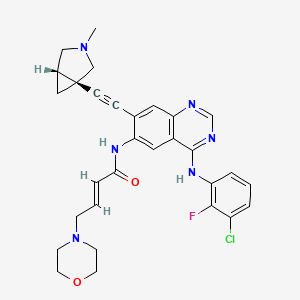
Silevertinib
CAS 2607829-38-7
MF C30H30ClFN6O2 MW561.0 g/mol
(E)-N-[4-(3-chloro-2-fluoroanilino)-7-[2-[(1R,5S)-3-methyl-3-azabicyclo[3.1.0]hexan-1-yl]ethynyl]quinazolin-6-yl]-4-morpholin-4-ylbut-2-enamide
(2E)-N-[4-(3-chloro-2-fluoroanilino)-7-{[(1R,5S)-3-methyl-3-azabicyclo[3.1.0]hexan-1-yl]ethynyl}quinazolin-6-yl]-4-(morpholin-4-yl)but-2-enamide
epidermal growth factor receptor tyrosine kinase inhibitor, antineoplastic, BDTX-1535, BDTX 1535, CANCER, Glioblastoma, Black Diamond Therapeutics, RP9F537KVY
Silevertinib is an investigational new drug that is being evaluated by Black Diamond Therapeutics for the treatment of glioblastoma and non-small cell lung cancer.[1] It is a EGFR protein tyrosine kinase inhibitor.[1][2]
Silevertinib (formerly known as BDTX-1535) is an investigational, orally bioavailable, fourth-generation epidermal growth factor receptor (EGFR) tyrosine kinase inhibitor (TKI) developed by Black Diamond Therapeutics. It is specifically engineered to be brain-penetrant and to target a broad spectrum of both classical and non-classical EGFR mutations, as well as resistance mutations, while sparing wild-type EGFR to reduce side effects.
Silevertinib is an orally bioavailable, brain penetrating, mutant-selective, epidermal growth factor receptor (EGFR) inhibitor, with potential antineoplastic activity. Upon oral administration, silevertinib selectively targets, irreversibly binds to, and inhibits the activity of various EGFR alterations and mutations, including certain intrinsic and acquired resistance mutations. This prevents EGFR-mediated signaling in susceptible tumor cells. This may both induce cell death and inhibit tumor growth in EGFR-overexpressing tumor cells. EGFR, a receptor tyrosine kinase mutated in many tumor cell types, plays a key role in tumor cell proliferation and tumor vascularization.
Mechanism of Action
Silevertinib works by selectively and irreversibly binding to mutated EGFR receptors. EGFR is a receptor tyrosine kinase that, when mutated, triggers uncontrolled cell division and tumor vascularization. By shutting down this signaling cascade, silevertinib induces tumor cell death and inhibits further growth.
A major clinical advantage of the drug is its ability to cross the blood-brain barrier, allowing it to target central nervous system (CNS) tumors and brain metastases that many traditional therapies fail to reach.
Target Indications & Clinical Data
Silevertinib is primarily being studied for two aggressive types of cancer:
- Non-Small Cell Lung Cancer (NSCLC): It targets frontline patients with classical and over 50 non-classical EGFR driver mutations, as well as patients who have developed the acquired C797S resistance mutation from prior treatments. Phase 2 clinical trial data presented at the American Society of Clinical Oncology (ASCO) 2026 Annual Meeting showcased robust efficacy:
- Objective Response Rate (ORR): 60% in treatment-naïve patients.
- CNS Response Rate: An impressive 86% intracranial ORR in patients presenting with brain metastases.
- Disease Control Rate (DCR): 91%.
- Glioblastoma Multiforme (GBM): In May 2026, a randomized Phase 2 trial was initiated for newly diagnosed patients with EGFRvIII-positive, MGMT-negative glioblastoma, evaluating silevertinib in combination with temozolomide.
Safety Profile & Side Effects
The adverse events of silevertinib are consistent with the broader class of EGFR inhibitors. The most frequently reported treatment-related adverse events (TRAEs) include:
- Rash
- Diarrhea
- Stomatitis (mouth sores)
- Paronychia (nail bed inflammation)
While a high percentage of patients (up to 77–84%) require dose reductions to manage these side effects, data shows that 86% of responding patients maintained or deepened their clinical response even after dropping to a lower dose. The treatment discontinuation rate remains low at roughly 9–14%, indicating the drug is manageable for long-term therapy.
Regulatory Status
As an investigational drug, silevertinib is not yet approved for commercial use by global regulatory agencies. However, the manufacturer anticipates regulatory feedback from the US FDA regarding its registration pathway for first-line NSCLC therapy.
- OriginatorBlack Diamond Therapeutics
- Class2 ring heterocyclic compounds; Amides; Amines; Aniline compounds; Antineoplastics; Halogenated hydrocarbons; Morpholines; Quinazolines; Small molecules
- Mechanism of ActionErbB receptor antagonists
- Phase IIGlioblastoma
- Phase I/IINon-small cell lung cancer
- Phase 0Glioma
- 06 Aug 2026Black Diamond Therapeutics anticipates regulatory feedback from the US FDA on registration path of silevertinib for Non-small cell lung cancer (First-line therapy) in the fourth quarter of 2026 (Black Diamond pipeline, May 2026)
- 02 Jun 2026Efficcay and adverse event data from phase I/II trial in Non-small cell lung cancer presented at the 62nd Annual Meeting of the American Society of Clinical Oncology (ASCO-2026)
- 21 May 2026Efficacy and adverse events data from a phase I/II trial in Non small cell lung cancer released by Black Diamond Therapeutics
SYN
- BDTX-1535 Goes after Osimertinib ResistancePublication Name:Cancer DiscoveryPublication Date:2021-12-01PMID:34702733DOI:10.1158/2159-8290.cd-nb2021-0395
- Further characterization of a DNA polymerase activity in mouse sperm nucleiPublication Name:Biochimica et Biophysica Acta (BBA) – Nucleic Acids and Protein SynthesisPublication Date:1976-10-04PMID:10003DOI:10.1016/0005-2787(76)90342-7
PAT
https://patentscope.wipo.int/search/en/detail.jsf?docId=WO2021030711&_cid=P21-MU6CBO-49598-1
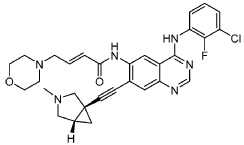
Example 33. Synthesis of Compound No. 37 ((E)-N-(4-((3-chloro-2-fluorophenyl)amino)-7-(((1R,5S)-3-methyl-3-azabicyclo[3.1.0]hexan-1-yl)ethynyl)quinazolin-6-yl)-4-morpholinobut-2-enamide)

PAT
WO2026064728
PAT
US20220298120
https://patentscope.wipo.int/search/en/detail.jsf?docId=US375116378&_cid=P21-MU6C60-41372-1
Example 33. Synthesis of Compound No. 37 ((E)-N-(4-((3-chloro-2-fluorophenyl)amino)-7-(((1R,5S)-3-methyl-3-azabicyclo[3.1.0]hexan-1-yl)ethynyl)quinazolin-6-yl)-4-morpholinobut-2-enamide)
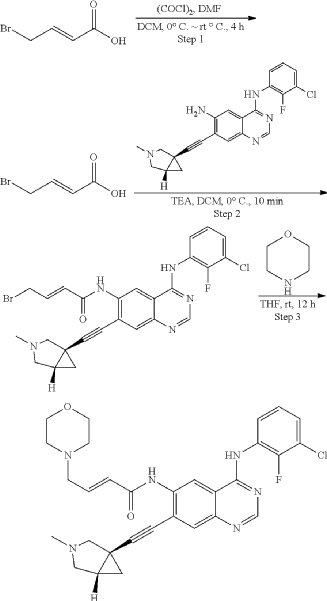
| Step 1. To a solution of (E)-4-bromobut-2-enoic acid (5.00 g, 30.3 mmol) and dimethylformamide (22.2 mg, 303 umol) in dichloromethane (20 mL) was added (COCl) 2 (3.85 g, 30.3 mmol) dropwise at 0° C. under N 2. The mixture was stirred at 0-25° C. for 4 h. On completion, the reaction mixture was concentrated in vacuo to give (E)-4-bromobut-2-enoyl chloride (5.8 g, crude) as a yellow oil. |
ADVERTISEMENT
ANAX LABORATORIES
WEBSITE https://www.anaxlab.com/
Discovery Solutions, Supporting the chemistry needs of clients in the Medical, Analytical and Bio Sciences
Development Solutions, Developing from Lab scale to PR&D, Kilo Scale-ups and Commercial Scales
SEE MORE………Integrated Solutions, Manufacturing Solutions, Products,
Can’t Find? Let’s Connect

Phone : +91 897704 2010 / +91 9177075735, Email : info@anaxlab.com
#MedicinalChemistry, #DrugDiscovery, #OrganicSynthesis, #ChemicalLibrary, #BuildingBlocks, #SARStudies, #ChemistryInnovation, #medchem, #Drugdevelopment, #Biotech, #Biotechnology, #AnaxLaboratories, #Pharma



AS ON FEB2026 4.574 LAKHS VIEWS ON BLOG WORLDREACH AVAILABLEFOR YOUR ADVERTISEMENT

join me on Linkedin
Anthony Melvin Crasto Ph.D – India | LinkedIn
join me on Researchgate
RESEARCHGATE

join me on Facebook
Anthony Melvin Crasto Dr. | Facebook
join me on twitter
Anthony Melvin Crasto Dr. | twitter
+919321316780 call whatsaapp
EMAIL. amcrasto@gmail.com

References
- “Silevertinib”. AdisInsight. Springer Nature Switzerland AG. Retrieved 5 July 2026.
- Joshi H, Sheikh MS (August 2025). “Cell Death, Molecular Targeted Therapies, and Metabolic Reprogramming in EGFR-Mutant Lung Cancer”. Cancers. 17 (17). Basel: 2791. doi:10.3390/cancers17172791. PMC 12427363. PMID 40940888.
PAT
- Polymorphs as erbb inhibitorsPublication Number:EP-4405350-A1Priority Date:2021-09-21
- Polymorphs as erbb inhibitorsPublication Number:US-2024425492-A1Priority Date:2021-09-21
- Polymorphs as erbb inhibitorsPublication Number:WO-2023049168-A1Priority Date:2021-09-21
- Method of treating cancers with alkyne substituted quinazoline derivativesPublication Number:WO-2022094464-A1Priority Date:2020-11-02
- Alkynyl quinazoline compoundsPublication Number:EP-4013749-A1Priority Date:2019-08-15
- Alkynyl quinazoline compoundsPublication Number:US-2022298120-A1Priority Date:2019-08-15
- Alkynyl quinazoline compoundsPublication Number:US-2026049063-A1Priority Date:2019-08-15
- Alkynyl quinazoline compoundsPublication Number:US-12435046-B2Priority Date:2019-08-15Grant Date:2025-10-07
- Alkynyl quinazoline compoundsPublication Number:EP-4013749-B1Priority Date:2019-08-15Grant Date:2026-03-11
- Alkynyl quinazoline compoundsPublication Number:WO-2021030711-A1Priority Date:2019-08-15
 | |
| Clinical data | |
|---|---|
| Other names | RVU-120 |
| Identifiers | |
| IUPAC name | |
| CAS Number | 2607829-38-7 |
| PubChem CID | 156071569 |
| IUPHAR/BPS | 13371 |
| UNII | RP9F537KVY |
| KEGG | D13300 |
| Chemical and physical data | |
| Formula | C30H30ClFN6O2 |
| Molar mass | 561.06 g·mol−1 |
| 3D model (JSmol) | Interactive image |
| SMILES | |
| InChI | |
///////////silevertinib, anax labs, epidermal growth factor receptor tyrosine kinase inhibitor, antineoplastic, BDTX-1535, BDTX 1535, CANCER, Glioblastoma, Black Diamond Therapeutics, RP9F537KVY
#silevertinib, #anax labs, #epidermal growth factor receptor tyrosine kinase inhibitor, #antineoplastic, #BDTX-1535, #BDTX 1535, #CANCER, #Glioblastoma, #Black Diamond Therapeutics, #RP9F537KVY


 New Drug Approvals
