New Drug Approvals

Home » Uncategorized (Page 37)

Category Archives: Uncategorized

DRUG APPROVALS BY DR ANTHONY MELVIN CRASTO .....FOR BLOG HOME CLICK HERE

Blog Stats

  • 4,923,885 hits

Flag and hits

Flag Counter

Enter your email address to follow this blog and receive notifications of new posts by email.

Join 37.8K other subscribers
Follow New Drug Approvals on WordPress.com

Archives

Categories

Recent Posts

Flag Counter

ORGANIC SPECTROSCOPY

Read all about Organic Spectroscopy on ORGANIC SPECTROSCOPY INTERNATIONAL 

Enter your email address to follow this blog and receive notifications of new posts by email.

Join 37.8K other subscribers
DR ANTHONY MELVIN CRASTO Ph.D

DR ANTHONY MELVIN CRASTO Ph.D

DR ANTHONY MELVIN CRASTO, Born in Mumbai in 1964 and graduated from Mumbai University, Completed his Ph.D from ICT, 1991,Matunga, Mumbai, India, in Organic Chemistry, The thesis topic was Synthesis of Novel Pyrethroid Analogues, Currently he is working with AFRICURE PHARMA, ROW2TECH, NIPER-G, Department of Pharmaceuticals, Ministry of Chemicals and Fertilizers, Govt. of India as ADVISOR, earlier assignment was with GLENMARK LIFE SCIENCES LTD, as CONSUlTANT, Retired from GLENMARK in Jan2022 Research Centre as Principal Scientist, Process Research (bulk actives) at Mahape, Navi Mumbai, India. Total Industry exp 32 plus yrs, Prior to joining Glenmark, he has worked with major multinationals like Hoechst Marion Roussel, now Sanofi, Searle India Ltd, now RPG lifesciences, etc. He has worked with notable scientists like Dr K Nagarajan, Dr Ralph Stapel, Prof S Seshadri, etc, He did custom synthesis for major multinationals in his career like BASF, Novartis, Sanofi, etc., He has worked in Discovery, Natural products, Bulk drugs, Generics, Intermediates, Fine chemicals, Neutraceuticals, GMP, Scaleups, etc, he is now helping millions, has 9 million plus hits on Google on all Organic chemistry websites. His friends call him Open superstar worlddrugtracker. His New Drug Approvals, Green Chemistry International, All about drugs, Eurekamoments, Organic spectroscopy international, etc in organic chemistry are some most read blogs He has hands on experience in initiation and developing novel routes for drug molecules and implementation them on commercial scale over a 32 PLUS year tenure till date Feb 2023, Around 35 plus products in his career. He has good knowledge of IPM, GMP, Regulatory aspects, he has several International patents published worldwide . He has good proficiency in Technology transfer, Spectroscopy, Stereochemistry, Synthesis, Polymorphism etc., He suffered a paralytic stroke/ Acute Transverse mylitis in Dec 2007 and is 90 %Paralysed, He is bound to a wheelchair, this seems to have injected feul in him to help chemists all around the world, he is more active than before and is pushing boundaries, He has 100 million plus hits on Google, 2.5 lakh plus connections on all networking sites, 100 Lakh plus views on dozen plus blogs, 227 countries, 7 continents, He makes himself available to all, contact him on +91 9323115463, email amcrasto@gmail.com, Twitter, @amcrasto , He lives and will die for his family, 90% paralysis cannot kill his soul., Notably he has 38 lakh plus views on New Drug Approvals Blog in 227 countries......https://newdrugapprovals.wordpress.com/ , He appreciates the help he gets from one and all, Friends, Family, Glenmark, Readers, Wellwishers, Doctors, Drug authorities, His Contacts, Physiotherapist, etc He has total of 32 International and Indian awards

Verified Services

View Full Profile →

Archives

Categories

Flag Counter

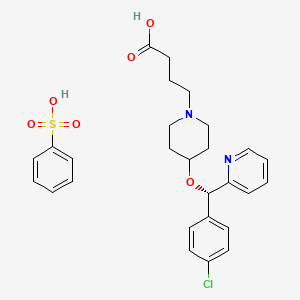
Bepotastine Besilate, ベポタスチンベシル酸塩


ChemSpider 2D Image | Bepotastine Besilate | C27H31ClN2O6SBepotastine besilate.png

Bepotastine Besilate

ベポタスチンベシル酸塩

  • Molecular FormulaC27H31ClN2O6S
  • Average mass547.063 Da
UNII:6W18MO1QR3
(+)-(S)-4-(4-((4-Chlorophenyl)(2-pyridyl)methoxy)piperidino)butyric acid monobenzenesulfonate
(S)-4-(4-((4-chlorophenyl)(pyridin-2-yl)methoxy)piperidin-1-yl)butanoic acid compound with benzenesulfonic acid (1:1)
190786-44-8 [RN]
125602-71-3 FREE FORM,
UNII: 6W18MO1QR3
1-Piperidinebutanoic acid, 4-[(S)-(4-chlorophenyl)-2-pyridinylmethoxy]-, benzenesulfonate (1:1) [ACD/Index Name]
4-{4-[(S)-(4-Chlorophenyl)(2-pyridinyl)methoxy]-1-piperidinyl}butanoic acid benzenesulfonate (1:1)
Talion [Trade name]
tau284
TAU-284DS, TAU-284
DA-5206
HL-151
SNJ-1773
    • Use:antiallergic, antihistaminic
For the symptomatic treatment of itchy eyes (caused by IgE-induced mast cell degranulation) due to allergic conjunctivitis.
10 mg Tablets  For the treatment of allergic rhinitis  27.03.2017 CDSCO

APPROVED 

USFDA

NDA 22-288 Bepotastine Besilate 1.5% Ophthalmic Solution ISTA Pharmaceuticals, Inc.

https://www.accessdata.fda.gov/drugsatfda_docs/nda/2009/02228s000_ChemR.pdf

str1

Drug Substance Bepotastine besilate is manufactured by Ube Industries and the information for the NDA is submitted through DMF #19966. Bepotastine besilate is a white crystalline powder with no odor and bitter taste. It is very soluble in but sparingly soluble in . It is stable when exposed to light, and optically active. The S-isomer is the active drug and is controlled as an impurity through synthesis. The distribution coefficient in 1-octanol is higher than in aqueous buffer in the pH 5-9 range. There are 10 potential impurities but only one impurity is above 0.1%. Two potential genotoxic impurities are controlled below . Residual is controlled below Bepotastine besilate is stable under long term storage conditions for (25ºC/60% RH) over 5 years

Bepotastine besilate was originally developed as an oral tablet dosage form and got approval in Japan in 2000 for allergic rhinitis. It is a non-sedating anti-allergic drug. The proposed NDA is an ophthalmic solution indicated for allergic conjunctivitis. Bepotastine besilate ophthalmic solution 1.5% is a sterile solution. It is an aqueous solution to be administered as drops at or near physiological pH range of tears. The formulation contains sodium chloride, monobasic sodium phosphate as dihydrate, benzalkonium chloride, sodium hydroxide and purified water; typically these components are used for , preservative action, pH adjustment,

INTRO

Bepotastine is a non-sedating, selective antagonist of the histamine 1 (H1) receptor. Bepotastine was approved in Japan for use in the treatment of allergic rhinitis and uriticaria/puritus in July 2000 and January 2002, respectively, and is marketed by Tanabe Seiyaku Co., Ltd. under the brand name Talion. It is available in oral and opthalmic dosage forms in Japan. The opthalmic solution is FDA approved since Sept 8, 2009 and is under the brand name Bepreve.

Tae Hee Ha, Chang Hee Park, Won Jeoung Kim, Soohwa Cho, Han Kyong Kim, Kwee Hyun Suh, “PROCESS FOR PREPARING BEPOTASTINE AND INTERMEDIATES USED THEREIN.” U.S. Patent US20100168433, issued July 01, 2010., US20100168433

BEPREVE® (bepotastine besilate ophthalmic solution) 1.5% is a sterile, topically administered drug for ophthalmic use. Each mL of BEPREVE contains 15 mg bepotastine besilate.

Bepotastine besilate is designated chemically as (+) -4-[[(S)-p-chloro-alpha -2pyridylbenzyl] oxy]-1-piperidine butyric acid monobenzenesulfonate. The chemical structure for bepotastine besilate is:

BEPREVE® (bepotastine besilate) Structural Formula Illustration

Bepotastine besilate is a white or pale yellowish crystalline powder. The molecular weight of bepotastine besilate is 547.06 daltons. BEPREVE ophthalmic solution is supplied as a sterile, aqueous 1.5% solution, with a pH of 6.8.

The osmolality of BEPREVE (bepotastine besilate ophthalmic solution) 1.5% is approximately 290 mOsm/kg.

ベポタスチンベシル酸塩 JP17
Bepotastine Besilate

C21H25ClN2O3▪C6H6O3S : 547.07
[190786-44-8]

Title: Bepotastine
CAS Registry Number: 190786-43-7
CAS Name: 4-[(S)-(4-Chlorophenyl)-2-pyridinylmethoxy]-1-piperidinebutanoic acid
Additional Names: betotastine
Molecular Formula: C21H25ClN2O3
Molecular Weight: 388.89
Percent Composition: C 64.86%, H 6.48%, Cl 9.12%, N 7.20%, O 12.34%
Literature References: Histamine H1-receptor antagonist. Prepn (stereochem. unspec.): A. Koda et al., EP 335586eidem, US4929618 (1989, 1990 both to Ube). Prepn of optically active salts: J. Kita et al., EP 949260 (1999 to Ube; Tanabe Seiyaku). Pharmacology: M. Kato et al., Arzneim.-Forsch. 47, 1116 (1997). Suppression of IL-5 production: O. Kaminuma et al., Biol. Pharm. Bull. 21, 411 (1998). Antiallergic activity in animal models: M. Ueno et al., Pharmacology 57, 206 (1998).
Derivative Type: Benzenesulfonate salt
CAS Registry Number: 190786-44-8
Additional Names: Bepotastine besilate
Manufacturers’ Codes: TAU-284
Trademarks: Talion (Tanabe)
Molecular Formula: C21H25ClN2O3.C6H6O3S
Molecular Weight: 547.06
Percent Composition: C 59.28%, H 5.71%, Cl 6.48%, N 5.12%, O 17.55%, S 5.86%
Properties: Pale grey prisms from acetonitrile, mp 161-163°. [a]D20 +6.0° (c = 5 in methanol).
Melting point: mp 161-163°
Optical Rotation: [a]D20 +6.0° (c = 5 in methanol)
Therap-Cat: Antihistaminic.
Keywords: Antihistaminic.

Bepotastine (TalionBepreve) is a 2nd generation antihistamine.[1] It was approved in Japan for use in the treatment of allergic rhinitisand urticaria/pruritus in July 2000 and January 2002, respectively. It is currently marketed in the United States under the brand-name Bepreve, by ISTA Pharmaceuticals.

Bepotastine besilate is a second-generation antihistamine that was launched in a tablet formulation under a collaboration between Tanabe Seiyaku and Ube in 2000 and in 2002 for the treatment of allergic rhinitis including sneeze, mucus discharge and solidified mucus, and for the treatment of urticaria, respectively. An orally disintegrating tablet was made available in Japan in 2006, while a dry syrup formulation for the treatment of allergic rhinitis was studied in clinical trials at Tanabe Seiyaku for the treatment of allergic rhinitis

Originally developed at Ube, bepotastine besilate was later licensed to Tanabe Seiyaku as part of a collaboration agreement. In 2010, rights were licensed to Dong-A and Mitsubishi Tanabe Pharma in Korea for the treatment of eye disorders.

Pharmacology

Bepotastine is available as an ophthalmic solution and oral tablet. It is a direct H1-receptor antagonist that inhibits the release of histamine from mast cells.[2] The ophthalmic formulation has shown minimal systemic absorption, between 1 and 1.5% in healthy adults.[3] Common side effects are eye irritation, headache, unpleasant taste, and nasopharyngitis.[3] The main route of elimination is urinary excretion, 75-90% excreted unchanged.[3]

Marketing history

It is marketed in Japan by Tanabe Seiyaku under the brand name Talion. Talion was co-developed by Tanabe Seiyaku and Ube Industries, the latter of which discovered bepotastine. In 2001, Tanabe Seiyaku granted Senju, now owned by Allergan, exclusive worldwide rights, with the exception of certain Asian countries, to develop, manufacture and market bepotastine for ophthalmic use. Senju, in turn, has granted the United States rights for the ophthalmic preparation to ISTA Pharmaceuticals.

Sales and patents

In 2011, ISTA pharmaceuticals experienced a 2.4% increase in net revenues from 2010, which was driven by the sales of Bepreve. Their net revenue for 2011 was $160.3 million.[4] ISTA Pharmaceuticals was acquired by Bausch & Lomb in March 2012 for $500 million.[5] Bausch & Lomb hold the patent for bepotastine besilate (https://www.accessdata.fda.gov/scripts/cder/ob/docs/temptn.cfm. On November 26, 2014, Bausch & Lomb sue Micro Labs USA for patent infringement.[6] Bausch & Lomb was recently bought out by Valeant Pharmaceuticals in May 2013 for $8.57 billion, Valeant’s largest acquisition to date, causing the company’s stock to rise 25% when the deal was announced.[7]

Clinical trials

A Phase III clinical trial was carried out in 2010 to evaluate the effectiveness of bepotastine besilate ophthalmic solutions 1.0% and 1.5%.[8] These solutions were compared to a placebo and evaluated for their ability to reduce ocular itchiness. The study was carried out with 130 individuals and evaluated after 15 minutes, 8 hours, or 16 hours. There was a reduction in itchiness at all-time points for both ophthalmic solutions. The study concluded that bepotastine besilate ophthalmic formulations reduced ocular itchiness for at least 8 hours after dosing compared to placebo. Phase I and II trials were carried out in Japan.

Studies have been performed in animals and bepotastine besilate was not found to be teratogenic in rats during fetal development, even at 3,300 times more that typical use in humans.[3] Evidence of infertility was seen in rats at 33,000 times the typical ocular does in humans.[3] The safety and efficacy has not been established in patients under 2 years of age and has been extrapolated from adults for patients under 10 years of age.[3]

SYN

EP 0335586; JP 1989242574; JP 1990025465; JP 1993294929; US 4929618

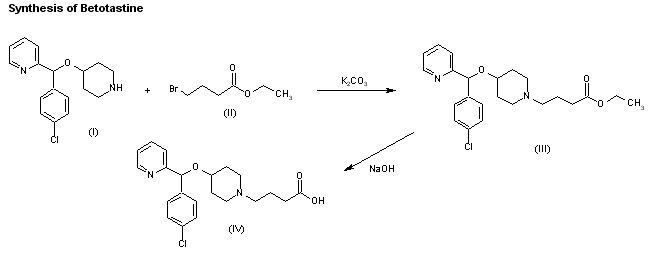
The reaction of 4-[1-(4-chlorophenyl)-1-(2-pyridyl)methoxy]piperidine (I) with ethyl 4-bromobutyrate (II) by means of K2CO3 in refluxing acetone gives the corresponding condensation product (III), which is then hydrolyzed with NaOH in ethanol/water yielding compound (IV).

SYN 2

JP 1998237070; JP 2000198784; WO 9829409

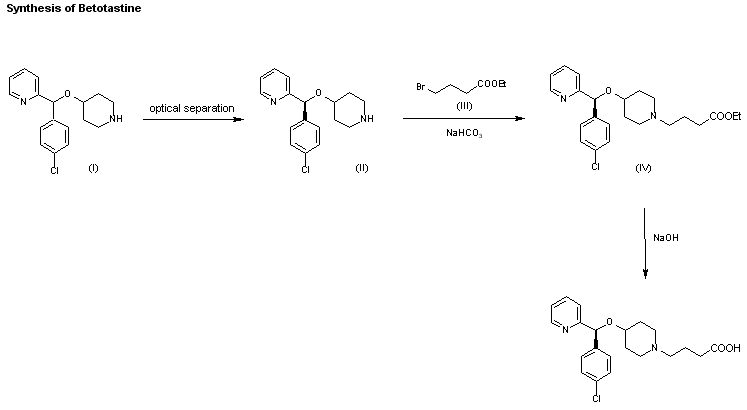
A new synthesis of betotastine has been developed: The racemic 4-[1-(4-chlorophenyl)-1-(2-pyridyl)methoxy]piperidine (I) is submitted to optical resolution with N-acyl amino acids such as N-acetyl-L-phenylalanine (preferred), N-acetyl-L-leucine, N-(benzyloxycarbonyl)-L-phenylalanine, N-(benzyloxycarbonyl)-L-valine, N-(benzyloxycarbonyl)-L-threonine, N-(benzyloxycarbonyl)-L-serine or with (2R,3R)-3-(5-chloro-2-nitrophenylsulfanyl)-2-hydroxy-3-(4-methoxyphenyl)propionic acid (preferred) or (2R,3R)-2-hydroxy-3-(4-methoxyphenyl)-3-(2-nitrophenylsulfanyl)propionic acid as chiral intermediates, yielding the (S)-isomer (II). The condensation of (II) with ethyl 4-bromobutyrate (III) by means of a base such as Na2CO3, NaHCO3, K2CO3 or KHCO3 gives the expected 4-(1-piperidinyl)butyric acid ester (IV), which is finally hydrolyzed with NaOH or KOH in aqueous ethanol or methanol.

SYN 3

A new synthesis of betotastine has been developed: The racemic 4-[1-(4-chlorophenyl)-1-(2-pyridyl)methoxy]piperidine (I) is submitted to optical resolution with N-acyl amino acids such as N-acetyl-L-phenylalanine (preferred), N-acetyl-L-leucine, N-(benzyloxycarbonyl)-L-phenylalanine, N-(benzyloxycarbonyl)-L-valine, N-(benzyloxycarbonyl)-L-threonine, N-(benzyloxycarbonyl)-L-serine or with (2R,3R)-3-(5-chloro-2-nitrophenylsulfanyl)-2-hydroxy-3-(4-methoxyphenyl)propionic acid (preferred) or (2R,3R)-2-hydroxy-3-(4-methoxyphenyl)-3-(2-nitrophenylsulfanyl)propionic acid as chiral intermediates, yielding the (S)-isomer (II). The condensation of (II) with ethyl 4-bromobutyrate (III) by means of a base such as Na2CO3, NaHCO3, K2CO3 or KHCO3 gives the expected 4-(1-piperidinyl)butyric acid ester (IV), which is finally hydrolyzed with NaOH or KOH in aqueous ethanol or methanol.

CLIP

A Novel Synthetic Method for Bepotastine, a Histamine H1 Receptor …

journal.kcsnet.or.kr

A Novel Synthetic Method for Bepotastine, a Histamine H1 Receptor Antagonist

file:///C:/Users/91200291/Downloads/B130241_549.pdf

Scheme 1. Synthesis of bepotastine l-menthyl ester N-benzyloxycarbonyl-L-aspartic acid complex (3), bepotastine besilate (4) and bepotastine calcium (5). Reagents and conditions; i) 4-bromobutanoic acid l-menthyl ester, K2CO3, acetone, reflux, 7 h, 95-99%; ii) N-benzyloxycarbonyl-L-aspartic acid (NCbzLAA), ethyl acetate, rt, 12 h, 71-73%; iii) Ethyl acetate/H2O, NaHCO3, 97-99%; iv) EtOH:H2O = 1:1, NaOH, rt, 12 h, 3.0 N-HCl Neutralization, 92- 95%; v) AcOH, reflux, 12 h, racemization 97-100%; vi) Bezensulfonic acid, acetonitrile, rt, 12 h, 64-67%; vii) NaOH, H2O, CaCl2, rt, 12 h, 86-89%.

Synthesis of (S)-Bepotastine Besilate (4). Bepotastine (50 g, 0.13 mol) was dissolved in 500 mL of acetonitrile, and benzenesulfonic acid monohydrate (20 g, 0.11 mol) was added to the reaction mixture. Bepotastine besilate (0.5 g, 1.28 mmol) was seeded in the reaction mixture and stirred at rt for 12 h. The solid precipitate was filtered and dried. The product was obtained 38 g (yield: 64%, optical purity: 99.5% ee) as a pale white crystalline powder. Melting point: 161- 163 o C. Water: 0.2% (Karl-Fischer water determination). MS: m/z 389.1 [M+H]; 1 H-NMR (300 MHz, DMSO-d6) δ 9.2 (br s, 1H), 8.5 (d, J = 4.1 Hz, 1H), 7.8 (t, J = 7.7 Hz, 1H), 7.6 (m, 3H), 7.4 (m, 4H), 7.3 (m, 4H), 5.7 (s, 1H), 3.7 (br s, 2H), 3.3 (br s, 3H), 3.1 (br s, 2H), 2.3 (t, J = 14.1 Hz, 2H), 2.2 (m, 1H), 2.0 (m, 1H), 1.8 (m, 3H), 1.7 (m, 1H); IR (KBr, cm−1 ): 3422, 2996, 2909, 2735, 2690, 2628, 1719, 1592, 1572, 1488, 1470, 1436, 1411, 1320, 1274, 1221, 1160, 1123, 1066, 1031, 1014, 996, 849, 830, 771, 759, 727, 693, 612, 564

Synthesis

Patent ID

Title

Submitted Date

Granted Date

US9849121 AQUEOUS LIQUID PREPARATIONS AND LIGHT-STABILIZED AQUEOUS LIQUID PREPARATIONS
2014-10-10
2015-01-29
US2012225905 BEPOTASTINE COMPOSITIONS
2012-05-02
2012-09-06
US8883825 Aqueous liquid preparations and light-stabilized aqueous liquid preparations
2012-08-30
2014-11-11
Patent ID

Title

Submitted Date

Granted Date

US6638534 Preparation capable of releasing drug at target site in intestine
2001-01-29
2003-10-28
US2010168433 PROCESS FOR PREPARING BEPOTASTINE AND INTERMEDIATES USED THEREIN
2010-07-01
US7282589 Acid addition salt of optically active piperidine compound and process for preparing the same
2004-11-04
2007-10-16
US6307052 Acid-addition salts of optically active piperidine compound and process for producing the same
2001-10-23
EP0949260 ACID-ADDITION SALTS OF OPTICALLY ACTIVE PIPERIDINE COMPOUND AND PROCESS FOR PRODUCING THE SAME
1999-10-13
2002-05-22
Patent ID

Title

Submitted Date

Granted Date

US9446055 DISINTEGRATING PARTICLE COMPOSITION AND ORALLY RAPIDLY DISINTEGRATING TABLET
2010-08-11
2012-06-21
US2011257628 INSTRUMENT FOR ALLEVIATING ADDICTIVE DRUG CRAVING, METHOD FOR USING SAME AND METHOD FOR TREATING ADDICTIVE DRUG DEPENDENCE
2009-12-02
2011-10-20
US2013046240 BEPOTASTINE COMPOSITIONS
2011-10-06
2013-02-21
US2012328675 FILM PREPARATION CONTAINING MEDICAMENT WITH UNPLEASANT TASTE
2011-03-03
2012-12-27
US8771724 Percutaneous absorption enhancer and transdermal preparation using the same
2009-06-22
2014-07-08
Patent ID

Title

Submitted Date

Granted Date

US6780877 Acid addition salt of optically active piperidine compound and process for preparing the same
2002-02-28
2004-08-24
US8877168 Aqueous liquid preparations and light-stabilized aqueous liquid preparations
2014-06-25
2014-11-04
US8784789 Aqueous liquid preparations and light-stabilized aqueous liquid preparations
2003-07-30
2014-07-22
US2010137367 NOVEL CRYSTALLINE BEPOTASTINE METAL SALT HYDRATE, METHOD FOR PREPARING SAME, AND PHARMACEUTICAL COMPOSITION COMPRISING SAME
2010-06-03
US8900602 Disintegrating particle composition and orally rapidly disintegrating tablet
2010-08-11
2014-12-02
Bepotastine
Bepotastine.svg
Clinical data
Trade names Bepreve
AHFS/Drugs.com International Drug Names
MedlinePlus a610012
Pregnancy
category
  • US: C (Risk not ruled out)
Routes of
administration
Oral, topical (eye drops)
ATC code
  • none
Legal status
Legal status
  • In general: ℞ (Prescription only)
Pharmacokinetic data
Bioavailability High (oral)
Minimal (topical)
Protein binding ~55%
Excretion Renal (75–90%)
Identifiers
CAS Number
PubChem CID
DrugBank
ChemSpider
UNII
KEGG
ChEBI
ChEMBL
Chemical and physical data
Formula C21H25ClN2O3
Molar mass 388.88 g/mol
3D model (JSmol)

References

    • EP 335 586 (Ube Ind.; appl. 22.3.1989; J-prior. 25.3.1988).
    • EP 485 984 (Ube Ind.; appl. 13.11.1991; J-prior. 15.11.1990).
    • WO 9 829 409 (Ube Ind.; appl. 25.12.1997; J-prior. 26.12.1996).
  • racemization :

    • JP 10 237 069 (Ube Ind.; appl. 21.2.1997).

References

  1. Jump up^ H. Takahashi; A. Ishida-Yamamoto; H. Iizuka (September 2004). “Effects of bepotastine, cetirizine, fexofenadine, and olopatadine on histamine-induced wheal-and flare-response, sedation, and psychomotor performance”Clinical and Experimental Dermatology29: 526–532. doi:10.1111/j.1365-2230.2004.01618.x.
  2. Jump up^ “Bepotastine Monograph”LexiComp.
  3. Jump up to:a b c d e f “Bepreve prescribing Information” (PDF).
  4. Jump up^ [phx.corporate-ir.net/External.File?item…t=1 “2011 Net Revenues Increase to $160.3 Million On an Adjusted Cash Net Income Basis, ISTA Posts Second Year of Profitability Company Reaffirms 2012 Financial Guidance”] Check |url= value (help).
  5. Jump up^ “Bausch & Lomb to Buy ISTA Pharmaceuticals for $500 Million”DealBook. Retrieved 2015-12-05.
  6. Jump up^ “Bausch & Lomb Inc. et al. v. Micro Labs USA, Inc. et al.”
  7. Jump up^ “Valenant pharmaceuticals eyes China with Bausch deal”.
  8. Jump up^ Macejko, Thomas T.; Bergmann, Mark T.; Williams, Jon I.; Gow, James A.; Gomes, Paul J.; McNamara, Timothy R.; Abelson, Mark B. (2010-07-01). “Multicenter Clinical Evaluation of Bepotastine Besilate Ophthalmic Solutions 1.0% and 1.5% to Treat Allergic Conjunctivitis”American Journal of Ophthalmology150 (1): 122–127.e5. doi:10.1016/j.ajo.2010.02.007.

////////////Bepotastine Besilate, ベポタスチンベシル酸塩  ,Talion , tau284, TAU-284DS, TAU-284, DA-5206
HL-151 , SNJ-1773

C1CN(CCC1OC(C2=CC=C(C=C2)Cl)C3=CC=CC=N3)CCCC(=O)O.C1=CC=C(C=C1)S(=O)(=O)O

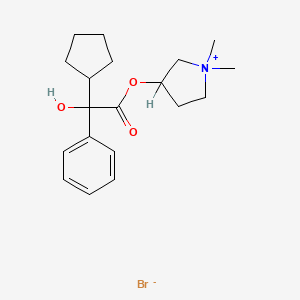
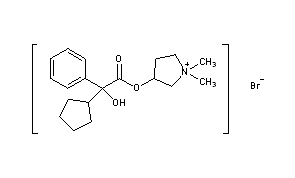
Glycopyrronium bromide, гликопиррония бромид , بروميد غليكوبيرونيوم , 格隆溴铵 , グリコピロニウム臭化物


Glycopyrronium bromide.svg

ChemSpider 2D Image | glycopyrronium bromide | C19H28BrNO3

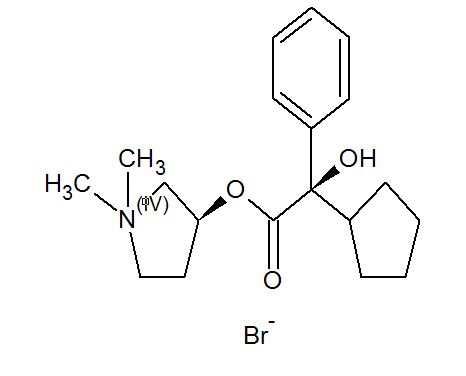
Glycopyrrolate.png

Glycopyrronium bromide

гликопиррония бромид [Russian] [INN]
بروميد غليكوبيرونيوم [Arabic] [INN]
格隆溴铵 [Chinese] [INN]
グリコピロニウム臭化物

Cas 596-51-0,

  • 3-Hydroxy-1,1-dimethylpyrrolidinium bromide α-cyclopentylmandelate (6CI,7CI)
  • Pyrrolidinium, 3-[(cyclopentylhydroxyphenylacetyl)oxy]-1,1-dimethyl-, bromide (9CI)
  • Pyrrolidinium, 3-hydroxy-1,1-dimethyl-, bromide, α-cyclopentylmandelate (8CI)
  • 1,1-Dimethyl-3-hydroxypyrrolidinium bromide α-cyclopentylmandelate
  • AHR-504
  • Asecryl
  • Copyrrolate
  • Gastrodyn
  • Glycopyrrolate
  • Glycopyrrolate bromide
  • Glycopyrrone bromide
  • Glycopyrronium bromide
  • NSC 250836
  • NSC 251251
  • NSC 251252
  • NVA 237
  • Nodapton
  • Robanul
  • Robinul
  • Seebri
  • Tarodyl
  • Tarodyn
  • β-1-Methyl-3-pyrrolidyl-α-cyclopentylmandelate methobromide

CAS FREE FORM OF ABOVE 13283-82-4

3-{[Cyclopentyl(hydroxy)phenylacetyl]oxy}-1,1-dimethylpyrrolidiniumbromide
3-Hydroxy-1,1-dimethylpyrrolidinium bromide α-cyclopentylmandelate
596-51-0 [RN]

Glycopyrrolate, ATC:A03AB02

  • Use:anticholinergic, antispasmodic
  • Chemical name:3-[(cyclopentylhydroxyphenylacetyl)oxy]-1,1-dimethylpyrrolidinium bromide
  • Formula:C19H28BrNO3, MW:398.34 g/mol
  • EINECS:209-887-0
  • LD50:15 mg/kg (M, i.v.); 570 mg/kg (M, p.o.);
    709 mg/kg (R, p.o.)
Glycopyrrolate
Title: Glycopyrrolate
CAS Registry Number: 596-51-0
CAS Name: 3-[(Cyclopentylhydroxyphenylacetyl)oxy]-1,1-dimethylpyrrolidinium bromide
Additional Names: 3-hydroxy-1,1-dimethylpyrrolidinium bromide a-cyclopentylmandelate; a-cyclopentylmandelic acid ester with 3-hydroxy-1,1-dimethylpyrrolidinium bromide; 1-methyl-3-pyrrolidyl a-cyclopentylmandelate methobromide; 1-methyl-3-pyrrolidyl a-phenyl-a-cyclopentylglycolate methobromide; 3-(2-phenyl-2-cyclopentylglycoloyloxy)-1,1-dimethylpyrrolidinium bromide; glycopyrronium bromide
Manufacturers’ Codes: AHR-504
Trademarks: Nodapton; Robanul; Robinul (Robins); Tarodyl; Tarodyn
Molecular Formula: C19H28BrNO3
Molecular Weight: 398.33
Percent Composition: C 57.29%, H 7.09%, Br 20.06%, N 3.52%, O 12.05%
Literature References: Synthetic, quaternary ammonium anticholinergic. Prepn: Franko, Lunsford, J. Med. Pharm. Chem.2, 523 (1960); Lunsford, US2956062 (1960 to A. H. Robins). Pharmacodynamics: E. Kaltiala et al.,J. Pharm. Pharmacol.26, 352 (1974). Toxicology: B. V. Franko et al.,Toxicol. Appl. Pharmacol.17, 361 (1970). Clinical comparison with atropine in anaesthetic practice: F. Kongsrud, S. Sponheim, Acta Anaesthesiol. Scand.26, 620 (1982); A. I. Webb, R. M. McMurphy, Am. J. Vet. Res.48, 1733 (1987); B. V. G. Malling et al.,Br. J. Anaesth.60, 426 (1988). Brief review of pharmacology and clinical use: R. K. Mirakhur, J. W. Dundee, Anaesthesia38, 1195-1204 (1983).
Properties: White crystals from butanone, mp 193.2-194.5°. Sol in water. LD50 (72 hr.) in female mice, female rats (mg/kg): 107, 196 i.p.; in male rats (mg/kg): 1150 orally (Franko).
Melting point: mp 193.2-194.5°
Toxicity data: LD50 (72 hr.) in female mice, female rats (mg/kg): 107, 196 i.p.; in male rats (mg/kg): 1150 orally (Franko)
Therap-Cat: Antispasmodic; preanesthetic medicant.
Therap-Cat-Vet: Preanesthetic medicant.
Keywords: Antimuscarinic; Antispasmodic
ALSO
str1str1
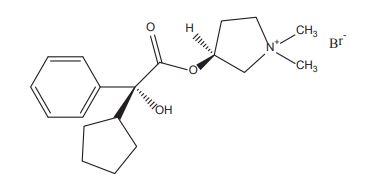
Pyrrolidinium, 3-[[(2R)-2-cyclopentyl-2-hydroxy-2-phenylacetyl]oxy]-1,1-dimethyl-, bromide (1:1), (3S)-rel
Cas 51186-83-5
  • Pyrrolidinium, 3-[(cyclopentylhydroxyphenylacetyl)oxy]-1,1-dimethyl-, bromide, (R*,S*)-(±)-
  • Pyrrolidinium, 3-[[(2R)-cyclopentylhydroxyphenylacetyl]oxy]-1,1-dimethyl-, bromide, (3S)-rel- (9CI)
  • erythro-Glycopyrronium bromide

FREE FORM OF ABOVE 740028-90-4

 NMR analysis of the diastereomers of glycopyrronium bromide
Finnish Chemical Letters (1975), (3-4), 94-6


Michael Woehrmann, Lara Terstegen, Stefan Biel, Thomas Raschke, Svenja-Kathrin Cerv, Werner Zilz, Sven Untiedt, Thomas Nuebel, Uwe Schoenrock, Heiner Max, Helga Biergiesser, Yvonne Eckhard, Heike Miertsch, Heike Foelster, Cornelia Meier-Zimmerer, Bernd Traupe, Inge Kruse, “GLYCOPYRROLATE IN COSMETIC PREPARATIONS.” U.S. Patent US20090208437, issued August 20, 2009.US20090208437

 EMA
Glycopyrronium bromide, the active substance of Enurev Breezhaler, is a well known active substance, chemically designated as 3-(2-cyclopentyl-2-hydroxy-2-phenylacetoxy)-1,1-dimethylpyrrolidinium bromide or (3RS)-3-[(2SR)-(2-cyclopentyl-2-hydroxy-2-phenylacetyl)oxy]-1,1-dimethylpyrrolidinium bromide, and has the following structure:
It is a white, non-hygroscopic powder, freely soluble in water, soluble in ethanol (96%), very slightly soluble in methylene chloride. The substance is also freely soluble in simulated lung fluid (phosphate buffer pH 7.4). Glycopyrronium bromide is a quaternary ammonium salt (ionic compound) and it is completely ionized between pH 1 and 14. It is a racemic mixture of the 3R,2S and 3S,2R stereoisomers. No optical rotation is seen in solution. Only single polymorphic form (crystalline Form A) has been reported.
Glycopyrronium bromide is a medication of the muscarinic anticholinergic group. It does not cross the blood–brain barrier and consequently has no to few central effects. It is available in by mouth, intravenous, and inhalated forms.It is a synthetic quaternary amine. It was developed by Sosei and licensed to Novartis in 2005. The cation, which is the active moiety, is called glycopyrronium (INN)[1] or glycopyrrolate (USAN).In June 2018, glycopyrronium was approved by the FDA to treat excessive underarm sweating becoming the first drug developed specifically to reduce excessive sweating.[2]

Glycopyrrolate is a muscarinic antagonist used as an antispasmodic, in some disorders of the gastrointestinal tract, and to reduce salivation with some anesthetics.

Glycopyrronium (as the bromide salt glycopyrrolate) is a synthetic anticholinergic agent with a quaternary ammonium structure. A muscarinic competitive antagonist used as an antispasmodic, in some disorders of the gastrointestinal tract, and to reduce salivation with some anesthetics. In October 2015, glycopyrrolate was approved by the FDA for use as a standalone treatment for Chronic obstructive pulmonary disease (COPD), as Seebri Neohaler.

Medical uses

In anesthesia, glycopyrronium injection can be used as a before surgery in order to reduce salivarytracheobronchial, and pharyngealsecretions, as well as decreasing the acidity of gastric secretion. It is also used in conjunction with neostigmine, a neuromuscular blocking reversal agent, to prevent neostigmine’s muscarinic effects such as bradycardia.

It is also used to reduce excessive saliva (sialorrhea),[3][4][5] and Ménière’s disease.[6]

It decreases acid secretion in the stomach and so may be used for treating stomach ulcers, in combination with other medications.

It has been used topically and orally to treat hyperhidrosis, in particular, gustatory hyperhidrosis.[7][8]

In inhalable form it is used to treat chronic obstructive pulmonary disease (COPD). Doses for inhalation are much lower than oral ones, so that swallowing a dose will not have an effect.[9][10]

Side effects

Since glycopyrronium reduces the body’s sweating ability, it can even cause hyperthermia and heat stroke in hot environments. Dry mouth, difficulty urinating, headachesdiarrhea and constipation are also observed side effects of the medication. The medication also induces drowsiness or blurred vision, an effect exacerbated by the consumption of alcohol.

Pharmacology

Mechanism of action

Glycopyrronium blocks muscarinic receptors,[11] thus inhibiting cholinergic transmission.

Pharmacokinetics

Glycopyrronium bromide affects the gastrointestinal tracts, liver and kidney but has a very limited effect on the brain and the central nervous system. In horse studies, after a single intravenous infusion, the observed tendencies of glycopyrronium followed a tri-exponential equation, by rapid disappearance from the blood followed by a prolonged terminal phase. Excretion was mainly in urine and in the form of an unchanged drug. Glycopyrronium has a relatively slow diffusion rate, and in a standard comparison to atropine, is more resistant to penetration through the blood-brain barrier and placenta.[12]

Research

It has been studied in asthma.[13][14]

Image result for Glycopyrronium bromide synthesis

Synthesis

https://data.epo.org/publication-server/rest/v1.0/publication-dates/20090513/patents/ep1856041nwb1/document.html

Image result for Glycopyrronium bromide synthesis

PATENT

https://patents.google.com/patent/CN103819384A/en

Image result for Glycopyrronium bromide synthesis

Figure CN103819384AD00041

PAtent

https://patents.google.com/patent/CN103159659A/en

Image result for Glycopyrronium bromide synthesis

glycopyrrolate (I)

Methyl ethyl ketone (20mL) IOOmL three-necked flask was added 8 (4.6g, 15mmol) was, at (Γ5 ° C was added dropwise dibromomethane (2.9g, 30mmol) in butanone (5 mL) was added dropwise completed, continued The reaction was stirred for 15min, and a white solid precipitated, was allowed to stand 36h at room temperature, filtered off with suction, the filter cake was sufficiently dried to give crude ketone was recrystallized twice to give a white powdery crystals I (3.9g, 66%) mp 191~193 ° C chromatographic purity 99.8% [HPLC method, mobile phase: lmol / L triethylamine acetate – acetonitrile – water (1: 150: 49); detection wavelength: 230nm, a measurement of the area normalization method] .MS m / z: 318 ( m-BrO 1HNMR (CD3OD) δ:! 1.33~1.38 (m, 2H), 1.55~1.70 (m, 6H), 2.11~2.21 (m, 1H), 2.67~2.80 (m, 1H), 3.02 (m, 1H), 3.06 (s, 3H), 3.23 (s, 3H), 3.59~3.71 (m, 3H), 3.90 (dd, /=13.8,1H), 5.47 (m, 1H), 7.27 (t, 1H) , 7.35 (t, 2H), 7.62 (dd, 2H) .13C bandit R (DMSO) δ: 27.0, 27.4, 28.0, 31.3, 47.8, 53.8, 54.3, 66.0, 71.3, 74.6, 81.1, 126.9,128.7,129.3 , 143.2 17 5.00

Patent

https://patents.google.com/patent/WO2016204998A1/en

Image result for Glycopyrronium bromide synthesis

PATENT

https://patents.google.com/patent/EP2417106B1/en

  • Glycopyrronium bromide, also known as 3-[(cyclopentylhydroxyphenylacetyl)oxy]-1,1-dimethylpyrrolidinium bromide or glycopyrrolate, is an antimuscarinic agent that is currently administered by injection to reduce secretions during anaesthesia and or taken orally to treat gastric ulcers.
  • [0003]

    It has the following chemical structure:

    Figure imgb0001
  • [0004]
    United States patent US 2,956,062 discloses that 1-methyl-3-pyrrolidyl alpha-cyclopentyl mandelate and can be prepared from methyl alpha cyclopentylmandelate and that the methyl bromide quaternary salt can be prepared by saturating a solution of 1-methyl-3-pyrrolidyl alpha-cyclopentyl mandelate in dry ethyl acetate with methyl bromide and filtering the crystalline solid that appears on standing.
  • [0005]
    The process of US 2,956,062 for preparing 1-methyl-3-pyrrolidyl alpha-cyclopentyl mandelate involves transesterifying methyl glycolate with an amino alcohol under the influence of metallic sodium to give a glycolate intermediate. Metallic sodium is highly reactive, which poses health and safety risks that make its use undesirable on an industrial scale for commercial manufacture.
  • [0006]
    The process of US 2,956,062 requires preparing the methylester in a previous step and alkylating the amino esters in a later step to form the desired quaternary ammonium salts.
  • [0007]
    The process of US 2,956,062 provides a mixture of diastereoisomers. The relative proportions of the diastereoisomers can vary widely between batches. This variation can give rise to surprising differences when preparing dry powder formulations from glycopyrronium bromide, which can cause problems when formulating such dry powders for pharmaceutical use.
  • [0008]
    United States patent application US 2007/0123557 discloses 1-(alkoxycarbonylmethyl)-1-methylpyrrolidyl anticholinergic esters. It describes coupling (R)-cyclopentylmandelic acid with (R,S)-1-methyl-pyrrolidin-3-ol under Mitsunobu conditions to give pure (R)-stereoisomeric compounds that are reacted with a bromoacetate to give the desired esters. It should be noted however that the chemicals used in Mitsunobu reactions, typically dialkyl azodicarboxylates and triphenylphosphine, pose health, safety and ecological risks that make their use undesirable on an industrial scale for commercial manufacture. They are also generally too expensive to source and too laborious to use in commercial manufacture.
  • [0009]
    United States patent application US 2006/0167275 discloses a process for the enrichment of the R, R- or S, S-configured glycopyrronium isomers and their thienyl analogues having R, S or S, R configuration.
  • [0010]
    WO 03/087094 A2 discloses new therapeutically useful pyrrolidinium derivatives, processes for their preparation and pharmaceutical compositions containing them.

Image result for Glycopyrronium bromide synthesis

EXAMPLE Example 1 Preparation of (3S,2’R)- and (3R,2’S)-3-[(cyclopentyl-hydroxyphenylacetyl)-oxy]-1,1-dimethylpyrrolidinium bromide

  • [0071]
    30 g of cyclopentyl mandelic acid, dissolved in 135 g dimethylformamide (DMF), were treated with 27 g carbonyldiimidazole at 18°C (in portions) to form the “active amide”. After the addition of 16.9 g of 1-methyl-pyrrolidin-3-ol, the mixture was heated to 60°C within 1 hour and stirred for 18 hours at this temperature. After checking for complete conversion, the mixture was cooled and 200 g water was added. The mixture was extracted with 200 g toluene and the extract was washed with water three times. The organic phase was concentrated to obtain cyclopentyl-hydroxy-phenyl-acetic acid 1-methyl-pyrrolidin-3-yl ester as an about 50% solution in toluene, ready to use for the next step.
  • [0072]
    This solution was diluted with 120 g of n-propanol and cooled to 0°C. 16.8 g methyl bromide was introduced and the mixture was stirred for 2 hours and then gradually heated to 60°C to evaporate the excess methyl bromide into a scrubber. The mixture was then cooled to 50°C and seed crystals were added to facilitate crystallisation. The temperature was then slowly reduced over 18 hours to 15°C. The solid was then isolated by filtration to obtain 22.7 g after drying. It was composed mainly of one pair of enantiomers, a racemic mixture of (3S,2’R)- and (3R,2’S)-3-[(cyclopentyl-hydroxyphenylacetyl)-oxy]-1,1-dimethylpyrrolidinium bromide, with a purity greater than 90% (by HPLC). The other pair of diastereoisomers ((3R,2’R)- and (3S,2’S)-3-[(cyclopentyl-hydroxyphenyl-acetyl)-oxyl-1,1-dimethylpyrrolidinium bromide) remains mainly in the filtrate as those compounds are significantly more soluble in n-propanol than the other stereoisomers.
  • [0073]
    The solid obtained is further recrystallised in n-propanol (1:10 wt) to give pure (3S,2’R)- and (3R,2’S)-3-[(cyclopentyl-hydroxyphenylacetyl)-oxy]-1,1-dimethylpyrrolidinium bromide i.e. purity > 99.9% as determined by high performance liquid chromatography (HPLC).
  • [0074]

    This process is summarised in the following reaction scheme:

    Figure imgb0020

Reference Example 2 Preparation of cyclopentyl-hydroxy-phenyl-acetic acid 1-methyl-pyrrolidin-3yl-ester in toluene

  • [0075]
    1 g of cyclopentyl mandelic acid was suspended in 4.7 g of toluene and 1.5 g of carbonyldiimidazole were added as a solid. After 30 minutes 0.69 g of 1-methyl-pyrrolidin-3-ol and 20 mg of sodium tert-butylate were added. The mixture was stirred at room temperature for 18 hours then water was added. After stirring the phases were separated and the organic phase was washed with water twice and evaporated to obtain an approximately 50% solution of cyclopentyl-hydroxy-phenyl-acetic acid 1-methyl-pyrrolidin-3yl-ester in toluene.

Example 3 Preparation of 2-cyclopentyl-2-hydroxy-1-imidazol-1-yl-2-phenyl-ethanone, the active intermediate

  • [0076]
    The imidazolidyl derivative of cyclopentylmandelic acid was prepared and isolated as a solid by the following method:
  • [0077]
    10 g of cyclopentylmandelic acid were suspended in 30 ml of acetonitrile and the mixture was cooled to 0°C. 10.3 g of carbonyldiimidazole were added as a solid and the mixture was warmed to room temperature for 2 hours. Carbon dioxide evolved as a gas as a precipitate formed. The mixture was then cooled to 5°C and the solid was filtered, washed with acetonitrile and dried in vacuum at 40°C to obtain 7.3 g of pure 2-cyclopentyl-2-hydroxy-1-imidazol-1-yl-2-phenyl-ethanone.
  • [0078]

    This process is summarised in the following reaction scheme:

    Figure imgb0021
  • [0079]
    High resolution MS-spectroscopy revealed the molecular formula of the compound (as M+H) to be C16H19O2N2 with an exact mass of 271.14414 (0.14575ppm deviation from the calculated value).
    1H-NMR-spectroscopy (600MHz, DMSO-d6): 1.03-1.07 (m, 1H), 1.25-1.30 (m, 1H), 1.35-1.40 (m, 1H), 1.40-1.50 (m, 1H), 1.53-1.56 (m, 2H), 1-60-1.67 (m, 1H), 1.75-1.84 (m, 1H), 1.03 – 1.85 (8H, 8 secondary CH2-protons in the cyclopentylring, H-C11, H-C12, H-C13, H-C14); 2.7-2.9 (m, 1H, H-C10); 6.76 (1H, H-C5); 6.91 (1H, H-C4); 7.29 (1H, H-C18); 7.39 (2H, H-C17, H-C19); 7.49 (2H, H-C16, H-C20); 7.65 (1H, H-C2).
  • [0080]

    The compound was characterised by IR-spectroscopy (measured as a solid film on a BRUKER TENSOR 27 FT-IR spectrometer over a wave number range of 4000-600 cm-1 with a resolution of 4 cm-1). An assignment of the most important bands is given below:

    Wavenumber (cm-1) Assignments
    3300 ∼ 2500 O-H stretching
    3167, 3151, 3120 Imidazole CH stretching
    2956, 2868 Cyclopentyl CH stretching
    1727 C=O stretching
    1600, 1538, 1469 Aromatic rings stretching
    735 Mono-subst. benzene CH o.o.p. bending
    704 Mono-subst. benzene ring o.o.p. bending

SYN

PAPER

https://link.springer.com/article/10.1007/s41981-018-0015-4

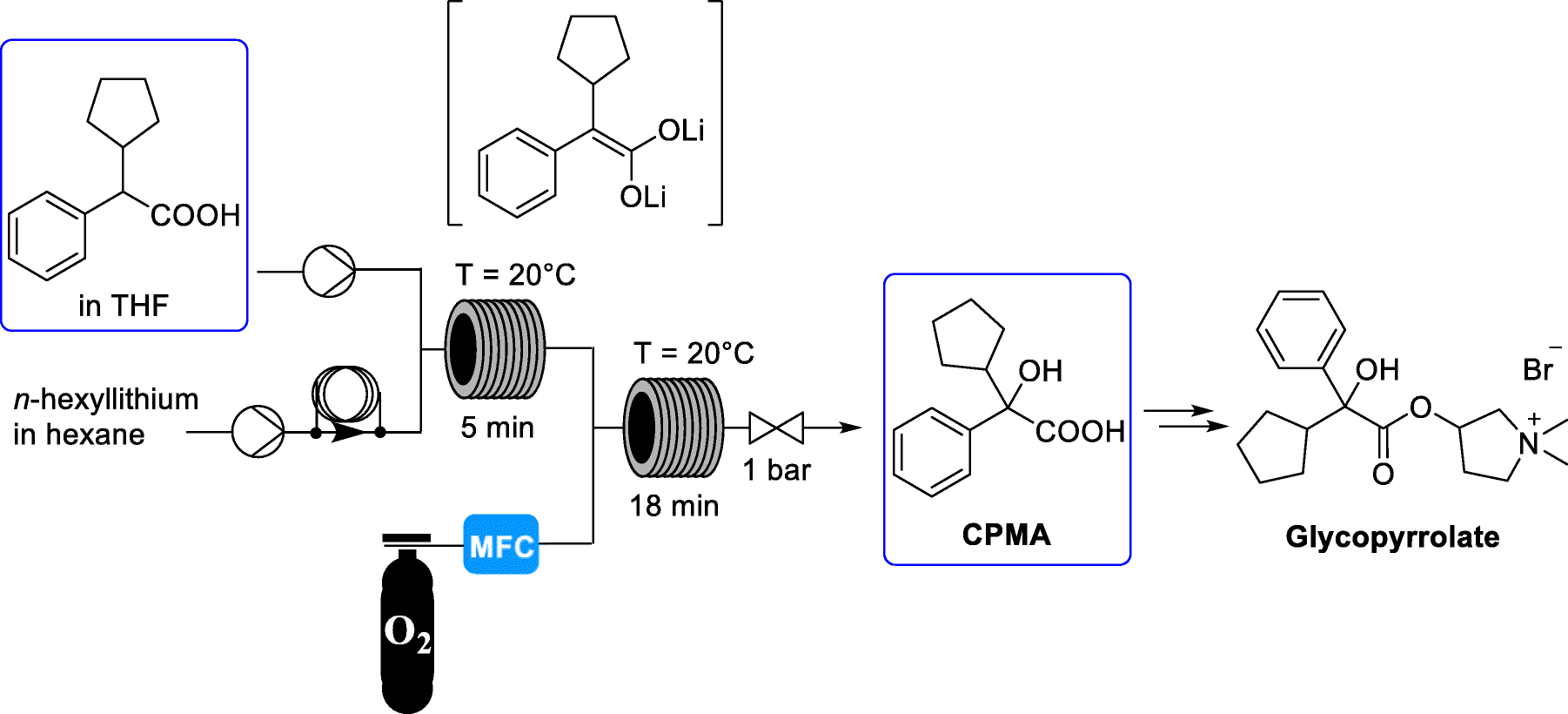
Sequential α-lithiation and aerobic oxidation of an arylacetic acid – continuous-flow synthesis of cyclopentyl mandelic acid

Open Access

Communications

Image result for Glycopyrronium bromide synthesis

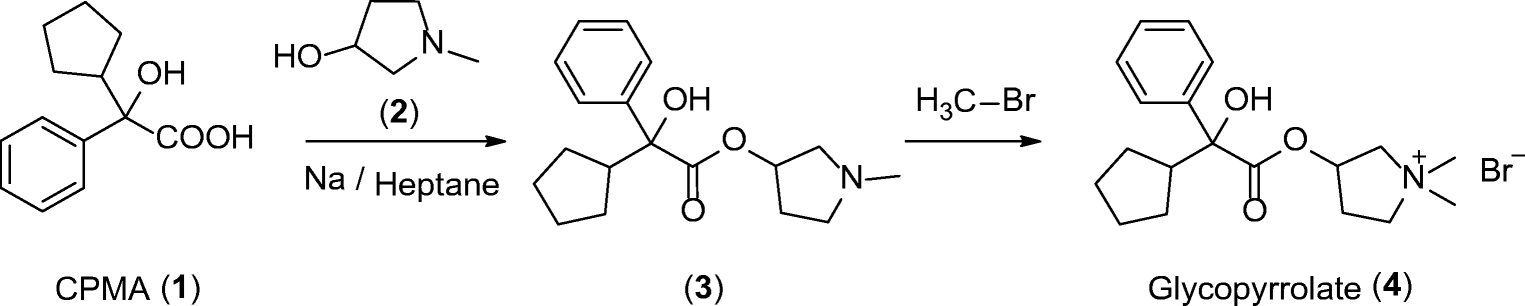
The medicinal properties of glycopyrronium bromide (glycopyrrolate, 4) were first identified in the late 1950s [1]. Glycopyrrolate is an antagonist of muscarinic cholinergic receptors and is used for the treatment of drooling or excessive salivation (sialorrhea) [2], excess sweating (hyperhidrosis) [3], and overactive bladder and for presurgery treatment. In addition, it has recently been introduced as an effective bronchodilator for the treatment of chronic obstructive pulmonary disease (COPD) for asthma patients [4]. Glycopyrrolate displays few side effects because it does not pass through the blood brain barrier. Cyclopentyl mandelic acid (CPMA, 1), or its corresponding ester derivatives, are key intermediates in the synthetic routes to 4. CPMA (1) reacts with 1-methyl-pyrrolidin-3-ol (2) to form tertiary amine 3N-Methylation of 3 by methyl bromide gives quaternary ammonium salt glycopyrrolate 4 as a racemate (Scheme 1) [5].

Scheme 1

Synthesis of glycopyrrolate 4 from CPMA (1)

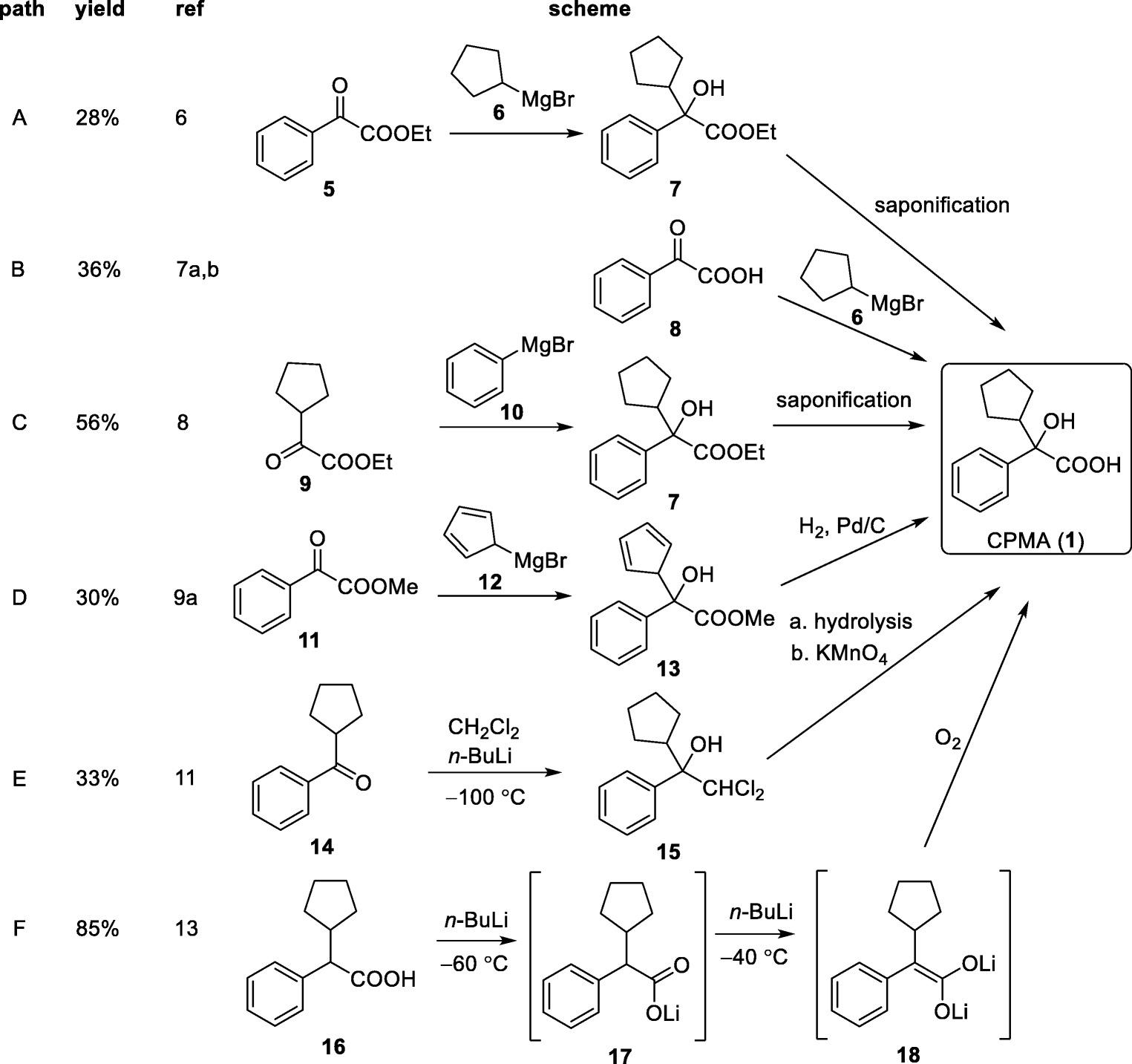
CPMA (1) is a synthetically challenging intermediate to prepare (Scheme 2). Routes A to D are most likely to be the commercially applied methods because these procedures are described in patents [5]. The published descriptions for the yields of 1 range from 28 to 56% for routes A to D. Ethyl phenylglyoxylate is reacted with cyclopentyl magnesium bromide to form an ester which is then hydrolyzed (route A) [6]. Phenylglyoxylic acid can be reacted in a similar manner with cyclopentyl magnesium bromide to directly form 1 (route B) [7]. Alternatively, the inverse addition of phenyl-Grignard reagent to cyclopentyl glyoxylic acid ester is reported (route C) [8]. Cyclopentyl glyoxylic acid ester can also be reacted with cyclopentadienyl magnesium bromide which is followed by an additional hydrogenation step with Pd/C and H2 to afford 1 (route D) [910].

Scheme 2

Existing synthetic pathways to CPMA (1)

PATENT

https://patentscope.wipo.int/search/en/detail.jsf?docId=WO2018154597&recNum=&maxRec=1000&office=&prevFilter=&sortOption=&queryString=&tab=PCTDescription

EXA M PL E S

EXAM PL E 1

Scheme 1

ST E P I

To a stirred solution of N-methyl pyrrol i din- 3-ol (2, 1 equiv) and Et3N (1.2 equiv) in dichloromethane was added a solution of 2-cyclopentyl-2-oxoacetyl chloride (1, 1.1 equiv) in DCM at O °C under nitrogen atmosphere for 20 min. The resulting solution was allowed to stir at room temperature over 10h. After completion, the mixture was quenched with water and extracted with diethyl ether to afford the pure product (3A).

Similarly, the product 3A is also obtained by reaction of 2 with other reagents, phenyl oxalic acid, methyl phenyl oxalate, and phenyl hemi-oxaldehyde respectively as shown in Scheme 1.

ST E P II

3A

To a mixture of bromobenzene (2.2 equiv) and Mg metal (2.2 equiv) in TH F (15 mL) was stirred over a period of 30 min at 0 · C. To this mixture, a solution of 1 -methyl pyrrol idin-3-yl 2-cyclopentyl-2-oxoacetate (3, 1 equiv) in T HF was added in portions over a period of 30 min. Up on completion, the reaction mixture was poured into ice water and extracted with ethyl acetate. The organic layer was separated and concentrated in vacuo. The resulting residue was purified by column chromatography to afford the pure product (5).

ST E P III

To a solution of compound 5 (1 equiv) in acetonitrile and chloroform mixture (10 mL, 2:3) was added methyl bromide (4 equiv). The mixture was stirred at room temperature for 72h. The solvents were evaporated, and the resulting residue was washed with diethyl ether to afford the pure product (6) as a white solid.

EXAM PL E 2

Scheme 2

ST E P I

To a stirred solution of N-methyl pyrrol i din- 3-ol (2, 1 equiv) and Et3N (1.2 equiv) in dichloromethane was added a solution of 2- oxo-2- phenyl acetyl chloride (1.1 equiv) in dichloromethane at 0 °C under nitrogen atmosphere for 15 min. The resulting solution was allowed to stir at room temperature over 12h. After completion, the mixture was quenched with water and extracted with diethyl ether to afford the pure product (3B).

Similarly, the product 3B is also obtained by reaction of 2 with other reagents, phenyl oxalic acid, methyl phenyl oxalate, and phenyl hemi-oxaldehyde respectively as shown in Scheme 2.

ST E P II

To a mixture of cyclopentyl bromide (4, 2.2 equiv) and Mg metal (2.2 equiv) in THF (15 mL) was stirred over a period of 30 min at 0 – C. To this mixture, a solution of 1-methylpyrrolidin-3-yl-2-oxo-2-phenylacetate (3B, 1 equiv) in TH F was added in portions over a period of 30 min. Up on completion, the reaction mixture was poured into ice water and extracted with ethyl acetate. The organic layer was separated and concentrated in vacuo. The resulting residue was purified by column chromatography to afford the pure product (5).

ST E P III

To a solution of compound 5 (1 equiv) in acetonitrile and chloroform mixture (10 mL, 2:3) was added methyl bromide (4 equiv). The mixture was stirred at room temperature for 75h. The solvents were evaporated, and the resulting residue was washed with diethyl ether to afford the pure product (6) as a white solid.

The invention has been described in detail with reference to preferred embodiments thereof. However, it will be appreciated by those skilled in the art that changes may be made in these embodiments without departing from the principles and nature of the invention, the scope of which is defined in the appended claims and their equivalents.

CN102388021A *2009-04-092012-03-21诺瓦提斯公司Process for preparing pyrrolidinium salts
CN102627595A *2012-03-092012-08-08徐奎Method for preparation of glycopyrronium bromide
CN103159659A *2011-12-192013-06-19沈阳药科大学Preparation method of muscarinic receptor antagonist glycopyrronium bromide

References

  1. Jump up^ Bajaj V, Langtry JA (July 2007). “Use of oral glycopyrronium bromide in hyperhidrosis”Br. J. Dermatol157 (1): 118–21. doi:10.1111/j.1365-2133.2007.07884.xPMID 17459043.
  2. Jump up^ “FDA OKs first drug made to reduce excessive sweating”AP News. Retrieved 2018-07-02.
  3. Jump up^ Mier RJ, Bachrach SJ, Lakin RC, Barker T, Childs J, Moran M (December 2000). “Treatment of sialorrhea with glycopyrrolate: A double-blind, dose-ranging study”Arch Pediatr Adolesc Med154 (12): 1214–8. doi:10.1001/archpedi.154.12.1214PMID 11115305.
  4. Jump up^ Tscheng DZ (November 2002). “Sialorrhea – therapeutic drug options”Ann Pharmacother36 (11): 1785–90. doi:10.1345/aph.1C019PMID 12398577.[permanent dead link]
  5. Jump up^ Olsen AK, Sjøgren P (October 1999). “Oral glycopyrrolate alleviates drooling in a patient with tongue cancer”J Pain Symptom Manage18 (4): 300–2. doi:10.1016/S0885-3924(99)00080-9PMID 10534970.
  6. Jump up^ Maria, Sammartano Azia; Claudia, Cassandro; Pamela, Giordano; Andrea, Canale; Roberto, Albera (1 December 2012). “Medical therapy in Ménière’s disease”Audiological Medicine10 (4): 171–177. doi:10.3109/1651386X.2012.718413 – via Taylor and Francis+NEJM.
  7. Jump up^ Kim WO, Kil HK, Yoon DM, Cho MJ (August 2003). “Treatment of compensatory gustatory hyperhidrosis with topical glycopyrrolate”. Yonsei Med. J44 (4): 579–82. doi:10.3349/ymj.2003.44.4.579PMID 12950111.
  8. Jump up^ Kim WO, Kil HK, Yoon KB, Yoon DM (May 2008). “Topical glycopyrrolate for patients with facial hyperhidrosis”Br. J. Dermatol158 (5): 1094–7. doi:10.1111/j.1365-2133.2008.08476.xPMID 18294315.
  9. Jump up^ “EPAR – Product information for Seebri Breezhaler” (PDF). European Medicines Agency. 28 September 2012.
  10. Jump up^ Tzelepis G, Komanapolli S, Tyler D, Vega D, Fulambarker A (January 1996). “Comparison of nebulized glycopyrrolate and metaproterenol in chronic obstructive pulmonary disease”Eur. Respir. J9 (1): 100–3. doi:10.1183/09031936.96.09010100PMID 8834341.
  11. Jump up^ Haddad EB, Patel H, Keeling JE, Yacoub MH, Barnes PJ, Belvisi MG (May 1999). “Pharmacological characterization of the muscarinic receptor antagonist, glycopyrrolate, in human and guinea-pig airways”Br. J. Pharmacol127 (2): 413–20. doi:10.1038/sj.bjp.0702573PMC 1566042Freely accessiblePMID 10385241.
  12. Jump up^ Rumpler, M.J.; Colahan, P.; Sams, R.A. (2014). “The pharmacokinetics of glycopyrrolate in Standardbred horses”. J. Vet Pharmacol Ther37 (3): 260–8. doi:10.1111/jvp.12085PMID 24325462.
  13. Jump up^ Hansel TT, Neighbour H, Erin EM, et al. (October 2005). “Glycopyrrolate causes prolonged bronchoprotection and bronchodilatation in patients with asthma”Chest128 (4): 1974–9. doi:10.1378/chest.128.4.1974PMID 16236844.
  14. Jump up^ Gilman MJ, Meyer L, Carter J, Slovis C (November 1990). “Comparison of aerosolized glycopyrrolate and metaproterenol in acute asthma”Chest98 (5): 1095–8. doi:10.1378/chest.98.5.1095PMID 2225951.
Glycopyrronium bromide
Glycopyrronium bromide.svg
Clinical data
Trade names Robinul, Cuvposa, Seebri, Qbrexza, others
License data
Pregnancy
category
  • AU: B2
  • US: B (No risk in non-human studies)
ATC code
Legal status
Legal status
Identifiers
CAS Number
PubChemCID
ChemSpider
UNII
ECHA InfoCard 100.008.990 Edit this at Wikidata
Chemical and physical data
Formula C19H28BrNO3
Molar mass 398.335 g/mol
3D model (JSmol)
Glycopyrronium
Glycopyrrolate.svg
Clinical data
AHFS/Drugs.com Monograph
MedlinePlus a602014
Pregnancy
category
  • US: B (No risk in non-human studies)
Routes of
administration
By mouthintravenous, inhalation
ATC code
Legal status
Legal status
Pharmacokinetic data
Elimination half-life 0.6–1.2 hours
Excretion 85% renal, unknown amount in the bile
Identifiers
CAS Number
PubChem CID
IUPHAR/BPS
DrugBank
ChemSpider
UNII
KEGG
ChEMBL
ECHA InfoCard 100.008.990 Edit this at Wikidata
Chemical and physical data
Formula C19H28NO3+
Molar mass 318.431 g/mol
3D model (JSmol)
///////////Glycopyrronium bromide, гликопиррония бромид بروميد غليكوبيرونيوم 格隆溴铵 596-51-0, Glycopyrrolate, ATC:A03AB02, Use:anticholinergic, antispasmodic, グリコピロニウム臭化物 , 
C[N+]1(CCC(C1)OC(=O)C(C2CCCC2)(C3=CC=CC=C3)O)C.[Br-]

Sucroferric oxyhydroxide, 含糖酸化鉄, スクロオキシ水酸化鉄


Image result for Sucroferric oxyhydroxide KEGG

Image result for Sucroferric oxyhydroxide

Sucroferric oxyhydroxide

Iron sucrose (USP);
Ferric oxide, saccharated;
Sucroferric oxyhydroxide;
Venofer (TN)

含糖酸化鉄;
スクロオキシ水酸化鉄

Molecular Formula: C12H29Fe5Na2O23
Molecular Weight: 866.546 g/mol
CAS: 8047-67-4

CAS REGISTRY NUMBER 12134-57-5, 8047-67-4

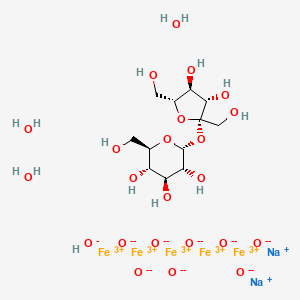
disodium;(2R,3R,4S,5S,6R)-2-[(2S,3S,4S,5R)-3,4-dihydroxy-2,5-bis(hydroxymethyl)oxolan-2-yl]oxy-6-(hydroxymethyl)oxane-3,4,5-triol;iron(3+);oxygen(2-);hydroxide;trihydrate

Iron sugar; Saccharated iron; Sucroferric oxyhydroxide; Saccharated iron oxide; Saccharated ferric oxide; Ferrivenin

Ferric oxyhydroxide; Ferrihydrite; Iron oxyhydroxide; P-TOL; PA-21; PA21-1; Phosphate binder – Vifor Pharma; suroferric oxyhydroxide tablets; Velphoro

NDC 49230-645-51

Iron saccharate (Sucroferric oxyhydroxide or Iron Sucrose) is used as a source of iron in patients with iron deficiency anemia with chronic kidney disease (CKD), including those who are undergoing dialysis (hemodialysis or peritoneal) and those who do not require dialysis. Due to less side effects than iron dextran, iron saccharate is more preferred in chronic kidney disease patients.

Mixture of polynuclear iron(III)-oxyhydroxide, starch and sucrose

VIFOR FRESENIUS MEDICAL CARE RENAL PHARMA FRANCE

Approved in US

Indicated for the control of serum phosphorus levels in patients with chronic kidney disease on dialysis.

THERAPEUTIC CLAIM Oral phosphate binder, treatement of elevated
phosphate levels in patients undergoing dialysis
CHEMICAL DESCRIPTIONS
1. Ferric hydroxide oxide
2. Mixture of iron(III) oxyhydroxide, sucrose, starches
3. Polynuclear iron(III) oxyhydroxide stabilized with sucrose and starches
structure
O =Fe -OH
MOLECULAR FORMULA FeHO2•xC12H22O11•y(C6H10O5)n

SPONSOR Vifor (International) Inc.
CODE DESIGNATIONS PA21
CAS REGISTRY NUMBER 12134-57-5

  • ClassFerric compounds; Hyperphosphataemia therapies
  • Mechanism of ActionPhosphate binding modulators
  • MarketedHyperphosphataemia
  • 24 Jun 2018Biomarkers information updated
  • 19 Jun 2018Kissei Pharmaceutical completes a phase III trial in Hyperphosphataemia (Treatment-experienced) in Japan (PO) (UMIN000023657)
  • 09 Jun 2017Phase-II clinical trials in Hyperphosphataemia in Austria (PO) (NCT03010072)

Image result for Sucroferric oxyhydroxide

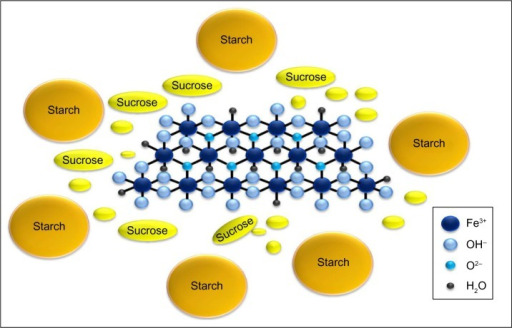
Sucroferric oxyhydroxide is a brown, amorphous powder. The drug substance is relatively poorly defined, so that the manufacturing process is particularly important. Sucroferric oxyhydroxide is prepared by basifying a ferric chloride solution, giving a polynuclear iron(III)-oxyhydroxide suspension which is mixed with potato and maize starches and sucrose. Vifor states that the sucrose stabilises the iron core and thus maintain the high phosphate adsorption capacity while the starches function as processing aids, but they are added simultaneously and the drug substance is probably a complex mixture of species.

The solubility of the active moiety, polynuclear iron oxyhydroxide, is evidently low in the gastrointestinal (GI) tract so that iron absorption is low. Aqueous solubility at different pH has been very poorly quantified. Vifor states that the “sucrose part is soluble in water, iron(III)-oxyhydroxide/starch mixture is practically insoluble in water.” While the iron oxide particle size is important in determining the phosphate binding, it is relatively difficult to directly measure. The sucrose/starch “wrapped” drug substance particle size is established and the process is controlled, but it does not correlate well with phosphate adsorption. Sucroferric oxyhydroxide cannot be controlled in the manner of a well-defined molecular drug and some variability between batches is likely. The drug substance specification includes a phosphate adsorption test. Vifor has tested the adsorption of a range of other in vivo chemical species to sucroferric oxyhydroxide and not identified any likely to be strongly bound, or affect phosphate binding, except for oxalate. Some drugs, however, do interact, for example alendronate is strongly absorbed (and the PI warnings in that context should be generalised to all bisphosphonates, not just identify the single drug in class studied)….https://www.tga.gov.au/sites/default/files/auspar-sucroferric-oxyhydroxide-150219.pdf

EMA

Name Active substance Therapeutic area Date of authorisation / refusal Has current safety alert Status
Velphoro mixture of polynuclear iron(III)-oxyhydroxide, sucrose and starches HyperphosphatemiaRenal Dialysis 26/08/2014   Authorised

Product details

Name Velphoro
Agency product number EMEA/H/C/002705
Active substance mixture of polynuclear iron(III)-oxyhydroxide, sucrose and starches
International non-proprietary name(INN) or common name mixture of polynuclear iron(III)-oxyhydroxide, sucrose and starches
Therapeutic area HyperphosphatemiaRenal Dialysis
Anatomical therapeutic chemical (ATC) code V03AE05
Additional monitoring This medicine is under additional monitoring. This means that it is being monitored even more intensively than other medicines. For more information, see medicines under additional monitoring.

Publication details

Marketing-authorisation holder Vifor Fresenius Medical Care Renal Pharma France
Revision 5
Date of issue of marketing authorisation valid throughout the European Union 26/08/2014

Contact address:

Vifor Fresenius Medical Care Renal Pharma France
100-101 Terrasse Boieldieu
Tour Franklin- La Défense 8
92042 Paris la Défense Cedex
France

http://www.ema.europa.eu/docs/en_GB/document_library/EPAR_-_Product_Information/human/002705/WC500175254.pdf

Sucroferric oxyhydroxide (INN; trade name Velphoro, by Vifor Fresenius Medical Care Renal Pharma) is a non-calcium, iron-based phosphate binder used for the control of serum phosphorus levels in adult patients with chronic kidney disease (CKD) on haemodialysis(HD) or peritoneal dialysis (PD).[1] It is used in form of chewable tablets.

Hyperphosphatemia

In a healthy person, normal serum phosphate levels are maintained by the regulation of dietary absorptionbone formation and resorption, equilibration with intracellular stores, and renal excretion.[2] When kidney function is impaired, phosphate excretion declines. Without specific treatment, hyperphosphataemia occurs almost universally, despite dietary phosphate restriction and conventional dialysis treatment.[2][3] In patients on dialysis, hyperphosphataemia is an independent risk factor for fracturescardiovascular disease and mortality.[4][5] Abnormalities in phosphate metabolism such as hyperphosphatemia are included in the definition of the new chronic kidney disease–mineral and bone disorder (CKD-MBD).[5]

Structure and mechanism of action

Sucroferric oxyhydroxide comprises a polynuclear iron(III)-oxyhydroxide core that is stabilised with a carbohydrate shell composed of sucrose and starch.[6][7] The carbohydrate shell stabilises the iron(III)-oxyhydroxide core to preserve the phosphate adsorption capacity.

Dietary phosphate binds strongly to sucroferric oxyhydroxide in the gastrointestinal (GI) tract. The bound phosphate is eliminated in the faeces and thereby prevented from absorption into the blood. As a consequence of the decreased dietary phosphate absorption, serum phosphorus concentrations are reduced.

Medical uses

Sucroferric oxyhydroxide is approved by the United States Food and Drug Administration (FDA) and the European Medicines Agency (EMA) for the control of serum phosphorus levels in patients with chronic kidney disease (CKD) on dialysis.[1][8]

Adverse effects

The most frequently reported adverse drug reactions reported from trials were diarrhoea and discoloured faeces.[1][8] The vast majority of gastrointestinal adverse events occurred early during treatment and abated with time under continued dosing.[1]

Interactions

Drug-interaction studies and post hoc analyses of Phase 3 studies showed no clinically relevant interaction of sucroferric oxyhydroxide with the systemic exposures to losartanfurosemideomeprazoledigoxin, and warfarin,[9] the lipid-lowering effects of statins,[10] and oral vitamin D receptor agonists.[11] According to the European label (Summary of Product Characteristics), medicinal products that are known to interact with iron (e.g. doxycycline) or have the potential to interact with Velphoro should be administered at least one hour before or two hours after Velphoro.[1] This allows sucroferric oxyhydroxide to bind phosphate as intended and be excreted without coming into contact with medications in the gut that it might interact with. According to the US prescribing information, Velphoro should not be prescribed with oral levothyroxine.[8] The combination of sucroferric oxyhydroxide and levothyroxine is contraindicated because sucroferric oxyhydroxide contains iron, which may cause levothyroxine to become insoluble in the gut, thereby preventing the intestinal absorption of levothyroxine.[12]

Chewability

The chewability of sucroferric oxyhydroxide compares well with that of Calcimagon, a calcium containing tablet used as a standard for very good chewability.[13] Tablets of sucroferric oxyhydroxide easily disintegrated in artificial saliva.

Effectiveness and phosphate binding

Clinical Phase 3 studies showed that sucroferric oxyhydroxide achieves and maintains phosphate levels in compliance with the KDOQI guidelines.[14][15] The reduction in serum phosphate levels of sucroferric oxyhydroxide-treated patients was non-inferior to that in sevelamer-treated patients. The required daily pill burden was lower with sucroferric oxyhydroxide.[14]

Sucroferric oxyhydroxide binds phosphate under empty and full stomach conditions and across the physiologically relevant pH range of the GI tract.[7]

In a retrospective, real-world study, hyperphosphatemic peritoneal dialysis patients who were prescribed to switch to sucroferric oxyhydroxide from sevelamer, lanthanum carbonate, or calcium acetate had significant reductions in serum phosphorus levels, along with a 53% decrease in the prescribed daily pill burden.[16]

Sucroferric oxyhydroxide nonproprietary drug name

https://www.ama-assn.org/resources/doc/…/sucroferricoxyhydroxide.pdf

1. February 27, 2013. N13/36. STATEMENT ON A NONPROPRIETARY NAME ADOPTED BY THE USAN COUNCIL. USAN (ZZ-19). SUCROFERRIC 

The US Food and Drug Administration has given the green light to Vifor Fresenius Medical Care Renal Pharma’s hyperphosphatemia drug Velphoro.

The approval for Velphoro (sucroferric oxyhydroxide), formerly known as PA21, is based on Phase III data demonstrated that the drug successfully controls the accumulation of phosphorus in the blood with the advantage of a much lower pill burden than the current standard of care in patients with chronic kidney disease on dialysis, namely Sanofi’s Renvela (sevelamer carbonate). read this at

http://www.pharmatimes.com/Article/13-11-28/FDA_okays_Vifor_Fresenius_phosphate_binder_Velphoro.aspx

Velphoro (PA21) receives US FDA approval for the treatment of hyperphosphatemia in Chronic Kidney Disease Patients on dialysis
Velphoro (sucroferric oxyhydroxide) has received US Food and Drug Administration (FDA) approval for the control of serum phosphorus levels in patients with Chronic Kidney Disease (CKD) on dialysis. Velphoro will be launched in the US by Fresenius Medical Care North America in 2014.

Velphoro (previously known as PA21) is an iron-based, calcium-free, chewable phosphate binder. US approval was based on a pivotal Phase III study, which met its primary and secondary endpoints. The study demonstrated that Velphoro® successfully controls hyperphosphatemia with fewer pills than sevelamer carbonate, the current standard of care in patients with CKD on dialysis. The average daily dose to control hyperphosphatemia was 3.3 pills per day after 52 weeks.

Velphoro was developed by Vifor Pharma. In 2011, all rights were transferred to Vifor Fresenius Medical Care Renal Pharma, a common company of Galenica and Fresenius Medical Care. In the US, Velphorowill be marketed by Fresenius Medical Care North America, a company with a strong marketing and sales organization, and expertise in dialysis care. The active ingredient of Velphoro is produced by Vifor Pharma in Switzerland.

Hyperphosphatemia, an abnormal elevation of phosphorus levels in the blood, is a common and serious condition in CKD patients on dialysis. Most dialysis patients are treated with phosphate binders. However, despite the availability of a number of different phosphate binders, up to 50% of patients depending on the region are still unable to achieve and maintain their target serum phosphorus levels. In some patients, noncompliance due to the high pill burden and poor tolerability appear to be key factors in the lack of control of serum phosphorus levels. On average, dialysis patients take approximately 19 pills per day with phosphate binders comprising approximately 50% of the total daily pill burden. The recommended starting dose of Velphoro is 3 tablets per day (1 tablet per meal).

Full results from the pivotal Phase III study involving more than 1,000 patients were presented at both the 50th ERA-EDTA (European Renal Association European Dialysis and Transplant Association) Congress in Istanbul, Turkey, in May 2013, and the American Society of Nephrology (ASN) Kidney Week in Atlanta, Georgia, in November 2013. Velphorowas shown to be a potent phosphate binder, with lower pill burden and a good safety profile.

Based on these data, Vifor Fresenius Medical Care Renal Pharma believes that Velphoro offers a new and effective therapeutic option for the control of serum phosphorus levels in patients with chronic kidney disease on dialysis.
The regulatory processes in Europe, Switzerland and Singapore are ongoing and decisions are expected in the first half 2014. Further submissions for approval are being prepared.

PATENT

https://patents.google.com/patent/WO2016038541A1/en

Hyperphosphatemia is associated with significant increase in morbidity and mortality, and may induce severe complications, such as hypocalcemia, decreasing of vitamin-D production and metastatic calcification. Hyperphosphatemia is also contributing to the increased incidence of cardiovascular disease among dialysis-dependent patients. The phosphate binding capacity of iron oxide hydroxides is known in the art. The possible medical application of iron hydroxides and iron oxide hydroxides as phosphate adsorbents is also described.

US 4,970,079 patent discloses a method of controlling serum phosphate level in patients by iron oxy-hydroxides which bind to ingested phosphate. US 5,514,281 patent also discloses a process for the selective elimination of inorganic phosphate from body fluids by using a polynuclear metal oxyhydroxide preferably iron (III) oxyhydroxide.

US 6,174,442 patent describes an adsorbent for phosphate and a process for the preparation thereof, which contains polynuclear β-iron hydroxide stabilized by carbohydrates and/or humic acid.

In order to obtain an iron-based compound which can be used as a pharmaceutical, it is necessary to have an iron-based compound which is stable. It is known that iron oxide- hydroxide is not a stable compound with time ageing occurs. Ageing usually not only involves crystallization but also particle enlargement. Such ageing may alter the phosphate binding of an iron oxide -hydroxide based phosphate adsorbent. Accordingly, there exists a need for a process for manufacturing of an iron containing phosphate adsorbent. The process needs to be scalable, robust and consistently producing an iron containing phosphate adsorbent of the required pharmaceutical grade.

Examples

In examples which are intended to illustrate embodiments of the invention but which are not intended to limit the scope of the invention: ) Method of Making an Iron Containing Phosphate Adsorbent

To a solution of 1.96 kg sodium carbonate dissolved in 12.5 liter water, solution of 2.5 kg iron (III) chloride hexahydrate dissolved in 17.5 liter water was added at a temperature of 5 – 10°C. The resulting mixture was stirred for 90 to 120 minutes at 5 – 10°C. (25.0×3) liter water was added to the reaction mass and raised the temperature at 15 – 20°C with stirring. Stopped the stirring, settled precipitate and the supernatant water was removed. The precipitate was filtered and washed with 1.25 liter water. A suspension of the precipitate was prepared in water. To this, 875.0 gm sucrose and 695.0 gm potato starch were added and stirred for 120 minutes at 25 – 35°C. Cooled the reaction mass at 10 – 15°C and stirred for 90 to 120 minutes. 25.0 liters cold acetone was added to the reaction mass at 10 – 15°C and stirred for 90 to 120 minutes. The final product was filtered and washed with 1.25 liter cold acetone and further dried under vacuum at 30-35°C.

Yield: 2.08 kg ) Large-scale Method of Making an Iron Containing Phosphate Adsorbent

An aqueous solution of sodium carbonate and an aqueous solution of iron (III) chloride hexahydrate were mixed at a temperature of 5 – 10°C, optionally in the presence of solvent- 1. A volume of aqueous solution of sodium carbonate necessary to maintain the pH at about 7.0 to form a colloidal suspension of ferric hydroxide. The resulting mixture was stirred for 90 to 120 minutes at 5 – 10°C. Water was added to the reaction mass with stirring. Stopped the stirring, settled precipitated product and the water was decanted or siphoned. The precipitated product was further filtered and washed with using water. Suspension of the precipitated product was prepared in the water. Subsequently, sucrose and starch were added in to the suspension and stirred for 120 minutes at 25 – 35°C. Cooled the reaction mixture at 10 – 15°C and stirred for 90 to 120 minutes. Solvent-2 was added to the reaction mixture at 10 – 15°C and stirred for 90 to 120 minutes. The product was filtered and washed with the solvent-2 and further dried under vacuum at 30-35°C. Few illustrative examples provided in Table- 1, wherein the iron containing phosphate adsorbents were prepared according to the process of example-2 using the respective combination of Solvent- 1 and Solvent-2 as given in the table:

Table-1

Figure imgf000013_0001

3) Physical Properties of an Iron Containing Phosphate Adsorbents prepared as per above example-2.

> BET active Surface Area:

· Instrument : Surface area analyzer

• Condition : Surface area (m2/gm) at N2.P/P0 = 10%

Table-2

Figure imgf000013_0002

> Phosphate Binding Capacity at pH 3.0:

· Method : Ion Chromatography Instrument : Metrohm IC equipped with pump, Injector, conductivity detector and recorder.

Column Dionex Ion Pac AS-11 (4.0 x 250mm), 13μπι

Guard column Dionex Ion Pac AG-11 (4.0 x 50mm), 13μπι

Buffer preparation Weigh accurately about 2.118g of Sodium carbonate and 180mg of Sodium hydroxide in 1700mL water.

Mobile phase preparation : Buffer and acetonitrile (1700:300).

Results: Phosphate binding of an iron containing phosphate adsorbents obtained by following the process of the present invention found in the range of 30 mg/gm to 60 mg/gm. Particle Size Distribution:

Instrument Model : Malvern Mastersizer 2000 Particle size analyzer

Sampling Unit : Hydro 2000S

Analysis Model : General Purpose

Dispersant : 0.1% Span 85 in n-Hexane

Dispersant RI : 1.380

Stirrer Speed : 2200 RPM

Absorption : 1

Particle RI : 1.5

Obscuration : 10% to 20%

Sample Measurement time : 12 seconds

Background Measurement time : 12 seconds Table-3

Particle size distribution

Example no.

d(0.9) (μηι)

3d 43.67

3e 65.37

3f 37.75

Publication numberPriority datePublication dateAssigneeTitle
US4970079A1989-06-051990-11-13Purdue Research FoundationMethod and composition of oxy-iron compounds for treatment of hyperphosphatemia
US5514281A1992-11-241996-05-07B. Braun Melsungen AgProcess for the selective elimination of inorganic phosphate from liquids by means of adsorbent materials modified with polynuclear metal oxyhydroxides
US6174442B11995-12-192001-01-16Vifor (International) AgAdsorbent for phosphate from an aqueous medium, production and use of said adsorbent
EP1932808A1 *2006-12-142008-06-18Novartis AGIron(III)-Carbohydrate based phosphate adsorbent
WO2009062993A1 *2007-11-162009-05-22Vifor (International) AgPharmaceutical compositions
WO2010015827A2 *2008-08-052010-02-11Medical Research CouncilPhosphate binding materials and their uses

Image result for Sucroferric oxyhydroxide KEGG

References

  1. Jump up to:a b c d e “Velphoro (sucroferric oxyhydroxide). Summary of Product Characteristics”(PDF). EMA. Archived from the original on October 21, 2014. Retrieved 24 October 2014.
  2. Jump up to:a b Jha V, Garcia-Garcia G, Iseki K, Li Z, Naicker S, Plattner B, Saran R, Wang AY, Yang CW (July 2013). “Chronic kidney disease: global dimension and perspectives”. Lancet382(9888): 260–72. doi:10.1016/S0140-6736(13)60687-XPMID 23727169.
  3. Jump up^ Hutchison AJ, Smith CP, Brenchley PE (September 2011). “Pharmacology, efficacy and safety of oral phosphate binders”. Nature Reviews. Nephrology7 (10): 578–89. doi:10.1038/nrneph.2011.112PMID 21894188.
  4. Jump up^ Isakova T, Gutiérrez OM, Chang Y, Shah A, Tamez H, Smith K, Thadhani R, Wolf M (February 2009). “Phosphorus binders and survival on hemodialysis”Journal of the American Society of Nephrology20 (2): 388–96. doi:10.1681/ASN.2008060609PMC 2637053Freely accessiblePMID 19092121.
  5. Jump up to:a b “KDIGO clinical practice guideline for the diagnosis, evaluation, prevention, and treatment of Chronic Kidney Disease-Mineral and Bone Disorder (CKD-MBD)”. Kidney International Supplement76 (113): S1–130. August 2009. doi:10.1038/ki.2009.188PMID 19644521.
  6. Jump up^ Vifor Fresenius Medical Care Renal Pharma. Product Monograph 2015.
  7. Jump up to:a b Wilhelm M, Gaillard S, Rakov V, Funk F (April 2014). “The iron-based phosphate binder PA21 has potent phosphate binding capacity and minimal iron release across a physiological pH range in vitro”. Clinical Nephrology81 (4): 251–8. doi:10.5414/cn108119PMID 24656315.
  8. Jump up to:a b c “Highlights of Prescribing information for Velphoro”. Fresenius. September 2014.
  9. Jump up^ Chong E, Kalia V, Willsie S, Winkle P (December 2014). “Drug-drug interactions between sucroferric oxyhydroxide and losartan, furosemide, omeprazole, digoxin and warfarin in healthy subjects”Journal of Nephrology27 (6): 659–66. doi:10.1007/s40620-014-0080-1PMC 4242982Freely accessiblePMID 24699894.
  10. Jump up^ Levesque V, Chong EMF, Moneuse P (2013). “Post-hoc analysis of pharmacodynamic interaction of PA21 with statins in a Phase 3 study of PA21 in dialysis patients with hyperphosphatemia”. J Am Soc Nephrol24: 758A.
  11. Jump up^ Floege J, Botha J, Chong E et al. (31 May 2014). PA21 does not interact with oral vitamin D receptor agonists: a post hoc analysis of a Phase 3 study. ERA-EDTA congress. Amsterdam, The Netherlands. Abstract no. SP257.
  12. Jump up^ Prescribing Information. Synthroid (levothyroxine). Chicago, IL: Abbott Laboratories. March 1, 2008.
  13. Jump up^ Lanz M, Baldischweiler J, Kriwet B, Schill J, Stafford J, Imanidis G (December 2014). “Chewability testing in the development of a chewable tablet for hyperphosphatemia”. Drug Development and Industrial Pharmacy40 (12): 1623–31. doi:10.3109/03639045.2013.838583PMID 24010939.
  14. Jump up to:a b Floege J, Covic AC, Ketteler M, Rastogi A, Chong EM, Gaillard S, Lisk LJ, Sprague SM (September 2014). “A phase III study of the efficacy and safety of a novel iron-based phosphate binder in dialysis patients”Kidney International86 (3): 638–47. doi:10.1038/ki.2014.58PMC 4150998Freely accessiblePMID 24646861.
  15. Jump up^ Floege J, Covic AC, Ketteler M, Mann JF, Rastogi A, Spinowitz B, Chong EM, Gaillard S, Lisk LJ, Sprague SM (June 2015). “Long-term effects of the iron-based phosphate binder, sucroferric oxyhydroxide, in dialysis patients”Nephrology, Dialysis, Transplantation30(6): 1037–46. doi:10.1093/ndt/gfv006PMC 4438742Freely accessiblePMID 25691681.
  16. Jump up^ Kalantar-Zadeh K, Parameswaran V, Ficociello LH, Anderson L, Ofsthun NJ, Kwoh C, Mullon C, Kossmann RJ, Coyne DW (2018). “Real-World Scenario Improvements in Serum Phosphorus Levels and Pill Burden in Peritoneal Dialysis Patients Treated with Sucroferric Oxyhydroxide”American Journal of Nephrology47 (3): 153–161. doi:10.1159/000487856PMC 5906196Freely accessiblePMID 29514139.
Sucroferric oxyhydroxide
Clinical data
Trade names Velphoro
AHFS/Drugs.com Consumer Drug Information
License data
Pregnancy
category
  • US: B (No risk in non-human studies)
  • EU, Japan: No risk in non-human studies
Routes of
administration
Oral (chewable tablets)
ATC code
Legal status
Legal status
  • US: ℞-only
  • EU: Rx only
  • Japan: prescription only
Chemical and physical data
Formula Varies

FDA Orange Book Patents

FDA Orange Book Patents: 1 of 2 (FDA Orange Book Patent ID)
Patent 6174442
Expiration Dec 19, 2018
Applicant VIFOR FRESENIUS
Drug Application N205109 (Prescription Drug: VELPHORO. Ingredients: SUCROFERRIC OXYHYDROXIDE)
FDA Orange Book Patents: 2 of 2 (FDA Orange Book Patent ID)
Patent 9561251
Expiration Jan 23, 2030
Applicant VIFOR FRESENIUS
Drug Application N205109 (Prescription Drug: VELPHORO. Ingredients: SUCROFERRIC OXYHYDROXIDE)
Patent ID

Title

Submitted Date

Granted Date

US6174442 Adsorbent for phosphate from an aqueous medium, production and use of said adsorbent
1998-06-02
2001-01-16
US9561251 PHARMACEUTICAL COMPOSITIONS
2008-11-13
2010-09-30

/////////////Sucroferric oxyhydroxide, EU 2014, Iron sugar, Saccharated iron, Sucroferric oxyhydroxide, Saccharated iron oxide, Saccharated ferric oxide, Ferrivenin, 含糖酸化鉄, スクロオキシ水酸化鉄 , NDC 49230-645-51

C(C1C(C(C(C(O1)OC2(C(C(C(O2)CO)O)O)CO)O)O)O)O.O.O.O.[OH-].[O-2].[O-2].[O-2].[O-2].[O-2].[O-2].[O-2].[O-2].[Na+].[Na+].[Fe+3].[Fe+3].[Fe+3].[Fe+3].[Fe+3]

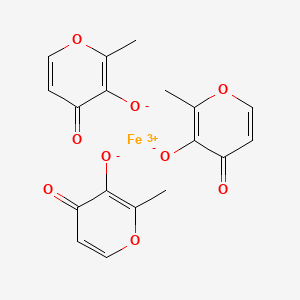
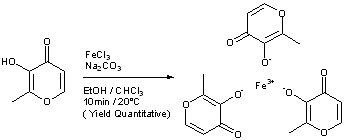
Ferric Maltol, マルトール第二鉄


Ferric maltol.png

Ferric Maltol

Iron, tris(3-hydroxy-2-methyl-4H-pyran-4-onato-O3,O4)-

Molecular Formula: C18H15FeO9
Molecular Weight: 431.154 g/mol

iron(3+);2-methyl-4-oxopyran-3-olate

RN: 33725-54-1
UNII: MA10QYF1Z0

Feraccru

Ferric maltol; UNII-MA10QYF1Z0; MA10QYF1Z0; Ferric maltol (INN); Ferric maltol [INN]; 33725-54-1

Shield Therapeutics, under license from Vitra Pharmaceuticals

UPDATE

  • Originator University of Cambridge; University of London
  • Developer Shield Therapeutics
  • Class Antianaemics; Ferric compounds; Pyrones; Small molecules
  • Mechanism of Action Iron replacements
  • Marketed Iron deficiency anaemia

Most Recent Events

  • 26 Jul 2019 Registered for Iron deficiency anaemia (In adults) in USA (PO)
  • 24 Apr 2019 Swissmedic approves a extension of the approved indication for ferric maltol to include treatment of all adults with iron deficiency (ID) with or without anaemia
  • 14 Mar 2019 The European Patent Office decides in favour of Shield Therapeutics in relation to the group’s patent No. 2 668 175

The US Food and Drug Administration (FDA) has approved oral ferric maltol(Accrufer, Shield Therapeutics) AUG 2019 for the treatment of iron deficiency in adults.

The product is already approved in the European Union and Switzerland for the treatment of iron deficiency in adults, where it is sold as Feraccru.

OLD DATA NDA filing expected in US in 2H 2018, Ph 3 trial is planned in 2018/19 for treatment of iron deficiency anemia (IDA) in children., Expected dose form: Oral Capsule; 30 mg

Treatment of iron deficiency anemia (IDA) associated with inflammatory bowel disease (IBD) and Chronic Kidney disease.

Iron deficiency anaemia (IDA) occurs when iron levels are insufficient to support red blood cell production and is defined – according to the WHO – as haemoglobin levels below 13 g/dL in men over 15 years, below 12 g/dL in non-pregnant women over 15 years, and below 11 g/dL in pregnant women. Iron is absorbed at the apical surface of enterocytes to be transported by ferroportin, the only known iron exporter, across the basolateral surface of the enterocyte into circulation. Inflammation from IBD interferes with iron absorption by causing an increase in hepcidin, a peptide hormone synthesized in the liver that inhibits ferroportin activity. Anaemia is the most common extra-intestinal complication of inflammatory bowel disease (IBD) and although it often involves a combination of IDA and anaemia of chronic disease, IDA remains an important contributor in this condition due to chronic intestinal bleeding and decreased iron intake (from avoidance of foods that may exacerbate symptoms of IBD). In a variety of populations with IBD, the prevalence of iron deficiency anaemia ranges from 36%-76%. The serum markers of iron deficiency are low ferritin, low iron, raised total iron binding capacity, raised red cell protoporhyrin and increased transferrin binding receptor (sTfR). Serum ferritin is the most powerful test for iron deficiency. The cut-off level of ferritin which is diagnostic varies between 12-15 µg/L. Higher levels of serum ferritin do not exclude the possibility of iron deficiency, and a serum ferritin level of <100 μg/L may still be consistent with iron deficiency in patients with IBD. A transferrin saturation of <16% is indicative of iron deficiency, either absolute or functional. Other findings on a complete blood count panel that are suggestive of iron deficiency anaemia, but are not considered diagnostic, include microcytosis, hypochromia, and elevation of red cell distribution width.

A deficiency of iron can have a significant impact on a patient’s quality of life. Appropriate diagnosis and treatment of iron deficiency anaemia are important to improve or maintain the quality of life of patients. The goals of treatment are to treat the underlying cause, limit further blood loss or malabsorption, avoid blood transfusions in haemodynamically stable patients, relieve symptoms, and improve quality of life. More specifically, therapeutic goals of treatment include normalizing haemoglobin levels within 4 weeks (or achieving an increase of >2 g/dL) and replenishing iron stores (transferrin saturation >30%). Oral iron supplementation has been considered standard treatment because of an established safety profile, lower cost, and ease of administration. It has been shown to be effective in correcting anaemia and repleting iron stores. One concern with higher doses of daily oral iron is intolerance due to GI side effects. Symptoms include nausea, vomiting, diarrhea, abdominal pain, constipation, and melena-like stools. Guidelines on the Diagnosis and Management of Iron Deficiency and Anaemia in Inflammatory Bowel Diseases recommend IV iron therapy over oral iron supplementation in the treatment of iron deficiency anaemia in patients with IBD, citing faster and prolonged response to treatment, decreased irritation of existing GI inflammation, improved patient tolerance, and improved quality of life. Patients with severe anaemia (haemoglobin level of <10 g/dL), failure to respond or intolerance to oral iron therapy, severe intestinal disease or patients receiving concomitant erythropoietin are recommended indications for IV iron therapy. Other conditions where patients should be considered for first-line IV therapy over oral therapy include congestive heart failure, upper GI bleeding, and in situations where rapid correction of anaemia may be required.

Across EU there are several iron (Fe+2) oral preparations as ferrous fumarate, ferrous gluconate, ferrous sulphate and ferrous glycine sulfate, formulated as tablet, solution or gastroresistent capsules. All ferrous compounds are oxidised in the lumen of the gut or within the mucosa with release of activated hydroxyl radicals, which may attack the gut wall and can effect a range of gastrointestinal symptoms and discomfort. Ferric preparations also exist but with less bioavailability. Across EU there are also several IV products on the market: iron (III) hydroxide dextran complex, iron sucrose, ferric carboxymaltose, iron isomaltoside. IV iron therapy, however, is inconvenient, invasive and associated with the risk of rare but serious hypersensitivityreactions; it is used in those situations when oral preparations cannot be used or when there is a need to deliver iron rapidly. Feraccru is a trivalent iron, oral iron replacement preparation. The active substance of Feraccru is ferric maltol (also known as 3-hydroxy-2-methyl-4H-pyrane-4-one iron (III) complex, or ST10, or ferric trimaltol or ferric maltol) an oral ferric iron/maltol complex. It is presented as red hard gelatine capsules containing 30 mg iron (ferric iron). Maltol is a sugar derivative that strongly chelates iron in the ferric form (FeIII) rendering the iron stable and available for absorption. Upon dissociation of the ferric maltol complex, the maltol molecules are absorbed and glucuronidated in the intestinal wall, and within the liver during first pass metabolism, and subsequently eliminated from the body in the urine. The iron is absorbed via the endogenous dietary iron uptake system. The indication finally agreed with the CHMP was: Feraccru is indicated in adults for the treatment of iron deficiency anaemia (IDA) in patients with inflammatory bowel disease (IBD) (see section 5.1). The proposed dosage is one 30 mg capsule twice daily on an empty stomach, corresponding to 60 mg ferric iron per day. There was agreement in the paediatric investigation plan to grant a deferral and a waiver for iron as iron (III)-maltol complex (EMEA-001195-PIP01-11).The PDCO granted a waiver in infants under 6 months of age and a referral for the completion of the planned paediatric studies (ST10-021 PK-PED/ST10-01-102, an open label, randomised, multiple-dose, parallel PK study and ST10-01-303, a randomised, open label comparative safety and efficacy study of ST10 and oral ferrous sulphate as comparator) until the adult studies are completed.

http://www.ema.europa.eu/docs/en_GB/document_library/EPAR_-_Public_assessment_report/human/002733/WC500203504.pdf

SYN

Patent

https://patents.google.com/patent/WO2017167963A1/en

The sugar derivative maltol is a hydroxypyrone (IUPAC name: 3- hydroxy-2-methyl-4£f-pyran-4-one) and it strongly chelates iron and the resulting complex (ferric trimaltol) is well absorbed, unlike many other ferric iron therapies. Ferric trimaltol appears well tolerated even in populations highly susceptible to gastrointestinal side-effects, such as IBD patients (Harvey et al . , 1998), and as such it provides a valuable alternative to patients who are intolerant of oral ferrous iron products, notably in place of intravenous iron. Clinical trials using ferric trimaltol have been carried out, see for example, Gasche et al., 2015.

However, despite the evidence of bioavailability and tolerability for ferric trimaltol, its clinical development has been limited by the absence of adequate synthetic routes. In particular, most manufacturing processes require the use of organic solvents, which increase manufacturing costs, for example to deal with post-synthesis solvent removal, and require additional safety measures, for example to deal with flammability . Critically, solvent-based syntheses are not robust and often generate ferric hydroxide, described in the prior art to be an unwanted impurity of the synthesis.

WO 03/097627 (Vitra Pharmaceuticals Limited) describes the synthesis of ferric trimaltol from iron salts of carboxylic acids in aqueous solution at a pH greater than 7. In a first

synthesis, ferric citrate is added to a solution of sodium hydroxide at room temperature and maltol is added to a second solution of sodium hydroxide at pH 11.6. The ferric citrate solution is added to the maltol solution, leading to the

production of a deep red precipitate. This composition is then evaporated until dryness and the material is powdered and dried. Alternative syntheses are described using ferrous fumarate or ferrous gluconate as the iron carboxylate salt starting material, and by dissolving maltol in sodium carbonate solution in place of sodium hydroxide. However, despite the fact that this process is fully aqueous, several of the iron carboxylate salts employed are expensive, especially as they need to be pharmaceutical grade if the ferric trimaltol is to be suitable for human administration. More importantly, this process introduces high levels of

carboxylates (equimolar to iron or greater) to the synthesis that are not easily removed by filtration or centrifugation of the ferric trimaltol cake. Instead these water soluble contaminants must be washed off (e.g. water washed), but this would result in considerable losses of the product due to the amphipathic nature of ferric trimaltol.

WO 2012/101442 (Iron Therapeutic Holdings AG) describes the synthesis of ferric trimaltol by reacting maltol and a non- carboxylate iron salt in an aqueous solution at alkaline pH .

However, despite the lower cost of non-carboxylate iron salts, pharmaceutically appropriate grades are still required if the ferric trimaltol is to be suitable for human administration and hence are comparatively expensive starting materials.

Importantly, the use of non-carboxylate iron salts (e.g. ferric chloride) results in the addition of considerable levels of the respective counter-anion (e.g. three moles of chloride per every mole of iron) of which a significant part is retained in the filtration (or centrifugation) cake and thus must be washed off. As such, WO 2012/101442 does not address the problem of product losses in WO 03/097627. Furthermore, the addition of a non- carboxylate iron salt (e.g. ferric chloride) to a very alkaline solution, as described in WO 2012/101442, promotes the formation of stable iron oxides, which is an unwanted contaminant in ferric trimaltol . As a consequence, further costly and time-consuming processing of the material would be required for manufacturing .

Overall, the cost of the current aqueous syntheses is driven by regulatory demands for low levels of toxic heavy metals and residual reagents in the final pharmaceutical formulation, which force the use of highly purified, and thus expensive, iron salts as well as thorough washing of the final product (resulting in significant losses of product) . This will impact on the final price of ferric trimaltol and potentially limits patient access to this therapy. As such, there is a need for a process that can use lower iron grades and limited wash cycles, whilst producing ferric trimaltol of adequate purity.

Ferric maltols are a class of compounds that include ferric trimaltol, a chemical complex formed between ferric iron (Fe3+) and the hydroxypyrone, maltol (IUPAC name: 3-Hydroxy-2-methyl-4£f- pyran-4-one) , in a molar ratio of ferric iron to maltol of 3:1. Maltol strongly chelates the ferric iron and the resulting complex (ferric trimaltol which may also be written as ferric tri-maltol) is well absorbed, in contrast to some other ferric iron supplements, fortificants and therapies. Maltol binds metal cations mainly in the form of a dioxobidentate ligand in a similar manner proposed for other 4 ( 1H) -pyranones :

Figure imgf000010_0001

Structure of maltol (3-hydroxy-2-methyl-4 (H) -pyran-4-one) and dioxo-chelation to metal cations (M) such as iron. For ferric trimaltol three maltol groups surround one iron.

Examples

Example 1: Ferric trimaltol from L-lyslne coated ferric hydroxide

Synthesis of lysine-coated ferric hydroxide colloid

14.87g FeCl3. 6H20 was added to 25 mL UHP water and stirred until dissolved. 14.9g NaOH 5M was then added drop-wise to this solution with constant stirring, during which a ferric hydroxide colloid was gradually produced. This colloidal suspension was then added to a L-Lysine suspension (5.02g in 25mL ddH2<D) .

Ferric trimaltol synthesis

7 g NaOH pellets was added to 25 mL UHP water and stirred until dissolved. Next, 24.5g maltol was added and stirred until dissolved. Then, the suspension of lysine-coated ferric

hydroxide colloids was gradually added to the maltol with vigorous stirring, producing a dark red precipitate (with a significant brown hue) . This suspension was incubated overnight during which time it became lighter and the brown hue

disappeared. This precipitate was then recovered by

centrifugation (4500 rpm x 5min) and dried overnight (50°C) .

Example 2: Ferric trimaltol from L-lysine modified ferric hydroxide

Synthesis of lysine-modified ferric hydroxide gel

14.87g FeCl3.6H20 and 5.02g L-Lysine were added to 25 mL UHP water and stirred until dissolved. 32 mL NaOH 5M was then gradually added to this solution producing a ferric hydroxide gel .

Ferric trimaltol synthesis

7 g NaOH pellets was added to 25 mL UHP water and stirred until dissolved. Next, 24.5g maltol was added and stirred until dissolved. Next, the lysine-modified ferric hydroxide gel was gradually added to this solution with vigorous stirring. A 1.2 M HC1 solution was then used to drop the pH of the solution to 10, which was then incubated for 70 min. Finally, a dark red precipitate (i.e., ferric trimaltol) was recovered by

centrifugation (4500 rpmx5min) and dried overnight (45°C) .

Example 3: Absence of ferric hydroxide in ferric trimaltol

Ferric trimaltol is soluble in ethanol whereas ferric hydroxide (a potential contaminant) is not. As such ferric trimaltol powders produced as per Examples 1 and 2 were dissolved in ethanol. The material from Example 2 dissolved completely confirming the absence of iron hydroxides whereas the material from Example 1 did not. This supported the preference in the present invention for ligand modification, rather just surface coating, to ensure full conversion to ferric trimaltol .

Example 4: Ferric trimaltol from tartrate-modified ferric hydroxide

Synthesis of tartrate-modified ferric hydroxide gel

14.87g FeCl3.6H20 (0.055 mol) was added to 25 mL UHP water and stirred until dissolved. 4.12 g tartaric acid (0.0275 mol) was added to this solution and stirred until dissolved. 38 mL NaOH 5M was then gradually added to this solution producing a ferric hydroxide gel .

Ferric trimaltol synthesis

2 g NaOH pellets was added to 25 mL UHP water and stirred until dissolved. Next, 24.5g maltol was added and stirred. This produced a slurry in which most of the maltol remained

undissolved. Next, the tartrate-modified ferric hydroxide gel was gradually added to this solution with vigorous stirring during which the remainder of maltol dissolved. After 15 min a dark red precipitate (i.e. ferric trimaltol) had been formed and pH had stabilised at 8.5. The material was then washed by (1)

centrifuging, (2) disposing of the supernatant and (3)

resuspending in water back to its original volume. Finally, the material was recovered by centrifugation (4500 rpm x 5min) and dried overnight (50°C) . Previously disclosed synthetic processes for the production of ferric trimaltol under aqueous conditions require the addition of NaOH (or other suitable bases) for conversion of maltol from its protonated form to its deprotonated form prior to complexation of iron. However this results in the formation of unwanted sodium ions which must be washed off. In contrast, the use of ferric hydroxides according to the methods of the present invention reduces the requirements for base and associated counter cation (e.g. sodium), which is a favourable feature. Note that ferric hydroxides are represented above as Fe (OH) 3 for illustrative purposes only. Different iron hydroxides possess different structures and elemental compositions (see Cornell & Schwertmann, The Iron Oxides Structure, Properties, Reactions, Occurrence and Uses. 2nd edition, 1996, VCH Publishers, New York) . Example 5: Ferric trimaltol from tartrate-modified ferric hydroxide (with removal of contaminants from ferric hydroxide)

Material prepared as in Example 4, except excess reactants and reaction products (e.g. unbound tartaric acid, sodium chloride) were removed from the ferric hydroxide gel. This was achieved by centrifuging the ferric hydroxide gel after its synthesis and discarding the supernatant, which contained unwanted soluble species. Finally, the ferric hydroxide gel was re-suspended in water back to its original volume prior to being added to a maltol slurry.

Example 6: Ethanolic clean up for ferric trimaltol produced from ligand coated ferric hydroxide

Ferric trimaltol precipitate was purified as it contained an unwanted iron oxide fraction. Part of the wet pellet recovered by centrifugation (4.5 g) was dissolved in 1L ethanol. The iron oxide fraction (which remained undissolved) was then removed by filtration, producing a turbidity-free solution. Next, ethanol was evaporated (40°C in a rotavapor under vacuum) producing a concentrated ferric trimaltol slurry. This was then recovered and oven dried overnight at 50°C.

PATENT

https://patents.google.com/patent/WO2012101442A1/en

Comparative Example 1

Preparation of Iron Trimaltol from Pure Maltol Maltol was dissolved in an aqueous solution of ferric chloride and ferric trimaltol was precipitated upon the addition of sodium hydroxide.

An accurate mass of ferric chloride hexahydrate granules (330g) was dissolved in distilled water to yield a pH of 0.6. To this solution, an equimolar amount of maltol was added (490g in total, initially 250g) and allowed to dissolve with continuous stirring. The pH of this solution was found to be zero and the colour of this solution was deep- purple. Spectroscopy showed that the initial solution was mainly a 1 :1 Fe/maltol mixture with some 1 :2 component. The remaining maltol was added. After an hour of stirring, sodium hydroxide (147g NaOH in 750 ml water) was added dropwise to the solution until a pH of 8.3 was achieved. The solution and precipitate were red. The precipitate was collected using a Buchner funnel under vacuum. The precipitate was dried at 40°C under vacuum.

Maltol is only slightly soluble in an aqueous acidic reaction medium. After an hour of stirring, traces of undissolved maltol were visible on the surface of the ferric chloride/maltol solution, on the walls of the reaction vessel and on the stirrer. Upon addition of sodium hydroxide, there appeared to be lumps of a brownish-black substance on the walls of the reaction vessel and on the stirrer which seemed to add to the impurities in the desired product.

An attempt to heat the ferric chloride/maltol solution so as to assist the maltol to dissolve in the ferric chloride solution resulted in a burnt, off spec, colour iron maltol sample. This method also produces two by-products which consume expensive maltol namely Fe(OH)2 (Maltol) and Fe (OH) (Maltol)2.

The sodium hydroxide solution has to be added extremely slowly to prevent “gumming up” and formation of undesirable lumps at the bottom of the reaction vessel. A yield of about 78% ferric trimaltol was obtained using this method of preparation.

When maltol is added to a ferric chloride solution at a low pH, no ferric trimaltol is formed and ferric hydroxide is generated with ferric monomaltol and a small percentage of ferric dimaltol species. The charge neutralisation of these complexes is either the hydroxy! functional group or the chloride anion. This addition also results in the formation of black deposits and gums consisting of ferric chloride/ferric hydroxide polymers. These black deposits are also produced if the solutions are heated. Therefore it is not possible to obtain the correct stoichiometry for the formation of ferric trimaltol and manufacture a pharmaceutically acceptable product using this method.

The addition of maltol to an aqueous solution of ferric or ferrous chloride was deemed impractical for scale up and manufacturing purposes and Examples 2 to 4 investigate the addition of the iron chlorides to maltol in solution.

The problem of working in an aqueous environment

Ferric chloride as a hydrated ion in aqueous solution is a strong Lewis acid with a Ka of 7x 10³ and ferrous chloride as a hydrated ion in aqueous solution is also a strong Lewis acid with a Ka of 5 x 10“9. Over the desired range for using iron chlorides as starting materials for the synthesis of ferric trimaltol, ferric chloride in aqueous solution has a pH value in the range of 1-3 and ferrous chloride has a pH in the range of 3-5. Furthermore, commercial solutions of iron chlorides have a pH circa 1 because they are stabilised by the addition of hydrochloric acid to prevent the precipitation of ferric hydroxide species.

The present invention recognises that maltol is virtually insoluble at these low pH values and has limited solubility when dissolved in water in the pH range 6-8. The maximum aqueous solubility is 1g/100m! at 20°C. However, the solubility of maltol can be increased to 10g/100ml by heating to near boiling temperatures. Maltol is stable in aqueous solution at these temperatures and this property has been employed in Example 4 to synthesise ferric trimaltol. At low pH values ferric trimaltol is not the preferred species due to disproportionation. In order to obtain significant amounts of ferric trimaltol using a stoichiometric ratio of iron salt to hydroxypyrone of 1 :3, the eventual pH of the solution must exceed 7 since below that pH ferric dimaltol and monomaltol species will exist. Therefore two methods of increasing the pH were researched 1) using sodium carbonate and 2) using sodium hydroxide. Other alkali hydroxides could be used such as potassium hydroxide. The sodium carbonate neutralisation was found to be less preferable due to C02 generation. This research lead to an improved synthesis of ferric trimaltol.

Example 2

Maltol was dissolved in an aqueous solution of sodium hydroxide and iron maltol was precipitated upon the addition of ferric chloride.

In view of some of the difficulties experienced in Example 1 , and the fact that maltol is very soluble in aqueous alkali hydroxide solutions, it was decided to change the manufacturing procedure.

The initial work using this method of preparation showed that a 90% yield was achieved. Various operating parameters were then optimised and the following procedure outlines the final method chosen. A yield of 95% was then achieved. An accurate mass of sodium hydroxide pellets (20g) was dissolved in distilled water to yield a pH of 13.50. An equimolar amount of maltol (63g) was added to this aqueous solution of NaOH to give a clear yellow coloured solution with a pH of 11.6. Almost immediately a stoichiometric amount of ferric chloride (45g) was added slowly to this solution to give a pH of 7.1 and a red precipitate formed, which was then collected using a Buchner funnel under vacuum. The precipitate was then dried at 40°C under vacuum.

Adding the maltol solution in sodium hydroxide to ferric chloride as in method 1 is not preferred since it gives an off spec product and gums and a black precipitate.

Maltol is very soluble in aqueous alkali hydroxide solutions giving a yellow solution. The concentration of the hydroxide solution preferably does not exceed 20%.

This method is advantageous since it has the potential to produce only one by-product viz, ferric hydroxide Fe(OH)3 which consumes some of the iron intended to complex with the maltol. This is not easily measurable in the presence of iron maltol and so the following method was used to measure the ferric hydroxide. Fe(OH)3 is insoluble in ethanol and so the iron maltol product was dissolved in ethanol. It was found that small amounts of Fe(OH)3 may be present in the batches of iron maltol synthesized according to Example 2.

Taking the extremes of the specification, in one embodiment, the amount of Fe(OH)3 present in the active material may not exceed 2 wt. % Fe(OH)3 based on the total weight of the composition. In view of its well known inert characteristics the level of this compound is adequately controlled and a final specification including controlled ferric hydroxide should be acceptable.

The mass balance for maltol and iron was closed at 99%.

A yield of 95% iron maltol was obtained using this method of preparation.

Example 3

Maltol was dissolved in an aqueous solution of Sodium Carbonate and Iron Maltol was precipitated upon the addition of Ferric Chloride.

An accurate mass of sodium carbonate (Na2C03) (53g) was dissolved in distilled water to give a solution having pH = 11.5. An equimolar amount of maltol (65g) was added to this aqueous alkali solution to give a murky creme coloured solution of pH = 9.9. A stoichiometric amount of a ferric chloride solution was added drop wise to this solution to a pH of 8.00. A further 15 grams of Na2C03 was added to this solution to increase the pH to 9.00. The remainder of the ferric chloride solution was then added to give a solution pH = 8.77 and a red coloured precipitate appeared.

The precipitate was collected using a Buchner funnel under vacuum. The precipitate was then dried at 40°C under vacuum. The release of C02 during the reaction tends to make this process less desirable due to foaming on the surface. The final product is a gellike solid when wet and the removal of moisture during drying can therefore be time consuming. The process may not be preferred but the ferric trimaltol produced could be acceptable.

Example 4 Maltol was dissolved in water and heated to a near boiling temperature and ferric or ferrous chloride was added to form a 1 :1/1:2 mixture of ferric maltol. The solution was allowed to cool and was added to maltol dissolved in sodium hydroxide. Stage 1

Depending on the batch size required, the ferric chloride was added slowly to a maltol solution in water at a pH of 6-7. The solubility of maltol is greatly enhanced up to 10g/100ml by heating to temperatures above 60°C. Addition of ferric chloride or ferrous chloride and monitoring the pH of the solution and maintaining the pH> 3 mainly produces ferric dimaltol species but very little ferric trimaltol. Above pH 3, no ferric hydroxide appeared to be generated. Ferric monomaltol and dimaltol species either with hydroxy or chloride giving the charge neutralisation are very soluble and a concentrated solution in excess of 30g/100ml can be generated. In order to obtain the correct stoichiometry for the formation of ferric trimaltol, further maltol is required and the pH needs to be corrected to values higher than 7.

As anhydrous ferrous or ferric chloride either 126g or 162g in 200ml of water can be added to a litre of water containing 120g of maltol. This ratio of iron to maltol does not provide sufficient maltol to produce any significant amounts of ferric trimaltol which does not precipitate at this stage.

Stage 2 Maltol in alkaline solution has been described as set out above. Conveniently, because maltol solutions up to 20% in sodium hydroxide have a pH circa 11.6, mixing of this solution with the ferric mono/dimaltol solutions from stage 1 yields a precipitate of ferric trimaltol with a deep characteristic burgundy red colour of high purity as determined by UV-vis spectroscopy. The filtrate yields product which is suitable for a GMP (good manufacturing process). The sodium chloride which is generated by this process is found in the supernatant since it has a much higher solubility at 35g/100ml than ferric trimaltol. The small amounts of sodium chloride in the ferric trimaltol can be reduced, if required, by washing in water. A further, surprising feature of the research resulted from work on ferrous chloride. Ferrous chloride may be substituted in stage 1 to form ferric dimaltol since the maltol was found to auto-oxidise the ferrous to ferric during the process of chelation. One aspect of this work which was considered to be potentially very useful if larger batch sizes were required arose from the finding that being a weaker Lewis acid than ferric chloride the pH of the starting solution was in excess of 3. Therefore the risk of generating ferric hydroxide was lower than with the use of ferric chloride at higher concentrations.

Ferrous and ferric chloride in solution or as a solid may be added to an alkaline solution of maltol in sodium hydroxide, combining stages 1 & 2. Providing a small excess of maltol up to about 10% is added then a precipitate of ferric trimaltol with a small amount of maltol is obtained. Such a preparation would be satisfactory as a GMP ferric trimaltol product.

 PATENT

https://patents.google.com/patent/WO2017167963A1/en

AMPLE 1

Synthesis of ferric trimaltol using ferric citrate

NaOH (12g, 0.3 moles) is dissolved in water (50 ml) to form a sodium hydroxide solution. 20 ml of the sodium hydroxide solution is placed in a separate vessel.

Ferric citrate (30g, 0.11 moles) is slowly added to the sodium hydroxide solution in the separate vessel at room temperature with gentle stirring. Further portions of the sodium hydroxide solution are added to the solution of ferric citrate, as necessary, in order to ensure that all of the ferric citrate is dissolved.

Maltol (49g, 0.39 moles) is added to the remaining volume of sodium hydroxide solution and dissolved. The pH of the maltol solution is 11.6.

The ferric citrate solution is slowly added to the maltol solution with gentle stirring. A deep red precipitate forms; the supernatant is a deep red colour.

The solution is slowly evaporated to dryness at 60 to 80° C until the material is suitable for powdering. The material is powdered and the powder is then dried to a constant weight.

The yield of the final product is 87g. The final product comprises ferric trimaltol and sodium citrate. The product was assayed, using elemental analysis, for iron and sodium content. The iron content is 7.89% (theoretical 7.8%) and the sodium content is 13.45%.

The pH of a solution of the final product in water was measured. The pH of a 1% solution of the product by total weight of aqueous solution is 9.9 at 20°C.

EXAMPLE 2

Synthesis of ferric trimaltol using ferrous fumarate

NaOH (40g, 1 mole) is dissolved in water (100 ml) to form a sodium hydroxide solution. The pH of the solution is approximately 13.0.

Ferrous fumarate (170g, 1 mole) is slowly added to the sodium hydroxide solution at room temperature with gentle stirring.

Maltol (408g, 3.23 moles) is added to a separate volume of sodium hydroxide (40g, 1 mole) dissolved in water (100 ml) and dissolved. The pH of the solution is approximately 11.

The ferrous fumarate solution is slowly added to the maltol solution with gentle stirring. A deep red precipitate forms; the supernatant is a deep red colour.

The solution is slowly evaporated to dryness at 60 to 80° C until the material is suitable for powdering. The material is powdered and the powder is then dried to a constant weight. The yield of the final product is 615g.

The final product comprises ferric trimaltol and sodium fumarate.

EXAMPLE 3

Synthesis of ferric trimaltol using sodium carbonate to vary pH

Sodium carbonate (2.5g) is dissolved in 10ml of distilled water at room temperature. The pH of the solution is 11.6. Maltol (9.6g – three molar equivalents of sodium carbonate) is added to the sodium carbonate solution to give a cream coloured solution having a pH of 10.0.

A stoichiometric amount of ferric citrate (5g, allowing for a small excess of maltol) in an aqueous solution of sodium hydroxide (lg in 5ml of distilled water) is added slowly to the solution of maltol. The pH of the combined solutions is about 9. A red precipitate appears which is separated by decantation and dried at 80°C in an oven.

The red precipitate is ferric trimaltol, as confirmed by UV-Vis spectrometry.

EXAMPLE 4

Synthesis of ferric trimaltol using ferrous gluconate

Potassium hydroxide (5.5g) is dissolved in 50ml of distilled water at room temperature. To 25ml of this solution, maltol (16.5g, 0.13 moles) is added and gently heated to form a clear solution. To the other 25ml aliquot of the potassium hydroxide solution ferrous gluconate (22.5g) is added. This is gently heated to form a dark green saturated solution. The ferrous gluconate solution is added to the maltol solution and immediately a colour change to dark brown is noted.

On cooling, a deep brown precipitate forms (which is ferric trimaltol). The supernatant is a deep brown solution containing ferric trimaltol and potassium gluconate. The precipitate and the supernatant are dried separately at 80°C in an oven. The ferric trimaltol is a deep red brown powder with a characteristic caramel odour and UV-vis spectrum in aqueous solution.

EXAMPLE 5

Synthesis of ferric trimaltol using solid ferrous gluconate

Example 4 was repeated with the modification that the maltol is added to all of the 50 ml solution of potassium hydroxide and then solid ferrous gluconate is added directly to the maltol solution. This method gives similar end products to Example 4.

EXAMPLE 6

Synthesis of ferric trimaltol using sodium ferrous citrate

A 20% solution w/v of sodium ferrous citrate in distilled water is prepared from 7.5g of sodium ferrous citrate in 37.5ml of water. The solution of sodium ferrous citrate is dark green with an iron content of about 20%. A solution of maltol (containing 10g/50ml) in 20% sodium hydroxide is added to the solution of sodium ferrous citrate. A characteristic deep red/brown iron complex of ferric trimaltol is formed.

EXAMPLE 7

Synthesis of ferric trimaltol using solid sodium ferrous citrate

Example 6 was repeated using the same amounts and concentrations of components but the method is varied in that solid sodium ferrous citrate (7.5g) is added directly to the maltol solution (containing lOg of maltol in 50ml). Ferric trimaltol is formed using this alternative method.

EXAMPLE 8

Synthesis of ferric trimaltol using sodium ferric citrate

A 20% solution w/v of sodium ferric citrate in distilled water is prepared from 7.5g of sodium ferric citrate in 37.5ml of water. The solution of sodium ferric citrate is dark brown with an iron content of about 20%.

A solution of maltol (containing 10g/50ml) in 20% sodium hydroxide is added to the solution of sodium ferric citrate. A characteristic deep red/brown iron complex of ferric trimaltol is formed. EXAMPLE 9

Example 8 was repeated using the same amounts and concentrations of components but the method is varied in that solid sodium ferric citrate (7.5g) is added directly to the maltol solution (containing lOg of maltol in 50ml). Ferric trimaltol is formed using this alternative method.

If any of Examples 3 to 9 are repeated using maltol in a neutral or acidic aqueous medium, such as for example in buffered citric acid, brown/black impurities appear and insoluble fractions are formed (probably of ferric hydroxide) and the UN-vis spectra of the solutions are not correct. In particular, there is a peak shift towards 510nm indicating the formation of mono or dimaltol complexes or compounds.

PATENT

WO 2017167970

POLYMORPH

GB 2531742

PATENT

WO 2016066555

https://patents.google.com/patent/WO2016066555A1/en

An adequate supply of iron to the body is an essential requirement for tissue growth and the maintenance of good health in both man and animals. Moreover, in certain pathological conditions where there is an insidious blood loss, or where there is a mal-distribution of iron in the body, there may be a state of low iron stores in the body leading to an iron deficiency and a concomitant chronic anaemia. This is seen in inflammatory diseases of the gastrointestinal tract, such as gastric and peptic ulcers, reflux oesophagitis, ulcerative colitis and Crohn’s disease.

Anaemia can also follow operations that result in serious blood loss and can be associated with gastrointestinal infections, such as those caused by Helicobacter pylori.

Ferric maltol comprises a complex of one ferric iron and three maltol anions and has the following molecular formula: (C6H503)3Fe. Maltol is also known as 3-hydroxy-2-methyl-4- pyrone.

Polymorphic forms occur where the same composition of matter crystallises in a different lattice arrangement, resulting in different thermodynamic properties and stabilities specific to the particular polymorphic form. WO 03/097627 A1 discloses a method of forming iron hydroxypyrone compounds.

EP 0 159 917 A3 describes a pharmaceutical composition containing a hydroxypyrone-iron complex. WO 2012/101442 A1 discloses a method of forming iron hydroxypyrone compounds.

Schlindwein et al (Dalton Transactions, 2006, Vol. 10, pages 1313-1321) describes lipophilic 3-hydroxy-4-pyridinonate iron(lll) complexes. Ferric maltol has been known for about 100 years but no polymorphs have been identified or studied prior to this invention.

We have now found that it is possible to produce different polymorphs of ferric maltol, which crystalline forms may be referred to herein as the “compounds of the invention”. One polymorph form can be preferable in some circumstances when certain aspects, such as ease of preparation and stability, such as thermodynamic stability are required. In other situations, a different polymorph may be preferred for greater solubility and/or superior pharmacokinetics. The polymorphs of the invention can provide advantages in terms of improved or better bioavailability or improved or better stability or solubility.

The term “ferric maltol” as used herein refers to both ferric trimaltol and the designation INN ferric maltol. In one aspect of the invention there is provided a Form I polymorph of ferric maltol characterized by a powder X-ray diffraction pattern comprising characteristic crystalline peaks expressed in degrees 2-theta at each of 15.6 and 22.5 ± 0.25 or 0.2 degrees, optionally wherein the Form I polymorph comprises greater than about 92 wt.% ferric maltol based on the weight of the polymorph, such as greater than about 95 wt.%, preferably greater than about 96 wt.%, or about 98 wt.%, or about 99 wt.% such as about 99.8 wt.%.

In a further aspect of the invention there is provided a Form II polymorph of ferric maltol characterized by a powder X-ray diffraction pattern comprising a peak expressed in degrees 2-theta at 8.3 ± 0.25 degrees.

In a yet further aspect of the invention there is provided a Form III polymorph of ferric maltol characterized by a powder X-ray diffraction pattern comprising a peak expressed in degrees 2-theta at 7.4 ± 0.25 degrees. In a still further aspect of the invention there is provided a Form IV polymorph of ferric maltol characterized by a powder X-ray diffraction pattern comprising peaks expressed in degrees 2-theta at 9.5 and 14.5 ± 0.2 degrees.

The measurements of degrees 2-theta generally refer to measurements at ambient temperature, such as from about 5 to about 40°C, preferably about 10 to about 30°C. The relative intensities of the peaks can vary, depending on the sample preparation technique, the sample mounting procedure, the particular instrument employed, and the morphology of the sample. Moreover, instrument variation and other factors can affect the 2-theta values. Therefore, XRPD peak assignments for the polymorphs of the invention, as defined herein in any embodiment, can vary by, for example, ± 0.2, such as ±0.1 or ±0.05. The term “about” in relation to XRPD peak values may include for example, ±0.25 or ± 0.2, such as ±0.1 or ±0.05. These ranges may apply to any of the peak values in degrees referred to herein.

In another embodiment of the invention, there is provided a process for the preparation of a ferric maltol polymorph, such as Form I or Form II polymorph, which comprises combining ferric citrate with maltol anions to form a mixture comprising ferric maltol and wherein the process comprises the use of a ferric maltol seed crystal. The seed crystal may comprise a Form I and/or Form II polymorph as described herein and these polymorphs may be prepared using the methods described herein.

In another aspect of the invention, there is provided a process for the preparation of Form I polymorph, which comprises combining ferric citrate with maltol anions to form a mixture comprising ferric maltol polymorph Form I wherein the process comprises the use of a ferric maltol seed crystal comprising Form I and/or Form II polymorph and preferably wherein the polymorph formed is washed (typically with water) prior to drying.

In a further aspect of the invention, there is provided a process for the preparation of Form II polymorph, which comprises combining ferric citrate with maltol anions in solution to form a mixture comprising ferric maltol polymorph Form II, wherein the process preferably comprises the use of a ferric maltol seed crystal comprising Form I and/or Form II polymorph and preferably wherein the polymorph formed is washed (typically with water) prior to drying.

The invention also provides a pharmaceutical composition comprising a polymorph according to the invention, or mixtures thereof, and a pharmaceutically acceptable adjuvant, diluent or carrier. In addition, the invention provides a composition comprising Form I and Form II polymorphs as defined herein.

In an aspect of the invention, the polymorph of the invention is for use in the prevention or treatment of iron deficiency with or without anaemia in a subject. The anaemia is preferably iron deficiency anaemia.

In a further aspect of the invention there is provided the use of a polymorph of the invention for the manufacture of a medicament for the prevention or treatment of iron deficiency with or without anaemia in a subject. The anaemia is preferably iron deficiency anaemia.

The invention further provides a method for the prevention or treatment of iron deficiency with or without anaemia which method comprises the administration of a polymorph according to the invention to a subject in need of such treatment. The anaemia is preferably iron deficiency anaemia.

Preferably the polymorphs of the invention are obtained in forms that are greater than about 90%, such as greater than about 95%, crystalline (e.g. greater than about 98% crystalline and, particularly, 100%, or nearly 100%, crystalline). By “substantially crystalline” we include greater than about 60%, preferably greater than about 75%, and more preferably greater than about 80% (such as about 90%) crystalline. The degree (%) of crystallinity may be determined by the skilled person using X-ray powder diffraction (XRPD). Other techniques, such as solid state NMR, FT-IR, Raman spectroscopy, differential scanning calorimetry (DSC) microcalorimetry and calculations of the true density may also be used.

The polymorphs of the invention may be characterised by an X-ray powder diffraction pattern comprising the following characteristic crystalline peaks with approximate 2-Theta values (in degrees) as well as an indication of the relative intensity of those peaks in brackets, where a percentage relative intensity of approximately 25- 00% is termed “vs” (very strong), approximately 10-25% is termed “s” (strong), approximately 3-10% is termed “m” (medium) and approximately 1-3% is termed “w” (weak).

Form I: The Form I polymorph preferably comprises characteristic crystalline peaks with 2-Theta values (in degrees) of around (i.e. at about or at approximately) 15.6 and 22.5 ± 0.25, or 0.2 degrees. The diffraction pattern typically does not comprise peaks at one or more, or all, or each of, about 6.9, 7.4, 8.3, 9.3, 10.5, or about 11.8 degrees, such as 8.3 or 11.8 ± 0.25, or ± 0.2, or ±0.1 such as about ±0.05 degrees.

Form II:

The form II polymorph preferably comprises a characteristic crystalline peak with 2-Theta value (in degrees) of around (i.e. at about or at approximately) 8.3 ± 0.25, or ± 0.2, or +0.1 such as about ±0.05 degrees. The diffraction pattern typically does not comprise peaks at one or more, or all, or each of, about 6.9, 7.4, 9.3, 9.5, 10.5, 11.4 or about 13.7 degrees, such as 11.4 or 13.8 ±0.25, or ±0.2, or ±0.1 such as about ±0.05 degrees.

The Form III polymorph preferably comprises a characteristic crystalline peak with 2-Theta value (in degrees) of around (i.e. at about or at approximately) 7.4 ±0.3, ±0.25, or 0.2, or ±0.1 such as about ±0.05 degrees. The diffraction pattern typically does not comprise peaks at one or more, or two or more, or three or more or each of, about 6.9, 8.3, 9.5, 11.3, 12.0, 12.5, 12.9, 14.5, or about 15.8 degrees, such as 6.9, 9.5, 11.3 ±0.25, or ±0.2, or ±0.1 such as about ±0.05 degrees.

The form IV polymorph preferably comprises a characteristic crystalline peaks with 2-Theta values (in degrees) of around (i.e. at about or at approximately) 9.5 and 14.5 +0.2, or ±0.1 such as about ±0.05 degrees. The diffraction pattern typically does not comprise peaks at one or more, or two or more, or three or more or each of, about 6.9, 8.3, 10.5, 11.7, 12.0, 12.2, 12.5, 13.0, 13.4, and about 15.8 degrees, such as 6.9, 8.3, 11.7 ±0.25, or ±0.2, or ±0.1 such as about ±0.05 degrees.

Example 1 : Form I 9.04 kg ferric citrate was combined with 29 litres of purified water. Separately, 12.2 kg of maltol was combined with 15.2 litres of sodium hydroxide solution (20 % w/w). The ferric citrate and sodium hydroxide were charged into a vessel with the addition of 4 litres of water and then stirred at 20 to 25°C. A seed was then added. The seed was 65g of ferric maltol polymorph in 12 litres of water. The seed crystal was prepared by the same process as described in Example 1 but without the use of a seed crystal. The seed was added to the vessel to aid a consistent crystallisation/precipitation. The mixture was held in the vessel, as a suspension, to allow crystal growth and then filtered and washed three times, each time with 13 litres of water. The resulting solid was dried at less than 80°C and produced 13.25 kg of dried ferric maltol.

The ferric maltol in Example 1 was produced on a scale of 12 to 15 kg in different batches. The analysis of the ferric maltol produced showed the % w/w of iron present was about 12.8 to 13.0 and the % w/w of maltol present was about 87.6 to 89.3.

Patent

Publication numberPriority datePublication dateAssigneeTitle
EP0159917A2 *1984-04-191985-10-30National Research Development CorporationPharmaceutical composition containing a hydroxypyrone-iron complex
WO2003097627A1 *2002-05-182003-11-27Vitra Pharmaceuticals LimitedMethod of forming iron hydroxypyrone compounds
WO2012101442A1 *2011-01-272012-08-02Iron Therapeutics Holdings AgProcess
Family To Family Citations
EP0107458B1 *1982-10-221987-07-29National Research Development CorporationPharmaceutical compositions
GB2531742B2014-10-282016-10-05Iron Therapeutics Holdings AgPolymorphs of ferric maltol
* Cited by examiner, † Cited by third party

Publication numberPriority datePublication dateAssigneeTitle
Family To Family Citations
GB2531742B2014-10-282016-10-05Iron Therapeutics Holdings AgPolymorphs of ferric maltol
WO2003097627A1 *2002-05-182003-11-27Vitra Pharmaceuticals LimitedMethod of forming iron hydroxypyrone compounds
US20080188555A1 *2007-02-062008-08-07Jonathan Joseph PowellLigand modified poly oxo-hydroxy metal ion materials, their uses and processes for their preparation
WO2012101442A1 *2011-01-272012-08-02Iron Therapeutics Holdings AgProcess
REFERENCES
Inorganica Chimica Acta (1990), 170(2), 241-3
Dalton Transactions (2006), (10), 1313-1321.
EP 0,107,458 [ 1984, to National Research Development Corporation]
Journal of Chemical Research, Synopses (1980), (9), 314.
Chemistry for Sustainable Development (2007) 15(4), PP- 448 – 458
US 5,028,411 [ 1991, to National Research Development Corporation]
Journal of Coordination Chemistry (1978), 8(1), 27-33
Polyhedron (1988), 7(19-20), 1973-9.
US 7,459,569 [2008, to Vitra Pharmaceuticals Limited].
Journal of Pharmaceutical Sciences (1972), 61(8), 1209-12
WO 2012 / 101,442 [ 2012, to Iron Therapeutics Holdings Ag]
Chemistry Letters (1975), (4), 339-42

//////////////Ferric Maltol, マルトール第二鉄 , Feraccru, FDA 2019

CC1=C(C(=O)C=CO1)[O-].CC1=C(C(=O)C=CO1)[O-].CC1=C(C(=O)C=CO1)[O-].[Fe+3]

CC1=C(C(=O)C=CO1)[O-].CC1=C(C(=O)C=CO1)[O-].CC1=C(C(=O)C=CO1)[O-].[Fe+3]

LAFUTIDINE, ラフチジン


LafutidineChemSpider 2D Image | lafutidine | C22H29N3O4S

Lafutidine.pngLafutidine.svg

LAFUTIDINE

N-[4-[4-(Piperidin-1-ylmethyl)pyridin-2-yloxy]-(Z)-but-2-en-1-yl]-2-(furfurylsulfinyl)acetamide

    • FRG-8813
    • ATC:A02B
  • Use:antisecretory, gastric H2-antagonist
  • (+)-2-[(2-furanylmethyl)sulfinyl]-N-[(2Z)-4-[[4-(1-piperidinylmethyl)-2-pyridinyl]oxy]-2-butenyl]acetamide
  • Formula:C22H29N3O4S
  • MW:431.56 g/mol
  • CAS-RN:118288-08-7
  • (±)-2-(Furfurylsulfinyl)-N-(4-(4-(piperidinomethyl)-2-pyridyl)oxy-(Z)-2-butenyl)acetamide
  • (Z)-2-((2-Furanylmethyl)sulfinyl)-N-(4-((4-(1-piperidinylmethyl)-2-pyridinyl)oxy)-2-butenyl)acetamide
  • 118288-08-7

FRG‐8813、2‐(Furfurylsulfinyl)‐N‐[(Z)‐4‐[[4‐(piperidinomethyl)‐2‐pyridinyl]oxy]‐2‐butenyl]acetamide、ロクチジン、Loctidine、ラフチジン・・・

2-[(furan-2-ylmethyl)sulfinyl]-N-[(2Z)-4-{[4-(piperidin-1-ylmethyl)pyridin-2-yl]oxy}but-2-en-1-yl]acetamide
49S4O7ADLC
7173
Acetamide, 2-[(2-furanylmethyl)sulfinyl]-N-[(2Z)-4-[[4-(1-piperidinylmethyl)-2-pyridinyl]oxy]-2-buten-1-yl]- [ACD/Index Name]
lafutidine [INN] [Wiki]
UNII:49S4O7ADLC
(Z)-2-((Furan-2-ylmethyl)sulfinyl)-N-(4-((4-(piperidin-1-ylmethyl)pyridin-2-yl)oxy)but-2-en-1-yl)acetamide

Lafutidine , also named N-[4-[4-(piperidin-1-ylmethyl)pyridin-2-yloxy]-(Z)-but-2-en-1-yl]-2-(furfurylsulfinyl)acetamide, is a histamine H2 receptor antagonist that was first produced in Japan by Taiho and UCB Japan for the oral treatment of peptic ulcers in 2000. In 2010 it was approved for the treatment of mild gastroesophageal reflux disease, and in 2012 it was approved to help improve symptoms of gastric mucosal lesions due to gastritis

Lafutidine (INN) is a second generation histamine H2 receptor antagonist having multimodal mechanism of action and used to treat gastrointestinal disorders. It is marketed in Japan and India.

Medical use

Lafutidine is used to treat gastric ulcersduodenal ulcers, as well as wounds in the lining of the stomach associated with acute gastritis and acute exacerbation of chronic gastritis.[1][2]

Adverse effects

Adverse events observed during clinical trials included constipationdiarrhea, drug rashnauseavomiting and dizziness.[2]

Mechanism of action

Like other H2 receptor antagonists it prevents the secretion of gastric acid.[2] It also activates calcitonin gene-related peptide, resulting in the stimulation of nitric oxide (NO) and regulation of gastric mucosal blood flow, increases somatostatin levels also resulting in less gastric acid secretion, causes the stomach lining to generate more mucin, inhibits neutrophil activation thus preventing injury from inflammation, and blocks the attachment of Helicobacter pylori to gastric cells.[2]

Image result for LAFUTIDINE SYNTHESIS

Trade names

It is marketed in Japan as Stogar by UCB[1] and in India as Lafaxid by Zuventus Healthcare.[2]

N-[4-[4-(Piperidin-1-ylmethyl)pyridin-2-yloxy]-(Z)-but-2-en-1-yl]-2-(furfurylsulfinyl)acetamide 1 as a white solid (15.8 kg, 91.3%).(2,3)

1H NMR (600 MHz, CDCl3): δ 1.43 (m, 2H), 1.56–1.60 (m, 4H), 2.36 (m, 4H), 3.34 (d, 1H, J = 14.4 Hz), 3.40 (s, 2H), 3.59 (d, 1H, J = 14.4 Hz), 4.10 (t, 2H, J = 6.6 Hz), 4.17 (d, 1H, J = 13.8 Hz), 4.31 (d, 1H, J = 13.8 Hz), 4.93 (d, 2H, J = 6.6 Hz), 5.67–5.69 (m, 1H), 5.83–5.87 (m, 1H), 6.39 (dd, 1H, J = 1.8, 3.0 Hz), 6.47 (d, 1H, J = 3.0 Hz), 6.72 (s, 1H), 6.87 (d, 1H, J = 5.4 Hz), 7.19 (s, 1H), 7.43 (d, 1H, J = 1.8 Hz), 8.03 (d, 1H, J = 5.4 Hz).

13C NMR (150 MHz, CDCl3): δ 24.2, 26.0, 26.0, 37.2, 50.2, 53.4, 54.6, 54.6, 61.4, 62.4, 110.8, 111.3, 112.2, 117.7, 128.4, 128.9, 143.3, 143.9, 146.3, 151.5, 163.6, 163.6.

IR (KBr): 3325, 2935, 1638, 1613, 1041 cm–1.

ESI-MS: m/z 431.1.

Increasing the Purity of Lafutidine Using a “Suicide Substrate”

Chengjun Wu Zhen LiChunchao WangYanan Zhou, and Tiemin Sun* 

Key Laboratory of Structure-Based Drug Design and DiscoveryShenyang Pharmaceutical University, Ministry of Education, Shenyang 110016, P. R. China
Org. Process Res. Dev., Article ASAP
DOI: 10.1021/acs.oprd.8b00070

https://pubs.acs.org/doi/suppl/10.1021/acs.oprd.8b00070/suppl_file/op8b00070_si_001.pdf

CLIP

http://www.drugfuture.com/synth/syndata.aspx?ID=145925

EP 0282077; JP 1988225371; JP 1989230556; JP 1989230576; US 4912101

1) The reaction of 2-bromo-4-(piperidin-1-ylmethyl)pyridine (I) with 4-amino-2(Z)-buten-1-ol (II) by means of NaH in THF gives 4-[4-(piperidin-1-ylmethyl)pyridin-2-yloxy]-2(Z)-buten-1-amine (III), which is then condensed with 2-(2-furylmethylsulfinyl)acetic acid (IV) by means of 1-ethyl-3-[3-(dimethylamino)propyl]carbodiimide (EDCD) in dichloromethane.

EP 0582304; JP 1994192195

The condensation of 2-chloro-4-(piperidin-1-ylmethyl)pyridine (V) with 4-(tetrahydropyranyloxy)-2(Z)-buten-1-ol (VI) by means of NaH in THF gives 4-(piperidin-1-ylmethyl)-2-[4-(tetrahydropyranyloxy)-2(Z)-butenyloxy)pyridine (VII), which is deprotected with 4-methylbenzenesulfonic acid in methanol, yielding the free butenol (VIII). The acylation of (VIII) with methanesulfonyl chloride in toluene affords the corresponding mesylate (IX), which is finally condensed with 2-(2-furylmethylsulfonyl)acetamide (X) (obtained from the corresponding 4-nitrophenyl ester (XI) with ammonia) by means of potassium tert-butoxide in toluene.

Chem Pharm Bull 1998,46(4),616

A new synthesis of lafutidine has been described: The condensation of 2-bromopyridine-4-carbaldehyde ethylene ketal (I) with 4-(tetrahydropyranyloxy)-2(Z)-buten-1-ol (II) by means of NaOH, K2CO3 and tetrabutylammonium bisulfate in refluxing toluene gives the corresponding substitution product (III), which by treatment with pyridinium p-toluenesulfonate (PPTS) in hot ethanol yields the 2(Z)-butenol (IV). The reaction of (IV) with SOCl2 and then with potassium phthalimide (V) affords the substituted phthalimide (VI), which by treatment with hydrazine hydrate in refluxing methanol gives the 2(Z)-butenamine (VII). The condensation of (VII) with 2-(2-furylmethylsulfinyl)acetic acid 4-nitrophenyl ester (VIII) in THF yields the expected amide (IX), which is treated with p-toluenesulfonic acid in refluxing acetone/water to eliminate the ethylene ketal protecting group yilding the aldehyde (X). Finally, this compound is reductocondensed with piperidine (XI) by means of NaBH4 in ethanol.

CLIP

Synthesis Path

Lafutidine
CAS Registry Number: 118288-08-7
CAS Name: 2-[(2-Furanylmethyl)sulfinyl]-N-[(2Z)4-[[4-(1-piperidinylmethyl)-2-pyridinyl]oxy]-2-butenyl]-acetamide
Additional Names: 2-(furfurylsulfinyl)-N-[(Z)-4-[[4-(piperidinomethyl)-2-pyridyl]oxy]-2-butenyl]acetamide
Manufacturers’ Codes: FRG-8813
Trademarks: Protecadin (Taiho); Stogar (Fujirebio)
Molecular Formula: C22H29N3O4S
Molecular Weight: 431.55
Percent Composition: C 61.23%, H 6.77%, N 9.74%, O 14.83%, S 7.43%
Literature References: Second generation histamine H2-receptor antagonist. Prepn of racemate: N. Hirakawa et al., EP 282077eidem, US 4912101 (1988, 1990 both to Fujirebio); and pharmacology: eidem, Chem. Pharm. Bull. 46, 616 (1998). Pharmacology: S. Onodera et al., Jpn. J. Pharmacol. 68, 161 (1995). Mode of action study: M. Umeda et al., J. Gastroenterol. Hepatol. 14, 859 (1999). Gastroprotective effects in rats: H. Ajioka et al., Pharmacology 61, 83 (2000). Clinical pharmacokinetics: S. Haruki et al.,Yakuri to Chiryo 23, 3049 (1995). Toxicology study: A. Broadmeadow et al., Oyo Yakuri 50, 167 (1995).
Properties: Prepd as the (±) mixture, crystals from benzene-hexane, mp 92.7-94.9°. Slightly bitter taste. Freely sol in DMF, glacial acetic acid; sol in methanol; sparingly sol in dehydrated ethanol; very slightly sol in ether. Practically insol in water.
Melting point: mp 92.7-94.9°
Therap-Cat: Antiulcerative.
Keywords: Antiulcerative; Histamine H2-Receptor Antagonist.

References

References

  1. Jump up to:a b UCB Japan Revised: April 2005 Stogar tablets
  2. Jump up to:a b c d e Zuventus Healthcare Ltd. India Lafaxid tablets
    • a EP 582 304 (Fujirebio; 5.8.1993; J-prior. 7.8.1992).
  • preparation of 2-benzenesulfonyl-4-methylpyridine:

    • EP 931 790 (Kuraray; 26.1.1999; J-prior. 26.1.1998).
  • chlorination of 2-benzenesulfonyl-4-methylpyridine:

    • JP 10 231 288 (Kuraray; 2.9.1998; J-prior. 21.2.1997).
    • WO 9 626 188 (Sagami Res. Center; 21.2.1996; J-prior. 22.2.1995).
    • b EP 282 077 (Fujirebio; 11.3.1988; J-prior. 13.3.1987).
    •  US 4 912 101 (Fujirebio; 27.3.1990; J-prior. 13.3.1987).
  • preparation of I:

    • JP 10 231 288 (Kuraray; 2.9.1998; J-prior. 21.2.1997).
  • chlorination of 2-chloromethylpyridines forming 2-chloro-4-trichloromethylpyridine:

    • EP 557 967 (Central Glass Co.; 1.9.1993; J-prior. 24.2.1993).
  • treatment of I with (Z)-4-(tetrahydro-2H-pyran-2-yloxy)-2-buten-1-ol:

    • US 5 382 589 (Fujirebio; 17.1.1995; J-prior. 27.1.1992).
  • preparation of furfuryl acetate and derivatives:

    • JP 8 198 844 (Fujirebio; 6.8.1996; J-prior. 23.1.1995).
    • JP 8 198 843 (Fujirebio; 6.8.1996; J-prior. 23.1.1995).
    • JP 07 010 860 (Central Glass Co.; 13.1.1995; J-prior. 25.6.1993).
    • JP 07 010 864 (Central Glass Co.; 13.1.1995; J-prior. 25.6.1993).
  • 2-(furfurylsulfinyl)acetic acid nitrophenyl ester:

    • JP 07 010 862 (Central Glass Co.; 13.1.1995; J-prior. 25.6.1993).
  • 4-(tetrahydro-2-pyranyloxy)-2(Z)-buten-1-ol from 2(Z)-butene-1,4-diol:

    • Nishiguchi, T. et al.: J. Org. Chem. (JOCEAH) 63, 23, 8183 (1998).
    • Davis, K. J. et al.: Synth. Commun. (SYNCAV) 29, 10, 1679 (1999).
    • Nishiguchi, T. et al.: J. Chem. Soc., Perkin Trans. 1 (JCPRB4) 1995, 24, 2491.

/////////////////LAFUTIDINE, ラフチジン , FRG-8813, ATC:A02B

FRG‐8813
2‐(Furfurylsulfinyl)‐N‐[(Z)‐4‐[[4‐(piperidinomethyl)‐2‐pyridinyl]oxy]‐2‐butenyl]acetamide
ロクチジン
Loctidine
ラフチジン
Laftidine
2‐[[(2‐Furyl)methyl]sulfinyl]‐N‐[(Z)‐4‐[[4‐(piperidinomethyl)‐2‐pyridyl]oxy]‐2‐butenyl]acetamide
N‐[(Z)‐4‐[4‐(Piperidinomethyl)‐2‐pyridyloxy]‐2‐butenyl]‐2‐(furfurylsulfinyl)acetamide
(Z)‐2‐フルフリルスルフィニル‐N‐[4‐(4‐ピペリジノメチル‐2‐ピリジルオキシ)‐2‐ブテニル]アセトアミド
ストガー
Stogar
プロテカジン
Protecadin
(+)‐ラフチジン
(+)‐Laftidine
ラフルチジン
Laflutidine
(Z)‐2‐Furfurylsulfinyl‐N‐[4‐(4‐piperidinomethyl‐2‐pyridyloxy)‐2‐butenyl]acetamide
2‐[[(2‐フリル)メチル]スルフィニル]‐N‐[(Z)‐4‐[[4‐(ピペリジノメチル)‐2‐ピリジル]オキシ]‐2‐ブテニル]アセトアミド
N‐[(Z)‐4‐[4‐(ピペリジノメチル)‐2‐ピリジルオキシ]‐2‐ブテニル]‐2‐(フルフリルスルフィニル)アセトアミド
2‐(フルフリルスルフィニル)‐N‐[(Z)‐4‐[[4‐(ピペリジノメチル)‐2‐ピリジニル]オキシ]‐2‐ブテニル]アセトアミド

C1CCN(CC1)CC2=CC(=NC=C2)OCC=CCNC(=O)CS(=O)CC3=CC=CO3

Amfonelic acid, амфонеловая кислота , حمض أمفونيليك , 安福萘酸 , アンホネル酸


Amfonelic acid.pngChemSpider 2D Image | amfonelic acid | C18H16N2O3Amfonelic acid.png

Amfonelic acid

  • Molecular FormulaC18H16N2O3
  • Average mass308.331 Da
1,8-Naphthyridine-3-carboxylic acid, 1-ethyl-1,4-dihydro-4-oxo-7-(phenylmethyl)-
15180-02-6 [RN]
1-Ethyl-1,4-dihydro-4-oxo-7-(phenylmethyl)-1,8-naphthyridine-3-carboxylic Acid
2324
RR302AR19Y
NSC 100638
амфонеловая кислота [Russian] [INN]
حمض أمفونيليك [Arabic] [INN]
安福萘酸 [Chinese] [INN]
Lopac0_000416
MFCD00055095 [MDL number]
NCA
NSC-100638
UNII:RR302AR19Y
UNII-RR302AR19Y
Win 25,978

Amfonelic acid (AFAWIN 25,978) is a research chemical and dopaminergic stimulant with antibiotic properties.[1]

History

The stimulant properties of AFA were discovered serendipitously at Sterling-Winthrop in the midst of research on the antibiotic nalidixic acid.[1] In addition to behaving as antibiotics, it was found that many derivatives of nalidixic acid have either stimulant or depressant effects on the central nervous system.[2] Researchers at Sterling-Winthrop found that AFA had a higher potency and therapeutic indexthan cocaine or amphetamine and so it was singled out for further study.[1][3] A small number of clinical trials were held in the 1970s, but when it was found that AFA exacerbated psychotic symptoms in schizophrenic patients and produced undesirable stimulant properties in geriatric depressives clinical evaluation of AFA was discontinued.[1] AFA remains a widely used pharmacological tool for study of the brain’s reward systemdopamine pathways, and the dopamine transporter.[1] Since 2013 AFA has been sold on the gray market and there are numerous anecdotal reports detailing its non-medical use.[1]

Pharmacology

In studies it proved to be a potent and highly selective dopamine reuptake inhibitor (DRI) in rat brain preparations.[4][5] A study found a moderately long half-life of approximately 12 hours and a dopaminergic potency approximately 50 fold that of methylphenidate in rat brain preparations.[6] Despite lack of direct serotonin activity, rats treated with subchronic doses of amfonelic acid display subsequent decreases in 5HT and 5HIAA.[7] Amfonelic acid displays no activity in the norepinephrine system.[8]

Despite its different mechanism of action, amfonelic acid displays discriminatory substitution with 150% the stimulant potency of dextroamphetamine.[9] Amfonelic acid has been shown to be neuroprotective against methamphetamine damage to dopamine neurons.[10] It also increases the effects of the antipsychotic drugs haloperidoltrifluoperazine and spiperone.[11] Rats are shown to self-administer amfonelic acid in a dose-dependent manner.[12]

Though AFA was discovered in the course of antibiotic research, there is very little data available on the drug’s antimicrobial activity. In 1988 the biologist G.C. Crumplin wrote, “[AFA] is less active against bacteria than are many other 4-quinolones, but studies in our laboratory on selected mammalian cell lines have shown it to be markedly more toxic to these cells than are the 4-quinolones that are more active antibacterial agents. Furthermore, it can be shown that sublethal doses induced marked changes in the pattern of proteins produced by the cell, thus suggesting a possible effect of 4-quinolones on gene transcription in mammalian cells.”[13] When evaluated via broth microdilution the MIC of AFA for Escherichia coli is 125 μg/mL, a concentration thirty times higher than the MIC for nalidixic acid in the same E. coli strain.[1]

References

  1. Jump up to:a b c d e f g Morris, Hamilton (October 2015). “Sad Pink Monkey Blues”. Harper’s Magazine. Retrieved 2015-09-19.
  2. Jump up^ US patent 3590036, “Naphthyridine-3-carboxylic Acids, Their Derivatives and Preparation Thereof”
  3. Jump up^ Aceto, M.A. (1970). “Pharmacologic properties and mechanism of action of amfonelic acid”. European Journal of Pharmacology10: 344–354. doi:10.1016/0014-2999(70)90206-2PMID 4393073.
  4. Jump up^ Fuller, R. W.; Perry, K. W.; Bymaster, F. P.; Wong, D. T. (1978). “Comparative effects of pemoline, amfonelic acid and amphetamine on dopamine uptake and release in vitro and on brain 3,4-dihydroxyphenylacetic acid concentration in spiperone-treated rats”. Journal of Pharmacy and Pharmacology30 (3): 197–198. doi:10.1111/j.2042-7158.1978.tb13201.xPMID 24701.
  5. Jump up^ McMillen, B. A.; Shore, P. A. (1978). “Amfonelic acid, a non-amphetamine stimulant, has marked effects on brain dopamine metabolism but not noradrenaline metabolism: Association with differences in neuronal storage systems”. Journal of Pharmacy and Pharmacology30 (7): 464–466. doi:10.1111/j.2042-7158.1978.tb13293.xPMID 27622.
  6. Jump up^ Izenwasser, S.; Werling, L. L.; Cox, B. M. (1990). “Comparison of the effects of cocaine and other inhibitors of dopamine uptake in rat striatum, nucleus accumbens, olfactory tubercle, and medial prefrontal cortex”. Brain Research520 (1–2): 303–309. doi:10.1016/0006-8993(90)91719-WPMID 2145054.
  7. Jump up^ McMillen, BA; Scott, SM; Williams, HL (1991). “Effects of subchronic amphetamine or amfonelic acid on rat brain dopaminergic and serotonergic function”. Journal of neural transmission. General section83 (1–2): 55–66. doi:10.1007/BF01244452PMID 2018630.
  8. Jump up^ Agmo, A; Belzung, C; Rodríguez, C (1997). “A rat model of distractibility: Effects of drugs modifying dopaminergic, noradrenergic and GABAergic neurotransmission”. Journal of neural transmission (Vienna, Austria : 1996)104 (1): 11–29. doi:10.1007/BF01271291PMID 9085190.
  9. Jump up^ Aceto, MD; Rosecrans, JA; Young, R; Glennon, RA (1984). “Similarity between (+)-amphetamine and amfonelic acid”. Pharmacology Biochemistry and Behavior20 (4): 635–7. doi:10.1016/0091-3057(84)90316-2PMID 6728880.
  10. Jump up^ Pu, C; Fisher, JE; Cappon, GD; Vorhees, CV (1994). “The effects of amfonelic acid, a dopamine uptake inhibitor, on methamphetamine-induced dopaminergic terminal degeneration and astrocytic response in rat striatum”. Brain Research649 (1–2): 217–24. doi:10.1016/0006-8993(94)91067-7PMID 7953636.
  11. Jump up^ Waldmeier, PC; Huber, H; Heinrich, M; Stoecklin, K (1985). “Discrimination of neuroleptics by means of their interaction with amfonelic acid: An attempt to characterize the test”. Biochemical Pharmacology34 (1): 39–44. doi:10.1016/0006-2952(85)90097-8PMID 2857083.
  12. Jump up^ Porrino, LJ; Goodman, NL; Sharpe, LG (1988). “Intravenous self-administration of the indirect dopaminergic agonist amfonelic acid by rats”. Pharmacology Biochemistry and Behavior31 (3): 623–6. doi:10.1016/0091-3057(88)90240-7PMID 2908003.
  13. Jump up^ Crumplin, G.C. (1988). “Aspects of Chemistry in the Development of the 4-Quinolone Antibacterial Agents”. Reviews of Infectious Diseases. 10 Suppl 1 (10): S2–S9. doi:10.1093/clinids/10.Supplement_1.S2PMID 3279494.

External links

Amfonelic acid
Amfonelic acid.png
Clinical data
ATC code
  • none
Legal status
Legal status
  • In general: uncontrolled
Identifiers
CAS Number
PubChem CID
ChemSpider
UNII
KEGG
ChEMBL
Chemical and physical data
Formula C18H16N2O3
Molar mass 308.3329 g/mol
3D model (JSmol)

////////////Amfonelic acid, RR302AR19Y, амфонеловая кислота حمض أمفونيليك 安福萘酸 , アンホネル酸

CCN1C=C(C(=O)C2=C1N=C(C=C2)CC3=CC=CC=C3)C(=O)O

USFDA has released GUIDANCE for Quality Attributes of *CHEWABLE TABLETS


DR ANTHONY MELVIN CRASTO Ph.D's avatarDRUG REGULATORY AFFAIRS INTERNATIONAL

Image result for Quality Attributes of *CHEWABLE TABLETS

*CQAs of CHEWABLE TABLETS (CT)*
USFDA has released GUIDANCE for Quality Attributes of *CHEWABLE TABLETS*
According to this latest guideline, FDA has recommended sponsor/applicant should also incorporate following CQAs:
*1. PATIENT ACCEPTABILITY*
Acceptable Taste, Mouthfeel & Aftertaste With-
*2. HARDNESS / BREAKING FORCE / CRUSHING STRENGTH*
Hardness of CTshould be kept  low  (i.e.  <12 kp).
A higher hardness  value  (e.g.,  >12 kp)  may  be  considered if  justified.  An example  of  such justification could be  demonstrating  significant disintegration and/or  reduction in hardness  of  such  tablets  following  brief  i.e.  30 seconds  in-vitro exposure to simulated saliva (1 mL) before chewing to ensure patient compliance without  GI  obstruction (choking in throat / blocking bowel movement) in the case if patient swallow tablet without chewing due to high hardness
*3. CHEWING DIFFICULTY INDEX*
CDI is a value derived from the relationship between two methods used for measuring tablet strength: diametral compression (diametrical tensile strength)…

View original post 109 more words

Ambrisentan, أمبريسنتان , 安立生坦 ,アンブリセンタン


Ambrisentan structure.svgChemSpider 2D Image | ambrisentan | C22H22N2O4Ambrisentan.png

Ambrisentan

BSF-208075; LU-208075

(+)-(2S)-2-[(4,6-dimethylpyrimidin-2-yl)oxy]-3-methoxy-3,3-diphenylpropanoic acid

  • Molecular FormulaC22H22N2O4
  • Average mass378.421 Da
(2S)-2-[(4,6-dimethylpyrimidin-2-yl)oxy]-3-methoxy-3,3-diphenylpropanoic acid
177036-94-1 [RN]
8128
HW6NV07QEC
أمبريسنتان [Arabic] [INN]
安立生坦 [Chinese] [INN]
QA-7701
UNII:HW6NV07QEC
BSF208075
Letairis
Letairis®
LU208075
Trade Name:Letairis® / Volibris®
MOA:Type A endothelin receptor (ETA) antagonist
Indication:Pulmonary arterial hypertension
Company:Abbott (Originator) , Gilead,GlaxoSmithKline
アンブリセンタン
Ambrisentan

C22H22N2O4 : 378.42
[177036-94-1

Ambrisentan (U.S. trade name Letairis; E.U. trade name Volibris; India trade name Pulmonext by MSN labs) is a drug indicated for use in the treatment of pulmonary hypertension.

The peptide endothelin constricts muscles in blood vessels, increasing blood pressure. Ambrisentan, which relaxes those muscles, is an endothelin receptor antagonist, and is selective for the type A endothelin receptor (ETA).[1] Ambrisentan significantly improved exercise capacity (6-minute walk distance) compared with placebo in two double-blind, multicenter trials (ARIES-1 and ARIES-2).[2]

Ambrisentan was approved by the U.S. Food and Drug Administration (FDA) and European Medicines Agency, and designated an orphan drug, for the treatment of pulmonary hypertension.[3][4][5][6][7]

Ambrisentan is an endothelin receptor antagonist used in the therapy of pulmonary arterial hypertension (PAH). Ambrisentan has been associated with a low rate of serum enzyme elevations during therapy, but has yet to be implicated in cases of clinically apparent acute liver injury.

Ambrisentan was first approved by the U.S. Food and Drug Administration (FDA) on Jun 15, 2007, then approved by the European Medicines Agency (EMA) on Apr 21, 2008 and approved by Pharmaceuticals and Medical Devices Agency of Japan (PMDA) on Jul 23, 2010. In 2000, Abbott, originator of ambrisentan, granted Myogen (acquired by Gilead in 2006) a license to the compound for the treatment of PAH. In 2006, GlaxoSmithKline obtained worldwide rights to market the compound for PAH worldwide, with the exception of the U.S. It is marketed as Letairis® by Gilead in US.

Ambrisentan is an endothelin receptor antagonist, and is selective for the type A endothelin receptor (ETA). It is indicated for the treatment of pulmonary arterial hypertension (PAH) (WHO Group 1) to improve exercise ability and delay clinical worsening. Studies establishing effectiveness included predominantly patients with WHO Functional Class II-III symptoms and etiologies of idiopathic or heritable PAH (64%) or PAH associated with connective tissue diseases (32%).

Letairis® is available as film-coated tablet for oral use, containing 5 or 10 mg of free Ambrisentan. The recommended starting dose is 5 mg once daily with or without food, and increase the dose to 10 mg once daily if 5 mg is tolerated.

Recent Developments and Publications

Last Updated 9/2/2015
8/15/2015Reprod. Toxicol. Endothelin receptor activation mediates strong pulmonary vasoconstriction and positive inotropic effect on the heart. These physiologic effects are vital for the development of the fetal cardiopulmonary system. As such, endothelin receptor antagonists such as Ambrisentan are teratogenic.[8]
8/27/2015NEJM Ambrisentan when used in combination therapy with Tadalafil was found to be more efficacious in treating treatment naive patients with WHO class II or III Pulmonary Arterial Hypertension than monotherapy using either drug.[9]
Approval Date Approval Type Trade Name Indication Dosage Form Strength Company Review Classification
2007-06-15 Marketing approval Letairis Pulmonary arterial hypertension Tablet, Film coated 5 mg/10 mg Gilead Priority; Orphan
Approval Date Approval Type Trade Name Indication Dosage Form Strength Company Review Classification
2008-04-21 Marketing approval Volibris Pulmonary arterial hypertension Tablet, Film coated 5 mg/10 mg GlaxoSmithKline Orphan
Approval Date Approval Type Trade Name Indication Dosage Form Strength Company Review Classification
2010-07-23 Marketing approval Volibris Pulmonary arterial hypertension Tablet, Film coated 2.5 mg GlaxoSmithKline
Approval Date Approval Type Trade Name Indication Dosage Form Strength Company Review Classification
2010-10-19 Marketing approval 凡瑞克/Volibris Pulmonary arterial hypertension Tablet 5 mg GlaxoSmithKline
2010-10-19 Marketing approval 凡瑞克/Volibris Pulmonary arterial hypertension Tablet 10 mg GlaxoSmithKline

Clinical uses

Ambrisentan is indicated for the treatment of pulmonary arterial hypertension (WHO Group 1) in patients with WHO class II or III symptoms to improve exercise capacity and delay clinical worsening.

Image result for ambrisentan

Birth defects

Endothelin receptor activation mediates strong pulmonary vasoconstriction and positive inotropic effect on the heart. These physiologic effects are vital for the development of the fetal cardiopulmonary system. In addition to this, endothelin receptors are also known to play a role in neural crest cell migration, growth, and differentiation. As such, endothelin receptor antagonists such as Ambrisentan are known to be teratogenic.

Ambrisentan has a high risk of liver damage, and of birth defects if a woman becomes pregnant while taking it. In the U.S., doctors who prescribe it, and patients who take it, must enroll in a special program, the LETAIRIS Education and Access Program (LEAP), to learn about those risks. Ambrisentan is available only through specialty pharmacies.

External links

PATENT

WO9611914A1 / US7109205B2.

WO2010070658A2 / US2011263854A1.

WO2011004402A2 / US2012184573A1.

WO2013030410A2 / US2014011992A1.

CN103709106A.

CN103420811A.

str1

PATENT

https://patents.google.com/patent/WO2012167406A1/en

Ambrisentan and darusentan first reported in U. Med. Chem. 1996, 39, 2123-2128), as a selective antagonist of endothelin receptor A, followed by their pharmacological properties have been studied further, published in J. Med. Chem. 1996, 39, 2123-2128), US patent US 5932730, WO 2009/017777 A2 in. The formula (I), when R is methyl, Chinese name is (+) – ambrisentan, Chinese chemical name is (+) – (2S) -2 – [(4, 6- dimethyl-pyrimidine 2-yl) – oxy] -3-methoxy-3,3-diphenyl-propionic acid; English name is (+) – ambrisentan, English name: (S) -2- (4,6-dimethylpyrimidin -2-yloxy) -3-methoxy-3,3-diphenylpropanoic acid; when R is methoxy, Chinese as (+) – darusentan, Chinese chemical name is (+) – (2S) -2- [ (4,6-dimethoxypyrimidin-2-yl) – oxy] -3-methoxy-3,3-diphenyl-propionic acid; English name is (+ darusentan, English name: (S) – . 2- (4,6-dimethoxypyrimidin-2-yloxy) -3-methoxy-3,3-diphenylpropanoic acid ambrisentan now been approved by the FDA in the United States, the trade name Letairis, for the oral treatment of pulmonary hypertension; up Lu bosentan new drugs may be resistant hypertension (Resistant hypertension) of.

Existing ambrisentan or darusentan synthetic techniques include benzophenone Darzens reaction of an epoxy compound and a racemic methyl chloroacetate, the racemic epoxide opening catalyst in a solution of boron trifluoride diethyl ether ring to give the chiral alcohol latent after substitution reaction and then after hydrolysis reaction ambrisentan or darusentan. Existing obtained optically pure (+) – ambrisentan or (+) – darusentan methods rely mainly on resolution techniques. For example, the split is by a latent chiral alcohol or R- L- proline methyl phenethylamine, see WO 2010/070658 A2, WO 2011/004402 A2. It is well known as chiral utilization of raw materials is not high, resulting in increased costs, limiting industrial-scale applications.

 Example 1, (+) – ambrisentan ((2S) -2 – [(4,6- dimethyl-pyrimidin-2-yl) – oxy] -3-methoxy-3,3-diphenyl propionic acid) of

Preparation of 3,3-diphenyl-2,3-epoxy-propionate (1) (2S)

Figure imgf000006_0001

As indicated above Formula Scheme, wherein, Ph is phenyl; Ac is acetyl;

To a 50 L reactor equipped with a mechanical stirrer was added 3.0 L of acetonitrile was dissolved in 3,3-diphenyl acrylate (0.536 mol, 135.0 g), was dissolved in 1.5 L of acetonitrile to give a concentration of 0.12 M 4 M ethylenediamine of formula (IV) shown fructose derived chiral ketones and tetra-n-butylammonium hydrogen sulfate (36 mmol, 12.2 g), was then added containing 3.0 L Ι χ ΙΟ “an aqueous solution of disodium ; cooling liquid into the reaction vessel dissection, the kettle temperature adjusted to -5 ° C- + 5 ° C; was added in batches with stirring pulverized with the pulverizer medicine through a 1.85 kg potassium hydrogen sulfate complex salt mixture (Oxone®), and 0.78 kg NaHCO 3 (9.29mol), and takes about 4.5 hours complete addition of the above mixture, after the addition the reaction mixture was continued stirring the reaction under this condition (in the system, 3,3- diphenyl acrylate, over a potassium bisulfate salts and complexes of formula molar ratio of fructose derived chiral ketone (IV) is shown in h 5: 0.34), and the timing detection reactions by gas chromatography; the end of the reaction after 5 hours , 5.0 L of water was added to dilute the reaction solution, and extracted with 5.0 L of ethyl acetate; the aqueous phase was added 2.5 L of acetic Extracted with ethyl; organic phases were combined and concentrated to remove the solvent to give homogeneous Qing 162.56 g (2S) -3,3- diphenyl-2,3-epoxy-propionate, crude yield greater than 99%, No purification processing the next reaction, nuclear magnetic conversion was 92%, measured by HPLC enantiomeric excess of 86.9%, Analytical conditions: column model Chiralcel OD-H, n has a volume ratio of the embankment and isopropanol 98: 2 analysis of wavelength 210 nm, the mobile phase flow rate of 1 mL / min, t! = 9.5 min, t 2 = 13.01 min, 86.9% ee.

IR (fi lm) 1760, 1731 cm- 1; ¾ NMR [400 MHz, CDC1 3] δ 7.46-7.44 (m, 2H), 7.36-7.31 (m, 8H), 3.99 (m, 3H), 0.96 (t , J = 7.2Hz, 3H); 13 C NMR [100 MHz, CDC1 3] δ 166.99, 138.98, 135.62, 128.67, 128.53, 128.36, 128.13, 127.04, 66.57, 62.16, 61.43, 13.96.

(2) (2S) -2-phenyl-3,3-hydroxy-3-methoxy propionate

Figure imgf000006_0002

The step (1) 162.56 g obtained in unpurified (2S) – 3,3-diphenyl acrylate epoxy crude compound was dissolved in 100 mL of methanol, 1 mL of boron trifluoride etherate ((2S ) – mole fraction of ethylene-3,3-diphenyl acrylate and boron trifluoride diethyl ether ratio of 1: 0.013) for the epoxy ring opening reaction; after controlling the reaction temperature is 20 ° C, reacted for 8 hours , the reaction solution was concentrated, ethyl acetate and aqueous extraction of the reaction solution after the ethyl acetate was concentrated to give 166.0 g of intermediate (2S) -2- hydroxy-3-methoxy-3,3-diphenyl acetic acid ester, crude yield of 92%, measured by high performance liquid enantiomeric excess of 86.9%, Analytical conditions: column model Chiralcel OD-H, n-and isopropyl alcohol embankment has a volume ratio of 98: 2, the wavelength analysis 210 nm, mobile phase flow rate of 1 mL / min,

Figure imgf000007_0001

min, t 2 = 14.51 min, 85.8% ee .;

IR (film) 1769, 1758 cm “1; 1H NMR [400 MHz, CDC1 3] δ 7.50-7.28 (m, 10H), 5.18 (s, 1H), 4.10 (t, 2H), 3.20 (s, J = 7.2Hz, 3H), 3.03 (s , 1H), 1.17 (t, J = 7.2Hz, 3H); 13 C NMR [100 MHz, CDC1 3] δ 172.48, 141.13, 140.32, 128.97, 128.73, 128.99, 127.81, 127.76, 127.62, 85.01, 77.42, 61.76, 52.62, 14.07.

-3-methoxy-3,3-diphenyl propionate (3) (2S) -2- [- oxo – dimethyl-pyrimidin-2-yl)]

Figure imgf000007_0002

Step (2) obtained in 166.0 g of intermediate (2S) -2- hydroxy-3-methoxy-3,3-diphenyl-propionate were added N, N- dimethylformamide 750 mL , potassium carbonate 45.54 g, was added 4,6-dimethyl after stirring for about half an hour 2-methanesulfonyl-pyrimidin nucleophilic substitution reaction at 80 ° C in an oil bath, the system, (2S) -2- hydroxy -3-methoxy-3,3-diphenyl-ethyl, 4,6-dimethyl-2 molar fraction ratio methylsulfonylpyrimidine and potassium carbonate is 1: 1.2: 0.6; nuclear magnetic after complete consumption of starting material was monitored after about 3 hours, water was added and the reaction solution was extracted with ethyl acetate, the ethyl acetate layer was concentrated to give 237.70 g of intermediate (2S) -2 – [(4,6- dimethyl-pyrimidin-2-yl ) – oxy] -3-methoxy-3,3-diphenyl propionate, crude yield greater than 99%, measured by HPLC enantiomeric excess of 85.9%, Analytical conditions: column Chiralcel OD model volume -H, isopropanol and n has embankment ratio of 98: 2, analysis wavelength was 210 nm, the mobile phase flow rate of 1 mL / min, t ^ lO.15 min, t 2 = 11.87 min, 85.9% ee .

IR (film) 1750cm “VH NMR [400 MHz, CDC1 3] δ 7.45 (d, J = 7.2 Hz, 2H), 7.39 (d, J = 7.2 Hz, 2H), 7.33-7.19 (m, 7H), 6.70 (s, 1H), 6.12 ( s, 1H), 4.01-3.85 (m, 2H), 3.50 (s, 3H) 2.38 (s, 6H), 0.93 (t, J = 6.8 Hz, 3H); 13 C NMR [100 MHz, CDC1 3] δ 169.51, 168.70, 163.86, 142.50, 141.29, 128.54, 128.03, 127.97, 127.94, 127.47, 127.40, 115.03, 83.76, 79.23, 77.43, 60.66, 53.92, 23.99, 13.93;. Anal Calcd For C 24 H 26 N 2 O 4 : C, 70.92; H, 6.45; N, 6.89 Found:. C, 70.72; H, 6.47; N, 6.83.

(4) (28) -2 – [(4,6-dimethyl-2-yl) – oxy] -3-methoxy-3,3-diphenyl-propionic acid ((+) – Abe Students Tanzania) preparation

Figure imgf000007_0003

To step (3) 237.7 g of the intermediate obtained (2S) -2 – [(4,6- dimethyl-pyrimidin-2-yl) – oxy] -3-methoxy-3,3-diphenyl propionate was dissolved in 1.2 L of organic solvent is 1,4-dioxane was added 600 mL of an aqueous solution containing 92.3 g of sodium hydroxide (wherein, (2S) -2 – [(4,6- dimethyl pyrimidin-2-yl) – oxy] -3-methoxy-3,3-diphenyl propionate and sodium hydroxide molar fraction ratio of 1: 4), the reaction temperature was 80 ° C, the reaction after 8 hours, the reaction solution was concentrated, using (1 L, 0.5 L, 0.5 L) and extracted with ether to remove organic impurities, the aqueous phase was extracted after addition of hydrochloric acid to adjust pH 3, large amount of solid appears; then the aqueous phase was added 1.0 L ethyl acetate, filtered to remove insolubles (insolubles which was found after analysis racemic ambrisentan, 23.37 g), the organic layer was concentrated, i.e., optically pure can be obtained 103.9 g (+) – ambrisentan, from 3 , 3-diphenyl acrylate departure, the optically pure (+) – ambrisentan, a yield of 52.3%. A small amount of the obtained reaction with ambrisentan diazo embankment derived (2S) -2 – [(4,6- dimethyl-pyrimidin-2-yl) – oxy] -3-methoxy-3,3 methyl diphenyl measured enantiomeric excess ambrisentan. (2S) -2 – [(4,6- dimethyl-pyrimidin-2-yl) – oxy] -3-methoxy-3,3-diphenyl-propionic acid methyl ester: HPLC measured enantiomer excess of 99.1%, Analytical conditions: column model Chiralcel OD-H, n has a volume ratio of isopropanol embankment 98:! 2, analysis wavelength was 210 nm, the mobile phase flow rate of 1 mL / min, t = 11.61 min, t 2 = 14.05 min , 99.1% ee.

[a] D 25 = + 174.2 (c = 0.5, MeOH); mp> 150 ° C turns yellow,> 180 ° C into a black, 182 ° C melt; 1H NMR [400 MHz, CDC1 3] δ 7.43 ( d, J = Hz, 2H) , 7.29-7.19 (m, 8H), 6.63 (s, 1H), 6.30 (s, 1H), 3.26 (s, 3H) 2.31 (s, 6H); 13 C NMR [100 MHz, CDC1 3] δ 178.98,170.54, 169.70, 163.48, 139.91, 138.91, 128.77, 128.67, 128.22, 128.08, 115.34, 84.67, 77.55, 53.49, 23.93; 1H NMR [400 MHz, DMSO] δ 12.53 (s, 1H ), 7.34-7.20 (m, 10H) , 6.95 (s, 1H), 6.14 (s, 1H), 3.37 (s, 3H) 2.34 (s, 6H); 13 C NMR [100 MHz, DMSO] δ 169.01, 163.14, 142.59, 141.41, 127.80, 127.68, 127.64, 127.19, 126.95, 114.72, 83.12, 77.55, 52.99, 23.30.

CLIP

SEE https://www.pharmacodia.com/yaodu/html/v1/chemicals/a01610228fe998f515a72dd730294d87.html

CLIP

http://www.orgsyn.org/demo.aspx?prep=v89p0350#ref68

Image result for ambrisentan

Shi and coworkers recently obtained 120 g of virtually enantiopure (+)-ambrisentan (97) without the need for column chromatography (Scheme 23).68 (+)-Ambrisentan, an endothelin-1 receptor antagonist, is currently used to treat hypertension. Ketone 2-catalyzed epoxidation afforded 96 in 90% conversion and 85% ee. Compound 97 was further enriched via precipitation and filtration of the racemate.

  1. Peng, X.; Li, P.; Shi, Y. J. Org. Chem201277, 701-703.

Clip

https://pubs.acs.org/doi/10.1021/acs.oprd.8b00184

Process Research for (+)-Ambrisentan, an Endothelin-A Receptor Antagonist

 Collaborative Innovation Center of Yangze River Delta Region Green PharmaceuticalsZhejiang University of Technology18 Chaowang Road, Hangzhou 310014, China
 Department of Pharmaceutial EngineeringChina Pharmaceutical University24 Tongjiaxiang, Nanjing 210009, China
§ Shanghai Institute of Pharmaceutical IndustryChina State Institute of Pharmacetical Industry285 Gebaini Road, Pudong, Shanghai 201203, China
Org. Process Res. Dev., Article ASAP
DOI: 10.1021/acs.oprd.8b00184
Publication Date (Web): August 6, 2018
Copyright © 2018 American Chemical Society
Abstract Image

An efficient and robust synthetic route to (+)-ambrisentan ((+)-AMB) was designed by recycling the unwanted isomer from the resolution mother liquors. The racemization of AMB in the absence of either acid or base in the given solvents was reported. The recovery process was developed to produce racemates with purities over 99.5%. The mechanism of the formation of the process-related impurities of (+)-AMB is also discussed in detail. (+)-AMB was obtained in 47% overall yield with >99.5% purity and 99.8% e.e. by chiral resolution with only one recycling of the mother liquors on a 100-g scale without column purification.

https://pubs.acs.org/doi/suppl/10.1021/acs.oprd.8b00184/suppl_file/op8b00184_si_001.pdf

PaPER

https://pdfs.semanticscholar.org/3801/d5a98a526a4386c431e25d3ac99a328bfae2.pdf

CHEMICAL ENGINEERING TRANSACTIONS VOL. 46, 2015 A publication of The Italian Association of Chemical Engineering Online at http://www.aidic.it/cet Guest Editors: Peiyu Ren, Yancang Li, Huiping Song Copyright © 2015, AIDIC Servizi S.r.l., ISBN 978-88-95608-37-2; ISSN 2283-9216

Improved Synthesis Process of Ambrisentan and Darusentan Jian Lia , Lei Tian*b, c a School of Environmental Science, Nanjing Xiaozhuang University, 3601 Hongjing Road, Nanjing, Jiangsu, 211171, China b School of Petroluem Engineer, Yangtze University, Wuhan, Hubei, 430100, P. R. China c Key Laboratory of Exploration Technologies for Oil and Gas Resources (Yangtze University), Ministry of Education tianlei4665@163.com

2-hydroxy-3-phenoxy-3, 3-diphenylpropinate (5) was prepared from benzophenone via Darzens, methanolysis and hydrolysis reaction. The compound (5) was salified with (S)-dehydroabietylamine (7) and diasterotropic resolution was carried out to provide the key intermediate (S)-2-hydroxy-3-methoxy-3, 3-diphenylpropionic acid (6). Compound (6) was condensed with 2-methylsulfonyl-4, 6-dimethylpyrimidine and 2-methoxysulfonyl4, 6-dimethylpyrimidine to afford ambrisentan (1) and darusentan (7), respectively. Two products were with excellent charity and chemical purity. The total yield of the synthesis was 30.1% and 29.6%, respectively.

str1

Synthesis of methyl 3, 3-diphenyloxirane-2-carboxylate (3) To a solution of sodium methanolate (4.3 g, 79.6 mmol) in dry THF (25 mL) was added the solution of benzophenone (7.2 g, 39.5 mmol) and methyl chloroacetate (6.6 g, 60.8 mmol) in dry THF (15 mL) and stirred at -10 °C for 2 h. The mixture was quenched with water (50 mL). The solution was extracted with diethyl ether (80 mL×3). The organic phases were combined and washed with saturated NaCl. The solution was dried over Na2SO4, filtered, and evaporated under reduced pressure to afford a light yellow oil. The residue (3) can apply in next step without further purification (8.24 g, 82.1%). 1H-NMR (CDCl3): δ 3.52 (s, 3H), 3.99 (s, 1H), 7.32-7.45 (m, 10H).

Synthesis of 2-hydroxy-3-methoxy-3, 3-diphenylpropanoic acid (5)

To a solution of compound (3) (8.2 g, 31.6 mmol) in methanol (40 mL) was added p-toluene sulfonic acid (0.5 g) and stirred at for 0.5 h to afford the solution containing compound (4). Aqueous solution of NaOH (10% wt.) (60 mL) was added to the solution of compound (4) and the mixture was stirred at refluxed for 1h (ester disappeared by TLC). The solution was evaporated in order to remove a lot of methanol. The residue was acidified to pH 2 by conc. HCl. The solution was stirred for overnight and white solid stayed at the aqueous layer. The precipitate was filtered and deeply dried under vacuum to afford (5). (7.34 g, 85.3%). 1H-NMR (CDCl3): δ 3.22 (s, 3H), 5.14 (br, 1H), 5.20 (d, 1H), 7.18-7.37 (m, 10H), 12.30 (1H, br). Synthesis of (S)-2-hydroxy-3-methoxy-3, 3-diphenylpropanoate (6) The solution of compound (5) (14 g, 51.4 mmol) in methyltertiarybutylether (140 mL) was stirred and refluxed for 0.5 h. Dehydroabietylamine (7) (14.7 g, 51.4 mmol) in methyltertiarybutylether (50 mL) was added dropwise in 10 min. After addition, the reaction mixture was stirred for 1 h under reflux temperature. The reaction mixture was cooled to 0 °C and continued to stir for 2 h. The solid ((R, S)-diastereoisomers) was precipitated from the solution, filtered, washed with acetonitrile. The filtrate was diluted with water (100 mL) and acidified to pH 2 by conc. HCl. The aqueous solution was extracted with methylteriarybutylether (50 mL×4). The organic phases were combined and washed with water (80 mL). The organic phase was separated, dried over anhydrous Na2SO4 and evaporated under reduced pressure to afford white residue. The residue was recystallized from toluene to afford (6) as a white solid. (5.53 g, 39.5%). 1H-NMR (CDCl3): δ 3.22 (s, 3H), 5.14 (br, 1H), 5.20 (d, 1H), 7.18-7.37 (m, 10H), 12.30 (1H, br). [α] 20 D =12.3°(c=1.8% in ethanol).

Synthesis of (+)-ambrisentan (1) To a solution of compound (6) (3.6 g, 13.1 mmol) and NaNH2 (1.0 g, 25.6 mmol) in DMF (20 mL) was added 4, 6-dimethyl-2-(methylsulfonyl) pyrimidine (3.63 g, 19.6 mmol) in DMF (10 mL) slowly. After addition, the reaction was stirred for 5 h at room temperature. The solution was quenched with water (20 mL) and acidified to pH 2 by 10% H2SO4 aqueous solution. The mixture was extracted with ethyl acetate (50 mL ×4). The combined organic layers were washed with water (30 mL) and saturated NaCl solution (30 mL). The organic layer was dried over Na2SO4, filtered and concentrated under reduced pressure. The resulting residue was recrystallized from iso-propyl alcohol (30 mL) and water (40 mL), and precipitate formed was filtered off. The cake was deeply dried under vacuum to afford (1) as a white solid. (4.27 g, 86.1%). 1H-NMR (CDCl3): δ 2.39 (s, 6H), 3.32 (s, 3H), 6.43 (s, 1H), 6.70 (s, 1H), 7.28-7.40 (m, 8H), 7.53-7.56 (d, 2H). MS-EI (m/z): 377(M-H). HPLC (XDB-C18, CH3OH/10mmol/L NaH2PO4 + 0.1% H3PO4 = 70/30, 1.0 mL/min): tR 5.2 min (>99.0%); ee= 99.0%.

Patent EP2547663A1

File:Ambrisentan synthesis.svg

Image result for ambrisentan

Title: Ambrisentan
CAS Registry Number: 177036-94-1
CAS Name: (aS)-a-[(4,6-Dimethyl-2-pyrimidinyl)oxy]-b-methoxy-b-phenylbenzenepropanoic acid
Manufacturers’ Codes: BSF-208075; LU-208075
Molecular Formula: C22H22N2O4
Molecular Weight: 378.42
Percent Composition: C 69.83%, H 5.86%, N 7.40%, O 16.91%
Literature References: Nonpeptide endothelin ETA receptor antagonist. Prepn: H. Riechers et al., WO 9611914eidemUS5932730 (1996, 1998 both to BASF); H. Riechers et al., J. Med. Chem. 39, 2123 (1996). Pharmacology: H. Vatter et al., Clin. Neuropharmacol. 26, 73 (2003). Clinical evaluation in pulmonary arterial hypertension: N. Galié et al., J. Am. Coll. Cardiol. 46, 529 (2005). Review of development and therapeutic potential: G. E. Billman, Curr. Opin. Invest. Drugs 3, 1483-1486 (2002).
Derivative Type: (±)-Form
CAS Registry Number: 713516-99-5
Properties: Crystals from diethylether, mp 190-191°.
Melting point: mp 190-191°
Therap-Cat: Antihypertensive.
Keywords: Antihypertensive; Endothelin Receptor Antagonist.

References

  1. Jump up^ Vatter H, Seifert V (2006). “Ambrisentan, a non-peptide endothelin receptor antagonist”. Cardiovasc Drug Rev24 (1): 63–76. doi:10.1111/j.1527-3466.2006.00063.xPMID 16939634.
  2. Jump up^ Frampton JE (2011). “Ambrisentan”. American Journal of Cardiovascular Drugs11 (4): 215–26. doi:10.2165/11207340-000000000-00000PMID 21623643.
  3. Jump up^ Pollack, Andrew (2007-06-16). “Gilead’s Drug Is Approved to Treat a Rare Disease”The New York TimesArchived from the original on May 24, 2013. Retrieved 2007-05-25.
  4. Jump up^ “U.S. Food and Drug Administration Approves Gilead’s Letairis Treatment of Pulmonary Arterial Hypertension” (Press release). Gilead Sciences. 2007-06-15. Archived from the original on 2007-09-27. Retrieved 2007-06-16.
  5. Jump up^ “FDA Approves New Orphan Drug for Treatment of Pulmonary Arterial Hypertension” (Press release). Food and Drug Administration. 2007-06-15. Archived from the original on 23 June 2007. Retrieved 2007-06-22.
  6. Jump up^ “GlaxoSmithKline’s Volibris (ambrisentan) receives authorisation from the European Commission for the treatment of Functional Class II and III Pulmonary Arterial Hypertension” (Press release). GlaxoSmithKline. 2008-04-25. Archived from the original on 30 April 2008. Retrieved 2008-04-29.
  7. Jump up^ Waknine, Yael (2005-05-09). “International Approvals: Ambrisentan, Oral-lyn, Risperdal”Medscape. Retrieved 2007-06-16.
  8. Jump up^ de Raaf MA, Beekhuijzen M, Guignabert C, Vonk Noordegraaf A, Bogaard HJ (2015). “Endothelin-1 receptor antagonists in fetal development and pulmonary arterial hypertension”. Reproductive Toxicology56: 45–51. doi:10.1016/j.reprotox.2015.06.048PMID 26111581.
  9. Jump up^ Galiè, Nazzareno; Barberà, Joan A.; Frost, Adaani E.; Ghofrani, Hossein-Ardeschir; Hoeper, Marius M.; McLaughlin, Vallerie V.; Peacock, Andrew J.; Simonneau, Gérald; Vachiery, Jean-Luc; Grünig, Ekkehard; Oudiz, Ronald J.; Vonk-Noordegraaf, Anton; White, R. James; Blair, Christiana; Gillies, Hunter; Miller, Karen L.; Harris, Julia H.N.; Langley, Jonathan; Rubin, Lewis J. (2015). “Initial Use of Ambrisentan plus Tadalafil in Pulmonary Arterial Hypertension”. New England Journal of Medicine373 (9): 834–44. doi:10.1056/NEJMoa1413687.
  1. US5703017
  2. CA2201785
  3. US5840722
  4. US7601730
  5. US8377933
  6. US7109205
  7. USRE42462
  8. US8349843
  9. US9474752
  10. US9549926

Patent

Publication numberPriority datePublication dateAssigneeTitle
CN1160396A *1994-10-141997-09-24巴斯福股份公司Carboxylic acid derivs., their preparation and their use
WO2003066614A1 *2002-02-042003-08-14Colorado State University Research FoundationAsymmetric epoxidation of electron deficient olefins
WO2010070658A2 *2008-11-052010-06-24Msn Laboratories LimitedImproved process for the preparation of endothelin receptor antagonists
CN102276536A *2011-06-102011-12-14中国科学院化学研究所An optically pure (+) – ambrisentan and optically pure (+) – darusentan preparation
Family To Family Citations
US6030975A *1997-03-142000-02-29Basf AktiengesellschaftCarboxylic acid derivatives, their preparation and use in treating cancer
JP2010535210A2007-07-312010-11-18アボット ゲーエムベーハー ウント コンパニー カーゲーMetabolites and derivatives of ambrisentan
WO2010091877A3 *2009-02-132010-11-11Ratiopharm GmbhProcess for producing ambrisentan
WO2011004402A32009-07-102011-03-10Cadila Healthcare LimitedImproved process for the preparation of ambrisentan and novel intermediates thereof

Non-Patent Citation

Title
WANG, BIN ET AL.: ‘A Diacetate Ketone-Catalyzed Asymmetric Epoxidation of Olefins’ J. ORG. CHEM. vol. 74, 23 April 2009, pages 3986 – 3989 *

Publication numberPriority datePublication dateAssigneeTitle
Family To Family Citations
CN102276536B *2011-06-102015-04-29中国科学院化学研究所Preparation method of optically pure (+)-ambrisentan and optically pure (+)-darusentan
CN103420811B *2012-05-182015-04-15上海医药工业研究院Intermediate compound used for preparing Ambrisentan, preparation method thereof, and preparation of Ambrisentan
CN103524425A *2012-07-042014-01-22天津药物研究院Crystal form V of ambrisentan as well as preparation method and application thereof
CN102850300A *2012-09-182013-01-02中国科学院化学研究所Preparation method of alpha,beta-epoxy amide compounds
CN104592129A *2013-10-302015-05-06武汉启瑞药业有限公司Improved method used for preparing ambrisentan
CN103709106A *2013-12-062014-04-09石家庄博策生物科技有限公司Stereoselectivity preparation method for Letairis
CN103755569A *2013-12-262014-04-30上海皓骏医药科技有限公司Preparation method for ambrisentan intermediate compound
Ambrisentan
Ambrisentan structure.svg
Clinical data
AHFS/Drugs.com Monograph
License data
Pregnancy
category
  • AU: X (High risk)
  • US: X (Contraindicated)
Routes of
administration
Oral
ATC code
Legal status
Legal status
Pharmacokinetic data
Bioavailability Undetermined
Protein binding 99%
Elimination half-life 15 hours (terminal)
Identifiers
CAS Number
PubChem CID
IUPHAR/BPS
ChemSpider
UNII
ChEMBL
ECHA InfoCard 100.184.855 Edit this at Wikidata
Chemical and physical data
Formula C22H22N2O4
Molar mass 378.421 g/mol
3D model (JSmol)

/////////////Ambrisentan,  أمبريسنتان ,  安立生坦 , BSF-208075,  LU-208075, アンブリセンタン

CC1=CC(=NC(=N1)OC(C(=O)O)C(C2=CC=CC=C2)(C3=CC=CC=C3)OC)C

Tesirine


Tesirine.png2D chemical structure of 1595275-62-9

Tesirine

Molecular Formula: C75H101N9O23
Molecular Weight: 1496.673 g/mol

UNII-8DVQ435K46;

CAS 1595275-62-9

(11S,11aS)-4-((2S,5S)-37-(2,5-Dioxo-2,5-dihydro-1H-pyrrol-1-yl)-5-isopropyl-2-methyl-4,7,35-trioxo-10,13,16,19,22,25,28,31-octaoxa-3,6,34-triazaheptatriacontanamido)benzyl 11-hydroxy-7-methoxy-8-((5-(((S)-7-methoxy-2-methyl-5-oxo-5,11a-dihydro-1H-benzo[e]pyrrolo[1,2-a][1,4]diazepin-8-yl)oxy)pentyl)oxy)-2-methyl-5-oxo-11,11a-dihydro-1H-benzo[e]pyrrolo[1,2-a][1,4]diazepine-10(5H)-carboxylate 

SG3249, Tesirine

[4-[[(2S)-2-[[(2S)-2-[3-[2-[2-[2-[2-[2-[2-[2-[2-[3-(2,5-dioxopyrrol-1-yl)propanoylamino]ethoxy]ethoxy]ethoxy]ethoxy]ethoxy]ethoxy]ethoxy]ethoxy]propanoylamino]-3-methylbutanoyl]amino]propanoyl]amino]phenyl]methyl (6S,6aS)-3-[5-[[(6aS)-2-methoxy-8-methyl-11-oxo-6a,7-dihydropyrrolo[2,1-c][1,4]benzodiazepin-3-yl]oxy]pentoxy]-6-hydroxy-2-methoxy-8-methyl-11-oxo-6a,7-dihydro-6H-pyrrolo[2,1-c][1,4]benzodiazepine-5-carboxylate

PATENT

WO 2014057074

In 2012, tesirine (SG3249) was developed by Spirogen, as a drug linker combining a set of desired properties: fast and straightforward conjugation to antibody cysteines by maleimide Michael addition, good solubility in aqueous/DMSO (90/10) systems, and a traceless cleavable linker system delivering the highly potent pyrrolobenzodiazepine (PBD) DNA cross-linker SG3199

Image result for tesirine

Image result for tesirine

Image result for tesirine

CLIP

Image result for tesirine

CLIP

Scale-up Synthesis of Tesirine

 SpirogenQMB Innovation Centre42 New Road, E1 2AX London, United Kingdom
§ PharmaronNo. 6, Taihe Road, BDA, Beijing, 100176, People’s Republic of China
 Lonza AGRottenstrasse 6, CH – 3930 Visp, Switzerland
# Novasep Ltd1 Rue Démocrite, 72000 Le Mans, France
 Early Chemical Development, Pharmaceutical SciencesIMED Biotech UnitAstraZeneca, Macclesfield, United Kingdom
Org. Process Res. Dev., Article ASAP
DOI: 10.1021/acs.oprd.8b00205
Abstract Image

This work describes the enabling synthesis of tesirine, a pyrrolobenzodiazepine antibody–drug conjugate drug-linker. Over the course of four synthetic campaigns, the discovery route was developed and scaled up to provide a robust manufacturing process. Early intermediates were produced on a kilogram scale and at high purity, without chromatography. Midstage reactions were optimized to minimize impurity formation. Late stage material was produced and purified using a small number of key high-pressure chromatography steps, ultimately resulting in a 169 g batch after 34 steps. At the time of writing, tesirine is the drug-linker component of eight antibody–drug conjugates in multiple clinical trials, four of them pivotal

 CLIP

Design and Synthesis of Tesirine, a Clinical Antibody–Drug Conjugate Pyrrolobenzodiazepine Dimer Payload

QMB Innovation Centre, Spirogen, 42 New Road, E1 2AX London, U.K.
ACS Med. Chem. Lett.20167 (11), pp 983–987
DOI: 10.1021/acsmedchemlett.6b00062
Publication Date (Web): May 24, 2016
Copyright © 2016 American Chemical Society
This article is part of the Antibody-Drug Conjugates and Bioconjugates special issue.
Abstract Image

Pyrrolobenzodiazepine dimers are an emerging class of warhead in the field of antibody–drug conjugates (ADCs). Tesirine (SG3249) was designed to combine potent antitumor activity with desirable physicochemical properties such as favorable hydrophobicity and improved conjugation characteristics. One of the reactive imines was capped with a cathepsin B-cleavable valine-alanine linker. A robust synthetic route was developed to allow the production of tesirine on clinical scale, employing a flexible, convergent strategy. Tesirine was evaluated in vitro both in stochastic and engineered ADC constructs and was confirmed as a potent and versatile payload. The conjugation of tesirine to anti-DLL3 rovalpituzumab has resulted in rovalpituzumab-tesirine (Rova-T), currently under evaluation for the treatment of small cell lung cancer.

https://cdn-pubs.acs.org/doi/suppl/10.1021/acsmedchemlett.6b00062/suppl_file/ml6b00062_si_001.pdf

SG3249 (tesirine) (860 mg, 73% over 2 steps). LC/MS, method 2, 2.65 min (ES+) m/z (relative intensity) 1496.78 ([M+H] +. , 20). [] 24 D = +262 (c = 0.056, CHCl3).

1H NMR (400 MHz, DMSO-d6) δ 9.95 (s, 1H), 8.20 (d, J = 7.0 Hz, 1H), 8.03 (t, J = 5.6 Hz, 1H), 7.97 – 7.84 (m, 2H), 7.55 (d, J = 8.1 Hz, 2H), 7.32 (s, 1H), 7.18 (d, J = 8.0 Hz, 2H), 7.10 – 6.96 (m, 3H), 6.84 (s, 1H), 6.79 – 6.57 (m, 4H), 5.59 (d, J = 9.4 Hz, 1H), 5.16 (d, J = 12.7 Hz, 1H), 4.81 (d, J = 12.4 Hz, 1H), 4.38 (t, J = 7.1 Hz, 1H), 4.32 – 4.17 (m, 2H), 4.17 – 4.07 (m, 1H), 4.07 – 3.87 (m, 3H), 3.80 (d, J = 14.2 Hz, 6H), 3.74 – 3.62 (m, 1H), 3.59 (t, J = 7.2 Hz, 4H), 3.55 – 3.42 (m, 28H), 3.35 (d, J = 5.2 Hz, 2H), 3.21 – 3.11 (m, 2H), 3.11 – 2.98 (m, 2H), 2.98 – 2.83 (m, 1H), 2.49 – 2.28 (m, 5H), 2.03 – 1.88 (m, 1H), 1.87 – 1.65 (m, 10H), 1.64 – 1.47 (m, 2H), 1.29 (t, J = 5.9 Hz, 3H), 0.85 (dd, J = 17.1, 6.7 Hz, 6H).

13C NMR (126 MHz, DMSO-d6) δ 171.55, 171.29, 171.16, 170.78, 169.91, 164.80, 162.52, 155.03, 150.25, 139.27, 134.99, 128.84, 123.13, 122.67, 121.76, 119.28, 111.93, 110.93, 86.05, 70.21, 70.16, 70.02, 69.95, 69.46, 68.93, 68.79, 67.39, 57.94, 56.16, 54.03, 49.49, 38.97, 38.89, 36.39, 34.53, 34.40, 31.04, 28.69, 28.65, 22.72, 19.60, 18.55, 18.37, 13.88, 13.82. HRMS (ESI) m/z Calc. C75H101N9O23 1495.70831 found 1495.70444.

FT-IR (ATR, cm‐1 ) 3311, 2911, 2871, 1706, 1643, 1623, 1601, 1512, 1435, 1411, 1243, 1213, 1094, 1075, 946, 827, 747, 695, 664.

Patent ID

Title

Submitted Date

Granted Date

US2015297746 PYRROLOBENZODIAZEPINE-ANTIBODY CONJUGATES
2013-10-11
2015-10-22
US2017267778 HUMANIZED ANTI-TN-MUC1 ANTIBODIES AND THEIR CONJUGATES
2015-04-15
Patent ID

Title

Submitted Date

Granted Date

US2015283258 PYRROLOBENZODIAZEPINE – ANTI-PSMA ANTIBODY CONJUGATES
2013-10-11
2015-10-08
US2015283262 PYRROLOBENZODIAZEPINE-ANTIBODY CONJUGATES
2013-10-11
2015-10-08
US2015283263 PYRROLOBENZODIAZEPINE-ANTIBODY CONJUGATES
2013-10-11
2015-10-08
US2016106861 AXL ANTIBODY-DRUG CONJUGATE AND ITS USE FOR THE TREATMENT OF CANCER
2014-04-28
2016-04-21
US2014127239 PYRROLOBENZODIAZEPINES AND CONJUGATES THEREOF
2013-10-11
2014-05-08
Patent ID

Title

Submitted Date

Granted Date

US2017320960 NOVEL ANTI-MFI2 ANTIBODIES AND METHODS OF USE
2015-09-04
US2016015828 NOVEL ANTIBODY CONJUGATES AND USES THEREOF
2014-02-21
2016-01-21
US2015265722 PYRROLOBENZODIAZEPINE-ANTI-CD22 ANTIBODY CONJUGATES
2013-10-11
2015-09-24
US2015273077 PYRROLOBENZODIAZEPINE-ANTI-HER2 ANTIBODY CONJUGATES
2013-10-11
2015-10-01
US2015273078 PYRROLOBENZODIAZEPINE-ANTI-PSMA ANTIBODY CONJUGATES
2013-10-11
2015-10-01

.//////////Tesirine, SG3249, SG 3249

CC1=CN2C(C1)C=NC3=CC(=C(C=C3C2=O)OC)OCCCCCOC4=C(C=C5C(=C4)N(C(C6CC(=CN6C5=O)C)O)C(=O)OCC7=CC=C(C=C7)NC(=O)C(C)NC(=O)C(C(C)C)NC(=O)CCOCCOCCOCCOCCOCCOCCOCCOCCNC(=O)CCN8C(=O)C=CC8=O)OC

BMS-978587


str1

str1

Ido-IN-4.pngFigure imgf000059_0001

BMS-978587

Molecular Formula: C26H35N3O3 CAS 1629125-65-0
Molecular Weight: 437.582

US9675571   PATENT

Inventor James Aaron Balog Audris Huang Bin Chen Libing Chen Steven P. Seitz Amy C. Hart Jay A. Markwalder

AssigneeBristol-Myers Squibb Co Priority date 2013-03-15

IDO-IN-4; 1629125-65-0; SCHEMBL17456163; AKOS030526622; ZINC521836543; CS-5086

(1R,2S)-2-[4-(Di-isobutylamino)-3-(3-(p-tolyl)ureido)phenyl] Cyclopropanecarboxylic Acid

(1R,2S)-2-[4-[bis(2-methylpropyl)amino]-3-[(4-methylphenyl)carbamoylamino]phenyl]cyclopropane-1-carboxylic acid

(lR,2S)-2-(4-(diisobutylamino)-3-(3-(p- tolyl)ureido)phenyl)cyclopropanecarboxylic acid

BMS-978587 was discovered and developed within Bristol-Myers Squibb as a potent small molecule IDO inhibitor

Tryptophan is an amino acid which is essential for cell proliferation and survival. Indoleamine-2,3-dioxygenase is a heme-containing intracellular enzyme that catalyzes the first and rate-determining step in the degradation of the essential amino acid L-tryptophan to N-formyl-kynurenine. N-formyl-kynurenine is then metabolized by mutliple steps to eventually produce nicotinamide adenine dinucleotide (NAD+). Tryptophan catabolites produced from N-formyl-kynurenine, such as kynurenine, are known to be preferentially cytotoxic to T-cells. Thus an overexpression of IDO can lead to increased tolerance in the tumor microenvironment. IDO overexpression has been shown to be an independent prognostic factor for decreased survival in patients with melanoma, pancreatic, colorectal and endometrial cancers among others. Moreover, IDO has been found to be implicated in neurologic and psychiatric disorders including mood idsorders as well as other chronic diseases characterized by IDO activation and tryptophan depletiion, such as viral infections, for example AIDS, Alzheimer’s disease, cancers including T-cell leukemia and colon cancer, autimmune diseases, diseases of the eye such as cataracts, bacterial infections such as Lyme disease, and streptococcal infections.

Accordingly, an agent which is safe and effective in inhibiting production of IDO would be a most welcomed addition to the physician’s armamentarium

SYNTHESIS


PATENT

https://patents.google.com/patent/US9675571

Figure US09675571-20170613-C00026

Figure US09675571-20170613-C00027

Example 1 Method A Enantiomer 1 and Enantiomer 2 Enantiomer 1: (1R,2S)-2-(4-(diisobutylamino)-3-(3-(p-tolyl)ureido)phenyl)cyclopropanecarboxylic acid

Figure US09675571-20170613-C00039

PATENT

WO2014/150677

https://patents.google.com/patent/WO2014150677A1/en

Example 1- Method A

Enantiomer 1 and Enantiomer 2

Enantiomer 1 : (lR,2S)-2-(4-(diisobutylamino)-3-(3-(p- tolyl)ureido)phenyl)cyclopropanecarboxylic acid

Figure imgf000059_0001

Enantiomer 2: (lS,2R)-2-(4-(diisobutylamino)-3-(3-(p- tolyl)ureido)phenyl)cyclopropanecarboxylic acid

Figure imgf000060_0001

1A. 4-bromo-N,N-diisobutyl-2-nitroaniline

4-bromo-l-fluoro-2 -nitrobenzene (7 g, 31.8 mmol) and diisobutylamine (12.23 ml, 70.0 mmol) were heated at 130 °C for 3 h. It was then cooled to RT, purification via flash chromatography gave 1A (bright red solid, 8.19 g, 24.88 mmol, 78 % yield) LC-MS Anal. Calc’d for Ci4H2iBrN202 328.08, found [M+3] 331.03, Tr = 2.63 min (Method A).

IB. N,N-diisobutyl-2-nitro-4-vinylaniline

To a solution of 1 A (1 g, 3.04 mmol) in ethanol (15.00 mL) and toluene (5 mL) (sonication to break up the solid) was added 2,4,6-trivinyl- 1 ,3 ,5 ,2,4,6-trioxatriborinane pyridine complex (0.589 g, 3.64 mmol) followed by K3PO4 (1.289 g, 6.07 mmol) and water (2.000 mL). The reaction mixture was purged with Argon for 2 min and then Pd (PPh3)4(0.351 g, 0.304 mmol) was added. It was then heated at 80 °C in an oil bath for 8 h. LC-MS indicated completion. It was diluted with EtOAc (10 mL) and water (5 mL) and filtered through a pad of Celite, rinsed with EtOAc (2×30 mL). Aqueous layer was further extracted with EtOAc (2×30 mL), the combined extracts were washed with water, brine, dried over MgS04, filtered and concentrated. Purification via fiash chromatography gave IB (orange oil, 800 mg, 2.89 mmol, 95 % yield). LC-MS Anal. Calc’d for

Ci6H24N202 276.18, found [M+H] 277.34, Tr = 2.41 min (Method A). 1H NMR

(400MHz, CHLOROFORM-d) δ 7.73 (d, J=2.2 Hz, 1H), 7.44 (dd, J=8.8, 2.2 Hz, 1H), 7.08 (d, J=8.6 Hz, 1H), 6.60 (dd, J=17.5, 10.9 Hz, 1H), 5.63 (dd, J=17.6, 0.4 Hz, 1H), 5.20 (d, J=11.2 Hz, 1H), 3.00 – 2.89 (m, 4H), 1.99 – 1.85 (m, 2H), 0.84 (d, J=6.6 Hz, 12H) IC. Racemic (lR,2S)-ethyl 2-(4-(diisobutylamino)-3 nitrophenyl)

cyclopropanecarboxylate

To a solution of IB (800 mg, 2.61 mmol) in DCM (15 mL) was added rhodium(II) acetate dimer (230 mg, 0.521 mmol) followed by a slow addition of a solution of ethyl diazoacetate (0.811 mL, 7.82 mmol) in CH2CI2 (5.00 mL) over a period of 2 h via a syringe pump. The reaction mixture turned into a dark red solution and it was stirred at RT for extra 1 h. LC-MS indicated the appearance of two peaks with the desired molecular mass, the solvent was removed in vacuo and purification via flash

chromatography gave 1C (cis isomer) (yellow oil, 220 mg, 0.607 mmol, 23.30 % yield) and trans isomer (yellow oil, 300 mg, 0.828 mmol, 31.8 % yield). LC-MS Anal. Calc’d for C20H30N2O4 362.22, found [M+H] 363.27, Tr = 2.34 min (cis), 2.42 min (trans) (Method A), cis isomer: 1H NMR (400MHz, CHLOROFORM-d) δ 7.62 (d, J=1.8 Hz, 1H), 7.30 – 7.25 (m, 1H), 7.02 (d, J=8.6 Hz, 1H), 3.95 – 3.86 (m, 2H), 2.89 (d, J=7.3 Hz, 4H), 2.53 – 2.44 (m, 1H), 2.07 (ddd, J=9.2, 7.9, 5.7 Hz, 1H), 1.87 (dquin, J=13.5, 6.8 Hz, 2H), 1.67 (dt, J=7.3, 5.5 Hz, 1H), 1.37 – 1.30 (m, 1H), 0.99 (t, J=7.0 Hz, 3H), 0.82 (d, J=6.6 Hz, 12H) trans isomer: 1H NMR (400MHz, CHLOROFORM-d) δ 7.43 (d, J=2.2 Hz, 1H), 7.17 – 7.11 (m, 1H), 7.08 – 7.03 (m, 1H), 4.18 (q, J=7.3 Hz, 2H), 2.89 (d, J=7.3 Hz, 4H), 2.46 (ddd, J=9.2, 6.4, 4.2 Hz, 1H), 1.94 – 1.80 (m, 3H), 1.62 – 1.54 (m, 1H), 1.34 – 1.23 (m, 4H), 0.83 (d, J=6.6 Hz, 12H)

ID. Racemic (lR,2S)-ethyl 2-(3-amino-4-(diisobutylamino)phenyl) cyclopropanecarboxylate

To a stirred solution of 1C (cis isomer) (220 mg, 0.607 mmol) in EtOAc (6 mL) was added palladium on carbon (64.6 mg, 0.061 mmol) and the suspension was hydrogenated (1 atm, balloon) at RT for 1 h. LC-MS indicated completion. The suspension was filtered through a pad of Celite and the filter cake was rinsed with EtOAc (2×30 mL). Combined filtrate and rinses were evaporated in vacuo. Purification via flash chromatography gave ID (light yellow oil, 140 mg, 0.421 mmol, 69.4 % yield). LC-MS Anal. Calc’d for C20H32N2O2 332.25, found [M+H] 333.34, Tr= 2.22 min (Method A). 1H NMR (400MHz, CHLOROFORM-d) δ 6.95 (d, J=8.1 Hz, 1H), 6.65 (d, J=2.0 Hz, 1H), 6.64 – 6.59 (m, 1H), 4.06 (s, 2H), 3.87 (qd, J=7.1, 0.9 Hz, 2H), 2.56 (d, J=7.0 Hz, 4H), 2.47 (q, J=8.6 Hz, IH), 2.01 (ddd, J=9.4, 7.8, 5.7 Hz, IH), 1.78 – 1.61 (m, 3H), 1.24 (ddd, J=8.6, 7.9, 5.1 Hz, IH), 0.92 (t, J=7.2 Hz, 3H), 0.89 (dd, J=6.6, 0.9 Hz, 12H)

Racemic example 1. Racemic (lR,2S)-2-(4-(diisobutylamino)-3-(3-(p- tolyl)ureido)phenyl)cyclopropanecarboxylic acid

To a solution of ID (140 mg, 0.421 mmol) in THF (4mL) was added 1- isocyanato-4-methylbenzene (0.079 mL, 0.632 mmol). The resulting solution was stirred at RT for 3 h. LC-MS indicated completion. The reaction mixture was concentrated and used without purification in the next step. The crude ester (180 mg, 0.387 mmol) was dissolved in THF (4 mL), NaOH (IN aqueous) (1.160 mL, 1.160 mmol) was added. Then MeOH (1 mL) was added to dissolve the precipitate and it turned into a clear yellow solution. After 60 h, reaction was complete by LC-MS. Most MeOH and THF was removed in vacuo and the crude was diluted with 2 mL of water, the pH was adjusted to ca. 2 using IN aqueous HC1. The aqueous phase was then extracted with EtOAc (3×10 mL) and the combined organic phase was washed with brine, dried over Na2S04 and concentrated. Purification via flash chromatography gave racemic example 1 (yellow foam, 110 mg, 0.251 mmol, 65.0 % yield), LC-MS Anal. Calc’d for CzeHssNsOs 437.27, found [M+H] 438.29, Tr = 4.22 min (Method A). 1H NMR (400MHz, CHLOROFORM- d) δ 10.15 (br. s., IH), 7.42 – 7.35 (m, 3H), 7.22 – 7.14 (m, 2H), 7.10 (d, J=8.1 Hz, 2H), 3.22 (d, J=6.6 Hz, 4H), 2.54 (q, J=8.6 Hz, IH), 2.31 (s, 3H), 2.16 – 1.98 (m, 3H), 1.61 (dt, J=7.3, 5.6 Hz, IH), 1.40 (td, J=8.3, 5.3 Hz, IH), 1.01 (br. s., 12H)
Example 1, Enantiomer 1 and Enantiomer 2. Chiral separation of racemic example 1 (Method H) gave enantiomer 1 Tr = 9.042 min (Method J). [a]24 D = -11.11 (c 7.02 mg/mL, MeOH) and enantiomer 2 Tr = 10.400 min (Method J). [a]24 D = + 11.17 (c 7.02 mg/mL, MeOH) as single enantiomers. Absolute stereochemistry was confirmed in example 1 method B.

Enantiomer 1 : LC-MS Anal. Calc’d for C26H35N3O3 437.27, found [M+H] 438.25, Tr= 4.19 min (Method A). 1H NMR (400MHz, CHLOROFORM-d) δ 8.12 (d, J=1.3 Hz, IH), 7.97 (s, IH), 7.20 (d, J=8.4 Hz, 2H), 7.14 – 7.07 (m, 2H), 7.02 (t, J=7.7 Hz, 2H),

6.89 (dd, J=8.1, 1.5 Hz, IH), 2.60 (q, J=8.6 Hz, IH), 2.50 (d, J=7.0 Hz, 4H), 2.32 (s, 3H), 2.13 – 2.04 (m, 1H), 1.71 – 1.55 (m, 3H), 1.35 (td, J=8.3, 5.1 Hz, 1H), 0.76 (dd, J=6.6, 2.2 Hz, 12H)

Enantiomer 2: LC-MS Anal. Calc’d for C26H35N3O3 437.27, found [M+H] 438.24, Tr= 4.18 min (Method A). 1H NMR (400MHz, CHLOROFORM-d) δ 8.11 (d, J=1.5 Hz, 1H), 7.96 (s, 1H), 7.23 – 7.16 (m, 2H), 7.13 – 7.07 (m, 2H), 7.05 – 6.98 (m, 2H), 6.89 (dd, J=8.3, 1.7 Hz, 1H), 2.59 (q, J=8.7 Hz, 1H), 2.49 (d, J=7.3 Hz, 4H), 2.32 (s, 3H), 2.12 – 2.03 (m, 1H), 1.70 – 1.53 (m, 3H), 1.34 (td, J=8.2, 5.0 Hz, 1H), 0.75 (dd, J=6.6, 2.0 Hz, 12H) Example 1 – Method B

Enantiomer 1 and Enantiomer 2

Enantiomer 2: (lS,2R)-2-(4-(diisobutylamino)-3-(3-(p- tolyl)ureido)phenyl)cyclopropanecarboxylic acid

Figure imgf000063_0001

IE. 4-(5,5-dimethyl-l,3,2-dioxaborinan-2-yl)-N,N-diisobutyl-2-nitroaniline

1A (10 g, 30.4 mmol), 5,5,5′,5′-tetramethyl-2,2′-bi(l,3,2-dioxaborinane) (7.55 g, 33.4 mmol), PdCl2(dppf)- CH2C12 adduct (0.556 g, 0.759 mmol) and potassium acetate

(8.94 g, 91 mmol) were combined in a round bottom flask, and DMSO (100 mL) was added. It was vacuated and back-filled with N2 three times, then heated at 80 °C for 8 h. Reaction was complete by LC-MS. Cooled to RT and passed through a short plug of silica gel, rinsed with a mixture of Hexane/EtOAc (5: 1) (3×100 mL). After removing the solvent in vacuo, purification via flash chromatography gave IE (orange oil, 9 g, 22.36 mmol, 73.6 % yield), LC-MS Anal. Calc’d for C19H31BN2O4 362.24, found [M+H] 295.18 (mass of boronic acid), Tr = 3.65 min (Method A). 1H NMR (400MHz,

CHLOROFORM-d) δ 8.13 (d, J=1.8 Hz, 1H), 7.73 (dd, J=8.4, 1.5 Hz, 1H), 7.04 (d, J=8.6 Hz, 1H), 3.75 (s, 4H), 3.00 – 2.92 (m, 4H), 1.93 (dquin, J=13.5, 6.8 Hz, 2H), 1.02 (s, 6H), 0.93 – 0.79 (m, 12H)

IF. (lS,2R)-ethyl 2-(4-(diisobutylamino)-3-nitrophenyl)

cyclopropanecarboxylate

To IE (9 g, 22.36 mmol) in a 500 mL round bottom flask was added 1,4-dioxane (60 mL). After it was dissolved, cesium carbonate (15.30 g, 47.0 mmol) was added. To the suspension was then added water (30 mL) slowly. It became an homogeneous solution. Enantiopure (lR,2R)-ethyl 2-iodocyclopropanecarboxylate (5.90 g, 24.59 mmol) (For synthesis see Organic Process Research & Development 2004, 8, 353-359 ) was then added. The resulting mixture was purged with nitrogen for 25 min. Then PdCl2(dppf)-

CH2C12 adduct (1.824 g, 2.236 mmol) was added. The reaction mixture was purged with nitrogen for another 10 min. It became dark brown colored solution. This mixture was then stirred under nitrogen at 87 °C for 22 h. LC-MS indicated product formation and depletion of starting material. It was then cooled to RT. After removing solvent under reduced pressure, it was diluted with EtOAc (50 mL) and water (50 mL). Organic layer was separated and the aqueous layer was further extracted with EtOAc (3x 30 mL). The combined organic layers were washed with brine, dried over MgS04, filtered and concentrated. Purification via flash chromatography gave IF (dark orange oil, 3.2 g, 8.83 mmol, 39.5 % yield), LC-MS Anal. Calc’d for C20H30N2O4 362.22, found [M+H] 363.3, Tr = 3.89 min (Method A). 1H NMR (400MHz, CHLOROFORM-d) 57.65 – 7.60 (m, 1H), 7.29 (d, J=2.2 Hz, 1H), 7.02 (d, J=8.6 Hz, 1H), 3.95 – 3.84 (m, 2H), 2.89 (d, J=7.3 Hz, 4H), 2.48 (q, J=8.6 Hz, 1H), 2.07 (ddd, J=9.2, 7.9, 5.7 Hz, 1H), 1.87 (dquin, J=13.5, 6.8 Hz, 2H), 1.67 (dt, J=7.3, 5.5 Hz, 1H), 1.38 – 1.28 (m, 1H), 0.99 (t, J=7.2 Hz, 3H), 0.82 (d, J=6.6 Hz, 12H

IG. (lS,2R)-ethyl 2-(3-amino-4-(diisobutylamino)phenyl)

cyclopropanecarboxylate

To a stirred solution of IF (5.5 g, 15.17 mmol) in EtOAc (150 mL) was added palladium on carbon (1.615 g, 1.517 mmol) and the suspension was hydrogenated (1 atm, balloon) for 1.5 h. LC-MS indicated completion. The suspension was filtered through a pad of Celite and the filter cake was rinsed with EtOAc (2×50 mL). Combined filtrate and rinses were concentrated under reduced pressure. Purification via flash chromatography gave 1G (yellow oil, 4.5 g, 13.53 mmol, 89 % yield). LC-MS Anal. Calc’d for

C20H32N2O2 332.25, found [M+H] 333.06, Tr = 2.88 min (Method A). 1H NMR

(400MHz, CHLOROFORM-d) δ 6.95 (d, J=7.9 Hz, 1H), 6.68 – 6.58 (m, 2H), 4.06 (s, 2H), 3.93 – 3.81 (m, 2H), 2.57 (d, J=7.3 Hz, 4H), 2.47 (q, J=8.6 Hz, 1H), 2.01 (ddd, J=9.4, 7.8, 5.5 Hz, 1H), 1.78 – 1.59 (m, 3H), 1.30 – 1.18 (m, 1H), 0.92 (t, J=7.2 Hz, 3H), 0.89 (dd, J=6.6, 0.9 Hz, 12H)

Example 1 enantiomer 2 was prepared following the reduction, urea formation and basic saponification procedures in racemic example 1 method A except that saponification was carried out at 50 °C for 8 h instead of at RT. Chiral analytical analysis verified it was enantiomer 2 Tr = 10.646 min (Method J). Absolute stereochemistry was confirmed by referring to reference: Organic Process Research & Development 2004, 8, 353-359.

Enantiomer 1 Method B: (lR,2S)-2-(4-(diisobutylamino)-3

tolyl)ureido)phenyl)cyclopropanecarboxylic acid

Figure imgf000065_0001

1H. Single enantiomer (lR,2S)-ethyl 2-(3-amino-4-(diisobutylamino)phenyl) cyclopropanecarboxylate

1H was prepared following procedures in example 1 enantiomer 2 method B utilizing enantiopure (l S,2S)-ethyl 2-iodocyclopropanecarboxylate. This was obtained through chiral resolution modifying the procedure in Organic Process Research & Development 2004, 8, 353-359, using (i?)-(+)-N-benzyl-a-methylbenzylamine instead of (S)-(-)-N-benzyl-a-methylbenzylamine). LC-MS Anal. Calc’d for C20H32N2O2 332.25, found [M+H] 333.06, Tr = 2.88 min (Method A). 1H NMR (400MHz, CHLOROFORM- d) δ 6.95 (d, J=7.9 Hz, 1H), 6.68 – 6.58 (m, 2H), 4.06 (s, 2H), 3.93 – 3.81 (m, 2H), 2.57 (d, J=7.3 Hz, 4H), 2.47 (q, J=8.6 Hz, 1H), 2.01 (ddd, J=9.4, 7.8, 5.5 Hz, 1H), 1.78 – 1.59 (m, 3H), 1.30 – 1.18 (m, 1H), 0.92 (t, J=7.2 Hz, 3H), 0.89 (dd, J=6.6, 0.9 Hz, 12H).

Note: 1H was also made through chiral separation (Method I) of racemic (1R,2S)- ethyl 2-(3-amino-4-(diisobutylamino)phenyl)cyclopropanecarboxylate. Chiral analytical analysis (Method K) showed 1H as a single enantiomer (99 % ee).

Example 1 enantiomer 1 was prepared following the reduction, urea formation and basic saponification procedures in racemic example 1 method A using 1H except that saponification was carried out at 50 °C for 8 h instead of at RT. Chiral analytical analysis verified it was enantiomer 1 with 97.8% ee (Method J).

Example 1 – Method C

Enantiomer 1

(lR,2S)-2-(4-(diisobutylamino)-3-(3-(p-tolyl)ureido)phenyl)cyclopropanecarboxylic acid

Figure imgf000066_0001

II. Diastereomer 1: (R)-4-benzyl-3-((lR,2S)-2-(4-(diisobutylamino)-3- nitrophenyl)cyclopropanecarbonyl)oxazolidin-2-one

Diastereomer 2: (R)-4-benzyl-3-((l S,2R)-2-(4-(diisobutylamino)-3- nitrophenyl)cyclopropanecarbonyl)oxazolidin-2-one: 1C (1.2 g, 3.31 mmol) was dissolved in THF (20 mL), NaOH (IN aqueous) (8.28 mL, 8.28 mmol) was added. Saw precipitate formed, then MeOH (5.00 mL) was added and it turned into a clear yellow solution. The reaction was monitored by LC-MS. After 24 h, reaction was complete. Most MeOH and THF was removed in vacuo and the crude was diluted with 10 mL of water, the pH was adjusted to ca. 2 using IN aqueous HC1. The aqueous phase was then extracted with EtOAc (3×30 mL) and the combined organic phase was washed with brine, dried over Na2S04 , filtered and concentrated to give 1.1 g of desired acid as an orange foam. This was used without purification in the subsequent step. To a solution of the crude acid from the previous step (1132 mg, 3.39 mmol) in THF (15 mL) cooled in an ice-water bath was added N-methylmorpholine (0.447 mL, 4.06 mmol) followed by slow addition of pivaloyl chloride (0.500 mL, 4.06 mmol). After stirring in an ice-water bath for 30 min, the reaction mixture was then cooled to -78 °C. In a separate reaction flask, ftBuLi (1.354 mL, 3.39 mmol) was added dropwise to a solution of (R)-4- benzyloxazolidin-2-one (600 mg, 3.39 mmol) in THF (15.00 mL). After 45 min at -78 °C, the solution was cannulated into the -78 °C anhydride mixture. After 30 min, the cooling bath was removed and the solution was allowed to warm to RT. After 1 h, LC-MS indicated completion. The reaction was quenched by addition of saturated aqueous NH4C1. The solution was then partitioned between EtOAc and water. The organic phase was further extracted with EtOAc (2×30 mL). The combined organic extracts were washed with water, brine, dried over MgS04, filtered and concentrated. Purification via flash chromatography gave II Diastereomer 1 (yellow oil, 600 mg, 1.216 mmol, 35.9 % yield). Diastereomer 2 (yellow oil, 450 mg, 0.912 mmol, 26.9 % yield) LC-MS Anal. Calc’d for C28H35N305 493.26, found: [M+H] 494.23, Tr = 5.26 min (Diastereomer 1). Tr = 5.25 min (Diastereomer 2) (Method A). Diastereomer 1 : 1H NMR (400MHz,

CHLOROFORM-d) δ 7.56 (d, J=1.8 Hz, 1H), 7.35 – 7.23 (m, 4H), 7.18 – 7.12 (m, 2H), 7.03 (d, J=8.8 Hz, 1H), 4.37 (ddt, J=9.6, 7.3, 3.6 Hz, 1H), 4.11 – 4.06 (m, 2H), 3.48 – 3.40 (m, 1H), 3.22 (dd, J=13.4, 3.5 Hz, 1H), 2.89 (d, J=7.3 Hz, 4H), 2.77 – 2.66 (m, 2H), 1.97 – 1.81 (m, 3H), 1.52 – 1.44 (m, 1H), 0.82 (d, J=6.6 Hz, 12H); Diastereomer 2: 1H NMR (400MHz, CHLOROFORM-d) δ 7.62 (d, J=2.0 Hz, 1H), 7.36 – 7.19 (m, 4H), 7.09 – 6.97 (m, 3H), 4.45 (ddt, J=10.2, 7.2, 3.0 Hz, 1H), 4.14 – 4.05 (m, 2H), 3.45 – 3.36 (m, 1H), 2.80 (d, J=7.3 Hz, 4H), 2.52 (dd, J=13.3, 3.2 Hz, 1H), 2.19 (dd, J=13.2, 10.3 Hz, 1H), 2.03 (dt, J=7.2, 5.8 Hz, 1H), 1.72 (dquin, J=13.4, 6.8 Hz, 2H), 1.45 (ddd, J=8.3, 7.3, 5.3 Hz, 1H), 0.64 (dd, J=6.6, 2.0 Hz, 12H) 1 J. (lR,2S)-methyl 2-(4-(diisobutylamino)-3-nitrophenyl)

cyclopropanecarboxylate

To a solution of II Diastereomer 1 (460 mg, 0.932 mmol) in THF (6mL) at 0 °C was added hydrogen peroxide (0.228 mL, 3.73 mmol). Then a solution of lithium hydroxide monohydrate (44.6 mg, 1.864 mmol) in water (2.000 mL) was added to the cold THF solution and stirred for 6 h. LC-MS indicated completion, then 2 mL of saturated aqueous Na2S03 was added followed by 3 mL of saturated aqueous NaHC03. The mixture was concentrated to remove most of the THF. The solution was then diluted with 5 mL of water. The aqueous solution was acidified with 1 N aqueous HC1 and extracted with EtOAc (3×20 mL). The combined organic extracts was washed with water, brine, dried over MgS04, filtered and concentrated to give 300 mg acid. To a solution of the crude acid from previous step (300 mg, 0.897 mmol) in MeOH (10 mL) was added 6 drops of concentrated H2SO4. The resulting solution was stirred at 50 °C for 6 h. After LC-MS indicated completion, solvent was removed under reduced pressure. It was then diluted with 5 mL of water, the aqueous layer was then extracted with EtOAc (3×20 mL) and the combined organic extracts were washed with water, brine, dried with Na2S04, filtered and concentrated. Purification via flash chromatography gave 1J (orange oil, 260 mg, 0.746 mmol, 83 % yield). LC-MS Anal. Calc’d for Ci9H28N204 348.20, found:

[M+H] 349.31 , Tr = 3.87 min (Method A). 1H NMR (400MHz, CHLOROFORM-d) δ

7.66 – 7.61 (m, 1H), 7.31 – 7.25 (m, 1H), 7.04 (d, J=8.8 Hz, 1H), 3.47 (s, 3H), 2.90 (d, J=7.3 Hz, 4H), 2.54 – 2.44 (m, 1H), 2.14 – 2.04 (m, 1H), 1.89 (dquin, J=13.5, 6.8 Hz, 2H),

1.67 (dt, J=7.5, 5.5 Hz, 1H), 1.42 – 1.31 (m, 1H), 0.83 (dd, J=6.6, 1.1 Hz, 12H)

IK. (lR,2S)-methyl 2-(3-amino-4-(diisobutylamino)phenyl)

cyclopropanecarboxylate

To a stirred solution of 1 J (100 mg, 0.287 mmol) in EtOAc (5mL) was added palladium on carbon (30.5 mg, 0.029 mmol) and the suspension was hydrogenated (1 atm, balloon) for 2 h. LC-MS indicated completion. The suspension was filtered through a pad of Celite and the filter cake was rinsed with EtOAc (20 mL). Combined filtrate and rinses were concentrated. Purification via flash chromatography gave IK (yellow oil, 90 mg, 0.287 mmol, 99 % yield). LC-MS Anal. Calc’d for Ci9H3oN202 318.23, found:

[M+H] 319.31 , Tr = 2.72 min (Method A). 1H NMR (400MHz, CHLOROFORM-d) δ 6.95 (d, J=8.1 Hz, 1H), 6.65 (d, J=1.8 Hz, 1H), 6.60 (dd, J=8.1 , 1.5 Hz, 1H), 4.08 (br. s., 2H), 3.42 (s, 3H), 2.58 (d, J=7.0 Hz, 4H), 2.52 – 2.42 (m, 1H), 2.09 – 1.98 (m, 1H), 1.79 – 1.59 (m, 3H), 1.32 – 1.22 (m, 1H), 0.94 – 0.84 (m, 12H)

Enantiomer 1 was prepared following the urea formation and saponification procedure in racemic example 1 method A. Chiral analytical analysis verified it was enantiomer 1 with 98.1% ee (Method J).

Example 1 – Method C Enantiomer 2

(lS,2R)-2-(4-(diisobutylamino)-3-(3-(p-tolyl)ureido)phenyl)cyclopropanecarboxylic acid

Figure imgf000069_0001

Example 1 Enantiomer 2 was prepared following the procedure for Example 1 enantiomer 1 method C using diastereomer 2 instead of diastereomer 1. Chiral analytical analysis verified it was enantiomer 2 with 94.0% ee (Method J).

PAPER

https://pubs.acs.org/doi/10.1021/acs.oprd.8b00171

Development of a Scalable Synthesis of BMS-978587 Featuring a Stereospecific Suzuki Coupling of a Cyclopropane Carboxylic Acid

 Chemical Development and API SupplyBiocon Bristol-Myers Squibb Research and Development CenterBiocon Park, Jigani Link Road, Bommasandra IV, Bangalore-560099, India
 Chemical and Synthetic DevelopmentBristol-Myers Squibb, 1 Squibb Drive, New Brunswick, New Jersey 08903, United States
Org. Process Res. Dev., Article ASAP
DOI: 10.1021/acs.oprd.8b00171
*E-mail: vaidy@bms.com.
Abstract Image

A modified synthetic route to BMS-978587 was developed featuring a chemoselective nitro reduction and a stereospecific Suzuki coupling as the key bond formation steps. A systematic evaluation of the reaction conditions led to the identification of a robust catalyst/ligand/base combination to reproducibly effect the Suzuki reaction on large scale. The modified route avoided several challenges with the original synthesis and furnished the API in high overall yield and purity without recourse to chromatography.

(1R,2S)-2-[4-(Di-isobutylamino)-3-(3-(p-tolyl)ureido)phenyl] Cyclopropanecarboxylic Acid (1)

………… afford 1 as a white solid (510 g, 99.05 HPLC area % purity, 96.0% potency, 60% yield; Pd content: <10 ppm).
1H NMR (300 MHz, DMSO-d6) 11.83 (br s, 1H), 9.30 (s, 1H), 7.90 (d, 1H, J = 1.5 Hz), 7.82 (s, 1H), 7.35–7.37 (d, 2H, J = 8.1 Hz), 7.06–7.10 (q, 3H, J = 2.1, 6.3, and 2.1 Hz), 6.78–6.80 (t, 1H, J = 6.3 and 1.8 Hz), 2.50–2.72 (m, 4H), 2.25 (s, 3H), 1.934–2.01 (m, 1H), 1.59–1.65 (m, 2H), 1.20–1.41 (m, 2H), 0.81(m, 13H);
13C NMR (100 MHz, DMSO-d6) 172.2, 153.0, 139.0, 137.8, 135.2, 133.1, 131.2, 129.6, 123.0, 122.1, 121.4, 119.4, 63.6, 26.3, 25.3, 21.9, 21.6, 20.8, 11.4.
HRMS (ESI) m/zcalcd for C26H36N3O3 [M + H]+ 438.2757, found 438.2714.

REF

(a) Balog, J. A.Huang, A.Chen, B.Chen, L.Seitz, P.Hart, A. C.Markwalder, J. A. Preparation of cycloalkylaryl amide compounds as indoleamine 2,3-dioxygenase and therapeutic uses thereof, PCT Int. Appl. 2014WO 2014150677A1 20140925.

(b) Balog, J. A.Cherney, E. C.Guo, W.Huang, A.Markwalder, J. A.Seitz, S. P.Shan, W.Williams, D. K.Murugesan, N.Nara, S.Jethanand; Preparation of benzenediamine derivatives as inhibitors of indoleamine 2,3-dioxygenase for the treatment of cancer, PCT Int. Appl. 2016WO 2016161269A1 20161006.

(c) Markwalder, J. A.Seitz, S. P.Hart, A.Nation, A.Balog, A.Vite, G.Borzilleri, R.Jure-Kunkel, M.Chen, B.Chen, L.Newitt, J.Lu, H.Abell, L.Lin, T.-A.Covello, K.Hunt, J.D’Arienzo, C.Fargnoli, J.Ranasinghe, A.Traeger, S. C. Manuscript in preparation.
D
Swift, E. C.Jarvo, E. R. Asymmetric transition metal-catalyzed cross-coupling reactions for the construction of tertiary stereocentersTetrahedron 2013695799– 5817DOI: 10.1016/j.tet.2013.05.001
E
Proceedings of the National Academy of Sciences of the United States of America2018vol. 115  13p. 3249 – 3254

////////////BMS-978587, IDO-IN-4, 1629125-65-0,  CS-5086, BMS978587, BMS 978587

OC(=O)[C@@H]3C[C@@H]3c2cc(NC(=O)Nc1ccc(C)cc1)c(cc2)N(CC(C)C)CC(C)C