
Home » SPOTLIGHT (Page 4)
Category Archives: SPOTLIGHT
 DRUG APPROVALS BY DR ANTHONY MELVIN CRASTO
.....FOR BLOG HOME CLICK HERE
DRUG APPROVALS BY DR ANTHONY MELVIN CRASTO
.....FOR BLOG HOME CLICK HEREFlag and hits
ORGANIC SPECTROSCOPY

SUBSCRIBE

 Subscribe in a reader
Enter your email address:
Delivered by FeedBurner
Subscribe to New Drug Approvals by Email


Recent Comments
 | shivkr2 on SPSR Excellence Award 2025 – S… |
 | Bonkasaurus on Infigratinib phosphate |
 | PALOVAROTENE | ORGAN… on Palovarotene |
| Pfizer just purchase… on Temanogrel | |
| Pfizer To Cash In On… on Temanogrel |
EPROSARTAN MESYLATE

TEVETEN® (eprosartan mesylate) is a non-biphenyl non-tetrazole angiotensin II receptor (AT1) antagonist. A selective non-peptide molecule, TEVETEN® is chemically described as the monomethanesulfonate of (E)-2-butyl-1 -(p-carboxybenzyl)-α-2-thienylmethylimid-azole-5 -acrylic acid.
Its empirical formula is C23H24N2O4S•CH4O3S and molecular weight is 520.625. Its structural formula is:
 |
EPROSARTAN MESYLATE
tevetenEprosartan mesilate, SK&F-108566-J(?, SK&F-108566, Teveten SB, Navixen, Regulaten, Tevetenz, Teveten
| US 5656650 | exp Aug 12, 2014 |
CAS EPROSARTAN
144143-96-4
133040-01-4
| Chemical Name: | Eprosartan mesylate |
| Synonyms: | EPROSARTAN MESYLATE;Eprosartan Methanesulfonate;4-[[2-butyl-5-(2-carboxy-3-thiophen-2-yl-prop-1-enyl)-imidazol-1-yl]methyl]benzoic acid mesylate;4-({2-butyl-5-[(1E)-2-carboxy-2-(thiophen-2-ylMethyl)eth-1-en-1-yl]-1H-iMidazol-1-yl}Methyl)benzoic acid;(E)-α-[[2-Butyl-1-[(4-carboxyphenyl)Methyl]-1H-iMidazol-5-yl]Methylene]-2-thiophenepropanoic Acid Methanesulfonate;(αE)-α-[[2-Butyl-1-[(4-carboxyphenyl)Methyl]-1H-iMidazol-5-yl]Methylene]-2-thiophenepropanoic Acid MonoMethanesulfonate |
| CBNumber: | CB4842192 |
| Molecular Formula: | C24H28N2O7S2 |
| Formula Weight: | 520.61832 |
Eprosartan is an angiotensin II receptor antagonist used for the treatment of high blood pressure. It is marketed as Teveten byAbbott Laboratories in the United States.It is marketed as Eprozar by INTAS Pharmaceuticals in India and by Abbott Laboratorieselsewhere. It is sometimes paired with hydrochlorothiazide, marketed in the US as Teveten HCT and elsewhere as TevetenPlus.
The drug acts on the renin-angiotensin system in two ways to decrease total peripheral resistance. First, it blocks the binding ofangiotensin II to AT1 receptors in vascular smooth muscle, causing vascular dilatation. Second, it inhibits sympatheticnorepinephrine production, further reducing blood pressure.
As with other angiotensin II receptor antagonists, eprosartan is generally better tolerated than enalapril (an ACE inhibitor), especially among the elderly.[1]
- Ruilope L, Jäger B, Prichard B (2001). “Eprosartan versus enalapril in elderly patients with hypertension: a double-blind, randomized trial”. Blood Press. 10 (4): 223–9. doi:10.1080/08037050152669747. PMID 11800061.
PAT APR EXP
| Canada | 2250395 | 2005-09-06 | 2017-03-26 |
| Canada | 2115170 | 2004-05-25 | 2012-08-12 |
| United States | 5656650 | 1994-08-12 | 2014-08-12 |
| United States | 5185351 | 1993-02-09 | 2010-02-09 |
| Canada | 2115170 | 2004-05-25 | 2012-08-12 |
| United States | 5656650 | 1994-08-12 | 2014-08-12 |
| Canada | 2250395 | 2005-09-06 | 2017-03-26 |
J Med Chem1991,34,(4):1514-7
J Med Chem1993,36,(13):1880-92
Synth Commun1993,23,(22):3231-48
AU 9056901, EP 403159, JP 91115278, US 5185351.
Drugs Fut1997,22,(10):1079

Eprosartan mesylate was developed successfully by SmithKline Beecham Corporation in 1997, and marketed in Germany in 1998 under the trade-name Teveten and in the United States later in 1999. Eprosartan mesylate, as an angiotensin II receptor blocker, is an antihypertensive drug of the latest generation. Eprosartan mesylate is potent to lower systolic and diastolic pressures in mild, moderate and severe hypertensive patients, and is safe and tolerable. Eprosartan mesylate is rapidly absorbed when administrated orally, with a bioavailability of 13% and a protein binding rate of 98%. The blood peak concentration and AUC (Area Under Curve) can be elevated by about 50% in patients with liver and kidney dysfunction, or fullness after administration, and can be elevated by 2 to 3 folds in elderly patients. Eprosartan mesylate has a structure shown as follows:

U.S. Pat. No. 5,185,351 discloses a method for preparing eprosartan mesylate using Eprosartan and methanesulfonic acid in isopropanol (U.S. Pat. No. 5,185,351, Example 41 (ii)). However, it is found when following this method for preparing eprosartan mesylate in industry, an esterification reaction can occur between eprosartan and isopropanol and the following two impurities can be generated:

In addition to the above two esterification impurities, the salifying method provided by the above patent is prone to produce isopropyl mesylate. Considering currently known potential risk of gene toxicity of methylsulfonic acid ester on human as well as the stringent requirements of methylsulfonic acid ester from the Europe and the America authorities, it is important to produce eprosartan mesylate in a non-alcohol solvent during the process of producing eprosartan mesylate, since it avoids the formation of methylsulfonic acid ester and the residue thereof in the final product. Since the dosage of eprosartan mesylate is high, it is particularly important to strictly control methylsulfonic acid ester in eprosartan mesylate.
In addition, for the above salifying method, solid eprosartan is suspended in propanol at a low temperature, then methanesulfonic acid is added, about ten seconds later a great deal of eprosartan mesylate precipitate is obtained. Therefore, solid eprosartan may be embedded by the precipitated eprosartan mesylate. Since isopropyl alcohol has a high viscosity at low temperature, a heavy filtering operation burden is needed to obtain solid from isopropanol, and the obtained solid contains quite an amount of isopropanol.

Eprosartan has been obtained by several different ways: 1) The iodination of 2-butylimidazole (I) with I2 and Na2CO3 in dioxane/water gives 2-butyl-4,5-diiodoimidazole (II), which is treated with benzyl chloromethyl ether (III) and K2CO3 in DMF yielding the imidazole derivative (IV). The condensation of (IV) with N-methyl-N-(2-pyridyl)formamide (V) by means of butyllithium in THF affords 1-(benzyloxymethyl)-2-butyl-4-iodoimidazole-5-carbaldehyde (VI), which is deprotected with concentrated HCl ethanol to give 2-butyl-4-iodoimidazole-5-carbaldehyde (VII). The acylation of (VII) with methyl 4-(bromomethyl)benzoate (VIII) by means of K2CO3 in hot DMF yields 4-(2-butyl-5-formyl-4-iodoimidazol-1 ylmethyl)benzoic acid methyl ester (IX), which is deiodinated by hydrogenation with H2 over Pd/C in methanol affording compound (X). The condensation of (X) with methyl 3-(2-thienyl)propionate (XI) by means of lithium diisopropylamide (LDA) in THF gives (XII), which is acylated with acetic anhydride and dimethylaminopyridine (DMAP) in dichloromethane yielding the corresponding acetate (XIII). Elimination of acetic acid from (XIII) with 1,8-diazabicyclo[5.4.0]undec-7-ene (DBU) in hot toluene affords the expected propenoic ester (XIV), which is finally saponified with NaOH or KOH in ethanol/water.
…………………………………………………………………………………………………….
WO 1998035962 A1

…………………………………………………………………………………………..


FDA In India: Going Global, Coming Home, Altaf Ahmed Lal, Ph.D. is the Director of FDA’s office in India.

Altaf Ahmed Lal, Ph.D. is the Director of FDA’s office in India.
http://blogs.fda.gov/fdavoice/index.php/2013/09/fda-in-india-going-global-coming-home/
By: Altaf Ahmed Lal, Ph.D.
What is it like to be starting my new position as director of FDA’s office in India?
It’s like coming home.
http://blogs.fda.gov/fdavoice/index.php/2013/09/fda-in-india-going-global-coming-home/
My new tenure at FDA began in June, but as a former health attaché in the U.S. Embassy, I played an enthusiastic role in helping to establish FDA in my native country. I was born in Kashmir, India, and though I left the country in 1980 to explore new professional opportunities in the United States, I have since been drawn back again and again.
http://blogs.fda.gov/fdavoice/index.php/2013/09/fda-in-india-going-global-coming-home/
ATORVASTATIN SYNTHESIS

atorvastatin

Atorvastatin (INN) /əˌtɔrvəˈstætən/, marketed by Pfizer as a calcium salt under the trade name Lipitor,[1] is a member of the drug class known as statins, used for lowering blood cholesterol. It also stabilizes plaque and prevents strokes through anti-inflammatory and other mechanisms. Like all statins, atorvastatin works by inhibitingHMG-CoA reductase, an enzyme found in liver tissue that plays a key role in production of cholesterol in the body.

Atorvastatin was first synthesized in 1985 by Bruce Roth of Parke-Davis Warner-Lambert Company (since acquired by Pfizer). The best selling drug in pharmaceutical history, sales of Lipitor since it was approved in 1996 exceed US$125 billion, and the drug has topped the list of best-selling branded pharmaceuticals in the world for nearly a decade.[2] When Pfizer’s patent on Lipitor expired on November 30, 2011,[3] generic atorvastatin became available in the United States, initially manufactured only by generic drugmakers Watson Pharmaceuticals and India’s Ranbaxy Laboratories. Prices for the generic version did not drop to the level of other generics—$10 or less for a month’s supply—until other manufacturers were able to supply the drug in May 2012.[4]

| Atorvastatin calcium, YM-548, CI-981, Prevencor, Tahor, Lipibec, Torvast, Sortis, Lipitor | |
| (3R,5R)-7-[2-(4-Fluorophenyl)-5-isopropyl-3-phenyl-4-(phenylcarbamoyl)pyrrol-1-yl]-3,5-dihydroxyheptanoic acid calcium salt (2:1) | |
| 134523-03-8, 134523-00-5 (free acid), 110862-48-1 (free acid (R*,R*)-isomer) | |
| 2-C33-H34-F-N2-O5.Ca | |
| 1155.35 | |
| Alzheimer’s Dementia, Treatment of , Cardiovascular Drugs, Cognition Disorders, Treatment of, Immunologic Neuromuscular Disorders, Treatment of, Lipoprotein Disorders, Treatment of , Metabolic Drugs, Multiple Sclerosis, Agents for, Neurologic Drugs, Treatment of Disorders of the Coronary Arteries and Atherosclerosis, HMG-CoA Reductase Inhibitors, TNFSF6 Expression Inhibitors | |
| Launched-1997 | |
| Jouveinal (Originator), Pfizer (Originator), Almirall Prodesfarma (Licensee), Syncro (Licensee), Yamanouchi (Licensee), Stanford University (Codevelopment) |
| SYNTHESISTrans-6-[2-(3- or 4-carboxamido-substd. pyrrol-1-yl)alkyl]-4-hydroxypyran-2-one inhibitors of cholesterol synthesis | |
| Roth, B.D. (Pfizer Inc.) | |
| EP 0247633; US 4681893 | |
 |
|
1) The condensation of 2-(1,3-dixolan-2-yl)ethylamine (I) with ethyl 2-bromo-2-(4-fluorophenyl)acetate (II) by means of triethylamine in acetonitrile gives ethyl 2-[2-(1,3-dioxolan-2-yl)ethylamino]-2-(4-fluorophenyl)acetate (III), which is acylated with isobutyryl chloride (IV) and triethylamine in dichloromethane yielding the corresponding amide (V). Saponification of the ester (V) with NaOH in methanol/water affords the free acid (VI), which is cyclized with N,3-diphenylpropynamide (VII) [obtained in the reaction of 3-phenylpropynoic acid (VIII) with aniline (IX) by means of dicyclohexylcarbodiimide (DCC)] by heating at 90 C in acetic anhydride giving 1-[2-(1,3-dioxolan-2-yl)ethyl]-5-(4-fluorophenyl)-2-isopropyl-N,4-diphenylpyrrole-3-carboxamide (X). The hydrolysis of the dioxolane group of (X) with HCl yields the corresponding aldehyde (XI), which is condensed with methyl acetoacetate (XII) by means of NaH in THF affording 7-[2-(4-fluorophenyl)-5-isopropyl-3-phenyl-4-(N-phenylcarbamoyl)pyrrol-1-yl]-5-hydroxy-3-oxoheptanoic acid methyl ester (XIII). The reduction of the carbonyl group of (XIII) with tributylborane and NaBH4 in THF gives the (3R*,5R*)-dihydroxy ester (XIV), which is saponified with NaOH in water yielding the corresponding free acid (XV). The lactonization of (XV) by heating in refluxing toluene affords the (R*,R*)-lactone (XVI), which is submitted to optical resolution by reaction with (R)-1-phenylethylamine (XVII) followed by fractional crystallization thus obtaining the amide (XVII) as the pure (R,R,R)-enantiomer. The hydrolysis of the amide (XVIII) with NaOH, followed by heating in refluxing toluene gives the (R,R)-lactone (XIX), which is finally treated first with NaOH in methanol/water, and then with CaCl2 or calcium acetate. |
|
- “Pfizer product promotion page (Liptor)”. Retrieved 2011-12-05.
- “Lipitor becomes world’s top-selling drug”. Crain’s New York Business. 2011-12-28.
- CNN Wire Staff (November 30, 2011). “Lipitor loses patent, goes generic”. CNN. Retrieved November 18, 2012.
- NeLM, June 2012: Price to UK National Health Service for 28 tablets from £3.25 (10mg) to £10.00 (80mg).
- “Atorvastatin Calcium”. Drugs.com. Retrieved 3 April 2011.

Further reading
- “Highlights of prescribing information” (pdf). Lipitor (atorvastatin calcium) Tablets for oral administration. Pfizer. 2009-06-01. Retrieved 2011-10-26.
- Maggon K (June 2005). “Best-selling human medicines 2002-2004”. Drug Discov. Today 10 (11): 739–42. doi:10.1016/S1359-6446(05)03468-9. PMID 15922927.
- Roth BD (2002). “The discovery and development of atorvastatin, a potent novel hypolipidemic agent”. Prog Med Chem. Progress in Medicinal Chemistry 40: 1–22. doi:10.1016/S0079-6468(08)70080-8. ISBN 978-0-444-51054-9. PMID 12516521.
- Simons J (2003-01-20). “The $10 Billion Pill Hold the fries, please. Lipitor, the cholesterol-lowering drug, has become the bestselling pharmaceutical in history. Here’s how Pfizer did it”. Fortune. Retrieved 2011-10-26.
- Winslow R (2000-01-24). “The Birth of a Blockbuster: Lipitor’s Route out of the Lab”. The Wall Street Journal. Retrieved 2011-10-26.
- “Ann Arbor chemist wins national award for drug discovery”. ScienceBlog. American Chemical Society. 2003-03-01. Retrieved 2011-10-26.
- Rowe A (2008-08-20). “Meet the Guy Who Invented Lipitor”. Wired Science. Wired.com. Retrieved 2011-10-26.
- Bernstein M (2008-08-16). “Chemical Society To Honor ‘Heroes Of Chemistry’ During National Meeting”. Medical News Today. Retrieved 2011-10-26.
- He L (2003-09-27). “Bruce D. Roth, Pfizer Inc, USA”. Chinese Academy of Sciences·Institute of Process Engineering. Retrieved 2011-10-26.
External links
- Atorvastatin bound to proteins in the PDB
- Lipitor.com – manufacturer’s site
- MedlinePlus Drug information: Atorvastatin (Systemic) – information from USP DI Advice for the Patient
- U.S. National Library of Medicine: Drug Information Portal – Atorvastatin
| An improved synthesis of 1,1-dimethylethyl 6-cyanomethyl-2,2-dimethyl-1,3-dioxane-4-acetate, a key intermediate for atorvastatin synthesis | |
| Radl, S.; et al. | |
| Tetrahedron Lett 2002,43(11),2087 | |
 |
|
The 6-cyanohexanoic ester (VII), intermediate in the synthesis of 180072 (see intermediate (XLI) in scheme no. 18007204a) has been obtained as follows: the reaction of 1,6-heptadien-4-ol (I) with BuLi, CO2, and I2 in THF gives the cyclic carbonate (II), which is treated with Ts-OH in acetone to yield the acetonide (III). The reaction of the iodine atom of (III) with KCN in hot DMSO affords the nitrile (IV), which is oxidized at the terminal double bond with OsO4 and NaIO4, or O3 and Me2S, to provide the carbaldehyde (V). The oxidation of (V) with CrO3/H2SO4 in acetone gives the carboxylic acid (VI), which is finally esterified with tert-butanol by means of DCC and DMAP in dichloromethane, yielding the target ester intermediate (VII). |
|
Lipitor industrial production shown below (TL, 1985, 2951; TL, 1992, 2279; 2283)
Divided into two fragments. Primary amine fragment iso-ascorbic acid as a starting material (stereoisomer of vitamin C) in the system. 1,4 – dione as a starting material isobutyrylacetanilide fragment, obtained by the Stetter reaction, the reaction of benzoin conjugated version Michael addition. Diketone related primary amine with a substituted pyrrole ring obtained five, after deprotection and salt formation Lipitor.
Atorvastatin of IC50-0.025μM, its RR configuration is as high IC50-0.007μM (SS configuration IC50-0.44μM).
Initially synthesized as shown above (JMC, 1991, 357).
Which polysubstituted pyrrole ring by the Munchnone of 1,3-dipolar [3 +2] cycloaddition get.

DONEPEZIL SYNTHESIS


Donepezil, marketed under the trade name Aricept by its developer Eisai and partnerPfizer, is a centrally acting reversible acetylcholinesterase inhibitor. Its main therapeutic use is in the palliative treatment of Alzheimer’s disease.Common side effects include gastrointestinal upset. It has an oral bioavailability of 100% and easily crosses the blood–brain barrier. Because it has a biological half-life of about 70 hours, it can be taken once a day.
Currently, no definitive proof shows the use of donepezil or other similar agents alters the course or progression of Alzheimer’s disease (AD). However, 6 to 12-month controlled studies have shown modest benefits in cognition and/or behavior.Pilot studies have reported donepezil therapy may potentially have effects on markers of disease progression, such as hippocampal volume. Therefore, many neurologists, psychiatrists, and primary-care physicians use donepezil in patients with Alzheimer’s disease. In 2005, the UK National Institute for Clinical Excellence (NICE) withdrew its recommendation for use of the drug for mild-to-moderate AD, on the basis of no significant improvement in functional outcome, quality of life, or behavioral symptoms. However, NICE revised its guidelines to suggest donepezil be used in moderate-stage patients for whom the evidence is strongest.

While the drug is currently indicated for mild to moderate Alzheimer’s, evidence from two clinical trials also indicates it may be effective for moderate to severe disease. An example of this is a Karolinska Institute paper published in The Lancet in early 2006, which states donepezil improves cognitive function even in patients with severe AD symptoms. In Oct. 2006 the U.S. Food and Drug Administration also approved Aricept for treatment of severe dementia.

【通用名】 Donepezil hydrochloride, BNAG, E-2020, Eranz, Memorit, Memac, Aricept
【化学名】 (?-1-Benzyl-4-(5,6-dimethoxy-1-oxoindan-2-ylmethyl)piperidine hydrochloride; (?-2-(1-Benzylpiperidin-4-ylmethyl)-5,6-dimethoxyindan-1-one hydrochloride
【CAS登记号】 120011-70-3, 123958-79-2 ([2-14C]-labeled), 142057-77-0 (deleted CAS), 120014-06-4 (free base)
【分子式】 C24-H29-N-O3.Cl-H
【分子量】 415.958
【化学活性】 Alzheimer’s Dementia, Treatment of , Analgesic and Anesthetic Drugs, Antimigraine Drugs, Attention Deficit Hyperactivity Disorder (ADHD), Treatment of, Autism, Treatment of, Cognition Disorders, Treatment of, Immunologic Neuromuscular Disorders, Treatment of, Migraine, Prophylactic Treatment of, Multiple Sclerosis, Agents for, Neurologic Drugs, Psychopharmacologic Drugs, Vascular Dementia, Treatment of, Acetylcholinesterase Inhibitors
【开发阶段】 Launched-1997
【研究机构】 Eisai (Originator), National Institute of Mental Health (Not Determined), Bracco (Licensee), Pfizer (Licensee)

Donepezil inhibiting Torpedo californicaacetylcholinesterase. See Proteopedia1eve.

Research leading to the development of donepezil began in 1983 at Eisai, and the first Phase I clinical trial took place in 1989. In 1996, Eisai received approval from the United States Food and Drug Administration (USFDA) for donepezil under the brand Aricept, which it co-marketed with Pfizer. As of 2011, Aricept was the world’s best-selling Alzheimer’s disease treatment. The first generic donepezil became available in November 2010 with the USFDA approval of a formulation prepared by Ranbaxy Labs. In April 2011 a second generic formulation, from Wockhardt, received tentative USFDA marketing approval
| 标题: | Cyclic amine cpd., its use and pharmaceutical compsns. comprising it |
| 作者: | Sugimoto, H.; Tsuchiya, Y.; Higurashi, K.; Karibe, N.; Iimura, Y.; Sasaki, A.; Yamanashi, Y.; Ogura, H.; Araki, S.; Kosasa, T.; Kusota, A.; Kozasa, M.; Yamatsu, K. (Eisai Co., Ltd.) |
| 来源: | AU 8818216; EP 0296560; EP 0673927; EP 0742207; JP 1989079151; JP 1998067739; US 4895841; US 5100901 |
 |
|
| 合成路线图解说明:The condensation of 5,6-dimethoxy-1-indanone (I) with 1-benzylpiperidine-4-carboxaldehyde (II) by means of butyllithium and diisopropylamine in THF gives 1-benzyl-4-(5,6-dimethoxy-1-oxoindan-2-ylidenemethyl)piperidine (III), which is reduced with H2 over Pd/C in THF and treated with HCl in dichloromethane – ethyl acetate. | |
| 标题: | Synthesis of 1-benzyl-4-[(5,6-dimethoxy[2-14C]-1-indanon)-2-yl]methylpiperidine hydrochloride (E-2020-14C) |
| 作者: | Sugimoto, H.; Mishima, M.; Iimura, Y. |
| 来源: | J Label Compd Radiopharm 1989,27(7),835-9 |
|
|
| 合成路线图解说明:The condensation of 5,6-dimethoxy-1-indanone (I) with 1-benzylpiperidine-4-carboxaldehyde (II) by means of butyllithium and diisopropylamine in THF gives 1-benzyl-4-(5,6-dimethoxy-1-oxoindan-2-ylidenemethyl)piperidine (III), which is reduced with H2 over Pd/C in THF and treated with HCl in dichloromethane – ethyl acetate. | |
| 作者: | Casta馿r, J.; Prous, J. |
| 来源: | Drugs Fut 1991,16(1),16 |
|
|
| 合成路线图解说明:The condensation of 5,6-dimethoxy-1-indanone (I) with 1-benzylpiperidine-4-carboxaldehyde (II) by means of butyllithium and diisopropylamine in THF gives 1-benzyl-4-(5,6-dimethoxy-1-oxoindan-2-ylidenemethyl)piperidine (III), which is reduced with H2 over Pd/C in THF and treated with HCl in dichloromethane – ethyl acetate. | |
| 标题: | Synthesis of 1-benzyl-4-[(5,[C-11]6-dimethoxy-1-oxoindan-2-yl)methyl]piperidine: A promising ligand for visualisation of acetylcholine esterase by PET |
| 作者: | Santens, P.; DeReuck, J.; Dierckx, R.A.; Siegers, G.; Vermeirsch, H.; De Vos, F. |
| 来源: | J Label Compd Radiopharm 2000,43(6),595 |
 |
|
| 合成路线图解说明:11C-Labeled donepezil was prepared by methylation of 2-(1-benzylpiperidin-4-ylmethyl)-6-hydroxy-5-methoxyindan-1-one (I) with 11CH3I by means of tetrabutylammonium hydroxide in DMF. | |
……………………………..
………………..
……………………….
……………………
……………………….
Donepezil hydrochloride is a useful memory enhancer introduced by the Japanese pharmaceutical company Eisai. Its preparation was described in patent no. EP 296560. In this patent Donepezil was produced by reaction of 5,6-dimethoxy-1- indanone with 1 -benzyl-4-formylpiperidine in the presence of a strong base, such as lithium diisopropylamide followed by reduction of the double bond. According to this method, Donepezil was obtained (Scheme 1). Patent application WO 99/36405 describes another process for the synthesis of Donepezil. According to this patent, 2-alkoxycarbonyl-1-indanones are reacted with (4-pyridinyl) methyl halide moiety followed by hydrolysis and decarboxylation to give the 2-(4-pyridinyl)methyl-1-indanone derivative. This is followed by reaction with benzyl halides to obtain the corresponding quaternary ammonium salt, and followed by hydrogenation of the pyridine ring to obtain Donepezil (Scheme 2).
 Patent application WO 97/22584 describes the preparation of Donepezil by reaction of pyridine-4-carboxyaldehyde with malonic acid to give 3-(pyridin-4-yl)-2- propenoic acid, followed by hydrogenation of the double bond to give 3-(piperidin-4-yl)-2-propionic acid. Reaction of this intermediate with methyl chloroformate afforded 3-[N-(methyloxycarbonyl) piperidin-4-yl]propionic acid. This was followed by reaction with oxalyl chloride to give methyl 4-(2-chlorocarbonylethyl)piperidin-1-carboxylate. Reaction with 1,2-dimethoxybenzene in the presence of aluminum chloride afforded methyl 4-[3-(3,4-dimethoxyphenyl)-3-oxopropyl]piperidin-1 -carboxylate. Reaction with tetramethyldiaminomethane afforded 4-[2-(3,4-dimethoxybenzoyl)allyl] piperidin-1-carboxylate. Reaction with sulfuric acid afforded methyl 4-(5,6-dimethoxy-1-oxoindan-2-yl)methylpiperidin-1- carboxylate. This was followed by treatment with base to give 5,6-dimethoxy-2-(piperidin-4-ylmethyl) indan-1-one, then reaction with benzyl bromide afforded Donepezil (Scheme 3).
 Patent application EP 711756 describes the preparation of Donepezil by reaction of 5,6-dimethoxy-1- indanone with pyridin-4-aldehyde to give 5,6-dimethoxy-2-(pyridin-4-yl)methylene indan-1-one. Reaction with benzyl bromide afforded 1-benzyl-4-(5,6-dimethoxyindan-1-on-2-ylidene)methylpyridinium bromide. Hydrogenation in the presence of platinum oxide afforded Donepezil (Scheme 4).

United States Patent 6844440

EP 1386607 A1
Tobramycin

Tobramycin is an aminoglycoside antibiotic derived from Streptomyces tenebrarius and used to treat various types of bacteria infections, particularly Gram-negative infections. It is especially effective against species of Pseudomonas.[1]

Tobramycin works by binding to a site on the bacterial 30S and 50S ribosome, preventing formation of the 70S complex. As a result, mRNA cannot be translated into protein and cell death ensues. Tobramycin is preferred over gentamicin for Pseudomonas aeruginosapneumonia due to better lung penetration.


Like all aminoglycosides, tobramycin does not pass the gastro-intestinal tract, so forsystemic use it can only be given intravenously or intramuscularly. Ophthalmic (tobramycin only, Tobrex, or combined with dexamethasone, sold as TobraDex) and nebulised formulations both have low systemic absorption. The formulation for injection is branded Nebcin. The nebulised formulation (brand name Tobi) is indicated in the treatment of exacerbations of chronic infection with Pseudomonas aeruginosa in patients diagnosed with cystic fibrosis. A proprietary formulation of micronized, nebulized tobramycin has been tested as a treatment for bacterial sinusitis.[2] Tobrex is a 0.3% tobramycin sterile ophthalmic solution is produced by Bausch & Lomb Pharmaceuticals. Benzalkonium chloride 0.01% is added as a preservative. It is available by prescription only in the United States and Canada. In certain countries, such as Italy, it is available over the counter. Tobrex and TobraDex are indicated in the treatment of superficial infections of the eye, such as bacterial conjunctivitis. Tobramycin (injection) is also indicated for various severe or life-threatening gram-negative infections : meningitis in neonates, brucellosis, pelvic inflammatory disease, Yersinia pestis infection (plague).

Like other aminoglycosides, tobramycin is ototoxic: it can cause hearing loss, or a loss ofequilibrioception, or both in genetically susceptible individuals. These individuals carry a normally harmless genetic mutation that allows aminoglycosides such as tobramycin to affect cochlear cells. Aminoglycoside-induced ototoxicity is generally irreversible.

As with all aminoglycosides, tobramycin is also nephrotoxic, meaning it is toxic to thekidneys. This effect can be particularly worrisome when multiple doses accumulate over the course of a treatment or when the kidney concentrates urine by increasing tubular reabsorption during sleep. Adequate hydration may help prevent excess nephrotoxicity and subsequent loss of renal function. For these reasons parenteral tobramycin needs to be carefully dosed by body weight, and its serum concentration monitored. Tobramycin is thus said to be a drug with a narrow therapeutic index.
|
Mass-spectrum of tobramycin |
|
|

- “Tobramycin” (pdf). Toku-E. 2010-01-12. Retrieved 2012-06-11.
- “Nebulized Tobramycin in treating bacterial Sinusitis” (Press release). July 22, 2008. Retrieved 2009-12-06.


BENAZEPRIL SYNTHESIS

CAS NO AS HCl SALT
| 86541-75-5 |

The reaction of 3-bromo-1-phenylpropane (I) with KCN gives 4-phenylbutyronitrile (II), which is hydrolyzed to the corresponding butyric acid (III). The cyclization of (III) with polyphosphoric acid affords 1-tetralone (IV), which is brominated to 2-bromo-1-tetralone (V) and treated with hydroxylamine to give the oxime (VI). The Beckman rearrangement of (VI) yields 3-bromo-2,3,4,5-tetrahydro-1H-(1)benzazepin-2-one (VII), which is treated with sodium azide to afford the azide derivative (VIII). The N-alkylation of (VIII) with ethyl bromoacetate (IX) by means of KOH and tetrabutylammonium bromide in THF gives the N-alkylated azide (X), which is reduced by catalytic hydrogenation to the corresponding amine (XI). The hydrolysis of the ester group of (XI) with NaOH yields the free acetic acid derivative (XII), which is finally reductocondensed with ethyl 2-oxo-4-phenylbutyrate (XIII) by means of sodium cyanoborohydride
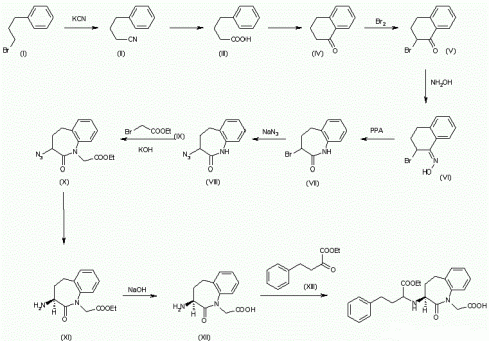
WO 2003092698 A1


TRAZODONE, DRUG SPOTLIGHT

Trazodone (also sold under the brand names Desyrel, Oleptro, Beneficat, Deprax,Desirel, Molipaxin, Thombran, Trazorel, Trialodine, Trittico, and Mesyrel) is anantidepressant of the serotonin antagonist and reuptake inhibitor (SARI) class. It is aphenylpiperazine compound. Trazodone also has anti-anxiety (anxiolytic) and sleep-inducing (hypnotic) effects.[1] Trazodone has considerably fewer prominent anticholinergic(dry mouth, constipation, tachycardia) and sexual side effects than most of the tricyclic antidepressants (TCAs).

Trazodone was originally discovered and developed in Italy in the 1960s by Angelini Research Laboratories as a second-generation antidepressant. It was developed according to the mental pain hypothesis, which was postulated from studying patients and which proposes that major depression is associated with a decreased pain threshold.[2]Trazodone was patented and marketed in many countries all over the world. It was approved by the Food and Drug Administration (FDA) at the end of 1981.

- Palazzo, G.; Silvestrini, B.; 1968, U.S. Patent 3,381,009.
- B. Silvestrini, G. Palazzo, DE 164594
- Haria M, Fitton A, McTavish D (April 1994). “Trazodone. A review of its pharmacology, therapeutic use in depression and therapeutic potential in other disorders”. Drugs Aging 4 (4): 331–55. doi:10.2165/00002512-199404040-00006.PMID 8019056.
- ^ Silvestrini B (1989). “Trazodone: from the mental pain to the “dys-stress” hypothesis of depression”. Clin Neuropharmacol12 (Suppl 1): S4–10. doi:10.1097/00002826-198901001-00002. PMID 2568177.
Capsaicin- CONTROL RIOTS and has ANTICANCER PROPERTIES
Capsaicin

| Capsaicin | |
|---|---|
 |
|
 |
|
|
|
| Heat | Above Peak (SR: 15,000,000-16,000,000) |
|---|---|
Capsaicin (pron.: /kæpˈseɪ.ɨsɪn/; 8-methyl-N-vanillyl-6-nonenamide, ( (CH3)2CHCH=CH(CH2)4CONHCH2C6H3-4-(OH)-3-(OCH3) ) is the active component of chili peppers, which are plants belonging to the genus Capsicum. It is an irritant for mammals, including humans, and produces a sensation of burning in any tissue with which it comes into contact. Capsaicin and several related compounds are called capsaicinoids and are produced as secondary metabolites by chili peppers, probably as deterrents against certain mammals and fungi.[2] Pure capsaicin is a volatile, hydrophobic, colorless, odorless, crystalline to waxy compound.
The compound was first extracted (albeit in impure form) in 1816 by Christian Friedrich Bucholz (1770–1818). He called it “capsicin,” after the genus Capsicum from which it was extracted. John Clough Thresh (1850–1932), who had isolated capsaicin in almost pure form, gave it the name “capsaicin” in 1876. But it was Karl Micko who first isolated capsaicin in pure form in 1898. Capsaicin’s empirical formula (chemical composition) was first determined by E. K. Nelson in 1919; he also partially elucidated capsaicin’s chemical structure. Capsaicin was first synthesized in 1930 by E. Spath and S. F. Darling.In 1961, similar substances were isolated from chili peppers by the Japanese chemists S. Kosuge and Y. Inagaki, who named them capsaicinoids.
In 1873 German pharmacologist Rudolf Buchheim(1820–1879) and in 1878 the Hungarian doctor Endre Hőgyesstated that “capsicol” (partially purified capsaicin) caused the burning feeling when in contact with mucous membranes and increased secretion of gastric juice.
Capsaicin is the main capsaicinoid in chili peppers, followed by dihydrocapsaicin. These two compounds are also about twice as potent to the taste and nerves as the minor capsaicinoids nordihydrocapsaicin, homodihydrocapsaicin, and homocapsaicin. Dilute solutions of pure capsaicinoids produced different types of pungency; however, these differences were not noted using more concentrated solutions.
Capsaicin is believed to be synthesized in the interlocular septum of chili peppers by addition of a branched-chain fatty acid to vanillylamine; specifically, capsaicin is made from vanillylamine and 8-methyl-6-nonenoyl CoA. Biosynthesis depends on the gene AT3, which resides at the pun1 locus, and which encodes a putative acyltransferase.
Besides the six natural capsaicinoids, one synthetic member of the capsaicinoid family exists. Vanillylamide of n-nonanoic acid (VNA, also PAVA) is used as a reference substance for determining the relative pungency of capsaicinoids.
| Capsaicinoid name | Abbrev. | Typical relative amount |
Scoville heat units |
Chemical structure |
|---|---|---|---|---|
| Capsaicin | C | 69% | 16,000,000 |  |
| Dihydrocapsaicin | DHC | 22% | 15,000,000 |  |
| Nordihydrocapsaicin | NDHC | 7% | 9,100,000 |  |
| Homodihydrocapsaicin | HDHC | 1% | 8,600,000 |  |
| Homocapsaicin | HC | 1% | 8,600,000 |  |
| Nonivamide | PAVA | 9,200,000 |  |
Capsaicin is present in large quantities in the placental tissue (which holds the seeds), the internal membranes and, to a lesser extent, the other fleshy parts of the fruits of plants in the genus Capsicum. The seeds themselves do not produce any capsaicin, although the highest concentration of capsaicin can be found in the white pith of the inner wall, where the seeds are attached.
The seeds of Capsicum plants are predominantly dispersed by birds. The TRPV1 channel to which capsaicin binds does not respond to capsaicin and related chemicals in birds (avian vs mammalian TRPV1 show functional diversity and selective sensitivity). Chili pepper seeds consumed by birds pass through the digestive tract and can germinate later, but mammals have molar teeth, which destroy seeds and prevent them from germinating. Thus, natural selection may have led to increasing capsaicin production because it makes the plant less likely to be eaten by animals that do not help it reproduce.In addition, there is evidence that capsaicin evolved as an anti-fungal agent. The fungal pathogen, Fusarium, is known to infect wild chilies which reduces seed viability. Capsaicin deters the fungus, and in doing so limits this form of predispersal seed mortality.
In 2006, it was discovered that the venom of a certain tarantula species activates the same pathway of pain as is activated by capsaicin, the first demonstrated case of such a shared pathway in both plant and animal anti-mammal defense.
Food
Because of the burning sensation caused by capsaicin when it comes in contact with mucous membranes, it is commonly used in food products to give them added spice or “heat” (piquancy). In high concentrations, capsaicin will also cause a burning effect on other sensitive areas of skin. The degree of heat found within a food is often measured on the Scoville scale. In some cases people enjoy the heat; there has long been a demand for capsaicin-spiced food and beverages. There are many cuisines and food products featuring capsaicin such as hot sauce, salsa, and beverages.
For information on treatment, see the section Treatment after exposure.
It is common for people to experience pleasurable and even euphoriant effects from ingesting capsaicin. Folklore among self-described “chiliheads” attributes this to pain-stimulated release of endorphins, a different mechanism from the local receptor overload that makes capsaicin effective as a topical analgesic. In support of this theory, there is some evidence that the effect can be blocked by naloxone and other compounds that compete for receptor sites with endorphins and opiates.
Capsaicin is currently used in topical ointments, as well as a high-dose dermal patch (trade name Qutenza), to relieve the pain of peripheral neuropathy such as post-herpetic neuralgia caused by shingles It may be used in concentrations of between 0.025% and 0.25%. It may be used as a cream for the temporary relief of minor aches and pains of muscles and joints associated with arthritis, simple backache, strains and sprains, often in compounds with other rubefacients.[The treatment typically involves the application of a topical anesthetic until the area is numb. Then the capsaicin is applied by a therapist wearing rubber gloves and a face mask. The capsaicin remains on the skin until the patient starts to feel the “heat”, at which point it is promptly removed. Capsaicin is also available in large bandages (plasters) that can be applied to the back.
Capsaicin creams are used to treat psoriasis as an effective way to reduce itching and inflammation
According to animal and human studies, the oral intake of capsaicin may increase the production of heat by the body for a short time. Due to the effect on the carbohydrates breakdown after a meal, cayenne may also be used to regulate blood sugar levels
Capsaicin selectively binds to a protein known as TRPV1 that resides on the membranes of pain and heat sensing neurons TRPV1 is a heat activated calcium channel, which opens between 37 and 45 °C (98.6 and 113 °F, respectively). When capsaicin binds to TRPV1, it causes the channel to open below 37 °C (normal human body temperature), which is why capsaicin is linked to the sensation of heat. Prolonged activation of these neurons by capsaicin depletes presynaptic substance P, one of the body’s neurotransmitters for pain and heat. Neurons that do not contain TRPV1 are unaffected.
The result appears to be that the chemical mimics a burning sensation, the nerves are overwhelmed by the influx, and are unable to report pain for an extended period of time. With chronic exposure to capsaicin, neurons are depleted of neurotransmitters, leading to reduction in sensation of pain and blockade of neurogenic inflammation. If capsaicin is removed, the neurons recover.
The American Association for Cancer Research reports studies suggesting capsaicin is able to kill prostate cancer and lung cancer cells by causing them to undergo apoptosis.The studies were performed on tumors formed by human prostate cancer cell cultures grown in mouse models, and showed tumors treated with capsaicin were about one-fifth the size of the untreated tumors. There have been several mouse studies conducted in Japan and China that showed natural capsaicin directly inhibits the growth of leukemic cells. Capsaicin may be able to trigger apoptosis in human lung cancer cells as well.
Capsaicin is also the key ingredient in the experimental drug Adlea, which is in Phase 2 trials as a long-acting analgesic to treat post-surgical and osteoarthritic pain for weeks to months after a single injection to the site of pain. Moreover, it reduces pain resulting from rheumatoid arthritis as well as joint or muscle pain from fibromyalgia or other causes.
Less-lethal force
Capsaicin is also the active ingredient in riot control and personal defense pepper spray chemical agents. When the spray comes in contact with skin, especially eyes or mucous membranes, it is very painful, and breathing small particles of it as it disperses can cause breathing difficulty, which serves to discourage assailants. Refer to the Scoville scale for a comparison of pepper spray to other sources of capsaicin.
In large quantities, capsaicin can cause death. Symptoms of overdose include difficulty breathing, blue skin, and convulsions.The large amount needed to kill an adult human and the low concentration of capsaicin in chillies make the risk of accidental poisoning by chilli consumption negligible.
COLCHININE
Anthony crasto colchinine
by ANTHONY MELVIN CRASTO Ph.D on Apr 06, 2012
- 468 views
Anthony crasto presents colchinine review
http://www.slideshare.net/anthonycrasto64/anthony-crasto-colchinine
http://www.slideshare.net/anthonycrasto64/anthony-crasto-colchinine
http://www.slideshare.net/anthonycrasto64/anthony-crasto-colchinine
http://www.slideshare.net/anthonycrasto64/anthony-crasto-colchinine
SPOTLIGHT- NEVIRAPINE (article inspired by Genericsweb)

NEVIRAPINE
this post is inspired by genericsweb who have brought an article drugs in focus, great reading material and thanks to them
http://www.genericsweb.com/index.php?object_id=1143 READ ALL AT GENERICSWEB

Nevirapine (NVP), also marketed under the trade name Viramune (Boehringer Ingelheim), is a non-nucleoside reverse transcriptase inhibitor (NNRTI) used to treat HIV-1 infection and AIDS. |
As with other antiretroviral drugs, HIV rapidly develops resistance if nevirapine is used alone, so recommended therapy consists of combinations of three or more antiretrovirals.
Nevirapine was discovered by Hargrave et al. at Boehringer Ingelheim Pharmaceuticals, Inc., one of the Boehringer Ingelheim group of companies. It is covered by U.S. Patent 5,366,972 and corresponding foreign patents. Nevirapine was the first NNRTI approved by the U.S. Food and Drug Administration (FDA). It was approved June 21, 1996 for adults and September 11, 1998 for children. It was also approved in Europe in 1997.
Inspired by genericsweb
http://www.genericsweb.com/index.php?object_id=1143 READ ALL AT GENERICSWEB
|
Nevirapine, anti-AIDS drugs, 1996 FDA clearance to market under the trade name Viramune (Boehringer Ingelheim)
Nevirapine has the [6,7,6] tricyclic structure, in which A and C ring is the starting material is introduced and finally with two equivalents of NaH double anion formed in pyridine, and then ring closure reaction by SnAr (JMC, 1991, 2231 ).


 New Drug Approvals