New Drug Approvals

Home » 2018 (Page 5)

Yearly Archives: 2018

DRUG APPROVALS BY DR ANTHONY MELVIN CRASTO .....FOR BLOG HOME CLICK HERE

Blog Stats

  • 4,816,320 hits

Flag and hits

Flag Counter

Enter your email address to follow this blog and receive notifications of new posts by email.

Join 37.9K other subscribers
Follow New Drug Approvals on WordPress.com

Archives

Categories

Recent Posts

Flag Counter

ORGANIC SPECTROSCOPY

Read all about Organic Spectroscopy on ORGANIC SPECTROSCOPY INTERNATIONAL 

Enter your email address to follow this blog and receive notifications of new posts by email.

Join 37.9K other subscribers
DR ANTHONY MELVIN CRASTO Ph.D

DR ANTHONY MELVIN CRASTO Ph.D

DR ANTHONY MELVIN CRASTO, Born in Mumbai in 1964 and graduated from Mumbai University, Completed his Ph.D from ICT, 1991,Matunga, Mumbai, India, in Organic Chemistry, The thesis topic was Synthesis of Novel Pyrethroid Analogues, Currently he is working with AFRICURE PHARMA, ROW2TECH, NIPER-G, Department of Pharmaceuticals, Ministry of Chemicals and Fertilizers, Govt. of India as ADVISOR, earlier assignment was with GLENMARK LIFE SCIENCES LTD, as CONSUlTANT, Retired from GLENMARK in Jan2022 Research Centre as Principal Scientist, Process Research (bulk actives) at Mahape, Navi Mumbai, India. Total Industry exp 32 plus yrs, Prior to joining Glenmark, he has worked with major multinationals like Hoechst Marion Roussel, now Sanofi, Searle India Ltd, now RPG lifesciences, etc. He has worked with notable scientists like Dr K Nagarajan, Dr Ralph Stapel, Prof S Seshadri, etc, He did custom synthesis for major multinationals in his career like BASF, Novartis, Sanofi, etc., He has worked in Discovery, Natural products, Bulk drugs, Generics, Intermediates, Fine chemicals, Neutraceuticals, GMP, Scaleups, etc, he is now helping millions, has 9 million plus hits on Google on all Organic chemistry websites. His friends call him Open superstar worlddrugtracker. His New Drug Approvals, Green Chemistry International, All about drugs, Eurekamoments, Organic spectroscopy international, etc in organic chemistry are some most read blogs He has hands on experience in initiation and developing novel routes for drug molecules and implementation them on commercial scale over a 32 PLUS year tenure till date Feb 2023, Around 35 plus products in his career. He has good knowledge of IPM, GMP, Regulatory aspects, he has several International patents published worldwide . He has good proficiency in Technology transfer, Spectroscopy, Stereochemistry, Synthesis, Polymorphism etc., He suffered a paralytic stroke/ Acute Transverse mylitis in Dec 2007 and is 90 %Paralysed, He is bound to a wheelchair, this seems to have injected feul in him to help chemists all around the world, he is more active than before and is pushing boundaries, He has 100 million plus hits on Google, 2.5 lakh plus connections on all networking sites, 100 Lakh plus views on dozen plus blogs, 227 countries, 7 continents, He makes himself available to all, contact him on +91 9323115463, email amcrasto@gmail.com, Twitter, @amcrasto , He lives and will die for his family, 90% paralysis cannot kill his soul., Notably he has 38 lakh plus views on New Drug Approvals Blog in 227 countries......https://newdrugapprovals.wordpress.com/ , He appreciates the help he gets from one and all, Friends, Family, Glenmark, Readers, Wellwishers, Doctors, Drug authorities, His Contacts, Physiotherapist, etc He has total of 32 International and Indian awards

Verified Services

View Full Profile →

Archives

Categories

Flag Counter

Zoledronic acid


 Thumb

Zoledronic acid

    • CGP-42446, ZOL-446
    • ATC:M05BA08
  • Use:antineoplastic, bone resorption inhibitor, biphosphonate
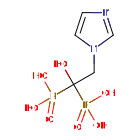
  • Chemical name:[1-hydroxy-2-(1H-imidazol-1-yl)ethylidene]bis[phosphonic acid]
  • Formula:C5H10N2O7P2
  • MW:272.09 g/mol
  • CAS-RN:118072-93-8

Derivatives

Zoledronate disodium.png

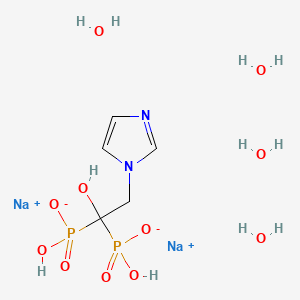
Disodium salt tetrahydrate

  • Formula:C5H8N2Na2O7P2 • 4H2O
  • MW:388.11 g/mol
  • CAS-RN:165800-07-7

Trisodium salt hydrate

  • Formula:C5H7N2Na3O7P2 • 2/5H2O
  • MW:1726.21 g/mol
  • CAS-RN:165800-08-8
Zoledronic Acid
CAS Registry Number: 118072-93-8; 165800-06-6 (monohydrate)
CAS Name: [1-Hydroxy-2-(1H-imidazol-1-yl)ethylidene]bisphosphonic acid
Additional Names: 2-(imidazol-1-yl)-1-hydroxyethane-1,1-diphosphonic acid
Manufacturers’ Codes: CGP-42446
Trademarks: Zometa (Novartis)
Molecular Formula: C5H10N2O7P2
Molecular Weight: 272.09
Percent Composition: C 22.07%, H 3.70%, N 10.30%, O 41.16%, P 22.77%
Literature References: Bisphosphonate antiresorptive agent. Prepn: JPKokai 88 150291; K. A. Jaeggi, L. Wilder, US4939130(1988, 1990 both to Ciba-Geigy). Effect on bone metabolism: J. R. Green et al.,J. Bone Miner. Res.9, 745 (1994). Determn in plasma by enzyme inhibition assay: F. Risser et al.,J. Pharm. Biomed. Anal.15, 1877 (1997). Series of articles on pharmacology and clinical experience: Br. J. Clin. Pract. Suppl.87, 15-22 (1996). Clinical trial in tumor-induced hypercalcemia: J. J. Body, Cancer80, 1699 (1997); of i.v. infusion in osteoporosis: I. R. Reid et al., N. Engl. J. Med.346, 653 (2002); in bone metastases of prostate cancer: F. Saad et al., J. Natl. Cancer Inst.94, 1458 (2002). Review of pharmacology and therapeutic use: J.-J. Body, Expert Opin. Pharmacother.4, 567-580 (2003).
Properties: Crystals from water, mp 239° (dec).
Melting point: mp 239° (dec)
Zoledronate disodium.png
disodium;hydroxy-[1-hydroxy-1-[hydroxy(oxido)phosphoryl]-2-imidazol-1-ylethyl]phosphinate;tetrahydrate
cas 165800-07-7
Derivative Type: Disodium salt tetrahydrate
CAS Registry Number: 165800-07-7
Additional Names: Zoledronate disodium
Manufacturers’ Codes: CGP-42446A
Molecular Formula: C5H8N2Na2O7P2.4H2O
Molecular Weight: 388.11
Percent Composition: C 15.47%, H 4.16%, N 7.22%, Na 11.85%, O 45.35%, P 15.96%
Derivative Type: Trisodium salt hydrate
CAS Registry Number: 165800-08-8
Additional Names: Zoledronate trisodium
Manufacturers’ Codes: CGP-42446B
Molecular Formula: (C5H7N2Na3O7P2)5.2H2O
Molecular Weight: 1726.21
Percent Composition: C 17.39%, H 2.28%, N 8.11%, Na 19.98%, O 34.29%, P 17.94%
Therap-Cat: Bone resorption inhibitor.
Keywords: Antiosteoporotic; Antipagetic; Bone Resorption Inhibitor.
INGREDIENT UNII CAS INCHI KEY
Zoledronate disodium 7D7GS1SA24 165800-07-7 IEJZOPBVBXAOBH-UHFFFAOYSA-L
Zoledronate trisodium ARL915IH66 165800-08-8 Not applicable
Zoledronic acid hemipentahydrate 1K9U67HDID Not Available AZZILOGHCMYHQY-UHFFFAOYSA-N
Zoledronic acid monohydrate 6XC1PAD3KF 165800-06-6 FUXFIVRTGHOMSO-UHFFFAOYSA-N

Zoledronate (zoledronic acid, marketed by Novartis under the trade names Zometa and Reclast) is a bisphosphonate. Zometa is used to prevent skeletal fractures in patients with cancers such as multiple myeloma and prostate cancer. It can also be used to treat hypercalcemia of malignancy and can be helpful for treating pain from bone metastases.

An annual dose of Zoledronate may also prevent recurring fractures in patients with a previous hip fracture.

Zoledronate is a single 5 mg infusion for the treatment of Paget’s disease of bone. In 2007, the FDA also approved Reclast for the treatment of postmenopausal osteoporosis.

Zoledronic acid, also known as zoledronate, is a medication used to treat a number of bone diseases.[1] This include osteoporosishigh blood calcium due to cancerbone breakdown due to cancer, and Paget’s disease of bone.[1] It is given by injection into a vein.[1]

Common side effects include feverjoint painhigh blood pressure, diarrhea, and feeling tired.[1] Serious side effects may include kidney problemslow blood calcium, and osteonecrosis of the jaw.[1] Use during pregnancy may result in harm to the baby.[1] It is in the bisphosphonate family of medications.[1] It works by blocking the activity of osteoclast cells and thus decreases the breakdown of bone.[1]

Zoledronic acid was approved for medical use in the United States in 2001.[1] It is on the World Health Organization’s List of Essential Medicines, the most effective and safe medicines needed in a health system.[3] The wholesale cost in the developing world is between 5.73 USD and 26.80 USD per vial.[4] In the United Kingdom, as of 2015, a dose costs the NHS about 220 pounds.[5]

Medical uses

Bone complications of cancer

Zoledronic acid is used to prevent skeletalfractures in patients with cancers such as multiple myeloma and prostate cancer, as well as for treating osteoporosis.[6] It can also be used to treat hypercalcemia of malignancy and can be helpful for treating pain from bone metastases.[7]

It can be given at home rather than in hospital. Such use has shown safety and quality-of-life benefits in people with breast cancer and bone metastases.[8]

Osteoporosis

Zoledronic acid may be given as a 5 mg infusion once per year for treatment of osteoporosis in men and post-menopausal women at increased risk of fracture.[9]

In 2007, the U.S. Food and Drug Administration (FDA) also approved it for the treatment of postmenopausal osteoporosis.[10][11]

Paget’s disease

A single 5 mg dose of zoledronic acid is used for the treatment of Paget’s disease.[medical citation needed][12]

Contraindications

Side effects

Side effects can include fatigueanemiamuscle achesfever, and/or swelling in the feet or legs. Flu-like symptoms are common after the first infusion, although not subsequent infusions, and are thought to occur because of its potential to activate human γδ T cells(gamma/delta T cells).

Kidneys

There is a risk of severe renal impairment. Appropriate hydration is important prior to administration, as is adequate calcium and vitamin D intake prior to Aclasta therapy in patients with preexisting hypocalcaemia, and for ten days following Aclasta in patients with Paget’s disease of the bone. Monitoring for other mineral metabolism disorders and the avoidance of invasive dental procedures for those who develop osteonecrosis of the jaw is recommended.[14]

Zoledronate is rapidly processed via the kidneys; consequently its administration is not recommended for patients with reduced renal function or kidney disease.[15] Some cases of acute renal failure either requiring dialysis or having a fatal outcome following Reclast use have been reported to the U.S. Food and Drug Administration (FDA).[16] This assessment was confirmed by the European Medicines Agency (EMA), whose Committee for Medicinal Products for Human Use (CHMP) specified new contraindications for the medication on 15 December 2011, which include hypocalcaemia and severe renal impairment with a creatinine clearance of less than 35 ml/min.[17]

Bone

A rare complication that has been recently observed in cancer patients being treated with bisphosphonates is osteonecrosis of the jaw. This has mainly been seen in patients with multiple myeloma treated with zoledronate who have had dental extractions.[18]

Atypical fractures : After approving the drug on 8 July 2009, the European Medicines Agency conducted a class review of all bisphosphonates, including Zoledronate, after several cases of atypical fractures were reported.[19] In 2008, the EMA’s Pharmacovigilance Working Party (PhVWP) noted that alendronic acid was associated with an increased risk of atypical fracture of the femur that developed with low or no trauma. In April 2010, the PhVWP noted that further data from both the published literature and post-marketing reports were now available which suggested that atypical stress fractures of the femur may be a class effect. The European Medicines Agency then reviewed all case reports of stress fractures in patients treated with bisphosphonates, relevant data from the published literature, and data provided by the companies which market bisphosphonates. The Agency recommended that doctors who prescribe bisphosphonate-containing medicines should be aware that atypical fractures may occur rarely in the femur, especially after long-term use, and that doctors who are prescribing these medicines for the prevention or treatment of osteoporosis should regularly review the need for continued treatment, especially after five or more years of use.[19]

Mechanism of action

Zoledronic acid slows down bone resorption, allowing the bone-forming cells time to rebuild normal bone and allowing bone remodeling.[20]

Research

Zoledronic acid has been found to have a direct antitumor effect and to synergistically augment the effects of other antitumor agents in osteosarcoma cells.[21]

Zoledronate has shown significant benefits versus placebo over three years, with a reduced number of vertebral fractures and improved markers of bone density.[22][11] An annual dose of zoledronic acid may also prevent recurring fractures in patients with a previous hip fracture.[9]

Zoledronate also attenuates accumulation of DNA damage in mesenchymal stem cells and protects their function.[23] Given this characteristic, its potential to affect conditions arising from stem-cell dysfunction makes it a promising medicine for a range of age-related diseases[24]

With hormone therapy for breast cancer

An increase in disease-free survival (DFS) was found in the ABCSG-12 trial, in which 1,803 premenopausal women with endocrine-responsive early breast cancer received anastrozole with zoledronic acid.[25] A retrospective analysis of the AZURE trial data revealed a DFS survival advantage, particularly where estrogen had been reduced.[26]

In a meta-analysis of trials where upfront zoledronic acid was given to prevent aromatase inhibitor-associated bone loss, active cancer recurrence appeared to be reduced.[27]

As of 2010 “The results of clinical studies of adjuvant treatment on early-stage hormone-receptor-positive breast-cancer patients under hormonal treatment – especially with the bisphosphonate zoledronic acid – caused excitement because they demonstrated an additive effect on decreasing disease relapses at bone or other sites. A number of clinical and in vitro and in vivo preclinical studies, which are either ongoing or have just ended, are investigating the mechanism of action and antitumoral activity of bisphosphonates.”[28]

A 2010 review concluded that “adding zoledronic acid 4 mg intravenously every 6 months to endocrine therapy in premenopausal women with hormone receptor-positive early breast cancer … is cost-effective from a US health care system perspective”.[29]

Synthesis

PAPER

J Med Chem 2002,45(17),3721

https://pubs.acs.org/doi/10.1021/jm020819i

Highly Potent Geminal Bisphosphonates. From Pamidronate Disodium (Aredia) to Zoledronic Acid (Zometa)

Novartis Pharma Research, Arthritis and Bone Metabolism Therapeutic Area, CH-4002 Basel, Switzerland
J. Med. Chem.200245 (17), pp 3721–3738
DOI: 10.1021/jm020819i
Abstract Image

Bisphosphonates (BPs) are pyrophosphate analogues in which the oxygen in P−O−P has been replaced by a carbon, resulting in a metabolically stable P−C−P structure. Pamidronate (1b, Novartis), a second-generation BP, was the starting point for extensive SAR studies. Small changes of the structure of pamidronate lead to marked improvements of the inhibition of osteoclastic resorption potency. Alendronate (1c, MSD), with an extra methylene group in the N-alkyl chain, and olpadronate (1h, Gador), the N,N-dimethyl analogue, are about 10 times more potent than pamidronate. Extending one of the N-methyl groups of olpadronate to a pentyl substituent leads to ibandronate (1k, Roche, Boehringer-Mannheim), which is the most potent close analogue of pamidronate. Even slightly better antiresorptive potency is achieved with derivatives having a phenyl group linked via a short aliphatic tether of three to four atoms to nitrogen, the second substituent being preferentially a methyl group (e.g., 4g4j5d, or 5r). The most potent BPs are found in the series containing a heteroaromatic moiety (with at least one nitrogen atom), which is linked via a single methylene group to the geminal bisphosphonate unit. Zoledronic acid (6i), the most potent derivative, has an ED50 of 0.07 mg/kg in the TPTX in vivo assay after sc administration. It not only shows by far the highest therapeutic ratio when comparing resorption inhibition with undesired inhibition of bone mineralization but also exhibits superior renal tolerability. Zoledronic acid (6i) has thus been selected for clinical development under the registered trade name Zometa. The results of the clinical trials indicate that low doses are both efficacious and safe for the treatment of tumor-induced hypercalcemia, Paget’s disease of bone, osteolytic metastases, and postmenopausal osteoporosis.

SYN 1

AU 8781453; EP 0275821; JP 1988150291; US 4939130

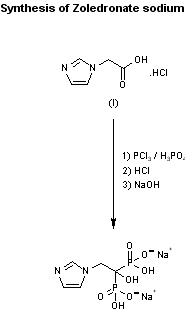
Zoledronate sodium can be prepared by reaction of 2-(1-imidazolyl)acetic acid hydrochloride (I) with PCl3, with optional presence of phosphoric acid, in refluxing chlorobenzene, followed by hydrolysis with refluxing 9N hydrochloric acid and final formation of the sodium salt by treatment with aqueous NaOH.

SYN

PAPER

https://www.sciencedirect.com/science/article/pii/S0969804311006385

Image result for zoledronic acid synthesis

Clip

https://link.springer.com/article/10.1007/s11094-015-1205-0

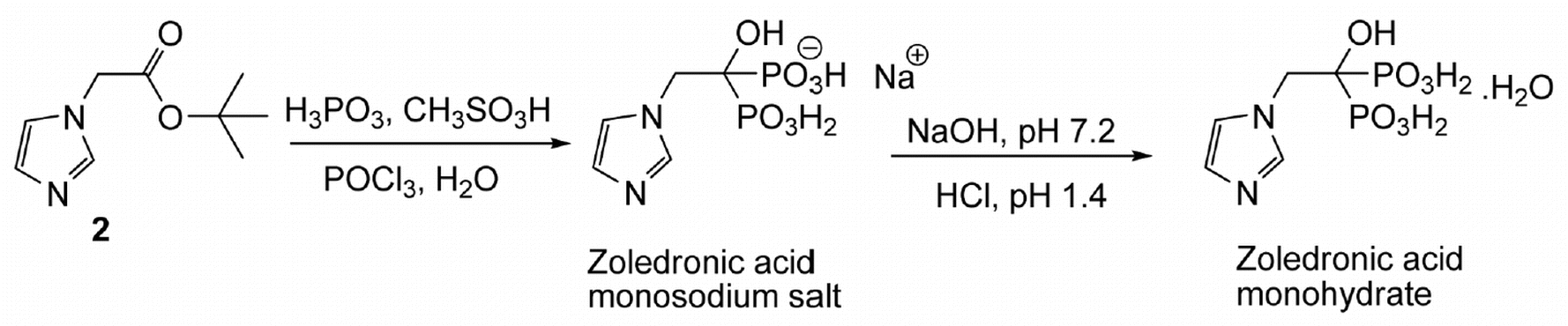
A One-Pot and Efficient Synthesis of Zoledronic Acid Starting from Tert-butyl Imidazol-1-yl Acetate

A one-pot synthesis of zoledronic acid in high yield is described. The procedure involves a non-aqueous ester cleavage of the tert-butyl imidazol-1-yl acetate under dry conditions in the presence of methanesulfonic acid as solubilizer and chlorobenzene as solvent to afford in situthe corresponding imidazolium methanesulfonate salt which yields zoledronic acid upon reaction with phosphoric acid and phosphorus oxychloride. A possible chemical mechanism for the synthesis of this acid is described.

Image result for zoledronic acid synthesis

Paper

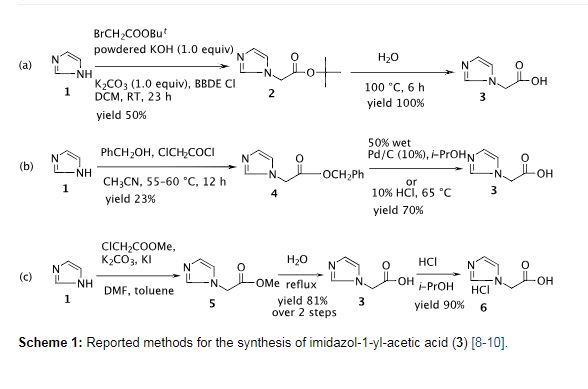
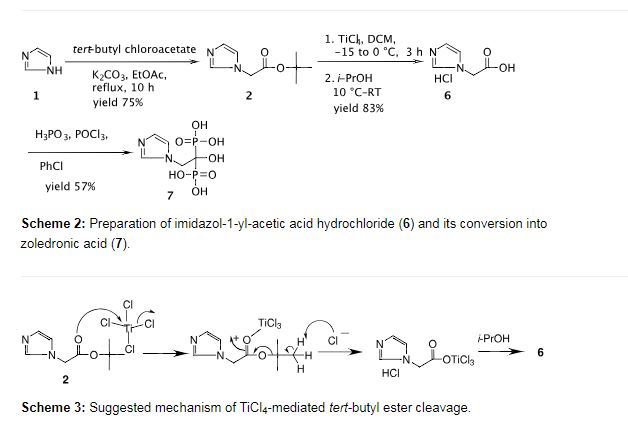
https://www.beilstein-journals.org/bjoc/articles/4/42

str1 str2

Preparation of imidazol-1-yl-acetic acid tert-butyl ester (2)

To a solution of imidazole (10.0 g, 0.15 mol) in ethyl acetate (160 mL) was added powdered K2CO3 (29.0 g, 0.21 mol) followed by tert-butyl chloroacetate (25.7 mL, 0.18 mol) at room temperature and the mixture was refluxed for 10.0 h. After completion of the reaction as indicated by TLC (10% MeOH/CHCl3, I2 active), the reaction mass was quenched with cold water (80 mL) and the ethyl acetate layer was separated. The aqueous layer was extracted with ethyl acetate (2 × 80 mL) and the combined ethyl acetate layers were washed with brine, dried with anhydrous sodium sulfate and then concentrated under vacuum. The resulting solid was stirred with hexane (50 mL) at RT, filtered and washed with hexane (2 × 20 mL) to afford the title compound as an off-white solid (20.0 g, 75%). mp: 111.3–113.2 °C (Lit [10]: 111–113 °C). IR (cm−1): 3458, 3132, 3115, 2999, 2981, 2884, 1740, 1508, 1380, 1288, 1236, 1154, 1079, 908, 855, 819, 745, 662, 583; 1H NMR (300 MHz, CDCl3) δ 1.47 (s, 9H), 4.58 (s, 2H), 6.94 (s, 1H), 7.09 (s, 1H), 7.49 (s, 1H); 13C NMR (75 MHz, CDCl3) δ 27.7, 48.6, 82.9, 119.8, 129.2, 137.7, 166.3; MS (m/z) 183.0 [M+1, 100%], 127.0.

Preparation of imidazol-1-yl-acetic acid hydrochloride (6)

To a solution of imidazol-1-yl-acetic acid tert-butyl ester (2) (10.0 g, 0.05 mol) in dichloromethane (100 mL) was added titanium tetrachloride (8.0 mL, 0.07 mol) dropwise slowly at −15 to −10 °C over 1 h and the mixture was stirred at −5 to 0 °C for 2 h. Isopropyl alcohol (25 mL) was added at 0 to −10 °C over 0.5 h and the reaction mass was stirred at room temperature for 0.5 h. Additional isopropyl alcohol (125 mL) was added dropwise at room temperature over 0.5 h and the mixture was stirred for 1 h. Dichloromethane was distilled out under a low vacuum and the resulting crystalline solid precipitated was filtered to afford the title compound as an off-white crystalline solid (7.4 g, 83%). mp 200.3–202.3 °C; IR (cm−1): 3175, 3125, 3064, 2945, 2869, 2524, 2510, 1732, 1581, 1547, 1403, 1223, 1193, 1081, 780, 650; 1H NMR (300 MHz, D2O + 3-(trimethylsilyl)propionic acid sodium salt) δ 5.1 (s, 3H, -CH2– + HCl), 7.5 (br s, 2H), 8.7 (s, 1H); 13C NMR (75 MHz, D2O + 3-(trimethylsilyl)propionic acid sodium salt) 52.7, 122.4, 125.9, 138.8, 172.8; MS (m/z) 127.0 [M+1, 100%]; HCl-content: found 21.8% (along with 3.25% moisture), calcd 22.43% for C5H6N2O2·HCl.

Preparation of zoledronic acid (7)

To a suspension of imidazol-1-yl-acetic acid hydrochloride (6) (7.0 g, 0.043 mol) and phosphorous acid (9.5 g, 0.116 mol) in chlorobenzene (50 mL) was added phosphorous oxychloride (9.6 ml, 0.103 mol) at 80–85 °C over a period of 2 h then heated to 90–95 °C for 2.5 h. The reaction mass was cooled to 60–65 °C and water (100 mL) was added at the same temperature. The aqueous layer was separated, collected and refluxed for 18 h. It was then cooled to room temperature and diluted with methanol (140 mL). The mixture was cooled to 0–5 °C and stirred for 3 h. The precipitated solid was filtered, washed with cold water followed by methanol and then dried under vacuum at 60 °C for 12 h to afford the title compound (6.6 g, 57% yield) as a white solid; mp 237–239 °C (lit [1] 239 °C with decomposition).

PATENT

https://patents.google.com/patent/CN104610357A/en

Sodium Zoledronic (Zoledronate sodium, I), chemical name [1-yl light -2- (lH- imidazol-1-yl) ethylidene] bisphosphonic acid monosodium salt monohydrate, is by the Novartis (Novartis) developed imidazole heterocyclic bisphosphonates, belongs to the third generation of bisphosphonates bisphosphonate drugs, in October 2000, first marketed in Canada. Subsequently approved in the European Union, the United States more than 80 countries or regions, trade name Zometa, for the treatment of hypercalcemia of malignancy (HCM) and multiple myeloma and bone metastases of solid tumors. The drug is effective in treating cancer caused by HCM, advanced bone metastases and Paget’s disease, reduce the incidence of skeletal related events, relieve symptoms and improve quality of life, is also expected to be used to treat osteoporosis. Compared with other similar drugs, high efficacy, dosage, ease of administration, better security, etc., is currently the only FDA-approved for metastatic bone tumor effective bisphosphonate drugs.Currently bisphosphonate drugs in our country is still in the initial stages of clinical applications, but in recent years has made rapid progress, broad market prospect.

[0003] The prior art synthesis reaction conditions zoledronate sodium harsh, toxicity and use methanol, chloroform and chlorobenzene, easily exceeding the amount of residual organic solvents, low yield, low product purity, contamination environment, does not meet the medical criteria, is not conducive to industrial production. Environmental pollution has attracted increasing attention around the world today, the development of new green efficient synthesis of a pharmaceutical drug synthesis is an important issue facing the Institute. In recent years, room temperature ionic liquids as a reaction medium is environmentally friendly, has been widely used in a variety of organic synthesis reactions. Compared with traditional organic solvents, ionic liquids have very low vapor pressure, non-flammable, good thermal stability, both as a reaction medium underway catalysis, can be recycled and many other advantages.

Image result for zoledronic acid synthesis

Example 1 of zoledronic alendronate

Figure CN104610357AD00061

(1) Synthesis of imidazol-1-yl acetate were added successively imidazole (13.62g, 0.2mol) and [bmim] BF4 (IOOmL) a three-necked flask, heated with stirring warmed to 60 ° C, incubated under reflux was slowly added dropwise chlorination ethyl acetate (24. 51g, 0. 2mol), dropwise addition time is about 2h, dropwise, with stirring maintained at reflux for 16 h, the reaction monitored by TLC showed no starting material end point, completion of the reaction, cooled to room temperature, to give imidazole -1 – ethyl crude, about 24g, crude without purification, was used directly in the next reaction.

[0014] (2) Synthesis of imidazol-1-yl acetate hydrochloride A solution of 24g 1-yl imidazole prepared above was added crude ethyl necked flask, concentrated hydrochloric acid (34 mL), exotherm to 85 ° C, warmed to reflux heating was continued, the reaction was stirred at reflux for 10H, the reaction was completed, the solvent was evaporated under reduced pressure, 20ml of absolute ethanol was added to the residue, vigorously stirred for 2h, filtered off with suction, the filter cake finally at 80 ° C blast pressure and dried to give a white solid imidazol-1-yl acetate hydrochloride about 25. 65g, 79.4% overall yield.

[0015] (3) Synthesis of zoledronic acid monohydrate were added imidazol-1-yl acetate hydrochloride (17. 26g, 0. 137mol) a three-necked flask, in an ionic liquid with stirring – n-butyl-3- methylimidazolium tetrafluoroborate [bmim] BF4 (40mL) and concentration of 85% phosphoric acid solution (16mL), heating to 60 ° C was added dropwise phosphorus trichloride (30mL) , about 4h dropwise, reaction was continued under reflux for 4h at 65 ° C, the reaction was complete, cooled to 40 ° C, filtered off with suction, the filter cake was added to a molar concentration in 80mL 9mol / L hydrochloric acid, heated with stirring state the reaction was refluxed for 6h, the reaction was completed, filtered hot, the filter cake was added to a molar concentration in 80mL 9mol / L hydrochloric acid, the above-described operation is repeated to continue the combined filtrate was evaporated to dryness under reduced pressure to give a yellow oily residue was slowly added to the residue volume ratio of 1: 1 acetone – ethanol mixture 240 mL, was stirred, and the precipitated solid was 15min, filtered off with suction, the filter cake was recrystallized in 30mL of deionized water, suction filtered to give a white solid that is zoledronic acid monohydrate , about 35. 8g, yield 90.1%, determined by HPLC, purity> 98.5%.

After [0016] (4) Synthesis of zoledronic sodium phosphinate obtained above azole zoledronic acid monohydrate (46.4g, 0. 16mol) washed with water (450 mL of) was dissolved, was added sodium hydroxide (5. 6g, 0. IOmol), were refluxed for 30min, cooling and crystallization, filtration, to obtain a crude product zoledronate sodium, crude mother liquor was concentrated and then half with distilled water (410 mL), isopropanol (60 mL), heated to dissolve the combined, activated carbon bleaching, charcoal filtered off, cooling and crystallization, filtration, washed with water, dried at 40-60 ° C to about crystallization water containing one to give zoledronate sodium (42. 4g, 85%), total yield of more than 60% by HPLC assay, purity 99. 8%, mp239 ° C. IR: 711011 ^ 671 (^ 1 is the stretching vibration peak of the PC, 1643〇 ^ 1 = 0 (: stretching vibration peak, 3011〇 ^ 1 = (: – stretching vibration peak 11 ^ 1 is CN 1406〇 the stretching vibration, 1643CHT1 is C = N stretching vibration peak of 3447 (3485 ^^ (^ 1 is the stretching vibration peak of OH, 1459CHT1 symmetrical bending vibration of CH, 2830CHT1 stretching vibration of CH, 1324CHT1 is P = O the stretching vibration, 1094CHT1 stretching vibration peak of .1HNMR PO (400MHz, D20), S: 8.68 (lH, s), 7.48 (lH, s), 7.34 (lH, s), 4.67 (2H, t).

Effects [0017] Example 2 was added dropwise phosphorus trichloride fixed time on the yield other conditions remain unchanged, only the changes of phosphorus trichloride dropwise addition, dropping zoledronic Table 1 Effect of Sodium yield Experimental results show that excessive phosphorus trichloride was added dropwise, and instantly generate a large amount of gas, the reaction is very intense, the liquid splashing, a rapid rise in temperature, resulting in the low yield, if slowly added dropwise, the reaction rate is too slow, consumption too long, and therefore is the best 4h dropping time.

Figure CN104610357AD00071

Zoledronic fixed effect of sodium yield other conditions remain unchanged, imidazol-1-yl acetic acid hydrochloride with phosphorus trichloride and phosphoric acid condensation reaction temperature is zoledronic acid monohydrate embodiment the reaction temperature Example 3 Effect yield (Table 2). The results show that, with increasing temperature, increasing the yield, but at higher temperatures to reflux, shows a decreasing trend in yield, due to decomposition sake phosphorus trichloride, resulting in reduction reaction. Further, when the temperature is too high, solvent evaporation and solvent leakage losses will increase, the reflux temperature is low, the reaction rate is slow, the reaction is insufficient, therefore the yield is low, and therefore the optimum reaction temperature is about 65 ° C.

Figure CN104610357AD00072

Example 4

Figure CN104610357AD00081

Effect of the ionic liquid frequency reuse sodium zoledronic yield of the reaction medium can be recovered and reused important concern is “green chemistry” used in the present embodiment examines the sodium ionic liquid used in the synthesis of zoledronic repeated use, the experiment results shown in Table 3. Seen from Table 3, the ionic liquid after 5 subsequent to use, product yield began to decrease, the ionic liquid may be recovered and reused effectively, and repeated five times using good performance, and therefore is an ionic liquid in this reaction green solvents may be recycled.

Figure CN104610357AD00082

Example 5 different ionic liquids zoledronic same impact conditions were examined yield sodium 1-butyl-3-methylimidazolium tetrafluoroborate ionic liquids ([bmim] BF4), N- ethyl pyridinium tetrafluoroborate ([EPy] BF4), l- butyl-3-methylimidazolium hexafluorophosphate ([bmim] PF6), 1- hydroxyethyl-2,3-dimethyl imidazolium chloride (LOH), 1- propyl-3-carbonitrile methylimidazolium chloride (the LCN) and 1-carboxyethyl-3-methyl imidazolium chloride (LOOH) Effects of sodium zoledronic yield the results are shown in Table 4, the test results show little effect on the synthesis of ionic liquids yield.

Figure CN104610357AD00083

Clip

Mar 5, 2013 –

Dr. Reddy’s Laboratories  announced today that it has launched Zoledronic Acid Injection (4 mg/5 mL), a bioequivalent generic version of Zometa® (zoledronic acid) 4 mg/5 mL Injection in the US market on March 4, 2013, following the approval by the United States Food & Drug Administration (USFDA) of Dr. Reddy’s ANDA for Zoledronic Acid Injection (4 mg/5 mL).

Dr. Reddy’s Zoledronic Acid Injection 4 mg/5mL is available in a single use vial of concentrate.

Zoledronic acid (INN) or zoledronate (marketed by Novartis under the trade names ZometaZomeraAclasta and Reclast) is a bisphosphonate. Zometa is used to prevent skeletal fractures in patients with cancers such as multiple myeloma and prostate cancer, as well as for treating osteoporosis.It can also be used to treat hypercalcemia of malignancy and can be helpful for treating pain from bone metastases.

An annual dose of zoledronic acid may also prevent recurring fractures in patients with a previous hip fracture.

Reclast is a single 5 mg infusion for the treatment of Paget’s disease of bone. In 2007, the U.S. Food and Drug Administration (FDA) also approved Reclast for the treatment of postmenopausal osteoporosis.

About Dr. Reddy’s Laboratories Ltd.

Dr. Reddy’s Laboratories Ltd. (NYSE: RDY) is an integrated global pharmaceutical company, committed to providing affordable and innovative medicines for healthier lives. Through its three businesses – Pharmaceutical Services and Active Ingredients, Global Generics and Proprietary Products – Dr. Reddy’s offers a portfolio of products and services including APIs, custom pharmaceutical services, generics, biosimilars, differentiated formulations and NCEs. Therapeutic focus is on gastro-intestinal, cardiovascular, diabetology, oncology, pain management, anti-infective and pediatrics. Major markets include India, USA, Russia and CIS, Germany, UK, Venezuela, S. Africa, Romania, and New Zealand. For more information, log on to: http://www.drreddys.com

Zometa® is a registered trademark of Novartis AG

References

    • US 4 939 130 (Ciba-Geigy; 3.7.1990; CH-prior. 21.11.1986).
  • transdermal formulation:

    • EP 407 344 (Ciba-Geigy; appl. 28.6.1990; CH-prior. 7.7.1989).
  • treatment of angiogenesis:

    • WO 2 000 071 104 (Novartis AG; appl. 19.5.2000; GB-prior. 21.5.1999).

PATENT

ApplicationPriority dateFiling dateTitle
CN 2015100011672015-01-052015-01-05Preparation method for sodium zoledronic acid

ApplicationFiling dateTitle
CN 2015100011672015-01-05Preparation method for sodium zoledronic acid

References

  1. Jump up to:a b c d e f g h i j k “Zoledronic Acid”. The American Society of Health-System Pharmacists. Retrieved 8 December 2017.
  2. Jump up^ Drugs.com International trade names for zoledronic acid Page accessed Jan 14, 2015
  3. Jump up^ “WHO Model List of Essential Medicines (20th List)” (PDF). World Health Organization. March 2017. Retrieved 29 June 2017.
  4. Jump up^ “Single Drug Information”International Medical Products Price Guide. Retrieved 9 December 2017.
  5. Jump up^ British national formulary : BNF 69 (69 ed.). British Medical Association. 2015. p. 528. ISBN 9780857111562.
  6. Jump up^ National Prescribing Service (2009). “Zoledronic Acid for Osteoporosis”. Medicines Update, Available at “Archived copy”. Archived from the original on April 23, 2010. Retrieved January 20, 2010.
  7. Jump up^ http://www.health.gov.il/units/pharmacy/trufot/alonim/533.pdf Zomera prescribing information
  8. Jump up^ Wardley, A; Davidson, N; Barrett-Lee, P; et al. (May 2005). “Zoledronic acid significantly improves pain scores and quality of life in breast cancer patients with bone metastases: a randomised, crossover study of community vs hospital bisphosphonate administration”Br. J. Cancer92 (10): 1869–76. doi:10.1038/sj.bjc.6602551PMC 2361764Freely accessiblePMID 15870721.
  9. Jump up to:a b Lyles K, et al. (2007). “Zoledronic Acid and Clinical Fractures and Mortality after Hip Fracture”N. Engl. J. Med357 (18): 1799–809. doi:10.1056/NEJMoa074941PMC 2324066Freely accessiblePMID 17878149.
  10. Jump up^ “Biotech PRESS RELEASE: Novartis’s Reclast Receives FDA Approval FOR Women With Postmenopausal Osteoporosis”, FierceBiotech, A Division of Questex A FierceMarkets Publication Aug 20, 2007. Retrieved 2018-03-27
  11. Jump up to:a b Black; et al. (2007). “Once-Yearly Zoledronic Acid for Treatment of Postmenopausal Osteoporosis”NEJM356 (18): 1809–1822. doi:10.1056/nejmoa067312PMID 17476007.
  12. Jump up^ “Paget’s Disease of Bone”http://www.rheumatology.org. Retrieved 2015-07-09.
  13. Jump up^ Vondracek, S. F. (2010). “Managing osteoporosis in postmenopausal women”. American Journal of Health-System Pharmacy67 (7 Suppl 3): S9–19. doi:10.2146/ajhp100076PMID 20332498.
  14. Jump up^ http://www.nps.org.au/__data/assets/pdf_file/0006/60945/nvcaclin.pdf
  15. Jump up^ “Zometa 4mg/5ml Concentrate for Solution for Infusion”medicines.org.uk.
  16. Jump up^ “FDA Alert: Reclast (zoledronic acid): Drug Safety Communication – New Contraindication and Updated Warning on Kidney Impairment”drugs.com.
  17. Jump up^ “European Medicines Agency – Human medicines”europa.eu.
  18. Jump up^ Durie BG, Katz M, Crowley J (2005). “Osteonecrosis of the jaw and bisphosphonates”. N. Engl. J. Med353 (1): 99–102; discussion 99–102. doi:10.1056/NEJM200507073530120PMID 16000365.
  19. Jump up to:a b “European Medicines Agency – Human medicines”europa.eu.
  20. Jump up^ Aclasta label- Australia
  21. Jump up^ Koto K, Murata H, Kimura S, et al. (July 2010). “Zoledronic acid inhibits proliferation of human fibrosarcoma cells with induction of apoptosis, and shows combined effects with other anticancer agents”. Oncol. Rep24 (1): 233–9. doi:10.3892/or_00000851PMID 20514467.
  22. Jump up^ Reid IR, Brown JP, Burckhardt P, Horowitz Z, Richardson P, Trechsel U, Widmer A, Devogelaer JP, Kaufman JM, Jaeger P, Body JJ, Brandi ML, Broell J, Di Micco R, Genazzani AR, Felsenberg D, Happ J, Hooper MJ, Ittner J, Leb G, Mallmin H, Murray T, Ortolani S, Rubinacci A, Saaf M, Samsioe G, Verbruggen L, Meunier PJ (2002). “Intravenous zoledronic acid in postmenopausal women with low bone mineral density”. N. Engl. J. Med346 (9): 653–61. doi:10.1056/NEJMoa011807PMID 11870242.
  23. Jump up^ Juhi Misra, Sindhu T. Mohanty, Sanjeev Madan, James A. Fernandes, F. Hal Ebetino, R. Graham, G. Russell, Ilaria Bellantuono. (December 2015). Zoledronate attenuates accumulation of DNA damage in mesenchymal stem cells and protects their function. Stem Cells, doi:10.1002/stem.2255
  24. Jump up^ “Bone drug protects stem cells from aging.” ScienceDaily. 17 December 2015
  25. Jump up^ PMID 19213681 Gnant, Mlineritsch. Endocrine therapy plus zoledronic acid in premenopausal breast cancer. N Engl J Med 2009; 360:679-691 February 12, 2009 Full Free Text [1]
  26. Jump up^ Coleman RE, Winter MC, Cameron D, et al. (March 2010). “The effects of adding zoledronic acid to neoadjuvant chemotherapy on tumour response: exploratory evidence for direct anti-tumour activity in breast cancer”Br. J. Cancer102 (7): 1099–105. doi:10.1038/sj.bjc.6605604PMC 2853093Freely accessiblePMID 20234364.
  27. Jump up^ Brufsky A, Bundred N, Coleman R, et al. (May 2008). “Integrated analysis of zoledronic acid for prevention of aromatase inhibitor-associated bone loss in postmenopausal women with early breast cancer receiving adjuvant letrozole”. Oncologist13 (5): 503–14. doi:10.1634/theoncologist.2007-0206PMID 18515735.
  28. Jump up^ Tonyali O, Arslan C, Altundag K (November 2010). “The role of zoledronic acid in the adjuvant treatment of breast cancer: current perspectives”. Expert Opin Pharmacother11(16): 2715–25. doi:10.1517/14656566.2010.523699PMID 20977404.
  29. Jump up^ Delea TE, Taneja C, Sofrygin O, Kaura S, Gnant M (August 2010). “Cost-effectiveness of zoledronic acid plus endocrine therapy in premenopausal women with hormone-responsive early breast cancer”. Clin. Breast Cancer10 (4): 267–74. doi:10.3816/CBC.2010.n.034PMID 20705558.
Zoledronic acid
Zoledronic acid.svg
Zoledronic-acid-from-xtal-2003-3D-balls.png
Clinical data
Trade names Reclast, Zometa, others[2]
AHFS/Drugs.com Monograph
MedlinePlus a605023
License data
Pregnancy
category
Routes of
administration
Intravenous
Drug class Bisphosphonate[1]
ATC code
Legal status
Legal status
Pharmacokinetic data
Protein binding 22%
Metabolism Nil
Elimination half-life 146 hours
Excretion Kidney (partial)
Identifiers
CAS Number
PubChem CID
IUPHAR/BPS
DrugBank
ChemSpider
UNII
KEGG
ChEMBL
PDB ligand
Chemical and physical data
Formula C5H10N2O7P2
Molar mass 272.09 g/mol
3D model (JSmol)

Judith Aronhime, Revital Lifshitz-Liron, “Zoledronic acid crystal forms, zoledronate sodium salt crystal forms, amorphous zoledronate sodium salt, and processes for their preparation.” U.S. Patent US20050054616, issued March 10, 2005., US20050054616

/////////////////disodium zoledronate tetrahydrate, zoledronic acid, ZOMETA, CGP-42446, CGP-42446A

OC(CN1C=CN=C1)(P(O)(O)=O)P(O)(O)=O

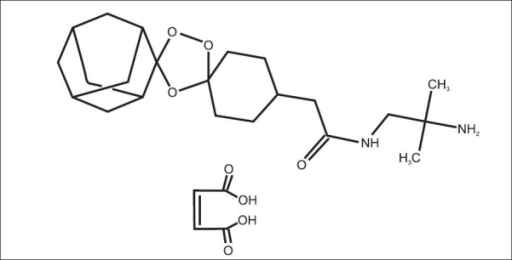
Arterolane Maleate


Arterolane.svg

Image result for Arterolane Maleate

Image result for Arterolane Maleate

Arteolane Maleate

C26H40N2O8
Molecular Weight: 508.612

CAS  959520-73-1

664338-39-0 (free base)   959520-73-1 (maleate)   959520-79-7 (acetate)   664338-40-3 (tosylate)   959520-82-2 (tartrate)   959520-83-3 (citrate)

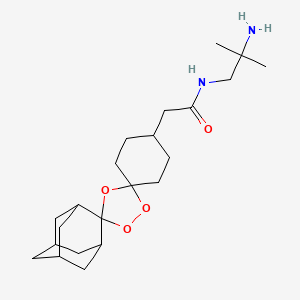
N-(2-amino-2-methylpropyl)-2-((1R,3R,4”S,5R,5’s,7R)-dispiro[adamantane-2,3′-[1,2,4]trioxolane-5′,1”-cyclohexan]-4”-yl)acetamide maleate

Dispiro[cyclohexane-1,3′-[1,2,4]trioxolane-5′,2”-tricyclo[3.3.1.13,7]decane]-4-acetamide, N-(2-amino-2-methylpropyl)-, cis-, (2Z)-2-butenedioate (1:1)

APPROVED 4.11.2017 CDSCO

Arteolane Maleate and Piperaquine phosphate Dispersible tablets (37.5 mg +187.5 mg

Indicated in children aged 6 months to 12 years for the treatment of :
– Acute uncomplicated Plasmodium falciparum malaria infection
– Acute uncomplicated Plasmodium Vivax malaria infection
 Arterolane, also known as OZ-277, is an adenosine triphosphatase inhibitor potentially for the treatment of malaria.

Arterolane.png

cas 664338-39-0 

Arterolane

664338-39-0, UNII-3N1TN351VB, OZ277, RBX-11160, NCGC00274173-01
Molecular Formula: C22H36N2O4
 Molecular Weight: 392.53224
 cis-adamantane-2-spiro-3’-8’-[[[(2’-amino-2’ methylpropyl) amino] carbonyl] methyl] 1’,2’,4’-trioxaspiro [4.5] decane
cis-adamantane-2-spiro-3′-8′-[[[(2′- amino-2′-methylpropyl)amino]carbonyl]-methyl]- 1 ‘,2′,4’-trioxaspiro[4.5]decane

Arterolane, also known as OZ277 or RBx 11160, is a substance that was tested for antimalarial activity[1] by Ranbaxy Laboratories.[2] It was discovered by US and European scientists who were coordinated by the Medicines for Malaria Venture (MMV).[3] Its molecular structure is uncommon for pharmacological compounds in that it has both a ozonide (trioxolane) group and an adamantanesubstituent.[4]

Initial results were disappointing, and in 2007 MMV withdrew support, after having invested $20M in the research;[5] Ranbaxy said at the time that it intended to continue developing the drug combination on its own.[2] Ranbaxy started a Phase II clinical trial of arterolane, in combination with piperaquine in 2009 that published in 2015.[6][7]

In 2012, Ranbaxy obtained approval to market the arterolane/piperaquine combination drug in India, under the brand name Synriam,[5]and in 2014 received approval to market it in Nigeria, Uganda, Senegal, Cameroon, Guinea, Kenya and Ivory Coast; it had already received approval in Uganda.[8]

Ranbaxy launched India’s first new drug, SynriamTM, treating Plasmodium falciparummalaria in adults. The drug provides quick relief from most malaria-related symptoms, including fever, and has a high cure rate of over 95 %.

Just one tablet per day is required, for three days, instead of two to four tablets, twice daily, for three or more days with other medicines. The drug is independent of dietary restrictions for fatty foods or milk.

Ranbaxy developed Synriam as a fixed-dose combination of arterolane maleate and piperaquine phosphate, where arterolane is the new chemical entity (NCE) that was developed as an alternative to artemisinin. It is the first recently developed antimalarial not based on artemisinin, one of the most effective treatments for malaria, which has shown problems with resistance in recent years. Arterolane was discovered by a collaborative drug discovery project funded by the Medicines for Malaria Venture. Since SynriamTM has a synthetic source, unlike artemisinin-based drugs, production can be scaled up whenever required and a consistent supply can be maintained at a low cost.

The new drug, has been approved by the Drug Controller General of India (DCGI) for marketing in India and conforms to the recommendations of the World Health Organization (WHO) for using combination therapy in malaria. Ranbaxy is also working to make it available in African, Asian and South American markets where Malaria is rampant. SynriamTM trials are ongoing for Plasmodium vivax malaria and a paediatric formulation.

Derek Lowe of the famous In the Pipeline blog had written about arterolane in 2009. At the time it was in Phase III trial, which I assumed were the trials that Ranbaxy was conducting. But it turned out that arterolane was developed by a collaboration between researchers in the US, the UK, Switzerland and Australia who were funded by the World Health Organization and Medicines for Malaria Venture (a Swiss non-profit). They published this work in Nature in 2004 and further SAR (Structure Activity Relationship) studies in J Med Chem in 2010. So Ranbaxy did not develop the drug from scratch? But the press release quotes Arun Sawhney, CEO and Managing Director of Ranbaxy which misleads people to think so: “It is indeed gratifying to see that Ranbaxy’s scientists have been able to gift our great nation its first new drug, to treat malaria, a disease endemic to our part of the world. This is a historic day for science and technology in India as well as for the pharmaceutical industry in the country. Today, India joins the elite and exclusive club of nations of the world that have demonstrated the capability of developing a new drug”. So Ranbaxy mixes a known active compound (piperaquine) with a new compound that someone else found to be active (arterolane) and claims that they developed a new drug? In an interview in LiveMint, Sawhney says, “Ranbaxy spent around $30 million on Synriam and the contribution from DST [India’s Department of Science & Technology] was Rs.5 crore. The drug went through several phases of development since the project began in 2003. We did not look at this as a commercial development. Instead, this is a CSR [Corporate Social Responsibility] venture for us.” That’s a give away because developing a new drug from scratch has to cost more than $30 million + Rs.50 million.


Ranbaxy  now taken over by sun

SynriamTM

Generic Name
Arterolane Maleate and Piperaquine Phosphate Tablets
Composition
Each film coated tablet contains: Arterolane maleate equivalent to Arterolane ……………………………150 mg Piperaquinephosphate……………750 mg
Dosage Form
Tablets
Inactive ingredients:
Microcrystalline cellulose, Crospovidone, Magnesium stearate, Hydroxypropyl methyl cellulose/Hypromellose, Titanium dioxide, Macrogol/ Polyethylene glycol, Talc, Ferric Oxide (Yellow), Ferric Oxide (Red)

Description SynriamTM is a fixed dose combination of two antimalarial active ingredients arterolane maleate and piperaquine phosphate.

Arterolane maleate is a synthetic trioxolane compound. The chemical name of arterolane maleate is cis-adamantane-2-spiro-3’-8’-[[[(2’-amino-2’ methylpropyl) amino] carbonyl] methyl] 1’,2’,4’-trioxaspiro [4.5] decane hydrogen maleate. The molecular formula is C26H40N2O8 and molecular weight is 508.61. The structural formula is as follows:

MALARIA
Malaria is one of the most prevalent and deadly parasitic diseases in the world. Up to 289 million cases of malaria may have occurred in 2010, causing between 660,000 and 1.25 million deaths, mainly in Africa and mostly of children younger than 5 years.
(WHO: http://www.who.int/malaria/publications/world_malaria_report_2012/en/index.html; Fidock, D. A. Eliminating Malaria. Science 2013, 340, 1531-1533.)

The most serious problem in malaria treatment is that the parasites causing the disease, particularly the deadly Plasmodium falciparum, have developed resistance to widely used drugs, particularly chloroquine (CQ). Currently, the most efficacious therapies are combinations of an artemisinin-type compound with a long-lasting partner drug like lumefantrine, amodiaquine or mefloquine.

Malaria, the most common parasitic disease of humans, remains a major health and economic burden in most tropical countries. Large areas of Central and South America, Hispaniola (Haiti and the Dominican Republic), Africa, the Middle East, the Indian subcontinent, Southeast Asia, and Oceania are considered as malaria-risk areas. It leads to a heavy toll of illness and death, especially amongst children and pregnant women.

According to the World Health Organization, it is estimated that the disease infects about 400 million people each year, and around two to three million people die from malaria every year. There are four kinds of malaria parasites that infect human: Plasmodium falciparum, Plasmodium vivax, Plasmodium ovale and Plasmodium malariae.

Malaria spreads from one person to another by the bite of mosquito, Anopheles gambiae, which serves as vector. When a mosquito sucks the blood of human, sporozoites are transfused into the human body together with saliva of the mosquito. The sporozoites enter into the hepatocytes, reproduce asexually and finally enter into the blood stream. The parasites continue to multiply inside the red blood cells, until they burst and release large number of merozoites. This process continues, destroying a significant number of blood cells and causing the characteristic paroxysm (“chills and fever”) associated with the disease. In the red blood cells, some of the merozoites become male or female gametocytes. These gametocytes are ingested by the mosquito when it feeds on blood. The gametocytes fuse in the vector’s gut; sporozoites are produced and are migrated to the vector’s salivary glands.

The clinical symptoms of malaria are generally associated with the bursting of red blood cells causing an intense fever associated with chills that can leave the infected individual exhausted and bedridden. More severe symptoms associated with repeat infections and/or infection by Plasmodium falciparum include anaemia, severe headaches, convulsions, delirium and, in some instances, death.

Quinine, an antimalarial compound that is extracted from the bark of cinchona tree, is one of the oldest and most effective drugs in existence. Chloroquine and mefloquine are the synthetic analogs of quinine developed in 1940’s, which due to their effectiveness, ease of manufacture, and general lack of side effects, became the drugs of choice. The downside to quinine and its derivatives is that they are short-acting and have bitter taste. Further, they fail to prevent disease relapses and are also associated with side effects commonly known as “Chinchonism syndrome” characterized by nausea, vomiting, dizziness, vertigo and deafness. However, in recent years, with the emergence of drug- resistant strains of parasite and insecticide-resistant strains of vector, the treatment and/or control of malaria is becoming difficult with these conventional drugs.

Malarial treatment further progressed with the discovery of Artemisinin

(qinghaosu), a naturally occurring endoperoxide sesquiterpene lactone isolated from the plant Artemisia annua (Meshnick et al., Microbiol. Rev. 1996, 60, p. 301-315; Vroman et al., Curr. Pharm. Design, 1999, 5, p. 101-138; Dhingra et al., 2000, 66, p. 279-300), and a number of its precursors, metabolites and semi-synthetic derivatives which have shown to possess antimalarial properties. The antimalarial action of artemisinin is due to its reaction with iron in free heme molecules of the malaria parasite, with the generation of free radicals leading to cellular destruction. This initiated a substantial effort to elucidate its molecular mechanism of action (Jefford, dv. Drug Res. 1997, 29, p. 271-325; Cumming et al., Adv. Pharmacol. 1997, 37, p. 254-297) and to identify novel antimalarial peroxides (Dong and Vennerstrom, Expert Opin. Ther. Patents 2001, 1 1, p. 1753-1760).

Although the clinically useful artemisinin derivatives are rapid acting and potent antimalarial drugs, they have several disadvantages including recrudescence,

neurotoxicity, (Wesche et al., Antimicrob. Agents. Chemother. 1994, 38, p. 1813-1819) and metabolic instability (White, Trans. R. Soc. Trop. Med. Hyg., 1994, 88, p. 41-43). A fair number of these compounds are quite active in vitro, but most suffer from low oral activity (White, Trans. R. Soc. Trop. Med. Hyg., 1994, 88, p. 41-43 and van Agtmael et al., Trends Pharmacol. Sci., 1999, 20, p. 199-205). Further all these artemisinin derivatives are conventionally obtained from plant source and are therefore expensive. As the cultivation of the plant material is dependent on many factors including the weather conditions, the supply source thus becomes finite and there are chances of varying yield and potency. This leads to quality inconsistencies and supply constraints. As malaria is more prevalent in developing countries, a switch to cheaper and effective medicine is highly desirable.

Thus there exists a need in the art to identify new peroxide antimalarial agents, especially those which are not dependent on plant source and can be easily synthesized, are devoid of neurotoxicity, and which possess improved solubility, stability and pharmacokinetic properties.

Following that, many synthetic antimalarial 1 ,2,4-trioxanes (Jefford, Adv. Drug Res. 1997, 29, p. 271-325; Cumming et al., Adv. Pharmacol. 1997, 37, p. 254-297), 1,2,4,5-tetraoxanes (Vennerstrom et al., J. Med. Chem., 2000, 43, p. 2753-2758), and other endoperoxides have been prepared. Various patents/applications disclose means and method for treating malaria using Spiro or dispiro 1,2,4-trioxolanes for example, U.S.

Patent Application No. 2004/0186168 and U.S. Patent Nos. 6,486, 199 and 6,825,230. The present invention relates to solid dosage forms of the various spiro or dispiro 1 ,2,4- trioxolanes antimalarial compounds disclosed in these patents/applications and are incorporated herein by reference.

Active compounds representing various Spiro and dispiro 1 ,2,4-trioxolane derivatives possess excellent potency, efficacy against Plasmodium parasites, and a lower degree of neurotoxicity, in addition to their structural simplicity and ease of synthesis. Furthermore, these compounds have half-lives which are believed to permit short-term treatment regimens comparing favorably to other artemisinin-like drugs. In general, the therapeutic dose of trioxolane derivative may range between about 0.1-1000 mg/kg/day, in particular between about 1-100 mg/kg/day. The foregoing dose may be administered as a single dose or may be divided into multiple doses. For malaria prevention, a typical dosing schedule could be, for example, 2.0-1000 mg/kg weekly beginning 1-2 weeks prior to malaria exposure, continued up to 1-2 weeks post-exposure.

Monotherapy with artemisinin (natural or synthetic) class of drugs might cure the patients within 3 days, however perceiving the potential threat of the malarial parasite developing resistance towards otherwise very potent artemisinin class of drugs, WHO had strictly called for an immediate halt to the provision of single-drug artemisinin malaria pills. Combination therapy in case of malaria retards the development of resistance, improve efficacy by lowering recrudescence rate, provides synergistic effect, and increase exposure of the parasite to the drugs.

Artemsinin based combinations are available in the market for a long time.

Artemether-lumafentrine (Co-artem®) was the first fixed dose antimalarial combination containing an artemisinin derivative and has been known since 1999. This combination has passed extensive safety and efficacy trials and has been approved by more than 70 regulatory agencies. Co-artem® is recommended by WHO as the first line treatment for uncomplicated malaria.

Other artemisinin based combinations include artesunate and amodiaquine (Coarsucam®), and dihydroartemisin and piperaquine (Eurartesim®). Unfortunately, all the available artemisinin based combinations have complicated dosage regimens making it difficult and inconvenient for a patient to comply completely with the total prescribed duration. For example, the dosage regimen of Co-artem® for an adult having body weight of more than 35 kg includes 6 doses over three days. The first dose comprises four tablets initially, the second dose comprises four tablets after eight hours, the third to sixth doses comprise four tablets twice for another two days; making it a total of 24 tablets. The dosage regimen of Coarsucam® for an adult having body weight of more than 36 kg or age above 14 years includes three doses over three days; each dose comprises two tablets; making it a total of six tablets. The dosage regimen of Eurartesim® for an adult having body weight between 36 kg – 75 kg includes 3 doses over three days, each dose comprises of three tablets, making it a total of nine tablets.

It is evident that the available artemisinin-based combinations have a high pill burden on patients as they need to consume too many tablets. As noted above, this may increase the possibility of missing a few doses, and, consequently, could result in reduced efficacy due to non-compliance and may even lead to development of resistance for the drug. Therefore, there is an urgent and unmet need for anti-malarial combinations with a simplified daily dosing regimen that reduces the pill burden and would increase patient compliance.

Apart from simplifying the regimen, there are certain limitations for formulators developing formulations with trioxolones, the first being their susceptibility to degradation in presence of moisture that results in reduced shelf lives. Another is their bitter taste, which can result in poor compliance of the regimen or selection of another, possibly less effective, therapeutic agent.

……………………..

http://www.google.st/patents/US6906205

Figure US06906205-20050614-C00051

……………………

http://www.google.st/patents/WO2013008218A1?cl=en

structural Formula II.

Figure imgf000013_0001

Formula II

Active compound includes one or more of the various spiro and dispiro trioxolane derivatives disclosed in U.S. Application No. 2004/0186168 and U.S. Patent Nos.

6,486,199 and 6,825,230, which are incorporated herein by reference. These trioxolanes are relatively sterically hindered on at least one side of the trioxolane heterocycle which provides better in vivo activity, especially with respect to oral administration. Particularly, spiro and dispiro 1,2,4-trioxolanes derivatives possess excellent potency and efficacy against Plasmodium parasites, and a lower degree of neurotoxicity.

The term “Active compound I” herein means cis-adamantane-2-spiro-3′-8′-[[[(2′- amino-2′-methylpropyl)amino]carbonyl]-methyl]- 1 ‘,2′,4’-trioxaspiro[4.5]decane hydrogen maleate. The Active compound I may be present in an amount of from about 5% to about 25%, w/w based on the total dosage form.

………………

http://www.google.st/patents/WO2007138435A2?cl=en

A synthetic procedure for preparing compounds of Formula I, salts of the free base c«-adamantane-2-spiro-3′-8′-[[[(2′-amino-2′-methyl propyl) amino] carbonyl] methyl]- 1 ‘, 2′, 4’-trioxaspiro [4.5] decane has been disclosed in U.S. 6,906,205.

Figure imgf000002_0001

The process for the preparation of compounds of Formula I wherein a compound of Formula II (wherein R is lower alkyl) is reacted with a compound of Formula III (wherein R is lower alkyl) to obtain compound of Formula IV;

Figure imgf000005_0001
Figure imgf000005_0002

Formula Formula IV

followed by hydrolysis of the compounds of Formula IV to give a compound of Formula V;

Figure imgf000005_0003

Formula V followed by the reaction of the compound of Formula V with an activating agent, for example, methyl chloroformate, ethyl chloroformate, propyl chloro formate, n-butyl chloro formate, isobutyl chloroformate or pivaloyl chloride leads to the formation of mixed anhydride, which is reacted in situ reaction with 1 ,2-diamino-2-methyl propane to give a compound of Formula VI; and

Figure imgf000005_0004

Formula Vl reacting the compound of Formula VI with an acid of Formula HX (wherein X can be the same as defined earlier) to give compounds of Formula I.

Example 1 : Preparation of O-methyl-2-adamantanone oxime

To a solution of 2-adamantanone (50 g, 0.3328 mol, 1 equiv.) in methanol (0.25 lit), sodium hydroxide solution (15 g, 0.3761mol, 1.13 equiv, in 50 mL water) was added followed by methoxylamine hydrochloride (37.5 g x 81.59% Purity= 30.596 g, 0.366 mol, 1.1 equiv) at room temperature under stirring. The reaction mixture was stirred at room temperature for 1 to 2 h. The reaction was monitored by HPLC. The reaction mixture was concentrated at 40- 45°C under vacuum to get a thick residue. Water (250 mL) was added at room temperature and the reaction mixture was stirred for half an hour. The white solid was filtered, washed with water (50 mL), and dried at 40 to 45°C under reduced pressure. O-methyl 2- adamantanone oxime (57 g, 95 % yield) was obtained as a white solid.

(M++l) 180, 1HNMR (400 MHz, CDCl3 ): δ 1.98 – 1.79 (m, 12H), 2.53 (s, IH), 3.46 ( s, IH), 3.81 (s, 3H).

Example 2: Preparation of 4-(methoxycarbonvmethvPcvclohexanone A high pressure autoclave was charged with a mixture of methyl (4- hydroxyphenyl)acetate (50 g, 0.30 mol), palladium ( 5g) (10 %) on carbon (50 % wet) and O- xylene (250 mL). The reaction mixture was stirred under 110 to 115 psi of hydrogen pressure for 7 to 8 h at 1400C. The reaction was monitored by HPLC. The reaction mixture was then cooled to room temperature, and the catalyst was filtered off. Filtrate was concentrated under reduced pressure to get 4-(methoxycarbonylmethyl)cyclohexanone as light yellow to colorless oily liquid (48.7 g, 97.4 %).

(M++!) 171, ‘ HNMR (400 MHz, CDCl 3): δ 1.48 – 1.51 ( m, 2H), 2.1 1-2.07 (m, 2H), 2.4- 2.23 (m, 7H), 3.7 (s, 3H).

Example 3: Preparation of methyl (Is, 4s)-dispiro [cyclohexane-l, 3′-f 1,2,4] trioxolane-5′, 2″-tricvclor3.3.1.1371decan1-4-ylacetate

A solution of O-methyl-2-adamantanone oxime (example 1) (11.06 g, 61.7 mmol, 1.5 equiv.) and 4-(methoxycarbonymethyl)cyclohexanone (example 2) (7.0 g, 41.1 mmol, 1 equiv.) in cyclohexane ( 200ml) and dichloromethane (40 mL) was treated with ozone (ozone was produced with an OREC ozone generator [0.6 L/min. O2, 60 V] passed through an empty gas washing bottle that was cooled to -780C). The solvent was removed after the reaction was complete. After removal of solvents, the crude product was purified by crystallization from 80% aqueous ethanol (200 mL) to afford the title compound as a colorless solid. Yield: 10.83 g, 78%, mp: 96-980C; 1HNMR (500 Hz3CDCl3): δ 1.20-1.33 (m, 2H), 1.61-2.09 (m, 5 21H), 2.22 (d, J = 6.8Hz, 2H), 3.67(s,3H).

Example 4: Preparation of (Is, 4s)-dispiro [cyclohexane-1, 3′-[l,2,4] trioxolane-5′, 2″- tricvclo [3.3.1.137] decanl-4-ylacetic acid

Sodium hydroxide (3.86 g, 96.57 mmol, 3 equiv.) in water (80 mL) was added to a solution of methyl (\s, 4s)-dispiro [cyclohexane-1, 3′-[l,2,4] trioxolane-5′, 2″-tricyclo

10 [3.3.1.I37] decan]-4-ylacetate (example 3) (10.83 g, 32.19 mmol, 1 equiv.) in 95% ethanol (150 mL). The mixture was stirred at 500C for about 4 h, cooled to O0C, and treated with IM hydrochloric acid (129ml, 4 equiv). The precipitate was collected by filtration, washed with 50 % aqueous ethanol (150 mL) and dried in vacuum at 40 0C to give the title compound as colorless solid. Yield: 9.952 g, 96%, mp: 146-1480C ( 95% ethanol), 1HNMR (500 Hz,

15 CDCl3): δ 1.19-1.41 (m,2H), 1.60-2.05 (m,21H), 2.27 (d, J=6.8 Hz,2H).

Example 5: Preparation of c?s-adamantane-2-spiro-3′-8′-[[[(2′-amino-2′-methyl propyl) amino] carbonyl] methyl]-! ‘, T , 4’-trioxaspiro [4.5] decane

Method A:

(Is, 4s)-dispiro[cyclohexane- 1 ,3 ‘-[ 1 ,2,4]trioxolane-5 ‘,2 ‘ ‘-tricyclo[3.3.1.137]decan]-4-

.0 ylacetic acid (example 4) (5 g ,15.5mmol, 1 equiv) was mixed with triethylamine (2.5 g , 24.8 mmol, 1.6 equiv) in 100ml of dichloromethane. The reaction mixture was cooled to – 1O0C to 00C. Ethyl chloro formate (1.68 g, 17 mmol, 1.0 equiv) in 15 mL dichloromethane was charged to the above reaction mixture at – 100C to 00C. The reaction mixture was stirred at the same temperature for 10 to 30 minutes. The resulting mixed anhydride reaction mixture

15 was added dropwise to a previously prepared solution of l,2-diamino-2-methylpropane (1.64 g, 18.6 mmol, 1.2 equiv), in 100 mL dichloromethane at -100C to O0C. The temperature of reaction mixture was raised to room temperature. The reaction mixture was stirred at the same temperature till the reaction was complete. Reaction monitoring was done by thin layer chromatography using 5 to 10% methanol in dichloromethane. The reaction was complete

>0 within 2 h. Nitrogen atmosphere was maintained throughout the reaction. Water (50 mL) was charged, organic layer was separated and washed with 10% sodium bicarbonate solution (50 mL) and water (50 mL) at room temperature. The organic layer was dried over sodium sulphate and the solvent was removed at 25 to 4O0C under reduced pressure. Hexane (50ml) was added to obtain residue under stirring at room temperature. The mixture was filtered and washed with 5 mL of chilled hexane. The solid was dried under reduced pressure at room 5 temperature.

Yield: 5.2 g (85.4 %), (M++l) 393, 1HNMR (400 MHz, DMSO-J6 ): δ 0.929 ( s, 6H), 1.105 – 1.079 (m, 2H), 1.887-1.641 (m, 21H), 2.030-2.017 (d, 2H), 2.928 (d, 2H).

Method B:

(Is, 4s)-dispiro [cyclohexane-1, 3′-[l,2,4] trioxolane-5′, 2″-tricyclo [3.3.1.I37]

10 decan]-4-ylacetic acid (example 4) (10 g, 31mmol, 1 equiv) was treated with isobutyl chloroformate (4.5 g, 33mmol, 1.1 equiv) in presence of organic base like triethyl amine (5 g, 49.6mmol, 1.6 equiv) at 00C to 7°C in 250ml of dichloromethane. The solution was stirred at O0C to 7°C for aboutlO to 30 minutes. To the above reaction mixture, previously prepared solution of l,2-diamino-2-methylpropane (3.27 g, 37 mmol, 1.2 equiv), in 50 mL of

15 dichloromethane was added at O0C to 7°C in one lot. The temperature of reaction mixture was raised to room temperature. The reaction mixture was stirred at the room temperature till reaction was over. Reaction monitoring was done by thin layer chromatography using 5 to 10% methanol in dichloromethane. Reaction was complete within 2 h. The reaction nitrogen atmosphere was maintained throughout the reaction. Water (250 mL) was charged, organic

20 layer was separated and washed with 10% sodium bicarbonate solution (200 mL) and water (100 mL) at room temperature and the solvent was removed at 25 to 4O0C under reduced pressure. Hexane (100ml) was added to the residue, under stirring, at room temperature. The mixture was filtered and washed with chilled hexane (10 mL). The resultant solid was dried under reduced pressure at room temperature. Yield: 10.63 g (87%), (M++l) 393, 1HNMR

>5 (400 MHz, DMSO-J6 ) :δ 0.928 ( s, 6H), 1.102 – 1.074 (m, 2H), 1.859-1.616 (m, 21H), 2.031- 2.013 (d, 2H), 2.94-2.925 (d, 2H). Method C:

(\s, 4s)-dispiro[cyclohexane-l,3′-[l,2,4]trioxolane-5′,2″-tricyclo[3.3.1.13>7]decan]-4- ylacetic acid (example 4) (5 g, 15.5mmol, 1 equiv) was treated with pivaloyl chloride (1.87 g, 15.5 mmol, 1 equiv) and triethylamine (2.5gm, 24.8mmol, 1.6 equiv) at -15°C to -100C in dichloromethane (125 mL). The solution was stirred at -150C to -100C for aboutlO to 30 minutes. It resulted in the formation of mixed anydride. To the above reaction mixture, previously prepared solution of 1 ,2-diamino-2-methylpropane (1.64 g, 18.6 mmol, 1.2 equiv) in 25 mL dichloromethane was added at -15°C to -100C. The temperature of reaction mixture was raised to room temperature. The reaction mixture was stirred at the room temperature till reaction was over. Reaction monitoring was done by thin layer chromatography using 5 to 10% methanol in dichloromethane. The reaction was complete within 2 h. Nitrogen atmosphere was maintained throughout the reaction. Water (125 mL) was charged, organic layer was separated and washed with 50 mL of 10% sodium bicarbonate solution and 125 mL of water, respectively at room temperature. Finally solvent was removed at 25 to 4O0C under reduced pressure. 50 mL of 5% Ethyl acetate – hexane solvent mixture was added to the residue under stirring at room temperature. The mixture was filtered and washed with 5 mL of chilled hexane. Solid was dried under reduced pressure at room temperature. Yield: 5.03 g (83 %), (M++l) 393, 1JINMR (400 MHz, OMSO-d6 ):δ 0.93 ( s, 6H), 1.113 – 1.069 (m, 2H), 1.861-1.644 (m, 21H), 2.033-2.015 (d, 2H), 2.948-2.933 (d, 2H).

Example 6: Preparation of c/s-adamantane-2-spiro-3′ -8 ‘-πT(2′-amino-2’ -methyl propyl) amino! carbonyl] methyli-l ‘, 2\ 4′-U-JoXaSpJrQ [4.51 decane maleate To a solution of c/s-adamantane-2-spiro-3′-8′-[[[(2′-amino-2’-methyl propyl) amino] carbonyl] methyl]-! ‘, 2′, 4’-trioxaspiro [4.5] decane (example 5) (60 g, 0.153 moles) in ethanol (150 mL) was added a solution of maleic acid (17.3 g, 0.15 moles, 0.98 equiv. in ethanol 90 mL) and the reaction mixture was stirred for about 1 h. To this clear solution, n- heptane (720 mL) was added at room temperature in 1 h and the reaction mixture was stirred for 3 h. It was then cooled to 0 to 100C and filtered. The cake was washed with n-heptane (60 mL) and dried under vacuum at 40-450C.

Yield: 67 g, 77.4%, mp: 1490C (decomp), (M++l) 393.5, 1HNMR (300 MHz, DMSO-^ ): δ 1.05-1.11 (2H,m), 1.18 (6H,s), 1.64-1.89 (21H,m), 2.07(2H,d), 3.21 (2H,d), 6.06 (2H,d), 7.797 (2H, bs), 8.07 (IH, t).

References

  1.  Dong, Yuxiang; Wittlin, Sergio; Sriraghavan, Kamaraj; Chollet, Jacques; Charman, Susan A.; Charman, William N.; Scheurer, Christian; Urwyler, Heinrich et al. (2010). “The Structure−Activity Relationship of the Antimalarial Ozonide Arterolane (OZ277)”. Journal of Medicinal Chemistry 53 (1): 481–91. doi:10.1021/jm901473sPMID 19924861.
  2.  Blow to Ranbaxy drug research plans at LiveMint.com, Sep 21 2007
  3.  Vennerstrom, Jonathan L.; Arbe-Barnes, Sarah; Brun, Reto; Charman, Susan A.; Chiu, Francis C. K.; Chollet, Jacques; Dong, Yuxiang; Dorn, Arnulf et al. (2004). “Identification of an antimalarial synthetic trioxolane drug development candidate”. Nature 430 (7002): 900–4.doi:10.1038/nature02779PMID 15318224.
  4.  In the Pipeline: “Ozonides As Drugs: What Will They Think Of Next?”, by Derek Lowe, November 23, 2009, at Corante.com
  5.  Indian company starts Phase III trials of synthetic artemisinin, May 4 2009, at the WorldWide Antimalarial Resistance Network
  6. http://www.nature.com/nature/journal/v430/n7002/full/nature02779.html
5-27-2011
PROCESS FOR THE PREPARATION OF DISPIRO 1,2,4-TRIOXOLANE ANTIMALARIALS (OZ277)
2-13-2009
STABLE DOSAGE FORMS OF SPIRO AND DISPIRO 1,2,4-TRIOXOLANE ANTIMALARIALS
6-15-2005
Spiro and dispiro 1,2,4-trioxolane antimalarials
11-31-2004
Spiro and dispiro 1,2,4-trixolane antimalarials

ANTIMALARIALS

http://www.rsc.org/chemistryworld/2013/03/new-antimalarial-drug-class-resistance-elq-300-quinolone

Antimalarial drugsSpeeding to a new lead

http://www.nature.com/nrd/journal/v9/n11/full/nrd3301.html

Structure of NITD609; the 1R,3Sconfiguration is fundamental for its antimalarial activity

References

  1. Jump up^ Dong, Yuxiang; Wittlin, Sergio; Sriraghavan, Kamaraj; Chollet, Jacques; Charman, Susan A.; Charman, William N.; Scheurer, Christian; Urwyler, Heinrich; et al. (2010). “The Structure−Activity Relationship of the Antimalarial Ozonide Arterolane (OZ277)”. Journal of Medicinal Chemistry53 (1): 481–91. doi:10.1021/jm901473sPMID 19924861.
  2. Jump up to:a b Blow to Ranbaxy drug research plans at LiveMint.com, Sep 21 2007
  3. Jump up^ Vennerstrom, Jonathan L.; Arbe-Barnes, Sarah; Brun, Reto; Charman, Susan A.; Chiu, Francis C. K.; Chollet, Jacques; Dong, Yuxiang; Dorn, Arnulf; et al. (2004). “Identification of an antimalarial synthetic trioxolane drug development candidate”. Nature430 (7002): 900–4. doi:10.1038/nature02779PMID 15318224.
  4. Jump up^ In the Pipeline: “Ozonides As Drugs: What Will They Think Of Next?”, by Derek Lowe; published November 23, 2009; retrieved November 17, 2015; at Sciencemag.org
  5. Jump up to:a b Akshat Rathi for Chemistry World. 3 May 2012 Ranbaxy launches new anti-malarial Synriam
  6. Jump up^ India Clinical trials registry CTRI/2009/091/000531
  7. Jump up^ Toure OA et al. Efficacy and safety of fixed dose combination of arterolane maleate and piperaquine phosphate dispersible tablets in paediatric patients with acute uncomplicated Plasmodium falciparum malaria: a phase II, multicentric, open-label study. Malar J. 2015 Nov 25;14(1):469. Clinical Trial Registry India: CTRI/2009/091/000531. PMID 26608469 PMC4660726
  8. Jump up^ Staff, Business Standard. December 16, 2014 Ranbaxy receives approval for malaria drug Synriam from 7 African countries

REFERENCES

1: Valecha N, Savargaonkar D, Srivastava B, Rao BH, Tripathi SK, Gogtay N, Kochar SK, Kumar NB, Rajadhyaksha GC, Lakhani JD, Solanki BB, Jalali RK, Arora S, Roy A, Saha N, Iyer SS, Sharma P, Anvikar AR. Comparison of the safety and efficacy of fixed-dose combination of arterolane maleate and piperaquine phosphate with chloroquine in acute, uncomplicated Plasmodium vivax malaria: a phase III, multicentric, open-label study. Malar J. 2016 Jan 27;15:42. doi: 10.1186/s12936-016-1084-1. PubMed PMID: 26818020; PubMed Central PMCID: PMC4728808.

2: Saha N, Moehrle JJ, Zutshi A, Sharma P, Kaur P, Iyer SS. Safety, tolerability and pharmacokinetic profile of single and multiple oral doses of arterolane (RBx11160) maleate in healthy subjects. J Clin Pharmacol. 2014 Apr;54(4):386-93. doi: 10.1002/jcph.232. PubMed PMID: 24242999.

3: Toure OA, Rulisa S, Anvikar AR, Rao BS, Mishra P, Jalali RK, Arora S, Roy A, Saha N, Iyer SS, Sharma P, Valecha N. Efficacy and safety of fixed dose combination of arterolane maleate and piperaquine phosphate dispersible tablets in paediatric patients with acute uncomplicated Plasmodium falciparum malaria: a phase II, multicentric, open-label study. Malar J. 2015 Nov 25;14:469. doi: 10.1186/s12936-015-0982-y. PubMed PMID: 26608469; PubMed Central PMCID: PMC4660726.

4: Toure OA, Valecha N, Tshefu AK, Thompson R, Krudsood S, Gaye O, Rao BH, Sagara I, Bose TK, Mohanty S, Rao BS, Anvikar AR, Mwapasa V, Noedl H, Arora S, Roy A, Iyer SS, Sharma P, Saha N, Jalali RK; AM–PQP Study Team.. A Phase 3, Double-Blind, Randomized Study of Arterolane Maleate-Piperaquine Phosphate vs Artemether-Lumefantrine for Falciparum Malaria in Adolescent and Adult Patients in Asia and Africa. Clin Infect Dis. 2016 Apr 15;62(8):964-71. doi: 10.1093/cid/ciw029. PubMed PMID: 26908796; PubMed Central PMCID: PMC4803108.

5: Fontaine SD, Spangler B, Gut J, Lauterwasser EM, Rosenthal PJ, Renslo AR. Drug delivery to the malaria parasite using an arterolane-like scaffold. ChemMedChem. 2015 Jan;10(1):47-51. doi: 10.1002/cmdc.201402362. PubMed PMID: 25314098; PubMed Central PMCID: PMC4420023.

6: Gupta A, Singh Y, Srinivas KS, Jain G, Sreekumar VB, Semwal VP. Development and validation of a headspace gas chromatographic method for the determination of residual solvents in arterolane (RBx11160) maleate bulk drug. J Pharm Bioallied Sci. 2010 Jan;2(1):32-7. doi: 10.4103/0975-7406.62706. PubMed PMID: 21814428; PubMed Central PMCID: PMC3146089.

7: Gautam A, Ahmed T, Sharma P, Varshney B, Kothari M, Saha N, Roy A, Moehrle JJ, Paliwal J. Pharmacokinetics and pharmacodynamics of arterolane maleate following multiple oral doses in adult patients with P. falciparum malaria. J Clin Pharmacol. 2011 Nov;51(11):1519-28. doi: 10.1177/0091270010385578. PubMed PMID: 21148048.

8: Patil C, Katare S, Baig M, Doifode S. Fixed dose combination of arterolane and piperaquine: a newer prospect in antimalarial therapy. Ann Med Health Sci Res. 2014 Jul;4(4):466-71. doi: 10.4103/2141-9248.139270. Review. PubMed PMID: 25221689; PubMed Central PMCID: PMC4160665.

9: Valecha N, Looareesuwan S, Martensson A, Abdulla SM, Krudsood S, Tangpukdee N, Mohanty S, Mishra SK, Tyagi PK, Sharma SK, Moehrle J, Gautam A, Roy A, Paliwal JK, Kothari M, Saha N, Dash AP, Björkman A. Arterolane, a new synthetic trioxolane for treatment of uncomplicated Plasmodium falciparum malaria: a phase II, multicenter, randomized, dose-finding clinical trial. Clin Infect Dis. 2010 Sep 15;51(6):684-91. doi: 10.1086/655831. PubMed PMID: 20687837.

10: Lanteri CA, Chaorattanakawee S, Lon C, Saunders DL, Rutvisuttinunt W, Yingyuen K, Bathurst I, Ding XC, Tyner SD. Ex vivo activity of endoperoxide antimalarials, including artemisone and arterolane, against multidrug-resistant Plasmodium falciparum isolates from Cambodia. Antimicrob Agents Chemother. 2014 Oct;58(10):5831-40. doi: 10.1128/AAC.02462-14. PubMed PMID: 25049252; PubMed Central PMCID: PMC4187925.

11: Valecha N, Krudsood S, Tangpukdee N, Mohanty S, Sharma SK, Tyagi PK, Anvikar A, Mohanty R, Rao BS, Jha AC, Shahi B, Singh JP, Roy A, Kaur P, Kothari M, Mehta S, Gautam A, Paliwal JK, Arora S, Saha N. Arterolane maleate plus piperaquine phosphate for treatment of uncomplicated Plasmodium falciparum malaria: a comparative, multicenter, randomized clinical trial. Clin Infect Dis. 2012 Sep;55(5):663-71. doi: 10.1093/cid/cis475. PubMed PMID: 22586253.

12: Dong Y, Wittlin S, Sriraghavan K, Chollet J, Charman SA, Charman WN, Scheurer C, Urwyler H, Santo Tomas J, Snyder C, Creek DJ, Morizzi J, Koltun M, Matile H, Wang X, Padmanilayam M, Tang Y, Dorn A, Brun R, Vennerstrom JL. The structure-activity relationship of the antimalarial ozonide arterolane (OZ277). J Med Chem. 2010 Jan 14;53(1):481-91. doi: 10.1021/jm901473s. PubMed PMID: 19924861.

13: Jourdan J, Matile H, Reift E, Biehlmaier O, Dong Y, Wang X, Mäser P, Vennerstrom JL, Wittlin S. Monoclonal Antibodies That Recognize the Alkylation Signature of Antimalarial Ozonides OZ277 (Arterolane) and OZ439 (Artefenomel). ACS Infect Dis. 2016 Jan 8;2(1):54-61. PubMed PMID: 26819968; PubMed Central PMCID: PMC4718528.

14: Fügi MA, Wittlin S, Dong Y, Vennerstrom JL. Probing the antimalarial mechanism of artemisinin and OZ277 (arterolane) with nonperoxidic isosteres and nitroxyl radicals. Antimicrob Agents Chemother. 2010 Mar;54(3):1042-6. doi: 10.1128/AAC.01305-09. PubMed PMID: 20028825; PubMed Central PMCID: PMC2825978.

15: Mossallam SF, Amer EI, El-Faham MH. Efficacy of Synriam™, a new antimalarial combination of OZ277 and piperaquine, against different developmental stages of Schistosoma mansoni. Acta Trop. 2015 Mar;143:36-46. doi: 10.1016/j.actatropica.2014.12.005. PubMed PMID: 25530543.

16: Longo M, Zanoncelli S, Brughera M, Colombo P, Wittlin S, Vennerstrom JL, Moehrle J, Craft JC. Comparative embryotoxicity of different antimalarial peroxides: in vitro study using the rat whole embryo culture model (WEC). Reprod Toxicol. 2010 Dec;30(4):583-90. doi: 10.1016/j.reprotox.2010.07.011. PubMed PMID: 20708075.

17: Abiodun OO, Brun R, Wittlin S. In vitro interaction of artemisinin derivatives or the fully synthetic peroxidic anti-malarial OZ277 with thapsigargin in Plasmodium falciparum strains. Malar J. 2013 Jan 31;12:43. doi: 10.1186/1475-2875-12-43. PubMed PMID: 23368889; PubMed Central PMCID: PMC3566918.

18: White NJ. Can new treatment developments combat resistance in malaria? Expert Opin Pharmacother. 2016 Jul;17(10):1303-7. doi: 10.1080/14656566.2016.1187134. PubMed PMID: 27191998.

19: Wang X, Dong Y, Wittlin S, Charman SA, Chiu FC, Chollet J, Katneni K, Mannila J, Morizzi J, Ryan E, Scheurer C, Steuten J, Santo Tomas J, Snyder C, Vennerstrom JL. Comparative antimalarial activities and ADME profiles of ozonides (1,2,4-trioxolanes) OZ277, OZ439, and their 1,2-dioxolane, 1,2,4-trioxane, and 1,2,4,5-tetraoxane isosteres. J Med Chem. 2013 Mar 28;56(6):2547-55. doi: 10.1021/jm400004u. PubMed PMID: 23489135.

20: Marfurt J, Chalfein F, Prayoga P, Wabiser F, Wirjanata G, Sebayang B, Piera KA, Wittlin S, Haynes RK, Möhrle JJ, Anstey NM, Kenangalem E, Price RN. Comparative ex vivo activity of novel endoperoxides in multidrug-resistant plasmodium falciparum and P. vivax. Antimicrob Agents Chemother. 2012 Oct;56(10):5258-63. doi: 10.1128/AAC.00283-12. PubMed PMID: 22850522; PubMed Central PMCID: PMC3457353.

Arterolane
Arterolane.svg
Clinical data
Routes of
administration
Oral
ATC code
Identifiers
CAS Number
PubChem CID
ChemSpider
UNII
Chemical and physical data
Formula C22H36N2O4
Molar mass 392.531 g/mol
3D model (JSmol)

////////////Arteolane Maleate, OZ-277, RBx-11160, OZ 277, RBx 11160, OZ277, RBx11160, IND 2017

O=C(NCC(C)(N)C)C[C@H](CC1)CC[C@@]21OC3(OO2)[C@H]4C[C@H]5C[C@@H]3C[C@@H](C4)C5.O=C(O)/C=C\C(O)=O

Bepotastine Besilate, ベポタスチンベシル酸塩


ChemSpider 2D Image | Bepotastine Besilate | C27H31ClN2O6SBepotastine besilate.png

Bepotastine Besilate

ベポタスチンベシル酸塩

  • Molecular FormulaC27H31ClN2O6S
  • Average mass547.063 Da
UNII:6W18MO1QR3
(+)-(S)-4-(4-((4-Chlorophenyl)(2-pyridyl)methoxy)piperidino)butyric acid monobenzenesulfonate
(S)-4-(4-((4-chlorophenyl)(pyridin-2-yl)methoxy)piperidin-1-yl)butanoic acid compound with benzenesulfonic acid (1:1)
190786-44-8 [RN]
125602-71-3 FREE FORM,
UNII: 6W18MO1QR3
1-Piperidinebutanoic acid, 4-[(S)-(4-chlorophenyl)-2-pyridinylmethoxy]-, benzenesulfonate (1:1) [ACD/Index Name]
4-{4-[(S)-(4-Chlorophenyl)(2-pyridinyl)methoxy]-1-piperidinyl}butanoic acid benzenesulfonate (1:1)
Talion [Trade name]
tau284
TAU-284DS, TAU-284
DA-5206
HL-151
SNJ-1773
    • Use:antiallergic, antihistaminic
For the symptomatic treatment of itchy eyes (caused by IgE-induced mast cell degranulation) due to allergic conjunctivitis.
10 mg Tablets  For the treatment of allergic rhinitis  27.03.2017 CDSCO

APPROVED 

USFDA

NDA 22-288 Bepotastine Besilate 1.5% Ophthalmic Solution ISTA Pharmaceuticals, Inc.

https://www.accessdata.fda.gov/drugsatfda_docs/nda/2009/02228s000_ChemR.pdf

str1

Drug Substance Bepotastine besilate is manufactured by Ube Industries and the information for the NDA is submitted through DMF #19966. Bepotastine besilate is a white crystalline powder with no odor and bitter taste. It is very soluble in but sparingly soluble in . It is stable when exposed to light, and optically active. The S-isomer is the active drug and is controlled as an impurity through synthesis. The distribution coefficient in 1-octanol is higher than in aqueous buffer in the pH 5-9 range. There are 10 potential impurities but only one impurity is above 0.1%. Two potential genotoxic impurities are controlled below . Residual is controlled below Bepotastine besilate is stable under long term storage conditions for (25ºC/60% RH) over 5 years

Bepotastine besilate was originally developed as an oral tablet dosage form and got approval in Japan in 2000 for allergic rhinitis. It is a non-sedating anti-allergic drug. The proposed NDA is an ophthalmic solution indicated for allergic conjunctivitis. Bepotastine besilate ophthalmic solution 1.5% is a sterile solution. It is an aqueous solution to be administered as drops at or near physiological pH range of tears. The formulation contains sodium chloride, monobasic sodium phosphate as dihydrate, benzalkonium chloride, sodium hydroxide and purified water; typically these components are used for , preservative action, pH adjustment,

INTRO

Bepotastine is a non-sedating, selective antagonist of the histamine 1 (H1) receptor. Bepotastine was approved in Japan for use in the treatment of allergic rhinitis and uriticaria/puritus in July 2000 and January 2002, respectively, and is marketed by Tanabe Seiyaku Co., Ltd. under the brand name Talion. It is available in oral and opthalmic dosage forms in Japan. The opthalmic solution is FDA approved since Sept 8, 2009 and is under the brand name Bepreve.

Tae Hee Ha, Chang Hee Park, Won Jeoung Kim, Soohwa Cho, Han Kyong Kim, Kwee Hyun Suh, “PROCESS FOR PREPARING BEPOTASTINE AND INTERMEDIATES USED THEREIN.” U.S. Patent US20100168433, issued July 01, 2010., US20100168433

BEPREVE® (bepotastine besilate ophthalmic solution) 1.5% is a sterile, topically administered drug for ophthalmic use. Each mL of BEPREVE contains 15 mg bepotastine besilate.

Bepotastine besilate is designated chemically as (+) -4-[[(S)-p-chloro-alpha -2pyridylbenzyl] oxy]-1-piperidine butyric acid monobenzenesulfonate. The chemical structure for bepotastine besilate is:

BEPREVE® (bepotastine besilate) Structural Formula Illustration

Bepotastine besilate is a white or pale yellowish crystalline powder. The molecular weight of bepotastine besilate is 547.06 daltons. BEPREVE ophthalmic solution is supplied as a sterile, aqueous 1.5% solution, with a pH of 6.8.

The osmolality of BEPREVE (bepotastine besilate ophthalmic solution) 1.5% is approximately 290 mOsm/kg.

ベポタスチンベシル酸塩 JP17
Bepotastine Besilate

C21H25ClN2O3▪C6H6O3S : 547.07
[190786-44-8]

Title: Bepotastine
CAS Registry Number: 190786-43-7
CAS Name: 4-[(S)-(4-Chlorophenyl)-2-pyridinylmethoxy]-1-piperidinebutanoic acid
Additional Names: betotastine
Molecular Formula: C21H25ClN2O3
Molecular Weight: 388.89
Percent Composition: C 64.86%, H 6.48%, Cl 9.12%, N 7.20%, O 12.34%
Literature References: Histamine H1-receptor antagonist. Prepn (stereochem. unspec.): A. Koda et al., EP 335586eidem, US4929618 (1989, 1990 both to Ube). Prepn of optically active salts: J. Kita et al., EP 949260 (1999 to Ube; Tanabe Seiyaku). Pharmacology: M. Kato et al., Arzneim.-Forsch. 47, 1116 (1997). Suppression of IL-5 production: O. Kaminuma et al., Biol. Pharm. Bull. 21, 411 (1998). Antiallergic activity in animal models: M. Ueno et al., Pharmacology 57, 206 (1998).
Derivative Type: Benzenesulfonate salt
CAS Registry Number: 190786-44-8
Additional Names: Bepotastine besilate
Manufacturers’ Codes: TAU-284
Trademarks: Talion (Tanabe)
Molecular Formula: C21H25ClN2O3.C6H6O3S
Molecular Weight: 547.06
Percent Composition: C 59.28%, H 5.71%, Cl 6.48%, N 5.12%, O 17.55%, S 5.86%
Properties: Pale grey prisms from acetonitrile, mp 161-163°. [a]D20 +6.0° (c = 5 in methanol).
Melting point: mp 161-163°
Optical Rotation: [a]D20 +6.0° (c = 5 in methanol)
Therap-Cat: Antihistaminic.
Keywords: Antihistaminic.

Bepotastine (TalionBepreve) is a 2nd generation antihistamine.[1] It was approved in Japan for use in the treatment of allergic rhinitisand urticaria/pruritus in July 2000 and January 2002, respectively. It is currently marketed in the United States under the brand-name Bepreve, by ISTA Pharmaceuticals.

Bepotastine besilate is a second-generation antihistamine that was launched in a tablet formulation under a collaboration between Tanabe Seiyaku and Ube in 2000 and in 2002 for the treatment of allergic rhinitis including sneeze, mucus discharge and solidified mucus, and for the treatment of urticaria, respectively. An orally disintegrating tablet was made available in Japan in 2006, while a dry syrup formulation for the treatment of allergic rhinitis was studied in clinical trials at Tanabe Seiyaku for the treatment of allergic rhinitis

Originally developed at Ube, bepotastine besilate was later licensed to Tanabe Seiyaku as part of a collaboration agreement. In 2010, rights were licensed to Dong-A and Mitsubishi Tanabe Pharma in Korea for the treatment of eye disorders.

Pharmacology

Bepotastine is available as an ophthalmic solution and oral tablet. It is a direct H1-receptor antagonist that inhibits the release of histamine from mast cells.[2] The ophthalmic formulation has shown minimal systemic absorption, between 1 and 1.5% in healthy adults.[3] Common side effects are eye irritation, headache, unpleasant taste, and nasopharyngitis.[3] The main route of elimination is urinary excretion, 75-90% excreted unchanged.[3]

Marketing history

It is marketed in Japan by Tanabe Seiyaku under the brand name Talion. Talion was co-developed by Tanabe Seiyaku and Ube Industries, the latter of which discovered bepotastine. In 2001, Tanabe Seiyaku granted Senju, now owned by Allergan, exclusive worldwide rights, with the exception of certain Asian countries, to develop, manufacture and market bepotastine for ophthalmic use. Senju, in turn, has granted the United States rights for the ophthalmic preparation to ISTA Pharmaceuticals.

Sales and patents

In 2011, ISTA pharmaceuticals experienced a 2.4% increase in net revenues from 2010, which was driven by the sales of Bepreve. Their net revenue for 2011 was $160.3 million.[4] ISTA Pharmaceuticals was acquired by Bausch & Lomb in March 2012 for $500 million.[5] Bausch & Lomb hold the patent for bepotastine besilate (https://www.accessdata.fda.gov/scripts/cder/ob/docs/temptn.cfm. On November 26, 2014, Bausch & Lomb sue Micro Labs USA for patent infringement.[6] Bausch & Lomb was recently bought out by Valeant Pharmaceuticals in May 2013 for $8.57 billion, Valeant’s largest acquisition to date, causing the company’s stock to rise 25% when the deal was announced.[7]

Clinical trials

A Phase III clinical trial was carried out in 2010 to evaluate the effectiveness of bepotastine besilate ophthalmic solutions 1.0% and 1.5%.[8] These solutions were compared to a placebo and evaluated for their ability to reduce ocular itchiness. The study was carried out with 130 individuals and evaluated after 15 minutes, 8 hours, or 16 hours. There was a reduction in itchiness at all-time points for both ophthalmic solutions. The study concluded that bepotastine besilate ophthalmic formulations reduced ocular itchiness for at least 8 hours after dosing compared to placebo. Phase I and II trials were carried out in Japan.

Studies have been performed in animals and bepotastine besilate was not found to be teratogenic in rats during fetal development, even at 3,300 times more that typical use in humans.[3] Evidence of infertility was seen in rats at 33,000 times the typical ocular does in humans.[3] The safety and efficacy has not been established in patients under 2 years of age and has been extrapolated from adults for patients under 10 years of age.[3]

SYN

EP 0335586; JP 1989242574; JP 1990025465; JP 1993294929; US 4929618

The reaction of 4-[1-(4-chlorophenyl)-1-(2-pyridyl)methoxy]piperidine (I) with ethyl 4-bromobutyrate (II) by means of K2CO3 in refluxing acetone gives the corresponding condensation product (III), which is then hydrolyzed with NaOH in ethanol/water yielding compound (IV).

SYN 2

JP 1998237070; JP 2000198784; WO 9829409

A new synthesis of betotastine has been developed: The racemic 4-[1-(4-chlorophenyl)-1-(2-pyridyl)methoxy]piperidine (I) is submitted to optical resolution with N-acyl amino acids such as N-acetyl-L-phenylalanine (preferred), N-acetyl-L-leucine, N-(benzyloxycarbonyl)-L-phenylalanine, N-(benzyloxycarbonyl)-L-valine, N-(benzyloxycarbonyl)-L-threonine, N-(benzyloxycarbonyl)-L-serine or with (2R,3R)-3-(5-chloro-2-nitrophenylsulfanyl)-2-hydroxy-3-(4-methoxyphenyl)propionic acid (preferred) or (2R,3R)-2-hydroxy-3-(4-methoxyphenyl)-3-(2-nitrophenylsulfanyl)propionic acid as chiral intermediates, yielding the (S)-isomer (II). The condensation of (II) with ethyl 4-bromobutyrate (III) by means of a base such as Na2CO3, NaHCO3, K2CO3 or KHCO3 gives the expected 4-(1-piperidinyl)butyric acid ester (IV), which is finally hydrolyzed with NaOH or KOH in aqueous ethanol or methanol.

SYN 3

A new synthesis of betotastine has been developed: The racemic 4-[1-(4-chlorophenyl)-1-(2-pyridyl)methoxy]piperidine (I) is submitted to optical resolution with N-acyl amino acids such as N-acetyl-L-phenylalanine (preferred), N-acetyl-L-leucine, N-(benzyloxycarbonyl)-L-phenylalanine, N-(benzyloxycarbonyl)-L-valine, N-(benzyloxycarbonyl)-L-threonine, N-(benzyloxycarbonyl)-L-serine or with (2R,3R)-3-(5-chloro-2-nitrophenylsulfanyl)-2-hydroxy-3-(4-methoxyphenyl)propionic acid (preferred) or (2R,3R)-2-hydroxy-3-(4-methoxyphenyl)-3-(2-nitrophenylsulfanyl)propionic acid as chiral intermediates, yielding the (S)-isomer (II). The condensation of (II) with ethyl 4-bromobutyrate (III) by means of a base such as Na2CO3, NaHCO3, K2CO3 or KHCO3 gives the expected 4-(1-piperidinyl)butyric acid ester (IV), which is finally hydrolyzed with NaOH or KOH in aqueous ethanol or methanol.

CLIP

A Novel Synthetic Method for Bepotastine, a Histamine H1 Receptor …

journal.kcsnet.or.kr

A Novel Synthetic Method for Bepotastine, a Histamine H1 Receptor Antagonist

file:///C:/Users/91200291/Downloads/B130241_549.pdf

Scheme 1. Synthesis of bepotastine l-menthyl ester N-benzyloxycarbonyl-L-aspartic acid complex (3), bepotastine besilate (4) and bepotastine calcium (5). Reagents and conditions; i) 4-bromobutanoic acid l-menthyl ester, K2CO3, acetone, reflux, 7 h, 95-99%; ii) N-benzyloxycarbonyl-L-aspartic acid (NCbzLAA), ethyl acetate, rt, 12 h, 71-73%; iii) Ethyl acetate/H2O, NaHCO3, 97-99%; iv) EtOH:H2O = 1:1, NaOH, rt, 12 h, 3.0 N-HCl Neutralization, 92- 95%; v) AcOH, reflux, 12 h, racemization 97-100%; vi) Bezensulfonic acid, acetonitrile, rt, 12 h, 64-67%; vii) NaOH, H2O, CaCl2, rt, 12 h, 86-89%.

Synthesis of (S)-Bepotastine Besilate (4). Bepotastine (50 g, 0.13 mol) was dissolved in 500 mL of acetonitrile, and benzenesulfonic acid monohydrate (20 g, 0.11 mol) was added to the reaction mixture. Bepotastine besilate (0.5 g, 1.28 mmol) was seeded in the reaction mixture and stirred at rt for 12 h. The solid precipitate was filtered and dried. The product was obtained 38 g (yield: 64%, optical purity: 99.5% ee) as a pale white crystalline powder. Melting point: 161- 163 o C. Water: 0.2% (Karl-Fischer water determination). MS: m/z 389.1 [M+H]; 1 H-NMR (300 MHz, DMSO-d6) δ 9.2 (br s, 1H), 8.5 (d, J = 4.1 Hz, 1H), 7.8 (t, J = 7.7 Hz, 1H), 7.6 (m, 3H), 7.4 (m, 4H), 7.3 (m, 4H), 5.7 (s, 1H), 3.7 (br s, 2H), 3.3 (br s, 3H), 3.1 (br s, 2H), 2.3 (t, J = 14.1 Hz, 2H), 2.2 (m, 1H), 2.0 (m, 1H), 1.8 (m, 3H), 1.7 (m, 1H); IR (KBr, cm−1 ): 3422, 2996, 2909, 2735, 2690, 2628, 1719, 1592, 1572, 1488, 1470, 1436, 1411, 1320, 1274, 1221, 1160, 1123, 1066, 1031, 1014, 996, 849, 830, 771, 759, 727, 693, 612, 564

Synthesis

Patent ID

Title

Submitted Date

Granted Date

US9849121 AQUEOUS LIQUID PREPARATIONS AND LIGHT-STABILIZED AQUEOUS LIQUID PREPARATIONS
2014-10-10
2015-01-29
US2012225905 BEPOTASTINE COMPOSITIONS
2012-05-02
2012-09-06
US8883825 Aqueous liquid preparations and light-stabilized aqueous liquid preparations
2012-08-30
2014-11-11
Patent ID

Title

Submitted Date

Granted Date

US6638534 Preparation capable of releasing drug at target site in intestine
2001-01-29
2003-10-28
US2010168433 PROCESS FOR PREPARING BEPOTASTINE AND INTERMEDIATES USED THEREIN
2010-07-01
US7282589 Acid addition salt of optically active piperidine compound and process for preparing the same
2004-11-04
2007-10-16
US6307052 Acid-addition salts of optically active piperidine compound and process for producing the same
2001-10-23
EP0949260 ACID-ADDITION SALTS OF OPTICALLY ACTIVE PIPERIDINE COMPOUND AND PROCESS FOR PRODUCING THE SAME
1999-10-13
2002-05-22
Patent ID

Title

Submitted Date

Granted Date

US9446055 DISINTEGRATING PARTICLE COMPOSITION AND ORALLY RAPIDLY DISINTEGRATING TABLET
2010-08-11
2012-06-21
US2011257628 INSTRUMENT FOR ALLEVIATING ADDICTIVE DRUG CRAVING, METHOD FOR USING SAME AND METHOD FOR TREATING ADDICTIVE DRUG DEPENDENCE
2009-12-02
2011-10-20
US2013046240 BEPOTASTINE COMPOSITIONS
2011-10-06
2013-02-21
US2012328675 FILM PREPARATION CONTAINING MEDICAMENT WITH UNPLEASANT TASTE
2011-03-03
2012-12-27
US8771724 Percutaneous absorption enhancer and transdermal preparation using the same
2009-06-22
2014-07-08
Patent ID

Title

Submitted Date

Granted Date

US6780877 Acid addition salt of optically active piperidine compound and process for preparing the same
2002-02-28
2004-08-24
US8877168 Aqueous liquid preparations and light-stabilized aqueous liquid preparations
2014-06-25
2014-11-04
US8784789 Aqueous liquid preparations and light-stabilized aqueous liquid preparations
2003-07-30
2014-07-22
US2010137367 NOVEL CRYSTALLINE BEPOTASTINE METAL SALT HYDRATE, METHOD FOR PREPARING SAME, AND PHARMACEUTICAL COMPOSITION COMPRISING SAME
2010-06-03
US8900602 Disintegrating particle composition and orally rapidly disintegrating tablet
2010-08-11
2014-12-02
Bepotastine
Bepotastine.svg
Clinical data
Trade names Bepreve
AHFS/Drugs.com International Drug Names
MedlinePlus a610012
Pregnancy
category
  • US: C (Risk not ruled out)
Routes of
administration
Oral, topical (eye drops)
ATC code
  • none
Legal status
Legal status
  • In general: ℞ (Prescription only)
Pharmacokinetic data
Bioavailability High (oral)
Minimal (topical)
Protein binding ~55%
Excretion Renal (75–90%)
Identifiers
CAS Number
PubChem CID
DrugBank
ChemSpider
UNII
KEGG
ChEBI
ChEMBL
Chemical and physical data
Formula C21H25ClN2O3
Molar mass 388.88 g/mol
3D model (JSmol)

References

    • EP 335 586 (Ube Ind.; appl. 22.3.1989; J-prior. 25.3.1988).
    • EP 485 984 (Ube Ind.; appl. 13.11.1991; J-prior. 15.11.1990).
    • WO 9 829 409 (Ube Ind.; appl. 25.12.1997; J-prior. 26.12.1996).
  • racemization :

    • JP 10 237 069 (Ube Ind.; appl. 21.2.1997).

References

  1. Jump up^ H. Takahashi; A. Ishida-Yamamoto; H. Iizuka (September 2004). “Effects of bepotastine, cetirizine, fexofenadine, and olopatadine on histamine-induced wheal-and flare-response, sedation, and psychomotor performance”Clinical and Experimental Dermatology29: 526–532. doi:10.1111/j.1365-2230.2004.01618.x.
  2. Jump up^ “Bepotastine Monograph”LexiComp.
  3. Jump up to:a b c d e f “Bepreve prescribing Information” (PDF).
  4. Jump up^ [phx.corporate-ir.net/External.File?item…t=1 “2011 Net Revenues Increase to $160.3 Million On an Adjusted Cash Net Income Basis, ISTA Posts Second Year of Profitability Company Reaffirms 2012 Financial Guidance”] Check |url= value (help).
  5. Jump up^ “Bausch & Lomb to Buy ISTA Pharmaceuticals for $500 Million”DealBook. Retrieved 2015-12-05.
  6. Jump up^ “Bausch & Lomb Inc. et al. v. Micro Labs USA, Inc. et al.”
  7. Jump up^ “Valenant pharmaceuticals eyes China with Bausch deal”.
  8. Jump up^ Macejko, Thomas T.; Bergmann, Mark T.; Williams, Jon I.; Gow, James A.; Gomes, Paul J.; McNamara, Timothy R.; Abelson, Mark B. (2010-07-01). “Multicenter Clinical Evaluation of Bepotastine Besilate Ophthalmic Solutions 1.0% and 1.5% to Treat Allergic Conjunctivitis”American Journal of Ophthalmology150 (1): 122–127.e5. doi:10.1016/j.ajo.2010.02.007.

////////////Bepotastine Besilate, ベポタスチンベシル酸塩  ,Talion , tau284, TAU-284DS, TAU-284, DA-5206
HL-151 , SNJ-1773

C1CN(CCC1OC(C2=CC=C(C=C2)Cl)C3=CC=CC=N3)CCCC(=O)O.C1=CC=C(C=C1)S(=O)(=O)O

Fipronil, 芬普尼 , フィプロニル


2D chemical structure of fipronilChemSpider 2D Image | Fipronil | C12H4Cl2F6N4OS

120068-37-3.png

Fipronil

  • Molecular Formula C12H4Cl2F6N4OS
  • Average mass 437.148 Da
(±)-5-Amino-1-(2,6-dichloro-a,a,a-trifluoro-p-tolyl)-4-trifluoromethylsulfinylpyrazole-3-carbonitrile
(±)-Fipronil
120068-37-3 [RN]
1H-Pyrazole-3-carbonitrile, 5-amino-1-[2,6-dichloro-4-(trifluoromethyl)phenyl]-4-[(trifluoromethyl)sulfinyl]-
Fluocyanobenpyrazole
T5NNJ AR BG FG DXFFF& CCN DSO&XFFF EZ &&(RS) Form [WLN]
Termidor
UNII:QGH063955F
NCGC00094574-08
QA-6027
SPECTRUM1505354
TL8000532
UNII-QGH063955F
UPCMLD-DP011:002
UQ4430250
芬普尼 [Chinese]
フィプロニル
1H-Pyrazole-3-carbonitrile, 5-amino-1-(2,6-dichloro-4-(trifluoromethyl)phenyl)-4-((trifluoromethyl)sulfinyl)-
424-610-5 [EINECS]
5-amino-1-[2,6-dichloro-4-(trifluoromethyl)phenyl]-4-(trifluoromethane)sulfinyl-1H-pyrazole-3-carbonitrile
5-amino-1-[4-(trifluoromethyl)phenyl]-4-(trifluoromethylsulfinyl)-3-pyrazolecarbonitrile
8090115 [Beilstein]
HSDB 7051; RM 1601
Fipronil
CAS Registry Number: 120068-37-3
CAS Name: 5-Amino-1-[2,6-dichloro-4-(trifluoromethyl)phenyl]-4-[(trifluoromethyl)sulfinyl]-1H-pyrazole-3-carbonitrile
Additional Names: 5-amino-3-cyano-1-(2,6-dichloro-4-trifluoromethylphenyl)-4-trifluoromethylsulfinylpyrazole; (±)-5-amino-1-(2,6-dichloro-a,a,a-trifluoro-p-tolyl)-4-trifluoromethylsulfinylpyrazole-3-carbonitrile
Manufacturers’ Codes: MB-46030
Trademarks: Frontline (Merial); Termidor (BASF)
Molecular Formula: C12H4Cl2F6N4OS
Molecular Weight: 437.15
Percent Composition: C 32.97%, H 0.92%, Cl 16.22%, F 26.08%, N 12.82%, O 3.66%, S 7.34%
Literature References: GABA-gated chloride channel blocker. Prototype of the phenylpyrazole insecticides known as fiproles. Prepn: I. G. Buntain et al., EP 295117 (1988 to May & Baker); L. R. Hatton et al., US 5232940 (1993). Mechanism of action study: L. M. Cole et al., Pestic. Biochem. Physiol. 46, 47 (1993). Comprehensive description: F. Colliot et al., Brighton Crop Prot. Conf. – Pests Dis. 1992, 29-34.
Properties: White solid, mp 200.5-201°. Vapor pressure (20°): 2.8 ´ 10-9 mm Hg. Log P (n-octanol/water): 4.0. Soly: water 2 mg/l; acetone >50%; corn oil >10,000 mg/l. LD50 in rats (mg/kg): 100 orally; >2000 dermally (Colliot); in mice (mg/kg): 32 i.p. (Cole).
Melting point: mp 200.5-201°
Log P: Log P (n-octanol/water): 4.0
Toxicity data: LD50 in rats (mg/kg): 100 orally; >2000 dermally (Colliot); in mice (mg/kg): 32 i.p. (Cole)
Use: Pesticide.
Therap-Cat-Vet: Ectoparasiticide.

APPROVED CDSCO INDIA 25.06.2018

Fipronil  50mg/134mg/268mg/402 mg spot on solution for cats and dogs , For treatment of flea and tick infestation in cats and dogs (for veterinary use only)

Fipronil is a broad-spectrum insecticide that belongs to the phenylpyrazole chemical family. Fipronil disrupts the insect central nervous system by blocking GABA-gated chloride channels and glutamate-gated chloride (GluCl) channels. This causes hyperexcitation of contaminated insects’ nerves and muscles. Fipronil’s specificity towards insects is believed to be due to its greater affinity to the GABA receptor in insects relative to mammals and its effect on GluCl channels, which do not exist in mammals.[1]

Because of its effectiveness on a large number of pests, fipronil is used as the active ingredient in flea control products for pets and home roach traps as well as field pest control for corn, golf courses, and commercial turf. Its widespread use makes its specific effects the subject of considerable attention. This includes ongoing observations on possible off-target harm to humans or ecosystems as well as the monitoring of resistance development.[2]

Use

Fipronil is or has been used in:

  • Under the trade name Regent, it is used against major lepidopteran (moth, butterfly, etc.) and orthopteran (grasshopper, locust, etc.) pests on a wide range of field and horticultural crops and against coleopteran (beetle) larvae in soils. In 1999, 400,000 hectares were treated with Regent. It became the leading imported product in the area of rice insecticides, the second-biggest crop protection market after cotton in China.[3]
  • Under the trade names Goliath and Nexa, it is employed for cockroach and ant control, including in the US. It is also used against pests of field corngolf courses, and commercial lawn care under the trade name Chipco Choice.[3]
  • It has been used under the trade name Adonis for locust control in Madagascar and Kazakhstan.[3]
  • Marketed under the names Termidor, Ultrathor, and Taurus in Africa and Australia, fipronil effectively controls termite pests, and was shown to be effective in field trials in these countries.[3]
  • Termidor has been approved for use against the Rasberry crazy ant in the Houston, Texas, area, under a special “crisis exemption” from the Texas Department of Agriculture and the Environmental Protection Agency. The chemical is only approved for use in Texascounties experiencing “confirmed infestations” of the newly discovered ant species.[4] Use of Termidor is restricted to certified pest control operators in the following states: Alaska, Connecticut, Nebraska, South Carolina, Massachusetts, Indiana, New York, and Washington.[citation needed]
  • In Australia, it is marketed under numerous trade names, including Combat Ant-Rid, Radiate and Termidor, and as generic fipronil
  • In the UK, provisional approval for five years has been granted for fipronil use as a public hygiene insecticide.[3]
  • Fipronil is the main active ingredient of Frontline TopSpot, Fiproguard, Flevox, and PetArmor (used along with S-methoprene in the ‘Plus’ versions of these products); these treatments are used in fighting tick and flea infestations in dogs and cats.
  • In New Zealand, fipronil was used in trials to control wasps (Vespula spp.), which are a threat to indigenous biodiversity.[5] It is now being used by the Department of Conservation to attempt local eradication of wasps,[6].[7][8]

Effects

Toxicity

Fipronil is classed as a WHO Class II moderately hazardous pesticide, and has a rat acute oral LD50 of 97 mg/kg.

It has moderate acute toxicity by the oral and inhalation routes in rats. Dermal absorption in rats is less than 1% after 24 h and toxicity is considered to be low. It has been found to be very toxic to rabbits.

The photodegradate MB46513 or desulfinylfipronil, appears to have a higher acute toxicity to mammals than fipronil itself by a factor of about 10.[9]

Symptoms of acute toxicity via ingestion includes sweating, nausea, vomiting, headache, abdominal pain, dizziness, agitation, weakness, and tonic-clonic seizures. Clinical signs of exposure to fipronil are generally reversible and resolve spontaneously. As of 2011, no data were available regarding the chronic effects of fipronil on humans. The U.S. EPA has classified fipronil as a group C (possible human) carcinogen based on an increase in thyroid follicular cell tumors in both sexes of the rat. However, as of 2011, no human data is available regarding the carcinogenic effects of fipronil.[10]

Two Frontline TopSpot products were determined by the New York State Department of Environmental Conservation to pose no significant exposure risks to workers applying the product. However, concerns were raised about human exposure to Frontline spray treatment in 1996, leading to a denial of registration for the spray product. Commercial pet groomers and veterinarians were considered to be at risk from chronic exposure via inhalation and dermal absorption during the application of the spray, assuming they may have to treat up to 20 large dogs per day.[3] Fipronil is not volatile, so the likelihood of humans being exposed to this compound in the air is low.[10]

In contrast to neonicotinoids such as acetamipridclothianidinimidacloprid, and thiamethoxam, which are absorbed through the skin to some extent, fipronil is not absorbed substantially through the skin.[11]

Detection in body fluids

Fipronil may be quantitated in plasma by gas chromatography-mass spectrometry or liquid chromatography-mass spectrometry to confirm a diagnosis of poisoning in hospitalised patients or to provide evidence in a medicolegal death investigation.[12]

Ecological toxicity

Fipronil is highly toxic for crustaceansinsects and zooplankton,[13] as well as beestermitesrabbits, the fringe-toed lizard, and certain groups of gallinaceous birds. It appears to reduce the longevity and fecundity of female braconid parasitoids. It is also highly toxic to many fish, though its toxicity varies with species. Conversely, the substance is relatively innocuous to passerineswildfowl, and earthworms.

Its half-life in soil is four months to one year, but much less on soil surface because it is more sensitive to light (photolysis) than water (hydrolysis).[14]

Few studies of effects on wildlife have been conducted, but studies of the nontarget impact from emergency applications of fipronil as barrier sprays for locust control in Madagascar showed adverse impacts of fipronil on termites, which appear to be very severe and long-lived. Also, adverse effects were indicated in the short term on several other invertebrate groups, one species of lizard (Trachylepis elegans), and several species of birds (including the Madagascar bee-eater).

Nontarget effects on some insects (predatory and detritivorous beetles, some parasitic wasps and bees) were also found in field trials of fipronil for desert locust control in Mauritania, and very low doses (0.6-2.0 g a.i./ha) used against grasshoppers in Niger caused impacts on nontarget insects comparable to those found with other insecticides used in grasshopper control. The implications of this for other wildlife and ecology of the habitat remain unknown, but appear unlikely to be severe.[3] Unfortunately, this lack of severity was not observed in bee species in South America. Fipronil is also used in Brazil and studies on the stingless bee Scaptotrigona postica have shown adverse reactions to the pesticide, including seizures, paralysis, and death with a lethal dose of .54 ng a.i./bee and a lethal concentration of .24 ng a.i./μl diet. These values are highly toxic in Scaptotrigona postica and bees in general.[15] Toxic baiting with fipronil has been shown to be effective in locally eliminating German wasps. All colonies within foraging range were completely eliminated within one week.[16][17][5]

In May 2003, the French Directorate-General of Food at the Ministry of Agriculture determined that a case of mass bee mortality observed in southern France was related to acute fipronil toxicity. Toxicity was linked to defective seed treatment, which generated dust. In February 2003, the ministry decided to temporarily suspend the sale of BASF crop protection products containing fipronil in France.[18] The seed treatment involved has since been banned.[citation needed] Fipronil was used in a broad spraying to control locusts in Madagascar in a program that began in 1997.[19]

Notable results from wildlife studies include:

  • Fipronil is highly toxic to fish and aquatic invertebrates. Its tendency to bind to sediments and its low water solubility may reduce the potential hazard to aquatic wildlife.[20]
  • Fipronil is toxic to bees and should not be applied to vegetation when bees are foraging.[20]
  • Based on ecological effects, fipronil is highly toxic to upland game birds on an acute oral basis and very highly toxic on a subacute dietary basis, but is practically nontoxic to waterfowl on both acute and subacute bases.[21]
  • Chronic (avian reproduction) studies show no effects at the highest levels tested in mallards (NOEC) = 1000 ppm) or quail (NOEC = 10 ppm). The metabolite MB 46136 is more toxic to the parent than avian species tested (very highly toxic to upland game birds and moderately toxic to waterfowl on an acute oral basis).[21]
  • Fipronil is very highly toxic to bluegill sunfish and highly toxic to rainbow trout on an acute basis.[21]
  • An early-lifestage toxicity study in rainbow trout found that fipronil affects larval growth with a NOEC of 0.0066 ppm and an LOEC of 0.015 ppm. The metabolite MB 46136 is more toxic than the parent to freshwater fish (6.3 times more toxic to rainbow trout and 3.3 times more toxic to bluegill sunfish). Based on an acute daphnia study using fipronil and three supplemental studies using its metabolites, fipronil is characterized as highly toxic to aquatic invertebrates.[21]
  • An invertebrate lifecycle daphnia study showed that fipronil affects length in daphnids at concentrations greater than 9.8 ppb.[21]
  • A lifecycle study in mysids shows fipronil affects reproduction, survival, and growth of mysids at concentrations less than 5 ppt.[21]
  • Acute studies of estuarine animals using oystersmysids, and sheepshead minnows show that fipronil is highly acutely toxic to oysters and sheepshead minnows, and very highly toxic to mysids. Metabolites MB 46136 and MB 45950 are more toxic than the parent to freshwater invertebrates (MB 46136 is 6.6 times more toxic and MB 45950 is 1.9 times more toxic to freshwater invertebrates).[21]

Colony collapse disorder

Fipronil is one of the main chemical causes blamed for the spread of colony collapse disorder among bees. It has been found by the Minutes-Association for Technical Coordination Fund in France that even at very low nonlethal doses for bees, the pesticide still impairs their ability to locate their hive, resulting in large numbers of forager bees lost with every pollen-finding expedition.[22] A synergistic toxic effect of fipronil with the fungal pathogen Nosema ceranae was recently reported[23]. The functional basis for this toxic effect is now understood: the synergy between fipronil and the pathogenic fungus induces changes in male physiology leading to infertility[24] A 2013 report by the European Food Safety Authorityidentified fipronil as “a high acute risk to honeybees when used as a seed treatment for maize and on July 16, 2013 the EU voted to ban the use of fipronil on corn and sunflowers within the EU. The ban took effect at the end of 2013.”[25][26]

Pharmacodynamics

Fipronil acts by binding to allosteric sites of GABAA receptors and GluCl receptors (of insects) as an antagonist (a form of noncompetitive inhibition). This prevents the opening of chloride ion channels normally encouraged by GABA, reducing the chloride ions’ ability to lower a neuron’s membrane potential. This results in an overabundance of neurons reaching action potential and likewise CNS toxicity via overstimulation.[27][28][29][30]

Acute oral LD50 (rat) 97 mg/kg
Acute dermal LD50 (rat) >2000 mg/kg

In animals and humans, fipronil poisoning is characterized by vomiting, agitation, and seizures, and can usually be managed through supportive care and early treatment of seizures, generally with benzodiazepine use.[31][32]

History

Fipronil was discovered and developed by Rhône-Poulenc between 1985 and 1987, and placed on the market in 1993 under the B2 U.S. Patent 5,232,940 B2. Between 1987 and 1996, fipronil was evaluated on more than 250 insect pests on 60 crops worldwide, and crop protection accounted for about 39% of total fipronil production in 1997. Since 2003, BASF holds the patent rights for producing and selling fipronil-based products in many countries.

2017 Fipronil eggs contamination

The 2017 Fipronil eggs contamination is an incident in Europe and South Korea involving the spread of insecticide contaminated eggs and egg products. Chicken eggs were found to contain Fipronil and distributed to 15 European Union countries, Switzerland, and Hong Kong.[33][34] Approximately 700,000 eggs are thought to have reached shelves in the UK alone.[35] Eggs at 44 farms in Taiwan were also found with excessive Fipronil levels.[36]

SYN

Figure US20130030190A1-20130131-C00009

SYN 2

SYN 3

SYN 4

PATENT

http://www.allindianpatents.com/patents/271132-a-process-for-the-synthesis-of-fipronil

5-Amino-l-(2,6-dichloro-4-trifluoromethylphenyl)-3-cyano-4-trifluoromethyl
sulfinyl pyrazole or 5-Amino-[2,6-dichloro-4-(trif]uoromethyl)phenyl]-4-[-(1 (R,S)-trifluoromethyl)sulfinyl]-1H-pyrazole-3-carbonitrile also known as Fipronil is a novel pesticide characterized by high efficiency, low toxicity and especially low residue.
There are various routes to synthesize Fipronil by oxidation of thiopyrazole with various other oxidizing agents in suitable solvents. Oxidation of sulfides is a very useful route for the preparation of sulfoxides. Literature is replete with the conversion of sulfides to sulfoxides and/or sulfones. However, most of the existing methods use expensive, toxic or rare oxidizing reagents, which are difficult to prepare, are very expensive and cannot be used on commercial scale. Many of these processes suffer from poor selectivity.
WO01/30760 describes oxidation of 5-amino-l-(2,6-dichloro-4-trifluoromethylphenyl)-3-cyano-4-trifluoromethylthio-pyrazole with trifluoro-acetic acid and hydrogen peroxide in the presence of boric acid. The quantity

of trifluoroacetic acid used is 14.5 molar equivalents. The patent also
discloses the preparation of 5-amino-1-(2,6-dichloro-4-trifluoromethyl
phenyl)-3-cyano-4-trifluoromethylthio-pyrazole from 5-amino-1-(2,6-
dichloro-4-trifluoromethyl phenyl)-3-cyano pyrazole-4-yl disulphide.
European Patent publication No.295117 describes the preparation of 5-amino-l-(2,6-dichloro-4-trifluoromethylphenyl)-3-cyano-4-trifluoromethylsulphinyl pyrazole starting from 2,6-Dichloro-4-trifluoromethylaniline to give an intermediate 5-amino-l-(2,6-dichloro-4-trifluoromethylphenyl)-3-cyano-4-trifluoromethylthiopyrazole which is oxidized with meta-chloroperbenzoic acid in chloroform to give desired product.
Oxidizing agents such as perbenzoic acids do not provide effective and regioselective oxidation of electron deficient sulfides such as trifluoromethylsulphides which are less readily oxidized than other sulfides. Trifluoroacetic acid and trichloroacetic acid are found to be very efficient and regioselective oxidation medium for oxidation of 5-amino-l-(2,6-dichloro-4-trifluoromethylphenyl)-3-cyano-4-trifluoromethylthio-pyrazole in presence of hydrogen peroxide. Trichloroacetic acid can not be used alone due to higher melting point. Trifluoroacetic acid on the other hand is very regioselective with respect to conversion and low by-products formation. However, it is expensive, water miscible, corrosive to metal as well as glass, comparatively lower boiling and it’s recovery (in anhydrous form) is complex in nature.
W000/35851/2000 talks about synthesis of 2,6-Dichloro-4-trifluoromethylaniline starting from 3,4,5-trichloro-benzotrifluoride in the presence of alkaline fluorides like lithium fluoride and ammonia in the

presence of N-methylpyrrolidone at 250°C to give 97% conversion and 87% selectivity. The main drawback of the above process is the synthesis of 3,4,5-trichlorobenzotrifluoride in high yield and purity. Chlorination of p-chlorobenzotrifluoride gives a mixture of 3,4,5-trichlorobenzotrifluoride in 72% GLC conversions, 3,4-dichloro and tetrachlorobenzotrifluoride. The process to get pure 3,4,5-isomer from this mixture by fractionation followed by crystallization is very tedious. Moreover in-spite of using very pure intermediates, substantial amount of an undesired isomer (3-amino-4,5-dichlorobenzotrifluoride) is also obtained.
Another approach to generate 3,4,5-trichlorobenzotrifluoride with high yield and purity is to perform denitrochlorination of 4-chloro-3,5-dinitrobenzotrifluoride in the presence of a catalyst as described in GB Patent 2154581A. Even though the process produces 3,4,5-trichlorobenzotrifluoide in high yield and purity, the reaction conditions are too drastic to be employed for an industrial process.
The known commercial processes for the manufacture of Fipronil uses corrosive and expensive chemical such as trifluoroaceticacid, hydrogen peroxide and m-chloroperbenzoicacid Trifluoroacetic acid is expensive and generally not used in large quantities, as well as of m-chloroperbenzoic acid is difficult to handle at commercial scale due to its un-stability and detonating effect. Also the raw material used such as 2,6-Dichloro-4-trifluoromethylaniline are not easily available or made. The overall process for the Fipronil as disclosed above is found to be unsatisfactory in one respect or the other.

Thus, there is felt a need for preparing Fipronil from easily available raw materials in a simple and economical manner at an industrial level, with high yields and purity.

PATENT

https://patents.google.com/patent/US20130030190A1/en

  • 5-Amino-1-(2,6-dichloro-4-trifluoromethylphenyl)-3-cyano-4-trifluoromethyl sulfinyl pyrazole or 5-Amino-[2,6-dichloro-4-(trifluoromethyl)phenyl]-4-[-(1(R,S)-trifluoromethyl)sulfinyl]-1H-pyrazole-3-carbonitrile also known as Fipronil is a novel pesticide characterized by high efficiency, low toxicity and especially low residue.
  • [0005]
    There are various routes to synthesize Fipronil by oxidation of thiopyrazole with various other oxidizing agents in suitable solvents. Oxidation of sulfides is a very useful route for the preparation of sulfoxides. Literature is replete with the conversion of sulfides to sulfoxides and/or sulfones. However, most of the existing methods use expensive, toxic or rare oxidizing reagents, which are difficult to prepare, are very expensive and cannot be used on commercial scale. Many of these processes suffer from poor selectivity.
  • [0006]
    WO01/30760 describes oxidation of 5-amino-1-(2,6-dichloro-4-trifluoromethylphenyl)-3-cyano-4-trifluoromethylthio-pyrazole with trifluoro-acetic acid and hydrogen peroxide in the presence of boric acid. The quantity of trifluoroacetic acid used is 14.5 molar equivalents. The patent also discloses the preparation of 5-amino-1-(2,6-dichloro-4-trifluoromethyl phenyl)-3-cyano-4-trifluoromethylthio-pyrazole from 5-amino-1-(2,6-dichloro-4-trifluoromethyl phenyl)-3-cyano pyrazole-4-yl disulphide.
  • [0007]
    European Patent publication No. 295117 describes the preparation of 5-amino-1-(2,6-dichloro-4-trifluoromethylphenyl)-3-cyano-4-trifluoromethylsulphinyl pyrazole starting from 2,6-Dichloro-4-trifluoromethylaniline to give an intermediate 5-amino-1-(2,6-dichloro-4-trifluoromethylphenyl)-3-cyano-4-trifluoromethylthiopyrazole which is oxidized with meta-chloroperbenzoic acid in chloroform to give desired product.
  • [0008]
    Oxidizing agents such as perbenzoic acids do not provide effective and regioselective oxidation of electron deficient sulfides such as trifluoromethylsulphides which are less readily oxidized than other sulfides. Trifluoroacetic acid and trichloroacetic acid are found to be very efficient and regioselective oxidation medium for oxidation of 5-amino-1-(2,6-dichloro-4-trifluoromethylphenyl)-3-cyano-4-trifluoromethylthio-pyrazole in presence of hydrogen peroxide. Trichloroacetic acid can not be used alone due to higher melting point. Trifluoroacetic acid on the other hand is very regioselective with respect to conversion and low by-products formation. However, it is expensive, water miscible, corrosive to metal as well as glass, comparatively lower boiling and it’s recovery (in anhydrous form) is complex in nature.
  • [0009]
    WO00/35851/2000 talks about synthesis of 2,6-Dichloro-4-trifluoromethylaniline starting from 3,4,5-trichloro-benzotrifluoride in the presence of alkaline fluorides like lithium fluoride and ammonia in the presence of N-methylpyrrolidone at 250° C. to give 97% conversion and 87% selectivity. The main drawback of the above process is the synthesis of 3,4,5-trichlorobenzotrifluoride in high yield and purity. Chlorination of p-chlorobenzotrifluoride gives a mixture of 3,4,5-trichlorobenzotrifluoride in 72% GLC conversions, 3,4-dichloro and tetrachlorobenzotrifluoride. The process to get pure 3,4,5-isomer from this mixture by fractionation followed by crystallization is very tedious. Moreover in-spite of using very pure intermediates, substantial amount of an undesired isomer (3-amino-4,5-dichlorobenzotrifluoride) is also obtained.
  • [0010]
    Another approach to generate 3,4,5-trichlorobenzotrifluoride with high yield and purity is to perform denitrochlorination of 4-chloro-3,5-dinitrobenzotrifluoride in the presence of a catalyst as described in GB Patent 2154581A. Even though the process produces 3,4,5-trichlorobenzotrifluoide in high yield and purity, the reaction conditions are too drastic to be employed for an industrial process.
  • [0011]
    The known commercial processes for the manufacture of Fipronil uses corrosive and expensive chemical such as trifluoroaceticacid, hydrogen peroxide and m-chloroperbenzoicacid Trifluoroacetic acid is expensive and generally not used in large quantities, as well as of m-chloroperbenzoic acid is difficult to handle at commercial scale due to its un-stability and detonating effect. Also the raw material used such as 2,6-Dichloro-4-trifluoromethylaniline are not easily available or made. The overall process for the Fipronil as disclosed above is found to be unsatisfactory in one respect or the other.
  • [0012]
    Thus, there is felt a need for preparing Fipronil from easily available raw materials in a simple and economical manner at an industrial level, with high yields and purity.

Figure US20130030190A1-20130131-C00009

    • Example 18

    • [0081]
      A mixture of 700 g of dichloroacetic acid and trichloroacetic acid was taken along with 300 g of chlorobenzene, 2 g of boric acid and 280 g of 5-amino-1-(2,6-dichloro-4-trifluoromethylphenyl)-3-cyano-4-trifluoromethyl thiopyrazole, the content were cooled to 15-20° C. Aqueous H20(44.2 g, 50%) was added and mass was stirred for 20 hrs. The mass was then processed and Fipronil was isolated by filtration. After work up as above, 269 g of Fipronil of purity 94% was obtained. The filtered Fipronil was then purified using chlorobenzene (5 ml/g) followed by mixture (1 ml/g, 80:20 v/v) of ethylacetate and chlorobenzene to get 232 g of Fipronil of greater than 97% purity.

Example 19 Purification of Fipronil

  • [0082]
    The fipronil prepared in example 18 of purity 97% was treated with a mixture (232 ml) of ethylacetate & chlorobenzene (80:20 v/v). This reaction mixture was heated to 85-90° C. & maintained for 1 hr. It was further cooled up to 30° C. in stages & filtered. Fipronil thus obtained had a purity of 98%. This cycle was repeated to obtain fipronil of above 98% purity.
  • [0083]
    The useful constituents from various streams of crystallization, leaching as above were reused and recycled, fipronil was isolated in 80-85% yield with purity of above 98%.

PATENT

CN 101250158 [2008 to Hunan Res Inst of of chemical Ind.]

WO2005/44806 A1, ; Page/Page column 7-8; 12 ;

WO2009/77853 A1, ; Page/Page column 28-29 ;

US 5,618,945 [1995, to Rhone-Poulenc]

CN 102060774

IN 178903 [1997, to Rallis India Ltd.]

WO 2009/077,853 [2009 to Vetoquinol SA ]

BG 109983 [2008 to BASF Agro B V]

US 8,507,693 [2013, to Gharda]

US 5,618,945 [1995, to Rhone-Poulenc]

WO 2007/122,440 [ 2007 to Gharda Chemicals Ltd.]

FR 2,925,493 [2009 to to Vetoquinol SA ]

CN 1176078 [ 2002 to Jiangsu Prov Inst of Pesticide]

EP 0,374,061 [ 1990 to Rhone Poulenc Agrochimie]

US 5,232,940 [1993, to May and Baker]

PAPER

Journal of the Chemical Society, Perkin Transactions 1: Organic and Bio-Organic Chemistry (1972-1999), , # 24 p. 3371 – 3376

Synthesis 2008, 11, 1682-1684

Synthesis 2007, 22, 3507-3511

Tetrahedron Letters, , 2007, 48(48), 8518-8520

Tetrahedron Letters 2008 ,49. 3463-3465

References

  1. Jump up^ Raymond-Delpech, Valérie; Matsuda, Kazuhiko; Sattelle, Benedict M.; Rauh, James J.; Sattelle, David B. (2005-09-20). “Ion channels: molecular targets of neuroactive insecticides”Invertebrate Neuroscience5 (3-4): 119–133. doi:10.1007/s10158-005-0004-9ISSN 1354-2516.
  2. Jump up^ Maddison, Jill E.; Page, Stephen W. (2008). Small Animal Clinical Pharmacology(Second ed.). Elsevier Health Sciences. p. 229. ISBN 9780702028588.
  3. Jump up to:a b c d e f g “Fipronil”. Pesticides News48: 20. 2000.
  4. Jump up^ “Rasberry Crazy Ant”. Texas A&M. 2008-04-12. Archived from the original on 2007-07-14. Retrieved 2012-08-06.
  5. Jump up to:a b “Revive Rotoiti Autumn 2011”. Department of Conservation. 2011. Retrieved 11 April2012.
  6. Jump up^ “War on wasps in Abel Tasman”. 10 February 2016.
  7. Jump up^ “Vespex: Making wide-area wasp control a reality – WWF’s Conservation Innovation Awards”wwf-nz.crowdicity.com.
  8. Jump up^ (DOC), corporatename = New Zealand Department of Conservation. “Wasp control using Vespex”http://www.doc.govt.nz.
  9. Jump up^ “Fipronil insecticide: Novel photochemical desulfinylation with retention of neurotoxicity”Proceedings of the National Academy of Sciences93: 12764–12767. doi:10.1073/pnas.93.23.12764PMC 23994Freely accessible.
  10. Jump up to:a b “Fipronil Technical Fact Sheet, National Pesticide Information Center”. Retrieved 2015-12-07.
  11. Jump up^ “Cockroach Control”. Retrieved August 10, 2016.
  12. Jump up^ R. Baselt, Disposition of Toxic Drugs and Chemicals in Man, 11th edition, Biomedical Publications, Seal Beach, CA, 2017, pp. 894-895. ISBN 978-0-692-77499-1
  13. Jump up^ “Ecotoxicity for Fipronil”. Retrieved 2010-05-03.
  14. Jump up^ Amrith S. Gunasekara & Tresca Troung (March 5, 2007). “Environmental Fate of Fipronil” (PDF). Retrieved April 16, 2016.
  15. Jump up^ Jacob, CRO; Hellen Maria Soares; Stephen Malfitano Carvalho; Roberta Cornélio Ferreira Nocelli; Osmar Malspina (2013). “Acute Toxicity of Fipronil to the Stingless Bee Scaptotrigona postica Latreille”Bulletin of Environmental Contamination and Toxicology90 (1): 69–72. doi:10.1007/s00128-012-0892-4. Retrieved 23 September 2015.
  16. Jump up^ Paula Sackmann, Mauricio Rabinovich and Juan Carlos Corley J. (2001). “Successful Removal of German Yellowjackets (Hymenoptera: Vespidae) by Toxic Baiting” (PDF). pp. 811–816.
  17. Jump up^ “Short and long-term control of Vespula pensylvanica in Hawaii by fipronil baiting”Pest Management Science68: 1026–1033. doi:10.1002/ps.3262.
  18. Jump up^ Elise Kissling; BASF SE (2003). “BASF statement regarding temporary suspension of sales of crop protection products containing fipronil in France”.
  19. Jump up^ June 2000 BBC News story “Anti-locust drive ‘created havoc'”.
  20. Jump up to:a b “Fipronil” (PDF). National Pesticides Communication Network. p. 3. Retrieved 19 June 2012.
  21. Jump up to:a b c d e f g United States Environmental Protection Agency Office of Prevention, Pesticides and Toxic Substances (1996). “Fipronil. May 1996. New Pesticide Fact Sheet. US EPA Office of Prevention, Pesticides and Toxic Substances”.
  22. Jump up^ “Colony Collapse Disorder linked to Fipronil”. Retrieved 2010-06-17.
  23. Jump up^ Aufavure J., Biron D. G., Vidau C., Fontbonne R., Roudel M., Diogon M., Viguès B., Belzunces L. P., Delbac F., Blot N. (2012) Parasite – insecticide interactions: a case study of Nosema ceranae and fipronil synergy on honeybee. Scientific Reports 2:326 – DOI: 10.1038/srep00326
  24. Jump up^ Kairo G, Biron D.G, Ben A.F, Bonnet M, Tchamitchian S, Cousin M, … & Brunet J.L (2017) Nosema ceranae, Fipronil and their combination compromise honey bee reproduction via changes in male physiology]. Scientific reports, 7(1), 8556.
  25. Jump up^ “EFSA assesses risks to bees from fipronil”. 27 May 2013. Retrieved 29 May 2013.
  26. Jump up^ Carrington, Damian (16 July 2013). “EU to ban fipronil to protect honeybees”The Guardian. London.
  27. Jump up^ Cole, L. M.; Nicholson, R. A.; Casida, J. E. (1993). “Action of Phenylpyrazole Insecticides at the GABA-Gated Chloride Channel”Pestic. Biochem. Physiol46: 47–54. doi:10.1006/pest.1993.1035.
  28. Jump up^ Ratra, G. S.; Casida, J. E. (2001). “GABA receptor subunit composition relative to insecticide potency and selectivity”. Toxicol. Lett122: 215–222. doi:10.1016/s0378-4274(01)00366-6PMID 11489356.
  29. Jump up^ WHO. Pesticide Residues in Food – 1997: Fipronil; International Programme on Chemical Safety, World Health Organization: Lyon, 1997.
  30. Jump up^ Olsen RW, DeLorey TM (1999). “Chapter 16: GABA and Glycine”. In Siegel GJ, Agranoff BW, Fisher SK, Albers RW, Uhler MD. Basic neurochemistry: molecular, cellular, and medical aspects (Sixth ed.). Philadelphia: Lippincott-Raven. ISBN 0-397-51820-X.
  31. Jump up^ Ramesh C. Gupta (2007). Veterinary Toxicology. pp. 502–503. ISBN 978-0-12-370467-2.
  32. Jump up^ Mohamed F, Senarathna L, Percy A, Abeyewardene M, Eaglesham G, Cheng R, Azher S, Hittarage A, Dissanayake W, Sheriff MH, Davies W, Buckley NA, Eddleston M., Acute human self-poisoning with the N-phenylpyrazole insecticide fipronil–a GABAA-gated chloride channel blocker, J Toxicol Clin Toxicol. 2004;42(7):955-63.
  33. Jump up^ “Eggs containing fipronil found in 15 EU countries and Hong Kong”BBC News. 2017-08-11. Retrieved 2017-08-11.
  34. Jump up^ News, ABC. “EU: 17 nations get tainted eggs, products in growing scandal”ABC News. Archived from the original on 2017-08-11. Retrieved 2017-08-11.
  35. Jump up^ Boffey, Daniel (11 August 2017). “Egg contamination scandal widens as 15 EU states, Switzerland and Hong Kong affected”. The Guardian. Retrieved 11 August 2017.
  36. Jump up^ “Eggs at 44 farms in Taiwan found with excessive insecticide levels”. Taiwan News. 26 August 2017. Retrieved 26 August 2017.

External links

Fipronil
2D chemical structure of fipronil
3D chemical structure of fipronil
Names
IUPAC name

(RS)-5-Amino-1-[2,6-dichloro-4-(trifluoromethyl)phenyl]-4-(trifluoromethylsulfinyl)pyrazole-3-carbonitrile
Other names

Fipronil
Fluocyanobenpyrazole
Termidor
Identifiers
3D model (JSmol)
ChEBI
ChEMBL
ChemSpider
ECHA InfoCard 100.102.312
KEGG
PubChem CID
UNII
Properties
C12H4Cl2F6N4OS
Molar mass 437.14 g·mol−1
Density 1.477-1.626 g/cm3
Melting point 200.5 °C (392.9 °F; 473.6 K)
Pharmacology
QP53AX15 (WHO)
Except where otherwise noted, data are given for materials in their standard state (at 25 °C [77 °F], 100 kPa).

/////////////Fipronil, INDIA 2018, フィプロニル , HSDB 7051, RM 1601, veterinary, ind 2018

C1=C(C=C(C(=C1Cl)N2C(=C(C(=N2)C#N)S(=O)C(F)(F)F)N)Cl)C(F)(F)F

“ DRUG APPROVALS INTERNATIONAL” CATERS TO EDUCATION GLOBALLY, No commercial exploits are done or advertisements added by me. This is a compilation for educational purposes only. P.S. : The views expressed are my personal and in no-way suggest the views of the professional body or the company that I represent

FDA approves new kind of treatment Lumoxiti (moxetumomab pasudotox-tdfk) for hairy cell leukemia


The U.S. Food and Drug Administration today approved Lumoxiti (moxetumomab pasudotox-tdfk) injection for intravenous use for the treatment of adult patients with relapsed or refractory hairy cell leukemia (HCL) who have received at least two prior systemic therapies, including treatment with a purine nucleoside analog. Lumoxiti is a CD22-directed cytotoxin and is the first of this type of treatment for patients with HCL.

September 13, 2018

Release

The U.S. Food and Drug Administration today approved Lumoxiti (moxetumomab pasudotox-tdfk) injection for intravenous use for the treatment of adult patients with relapsed or refractory hairy cell leukemia (HCL) who have received at least two prior systemic therapies, including treatment with a purine nucleoside analog. Lumoxiti is a CD22-directed cytotoxin and is the first of this type of treatment for patients with HCL.

“Lumoxiti fills an unmet need for patients with hairy cell leukemia whose disease has progressed after trying other FDA-approved therapies,” said Richard Pazdur, M.D., director of the FDA’s Oncology Center of Excellence and acting director of the Office of Hematology and Oncology Products in the FDA’s Center for Drug Evaluation and Research. “This therapy is the result of important research conducted by the National Cancer Institute that led to the development and clinical trials of this new type of treatment for patients with this rare blood cancer.”

HCL is a rare, slow-growing cancer of the blood in which the bone marrow makes too many B cells (lymphocytes), a type of white blood cell that fights infection. HCL is named after these extra B cells which look “hairy” when viewed under a microscope. As the number of leukemia cells increases, fewer healthy white blood cells, red blood cells and platelets are produced.

The efficacy of Lumoxiti was studied in a single-arm, open-label clinical trial of 80 patients who had received prior treatment for HCL with at least two systemic therapies, including a purine nucleoside analog. The trial measured durable complete response (CR), defined as maintenance of hematologic remission for more than 180 days after achievement of CR. Thirty percent of patients in the trial achieved durable CR, and the overall response rate (number of patients with partial or complete response to therapy) was 75 percent.

Common side effects of Lumoxiti include infusion-related reactions, swelling caused by excess fluid in body tissue (edema), nausea, fatigue, headache, fever (pyrexia), constipation, anemia and diarrhea.

The prescribing information for Lumoxiti includes a Boxed Warning to advise health care professionals and patients about the risk of developing capillary leak syndrome, a condition in which fluid and proteins leak out of tiny blood vessels into surrounding tissues. Symptoms of capillary leak syndrome include difficulty breathing, weight gain, hypotension, or swelling of arms, legs and/or face. The Boxed Warning also notes the risk of hemolytic uremic syndrome, a condition caused by the abnormal destruction of red blood cells. Patients should be made aware of the importance of maintaining adequate fluid intake, and blood chemistry values should be monitored frequently. Other serious warnings include: decreased renal function, infusion-related reactions and electrolyte abnormalities. Women who are breastfeeding should not be given Lumoxiti.

The FDA granted this application Fast Track and Priority Review designations. Lumoxiti also received Orphan Drug designation, which provides incentives to assist and encourage the development of drugs for rare diseases.

The FDA granted the approval of Lumoxiti to AstraZeneca Pharmaceuticals.

///////////// Lumoxiti, moxetumomab pasudotox-tdfk, fda 2018, Fast Track, Priority Review designations,  Orphan Drug designation,

Lanadelumab, ラナデルマブ


(Heavy chain)
EVQLLESGGG LVQPGGSLRL SCAASGFTFS HYIMMWVRQA PGKGLEWVSG IYSSGGITVY
ADSVKGRFTI SRDNSKNTLY LQMNSLRAED TAVYYCAYRR IGVPRRDEFD IWGQGTMVTV
SSASTKGPSV FPLAPSSKST SGGTAALGCL VKDYFPEPVT VSWNSGALTS GVHTFPAVLQ
SSGLYSLSSV VTVPSSSLGT QTYICNVNHK PSNTKVDKRV EPKSCDKTHT CPPCPAPELL
GGPSVFLFPP KPKDTLMISR TPEVTCVVVD VSHEDPEVKF NWYVDGVEVH NAKTKPREEQ
YNSTYRVVSV LTVLHQDWLN GKEYKCKVSN KALPAPIEKT ISKAKGQPRE PQVYTLPPSR
EEMTKNQVSL TCLVKGFYPS DIAVEWESNG QPENNYKTTP PVLDSDGSFF LYSKLTVDKS
RWQQGNVFSC SVMHEALHNH YTQKSLSLSP G
(Light chain)
DIQMTQSPST LSASVGDRVT ITCRASQSIS SWLAWYQQKP GKAPKLLIYK ASTLESGVPS
RFSGSGSGTE FTLTISSLQP DDFATYYCQQ YNTYWTFGQG TKVEIKRTVA APSVFIFPPS
DEQLKSGTAS VVCLLNNFYP REAKVQWKVD NALQSGNSQE SVTEQDSKDS TYSLSSTLTL
SKADYEKHKV YACEVTHQGL SSPVTKSFNR GEC
(dimer; dishulfide bridge: H22-H96, H149-H205, H225-L213, H231-H’231, H234-H’234, H266-H326, H372-H430, H’22-H’96, H’149-H’205, H’225-L’213, H’266-H’326, H’372-H’430, L23-L88, L133-L193, L’23-L’88, L’133-L’193)

Lanadelumab

DX 2930

Fda approved 2018/8/23, Takhzyro

Formula
C6468H10016N1728O2012S48
Cas
1426055-14-2
Mol weight
145714.225

Peptide, Monoclonal antibody
Prevention of angioedema in patients with hereditary angioedema

Immunomodulator, Plasma kallikrein inhibitor

breakthrough therapyUNII: 2372V1TKXK

Image result for Lanadelumab

Image result for Lanadelumab

Lanadelumab (INN) (alternative identifier DX-2930[1]) is a human monoclonal antibody (class IgG1 kappa)[2] that targets plasma kallikrein (pKal)[1] in order to promote prevention of angioedema in patients with hereditary angioedema.[3][4] In phase 1 clinical trialsLanadelumab was well tolerated and was reported to reduce cleavage of kininogen in the plasma of patients with hereditary angioedeman and decrease the number of patients experiencing attacks of angioedema.[1][5][6][7] As of 2017 ongoing trials for Lanadelumab include two phase 3 studies focused on investigating the utility of Lanadelumab in preventing of acute angioedema attacks in hereditary angioedema patients[8][9]

Image result for Lanadelumab

This drug was produced by Dyax Corp and currently under development by Shire.[10] Lanadelumab has been designated by the U.S. Food and Drug Administration (FDA) as a breakthrough therapy.[11]

Image result for Lanadelumab

References

  1. Jump up to:a b c Banerji, Aleena; Busse, Paula; Shennak, Mustafa; Lumry, William; Davis-Lorton, Mark; Wedner, Henry J.; Jacobs, Joshua; Baker, James; Bernstein, Jonathan A. (2017-02-23). “Inhibiting Plasma Kallikrein for Hereditary Angioedema Prophylaxis”. The New England Journal of Medicine376 (8): 717–728. doi:10.1056/NEJMoa1605767ISSN 1533-4406PMID 28225674.
  2. Jump up^ Kenniston, Jon A.; Faucette, Ryan R.; Martik, Diana; Comeau, Stephen R.; Lindberg, Allison P.; Kopacz, Kris J.; Conley, Gregory P.; Chen, Jie; Viswanathan, Malini (2014-08-22). “Inhibition of Plasma Kallikrein by a Highly Specific Active Site Blocking Antibody”The Journal of Biological Chemistry289 (34): 23596. doi:10.1074/jbc.M114.569061PMC 4156074Freely accessiblePMID 24970892.
  3. Jump up^ Statement On A Nonproprietary Name Adopted By The USAN Council – LanadelumabAmerican Medical Association.
  4. Jump up^ World Health Organization (2015). “International Nonproprietary Names for Pharmaceutical Substances (INN). Proposed INN: List 114”(PDF). WHO Drug Information29 (4).
  5. Jump up^ Chyung, Yung; Vince, Bradley; Iarrobino, Ryan; Sexton, Dan; Kenniston, Jon; Faucette, Ryan; TenHoor, Chris; Stolz, Leslie E.; Stevens, Chris (2014-10-01). “A phase 1 study investigating DX-2930 in healthy subjects”. Annals of Allergy, Asthma & Immunology113 (4): 460–466.e2. doi:10.1016/j.anai.2014.05.028ISSN 1534-4436PMID 24980392.
  6. Jump up^ “A Single Increasing Dose Study to Assess Safety and Tolerability of DX-2930 in Healthy Subjects – Full Text View – ClinicalTrials.gov”clinicaltrials.gov. Retrieved 2017-03-24.
  7. Jump up^ “Double-Blind, Multiple Ascending Dose Study to Assess Safety, Tolerability and Pharmacokinetics of DX-2930 in Hereditary Angioedema (HAE) Subjects – Full Text View – ClinicalTrials.gov”clinicaltrials.gov. Retrieved 2017-03-24.
  8. Jump up^ “Efficacy and Safety Study of DX-2930 to Prevent Acute Angioedema Attacks in Patients With Type I and Type II HAE – Full Text View – ClinicalTrials.gov”clinicaltrials.gov. Retrieved 2017-03-24.
  9. Jump up^ “Long-term Safety and Efficacy Study of DX-2930 to Prevent Acute Angioedema Attacks in Patients With Type I and Type II HAE – Full Text View – ClinicalTrials.gov”clinicaltrials.gov. Retrieved 2017-03-24.
  10. Jump up^ “Lanadelumab – AdisInsight”adisinsight.springer.com. Retrieved 2017-03-24.
  11. Jump up^ “Dyax Corp. Receives FDA Breakthrough Therapy Designation for DX-2930 for Prevention of Attacks of Hereditary Angioedema”http://www.businesswire.com. Retrieved 2017-03-24.
Lanadelumab
Monoclonal antibody
Type Whole antibody
Source Human
Target kallikrein
Clinical data
Synonyms DX-2930
ATC code
  • none
Identifiers
CAS Number
ChemSpider
  • none
UNII
Chemical and physical data
Formula C6468H10016N1728O2012S47
Molar mass 145.7 kDa

///////////Lanadelumab, Peptide, Monoclonal antibody, FDA 2018, ラナデルマブ ,Immunomodulator, Plasma kallikrein inhibitor, DX 2930,  breakthrough therapy, Takhzyro

“DRUG APPROVALS INTERNATIONAL” CATERS TO EDUCATION GLOBALLY, No commercial exploits are done or advertisements added by me. This is a compilation for educational purposes only. P.S. : The views expressed are my personal and in no-way suggest the views of the professional body or the company that I represent

Sodium zirconium cyclosilicate, ナトリウムジルコニウムシクロケイ酸塩


242800-27-7.png

ZS-9 structure.png

Image result for Sodium zirconium cyclosilicate

str1

Sodium zirconium cyclosilicate

ZS-9, ZS 9, UZSi-9

CAS 242800-27-7, H2 O3 Si . x H2 O . 2/3 Na . 1/3 Zr, Sodium zirconium cyclosilicate; Silicic acid (H2SiO3), Sodium zirconium(4+) salt (3:2:1), hydrate

USAN CAS 17141-74-1, H6 O9 Si3 . 2 Na . Zr, Silicic acid (H2SiO3), sodium zirconium(4+) salt (3:2:1), hydrate, Sodium zirconium silicate (Na2ZrSi3O9) hydrate

ナトリウムジルコニウムシクロケイ酸塩

ZrH4O6. 3H4SiO4. 2H2O. 2Na, 561.6068, AS IN kegg

Molecular Formula, H6-O9-Si3.2Na.Z, Molecular Weight, 371.5004 as in chemid plus

APPROVED FDA 2018/5/18, LOKELMA, NDA 207078

APPROVED EMA 2018/3/22, LOKELMA

ATC code: V03AE10

UNII-D652ZWF066

TREATMENT
selective cation exchanger
Treatment of hyperkalemia

Sodium zirconium cyclosilicate (ZS-9) is a selective oral sorbent that traps potassium ions throughout the gastrointestinal tract. It is being developed by ZS Pharma and AstraZeneca for the treatment of hyperkalemia (elevated serum potassium levels).[1]

The product was originated at ZS Pharma, a wholly owned subsidiary of AstraZeneca. In 2015, ZS Pharma was acquired by AstraZeneca.

Hyperkalaemia is the presence of an abnormally high concentration of potassium in the blood. Most data on the occurrence of hyperkalaemia have been obtained from studies of hospitalised patients, and the incidence ranges from 1 to 10%. There is no agreed definition of hyperkalaemia, since the raised level of potassium at which a treatment should be initiated has not been established. The European Resuscitation Council guidelines consider hyperkalaemia to be a serum potassium (S-K) level > 5.5 mmol/L, with mild elevations defined as 5.5 to 5.9 mmol/L, moderate as 6.0-6.4 mmol/L, and severe as ≥ 6.5 mmol/L. The guidelines also note that extracellular potassium levels are usually between 3.5 and 5.0 mmol/L, which is considered the normal range for adults. However, a number of recent retrospective studies have shown the risk of mortality is increased even with only modest elevations of S-K. Mortality risk has been shown to be significantly higher in chronic kidney disease (CKD) patients with S-K levels > 5.0 mmol/L. In acute myocardial infarction patients, a mean postadmission S-K ≥ 5.5 mmol/L during hospitalisation corresponded to a 12-fold increase in death compared with S-K levels between 3.5 and 4.5 mmol/L but, more importantly, S-K levels between 4.5 and 5.0 mmol/L, which is within the normal range, were associated with a 2-fold increased risk of mortality compared with S-K between 3.5 and 4.5 mmol/L.

Sodium zirconium cyclosilicate (ZS) has been developed as treatment for hyperkalaemia. The indication applied for is: Treatment of hyperkalaemia in adult patients, acute and extended use. ZS is an inorganic cation exchange crystalline compound. ZS has a high capacity to selectively entrap monovalent cations, specifically excess potassium and ammonium ions, over divalent cations such as calcium and magnesium, in the gastrointestinal tract. The high specificity of ZS for potassium is attributable to the chemical composition and diameter of the micro pores, which act in an analogous manner to the selectivity filter utilized by physiologic potassium channels. The exchange with potassium ions occurs throughout the gastrointestinal tract with onset in the upper part of the gastrointestinal tract. The trapped potassium ions are excreted from the body via the faeces, thereby reducing any excess and resolving hyperkalaemia. As claimed by the applicant, ZS demonstrates improved capacity, selectivity, and speed for entrapping excess potassium over currently available options for the treatment of hyperkalaemia. The proposed commercial formulation of ZS is a non-absorbed, insoluble, white crystalline powder for suspension with a specific particle size distribution profile. The proposed starting dose of ZS for reversal of hyperkalaemia (when serum potassium is > 5.0 mmol/l) is up to 10 g/day, divided in 3 doses (TID) to achieve normokalaemia.

EMA

The chemical name of the active substance is hydrogen sodium zirconium (IV) silicate hydrate. Due to the natural variability in the manufacturing process of the active substance, it is expected to have the formula Na~1.5H~0.5ZrSi3O9 • 2–3 H2O and relative molecular mass in the range of 390.5 – 408.5. The WHO chose not to designate an INN for the active substance, and a USAN sodium zirconium cyclosilicate is used throughout the dossier and this CHMP AR. The active substance has the following structure:

str1

Figure 1. Stick-and-ball (left) and polyhedral (right) unit cell structural representation of the main framework of the microporous sodium zirconium cyclosilicate active substance. Red = zirconium, green = silicon, blue = oxygen atoms. Cations are not pictured.

The structure of sodium zirconium cyclosilicate is a cubic cell arrangement of octahedrally coordinated Zr and tetrahedrally coordinated Si units that interconnect through oxygen bridges as Zr–O–Si and Si–O–Si. The two types of units are observed in a ratio 1:3, respectively, and repeat orderly to form a three-dimensional framework characteristic of the compound. The framework acquires its negative charge from the octahedral fractions, [ZrO6]2– , and features channels and cavities that interconnect and locate the positive ions that counter-balance the negative charge of the framework. Electrostatic interactions between the framework and the cations allow for mobility and possibility of exchange with other cations that would fit and pass the free pore openings of ~ 3.0 Å. The uniform micropore structure allows a high exchange capacity and selectivity for potassium (K+) and ammonium (NH4 +) cations, providing the compound with its distinctive ion-exchange selectivity features responsible for its mode of action. In vitro characterisation of ion selectivity of sodium zirconium cyclosilicate was provided by the applicant and considered satisfactory

The structure of sodium zirconium cyclosilicate was confirmed using synchrotron powder diffraction, standard X-ray powder diffraction, 29Si magic angle spinning solid nuclear magnetic resonance studies (29Si-MASNMR), Fourier transform infrared spectroscopy, inductive coupled plasma-optical emission spectrometry, wave dispersive X-ray microprobe analysis and thermo-gravimetric analysis. Calculations using proprietary software were also used for structure elucidation. The active substance is a white crystalline powder. Bonding interactions in the main framework are considered primarily of covalent nature, with some ionic contribution due to the difference in electronegativity between Si–O and Zr–O. The covalent bonding interactions in all directions within the crystals make sodium zirconium cyclosilicate a compound insoluble in water or in organic solvents. It is neither hygroscopic nor sensitive to light and it is resistant to heat. During the hydrothermal synthesis, the possibility that other crystalline phases are formed exists. The observed crystalline forms are controlled by the manufacturing process parameters and release specifications. Sodium zirconium cyclosilicate is considered to be a new active substance. The applicant demonstrated that neither it, nor its derivatives have ever been active substances in medicinal products authorised in the EU………http://www.ema.europa.eu/docs/en_GB/document_library/EPAR_-_Public_assessment_report/human/004029/WC500246776.pdf

TGA

DOC]Australian Public Assessment Report for Sodium zirconium … – TGA

Jan 29, 2018 – The sponsor has submitted an application to register a new chemical entity Lokelma,sodium zirconium cyclosilicate hydrate powder for …

The chemical formula of sodium zirconium cyclosilicate hydrate is Na~1.5H~0.5ZrSi3O9.2-3H2O.

str1

The drug substance ‘sodium zirconium cyclosilicate hydrate’ (abbreviated to ZS) is a white crystalline powder. The structure of ZS is summarised as a cubic cell arrangement of octahedrally coordinated zirconium Zr ([ZrO6]2-) and tetrahedrally coordinated silicon Si ([SiO4]0) units that interconnect through oxygen bridges as Zr-O-Si and Si-O-Si. The two types of units are observed in a ratio of 1:3, respectively, and repeat orderly to form a three dimensional framework characteristic of the compound. The framework acquires its negative charge from the octahedral fractions, [ZrO6]2- and features channels and cavities that interconnect and locate the positive ions (sodium, Na+, and hydrogen, H+) that counter balance the negative charge of the framework.

The manufacturing process is tightly controlled in terms of order of addition of starting material, reaction and crystallisation temperatures, mixing speeds and times, and minimum number of rinses, in order to meet expected yields of the drug substance of an expected quality. In process quality control tests [information redacted] are applied during the manufacturing process to ensure the formation of the correct crystalline structure and batch to batch consistency.

Sodium zirconium cyclosilicate hydrate is completely insoluble.

The drug substance forms part of a family of zirconium silicates that have specific ion exchange properties. Its mechanism of action is based on the cations within its porous crystalline structure, and their ability to freely exchange with a select group of monovalent cations, most specifically the potassium (K+) and ammonium (NH4+) cations. The pore size within the three dimensional crystalline structure has been measured at ~3Å (2.4 x 3.5 Å[1]), which is sufficiently wide enough to trap the potassium monovalent cations which have an approximate ionic diameter of 2.98Å.

The particle size of the drug substance is controlled to maintain a non-systemic mode of action. The sponsor adequately justified not routinely controlling the size of larger particles in the drug substance as differences in particle size were shown to not affect performance as measured by potassium ion exchange capacity (KEC), and there was no correlation between KEC and D90 for clinical lots manufactured.

There are two alternate zirconium silicate crystalline phases which may be formed in the reaction process; Crystalline Phase A (CPA) and Crystalline Phase B (CPB). These layered, two-dimensional structures also exhibit ion exchange properties, although their ion selectivity is less specific for the potassium K+ cations compared to the desired drug substance. PXRD techniques are used to differentiate between the desired drug substance and levels of CPA and CPB. Appropriate limits are applied in the drug substance specification to limit the content of these crystalline phases in the drug substance/drug product.

The quality of the drug substance is controlled by an acceptable specification that includes test and limits for Appearance, Identification (by FTIR and PXRD), KEC , Crystalline Phase A , Crystalline Phase B , Zirconium content , Silicon content , Hafnium content , Moisture content , Particle Size , and Elemental Impurities.

[1] 1 Å = 0.1 nm.

Image result for Sodium zirconium cyclosilicate

Background

Hyperkalemia occurs in 3 to 10% of hospitalized patients[2] but is often mild. Hyperkalemia can arise from impaired renal functionpotassium-sparing diuretics and renin–angiotensin system blockers (e.g., ACE inhibitorsangiotensin receptor blockersspironolactone) and diabetes mellitus.[2][3][4][5]

There is no universally accepted definition of what level of hyperkalemia is mild, moderate, or severe.[6] However, if hyperkalemia causes any ECG change it is considered a medical emergency[6] due to a risk of potentially fatal abnormal heart rhythms (arrhythmia) and is treated urgently.[6] serum potassium concentrations greater than 6.5 to 7.0 mmol/L in the absence of ECG changes are managed aggressively.[6]

Hyperkalemia, particularly if severe, is a marker for an increased risk of death.[2] However, there is disagreement regarding whether a modestly elevated serum potassium level directly causes significant problems. One viewpoint is that mild to moderate hyperkalemia is a secondary effect that denotes significant underlying medical problems.[2] Accordingly, these problems are both proximate and ultimate causes of death,[2] and adjustment of potassium may not be helpful. Alternatively, hyperkalemia may itself be an independent risk factorfor cardiovascular mortality.[7]

Several approaches are used in the treatment of hyperkalemia.[6] In October 2015, the U.S. Food and Drug Administration (FDA) approved patiromer which works by binding free potassium ions in the gastrointestinal tract and releasing calcium ions for exchange. Previously, the only approved product was sodium polystyrene sulfonate (Kayexalate),[8] an organic ion-exchange resin that nonspecifically binds cations (e.g., calciumpotassiummagnesium) in the gastrointestinal tract. The effectiveness of sodium polystyrene sulfonate has been questioned: a study in healthy subjects showed that laxatives alone were almost as effective in increasing potassium secretion as laxatives plus Kayexalate.[9] In addition, use of sodium polystyrene sulfonate, particularly if formulated with high sorbitol content, is uncommonly but convincingly associated with colonic necrosis.[6][8][10][11]

Mechanism of action

Cross-sections of ZS-9 pores with three different ions (K⁺ = potassium, Na⁺ = sodium, Ca²⁺ = calcium). The specificity for potassium is thought to be caused by the diameter and composition of the pores, which resembles potassium channels.

ZS-9 is a zirconium silicate. Zirconium silicates have been extensively used in medical and dental applications because of their proven safety.[12] 11 zirconium silicates were screened by an iterative optimization process. ZS-9 selectively captures potassium ions, presumably by mimicking the actions of physiologic potassium channels.[13] ZS-9 is an inorganic cation exchanger crystalline with a high capacity to entrap monovalent cations, specifically potassium and ammonium ions, in the GI tract. ZS-9 is not systemically absorbed; accordingly, the risk of systemic toxicity may be minimized.

Clinical studies

phase 2 clinical trial in 90 patients with chronic kidney disease and mild-to-moderate hyperkalemia found a significantly greater reduction in serum potassium with ZS-9 than placebo. ZS-9 was well tolerated, with a single adverse event (mild constipation).[14]

double-blindphase 3 clinical trial in 753 patients with hyperkalemia and underlying chronic kidney diseasediabetescongestive heart failure, and in patients on renin–angiotensin system blockers compared ZS-9 with placebo.[15] Patients were randomly assigned to receive either ZS-9 (1.25 g, 2.5 g, 5 g, or 10 g) or placebo 3 times daily for 48 hours (acute phase). Patients who achieved normokalemia (serum potassium of 3.5-4.9 mmol/L) were randomly assigned to receive ZS-9 or placebo once daily for 12 additional days (maintenance phase). At the end of the acute phase, serum potassium significantly decreased in the 2.5 g, 5 g, and 10 g ZS-9 groups. During the maintenance phase, once daily 5 g or 10 g ZS-9 maintained serum potassium at normal levels. Adverse events, including specifically gastrointestinal effects, were similar with either ZS-9 or placebo.[15]

double-blindphase 3 clinical trial in 258 patients with hyperkalemia and underlying chronic kidney diseasediabetescongestive heart failure, and in patients on renin–angiotensin system blockers compared ZS-9 with placebo.[16] All patients received 10 g ZS-9 three times daily for 48 hours in the initial open-label phase. Patients who achieved normokalemia (serum potassium 3.5-5.0 mEq/L) were randomly assigned to receive either ZS-9 (5 g, 10 g, or 15 g) or placebo once daily for 28 days (double-blind phase). 98% of patients (n=237) achieved normokalemia during the open-label phase. During the double-blind phase, once daily 5 g, 10 g, and 15 g ZS-9 maintained serum potassium at normal levels in a significantly higher proportion of patients (80%, 90%, and 94%, respectively) than placebo (46%). Adverse events were generally similar with either ZS-9 or placebo. Hypokalemiaoccurred in more patients in the 10 g and 15 g ZS-9 groups (10% and 11%, respectively), versus none in the 5 g ZS-9 or placebo groups.[16]

Regulatory

In the United States, regulatory approval of ZS-9 was rejected by the Food and Drug Administration in May 2016 due to issues associated with manufacturing.[17] On May 18th, 2018, the FDA approved ZS-9 (now known as Lokelma®) for treatment of adults with hyperkalemia.[18]

PATENT

WO 2012109590

PATENT

WO 2015070019

https://patents.google.com/patent/WO2015070019A1/en

The present invention relates to novel zirconium silicate (“ZS”) compositions which are preferably sodium zirconium cyclosilicates having an elevated level of ZS-9 crystalline form relative to other forms of zirconium cyclosilicates (i.e., ZS-7) and zirconium silicates (i.e., ZS-8, ZS-11). The ZS compositions are preferably sodium zirconium cyclosilicate compositions where the crystalline form has at least 95% ZS-9 relative to other crystalline forms of zirconium silicate. The ZS compositions of the present invention unexpectedly exhibit a markedly improved in vivo potassium ion absorption profile and rapid reduction in elevate levels of serum potassium.

[004] Preferably ZS compositions of the present invention are specifically formulated at particular dosages to remove select toxins, e.g., potassium ions or ammonium ions, from the gastrointestinal tract at an elevated rate without causing undesirable side effects. The preferred formulations are designed to remove and avoid potential entry of particles into the bloodstream and potential increase in pH of urine in patients. The formulation is also designed to release less sodium into the blood. These compositions are particularly useful in the therapeutic treatment of hyperkalemia and kidney disease. The present invention also relates to pharmaceutical granules, tablets, pill, and dosage forms comprising the microporous ZS as an active ingredient. In particular, the granules, tablets, pills or dosage forms are compressed to provide immediate release, delayed release, or specific release within the subject. Also disclosed are microporous ZS compositions having enhanced purity and potassium exchange capacity (“KEC”). Methods of treating acute, sub-acute, and chronic hyperkalemia have also been investigated. Disclosed herein are particularly advantageous dosing regimens for treating different forms of hyperkalemia using the microporous ZS compositions noted above. In addition, the present invention relates to methods of co-administering microporous ZS compositions in combination with other pharmacologic drugs that are known to induce, cause, or exacerbate the hyperkalemic condition.

Patent

Publication numberPriority datePublication dateAssigneeTitle
US3329480A *1963-10-181967-07-04Union Oil CoCrystalline zircono-silicate zeolites
US4581141A *1978-02-271986-04-08Purdue Research FoundationDialysis material and method for removing uremic substances
US20050220752A1 *2004-03-302005-10-06Dominique CharmotIon binding polymers and uses thereof
US20110097401A1 *2009-06-122011-04-28Meritage Pharma, Inc.Methods for treating gastrointestinal disorders
US20120213847A1 *2011-02-112012-08-23ZS Pharma, Inc.Microporous zirconium silicate for the treatment of hyperkalemia
CA2084086C *1990-05-282002-10-08Steven M. KuznickiLarge-pored molecular sieves containing at least one octahedral site and tetrahedral sites of at least one type
US5338527A *1992-08-201994-08-16UopZirconium silicate composition, method of preparation and uses thereof
US5891417A *1997-04-081999-04-06Uop LlcZirconium silicate and zirconium germanate molecular sieves and process using the same
US5888472A *1997-04-081999-03-30Uop LlcZirconium silicate molecular sieves and process using the same
EP1038580B1 *1999-03-262005-05-25Uop LlcAmmonium ion adsorption process using zirconium silicate and zirconium germanate molecular sieves
US6332985B1 *1999-03-292001-12-25Uop LlcProcess for removing toxins from bodily fluids using zirconium or titanium microporous compositions
WO2002062356A3 *2001-02-062002-09-26Ash Medical Systems IncMonovalent-selective cation exchangers as oral sorbent therapy
CN104968336A *2012-07-112015-10-07Zs制药公司Microporous zirconium silicate for the treatment of hyperkalemia in hypercalcemic patients and improved calcium-containing compositions for the treatment of hyperkalemia
KR20150074053A *2012-10-222015-07-01제트에스 파마, 인코포레이티드Microporous zirconium silicate for treating hyperkalemia
Publication numberPriority datePublication dateAssigneeTitle
WO2017066128A1 *2015-10-142017-04-20ZS Pharma, Inc.Extended use zirconium silicate compositions and methods of use thereof
Family To Family Citations
US20160038538A1 *2013-11-082016-02-11ZS Pharma, Inc.Microporous zirconium silicate for the treatment of hyperkalemia

References

  1. Jump up^ “ZS-9. A selective potassium binder”. ZS-Pharma.
  2. Jump up to:a b c d e Elliott, M. J.; Ronksley, P. E.; Clase, C. M.; Ahmed, S. B.; Hemmelgarn, B. R. (2010). “Management of patients with acute hyperkalemia”Canadian Medical Association Journal182 (15): 1631–5. doi:10.1503/cmaj.100461PMC 2952010Freely accessiblePMID 20855477.
  3. Jump up^ Stevens, M. S.; Dunlay, R. W. (2000). “Hyperkalemia in hospitalized patients”. International Urology and Nephrology32 (2): 177–80. doi:10.1023/A:1007135517950PMID 11229629.
  4. Jump up^ Navaneethan, S. D.; Yehnert, H.; Moustarah, F.; Schreiber, M. J.; Schauer, P. R.; Beddhu, S. (2009). “Weight Loss Interventions in Chronic Kidney Disease: A Systematic Review and Meta-analysis”Clinical Journal of the American Society of Nephrology4 (10): 1565–74. doi:10.2215/CJN.02250409PMC 2758256Freely accessiblePMID 19808241.
  5. Jump up^ Tamirisa, K. P.; Aaronson, K. D.; Koelling, T. M. (2004). “Spironolactone-induced renal insufficiency and hyperkalemia in patients with heart failure”. American Heart Journal148(6): 971–8. doi:10.1016/j.ahj.2004.10.005PMID 15632880.
  6. Jump up to:a b c d e f Taal, M.W.; Chertow, G.M.; Marsden, P.A.; Skorecki, K.; Yu, A.S.L.; Brenner, B.M. (2012). Brenner and Rector’s The Kidney (Chapter 17, page 672, 9th ed.). Elsevier. ISBN 978-1-4160-6193-9.
  7. Jump up^ Fang, J.; Madhavan, S.; Cohen, H.; Alderman, M. H. (2000). “Serum potassium and cardiovascular mortality”Journal of General Internal Medicine15 (12): 885–90. doi:10.1046/j.1525-1497.2000.91021.xPMC 1495719Freely accessiblePMID 11119186.
  8. Jump up to:a b Watson, M.; Abbott, K. C.; Yuan, C. M. (2010). “Damned if You Do, Damned if You Don’t: Potassium Binding Resins in Hyperkalemia”. Clinical Journal of the American Society of Nephrology5 (10): 1723–6. doi:10.2215/CJN.03700410PMID 20798253.
  9. Jump up^ Emmett, M.; Hootkins, R. E.; Fine, K. D.; Santa Ana, C. A.; Porter, J. L.; Fordtran, J. S. (1995). “Effect of three laxatives and a cation exchange resin on fecal sodium and potassium excretion”. Gastroenterology108 (3): 752–60. doi:10.1016/0016-5085(95)90448-4PMID 7875477.
  10. Jump up^ Sterns, R. H.; Rojas, M.; Bernstein, P.; Chennupati, S. (2010). “Ion-Exchange Resins for the Treatment of Hyperkalemia: Are They Safe and Effective?”. Journal of the American Society of Nephrology21 (5): 733–5. doi:10.1681/ASN.2010010079PMID 20167700.
  11. Jump up^ Kamel, K. S.; Schreiber, M. (2012). “Asking the question again: Are cation exchange resins effective for the treatment of hyperkalemia?”. Nephrology Dialysis Transplantation27(12): 4294–7. doi:10.1093/ndt/gfs293PMID 22989741.
  12. Jump up^ Denry I, Kelly JR. State of the art of zirconia for dental applications. Dental Materials. Volume 24, Issue 3, March 2008, Pages 299–307
  13. Jump up^ =Stavros, F (2014). “Characterization of Structure and Function of ZS-9, a K⁺ Selective Ion Trap”PLOS ONE9 (12): e114686. doi:10.1371/journal.pone.0114686PMC 4273971Freely accessiblePMID 25531770.
  14. Jump up^ Ash SR, et al. “Safety and efficacy of ZS-9, a novel selective cation trap, for treatment of hyperkalemia in CKD patients.” American Society of Nephrology 2013 conference, Late-Breaking Abstract.
  15. Jump up to:a b Packham DK, et al. (2014). “Sodium zirconium cyclosilicate in hyperkalemia”. New England Journal of Medicine372 (3): 222–31. doi:10.1056/NEJMoa1411487PMID 25415807.
  16. Jump up to:a b Kosiborod M, et al. (2014). “Effect of sodium zirconium cyclosilicate on potassium lowering for 28 days among outpatients with hyperkalemia”. Journal of the American Medical Association312 (21): 2223–33. doi:10.1001/jama.2014.15688PMID 25402495.
  17. Jump up^ Ben Adams (May 27, 2016). “AstraZeneca’s $2.7B hyperkalemia drug ZS-9 rejected by FDA”. FierceBiotech.
  18. Jump up^ https://www.drugs.com/history/lokelma.html
Sodium zirconium cyclosilicate
ZS-9 structure.png

Crystal structure of ZS-9. Blue spheres  =  oxygen atoms, red spheres  =  zirconium atoms, green spheres  =  silicon atoms.
Clinical data
Trade names Lokelma
Routes of
administration
Oral
ATC code
  • none
Legal status
Legal status
  • US: Rx-only
Pharmacokinetic data
Bioavailability Not absorbed
Excretion Stool
Identifiers
CAS Number
UNII
KEGG

//////////////Sodium zirconium cyclosilicate,  ナトリウムジルコニウムシクロケイ酸塩 , FDA 2018, EMA, 2018, EU 2018, ZS 9, UZSi-9

O[Si]1(O[Si](O[Si](O1)(O)O)(O)O)O.[Na+].[Na+].[Zr

Glycopyrronium bromide, гликопиррония бромид , بروميد غليكوبيرونيوم , 格隆溴铵 , グリコピロニウム臭化物


Glycopyrronium bromide.svg

ChemSpider 2D Image | glycopyrronium bromide | C19H28BrNO3

Glycopyrrolate.png

Glycopyrronium bromide

гликопиррония бромид [Russian] [INN]
بروميد غليكوبيرونيوم [Arabic] [INN]
格隆溴铵 [Chinese] [INN]
グリコピロニウム臭化物

Cas 596-51-0,

  • 3-Hydroxy-1,1-dimethylpyrrolidinium bromide α-cyclopentylmandelate (6CI,7CI)
  • Pyrrolidinium, 3-[(cyclopentylhydroxyphenylacetyl)oxy]-1,1-dimethyl-, bromide (9CI)
  • Pyrrolidinium, 3-hydroxy-1,1-dimethyl-, bromide, α-cyclopentylmandelate (8CI)
  • 1,1-Dimethyl-3-hydroxypyrrolidinium bromide α-cyclopentylmandelate
  • AHR-504
  • Asecryl
  • Copyrrolate
  • Gastrodyn
  • Glycopyrrolate
  • Glycopyrrolate bromide
  • Glycopyrrone bromide
  • Glycopyrronium bromide
  • NSC 250836
  • NSC 251251
  • NSC 251252
  • NVA 237
  • Nodapton
  • Robanul
  • Robinul
  • Seebri
  • Tarodyl
  • Tarodyn
  • β-1-Methyl-3-pyrrolidyl-α-cyclopentylmandelate methobromide

CAS FREE FORM OF ABOVE 13283-82-4

3-{[Cyclopentyl(hydroxy)phenylacetyl]oxy}-1,1-dimethylpyrrolidiniumbromide
3-Hydroxy-1,1-dimethylpyrrolidinium bromide α-cyclopentylmandelate
596-51-0 [RN]

Glycopyrrolate, ATC:A03AB02

  • Use:anticholinergic, antispasmodic
  • Chemical name:3-[(cyclopentylhydroxyphenylacetyl)oxy]-1,1-dimethylpyrrolidinium bromide
  • Formula:C19H28BrNO3, MW:398.34 g/mol
  • EINECS:209-887-0
  • LD50:15 mg/kg (M, i.v.); 570 mg/kg (M, p.o.);
    709 mg/kg (R, p.o.)
Glycopyrrolate
Title: Glycopyrrolate
CAS Registry Number: 596-51-0
CAS Name: 3-[(Cyclopentylhydroxyphenylacetyl)oxy]-1,1-dimethylpyrrolidinium bromide
Additional Names: 3-hydroxy-1,1-dimethylpyrrolidinium bromide a-cyclopentylmandelate; a-cyclopentylmandelic acid ester with 3-hydroxy-1,1-dimethylpyrrolidinium bromide; 1-methyl-3-pyrrolidyl a-cyclopentylmandelate methobromide; 1-methyl-3-pyrrolidyl a-phenyl-a-cyclopentylglycolate methobromide; 3-(2-phenyl-2-cyclopentylglycoloyloxy)-1,1-dimethylpyrrolidinium bromide; glycopyrronium bromide
Manufacturers’ Codes: AHR-504
Trademarks: Nodapton; Robanul; Robinul (Robins); Tarodyl; Tarodyn
Molecular Formula: C19H28BrNO3
Molecular Weight: 398.33
Percent Composition: C 57.29%, H 7.09%, Br 20.06%, N 3.52%, O 12.05%
Literature References: Synthetic, quaternary ammonium anticholinergic. Prepn: Franko, Lunsford, J. Med. Pharm. Chem.2, 523 (1960); Lunsford, US2956062 (1960 to A. H. Robins). Pharmacodynamics: E. Kaltiala et al.,J. Pharm. Pharmacol.26, 352 (1974). Toxicology: B. V. Franko et al.,Toxicol. Appl. Pharmacol.17, 361 (1970). Clinical comparison with atropine in anaesthetic practice: F. Kongsrud, S. Sponheim, Acta Anaesthesiol. Scand.26, 620 (1982); A. I. Webb, R. M. McMurphy, Am. J. Vet. Res.48, 1733 (1987); B. V. G. Malling et al.,Br. J. Anaesth.60, 426 (1988). Brief review of pharmacology and clinical use: R. K. Mirakhur, J. W. Dundee, Anaesthesia38, 1195-1204 (1983).
Properties: White crystals from butanone, mp 193.2-194.5°. Sol in water. LD50 (72 hr.) in female mice, female rats (mg/kg): 107, 196 i.p.; in male rats (mg/kg): 1150 orally (Franko).
Melting point: mp 193.2-194.5°
Toxicity data: LD50 (72 hr.) in female mice, female rats (mg/kg): 107, 196 i.p.; in male rats (mg/kg): 1150 orally (Franko)
Therap-Cat: Antispasmodic; preanesthetic medicant.
Therap-Cat-Vet: Preanesthetic medicant.
Keywords: Antimuscarinic; Antispasmodic
ALSO
str1str1
Pyrrolidinium, 3-[[(2R)-2-cyclopentyl-2-hydroxy-2-phenylacetyl]oxy]-1,1-dimethyl-, bromide (1:1), (3S)-rel
Cas 51186-83-5
  • Pyrrolidinium, 3-[(cyclopentylhydroxyphenylacetyl)oxy]-1,1-dimethyl-, bromide, (R*,S*)-(±)-
  • Pyrrolidinium, 3-[[(2R)-cyclopentylhydroxyphenylacetyl]oxy]-1,1-dimethyl-, bromide, (3S)-rel- (9CI)
  • erythro-Glycopyrronium bromide

FREE FORM OF ABOVE 740028-90-4

 NMR analysis of the diastereomers of glycopyrronium bromide
Finnish Chemical Letters (1975), (3-4), 94-6


Michael Woehrmann, Lara Terstegen, Stefan Biel, Thomas Raschke, Svenja-Kathrin Cerv, Werner Zilz, Sven Untiedt, Thomas Nuebel, Uwe Schoenrock, Heiner Max, Helga Biergiesser, Yvonne Eckhard, Heike Miertsch, Heike Foelster, Cornelia Meier-Zimmerer, Bernd Traupe, Inge Kruse, “GLYCOPYRROLATE IN COSMETIC PREPARATIONS.” U.S. Patent US20090208437, issued August 20, 2009.US20090208437

 EMA
Glycopyrronium bromide, the active substance of Enurev Breezhaler, is a well known active substance, chemically designated as 3-(2-cyclopentyl-2-hydroxy-2-phenylacetoxy)-1,1-dimethylpyrrolidinium bromide or (3RS)-3-[(2SR)-(2-cyclopentyl-2-hydroxy-2-phenylacetyl)oxy]-1,1-dimethylpyrrolidinium bromide, and has the following structure:
It is a white, non-hygroscopic powder, freely soluble in water, soluble in ethanol (96%), very slightly soluble in methylene chloride. The substance is also freely soluble in simulated lung fluid (phosphate buffer pH 7.4). Glycopyrronium bromide is a quaternary ammonium salt (ionic compound) and it is completely ionized between pH 1 and 14. It is a racemic mixture of the 3R,2S and 3S,2R stereoisomers. No optical rotation is seen in solution. Only single polymorphic form (crystalline Form A) has been reported.
Glycopyrronium bromide is a medication of the muscarinic anticholinergic group. It does not cross the blood–brain barrier and consequently has no to few central effects. It is available in by mouth, intravenous, and inhalated forms.It is a synthetic quaternary amine. It was developed by Sosei and licensed to Novartis in 2005. The cation, which is the active moiety, is called glycopyrronium (INN)[1] or glycopyrrolate (USAN).In June 2018, glycopyrronium was approved by the FDA to treat excessive underarm sweating becoming the first drug developed specifically to reduce excessive sweating.[2]

Glycopyrrolate is a muscarinic antagonist used as an antispasmodic, in some disorders of the gastrointestinal tract, and to reduce salivation with some anesthetics.

Glycopyrronium (as the bromide salt glycopyrrolate) is a synthetic anticholinergic agent with a quaternary ammonium structure. A muscarinic competitive antagonist used as an antispasmodic, in some disorders of the gastrointestinal tract, and to reduce salivation with some anesthetics. In October 2015, glycopyrrolate was approved by the FDA for use as a standalone treatment for Chronic obstructive pulmonary disease (COPD), as Seebri Neohaler.

Medical uses

In anesthesia, glycopyrronium injection can be used as a before surgery in order to reduce salivarytracheobronchial, and pharyngealsecretions, as well as decreasing the acidity of gastric secretion. It is also used in conjunction with neostigmine, a neuromuscular blocking reversal agent, to prevent neostigmine’s muscarinic effects such as bradycardia.

It is also used to reduce excessive saliva (sialorrhea),[3][4][5] and Ménière’s disease.[6]

It decreases acid secretion in the stomach and so may be used for treating stomach ulcers, in combination with other medications.

It has been used topically and orally to treat hyperhidrosis, in particular, gustatory hyperhidrosis.[7][8]

In inhalable form it is used to treat chronic obstructive pulmonary disease (COPD). Doses for inhalation are much lower than oral ones, so that swallowing a dose will not have an effect.[9][10]

Side effects

Since glycopyrronium reduces the body’s sweating ability, it can even cause hyperthermia and heat stroke in hot environments. Dry mouth, difficulty urinating, headachesdiarrhea and constipation are also observed side effects of the medication. The medication also induces drowsiness or blurred vision, an effect exacerbated by the consumption of alcohol.

Pharmacology

Mechanism of action

Glycopyrronium blocks muscarinic receptors,[11] thus inhibiting cholinergic transmission.

Pharmacokinetics

Glycopyrronium bromide affects the gastrointestinal tracts, liver and kidney but has a very limited effect on the brain and the central nervous system. In horse studies, after a single intravenous infusion, the observed tendencies of glycopyrronium followed a tri-exponential equation, by rapid disappearance from the blood followed by a prolonged terminal phase. Excretion was mainly in urine and in the form of an unchanged drug. Glycopyrronium has a relatively slow diffusion rate, and in a standard comparison to atropine, is more resistant to penetration through the blood-brain barrier and placenta.[12]

Research

It has been studied in asthma.[13][14]

Image result for Glycopyrronium bromide synthesis

Synthesis

https://data.epo.org/publication-server/rest/v1.0/publication-dates/20090513/patents/ep1856041nwb1/document.html

Image result for Glycopyrronium bromide synthesis

PATENT

https://patents.google.com/patent/CN103819384A/en

Image result for Glycopyrronium bromide synthesis

Figure CN103819384AD00041

PAtent

https://patents.google.com/patent/CN103159659A/en

Image result for Glycopyrronium bromide synthesis

glycopyrrolate (I)

Methyl ethyl ketone (20mL) IOOmL three-necked flask was added 8 (4.6g, 15mmol) was, at (Γ5 ° C was added dropwise dibromomethane (2.9g, 30mmol) in butanone (5 mL) was added dropwise completed, continued The reaction was stirred for 15min, and a white solid precipitated, was allowed to stand 36h at room temperature, filtered off with suction, the filter cake was sufficiently dried to give crude ketone was recrystallized twice to give a white powdery crystals I (3.9g, 66%) mp 191~193 ° C chromatographic purity 99.8% [HPLC method, mobile phase: lmol / L triethylamine acetate – acetonitrile – water (1: 150: 49); detection wavelength: 230nm, a measurement of the area normalization method] .MS m / z: 318 ( m-BrO 1HNMR (CD3OD) δ:! 1.33~1.38 (m, 2H), 1.55~1.70 (m, 6H), 2.11~2.21 (m, 1H), 2.67~2.80 (m, 1H), 3.02 (m, 1H), 3.06 (s, 3H), 3.23 (s, 3H), 3.59~3.71 (m, 3H), 3.90 (dd, /=13.8,1H), 5.47 (m, 1H), 7.27 (t, 1H) , 7.35 (t, 2H), 7.62 (dd, 2H) .13C bandit R (DMSO) δ: 27.0, 27.4, 28.0, 31.3, 47.8, 53.8, 54.3, 66.0, 71.3, 74.6, 81.1, 126.9,128.7,129.3 , 143.2 17 5.00

Patent

https://patents.google.com/patent/WO2016204998A1/en

Image result for Glycopyrronium bromide synthesis

PATENT

https://patents.google.com/patent/EP2417106B1/en

  • Glycopyrronium bromide, also known as 3-[(cyclopentylhydroxyphenylacetyl)oxy]-1,1-dimethylpyrrolidinium bromide or glycopyrrolate, is an antimuscarinic agent that is currently administered by injection to reduce secretions during anaesthesia and or taken orally to treat gastric ulcers.
  • [0003]

    It has the following chemical structure:

    Figure imgb0001
  • [0004]
    United States patent US 2,956,062 discloses that 1-methyl-3-pyrrolidyl alpha-cyclopentyl mandelate and can be prepared from methyl alpha cyclopentylmandelate and that the methyl bromide quaternary salt can be prepared by saturating a solution of 1-methyl-3-pyrrolidyl alpha-cyclopentyl mandelate in dry ethyl acetate with methyl bromide and filtering the crystalline solid that appears on standing.
  • [0005]
    The process of US 2,956,062 for preparing 1-methyl-3-pyrrolidyl alpha-cyclopentyl mandelate involves transesterifying methyl glycolate with an amino alcohol under the influence of metallic sodium to give a glycolate intermediate. Metallic sodium is highly reactive, which poses health and safety risks that make its use undesirable on an industrial scale for commercial manufacture.
  • [0006]
    The process of US 2,956,062 requires preparing the methylester in a previous step and alkylating the amino esters in a later step to form the desired quaternary ammonium salts.
  • [0007]
    The process of US 2,956,062 provides a mixture of diastereoisomers. The relative proportions of the diastereoisomers can vary widely between batches. This variation can give rise to surprising differences when preparing dry powder formulations from glycopyrronium bromide, which can cause problems when formulating such dry powders for pharmaceutical use.
  • [0008]
    United States patent application US 2007/0123557 discloses 1-(alkoxycarbonylmethyl)-1-methylpyrrolidyl anticholinergic esters. It describes coupling (R)-cyclopentylmandelic acid with (R,S)-1-methyl-pyrrolidin-3-ol under Mitsunobu conditions to give pure (R)-stereoisomeric compounds that are reacted with a bromoacetate to give the desired esters. It should be noted however that the chemicals used in Mitsunobu reactions, typically dialkyl azodicarboxylates and triphenylphosphine, pose health, safety and ecological risks that make their use undesirable on an industrial scale for commercial manufacture. They are also generally too expensive to source and too laborious to use in commercial manufacture.
  • [0009]
    United States patent application US 2006/0167275 discloses a process for the enrichment of the R, R- or S, S-configured glycopyrronium isomers and their thienyl analogues having R, S or S, R configuration.
  • [0010]
    WO 03/087094 A2 discloses new therapeutically useful pyrrolidinium derivatives, processes for their preparation and pharmaceutical compositions containing them.

Image result for Glycopyrronium bromide synthesis

EXAMPLE Example 1 Preparation of (3S,2’R)- and (3R,2’S)-3-[(cyclopentyl-hydroxyphenylacetyl)-oxy]-1,1-dimethylpyrrolidinium bromide

  • [0071]
    30 g of cyclopentyl mandelic acid, dissolved in 135 g dimethylformamide (DMF), were treated with 27 g carbonyldiimidazole at 18°C (in portions) to form the “active amide”. After the addition of 16.9 g of 1-methyl-pyrrolidin-3-ol, the mixture was heated to 60°C within 1 hour and stirred for 18 hours at this temperature. After checking for complete conversion, the mixture was cooled and 200 g water was added. The mixture was extracted with 200 g toluene and the extract was washed with water three times. The organic phase was concentrated to obtain cyclopentyl-hydroxy-phenyl-acetic acid 1-methyl-pyrrolidin-3-yl ester as an about 50% solution in toluene, ready to use for the next step.
  • [0072]
    This solution was diluted with 120 g of n-propanol and cooled to 0°C. 16.8 g methyl bromide was introduced and the mixture was stirred for 2 hours and then gradually heated to 60°C to evaporate the excess methyl bromide into a scrubber. The mixture was then cooled to 50°C and seed crystals were added to facilitate crystallisation. The temperature was then slowly reduced over 18 hours to 15°C. The solid was then isolated by filtration to obtain 22.7 g after drying. It was composed mainly of one pair of enantiomers, a racemic mixture of (3S,2’R)- and (3R,2’S)-3-[(cyclopentyl-hydroxyphenylacetyl)-oxy]-1,1-dimethylpyrrolidinium bromide, with a purity greater than 90% (by HPLC). The other pair of diastereoisomers ((3R,2’R)- and (3S,2’S)-3-[(cyclopentyl-hydroxyphenyl-acetyl)-oxyl-1,1-dimethylpyrrolidinium bromide) remains mainly in the filtrate as those compounds are significantly more soluble in n-propanol than the other stereoisomers.
  • [0073]
    The solid obtained is further recrystallised in n-propanol (1:10 wt) to give pure (3S,2’R)- and (3R,2’S)-3-[(cyclopentyl-hydroxyphenylacetyl)-oxy]-1,1-dimethylpyrrolidinium bromide i.e. purity > 99.9% as determined by high performance liquid chromatography (HPLC).
  • [0074]

    This process is summarised in the following reaction scheme:

    Figure imgb0020

Reference Example 2 Preparation of cyclopentyl-hydroxy-phenyl-acetic acid 1-methyl-pyrrolidin-3yl-ester in toluene

  • [0075]
    1 g of cyclopentyl mandelic acid was suspended in 4.7 g of toluene and 1.5 g of carbonyldiimidazole were added as a solid. After 30 minutes 0.69 g of 1-methyl-pyrrolidin-3-ol and 20 mg of sodium tert-butylate were added. The mixture was stirred at room temperature for 18 hours then water was added. After stirring the phases were separated and the organic phase was washed with water twice and evaporated to obtain an approximately 50% solution of cyclopentyl-hydroxy-phenyl-acetic acid 1-methyl-pyrrolidin-3yl-ester in toluene.

Example 3 Preparation of 2-cyclopentyl-2-hydroxy-1-imidazol-1-yl-2-phenyl-ethanone, the active intermediate

  • [0076]
    The imidazolidyl derivative of cyclopentylmandelic acid was prepared and isolated as a solid by the following method:
  • [0077]
    10 g of cyclopentylmandelic acid were suspended in 30 ml of acetonitrile and the mixture was cooled to 0°C. 10.3 g of carbonyldiimidazole were added as a solid and the mixture was warmed to room temperature for 2 hours. Carbon dioxide evolved as a gas as a precipitate formed. The mixture was then cooled to 5°C and the solid was filtered, washed with acetonitrile and dried in vacuum at 40°C to obtain 7.3 g of pure 2-cyclopentyl-2-hydroxy-1-imidazol-1-yl-2-phenyl-ethanone.
  • [0078]

    This process is summarised in the following reaction scheme:

    Figure imgb0021
  • [0079]
    High resolution MS-spectroscopy revealed the molecular formula of the compound (as M+H) to be C16H19O2N2 with an exact mass of 271.14414 (0.14575ppm deviation from the calculated value).
    1H-NMR-spectroscopy (600MHz, DMSO-d6): 1.03-1.07 (m, 1H), 1.25-1.30 (m, 1H), 1.35-1.40 (m, 1H), 1.40-1.50 (m, 1H), 1.53-1.56 (m, 2H), 1-60-1.67 (m, 1H), 1.75-1.84 (m, 1H), 1.03 – 1.85 (8H, 8 secondary CH2-protons in the cyclopentylring, H-C11, H-C12, H-C13, H-C14); 2.7-2.9 (m, 1H, H-C10); 6.76 (1H, H-C5); 6.91 (1H, H-C4); 7.29 (1H, H-C18); 7.39 (2H, H-C17, H-C19); 7.49 (2H, H-C16, H-C20); 7.65 (1H, H-C2).
  • [0080]

    The compound was characterised by IR-spectroscopy (measured as a solid film on a BRUKER TENSOR 27 FT-IR spectrometer over a wave number range of 4000-600 cm-1 with a resolution of 4 cm-1). An assignment of the most important bands is given below:

    Wavenumber (cm-1) Assignments
    3300 ∼ 2500 O-H stretching
    3167, 3151, 3120 Imidazole CH stretching
    2956, 2868 Cyclopentyl CH stretching
    1727 C=O stretching
    1600, 1538, 1469 Aromatic rings stretching
    735 Mono-subst. benzene CH o.o.p. bending
    704 Mono-subst. benzene ring o.o.p. bending

SYN

PAPER

https://link.springer.com/article/10.1007/s41981-018-0015-4

Sequential α-lithiation and aerobic oxidation of an arylacetic acid – continuous-flow synthesis of cyclopentyl mandelic acid

Open Access

Communications

Image result for Glycopyrronium bromide synthesis

The medicinal properties of glycopyrronium bromide (glycopyrrolate, 4) were first identified in the late 1950s [1]. Glycopyrrolate is an antagonist of muscarinic cholinergic receptors and is used for the treatment of drooling or excessive salivation (sialorrhea) [2], excess sweating (hyperhidrosis) [3], and overactive bladder and for presurgery treatment. In addition, it has recently been introduced as an effective bronchodilator for the treatment of chronic obstructive pulmonary disease (COPD) for asthma patients [4]. Glycopyrrolate displays few side effects because it does not pass through the blood brain barrier. Cyclopentyl mandelic acid (CPMA, 1), or its corresponding ester derivatives, are key intermediates in the synthetic routes to 4. CPMA (1) reacts with 1-methyl-pyrrolidin-3-ol (2) to form tertiary amine 3N-Methylation of 3 by methyl bromide gives quaternary ammonium salt glycopyrrolate 4 as a racemate (Scheme 1) [5].

Scheme 1

Synthesis of glycopyrrolate 4 from CPMA (1)

CPMA (1) is a synthetically challenging intermediate to prepare (Scheme 2). Routes A to D are most likely to be the commercially applied methods because these procedures are described in patents [5]. The published descriptions for the yields of 1 range from 28 to 56% for routes A to D. Ethyl phenylglyoxylate is reacted with cyclopentyl magnesium bromide to form an ester which is then hydrolyzed (route A) [6]. Phenylglyoxylic acid can be reacted in a similar manner with cyclopentyl magnesium bromide to directly form 1 (route B) [7]. Alternatively, the inverse addition of phenyl-Grignard reagent to cyclopentyl glyoxylic acid ester is reported (route C) [8]. Cyclopentyl glyoxylic acid ester can also be reacted with cyclopentadienyl magnesium bromide which is followed by an additional hydrogenation step with Pd/C and H2 to afford 1 (route D) [910].

Scheme 2

Existing synthetic pathways to CPMA (1)

PATENT

https://patentscope.wipo.int/search/en/detail.jsf?docId=WO2018154597&recNum=&maxRec=1000&office=&prevFilter=&sortOption=&queryString=&tab=PCTDescription

EXA M PL E S

EXAM PL E 1

Scheme 1

ST E P I

To a stirred solution of N-methyl pyrrol i din- 3-ol (2, 1 equiv) and Et3N (1.2 equiv) in dichloromethane was added a solution of 2-cyclopentyl-2-oxoacetyl chloride (1, 1.1 equiv) in DCM at O °C under nitrogen atmosphere for 20 min. The resulting solution was allowed to stir at room temperature over 10h. After completion, the mixture was quenched with water and extracted with diethyl ether to afford the pure product (3A).

Similarly, the product 3A is also obtained by reaction of 2 with other reagents, phenyl oxalic acid, methyl phenyl oxalate, and phenyl hemi-oxaldehyde respectively as shown in Scheme 1.

ST E P II

3A

To a mixture of bromobenzene (2.2 equiv) and Mg metal (2.2 equiv) in TH F (15 mL) was stirred over a period of 30 min at 0 · C. To this mixture, a solution of 1 -methyl pyrrol idin-3-yl 2-cyclopentyl-2-oxoacetate (3, 1 equiv) in T HF was added in portions over a period of 30 min. Up on completion, the reaction mixture was poured into ice water and extracted with ethyl acetate. The organic layer was separated and concentrated in vacuo. The resulting residue was purified by column chromatography to afford the pure product (5).

ST E P III

To a solution of compound 5 (1 equiv) in acetonitrile and chloroform mixture (10 mL, 2:3) was added methyl bromide (4 equiv). The mixture was stirred at room temperature for 72h. The solvents were evaporated, and the resulting residue was washed with diethyl ether to afford the pure product (6) as a white solid.

EXAM PL E 2

Scheme 2

ST E P I

To a stirred solution of N-methyl pyrrol i din- 3-ol (2, 1 equiv) and Et3N (1.2 equiv) in dichloromethane was added a solution of 2- oxo-2- phenyl acetyl chloride (1.1 equiv) in dichloromethane at 0 °C under nitrogen atmosphere for 15 min. The resulting solution was allowed to stir at room temperature over 12h. After completion, the mixture was quenched with water and extracted with diethyl ether to afford the pure product (3B).

Similarly, the product 3B is also obtained by reaction of 2 with other reagents, phenyl oxalic acid, methyl phenyl oxalate, and phenyl hemi-oxaldehyde respectively as shown in Scheme 2.

ST E P II

To a mixture of cyclopentyl bromide (4, 2.2 equiv) and Mg metal (2.2 equiv) in THF (15 mL) was stirred over a period of 30 min at 0 – C. To this mixture, a solution of 1-methylpyrrolidin-3-yl-2-oxo-2-phenylacetate (3B, 1 equiv) in TH F was added in portions over a period of 30 min. Up on completion, the reaction mixture was poured into ice water and extracted with ethyl acetate. The organic layer was separated and concentrated in vacuo. The resulting residue was purified by column chromatography to afford the pure product (5).

ST E P III

To a solution of compound 5 (1 equiv) in acetonitrile and chloroform mixture (10 mL, 2:3) was added methyl bromide (4 equiv). The mixture was stirred at room temperature for 75h. The solvents were evaporated, and the resulting residue was washed with diethyl ether to afford the pure product (6) as a white solid.

The invention has been described in detail with reference to preferred embodiments thereof. However, it will be appreciated by those skilled in the art that changes may be made in these embodiments without departing from the principles and nature of the invention, the scope of which is defined in the appended claims and their equivalents.

CN102388021A *2009-04-092012-03-21诺瓦提斯公司Process for preparing pyrrolidinium salts
CN102627595A *2012-03-092012-08-08徐奎Method for preparation of glycopyrronium bromide
CN103159659A *2011-12-192013-06-19沈阳药科大学Preparation method of muscarinic receptor antagonist glycopyrronium bromide

References

  1. Jump up^ Bajaj V, Langtry JA (July 2007). “Use of oral glycopyrronium bromide in hyperhidrosis”Br. J. Dermatol157 (1): 118–21. doi:10.1111/j.1365-2133.2007.07884.xPMID 17459043.
  2. Jump up^ “FDA OKs first drug made to reduce excessive sweating”AP News. Retrieved 2018-07-02.
  3. Jump up^ Mier RJ, Bachrach SJ, Lakin RC, Barker T, Childs J, Moran M (December 2000). “Treatment of sialorrhea with glycopyrrolate: A double-blind, dose-ranging study”Arch Pediatr Adolesc Med154 (12): 1214–8. doi:10.1001/archpedi.154.12.1214PMID 11115305.
  4. Jump up^ Tscheng DZ (November 2002). “Sialorrhea – therapeutic drug options”Ann Pharmacother36 (11): 1785–90. doi:10.1345/aph.1C019PMID 12398577.[permanent dead link]
  5. Jump up^ Olsen AK, Sjøgren P (October 1999). “Oral glycopyrrolate alleviates drooling in a patient with tongue cancer”J Pain Symptom Manage18 (4): 300–2. doi:10.1016/S0885-3924(99)00080-9PMID 10534970.
  6. Jump up^ Maria, Sammartano Azia; Claudia, Cassandro; Pamela, Giordano; Andrea, Canale; Roberto, Albera (1 December 2012). “Medical therapy in Ménière’s disease”Audiological Medicine10 (4): 171–177. doi:10.3109/1651386X.2012.718413 – via Taylor and Francis+NEJM.
  7. Jump up^ Kim WO, Kil HK, Yoon DM, Cho MJ (August 2003). “Treatment of compensatory gustatory hyperhidrosis with topical glycopyrrolate”. Yonsei Med. J44 (4): 579–82. doi:10.3349/ymj.2003.44.4.579PMID 12950111.
  8. Jump up^ Kim WO, Kil HK, Yoon KB, Yoon DM (May 2008). “Topical glycopyrrolate for patients with facial hyperhidrosis”Br. J. Dermatol158 (5): 1094–7. doi:10.1111/j.1365-2133.2008.08476.xPMID 18294315.
  9. Jump up^ “EPAR – Product information for Seebri Breezhaler” (PDF). European Medicines Agency. 28 September 2012.
  10. Jump up^ Tzelepis G, Komanapolli S, Tyler D, Vega D, Fulambarker A (January 1996). “Comparison of nebulized glycopyrrolate and metaproterenol in chronic obstructive pulmonary disease”Eur. Respir. J9 (1): 100–3. doi:10.1183/09031936.96.09010100PMID 8834341.
  11. Jump up^ Haddad EB, Patel H, Keeling JE, Yacoub MH, Barnes PJ, Belvisi MG (May 1999). “Pharmacological characterization of the muscarinic receptor antagonist, glycopyrrolate, in human and guinea-pig airways”Br. J. Pharmacol127 (2): 413–20. doi:10.1038/sj.bjp.0702573PMC 1566042Freely accessiblePMID 10385241.
  12. Jump up^ Rumpler, M.J.; Colahan, P.; Sams, R.A. (2014). “The pharmacokinetics of glycopyrrolate in Standardbred horses”. J. Vet Pharmacol Ther37 (3): 260–8. doi:10.1111/jvp.12085PMID 24325462.
  13. Jump up^ Hansel TT, Neighbour H, Erin EM, et al. (October 2005). “Glycopyrrolate causes prolonged bronchoprotection and bronchodilatation in patients with asthma”Chest128 (4): 1974–9. doi:10.1378/chest.128.4.1974PMID 16236844.
  14. Jump up^ Gilman MJ, Meyer L, Carter J, Slovis C (November 1990). “Comparison of aerosolized glycopyrrolate and metaproterenol in acute asthma”Chest98 (5): 1095–8. doi:10.1378/chest.98.5.1095PMID 2225951.
Glycopyrronium bromide
Glycopyrronium bromide.svg
Clinical data
Trade names Robinul, Cuvposa, Seebri, Qbrexza, others
License data
Pregnancy
category
  • AU: B2
  • US: B (No risk in non-human studies)
ATC code
Legal status
Legal status
Identifiers
CAS Number
PubChemCID
ChemSpider
UNII
ECHA InfoCard 100.008.990 Edit this at Wikidata
Chemical and physical data
Formula C19H28BrNO3
Molar mass 398.335 g/mol
3D model (JSmol)
Glycopyrronium
Glycopyrrolate.svg
Clinical data
AHFS/Drugs.com Monograph
MedlinePlus a602014
Pregnancy
category
  • US: B (No risk in non-human studies)
Routes of
administration
By mouthintravenous, inhalation
ATC code
Legal status
Legal status
Pharmacokinetic data
Elimination half-life 0.6–1.2 hours
Excretion 85% renal, unknown amount in the bile
Identifiers
CAS Number
PubChem CID
IUPHAR/BPS
DrugBank
ChemSpider
UNII
KEGG
ChEMBL
ECHA InfoCard 100.008.990 Edit this at Wikidata
Chemical and physical data
Formula C19H28NO3+
Molar mass 318.431 g/mol
3D model (JSmol)
///////////Glycopyrronium bromide, гликопиррония бромид بروميد غليكوبيرونيوم 格隆溴铵 596-51-0, Glycopyrrolate, ATC:A03AB02, Use:anticholinergic, antispasmodic, グリコピロニウム臭化物 , 
C[N+]1(CCC(C1)OC(=O)C(C2CCCC2)(C3=CC=CC=C3)O)C.[Br-]

Stiripentol, スチリペントール


D05928.pngStiripentol.pngChemSpider 2D Image | Stiripentol | C14H18O3Stiripentol structure.svg

Stiripentol

スチリペントール

STIRIPENTOL; Diacomit; 49763-96-4; BCX 2600; Estiripentol; Stiripentolum

CAS: 137767-55-6 49763-96-4

(E)-1-(1,3-benzodioxol-5-yl)-4,4-dimethylpent-1-en-3-ol

Molecular Formula: C14H18O3
Molecular Weight: 234.295 g/mol

UNII

R02XOT8V8I, Diacomit
fda approval 2018/8/20

Stiripentol (marketed as Diacomit by Laboratoires Biocodex) is an anticonvulsant drug used in the treatment of epilepsy. It is approved for the treatment of Dravet syndrome, an epilepsy syndrome. It is unrelated to other anticonvulsants and belongs to the group of aromatic allylic alcohols.

Medical use

It is used in some countries as an add-on therapy with sodium valproate and clobazam for treating children with Dravet syndromewhose seizures are not adequately controlled.[1][2][3] As of 2017 it was not known whether stiripentol remains useful as children become adolescents nor as they become adults.[4]

Adverse effects

Very common (more than 10% of people) adverse effects include loss of appetite, weight loss, insomnia, drowsiness, ataxiahypotonia, and dystonia.[3]

Common (between 1% and than 10% of people) adverse effects include neutropenia (sometimes severe), aggressiveness, irritability, behavior disorders, opposing behavior, hyperexcitability, sleep disorders, hyperkinesias, nausea, vomiting, and elevated gamma-glutamyltransferase.[3]

Interactions

Stiripentol inhibits several cytochrome P450 isoenzymes and so interacts with many anticonvulsants and other medicines.[3]

Pharmacology

As with most anticonvulsants, the precise mechanism of action is unknown. Regardless, stiripentol has been shown to have anticonvulsant effects of its own.

Stiripentol increases GABAergic activity. At clinically relevant concentrations, it enhances central GABA neurotransmission through a barbiturate-like effect, since it increases the duration of opening of GABA-A receptor channels in hippocampal slices.[5] It has also been shown to increase GABA levels in brain tissues by interfering with its reuptake and metabolism.[6] Specifically, it has been shown to inhibit lactate dehydrogenase, which is an important enzyme involved in the energy metabolism of neurons. Inhibition of this enzyme can make neurons less prone to fire action potentials, likely through activation of ATP-sensitive potassium channels.[7]

Stiripentol also improves the effectiveness of many other anticonvulsants, possibly due to its inhibition of certain enzymes, slowing the drugs’ metabolism and increasing blood plasma levels.[3]

Chemistry

Stiripentol is an α-ethylene alcohol; its chemical formula is 4,4-dimethyl-1-[3,4-(methylendioxy)-phenyl]-1penten-3-ol. It is chiral and is marketed as an equimolar racemic mixture. The R enantiomer appears to be around 2.5 times more active than the S enantiomer.[8]

Paper

Synthesis of the antiepileptic (R)-Stiripentol by a combination of lipase catalyzed resolution and alkene metathesis

The enantiopure (ee >99%) antiepileptic (R)-(+)-Stiripentol has been stereoselectively synthesized via cross metathesis of 5-vinylbenzo[d][1,3]dioxole 1 and (R)-(+)-4,4-dimethylpent-1-en-3-ol (R)-(+)-2. A novel one-pot two-step pathway for the synthesis of 5-vinylbenzo[d][1,3]dioxole 1 starting from 3,4-dihydroxycinnamic acid has been introduced. A lipase catalyzed kinetic resolution access to enantiopure (R)-(+)-4,4-dimethylpent-1-en-3-ol (R)-(+)-2 (ee >99%) has also been developed.

Image result for Stiripentol synthesis

Image result for Stiripentol synthesis

Stiripentol (CAS NO.: 49763-96-4), with other name of 4,4-Dimethyl-1-[(3,4-methylenedioxy)phenyl]-1-penten-3-ol, could be produced through many synthetic methods.

Following is one of the reaction routes:

Synthesis of Stiripentol

The synthesis of [14]-labeled stiripentol has been published:The reaction of 3,4-methylenedioxybromobenzene (I) with 14CO2 by means of butyllithium in ether gives 3,4-methylenedioxybenzoic acid (II), which is reduced with LiAlH4 to the corresponding benzyl alcohol (III). Oxidation of (III) with CrO3-pyridine affords the aldehyde (IV), which is condensed with methyl tert-butyl ketone (V) by means of NaOH in refluxing ethanol to give the labeled pentanone (VI). Finally, this compound is reduced to [14C]-labeled stiripentol with NaBH4 in methanol

合成路线图解说明:The condensation of 3,4-methylenedioxybenzaldehyde (I) with 3,3-dimethyl-2-butanone (II) by means of NaOH in ethanol-water gives 4,4-dimethyl-1-[(3,4-methylenedioxy)phenyl]-1-penten-3-one (III), which is reduced with NaBH4 in methanol.
合成路线图解说明:The synthesis of [14]-labeled stiripentol has been published: The reaction of 3,4-methylenedioxybromobenzene (I) with 14CO2 by means of butyllithium in ether gives 3,4-methylenedioxybenzoic acid (II), which is reduced with LiAlH4 to the corresponding benzyl alcohol (III). Oxidation of (III) with CrO3-pyridine affords the aldehyde (IV), which is condensed with methyl tert-butyl ketone (V) by means of NaOH in refluxing ethanol to give the labeled pentanone (VI). Finally, this compound is reduced to [14C]-labeled stiripentol with NaBH4 in methanol.

History

Stiripentol was discovered in 1978 by scientists at Biocodex and clinical trials started over the next few years.[8] It was originally developed for adults with focal seizures, but failed a Phase III trial.[4]

In December 2001 the European Medicines Agency (EMA) granted stiripentol orphan drug status (designation number EU/3/01/071) for the treatment of severe myoclonic epilepsy of infancy (SMEI, also known as Dravet’s syndrome) in children and in 2007, the EMA granted the drug a marketing authorisation for use of the drug as an add-on to other anti-seizure drugs.[3] It was approved in Canada for this use in 2012.[9] As of 2017 it was also approved for this use in Japan.[2]

As of 2014 it was not approved in the US, and parents of children with Dravets were paying around $1,000 for a month supply to obtain it from Europe.[10]

Stiripentol
Stiripentol structure.svg
Clinical data
Trade names Diacomit
AHFS/Drugs.com International Drug Names
License data
Routes of
administration
Oral
ATC code
Legal status
Legal status
  • AU: Unscheduled
Identifiers
CAS Number
PubChem CID
IUPHAR/BPS
ChemSpider
UNII
KEGG
ECHA InfoCard 100.051.329 Edit this at Wikidata
Chemical and physical data
Formula C14H18O3
Molar mass 234.30 g·mol−1
3D model (JSmol)

References

  1. Jump up^ Brigo, F; Igwe, SC; Bragazzi, NL (18 May 2017). “Antiepileptic drugs for the treatment of infants with severe myoclonic epilepsy”. The Cochrane Database of Systematic Reviews5: CD010483. doi:10.1002/14651858.CD010483.pub4PMID 28521067.
  2. Jump up to:a b Nickels, KC; Wirrell, EC (May 2017). “Stiripentol in the Management of Epilepsy”. CNS drugs31 (5): 405–416. doi:10.1007/s40263-017-0432-1PMID 28434133.
  3. Jump up to:a b c d e f “Diacomit (stiripentol) SPC” (PDF). EMA. 8 January 2014. Retrieved 1 October 2017. For updates see EMA index page
  4. Jump up to:a b Nabbout, R; Camfield, CS; Andrade, DM; Arzimanoglou, A; Chiron, C; Cramer, JA; French, JA; Kossoff, E; Mula, M; Camfield, PR (April 2017). “Treatment issues for children with epilepsy transitioning to adult care”. Epilepsy & Behavior69: 153–160. doi:10.1016/j.yebeh.2016.11.008PMID 28188045.
  5. Jump up^ Quilichini PP, Chiron C, Ben-Ari Y, Gozlan H (2006). “Stiripentol, a putative antiepileptic drug, enhances the duration of opening of GABA-A receptor channels”Epilepsia47 (4): 704–16. doi:10.1111/j.1528-1167.2006.00497.xPMID 16650136.
  6. Jump up^ Trojnar MK, Wojtal K, Trojnar MP, Czuczwar SJ (2005). “Stiripentol. A novel antiepileptic drug” (PDF). Pharmacological reports : PR57 (2): 154–60. PMID 15886413.
  7. Jump up^ Sada N, Lee S, Katsu T, Otsuki T, Inoue T (2015). “Targeting LDH enzymes with a stiripentol analog to treat epilepsy”Science347 (6228): 1362–67. doi:10.1126/science.aaa1299PMID 25792327.
  8. Jump up to:a b “Scientific evaluation” (PDF). EMA. 2007.
  9. Jump up^ “Stiripentol (Diacomit): For Severe Myoclonic Epilepsy in Infancy (Dravet Syndrome)” (PDF). Canadian Agency for Drugs and Technologies in Health. April 2015.
  10. Jump up^ Kossoff, E (January 2014). “Stiripentol for dravet syndrome: is it worth it?”Epilepsy Currents14 (1): 22–3. doi:10.5698/1535-7597-14.1.22PMC 3913306Freely accessiblePMID 24526870.

////////////Stiripentol, fda 2018, Diacomit, 49763-96-4, BCX 2600, Estiripentol, Stiripentolum

CC(C)(C)C(C=CC1=CC2=C(C=C1)OCO2)O

Sucroferric oxyhydroxide, 含糖酸化鉄, スクロオキシ水酸化鉄


Image result for Sucroferric oxyhydroxide KEGG

Image result for Sucroferric oxyhydroxide

Sucroferric oxyhydroxide

Iron sucrose (USP);
Ferric oxide, saccharated;
Sucroferric oxyhydroxide;
Venofer (TN)

含糖酸化鉄;
スクロオキシ水酸化鉄

Molecular Formula: C12H29Fe5Na2O23
Molecular Weight: 866.546 g/mol
CAS: 8047-67-4

CAS REGISTRY NUMBER 12134-57-5, 8047-67-4

disodium;(2R,3R,4S,5S,6R)-2-[(2S,3S,4S,5R)-3,4-dihydroxy-2,5-bis(hydroxymethyl)oxolan-2-yl]oxy-6-(hydroxymethyl)oxane-3,4,5-triol;iron(3+);oxygen(2-);hydroxide;trihydrate

Iron sugar; Saccharated iron; Sucroferric oxyhydroxide; Saccharated iron oxide; Saccharated ferric oxide; Ferrivenin

Ferric oxyhydroxide; Ferrihydrite; Iron oxyhydroxide; P-TOL; PA-21; PA21-1; Phosphate binder – Vifor Pharma; suroferric oxyhydroxide tablets; Velphoro

NDC 49230-645-51

Iron saccharate (Sucroferric oxyhydroxide or Iron Sucrose) is used as a source of iron in patients with iron deficiency anemia with chronic kidney disease (CKD), including those who are undergoing dialysis (hemodialysis or peritoneal) and those who do not require dialysis. Due to less side effects than iron dextran, iron saccharate is more preferred in chronic kidney disease patients.

Mixture of polynuclear iron(III)-oxyhydroxide, starch and sucrose

VIFOR FRESENIUS MEDICAL CARE RENAL PHARMA FRANCE

Approved in US

Indicated for the control of serum phosphorus levels in patients with chronic kidney disease on dialysis.

THERAPEUTIC CLAIM Oral phosphate binder, treatement of elevated
phosphate levels in patients undergoing dialysis
CHEMICAL DESCRIPTIONS
1. Ferric hydroxide oxide
2. Mixture of iron(III) oxyhydroxide, sucrose, starches
3. Polynuclear iron(III) oxyhydroxide stabilized with sucrose and starches
structure
O =Fe -OH
MOLECULAR FORMULA FeHO2•xC12H22O11•y(C6H10O5)n

SPONSOR Vifor (International) Inc.
CODE DESIGNATIONS PA21
CAS REGISTRY NUMBER 12134-57-5

  • ClassFerric compounds; Hyperphosphataemia therapies
  • Mechanism of ActionPhosphate binding modulators
  • MarketedHyperphosphataemia
  • 24 Jun 2018Biomarkers information updated
  • 19 Jun 2018Kissei Pharmaceutical completes a phase III trial in Hyperphosphataemia (Treatment-experienced) in Japan (PO) (UMIN000023657)
  • 09 Jun 2017Phase-II clinical trials in Hyperphosphataemia in Austria (PO) (NCT03010072)

Image result for Sucroferric oxyhydroxide

Sucroferric oxyhydroxide is a brown, amorphous powder. The drug substance is relatively poorly defined, so that the manufacturing process is particularly important. Sucroferric oxyhydroxide is prepared by basifying a ferric chloride solution, giving a polynuclear iron(III)-oxyhydroxide suspension which is mixed with potato and maize starches and sucrose. Vifor states that the sucrose stabilises the iron core and thus maintain the high phosphate adsorption capacity while the starches function as processing aids, but they are added simultaneously and the drug substance is probably a complex mixture of species.

The solubility of the active moiety, polynuclear iron oxyhydroxide, is evidently low in the gastrointestinal (GI) tract so that iron absorption is low. Aqueous solubility at different pH has been very poorly quantified. Vifor states that the “sucrose part is soluble in water, iron(III)-oxyhydroxide/starch mixture is practically insoluble in water.” While the iron oxide particle size is important in determining the phosphate binding, it is relatively difficult to directly measure. The sucrose/starch “wrapped” drug substance particle size is established and the process is controlled, but it does not correlate well with phosphate adsorption. Sucroferric oxyhydroxide cannot be controlled in the manner of a well-defined molecular drug and some variability between batches is likely. The drug substance specification includes a phosphate adsorption test. Vifor has tested the adsorption of a range of other in vivo chemical species to sucroferric oxyhydroxide and not identified any likely to be strongly bound, or affect phosphate binding, except for oxalate. Some drugs, however, do interact, for example alendronate is strongly absorbed (and the PI warnings in that context should be generalised to all bisphosphonates, not just identify the single drug in class studied)….https://www.tga.gov.au/sites/default/files/auspar-sucroferric-oxyhydroxide-150219.pdf

EMA

Name Active substance Therapeutic area Date of authorisation / refusal Has current safety alert Status
Velphoro mixture of polynuclear iron(III)-oxyhydroxide, sucrose and starches HyperphosphatemiaRenal Dialysis 26/08/2014   Authorised

Product details

Name Velphoro
Agency product number EMEA/H/C/002705
Active substance mixture of polynuclear iron(III)-oxyhydroxide, sucrose and starches
International non-proprietary name(INN) or common name mixture of polynuclear iron(III)-oxyhydroxide, sucrose and starches
Therapeutic area HyperphosphatemiaRenal Dialysis
Anatomical therapeutic chemical (ATC) code V03AE05
Additional monitoring This medicine is under additional monitoring. This means that it is being monitored even more intensively than other medicines. For more information, see medicines under additional monitoring.

Publication details

Marketing-authorisation holder Vifor Fresenius Medical Care Renal Pharma France
Revision 5
Date of issue of marketing authorisation valid throughout the European Union 26/08/2014

Contact address:

Vifor Fresenius Medical Care Renal Pharma France
100-101 Terrasse Boieldieu
Tour Franklin- La Défense 8
92042 Paris la Défense Cedex
France

http://www.ema.europa.eu/docs/en_GB/document_library/EPAR_-_Product_Information/human/002705/WC500175254.pdf

Sucroferric oxyhydroxide (INN; trade name Velphoro, by Vifor Fresenius Medical Care Renal Pharma) is a non-calcium, iron-based phosphate binder used for the control of serum phosphorus levels in adult patients with chronic kidney disease (CKD) on haemodialysis(HD) or peritoneal dialysis (PD).[1] It is used in form of chewable tablets.

Hyperphosphatemia

In a healthy person, normal serum phosphate levels are maintained by the regulation of dietary absorptionbone formation and resorption, equilibration with intracellular stores, and renal excretion.[2] When kidney function is impaired, phosphate excretion declines. Without specific treatment, hyperphosphataemia occurs almost universally, despite dietary phosphate restriction and conventional dialysis treatment.[2][3] In patients on dialysis, hyperphosphataemia is an independent risk factor for fracturescardiovascular disease and mortality.[4][5] Abnormalities in phosphate metabolism such as hyperphosphatemia are included in the definition of the new chronic kidney disease–mineral and bone disorder (CKD-MBD).[5]

Structure and mechanism of action

Sucroferric oxyhydroxide comprises a polynuclear iron(III)-oxyhydroxide core that is stabilised with a carbohydrate shell composed of sucrose and starch.[6][7] The carbohydrate shell stabilises the iron(III)-oxyhydroxide core to preserve the phosphate adsorption capacity.

Dietary phosphate binds strongly to sucroferric oxyhydroxide in the gastrointestinal (GI) tract. The bound phosphate is eliminated in the faeces and thereby prevented from absorption into the blood. As a consequence of the decreased dietary phosphate absorption, serum phosphorus concentrations are reduced.

Medical uses

Sucroferric oxyhydroxide is approved by the United States Food and Drug Administration (FDA) and the European Medicines Agency (EMA) for the control of serum phosphorus levels in patients with chronic kidney disease (CKD) on dialysis.[1][8]

Adverse effects

The most frequently reported adverse drug reactions reported from trials were diarrhoea and discoloured faeces.[1][8] The vast majority of gastrointestinal adverse events occurred early during treatment and abated with time under continued dosing.[1]

Interactions

Drug-interaction studies and post hoc analyses of Phase 3 studies showed no clinically relevant interaction of sucroferric oxyhydroxide with the systemic exposures to losartanfurosemideomeprazoledigoxin, and warfarin,[9] the lipid-lowering effects of statins,[10] and oral vitamin D receptor agonists.[11] According to the European label (Summary of Product Characteristics), medicinal products that are known to interact with iron (e.g. doxycycline) or have the potential to interact with Velphoro should be administered at least one hour before or two hours after Velphoro.[1] This allows sucroferric oxyhydroxide to bind phosphate as intended and be excreted without coming into contact with medications in the gut that it might interact with. According to the US prescribing information, Velphoro should not be prescribed with oral levothyroxine.[8] The combination of sucroferric oxyhydroxide and levothyroxine is contraindicated because sucroferric oxyhydroxide contains iron, which may cause levothyroxine to become insoluble in the gut, thereby preventing the intestinal absorption of levothyroxine.[12]

Chewability

The chewability of sucroferric oxyhydroxide compares well with that of Calcimagon, a calcium containing tablet used as a standard for very good chewability.[13] Tablets of sucroferric oxyhydroxide easily disintegrated in artificial saliva.

Effectiveness and phosphate binding

Clinical Phase 3 studies showed that sucroferric oxyhydroxide achieves and maintains phosphate levels in compliance with the KDOQI guidelines.[14][15] The reduction in serum phosphate levels of sucroferric oxyhydroxide-treated patients was non-inferior to that in sevelamer-treated patients. The required daily pill burden was lower with sucroferric oxyhydroxide.[14]

Sucroferric oxyhydroxide binds phosphate under empty and full stomach conditions and across the physiologically relevant pH range of the GI tract.[7]

In a retrospective, real-world study, hyperphosphatemic peritoneal dialysis patients who were prescribed to switch to sucroferric oxyhydroxide from sevelamer, lanthanum carbonate, or calcium acetate had significant reductions in serum phosphorus levels, along with a 53% decrease in the prescribed daily pill burden.[16]

Sucroferric oxyhydroxide nonproprietary drug name

https://www.ama-assn.org/resources/doc/…/sucroferricoxyhydroxide.pdf

1. February 27, 2013. N13/36. STATEMENT ON A NONPROPRIETARY NAME ADOPTED BY THE USAN COUNCIL. USAN (ZZ-19). SUCROFERRIC 

The US Food and Drug Administration has given the green light to Vifor Fresenius Medical Care Renal Pharma’s hyperphosphatemia drug Velphoro.

The approval for Velphoro (sucroferric oxyhydroxide), formerly known as PA21, is based on Phase III data demonstrated that the drug successfully controls the accumulation of phosphorus in the blood with the advantage of a much lower pill burden than the current standard of care in patients with chronic kidney disease on dialysis, namely Sanofi’s Renvela (sevelamer carbonate). read this at

http://www.pharmatimes.com/Article/13-11-28/FDA_okays_Vifor_Fresenius_phosphate_binder_Velphoro.aspx

Velphoro (PA21) receives US FDA approval for the treatment of hyperphosphatemia in Chronic Kidney Disease Patients on dialysis
Velphoro (sucroferric oxyhydroxide) has received US Food and Drug Administration (FDA) approval for the control of serum phosphorus levels in patients with Chronic Kidney Disease (CKD) on dialysis. Velphoro will be launched in the US by Fresenius Medical Care North America in 2014.

Velphoro (previously known as PA21) is an iron-based, calcium-free, chewable phosphate binder. US approval was based on a pivotal Phase III study, which met its primary and secondary endpoints. The study demonstrated that Velphoro® successfully controls hyperphosphatemia with fewer pills than sevelamer carbonate, the current standard of care in patients with CKD on dialysis. The average daily dose to control hyperphosphatemia was 3.3 pills per day after 52 weeks.

Velphoro was developed by Vifor Pharma. In 2011, all rights were transferred to Vifor Fresenius Medical Care Renal Pharma, a common company of Galenica and Fresenius Medical Care. In the US, Velphorowill be marketed by Fresenius Medical Care North America, a company with a strong marketing and sales organization, and expertise in dialysis care. The active ingredient of Velphoro is produced by Vifor Pharma in Switzerland.

Hyperphosphatemia, an abnormal elevation of phosphorus levels in the blood, is a common and serious condition in CKD patients on dialysis. Most dialysis patients are treated with phosphate binders. However, despite the availability of a number of different phosphate binders, up to 50% of patients depending on the region are still unable to achieve and maintain their target serum phosphorus levels. In some patients, noncompliance due to the high pill burden and poor tolerability appear to be key factors in the lack of control of serum phosphorus levels. On average, dialysis patients take approximately 19 pills per day with phosphate binders comprising approximately 50% of the total daily pill burden. The recommended starting dose of Velphoro is 3 tablets per day (1 tablet per meal).

Full results from the pivotal Phase III study involving more than 1,000 patients were presented at both the 50th ERA-EDTA (European Renal Association European Dialysis and Transplant Association) Congress in Istanbul, Turkey, in May 2013, and the American Society of Nephrology (ASN) Kidney Week in Atlanta, Georgia, in November 2013. Velphorowas shown to be a potent phosphate binder, with lower pill burden and a good safety profile.

Based on these data, Vifor Fresenius Medical Care Renal Pharma believes that Velphoro offers a new and effective therapeutic option for the control of serum phosphorus levels in patients with chronic kidney disease on dialysis.
The regulatory processes in Europe, Switzerland and Singapore are ongoing and decisions are expected in the first half 2014. Further submissions for approval are being prepared.

PATENT

https://patents.google.com/patent/WO2016038541A1/en

Hyperphosphatemia is associated with significant increase in morbidity and mortality, and may induce severe complications, such as hypocalcemia, decreasing of vitamin-D production and metastatic calcification. Hyperphosphatemia is also contributing to the increased incidence of cardiovascular disease among dialysis-dependent patients. The phosphate binding capacity of iron oxide hydroxides is known in the art. The possible medical application of iron hydroxides and iron oxide hydroxides as phosphate adsorbents is also described.

US 4,970,079 patent discloses a method of controlling serum phosphate level in patients by iron oxy-hydroxides which bind to ingested phosphate. US 5,514,281 patent also discloses a process for the selective elimination of inorganic phosphate from body fluids by using a polynuclear metal oxyhydroxide preferably iron (III) oxyhydroxide.

US 6,174,442 patent describes an adsorbent for phosphate and a process for the preparation thereof, which contains polynuclear β-iron hydroxide stabilized by carbohydrates and/or humic acid.

In order to obtain an iron-based compound which can be used as a pharmaceutical, it is necessary to have an iron-based compound which is stable. It is known that iron oxide- hydroxide is not a stable compound with time ageing occurs. Ageing usually not only involves crystallization but also particle enlargement. Such ageing may alter the phosphate binding of an iron oxide -hydroxide based phosphate adsorbent. Accordingly, there exists a need for a process for manufacturing of an iron containing phosphate adsorbent. The process needs to be scalable, robust and consistently producing an iron containing phosphate adsorbent of the required pharmaceutical grade.

Examples

In examples which are intended to illustrate embodiments of the invention but which are not intended to limit the scope of the invention: ) Method of Making an Iron Containing Phosphate Adsorbent

To a solution of 1.96 kg sodium carbonate dissolved in 12.5 liter water, solution of 2.5 kg iron (III) chloride hexahydrate dissolved in 17.5 liter water was added at a temperature of 5 – 10°C. The resulting mixture was stirred for 90 to 120 minutes at 5 – 10°C. (25.0×3) liter water was added to the reaction mass and raised the temperature at 15 – 20°C with stirring. Stopped the stirring, settled precipitate and the supernatant water was removed. The precipitate was filtered and washed with 1.25 liter water. A suspension of the precipitate was prepared in water. To this, 875.0 gm sucrose and 695.0 gm potato starch were added and stirred for 120 minutes at 25 – 35°C. Cooled the reaction mass at 10 – 15°C and stirred for 90 to 120 minutes. 25.0 liters cold acetone was added to the reaction mass at 10 – 15°C and stirred for 90 to 120 minutes. The final product was filtered and washed with 1.25 liter cold acetone and further dried under vacuum at 30-35°C.

Yield: 2.08 kg ) Large-scale Method of Making an Iron Containing Phosphate Adsorbent

An aqueous solution of sodium carbonate and an aqueous solution of iron (III) chloride hexahydrate were mixed at a temperature of 5 – 10°C, optionally in the presence of solvent- 1. A volume of aqueous solution of sodium carbonate necessary to maintain the pH at about 7.0 to form a colloidal suspension of ferric hydroxide. The resulting mixture was stirred for 90 to 120 minutes at 5 – 10°C. Water was added to the reaction mass with stirring. Stopped the stirring, settled precipitated product and the water was decanted or siphoned. The precipitated product was further filtered and washed with using water. Suspension of the precipitated product was prepared in the water. Subsequently, sucrose and starch were added in to the suspension and stirred for 120 minutes at 25 – 35°C. Cooled the reaction mixture at 10 – 15°C and stirred for 90 to 120 minutes. Solvent-2 was added to the reaction mixture at 10 – 15°C and stirred for 90 to 120 minutes. The product was filtered and washed with the solvent-2 and further dried under vacuum at 30-35°C. Few illustrative examples provided in Table- 1, wherein the iron containing phosphate adsorbents were prepared according to the process of example-2 using the respective combination of Solvent- 1 and Solvent-2 as given in the table:

Table-1

Figure imgf000013_0001

3) Physical Properties of an Iron Containing Phosphate Adsorbents prepared as per above example-2.

> BET active Surface Area:

· Instrument : Surface area analyzer

• Condition : Surface area (m2/gm) at N2.P/P0 = 10%

Table-2

Figure imgf000013_0002

> Phosphate Binding Capacity at pH 3.0:

· Method : Ion Chromatography Instrument : Metrohm IC equipped with pump, Injector, conductivity detector and recorder.

Column Dionex Ion Pac AS-11 (4.0 x 250mm), 13μπι

Guard column Dionex Ion Pac AG-11 (4.0 x 50mm), 13μπι

Buffer preparation Weigh accurately about 2.118g of Sodium carbonate and 180mg of Sodium hydroxide in 1700mL water.

Mobile phase preparation : Buffer and acetonitrile (1700:300).

Results: Phosphate binding of an iron containing phosphate adsorbents obtained by following the process of the present invention found in the range of 30 mg/gm to 60 mg/gm. Particle Size Distribution:

Instrument Model : Malvern Mastersizer 2000 Particle size analyzer

Sampling Unit : Hydro 2000S

Analysis Model : General Purpose

Dispersant : 0.1% Span 85 in n-Hexane

Dispersant RI : 1.380

Stirrer Speed : 2200 RPM

Absorption : 1

Particle RI : 1.5

Obscuration : 10% to 20%

Sample Measurement time : 12 seconds

Background Measurement time : 12 seconds Table-3

Particle size distribution

Example no.

d(0.9) (μηι)

3d 43.67

3e 65.37

3f 37.75

Publication numberPriority datePublication dateAssigneeTitle
US4970079A1989-06-051990-11-13Purdue Research FoundationMethod and composition of oxy-iron compounds for treatment of hyperphosphatemia
US5514281A1992-11-241996-05-07B. Braun Melsungen AgProcess for the selective elimination of inorganic phosphate from liquids by means of adsorbent materials modified with polynuclear metal oxyhydroxides
US6174442B11995-12-192001-01-16Vifor (International) AgAdsorbent for phosphate from an aqueous medium, production and use of said adsorbent
EP1932808A1 *2006-12-142008-06-18Novartis AGIron(III)-Carbohydrate based phosphate adsorbent
WO2009062993A1 *2007-11-162009-05-22Vifor (International) AgPharmaceutical compositions
WO2010015827A2 *2008-08-052010-02-11Medical Research CouncilPhosphate binding materials and their uses

Image result for Sucroferric oxyhydroxide KEGG

References

  1. Jump up to:a b c d e “Velphoro (sucroferric oxyhydroxide). Summary of Product Characteristics”(PDF). EMA. Archived from the original on October 21, 2014. Retrieved 24 October 2014.
  2. Jump up to:a b Jha V, Garcia-Garcia G, Iseki K, Li Z, Naicker S, Plattner B, Saran R, Wang AY, Yang CW (July 2013). “Chronic kidney disease: global dimension and perspectives”. Lancet382(9888): 260–72. doi:10.1016/S0140-6736(13)60687-XPMID 23727169.
  3. Jump up^ Hutchison AJ, Smith CP, Brenchley PE (September 2011). “Pharmacology, efficacy and safety of oral phosphate binders”. Nature Reviews. Nephrology7 (10): 578–89. doi:10.1038/nrneph.2011.112PMID 21894188.
  4. Jump up^ Isakova T, Gutiérrez OM, Chang Y, Shah A, Tamez H, Smith K, Thadhani R, Wolf M (February 2009). “Phosphorus binders and survival on hemodialysis”Journal of the American Society of Nephrology20 (2): 388–96. doi:10.1681/ASN.2008060609PMC 2637053Freely accessiblePMID 19092121.
  5. Jump up to:a b “KDIGO clinical practice guideline for the diagnosis, evaluation, prevention, and treatment of Chronic Kidney Disease-Mineral and Bone Disorder (CKD-MBD)”. Kidney International Supplement76 (113): S1–130. August 2009. doi:10.1038/ki.2009.188PMID 19644521.
  6. Jump up^ Vifor Fresenius Medical Care Renal Pharma. Product Monograph 2015.
  7. Jump up to:a b Wilhelm M, Gaillard S, Rakov V, Funk F (April 2014). “The iron-based phosphate binder PA21 has potent phosphate binding capacity and minimal iron release across a physiological pH range in vitro”. Clinical Nephrology81 (4): 251–8. doi:10.5414/cn108119PMID 24656315.
  8. Jump up to:a b c “Highlights of Prescribing information for Velphoro”. Fresenius. September 2014.
  9. Jump up^ Chong E, Kalia V, Willsie S, Winkle P (December 2014). “Drug-drug interactions between sucroferric oxyhydroxide and losartan, furosemide, omeprazole, digoxin and warfarin in healthy subjects”Journal of Nephrology27 (6): 659–66. doi:10.1007/s40620-014-0080-1PMC 4242982Freely accessiblePMID 24699894.
  10. Jump up^ Levesque V, Chong EMF, Moneuse P (2013). “Post-hoc analysis of pharmacodynamic interaction of PA21 with statins in a Phase 3 study of PA21 in dialysis patients with hyperphosphatemia”. J Am Soc Nephrol24: 758A.
  11. Jump up^ Floege J, Botha J, Chong E et al. (31 May 2014). PA21 does not interact with oral vitamin D receptor agonists: a post hoc analysis of a Phase 3 study. ERA-EDTA congress. Amsterdam, The Netherlands. Abstract no. SP257.
  12. Jump up^ Prescribing Information. Synthroid (levothyroxine). Chicago, IL: Abbott Laboratories. March 1, 2008.
  13. Jump up^ Lanz M, Baldischweiler J, Kriwet B, Schill J, Stafford J, Imanidis G (December 2014). “Chewability testing in the development of a chewable tablet for hyperphosphatemia”. Drug Development and Industrial Pharmacy40 (12): 1623–31. doi:10.3109/03639045.2013.838583PMID 24010939.
  14. Jump up to:a b Floege J, Covic AC, Ketteler M, Rastogi A, Chong EM, Gaillard S, Lisk LJ, Sprague SM (September 2014). “A phase III study of the efficacy and safety of a novel iron-based phosphate binder in dialysis patients”Kidney International86 (3): 638–47. doi:10.1038/ki.2014.58PMC 4150998Freely accessiblePMID 24646861.
  15. Jump up^ Floege J, Covic AC, Ketteler M, Mann JF, Rastogi A, Spinowitz B, Chong EM, Gaillard S, Lisk LJ, Sprague SM (June 2015). “Long-term effects of the iron-based phosphate binder, sucroferric oxyhydroxide, in dialysis patients”Nephrology, Dialysis, Transplantation30(6): 1037–46. doi:10.1093/ndt/gfv006PMC 4438742Freely accessiblePMID 25691681.
  16. Jump up^ Kalantar-Zadeh K, Parameswaran V, Ficociello LH, Anderson L, Ofsthun NJ, Kwoh C, Mullon C, Kossmann RJ, Coyne DW (2018). “Real-World Scenario Improvements in Serum Phosphorus Levels and Pill Burden in Peritoneal Dialysis Patients Treated with Sucroferric Oxyhydroxide”American Journal of Nephrology47 (3): 153–161. doi:10.1159/000487856PMC 5906196Freely accessiblePMID 29514139.
Sucroferric oxyhydroxide
Clinical data
Trade names Velphoro
AHFS/Drugs.com Consumer Drug Information
License data
Pregnancy
category
  • US: B (No risk in non-human studies)
  • EU, Japan: No risk in non-human studies
Routes of
administration
Oral (chewable tablets)
ATC code
Legal status
Legal status
  • US: ℞-only
  • EU: Rx only
  • Japan: prescription only
Chemical and physical data
Formula Varies

FDA Orange Book Patents

FDA Orange Book Patents: 1 of 2 (FDA Orange Book Patent ID)
Patent 6174442
Expiration Dec 19, 2018
Applicant VIFOR FRESENIUS
Drug Application N205109 (Prescription Drug: VELPHORO. Ingredients: SUCROFERRIC OXYHYDROXIDE)
FDA Orange Book Patents: 2 of 2 (FDA Orange Book Patent ID)
Patent 9561251
Expiration Jan 23, 2030
Applicant VIFOR FRESENIUS
Drug Application N205109 (Prescription Drug: VELPHORO. Ingredients: SUCROFERRIC OXYHYDROXIDE)
Patent ID

Title

Submitted Date

Granted Date

US6174442 Adsorbent for phosphate from an aqueous medium, production and use of said adsorbent
1998-06-02
2001-01-16
US9561251 PHARMACEUTICAL COMPOSITIONS
2008-11-13
2010-09-30

/////////////Sucroferric oxyhydroxide, EU 2014, Iron sugar, Saccharated iron, Sucroferric oxyhydroxide, Saccharated iron oxide, Saccharated ferric oxide, Ferrivenin, 含糖酸化鉄, スクロオキシ水酸化鉄 , NDC 49230-645-51

C(C1C(C(C(C(O1)OC2(C(C(C(O2)CO)O)O)CO)O)O)O)O.O.O.O.[OH-].[O-2].[O-2].[O-2].[O-2].[O-2].[O-2].[O-2].[O-2].[Na+].[Na+].[Fe+3].[Fe+3].[Fe+3].[Fe+3].[Fe+3]