New Drug Approvals

Home » Posts tagged 'Phase III' (Page 3)

Tag Archives: Phase III

DRUG APPROVALS BY DR ANTHONY MELVIN CRASTO .....FOR BLOG HOME CLICK HERE

Blog Stats

  • 4,809,981 hits

Flag and hits

Flag Counter

Enter your email address to follow this blog and receive notifications of new posts by email.

Join 37.9K other subscribers
Follow New Drug Approvals on WordPress.com

Archives

Categories

Recent Posts

Flag Counter

ORGANIC SPECTROSCOPY

Read all about Organic Spectroscopy on ORGANIC SPECTROSCOPY INTERNATIONAL 

Enter your email address to follow this blog and receive notifications of new posts by email.

Join 37.9K other subscribers
DR ANTHONY MELVIN CRASTO Ph.D

DR ANTHONY MELVIN CRASTO Ph.D

DR ANTHONY MELVIN CRASTO, Born in Mumbai in 1964 and graduated from Mumbai University, Completed his Ph.D from ICT, 1991,Matunga, Mumbai, India, in Organic Chemistry, The thesis topic was Synthesis of Novel Pyrethroid Analogues, Currently he is working with AFRICURE PHARMA, ROW2TECH, NIPER-G, Department of Pharmaceuticals, Ministry of Chemicals and Fertilizers, Govt. of India as ADVISOR, earlier assignment was with GLENMARK LIFE SCIENCES LTD, as CONSUlTANT, Retired from GLENMARK in Jan2022 Research Centre as Principal Scientist, Process Research (bulk actives) at Mahape, Navi Mumbai, India. Total Industry exp 32 plus yrs, Prior to joining Glenmark, he has worked with major multinationals like Hoechst Marion Roussel, now Sanofi, Searle India Ltd, now RPG lifesciences, etc. He has worked with notable scientists like Dr K Nagarajan, Dr Ralph Stapel, Prof S Seshadri, etc, He did custom synthesis for major multinationals in his career like BASF, Novartis, Sanofi, etc., He has worked in Discovery, Natural products, Bulk drugs, Generics, Intermediates, Fine chemicals, Neutraceuticals, GMP, Scaleups, etc, he is now helping millions, has 9 million plus hits on Google on all Organic chemistry websites. His friends call him Open superstar worlddrugtracker. His New Drug Approvals, Green Chemistry International, All about drugs, Eurekamoments, Organic spectroscopy international, etc in organic chemistry are some most read blogs He has hands on experience in initiation and developing novel routes for drug molecules and implementation them on commercial scale over a 32 PLUS year tenure till date Feb 2023, Around 35 plus products in his career. He has good knowledge of IPM, GMP, Regulatory aspects, he has several International patents published worldwide . He has good proficiency in Technology transfer, Spectroscopy, Stereochemistry, Synthesis, Polymorphism etc., He suffered a paralytic stroke/ Acute Transverse mylitis in Dec 2007 and is 90 %Paralysed, He is bound to a wheelchair, this seems to have injected feul in him to help chemists all around the world, he is more active than before and is pushing boundaries, He has 100 million plus hits on Google, 2.5 lakh plus connections on all networking sites, 100 Lakh plus views on dozen plus blogs, 227 countries, 7 continents, He makes himself available to all, contact him on +91 9323115463, email amcrasto@gmail.com, Twitter, @amcrasto , He lives and will die for his family, 90% paralysis cannot kill his soul., Notably he has 38 lakh plus views on New Drug Approvals Blog in 227 countries......https://newdrugapprovals.wordpress.com/ , He appreciates the help he gets from one and all, Friends, Family, Glenmark, Readers, Wellwishers, Doctors, Drug authorities, His Contacts, Physiotherapist, etc He has total of 32 International and Indian awards

Verified Services

View Full Profile →

Archives

Categories

Flag Counter

Siponimod, BAF-312


str1
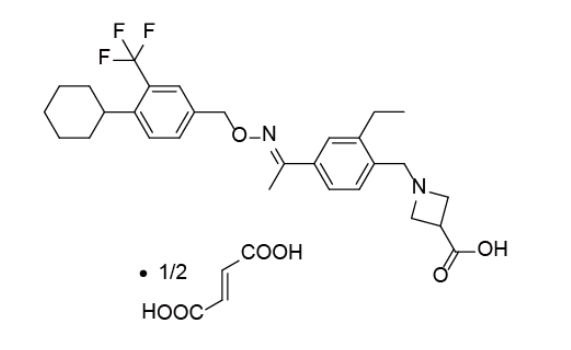
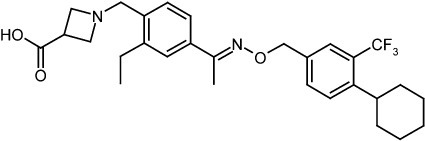
Siponimod , BAF-312
Chemical structure of BAF312.
FREE FORM
CAS Number: 1230487-00-9
Molecular Weight: 516.59501
Molecular Formula: C29H35F3N2O3

1-[[4-[(E)-N-[[4-cyclohexyl-3-(trifluoromethyl)phenyl]methoxy]-C-methylcarbonimidoyl]-2-ethylphenyl]methyl]azetidine-3-carboxylic acid

1-(4-{1-[(E)-4-cyclohexyl-3-trifluoromethylbenzyloxyimino]-ethyl}-2-ethylbenzyl)-azetidine-3-carboxylic acid

a selective modulator of S1P1 and S1P5 receptors, allowing S1P1 receptor-dependent modulation of lymphocyte traffic without producing S1P3 receptor-mediated effects.

Phase III

A sphingosine-1-phosphate receptor modulator potentially for the treatment of multiple sclerosis(MS).

Research Code BAF-312

CAS. 1230487-00-9, 1234627-85-0

Siponimod, (BAF312) is a selective sphingosine-1-phosphatereceptor modulator for oral use that is an investigational drug for multiple sclerosis (MS). It is intended for once-daily oral administration.[1]

As of January 2016 it is in a phase III clinical trial for secondary progressive MS due to complete Dec 2016.

AF312 is a potent and selective agonist of S1P with EC50 value of 0.39nM for S1P1 receptors and 0.98nM for S1P5 receptors, respectively [1]. BAF312 has shown >1000-fold selectivity for S1P1 versus S1P2, S1P3 and S1P4 receptors [1]. In vitro metabolism studies with liver microsomes have shown that the metabolic clearance of BAF312 is high in rat, low to moderate in monkey and human being, and low in dog and mouse. Moreover, BAF312 has been revealed to dose-dependently reduce peripheral lymphocyte counts in Lewis rats [2].For the detailed information about the solubility of BAF312 in water, the solubility of BAF312 in DMSO, the solubility of BAF312 in PBS buffer, the animal experiment of BAF312 ,the in vivo and in vitro test of BAF312 ,the cell experiment of BAF312 ,the IC50 and EC50 of BAF312

Clinical trials

(June 8, 2009) It is in Phase II trial. “A back-up compound for Fingolimod, BAF 312” is in Phase II studies.[2] It is being tested for the first time on people having multiple sclerosis. Worldwide 275 patients will participate in this phase II trial the outcome of which is to establish what the optimal dosage of BAF312 is for patients affected with Multiple Sclerosis for use in further trials. In order to identify “the optimal dosage”, participants in group I will be randomly selected to take either placebo, or BAF312 in doses of 0.5 mg/day, 2 mg/day, or 10 mg./day and will be regularly controlled in order to measure and determine the effectiveness, the tolerability and the safety of the dosages.

A phase III trial should run from Dec 2012 to Dec 2016.[3]

Approvals and indications

None yet

Mechanism of action

Siponimod binds selectively to some of the Sphingosine-1-phosphate receptor forms – including Sphingosine-1-phosphate receptor 1 – found on lymphocytes and other cell types.

This binding inhibits the migration of the lymphocytes to the location of the inflammation (e.g. in MS).

BAF312, may be very similar to Fingolimod but preventing lymphopenia, one of its main side effects, by preventing egress of lymphocytes from lymph nodes. BAF312 may be more selective in the particular sphingosine-1-phosphate receptors (8 in number) that it modulates.[4] It is selective for the -1 and -5 SIP receptors.[1]

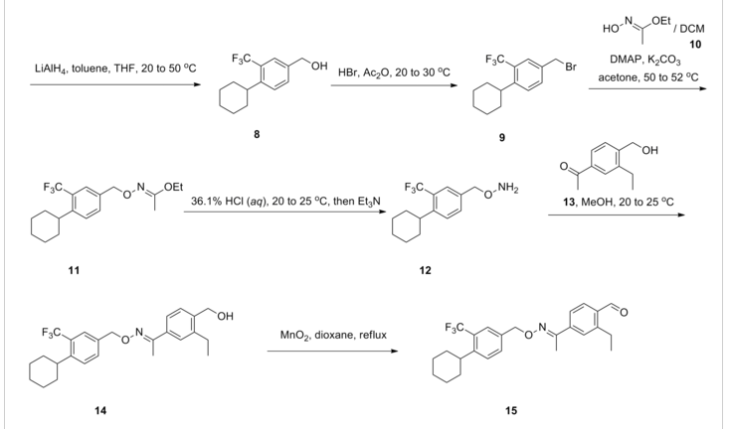
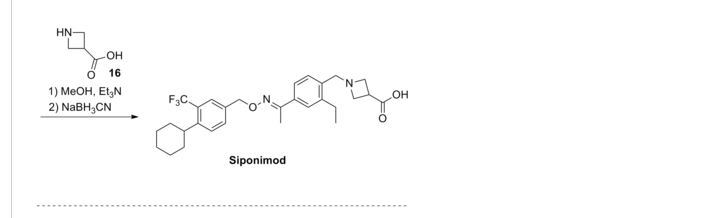
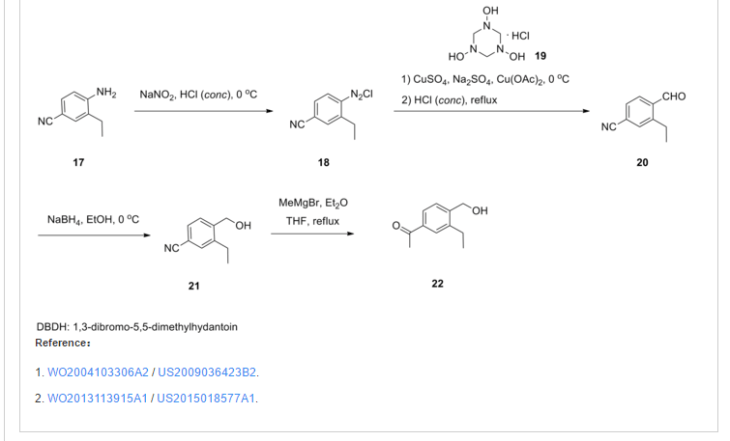
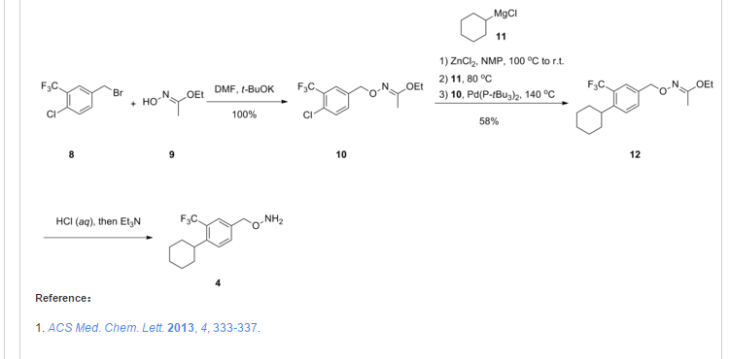
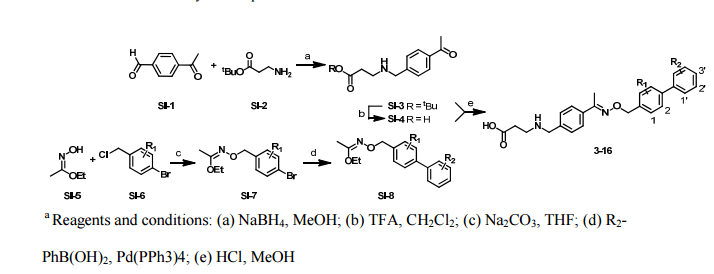
SYNTHESIS


str1


MAIN

str1


str1


str1

str1

str1

str1

str1

 SYNTHESIS

str1

str1


str1

str1


str1

str1

str1

Paper

http://pubs.acs.org/doi/abs/10.1021/ml300396r

Discovery of BAF312 (Siponimod), a Potent and Selective S1P Receptor Modulator

Genomics Institute of the Novartis Research Foundation, 10675 John Jay Hopkins Drive, San Diego, California 92121, United States
Novartis Institute for Biomedical Research, Novartis Campus, CH-4056 Basel, Switzerland
ACS Med. Chem. Lett., 2013, 4 (3), pp 333–337
DOI: 10.1021/ml300396r
Publication Date (Web): January 04, 2013
Copyright © 2013 American Chemical Society
*Tel: 858-812-1621. E-mail: span@gnf.org.

Abstract

Abstract Image

A novel series of alkoxyimino derivatives as S1P1 agonists were discovered through de novo design using FTY720 as the chemical starting point. Extensive structure–activity relationship studies led to the discovery of (E)-1-(4-(1-(((4-cyclohexyl-3-(trifluoromethyl)benzyl)oxy)imino)ethyl)-2-ethylbenzyl)azetidine-3-carboxylic acid (32, BAF312, Siponimod), which has recently completed phase 2 clinical trials in patients with relapsing–remitting multiple sclerosis.

str1

str1

 PATENT

EP-2990055-A1 / 2016-03-02

MEDICINAL COMPOSITION FOR INHIBITING FORMATION AND/OR ENLARGEMENT OF CEREBRAL ANEURYSM OR SHRINKING SAME

 PATENT

US-9265754-B2 / 2016-02-23

Use of 1-{4-[1-(4-cyclohexyl-3-trifluoromethyl-benzyloxyimino)-ethyl]-2-ethyl-benzyl}-azetidine-3-carboxylic acid in treating symptoms associated with rett syndrome


PATENT

US-20160046573-A1 / 2016-02-18

IDENTIFYING PATIENT RESPONSE TO S1P RECEPTOR MODULATOR ADMINISTRATION

a fixed dose combination of BAF312 and a CYP2C9 metabolic activity promotor (e.g. rifampin or carbamezipine).

BAF312 is preferably administered at the standard therapeutic dosage. The CYP2C9 metabolic activity promotor is preferably administered at a dosage suitable to upregulate CYP2C9 to a level where a reduced dosage of BAF312 is not considered clinically necessary.

1-{4-[1-(4-cyclohexyl-3-trifluoromethyl-benzyloxyimino)-ethyl]-2-ethyl-benzyl}-azetidine-3-carboxylic acid forms

BAF312 (with the INN Siponimod) has the chemical name 1-{4-[1-(4-cyclohexyl-3-trifluoromethyl-benzyloxyimino)-ethyl]-2-ethyl-benzyl}-azetidine-3-carboxylic acid and has the structure of formula (I) below:

Image loading...

1-{4-[1-(4-cyclohexyl-3-trifluoromethyl-benzyloxyimino)-ethyl]-2-ethyl-benzyl}-azetidine-3-carboxylic acid may be administered as a free base, as a pharmaceutically acceptable salt (including polymorphic forms of the salt) or as a prodrug.

Pharmaceutically acceptable salt forms include hydrochloride, malate, oxalate, tartrate and hemifumarate.

In a preferred aspect, 1-{4-[1-(4-cyclohexyl-3-trifluoromethyl-benzyloxyimino)-ethyl]-2-ethyl-benzyl}-azetidine-3-carboxylic acid is administered as a hemifumarate salt.

PATENT

US-20150175536-A1 / 2015-06-25

HEMIFUMARATE SALT OF 1-[4-[1-(4-CYCLOHEXYL-3-TRIFLUOROMETHYL-BENZYLOXYIMINO)-ETHYL]-2-ETHYL-BENZYL]-AZETIDINE-3-CARBOXYLIC ACID

One particular compound disclosed in WO2004/103306 is 1-(4-{1-[(E)-4-cyclohexyl-3-trifluoromethyl-benzyloxyimino]-ethyl}-2-ethyl-benzyl)-azetidine-3-carboxylic acid (Compound I), the structure of which is shown below.

Image loading...

PATENT

EP-2809645-A1 / 2014-12-10

PROCESS FOR PREPARING N-(4-CYCLOHEXYL-3-TRIFLUOROMETHYL-BENZYLOXY)-ACETIMIDIC ACID ETHYL ESTER


PATENT

EP-2379498-B1 / 2015-01-21

POLYMORPHIC FORM OF 1-(4-{1-[(E)-4-CYCLOHEXYL-3-TRIFLUOROMETHYL-BENZYLOXYIMINO]-ETHYL}-2-ETHYL-BENZYL) -AZETIDINE-3-CARBOXYLIC ACID

Example 1 – Preparation of the Crystalline Form A of the free base of 1-(4-{1-[(E)-4-Cyclohexyl-3-trifluoromethyl-benzyloxyimino]-ethyl}-2-ethyl-benzyl)-azetidine-3-carboxylic acid (Compound I)Method

10 g of 1-4-{1-[(E)-4-Cyclohexyl-3-trifluoromethyl-benzyloxyimino]-ethyl}-2-ethyl-benzyldehyde, 4.7 g of 3-azetidine carboxylic acid and methanol (300 mL) are mixed. The resulting mixture is heated to 45 °C over 30 min and stirred at this temperature for 2 h. Then the reaction mixture is cooled to 20-25 °C and a solution of NaBH3CN (0.73 g) in MeOH (30 mL) is then added over a period of 20 min. The resulting mixture is stirred at room temperature for 1 h. After concentration, the residue is dissolved in EtOAc, (200 mL) and washed with minimum amount of H2O (20 mL). The organic layer is washed with water (2 x 10 mL) and concentrated to remove as much AcOH as possible. The residue is purified by column chromatography (minimum silica gel was used, 5 cm long by 3 cm diameter) first eluted with EtOAc and then MeOH to give 1-{4-[1-(4-Cyclohexyl-3-trifluoromethyl-benzyloxyimino)-ethyl]-2-ethyl-benzyl}-azetidine-3-carboxylic acid, as a thick oil. The residue is azeotroped with toluene to ca. 30 mL in volume, then heptane (60 mL) is added. The product crystallized after seeding with pure 1-{4-[1-(4-Cyclohexyl-3-trifluoromethyl-benzyloxyimino)-ethyl]-2-ethyl-benzyl}-azetidine-3-carboxylic acid. The suspension is stirred at 20-25 °C for 24 h and filtered. The filter cake is washed with toluene/heptane (1:3, 10 mL) and heptane (20 mL), and dried at 65 °C for 16 h. The product had a melting point of 110°C. 1H NMR (400 MHz, CD3OD) δ 7.67 (s, 1 H), 7.60 (m, 2 H), 7.55 (m, 2H), 7.35 (d, J = 8.4 Hz, 1 H), 5.23 (s, 2 H), 4.32 (bs, 2 H), 4.08 (bs, 4 H), 3.38 (m, 1 H), 2.93 (m, 1 H), 2.78 (q, J = 7.6 Hz, 2 H), 2.26 (s, 3 H), 1.83 (m, 5 H), 1.47 (m, 5 H), 1.24 (t, J = 8.4 Hz, 3 H).

PATENT

WO2004/103306

Example 3

1 – (4-[ 1 -(4-Cvclohexyl-3-trifluoromethyl-benzyloxyimino)-ethyl]-2-ethyl-benzyll -azetidine-

3-carboxylic acid

To a suspension of MnO2 (10 eq) in dioxane is added l-(3-ethyl-4-hydroxymethyl- phenyl)-ethanone O-(4-cyclohexyl-3-trifluoromethyl-benzyl)-oxime (1 eq). The resulting mixture is refluxed for 10 minutes. After filtration and concentration, the residue is dissolved in MeOH and treated with azetidine-3-carboxylic acid (2 eq) and Et3N (1.5 eq). The resulting mixture is heated at 50°C for 30 minutes. After cooling to room temperature, NaBH3CN (3 eq) is added in portions. Purification by preparative LCMS results in l-{4-[l- (4-cyclohexyl-3-trifluoromethyl-benzyloxyimino)-ethyl]-2-ethyl-benzyl}-azetidine-3- carboxylic acid; Η NMR (400 MHz, CD3OD) δ 1.24 (t, 3H), 1.30-1.60 (m, 5H), 1.74-1.92 (m, 5H), 2.28 (s, 3H), 2.79 (q, 2H), 2.92 (m, 1H), 3.68 (m, 1H), 4.32 (m, 4H), 4.51 (s, 2H) 5.22 (s, 2H), 7.38 (d, 1H), 7.50-7.68 (m, 5H). MS: (ES+): 517.3 (M+l)+.

References

WO 2008000419, Hiestand, Peter C; Schnell, Christian, “S1P Receptor modulators for treating multiple sclerosis”[

/////////BAF-312 , 1230487-00-9, 1234627-85-0 , Siponimod , BAF 312, Phase III , S1P receptor,  S1P1 agonist,  lymphocytes

N(CC1=CC=C(/C(=N/OCC2=CC=C(C3CCCCC3)C(C(F)(F)F)=C2)/C)C=C1CC)1CC(C(O)=O)C1

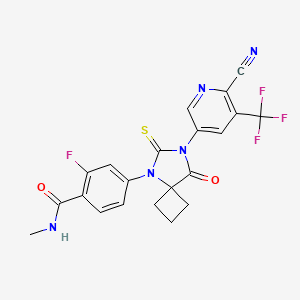
Apalutamide, ARN 509


Apalutamide.svg

Apalutamide,, ARN 509


ARN-509;  cas 956104-40-8; ARN 509; UNII-4T36H88UA7;

ARN-509; JNJ-56021927; JNJ-927\

Phase III Prostate cancer

4-(7-(6-CYANO-5-(TRIFLUOROMETHYL)PYRIDIN-3-YL)-8-OXO-6-THIOXO-5,7-DIAZASPIRO[3.4]OCTAN-5-YL)-2-FLUORO-N-METHYLBENZAMIDE;

4-(7-(6-cyano-5-(trifluoroMethyl)pyridin-3-yl)-8-oxo-6-thioxo-5,7-diazaspirooctan-5-yl)-2-fluoro-N-MethylbenzaMide;

4-[7-[6-cyano-5-(trifluoromethyl)pyridin-3-yl]-8-oxo-6-sulfanylidene-5,7-diazaspiro[3.4]octan-5-yl]-2-fluoro-N-methylbenzamide
ARN-509 is a selective and competitive androgen receptor inhibitor with IC50 of 16 nM, useful for prostate cancer treatment.
IC50 value: 16 nM
Target: androgen receptor
Molecular Formula: C21H15F4N5O2S
Molecular Weight: 477.434713 g/mol
  • Originator University of California System
  • Developer Janssen Research & Development, Aragon Pharmaceuticals, Memorial Sloan Kettering Cancer Center
  • Class Antiandrogens; Antihormones; Antineoplastics; Aza compounds; Benzamides; Pyridines; Small molecules; Spiro compounds; Sulfhydryl compounds; Thiohydantoins
  • Mechanism of Action Androgen receptor antagonists; Hormone inhibitors
  • 03 Nov 2015 Janssen Research & Development plans a drug-interaction and pharmacokinetics phase I trial for Prostate cancer in Moldova (NCT02592317)
  • 01 Nov 2015 Phase-III clinical trials in Prostate cancer (Adjunctive treatment) in United Kingdom, Sweden, Poland, Hungary, Australia, Australia, Spain, Canada, Brazil, USA (PO) (NCT02489318; EudraCT2015-000735-32)
  • 15 Oct 2015 Aragon plans a phase I cardiac safety trial in patients with Prostate cancer in USA, Canada, the Netherlands and United Kingdom (NCT02578797)


Clinical Information of ARN-509

Product Name Sponsor Only Condition Start Date End Date Phase Last Change Date
ARN-509 Aragon Pharmaceuticals Inc Hormone refractory prostate cancer 31-JUL-10 30-JUN-13 Phase 2 17-SEP-13
Aragon Pharmaceuticals Inc 31-MAR-13 30-JUN-13 Phase 1 17-SEP-13
Aragon Pharmaceuticals Inc Hormone refractory prostate cancer 31-OCT-13 31-DEC-16 Phase 3 05-NOV-13
Aragon Pharmaceuticals Inc; Johnson & Johnson Hormone refractory prostate cancer 28-FEB-13 01-FEB-14 Phase 1 07-OCT-13
Aragon Pharmaceuticals Inc Hormone dependent prostate cancer 28-FEB-13 28-FEB-18 Phase 2 18-OCT-13

References on ARN-509

Apalutamide, also known as ARN-509 and JNJ-56021927 , is an androgen receptor antagonist with potential antineoplastic activity. ARN-509 binds to AR in target tissues thereby preventing androgen-induced receptor activation and facilitating the formation of inactive complexes that cannot be translocated to the nucleus. This prevents binding to and transcription of AR-responsive genes. This ultimately inhibits the expression of genes that regulate prostate cancer cell proliferation and may lead to an inhibition of cell growth in AR-expressing tumor cells.

Apalutamide (INN) (developmental code name ARN-509, also JNJ-56021927) is a non-steroidal antiandrogen that is under development for the treatment of prostate cancer.[1] It is similar to enzalutamide both structurally and pharmacologically,[2] acting as a selective competitive antagonist of the androgen receptor (AR), but shows some advantages, including greater potency and reduced central nervous system permeation.[1][3][4] Apalutamide binds weakly to the GABAA receptor similarly to enzalutamide, but due to its relatively lower central concentrations, may have a lower risk of seizures in comparison.[1][3][5] The drug has been found to be effective and well-tolerated in clinical trials thus far,[2][4] with the most common side effects reported including fatigue, nausea, abdominal pain, and diarrhea.[6][3][5] Apalutamide is currently in phase III clinical trials for castration-resistant prostate cancer.[7]

Recently, the acquired F876L mutation of the AR identified in advanced prostate cancer cells was found to confer resistance to both enzalutamide and apalutamide.[8][9] A newer antiandrogen, ODM-201, is not affected by this mutation, nor has it been found to be affected by any other tested/well-known AR mutations.[10]

Apalutamide may be effective in a subset of prostate cancer patients with acquired resistance to abiraterone acetate.[2]

The chemical structure of ARN-509 is very similar structure to  that of Enzalutamide (MDV3100) with two minor modifications: (a) two methyl groups in the 5-member ring of MDV3100 is linked by a CH2 group in ARN-509; (b) the carbon atom in the benzene ring of MDV3100 is replaced by a nitrogen atom in ARN-509. ARN-509 is considered as a Me-Too drug of Enzalutamide (MDV3100). ARN-509 was claimed to be more active than Enzalutamide (MDV3100).

ARN-509 is a novel 2nd Generation anti-androgen that is targeted to treat castration resistant prostate cancers where 1st generation anti-androgens fail.  ARN-509 is unique in its action in that it inhibits both AR nuclear translocation and AR binding to androgen response elements in DNA. Importantly, and in contrast to the first-generation anti-androgen bicalutamide, it exhibits no agonist activity in prostate cancer cells that over-express AR. ARN-509 is easily synthesized, and its oral bioavailability and long half-life allow for once-daily oral dosing. In addition, its excellent preclinical safety profile makes it well suited as either a mono- or a combination therapy across the entire spectrum of prostate cancer disease states. (source: http://www.aragonpharm.com/programs/arn509.htm).

ARN-509 is  a competitive AR inhibitor, which is fully antagonistic to AR overexpression, a common and important feature of CRPC. ARN-509 was optimized for inhibition of AR transcriptional activity and prostate cancer cell proliferation, pharmacokinetics and in vivo efficacy. In contrast to bicalutamide, ARN-509 lacked significant agonist activity in preclinical models of CRPC. Moreover, ARN-509 lacked inducing activity for AR nuclear localization or DNA binding. In a clinically valid murine xenograft model of human CRPC, ARN-509 showed greater efficacy than MDV3100. Maximal therapeutic response in this model was achieved at 30 mg/kg/day of ARN-509 , whereas the same response required 100 mg/kg/day of MDV3100 and higher steady-state plasma concentrations. Thus, ARN-509 exhibits characteristics predicting a higher therapeutic index with a greater potential to reach maximally efficacious doses in man than current AR antagonists. Our findings offer preclinical proof of principle for ARN-509 as a promising therapeutic in both castration-sensitive and castration-resistant forms of prostate cancer. (source: Cancer Res. 2012 Jan 20. [Epub ahead of print] )
(source: Cancer Res. 2012 Jan 20. [Epub ahead of print] )

 ARN-509.pngSYNTHESISS

SYNTHESIS

str1

WO2007126765

WO 2008119015

WO2011103202

WO2014190895

PATENT

WO2011103202

http://www.google.com/patents/WO2011103202A2?cl=en


PATENT

WO2014190895

PATENT

US20100190991

Prostate cancer is one of the most common forms of cancer found in Western men and the second leading cause of cancer death in Western men. When prostate cancer is confined locally, the disease can usually be treated by surgery and/or radiation. Advanced disease is frequently treated with anti-androgen therapy, also known as androgen deprivation therapy. Administration of anti-androgens blocks androgen receptor (AR) function by competing for androgen binding; and therefore, anti-androgen therapy reduces AR activity. Frequently, such therapy fails after a time, and the cancer becomes hormone refractory, that is, the prostate cancer no longer responds to hormone therapy and the cancer does not require androgens to progress.

Overexpression of AR has been identified as a cause of hormone refractory prostate cancer (Nat. Med., 10:33-39, 2004; incorporated herein by reference). Overexpression of AR is sufficient to cause progression from hormone sensitive to hormone refractory prostate cancer, suggesting that better AR antagonists than the current drugs may be able to slow the progression of prostate cancer. It has been demonstrated that overexpression of AR converts anti-androgens from antagonists to agonists in hormone refractory prostate cancer. This work explains why anti-androgen therapy fails to prevent the progression of prostate cancer.

The identification of compounds that have a high potency to anatgonize AR activity would overcome the hormone refractory prostate cancer and slowdown the progression of hormone sensitive prostate cancer. Such compounds have been identified by Sayers et al. (WO 2007/126765, published Nov. 8, 2007; which is incorporated herein by reference). One compound is known as A52, a biarylthiohydantoin, and has the chemical structure

  • Another compound A51 has the chemical structure:
  • Both of these compounds share the same western and central portions. Given the need for larger quantities of pure A51 and A52 for pre-clinical and clinical studies, there remains a need for a more efficient synthesis of the compound from commercially available starting materials.

Convergent Coupling to Yield A52

The final coupling step between intermediates A and B is achieved by microwave irradiation and cyclization to the biarylthiohydantoin A52 (Scheme 6). Although 3 equivalents of A are required for the highest yields in this transformation, the un-reacted amine A can be recovered.

Experimental Section 2-cyano-5-nitro-3-trifluoromethylpyridine

  • Zinc cyanide (25 mg, 0.216 mmol, 1.2 eq) is added to the chloride (43 mg, 0.180 mmol) solubilized in DMF (1 ml). The solution is degassed for 10 minutes. Then the ligand dppf (20 mg, 0.036 mmol, 0.2 eq) is added. The solution is degassed again for 5 min. The catalyst Pd2(dba)3 (25 mg, 0.027 mmol, 0.15 eq) is added, the solution is degassed for 5 more minutes. The reaction mixture is then heated at 130° C. for 20 min in a microwave. After filtration, the solvent is evaporated and the crude residue is purified by flash chromatography on silica gel (hexane/EtOAc) to afford 16 mg (40%) of the desired product
  • 1H NMR (400 MHz, CDCl3) δ 8.60 (d, J=2.5, 1H); 9.08 (d, J=2.5, 1H),

5-amino-2-cyano-3-trifluoromethylpyridine

  • 2-cyano-5-nitro-3-trifluoromethylpyridine (7 mg, 0.032 mmol) is dissolved in 1:1 EtOAc/AcOH (1 mL) and heated to 65° C. Iron powder (9 mg, 0.161 μmol, 5 eq, 325 mesh) is added and the mixture stirred for 2 hours. The mixture is filtered through celite, and the filtrate is concentrated under vacuo. The crude residue is purified by flash chromatography on silica gel (hexane/EtOAc) to afford 4 mg (67%) of the desired product
  • 1H NMR (400 MHz CDCl3) δ 7.20 (d, J=2.4 Hz, 1H), 8.22 (d, J=2.4 Hz, 1H).

5-iodo-3-trifluoromethyl-2-pyridinol

  • 3-trifluoromethyl-2-pyridinol (25 g, 153.3 mmol) is dissolved in anhydrous CH3CN (150 mL) and DMF (150 mL). N-iodosuccinimide (34.5 g, 153 mmol) is then added. The reaction mixture is stirred at 80° C. for 2 hours and cooled to room temperature. Aqueous 1 M NaHCO3 (150 mL) is then added to the cooled mixture. After stirring for 5 min, the solvents are evaporated to dryness. Water is added and the aqueous phase is extracted (×2) with dichloromethane. The organic phase is then evaporated and the desired product is recrystallized in water to afford 36.2 g (81%) of a white powder.
  • 1H NMR (500 MHz, CDCl3) δ 7.85 (d, J=2.3, 1H); 7.98 (d, J=2.3, 1H), 13.41 (br s, 1H); 13C NMR (250 MHz CDCl3) δ 63.0, 121.4 (q, JC-F=272.3 Hz), 122.2 (q, JC-F=31.6 Hz), 144.4, 148.1 q, (JC-F=5.0 Hz), 160.1.

2-chloro-5-iodo-3-trifluoromethylpyridine

  • To an ice-cold mixture of POCl3 (1.60 mL) and DMF (1 mL) in a microwave vial, 5-iodo-3-trifluoromethyl-2-pyridinol (1 g, 3.47 mmol) is added. The vial is sealed and heated 20 min at 110° C. The reaction mixture cooled at room temperature is poured into ice cold water. The product precipitates. The precipitate is filtered, washed with cold water and dried to afford 661 mg (62%) of a light brown powder.
  • 1H NMR (500 MHz CDCl3) δ 8.32 (d, J=2.0 Hz, 1H), 8.81 (d, J=2.0 Hz, 1H). 13C NMR (250 MHz CDCl3) δ 89.4, 121.2 (q, JC-F=273.3 Hz), 126.8 (q, JC-F=33.6 Hz), 144.34, 148.5, 158.7.

2-choro-3-trifluoromethyl-N-paramethoxybenzylpyridin-5-amine

  • 2-choro-5-iodo-3-trifluoromethylpyridine is dried under vacuum. To a slurry of chloroiodpyridine (10 g, 32.6 mmol) in toluene (anhydrous) (98 mL) is added sequentially. Pd(OAc)2 (220 mg, 0.98 mmol, 0.03 eq), rac-BINAP (609 mg, 0.98 mmol, 0.03 eq) solid Cs2CO3 (53 g, 163 mmol, 5 eq), paramethoxybenzylamine (4.05 mL, 30.9 mmol, 0.95 eq) and triethylamine (0.41 mL, 2.93 mmol, 0.09 eq). The resulting slurry is degassed (×2) by vacuum/Argon backfills. The mixture is heated to reflux overnight. The mixture is then cooled to room temperature and H2O is added. The layers are separated and the toluene layer is concentrated under vacuo. The residue is purified by flash chromatography on silica gel (Hexane/EtOac; 95:5 to 30/70) to afford 4 g of white solid desired compound (40%).
  • 1H NMR (500 MHz CDCl3) δ 3.81 (s, 3H), 4.29 (d, J=5.1 Hz, 2H), 4.32 (br s, 1H), 6.90 (d, J=8.1 Hz, 2H), 7.19 (d, J=2.9 Hz, 1H), 7.26 (d, J=8.1 Hz, 2H), 7.92 (d, J=2.9 Hz, 1H). 13C NMR (250 MHz CDCl3) δ 47.3, 55.4, 114.3, 119.3 (q, JC-F=5.1 Hz), 122.3 (q, JC-F=272.9 Hz), 124.80 (q, JC-F=32.7 Hz), 128.8, 129.1, 135.1, 136.6, 142.9, 159.3.

Alternative Synthesis of Intermediate K:

  • A suspension of vacuum dried 2-choro-5-iodo-3-trifluoromethylpyridine (50 g, 163 mmol) in anhydrous toluene (1,500 mL) was treated sequentially with Pd2(dba)3 (2.98 g, 3.25 mmol, 0.02 eq), Xantphos (5.65 g, 9.76 mmol, 0.06 eq), solid t-BuONa (23.4 g, 243 mmol, 1.5 eq), and paramethoxybenzylamine (23.2 mL, 179 mmol, 1.1 eq). The resulting slurry is degassed by vacuum/argon backfills for 10 min. The mixture is then quickly brought to reflux by a pre-heated oil bath. After 1.5 hours at this temperature, the mixture was cooled to the ambiant, and the solids were removed by filtration over a packed bed of celite and washed with toluene. The filtrate was then diluted with EtOAc (200 mL), then washed with H2O. The organic layer was concentrated under reduced pressure gave an oily solid. Crystallization from DCM/Hexane gave (36.6 g, 71%) of B as a light yellow solid.
  • Alternatively, smaller scales (5 to 10 gr of A) were purified by column silica gel chromatography using the gradient system Hexane-EtOAc 19-1 to 3-7 (v-v). This gave yields in excess of 85% of B as a white solid.

2-cyano-3-trifluoromethyl-N-paramethoxybenzylpyridin-5-amine

  • Zinc cyanide (0.45 g, 3.80 mmol, 1.2 eq) is added to the chloride (1 g, 3.16 mmol) solubilized in DMF (20 ml). The solution is degassed for 10 minutes. Then the ligand dppf (0.35 g, 0.63 mmol, 0.2 eq) is added. The solution is degassed again for 5 min. The catalyst Pd2(dba)3 (0.29 g, 0.32 mmol, 0.1 eq) is added, the solution is degassed for 5 more minutes. The reaction mixture is then heated at 150° C. for 10 min. After filtration, the solvent is evaporated and the crude residue is purified by flash chromatography on silica gel (hexane/EtOAc) to afford 900 mg (93%) of a dark yellow oil.
  • 1H NMR (500 MHz CDCl3) δ 3.82 (s, 3H), 4.37 (d, J=5.3 Hz, 2H), 4.93 (br s, 1H), 6.92 (d, J=9.5, 2H), 7.08 (d, J=2.7 Hz, 1H), 7.25 (d, J=9.5, 2H), 8.17 (d, J=2.7 Hz, 1H). 13C NMR (250 MHz CDCl3) δ 46.7, 55.4, 113.9, 114.5, 115.9, 116.1, 122.0 (q, JC-F=274.5 Hz), 128.0, 128.9, 131.4 (q, JC-F=33.1 Hz), 138.68, 145.9, 159.5.

5-amino-2-cyano-3-trifluoromethylpyridine H

  • TFA (1 mL) is added dropwise to a solution of pyridine L (83 mg, 0.27 mmol) in dry DCM (0.5 mL) under argon. The solution is stirred overnight at room temperature. After completion of the reaction, the solvent is evaporated and the residue is purified by flash chromatography on silica gel (Hexane/EtOac) to afford the desired product quantitatively.
  • 1H NMR (500 MHz CDCl3) δ 7.20 (d, J=2.4 Hz, 1H), 8.22 (d, J=2.4 Hz, 1H).

Scale Up and Purification of H

  • For the larger scales, an improved process calls for dissolving pyridine L (53 g, 0.172 mol) in TFA/DCM (170 mL, 4:1) at room temperature. Upon reaction completion (approximately 2 hours at room temperature), the volatiles were removed under reduced pressure. The residue is then diluted with EtOAc (800 mL), and washed with saturated aqueous NaHCO3. Vacuum concentration and precipitation from DCM-Hexane (1-2, v-v) gave a relatively clean product. Further washing with DCM gave pure intermediate H as a white solid (27.43 g, 85%).

Methyl 2,4-difluorobenzylamide

  • Methylamine 2M in THF (12.4 mL, 1.1 eq) is added to neat 2,4-difluorobenzoyl chloride (4 g, 22.6 mmol). The reaction mixture is stirred overnight at room temperature. The solvent is evaporated, ethyl acetate is added to solubilize the residue. The organic is washed with aqueous NaHCO3, dried with Na2SO4, filtered and evaporated to afford the quantitatively the desired compound as a white powder.
  • 1H NMR (500 MHz CDCl3) δ 3.00 (d, J=4.8 Hz, 3H), 6.84 (m, J=2.3; 10.3 Hz, 1H), 6.97 (m, J=2.3; 8.2 Hz, 1H), 8.08 (td, J=6.8; 8.9 Hz, 1H)
  • 13C NMR (100 MHz CDCl3) δ 27.0, 104.3 (d, J=26.0 Hz), 104.6 (d, J=25.9 Hz), 112.4 (dd, J=21.2; 3.1 Hz), 118.1 (dd, J=12.4; 3.8 Hz), 133.7 (dd, J=10.1; 3.9 Hz), 162.9 (dd, J=381.1; 12.3 Hz), 163.5.

Methyl 2-fluoro-4-paramethoxybenzylamine-benzylamide

  • Paramethoxybenzylamine (0.069 mL, 0.548 mmol, 2 eq) is added to methyl 2,4-difluorobenzylamide (47 mg, 0.274 mmol) dissolved in dimethylsulfoxide (0.5 mL). The reaction mixture is heated at 190° C. for 20 min in a microwave. After completion the solvent is evaporated and the residue is purified by flash chromatography on silica gel (hexane/ethyl acetate) to give 18 mg (20%) of the desired product.
  • 1H NMR (500 MHz CDCl3) δ 2.98 (d, J=4.5 Hz, 3H), 3.81 (s, 3H), 4.26 (d, J=5.3 Hz, 2H), 4.47 (br s, 1H), 6.23 (dd, J=2.2; 15.1 Hz, 1H), 6.45 (dd, J=2.2; 8.7 Hz, 1H), 6.58 (br s, 1H), 6.89 (d, J=8.7 Hz, 2H), 7.25 (d, J=8.7 Hz, 2H), 7.91 (t, J=9.0 Hz, 1H). 13C NMR (500 MHz CDCl3) δ 26.6, 47.3, 55.3, 98.2 (d, J=29.7 Hz), 109.25, 114.4, 128.6, 129.9, 133.1 (d, J=4.5 Hz), 152.3 (d, J=12.5 Hz), 159.1, 161.5, 163.9 (d, J=244 Hz), 164.5.

Methyl 4-amino-2-fluoro-benzylamide

  • TFA (1 mL) is added dropwise to a solution of methylamide (60 mg, 0.21 mmol) in dry DCM (0.5 mL) under argon. The solution is stirred overnight at room temperature. After completion of the reaction, the solvent is evaporated and the residue is purified by flash chromatography on silica gel (Hexane/EtOac) to afford the desired product quantitatively.
  • 1H NMR (500 MHz CDCl3) δ 2.98 (d, J=4.8 Hz, 3H), 4.15 (br s, 2H), 6.32 (d, J=14.3 Hz, 1H), 6.48 (d, J=8.2 Hz, 1H), 6.61 (br s, 1H), 7.90 (dd, J=8.6 Hz, 1H), 13C NMR (500 MHz CDCl3) δ 26.63, 100.8 (d, J=28.8 Hz), 110.3 (d, J=244.6 Hz), 110.9, 133.3 (d, J=4.3 Hz), 151.4 (d, J=12.5 Hz), 162.2 (d, J=244.6 Hz), 164.3 (d, J=3.5 Hz).

Synthesis of N-methyl-4-[7-(6-cyano-5-trifluoromethylpyridin-2-yl)-8-oxo-6-thioxo-5,7-diazaspiro[3.4]octan-5-yl]-2-fluorobenzamide (A52) One Pot Small Scale (2.8 gr) Thiohydantoin Formation in DMF

  • Thiophosgene (1.2 mL, 1.16 eq, 15.6 mmol) is added dropwise to a solution of 5-amino-2-cyano-3-trifluoromethylpyridine (2.8 g, 1.1 eq, 15.0 mmol) and N-methyl-4-(1-cyanocyclobutylamino)-2-fluorobenzamide (3.35 g, 13.5 mmol) in dry DMF (25 mL) under Argon. The solution is stirred overnight at 60° C. To this mixture were added MeOH (60 mL) and aq. 2M HCl (30 mL), then the mixture was reflux for 2 h. After cooling to rt, the mixture was poured into ice water (100 mL) and extracted with EtOAc (3×60 mL). The organic layer was dried over Mg2SO4, concentrated and chromatographed on silica gel using 5% acetone in DCM to yield the desired product (2.65 g, 41%).

Alternative Synthesis of A52

  • Thiophosgene (1.23 mL, 16.0 mmol) is added dropwise to a solution of 5-amino-2-cyano-3-trifluoromethylpyridine (3.0 g, 16.0 mmol) and N-methyl-4-(1-cyanocyclobutylamino)-2-fluorobenzamide (3.96 g, 16.0 mmol) in dry DMA (35 mL) under Argon. The solution is stirred overnight at 60° C. To this mixture were added MeOH (60 mL) and aq. 2M HCl (30 mL), then it was brought to reflux temperature for 2 h. After cooling down to the ambiant, the mixture was poured into ice water (100 mL) and extracted with EtOAc (3×60 mL). The organic layer was dried over Mg2SO4, filtered over celite, and concentrated under reduced pressure. Silica gel chromatography using DCM/-acetone 19-1 (v-v) yielded the desired product (5.78 g, 76%).

Scale Up

  • Thiophosgene (5.48 mL, 1.05 eq, 70.9 mmol) is added dropwise to a solution of 5-amino-2-cyano-3-trifluoromethylpyridine (13.27 g, 1.05 eq, 70.9 mmol) and N-methyl-4-(1-cyanocyclobutylamino)-2-fluorobenzamide (16.7 g, 67.5 mmol) in dry DMA (110 mL) under Argon at 0° C. After 10 min, the solution was heated up to 60° C. and allowed to stir at that temperature for an overnight period. This was then diluted with MeOH (200 mL) and treated with aq. 2M HCl (140 mL), then the mixture was refluxed for 2 h. After cooling down to RT, the mixture was poured into ice water (500 mL), and filtered over buchner. The solid was recrystallized from DCM/EtOH to get desired product (20.6 g, 64%).

References


Moilanen AM, Riikonen R, Oksala R, Ravanti L, Aho E, Wohlfahrt G, Nykänen PS, Törmäkangas OP, Palvimo JJ, Kallio PJ (2015). “Discovery of ODM-201, a new-generation androgen receptor inhibitor targeting resistance mechanisms to androgen signaling-directed prostate cancer therapies”. Sci Rep 5: 12007. doi:10.1038/srep12007. PMC 4490394. PMID 26137992

11Clegg NJ, Wongvipat J, Tran C, Ouk S, Dilhas A, Joseph J, Chen Y, Grillot K, Bischoff ED, Cai L, Aparicio A, Dorow S, Arora V, Shao G, Qian J, Zhao H, Yang G, Cao C, Sensintaffar J, Wasielewska T, Herbert MR, Bonnefous C, Darimont B, Scher  HI, Smith-Jones PM, Klang M, Smith ND, de Stanchina E, Wu N, Ouerfelli O, Rix P, Heyman R, Jung ME, Sawyers CL, Hager JH. ARN-509: a novel anti-androgen for prostate cancer treatment. Cancer Res. 2012 Mar 15;72(6):1494-1503. Epub 2012 Jan 20.PubMed  PMID: 22266222.


12]. Clegg NJ, Wongvipat J, Joseph JD et al. ARN-509: a novel antiandrogen for prostate cancer treatment. Cancer Res. 2012 Mar 15;72(6):1494-503.

[13]. Courtney KD, Taplin ME. The evolving paradigm of second-line hormonal therapy options for castration-resistant prostate cancer. Curr Opin Oncol. 2012 May;24(3):272-7.

[14]. Schweizer MT, Antonarakis ES. Abiraterone and other novel androgen-directed strategies for the treatment of prostate cancer: a new era of hormonal therapies is born. Ther Adv Urol. 2012 Aug;4(4):167-78.

[15]. Safety, Pharmacokinetic and Proof-of-Concept Study of ARN-509 in Castration-Resistant Prostate Cancer (CRPC)

Patent ID Date Patent Title
US2014309262 2014-10-16 ANDROGEN RECEPTOR MODULATOR FOR THE TREATMENT OF PROSTATE CANCER AND ANDROGEN RECEPTOR-ASSOCIATED DISEASES
US2014296312 2014-10-02 TREATMENT OF BREAST CANCER
US2014243416 2014-08-28 Topical Antiandrogen Therapy for the Treatment of Becker’s Nevus
US8802689 2014-08-12 Androgen receptor modulator for the treatment of prostate cancer and androgen receptor-associated diseases
US2014107085 2014-04-17 Bifunctional AKR1C3 Inhibitors/Androgen Receptor Modulators and Methods of Use Thereof
US2014088129 2014-03-27 ANTI-ANDROGENS FOR THE TREATMENT OF NON-METASTATIC CASTRATE-RESISTANT PROSTATE CANCER
US2013225821 2013-08-29 SYNTHESIS OF THIOHYDANTOINS
US2013116258 2013-05-09 ANDROGEN RECEPTOR MODULATORS AND USES THEREOF
US2011003839 2011-01-06 ANDROGEN RECEPTOR MODULATOR FOR THE TREATMENT OF PROSTATE CANCER AND ANDROGEN RECEPTOR-ASSOCIATED DISEASES
US2010190991 2010-07-29 SYNTHESIS OF THIOHYDANTOINS
Apalutamide
Apalutamide.svg
Systematic (IUPAC) name
4-[7-[6-Cyano-5-(trifluoromethyl)pyridin-3-yl]-8-oxo-6-sulfanylidene-5,7-diazaspiro[3.4]octan-5-yl]-2-fluoro-N-methylbenzamide
Clinical data
Pregnancy
category
  • X (Contraindicated)
Routes of
administration
Oral
Identifiers
CAS Number 956104-40-8
ATC code None
PubChem CID 24872560
ChemSpider 28424131
Chemical data
Formula C21H15F4N5O2S
Molar mass 477.434713 g/mol

////////

CNC(=O)C1=C(C=C(C=C1)N2C(=S)N(C(=O)C23CCC3)C4=CN=C(C(=C4)C(F)(F)F)C#N)F

CNC(=O)C1=C(C=C(C=C1)N2C(=S)N(C(=O)C23CCC3)C4=CN=C(C(=C4)C(F)(F)F)C#N)F

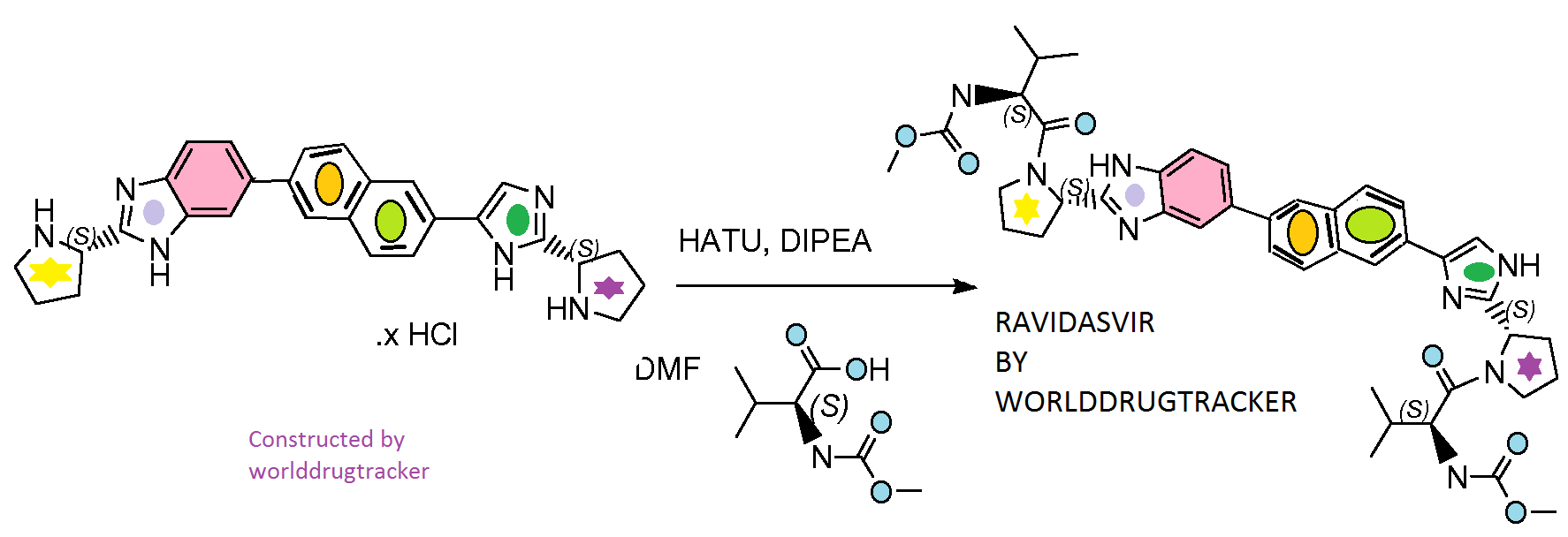
Ravidasvir, PPI-668, BI 238630


CAS # 1303533-81-4, Ravidasvir dihydrochloride

Ravidasvir dihydrochloride

C42H50N8O6.2(HCl), 835.83

CAS 1303533-81-4

Phase II/IIIHepatitis C

Ravidasvir
PPI-668 free base; BI 238630;
CAS:1242087-93-9

C42H50N8O6, 762.38
Chemical Name:methyl N-[(1S)-1-({(2S)-2-[5-(6-{2-[(2S)-1-{(2S)-2-[(methoxycarbonyl)amino]- 3- methylbutanoyl}pyrrolidin-2-yl]-1H-imidazol-4-yl}naphthalen-2-yl) -1H- benzimidazol- 2-yl]pyrrolidin-1-yl}carbonyl)-2-methylpropyl]carbamate
Mechanism of Action:NS5A Inhibitor
Indication: hepatitis C
Development Stage: Phase II
Developer:Presidio Pharmaceuticals, Inc

  • OriginatorXTL Biopharmaceuticals
  • Developer Pharco Corporation; Presidio Pharmaceuticals
  • Class Antivirals; Benzimidazoles; Carbamates; Naphthalenes; Pyrrolidines; Small molecules
  • Mechanism of Action Hepatitis C virus NS 5 protein inhibitors; Hepatitis C virus replication inhibitors
  • 31 Aug 2015 Ascletis plans to initiate the phase II EVEREST trial for Hepatitis C (Combination therapy; Treatment-naive) in Taiwan
  • 31 Aug 2015 Taiwan Food and Drug Administration approves Clinical Trial Application to initiate a phase II trial for interferon free regimen comprising danoprevir and ravidasvir in Hepatitis C
  • 24 Jun 2015 Efficacy data from a phase IIa trial in Hepatitis C released by Ascletis
r12

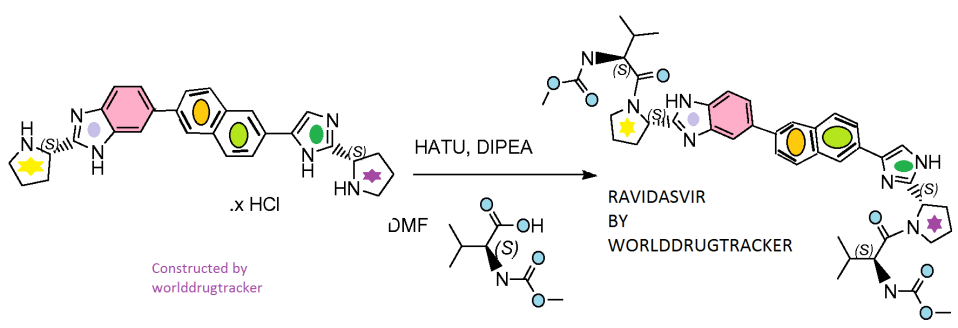
Ravidasvir [Methyl N-[(1S)-1-({(2S)-2-[5-(6-{2-[(2S)-1-{(2S)-2-[(methoxycarbonyl)amino]- 3- methylbutanoyl}pyrrolidin-2-yl]-1H-imidazol-4-yl}naphthalen-2-yl) -1H- benzimidazol- 2-yl]pyrrolidin-1-yl}carbonyl)-2-methylpropyl]carbamate] is an Nonstructural protein 5A (NS5A) inhibitor. It is an antiviral agent that is being developed as a potential treatment for hepatitis C virus infection.

PPI-668, a non-structural 5A (NS5A) protein of hepatitis C virus (HCV) inhibitor, is in phase II clinical studies at Presidio Pharmaceuticals for the treatment of chronic genotype 1 hepatitis C virus infection.

Ravidasvir has 50% inhibitory concentrations (EC50s) values of 0.02-1.3 nM in replicon assays for HCV genotypes 1-7 (gt1-gt7).

Ravidasvir was developed by Presidio Pharmaceuticals Inc, later Ascletis licensed it. Ravidasvir is in Phase II clinical trials proving interferon (IFN)-free regimen to treat chronic hepatitis C (CHC). Ascletis is now the first Chinese company to file clinical trial applications in China for an IFN-free regimen.
In 2014, Ascletis acquired rights for development and commercialization in Greater China and Pharco in Egypt for the treatment of hepatitis C.

Hepatitis C virus infection is a major health problem worldwide and no vaccine has yet been developed against this virus. The standard therapy of pegylated-interferon and ribavirin induces serious side effects and provides viral eradication in less than 50% of patients. Combination therapy of HCV including ribavirin and interferon are currently is the approved therapy for HCV. Unfortunately, such combination therapy also produces side effects and is often poorly tolerated, resulting in major clinical challenges in a significant proportion of patients. The combination of direct acting agents can also result in drug-drug interactions. To date, no HCV therapy has been approved which is interferon free. There is therefore a need for new combination therapies which have reduced side effects, and interferon free, have a reduced emergence of resistance, reduced treatment periods and/or and enhanced cure rates.

Nonstructural protein 5A (NS5A) is a zinc-binding and proline-rich hydrophilic phosphoprotein that plays a key role in Hepatitis C virus RNA replication.

A number of direct-acting antiviral agents (DAAs) are under development for the treatment of chronic HCV infection. These agents block viral production by directly inhibiting one of several steps of the HCV lifecycle. several viral proteins involved in the HCV lifecycle, such as the non-structural (NS)3/4A serine protease, the NS5B RNA-dependent RNA polymerase (RdRp), and the NS5A protein, have been targeted for drug development. Two NS3/4A protease inhibitors already approved for clinical use, numerous other protease inhibitors are being developed as well as inhibitors of viral replication, including nucleoside/nucleotide analogue inhibitors of HCV RdRp, non-nucleoside inhibitors of RdRp, cyclophilin inhibitors, and NS5A inhibitors.

Inhibition of NS5A at picomolar concentrations has been associated with significant reductions in HCV RNA levels in cell culture-based models, which makes these agents among the most potent antiviral molecules yet developed.


Activity:

This NS5A inhibitor has been shown to possess high efficacy against HCV genotype 1, with up to 3.7 log10 mean HCV RNA reductions, in a Phase Ib clinical trial. Activity was demonstrated against variants harbouring the L31M substitution. In an added genotype-2/3 cohort, the first 2 patients achieved mean 3.0 log10 RNA level reductions [1].

Results from the Phase IIa study involving a combination therapy with Faldaprevir and Deleobuvir plus Ravidasvir came with positive news where the said combination cured 92 percent of those with genotype 1a of hepatitis C virus (HCV) when given with ribavirin.  The results presented at the 49th annual meeting of the European Association for the Study of the Liver (EASL) in London [2, 3].

The 36 study participants were randomly dived into three even cohorts of 12 each: The first received 600 mg of Deleobuvir twice a day as well as once-daily doses of Faldaprevir (120 mg), Ravidasvir and Ribavirin. The second group received the same regimen except the Faldaprevir dose was 400 mg. The third group took the regimen with the higher dose of Faldaprevir, but without Ribavirin. All participants were treated for 12 weeks with follow up for next 24 weeks.

Ninety-two percent of the first and second cohorts (11 out of 12 in both cases) achieved a sustained virologic response 12 weeks after completing therapy (SVR12, considered a cure). In the end, 14 participants were required for the third cohort, because one was incarcerated early on during treatment and another experienced viral rebound at week eight as a result of not adhering to the treatment regimen. Of the other 12 participants, eight, or two-thirds, have achieved an SVR12, while one more participant stopped taking the therapy at week eight but has since achieved an SVR8.

PATENT

WO 2011054834

http://www.google.co.in/patents/WO2011054834A1?cl=en

Scheme 1

Figure imgf000018_0001

GOING TO PRODUCT USING STRUCTURES FROM PATENT

Figure imgf000031_0002 IIa

Figure imgf000032_0001  IIIa   one of side chain

DO NOT MISS OUT synthesis of XIIIa or XIII’a, this is needed in one of side chain

Figure imgf000034_0004L-boc-prolinol

Figure imgf000035_0001Z-boc-prolinal

Figure imgf000035_0002XXIV

Figure imgf000036_0001XIIIa

or

Figure imgf000036_0002

Figure imgf000038_0002XVIb

Figure imgf000043_0001

Figure imgf000045_0001

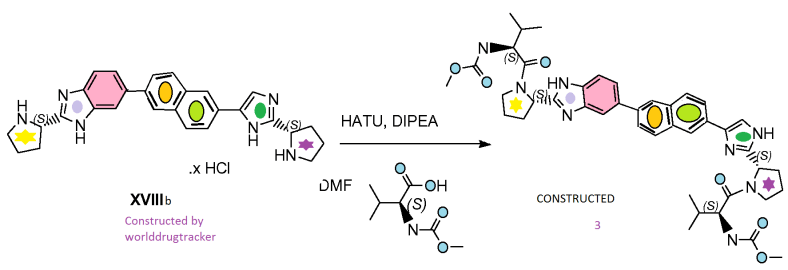
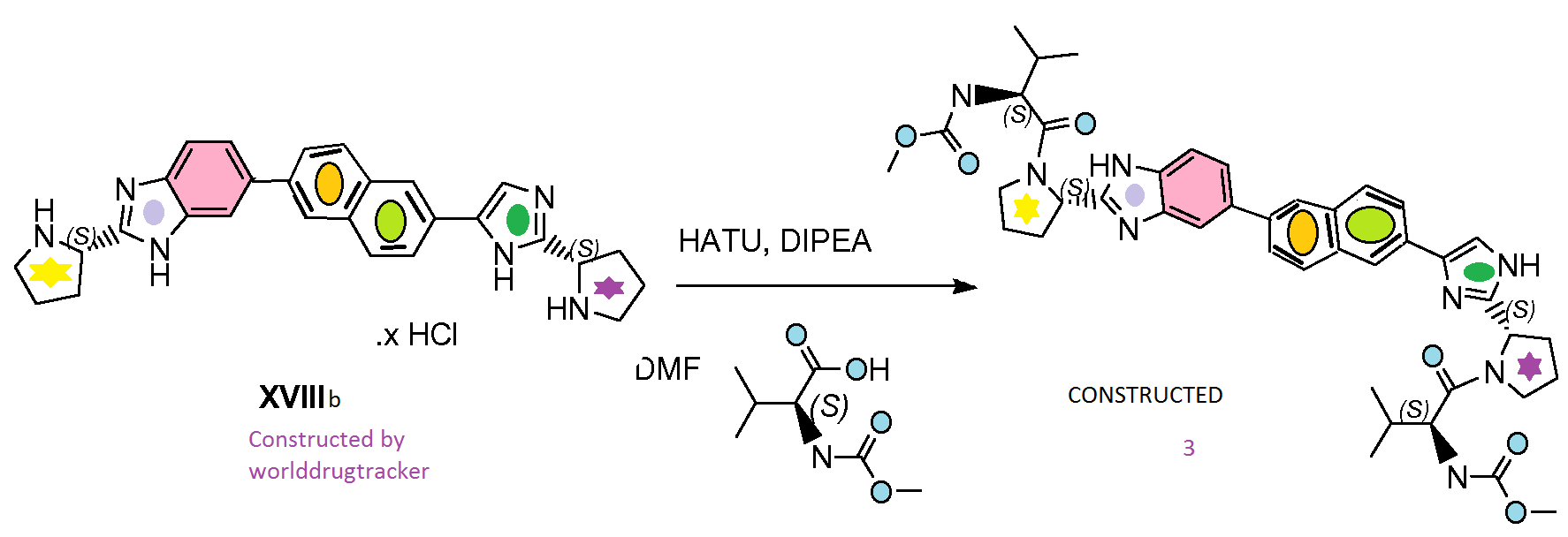
MY CONSTRUCTION of 3

R1

Figure imgf000052_0001

Compound 3 was prepared following the procedure reported for the synthesis of compound 1 using intermediate XVIIIb instead of intermediate XVIIIa. see my construction below
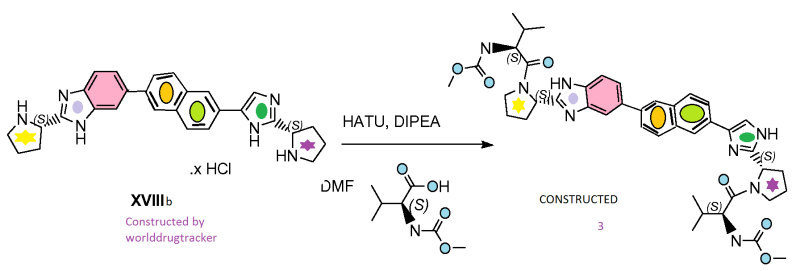
R1

Compound 3. BASE

1H NMR (400 MHz, DMSO-d6) δ ppm 8.34 (2 H, s), 8.21 (1 H, s), 8.19

(1 H, d, J=8.69 Hz), 8.06 – 8.11 (2 H, m), 8.00 (1 H, dd, J=8.88, 1.61 Hz), 7.88 – 7.96

(2 H, m), 7.86 (1 H, d, J=8.48 Hz), 7.32 (1 H, d, J=8.48 Hz), 7.34 (1 H, d, J=8.53 Hz), 5.27 (1 H, dd, J=8.17, 5.33 Hz), 5.17 (1 H, t, J=7.00 Hz), 4.15 (2 H, t, J=7.95 Hz), 3.84

– 3.96 (4 H, m), 3.56 (6 H, s), 2.38 – 2.47 (2 H, m), 1.95 – 2.30 (8 H, m), 0.86 (3 H, d,

J=6.70 Hz), 0.85 (3 H, d, J=6.70 Hz), 0.81 (6 H, d, J=6.63 Hz).

[a] 2°= -148.98 0 (c 0.3336 w/v %, MeOH)

Alternative preparation of compound 3 and the corresponding HC1 salt

Figure imgf000052_0001

N-methoxycarbonyl-L- Valine (3.09 g, 17.7 mmol, 2.1 equiv) was dissolved in dichloro- methane (300 mL). Triethylamine (11.7 mL, 84.1 mmol, 10 equiv) and (l-cyano-2- ethoxy-2-oxoethylidenaminooxy)dimethylamino-morpholino-carbenium hexafluoro- phosphate were added (7.57 g, 17.7 mmol, 2.1 eq). The reaction mixture was stirred at room temperature for 5 minutes, after which XVIIIb was added (5 g, 8.41 mmol in case x.HCl equals 4 HC1). Stirring was continued for 30 minutes. HC1 in iPrOH (6N) was added to the mixture (until pH = 2), and the resulting mixture was stirred for 5 minutes. The solution was then washed with saturated aqueous sodium carbonate (2 x 200 mL) and once with brine (200 mL). The organic layer was separated, dried on magnesium sulphate and filtrated. After removal of the solvent in vacuum, the obtained residue was further dried in vacuum to afford an orange powder (6.84 g)

The powder was purified by silica gel column chromatography using gradient elution with 0 to 10 % MeOH (7N NH3) in dichloromethane, resulting in compound 3 (2.81 g) as a foam.

Compound 3 was dissolved in iPrOH (40 mL) and HC1 (6N in iPrOH, 10 mL) was added. The volatiles were removed in vacuum. Then, iPrOH (30 mL) was added and the mixture was heated at reflux. The solution was cooled to room temperature and stirred at room temperature for 4 days. tBuOMe (100 mL) was added to the solution, resulting in white precipitation, which was filtered, washed immediately with tBuOMe (3 x 10 mL) under nitrogen atmosphere and dried under vacuum at 40°C. The residue was mixed with acetonitrile and evaporated to dryness (2x). The residue was stirred in acetonitrile (150 mL) and the mixture was sonicated for 10 minutes. The precipitate was filtered under nitrogen atmosphere, washed twice with acetonitrile (50 mL) and dried in vacuum at 40°C, resulting in a slightly yellow powder (4 g).

HCL salt of compound 3:

[a] *° = -110.02 ° (589 nm, 20 °C, c 0.429 w/v%, MeOH)

1H NMR (600 MHz, DIMETHYLFORMAMIDE- y, 280K) δ ppm 0.86 (d, J=6.6 Hz, 6 H), 0.95 (d, J=7.0 Hz, 6 H), 2.03 – 2.20 (m, 2 H), 2.26 – 2.37 (m, 3 H), 2.39 – 2.61 (m, 5 H), 3.61 – 3.63 (m, 6 H), 3.93 – 4.01 (m, 2 H), 4.23 – 4.32 (m, 2 H), 4.32 – 4.39 (m, 2 H), 5.49 (t, J=7.5 Hz, 1 H), 5.52 (dd, J=8.3, 5.3 Hz, 1 H), 7.22 (d, J=8.8 Hz, 1 H), 7.27 (d, J=8.8 Hz, 1 H), 7.98 (d, J=8.6 Hz, 1 H), 8.01 (dd, J=8.6, 1.1 Hz, 1 H), 8.03 (dd, J=8.8, 1.8 Hz, 1 H), 8.09 (d, J=8.8 Hz, 1 H), 8.19 (d, J=8.8 Hz, 1 H), 8.22 (dd, J=8.4, 1.8 Hz, 1 H), 8.25 (s, 1 H), 8.32 (s, 1 H), 8.41 (s, 1 H), 8.88 (s, 1 H).

Anal. Calcd for C42H5oN806 . 2 HCl . 4 H20: C 55.56, H 6.66 , N 12.34. Found: C 55.00, H 6.60, N 12.30

Going reverse…………………..

Intermediate XVIIIb

2.8 preparation of intermediate XVIIIb (A=

Figure imgf000044_0002

To a solution of XVIIb (960 mg, 1.48 mmol) in CH2C12 (25mL) was added HCI (5-6 M in isopropanol, 5 mL). The mixture was stirred at room temperature overnight. The solvent was evaporated, the obtained solid was dried in vacuum and used as such in the next step. 2.8a Alternative preparation of intermediate XVIIIb (A=

Figure imgf000045_0001

XVIIb (19.52 g, 30.1 mmol, 1.00 equiv.) was dissolved in dichloromethane (200 mL) and HCI in isopropanol (5-6 N, 300 mL) was added. The reaction mixture was stirred for 1 hour at room temperature. tBuOMe (1000 mL) was added to the suspension and the slurry was stirred at roomtemperature for 30 minutes. The filtered solid was rinced with tBuOMe (2x 100 mL) and dried under vacuum overnight to afford XVIIIb as a powder (15.2 g). 1H NMR (400 MHz, MeOD-d4) δ ppm 2.15 – 2.37 (m, 2 H), 2.37 – 2.52 (m, 2 H), 2.52 – 2.69 (m, 2 H), 2.69 – 2.88 (m, 2 H), 3.56 – 3.71 (m, 4 H), 5.19 – 5.41 (m, 2 H), 7.90 – 8.02 (m, 3 H), 8.05 (dd, J= 8.6, 1.6 Hz, 1 H), 8.10 – 8.25 (m, 4 H), 8.30 (d, J=1.4 Hz, 1 H), 8.47 (d, J=1.2 Hz, 1 H)

INTERMEDIATE XVIIb

2.7 reparation of intermediate XVIIb (A= PG= Boc)

Figure imgf000043_0001

To boronic ester XVIb (1.22 g, 2.26 mmol), bromide Xllla (1072 mg, 3.39 mmol), sodium bicarbonate (380 mg, 4.52 mmol), Pd(dppf)Cl2 (166 mg, 0.226 mmol) in toluene (50 mL), was added water (1 mL). The resulting mixture was heated at reflux overnight. The reaction mixture was filtered, evaporated to dryness and purified by column chromatography by gradient elution with heptane to ethyl acetate. The collected fractions containing the product were pooled and the volatiles were removed under reduced pressure. The residue (960 mg, 65 %) was used as such in the next reaction.

2.7a Alternative preparation of intermediate XVIIb (A= . PG= Boc)

Figure imgf000043_0002

XVIb (10 g, 18.5 mmol), Xlll’a (8.76 g, 24 mmol), NaHC03 (9.32 g, 111 mmol) and Pd(dppf)Cl2 (lg) were stirred in dioxane/water (140 mL, 6/1) under argon. The mixture was heated to 85 °C for 15 hours. Brine (100 mL ) was added and the mixture was extracted with CH2CI2, after drying on MgSC^, filtration and evaporation of the solvent, the residue was purified by column chromotography by gradient elution with CH2CI2 to EtOAc to afford XVIIb (7 g, 58 %).

Figure imgf000044_0001

To a stirred, deoxygenated solution of Vlllb (20.0 g, 45.2 mmol, 1.00 equiv.), Ilia (20.6 g, 49.7 mmol, 1.1 equiv.) and sodium bicarbonate (11.4 g, 136 mmol, 3.0 equiv.) in 1 ,4-dioxane/water (500 mL, 5: 1) under nitrogen, was added l.,.r-Bis(diphenyi~ phosphmo)ferrocene-paiIadium(]I)dichloride dichJoromethane complex (2.50 g, 4.52 mmol, 0.1 equiv.). The mixture was heated at 80°C under argon for 15 hours and cooled to room temperature. The reaction mixture was diluted with dichloromethane (500 mL) and washed with brine (2 x 150 mL) dried on magnesium sulphate; filtered and evaporated to dryness to afford a dark brown foam (43 g). The foam was purified using silicagel column chromatography (gradient elution with 0-6% MeOH in CH2CI2) to afford XVIIb (19.52 g, 65%) as an off-white powder.

INTERMEDIATE XVIb

Figure imgf000038_0001

Bromide XVb (1890 mg, 3.83 mmol), 4,4,4\4\5,5,5\5*-octamethyl-2,2′-bis(l,3,2- dioxaborolane) (2437 mg, 9.59 mmol), KF (390 mg; 6.71 mmol) and (dppf)PdCl2 (281 mg, 0.384 mmol) were dissolved in toluene (50 mL) and heated 3 days at reflux.

The solids were removed by filtration over dicalite and the filtrate was evaporated to dryness on silica. The residue was purified by column chromatography using a heptane to ethylacetate gradient. The fractions containing the product were pooled and the solvent was removed under reduced pressure. The residue (1.22 g, 59 %) was used as such in the next reaction

Figure imgf000038_0002

Under nitrogen, Ilia (25 g, 60.5 mmol), 6-bromonaphthalen-2-yl trifluoromethane- sulfonate (20 g, 56.7 mmol), K3P04 (36.65 g, 173 mmol) and (PPh3)4Pd (717 mg, 0.62 mmol) were stirred in THF (60 mL) and water (15 mL) with the heating mantle at 85 °C (reflux) for 2 hours. CH2CI2 (50 mL) was added and the water layer was separated. The organic layer was dried on MgS04 and after filtration, the filtrate was concentrated resulting in a sticky solid. The residue was purified by column

chromatography (petroleum ether/Ethyl acetate 15/1 to 1/1) to afford XVb (20 g;

40.6 mmol). Compound XVb (1 g, 2.0 mmol), potassium acetate (0.5 g, 5.0 mmol), 4,4,4′,4′,5,5,5′,5′-octamethyl-2,2′-bis(l,3,2-dioxaborolane) (1.29 g, 5.0 mmol), and Pd(dppf)Cl2 (0. lg) were stirred in DMF (15 mL) under argon. The mixture was heated at 60°C for 5 hours. After cooling, CH2CI2 (50 mL) was added and the mixture was washed with saturated NaHC03. The water layer was separated and extracted with CH2CI2. The organic layers were combined and dried on MgSC^. After filtration the solvent was removed and the product was purified by column chromatography (gradient elution with petroleum ether/ethyl acetate 10/1 to 1/1) to give of XVIb (0.7 g,1.3 mmol, 65 %) as light yellow solid.

INTERMEDIATE XVb

Figure imgf000037_0001

2,6-Dibromonaphthalene (6.92 g, 24.2 mmol), boronic ester Ilia (2 g, 4.84 mmol), NaHC03 (813 mg, 9.68 mmol), (dppf)PdCl2(710 mg, 0.968 mmol) were dissolved in toluene (75 mL). Water (1 mL) was added and the mixture was heated for 7 hours at reflux. The solids were removed by filtration over dicalite and the filtrate was evaporated to dryness on silica. The residue was purified by column chromatography by gradient elution with heptane to ethylacetate. The appropriate fractions were pooled and the solvent was removed under reduced pressure. The residue (1.89 g, 79 %) was used as such in the next step.

1.2 Preparation of intermediate IIIa (PG= Boc)

Figure imgf000032_0001 IIIa

To a mixture of Ila (200 g, 546 mmol), potassium acetate (160.8 g, 1.64 mol) and 4,4,4*,4*,5,5,5*,5*-octamethyl-2,2,-bis(l,3,2-dioxaborolane) (416 g, 1.64 mol) in DMF (3L) was added Pd(dppf)Cl2 (20 g) under nitrogen gas. The reaction mixture was stirred at 85°C for 15 hours. The mixture was diluted with ethyl acetate, washed with water and brine, dried over magnesium sulfate, the solids removed by filtration, and the solvents of the filtrate were removed under reduced pressure. The residue was purified by silica column chromatography (petroleum ether : ethyl acetate 10: 1 to 2: 1) to afford 125 g of Ilia as a white solid (contains 15% of boronic acid).

INT IIa

1.1 preparation of intermediate Ila (PG= Boc; X= Br)

Figure imgf000031_0002

Ma

To a solution of Boc-Z-Proline (2669 mg, 12.4 mmol) in pyridine/DMF (30 mL, 1/1) was added di(lH-imidazol-l-yl)ketone (2205 mg, 13.6 mmol). The mixture was stirred at 45°C for 2 hours. 4-bromobenzene-l,2-diamine (2319 mg, 12.4 mmol) was added and the mixture was stirred at ambient temperature overnight. The solvent was removed and the residue heated in acetic acid (15 mL) at 100°C for 30 minutes. After

concentration of the residue, the mixture was partitioned between ethyl acetate and a saturated sodium bicarbonate solution. The organic phase was separated and washed with water, after drying over Na2SC”4, the mixture was filtrated and the filtrate was concentrated in vacuum. The obtained residue was purified by flash chromatography using CH2Cl2/EtOAc 90/10 to 50/50, resulting in compound Ila (3.146 g, 69 %).

DO NOT MISS OUT synthesis of XIIIa or XIII’a, this is needed in one of side chain

2.1 preparation of L-boc-prolinol

Figure imgf000034_0004

Borane-methyl sulfide complex (180 mL, 1.80 mol) was added dropwise to a solution of N-Boc- L-Proline (300 g, 1.39 mol) in anhydrous THF (3.0 L) which was cooled to 0°C. When gas evolution ceased, the ice bath was removed and the solution was stirred at 10°C for 18 hours. Thin layer chromatography (TLC) showed that no starting material remained and that the desired product was formed. The solution was cooled to 0°C and methanol (2.4 L) was slowly added. The solvents were removed under reduced pressure. The residue was reconstituted in dichloromethane (1 L), washed with

NaHC03 (500 mL, saturated, aqueous) and brine (500 mL), dried over MgS04, the solids were removed via filtration, and the solvents of the filtrate were removed under reduced pressure to afford a white solid, 260 g (93%), used in the next step without further purification.

2.2 preparation of Z-boc-prolinal

Figure imgf000035_0001

To a solution of Z-boc-prolinol (100 g, 500 mmol) in CH2CI2 (1.5 L) at 0°C were added successively, under vigorous stirring, 2,2,6,6-tetramethylpiperidine-l-oxyl (TEMPO; 1.56 g, 10 mmol) and NaBr (5.14 g, 50 mmol). To the resulting mixture was added dropwise a solution of NaHC03 (6.3 g, 75 mmol) and 6% NaCIO in active chlorine (750 mL, 750 mmol) at 0°C over a period of 1 hour. TLC showed no starting material remained and that the desired product was formed. The mixture was rapidly extracted with dichloromethane (2 x 1.5 L). The organic layers were combined, washed with NaHS04 (10%, 1 L) and KI (4%, 200 mL), then with Na2S203 (10%, 1 L) and brine (1.5 L), dried over MgS04, the solids were removed via filtration, and the solvents evaporated to afford a yellow oil, Z-boc-prolinal, (89 g, 92%>), used in the next step without further purification.

2.3 preparation of intermediate XXIV

Figure imgf000035_0002

ammonia

XXIV

Aqueous ammonia (25~28%>, 200 mL) was added dropwise to a solution of L-boc- prolinal (89 g, 0.44 mol) and glyoxal (183 mL of 40% in water) in methanol (1 L). The reaction mixture was sealed and reacted at 10°C. After 16 hours, additional glyoxal (20 mL) and aqueous ammonia (20 mL) were added and reacted for an additional 6 hours. The solvents were removed under reduced pressure, and the crude was reconstituted in ethyl acetate (1.0 L), washed with water and brine, dried over MgSC^, the solids were removed via filtration and the solvents were removed under reduced pressure. The crude was purified by column chromatography (silica gel, dichloromethane to methanol/dichloromethane 1 :70) to obtain 73 g (70%) intermediate XXIV as a white solid.

1H NMR: (CD3OD 400 MHz) δ 6.95 (s, 2H), 4.82-4.94 (m, 1H), 3.60-3.70 (m, 1H), 3.41-3.50 (m, 1H), 2.20-2.39 (m, 1H), 1.91-2.03 (m, 3H), 1.47 (s, 3H), 1.25 (s, 6H)

2.4 preparation of intermediate XHIa (PG= Boc)

Figure imgf000036_0001

XXIV Xllla

N-Bromosuccinimide (47.2 g, 0.26 mol) was added portion wise over 1 hour to a cooled (ice-ethanol bath, -10 °C) solution of XXIV (63.0 g, 0.26 mol) in CH2C12 (1.5 L) and stirred at similar temperature for 2 hours. The reaction mixture was concentrated in vacuum and the residue was purification by preparatory HPLC to provide 25.3 g (30%) of Xllla as a pale yellow solid.

1H NMR: CD3OD 400Mhz

δ 6.99-7.03 (s,lH), 4.77-4.90 (m, 1H), 3.61-3.68 (m, 1H), 3.42-3.50 (m, 1H), 2.20-2.39 (m, 1H), 1.89-2.05 (m, 3H), 1.47 (s, 3H), 1.27 (s, 6H).

2.4a preparation of intermediate XHI’a (PG= Boc)

Figure imgf000036_0002

To a solution of iodine (43.3 g, 170.5 mmol, 2 eq) in chloroform (210 mL) in a round bottomed flask (1L) a suspension of XXIV (20 g, 84.3 mmol) in an aqueous NaOH solution (2M, 210 mL) was added. The mixture was stirred at room temperature for 15 hours. To the resulting reaction mixture was added a saturated aqueous Na2S2C”3 solution (100 mL) and the organic layer was separated. The aqueous layer was extracted with chloroform (4x 150 mL). The organic layers were combined, washed with water and dried on magnesium sulphate. The solids were filtered and the solution was evaporated to dryness to afford diiodide (38.61 g, 89 %).

The above obtained intermediate diiodide (2.24 g, 4.58 mmol) and sodium sulfite (4.82 g, 38 mmol) were placed in a round bottomed flask (100 mL) and suspended in 30% EtOH/water (80 mL). The resulting mixture was refluxed for 40 hours. The solvent was removed and after addition of H20 (20 mL), the mixture was stirred at room temperature overnight. The solids were filtered, washed with water and dried in a vacuum oven to afford compound XHI’a (1.024 g, 61 %).

1H NMR (400 MHz, DMSO-d6) δ ppm 1.16 and 1.38 (2x br. s., 9 H), 1.68 – 2.02 (m, 3 H), 2.02 – 2.27 (m, 1 H), 3.18 – 3.38 (m, 1 H), 3.38 – 3.59 (m, 1 H), 4.53 – 4.88 (m, 1 H), 6.81 (m, -0.1 H), 7.05 – 7.28 (m, -0.9 H), 11.90 – 12.20 (m, -0.9 H), 12.22 – 12.40 (m, -0.1 H)

PATENT

WO 2011149856

http://www.google.co.in/patents/WO2011149856A1?cl=en

1st scheme

Figure imgf000107_0001

IN ABOVE SCHEME CONVERSION OF f to g N-methoxycarbonyl-L-Val-OH is used,

USE R =H IN LAST STEP TO GET RAVIDASVIR

EXAMPLE 1 – Synthesis of compounds of Formula lie

Scheme 1-1 describes preparation of target molecules and their analogs with symmetrical and non-symmetrical functionalized ends.

[0341] Step a. To a solution of 2-bromonaphthane a (62.0 g, 300 mmol) in DCM (1 L) was added A1C13 (44.0 g, 330 mmol) and 2-chloroacetyl chloride (34.0 g, 330 mmol) at 0 °C. The reaction mixture was stirred at 0 °C for 1 h and then H20 added (500 mL) and extracted. The organic layer was washed with H20, dried over anhydrous Na2S04, evaporated under reduced pressure to give 80 g crude product, which was purified by re-crystallization from 10% EtOAc- hexane (v/v) to yield b (28 g, 36% yield) as a white solid: JH NMR (500 MHz, CDC13) δ 8.44 (s, 1H), 8.07 (s, 1H), 8.04 (d, J= 11.0 Hz, 1H), 7.84 (d, J= 8.5 Hz, 2H), 7.66 (d, J= 8.5 Hz, 1H), 4.81 (s, 2H) ppm; LCMS (ESI) m/z 282.9 (M + H)+.

Step b. To a solution of b (28.0 g, 100 mmol) in DCM (500 mL) was added N-Boc- L-Pro-OH (24.7 g, 115 mmol) and Et3N (70.0 mL, 500 mmol) and the mixture was stirred at rt for 2 h. The mixture was concentrated under reduced pressure to afford crude c which was used for the next step without further purification. LC-MS (ESI) m/z 462.1 (M + H)+.

Step c. To a solution of c (46.0 g, 100 mmol) in toluene (500 mL) was added

NH4OAc (77 g, 1.0 mol) and the mixture was stirred at 110 °C overnight, and concentrated under reduced pressure. The resulting residue was purified by silica gel column chromatography (petroleum ether/EtOAc l :l(v/v)) to afford d (30 g, 68% yield) as a yellow solid: LC-MS (ESI) m/z 442 A (M + H)+.

Step d. To a solution of d (10.0 g, 23.0 mmol) in anhydrous DME (200 mL) and equal molar of boronate e was added PPh3 (1.2 g, 4.6 mmol), Pd(PPh3)4 (1.6 g, 2.3 mmol), and 2.0 M Na2C03 solution. The mixture was refluxed under argon overnight. The organic solvent was removed under reduced pressure and the residue was treated with H20, extracted with EtOAc (2 x 200 mL). The combined organic phase was dried, filtered, and concentrated in vacuo to give a residue, which was purified by silica gel column chromatography (petroleum

ether/EtOAc 3: l(v/v)) to afford f (10 g, 96% yield) as a yellow solid. LC-MS (ESI): m/z 709.3 (M+H)+.

Step e. To a stirred solution of f (150 mg, 0.29 mmol) in dioxane (3 mL) was added 4.0 N HCl in dioxane (3 mL) dropwise. The mixture was stirred at rt for 4 h, and then

concentrated to yield a yellowish solid (134 mg), which was used directly for the next step. The residue (134 mg, 0.290 mmol) was suspended in THF (5 mL) and DIPEA (0.32 mL) was added and followed by addition of N-methoxycarbonyl-L-Val-OH (151 mg, 0.860 mmol). After stirring for 15 min, HATU (328 mg, 0.860 mmol) was added and the mixture was stirred at rt for another 2 h and then concentrated. The residue was purified by prep-HPLC to obtain g (40 mg, 19% yield).

2nd scheme

Figure imgf000110_0001

SCHEME SIMILAR UPTO PENULTIMATE STEP

Note 9 is not final product pl ignore it

Step a. Referring to Scheme 1-2, to a solution of compound 3 (2.0 g, 4.5 mmol) in dioxane (25 mL) was added 4.0 N HCl in dioxane (25 mL). After stirring at rt for 4 h, the reaction mixture was concentrated and the residue was dried in vacuo to give a yellowish solid (2.1 g), which was used directly for the next step without further purification.

[0347] Step b. To the residue of step a (4.5mmol) was added DMF (25 mL), followed by adding HATU (2.1 g, 5.4 mmol), DIPEA (3.7 mL, 22.5 mmol) and N-methyl carbamate-L-valine (945 mg, 5.4 mmol). After stirring at rt for 15 min, the reaction mixture was added slowly to H20 (400 mL). A white solid precipitated was filtered and dried to give compound 6 (2.2 g, 98% yield). LC-MS (ESI): m/z 499.1 (M+H)+.

[0348] Step c. To a mixture of compound 6 (800 mg, 1.6 mmol), compound 7 (718 mg, 1.6 mmol), and NaHC03 (480 mg, 5.7 mmol) in 1 ,2-dimethoxyethane (15mL) and H20 (5mL) was added Pd(dppf)Cl2 (59 mg, 0.08 mmol). After stirring at 80°C overnight under an atmosphere of N2, the reaction mixture was concentrated. The residue was partitioned between 20%

methanol/CHCl3 (100 mL) and H20 (100 mL). The organic phase was separated and the aqueous phase was extracted with 20% methanol/CHCl3 (100 mL) again. The combined organic phase was consequently washed with brine, dried with anhydrous Na2S04, filtered, and concentrated. The residue was purified by silica gel column chromatography (Petroleum

ether/EtOAc=15: l(v/v)) to give compound 8 (1.0 g, 85% yield) as a yellow solid. LC-MS (ESI): m/z 732.4 (M+H)+.

Step d. To a solution of compound 8 (200 mg, 0.27 mmol) in dioxane (3.0 mL) was added 4 N HCl in dioxane (3.0 mL). After stirring at rt for 2 h, the reaction mixture was concentrated and the residue was dried in vacuo to give an HCl salt in quantitative yield, which was used directly for the next step without further purification…………..CAN BE USED AS PRECURSOR FOR RAVIDASVIR UPTO THIS POINT

CAUTION SIMILAR BUT NOT SAME……..Step e. To a solution of the salt (0.27 mmol) in DMF (5.0 mL) was added DIPEA (0.47mL, 2.7 mmol), followed by adding N,N-dimethyl-D-phenyl glycine (59 mg, 0.33 mmol) and HATU (125 mg, 0.33 mmol). After stirring at rt for lh, the reaction mixture was partitioned between H20 and DCM. The organic phase was washed successively with H20 and brine, dried with anhydrous Na2S04, filtered, and concentrated. The residue was purified by prep-HPLC to give compound 9……..CAUTION SIMILAR BUT NOT SAME. LC-MS (ESI): m/z 793.4 (M+H)+.

3rd scheme

Figure imgf000112_0001

SCHEME SIMILAR UPTO PENULTIMATE STEP

15 NOT THE COMPD PL IGNORE IT IF YOU NEED RAVIDASVIR

Step a. To a mixture of compound 3 (3.2 g, 7.2 mmol), bis(pinacolato)diboron (3.86 g, 15.2 mmol), and KOAc (1.85g, 18.8mmol) in 1,4-dioxane (100 mL) was added Pd(dppf)Cl2 (440 mg, 0.6 mmol). After stirring at 80 °C for 3 h under an atmosphere of N2, the reaction mixture was concentrated. The residue was purified with silica gel column chromatography (Petroleum ether/EtOAc=2/l(v/v)) to give compound 11 (2.8 g, 80% yield) as a white solid. LC- MS (ESI): m/z 490.3 (M+H)+.

[0352] Step b. To a mixture of compound 11 (626 mg, 1.27 mmol), compound 12 (570 mg, 1.27 mmol), and NaHC03 (420 mg, 4.99 mmol) in 1, 2-dimethoxyethane (30 mL) and H20 (10 mL) was added Pd(dppf)Cl2 (139 mg, 0.19 mmol). After stirring at 80°C overnight under an atmosphere of N2, the reaction mixture was concentrated. The residue was partitioned between 20% methanol/CHCl3 (100 mL) and H20 (100 mL). The aqueous phase was extracted with 20% methanol/CHCl3 (100 mL) again. The combined organic phase was consequently washed with brine, dried with anhydrous Na2S04, filtered, and concentrated. The residue was purified by silica gel column chromatography (Petroleum ether/EtOAc=2/l(v/v)) to give compound 13 (635 mg, 68% yield) as a yellow solid. LC-MS (ESI): m/z 732.4 (M+H)+.

Step c. To a solution of compound 13 (200 mg, 0.27 mmol) in dioxane (3.0 mL) was added 4 N HC1 in dioxane (3.0 mL). After stirring at rt for 2 h, the reaction mixture was concentrated and the residue was dried in vacuo to yield the HC1 salt of compound 14 in quantitative yield, which was used directly for the next step without further purification…..CAN BE USED AS PRECURSOR FOR RAVIDASVIR UPTO THIS POINT

CAUTION SIMILAR BUT NOT SAME………Step d. To a solution of the salt (0.27 mmol) in DMF (5.0 mL) was added DIPEA (0.47 mL, 2.7 mmol), followed by adding N,N-dimethyl-D-phenyl glycine (59 mg, 0.33 mmol) and HATU (125 mg, 0.33 mmol). After stirring at rt for lh, the reaction mixture was partitioned between H20 and DCM. The organic phase was consequently washed with H20 and brine, dried with anhydrous Na2S04, filtered, and concentrated. The residue was purified by prep-HPLC to give compound 15..CAUTION SIMILAR BUT NOT SAME. LC-MS (ESI): m/z 793.4 (M+H)+.

4 th scheme

Figure imgf000114_0001

SCHEME SIMILAR UPTO PENULTIMATE STEP

5 NOT THE COMPD,  PL IGNORE IT IF YOU NEED RAVIDASVIR

4 CAN BE USED AS PRECURSOR FOR RAVIDASVIR UPTO THIS POINT

scheme ……..CAUTION SIMILAR BUT NOT SAME

EXAMPLE 2 – Synthesis of compounds of Formula Hie

Step a. Referring to Scheme 2-1, to a mixture of compound 1 (5.05 g, 13.8 mmol), bis(pinacolato)diboron (7.1 g, 27.9 mmol), and KOAc (3.2 g, 32.5 mmol) in 1,4-dioxane (100 mL) was added Pd(dppf)Cl2 (400 mg, 0.5 mmol). After stirring at 80 °C for 3 h under an atmosphere of N2, the reaction mixture was concentrated. The residue was purified by silica gel column chromatography (Petroleum ether/EtOAc=2/l(v/v)) to give compound 2 (3.0 g, 53% yield) as a gray solid. LC-MS (ESI): m/z 414.2 (M+H)+.

Step b. To a mixture of compound 2 (522 mg, 1.26 mmol), compound 3 (500 mg, 1.13 mmol), and NaHC03 (333 mg, 3.96 mmol) in 1, 2-dimethoxyethane (30 mL) and H20 (10 mL) was added Pd(dppf)Cl2 (74 mg, 0.1 mmol). After stirring at 80°C overnight under an atmosphere of N2, the reaction mixture was concentrated. The residue was partitioned between 20% methanol/CHCl3 (100 mL) and H20 (100 mL). The organic phase was separated and the aqueous phase was extracted with 20% methanol/CHCl3 (100 mL) again. The combined organic phase was consequently washed with brine, dried with anhydrous Na2S04, filtered, and concentrated. The residue was purified by silica gel column chromatography (DCM/MeOH=50:l (v/v)) to give compound 4 (450 mg, 55% yield) as a yellow solid. LC-MS (ESI): m/z 649.3 (M+H)+.

Step c. To a stirred solution of compound 4 (160 mg, 0.25 mmol) in dioxane (2.0 mL) was added 4N HCl in dioxane (2.0 mL). After stirring at rt for 3h, the reaction mixture was concentrated and the residue was dried in vacuo to give an HCl salt in quantitative yield, which was used directly for the next step without further purification.4 CAN BE USED AS PRECURSOR FOR RAVIDASVIR UPTO THIS POINT

SCHEME SIMILAR UPTO PENULTIMATE STEP

5 NOT THE COMPD,  PL IGNORE IT IF YOU NEED RAVIDASVIR

scheme ……..CAUTION SIMILAR BUT NOT SAME

5 th scheme

Figure imgf000116_0001

SCHEME SIMILAR UPTO PENULTIMATE STEP

18NOT THE COMPD,  PL IGNORE IT IF YOU NEED RAVIDASVIR

17 CAN BE USED AS PRECURSOR FOR RAVIDASVIR UPTO THIS POINT

scheme ……..CAUTION SIMILAR BUT NOT SAME

Step a. Referring to Scheme 2-2, to a mixture of compound 2 (1.16 g, 2.32 mmol), compound 6 (1.40 g, 3.39 mmol), and NaHC03 (823 mg, 9.8 mmol) in 1, 2-dimethoxyethane (30 mL) and H20 (10 mL) was added Pd(dppf)Cl2 (103 mg, 0.14 mmol). After stirring at 80 °C over night under an atmosphere of N2, the reaction mixture was concentrated. The residue was partitioned between 20% methanol/CHCl3 (150 mL) and H20 (150 mL). The aqueous phase was extracted with 20% methanol/CHCl3 (150 mL) again. The combined organic phase was consequently washed with brine, dried with anhydrous Na2S04, filtered, and concentrated. The residue was purified by silica gel column chromatography (Petroleum ether/acetone=1.5/l (v/v)) to give compound 16 (1.32g, 80% yield) as a yellow solid. LC-MS (ESI): m/z 706.4 (M + H)+.

tep b. To a solution of compound 16 (200 mg, 0.28 mmol) in dioxane (3.0 mL) was added 4 N HC1 in dioxane (3.0 mL). After stirring at rt for 2 h, the reaction mixture was concentrated and the residue was dried in vacuo to give the HC1 salt of compound 17 in quantitative yield, which was used directly for the next step…….17 CAN BE USED AS PRECURSOR FOR RAVIDASVIR UPTO THIS POINT

6 th scheme


Figure imgf000118_0001scheme 2-3

SCHEME SIMILAR UPTO PENULTIMATE STEP

22NOT THE COMPD,  PL IGNORE IT IF YOU NEED RAVIDASVIR

21 CAN BE USED AS PRECURSOR FOR RAVIDASVIR UPTO THIS POINT

scheme ……..CAUTION SIMILAR BUT NOT SAME

Scheme 2-3

Step a. Referring to Scheme 2-3, to a solution of compound 1 (4.0 g, 10.9 mmol) in dioxane (40 mL) was added 4 N HC1 in dioxane (40 mL). After stirring at rt overnight, the reaction mixture was concentrated. The residue was washed with DCM, filtered, and dried in vacuo to afford a hydrochloride salt in quantitative yield, which was used for the next step without further purification.

Step b. To a solution of the salt (10.9 mmol) in DMF (30 mL) was added DIPEA (5.8 mL, 33.0 mmol), followed by adding N-methoxycarbonyl-L-valine (2.1 g, 12.1 mmol) and HATU (4.6 g, 12.1 mmol). After stirring at rt for lh, the reaction mixture was partitioned between H20 and DCM. The organic phase was consequently washed with H20 and brine, dried with anhydrous Na2S04, filtered, and concentrated. The residue was purified by silica gel column chromatography (DCM/Petroleum ether=4/l (v/v)) to give compound 19 (3.0 g, 65% yield). LC- MS (ESI): m/z 423.1 (M+H)+.

Step c. To a mixture of compound 11 (800 mg, 1.9 mmol), compound 19 (700 mg, 1.7 mmol), and NaHC03 (561 mg, 6.6 mmol) in 1, 2-dimethoxyethane (60 mL) and H20 (20 mL) was added Pd(dppf)Cl2 (183 mg, 0.25 mmol). After stirring at 80 °C overnight under an atmosphere of N2, the reaction mixture was concentrated. The residue was then partitioned between 20% methanol/CHCl3 (100 mL) and H20 (100 mL). The aqueous phase was extracted with 20% methanol/CHCl3(100 mL) again. The combined organic phase was consequently washed with brine, dried with Na2S04, filtered, and concentrated. The residue was purified by silica gel column chromatography (Petroleum ether/EtOAc=2/l(v/v)) to give compound 20 (600 mg, 52% yield) as a yellow solid. LC-MS (ESI): m/z 706.4 (M+H)+.

Step d. To a solution of compound 20 (200 mg, 0.28 mmol) in dioxane (3.0 mL) was added 4N HC1 in dioxane (3.0 mL). After stirring at rt for 2h, the reaction mixture was concentrated and the residue was dried in vacuo to yield the HC1 salt of compound 21 in quantitative yield, which was used directly for the next step without further purification.

21 CAN BE USED AS PRECURSOR FOR RAVIDASVIR UPTO THIS POINT

7 th scheme


Figure imgf000148_0001

Scheme 6-2

SCHEME SIMILAR UPTO n-2 STEP in above scheme

84, 85 NOT THE COMPD,  PL IGNORE IT IF YOU NEED RAVIDASVIR

83 CAN BE USED AS early PRECURSOR FOR RAVIDASVIR UPTO THIS POINT

scheme ……..CAUTION SIMILAR BUT NOT SAME

Step a. Referring to Scheme 6-2, a solution of compound 78 (50.0 g, 0.30 mol) in THF (500 mL) and H20 (500 mL) was added K2C03 (83 g, 0.60 mol) and (Boc)20 (73. Og, 0.330 mol). After stirring at rt overnight, the reaction mixture was concentrated and the residue was extracted with EtOAc (250 mL x 3). The extracts were combined, washed with brine, and dried with anhydrous Na2S04. The solvent was removed and the residue was dried in vacuo to give crude compound 78 (62 g), which was used for the next step without further purification. LC-MS (ESI) m/z 230.1 (M + H)+.

[0453] Step b. To a solution of compound 78 (60.0 g, 260 mmol) in EtOH (1 L) was slowly added NaBH4 (50.0 g, 1.30 mol) at rt. After stirring at rt overnight, the reaction was quenched by adding acetone (10 mL). The resulting mixture was concentrated and the residue was diluted with EtOAc (500 mL). The mixture was washed with brined and dried in vacuo. The solvent was removed and the residue was purified by silica gel column chromatography (Petroleum ether/EtOAc = 1/1 (v/v)) to give compound 79 (42.0 g, 80% yield) as a white solid. LC-MS (ESI) m/z 202 A (M + H)+.

[0454] Step c. To a solution of compound 79 (30.0 g, 150 mmol) and DMSO (35.0 g, 450 mmol) in DCM (1 L) was added oxalyl chloride (28.0 g, 220 mmol) at -78 °C. After stirring at – 78 °C for 4 h, the reaction mixture was added Et3N (60.0 g, 600 mol) and the resulting mixture was stirred for another 1 h at -78 °C. Subsequently, the reaction was quenched by adding H20. The organic layer was separated and the aqueous layer was extracted with DCM (200mL x 2). The extracts were combined, washed with brine, and dried with Na2S04. The solvent was removed and the residue was dried in vacuo to give crude compound 80 (22.0 g) as a colorless oil, which was used immediately without further purification. LC-MS (ESI) m/z 200.1 (M + H)+.

[0455] Step d. A mixture of compound 80 (7.7 g, 38.5 mmol), 6-bromopyridine-2,3-diamine (8.0 g, 42.8 mmol) (PCT Intl. Appl. WO 2008021851) , and iodine (1.08 g, 4.28 mmol) in AcOH (30 mL) was stirred at rt overnight. The reaction mixture was neutralized by adding saturated aqueous NaHC03. The resulting mixture was extracted with EtOAc (200 mL x 3). The extracts were combined, washed with brine, and dried with anhydrous Na2S04. The solvent was removed and the residue was purified by silica gel column chromatography (DCM/MeOH = 80/1 (v/v)) to give compound 81 (7.8 g, 55% yield). LC-MS (ESI) m/z 367.1 (M + H)+.

[0456] Step e. A mixture of compound 82 (10.0 g, 20.1 mmol), bis(pinacolato)diboron (7.65 g, 30.1 mmol), potassium acetate (6.89 g, 70.3 mmol), and Pd(dppf)Cl2-CH2Cl2 (886 mg, 1.0 mmol) in 1,4-dioxane (200 mL) was stirred at 80 °C for 3 h under an atmosphere of N2. The reaction mixture was filtered through CELITE™ 545 and the filtered cake was washed with EtOAc (200 mL x 3). The filtrate was washed with brine and dried with anhydrous Na2S04. The solvent was removed and the residue was purified by silica gel column chromatography

(DCM/MeOH = 50/1 (v/v)) to give compound 83 (9.8 g, 89% yield) as a white solid: LC-MS (ESI) m/z 547.3 (M + H)+.83 CAN BE USED AS early PRECURSOR FOR RAVIDASVIR UPTO THIS POINT

PATENT

CN 102796084

http://www.google.com/patents/CN102796084A?cl=en

Step One: Formula (2) compounds strokes trichloride catalyst (AlCl3), chloroacetyl chloride (2-chloroacetylchloride) at room temperature to obtain a compound of formula (3),

Figure CN102796084AD00072

(3);

  wherein the reaction temperature is room temperature, the solvent is methylene chloride. Material I (i.e., formula (2) compound) and chloroacetyl chloride (2-chloroacetyl chloride) was slowly added, higher yields can be obtained. (3) The compound was recrystallized from ether to obtain.

  In the present embodiment, the 20.5 g of formula (2) compound (0. Imol) and 26.2 g AlCl3 (0.2mol) was added to 200ml of dichloromethane, cooled to room temperature, stirring speed slowly was added 13.4 g of chloroacetyl chloride (I. 2mol), within three hours after the addition and then mixed by stirring maintained at room temperature for 3 hours. Was slowly added 50 ml of ice water, the precipitate was collected by filtration. The filter cake was washed with 10 ml of water and 10 ml petroleum ether (twice). The filtrate and the organic layer together with 50 ml of dichloromethane and extracted twice with 50 ml brine and then paint extraction solution, the extract was dried over magnesium sulfate, the solution was removed, the solid with 100 ml of diethyl ether and recrystallized to afford 20g (71% yield compounds) of formula (3).

Step II: Formula (3) with a compound of formula (4) compound under acidic conditions and chloroform (CCl3H) heating the reaction, and the reaction system reached reflux to give a compound of formula (5),

Figure CN102796084AD00073

(5);

[0042] wherein, the formula (3) with a compound of formula (4) compound in acetonitrile (chloroform (CCl3H), the reaction system must be reached reflux, and must be reacted under acidic conditions to give the compound of formula (5). [0043] In this embodiment, the compound (3) (0. Imol) 28. 2 克 formula and the compound (4) (0. Imol) 21. 5 克 style with 3 g of trifluoroacetic acid was added to 200 ml of chloroform, in was stirred at reflux under nitrogen for 17 hours. After cooling to room temperature, spin-dry, to give 46. I g of a yellow solid of formula (5) compound (99% yield).

  Step three: (5) the compound obtained in toluene (toluene) and ammonium acetate (NH4OAc) reflux (6) of

Thereof,

Figure CN102796084AD00081

Compound  of formula (5) is ammonium acetate with toluene under reflux conditions for ring closure.

In the present embodiment, the compound (0. Imol) and 10 g of ammonium acetate (NH4OAc) was added 46. I g of formula (5) to IJ 200ml of toluene, heated under reflux for 3 hours with stirring. Was slowly added 50 ml of ice water, filtered, washed with 100 ml of toluene and extracted twice with 50 ml brine and then paint extraction solution, the extract was dried over magnesium sulfate, the solution was removed, the solid with 100 ml of diethyl ether and recrystallized to afford 40g (89% compound yield) of the formula (6).

Step Four: (6) compound in the catalyst and the associated button pinacolato ester (Bis (pinacolato) diboron) reacting a compound of formula (7),

Figure CN102796084AD00082

  wherein, Pd (dppf) 2Cl2 can be replaced by another of a palladium catalyst, a palladium catalyst with the other, the same effect.

  In the present embodiment, 44 g of the compound of formula (6) (0. Imol) and 3 g Pd (dppf) 2C12,25. 4 克 United pinacolato ester (0. Imol) and 8.4 g of sodium bicarbonate (0. Imol) was added to a 200 ml I. 4- dioxane, stirred at reflux for 24 hours. Diatomaceous earth filtration, spin dry. Spin-dry 100 ml of ethyl acetate dissolved. Anhydrous magnesium sulfate and spin dry. Recrystallization from ether to yield 40 g (82% yield) of a yellow solid of formula (7) compound.

Step Five: formula (7) under palladium catalyst compound and the compound (8) obtained by reacting the compound of formula (9),

Figure CN102796084AD00083

  wherein, Pd (dppf) 2Cl2 can be replaced by another of a palladium catalyst, a palladium catalyst with the other, the same effect.

  In the present embodiment, 48.9 g of the compound of formula (7) (0. Imol) and 3 g Pd compound (8) (0. Imol) (dppf) 2C12,41. 3 and 8 克 style. 4 g of sodium hydrogen carbonate (0. Imol) was added to a 200 ml I. 4- dioxane, stirred at reflux for 24 hours. Diatomaceous earth filtration, spin dry. Spin-dry 100 ml of ethyl acetate dissolved. Anhydrous magnesium sulfate and spin dry. Recrystallized from ether to give compound 55 g (85% yield) of a yellow solid of formula (9).

[0056] Step Six: formula (9) compound deprotected under acidic conditions to give a compound of formula (10),

[0057]

Figure CN102796084AD00091

  In the present embodiment, the 64.8 grams of formula (9) compound (0. Imol) was added to 100 ml I. 4_ dioxane was stirred, 100 ml of 5M / L of I under nitrogen 4- dioxane solution of hydrochloric acid. Spin-dry for 24 hours later, get 52. I g of pale yellow solid formula (10) compound (99% yield).

Step 7: Formula (10) with a compound (11) in a condensing agent is 2- (7-azo BTA) -N, N, N ‘, N’- tetramethyluronium hexafluorophosphate phosphate (HATU) under condensation reaction conditions to give the final product compound C0S-101, i.e. the compound of formula (I):

Figure CN102796084AD00092

In the present embodiment, the compound of formula 52. I g of (10) (0. Imol) was added to a 200 ml N, N- dimethylformamide (DMF) cooled to 0 ° with stirring, in a nitrogen atmosphere was added 20.2 g of triethylamine (0. 2mol) 0 After 10 minutes of stirring, was added 19 g of formula (11) compound (0. Ilmol) was added followed by 26 g HATU (0. 2mol), stirred at room temperature for 32 hours . Was slowly added 50 ml of ice water, the precipitate was collected by filtration. The filter cake was washed with 10 ml of water and 50 ml dichloromethane twice. Together with the filtrate and the organic layer was extracted 2 times 50 ml of dichloromethane, and then washed with 50 ml brine solution, the extract was dried over magnesium sulfate, the solution was removed, solid was recrystallized from 100 ml of ethanol, to give 50g (66% yield) The pale yellow compound C0S-101.

  In summary this compound on C0S-101 non-structural protein 5A inhibitor, or a pharmaceutically acceptable salt thereof, the treatment of hepatitis C active substance. A compound of formula (3) Friedel-Crafts reaction occurs directly from 2-bromo-naphthalene chloride and chlorine. A compound of formula (3) with a compound of formula (4) condensing a compound of formula (5). The compound of formula (5) self-condensation of a compound of formula (6). Of formula (6) is reacted with boronic acid pinacol ester linking reaction of the compound of formula (7). A compound of formula (7) with a compound of formula (8) coupling reaction of a compound of formula (9). Off compound under acidic conditions (9) protect the compound of formula (10) and formula (10) compound condensation of the final product C0S-101, method of operation of the invention is simple, mild conditions, process maturity, yield and high purity suitable for industrial production.

PATENT

WO 2013123092

http://www.google.com/patents/WO2013123092A1?cl=en

Figure imgf000003_0001

Scheme 3

Figure imgf000025_0001

3-3 2HCI salt

Step 1. Referring to Scheme 3, compounds l-5a (1.3 kg , 1.0 eq.), 2-2a (975.0 g, 1.0 eq.), NaHCOs (860.0 g, 3.80 eq.), Pd(dppf)Cl2 (121.7 g, 0.05 eq.), purified water (5.2 L, 4.0 volume) and 1 ,2-dimethoxy ethane (DME) (24.7 L, 19.0 volume) were charged into a 50.0 L 4-necked round bottom flask under argon atmosphere. After being degassed using argon for a period of 30 min, the reaction mass was slowly heated to ~ 80 °C and stirred at this temperature for 12 – 14 hrs. HPLC analysis indicated that > 97% of compound 2-2a was consumed. Next, the reaction mass was concentrated to completely remove DME under vacuum (600 mmHg) at 40 – 45 °C and the residue was diluted with 20% (v/v) MeOH in DCM (13.0 L , 10 volume) and purified water (13.0 L, 10.0 volume) with stirring. The organic layer was separated and the aqueous layer was extracted with 20% (v/v) MeOH in DCM (6.5 L x 2, 10.0 volume). The combined organic extracts were washed twice with water (6.5 L x 2, 10.0 volume) and once with saturated brine (6.5 L, 5.0 volume) and dried over anhydrous Na2S04. The solvent was removed under vacuum (600 mmHg) and the residue was purified by flash column chromatography using silica gel with hexanes/EtOAc as eluent to give compound 3-1 (1.0 kg, 63% yield) as off white solid with a purity of > 98.0%> determined by HPLC analysis. LC-MS (ESI): m/z 649.3 [M + H]+. 1H NMR (400 MHz, d6– DMSO): δ 12.26 – 12.36 (m, 1H), 11.88 – 11.95 (m, 1H), 8.23 (s, 1H), 8.11 (s, 1H), 7.91 (m, 3H), 7.85 – 7.87 (m, 2H), 7.51 – 7.81 (m, 3H), 4.78 -4.99 (m, 2H), 3.55 – 3.59 (m, 2H), 3.35 – 3.44 (m, 2H), 2.30 – 2.47 (m, 2H), 1.85 – 2.01 (m, 6H), 1.39, 1.14, 1.04 (s, s, s, 18H) ppm. Alternatively, compound 3-1 can be obtained following the same procedure and using compounds l-4a and 2-3a instead of compounds l-5a and 2-2a as the Suzuki coupling components.

Step 2. Compound 3-1 (1.0 kg, 1.0 eq.) and IPA (7.0 L, 7.0 volume) were charged into a 20.0 L four-necked RB flask under nitrogen atm. The reaction mass was cooled to 18 – 20°C and 3.0 N HC1 in isopropyl alcohol (7.0 L, 7.0 volume) was added over a period of 90 – 120 min under nitrogen atmosphere. After stirring at 25 – 30 °C for 10 – 12 hrs under nitrogen atmosphere, HPLC analysis indicated that > 98%> compound 3-1 was consumed. Next, the reaction mass was concentrated to remove IPA under vacuum at 40 – 45 °C. The semi solid obtained was added to acetone (2.0 L, 2.0 volume) with stirring and the resulting suspension was filtered under nitrogen atmosphere. The solid was washed with acetone (2.0 L, 2.0 volume) and dried in a vacuum tray drier at 40 – 45 °C for 10 hrs to give compound 3- 2 (860 g, 94%o yield) as pale yellow solid with a purity of > 98.0%> determined by HPLC analysis. LC-MS (ESI): m/z 449.2 [M + H]+. 1H NMR (400 MHz, -DMSO): δ 10.49 – 10.59 (m, 2H), 10.10 and 9.75 (m, m, 2H), 8.60 (s, 1H), 8.31 (s, 2H), 8.15 (m, 1H), 8.13 – 8.15 (m, 2H), 7.96 – 8.09 (m, 2H), 7.82 (s, 2H), 5.08 (m, 2H), 3.39 – 3.53 (m, 4H), 2.47 – 2.54 (m, 3H), 2.37 (m, 1H), 2.14 – 2.21 (m, 2H), 2.08 (m, 2H) ppm.

Step 3. Compound 3-2 (2.2 kg, 1.0 eq.) was added to a four necked round bottom flask charged with DMF (4.4 L, 20.0 volume) under a nitrogen atmosphere. After stirring for 15 min, the mixture was added N-Moc-L-Valine (226.2 g, 3.52 eq.) in one lot at 25 – 30 °C. Next, the mixture was cooled to -20 to -15 °C, followed by adding HATU (372.9 g, 2.0 eq.) portion wise over 30 min. After stirring for 10 min, a solution of DIPEA (238.9 g, 5.0 eq.) in DMF (1.1 L, 5.0 volume) was added over 45 min. Subsequently, the reaction mass was warmed to 25 – 30 °C with stirring. After stirring for 1 hr, HPLC analysis indicated that > 99%) of compound 3-2 was consumed. The reaction mixture was poured into water (38.0 L) and the mixture was extracted with DCM (10.0 L x 3, 45.0 volume). The combined organic extracts were washed with water (10.0 L x 3, 45.0 volume) and saturated brine (10 L, 45.0 volume) and dried over anhydrous Na2S04. The solvent was removed at 40 – 45 °C under vacuum (600 mmHg) and the residue was purified by column chromatography on silica gel using DCM and MeOH as the eluent to give compound 3-3 (1.52 kg, 47% yield) as off white solid with a purity of > 97.0% determined by HPLC analysis. LC-MS (ESI): m/z 763.4 [M + H]+. 1H NMR (400 MHz, -DMSO): δ 8.60 (s, 1H), 8.29 (s, 1H), 8.20 (s, 1H), 8.09 – 8.14 (m, 2H), 7.99 – 8.05 (m, 2H), 7.86 – 7.95 (m, 3H), 7.20-7.21 (m, 2H), 5.24 – 5.33 (m, 2H), 4.06 – 4.18 (m, 4H), 3.83 (m, 2H), 3.53 (m, 6H), 2.26 – 2.55 (m, 10H), 0.85 (m, 6H), 0.78 (m, 6H) ppm. The transformation of 3-2 to 3-3 (Compound I) can be achieved via a range of conditions. One of these conditions is described below.

A reactor was charged with N-Moc-V aline (37.15 g, 0.211 mol), acetonitrile (750 mL) and DIPEA (22.5 g). The reaction mixture was agitated for 10 min and HOBT (35.3 g 0.361 mole) and EDCI (42.4 g, 0.221 mole) were added while keeping temperature < 2 °C. The reaction mixture was agitated for 30 min and DIPEA (22.5 g) and compound 3-2 (48.0 g, 0.092 mole) was added slowly to reactor over 30 min to keep temperature < 3 °C. The reaction mixture was agitated 4 hrs at 20 – 25 °C, and sample was submitted for reaction completion analysis by HPLC (IPC specification: < 1.0% area 3-2 remaining). At the completion of reaction as indicated by HPLC analysis, isopropyl acetate (750 mL) was added to the reactor and stirred for 10 min. The organic layer (product layer) was washed with brine (300 mL x 2) and 2% NaOH (200 mL). The organic solution was filtered through a silica gel pad to remove insoluble material. The silica gel pad was washed with isopropyl acetate and concentrated under vacuum (400 mm/Hg) to a minimum volume. The crude product was purified by column chromatography on silica gel using ethyl acetate and methanol as eluent to give compound 3-3 (38.0 g, 65%> yield) with purity of > 95 %>. LC-MS (ESI): m/z 763.4 [M + H]+.

Step 4. Compound 3-3 (132.0 g, 1.0 eq.) and ethanol (324.0 mL, 2.0 volume) were charged into a 10 L four-necked round bottom flask under nitrogen atmosphere. After stirring for 15 min, the suspension was cooled to 5 – 10 °C, to it was added 2.0 N HC1 in ethanol (190 mL, 1.5 volume) over 30 min. The resulting solution was allowed to warm to 25 – 30 °C. Acetone (3.96 L, 30.0 volume) was added over 90 min in to cause the slow precipitation. Next, the suspension was warmed to 60 °C and another batch of acetone (3.96 L, 30.0 volume) was added over 90 min. The temperature was maintained at 55 – 60 °C for 1 hr, and then allowed to cool to 25 – 30 °C. After stirring at 25 – 30 °C for 8 – 10 hrs, the mixture was filtered. The solid was washed with acetone (660.0 mL, 5.0 volume) and dried in a vacuum tray drier at 50 – 55 °C for 16 hrs to give the di-HCl salt of compound 3-3

(compound I) (101 g, 71% yield) as pale yellow solid with a purity of > 96.6% determined by HPLC analysis.

Preparation of N-Moc-L-Valine

N-Moc-L-Valine is available for purchase but can also be made. Moc-L-Valine was prepared by dissolving 1.0 eq of L-valine hydrochloride in 2-methyltetrahydrofuran (2- MeTHF) /water containing sodium hydroxide and sodium carbonate, and then treating with 1.0 eq of methyl chloroformate at 0 – 5°C for 6 hr. The reaction mixture was diluted with 2- MeTHF, acidified with HC1, and the organic layer was washed with water. The 2-MeTHF solution is concentrated and the compound is precipitated with n-heptane. The solid was rinsed with 2-MeTHF/ n-heptane and dried in vacuo to give N-Moc-L-Valine in 68% yield. Crystallization of Compound I to Yield Form A

Compound I Salt Formation and Crystallization, Example 1

Ethanol (3.19 L, 1.0 volume, 200 proof) was charged to the 230-L glass lined reactor under nitrogen atmosphere. Free base form of compound 3-3 (3.19 kg, 4.18 mol) was added to the flask with stirring, stir continued for an additional 20 to 30 min. To the thick solution of 3-3 in ethanol was added slowly 2.6 N HC1 in ethanol (3.19 L, 1.0 volume) to the above mass at 20 – 25 °C under nitrogen atmosphere. The entire mass was stirred for 20 min at rt, and then heated to 45 – 50 °C. Acetone (128.0 L, 40.0 volume) was added to the above reaction mass at 45 – 50 °C over a period of 3-4 hrs before it was cooled to ~25 °C and stirred for ~15 hrs. The precipitated solid was collected by filtration and washed with acetone (6.4 L x 2, 4.0 volume), suck dried for 1 hr and further dried in vacuum tray drier at 40 – 45 °C for 12 hrs. Yield: 2.5 kg (71.0% yield), purity by HPLC: 97.70%, XRPD: amorphous.

Isopropyl alcohol (7.5 L, 3.0 volume) was charged to a 50.0 L glass reactor protected under a nitrogen atmosphere. The amorphous di-HCl salt of 3-3 (2.5 kg) was added to the above reactor with stirring. The entire mass was heated to 60 – 65 °C to give a clear solution. Stir continued at 65 ± 2 °C for ~15 hrs, solid formation started during this time. The heating temperature was lowered to ~50 °C over a period of 3 hrs, methyl tertiary butyl ether (12.5 L, 5.0 volume) was added to the above mass slowly over a period of ~3 hrs with gentle agitation. The above reaction mass was further cooled to 25 – 30 °C over 2 – 3 hrs. The solid was collected by filtration, washed with 10.0% isopropyl alcohol in methyl tertiary butyl ether (6.25 L, 2.5 volume), suck dried for 1 hr and further dried in a tray drier at 45 – 50 °C under vacuum (600 mm/Hg) for 70 – 80 hrs. Yield: 2.13 kg (85.0% recovery, 61.0% yield based on the input of compound free base 3-3), purity by HPLC: 97.9%.

FIG. 1 : 1H NMR (500 MHz, -DMSO): δ 15.6 (bs, 2H), 14.7 (bs, 2H), 8.58 (s, 1H), 8.35 (s, 1H), 8.25 (s, 1H), 8.18 (d, J= 8.7 Hz, 1H), 8.13 (s, 1H), 8.06 (d, J= 8.6 Hz, 1H), 8.04 (s, 1H), 8.00 (s, 1H), 7.98 (d, J= 8.7 Hz, 1H), 7.91 (d, J= 8.6 Hz, 1H), 7.36 (d, J = 8.6 Hz, 1H), 7.33 (d, J= 8.6 Hz, 2H), 5.31 (m, 1H), 5.26 (m, 1H), 4.16 (d, J= 7.7 Hz, 1H), 4.04 (m, 2H), 3.87 (m, 2H), 3.55 (s, 6H), 2.42 (m, 2H), 2.22-2.26 (m, 4H), 2.07-2.14 (m, 4H), 0.86 (d, J= 2.6 Hz, 3H), 0.84 (d, J= 2.6 Hz, 3H), 0.78 (d, J= 2.2 Hz, 3H), 0.77 (d, J= 2.2 Hz, 3H), 3.06 (s, OMe of MTBE), 1.09 (s, t-Bu of MTBE), 1.03 (d, 2Me of IP A) ppm.

FIG. 2: 13C NMR (500 MHz, /-DMSO): δ 171.6, 171.5, 157.4, 156.1, 150.0, 138.2, 138.0, 133.5, 132.5, 131.3, 129.8, 129.4, 128.0, 127.0, 126.4, 125.6, 125.3, 124.4, 124.2, 115.8, 115.0, 112.5, 58.37, 58.26, 54.03, 53.34, 52.00 (2 carbons), 47.71 (2 carbons), 31.52, 31.47, 29.42 (2 carbons), 25.94, 25.44, 20.13, 20.07, 18.37, 18.36 ppm.

FIG. 3: FT-IR (KBr pellet): 3379.0, 2963.4, 2602.1, 1728.4, 1600.0, 1523.4, 1439.7, 1420.6, 1233.2, 1193.4, 1100.9, 1027.3 cm“1.

Elemental Analysis: Anal. Calcd for C42H52C12N806: C, 60.35; H, 6.27; N, 13.41; CI, 8.48. Found C, 58.63; H, 6.42; N, 12.65, CI, 8.2.

FIG. 1 is a representative 1H NMR spectrum of Compound I Form A.

FIG. 2 is a representative 13C NMR spectrum of Compound I Form A.

FIG. 3 is a representative FT-IR spectrum of Compound I Form A.

References:
1. Lalezari, J. P.; et. al. PPI-668, a potent new pan-genotypic HCV NS5A inhibitor: phase 1 efficacy and safety. Hepatology 2012, 56, 1065A-1066A.

  1. ClinicalTrials.govA Study of the Efficacy and Safety of PPI-668 (NS5A Inhibitor) Plus Sofosbuvir, With or Without Ribavirin, in Patients With Chronic Hepatitis C Genotype-4. NCT02371408(retrieved on 24-03-2015)
    3. ClinicalTrials.gov Study of PPI-668, BI 207127 and Faldaprevir, With and Without Ribavirin, in the Treatment of Chronic Hepatitis C. NCT01859962 (retrieved on 15-09-2015)
    4. Lalezari, J.; et. al. High rate of sustained virologic response in patients with hcv genotype-1a infection: a phase 2 trial of faldaprevir, deleobuvir and ppi-668, with and without ribavirin. EASL-The International Liver Congress 2014 49th Annual Meeting of the European  Association for the Study of the Liver London, United Kingdom  April 9-13 (article here)
US20070185175 * 27 Jul 2006 9 Aug 2007 Bristol-Myers Squibb Company Benzothiazole and azabenzothiazole compounds useful as kinase inhibitors
US20080050336 * 8 Aug 2007 28 Feb 2008 Bristol-Myers Squibb Company Hepatitis C Virus Inhibitors
WO2012087976A2 * 19 Dec 2011 28 Jun 2012 Intermune, Inc. Novel inhibitors of hepatitis c virus replication
WO2013123092A1 * 13 Feb 2013 22 Aug 2013 Presidio Pharmaceuticals, Inc. Solid forms comprising inhibitors of hcv ns5a, compositions thereof, and uses therewith
WO2013158776A1 * 17 Apr 2013 24 Oct 2013 Gilead Sciences, Inc. Compounds and methods for antiviral treatment
US8765731 16 Nov 2012 1 Jul 2014 Vertex Pharmaceuticals Incorporated Benzimidazole analogues for the treatment or prevention of flavivirus infections
US8779156 24 Sep 2012 15 Jul 2014 Vertex Pharmaceuticals Incorporated Analogues for the treatment or prevention of flavivirus infections
US8809330 1 Nov 2013 19 Aug 2014 Gilead Sciences, Inc. Pyrazolo[1,5-A]pyrimidines for antiviral treatment
US8946238 20 Dec 2012 3 Feb 2015 Gilead Sciences, Inc. Pyrazolo[1,5-A]pyrimidines as antiviral agents
US8980878 17 Apr 2013 17 Mar 2015 Gilead Sciences, Inc. Compounds and methods for antiviral treatment
US20110274648 * 4 Nov 2010 10 Nov 2011 Bristol-Myers Squibb Company Hepatitis C Virus Inhibitors

////////////Phase III, Hepatitis C, RAVIDASVIR, PPI-668,  BI 238630

Avatrombopag


Figure JPOXMLDOC01-appb-C000003
Avatrombopag
AVATROMBOPAG; UNII-3H8GSZ4SQL; AKR-501; E5501; 570406-98-3; AS 1670542
C29H34Cl2N6O3S2
Molecular Weight: 649.65466 g/mol

Elemental Analysis: C, 53.61; H, 5.28; Cl, 10.91; N, 12.94; O, 7.39; S, 9.87
1-[3-chloro-5-[[4-(4-chlorothiophen-2-yl)-5-(4-cyclohexylpiperazin-1-yl)-1,3-thiazol-2-yl]carbamoyl]pyridin-2-yl]piperidine-4-carboxylic acid,

1-(3-Chloro-5-[[4-(4-chlorothiophen-2-yl)-5-(4-cyclohexylpiperazin-1-yl)thiazol-2-yl]carbamoyl]pyridin-2-yl)piperidine-4-carboxylic acid,

1-[3-Chloro-5-[[4-(4-chlorothiophen-2-yl)-5-(4-cyclohexylpiperazin-1-yl)thiazol-2-yl]carbamoyl]-2-pyridyl]piperidine-4-carboxylic acid

4-​Piperidinecarboxylic acid, 1-​[3-​chloro-​5-​[[[4-​(4-​chloro-​2-​thienyl)​-​5-​(4-​cyclohexyl-​1-​piperazinyl)​-​2-​thiazolyl]​amino]​carbonyl]​-​2-​pyridinyl]​-

Phase III Clinical Trials

Drugs used in platelet disorders

Idiopathic thrombocytopenic purpura (ITP)

small-molecule thrombopoietin receptor (c-Mpl) agonist that stimulates platelet production

INNOVATOR: YAMANOUCHI PHARMACEUTICAL

DEVELOPER: Eisai

 
Avatrombopag maleate; UNII-GDW7M2P1IS; E5501 MALEATE;  677007-74-8; YM 477, AKR 501
C33H38Cl2N6O7S2
Molecular Weight: 765.72682 g/mol

UNIIGDW7M2P1IS

(Z)-but-2-enedioic acid;1-[3-chloro-5-[[4-(4-chlorothiophen-2-yl)-5-(4-cyclohexylpiperazin-1-yl)-1,3-thiazol-2-yl]carbamoyl]pyridin-2-yl]piperidine-4-carboxylic acid

INTRODUCTION

Avatrombopag, also known as AKR-501, YM477, AS 1670542 or E5501, is a novel orally-active thrombopoietin (TPO) receptor agonist. AKR-501 specifically targeted the TPO receptor and stimulated megakaryocytopoiesis throughout the development and maturation of megakaryocytes just as rhTPO did. Daily oral administration of AKR-501 dose-dependently increased the number of human platelets in these mice, with significance achieved at doses of 1 mg/kg and above. The peak unbound plasma concentrations of AKR-501 after administration at 1 mg/kg in NOD/SCID mice were similar to those observed following administration of an active oral dose in human subjects.  AKR-501 may be useful in the treatment of patients with thrombocytopenia. (source: Eur J Haematol. 2009 Apr;82(4):247-54).

Avatrombopag is a thrombopoietin receptor (c-Mpl) agonist in phase III clinical evaluation at Eisai for the oral treatment of chronic immune thrombocytopenia (idiopathic thrombocytopenia purpura) and for the treatment of thrombocytopenia associated with liver diseases. Phase II studies are ongoing for the treatment of thrombocytopenia during antiviral therapy (inhibition and maintenance) with Interferon for hepatitis C.

The drug candidate may hold potential in treating thrombocytopenia of diverse etiologies, including idiopathic thrombocytopenic purpura (ITP) and thrombocytopenia of myelodysplastic syndromes (MDS), in combination with or as a substitute for platelet transfusion.

AKR-501, a novel, small-molecule thrombopoietin mimetic being investigated for the treatment of thrombocytopenia. AkaRx is now a wholly-owned subsidiary of Eisai Inc. and Eisai has the exclusive worldwide rights to develop, market and manufacture AKR-501. AKR-501 is an investigational thrombopoietin receptor agonist that, based on preclinical studies, increases platelet production by stimulating megakaryocytic proliferation and differentiation. Eisai is currently conducting Phase II clinical trials of AKR-501 in the United States as a potential treatment for idiopathic thrombocytopenic purpura (ITP) and thrombocytopenia associated with liver diseases (TLD), and has confirmed proof of concept in the clinical studies for ITP. In addition, Eisai will explore the compound’s potential as a treatment for chemotherapy-induced thrombocytopenia (CIT).

E-5501 stimulates the production of thrombopoietin (TPO), a glycoprotein hormone that stimulates the production and differentiation of megakaryocytes, the bone marrow cells that fragment into large numbers of platelets. The drug candidate was originally developed at Yamanouchi, and development responsibilities were passed to AkaRx when it was formed in 2005 as a spin-off following the creation of Astellas Pharma subsequent to the merger of Yamanouchi Pharmaceutical and Fujisawa Healthcare.

In 2007, MGI Pharma was granted a license to E-5501 for the treatment of thrombocytopenia. Eisai eventually gained the rights to the product as results of its acquisition of MGI Pharma. In 2010, Eisai acquired AkaRx. AkaRx is now a wholly-owned subsidiary of Eisai Inc. and Eisai has the exclusive worldwide rights to develop, market and manufacture E-5501. In 2011, orphan drug designation was assigned by the FDA for the treatment of idiopathic thrombocytopenic purpura.

E5501 (or AKR-501 or YM477) is a small molecule agonist c-Mpl, orally available. It is in clinical trials for the treatment of chronic idiopathic thrombocytopenic purpura (ITP). It acts as an agonist of the thrombopoietin receptor active orally, mimicking its biological effect. Thrombocytopenic purpura The is the idiopathic consequence of a low number of platelets (thrombocytopenia) of unknown cause. A very low platelets can even lead to purpura (bruises), or bleeding diathesis.

February 2012: A Phase III, multicenter, randomized, double-blind, controlled against placebo, parallel group, with an open-label extension phase to assess the efficacy and safety of combined oral E5501 to standard treatment for the treatment of thrombocytopenia in adults with chronic immune thrombocytopenia, is underway.

January 2010: Eisai Inc. announced its successful acquisition of the biopharmaceutical company, AkaRx Inc. Following this acquisition, AkaRx became a wholly owned subsidiary of Eisai Inc. Eisai now owns the worldwide exclusive rights to develop , marketing and manufacture AKR-501.

October 2009: Eisai Research Institute of Boston, Inc. (established in 1987) and Eisai Medical Research Inc. (established in 2002) were merged into Eisai Inc. 2005: AkaRx was founded as a spin-out of the merger of Yamanouchi Pharmaceutical Company Ltd. and Fujisawa Pharmaceutical Company Ltd. to form Astellas Pharma Inc. AKR-501 was discovered by Yamanouchi and was licensed to AkaRx as part of the foundation of the company in 2005.

In a Phase I trial in healthy volunteers, 10 mg of AKR-501 for 14 days, increased platelet count by 50%.AKR-501 was well tolerated in both studies, mono- and multi-dose. No adverse effects were reported, even at the highest doses.

……………………

Patent

WO 2004029049

Espacenet

Compound A is a compound of the present invention has the following chemical structure.

That is, compounds useful as a platelet 增多 agent according to the present invention A, as well as medicaments for the Compound A as an active ingredient, in particular increasing platelets agents and Z or thrombocytopenia treating agent.


Espacenet 1

………………

PATENT

WO 2003062233

Figure 01010001

Figure 01020001

……………………

JP 2014144916/WO 2013018362

https://www.google.co.in/patents/WO2013018362A1?cl=en

1-(3-chloro-5-{[4-(4-chlorothiophen-2-yl)-5-(4-cyclohexylpiperazin-1-yl)thiazol-2-yl]carbamoyl}pyridin-2-yl)piperidine-4-carboxylic acid as expressed by the following chemical formula (hereinafter referred to as “Compound X”) and pharmaceutically acceptable salts are known to have excellent thrombocytosis effects (patent literature 1, patent literature 2).

[Formula 1]

Figure JPOXMLDOC01-appb-I000001

Patent literature 1 discloses a hydrochloride of compound X as example 16 (hereinafter referred to as “compound X hydrochloride”).

Furthermore, patent literature 2 discloses a maleic acid salt of compound X that has endothermic peaks near 198 degree C and 271 degree C in thermo gravimetric analysis (hereinafter referred to as “maleic acid salt of compound X”). However, patent literature 2 neither discloses nor suggests that the maleic acid salt of compound X exhibits crystal polymorphism.

On the other hand, compounds exhibiting crystal polymorphism demonstrate entirely different effects regardless of being the same compound, because various physical properties including physicochemical properties differ depending on the crystalline form. In pharmaceutical products in particular, if compounds that have different functional effects are expected to have the same effect, a different functional effect than expected will occur, which is thought to induce unexpected circumstances, and therefore there is demand for supply of a drug substance with constant quality. Therefore, when a compound which has crystal polymorphism is used as a medicine, one type of crystal of that compound must always be constantly provided in order to ensure constant quality and constant effects that are required of the medicine.

Under the aforementioned conditions, from the perspective of supplying a drug substance for medicines, there is a need for compound X or crystals of pharmaceutically acceptable salts thereof, which can ensure constant quality and constant effects and which can be stably supplied in mass production such as industrial production or the like, as well as for establishment of a manufacturing method thereof.

International patent publication WO 03/062233 International patent publication WO 2004/029049

The crystals of compound X maleic acid salt disclosed in patent literature 2 (hereinafter referred to as “compound X maleic acid salt A type crystals”) cannot be isolated as compound X maleic acid salt A type crystals when scaled up for mass production using the method disclosed in example 1 of patent literature 2, and therefore must be isolated in a different crystal form. (This other crystal form is referred to as “compound X maleic acid salt B type crystals”). Therefore, the compound X maleic acid salt A type crystals have a possibility that the crystal form will morph depending on the scale of production, and is clearly inappropriate as a drug substance for medicines which require constant quality and constant effects.

Preparation Example 1: Manufacture of Compound X Maleic Acid Salt B Type Crystal
310 mL of a 1 M aqueous solution of sodium hydroxide at room temperature was added to a mixture of 70.0 g of the ethyl ester of 1-(3-chloro-5-{[4-(4-chlorothiophen-2-yl)-5-(4-cyclohexyl piperazin-1-yl) thiazol-2-yl] carbamoyl} pyridin-2-yl) piperidine-4-carboxylic acid and 1.2 L of ethanol, the insoluble matter was filtered out, and then washed with 200 mL of ethanol. The reaction solution was stirred for 90 minutes at 60 degree C. After cooling to room temperature, 1.4 L of an aqueous solution containing 24.11 g of maleic acid was added to the solution obtained, and then the precipitate was collected by filtering.

The same operation was repeated and when combined with the previously obtained precipitate, 136.05 g of 1-(3-chloro-5-{[4-(4-chlorothiophen-2-yl)-5-(4-cyclohexyl piperazin-1-yl) thiazol-2-yl] carbamoyl} pyridin-2-yl) piperidine-4-carboxylic acid was obtained.

18.9 g of maleic acid and 2.1 L of 80% ethanol water were added to 88.90 g of the carboxylic acid obtained, and the solution was stirred for one hour at room temperature and for another hour at 100 degree C. After cooling to room temperature and further cooling with ice, the precipitated solid was filtered out to obtain 87.79 g of 1-(3-chloro-5-{[4-(4-chlorothiophen-2-yl)-5-(4-cyclohexyl piperazin-1-yl) thiazol-2-yl] carbamoyl} pyridin-2-yl) piperidine-4-carboxylic acid maleic acid salt as a crude product.

6.84 g of maleic acid was added to 231 g of the crude product containing the crude product obtained above and those manufactured in a similar manner, dissolved in 5.5 L of 80% ethanol water, and then the precipitated solid was collected by filtering to obtain 203 g of 1-(3-chloro-5-{[4-(4-chlorothiophen-2-yl)-5-(4-cyclohexyl piperazin-1-yl) thiazol-2-yl] carbamoyl} pyridin-2-yl) piperidine-4-carboxylic acid maleic acid salt.

Example 1: Manufacture of Compound X Maleic Acid Salt C Type Crystals (1)
1.52 L of ethanol, 0.38 L of water, and 15.7 g of maleic acid were added to 78.59 g of 1-(3-chloro-5-{[4-(4-chlorothiophen-2-yl)-5-(4-cyclohexyl piperazin-1-yl) thiazol-2-yl] carbamoyl} pyridin-2-yl) piperidine-4-carboxylic acid, and heated while stirring. After cooling to room temperature and further cooling with ice, the precipitated solid was collected by filtering to obtain 71.60 g of 1-(3-chloro-5-{[4-(4-chlorothiophen-2-yl)-5-(4-cyclohexyl piperazin-1-yl) thiazol-2-yl] carbamoyl} pyridin-2-yl) piperidine-4-carboxylic acid maleic acid salt as a crude product.

296 mg of maleic acid was added to 10.0 g of the crude product obtained, dissolved in 60 mL of acetone, 60 mL of DMSO, and 30 mL of water, and then the precipitated solids were collected to obtain 8.41 g of 1-(3-chloro-5-{[4-(4-chlorothiophen-2-yl)-5-(4-cyclohexyl piperazin-1-yl) thiazol-2-yl] carbamoyl} pyridin-2-yl) piperidine-4-carboxylic acid maleic acid salt.

Example 2: Manufacture of Compound X Maleic Acid Salt C Type Crystals (2)
A mixture containing 80.1 g of 1-(3-chloro-5-{[4-(4-chlorothiophen-2-yl)-5-(4-cyclohexyl piperazin-1-yl) thiazol-2-yl] carbamoyl} pyridin-2-yl) piperidine-4-carboxylic acid, 580 mL of DMSO, 580 mL of acetone, 17.2 g of maleic acid, and 290 mL of water was stirred at 69 degree C. The insoluble matter was filtered out, washed with a mixture of 32 mL of DMSO, 32 mL of acetone, and 16 mL of water, and then the filtrate was cooled and the precipitate was collected by filtering. Washing was successively performed using 150 mL of water, 80 mL of acetone, 650 mL of water, and 80 mL of acetone, followed by drying, to obtain 70.66 g of 1-(3-chloro-5-{[4-(4-chlorothiophen-2-yl)-5-(4-cyclohexyl piperazin-1-yl) thiazol-2-yl] carbamoyl} pyridin-2-yl) piperidine-4-carboxylic acid maleic acid salt.

Example 3: Manufacture of Compound X Maleic Acid Salt C Type Crystals (3)
A mixture containing 20 kg of 1-(3-chloro-5-{[4-(4-chlorothiophen-2-yl)-5-(4-cyclohexyl piperazin-1-yl) thiazol-2-yl] carbamoyl} pyridin-2-yl) piperidine-4-carboxylic acid, 100 L of DMSO, 100 L of acetone, 4.29 kg of maleic acid, and 50 L of water is stirred at 65 degree C, and then the insoluble matter is filtered out and washed with a mixture of 8 L of DMSO, 8 L of acetone, and 4 L of water, and then the filtrate is cooled, the precipitate is collected by filtering, successively washed using 40 L of acetone, 100 L of water, and 40 L of acetone, and then dried to obtain approximately 20 kg of 1-(3-chloro-5-{[4-(4-chlorothiophen-2-yl)-5-(4-cyclohexyl piperazin-1-yl) thiazol-2-yl] carbamoyl} pyridin-2-yl) piperidine-4-carboxylic acid maleic acid salt.

…………………………….


REFERENCES

Garabet, L.; Ghanima, W.; Lee, S.; Mowinckel, M.C.; Liebman, H.; Jonassen, C.M.; Bussel, J.; Sandset, P.M.
Thrombopoietin receptor agonists do no not cause coagulation activation: In patients with immune thrombocytopenia
25th Congr Int Soc Thromb Haemost (ISTH) (June 20-25, Toronto) 2015, Abst PO311-MON

Terrault, N.; Hassanein, T.; Joshi, S.; Lake, J.R.; Sher, L.S.; Vargas, H.E.; McIntosh, J.W.; Tang, S.; Jenkins, T.
Once-daily oral avatrombopag (E5501) prior to elective surgical or diagnostic procedures in patients with chronic liver disease and thrombocytopenia: Results from a phase 2, randomized, double-blind, placebo-controlled study (study 202)
63rd Annu Meet Am Assoc Study Liver Dis (November 9-13, Boston) 2012, Abst

​​Thiophenyl Triazol-3-one Derivatives As Smooth Muscle relaxers: US6613786 (2003) Priority: US20010336865P, Nov. 2, 2001 (Bristol-Myers Squibb CO, US)

Preparation Of Avatrombopag: 2-Acylaminothiazole derivative or salt thereof: EP1466912 (2004) Priority: JP20020010413, 18 Jan. 2002 (Yamanouchi Pharma Co Ltd, Japan)

Synthesis And Use Of MSE Framework-Type Molecular Sieves: US2009318696 (2009) Priority: US20080214631 20 Jun. 2008 (Exxon Mobil, US).

5,6-Dichloro-Nicotinic Acid Production By Reacting 6-Hydroxy-Nicotinic Acid With Acid Chloride Reacting With Chlorine Products, Then With Acid Chloride And Hydrolysing Products: CH664754 (1988) Priority: CH19850002692, 25 Jun. 1985 (Lonza AG, Switzerland).

David J. Kuter, New Thrombopoietic Growth Factors, Lymphoma and Myeloma Clinical Journal Volume 9, Supplement 3, S347-S356


WO2003062233A1 15 Jan 2003 31 Jul 2003 Yamanouchi Pharma Co Ltd 2-acylaminothiazole derivative or salt thereof
WO2004029049A1 29 Sep 2003 8 Apr 2004 Yuuji Awamura Novel salt of 2-acylaminothiazole derivative
Citing Patent Filing date Publication date Applicant Title
EP2764866A1 4 Feb 2014 13 Aug 2014 IP Gesellschaft für Management mbH Inhibitors of nedd8-activating enzyme
Patent Submitted Granted
CANCER TREATMENT METHOD [US2011160130] 2011-06-30
METHOD FOR STIMULATING PLATELET PRODUCTION [US2011166112] 2011-07-07
COMPOSITIONS AND METHODS FOR INCREASING BLOOD PLATELET LEVELS IN HUMANS [US2011224226] 2011-09-15
Method of treating viral diseases with combinations of TPO receptor agonist and anti-viral agents [US2012020923] 2012-01-26


Patent Submitted Granted
2-Acylaminothiazole derivative or salt thereof [US7638536] 2005-07-14 2009-12-29
Compositions and methods for treating thrombocytopenia [US2007203153] 2007-08-30
Novel Combinations [US2009304634] 2009-12-10
2-ACYLAMINOTHIAZOLE DERIVATIVE OR SALT THEREOF [US2010222329] 2010-09-02
2-ACYLAMINOTHIAZOLE DERIVATIVE OR SALT THEREOF [US2010222361] 2010-09-02
Compositions and methods for increasing blood platelet levels in humans [US2008039475] 2008-02-14
CANCER TREATMENT METHOD [US2009022814] 2009-01-22
Compositions and methods for treating thrombocytopenia [US2010041668] 2010-02-18
CANCER TREATMENT METHOD [US2010075928] 2010-03-25


///////E 5501, AKR 501, Phase III, eisai, Avatrombopag, y 477, orphan drug, ym 477, AS 1670542, Yamanouchi Pharma Co Ltd,  Japan


UPDATE MAY 2018

Avatrombopag.png

Avatrombopag

https://newdrugapprovals.org/2015/08/24/avatrombopag/

FDA approves new drug for patients with chronic liver disease who have low blood platelets and are undergoing a medical procedure

The U.S. Food and Drug Administration today approved Doptelet (avatrombopag) tablets to treat low blood platelet count (thrombocytopenia) in adults with chronic liver disease who are scheduled to undergo a medical or dental procedure. This is the first drug approved by the FDA for this use.Continue reading.

May 21, 2018

Release

The U.S. Food and Drug Administration today approved Doptelet (avatrombopag) tablets to treat low blood platelet count (thrombocytopenia) in adults with chronic liver disease who are scheduled to undergo a medical or dental procedure. This is the first drug approved by the FDA for this use.

“Patients with chronic liver disease who have low platelet counts and require a procedure are at increased risk of bleeding,” said Richard Pazdur, M.D., director of the FDA’s Oncology Center of Excellence and acting director of the Office of Hematology and Oncology Products in the FDA’s Center for Drug Evaluation and Research. “Doptelet was demonstrated to safely increase the platelet count. This drug may decrease or eliminate the need for platelet transfusions, which are associated with risk of infection and other adverse reactions.”

Platelets (thrombocytes) are colorless cells produced in the bone marrow that help form blood clots in the vascular system and prevent bleeding. Thrombocytopenia is a condition in which there is a lower-than-normal number of circulating platelets in the blood. When patients have moderately to severely reduced platelet counts, serious or life-threatening bleeding can occur, especially during invasive procedures. Patients with significant thrombocytopenia typically receive platelet transfusions immediately prior to a procedure to increase the platelet count.

The safety and efficacy of Doptelet was studied in two trials (ADAPT-1 and ADAPT-2) involving 435 patients with chronic liver disease and severe thrombocytopenia who were scheduled to undergo a procedure that would typically require platelet transfusion. The trials investigated two dose levels of Doptelet administered orally over five days as compared to placebo (no treatment). The trial results showed that for both dose levels of Doptelet, a higher proportion of patients had increased platelet counts and did not require platelet transfusion or any rescue therapy on the day of the procedure and up to seven days following the procedure as compared to those treated with placebo.

The most common side effects reported by clinical trial participants who received Doptelet were fever, stomach (abdominal) pain, nausea, headache, fatigue and swelling in the hands or feet (edema). People with chronic liver disease and people with certain blood clotting conditions may have an increased risk of developing blood clots when taking Doptelet.

This product was granted Priority Review, under which the FDA’s goal is to take action on an application within six months where the agency determines that the drug, if approved, would significantly improve the safety or effectiveness of treating, diagnosing or preventing a serious condition.

The FDA granted this approval to AkaRx Inc.


//////////////Doptelet, avatrombopag, fda 2018, akarx, priority review,

Phase 3 data demonstrate comparability of Epirus’ BOW015 to Remicade for rheumatoid arthritis:


epirus logo Phase 3 data demonstrate comparability of Epirus’ BOW015 to Remicade for rheumatoid arthritis

Epirus Switzerland GmbH, a subsidiary of Boston-based Epirus Biopharmaceuticals focused on the global development and commercialization of biosimilar monoclonal antibodies, announced clinical data from a Phase 3 study of the efficacy and safety of BOW015, a biosimilar infliximab, in patients with active rheumatoid arthritis (RA).

Phase 3 data demonstrate comparability of Epirus’ BOW015 to Remicade for rheumatoid arthritis:

Epirus Switzerland GmbH, a subsidiary of Boston-based Epirus Biopharmaceuticals focused on the global development and commercialization of biosimilar monoclonal antibodies, announced clinical data from a Phase 3 study of the efficacy and safety of BOW015… READ MORE

Sandoz launches Phase III clinical trial for biosimilar etanercept


Etanercept

is made from the combination of two naturally occurring soluble human 75-kilodalton TNF receptors linked to an Fc portion of an IgG1. The effect is an artificially engineered dimeric fusion protein.

Sandoz launches Phase III clinical trial for biosimilar etanercept
Trial expected to support registration in the U.S. and European Union
•    Sandoz continues to advance biosimilar pipeline with seven Phase III trials across five molecules
•    Global program underscores Sandoz’s leadership in biosimilarsHolzkirchen, Germany, June 24, 2013 – Sandoz, the global leader in biosimilars, announced it has initiated a major Phase III clinical trial with its biosimilar version of etanercept (Amgen’s Enbrel®).
Read more at

http://www.drugs.com/news/novartis-begins-enbrel-phase-iii-trial-45414.html

Etanercept (trade name Enbrel) is a biopharmaceutical that treats autoimmune diseases by interfering with tumor necrosis factor (TNF; a soluble inflammatory cytokine) by acting as a TNF inhibitor. It has U.S. F.D.A. approval to treat rheumatoid, juvenile rheumatoid andpsoriatic arthritis, plaque psoriasis and ankylosing spondylitis. TNF-alpha is the “master regulator” of the inflammatory (immune) response in many organ systems. Autoimmune diseases are caused by an overactive immune response. Etanercept has the potential to treat these diseases by inhibiting TNF-alpha.
Etanercept is a fusion protein produced by recombinant DNA. It fuses the TNF receptor to the constant end of the IgG1 antibody. First, the developers isolated the DNA sequence that codes the human gene for soluble TNF receptor 2, which is a receptor that binds to tumor necrosis factor-alpha. Second, they isolated the DNA sequence that codes the human gene for the Fc end of immunoglobulin G1 (IgG1). Third, they linked the DNA for TNF receptor 2 to the DNA for IgG1 Fc. Finally, they expressed the linked DNA to produce a protein that links the protein for TNF receptor 2 to the protein for IgG1 Fc.

The prototypic fusion protein was first synthesized and shown to be highly active and unusually stable as a modality for blockade of TNF in vivo in the early 1990s by Bruce A. Beutler, an academic researcher then at the University of Texas Southwestern Medical Center at Dallas, and his colleagues.[2][3][4] These investigators also patented the protein, selling all rights to its use to Immunex, a biotechnology company that was acquired by Amgen in 2002.

It is a large molecule, with a molecular weight of 150 kDa., that binds to TNFα and decreases its role in disorders involving excess inflammation in humans and other animals, including autoimmune diseases such as ankylosing spondylitis, juvenile rheumatoid arthritis, psoriasis, psoriatic arthritis, rheumatoid arthritis, and, potentially, in a variety of other disorders mediated by excess TNFα.

In North America, etanercept is co-marketed by Amgen and Pfizer under the trade name Enbrel in two separate formulations, one in powder form, the other as a pre-mixed liquid. Wyeth is the sole marketer of Enbrel outside North America excluding Japan whereTakeda Pharmaceuticals markets the drug.

Etanercept is an example of a protein-based drug created using the tools of biotechnologyand conceived through an understanding afforded by modern cell biology.