
Home » Posts tagged 'monoamine reuptake inhibitor'
Tag Archives: monoamine reuptake inhibitor
 DRUG APPROVALS BY DR ANTHONY MELVIN CRASTO
.....FOR BLOG HOME CLICK HERE
DRUG APPROVALS BY DR ANTHONY MELVIN CRASTO
.....FOR BLOG HOME CLICK HEREFlag and hits
ORGANIC SPECTROSCOPY

SUBSCRIBE

 Subscribe in a reader
Enter your email address:
Delivered by FeedBurner
Subscribe to New Drug Approvals by Email


Recent Comments
 | shivkr2 on SPSR Excellence Award 2025 – S… |
 | Bonkasaurus on Infigratinib phosphate |
 | PALOVAROTENE | ORGAN… on Palovarotene |
| Pfizer just purchase… on Temanogrel | |
| Pfizer To Cash In On… on Temanogrel |
Cendifensine

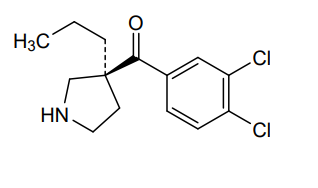
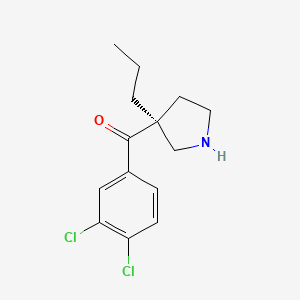
Cendifensine
CAS 1034048-49-1
MF C14H17Cl2NO MW286.2 g/mol
Methanone, (3,4-dichlorophenyl)[(3S)-3-propyl-3-pyrrolidinyl]-
(3,4-dichlorophenyl)[(3S)-3-propylpyrrolidin-3-yl]methanone
monoamine reuptake inhibitor, NOE-115, NOE 115, N4U2JR8GCX,
Cendifensine (INNTooltip International Nonproprietary Name) is a monoamine reuptake inhibitor (MRI)[1] related to the amphetamines and cathinones which has not been marketed at this time.[2][3][4] It was first described by 2013[4] and its INNTooltip International Nonproprietary Name was proposed in 2024.[2] The drug has been patented by Noema Pharma, which is developing a serotonin–norepinephrine–dopamine reuptake inhibitor (SNDRI) known as NOE-115 for the treatment of vasomotor symptoms associated with menopause[5] as well as for binge-eating disorder and depressive disorders.[6][7][8]
- OriginatorRoche
- DeveloperNoema Pharma
- ClassAlkanes; Antidepressants; Behavioural disorder therapies; Chlorobenzenes; Ketones; Pyrrolidines; Small molecules
- Mechanism of ActionAdrenergic uptake inhibitors; Dopamine uptake inhibitors; Serotonin uptake inhibitors
- Phase IIVasomotor symptoms
- No development reportedBinge-eating disorder; Depressive disorders
- 28 Jan 2026No recent reports of development identified for phase-I development in Binge-Eating-Disorder in Switzerland (Parenteral)
- 28 Jan 2026No recent reports of development identified for phase-I development in Depressive disorders in Switzerland (Parenteral)
- 17 Nov 2025Chemical structure information added.
SYN
WO2023161533
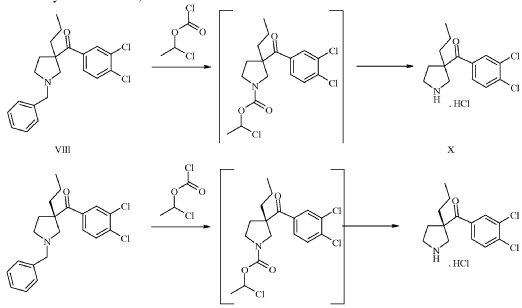
Example 1. Synthesis of (3,4-dichloro-phenyl)-((S)-3-propyl-pyrrolidin-3-yl)-methanone hydrochloride (15) quarterhydrate [See U.S. Patent No. 9,527,810]
0123-(l-benzyl-3-propylpyrrolidin-3-yl)(3,4-dichlorophenyl)methanone (IX-1) (5 g, 13.3 mmol, Eq: 1.00, see U.S. Patent No. 9,527,810 for synthesis) was dissolved in dichloromethane (30 mL). The light yellow solution was cooled to 0-5 °C and N-ethyldiisopropylamine (172 mg, 226 pL, 1.33 mmol, Eq: 0.1) was added. 1-Chloroethyl chloroformate (2.28 g, 1.74 ml, 15.9 mmol, Eq: 1.2) was added dropwise while the temperature was maintained in between 0-5 °C. The reaction was warmed to room temperature over 30 min and was stirred 1 h at room temperature. Methanol (25 mL) was added and the light yellow solution was heated to 40 °C for 40 min. The reaction mixture was concentrated under reduced pressure (40 °C, 600-15 mbar) to give 5.48 g of crude product. Ethyl acetate (30.0 mL) was added and the suspension was heated to 50 °C. A solution of water (239 mg, 239 pL, 13.3 mmol, Eq: 1.0) in ethyl acetate (35 mL) was added over 10 min. The white suspension was stirred for 1 h at 50 °C and cooled to room temperature over 1.5 h. The suspension was filtered, and the filter cake was washed twice with ethyl acetate (10 mL) and dried under reduced pressure (40° C, 15 mbar) to give 4.02 g of (15) as quarterhydrate (93% yield).
SYN
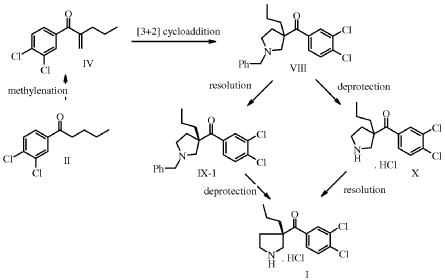
Synthesis of l-(3,4-Dichloro-phenyl)-pentan-l-one (II)

Aluminum chloride (12.4 g, 93.3 mmol, Eq: 1.5) was charged in the reactor followed by 1,2-dichlorobenzene (27.4 g, 21.0 ml, 187 mmol, Eq: 3). The suspension was heated to 80°C in 10 min and pentanoyl chloride (7.5 g, 7.58 ml, 62.2 mmol, Eq: 1.00) was added dropwise over 30 min. The reaction mixture went from a yellow suspension to an orange/brown viscous solution. After 5h reaction at 80°C the deep orange/brown reaction mixture was cooled to 25°C and stirred at 25 °C overnight. The reaction mixture was poured onto a mixture of n-heptane (68.4 g, 100 ml) and water/ice 50:50 (100 g, 100 ml). The organic phase was separated and washed with water (50.0 g, 50 ml) then with NaHC03aq 5% (50 ml) and finally with water (50.0 g, 50 ml) The organic phase was dried azeotropically (60°C/ca 150 mbar) with n-heptane (205 g, 300 ml) to give 28g of crude product as an orange oil (ca 96:4 Product/2,3-dichlorovalerophenone isomer). The crude oil was dissolved in n-heptane (27.4 g, 40 ml) and the solution was cooled to -20°C for 2 h. The suspension was filtered. The filter was washed with cold n-heptane (10.3 g, 15 ml) and dried at 35°C/10 mbar to give 8.8 g of the title product (>98a GC, isomer <1%).
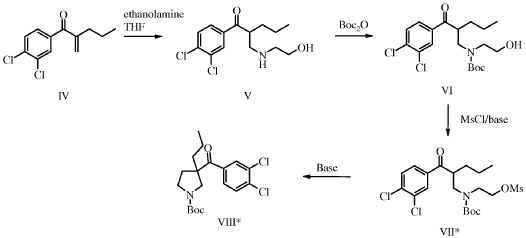
Synthesis of l-(3,4-Dichloro-phenyl)-2-methylene-pentan-l-one (IV)

II ΠΙ-1 IV
Alternative A
l-(3,4-dichlorophenyl)pentan-l-one II (15 g, 63.0 mmol, equivalents: 1.00) and paraformaldehyde (3.58 g, 113 mmol, equivalents: 1.8) were charged in the reactor followed by heptane (30.0 ml). Temperature was set at 25°C. Diethylamine (8.84 g, 12.5 ml, 120 mmol, equivalents: 1.9) was added. Paraformaldehyde partially dissolved over time. Acetic acid (11.4 g, 10.9 ml, 189 mmol, equivalents: 3) was slowly added and the reaction mixture was heated to 60°C. After 17h reaction (< 2 % starting material), deionized water (30.0 ml) was added and the reaction mixture was heated to 80°C. After completion of the reaction (usually < 5h, < 1% intermediate by HPLC), the reaction mixture was cooled to room temperature. The organic phase was separated and washed twice with 20 mL deionized water. The organic phase was
concentrated under reduced pressure and dried azeotropically with heptane to give 15.32 g of the olefin IV as orange oil (96% yield corrected for 96a% purity by HPLC).
Alternative B
l-(3,4-dichlorophenyl)pentan-l-one II (15 g, 63.0 mmol, equivalents: 1.00) and paraformaldehyde (3.58 g, 113 mmol, equivalents 1.8) were charged in the reactor followed by heptane (20.5 g, 30.0 ml). Temperature was set to 25°C. Acetic acid (11.4 g, 10.9 ml, 189 mmol, equivalents: 3) was added followed by diethylamine (8.84 g, 12.5 ml, 120 mmol, equivalents: 1.9). The reaction mixture was heated to 60°C. After 17h30 reaction (< 2% starting material), deionized water (30.0 ml) was added and the reaction mixture was heated to 80°C. After completion of the reaction (usually < 5h; < 1% intermediate by HPLC), the reaction mixture was cooled to room temperature and polish filtered. The aqueous phase was separated and discarded. The organic phase was washed twice with 20 mL deionized water and once with 10 mL 25% aqueous sodium chloride. The organic phase was concentrated under reduced pressure and dried azeotropically with heptane to give 15.53 g of the desired product IV as orange oil (99% yield, corrected for 97.7 %).

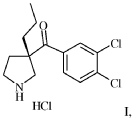
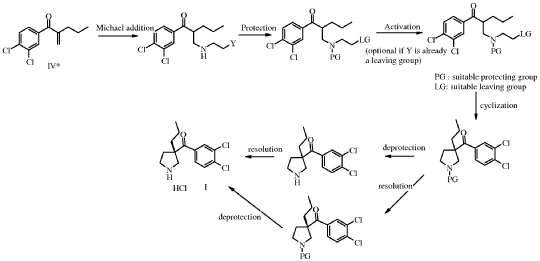
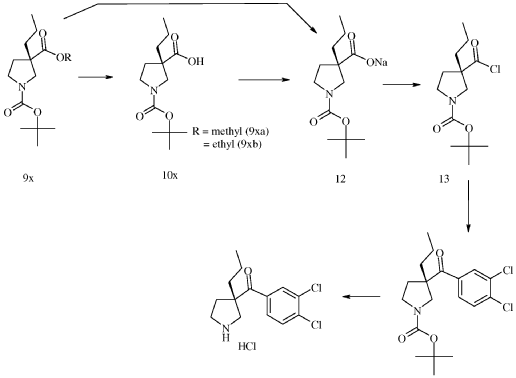
Synthesis of (3,4-Dichloro-phenyl)-(3-(S)-propyl-pyrrolidin-3-yl)-methanonehydrochloride I
Alternative A
(S)-(3,4-dichlorophenyl)(3-propylpyrrolidin-3-yl)methanone (2S,3S)-2,3-dihydroxysuccinate X-TAR (20 g, 45.7 mmol, Equivalents: 1.00) was suspended in methyl iert-butyl ether (150 ml)and treated with 2M aqueous sodium hydroxide (48.0 ml, 96.0 mmol, Equivalents: 2.1). The organic phase was separated and washed twice with water (50 ml). Ethanol (150 ml) was added to the organic extract followed by 37% hydrochloric acid (4.01 ml, 48.0 mmol, Equivalents: 1.05). The solution was concentrated under reduced pressure (300 mbar/60°C) to ca 100 mL and was polish filtered. Ethyl acetate (300 ml) was added and the solution was seeded. The resulting mixture was concentrated under reduced pressure (300 mbar/60°C) to a white suspension (ca 150 g). A solution of water (412 mg, 412 μΐ, 22.9 mmol, Equivalents: 0.5) in ethanol (15 ml) was added at room temperature. The suspension was stirred at room temperature overnight and cooled to 0°C for lh. The suspension was filtered and the filter cake was washed with cold (0°C) ethyl acetate (60 ml). The crystals were dried at 50°C under reduced pressure to give 14.3 g of product I as quarterhydrate (96% yield).
PAT
- HYPEREROYL PYROLIDINYL AND PIPERIDINYL KETONEPublication Number: BR-PI0720742-A2Priority Date: 2006-12-19
- Heteroaryl pyrrolidinyl and piperidinyl ketone derivativesPublication Number: JP-5394252-B2Priority Date: 2006-12-19Grant Date: 2014-01-22
- Heteroaryl pyrrolidinyl and piperidinyl ketone derivativesPublication Number: CA-2671378-CPriority Date: 2006-12-19Grant Date: 2015-10-20
- Heteroaryl pyrrolidinyl and piperidinyl ketone derivativesPublication Number: RU-2479575-C2Priority Date: 2006-12-19Grant Date: 2013-04-20
- Heteroaryl pyrrolidinyl and piperidinyl ketone derivatives and uses thereofPublication Number: US-8513425-B2Priority Date: 2006-12-19Grant Date: 2013-08-20
- HETEROARIL-PYRROLIDINYL AND PIPERIDINYL-CETONE DERIVATIVESPublication Number: PT-2354124-EPriority Date: 2006-12-19
- Heteroaryl pyrrolidinyl and piperidinyl ketone derivativesPublication Number: NZ-577114-APriority Date: 2006-12-19
- Heteroaryl pyrrolidinyl and piperidinyl ketone derivatives and uses thereofPublication Number: US-2012065225-A1Priority Date: 2006-12-19
- derivatives of heteroaryl pyrrolidinyl and piperidinyl ketone, their uses and pharmaceutical compositionPublication Number: BR-PI0720742-B1Priority Date: 2006-12-19
- Heteroaryl pyrrolidinyl and piperidinyl ketone derivativesPublication Number: EP-2354124-B1Priority Date: 2006-12-19Grant Date: 2013-02-13
- Heteroaryl pyrrolidinyl and piperidinyl ketone derivativesPublication Number: EP-2684871-A1Priority Date: 2006-12-19
- Heteroaryl pyrrolidinyl and piperidinyl ketone derivativesPublication Number: EP-2354124-A2Priority Date: 2006-12-19
- Pyrrolidinyl and piperidinyl ketone derivatives and uses thereofPublication Number: US-8084623-B2Priority Date: 2006-12-19Grant Date: 2011-12-27
- Heteroaryl-pyrrolidinyl- and -piperidinyl-ketone derivativesPublication Number: ES-2401129-T3Priority Date: 2006-12-19Grant Date: 2013-04-17


AS ON FEB2026 4.574 LAKHS VIEWS ON BLOG WORLDREACH AVAILABLEFOR YOUR ADVERTISEMENT
join me on Linkedin
Anthony Melvin Crasto Ph.D – India | LinkedIn
join me on Researchgate
RESEARCHGATE

join me on Facebook
Anthony Melvin Crasto Dr. | Facebook
join me on twitter
Anthony Melvin Crasto Dr. | twitter
+919321316780 call whatsaapp
EMAIL. amcrasto@gmail.com

References
References
- WO, Garibaldi G, “Triple uptake inhibitor for the treatment of atypical depression”, published 31 August 2023, assigned to Noema Pharma AG
- “Proposed INN: List 132 International Nonproprietary Names for Pharmaceutical Substances (INN)” (PDF). WHO Drug Information. 38 (4). 2024.
cendifensinum cendifensine (3,4-dichlorophenyl)[(3S)-3-propylpyrrolidin-3-yl]methanone monoamine reuptake inhibitor […] C14H17Cl2NO 1034048-49-1
- “(3,4-Dichlorophenyl)[(3S)-3-propyl-3-pyrrolidinyl]methanone”. Global Substance Registration System (GSRS). National Center for Advancing Translational Sciences (NCATS), U.S. National Institutes of Health. Retrieved 24 February 2025.
- CA, Adam JM, Dvorak CA, Fishlock D, Humphreys ER, Iding H, Pfleger C, Rege PD, Shi X, Vitale J, Wang S, Zajac M, “(3,4-dichloro-phenyl)-((s)-3-propyl-pyrrolidin-3-yl)-methanone hydrochloride and manufacturing processes”, published 23 April 2013, assigned to F Hoffmann La Roche AG
- Young Moss S, Lee A, Simon JA (November 2025). “Advances in Pharmacotherapy for Menopausal Vasomotor Symptoms”. Drugs. 85 (11): 1363–1379. doi:10.1007/s40265-025-02231-8. PMC 12572072. PMID 41028653.
- “NOE 115”. AdisInsight. 21 May 2024. Retrieved 24 February 2025.
- “Delving into the Latest Updates on Noema Pharma AG with Synapse”. Synapse. 23 January 2025. Retrieved 24 February 2025.
- “Noema Pharma”. Noema Pharma. 18 June 2021. Retrieved 24 February 2025.
| Clinical data | |
|---|---|
| Other names | NOE-115 |
| Drug class | Monoamine reuptake inhibitor |
| Identifiers | |
| IUPAC name | |
| CAS Number | 1034048-49-1 |
| PubChem CID | 59744668 |
| ChemSpider | 42806369 |
| UNII | N4U2JR8GCX |
| Chemical and physical data | |
| Formula | C14H17Cl2NO |
| Molar mass | 286.20 g·mol−1 |
| 3D model (JSmol) | Interactive image |
| SMILES | |
| InChI | |
///////////cendifensine, monoamine reuptake inhibitor, NOE-115, NOE 115, N4U2JR8GCX,
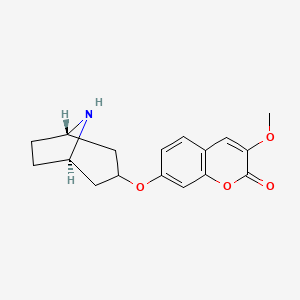
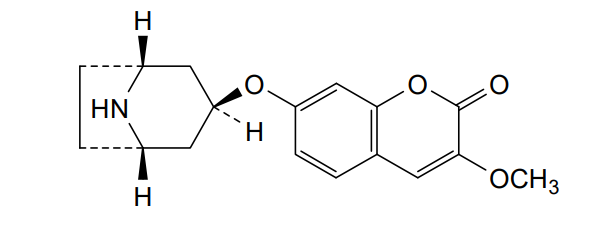
Pudafensine
Pudafensine
CAS 1320346-14-2
MFC17H19NO4 MW 301.34 g/mol
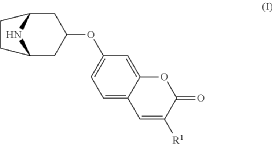
7-{[(1R,3s,5S)-8-azabicyclo[3.2.1]octan-3-yl]oxy}-3-methoxy2H-1-benzopyran-2-one
monoamine reuptake inhibitor, erectile dysfunction, neuropathic pain, NS18313, NS 18313, L9NG7US8GE, IP2015, IP 2015
Pudafensine is a monoamine reuptake inhibitor being developed as a potential treatment for erectile dysfunction (ED) and neuropathic pain. As a drug candidate, it works by preferentially inhibiting the reuptake of dopamine and serotonin. It is designed to be a first-line treatment for patients with organic ED who are not adequately served by existing therapies like PDE5 inhibitors.
How it works
- Pudafensine is a monoamine reuptake inhibitor that increases the levels of dopamine and serotonin in the brain by preventing their reabsorption into neurons.
- It has been shown in animal models and human trials to improve erectile function and reduce pain, including neuropathic pain.
Potential uses
- Erectile Dysfunction (ED): Pudafensine is being investigated for its potential to help men with organic ED who do not respond well to or cannot tolerate current treatments. Phase IIb clinical trial results are expected in late 2023.
- Neuropathic Pain: A clinical trial on pain involving pudafensine indicated it reduced allodynia and was well-tolerated with a favorable safety profile compared to pregabalin.
Development status
- Initiator Pharma is developing pudafensine as an oral tablet.
- Phase IIb studies for erectile dysfunction and Phase II studies for neuropathic pain have been completed, with positive results.
- The company is exploring its use in treating patients who are inadequately treated with existing medications.
Erectile dysfunction (ED)
Pudafensine, Initiator’s most advanced drug program has successfully demonstrated efficacy in a Clinicial Phase 2a Proof-of-Concept study and in a Phase 2b study to treat patients who suffer from organic erectile dysfunction (ED) that do not respond or cannot tolerate the currently marketed drugs in the PDE5i class (e.g. Viagra®, Cialis®, Levitra®).
Pudafensine strengthens the natural erection response by having a dual-action, both a central effect initiating erection and a peripheral effect potentiating erection through smooth muscle relaxation. Pudafensine is aimed for treatment of organic erectile dysfunction in patients who have erectile dysfunction (ED) due to abnormalities of the penile arteries and/or veins. Most common risk factors for organic ED are diabetes, overweight, lack of exercise, high cholesterol, high blood pressure, and cigarette smoking. Since Initiator Pharma was founded and pudafensine acquired, all preclinical development of the drug candidate to enable an application for clinical trials (CTA) has been carried out by the company’s auspices. Pudafensine is developed as a tablet that is taken orally on-demand. It is the company’s goal to be able to create a new “First-Line” treatment (recommended treatment) for the large group of men who have organic erectile dysfunction, who are sub-optimally treated with PDE5i products or for whom PDE5i treatment is contraindicated.
In Q4 2023 positive results from the Phase IIb clinical trial with pudafensine (IP2015) was announced. The Phase 2b trial is a randomized, double-blind, placebo-controlled, parallel-dosing group trial studying the efficacy and safety of high and low doses of pudafensine (IP2015) and placebo in otherwise healthy patients suffering from moderate to severe ED. The study comprises 130 patients divided into 3 parallel arms receiving a higher and a lower dose of pudafensine and placebo, respectively, with treatment duration of 4 weeks with frequent assessments of erectile dysfunction, safety and pharmacokinetics. The study has been conducted at the MAC clinical sites in the UK.
The study demonstrated statistically significant efficacy on the primary endpoint (related to improvements in intercourse settings) compared to placebo [p=0.034] and baseline [p=0.046]. Furthermore, the results were consistent throughout the study. Several other clinical endpoints related to improved intercourse activities (obtained from the International Index of Erectile Function Questionnaire, IIEF-15) demonstrated significant effects compared to the baseline. The frequency and type of adverse effects were mild to moderate and comparable to those observed in the placebo group. There was no reporting of critical safety observations.
Neuropathic pain
Pudafensine have shown effects in a human model of pain ie. in a clinical Phase I study in healthy subjects dosed with the drug pudafensine and challenged with a pain-inducing ingredient (capsaicin).
The Phase I study was a randomized, double blind, placebo controlled study in 24 healthy male subjects, investigating the effects on pain measures (hyperalgesia, allodynia, and subjects pain rating) of single doses of pudafensine, pregabalin as an active control, and placebo. The pain was induced by intradermal capsaicin. Pudafensine demonstrated a statistically significant effect on allodynia (p=0.049) and showed a dose-dependent effect on the measured pain parameters. Pregabalin (p=0.083) and IP2015 (p=0.051) tended to reduce hyperalgesia, although the effects on hyperalgesia were not statistically significant compared to placebo-treated subjects.
Syn
US20130040985
https://patentscope.wipo.int/search/en/detail.jsf?docId=US76705962&_cid=P22-MIFE0H-55553-1
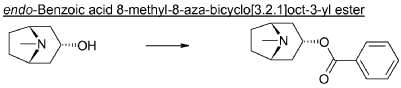
endo-Benzoic acid 8-methyl-8-aza-bicyclo[3.2.1]oct-3-yl ester
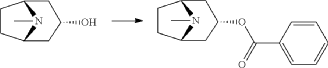
Benzoylchloride (84.3 g, 600 mmol) was added during 30 min at <30° C. to a mixture of tropine (70.6 g, 500 mmol), potassium tert-butoxide (67.3 g, 600 mmol) and THF (500 ml). The mixture was stirred at room temperature for 2 h. Water (1 L) was added followed by extraction with diethylether (2×500 ml). The organic phase was washed twice with water (2×200 ml) followed by a solution of saturated aqueous sodium chloride (200 ml). The ether phase was dried and hydrochloric acid in ethanol (170 ml, 3 M) was added. The precipitated hydrochloride was filtered and washed with diethylether. The free base was obtained by adding an excess of aqueous ammonia followed by extraction with a mixture of ethylacetate and diethylether. Yield 66.8 g (54%).
endo-Benzoic acid 8-aza-bicyclo[3.2.1]oct-3-yl ester
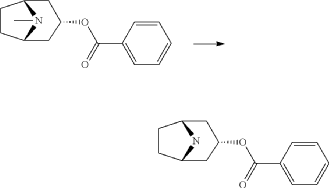
2,2,2-Trichloroethylchloroformate (75.0 ml, 544 mmol) was added dropwise to a mixture of endo-benzoic acid 8-methyl-8-aza-bicyclo[3.2.1]oct-3-yl ester (66.8 g, 272 mmol) and dry toluene (500 ml). The mixture was allowed to stir for 1 h at room temperature, followed by 15 h at 100° C. Water (250 ml) was added followed by stirring 1 h. The phases were separated and the organic phase was washed twice with water (2×200 ml). The mixture of the intermediate 3-benzoyloxy-8-aza-bicyclo[3.2.1]octane-8-carboxylic acid trichloromethyl ester, was dried and evaporated. Acetic acid (350 ml) was added followed by addition of zinc (53.4 g, 817 mmol) over 3 h time period. Water (100 ml) was added, cooled by adding ice and made alkaline by adding concentrated aqueous ammonia (ca: 400 ml) and the mixture was extracted with dichloromethane (2×300 ml). Yield 44.5 g (61%).
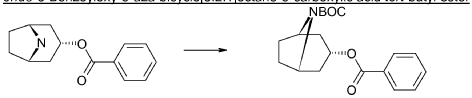
endo-3-Benzoyloxy-8-aza-bicyclo[3.2.1]octane-8-carboxylic acid tert-butyl ester
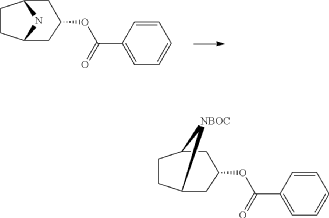
Di-tert-butyl-dicarbonate (39.9 g, 183 mmol) solved in THF (100 ml) was added to a stirred mixture of endo-benzoic acid 8-aza-bicyclo[3.2.1]oct-3-yl ester (44.5 g, 166.4 mmol), triethylamine (67.4 g, 666 mmol) and THF (250 ml) during 0.5 h at room temperature, followed by stirring for 1 h. Water (1 L) was added and the mixture was extracted with diethylether (2×300 ml). The collected ether phase was washed twice with water (2×200 ml), dried and evaporated. Yield 60.1 g (100%).
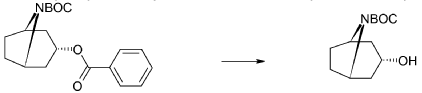
endo-3-Hydroxy-8-aza-bicyclo[3.2.1]octane-8-carboxylic acid tert-butyl ester
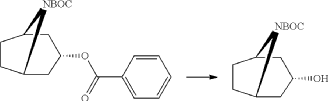
A mixture of endo-3-benzoyloxy-8-aza-bicyclo[3.2.1]octane-8-carboxylic acid tert-butyl ester (55.0 g, 166 mmol), potassium hydroxide (11.2 g 199 mmol) and ethanol (99%, 400 ml) was stirred for 3 days at room temperature. Potassium benzoate was separated by filtration and the filtrate was evaporated. Diethylether (200 ml) was added and remaining potassium benzoate was separated by filtration and the filtrate was evaporated. The product was triturated with petroleum. Yield 30.0 g (80%). Mp 139.5-140.8° C.
xample 1
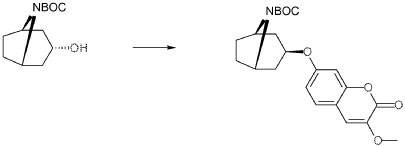
Exo-tert-butyl-3-(3-methoxy-2-oxo-chromen-7-yl)oxy-8-azabicyclo[3.2.1]octane-8-carboxylate (Intermediate)
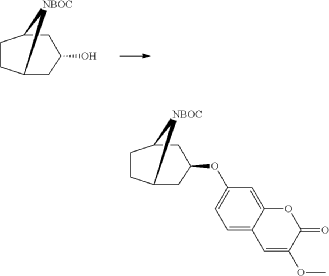
Triphenylphosphine (1.15 g, 4.37 mmol) was solved in toluene (20 ml) and cooled to <20° C. Diethylazodicarboxylate (40% in toluene) (2.0 ml, 4.37 mmol) was added to the mixture below 20° C., followed by stirring for 10 minutes. endo-3-Hydroxy-8-aza-bicyclo[3.2.1]octane-8-carboxylic acid tert-butyl ester (0.828 g, 3.64 mmol) was added and after 10 minutes 7-hydroxy-3-methoxy-chromen-2-one (0.70 g, 3.64 mmol) (prepared according to J. Med. Chem. 1999, 42, p2662-2672) was added to the mixture. The temperature raised to 25° C. due to an exothermic reaction. The mixture precipitates. The mixture was allowed to stir for 15 h at room temperature. Water (20 ml) and sodium hydroxide (0.5 ml, 4 M) was added followed by stirring. The mixture was cooled on an ice-bath, filtered and washed with water and diethylether. Yield 0.92 g (63%).
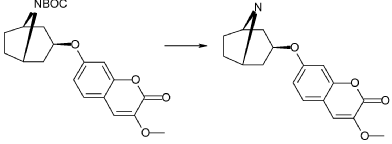
Exo-7-[(-8-azabicyclo[3.2.1]octan-3-yl)oxy]-3-methoxy-chromen-2-one hydrochloride (Compound 1.1)
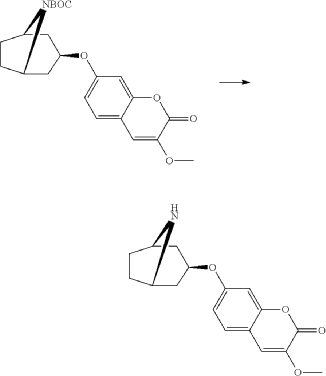
Exo-tert-butyl-3-(3-methoxy-2-oxo-chromen-7-yl)oxy-8-azabicyclo[3.2.1]octane-8-carboxylate (0.92 g, 2.29 mmol) and hydrogen chloride (15 ml, 1 M) in acetic acid was mixed as a solution and stirred at room-temperature and precipitated after a few minutes. The product was filtered and washed with diethylether. Yield 0.48 g (62%). LC-ESI-HRMS of [M+H]+ shows 302.13856 Da. Calc. 302.138689 Da, dev. −0.4 ppm.
Syn
WO2011092061
https://patentscope.wipo.int/search/en/detail.jsf?docId=WO2011092061&_cid=P22-MIFE80-61015-1

SYN
https://patentscope.wipo.int/search/en/detail.jsf?docId=WO2024008808&_cid=P22-MIFDSB-50229-1

SYN
https://patentscope.wipo.int/search/en/detail.jsf?docId=WO2024089247&_cid=P22-MIFDSB-50229-1
SYN
https://patentscope.wipo.int/search/en/detail.jsf?docId=WO2024146892&_cid=P22-MIFDSB-50229-1
PAT
- Compound for treatment of erectile dysfunctionPublication Number: WO-2024146892-A1Priority Date: 2023-01-03
- Compound for treatment of painPublication Number: WO-2024089247-A1Priority Date: 2022-10-28
- Compound for treatment of female sexual dysfunctionPublication Number: WO-2024008808-A1Priority Date: 2022-07-08
AS ON OCT2025 4.511 LAKHS VIEWS ON BLOG WORLDREACH AVAILABLEFOR YOUR ADVERTISEMENT
join me on Linkedin
Anthony Melvin Crasto Ph.D – India | LinkedIn
join me on Researchgate
RESEARCHGATE
join me on Facebook
Anthony Melvin Crasto Dr. | Facebook
join me on twitter
Anthony Melvin Crasto Dr. | twitter
+919321316780 call whatsaapp
EMAIL. amcrasto@gmail.com
……
//////////Pudafensine, monoamine reuptake inhibitor, erectile dysfunction, neuropathic pain, NS18313, NS 18313, L9NG7US8GE, IP2015, IP 2015


 New Drug Approvals
