
Home » Posts tagged 'LIT 291'
Tag Archives: LIT 291
 DRUG APPROVALS BY DR ANTHONY MELVIN CRASTO
.....FOR BLOG HOME CLICK HERE
DRUG APPROVALS BY DR ANTHONY MELVIN CRASTO
.....FOR BLOG HOME CLICK HEREFlag and hits
ORGANIC SPECTROSCOPY

SUBSCRIBE

 Subscribe in a reader
Enter your email address:
Delivered by FeedBurner
Subscribe to New Drug Approvals by Email


Recent Comments
 | shivkr2 on SPSR Excellence Award 2025 – S… |
 | Bonkasaurus on Infigratinib phosphate |
 | PALOVAROTENE | ORGAN… on Palovarotene |
| Pfizer just purchase… on Temanogrel | |
| Pfizer To Cash In On… on Temanogrel |
Pariceract

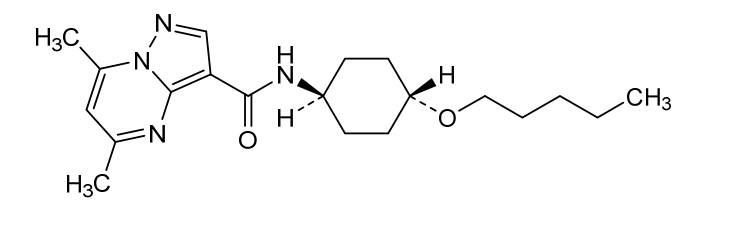
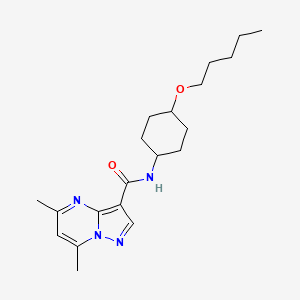
Pariceract
CAS 1919820-28-2
MFC20H30N4O2 MW358.5 g/mol
- 5,7-dimethyl-N-((1r,4r)-4-(pentyloxy)cyclohexyl)pyrazolo[1,5-a]pyrimidine-3-carboxamide
- 5,7-Dimethyl-N-(4-pentoxycyclohexyl)pyrazolo[1,5-a]pyrimidine-3-carboxamide
- Pyrazolo(1,5-a)pyrimidine-3-carboxamide, 5,7-dimethyl-N-(trans-4-(pentyloxy)cyclohexyl)-
5,7-dimethyl-N-[trans-4-(pentyloxy)cyclohexyl]pyrazolo[1,5-a]pyrimidine-3-carboxamide
beta-glucocerebrosidase activator, antiparkinsonian, BIA 28-6156, LTI-291, LIT291, LTI-00291, BIA28-6156, LTI- 91, LIT 291, LTI 00291, Gcase activator 1, V9WUN9UUU8
Pariceract (INNTooltip International Nonproprietary Name; developmental code name BIA 28-6156 or LTI-291) is a β-glucocerebrosidase (GCase) activator or positive allosteric modulator which is under development for the treatment of Parkinson’s disease.[1][2][3][4][5] It is taken orally.[1] GCase is a lysosomal enzyme encoded by the gene GBA1.[4][5] Loss-of-function mutations in this gene are thought to promote α-synuclein accumulation and are among the leading genetic risk factors for Parkinson’s disease.[4][5][6] As such, activation of GCase might provide a disease-modifying therapy for treatment of Parkinson’s disease.[4][5] Pariceract was first described in the scientific literature by 2017.[6] It was originated by Lysosomal Therapeutics and is under development by Lysosomal Therapeutics and Bial.[1][2][3] As of October 2025, it is in phase 2 clinical trials.[1][2][3]
PAT
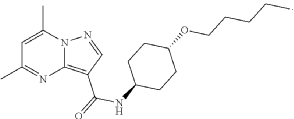
PAT
https://patentscope.wipo.int/search/en/detail.jsf?docId=WO2025198486&_cid=P12-MS41BL-88178-1
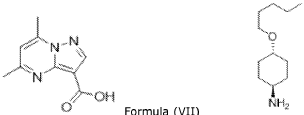
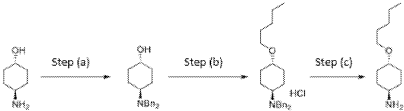
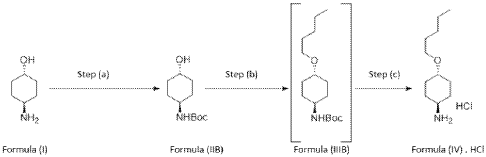
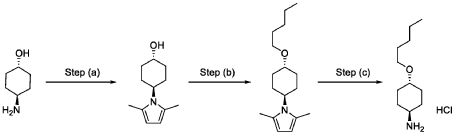
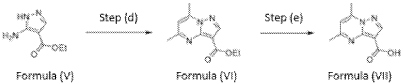
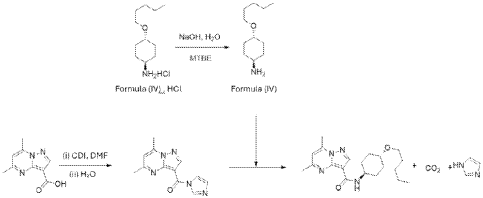
Example 3 – Preparation of 5,7-dimethyl-/V-((l/?,4/?)-4- (pentyloxy)cyclohexyl)pyrazolo[1,5-a]pyrimidine-3-carboxamide (Compound of Formula (A))
[00168] Part 1 : Under nitrogen atmosphere, purified water (41.32 L, 2.0 V) and NaOH (5.99 kg, 1.4 eq.) were charged to a reactor at 20 °C; after this, purified water (10.33 L, 0.5 V) was added to wash the walls and the solution was left stirring for 0.5-3 hours until the solid was dissolved; the solution was transferred from the reactor to a clean drum.
[00169] Part 2: Under nitrogen atmosphere, purified water (30.99 L, 1.5 V) and NaCI
(2.27 kg, 0.11 wt.%) were charged to the reactor at 20 °C; after this, purified water (10.33 L, 0.5 V) was charged to wash the walls and the solution was left stirring for 0.5-3 hours until the solid was dissolved; the solution was transferred from the reactor to a clean drum.
[00170] Part 3: Under nitrogen atmosphere, purified water (62 L, 3.0 V) and the compound of Formula (IV) in HCI salt form (27.84 kg, 1.15 eq.), from step 3 of Example 1, were charged to the reactor at 25 °C; after this, purified water (16.5 L, 0.8 V) was charged to wash the walls and then MTBE (165.28 L, 8.0 V) was charged to the reactor and the solution was left stirring for 0.5-1 hour; after this, the solution was cooled down to 5 °C and the NaOH (5.99 kg, 1.4 eq.) aqueous solution (prepared in advance in part 1) was charged in 0.5-2 hours; then, the temperature of the reaction mixture was increased to 25 °C and it was left stirring for 1-3 hours. The agitation was stopped, and the phases were separated. The organic phase was washed two times: the first with 5% NaCI aqueous (41.32 L, 2.0 V) prepared in advance in part 2 and the second with purified water (41.32 L, 2.0 V). Then, the organic phase was concentrated under vacuum until the total volume was 51.65 L – 72.31 L (2.5-3.5 V). MTBE (62 L, 3.0 V) was charged to the reactor and the solution was concentrated under vacuum until the total volume was 51.65 L – 72.31 L (2.5-3.5 V).
[00171] Part 4: Under nitrogen atmosphere, DMF (92.97 L, 4.5 V), the compound of Formula (VII) (20.66 kg, 1.0 eq.), from step 2 of Example 2, and l,l’-carbonyldiimidazole (21.07 kg, 1.2 eq.) were charged to the reactor at 25 °C; DMF (10.33 L, 0.5 V) was added to wash the walls. The temperature of the reaction mixture was increased to 28 °C, and it was left stirring for 2-5 hours. If necessary, charge additional l,l’-carbonyldiimidazole (1.76 kg, 0.1 eq.) to the reactor at 28 °C and leave it stirring for 2-5 hours. After this, purified water (1.178 kg, 0.6 eq.) was charged to the reactor and it was left stirring for 1-4 hours. Under nitrogen atmosphere, the compound of Formula (IV) Free Base in MTBE solution (27.84 kg ,1.15 eq.), from Part 3, was charged to the reactor in 1-2 hours; MTBE (4.132 L, 0.2 V) was charged to rinse the drum and then it was transferred to the reactor. The solution was left stirring for 16-24 hours and then DMF (20.66 L, 1.0 V) was charged to the reactor. The solution was concentrated under vacuum until the total volume was 123.96 L – 165.28 L (6.0-8.0 V).
[00172] Part 5: The reaction mixture temperature was increased to 40 °C and purified water (41.32 L, 2.0 V) was added dropwise to the reactor in 1-2 hours; the reaction mixture was left stirring for 2-5 hours before cooling down to 20 °C; the slurry was left stirring for 10-15 hours and then purified water (82.64 L, 4.0 V) was added dropwise in 1-3 hours to the reactor; the slurry was left stirring for 3-6 hours. After this, the solid was centrifuged and the cake was washed with DMF:H2O (1: 1, 20.66 L, 1.0 V x 2) two times and then washed with purified water (41.32 L, 2.0 V) one time*. The cake was dried under vacuum at 55 °C for 15-24 hours and 32.35 kg were obtained (83.3% yield and 100% purity by HPLC).
* In one campaign, at this stage the wet cake was dissolved in acetonitrile (25.5 V), the temperature adjusted to 27°C and stirred for 2-6 hours. The solution was filtered via a polish filter (0.22 pirn). The solution was concentrated under vacuum to 5.0 – 7.0 V at a temperature below 35°C. The temperature was adjusted to 20°C and purified water was added (14.0 V) in 2-4 hours. The slurry was stirred for 4-8 hours at 20°C, and afterwards filtered and washed with purified water (4.0 V).
Example 4 – Recrystallisation of 5,7-dimethyl-/V-((l/?,4R)-4- (pentyloxy)cyclohexyl)pyrazolo[1,5-a]pyrimidine-3-carboxamide (Compound of Formula (A))
[00173] Under nitrogen atmosphere, MEK (192 L, 6.0 V) and the compound of Formula (A) from Example 3 in crude (32 kg, 1.0 eq.) were charged to a reactor at 25 °C; MEK (160 L, 5.0 V) was added to wash the walls. The solution was left stirring for 1-3 hours until the solid was dissolved. After this, the solution from the reactor was transferred to a clean drum.
[00174] Under nitrogen atmosphere, the crude compound of Formula (A) in MEK solution was transferred to another reactor via a polish filter. The temperature was set at 17 °C and n-heptane (115.2 kg, 3.6 V) was charged in 2-4 hours. The solution was concentrated under vacuum until the total volume was 320 L – 352 L (10-11 V). In the event that there is no solid precipitation, proceed to the 2nd concentration directly; if there is solid precipitation, take a solid sample for XRPD test, and ensure that the crystal form is polymorph form B; if it is not form B, proceed to the 2nd concentration (and repeat if required). The reactor temperature was kept at 17 °C before cooling down to 0 °C and it was left stirring for 6-12 hours. A solid sample was taken for XRPD test to make sure that the crystal form is form B; if not form B, keep at 0 °C and stir for 6-12 hours; sample solid every 6-10 hours for XRPD until the crystal form is form B. The solid was centrifuged and washed with MEK:n-heptane (1 : 10, 57.6 L, 1.8 V ) and then with n-heptane (57.6 L, 1.8
V). The cake was dried under vacuum at 30 °C for 16-24 hours and 30.67 kg were obtained (95% yield and purity of 100% by HPLC).
PAT
- Substituted pyrazolo[1,5-a]pyrimidines and their use in the treatment of medical disordersPublication Number:US-2017334916-A1Priority Date:2014-11-06
- Substituted pyrazolo[1,5-a]pyrimidines and their use in the treatment of medical disordersPublication Number:US-2025066364-A1Priority Date:2014-11-06
- SUBSTITUTED PYRAZOLO[1,5-a]PYRIMIDINES AND THEIR USE IN THE TREATMENT OF MEDICAL DISORDERSPublication Number:US-2017183354-A1Priority Date:2014-11-06
- Substituted pyrazolo[1,5-a]pyrimidines and their use in the treatment of medical disordersPublication Number:US-9732089-B2Priority Date:2014-11-06Grant Date:2017-08-15
- Substituted pyrazolo[1,5-a]pyrimidines and their use in the treatment of medical disordersPublication Number:US-11091492-B2Priority Date:2014-11-06Grant Date:2021-08-17
- Substituted pyrazolo[1,5-a]pyrimidines and their use in treating medical disorders – Patents.comPublication Number:JP-7519221-B2Priority Date:2014-11-06Grant Date:2024-07-19
- Substituted pyrazolo[1,5-a]pyrimidines and their use in the treatment of medical disordersPublication Number:US-2022169652-A1Priority Date:2014-11-06
- Substituted pyrazolo[1,5-a]pyrimidines and their use in the treatment of medical disordersPublication Number:US-11932645-B2Priority Date:2014-11-06Grant Date:2024-03-19
- Substituted pyrazolo(1,5-a)pyrimidines and their use in the treatment of medical disordersPublication Number:WO-2016073895-A1Priority Date:2014-11-06
- Substituted pyrazolo[1,5-A]pyrimidines and their use in the treatment of medical disordersPublication Number:US-10570135-B2Priority Date:2014-11-06Grant Date:2020-02-25
- Substituted pyrazolo(1,5-a)pyrimidines and their use in the treatment of medical disordersPublication Number:EP-4406616-A2Priority Date:2014-11-06
- Substituted pyrazolo[1,5-a]pyrimidines and their use in the treatment of medical disordersPublication Number:US-2020385390-A1Priority Date:2014-11-06
ADVERTISEMENT
ANAX LABORATORIES
WEBSITE https://www.anaxlab.com/
Discovery Solutions, Supporting the chemistry needs of clients in the Medical, Analytical and Bio Sciences
Development Solutions, Developing from Lab scale to PR&D, Kilo Scale-ups and Commercial Scales
SEE MORE………Integrated Solutions, Manufacturing Solutions, Products,
Can’t Find? Let’s Connect

Phone : +91 897704 2010 / +91 9177075735, Email : info@anaxlab.com
#MedicinalChemistry, #DrugDiscovery, #OrganicSynthesis, #ChemicalLibrary, #BuildingBlocks, #SARStudies, #ChemistryInnovation, #medchem, #Drugdevelopment, #Biotech, #Biotechnology, #AnaxLaboratories, #Pharma



AS ON FEB2026 4.574 LAKHS VIEWS ON BLOG WORLDREACH AVAILABLEFOR YOUR ADVERTISEMENT

join me on Linkedin
Anthony Melvin Crasto Ph.D – India | LinkedIn
join me on Researchgate
RESEARCHGATE

join me on Facebook
Anthony Melvin Crasto Dr. | Facebook
join me on twitter
Anthony Melvin Crasto Dr. | twitter
+919321316780 call whatsaapp
EMAIL. amcrasto@gmail.com

References
References
- “LTI 291”. AdisInsight. Springer Nature Switzerland AG. 15 October 2025. Retrieved 19 February 2026.
- “Delving into the Latest Updates on Pariceract with Synapse”. Synapse. 8 May 2025. Retrieved 19 February 2026.
- “Pariceract Drug Profile”. Ozmosi. 1 January 1900. Retrieved 19 February 2026.
- den Heijer JM, Kruithof AC, Moerland M, Walker M, Dudgeon L, Justman C, et al. (July 2023). “A Phase 1B Trial in GBA1-Associated Parkinson’s Disease of BIA-28-6156, a Glucocerebrosidase Activator”. Movement Disorders. 38 (7): 1197–1208. doi:10.1002/mds.29346. hdl:1887/3722043. PMID 37195859.
- den Heijer JM, Kruithof AC, van Amerongen G, de Kam ML, Thijssen E, Grievink HW, et al. (September 2021). “A randomized single and multiple ascending dose study in healthy volunteers of LTI-291, a centrally penetrant glucocerebrosidase activator”. British Journal of Clinical Pharmacology. 87 (9): 3561–3573. doi:10.1111/bcp.14772. PMC 8451761. PMID 33576113.
- Ellis JM, Fell MJ (September 2017). “Current approaches to the treatment of Parkinson’s Disease”. Bioorganic & Medicinal Chemistry Letters. 27 (18): 4247–4255. doi:10.1016/j.bmcl.2017.07.075. PMID 28869077.
Increased degradation of a-synuclein is another potential mechanism explored in the clinic. Currently, the leading candidates for this approach center on modulating the activity of the Glucocerebrosidase (GBA) pathway. Mutations in GBA are the leading genetic risk factor for sporadic PD and reductions in GBA activity are thought to lead to an accumulation of a-synuclein. Lysosomal Therapeutics is currently developing a brain penetrant, small molecule enhancer of GBA activity called LTI-291 (structure not reported) which is expected to enter Phase 1 testing in 2017.
External links
 | |
| Clinical data | |
|---|---|
| Other names | BIA 28-6156; LTI-291; LIT291; LTI-00291 |
| Routes of administration | Oral[1] |
| Drug class | β-Glucocerebrosidase (GCase) activator or positive allosteric modulator |
| Identifiers | |
| IUPAC name | |
| CAS Number | 1919820-28-2 |
| PubChem CID | 121327414 |
| ChemSpider | 68028144 |
| UNII | V9WUN9UUU8 |
| Chemical and physical data | |
| Formula | C20H30N4O2 |
| Molar mass | 358.486 g·mol−1 |
| 3D model (JSmol) | Interactive image |
| SMILES | |
| InChI | |
////////pariceract, ANAX LABS, beta-glucocerebrosidase activator, antiparkinsonian, BIA 28-6156, LTI-291, LIT291, LTI-00291, BIA28-6156, LTI- 91, LIT 291, LTI 00291, Gcase activator 1, V9WUN9UUU8
#pariceract, #ANAX LABS, #beta-glucocerebrosidase activator, #antiparkinsonian, #BIA 28-6156, #LTI-291, #LIT291, #LTI-00291, #BIA28-6156, #LTI- 91, #LIT 291, #LTI 00291, #Gcase activator 1, #V9WUN9UUU8


 New Drug Approvals
